15 Brown Sugar Balayage Hair Ideas for Soft Brunette Dimension
Rich brunette roots, melted brown-sugar ribbons, and softly warmed highlights make this balayage palette perfect for polished color with natural-looking dimension.
Brown sugar balayage blends a brunette base with warm or neutral shades inspired by caramelized brown sugar, mocha, beige brown, honey, and soft chocolate. The signature look is blended rather than stripey, with brighter tones placed through the mid-lengths, ends, or face-framing sections while darker depth remains visible.
The amount of contrast can range from subtle to bright, so starting color, hair length, undertone, and maintenance all matter. Long layers give painted tones more room to transition, while lobs make the placement appear more concentrated. Warm caramel versions also behave differently from ash or mushroom variations, making tone just as important as brightness.
Quick List
- Classic Brown Sugar Balayage Hairstyle
- Warm Brown Sugar Caramel Balayage Hairstyle
- Cool Brown Sugar Ash Balayage Hairstyle
- Brown Sugar Mocha Melt Hairstyle
- Brown Sugar Honey Ribbon Hairstyle
- Brown Sugar Face Framing Balayage Hairstyle
- Brown Sugar Beige Balayage Hairstyle
- Dark Brown Sugar Balayage Hairstyle
- Brown Sugar Mushroom Balayage Hairstyle
- Brown Sugar Chocolate Swirl Hairstyle
- Brown Sugar Dimensional Balayage Hairstyle
- Rooted Brown Sugar Balayage Hairstyle
- Brown Sugar Bronde Balayage Hairstyle
- Brown Sugar Lob Balayage Hairstyle
- Velvet Brown Sugar Waves Hairstyle
1. Classic Brown Sugar Balayage Hairstyle
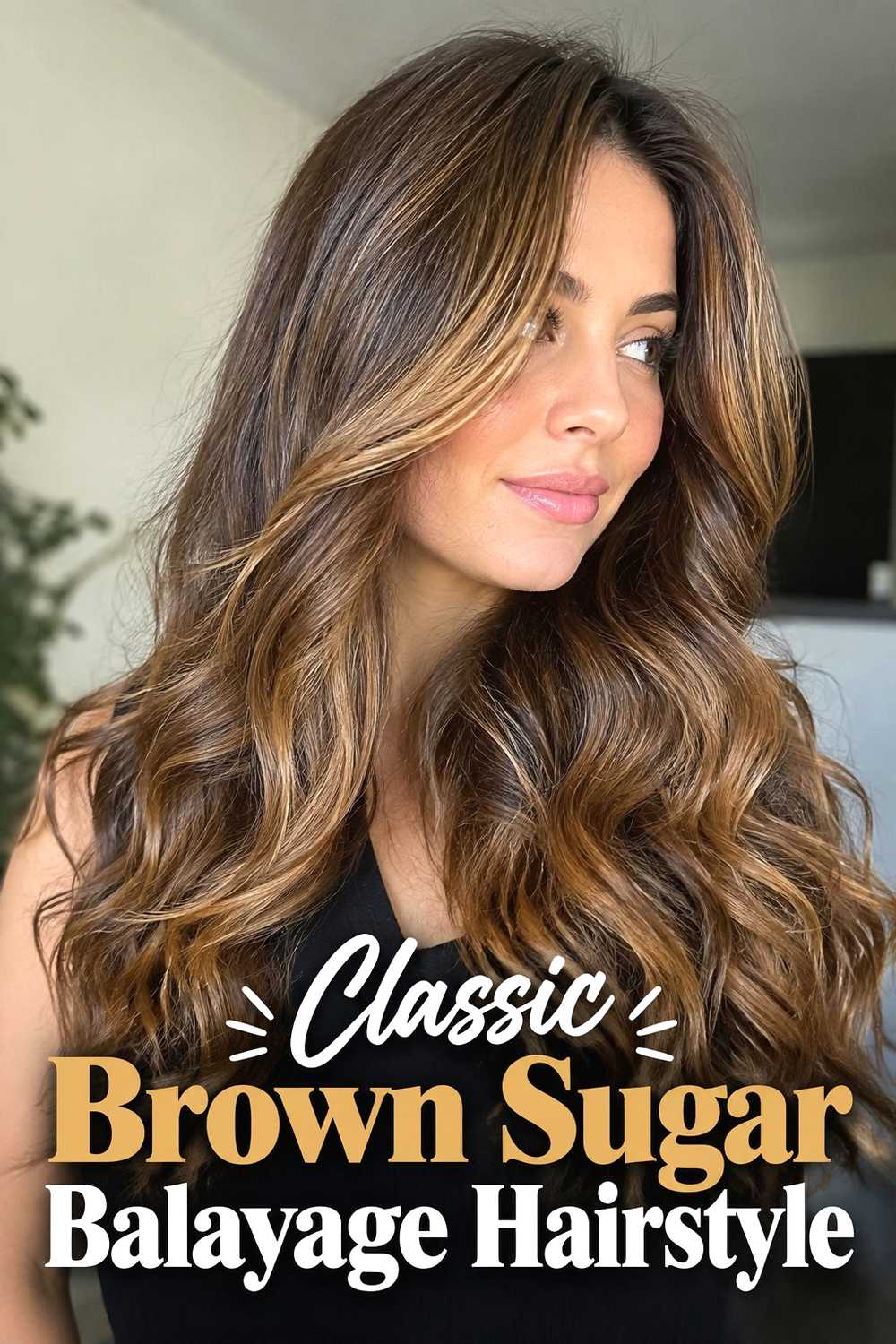
Classic brown sugar balayage combines a medium-to-deep brunette root with softly warmed brown highlights painted through the mid-lengths and ends. The lightened sections stay within caramelized brown, mocha, and golden brunette territory rather than turning noticeably blonde. This gives the hair movement while preserving enough darkness to create contrast. Long layers are especially effective because the painted pieces can follow the haircut and become more visible as the hair bends. A softly blended root also helps the transition look intentional as it grows. This version works well for someone who wants noticeable dimension without choosing either very pale highlights or an extremely warm caramel result.
Why It Works
The contrast is strong enough to show movement while still keeping the entire color story connected to the brunette base.
Styling Notes
Loose waves make the balayage easiest to see because each bend exposes different darker and lighter sections.
2. Warm Brown Sugar Caramel Balayage Hairstyle
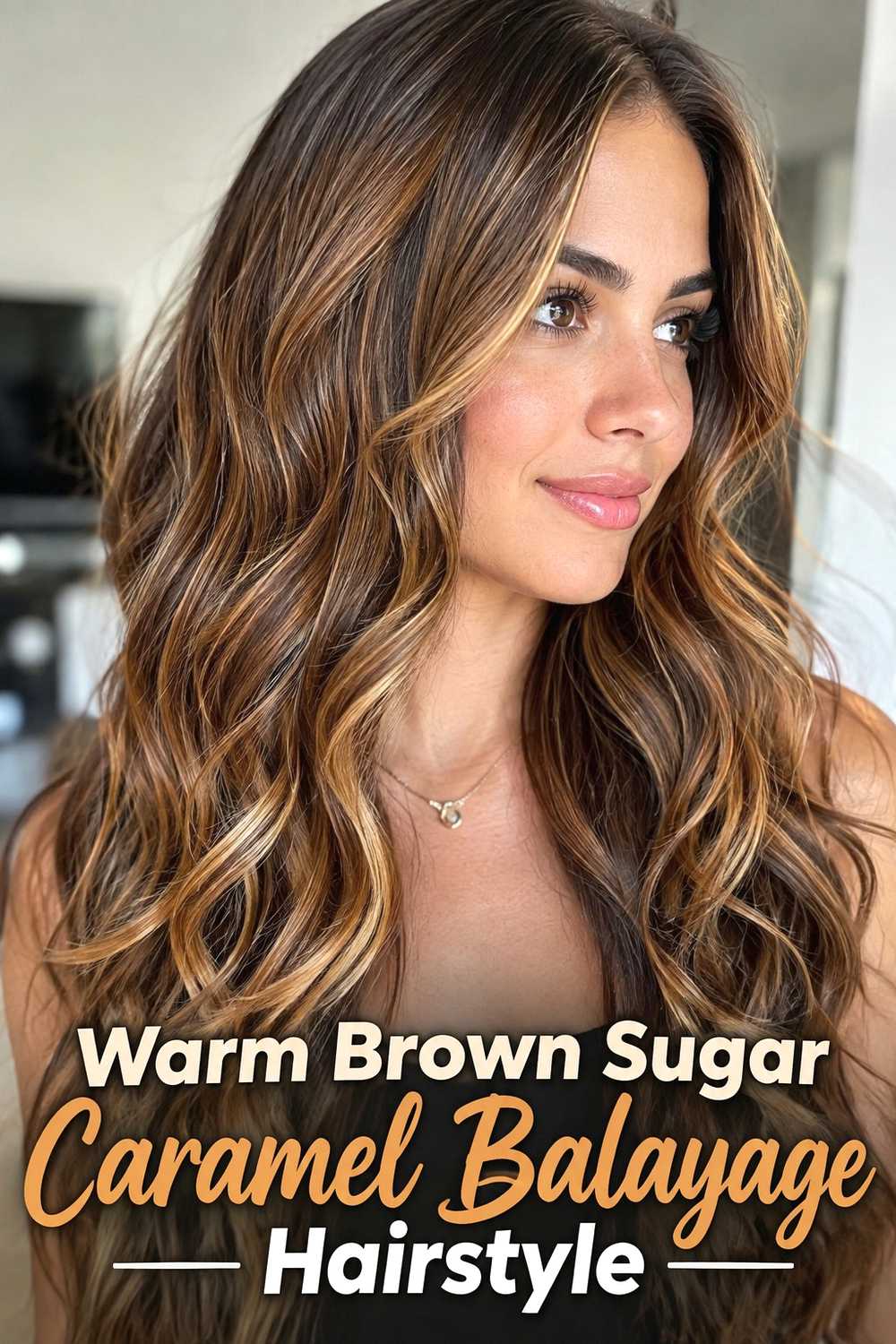
Warm brown sugar caramel balayage leans into toasted golden-brown tones while keeping a deeper brunette root for balance. Caramel pieces can be painted through the surface layers, around the face, and toward the ends, with darker sections intentionally left between them. This prevents the color from becoming uniformly light and gives the warm tones more visual impact. Medium and long hair provide enough space for the transition to look gradual, especially when styled with large waves. Because caramelized sections can become increasingly golden as they fade, occasional toning may help maintain a richer brown-sugar finish. Keeping the lightest pieces within the brunette range also makes the result feel softer than traditional blonde balayage.
Hair Type & Length
Medium-to-long layered hair offers enough movement for warm caramel placement to blend naturally through the lengths.
Wear & Maintenance
Refresh the tone when the highlighted sections begin looking more golden than the toasted brown finish you prefer.
3. Cool Brown Sugar Ash Balayage Hairstyle
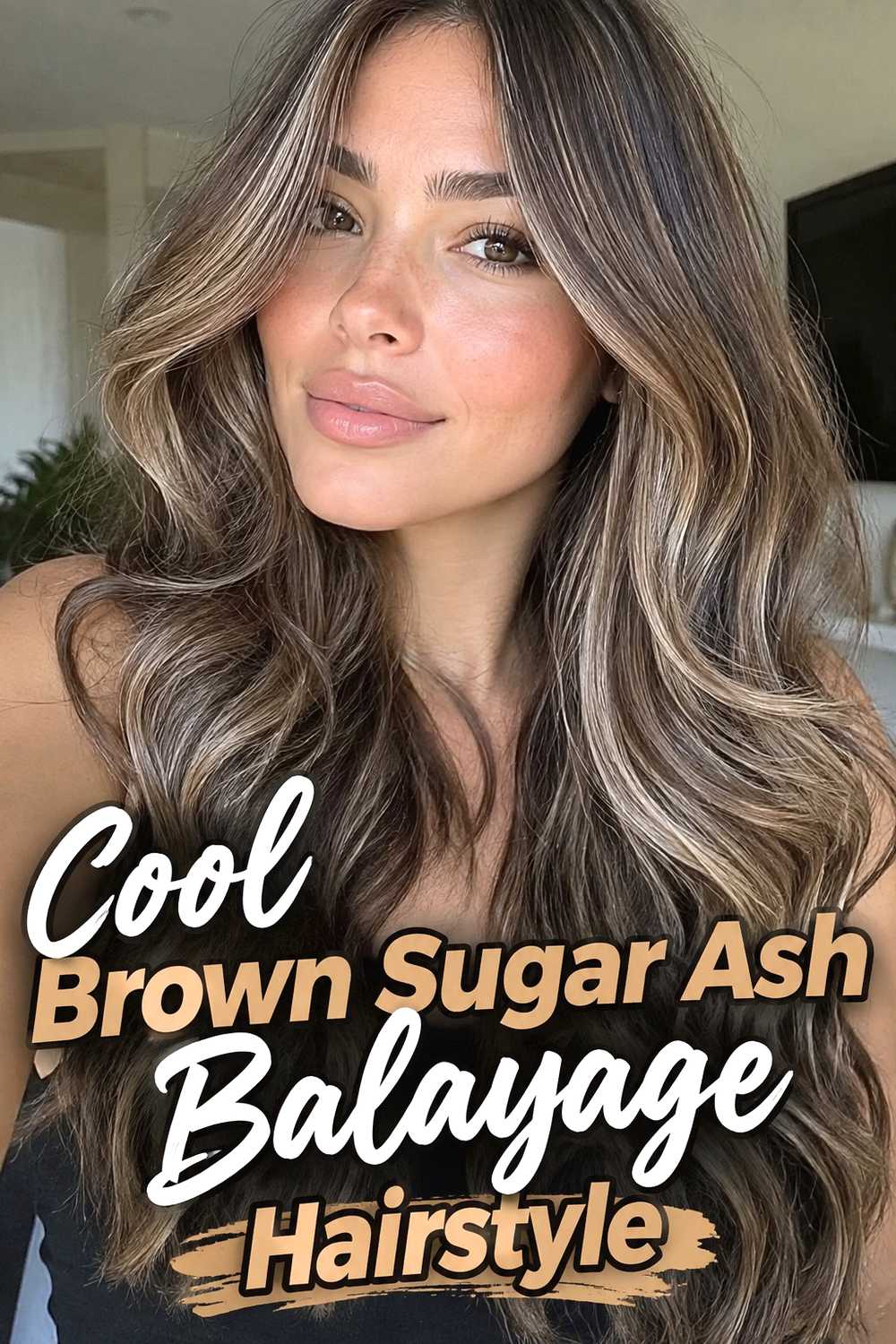
Cool brown sugar ash balayage gives the concept a more muted direction by pairing brunette depth with taupe, ash brown, and cool beige pieces. Instead of obvious gold, the brighter sections have a soft smoky quality that keeps the overall result understated. Fine painted pieces can be concentrated around the mid-lengths and surface layers, leaving darker brown underneath for dimension. This approach looks especially polished on straight hair and loose waves, where the cooler tone remains easy to see. Since ash pigments may reveal warmth as they fade, maintenance can include periodic toning depending on the starting shade. The best result still looks brown and dimensional rather than gray or overly muted.
Why It Works
Cool beige and ash tones add brightness while reducing the golden warmth found in traditional brown sugar balayage.
Pro Tip
Ask for ash-brown rather than gray highlights so the finished shade keeps its rich brunette identity.
4. Brown Sugar Mocha Melt Hairstyle
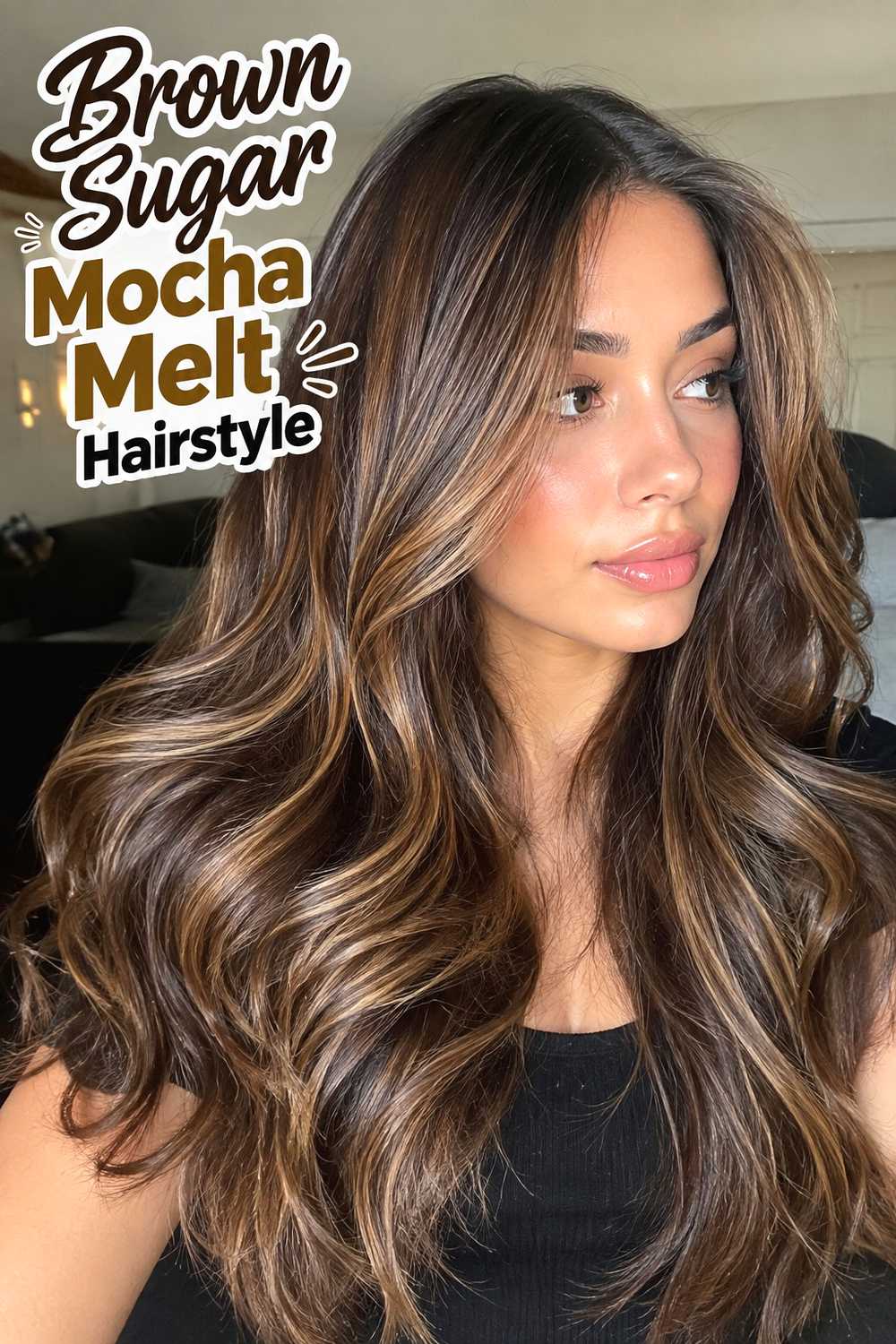
Brown sugar mocha melt uses a deeper brunette root that gradually transitions into medium mocha and softly sweetened brown ends. The shades sit close together, so there is no obvious boundary between the darker top and lighter lengths. This makes the look especially smooth on long hair, where the gradient has enough space to develop naturally. Soft layers help reveal the shift between colors without making the result look sharply highlighted. Compared with traditional balayage, a mocha melt usually feels more continuous and lower contrast. Keeping the ends brown rather than pale preserves the rich brown sugar mood and makes the overall color feel sophisticated rather than heavily lightened.
Styling Notes
Broad, relaxed waves help the mocha transition look dimensional while keeping the blend soft.
Best For
Choose this option if you want a gradual brunette gradient instead of clearly defined highlight ribbons.
5. Brown Sugar Honey Ribbon Hairstyle
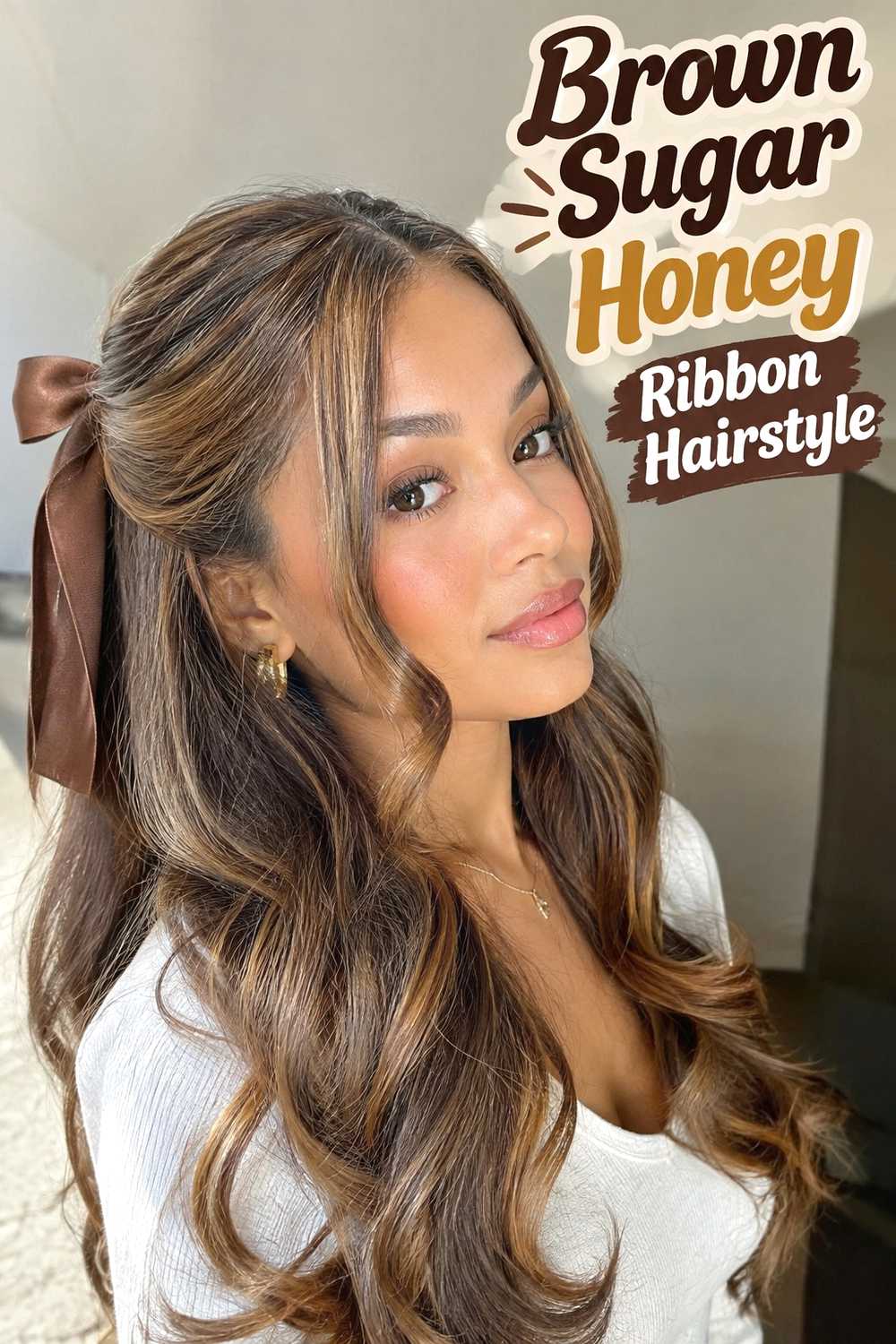
Brown sugar honey ribbons introduce brighter golden-brown pieces through a richer brunette base, creating one of the warmer looks in the collection. The ribbons should vary slightly in width and placement so they feel integrated rather than repetitive. Dark brown sections between them are essential for maintaining depth and giving the honey tones something to contrast against. Long layers and soft waves work particularly well because they allow each ribbon to appear at a different point through the movement. If you prefer a subtle version, keep the honey shade closer to light brown than blonde. More visible ribbons create greater brightness but may also require more tonal maintenance as the color fades.
Why It Works
The combination of dark brunette shadow and honey-brown brightness gives the hair visible movement without losing warmth or richness.
Wear & Maintenance
Warm ribbons may gradually become more golden, so occasional glossing can help maintain a balanced honey-brown tone.
6. Brown Sugar Face Framing Balayage Hairstyle
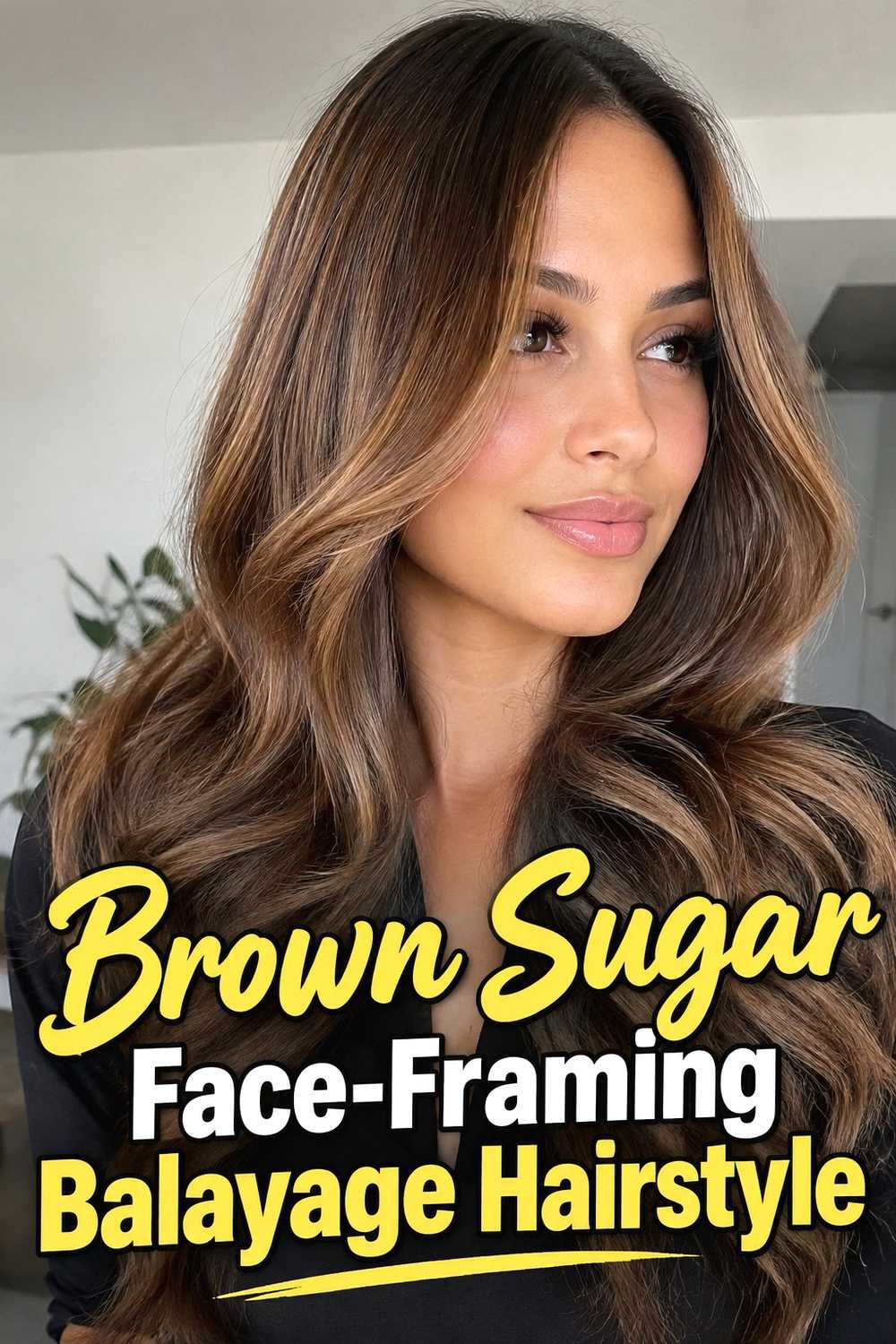
Brown sugar face-framing balayage concentrates brighter brunette pieces around the front while keeping the rest of the hair deeper and more understated. Caramel-brown, mocha, or warm beige tones can follow curtain bangs and long face-framing layers, making the contrast appear naturally connected to the haircut. This placement offers a noticeable color change without requiring extensive lightening throughout the back. Keeping the pieces only a few levels brighter than the base creates a softer result, while stronger contrast makes the front more prominent. Because hairline sections tend to show regrowth sooner than interior balayage, a diffused root can help the finished look remain wearable between appointments.
Best For
This approach suits anyone who wants strategic brightness near the front without dramatically changing the entire brunette base.
Wear & Maintenance
Lower contrast around the hairline usually creates a softer grow-out than very light front pieces.
7. Brown Sugar Beige Balayage Hairstyle
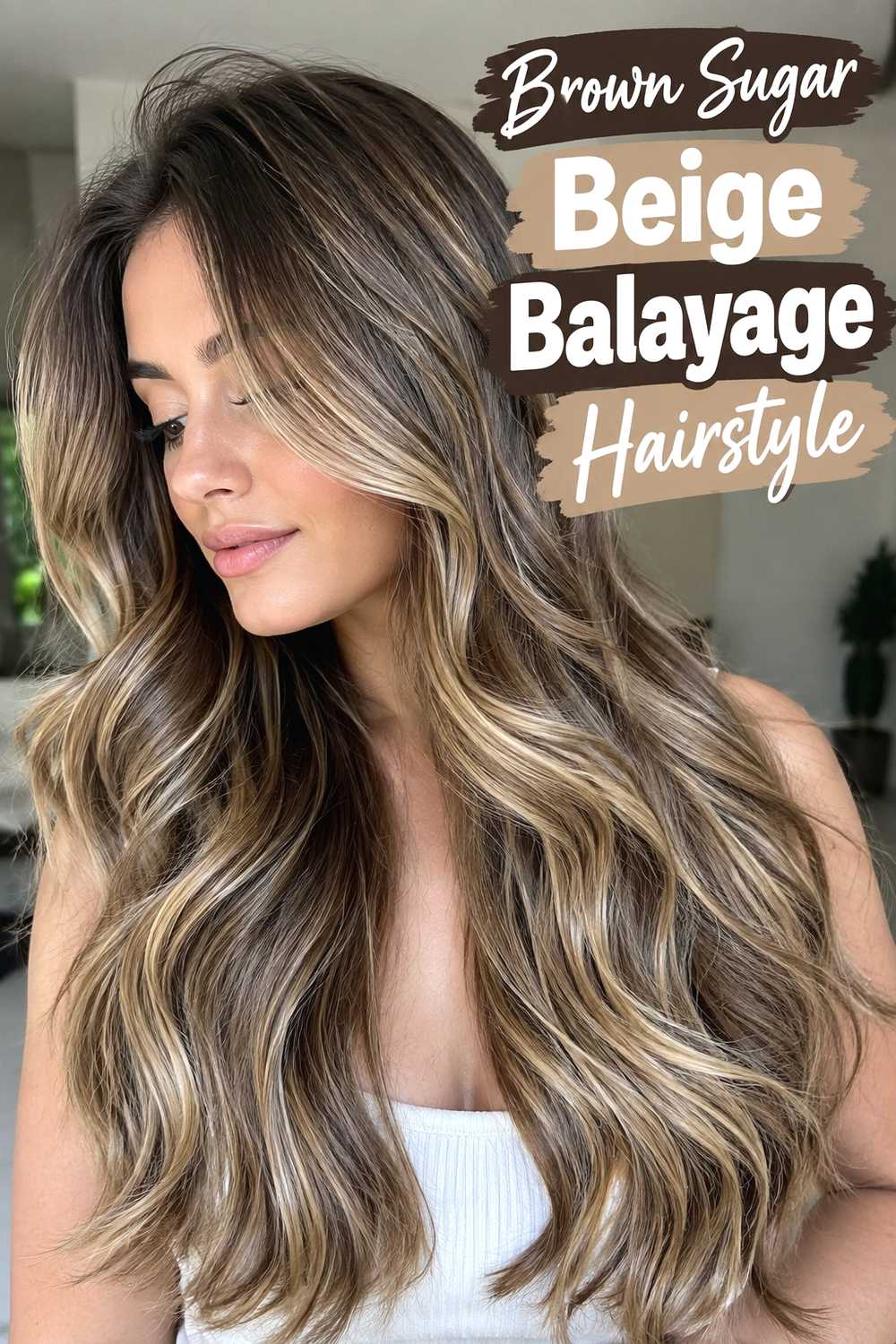
Brown sugar beige balayage replaces stronger golden tones with creamy neutral-brown highlights that brighten the hair without pushing noticeably warm or cool. A medium brunette root provides shadow, while beige-brown sections are painted gradually through the lower lengths. This balance makes the color feel soft and refined, especially on layered hair where the lighter pieces can follow natural movement. Waves show the beige contrast clearly, while a blowout creates a smoother blend. Depending on the starting shade, achieving a clean beige result may require some controlled lightening, so maintaining softness through the ends matters. The finished tone should remain brown enough to complement the deeper base instead of becoming pale blonde.
Why It Works
Neutral beige brightness softens the brunette while avoiding the stronger warmth of caramel or honey balayage.
Hair Type & Length
Medium and long hair give the beige pieces enough space to transition gradually from the darker root area.
8. Dark Brown Sugar Balayage Hairstyle
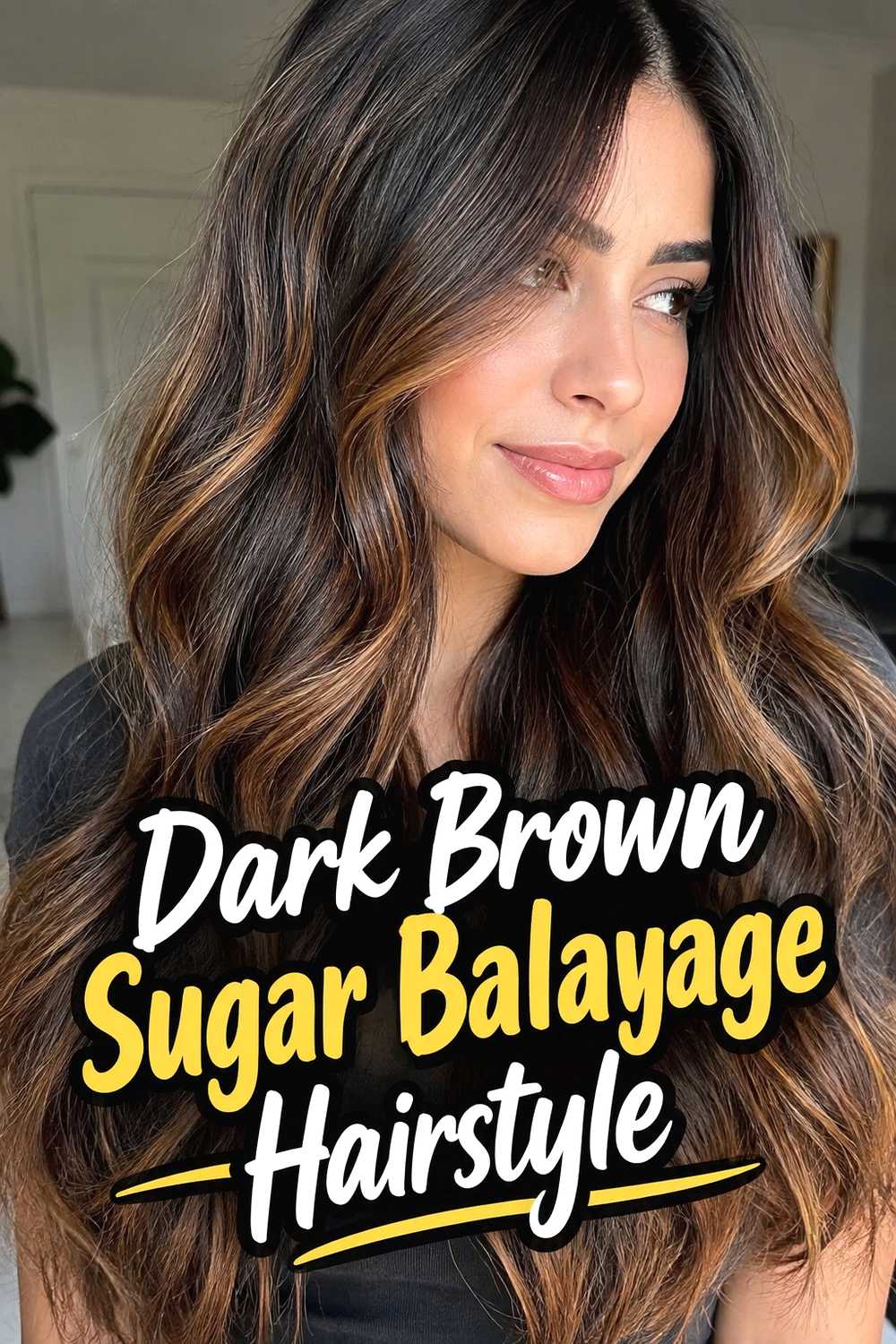
Dark brown sugar balayage keeps the overall shade deep, using subtle mocha and warm chocolate pieces rather than obvious light highlights. The base can stay close to espresso or deep brunette, while the painted sections appear only a few levels lighter through the mid-lengths and ends. This creates movement under natural light without dramatically changing the hair’s dark character. It works particularly well for naturally deep brunettes who want dimension but would rather avoid extensive lightening. Straight styling emphasizes the glossy depth, while loose waves reveal the hidden lighter pieces more clearly. Keeping the tonal difference restrained also makes the grow-out less visually dramatic than a high-contrast balayage.
Styling Notes
Smooth waves offer a good balance between showing the darker base and revealing the subtle painted sections.
Best For
Choose this variation if you want balayage dimension while keeping your hair unmistakably dark brunette.
9. Brown Sugar Mushroom Balayage Hairstyle
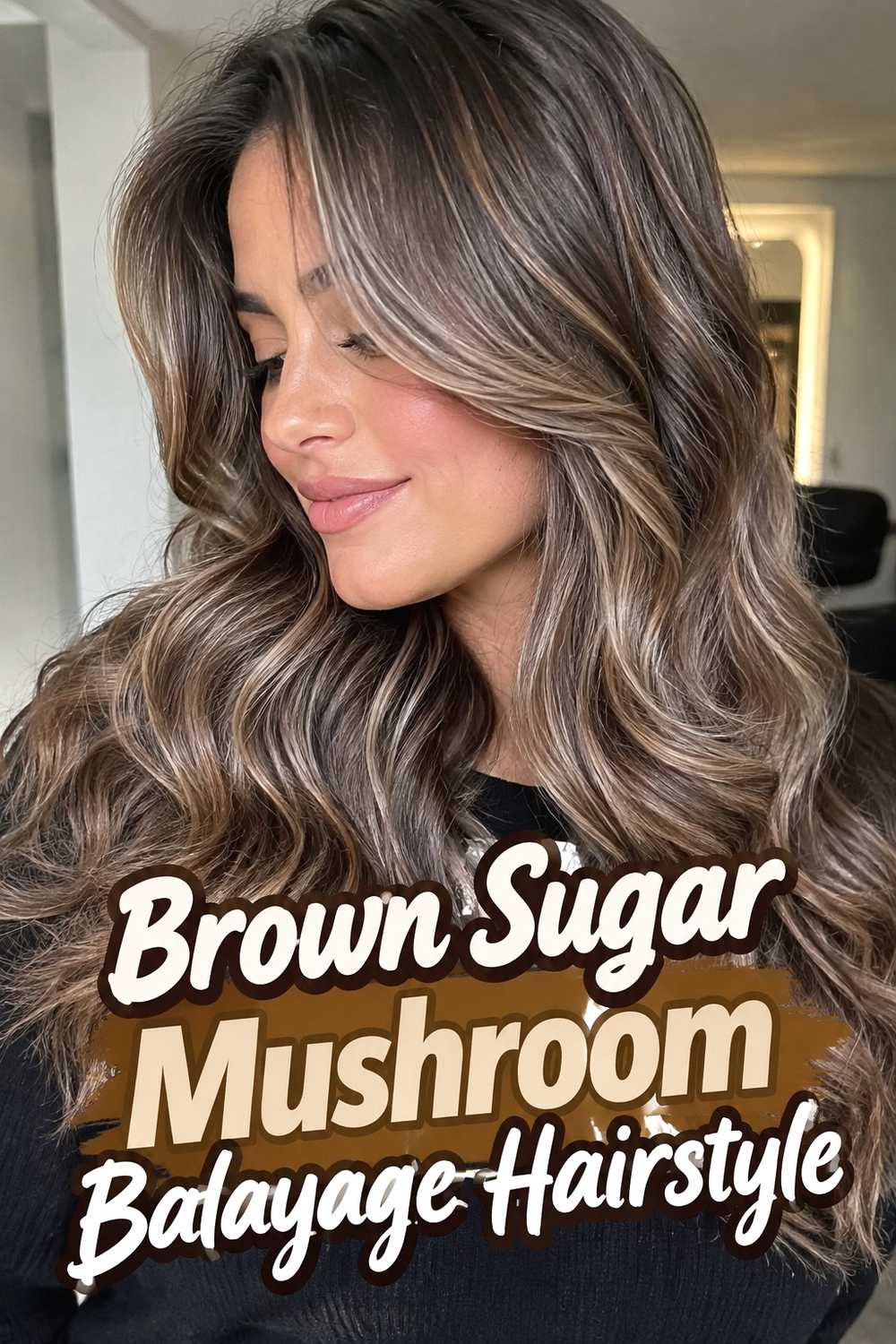
Brown sugar mushroom balayage mixes an earthy brunette base with muted taupe, cool beige, and mushroom-brown highlights. The result feels less golden than classic brown sugar color but still has enough softness to avoid looking overly ashy. Fine painted sections can be placed through the surface and ends, with plenty of deeper brown left underneath for shadow. Medium-length layers and textured lobs suit this palette especially well because movement makes the subtle neutral tones easier to notice. Mushroom shades can reveal warmth as they fade, so tonal refreshes may be useful depending on the hair’s underlying pigment. The goal is a balanced earthy brunette rather than a flat gray finish.
Why It Works
Taupe and mushroom tones create sophisticated contrast while the brown base preserves warmth and natural-looking depth.
Pro Tip
Bring reference photos showing exactly how cool you want the lighter sections, since mushroom brown can vary significantly.
10. Brown Sugar Chocolate Swirl Hairstyle
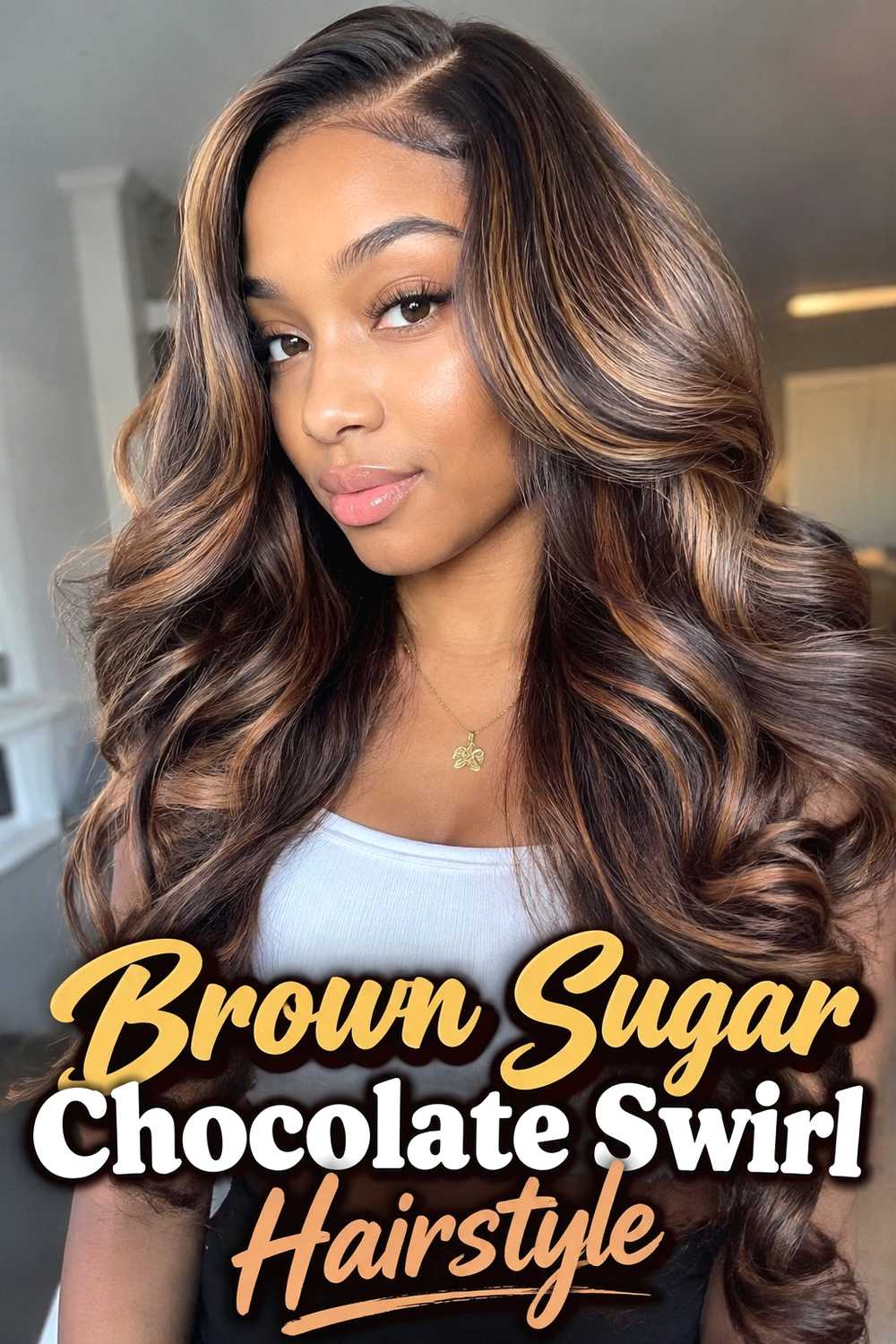
Brown sugar chocolate swirl combines deep chocolate, milk chocolate, mocha, and lightly caramelized brown tones through a multidimensional brunette base. Unlike a standard balayage with one brighter shade, this approach uses several neighboring colors that appear to twist through the lengths. Waves make the swirl effect especially visible because each curve reveals a different level of brown. The lightest pieces can remain subtle, allowing richness rather than brightness to define the finished look. This is a strong option for someone who wants complexity without blonding the overall color. Keeping the placement irregular and blended helps prevent the different shades from looking like separate bands or repetitive streaks.
Styling Notes
Large waves showcase the chocolate and brown-sugar shades without making the color placement feel overly busy.
Why It Works
Several closely related brunette shades create depth and movement while keeping the palette cohesive and rich.
11. Brown Sugar Dimensional Balayage Hairstyle
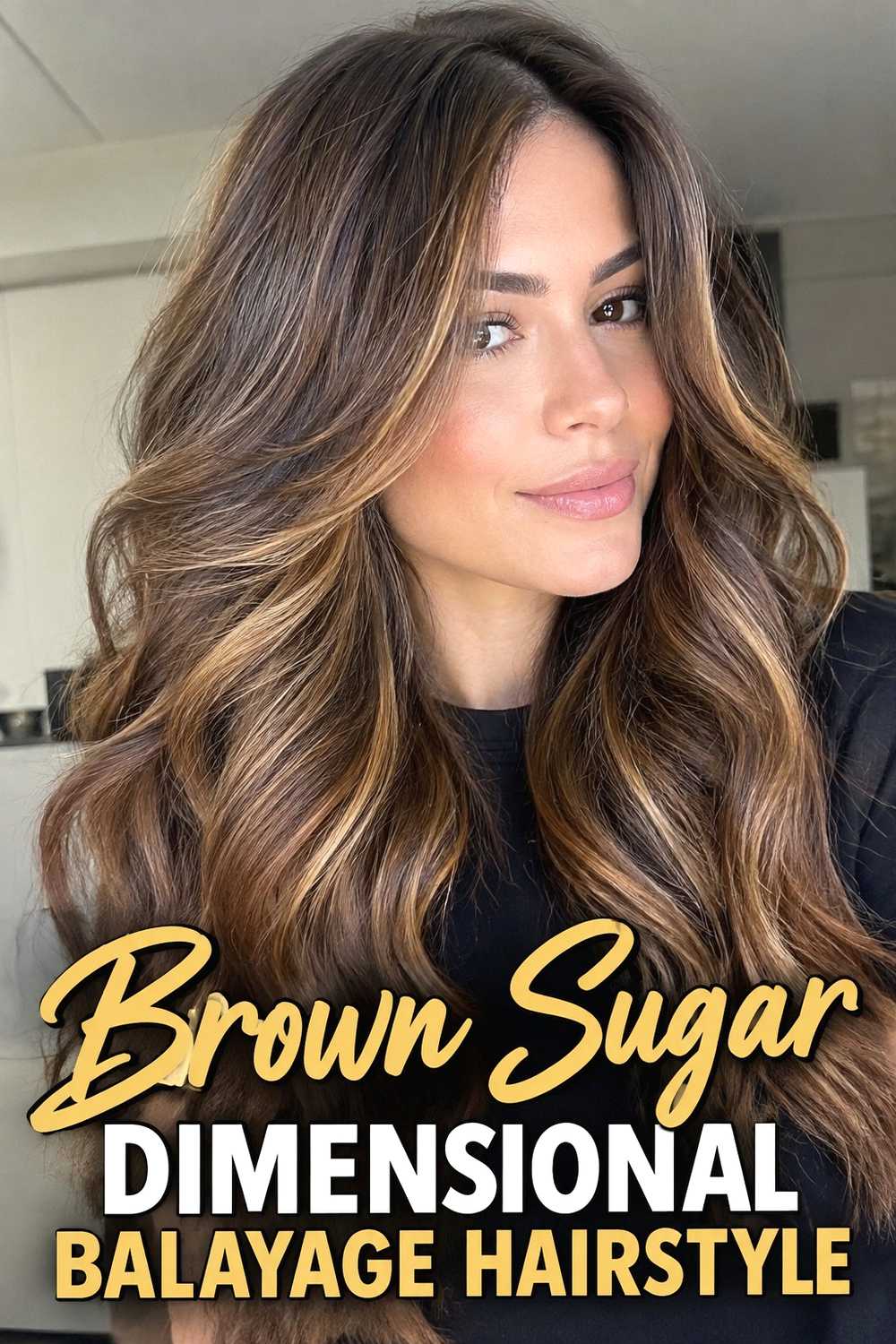
Brown sugar dimensional balayage uses multiple tones and varied placement to create depth through the entire haircut. A brunette base can be paired with mocha, beige brown, caramel, and soft honey pieces, with no single highlight shade dominating the result. Some sections can begin higher for brightness while others stay concentrated toward the ends, preventing the pattern from looking uniform. This technique works especially well on thick or layered hair because each movement point reveals a slightly different shade. Leaving enough untouched brunette throughout the interior preserves shadow and helps the lighter pieces stand out naturally. The final result should feel layered and complex rather than heavily highlighted.
Hair Type & Length
Thick, medium, or long layered hair provides plenty of surface area for multiple brunette tones to remain visible.
Pro Tip
Ask for varied highlight sizes and depths instead of evenly repeated painted sections for a more natural finish.
12. Rooted Brown Sugar Balayage Hairstyle
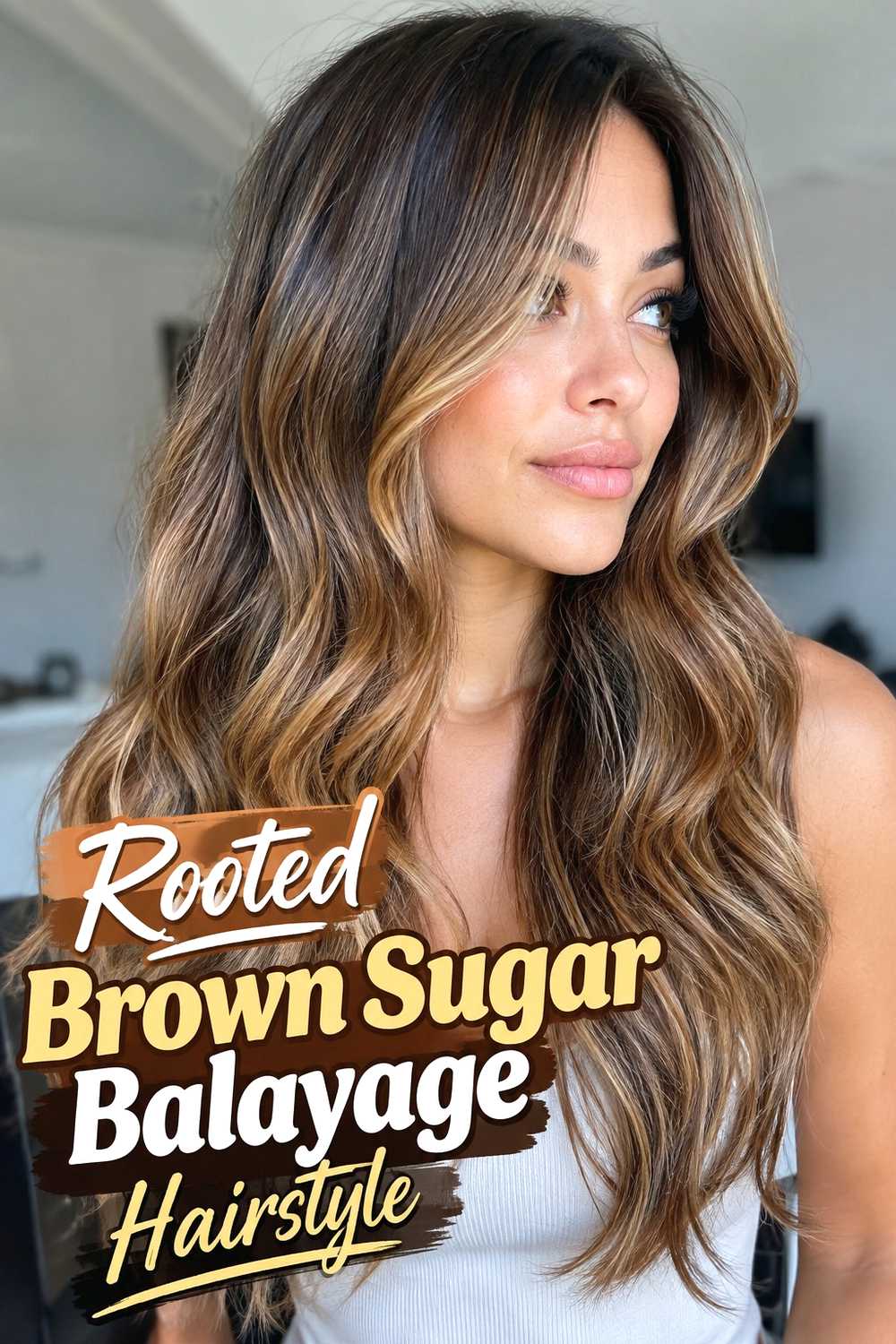
Rooted brown sugar balayage keeps a deliberately deeper top section before transitioning softly into warm medium-brown and caramelized lengths. The root can stay close to the natural color, making the look especially useful for darker brunettes who want lightness without frequent root appointments. The transition should begin gradually, with no harsh line between the dark root and brighter mid-lengths. Long layers and loose bends blend the contrast particularly well. Compared with an all-over lighter color, this approach keeps more shadow near the scalp and can create a softer grow-out. The lighter ends still benefit from tonal refreshing, especially if they begin becoming too golden between full color services.
Wear & Maintenance
Keeping the root close to your natural depth can make regrowth less noticeable while preserving the lived-in balayage effect.
Styling Notes
Soft waves help dark roots and warmer lengths overlap naturally, making the gradient appear seamless.
13. Brown Sugar Bronde Balayage Hairstyle
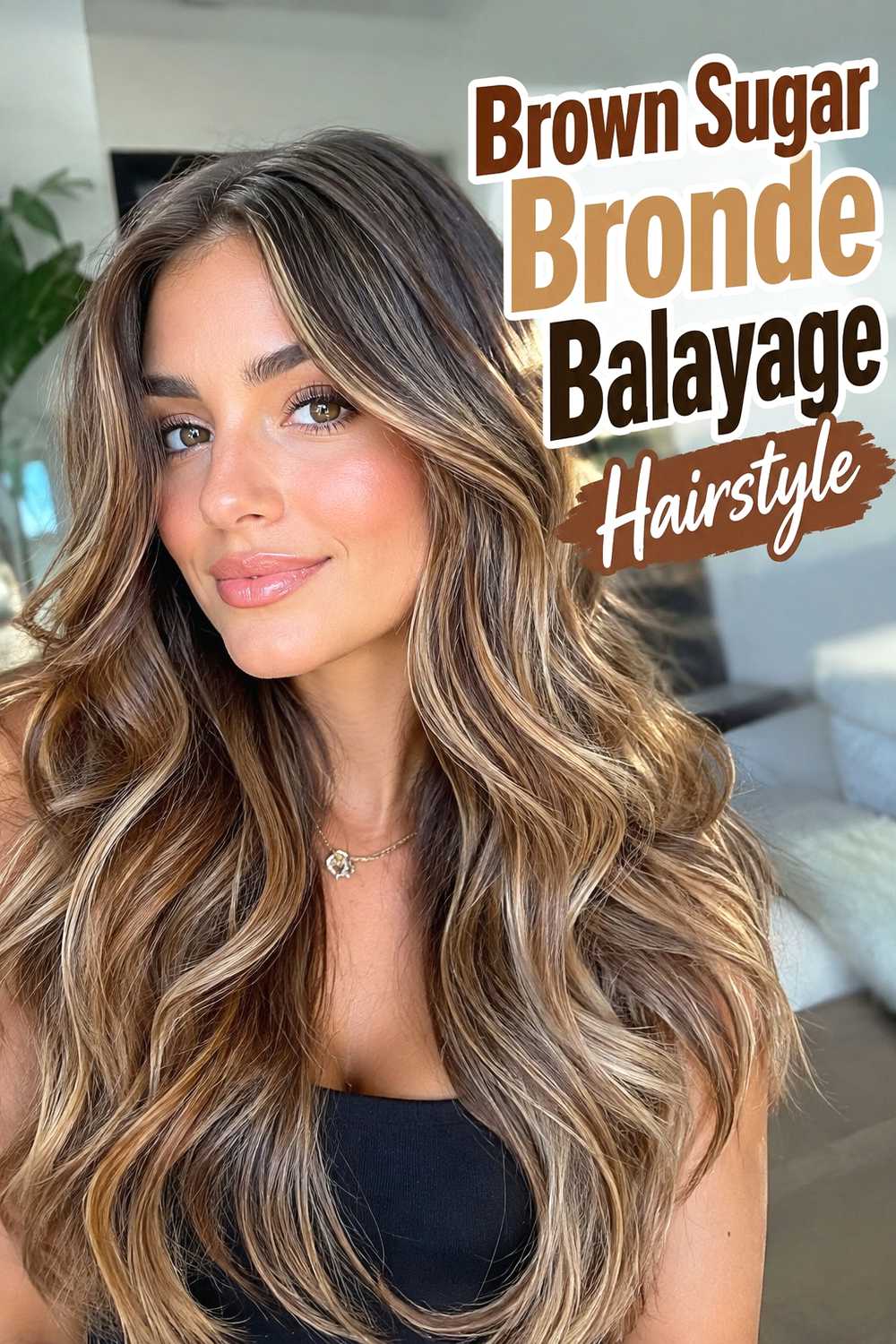
Brown sugar bronde balayage takes the look lighter by blending brunette roots with generous beige-brown, honey-brown, and dark blonde sections. The darkest color remains around the root and interior, but the lighter pieces become a more prominent part of the overall result. Long layered hair gives the blend enough space to transition smoothly, especially when mocha and light brown tones bridge the gap between the deepest and brightest sections. This version generally requires more lightening than classic brown sugar balayage, so the condition of the ends should factor into the decision. Keeping the root brunette preserves depth and prevents the finished color from reading as fully blonde.
Why It Works
A strong brunette root balances the brighter bronde lengths, creating noticeable dimension without losing the brown-sugar foundation.
Wear & Maintenance
Expect more tone and condition maintenance than with a darker, lower-contrast balayage because a larger portion of the hair is lightened.
14. Brown Sugar Lob Balayage Hairstyle
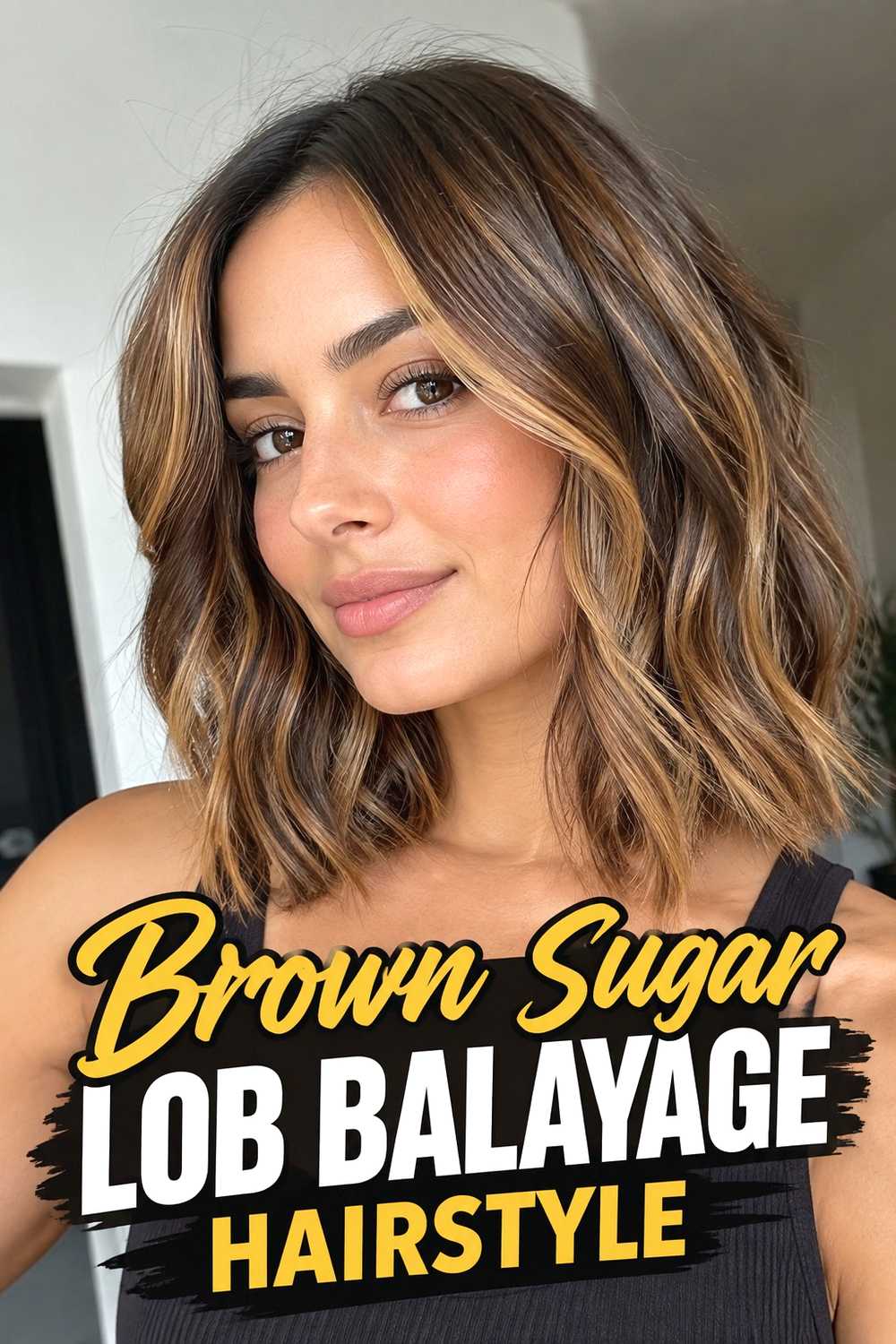
Brown sugar lob balayage pairs a shoulder-to-collarbone cut with strategically painted warm-brown and mocha pieces. Because the haircut is shorter, placement becomes especially visible around the perimeter and face, making even a modest amount of balayage feel dimensional. A deeper brunette root keeps the color grounded, while brighter sections through the ends make the lob’s movement easier to see. The cut can stay blunt for a fuller silhouette or include light internal layers to soften thicker hair. Sleek styling emphasizes the clean shape, while loose bends reveal more color variation. Keeping the ends conditioned and regularly trimmed helps the highlighted perimeter maintain its polished appearance.
Hair Type & Length
This look is designed around shoulder-to-collarbone hair and can be adjusted for fine, medium, or thicker density.
Styling Notes
Use gentle bends when you want the painted pieces to show clearly, or wear it straight to emphasize the glossy perimeter.
15. Velvet Brown Sugar Waves Hairstyle
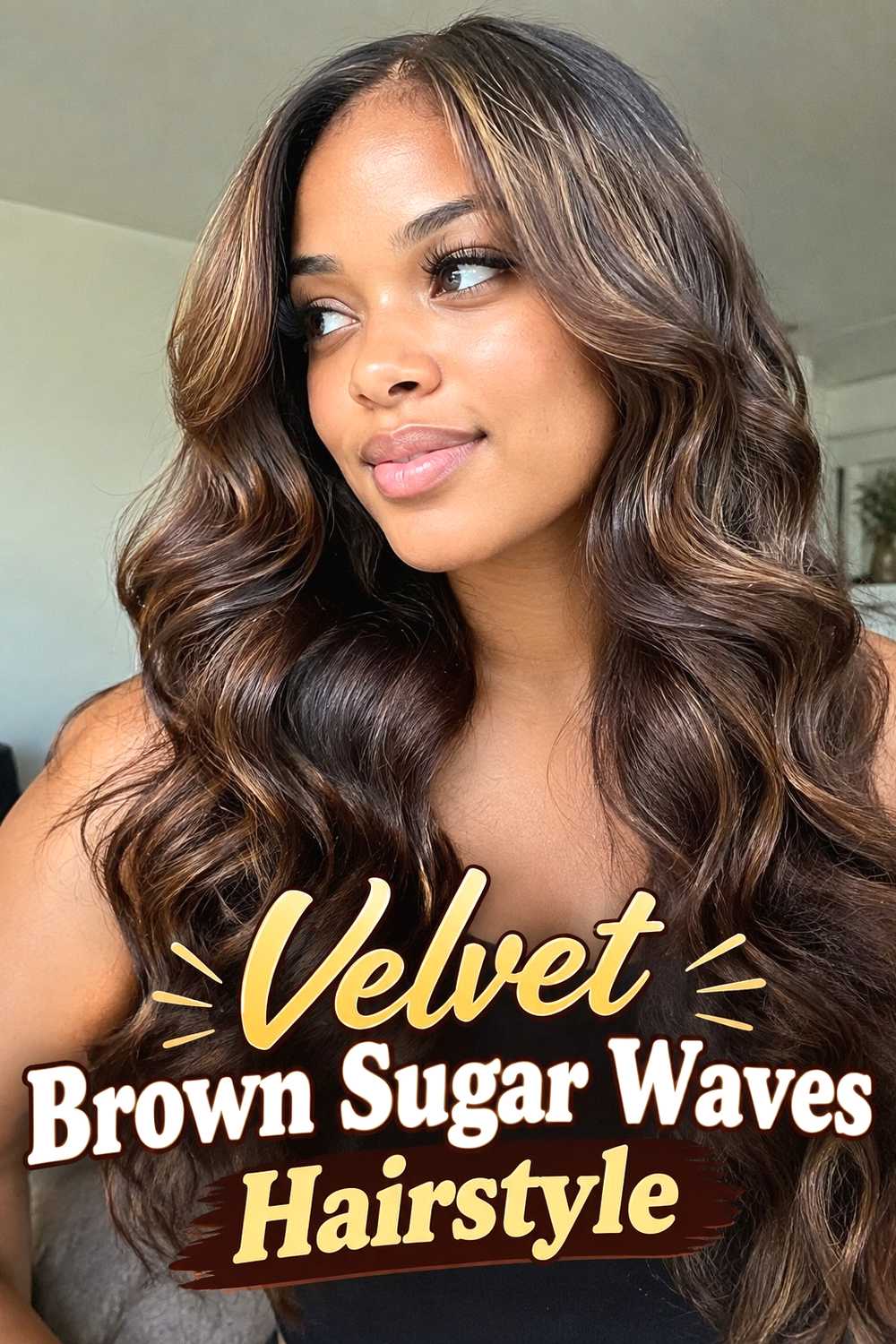
Velvet brown sugar waves combine a rich brunette base with softly blended caramelized brown highlights and broad, touchable movement. Rather than using extremely bright pieces, the color relies on subtle contrast that becomes visible as each wave catches the light. Medium-to-long hair works particularly well because the bends have enough space to form while still showing the balayage transition. Light layering can help the highlighted sections separate naturally without reducing too much fullness through the ends. The finish should stay flexible instead of stiff, with realistic strand separation and soft shine. This variation is ideal for someone who prefers understated balayage and wants styling to create much of the visible dimension.
Why It Works
Wide waves naturally reveal different parts of the balayage, making a subtle brown-sugar blend appear richer and more dimensional.
Styling Notes
Loosen the waves after they set so the texture remains soft and the painted brunette tones can blend naturally.
How to Choose the Right Look
Start with warmth. Warm Brown Sugar Caramel, Honey Ribbon, and Bronde Balayage offer the most golden brightness, while Cool Brown Sugar Ash and Mushroom Balayage create more muted, neutral-to-cool finishes. Brown Sugar Beige sits comfortably between those extremes.
Next, compare contrast. Dark Brown Sugar Balayage and Mocha Melt stay subtle, while Face-Framing, Honey Ribbon, and Bronde versions create more visible brightness. Dimensional Balayage uses several tones for a layered result rather than relying on one standout highlight shade.
Your length and texture matter too. Long hair gives melts and balayage more room to transition, while a lob makes color placement feel concentrated. Waves reveal contrast particularly well, whereas straight styling emphasizes gloss and seamless blending.
Finally, think about maintenance. Rooted balayage and shades close to your natural base can create softer-looking regrowth. Brighter bronde, honey, and face-framing sections may need more frequent tonal attention, while cool ash formulas can require refreshing when warmth begins to show.
Final Thoughts
Brown sugar balayage hair can be warm and caramelized, cool and mushroom-toned, dark and subtle, or brightened into a soft bronde. The most practical option depends on your starting color, desired contrast, undertone, and willingness to maintain the lighter sections. Keeping enough brunette depth between painted pieces helps the finished look stay rich, blended, and naturally dimensional.
FAQs
1. What is brown sugar balayage hair?
Brown sugar balayage usually combines a brunette base with softly painted caramelized brown, mocha, beige, honey, or chocolate tones through the lengths.
2. Is brown sugar balayage warm or cool?
It is often warm, but it can be customized. Caramel and honey versions lean warmer, while ash and mushroom-brown balayage create a cooler effect.
3. Can brown sugar balayage work on dark brunette hair?
Yes. Dark brunettes can keep significant depth at the roots and interior while introducing mocha, chocolate, or warmer brown pieces through the lengths.
4. What is the difference between brown sugar balayage and bronde balayage?
Brown sugar balayage can remain predominantly brunette, while bronde usually uses more lightened beige-brown or dark blonde sections for a brighter overall appearance.
5. Which brown sugar balayage has softer grow-out?
Rooted balayage, mocha melts, and lower-contrast dark brown sugar balayage can make new growth less obvious when the root remains close to your natural color.
Save your favorite brown sugar balayage ideas, share them for inspiration, and explore more dimensional brunette color looks for your next hair update.