14 Butterfly Layers for Thick Wavy Hair
Butterfly layers can give thick wavy hair lighter movement, softer shape, and face-framing volume without sacrificing the fullness that makes the texture so beautiful.
Thick wavy hair already has natural body, so butterfly layering works best when it redirects that volume rather than simply removing weight everywhere. Shorter face-framing sections can open up the front, while longer internal layers help the waves move without leaving the ends looking thin.
The right version depends on length, density, wave pattern, and styling habits. Some cuts emphasize sweeping front layers and polished blowouts, while others use shaggy texture, airy ends, or natural waves for a more relaxed finish. Keeping enough weight through the lower lengths is especially important when you want the haircut to stay full and balanced.
Quick List
- Classic Butterfly Layers For Thick Wavy Hair Hairstyle
- Long Face Framing Butterfly Layers Hairstyle
- Soft Rounded Butterfly Layers Hairstyle
- Butterfly Layers With Curtain Bangs Hairstyle
- Butterfly Layers With Long Side Bangs Hairstyle
- Mid Length Butterfly Layers Hairstyle
- Butterfly Layers With Airy Ends Hairstyle
- Shaggy Butterfly Layers Hairstyle
- Butterfly Layers With Deep Side Part Hairstyle
- Butterfly Layers With Soft Waves Hairstyle
- Butterfly Layers With Feathered Ends Hairstyle
- Butterfly Layers With Voluminous Crown Hairstyle
- Butterfly Layers With Face Framing Highlights Hairstyle
- Low Maintenance Butterfly Layers Hairstyle
1. Classic Butterfly Layers For Thick Wavy Hair Hairstyle
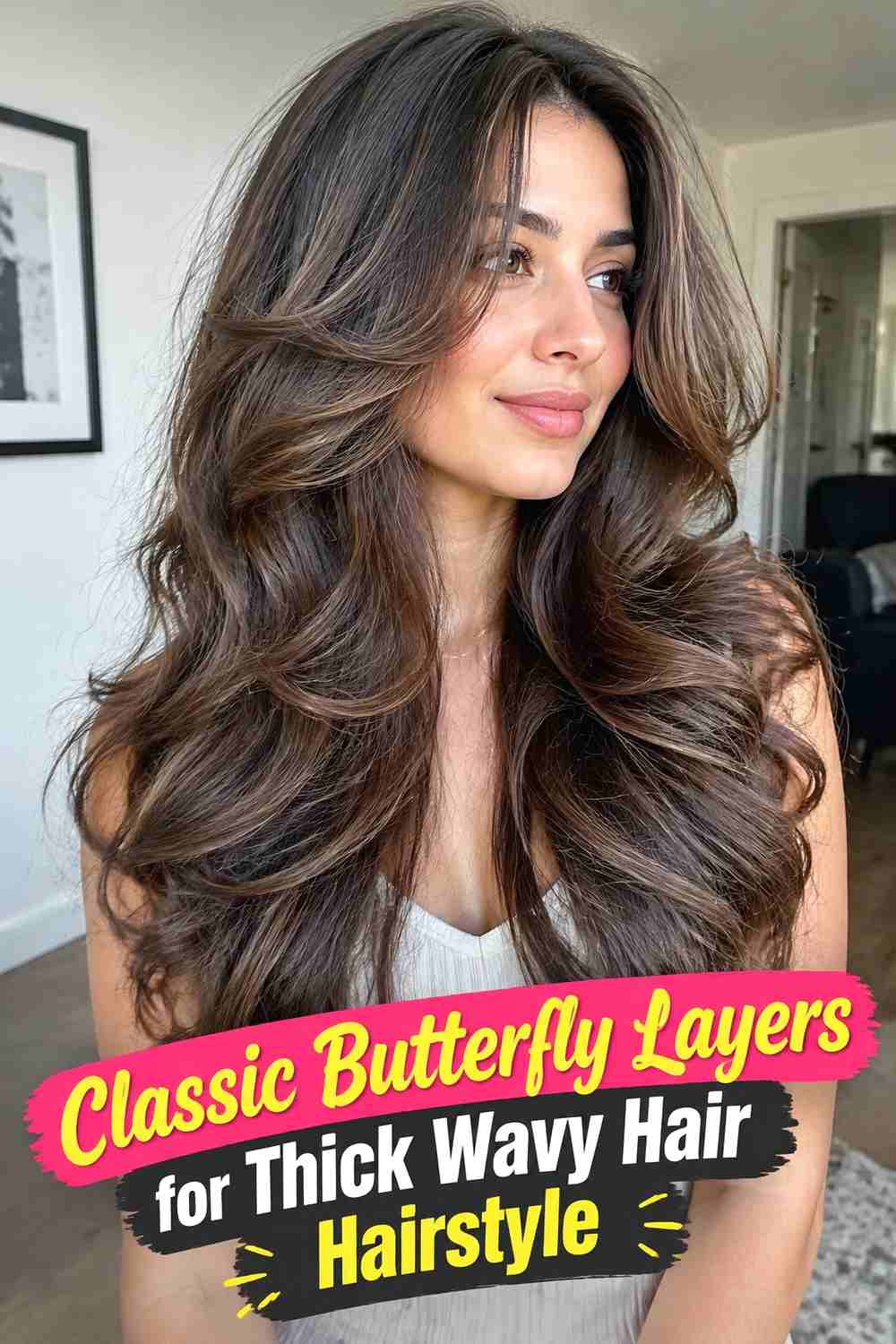
Classic butterfly layers give thick wavy hair several levels of movement while keeping the longest sections substantial. Shorter pieces begin around the cheekbones or jaw and sweep away from the face, while longer layers continue through the mids and ends. On dense hair, this helps redistribute bulk so the shape feels lighter without becoming wispy. Natural waves make the layering especially visible because each bend reveals a different length. A round-brush blowout can emphasize the classic butterfly effect, but the cut should also settle well when worn with natural texture. Keeping the bottom layer relatively full prevents the ends from looking thin after weight is removed higher up.
Styling Notes
Direct the front layers away from the face and let the longer waves retain softer, less controlled movement through the ends.
Best For
This version is ideal for thick medium-to-long hair when you want noticeable layering without losing overall density.
2. Long Face Framing Butterfly Layers Hairstyle
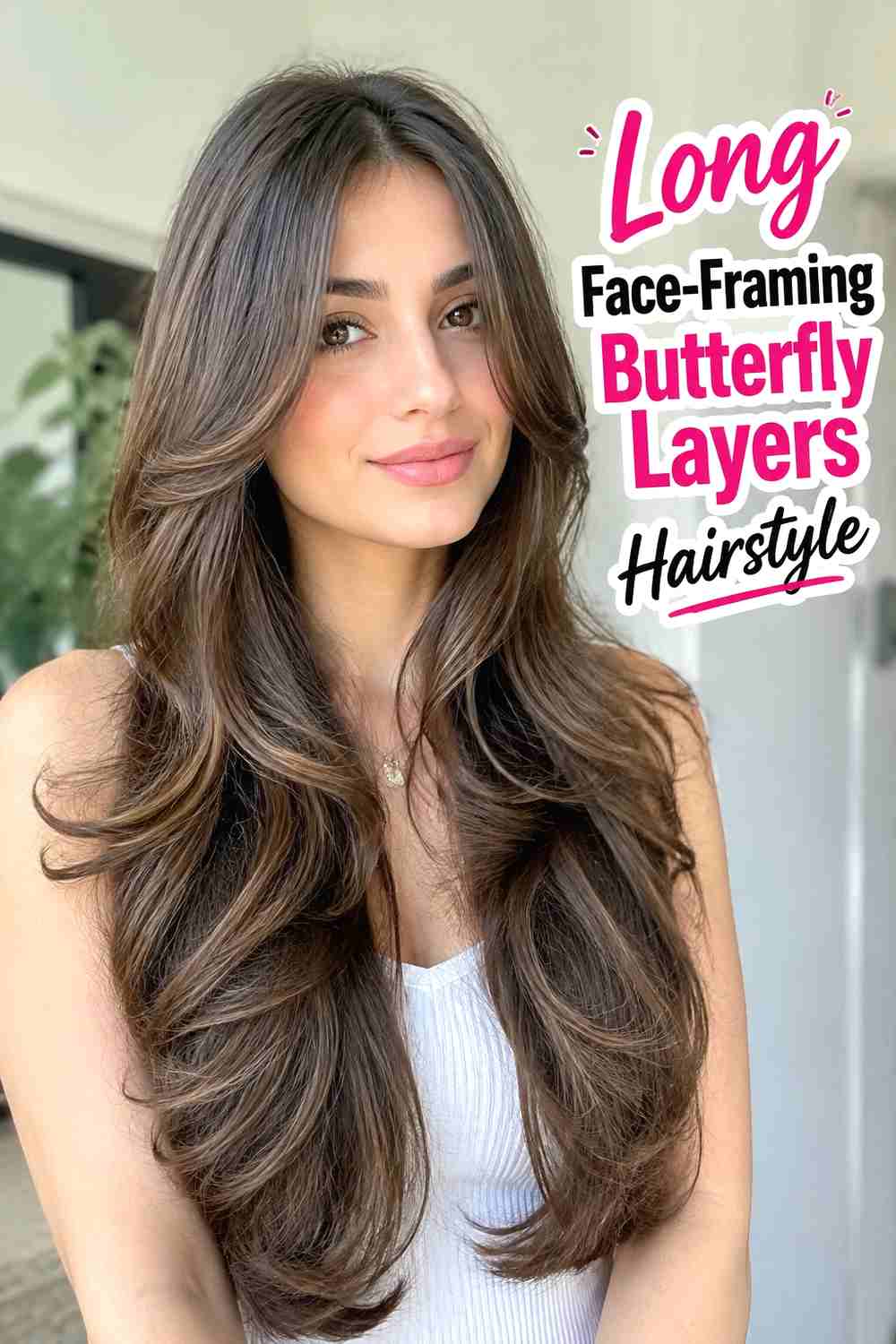
Long face-framing butterfly layers create movement around the front without adding too many short pieces through the crown. The first layers can begin near the cheekbones or jaw, then gradually blend into longer lengths below the shoulders. This makes the cut a good option for thick wavy hair that already carries plenty of natural volume and does not need extra lift at the top. When worn with loose waves, the shorter sections sweep outward while the heavier lower lengths anchor the silhouette. The result feels airy around the face but still substantial through the back. It also offers flexibility for ponytails and updos because the majority of the hair remains long.
Why It Works
Concentrating the shortest layers around the face creates visible movement without removing unnecessary weight from the entire haircut.
Pro Tip
Ask for gradual transitions between the cheekbone, jaw, and shoulder layers so the front does not look disconnected from the longer hair.
3. Soft Rounded Butterfly Layers Hairstyle
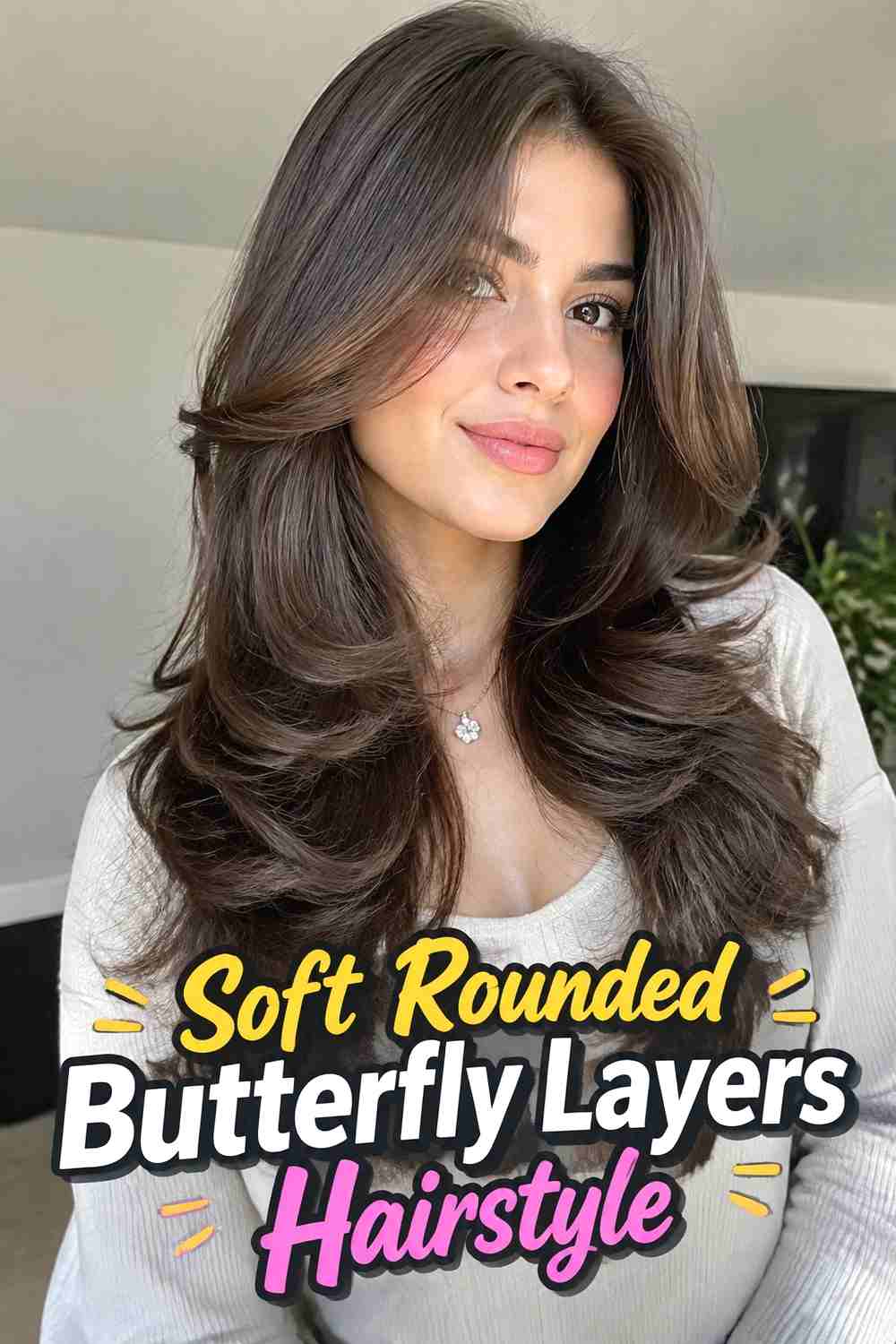
Soft rounded butterfly layers create a smooth, flowing silhouette rather than a sharply feathered one. The front pieces curve gently around the face, while medium and long layers add controlled volume through the sides. This approach works well for thick waves that can become triangular when too much weight gathers at the bottom. By distributing some of that fullness higher, the haircut gains shape without looking aggressively layered. A rounded blowout highlights the design, especially when the front pieces turn away from the face and the ends remain soft. Natural waves can also wear the shape beautifully as long as the layers are long enough to avoid excessive puffiness around the crown.
Styling Notes
Use a large round brush to create broad curves instead of small flips, keeping the finish smooth and fluid.
Wear & Maintenance
Longer rounded layers generally hold their shape well as they grow, although occasional reshaping keeps the front movement clear.
4. Butterfly Layers With Curtain Bangs Hairstyle
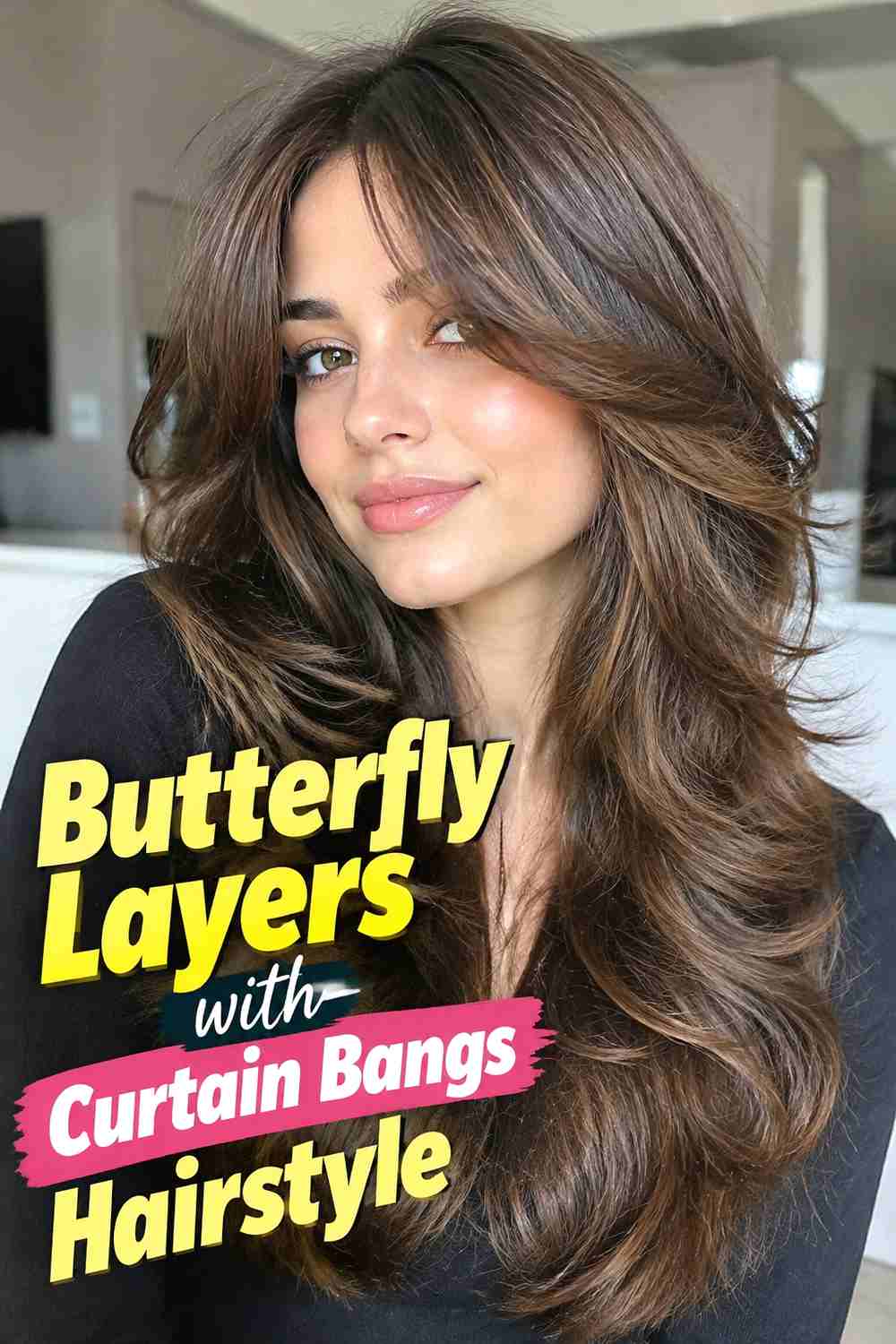
Curtain bangs blend naturally into butterfly layers because both are designed to move away from the face. The fringe can part through the center and gradually lengthen toward the temples, where it connects with cheekbone and jaw-level layers. On thick wavy hair, the bangs should retain enough weight to avoid becoming overly fluffy while still feeling light enough to separate. The rest of the haircut can keep longer layers through the sides and back, allowing natural waves to maintain fullness. A round-brush finish makes the curtain effect more dramatic, but the cut can also work with air-dried texture if the fringe follows the natural wave pattern.
Best For
This look suits thick wavy hair when you want more movement around the forehead and cheekbones without committing to short blunt bangs.
Pro Tip
Have the curtain fringe shaped in its dry texture so natural wave and shrinkage do not make it sit much shorter than expected.
5. Butterfly Layers With Long Side Bangs Hairstyle
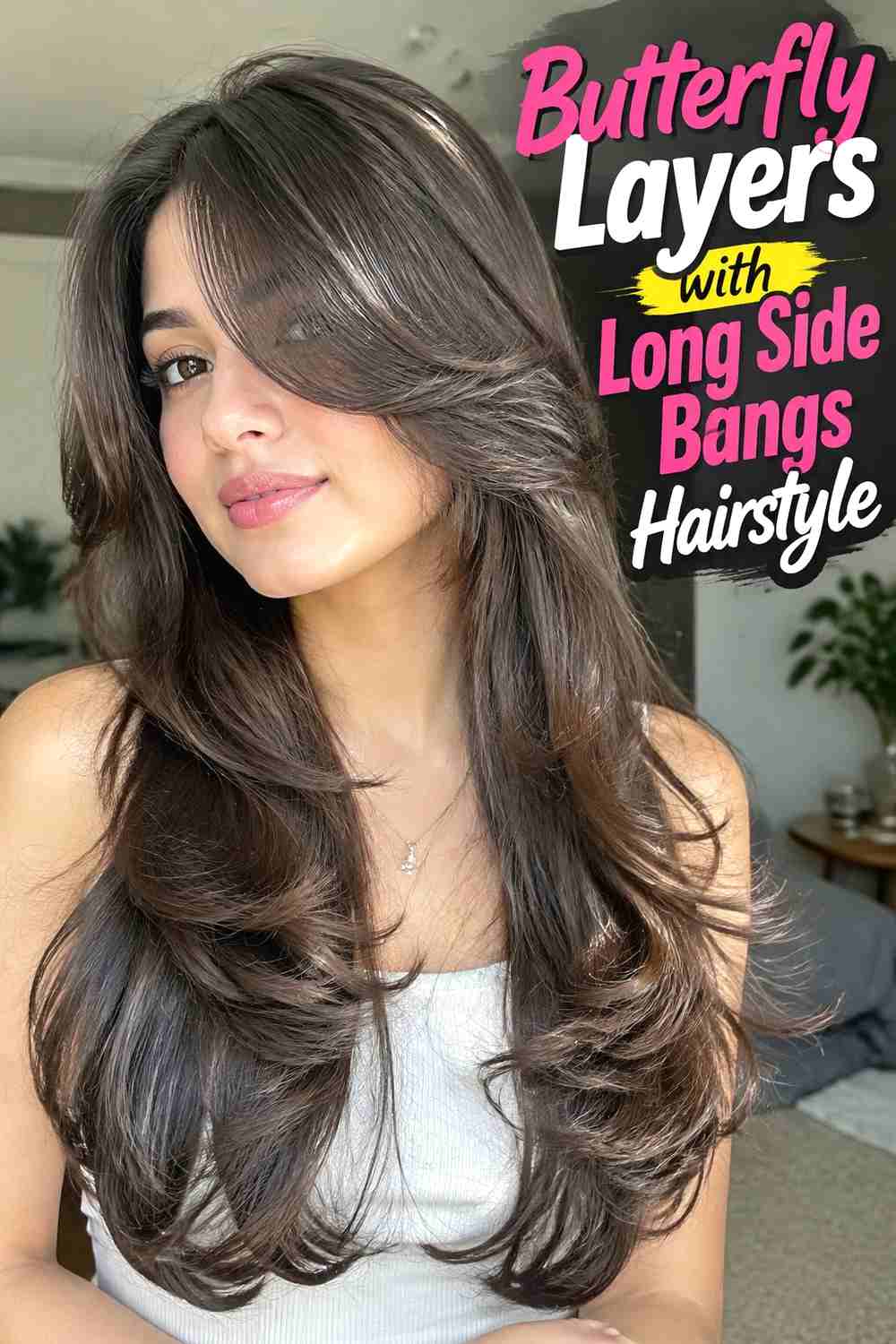
Long side bangs bring asymmetry to butterfly layers, directing more movement toward one side of the face. The fringe can begin around the brow or cheekbone and sweep into longer front sections, creating a continuous diagonal line. Thick wavy hair supports this shape especially well because the natural density gives the side sweep enough body to look intentional. Through the rest of the haircut, longer butterfly layers reduce heaviness while keeping the ends substantial. This version works with a deep or moderate side part and can be styled polished or more relaxed. The bangs also offer flexibility because they can be tucked back or blended into waves when you want less obvious fringe.
Styling Notes
Dry the fringe in the direction you normally part your hair, then let it merge naturally with the first face-framing layer.
Why It Works
The long diagonal fringe provides shape without introducing a separate short bang section that might become bulky on dense wavy hair.
6. Mid Length Butterfly Layers Hairstyle
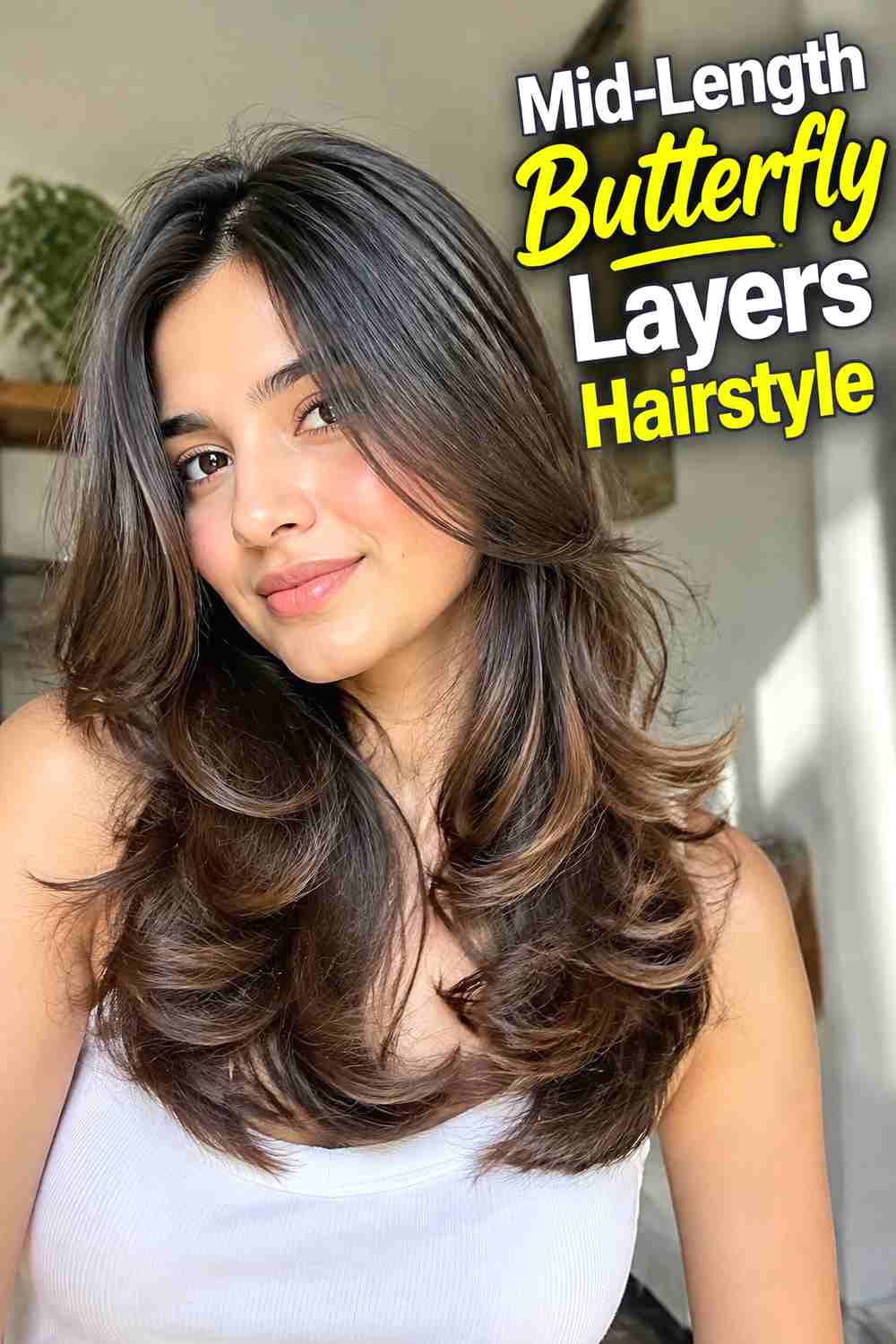
A mid-length butterfly cut brings the layered concept to hair that falls around the shoulders or collarbones. Because there is less overall length, the layers need careful spacing so thick waves do not become too wide through the sides. Shorter pieces can begin around the cheekbones, with medium layers blending into a fuller shoulder-grazing perimeter. This length makes the butterfly movement easy to see, especially when the front sections curve away from the face. It can also feel lighter than long thick hair while still keeping enough length for waves to develop. Strategic weight removal through the interior helps the cut move without making the perimeter look sparse.
Best For
Choose this length if you want easier daily handling while keeping enough hair for visible wave pattern and layered movement.
Wear & Maintenance
Shoulder-level cuts may need regular reshaping because the ends can start sitting differently as they grow past the collarbone.
7. Butterfly Layers With Airy Ends Hairstyle
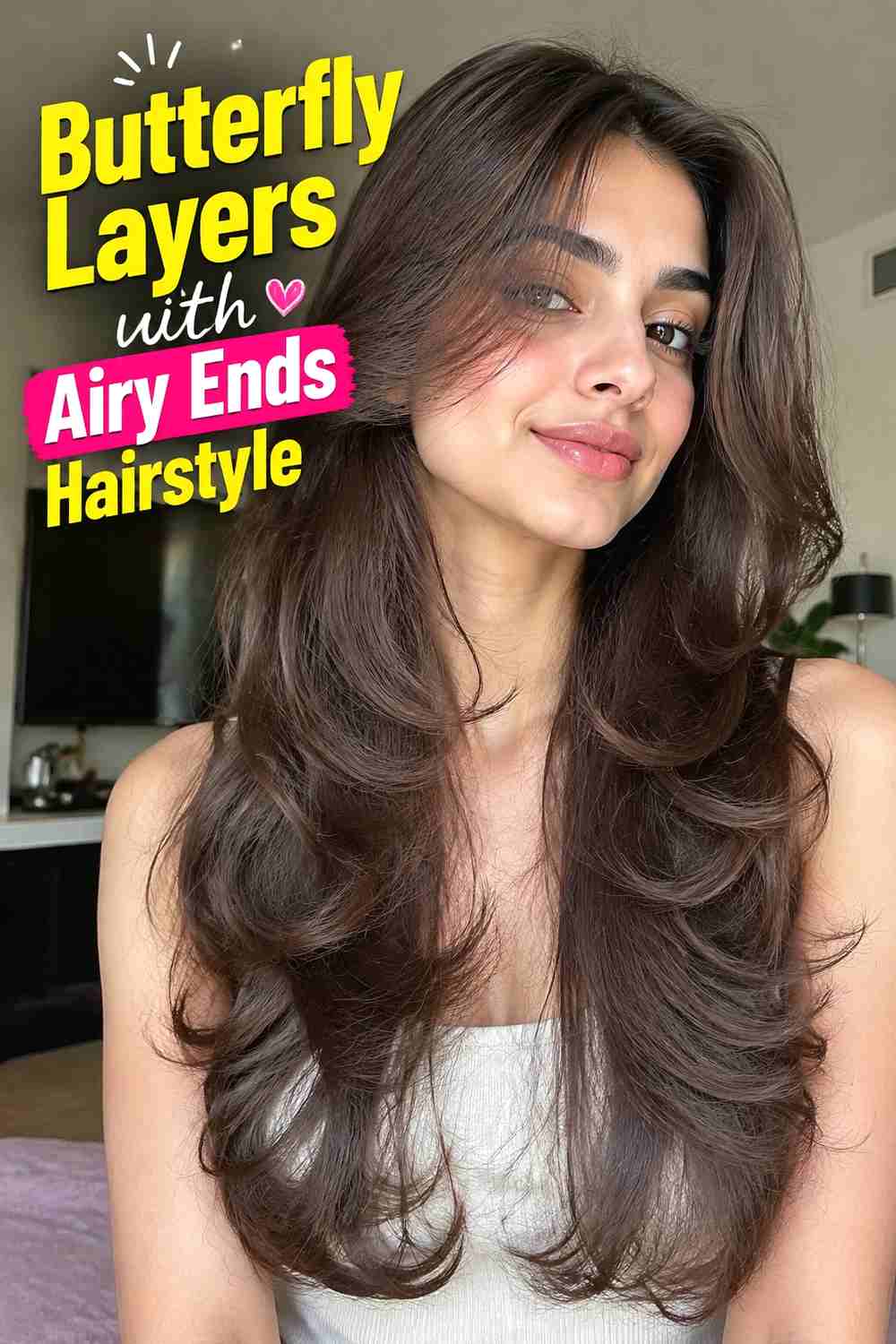
Airy ends give thick butterfly layers a lighter perimeter without turning the haircut into a heavily thinned style. The main body remains full, while the lower sections are softened just enough to separate and move. Face-framing layers begin higher around the cheekbones or jaw, creating the classic butterfly shape before gradually blending into the feather-light ends. This option is particularly useful when thick wavy hair tends to feel bulky through the bottom. The goal is controlled softness rather than dramatic thinning. When styled with loose waves, the ends move freely and create a breezy finish, while the denser upper lengths maintain enough substance to keep the haircut balanced.
Styling Notes
Use lightweight products through the ends so the separated texture remains visible instead of becoming coated or heavy.
Pro Tip
Keep internal density through the mid-lengths and soften mainly the lower perimeter to avoid losing too much fullness.
8. Shaggy Butterfly Layers Hairstyle
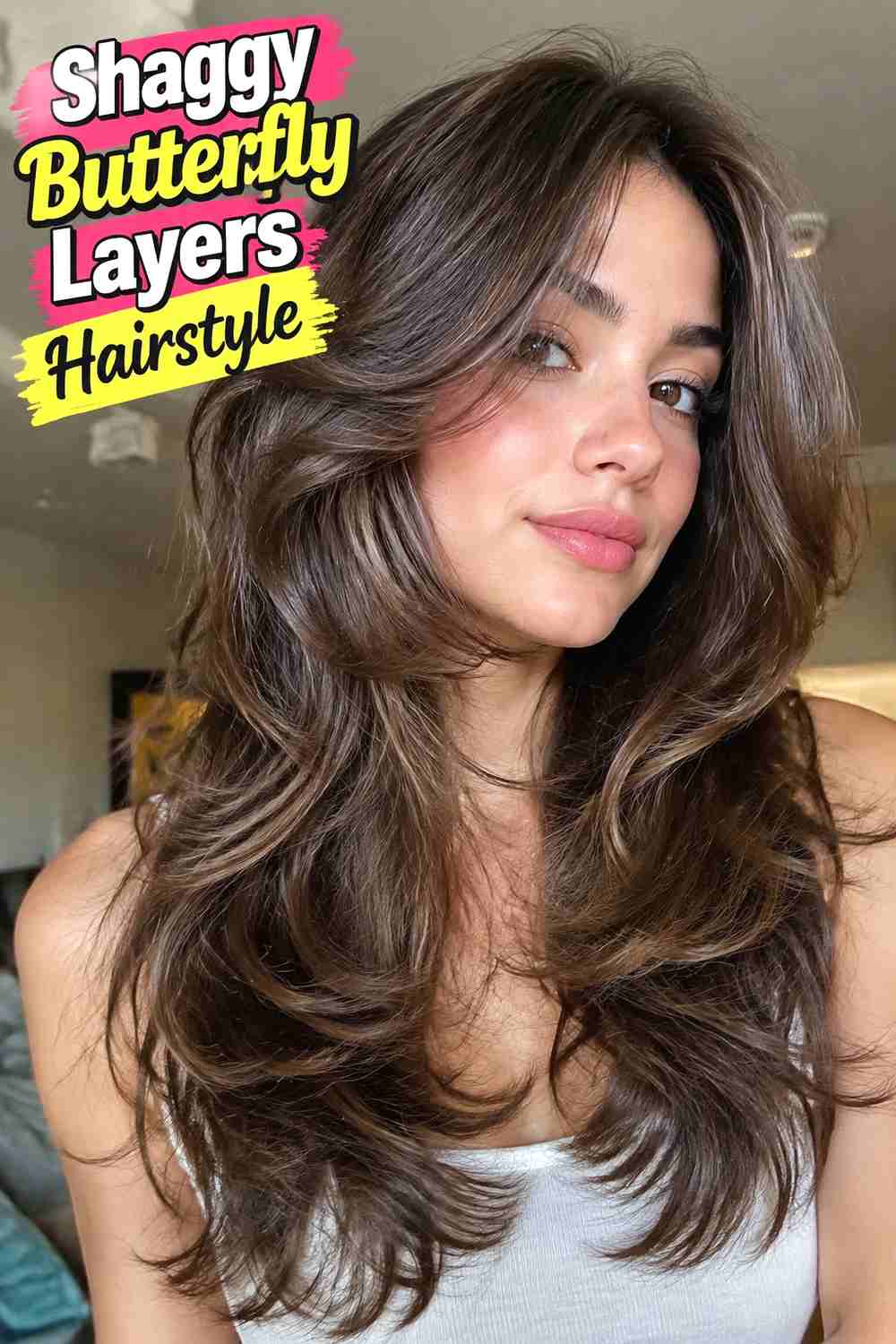
Shaggy butterfly layers combine the sweeping front movement of a butterfly cut with more visible texture through the crown and sides. On thick wavy hair, this can create a lively silhouette by allowing shorter sections to lift naturally while longer layers keep the overall length grounded. The result is less polished than a classic butterfly blowout and works especially well if your waves have an irregular pattern. Some pieces can flip outward while others fall into loose bends, giving the cut a relaxed, slightly undone finish. The layering should still be strategic; removing too much weight throughout can make the ends appear thin or encourage excessive volume near the top.
Hair Type & Length
Medium-to-long thick wavy hair works especially well because the natural texture supports shaggy movement without needing constant heat styling.
Why It Works
The extra crown and side layers release some of the heaviness that can make dense waves feel compact or triangular.
9. Butterfly Layers With Deep Side Part Hairstyle
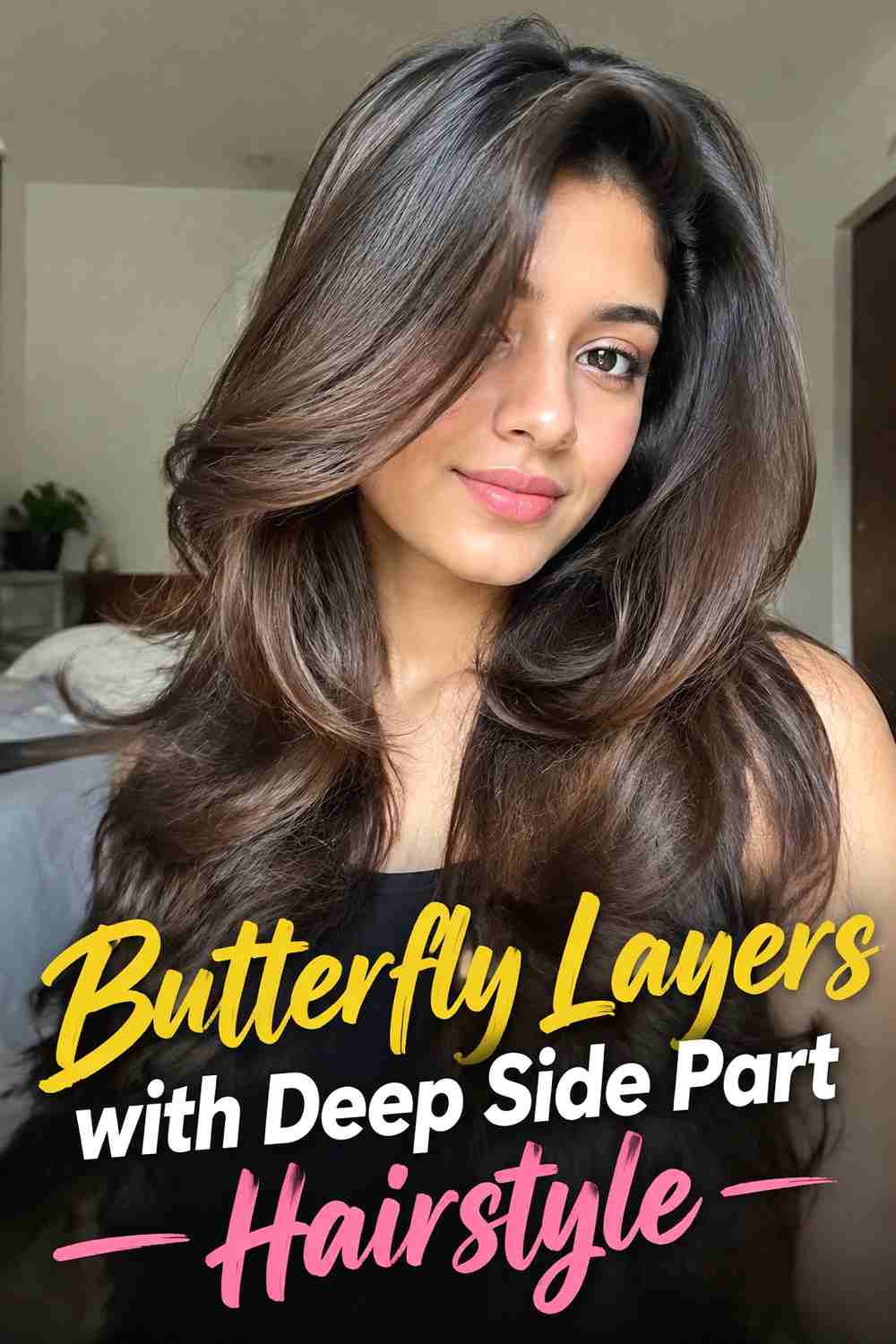
A deep side part changes the balance of butterfly layers by directing more volume and movement toward one side. The heavier side can feature sweeping cheekbone and jaw-level layers, while the opposite side stays slightly flatter or tucks behind the ear. This asymmetry works particularly well with thick wavy hair because there is enough natural body to create a dramatic side sweep without heavy teasing. Longer layers through the back maintain fullness and prevent the style from becoming top-heavy. A blowout can make the front movement more polished, while natural waves create a softer interpretation. The exact part should follow your natural growth pattern whenever possible.
Styling Notes
Build lift close to the part and allow the heavy side to fall into broad waves rather than creating equal volume everywhere.
Best For
This option is useful if you naturally wear a side part and want stronger movement around one side of the face.
10. Butterfly Layers With Soft Waves Hairstyle
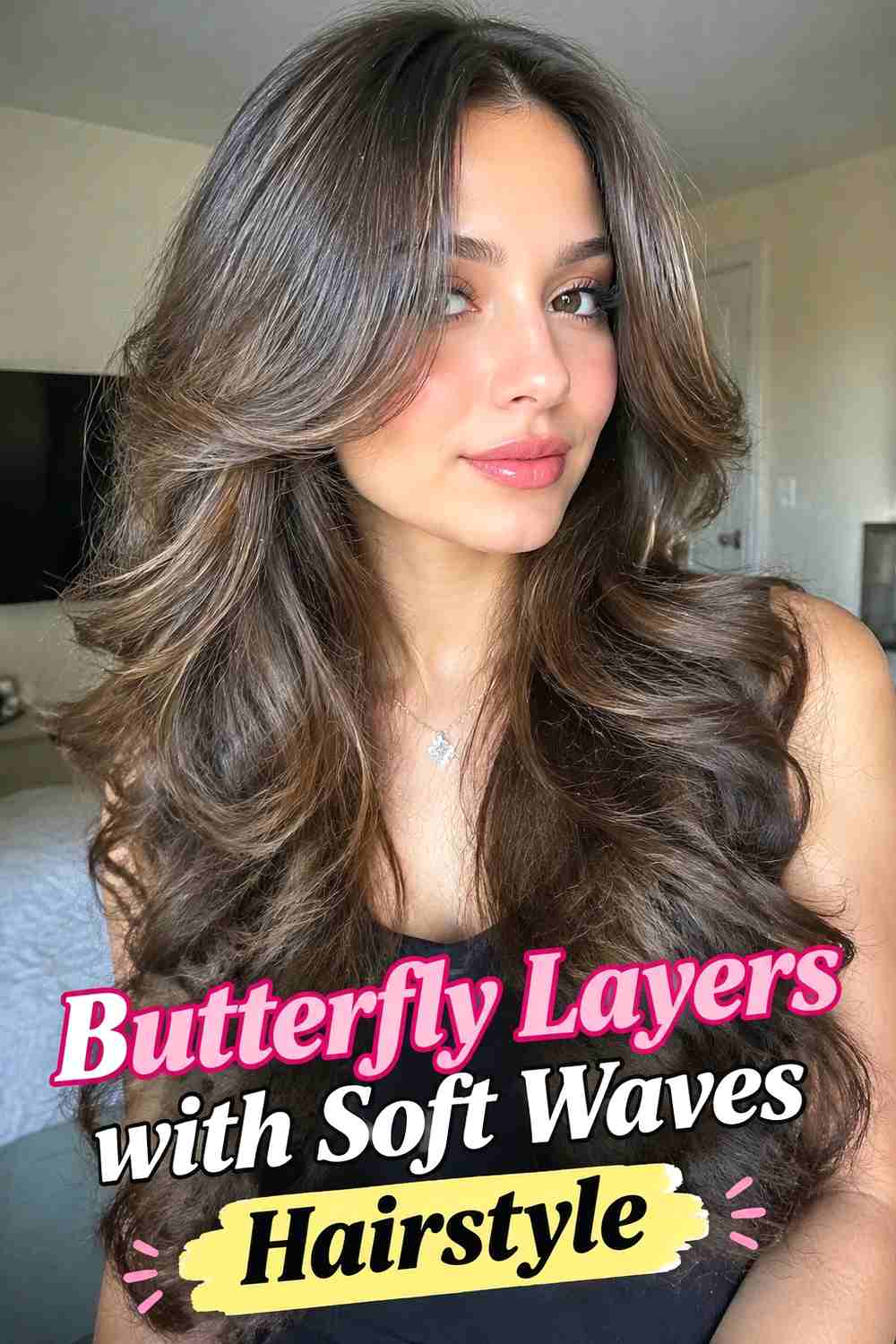
Butterfly layers and soft waves are a natural combination because the wave pattern makes every layer visible without requiring a highly sculpted finish. The shortest sections can sweep around the cheekbones, while longer pieces form broader bends through the shoulders and back. Thick hair benefits from having some interior weight released so the waves can separate instead of collapsing into one heavy mass. The lower perimeter should remain full enough to balance the volume above it. This style can be worn with natural waves or created with a large-barrel tool, but the finish looks most modern when the bends vary slightly rather than forming identical curls from root to tip.
Styling Notes
Keep the waves broad and irregular, starting some bends higher and others lower to emphasize the layered structure.
11. Butterfly Layers With Feathered Ends Hairstyle
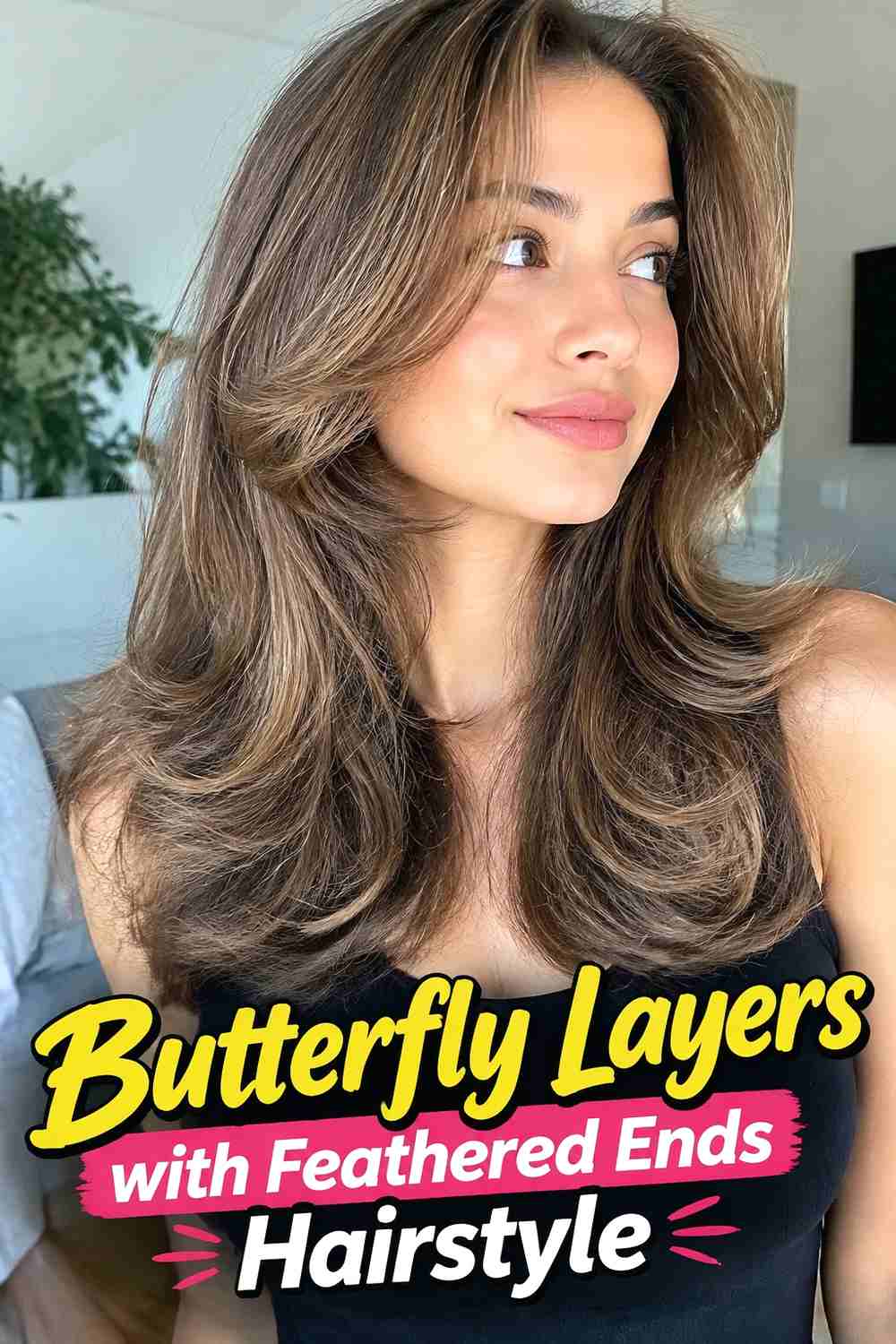
Feathered ends bring extra softness to butterfly layers by allowing the perimeter to taper gently rather than stopping in a heavy line. On thick wavy hair, the technique can reduce weight through the lower section while preserving fullness higher up. The face-framing layers sweep outward, and the ends separate into lighter pieces that move easily when the hair is styled or air-dried. This version can feel especially polished with a blowout, but natural waves also reveal the feathering beautifully. The important balance is keeping enough density through the mid-lengths so the haircut still looks thick and healthy rather than overly thinned from top to bottom.
Why It Works
Feathering softens the dense lower edge that thick hair can develop while leaving the main body substantial.
Pro Tip
Ask for tapered ends with visible weight still left behind, especially if your waves tend to expand when humidity rises.
12. Butterfly Layers With Voluminous Crown Hairstyle
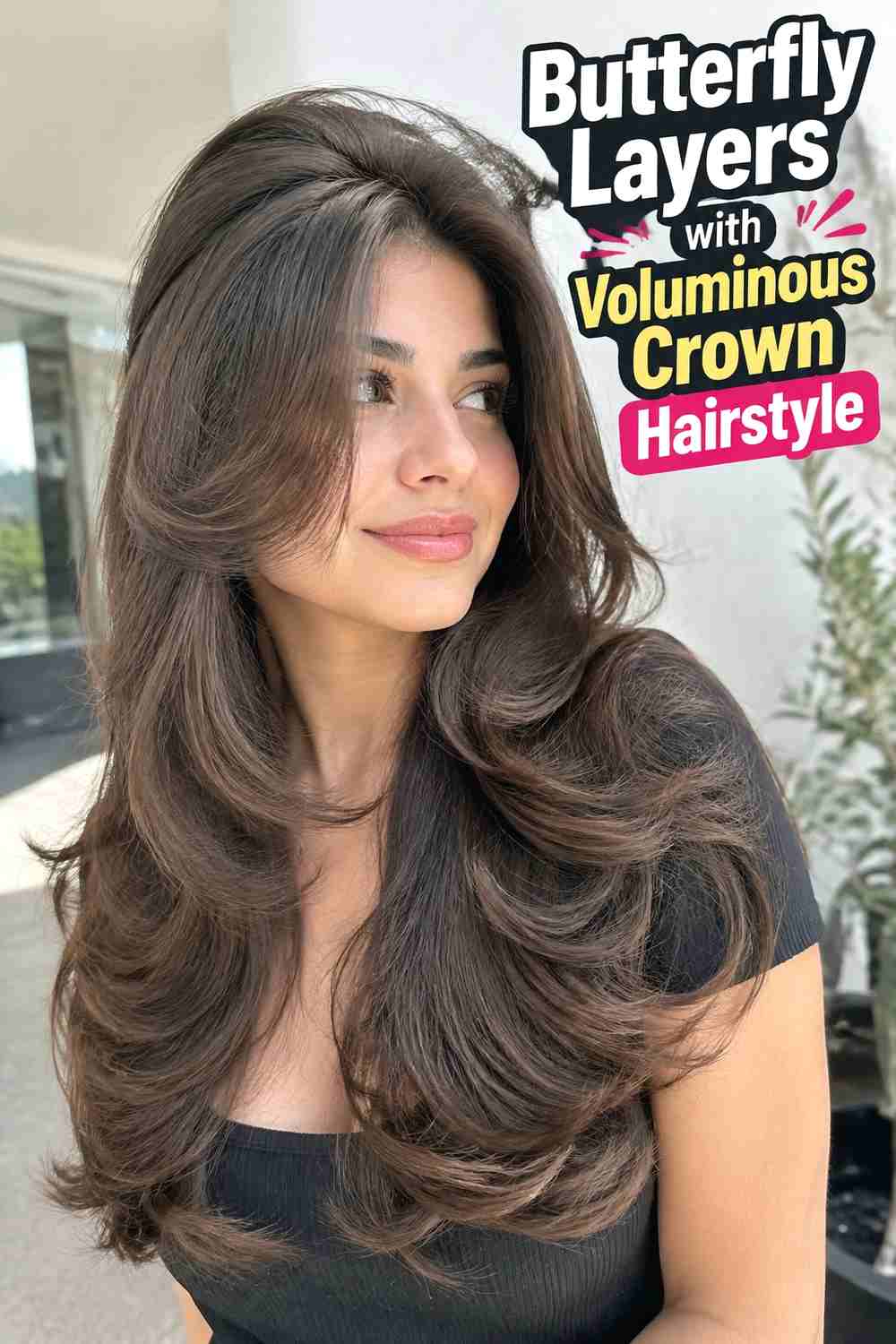
This version brings more lift to the crown while keeping the classic sweeping butterfly movement through the front. Slightly shorter layers near the upper back and sides can encourage thick wavy hair to rise instead of lying heavily against the scalp. The front sections continue into cheekbone and jaw-length layers, while longer lengths anchor the shape below. Because thick hair already has significant body, crown layering should stay controlled so the style does not become overly round or top-heavy. A blowout can emphasize the volume, but natural waves may provide enough lift on their own. The lower lengths should remain relatively full to balance the higher movement.
Best For
This approach works well if your thick hair feels flat at the crown but heavy through the lower half.
Styling Notes
Focus lift near the roots and let the ends remain softer, avoiding equal volume from scalp to perimeter.
13. Butterfly Layers With Face Framing Highlights Hairstyle
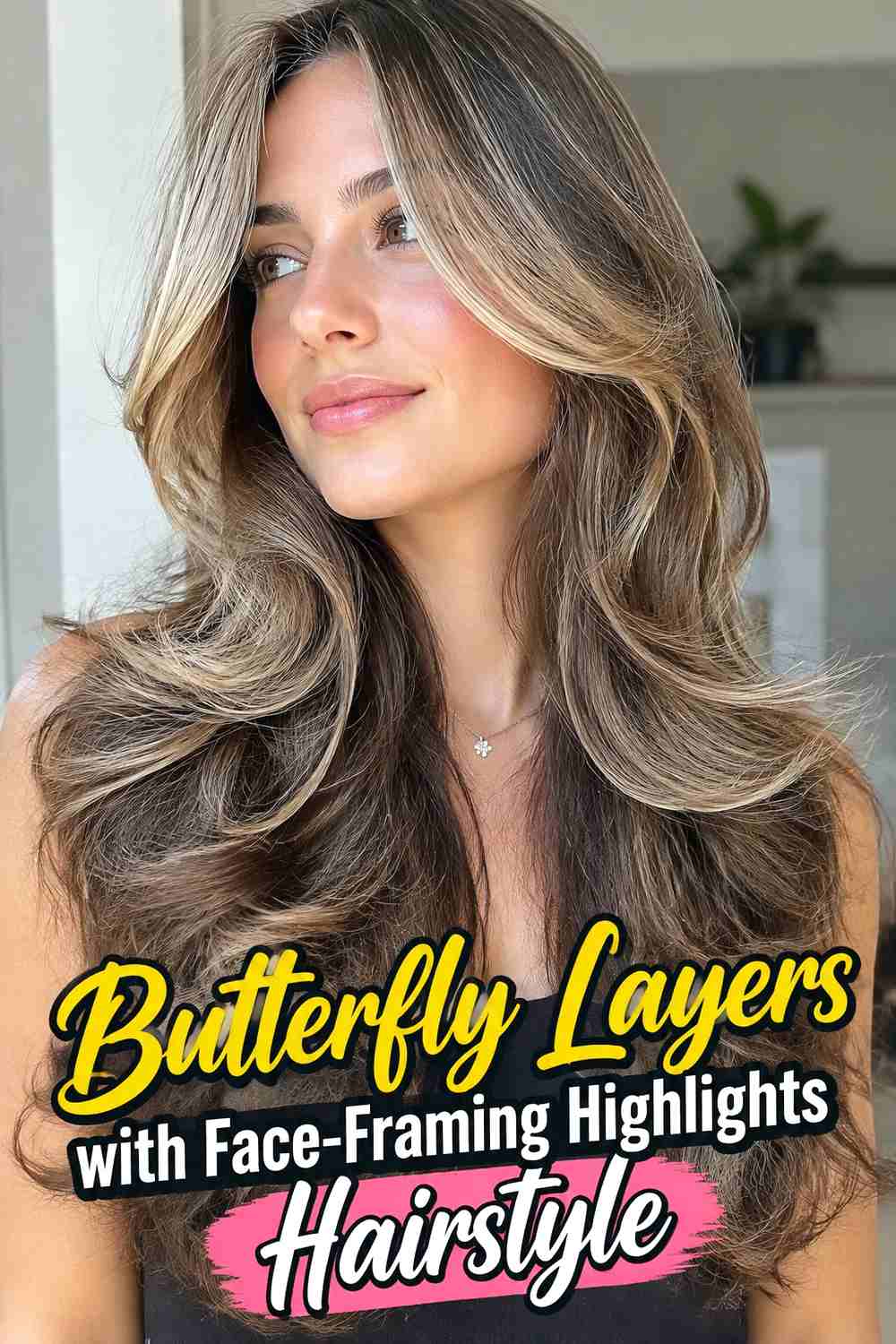
Face-framing highlights can make butterfly layers even more visible by adding tonal contrast to the sections that sweep around the cheekbones and jaw. On thick wavy hair, a few lighter ribbons placed through the front can emphasize movement without requiring an all-over color change. The haircut itself should maintain longer layers through the back so the waves stay full, while the highlighted front pieces create a brighter frame. Soft balayage or blended ribbons usually complement the layered shape better than rigid stripes because they follow the natural movement of the hair. When styled in waves, the highlighted sections appear and disappear through each bend, making the butterfly effect more dimensional.
Styling Notes
Style the front layers away from the face so the highlighted ribbons remain visible and show the different layer lengths.
Wear & Maintenance
A softly blended root can make face-framing color easier to grow out while the haircut continues to evolve.
14. Low Maintenance Butterfly Layers Hairstyle
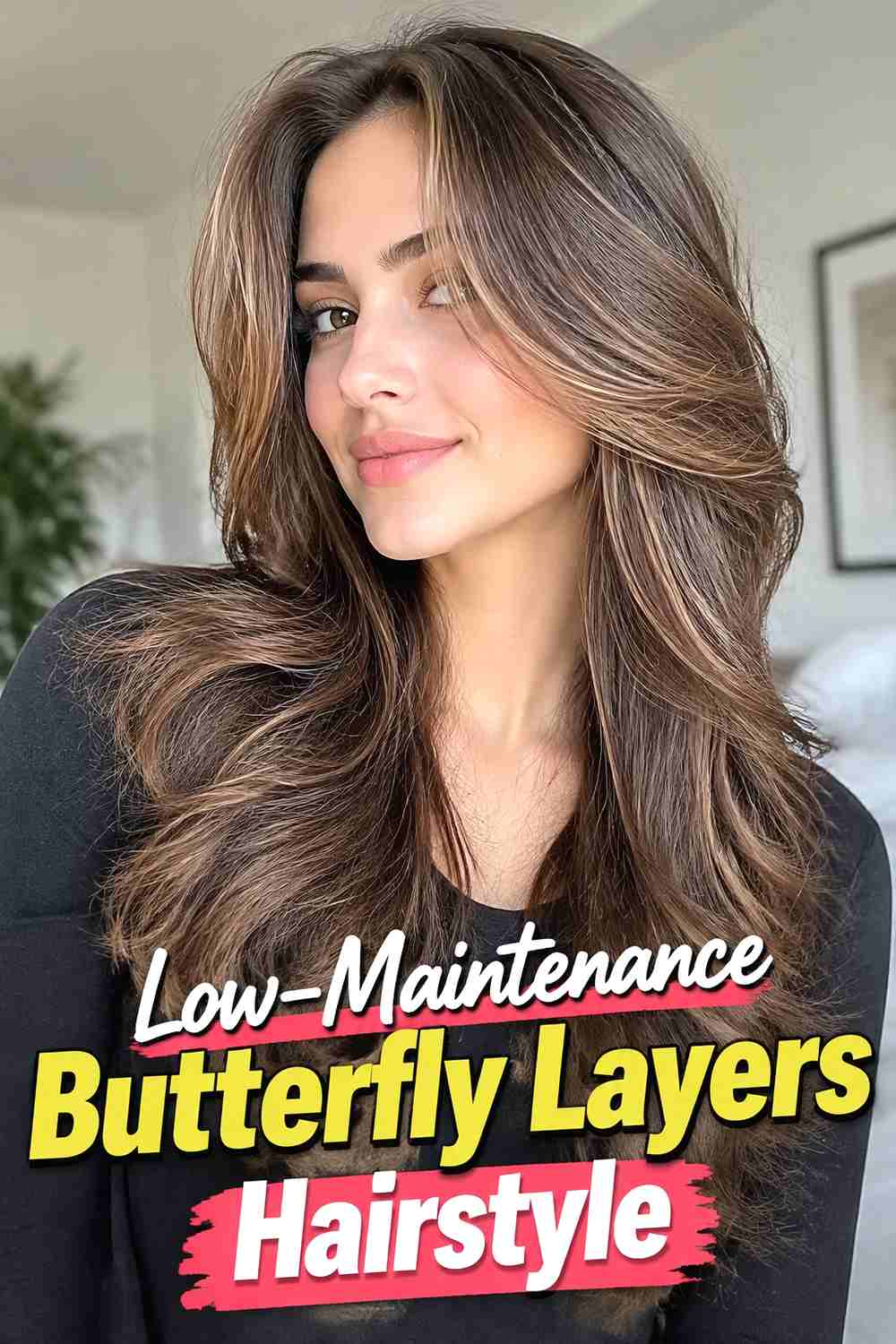
Low-maintenance butterfly layers keep the shortest pieces relatively long so thick wavy hair can fall naturally without demanding a full blowout every morning. Face-framing sections may begin around the jaw rather than high at the cheekbones, while longer layers through the mids release enough weight for the waves to move. The perimeter stays full, making the cut easier to air-dry without creating overly wispy ends. This version works especially well if your natural texture already forms soft waves and you prefer styling that feels relaxed rather than highly polished. The layers can gradually grow out without immediately losing their shape, making salon maintenance more flexible than shorter, more dramatic butterfly cuts.
Best For
This option suits thick wavy hair when you want movement and shape but prefer minimal daily heat styling.
Pro Tip
Keep the shortest layer long enough to settle naturally within your wave pattern instead of requiring constant reshaping.
How to Choose the Right Look
Start with your hair length and density. Very thick long hair can support dramatic face-framing layers, but preserving substantial lower lengths helps prevent the ends from becoming sparse. Shoulder-length hair usually needs more restrained layering because there is less distance between the shortest and longest sections.
Next, consider your wave pattern. Loose waves can handle broad, sweeping butterfly layers, while stronger waves may spring upward more noticeably and benefit from slightly longer front pieces. If your hair expands easily, avoid excessive crown layering unless extra height is specifically what you want.
Think about styling time too. Rounded blowouts, curtain bangs, and voluminous crown styles need more deliberate shaping, while shaggy, low-maintenance, and soft-wave versions can make better use of natural texture.
Finally, decide where you want the volume. Face-framing layers move fullness toward the front, deep side parts create asymmetry, and feathered or airy ends remove heaviness from the lower perimeter.
Final Thoughts
Butterfly layers can work beautifully on thick wavy hair because they transform natural density into movement instead of simply removing bulk. The key is balancing shorter face-framing pieces with enough length and weight through the ends.
Choose longer layers for an easy grow-out, feathering for a lighter perimeter, curtain or side bangs for stronger framing, or shaggy layers when you want a more textured finish. The best cut should work with your natural waves rather than requiring them to behave like completely straight hair.
FAQs
1. Are butterfly layers good for thick wavy hair?
Yes. They can redistribute weight, create movement, and define face-framing sections while still preserving the natural fullness of thick hair.
2. Do butterfly layers make thick hair look thinner?
They can make the shape feel lighter, but they do not have to make the hair look thin. Keeping a full lower perimeter helps maintain visible density.
3. How short should the front butterfly layers be?
That depends on your wave pattern and desired volume. Cheekbone-level layers create stronger framing, while jaw-length pieces usually feel softer and easier to maintain.
4. Can butterfly layers be air-dried on wavy hair?
Yes. Longer and lower-maintenance butterfly layers can work especially well with air-dried waves when the cut is designed around the natural texture.
5. Are butterfly layers high maintenance on thick hair?
Not necessarily. Dramatic short layers and bangs may need more styling and reshaping, while longer butterfly layers can grow out more softly and require less daily work.
Save your favorite butterfly-layer ideas, share them with someone looking to lighten up thick waves, and explore more layered hairstyle inspiration for your next salon visit.