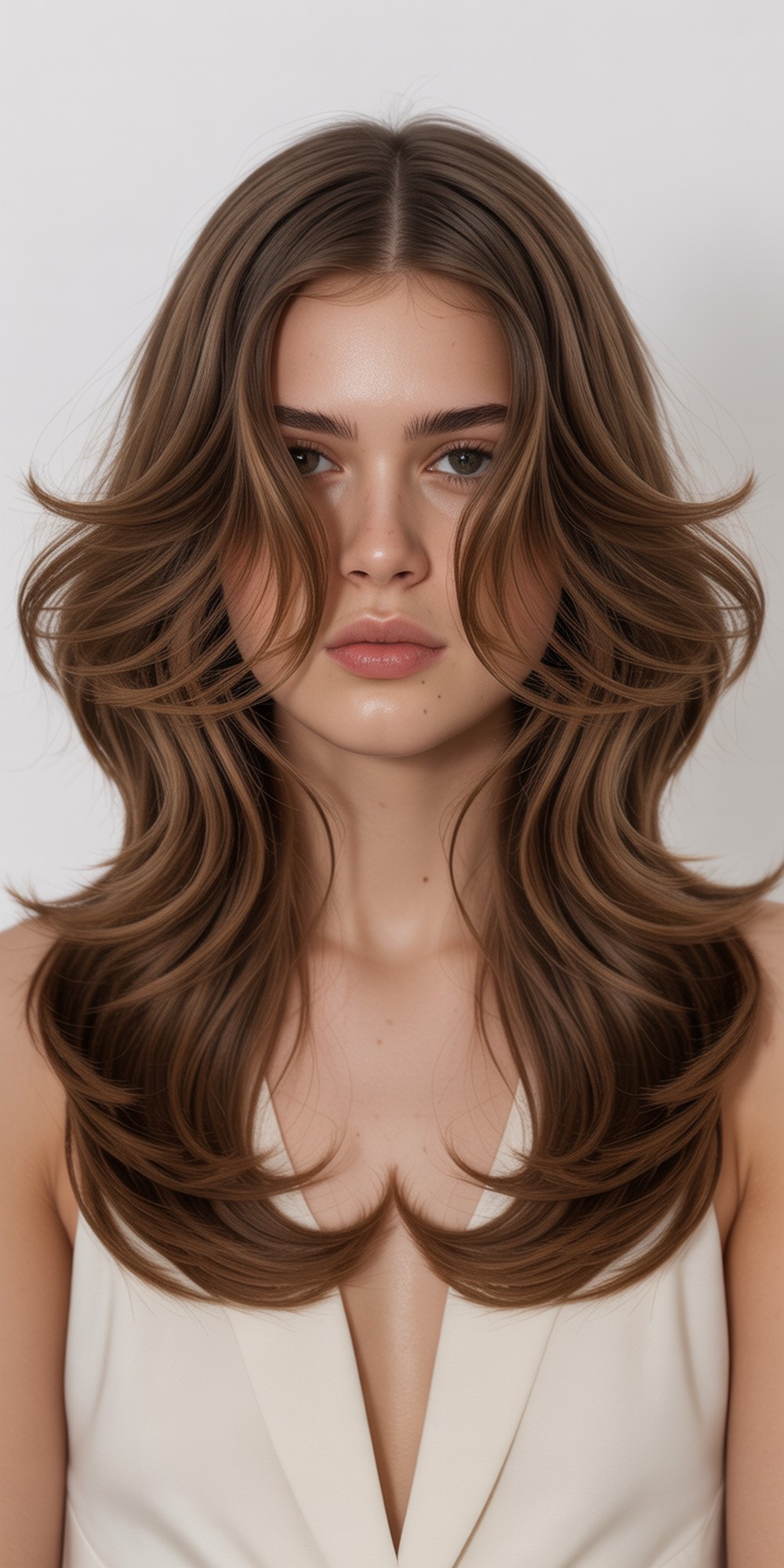
18 Cheekbone Baby Bob Haircut Ideas for a Chic Short Look
A cheekbone baby bob brings crisp short-hair structure close to the face, with sleek, textured, curly, and fringe finishes worth saving for inspiration.
The defining feature of this collection is the compact length: these bobs sit around the cheekbone area rather than dropping into a traditional chin-length shape. That shorter proportion makes details such as the perimeter, parting, fringe, natural texture, and amount of volume especially noticeable.
As you compare the ideas, look beyond the overall silhouette. Consider whether you prefer a polished or air-dried finish, how much time you want to spend styling the front section, whether your natural texture needs room to spring upward, and how frequently you are comfortable refreshing a precise short shape.
Quick List
- Blunt Cheekbone Baby Bob Hairstyle
- French Cheekbone Baby Bob Hairstyle
- Side Parted Baby Bob Hairstyle
- Center Parted Glass Baby Bob Hairstyle
- Wispy Bangs Baby Bob Hairstyle
- Micro Bangs Baby Bob Hairstyle
- Softly Textured Baby Bob Hairstyle
- Tousled Wavy Baby Bob Hairstyle
- Curly Cheekbone Baby Bob Hairstyle
- Coily Sculpted Baby Bob Hairstyle
- Tucked Behind The Ear Baby Bob Hairstyle
- Deep Side Sweep Baby Bob Hairstyle
- Choppy Baby Bob Hairstyle
- Feathered Baby Bob Hairstyle
- Rounded Baby Bob Hairstyle
- Slicked Baby Bob Hairstyle
- Piecey Baby Bob Hairstyle
- Soft Volume Baby Bob Hairstyle
1. Blunt Cheekbone Baby Bob Hairstyle
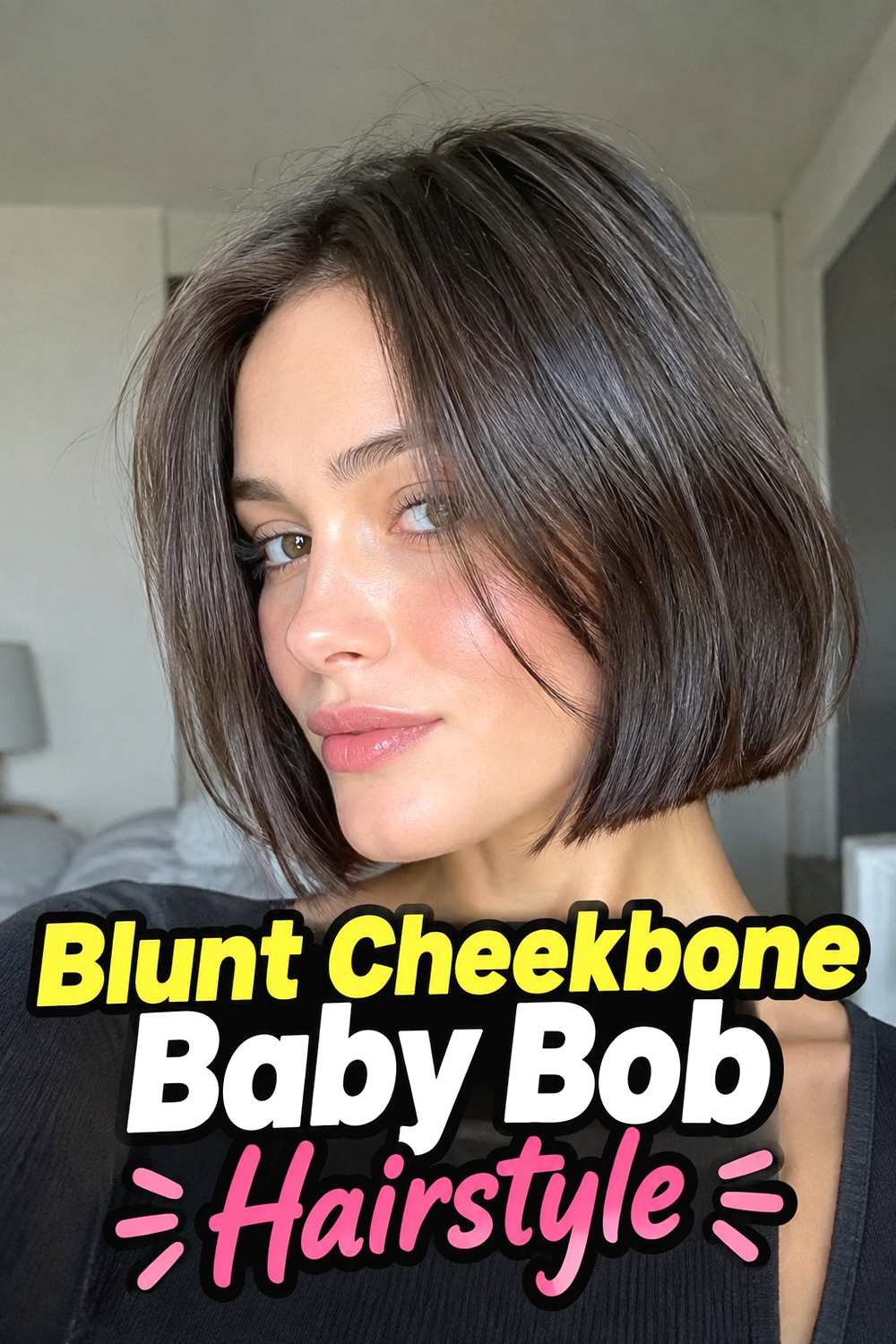
The Blunt Cheekbone Baby Bob Hairstyle makes its impact through a clean, compact perimeter that sits close to the cheekbones. Minimal layering keeps the outline strong, so the ends appear dense and deliberate rather than feathered or wispy. Worn smooth, the cut creates a sharp graphic frame around the face while still showing natural strand movement and shine. It can work particularly well for straight or gently wavy hair that holds a defined edge without extensive shaping. Because every millimeter is visible at this length, the finished result depends heavily on accurate cutting and a balanced hairline. A light smoothing cream can refine the surface without making the bob look stiff.
Wear & Maintenance
A blunt baby bob usually looks most intentional when the perimeter remains crisp. If you love its exact cheekbone placement, expect more frequent shape maintenance than you would with a longer, softer bob.
2. French Cheekbone Baby Bob Hairstyle
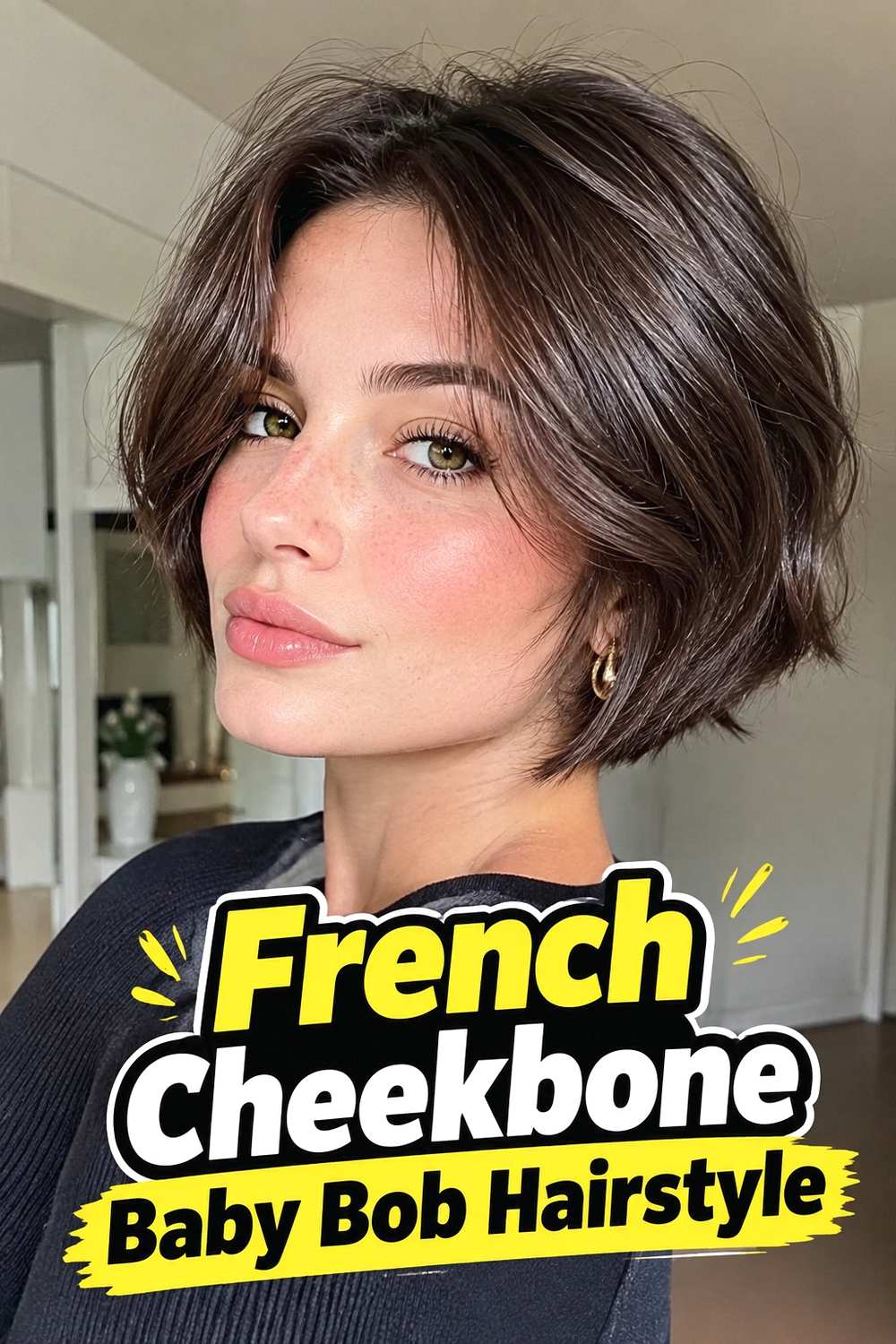
The French Cheekbone Baby Bob Hairstyle pairs a petite bob silhouette with an intentionally relaxed finish. Instead of looking perfectly pressed, the hair can bend slightly around the temples and ends, creating that casual, softly undone effect associated with short French-inspired cuts. A subtle fringe or lightly separated front pieces can make the shape feel even more effortless. This is an appealing direction for anyone who prefers movement over mirror-smooth precision and wants a cut that still looks stylish with a little natural texture showing. Avoid overloading it with heavy waxes or oils; the most convincing finish has softness, a touch of airiness, and visible individual strands.
Styling Notes
Work with the hair’s natural fall first. A small amount of lightweight texture cream through dry ends can separate the shape without turning the bob into a heavily tousled style.
3. Side Parted Baby Bob Hairstyle
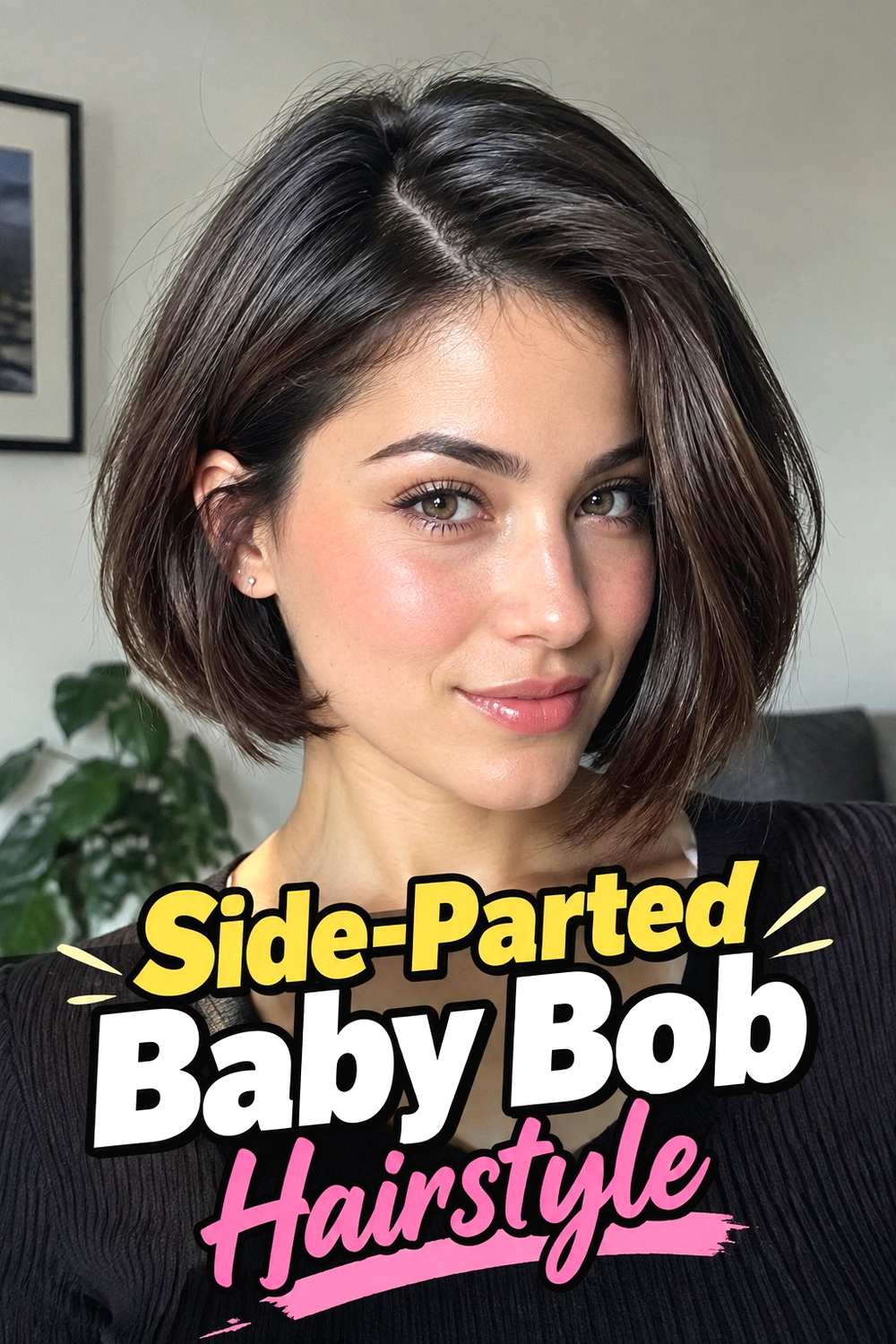
A side part changes the balance of a tiny bob almost instantly. The Side-Parted Baby Bob Hairstyle creates extra sweep and fullness on one side while keeping the opposite side closer to the head, giving the short silhouette a slightly more dynamic shape. It is especially useful if a center part feels too strict or if you enjoy styling the front section away from the forehead. The cheekbone length keeps the look neat and compact, while a soft bend through the fuller side prevents the cut from appearing flat. Depending on your hairline, you can make the part subtle for everyday wear or move it deeper for a more dramatic result.
Best For
This version suits anyone who likes adjustable volume around the front. Switching the part slightly can also refresh the look between wash days without changing the haircut itself.
4. Center Parted Glass Baby Bob Hairstyle
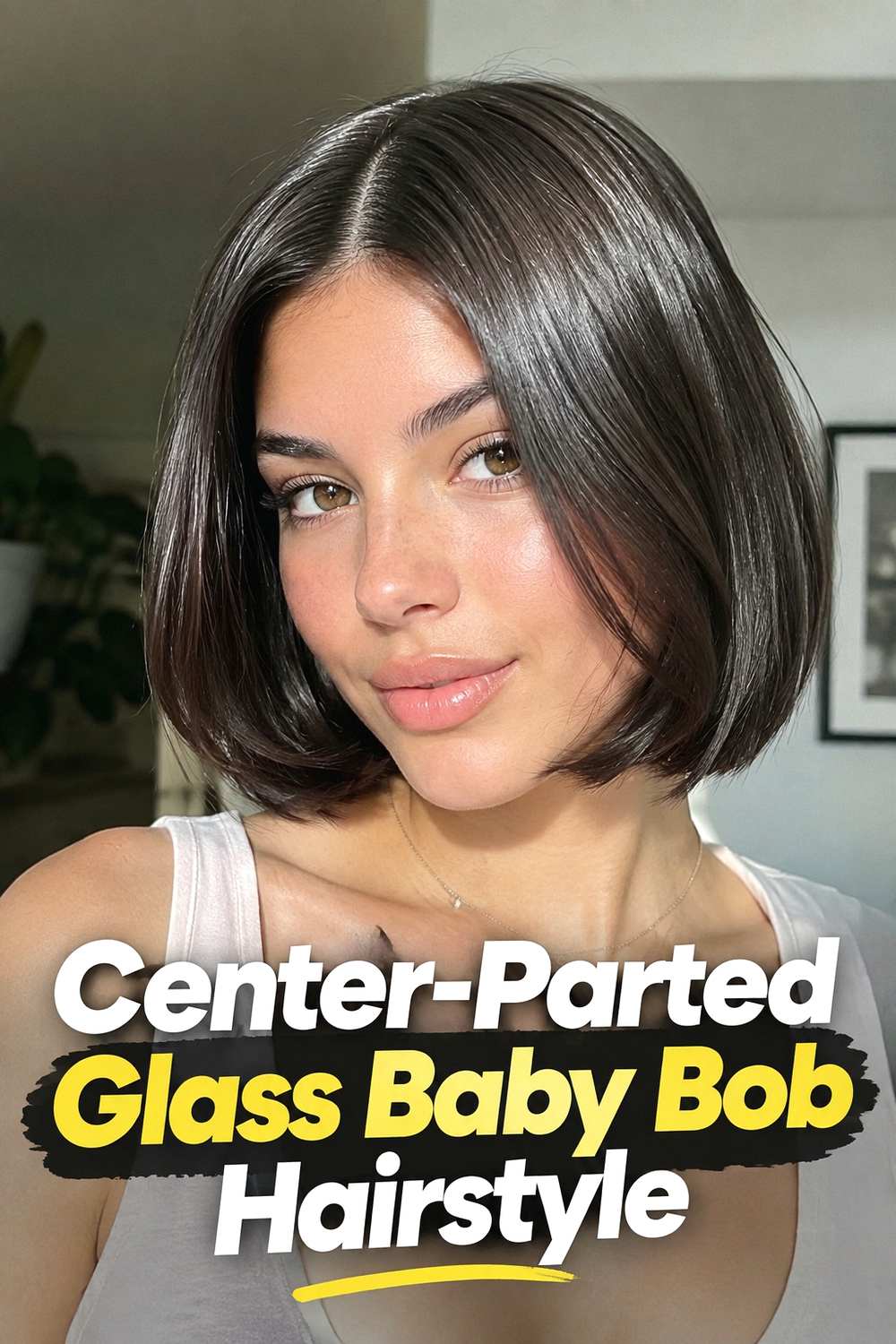
The Center-Parted Glass Baby Bob Hairstyle is all about symmetry, smoothness, and reflective shine. The compact length follows both sides of the face evenly, while a precise center part reinforces the clean geometric effect. Unlike textured versions of the baby bob, this finish relies on controlled strands and a sleek surface, so the perimeter becomes the main visual feature. It looks particularly striking on straight hair or hair that can be smoothed comfortably without losing natural movement. The goal is polished rather than rigid: hair should still show believable weight and separation. Use heat protection before smoothing, then keep finishing products lightweight so shine does not turn into oily buildup.
Pro Tip
Direct the ends straight or only slightly inward. A strong curl underneath can make a very short bob look rounder than intended and reduce the crisp glass-hair effect.
5. Wispy Bangs Baby Bob Hairstyle
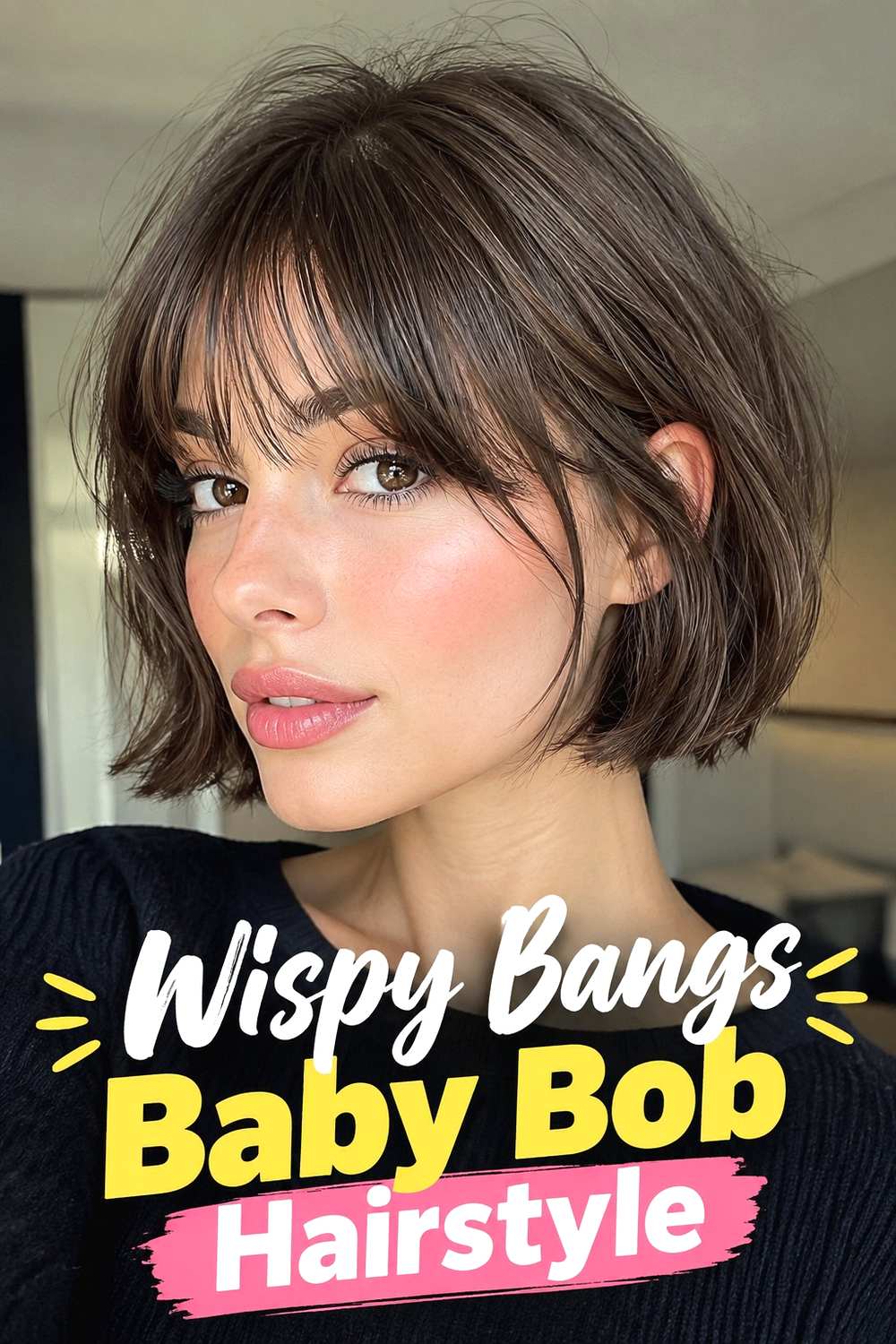
The Wispy Bangs Baby Bob Hairstyle softens the compact outline with a light, airy fringe that allows some forehead to remain visible. Because the bob itself ends around the cheekbones, the delicate bangs prevent the front from feeling too heavy and create a graceful transition into the short side sections. This combination works well when you want the personality of a fringe without the density of a full blunt bang. Fine separation at the ends keeps everything relaxed, while a smooth or lightly textured bob underneath provides enough structure to hold the shape. Styling the fringe with minimal product is important; too much cream or oil can make wispy pieces clump together.
Wear & Maintenance
Fringe growth becomes noticeable sooner than overall bob growth. Small bang trims between full haircut appointments can help preserve the airy proportion without shortening the rest of the style unnecessarily.
6. Micro Bangs Baby Bob Hairstyle
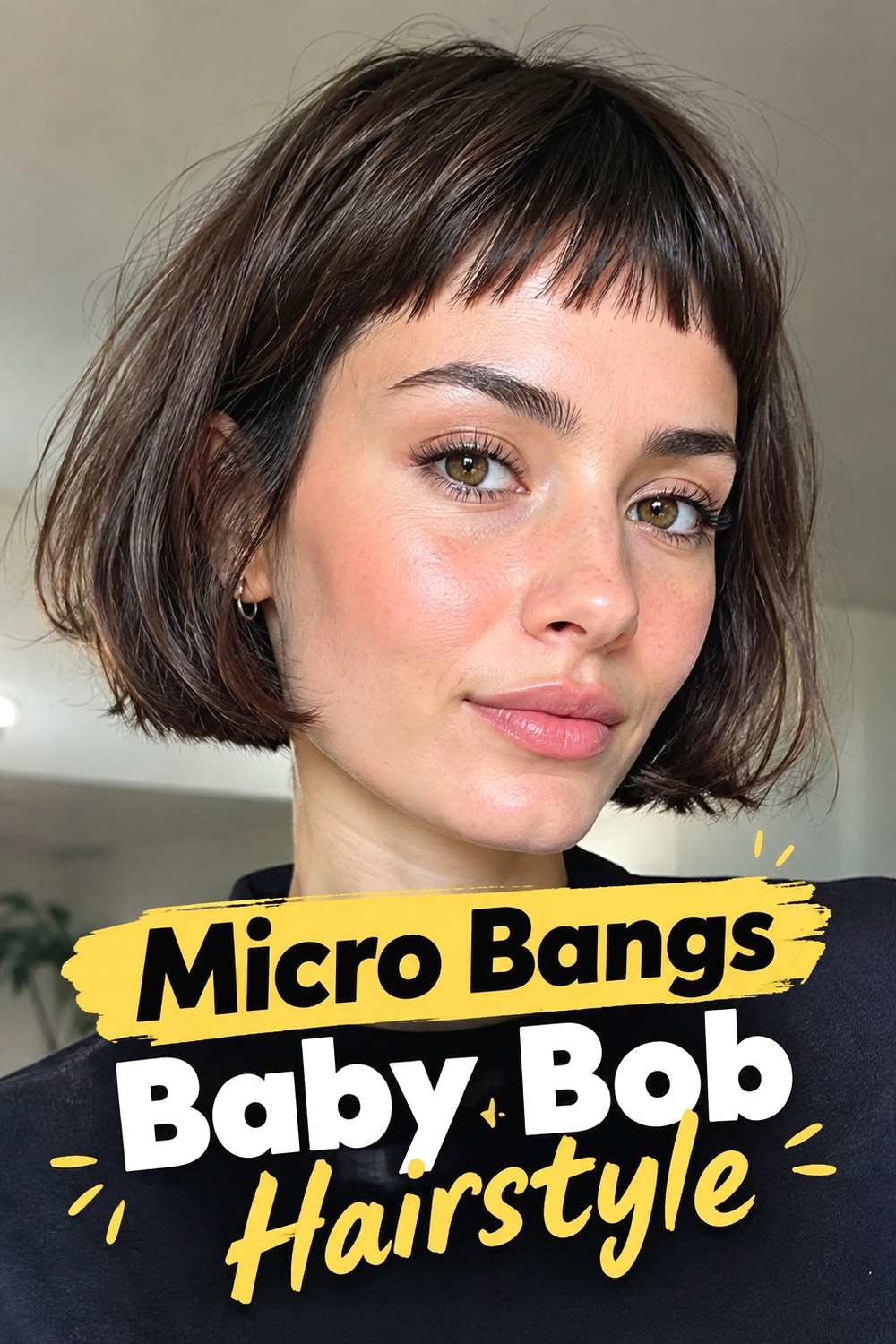
The Micro Bangs Baby Bob Hairstyle pushes the short-cut concept further by pairing a cheekbone-level bob with a deliberately cropped fringe. The contrast between the high fringe and compact sides creates a graphic, fashion-forward frame around the face. Keeping the baby bangs relatively light can make the look feel more wearable, while a denser fringe creates a stronger statement. This haircut rewards precision because both the bang line and bob perimeter are clearly visible. Straight or softly textured finishes emphasize the shape particularly well. Before committing, consider how your fringe naturally grows, including cowlicks or strong changes in direction, since these can affect how easily very short bangs sit.
Hair Type & Length
Micro bangs need enough usable length and density at the front to form the intended line. A stylist can adjust the width and depth of the fringe to suit your natural hairline rather than forcing a standard shape.
7. Softly Textured Baby Bob Hairstyle
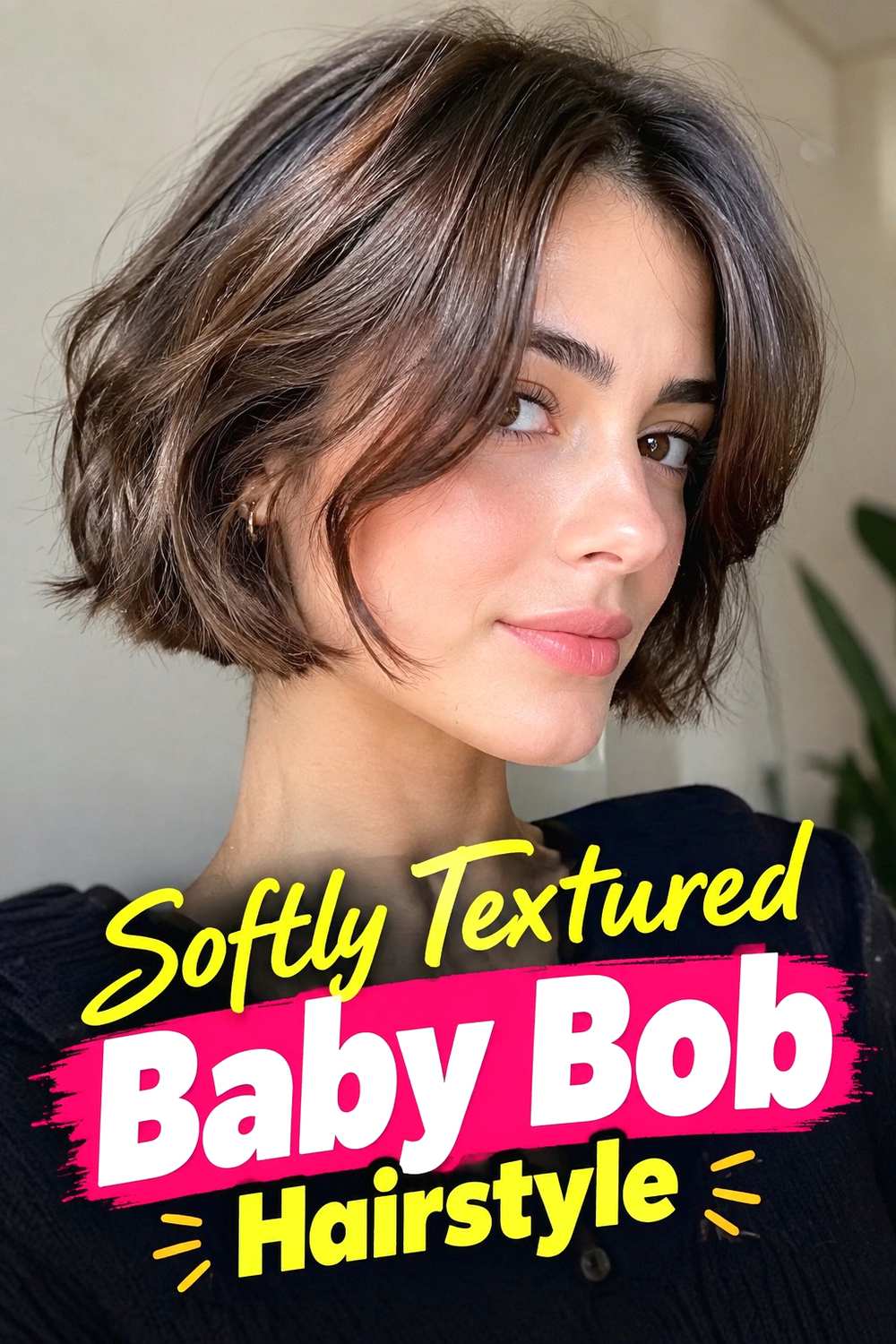
The Softly Textured Baby Bob Hairstyle keeps the signature short length but replaces a rigid perimeter with gentle internal movement. Strategic texture removes some heaviness from the ends and lets individual sections shift naturally, producing a softer silhouette without turning the haircut into a heavily layered crop. It is a versatile option if you like a bob that looks polished when smoothed but still has character when air-dried. The texture should remain subtle enough that the cheekbone outline is recognizable. Fine hair may benefit from restrained texturizing so it does not lose density, while thicker hair can often handle more internal removal to prevent the shape from becoming bulky.
Why It Works
Soft internal texture gives the haircut flexibility. You can emphasize separation with a small amount of styling paste or keep it smoother for a cleaner office-ready finish.
8. Tousled Wavy Baby Bob Hairstyle
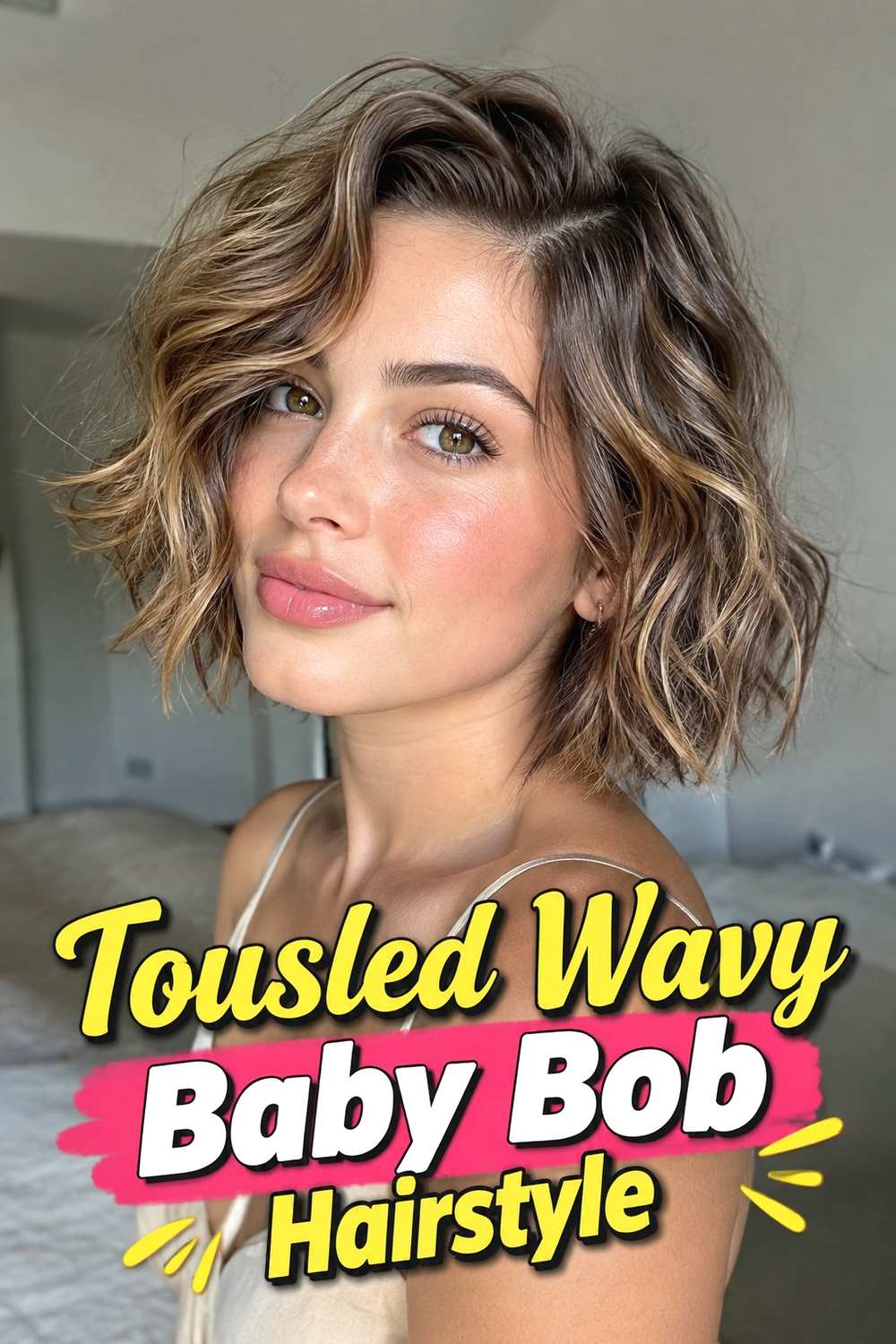
The Tousled Wavy Baby Bob Hairstyle gives a petite bob more movement by allowing loose bends to travel through the short lengths. Rather than forming perfect curls, the waves should look irregular and relaxed, with some sections bending more strongly than others. That variation keeps the bob modern and prevents the silhouette from becoming overly rounded. It is especially attractive on naturally wavy hair because the short length can encourage lift around the sides and crown. If you create the texture with heat, alternate the direction of a few bends and leave some ends straighter. The finished effect should feel touchable and slightly undone rather than uniformly curled.
Styling Notes
Start with less texture than you think you need. On cheekbone-length hair, even a small bend creates visible volume, so over-curling can quickly make the haircut appear much shorter.
9. Curly Cheekbone Baby Bob Hairstyle
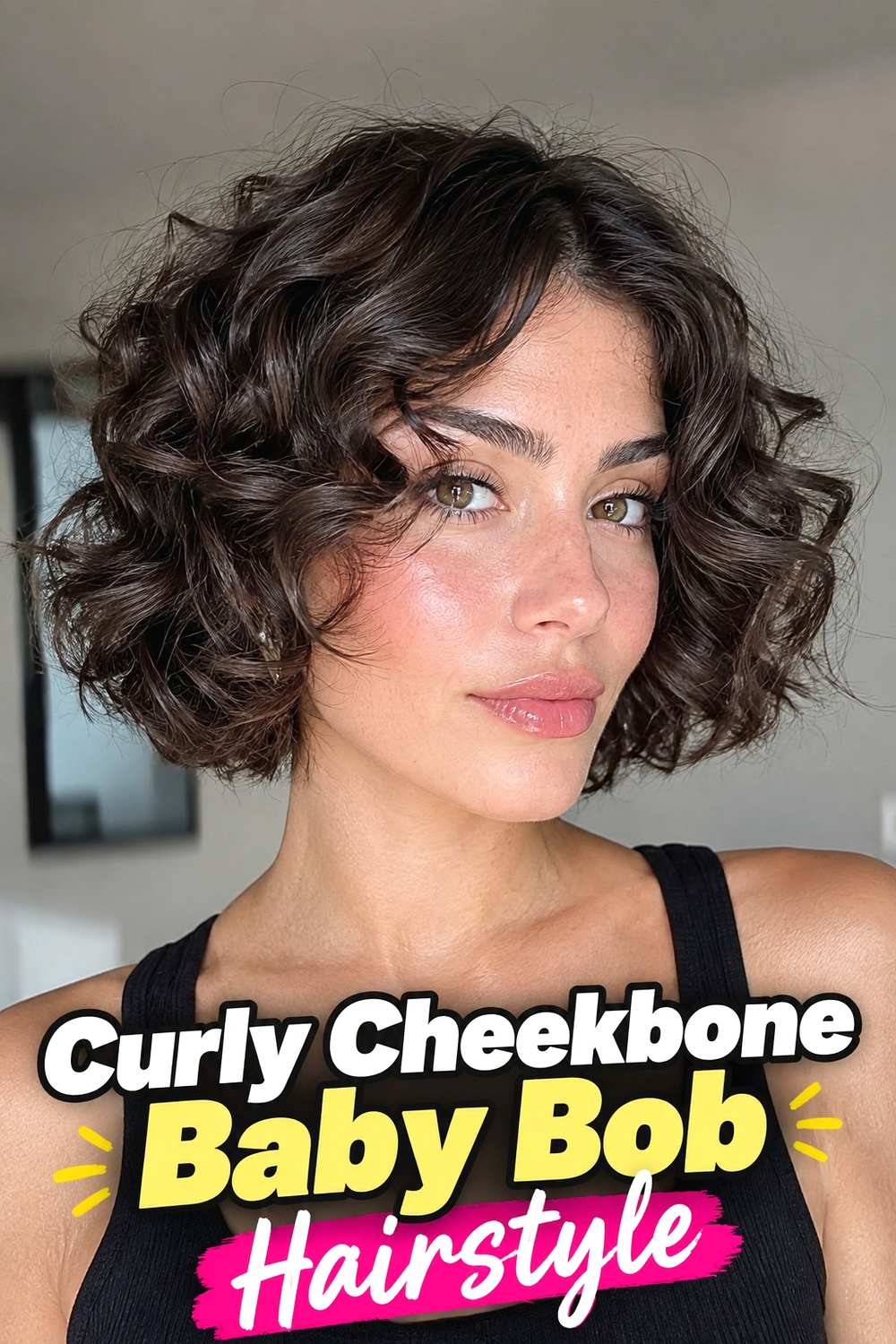
The Curly Cheekbone Baby Bob Hairstyle lets defined curls form the outline instead of forcing them into a straight bob shape. The finished length should be judged with the curl pattern in its natural state, since shrinkage can lift the silhouette well above the position it reaches when wet or stretched. A rounded but controlled perimeter keeps the hairstyle recognizably bob-like while allowing individual curls to sit at slightly different heights. This variation can look especially lively when definition is concentrated around the face. Rather than aiming for identical ringlets, preserve natural variation in curl size and direction. A lightweight defining product can support shape without removing the bounce that makes the cut appealing.
Pro Tip
Discuss dry or curl-aware cutting with your stylist if shrinkage is significant. The goal is to place the visual perimeter correctly after the hair has returned to its natural curl pattern.
10. Coily Sculpted Baby Bob Hairstyle
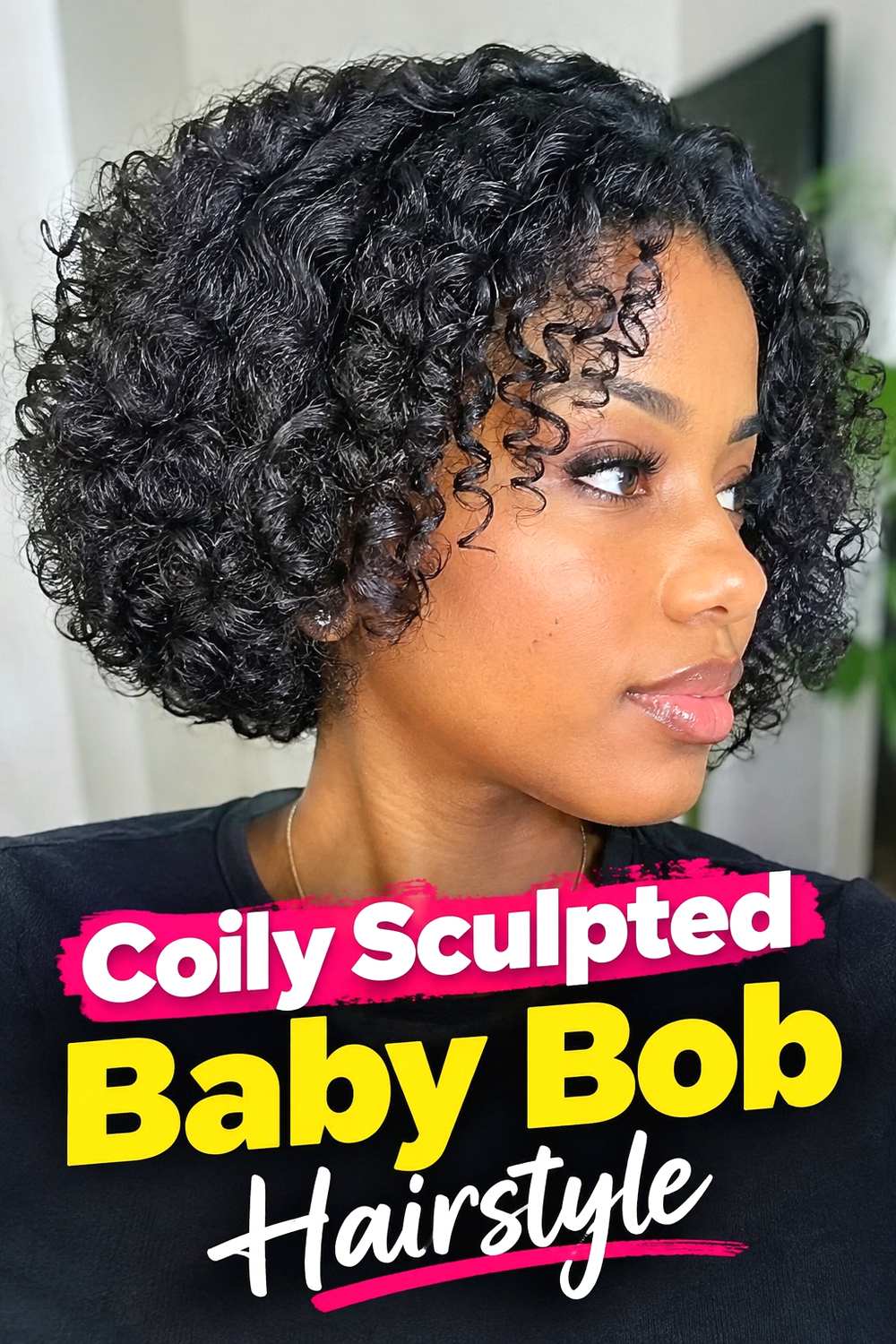
The Coily Sculpted Baby Bob Hairstyle uses natural coil density to build a compact, intentional silhouette around the cheekbones. Instead of flattening the texture, the shape celebrates spring, volume, and varied strand definition while keeping the outer line neat enough to read as a baby bob. The perimeter may appear slightly more rounded than it does on straight hair, which gives this version its sculptural character. Balanced shaping around the sides is especially important so one area does not become noticeably heavier than another. Moisture and definition can help the coils show clearly, but the finished style should retain natural softness rather than appearing coated or frozen in place.
Wear & Maintenance
Preserve the shape at night using a method that works for your coil pattern and hair length. In the morning, targeted refreshing is usually more useful than repeatedly saturating the entire style.
11. Tucked Behind The Ear Baby Bob Hairstyle
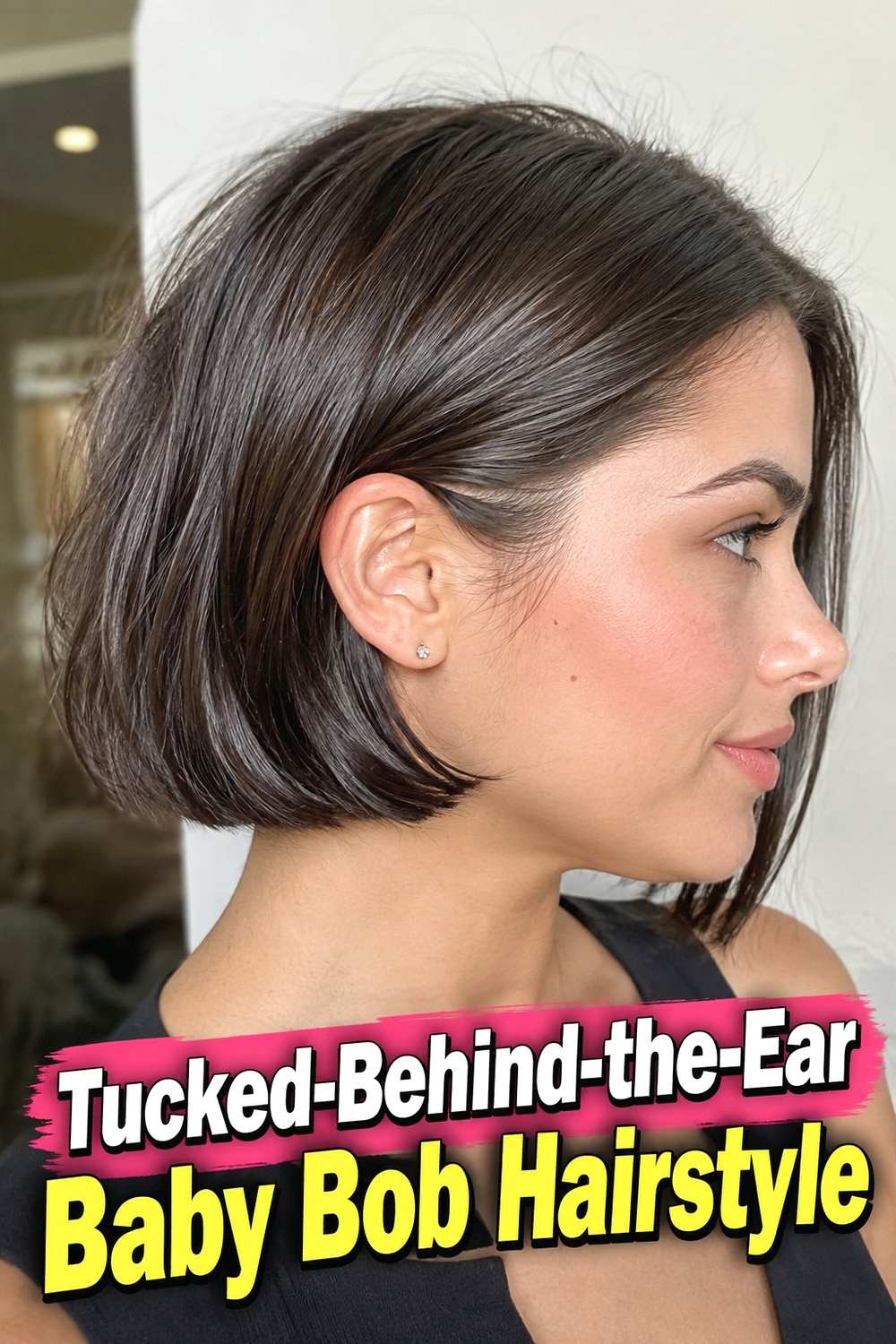
The Tucked-Behind-the-Ear Baby Bob Hairstyle uses a simple styling detail to transform the proportions of a very short cut. Tucking one or both sides exposes the ears and creates a narrower silhouette, while the untucked front pieces maintain softness near the cheekbones. This approach works particularly well on a bob with a clean perimeter because the contrast between the sleek tucked section and free-moving front pieces feels intentional. It is also practical when you want short hair away from your face without using clips or pins. A tiny amount of flexible styling cream near the temples can help the tuck stay neat, but avoid flattening the entire side against the scalp.
Why It Works
The ear tuck reveals more of the haircut’s geometry and gives you two distinct ways to wear the same cut. It can shift from soft and face-framing to clean and minimal in seconds.
12. Deep Side Sweep Baby Bob Hairstyle
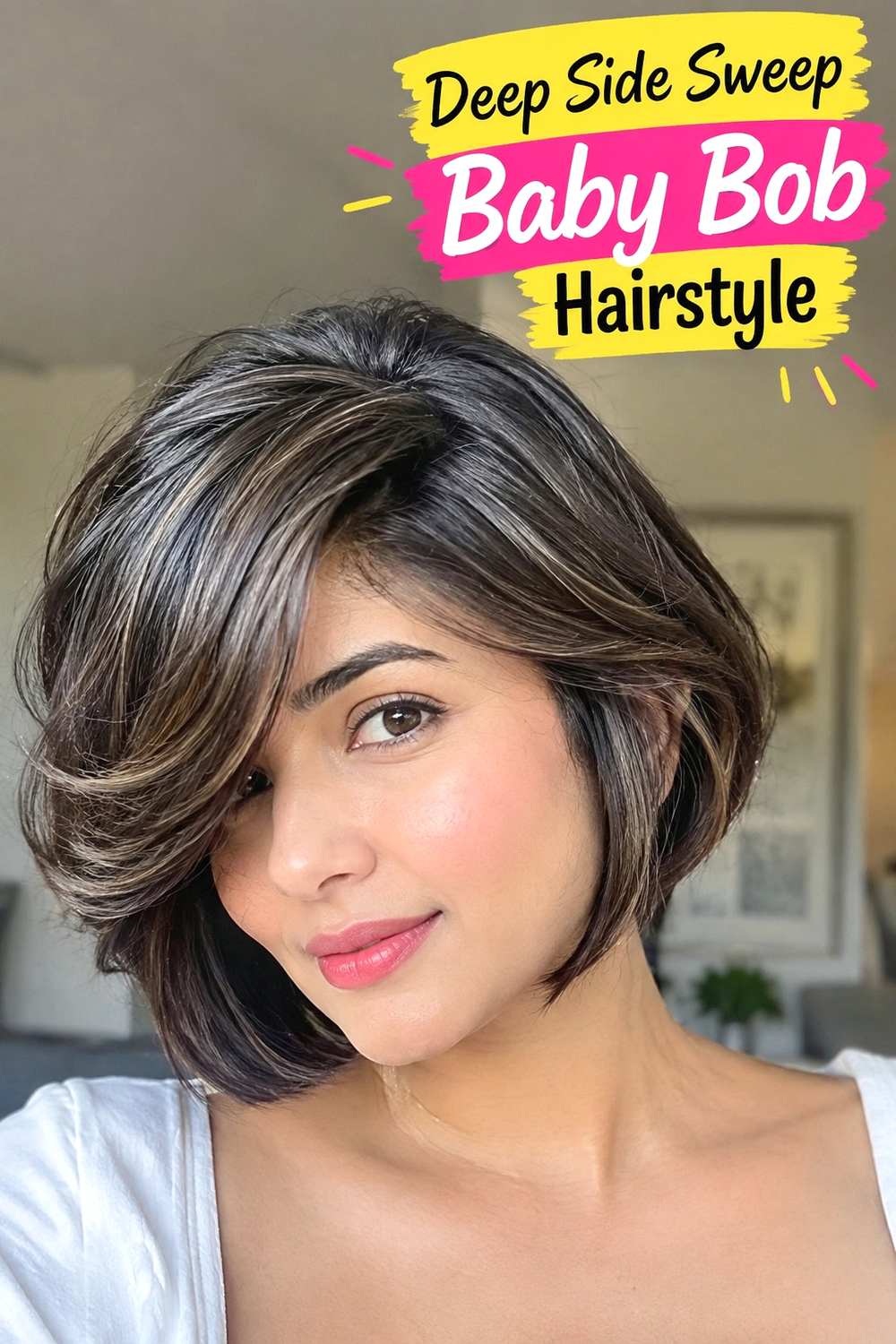
The Deep Side Sweep Baby Bob Hairstyle creates drama through the front rather than through complicated layering. A deeper part allows a larger section of hair to sweep across the forehead, creating volume and directional movement before the ends settle around the cheekbone area. The opposite side can be kept sleek or tucked to emphasize the contrast. This variation is useful when you want a baby bob with a little more softness around the hairline or prefer not to wear a visible fringe. A gentle root lift helps the sweep stay elevated without needing stiff hairspray. The ends can remain blunt, softly textured, or slightly curved depending on how polished you want the finished style to feel.
Styling Notes
Dry the front section in the direction opposite its final position first, then sweep it back. That simple technique can create lift without excessive backcombing or heavy product.
13. Choppy Baby Bob Hairstyle
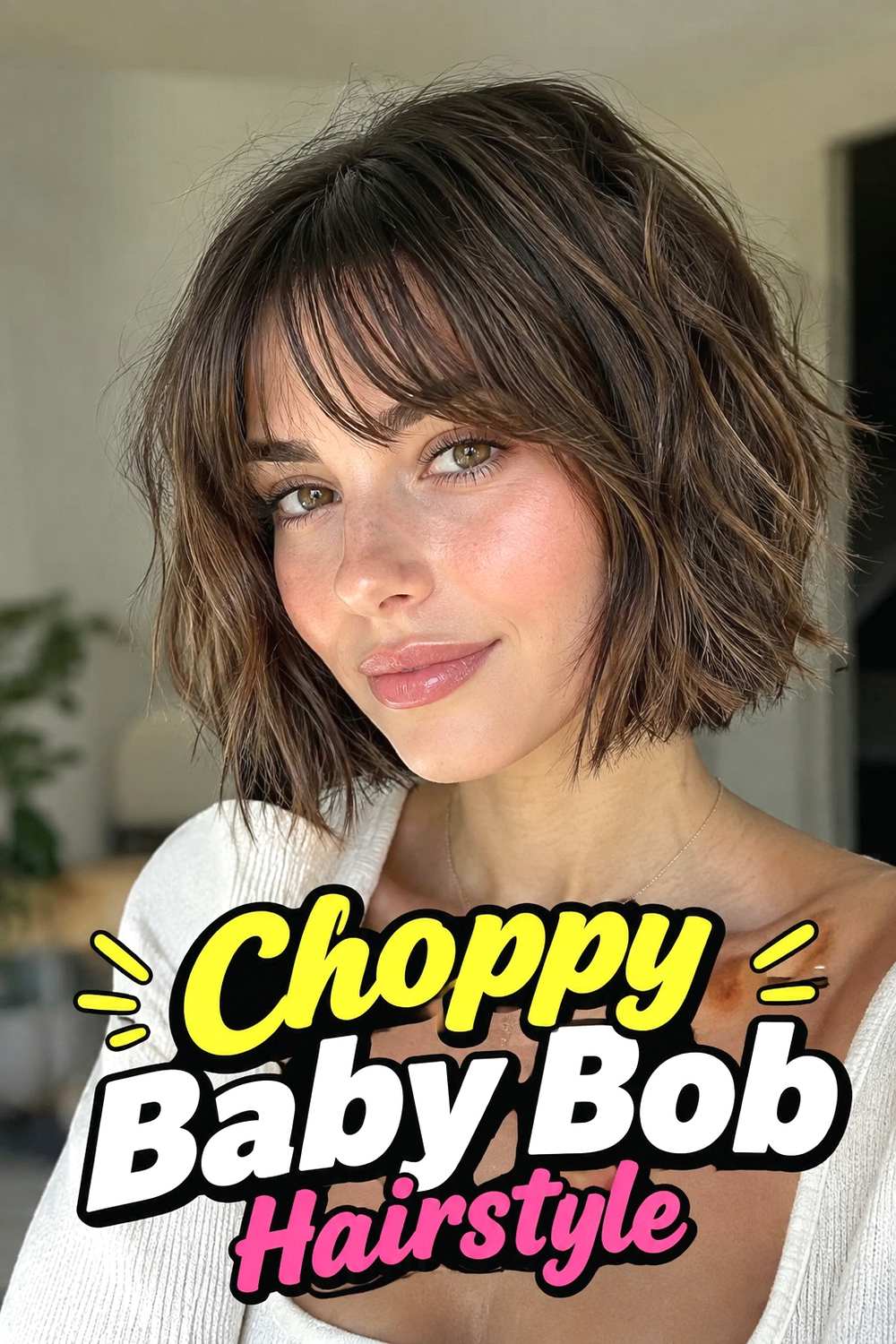
The Choppy Baby Bob Hairstyle trades a perfectly even edge for deliberate variation through the ends. Short, irregular pieces create separation and texture, giving the cheekbone-length silhouette a slightly rebellious feel while preserving the compact bob shape. This haircut is especially effective when you want visible movement without forming waves or curls. The choppiness should appear intentional rather than damaged, so the cut still needs a coherent overall perimeter. On fine hair, a restrained version can add visual texture without removing too much density. On thicker hair, additional internal shaping can help the pieces sit naturally instead of stacking into a bulky shelf around the sides.
Best For
Choose this direction if you enjoy styling with your fingers rather than chasing a perfectly smooth finish. A tiny amount of matte paste can highlight selected ends without making the whole haircut stiff.
14. Feathered Baby Bob Hairstyle
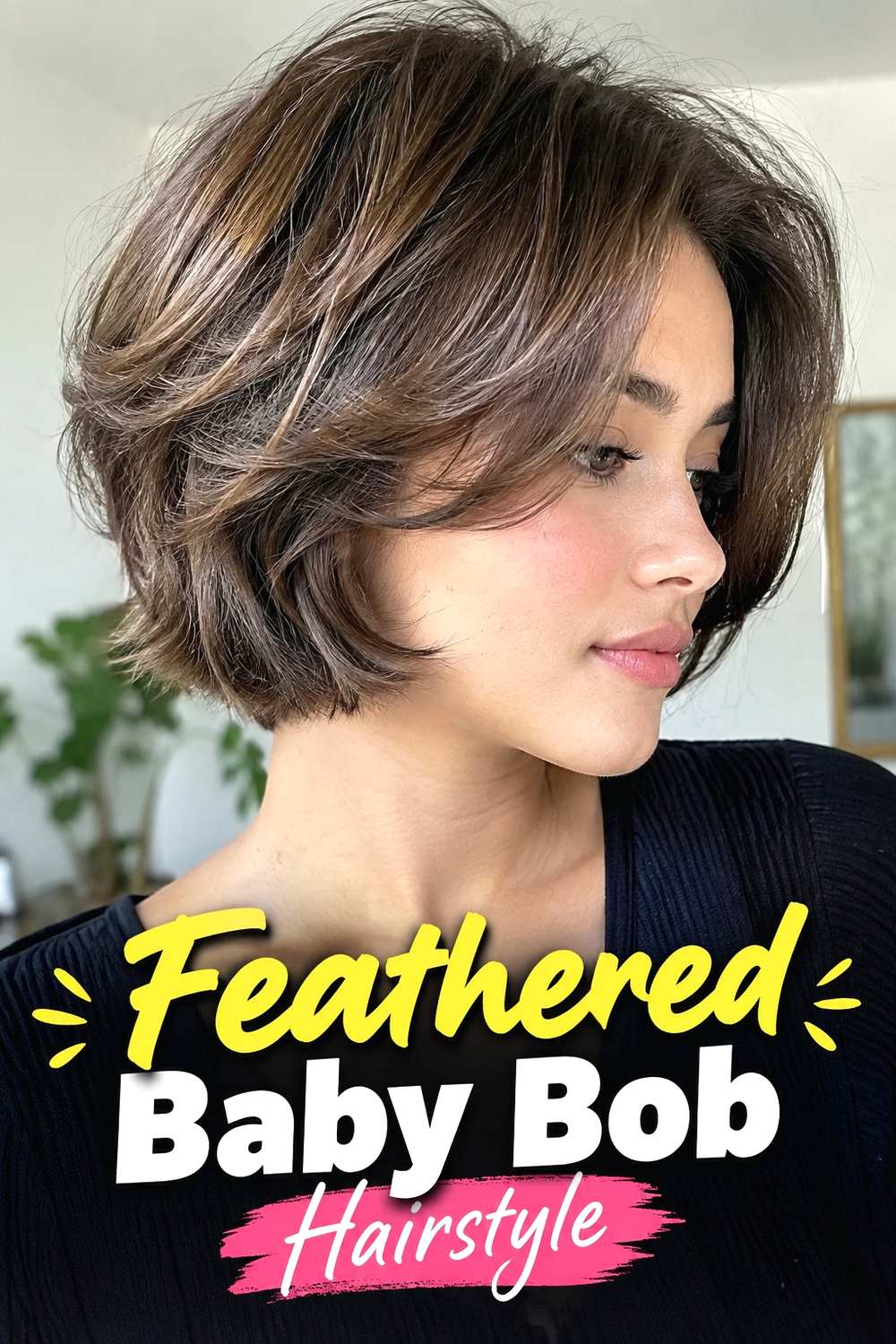
The Feathered Baby Bob Hairstyle introduces soft directional layers that skim away from the face and lighten the edges of the cut. Unlike a choppy bob, the movement is blended and airy, so each piece flows into the next rather than standing out separately. The cheekbone length keeps the overall shape fresh and compact, while feathering prevents the perimeter from feeling severe. This look can be especially flattering when styled with gentle lift through the front and sides, creating a soft frame instead of a flat curtain of hair. A small round brush or lightweight blow-dry brush can help encourage movement, but the effect should stay subtle enough to maintain a modern finish.
Pro Tip
Concentrate the feathering around visible face-framing pieces instead of over-layering the entire haircut. Preserving some density through the perimeter keeps the baby bob from looking too thin.
15. Rounded Baby Bob Hairstyle
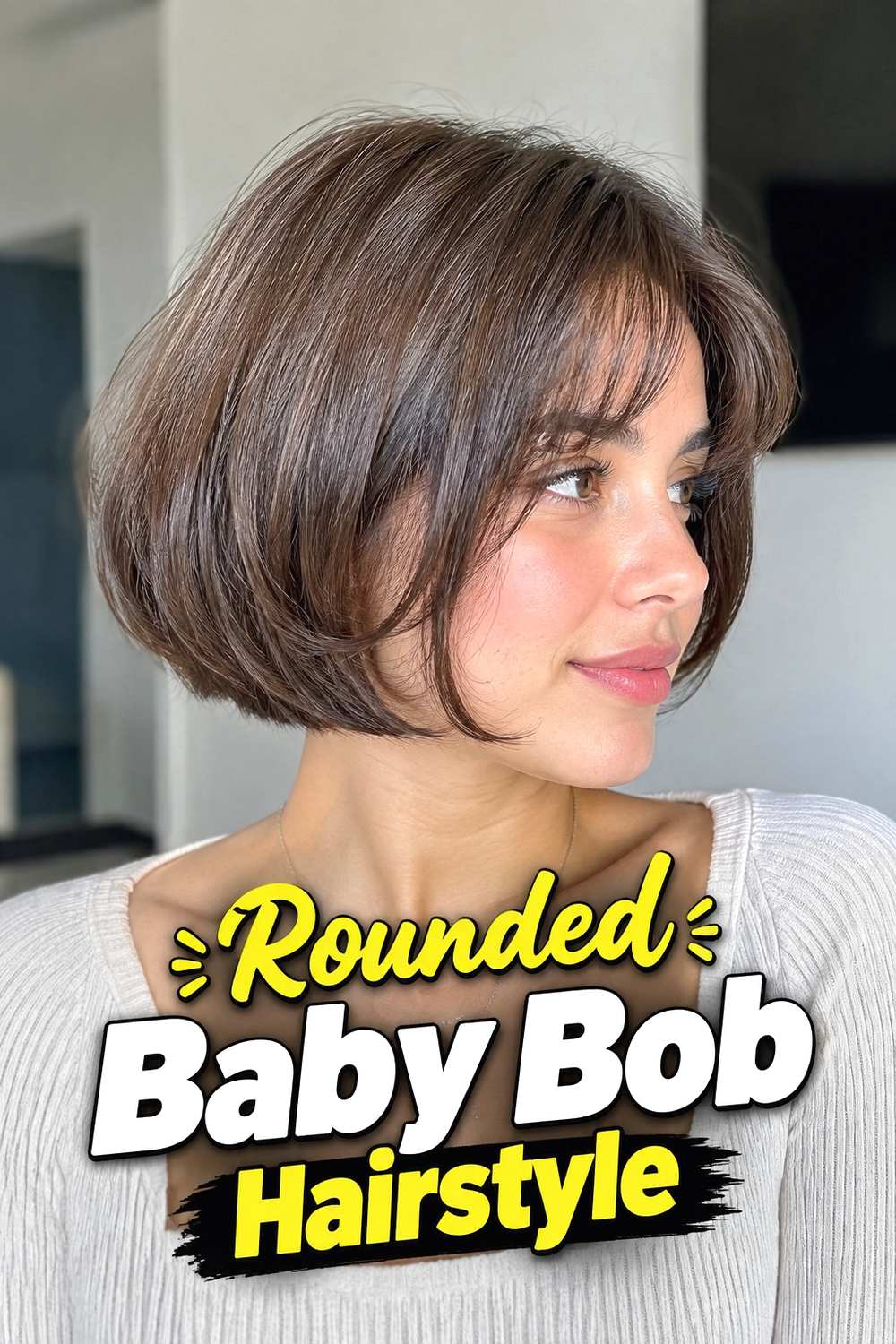
The Rounded Baby Bob Hairstyle creates a soft curved silhouette that follows the head before turning gently toward the face. Rather than relying on a ruler-straight perimeter, the shape has controlled fullness through the sides and back, giving it a smooth, compact finish. This direction works beautifully when you like a polished bob but want something softer than a severe blunt cut. The key is proportion: too much internal volume can push the style toward a helmet-like shape, while too little can leave it flat. Subtle graduation or careful blow-drying can support the curve while preserving natural movement and visible strand detail throughout the surface.
Hair Type & Length
Straight and softly wavy hair often show the rounded outline clearly, but density matters as much as texture. Thick hair may need internal weight removal to keep the silhouette close to the head.
16. Slicked Baby Bob Hairstyle
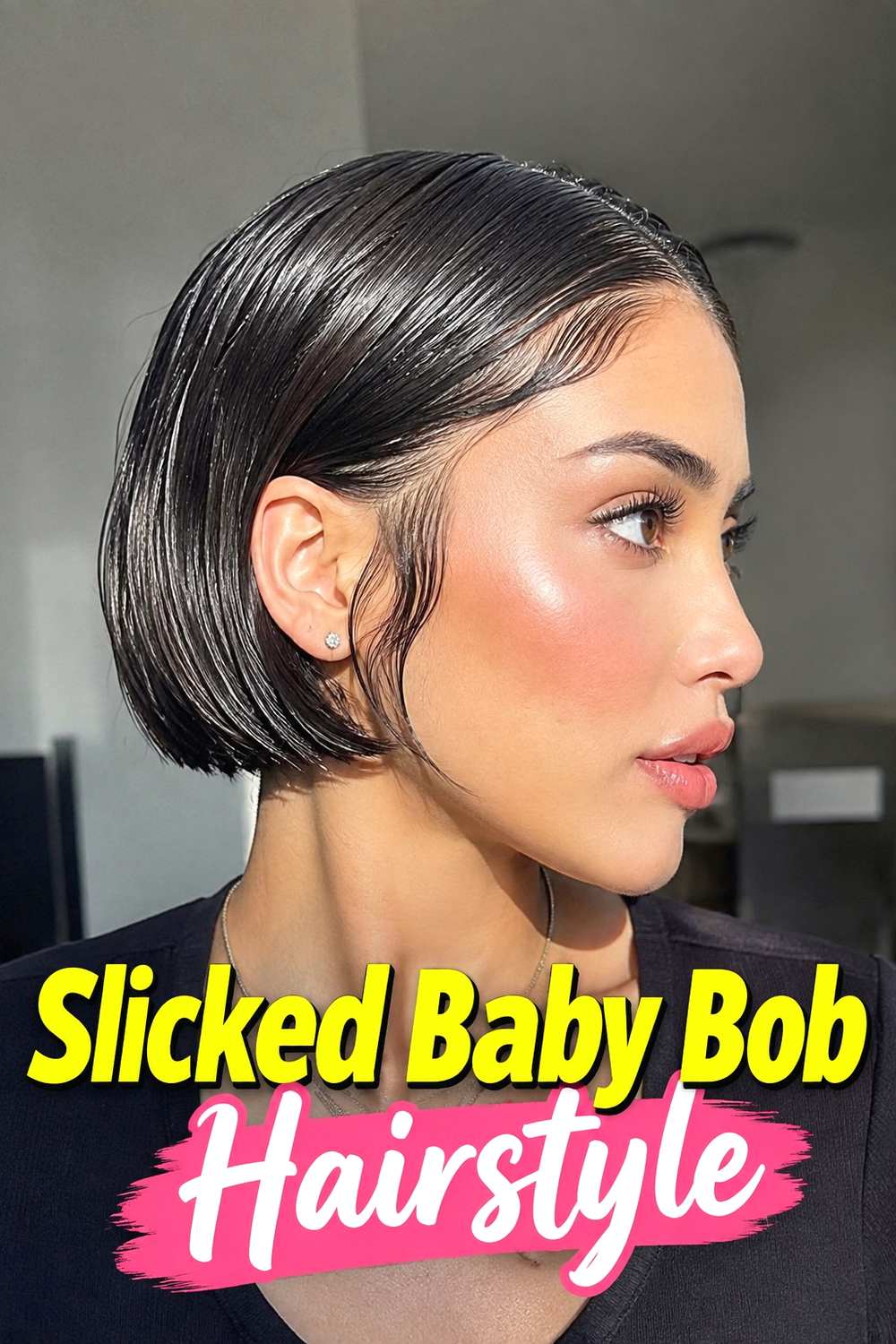
The Slicked Baby Bob Hairstyle turns a short everyday cut into a sleek, evening-ready look by directing the hair close to the head and away from the face. The compact cheekbone length prevents the style from feeling heavy, while the exposed hairline gives the overall look a clean, confident finish. This can be worn with a defined part or brushed straight back, depending on the effect you prefer. The most believable version still shows natural strand texture and controlled shine rather than a hard, plastic-looking surface. Start with a small amount of styling product and build only where necessary, especially around the temples and shorter flyaways.
Styling Notes
Choose flexible gel or styling cream if you want movement. Strong wet-look products can create a more dramatic finish, but using too much may make fine hair separate into visible product-heavy sections.
17. Piecey Baby Bob Hairstyle
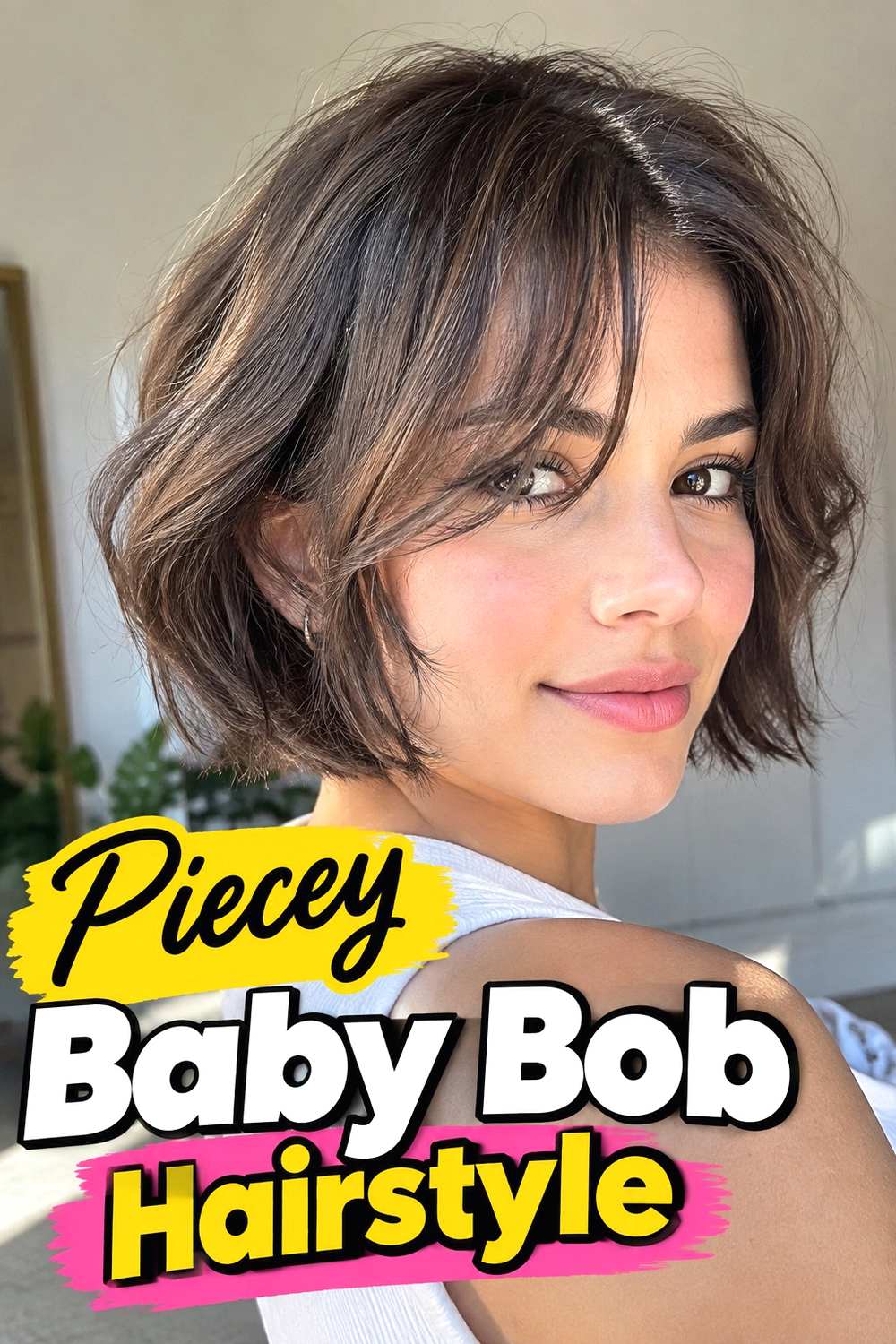
The Piecey Baby Bob Hairstyle highlights small sections of hair rather than smoothing everything into one continuous shape. The bob still sits around the cheekbones, but selected ends separate into defined, lightweight pieces that make the haircut look casual and dimensional. This works particularly well with subtle layering because the shorter sections have enough freedom to move without disrupting the overall outline. The finish can be straight, softly bent, or naturally tousled. What matters is restraint: a few defined pieces create texture, while product on every strand can quickly make short hair appear greasy or spiky. Apply styling paste only to the tips and front sections that you want to emphasize.
Why It Works
Piecey definition adds visual detail without requiring strong curls or high volume. It is an easy way to make a simple short bob feel less formal and more relaxed.
18. Soft Volume Baby Bob Hairstyle
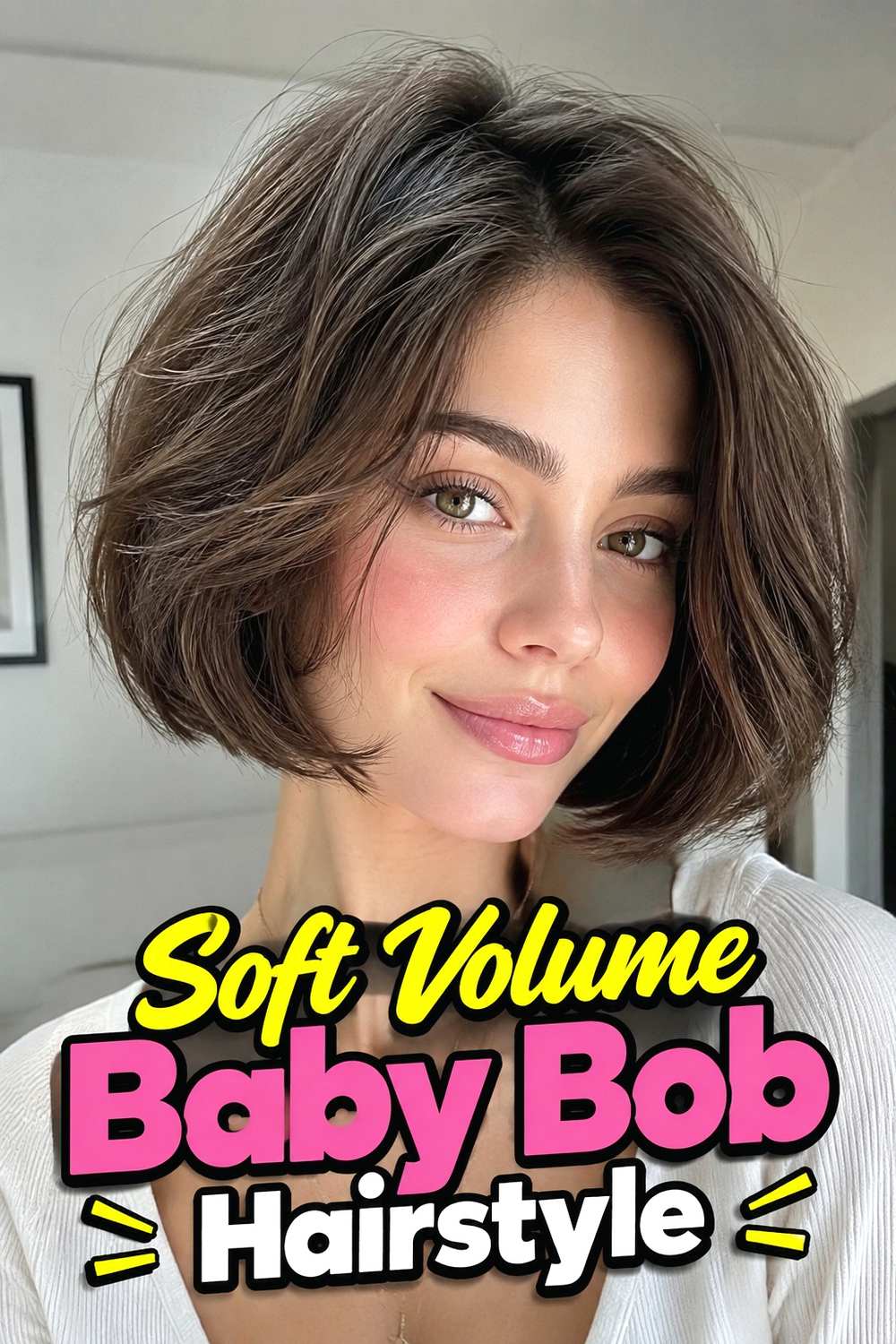
The Soft Volume Baby Bob Hairstyle keeps the short cheekbone perimeter while adding gentle lift through the roots and upper sides. Instead of lying close and flat, the hair has enough body to create an airy silhouette without becoming overly round. This is a useful option if you like the neat proportions of a baby bob but prefer movement around the crown and front. A smooth blowout can create polished volume, while naturally wavy textures can achieve a softer version with diffused drying. The ends should remain controlled so the hairstyle still reads as a compact bob. Lightweight mousse or root foam can provide support without sacrificing natural swing.
Pro Tip
Focus volume above the widest part of the haircut rather than expanding every section equally. Strategic root lift keeps the overall shape light while preserving the cheekbone-level outline.
How to Choose the Right Look
Start with your natural texture and the amount of daily styling you realistically enjoy. Straight or easily smoothed hair makes blunt, glass, slicked, and asymmetrical versions easier to maintain, while wavy, curly, and coily textures can create beautiful baby-bob shapes with less emphasis on a perfectly straight perimeter.
Think carefully about finished length. A baby bob sits noticeably higher than a traditional chin bob, and textured hair may spring upward after drying. If you want a precise cheekbone position, discuss the length in its normal dry state rather than judging it only when the hair is stretched.
Your preferred styling time matters too. Tucked, piecey, French-inspired, and softly textured versions can suit a more relaxed routine, while glass finishes, micro bangs, dramatic side sweeps, and sharp blunt lines usually require more deliberate upkeep. Fringe also adds another maintenance point because it often needs reshaping before the rest of the haircut does.
Finally, compare volume and finish. A rounded or soft-volume baby bob creates more fullness, while slicked, tucked, and glass versions sit closer to the head. For frequent everyday wear, choose the silhouette that works with your natural density rather than fighting it every morning.
Final Thoughts
Cheekbone baby bobs can look dramatically different depending on the perimeter, texture, fringe, part, and amount of volume. If you love precision, start with a blunt or glass finish. For something softer, consider waves, curls, feathering, or gentle texture. The strongest choice is usually the version that respects your natural hair pattern while giving you a short length you can comfortably maintain.
FAQs
1. What is a cheekbone baby bob haircut?
A cheekbone baby bob is a very short bob that finishes around the cheekbone area, noticeably above a conventional chin-length bob. The exact position can vary slightly with hair texture and shrinkage.
2. Does a baby bob require frequent trims?
Precise versions usually benefit from regular reshaping because small amounts of growth are easy to see at such a short length. Softer, textured variations can generally tolerate a little more grow-out before the silhouette changes noticeably.
3. Can curly or coily hair wear a cheekbone baby bob?
Yes. Curly and coily textures can create striking baby-bob silhouettes, but the cut should account for shrinkage, density, and the way individual curls or coils naturally fall once dry.
4. Are bangs necessary with a baby bob?
No. A baby bob can be worn with no fringe, wispy bangs, micro bangs, a side sweep, or longer face-framing pieces. The choice mainly changes how much of the forehead is visible and how the front of the haircut is balanced.
5. How can I make a baby bob look less flat?
Try lightweight root lift, a changed part, subtle bends, gentle internal texture, or a soft blowout. Avoid heavy oils and creams near the roots, since they can reduce movement quickly on very short hair.
CTA
Save your favorite cheekbone baby bob ideas and use the details you love most—length, texture, fringe, and finish—to guide your next short-hair inspiration.