17 Flippy French Bob Haircut Ideas
A flippy French bob blends Parisian short-hair charm with playful turned-out ends, creating a fresh silhouette that can feel polished, soft, or retro.
The French bob is already known for its compact shape around the jaw or chin, but adding a gentle outward flip changes the personality of the cut. Instead of ends resting straight against the neck or curving inward, they kick away slightly, bringing more movement and a lively finish to a classic short style.
The right variation depends on more than the flip itself. Bangs, layers, density, natural texture, parting, and the exact bob length all influence how easy the look is to style. These 17 ideas range from softly tousled versions to smooth retro shapes, giving you several directions to compare before choosing your own.
Quick List
- Classic Flippy French Bob Hairstyle
- Chin Length Side Parted Flippy Bob Hairstyle
- Soft Layered Flippy French Bob Hairstyle
- Wispy Bangs Flippy French Bob Hairstyle
- Curtain Fringe Flippy French Bob Hairstyle
- Sleek Center Part Flippy French Bob Hairstyle
- Tousled Texture Flippy French Bob Hairstyle
- Wavy Flippy French Bob Hairstyle
- Curly Flippy French Bob Hairstyle
- Fine Hair Volume Flippy French Bob Hairstyle
- Thick Hair Sculpted Flippy French Bob Hairstyle
- Jaw Length Micro Flippy French Bob Hairstyle
- Rounded Flippy French Bob Hairstyle
- Piecey Ends Flippy French Bob Hairstyle
- Retro 1960s Flippy French Bob Hairstyle
- Tucked Behind The Ear Flippy French Bob Hairstyle
- Polished Evening Flippy French Bob Hairstyle
1. Classic Flippy French Bob Hairstyle
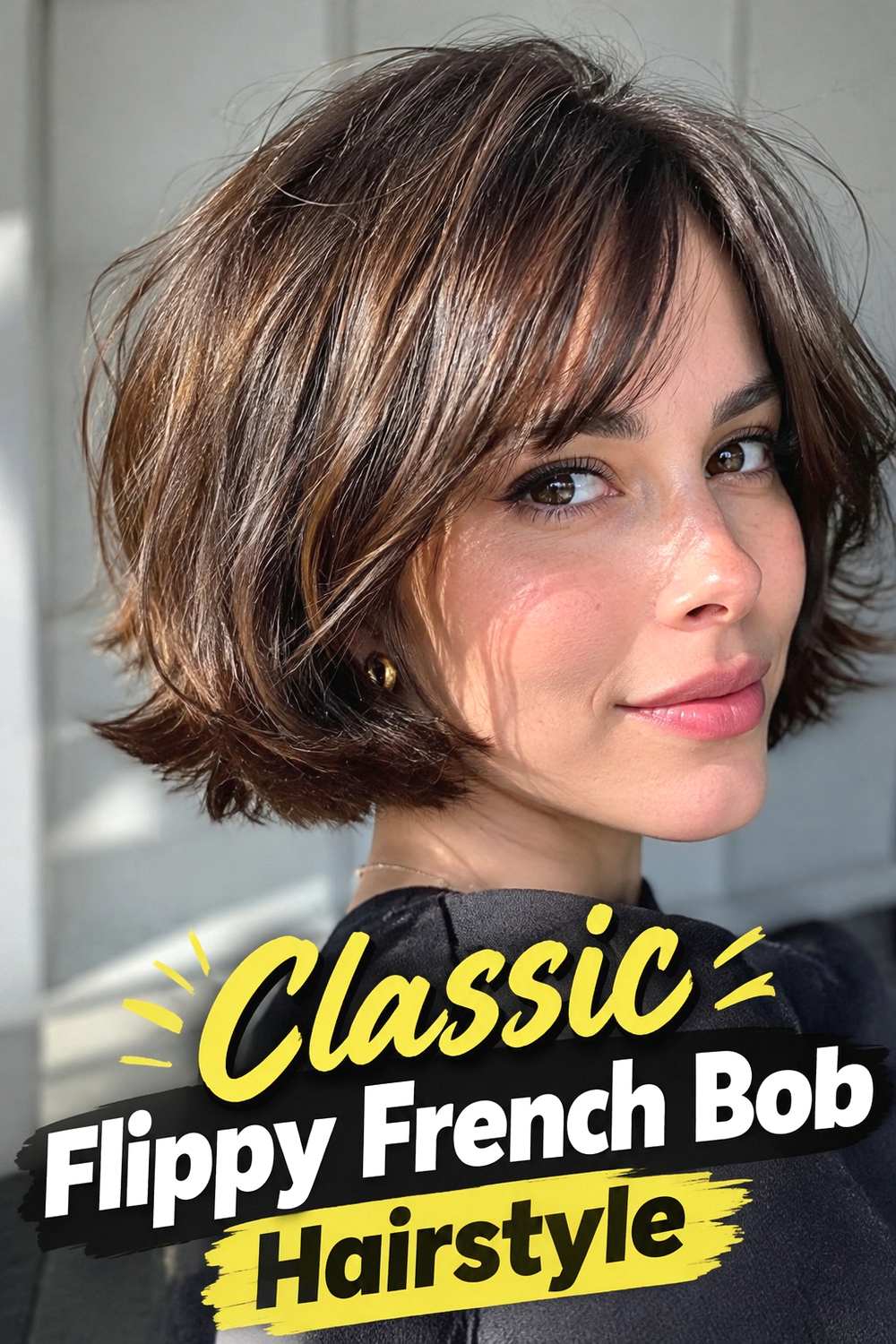
The classic flippy French bob keeps the shape clean and recognizable: a compact chin-length cut with neat weight through the perimeter and ends that turn outward just enough to create movement. The small flip prevents the silhouette from feeling too severe while preserving the polished character of a traditional French bob. It works especially well when the hair has enough body to hold a subtle bend without looking stiff. A smooth blow-dry can keep the crown controlled, while a round brush or straightener gives the last inch of hair its outward direction. Keep the finish touchable rather than overly sprayed so the ends retain their natural swing.
Styling Notes
Direct the ends outward in small sections instead of creating one dramatic curl. This gives the haircut a softer, more modern flip.
Best For
This version is a useful starting point for anyone who likes a defined bob shape and prefers moderate styling rather than deliberately messy texture.
2. Chin Length Side Parted Flippy Bob Hairstyle
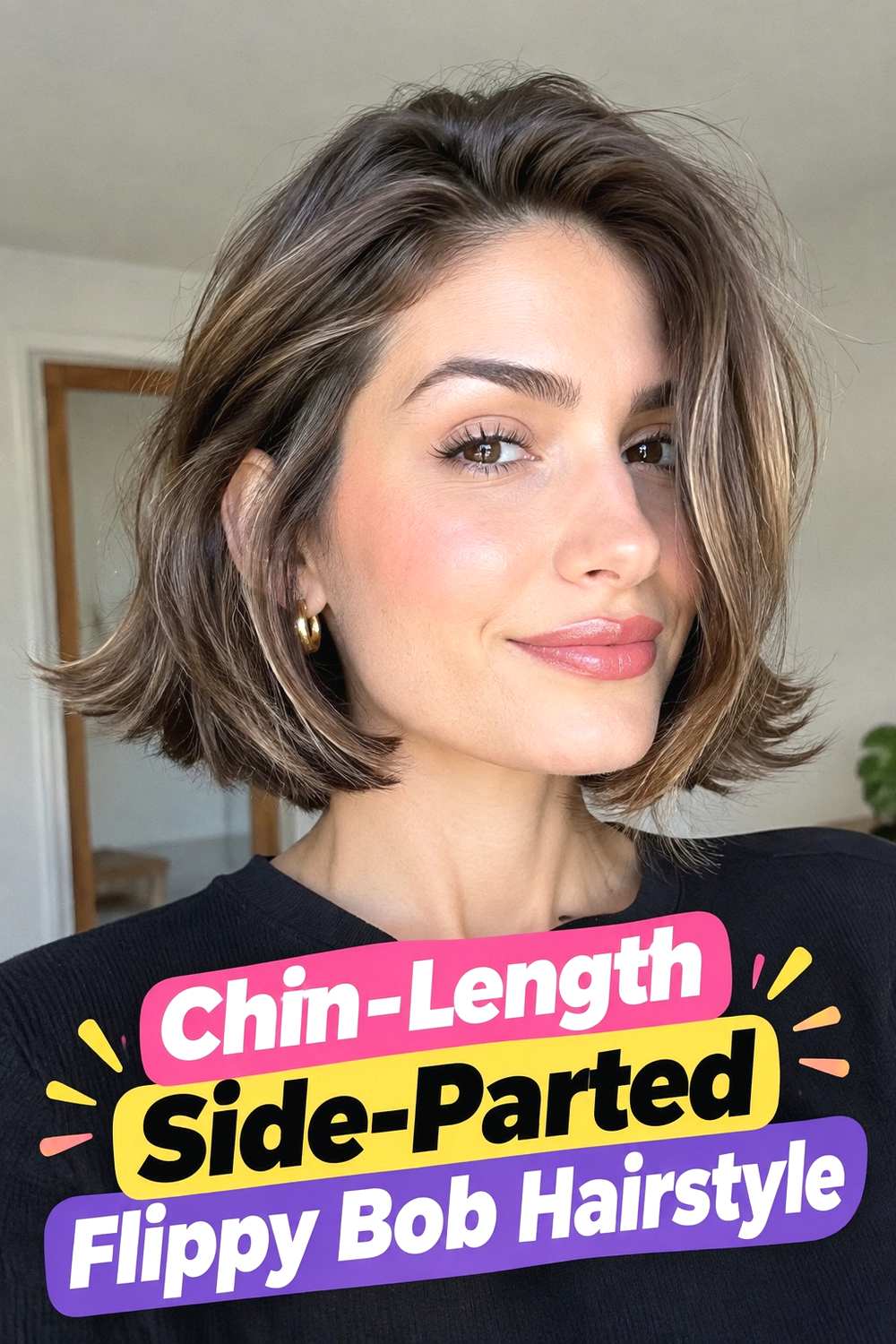
A side part gives the flippy French bob an instant change in balance, creating extra lift on one side while allowing the opposite side to sit closer to the cheek. The chin-length perimeter keeps the haircut compact, while the flipped ends add a light, swinging finish instead of a blunt straight edge. This variation can be especially appealing when you want more movement around the front without committing to bangs. Styling is simple: dry the roots in the opposite direction of the final part for a little lift, then move them back into place. Finish by directing only the lower section outward, keeping the crown smooth and relaxed.
Why It Works
The asymmetry of the part prevents the short silhouette from looking too uniform and adds natural-looking volume around the top.
Wear & Maintenance
The side part can be refreshed quickly between washes, but the flipped edge may need light restyling after sleeping if your hair easily loses shape.
3. Soft Layered Flippy French Bob Hairstyle
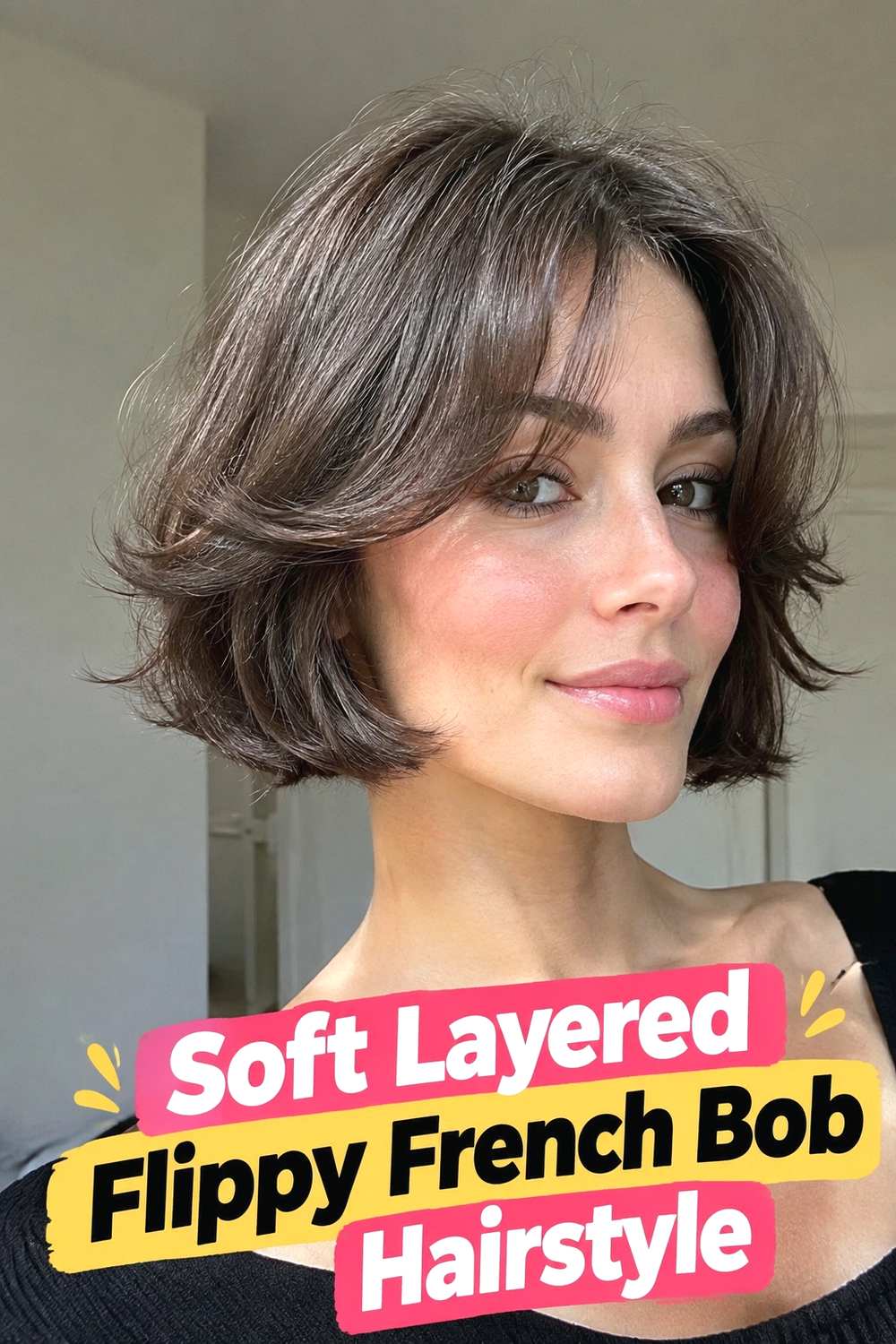
Soft layering gives a French bob more air and movement while still keeping the overall shape short and recognizable. Rather than relying on one solid perimeter, subtle layers release some weight through the sides and allow individual sections to flip outward at slightly different angles. The result looks less structured than a one-length bob but still feels intentional. This approach can help hair with natural movement settle into the style without requiring every strand to behave identically. When styling, focus on lift and separation instead of perfect smoothness. A lightweight blow-dry product and quick bend through the ends can emphasize the layered texture without making the cut look overly feathered.
Hair Type & Length
This variation suits chin- to jaw-length hair and can work particularly well when some natural wave or medium density helps the layers show.
Pro Tip
Ask for soft internal or surface movement rather than extremely short layers if you want to preserve the French bob’s compact outline.
4. Wispy Bangs Flippy French Bob Hairstyle
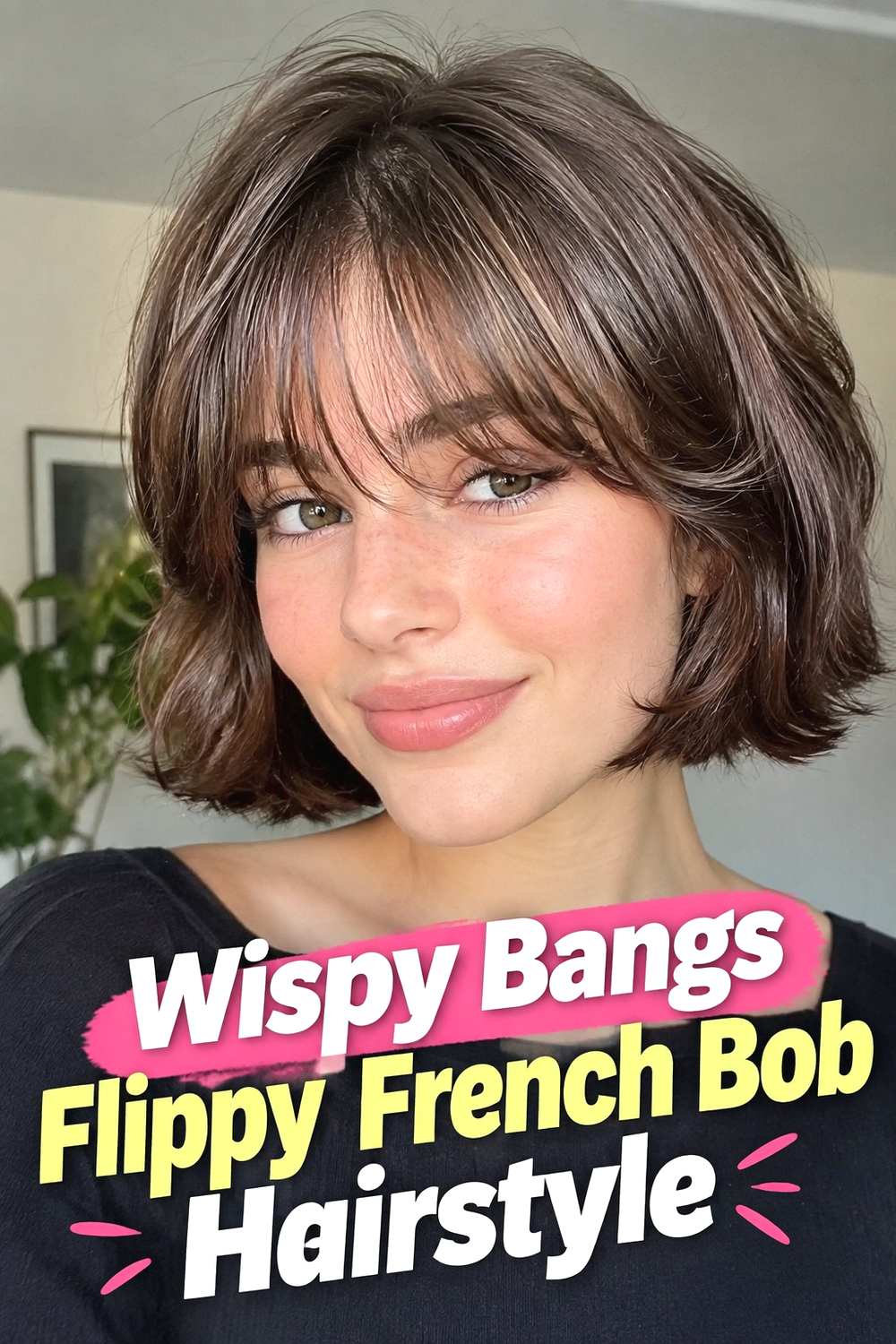
Wispy bangs make a flippy French bob feel softer around the forehead while keeping the playful energy of the turned-out ends. The fringe should look light and airy rather than dense, allowing small spaces between strands and blending gradually into the shorter sides. Combined with a chin-length bob, this creates a balanced silhouette with detail at both the top and bottom of the haircut. The bangs usually need only a quick directional blow-dry, while the ends can be flicked outward with a brush or iron. Avoid making every section perfectly identical; slight variation through the fringe and perimeter helps the haircut feel more relaxed and believable.
Styling Notes
Dry the bangs first while they are still damp, moving them gently from side to side before letting them settle into place.
Best For
Choose this version if you like the framing effect of bangs but want something lighter and less visually heavy than a full blunt fringe.
5. Curtain Fringe Flippy French Bob Hairstyle
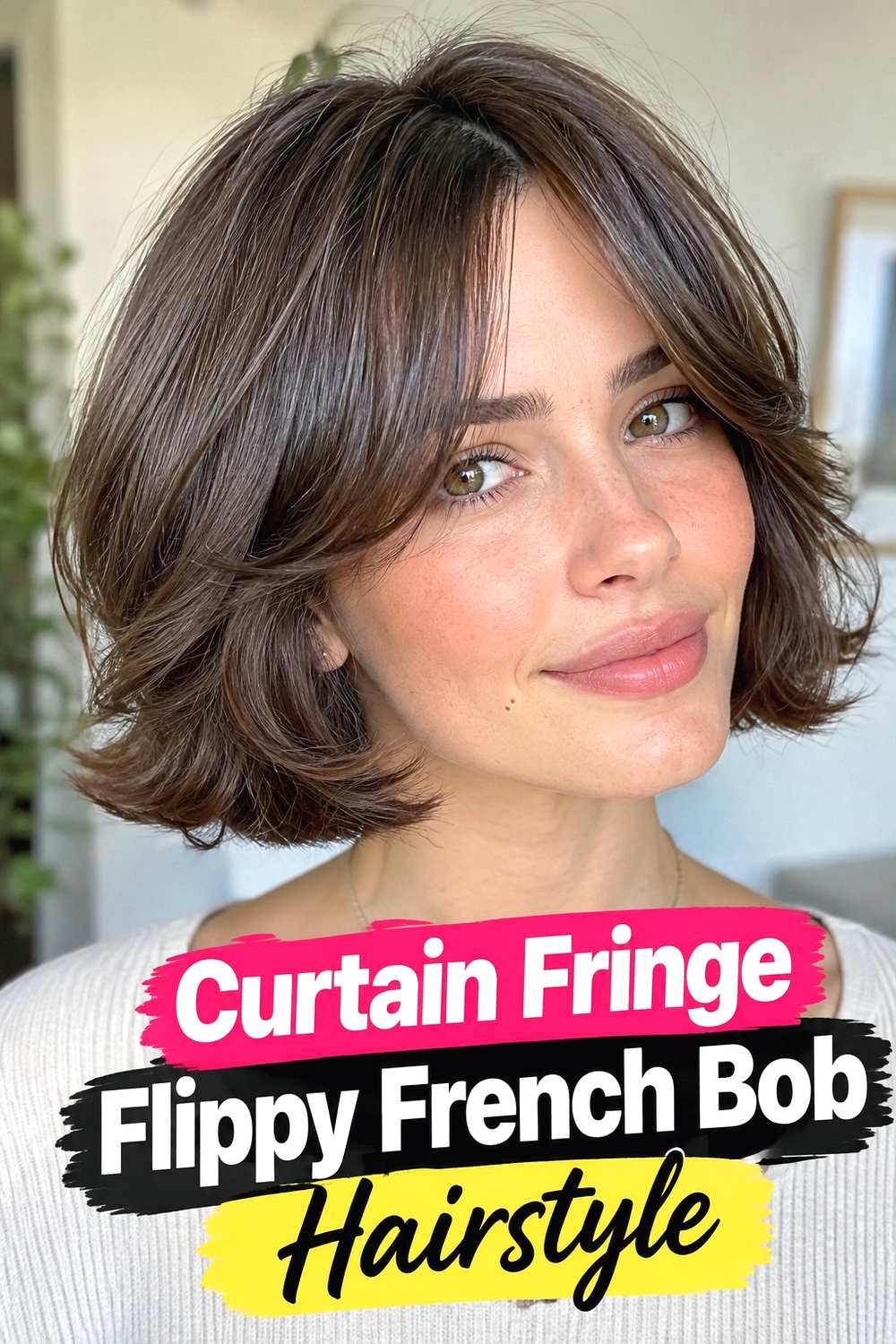
A curtain fringe adds longer face-framing movement to the flippy French bob without covering the entire forehead. The center opens naturally, while the fringe sweeps toward the cheekbones and connects into the bob’s short perimeter. Turning the lower ends outward creates a second direction of movement, giving the haircut a breezy shape from front to back. This version can look especially polished when the fringe has a soft bend instead of a tight curl. Use a round brush to guide the fringe away from the face, then flip the bob ends outward with a lighter touch. Keeping the crown relatively smooth prevents the combination of fringe and flipped ends from becoming too voluminous.
Why It Works
The longer fringe creates a gradual transition around the face and visually connects the top layers with the outward movement below.
Wear & Maintenance
Curtain fringe generally offers more flexibility as it grows, though regular trims help keep the shortest pieces sitting around the intended facial area.
6. Sleek Center Part Flippy French Bob Hairstyle
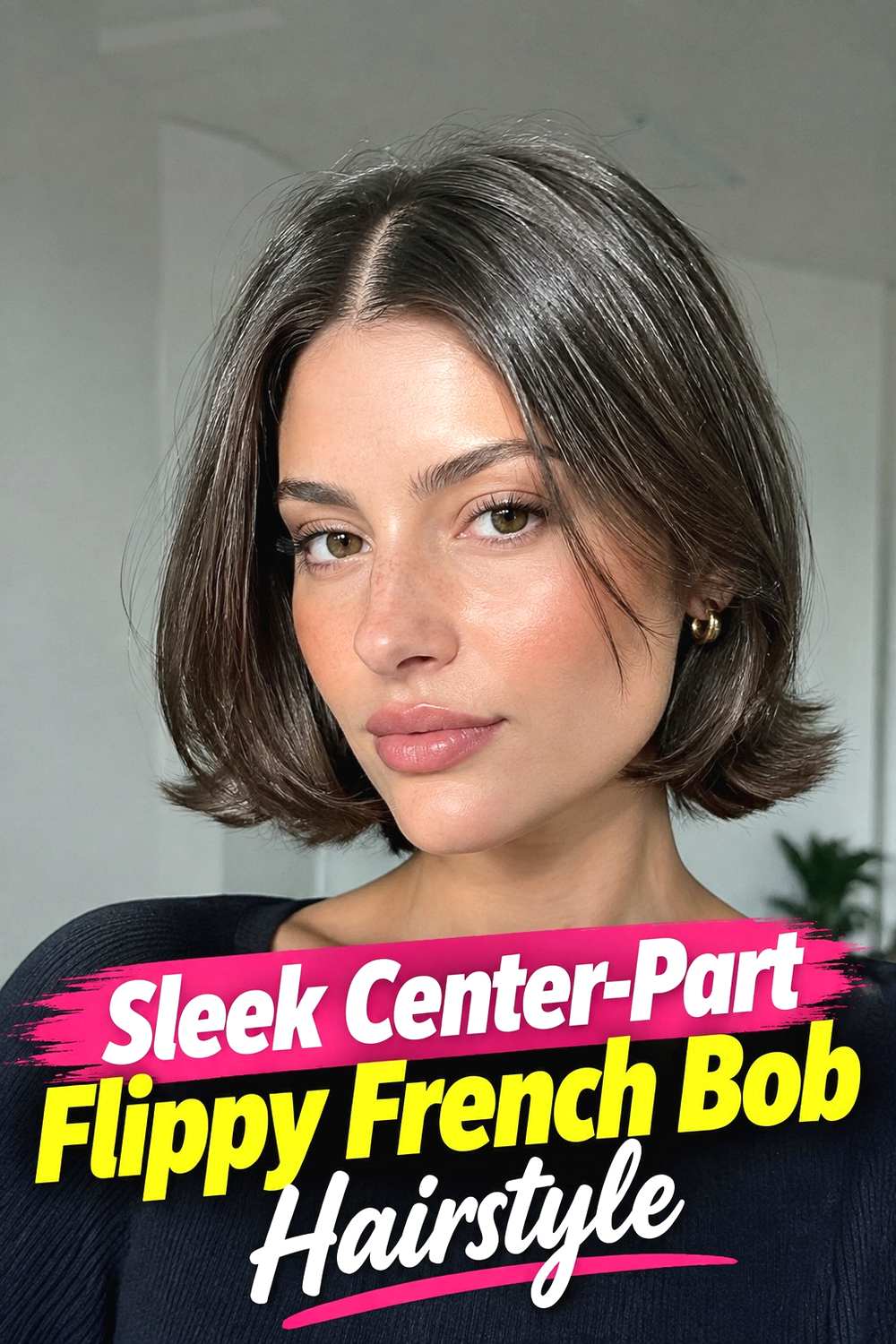
This sleek version creates contrast between a smooth, controlled upper section and crisp outward movement at the ends. A precise center part emphasizes symmetry, making the flipped perimeter the main visual detail. The effect feels polished without requiring the bob to curve inward or sit completely flat against the head. Straight or easily smoothed hair can make the finish particularly straightforward, although other textures can achieve it with more preparation. Work in small sections when styling so the bend begins consistently near the bottom rather than halfway up the hair. A small amount of smoothing serum through the mid-lengths can control flyaways while leaving the roots and ends light enough to move naturally.
Styling Notes
Keep the straightener moving through the hair and rotate the wrist outward only near the final inch or two to avoid an exaggerated curl.
Best For
This style works well when you want a sharp, tidy bob that still has a playful detail at the perimeter.
7. Tousled Texture Flippy French Bob Hairstyle
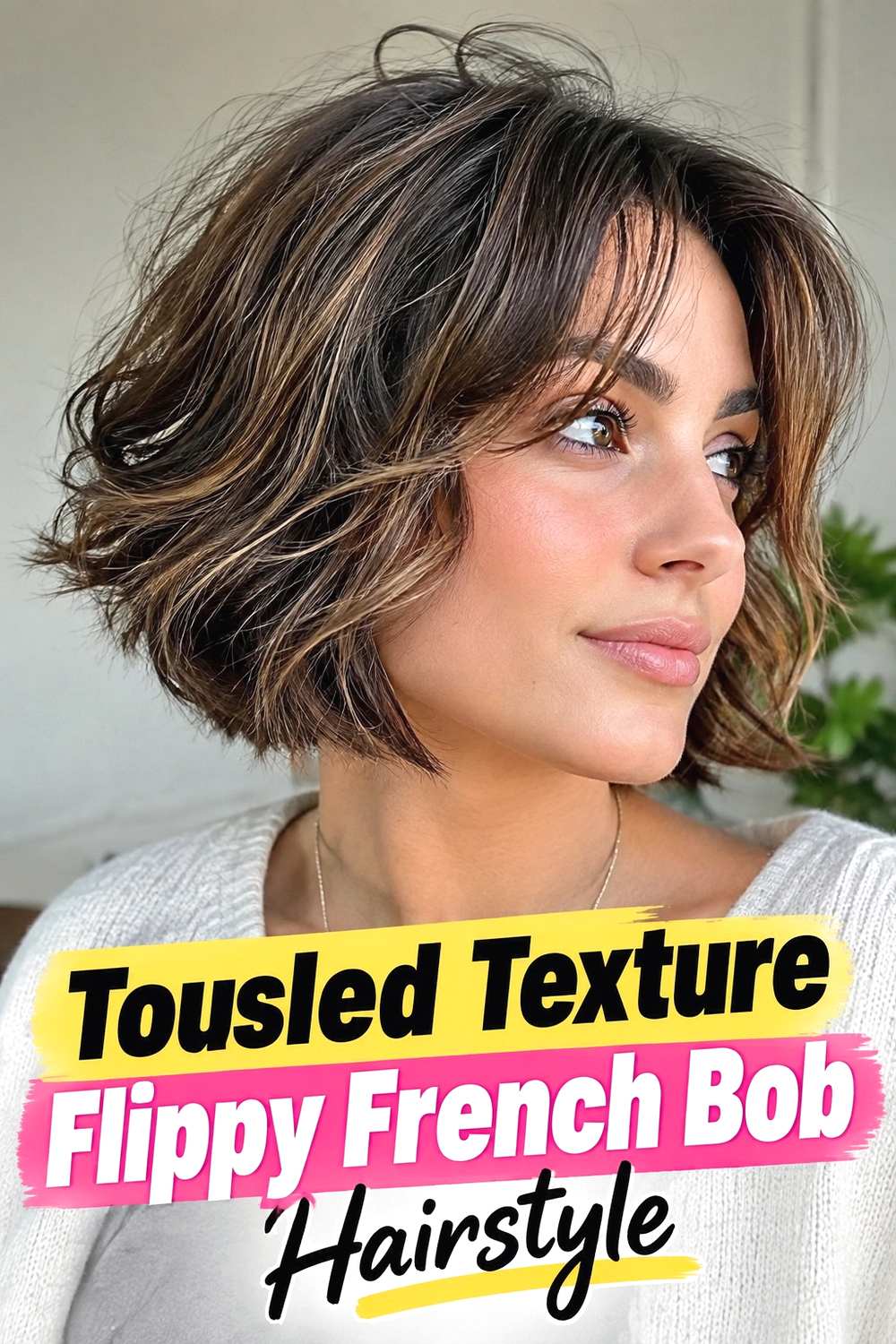
A tousled flippy French bob trades perfect polish for loose separation, imperfect bends, and a more casual finish. The outward flip remains visible, but different sections can turn out with slightly different strength, creating movement instead of a single uniform edge. Short, softly textured layers can enhance the effect by preventing the perimeter from feeling too dense. This is a useful direction for hair that already has some bend or for anyone who prefers a style that looks better with a little irregularity. Rough-dry while lifting the roots with your fingers, then refine a few selected pieces around the face and ends. The goal is definition without making the haircut look carefully sculpted.
Why It Works
Uneven texture complements the playful nature of the flip and makes minor changes in shape throughout the day feel intentional rather than messy.
Pro Tip
Style only the pieces that need direction. Leaving some natural texture untouched usually creates a more convincing tousled result.
8. Wavy Flippy French Bob Hairstyle
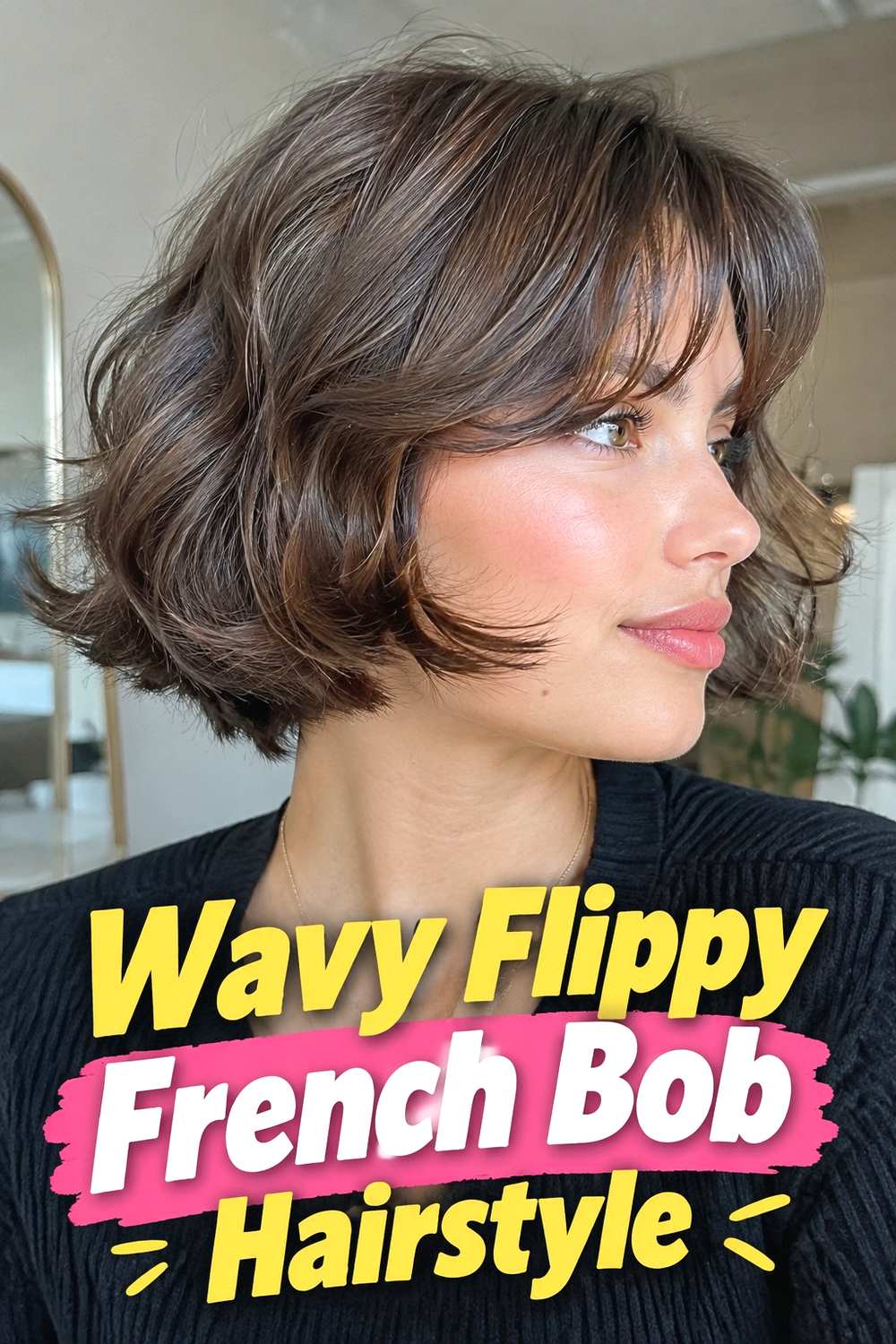
Natural-looking waves bring extra dimension to a flippy French bob because the hair moves in more than one direction before the ends kick outward. The bob can remain around chin length, with loose S-shaped bends through the mid-lengths and a lighter flip at the perimeter. Keeping the wave broad rather than tightly curled helps preserve the recognizable bob silhouette. If your hair is naturally wavy, encourage its existing pattern first and refine only sections that fall flat. Straighter hair can be styled with a medium iron, alternating bends and leaving the ends free for the final flick. Separation is important, so avoid brushing the finished waves into one solid, rounded shape.
Hair Type & Length
This look is especially suited to chin-length hair with natural wave, although straight hair can recreate the texture with heat styling.
Wear & Maintenance
Humidity and natural texture can change the exact wave pattern, which is part of the charm of this more relaxed variation.
9. Curly Flippy French Bob Hairstyle
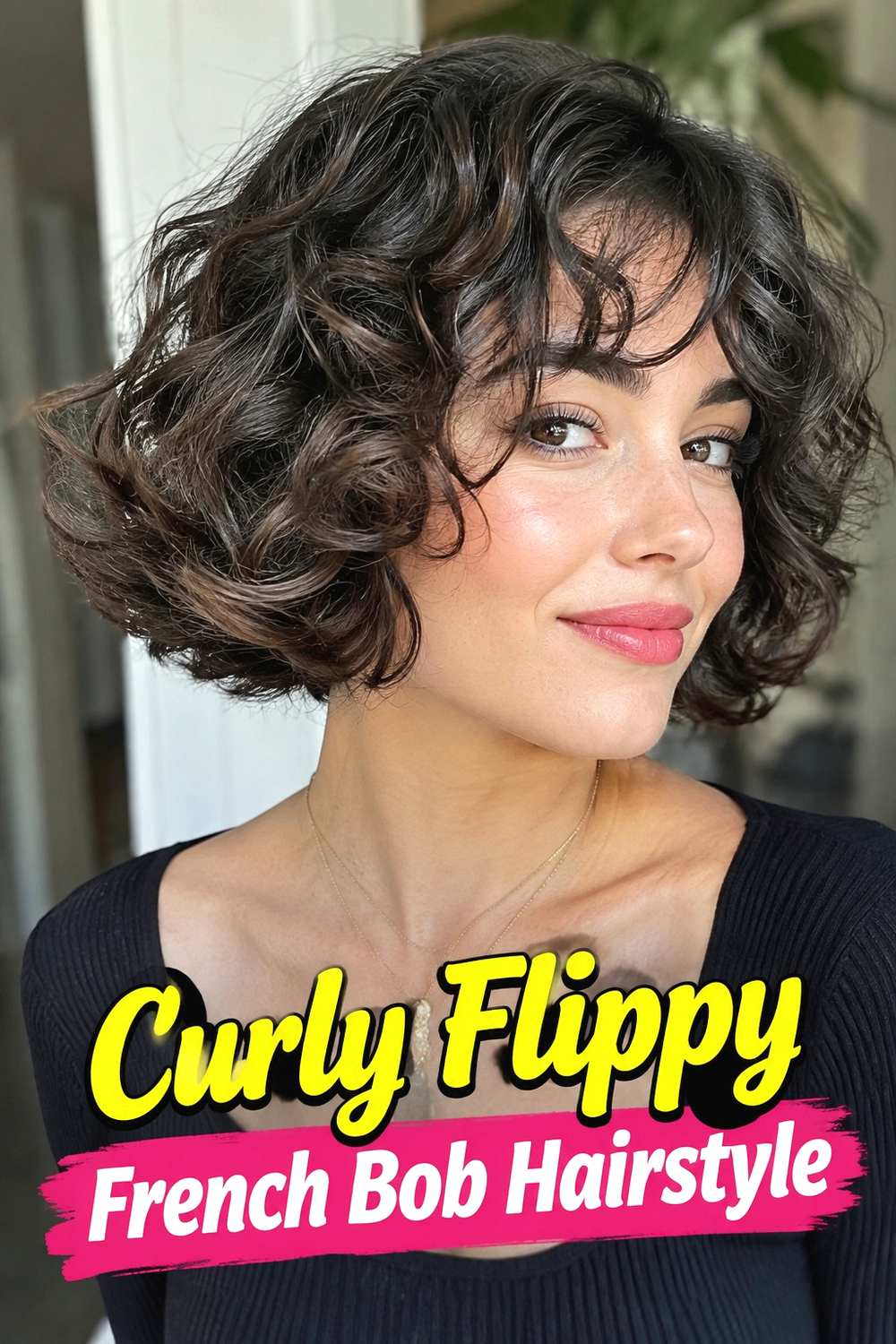
A curly flippy French bob uses the natural spring of curls to create a lively short shape while keeping the perimeter from turning inward. Rather than forcing every curl into an obvious outward flick, the cut can be shaped so selected ends sit away from the jaw and neck, giving the overall silhouette its flippy character. Curl-by-curl variation is important because identical bends can make the result look overly set. A rounded or lightly layered shape can prevent excessive bulk while preserving fullness. Apply curl-friendly styling product to wet hair, encourage clumps, and diffuse gently. Once dry, separate only where needed and avoid overworking the ends, which can disturb definition.
Why It Works
The bob’s short length gives curls room to spring while the outward-directed perimeter creates a playful silhouette instead of a compact inward curve.
Best For
This variation works best when the haircut is adjusted to your actual curl pattern, shrinkage, and density rather than copied from a straight-hair bob.
10. Fine Hair Volume Flippy French Bob Hairstyle
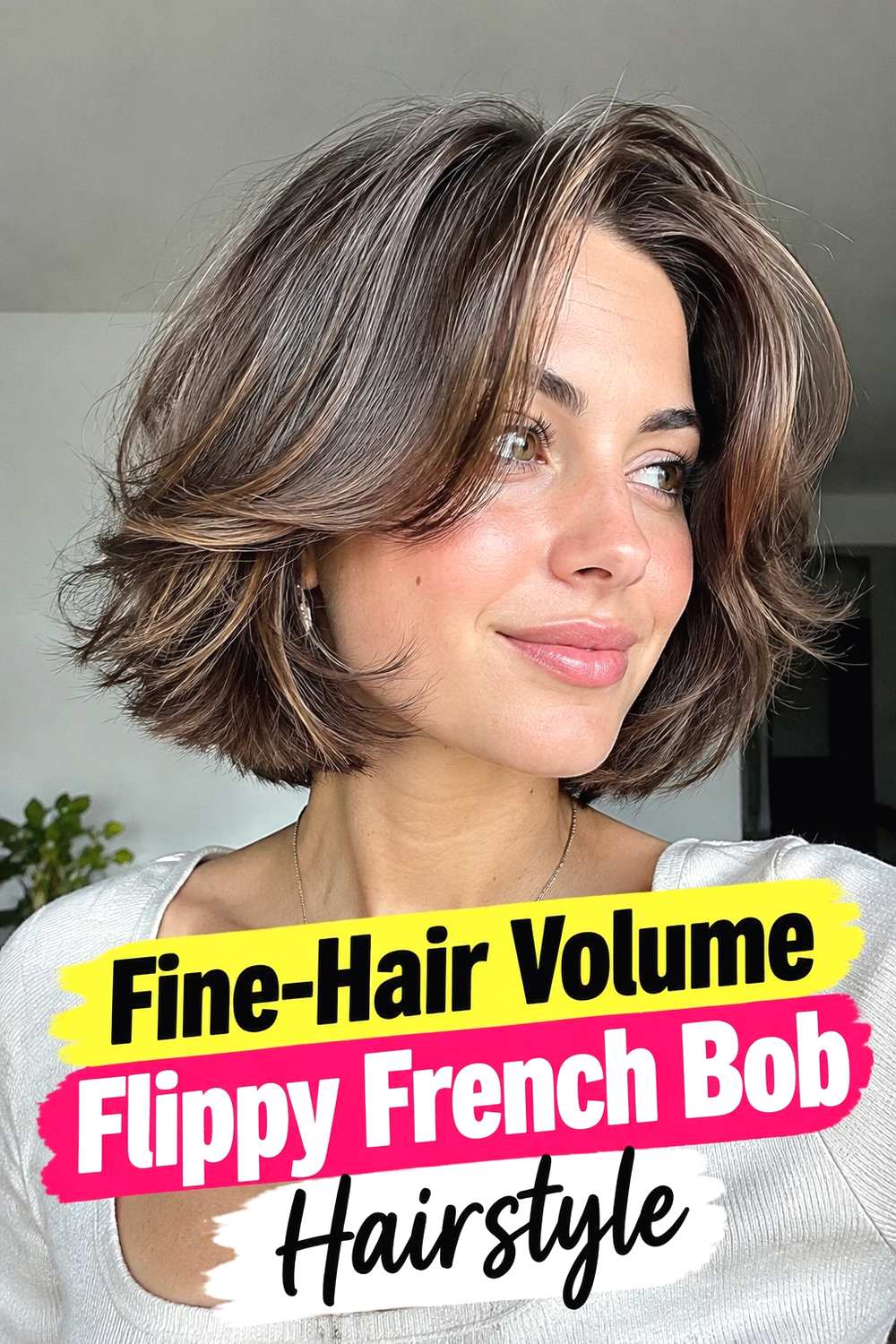
For finer hair, a flippy French bob can create the impression of more movement when the perimeter stays relatively strong and the styling adds lift without heavy product. Keeping excessive layering to a minimum helps preserve density through the lower edge, while a slight outward bend prevents the ends from lying flat against the neck. Root lift is especially useful around the crown and parting, but it should remain soft rather than teased. Blow-dry with a small round brush or use a lightweight volumizing technique at the roots, then shape the ends outward. Products with a dry, weightless finish are generally easier to control than rich creams that can make fine strands separate or collapse.
Styling Notes
Concentrate volume near the roots and keep the ends light. Too much product at the perimeter can make the flip look thin instead of airy.
Hair Type & Length
A chin-length or slightly shorter bob often helps fine hair maintain a more compact, full-looking outline.
11. Thick Hair Sculpted Flippy French Bob Hairstyle
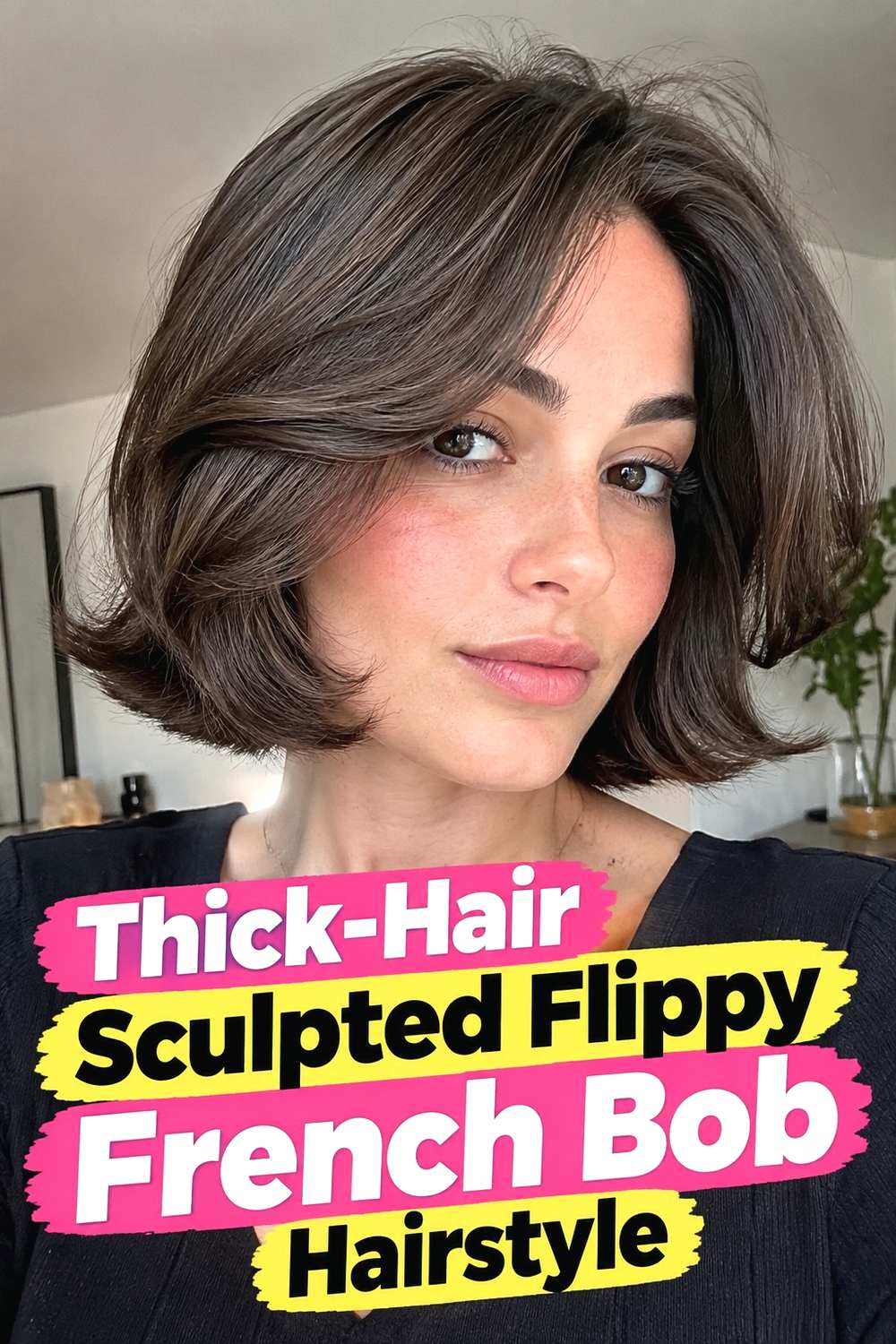
Thick hair gives a French bob plenty of presence, but a flippy version benefits from thoughtful weight distribution so the ends can actually move. The haircut can maintain a defined outer shape while using discreet internal removal or carefully placed layers to prevent the sides from becoming overly triangular. Once the bulk is balanced, the perimeter can be directed outward in wider sections for a smooth, sculpted finish. This approach works well when you want a substantial bob that still feels controlled. During styling, dry the hair thoroughly before creating the flip; remaining moisture can make dense sections revert quickly. Finish with enough hold to support the shape without turning the lower edge rigid.
Why It Works
Strategic weight removal allows dense hair to swing more freely while keeping the recognizable fullness that makes a short bob feel substantial.
Pro Tip
Discuss where your hair tends to expand with your stylist so any debulking is tailored to your density rather than applied uniformly.
12. Jaw Length Micro Flippy French Bob Hairstyle
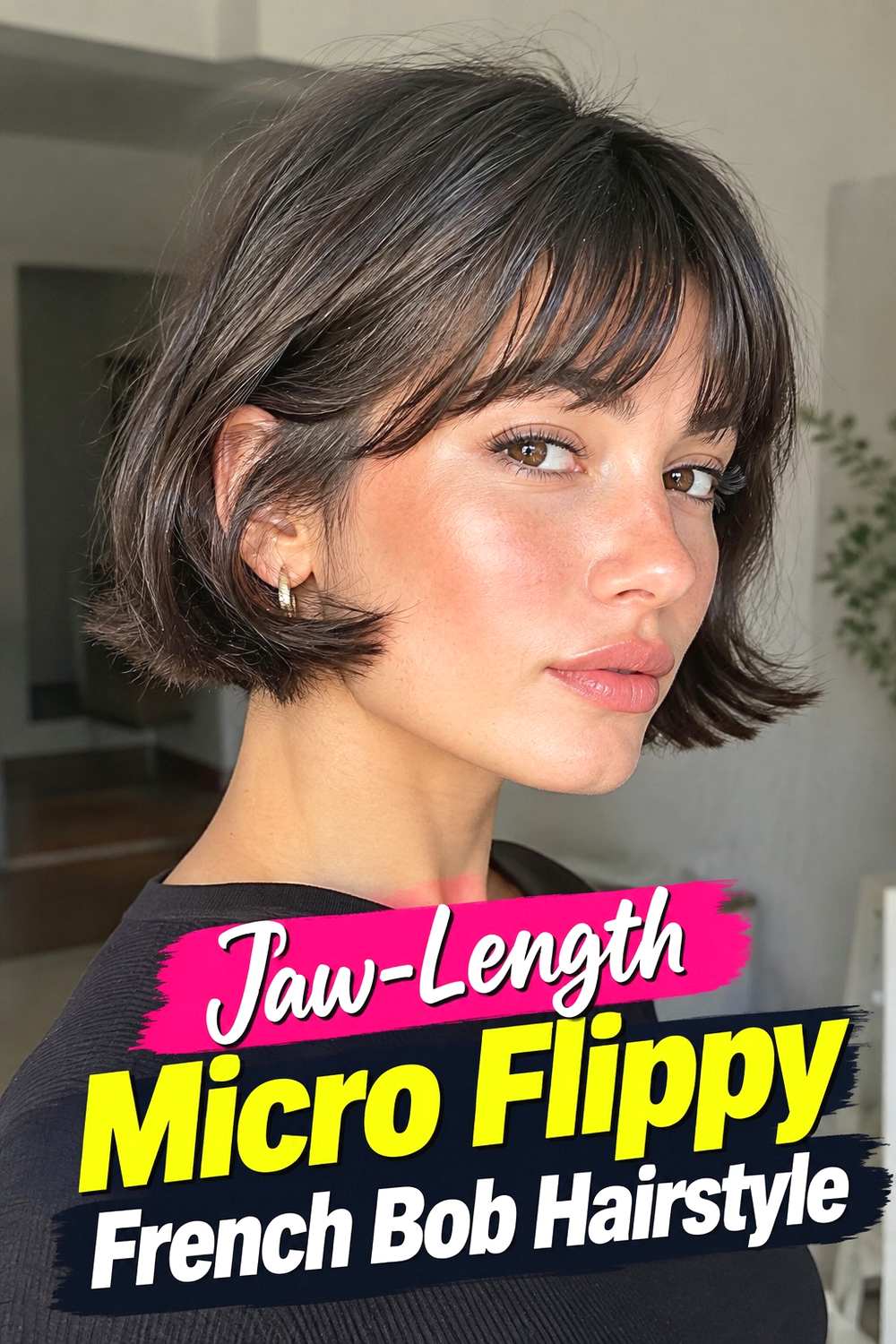
A jaw-length micro version makes the flippy French bob feel especially crisp and fashion-forward. The shorter perimeter exposes more of the neck and keeps the outward movement close to the face, so even a small bend becomes noticeable. Because there is less length to work with, the flip should stay controlled rather than curling dramatically upward. A clean blow-dry followed by a slight outward bend at the tips is often enough to define the shape. This length can require more frequent trimming than a longer bob because a small amount of growth changes where the perimeter lands. It is therefore best for someone comfortable maintaining a distinctly short silhouette.
Best For
Consider this version if you enjoy compact cuts, visible jaw-length structure, and a bob that looks intentionally short rather than grown out.
Wear & Maintenance
Regular shape maintenance matters because the haircut can lose its micro-bob proportions relatively quickly as the ends move below the jaw.
13. Rounded Flippy French Bob Hairstyle
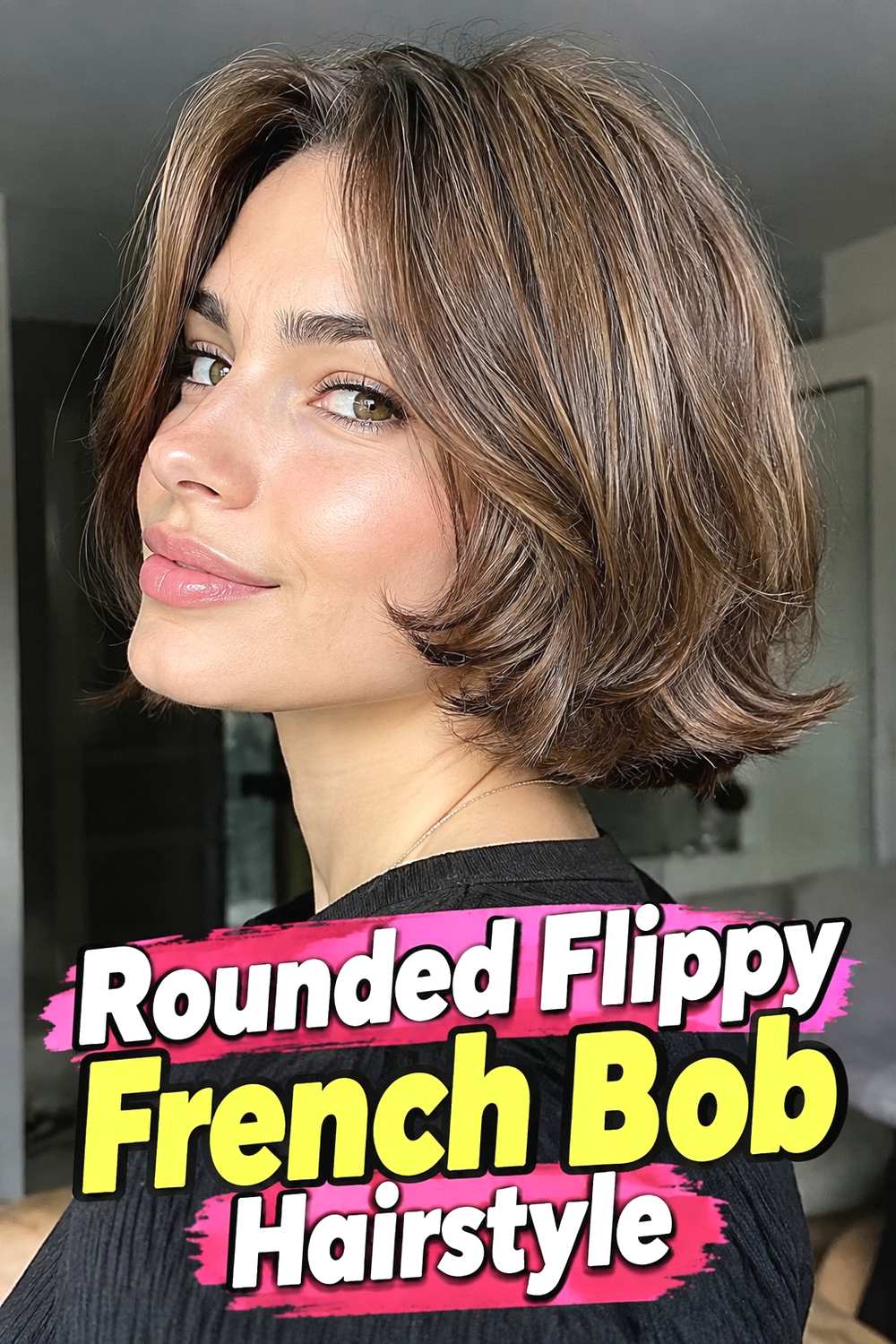
The rounded flippy French bob combines soft fullness through the crown and sides with ends that turn away from the face and neck. Instead of keeping the upper section completely flat, this shape uses gentle volume to create a smooth arc before the perimeter changes direction. The result can feel feminine and polished without becoming overly retro. It works particularly well when the haircut has enough internal structure to support the rounded shape while still allowing the tips to move. Blow-dry with a round brush to build controlled fullness, then redirect the final section outward. Keep the transition gradual so the flip looks connected to the rest of the bob rather than sharply bent.
Styling Notes
Build the rounded shape first and create the flip last. Trying to form both at once can make the ends curl too strongly.
Why It Works
The combination of inward volume and outward tips creates contrast that gives a short bob more visible shape and movement.
14. Piecey Ends Flippy French Bob Hairstyle
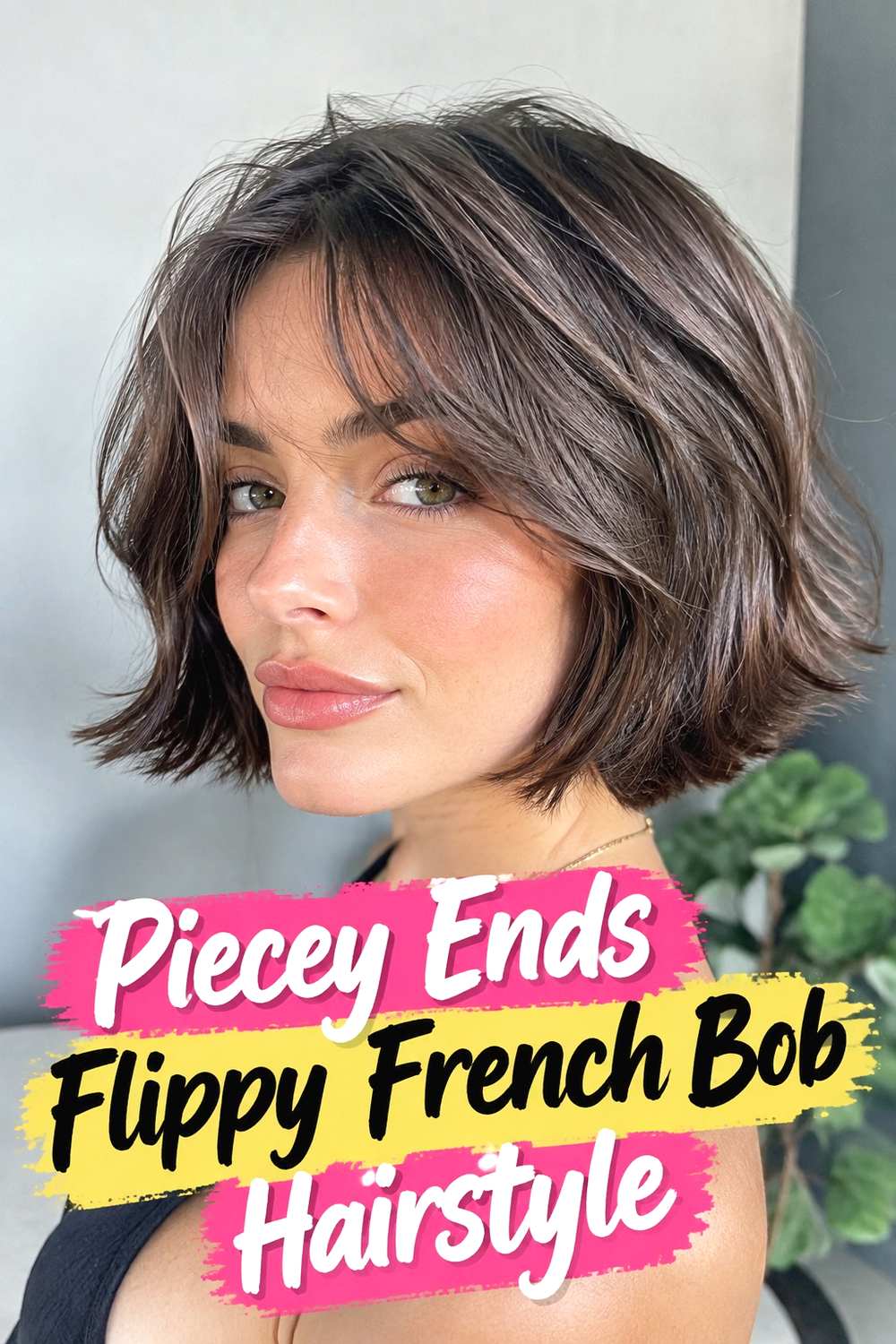
Piecey ends give the flippy French bob a more separated, modern texture, especially around the jaw and neckline. Instead of forming one continuous outward curve, the perimeter breaks into small sections that flick away independently. The effect can make a blunt short cut feel lighter without removing too much overall density. This style works particularly well when the haircut includes subtle texturizing at the tips rather than aggressive thinning higher up. Once dry, use your fingers or a small iron to redirect selected ends outward, then define a few pieces with a minimal amount of lightweight texture product. Leave some strands less styled so the final result still feels natural and movable.
Pro Tip
Apply texture product sparingly to the very ends. Too much can make piecey separation look greasy or overly stringy.
Best For
This variation is a good option if you prefer visible texture and definition over the smoother finish of a classic French bob.
15. Retro 1960s Flippy French Bob Hairstyle
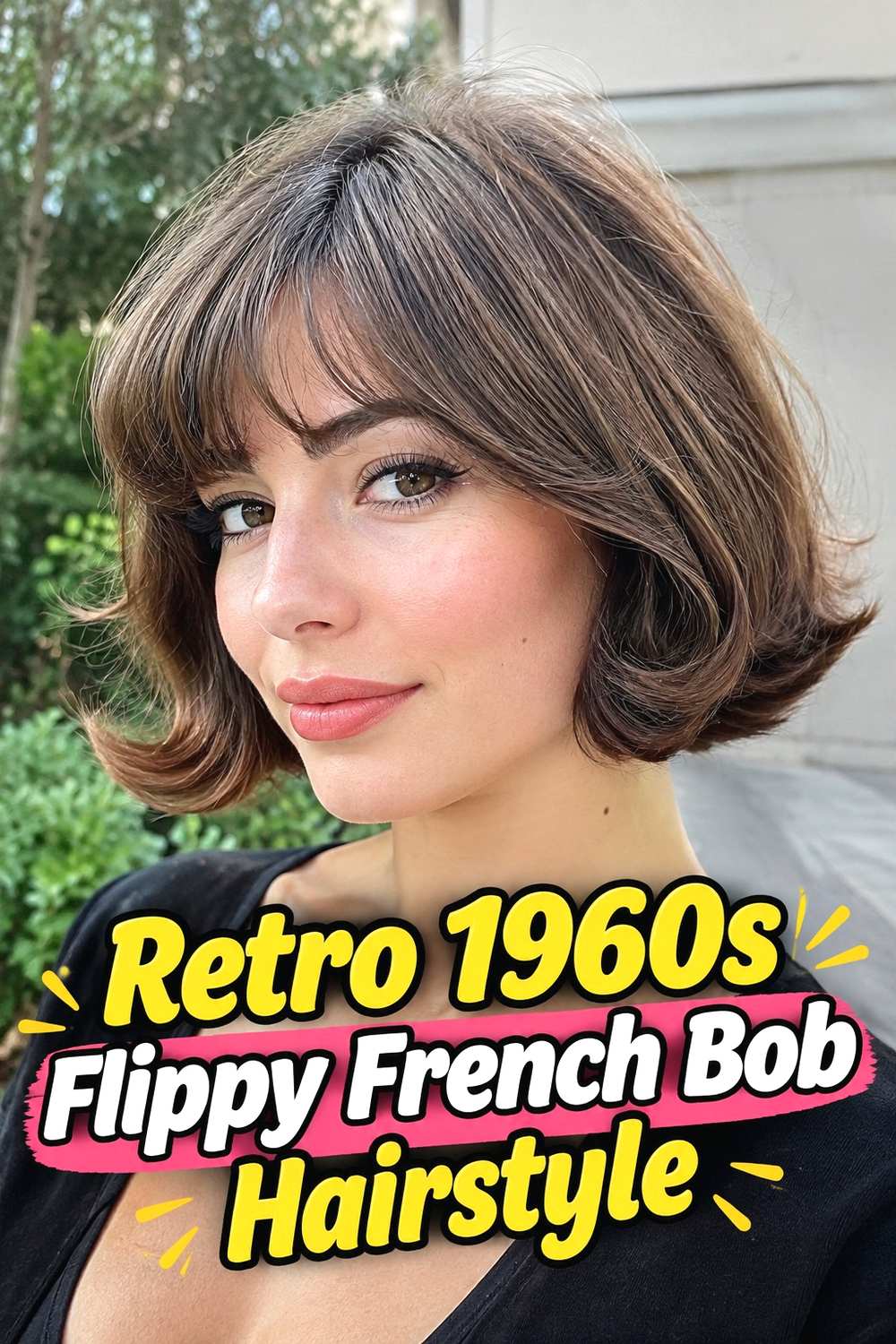
A 1960s-inspired flippy French bob makes the outward bend more intentional, pairing a smooth crown with a visibly kicked-out perimeter. The retro reference is strongest when the silhouette has polished volume through the upper section and the ends turn outward in a consistent direction. Modernizing the look is mostly about restraint: keep the hair touchable, the surface natural, and the volume softer than a traditional set. A round brush, rollers, or controlled heat styling can build the shape depending on your hair type. Finish with flexible hold rather than a hard lacquered surface. The result should suggest vintage styling while still looking wearable with contemporary clothing and makeup.
Styling Notes
For a stronger retro finish, shape several lower sections outward in the same direction and allow them to cool before gently loosening them.
Wear & Maintenance
This more structured flip usually needs better hold than a casual version, especially if your hair naturally wants to bend inward.
16. Tucked Behind The Ear Flippy French Bob Hairstyle
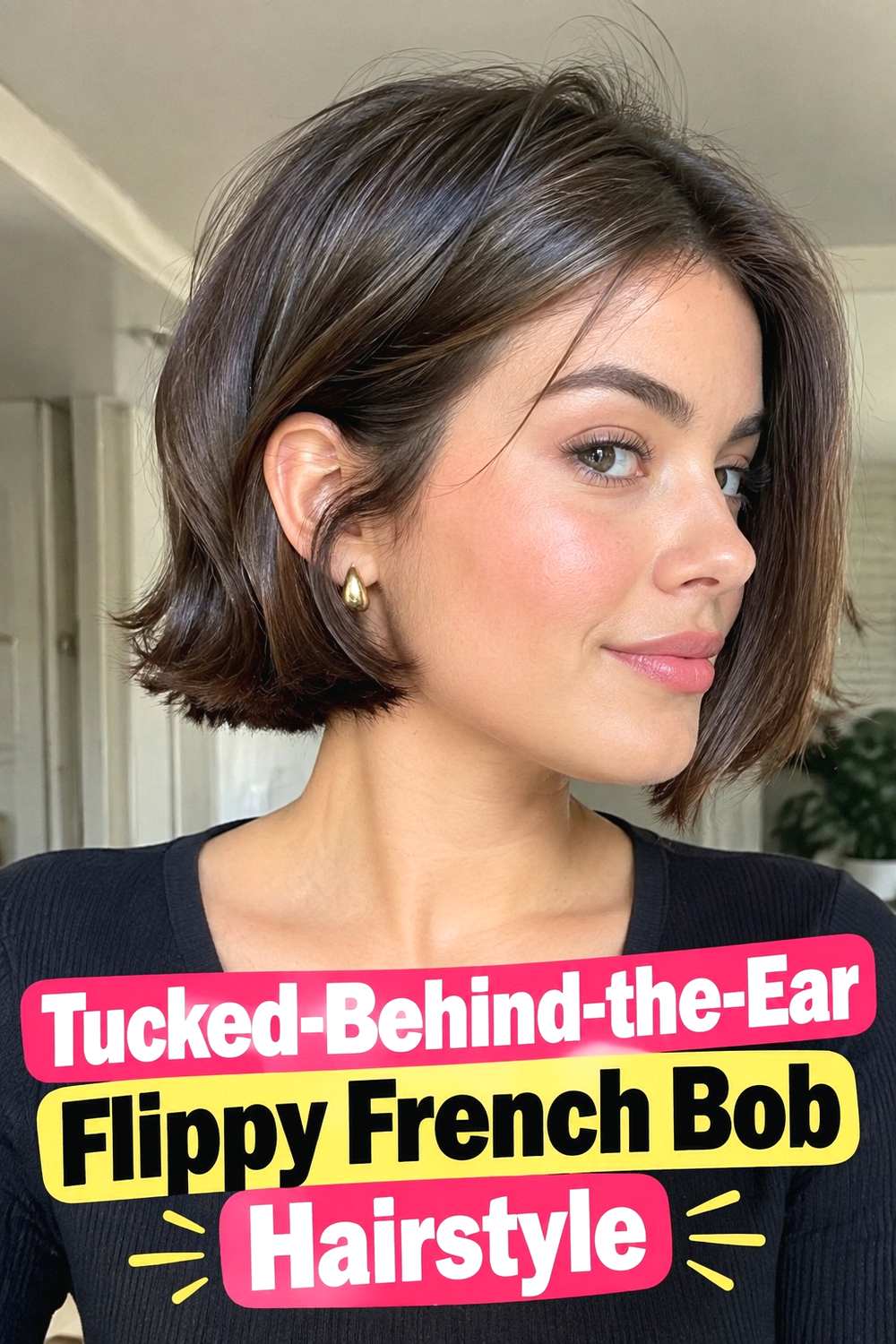
Tucking one side behind the ear creates an easy asymmetrical detail that works beautifully with the movement of a flippy French bob. One side stays sleek and close to the head, while the untucked side shows more of the outward bend and short perimeter. This makes the style feel intentionally arranged without requiring an elaborate finish. It can also highlight earrings or create a cleaner profile around one side of the face. Style the entire bob first, including the flip, then tuck the chosen side so the lower edge keeps some movement instead of disappearing completely. A small amount of lightweight product near the temple can help the tucked section stay neat without looking pasted down.
Why It Works
The tucked side creates contrast between sleekness and movement, making the flipped perimeter on the opposite side appear more pronounced.
Pro Tip
If the tucked section repeatedly slips forward, use a discreet pin behind the ear rather than loading the hair with heavy styling product.
17. Polished Evening Flippy French Bob Hairstyle
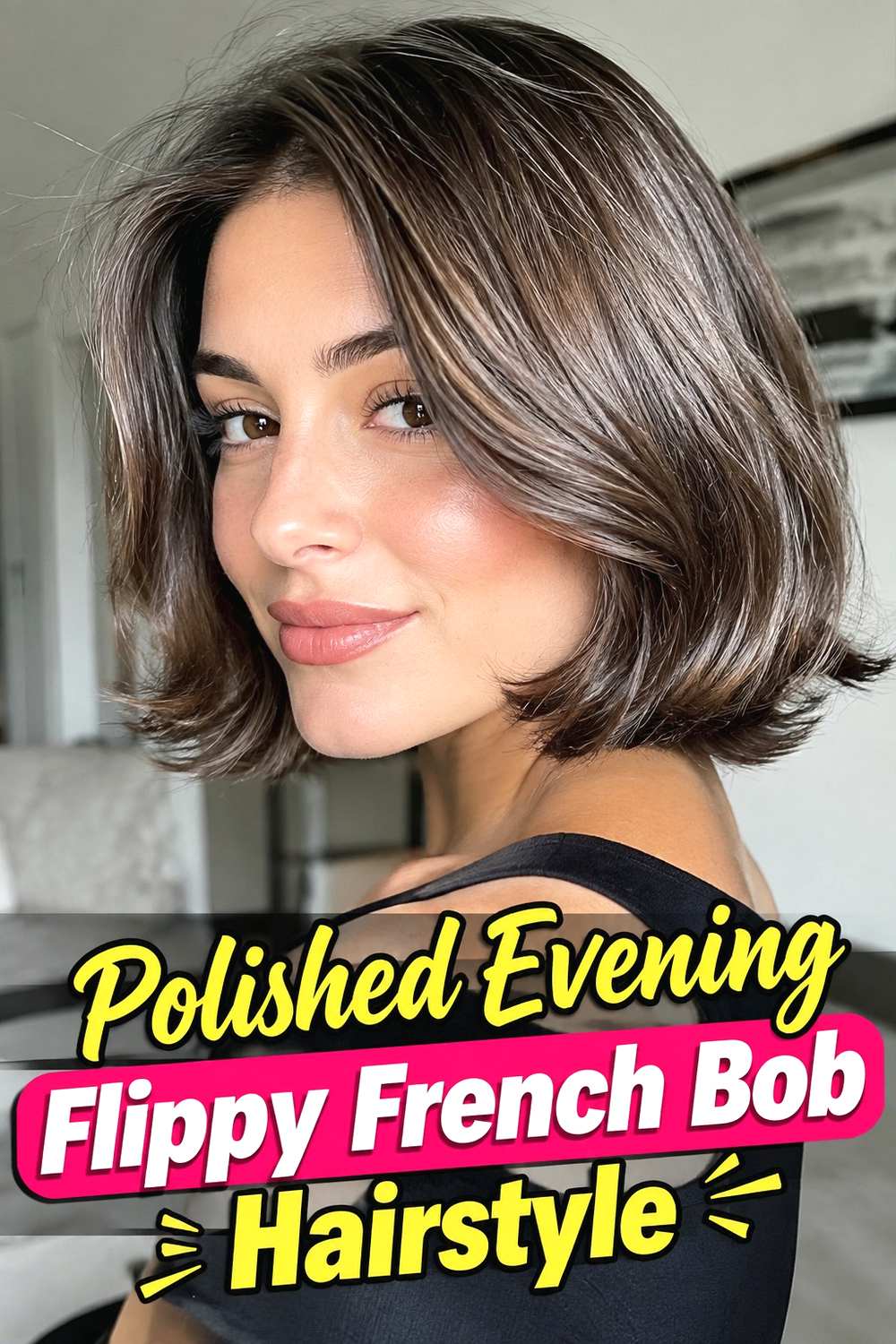
A polished evening version keeps the playful shape of the flippy French bob while refining the surface for a dressier finish. The parting can be clean, the crown smooth, and the perimeter shaped into deliberate outward bends with consistent shine. Unlike the tousled variations, this look benefits from controlled sections and a more uniform silhouette. Start with a careful blow-dry, smooth any uneven areas, and then form the flip near the ends using gentle, repeated motions rather than one sharp bend. Finish with a light mist of flexible hold so the shape lasts while still moving. A small amount of shine product can enhance the polished effect, but keep it away from the roots to preserve freshness and lift.
Styling Notes
Allow heat-styled sections to cool in their intended shape before touching them. This can help the outward bend remain cleaner for longer.
Best For
Choose this variation for dinners, parties, weddings, or other occasions when you want your short bob to look deliberate and refined without becoming an updo.
How to Choose the Right Look
Start with the length you are comfortable maintaining. A jaw-length micro bob gives the flip a sharper, more noticeable shape, while a slightly longer chin-length version offers more room for waves, side parts, curtain fringe, and softer styling.
Next, consider your natural texture and density. Fine hair often benefits from a stronger perimeter with minimal weight at the ends, while very thick hair may need carefully placed internal shaping so the bob can move instead of expanding outward as one heavy block. Naturally wavy or curly hair can create a flippy silhouette with less uniformity, so the cut should account for shrinkage and the way individual sections naturally turn.
Styling time matters too. Tousled and piecey versions tolerate irregularity and can look good with a relaxed finish, while sleek, rounded, retro, and evening styles usually require more deliberate blow-drying or heat styling. Bangs also add upkeep: wispy fringe generally needs regular refreshing, while curtain fringe offers more flexibility as it grows.
Finally, decide how strong you want the flip to appear. A tiny outward bend can make a classic bob feel fresher without dominating the haircut. A larger, more consistent kick creates a more retro or statement-making finish. Bringing reference photos that match your hair texture and preferred length can make it easier to communicate the result you want.
Final Thoughts
The flippy French bob works because a small change at the ends can completely shift the character of a short haircut. You can keep it subtle and polished, add soft layers and bangs, embrace natural waves or curls, or lean into a more obvious retro flip.
The most wearable choice is usually the one that fits your natural density, texture, preferred maintenance level, and daily styling routine. Use these ideas as starting points and adjust the exact length, fringe, layering, and amount of flip to make the haircut feel personal.
FAQs
1. What is a flippy French bob?
A flippy French bob is a short bob, usually around the jaw or chin, with ends styled or cut to turn slightly outward instead of curving inward toward the neck.
2. How do you style the ends of a French bob outward?
A small round brush or straightener can be used to guide the final inch or two of hair away from the face and neck. Keeping the bend gentle usually creates the most natural-looking result.
3. Can naturally wavy hair wear a flippy French bob?
Yes. Natural waves can add attractive movement to the haircut. The exact shape may be less uniform than on straight hair, so the cut should work with the existing wave pattern rather than fight it.
4. Is a flippy French bob suitable for fine hair?
It can be. A compact perimeter and lightweight styling can help fine hair maintain visible shape. Excessive layering or heavy products may reduce the sense of fullness at the ends.
5. How often does a short French bob need trimming?
The ideal schedule depends on how quickly your hair grows and how precise you want the shape to remain. Very short jaw-length versions usually show growth sooner than slightly longer, softer bobs.
Save your favorite flippy French bob looks, share this list with your stylist, and explore more short-hair inspiration for your next cut.