21 Cheekbone Bob Haircut Ideas for a Chic, Face-Framing Look
Short, sculpted, and full of personality, these cheekbone bob ideas bring the focus upward with crisp lengths, soft texture, and modern face-framing movement.
A cheekbone bob is an intentionally short bob that sits around the cheek or upper jaw, making its compact silhouette the main attraction. Because there is less length to work with, subtle changes in texture, bangs, layering, and part placement can noticeably change the finished shape.
The strongest version is usually one that works with your natural density and texture instead of fighting them. Fine hair may benefit from a fuller perimeter, while thick or curly textures often need carefully placed internal shaping so the short length stays balanced.
Quick List
- Classic Cheekbone Bob Hairstyle
- Blunt Cheekbone Bob Hairstyle
- Soft Layered Cheekbone Bob Hairstyle
- Textured Cheekbone Bob Hairstyle
- Wavy Cheekbone Bob Hairstyle
- Sleek Cheekbone Bob Hairstyle
- Cheekbone Bob With Wispy Bangs Hairstyle
- Cheekbone Bob With Curtain Bangs Hairstyle
- Cheekbone Bob With Side Bangs Hairstyle
- Curly Cheekbone Bob Hairstyle
- Rounded Cheekbone Bob Hairstyle
- Tousled Cheekbone Bob Hairstyle
- Fine Hair Cheekbone Bob Hairstyle
- Thick Hair Cheekbone Bob Hairstyle
- Shaggy Cheekbone Bob Hairstyle
- Side Parted Cheekbone Bob Hairstyle
- Center Parted Cheekbone Bob Hairstyle
- Cheekbone Bob With Face Framing Layers Hairstyle
- Micro Bang Cheekbone Bob Hairstyle
- Softly Flipped Cheekbone Bob Hairstyle
- French Inspired Cheekbone Bob Hairstyle
1. Classic Cheekbone Bob Hairstyle
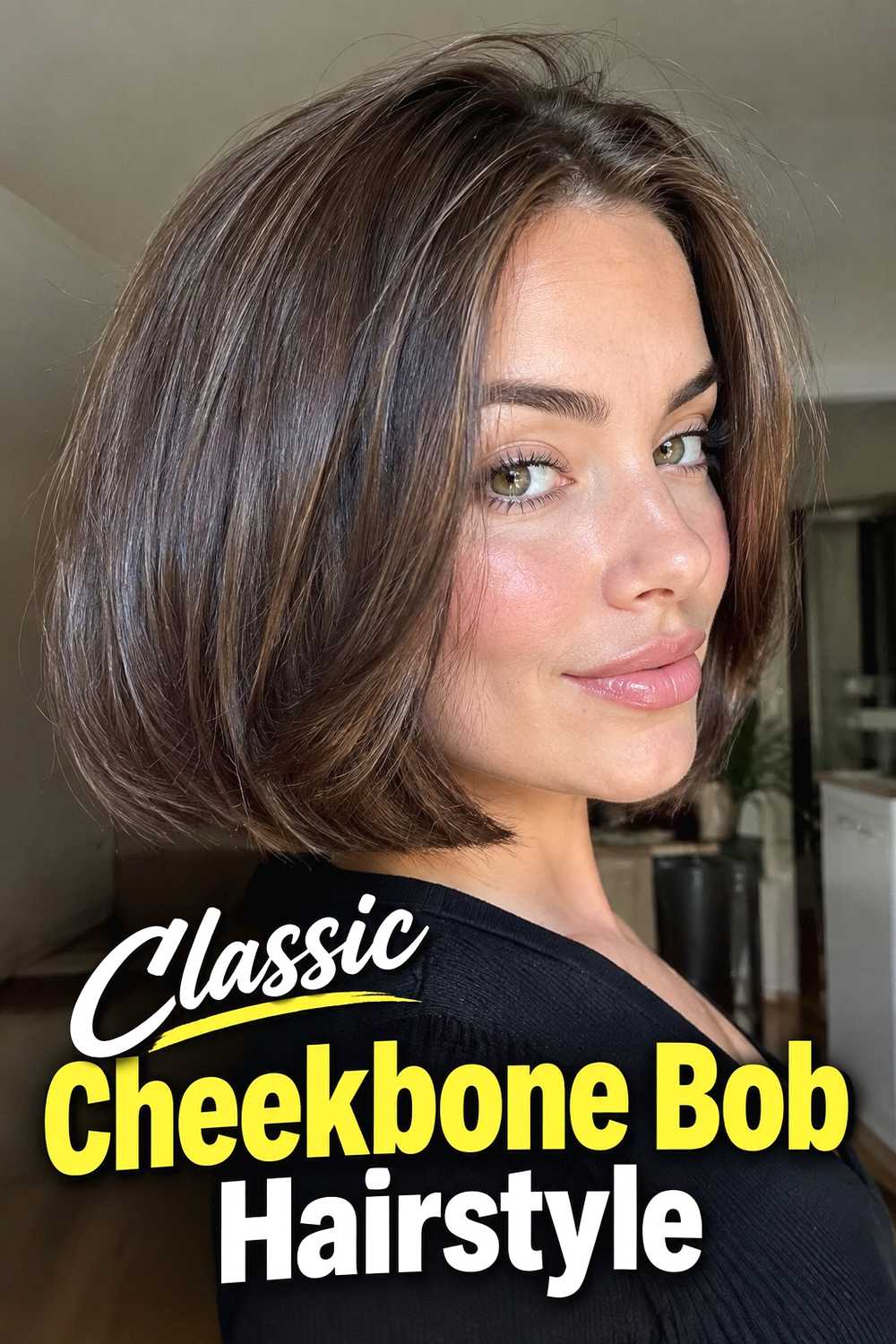
The classic cheekbone bob keeps the length deliberately short, allowing the ends to sit near the cheeks and upper jaw for a compact, graphic silhouette. Unlike a longer chin bob, this version exposes more of the neck and makes the perimeter especially noticeable. Keeping the shape mostly one length helps the haircut feel intentional, while a slight natural bend prevents it from looking too rigid. Straight and softly wavy textures can both wear it well. Styling can stay simple with a smooth blow-dry, subtle root lift, and minimal product through the ends. Because the length is short, even small amounts of growth can noticeably change where the perimeter falls.
Styling Notes
Keep the ends controlled but not tightly curled under. A slight bend or natural movement usually gives the cheekbone length a more modern finish.
2. Blunt Cheekbone Bob Hairstyle
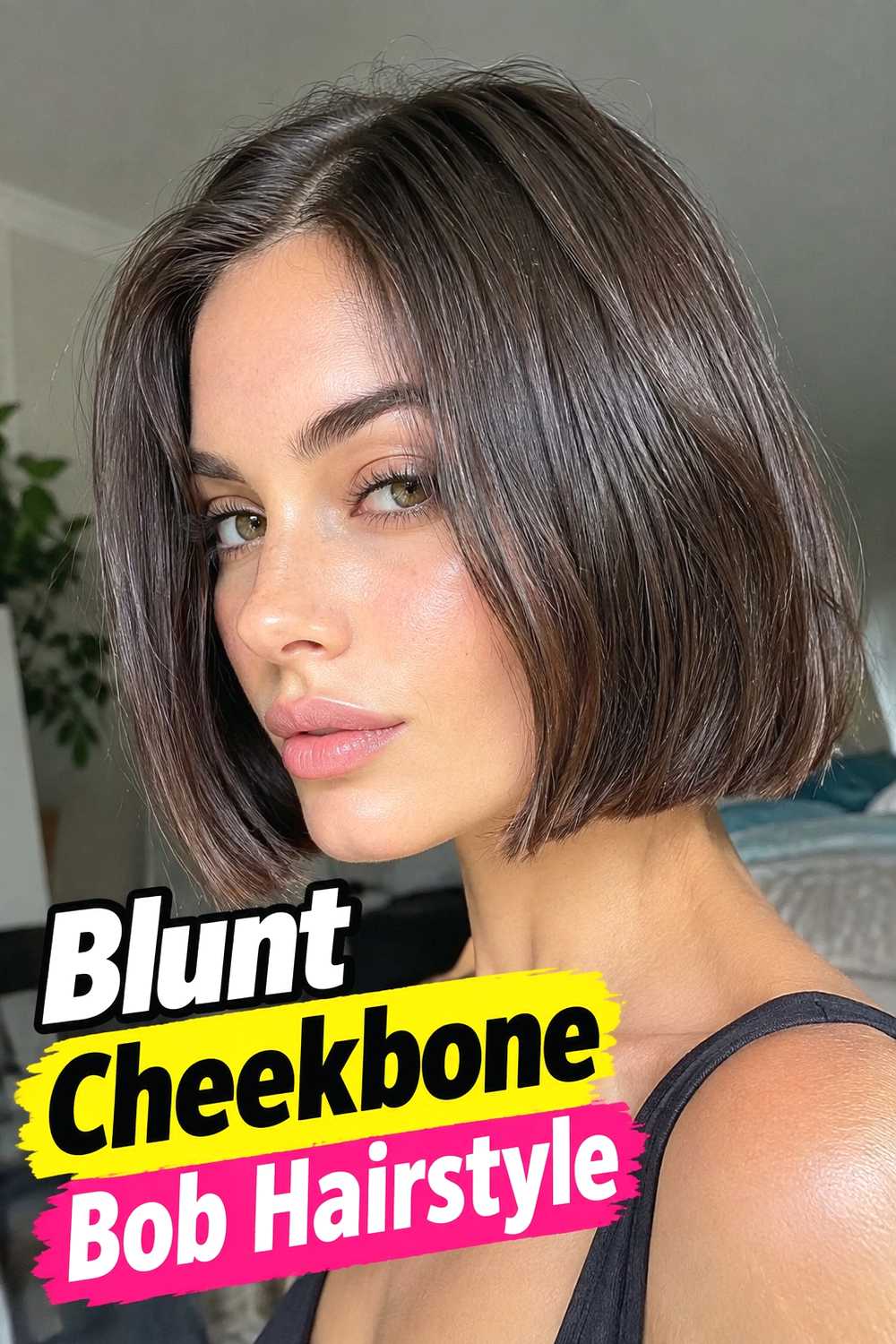
A blunt cheekbone bob emphasizes a dense, uninterrupted perimeter that sits high around the face. The strong lower edge gives the haircut a clean, confident appearance and can make the short length feel especially graphic. This version usually works best with minimal layering so the ends remain visually solid. Fine to medium-density hair often benefits from that fullness, while thicker hair may need hidden internal weight removal that does not disturb the exterior line. Styling straight showcases the blunt edge most clearly, but a slight bend keeps the result wearable. Regular trims are useful because the exact placement of the perimeter is central to the look and becomes softer as the hair grows.
Why It Works
A strong one-length edge makes the compact silhouette unmistakable and preserves fullness despite the shorter overall length.
3. Soft Layered Cheekbone Bob Hairstyle
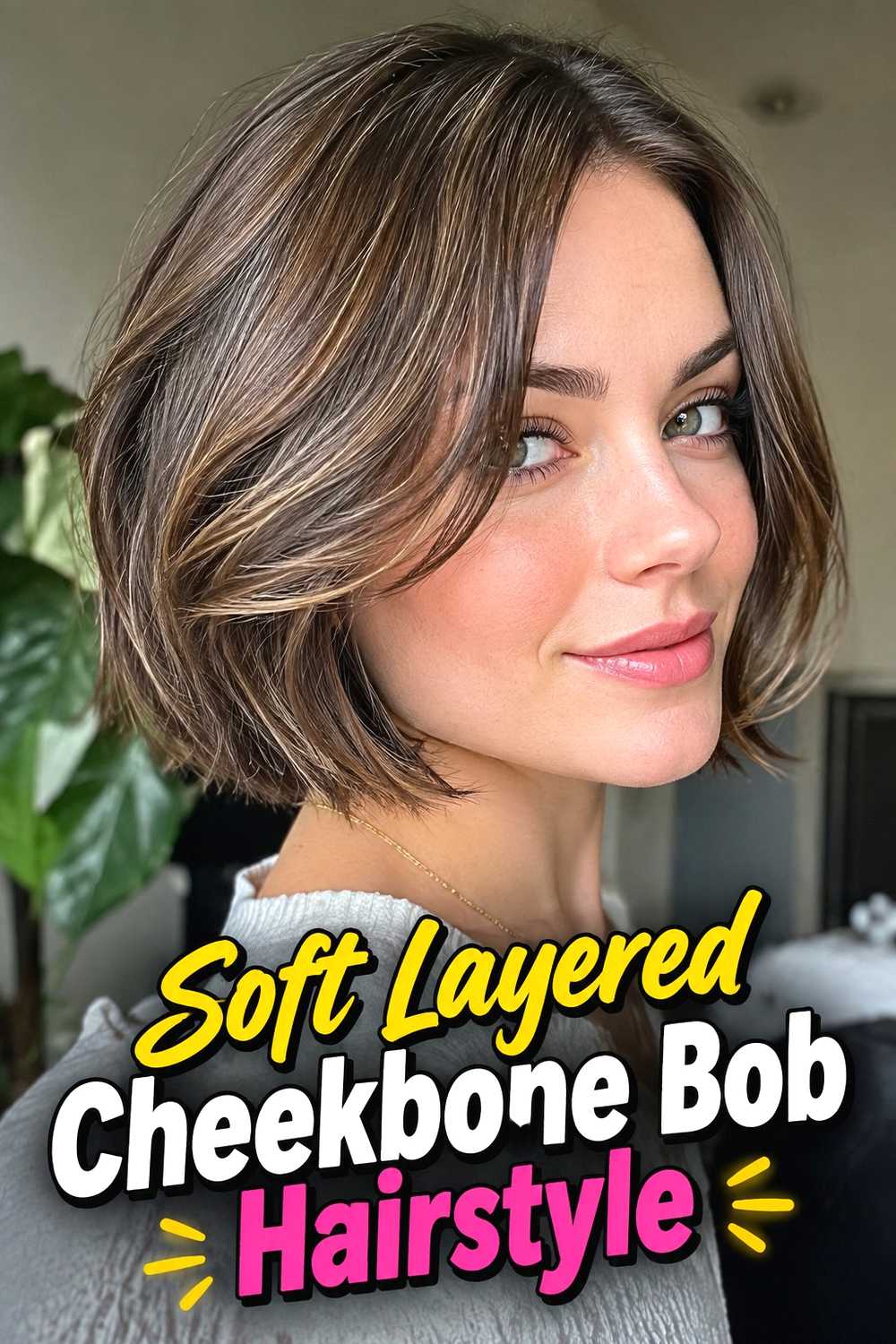
Soft layering gives a cheekbone bob more flexibility without taking away its compact shape. Instead of cutting obvious short pieces throughout, the layers are blended carefully so the perimeter remains full while the surface gains movement. This approach can be especially useful for medium-density hair that feels bulky when cut completely one length. The final silhouette stays short and face framing, but the ends move more easily and the crown feels less rigid. A gentle blow-dry or air-dried finish can work well depending on texture. Keep the shortest layers long enough to connect with the rest of the bob, since excessive layering can make this already-short haircut appear choppy.
Hair Type & Length
Straight, wavy, and medium-density hair can all suit this version when the layering is controlled and the perimeter remains substantial.
4. Textured Cheekbone Bob Hairstyle
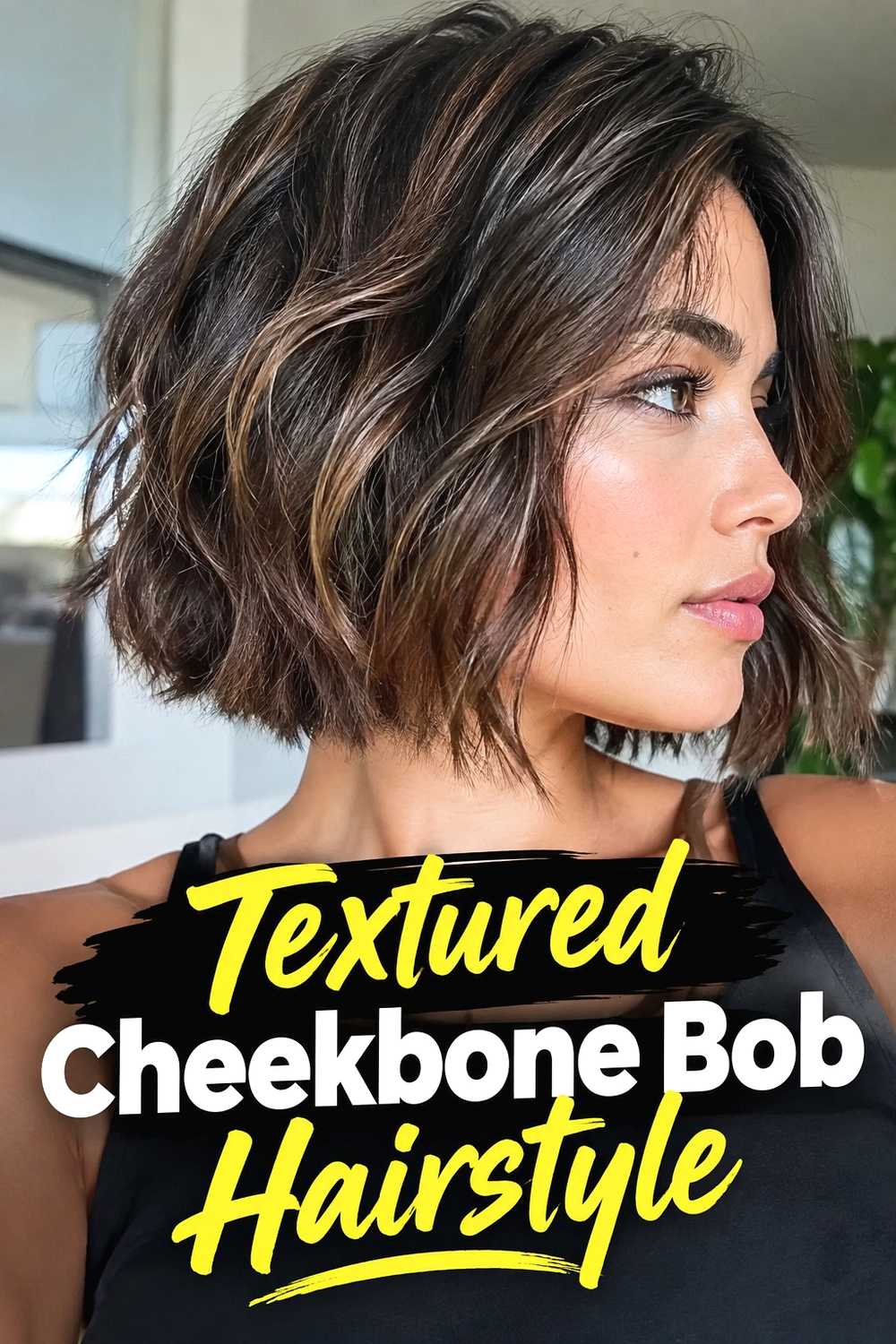
The textured cheekbone bob adds subtle separation through the surface and ends while keeping the lower silhouette strong. Light point-cutting or carefully placed internal texture can prevent the short shape from looking too blocky, especially on straight or slightly wavy hair. Because the haircut already sits high around the cheeks, the texture should be strategic rather than excessive; removing too much weight can make the ends look sparse. Styling can be relaxed with a quick rough-dry and a few defined pieces through the front or sides. A lightweight texture cream or spray is usually enough to create movement without turning the haircut stiff or gritty.
Pro Tip
Concentrate texture through selected mid-lengths and ends instead of thinning the entire perimeter. This helps the bob stay compact and full.
5. Wavy Cheekbone Bob Hairstyle

Loose waves soften the compact outline of a cheekbone bob and give the short length a more relaxed, airy feeling. Broad bends work better than tight curls because they add movement without visually shortening the haircut too much. The ends can stay slightly straighter so the perimeter remains noticeable, while the mid-lengths carry most of the texture. Naturally wavy hair may only need lightweight definition and gentle drying, while straighter textures can create a few alternating flat-iron bends. Since the bob sits close to the cheekbones, even subtle texture has a visible effect on the shape. The result should feel casual and touchable rather than overly curled or uniform.
Styling Notes
Alternate wave direction and leave several pieces nearly straight. Irregularity keeps the short haircut from looking too round or set.
6. Sleek Cheekbone Bob Hairstyle
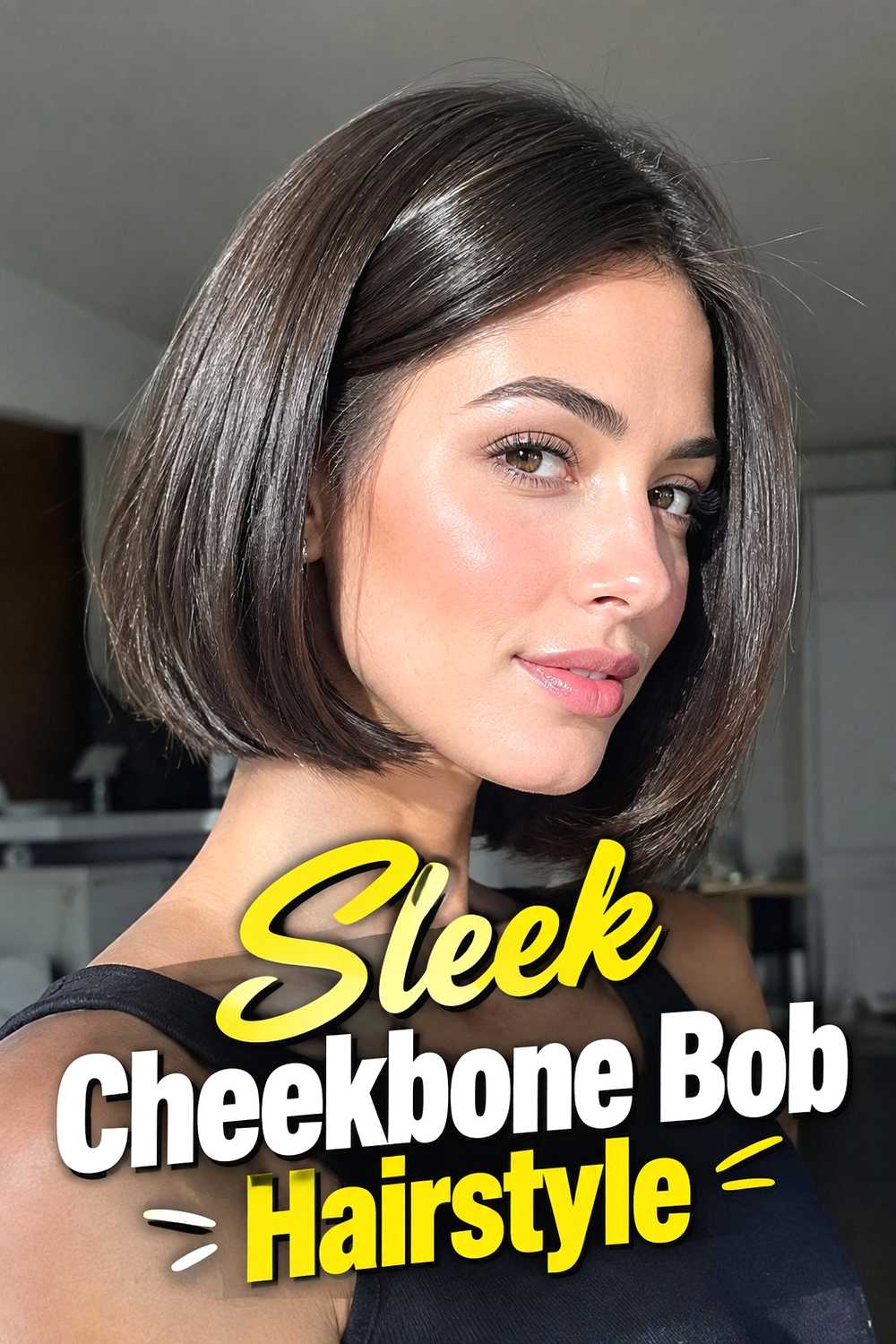
A sleek cheekbone bob highlights the precision of the short length with a smooth surface and controlled perimeter. Because the ends sit high around the face, clean styling makes the haircut look especially crisp and intentional. The roots should retain some natural lift so the style does not appear plastered down, while the lower sections can remain straight and polished. A flat brush or paddle brush can create smoothness during blow-drying, with minimal flat-iron refinement if needed. Lightweight serum adds shine without weighing down the crown. This version reveals uneven ends quickly, so it suits anyone comfortable with maintaining a neat perimeter and regularly refreshing the exact cheek-level length.
Wear & Maintenance
Sleek short bobs show growth and uneven ends more readily than tousled styles, so periodic reshaping keeps the silhouette clean.
7. Cheekbone Bob With Wispy Bangs Hairstyle

Wispy bangs give a cheekbone bob extra softness by introducing light, separated strands across the forehead. The compact bob stays strong around the cheeks, while the fringe breaks up the front with movement and a less structured finish. This pairing can feel especially balanced because both the bangs and bob are short without creating one heavy block of hair around the face. The fringe may skim the brows or sit slightly above them, depending on the desired effect. Blow-dry the bangs first, then style the bob according to your natural texture. Keep product minimal around the fringe so the pieces remain airy instead of clumping together.
Best For
This option suits anyone who wants a short, graphic bob softened by a light fringe rather than a dense or blunt bang.
8. Cheekbone Bob With Curtain Bangs Hairstyle
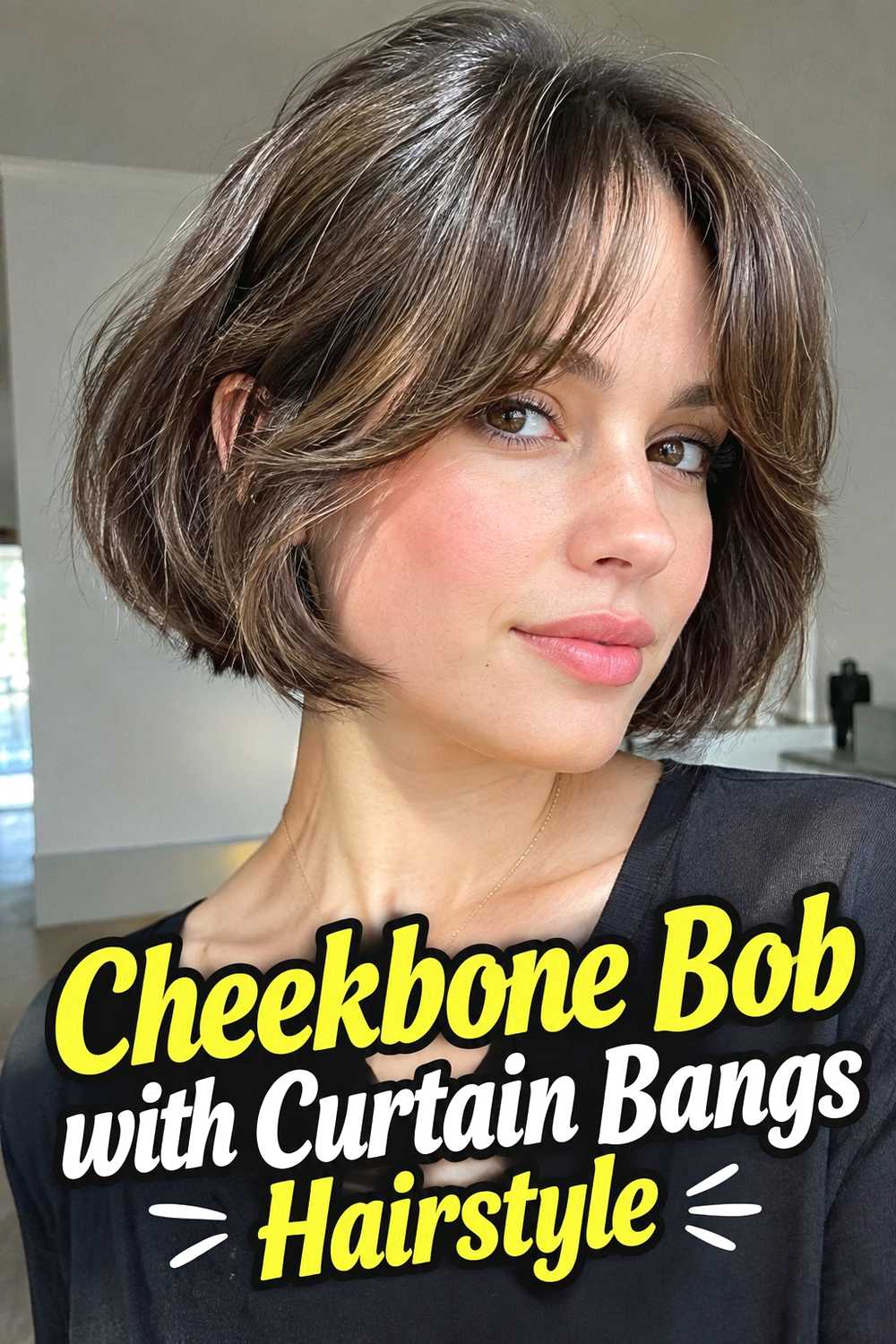
Curtain bangs introduce a center-opening frame that softens the compact proportions of a cheekbone bob. The fringe is shorter in the center and lengthens toward the temples, creating a smooth transition into the bob’s side sections. Because the haircut itself is short, the bangs should remain proportionate and not extend so far that they overwhelm the perimeter. A round brush can create a loose outward sweep, but excessive volume is unnecessary. Keeping the body of the bob relatively simple allows the curtain fringe to provide most of the movement. This combination works especially well on straight or gently wavy hair that can hold a light, flexible bend.
Styling Notes
Direct the bangs forward while drying, then split and sweep them outward. Keep the lower bob straighter for a clean contrast.
9. Cheekbone Bob With Side Bangs Hairstyle
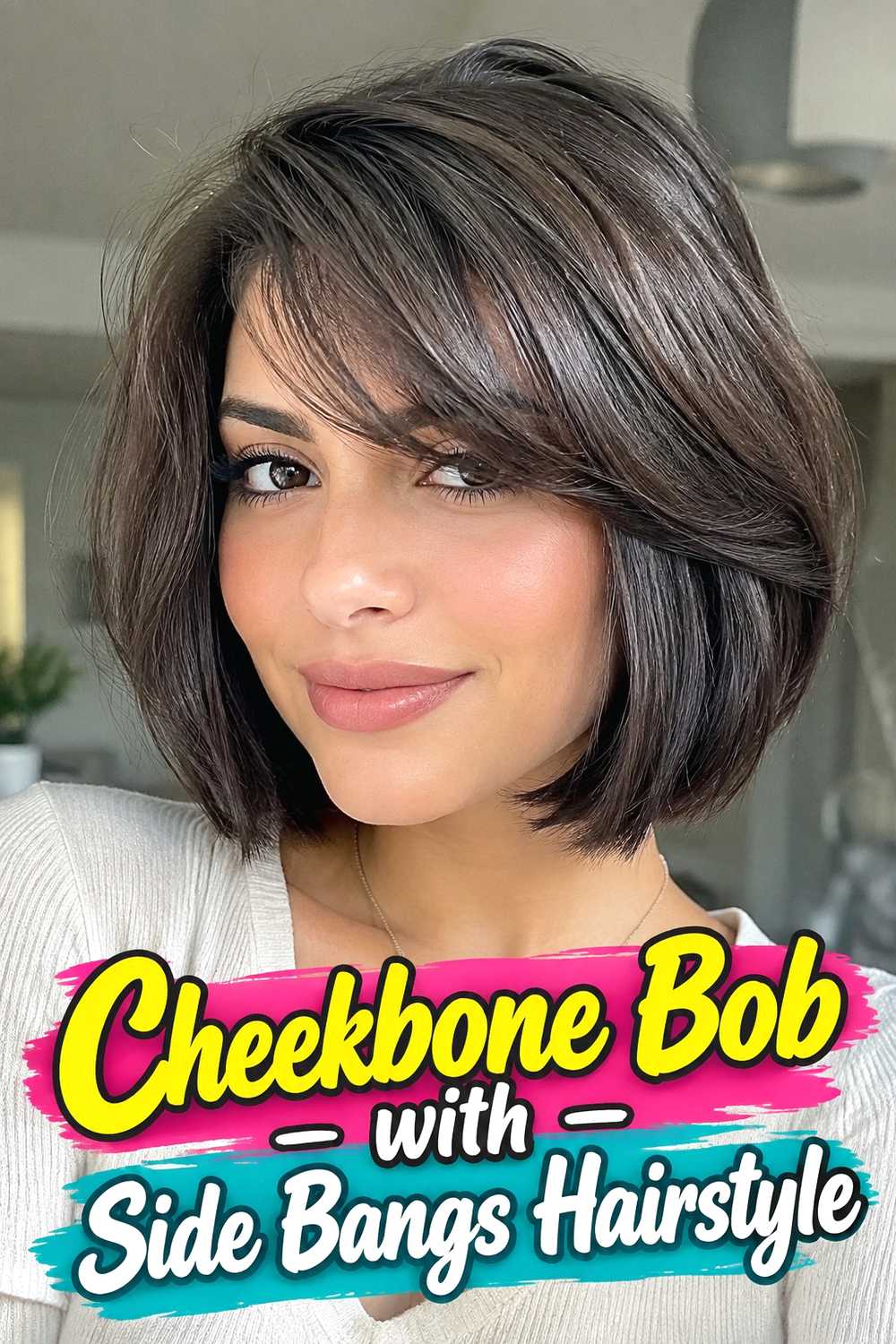
Side bangs create diagonal movement across the front and can make a cheekbone bob feel softer without changing the short perimeter. The fringe can sweep across the forehead and blend into one side of the haircut, allowing the opposite side to sit closer to the face. This asymmetry adds interest to an otherwise compact silhouette. A longer side bang offers more flexibility for tucking or sweeping, while a shorter version gives the cut a stronger front detail. Styling is easiest when the fringe follows the natural direction of the part. Keep the crown softly lifted and the ends controlled so the short cheek-level line remains visible rather than becoming hidden beneath excessive volume.
Pro Tip
Choose a fringe length that blends naturally into the side sections so the front feels connected rather than like a separate haircut.
10. Curly Cheekbone Bob Hairstyle
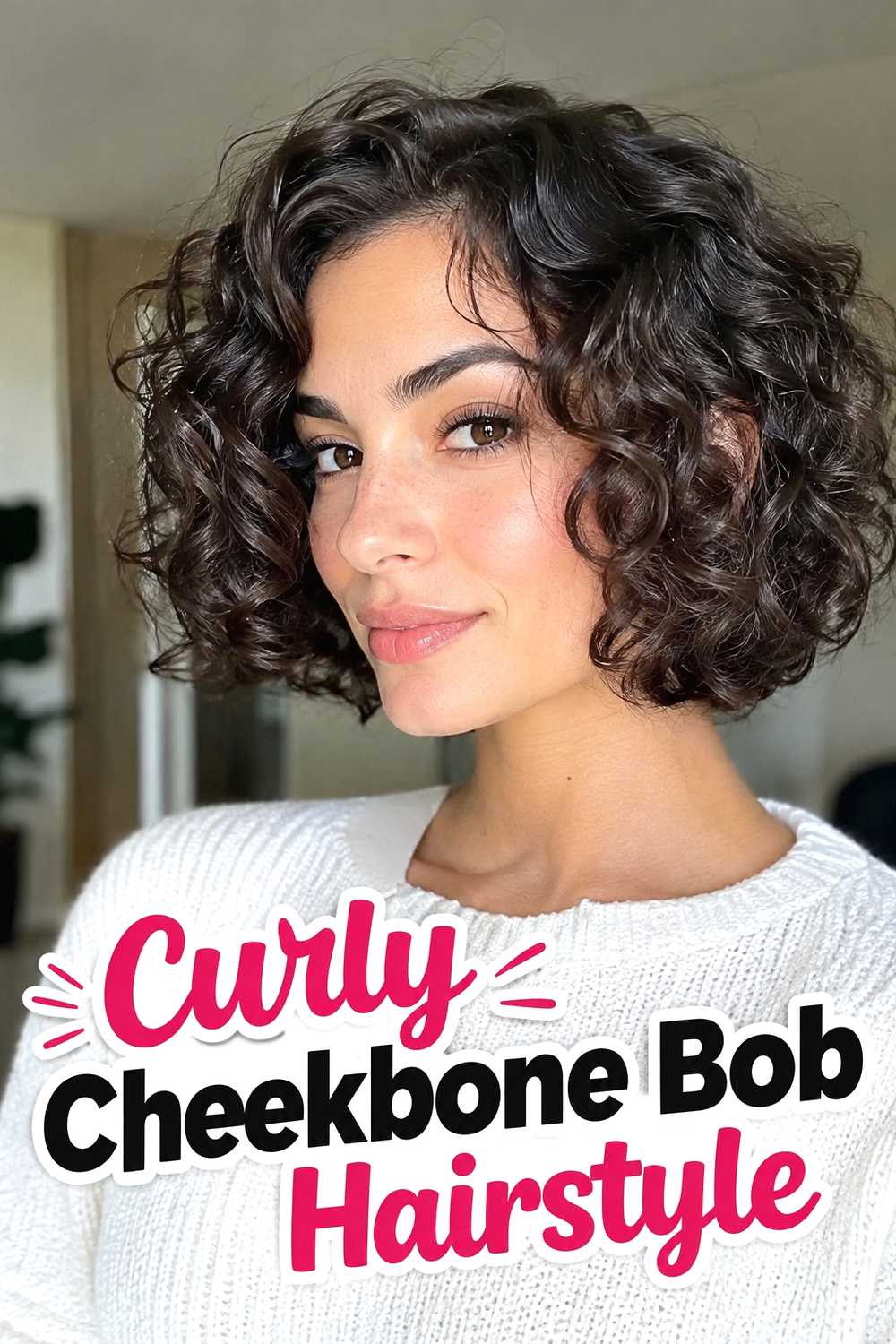
A curly cheekbone bob creates a springy, dimensional short shape that can feel playful without losing structure. Because curls shrink as they dry, the final length should be judged in the hair’s natural state rather than when stretched or wet. Light layering can help distribute volume, but enough weight should remain around the perimeter for the haircut to read as a bob. The cheek-level shape works especially well when individual curls form naturally and vary slightly in size. A lightweight curl cream or gel can support definition, while gentle diffusing preserves movement. Avoid excessive thinning through the ends, since sparse curls can weaken the compact silhouette and make the shape less intentional.
Hair Type & Length
Naturally curly or strongly wavy hair can suit this version beautifully when the cut accounts for shrinkage and curl density.
11. Rounded Cheekbone Bob Hairstyle
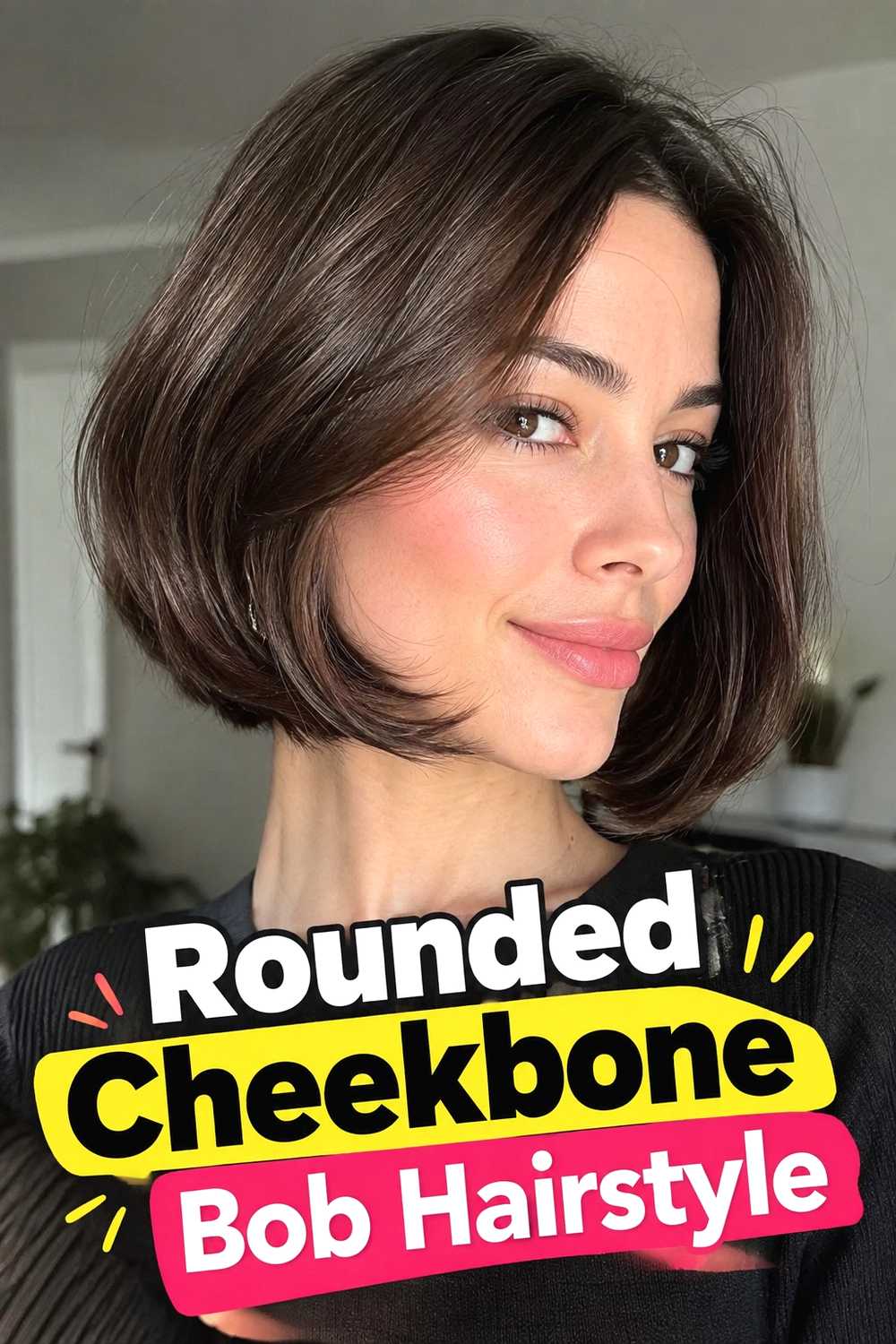
The rounded cheekbone bob follows a smooth curve through the sides and back, with the ends sitting close to the cheeks and upper jaw. Gentle internal shaping allows the hair to follow the contour of the head without creating a hard, boxy perimeter. The result feels polished but softer than a blunt bob. A medium round brush can encourage the curve, though the finish should stay subtle enough to avoid a bubble-like shape. Straight and softly wavy textures often display the rounded silhouette most clearly. Leaving the front sections slightly looser can modernize the effect and keep the bob from appearing too carefully set.
Why It Works
The continuous curve gives the haircut shape without relying on dramatic layering, while the short length keeps the silhouette neat and distinctive.
12. Tousled Cheekbone Bob Hairstyle
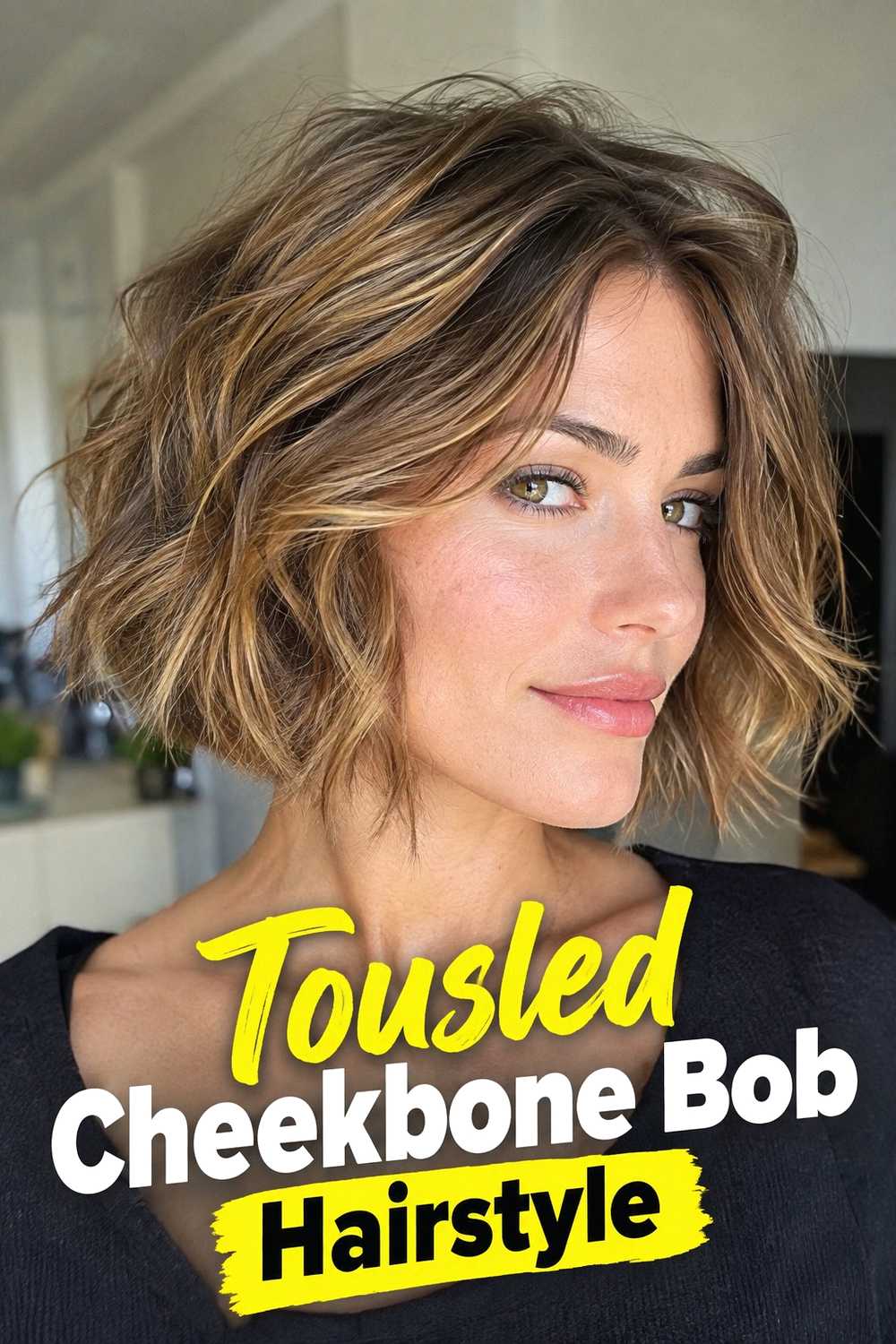
A tousled cheekbone bob uses an intentionally relaxed surface over a compact short shape. Loose bends, small flyaways, and subtle separation give the haircut movement while the lower perimeter remains visible around the cheeks. This makes the style especially practical for anyone who prefers an undone finish instead of a smooth blowout every day. Naturally wavy hair often needs very little work beyond light definition, while straight hair can create a few quick bends through random sections. Leave some pieces flatter than others to keep the texture believable. A small amount of lightweight styling product through the ends can enhance separation without making the short bob look stiff or overly gritty.
Styling Notes
Focus most of the movement through the sides and surface while keeping the roots relatively natural. Too much volume can overwhelm the compact length.
13. Fine Hair Cheekbone Bob Hairstyle
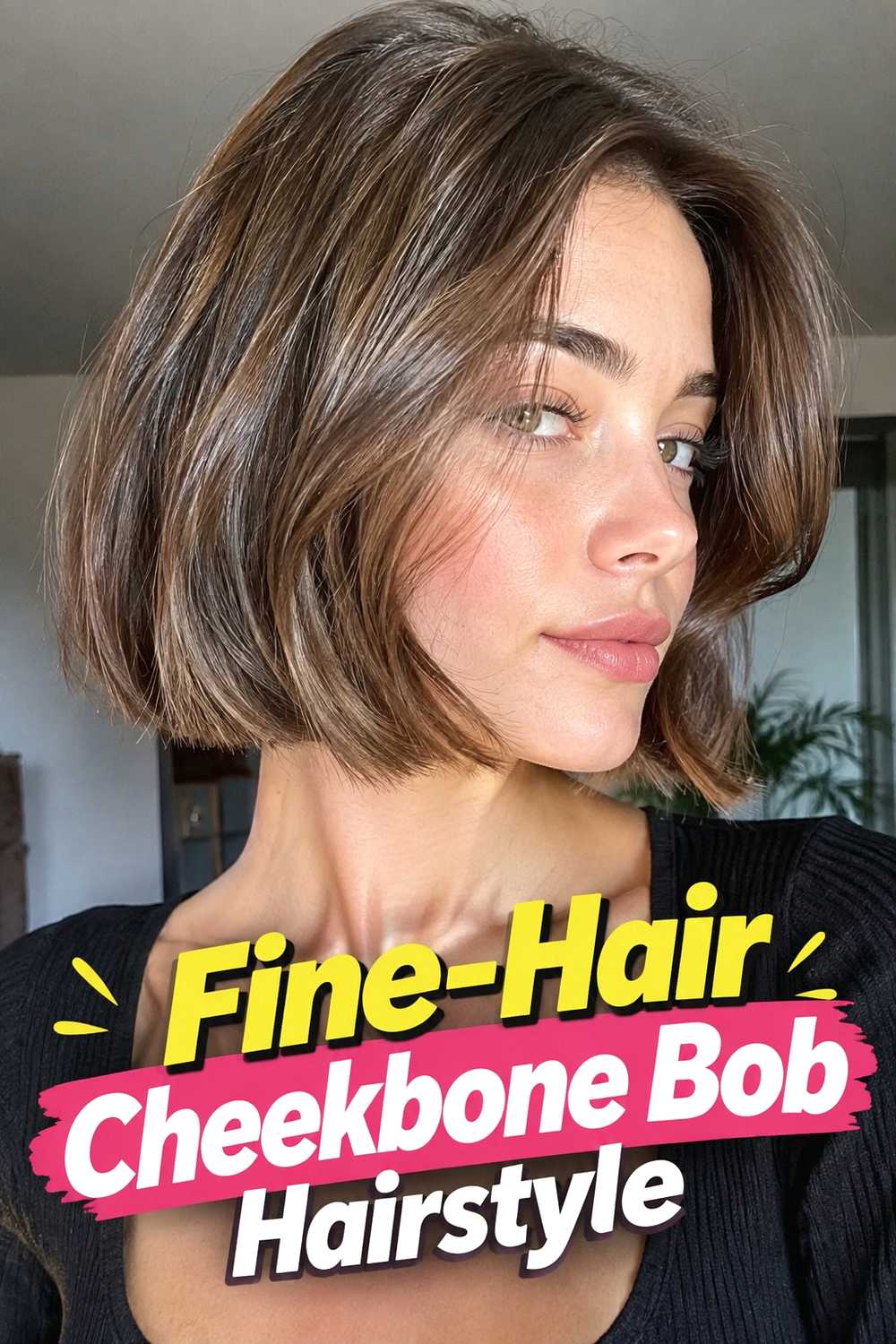
Fine hair can benefit from a cheekbone bob because the short length removes excess weight and allows the perimeter to remain visually full. A mostly one-length shape with minimal internal layering helps preserve density, while the compact length makes subtle root lift easier to achieve. The ends can stay blunt or softly refined, depending on how polished you want the silhouette to look. Lightweight mousse or root spray can add support without coating the strands heavily. Avoid aggressive thinning and heavy oils, both of which can make fine hair appear sparse. A gentle blow-dry that lifts the roots but keeps the lower edge neat is often enough for a balanced result.
Best For
Fine, straight, and softly wavy hair often works well with a compact cheekbone bob when the perimeter remains strong and substantial.
14. Thick Hair Cheekbone Bob Hairstyle
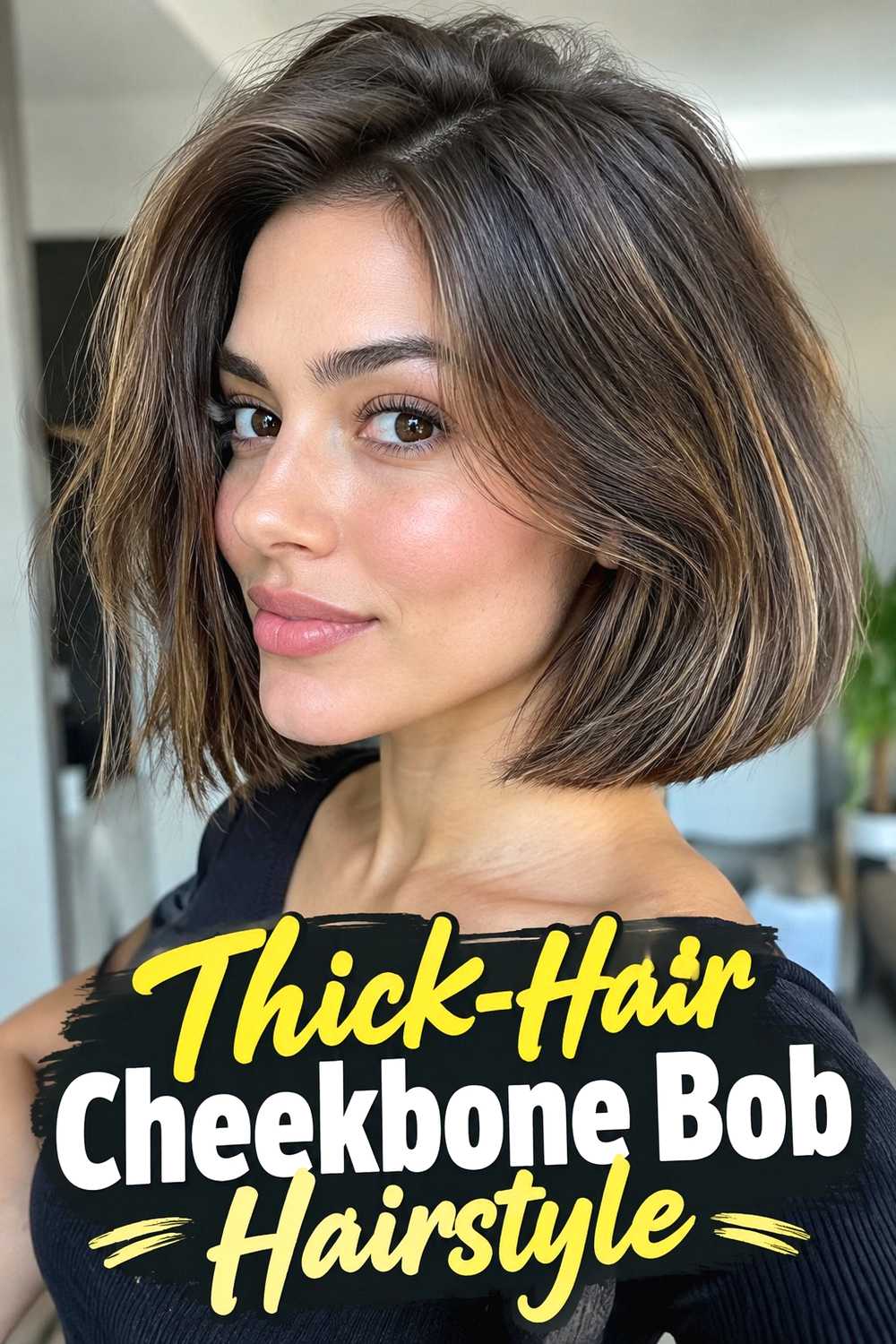
Thick hair creates a bold cheekbone bob, but careful internal shaping helps keep the short cut from becoming overly wide at the sides. The exterior line should remain clean, while hidden weight removal allows the hair to sit closer to the head and move more naturally. Over-thinning the perimeter can make thick hair expand unpredictably, so density is better managed inside the haircut. Straight textures can showcase a polished shape, while waves can create a softer, fuller variation. Styling in sections with a blow-dryer or allowing natural texture to settle both work well. The goal is controlled volume that supports the short silhouette rather than overpowering it.
Wear & Maintenance
As thick hair grows, additional weight can quickly shift the shape downward or outward, so periodic reshaping helps maintain balance.
15. Shaggy Cheekbone Bob Hairstyle

The shaggy cheekbone bob combines a short bob perimeter with looser layering and airy texture through the crown and sides. Shorter pieces create movement, while enough density remains along the lower edge to preserve the bob identity. The compact length keeps the haircut from becoming a full shag, but the uneven texture gives it a relaxed, lived-in personality. Naturally wavy hair suits this version particularly well because bends and flyaways naturally enhance the layers. Straight hair can achieve a similar finish with a few irregular styling bends. Avoid removing too much weight near the ends, since a very wispy perimeter can make the haircut lose its strong cheek-level outline.
Hair Type & Length
Wavy and medium-density hair often supports this style naturally, while finer hair may need fewer layers to keep the lower edge full.
16. Side Parted Cheekbone Bob Hairstyle
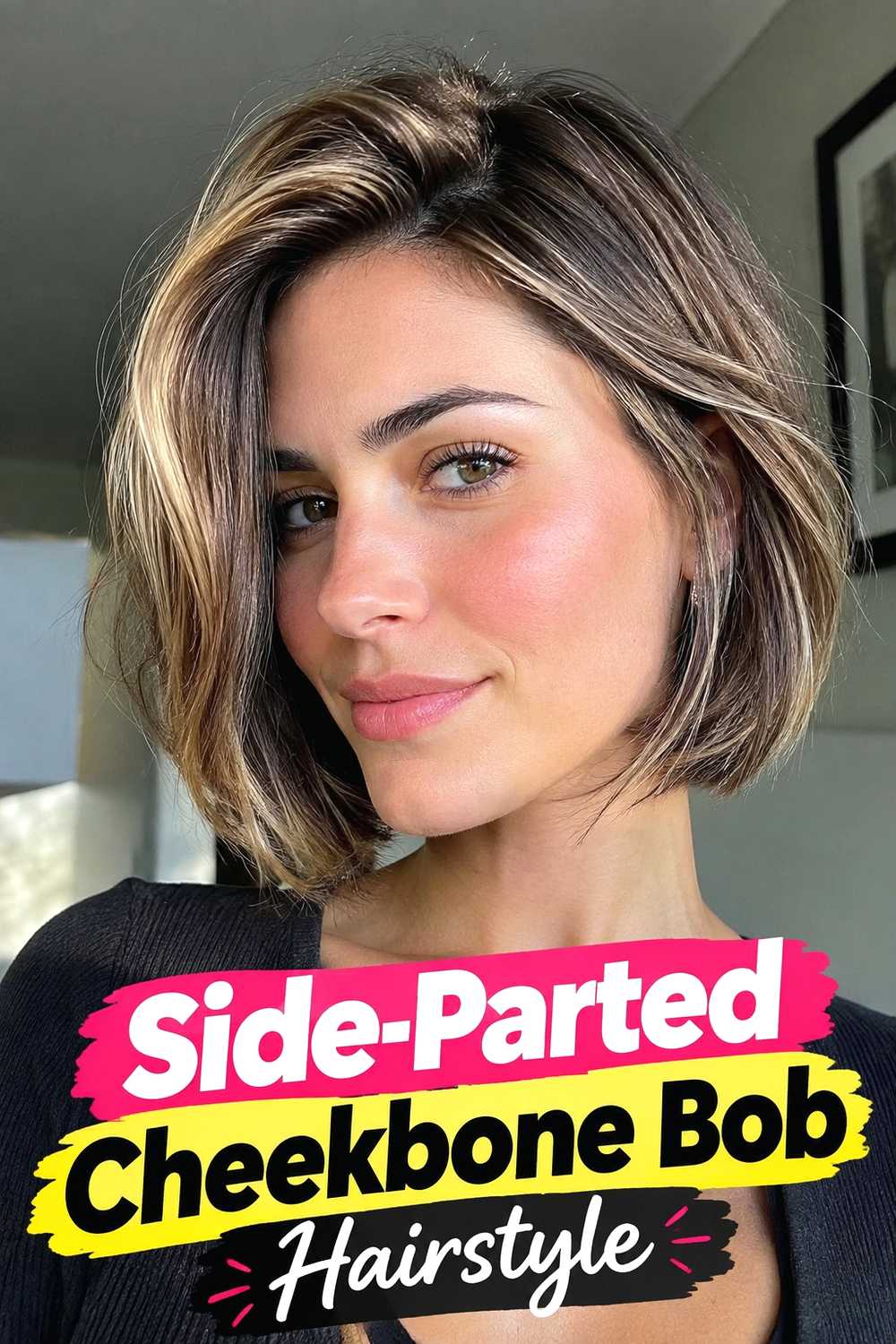
A side part introduces asymmetry and soft volume to a cheekbone bob without requiring additional layers. The heavier side can sweep across the crown and fall neatly around the cheek, while the opposite side sits closer to the head. This simple shift changes the silhouette enough to make the short haircut feel more dynamic. Straight, wavy, and lightly textured hair can all wear the style well, particularly when the lower edge remains clean. Blow-dry the heavier side across the crown first, then allow it to settle naturally. Avoid excessive teasing; the best effect comes from subtle root lift and controlled movement rather than an exaggerated high-volume finish.
Styling Notes
Keep the part soft and allow a few strands to move naturally. The asymmetry should feel effortless rather than overly sculpted.
17. Center Parted Cheekbone Bob Hairstyle
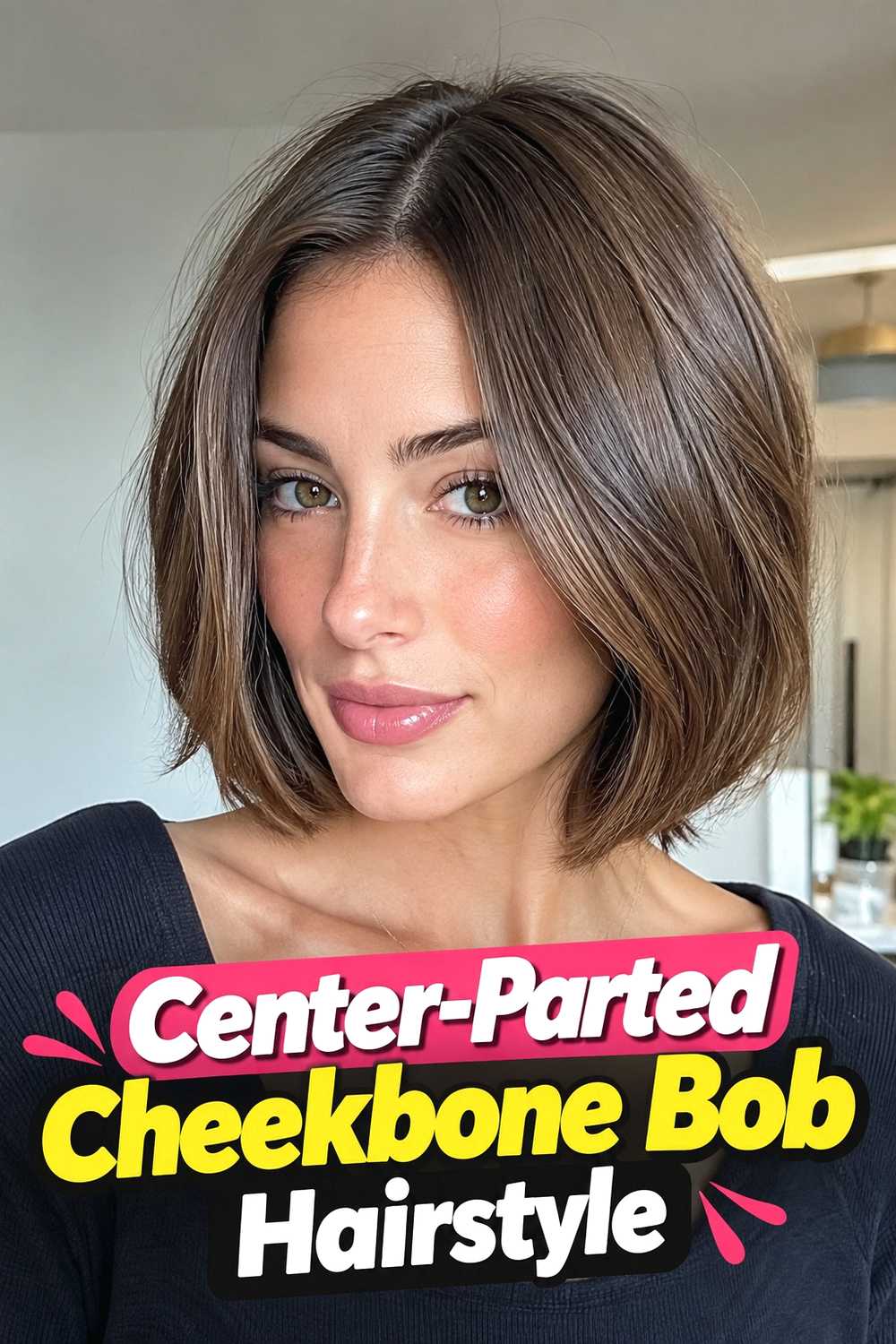
A center part gives the cheekbone bob a balanced, symmetrical front with both sides framing the face at nearly the same length. Because the haircut sits high around the cheeks, the even part makes the compact perimeter especially noticeable from the front. A smooth finish creates a sharper effect, while a gentle bend or natural wave softens the symmetry. The style works best when both sides retain enough density to fall evenly without appearing thin. Blow-drying downward with light root lift keeps the shape clean, and tucking one side temporarily behind the ear can create a quick variation without changing the cut. Keep the ends simple to preserve the graphic outline.
Why It Works
Symmetry draws attention to the precise short length and makes the cheek-level perimeter the strongest visual feature of the haircut.
18. Cheekbone Bob With Face Framing Layers Hairstyle
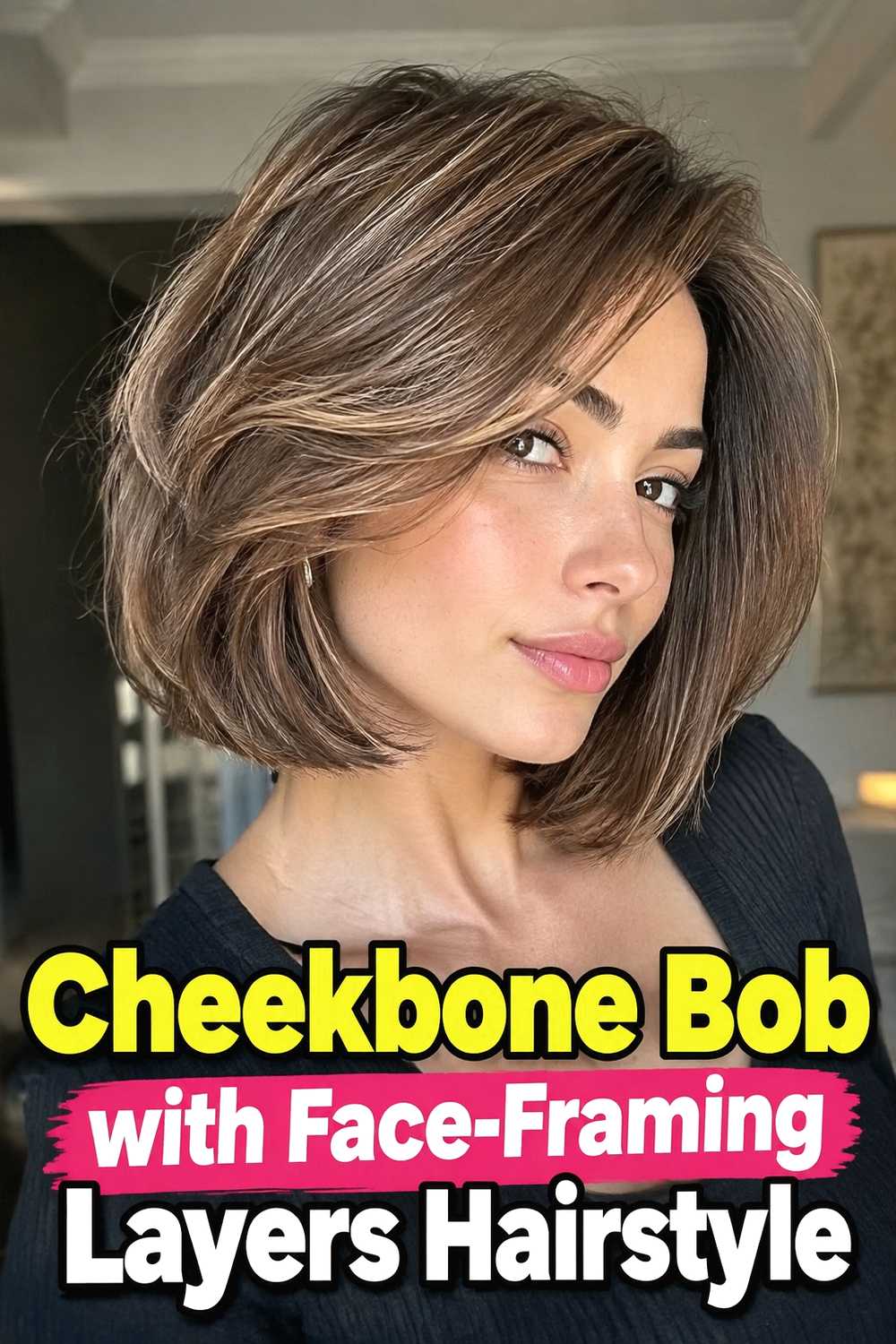
Face-framing layers add subtle movement around the eyes, cheeks, and temples while allowing the main bob perimeter to stay compact. The shortest pieces can begin near the cheekbones and gradually connect to the lower edge, creating softness without turning the haircut into a heavily layered style. This approach works especially well if a one-length cheekbone bob feels too solid around the front. Straight and wavy hair can both show the layering clearly, while a light bend enhances the movement. Keep the back and sides relatively simple so the face frame remains intentional. Too many short pieces can weaken the bob’s clean outline and make styling more complicated.
Pro Tip
Limit layering to selected front sections and preserve weight through the rest of the perimeter for a balanced, connected shape.
19. Micro Bang Cheekbone Bob Hairstyle
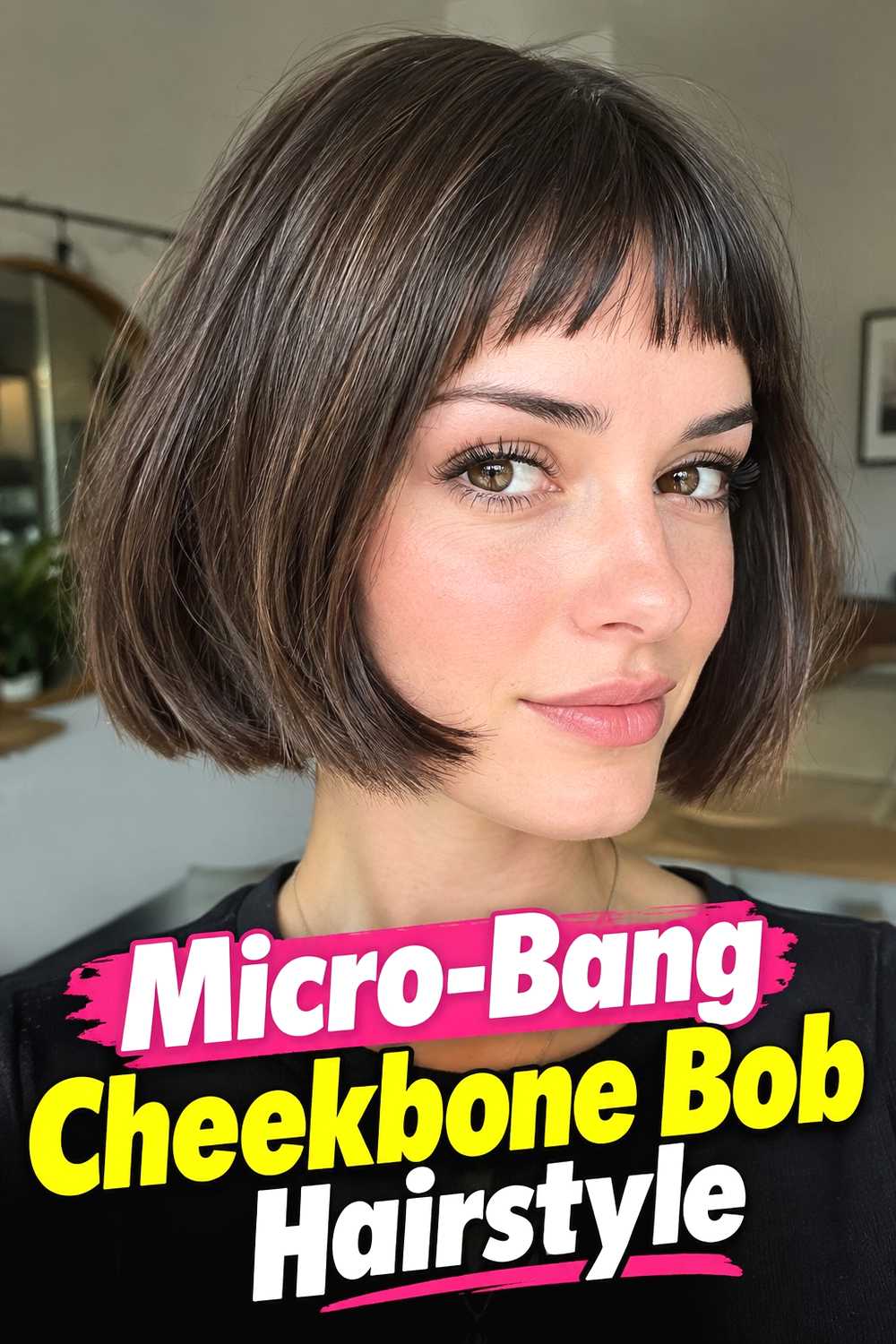
Micro bangs create a striking front detail by sitting clearly above the brows, while the cheekbone bob keeps the rest of the haircut equally compact. The result has a strong graphic quality, especially when the perimeter is blunt or minimally layered. Keeping the fringe slightly separated can soften the look and prevent the front from appearing like one solid block. Straight hair displays the geometry clearly, while subtle texture can create a more relaxed interpretation. Dry the bangs first so they settle in the intended direction, then style the bob with minimal fuss. Because both the bangs and bob are short, growth changes the proportions noticeably and may require more regular maintenance.
Wear & Maintenance
Micro fringe shows growth quickly, so this version suits anyone comfortable with more frequent fringe adjustments and a deliberately short front.
20. Softly Flipped Cheekbone Bob Hairstyle
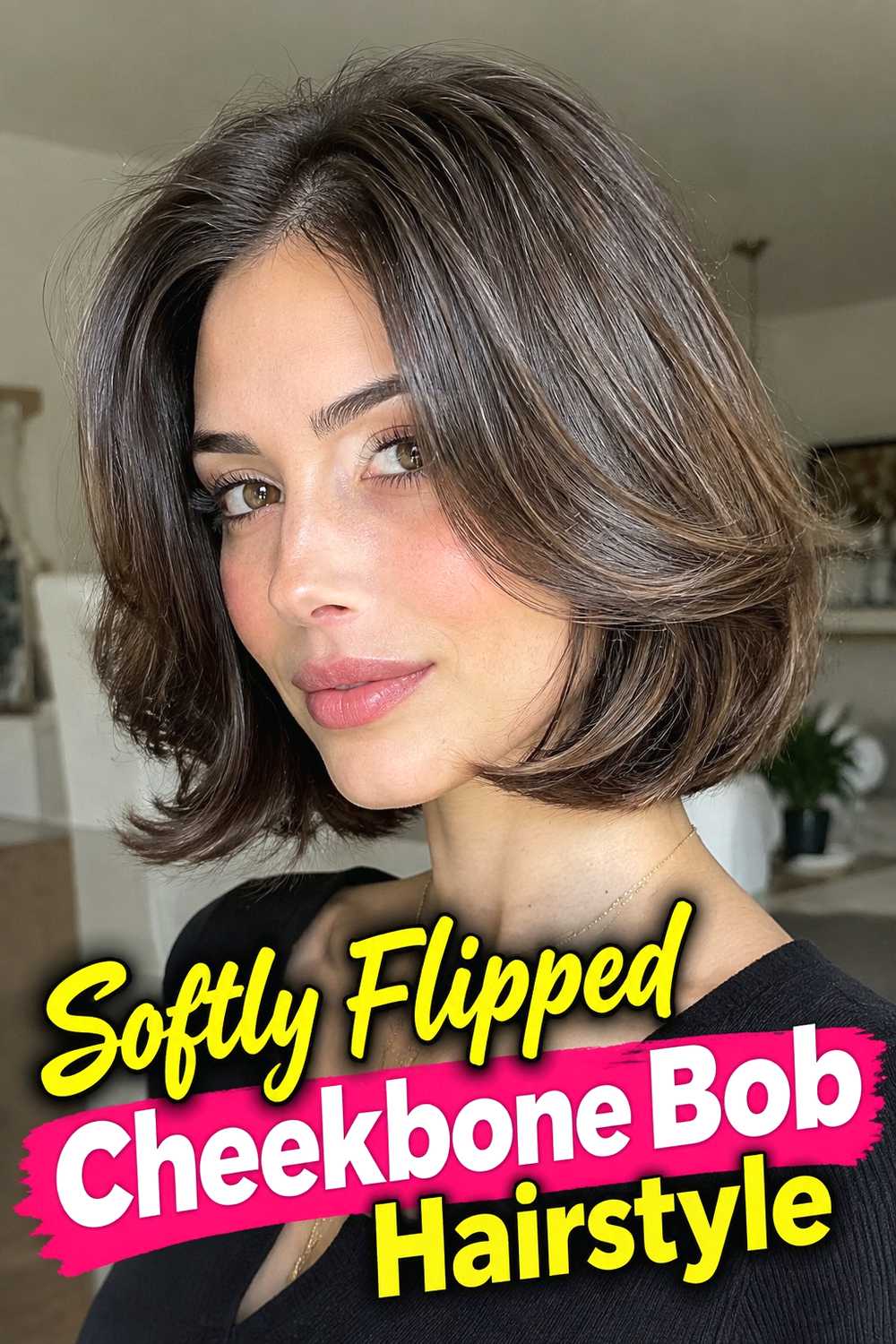
A softly flipped cheekbone bob introduces playful movement by turning selected ends slightly outward instead of keeping the entire perimeter straight or tucked inward. The short length gives the flips extra visibility, so only a few sections are needed to change the overall mood. Keeping some pieces straight prevents the haircut from looking overly retro or uniformly styled. A small round brush or flat iron can create the movement, while lightweight styling spray helps the ends hold without becoming stiff. This version works especially well on straight or softly wavy hair that can retain a bend. The crown should remain natural so the ends stay the main point of interest.
Styling Notes
Flip only selected sections and vary the direction slightly. An imperfect pattern makes the finish feel modern and easy rather than overly set.
21. French Inspired Cheekbone Bob Hairstyle
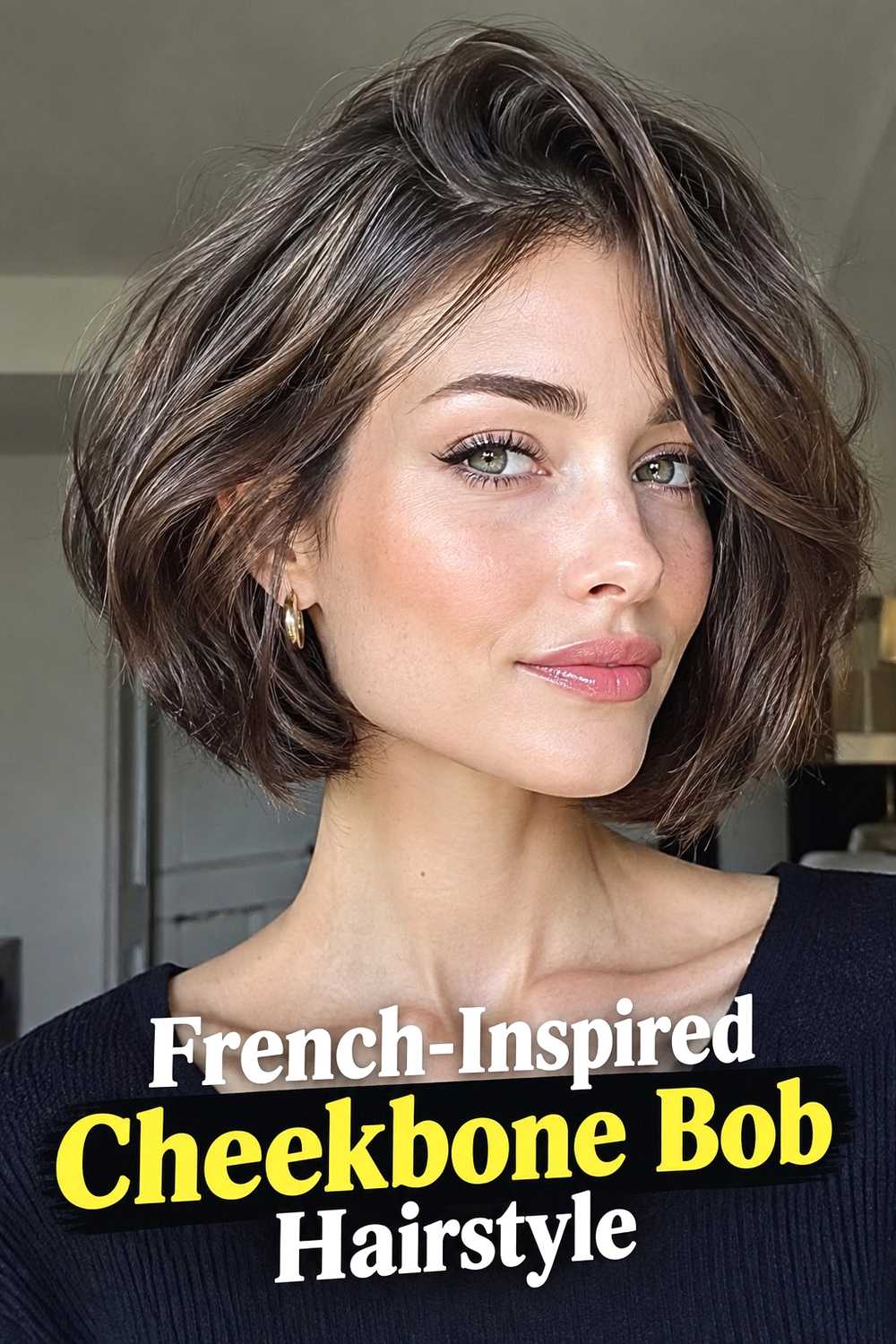
The French-inspired cheekbone bob combines a short, compact perimeter with relaxed texture and understated styling. The ends can sit near the upper jaw, while the surface remains slightly imperfect with soft bends, subtle flyaways, or light separation. Optional fringe can be wispy or gently broken up, but the haircut also works beautifully without bangs. The defining quality is restraint: the shape should feel intentional without looking heavily styled. Naturally straight or wavy hair can both suit this version, especially when the styling follows the existing texture. A small amount of cream through the ends and quick finger styling are often enough to bring out its effortless character.
Why It Works
The strong short silhouette gives the haircut structure, while light texture and minimal styling keep the overall finish relaxed and wearable.
How to Choose the Right Look
Start with how precise you want the perimeter to feel. Blunt, sleek, center-parted, and classic versions create a stronger cheek-level line, while layered, textured, wavy, shaggy, and tousled styles soften that edge with movement.
Hair density matters because a cheekbone bob is short enough for volume changes to become obvious. Fine hair usually benefits from preserving weight through the perimeter and limiting aggressive layers. Thick hair may need internal weight removal to stop the sides from expanding. Curly hair should be planned around shrinkage so the dry length does not end up shorter than intended.
Consider bangs carefully too. Wispy and curtain bangs add softness, side bangs create diagonal movement, and micro bangs make a stronger statement. Finally, think about styling time: sleek and rounded finishes take more deliberate shaping, while wavy, tousled, and French-inspired versions can work with a more relaxed routine.
Final Thoughts
Cheekbone bob haircuts make a strong impact with very little length, so proportion, texture, and perimeter matter more than complicated styling. Whether you prefer a blunt, sleek shape or something wavy, shaggy, curly, or softly layered, choose a version that supports your natural density and everyday routine. Small adjustments in bangs, parting, and texture can completely change the mood while keeping the short silhouette intact.
FAQs
1. What is a cheekbone bob?
A cheekbone bob is a very short bob that typically ends around the cheeks or upper jaw, creating a compact silhouette that sits above a traditional chin-length bob.
2. Is a cheekbone bob good for fine hair?
It can be. Fine hair often benefits from a fuller perimeter, minimal layering, and the reduced weight of a shorter length.
3. Can curly hair wear a cheekbone bob?
Yes. Curly hair can create a beautifully dimensional version, but the cut should account for shrinkage so the dry length lands where intended.
4. Do bangs work with a cheekbone bob?
Yes. Wispy, curtain, side, and micro bangs can all work, but the fringe should stay proportionate to the compact length of the bob.
5. Is a cheekbone bob high maintenance?
Sharper blunt and sleek versions usually need more frequent reshaping, while textured, wavy, shaggy, or tousled styles may tolerate growth more easily.
CTA
Save your favorite cheekbone bob hairstyle and share these ideas when you are ready for a bold, compact short-hair refresh.