14 Cheekbone Curtain Bangs Hairstyle Ideas
Cheekbone-length curtain bangs create a soft, sweeping frame that adds movement around the face while blending easily into layered cuts and everyday styles.
Cheekbone curtain bangs sit in the versatile space between short fringe and long face-framing layers. The center usually opens softly, while the shortest sections fall around the cheekbone area before tapering into longer pieces at the sides.
Because this length is relatively flexible, it can work with bobs, lobs, long layers, waves, curls, ponytails, and updos. The exact effect depends on density, texture, parting, and styling direction. A rounded blowout makes the sweep more pronounced, while natural waves or curls create a softer, less structured finish.
Quick List
- Soft Layered Cheekbone Curtain Bangs Hairstyle
- Wispy Cheekbone Curtain Bangs Hairstyle
- Long Layered Cheekbone Curtain Bangs Hairstyle
- Cheekbone Curtain Bangs Bob Hairstyle
- Cheekbone Curtain Bangs Lob Hairstyle
- Wavy Cheekbone Curtain Bangs Hairstyle
- Curly Cheekbone Curtain Bangs Hairstyle
- Shaggy Cheekbone Curtain Bangs Hairstyle
- Bouncy Blowout Cheekbone Curtain Bangs Hairstyle
- Straight Cheekbone Curtain Bangs Hairstyle
- Soft Wolf Cut Cheekbone Curtain Bangs Hairstyle
- Half Up Cheekbone Curtain Bangs Hairstyle
- Ponytail Cheekbone Curtain Bangs Hairstyle
- Messy Bun Cheekbone Curtain Bangs Hairstyle
1. Soft Layered Cheekbone Curtain Bangs Hairstyle
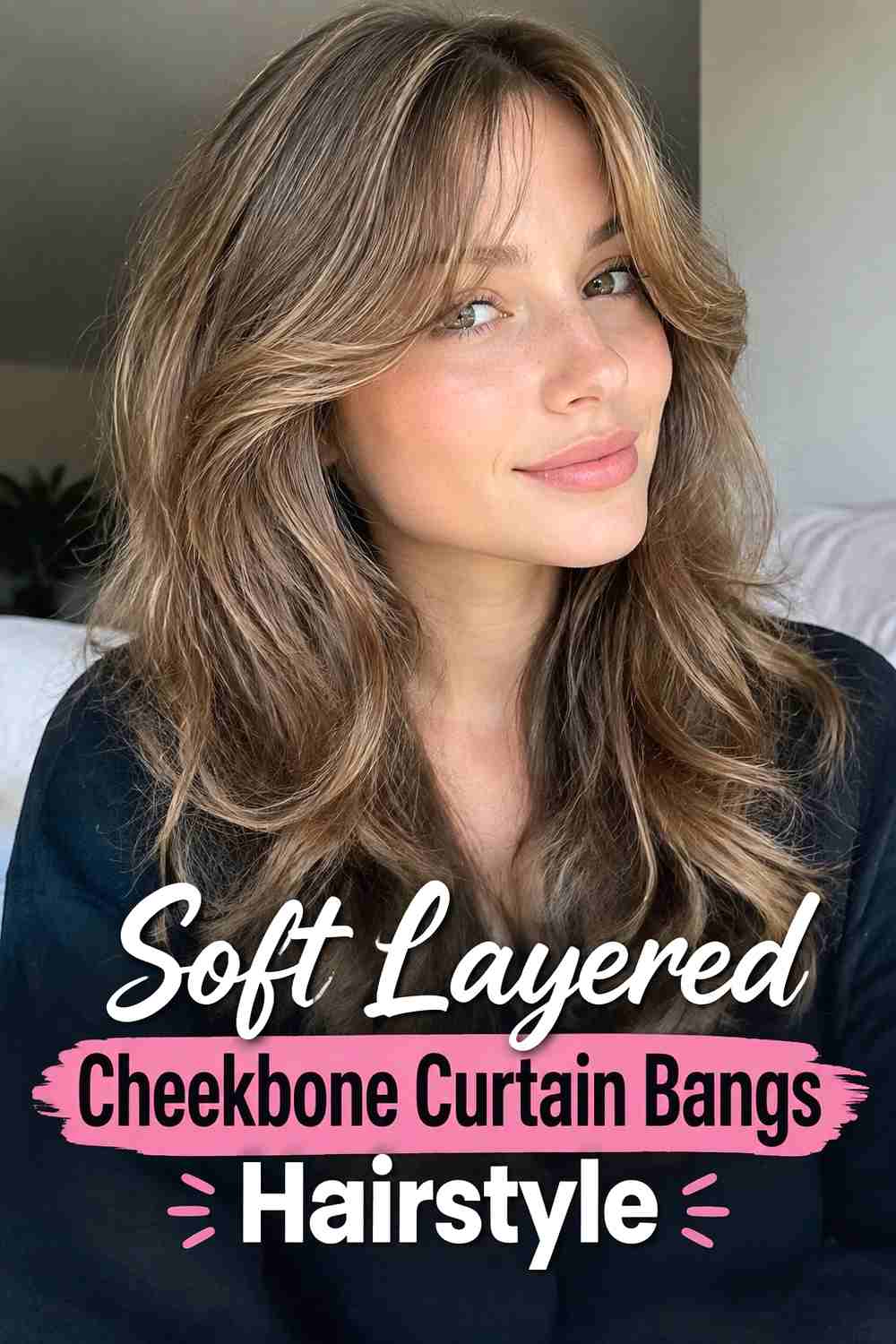
Soft layered cheekbone curtain bangs create a gradual transition from the center fringe into longer pieces around the sides. The shortest sections land near the cheekbones, giving the front noticeable shape without covering much of the forehead. Long layers through the rest of the haircut reinforce the movement, allowing the bangs to blend instead of ending abruptly. This version works particularly well on medium and long hair because there is enough length for a smooth transition through several layers. A gentle blowout can direct each side away from the face, while a softer bend creates a more relaxed finish. Keeping the bang section moderately light helps preserve movement and prevents the front from feeling bulky.
Styling Notes
Use a round brush to lift the roots slightly and direct the ends outward, then let the bangs cool before separating them with your fingers.
2. Wispy Cheekbone Curtain Bangs Hairstyle
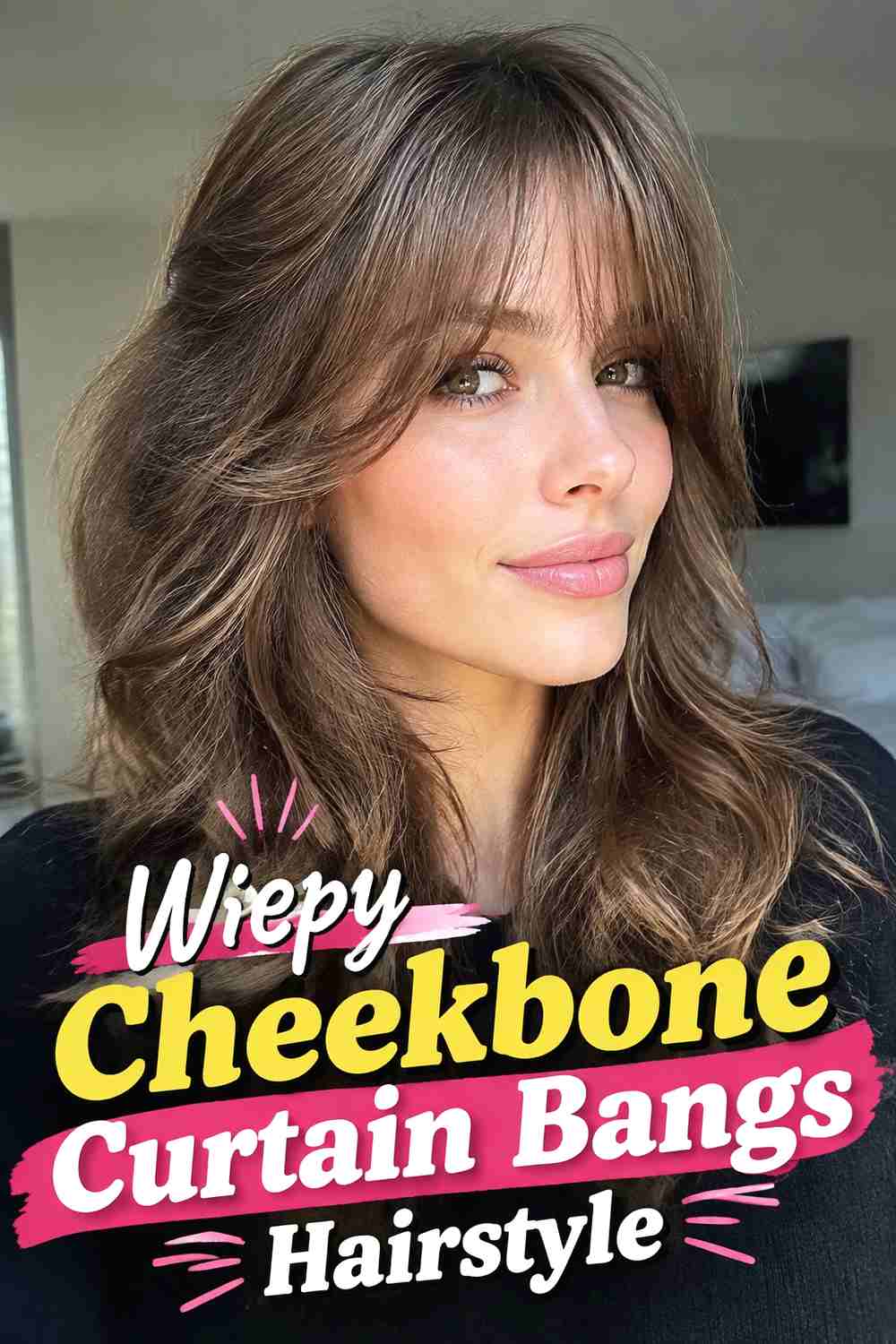
Wispy cheekbone curtain bangs use a lighter amount of hair to create a soft fringe with plenty of visible separation. The shortest pieces can skim the upper cheekbone area, while finer sections taper toward the temples and merge into the sides. This approach works well when you want curtain bangs to be noticeable without creating a dense block of hair across the forehead. Straight, softly wavy, and lightly layered hair can all support the look. Because the fringe is intentionally delicate, heavy styling products can quickly weigh it down. A little root lift and a broad outward bend are usually enough to give the bangs shape while keeping their movement natural and airy.
Wear & Maintenance
Use lightweight finishing products around the fringe. Dense creams or oils can cause fine bang sections to clump together and lose their wispy separation.
3. Long Layered Cheekbone Curtain Bangs Hairstyle
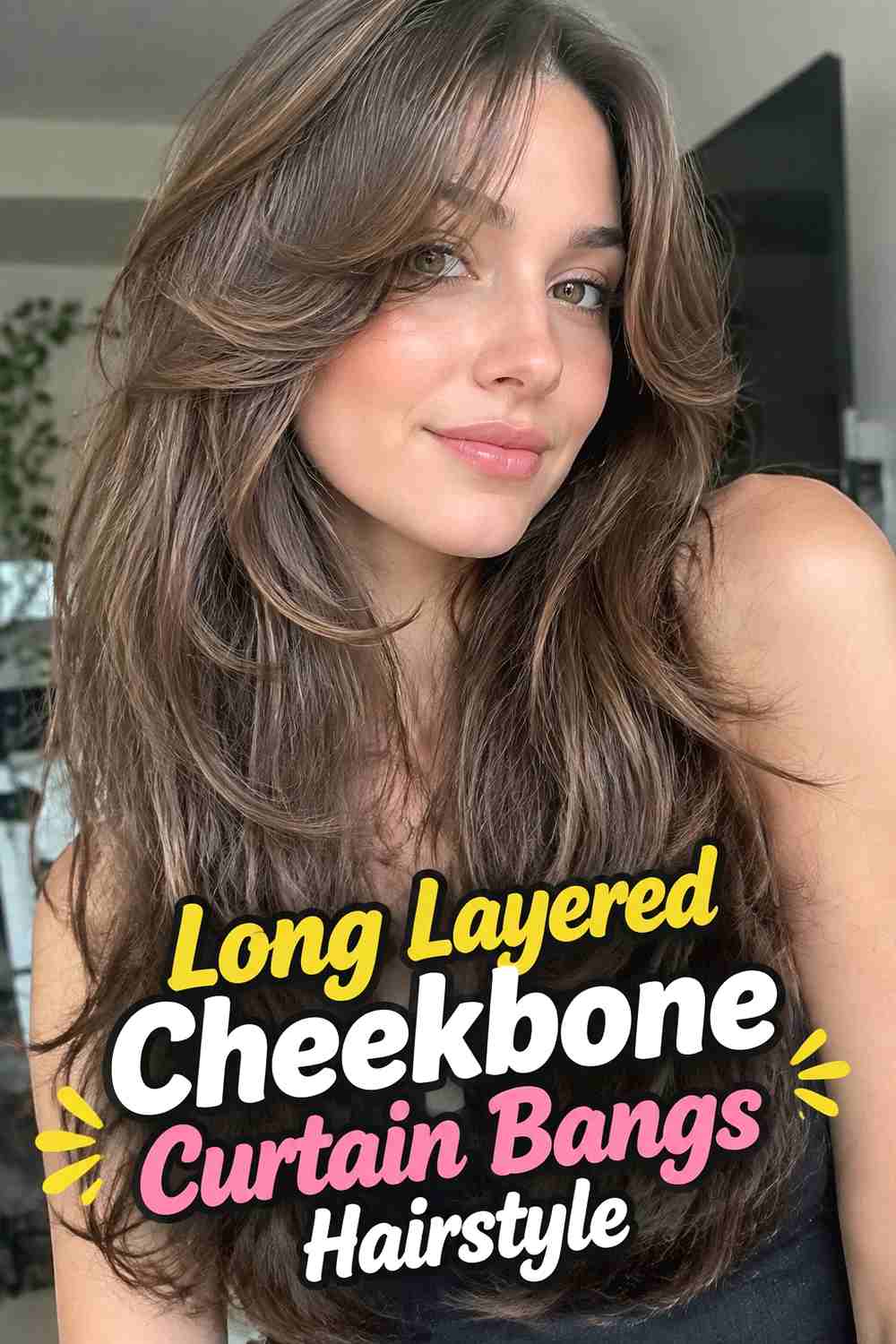
Long layered hair gives cheekbone curtain bangs plenty of space to blend gradually into the rest of the haircut. The fringe can begin around the cheekbones, then transition into jaw-length and longer face-framing pieces before meeting the main layers. This creates a continuous sweep that looks especially attractive with a soft blowout or large waves. The bangs remain long enough to tuck behind the ears when needed, making them practical for someone who wants visible front shaping without a short fringe. Leaving fullness through the back of the haircut helps balance the additional movement around the face. The result feels polished but still flexible enough for ponytails, clips, and casual upstyles.
Why It Works
The long layering extends the curtain shape through several lengths, so the bangs become part of the entire haircut rather than a separate front section.
4. Cheekbone Curtain Bangs Bob Hairstyle
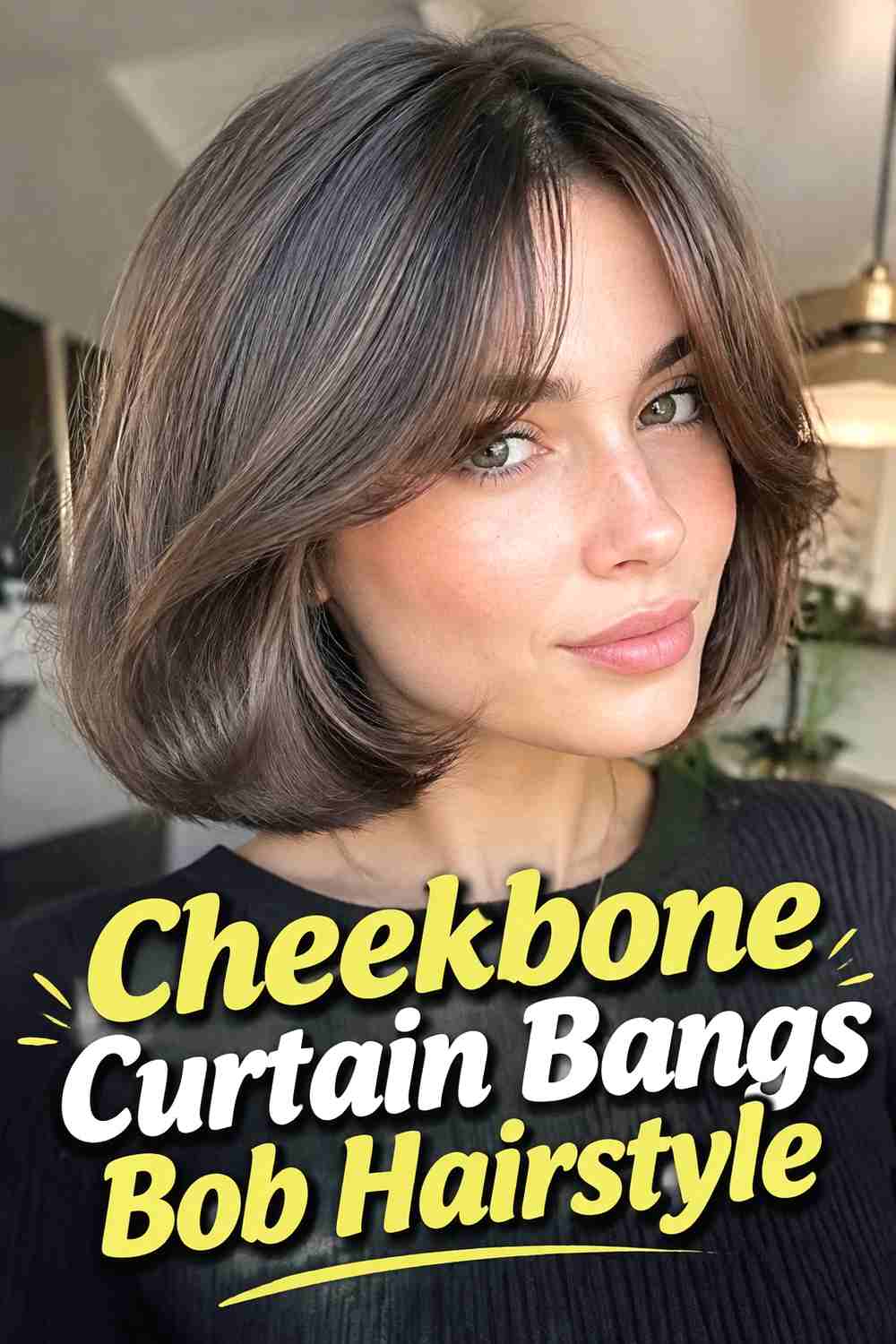
A bob with cheekbone curtain bangs combines a defined short perimeter with softer movement around the front. The bangs open through the center and sweep outward near the cheekbones, creating contrast against the stronger line of a chin-length or slightly longer bob. This front shape can keep a blunt bob from feeling too severe while still allowing the haircut to retain its clean silhouette. A sleek finish emphasizes the precision of the cut, while a gentle bend makes the bangs and sides feel more relaxed. Because shorter hair places every section in clear view, the transition between fringe and bob should be smooth. Light layering near the temples can help connect the two areas naturally.
Best For
This style suits someone who wants a structured short haircut but prefers softness and movement around the front rather than a completely blunt shape.
5. Cheekbone Curtain Bangs Lob Hairstyle
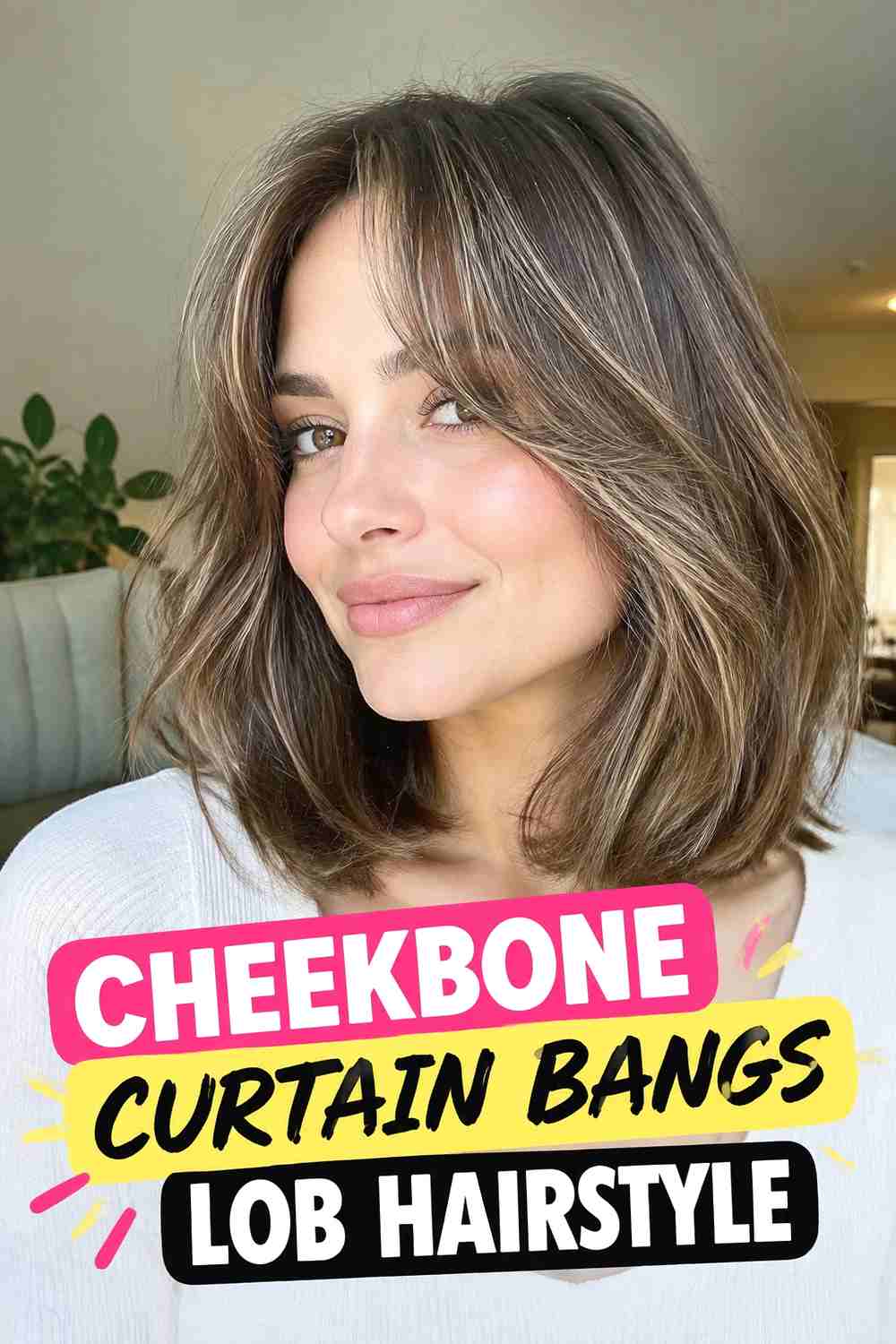
A lob offers an easy middle ground for cheekbone curtain bangs because the shoulder-skimming length provides enough movement without the styling commitment of very long hair. The bangs can curve away from the face at cheekbone level and blend into subtle front layers that continue toward the shoulders. Gentle waves or a rounded blowout make the transition particularly visible, while straight styling creates a cleaner, more understated effect. This combination is practical for everyday wear because the overall length can still be tied back or clipped up. The fringe remains long enough to tuck behind the ears when needed, giving the style flexibility as it grows between trims.
Styling Notes
Shape the bangs first, then style the lob around them so the front sweep keeps its lift instead of becoming flattened by the rest of the blowout.
6. Wavy Cheekbone Curtain Bangs Hairstyle
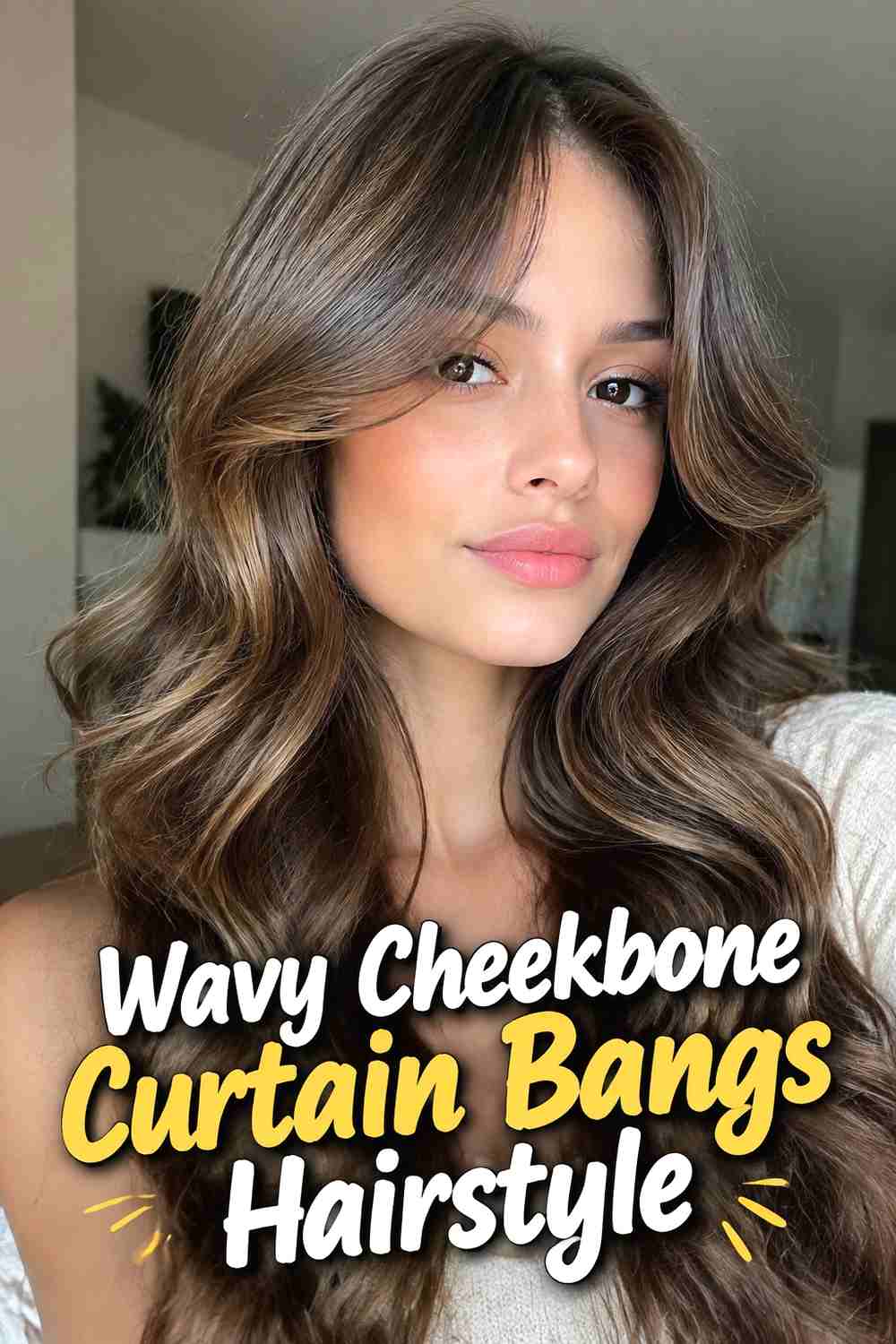
Wavy hair gives cheekbone curtain bangs a relaxed finish because the fringe can follow the natural bends through the rest of the haircut. The center remains softly open, while the front pieces curve around the cheekbones and flow into longer waves near the sides. Slight differences between the two sections often make the style look more natural rather than imperfect. Medium and long hair provide enough space for the fringe to blend into broader texture through the lengths. Avoid over-straightening the bangs if the rest of the hair is worn wavy, since an overly smooth fringe can look disconnected. Refining only the roots or front curve is often enough to create a controlled curtain shape.
Pro Tip
Let the natural wave direction guide each side of the fringe instead of forcing both pieces into perfectly identical bends.
7. Curly Cheekbone Curtain Bangs Hairstyle
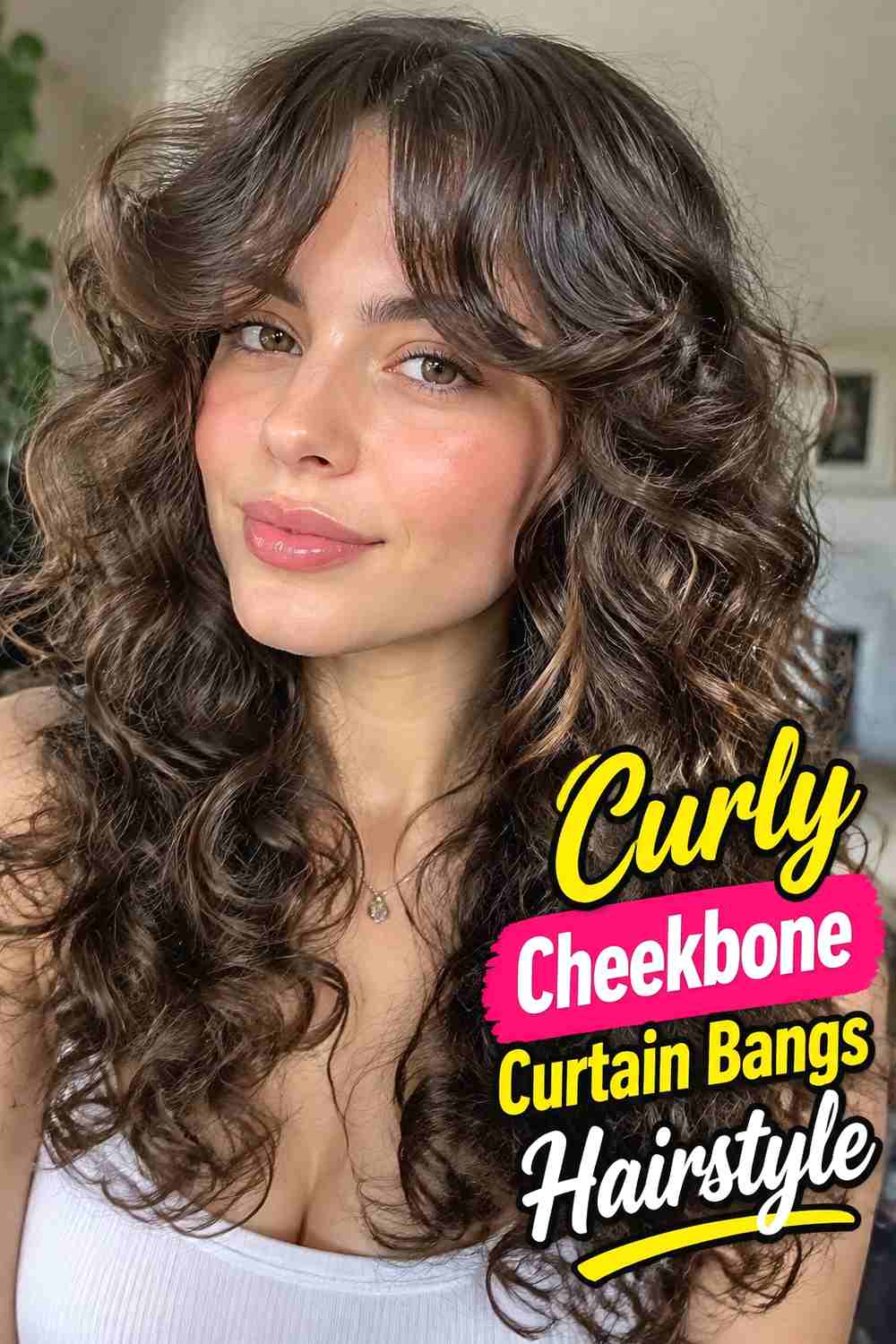
Curly cheekbone curtain bangs use graduated front curls to create an open shape rather than a dense curly fringe. The shortest pieces can settle around the cheekbones when dry, with longer curls toward the temples blending into the main haircut. Because curl shrinkage affects final length, the bangs should be planned according to how the hair behaves in its usual styled state. The look works particularly well with layered curly cuts where the front already has movement and separation. Instead of brushing the bangs into a smooth curtain, allow individual curls to form naturally and create the opening through placement. Keeping the front lightweight helps preserve bounce and prevents the fringe from becoming too crowded.
Hair Type & Length
The final bang length should reflect curl pattern, shrinkage, density, and your usual drying method rather than relying only on how the hair looks when stretched.
8. Shaggy Cheekbone Curtain Bangs Hairstyle
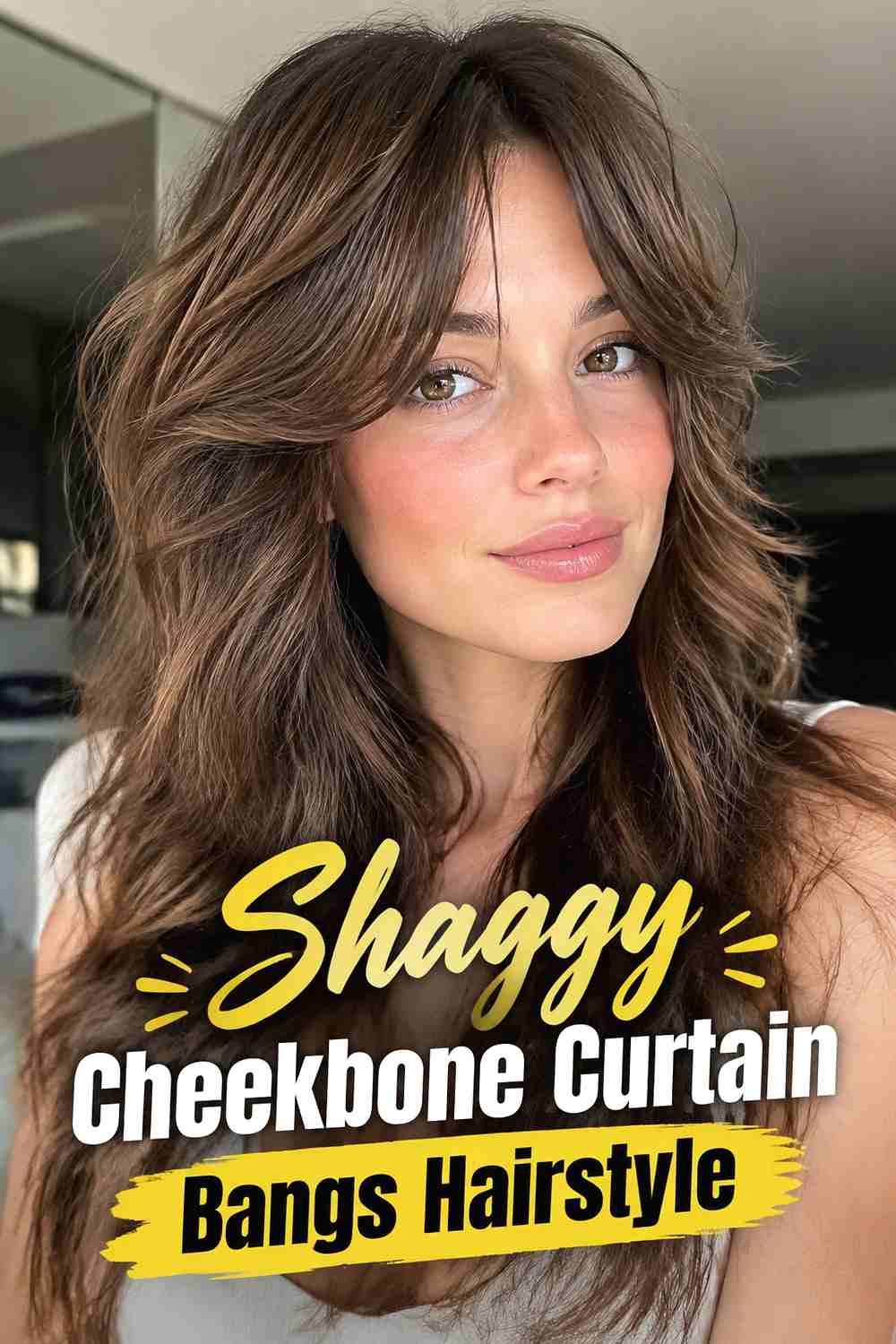
Shaggy cheekbone curtain bangs pair naturally with textured layers because both elements rely on movement and visible separation. The fringe opens through the center and tapers into cheekbone-level pieces, while shorter layers around the crown and sides continue the airy, slightly undone shape. Soft waves or natural texture usually complement this haircut better than a perfectly sleek finish. Medium lengths are especially effective because the bangs can connect directly into the shag’s face-framing sections without disappearing. The key is maintaining enough density through the ends so the cut looks textured rather than thin. A small amount of lightweight texture product can define selected pieces without making the fringe stiff or overly separated.
Why It Works
The curtain fringe mirrors the shag’s layered movement, allowing the front to feel integrated with the rest of the haircut rather than overly polished.
9. Bouncy Blowout Cheekbone Curtain Bangs Hairstyle
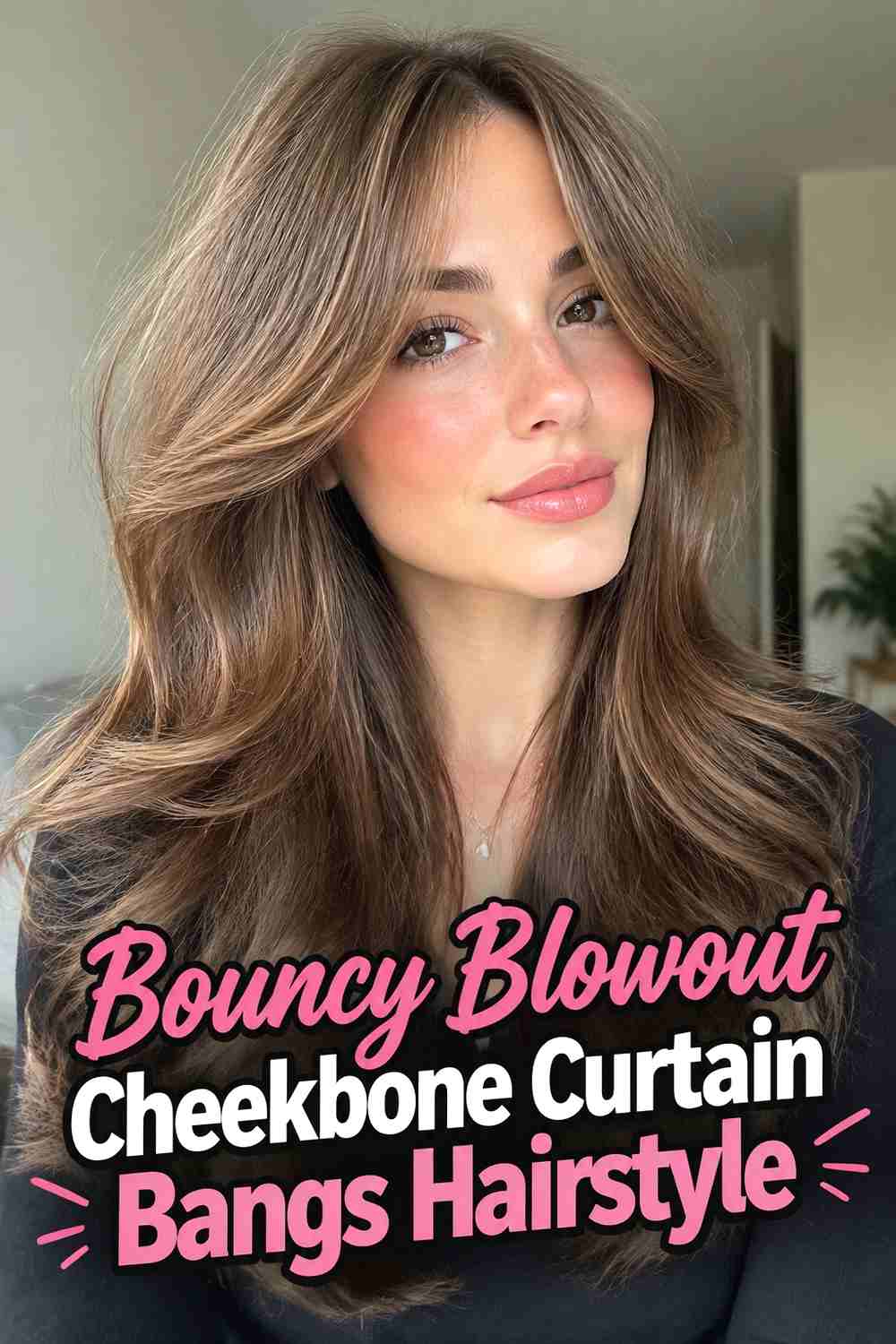
A bouncy blowout emphasizes cheekbone curtain bangs by lifting the roots and giving the fringe a broad outward sweep. The shortest sections rise slightly away from the forehead before curving toward the cheekbones, while longer layers through the sides continue the same motion. This styling works especially well on medium and long layered cuts because several lengths can move independently and create visible bounce. Large rollers or a round brush can help form the shape without turning the bangs into tight curls. Once styled, allow the front pieces to cool in their lifted position before gently separating them. The finished look should feel soft, full, and mobile rather than stiff or heavily sprayed.
Styling Notes
Use a larger brush or roller for the fringe so the curve remains broad enough to frame the cheekbones instead of curling tightly toward the forehead.
10. Straight Cheekbone Curtain Bangs Hairstyle
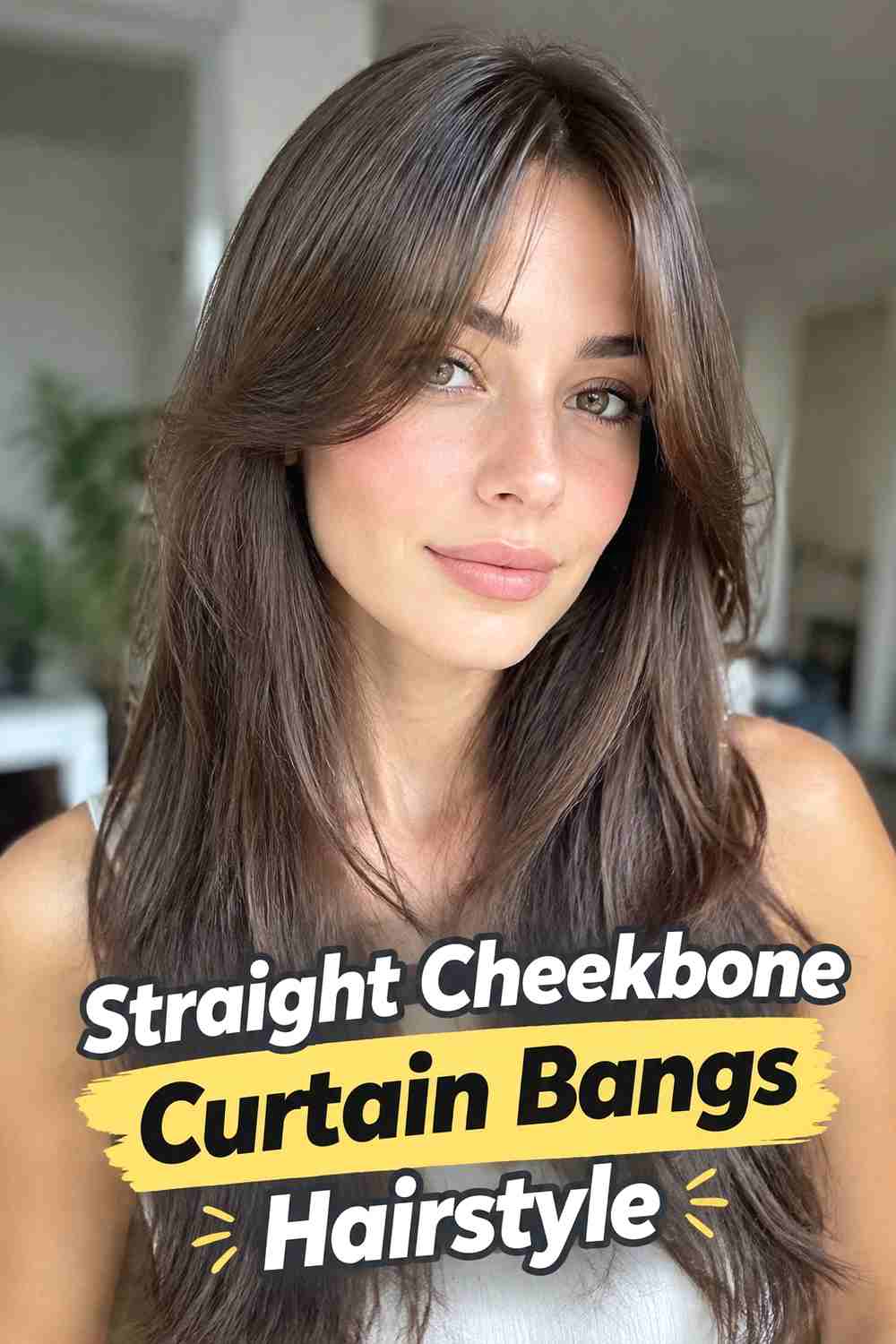
Straight cheekbone curtain bangs create a clean, refined look where the tapered front shape is easy to see. The fringe opens through the center and angles outward, with the shortest sections sitting near the cheekbones before blending into longer side pieces. The remaining hair can stay sleek, with only a subtle bend around the front to reinforce the curtain effect. Because straight textures expose every line in the haircut, careful blending matters more than dramatic styling. This version works well on shoulder-length, medium, and long hair and can feel especially polished with a glossy surface. Keep the fringe flexible by avoiding heavy wax or excessive spray that locks the sections against the face.
Wear & Maintenance
Straight hair can make changes in bang length noticeable quickly, so occasional reshaping helps keep the cheekbone-level balance consistent.
11. Soft Wolf Cut Cheekbone Curtain Bangs Hairstyle
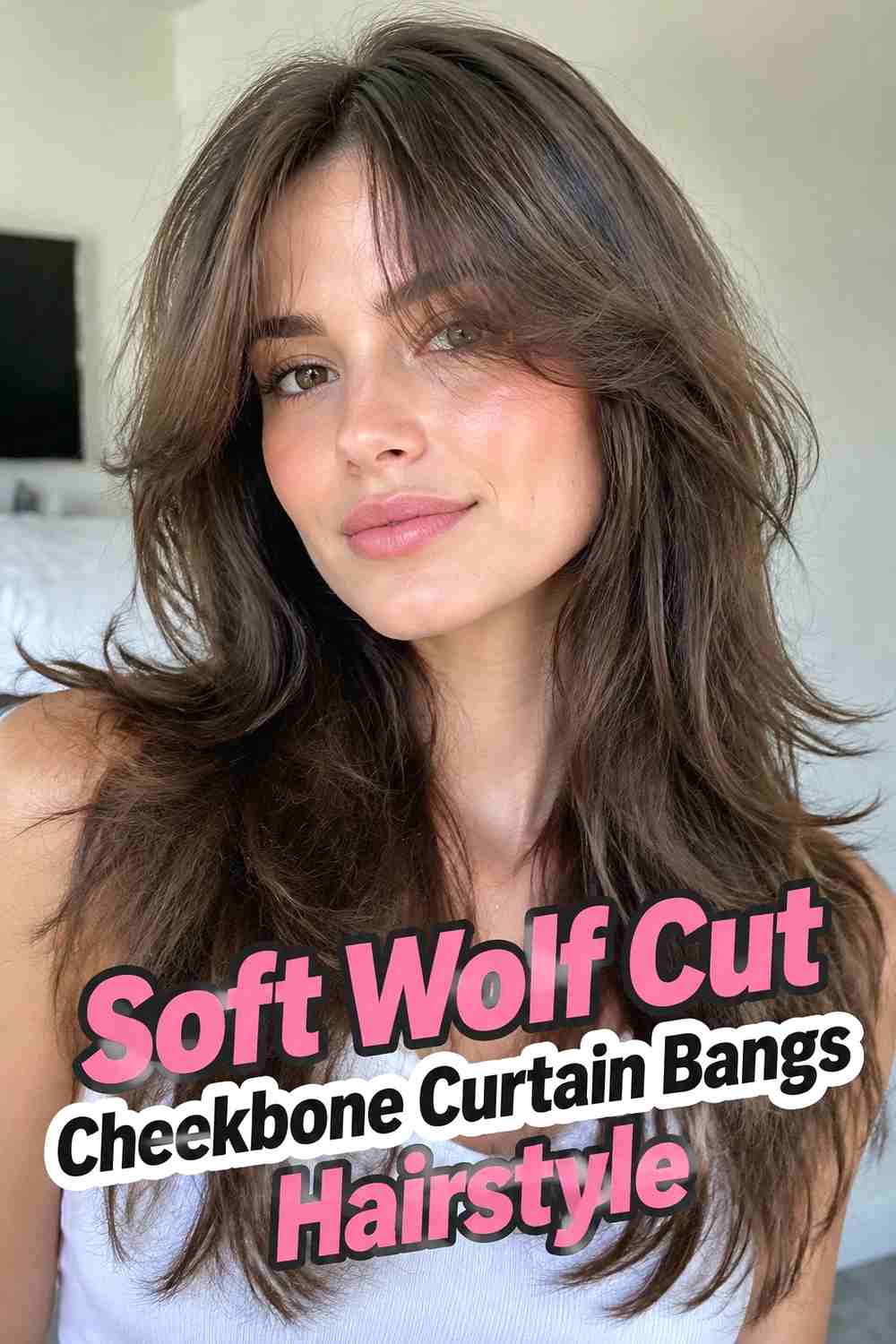
A soft wolf cut gives cheekbone curtain bangs a little more edge through shorter crown layers and lighter, tapered lengths. The fringe opens at the center and blends into textured pieces near the cheekbones, then continues into the layered sides. Compared with a dramatic wolf cut, this version keeps the transitions smoother and preserves more fullness through the lower lengths. Natural waves or a loose blowout help show the different layers without making the style look overly choppy. Medium and long hair can both carry the shape, but the amount of layering should reflect density. Keeping the bangs relatively light prevents the crown volume and front fringe from competing for too much visual weight.
Best For
Choose this version if you like layered, slightly undone hair but want the curtain fringe to remain soft and wearable rather than heavily dramatic.
12. Half Up Cheekbone Curtain Bangs Hairstyle
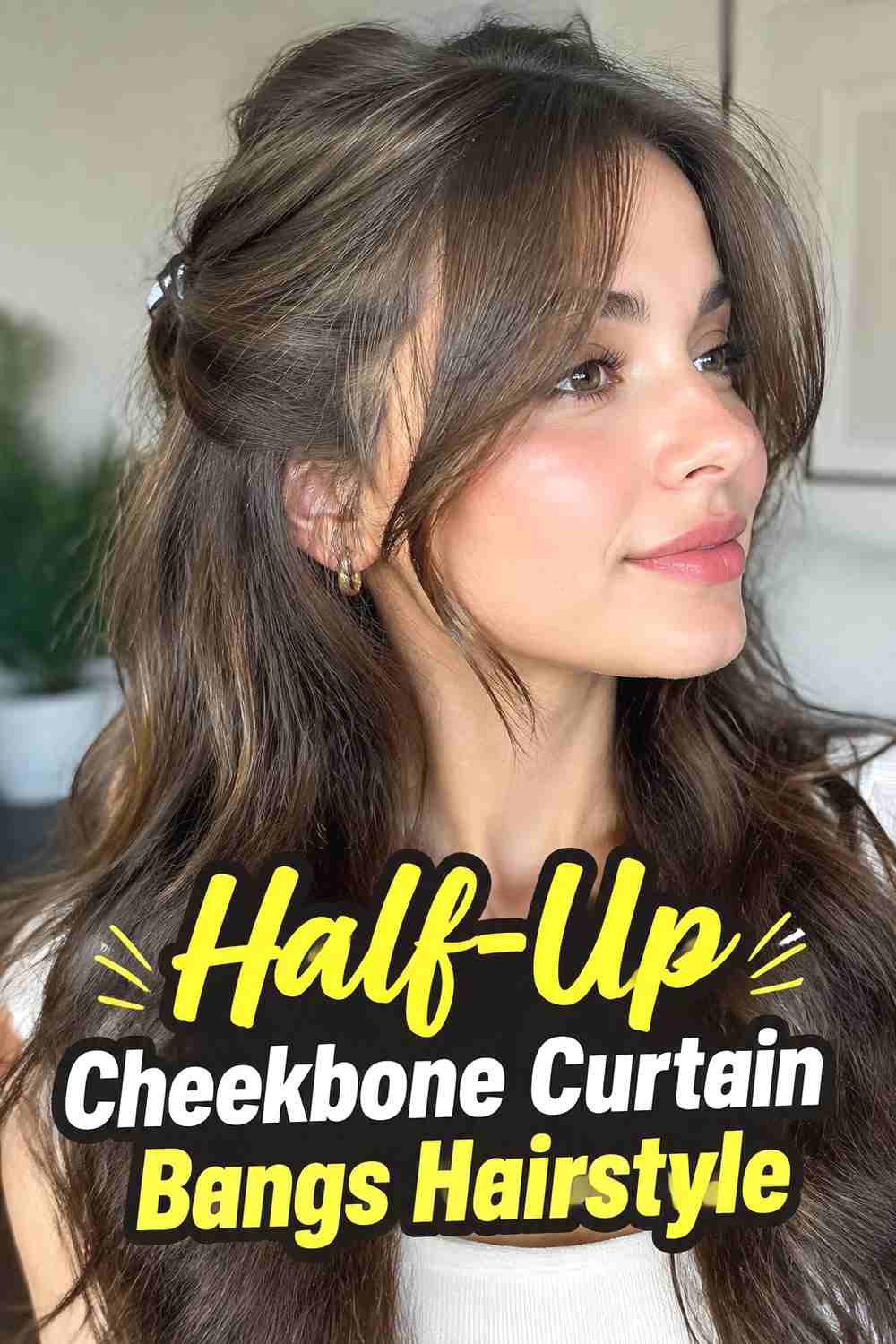
A half-up style places cheekbone curtain bangs at the center of attention while keeping some of the remaining hair controlled. Gather the upper section loosely toward the crown, leaving the fringe and longer face-framing pieces free around the front. This creates a balanced shape with lift behind the bangs and movement around the cheekbones. The lower lengths can remain straight, wavy, or softly curled depending on the occasion. Medium and long hair offer the most flexibility, but the key is avoiding an overly tight top section that pulls the fringe away from its natural fall. A simple clip, bow, or understated barrette can finish the style without competing with the face-framing shape.
Styling Notes
Shape the curtain bangs before securing the half-up section so the front remains balanced and you do not have to tug on the fringe afterward.
13. Ponytail Cheekbone Curtain Bangs Hairstyle
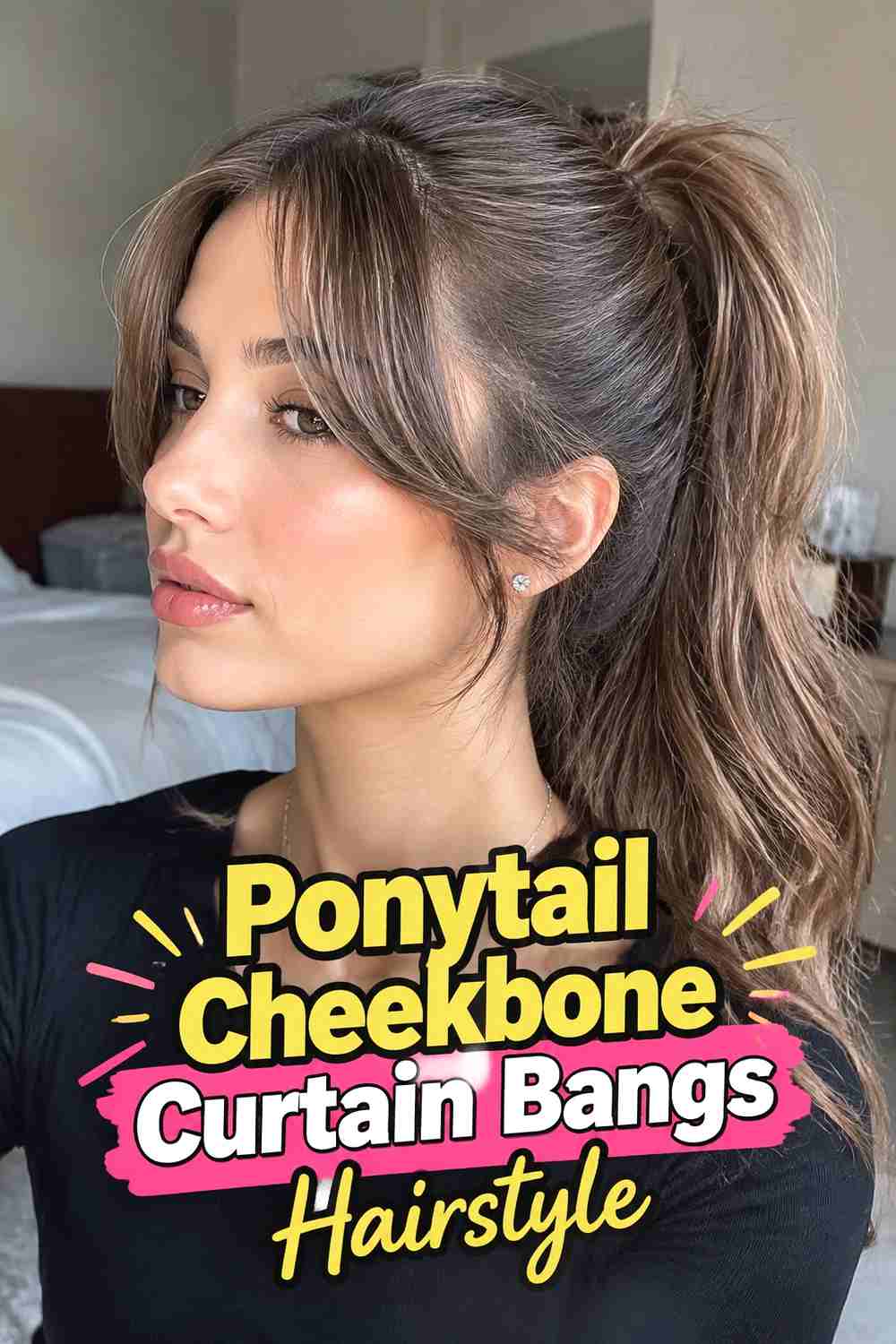
A ponytail becomes instantly softer when cheekbone curtain bangs remain loose at the front. The fringe opens through the center while longer side pieces frame the cheekbones and blend gradually toward the ears. A high ponytail creates a lively, lifted finish, while a low ponytail feels more relaxed and understated. This combination works especially well on medium and long hair because the pulled-back lengths make the front shaping more visible. The bangs can stay smooth or carry a slight bend depending on the overall texture. Avoid pulling the ponytail excessively tight, since too much tension can shift the fringe backward and remove the soft curtain effect around the face.
Pro Tip
Set the bangs before tying the ponytail, then make only minor adjustments to the front so the curtain shape stays intact.
14. Messy Bun Cheekbone Curtain Bangs Hairstyle
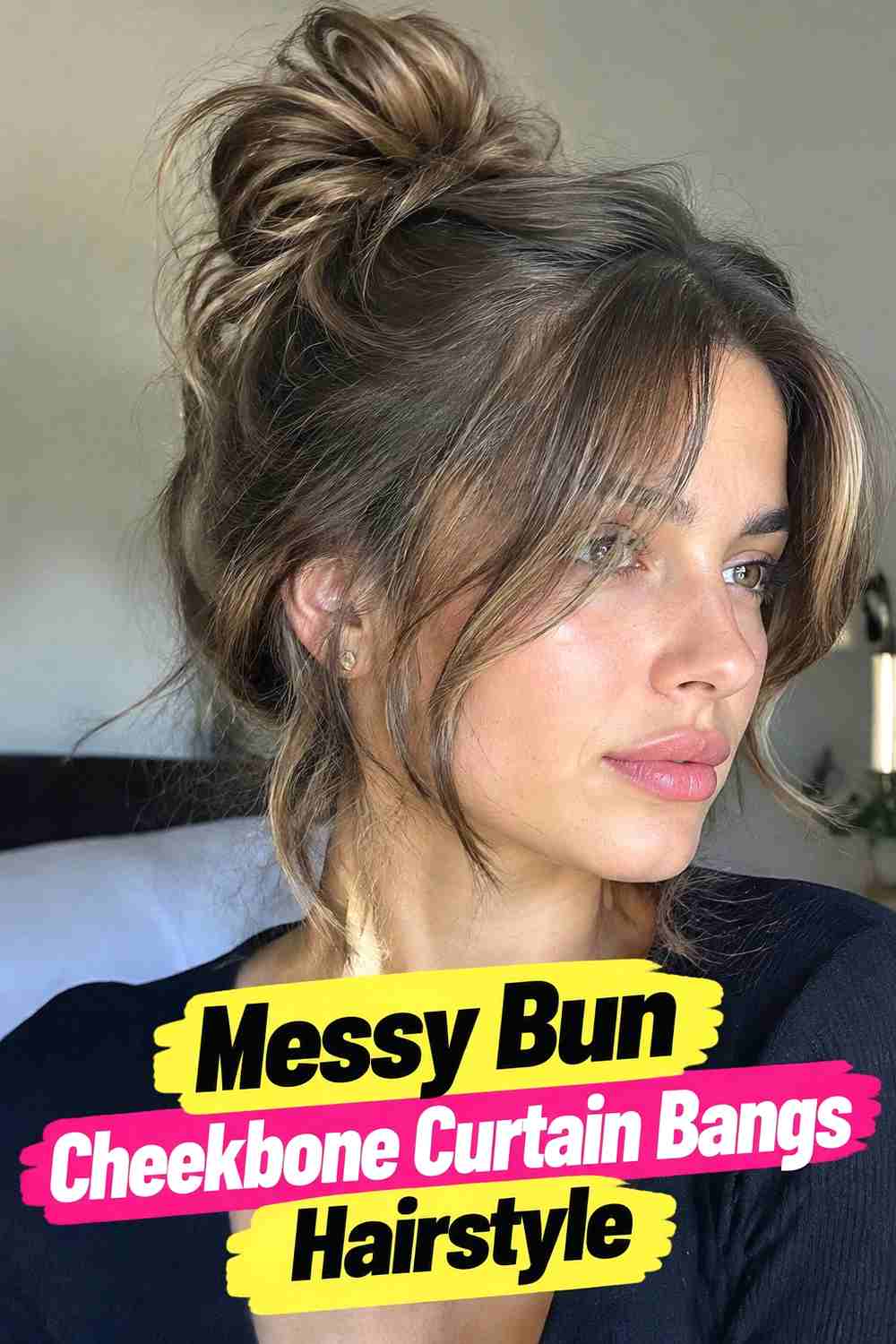
A messy bun pairs naturally with cheekbone curtain bangs because the soft fringe balances the relaxed texture of the updo. The bun can sit high or at mid-height, while the bangs remain loose and curve outward around the cheekbones. A few longer face-framing pieces can stay free near the temples, but keeping them intentional prevents the style from looking unfinished. Medium and long hair provide enough length for a loose bun while allowing the fringe to remain the focal point from the front. The bun should feel softly textured rather than unstable, with enough hidden support to hold its shape. This is an easy way to show off curtain bangs even when most of the hair is pulled up.
Wear & Maintenance
Secure the bun first and adjust only a few front pieces afterward so you do not loosen the entire style while trying to perfect the fringe.
How to Choose the Right Look
Start with your natural texture and how you prefer to wear your hair. Straight hair makes cheekbone curtain bangs look clean and defined, waves create relaxed movement, and curls require enough length to account for shrinkage while maintaining the open center.
Haircut length matters too. Bobs make the fringe a noticeable feature, lobs offer versatility, and long layered cuts provide the smoothest transition into multiple face-framing sections. If you regularly wear ponytails or buns, cheekbone-length bangs are useful because they stay visible while the rest of the hair is pulled back.
Consider styling time as well. A bouncy blowout produces the strongest outward sweep, while shaggy or wavy versions can look more relaxed. Fine hair may benefit from a lighter bang section, while dense hair may need careful internal shaping to prevent the front from feeling bulky.
Finally, work with your natural part. A center or slightly off-center opening usually creates the easiest curtain effect, especially when the hair naturally falls in that direction.
Final Thoughts
Cheekbone curtain bangs offer enough length to feel soft and versatile while still creating obvious movement around the face. Whether you pair them with a bob, waves, curls, long layers, or an updo, the best version should blend smoothly into the haircut and fit your everyday styling routine.
FAQs
1. What are cheekbone curtain bangs?
They are curtain bangs whose shortest sections typically fall around the cheekbone area before tapering into longer pieces toward the sides.
2. Are cheekbone curtain bangs easy to grow out?
They can be relatively flexible because they already sit longer than many traditional bangs. As they grow, they can gradually blend into face-framing layers.
3. Can curly hair wear cheekbone curtain bangs?
Yes. The cut should account for curl shrinkage and the hair’s natural shape so the bangs land near the intended length when dry.
4. Do cheekbone curtain bangs work with ponytails?
Yes. Their longer length makes them especially useful with ponytails, buns, and half-up styles because they can remain loose and frame the front.
5. How should cheekbone curtain bangs be styled?
A round brush, large roller, natural wave, or curl pattern can all work. The key is maintaining an open center and directing the ends gently away from the face.
Save your favorite cheekbone curtain bangs hairstyle ideas, share them for haircut inspiration, and explore more soft face-framing styles for your next refresh.