20 Side-Part Power Hair Ideas
A strong side part can instantly shift the balance of a hairstyle, adding lift, sweep, polish, and a confident sense of movement.
Side-part power hair is less about one exact haircut and more about using an intentionally shifted part to create shape. Moving the part away from center builds natural volume on one side, changes how face-framing pieces fall, and can make straight, wavy, curly, coily, short, or long hair feel dramatically different.
The best version depends on texture and finish. Sleek parts emphasize precision, blowouts highlight volume, and curls use the part to redistribute fullness. Before choosing your look, think about how deep you want the part, how much hold you need, and whether you prefer sharp structure or softer movement.
Quick List
- Deep Side Part Power Bob Hairstyle
- Sleek Side Part Power Lob Hairstyle
- Voluminous Side Part Blowout Hairstyle
- Side Swept Layered Power Hairstyle
- Glossy Side Part Straight Hairstyle
- Soft Wave Side Part Power Hairstyle
- Side Part Hollywood Wave Hairstyle
- Curly Side Part Power Hairstyle
- Coily Side Part Volume Hairstyle
- Side Part Bixie Power Hairstyle
- Side Part Pixie Sweep Hairstyle
- Long Side Part Power Layers Hairstyle
- Side Part Feathered Layers Hairstyle
- Side Part Flipped End Hairstyle
- Side Part Rounded Blowout Hairstyle
- Wet Look Side Part Power Hairstyle
- Side Part Low Ponytail Hairstyle
- Side Part Sculpted Bun Hairstyle
- Tousled Side Part Power Hairstyle
- Low Maintenance Side Part Power Hairstyle
1. Deep Side Part Power Bob Hairstyle
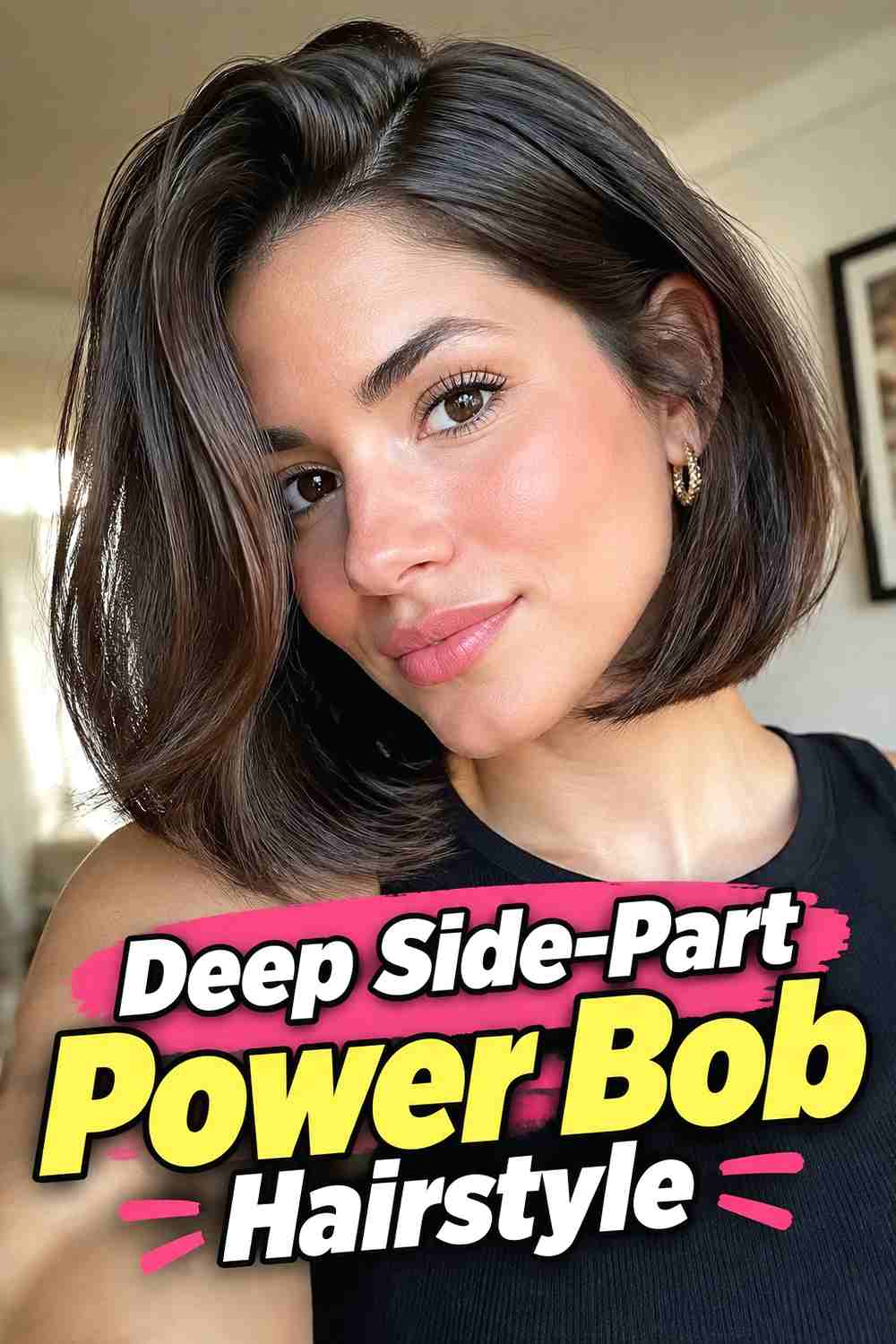
The Deep Side-Part Power Bob Hairstyle uses a dramatically shifted part to give a compact bob more height and directional movement. The heavier side sweeps across the forehead or temple, while the lighter side can sit close to the head or tuck neatly behind the ear. That imbalance gives even a simple blunt bob a stronger, more sculpted appearance. Keeping the lengths smooth makes the silhouette look polished, while subtle texture can soften the effect for everyday wear. Chin- and jaw-length bobs work especially well because the short perimeter keeps the side sweep noticeable without requiring dramatic layers or additional volume through the back.
Styling Notes
Set the deep part while the hair is damp and direct the heavier side upward at the roots before smoothing the lengths.
Best For
Blunt and lightly layered bobs with straight or softly wavy texture show the asymmetric shape especially clearly.
2. Sleek Side Part Power Lob Hairstyle
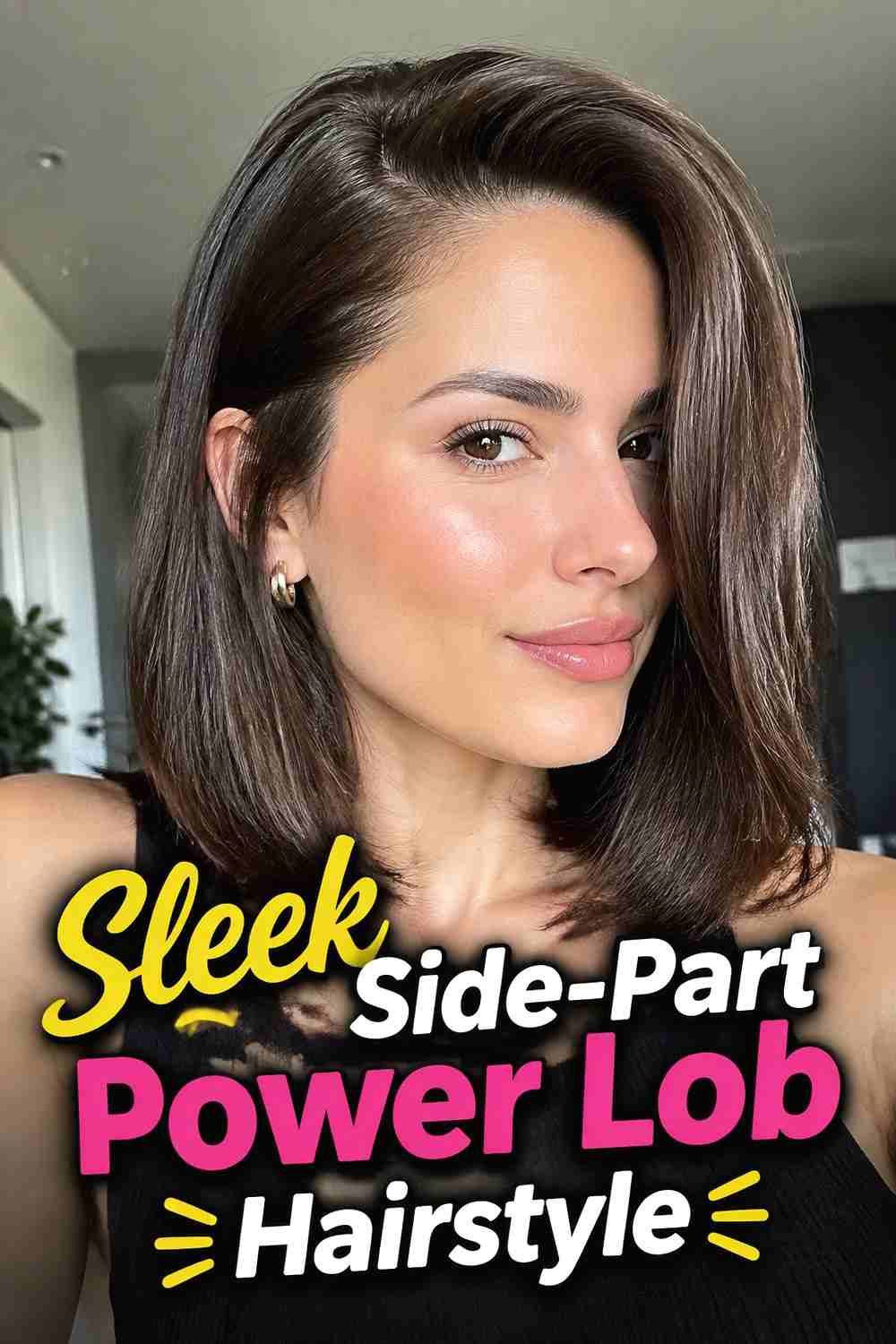
The Sleek Side-Part Power Lob Hairstyle combines a clean off-center part with smooth shoulder- or collarbone-length hair. The heavier front section creates a polished sweep, while the longer perimeter adds enough weight for the style to feel elegant rather than overly dramatic. A subtle inward bend or nearly straight finish keeps the attention on the part itself. This version works especially well when you want a refined style for work, dinners, or events without relying on a complicated updo. Maintaining a little lift at the root prevents the sleekness from becoming flat, while restrained shine emphasizes the long bob’s clean lines and controlled movement.
Styling Notes
Smooth the lengths in sections while preserving root elevation near the heavier side of the part.
Pro Tip
Keep finishing oils away from the roots so the side-part lift remains visible.
3. Voluminous Side Part Blowout Hairstyle
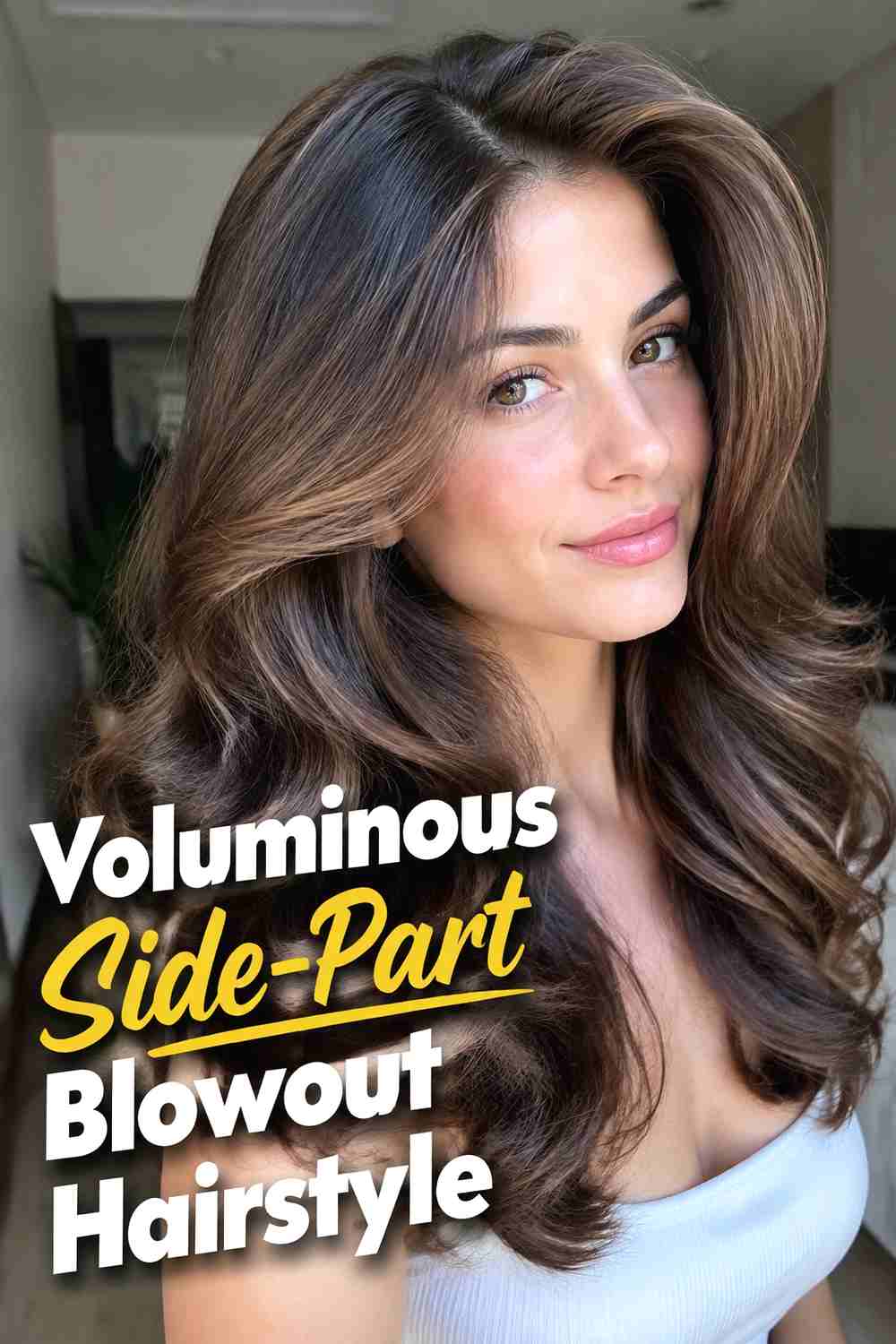
The Voluminous Side-Part Blowout Hairstyle uses a shifted part to amplify a full, bouncy blowout. The heavier side gains natural height at the roots and sweeps outward before blending into rounded or feathered layers. The opposite side stays closer to the head, creating a flattering contrast that makes the volume feel intentional rather than evenly puffed. Medium and long layered hair can show this effect especially well because several sections move independently through the blowout. The finish should stay soft and mobile, with enough separation between layers to avoid one oversized rounded shape. Flexible hold can support the volume without making the hair stiff.
Why It Works
Moving the part naturally redistributes the hair, producing root lift without relying entirely on teasing or heavy volumizing products.
Wear & Maintenance
Refresh the heavier front section first when the blowout begins to lose volume.
4. Side Swept Layered Power Hairstyle
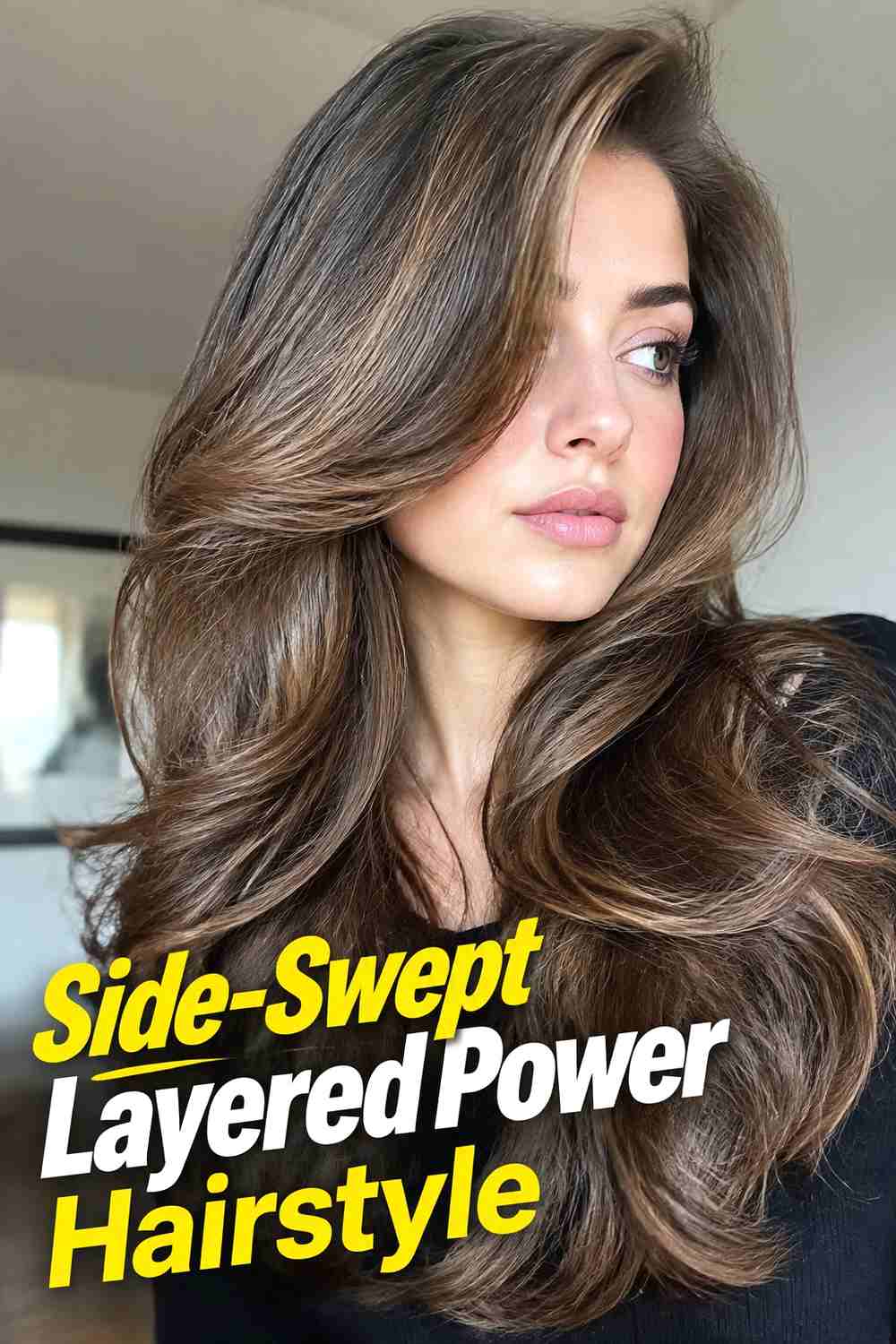
The Side-Swept Layered Power Hairstyle combines visible face-framing layers with a strong side direction. Shorter pieces near the cheekbones or jaw follow the heavier side across and away from the face, creating a flowing cascade rather than a symmetrical frame. Longer layers continue that movement through the shoulders and lower lengths. This style can be smooth, softly waved, or blown out depending on how polished you want the final result. The key is allowing the layers to work with the side part instead of forcing them into mirrored shapes. Medium and long hair provide enough space for the sweep to develop naturally and remain visible from different angles.
Styling Notes
Direct the shorter front layers into the side sweep first, then style the longer sections to echo that same flow.
Best For
Layered medium and long cuts work especially well when the front pieces are long enough to move across the forehead or temple.
5. Glossy Side Part Straight Hairstyle
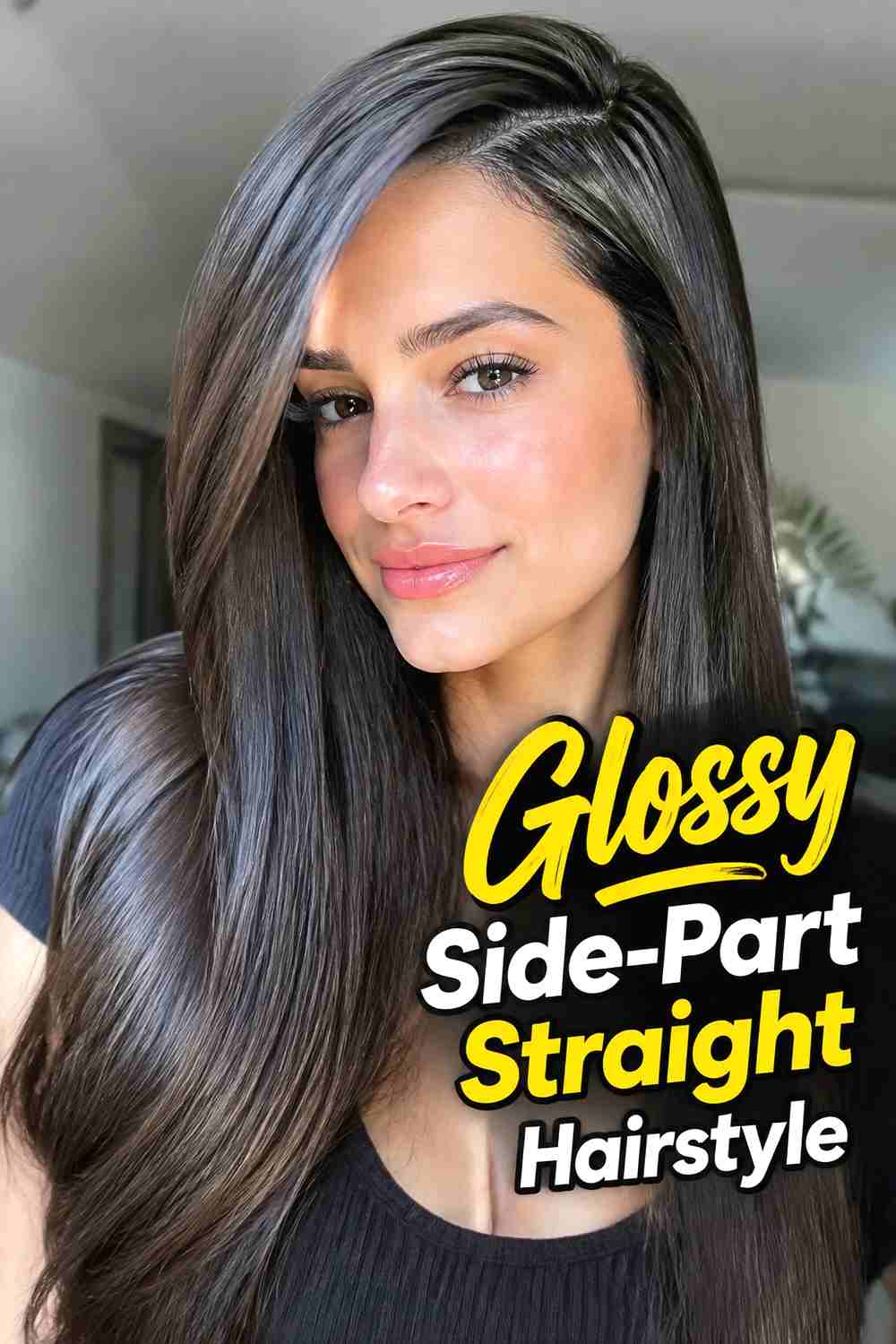
The Glossy Side-Part Straight Hairstyle keeps the texture minimal so the precision of the part and smooth surface become the main features. Hair falls straight from a deep or moderate side part, with the heavier section sweeping cleanly across the front. The opposite side can stay tucked behind the ear for an even sharper contrast. Controlled shine enhances the clean silhouette, but the hair should still show natural strands and movement rather than looking lacquered. This version works beautifully on lobs and long hair, especially when the ends stay soft rather than rigidly flat. The result feels modern, composed, and easy to adapt for professional or evening styling.
Styling Notes
Create the part before smoothing and finish with only a small amount of lightweight shine product through the lengths.
Why It Works
Reducing texture makes the directional movement of the side part more noticeable and gives the hairstyle a strong graphic shape.
6. Soft Wave Side Part Power Hairstyle
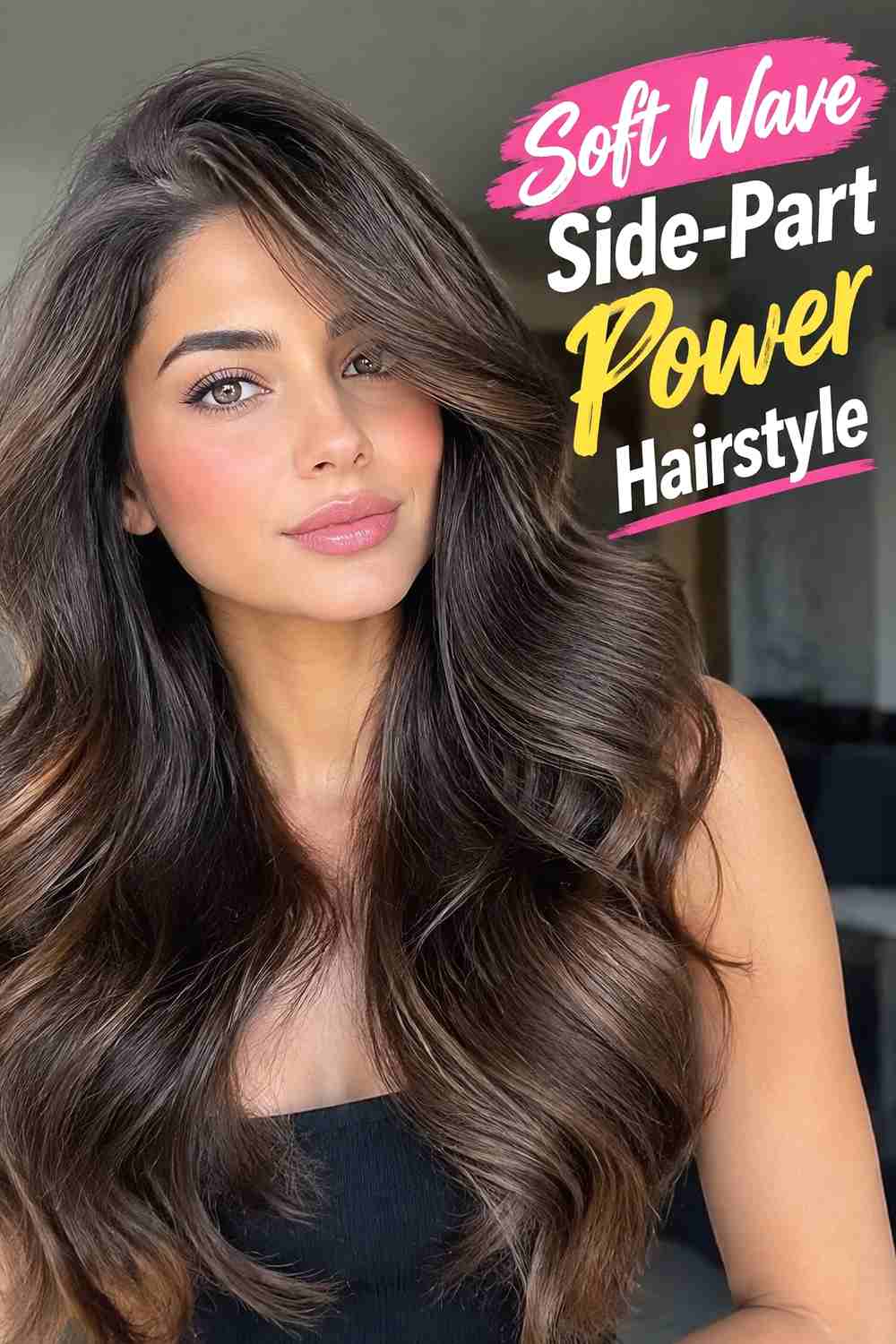
The Soft Wave Side-Part Power Hairstyle combines a deep or moderate side part with loose S-shaped bends for a softer interpretation of power hair. The heavier side lifts at the root before flowing into relaxed waves, while the lighter side stays closer to the head for balance. Waves should vary slightly in direction and size so the finished style feels fluid rather than overly set. Leaving the ends somewhat relaxed keeps the silhouette modern. This approach works on shoulder-length, collarbone, and long hair, making it a versatile option when you want noticeable movement without the high polish of a structured blowout or Hollywood wave.
Hair Type & Length
Naturally wavy hair can make this especially effortless, while straight textures can recreate it with loose heat-styled bends.
Pro Tip
Keep the strongest volume near the part and let the waves become softer through the lower lengths.
7. Side Part Hollywood Wave Hairstyle
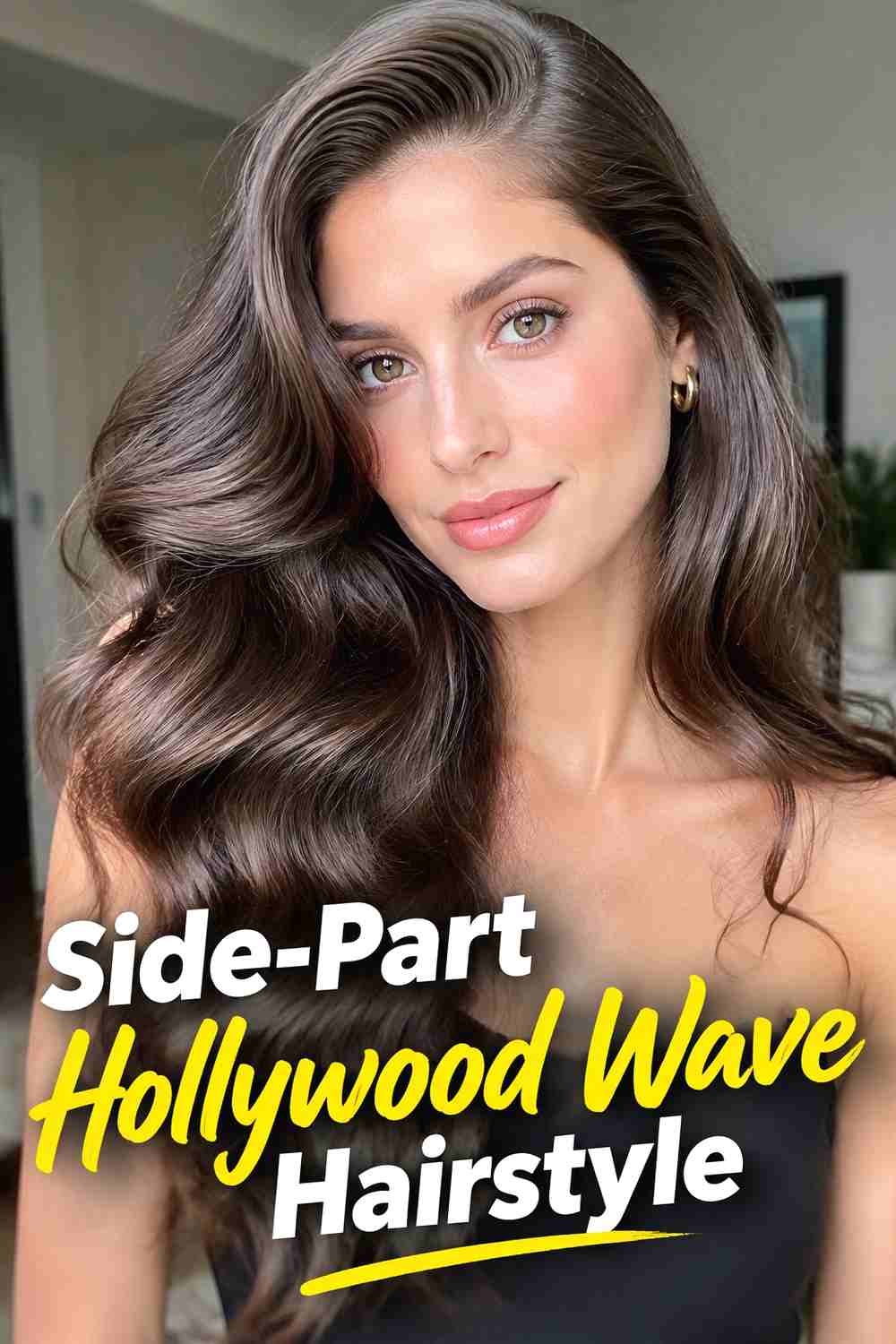
The Side-Part Hollywood Wave Hairstyle creates a polished, event-ready silhouette with a deep part and smooth, connected waves. The heavier side forms a dramatic sweep before moving into broad curves through the lengths, while the opposite side can be tucked back or kept sleek near the temple. Unlike beachy waves, the bends follow a more coordinated pattern and usually carry visible shine. The style works best on medium and long hair with enough length for the waves to form gracefully. Keeping the crown controlled allows the front sweep and glossy wave pattern to become the focal points without creating unnecessary volume everywhere else.
Styling Notes
Create the deep part first, curl sections in a coordinated direction, and gently shape the cooled waves into a continuous pattern.
Wear & Maintenance
A flexible finishing spray can help preserve the wave structure while allowing natural movement.
8. Curly Side Part Power Hairstyle
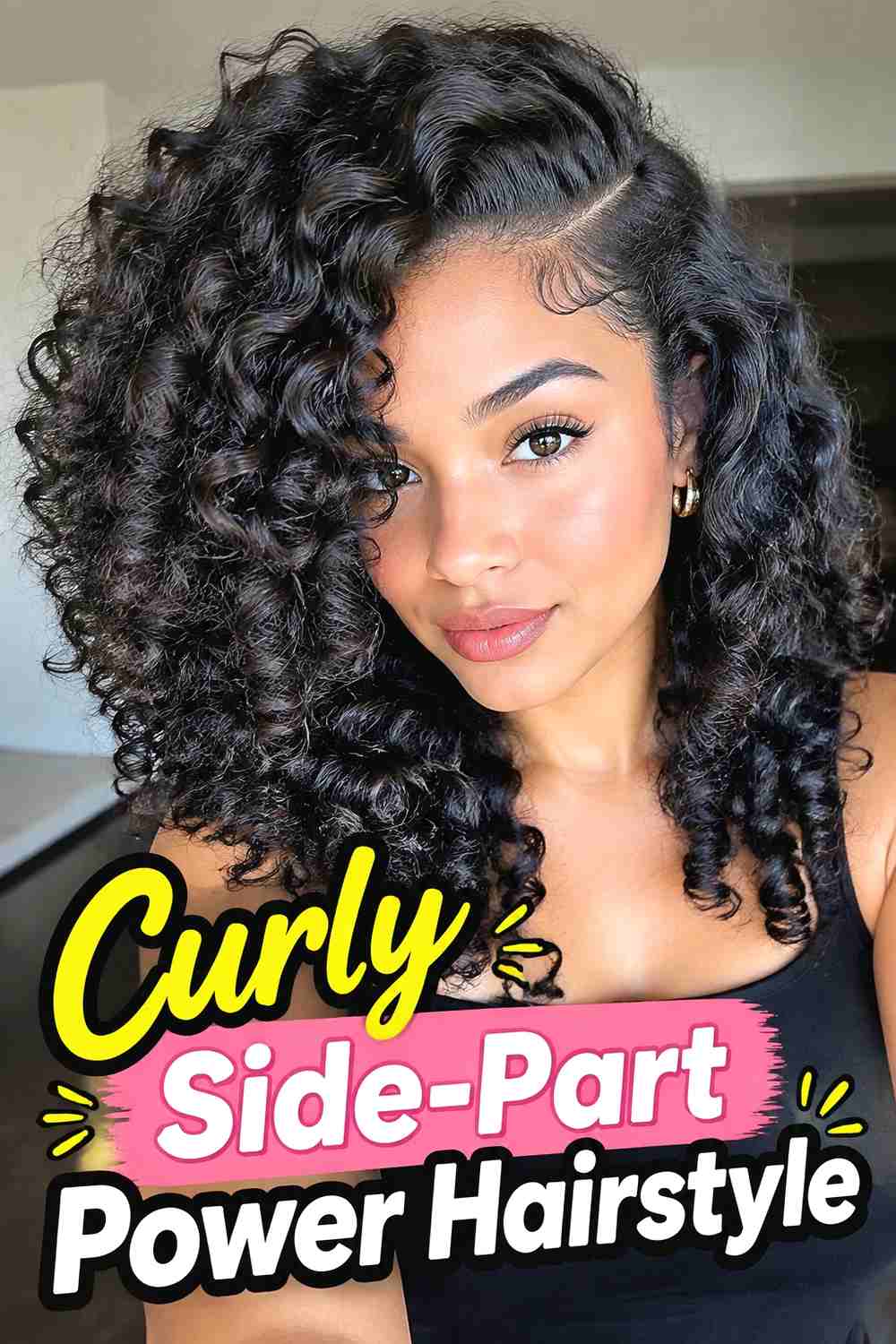
The Curly Side-Part Power Hairstyle uses a shifted part to redistribute natural volume and give curls a strong asymmetric shape. The heavier side develops more fullness around the crown and face, while the lighter side can remain closer to the head or tuck behind the ear. Instead of changing the curl pattern, the part becomes the main styling tool. Longer front curls may fall across the forehead or sweep naturally toward the temple, adding movement without requiring a separate fringe. The style can work on short, medium, or long curly hair, provided the part follows the natural growth pattern comfortably rather than forcing the roots into an unnatural direction.
Styling Notes
Set the preferred part while damp and define curls without flattening the roots along the heavier side.
Pro Tip
Use clips near the root while drying if you want extra lift without disrupting curl definition.
9. Coily Side Part Volume Hairstyle
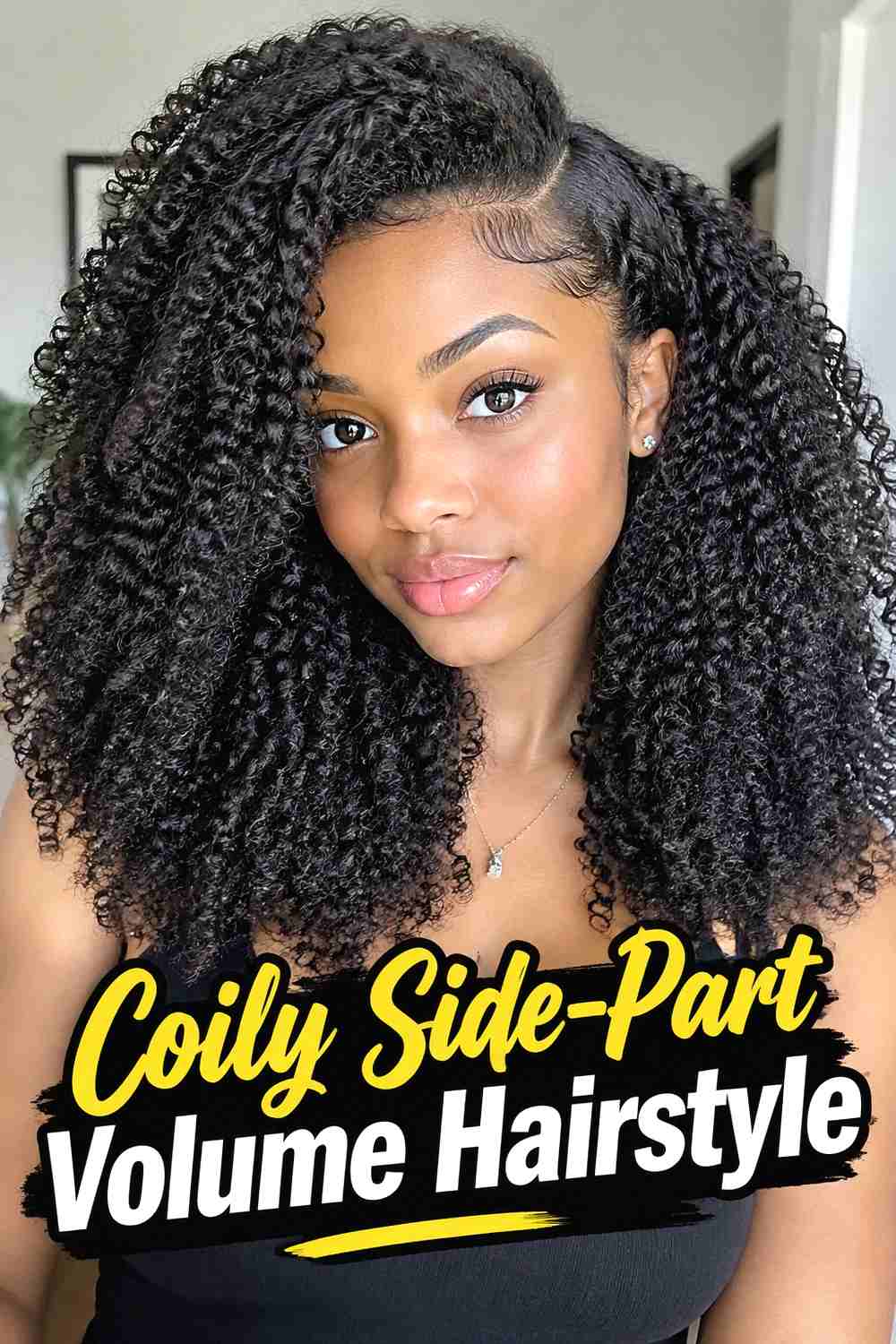
The Coily Side-Part Volume Hairstyle celebrates natural fullness by shifting the silhouette instead of trying to smooth or reshape the texture. A side part creates more height and density on one side, while the other side sits slightly closer to the head. The result can be rounded, elongated, or layered depending on the haircut, but the asymmetry should remain visible. Individual coils keep their natural pattern, giving the hairstyle dimension and movement without requiring sleekness. This approach works particularly well when the part is chosen according to the direction the roots naturally prefer to separate, making the finished shape feel intentional without excessive tension or manipulation.
Why It Works
The side part redistributes volume while preserving the natural coil pattern and overall texture.
Wear & Maintenance
Refreshing only the roots around the part can help restore the shape between full wash days.
10. Side Part Bixie Power Hairstyle
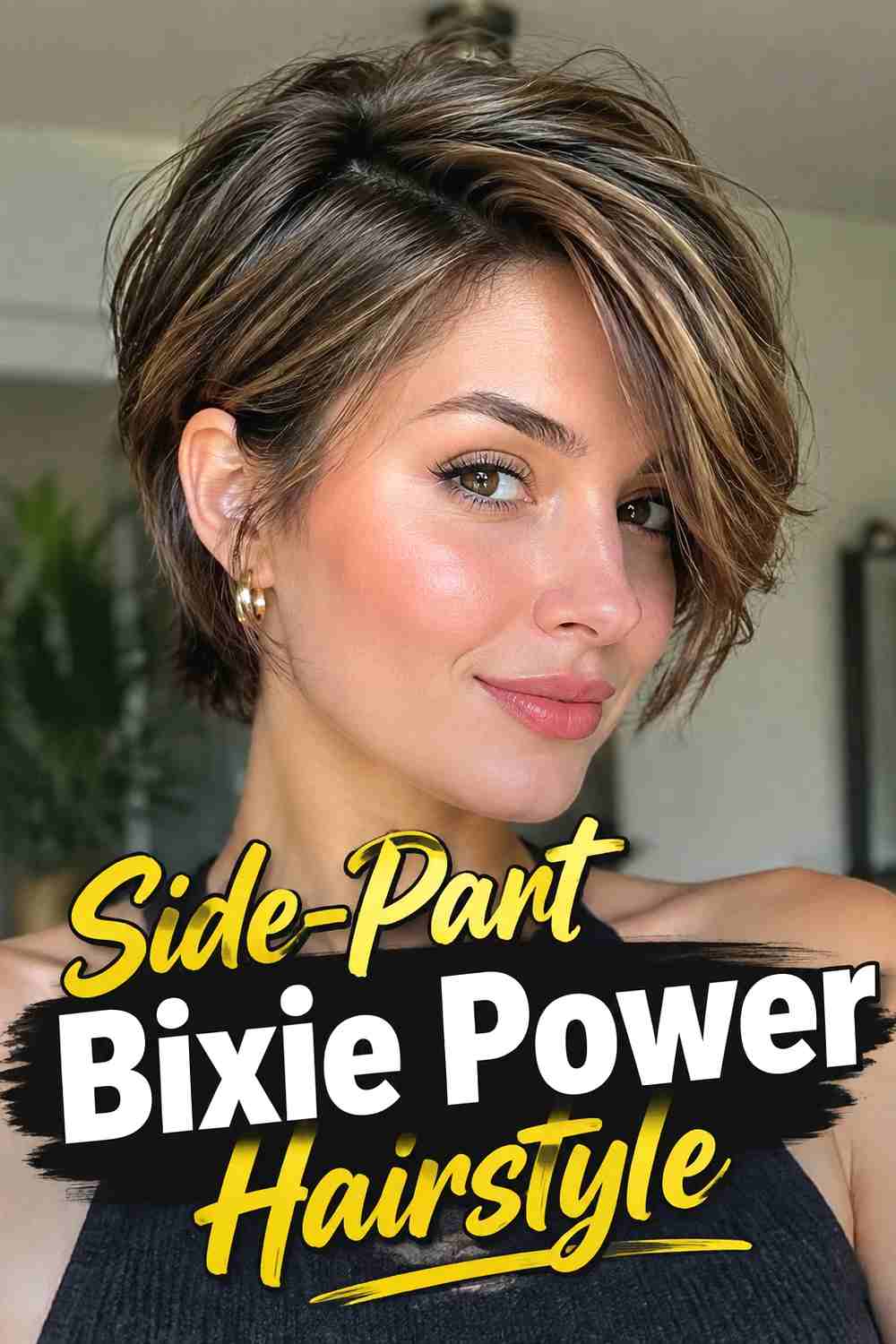
The Side-Part Bixie Power Hairstyle uses longer front sections and shorter crown layers to create a compact but directional short style. A deep side part allows the fringe to sweep across the forehead, while the opposite side can be tucked behind the ear or styled closer to the head. The bixie’s extra length compared with a pixie gives the side sweep enough movement to feel soft rather than sharply cropped. Light texture through the crown can add volume without making the silhouette bulky. This is a practical option if you want short hair with a polished, confident shape that can also become more tousled on casual days.
Styling Notes
Direct the fringe into place while damp, then lift the crown lightly with fingers or a small brush.
Best For
Straight and softly wavy bixies with longer front sections offer the easiest foundation for a visible side sweep.
11. Side Part Pixie Sweep Hairstyle
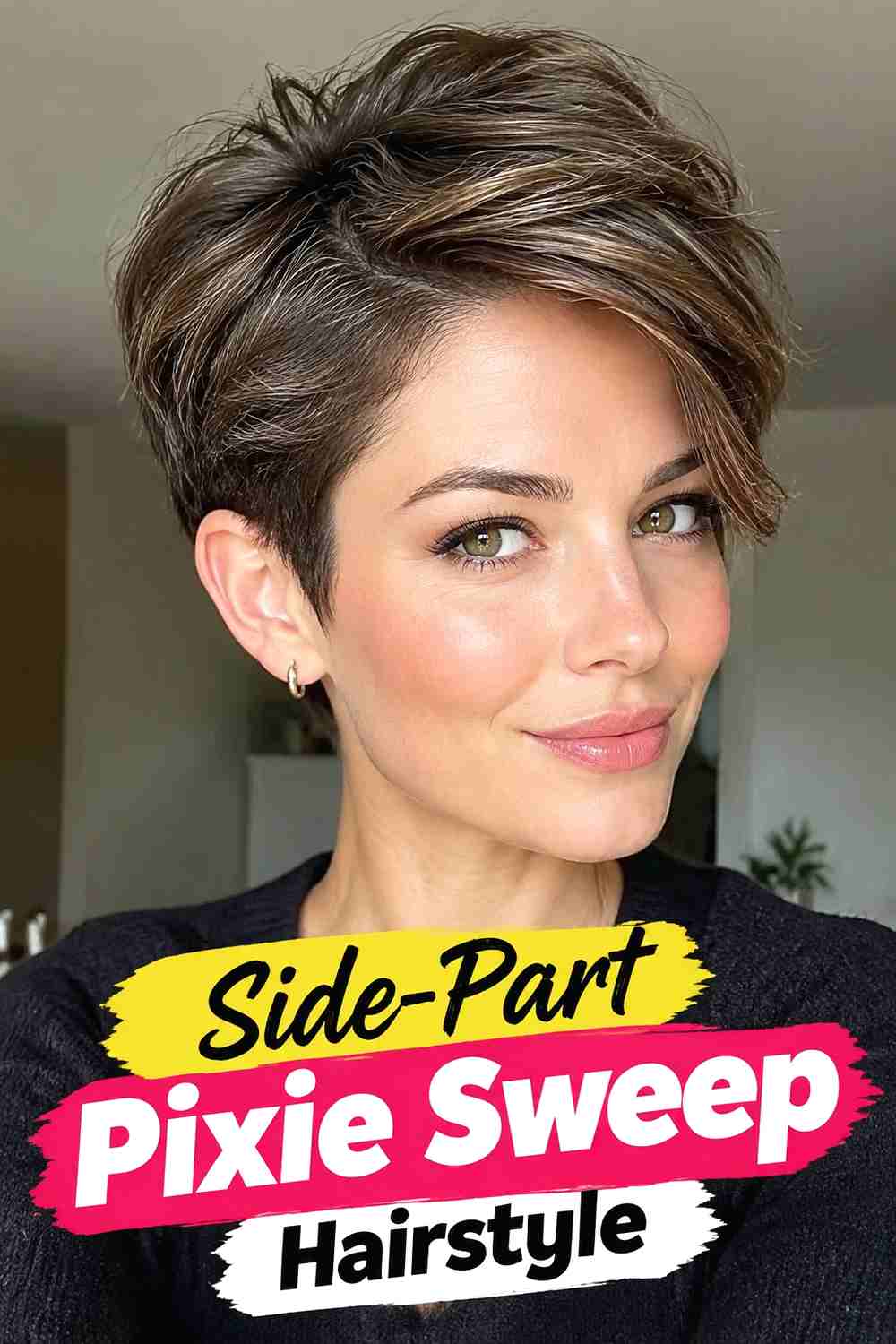
The Side-Part Pixie Sweep Hairstyle gives a short pixie more movement by leaving enough length on top to sweep strongly to one side. The shorter side can remain neat around the temple and ear, while the longer top section creates lift and direction across the forehead. The result can be sleek and sculpted or softer with piecey texture, depending on your preferred finish. Because the haircut is short, even a small change in the part can noticeably alter the entire silhouette. This version works best when the top has enough flexibility to move without requiring stiff hold, allowing the style to remain touchable and believable.
Styling Notes
Work a lightweight styling cream through the top and guide the longer section sideways rather than pressing it flat against the head.
Pro Tip
Keep the root area airy so the sweep has lift instead of looking pasted into place.
12. Long Side Part Power Layers Hairstyle
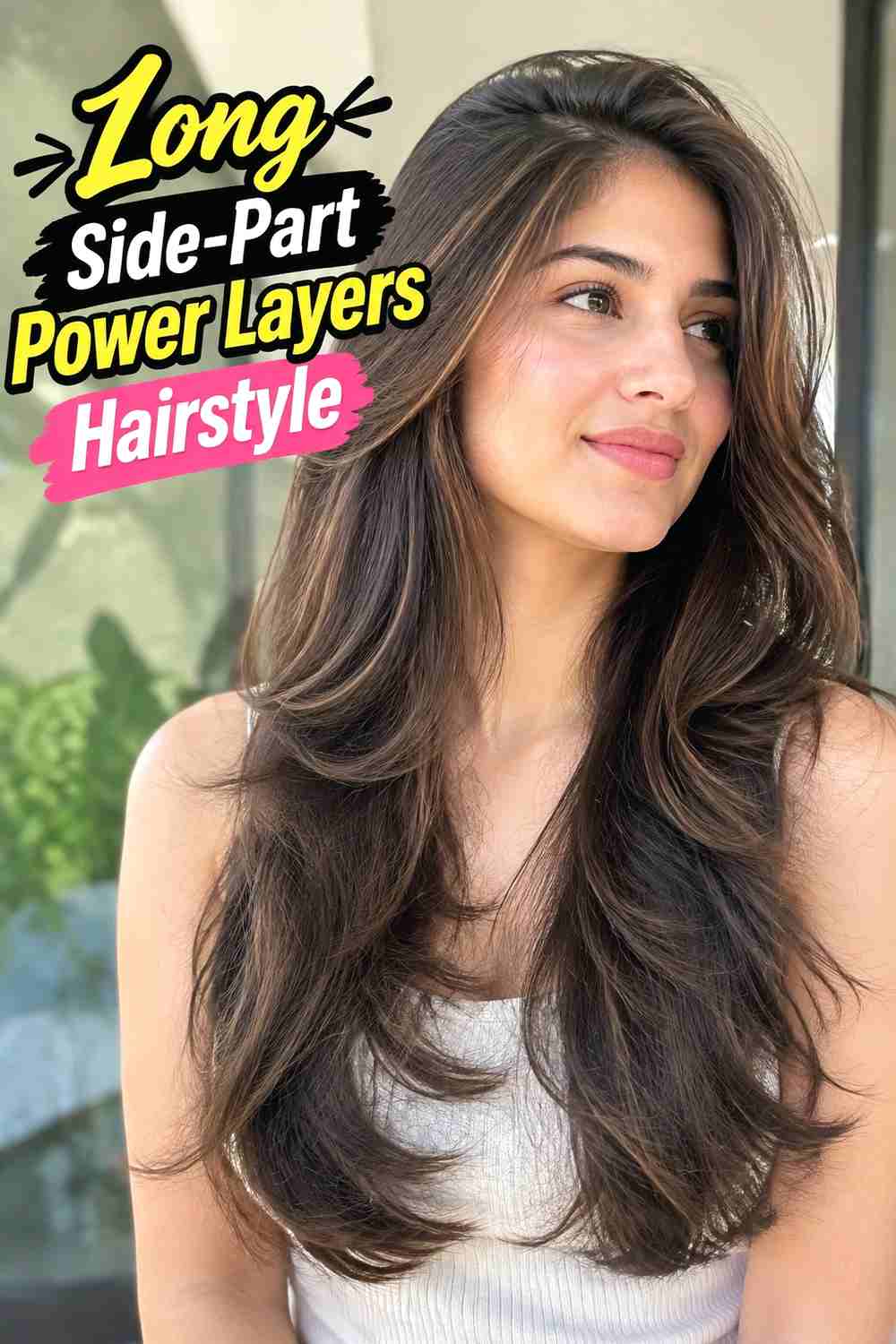
The Long Side-Part Power Layers Hairstyle uses substantial length and visible graduation to create a sweeping, dimensional shape. Face-framing pieces move across from the part and flow into longer layers around the shoulders or chest. The heavier side naturally appears fuller, while the lighter side provides contrast and keeps the style from feeling uniformly voluminous. A smooth blowout reveals each layer clearly, while loose waves give the effect a softer finish. This idea works especially well when you want long hair to feel styled without sacrificing overall length. The key is preserving enough density through the perimeter so the layers look rich rather than overly thinned.
Why It Works
The side part gives long layers a stronger sense of direction and prevents the haircut from falling into a flat, symmetrical shape.
Wear & Maintenance
Longer layers usually grow out gradually, though face-framing pieces may need reshaping sooner.
13. Side Part Feathered Layers Hairstyle
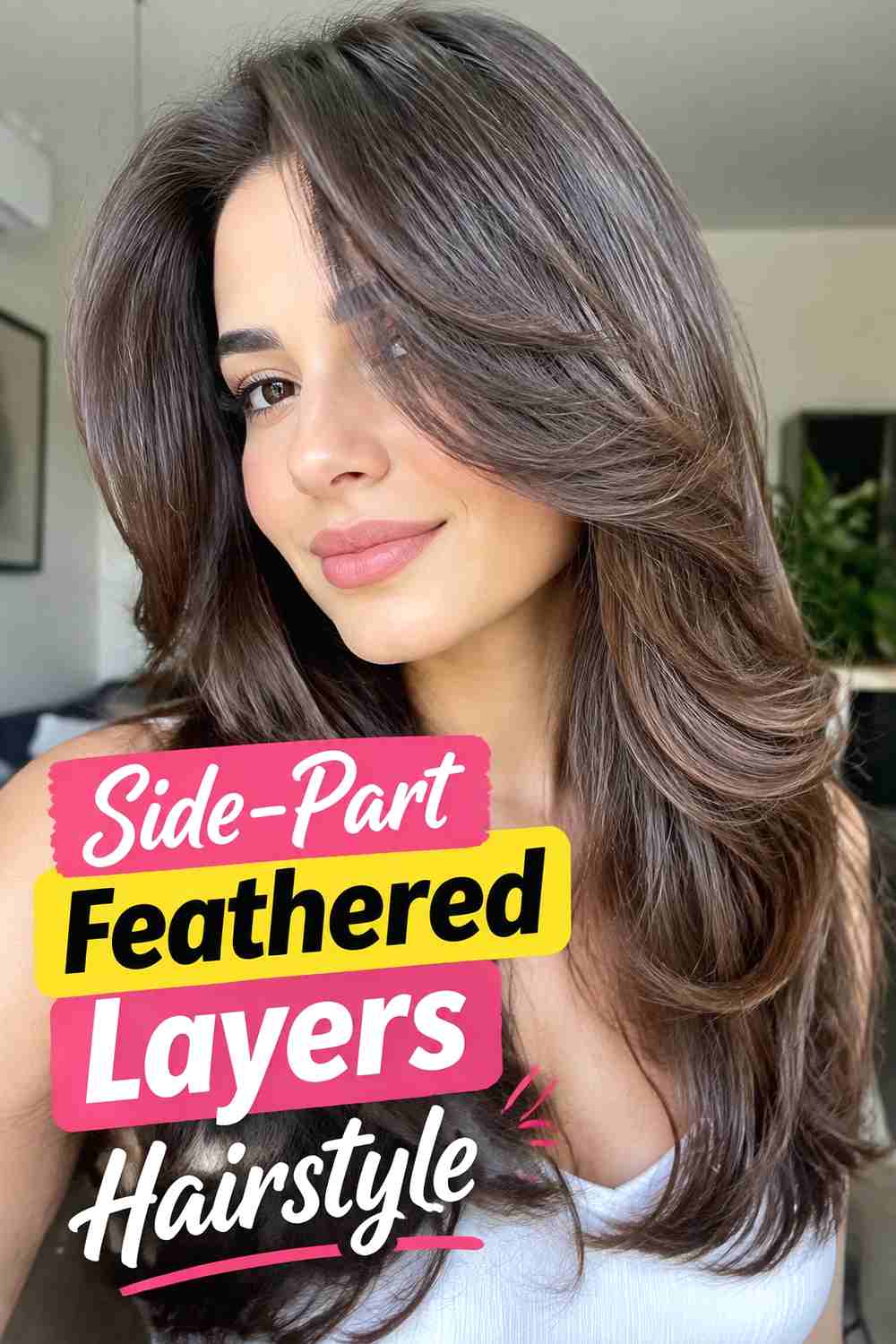
The Side-Part Feathered Layers Hairstyle brings airy outward movement to a strong asymmetric part. Front layers sweep away from the face, with the heavier side showing more dramatic feathering and lift. Longer sections continue the same direction in softer curves, creating a cascading effect without requiring every layer to flip identically. The style can have a retro influence, but keeping the root volume moderate and leaving some sections less curved makes the finish feel current. This works especially well with straight or softly wavy medium-to-long hair because the feathered ends remain visible and easy to separate after styling.
Styling Notes
Use a round brush to direct the ends outward while keeping the roots soft and flexible.
Best For
Layered cuts with cheekbone-, jaw-, or chin-level face framing show the feathered side sweep especially clearly.
14. Side Part Flipped End Hairstyle
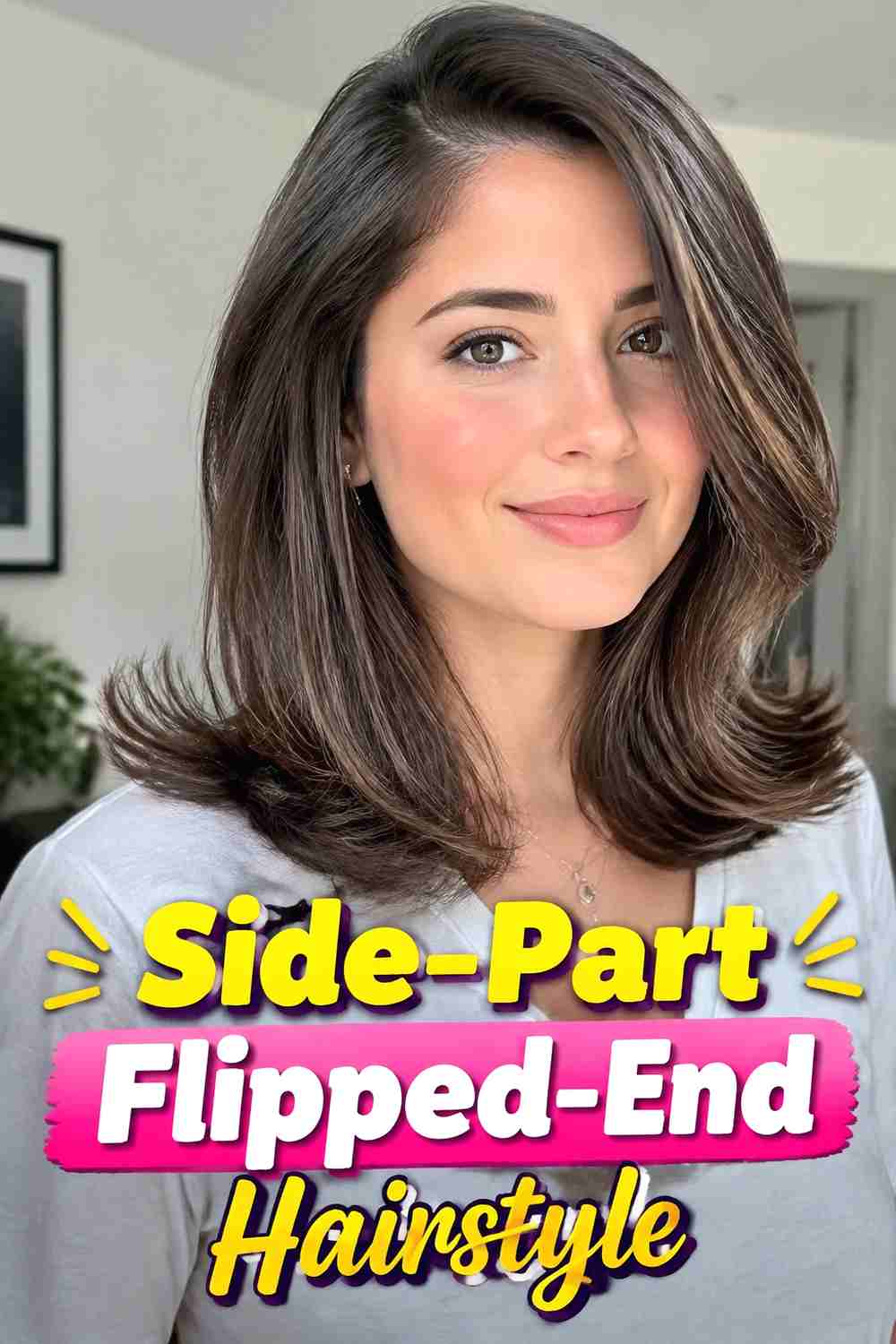
The Side-Part Flipped-End Hairstyle combines strong directional volume at the roots with playful outward movement at the tips. The side part creates lift through the heavier front section, while the lower ends turn away from the shoulders for a light, animated finish. The flip can be subtle around the front or carried around more of the perimeter for extra impact. Shoulder and collarbone lengths make the effect especially noticeable because the ends have room to turn outward naturally. Keeping the mid-lengths comparatively smooth prevents the hairstyle from becoming too busy and allows the contrast between lifted roots and flipped ends to remain clear.
Styling Notes
Build the part and root lift first, then curve only the final inches outward with a round brush or flat iron.
Pro Tip
Leave some ends straighter to keep the flip modern rather than overly patterned.
15. Side Part Rounded Blowout Hairstyle
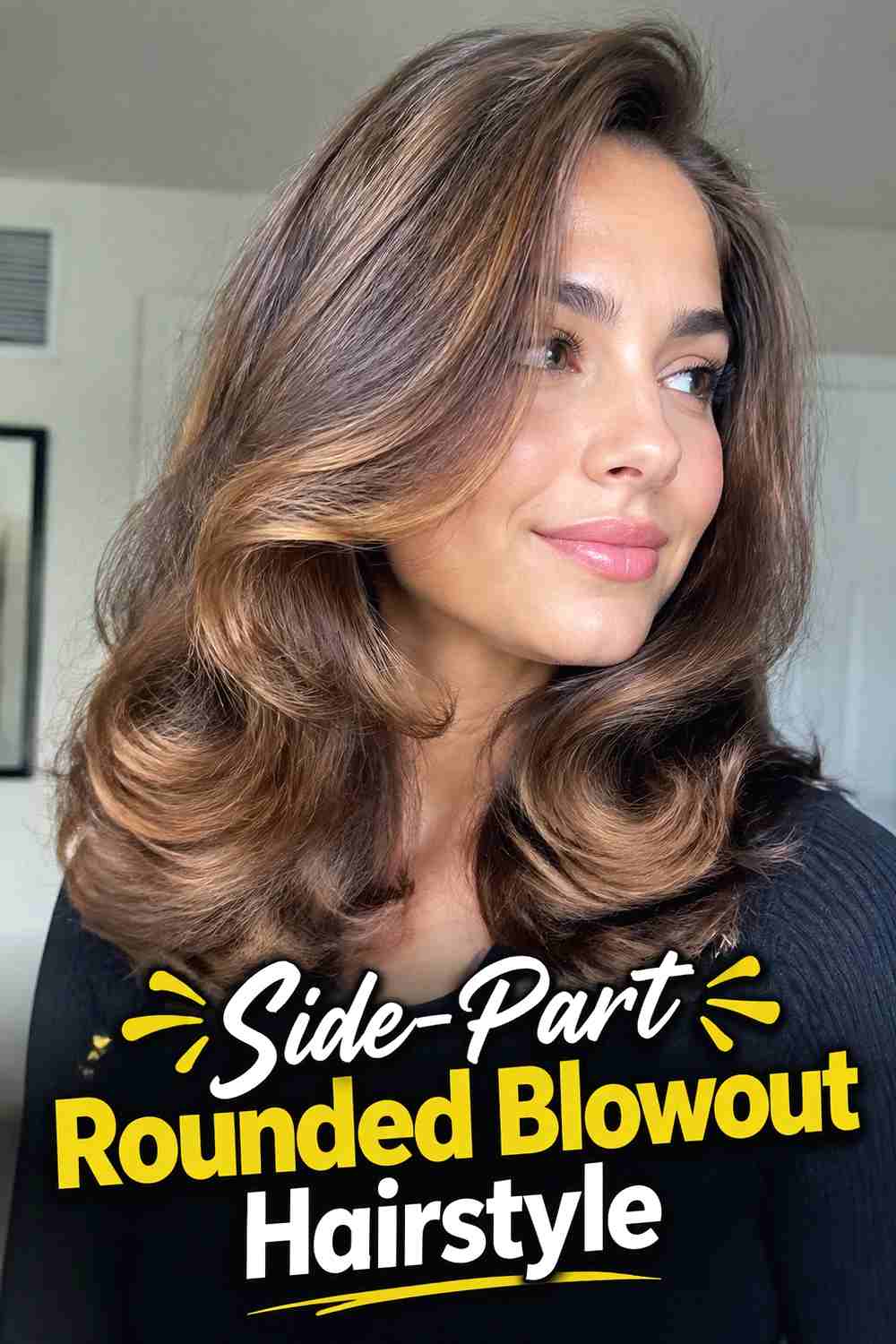
The Side-Part Rounded Blowout Hairstyle combines asymmetric root volume with softly curved-under ends for a smooth, polished silhouette. The heavier side lifts and sweeps across the front before blending into rounded lengths that turn inward near the shoulders or chest. The opposite side stays more controlled, giving the style dimension without requiring excessive overall volume. This variation works especially well with bobs, lobs, and medium layered cuts because the broad curve through the ends remains easy to see. A large round brush creates a soft bend rather than a tight curl, keeping the blowout refined and wearable for work, dinners, or more formal occasions.
Styling Notes
Lift the heavy side at the roots, then smooth the lengths and roll only the lower section inward.
Why It Works
The combination of directional lift and rounded ends creates a polished shape with both structure and movement.
16. Wet Look Side Part Power Hairstyle
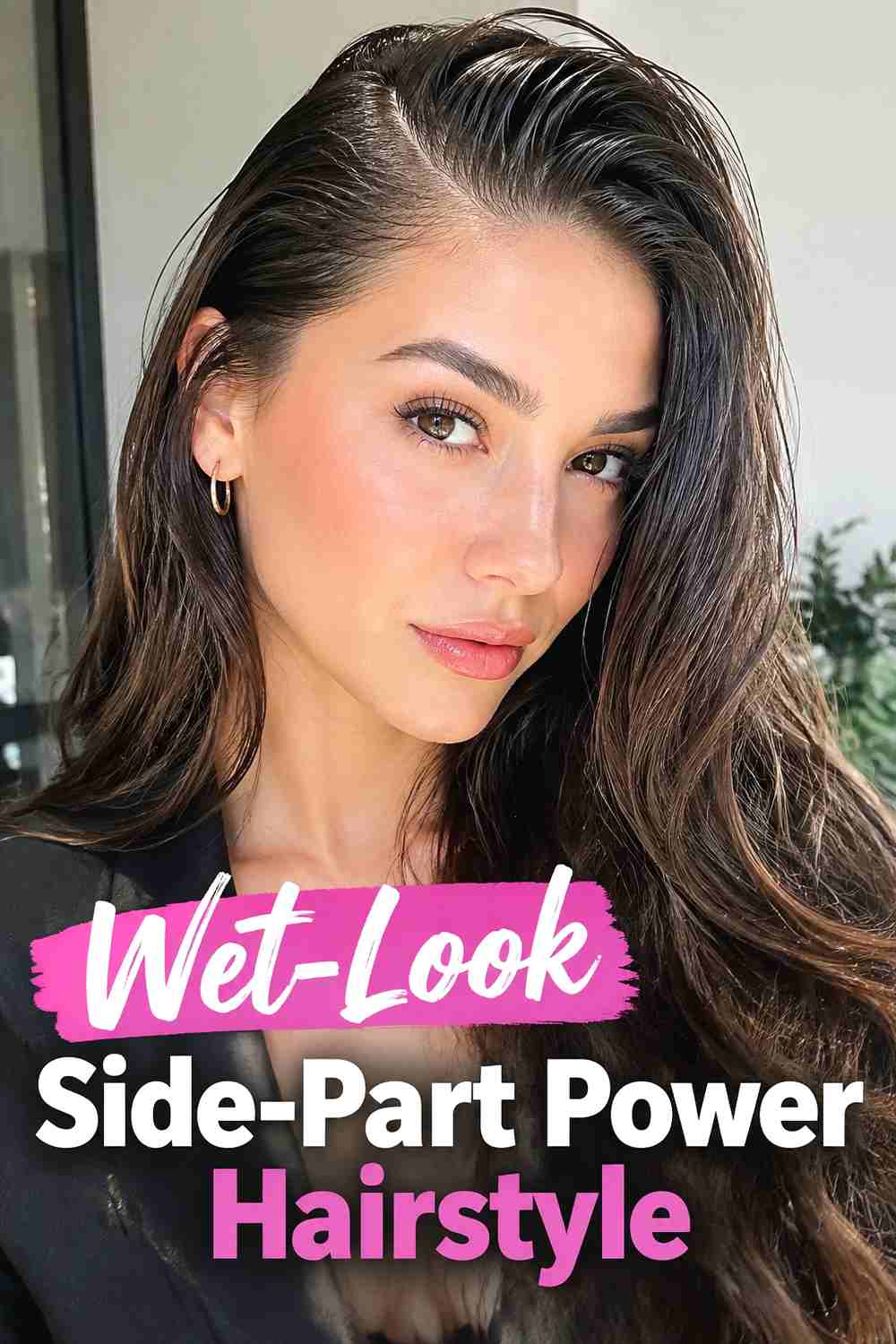
The Wet-Look Side-Part Power Hairstyle uses a precise part and controlled surface to create a sleek, editorial finish while still keeping the hair recognizable as natural strands. The roots and upper lengths are guided closely into position, while the lower hair can remain straight, softly waved, or tucked back depending on length. The side part becomes especially prominent because the glossy surface removes competing texture around the top. The goal is polished shine rather than an overly saturated appearance, so product should be concentrated strategically. This style works particularly well for evenings and events when you want a sharper, more sculpted look than a traditional blowout or soft wave.
Styling Notes
Apply styling product gradually through the roots and upper lengths, leaving enough movement through the lower hair to avoid a stiff finish.
Wear & Maintenance
Keep product away from clothing and avoid overapplying, since excessive gel can make the style look heavy rather than sleek.
17. Side Part Low Ponytail Hairstyle
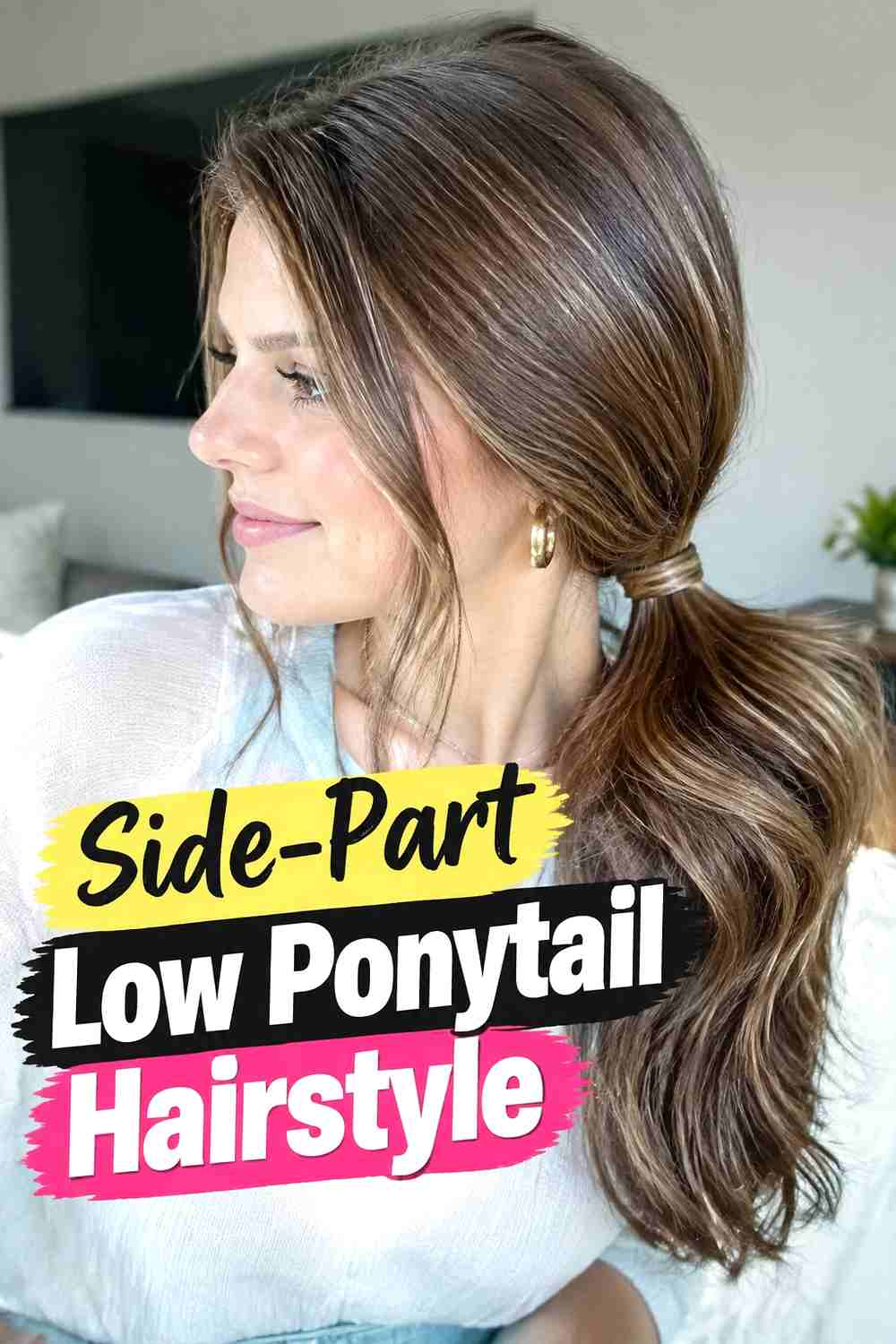
The Side-Part Low Ponytail Hairstyle brings the power of a strong part into a simple tied-back look. The front is shaped with a deep or moderate side sweep before the lengths are gathered low at the nape. A sleek finish creates a sharp, polished result, while a little crown volume and softer front movement make the ponytail more relaxed. The tail itself can stay straight, wavy, or softly curled depending on the occasion. Wrapping a small section of hair around the elastic gives the base a cleaner finish. This style works well for professional settings, dinners, and events when you want the hair secured without losing directional detail around the front.
Styling Notes
Create and secure the side part before gathering the ponytail so the front sweep stays intact.
Best For
Medium and long hair provides enough length for a secure low ponytail and a visible side-part shape.
18. Side Part Sculpted Bun Hairstyle
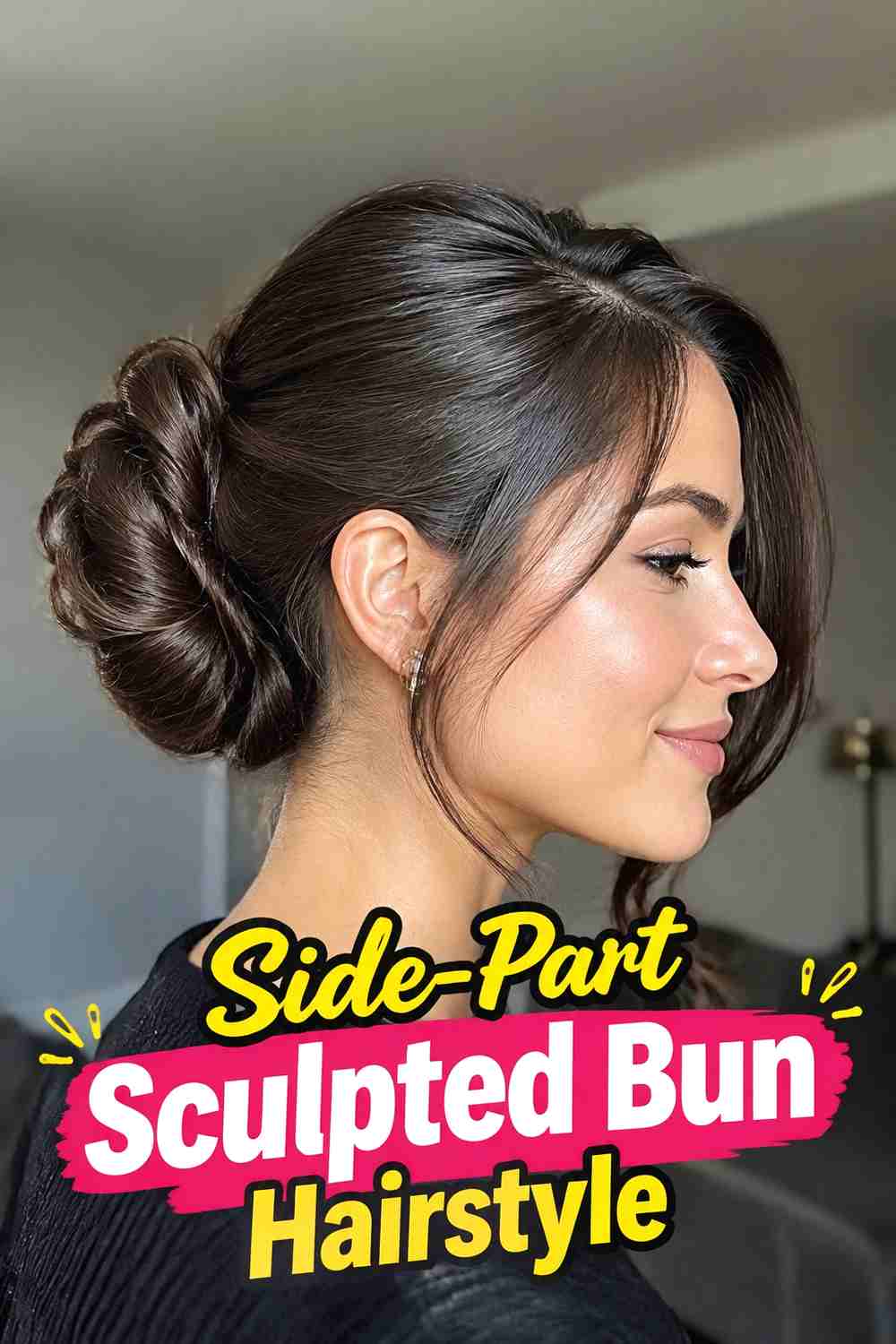
The Side-Part Sculpted Bun Hairstyle combines a sharply defined part with a smooth, compact bun for a structured updo. The front section sweeps cleanly toward the side before joining the gathered hair, while the bun can sit low at the nape or slightly higher depending on the desired finish. A sleek surface emphasizes the asymmetry, making the side part an important visual feature rather than a minor detail. The style can work for formal events, work settings, or minimalist evening looks. Keeping the hairline smooth without flattening every bit of natural texture helps the updo look polished while still retaining believable movement and softness.
Styling Notes
Set the side part first, smooth the front section into its natural direction, then secure the bun separately.
Pro Tip
Use pins to build the bun’s structure instead of relying on excessive finishing product for hold.
19. Tousled Side Part Power Hairstyle
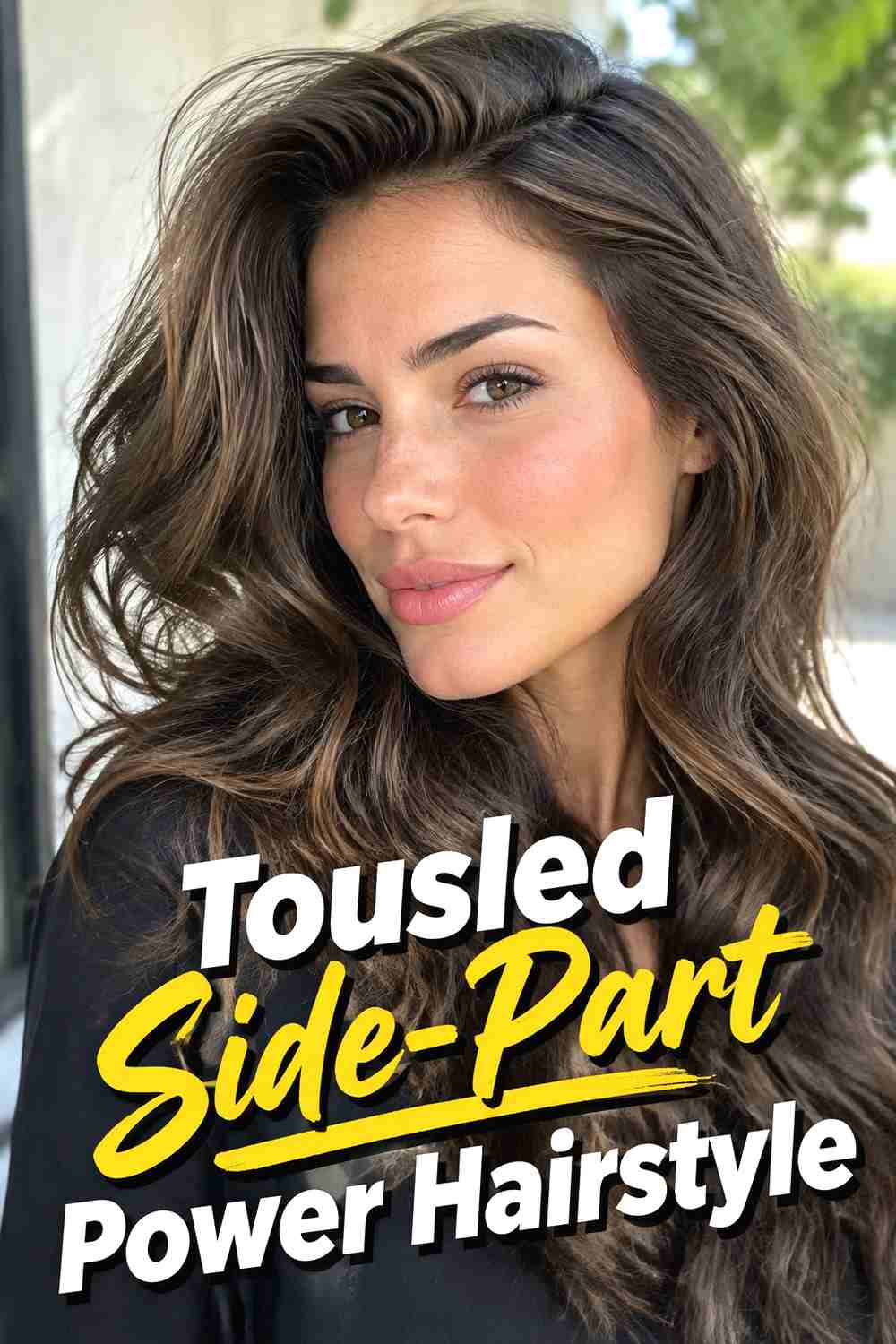
The Tousled Side-Part Power Hairstyle combines directional root lift with irregular bends and deliberately relaxed texture. The heavier side gains height from the shifted part, while loose waves and straighter pieces mix through the lengths for a lived-in finish. This gives the style confidence without the precision of a sleek blowout. It works particularly well on second-day hair or naturally wavy textures because existing grip helps the side part and bends stay in place. The goal is controlled imperfection: enough shape to show the asymmetry, but enough looseness that the hair still looks touchable and natural rather than carefully arranged.
Styling Notes
Set the part first, then reshape only the sections that need extra movement instead of curling the entire head uniformly.
Why It Works
The defined part provides structure, allowing the rest of the texture to stay relaxed without making the style feel unfinished.
20. Low Maintenance Side Part Power Hairstyle
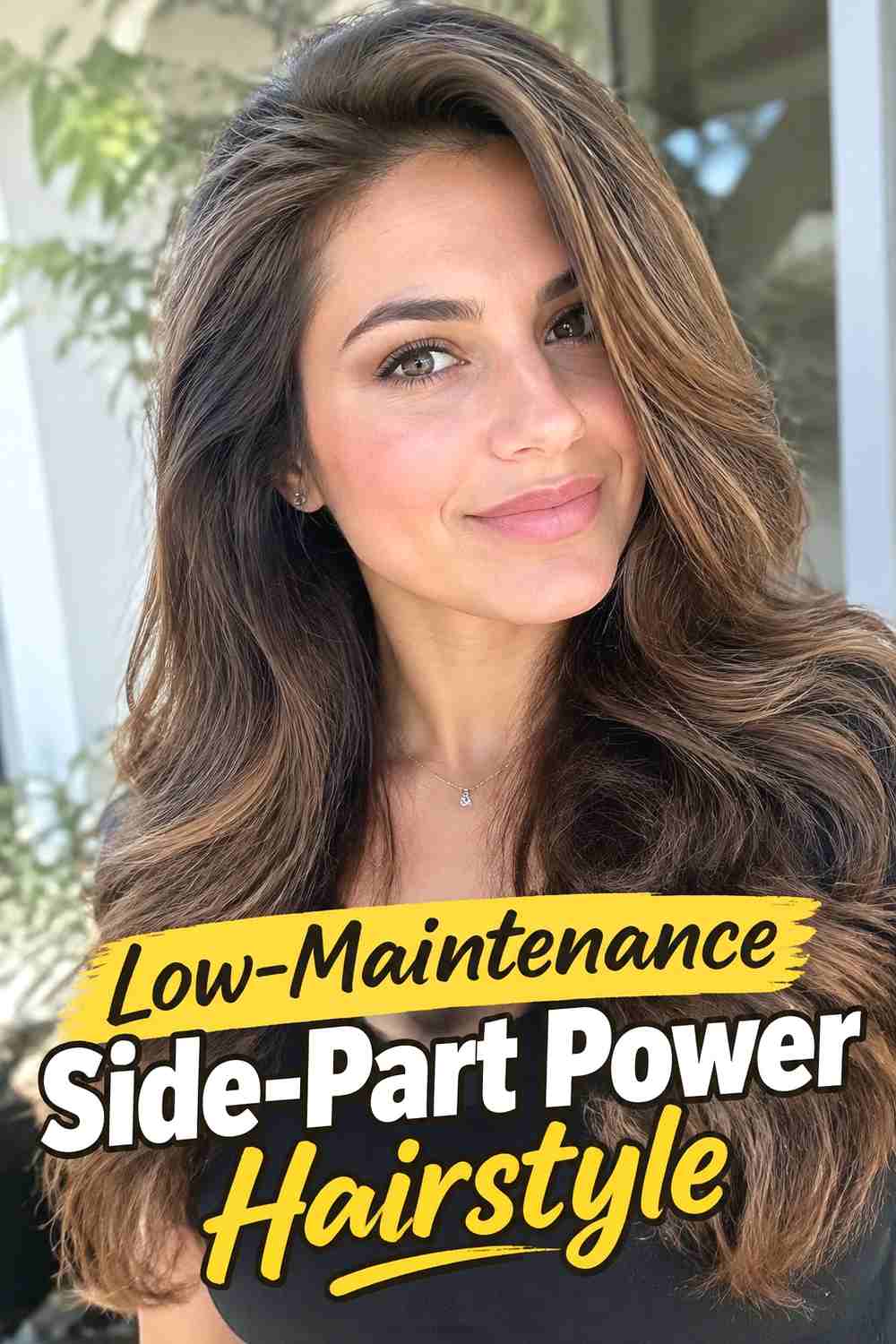
The Low-Maintenance Side-Part Power Hairstyle uses the part itself as the primary styling feature, keeping the rest of the haircut simple and adaptable. Longer layers, natural texture, and a flexible side sweep mean the style does not depend on exact curls, heavy root lift, or perfectly sleek lengths. Straight, wavy, curly, and coily hair can all interpret the idea by shifting the part and allowing the heavier side to gain natural fullness. This version works best when the haircut already cooperates with the chosen direction, reducing the need for constant heat styling. A quick root refresh or finger adjustment may be enough to restore the shape between wash days.
Best For
This approach suits anyone who wants visible directional styling without committing to a high-maintenance blowout or precise finish.
Wear & Maintenance
Choose a side that works with your natural growth pattern so the part stays comfortable and easier to maintain.
How to Choose the Right Look
Start by deciding how deep you want the part. A dramatic deep side part creates the strongest asymmetry and root lift, while a moderate off-center part gives you a softer version that can be easier to maintain throughout the day.
Hair texture should guide the finish. Straight hair makes sleek bobs, glossy lengths, and rounded blowouts especially clear. Waves pair naturally with tousled and feathered styles, while curls and coils can use the side part to redistribute volume without changing their natural pattern.
Length matters too. Pixies and bixies make the sweep compact and dramatic, while bobs and lobs create strong structured shapes. Long layers provide more room for feathering, waves, and flowing volume.
Finally, consider your styling time. Hollywood waves, polished blowouts, wet looks, and sculpted buns require more controlled styling. Tousled and low-maintenance versions rely more on the part itself, making them practical when you want impact without a complicated routine.
Final Thoughts
A side part can completely change the energy of a haircut without changing the length. It can add lift to a bob, direction to long layers, asymmetry to curls, or polish to an updo. The strongest version is the one that works with your natural growth pattern and gives you the amount of volume, structure, and styling effort that fits your routine.
FAQs
1. What makes side-part hair look more powerful?
A deeper part shifts more hair to one side, creating visible root lift, directional movement, and asymmetry. Sleek styling or strong volume can make that effect more pronounced.
2. Does a side part work with short hair?
Yes. Bobs, bixies, and pixies can all use a side part to create lift, a sweeping fringe, or contrast between the two sides of the haircut.
3. Can curly or coily hair wear a deep side part?
Yes. A shifted part can redistribute natural volume and create an asymmetric silhouette without changing the natural curl or coil pattern.
4. How do I keep a side part from falling flat?
Set the part while the hair is damp, lift the heavier side at the roots during drying, and avoid heavy products near the scalp.
5. Is a side-part hairstyle high maintenance?
Not necessarily. Sleek and highly sculpted versions require more control, but natural-texture and tousled side parts can be maintained with minimal daily styling.
Save your favorite side-part power hair ideas, share the looks you love, and explore more confident hairstyle inspiration for your next look.