18 Curly Curtain Fringe Hairstyle Ideas
Curly curtain fringe brings soft separation, natural spring, and face-framing movement to everything from layered curls and bobs to ponytails and romantic updos.
Unlike straight curtain bangs, curly curtain fringe does not need a perfectly even center opening. The shape can follow the natural curl pattern, with shorter pieces around the forehead gradually transitioning into longer curls near the temples and cheeks. This gives the fringe a softer, more organic look while keeping natural texture visible.
The right version depends on curl pattern, shrinkage, density, length, and how much styling you want to do. Some fringes are light and wispy, while others create a fuller frame. The most believable styles work with the curl pattern rather than stretching every section into the same shape.
Quick List
- Soft Curly Curtain Fringe Hairstyle
- Defined Ringlet Curtain Fringe Hairstyle
- Long Layered Curly Curtain Fringe Hairstyle
- Short Shag Curly Curtain Fringe Hairstyle
- Shoulder Length Curly Curtain Fringe Hairstyle
- Voluminous Curly Curtain Fringe Hairstyle
- Wispy Curly Curtain Fringe Hairstyle
- Coily Curtain Fringe Hairstyle
- Curly Curtain Fringe Bob Hairstyle
- Curly Curtain Fringe Lob Hairstyle
- Curly Curtain Fringe With Half Up Hairstyle
- Curly Curtain Fringe With Low Bun Hairstyle
- Curly Curtain Fringe With Ponytail Hairstyle
- Curly Curtain Fringe With Soft Updo Hairstyle
- Side Part Curly Curtain Fringe Hairstyle
- Air Dried Curly Curtain Fringe Hairstyle
- Curly Curtain Fringe With Face Framing Layers Hairstyle
- Full Volume Curly Curtain Fringe Hairstyle
1. Soft Curly Curtain Fringe Hairstyle
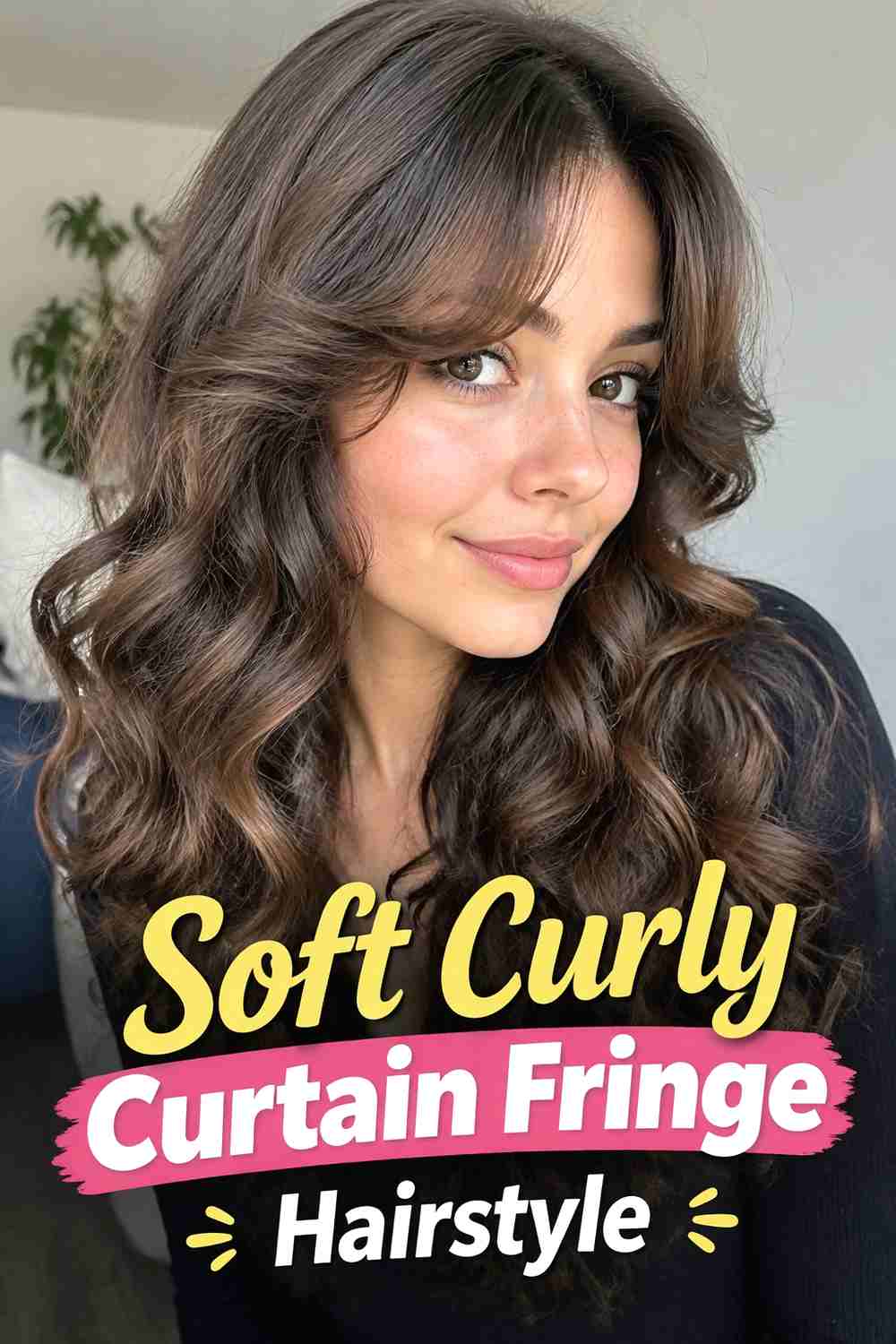
Soft curly curtain fringe creates a gentle opening around the forehead while keeping the natural curl pattern visible. The shortest curls can sit near the brows or upper forehead, with progressively longer pieces framing the temples and cheeks. The center does not need to be perfectly symmetrical; slight variation often makes the fringe look more natural. This style works particularly well when the rest of the hair has soft layering so the bangs blend rather than forming a separate block of curls. Keep definition light and flexible, allowing some curls to sit higher than others. The finished look should feel airy, movable, and connected to the overall shape instead of being tightly arranged into identical ringlets.
Styling Notes
Define the fringe in small curl groups, then let it dry in its natural position before separating or reshaping individual pieces.
Best For
This is a versatile starting point for naturally curly hair when you want noticeable fringe without an overly dense or rigid shape.
2. Defined Ringlet Curtain Fringe Hairstyle
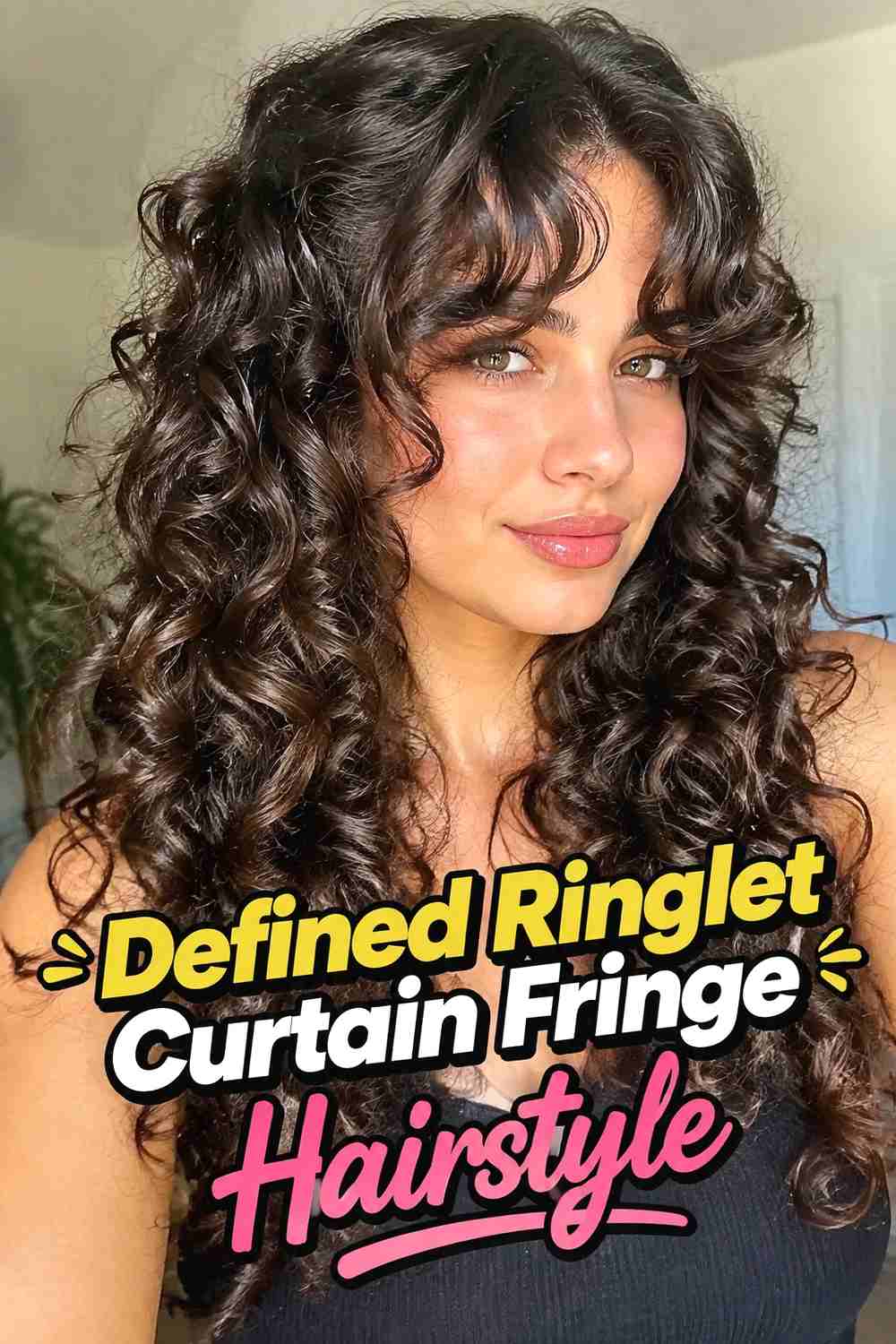
Defined ringlet curtain fringe puts more emphasis on visible curl formation around the forehead. Each side of the fringe can contain several springy ringlets that curve outward while longer curls blend toward the temples. The key is keeping the center slightly open without forcing every ringlet away from it. Medium and tighter curl patterns can both create the look, although the exact fringe length will change considerably with shrinkage. The surrounding haircut should have enough shape to support the defined front instead of leaving the ringlets isolated. Use the amount of moisture and hold your curls normally need, and avoid separating every ringlet if doing so causes excessive frizz or removes the definition you want.
Hair Type & Length
This style works especially well on naturally defined curl patterns that form clear spirals or ringlets without extensive manipulation.
Pro Tip
Judge the fringe length after it dries completely, since defined ringlets may spring much higher than they appear when wet.
3. Long Layered Curly Curtain Fringe Hairstyle
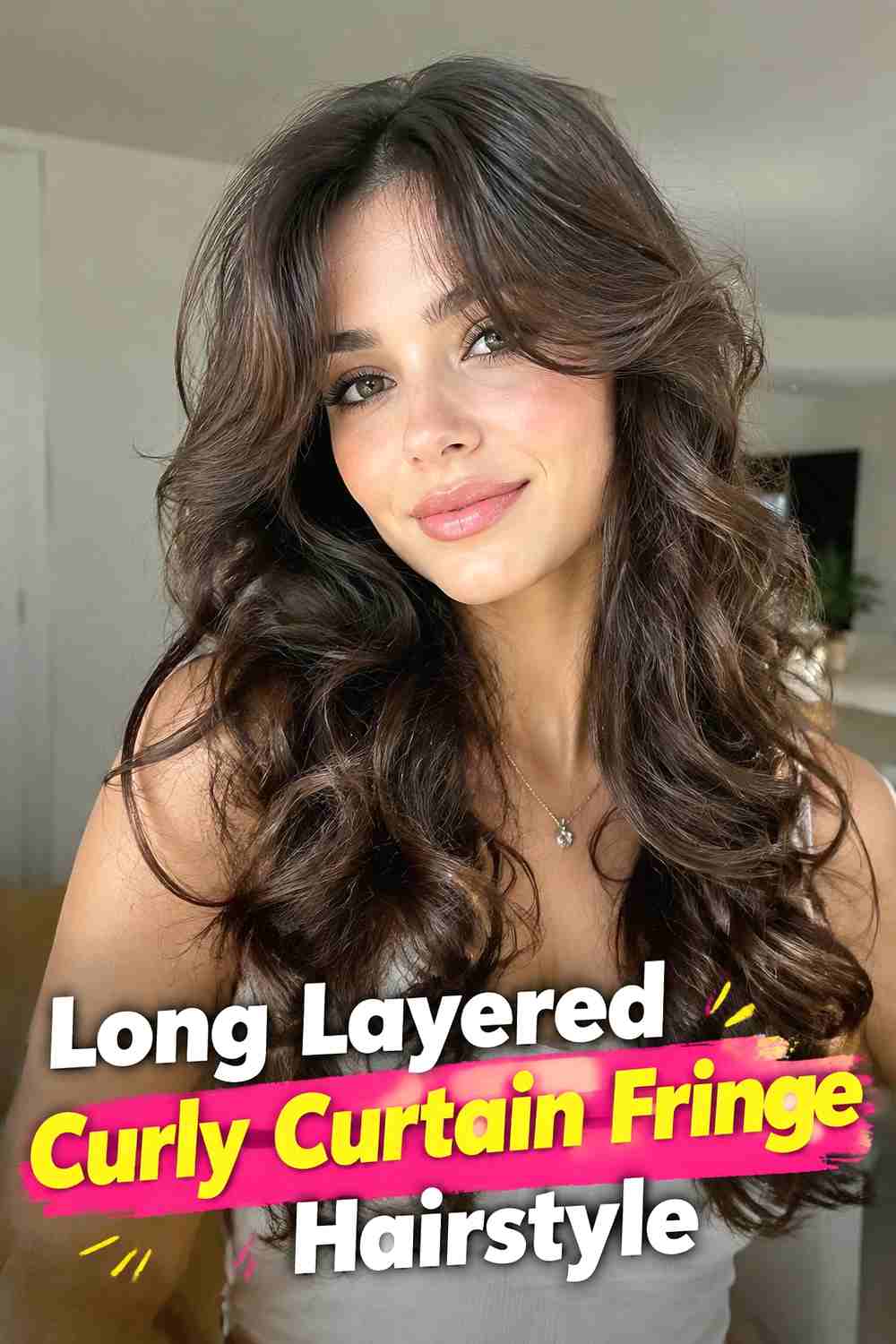
Long layered curls give curtain fringe a flowing transition from the forehead into the rest of the haircut. Shorter front curls can open around the center, while progressively longer sections move past the cheekbones and connect with layers through the shoulders and lengths. This helps long curly hair avoid a heavy bottom shape and keeps the fringe from looking disconnected. The exact layering should reflect density and curl pattern, since too many short layers may create more volume than desired. Preserve natural variation instead of trying to make every curl sit at the same level. The finished silhouette should move gradually from shorter fringe pieces into longer curls, creating a soft face-framing effect throughout the haircut.
Hair Type & Length
Medium-long and long curly hair works best when the cut already includes graduated layers around the face and perimeter.
Wear & Maintenance
Refresh the fringe and visible upper layers selectively rather than soaking or restyling the entire length every time the front loses shape.
4. Short Shag Curly Curtain Fringe Hairstyle
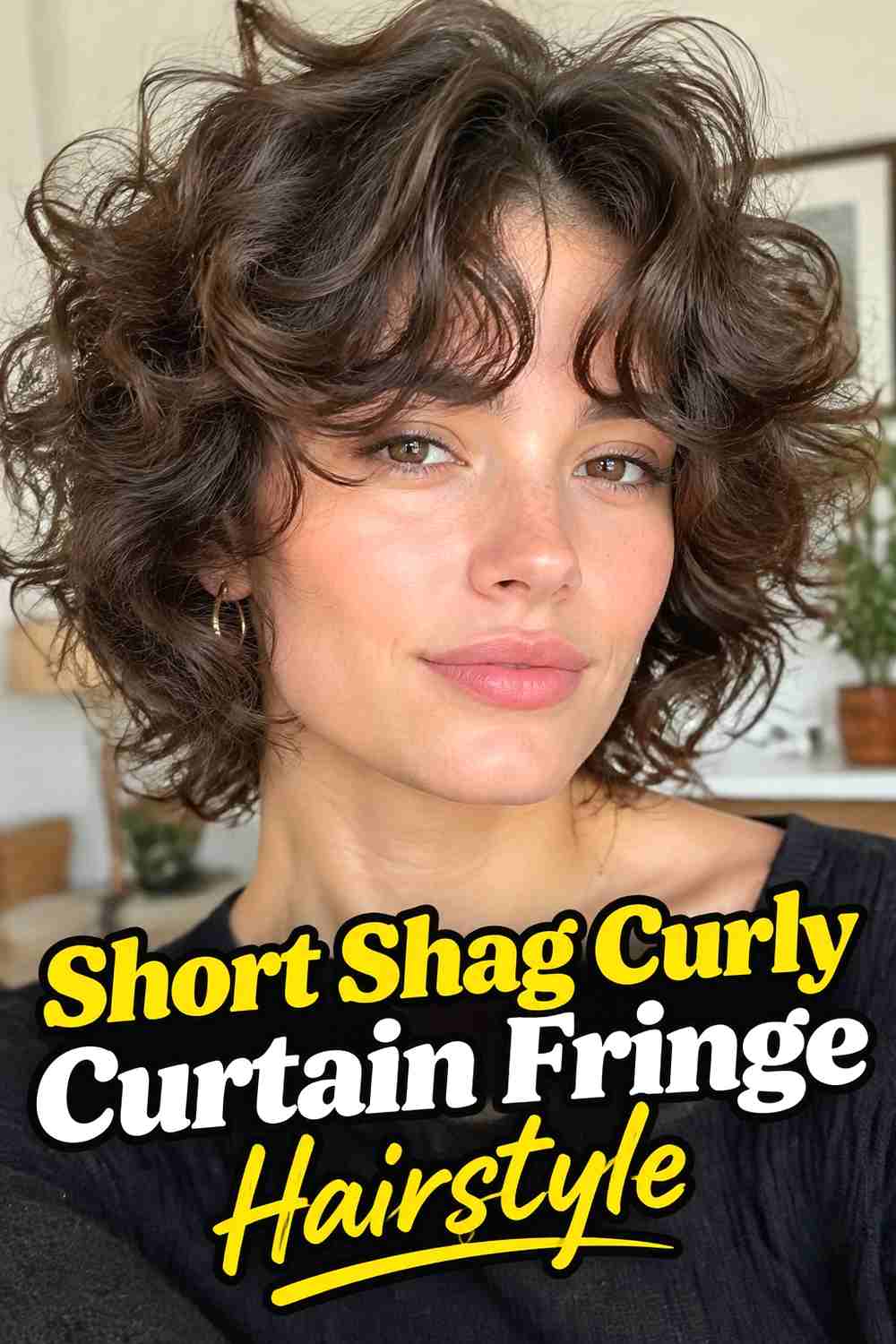
A short curly shag gives curtain fringe a lively, textured setting with movement concentrated around the crown, forehead, and cheeks. The bangs can separate loosely through the center while shorter shag layers create additional lift around them. Chin- to shoulder-length curls work especially well, particularly when the cut has enough internal layering to keep the shape light rather than triangular. This style does not depend on polished definition; a mixture of springy curls, softer bends, and natural flyaways can make the silhouette feel more authentic. Keep the fringe connected to the side layers so it becomes part of the shag rather than a separate bang section. The result should feel playful, dimensional, and naturally full.
Styling Notes
Encourage root lift through the crown while defining the fringe more selectively so the overall shape remains textured rather than overly controlled.
Why It Works
The shag’s shorter layers naturally support the volume and separation needed for a soft curly curtain fringe.
5. Shoulder Length Curly Curtain Fringe Hairstyle
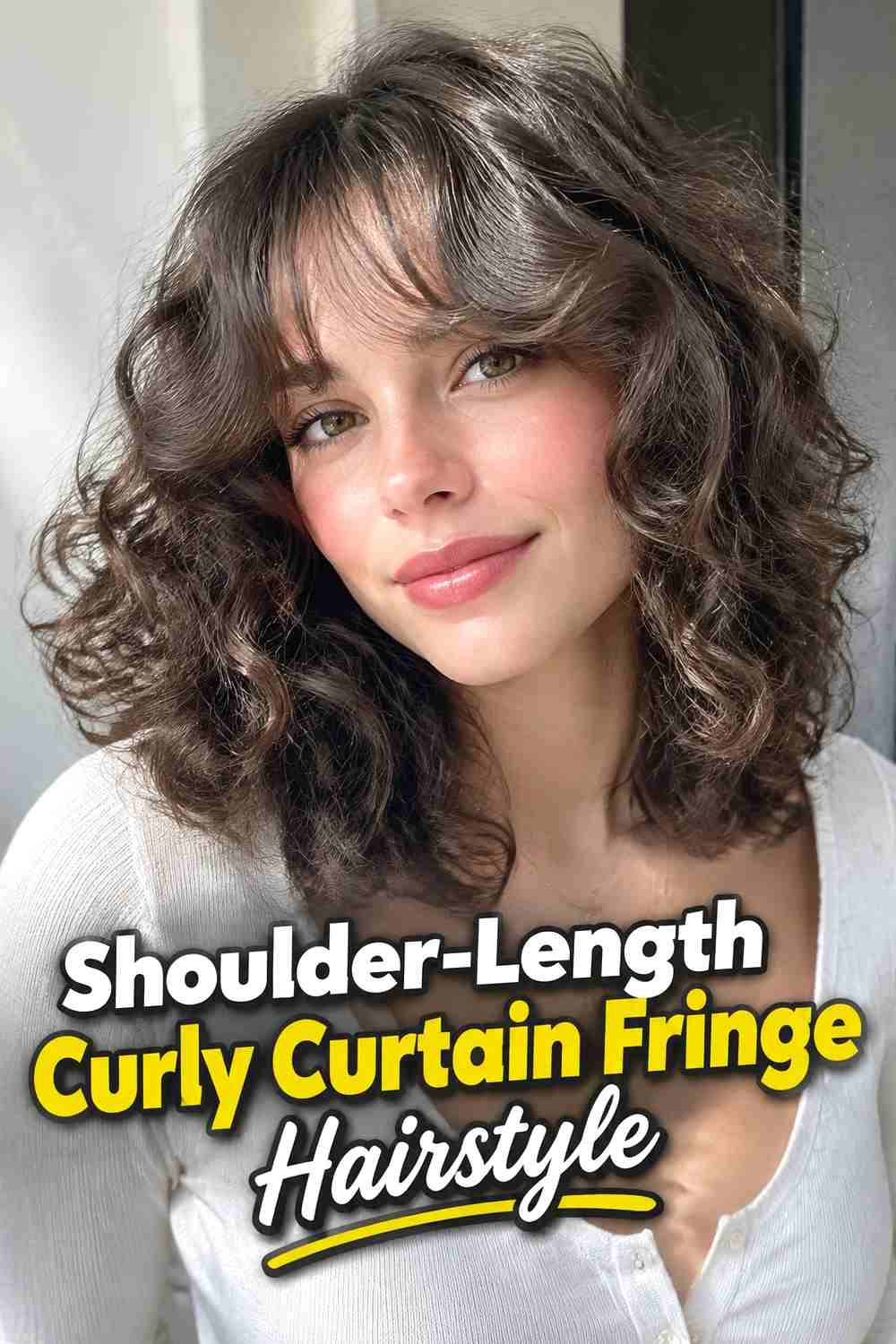
Shoulder-length curls create a balanced frame for curtain fringe because the overall haircut has enough length for movement without overwhelming the face. Keep the fringe softly divided, with shorter curls near the forehead and longer pieces blending through the temples and cheeks. The main length can sit around the shoulders with subtle layers that help distribute volume. Natural shrinkage may cause some curls to rise above the shoulder line, which can add useful variation to the silhouette. Avoid making the perimeter too blunt if your density already creates significant width. The goal is a rounded but flexible shape where the fringe feels connected to the rest of the curls and remains easy to refresh between wash days.
Styling Notes
Shape the front first, then arrange the shoulder-level curls around it so the fringe remains visible without appearing too separated from the haircut.
Best For
This is a practical choice for medium-length curly hair when you want face framing without committing to a short shag or very long layers.
6. Voluminous Curly Curtain Fringe Hairstyle
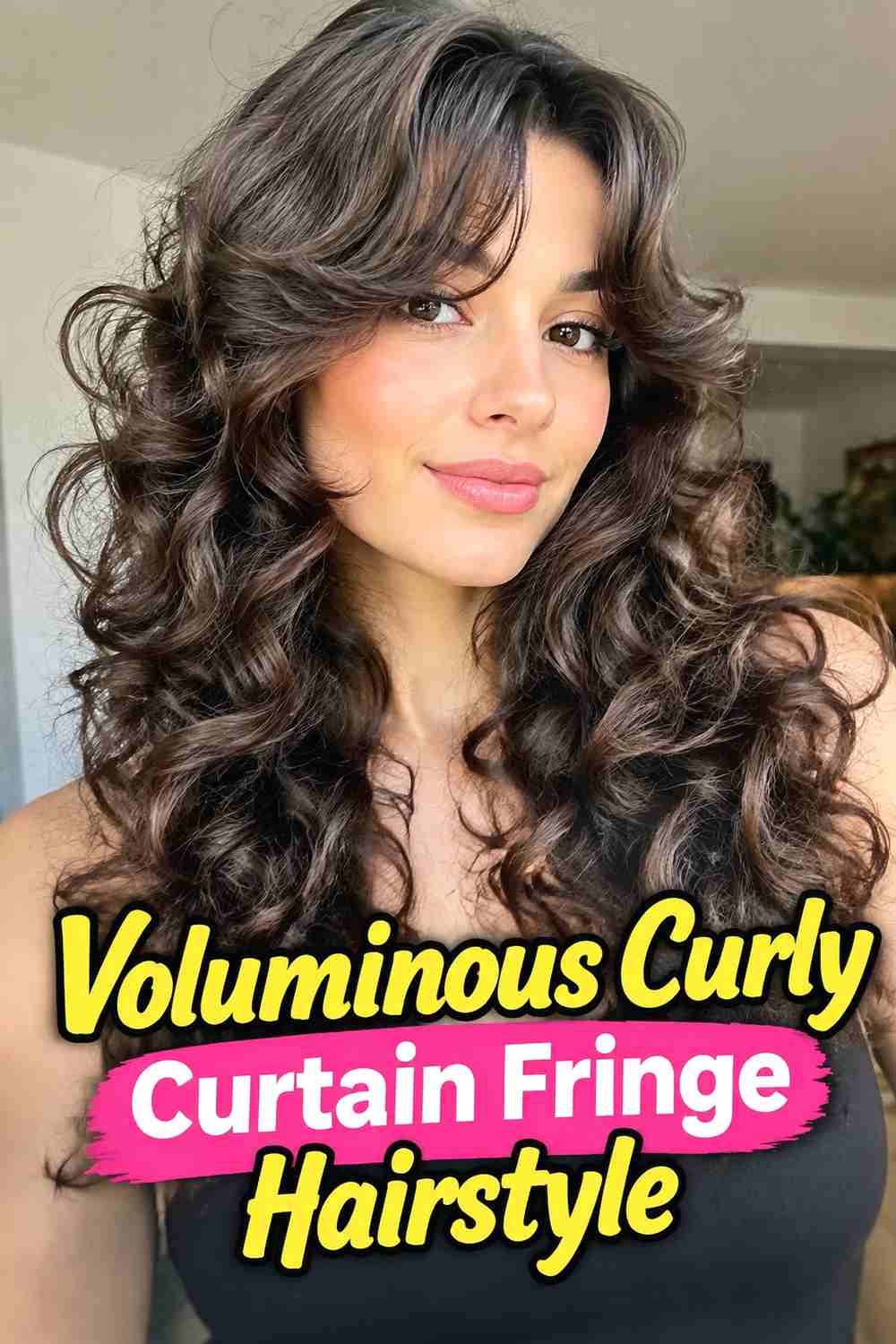
Voluminous curly curtain fringe embraces fullness around the crown and sides while keeping a subtle opening through the front. Instead of flattening the roots, allow the natural lift to support the fringe and create a rounded silhouette. The curtain effect can come from slightly shorter curls near the center that transition into fuller pieces around the temples. Medium and long curly hair can both carry this style, but density will determine how dramatic the volume appears. Keep the definition flexible enough that curls can expand naturally as they dry. Heavy products may weigh down the root area and reduce the shape, so focus hold where the curls need support rather than coating every section uniformly.
Best For
Choose this version when you enjoy a fuller silhouette and want the curtain fringe to blend into generous natural volume.
Pro Tip
Lift the roots after the hair is dry rather than repeatedly touching the fringe while it is setting, which can disturb curl definition.
7. Wispy Curly Curtain Fringe Hairstyle
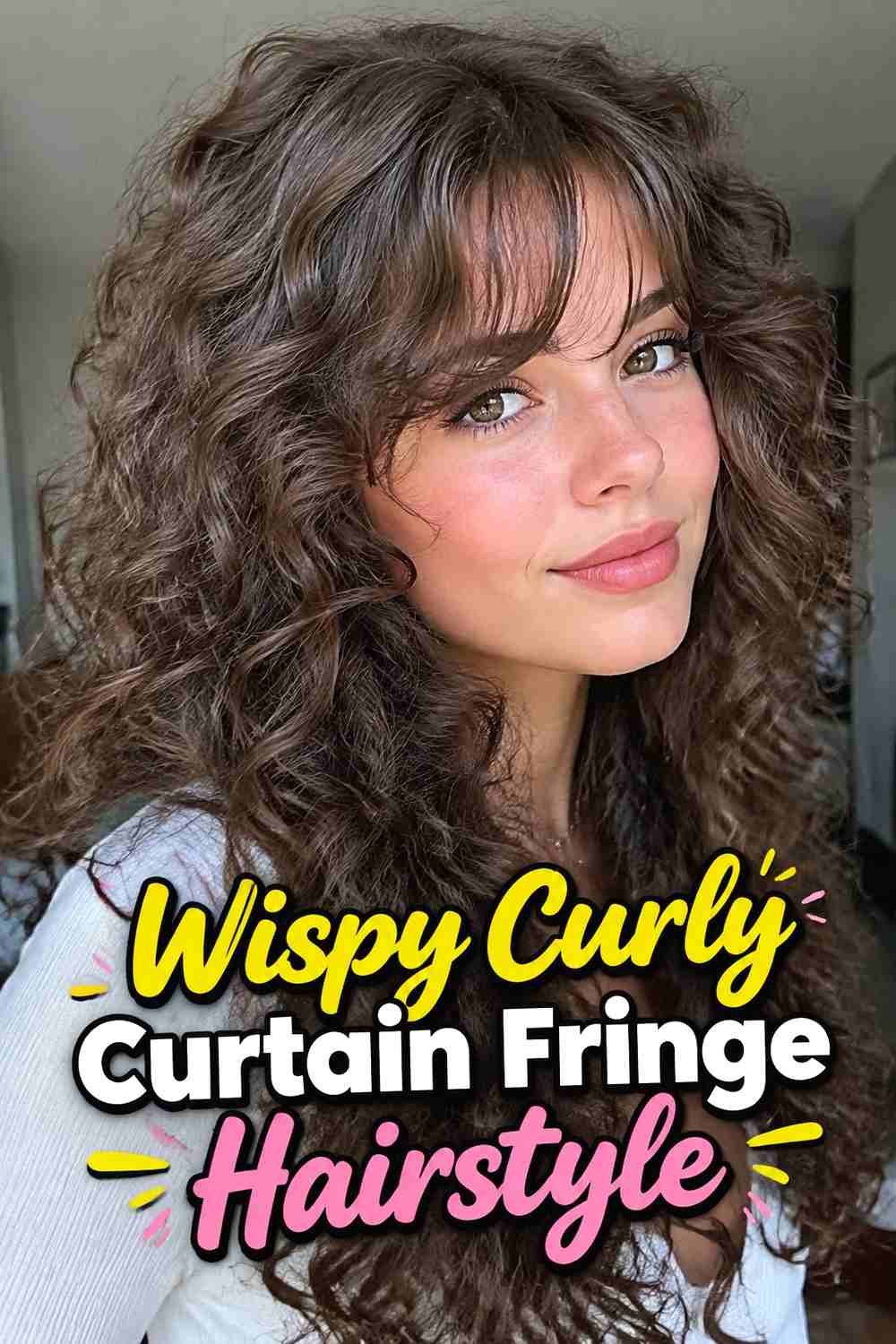
Wispy curly curtain fringe uses a lighter section of hair to create delicate face framing without covering much of the forehead. A few shorter curls can sit near the brows while longer pieces fall softly toward the temples, leaving visible space between sections. This works particularly well if you prefer a low-density fringe or want bangs that can blend back into the rest of the hair easily. The surrounding curls can remain fuller, which makes the lighter fringe appear especially airy. Avoid adding too much product to the front, since fine curl groups may clump together and lose their wispy quality. The finished look should feel soft, flexible, and slightly irregular rather than perfectly divided into two identical sides.
Styling Notes
Style fewer curl groups around the forehead and allow some natural gaps instead of trying to create continuous coverage across the fringe.
Best For
This works well when you want subtle curtain fringe without significantly increasing maintenance around the front hairline.
8. Coily Curtain Fringe Hairstyle
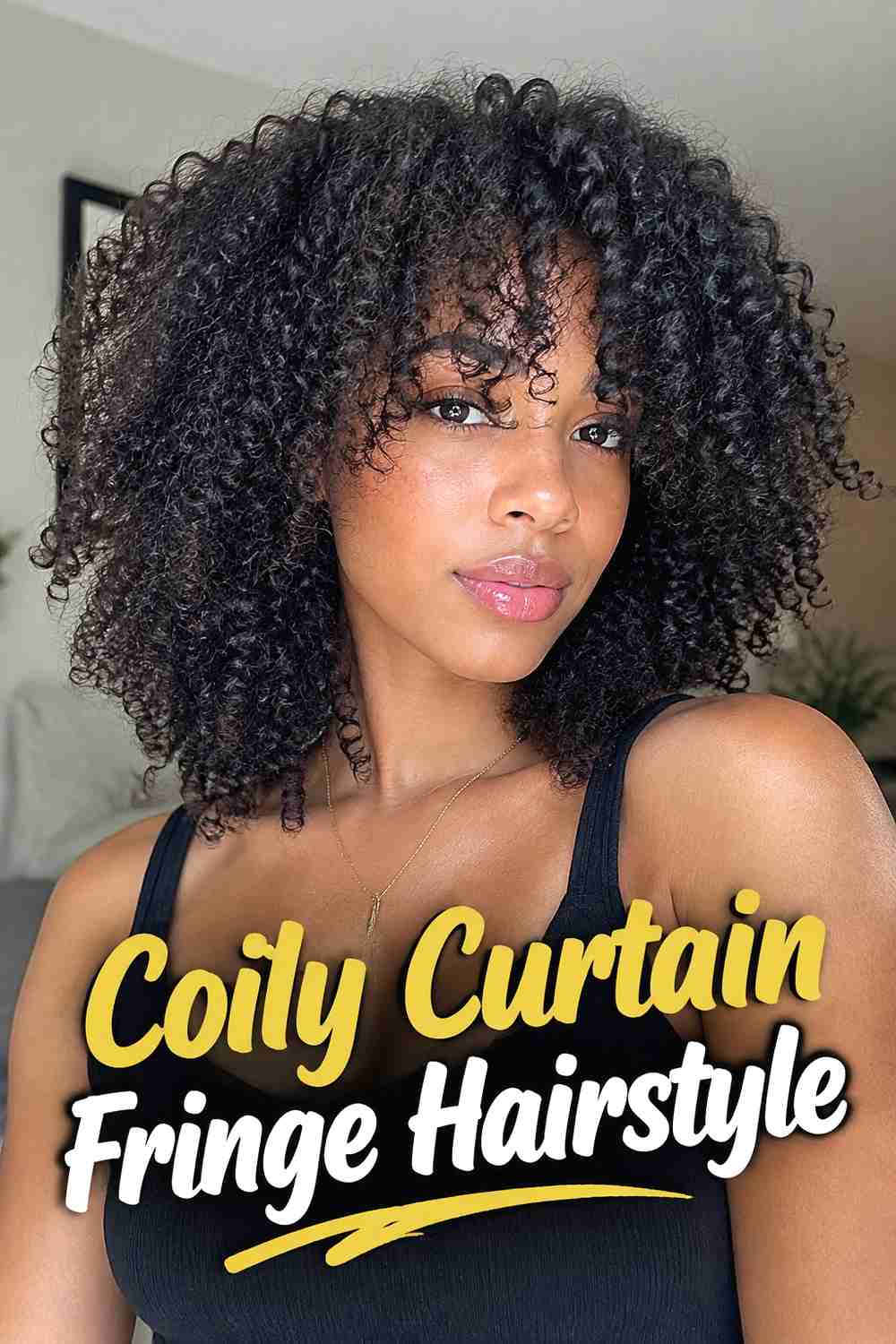
Coily curtain fringe adapts the center-opening idea to tighter curl patterns by using shape, shrinkage, and gradual length rather than forcing a straight split. Shorter coils can frame the upper forehead while longer pieces move toward the temples and sides, creating a natural suggestion of curtains around the face. The opening may be small and irregular, which can look more believable on tightly coiled textures. Keep coil definition visible while allowing natural density and variation to remain part of the silhouette. The fringe length should be planned with shrinkage in mind, especially if the coils spring significantly once dry. The surrounding hair can stay rounded, layered, or softly tapered depending on the overall cut.
Hair Type & Length
This look is designed for naturally coily and tightly curled textures where shrinkage plays a significant role in final fringe length.
Pro Tip
Assess the bangs when fully dry and naturally shrunken before deciding whether any pieces need additional trimming or shaping.
9. Curly Curtain Fringe Bob Hairstyle
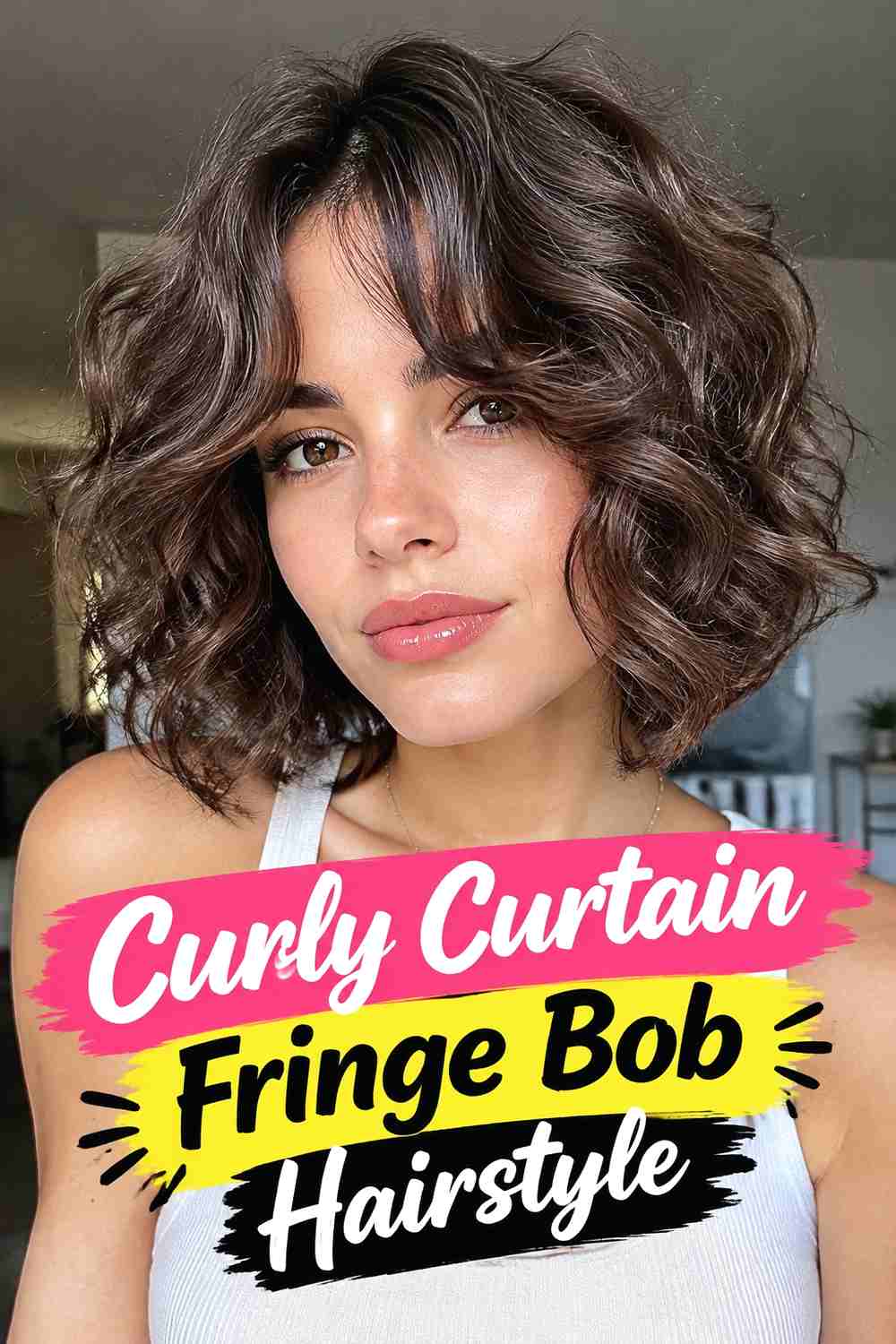
A curly bob with curtain fringe creates a compact, rounded silhouette that keeps plenty of movement around the face. The fringe can open gently through the center while its outer pieces blend into cheekbone and jaw-level curls. Chin- to shoulder-length cuts work particularly well because the bangs and perimeter remain close enough to feel connected. Light layering can prevent the bob from becoming too triangular, especially on dense hair. The ends do not need to form a perfectly even line; natural curl shrinkage and variation can make the shape more dimensional. Keep the fringe soft rather than overly separated, allowing a few curls to cross the center slightly for a relaxed finish.
Styling Notes
Shape the fringe and perimeter together so the shorter front curls feel like a continuation of the bob instead of a separate bang section.
Best For
This style suits shorter curly cuts when you want a visible fringe without sacrificing the fullness and bounce of a bob.
10. Curly Curtain Fringe Lob Hairstyle
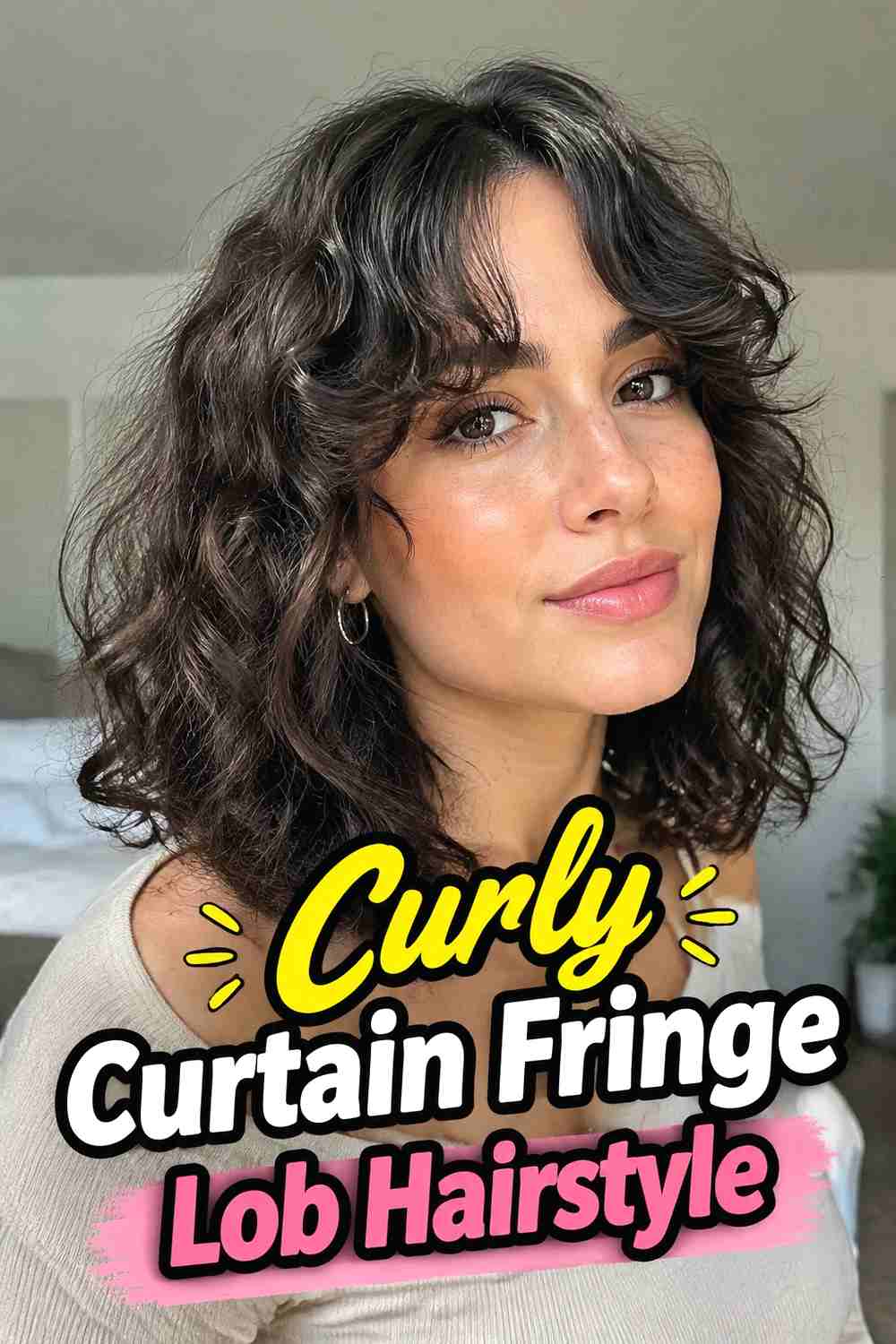
A curly lob gives curtain fringe more room to blend into longer side layers while keeping the overall haircut manageable. The main length falls around the collarbone, with the fringe opening softly through the center and transitioning into curls around the cheeks and jaw. A few graduated layers can help distribute volume without making the ends appear thin. This length works well for people who want enough hair for ponytails and half-up styles while still enjoying a clearly shaped cut. Keep the fringe responsive to the natural curl pattern rather than stretching it downward. The resulting silhouette should feel balanced, with enough movement through the ends to support the shorter face-framing curls at the front.
Hair Type & Length
Collarbone-length curly hair with moderate layering is especially suited to this look because it balances movement with useful overall length.
Wear & Maintenance
Refresh the fringe and front layers first on non-wash days; those sections usually determine whether the whole lob looks freshly styled.
11. Curly Curtain Fringe With Half Up Hairstyle
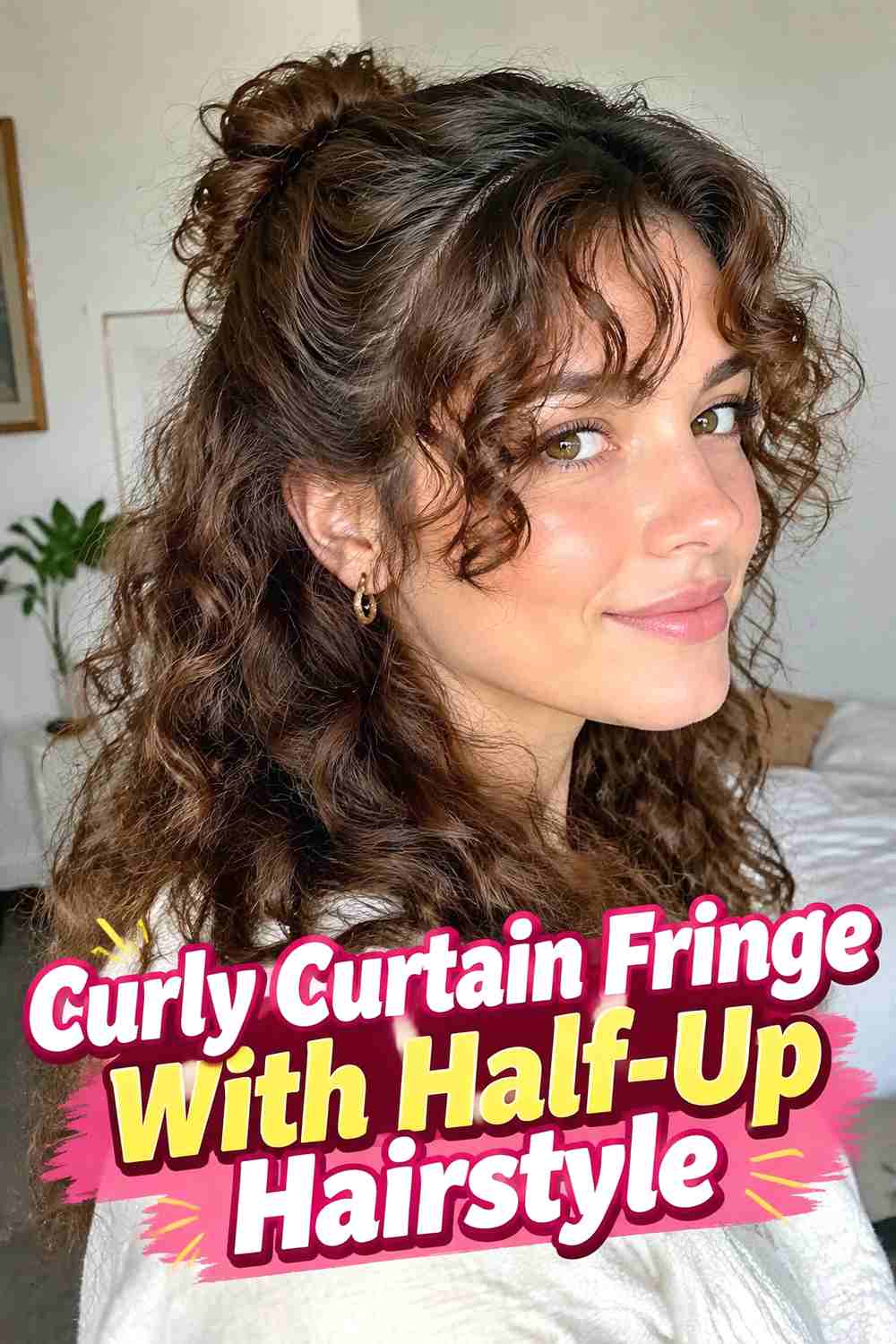
A half-up style keeps the main curls controlled while allowing curtain fringe to remain the focal point around the face. Gather the upper layers loosely toward the back and secure them with a clip, elastic, or pins, leaving the fringe and lower curls free. Keep some crown volume so the hairstyle does not flatten directly behind the bangs. Medium to long curly hair gives the easiest proportions because enough texture remains loose below the fastening point. The fringe can separate naturally around the forehead, with longer temple curls connecting it to the rest of the style. This is a practical option for days when you want curls away from the face without losing the softness and movement of wearing most of the hair down.
Styling Notes
Separate the fringe before gathering the half-up section so the front curl groups stay intact and are not stretched backward.
Why It Works
The secured upper section creates structure while the loose fringe maintains visible texture and face framing.
12. Curly Curtain Fringe With Low Bun Hairstyle
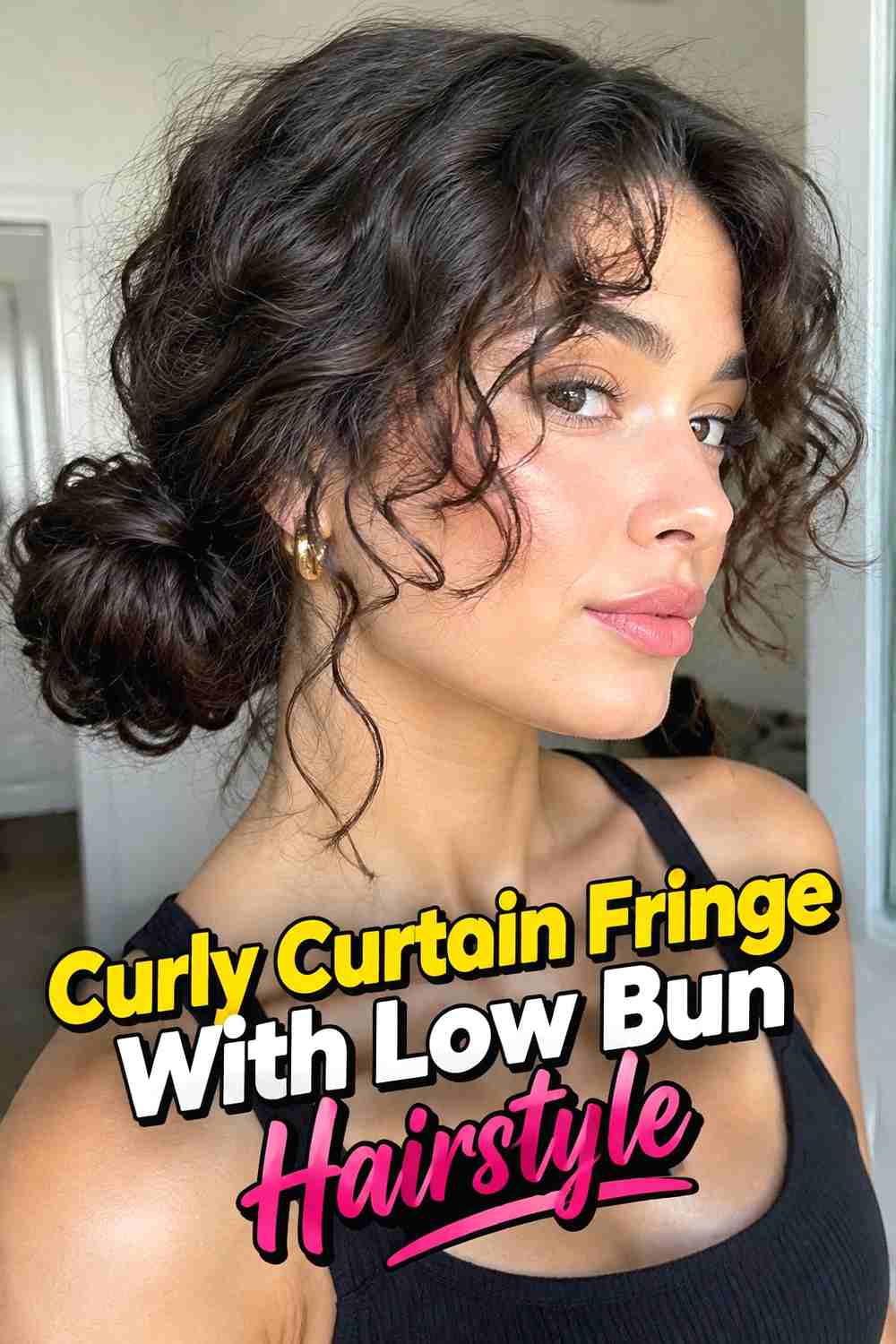
A low bun creates a clean backdrop for curly curtain fringe by moving the longer hair away from the face and shoulders. Gather the main length at the nape with comfortable tension, keeping the crown slightly soft so the natural texture is not flattened completely. Leave the fringe free, along with a few longer curls near the temples if they help connect the front to the bun. The bangs should retain their natural spring rather than being smoothed into straight pieces. Medium to long hair works best for forming a secure bun. This combination can feel relaxed or elegant depending on the finish, making it useful for everyday wear, dinners, work events, or occasions where you want an updo with visible curl character.
Best For
Choose this style when you want hair off the shoulders while keeping natural curls visible around the forehead and cheeks.
Styling Notes
Style the fringe before securing the bun so you know exactly how much hair should remain loose around the face.
13. Curly Curtain Fringe With Ponytail Hairstyle
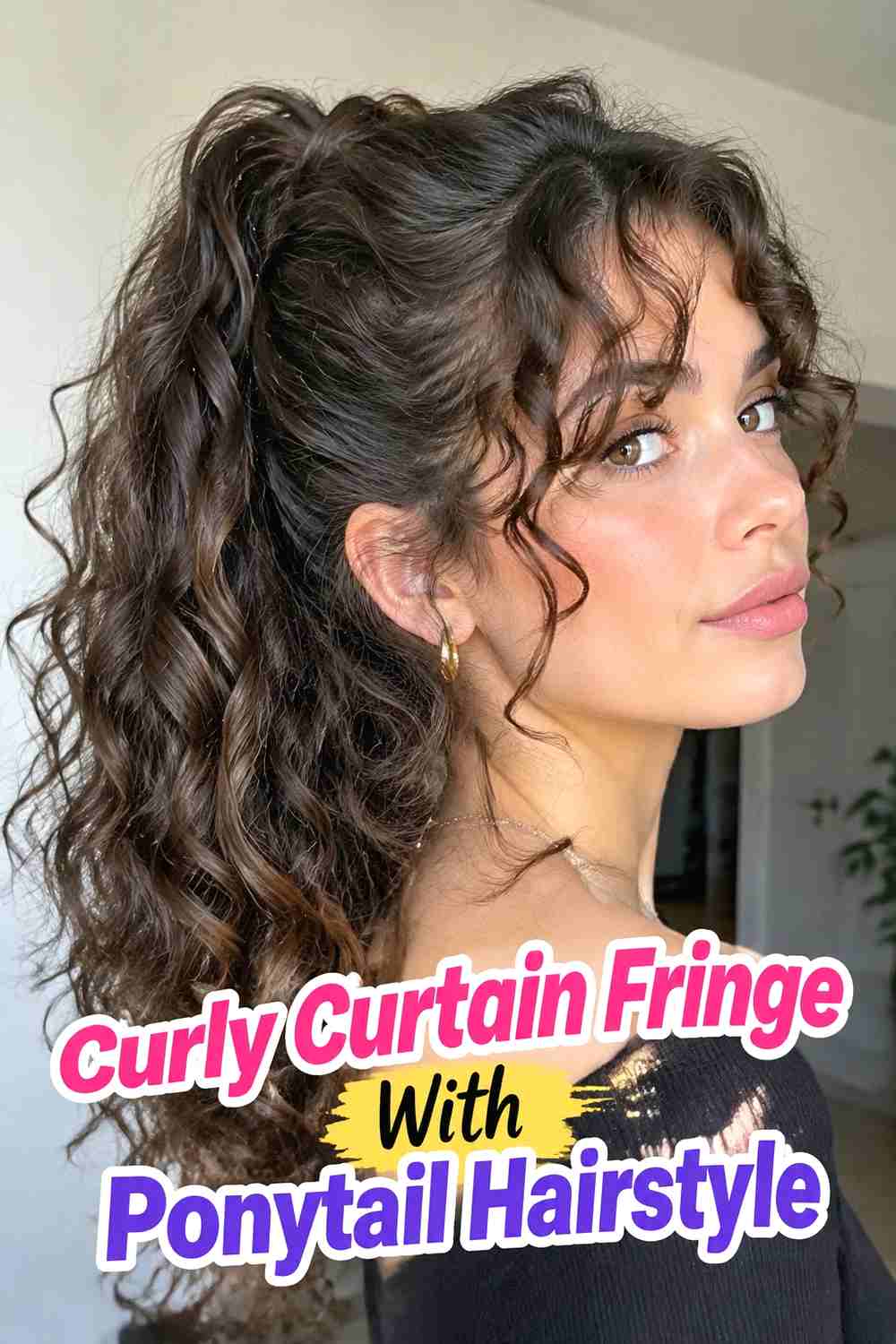
A ponytail lets curly curtain fringe do most of the face-framing work while keeping the lengths practical and controlled. Gather the hair at a low, mid, or slightly higher point depending on your length and density, leaving the fringe and a few temple curls free. The ponytail itself should retain natural curl definition and varied volume rather than being stretched smooth. Medium to long curly hair creates the most visible tail, while shorter layers can remain loose if they fall naturally. Keep the crown relaxed enough to connect with the fringe without allowing the base to become unstable. The result feels casual, soft, and easy to adjust, making it especially useful when you want the bangs visible without wearing every curl down.
Wear & Maintenance
Refresh the fringe separately from the ponytail so you do not have to repeatedly redo the entire style when a few front curls lose definition.
14. Curly Curtain Fringe With Soft Updo Hairstyle
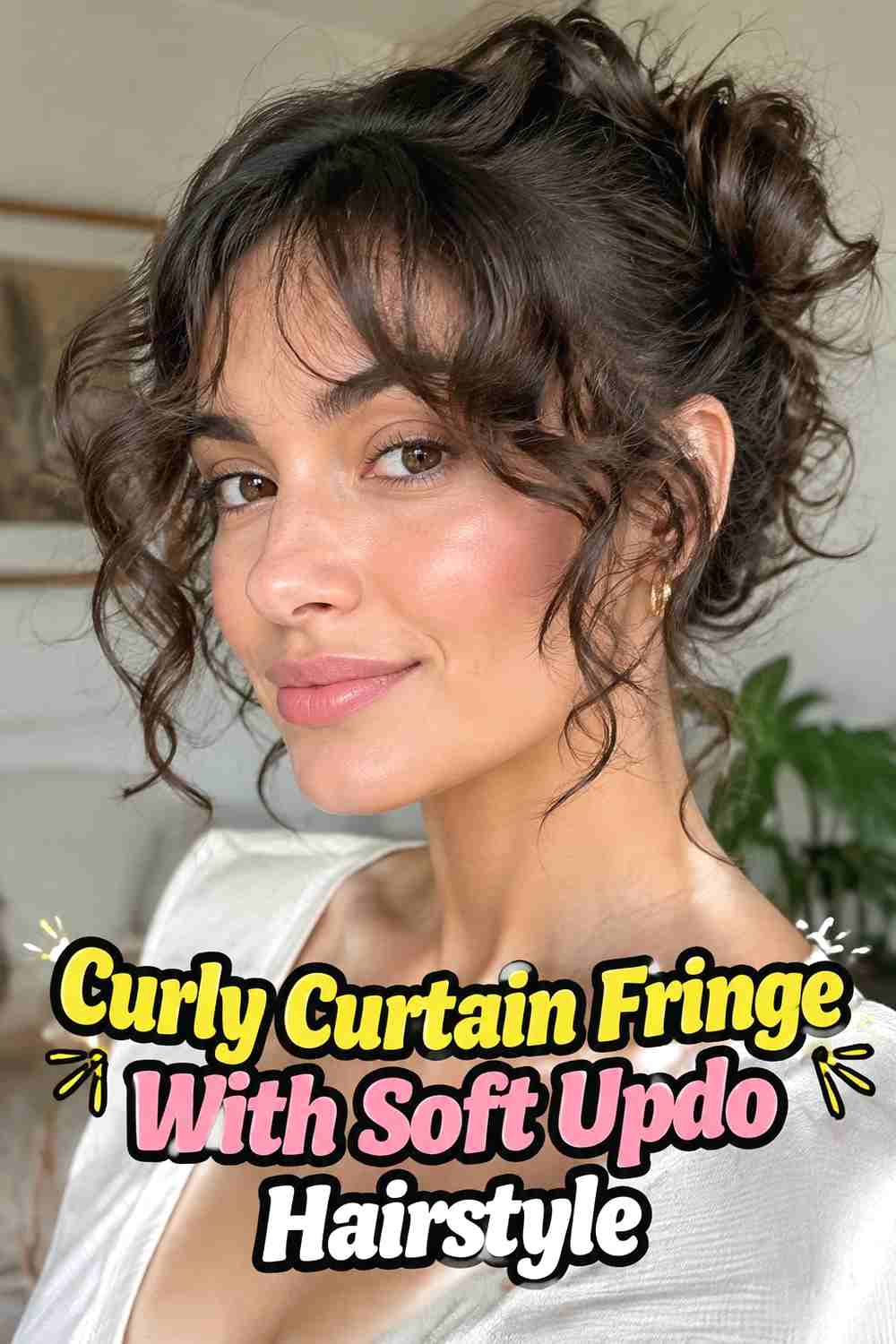
A soft curly updo creates a romantic setting for curtain fringe by combining pinned texture at the back with free curls around the face. Gather or twist the lengths loosely, securing them with hidden pins while preserving some natural shape through the crown. The fringe can open gently at the center, with shorter curls framing the forehead and longer pieces moving toward the cheeks. Avoid making the updo perfectly smooth, since a little texture helps it feel cohesive with the curly fringe. Medium to long hair provides the most flexibility for buns, twists, and pinned sections. This combination works beautifully for weddings, dinners, celebrations, or any occasion where you want an elevated style that still respects natural curl movement.
Styling Notes
Complete most of the updo first, then make only small adjustments to the fringe so its curl pattern remains natural.
Best For
This is a strong option for special occasions when you want a polished updo without smoothing away the texture around the face.
15. Side Part Curly Curtain Fringe Hairstyle
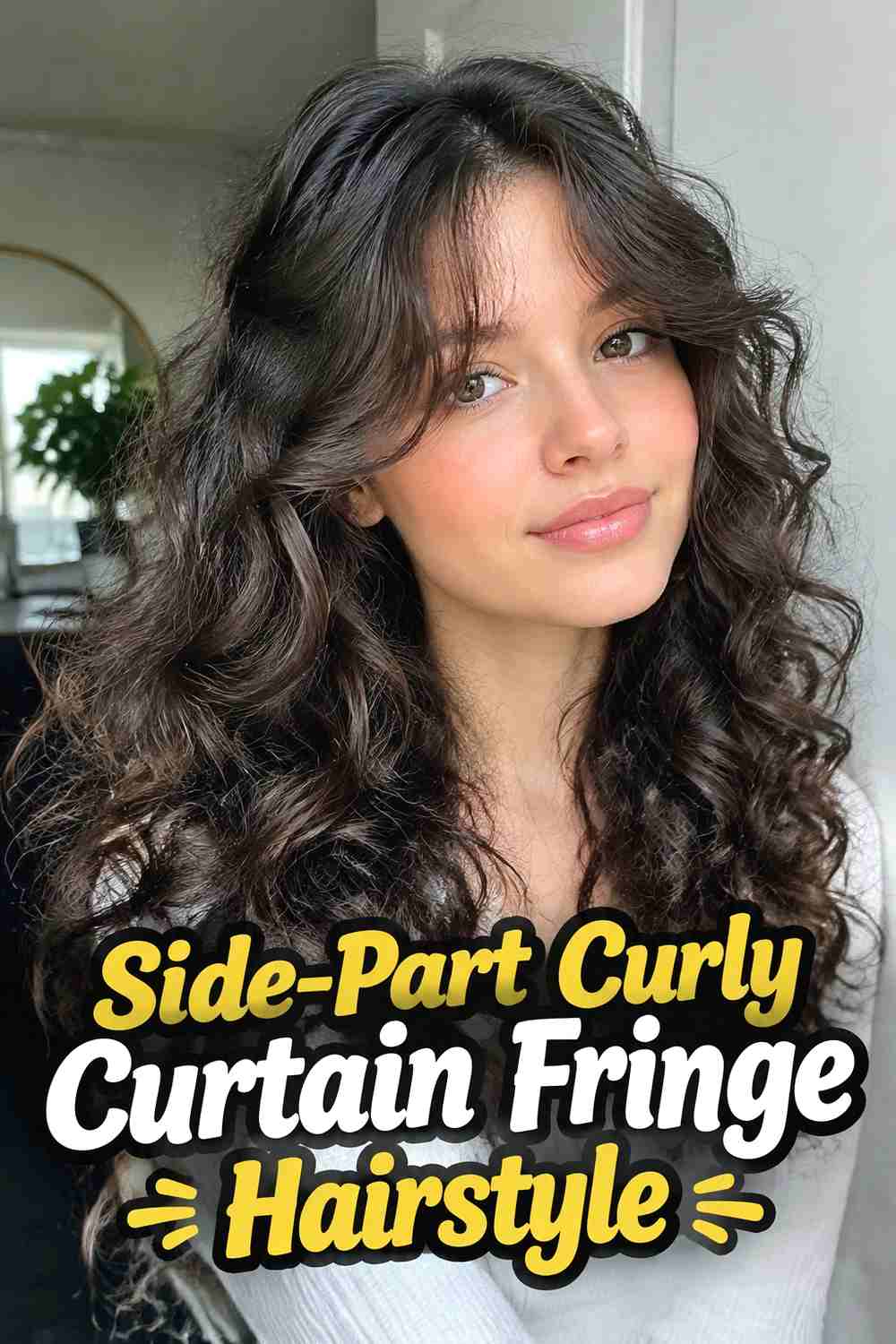
A side-part curly curtain fringe offers an asymmetrical variation when a strict center opening does not match your natural growth pattern. Shift the part slightly to one side, allowing one fringe section to carry more volume while the opposite side remains lighter. The bangs should still move away from the central face area so the curtain effect remains visible. This approach can work especially well when one side naturally curls more strongly or lifts more easily. Medium and long curls can continue the directional movement through face-framing layers, while shorter cuts can keep the asymmetry compact. The finish should remain flexible enough for the curls to shift naturally rather than depending on a fixed, perfectly positioned part.
Styling Notes
Work with the direction your roots naturally prefer and use only enough hold to maintain the general opening around the face.
Best For
Choose this version if your natural part sits off-center or one side of your fringe consistently carries more volume.
16. Air Dried Curly Curtain Fringe Hairstyle
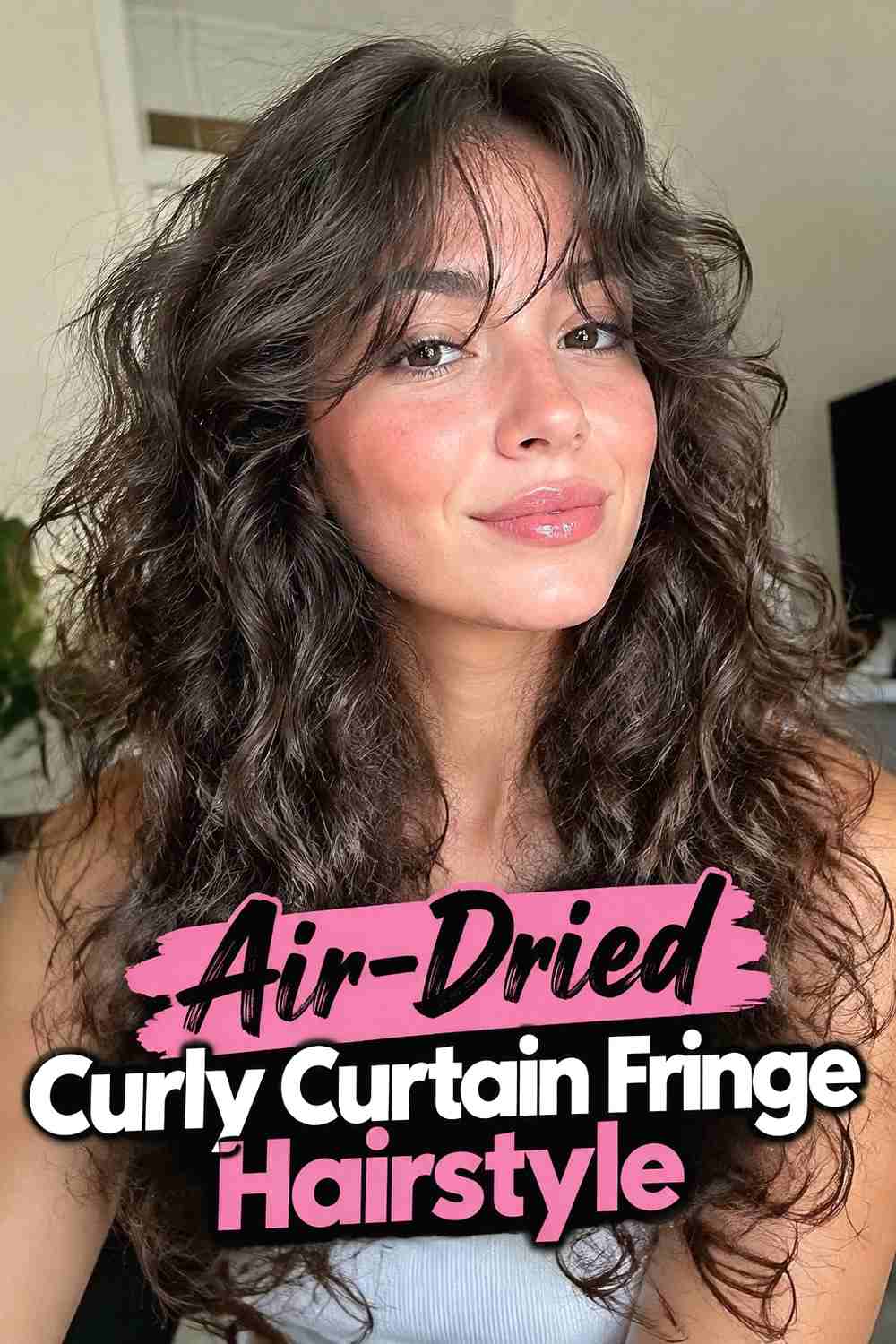
Air-dried curly curtain fringe keeps styling simple by working closely with the hair’s natural pattern and drying behavior. Arrange the fringe loosely while wet or damp, encouraging a small opening around the center without repeatedly separating the curls as they set. The surrounding hair can dry in its natural wave or curl pattern, with light shaping where needed to maintain balance. This approach works best when your curls already form predictably with your usual leave-in and styling routine. Avoid touching the fringe too often during drying, since that can create frizz and weaken definition. Once fully dry, gently separate only selected pieces if the bangs feel too grouped together or the curtain opening needs a little more space.
Wear & Maintenance
Refresh individual fringe curls with a small amount of moisture or your usual styling product instead of fully rewetting the entire hairstyle.
17. Curly Curtain Fringe With Face Framing Layers Hairstyle
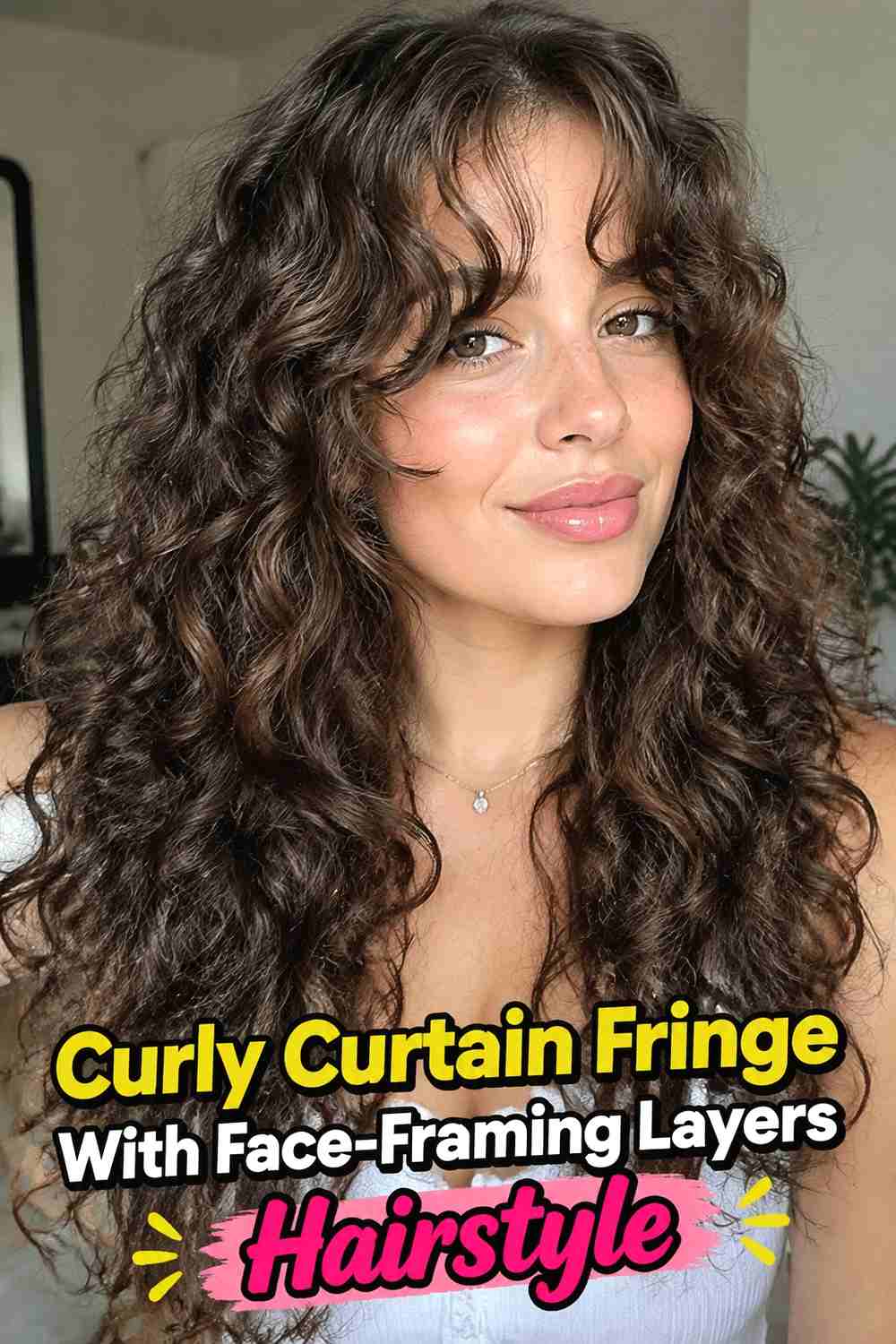
Face-framing layers give curly curtain fringe a clear pathway into the rest of the haircut. Shorter front curls begin near the forehead, then gradually lengthen through the temples, cheeks, jaw, and shoulders. The progression helps the fringe look integrated while giving the front of the hairstyle extra movement. Medium-long and long curls show the layered transition most clearly, although a shorter cut can use the same principle on a smaller scale. Natural shrinkage means each layer may sit differently when dry, which adds dimension rather than needing correction. Keep the outer layers soft enough to move around the face and avoid excessive thinning if your hair needs density to maintain a balanced curly silhouette.
Styling Notes
Define the front layers in separate curl groups so each length remains visible without making the transitions look overly precise.
Why It Works
The graduated framing prevents the curtain fringe from ending abruptly and helps distribute curl volume around the face.
18. Full Volume Curly Curtain Fringe Hairstyle
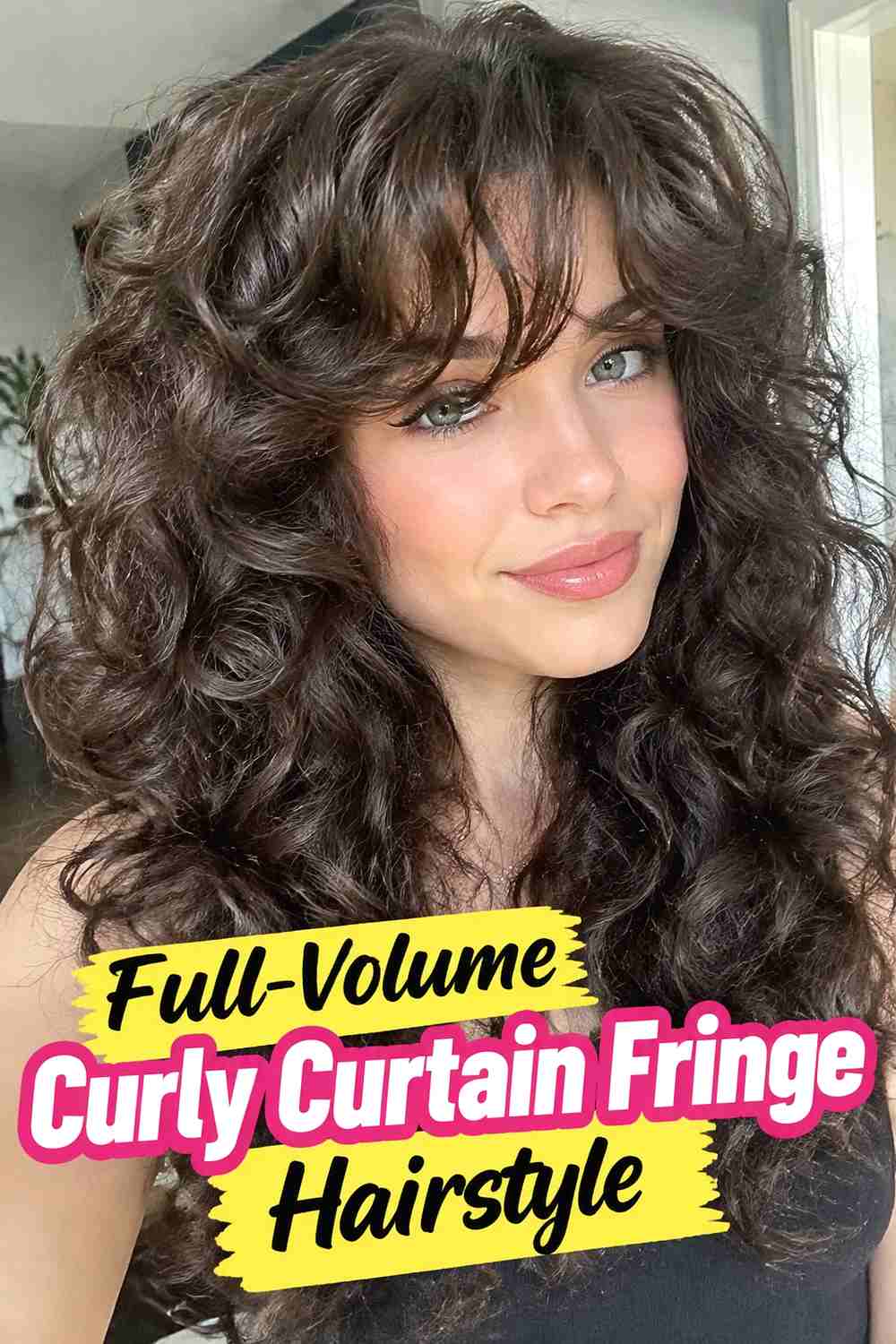
Full-volume curly curtain fringe embraces a bold, rounded silhouette while keeping enough separation through the front to reveal the face. Allow the roots and crown to retain natural lift, with shorter fringe curls forming a soft opening around the forehead and longer pieces expanding toward the sides. Dense, medium to long curls can create the strongest shape, though shorter hair can achieve a compact full-volume version. Rather than forcing the outer silhouette into perfect symmetry, focus on overall balance and visible curl definition. Use lightweight support where possible so the volume remains mobile. The finished look should feel expressive, dimensional, and naturally full, with the curtain fringe becoming part of the overall shape rather than sitting separately on top of it.
Styling Notes
Let the curls dry with their natural lift, then gently fluff the roots and perimeter without over-separating defined sections.
Best For
This version is ideal when you enjoy generous natural volume and want the fringe to blend seamlessly into a fuller curly silhouette.
How to Choose the Right Look
Start with your natural curl pattern and shrinkage. Looser curls may create a more obvious center opening, while tighter curls and coils often form a softer, less symmetrical curtain effect. Neither needs to copy the shape of straight curtain bangs.
Fringe density is another important factor. Wispy versions use fewer curls and can be easier to blend back, while fuller fringes create more coverage and stronger face framing. If you are unsure about length, remember that curly hair can sit substantially higher once dry.
Consider the rest of your haircut too. Bobs and shags create compact silhouettes, shoulder-length cuts offer easy balance, and long layers allow the fringe to transition gradually into the lengths. Updos, ponytails, and half-up styles can make the curtain fringe especially visible.
For maintenance, work with your existing curl routine. Selective refreshing, realistic hold, and comfortable definition are generally more practical than trying to make every curl identical.
Final Thoughts
Curly curtain fringe works best when it respects the natural movement of the hair. Whether your curls are loose, springy, coily, wispy, layered, or full-volume, the goal is soft separation and believable face framing rather than perfect symmetry. Choose a fringe length and density that make sense for your shrinkage, styling habits, and overall haircut.
FAQs
1. Can naturally curly hair have curtain fringe?
Yes. Curtain fringe can be adapted to curls by using shorter pieces near the forehead and longer curls toward the temples, with the shape following the natural pattern.
2. How should curly curtain fringe be cut for shrinkage?
The final dry length matters most. Because curls can spring upward significantly, fringe length should account for the individual curl pattern and shrinkage.
3. Does curly curtain fringe need a perfect center part?
No. A soft or irregular opening often looks more natural, especially on tighter curls and coils. The two sides do not need to be perfectly symmetrical.
4. How do I refresh curly curtain fringe between wash days?
Refresh only the curls that have lost definition with a small amount of moisture or your usual styling product, then let them reset without excessive handling.
5. Can curly curtain fringe work with ponytails and updos?
Yes. Ponytails, buns, half-up styles, and soft updos can make the fringe more noticeable by keeping the longer hair away from the face.
Save your favorite curly curtain fringe hairstyle, share these ideas, and explore more natural-texture face-framing inspiration.