12 Silk Scarf Braid Hairstyles
Silk scarves turn everyday braids into colorful, polished hairstyles with soft movement, wearable texture, and an effortless finish that photographs beautifully.
A silk scarf can completely change the character of a braid without requiring an elaborate technique. Woven through the hair, tied at the base, or wrapped around a finished style, it adds color and dimension while allowing the braid itself to remain the main feature.
The best option depends on your hair length, texture, preferred level of hold, and how visible you want the scarf to be. Loose side braids feel relaxed, crown styles create more structure, and ponytail braids balance practicality with decorative detail.
Quick List
- Classic Three Strand Silk Scarf Braid Hairstyle
- Low Ponytail Silk Scarf Braid Hairstyle
- French Braid With Silk Scarf Hairstyle
- Dutch Crown Silk Scarf Braid Hairstyle
- Side Swept Silk Scarf Braid Hairstyle
- Fishtail Silk Scarf Braid Hairstyle
- Double Dutch Silk Scarf Braid Hairstyle
- Half Up Silk Scarf Braid Hairstyle
- Braided Bun With Silk Scarf Hairstyle
- Boho Loose Silk Scarf Braid Hairstyle
- High Ponytail Silk Scarf Braid Hairstyle
- Milkmaid Silk Scarf Braid Hairstyle
1. Classic Three Strand Silk Scarf Braid Hairstyle
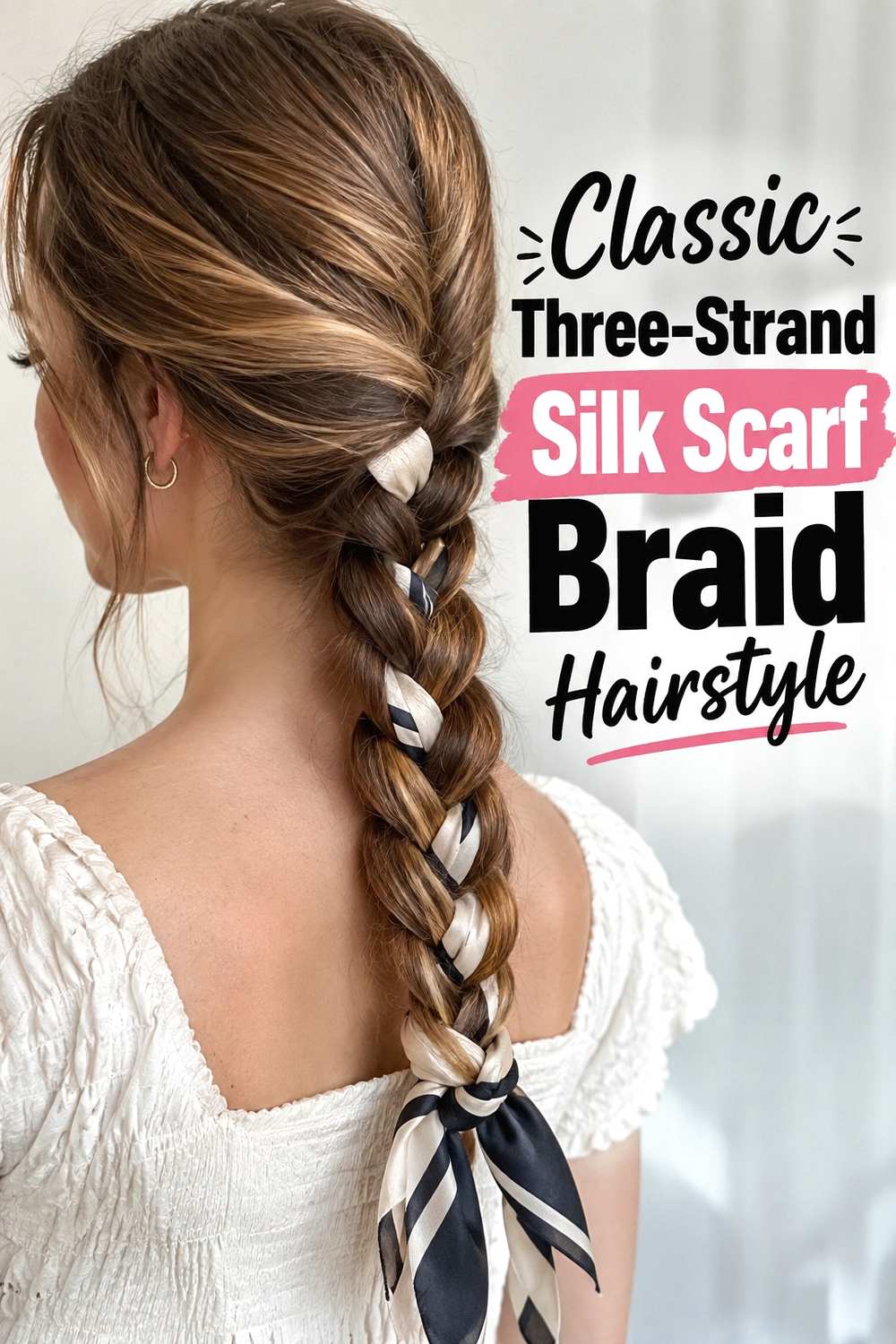
The classic three-strand braid is one of the easiest ways to introduce a silk scarf without making the finished look feel complicated. Fold a narrow scarf into a long strip, secure it near the base of the hair, and allow one or both ends to travel through the braid. The fabric creates a ribbon-like line between the hair sections, making even a simple plait look more detailed. A medium-width scarf usually gives enough color without overwhelming the braid. This style works especially well on medium to long hair because the scarf remains visible down the full length and can finish in a small knot or flowing tails.
Styling Notes
Keep the braid moderately firm near the top, then loosen the outer edges slightly for softer dimension. Make sure the scarf stays flat rather than twisting into a bulky rope.
Best For
This is a practical starting point for anyone learning scarf braiding because the familiar three-strand structure is easy to control.
2. Low Ponytail Silk Scarf Braid Hairstyle
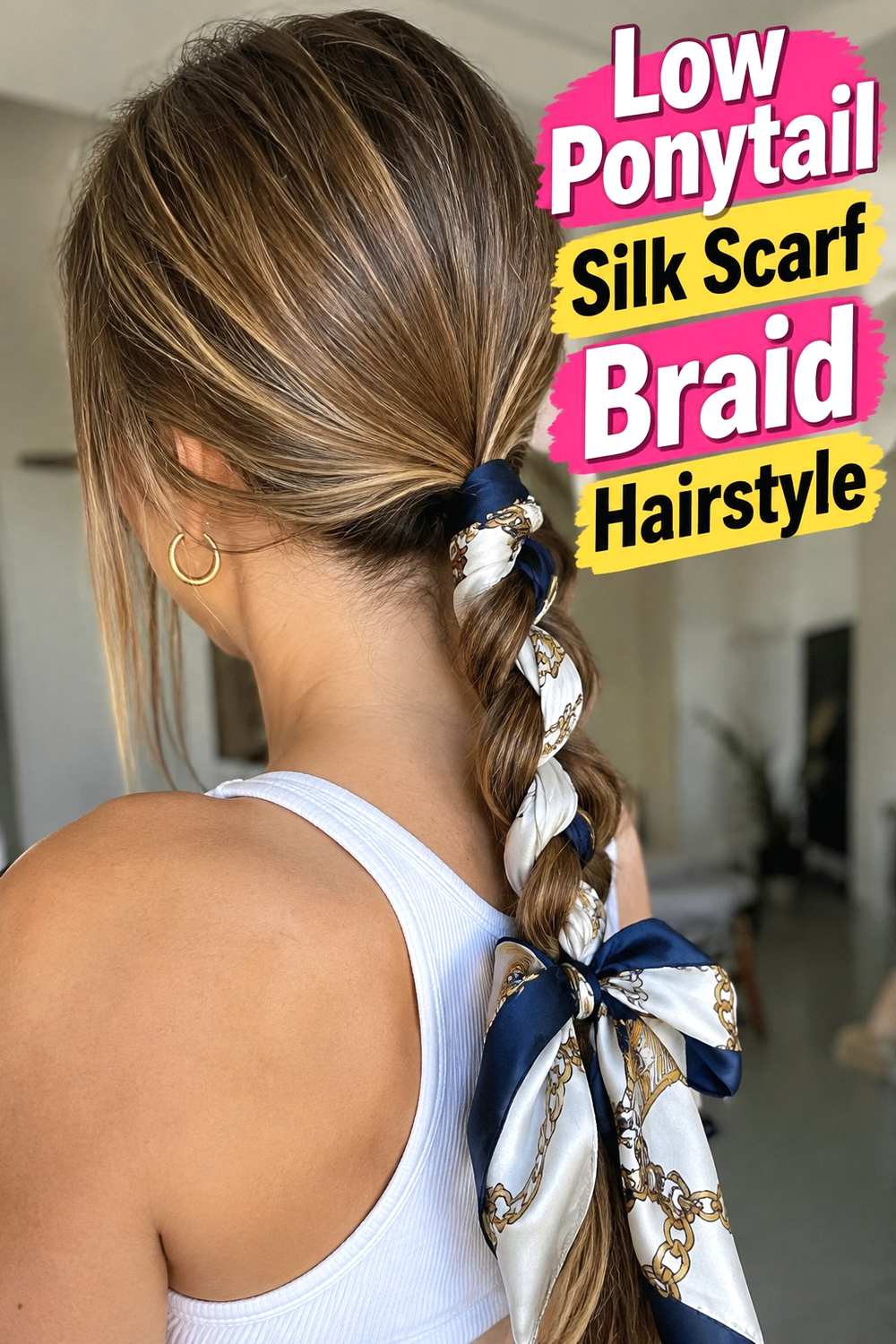
A low ponytail scarf braid creates a clean silhouette at the crown while concentrating the decorative detail below the nape. Start by securing the hair in a low ponytail, then knot a slim silk scarf around the elastic before incorporating its ends into a traditional braid. Because the ponytail provides a stable anchor, the scarf tends to stay more controlled than it does in a braid that begins higher on the head. The result can look sleek with straight hair or softer and fuller with waves and curls. Leaving a few inches of scarf beneath the braid adds movement and makes the accessory feel intentional rather than simply tied on afterward.
Wear & Maintenance
Choose a secure elastic beneath the scarf so the accessory is not responsible for holding the ponytail. Smooth fabrics may shift slightly during long wear.
Pro Tip
A narrow scarf is easier to braid through finer hair, while thicker hair can visually support a wider piece of fabric.
3. French Braid With Silk Scarf Hairstyle
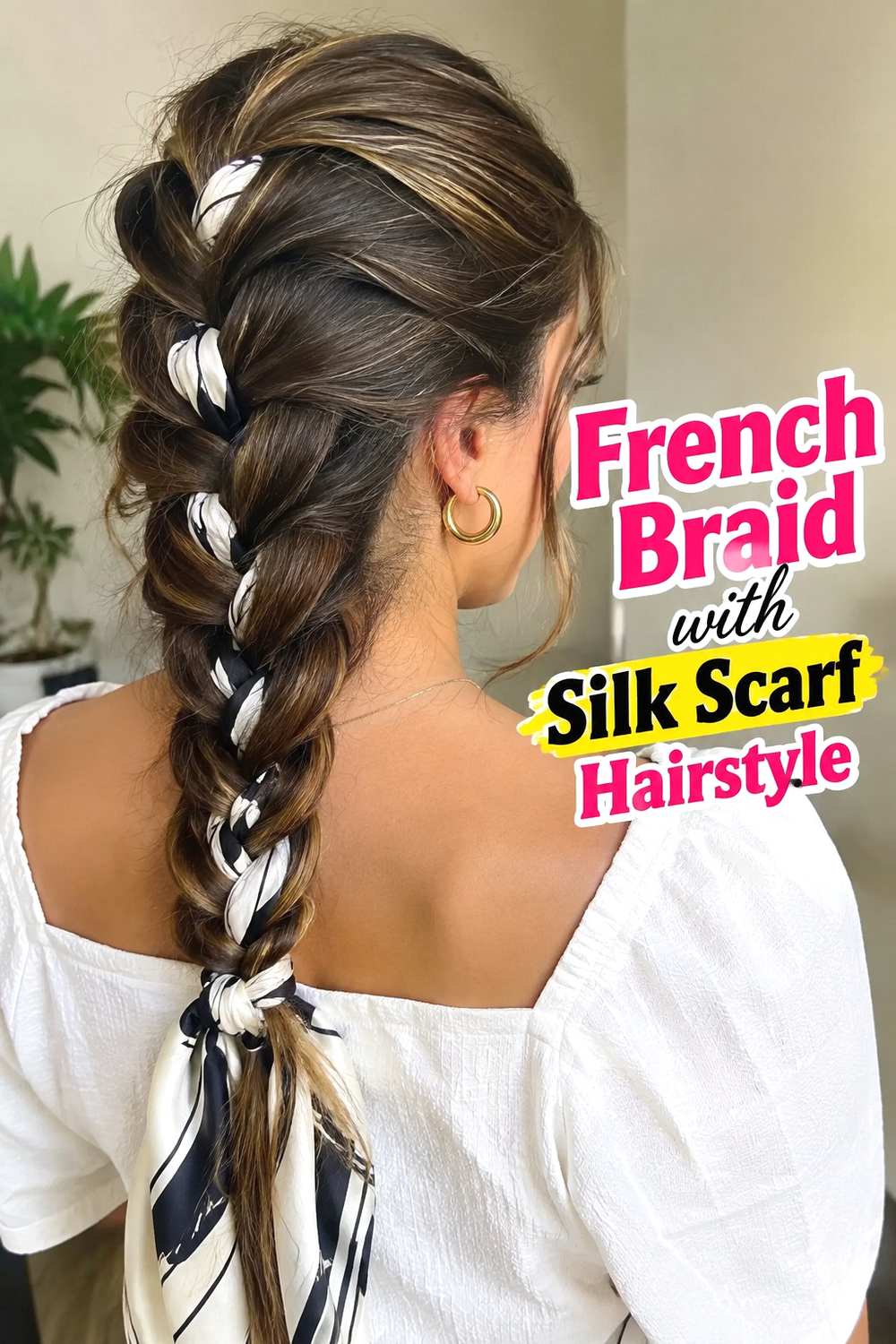
A French braid with a silk scarf brings color through the entire length of the style, starting close to the crown instead of only appearing near the ends. The scarf can be anchored beneath the first section of hair and treated as part of one braid strand as additional hair is incorporated. This creates small flashes of pattern between the woven sections rather than one continuous block of fabric. The technique is especially attractive when the scarf contrasts with the hair color. Medium and long lengths are easiest to work with, although the braid does not have to extend far below the shoulders to create a noticeable effect.
Styling Notes
Keep the first few passes controlled so the scarf stays anchored. Once the braid is established, maintain even tension on the fabric and hair.
Why It Works
The gradually woven construction distributes the scarf throughout the hairstyle, giving the finished braid more visual depth from crown to ends.
4. Dutch Crown Silk Scarf Braid Hairstyle
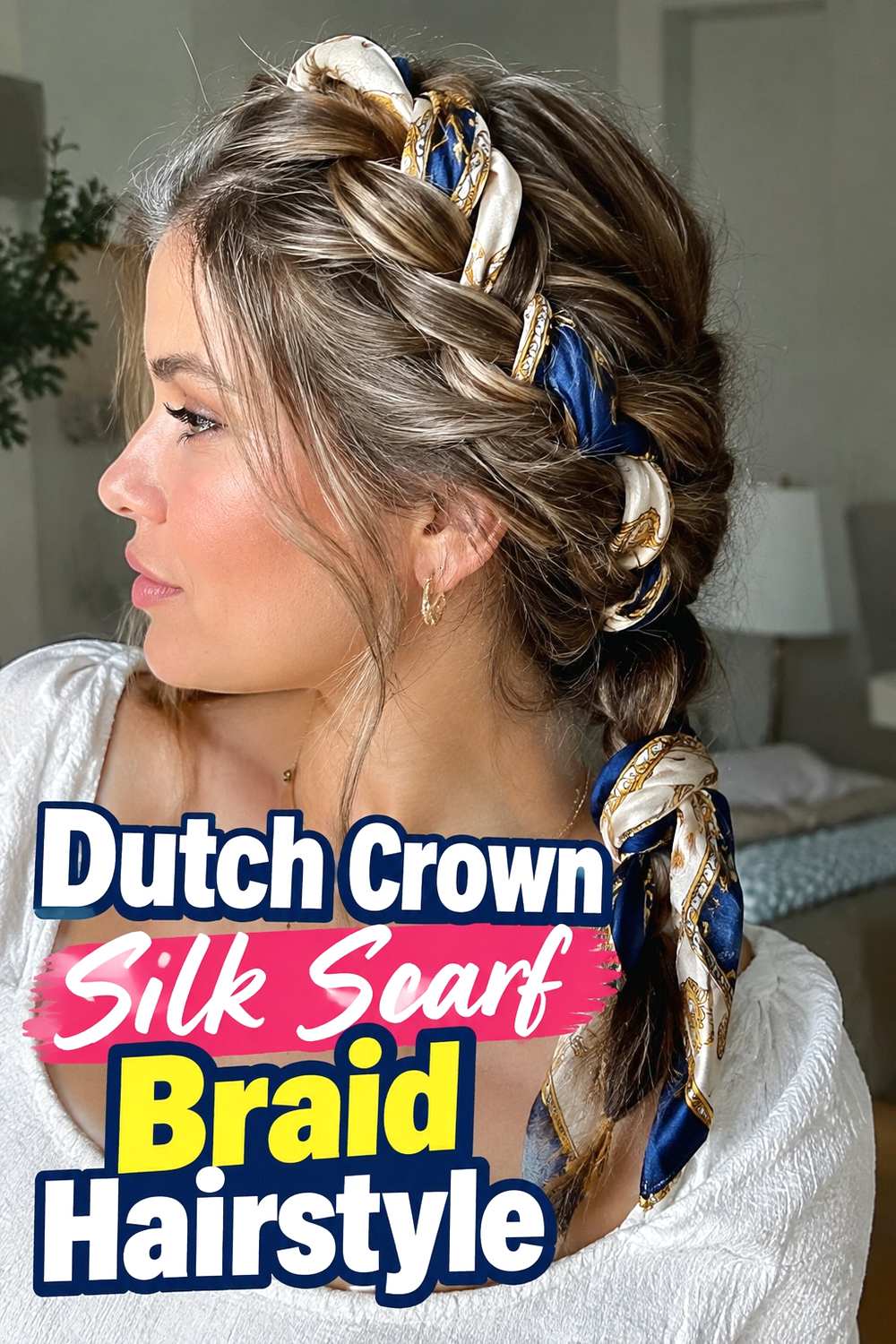
The Dutch crown scarf braid gives the accessory a prominent position around the head while keeping the hair neatly contained. Because Dutch braiding crosses sections underneath rather than over one another, the braid sits above the surrounding hair and creates a more defined shape. Weaving a folded silk scarf through one strand adds a bright patterned accent that follows the curve of the crown. The style can circle the entire head or travel from one side toward the back, depending on hair length. Slightly loosening the braid after it is secured can make the silhouette fuller without sacrificing the visible woven structure.
Hair Type & Length
Medium to long hair offers the easiest foundation, especially when there is enough length to continue the braid around the head. Natural texture can add attractive fullness.
Wear & Maintenance
Use discreet pins where the braid ends overlap. Avoid pulling the scarf tighter than the hair, since uneven tension can distort the crown shape.
5. Side Swept Silk Scarf Braid Hairstyle
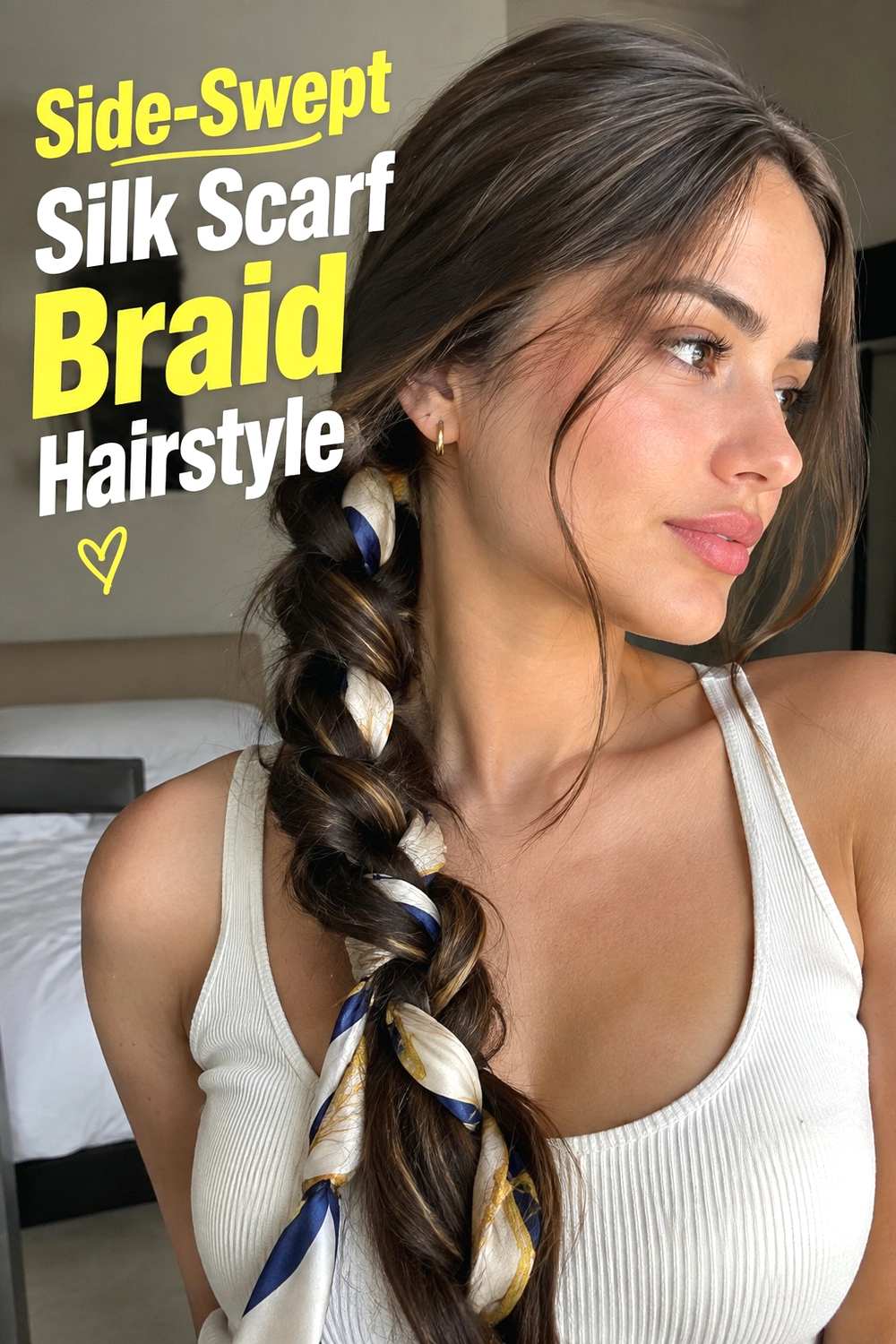
A side-swept scarf braid has an intentionally relaxed shape that brings the hair over one shoulder while allowing the fabric to remain highly visible. Gather the hair loosely to one side and begin braiding around ear or shoulder level, incorporating a folded scarf through the sections. The asymmetry gives the finished style a softer feel than a centered back braid, particularly when a few face-framing pieces are left free. A printed silk scarf can become the focal point, while a tonal scarf creates a subtler finish. The look suits medium to long hair and works especially well when the braid has enough looseness to show natural movement.
Best For
Choose this style when you want the scarf and braid to be visible from the front rather than mainly from the back.
Pro Tip
Position the scarf knot underneath the starting point of the braid to keep the attachment discreet and the visible side cleaner.
6. Fishtail Silk Scarf Braid Hairstyle
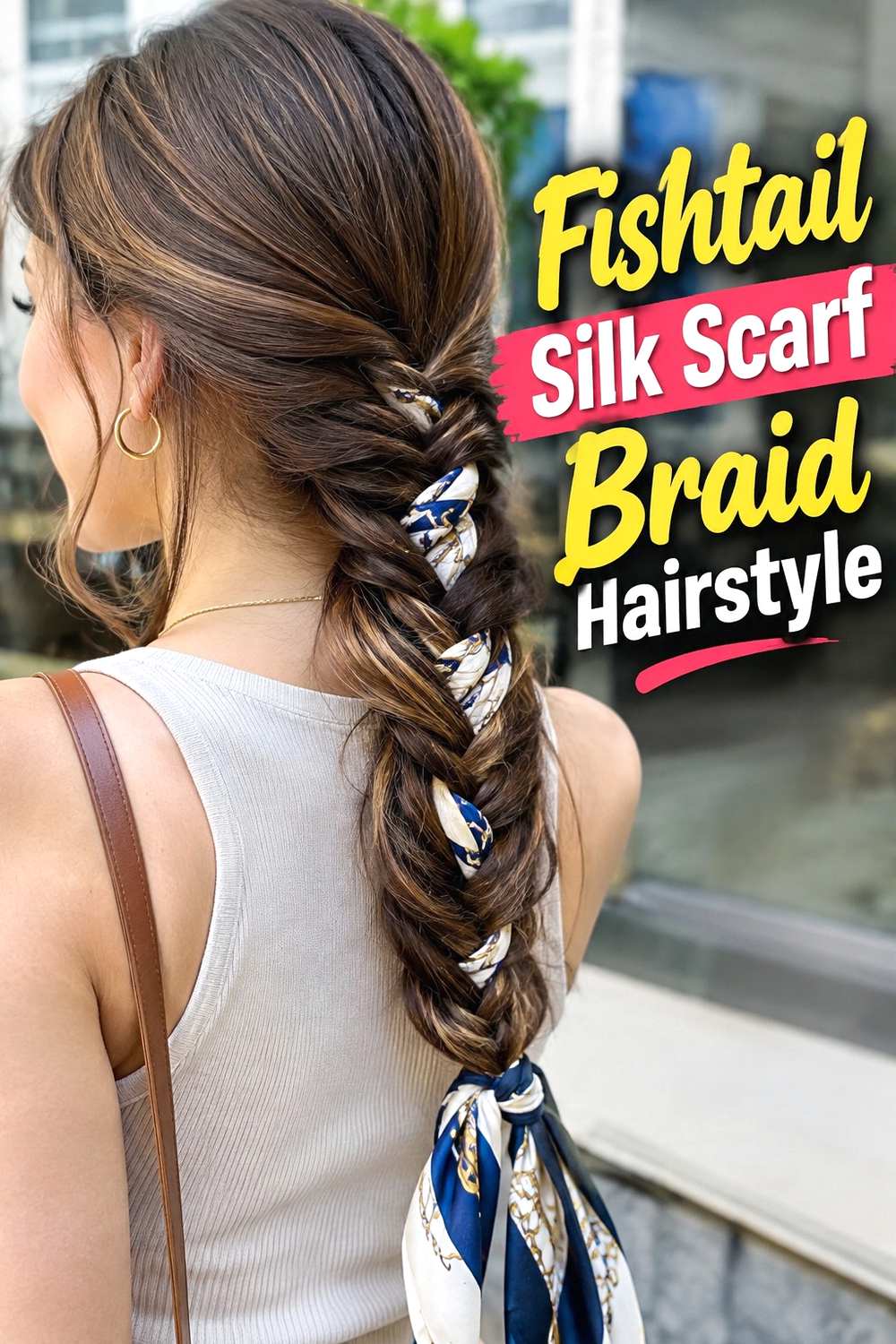
A fishtail braid creates a fine, intricate texture that contrasts beautifully with the smooth surface of silk. Instead of dividing the hair into three sections, begin with two and transfer small pieces from the outer edges toward the center. A narrow scarf can be incorporated alongside one section, appearing intermittently as the fishtail pattern develops. The smaller the hair sections, the more detailed the finished braid will look, while larger sections create a softer and faster version. Long hair provides the clearest canvas for the pattern, but a shorter fishtail can still work when the scarf is slim and proportionate to the braid.
Styling Notes
Maintain gentle, consistent tension so the scarf does not bunch between the smaller fishtail sections. Loosen the braid only after securing the end.
Wear & Maintenance
A detailed fishtail takes more time than a basic braid, so it suits occasions when you can spend a few extra minutes refining the pattern.
7. Double Dutch Silk Scarf Braid Hairstyle
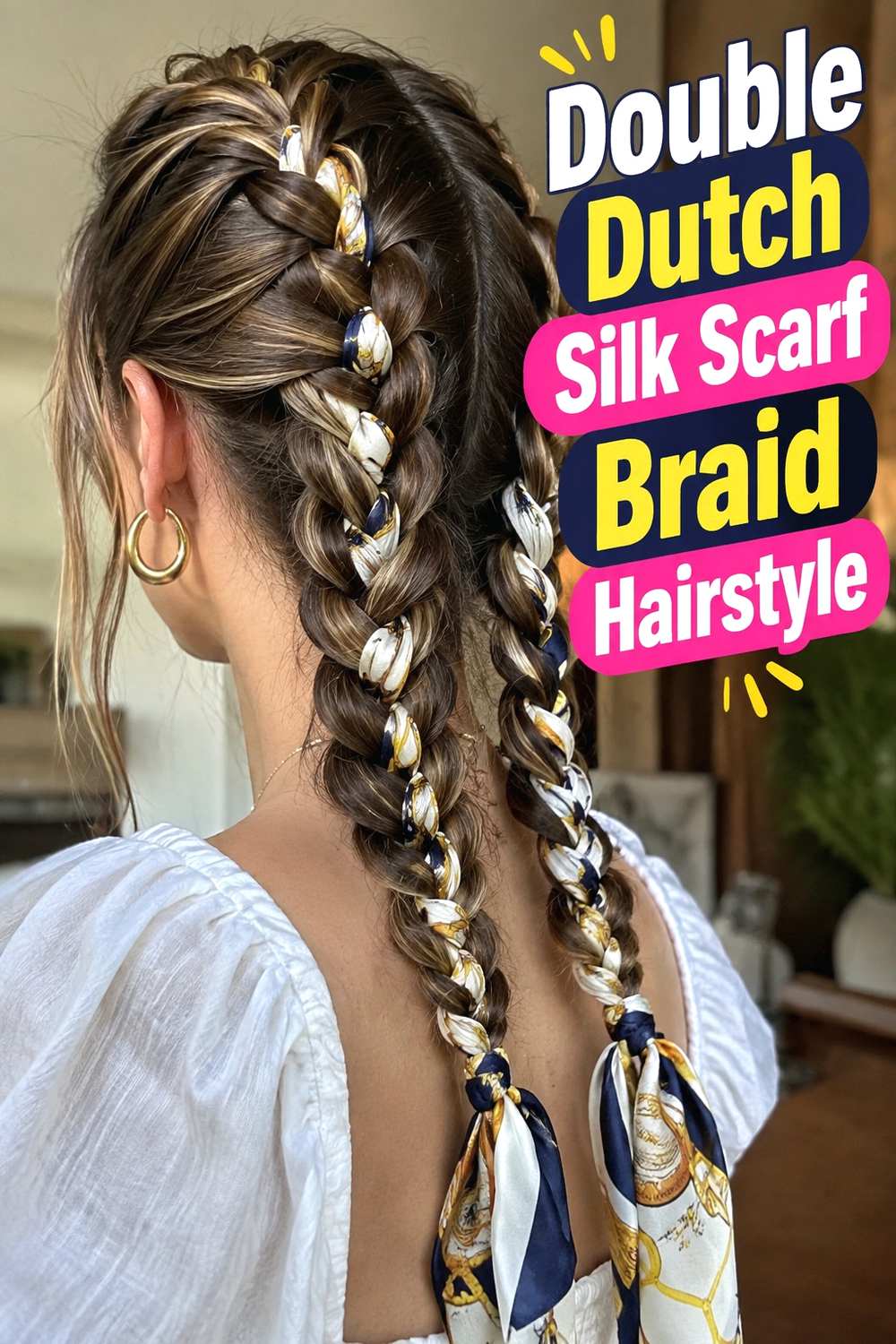
Double Dutch braids provide a sporty, structured base that becomes much more playful when silk scarves are woven into the pattern. Part the hair down the center and create one Dutch braid on each side, anchoring matching or coordinating scarf strips near the starting sections. Because the braids sit prominently above the scalp, the scarf accents remain easy to see even when the fabric is relatively narrow. Matching scarves create a balanced finish, while two complementary prints can make the look more expressive. This style keeps most of the hair secured, making it useful when you want a decorative hairstyle that still feels controlled during active or warm days.
Hair Type & Length
Medium-length hair is usually enough for this style, while longer hair creates more room for visible scarf detailing below the nape.
Pro Tip
Use two scarves of similar width and length so both braids maintain comparable volume and tension.
8. Half Up Silk Scarf Braid Hairstyle
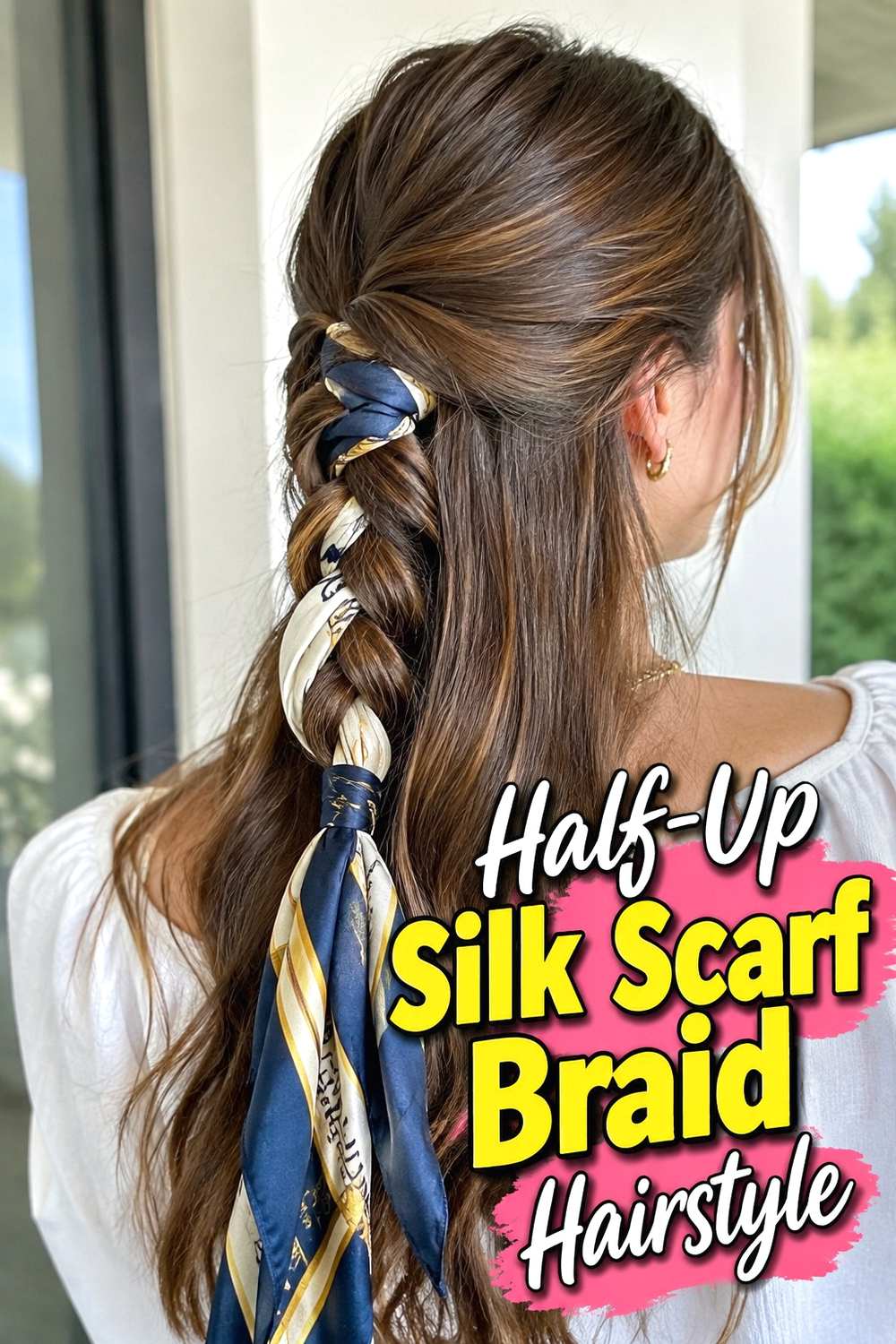
A half-up scarf braid combines the decorative effect of braided fabric with the softness of wearing part of the hair loose. Gather a section from the crown or temples, secure a narrow silk scarf at the base, and braid only that upper portion while the remaining hair falls naturally underneath. The contrast between the structured braid and loose lengths makes this style particularly attractive on waves, curls, or softly textured straight hair. It is also a useful option when there is not enough length or density for a substantial full braid. Letting the scarf tails extend slightly beyond the braid adds movement without covering the loose hair.
Why It Works
The smaller braided section keeps the scarf detail visible while preserving the volume and natural texture of the hair underneath.
Styling Notes
Avoid taking an overly large crown section. Leaving enough hair loose maintains the balanced half-up silhouette that defines the look.
9. Braided Bun With Silk Scarf Hairstyle
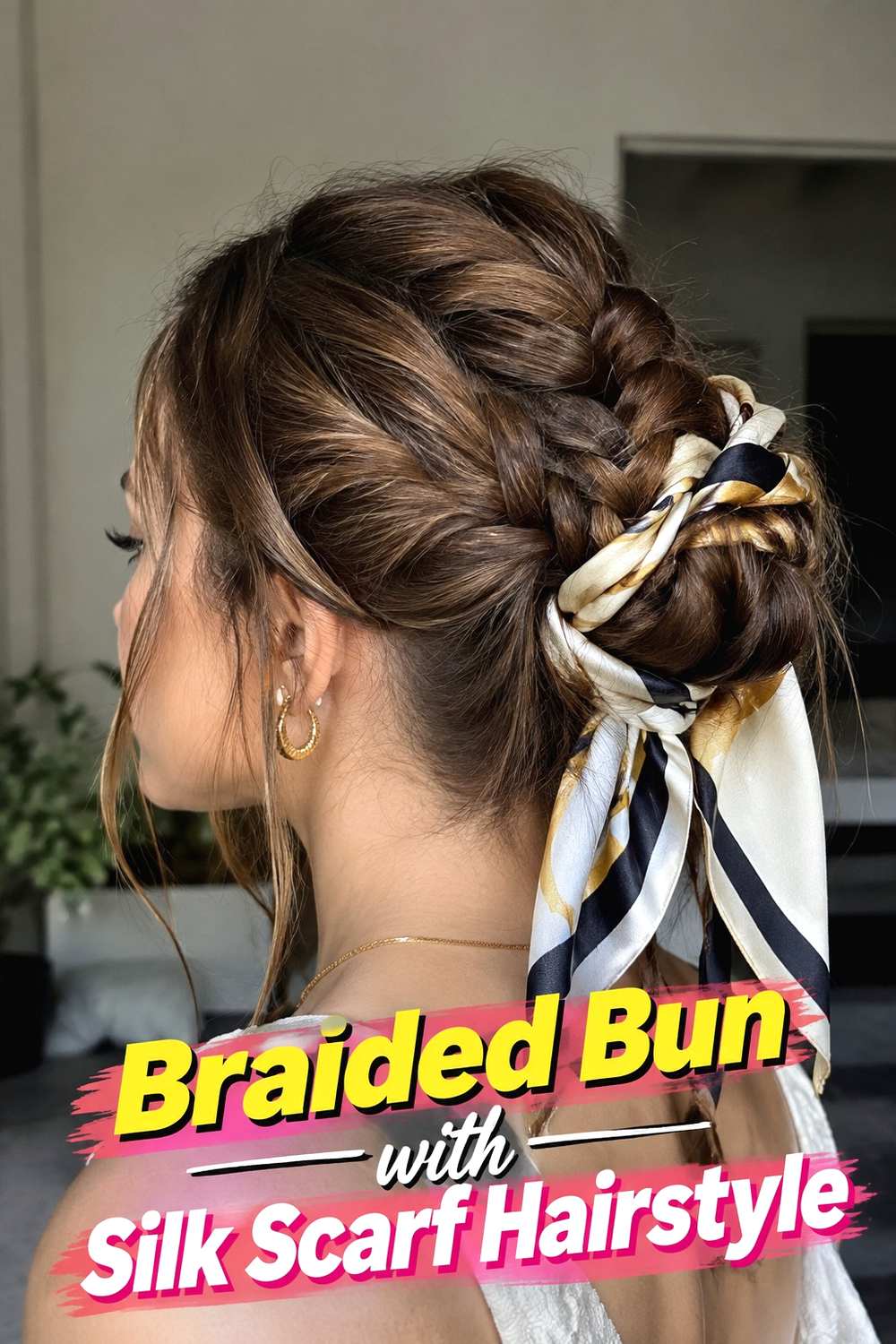
A braided bun with a silk scarf turns a simple updo into a more decorative style without requiring elaborate accessories. Begin with a ponytail, tie the scarf around its base, and weave the fabric into a three-strand braid. Once the braid is complete, coil it around the ponytail base to form the bun and secure the shape with pins. Small sections of scarf will appear throughout the coil, creating color and pattern from multiple angles. A compact bun feels polished, while gently loosening the braid before wrapping it gives the updo a softer, fuller finish. This technique works particularly well when you want the hair neatly lifted away from the neck.
Wear & Maintenance
Pin through the hair rather than relying on the scarf to secure the bun. A stable ponytail base helps prevent the finished style from loosening.
Best For
This style works well for dinners, celebrations, summer events, or everyday occasions when you want a more finished updo.
10. Boho Loose Silk Scarf Braid Hairstyle
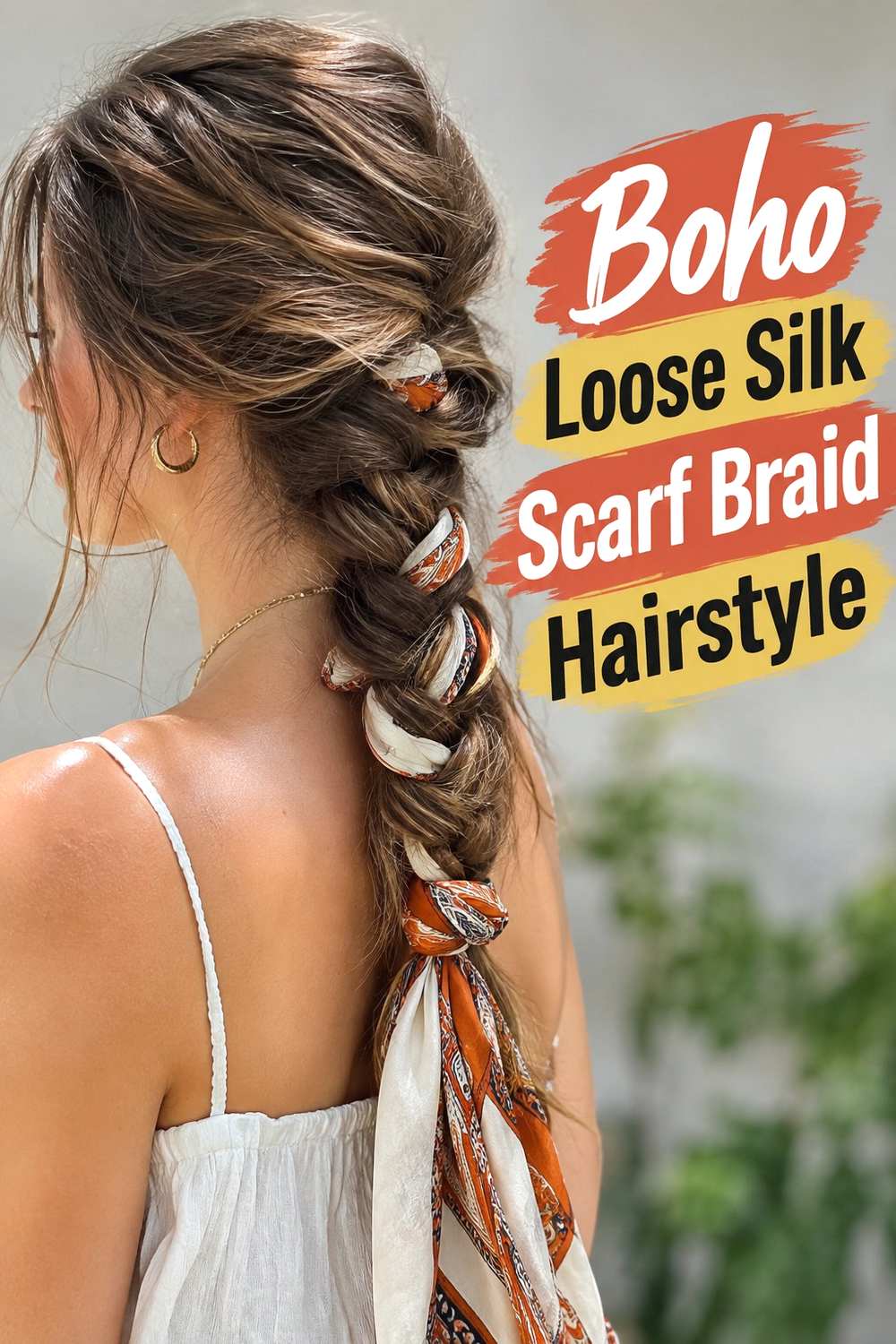
The boho loose scarf braid focuses on soft texture rather than perfect symmetry. Start with natural waves or lightly textured hair, then form a relaxed braid while incorporating a long, narrow silk scarf through one section. Keep the weave intentionally loose enough to show movement, and gently pull at the outer edges after securing the end. A few face-framing strands or subtle flyaways can complement the undone finish without making the style look messy. Floral, paisley, and softly colored scarves suit the relaxed character particularly well. The result is especially effective on longer hair, where both the braid and scarf can drape naturally over the shoulder or down the back.
Styling Notes
Create the braid first and soften it afterward rather than braiding with extremely loose tension from the beginning. This gives the style more reliable hold.
Best For
The relaxed finish suits casual gatherings, vacations, outdoor events, and days when a highly polished braid would feel too formal.
11. High Ponytail Silk Scarf Braid Hairstyle
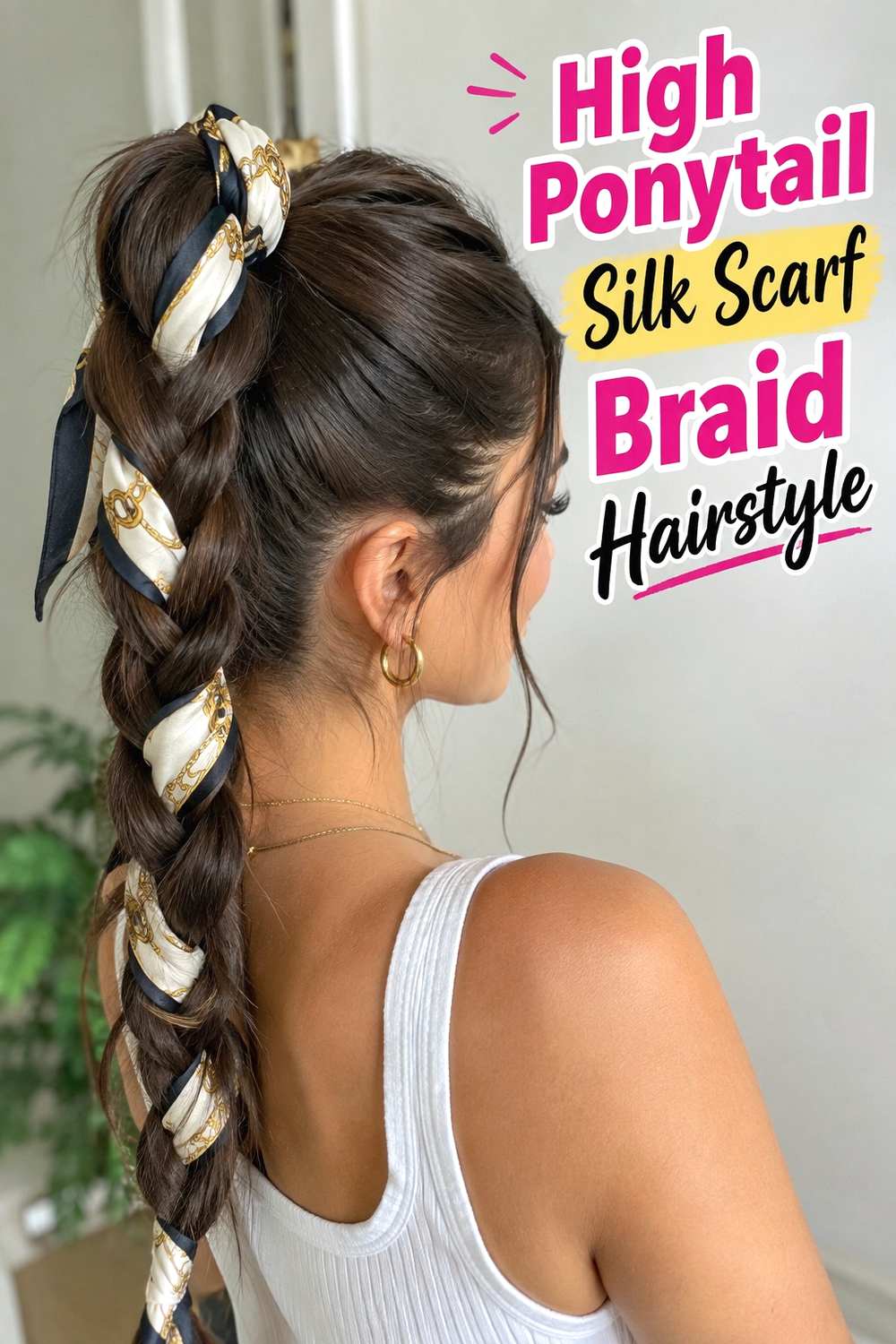
A high ponytail scarf braid has a lifted, energetic silhouette with the decorative detail concentrated through the swinging length of the ponytail. Secure the ponytail firmly at the crown, tie a folded silk scarf around the base, and incorporate the ends into a braid. Because the braid begins away from the scalp, the technique is relatively straightforward and allows the scarf pattern to remain easy to see. A smooth crown produces a sharper finish, while soft texture around the hairline makes the look more casual. Medium-long to long hair gives the braid enough length to move freely, and shorter scarf tails can prevent the accessory from overwhelming the ponytail.
Wear & Maintenance
The ponytail elastic should provide the actual hold. Tie the silk scarf securely but comfortably around it so the knot does not slide during movement.
Why It Works
The elevated base makes the braid visible from several angles while the scarf adds color without complicating the crown area.
12. Milkmaid Silk Scarf Braid Hairstyle
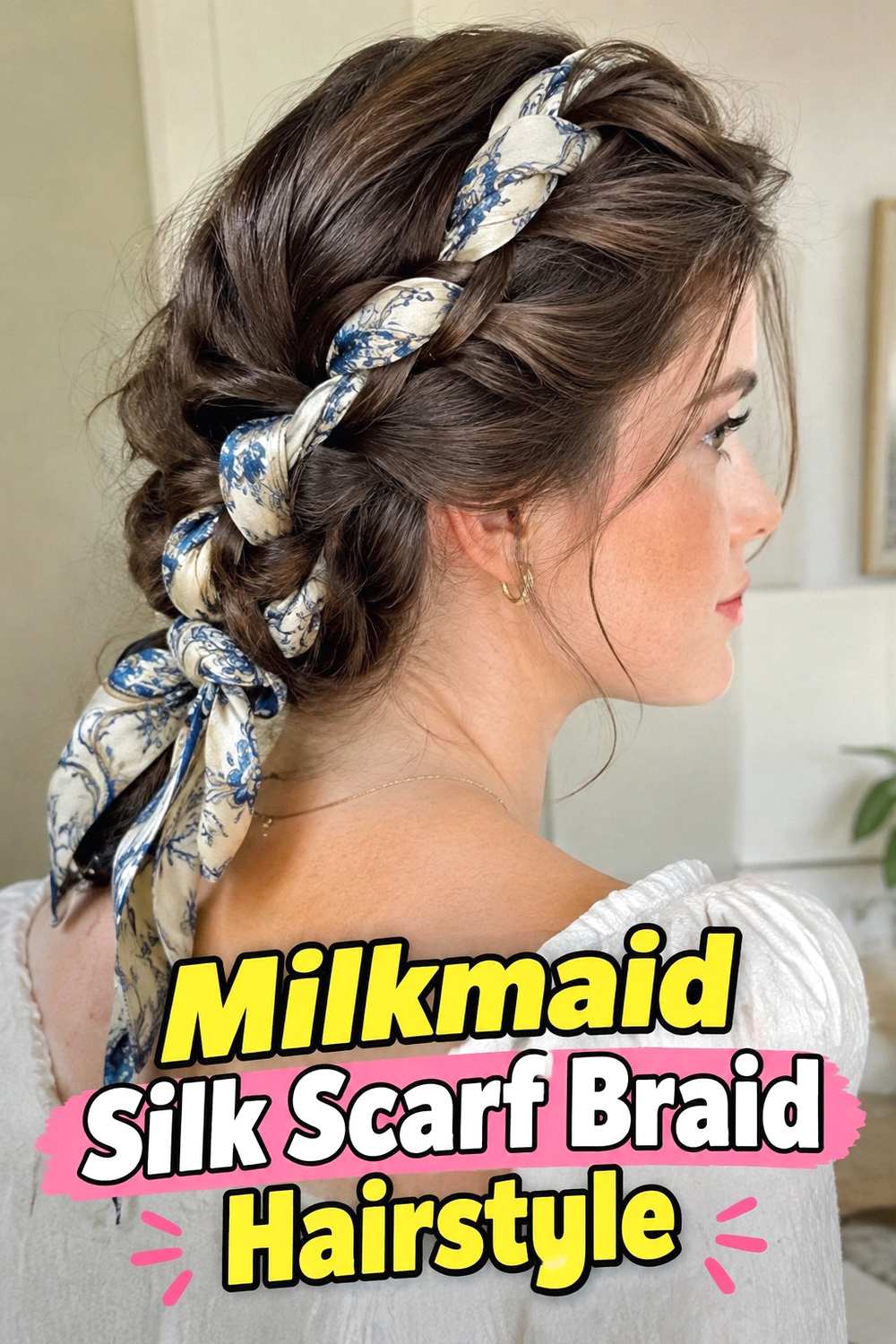
A milkmaid scarf braid places the woven detail across the top of the head for a romantic, softly structured finish. Divide the hair into two low sections, incorporate a narrow silk scarf into each braid, then bring the braids upward and pin them across the crown. The fabric becomes part of the visible braided bands, adding color without requiring a separate headband. Long hair makes it easier to achieve overlap at the top, although medium lengths may work with careful pin placement. The style can be kept smooth for a cleaner appearance or gently loosened around the temples for a softer effect that feels less formal.
Hair Type & Length
Medium-long or long hair works best because each braid needs enough length to reach comfortably across the crown.
Pro Tip
Tuck the braid ends and scarf tips beneath the opposite braid before pinning them to keep the finished crown neat from every angle.
How to Choose the Right Look
Start with your hair length and the amount of structure you want. Long hair gives you the most flexibility for fishtails, milkmaid crowns, and full French or Dutch braids, while medium lengths can work especially well with half-up braids, low ponytails, and braided buns.
Texture also changes the finished effect. Smooth hair makes scarf patterns look crisp and graphic, while waves, curls, and natural texture can create more fullness around a relaxed or boho braid. If your hair is very silky, establishing the braid with controlled tension before loosening it can help the style remain secure.
Consider styling time as well. A classic three-strand braid or ponytail braid is relatively simple, while fishtail, French, Dutch, and crown techniques require more section control. For all-day wear, styles anchored with an elastic before the scarf is added are generally easier to stabilize.
Finally, match the scarf to the scale of your braid. Narrow scarves blend naturally into finer braids, while thicker or fuller hair can support wider fabric. The scarf should enhance the braid rather than hide its structure.
Final Thoughts
Silk scarf braid hairstyles can range from quick ponytail braids to detailed crowns and braided updos, so there is plenty of room to adjust the idea to your hair and styling comfort. Start with a simple braid if you are new to weaving fabric into hair, then experiment with more intricate placements once controlling the scarf feels natural.
FAQs
1. Can you braid a silk scarf directly into your hair?
Yes. Fold the scarf into a narrow strip, anchor it securely, and treat part of the fabric like one section of the braid. Keeping the scarf flat helps create a cleaner result.
2. What scarf size works best for braided hairstyles?
A small or medium silk scarf is usually the easiest to control. The ideal size depends on your hair length, braid thickness, and how much fabric you want visible.
3. Do scarf braids work on medium-length hair?
Yes. Low ponytail braids, half-up braids, double Dutch braids, and braided buns can all work well on medium hair when the scarf is proportionate to the available length.
4. How do you keep a silk scarf from slipping out of a braid?
Anchor the hairstyle with an elastic when practical, secure the scarf with a firm knot, and maintain even braid tension. Small hidden pins can add stability to crown or bun styles.
5. Should the scarf match your outfit?
It can, but it does not have to. A coordinating color creates a polished effect, while a contrasting print can turn the scarf into the main accessory.
Save your favorite silk scarf braid hairstyles and share the ideas with someone ready to give their next braid a colorful update.