18 Face-Framing Mini Braids Hairstyle Ideas
Tiny braids placed around the face can transform loose hair with just enough texture, detail, and movement to make an everyday style feel more intentional.
Face-framing mini braids usually use narrow sections near the temples, part, or front hairline, leaving the majority of the hair loose. Their small scale makes them easy to pair with straight lengths, waves, curls, half-up styles, or accessories without overwhelming the overall silhouette.
For the most believable result, the braids should begin from realistic sections, maintain consistent tension, and show natural strand variation rather than looking painted or disconnected. As you compare these ideas, think about your part, natural texture, front-layer length, accessory weight, and whether you want the mini braids to feel subtle or decorative.
Quick List
- Classic Center Part Face Framing Mini Braids Hairstyle
- Side Part Face Framing Mini Braids Hairstyle
- Wavy Face Framing Mini Braids Hairstyle
- Curly Texture Face Framing Mini Braids Hairstyle
- Sleek Straight Face Framing Mini Braids Hairstyle
- Bohemian Face Framing Mini Braids Hairstyle
- Beaded Face Framing Mini Braids Hairstyle
- Ribbon Woven Face Framing Mini Braids Hairstyle
- Mini Dutch Face Framing Braids Hairstyle
- Mini Fishtail Face Framing Braids Hairstyle
- Half Up Face Framing Mini Braids Hairstyle
- Crisscross Face Framing Mini Braids Hairstyle
- Beachy Face Framing Mini Braids Hairstyle
- Layered Face Framing Mini Braids Hairstyle
- Pearl Accent Face Framing Mini Braids Hairstyle
- Festival Face Framing Mini Braids Hairstyle
- Romantic Face Framing Mini Braids Hairstyle
- Minimalist Face Framing Mini Braids Hairstyle
1. Classic Center Part Face Framing Mini Braids Hairstyle
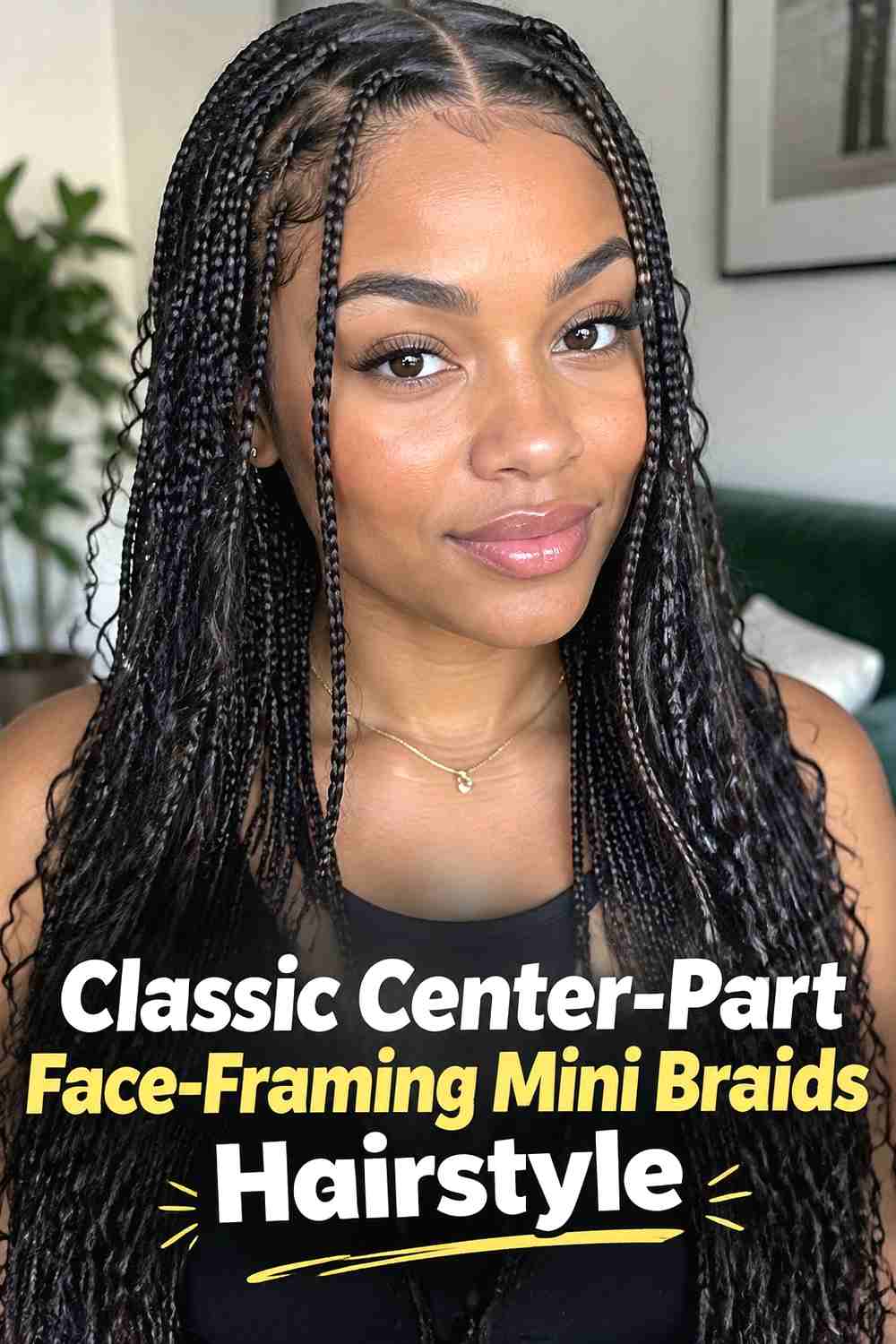
A center part with one narrow braid on each side creates the most recognizable version of this trend. The braids begin near the front hairline and fall alongside the cheeks, while the rest of the hair stays loose and natural. Medium to long hair gives the mini braids enough length to remain visible without dominating the style. Keep each section narrow and similar in size, then braid with moderate tension so the pieces lie neatly without pulling at the scalp. Tiny clear or hair-toned elastics work well at the ends. The surrounding lengths can stay straight, softly bent, or naturally textured, making this an easy starting point for the look.
Styling Notes
Section both braids before starting so their placement feels balanced. They do not need to be perfectly identical, but they should begin at roughly similar points near the part.
2. Side Part Face Framing Mini Braids Hairstyle
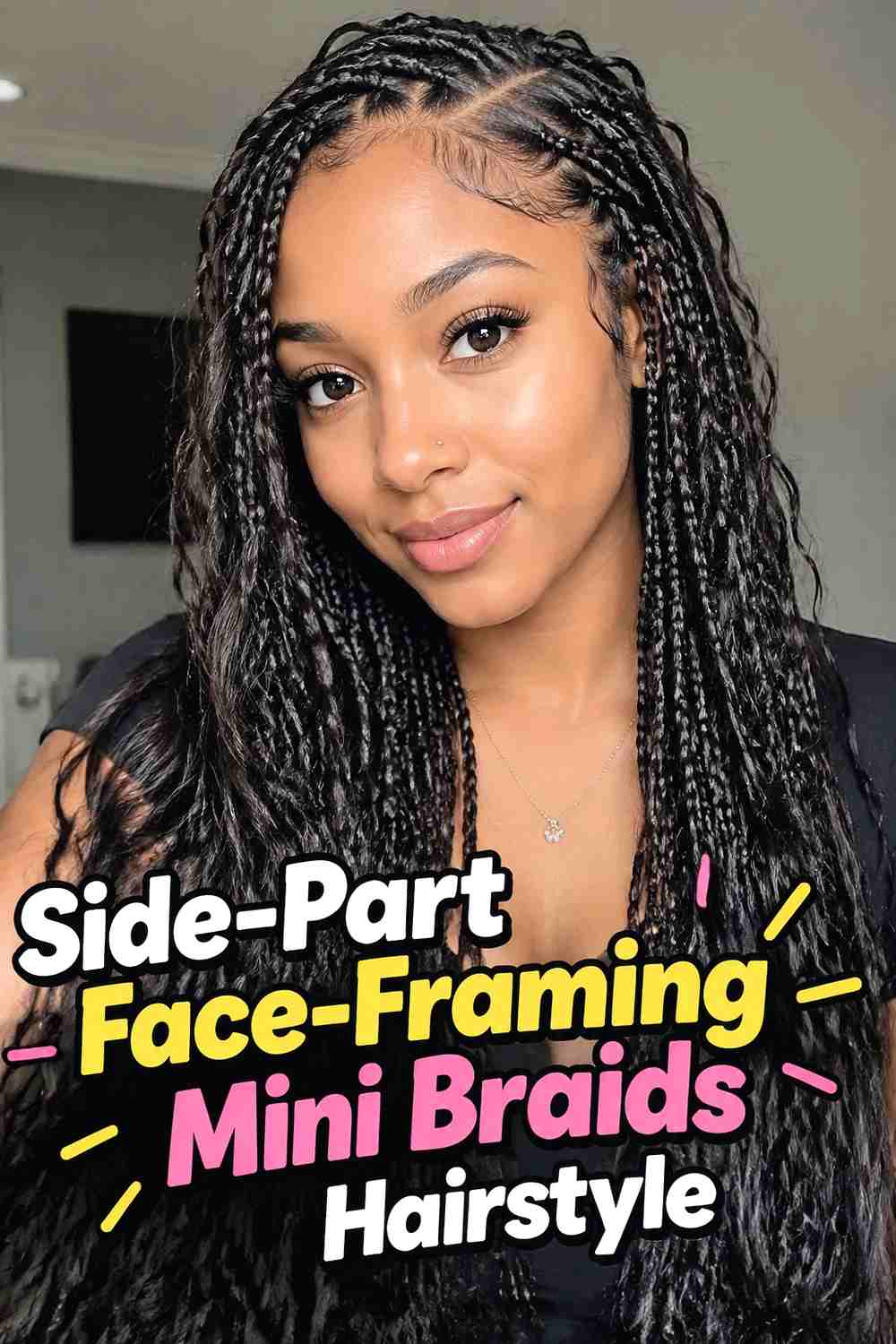
A side part gives face-framing mini braids a more asymmetrical finish. One braid can sit closer to the heavier side of the part while the opposite braid falls more lightly near the temple, creating subtle visual movement around the face. This works well when you want the detail to feel less symmetrical than a center-part version. Keep the sections slim and braid downward without pulling the front hair too tightly away from its natural direction. The rest of the hair can remain loose with a soft side sweep through the crown. A little natural root volume helps keep the overall style relaxed instead of making the mini braids look overly fixed.
Best For
Choose this version when you already prefer a side part or want the braids to blend into an asymmetrical everyday hairstyle rather than creating a perfectly balanced frame.
3. Wavy Face Framing Mini Braids Hairstyle
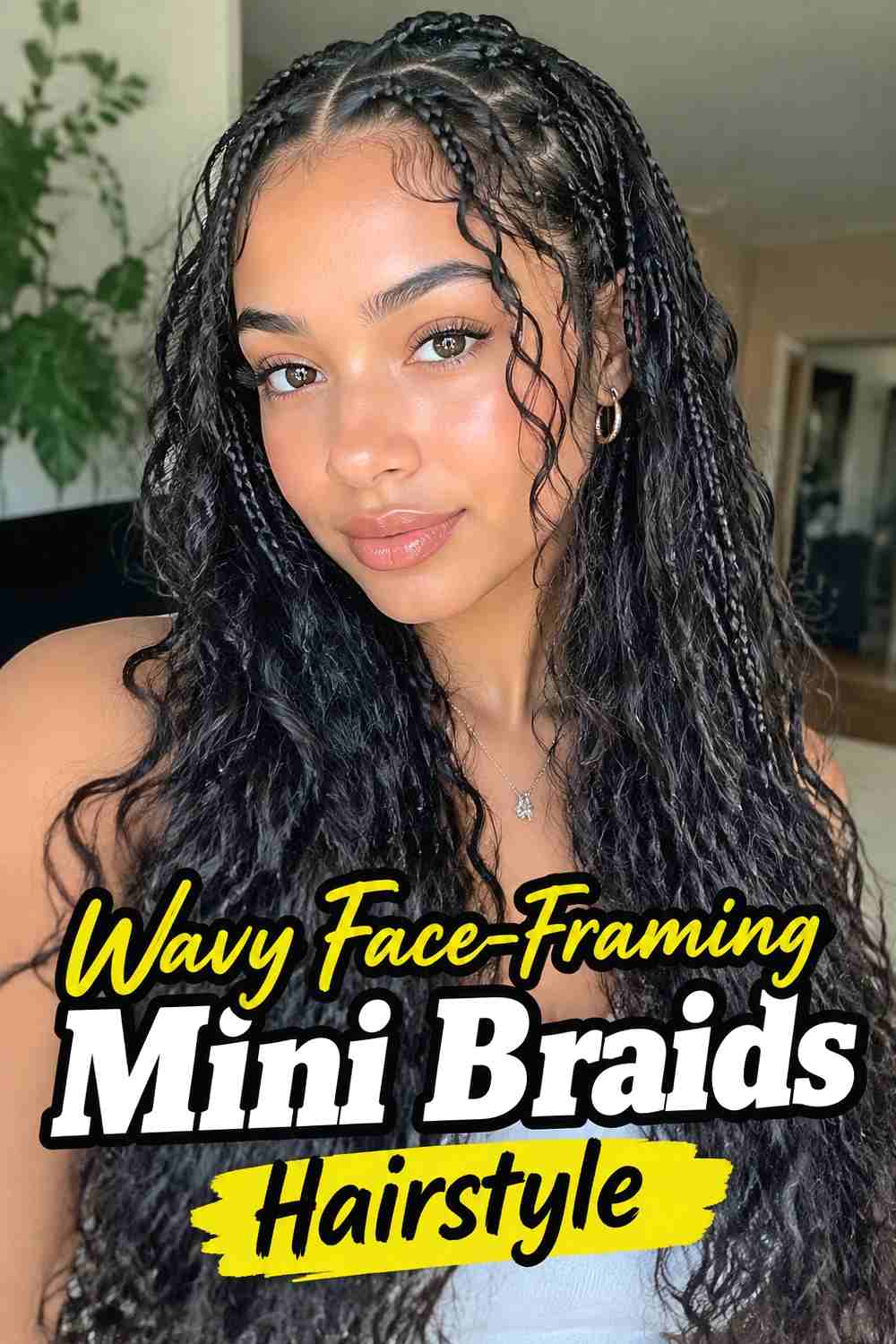
Loose waves make tiny face-framing braids stand out through contrast. The braids remain relatively neat and linear while the surrounding lengths move in broad, irregular bends, giving the hairstyle a relaxed, textured finish. Start by working with natural waves or creating soft bends through the loose hair, then section two slim front pieces and braid them separately. Keeping the braids narrow prevents them from competing with the waves. Let the ends of the braids fall naturally into the longer texture rather than curling them into a different shape. A few flyaways can support the soft finish, while lightweight styling products help preserve movement without making the loose lengths look overly polished.
Why It Works
The straight woven structure of each braid contrasts with the flowing wave pattern around it, making small details visible without requiring large accessories or complicated styling.
4. Curly Texture Face Framing Mini Braids Hairstyle
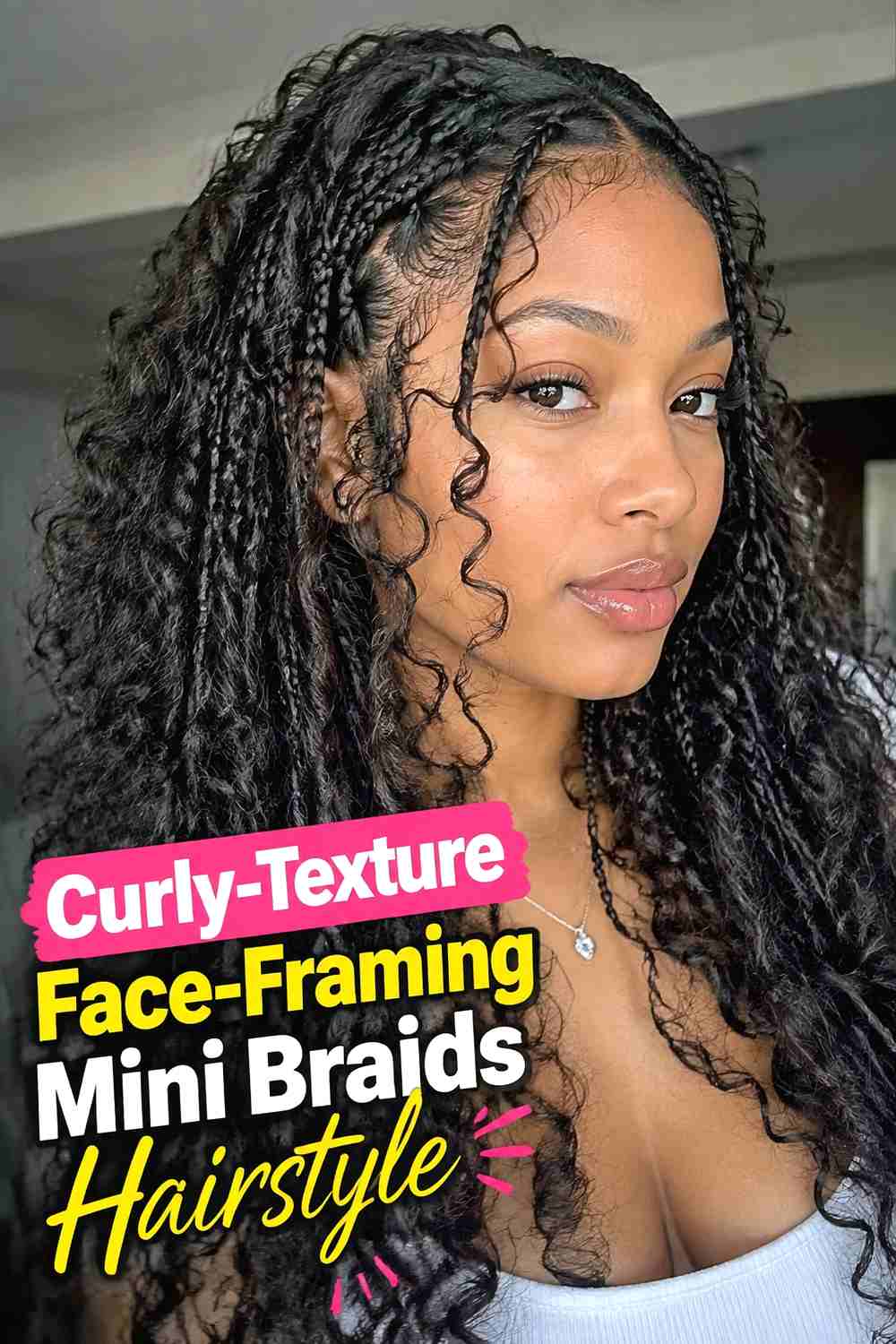
Curly hair gives face-framing mini braids a naturally dimensional background. Two narrow sections can be braided near the temples while the remaining curls stay loose, preserving their volume, variation, and movement. Avoid brushing out the surrounding texture just to create the braids; instead, separate small sections carefully with your fingers and braid with comfortable tension. Depending on curl pattern, the mini braids may appear slightly thicker or shorter because of shrinkage and density. Let a few curls remain free around the hairline if they naturally fall there. The finished hairstyle should celebrate the contrast between defined woven pieces and the existing curl pattern rather than trying to make every strand uniform.
Hair Type & Length
Curly medium and long hair can carry this style beautifully. Adjust braid size and tension to suit your curl pattern so the surrounding texture remains full and comfortable.
5. Sleek Straight Face Framing Mini Braids Hairstyle
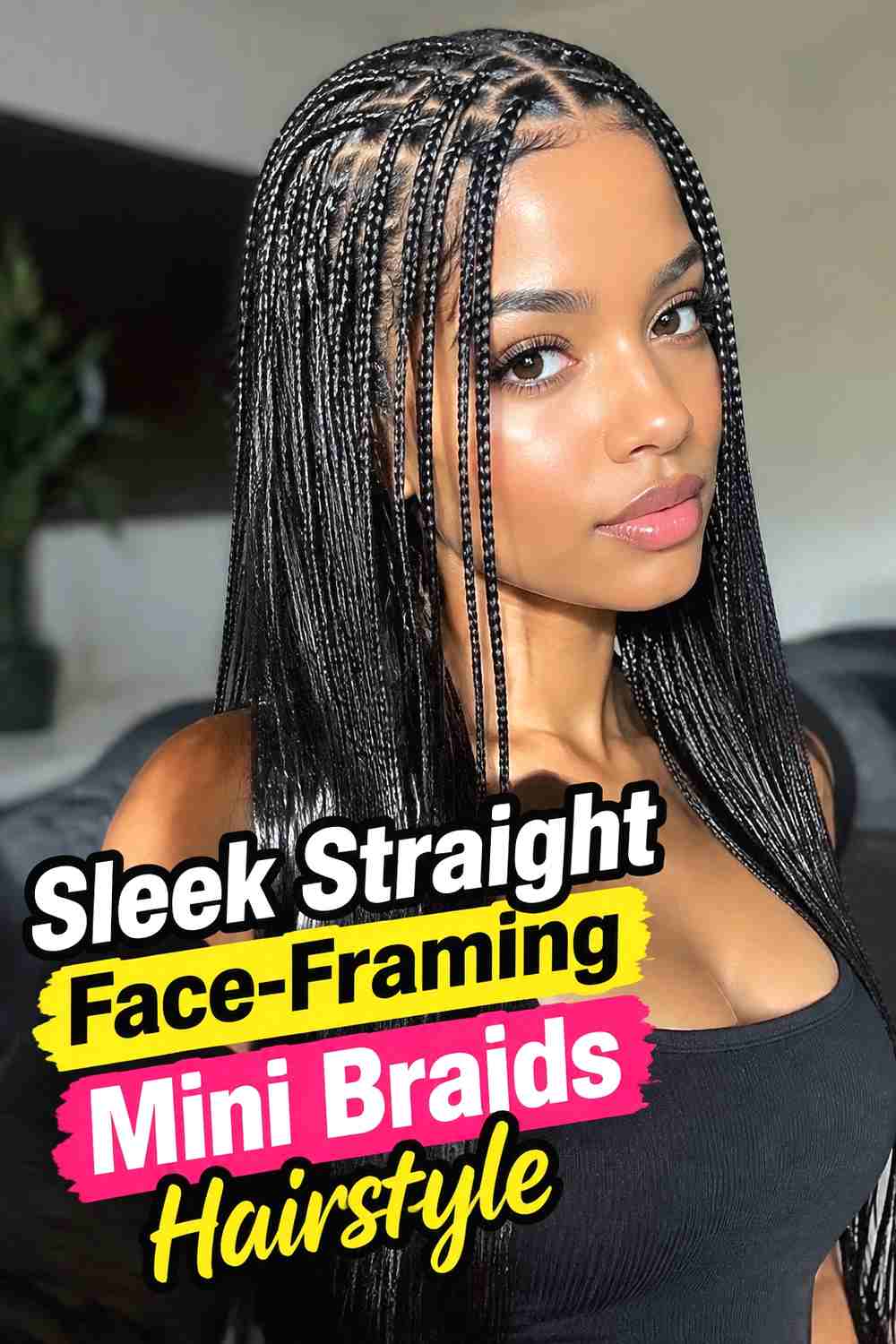
Straight lengths give mini braids a clean, graphic appearance because the woven pieces remain easy to see against a smooth background. A center or soft off-center part works particularly well, with two slim braids falling from the hairline toward the jaw or shoulders. Keep the rest of the hair polished but not rigid, allowing the ends to retain natural weight and slight movement. The braids should be narrow enough to feel like accents rather than full front sections. A touch of smoothing product can control flyaways around the part, but avoid coating the braid strands heavily. The finished style feels modern, simple, and easy to pair with casual or more polished outfits.
Styling Notes
Keep the braid sections especially neat when the surrounding hair is straight. Clean sectioning helps the small woven details look intentional against the smooth lengths.
6. Bohemian Face Framing Mini Braids Hairstyle
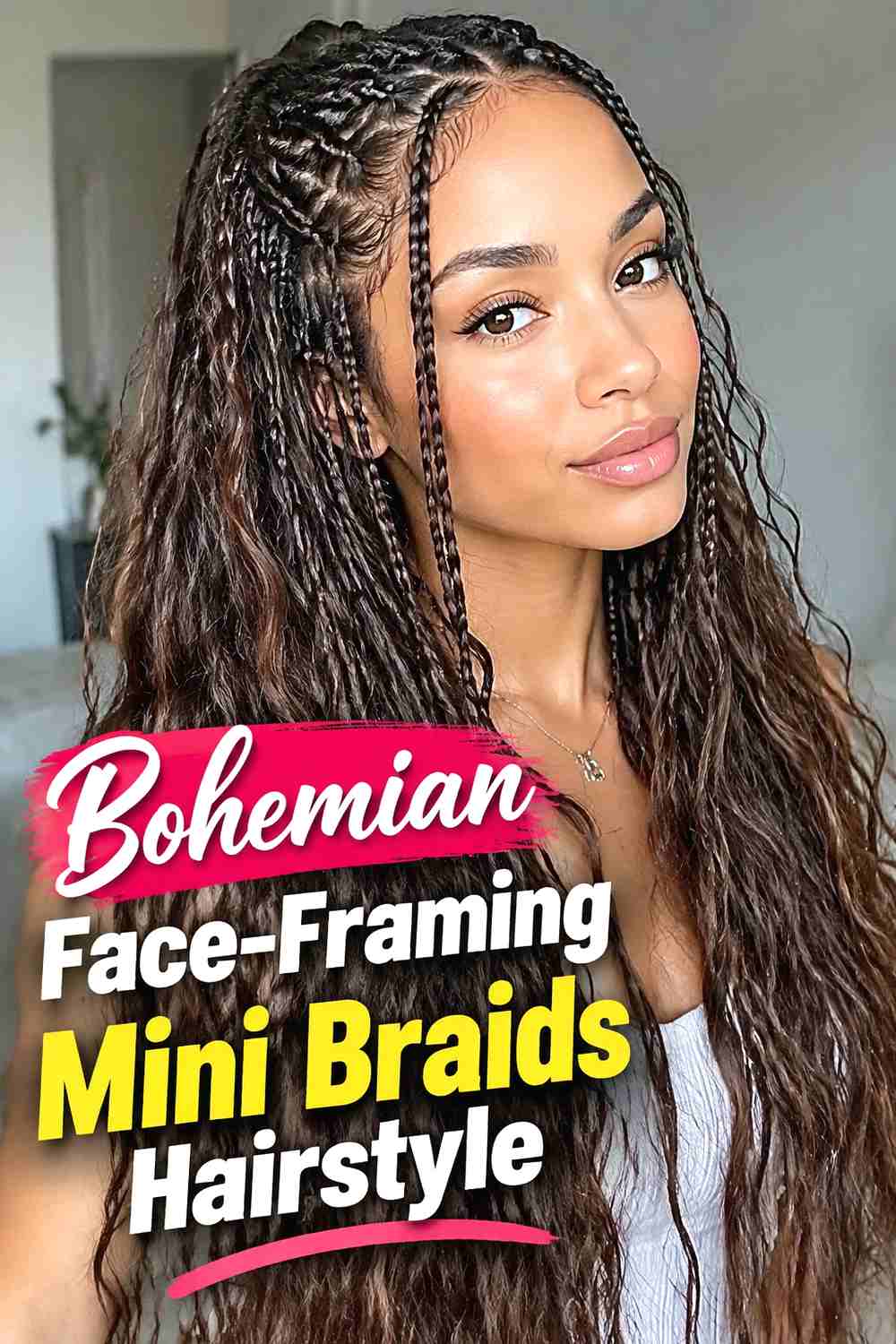
The bohemian version combines tiny front braids with softly textured loose hair, a little crown volume, and intentionally imperfect strand separation. The braids can be slightly uneven in thickness or gently loosened after securing, provided the woven pattern still holds. Natural waves work especially well, but straight or curly hair can also carry the relaxed effect with light texture. Leave a few wispy strands around the temples rather than forcing every front piece into the braids. Small thread, cord, or understated accessories can be added if desired, though the hairstyle works equally well without them. The finished look should feel easy and organic rather than tightly constructed.
Best For
This variation suits festivals, vacations, casual summer styling, or any day when you want mini braids to feel relaxed rather than crisp and polished.
7. Beaded Face Framing Mini Braids Hairstyle
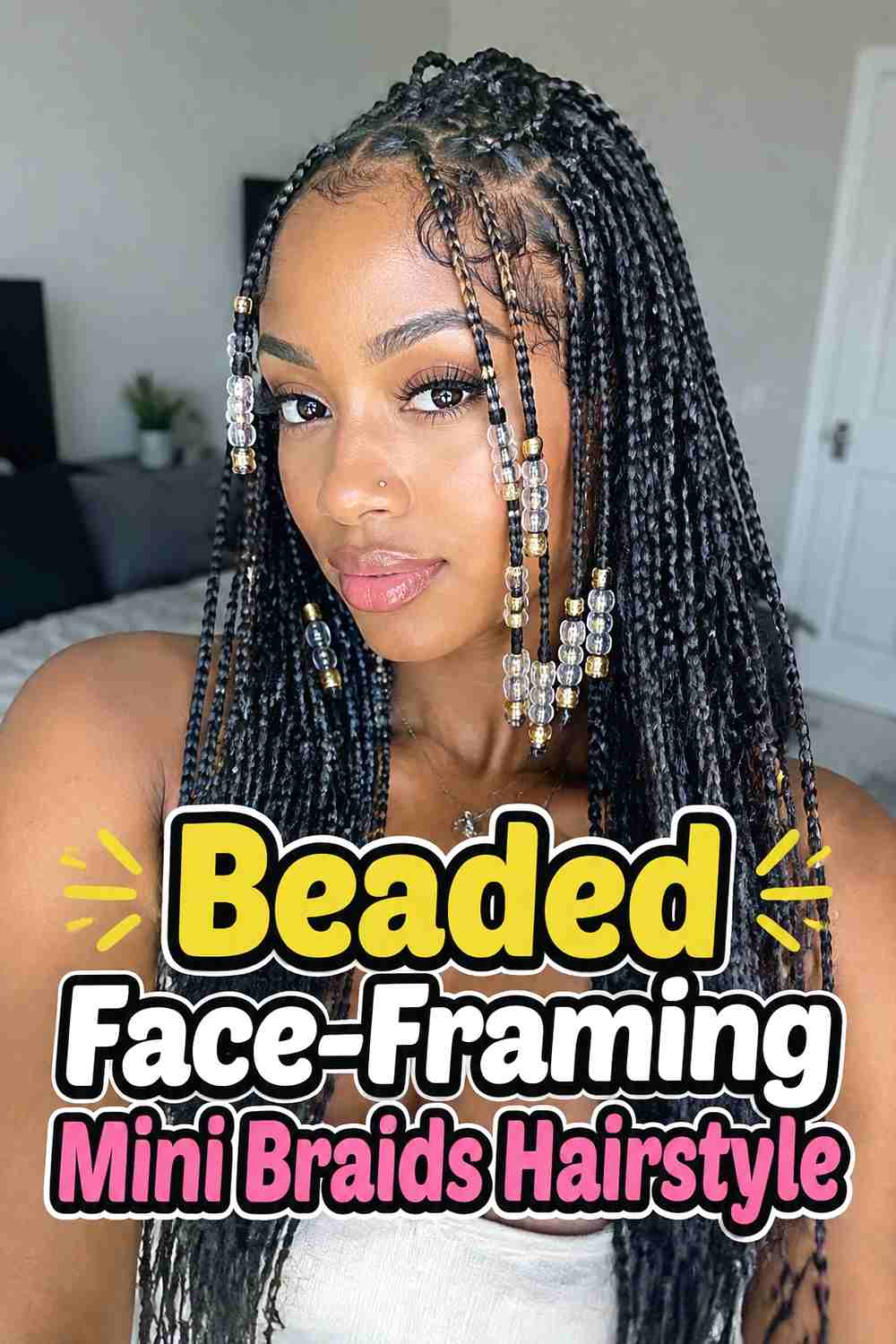
Tiny beads can add a playful accent to face-framing braids while keeping most of the hair loose. Create two slim braids near the temples and add only a few lightweight beads near the lower sections or ends, making sure the accessories are appropriate for the braid thickness. The braids need to be secure enough to support the beads without excessive pulling. Straight, wavy, and curly loose hair can all work, so the overall mood depends largely on the surrounding texture. Keep the accessory placement balanced but not necessarily identical on both sides. The result should feel decorative and intentional without loading the small front sections with too much weight.
Wear & Maintenance
Choose lightweight beads and check that they do not tug at the hairline. The smaller the braid, the lighter the accessory should be for comfortable wear.
8. Ribbon Woven Face Framing Mini Braids Hairstyle
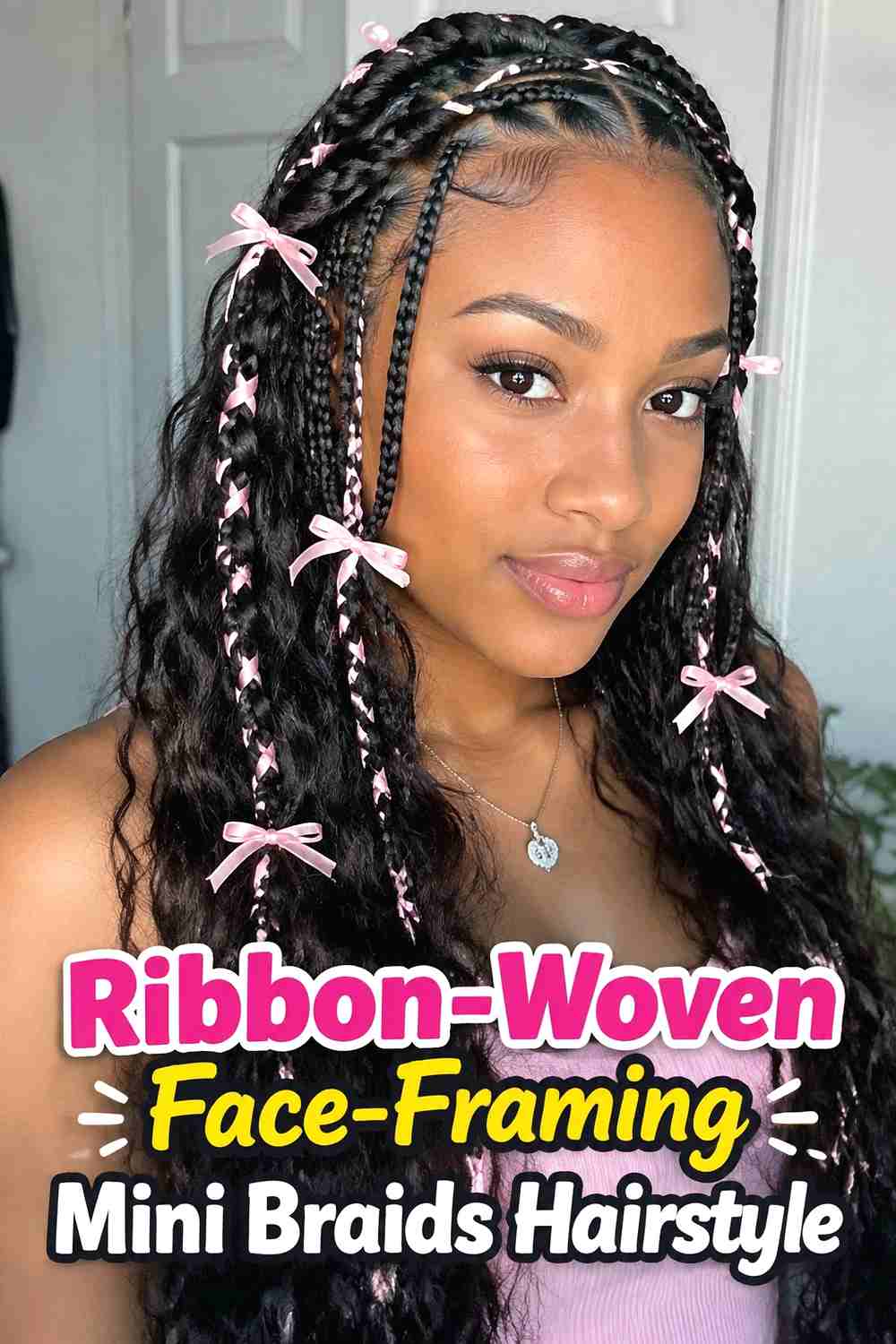
Narrow ribbon woven into mini braids creates a delicate color accent close to the face. Use a very thin ribbon or cord that can move naturally alongside the hair rather than overpowering the small braid. Anchor it near the top of the section, then incorporate it gradually as you braid downward. The surrounding hair can stay softly waved, straight, or lightly tousled depending on the finish you want. Once the braid is secure, adjust the ribbon so it appears intermittently rather than covering the woven hair completely. This version works particularly well when the ribbon tone coordinates with clothing or accessories without matching everything exactly.
Pro Tip
Use ribbon that is substantially narrower than the braid. A wide strip can hide the hair pattern and add unnecessary weight to the small front section.
9. Mini Dutch Face Framing Braids Hairstyle
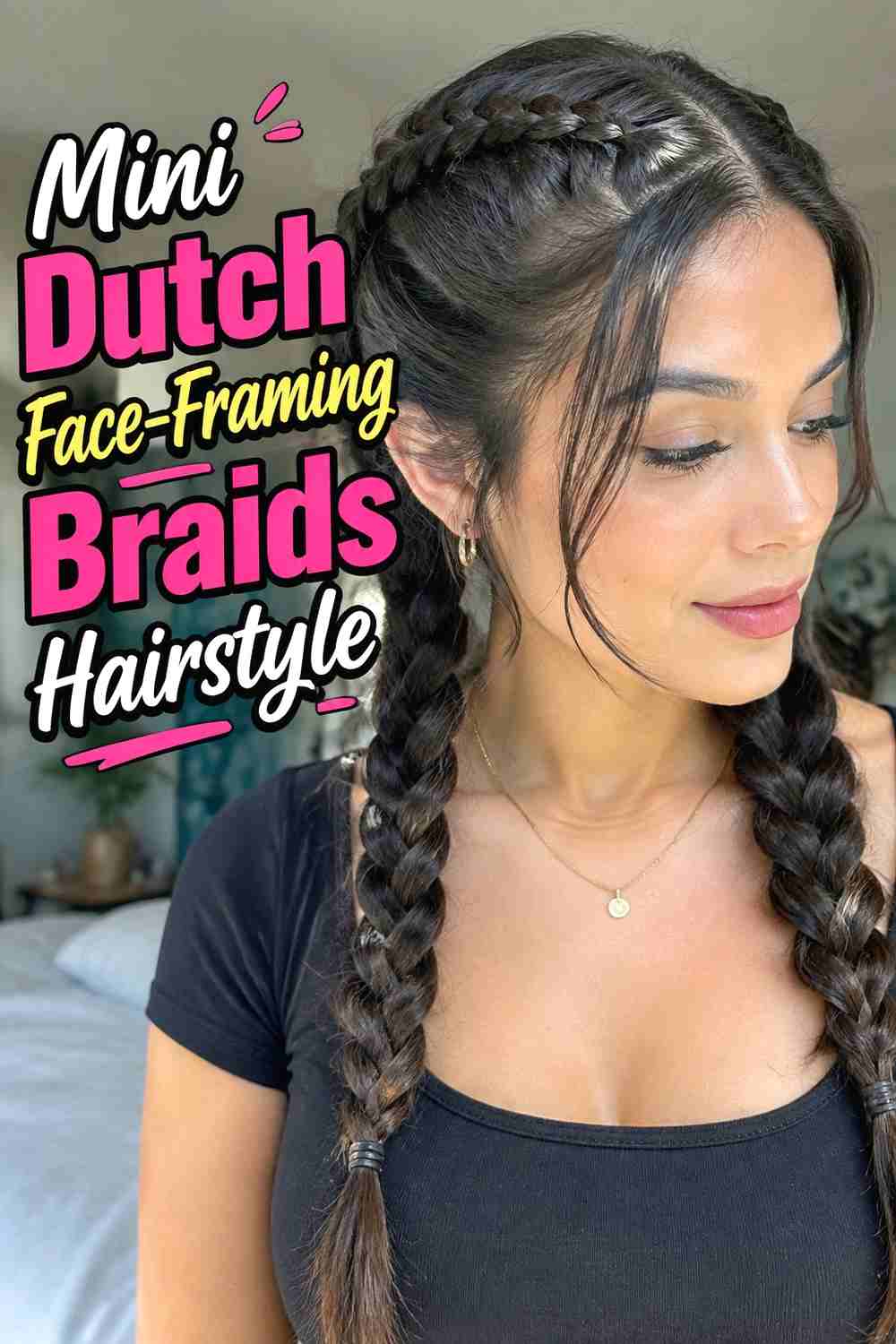
Mini Dutch braids create a raised effect along the front hairline before continuing into narrow hanging braids. Instead of crossing sections over one another, work them underneath so the woven detail sits more visibly above the surrounding hair. Keep each braid close to the temple and use small, consistent additions if you are incorporating hair from the scalp. Once the braid reaches the point where you want it to hang freely, continue with a regular three-strand pattern and secure the end. The remaining hair can stay loose and simple so the raised front detail remains visible. Moderate tension is important because the sections are small and sit close to the face.
Why It Works
The raised Dutch structure makes tiny braids easier to see near the hairline while still leaving most of the hairstyle loose and uncomplicated.
10. Mini Fishtail Face Framing Braids Hairstyle
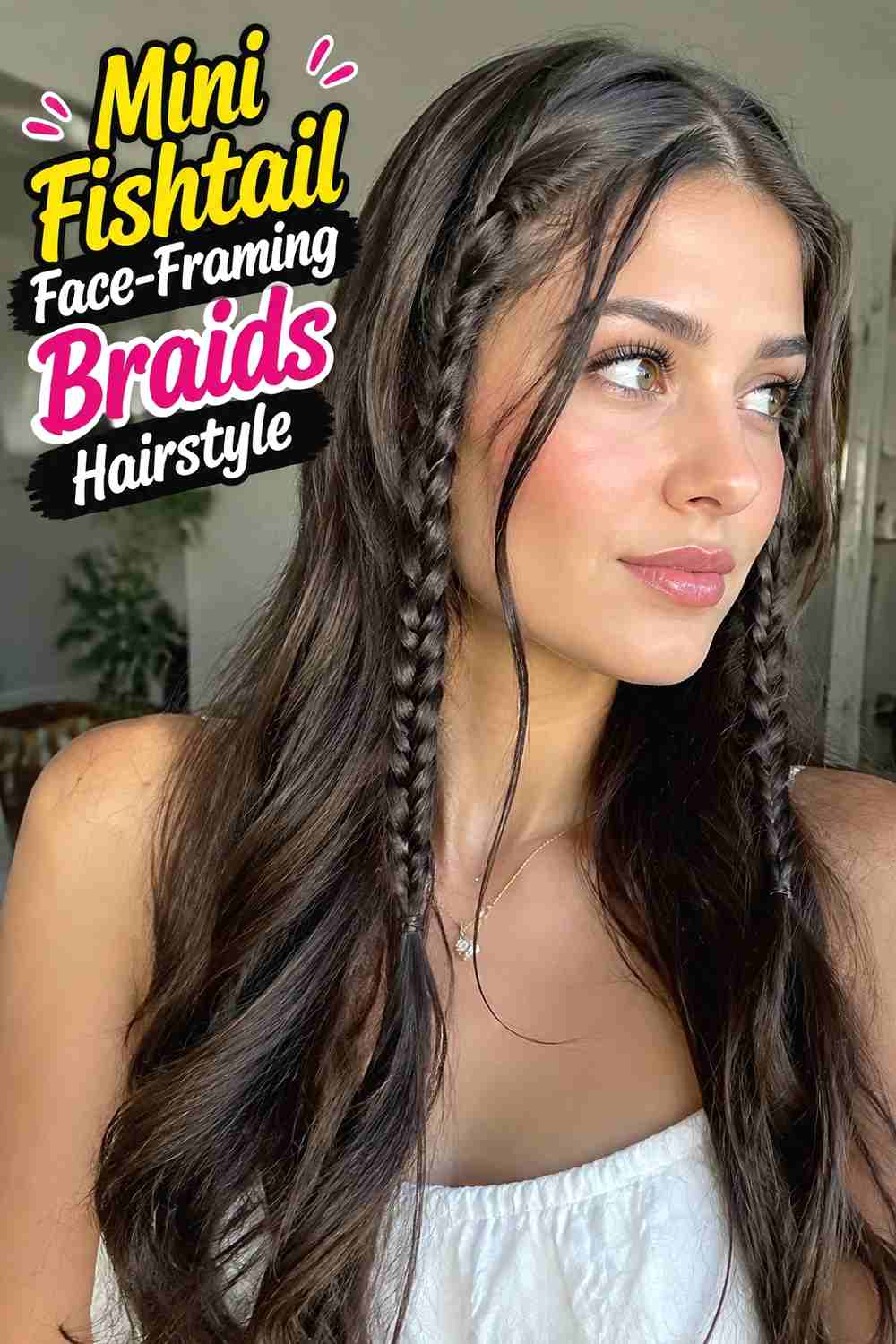
Mini fishtail braids offer a finer, more intricate texture than standard three-strand braids. Take a slim section on each side of the face, divide it into two parts, and cross tiny outer pieces toward the center until the braid reaches the desired length. Because the sections are small, long hair provides the clearest repeating pattern. Secure the ends before gently adjusting the outer edges if you want a slightly softer finish. Keep the rest of the hairstyle simple—soft waves or straight lengths both work well—so the detailed fishtail texture remains visible. The finished effect feels delicate and handcrafted without requiring a full braided hairstyle.
Hair Type & Length
Medium-long and long hair gives the fishtail pattern more room to develop. Fine sections can be intricate, so work with comfortable tension and secure the ends carefully.
11. Half Up Face Framing Mini Braids Hairstyle
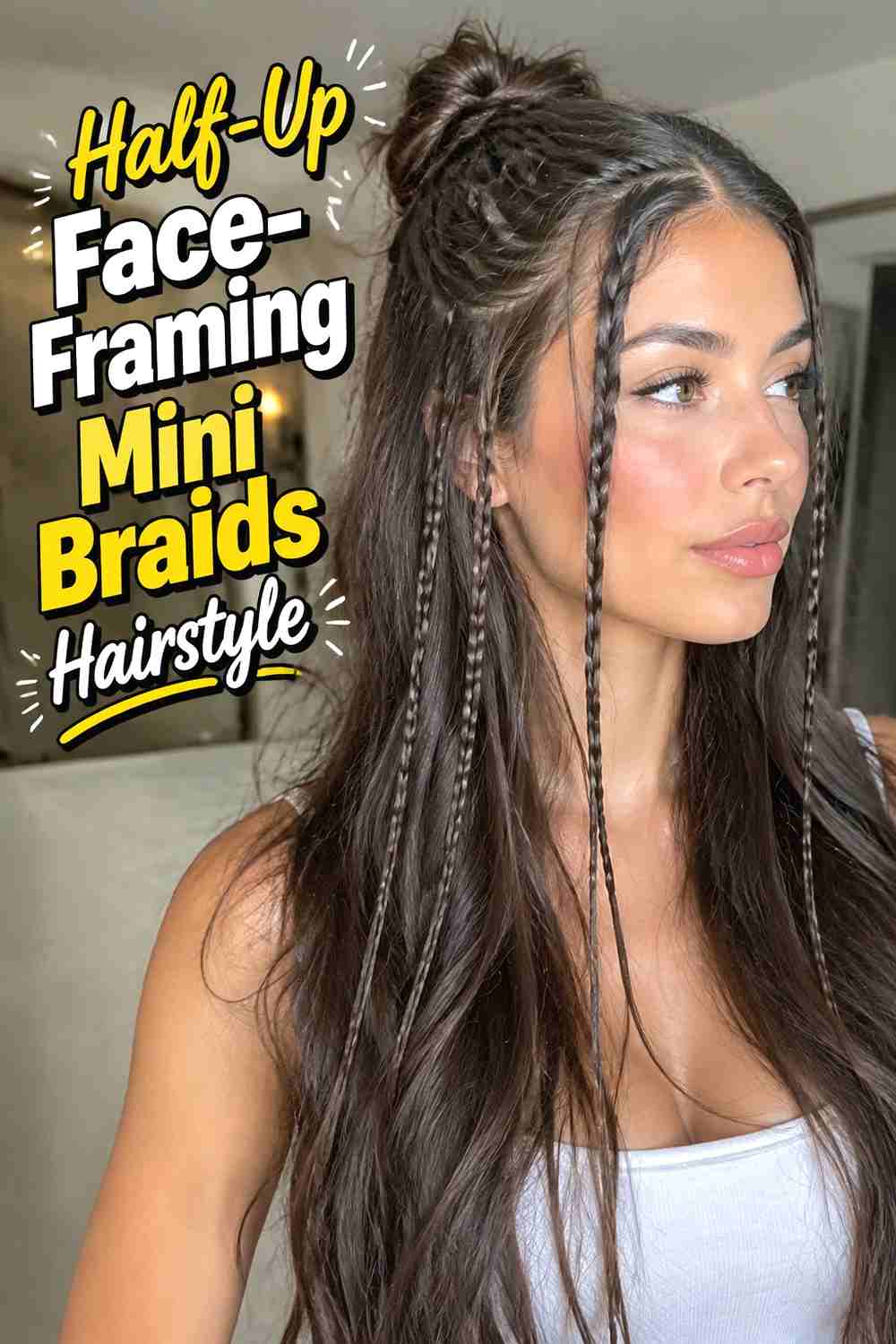
A half-up arrangement gives mini braids extra structure while keeping plenty of loose length. Create the two face-framing braids first, then gather a small section from the crown or temples into a half-up tie behind them. The braids can remain hanging near the cheeks or be lightly incorporated into the half-up section depending on the desired shape. This works especially well with waves because the upper section stays controlled while the lower lengths retain movement. Keep crown volume soft rather than tightly pulling everything backward. Small elastics and hidden pins help preserve the lightweight effect so the finished style does not become bulky or overly complicated.
Styling Notes
Build the mini braids before securing the half-up section. This makes it easier to control exactly how much hair stays loose around the face.
12. Crisscross Face Framing Mini Braids Hairstyle
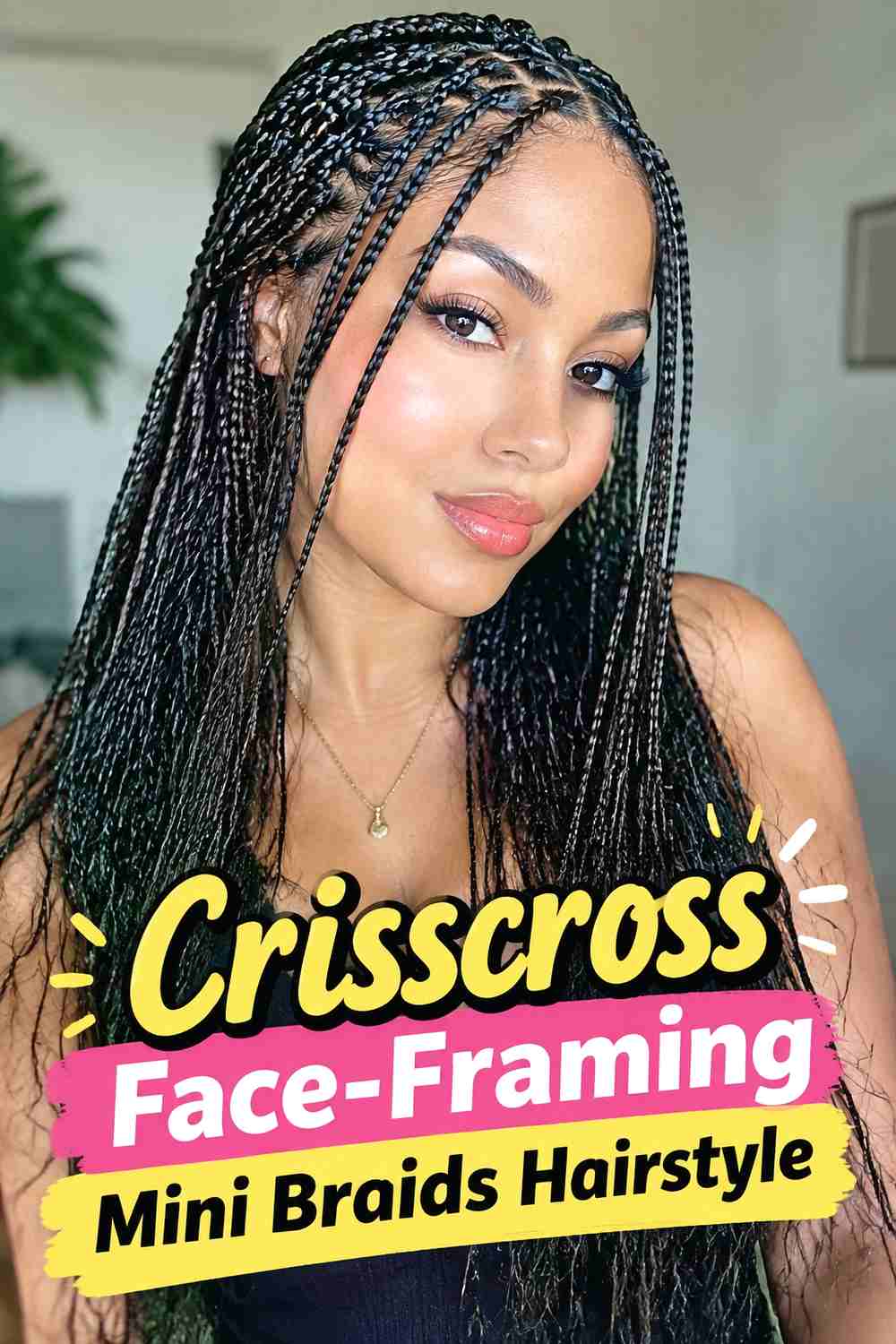
Crisscross placement adds a more graphic detail to small front braids without requiring a full updo. Create narrow braids from each side of the part, then guide them backward or across nearby front sections and secure them discreetly with small elastics or hidden pins. The crossing should follow the natural direction of the hair rather than stretching the braids sharply across the scalp. Keep most of the lengths loose so the design remains light and wearable. Straight or softly waved hair makes the overlapping lines easiest to see. This version works best with careful sectioning and restrained accessories, allowing the braid placement itself to provide the visual interest.
Pro Tip
Plan the crossing point before braiding. A gentle diagonal usually sits more naturally than pulling two tiny braids tightly across the front of the head.
13. Beachy Face Framing Mini Braids Hairstyle
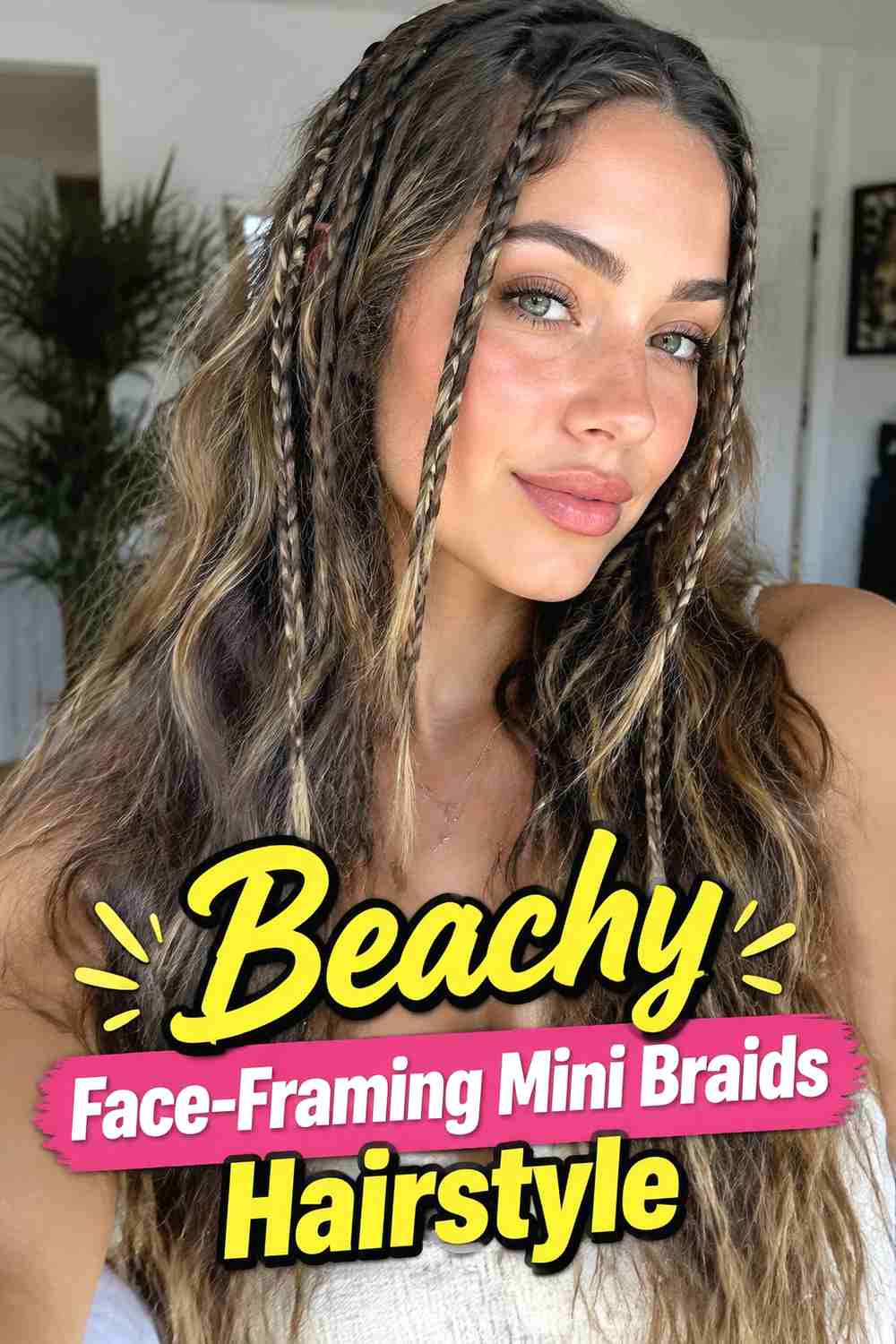
Beachy mini braids pair tiny woven sections with irregular waves, separated ends, and a relaxed finish that does not need to look perfectly polished. Start with naturally wavy hair or create loose, varied bends through the lengths, then add one small braid on either side of the face. Keep the braids slightly relaxed and let the ends blend into the surrounding texture. A few flyaways and uneven wave sizes help maintain the breezy effect. Lightweight texture product can add separation through the ends, but avoid making the hair rough or stiff. The final look should feel casual enough for daytime while still showing deliberate detail around the face.
Why It Works
Small braids provide structure near the face while irregular waves keep the rest of the hairstyle light, relaxed, and naturally imperfect.
14. Layered Face Framing Mini Braids Hairstyle
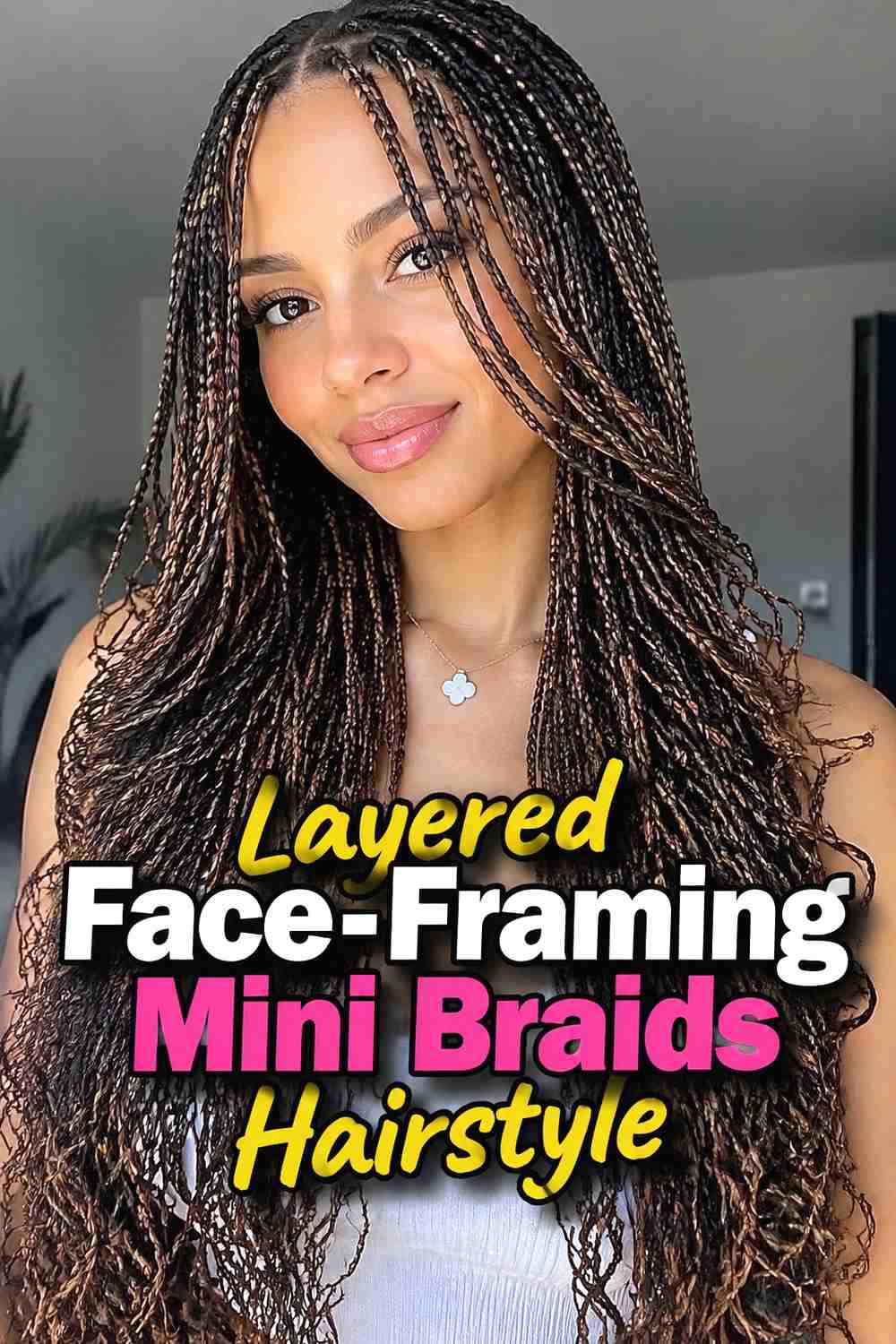
Face-framing layers create an interesting backdrop for mini braids because shorter pieces can remain loose around the cheeks while slightly longer sections are woven. Choose narrow strands long enough to braid comfortably, leaving very short layers free instead of forcing them into the pattern. The remaining haircut can stay straight, blown out, or softly waved depending on your preferred finish. Keeping the braids slim helps preserve the movement of the layered cut rather than hiding it. This style is especially useful when you want braided detail but still want the front layers to remain visible. A few naturally escaping ends can suit the look as long as the braid itself stays secure.
Hair Type & Length
Medium and long layered cuts work especially well. Select braid sections that are long enough to hold while letting shorter front pieces remain naturally loose.
15. Pearl Accent Face Framing Mini Braids Hairstyle
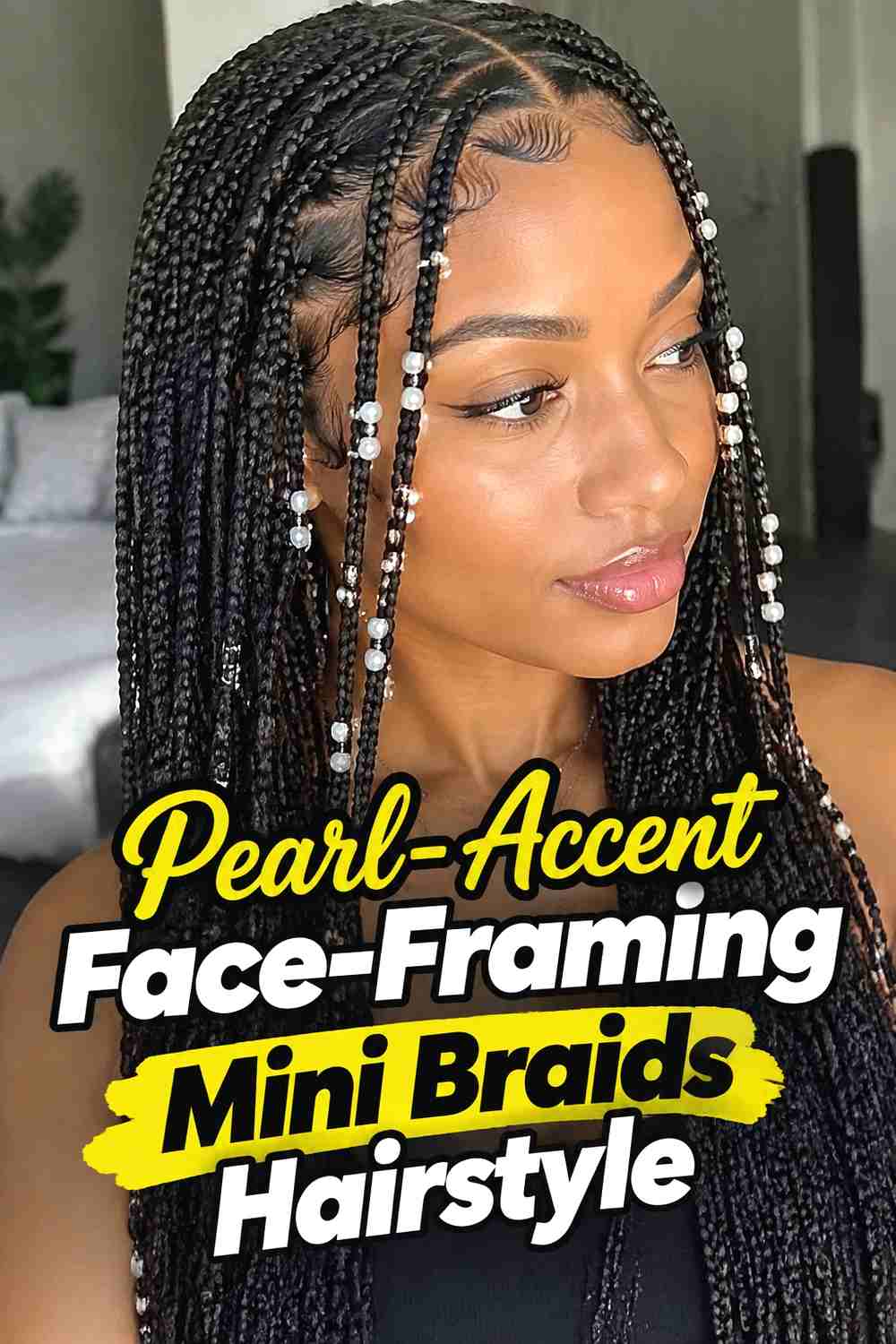
Pearl accents can make tiny face-framing braids feel more refined without turning them into a heavily embellished hairstyle. Build two secure mini braids first, then add one or two lightweight pearl pins, cuffs, or tiny decorative details near the lower braid sections. Keep the rest of the hair relatively simple so the pearls remain visible without competing with other accessories. Soft waves create a romantic result, while straight hair produces a cleaner, more modern contrast. The pearl pieces should fit the scale of the braids and stay light enough for comfortable wear. Structural elastics should secure the braid independently so the accessory remains purely decorative.
Best For
This variation works nicely for dinners, engagement events, bridesmaids, or other occasions where a simple loose hairstyle needs a small polished detail.
16. Festival Face Framing Mini Braids Hairstyle
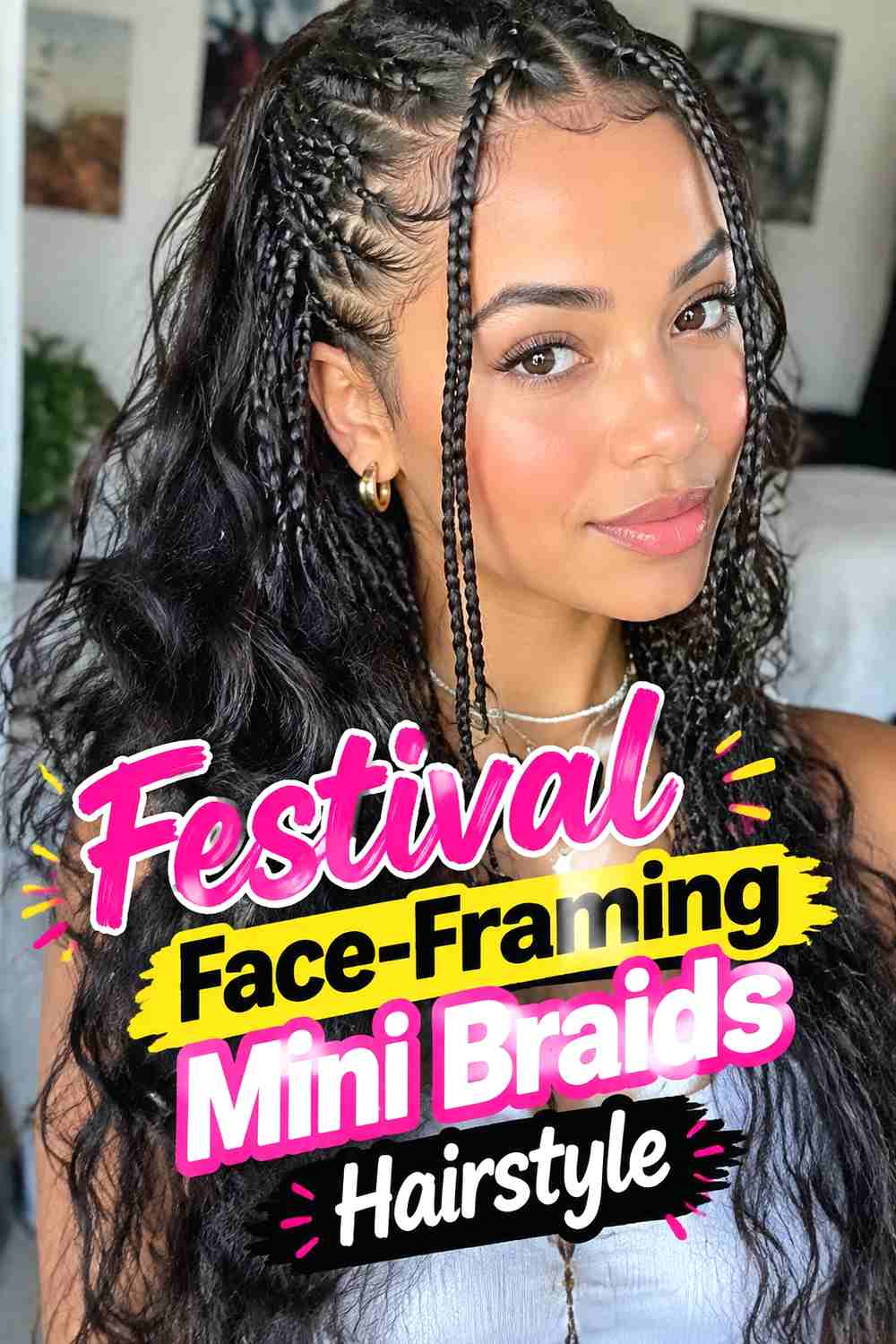
Festival styling gives mini braids more room for playful detail. Pair two front braids with tousled waves or curls, then add a few lightweight rings, cords, tiny beads, or thread accents. Keep the decoration selective so the face-framing placement remains easy to see. Additional small braids can be scattered through the lengths, but the two front pieces should remain the main focal point. Secure every braid with a dependable small elastic before adding accessories. The finished style should feel expressive and relaxed while remaining comfortable enough for extended wear. Avoid heavy metal pieces or dense bead clusters that could pull on the narrow sections near the hairline.
Wear & Maintenance
Lightweight accessories are important for small braids. Check the front sections periodically if you are wearing the style for many hours, especially when decorative pieces are attached.
17. Romantic Face Framing Mini Braids Hairstyle
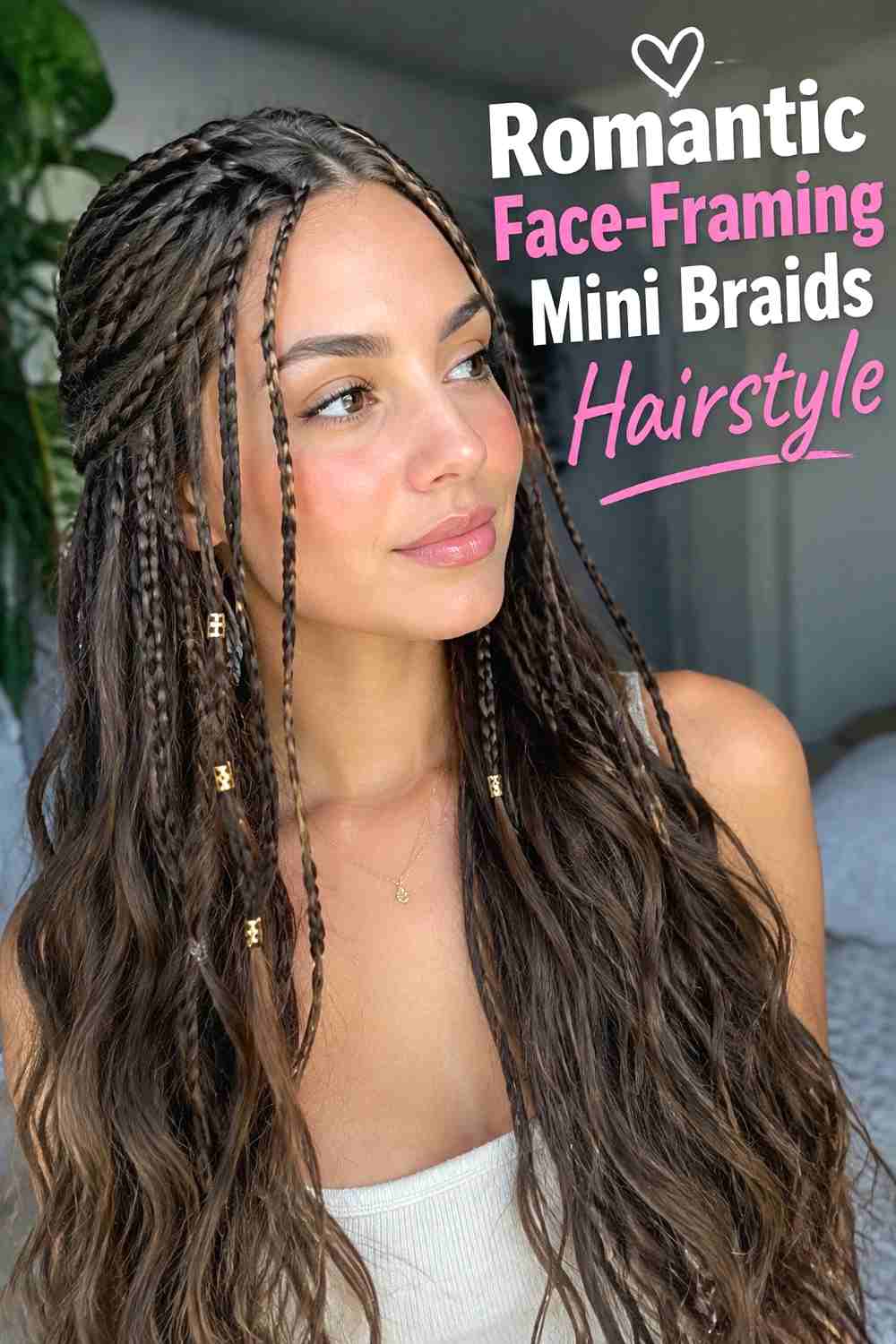
The romantic version combines slim front braids with soft waves, gentle crown volume, and delicate face-framing movement. The braids can begin near a center or soft side part and fall naturally beside the cheeks before blending visually with the longer lengths. Keep them neat enough to be recognizable but not so tight that they contrast sharply with the surrounding softness. Broad waves and a few wispy strands near the temples can make the look feel graceful without becoming overly formal. A tiny ribbon, pearl, or floral accent can be added if desired, though the hairstyle works beautifully without accessories. The overall finish should remain light, touchable, and balanced.
Styling Notes
Keep the braids slim and the waves broad. This difference in scale helps the delicate woven sections stay visible without making the hairstyle feel busy.
18. Minimalist Face Framing Mini Braids Hairstyle
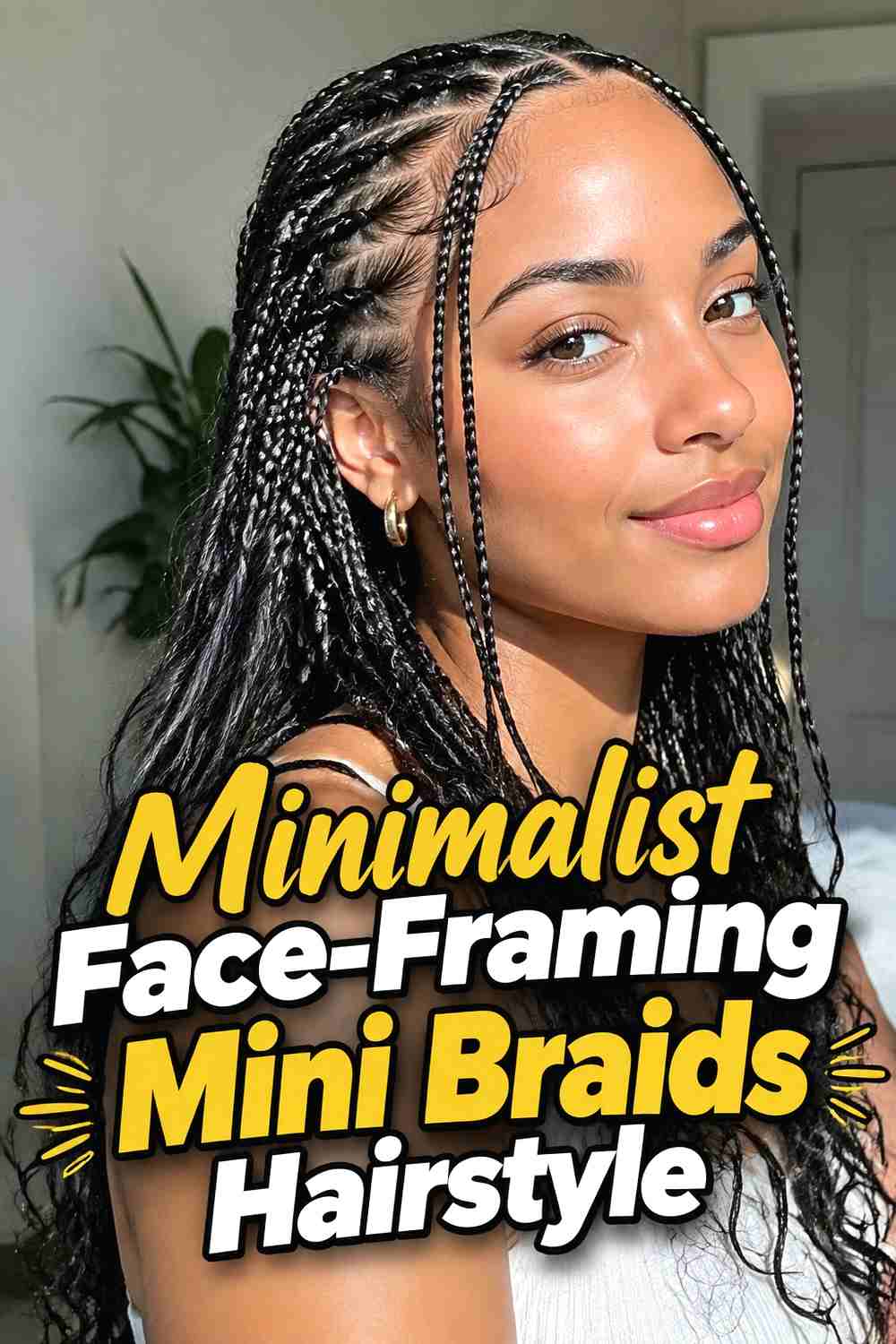
The minimalist version uses only two narrow braids and otherwise leaves the hair almost completely untouched. A clean center or off-center part provides structure, while the braids fall naturally from the front sections and are secured with tiny understated elastics. Straight, naturally wavy, or softly air-dried hair can all work because no additional accessories or elaborate texture are required. Keep the braid sections small enough that they feel like subtle accents rather than the main hairstyle. A few flyaways are fine, but avoid deliberately adding excessive volume or decorative pieces. This is an easy choice when you want a noticeable detail that still looks simple and wearable.
Why It Works
The limited number of elements keeps attention on the two front braids, making the style distinctive without requiring complicated sectioning, accessories, or extensive heat styling.
How to Choose the Right Look
Start with your natural texture. Straight hair makes tiny braids appear crisp and graphic, while waves and curls create more contrast and softness around them. If your front pieces are heavily layered, choose braid sections that are long enough to stay woven and let shorter strands fall naturally around the face.
Next, decide how visible you want the braids to be. Standard three-strand versions are subtle, Dutch braids create more raised detail, and mini fishtails look intricate at close range. Beads, pearls, ribbons, and festival accents can increase visual impact, but lightweight accessories are especially important because the braid sections are small.
Part placement also changes the mood. Center parts feel balanced, side parts create asymmetry, and half-up or crisscross arrangements add more structure without turning the hairstyle into a full updo.
Final Thoughts
Face-framing mini braids are a simple way to add woven detail while leaving most of your hair loose. Keep the sections narrow, use comfortable tension, and choose accessories that suit the small scale of the braids. Whether paired with curls, waves, sleek lengths, pearls, or festival details, the best versions still show natural texture and believable movement around the face.
FAQs
1. How much hair should I use for face-framing mini braids?
Use a narrow section near each temple or front hairline. The exact amount depends on density, but keeping the section small helps the braid stay delicate.
2. Can short front layers be braided?
Some can, but very short layers may slip out. Choose sections with enough length to hold the braid and let shorter pieces remain naturally loose around the face.
3. Do face-framing mini braids work with curly hair?
Yes. They can create a nice contrast with loose curls while allowing most of the natural texture to remain untouched.
4. Can I add beads or pearls to mini braids?
Yes, but use lightweight accessories that fit the braid’s small size. Heavy decorations can pull uncomfortably on narrow front sections.
5. How do I keep mini braids from unraveling?
Braid with consistent tension and secure each end with a small elastic. Very slippery hair may benefit from a tiny amount of texture or styling product before braiding.
Save your favorite face-framing mini braids hairstyle ideas, share them with a friend, and explore more easy braided inspiration for your next look.