20 Flat Twist Ponytail With Cuffs Hairstyle Ideas for Stylish Textured Hair
Flat twists, textured ponytails, and metallic cuffs come together in these striking styles that balance clean structure with natural volume and decorative detail. A flat twist ponytail with cuffs uses close-to-the-scalp twists to direct the hair toward a ponytail while metallic cuffs highlight selected sections. The ponytail itself can stay curly, coily, stretched, sleek, or divided into additional shapes, giving this hairstyle plenty of room for personalization. The most wearable version depends on your hair length, density, texture, preferred ponytail height, and how much scalp tension feels comfortable. Cuff size and placement matter too: a few lightweight pieces can add polish without crowding the twists or interfering with movement.
Quick List
- Classic Flat Twist Ponytail With Cuffs Hairstyle
- High Flat Twist Ponytail With Cuffs Hairstyle
- Low Flat Twist Ponytail With Cuffs Hairstyle
- Side Part Flat Twist Ponytail With Cuffs Hairstyle
- Center Part Flat Twist Ponytail With Cuffs Hairstyle
- Curved Flat Twist Ponytail With Cuffs Hairstyle
- Zigzag Flat Twist Ponytail With Cuffs Hairstyle
- Chunky Flat Twist Ponytail With Cuffs Hairstyle
- Fine Flat Twist Ponytail With Cuffs Hairstyle
- Curly Flat Twist Ponytail With Cuffs Hairstyle
- Long Coily Flat Twist Ponytail With Cuffs Hairstyle
- Gold Cuff Flat Twist Ponytail Hairstyle
- Silver Cuff Flat Twist Ponytail Hairstyle
- Mixed Metallic Flat Twist Ponytail Hairstyle
- Wrapped Base Flat Twist Ponytail With Cuffs Hairstyle
- Bubble Flat Twist Ponytail With Cuffs Hairstyle
- Side Swept Flat Twist Ponytail With Cuffs Hairstyle
- Statement Cuff Flat Twist Ponytail Hairstyle
- Elegant Flat Twist Ponytail With Cuffs Hairstyle
- Extra Long Flat Twist Ponytail With Cuffs Hairstyle
1. Classic Flat Twist Ponytail With Cuffs Hairstyle
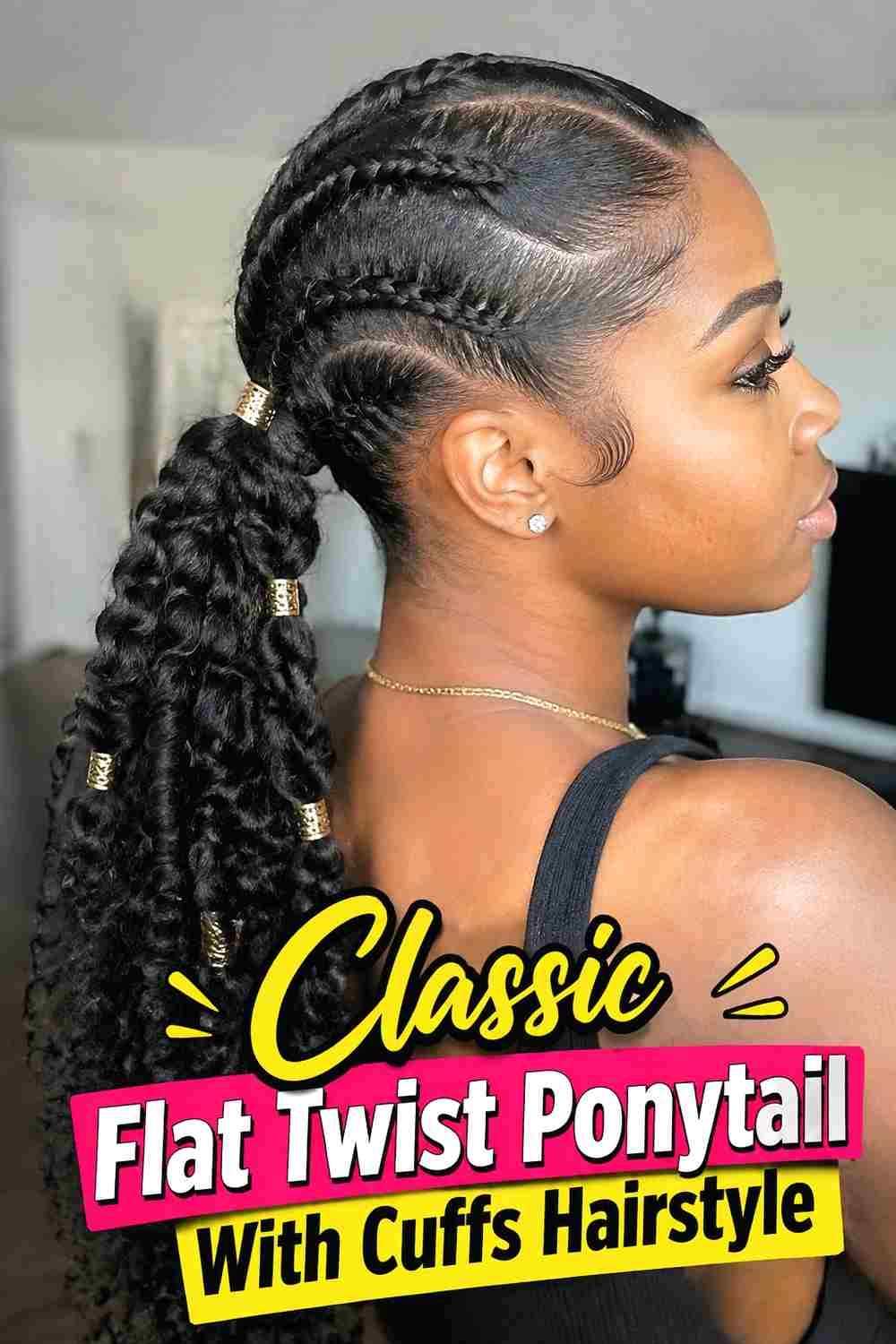
The classic version uses several neat flat twists traveling from the front and sides toward a mid-height ponytail at the back. A few metallic cuffs placed along selected twists add detail without hiding the pattern. Keeping the sections consistent helps the style look balanced, while a naturally curly or coily ponytail provides movement behind the more structured crown. The twists should sit securely without feeling excessively tight along the hairline, and the cuffs should fit comfortably around the finished twist rather than pinching individual strands. This approach works especially well when you want a hairstyle that feels polished from the front but still celebrates texture and fullness through the ponytail.
Styling Notes
Complete and secure the flat twists before adding cuffs so each accessory can sit on a stable section without disrupting the twist pattern.
Best For
This versatile version suits everyday wear, dinners, parties, photos, and polished casual events.
2. High Flat Twist Ponytail With Cuffs Hairstyle
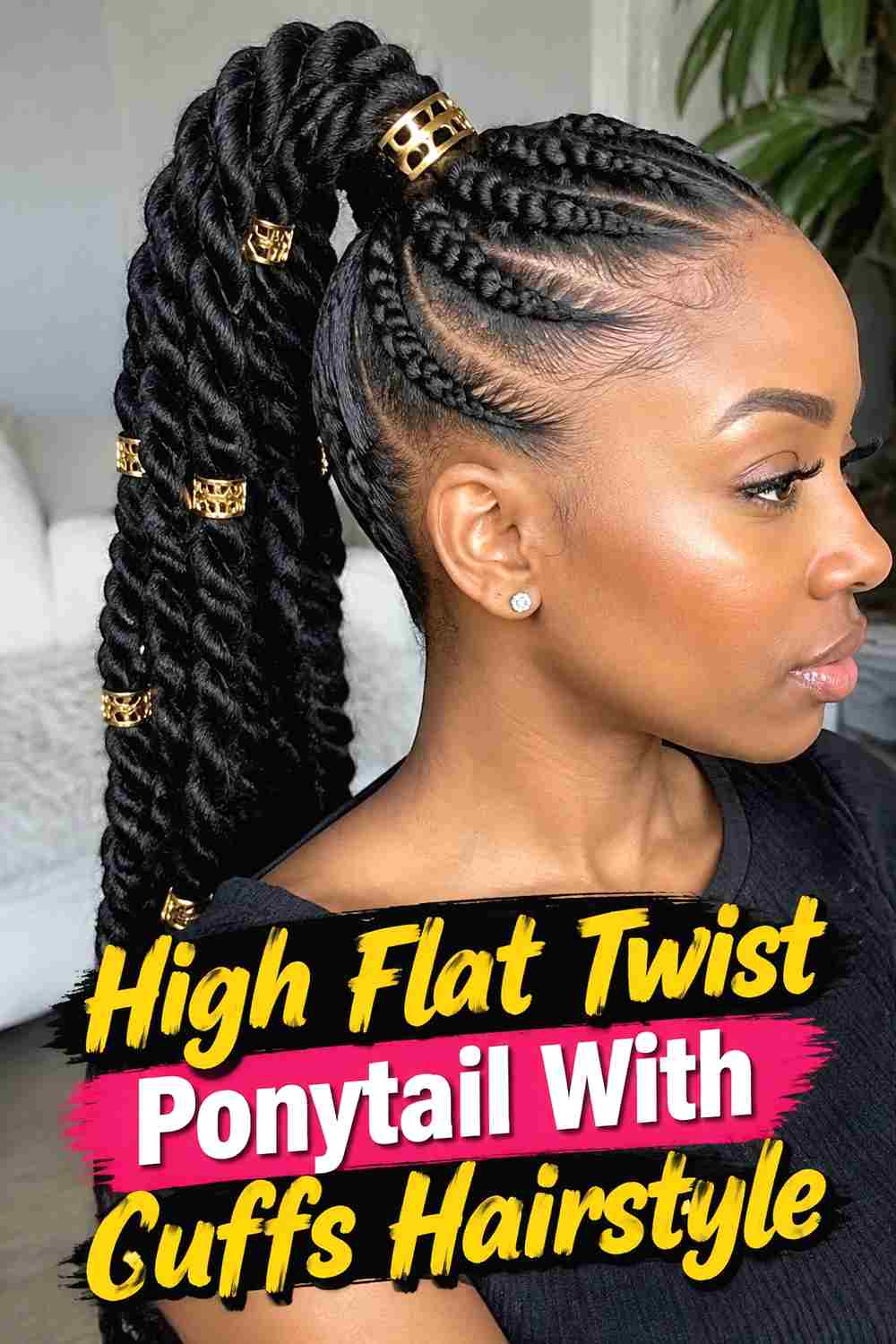
A high ponytail gives flat twists a lifted, energetic finish by directing the scalp sections toward the crown. The twists can radiate upward from the hairline and sides, then meet at a secure ponytail base where curls or coils create volume. Small cuffs placed near the upper sections make the directional pattern easier to see without adding too much weight. Because high ponytails naturally place more tension near the front and sides, keep the twists comfortably snug rather than overly tight. This style looks especially striking when the ponytail remains full and textured, creating a strong contrast between the controlled flat twists and the softer movement above.
Wear & Maintenance
Use a supportive ponytail base and avoid adding heavy cuffs close to delicate hairline sections.
Pro Tip
Distribute the twists evenly around the head so the ponytail base feels balanced instead of pulling harder from one side.
3. Low Flat Twist Ponytail With Cuffs Hairstyle
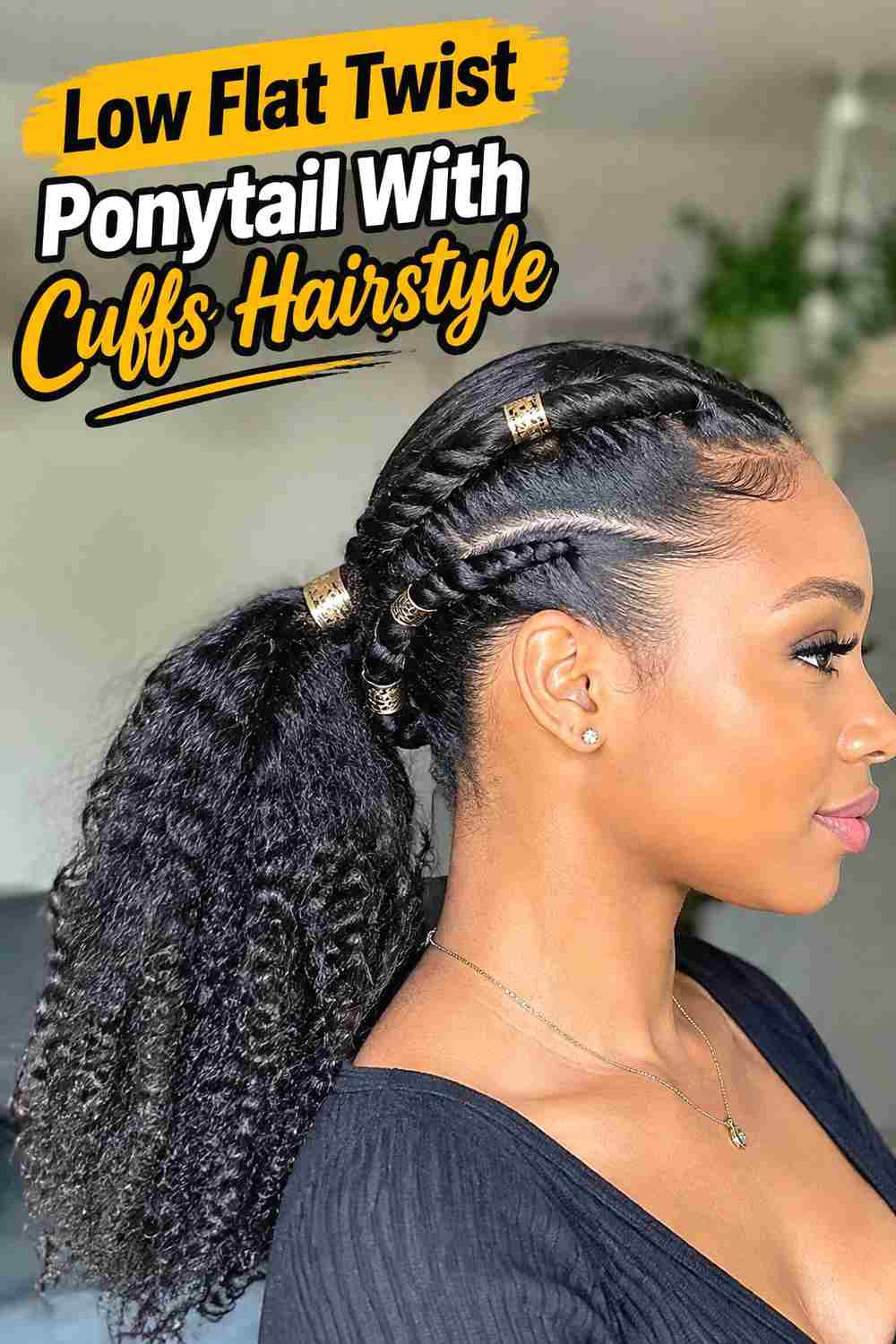
The low version directs flat twists toward the nape, creating a softer silhouette with the ponytail falling naturally down the back. This placement can feel more relaxed than a high ponytail while still showing the clean twist pattern across the crown. Add cuffs to two or three selected twists, spacing them far enough apart that each metallic accent remains visible. The ponytail can stay curly, coily, or lightly stretched depending on the finish you prefer. A side or center part can both work, although the twists should follow the chosen direction naturally rather than crossing awkwardly. Comfortable tension is especially important near the ears and nape where multiple sections meet.
Why It Works
The low placement grounds the detailed crown and gives the textured ponytail an easy, flowing finish.
Best For
Choose this variation for work, casual outings, dinners, or longer wear when you prefer less crown tension.
4. Side Part Flat Twist Ponytail With Cuffs Hairstyle
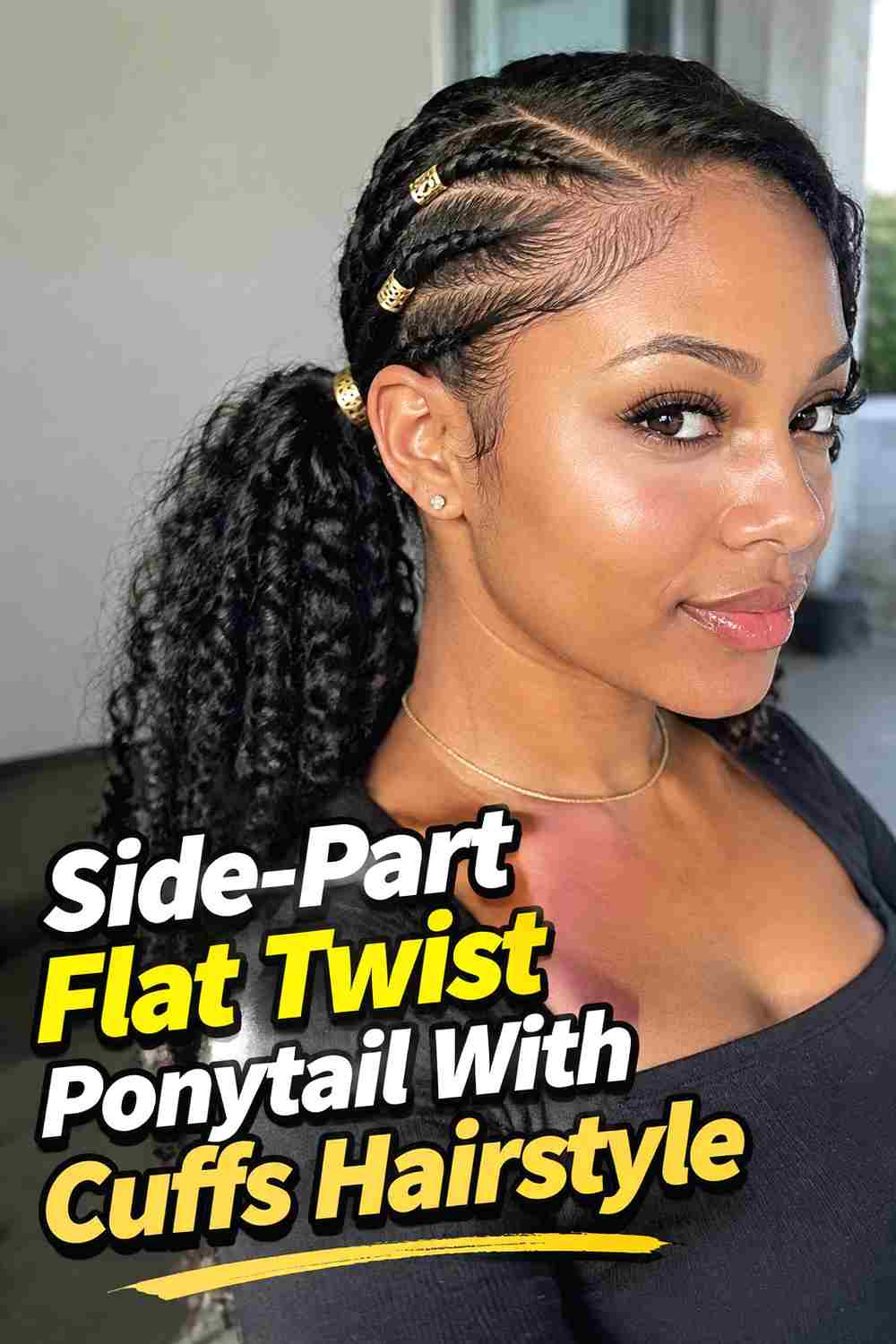
A side part introduces asymmetry by allowing the flat twists on one side to travel farther across the crown before reaching the ponytail. The fuller section can feature two or three wider twists, while the lighter side stays streamlined with fewer rows. Metallic cuffs look especially effective along the more visible side because they emphasize the directional movement. Keep the sections smooth enough that the parting remains clear, but allow the ponytail to retain its natural texture for contrast. This style works well with medium or high ponytail placement and can create a particularly strong profile. Avoid pulling the heavier side too tightly toward the base.
Styling Notes
Plan the part and twist direction before beginning so the sections converge naturally toward the ponytail instead of bunching at the back.
Why It Works
The asymmetrical crown gives the twist pattern more movement while the cuffs draw attention to the strongest directional lines.
5. Center Part Flat Twist Ponytail With Cuffs Hairstyle
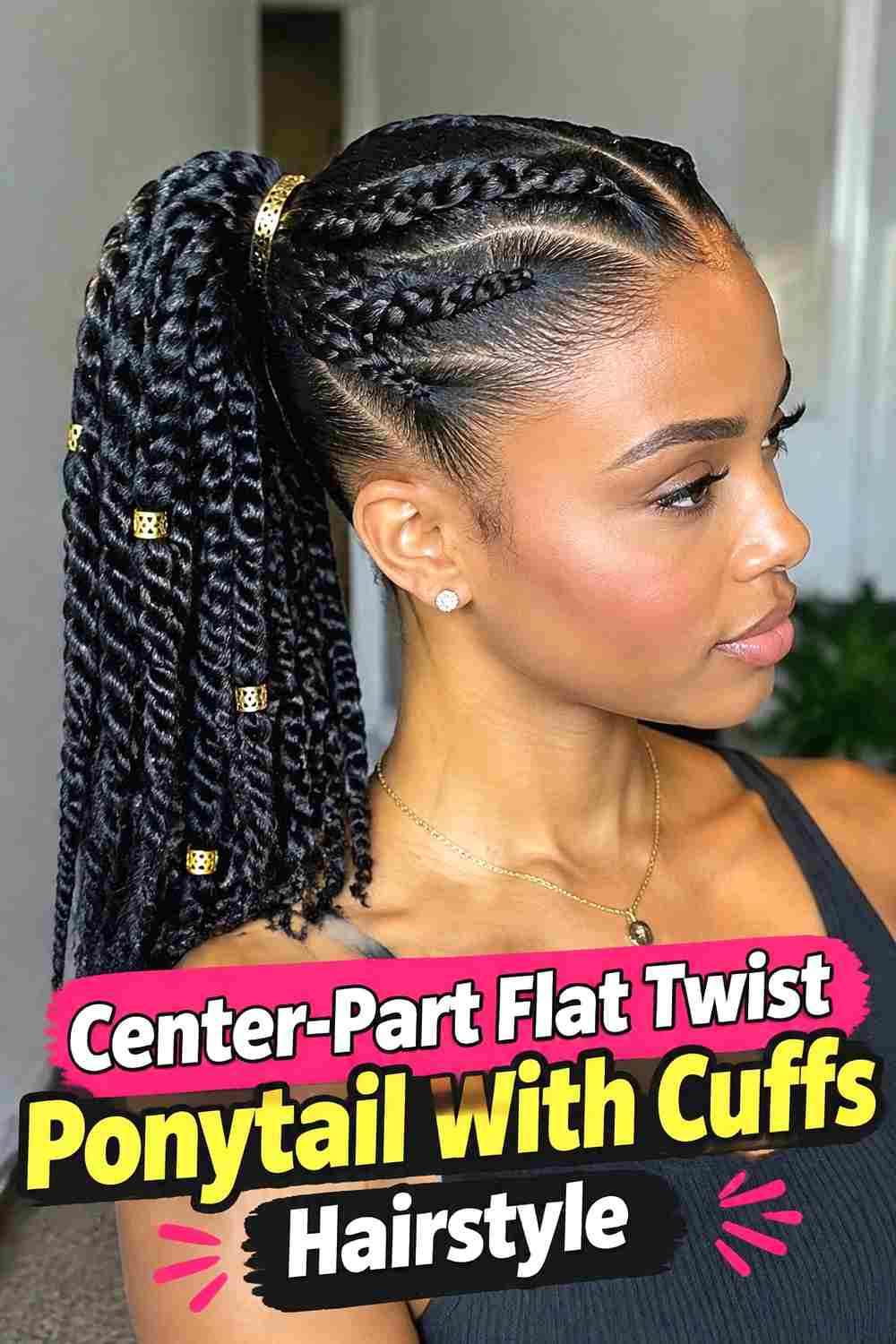
A center part creates a symmetrical foundation with matching flat twists on both sides feeding into one ponytail. The balanced layout makes cuff placement especially easy because accessories can be mirrored across corresponding twists or spaced slightly differently for a softer effect. Medium-width twists keep the design visible without making the crown feel overly busy. At the back, a curly or coily ponytail adds volume and breaks up the strong symmetry of the front. This version works beautifully when clean parting is an important part of the style. Keep the base secure while preserving comfortable tension around the temples, especially where the front twists begin.
Best For
This polished option works for photos, parties, work events, and anyone who prefers balanced, symmetrical styling.
Pro Tip
Use matching cuff placement on just one or two pairs of twists instead of decorating every row.
6. Curved Flat Twist Ponytail With Cuffs Hairstyle
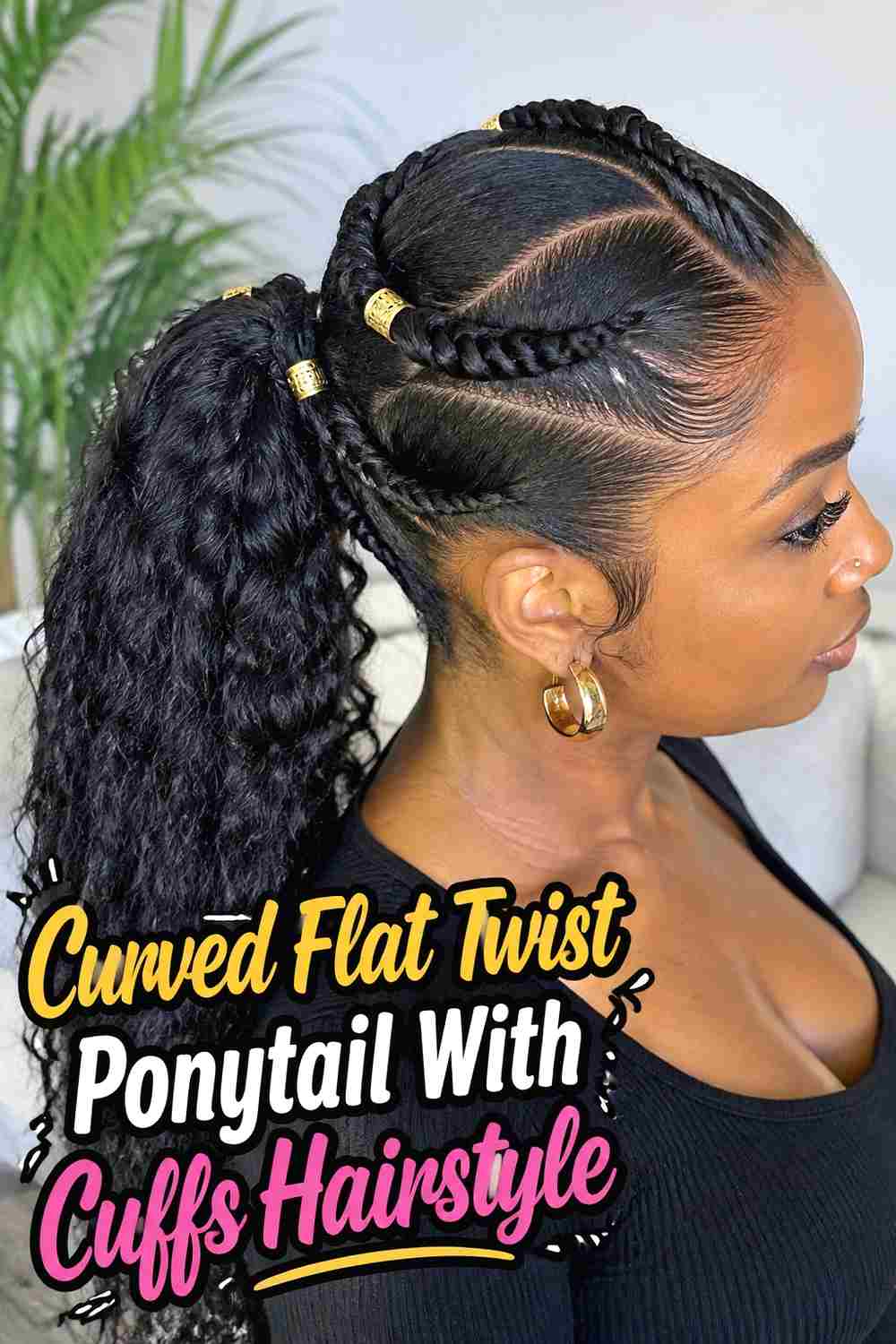
Curved flat twists create a more fluid pattern by sweeping around the sides of the head before meeting at the ponytail base. The changing direction gives the style a sculptural look, and small metallic cuffs can emphasize selected bends along the twists. Keep the curves broad enough that the twist pattern remains smooth rather than forcing sharp changes that strain the hair. A mid or low ponytail often complements this design because the sections have more room to flow naturally toward the back. The ponytail can remain full and textured to contrast with the controlled curved lines on the scalp. Well-planned parting is essential for keeping both sides visually balanced.
Why It Works
The curved sections add movement to a close-to-the-scalp style while the cuffs highlight the most interesting points in the pattern.
Wear & Maintenance
Check that cuffs sit securely on the twists and do not shift into the scalp when the hair moves.
7. Zigzag Flat Twist Ponytail With Cuffs Hairstyle
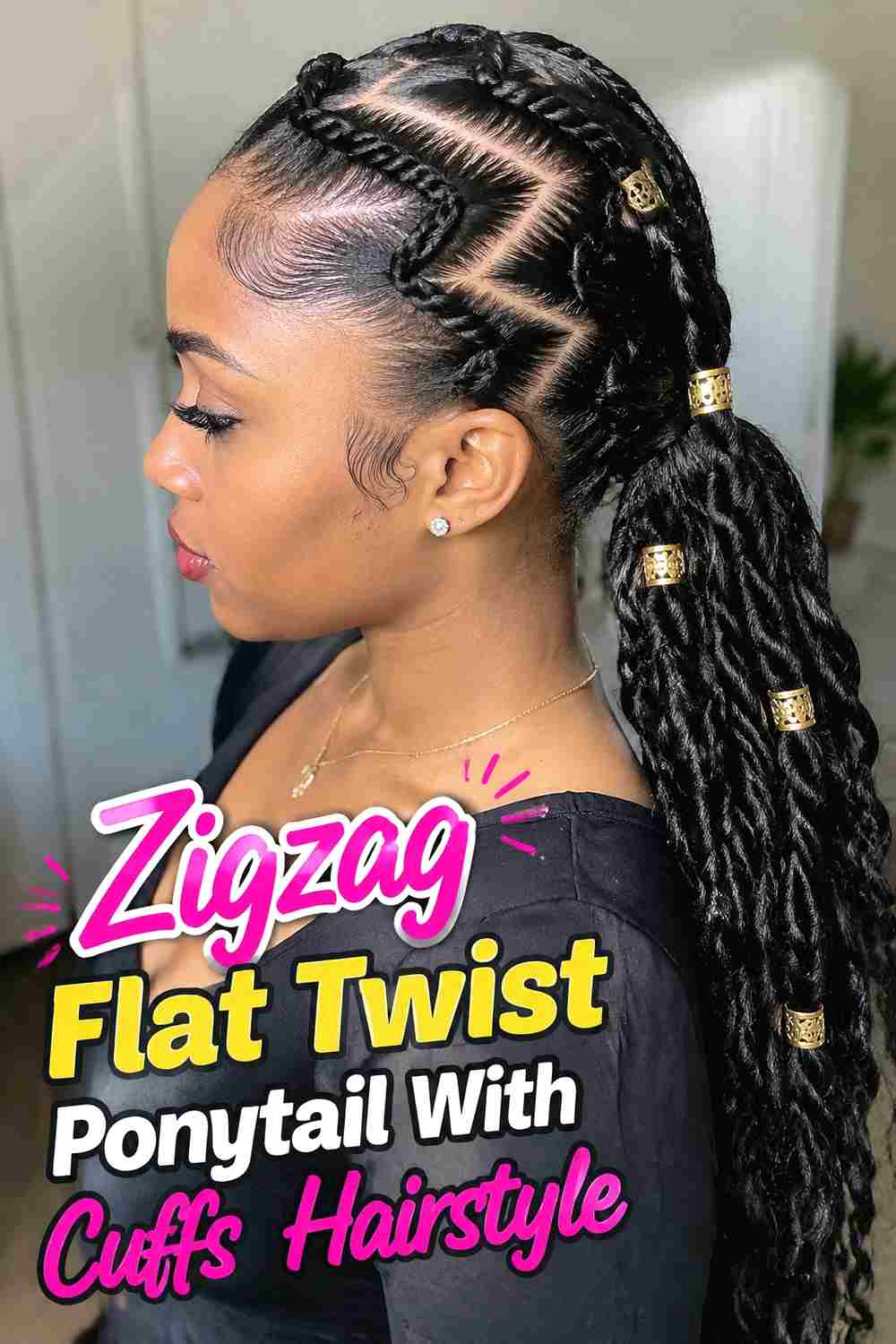
Zigzag parting adds graphic detail between the flat twists and makes the crown visually interesting even before cuffs are added. Keep the actual twists fairly clean so the angular part pattern remains easy to see, then place a few metallic cuffs near the ends of selected rows. A smooth ponytail base helps balance the more elaborate scalp design, while curls or coils through the ponytail add softness. Because zigzag sections require more precise parting, it is useful to keep the overall number of twists moderate rather than overcrowding the crown. The cuffs should complement the pattern, not compete with it, so spaced placement often looks stronger than decorating every twist.
Styling Notes
Map the zigzag sections first and keep their angles consistent enough to form a readable pattern across the crown.
Best For
This bold version works well for parties, festivals, creative photo sessions, and statement everyday styling.
8. Chunky Flat Twist Ponytail With Cuffs Hairstyle
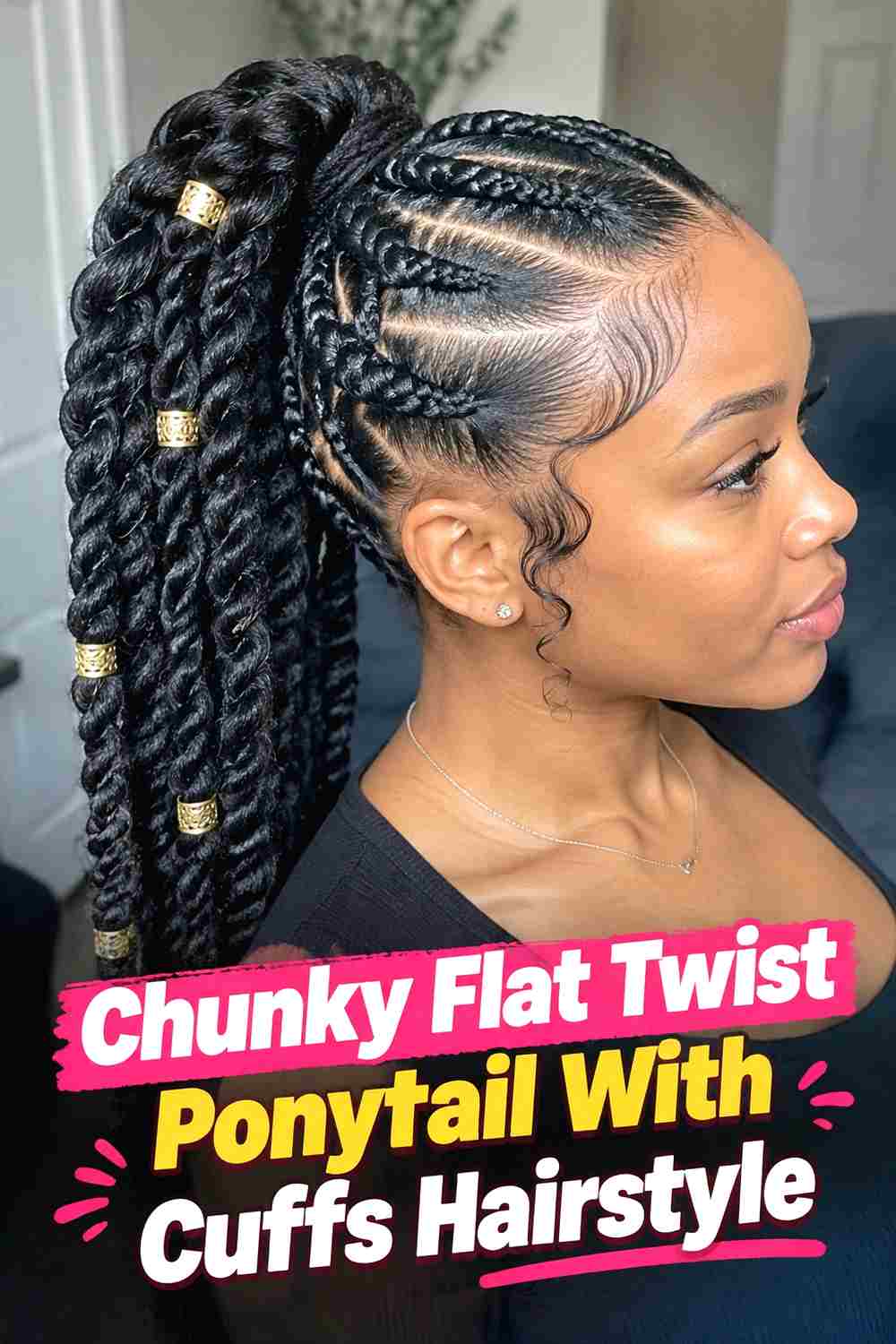
Chunky flat twists create fewer, wider sections across the scalp, producing a strong pattern with less visual complexity. Because each twist is substantial, one or two cuffs per section can be enough to create noticeable detail. Direct the twists toward a mid or high ponytail and leave the ponytail full so the overall silhouette feels balanced. This style can work especially well on dense hair because wider sections make use of natural volume without requiring many tiny rows. Keep the twists defined but not painfully tight, particularly where larger sections gather near the base. The result should feel bold and dimensional rather than bulky.
Hair Type & Length
Medium to thick textured hair often supports chunky twists naturally, though the exact number of sections depends on density and head shape.
Pro Tip
Use slightly larger cuffs that fit the thicker twists comfortably instead of forcing small accessories around dense sections.
9. Fine Flat Twist Ponytail With Cuffs Hairstyle
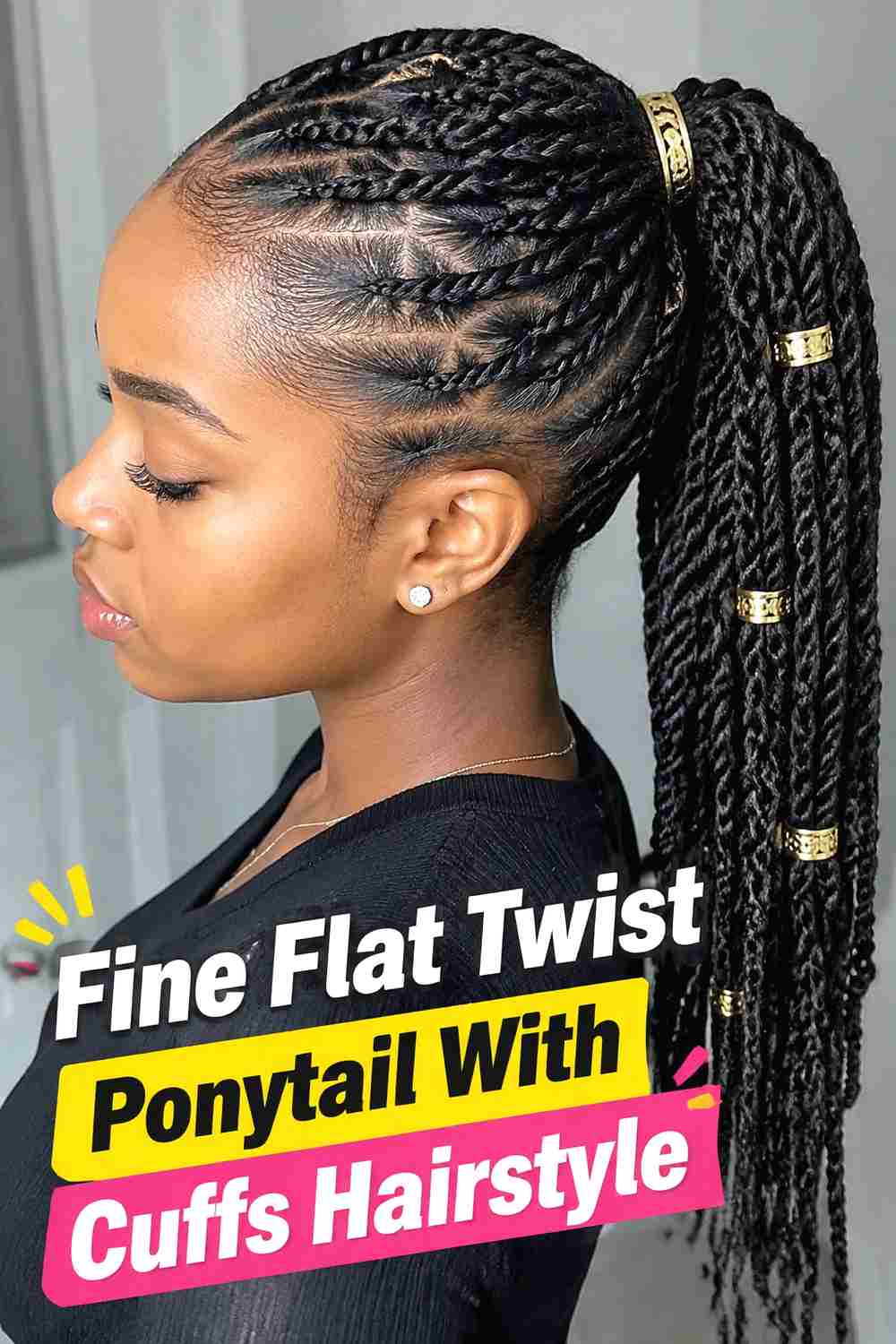
Fine flat twists use narrower sections to create more detailed lines across the scalp before meeting at the ponytail. The additional rows allow for precise patterns, but cuff placement should stay restrained so the crown does not become overcrowded. Try adding accessories only near the ends of several twists or creating a subtle alternating pattern. The ponytail can remain textured and full, providing contrast with the finer detail above. This style takes more sectioning than a chunky version, so consistent spacing helps maintain a polished appearance. Keep the twists secure without excessive tension, especially along the hairline where smaller sections can feel more delicate.
Why It Works
The narrow twists create intricate texture while a limited number of cuffs adds shine without obscuring the detailed pattern.
Wear & Maintenance
Check the smallest sections regularly for discomfort and remove any cuff that feels too tight or catches nearby strands.
10. Curly Flat Twist Ponytail With Cuffs Hairstyle
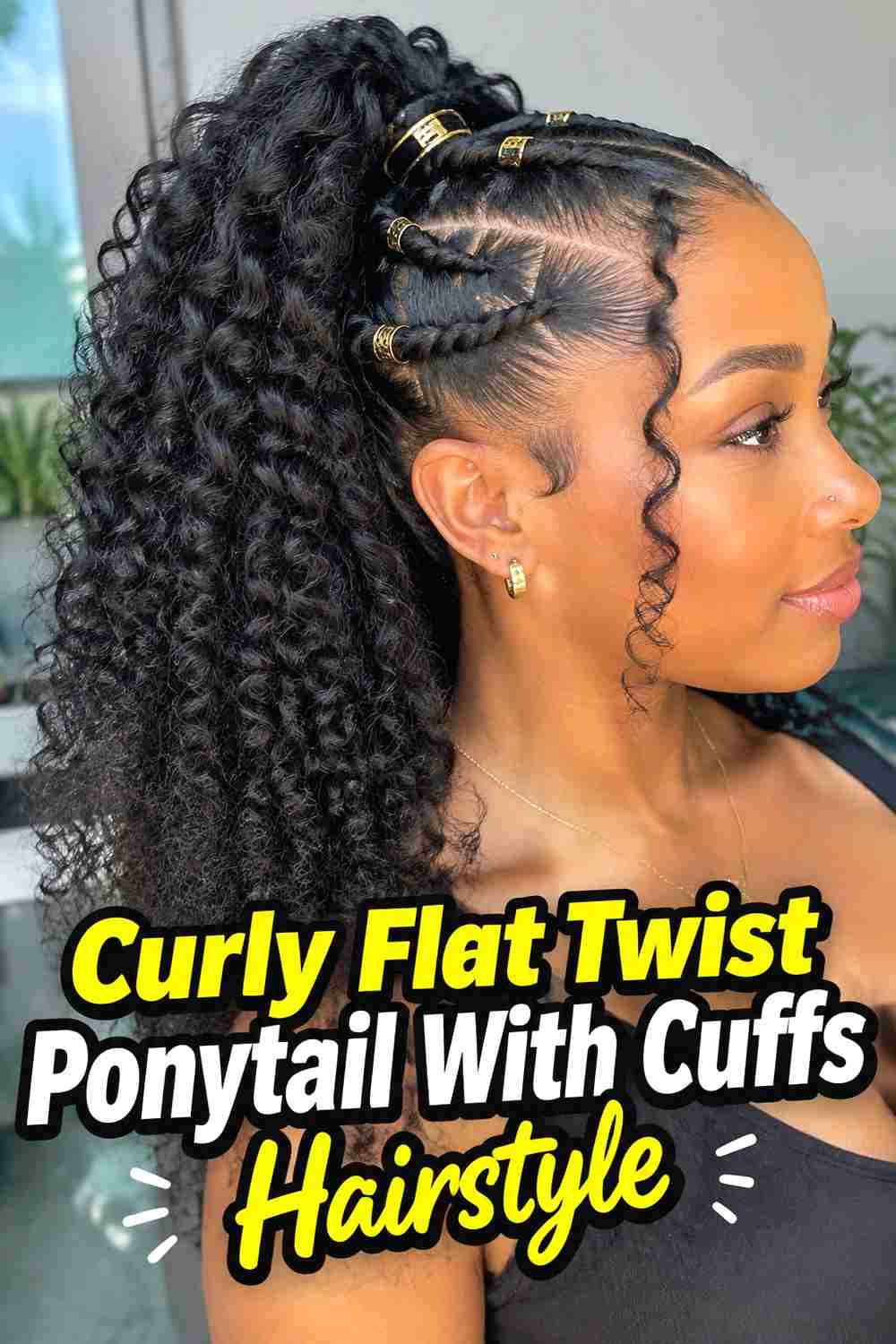
This version keeps the ponytail naturally curly so the finished style shows two distinct textures: controlled twists across the scalp and soft curls through the length. Flat twists can travel straight back, curve around the sides, or begin from a side part depending on the look you want. A few metallic cuffs near the ponytail base help connect the structured crown to the loose curls. Avoid flattening the ponytail texture when securing the base; the contrast works best when the curls remain springy and dimensional. Medium to long curly hair can create a substantial ponytail, while shorter lengths may produce a compact puff with equally strong visual impact.
Hair Type & Length
Naturally curly and coily textures work beautifully, with ponytail size depending on length, density, and shrinkage.
Styling Notes
Finish the flat twists first, then refresh or shape the ponytail curls separately so the two textures remain clearly defined.
11. Long Coily Flat Twist Ponytail With Cuffs Hairstyle
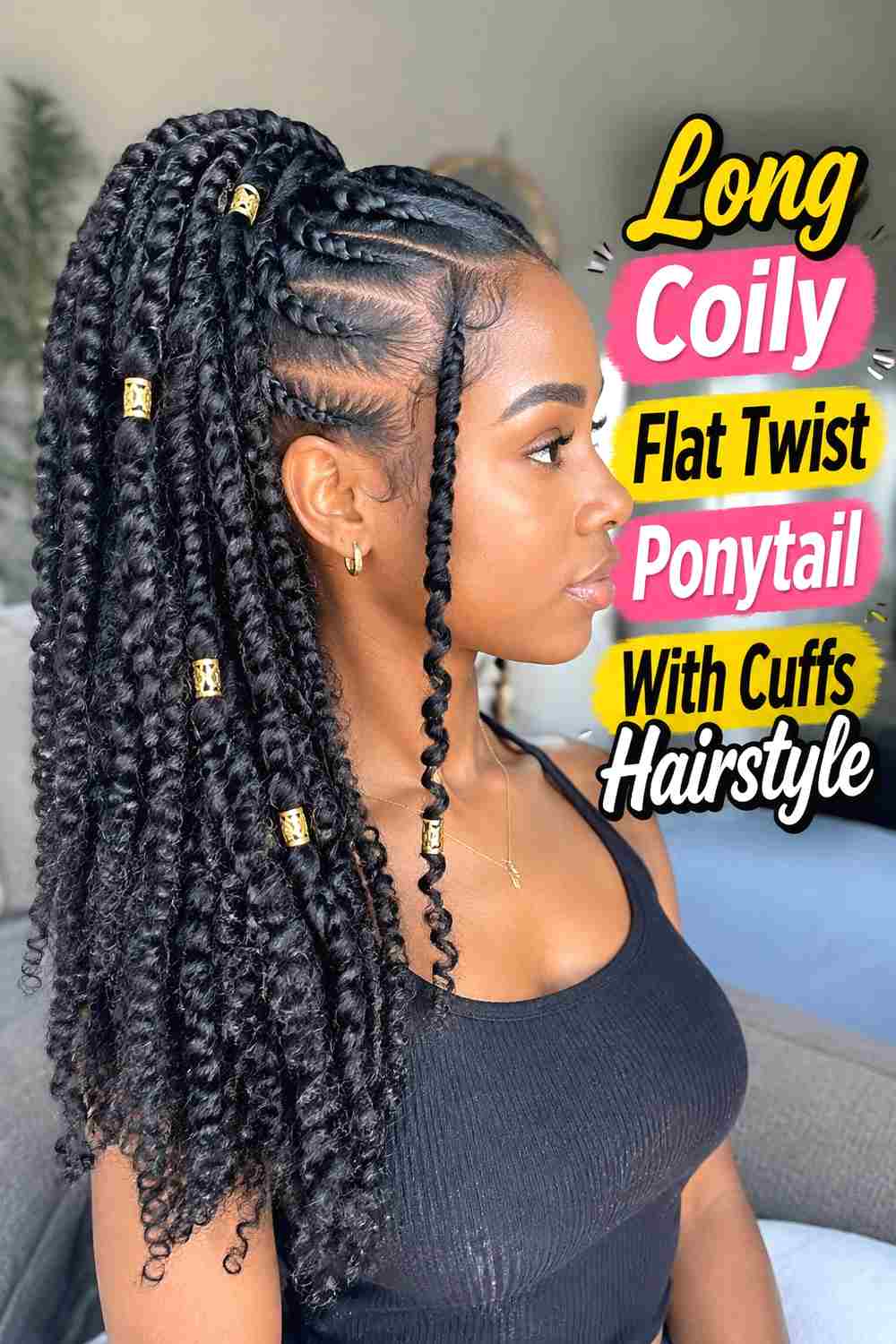
Long coily hair creates a dramatic ponytail that can balance several flat twists and metallic cuffs across the crown. Keep the scalp pattern relatively streamlined so the extended length remains part of the focus. Cuffs can be placed near the ends of selected twists or clustered closer to the ponytail base for a concentrated metallic detail. The ponytail itself can remain naturally coily, lightly stretched, or shaped into a fuller cascading form. Because longer hair carries more weight, make sure the base is secure without feeling overly tight. The twists should feed cleanly into the ponytail rather than forming bulky overlaps at the back.
Why It Works
The structured twists control the crown while the long coily ponytail provides dramatic movement and natural volume.
Wear & Maintenance
Keep cuff placement lightweight and monitor the ponytail base during long wear if the length feels heavy.
12. Gold Cuff Flat Twist Ponytail Hairstyle
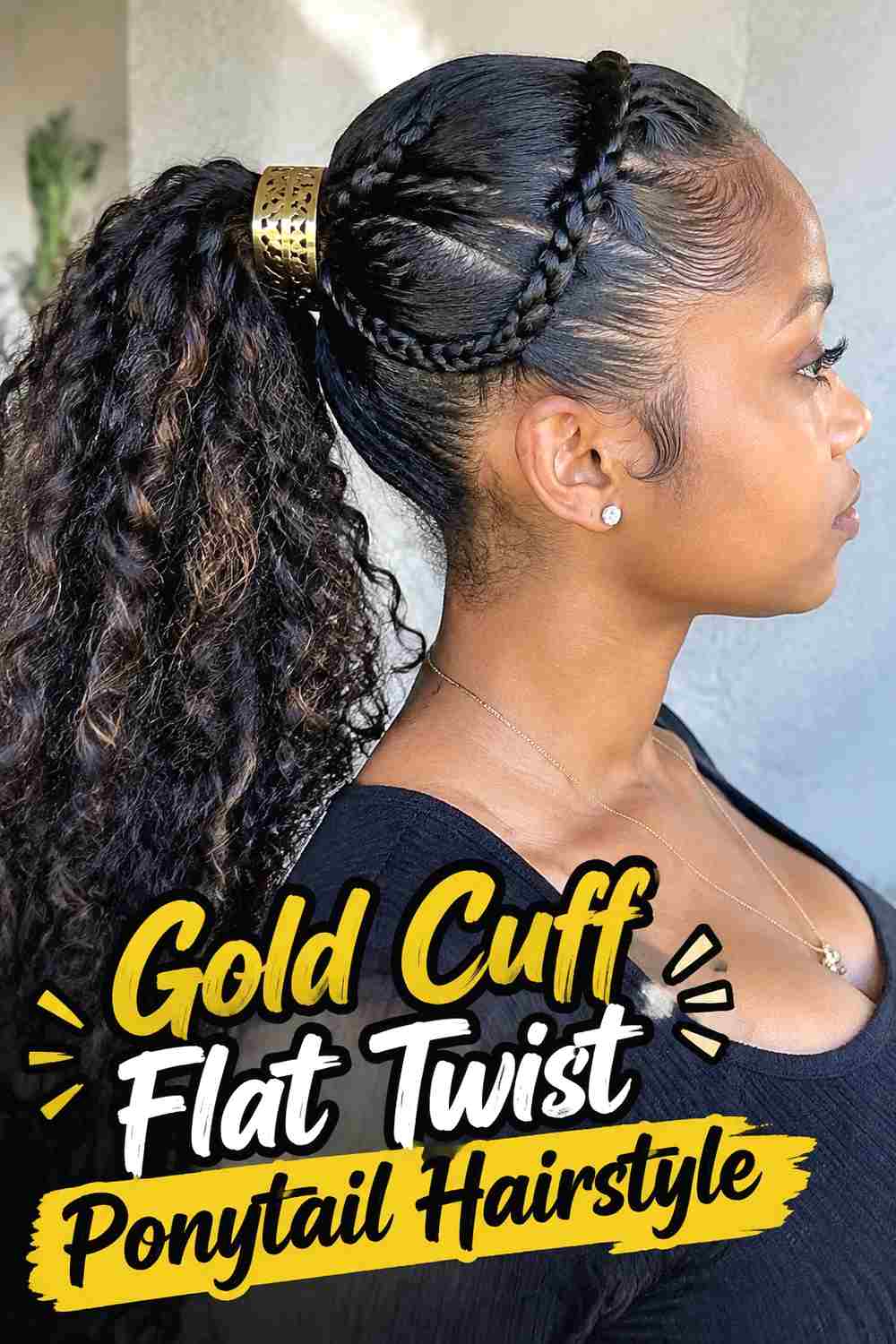
Gold cuffs provide warm metallic contrast against flat twists and can make the pattern look more deliberate without requiring additional color. Use a few cuffs across the front and side rows, spacing them at different points rather than placing each one in exactly the same position. A black, brown, or richly toned natural hair color can make the gold particularly visible, though the finish works across many shades. Keep the ponytail textured and simple so the accessories remain integrated rather than competing with other decorations. Small cuffs usually feel more refined for everyday wear, while slightly larger gold accents create stronger impact for parties and events.
Styling Notes
Press each cuff closed only enough to stay secure; it should not pinch the twist or create discomfort against the scalp.
Best For
Gold cuffs suit dinners, celebrations, parties, vacations, and polished everyday looks.
13. Silver Cuff Flat Twist Ponytail Hairstyle
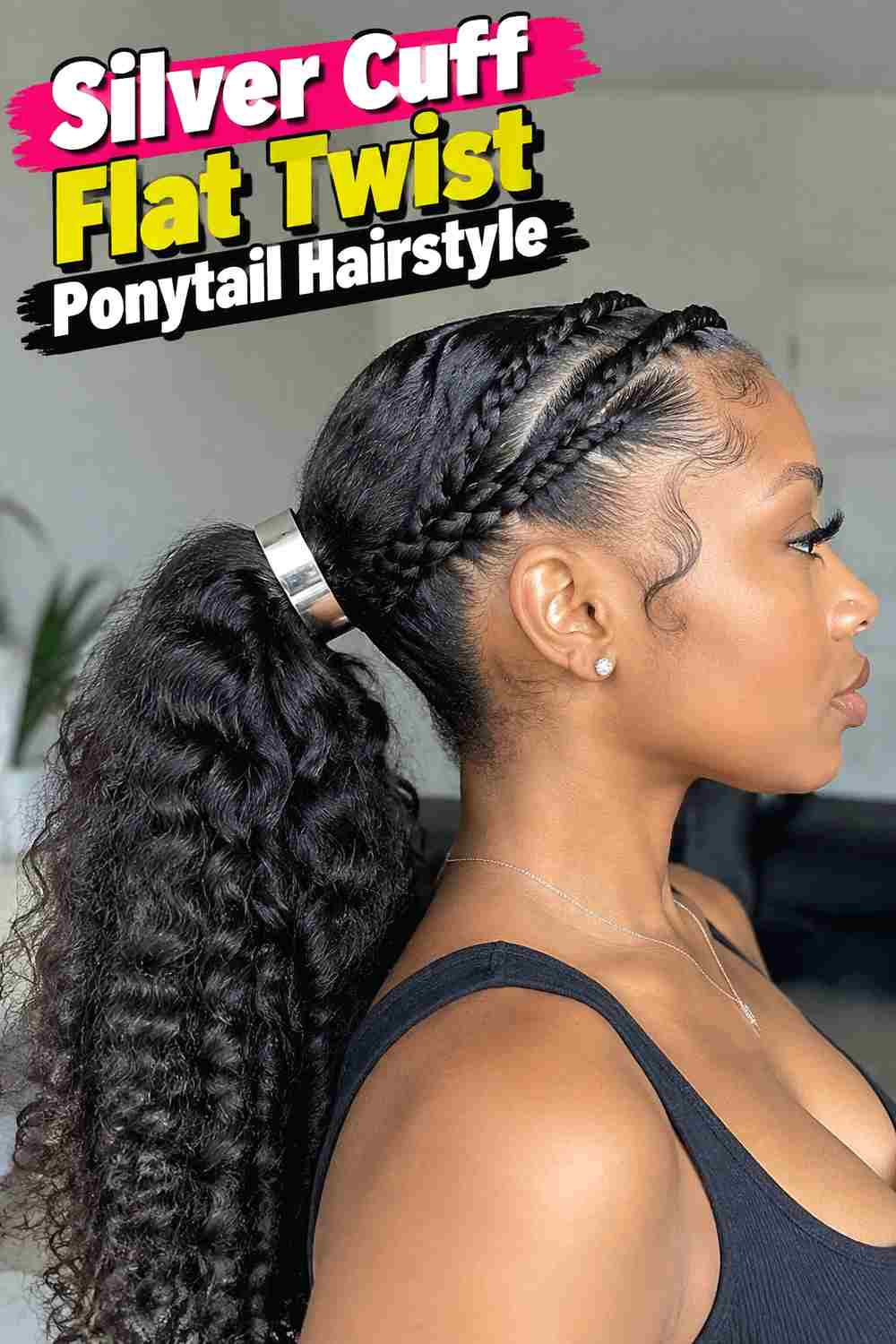
Silver cuffs create a cooler metallic effect that pairs well with clean twist patterns and minimalist styling. Arrange several small silver cuffs along selected flat twists, using the reflective finish to highlight the direction of the rows. A center-part, side-part, or curved pattern can all work, but keeping the rest of the accessories simple helps the silver details stand out. The ponytail can be curly or stretched, depending on whether you want softness or a more streamlined shape. Silver is especially effective when you prefer cool-toned jewelry or want the cuffs to feel sleek rather than warm and ornate.
Why It Works
The crisp metallic finish emphasizes the structure of flat twists while remaining easy to coordinate with contemporary jewelry.
Pro Tip
Keep cuff size consistent for a cleaner look, especially when the twist pattern already contains several directional lines.
14. Mixed Metallic Flat Twist Ponytail Hairstyle
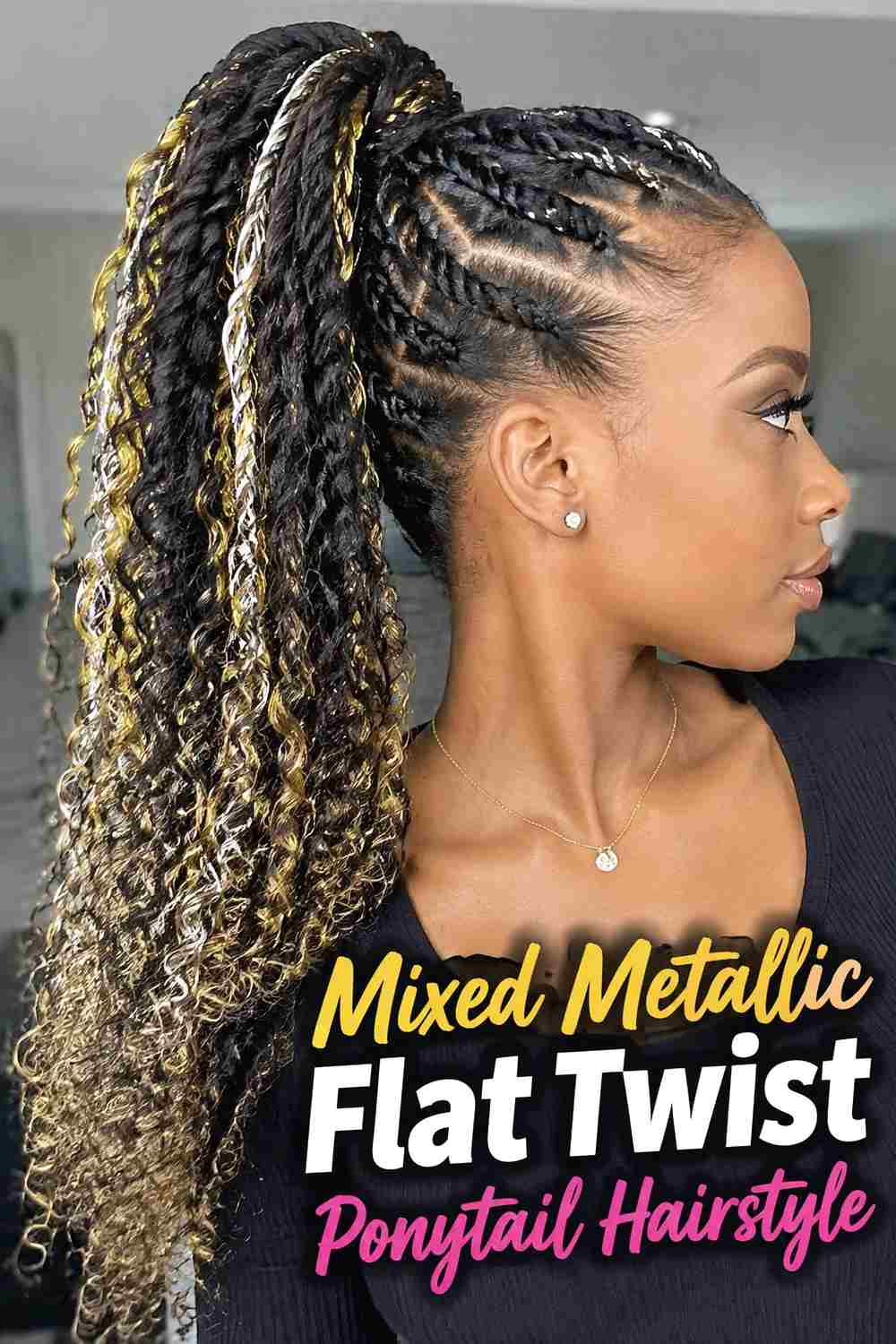
Mixing gold and silver cuffs creates a modern look that feels less matched while still staying cohesive. The easiest approach is to alternate the metals along selected twists or use one tone near the front and another closer to the ponytail base. Keep cuff shapes relatively similar so the difference in color feels intentional rather than random. A simple flat twist pattern works best because the mixed-metal detail already introduces visual variety. The ponytail can stay curly, coily, or lightly stretched, providing natural movement behind the accessory-focused crown. Avoid adding too many other decorative elements, since the metal contrast is enough to create interest.
Styling Notes
Limit the palette to two metal finishes and repeat each one more than once so the combination appears deliberate.
Best For
This version works well for nights out, parties, creative everyday styling, and mixed-metal jewelry looks.
15. Wrapped Base Flat Twist Ponytail With Cuffs Hairstyle
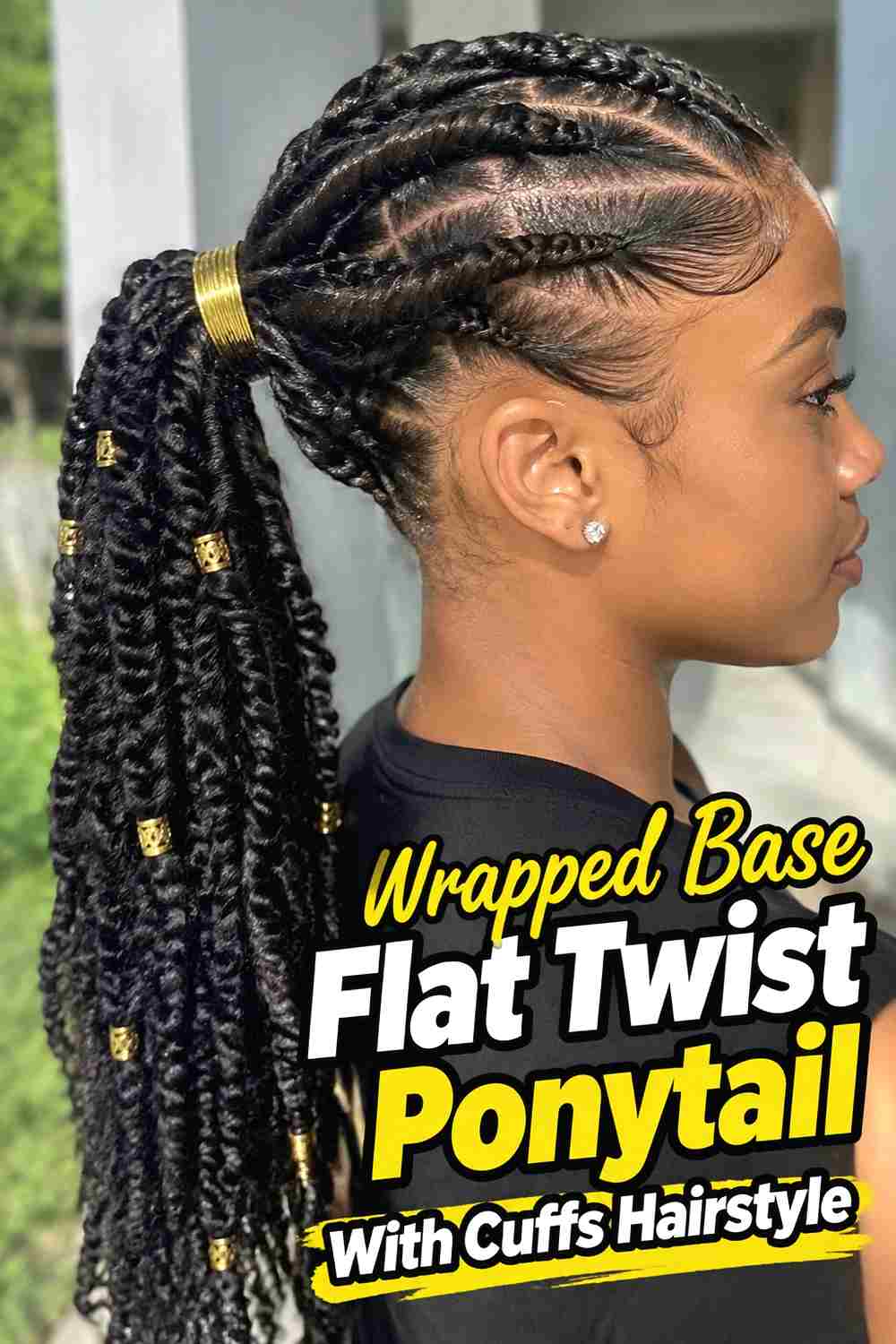
A wrapped ponytail base gives flat twists a polished finishing point before the textured length begins. After directing the twists toward the ponytail and securing them, wrap a narrow section of hair around the elastic to conceal the fastening. Metallic cuffs can sit on selected twists above the base, creating a clean transition into the ponytail. This detail is especially effective with mid and high placement because the wrapped section remains easy to see from the sides and back. Keep the wrap relatively slim so it does not become bulky or compete with the cuffs. The ponytail itself can remain curly, coily, or softly stretched.
Why It Works
The concealed elastic creates a clean anchor while the cuffs supply decorative detail through the crown.
Pro Tip
Secure the wrapped section discreetly underneath the ponytail so the finishing point stays hidden from the most visible angles.
16. Bubble Flat Twist Ponytail With Cuffs Hairstyle
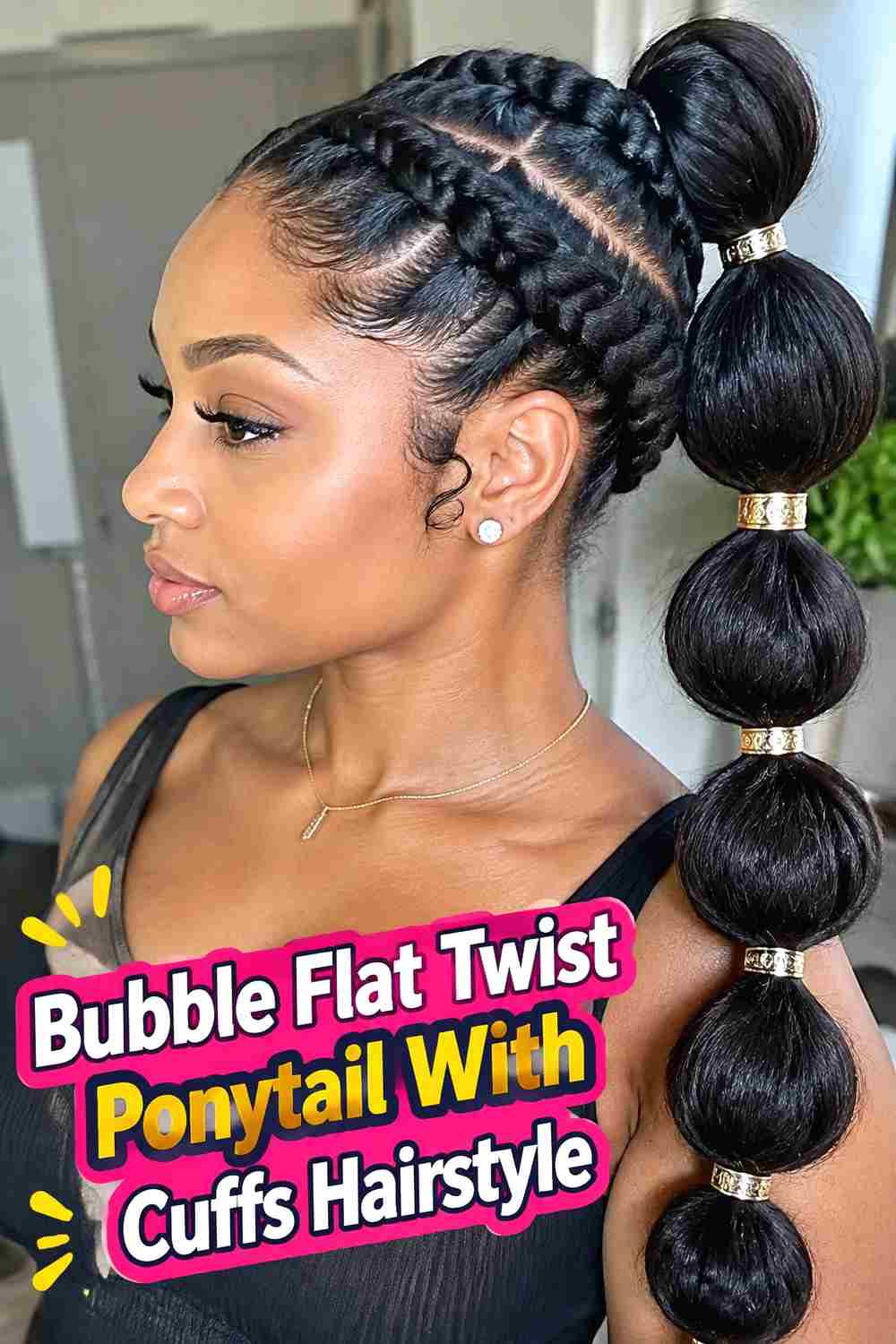
This playful variation combines flat twists at the crown with a bubble ponytail through the lengths. After the twists meet at a secure ponytail base, add elastics down the ponytail and gently expand each section into rounded bubbles. Cuffs can stay concentrated on the flat twists, allowing the two styling techniques to remain distinct rather than overly decorated. Textured hair gives the bubble sections natural volume, while a smooth or stretched ponytail creates a more graphic finish. Medium to long hair works best because enough length is needed for several visible bubbles. Keep the base comfortable, especially since the additional elastics can add weight through the ponytail.
Styling Notes
Shape the bubble sections only after all elastics are secure, and keep metallic cuffs away from areas that may rub against the ponytail.
Best For
Try this version for parties, festivals, creative events, and statement photo looks.
17. Side Swept Flat Twist Ponytail With Cuffs Hairstyle
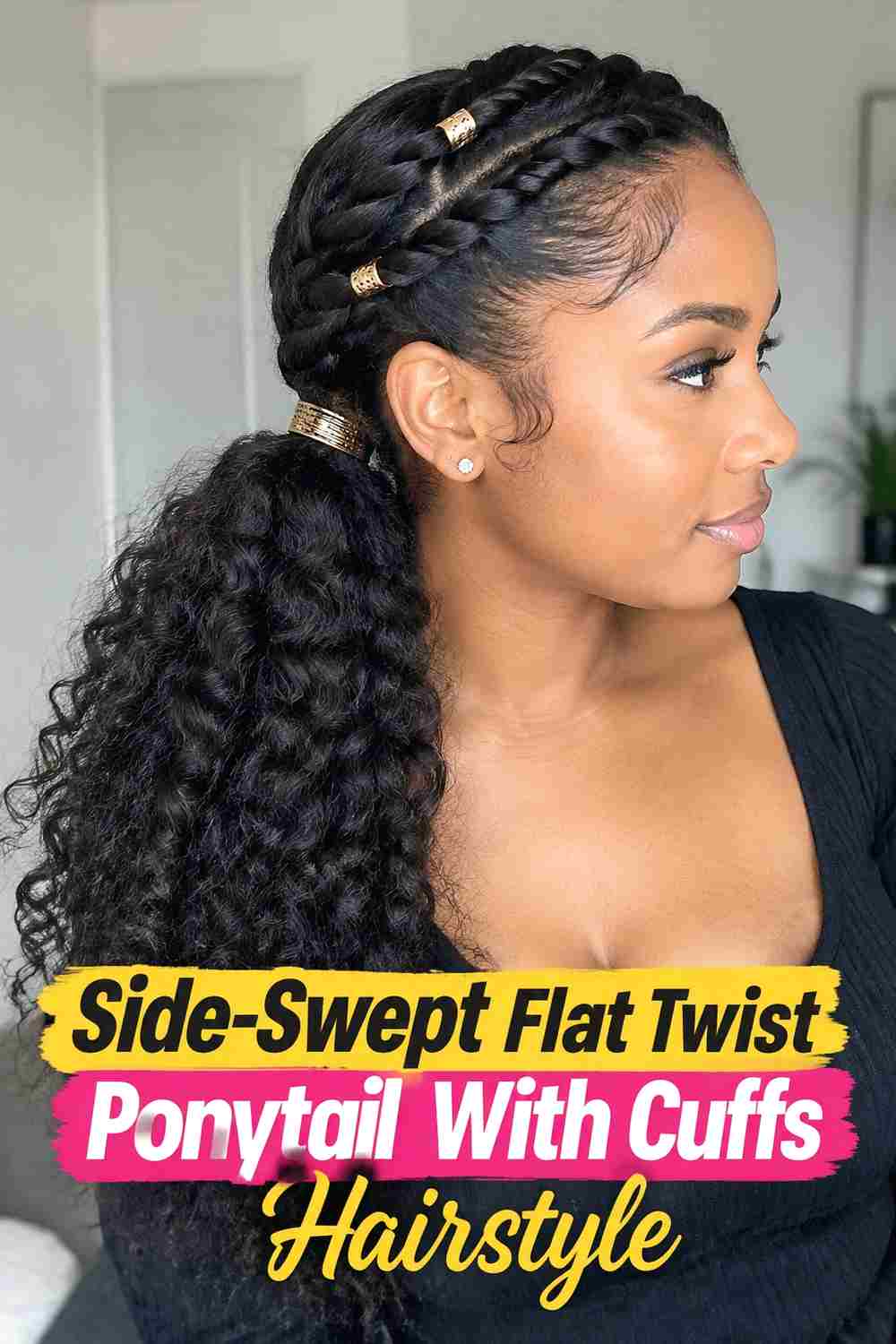
A side-swept design directs several flat twists diagonally across the crown before they gather into a ponytail positioned slightly off-center. The asymmetry gives the hairstyle a dynamic shape and makes cuff placement especially visible along the sweeping rows. Keep one side relatively simple so the directional twists remain the main feature. The ponytail can fall over one shoulder for a softer look or stay behind the head while the base remains subtly offset. This works particularly well with long curly or coily hair because the textured length adds movement below the graphic scalp pattern. Comfortable tension is important where the twists change direction.
Why It Works
The diagonal movement makes the cuffs feel integrated into the design rather than added randomly after styling.
Wear & Maintenance
Check accessory placement near the ears and temple so cuffs do not press against the skin when the ponytail shifts.
18. Statement Cuff Flat Twist Ponytail Hairstyle
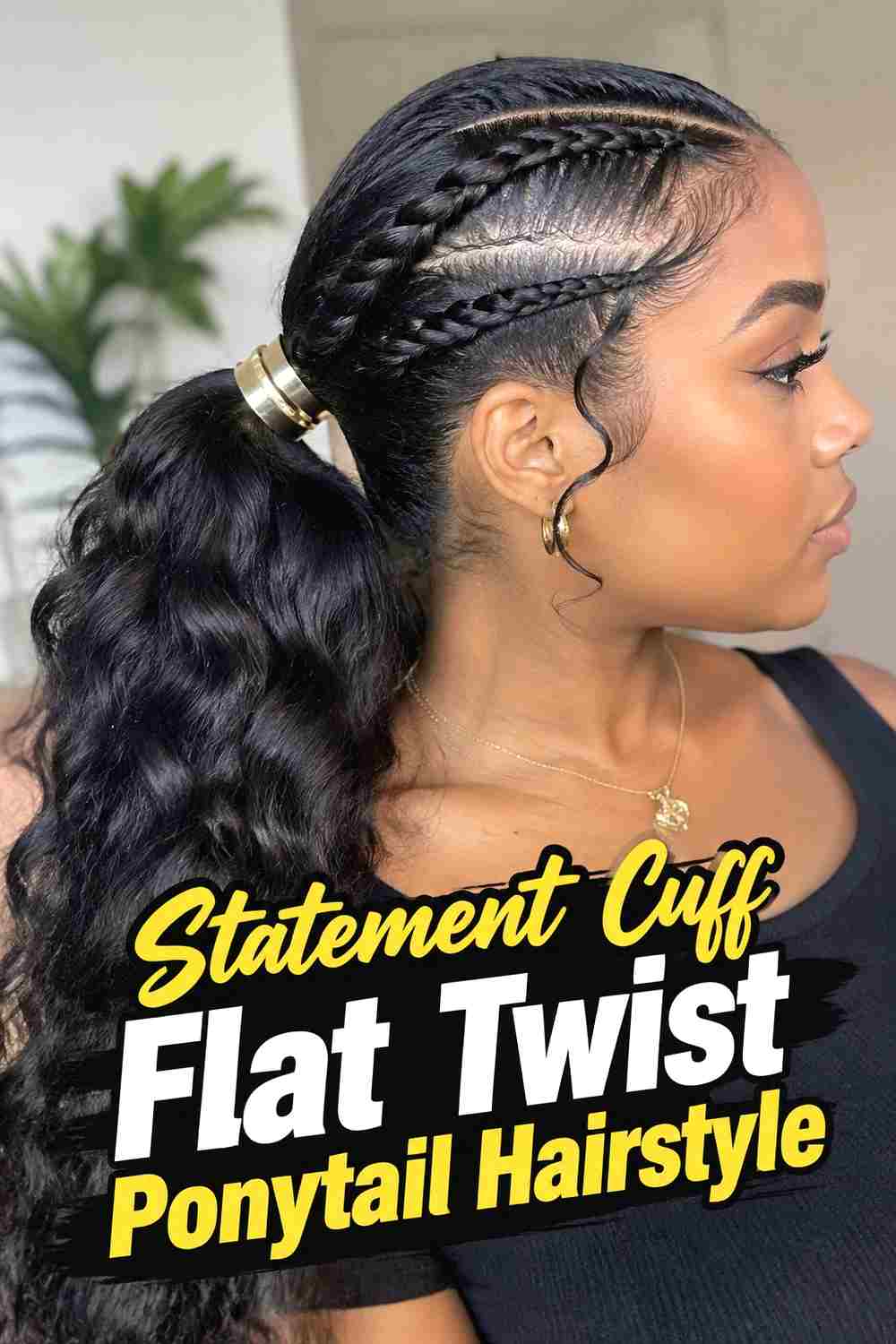
Instead of using many small accessories, the statement cuff version relies on a few larger metallic pieces positioned on selected flat twists. Keep the rest of the twist pattern relatively simple so each cuff has enough space to be seen. A high or mid-height ponytail can balance the stronger accessories, especially when the length remains full and textured. Choose cuffs that fit the twist width comfortably and avoid pieces with rough edges or unnecessary weight. One larger cuff near each side of the crown can create a balanced look, or several pieces can be clustered asymmetrically for a more fashion-forward finish.
Styling Notes
Test the larger cuffs for comfort before finalizing the style, since statement accessories should not create pressure on the scalp.
Best For
This look suits fashion events, parties, photo shoots, concerts, and occasions where the accessories are meant to be noticeable.
19. Elegant Flat Twist Ponytail With Cuffs Hairstyle
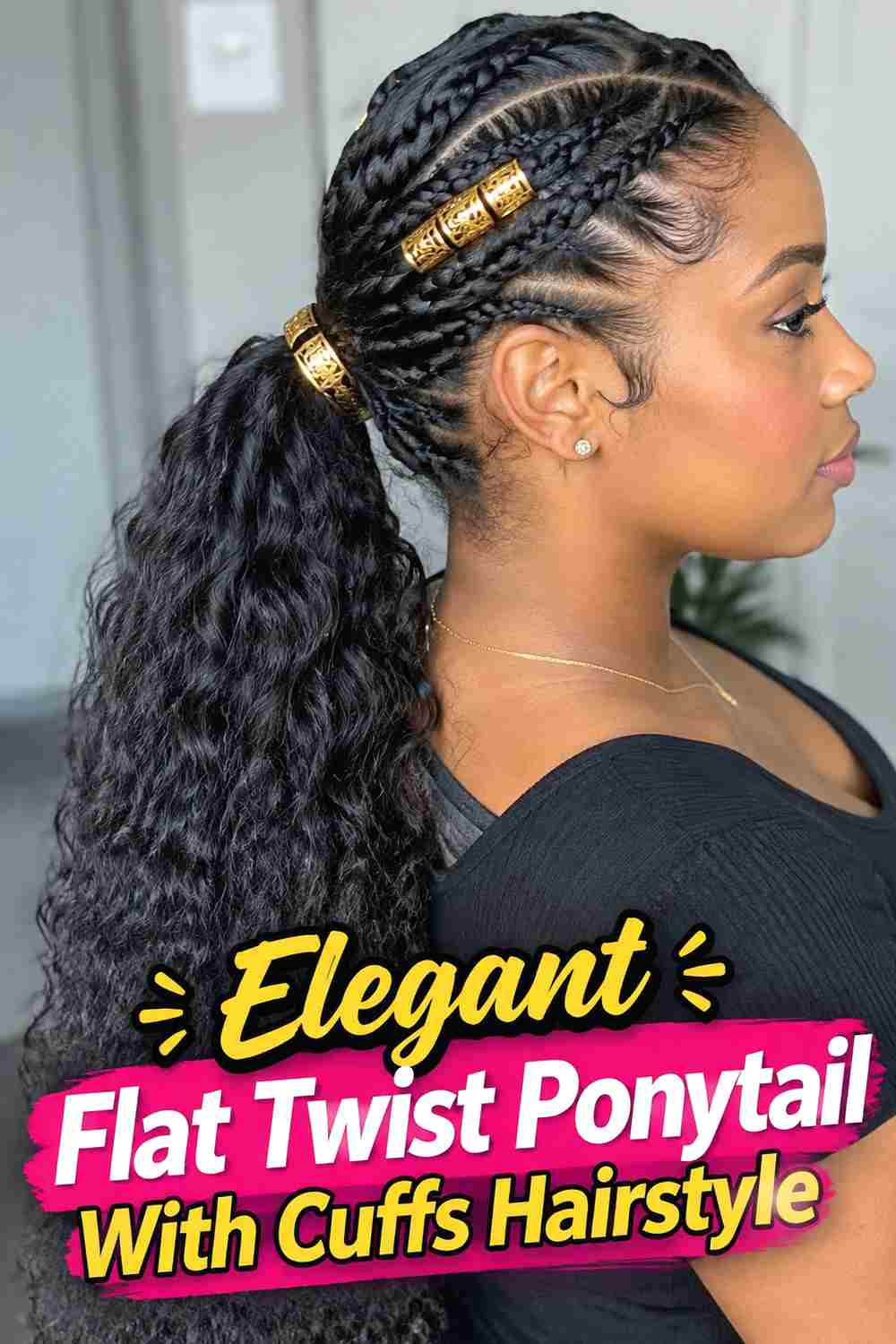
The elegant version keeps the twist pattern clean, the cuff placement restrained, and the ponytail shape polished. Use a side or center part with smooth flat twists traveling neatly toward a low or mid-height ponytail. Add just a few matching metallic cuffs near the back or along one visible side, allowing them to catch the light without becoming the main focus. The ponytail can be softly curled, defined, or lightly stretched depending on the occasion. Keeping the hairline comfortable and the accessory palette simple helps the hairstyle feel refined rather than overly embellished. A wrapped ponytail base can add another subtle finishing detail.
Why It Works
Controlled parting, limited accessories, and a balanced ponytail create a polished look while still highlighting natural texture.
Best For
Choose this style for dinners, weddings, receptions, formal celebrations, and elegant evening events.
20. Extra Long Flat Twist Ponytail With Cuffs Hairstyle
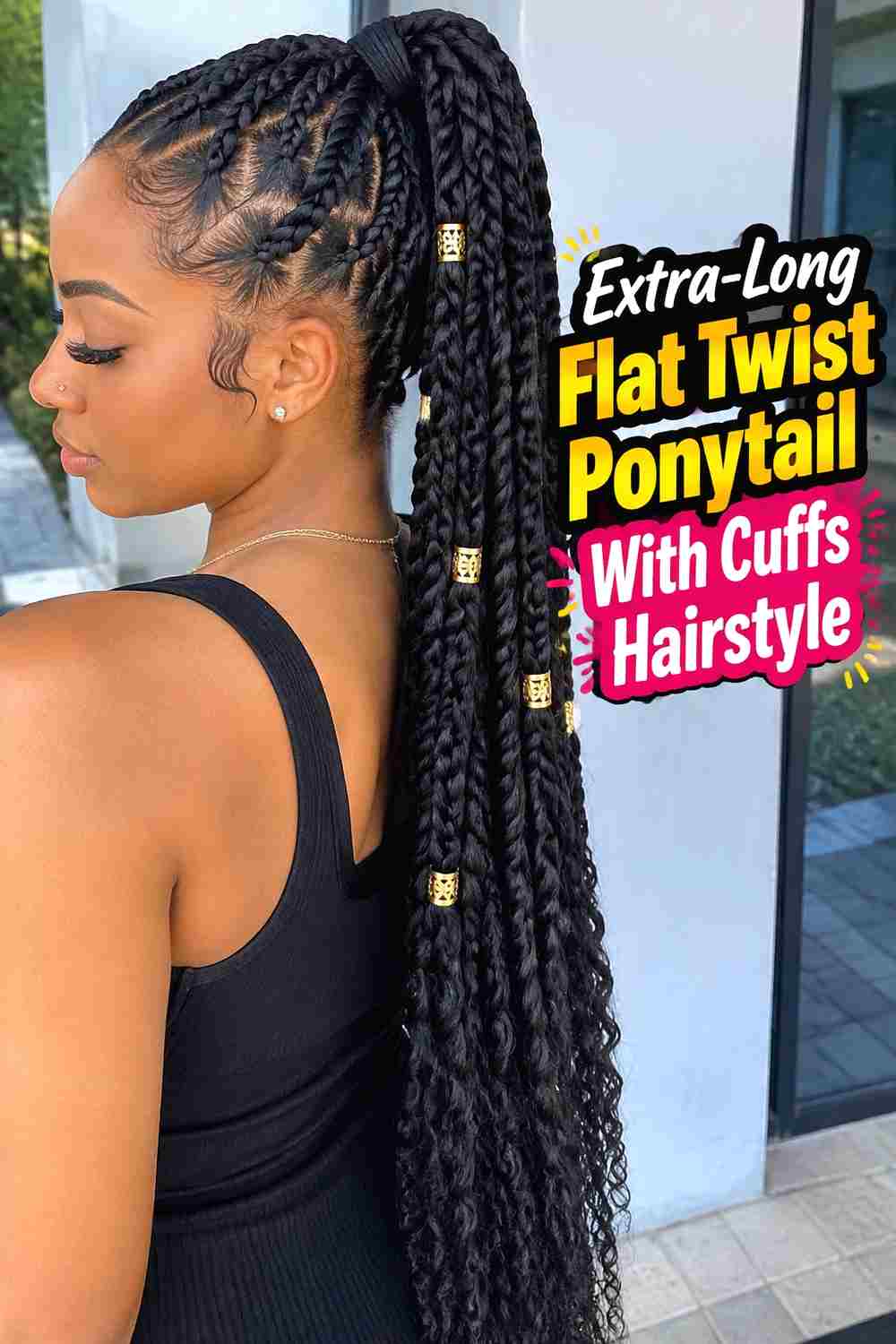
An extra-long ponytail gives flat twists and cuffs a dramatic finishing length, creating movement well below the ponytail base. Keep the scalp design structured with straight, curved, or side-directed twists, then add metallic cuffs near selected rows so the crown remains detailed without competing with the long ponytail. The length can stay coily, curly, or stretched depending on your preferred finish. Because an extra-long ponytail has more weight, the base should feel stable but never painfully tight. Avoid adding heavy accessories throughout the full length; concentrating the cuffs near the twisted crown keeps the style more comfortable and visually balanced.
Hair Type & Length
This works best with naturally long hair or appropriate added length that can create an extended ponytail while maintaining a secure base.
Wear & Maintenance
Monitor tension during extended wear and keep cuffs lightweight so the combination of added length and accessories does not feel unnecessarily heavy.
How to Choose the Right Look
Start with ponytail placement. High ponytails create lift and make the textured length more visible from the front, while low ponytails feel softer and often place less tension around the crown. Mid-height versions provide an adaptable middle ground that works for everyday and event styling. Next, compare the flat twist pattern. Straight rows feel classic, curved twists create flowing movement, zigzag parting adds graphic detail, and side-swept designs introduce asymmetry. Chunky twists make a bold statement with fewer sections, while fine twists produce a more intricate scalp pattern. Cuff placement should support the design rather than overwhelm it. Gold creates a warm finish, silver feels cooler and sleek, and mixed metals can look modern when repeated consistently. Larger cuffs need wider twists, while smaller accessories are better suited to narrow rows. Texture and ponytail length also influence the result. Curls and coils produce fullness and movement, while stretched lengths create a cleaner silhouette. Whatever style you choose, prioritize comfortable twist tension, a secure ponytail base, smooth accessory edges, and cuffs that fit without pinching the hair.
Final Thoughts
Flat twist ponytails with cuffs combine structured scalp styling with the movement and volume of a textured ponytail. Changing the parting, twist width, ponytail height, cuff finish, or length can make the same basic idea feel completely different. Keep the flat twists secure but comfortable, add accessories only after the structure is finished, and let the ponytail texture remain visible so the style does not feel overly rigid. From minimal gold cuffs to curved patterns, bubble ponytails, and extra-long textured lengths, these looks offer plenty of room for personal styling.
FAQs
1. What is a flat twist ponytail with cuffs hairstyle?
It is a hairstyle where flat twists travel along the scalp toward a ponytail, with metallic cuffs attached to selected twists as decorative accents.
2. Can cuffs be added to any flat twist?
Usually, yes, as long as the cuff fits comfortably around the twist. Wider twists may need larger cuffs, while fine twists work better with lightweight smaller accessories.
3. Do flat twist ponytails work with curly and coily hair?
Yes. Curly and coily textures work naturally with flat twists and can create a full, dimensional ponytail while preserving visible texture through the length.
4. How many cuffs should I use?
There is no fixed number. A few strategically placed cuffs can highlight the twist pattern, while heavier decoration may feel crowded or add unnecessary weight.
5. How can I keep a flat twist ponytail comfortable?
Avoid overly tight twisting, use a secure but comfortable ponytail base, choose lightweight cuffs with smooth edges, and remove or reposition any accessory that feels irritating. Save your favorite flat twist ponytail with cuffs hairstyle and explore more textured ponytail inspiration for your next look.