13 Gray Transition Haircuts With Soft Layers
Soft layers can make a gray transition feel lighter, more dimensional, and beautifully intentional while helping silver, white, and darker strands blend naturally. Growing out gray hair does not mean waiting for one solid color to take over. The right haircut can make the transition itself part of the style. Soft layers introduce movement between darker lengths, emerging silver roots, and naturally varied gray strands, helping contrasting tones look more connected. Length and placement make a noticeable difference. A layered lob keeps the shape polished, feathering softens heavier sections, and face-framing pieces can showcase brighter silver around the front. Before choosing a cut, consider your current length, natural texture, density, styling routine, and how much of the existing color you want to keep while the gray grows.
Quick List
- Soft Silver Lob Hairstyle
- Feathered Gray Bob Hairstyle
- Salt And Pepper Layered Hairstyle
- Silver Face Framing Layers Hairstyle
- Ash Gray Shoulder Length Hairstyle
- Wispy Gray Shag Hairstyle
- Blended Silver Midi Hairstyle
- Gray Curtain Bangs Hairstyle
- Tapered Silver Layers Hairstyle
- Smoky Gray Butterfly Layers Hairstyle
- Natural Gray Wavy Lob Hairstyle
- Pearl Gray Soft Layers Hairstyle
- Rooted Silver Transition Hairstyle
1. Soft Silver Lob Hairstyle
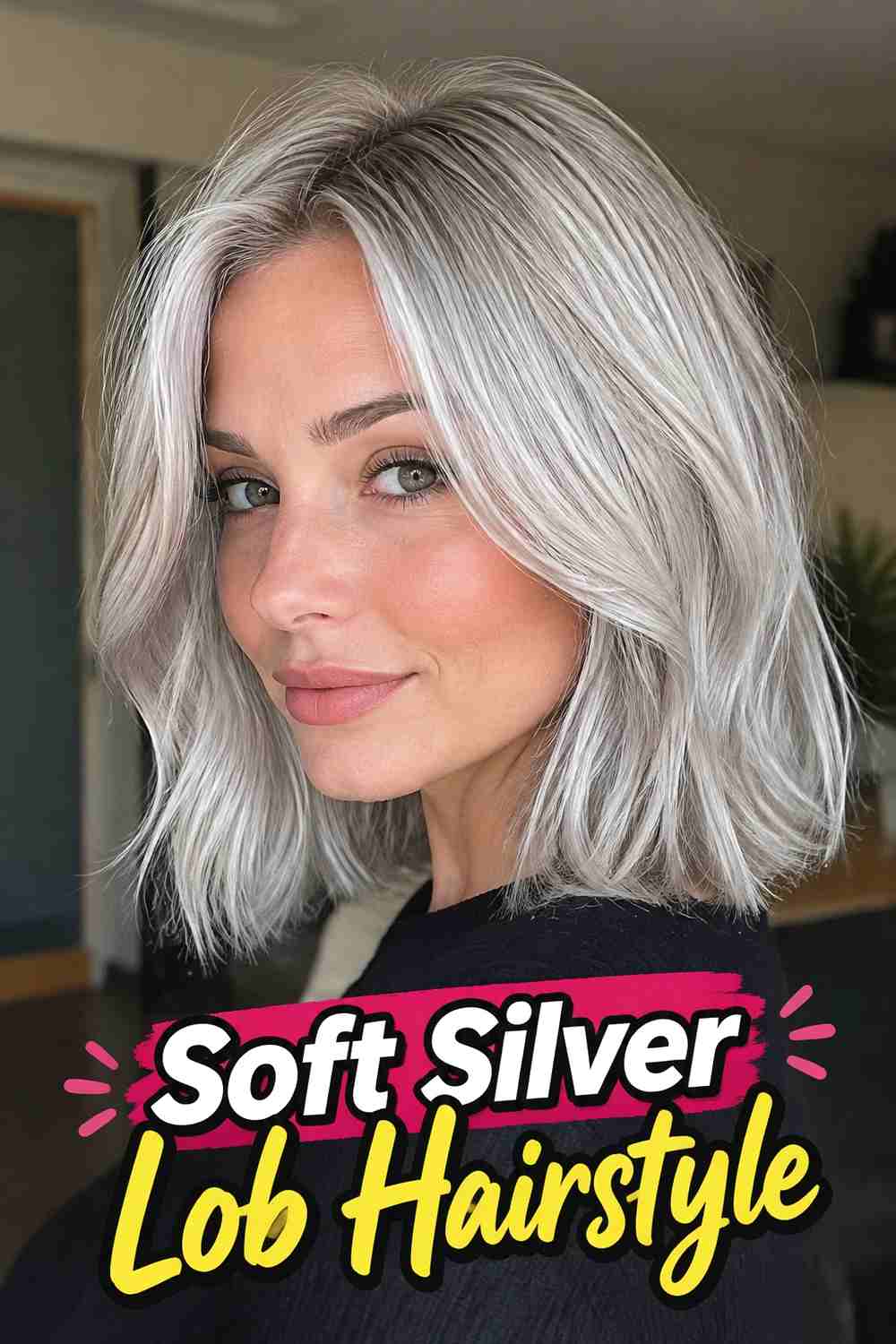
A soft silver lob gives transitioning gray hair a clean shape without making the color change look overly structured. The length sits around the shoulders or collarbones, while subtle internal and surface layers create movement through mixed silver, white, and darker strands. Keeping the perimeter relatively full prevents finer ends from looking sparse, yet the gentle layering stops the cut from feeling heavy. This style is especially useful when several inches of natural gray have grown in and you want the remaining colored lengths to blend more gracefully. A smooth blowout highlights the tonal transition, while loose bends make contrasting shades look softer and more dimensional.
Styling Notes
Use a round brush or large-barrel styling tool to create a slight bend rather than tight curls. The softer movement allows silver variation to remain visible.
Best For
This cut suits anyone wanting a polished medium-length transition without sacrificing too much length at once.
2. Feathered Gray Bob Hairstyle
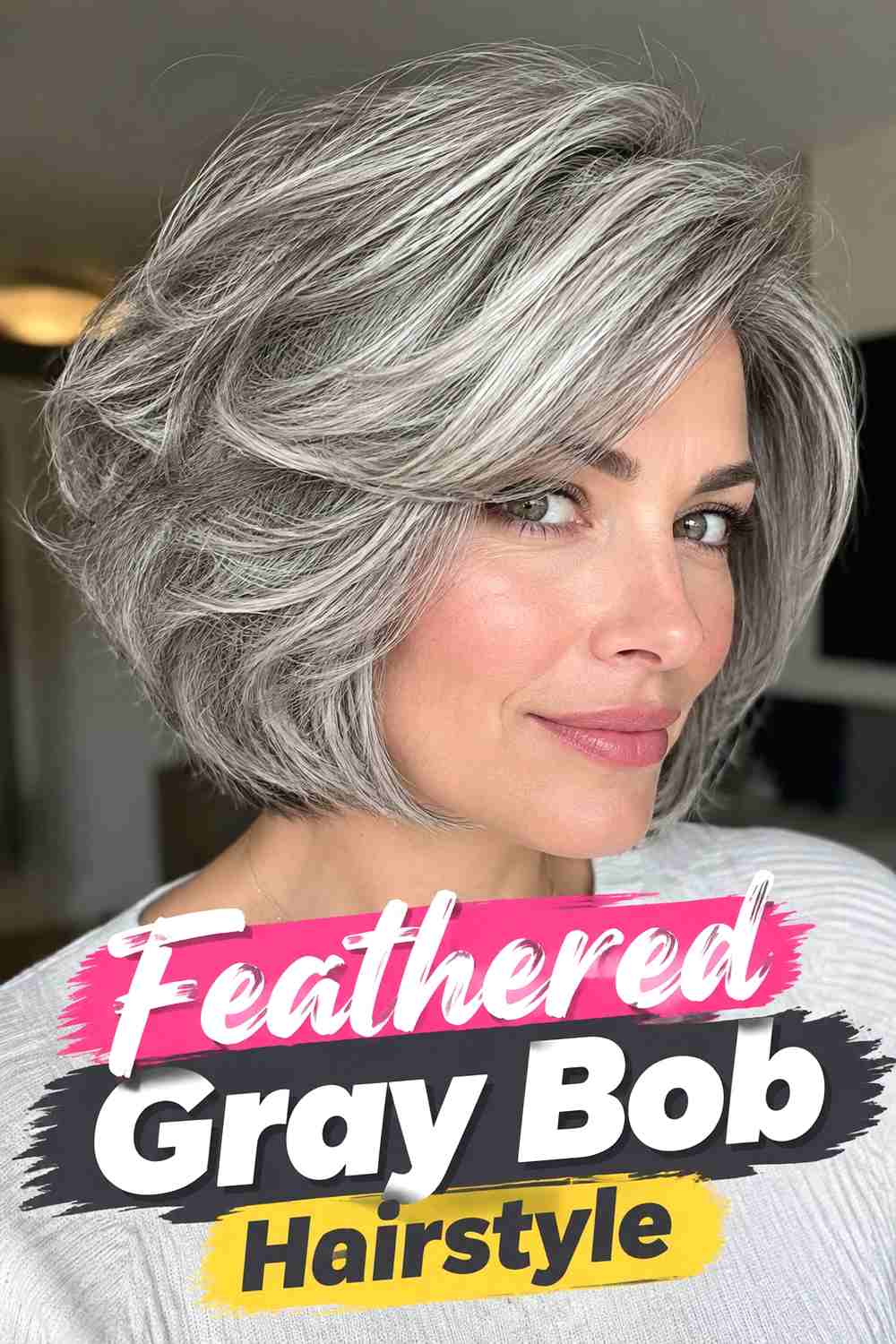
A feathered gray bob combines a defined shorter shape with airy layers that soften the line between natural silver growth and previously colored hair. Instead of stacking the back heavily, the cut can use light feathering around the crown, sides, and ends to create movement without excessive volume. The layered edges also help different gray tones overlap naturally, which can make the transition look less like two separate blocks of color. This haircut works particularly well when you are comfortable going somewhat shorter to remove more old color. Styled with gentle lift at the roots and curved ends, it has a light, flowing finish rather than a rigid bob silhouette.
Hair Type & Length
Straight, softly wavy, and moderately textured hair can all work with feathering, although the amount of layering should reflect your density.
Pro Tip
Ask for soft graduation rather than aggressive thinning if you want to preserve fullness through the ends.
3. Salt And Pepper Layered Hairstyle
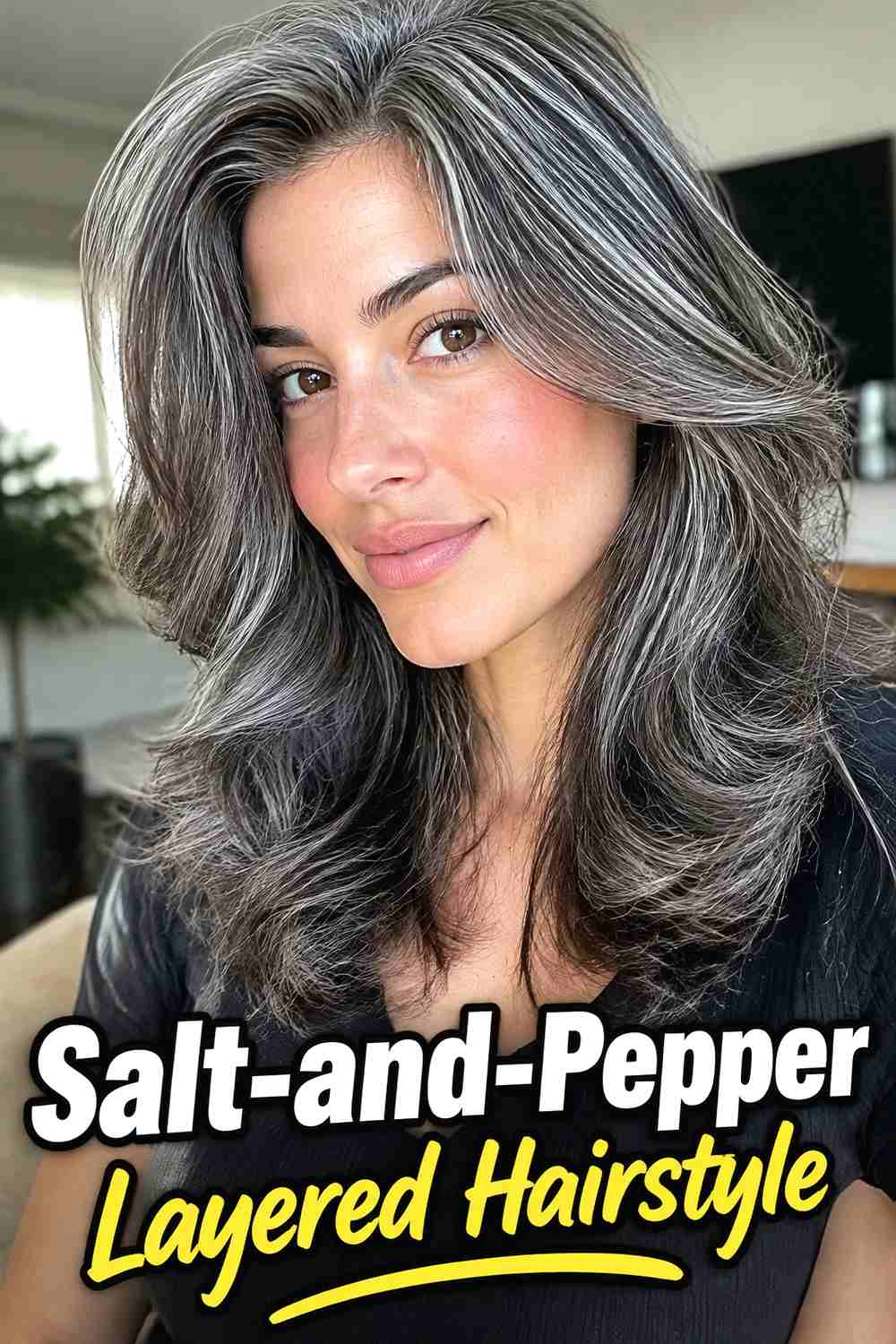
A salt-and-pepper layered cut celebrates the contrast between dark strands and emerging silver instead of trying to disguise it completely. Medium-length layers separate the different tones, allowing white, gray, and deeper sections to move through one another rather than sitting in obvious horizontal bands. Face-framing layers can start around the cheekbones or jawline, while longer layers through the back maintain enough weight for an easy everyday shape. This approach is especially attractive when your natural gray pattern already has noticeable variation. Loose waves can emphasize the multidimensional effect, but the cut also works worn straight because the layered structure prevents the darker and lighter sections from appearing too blocky.
Why It Works
The contrast becomes part of the design, while soft layers help break up strong boundaries between darker and lighter hair.
Wear & Maintenance
Regular shaping keeps the ends tidy as older color is gradually trimmed away during the transition.
4. Silver Face Framing Layers Hairstyle
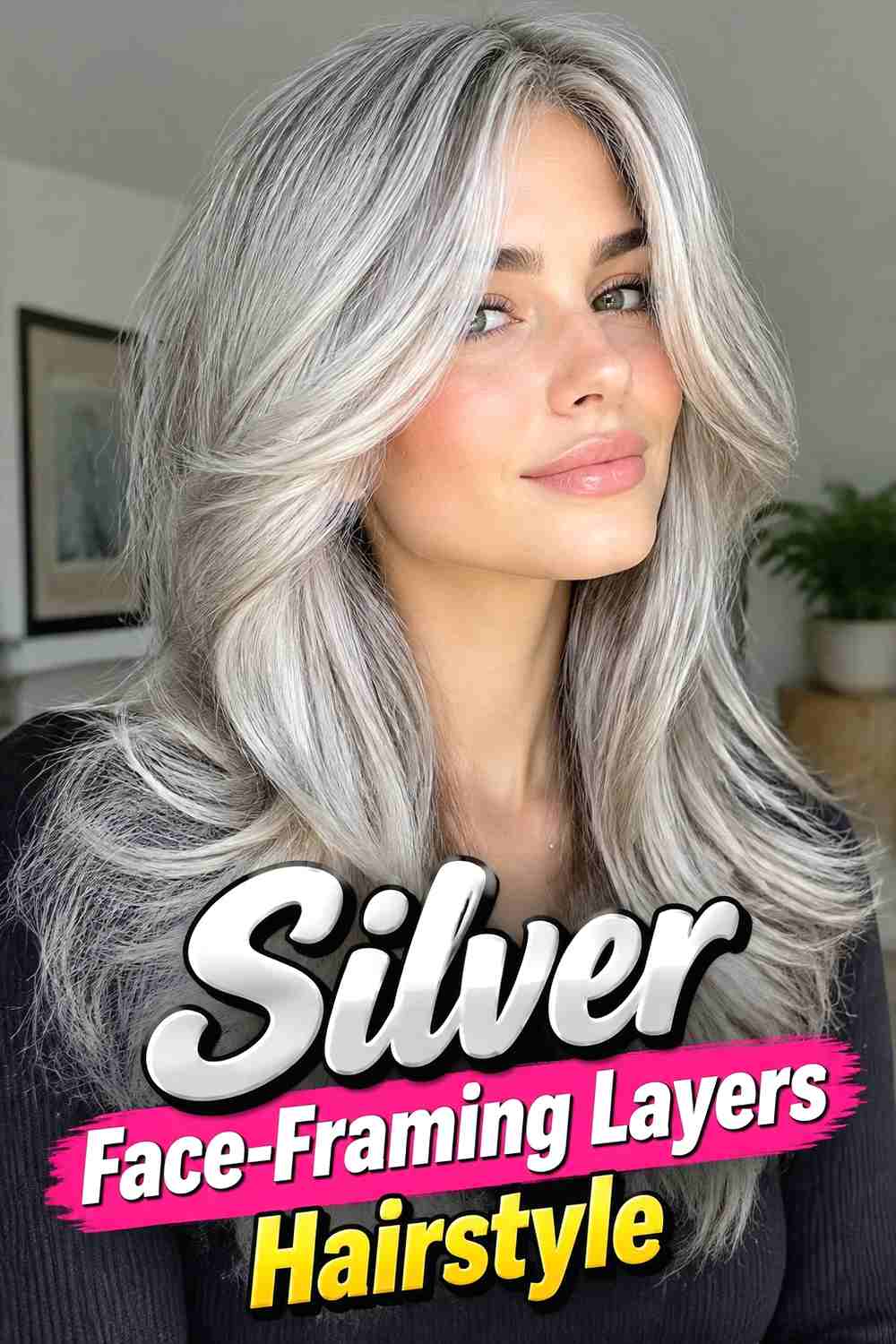
Silver face-framing layers place the brightest part of the gray transition where it can become a deliberate focal point. Shorter pieces around the cheeks, jaw, and collarbone allow naturally pale strands near the temples and hairline to blend into the rest of the haircut. The back can remain longer and more softly layered, which is helpful if you want movement without committing to a dramatic chop. This style also creates a graceful connection between silver roots and darker lengths because the front pieces introduce several different lengths instead of one blunt color boundary. A center part highlights symmetrical silver framing, while a side part creates a softer, less uniform effect.
Styling Notes
Blow the front pieces away from the face for visible separation and a light, sweeping finish.
Best For
This option is particularly useful when your gray is most noticeable around the temples or front hairline.
5. Ash Gray Shoulder Length Hairstyle
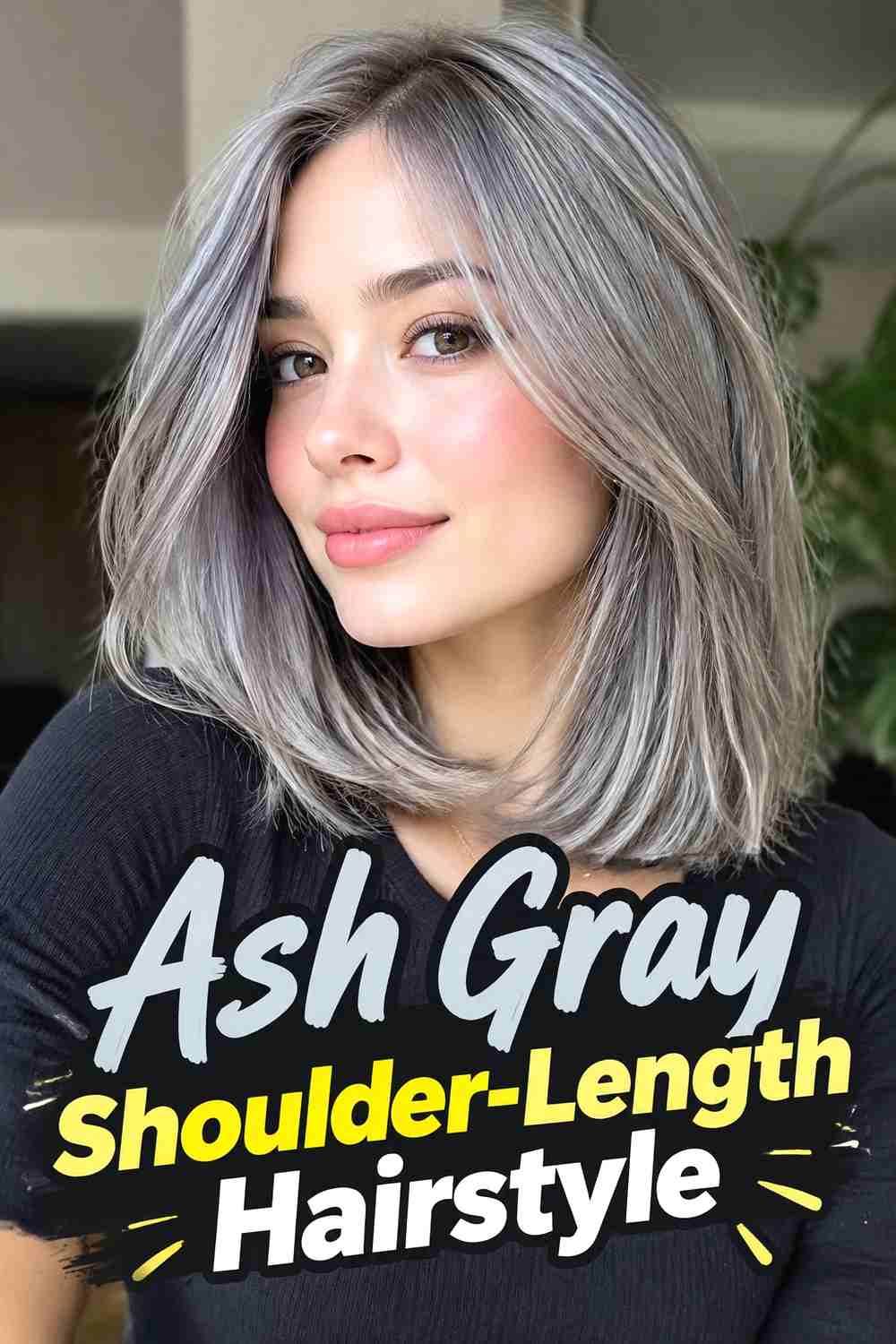
An ash gray shoulder-length cut keeps the overall silhouette simple while using soft layers to reveal variations in cool silver, charcoal, and muted gray. The shoulder-grazing length is practical during a transition because it removes some older color without requiring an immediately short haircut. Long layers through the lower half prevent the shape from becoming triangular, especially if the hair has natural wave or moderate density. The cooler palette looks particularly dimensional when the cut is styled with relaxed bends, since the movement separates lighter and darker strands. If some previously colored hair remains through the ends, the layered shape can make that difference feel more gradual while future trims continue removing it.
Hair Type & Length
This shape works well on medium hair that can hold gentle movement without needing heavy layering through the crown.
Wear & Maintenance
Schedule trims based on how quickly you want to remove the remaining colored ends while maintaining a comfortable shoulder-length shape.
6. Wispy Gray Shag Hairstyle
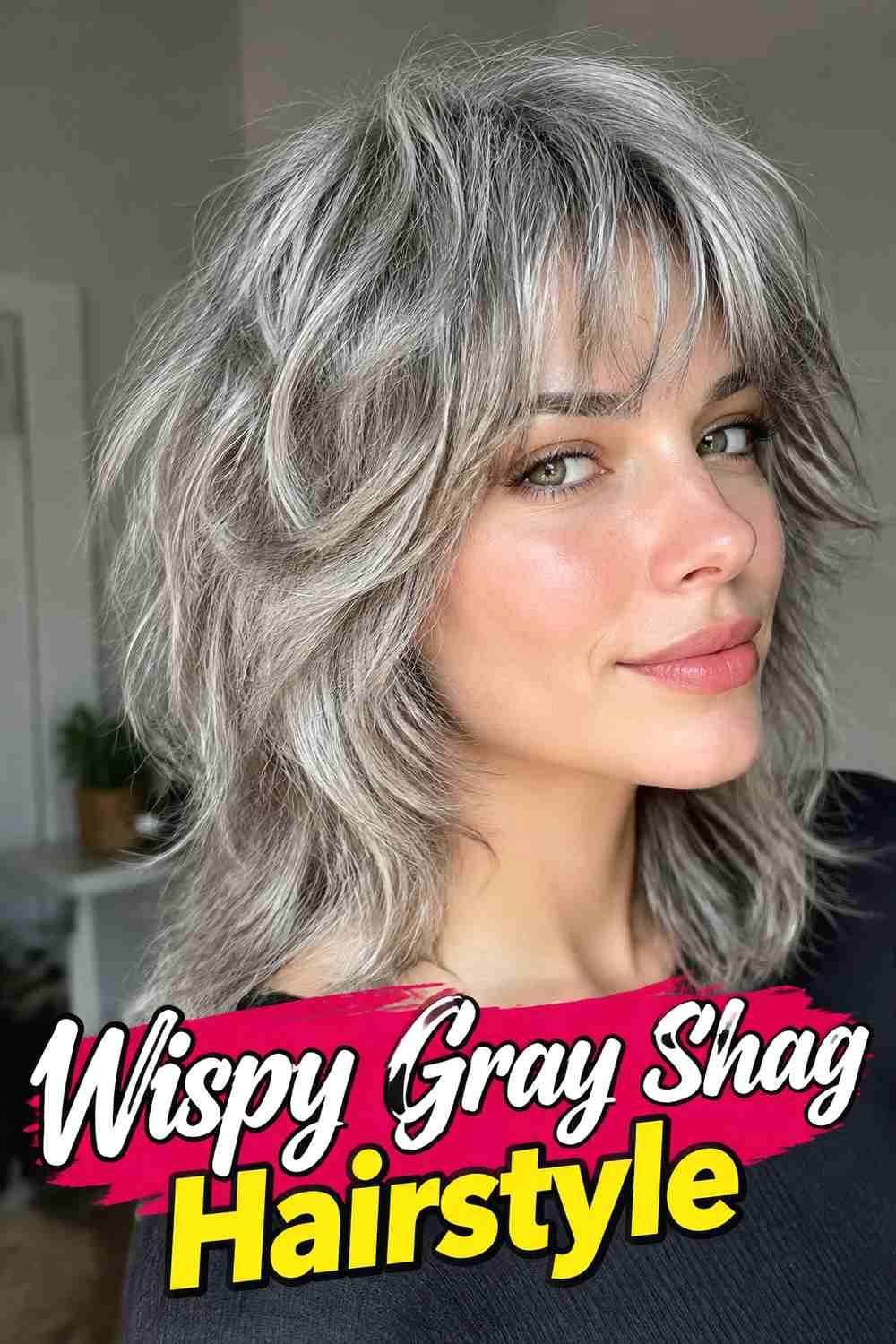
A wispy gray shag makes the grow-out feel intentionally textured by distributing shorter layers throughout the cut. The shape can include light crown movement, airy face-framing sections, and softly tapered ends rather than dense, blunt lines. That variety of lengths works naturally with mixed gray because silver strands appear at several levels instead of forming one obvious transition point. The haircut is especially suited to someone who prefers a relaxed, piecey finish and does not mind visible texture. Natural waves can enhance the shape with minimal styling, while straighter hair can be given gentle bends for separation. Keeping the layers soft is important so the result stays wearable rather than overly choppy.
Styling Notes
Use lightweight texture and avoid loading the ends with heavy product. The goal is airy separation that still shows natural gray variation.
Best For
Choose this look if you prefer an undone, movement-focused haircut rather than a polished one-length transition.
7. Blended Silver Midi Hairstyle
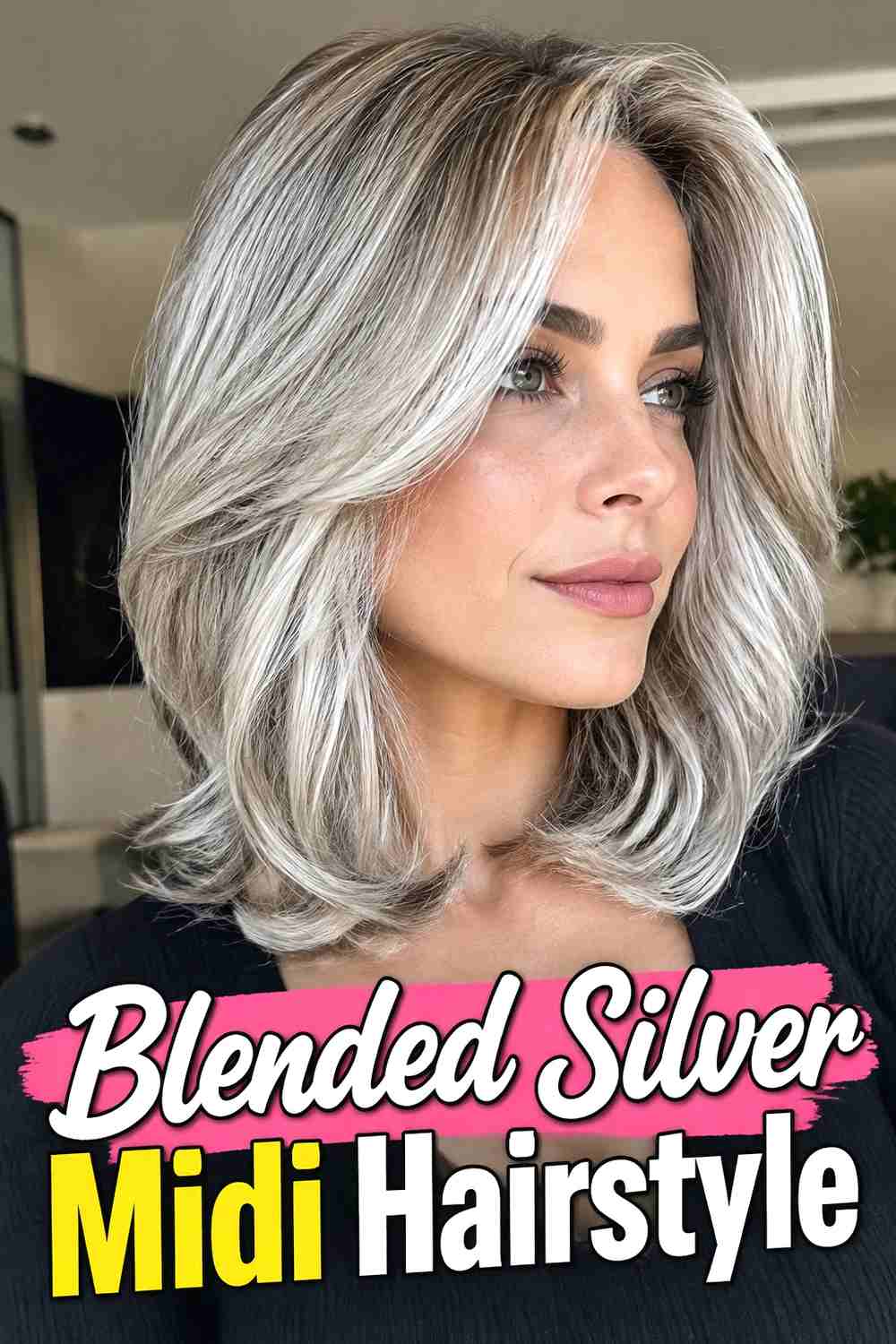
The blended silver midi keeps more length while introducing enough layering to make the gray transition feel cohesive. Falling between the shoulders and upper chest, the cut provides room for long, flowing layers that overlap different shades of silver, gray, and remaining color. This is a useful choice if you are not ready for a bob but still want the shape to look purposeful while the natural color grows. Layers can begin below the chin to preserve density through the upper sections, then become more noticeable toward the ends. Styled smooth, the haircut shows the gradual color shift clearly; styled with waves, it creates a softer blend between contrasting areas.
Why It Works
Long layers break up the transition without removing the length that many people prefer to keep during the grow-out process.
Pro Tip
Keep the shortest layers long enough to integrate with the overall shape if your hair is fine or easily loses fullness.
8. Gray Curtain Bangs Hairstyle
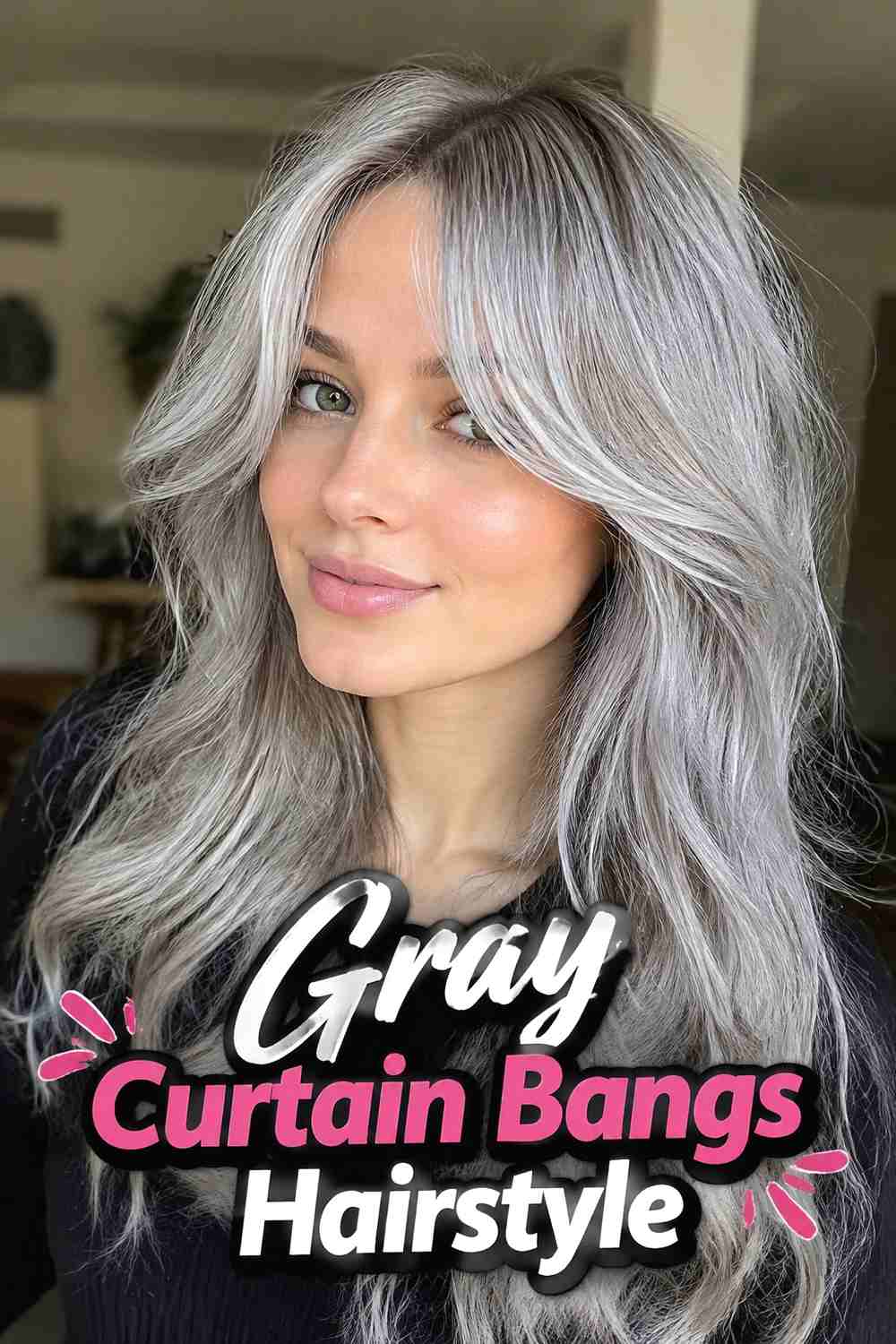
Gray curtain bangs can turn emerging silver around the hairline into one of the most intentional details of the haircut. The fringe parts softly through the center and blends into cheekbone- or jaw-length layers, creating a gradual frame instead of a solid block across the forehead. This works especially well when the front grows in lighter than the rest of the hair, since the silver naturally highlights the sweeping shape. The remaining medium-length hair can stay lightly layered for continuity without competing with the bangs. A rounded blowout helps the fringe open away from the face, while natural texture produces a more casual result. The key is keeping the transition from bangs to side layers fluid.
Wear & Maintenance
Curtain bangs generally need more frequent shaping than longer layers, so factor fringe trims into your maintenance routine.
Styling Notes
Direct the bangs away from the face while drying to encourage the signature open, softly curved shape.
9. Tapered Silver Layers Hairstyle
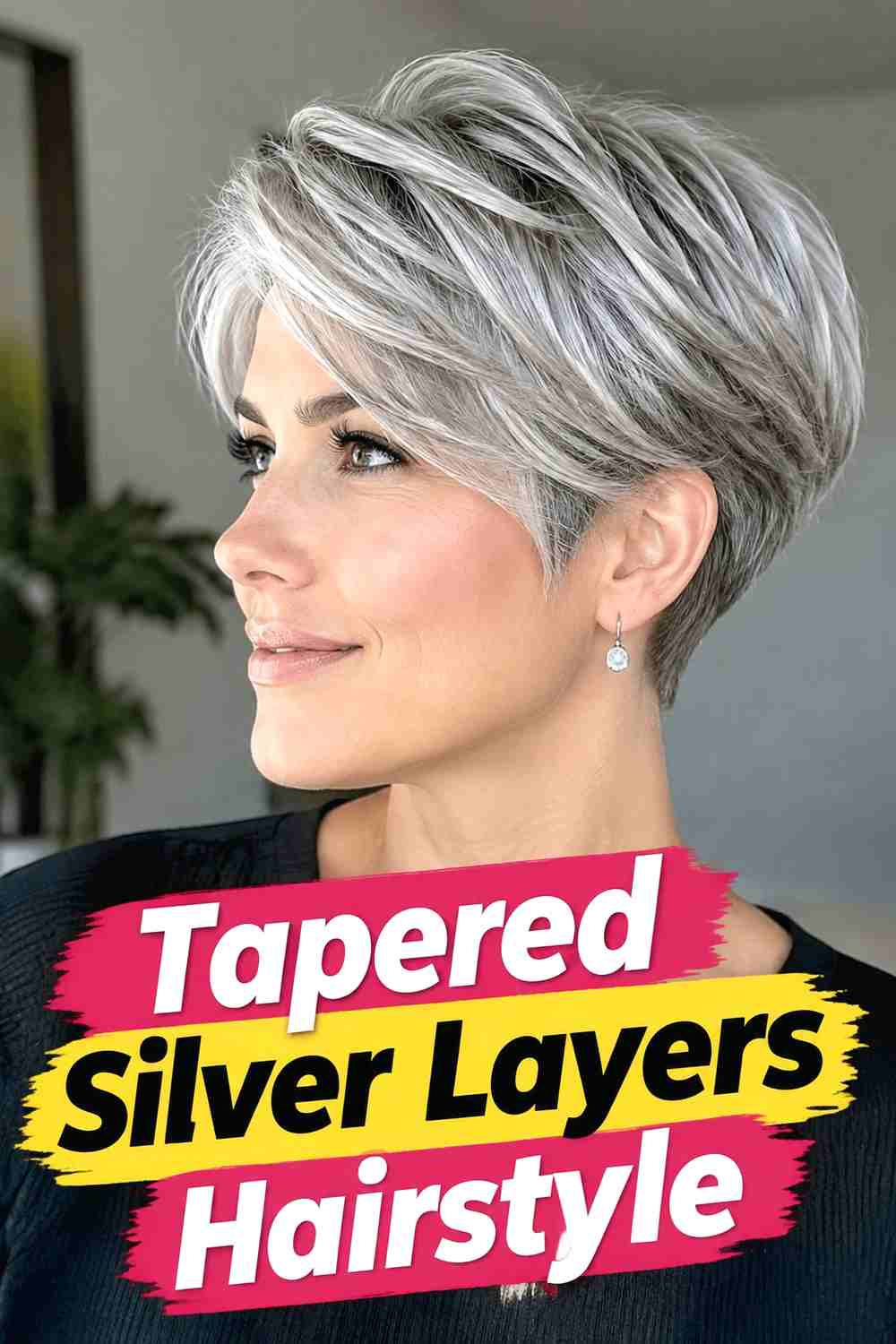
Tapered silver layers remove heaviness gradually through the lower lengths while preserving a fuller crown and perimeter. The shape works particularly well when transitioning hair feels bulky where older color remains, since carefully placed layers can reduce visual weight without making the entire haircut thin. Silver and white strands near the surface become more noticeable as the layers move, while deeper gray or previously colored sections underneath provide contrast. This haircut can be worn straight for a sleek, softly graduated effect or styled with gentle waves for more visible dimension. The tapered finish also keeps the ends from appearing abrupt, which can be useful when you are progressively trimming away darker or warmer old color.
Hair Type & Length
Medium to thick hair often benefits most from controlled tapering, while finer hair may need fewer layers to maintain density.
Why It Works
The gradual reduction of weight mirrors the gradual color transition, creating a softer overall visual effect.
10. Smoky Gray Butterfly Layers Hairstyle
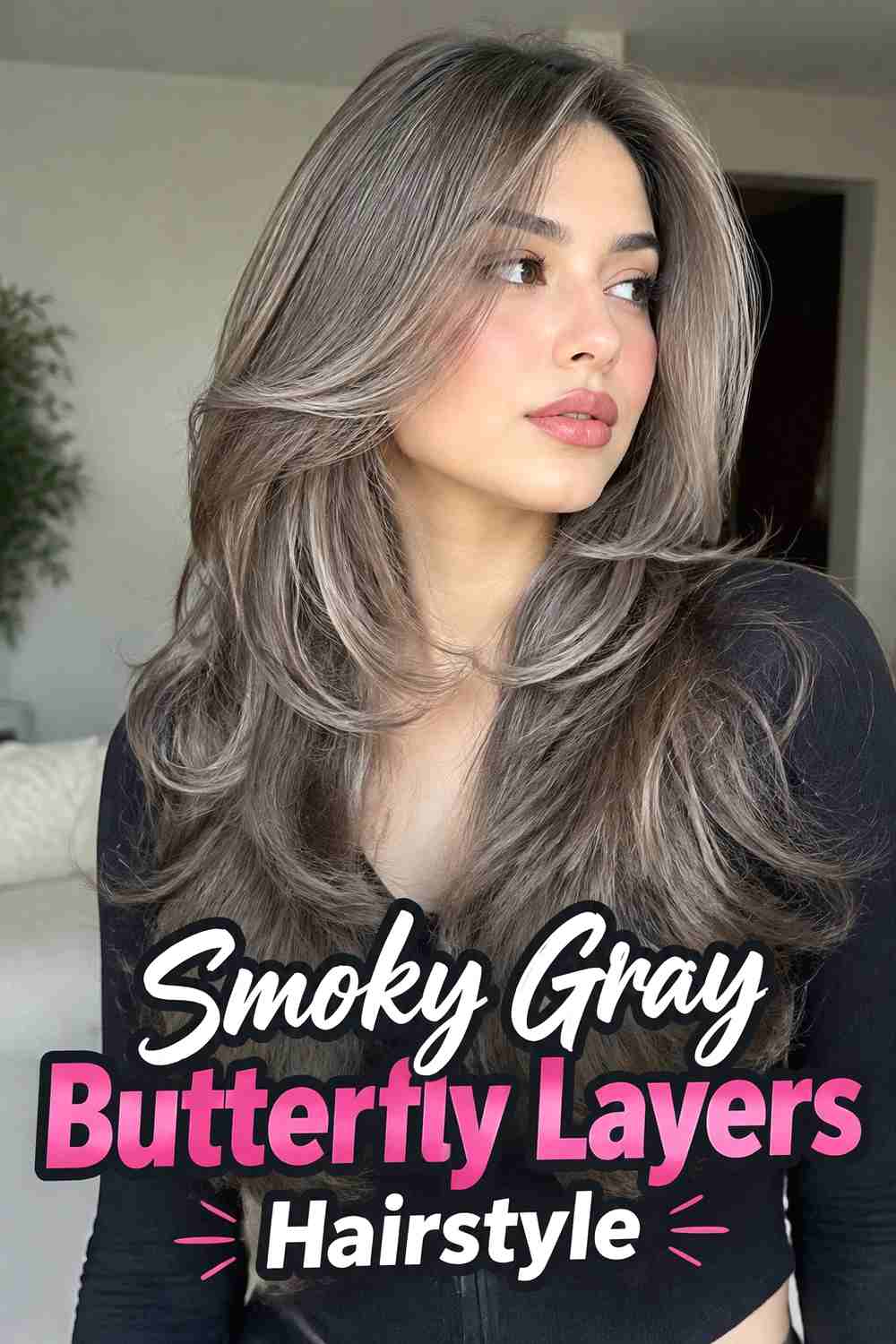
Smoky gray butterfly layers bring more volume and movement to a longer medium-length transition. Shorter layers around the face and upper sections sweep outward, while longer lower layers preserve length and create the recognizable cascading shape. This structure allows silver roots, smoky gray mid-lengths, and darker remaining ends to appear at different levels, helping the color variation feel integrated into the haircut. A round-brush blowout shows the butterfly effect most clearly by lifting the shorter pieces away from the face. Because this cut relies on visible layering, it works best when there is enough length and density to support multiple sections without making the ends look overly thin.
Styling Notes
Create lift around the face and crown, then curve the longer ends softly outward or inward for a flowing layered finish.
Best For
This look suits anyone who wants noticeable layering and volume while retaining more medium-to-long length during the gray transition.
11. Natural Gray Wavy Lob Hairstyle
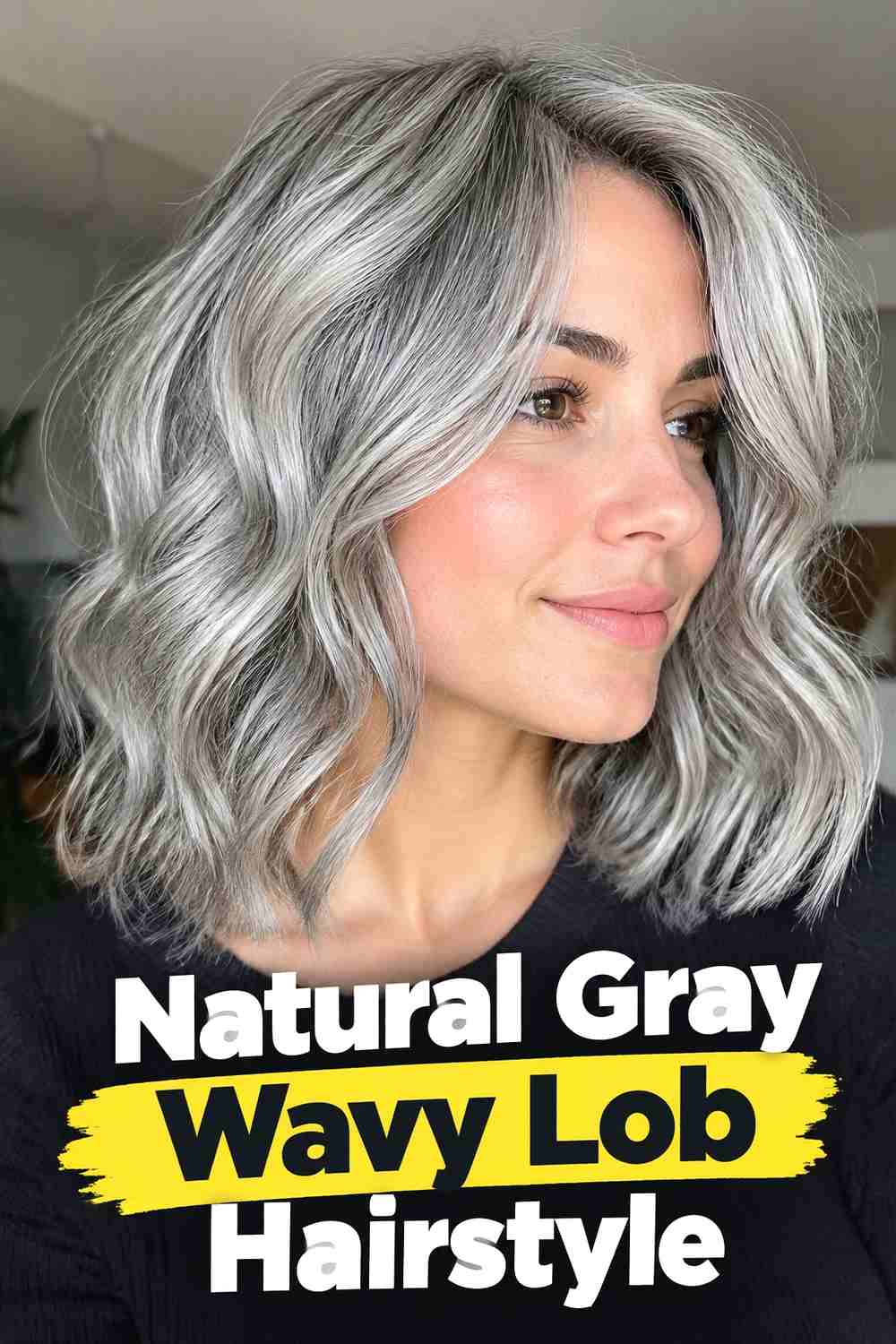
A natural gray wavy lob lets texture do much of the blending work. The cut usually falls near the shoulders, with restrained layers that encourage waves to form without sacrificing a strong overall shape. Natural bends break up contrasting silver, white, and darker strands, so the transition looks multidimensional rather than sharply divided. This can be particularly effective when the gray pattern is irregular, because the waves make that variation feel organic. A few shorter front layers provide movement around the face, while the back stays comparatively full. The style can be air-dried when the natural texture cooperates or refined with a few loose bends where extra definition is needed.
Hair Type & Length
Naturally wavy medium hair is an obvious match, but straighter textures can recreate the effect with loose, irregular bends.
Pro Tip
Avoid making every wave identical. Slight variation keeps both the texture and the gray pattern looking natural.
12. Pearl Gray Soft Layers Hairstyle
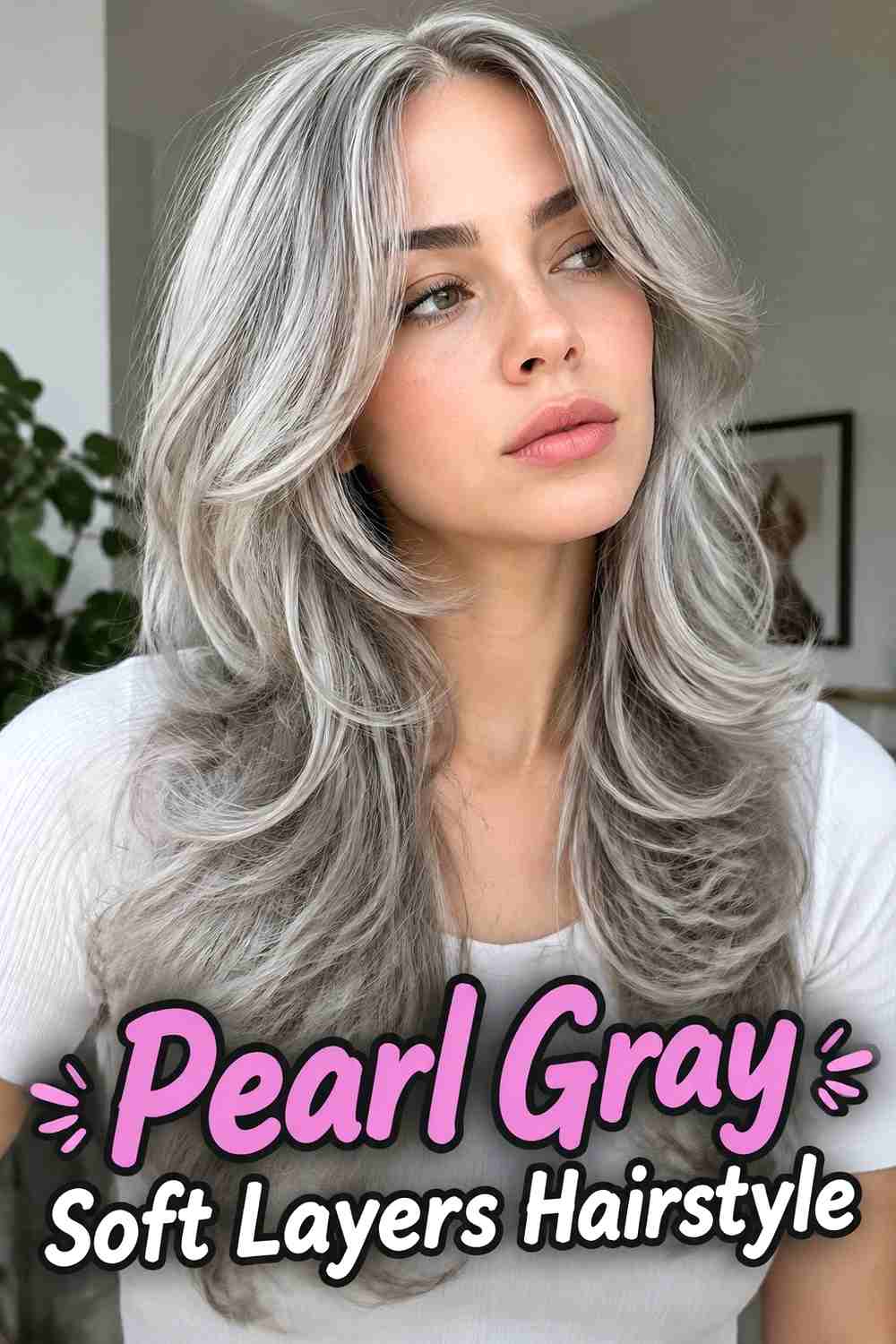
Pearl gray soft layers create a lighter, refined transition when the natural hair contains plenty of pale silver or white. The haircut can stay around collarbone length, with long layers that gently expose brighter strands without creating a heavily textured silhouette. Face-framing pieces help connect the luminous front sections with the rest of the hair, while the fuller lower edge maintains a polished finish. The beauty of this look comes from subtlety: the layers should move enough to reveal the different tones but not so much that the ends become wispy. A smooth blowout or soft wave pattern reflects light across the pale strands and makes the pearl-like variation more noticeable.
Styling Notes
Favor smooth movement and controlled volume rather than strong separation, which keeps the pale gray finish looking soft and cohesive.
Best For
This direction works especially well when much of the new growth is already light silver, pearl, or white.
13. Rooted Silver Transition Hairstyle
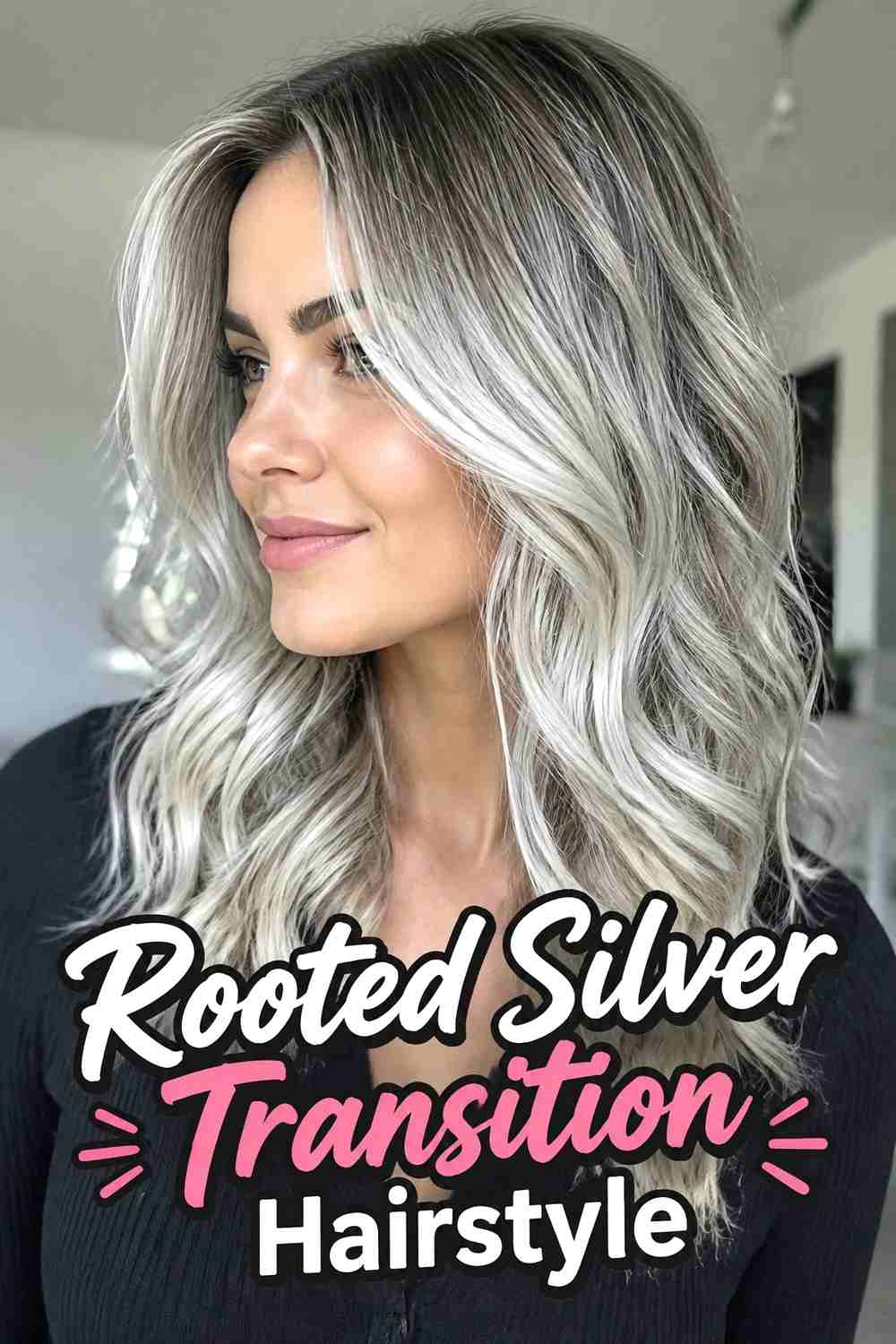
A rooted silver transition hairstyle works with the natural grow-out pattern instead of trying to hide the difference between the roots and older lengths. Soft layers beginning around the face and continuing through the lower sections break up the point where silver growth meets previously colored hair. As the natural section becomes longer, each trim removes more of the old color while the layered silhouette continues to look intentional. This option is flexible because it can be adapted to shoulder-length or slightly longer hair and does not require one dramatic cut. Loose waves are particularly effective for blending the two zones, although a smooth finish can also highlight the evolving silver gradient.
Wear & Maintenance
This style suits a gradual transition plan where length is removed over several appointments rather than all at once.
Why It Works
The layers interrupt a strong root-to-length boundary and give changing proportions of silver and old color room to blend visually.
How to Choose the Right Look
Start with how much old color you want to remove. A feathered bob or soft silver lob can eliminate more previously colored length sooner, while a midi cut or butterfly-layered style lets you keep more length during the transition. Next, consider where your natural gray is most visible. Silver concentrated around the temples works beautifully with face-framing layers or curtain bangs. A more evenly distributed salt-and-pepper pattern can benefit from long layers or a wavy lob that lets different tones overlap naturally. Texture and density matter as well. Fine hair usually benefits from preserving weight through the perimeter, while thicker hair may handle feathering, tapering, or shag-inspired layers more easily. Think about your styling time, too. Smooth lobs and butterfly layers may look most defined after a blowout, while shags and wavy cuts can suit a more relaxed routine. Finally, decide whether you want the transition to look subtle or deliberately dimensional. There is no need for every darker section to disappear immediately. A thoughtful haircut can make mixed silver, gray, white, and remaining color feel like part of the finished style while it continues to grow.
Final Thoughts
Gray transition haircuts work best when the shape supports the changing color instead of fighting it. Soft layers, face-framing pieces, feathered ends, and natural movement can help contrasting tones look connected while giving you flexibility to keep or gradually shorten your length. Choose the silhouette that fits your texture, maintenance preferences, and preferred pace of transition.
FAQs
1. Are layers good for transitioning to gray hair?
Soft layers can help mixed gray and previously colored strands overlap visually, making the transition appear more gradual while adding movement to the haircut.
2. What haircut makes growing out gray easier to manage?
Lobs, bobs, and medium layered cuts are practical options because regular trims can gradually remove old color while maintaining a defined shape.
3. Should fine gray hair have lots of layers?
Usually, lighter layering is a better starting point for fine hair because excessive layering can reduce visible fullness through the ends. The exact amount depends on density and texture.
4. Can I keep medium or longer hair while transitioning to gray?
Yes. Long face-framing layers, midi cuts, and butterfly-style layers let you maintain more length while the natural gray continues growing.
5. How can I make a gray grow-out line look softer?
Soft layering, waves, face-framing pieces, and gradual trimming can visually break up the boundary between natural gray roots and previously colored lengths. Save your favorite gray transition haircut, share these ideas for inspiration, and explore more layered looks before choosing your next shape.