16 Vintage Brush-Out Waves Hairstyle Ideas
Glossy curves, sculpted bends, and soft brushed texture bring vintage glamour into wearable hairstyles that can feel polished without looking overly rigid.
Vintage brush-out waves are created by setting curls and then brushing them into a connected pattern rather than leaving each curl individually defined. The result can range from compact 1940s waves and softly molded bobs to longer Old Hollywood-inspired shapes with dramatic side-swept movement.
Parting, curl direction, hair length, density, and brushing technique all affect the final silhouette. For a believable vintage finish, focus on smooth transitions between curves, realistic movement, controlled shine, and enough softness to keep the hair wearable rather than overly stiff.
Quick List
- Classic 1940s Brush Out Waves Hairstyle
- Deep Side Part Vintage Brush Out Waves Hairstyle
- Old Hollywood Sculpted Brush Out Waves Hairstyle
- Peekaboo Side Swept Brush Out Waves Hairstyle
- Center Part 1970s Brush Out Waves Hairstyle
- Short Bob Vintage Brush Out Waves Hairstyle
- Shoulder Length Pin Curl Brush Out Waves Hairstyle
- Long Glamorous Vintage Brush Out Waves Hairstyle
- Soft S Wave Vintage Brush Out Hairstyle
- Voluminous Crown Vintage Brush Out Waves Hairstyle
- Vintage Brush Out Waves With Rolled Fringe Hairstyle
- Side Swept Fringe Vintage Brush Out Waves Hairstyle
- Polished Shoulder Sweep Vintage Brush Out Waves Hairstyle
- Soft Brushed Bob Vintage Waves Hairstyle
- High Shine Evening Vintage Brush Out Waves Hairstyle
- Romantic Loose Vintage Brush Out Waves Hairstyle
1. Classic 1940s Brush Out Waves Hairstyle
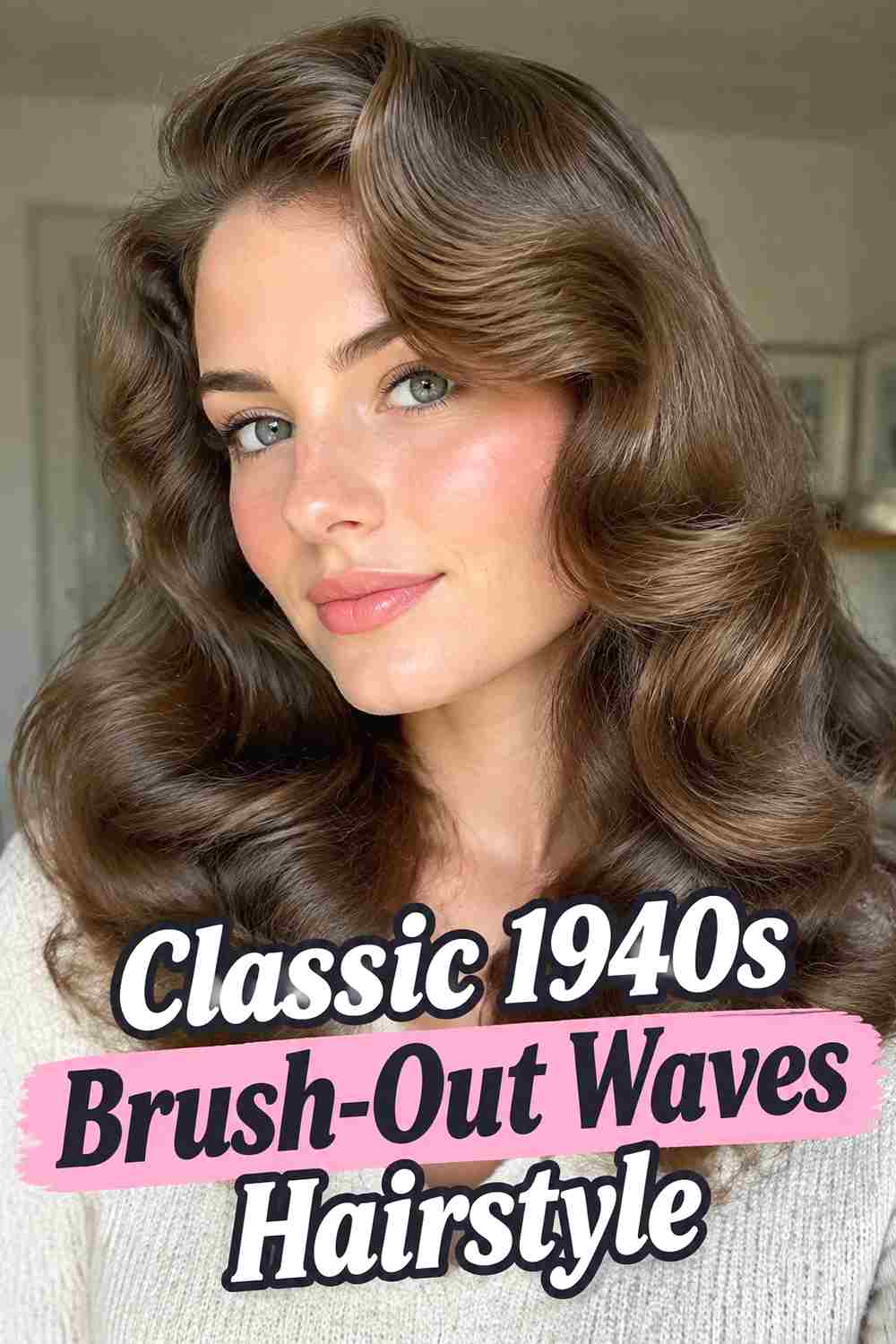
Classic 1940s Brush-Out Waves create a compact, controlled silhouette with smooth curves that sit relatively close to the head before gaining fullness toward the ends. The look typically begins with a deliberate curl set, followed by patient brushing until separate curls merge into rounded waves. Shoulder-length or slightly longer hair makes it easier to maintain the characteristic shape without excessive weight pulling the pattern down. A side part reinforces the vintage character, while softly tucked or rolled ends can make the finish even more period-inspired. Keep the surface polished but not frozen in place; visible movement and natural strand detail help the hairstyle feel wearable rather than costume-like.
Styling Notes
Set curls in consistent directions around each section of the head and allow them to cool completely before brushing. Shape the resulting ridges gradually with your hands.
Best For
This option suits vintage-themed events, formal occasions, photo sessions, or anyone who enjoys a clearly structured retro silhouette.
2. Deep Side Part Vintage Brush Out Waves Hairstyle
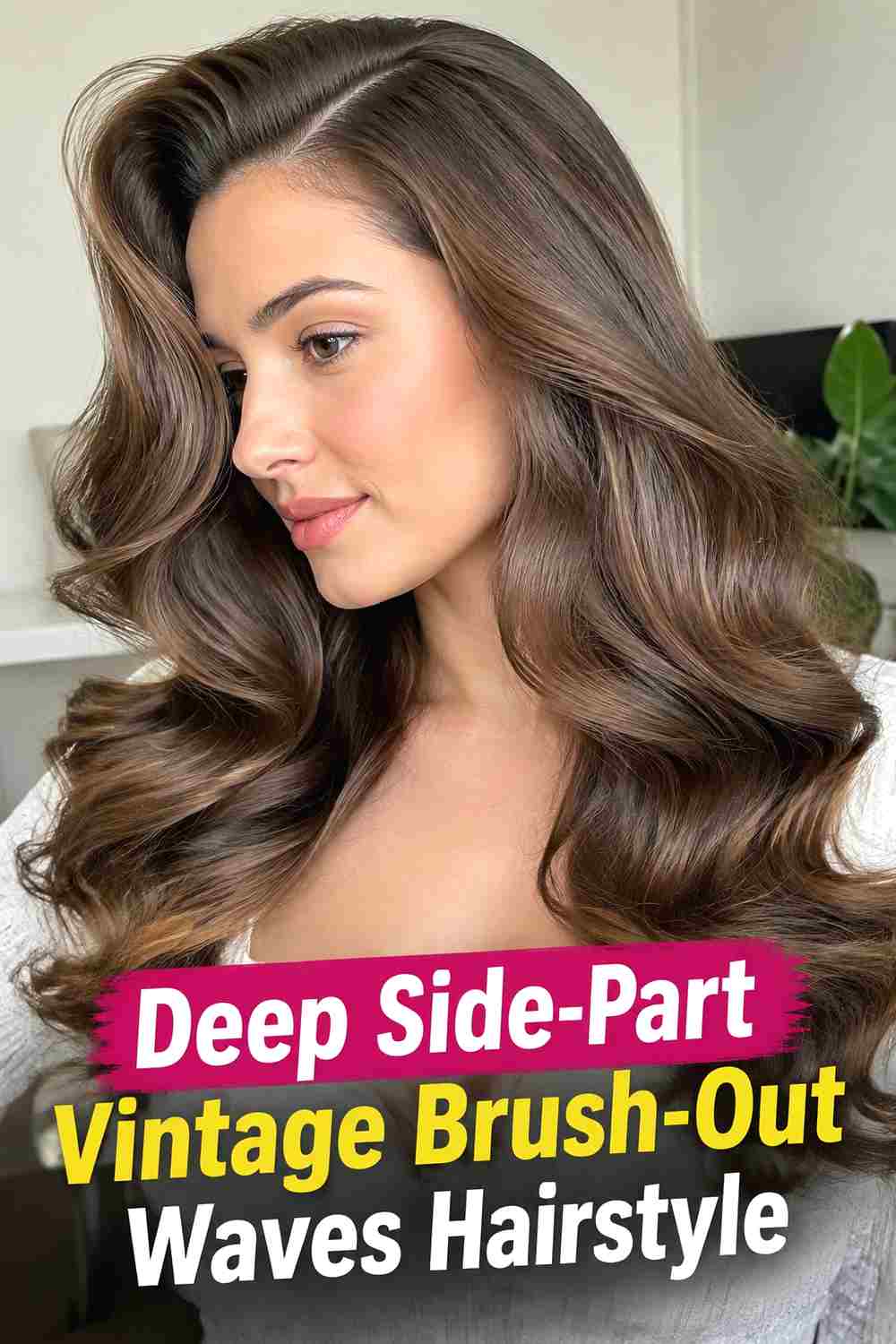
A deep side part immediately gives brushed-out waves a more dramatic vintage profile. The heavier side can sweep across the forehead before falling into broad curves, while the smaller side stays smoother and closer to the head. Once the curls are brushed together, the wave pattern should appear connected rather than divided into individual ringlets. Medium and long hair work especially well because the extra length lets the curves continue below the shoulders. The key is keeping the crown controlled while allowing fullness to develop around the mid-lengths. This creates that recognizable combination of sleek structure and glamorous movement without requiring exaggerated teasing or a rigid shell of hairspray.
Styling Notes
Curl the heavier front section away from the face and guide it into one broad sweep after brushing. Use clips temporarily to hold the curve while it settles.
Why It Works
The asymmetrical part concentrates volume on one side, creating a stronger vintage silhouette while keeping the opposite side polished and restrained.
3. Old Hollywood Sculpted Brush Out Waves Hairstyle
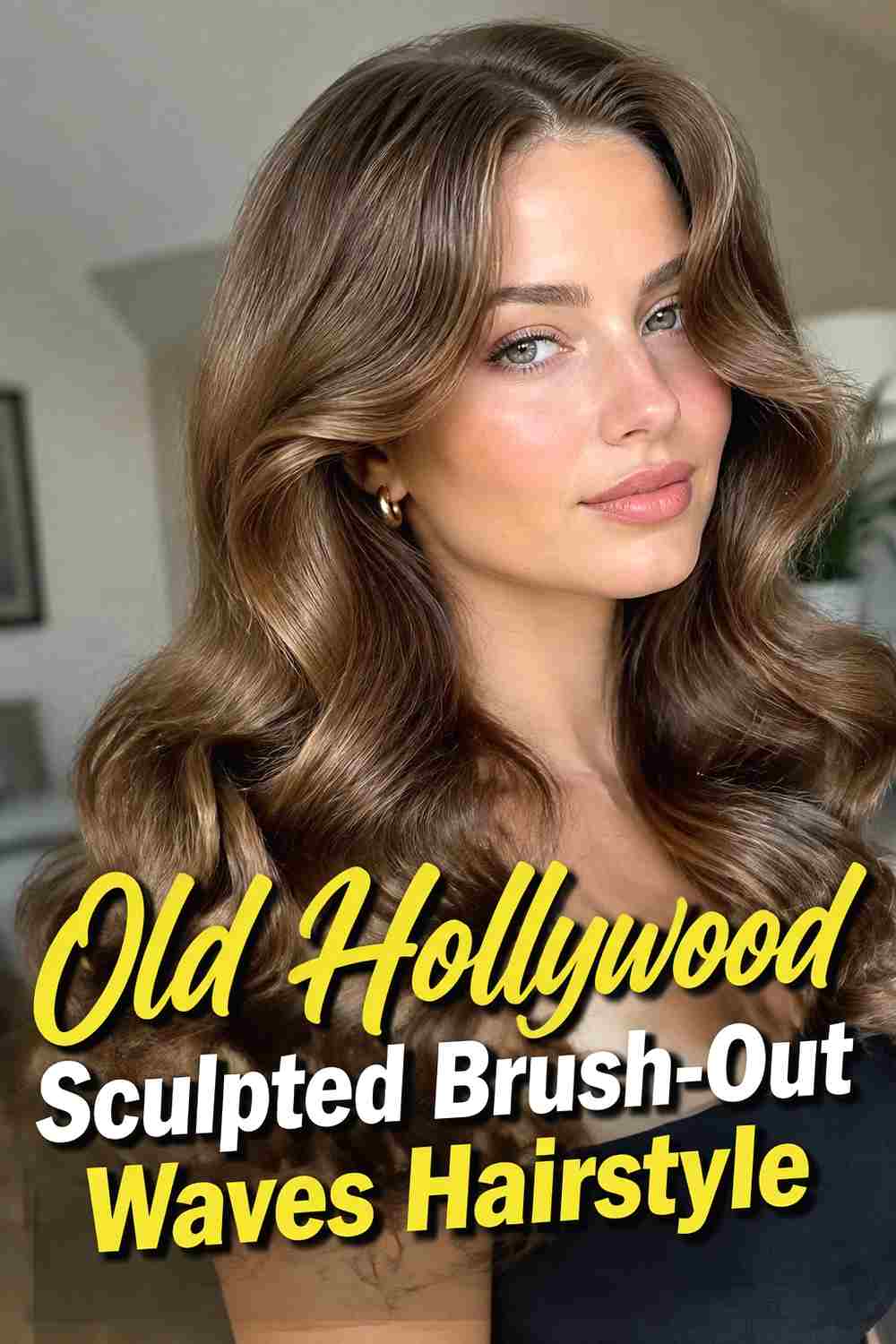
Old Hollywood Sculpted Brush-Out Waves focus on smooth, flowing curves with a polished surface and clearly visible S-shaped movement. The hair is curled in a coordinated pattern, cooled, and brushed until the sections blend into large continuous waves. The first major bend often sits near the cheek or jaw, creating a dramatic frame before the hair moves toward the shoulders. Long or medium-length hair gives this style enough space to show several repeating curves. Shine enhances the sculpted pattern, but the hair should still display realistic strands and natural weight. This is one of the more formal versions of brush-out waves and works especially well when the rest of the styling is simple.
Hair Type & Length
Medium to long hair with enough density to maintain a visible wave ridge tends to show the sculpted pattern most clearly.
Pro Tip
Brush slowly in one direction, then use your fingers or sectioning clips to encourage the wave ridges instead of repeatedly curling individual pieces.
4. Peekaboo Side Swept Brush Out Waves Hairstyle
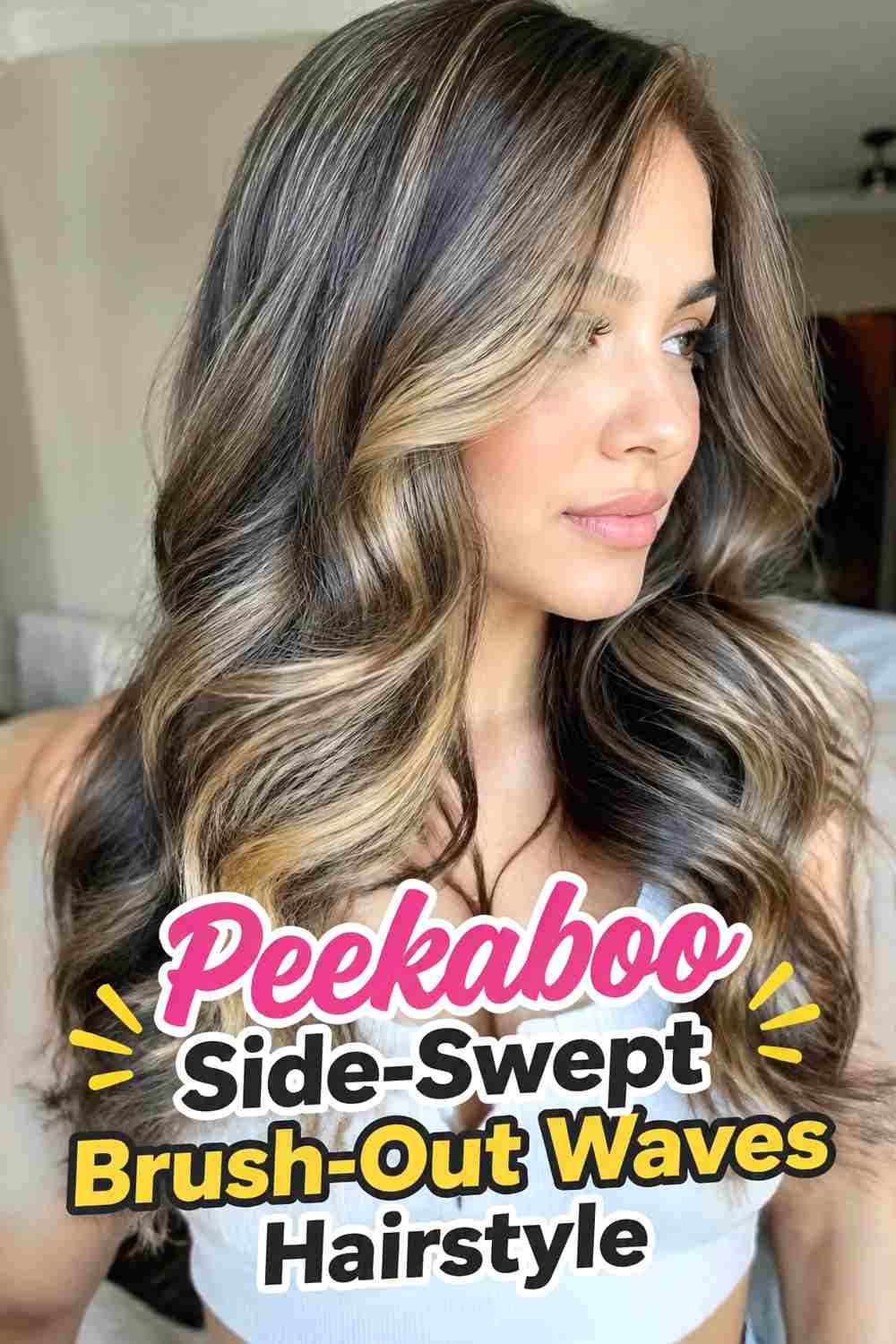
Peekaboo Side-Swept Brush-Out Waves create a mysterious vintage effect by allowing one heavy front section to sweep partly across the forehead and toward one side of the face. The remaining hair falls into smooth brushed waves that continue through the lengths. The front should feel dramatic but still practical enough that the eye and facial features remain visible. This style works particularly well on longer hair because the side sweep can transition naturally into broad, cascading curves below the shoulders. A glossy surface strengthens the vintage mood, while soft ends keep the look from becoming overly severe. It is especially striking for evening styling, formal portraits, and special occasions.
Styling Notes
Build the front sweep from a deep side part and curl the section away from the face before brushing it into the larger wave pattern.
Wear & Maintenance
A discreet pin underneath the heavier side can help maintain placement without interrupting the visible flow of the waves.
5. Center Part 1970s Brush Out Waves Hairstyle
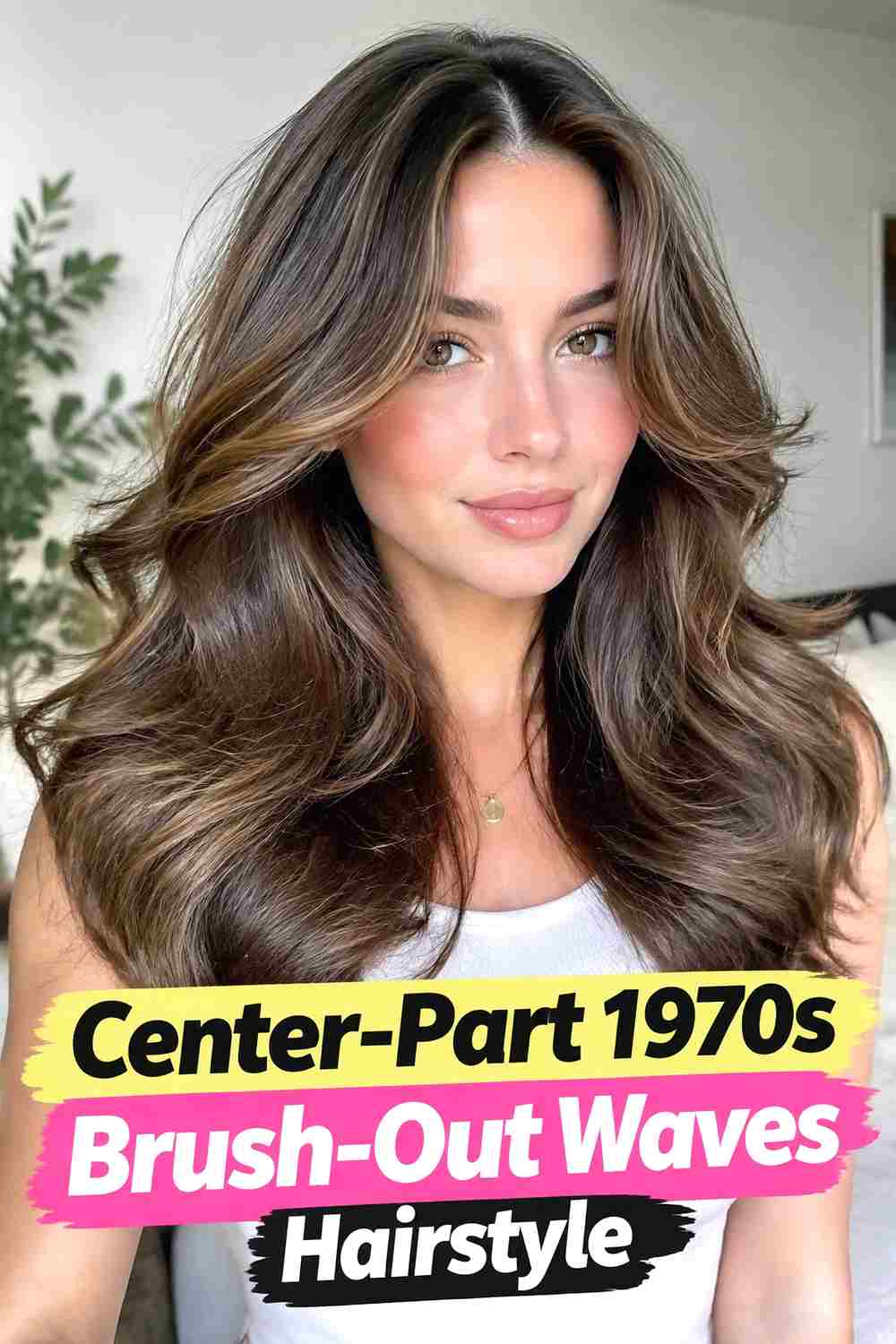
Center-Part 1970s Brush-Out Waves offer a softer, more relaxed interpretation of vintage styling. Instead of compact sculpted ridges, the hair opens away from the face and falls into wide, fluffy bends with plenty of movement through the lengths. A clean middle part gives the style balance, while brushed curls create volume around the cheeks and shoulders. Long layered hair is particularly effective because the different lengths prevent the brushed texture from forming one heavy mass. The finish can be slightly less glossy than earlier vintage styles, giving it an airy, touchable quality. This is a good choice if you like retro influence but prefer a less formal or tightly controlled silhouette.
Hair Type & Length
Medium-long to long layered hair works especially well because the layers help distribute the brushed volume and movement.
Styling Notes
Direct the front sections away from the face, then brush the curls broadly instead of trying to create narrow, precise wave ridges.
6. Short Bob Vintage Brush Out Waves Hairstyle
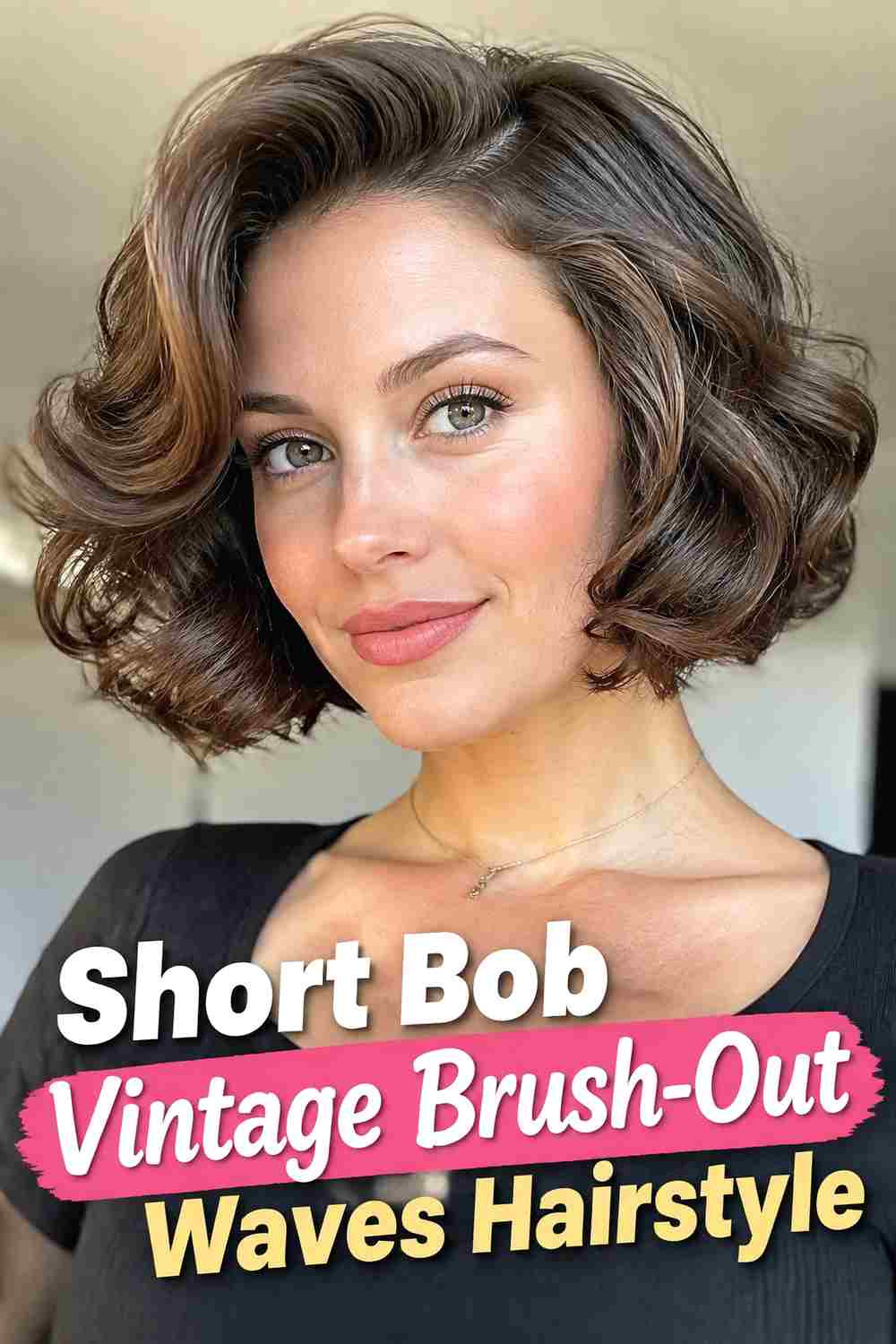
Short Bob Vintage Brush-Out Waves bring retro structure to chin-length or jaw-length hair. Because there is less length to weigh down the set, the waves can appear especially springy and defined around the sides of the head. A gentle side part complements the vintage shape, while the ends can curve inward, outward, or settle into a softly rounded perimeter. The brush-out should merge curls into a continuous pattern without creating excessive puffiness around the crown. This style can look highly polished even with relatively little hair length because the silhouette itself carries the vintage character. Keeping the neckline neat also helps the waves remain the visual focus.
Styling Notes
Use smaller sections than you would on long hair, then brush carefully so the short curls connect instead of expanding into a rounded cloud.
Why It Works
The bob length naturally supports compact wave shapes and keeps the vintage pattern visible from root to end.
7. Shoulder Length Pin Curl Brush Out Waves Hairstyle
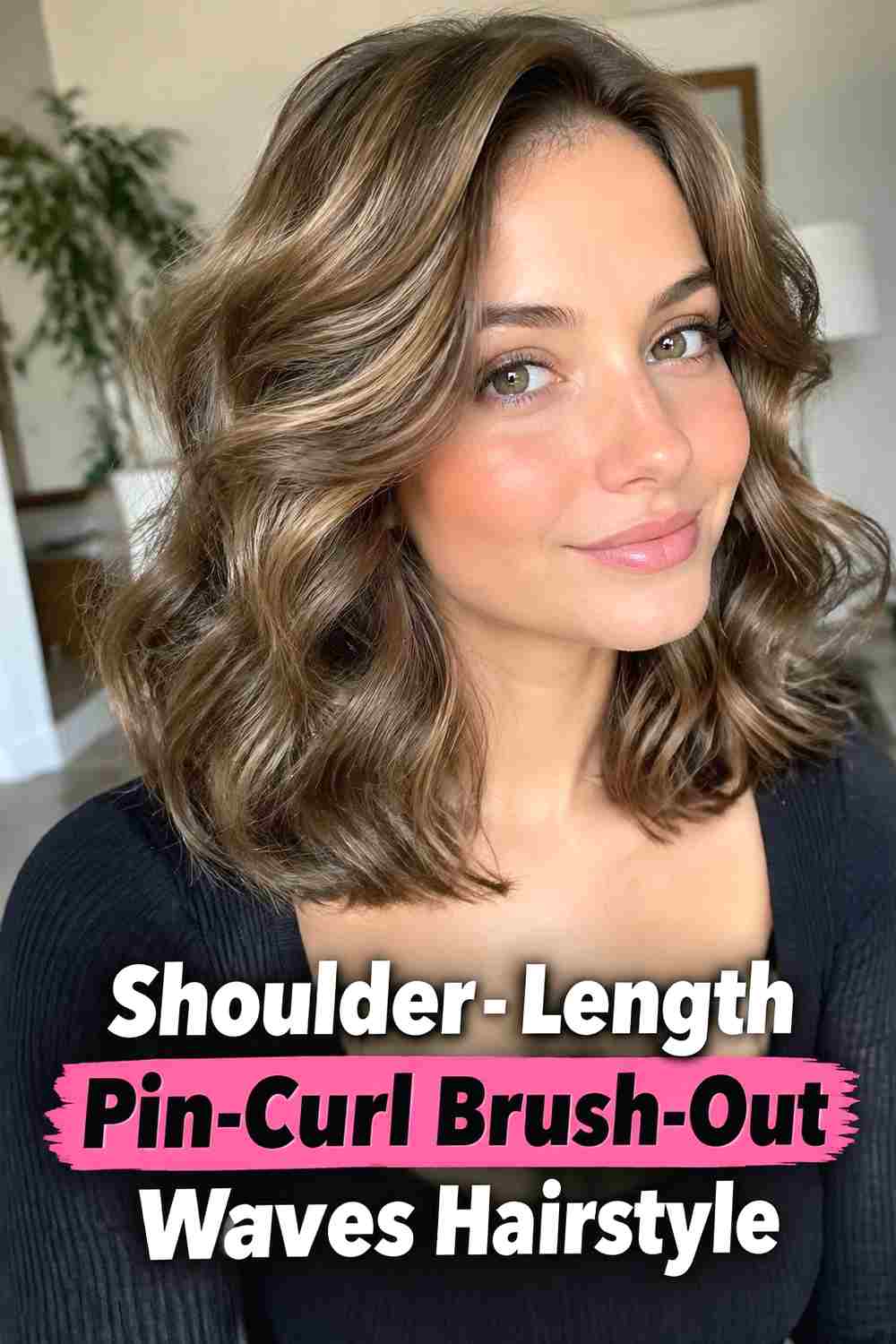
Shoulder-Length Pin-Curl Brush-Out Waves begin with a traditional-looking curl set and finish with soft, connected movement. Pin curls can create strong directional memory, making them useful for building wave ridges that stay visible after brushing. At shoulder length, the style has enough hair to create graceful curves without the weight of very long ends. The finished silhouette can be fuller around the lower half, with a smoother crown and gently rounded sides. For a wearable result, brush until the curl set loses its obvious ringlet appearance but stop before all definition disappears. The final texture should look polished, cohesive, and softly molded rather than stiff.
Styling Notes
Allow the pin curls to dry or cool fully before releasing them. Start brushing gently and increase pressure only as the curls begin to connect.
Wear & Maintenance
Use flexible hold at the finished stage so the waves remain shaped while still moving naturally around the shoulders.
8. Long Glamorous Vintage Brush Out Waves Hairstyle
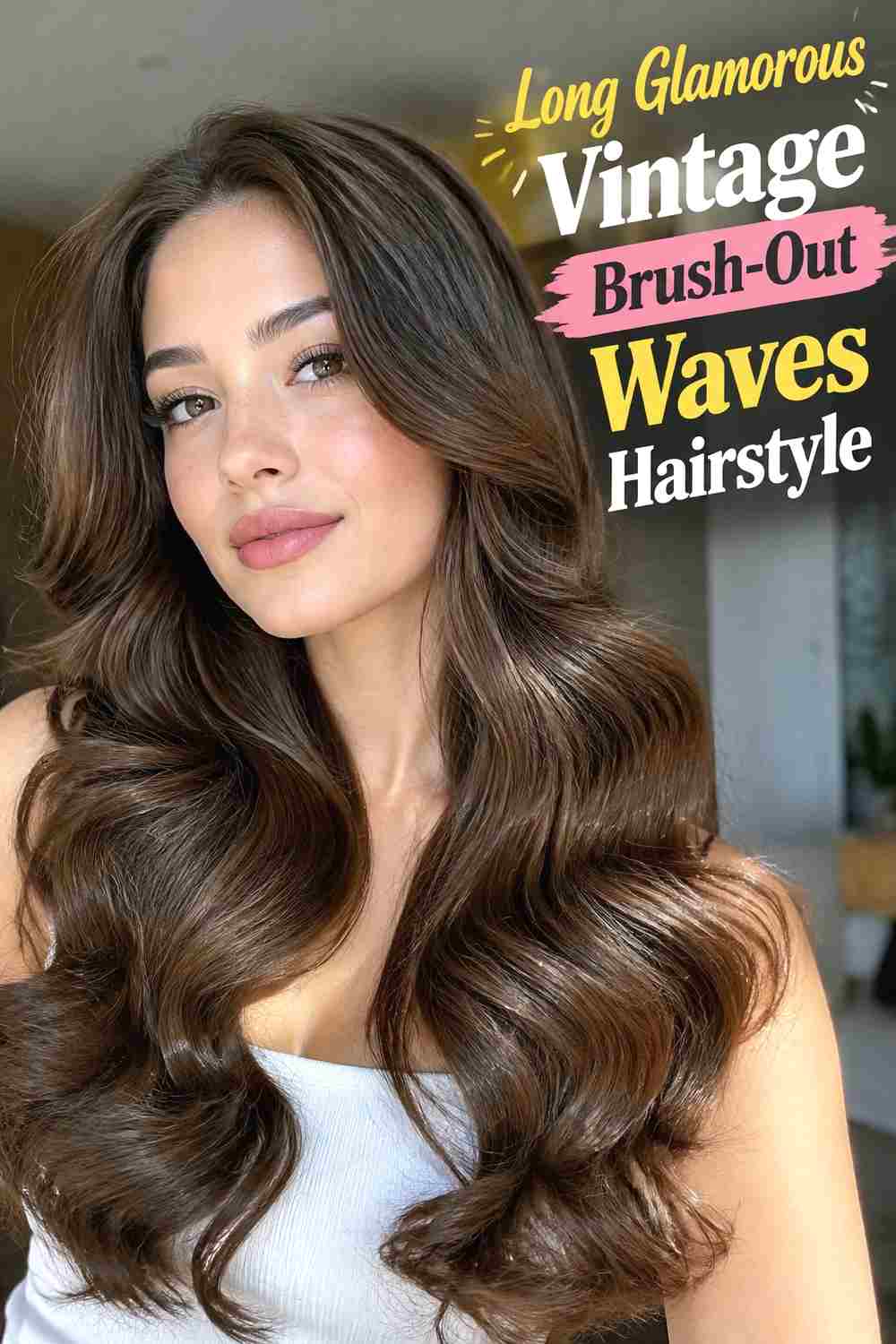
Long Glamorous Vintage Brush-Out Waves extend the classic brush-out technique through generous lengths, creating a flowing silhouette with repeated curves from the mid-lengths downward. Because long hair carries more weight, the upper portion often looks smoother while the strongest wave pattern develops below the cheekbones. Large curls work well for this version because they create broad, luxurious bends after brushing. Long layers can add extra movement, though too many short pieces may interrupt the continuous vintage pattern. The finished look should feel substantial but not bulky, with controlled shine and enough separation at the ends to keep the hair realistic. It works beautifully for formal events and polished evening styling.
Hair Type & Length
Long hair with medium or high density generally holds the flowing pattern most visibly, especially when the ends are healthy enough to maintain shape.
Pro Tip
Support the waves with lightweight hold rather than heavy finishing products that can cause long sections to collapse together.
9. Soft S Wave Vintage Brush Out Hairstyle
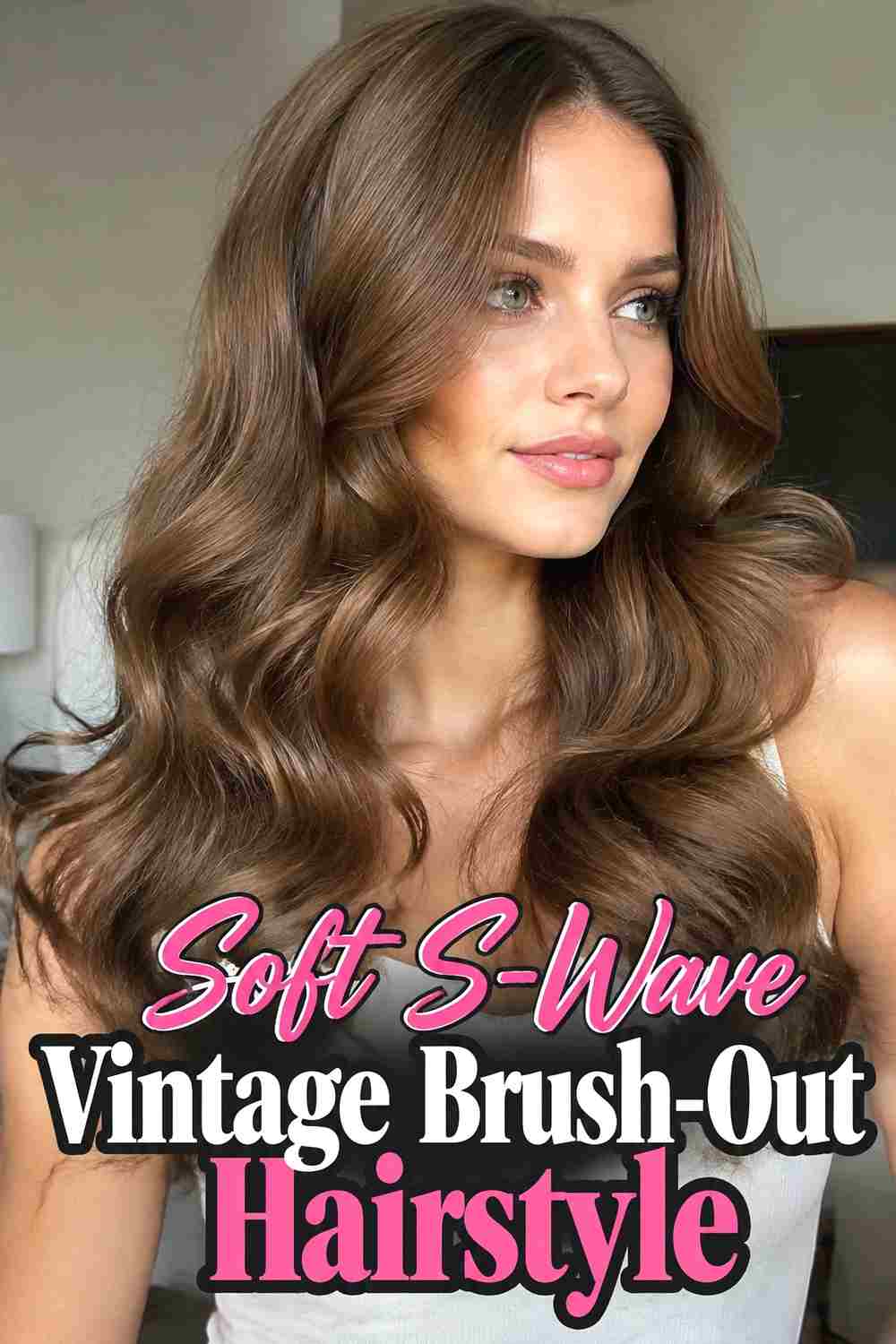
Soft S-Wave Vintage Brush-Out Hairstyle centers on repeating curves that move smoothly from one direction to the other. The pattern is more defined than loose retro waves but softer than a rigid finger-wave set. The curls are typically arranged in coordinated directions before brushing, allowing the hair to form recognizable S shapes through the sides and lengths. A smooth surface makes each bend easier to see, while light movement at the ends keeps the style approachable. Medium-length hair is particularly effective because it provides enough room for several curves without stretching them too far apart. The result feels elegant, balanced, and distinctly vintage without requiring an overly elaborate finish.
Styling Notes
After brushing, use your hands to press and guide alternating curves into place rather than adding more curls over the top.
Best For
Choose this style when you want a clearly visible vintage pattern that still feels softer than highly sculpted formal waves.
10. Voluminous Crown Vintage Brush Out Waves Hairstyle
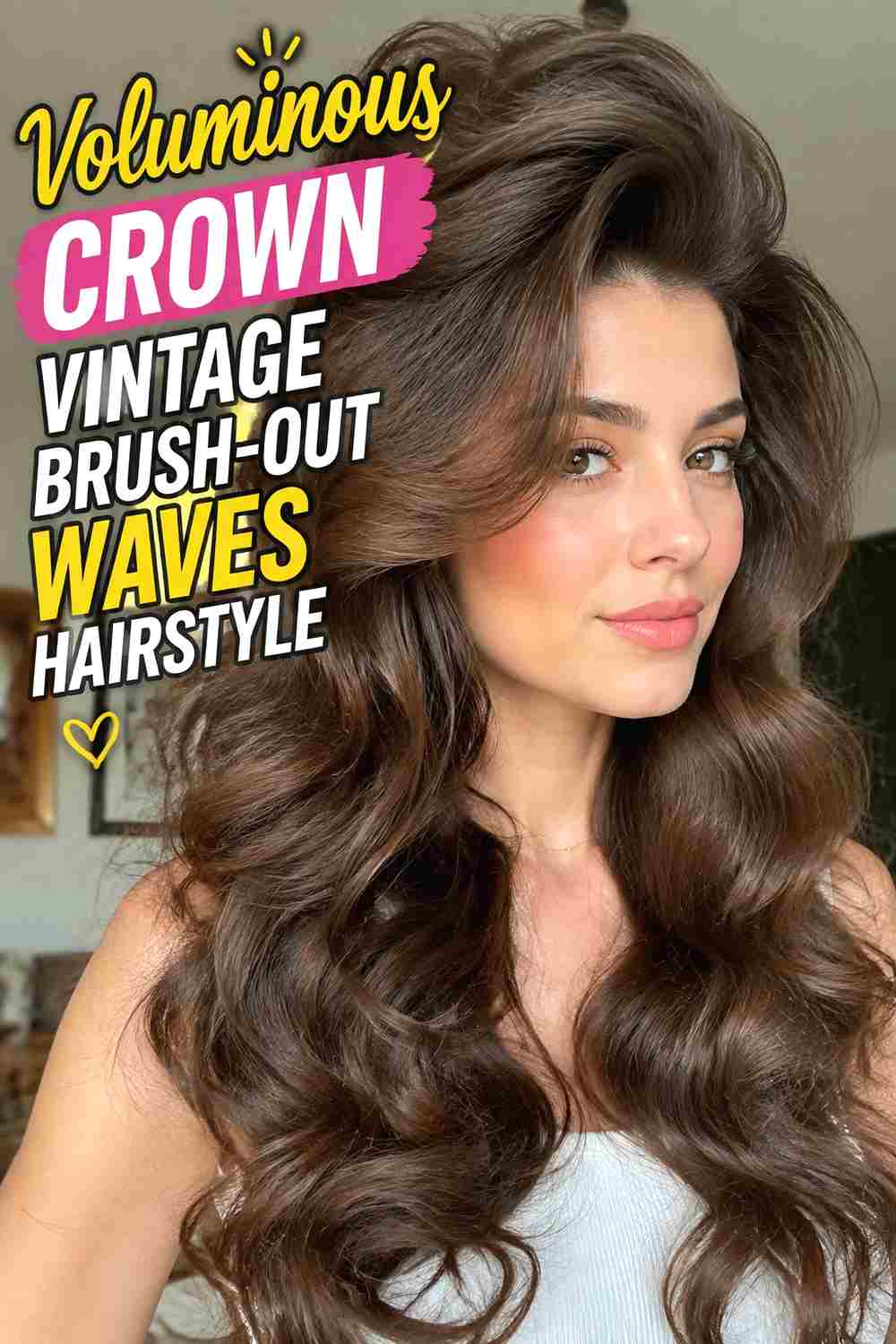
Voluminous Crown Vintage Brush-Out Waves combine a lifted upper silhouette with smoothly brushed lengths. Rather than keeping the crown completely flat, the roots have controlled height that transitions into broad waves around the sides and shoulders. The extra lift creates a more dramatic profile and can work particularly well with medium or longer hair. The volume should look integrated rather than heavily teased; a rounded crown with clean surface texture feels more polished and believable. Below the roots, large brushed curls create flowing movement that balances the height above. A side or softly off-center part can strengthen the retro character without competing with the overall volume.
Styling Notes
Create crown lift during the set with large rollers or directional drying, then smooth the surface carefully before shaping the lower waves.
Wear & Maintenance
Avoid excessive backcombing. A small amount of support at the roots usually preserves the vintage fullness without making the hair difficult to reshape.
11. Vintage Brush Out Waves With Rolled Fringe Hairstyle
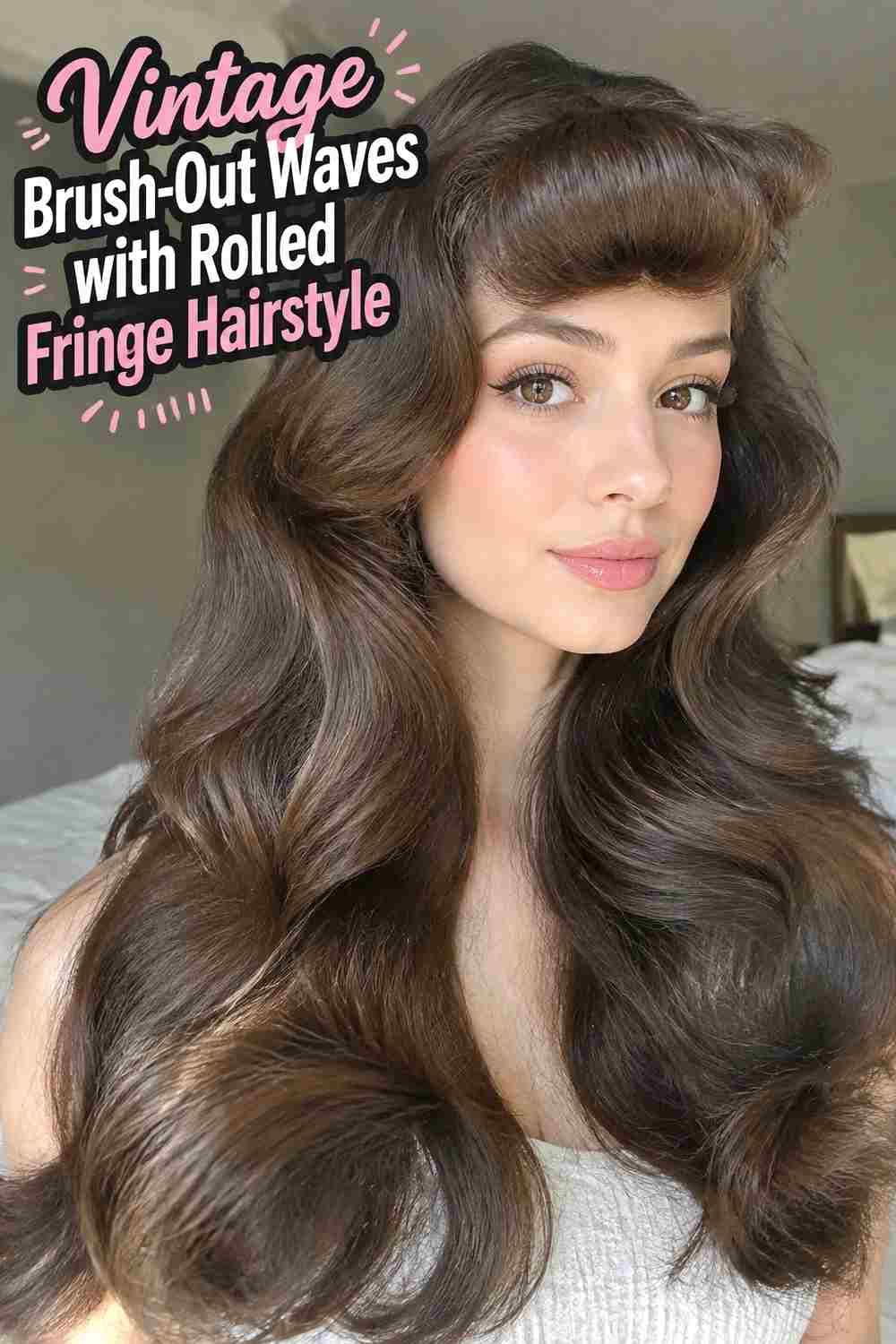
Vintage Brush-Out Waves with Rolled Fringe Hairstyle introduces a clear retro focal point at the front. The fringe or front section is shaped into a smooth roll, while the remaining hair is brushed into connected waves through the sides and ends. The roll can sit slightly off-center for a softer look or appear more prominent for stronger period styling. Because the front already has substantial structure, the rest of the hair benefits from smooth, controlled waves rather than excessive volume. Shoulder-length and medium-long hair provide a balanced proportion between the rolled detail and flowing lengths. Keep the roll tidy and believable, with a secure base that does not expose obvious pins.
Styling Notes
Shape and secure the rolled section before completing the final wave arrangement so you can balance the surrounding volume around it.
Best For
This look is well suited to vintage parties, themed photography, retro-inspired celebrations, and anyone who enjoys a more recognizable period detail.
12. Side Swept Fringe Vintage Brush Out Waves Hairstyle
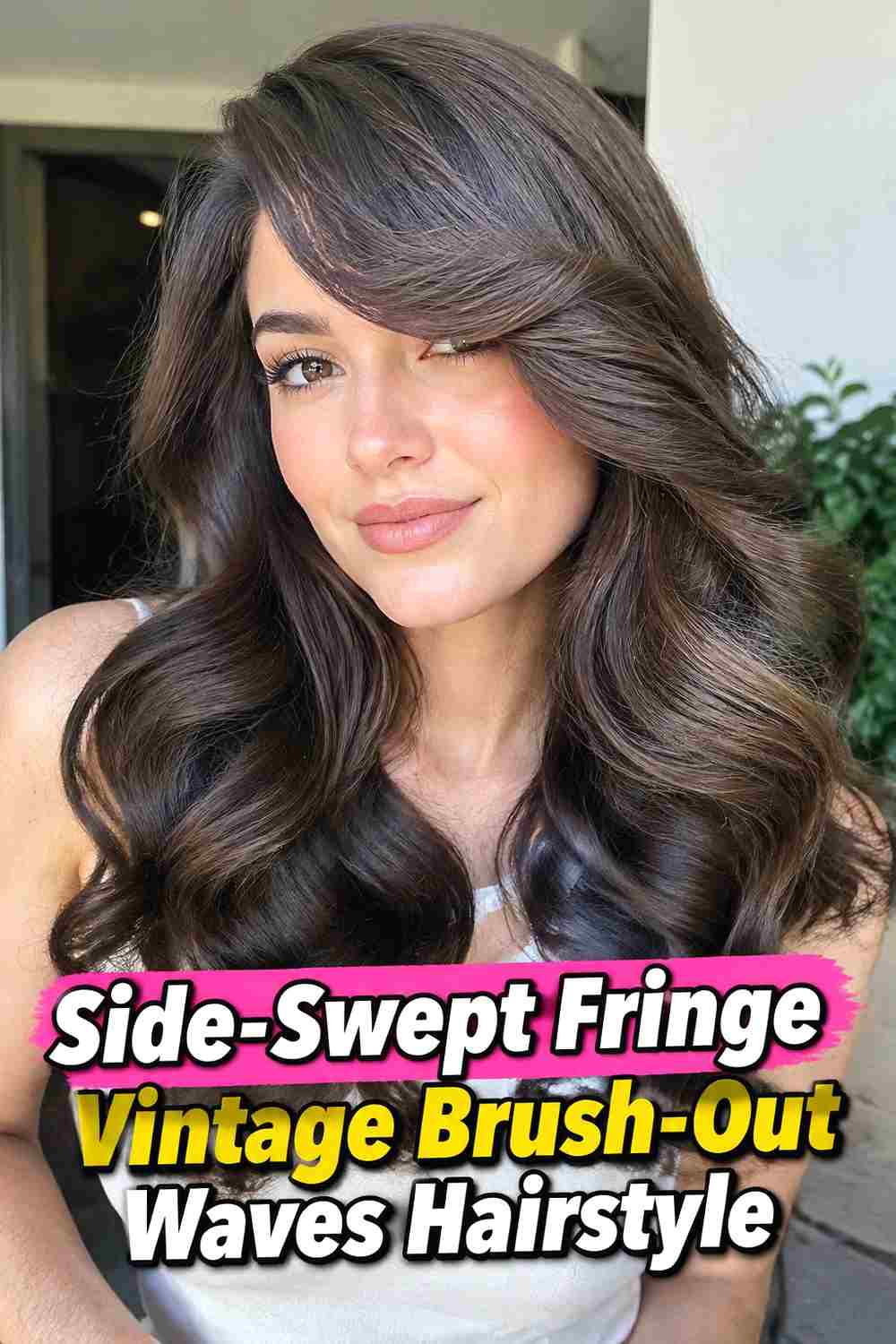
Side-Swept Fringe Vintage Brush-Out Waves soften the front of the hairstyle without using a full sculpted roll. The fringe moves diagonally across the forehead and blends into a broad wave near the temple, creating an elegant transition into the longer sections. This works particularly well when the fringe is long enough to curve rather than sit flat. The rest of the hair can follow a coordinated brush-out pattern with smooth mid-length bends and rounded ends. Compared with a rolled fringe, this version feels easier to wear in everyday settings while still carrying a strong vintage mood. A little crown lift can help the side-swept front section maintain its shape.
Hair Type & Length
Medium and long hair with a longer fringe or front layers works best because those pieces can blend naturally into the larger wave pattern.
Pro Tip
Set the fringe in the same general direction as the first major side wave to create a seamless transition.
13. Polished Shoulder Sweep Vintage Brush Out Waves Hairstyle
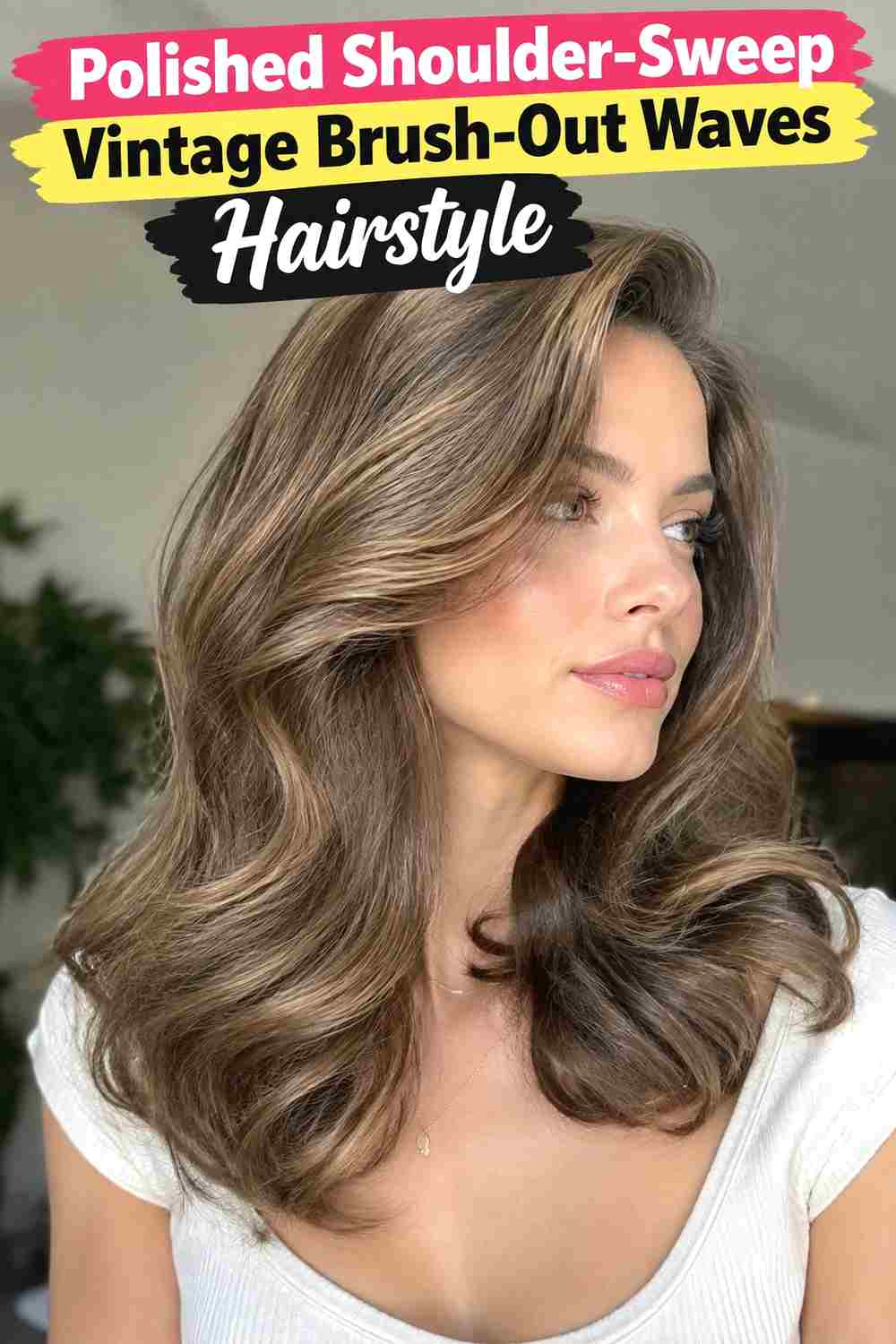
Polished Shoulder-Sweep Vintage Brush-Out Waves gather most of the finished movement toward one shoulder, creating an elegant asymmetrical silhouette. The hair is first brushed into broad connected waves, then gently directed to one side without destroying the pattern. One side can remain sleek or tucked behind the ear, while the opposite side carries the fuller lengths. This makes the wave texture especially visible from the front and works beautifully with medium-long or long hair. The style feels formal without requiring an updo and can pair well with open necklines or statement earrings. Keep the shoulder sweep soft enough that the hair still looks naturally draped rather than tightly pinned.
Styling Notes
Form the wave pattern first, then shift the lengths toward one shoulder. Moving the hair too early can distort the curl direction.
Wear & Maintenance
Use hidden pins near the nape if extra support is needed, keeping them underneath the hair so the outer surface remains smooth.
14. Soft Brushed Bob Vintage Waves Hairstyle
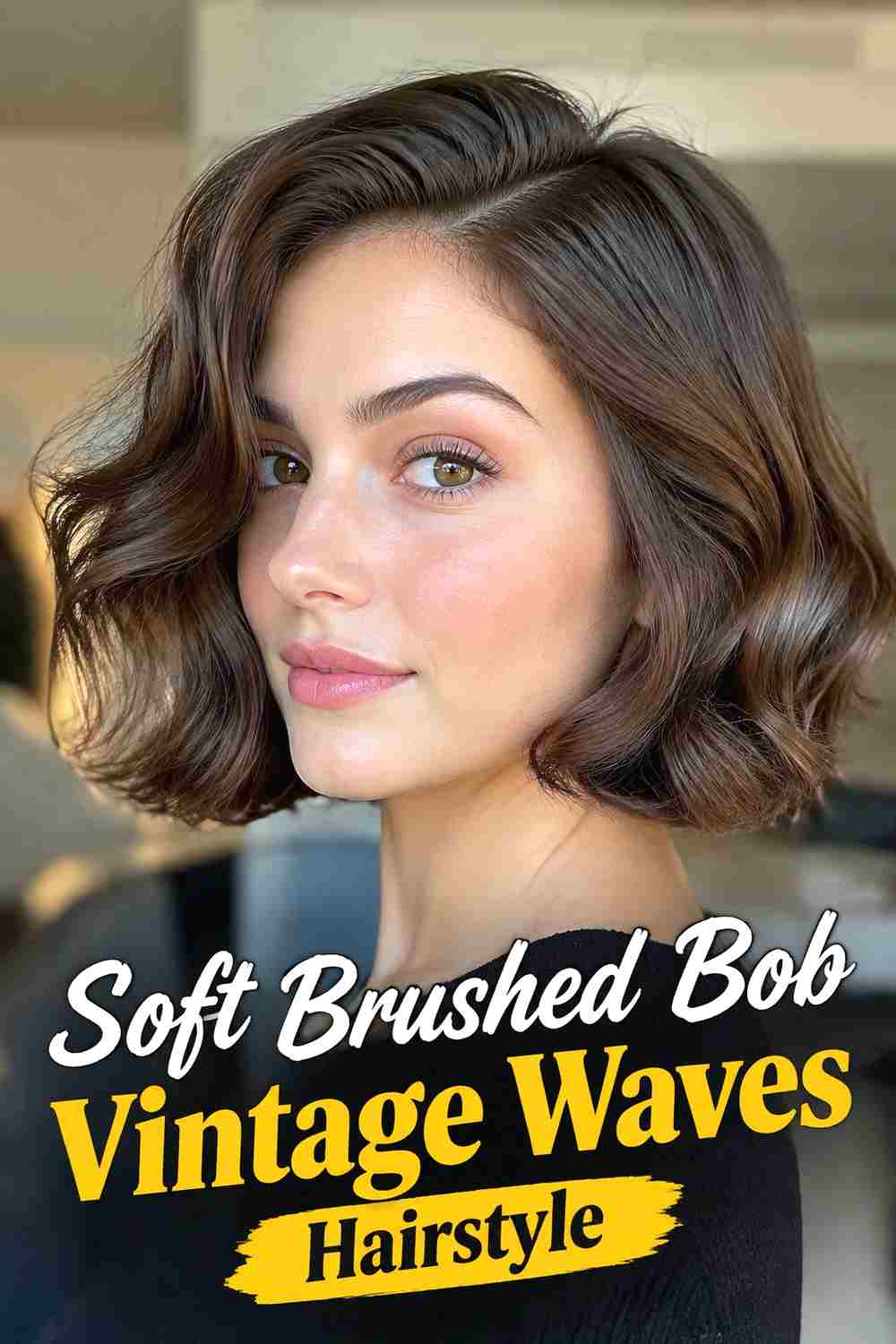
Soft Brushed Bob Vintage Waves Hairstyle gives a bob a looser, more romantic retro finish than tightly sculpted short waves. The hair is curled, cooled, and brushed until the individual sections blend into broad bends around the cheeks and jaw. Instead of forcing every wave into a precise ridge, the shape remains soft and slightly airy. This approach works well on chin-length or slightly longer bobs because the perimeter naturally creates fullness around the face. A side part can add traditional vintage character, while an off-center part gives the hairstyle a subtler interpretation. Light shine helps define the curved surface without making the shorter lengths look stiff or overly set.
Styling Notes
Use moderate-size curls and brush from the roots through the ends so the bob develops one cohesive shape rather than isolated curled pieces.
Why It Works
The shorter perimeter concentrates the wave movement around the face, giving the hairstyle a strong silhouette even with a softer brush-out.
15. High Shine Evening Vintage Brush Out Waves Hairstyle
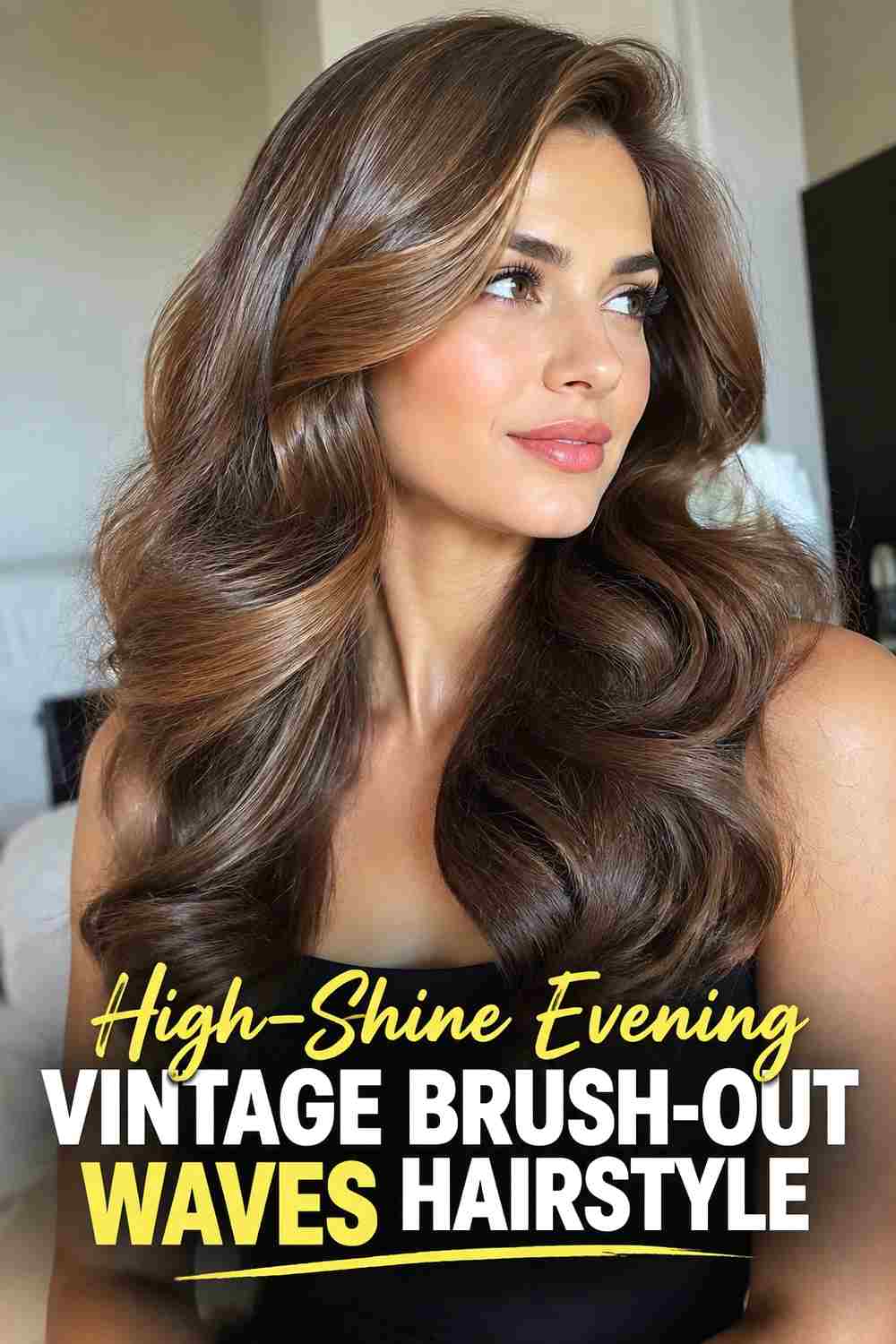
High-Shine Evening Vintage Brush-Out Waves emphasize smoothness, reflection, and carefully connected curves. The wave pattern can remain broad and glamorous, with a polished surface that catches light along each ridge. Unlike a wet-look style, the hair should still appear soft, dry, and naturally movable. A deep side part or understated off-center part works particularly well, allowing one side to carry more volume while the surface stays controlled. Medium to long hair gives the shine enough space to emphasize multiple bends. Use finishing products sparingly so the lengths do not separate into oily-looking sections. The ideal result is glossy, elegant, and evening-ready without losing realistic strand detail.
Styling Notes
Complete the full brush-out before applying shine product. Smooth a very small amount over the surface and ends rather than saturating the hair.
Best For
This version suits formal dinners, receptions, evening celebrations, and occasions where a more polished vintage finish feels appropriate.
16. Romantic Loose Vintage Brush Out Waves Hairstyle
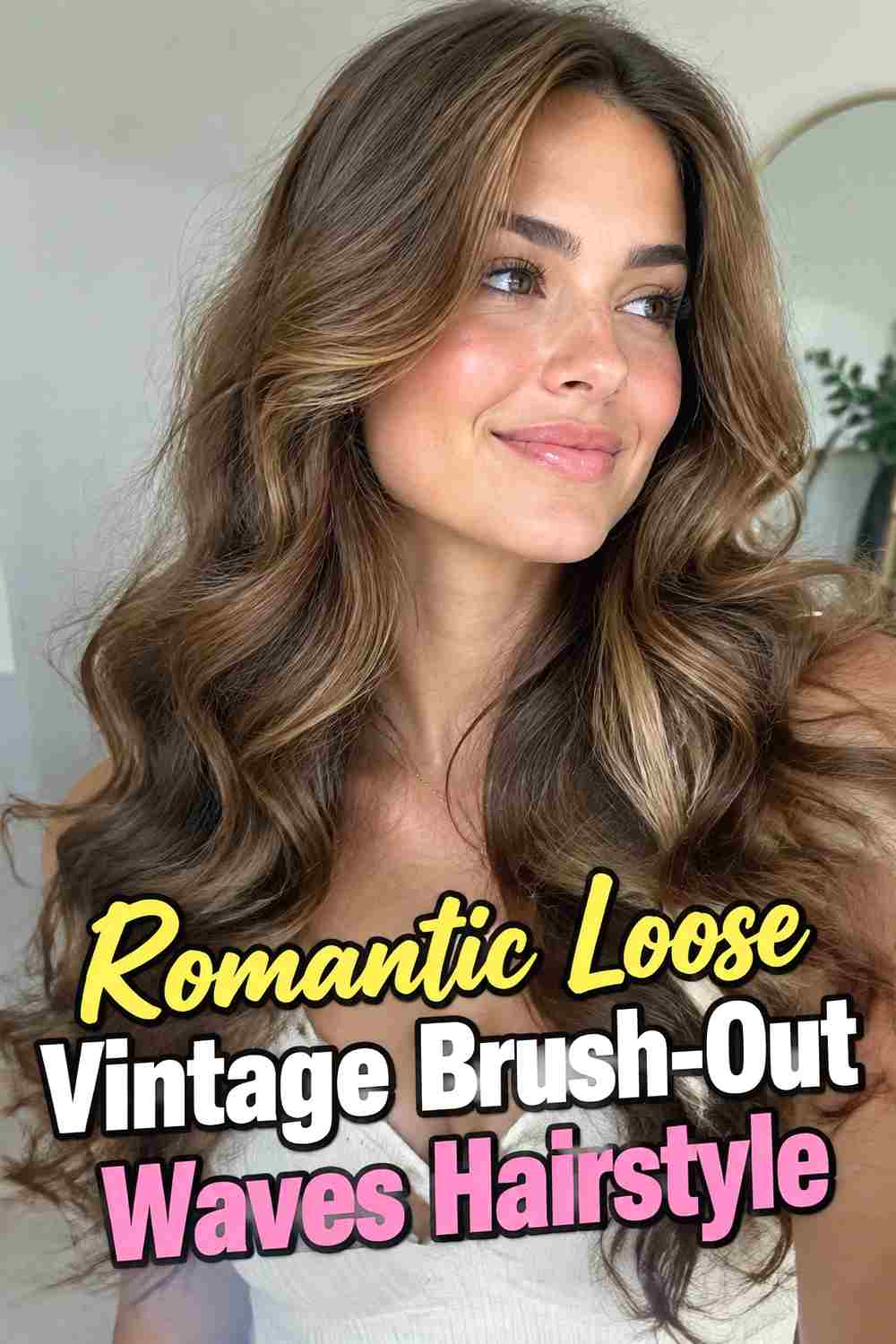
Romantic Loose Vintage Brush-Out Waves keep the recognizable softness of a classic set while reducing the amount of structure. Large curls are brushed into relaxed bends that flow through the hair without forming perfectly matched ridges. The front can retain a gentle side sweep, while the lengths fall naturally around the shoulders with soft separation near the ends. This makes the look especially versatile for weddings, dinners, or everyday retro-inspired styling. Medium and long hair both work well, particularly when subtle layers prevent the lower half from becoming too heavy. The key is stopping the brush-out while some wave definition remains, preserving a vintage mood without making the hairstyle feel overly formal.
Styling Notes
Use larger curl sections and brush with lighter pressure than you would for sculpted S-waves. Let a few bends remain slightly irregular.
Why It Works
Relaxing the wave pattern preserves vintage movement while making the finished hairstyle softer, more comfortable, and easier to adapt to modern styling.
How to Choose the Right Look
Start with your hair length. Short bobs naturally support compact vintage curves, while shoulder-length hair works beautifully with pin-curl sets and softly molded shapes. Long hair gives you more room for cascading glamour waves, dramatic side sweeps, and large repeating S-curves.
Next, consider how much structure you want. Classic 1940s waves, sculpted Old Hollywood waves, and defined S-waves require more deliberate setting and brushing. Romantic loose waves and the 1970s-inspired version allow more softness and irregular movement.
Your preferred parting and front detail can change the entire mood. A deep side part adds drama, a center part creates a more balanced retro silhouette, and rolled or side-swept fringe introduces a stronger vintage detail around the face.
Think about volume and hold as well. Shorter hair may hold a set more easily because there is less weight, while very long hair can need stronger preparation to maintain broad curves. Crown volume creates a fuller profile, whereas sleek roots keep the focus on the wave pattern itself.
Finally, choose your preferred finish. High shine emphasizes sculpted curves and evening glamour. A softer surface feels more romantic and touchable. Whichever variation you choose, let the set cool completely and build the brush-out gradually so you can stop when the wave shape reaches the level of softness you want.
Final Thoughts
Vintage brush-out waves can range from sharply sculpted 1940s shapes to softer, flowing retro bends. Small changes in parting, curl direction, fringe, volume, and brushing pressure make a noticeable difference in the final result.
For a strong vintage statement, try structured S-waves, a rolled fringe, or a polished side sweep. For something easier to adapt to modern wear, choose a soft bob, loose romantic waves, or the airy 1970s-inspired variation.
FAQs
1. What are vintage brush-out waves?
Vintage brush-out waves begin with a curl set that is brushed until separate curls merge into larger, connected curves. The finished shape is smoother and more unified than standard curled hair.
2. Should curls cool before creating a vintage brush-out?
Yes. Allowing the curls to cool completely helps them retain their set while you brush and reshape them into waves.
3. What type of brush works for vintage brush-out waves?
A soft bristle or mixed-bristle brush is commonly useful because it can smooth and connect curls without immediately removing all their structure.
4. Can short hair wear vintage brush-out waves?
Yes. Bob and shoulder-length cuts can work especially well because shorter hair can form compact, visible waves without the weight of long lengths pulling them down.
5. How do I make vintage waves look softer and more modern?
Use larger curls, reduce the amount of sculpting, keep the ends slightly relaxed, and choose flexible hold instead of creating a rigid finish.
Save your favorite vintage brush-out wave ideas for your next styling session, and share this collection with anyone who loves polished retro hair inspiration.