16 Low-Maintenance Butterfly Layers With Curtain Fringe
Soft butterfly layers and curtain fringe create airy movement, easy grow-out, and a relaxed shape that works beautifully with everyday styling.
Low-maintenance butterfly layers work best when the shortest pieces are long enough to fall naturally without demanding a full blowout every morning. Curtain fringe adds movement around the forehead and cheekbones, but keeping it slightly longer can make styling, pinning back, and growing it out much easier.
The key is balancing shape with simplicity. Longer layers preserve density and work with natural texture, while softer fringe edges avoid a rigid bang line. Straight, wavy, curly, thick, and finer hair can all wear versions of this look when the layer height, perimeter, and fringe length are adapted to how the hair naturally behaves.
Quick List
- Classic Long Butterfly Layers With Curtain Fringe Hairstyle
- Jaw Length Butterfly Layers With Soft Curtain Fringe Hairstyle
- Air Dried Butterfly Layers With Curtain Fringe Hairstyle
- Minimal Butterfly Layers With Long Curtain Fringe Hairstyle
- Collarbone Butterfly Layers With Curtain Fringe Hairstyle
- Wavy Butterfly Layers With Split Curtain Fringe Hairstyle
- Thick Hair Butterfly Layers With Curtain Fringe Hairstyle
- Fine Hair Butterfly Layers With Wispy Curtain Fringe Hairstyle
- Feathered Butterfly Layers With Grown Out Curtain Fringe Hairstyle
- Curly Butterfly Layers With Curtain Fringe Hairstyle
- Shoulder Length Butterfly Layers With Curtain Fringe Hairstyle
- Long Soft Butterfly Layers With Curtain Fringe Hairstyle
- Butterfly Layers With Cheekbone Curtain Fringe Hairstyle
- Subtle Butterfly Layers With Curtain Fringe Hairstyle
- Airy Butterfly Layers With Long Curtain Fringe Hairstyle
1. Classic Long Butterfly Layers With Curtain Fringe Hairstyle
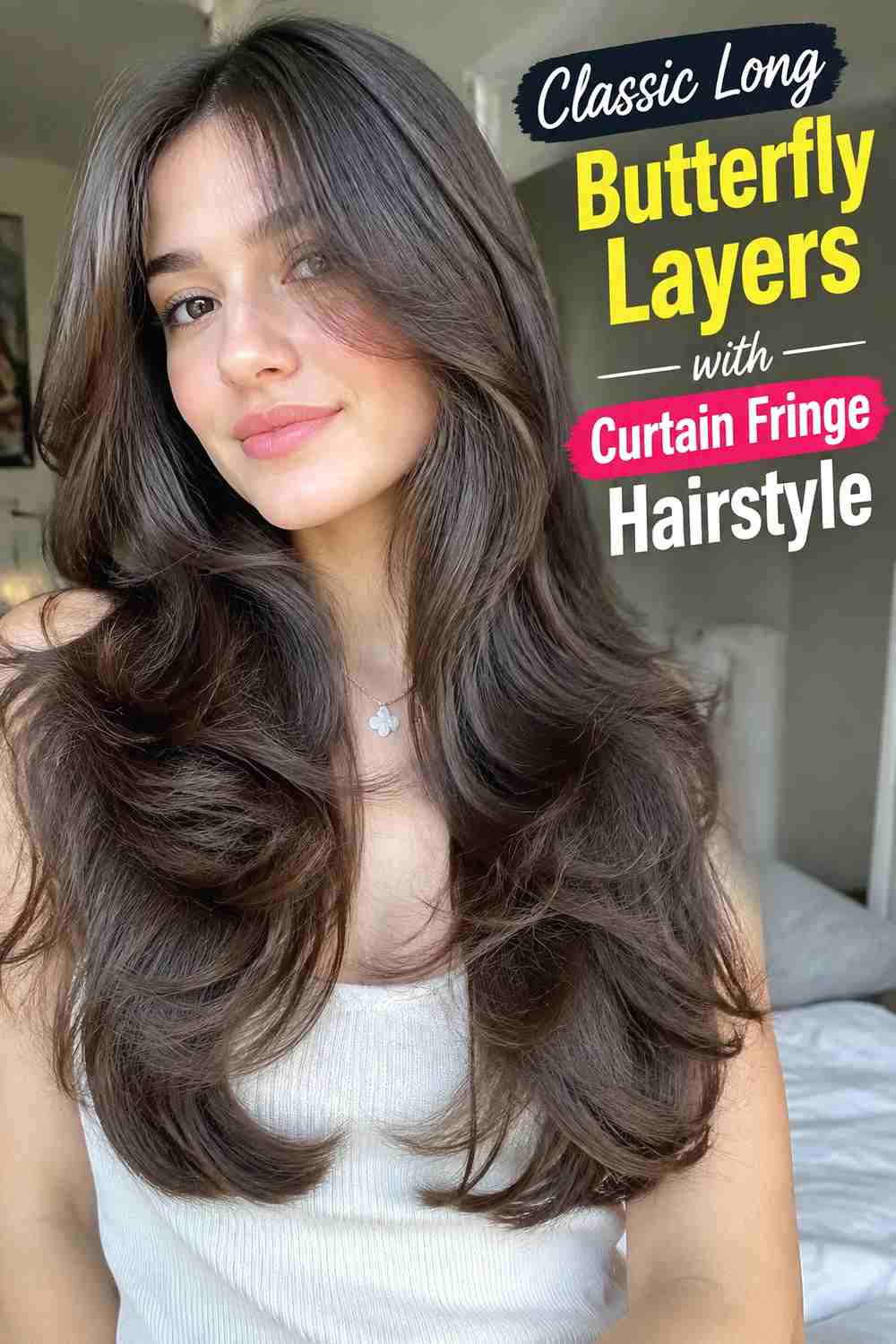
Classic long butterfly layers are one of the easiest ways to get visible movement without sacrificing length or creating lots of short pieces that need daily styling. The face frame can begin around the cheekbones, while the next layers fall near the jaw and shoulders before blending into a full lower perimeter. Long curtain fringe opens gently through the center and connects naturally with those front layers. A blowout makes the shape more dramatic, but the cut can still settle softly when worn straight or naturally wavy. Keeping most of the length intact also makes ponytails, buns, and air-dried styles practical between salon visits.
Wear & Maintenance
Ask for longer transitions rather than sharp jumps between layers. This helps the cut grow out smoothly and makes small changes in length less noticeable.
2. Jaw Length Butterfly Layers With Soft Curtain Fringe Hairstyle
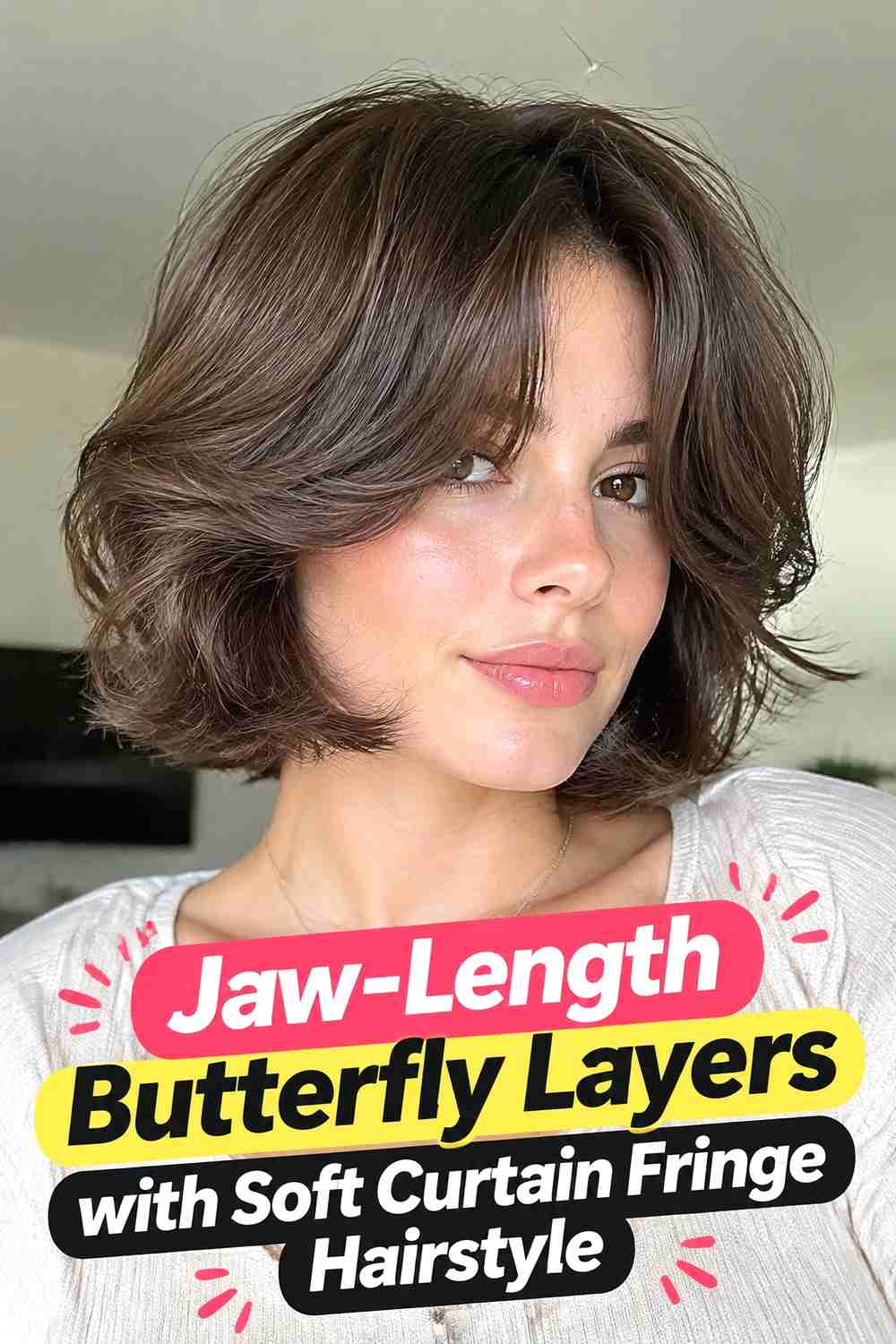
Jaw-length butterfly layers place the shortest face-framing movement lower than traditional cheekbone-level layers, making the cut easier to manage when you do not want constant round-brush styling. Soft curtain fringe can sit around the brows and gradually lengthen toward the temples, blending into those jaw-level pieces. The result still has the cascading front shape of a butterfly cut but feels less dramatic and more flexible. This version works especially well on medium and long hair because the lower layers provide plenty of weight and movement without creating excessive volume near the crown. Natural waves or a simple blow-dry can both show the shape clearly.
Best For
This is a practical choice if you want butterfly movement while keeping the shortest permanent layers long enough to tuck behind the ears.
3. Air Dried Butterfly Layers With Curtain Fringe Hairstyle
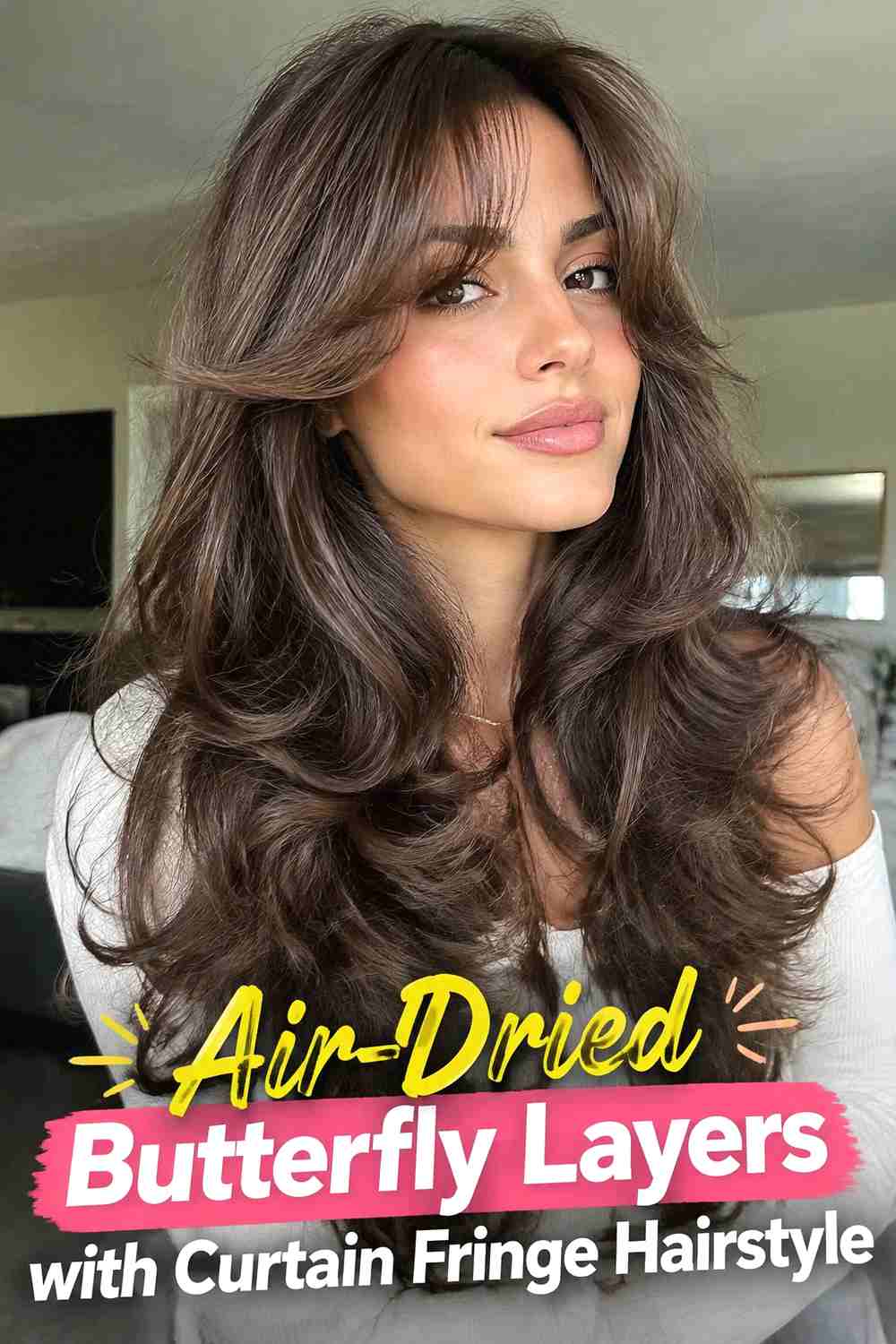
An air-dried butterfly cut is designed around natural texture instead of depending on a polished blowout to reveal the layers. The shortest sections should fall where the hair naturally bends, while the longer pieces retain enough weight to keep the shape from becoming fluffy or disconnected. Curtain fringe can remain slightly longer and softer so it dries into a natural center split without needing perfect symmetry. This works particularly well with straight-to-wavy hair that already has gentle movement. A lightweight styling cream or mousse can encourage definition, but the haircut itself should do most of the work, making it useful for anyone who prefers to limit daily heat styling.
Styling Notes
Apply lightweight product to damp hair, encourage your natural part, and let the fringe settle before making small adjustments once everything is dry.
4. Minimal Butterfly Layers With Long Curtain Fringe Hairstyle
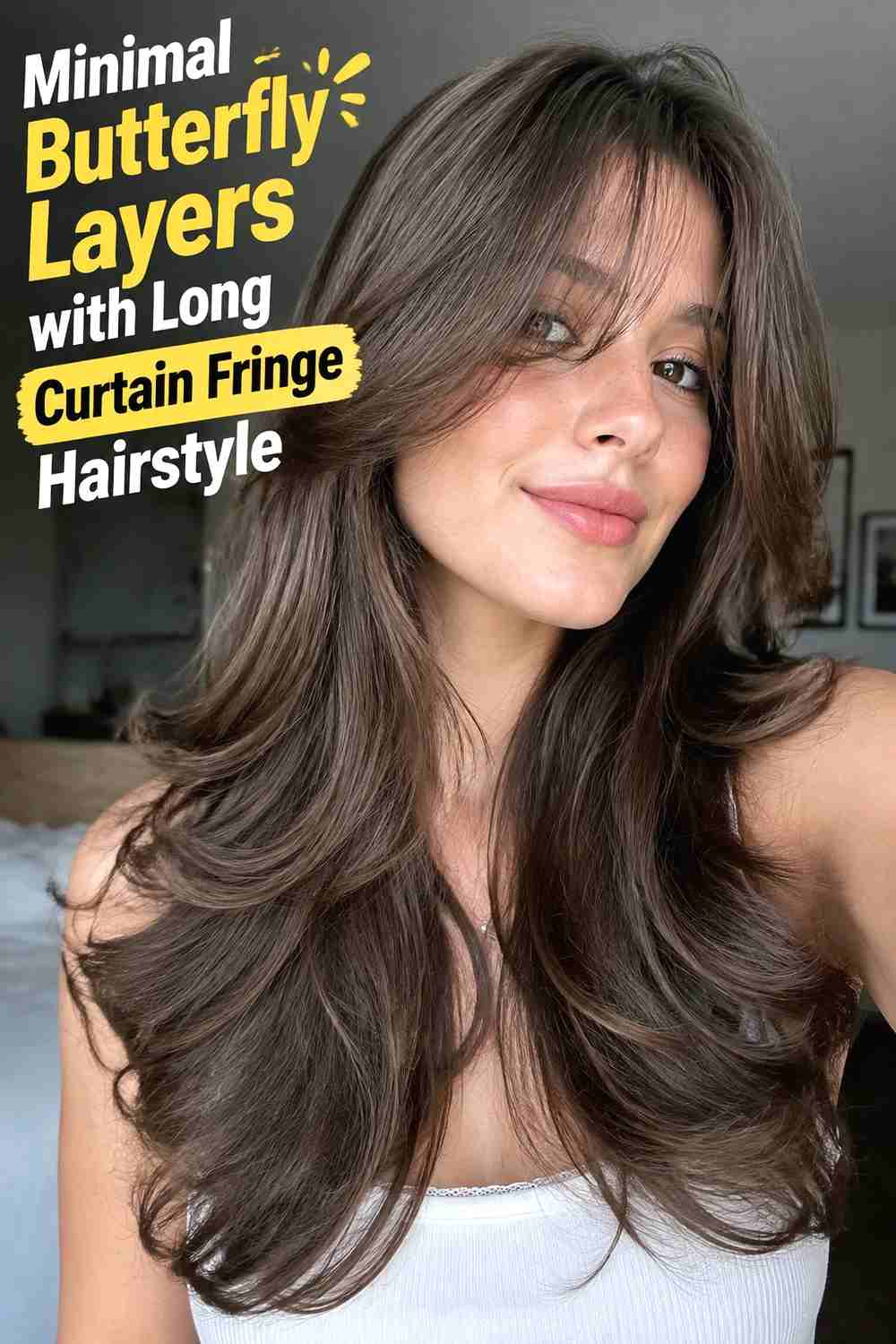
Minimal butterfly layers keep the overall silhouette close to a long layered cut, with most of the visible movement concentrated around the face. Long curtain fringe begins the transition, followed by a few strategically placed sections around the cheekbones, jaw, or collarbone. The back and lower lengths stay relatively full, which reduces the need for frequent shaping and makes the style easier to wear straight, wavy, or tied back. This is an especially practical option if you like the butterfly look but do not want dramatic crown layering or heavily feathered ends. The longer fringe also gives you more flexibility to tuck, pin, or blend it into the rest of the hair.
Why It Works
Fewer short layers mean less daily shaping, while the front still has enough movement to give the haircut a recognizable butterfly effect.
5. Collarbone Butterfly Layers With Curtain Fringe Hairstyle
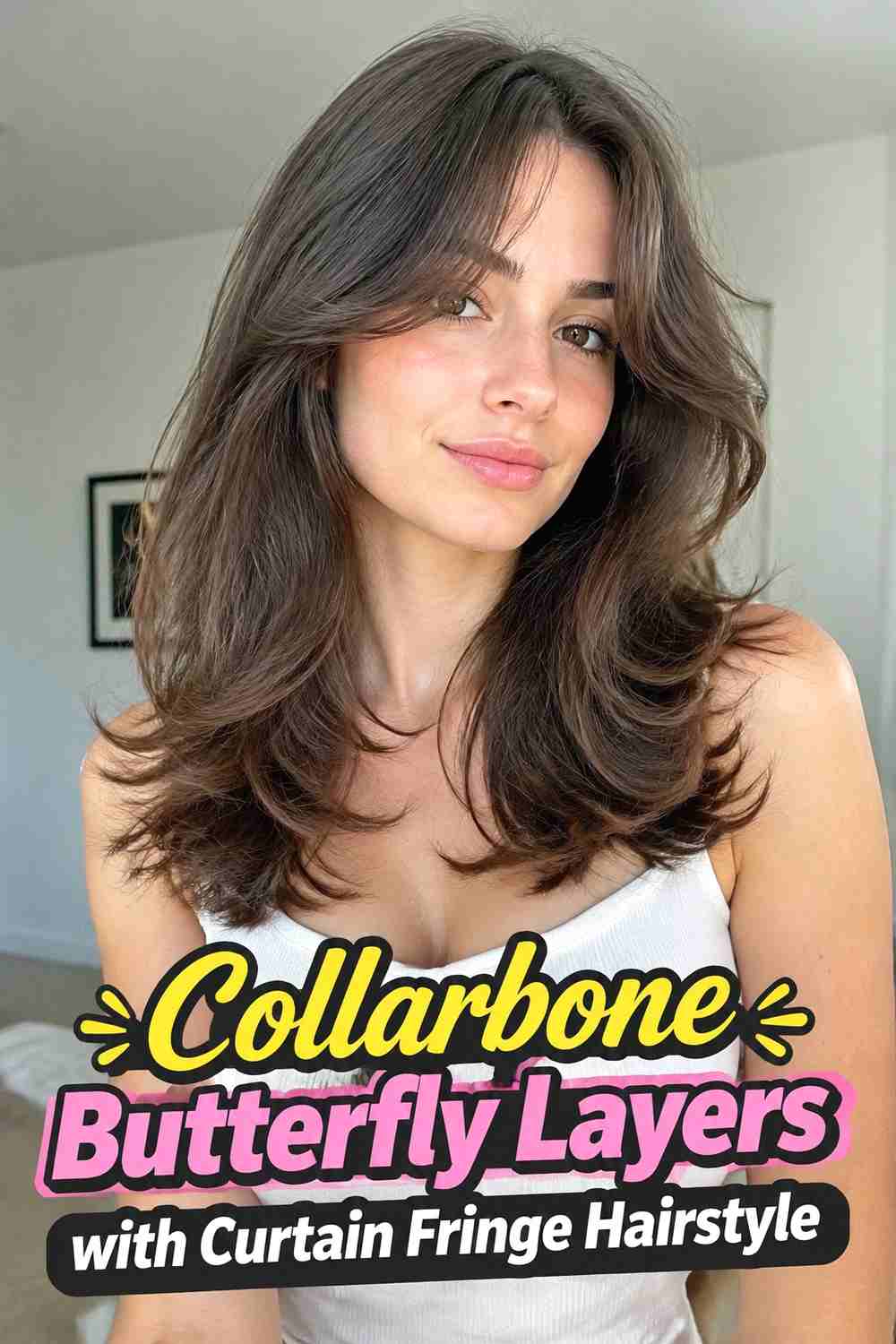
Collarbone butterfly layers concentrate much of the movement in the lower half of the cut, making them easier to maintain than shorter, higher layers. The curtain fringe can open around the forehead and connect with longer sections that reach the jaw and collarbone. This creates a soft cascade without removing too much density from the main length. The style works beautifully on medium-to-long hair because the longer layers move naturally with everyday styling and do not require constant reshaping. Loose waves make the different lengths more visible, but straight hair can still show the layered front clearly. Keeping the perimeter full gives the cut a healthy, substantial finish.
Wear & Maintenance
Collarbone-level layers can grow for quite a while before losing their shape, making this variation suitable for longer intervals between major reshaping appointments.
6. Wavy Butterfly Layers With Split Curtain Fringe Hairstyle
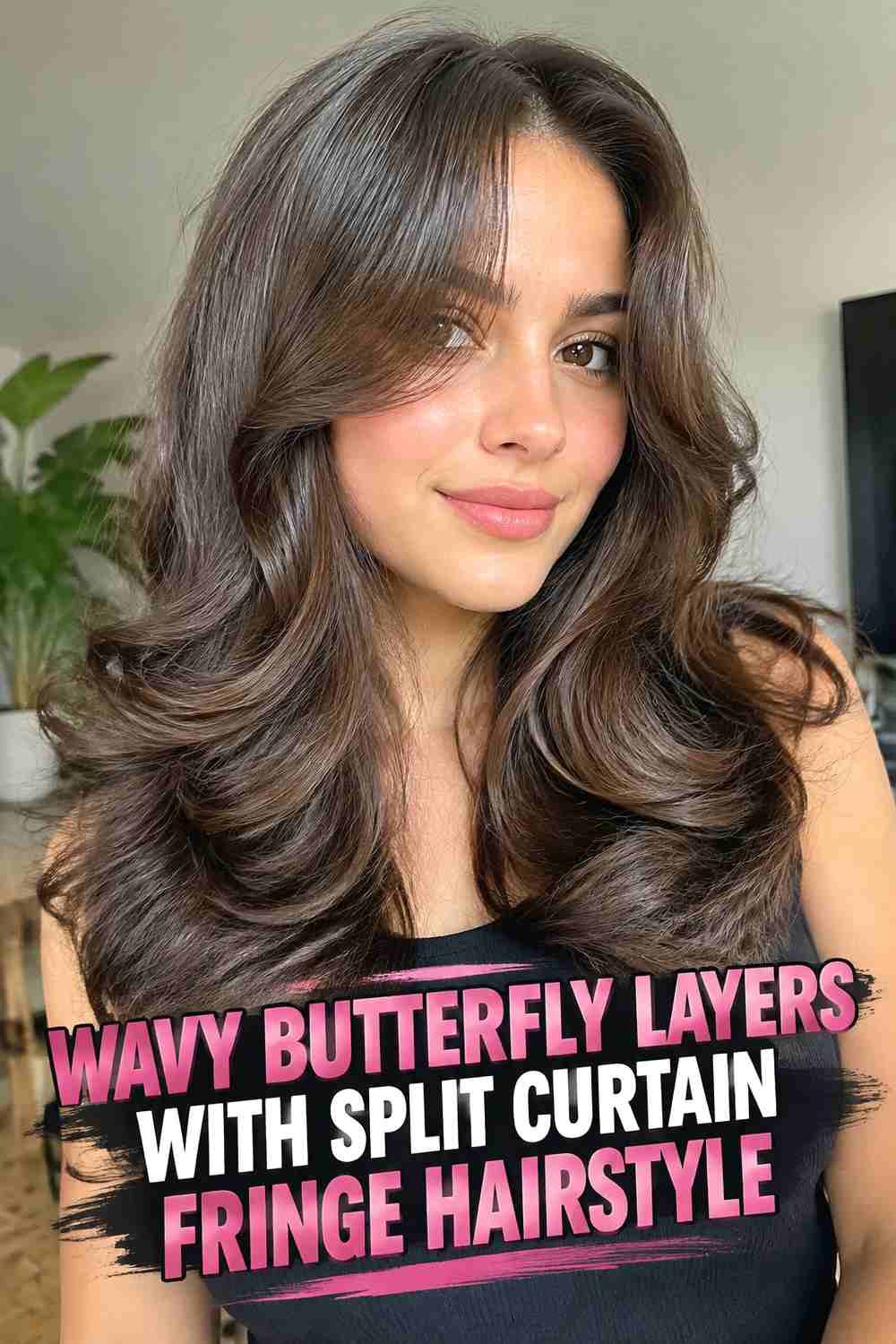
Wavy hair naturally supports butterfly layers because bends reveal the different lengths without requiring a highly polished finish. A split curtain fringe can follow the natural center or slightly off-center part, with the outer pieces merging gradually into cheekbone and jaw-level layers. The remaining length should retain enough weight to keep waves defined rather than overly fluffy. This version can often be refreshed with water and lightweight styling product instead of a full blowout. The most low-maintenance approach is to place each layer where the natural wave pattern wants to bend, which allows the haircut to look intentional even when the texture changes slightly from wash to wash.
Pro Tip
Have the fringe and front layers evaluated dry or close to their natural texture so shrinkage and wave placement are easier to predict.
7. Thick Hair Butterfly Layers With Curtain Fringe Hairstyle
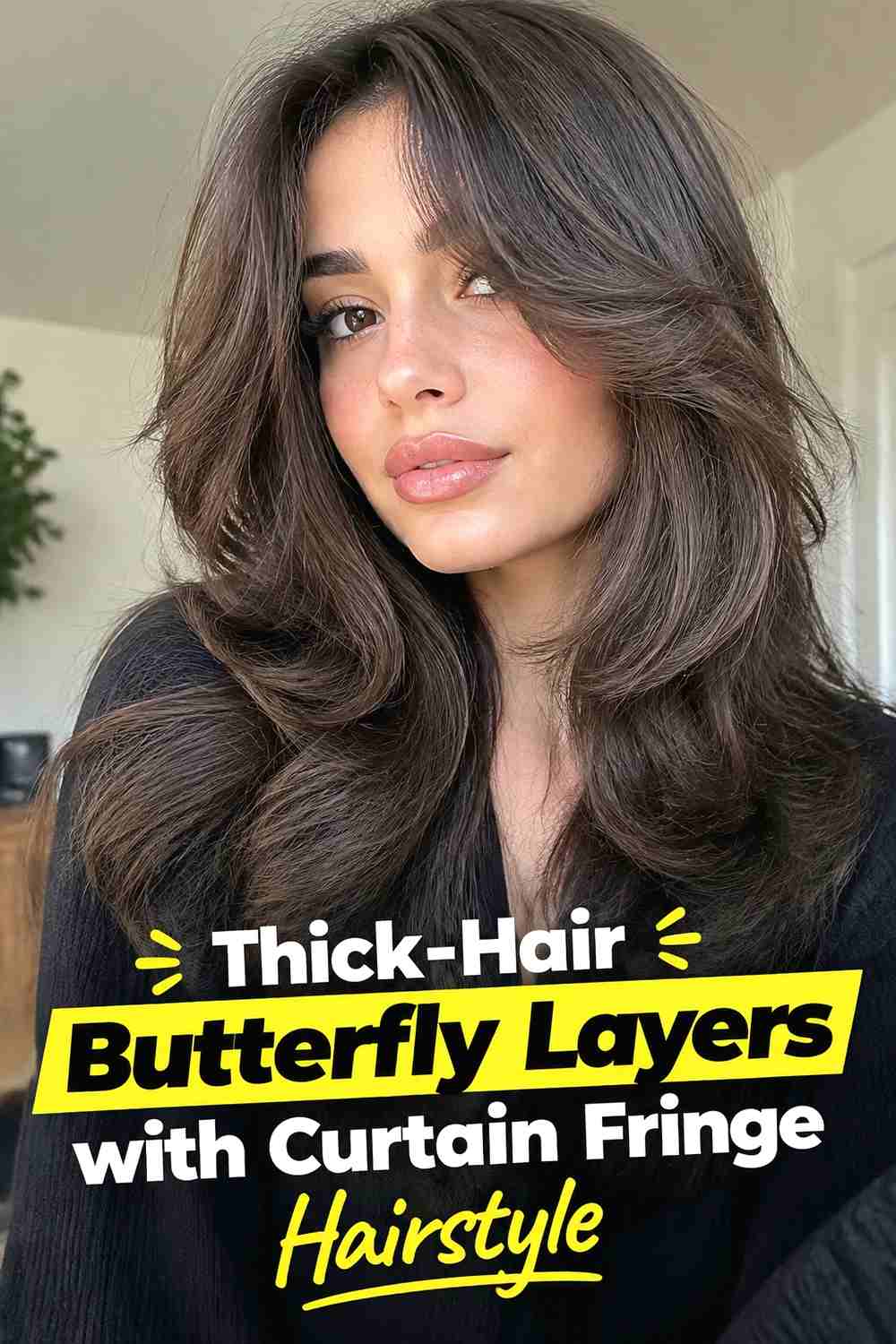
For thick hair, low-maintenance butterfly layers should remove strategic weight without turning the cut into a heavily thinned shape. Longer face-framing pieces can release bulk around the sides, while internal layers allow the mids and ends to move more freely. Curtain fringe needs enough density to sit smoothly, but it should still connect softly to the side layers rather than feeling like a separate heavy section. Keeping the lower perimeter substantial helps thick hair maintain a balanced silhouette as the layers grow. This version can work with blowouts, natural waves, or simple air-drying, making it flexible for days when you want less styling effort.
Best For
This approach suits dense hair that feels bulky through the sides or ends but still benefits from keeping visible fullness through the lower length.
8. Fine Hair Butterfly Layers With Wispy Curtain Fringe Hairstyle
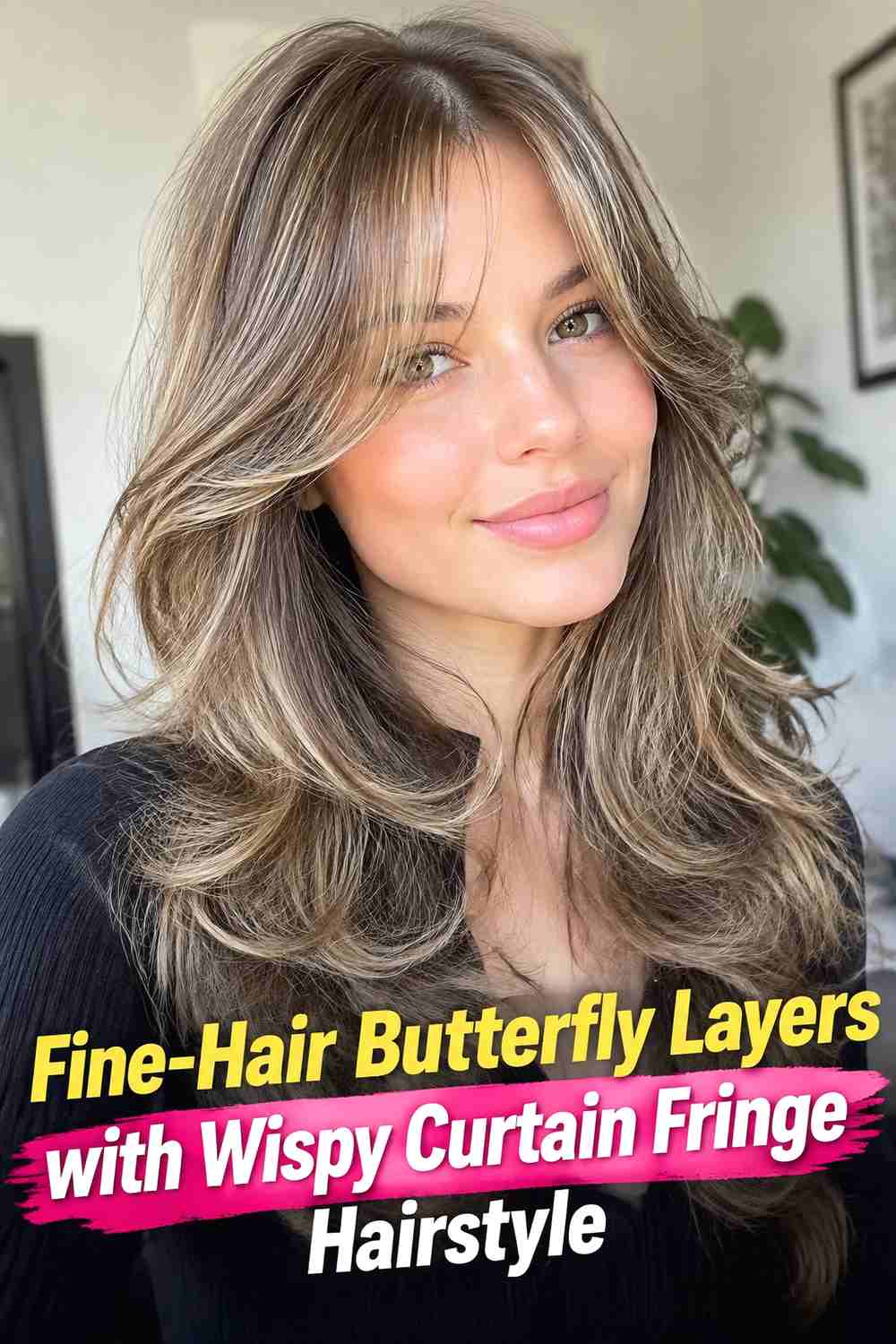
Fine hair can wear butterfly layers successfully when the layering stays restrained and the lower perimeter remains full. A wispy curtain fringe uses only a small amount of hair, leaving more density through the sides while still creating movement around the forehead. The first face-framing layer can begin near the jaw instead of high at the cheekbones, reducing the risk of thin-looking front sections. Through the rest of the hair, longer layers provide subtle movement without sacrificing too much weight. This variation can be styled with a simple blow-dry, soft bends, or even a smooth straight finish. The goal is airy movement without making the overall haircut look sparse.
Pro Tip
Keep the fringe section narrow and avoid excessive interior thinning. Fine hair usually benefits from fewer, better-placed layers rather than many short ones.
9. Feathered Butterfly Layers With Grown Out Curtain Fringe Hairstyle
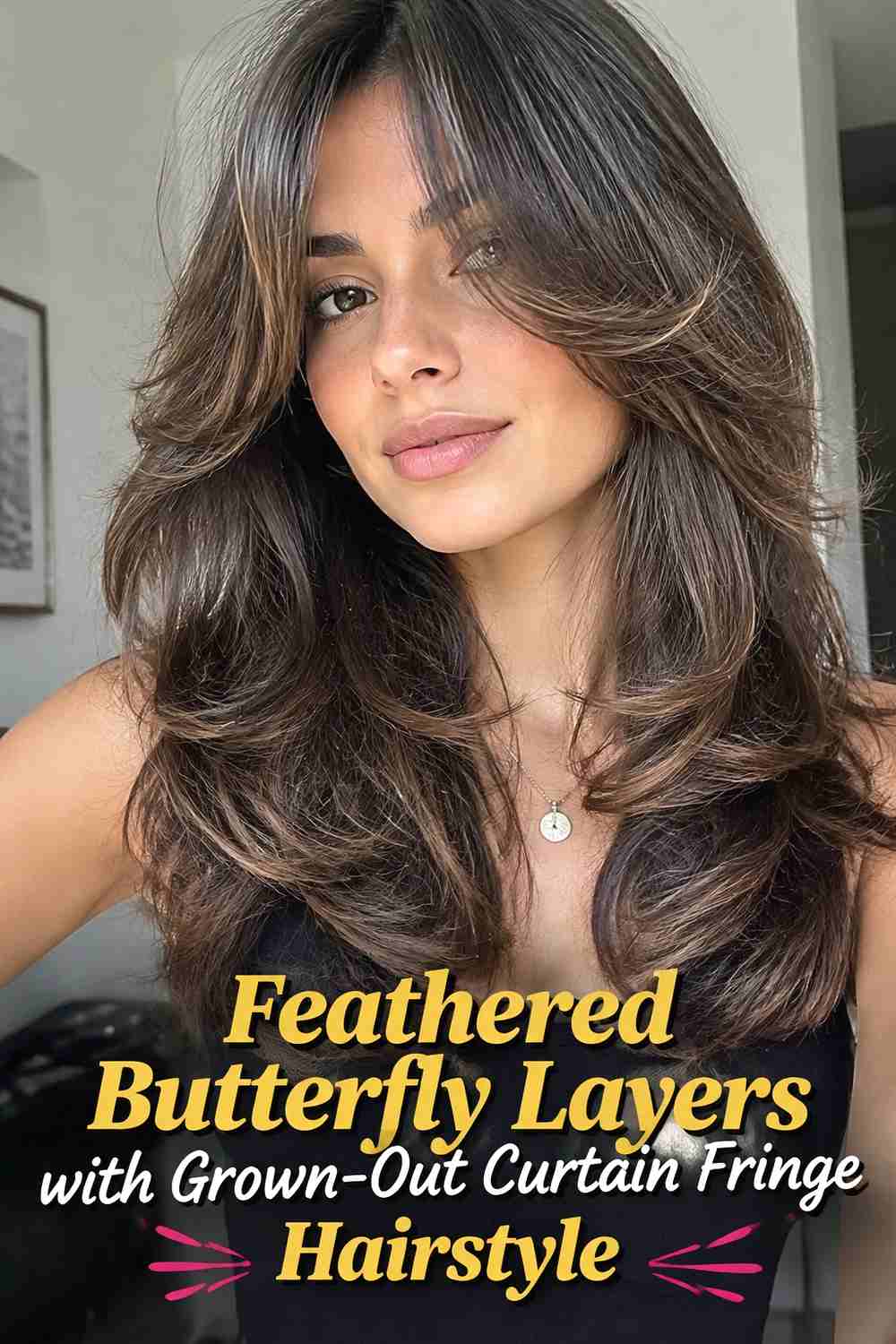
A grown-out curtain fringe makes butterfly layers especially low-maintenance because the shortest front pieces already sit long enough to sweep away from the face or tuck behind the ears. Feathered layers continue from the fringe into the sides, creating a soft transition instead of several abrupt lengths. The ends can be lightly tapered for movement while the main body stays full. This version is ideal if you like the appearance of fringe but dislike frequent bang trims. It also transitions easily into a longer layered haircut because the front sections can simply keep growing. Loose waves or a relaxed blowout show the feathering without demanding precise daily styling.
Why It Works
Longer fringe and tapered transitions create a forgiving shape that changes gradually as it grows, reducing the need to maintain one exact length.
10. Curly Butterfly Layers With Curtain Fringe Hairstyle
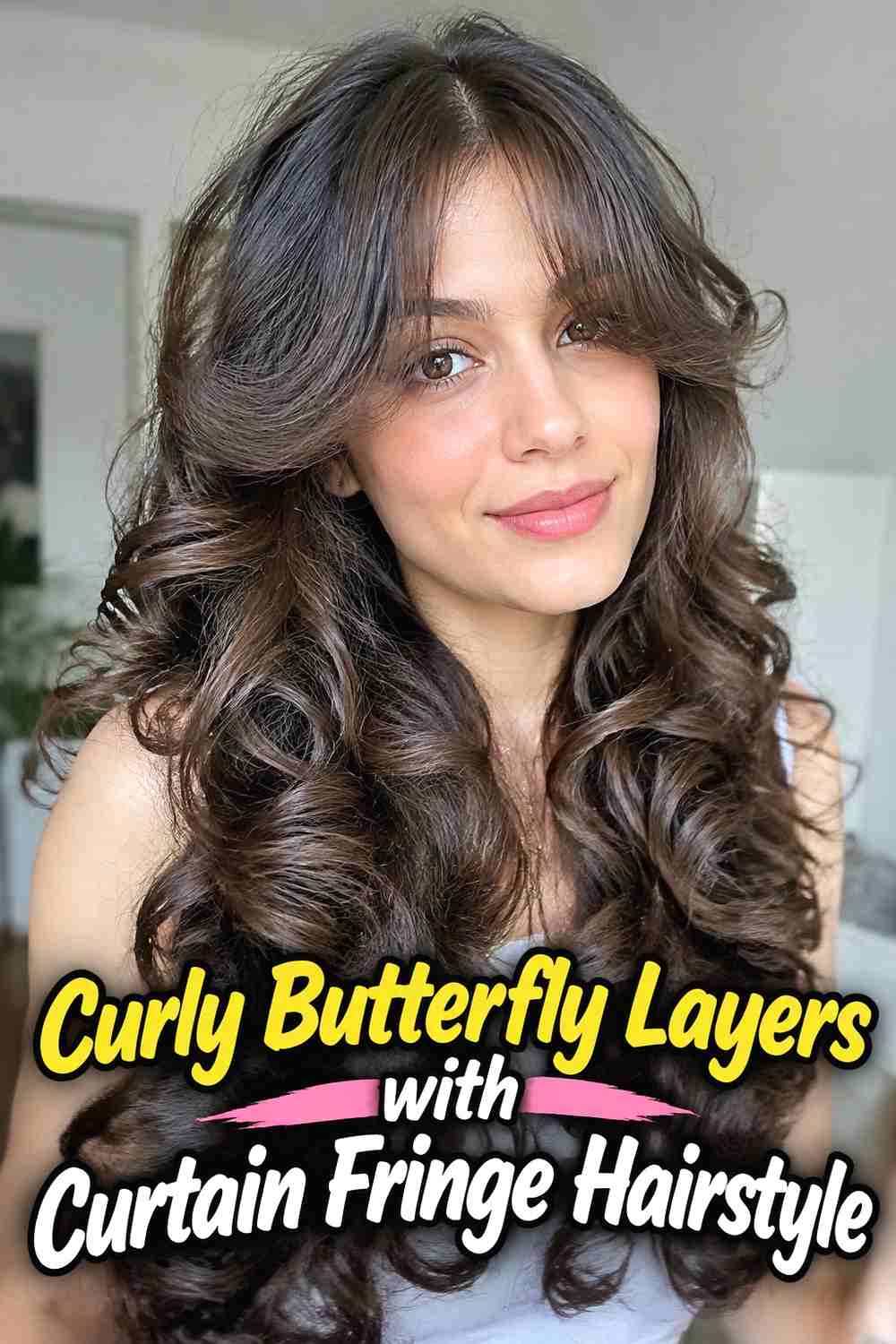
Curly butterfly layers use the same face-framing concept but adapt every length to the natural curl pattern. Curtain fringe can divide through the center or slightly off-center, with individual curls opening around the forehead and temples instead of being forced into a smooth blowout shape. Longer layers through the sides help release bulk while preserving enough weight for curl definition. The cut should account for dry shrinkage so the fringe and face frame do not end up much shorter than expected. When shaped around the curls you actually wear, this style can be surprisingly low-maintenance because the natural texture creates movement without daily heat styling.
Hair Type & Length
Wavy, curly, and loosely coiled hair can all wear this style when the layer lengths are planned around shrinkage, density, and natural curl grouping.
11. Shoulder Length Butterfly Layers With Curtain Fringe Hairstyle
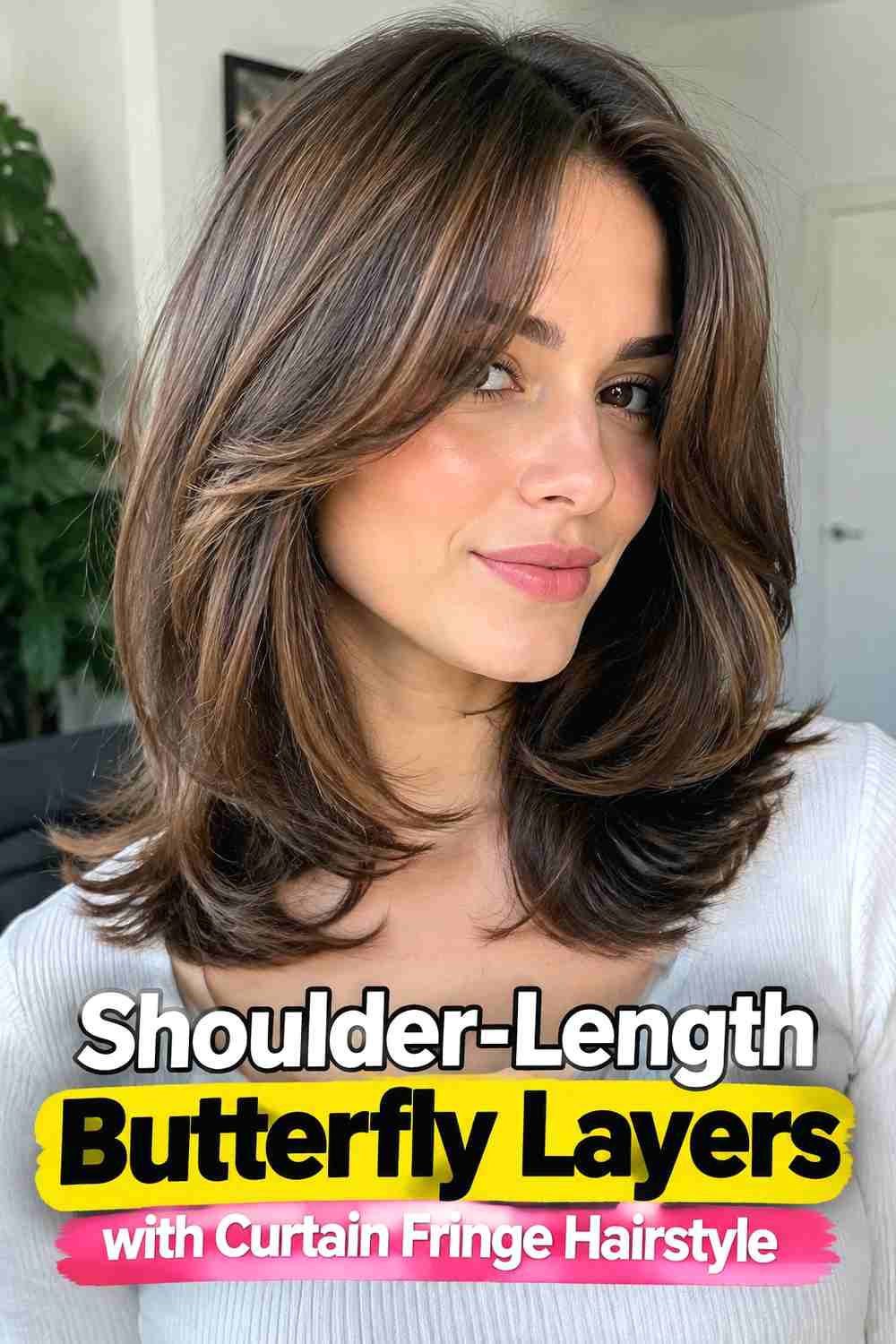
Shoulder-length butterfly layers offer an easy middle ground between a long layered cut and a shorter, more structured style. The curtain fringe can sweep toward the temples and connect with cheekbone or jaw-level pieces, while the longest sections rest around the shoulders. Because there is less overall length, the layering should remain controlled so the cut does not become too wide or overly feathered. This version can work with natural waves, a quick blow-dry, or soft bends created only through the front. The shoulder-level perimeter keeps the style practical and manageable, while the butterfly layers add enough movement to prevent the haircut from feeling heavy.
Wear & Maintenance
Expect the perimeter to change as it grows past the shoulders, but the longer front layers and curtain fringe can usually transition smoothly between trims.
12. Long Soft Butterfly Layers With Curtain Fringe Hairstyle
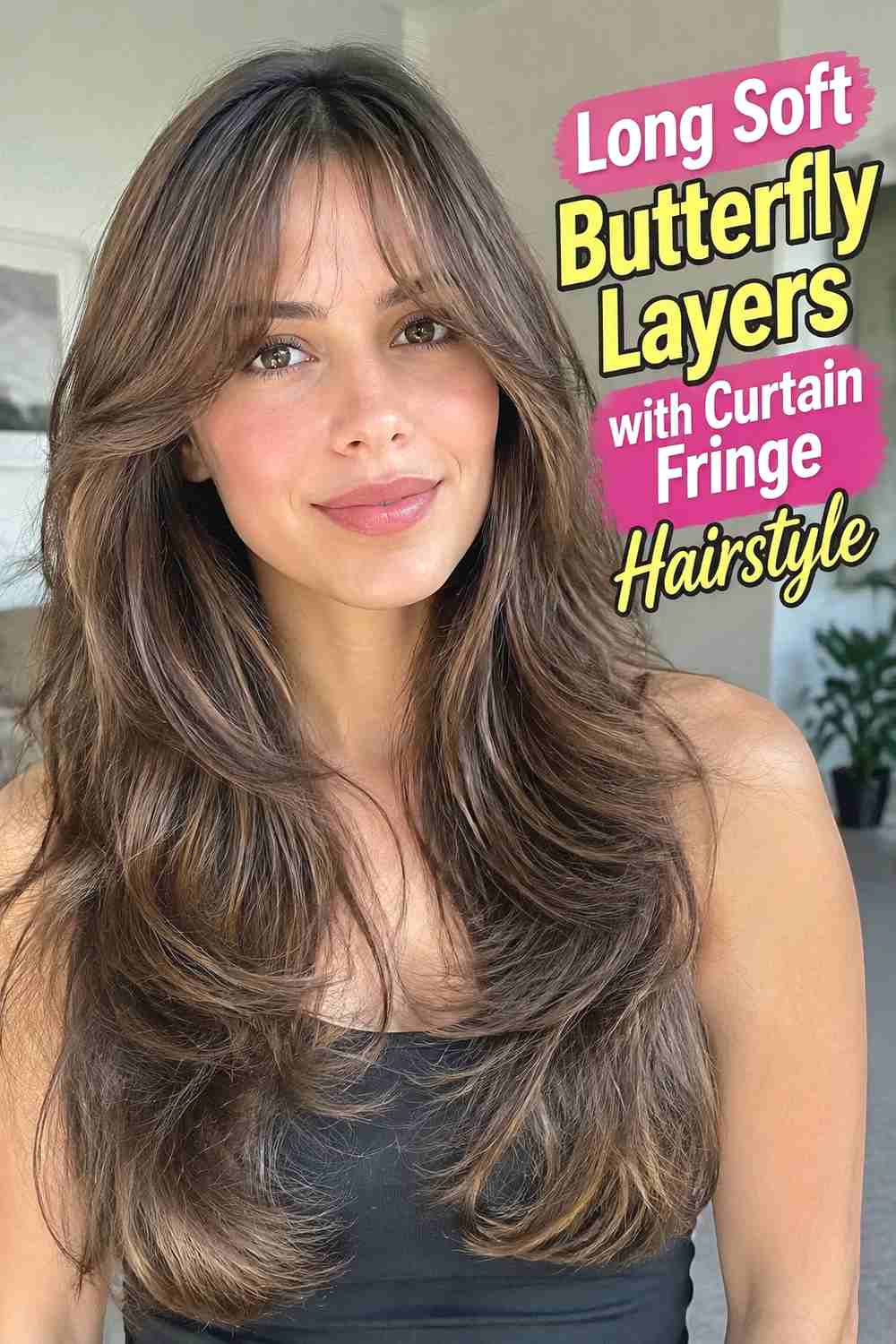
Long soft butterfly layers focus on subtle movement rather than dramatic differences between lengths. The curtain fringe stays long enough to blend easily into cheekbone and jaw-level sections, while the remaining layers begin lower through the mids. This creates an airy front without changing the overall density of the hair too much. It is a particularly useful option if you want a cut that still looks polished when worn straight and does not depend on curls or a blowout for definition. As the layers grow, their softer spacing keeps the silhouette balanced, making the style more forgiving between appointments and easy to adapt to different everyday looks.
Best For
This is a versatile choice for anyone who wants butterfly movement without obvious short layers or frequent reshaping.
13. Butterfly Layers With Cheekbone Curtain Fringe Hairstyle
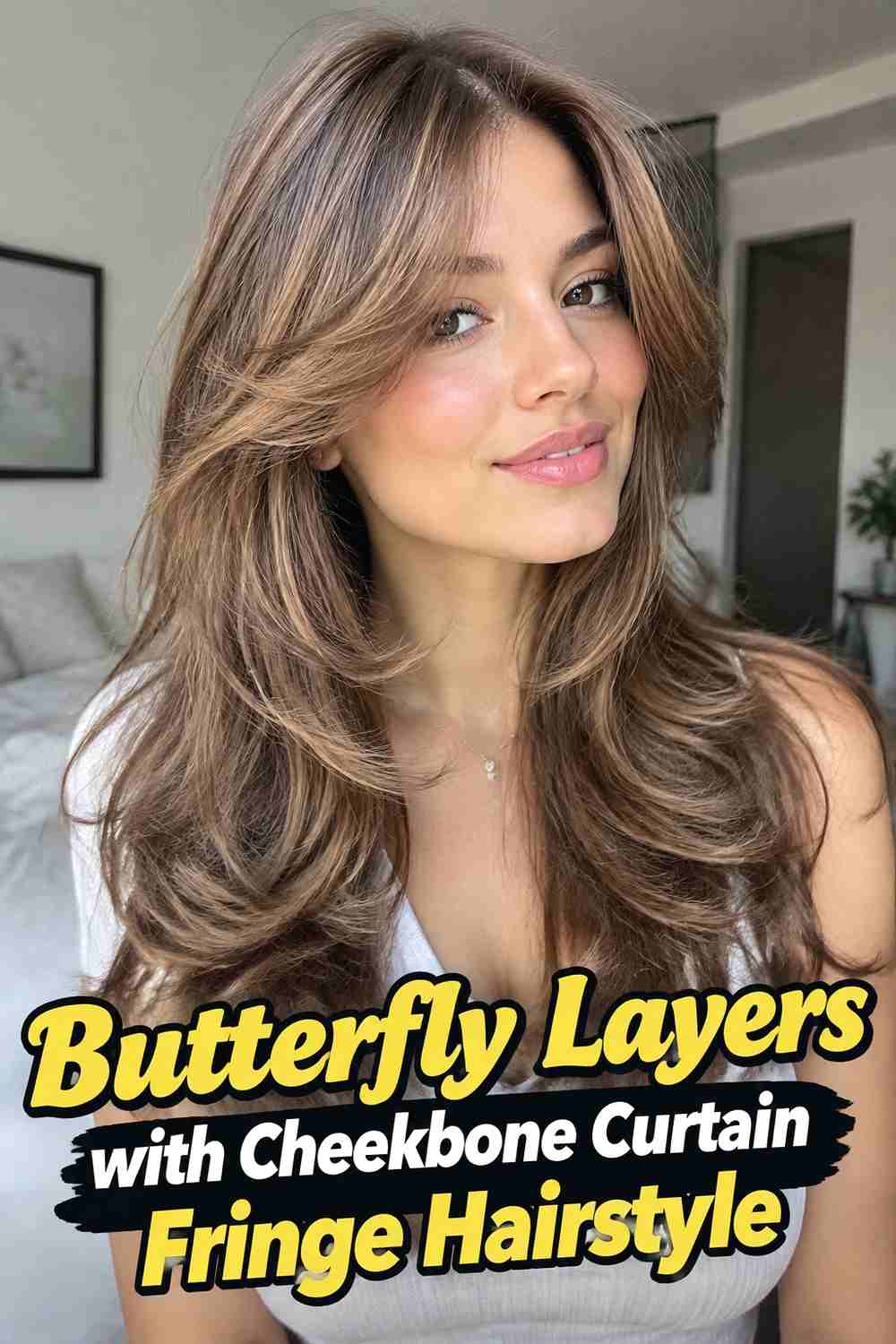
Cheekbone curtain fringe gives the front of a butterfly cut a defined but still manageable starting point. The fringe curves away from the center and lands around the upper cheek area before merging into longer jaw and shoulder layers. Because it is longer than traditional brow-length fringe, it can be tucked behind the ears or blended into a ponytail more easily. The surrounding butterfly layers create enough movement to make the fringe feel connected rather than separate. This version works especially well with soft waves and medium-density hair, but the amount of layering can be reduced for finer textures or increased carefully for thicker hair.
Styling Notes
A quick outward bend through the fringe is usually enough. The longer length should not require the same precise shaping as short curtain bangs.
14. Subtle Butterfly Layers With Curtain Fringe Hairstyle
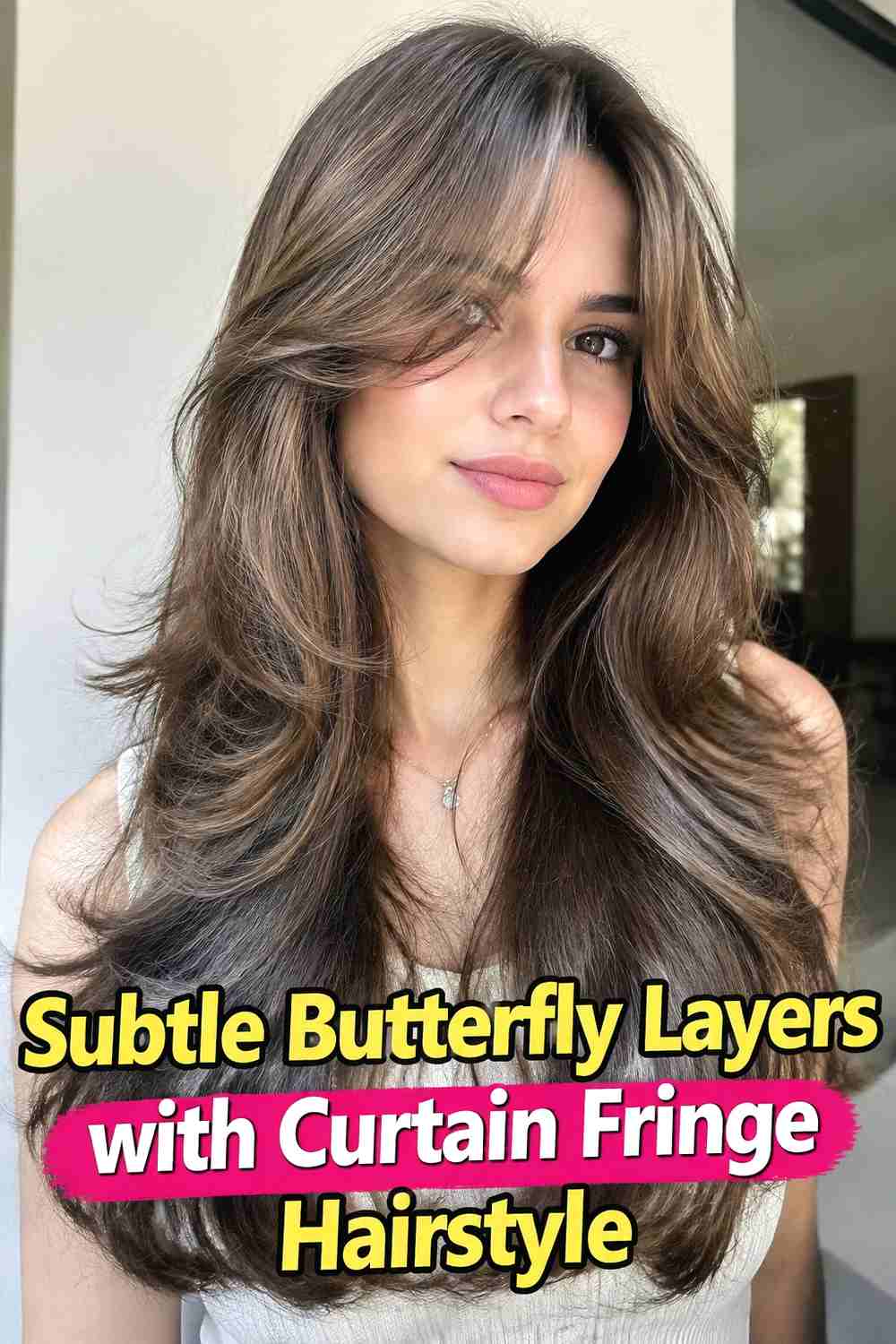
Subtle butterfly layers are ideal when you want movement that looks almost effortless. The curtain fringe provides the clearest face-framing detail, while the rest of the layers remain long and softly blended through the mids and ends. This preserves density, reduces styling demands, and lets the haircut work with straight, wavy, or lightly textured hair. The cut can still create a butterfly effect when the front sections are blown away from the face, but it does not look unfinished when worn naturally. Because there are fewer dramatic length changes, the grow-out is gradual and forgiving, making this variation especially suitable if you prefer fewer salon visits.
Why It Works
The style relies on careful placement rather than lots of layers, so it keeps movement without creating a high-maintenance shape.
15. Airy Butterfly Layers With Long Curtain Fringe Hairstyle
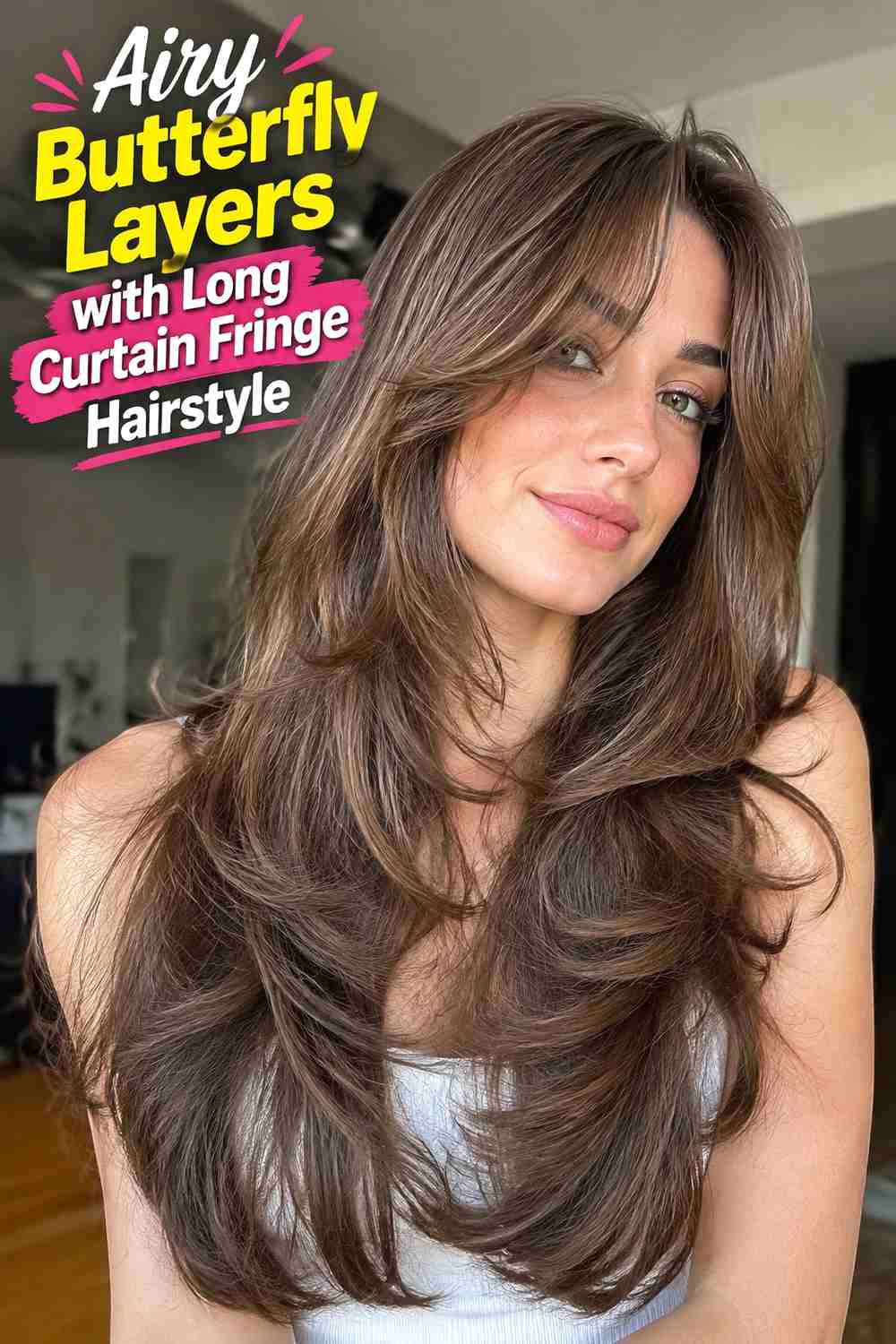
Airy butterfly layers use soft separation through the front and ends while keeping the main lengths full enough to avoid a thin finish. Long curtain fringe opens easily around the face and merges into cheekbone, jaw, and collarbone sections without a sharp transition. The airy effect can come from gentle point cutting or restrained feathering rather than heavy thinning. This allows the hair to move naturally whether it is worn straight, wavy, or loosely curled. Because the fringe is long and the layers remain relatively soft, the haircut can grow for months without suddenly losing its shape, making it one of the easiest butterfly styles to maintain.
Wear & Maintenance
Keep the perimeter substantial and refresh only the front shape when needed. This can extend the time between full layered haircuts.
How to Choose the Right Look
Start with your natural texture and how often you actually style your hair. If you usually air-dry, choose longer layers that sit well in your natural pattern. Wavy and curly hair often needs the layer placement assessed dry, while straighter hair can handle smoother, more gradual transitions.
Fringe length makes a major difference in maintenance. Brow-length curtain fringe needs more regular shaping, while cheekbone or grown-out versions can tuck behind the ears and blend into ponytails. If frequent trims are inconvenient, keep the outer fringe pieces long and softly connected to the face frame.
Density matters too. Fine hair generally benefits from fewer layers and a full lower perimeter. Thick hair can handle more interior weight removal, but over-thinning may create unwanted puffiness or wispy ends.
For the easiest grow-out, choose lower butterfly layers, longer curtain fringe, and soft transitions rather than dramatic short sections through the crown.
Final Thoughts
Low-maintenance butterfly layers with curtain fringe work best when the haircut supports your natural texture instead of requiring a perfect blowout every day. Longer fringe, restrained layering, and a full perimeter make the shape easier to style, tie back, and grow out.
Choose dramatic face framing only if you enjoy regular styling. For a more effortless routine, longer jaw-to-collarbone layers and cheekbone-length curtain fringe provide movement while staying flexible.
FAQs
1. Are butterfly layers with curtain fringe low maintenance?
They can be, especially when the layers and fringe are kept relatively long. Longer pieces grow out more softly and usually need less precise daily styling.
2. What curtain fringe length is easiest to maintain?
Cheekbone-length or grown-out curtain fringe is typically more flexible because it can be tucked behind the ears, swept aside, or blended into longer layers.
3. Do butterfly layers work without a blowout?
Yes. When the cut is designed around your natural texture, butterfly layers can work with air-dried straight, wavy, or curly hair. A blowout simply makes the layered movement more pronounced.
4. Are butterfly layers suitable for fine hair?
Yes, but the layering should remain restrained. Keeping a fuller perimeter and using a small fringe section can preserve the appearance of density.
5. How can I make butterfly layers easier to grow out?
Choose gradual transitions, longer face-framing pieces, and curtain fringe that already reaches the cheekbones or temples. Avoid repeatedly shortening the layers during maintenance trims.
Save your favorite low-maintenance butterfly-layer ideas, share them with someone planning an easy fringe update, and explore more curtain-fringe inspiration for your next haircut.