18 Modern Shag Haircuts for Loose Curls
Loose curls and shaggy layers make an easy match, creating airy movement, natural volume, and enough separation to let every bend and curl show.
A modern shag can give loose curls more shape without forcing them into a rigid silhouette. Shorter crown and face-framing layers release weight, while longer sections preserve enough density through the ends for the haircut to feel balanced rather than overly thinned.
The right shag depends on curl pattern, density, length, and where you want volume to sit. Some versions emphasize an airy crown, while others keep layers lower for easier maintenance. Bangs can add another focal point, but their dry length and natural curl movement matter. These ideas focus on believable curl behavior, practical layering, and wearable proportions.
Quick List
- Soft Layered Curly Shag Hairstyle
- Curtain Bang Curly Shag Hairstyle
- Shoulder Length Loose Curl Shag Hairstyle
- Long Butterfly Shag For Loose Curls Hairstyle
- Airy Crown Curly Shag Hairstyle
- Face Framing Curly Shag Hairstyle
- Wispy Bang Loose Curl Shag Hairstyle
- Rounded Curly Shag Hairstyle
- Side Parted Loose Curl Shag Hairstyle
- Choppy Curly Shag Hairstyle
- Soft Wolf Shag For Loose Curls Hairstyle
- Collarbone Curly Shag Hairstyle
- Feathered Loose Curl Shag Hairstyle
- Low Maintenance Curly Shag Hairstyle
- Voluminous Loose Curl Shag Hairstyle
- Piecey Curly Shag Hairstyle
- Long Fringe Curly Shag Hairstyle
- Tousled Loose Curl Shag Hairstyle
1. Soft Layered Curly Shag Hairstyle
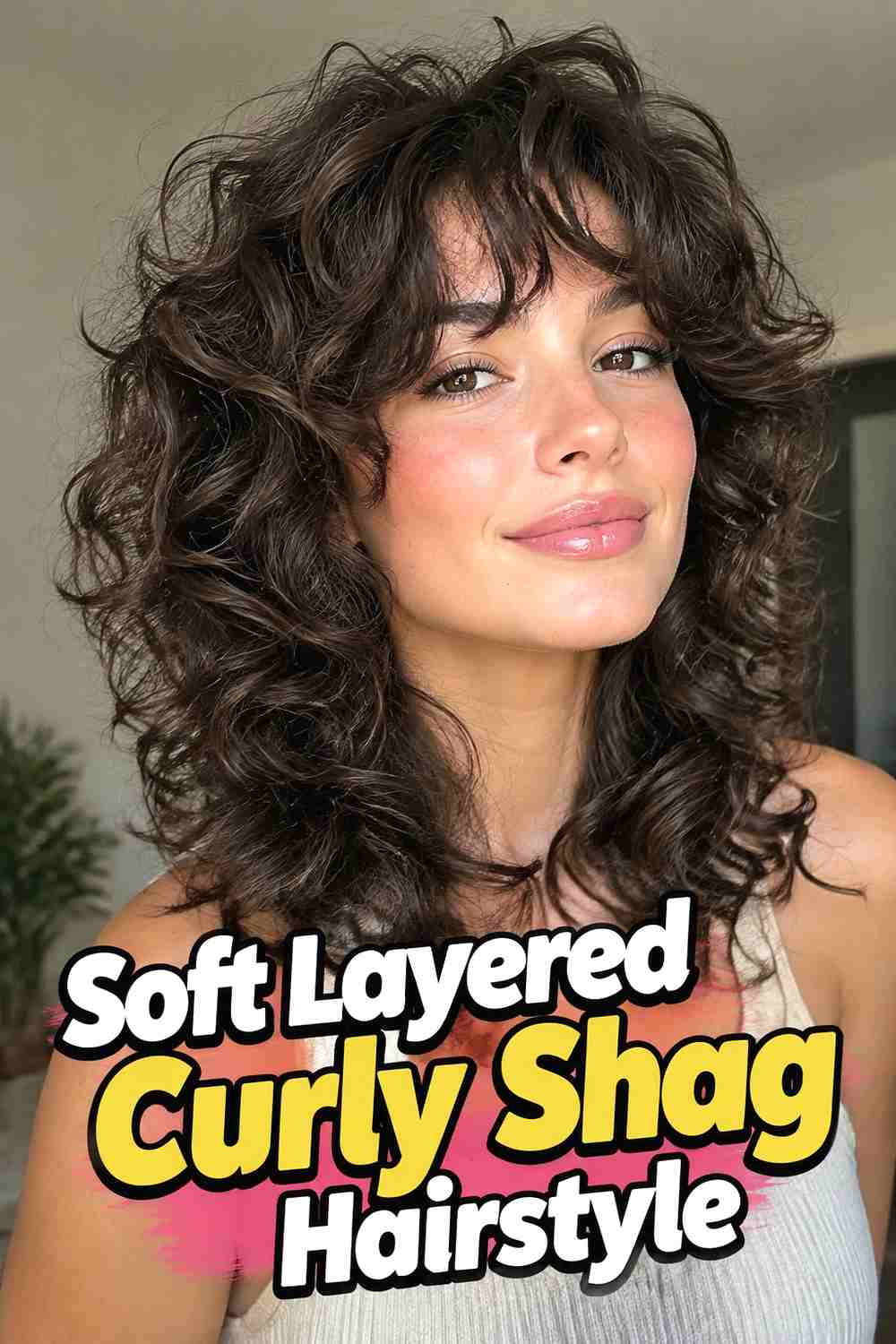
A soft layered curly shag is an approachable way to bring shape to loose curls without making the haircut look dramatically chopped. Longer crown layers gradually transition into cheekbone, jaw, and shoulder-level pieces, allowing the curl pattern to separate naturally while keeping the lower perimeter substantial. The softer spacing works especially well when your curls fall somewhere between strong waves and relaxed spirals. Instead of creating maximum crown height, this version distributes movement throughout the haircut, making it easy to wear with natural texture. A lightweight curl cream or mousse can encourage definition, while gentle diffusing helps reveal the layers without turning the overall shape overly fluffy.
Best For
This version suits medium to long loose curls when you want visible layering but still prefer softness and fullness through the ends.
2. Curtain Bang Curly Shag Hairstyle
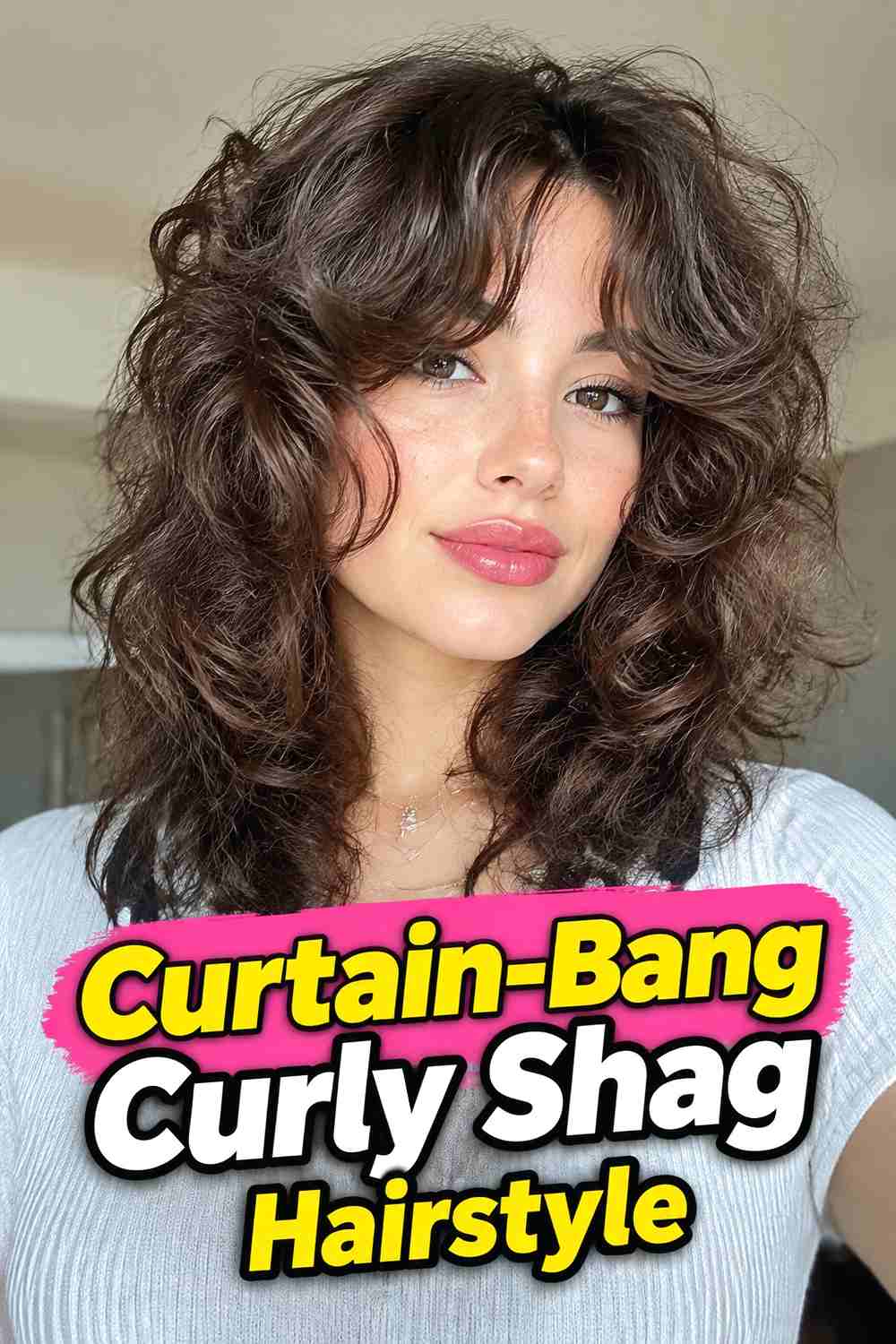
Curtain bangs make a curly shag feel especially balanced because they open through the center and connect naturally with shorter face-framing layers. On loose curls, the fringe can bend away from the forehead rather than sitting perfectly smooth, giving the style a relaxed and cohesive finish. Layers through the crown and sides create movement while the longest sections maintain enough weight to keep the haircut from becoming overly round. The curtain pieces should be assessed at their natural dry length since curls can spring upward more than expected. This version works beautifully when the fringe is long enough to tuck back occasionally, giving you flexibility as the bangs grow.
Styling Notes
Encourage the fringe to split near its natural part, then diffuse or air-dry the rest without repeatedly separating the curls.
Pro Tip
Leave the curtain fringe slightly longer than you would on straight hair so natural shrinkage does not make it unexpectedly short.
3. Shoulder Length Loose Curl Shag Hairstyle
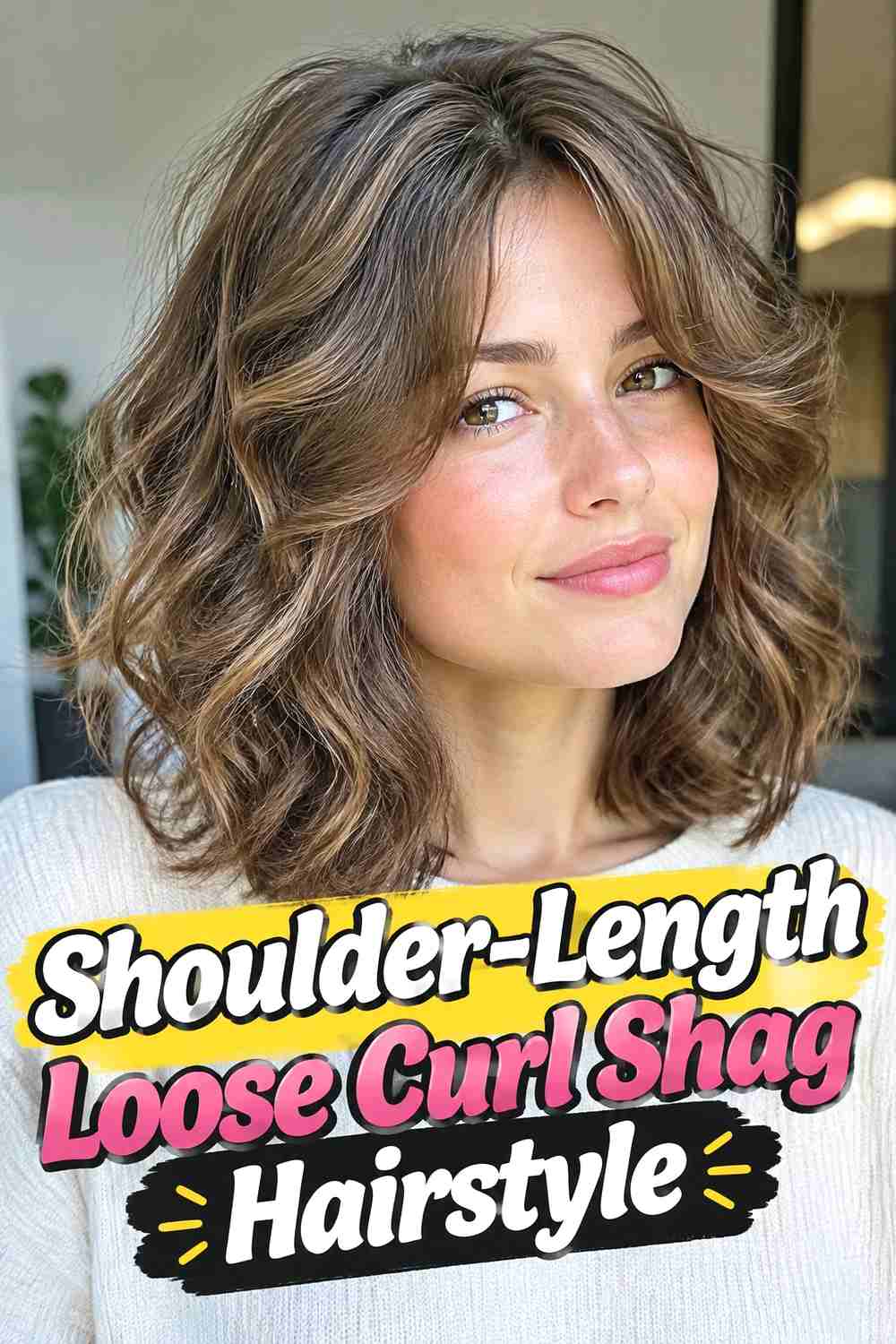
A shoulder-length shag gives loose curls enough room to form while keeping the haircut light and manageable. Shorter pieces around the cheekbones and crown release some weight, while the longest sections land close to the shoulders for a full but mobile perimeter. This length is useful if long curls feel heavy yet a short bob would remove too much versatility. Natural texture can create most of the styling, especially when the layers follow the curl pattern rather than interrupting it. Because shoulder-level hair may bounce upward once dry, the final length should account for shrinkage. Keeping some weight through the lower section also helps prevent an overly triangular silhouette.
Hair Type & Length
Loose waves, relaxed curls, and soft spirals work particularly well at shoulder length when the layering is customized to their dry shape.
4. Long Butterfly Shag For Loose Curls Hairstyle
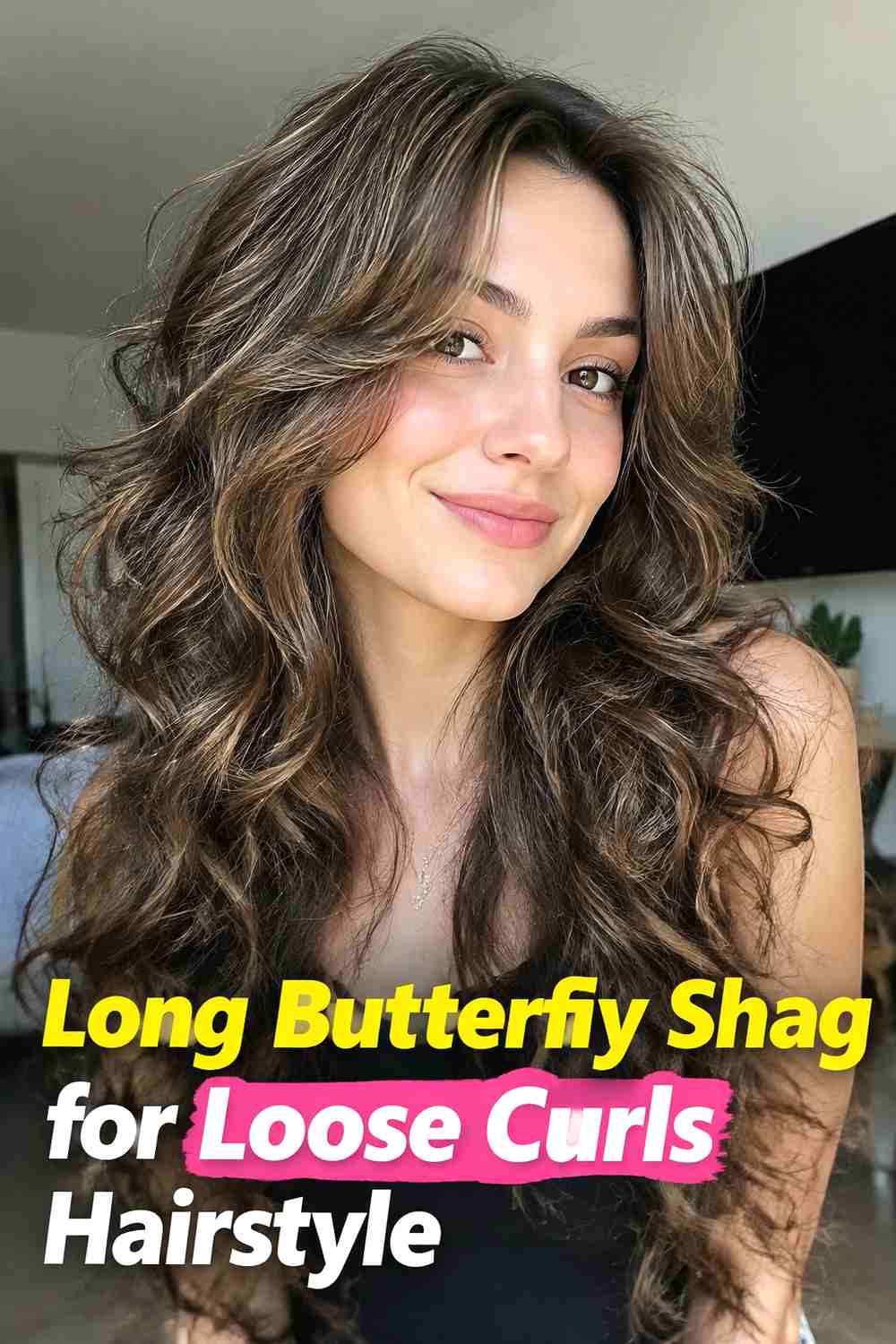
The long butterfly shag blends sweeping face-framing layers with the more textured movement of a shag. The shortest front pieces can begin around the cheekbones, while crown layers stay long enough to avoid excessive puffiness. Through the lower lengths, loose curls retain plenty of density, creating a cascading effect instead of a heavily thinned perimeter. This style is particularly attractive if you want shag movement but prefer to keep long hair. Natural bends make the different layer levels visible without requiring a polished blowout. A center or soft side part can both work, and the front layers can be allowed to curve away from the face for a more open silhouette.
Why It Works
Longer shag layers release enough weight for the curls to move while preserving the length and fullness associated with a butterfly-style shape.
5. Airy Crown Curly Shag Hairstyle
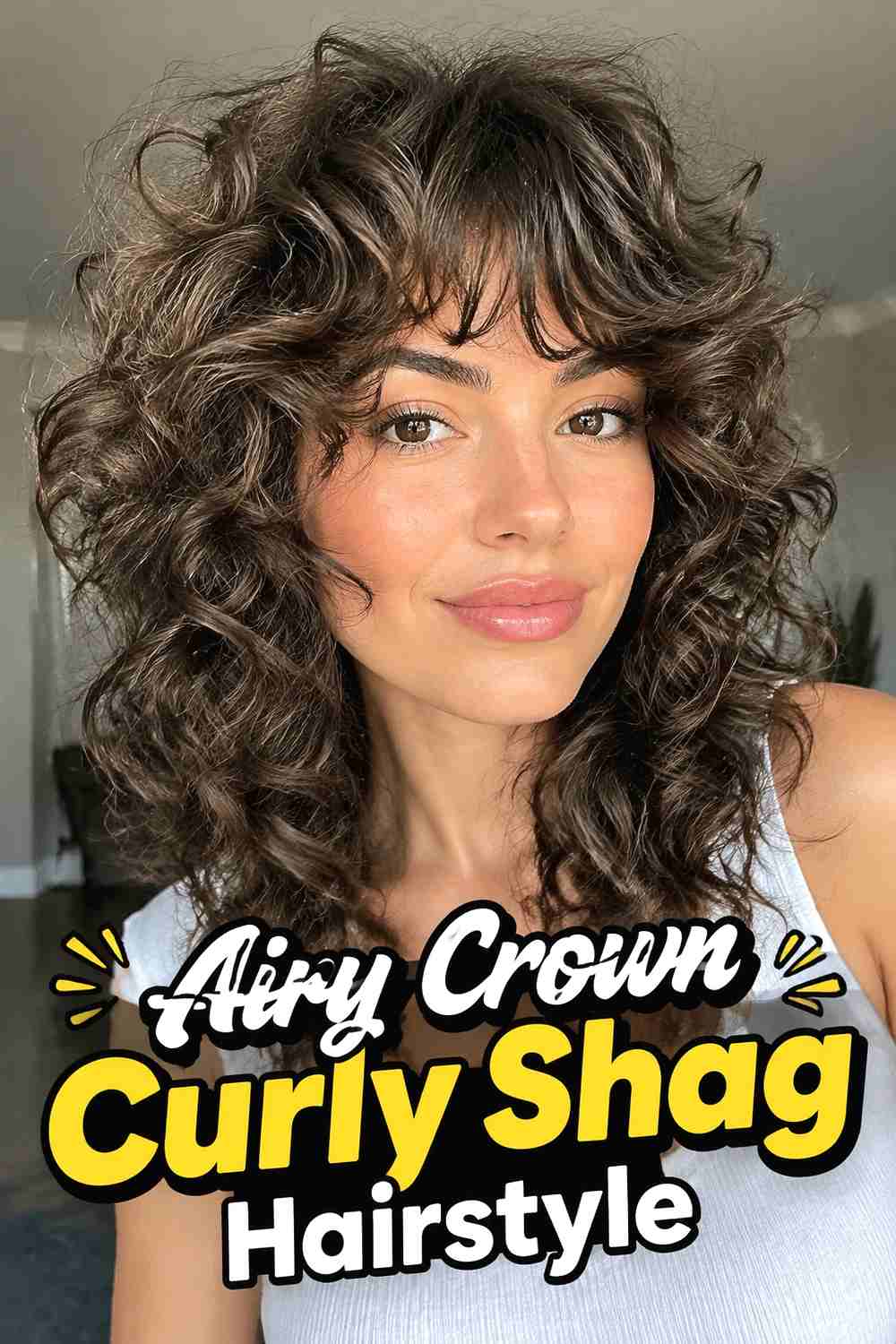
An airy crown curly shag focuses the shortest layers higher on the head, giving loose curls more lift around the top without requiring teasing. The crown pieces should remain long enough to form complete bends or curls rather than sticking outward unpredictably. Longer side and back sections balance that upper volume and prevent the haircut from looking overly top-heavy. This approach can be especially useful when dense curls tend to flatten at the roots under their own weight. Diffusing upside down briefly can enhance lift, but the haircut should still have shape when air-dried. Careful layer placement is important because too many short crown pieces can produce more expansion than intended.
Best For
Choose this style if your loose curls have good volume through the ends but tend to sit flatter around the crown.
Pro Tip
Ask for strategic crown layers rather than uniformly short pieces so the natural curl groups remain intact.
6. Face Framing Curly Shag Hairstyle
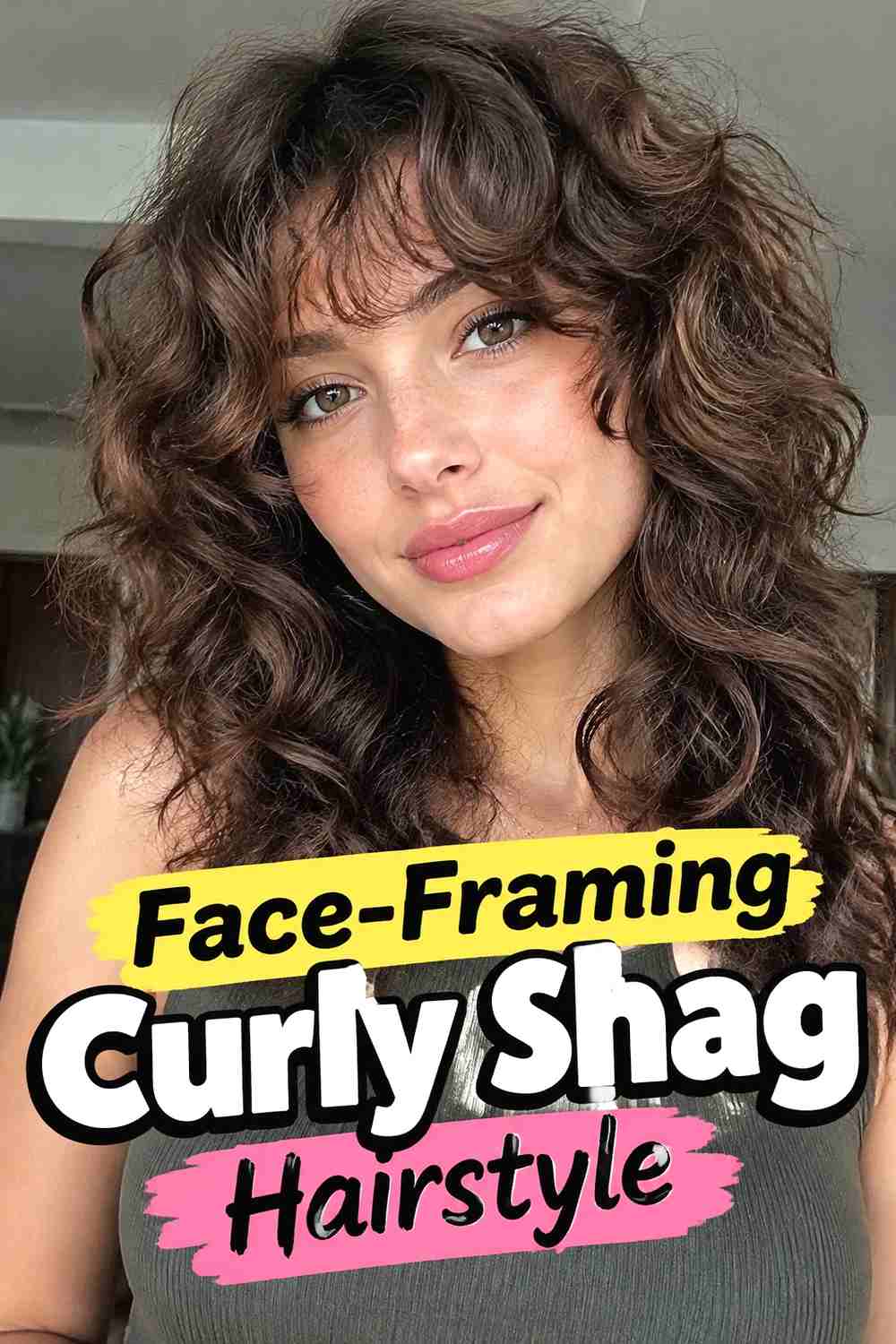
A face-framing curly shag concentrates much of its visual movement around the cheeks, jaw, and front perimeter. Shorter curls near the face gradually connect to medium and long layers, creating softness without removing unnecessary density through the back. This makes the cut useful if you like shag texture but want the overall length to stay relatively full. The face-framing pieces should be placed according to where the curls naturally shrink and bend, since a section that looks jaw-length when stretched may sit considerably higher when dry. Loose definition and a natural part keep the haircut relaxed, while a little styling cream helps individual front curls remain visible.
Styling Notes
Apply product to the front pieces while they are wet, then avoid pulling them straight as they dry so their intended framing length stays clear.
7. Wispy Bang Loose Curl Shag Hairstyle
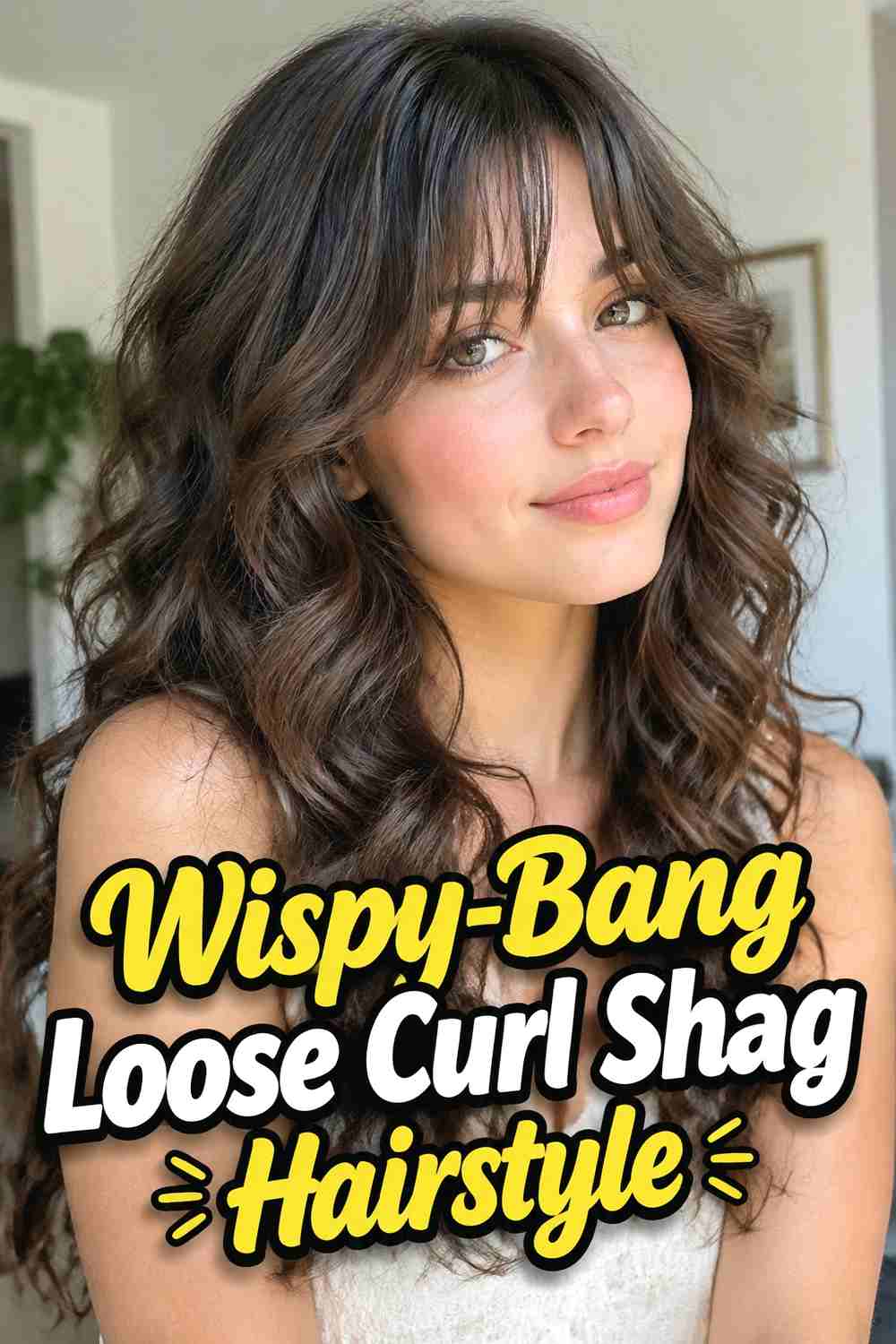
Wispy bangs add lightness to a loose curl shag without creating a dense fringe across the forehead. Only a modest amount of hair is used, allowing small curved pieces to sit naturally with visible space between them. The shag layers continue through the sides and crown, so the fringe feels connected to the rest of the haircut rather than added on afterward. This version can work particularly well when the curl pattern at the hairline is softer than the lengths. Keeping the bangs somewhat long helps accommodate shrinkage and makes them easier to sweep aside. The longer curls below can remain full, with shag layering focused mainly around the face and upper sections.
Best For
This option works well when you want curly fringe but prefer an airy, low-density look instead of thick bangs.
Wear & Maintenance
Small dry trims can help maintain the fringe without repeatedly removing more length than the curl pattern requires.
8. Rounded Curly Shag Hairstyle
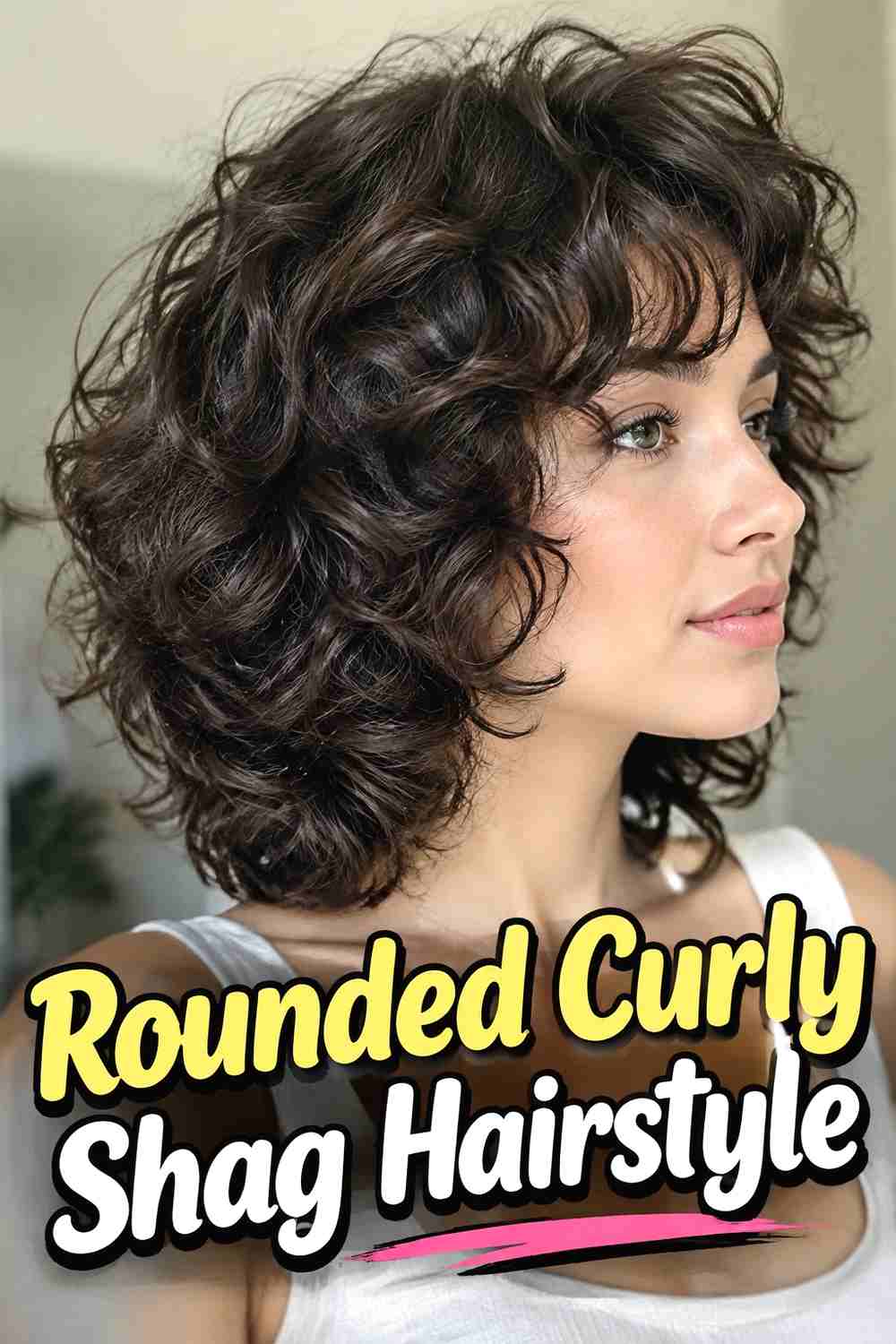
A rounded curly shag creates a balanced silhouette by distributing volume through the crown, sides, and lower layers rather than concentrating it in one area. Loose curls naturally support the shape, especially when layers are spaced to let individual curl groups stack without becoming overly bulky. The front can remain open with a center part or include longer face-framing pieces for softness. Unlike a dramatic wolf cut, this version has smoother transitions between lengths, producing a rounded outline with plenty of movement. The perimeter should still retain enough weight to keep the style grounded. Air-drying can work beautifully when the curls already form consistently, while diffusing adds extra lift.
Why It Works
Evenly distributed layers create a cohesive shape that lets loose curls expand naturally without creating a heavy bottom or excessively short crown.
9. Side Parted Loose Curl Shag Hairstyle
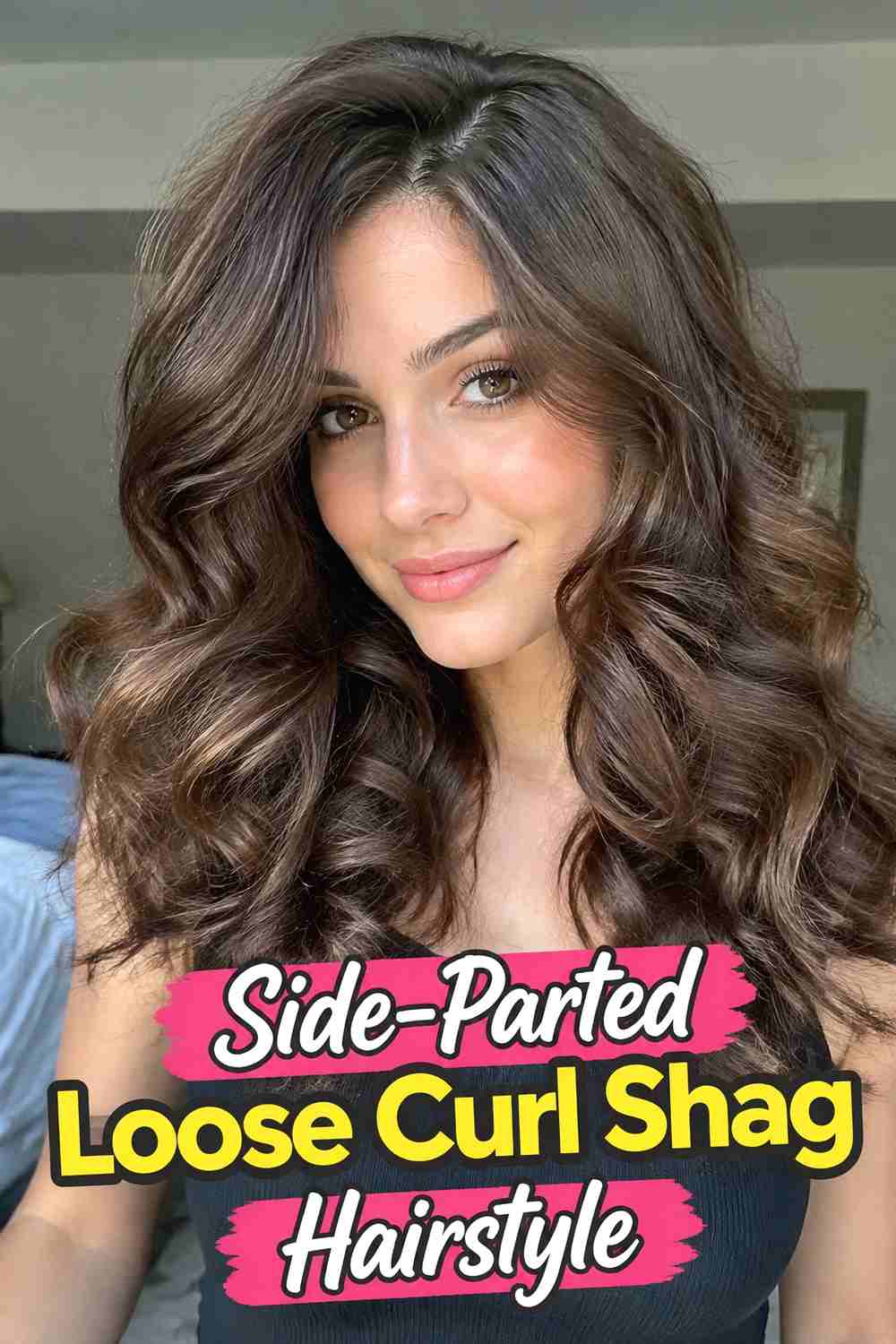
A side-parted loose curl shag creates asymmetry by allowing more volume to fall toward one side of the face. The heavier side can feature sweeping front layers, while the opposite side stays slightly closer to the head or tucks behind the ear. Crown and mid-length layers encourage movement without requiring a dramatically short top section. This makes the style a good choice if you naturally wear your hair to one side and want a shag that works with that habit rather than against it. Loose curls create enough body to emphasize the part, while longer lower layers keep the silhouette balanced. The part can shift slightly from wash to wash without ruining the cut.
Styling Notes
Encourage your natural part while the hair is wet and avoid forcing equal volume on both sides as the curls dry.
10. Choppy Curly Shag Hairstyle
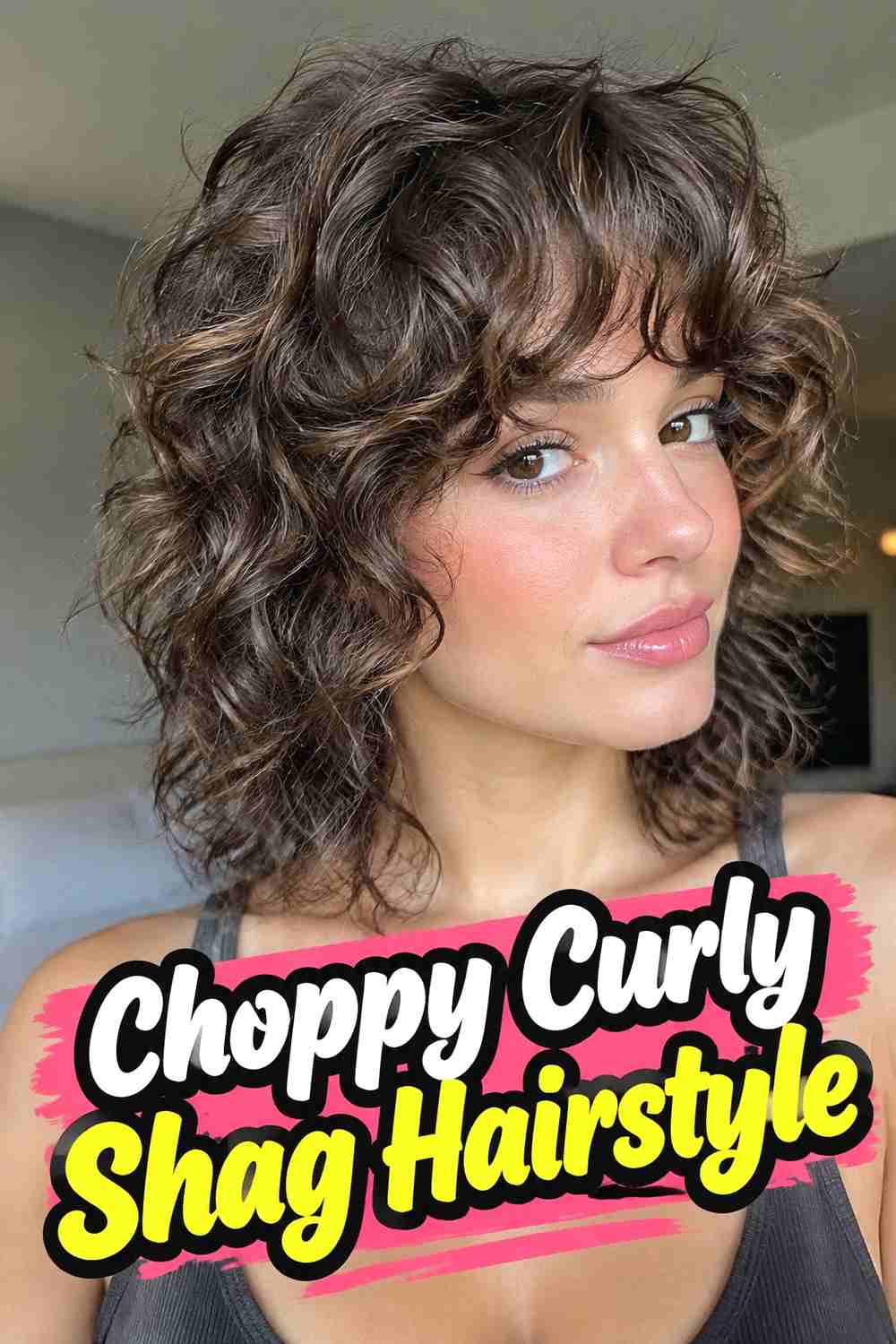
A choppy curly shag uses more obvious separation between layer lengths for a textured, expressive finish. Shorter pieces around the crown and face create movement, while longer curls remain visible underneath to preserve length and contrast. The cut looks best when the choppiness follows natural curl groupings rather than slicing randomly through them. Loose curls are especially suited to this effect because their bends reveal varied lengths without requiring stiff styling. A small amount of lightweight product can help define the broken-up silhouette while keeping the curls touchable. The perimeter should not be excessively thinned, since too many short pieces can make the ends look sparse.
Best For
This works well if you want a stronger shag identity and enjoy a more visibly layered, slightly edgy finish.
Pro Tip
Ask for deliberate separation between selected layers while preserving enough long curl groups to maintain overall density.
11. Soft Wolf Shag For Loose Curls Hairstyle
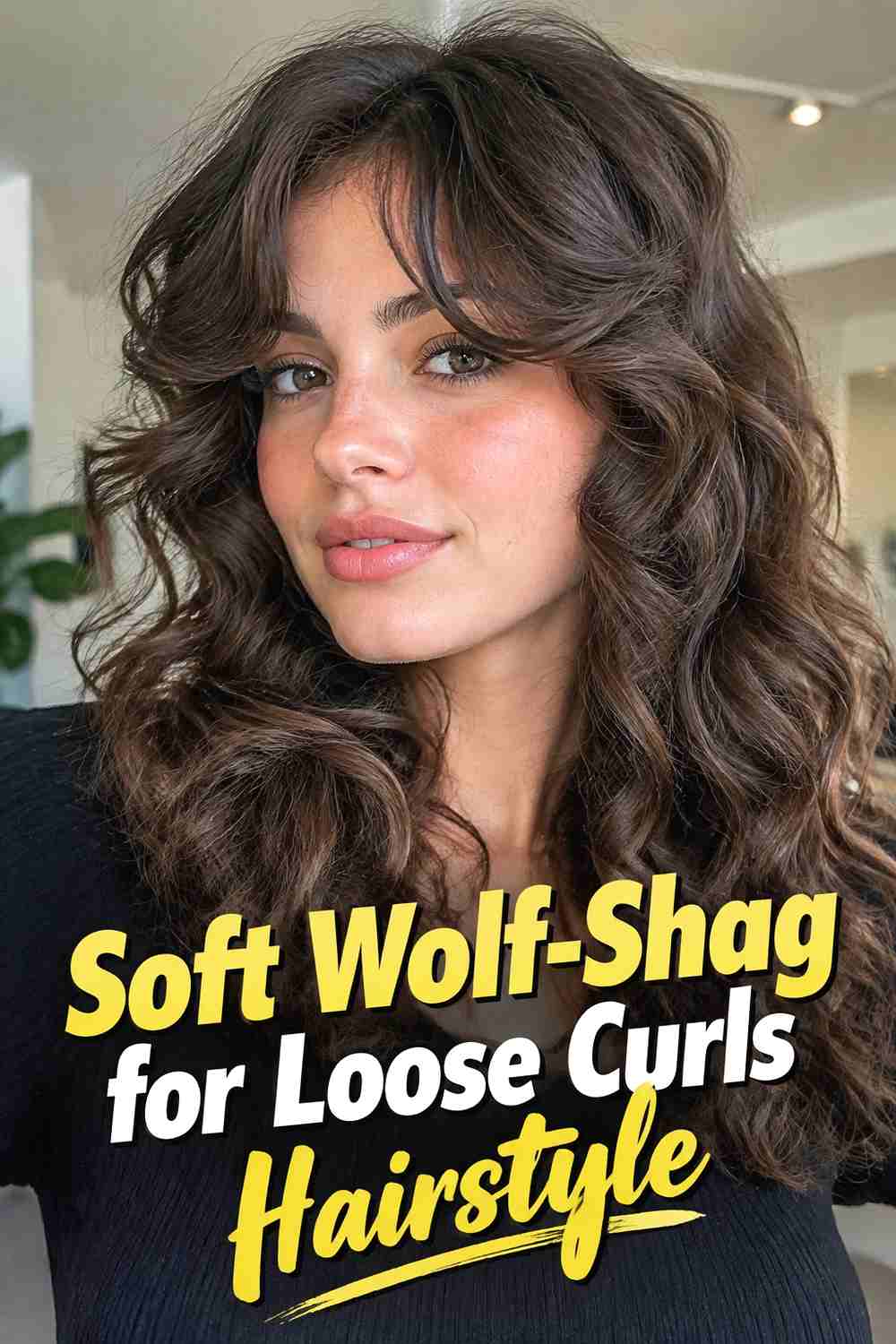
A soft wolf-shag combines extra movement around the crown with longer, less aggressively thinned lengths. Compared with a traditional wolf cut, the transitions are gentler, making the shape easier to wear with loose curls that already carry natural volume. Shorter sections around the top and cheeks create lift, while longer back layers keep the haircut balanced and prevent a mullet-like contrast unless that is specifically desired. This style works well when you want a noticeable shag without sacrificing too much length. Natural texture can do most of the styling, although diffusing the roots can enhance the upper shape. Keeping the ends substantial also makes grow-out more forgiving.
Why It Works
The softer length changes provide wolf-cut movement without creating extreme separation between the crown and lower curls.
12. Collarbone Curly Shag Hairstyle
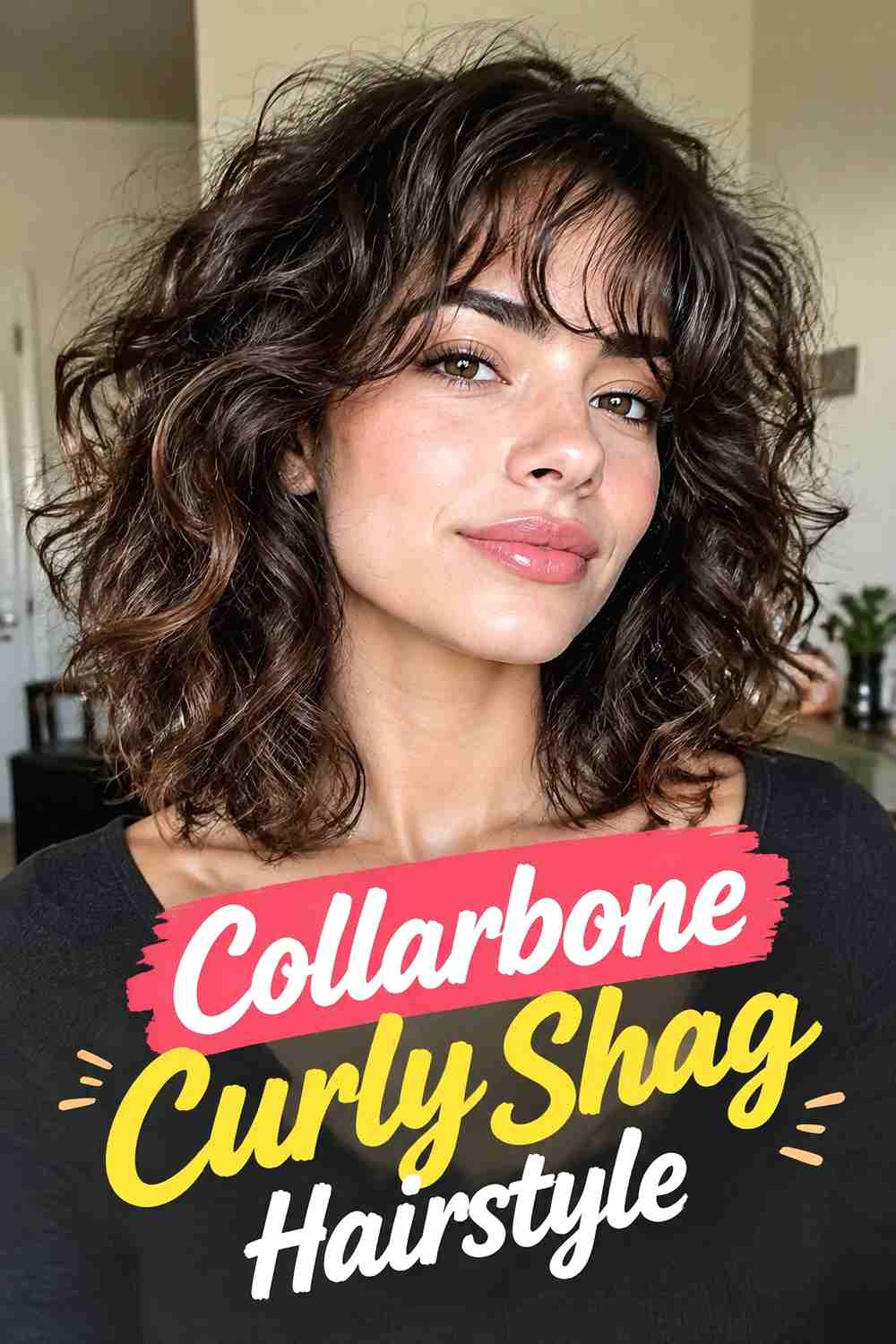
A collarbone curly shag sits at a practical medium length that gives loose curls room to move without the weight of long hair. Layers around the cheeks and jaw create an airy front, while slightly longer sections through the sides and back settle near the collarbone. This length can be particularly useful when you want enough hair for a small ponytail but still prefer a distinctly layered shape. The cut should be planned with dry curl shrinkage in mind, since the longest pieces may sit higher after washing. Leaving some density at the perimeter prevents the haircut from looking thin, while selective internal layering helps reduce bulk where needed.
Wear & Maintenance
Collarbone shags usually transition smoothly as they grow, especially when the layers are kept soft rather than extremely short at the crown.
13. Feathered Loose Curl Shag Hairstyle
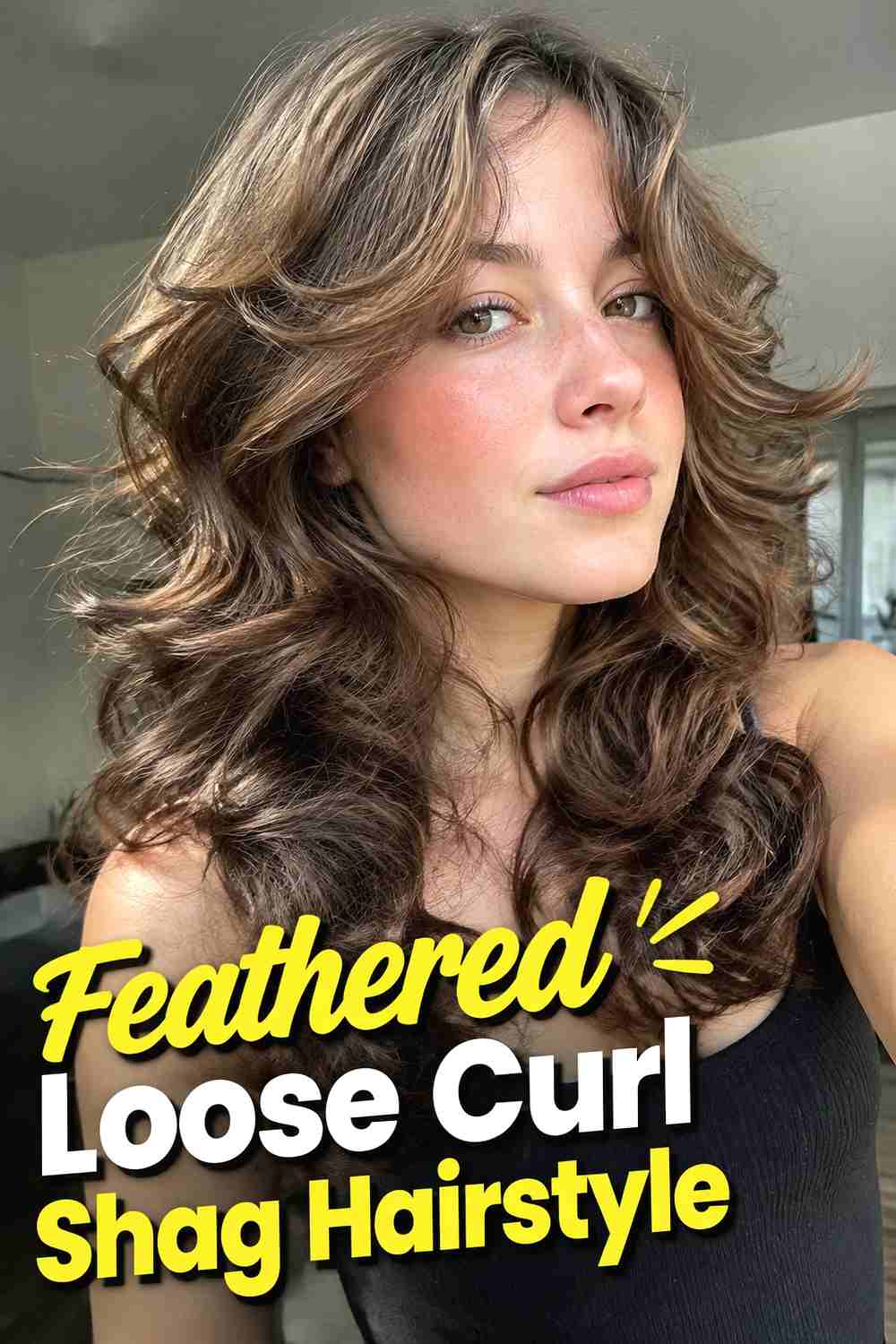
A feathered loose curl shag softens the perimeter and face-framing pieces so the haircut feels light without losing its natural curl pattern. Instead of blunt transitions, the layers taper gradually through the ends, allowing curls to separate and move more freely. This works especially well on medium to thick hair that tends to feel dense through the sides and lower lengths. The feathering should stay controlled; aggressive thinning can disturb curl groupings and create frizzier-looking ends. Longer front pieces can curve away from the face, while the crown remains moderately layered for lift. The finished shape looks airy and fluid rather than sharply chopped.
Styling Notes
Use a lightweight curl product and encourage larger curl groups instead of breaking every section apart for maximum separation.
Pro Tip
Keep most of the feathering toward the perimeter and selected surface sections so the main body retains enough density.
14. Low Maintenance Curly Shag Hairstyle
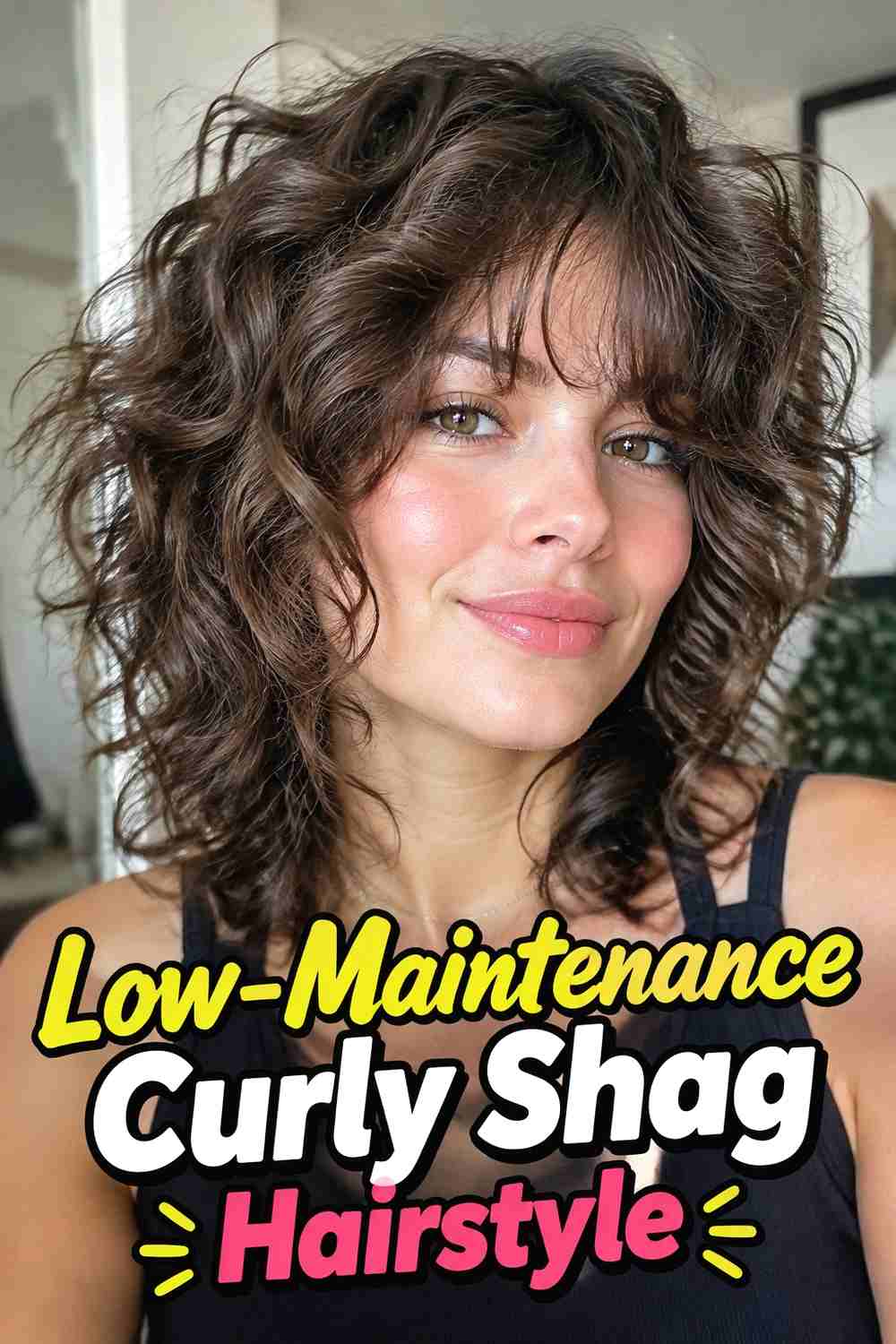
A low-maintenance curly shag uses longer layers that work with the natural curl pattern instead of depending on daily heat styling or precise shaping. The shortest pieces can start around the jaw, while crown layers remain relatively long so they settle easily when air-dried. This gives the haircut a shag-like sense of movement without creating many short sections that need constant refreshing. Loose curls can form naturally through the lengths, and the fuller perimeter makes the style more forgiving as it grows. This version is especially practical if you prefer fewer salon visits or regularly switch between wearing your hair loose, clipped back, and tied up.
Best For
This is a strong option if you want shag movement but prefer a simple routine and longer intervals between reshaping appointments.
15. Voluminous Loose Curl Shag Hairstyle
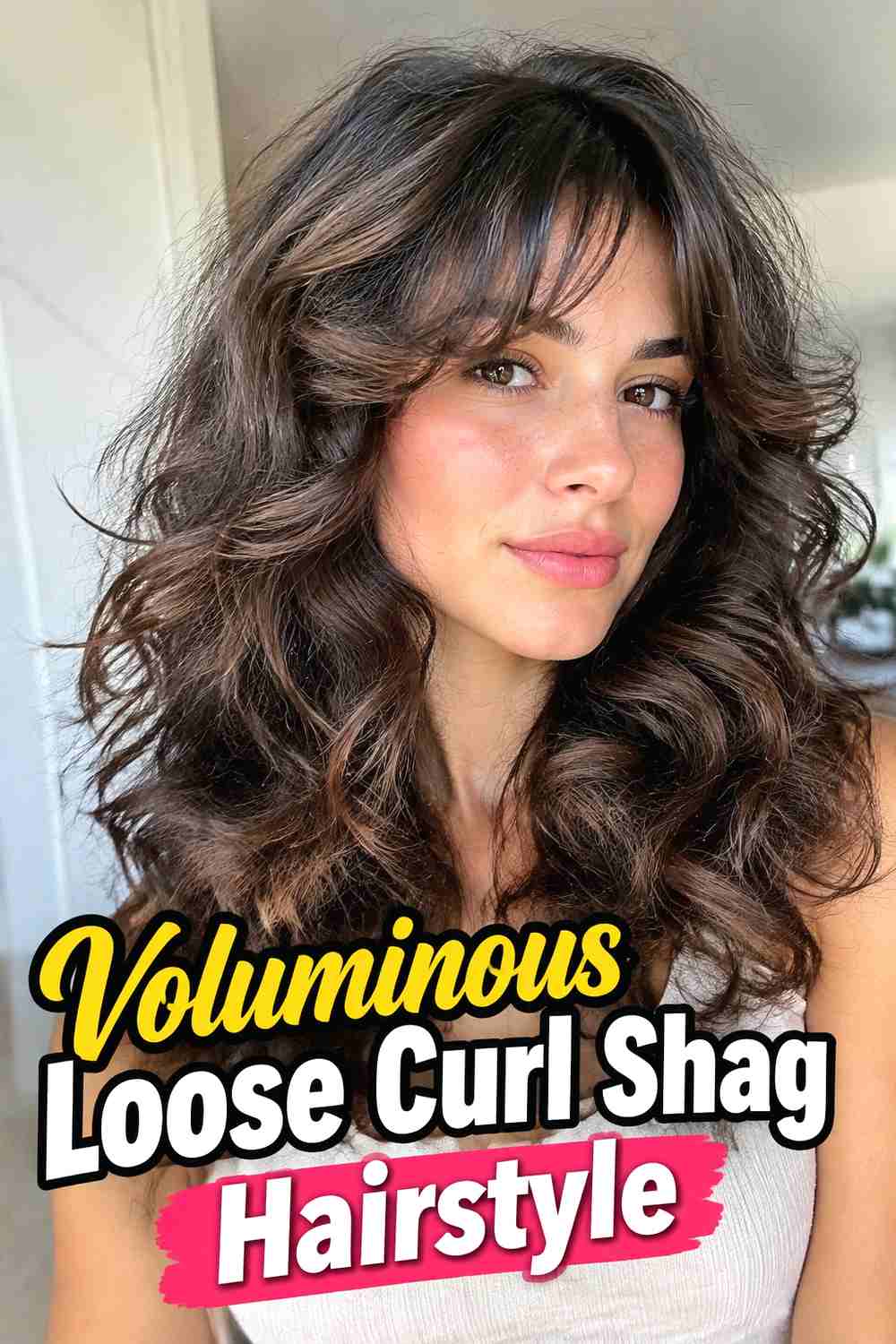
A voluminous loose curl shag celebrates natural body by placing layers where they encourage expansion instead of suppressing it. Crown pieces create lift, face-framing curls open the front, and longer layers through the lower sections keep the silhouette from becoming too round. This version works especially well with medium to thick hair that already has a generous wave or loose curl pattern. The goal is controlled fullness rather than uniform volume from roots to ends. Diffusing can enhance the shape, but strategic cutting should provide much of the lift on its own. Keeping some weight around the perimeter also gives the style structure beneath the higher, airier layers.
Styling Notes
Diffuse the roots and crown first, then reduce airflow through the ends so the curl groups stay defined instead of becoming excessively fluffy.
Why It Works
Layering releases natural volume at several heights while the longer lower curls prevent the haircut from feeling top-heavy.
16. Piecey Curly Shag Hairstyle
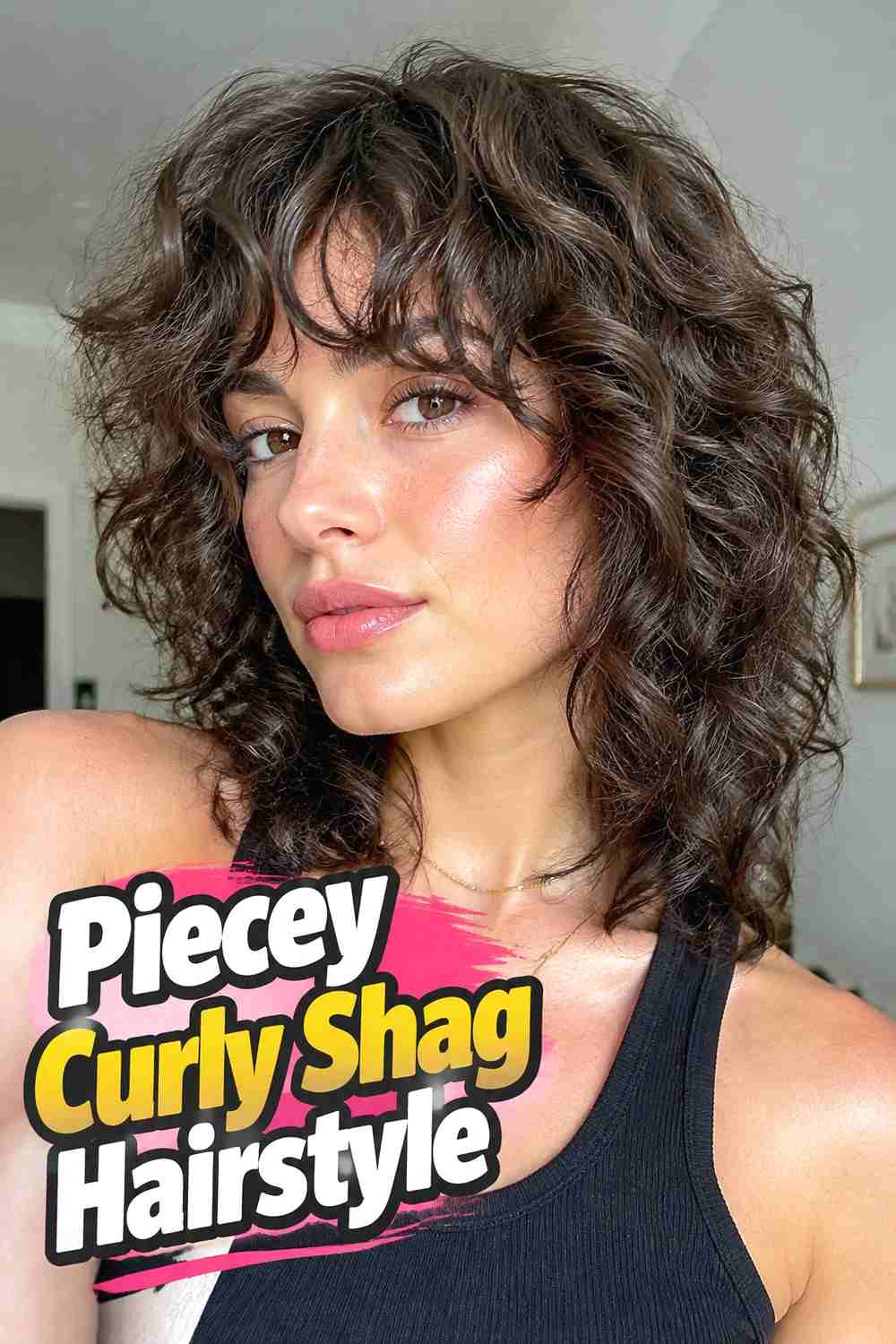
A piecey curly shag creates definition by allowing selected curl groups to sit separately throughout the haircut. Rather than brushing the texture into one rounded mass, layers encourage individual bends and spirals to stand out around the face, crown, and ends. This gives the style a modern, lightly undone finish that works especially well with loose curls. A small amount of curl cream or gel can define key sections, but the hair should remain flexible rather than stiff. The layering itself should preserve enough density between pieces so the cut does not appear stringy. This version is particularly effective when your curl pattern naturally varies from section to section.
Styling Notes
Define a few visible curl groups and leave others softer. Over-separating every curl can remove the relaxed quality of the style.
17. Long Fringe Curly Shag Hairstyle
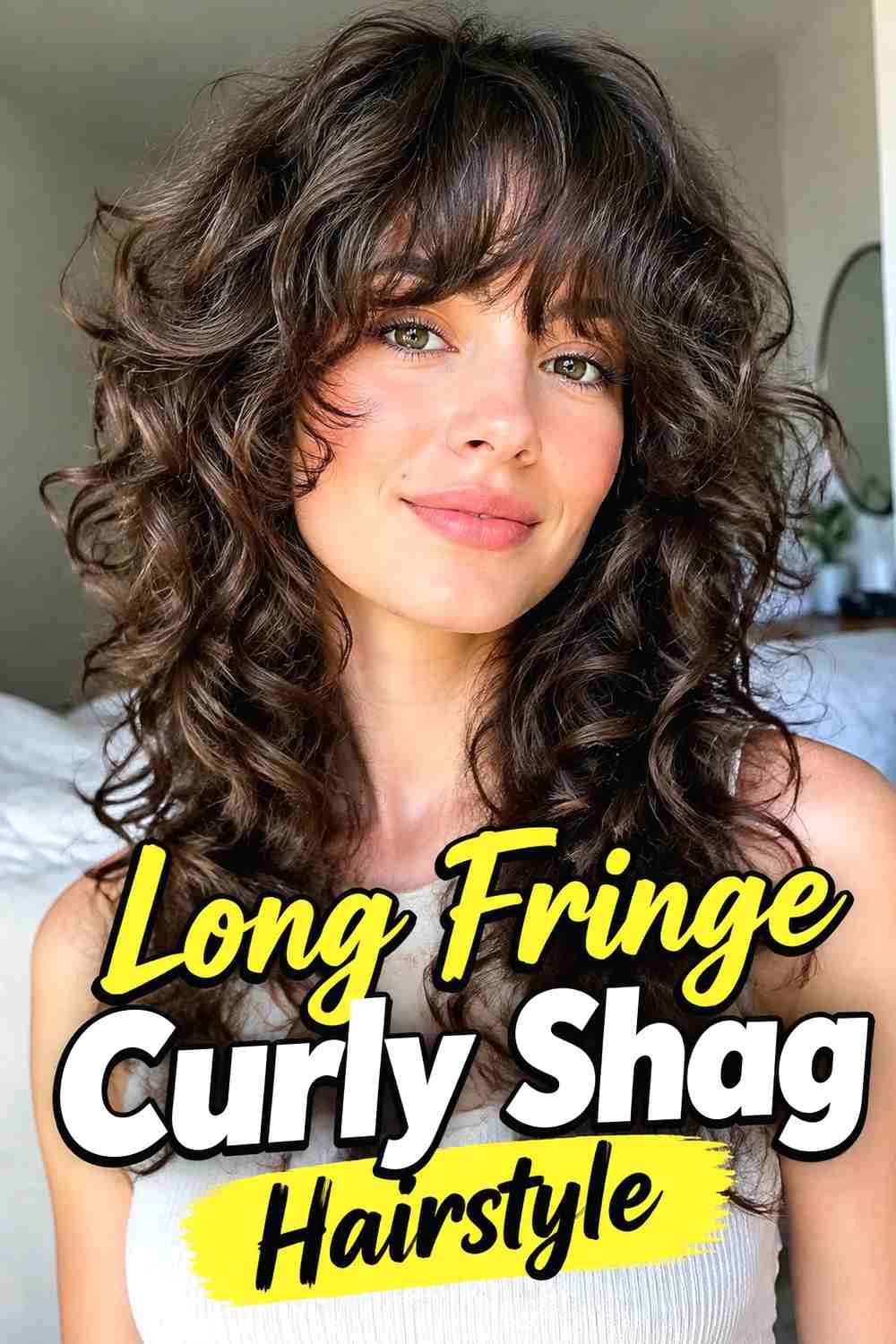
Long fringe gives a curly shag a softer front without the upkeep of short bangs. The fringe can sit around the cheekbones when dry and sweep to one side or split loosely through the center, blending into surrounding face-framing layers. Because the pieces are longer, they can also be tucked back or incorporated into updos when desired. Through the rest of the cut, moderate crown and side layers create shag movement while preserving plenty of length below. This approach suits loose curls especially well because the fringe can follow its natural bend instead of being straightened. It also offers a forgiving transition if you eventually decide to grow the bangs out completely.
Best For
Choose this option if you like face-framing fringe but want more styling flexibility and less frequent bang maintenance.
18. Tousled Loose Curl Shag Hairstyle
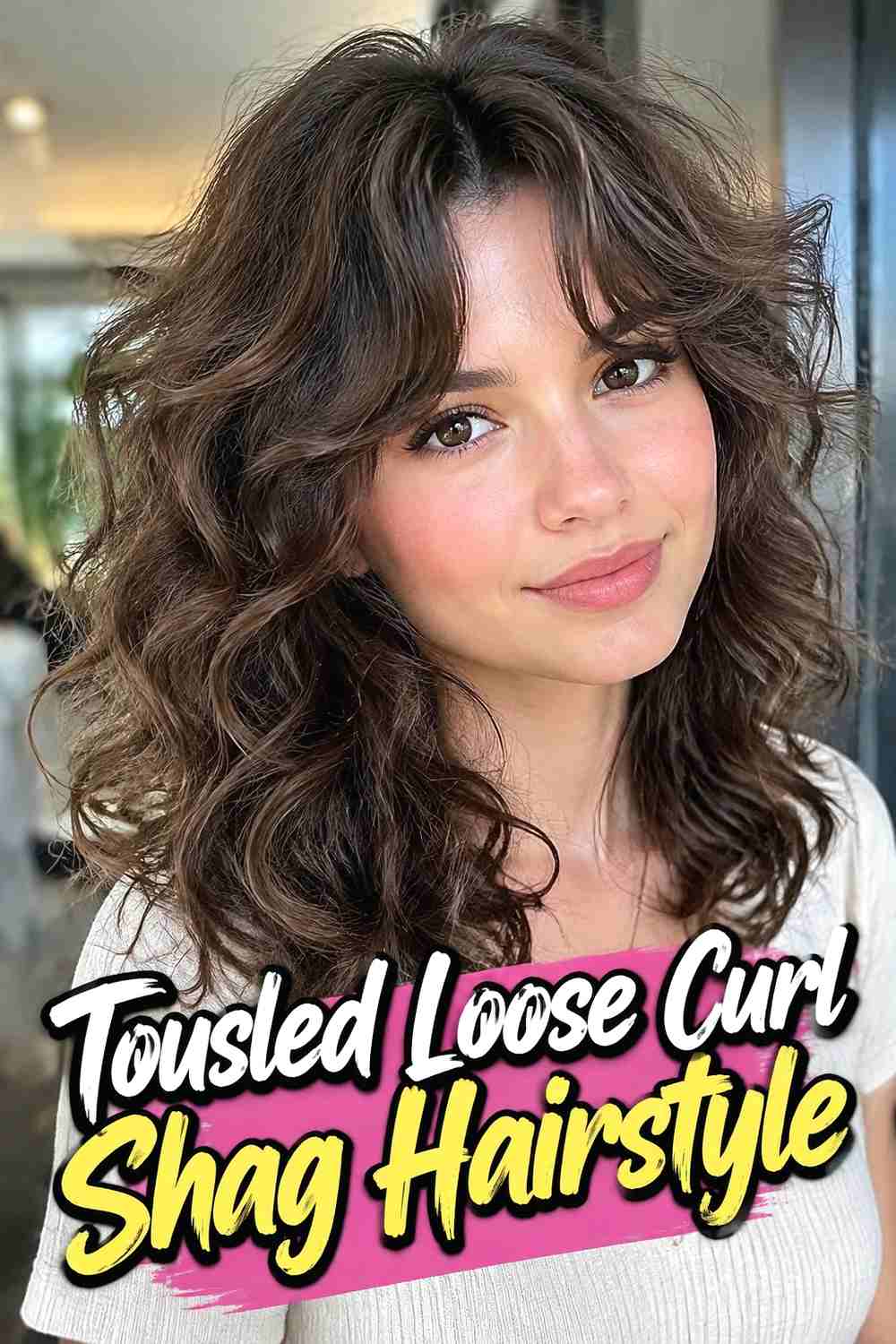
A tousled loose curl shag embraces natural irregularity, allowing curls and bends to fall in different directions without looking unfinished. The layers create enough separation for the texture to stay lively, while the perimeter remains full enough to keep the overall silhouette grounded. Shorter front pieces can frame the cheeks, and moderate crown layering adds movement without creating extreme height. This style works particularly well if your curl pattern changes slightly from day to day because it does not depend on perfect uniformity. Air-drying or gentle diffusing can both suit the cut, and a few natural flyaways help preserve the relaxed finish instead of making the style look overly controlled.
Why It Works
The shag’s varied layers complement the natural inconsistencies of loose curls, turning uneven movement into part of the finished look.
How to Choose the Right Look
Start with your curl pattern and density. Softer waves and loose curls can usually support longer, sweeping shag layers, while stronger curls may spring higher and need slightly more length in the shortest sections. Thick hair can handle strategic internal layering, but removing too much weight may leave the ends overly sparse.
Decide where you want volume. Airy crown and voluminous shags add lift near the top, while face-framing and butterfly-inspired versions keep more fullness through the lower lengths. Rounded shags distribute body more evenly.
Bangs also affect maintenance. Wispy or curtain fringe adds definition around the forehead but needs attention to dry shrinkage. Long fringe is more flexible because it can be tucked away or blended into the sides.
For easier everyday wear, choose longer layers that cooperate with air-drying. Choppy, wolf-inspired, and heavily layered versions create stronger texture but may need more deliberate refreshing to maintain their shape.
Final Thoughts
Modern shags are a natural match for loose curls because layering can reveal movement that gets hidden when the hair carries too much uniform weight. The best versions keep enough density through the ends while creating lift and separation where the curl pattern needs it.
Choose longer layers for easy maintenance, crown layering for extra volume, or bangs when you want stronger framing. Most importantly, let the cut work with the curls you naturally have rather than forcing every section into the same shape.
FAQs
1. Are shag haircuts good for loose curls?
Yes. Strategic layering can release weight, improve movement, and help loose curls form more visibly instead of sitting in one heavy shape.
2. Can a curly shag be low maintenance?
Yes. Longer shag layers that follow the natural curl pattern can work well with air-drying and usually require less daily shaping than very short crown layers or precise bangs.
3. Do shag layers make curly hair look thinner?
They can if too much density is removed. Keeping a substantial perimeter and using selective layering helps preserve fullness while still creating movement.
4. What bangs work best with loose curly shags?
Curtain bangs, wispy bangs, and longer curly fringe can all work. The right choice depends on natural shrinkage, hairline behavior, and how much fringe maintenance you want.
5. Should a shag for loose curls be cut wet or dry?
The most useful approach depends on the stylist and curl pattern, but evaluating the haircut at its natural dry shape helps account for shrinkage and where individual curls actually settle.
Save your favorite modern shag ideas, share them with someone ready to embrace loose curls, and explore more layered curly-hair inspiration for your next cut.