14 Olsen Tuck Ponytail Hairstyles for Effortless Style
These Olsen Tuck ponytail hairstyles pair low, tucked silhouettes with sleek parts, soft waves, curls, and polished texture for effortless everyday styling.
The Olsen Tuck is built around the understated effect of hair disappearing into a collar, scarf, sweater, or structured neckline. A ponytail variation gives that idea a little more control by securing the hair low before the lengths are tucked away, creating a compact silhouette that works especially well with fall and winter layers.
As you compare these looks, pay attention to part placement, crown volume, natural texture, ponytail density, and the amount of softness you want around the face. The most believable versions keep the tie point comfortable, preserve natural strand movement, and use a neckline with enough room for the tucked lengths rather than forcing the hair into an overly tight shape.
Quick List
- Classic Low Olsen Tuck Ponytail Hairstyle
- Sleek Center Part Olsen Tuck Ponytail Hairstyle
- Soft Side Part Olsen Tuck Ponytail Hairstyle
- Textured Loose Olsen Tuck Ponytail Hairstyle
- Soft Wave Olsen Tuck Ponytail Hairstyle
- Polished Straight Olsen Tuck Ponytail Hairstyle
- Face Framing Olsen Tuck Ponytail Hairstyle
- Hidden Elastic Olsen Tuck Ponytail Hairstyle
- Ribbon Accent Olsen Tuck Ponytail Hairstyle
- Voluminous Crown Olsen Tuck Ponytail Hairstyle
- Fine Hair Olsen Tuck Ponytail Hairstyle
- Thick Hair Olsen Tuck Ponytail Hairstyle
- Curly Olsen Tuck Ponytail Hairstyle
- Evening Sleek Olsen Tuck Ponytail Hairstyle
1. Classic Low Olsen Tuck Ponytail Hairstyle
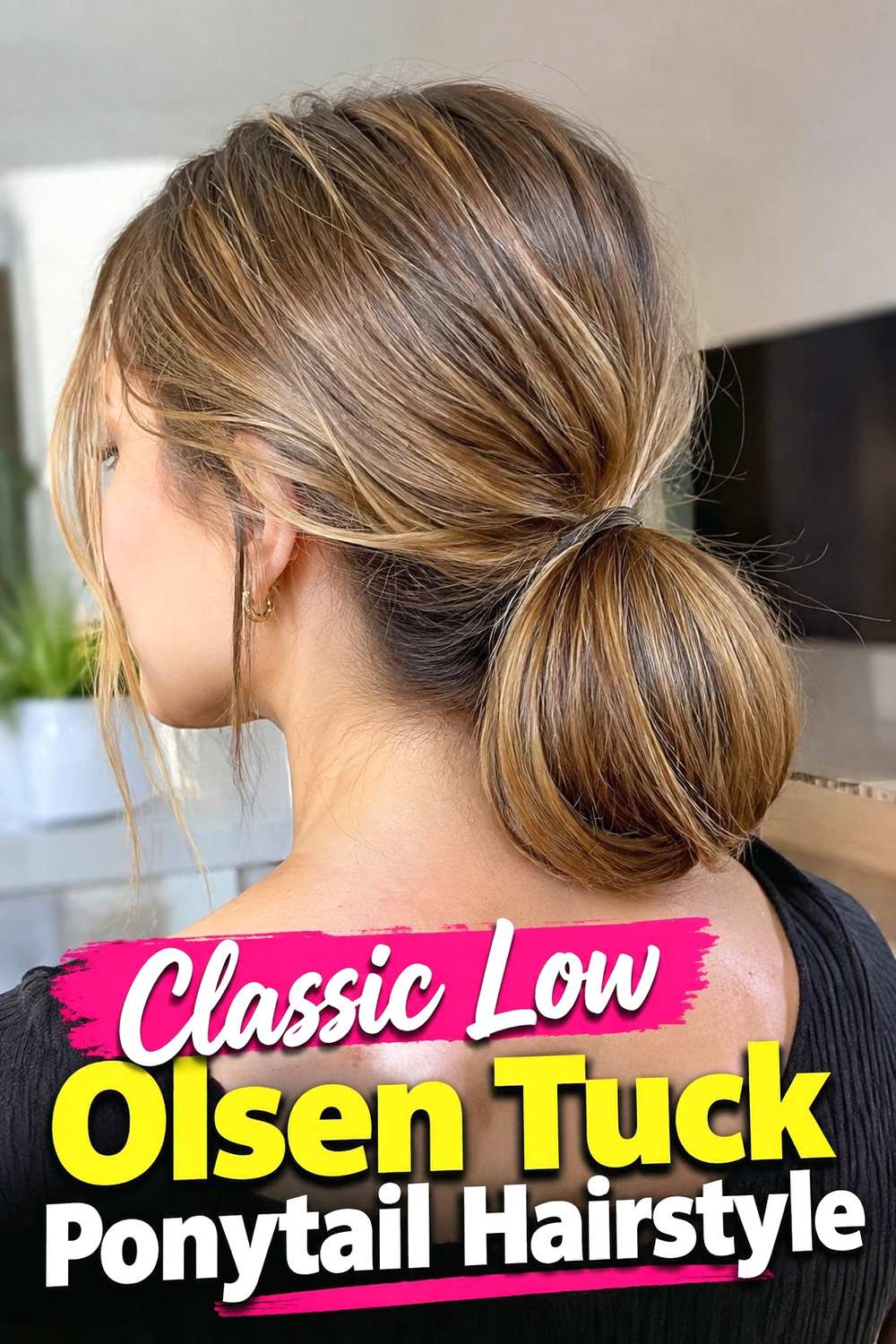
The Classic Low Olsen Tuck Ponytail Hairstyle is the easiest place to start if you want the signature tucked silhouette without making the hair look overly styled. The hair is gathered gently at the nape, secured with a soft elastic, and slipped beneath a high collar, scarf, or sweater neckline. Keep a little natural lift through the crown instead of pulling everything tight against the scalp. That softness gives the style its effortless quality and prevents the ponytail from reading like a formal low pony. Straight, slightly wavy, and medium-density hair all work well, while a few subtle flyaways around the ears can make the finished look feel more natural.
Styling Notes
Use your fingers or a wide brush to gather the hair loosely. After tying it, gently loosen the crown before tucking the lengths into your neckline.
Best For
This version is especially practical for shoulder-length to long hair and outfits with structured collars, chunky knits, or softly draped scarves.
2. Sleek Center Part Olsen Tuck Ponytail Hairstyle
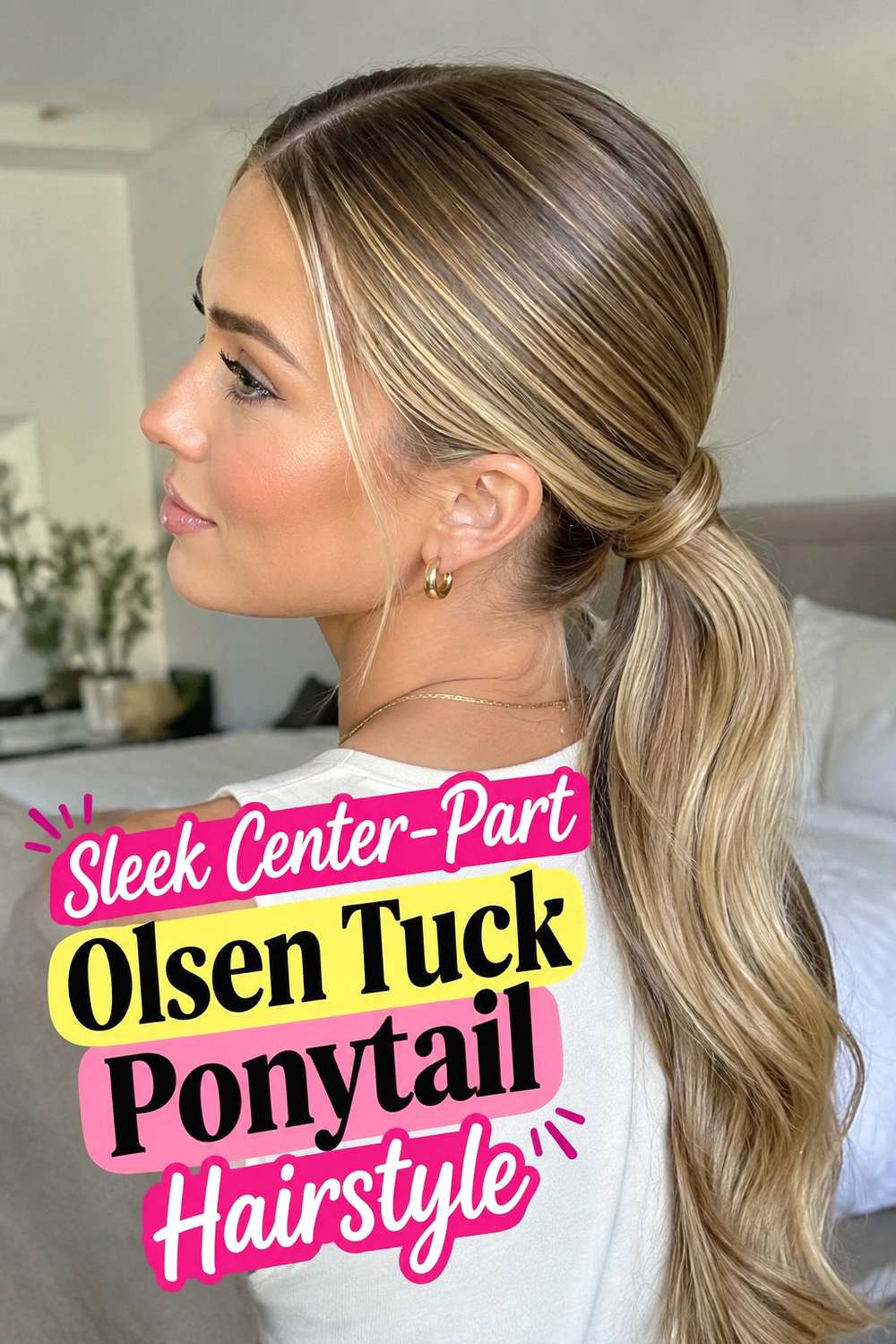
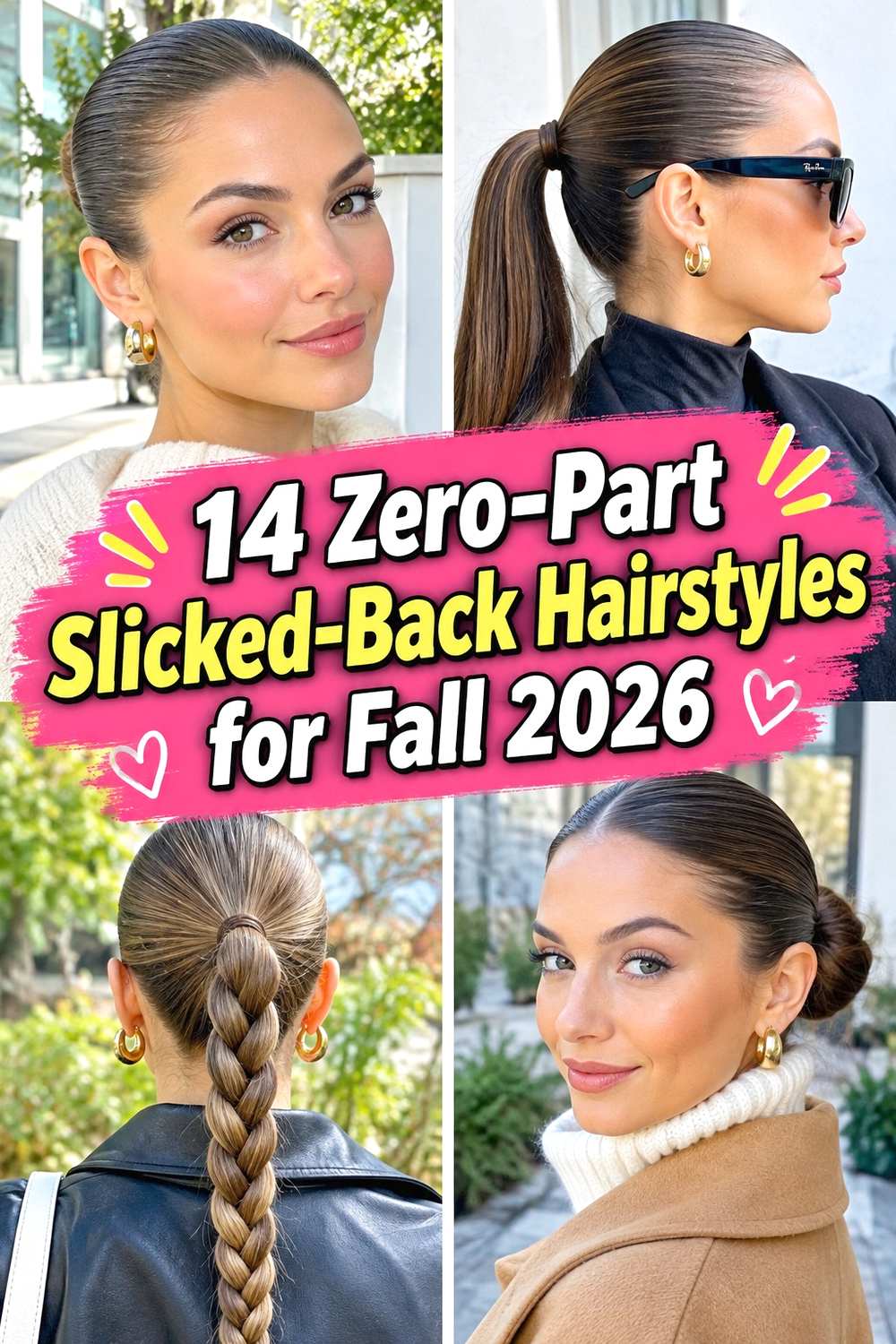
The Sleek Center-Part Olsen Tuck Ponytail Hairstyle gives the relaxed tucked concept a sharper, more refined finish. A clean middle part creates symmetry at the front, while the sides are smoothed toward a low ponytail at the nape. Once the length disappears beneath the neckline, the precise part and glossy surface become the main visual details. The effect looks especially polished with tailored coats, minimalist high-neck tops, and streamlined evening layers. Keep the hair smooth without making it rigid; the ponytail should still sit naturally against the neck rather than being pulled painfully tight. A controlled shine is ideal, but enough strand detail should remain visible so the hairstyle feels healthy rather than heavily coated.
Why It Works
The centered part creates a clean vertical line while the tucked ponytail keeps the lower silhouette narrow and understated.
Wear & Maintenance
Apply smoothing product sparingly around the surface and hairline. Too much gel or oil can make this minimalist style look greasy instead of intentionally sleek.
3. Soft Side Part Olsen Tuck Ponytail Hairstyle
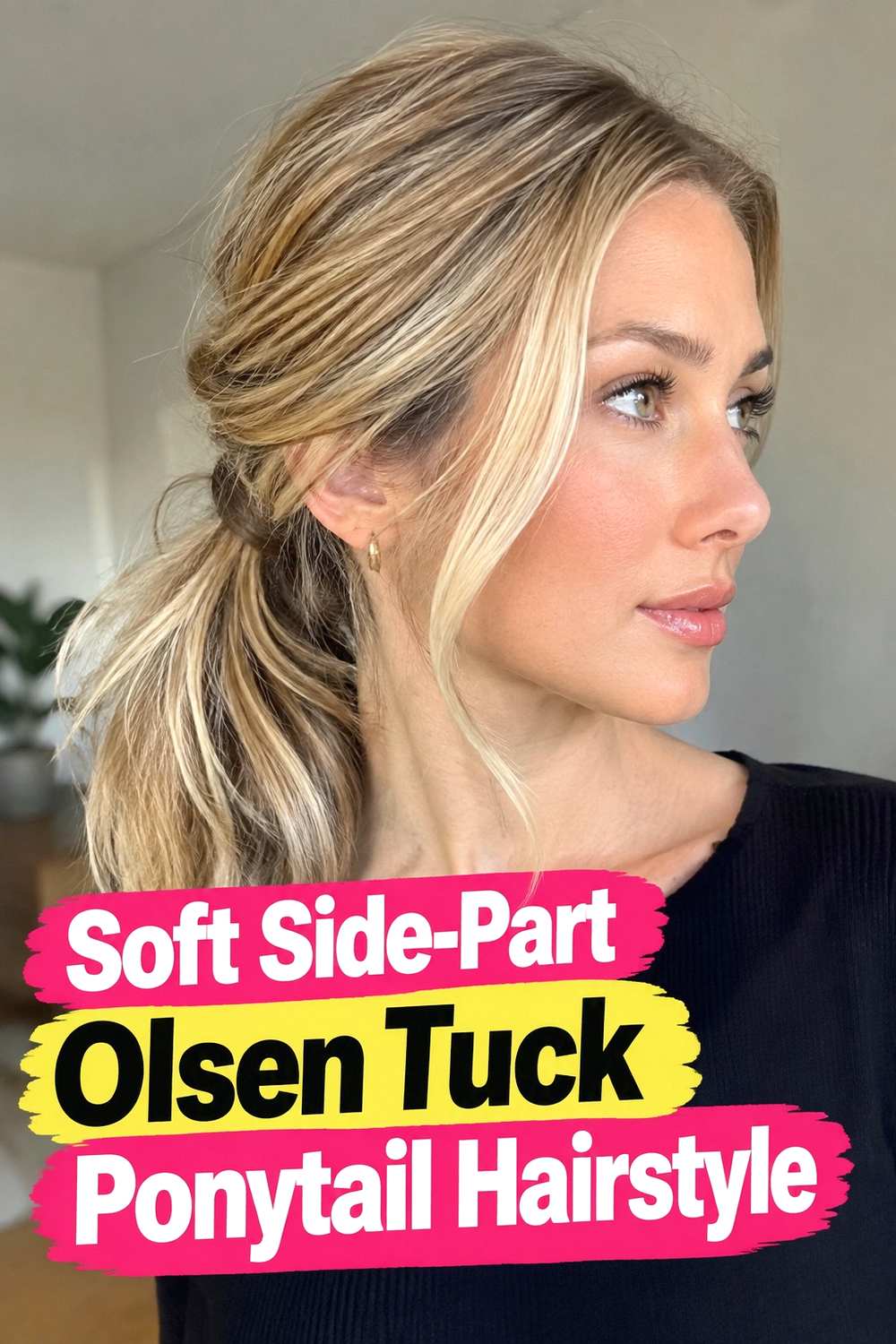
The Soft Side-Part Olsen Tuck Ponytail Hairstyle introduces gentle asymmetry without losing the quiet sophistication of the tucked look. Instead of creating a dramatic deep part, shift the hair slightly to one side and let the front sweep naturally across the forehead. Gather the remaining length low at the nape, leaving enough softness above the ears and through the crown to keep the silhouette relaxed. After the ponytail is tucked beneath a jacket or knit collar, the side sweep provides just enough movement to distinguish the style from a classic center-part version. It is particularly flattering when you enjoy softness around the forehead but still want the convenience and clean shape of gathered hair.
Hair Type & Length
Straight, softly wavy, and blow-dried textures work especially well because the direction of the side part stays visible after the lower length is tucked away.
Pro Tip
Set your part before gathering the ponytail. Repositioning the front after tying can disturb the smooth root direction and create unwanted bumps.
4. Textured Loose Olsen Tuck Ponytail Hairstyle
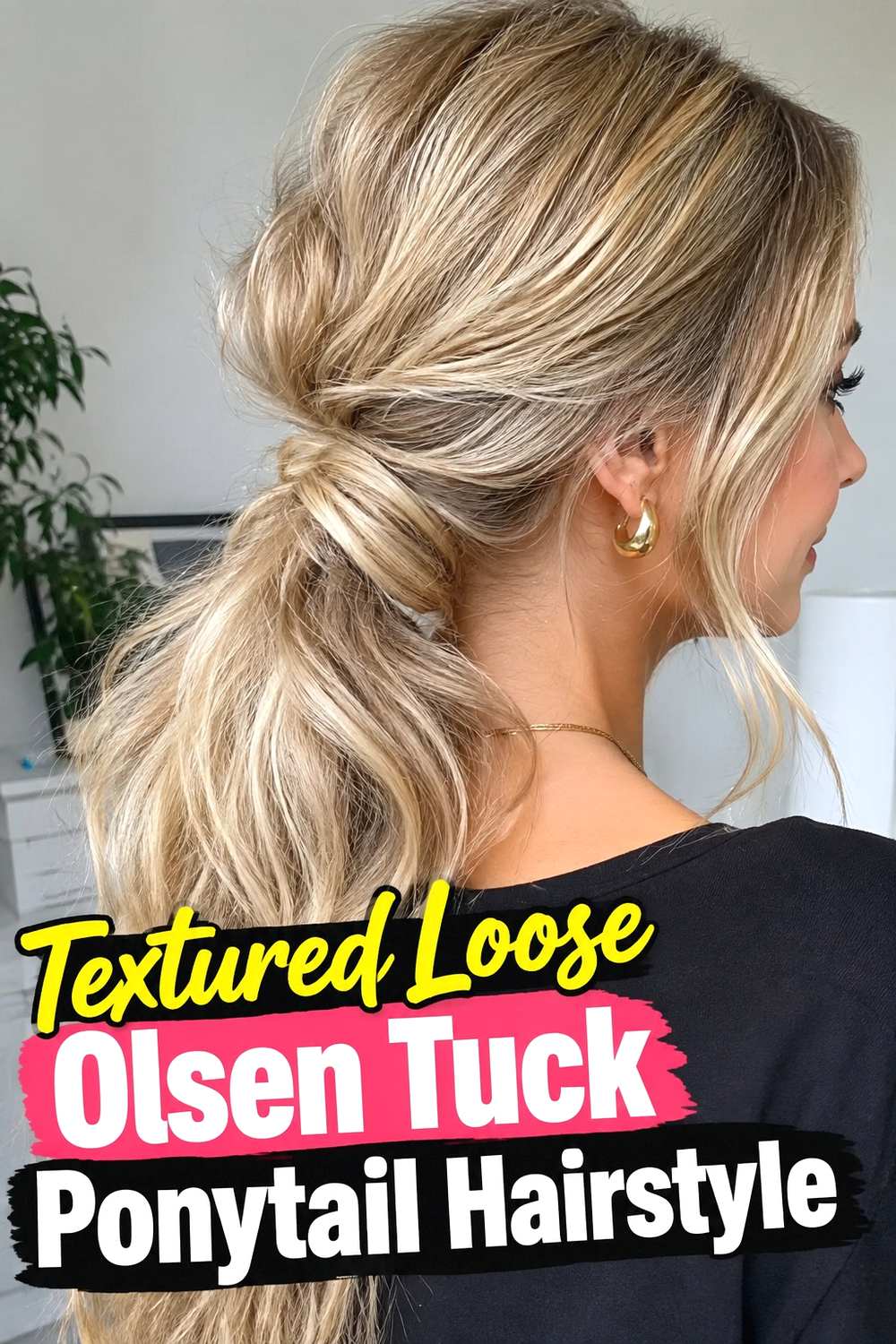
The Textured Loose Olsen Tuck Ponytail Hairstyle is designed to look intentionally relaxed, making natural bends, airy volume, and a few irregular strands part of the finished result. Rather than brushing the hair into a perfectly smooth shape, gather it with your fingers and secure it low while preserving movement around the temples and crown. Once the length is tucked into a sweater, jacket, or scarf, the visible texture keeps the style dimensional even though most of the ponytail is hidden. This version works beautifully for second-day hair or naturally tousled textures because it does not rely on pristine smoothness. The key is controlled imperfection: loose and touchable rather than tangled or overly messy.
Styling Notes
A small amount of lightweight texture spray through the mid-lengths can add separation and grip. Avoid saturating the roots, where too much product may make the hair appear dull.
Why It Works
Visible bends and flyaways prevent the tucked silhouette from feeling severe, making this variation easy to pair with casual layers and relaxed clothing.
5. Soft Wave Olsen Tuck Ponytail Hairstyle
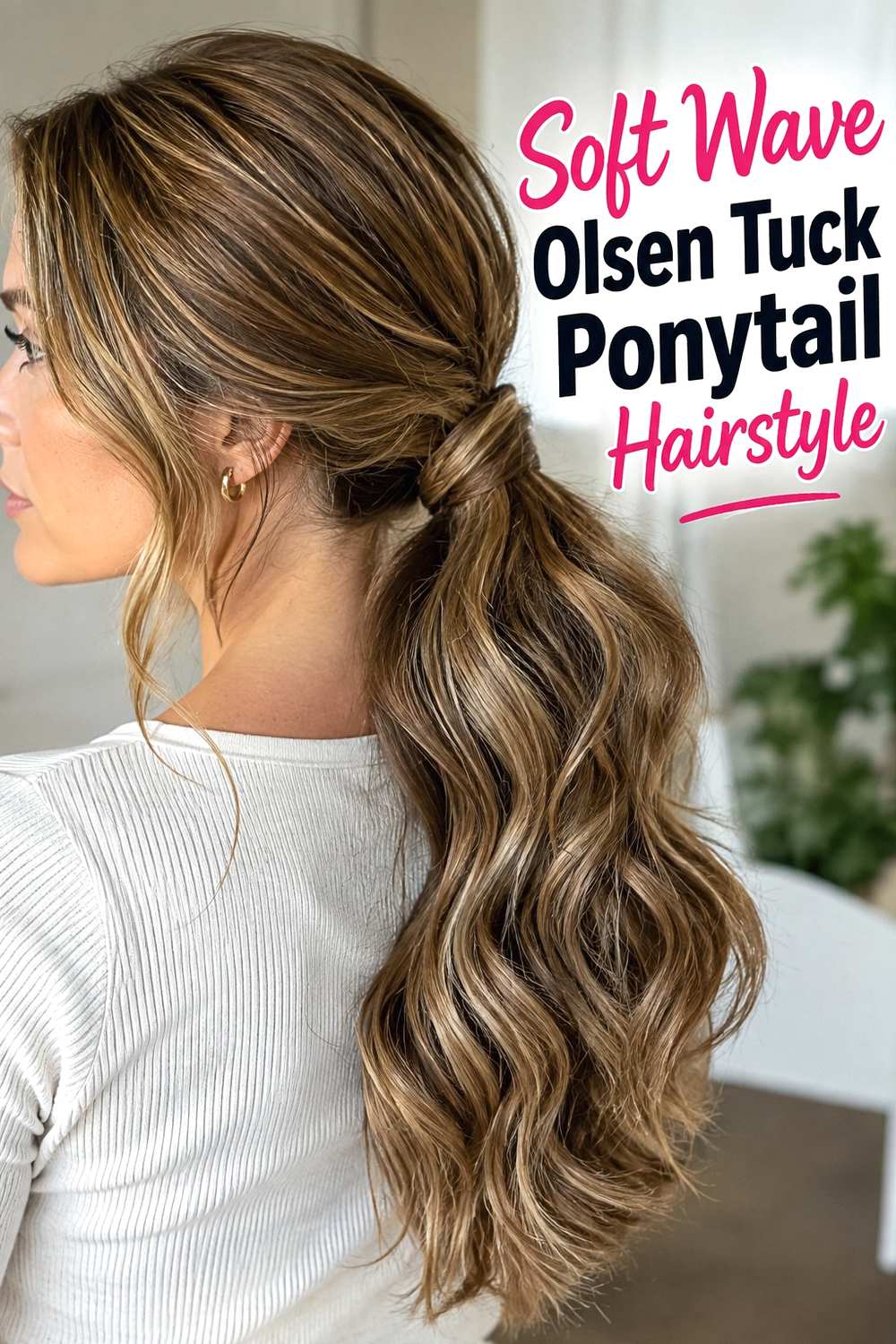
The Soft Wave Olsen Tuck Ponytail Hairstyle brings gentle movement into a style that can otherwise appear quite minimal. Loose bends through the mid-lengths create dimension around the sides and ponytail base before the remaining hair disappears beneath the neckline. Keep the waves broad and irregular rather than forming identical curls, which helps the hairstyle feel modern and naturally styled. The crown can stay relatively smooth while the front retains a little softness around the hairline. This look is a strong option for medium or long hair when you want the elegance of waves without wearing the full length down. It also photographs beautifully because the curved strands catch light differently, creating natural depth and visible texture.
Best For
Naturally wavy hair is an easy match, although straight hair can achieve the same effect with a large curling tool or loose overnight bends.
Pro Tip
Allow heat-styled waves to cool before gathering the ponytail. Tying warm hair immediately can flatten the bend and reduce its staying power.
6. Polished Straight Olsen Tuck Ponytail Hairstyle
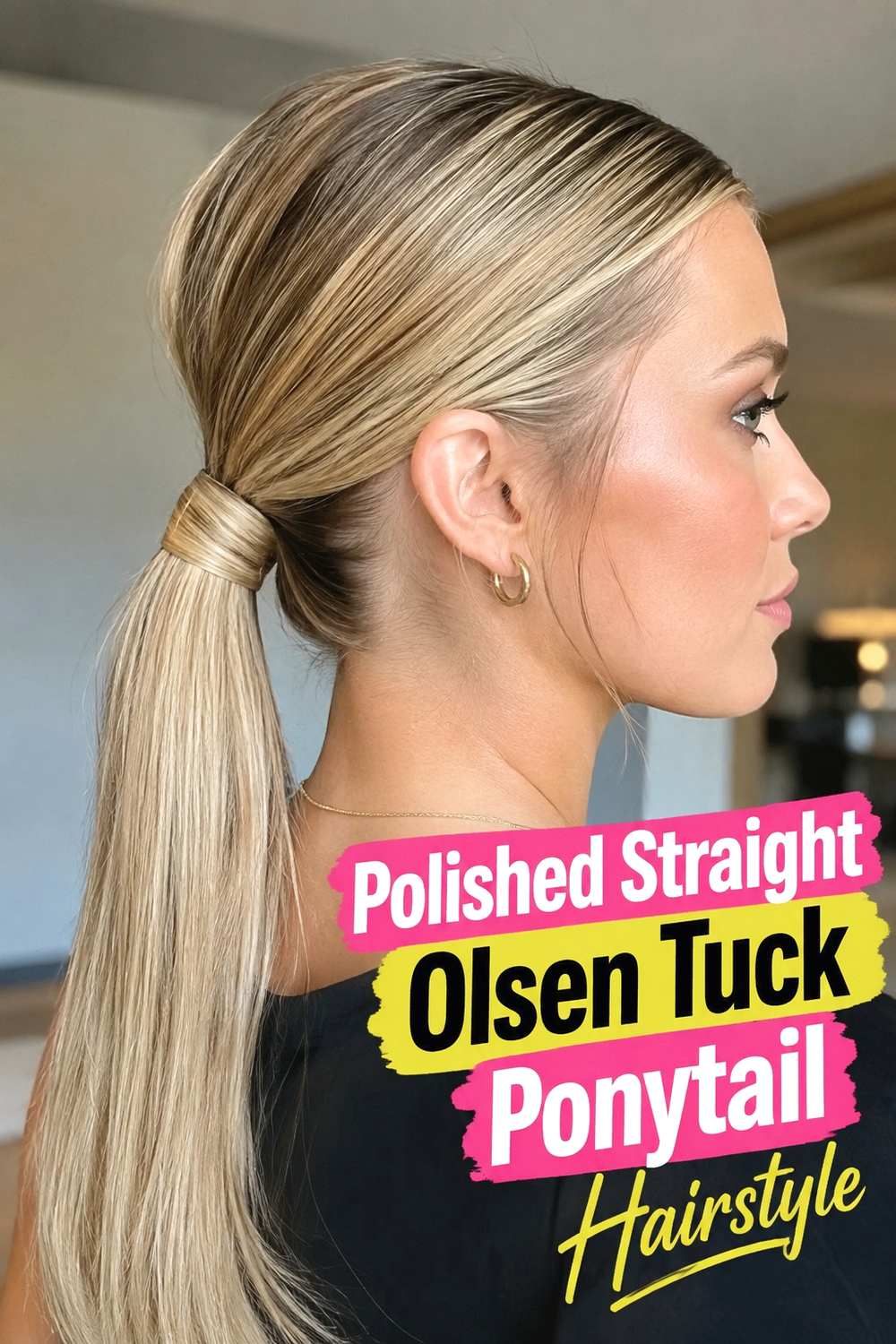
The Polished Straight Olsen Tuck Ponytail Hairstyle emphasizes clean lines, smooth texture, and subtle shine. Hair is worn straight from the roots through the ends, gathered at the nape, and tucked neatly into a high neckline so the visible silhouette stays slim and uncluttered. Unlike an aggressively slicked-back ponytail, this look benefits from retaining a small amount of natural movement at the roots and hairline. The straight finish makes the tucked construction appear especially deliberate and pairs easily with tailored coats, crisp shirts, fitted turtlenecks, and minimalist outfits. Focus on healthy-looking strand separation rather than creating a perfectly flat surface. That small distinction keeps the result polished while still looking like real, touchable hair.
Wear & Maintenance
Concentrate smoothing serum or cream on the mid-lengths and ends. Heavy product at the roots can remove the natural dimension this style needs.
Hair Type & Length
Naturally straight and smoothly blow-dried hair are ideal, particularly at medium to long lengths that can comfortably reach a low elastic.
7. Face Framing Olsen Tuck Ponytail Hairstyle
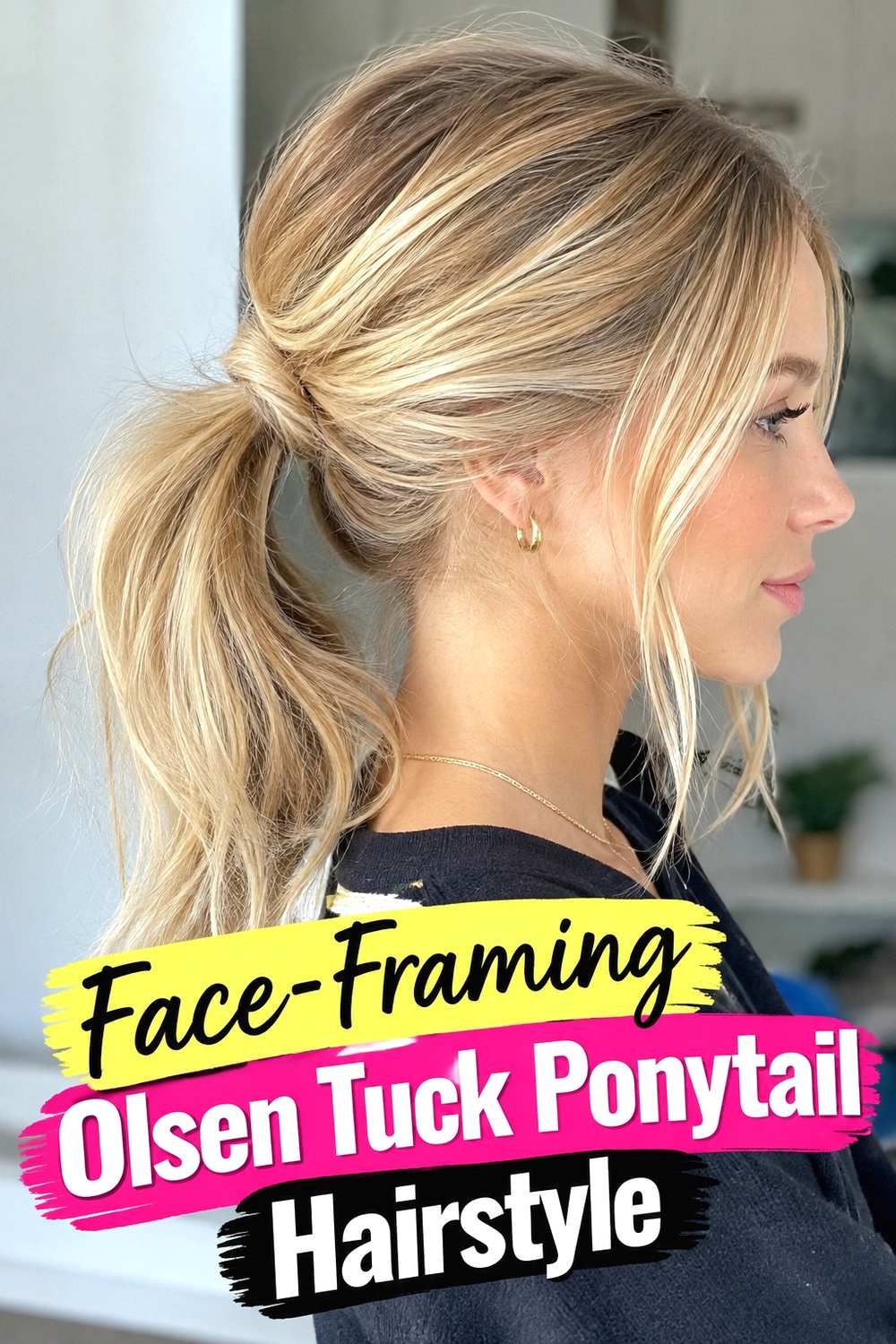
The Face-Framing Olsen Tuck Ponytail Hairstyle balances a controlled low ponytail with soft pieces left free around the cheeks, temples, or jawline. Separate these strands before gathering the rest of the hair so they fall naturally rather than looking as though they were pulled out as an afterthought. The front pieces can remain straight, bend gently away from the face, or follow your natural texture. Once the ponytail is tucked beneath the neckline, those loose sections become the most visible movement in the style. This variation is especially appealing if you enjoy wearing your hair up but dislike the feeling of having every strand pulled away from your face. Keep the released pieces light so they frame rather than overwhelm.
Styling Notes
Start with slightly wider front sections than you think you need, then tuck some back if necessary. This gives you more control over the finished framing.
Why It Works
The loose strands soften the strong line created by a high collar and help the compact ponytail silhouette feel less severe.
8. Hidden Elastic Olsen Tuck Ponytail Hairstyle
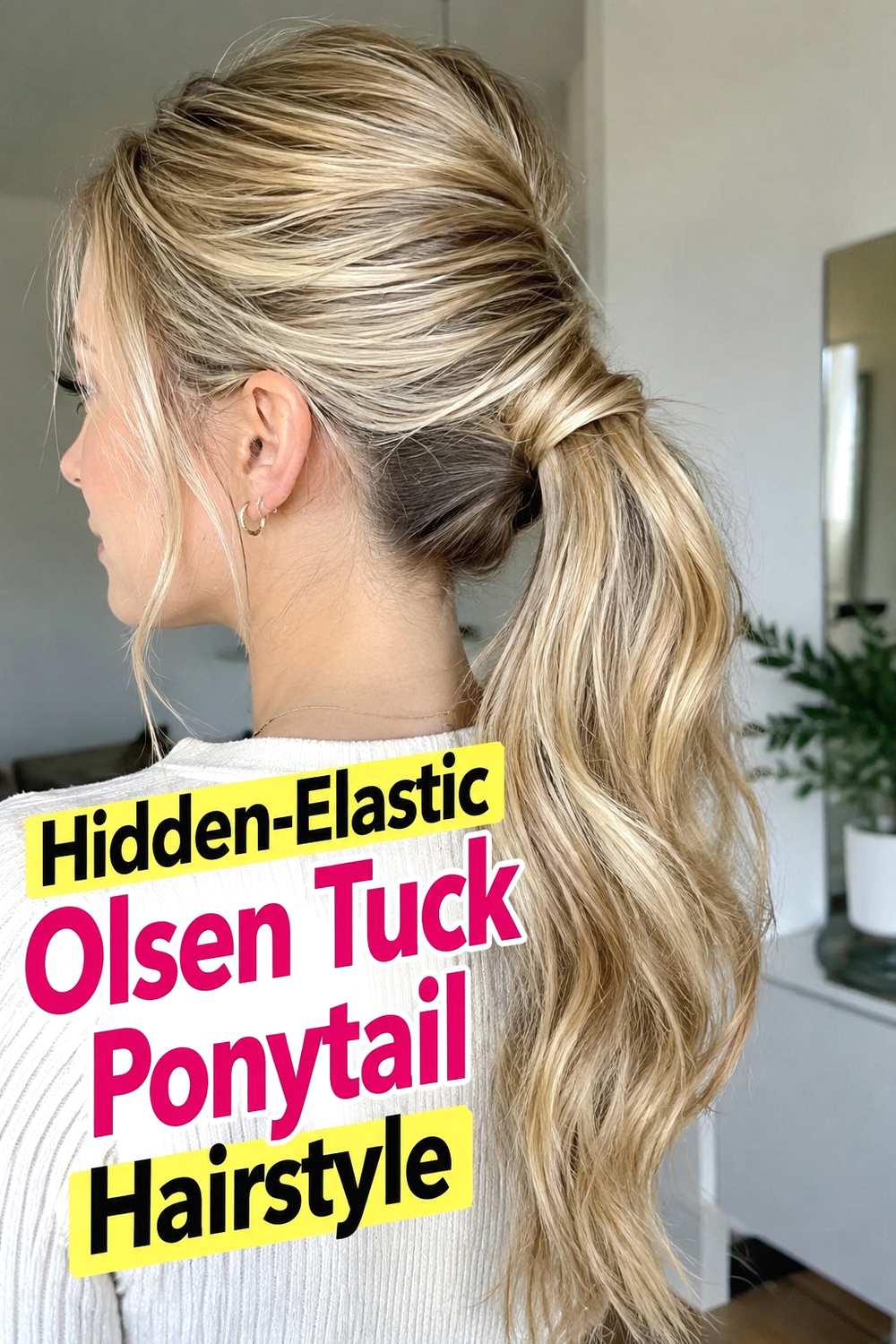
The Hidden-Elastic Olsen Tuck Ponytail Hairstyle keeps the mechanics of the style almost invisible. Hair is secured low at the nape with a small elastic positioned so the collar, scarf, or sweater naturally conceals it. With the tie hidden, the visible hair appears to flow directly into the neckline, creating one of the closest ponytail interpretations of the traditional Olsen Tuck. The finish can be straight, softly waved, or lightly textured, but simplicity works best because there is no accessory competing for attention. This is a particularly useful choice for minimalist outfits or professional settings where you want your hairstyle to look purposeful without appearing elaborate. Make sure the elastic is secure without wrapping it excessively tightly.
Wear & Maintenance
Check the ponytail placement against your chosen clothing before leaving. A collar that sits too low may expose the elastic and change the intended seamless effect.
Pro Tip
Choose a small snag-free elastic close to your hair color. Even if the neckline shifts slightly, the tie will remain discreet.
9. Ribbon Accent Olsen Tuck Ponytail Hairstyle
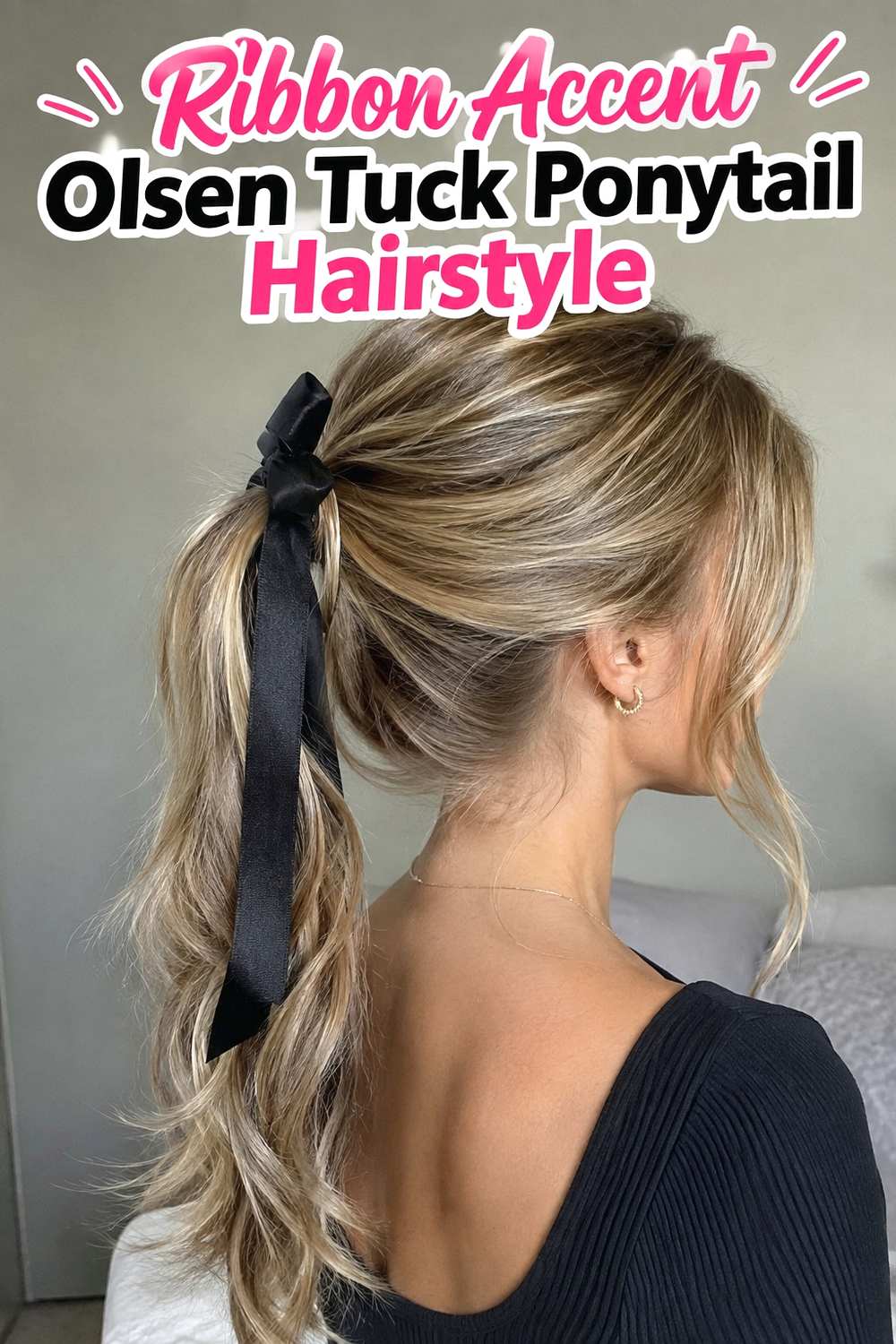
The Ribbon Accent Olsen Tuck Ponytail Hairstyle introduces a feminine accessory while keeping the overall silhouette restrained. Begin with a simple low ponytail, then wrap a narrow ribbon around the elastic and position the bow or short tails close to the nape. When the ponytail is tucked into a sweater or jacket, only part of the ribbon may remain visible, creating a subtle detail rather than a dramatic statement. Satin gives the look a slightly dressier finish, while velvet or matte grosgrain works beautifully with cooler-weather fabrics. Keep the rest of the hair relatively uncomplicated so the accessory remains intentional. Softly straight or gently wavy textures are particularly effective because they provide enough movement without competing visually with the ribbon.
Best For
This variation suits dinners, seasonal gatherings, casual dates, and everyday looks when you want the Olsen Tuck to feel slightly more decorative.
Styling Notes
Keep ribbon ends fairly short. Long tails can bunch inside a collar or become tangled with the tucked ponytail.
10. Voluminous Crown Olsen Tuck Ponytail Hairstyle
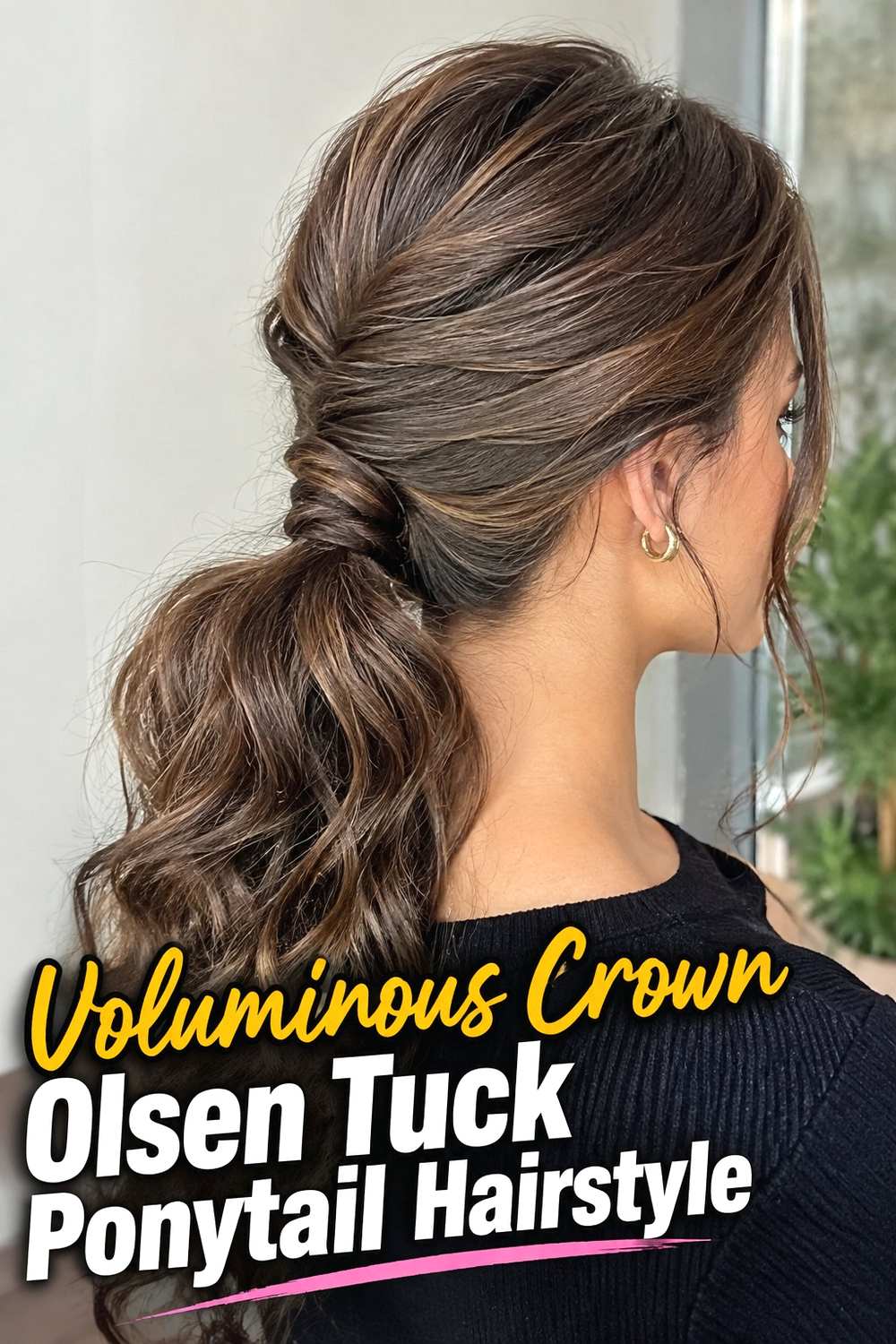
The Voluminous Crown Olsen Tuck Ponytail Hairstyle shifts attention upward by preserving extra lift through the top and back of the head. Hair is gathered into a low ponytail, but instead of smoothing the crown tightly, small sections are gently loosened to create a fuller silhouette. The volume should look soft and natural rather than heavily teased, allowing the tuck to retain its understated character. Once the ponytail disappears beneath the neckline, the raised crown adds balance and makes the hairstyle feel more dimensional from the side. This approach can be especially useful when very flat roots make a low ponytail feel severe. Pair it with a softly defined middle or side part and keep the surface touchable rather than stiff.
Styling Notes
Build root lift before tying the hair by blow-drying upward or using a small amount of lightweight volumizing product. Loosen the crown only after the elastic is secure.
Wear & Maintenance
Avoid pressing the crown beneath tight hats or hoods if maintaining volume is important throughout the day.
11. Fine Hair Olsen Tuck Ponytail Hairstyle
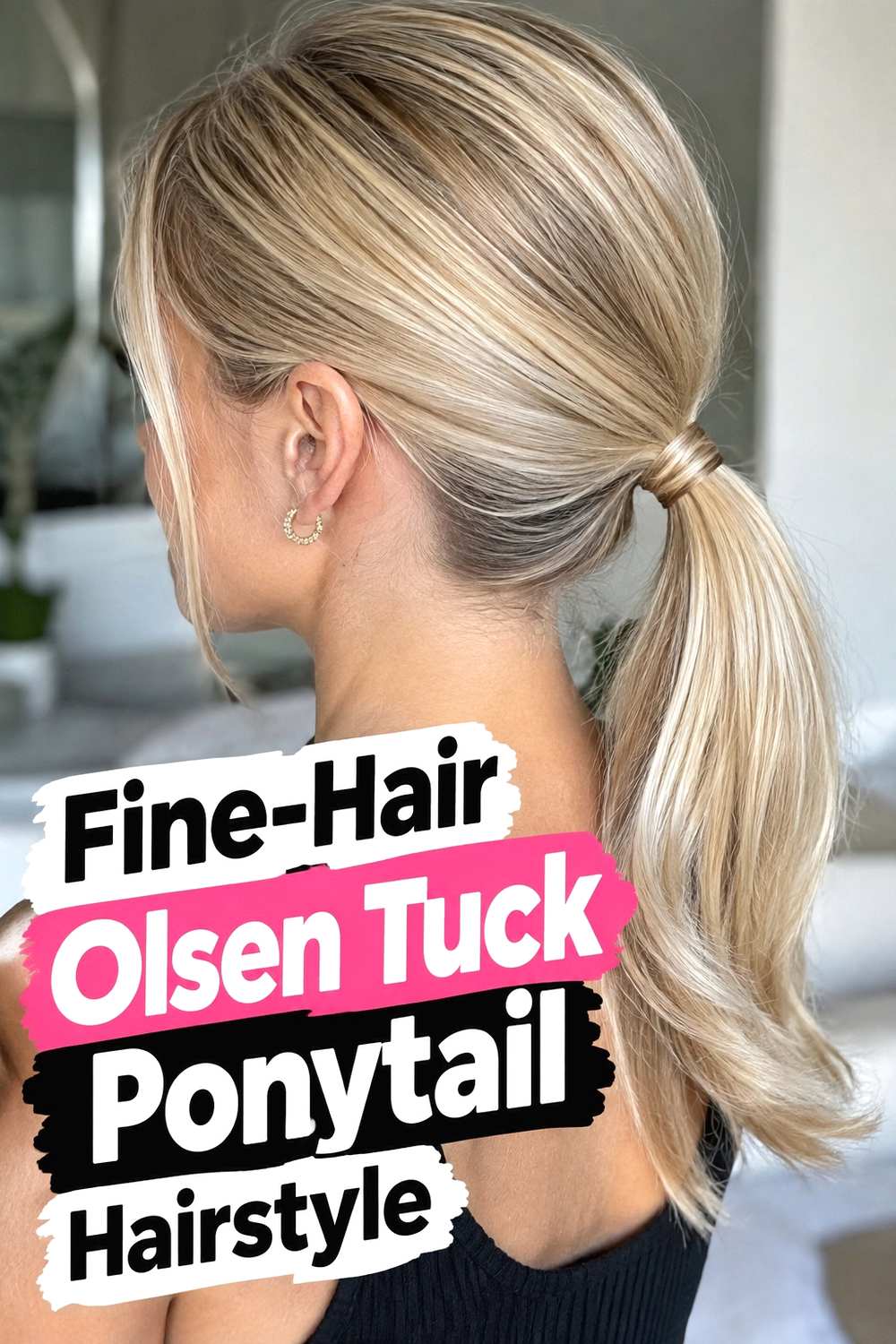
The Fine-Hair Olsen Tuck Ponytail Hairstyle focuses on preserving movement and visual fullness without relying on exaggerated volume. Start by giving the roots a little lift, then gather the hair gently at the nape rather than pulling it tightly against the scalp. A softly imperfect surface can actually make fine strands appear more dimensional because individual sections remain visible. Once the ponytail is tucked into a collar or scarf, the hidden ends remove the need for a thick-looking ponytail and place more emphasis on the shape around the head. Fine hair also tends to sit comfortably inside narrower necklines because there is less bulk. Keep products lightweight so the roots remain airy and the lengths retain natural movement.
Why It Works
Tucking the lower length shifts attention away from ponytail thickness, while subtle crown lift creates a fuller visible silhouette.
Pro Tip
Choose dry texture spray or lightweight mousse over heavy oils and thick styling creams, which can collapse volume quickly on finer strands.
12. Thick Hair Olsen Tuck Ponytail Hairstyle
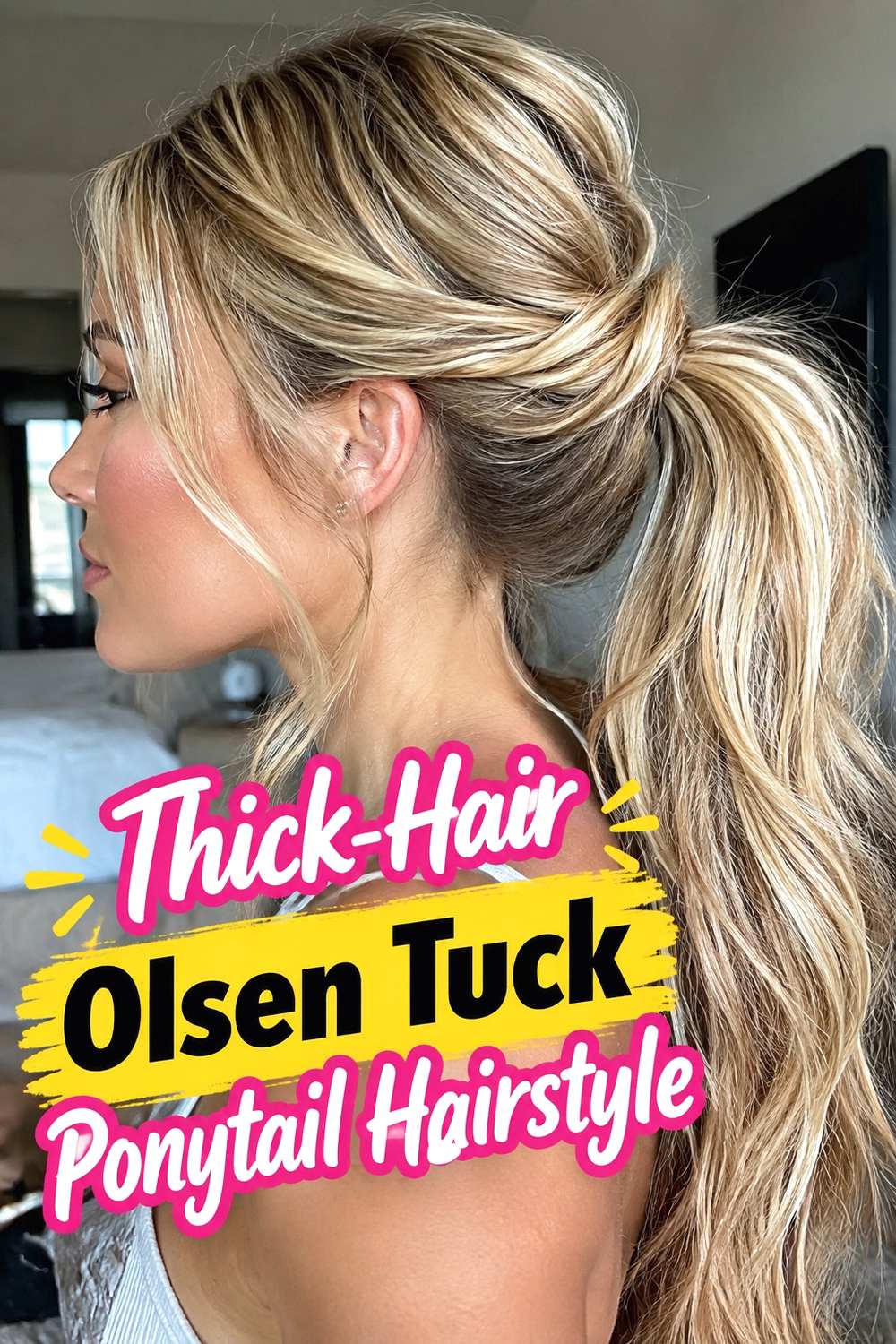
The Thick-Hair Olsen Tuck Ponytail Hairstyle uses the natural density of fuller hair while preventing the tucked section from becoming bulky or uncomfortable. Gather the length low with a strong but flexible elastic, keeping enough softness at the crown to avoid excessive tension. Instead of forcing all the hair into a narrow turtleneck, choose a roomy funnel neck, oversized scarf, or structured coat collar that can accommodate the ponytail naturally. Thick hair can create a beautiful rounded silhouette around the head, so there is usually no need for additional teasing or volume products. Smooth the sides only as much as needed for control and allow the natural density to remain visible. Comfort should guide how tightly the ponytail is anchored.
Wear & Maintenance
Check that the collar is not pushing the ponytail base upward or pulling against the scalp. A little extra neckline space makes a major difference with dense hair.
Pro Tip
A wider, durable elastic usually distributes tension more comfortably than repeatedly wrapping a very thin band around a heavy ponytail.
13. Curly Olsen Tuck Ponytail Hairstyle
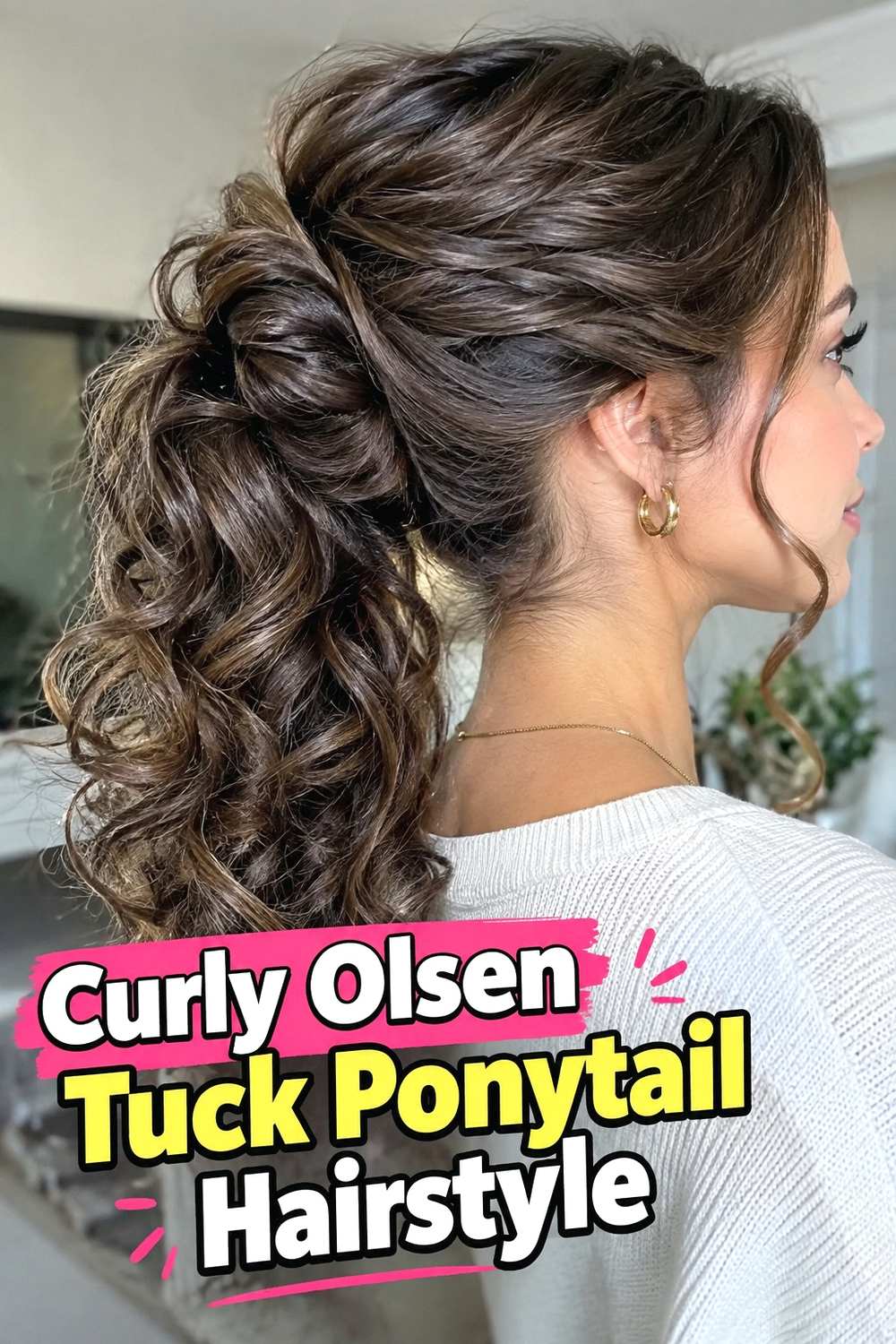
The Curly Olsen Tuck Ponytail Hairstyle lets curl definition become the central feature while preserving the compact tucked silhouette. Gather curls gently at the nape using your hands rather than brushing them into a uniform surface, allowing natural variation to remain visible around the crown, ears, and hairline. Once the ponytail is positioned inside a scarf or roomy collar, a few curls can peek around the neckline for extra dimension. There is no need to flatten the texture to imitate a straight-haired Olsen Tuck; the beauty of this version comes from combining defined curls with the same understated, hidden-length effect. Keep the elastic secure but not overly tight, especially if pulling could stretch or distort the curl pattern near the ponytail base.
Styling Notes
Refresh the most visible curls around the face before tying the ponytail. Handle the rest minimally to reduce unnecessary frizz and preserve definition.
Best For
Medium to long curly hair pairs especially well with spacious knit collars, scarves, and outerwear that will not crush the tucked texture.
14. Evening Sleek Olsen Tuck Ponytail Hairstyle
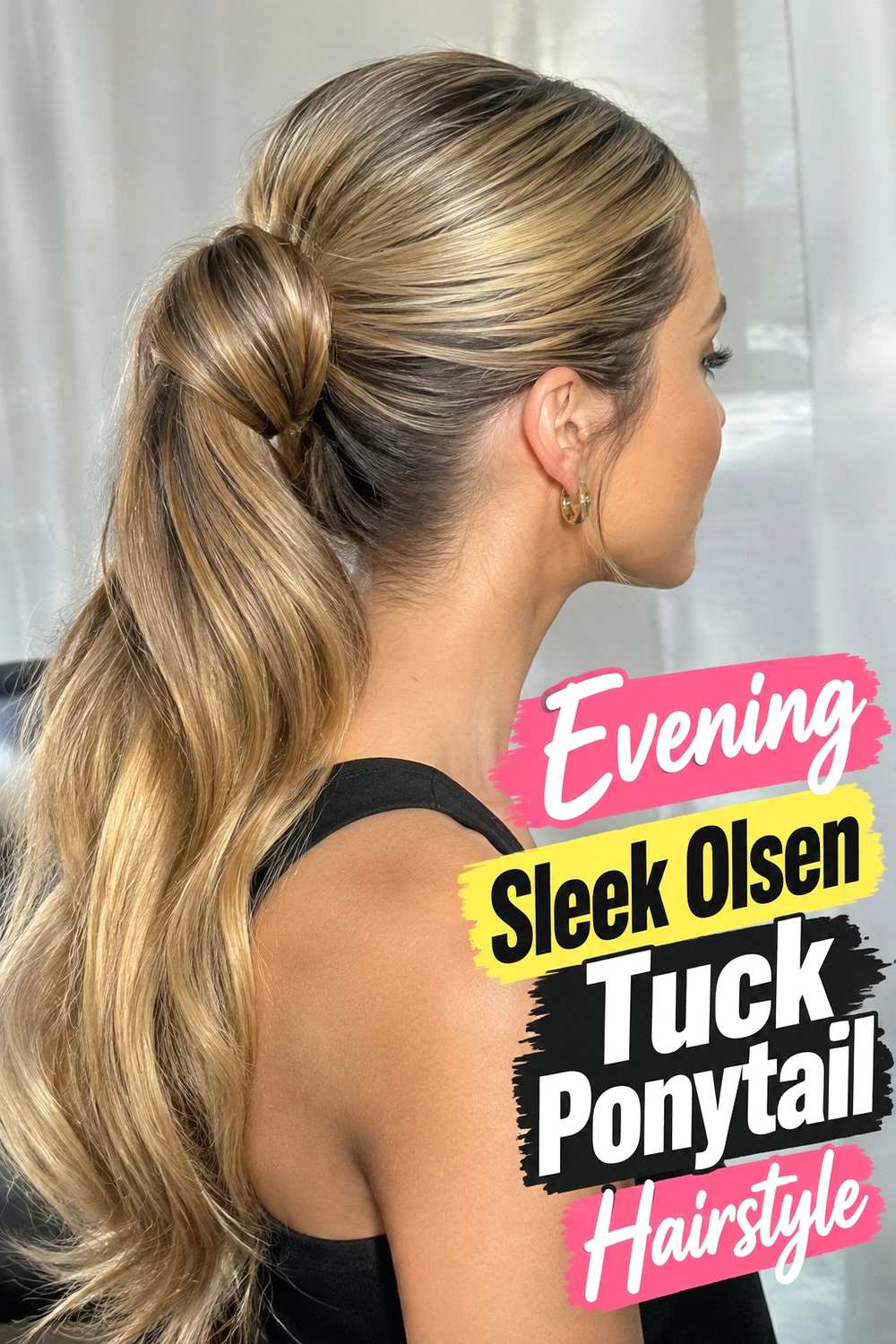
The Evening Sleek Olsen Tuck Ponytail Hairstyle turns the casual tucked concept into a refined option for dinners, parties, or dressier events. Start with a smooth center or softly off-center part and direct the hair neatly toward a low ponytail. The roots can have a controlled glossy finish, while the lengths stay polished and flexible before disappearing beneath a high-neck dress, elegant coat, or structured collar. Keeping the tie hidden creates a particularly seamless result. Unlike a daytime textured tuck, this version benefits from clean edges and deliberate placement, but it should still retain realistic strand detail and natural shine. A few carefully controlled baby hairs can keep the front from looking excessively rigid or lacquered.
Why It Works
The hidden length allows a dramatic neckline, earrings, or tailored outfit to stand out while the sleek hair maintains a sophisticated frame around the face.
Wear & Maintenance
Carry a small comb or flexible-hold spray for touch-ups, particularly around the temples and part where evening humidity or movement may create flyaways.
How to Choose the Right Look
Start with your natural texture and the amount of daily styling you realistically want to do. Straight hair can move easily between the Classic Low, Hidden-Elastic, and Polished Straight versions, while natural waves lend themselves to the Soft Wave or Textured Loose looks with minimal preparation. Curly hair is usually most convincing when its definition is preserved rather than brushed away.
Hair density matters too. Fine hair benefits from soft crown lift and light products, while thick hair needs a secure elastic and a neckline roomy enough to hold the tucked length comfortably. If you prefer more softness around your features, compare the Face-Framing and Soft Side-Part versions. For a sharper finish, the Sleek Center-Part or Evening Sleek styles create cleaner lines.
Also consider your clothing before styling. A snug turtleneck may suit a fine or straight ponytail, while dense curls or thick hair generally need more space. For long wear, prioritize a comfortable tie point and flexible hold over an ultra-tight finish. Casual outfits pair naturally with texture, waves, or loose volume, while polished straight hair and controlled shine work well for professional or evening settings.
Final Thoughts
Olsen Tuck ponytail hairstyles prove that a low ponytail can look completely different depending on its parting, texture, volume, and neckline. If you are new to the look, start with the classic low version and adapt it to your natural hair rather than changing your texture unnecessarily.
For something softer, try waves, loose texture, or face-framing strands. When you want a more refined effect, a hidden elastic, precise center part, or sleek evening finish creates a cleaner silhouette. Most importantly, leave enough room around the neckline for the tucked hair to sit naturally and comfortably.
FAQs
1. What is an Olsen Tuck ponytail hairstyle?
It is a ponytail variation of the Olsen-inspired hair tuck, where the hair is secured low at the nape and the remaining length is tucked into a collar, scarf, sweater, or other neckline. The low elastic provides extra control while maintaining the hidden-length effect.
2. What hair length works best for an Olsen Tuck ponytail?
Shoulder-length through long hair is generally the easiest to work with because there is enough length to create a secure low ponytail. Very long hair may require a roomier collar or scarf so the ends can sit comfortably.
3. Can curly hair wear an Olsen Tuck ponytail?
Yes. Curly hair can be gathered gently at the nape while keeping its natural curl pattern intact. A wider or softer neckline usually works better because it gives the tucked curls space without compressing them excessively.
4. How can I stop an Olsen Tuck ponytail from slipping out?
Use a secure snag-free elastic at the nape and choose clothing with enough structure to support the tucked length. Very silky hair may also benefit from a small amount of lightweight texture spray for extra grip.
5. Does an Olsen Tuck ponytail have to look messy?
No. The finish can range from softly undone and textured to extremely polished. Loose waves and flyaways create a casual mood, while straight hair, a precise part, and controlled shine make the same basic silhouette feel much more refined.
CTA
Save your favorite Olsen Tuck ponytail hairstyles for later, share the ideas you love, and explore more effortless ponytail inspiration for your next look.