15 French Pin Low Bun Hairstyles for Effortless Elegance
French pin low buns combine effortless texture, graceful shape, and a beautifully understated finish that works from casual mornings to polished evenings.
A French pin can turn a simple low bun into an updo that feels intentional without looking overly styled. Depending on how tightly the hair is twisted, where the bun sits, and how much texture is left through the crown, the result can range from clean and minimalist to soft and romantic.
As you compare these styles, pay attention to your hair length, density, natural texture, and how much hold you need. Sleeker versions often benefit from smoother preparation, while looser buns can make natural waves, curls, and subtle flyaways part of the finished look.
Quick List
- Classic French Pin Low Bun Hairstyle
- Soft Twisted French Pin Low Bun Hairstyle
- Sleek Center Part French Pin Low Bun Hairstyle
- Loose Textured French Pin Low Bun Hairstyle
- Side Part Polished French Pin Low Bun Hairstyle
- Curly French Pin Low Bun Hairstyle
- Wavy French Pin Low Bun Hairstyle
- Braided Accent French Pin Low Bun Hairstyle
- Double Twist French Pin Low Bun Hairstyle
- Face Framing French Pin Low Bun Hairstyle
- Minimalist French Pin Low Knot Hairstyle
- Voluminous Crown French Pin Low Bun Hairstyle
- Romantic Tendril French Pin Low Bun Hairstyle
- Tucked Ends French Pin Low Bun Hairstyle
- Pearl Accent French Pin Low Bun Hairstyle
1. Classic French Pin Low Bun Hairstyle
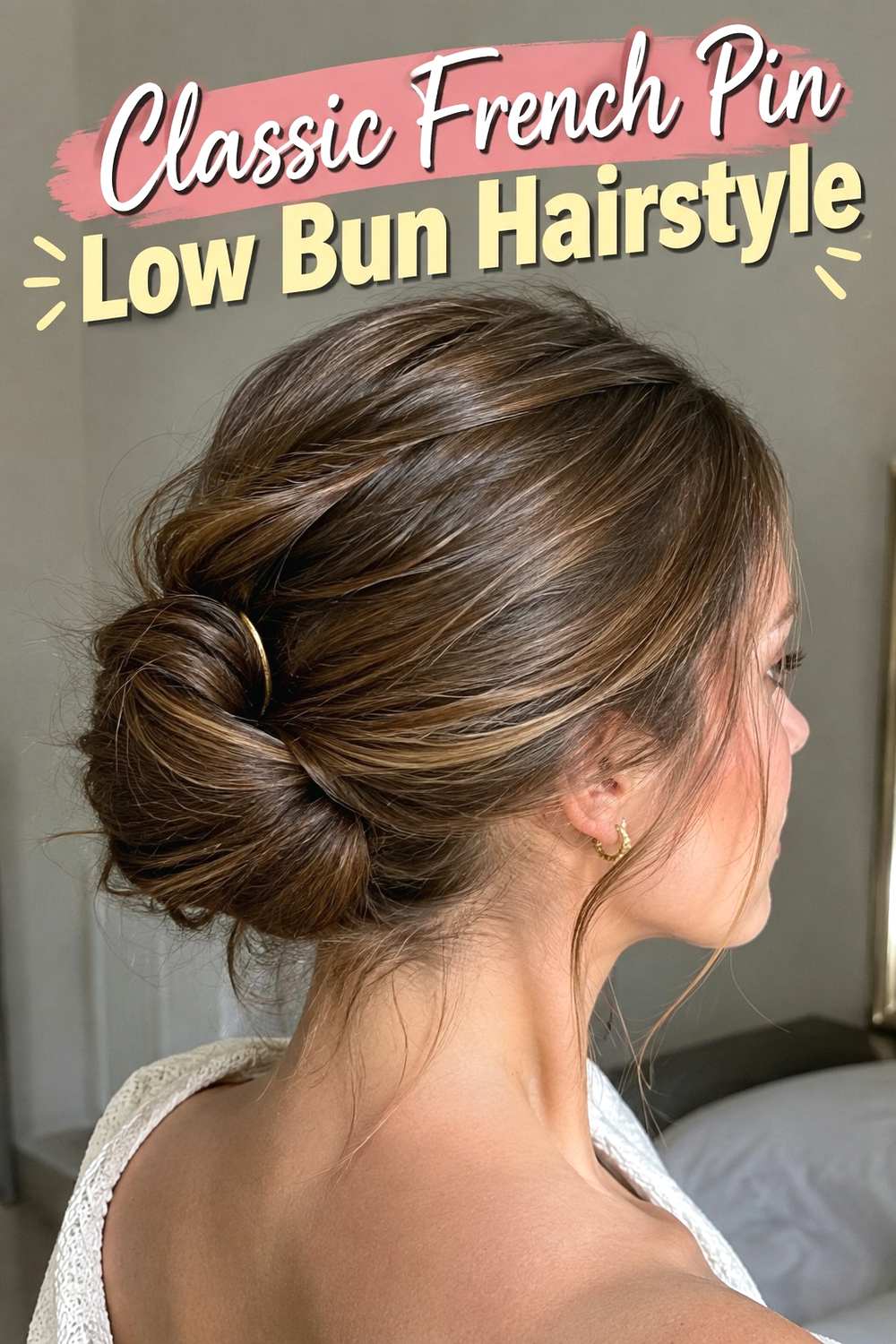
The Classic French Pin Low Bun Hairstyle keeps the shape simple, balanced, and timeless. Hair is gathered close to the nape, twisted into a compact bun, and secured with a visible French pin that becomes part of the design rather than something to hide. A softly brushed crown and a few natural flyaways keep the finish from looking too rigid. This version is especially useful when you want an updo that can transition from workwear to dinner without feeling formal. Medium to long hair usually provides enough length for a secure twist, while thicker hair may need a slightly larger bun or extra internal support.
Styling Notes
Brush the hair back with light tension, twist it inward at the nape, and slide the pin through one edge of the bun before catching hair close to the scalp.
Why It Works
The restrained silhouette keeps attention on the natural shine and shape of the hair while the French pin adds a subtle decorative finish.
2. Soft Twisted French Pin Low Bun Hairstyle
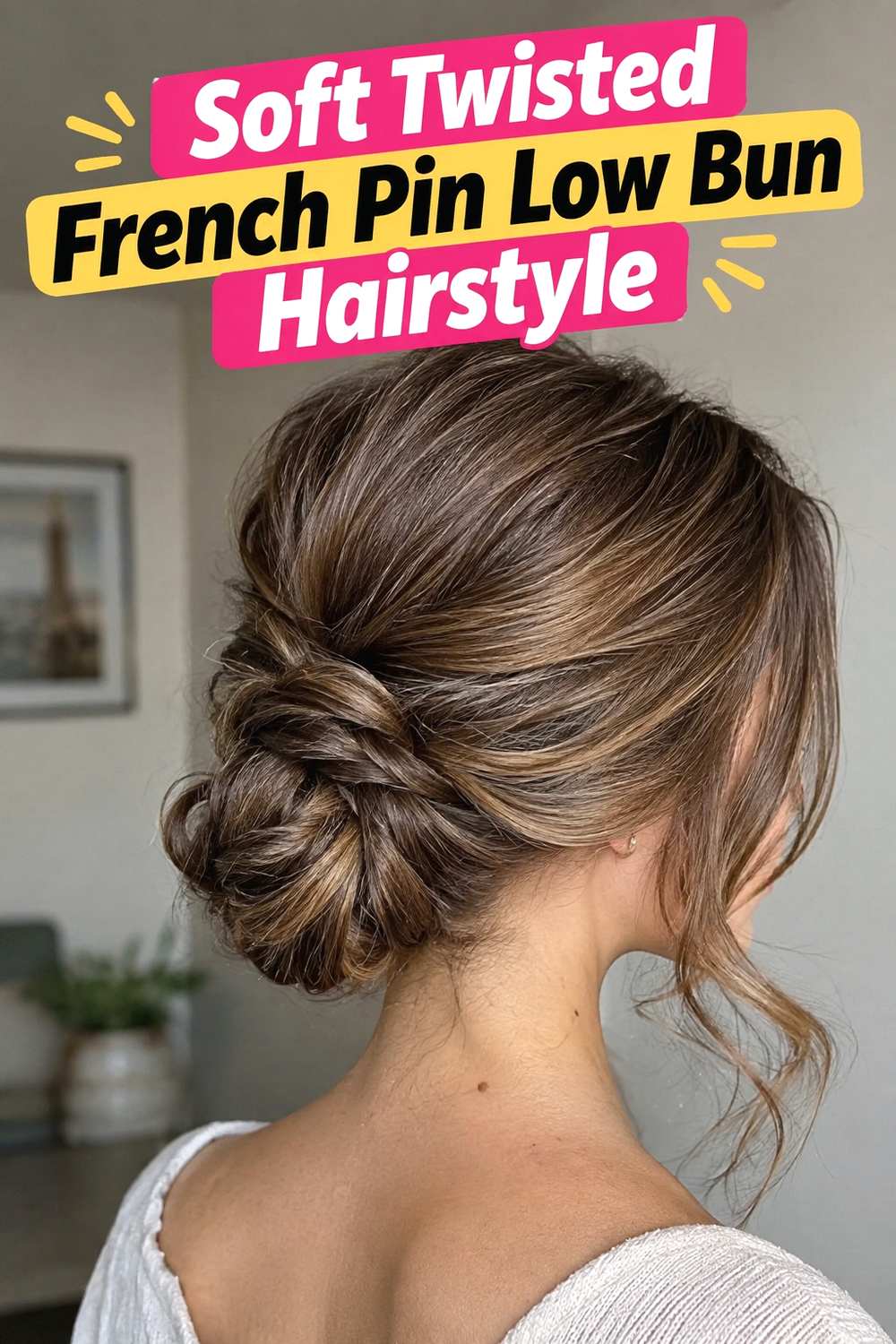
The Soft Twisted French Pin Low Bun Hairstyle uses gentle movement instead of a tightly wound finish. The hair can be loosely divided, twisted toward the nape, and wrapped into a low bun so the individual sections remain slightly visible. That extra dimension makes the style especially flattering on hair with soft waves, layers, or natural texture. It works beautifully for relaxed events, dinners, and everyday outfits where a sleek bun might feel too severe. Keep the twist secure enough to hold its shape, but avoid pulling every strand perfectly flat. A little softness around the crown and ears gives the hairstyle its effortless character.
Hair Type & Length
Medium and long hair are easiest to twist securely, although fine hair can gain fullness from a small amount of texture spray before styling.
Pro Tip
After securing the bun, gently loosen selected sections with your fingertips instead of pulling apart the entire twist.
3. Sleek Center Part French Pin Low Bun Hairstyle
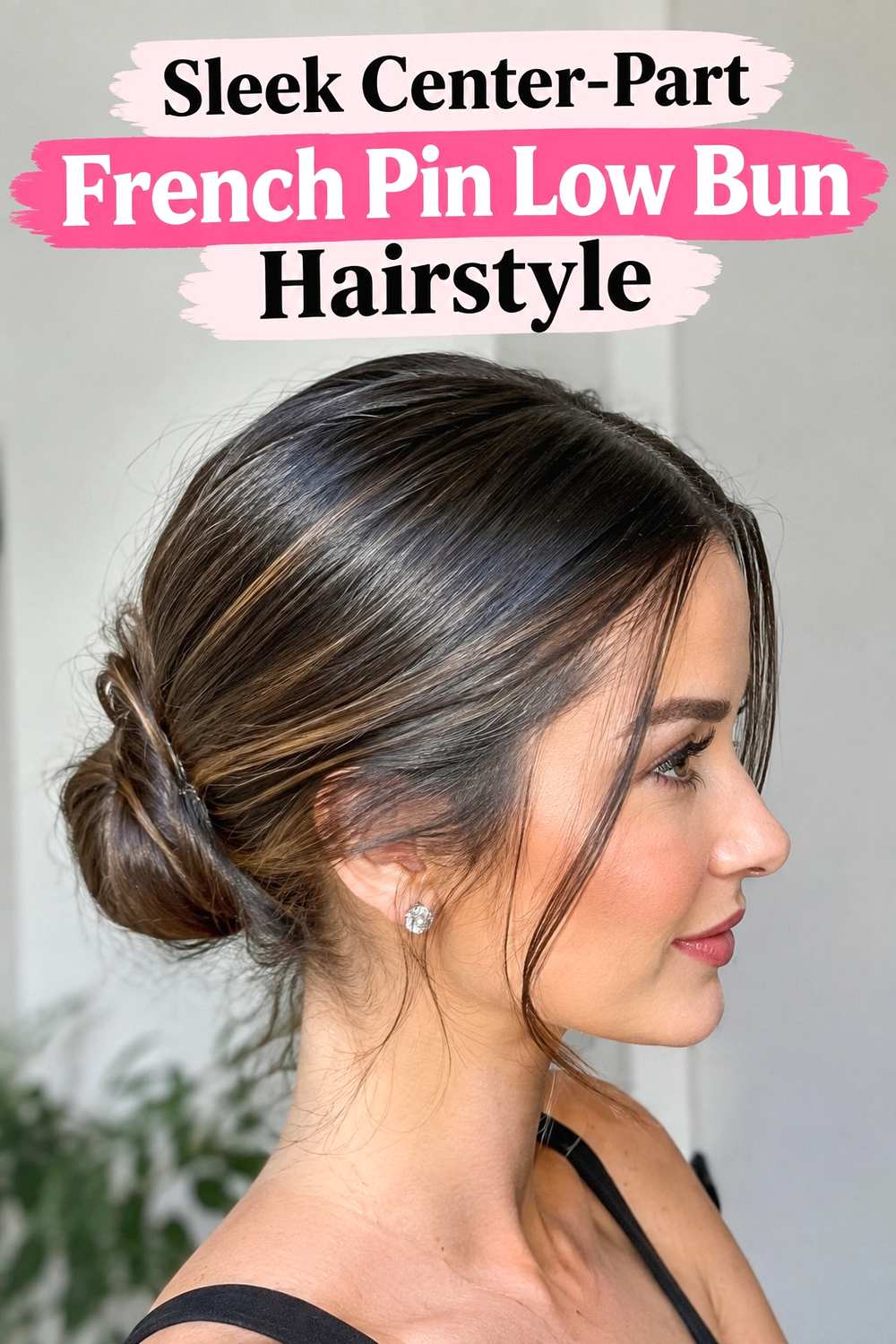
The Sleek Center-Part French Pin Low Bun Hairstyle creates a refined, architectural look with a crisp center part and smooth sides. Hair sits close to the head before gathering into a neatly controlled bun at the nape, making the French pin feel like an intentional finishing accessory. The clean front profile works particularly well with tailored clothing, statement earrings, or occasions where you want your hairstyle to look polished without adding height. Straight and slightly wavy textures can achieve the finish easily, while curlier hair can be smoothed as much or as little as preferred. The key is maintaining an even shape from the part through the bun.
Styling Notes
Use a fine-tooth comb with a lightweight styling cream to refine the part and smooth the surface without making the hair appear stiff.
Wear & Maintenance
A small amount of flexible-hold spray can control flyaways while still allowing the bun to look natural and touchable.
4. Loose Textured French Pin Low Bun Hairstyle
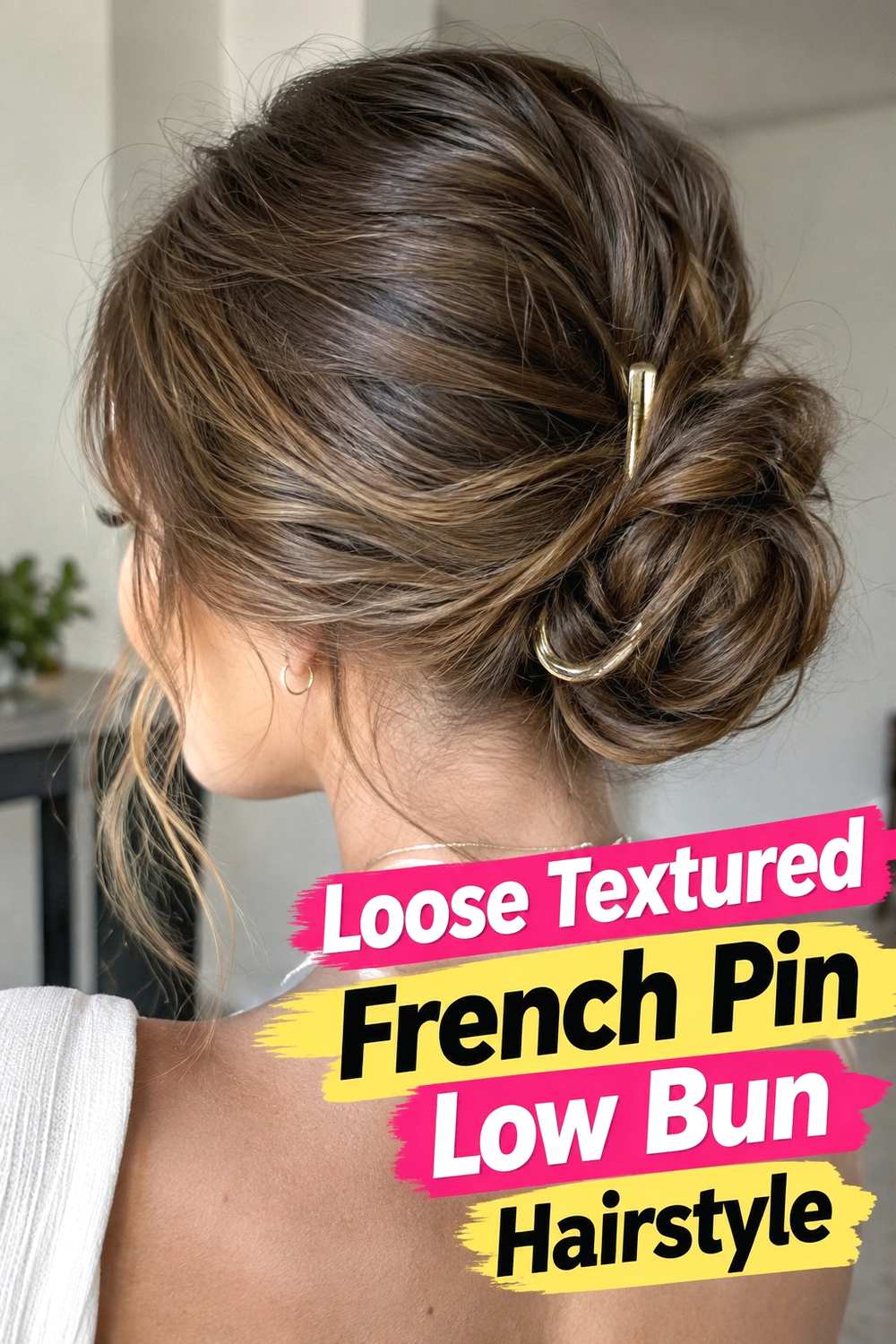
The Loose Textured French Pin Low Bun Hairstyle is designed around softness, separation, and visible movement. Instead of brushing every strand flat, the hair keeps some natural volume through the crown before being gathered into an airy bun near the nape. Slightly uneven loops, wispy ends, and subtle flyaways make the finished style feel intentionally relaxed. This is a useful option for second-day hair, naturally wavy textures, or anyone who prefers an updo that does not require a perfectly smooth finish. The French pin should anchor the main twist securely while allowing the outer surface of the bun to remain soft and dimensional.
Best For
This look suits casual gatherings, relaxed weddings, weekend outfits, and other settings where a polished-but-undone finish feels appropriate.
Pro Tip
Add texture before forming the bun rather than trying to create volume after it is already pinned in place.
5. Side Part Polished French Pin Low Bun Hairstyle
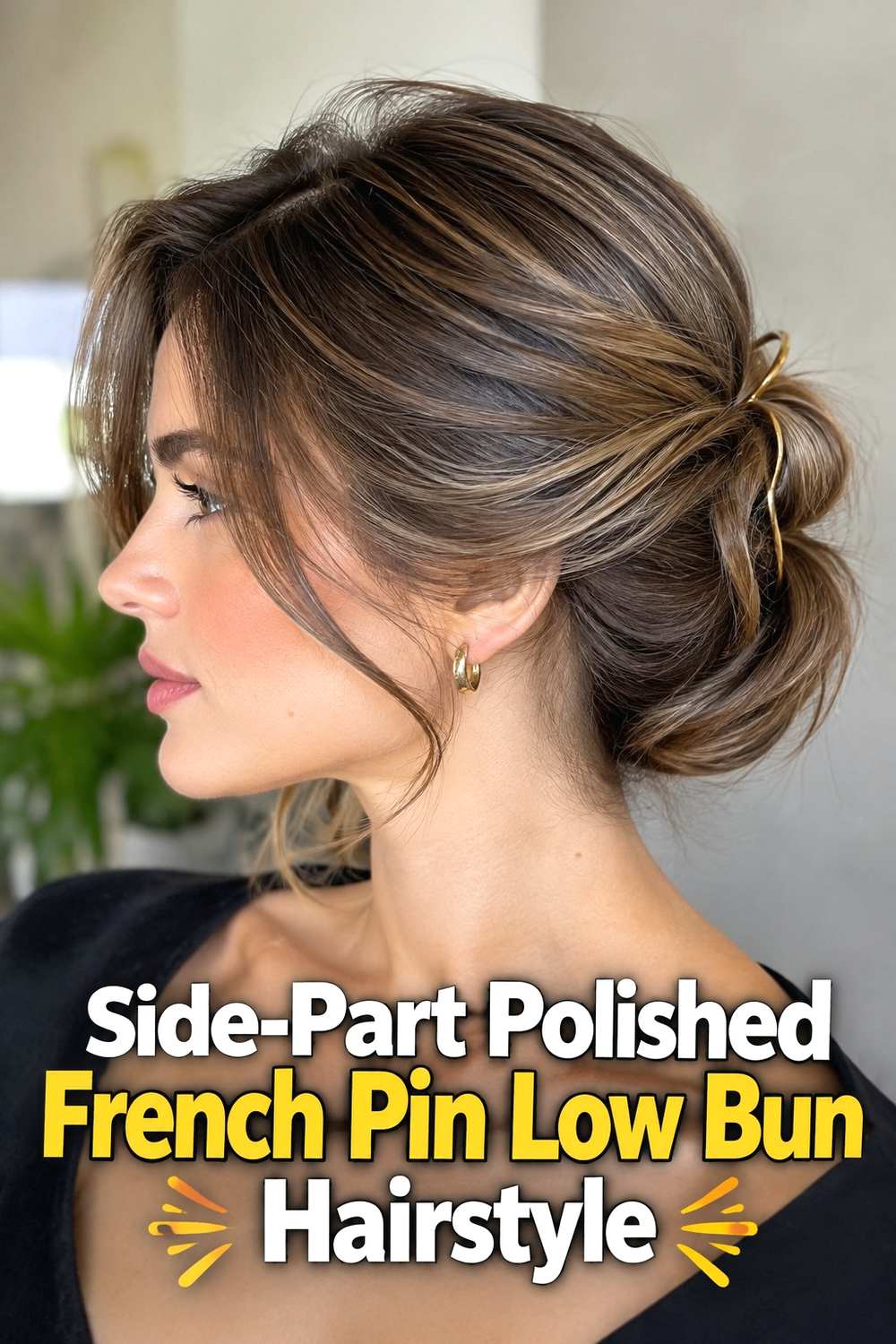
The Side-Part Polished French Pin Low Bun Hairstyle brings a softer asymmetry to the classic low bun. A defined side part creates gentle movement across the front of the head, while the remaining hair is directed smoothly toward a compact bun at the nape. The result feels sophisticated without having the strong symmetry of a center-part style. It can be especially attractive when paired with side-swept front layers or a tucked section behind one ear. Keep the bun streamlined so the side part remains the main visual detail. A metallic or minimal French pin can provide a clean accent without competing with the hairstyle.
Why It Works
The side part changes the balance of the hairstyle and can create a softer frame around the forehead and cheek area.
Styling Notes
Direct both sides toward the same low gathering point before twisting so the finished bun remains centered and stable.
6. Curly French Pin Low Bun Hairstyle
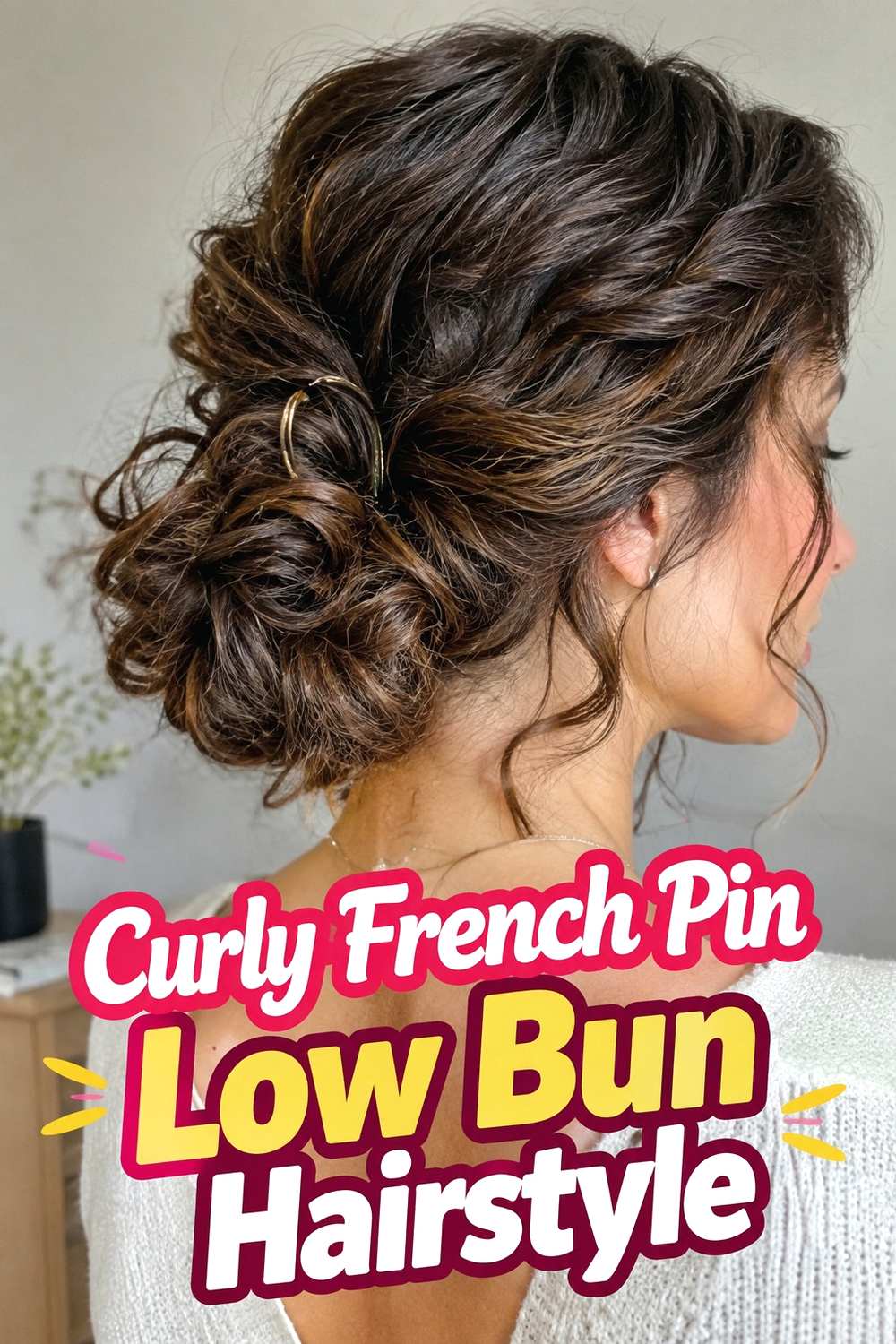
The Curly French Pin Low Bun Hairstyle lets natural curl pattern remain visible instead of smoothing it away. Curls are gently gathered near the nape and folded into a soft bun, with individual coils providing texture and depth throughout the shape. Depending on your curl pattern, you can leave a few defined pieces around the temples or keep the front fully swept back. Avoid over-brushing, since preserving curl definition is part of what gives this version its character. A French pin can secure the central mass of the bun while a few discreet pins provide extra reinforcement when needed, especially for dense or highly textured hair.
Hair Type & Length
Medium to long curly hair works particularly well because the natural texture helps create a full-looking bun without excessive teasing.
Wear & Maintenance
Apply your preferred curl-defining product before styling, then handle the hair gently to reduce unnecessary frizz and preserve definition.
7. Wavy French Pin Low Bun Hairstyle
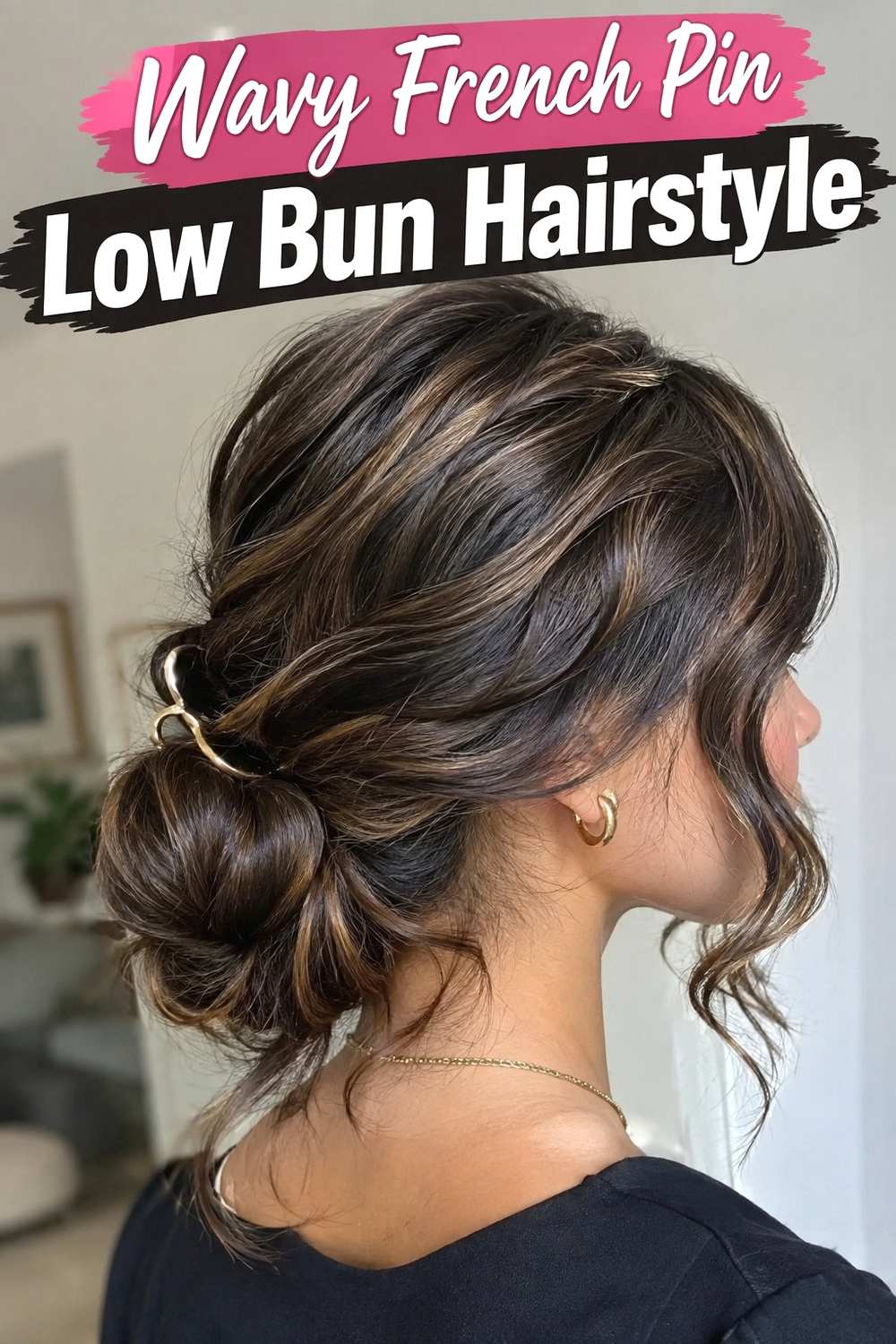
The Wavy French Pin Low Bun Hairstyle uses natural bends and soft waves to give the bun a relaxed, dimensional finish. Rather than straightening the hair before styling, the waves remain visible through the crown, sides, and outer loops of the bun. The resulting shape feels less formal than a polished low bun but still looks deliberate and put together. This is an easy choice for naturally wavy hair or hair that already has loose curls from an earlier style. Keep the gathering point low, twist without excessive tension, and let a few curved strands remain visible so the texture does not disappear inside the bun.
Best For
This version is ideal when you want an elegant everyday hairstyle without losing the natural movement already present in your hair.
Pro Tip
Use your fingers instead of a brush during the final gathering stage to preserve wave separation and prevent the surface from becoming too smooth.
8. Braided Accent French Pin Low Bun Hairstyle
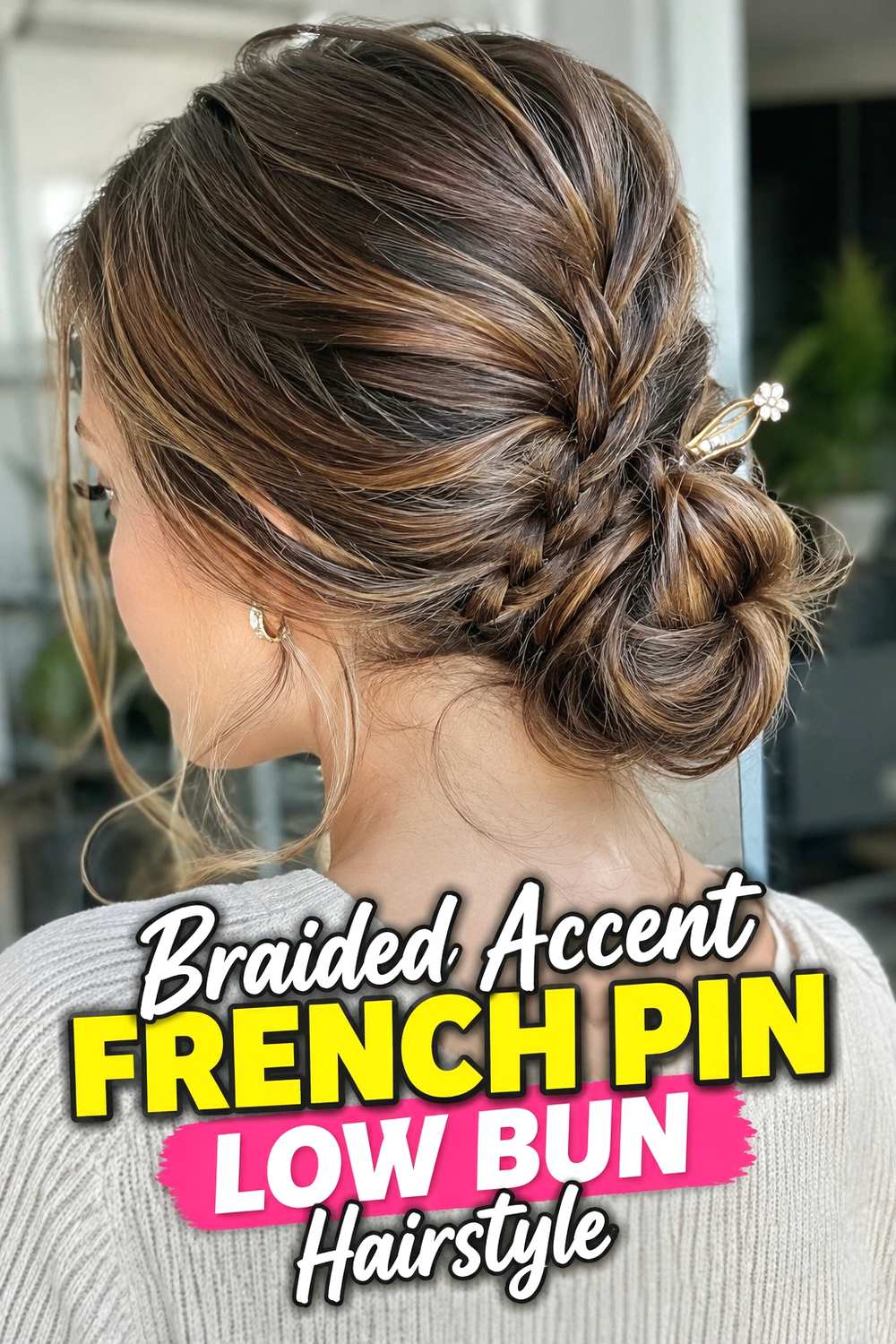
The Braided Accent French Pin Low Bun Hairstyle adds a small woven detail without turning the entire style into a braided updo. A narrow braid can begin near one temple, behind the ear, or along one side before joining the hair at the nape. The rest of the hair is twisted into a low bun and secured with the French pin, allowing the braid to act as a subtle decorative feature. This approach works especially well when you want more visual interest from the side or back. Keep the braid proportionate to the bun so both elements remain clearly visible instead of competing for attention.
Styling Notes
Create the accent braid before gathering the main section, and gently widen it if you want the woven pattern to appear more prominent.
Why It Works
Combining one structured braid with a simple bun adds detail while preserving the clean, wearable quality of the overall hairstyle.
9. Double Twist French Pin Low Bun Hairstyle
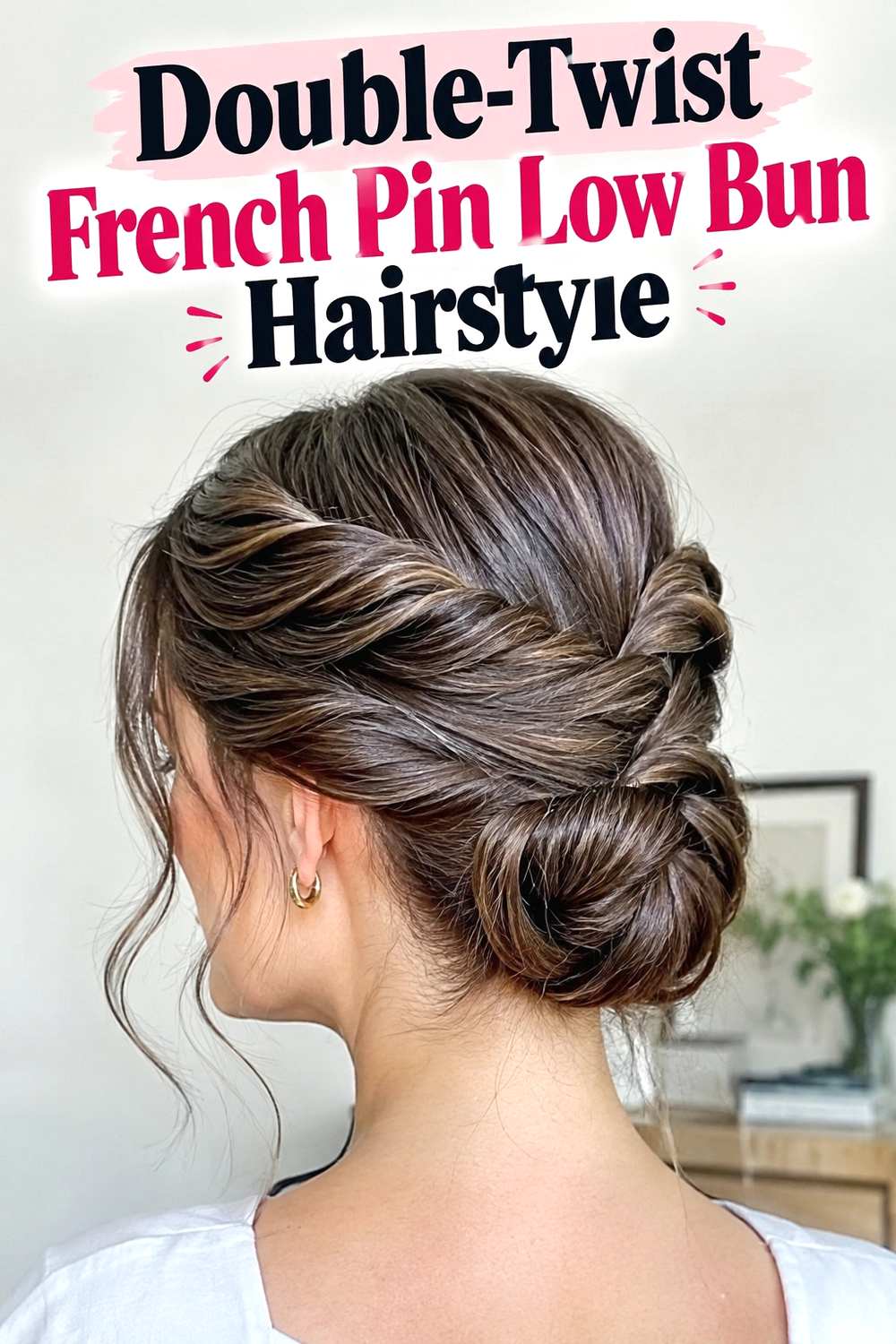
The Double-Twist French Pin Low Bun Hairstyle creates a more sculpted finish by bringing two twisted sections together at the nape. Hair is divided into left and right sections, each side is twisted backward, and the ends are combined into one compact low bun. From the back, the paired twists create natural lines that lead the eye toward the French pin. This technique can also help distribute thicker hair more evenly than gathering everything at once. Keep both twists similar in tension so the finished silhouette feels balanced. For a softer variation, loosen the twists slightly before forming the bun.
Hair Type & Length
Longer hair offers more room for visible twisting, while medium hair can achieve a tighter, more compact interpretation.
Wear & Maintenance
Secure the joined twists firmly before inserting the French pin if your hair is particularly slippery or heavy.
10. Face Framing French Pin Low Bun Hairstyle
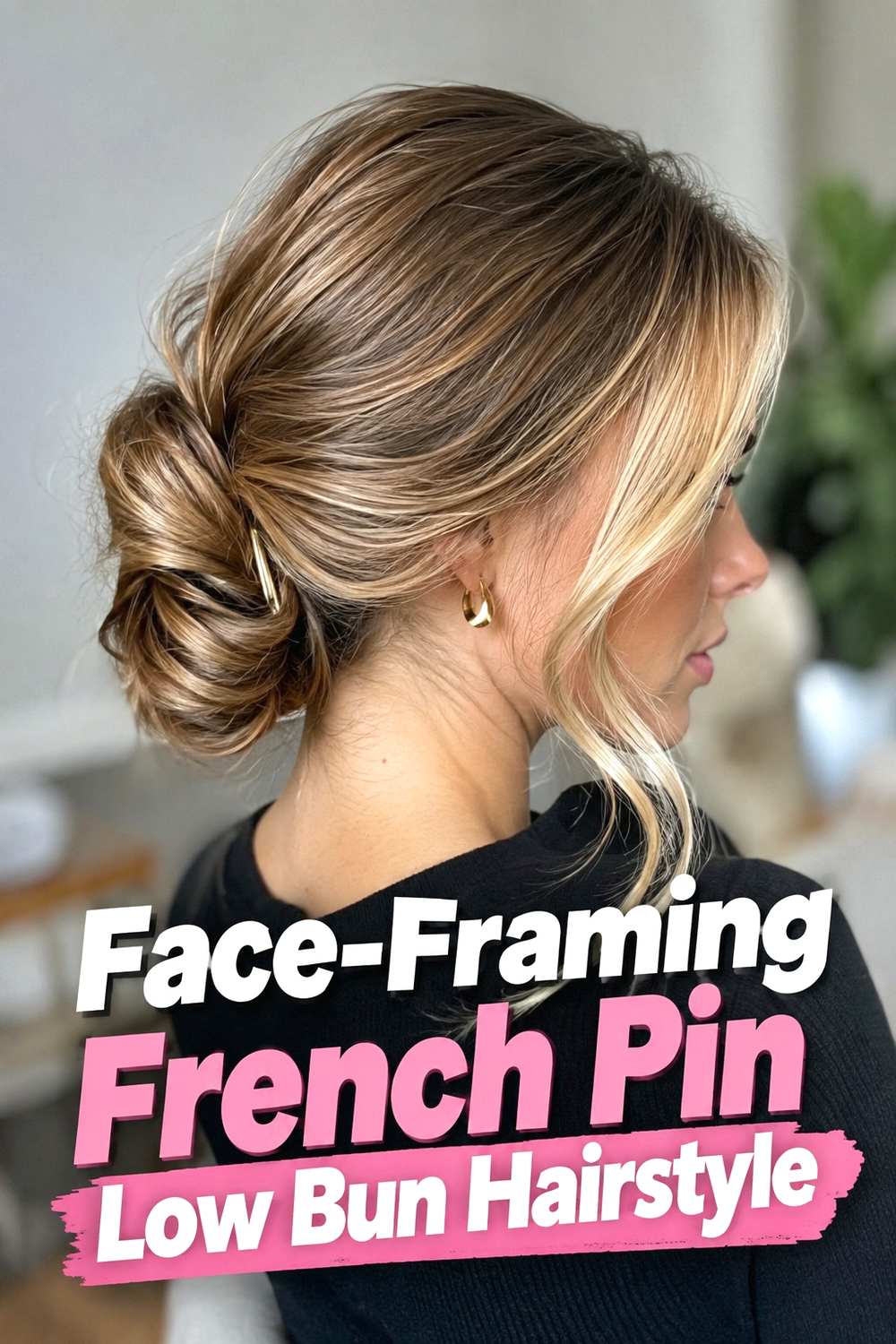
The Face-Framing French Pin Low Bun Hairstyle keeps the main updo neat while leaving selected front pieces loose. These sections can be straight, softly curved, or lightly waved depending on the finish you prefer. Because the bun sits close to the nape, the free strands create a gentle contrast between the structured back and softer front. This style works well with layered hair because shorter pieces naturally fall around the face without needing to be forced into the bun. Keep the amount of loose hair controlled; two or three intentional sections usually look more polished than pulling out many random strands after styling.
Best For
Choose this variation when you like the elegance of an updo but prefer a softer outline around the forehead, temples, and jawline.
Pro Tip
Decide which sections will remain loose before forming the bun so they stay clean and separate from the rest of the hairstyle.
11. Minimalist French Pin Low Knot Hairstyle
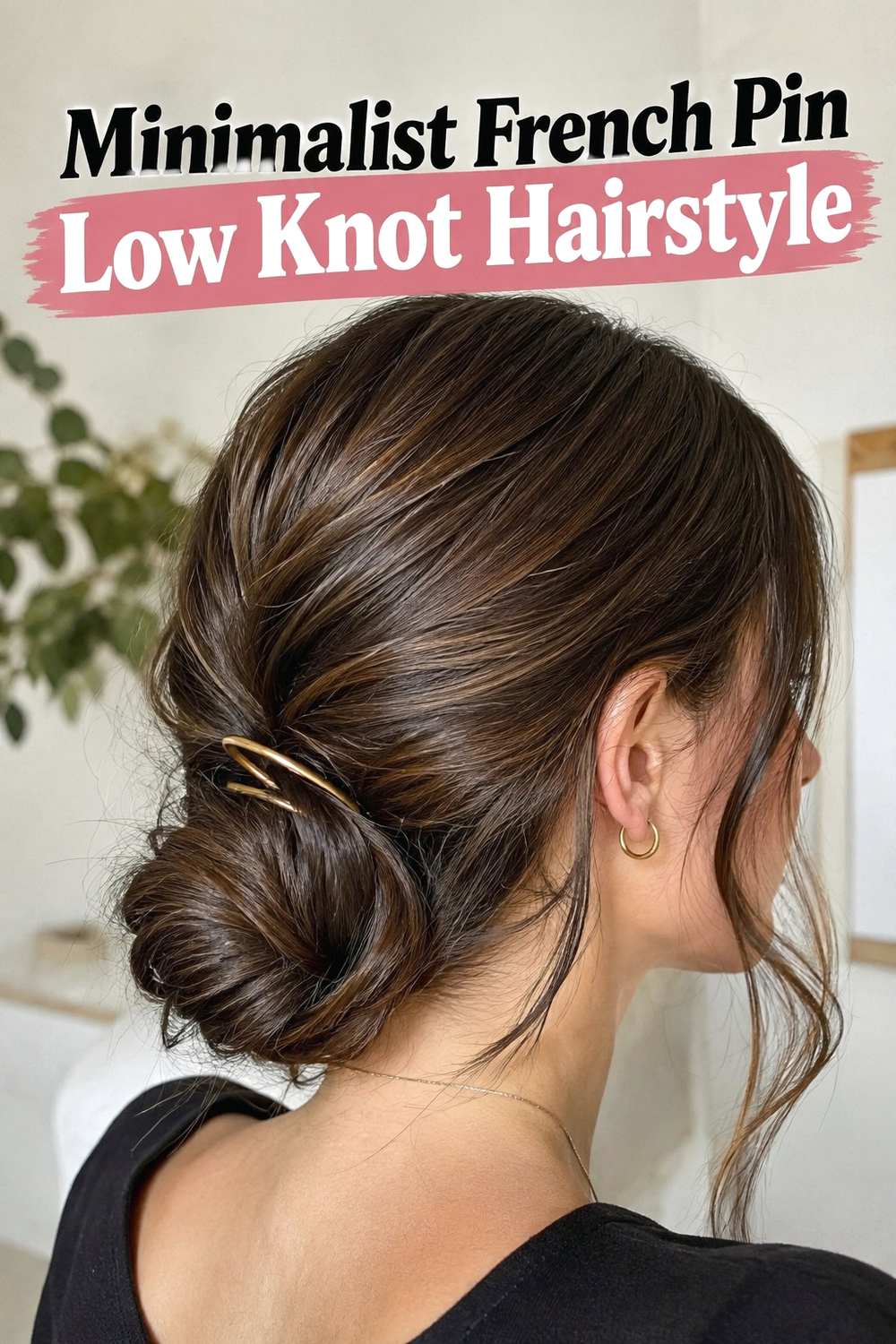
The Minimalist French Pin Low Knot Hairstyle reduces the style to its simplest form: a clean gathering point, one controlled knot or fold, and a single visible pin. Instead of building a rounded bun with multiple loops, the hair is twisted and tucked into a narrow shape close to the nape. The streamlined silhouette makes this style feel modern and understated, particularly when paired with simple clothing and minimal accessories. It can work beautifully on straight hair, softly textured hair, or any texture that can be gathered comfortably. Because there are fewer decorative details, neat placement and secure pinning become especially important.
Styling Notes
Keep the knot close to the head and insert the French pin so it catches both the folded hair and a small section near the scalp.
Why It Works
The simplicity makes the hair texture, pin shape, and clean silhouette stand out without relying on extra volume or accessories.
12. Voluminous Crown French Pin Low Bun Hairstyle
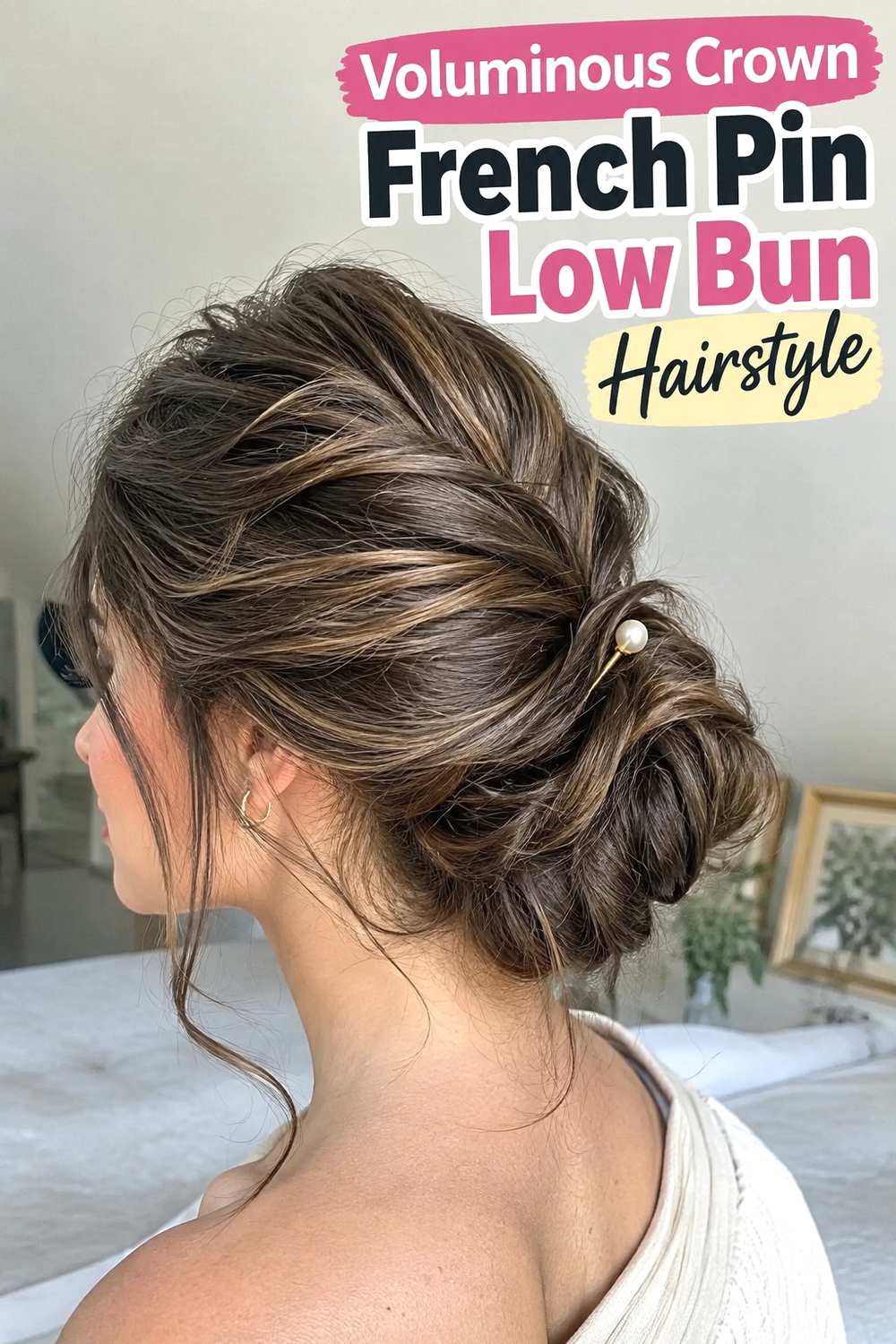
The Voluminous Crown French Pin Low Bun Hairstyle combines a low, grounded bun with extra lift through the upper portion of the hair. Instead of pulling everything tightly backward, the crown is gently raised before the lengths are gathered at the nape. This creates a more dimensional profile while keeping the bun elegant and wearable. The volume can be subtle for everyday styling or slightly fuller for special occasions. The French pin provides a clean finish at the back, while the crown keeps the overall silhouette from appearing too flat. Take care not to create one concentrated bump; the lift should blend gradually into the sides.
Hair Type & Length
Fine and medium-density hair can benefit from light texturizing at the roots, while thick hair may already have enough natural fullness.
Pro Tip
Loosen the crown before securing the final pin so you can control the amount of lift without disturbing the finished bun.
13. Romantic Tendril French Pin Low Bun Hairstyle
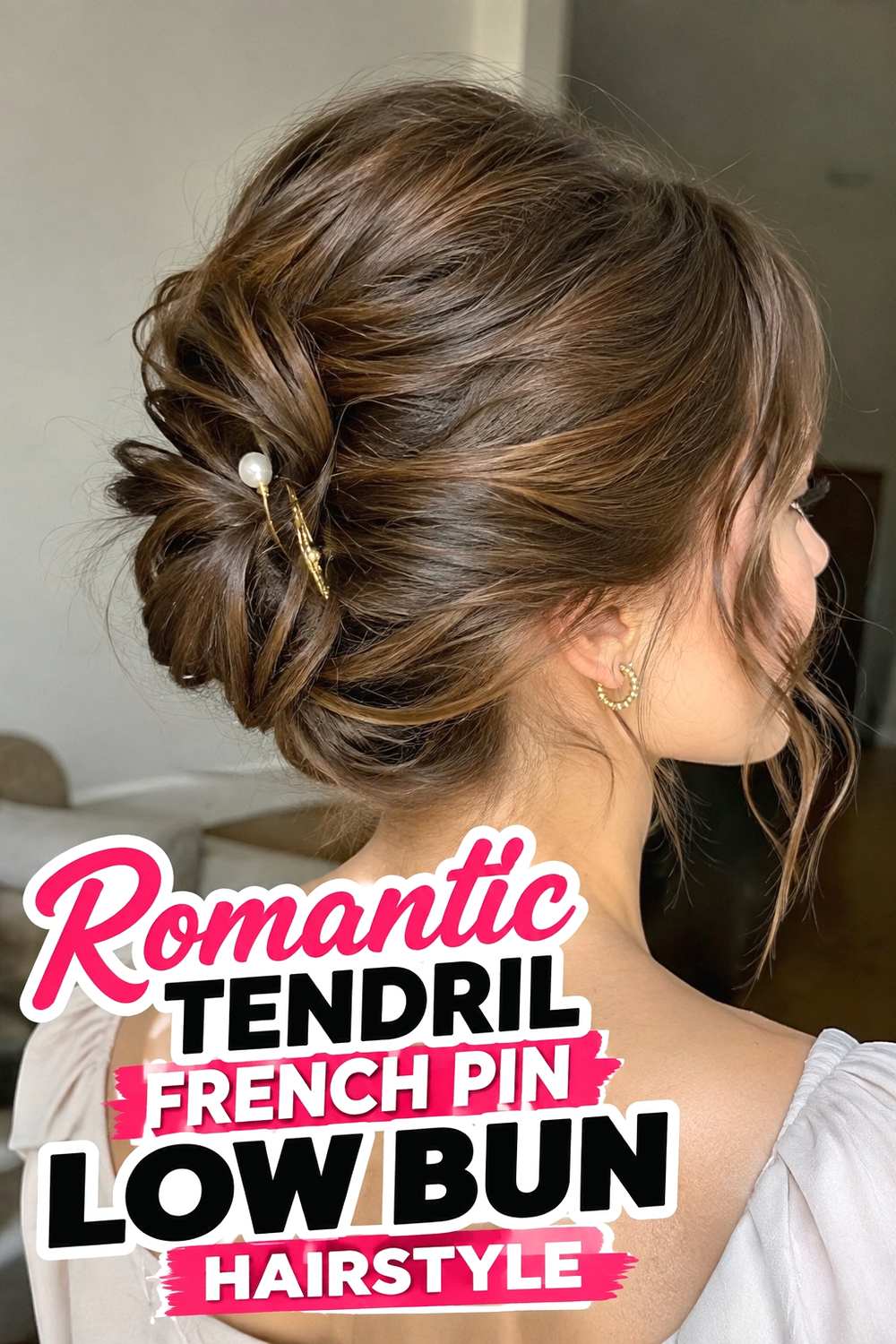
The Romantic Tendril French Pin Low Bun Hairstyle emphasizes softness through delicate strands around the face and ears. The main hair is gathered into a relaxed low bun, while a few narrow pieces are intentionally left free and softly curved. Unlike a heavily tousled updo, the tendrils should look selective and balanced, allowing the bun itself to remain clearly defined. This variation pairs naturally with dresses, soft necklines, and special occasions, but it can also make a simple everyday bun feel more feminine. Keep the French pin visible enough to add structure against the looser texture surrounding it.
Styling Notes
Shape the loose tendrils separately after the bun is finished, using a small amount of styling product if you want them to hold a gentle bend.
Best For
This is a useful choice when you want a low bun that feels romantic and relaxed rather than sharply polished.
14. Tucked Ends French Pin Low Bun Hairstyle
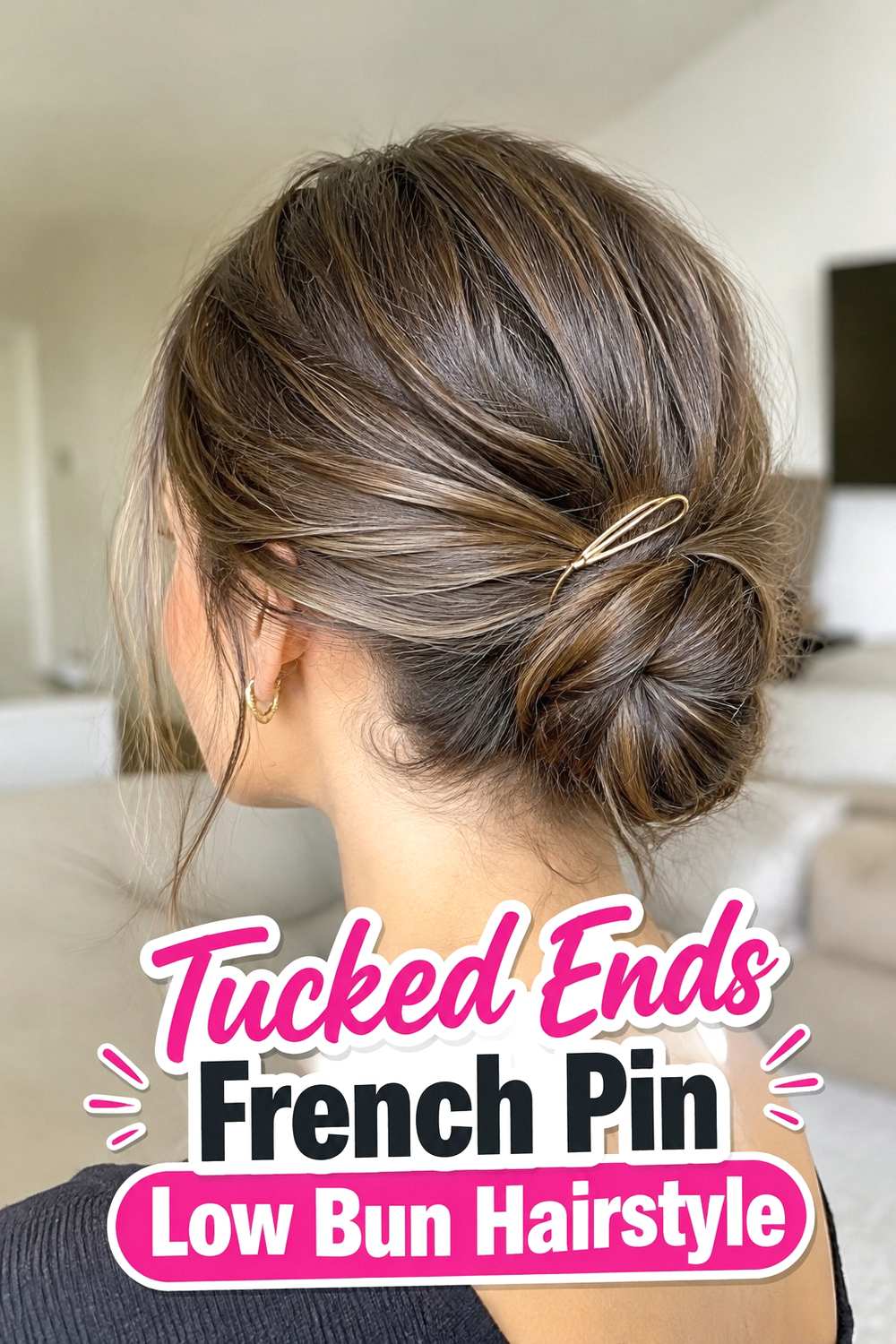
The Tucked Ends French Pin Low Bun Hairstyle creates a particularly clean back view by hiding loose ends inside the main twist. The hair is rolled or folded inward at the nape, then the remaining ends are tucked beneath the outer layer before the French pin is inserted. This produces a smooth, continuous shape without visible tips sticking away from the bun. It works especially well for straight or lightly wavy hair because the tucked structure is easy to see. The finish can be sleek or slightly softened through the crown, but the defining feature is the carefully concealed ends and compact silhouette.
Why It Works
Tucking the ends gives the hairstyle a finished appearance while keeping the visual focus on the smooth shape of the bun and the decorative pin.
Wear & Maintenance
For layered hair, a few small hidden pins can help keep shorter ends inside the bun throughout the day.
15. Pearl Accent French Pin Low Bun Hairstyle
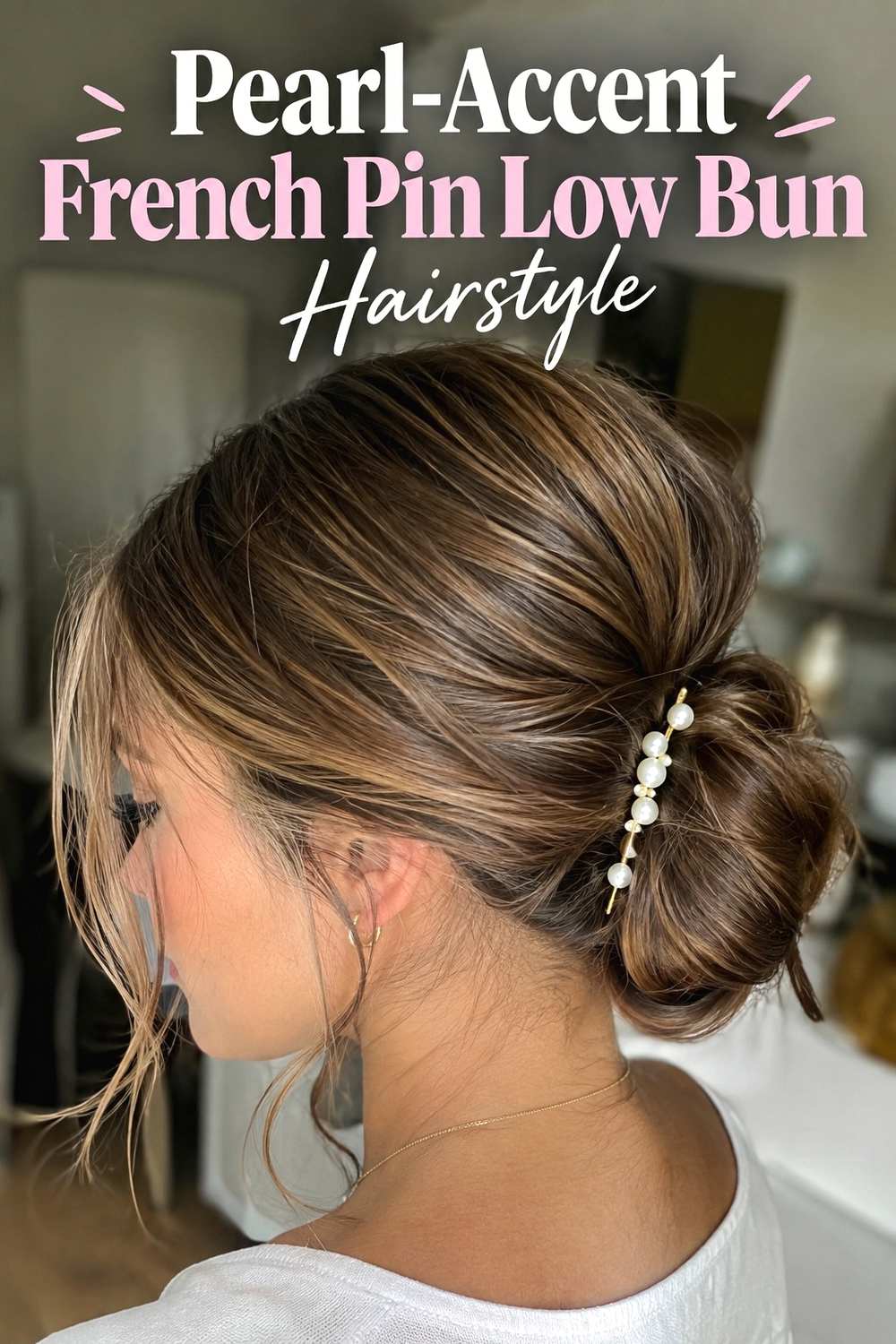
The Pearl-Accent French Pin Low Bun Hairstyle adds a delicate decorative element to an otherwise simple updo. Hair is shaped into a soft or polished low bun, then secured with a French pin featuring pearl details or paired with a few understated pearl accents nearby. Because the accessory already attracts attention, the bun itself can remain clean and uncomplicated. This creates a balanced look that feels suitable for weddings, dinners, celebrations, or any occasion where you want a little extra detail without using an elaborate hairpiece. Choose pearls that suit the scale of the bun so the accessory enhances the style instead of overwhelming it.
Styling Notes
Position the decorative portion of the pin where it can be seen clearly from the back or three-quarter angle while still securing the bun effectively.
Best For
This variation works especially well for bridal looks, formal events, and polished evening outfits that benefit from a subtle accessory.
How to Choose the Right Look
Start with your hair length and density. Medium-length hair often works best with compact twists, tucked knots, and smaller buns, while longer hair gives you more flexibility for double twists, braids, and fuller shapes. Thick hair may need a larger French pin or a couple of discreet support pins, whereas fine hair can benefit from texture spray or light root volume before styling.
Your natural texture can also guide the finish. Straight hair highlights smooth lines and minimalist shapes, waves create effortless dimension, and curls can produce a naturally full bun without needing to be flattened first. If you want low styling time, choose a loose twist or classic low bun. More structured options, including braided and double-twist versions, generally require a little more preparation.
Consider comfort and hold as well. A French pin should anchor the bun without creating uncomfortable tension at the scalp. For all-day wear, keep the bun close to the head and distribute the hair evenly. Finally, match the finish to your occasion: sleek styles feel polished, textured buns feel relaxed, and pearl accents or soft tendrils can bring a more romantic quality to special-event looks.
Final Thoughts
French pin low buns are versatile because small changes in texture, parting, volume, and accessories can completely shift the mood of the style. Start with the version that best matches your natural hair and daily routine, then adjust the amount of polish or softness to suit the occasion.
FAQs
Can a French pin hold a low bun by itself?
It can for many hair types when the bun is twisted securely and the pin catches both the bun and hair near the scalp. Very thick, layered, or slippery hair may benefit from one or two discreet support pins.
What hair length works best for a French pin low bun?
Medium to long hair is generally easiest because there is enough length to form a secure twist. Some shoulder-length cuts can also work if the layers are long enough to stay tucked into the bun.
How do I keep a French pin bun from slipping?
Add a little grip with texture spray, avoid making the twist excessively loose, and insert the pin through part of the bun before catching hair close to the scalp and pushing it back through the style.
Can curly hair be styled into a French pin low bun?
Yes. Curly hair can create a beautifully full, textured bun. You can preserve the natural curl pattern through the crown and bun instead of brushing the hair completely smooth.
Are French pin low buns suitable for formal events?
Yes. Sleek center parts, tucked ends, polished side parts, pearl accents, and softly styled tendrils can all give a French pin low bun a more formal finish.
Save your favorite French pin low bun hairstyles for your next styling day, and explore different textures, parts, and accessories to make the look your own.