14 Oval Layers With Side Bangs Hairstyles
Soft oval layers paired with sweeping side bangs create graceful movement, polished framing, and plenty of options for straight, wavy, or curly hair.
Oval layers are designed to create a rounded, flowing silhouette, with shorter pieces around the face gradually transitioning into longer sections. Adding side bangs makes the front feel softer and more directional, especially when the bangs sweep into cheekbone or jaw-length layers.
The most flattering version depends on your hair length, density, natural texture, and preferred styling routine. Some variations rely on a smooth blowout and visible volume, while others look better with relaxed waves, curls, or piecey separation. Comparing the amount of layering, bang length, and finish can help you choose a look that feels realistic for everyday wear.
Quick List
- Classic Oval Layers With Side Bangs Hairstyle
- Long Oval Layers With Side Bangs Hairstyle
- Medium Oval Layers With Side Bangs Hairstyle
- Soft Face Framing Oval Layers With Side Bangs Hairstyle
- Voluminous Oval Layers With Side Bangs Hairstyle
- Feathered Oval Layers With Side Bangs Hairstyle
- Wavy Oval Layers With Side Bangs Hairstyle
- Curly Oval Layers With Side Bangs Hairstyle
- Sleek Oval Layers With Side Bangs Hairstyle
- Textured Oval Layers With Side Bangs Hairstyle
- Shoulder Length Oval Layers With Side Bangs Hairstyle
- Blowout Oval Layers With Side Bangs Hairstyle
- Piecey Oval Layers With Side Bangs Hairstyle
- Glamorous Oval Layers With Side Bangs Hairstyle
1. Classic Oval Layers With Side Bangs Hairstyle
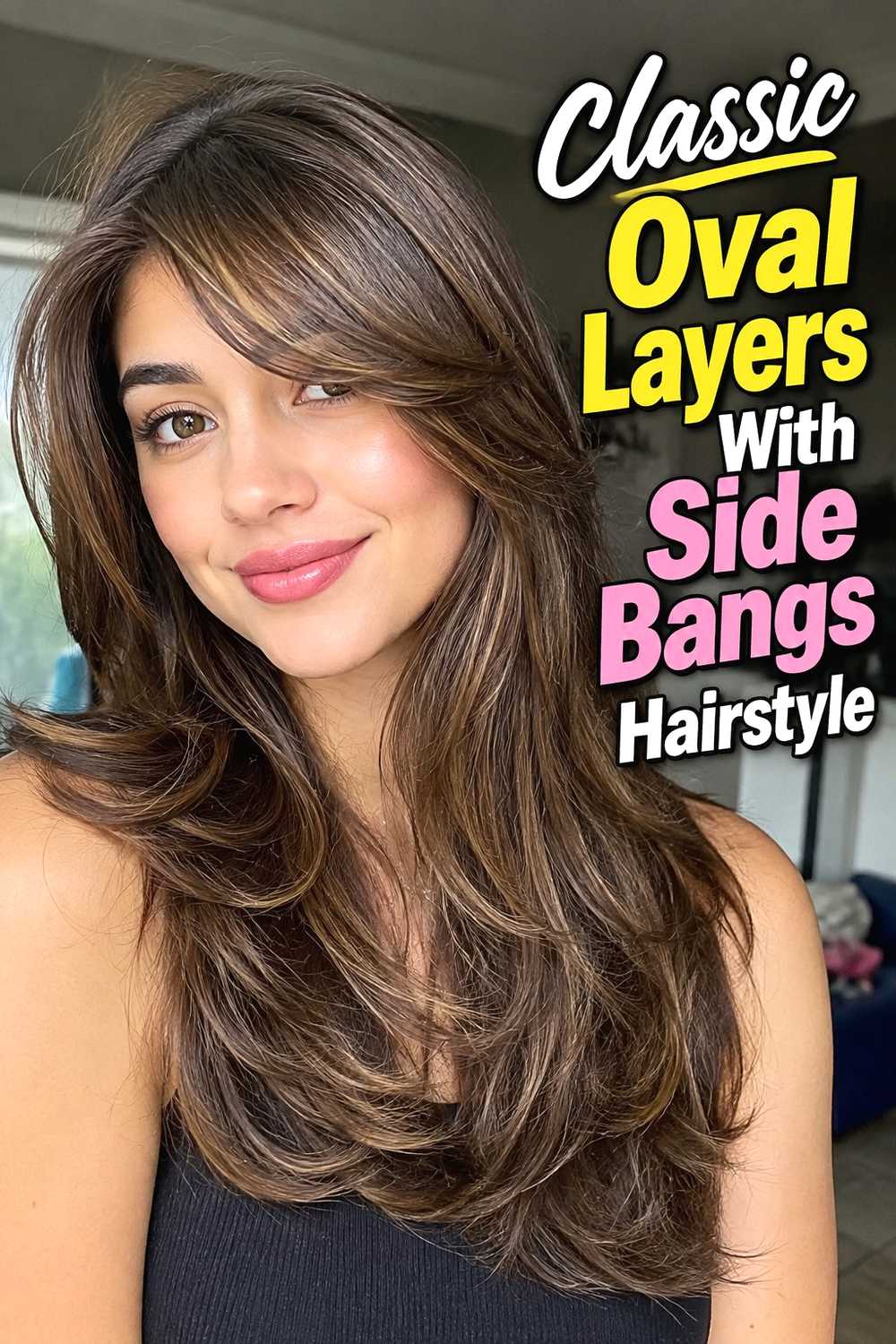
The classic version uses smoothly graduated layers to create a softly rounded outline from the crown through the ends. Side bangs sweep diagonally across the forehead and blend into shorter cheekbone-level pieces, making the front feel connected rather than separate from the rest of the cut. The overall effect is polished but not overly structured, with enough movement to prevent longer hair from looking heavy. This variation works especially well with a soft blowout that curves the layers inward and outward in alternating sections. Keeping the perimeter reasonably full is important, since excessive thinning can weaken the elegant oval shape and make the ends appear sparse.
Styling Notes
Use a medium or large round brush to create gentle bends rather than tight curls. Direct the side bangs across the forehead before turning the ends slightly away from the face.
Best For
This version is a versatile choice for medium to long hair when you want noticeable layering without an overly choppy finish.
2. Long Oval Layers With Side Bangs Hairstyle
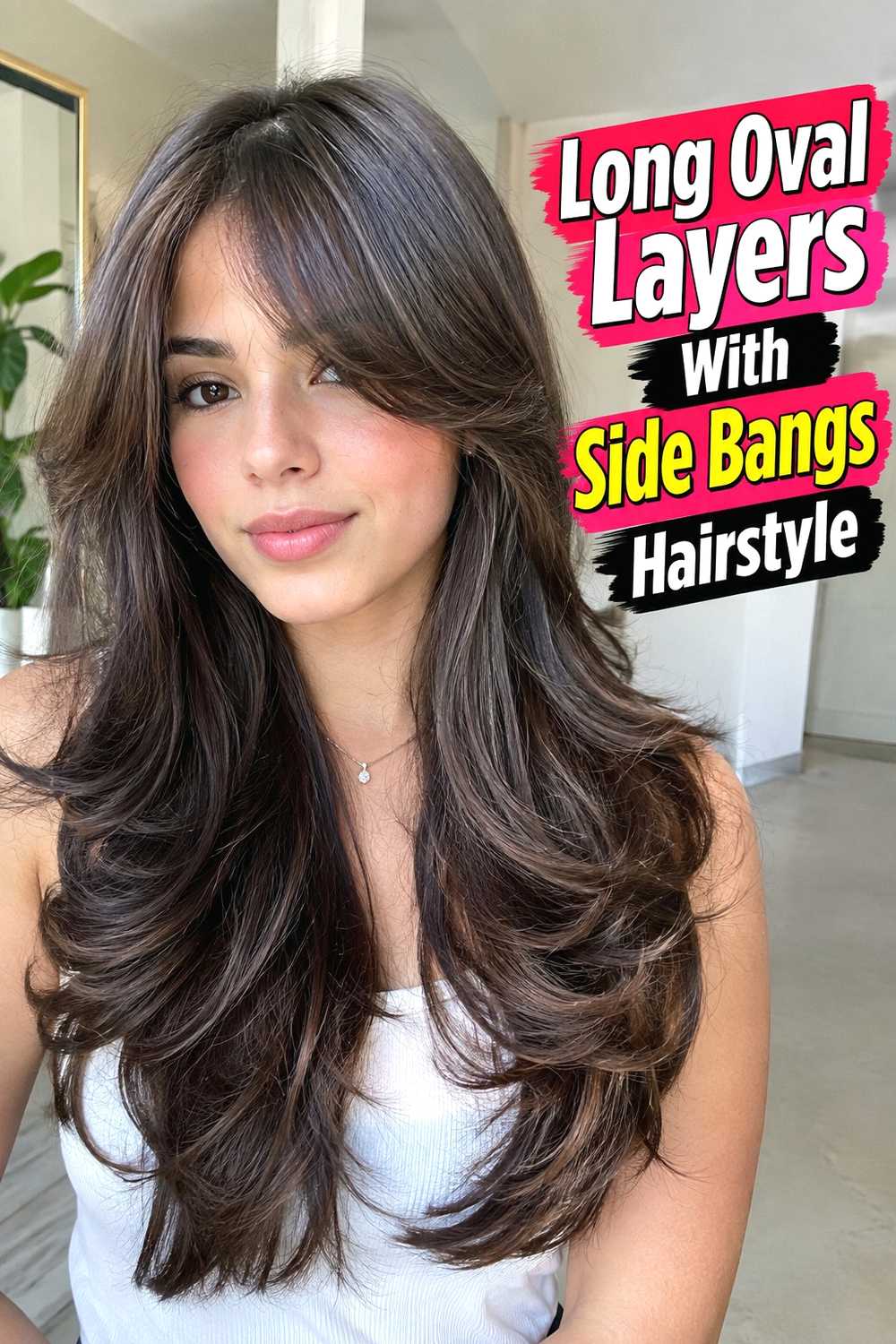
Long oval layers preserve substantial length while introducing enough graduation to keep the silhouette fluid. The shortest layers can begin around the cheekbones or jaw, then flow into longer sections through the chest-length ends. Side bangs bring attention to the front without requiring a full fringe, and they can be worn softly across the forehead or tucked into the surrounding layers. This version is particularly attractive when the hair has natural weight and movement, since the longer lengths emphasize the cascading structure. A broad, smooth bend through the mid-lengths helps reveal each layer without making the hair look overly curled. Regular end trims also keep the long perimeter looking clean and substantial.
Hair Type & Length
Chest-length or longer hair gives the gradual oval structure plenty of space to develop, especially on medium-density or fuller hair.
Wear & Maintenance
The longer shape can stretch out between trims, so refreshing the face-framing pieces periodically helps maintain definition.
3. Medium Oval Layers With Side Bangs Hairstyle
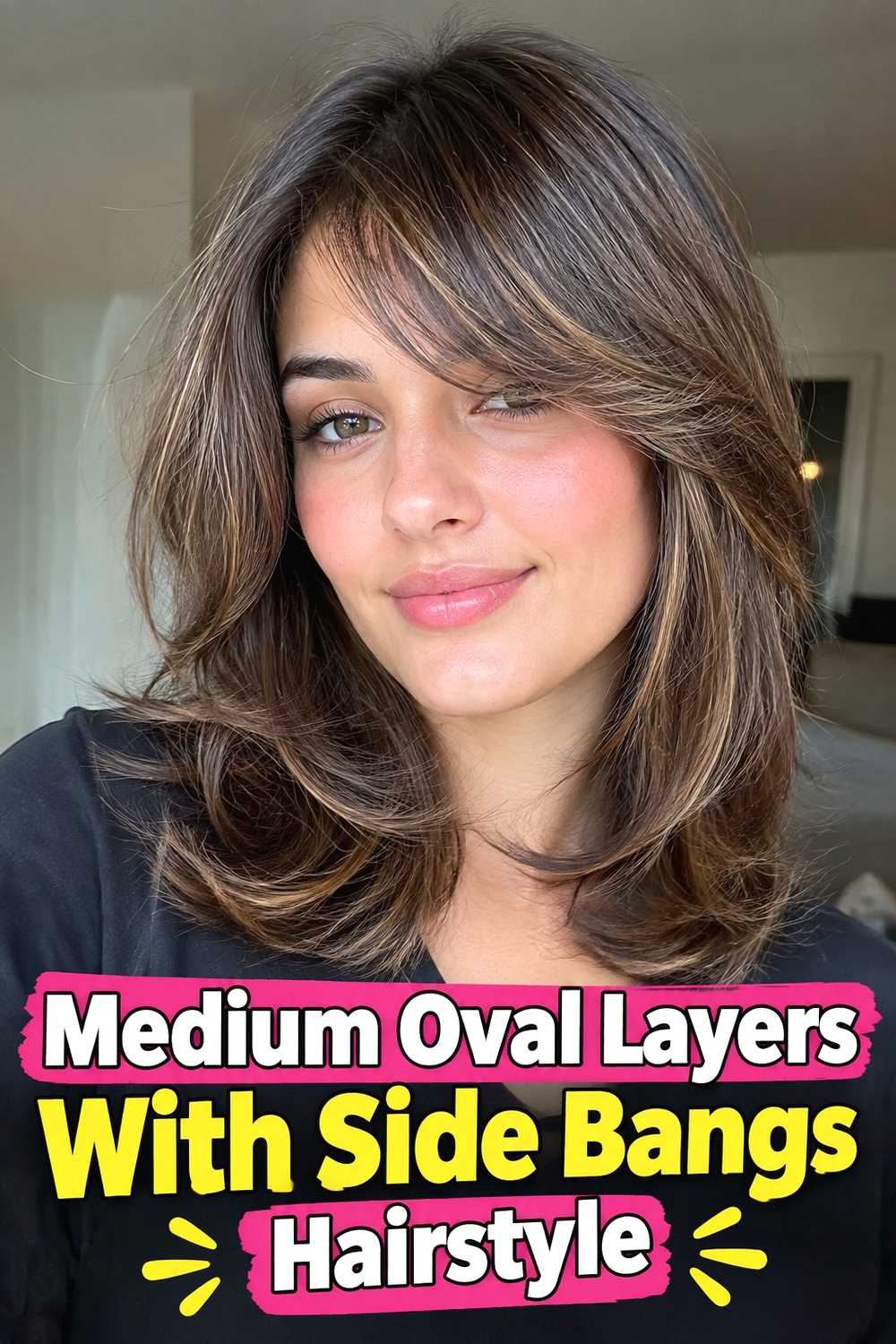
Medium-length hair gives oval layering a naturally buoyant appearance because there is less weight pulling the shape downward. When the cut falls around the shoulders or upper chest, the layers can curve around the face and collarbone with visible movement. Side bangs make the transition at the front feel especially soft, and a longer bang can easily blend into the first layer when you want a more subtle result. This style can work with straight, softly wavy, or lightly curled finishes. The key is keeping the layers connected so the top does not look detached from the lower section. A smooth perimeter also prevents the medium length from appearing unnecessarily thin.
Why It Works
The shorter overall length allows the layers to lift more easily, creating visible shape without requiring extreme volume.
Pro Tip
Ask for enough length in the side bangs to sweep naturally rather than falling directly into the eyes.
4. Soft Face Framing Oval Layers With Side Bangs Hairstyle
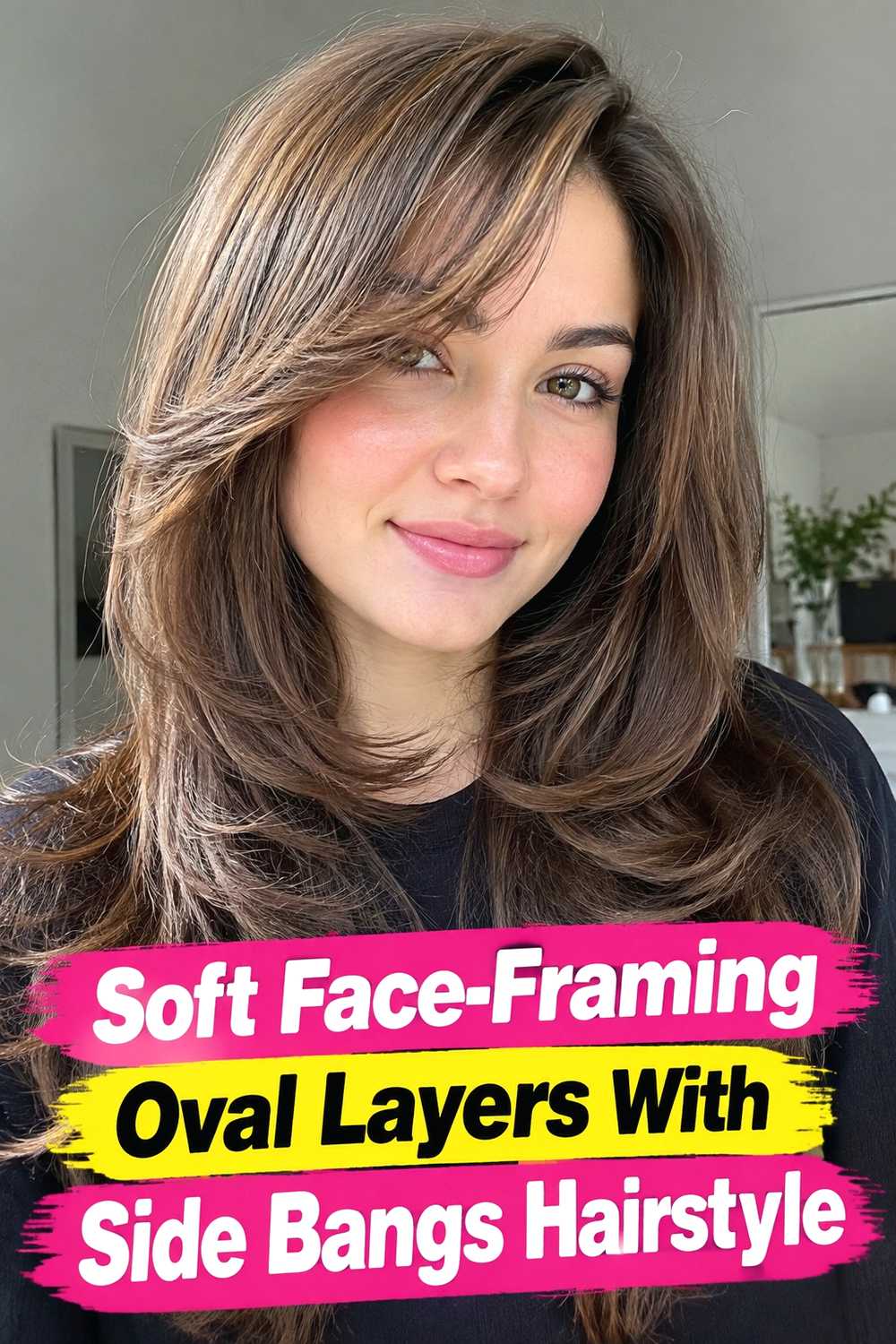
This variation concentrates most of the layering around the face while leaving the back comparatively full. Cheekbone, jaw, and collarbone pieces create a rounded frame that follows the natural flow of the haircut, while the side bangs merge smoothly into the shortest layers. The result feels soft and feminine without dramatically changing the overall density of the hair. It is a useful approach if you want more movement near the front but are cautious about heavy layering throughout the interior. A subtle bend away from the face can emphasize the framing sections beautifully. Because the cut depends on seamless graduation, the transitions should look blended rather than stepped or disconnected.
Best For
This approach suits anyone who wants visible framing while preserving fullness through the sides and back.
Styling Notes
Style the bangs and first face-framing layer in the same direction so they read as one continuous sweep.
5. Voluminous Oval Layers With Side Bangs Hairstyle
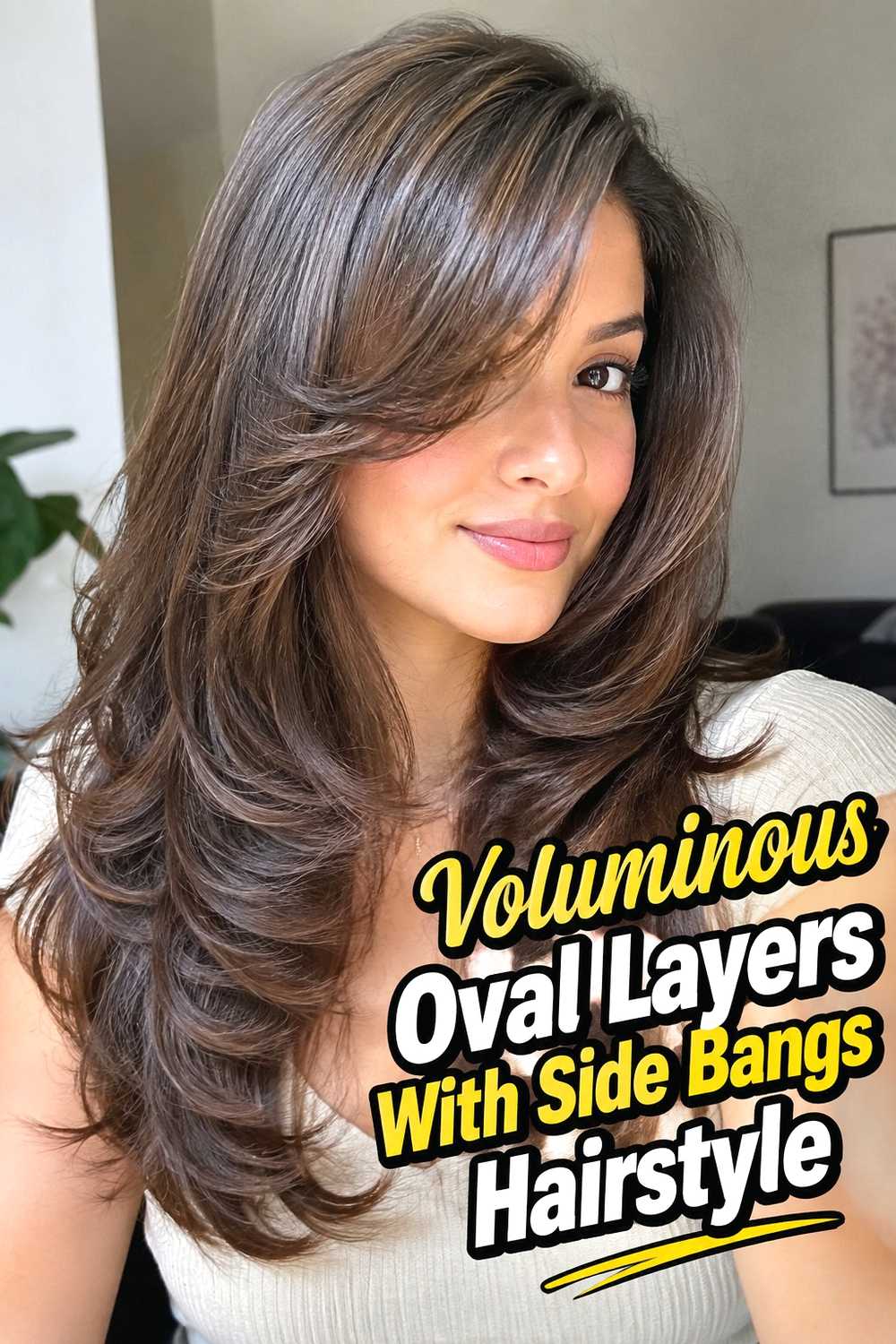
Voluminous oval layers create a fuller, more dramatic interpretation of the cut. The crown receives lift, the mid-lengths curve outward, and the ends maintain enough density to keep the rounded silhouette balanced. Side bangs sweep across the forehead and usually blend into a broader front section, giving the style a glamorous but still wearable finish. Hair with medium to high density can support this shape particularly well, although fine hair may also achieve it with careful styling and lighter products. Large rollers or a round-brush blowout can create the necessary body. Avoid using too much oil or heavy cream at the roots, since extra weight can quickly flatten the top.
Styling Notes
Focus volume at the crown and upper sides while keeping the ends smooth and controlled. This helps the haircut look full rather than puffy.
Wear & Maintenance
The polished volume requires more styling than relaxed versions, making it well suited to events or days when you want a more finished look.
6. Feathered Oval Layers With Side Bangs Hairstyle
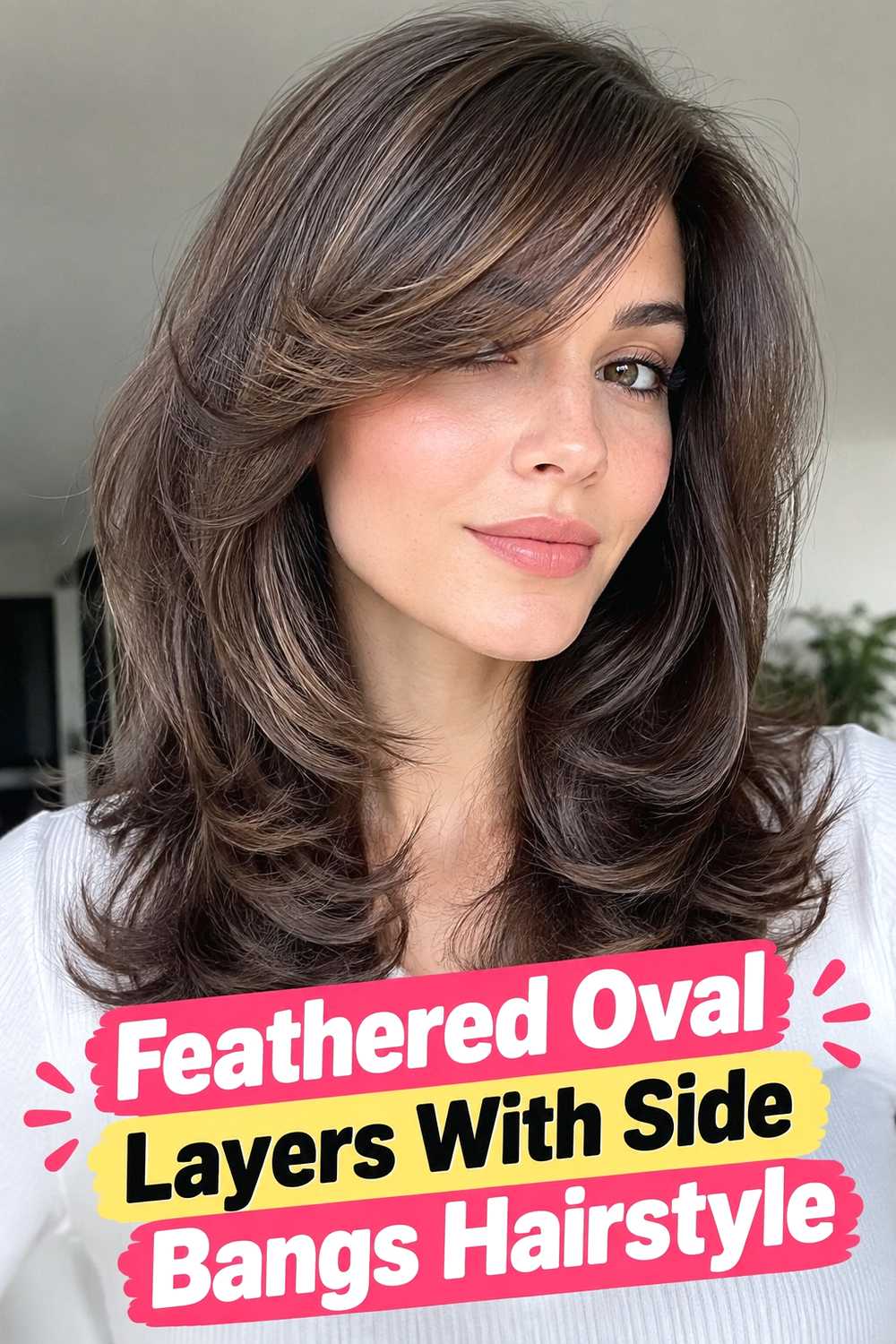
Feathered oval layers introduce lighter, outward-sweeping ends that make the haircut feel airy and mobile. Instead of forming heavy rounded sections, the layers taper gently and fan away from the face, especially around the cheeks and shoulders. Side bangs reinforce that direction by sweeping diagonally and merging into the feathered front pieces. This variation looks especially effective on straight to softly wavy hair where the ends can be shaped clearly. A round brush or large hot roller can create the feathered movement without producing tight curls. Maintaining enough density through the bottom is important, because overly aggressive thinning can turn a soft feathered effect into wispy, uneven ends.
Hair Type & Length
Medium to long straight or softly wavy hair makes the feathered edges easiest to see and style.
Pro Tip
Direct the ends away from the face and allow them to cool before separating them lightly with your fingers.
7. Wavy Oval Layers With Side Bangs Hairstyle
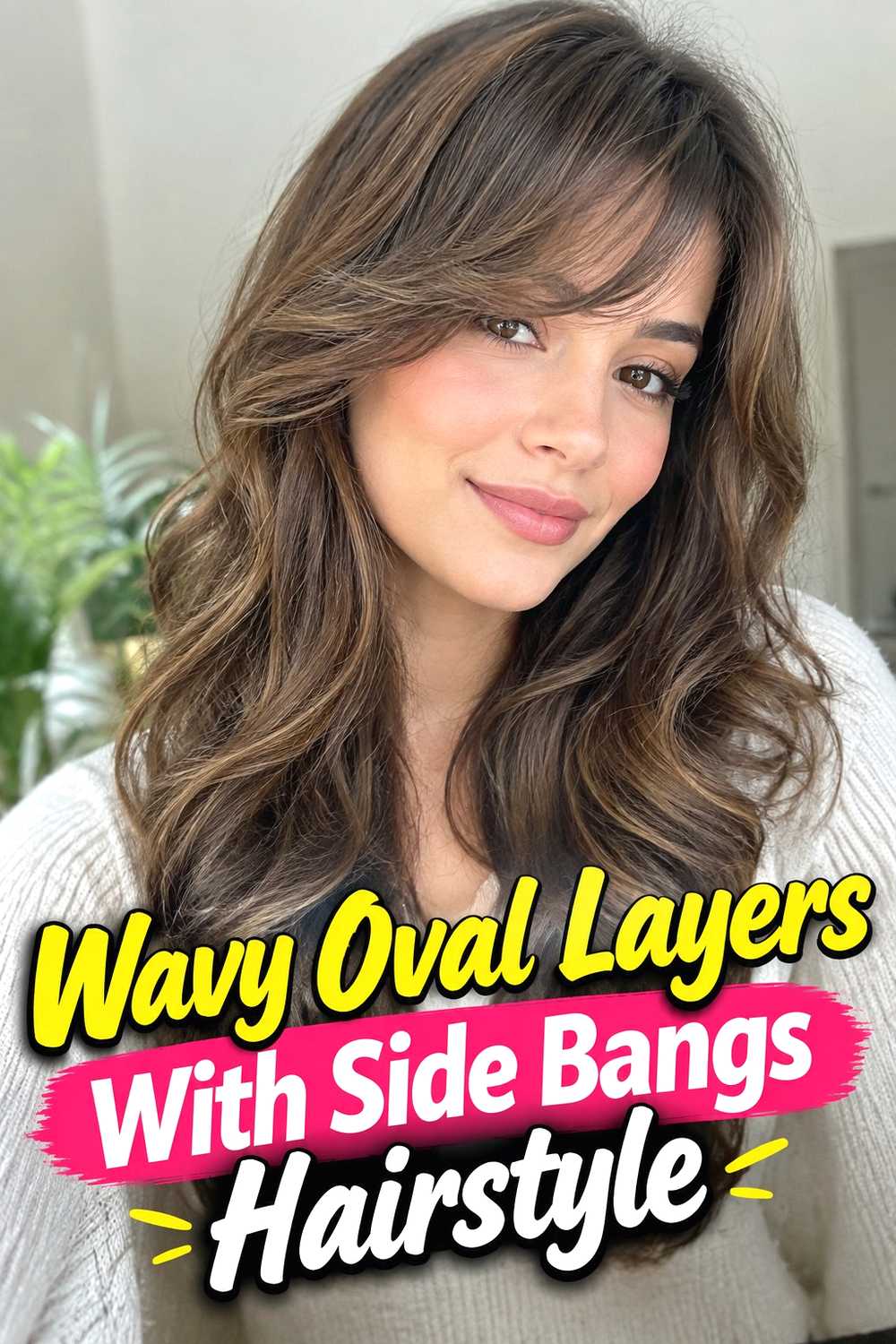
Loose waves emphasize the dimension of oval layers by creating gentle movement at different lengths. The side bangs can remain smooth with a slight bend while the rest of the hair falls into relaxed S-shaped waves, keeping the front from becoming too busy. Around the face, shorter layers help the waves sit higher and add softness near the cheeks and jaw. This variation is ideal for a less structured finish than a full salon blowout. Natural waves can be encouraged with lightweight styling products, while straighter hair can recreate the look with a large curling iron or flat iron. Leaving the ends slightly relaxed gives the style a more modern, effortless appearance.
Styling Notes
Alternate a few wave directions through the mid-lengths, but keep the layers closest to the face moving away from it for a cleaner frame.
Wear & Maintenance
The relaxed finish adapts well to second-day texture and usually does not require every section to look identical.
8. Curly Oval Layers With Side Bangs Hairstyle
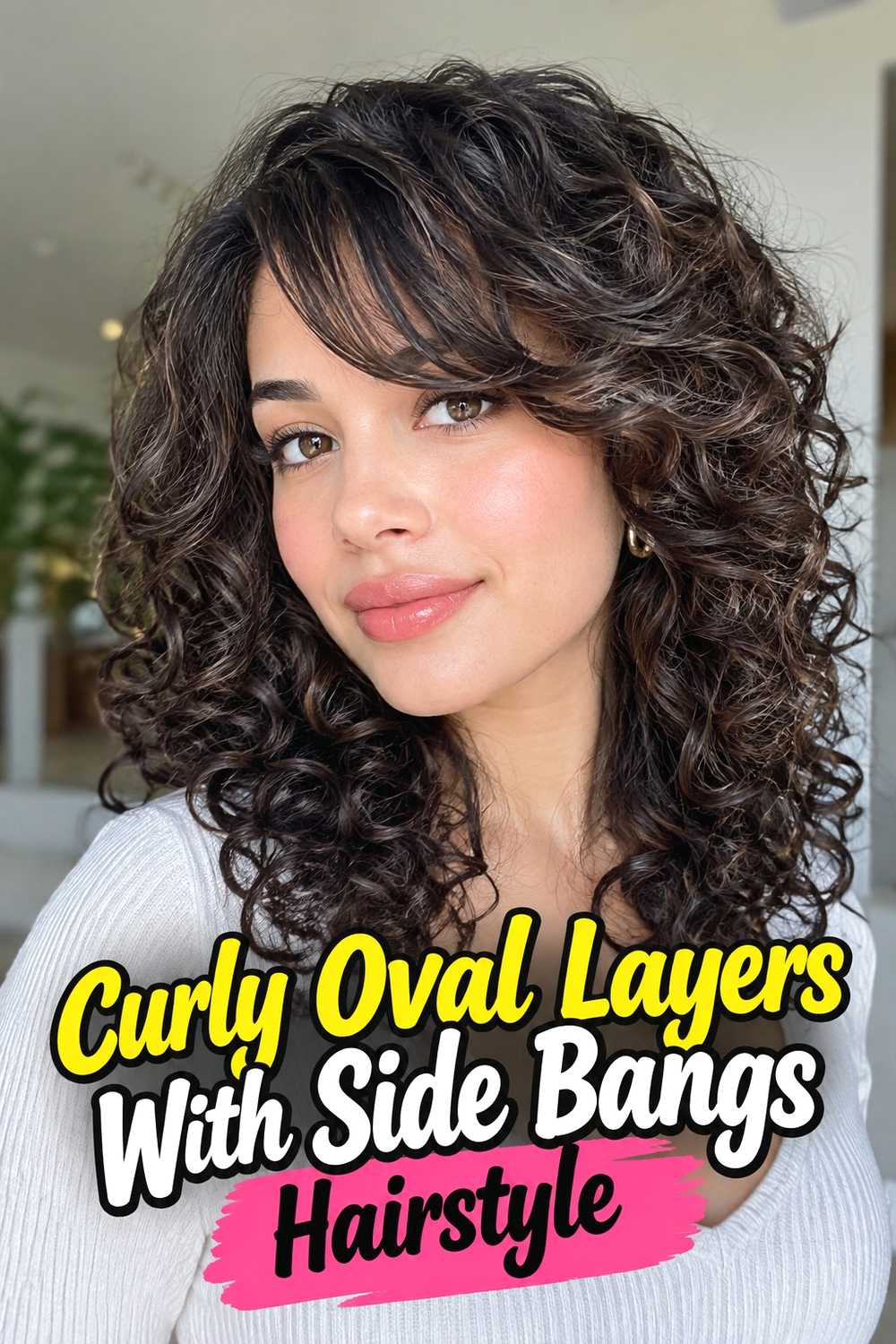
Curly hair brings natural depth and movement to an oval-layered shape. Graduated lengths allow curls to sit at different heights, helping reduce the appearance of one heavy, triangular perimeter. Side bangs can be cut long enough to follow the natural curl pattern and sweep across the forehead without needing to be straightened. The front layers should connect carefully to the fringe so the entire shape feels intentional. Because curl shrinkage varies from section to section, dry length matters when planning the shortest pieces. Styling is usually most successful when the curls retain individual definition and natural variation rather than being brushed into a uniform shape after drying.
Hair Type & Length
Naturally curly medium or long hair can showcase the layered structure beautifully when the cut accounts for shrinkage and density.
Pro Tip
Discuss how you normally part and dry your curls before cutting the side bangs, since both factors affect their finished position.
9. Sleek Oval Layers With Side Bangs Hairstyle
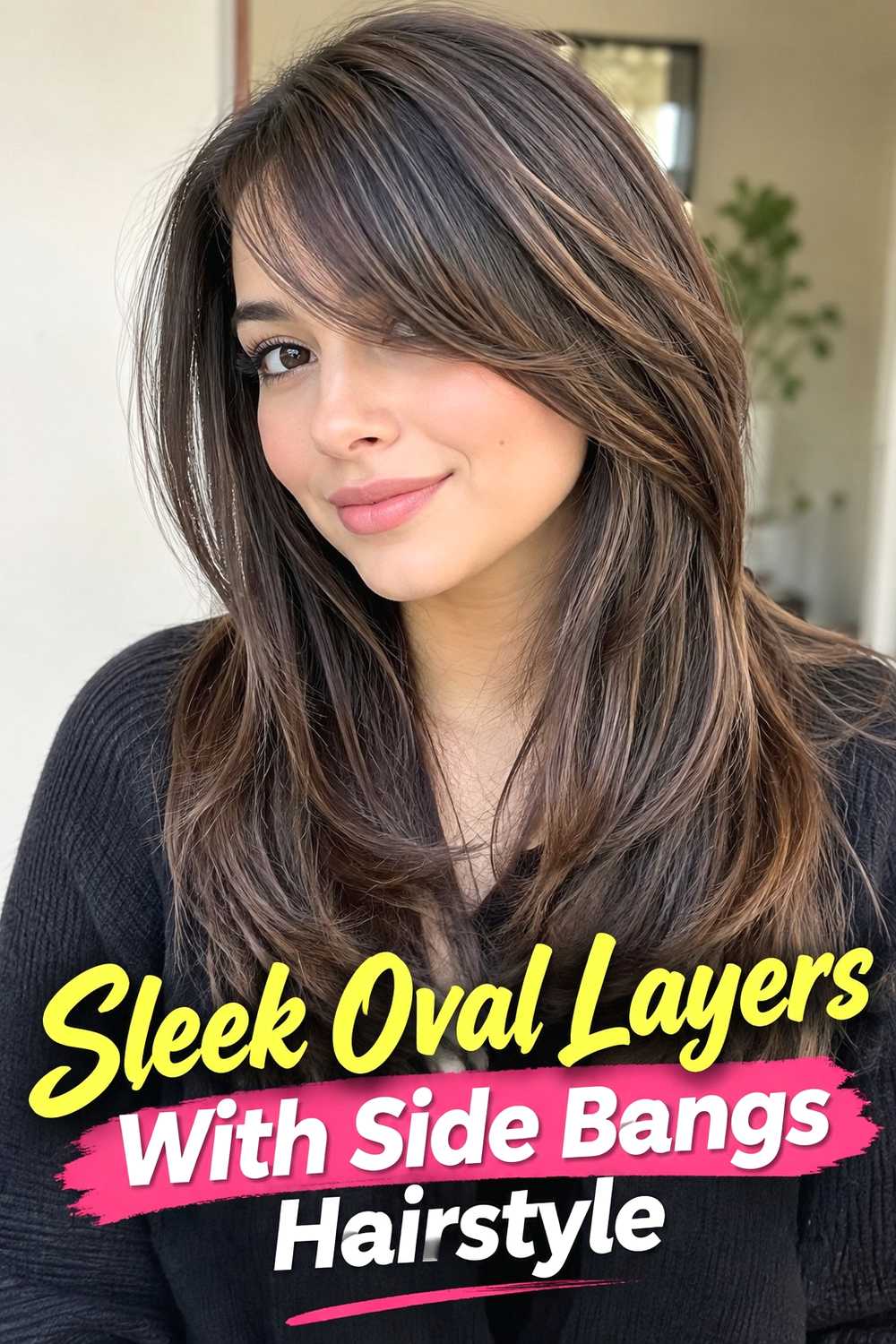
A sleek finish makes oval layers look refined without hiding their shape. The hair remains smooth from roots to ends, while subtle bends around the face reveal the graduated lengths. Side bangs sweep neatly across the forehead and transition into polished cheekbone or jaw-level pieces. This variation is especially attractive if you prefer controlled movement rather than dramatic volume. Straight hair can achieve the look with minimal shaping, while wavy textures may need more smoothing. The main goal is avoiding an overly flat result. Maintaining a small amount of root lift and curvature through the ends allows the oval silhouette to remain visible even when the surface is glossy and streamlined.
Styling Notes
Smooth the hair without pressing it completely flat. Add a slight curve to the ends so the different layers remain distinct.
Best For
This finish works especially well for naturally straight or easily smoothed textures and for occasions that call for a polished appearance.
10. Textured Oval Layers With Side Bangs Hairstyle
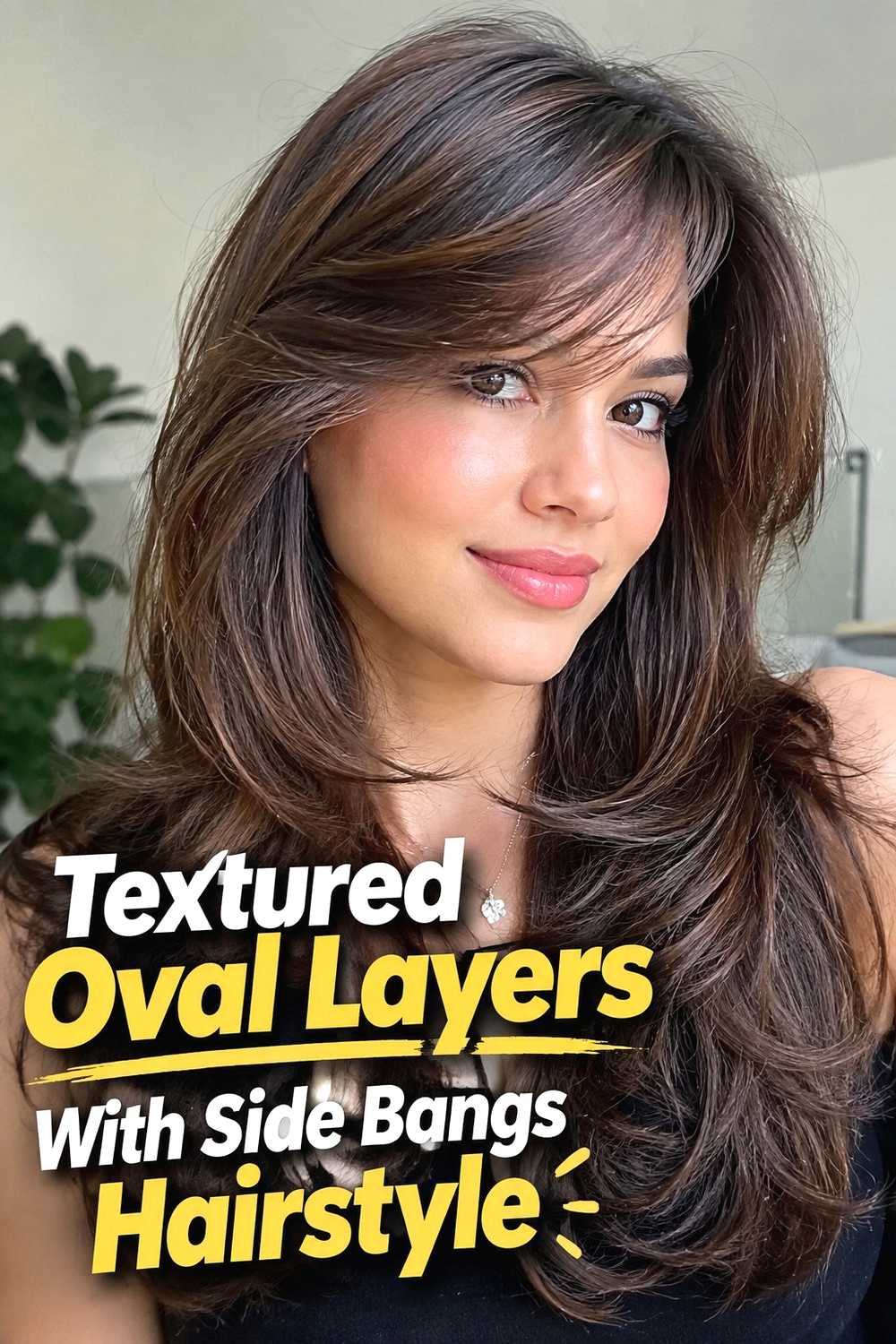
Textured oval layers have more separation through the ends, creating a casual, lived-in interpretation of the cut. Instead of forming one smooth curtain of hair, individual sections remain visible, giving the layers extra definition and movement. Side bangs can be styled with a soft sweep and a slightly piecey finish so they coordinate with the rest of the texture. This version works particularly well if you like a less formal hairstyle that does not depend on a perfect blowout. A small amount of lightweight texture spray or styling cream can emphasize separation through the mid-lengths. Applying too much near the fringe, however, can make the bangs look oily or stringy rather than deliberately soft.
Why It Works
Visible separation makes the layered structure easy to appreciate while giving the hairstyle a relaxed, modern character.
Wear & Maintenance
The finish is forgiving as it moves during the day, and minor irregularities tend to add to the intentionally textured effect.
11. Shoulder Length Oval Layers With Side Bangs Hairstyle
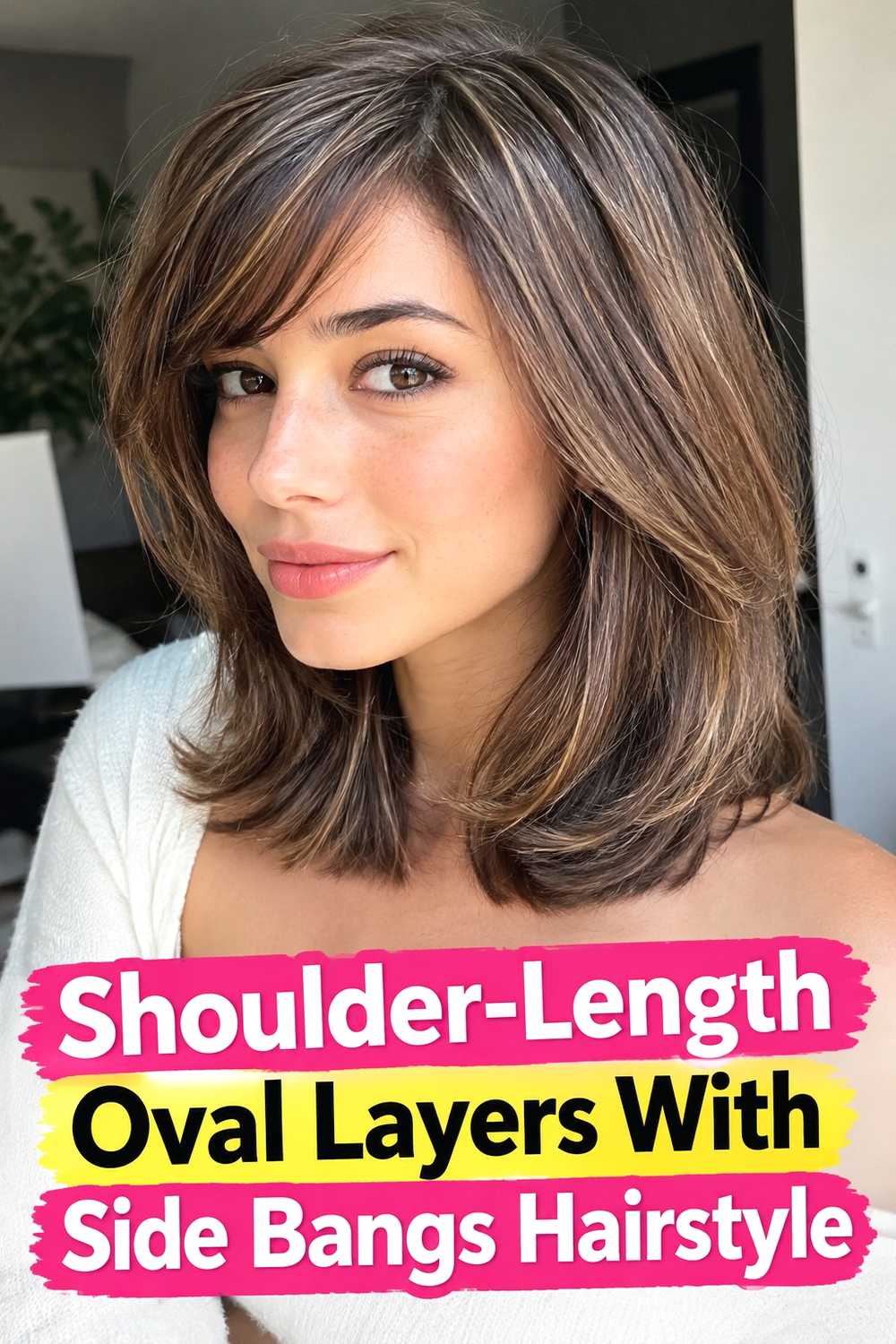
At shoulder length, oval layers create a compact, bouncy silhouette with plenty of visible movement around the neckline. The shorter overall length means each layer has less weight, helping the shape lift naturally without requiring exaggerated styling. Side bangs soften the front and can connect into cheekbone-length pieces that curve neatly around the face. This haircut can feel polished with a blowout or more casual when styled with loose bends. Because the ends sit close to the shoulders, they may flip naturally depending on texture and clothing, which can become part of the look. Keeping the perimeter clean helps the haircut maintain a deliberate rounded shape rather than appearing uneven.
Best For
This variation is useful if you want the softness of layered hair in a more manageable medium length.
Styling Notes
A gentle inward bend at some ends and an outward turn at others can keep the shoulder-length shape lively without looking overly styled.
12. Blowout Oval Layers With Side Bangs Hairstyle
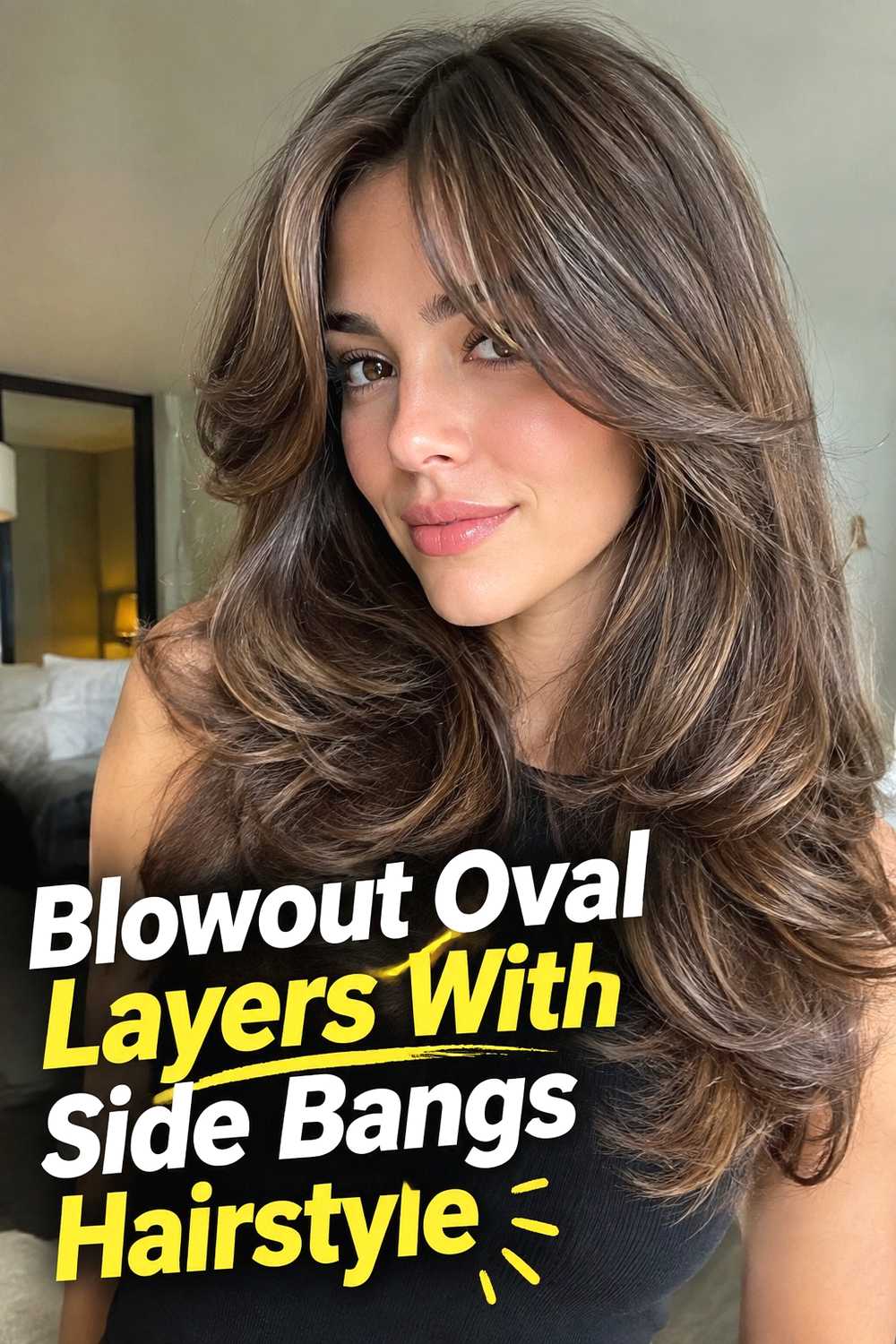
The blowout version showcases the full potential of oval layers by emphasizing smooth volume, rounded movement, and a polished surface. The side bangs are lifted slightly at the roots before sweeping across the forehead, while the surrounding layers curve outward and backward for a flowing finish. Longer sections retain broad bends rather than tight curls, helping the haircut maintain an elegant, elongated shape. A round brush, large rollers, or a blow-dry brush can all help create this effect. Cooling each section before brushing it out allows the bends to settle more clearly. Lightweight finishing products are preferable so the hairstyle keeps its bounce instead of becoming weighed down.
Styling Notes
Work in larger sections to create broad curves, and direct the front layers away from the face for a smooth, open shape.
Wear & Maintenance
This finish takes more time than natural-texture versions but creates a noticeably polished result for photos, events, or special occasions.
13. Piecey Oval Layers With Side Bangs Hairstyle
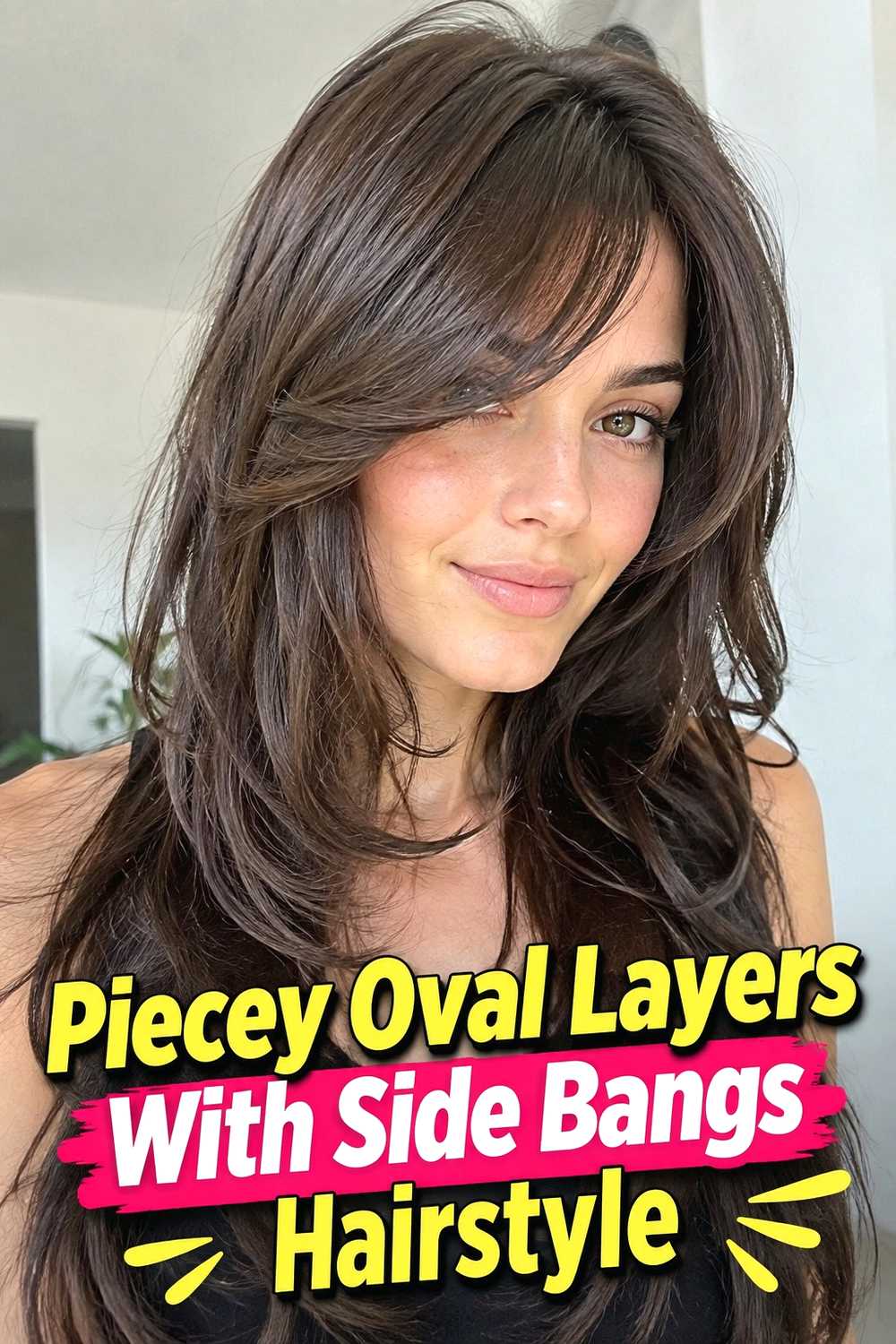
Piecey oval layers emphasize defined sections rather than a completely blended surface. The overall silhouette still follows a soft rounded shape, but small strands and ends remain visibly separated to create a lighter, more casual finish. Side bangs can be divided into a few delicate sections, allowing them to sweep naturally without looking like a solid block of hair. This look is especially effective on straight to wavy textures that respond well to lightweight styling products. A tiny amount of flexible cream or texture spray can help define the ends, but restraint is important. Too much product may collapse the movement and make the fringe look greasy instead of softly separated.
Why It Works
The piecey finish brings attention to the individual layers and adds texture without requiring dramatic curls or oversized volume.
Pro Tip
Apply product mainly through the ends, then use whatever remains on your fingers to shape the side bangs lightly.
14. Glamorous Oval Layers With Side Bangs Hairstyle
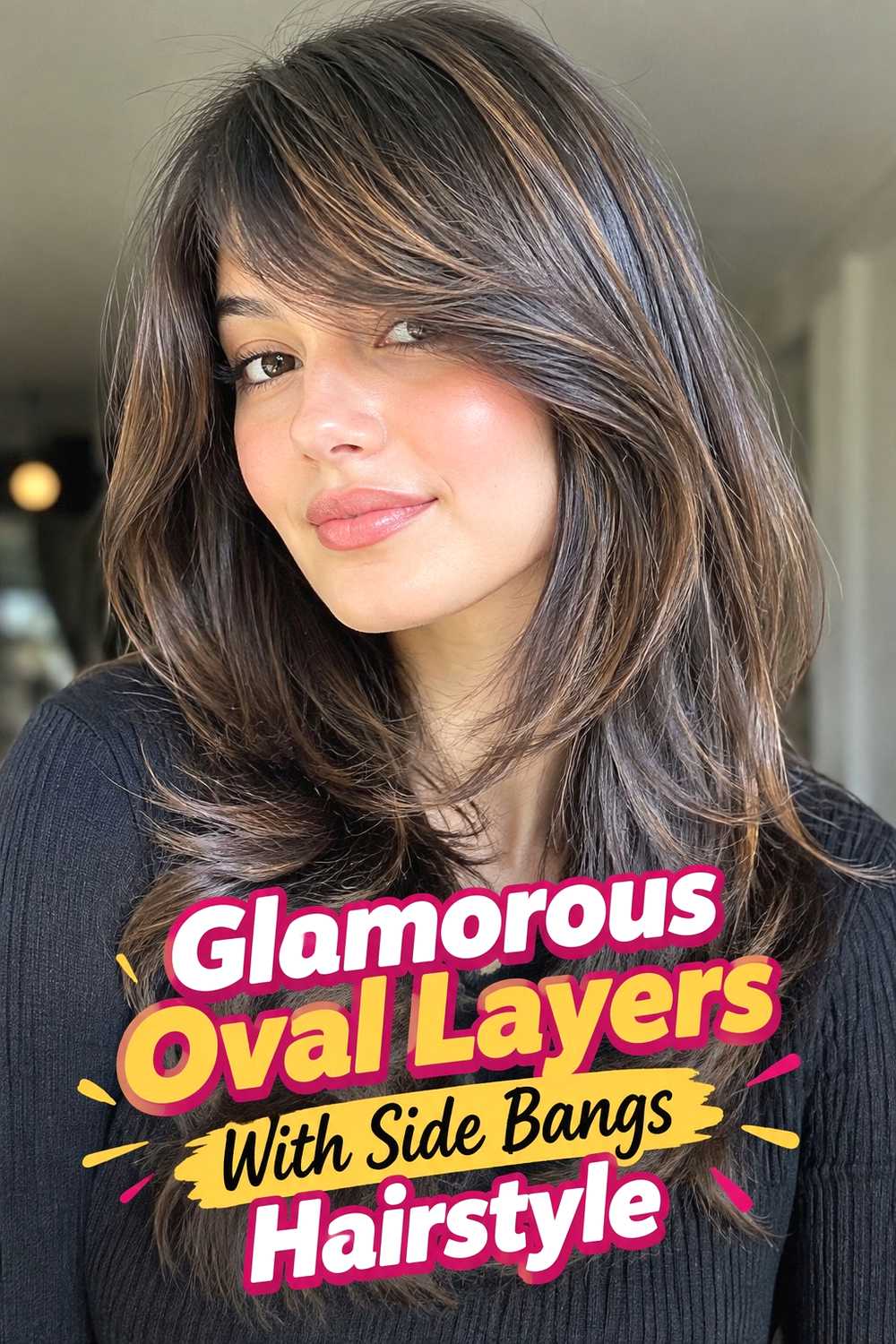
Glamorous oval layers combine smooth shine, lifted roots, broad curls, and sweeping side bangs for the most polished variation in the collection. The front pieces curve away from the face before flowing into longer, rounded sections, creating a deliberate salon-inspired silhouette. Side bangs add softness while maintaining enough structure to stay visible within the fuller style. Large rollers or a round-brush blowout work especially well because they produce wide bends rather than tight ringlets. Once the hair cools, gently brushing the sections together creates a unified finish with plenty of movement. This style works best when the ends remain substantial, since a fuller perimeter balances the volume through the crown and upper layers.
Best For
Choose this version when you want a dressier, more noticeable interpretation of oval layers with a smooth and voluminous finish.
Pro Tip
Brush through cooled curls gently instead of separating every curl individually to create broad, polished waves.
How to Choose the Right Look
Start with your current length and density. Long hair gives oval layers more room to cascade gradually, while medium and shoulder-length cuts often produce a naturally bouncier result. If preserving fullness is important, choose softer face-framing layers rather than removing significant weight throughout the entire haircut.
Texture also affects how the shape behaves. Straight hair can showcase sleek graduation and feathered ends clearly, while waves and curls create more natural volume and variation. Fine hair may benefit from keeping the perimeter relatively strong, whereas very dense hair can sometimes handle more internal shaping without losing its overall fullness.
Consider the side bangs carefully as well. Longer bangs are easier to blend, tuck, or grow out, while shorter versions create a more noticeable focal point. Your preferred part and natural growth pattern will influence how easily the fringe sweeps into place.
Finally, think about daily styling. Sleek, textured, wavy, and piecey versions can feel relatively relaxed, while voluminous, blowout, and glamorous finishes usually need more deliberate shaping. Choose a variation that works with the amount of styling time and maintenance you realistically enjoy.
Final Thoughts
Oval layers with side bangs offer plenty of flexibility because the same basic shape can be adapted to different lengths, textures, and finishes. A softer face-framing cut can preserve fullness, while feathered or voluminous versions create more visible movement. The best choice is the one that works naturally with your density, part, texture, and styling routine rather than relying on constant effort to maintain the finished shape.
FAQs
1. What are oval layers with side bangs?
Oval layers use graduated lengths to create a soft, rounded silhouette, while side bangs sweep across the forehead and blend into the shorter face-framing sections.
2. Do oval layers work on medium-length hair?
Yes. Shoulder to upper-chest lengths can create a particularly bouncy oval shape because the shorter hair carries less weight.
3. Can side bangs blend into layered hair?
Yes. Longer side bangs can transition naturally into cheekbone, jaw, or collarbone layers, creating a softer and more connected front section.
4. Are oval layers suitable for curly hair?
They can work well on curly textures when the layer lengths account for shrinkage, density, and the way the curls naturally sit when dry.
5. Do oval layers require a blowout every day?
No. A blowout can emphasize the rounded structure, but waves, curls, sleek styling, and natural texture can also show the layered shape effectively.
Save your favorite oval-layer look, share it for future inspiration, and explore more hairstyle ideas suited to your length, texture, and everyday routine.