12 Short Bottleneck Fringe With Shag Layers Ideas
Short bottleneck fringe brings a soft pinch at the center and longer outer pieces, while shag layers add the movement that makes the shape feel effortless.
A bottleneck fringe is shorter through the middle and gradually lengthens toward the temples, creating a curved frame that can blend beautifully into shag layers. On shorter hair, that transition becomes especially noticeable because the fringe and face-framing pieces form an important part of the overall silhouette.
The best version depends on texture, density, and how much separation you want. Soft waves can make the shape relaxed, curls add spring and volume, while straighter hair can show off feathered or razor-cut detail. Since both shag layers and fringe affect how the hair falls around the face, choosing proportions that work with your natural growth pattern can make daily styling much easier.
Quick List
- Soft Bottleneck Fringe Shag Hairstyle
- Choppy Bottleneck Fringe Layered Shag Hairstyle
- Wavy Bottleneck Fringe Shag Hairstyle
- Feathered Bottleneck Fringe Short Shag Hairstyle
- Curly Bottleneck Fringe Mini Shag Hairstyle
- Piecey Bottleneck Fringe Tousled Shag Hairstyle
- Rounded Bottleneck Fringe Shag Bob Hairstyle
- Razor Cut Bottleneck Fringe Shag Hairstyle
- Airy Bottleneck Fringe Fine Hair Shag Hairstyle
- Voluminous Bottleneck Fringe Thick Hair Shag Hairstyle
- Sleek Bottleneck Fringe Soft Shag Hairstyle
- Messy Bottleneck Fringe Cropped Shag Hairstyle
1. Soft Bottleneck Fringe Shag Hairstyle
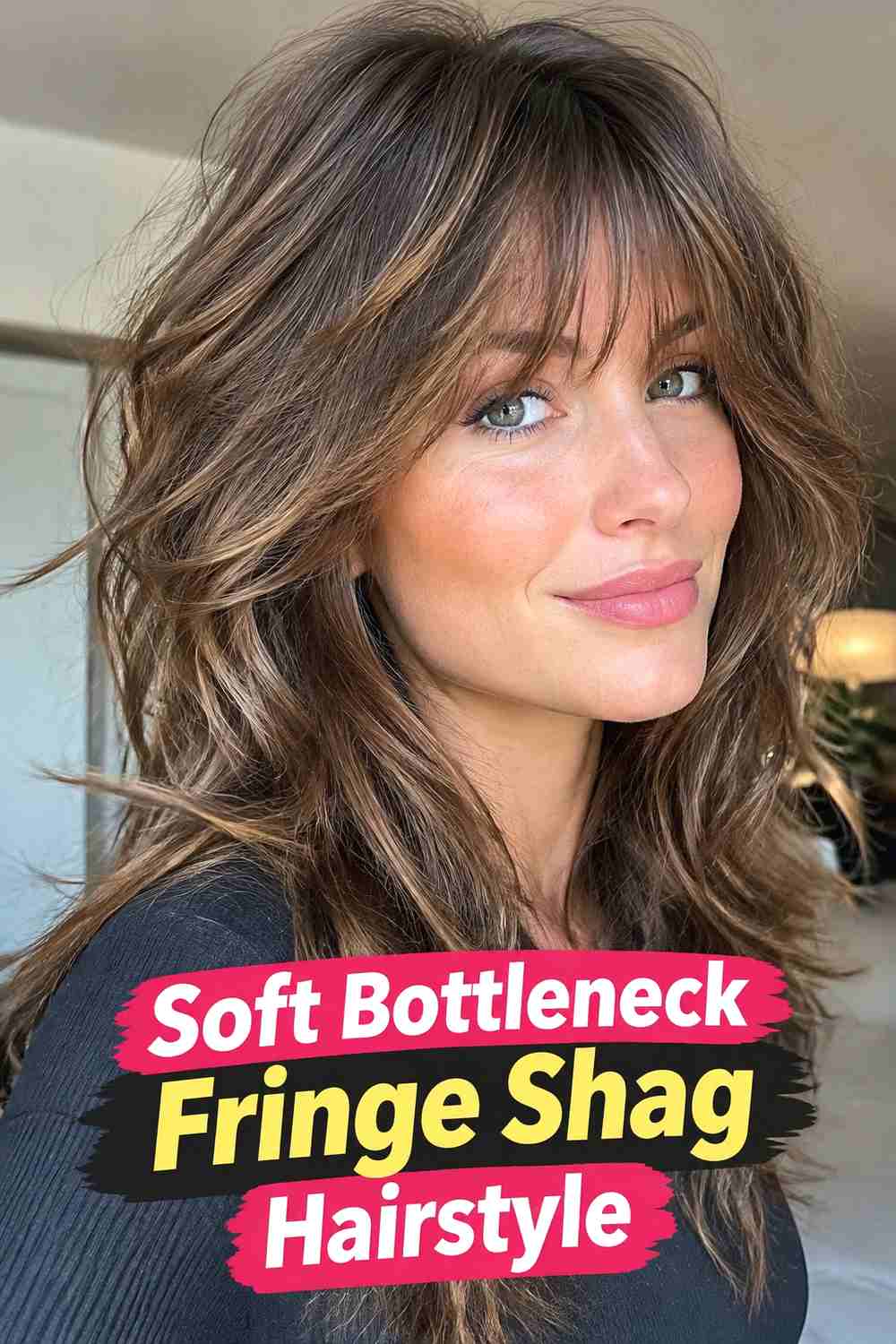
A soft bottleneck fringe gives a short shag a gentle focal point without creating a heavy wall of bangs. The center of the fringe stays shorter, while the outer sections gradually lengthen and melt into cheekbone-level layers. Through the rest of the cut, connected shag layers create movement around the crown and ends without making the silhouette overly jagged. This version works particularly well when you want texture that still looks polished enough for everyday wear. A slight bend through the mids can reveal the layer pattern, but the haircut should also look natural when air-dried. Keeping the perimeter soft and lightly broken up prevents the shorter length from appearing too round or bulky.
Styling Notes
Direct the fringe slightly outward at the edges so its bottleneck curve remains visible. Use a light cream through the ends for soft separation.
2. Choppy Bottleneck Fringe Layered Shag Hairstyle
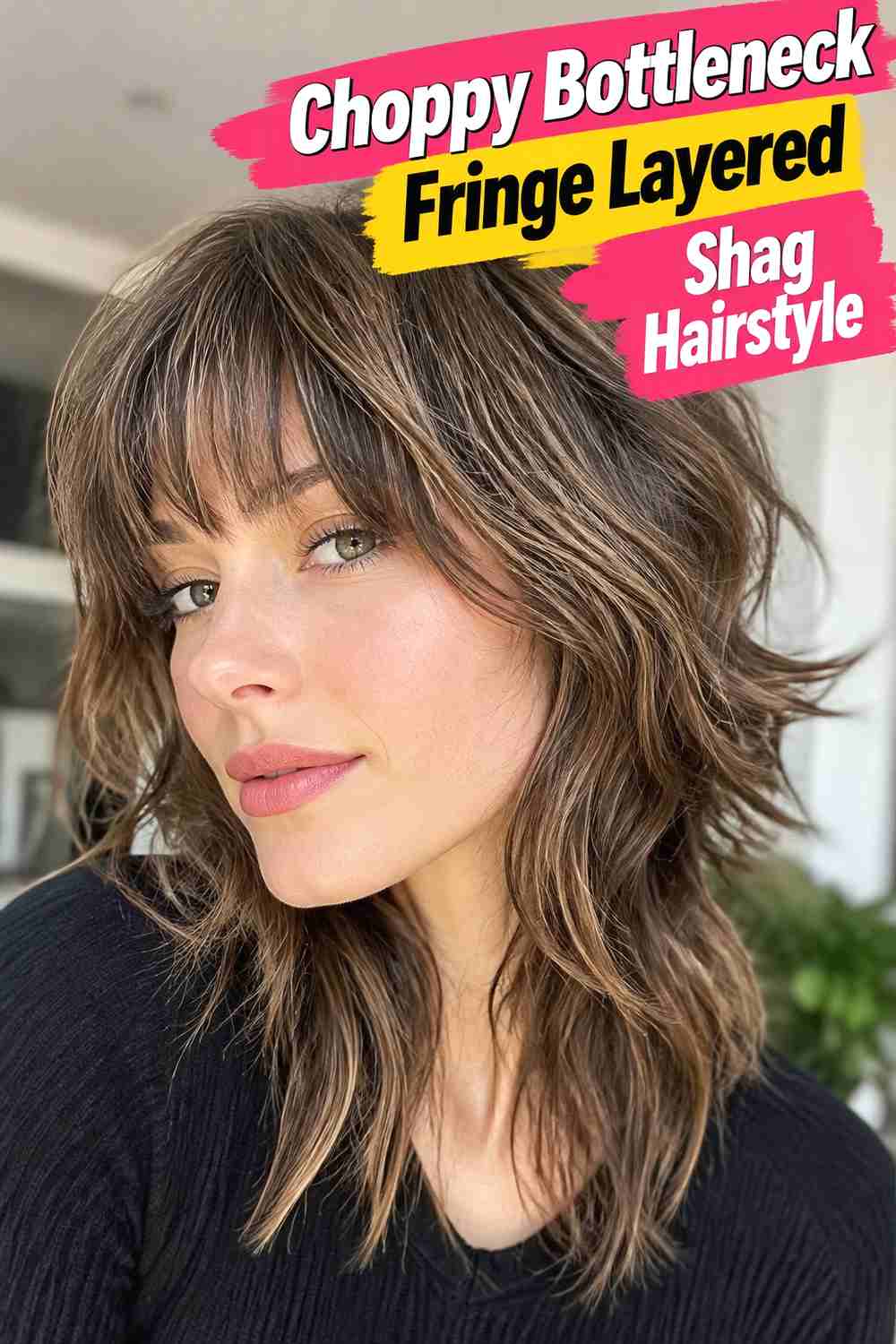
Choppy layers make the bottleneck fringe feel more graphic and modern. The shortest central fringe pieces can sit above the brows, while irregular outer pieces taper toward the temples and connect with heavily textured face-framing sections. Through the crown and sides, short-to-medium shag layers produce visible separation and movement. Straight or lightly wavy hair displays the broken-up shape particularly clearly, especially when individual pieces are encouraged rather than smoothed together. The haircut should still preserve enough density near the ends to avoid looking thin. A slightly messy finish complements the cut better than perfectly uniform curls, giving the choppy sections room to move independently and making the fringe feel like part of the overall texture.
Best For
This version suits anyone who likes a visibly layered short haircut and does not mind a more deliberately undone finish.
3. Wavy Bottleneck Fringe Shag Hairstyle
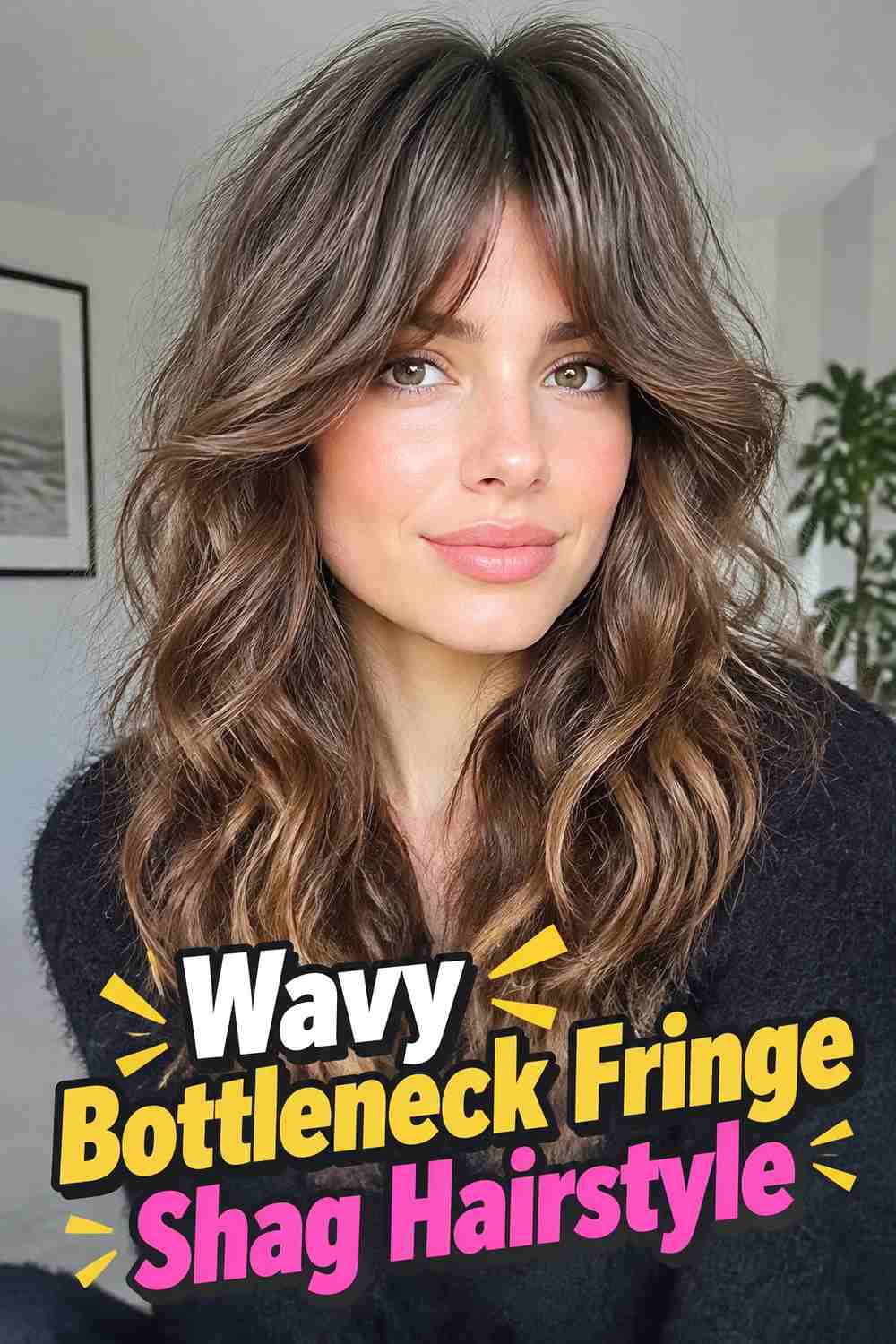
Natural waves add immediate softness to a bottleneck fringe shag. The shorter center of the fringe can form a gentle bend, while the longer sides sweep into layered sections around the cheeks. Shaggy movement through the crown helps the waves lift instead of falling into one heavy shape, and the shorter overall length keeps the haircut lively. This style is particularly effective when the wave pattern is allowed to remain slightly irregular, since perfect symmetry can make a shag look overly controlled. A few longer pieces near the jaw preserve balance and help connect the upper layers with the perimeter. When cut with the natural texture in mind, the look can work beautifully with minimal heat styling.
Styling Notes
Scrunch in a lightweight mousse or wave cream, then let the hair dry with minimal disturbance to preserve natural separation.
4. Feathered Bottleneck Fringe Short Shag Hairstyle
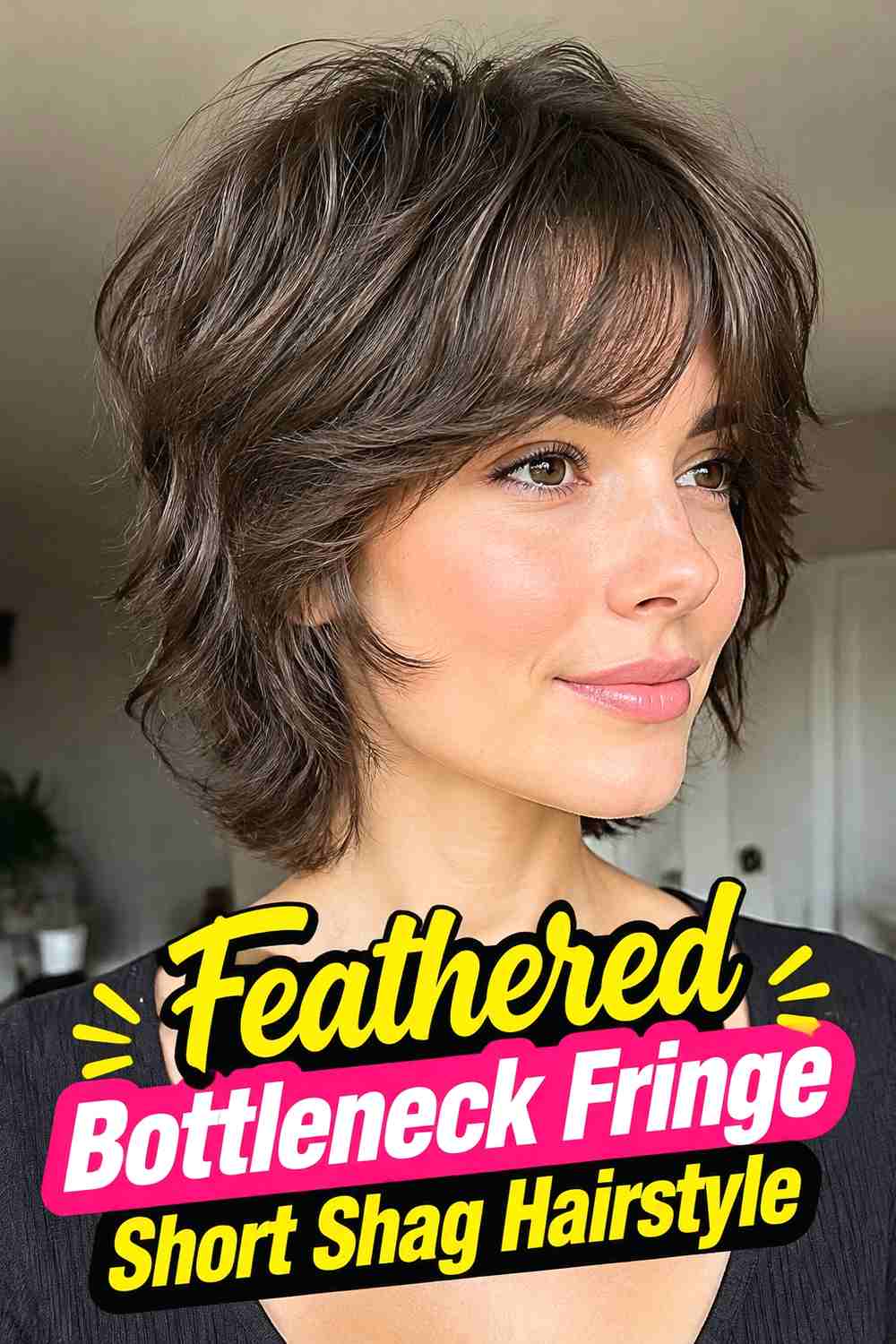
Feathered texture gives the bottleneck fringe a lighter, more flowing finish. The central fringe remains short, but the outer edges taper into fine pieces that sweep toward the temples instead of ending abruptly. Similar feathering through the upper layers creates movement without making the haircut look aggressively choppy. This approach can work especially well on straight-to-wavy hair that benefits from softness around the face. The ends should feel light while still retaining enough density to maintain the short shag silhouette. A gentle blow-dry can emphasize the feathered direction, but the cut should not depend on a highly polished finish. A few natural flyaways can actually make the shape feel more relaxed.
Why It Works
The gradual transition from fringe to side layers mirrors the feathered texture throughout the haircut, giving the shag a cohesive flow.
5. Curly Bottleneck Fringe Mini Shag Hairstyle
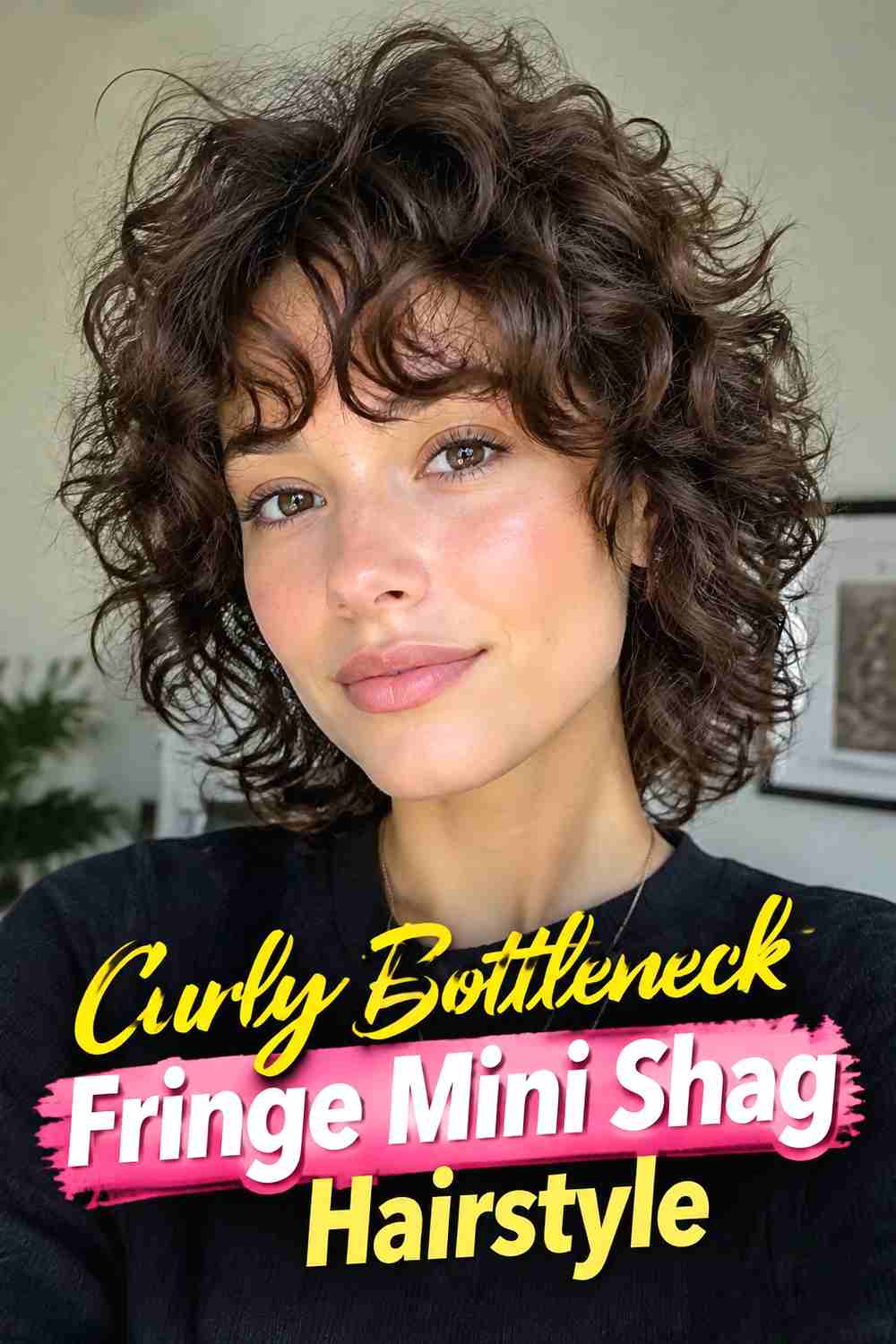
A curly mini shag transforms the bottleneck fringe into a soft collection of short curls rather than a precise straight shape. The center can remain slightly shorter, while side curls are left longer to connect naturally with cheekbone and temple layers. Through the crown, controlled layering gives curls room to spring without creating excessive width. The cropped shag length keeps the silhouette light, while preserving enough fullness through the sides prevents the cut from becoming too top-heavy. Curl shrinkage is especially important with this style, since fringe sections can rise noticeably once dry. The final result should celebrate irregular curl movement instead of trying to make every front piece match perfectly.
Pro Tip
Assess fringe length on dry or nearly dry curls so the finished bottleneck shape reflects the hair’s true shrinkage.
6. Piecey Bottleneck Fringe Tousled Shag Hairstyle
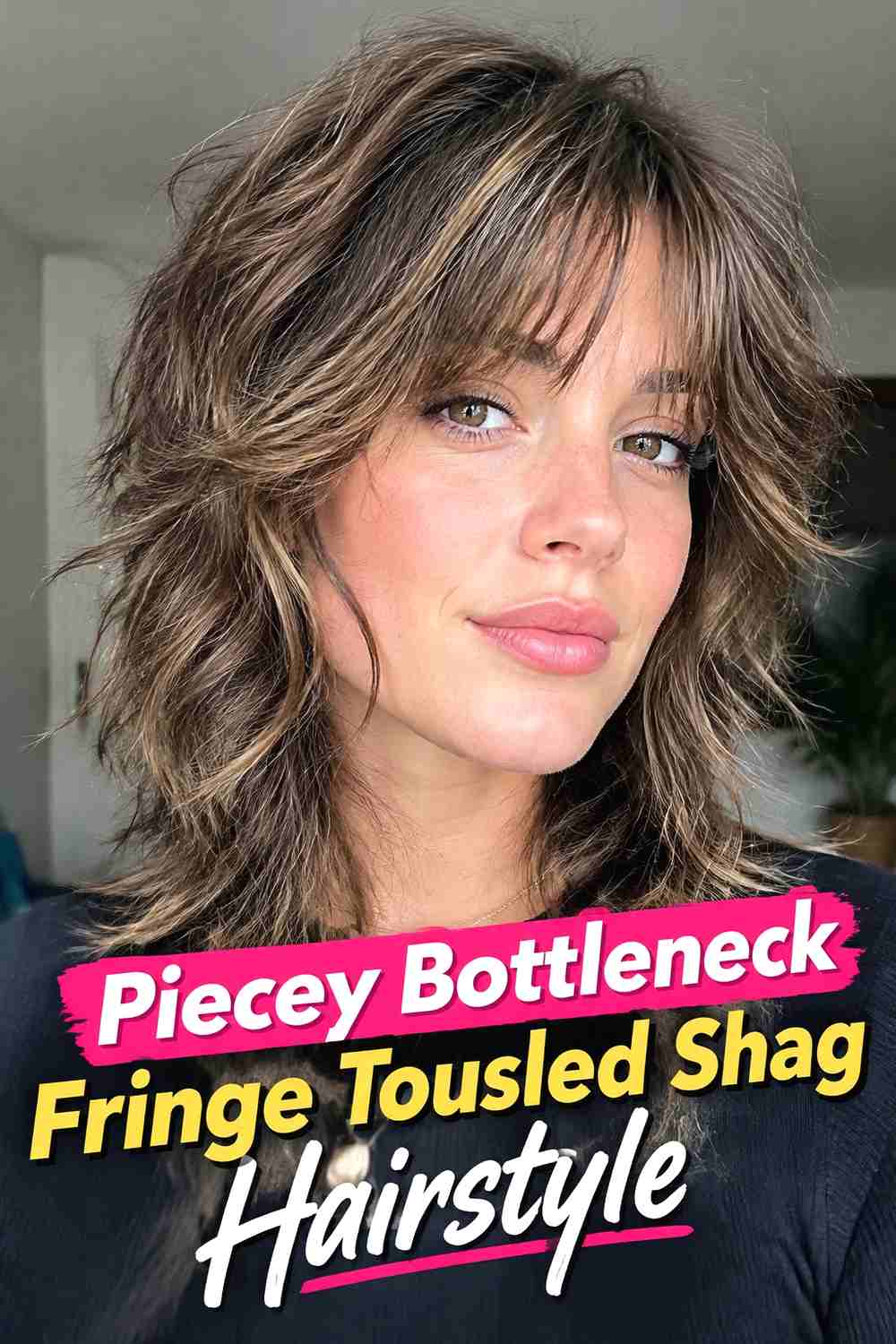
A piecey bottleneck fringe pairs naturally with a tousled shag because both rely on visible separation rather than smooth uniformity. The fringe is broken into small sections, with shorter pieces through the center and longer outer strands creating the signature narrowing shape. Through the rest of the haircut, soft shag layers are tousled in different directions to add lift and movement. This is an easy look for straight-to-wavy hair that already has a little natural bend. The key is avoiding too much styling product, which can make the short fringe appear sticky instead of airy. A few well-defined pieces at the crown and ends are enough to show the haircut’s texture.
Styling Notes
Use a tiny amount of dry paste or texture spray only on selected sections, then separate the fringe with your fingertips.
7. Rounded Bottleneck Fringe Shag Bob Hairstyle
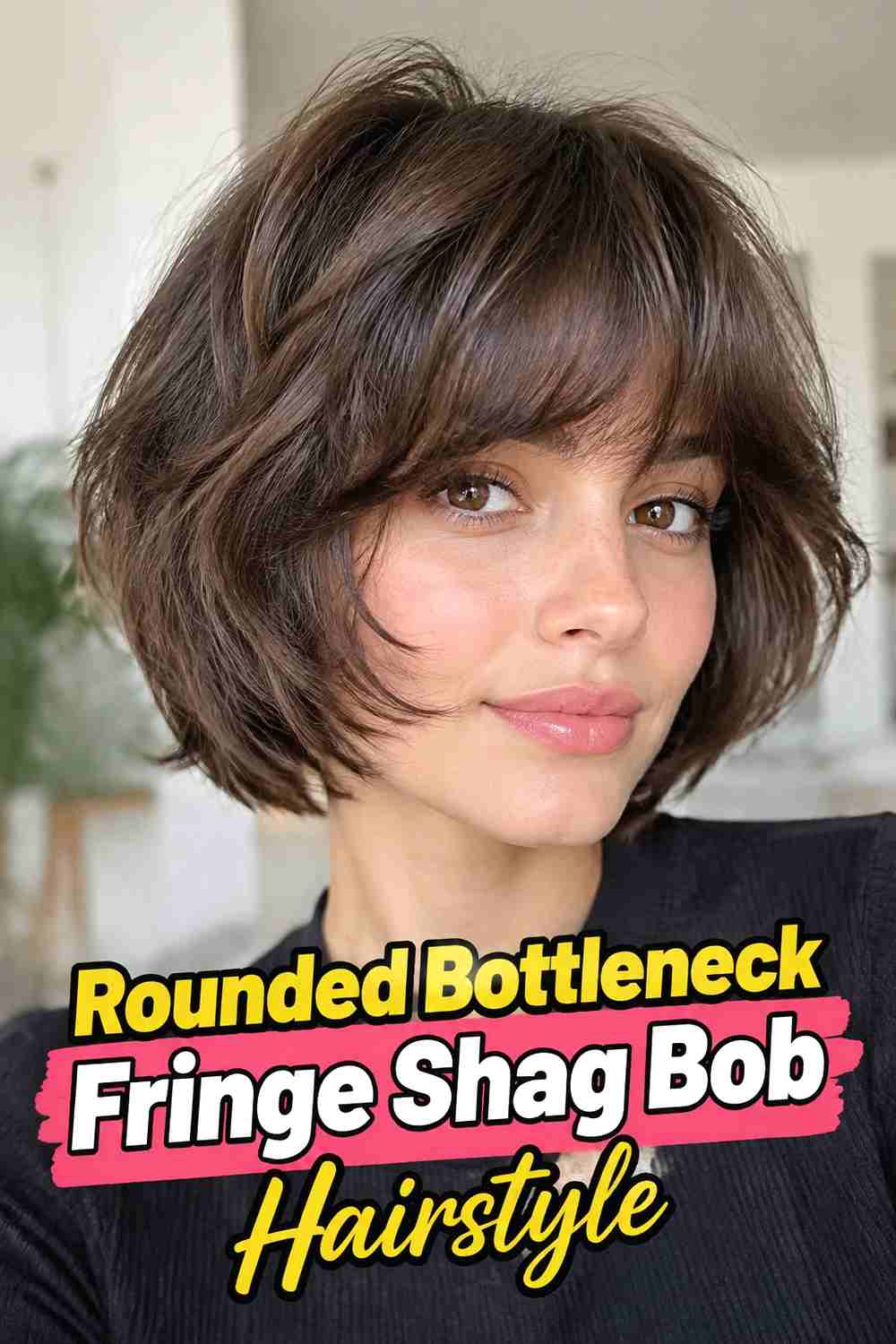
A shag bob with a softly rounded silhouette offers a more polished take on bottleneck fringe. The lower shape maintains gentle fullness around the jaw, while internal shag layers break up the surface so the haircut does not become too solid. At the front, the fringe narrows through the short center and opens toward longer temple pieces, visually balancing the rounded sides. This version works well on medium-density hair that benefits from shape but still needs movement. A smooth blow-dry can emphasize the bob outline, while soft waves make the shag texture more obvious. Keeping the crown layers blended rather than extremely short allows the rounded silhouette to remain intact as the hair moves.
Best For
Choose this style if you like the structure of a bob but want more movement and softness around the fringe and crown.
8. Razor Cut Bottleneck Fringe Shag Hairstyle
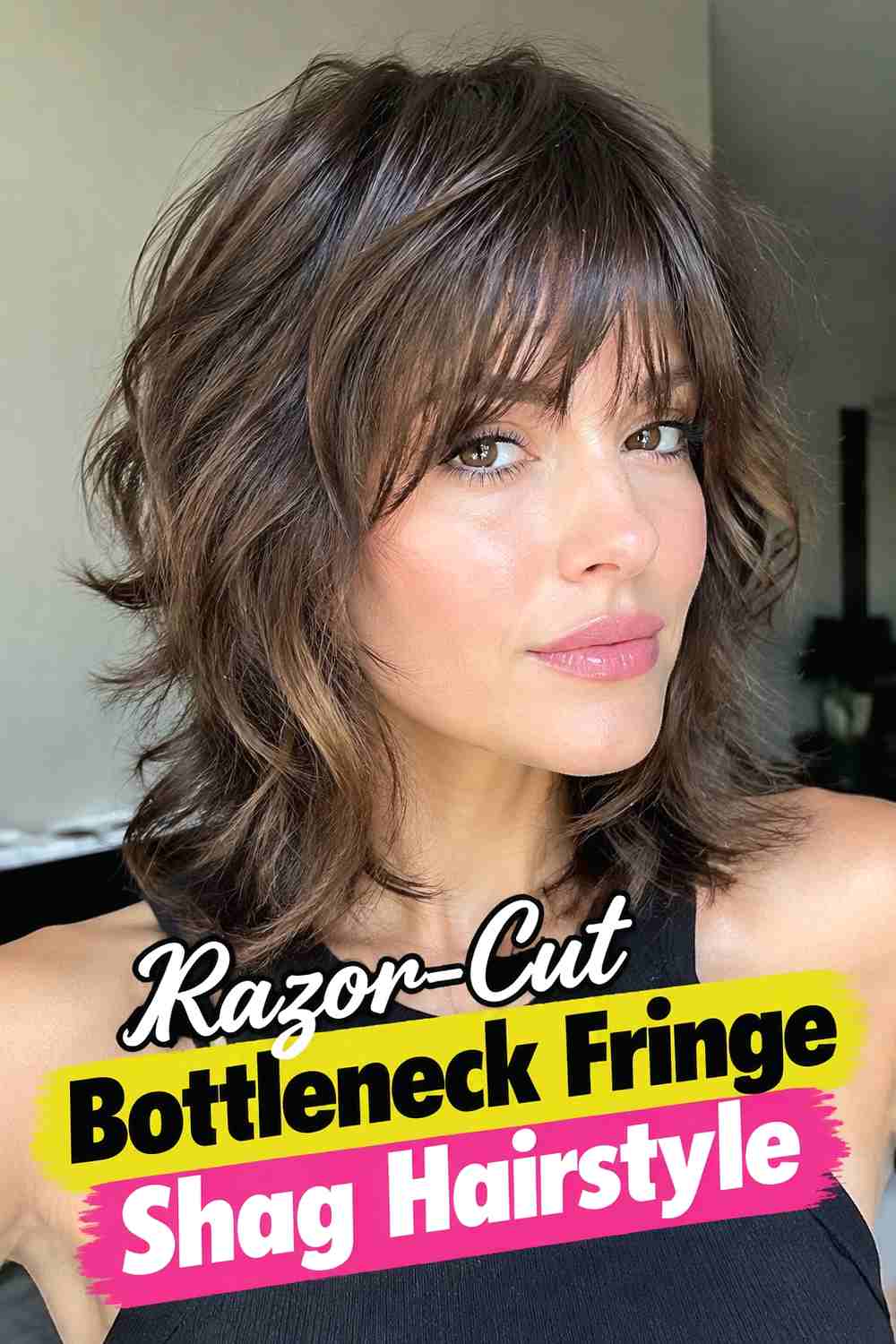
A razor-cut shag creates tapered ends that complement the gradually narrowing shape of bottleneck fringe. The center fringe can remain short and light, while the sides extend into wispy temple pieces and longer face-framing layers. Razor texture through the crown and ends creates a fluid, lived-in finish rather than a blunt silhouette. This technique can work especially well on straight or softly wavy hair that responds well to feathered, separated ends. The haircut should still preserve enough weight at the lower edge so it does not become overly thin. When the texture is balanced correctly, the fringe appears to flow seamlessly into the rest of the shag instead of sitting as a separate section.
Wear & Maintenance
The tapered ends may soften further as the hair grows, so occasional reshaping helps maintain the intentional shag structure.
9. Airy Bottleneck Fringe Fine Hair Shag Hairstyle
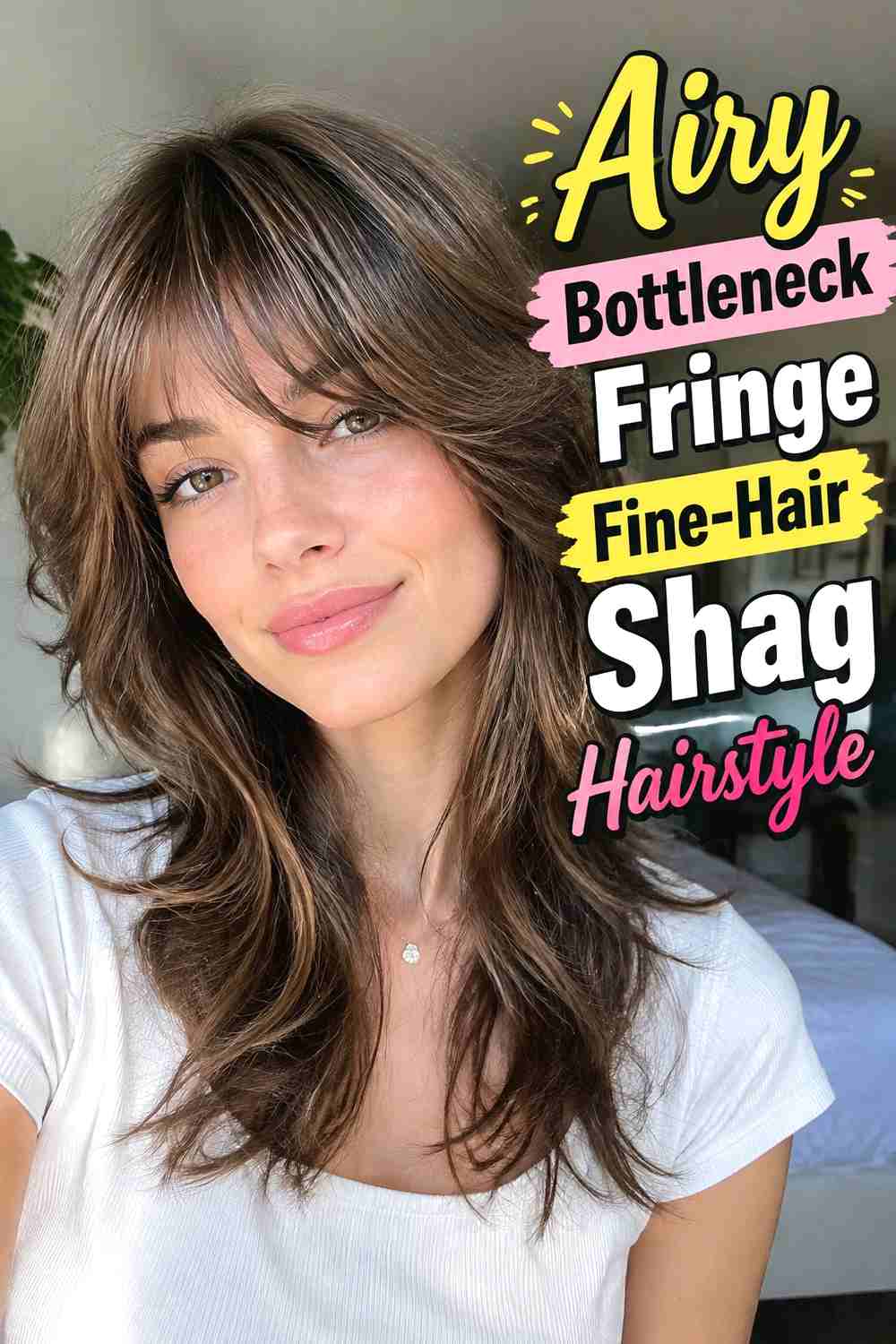
Fine hair needs a careful balance between texture and density, and this airy shag keeps the layers restrained enough to preserve fullness. The bottleneck fringe is deliberately lightweight, taking only a modest amount of hair from the front so the rest of the cut does not feel sparse. Shorter pieces through the crown create subtle lift, while the perimeter remains reasonably full. The longer fringe edges connect to soft face-framing layers, helping the shape feel continuous. Instead of heavily thinning the ends, light point-cutting can introduce movement without sacrificing visual density. A little root lift and gentle texture can make the haircut feel fuller, but heavy waxes and oils may collapse the airy finish.
Pro Tip
Keep most of the density around the perimeter and use layering strategically near the surface rather than removing too much weight throughout.
10. Voluminous Bottleneck Fringe Thick Hair Shag Hairstyle
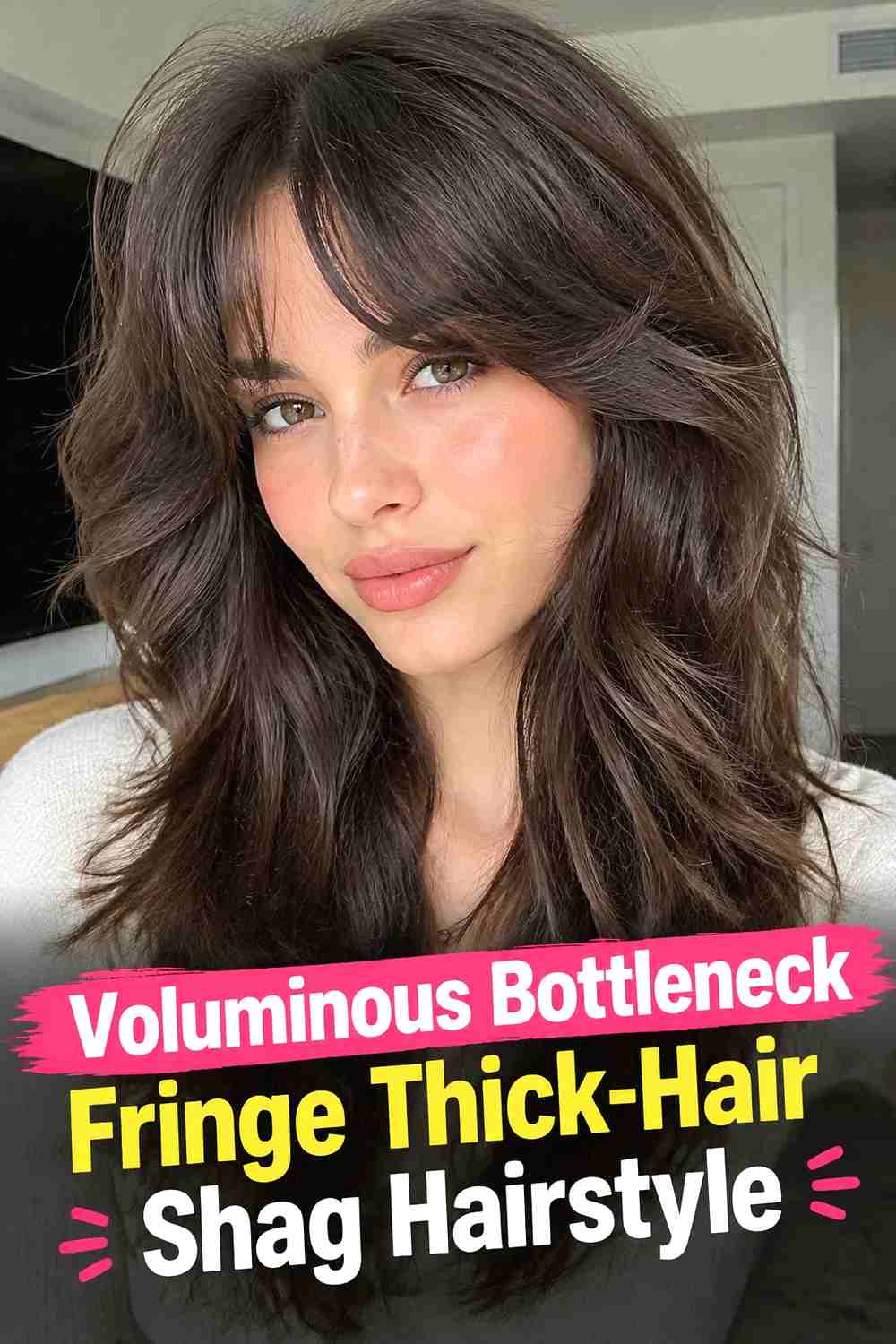
Thick hair can carry a dramatic shag beautifully when internal weight is removed in a controlled way. This version builds lift through the crown while keeping enough length around the sides to balance the silhouette. The bottleneck fringe begins shorter at the center, then widens into longer, softer pieces that merge with substantial face-framing layers. Because dense hair can make fringe feel heavy, selective texturizing helps the front remain mobile instead of forming a solid block. Layers through the interior reduce bulk without destroying the fullness that gives the shag its impact. A rough blow-dry or natural wave can reveal the shape, while the ends should remain textured but substantial rather than overly thinned.
Hair Type & Length
This approach suits thick, short-to-medium hair that needs movement and controlled volume rather than additional density.
11. Sleek Bottleneck Fringe Soft Shag Hairstyle
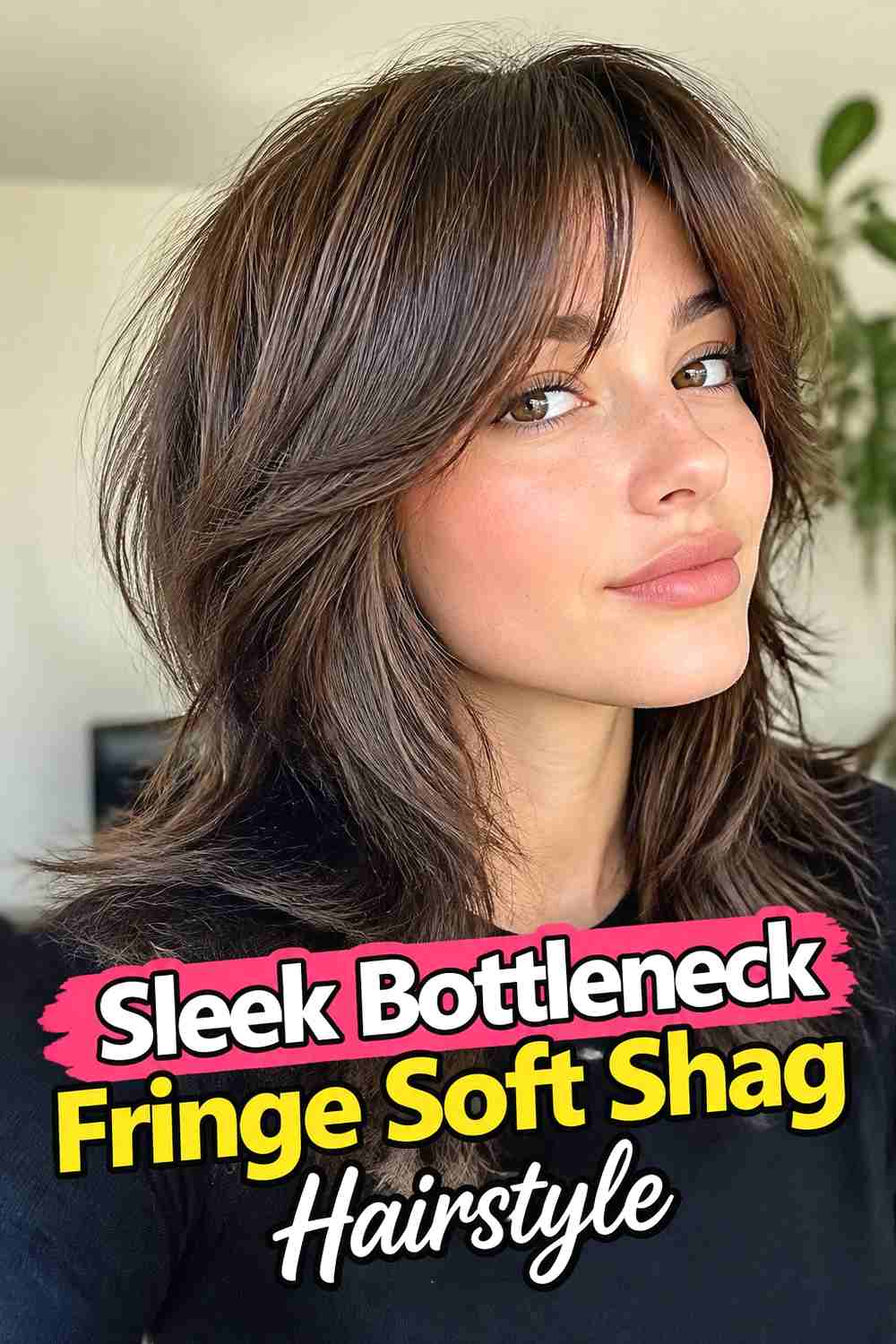
A sleek finish gives the shag a refined twist while preserving its layered structure. Instead of rough, highly separated texture, the hair is smoothed so the layers fall in soft overlapping sections. The bottleneck fringe remains the most distinctive detail, with a shorter center and longer edges that gently open toward the temples. Subtle layers around the cheekbones and jaw prevent the short shape from looking flat even when worn smooth. This style works particularly well on straight hair or hair that can be easily polished with a blow-dry. Keeping the ends slightly feathered is important; a completely blunt perimeter would compete with the softness of the fringe and reduce the shag-like movement.
Why It Works
The smooth surface highlights the fringe shape clearly, while understated layers maintain enough movement to keep the haircut from feeling rigid.
12. Messy Bottleneck Fringe Cropped Shag Hairstyle
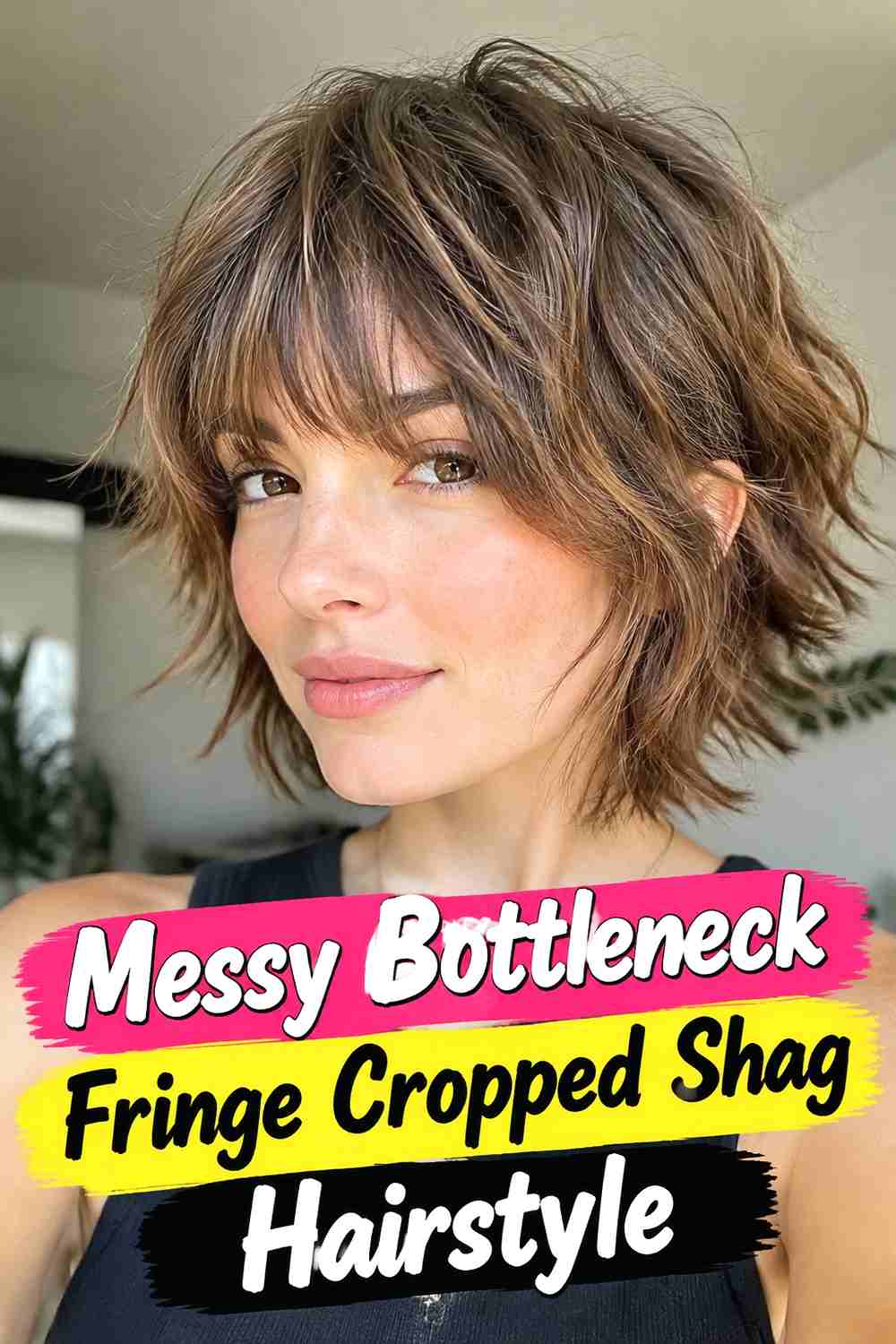
A cropped shag makes the bottleneck fringe part of an intentionally messy, compact silhouette. Short layers through the crown create lift, while slightly longer pieces around the ears and nape keep the haircut from becoming a standard pixie. The fringe can be irregular through the center, with longer outer sections curving naturally toward the temples. This shape is particularly effective for hair with natural texture because small bends, flicks, and uneven movement add character rather than needing correction. The finished style should feel spontaneous but still have a clear outline, especially around the neckline. Minimal product helps preserve volume and separation, while excessive styling can make the short layers look stiff instead of relaxed.
Styling Notes
Rough-dry with your fingers and define only a few crown, fringe, and end pieces to keep the texture loose and believable.
How to Choose the Right Look
Start with your natural texture. Straight hair can display feathered, sleek, choppy, and razor-cut detail clearly, while wavy and curly textures are especially suited to tousled, messy, and naturally layered shag shapes.
Hair density should influence how much layering you choose. Fine hair usually benefits from a lighter fringe and fewer deeply cut layers so the perimeter retains fullness. Thick hair can support more crown layering and internal weight removal, but aggressive thinning may create unwanted puffiness as the cut grows.
Fringe length matters as well. A shorter center creates a stronger bottleneck shape, while slightly longer middle pieces give a softer result. The side sections should gradually extend toward the temples so the fringe connects naturally with the shag instead of looking like a separate bang.
Finally, think about maintenance. Shorter shag layers and precise fringe shapes change noticeably as they grow. Softer, feathered versions tend to be more forgiving, while cropped and heavily choppy cuts may need more frequent reshaping.
Final Thoughts
Short bottleneck fringe and shag layers work especially well together because both rely on gradual transitions, movement, and face-framing texture. Whether you prefer curls, waves, sleek layers, or a messy cropped finish, keep the fringe connected to the surrounding layers for the most natural result. Choose a version that works with your density and everyday styling habits rather than fighting your hair’s natural behavior.
FAQs
1. What is a bottleneck fringe?
A bottleneck fringe is shorter near the center of the forehead and gradually becomes longer toward the temples, creating a narrowing, curved shape that frames the face.
2. Does bottleneck fringe work with a short shag?
Yes. The longer outer fringe pieces can blend directly into shag layers, making the transition especially natural on shorter layered haircuts.
3. Can fine hair wear short bottleneck fringe with shag layers?
Yes, but lighter fringe density and restrained layering usually help preserve fullness. Avoid removing too much weight from both the fringe and the perimeter.
4. Is bottleneck fringe suitable for curly hair?
It can be. The shape should follow the natural curl pattern, and shrinkage needs to be considered carefully before deciding the final length.
5. How do I style short bottleneck fringe?
Use minimal product and direct the center pieces forward while encouraging the longer edges slightly outward. The goal is soft separation rather than a stiff, perfectly curved shape.
Save your favorite short bottleneck fringe shag idea, share it with your stylist, and explore more layered haircut inspiration for your next cut.