14 Piecey Fringe With Collarbone Haircuts
Piecey fringe gives a collarbone haircut an airy, undone finish while keeping enough length for waves, layers, ponytails, and everyday styling flexibility.
Collarbone haircuts sit in an especially versatile spot between a traditional bob and longer hair. They are short enough to create noticeable movement yet long enough for loose updos and tucked-back styles. Adding a piecey fringe brings detail to the front without the visual weight of one dense, solid bang.
The right combination depends on your natural texture and density. Waves can support a relaxed fringe beautifully, while straight hair shows individual pieces and choppy details clearly. Fine hair often needs a fuller perimeter, whereas thick hair can benefit from internal weight removal. Fringe density also matters, since keeping some space between the pieces is what gives this look its light, separated character.
Quick List
- Soft Piecey Fringe Collarbone Cut Hairstyle
- Wavy Piecey Fringe Collarbone Hairstyle
- Choppy Piecey Fringe Layered Collarbone Hairstyle
- French Piecey Fringe Collarbone Bob Hairstyle
- Shaggy Piecey Fringe Collarbone Hairstyle
- Curly Piecey Fringe Collarbone Hairstyle
- Wispy Piecey Fringe Collarbone Lob Hairstyle
- Blunt Collarbone Cut With Piecey Fringe Hairstyle
- Feathered Piecey Fringe Collarbone Hairstyle
- Tousled Piecey Fringe Collarbone Hairstyle
- Piecey Fringe Face Framing Collarbone Hairstyle
- Fine Hair Piecey Fringe Collarbone Hairstyle
- Thick Hair Piecey Fringe Collarbone Hairstyle
- Sleek Piecey Fringe Collarbone Hairstyle
1. Soft Piecey Fringe Collarbone Cut Hairstyle
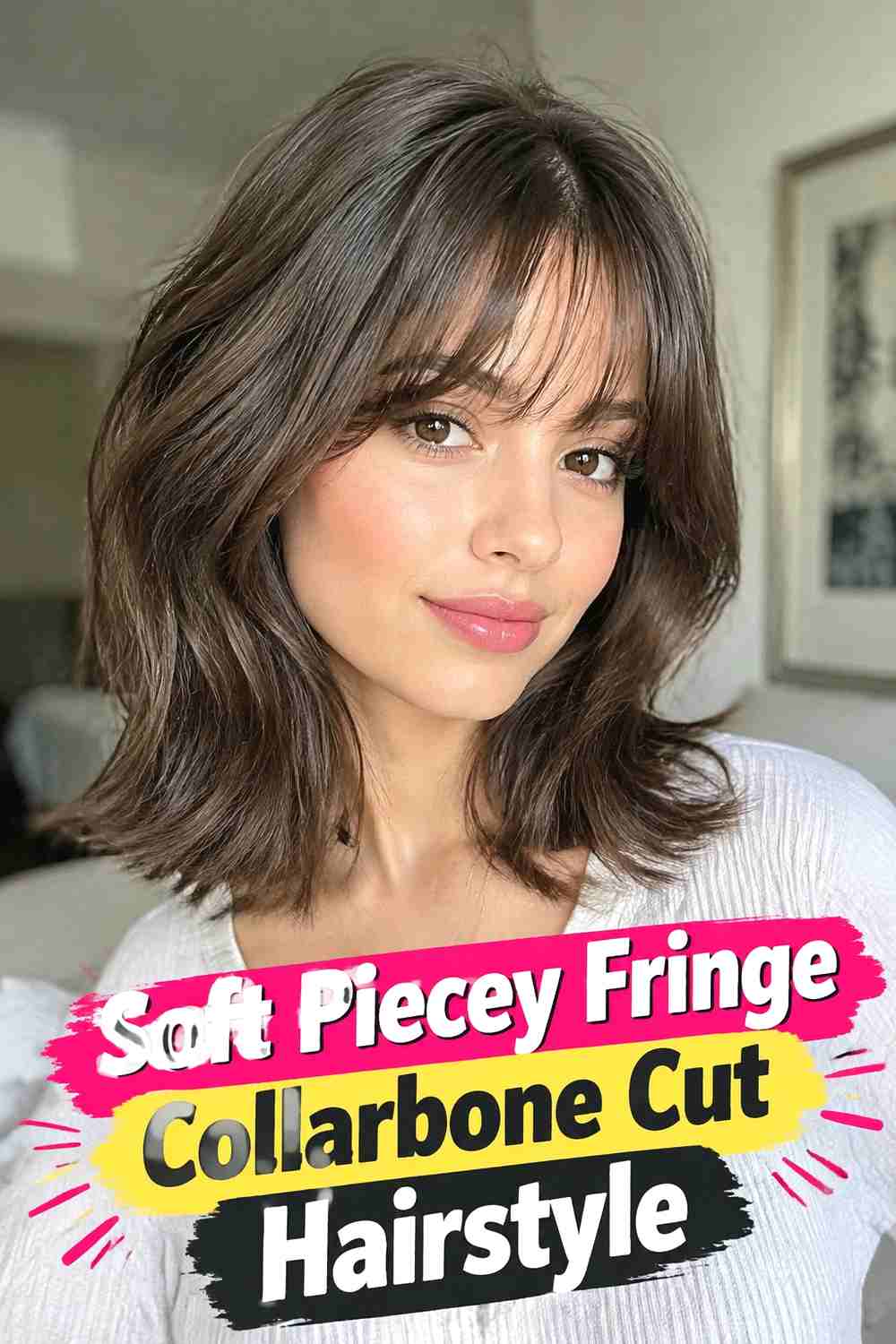
A soft collarbone cut gives piecey fringe an easy, wearable foundation. The fringe is lightly separated across the forehead rather than cut into one heavy block, while the main length rests around the collarbones with only subtle layering. That simplicity keeps the haircut versatile enough for straight, softly waved, or air-dried styling. Gentle face-framing pieces can connect the fringe to the longer sides without creating dramatic steps. The result feels polished but relaxed, especially when the ends retain enough weight to move naturally instead of looking over-thinned. This is a useful starting point if you want fringe to be noticeable without making the entire haircut heavily layered or dependent on daily heat styling.
Styling Notes
Use a small amount of lightweight cream through the fringe and ends. Separate only a few front pieces so the finish stays soft rather than stringy.
2. Wavy Piecey Fringe Collarbone Hairstyle

Natural waves make a piecey fringe look particularly effortless because small bends help the sections separate on their own. The collarbone length gives the wave pattern enough room to form while avoiding the weight that can pull longer waves flatter. Through the sides, restrained layering can encourage movement without disrupting the perimeter. The fringe may sit straighter in the center or develop a slight bend depending on natural texture, and either finish can work as long as the pieces remain light. This haircut looks especially relaxed when the waves are not identical from section to section. Letting a few straighter ends remain can make the texture appear more natural and keep the style from looking overly curled.
Best For
This version works especially well for loose natural waves and anyone who prefers air-dried movement over a highly polished blowout.
Pro Tip
Style the fringe first while it is still damp, then allow the rest of the hair to follow its natural wave pattern.
3. Choppy Piecey Fringe Layered Collarbone Hairstyle
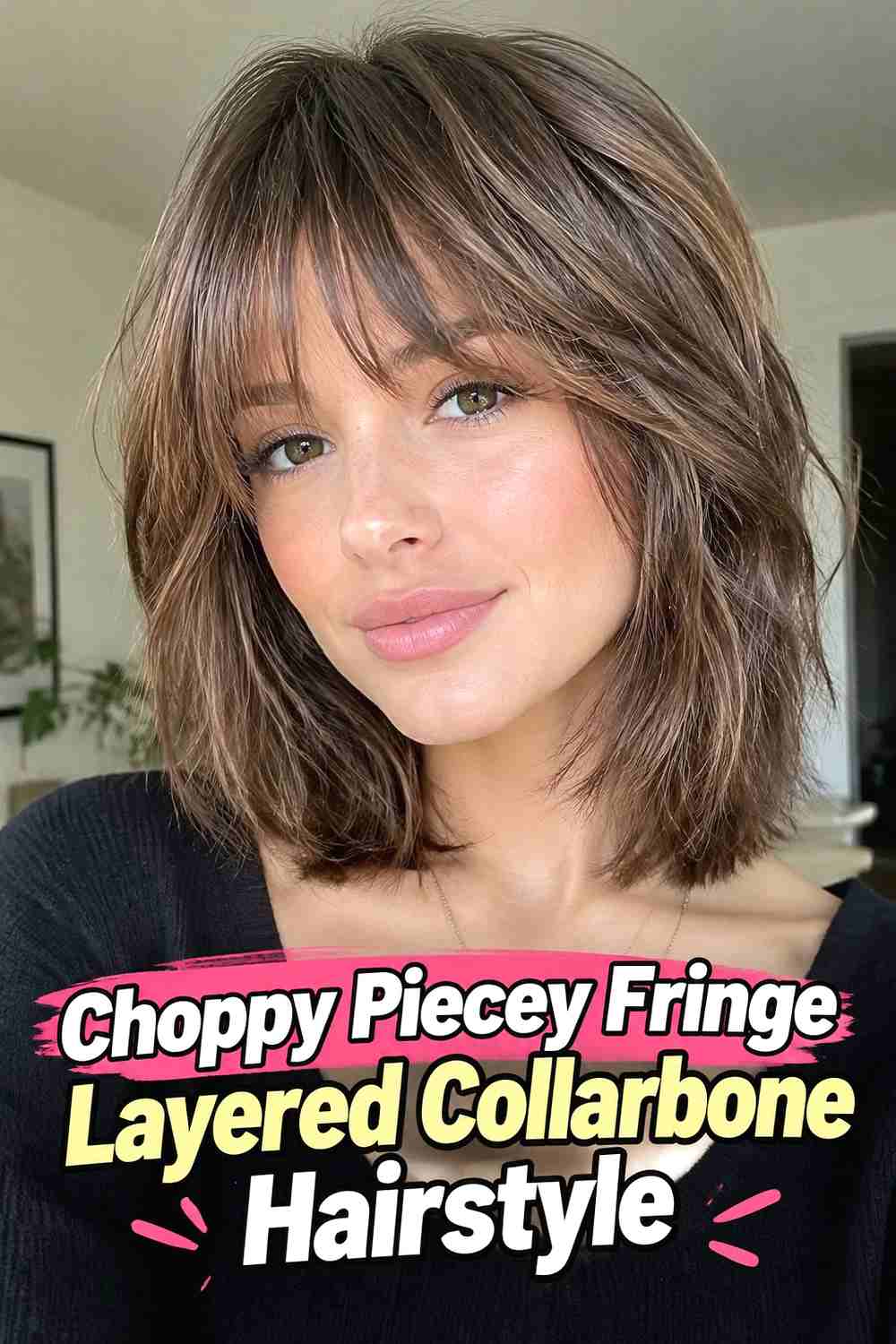
Choppy layers make a collarbone cut feel lighter and more expressive, while a piecey fringe repeats that broken-up texture around the forehead. Shorter sections can begin near the cheekbones and blend into irregular layers through the mids, creating noticeable movement without turning the haircut into a full shag. The perimeter should still retain enough fullness to hold the collarbone shape. Straight and slightly wavy hair display the choppy detail most clearly because individual sections remain visible. A loose bend through selected pieces can enhance the layering, but perfect curls are unnecessary. The fringe should remain lighter than the rest of the cut so it does not compete with the already active texture through the sides and ends.
Why It Works
The repeated separation in the fringe and layers makes the haircut look intentional from front to back instead of combining unrelated textures.
4. French Piecey Fringe Collarbone Bob Hairstyle

A French-inspired collarbone bob pairs understated texture with a fringe that looks lightly lived-in rather than meticulously arranged. The overall cut stays close to one length, with just enough softness at the ends to create natural movement. Across the forehead, fine pieces fall with a little space between them, giving the fringe an imperfect, relaxed quality. This style works particularly well when the hair has a subtle bend or when the ends are allowed to curve naturally instead of being flat-ironed into precision. The slightly longer bob length makes the cut practical enough to tuck behind the ears or pull back loosely. Keeping the fringe density moderate helps preserve the effortless mood that defines this version.
Styling Notes
Avoid over-rounding the fringe with a brush. A simple forward dry followed by light fingertip separation usually keeps the finish more natural.
5. Shaggy Piecey Fringe Collarbone Hairstyle
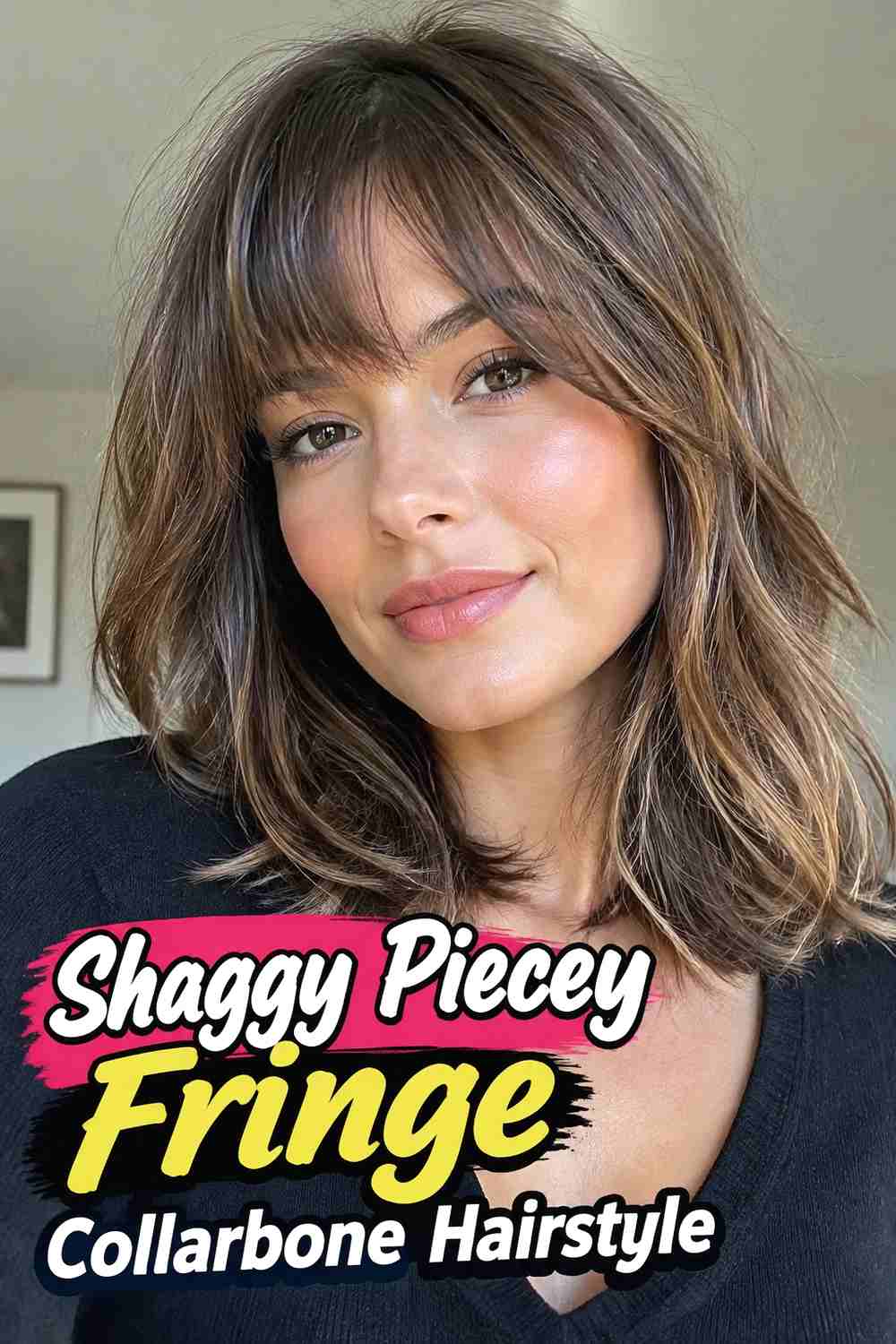
A shaggy collarbone haircut uses more layering through the crown and face, giving the piecey fringe a textured frame. The fringe can sit lightly across the forehead while longer cheekbone and jaw-level sections create a gradual transition into the rest of the cut. Crown layers add lift, and irregular ends keep the collarbone perimeter from looking too rigid. This version is especially effective on hair with some natural wave because movement helps reveal the different layer lengths. It can also work on straight hair with a little rough-dried texture. The key is keeping the shag connected rather than excessively fragmented, which preserves enough weight for the haircut to remain versatile and easier to grow out.
Hair Type & Length
Medium-density straight-to-wavy hair tends to support this shape well, especially when the collarbone length is preserved beneath the shorter layers.
6. Curly Piecey Fringe Collarbone Hairstyle
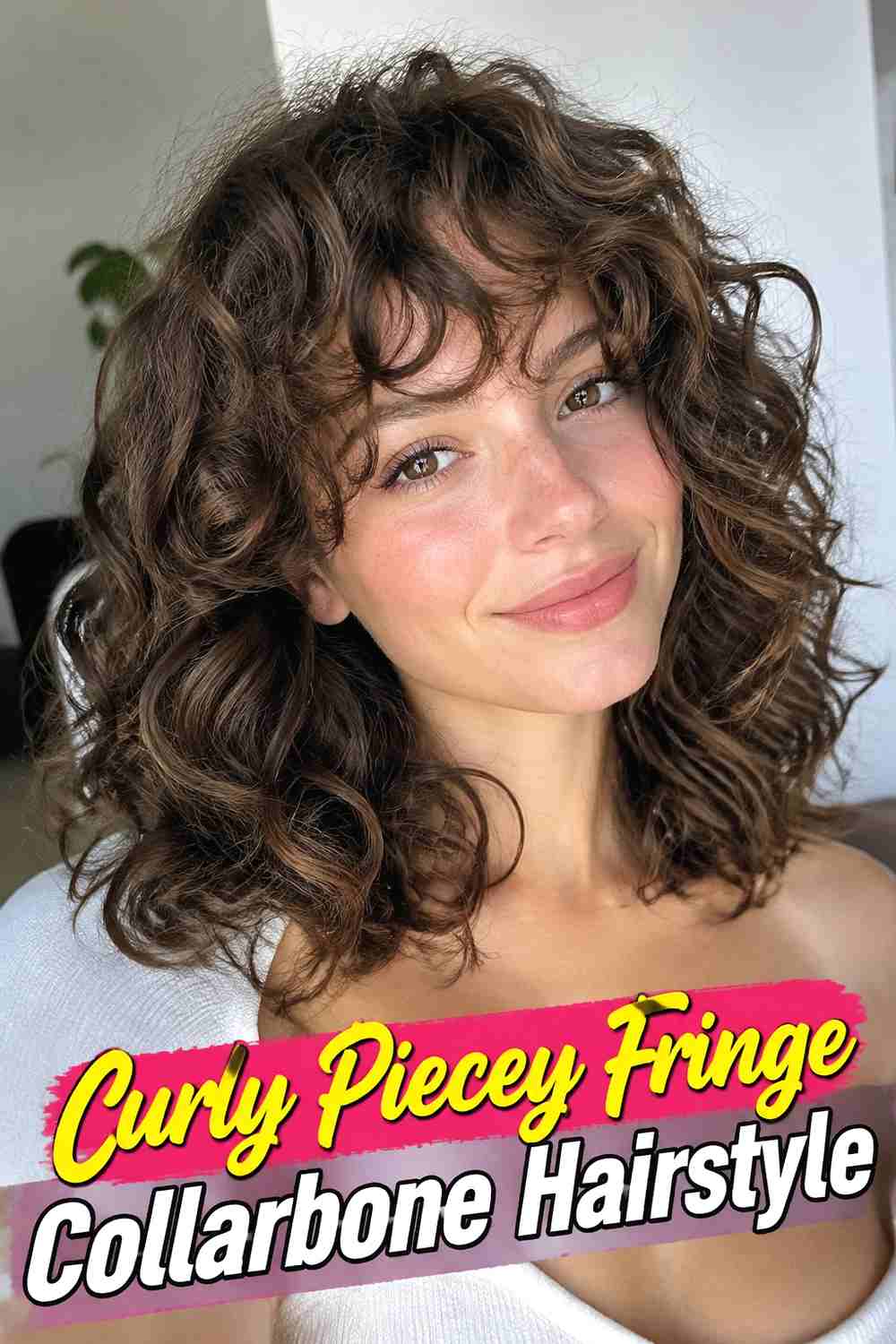
Curly hair can create a naturally piecey fringe when individual curls are allowed to fall separately across the forehead. Instead of forcing every front section into the same length, the fringe can be shaped around the curl pattern so some pieces sit slightly higher or lower. The collarbone length gives curls enough space to form while strategic layering prevents too much width from collecting at the bottom. Keeping the fringe airy is important, since a very dense curly bang can visually overpower the rest of the cut. Shrinkage should be considered carefully before cutting, particularly around the shortest front pieces. The finished shape should feel balanced and springy rather than overly controlled or perfectly symmetrical.
Pro Tip
Evaluate the fringe close to its dry, natural curl pattern before deciding on the final length, since shrinkage can substantially change where each piece sits.
7. Wispy Piecey Fringe Collarbone Lob Hairstyle
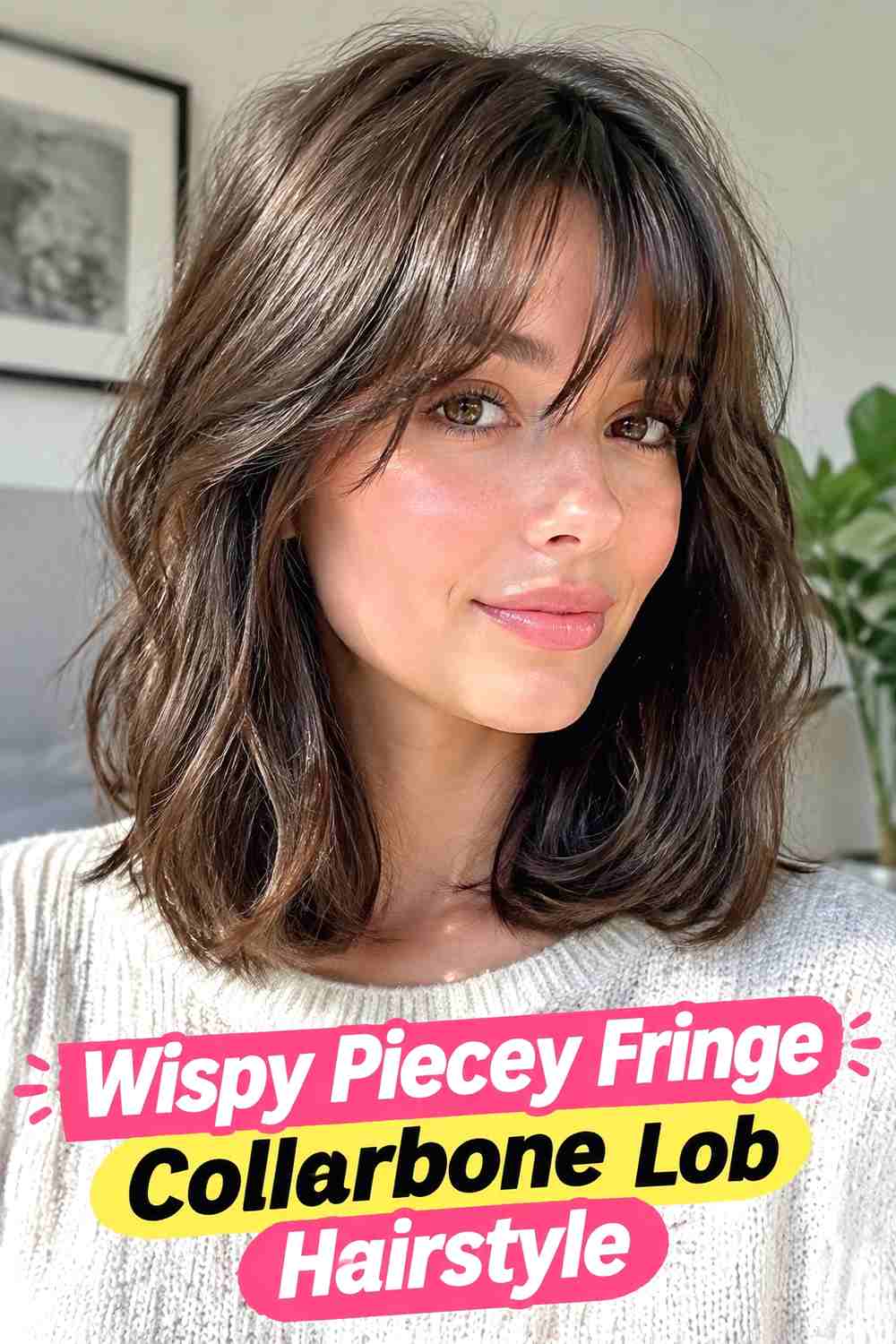
A wispy fringe creates one of the lightest interpretations of the piecey look. Fine sections are spaced across the forehead so some skin remains visible, while the collarbone lob below stays relatively simple and full. Minimal layering through the mids allows the haircut to retain body, making this an appealing option for fine-to-medium hair. A few soft face-framing pieces can link the fringe to the longer sides without removing too much density. The lob can be worn smooth, softly bent, or tucked behind the ears, and the lightweight fringe prevents the front from feeling heavy. Because the pieces are intentionally delicate, styling should focus on movement rather than forcing the fringe into a perfectly even curtain.
Best For
This look is ideal if you want to try fringe without committing to a dense bang or heavily layered haircut.
8. Blunt Collarbone Cut With Piecey Fringe Hairstyle

A blunt collarbone perimeter creates a strong visual line through the ends, while a separated fringe keeps the front lighter and more relaxed. The contrast works particularly well on fine or medium hair because the lower edge can appear fuller without requiring extensive layering. Internal texturizing may be used sparingly to prevent the cut from feeling too solid, but the overall shape remains clean. The piecey fringe provides just enough softness to keep the blunt length from looking severe. Straight hair highlights the crisp perimeter most clearly, though subtle waves can create a more casual finish. Keeping the fringe irregular and airy is what allows these two opposing textures—structured ends and loose front pieces—to feel balanced.
Why It Works
The strong perimeter adds density and shape, while the lighter fringe breaks up the front and prevents the haircut from looking overly strict.
9. Feathered Piecey Fringe Collarbone Hairstyle
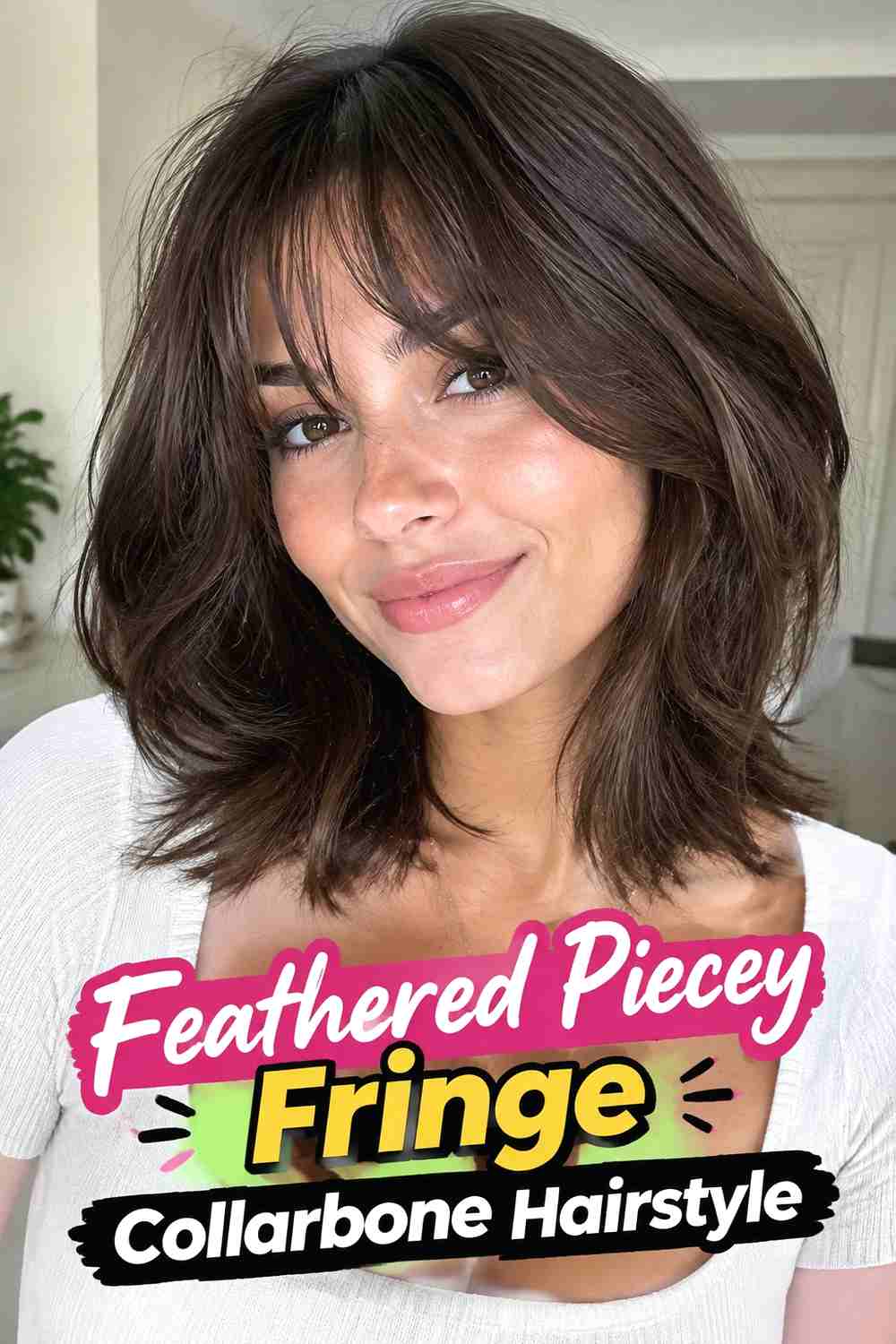
Feathered layers introduce a softer direction to the piecey fringe by encouraging the hair to move away from the face. The fringe can begin with shorter center sections and gradually blend into finer pieces near the temples, creating a light sweep rather than a flat bang. Through the collarbone length, long feathered layers add movement without sacrificing too much density at the ends. This shape works especially well on straight or softly wavy hair that responds easily to a blow-dry. The style can look polished with rounded movement or more casual when the layers are simply air-dried. Keeping the feathering subtle helps the haircut stay modern rather than turning into an overly styled, heavily flipped shape.
Styling Notes
Use gentle airflow and your fingers or a medium brush to direct the front pieces outward without creating excessive volume at the fringe.
10. Tousled Piecey Fringe Collarbone Hairstyle
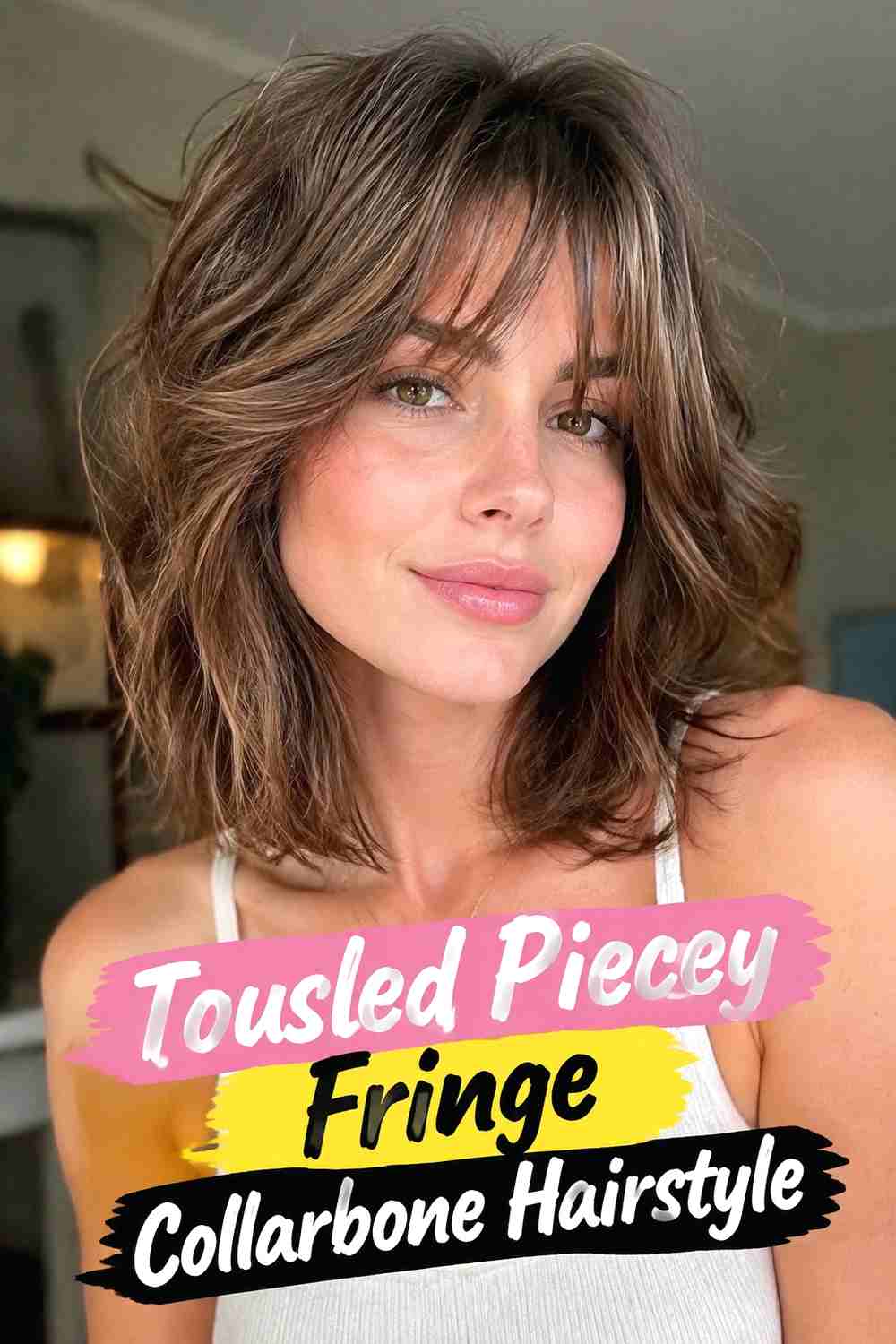
A tousled collarbone cut embraces irregular movement, making the fringe look like a natural extension of the overall texture. Soft layers through the lower half create enough variation for bends to fall in different directions, while the fringe is separated into small pieces that can sit forward or slightly sideways. The finished look should feel intentionally undone rather than messy, so keeping a recognizable perimeter around the collarbones is important. This version works beautifully for hair with a loose natural bend and can also be created with minimal heat styling on straighter textures. Avoid defining every section equally; a mixture of waves, straighter ends, and subtle flyaways gives the haircut a more believable lived-in finish.
Wear & Maintenance
The tousled texture is forgiving as layers grow, though the fringe may still need occasional trimming if you want it to remain clearly separated and short.
11. Piecey Fringe Face Framing Collarbone Hairstyle
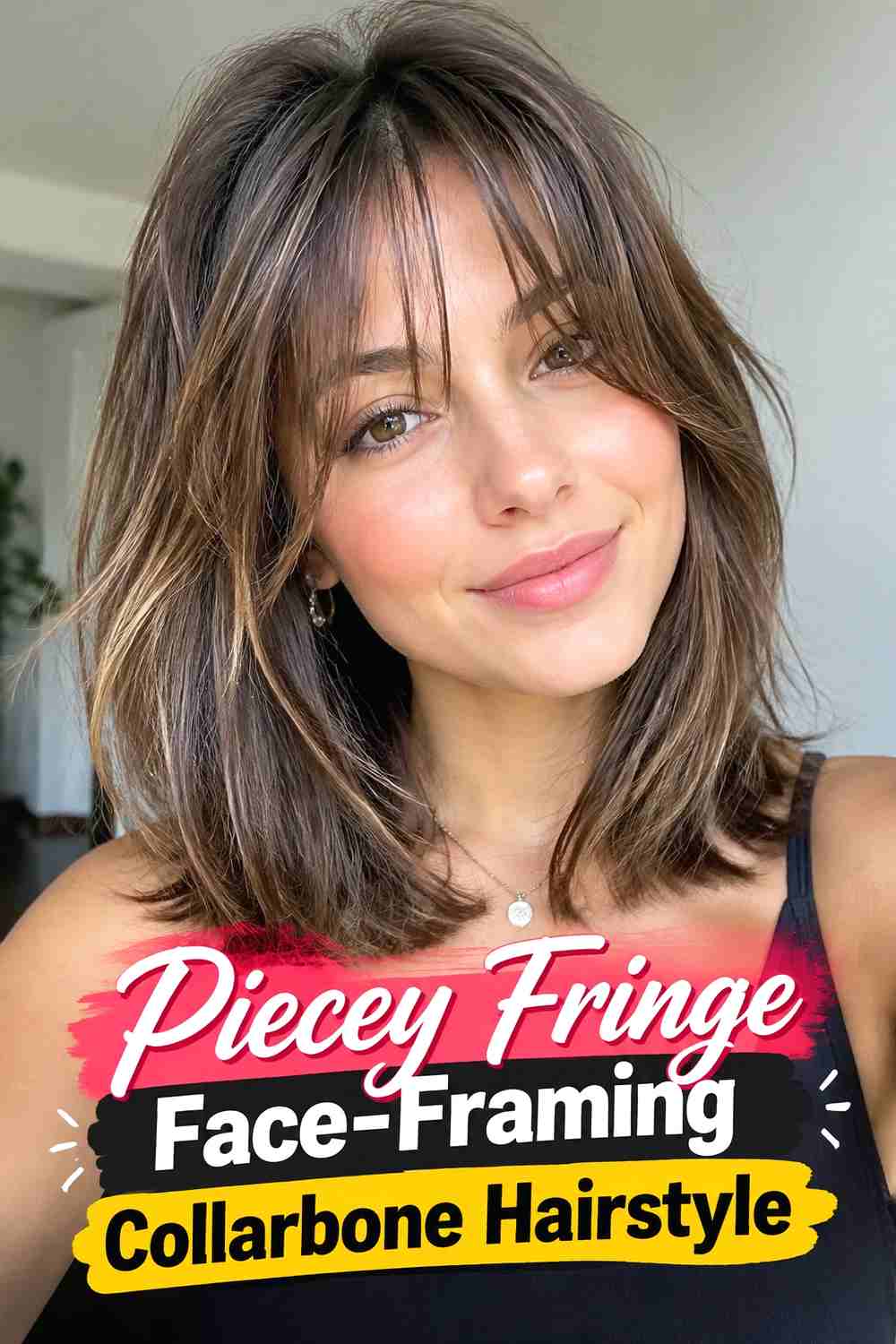
This haircut puts most of the visible layering near the face, allowing the back and lower perimeter to remain relatively full. The piecey fringe flows into cheekbone- and jaw-length sections that gradually connect with the collarbone ends. That progression makes the fringe feel integrated rather than added on top of a one-length haircut. Brushed-out waves can emphasize the front layers, while straight styling shows the gradual change in length more clearly. Because the most dramatic movement sits near the face, the rest of the cut can stay simple and versatile. This approach works particularly well if you want a noticeable front change without committing to extensive layering through the entire head.
Why It Works
Concentrating movement around the front keeps the collarbone shape strong while giving the fringe a natural path into the longer lengths.
12. Fine Hair Piecey Fringe Collarbone Hairstyle
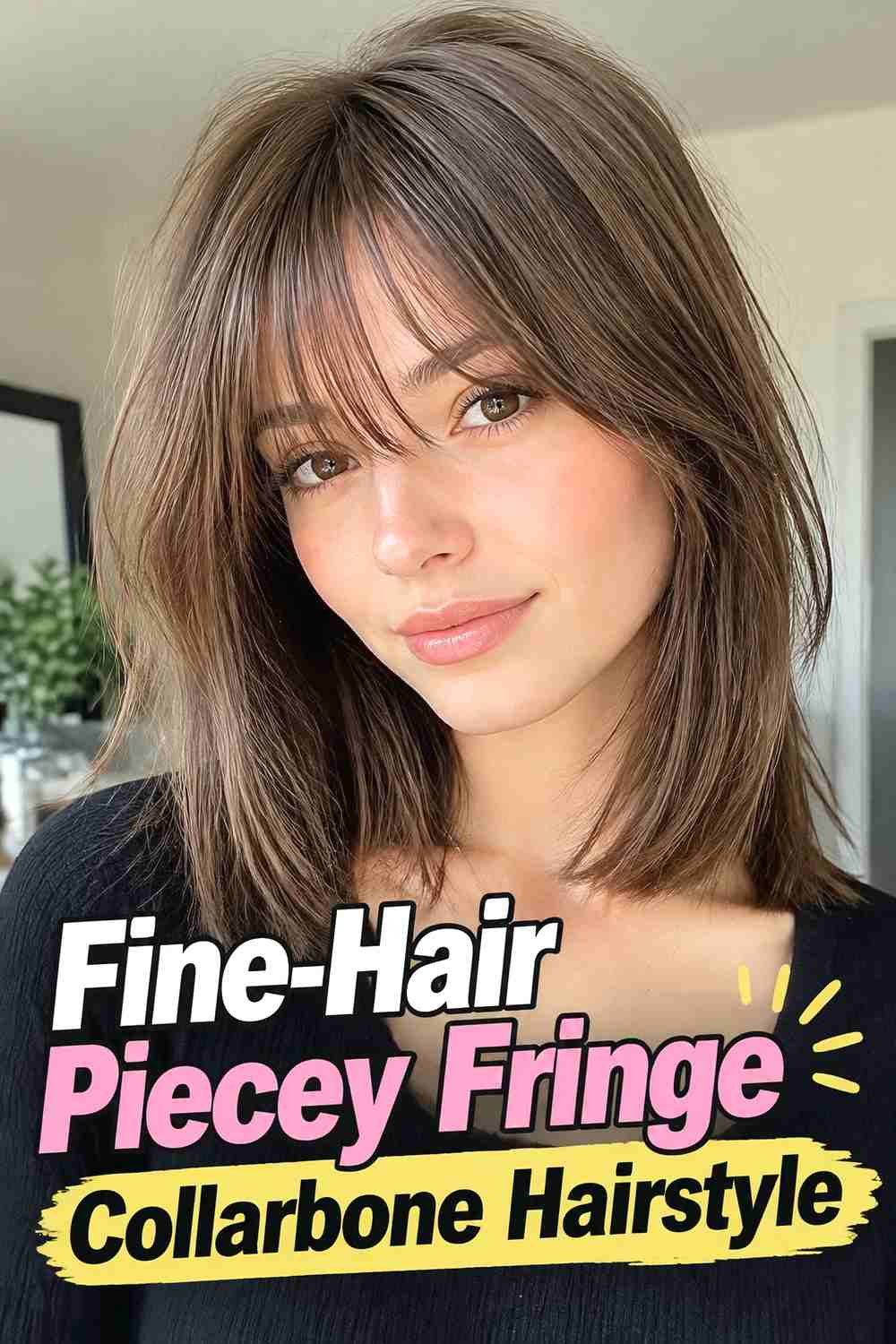
Fine hair can wear a piecey fringe successfully when enough density is preserved through the rest of the haircut. The collarbone length should remain fairly blunt or only lightly layered so the ends do not become sparse. At the front, a modest section of hair is used for the fringe, creating light pieces without taking too much volume away from the sides. Subtle surface texture can add movement while keeping the internal structure simple. A slight bend through the mids may make the hair appear more dimensional, but heavy products can quickly flatten this texture. The best result feels airy around the forehead while maintaining a substantial-looking perimeter that gives the overall haircut balance.
Pro Tip
Ask for limited thinning and keep the fringe section relatively narrow so the collarbone lengths retain as much visible fullness as possible.
13. Thick Hair Piecey Fringe Collarbone Hairstyle
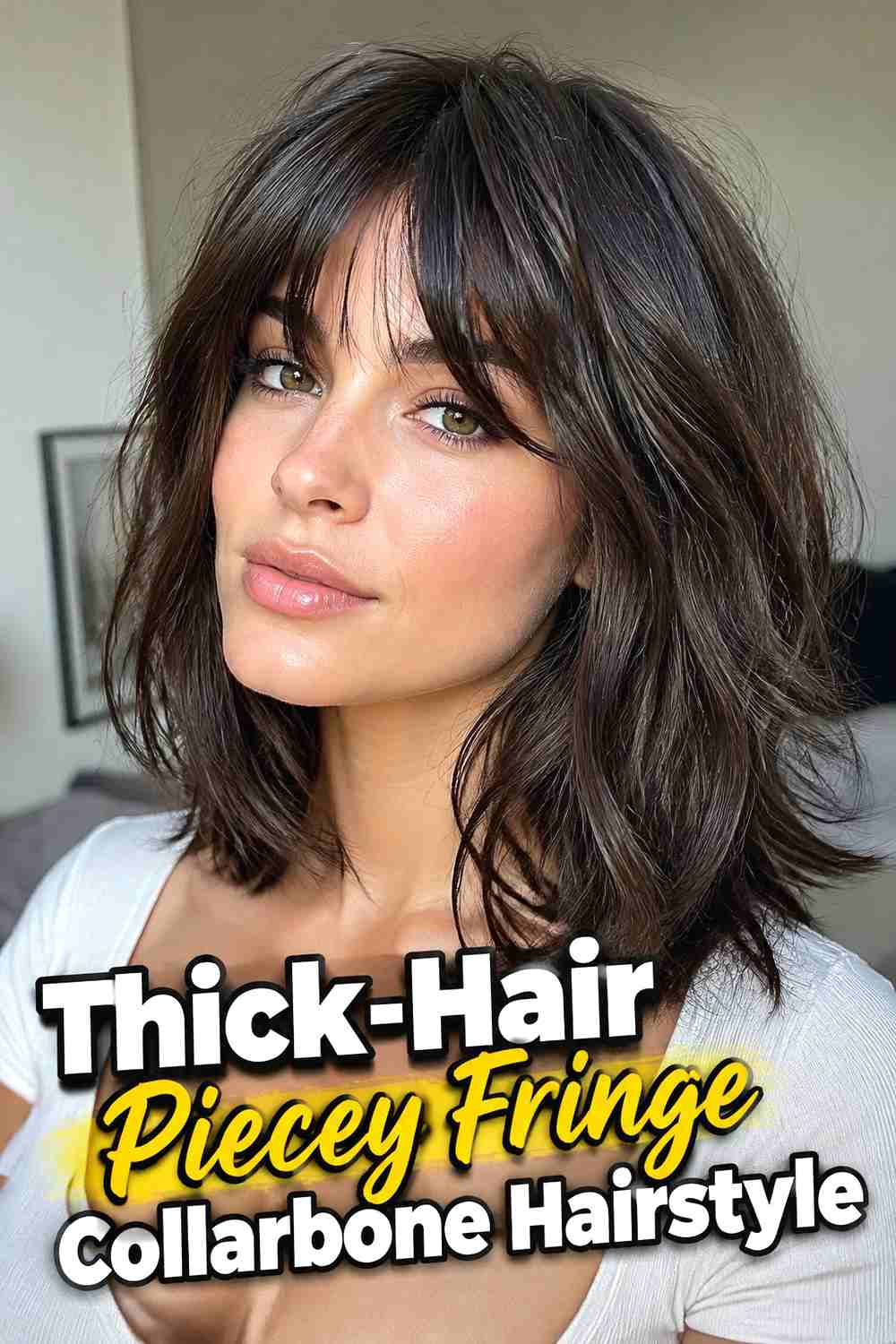
Thick hair offers plenty of body for a collarbone cut, but strategic weight removal can make the shape easier to wear. Long internal layers can reduce heaviness through the mids while leaving the perimeter substantial enough to maintain a strong outline. The piecey fringe should also be texturized carefully so it separates into light sections instead of forming a dense block across the forehead. Longer side pieces help connect the fringe with the fuller hair around the temples. Natural waves can make this haircut especially dimensional, while straighter thick hair benefits from subtle movement through the ends. The goal is to control bulk without over-thinning, which can make dense hair expand unpredictably as shorter pieces grow.
Wear & Maintenance
Selective internal layering usually grows more smoothly than aggressive thinning, helping the haircut maintain balance between appointments.
14. Sleek Piecey Fringe Collarbone Hairstyle

A sleek collarbone haircut shows how piecey fringe can work even when the overall finish is smooth and controlled. The main length stays clean and polished, with subtle internal shaping to keep the ends from feeling too heavy. Across the forehead, a few separated fringe sections interrupt the sleek surface and give the front a lighter, more modern detail. Straight hair suits this look naturally, though wavy hair can be smoothed when a polished finish is preferred. The fringe should retain a little movement rather than being pressed completely flat, which keeps it from looking pasted onto the forehead. A simple center or soft side part through the longer sections can further emphasize the clean collarbone-length silhouette.
Styling Notes
Use a lightweight smoothing product through the lengths, but keep heavy oils away from the fringe so its individual pieces remain defined.
How to Choose the Right Look
Start with your natural texture. Wavy and curly hair can make piecey fringe look effortless because the hair already separates into individual sections. Straight hair can show off choppy, wispy, feathered, and sleek fringe details with greater precision.
Next, consider density. Fine hair generally benefits from a fuller collarbone perimeter and lighter fringe section. Thick hair can support more internal layering, but the fringe may need careful texturizing so it does not become too heavy.
Think about how much movement you want throughout the haircut. A blunt or minimally layered shape keeps styling straightforward, while shaggy, choppy, feathered, and face-framing cuts create more visible texture. More layering can also change the way ponytails and tucked-back styles behave.
Fringe maintenance matters too. Shorter pieces become noticeably longer relatively quickly, while wispy or irregular fringe can usually tolerate some growth more gracefully than a perfectly precise bang. Choose a shape that still works when it is slightly grown out.
Final Thoughts
Piecey fringe works beautifully with collarbone haircuts because the lightness around the forehead balances the versatile mid-length shape. Whether you prefer waves, blunt ends, shaggy layers, curls, or a sleek finish, keep the fringe separated enough to preserve its airy character. The most wearable option is one that complements your natural density and texture rather than requiring constant correction.
FAQs
1. What is piecey fringe?
Piecey fringe is a bang styled or cut into visible separated sections instead of one solid, continuous line. The result can range from wispy and soft to choppy and textured.
2. Does piecey fringe work with collarbone-length hair?
Yes. Collarbone hair provides enough length for layers, waves, and face framing, while the fringe adds a shorter focal point that can make the haircut feel more detailed.
3. Is piecey fringe good for fine hair?
It can be. Using a smaller fringe section and preserving fullness through the collarbone perimeter helps prevent fine hair from looking too thin.
4. Can curly hair have piecey fringe?
Yes. Individual curls naturally create separation, but the fringe should be shaped with shrinkage and the curl pattern in mind rather than cut as if the hair were straight.
5. How do I keep piecey fringe from looking greasy?
Use styling products sparingly around the forehead, avoid applying heavy oils directly to the fringe, and choose lightweight texture products when extra separation is needed.
Save your favorite piecey fringe collarbone haircut, share it with your stylist, and explore more mid-length hairstyle inspiration for your next cut.