12 Short Shag With Soft Bangs Hairstyle Ideas
Short shag cuts with soft bangs blend airy layers, natural movement, and relaxed fringe for a fresh look that can feel polished or undone.
A short shag is defined by movement rather than rigid shaping. Layers around the crown, sides, and ends help create texture, while soft bangs keep the front from looking too heavy. Depending on how the layers are cut and styled, the finished shape can lean feathered, curly, tousled, sleek, rounded, or deliberately piecey.
When choosing your version, look beyond the overall silhouette. Bang density, crown volume, natural texture, daily styling time, and the amount of separation through the ends can dramatically change how a short shag behaves. These 12 ideas offer different ways to balance softness with the slightly undone character that makes this haircut so versatile.
Quick List
- Feathered Short Shag With Soft Bangs Hairstyle
- Tousled Short Shag With Wispy Soft Bangs Hairstyle
- Curly Short Shag With Soft Bangs Hairstyle
- Wavy Short Shag With Curtain Soft Bangs Hairstyle
- Choppy Short Shag With Airy Soft Bangs Hairstyle
- Rounded Short Shag With Full Soft Bangs Hairstyle
- Razor Cut Short Shag With Piecey Soft Bangs Hairstyle
- Short Shag With Soft Bottleneck Bangs Hairstyle
- Short Shag With Soft Side Swept Bangs Hairstyle
- Voluminous Short Shag With Soft Bangs Hairstyle
- Sleek Short Shag With Soft Bangs Hairstyle
- Bedhead Short Shag With Soft Bangs Hairstyle
1. Feathered Short Shag With Soft Bangs Hairstyle
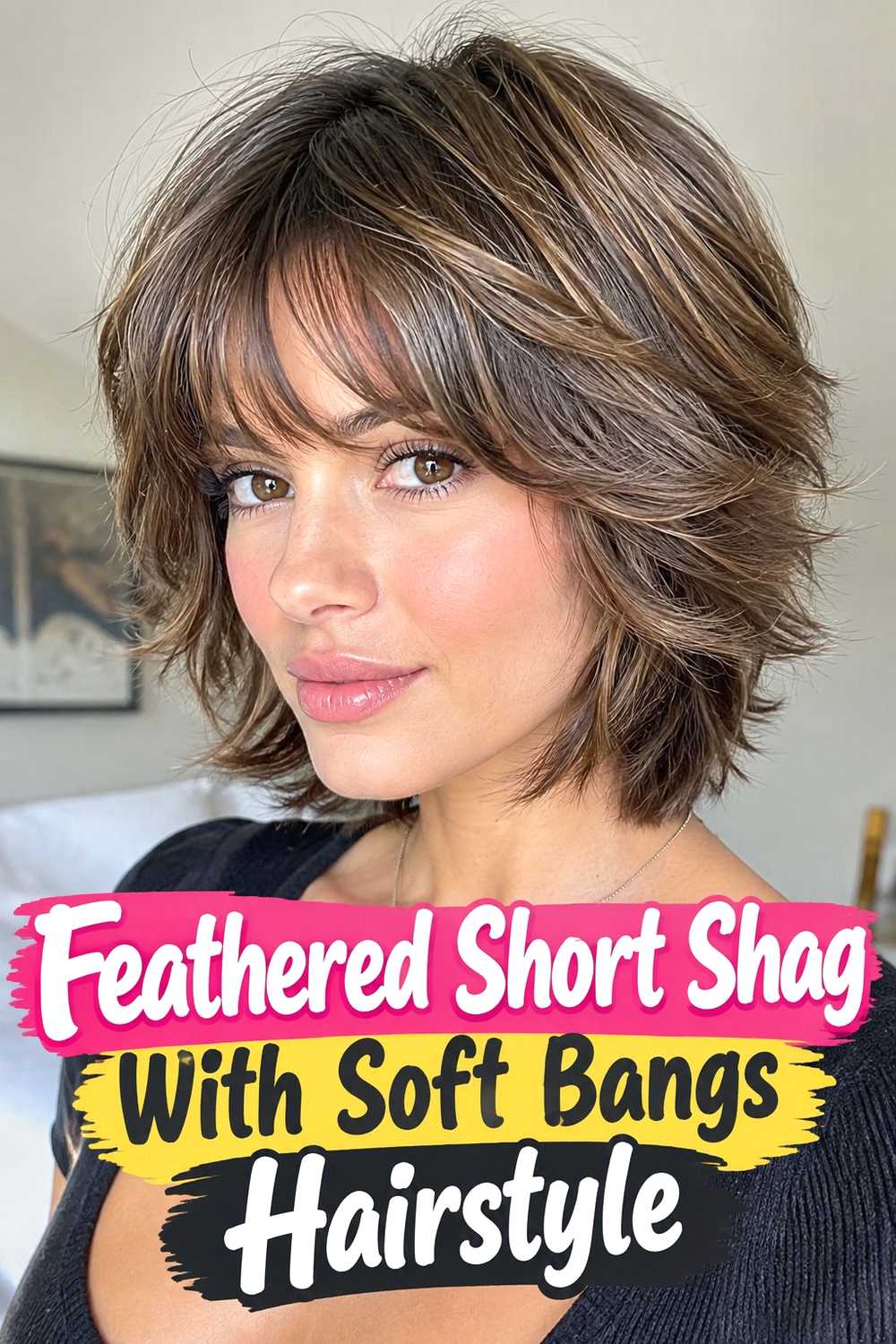
Feathered layers give this short shag a light, flowing outline instead of a chunky or heavily disconnected finish. The crown carries gentle lift, while shorter pieces around the cheeks and jaw flick outward just enough to show the layered structure. Soft bangs skim the forehead with slightly separated ends, helping the fringe blend naturally into the face-framing sections. This variation can work especially well for straight to softly wavy hair that responds easily to directional styling. A lightweight blow-dry keeps the shape airy, while overusing heavy creams or oils may flatten the feathered texture and reduce the movement that defines the cut.
Styling Notes
Use a small round brush or directional blow-dry technique to encourage the ends away from the face, then loosen the shape with your fingers rather than brushing it perfectly smooth.
Best For
This version suits anyone who likes visible layering and movement but prefers a softer, more polished finish than a heavily choppy shag.
2. Tousled Short Shag With Wispy Soft Bangs Hairstyle
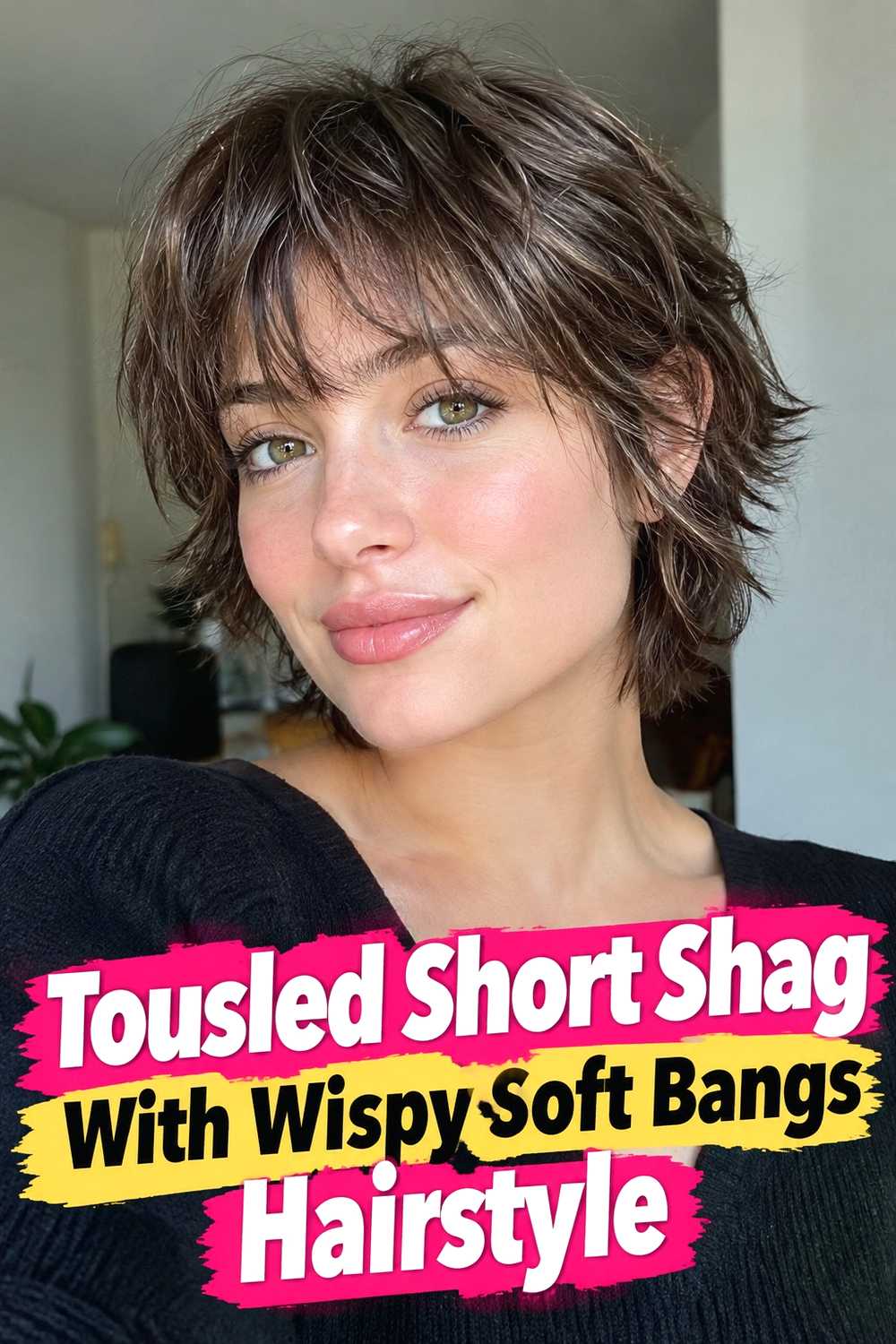
This tousled variation keeps the short shag relaxed and touchable, with irregular movement through the crown and ends rather than a carefully sculpted silhouette. Wispy soft bangs are intentionally light, allowing small gaps of forehead to show through and keeping the front from appearing dense. The surrounding layers can be styled in different directions so the haircut looks naturally lived-in instead of overly arranged. Straight, slightly wavy, and fine-to-medium textures can all create this effect with the right layering. Because the style depends on separation, a small amount of texturizing product is usually more useful than heavy hold. The goal is definition without making the hair feel stiff.
Wear & Maintenance
This look benefits from imperfect second-day texture, although the fringe may need a quick refresh if it becomes oily or loses its airy separation.
Pro Tip
Work styling product mainly through the mid-lengths and ends, keeping the roots and wispy bangs relatively light.
3. Curly Short Shag With Soft Bangs Hairstyle
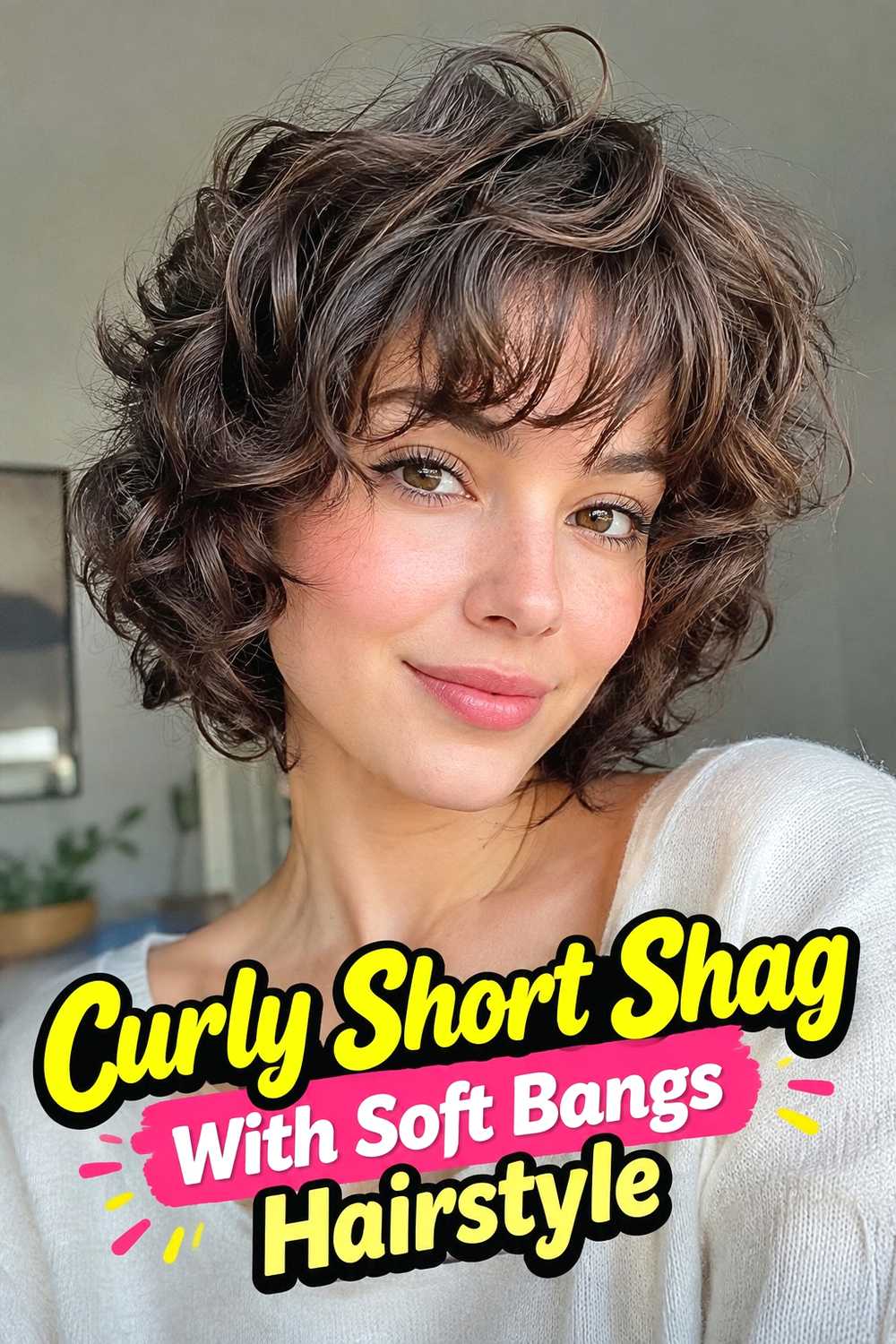
Natural curls bring extra dimension to a short shag because every layer can spring into a slightly different shape. Here, the crown is kept buoyant while the sides taper gradually toward the neck, creating a rounded yet broken-up silhouette. Soft curly bangs sit lightly across the forehead instead of forming a dense wall of curls, allowing the fringe to move naturally with the rest of the haircut. This style works best when the layering respects the hair’s shrinkage and individual curl pattern. Styling should encourage definition without forcing every curl into the same shape. A lightweight curl product and gentle drying method can preserve bounce while helping reduce unnecessary disruption to the pattern.
Hair Type & Length
This variation is especially suited to naturally curly or strongly wavy hair with enough length at the crown and fringe to form defined bends or coils.
Wear & Maintenance
Because curls can shrink considerably when dry, fringe length and overall layering should be planned with the finished dry shape in mind.
4. Wavy Short Shag With Curtain Soft Bangs Hairstyle
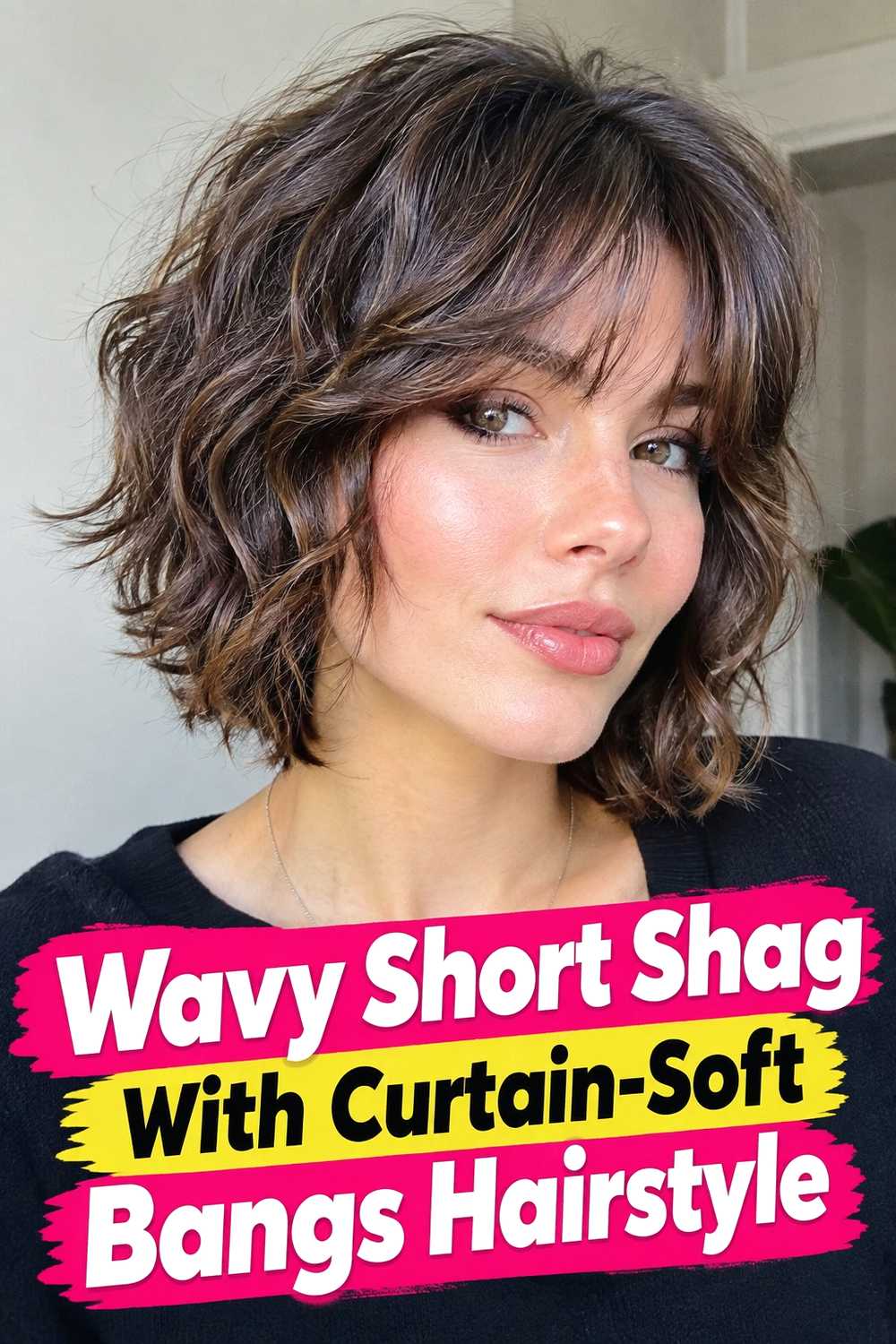
A naturally wavy texture gives this short shag an effortless sweep, while curtain-soft bangs open subtly near the center and blend into the shorter face-framing layers. The fringe is gentler than a dramatic curtain bang, so it can still fall partly across the forehead when worn forward. Loose bends through the sides create width and movement without making the haircut feel bulky. This shape can be particularly attractive on hair that already forms soft waves with minimal encouragement. Styling can stay relaxed: enhance a few bends, define the ends, and allow some pieces to fall differently each day. Keeping the roots light prevents the soft waves from collapsing around the crown.
Why It Works
The slightly opened fringe creates visual space around the face while still maintaining the recognizable softness of bangs.
Styling Notes
Scrunch in a light styling product and dry with minimal handling, then adjust only a few face-framing pieces once the hair is dry.
5. Choppy Short Shag With Airy Soft Bangs Hairstyle
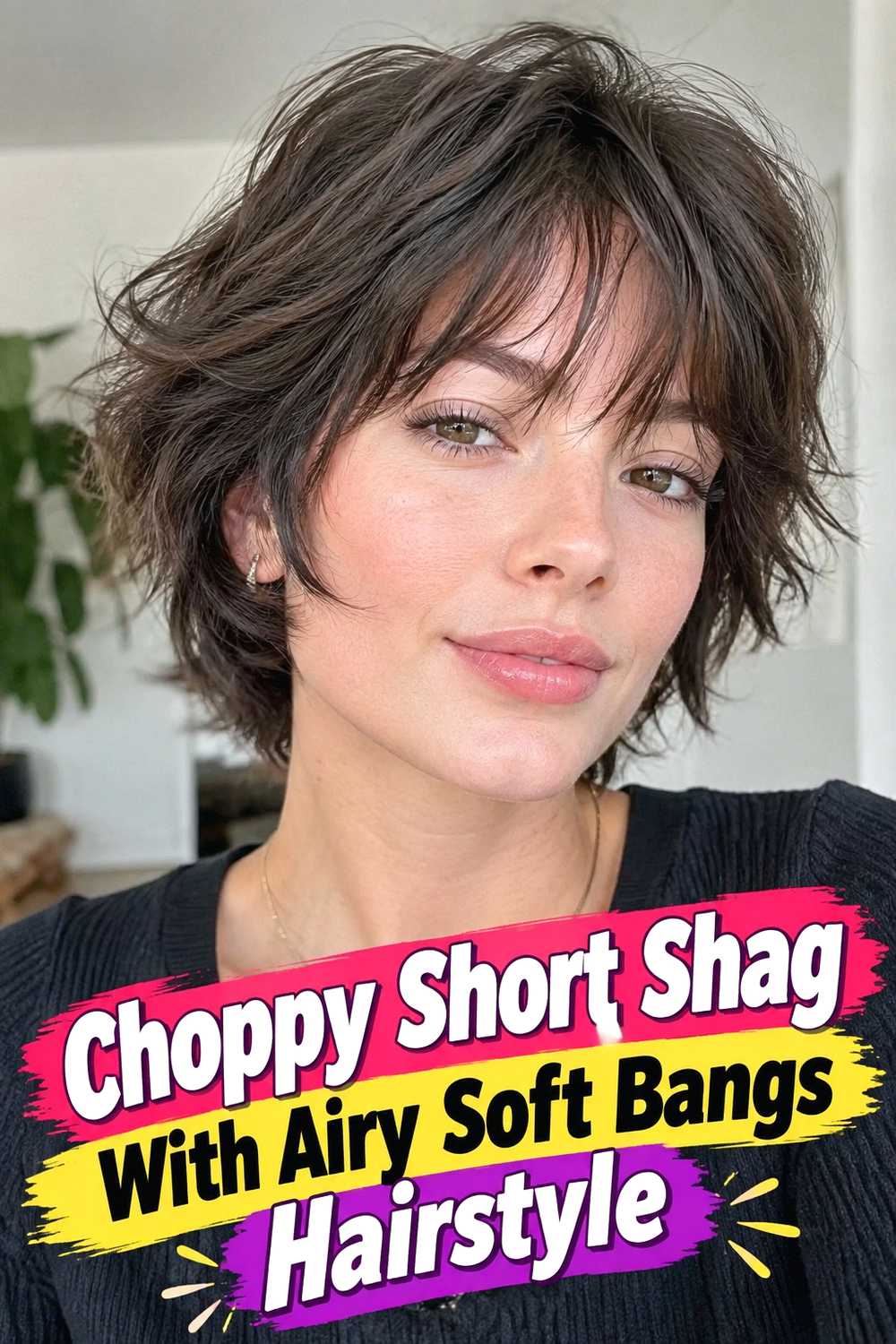
Choppier layering gives the short shag a more graphic texture while airy soft bangs stop the overall look from becoming too severe. The ends appear visibly separated, especially around the crown, temples, and nape, but the pieces still connect enough to create a believable haircut rather than an overly disconnected shape. The bangs are lightly cut and softly broken up across the forehead, balancing the stronger texture behind them. This variation can add visual movement to straighter hair and emphasize natural bends in wavy textures. A matte or lightweight texturizing product can help reveal the individual layers, but using too much may make the shorter sections clump together and lose their softness.
Best For
Choose this variation if you want obvious shag texture and separation while keeping the fringe delicate and wearable.
Pro Tip
Pinch only selected ends with product instead of coating every layer, which preserves dimension and keeps the finished style from looking overly styled.
6. Rounded Short Shag With Full Soft Bangs Hairstyle
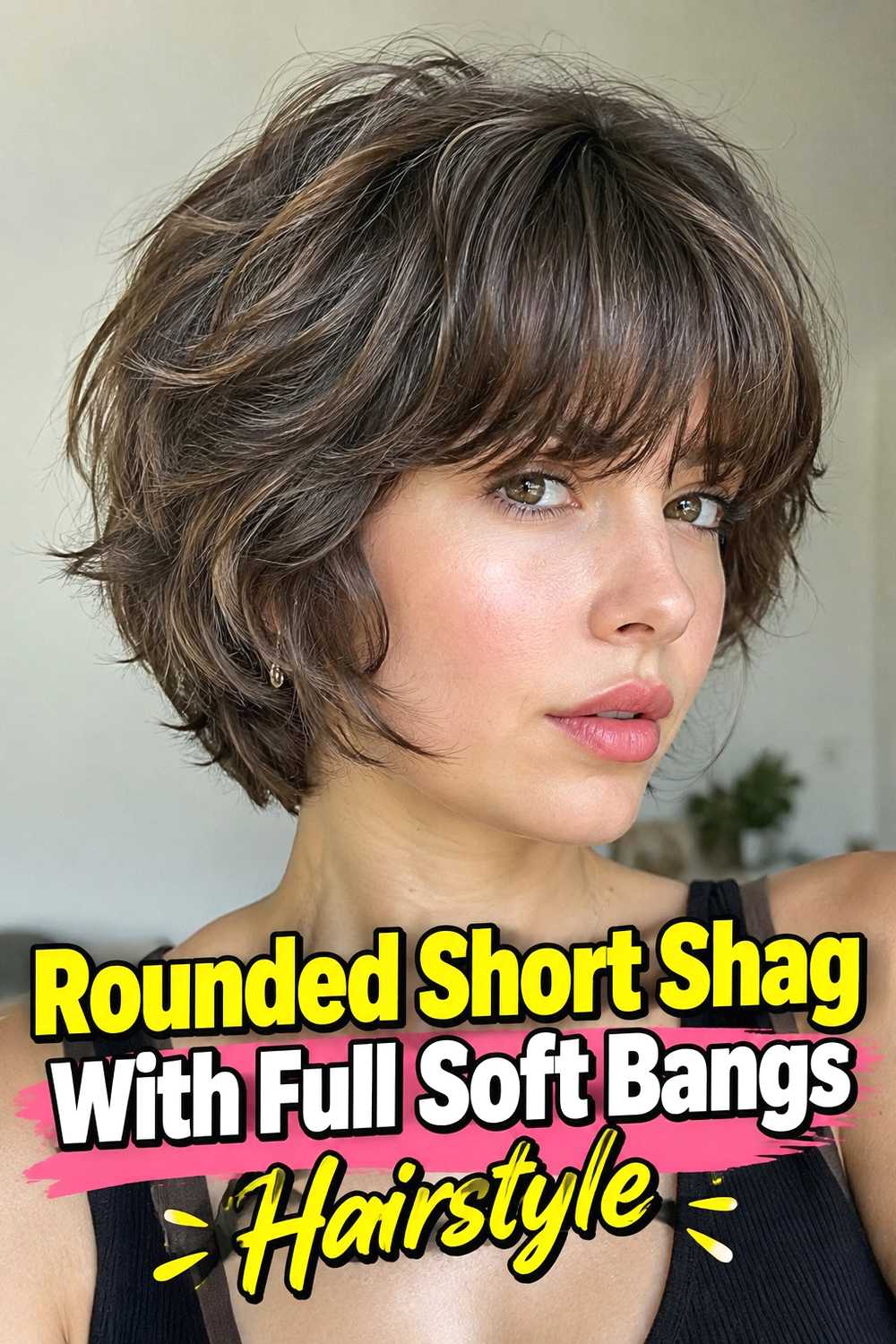
This version combines shaggy layering with a fuller, more rounded silhouette. The crown has controlled volume, the sides curve softly around the head, and the lower layers taper gently rather than kicking outward dramatically. Full soft bangs provide more forehead coverage than wispy fringe, but their ends remain feathered enough to avoid looking blunt or heavy. The result feels balanced and slightly retro without depending on exaggerated volume. Medium-density hair can hold this rounded shape particularly well, although the layering can be adjusted for other densities. A smooth blow-dry with light movement through the ends helps maintain the curved outline while still allowing the individual shag layers to remain visible.
Styling Notes
Direct the crown upward for gentle lift, then curve the side layers around the head instead of flipping every piece outward.
Hair Type & Length
The shape works well when the front and crown have enough density to support fuller bangs without removing too much body from the rest of the haircut.
7. Razor Cut Short Shag With Piecey Soft Bangs Hairstyle

A razor-cut finish can give a short shag beautifully tapered ends and fluid separation, particularly on hair that responds well to this cutting technique. In this version, the layers narrow toward the tips instead of ending in a heavy line, creating a light, flicky texture throughout the silhouette. Piecey soft bangs echo that finish with small separated sections that skim the forehead and connect naturally to the temples. The haircut can look especially dynamic when styled with gentle bends rather than uniform curls. Since razor cutting can behave differently depending on texture and hair condition, the amount of taper should be customized instead of applied identically to every section.
Why It Works
The tapered ends reduce visual heaviness and make the multiple shag layers easier to see, especially around the face and neckline.
Wear & Maintenance
Regular shaping helps preserve the intentional piecey structure as the short layers and fringe begin to grow out.
8. Short Shag With Soft Bottleneck Bangs Hairstyle
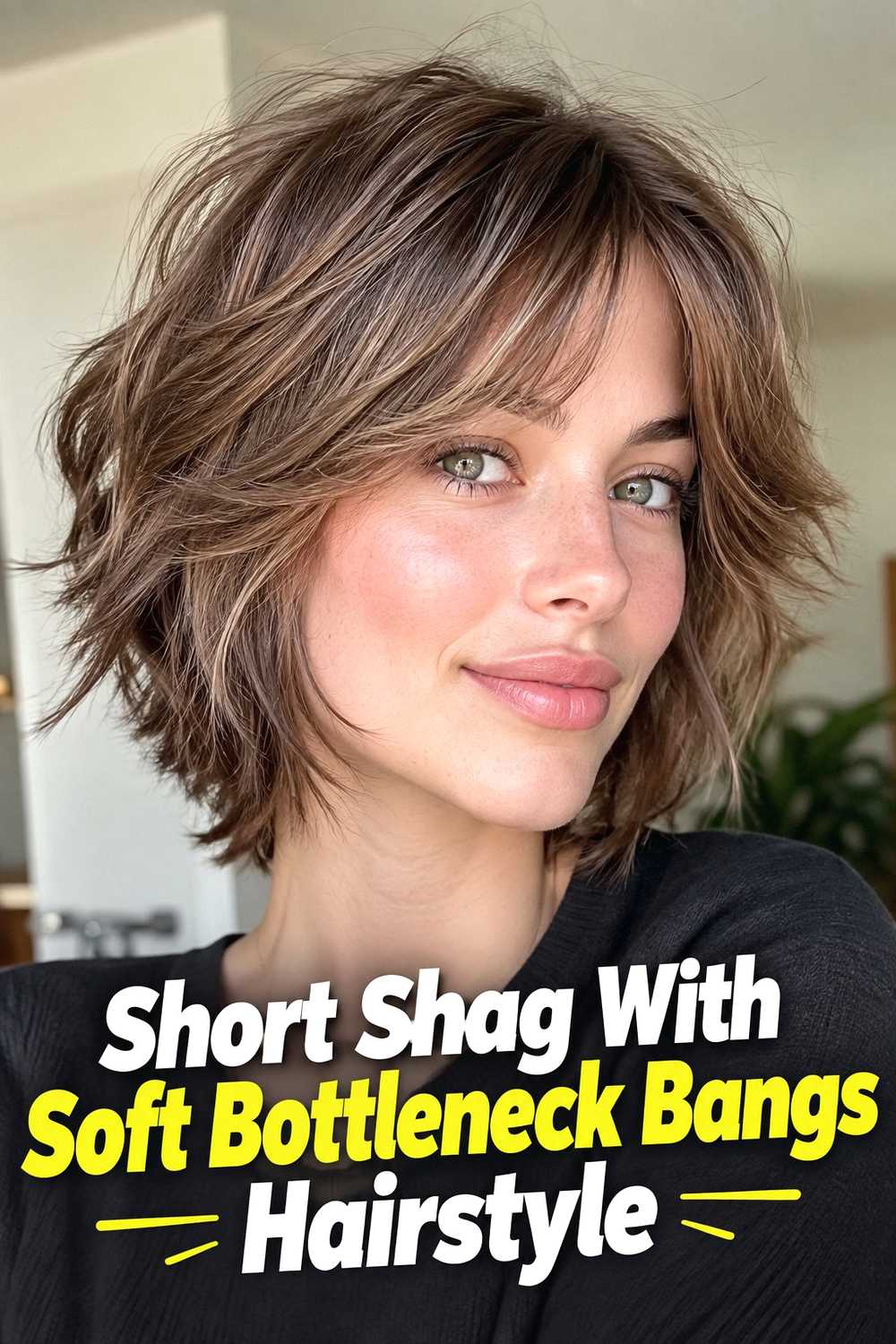
Soft bottleneck bangs give the short shag a distinctive face-framing effect without requiring a thick, straight-across fringe. The shortest part sits around the center of the forehead, then gradually lengthens toward the cheekbones, creating a curved transition into the surrounding layers. That progression works naturally with a shag because both elements rely on connected movement rather than rigid lines. The rest of the cut can stay airy through the crown with lightly flipped or bent ends around the jaw and neck. This fringe shape can be worn more open or more forward depending on styling. A little root direction and a soft bend through the sides are usually enough to reveal its tapered outline.
Best For
This variation is useful for anyone who wants noticeable bangs but likes the option of opening them slightly around the center.
Styling Notes
Dry the fringe forward first, then gently separate the longer outer pieces so they curve into the face-framing layers instead of flipping too far away.
9. Short Shag With Soft Side Swept Bangs Hairstyle
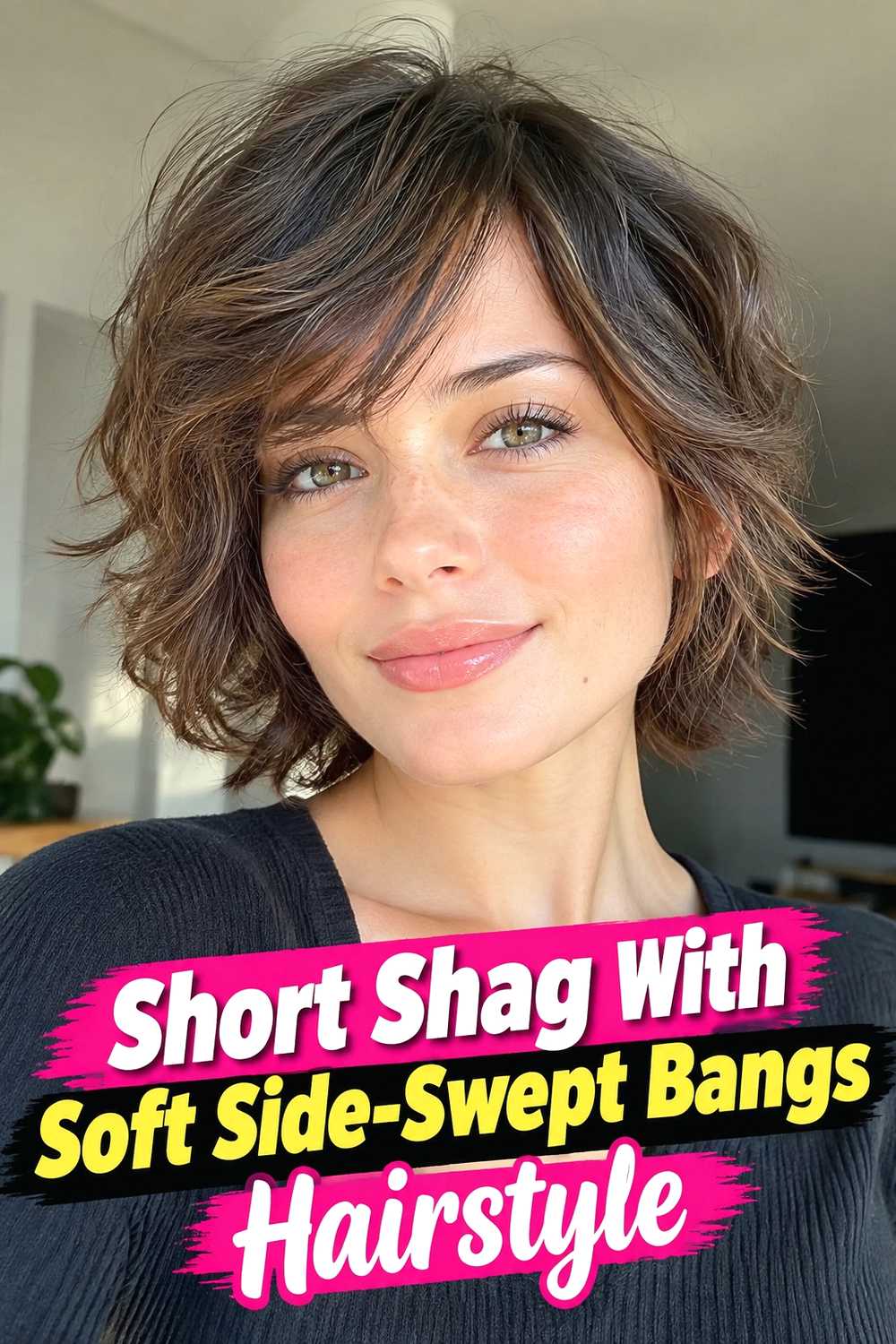
Side-swept bangs change the balance of a short shag by directing more movement across one side of the forehead. The fringe remains soft and lightly layered rather than forming a thick diagonal section, so it blends easily into the temple and cheekbone pieces. Through the crown, shorter layers create lift, while the sides can stay relaxed and slightly tousled for an intentionally uneven rhythm. This variation offers an easy alternative for people who do not want a centered fringe or perfectly straight-across bangs. It can work with straight, wavy, or softly curled textures, although the natural growth direction at the hairline will affect how easily the fringe stays swept to one side.
Styling Notes
Dry the bangs initially in both directions before placing them to the preferred side; this can help them sit with softer movement rather than a rigid sweep.
Wear & Maintenance
As the fringe grows, it can gradually blend into longer face-framing layers, making the transition between trims relatively flexible.
10. Voluminous Short Shag With Soft Bangs Hairstyle
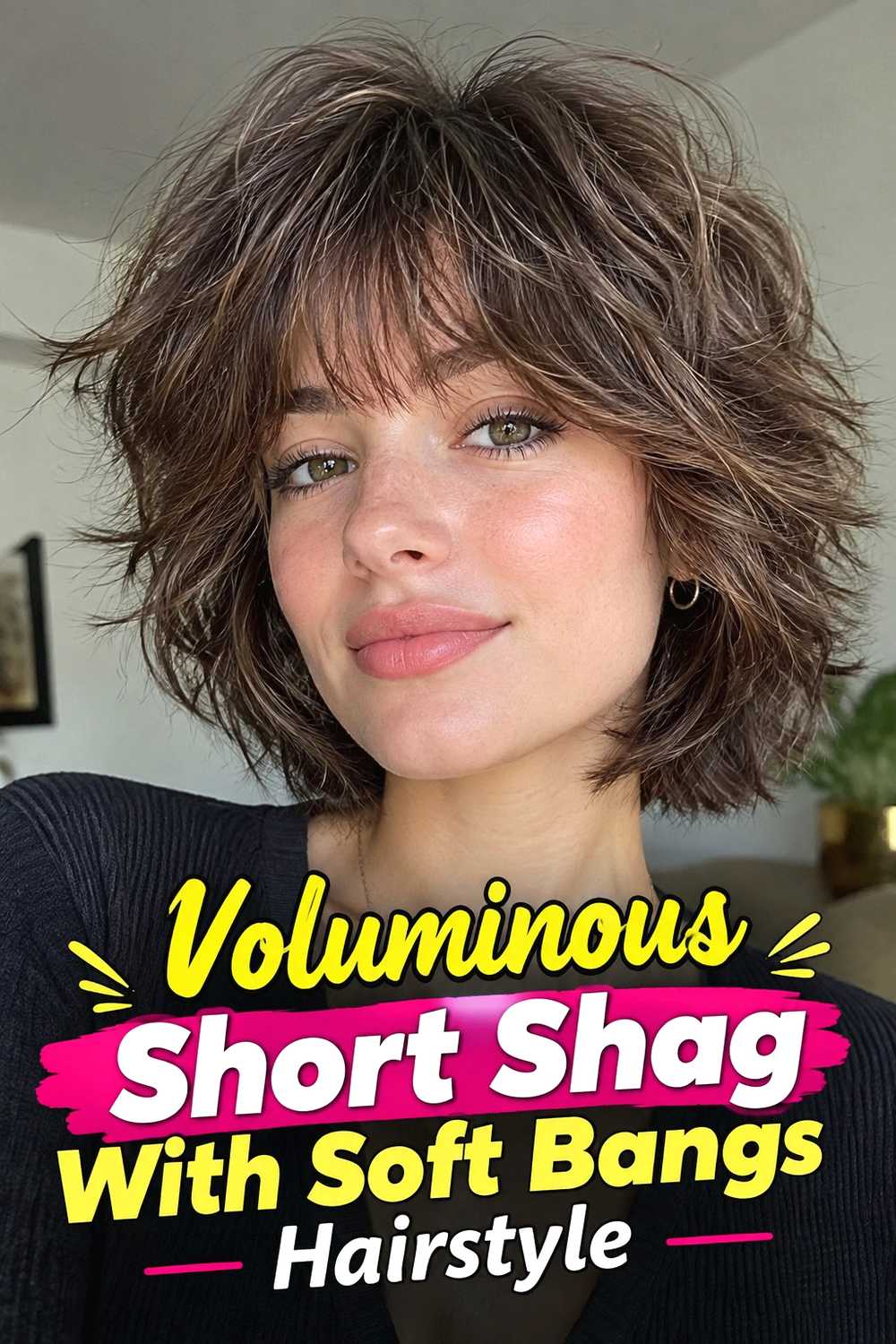
For a bolder silhouette, this short shag concentrates volume through the crown and upper sides while keeping the perimeter light. The lifted top makes the layered structure immediately visible, and soft bangs provide a gentle counterpoint so the front does not feel overly dramatic. Rather than teasing the hair into a stiff shape, the volume should come from well-placed layers, root direction, and natural texture. Wavy hair or medium-to-thick density can make this effect easier to achieve, although finer hair may also gain fullness from strategic shorter layers. Keeping the ends separated is important because too much bulk around the lower sides can turn the intended shag shape into a more uniformly rounded cut.
Best For
This style suits people who enjoy noticeable crown lift, expressive texture, and a more energetic short-hair silhouette.
Pro Tip
Focus volumizing product near the roots and upper layers, then keep the ends lighter so the haircut retains movement instead of becoming puffy all over.
11. Sleek Short Shag With Soft Bangs Hairstyle
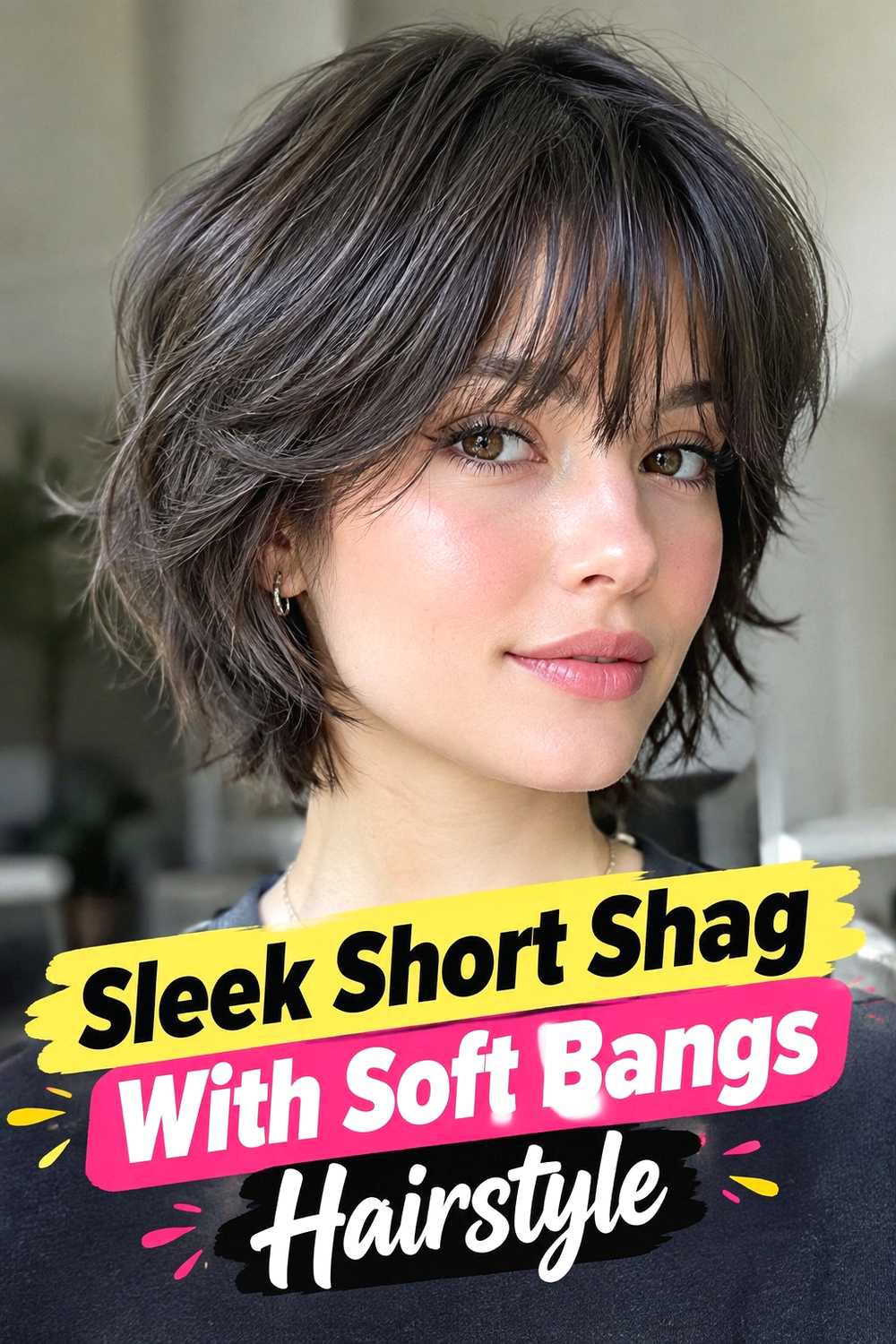
A shag does not have to be heavily tousled. This sleek version shows the layered architecture through smooth, controlled movement and softly tapered ends. The crown remains lightly lifted rather than flat, while the side layers hug the head before separating near the jaw and nape. Soft bangs fall cleanly across the forehead with enough texture at the ends to prevent a blunt appearance. Straight hair naturally supports this finish, but softly wavy hair can also be smoothed while retaining some movement. The key is to avoid pressing the haircut completely flat. A polished surface should still reveal the different layer lengths, natural strand detail, and subtle direction that distinguish the cut from a standard short bob.
Why It Works
The smooth finish makes the precision of the layering more visible while the feathered fringe keeps the overall result relaxed.
Styling Notes
Use controlled heat and minimal smoothing product, concentrating on reducing excess frizz without removing all natural body from the crown.
12. Bedhead Short Shag With Soft Bangs Hairstyle
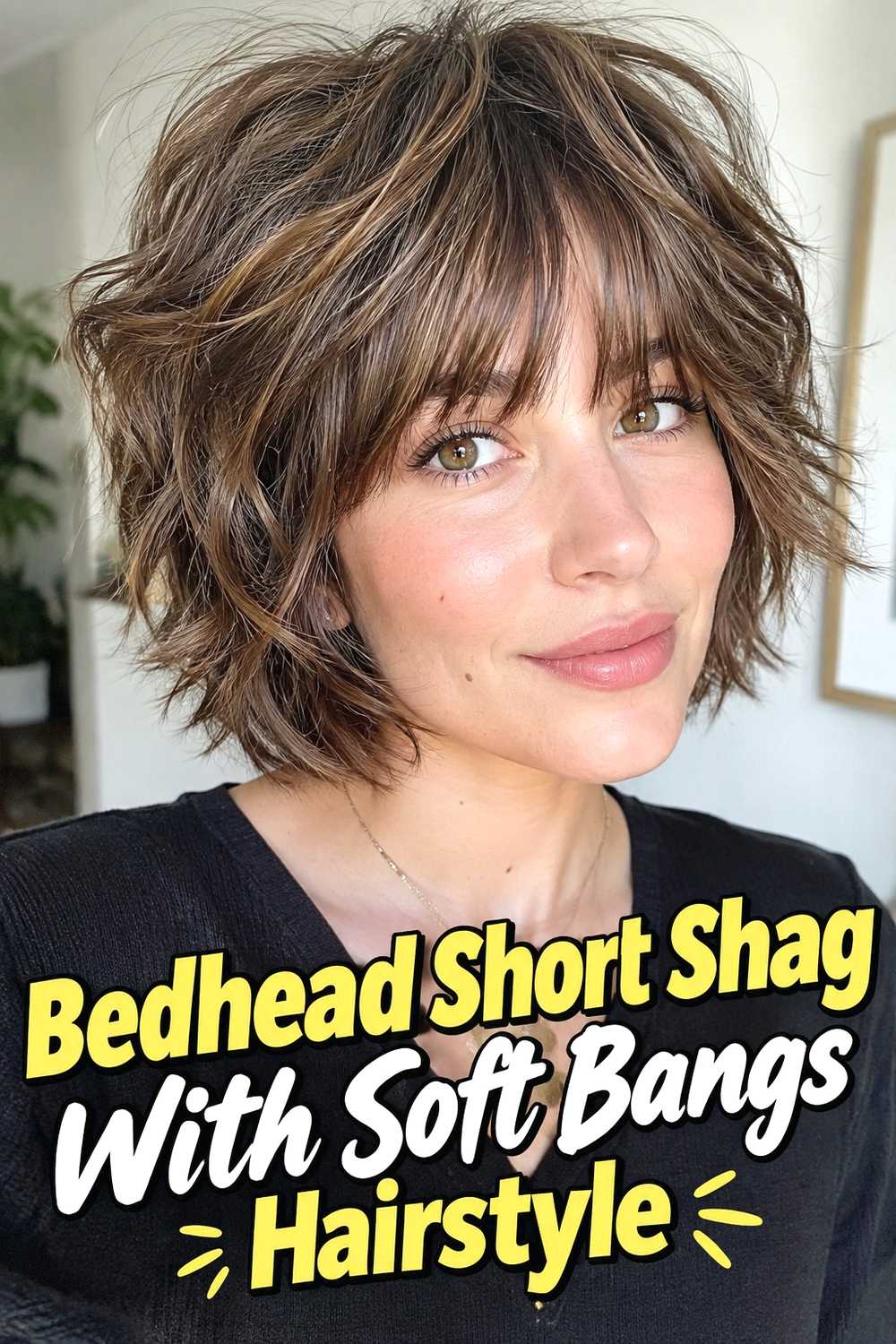
The bedhead short shag embraces uneven bends, lifted roots, and slightly messy separation while still looking intentional. Layers through the crown fall in different directions, the ends flick or curve naturally, and soft bangs break into loose pieces across the forehead. Unlike a polished shag, this version does not require each section to sit in a predetermined place. Its character comes from controlled imperfection and touchable texture. Hair with a natural wave can achieve the effect with very little manipulation, while straighter textures may need a few bends added through random sections. The finish should remain light and flexible; overly strong hairspray or thick wax can quickly turn relaxed texture into stiff, obvious styling.
Wear & Maintenance
This is one of the more forgiving options for day-to-day styling because slightly shifted layers can contribute to the intended undone finish.
Pro Tip
Refresh flattened areas individually instead of restyling the entire haircut, concentrating on the crown, fringe, and a few visible ends.
How to Choose the Right Look
Start with your natural texture. Straight or softly wavy hair often shows feathered, choppy, razor-cut, and sleek layers clearly, while curlier textures can make a rounded or curly shag feel naturally full and dimensional. If your hair has strong movement already, choose a shape that works with it rather than relying on daily heat styling to force a different pattern.
Next, consider bang density. Wispy or airy bangs keep the forehead more visible and generally create a lighter front, while fuller soft bangs make a stronger visual statement. Bottleneck and side-swept versions offer additional flexibility because they blend more gradually into the surrounding layers.
Styling time also matters. Tousled, wavy, curly, and bedhead variations can work well with an intentionally relaxed finish, while sleek, feathered, or highly voluminous versions may require more directional drying. Think about maintenance at the fringe as well: short bangs usually show growth sooner than the longer layers behind them.
Finally, decide whether you want the shag to feel soft or strongly textured. Rounded and sleek versions keep the silhouette controlled, while choppy, razor-cut, and voluminous options make the layering much more obvious. The most wearable choice is the one that fits both your preferred finish and the amount of daily styling you realistically enjoy.
Final Thoughts
A short shag with soft bangs can shift from smooth and understated to curly, airy, voluminous, or deliberately undone without losing its signature layered movement. The biggest differences come from fringe density, crown shape, end texture, and how closely the cut follows your natural hair pattern. Choose the version whose shape works with your texture first, then adjust the softness, volume, and finish to suit your routine.
FAQs
1. What makes a short shag different from a short layered bob?
A short shag generally uses more visible layering, crown movement, and textured separation. A layered bob can contain layers too, but its perimeter often feels more structured and its overall shape may appear smoother or heavier.
2. Can soft bangs work with naturally curly short shag hair?
Yes. Soft bangs can be adapted to curls, but their dry length and shrinkage need to be considered carefully. Leaving enough length allows the fringe to curl naturally without becoming much shorter than intended.
3. Do short shag hairstyles need daily styling?
Not necessarily. Naturally wavy or curly textures may need only a light refresh, while straighter hair may require some directional drying or texturizing to emphasize the layers. The desired finish makes a major difference.
4. Are wispy bangs and full soft bangs the same?
No. Wispy bangs use less density and usually reveal more of the forehead. Full soft bangs provide greater coverage but retain feathered or lightly textured ends so they do not look sharply blunt.
5. How can I keep a short shag from looking too bulky?
Balanced layering is important. Keeping excessive weight away from the lower sides, preserving movement through the ends, and placing volume intentionally around the crown can help the shag maintain a light, defined silhouette.
CTA
Save your favorite short shag with soft bangs hairstyle ideas and explore more inspiration when you are ready to plan your next layered look.