18 Textured Ear-Tuck Hairstyles With Longline Cardigans
Textured ear-tuck hairstyles create a clean, modern frame around the face while balancing the soft vertical drape of a longline cardigan.
A longline cardigan already adds length and movement to an outfit, so hairstyles that open one or both sides of the face can keep the overall silhouette from feeling heavy. The ear tuck is especially useful because it works across pixies, bobs, lobs, curls, waves, and layered cuts without requiring a complicated updo.
Texture is what keeps the tuck from looking overly severe. Tousled crowns, soft bends, natural curls, feathered ends, and piecey layers can all add dimension while the tucked section provides structure. When choosing a look, compare your hair length, density, natural texture, cardigan neckline, and whether you prefer one-sided asymmetry or a cleaner two-sided finish.
Quick List
- Tousled Ear Tuck Bob Hairstyle
- Deep Side Part Ear Tuck Hairstyle
- Wavy Ear Tuck Lob Hairstyle
- Piecey Pixie Ear Tuck Hairstyle
- Curly Side Ear Tuck Hairstyle
- Feathered Ear Tuck Crop Hairstyle
- Textured Middle Part Ear Tuck Hairstyle
- Shaggy Ear Tuck Bob Hairstyle
- Soft Blowout Ear Tuck Hairstyle
- Asymmetrical Ear Tuck Hairstyle
- Textured French Bob Ear Tuck Hairstyle
- Sculpted Wave Ear Tuck Hairstyle
- Layered Ear Tuck Lob Hairstyle
- Tousled Crown Ear Tuck Hairstyle
- Sleek One Side Ear Tuck Hairstyle
- Natural Curl Ear Tuck Bob Hairstyle
- Flipped End Ear Tuck Hairstyle
- Soft Fringe Ear Tuck Hairstyle
1. Tousled Ear Tuck Bob Hairstyle
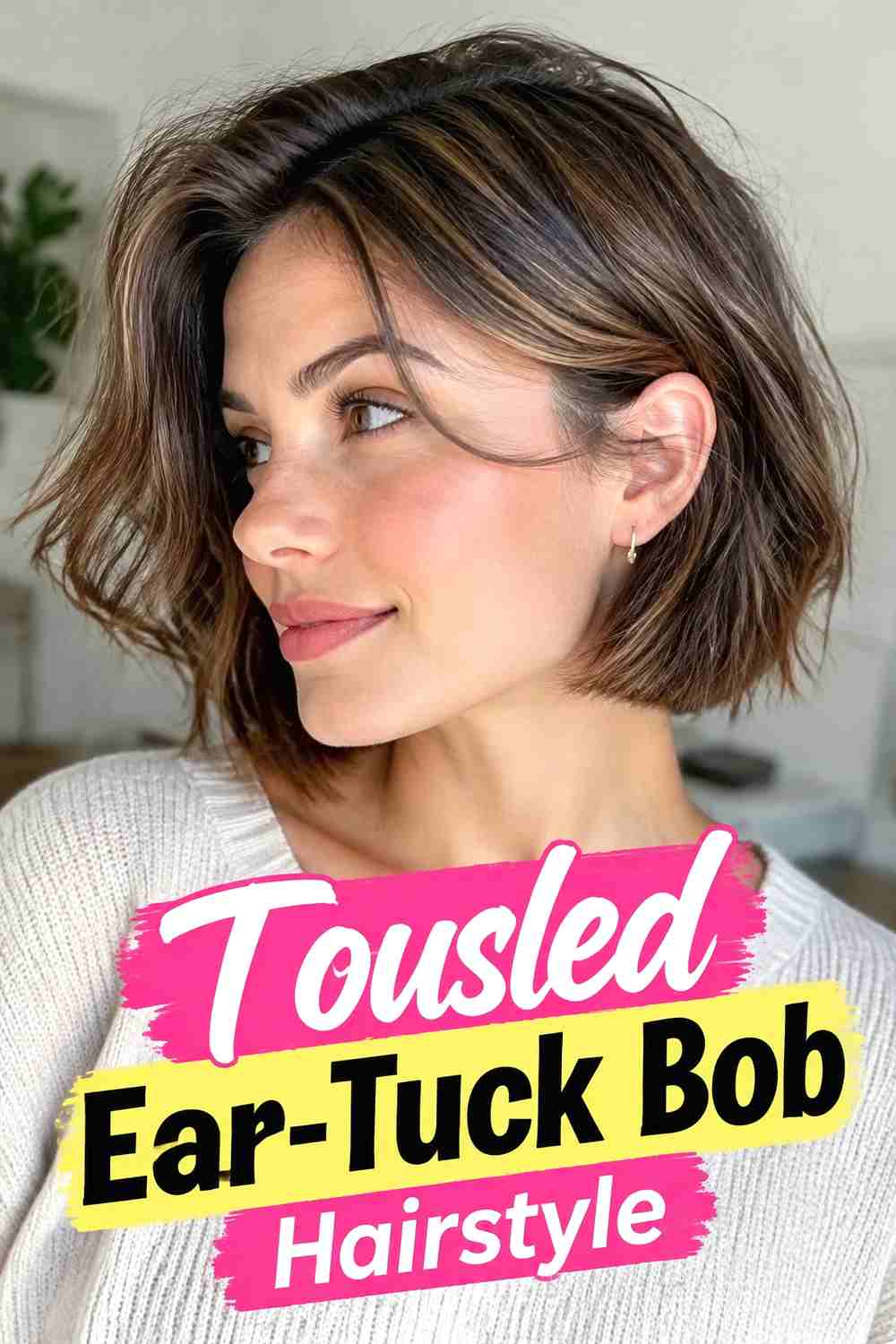
A tousled bob with one side tucked behind the ear creates an easy balance between structure and movement. Keep the untucked side slightly fuller, with soft bends and separated pieces that prevent the haircut from looking too polished. The exposed ear gives the face a cleaner outline, while the textured side adds enough volume to stand out against the long vertical line of a cardigan. This works especially well with chin- to jaw-length bobs that naturally develop movement through the ends. Avoid flattening the tucked section completely; a little root texture keeps the look modern and connected to the rest of the style. The result feels relaxed enough for casual knitwear but polished enough for work.
Styling Notes
Create texture first, then tuck the cleaner side. Finishing the movement before the tuck helps preserve volume where you want it.
2. Deep Side Part Ear Tuck Hairstyle
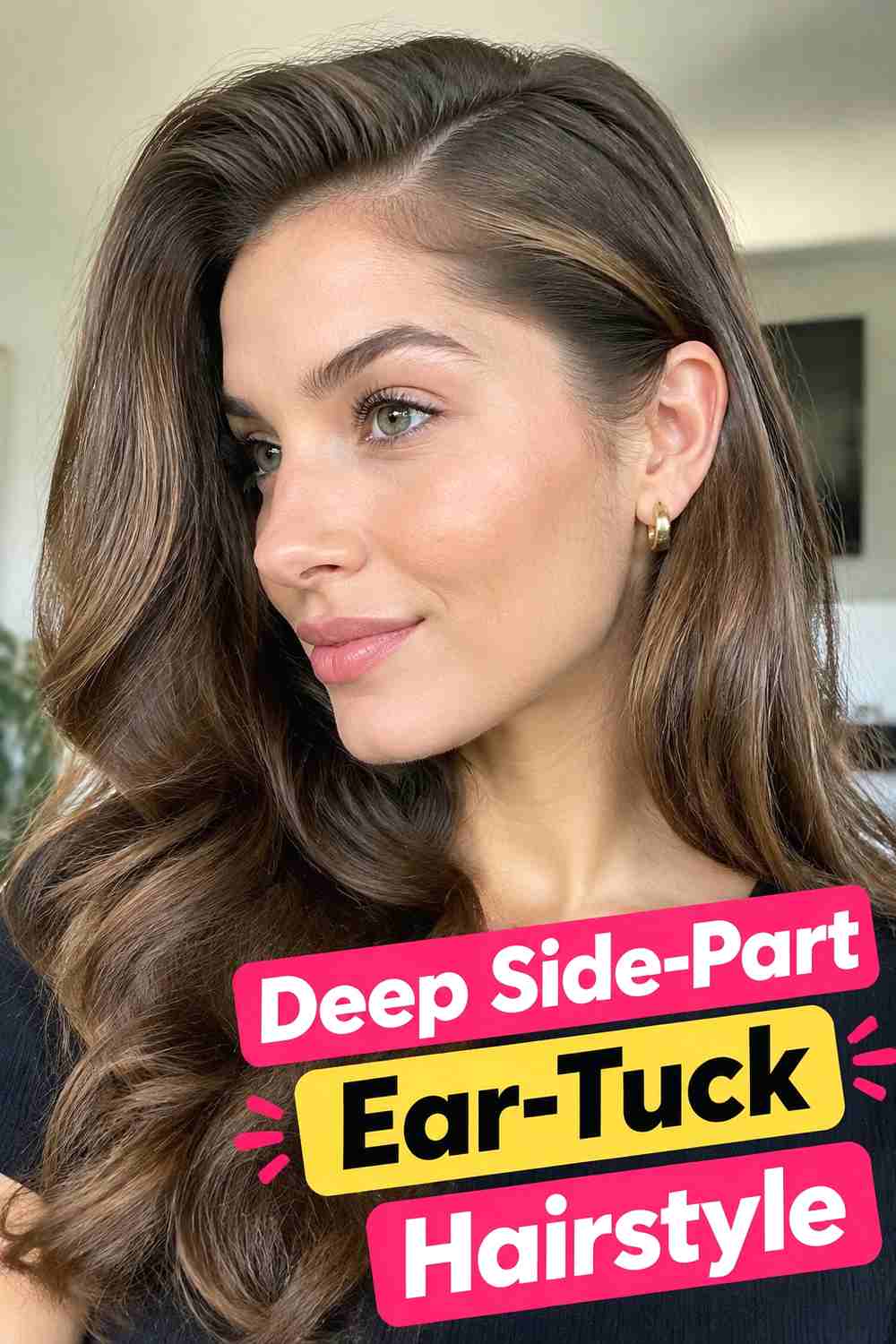
A deep side part makes an ear tuck feel intentional by creating clear asymmetry between the compact side and the fuller sweep. Move the part farther from center, tuck the smaller section neatly behind the ear, and let the opposite side carry most of the volume. Straight hair can stay softly smooth, while waves or light texture make the contrast even stronger. This shape pairs beautifully with longline cardigans because the hair introduces diagonal movement above the outfit’s long vertical layers. The tuck also keeps one side clear of bulky cardigan collars or scarves. Maintain a little lift near the part so the fuller side does not collapse flat against the crown.
Best For
Bobs, lobs, and longer pixies with enough side length to reach behind the ear are especially easy to style this way.
3. Wavy Ear Tuck Lob Hairstyle
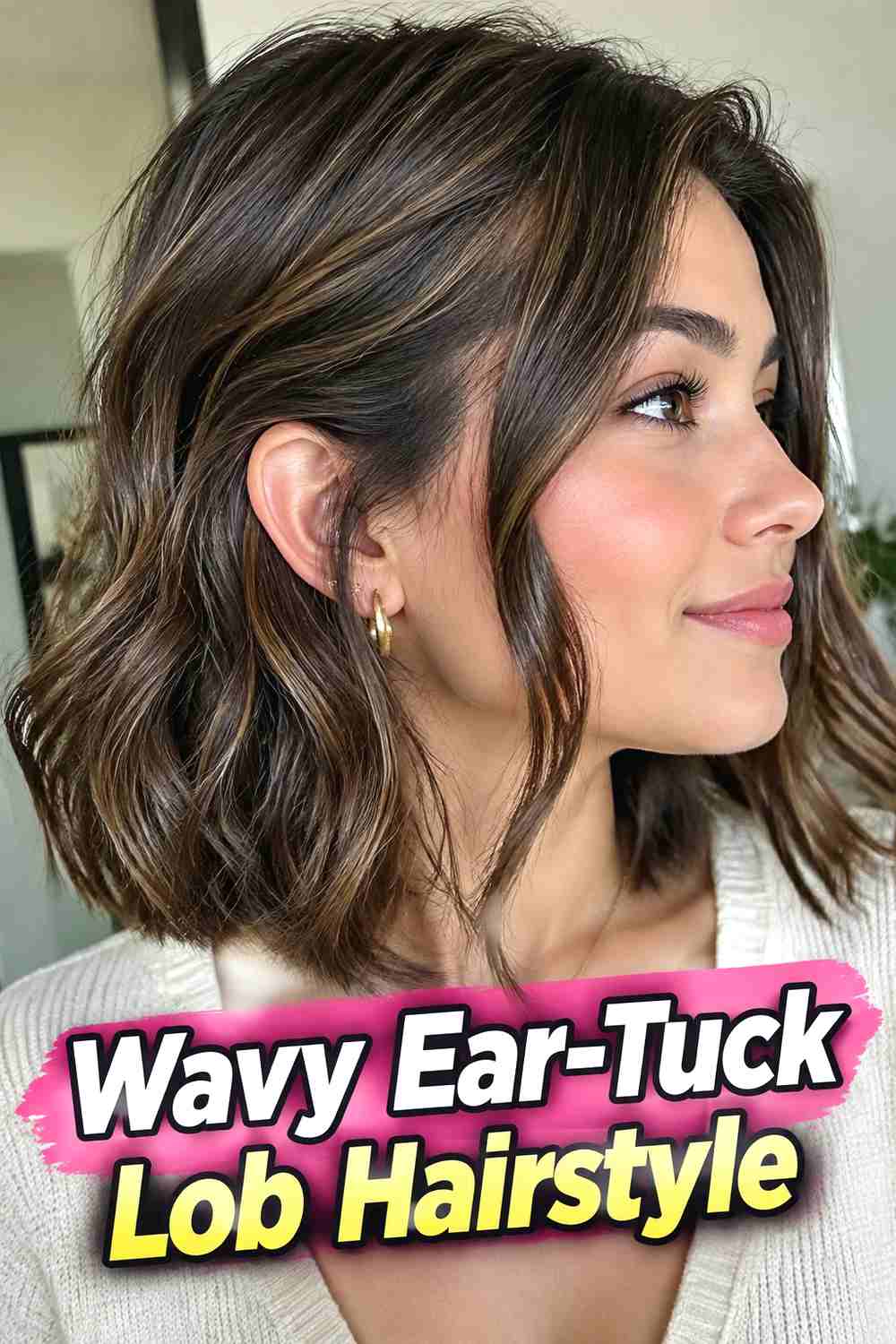
A wavy lob combines shoulder-skimming movement with the clean definition of an ear tuck. Create loose, irregular bends through the mid-lengths, then tuck one side while allowing the opposite side to fall naturally toward the collarbone. The asymmetry keeps the waves from looking overly uniform and helps the haircut sit more cleanly with a longline cardigan. If the cardigan has a high or shawl-style neckline, direct the loose lengths slightly forward so they do not disappear beneath the knit fabric. The waves should remain soft and touchable, with visible variation in bend size. A subtle amount of crown lift keeps the tucked side from making the entire hairstyle appear too flat.
Wear & Maintenance
Refresh individual waves rather than restyling the whole lob. The slightly undone finish makes small changes during the day easy to blend into the look.
4. Piecey Pixie Ear Tuck Hairstyle
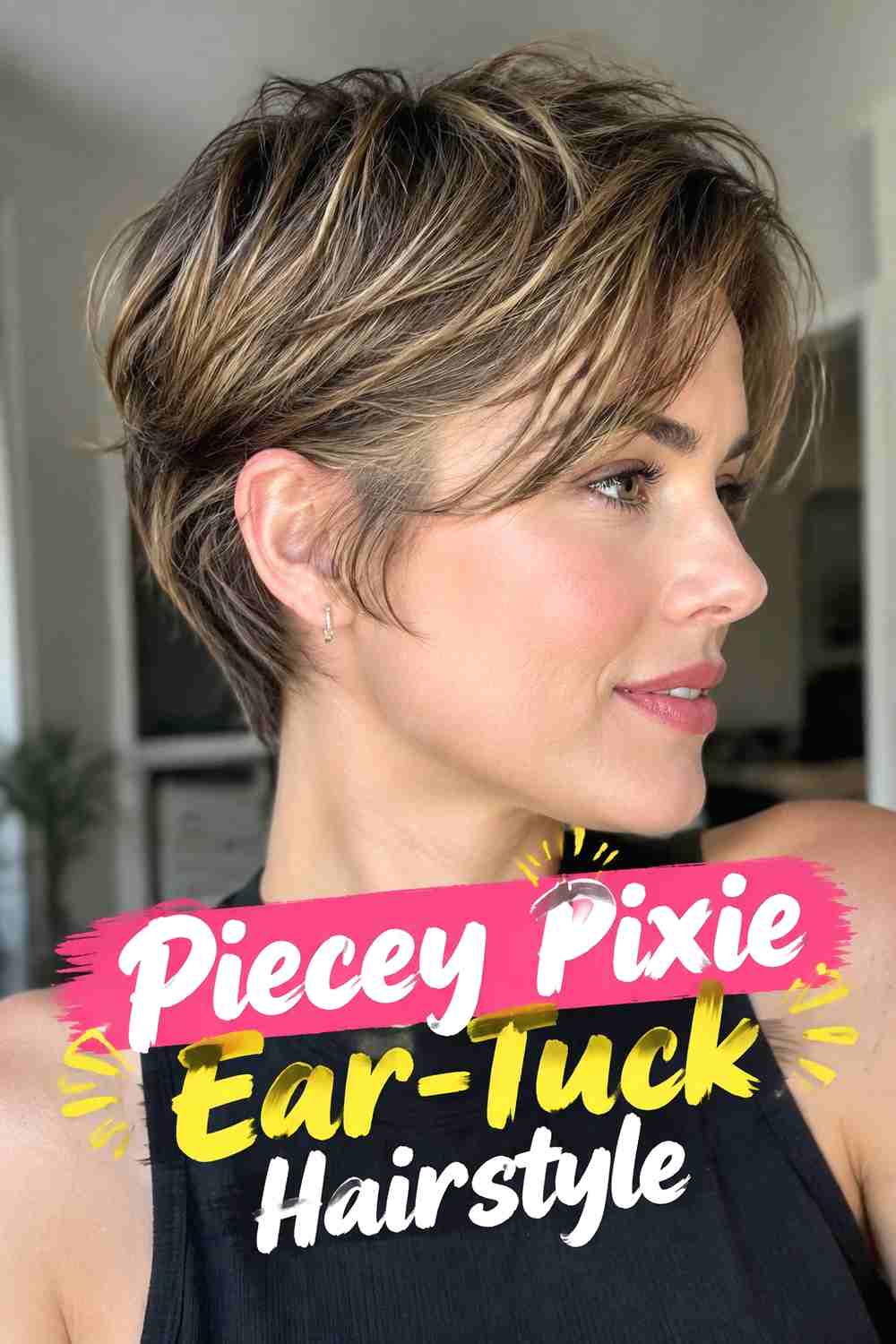
A piecey pixie can use a small ear tuck to make short textured layers feel sharper and more deliberate. Keep the longer top separated into fine sections, directing several pieces across the crown while tucking one side closely behind the ear. This exposes the haircut’s shape without removing the tousled character that makes it modern. With a longline cardigan, the compact pixie leaves the neckline completely open while the textured top adds enough detail to balance the soft knit layers below. Use flexible product sparingly so the ends remain movable. The tuck should look natural rather than tightly pressed, especially if the hair around the temple is very short.
Pro Tip
Pinch only selected top pieces into definition. Overworking every strand can make a short pixie look stiff instead of textured.
5. Curly Side Ear Tuck Hairstyle
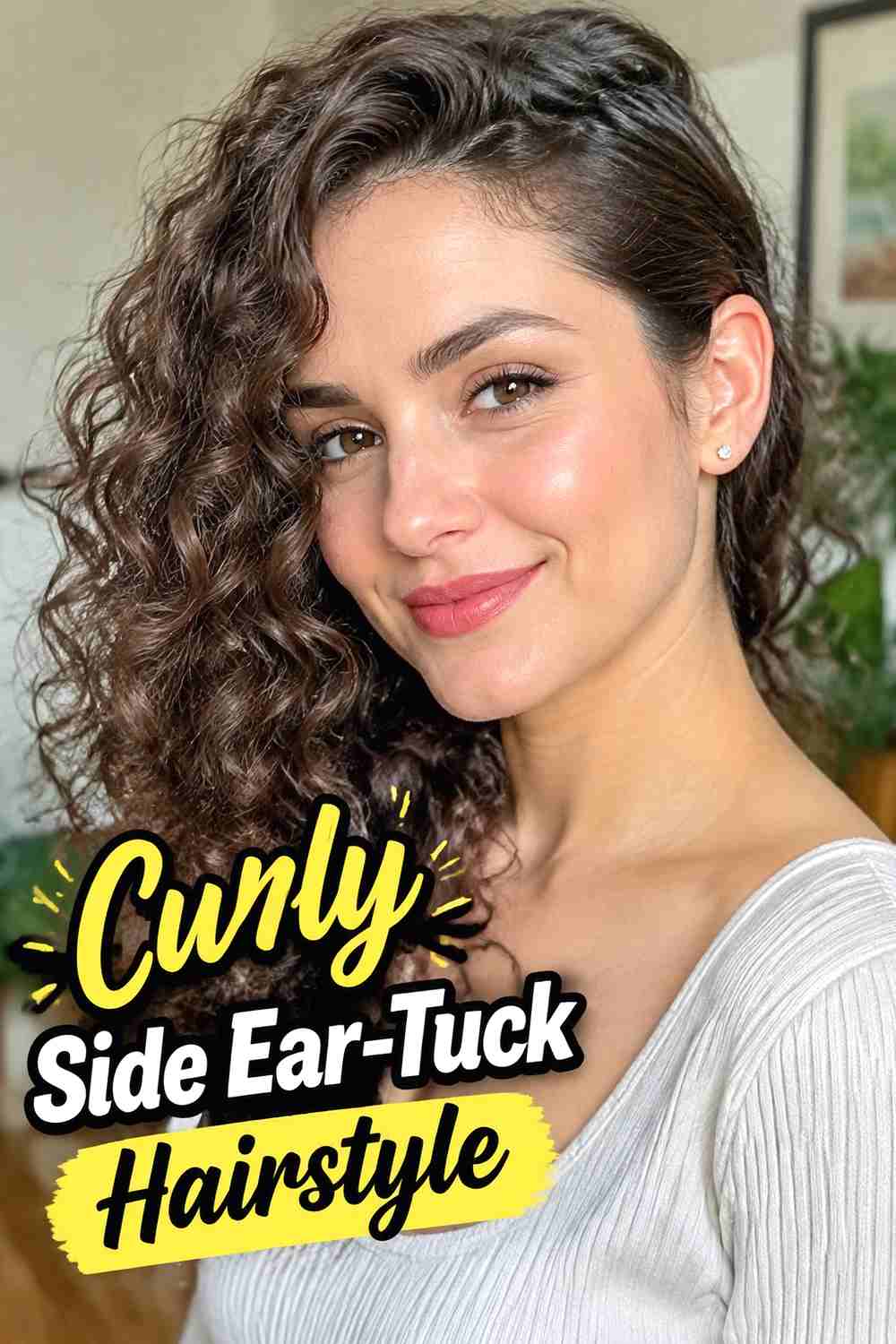
A side ear tuck gives curly hair a strong directional shape without sacrificing natural volume. Choose the side that naturally sits flatter, guide those curls behind the ear, and allow the opposite side to remain full and rounded. This creates an attractive contrast between compact and expansive texture. The look pairs particularly well with longline cardigans because the open side keeps the face visible while the fuller curls soften the cardigan’s long, straight drape. Avoid pulling the tucked section tightly; let a little curl texture remain near the temple and hairline. If a curl slips forward, it can become part of the relaxed finish rather than requiring constant adjustment.
Hair Type & Length
Short to medium curls work particularly well, provided the side section has enough length to tuck comfortably without excessive stretching.
6. Feathered Ear Tuck Crop Hairstyle
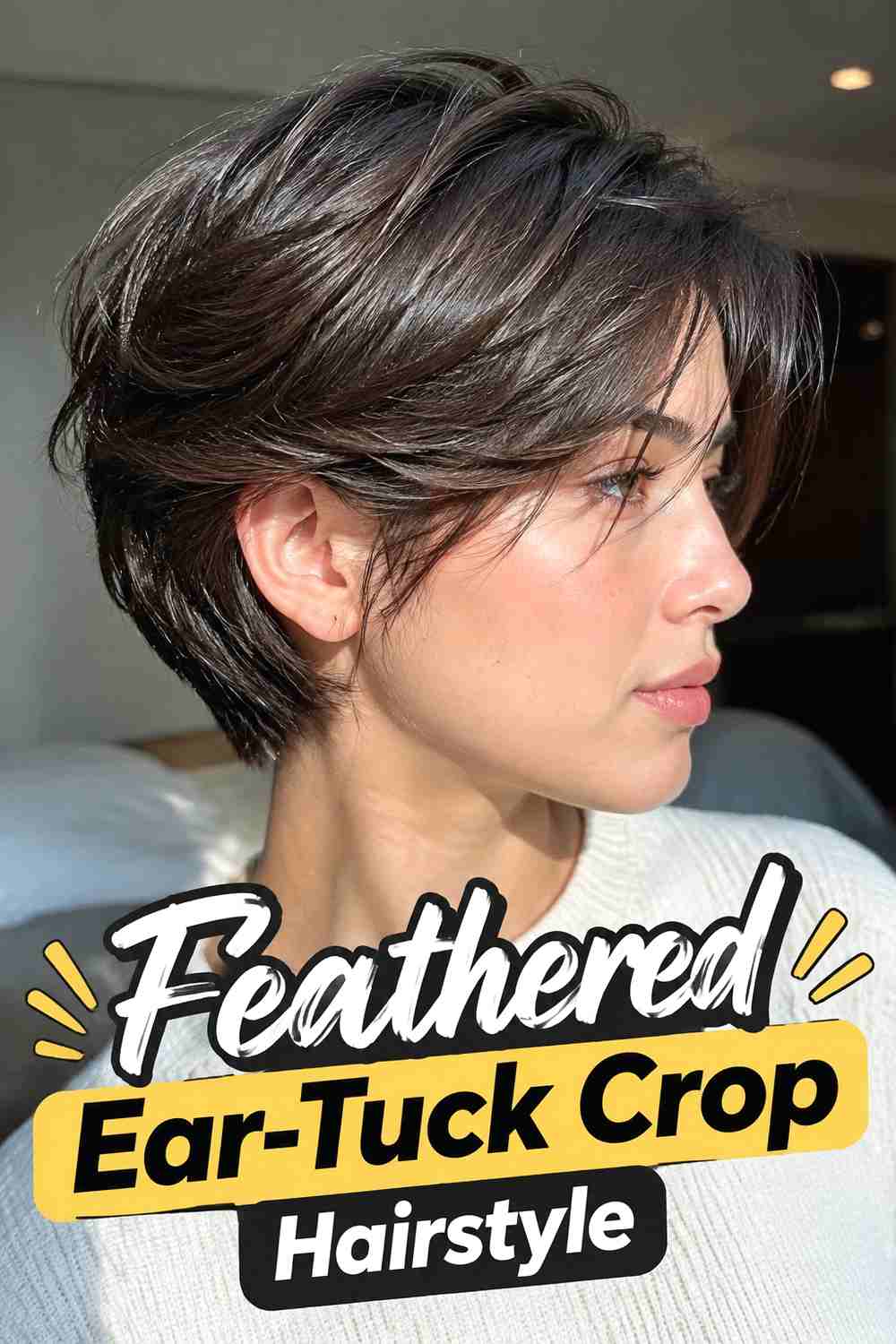
A feathered crop uses soft, lightweight layers around the crown and nape, with an ear tuck adding a cleaner line through one side. Keep the top airy and slightly directional, allowing fine ends to separate rather than forming one smooth cap of hair. The tucked side can stay close while the opposite side retains more texture and movement. This lighter silhouette works well with a longline cardigan because it does not compete with the garment’s soft volume. The feathered ends also prevent a short crop from looking too severe beside cozy knitwear. Use minimal styling product so the layers retain their movement and do not become heavy or overly glossy.
Styling Notes
Arrange the feathered layers before securing the tuck. This helps the crown stay balanced and prevents unnecessary flattening near the temple.
7. Textured Middle Part Ear Tuck Hairstyle
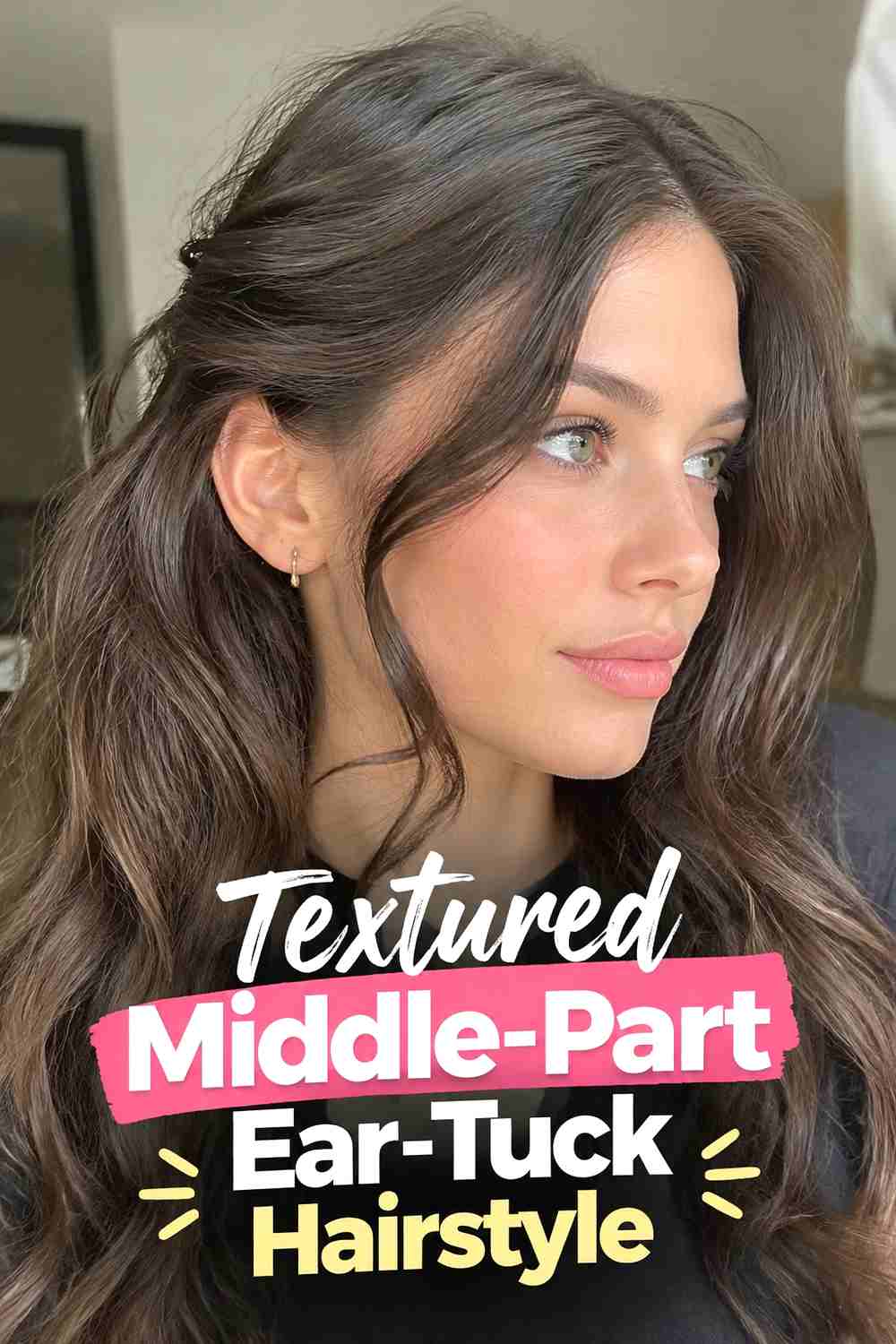
A middle part with both sides tucked behind the ears creates a clean frame while textured lengths keep the overall style from feeling too strict. Maintain a soft center line, add light bends or natural movement through the lower sections, and tuck both sides without pulling them tightly against the scalp. The result opens the face and creates symmetry above a longline cardigan, especially one worn open over a fitted top. A little crown lift is useful so the center part does not appear flat. This look is particularly versatile because it can shift from polished to casual depending on texture. Keep the ends light and movable rather than smoothing the full style into one uniform shape.
Why It Works
The symmetrical tuck creates structure, while the textured lengths add enough softness to complement draped knit layers.
8. Shaggy Ear Tuck Bob Hairstyle
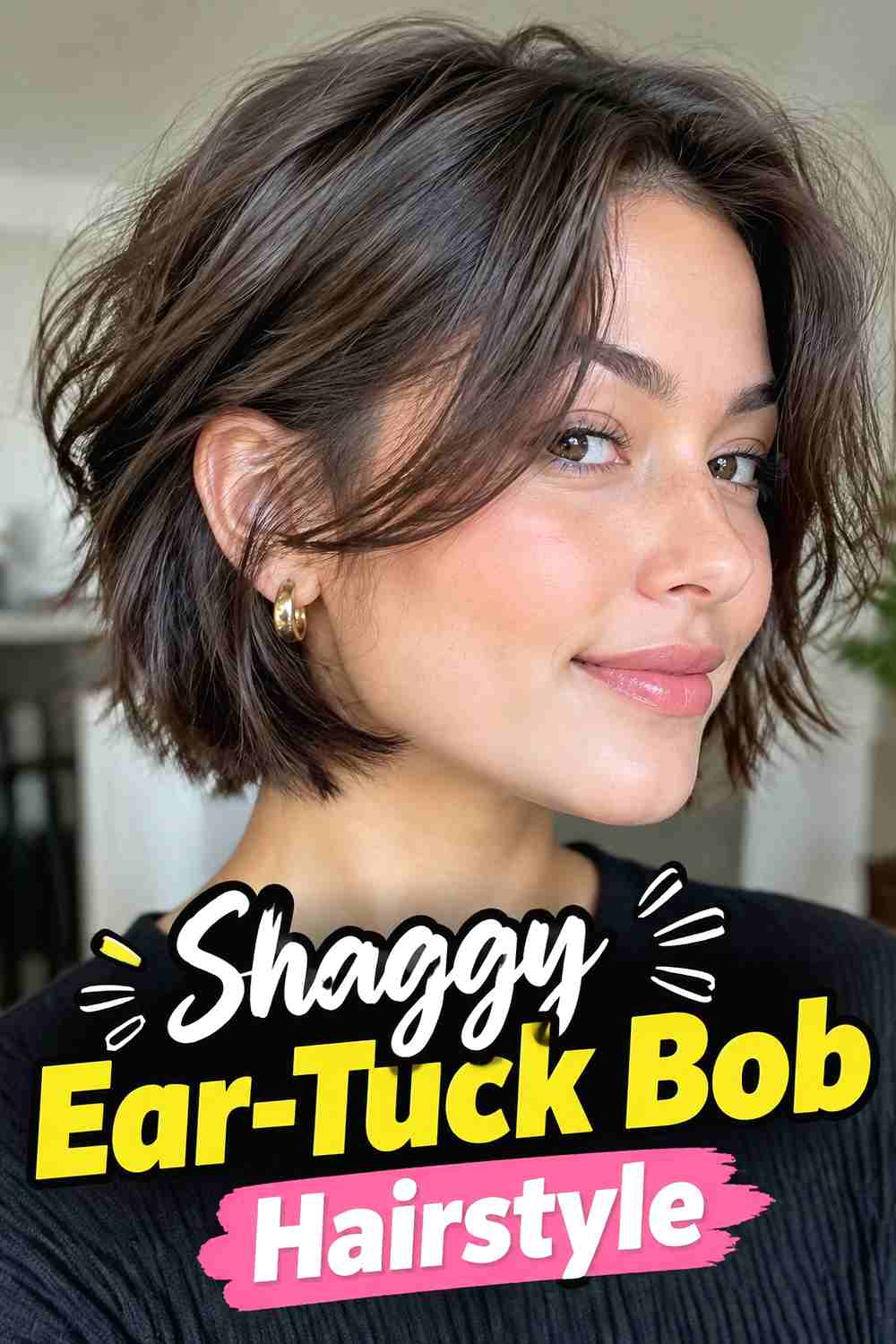
A shaggy bob brings short layers, irregular movement, and light crown volume to the ear-tuck idea. Tuck one side behind the ear while leaving the opposite layers loose, allowing shorter pieces to flick naturally around the cheek and jaw. The haircut’s intentionally uneven texture means a few wisps can escape without making the style look messy. This works especially well with longline cardigans because the shag adds movement at head level while the cardigan creates a longer, calmer line below. Keep the nape light so the lower layers do not bunch against a cardigan collar. The contrast between the neat tuck and loose shaggy side gives the style its strongest visual character.
Best For
Layered bobs with natural wave or enough texture to hold soft separation are particularly suited to this casual, directional finish.
9. Soft Blowout Ear Tuck Hairstyle
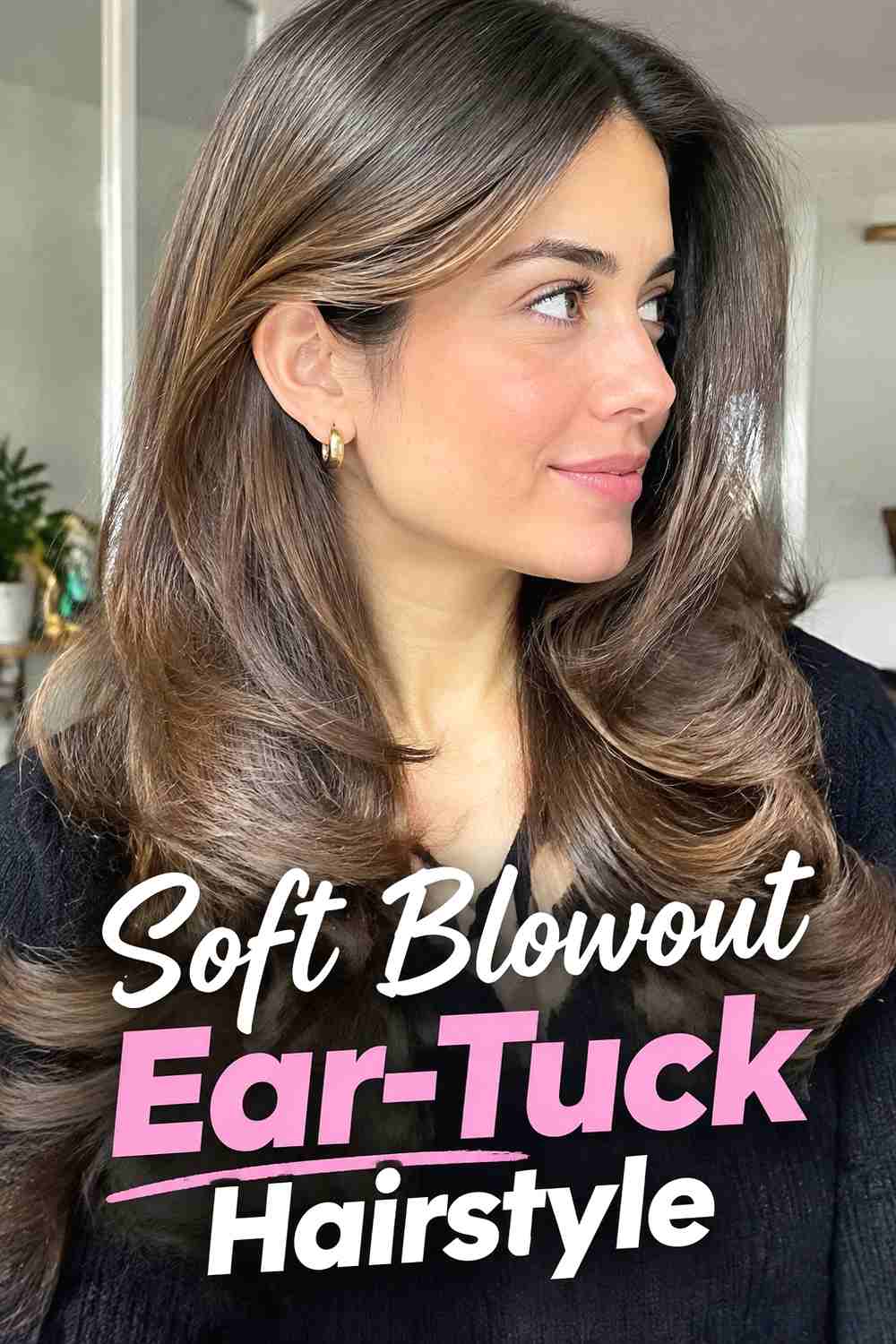
A soft blowout with an ear tuck creates polished volume without losing movement. Build gentle lift through the crown and bend the ends slightly away from or toward the face, then tuck one side behind the ear. The tucked section keeps the style from feeling overly full, while the untucked side shows the bounce and shape of the blowout. This combination looks refined with a longline cardigan, especially when the outfit includes tailored trousers, boots, or a fitted base layer. Avoid making the ends too uniform; a little variation keeps the finish current. If the cardigan has a broad collar, bring the loose side slightly forward so the shape remains visible.
Wear & Maintenance
Use your fingers to restore crown lift during the day. Repeated brushing can flatten the blowout and make the tucked side look too severe.
10. Asymmetrical Ear Tuck Hairstyle
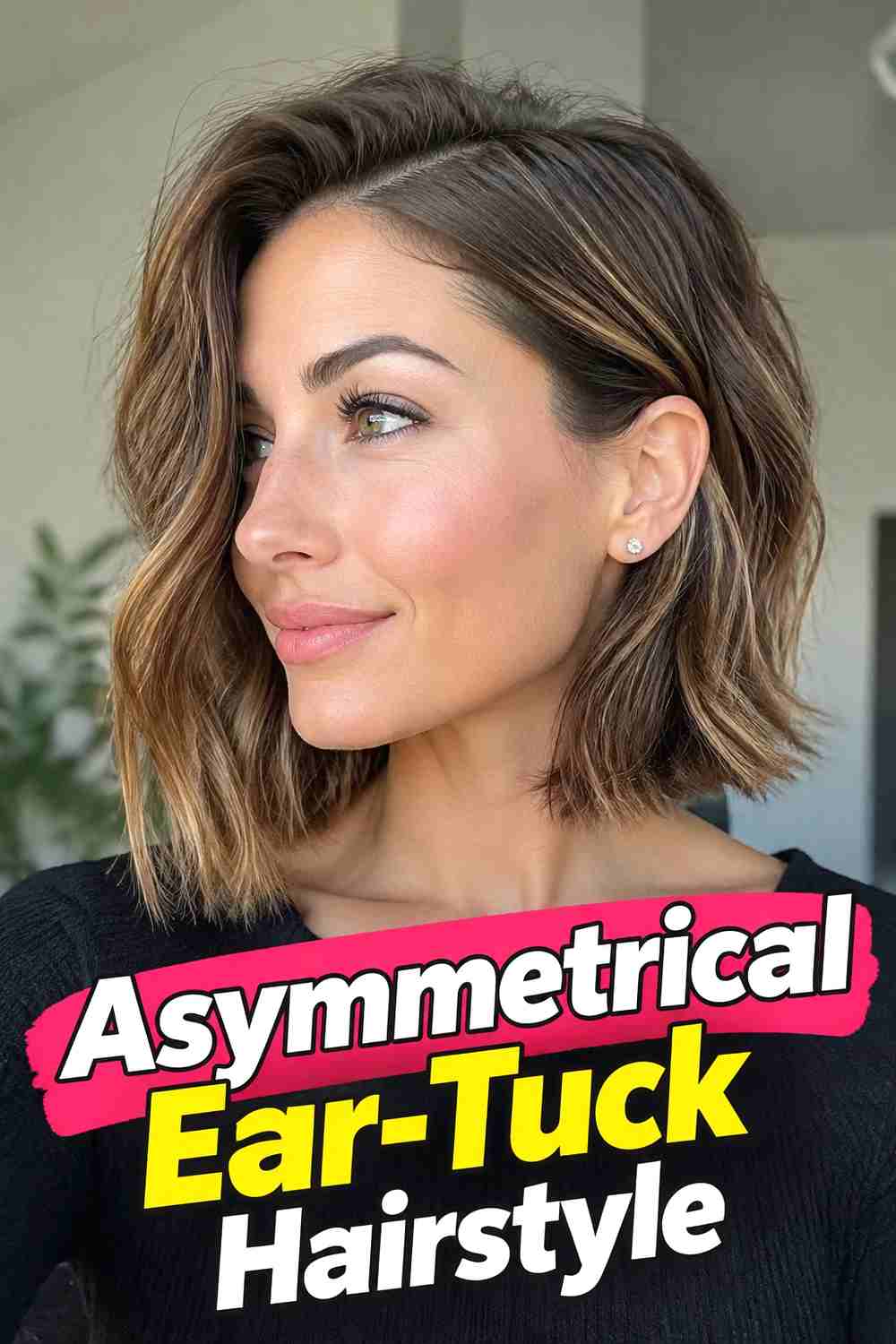
An asymmetrical ear-tuck style exaggerates the contrast between sides, with one section kept sleek or compact and the other given noticeably more length, texture, or volume. The difference can come from the haircut itself or simply from styling direction. Tuck the shorter or flatter side completely behind the ear, then shape the opposite side into a soft wave, tousled sweep, or fuller curve. This creates a strong focal point above the simple vertical line of a long cardigan. Keep the larger side controlled enough that it does not overwhelm the face. The result works particularly well with minimal knitwear because the hairstyle supplies most of the visual movement.
Styling Notes
Focus product on the fuller side only where support is needed. The tucked side usually looks best with a lighter, more natural finish.
11. Textured French Bob Ear Tuck Hairstyle
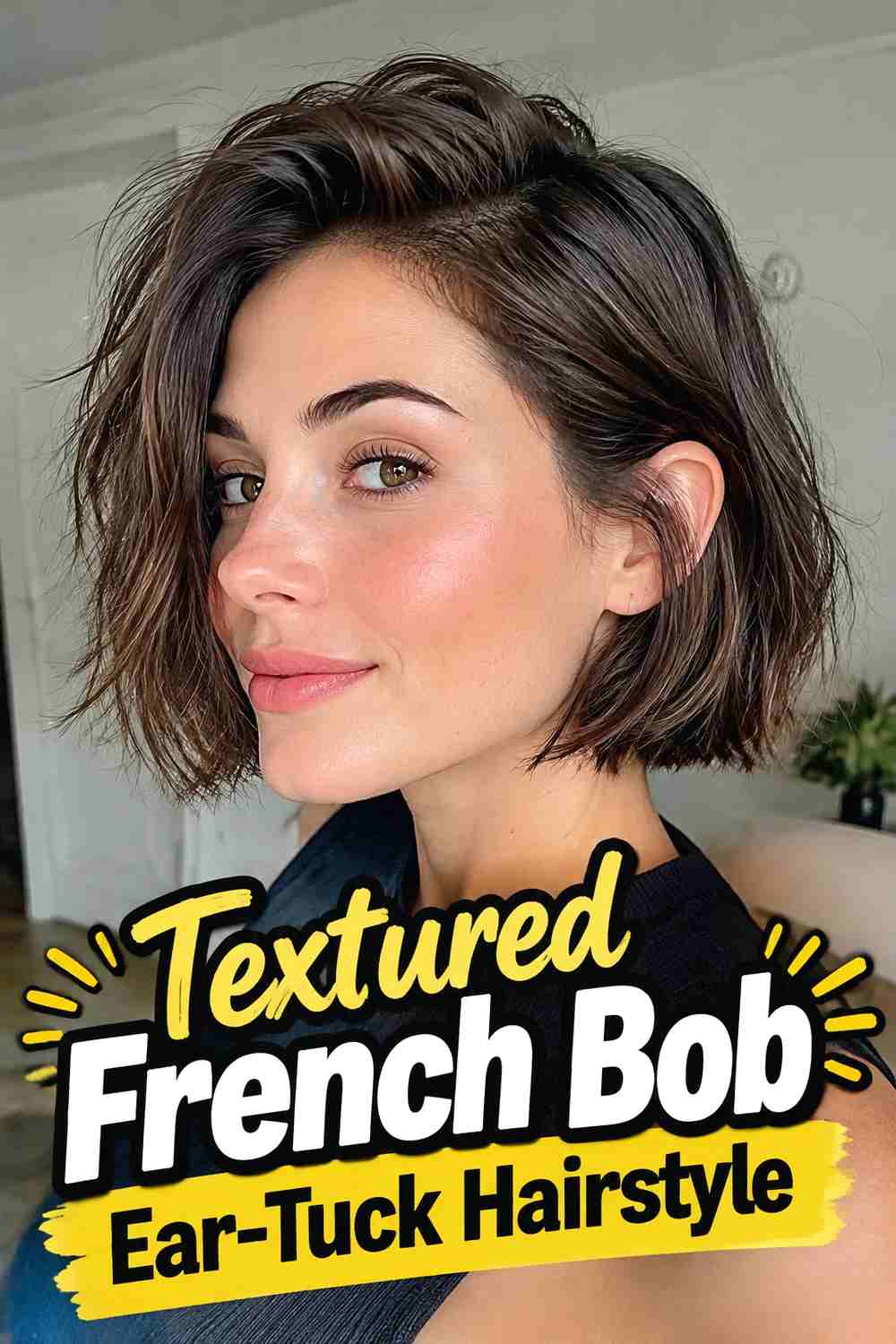
A textured French bob feels especially modern when one side is tucked behind the ear and the other remains softly undone. Keep the length around the jaw, add light bends or natural wave, and allow the ends to sit irregularly rather than forming one precise line. A short fringe can remain soft and separated if the cut includes one. The ear tuck adds enough polish to balance the intentionally relaxed texture. With a longline cardigan, this compact bob keeps the neckline clear while introducing movement around the face. The shorter silhouette is also practical when chunky knit collars would otherwise interfere with longer ends.
Best For
Jaw-length bobs with natural wave, subtle layering, or a lightly tousled finish work particularly well for this combination.
12. Sculpted Wave Ear Tuck Hairstyle
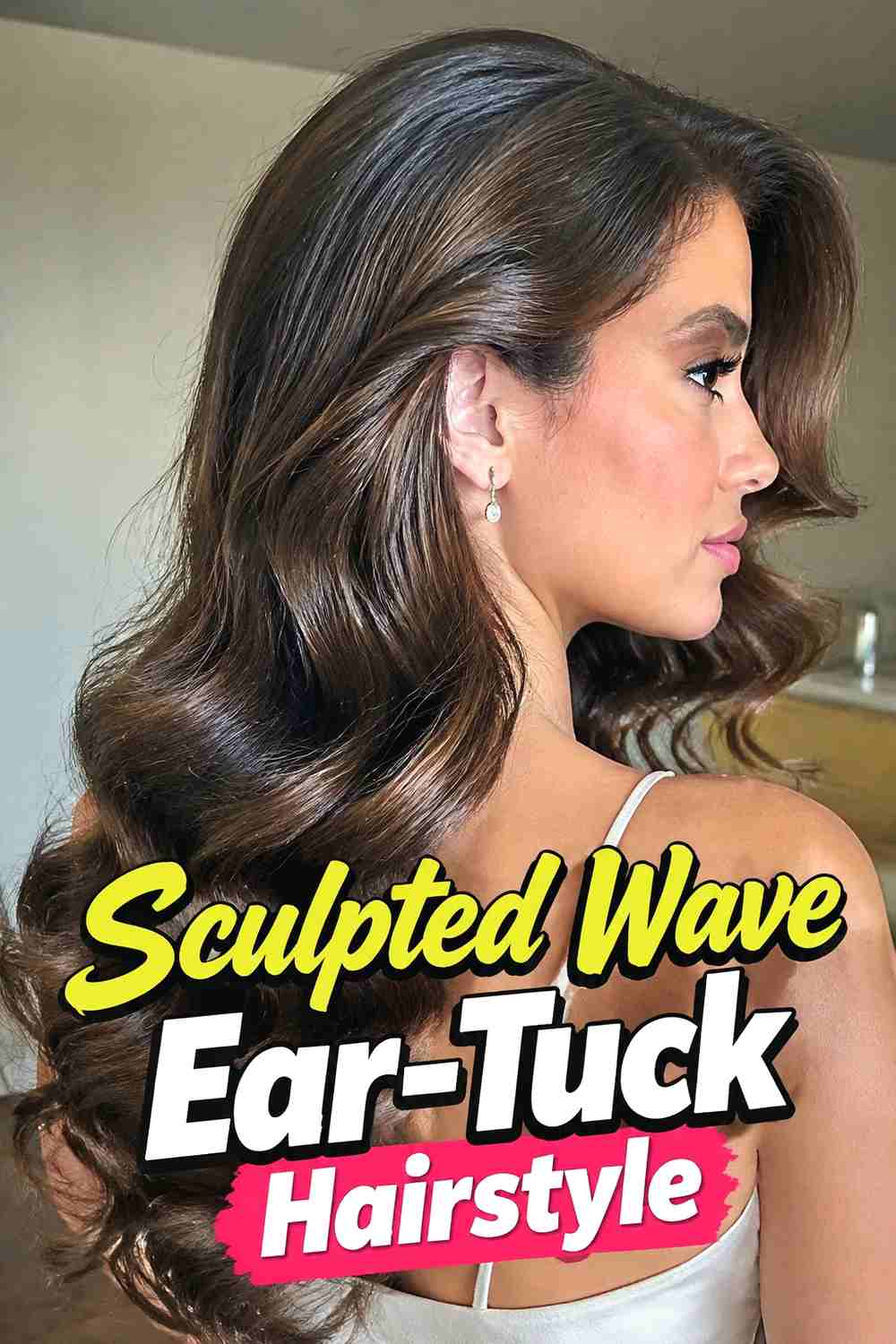
A sculpted wave gives an ear-tuck style a more deliberate, polished character. Create one broad wave through the front or upper side, allowing it to curve smoothly away from the part before tucking the opposite side. The rest of the hair can remain relatively simple so the wave becomes the focal point. This shape looks elegant with longline cardigans because it adds controlled movement without competing with the outfit’s relaxed drape. Keep the wave soft enough to show real strand texture rather than a rigid molded surface. A lower side part often helps emphasize the contrast between the sculpted section and the clean tucked side.
Pro Tip
Shape the largest wave first and let smaller pieces follow its direction. Too many separate bends can make the style look busy.
13. Layered Ear Tuck Lob Hairstyle
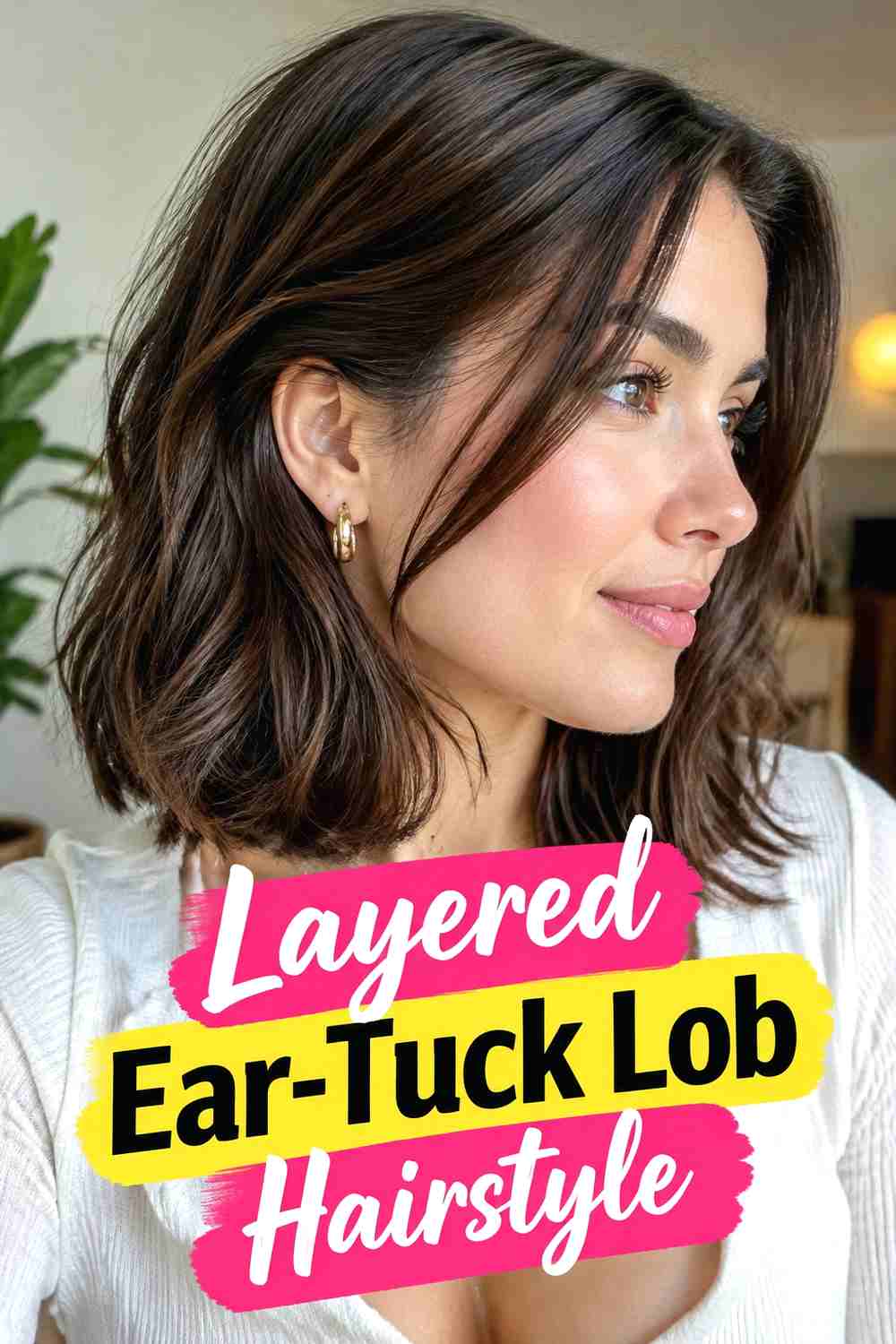
A layered lob uses different lengths to create movement while an ear tuck gives the front a cleaner outline. Keep face-framing pieces shorter, with longer sections falling toward the collarbone, then tuck one side so the layering becomes more visible around the opposite cheek and jaw. This is a useful pairing for longline cardigans because the hairstyle has enough length to feel soft without disappearing into the knitwear. Bring the longest back sections slightly forward if the cardigan collar is bulky. Light texture through the ends helps the layers separate naturally, while a modest amount of crown lift prevents the longer cut from appearing heavy around the head.
Hair Type & Length
Straight, wavy, and softly curled lobs can all work, especially when the haircut already includes visible movement through the front and ends.
14. Tousled Crown Ear Tuck Hairstyle
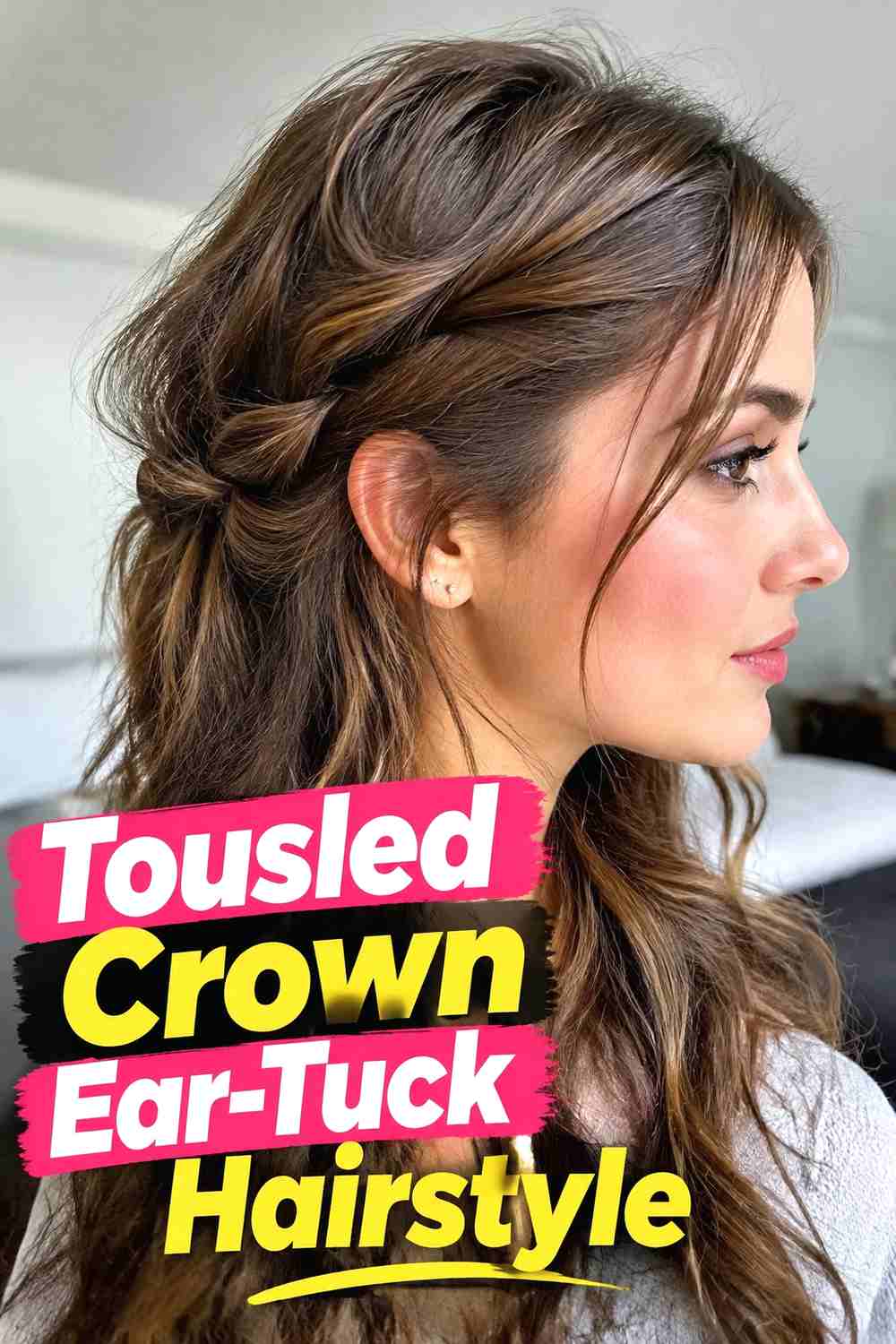
A tousled crown creates airy height above a tucked side, giving the hairstyle a casual but intentional shape. Lift the upper layers from the roots, separate several pieces through the crown, and keep the sides more controlled. Tucking one side behind the ear emphasizes that vertical volume and opens the face. This combination works particularly well with longline cardigans because the crown height balances the garment’s length without adding excessive width around the shoulders. The texture should look lightly undone rather than heavily teased. Keep some natural movement near the part and let the untucked side fall softly, so the overall silhouette remains wearable for everyday outfits.
Styling Notes
Build crown lift first, then tuck the side. If you tuck too early, you may accidentally flatten the root area while trying to create volume.
15. Sleek One Side Ear Tuck Hairstyle
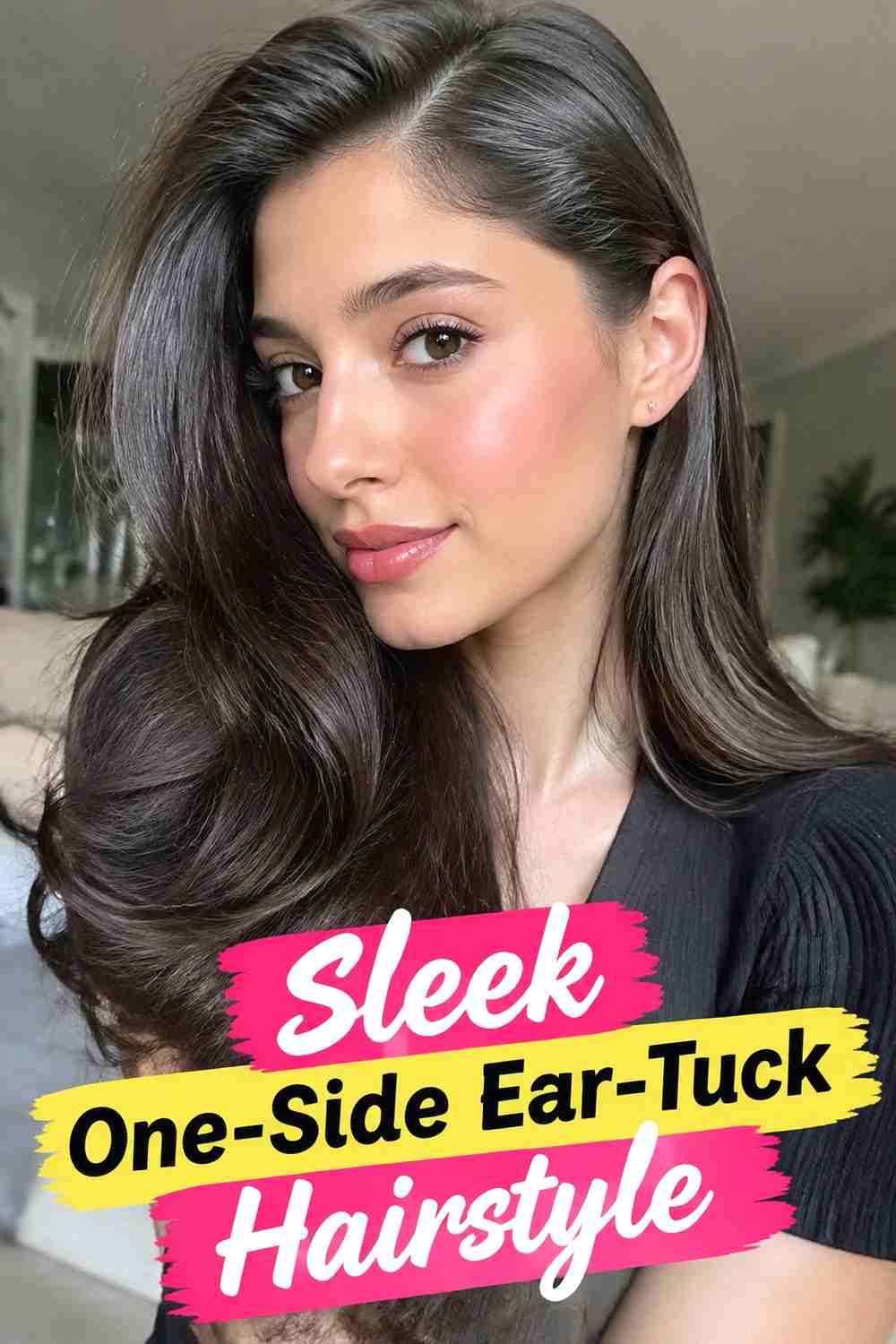
A sleek one-side tuck offers the most polished contrast in this collection. Keep one side smooth and neatly positioned behind the ear, while the opposite side remains straight, softly curved, or lightly textured. A side part helps make the directional styling feel deliberate. This look works beautifully with a longline cardigan because the clean tuck prevents the hairstyle from competing with layered knitwear while the loose side still provides softness. Avoid making the entire head overly flat; subtle crown lift can keep the finish balanced. A lightweight smoothing product is usually enough to control the tucked section without creating a hard or wet-looking surface.
Why It Works
The compact side creates a crisp visual line, while the loose side prevents the hairstyle from feeling too severe against soft cardigan texture.
16. Natural Curl Ear Tuck Bob Hairstyle
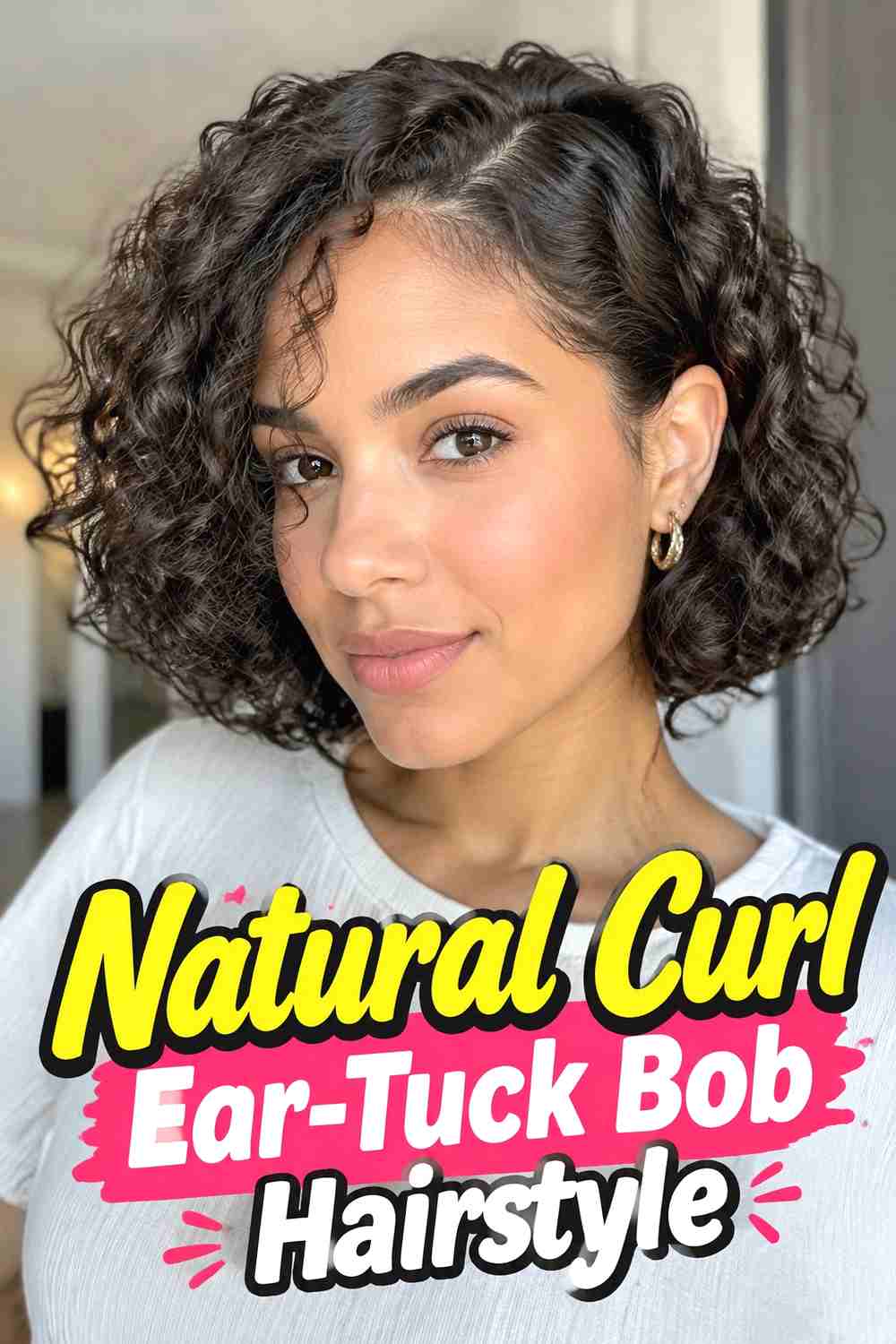
A natural curl bob becomes more directional when one side is tucked behind the ear. Let the curls keep their individual pattern through the crown and untucked side, while guiding the opposite section back with minimal stretching. This leaves the texture visible instead of turning the tuck into a slicked section. The asymmetry pairs well with longline cardigans because the compact side keeps the face open while the fuller curls provide softness above the outfit. If the bob reaches the cardigan collar, direct the longest curls slightly forward to reduce repeated rubbing. Keep the root area flexible and allow some natural variation in curl size and placement.
Wear & Maintenance
Refresh only the curls that lose shape near the tucked side or perimeter. Avoid disturbing intact curl clumps unnecessarily.
17. Flipped End Ear Tuck Hairstyle
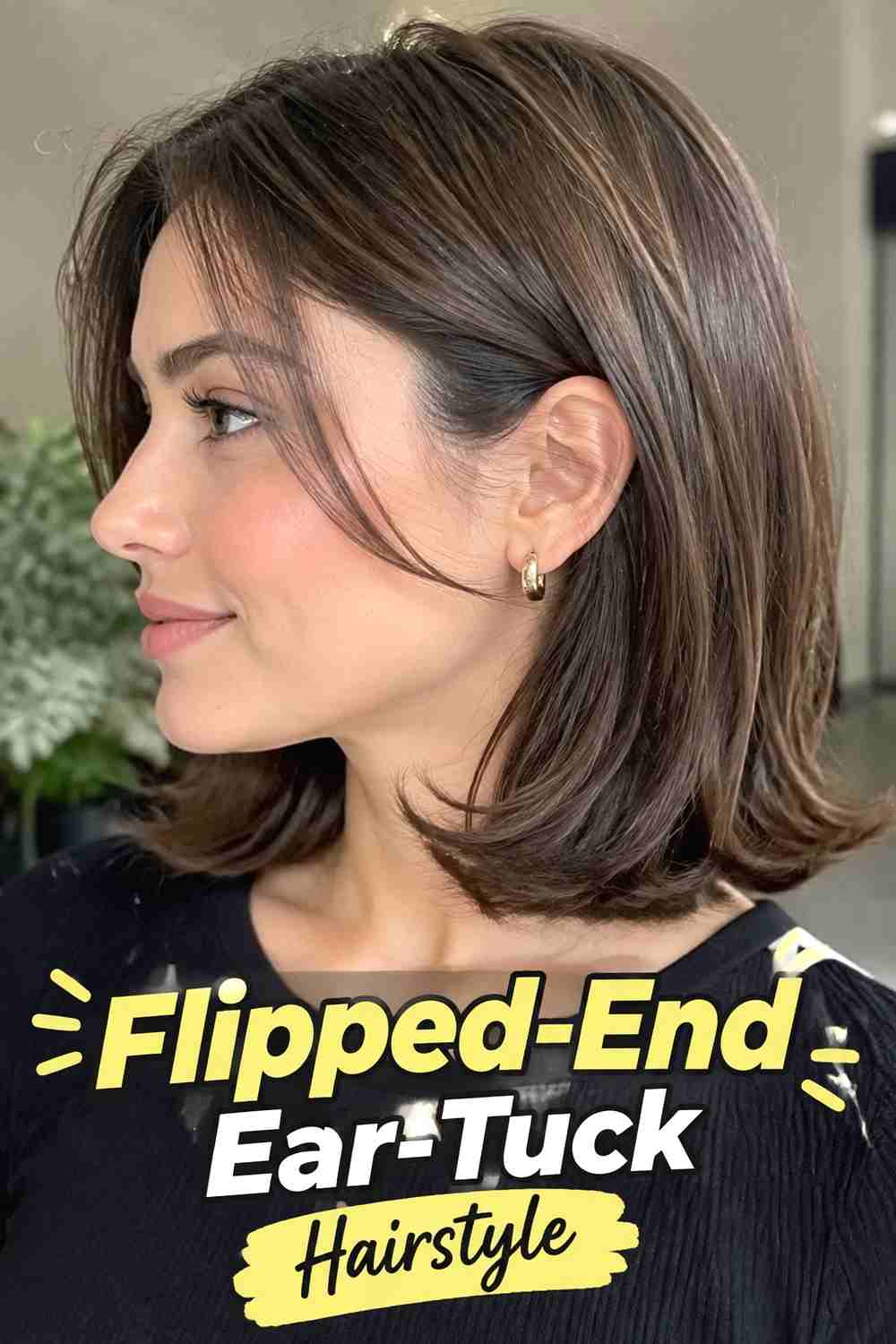
A flipped-end style brings playful movement to a bob or lob while the ear tuck keeps the front controlled. Bend the lower ends gently outward, focusing the flip around the jaw or collarbone rather than creating a dramatic uniform curve. Tuck one side behind the ear and let the opposite side show more of the outward movement. This shape works especially well with longline cardigans because the small horizontal kick in the hair contrasts with the garment’s long vertical drape. Keep the crown smooth with modest lift so the ends remain the main feature. The flip should feel soft and varied rather than perfectly matched on every section.
Pro Tip
Concentrate the bend on selected outer layers. Flipping every strand equally can make the style look overly set instead of modern.
18. Soft Fringe Ear Tuck Hairstyle
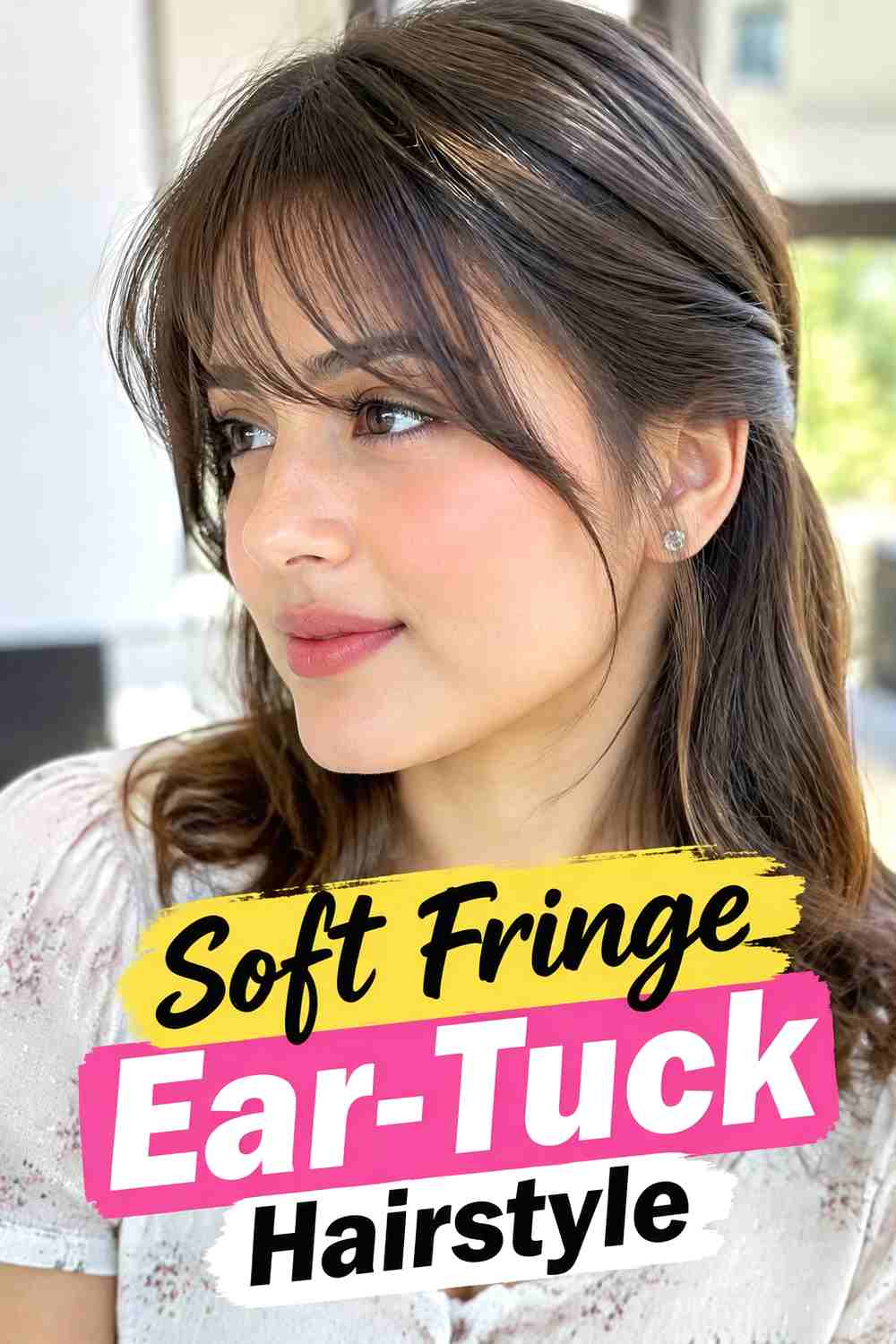
A soft fringe paired with an ear tuck creates a balanced combination of face framing and openness. Keep the fringe light and slightly separated across the forehead, then tuck one or both side sections behind the ears so the haircut does not feel crowded around the face. The remaining lengths can be straight, wavy, or lightly tousled depending on your texture. With a longline cardigan, the fringe adds detail higher on the face while the tuck keeps the sides clean above the knit layers. Avoid making the bangs too heavy, especially if the cardigan has a broad or shawl collar. A little movement through the crown helps connect the fringe to the rest of the hairstyle.
Best For
Bobs, lobs, and longer crops with soft or wispy fringe work especially well because the tuck keeps the overall shape open despite the added front detail.
How to Choose the Right Look
Start with your haircut length. Pixies and crops suit piecey, feathered, and crown-tousled tucks, while bobs and lobs offer more freedom for waves, blowouts, flipped ends, and layered movement. The side section also needs enough length to sit comfortably behind the ear without being pulled excessively.
Next, consider texture. Straight hair can highlight sleek asymmetry and sculpted waves, while wavy hair naturally supports tousled bobs and relaxed lobs. Curly hair often looks best when the tucked side retains some texture instead of being stretched completely smooth.
Your cardigan matters too. Broad shawl collars generally pair well with compact sides and shorter cuts, while open-front longline cardigans leave more room for longer waves and layered lobs. If the cardigan is especially chunky, keeping at least one side tucked can prevent the overall outfit from feeling too heavy around the shoulders.
Final Thoughts
Textured ear-tuck hairstyles work naturally with longline cardigans because they combine soft movement with a clean face-framing detail. A simple tuck can make a bob, pixie, lob, or curly cut feel more intentional without changing the entire hairstyle. Choose your texture and side placement around your existing cut, then keep enough natural movement to complement the relaxed drape of the cardigan.
FAQs
1. Which ear-tuck hairstyle works best with a chunky longline cardigan?
Pixies, textured bobs, and one-side tucked styles work especially well because they keep more hair away from a bulky neckline.
2. Can curly hair stay tucked behind the ear?
Yes. Use a section with enough length to sit comfortably behind the ear and avoid pulling the curls overly tight. A small pin can help if needed.
3. How do I keep an ear tuck from looking too flat?
Maintain a little root lift above the ear and keep texture through the crown or opposite side. The tuck does not need to be pressed firmly against the head.
4. Is a one-side tuck better than tucking both sides?
Neither is universally better. One side creates stronger asymmetry and volume, while both sides give a cleaner, more symmetrical frame.
5. What hair lengths work for ear-tuck styling?
Long pixies, crops, bobs, lobs, and longer hairstyles can all work as long as the side sections reach comfortably behind the ear.
CTA
Save your favorite textured ear-tuck hairstyles and share this collection for modern hair inspiration that pairs beautifully with longline cardigan outfits.