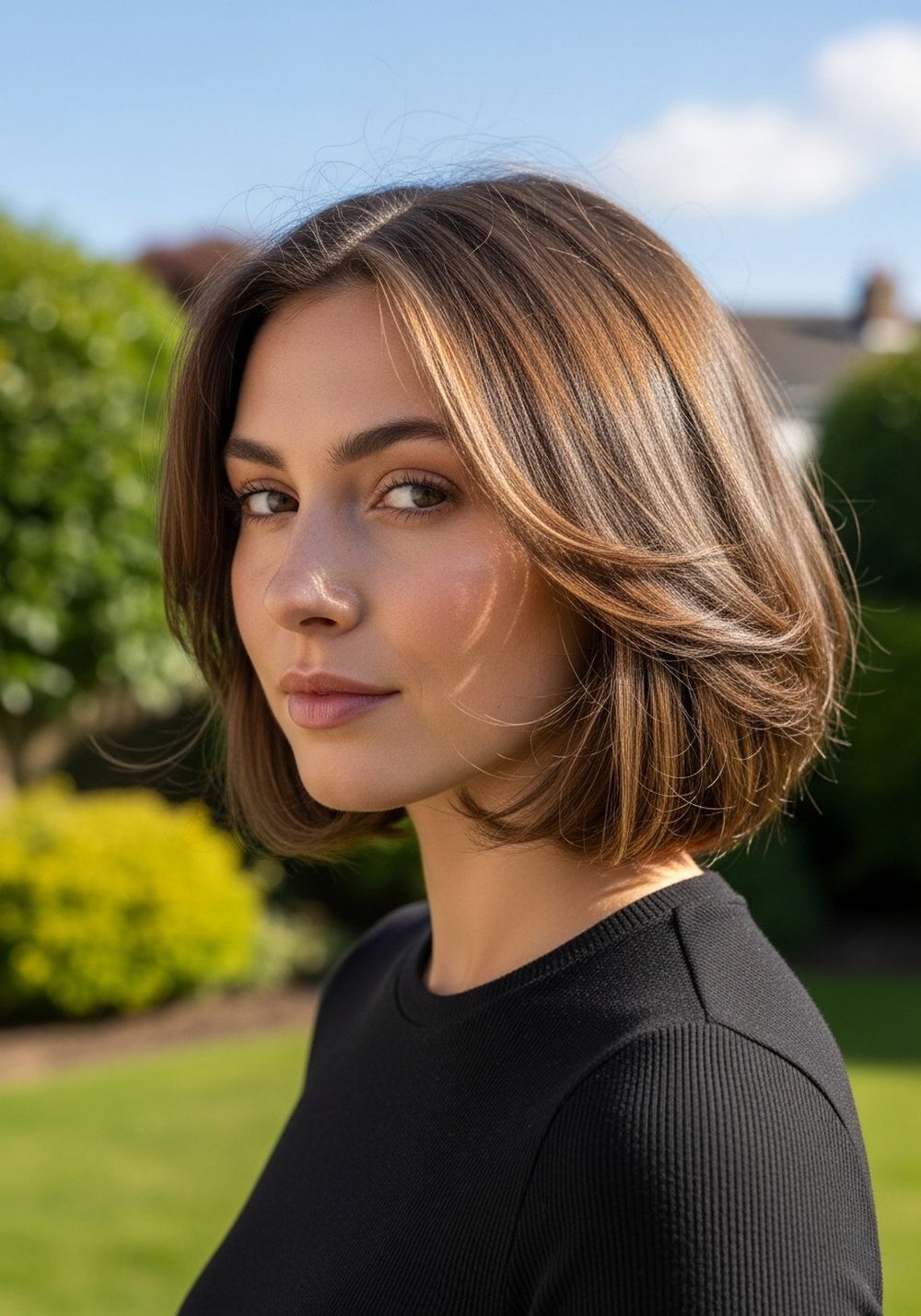
18 Textured Shag Haircut Ideas for Thick Straight Hair
Textured shag cuts can make thick straight hair feel lighter and more dynamic, using strategic layers to create movement without sacrificing healthy-looking density.
Thick straight hair can hold a beautiful shag shape, but the layering needs to be placed carefully. Too few layers may leave the cut looking heavy and blocky, while excessive thinning can make the ends feel weak or create unwanted puffiness as shorter sections grow. A balanced shag removes weight where it is useful while preserving a strong overall silhouette.
The biggest choices are layer height, fringe style, overall length, and how much separation you want through the ends. Short crown pieces produce a stronger shag effect, while longer connected layers create a softer result. Razor texture, feathering, choppy sections, and face-framing pieces can all add movement to naturally straight hair.
Quick List
- Soft Textured Shag With Face Framing Layers Hairstyle
- Shoulder Length Textured Shag Hairstyle
- Choppy Textured Shag With Crown Layers Hairstyle
- Long Textured Shag With Feathered Ends Hairstyle
- Textured Shag With Curtain Fringe Hairstyle
- Textured Shag With Bottleneck Fringe Hairstyle
- Razor Cut Textured Shag Hairstyle
- Textured Shag With Wispy Bangs Hairstyle
- Collarbone Textured Shag With Piecey Ends Hairstyle
- Voluminous Textured Shag With Airy Layers Hairstyle
- Textured Shag With Short Face Framing Layers Hairstyle
- Textured Shag With Long Curtain Layers Hairstyle
- Textured Shag With Flipped Out Ends Hairstyle
- Side Part Textured Shag Hairstyle
- Textured Shag With Rounded Crown Layers Hairstyle
- Tousled Textured Shag With Broken Layers Hairstyle
- Low Maintenance Textured Shag Hairstyle
- Balanced Textured Shag For Thick Straight Hair Hairstyle
1. Soft Textured Shag With Face Framing Layers Hairstyle
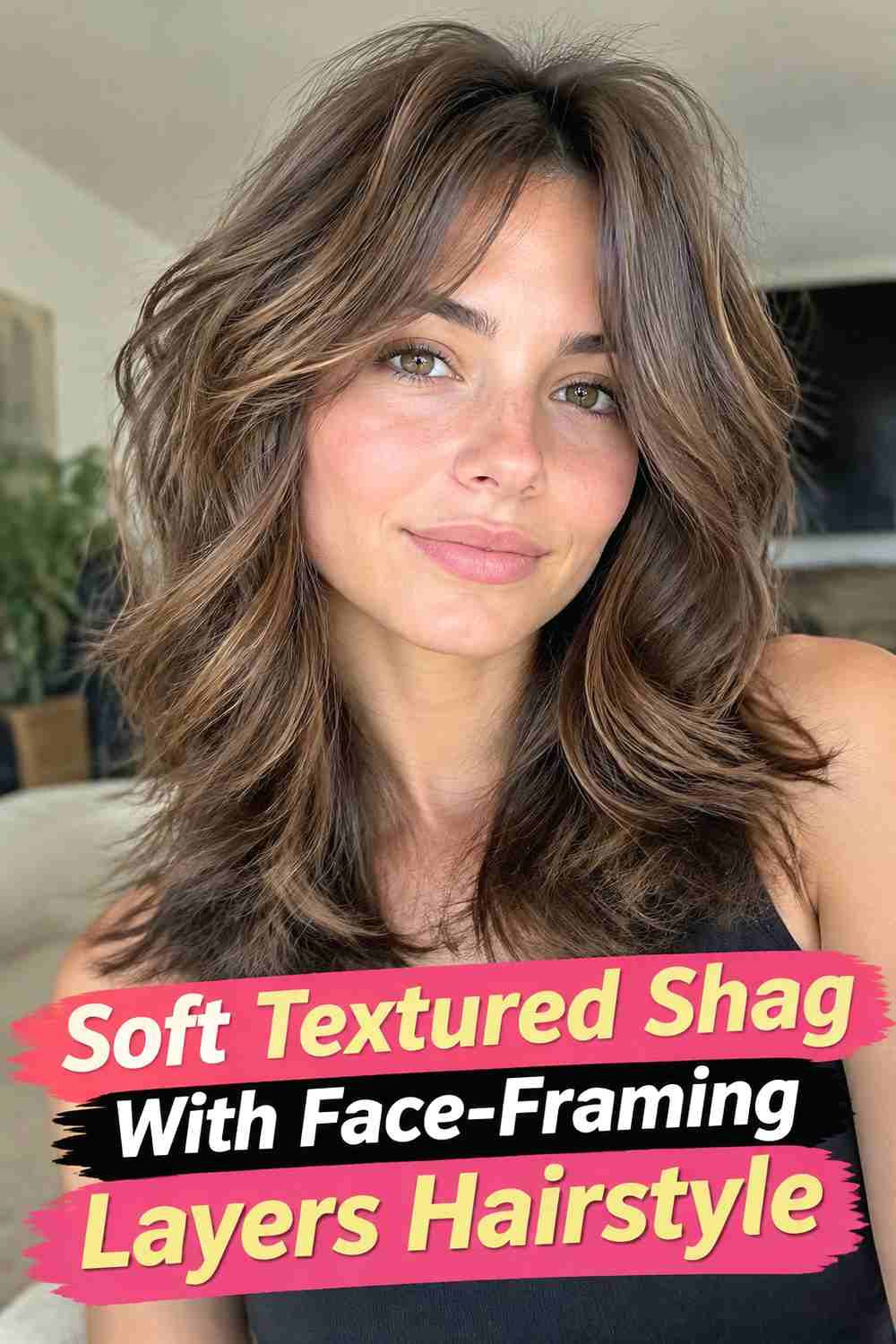
This softer shag keeps the overall length substantial while concentrating the most noticeable movement around the face. Cheekbone- and jaw-level pieces can gradually connect with longer layers through the sides, preventing the cut from looking heavily disconnected. On thick straight hair, internal weight removal helps those front sections move instead of sitting as dense blocks. The crown stays moderately layered rather than extremely short, making the style easier to wear smooth or slightly tousled. A subtle bend at the ends can make the face frame more visible, but the haircut should still look intentional when worn naturally straight. Preserving a solid lower perimeter keeps the texture balanced.
Best For
Choose this version if you want a noticeable shag influence without committing to very short crown layers or dramatic fringe.
2. Shoulder Length Textured Shag Hairstyle
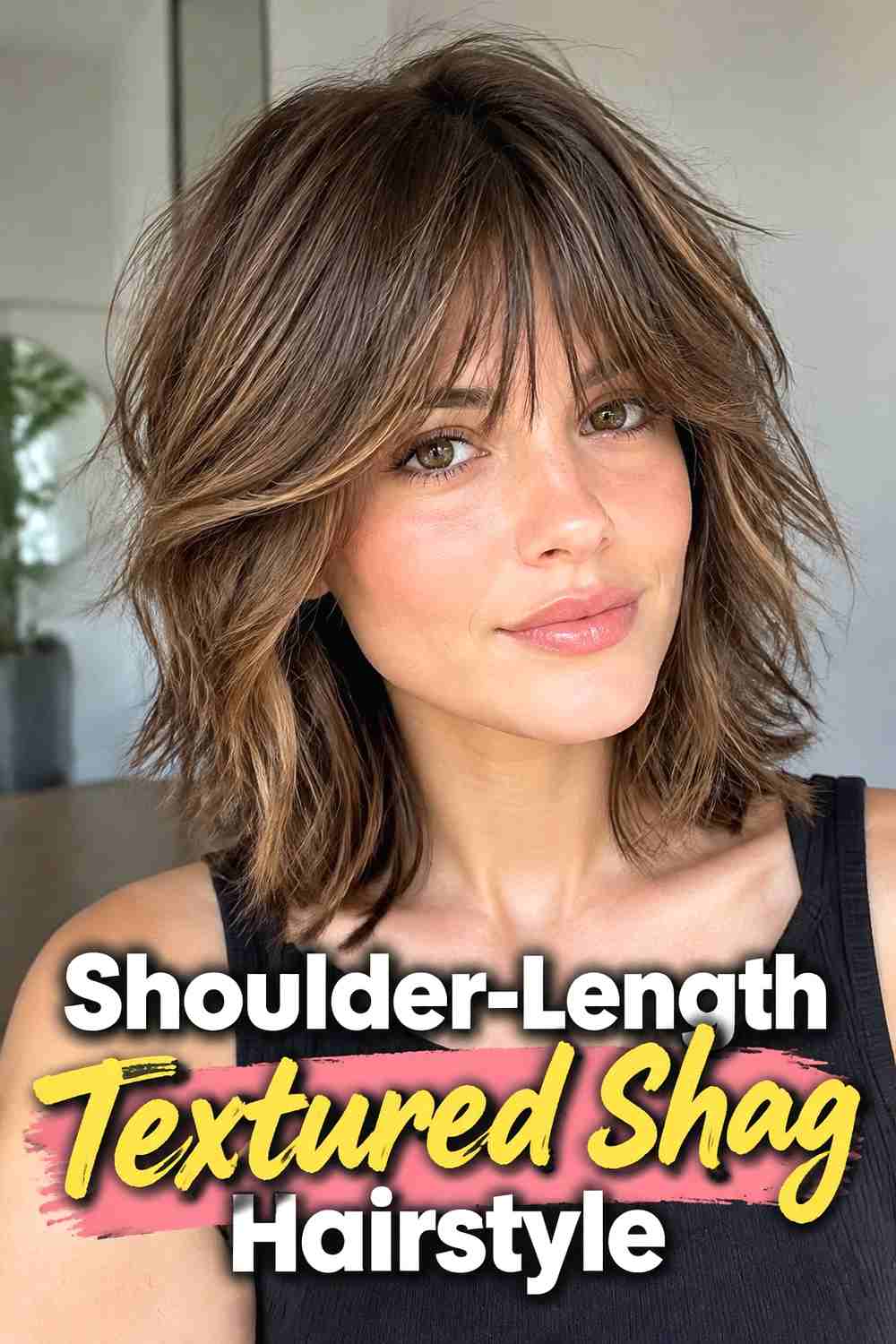
A shoulder-length shag gives thick straight hair enough room for visible layering while removing some of the weight associated with longer lengths. Crown layers can create lift, while gradually longer pieces through the sides and back preserve a substantial perimeter. This length is especially practical because it can still be clipped or tied back while looking noticeably lighter when worn down. Straight hair clearly shows each layer transition, so keeping the sections connected helps the cut feel fluid rather than stepped. Texture through the ends can create soft separation without requiring curls. A light blow-dry or rough-dried finish often provides enough movement to reveal the shag shape.
Styling Notes
Use lightweight volumizing spray near the roots and a small amount of texture cream through selected ends rather than coating the whole haircut.
3. Choppy Textured Shag With Crown Layers Hairstyle
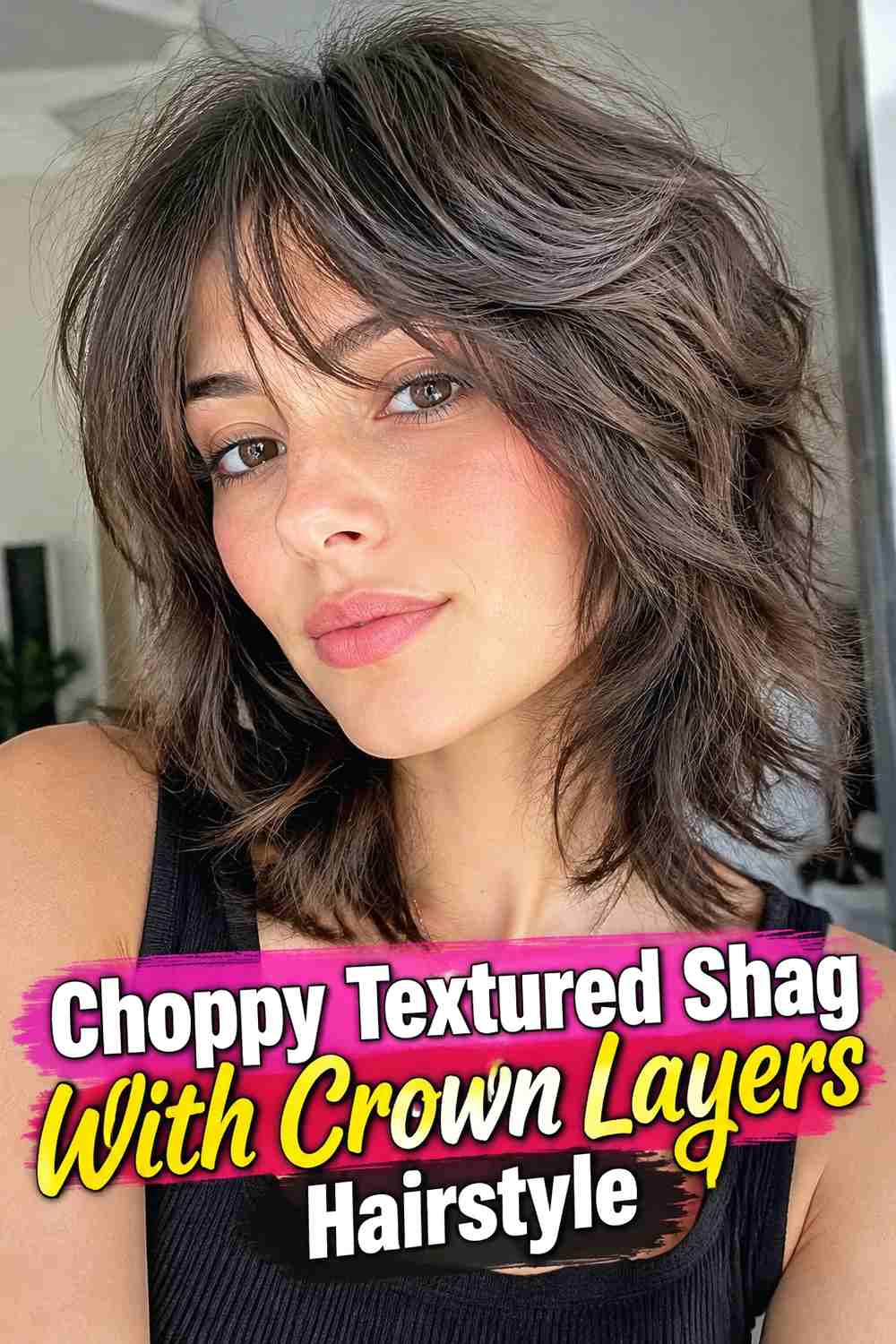
This choppier shag uses shorter crown layers to create stronger separation and more obvious movement through dense straight hair. The upper pieces sit away from the scalp while longer sections through the sides and back preserve length and prevent the haircut from becoming too round. Choppy ends make the layer pattern visible even without waves, which is useful for very straight hair that tends to fall into one solid shape. The front can remain slightly longer to balance the crown or include short face-framing pieces for a stronger shag effect. The key is removing weight strategically rather than thinning every section equally, which helps maintain density where the haircut needs structure.
Wear & Maintenance
Shorter crown layers change shape faster as they grow, so this version may need more frequent reshaping than a long, blended shag.
4. Long Textured Shag With Feathered Ends Hairstyle
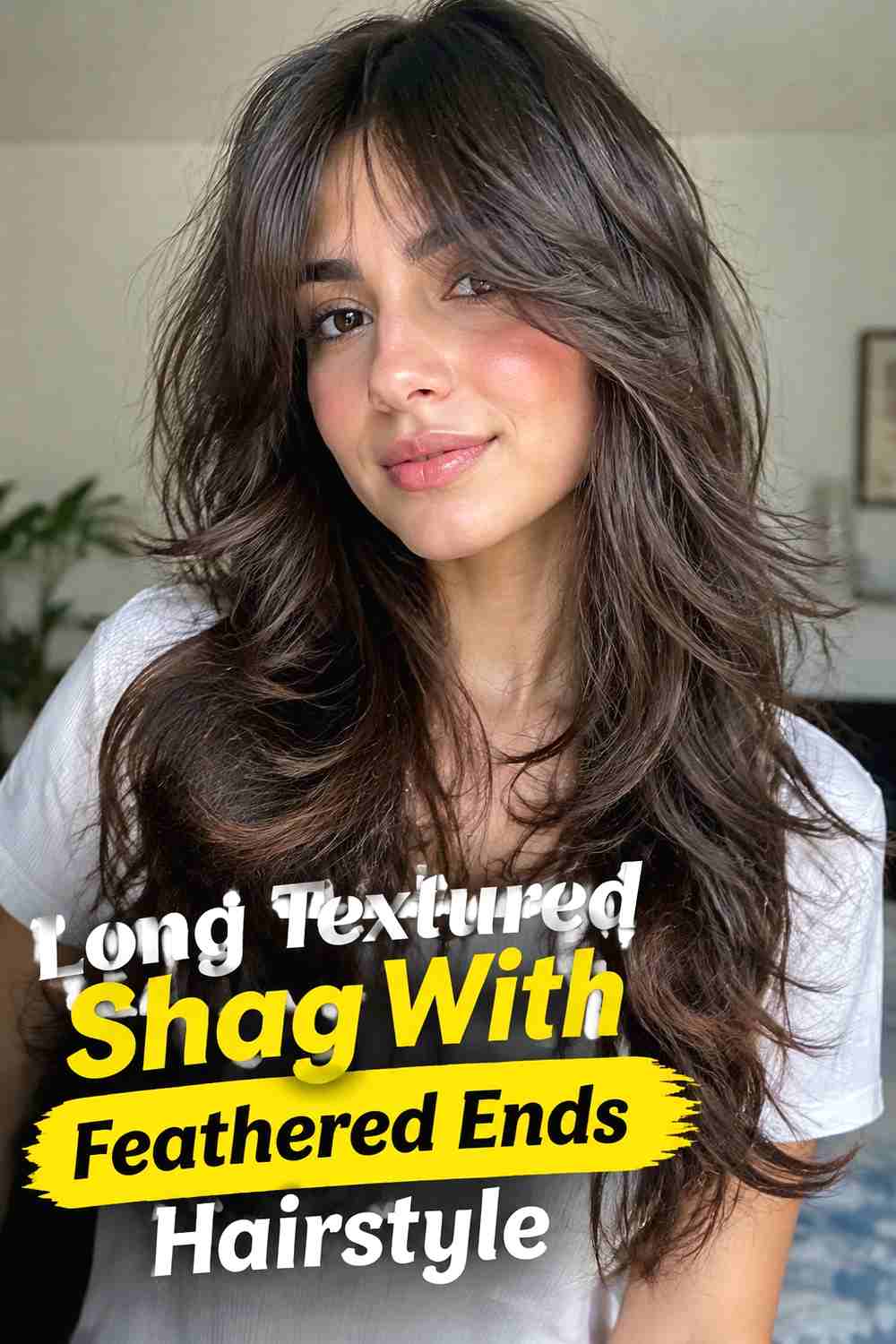
A long shag is ideal when you want to keep substantial length while making thick straight hair feel lighter. Layers can begin around the collarbones and continue gradually through the lower half, with additional face-framing sections near the cheeks or jaw. Feathered ends soften the heavy perimeter and allow the layers to overlap instead of stacking densely. Because the overall length remains long, the cut still works for ponytails, braids, and updos. Straight hair makes the feathering easy to see, especially with a smooth blow-dry that adds slight outward movement. Avoid removing too much weight at the ends; maintaining some fullness keeps the shag from looking overly thin.
Why It Works
Long layers reduce heaviness without sacrificing versatility, while feathered ends give naturally straight hair visible movement without requiring a curled finish.
5. Textured Shag With Curtain Fringe Hairstyle
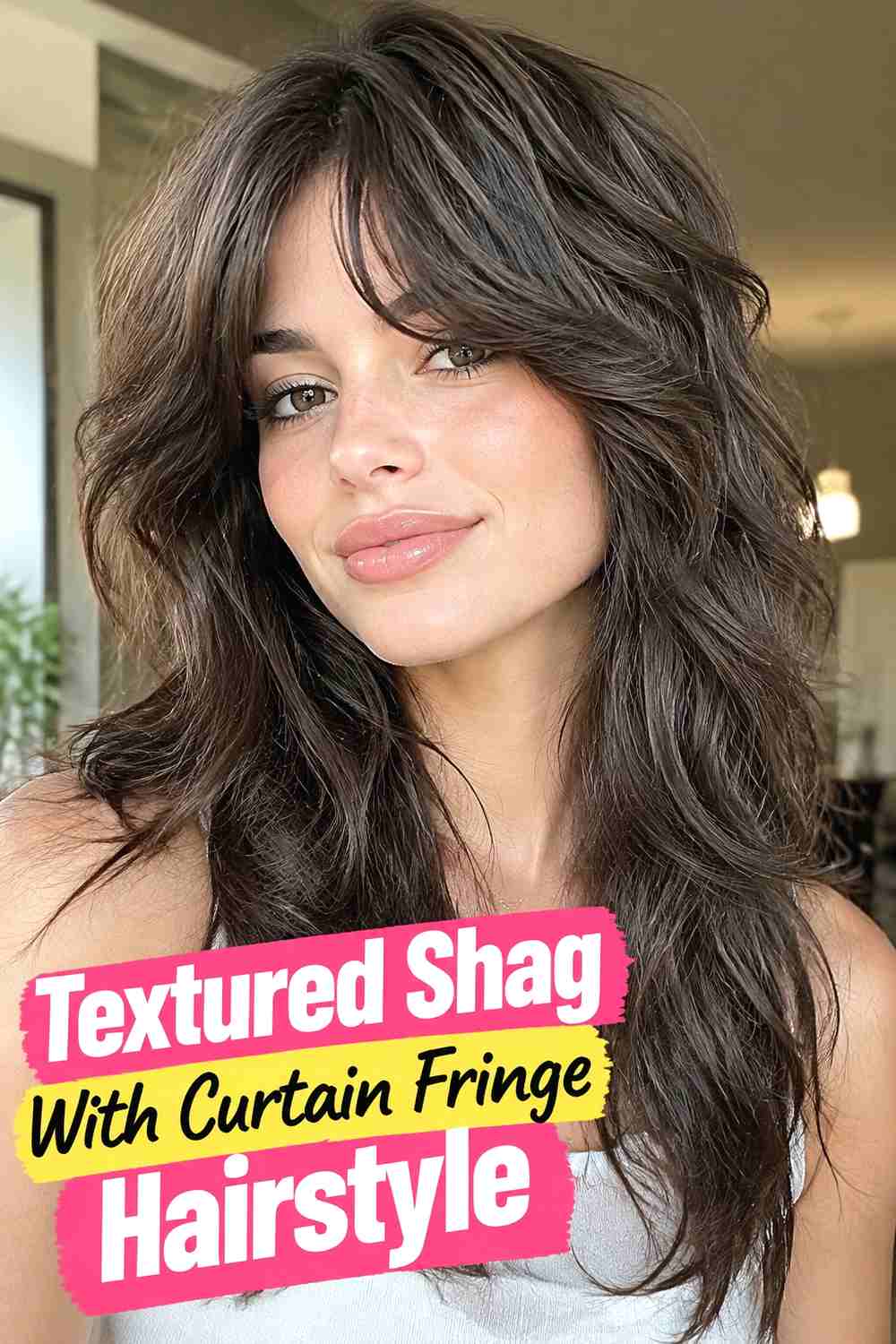
Curtain fringe creates a natural bridge between shorter front pieces and the layered body of a shag. The center opens around the forehead while longer fringe sections sweep toward the cheekbones and temples, eventually blending into the side layers. On thick straight hair, careful texturizing prevents the fringe from becoming too dense or stiff. The crown can stay moderately layered so the front remains the main focal point. This look can be worn smooth for a polished finish or lightly tousled to reveal more separation. Keeping the curtain pieces long enough to tuck behind the ears adds styling flexibility and creates a softer grow-out than a short, blunt fringe.
Best For
This option suits anyone who wants fringe with movement but prefers a more flexible, open shape than a full straight-across bang.
6. Textured Shag With Bottleneck Fringe Hairstyle
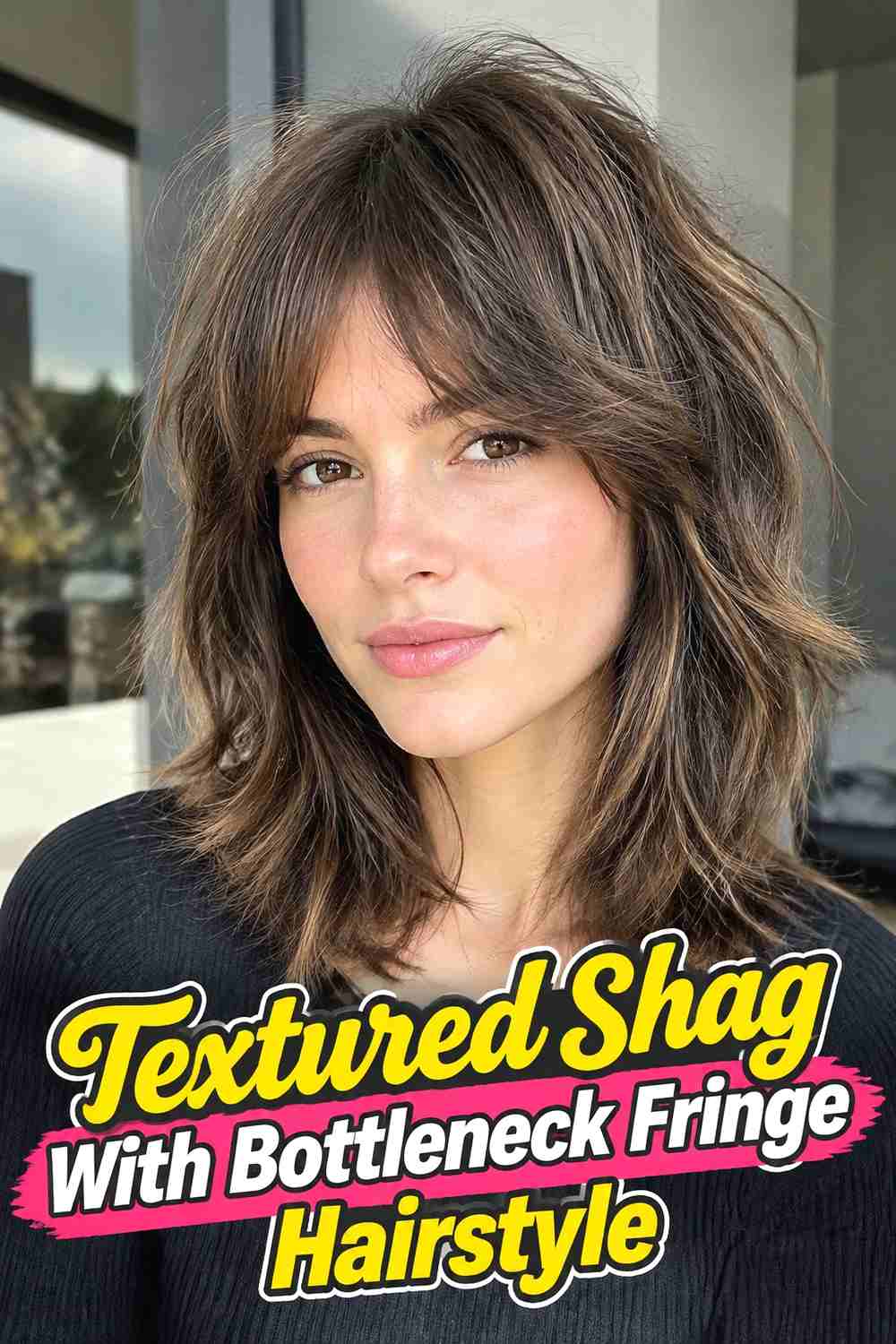
A bottleneck fringe gives a shag a more defined front shape by staying shorter through the center and gradually lengthening toward the temples. On thick straight hair, the fringe can be texturized so it separates naturally instead of forming one heavy band. Longer outer pieces connect easily with cheekbone-level shag layers, creating a continuous flow around the face. Through the crown and mids, connected layers remove bulk while preserving enough weight through the lower lengths. The combination feels more structured than wispy bangs but softer than a blunt fringe. A slight outward bend at the longer fringe edges can emphasize the bottleneck shape without requiring extensive styling.
Pro Tip
Keep the outer fringe pieces long enough to blend into the side layers so the front does not look disconnected from the rest of the shag.
7. Razor Cut Textured Shag Hairstyle
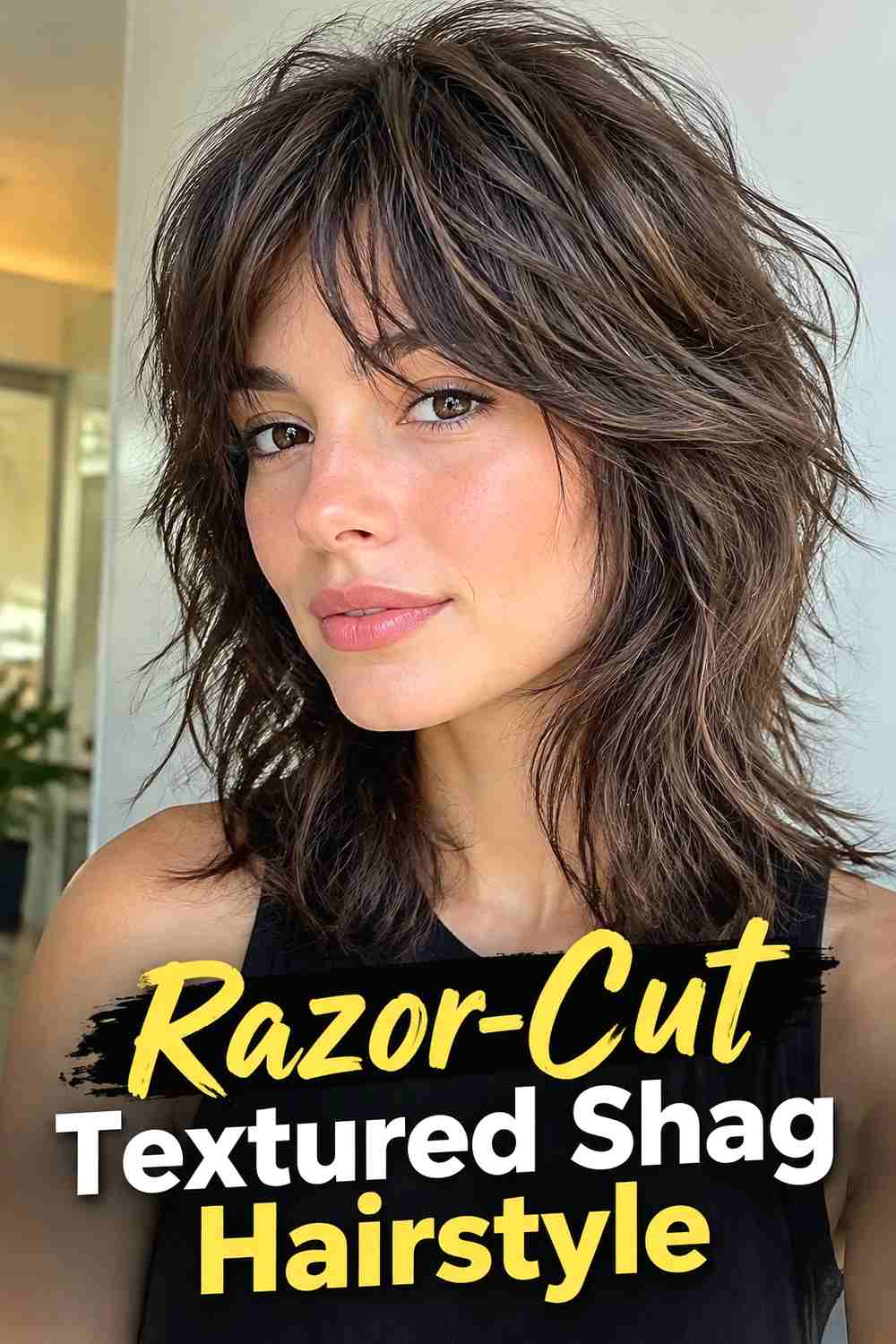
A razor-cut shag can give thick straight hair a softer, more tapered texture when the technique is used selectively. Instead of creating blunt layer edges, razor work can feather the mids and ends so individual sections move more freely. The cut may include shorter crown pieces, cheekbone layers, and longer lengths through the back, but enough density should remain to prevent the perimeter from becoming weak. Straight hair displays the fine separation especially well because each tapered section stays visible. This version can look polished with a smooth blow-dry or more undone with a little dry texture spray. The goal is controlled softness rather than aggressive thinning throughout the entire head.
Wear & Maintenance
Razor-softened ends may become less defined as they grow, so occasional reshaping can help preserve the intended texture.
8. Textured Shag With Wispy Bangs Hairstyle
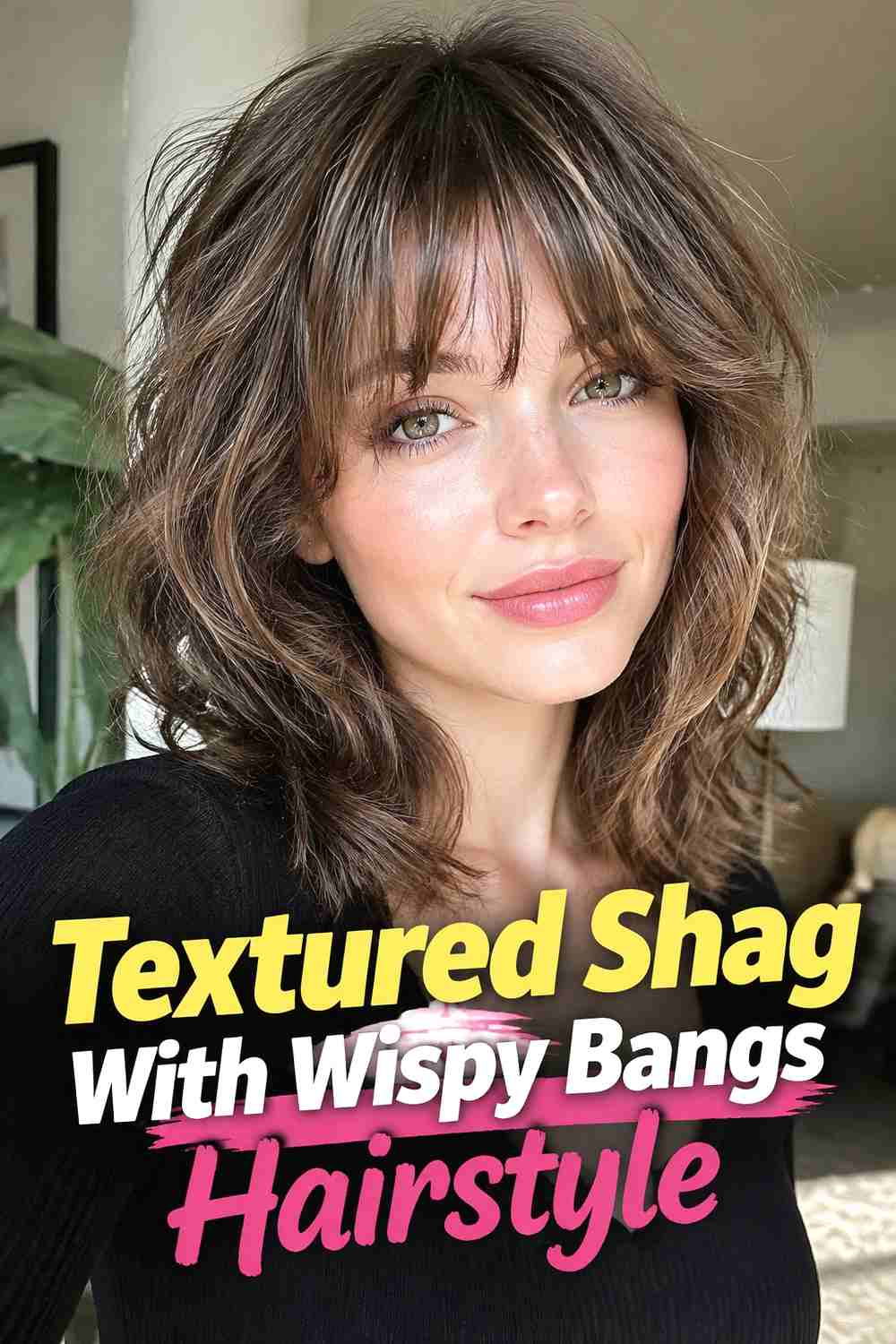
Wispy bangs create a lighter front detail that can balance the density of thick straight hair. Instead of using a large section for fringe, fine pieces are distributed across the forehead with visible space between them. Longer temple sections then connect into the shag’s face-framing layers. Through the rest of the cut, moderate crown movement and longer side layers keep the silhouette textured without removing excessive weight. This style works particularly well if you want bangs but worry that a full fringe will feel too heavy. The lighter front pieces can be worn smooth, slightly separated, or brushed sideways as they grow, while the layered body maintains plenty of natural fullness.
Styling Notes
Keep heavy oils away from the fringe and use only a trace of light styling cream if extra separation is needed.
9. Collarbone Textured Shag With Piecey Ends Hairstyle
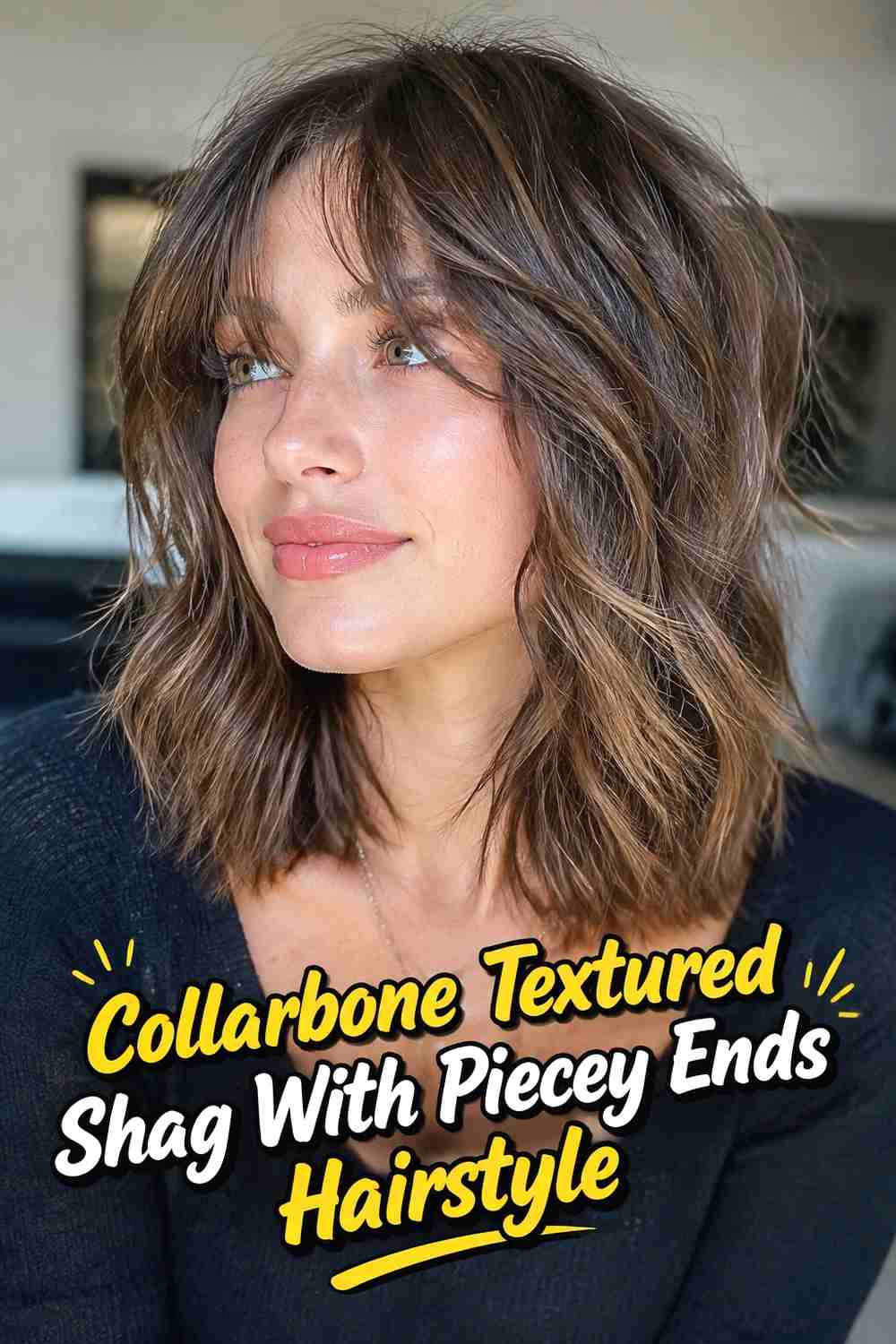
A collarbone shag offers a versatile middle length that works particularly well with thick straight hair. The cut can include cheekbone layers, subtle crown lift, and connected mids while preserving a clear collarbone-length outline. Piecey ends prevent the perimeter from reading as one heavy line and give the haircut a more relaxed appearance even when worn completely straight. This version is long enough to tie back but short enough for the layering to make a noticeable difference in overall weight. Light point-cutting or selective texturizing can add separation without making the ends sparse. The finished shape feels casual, modern, and easy to adapt to both polished and undone styling.
Best For
Choose this length if you want visible shag texture while keeping enough hair for ponytails, clips, and simple everyday styling.
10. Voluminous Textured Shag With Airy Layers Hairstyle
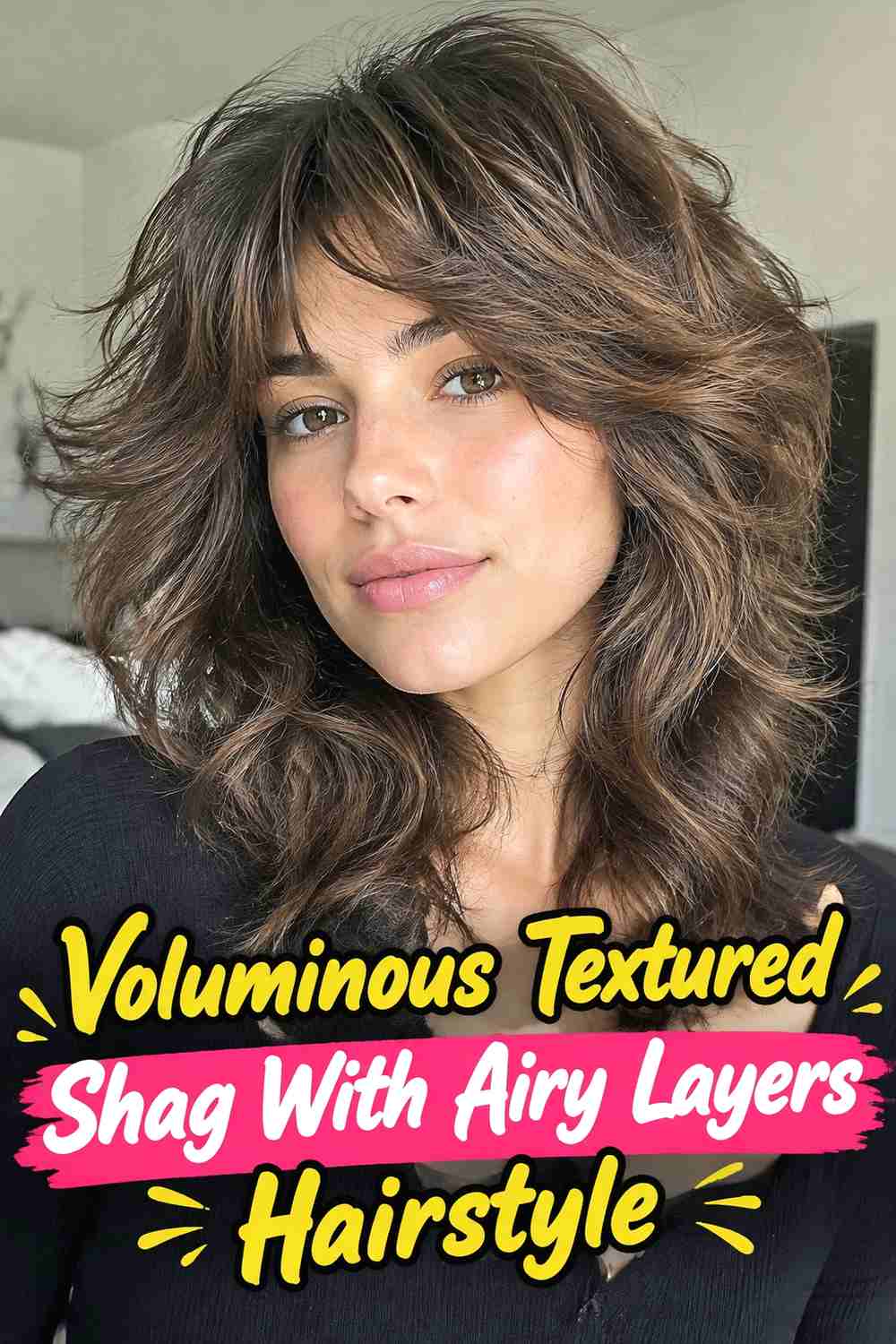
This shag embraces thick hair’s natural volume but redirects it through airy layering instead of allowing it to collect at the lower perimeter. Shorter sections through the crown create lift, while longer connected layers distribute fullness through the sides. Internal weight removal can keep the haircut from becoming overly wide without flattening the overall shape. Straight hair benefits from a little root lift or rough-dried texture because the airy layer pattern becomes more obvious when sections separate. The lower ends should retain enough density to anchor the volume above. The final silhouette feels full and lively rather than bulky, making this a strong choice if you enjoy body and movement.
Styling Notes
Lift the roots while blow-drying and keep heavier creams away from the crown so the upper layers maintain their airy shape.
11. Textured Shag With Short Face Framing Layers Hairstyle
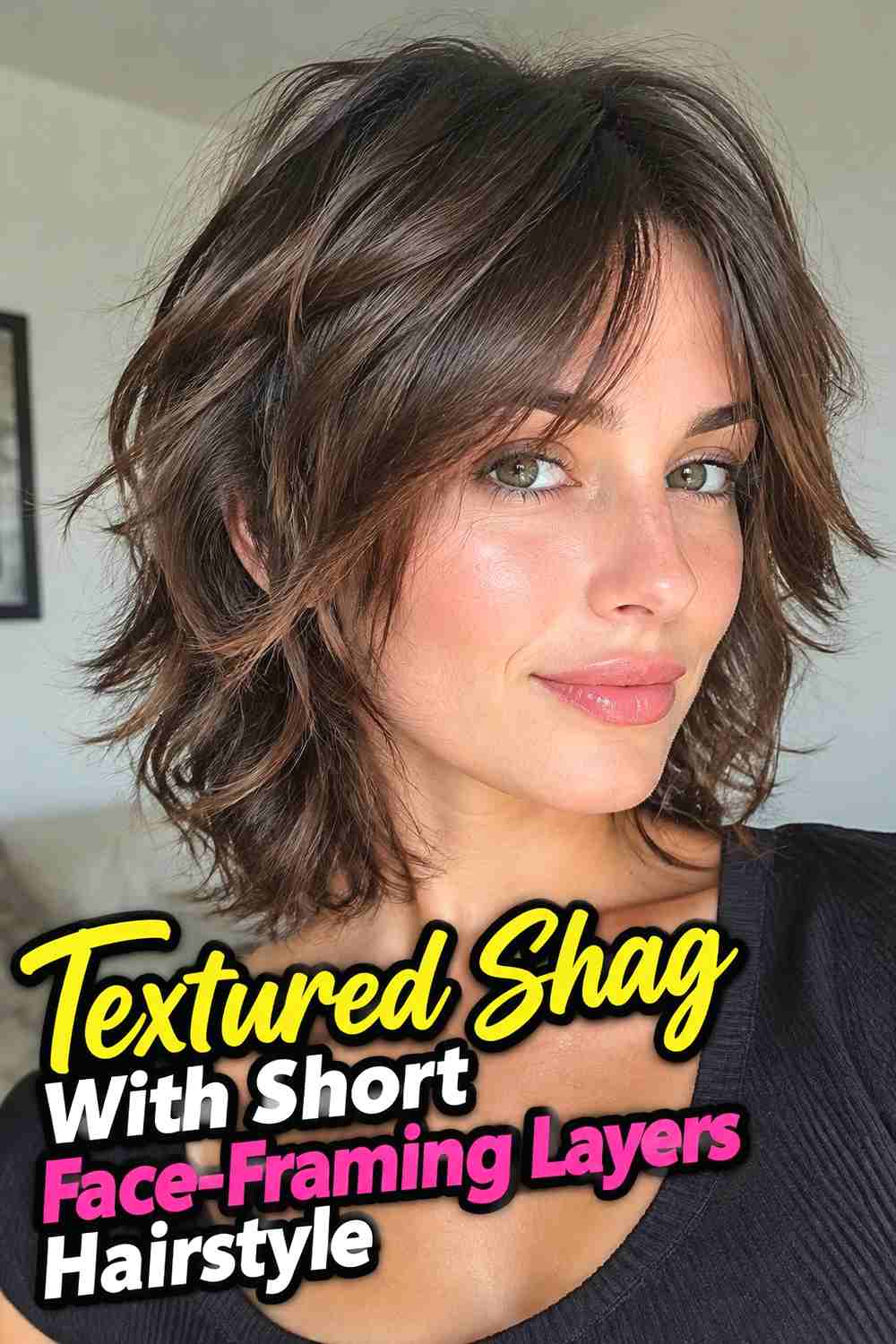
Short face-framing layers create a stronger shag effect by placing visible movement around the cheekbones and upper jaw. On thick straight hair, those sections can be texturized enough to move independently while longer layers through the back maintain density. The crown does not necessarily need to be extremely short; letting the dramatic front sections carry the texture can make the haircut easier to manage. A center or slightly off-center part both work, depending on how the shortest pieces are meant to fall. Straight styling clearly reveals the stepped progression from front to back, while a slight outward flick can make each layer feel softer and less geometric.
Why It Works
The shorter front pieces create visible movement where it is most noticeable while allowing the rest of the haircut to remain fuller and easier to manage.
12. Textured Shag With Long Curtain Layers Hairstyle
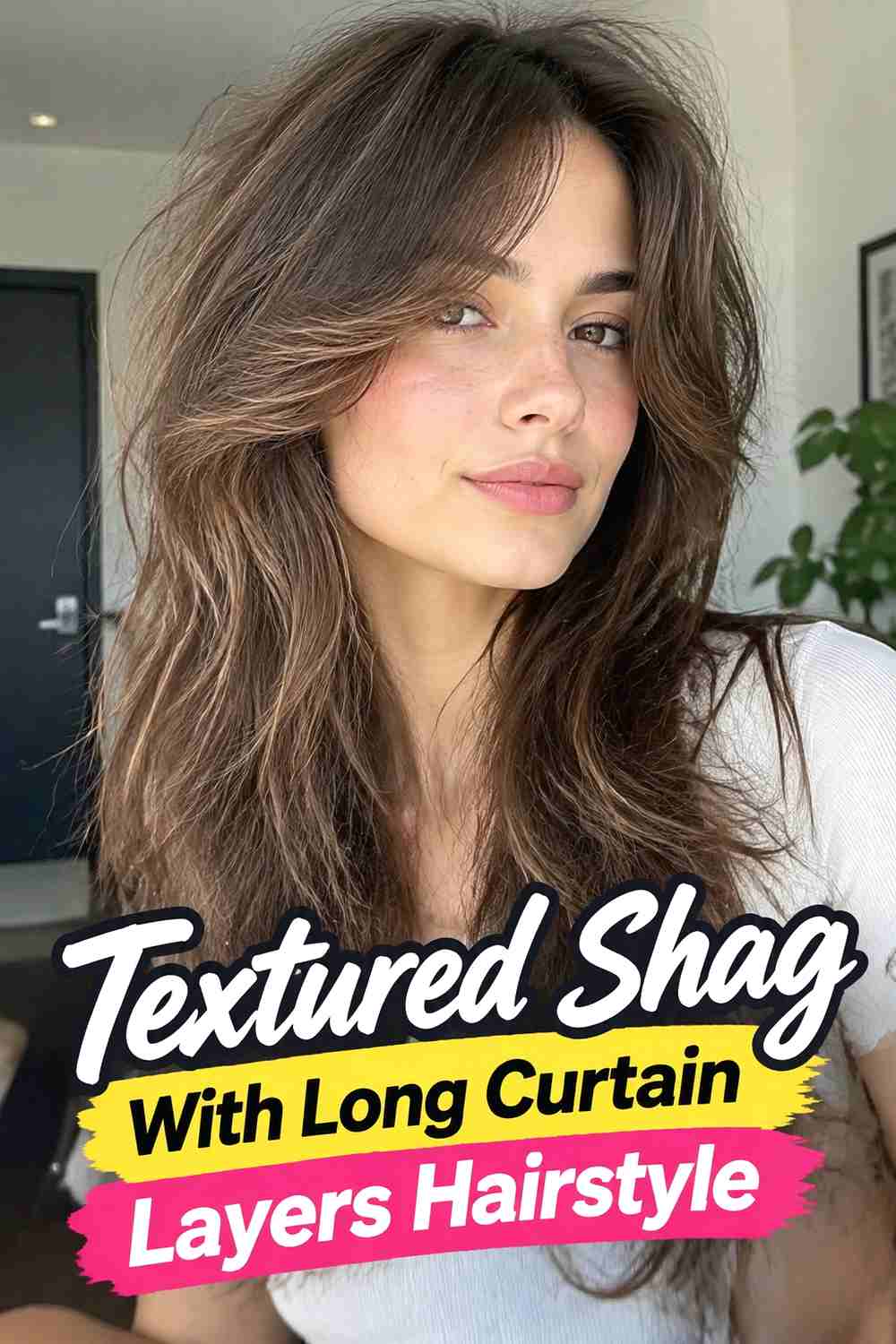
Long curtain layers offer a softer alternative to fringe while still giving thick straight hair substantial movement around the face. The shortest front sections can begin around the chin, then sweep outward and blend into longer side layers. Because the face frame stays relatively long, the haircut remains easy to tuck back, tie up, or wear straight without constant adjustment. Through the crown, long connected layers reduce heaviness while maintaining a smooth silhouette. This approach is particularly practical if you want a shag that can grow out gracefully. A soft blowout can emphasize the curtain movement, but the shape also works with natural straight texture because the layered transition remains visible.
Wear & Maintenance
Long face-framing sections generally grow into the rest of the haircut more smoothly than short bangs or very cropped crown layers.
13. Textured Shag With Flipped Out Ends Hairstyle
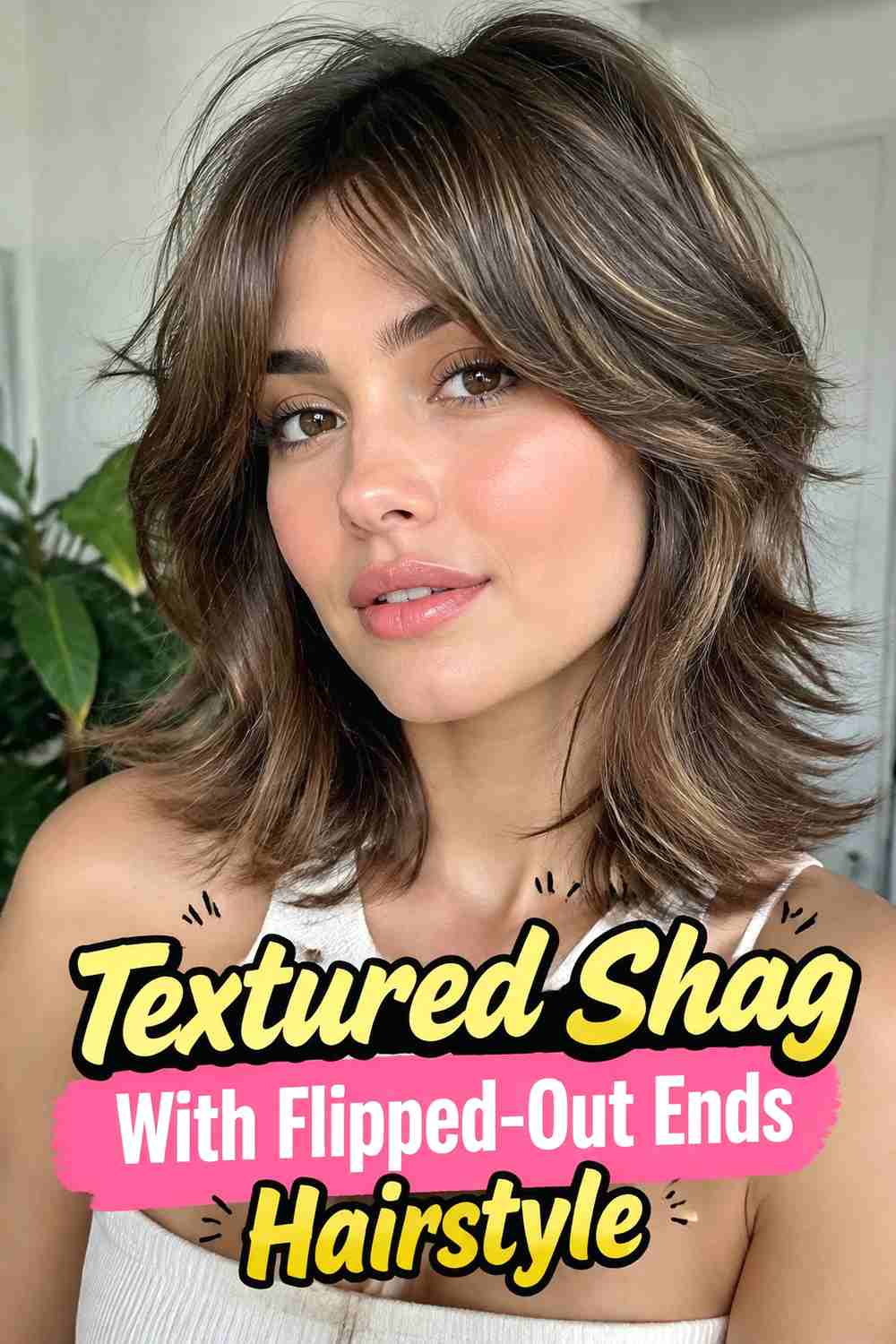
Flipped-out ends bring extra energy to a straight shag by emphasizing the different layer lengths. Cheekbone, shoulder, or collarbone sections can be directed outward, while the lower perimeter remains longer and more grounded. The flips do not need to be identical; allowing some pieces to sit straighter creates a more relaxed and modern finish. Thick straight hair often holds this directional styling well, especially when the ends have been lightly texturized rather than left very blunt. The crown can remain softly layered to balance the movement below. This version works particularly well if your hair naturally turns outward near the shoulders, since the haircut can use that tendency instead of fighting it.
Styling Notes
Flip selected ends with a round brush or flat iron and leave a few pieces straighter for a softer, less uniform finish.
14. Side Part Textured Shag Hairstyle
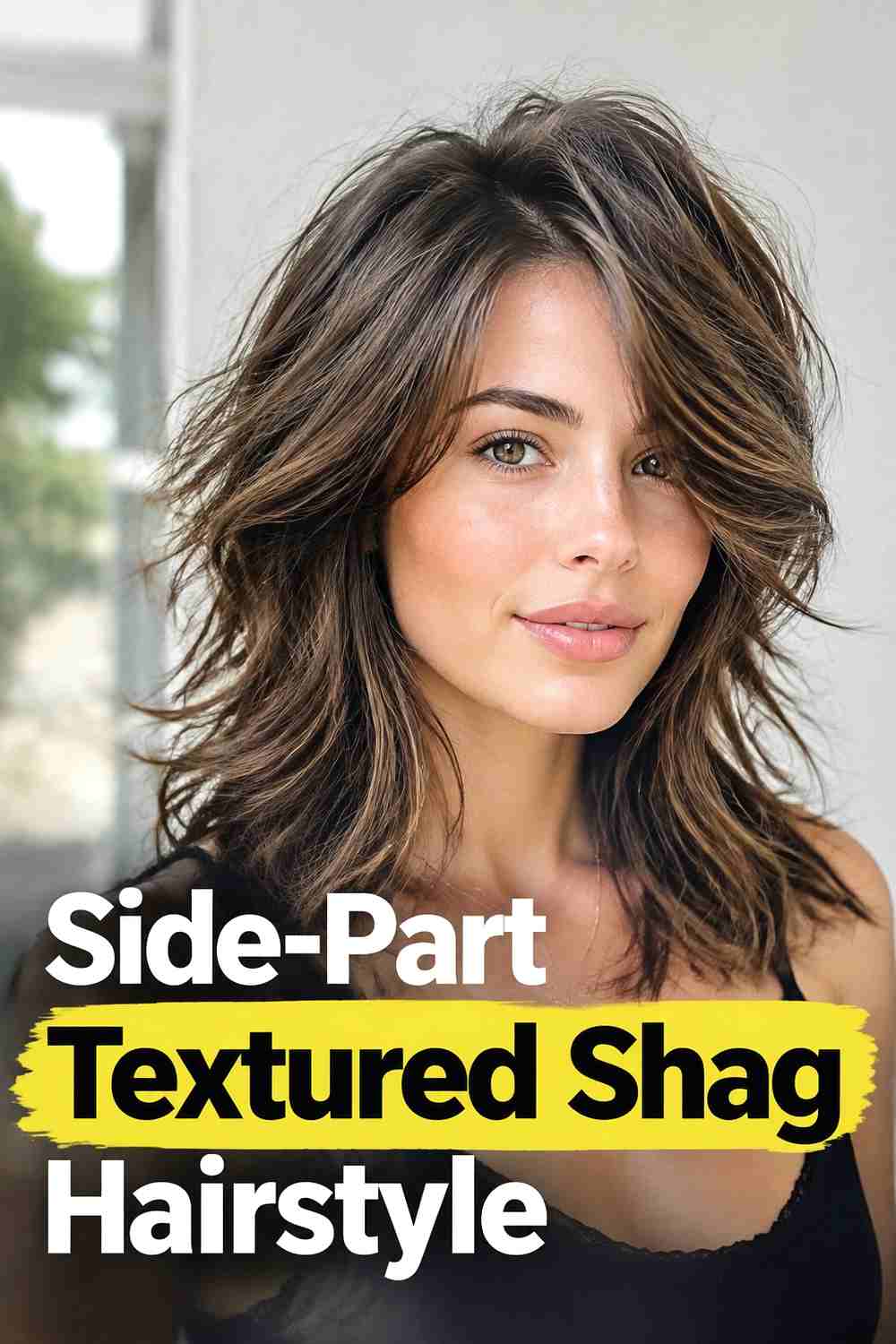
A side part introduces asymmetry and natural root lift to a textured shag, making thick straight hair feel less evenly distributed. The heavier side can sweep across the forehead and blend into longer face-framing layers, while the lighter side sits closer to the head or tucks behind the ear. Crown layers create movement without needing extreme volume, and piecey mids help break up the density through the sides. This version works well if a center part makes thick hair feel too balanced or blocky. The side part can also be shifted slightly from day to day, giving the shag a flexible finish while preserving its overall layered structure.
Best For
This style suits anyone who wants extra root movement and asymmetry without committing to short fringe or very dramatic crown layering.
15. Textured Shag With Rounded Crown Layers Hairstyle
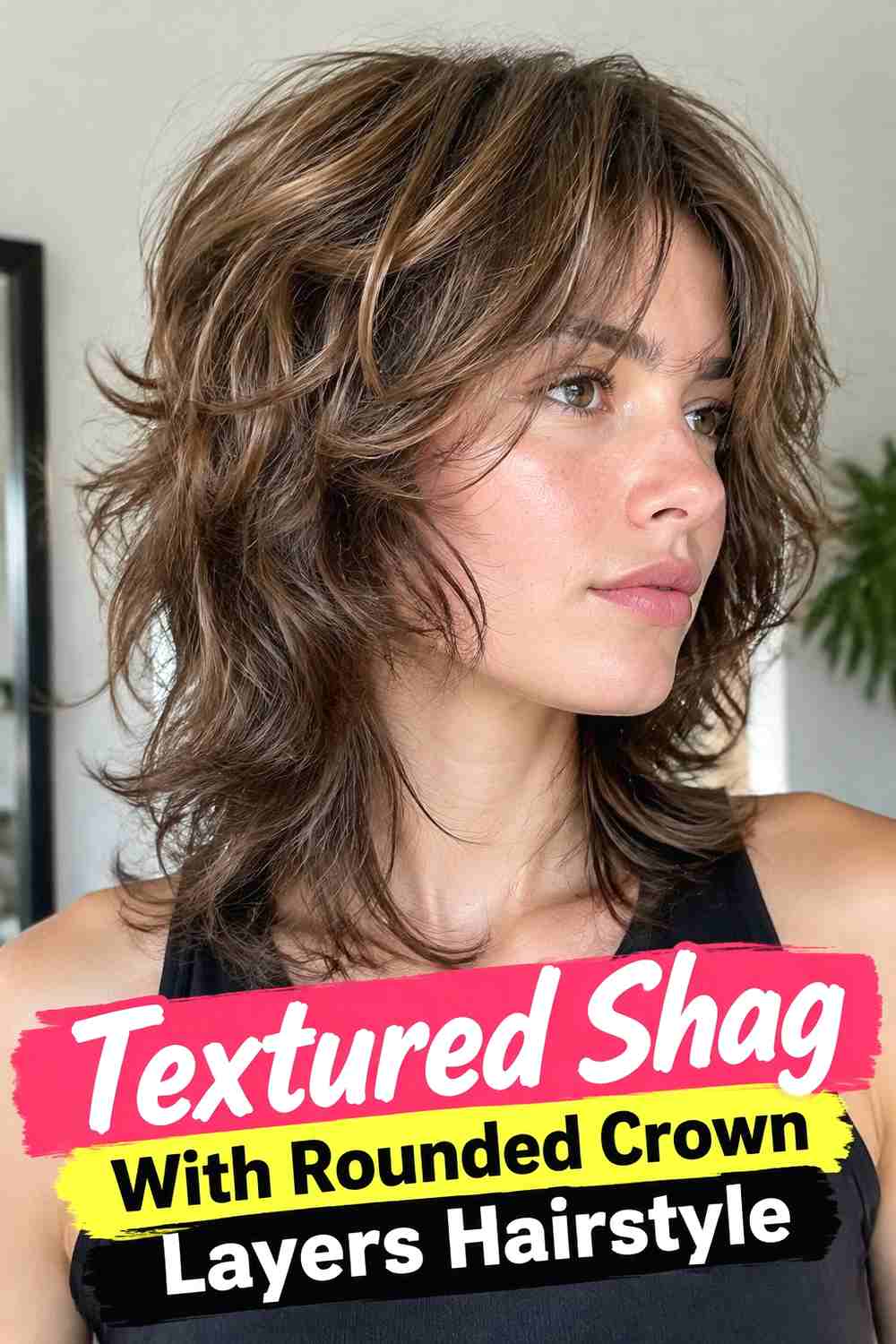
Rounded crown layers give a shag a softer upper silhouette by creating fullness that follows the shape of the head instead of forming sharp, disconnected steps. On thick straight hair, the upper layers can remove enough weight to create movement while longer sections through the lower sides preserve a substantial perimeter. The face frame may start around the cheekbones or jaw depending on how much front texture you want. This shape works especially well with a smooth blow-dry because the rounded crown remains visible even without waves. Keeping the graduation soft is important; overly short upper pieces can make dense straight hair puff outward instead of falling naturally.
Pro Tip
Ask for connected crown layers that release weight gradually rather than a very short top section if you prefer a softer silhouette.
16. Tousled Textured Shag With Broken Layers Hairstyle
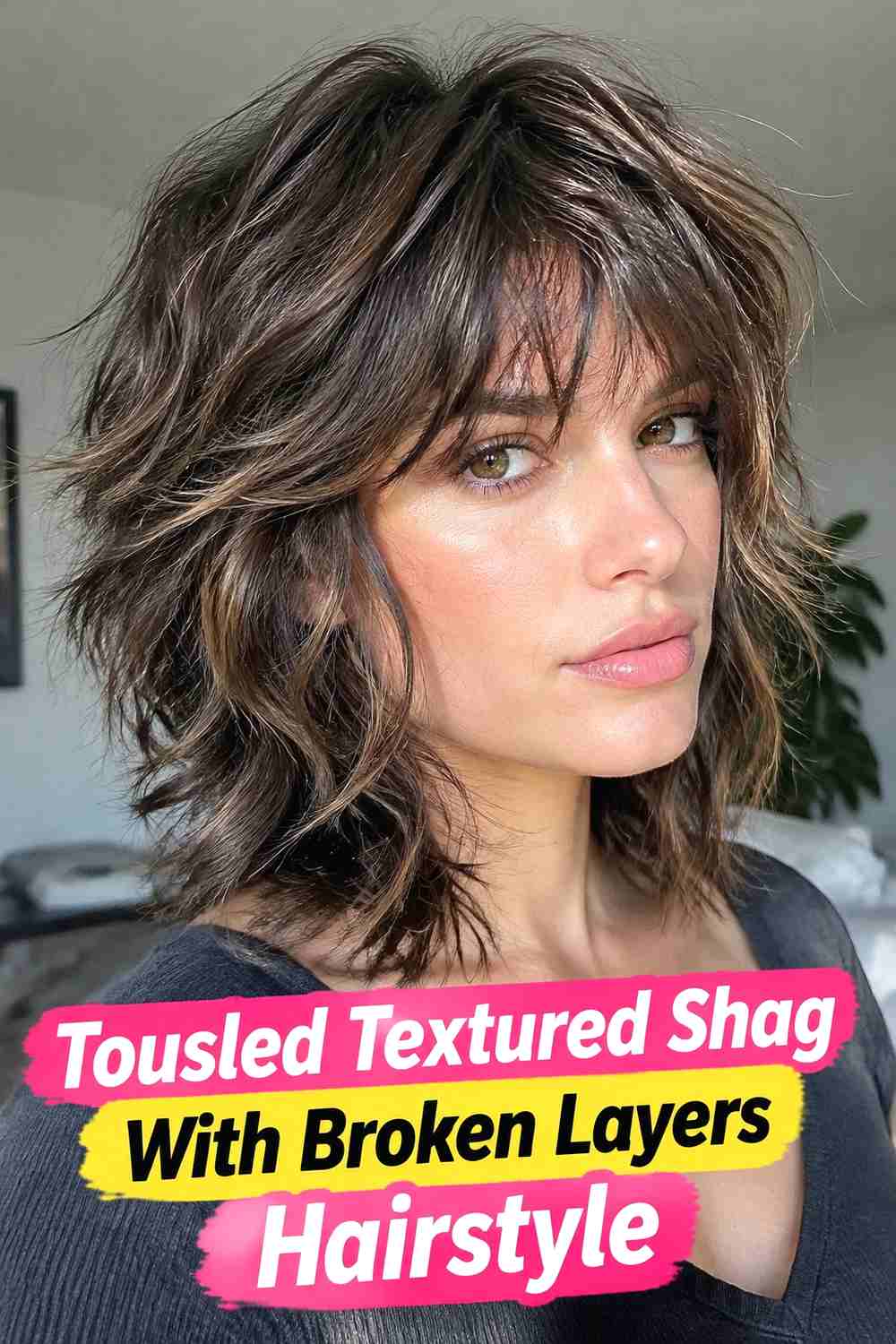
Broken layers give thick straight hair an intentionally undone appearance by creating visible separation through the crown, sides, and ends. Unlike smooth feathering, the sections are more irregular, with slight differences in length that keep the haircut from falling into one solid shape. The perimeter should still retain enough density to prevent the style from looking over-thinned. Straight hair can be rough-dried or lightly bent to exaggerate the layer pattern, but the cut should also look interesting without heat. A little dry texture spray can help individual pieces remain distinct. This version is ideal when you prefer a shag that feels casual, energetic, and slightly imperfect.
Styling Notes
Use your fingers instead of a brush for the final finish and define only a few sections so the texture remains loose rather than overly piecey.
17. Low Maintenance Textured Shag Hairstyle
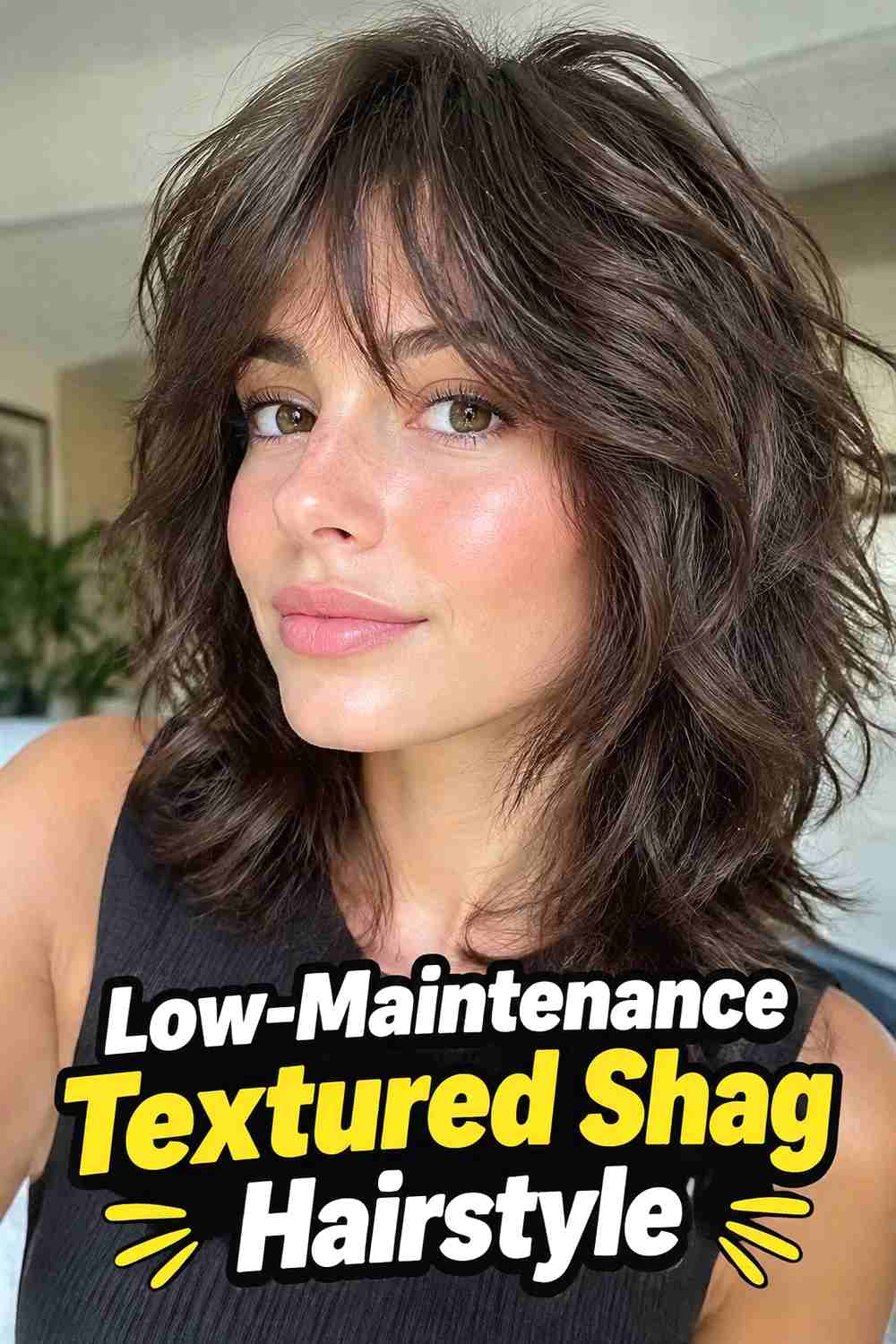
A low-maintenance shag keeps the layers relatively long and connected, reducing bulk without creating many short sections that need daily control. The face frame can begin near the chin or jaw, while the crown receives just enough movement to prevent thick straight hair from lying completely flat. Internal weight removal helps the haircut feel lighter while preserving a strong surface and perimeter. Because the layer transitions are gradual, the shape tends to remain wearable as it grows. This version can be air-dried straight, rough-dried for texture, or quickly styled with a slight bend at the ends. It offers the feel of a shag without demanding an elaborate routine.
Wear & Maintenance
Longer connected layers generally provide a softer grow-out and require less frequent reshaping than highly cropped or heavily disconnected shag cuts.
18. Balanced Textured Shag For Thick Straight Hair Hairstyle
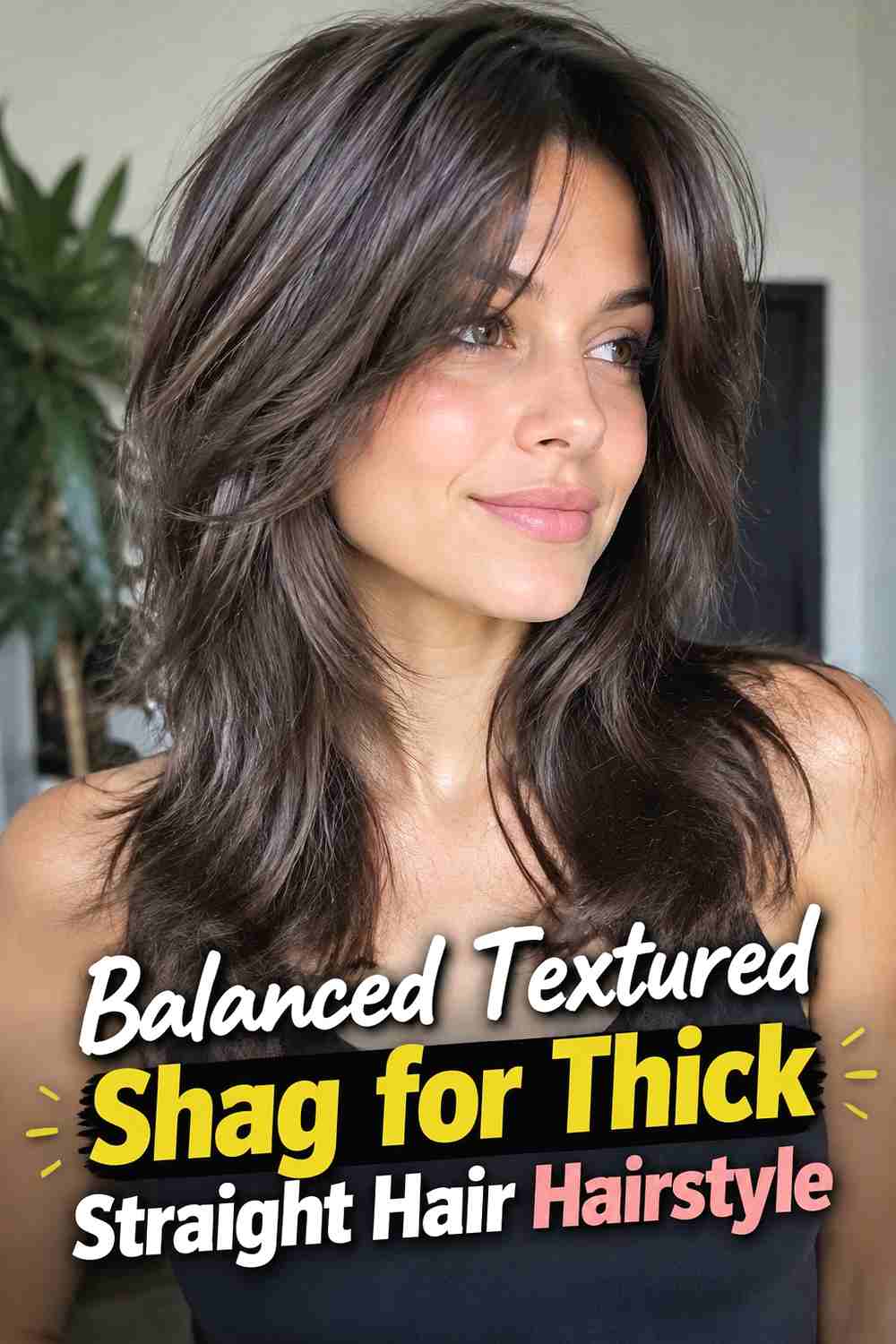
This balanced shag distributes movement through the crown, face frame, mids, and ends without making any one area excessively short or thin. Medium-length upper layers create lift, cheekbone-to-jaw pieces add front movement, and longer lower sections maintain enough density for thick straight hair to look full. Selective internal texturizing removes bulk where needed rather than thinning the entire haircut uniformly. The result works well worn naturally straight because the layer pattern is visible without relying on curls. It can also handle a soft blowout or slight flip when extra movement is wanted. This is a versatile option if you want a clear shag shape while preserving flexibility.
Why It Works
Balanced layer placement reduces heaviness while keeping enough structure through the perimeter, making the haircut textured without looking overly fragmented.
How to Choose the Right Look
Start with how much layering you actually want. Short crown layers and choppy sections create a stronger shag silhouette, while long curtain layers and soft face framing offer a more understated result. If you usually wear your hair straight with minimal styling, connected layers may be easier to manage.
Hair density is equally important. Thick straight hair often benefits from internal weight removal, but taking out too much density can leave the ends weak or cause short layers to puff outward. A strong perimeter with strategic interior movement is often more versatile than aggressive thinning.
Consider fringe carefully. Curtain or bottleneck fringe creates more structure around the face, wispy bangs feel lighter, and long curtain layers provide a similar effect without committing to true bangs.
Length also changes the maintenance level. Shoulder and collarbone shags show texture clearly, while longer shags keep more styling flexibility. For easier grow-out, choose longer connected layers over dramatically cropped crown sections.
Final Thoughts
A textured shag can make thick straight hair feel significantly lighter while giving naturally smooth strands more shape and movement. The strongest versions preserve density in the perimeter and remove weight strategically through the crown, interior, and face frame. Whether you prefer fringe, feathered ends, choppy layers, or a low-maintenance finish, choose a layer pattern that works when your hair is worn naturally straight.
FAQs
1. Is a shag haircut good for thick straight hair?
Yes. Strategic layering can reduce bulk and create movement, especially when enough density is preserved through the ends and outer shape.
2. Will a shag make thick straight hair too puffy?
It can if the layers are cut too short or too much internal weight is removed. Longer connected layers usually create a softer result on hair that naturally expands.
3. What shag length is easiest for thick straight hair?
Shoulder, collarbone, and longer lengths are versatile because they provide enough weight to control volume while still allowing visible layering.
4. Does a textured shag need bangs?
No. Curtain fringe, wispy bangs, bottleneck fringe, long face-framing pieces, or no fringe at all can work depending on your preferred styling routine.
5. How can I style a shag if my hair is naturally straight?
You can wear it naturally straight, rough-dry for separation, add light root lift, or bend selected ends outward. A well-cut shag should not require full curling to show its layers.
Save your favorite textured shag haircut, share it with your stylist, and explore more thick straight hair inspiration for your next salon visit.