18 Tucked-Under Bob Hairstyles for a Polished, Rounded Finish
A softly curved bob can make even a simple haircut feel beautifully finished, polished, and full of movement without looking overly styled.
Tucked-under bob hairstyles are defined by ends that curve gently toward the neck or jaw rather than flipping outward. That small change in direction creates a rounded silhouette that can look sleek, bouncy, retro, softly layered, or intentionally voluminous depending on the cut and styling method.
The best version depends on your bob length, natural texture, density, fringe choice, and how much time you want to spend shaping the ends. Some cuts only need a quick round-brush pass, while thicker or more textured hair may benefit from strategic layering and section-by-section styling. The ideas below keep the tucked-under shape realistic while varying the finish, volume, movement, and maintenance level.
Quick List
- Classic Chin Length Tucked Under Bob Hairstyle
- Sleek Center Part Tucked Under Bob Hairstyle
- Soft Side Part Tucked Under Bob Hairstyle
- Rounded French Tucked Under Bob Hairstyle
- Soft Layered Tucked Under Bob Hairstyle
- Blunt Tucked Under Bob Hairstyle
- Voluminous Tucked Under Bob Hairstyle
- Polished Jaw Length Tucked Under Bob Hairstyle
- Wispy Bangs Tucked Under Bob Hairstyle
- Curtain Bangs Tucked Under Bob Hairstyle
- Deep Side Part Tucked Under Bob Hairstyle
- Short Neck Grazing Tucked Under Bob Hairstyle
- Long Tucked Under Lob Hairstyle
- Fine Hair Tucked Under Bob Hairstyle
- Thick Hair Tucked Under Bob Hairstyle
- Textured Tucked Under Bob Hairstyle
- 90s Inspired Tucked Under Bob Hairstyle
- Old Money Tucked Under Bob Hairstyle
1. Classic Chin Length Tucked Under Bob Hairstyle
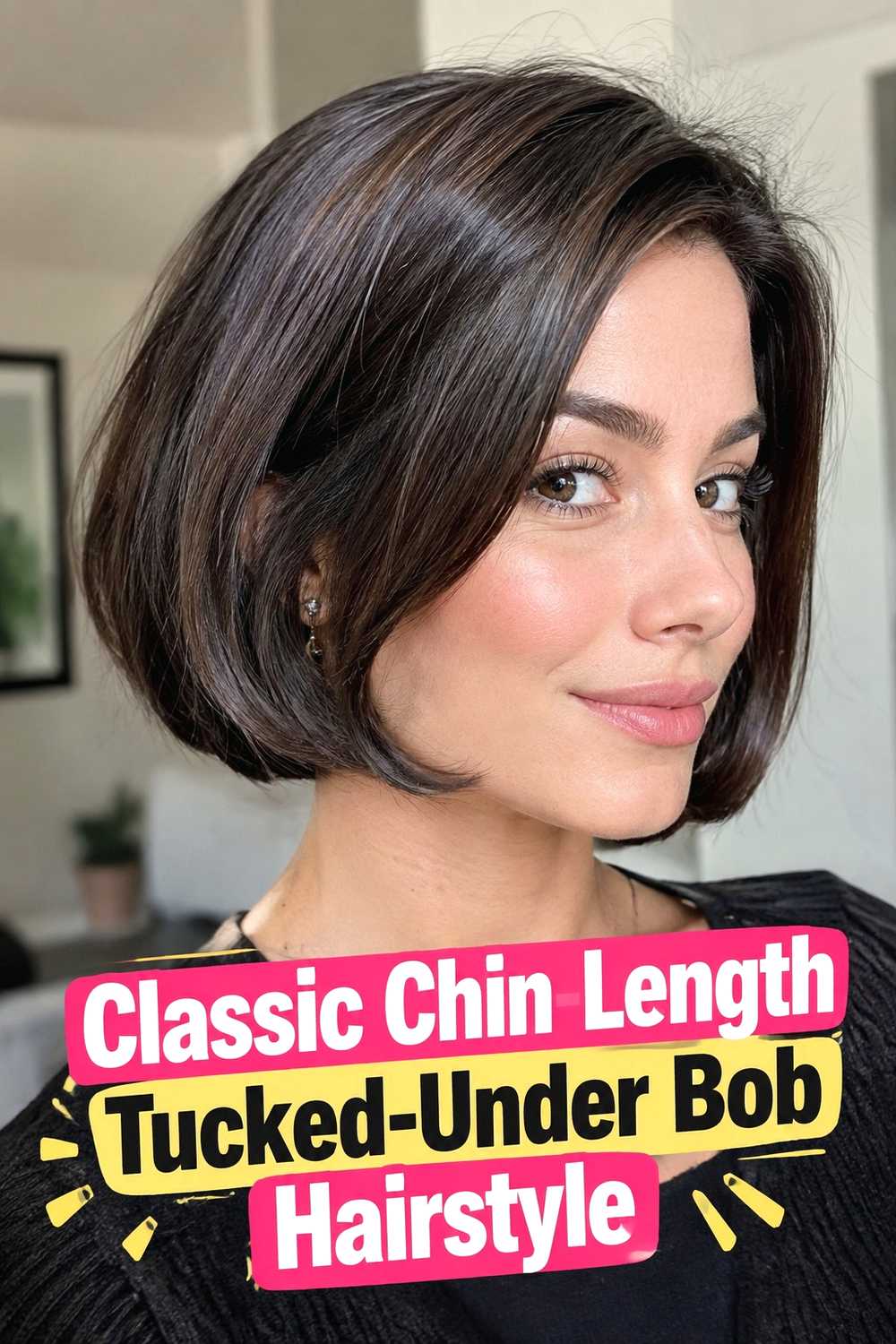
The classic chin-length version keeps the shape simple: a clean bob that lands around the jaw with the bottom inch gently curved inward. The result has a neat, rounded outline without needing exaggerated volume or heavy layering. It works especially well on straight and softly wavy textures that can hold a smooth bend at the ends. A light blow-dry with a medium round brush usually creates enough curve, while a flat iron can refine individual sections afterward. Keep the roots relatively natural so the style feels modern rather than overly set, and avoid turning the ends so sharply that they form a visible roll.
Styling Notes
Direct the ends inward while they are still warm, then allow each section to cool in place. This helps preserve a soft curve without creating a stiff helmet-like shape.
2. Sleek Center Part Tucked Under Bob Hairstyle
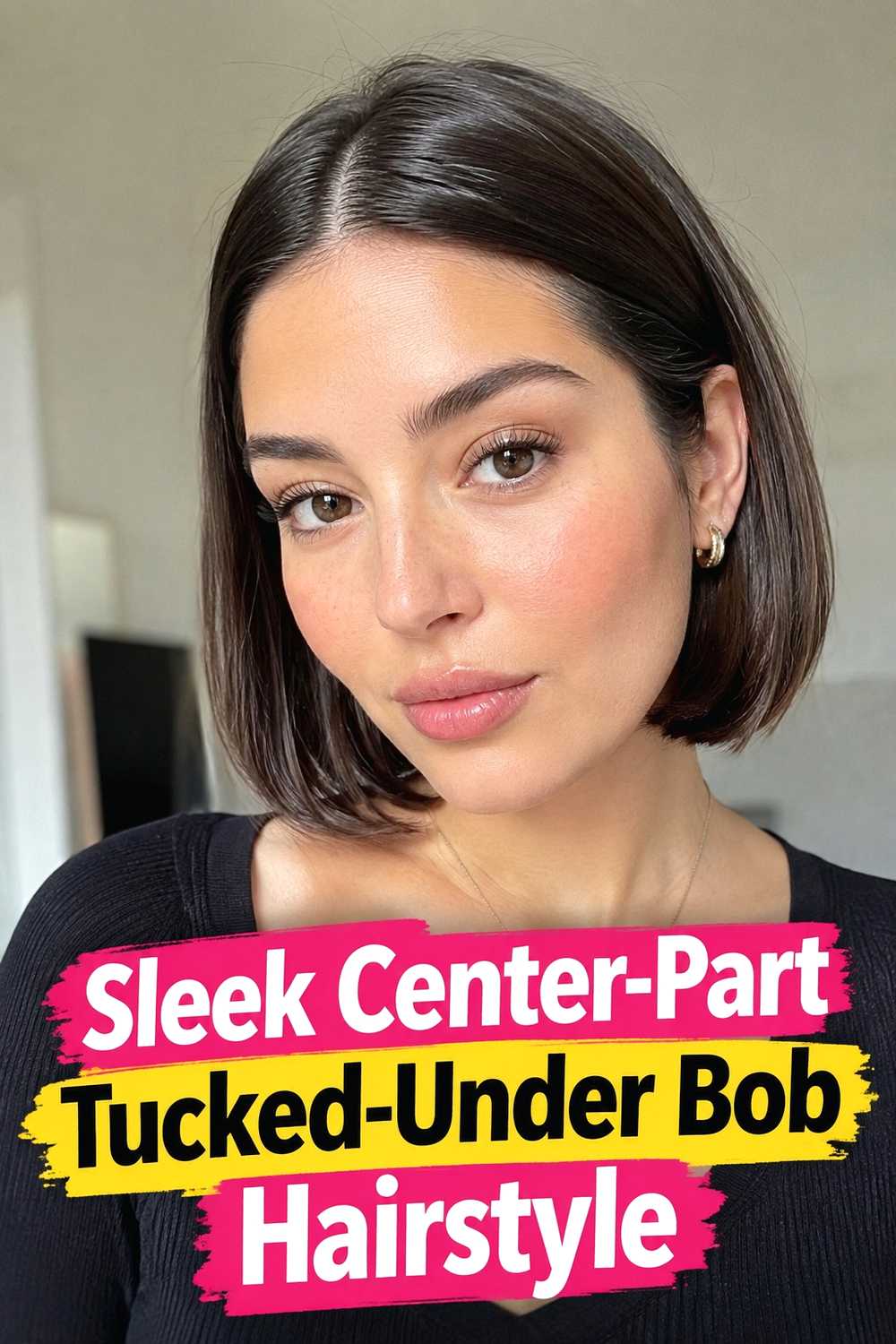
A center part gives the tucked-under bob a balanced, streamlined appearance. The lengths fall evenly on both sides of the face, while the inward-curved ends add shape without interrupting the sleek finish. This variation looks particularly polished when the surface is smooth but still shows natural strand movement and healthy dimension. It can suit chin-length through slightly longer bobs, especially when the perimeter is fairly clean. Blow-dry the hair downward first, then shape only the last inch or two inward. Too much root lift can change the intended silhouette, so keep the crown controlled and let the curved ends provide most of the visual softness.
Best For
This version is useful when you want a tidy everyday bob that transitions easily from casual outfits to office or evening styling.
3. Soft Side Part Tucked Under Bob Hairstyle
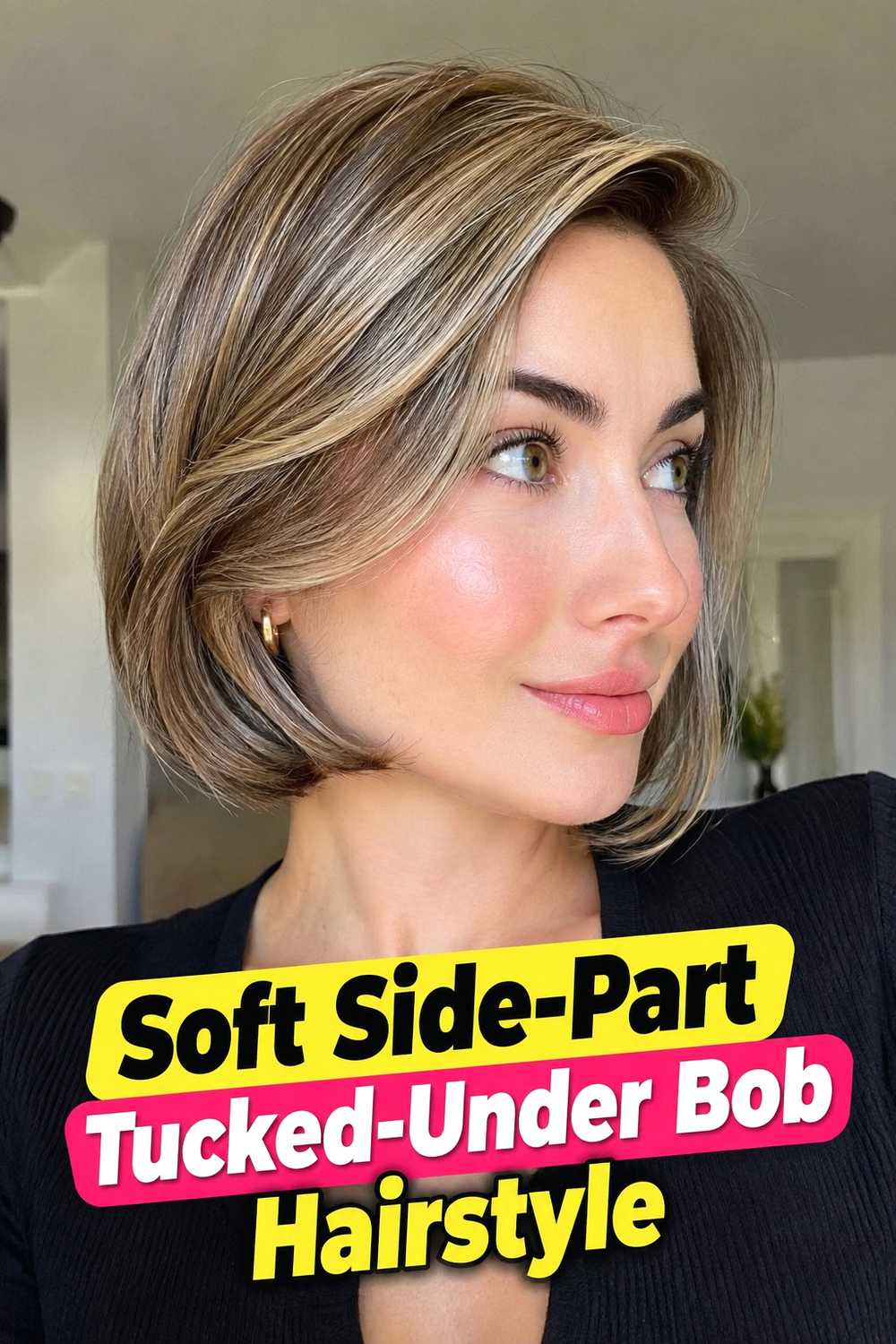
A gentle side part makes the tucked-under shape feel softer and less symmetrical. One side naturally gains a little extra lift while the opposite side sits closer to the head, giving the bob subtle movement without changing the haircut itself. The ends remain curved inward toward the jaw and neck, creating a clean outline that feels polished rather than rigid. This style can be especially flattering on hair with a slight natural bend because the part works with existing movement. Use a round brush to guide the front sections away from the part before turning the ends underneath, which keeps the top light while preserving the signature rounded finish.
Why It Works
The uneven distribution of volume makes the bob feel relaxed and dimensional, while the tucked ends keep the overall silhouette controlled.
4. Rounded French Tucked Under Bob Hairstyle
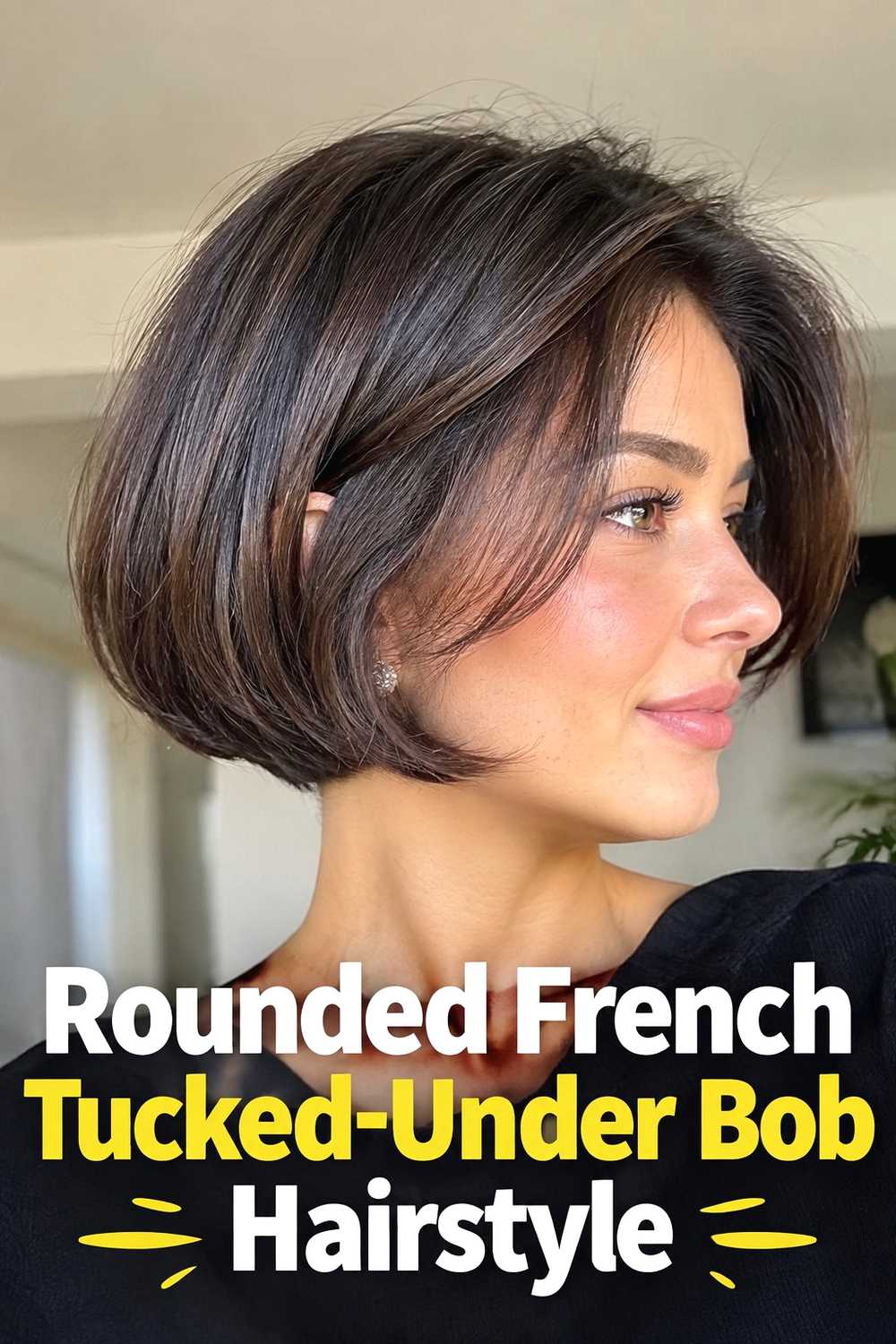
This French-inspired version combines a compact bob with a softly rounded perimeter and understated styling. The hair generally sits near the jaw, with enough fullness through the sides to create shape while the ends curve delicately toward the face and neck. Rather than aiming for perfectly glassy hair, allow a little natural texture and separation to remain visible. That gives the cut a more effortless finish. A small round brush works well for shorter lengths because it lets you control the bend without producing oversized curls. The final shape should look softly structured, with movement through the surface and a noticeably neat inward edge.
Wear & Maintenance
Shorter bobs usually need more regular perimeter trims to keep the rounded line intentional, particularly once the ends begin extending past the jaw.
5. Soft Layered Tucked Under Bob Hairstyle
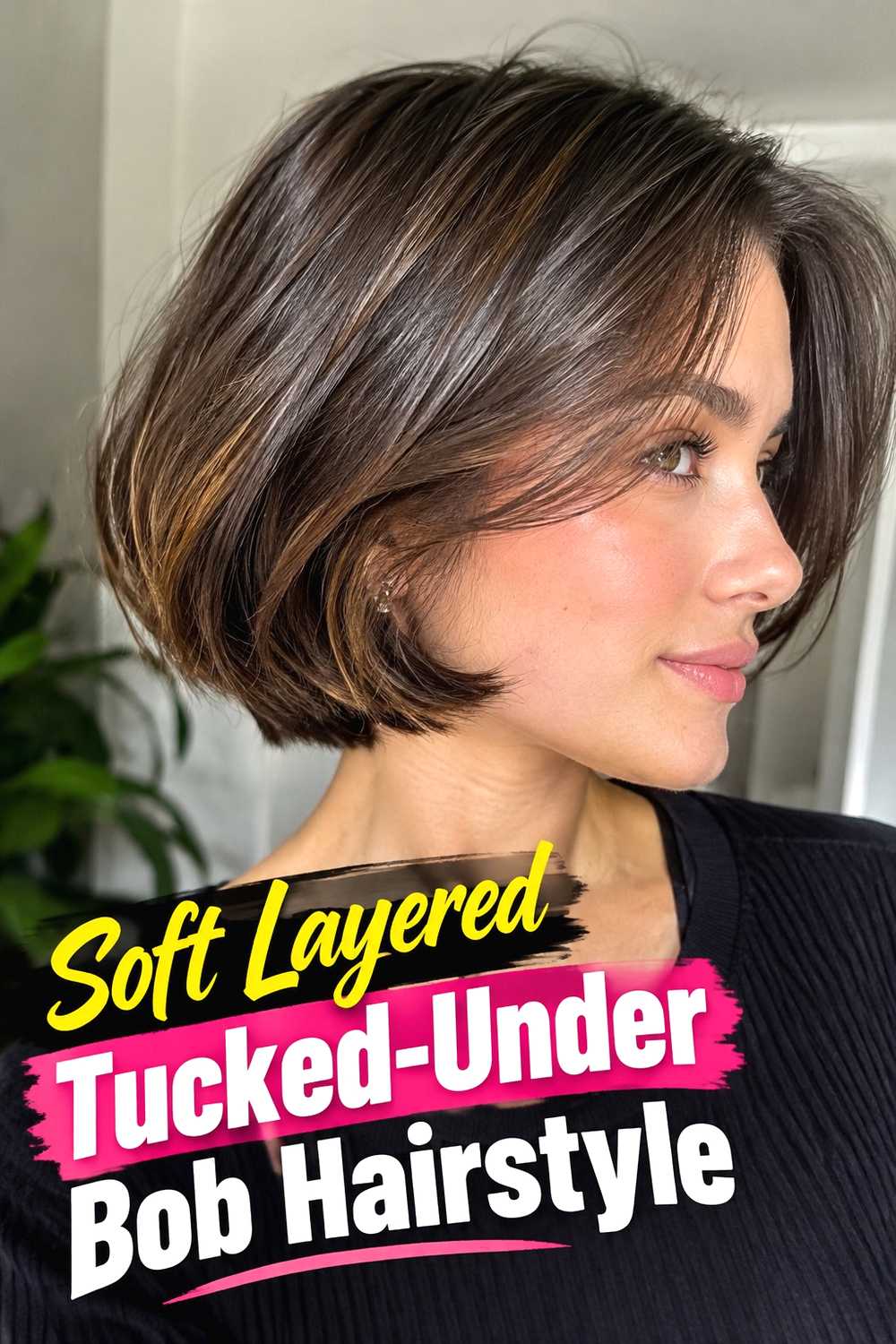
Light layering can remove some heaviness while preserving the recognizable tucked-under outline. Instead of cutting dramatically shorter pieces, this version uses subtle internal or surface layers to encourage movement around the cheekbones and sides. The longest ends still curve inward, so the bob keeps its compact shape even when the upper sections move more freely. This approach can work well for medium-density hair that feels too solid in a completely blunt cut. When styling, shape the bottom first to establish the inward bend, then use a larger brush on the upper layers. Keeping those layers looser prevents the finished style from looking overly round.
Hair Type & Length
A chin-to-neck-length bob with moderate density gives the layers enough room to move without weakening the lower perimeter too much.
6. Blunt Tucked Under Bob Hairstyle
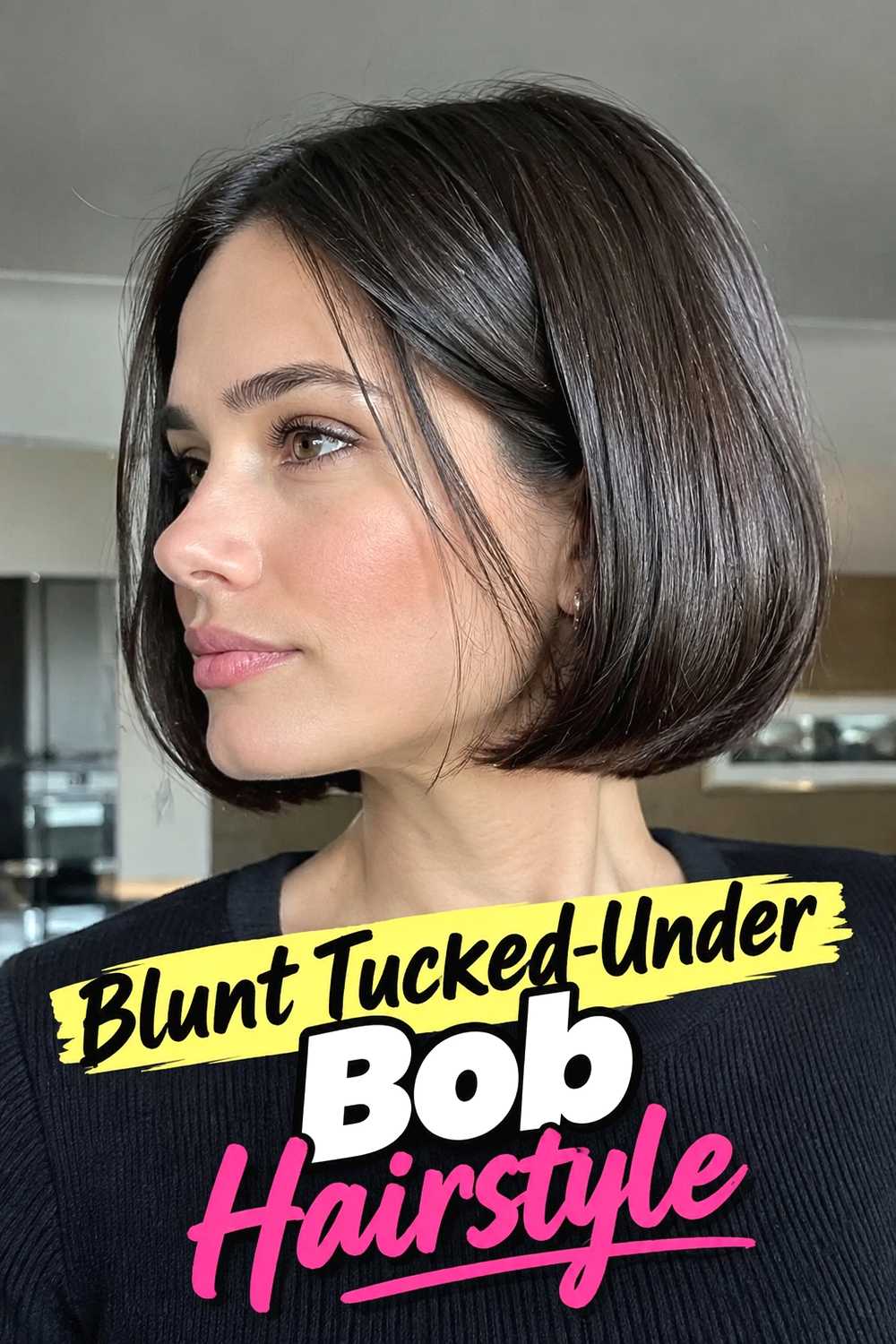
A blunt perimeter makes the tucked-under effect especially noticeable because the ends form one strong, continuous line. The haircut can look crisp and substantial, while the inward bend prevents the bottom from appearing flat or boxy. Straight and slightly wavy hair can showcase this shape particularly clearly, although density may determine how much internal weight removal is useful. Blow-dry the lengths smooth and use a round brush only near the ends so the cut retains its graphic quality. The goal is a clean curve rather than a full curl. A little separation through the surface keeps the finish believable and lets the blunt edge remain the focal point.
Pro Tip
Work in moderately wide sections when styling the ends. Very narrow sections can create several small curls instead of one cohesive tucked-under perimeter.
7. Voluminous Tucked Under Bob Hairstyle
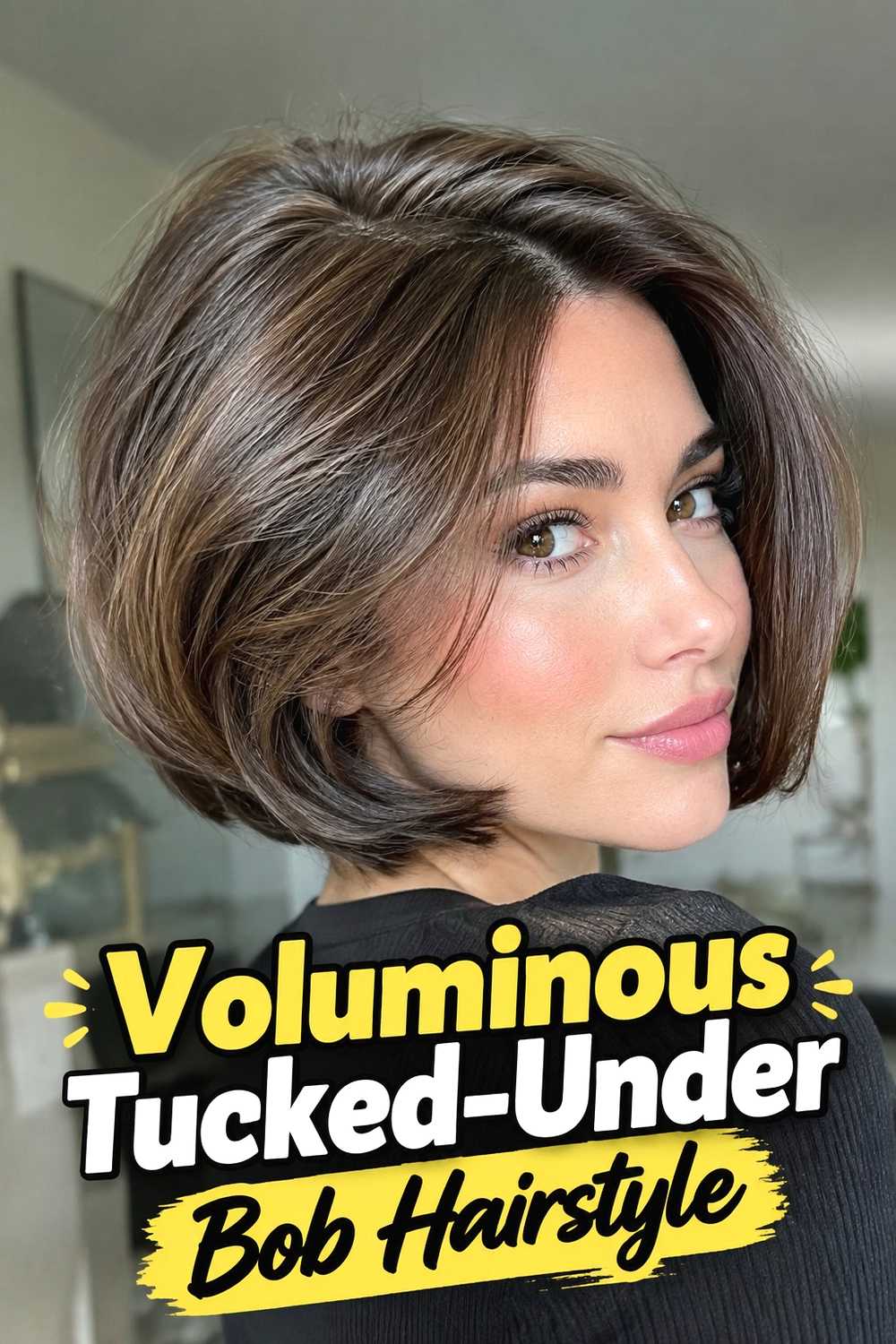
This version brings more lift through the crown and sides while keeping the ends turned inward. The extra body gives the bob a fuller, bouncier silhouette that works particularly well when you want a polished blowout effect. Rather than concentrating all the volume at the roots, build gentle fullness through the mid-lengths as well so the shape flows naturally into the curved ends. A large round brush is useful on longer bobs, while shorter cuts may need a medium brush for better control. Avoid over-teasing the crown, since the most convincing finish comes from smooth, airy lift paired with visible movement and softly tucked edges.
Styling Notes
Lift each section away from the scalp during the blow-dry, then rotate the brush inward only as you reach the final few inches of hair.
8. Polished Jaw Length Tucked Under Bob Hairstyle
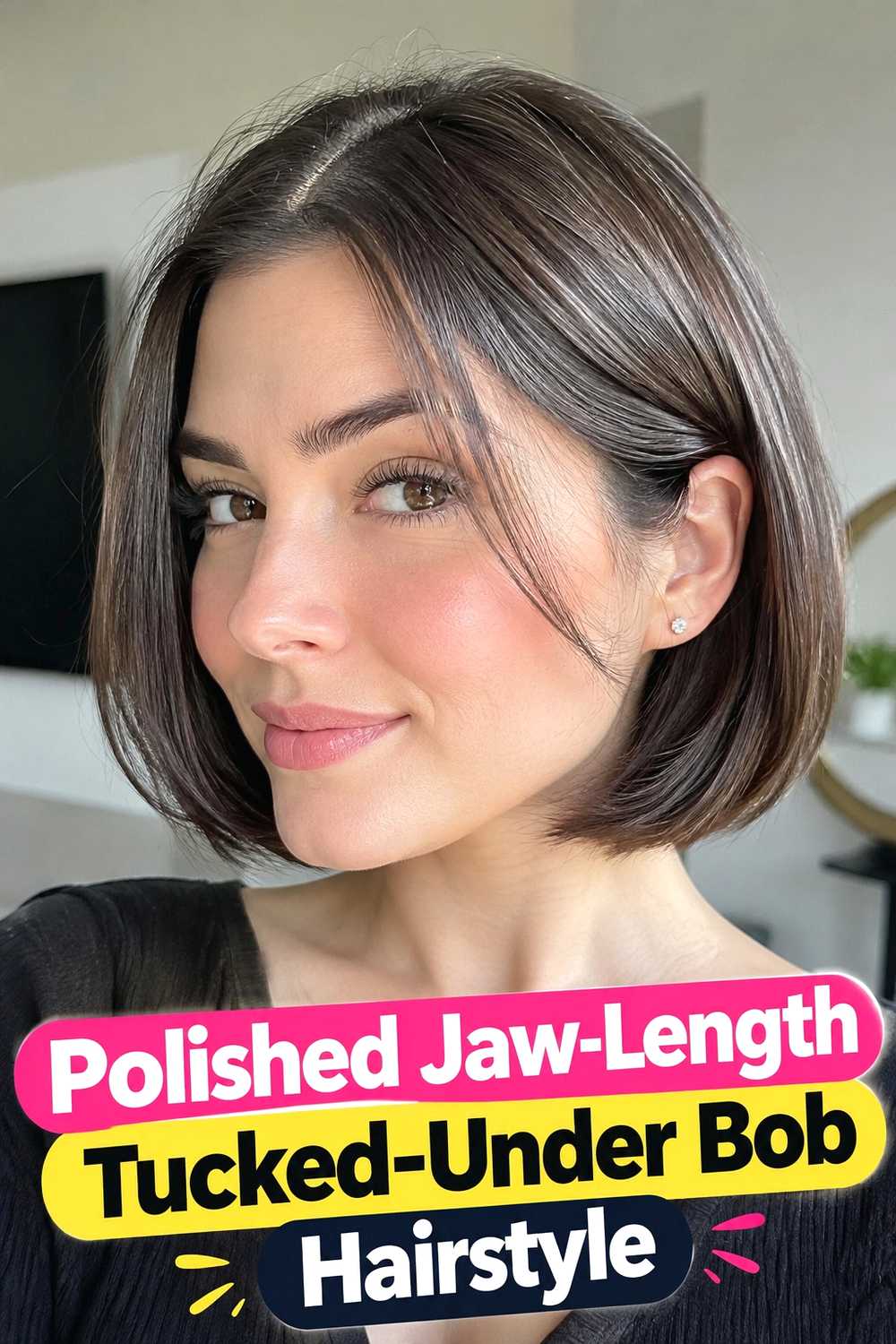
A jaw-length bob creates a strong frame around the lower face, and the tucked-under finish makes that frame feel softer. The ends sit close to the jaw before curving inward, creating a compact shape that looks deliberate from both the front and side. Because the length is short, small differences in bend become more noticeable, so controlled styling matters. Use a smaller round brush or a straightener with a gentle wrist turn rather than creating a pronounced curl. Keeping the roots relatively smooth helps the sharp length remain visible. A touch of natural separation at the ends prevents the bob from looking too molded or artificial.
Best For
Choose this variation if you enjoy clearly defined short-bob proportions and do not mind maintaining the length with regular trims.
9. Wispy Bangs Tucked Under Bob Hairstyle
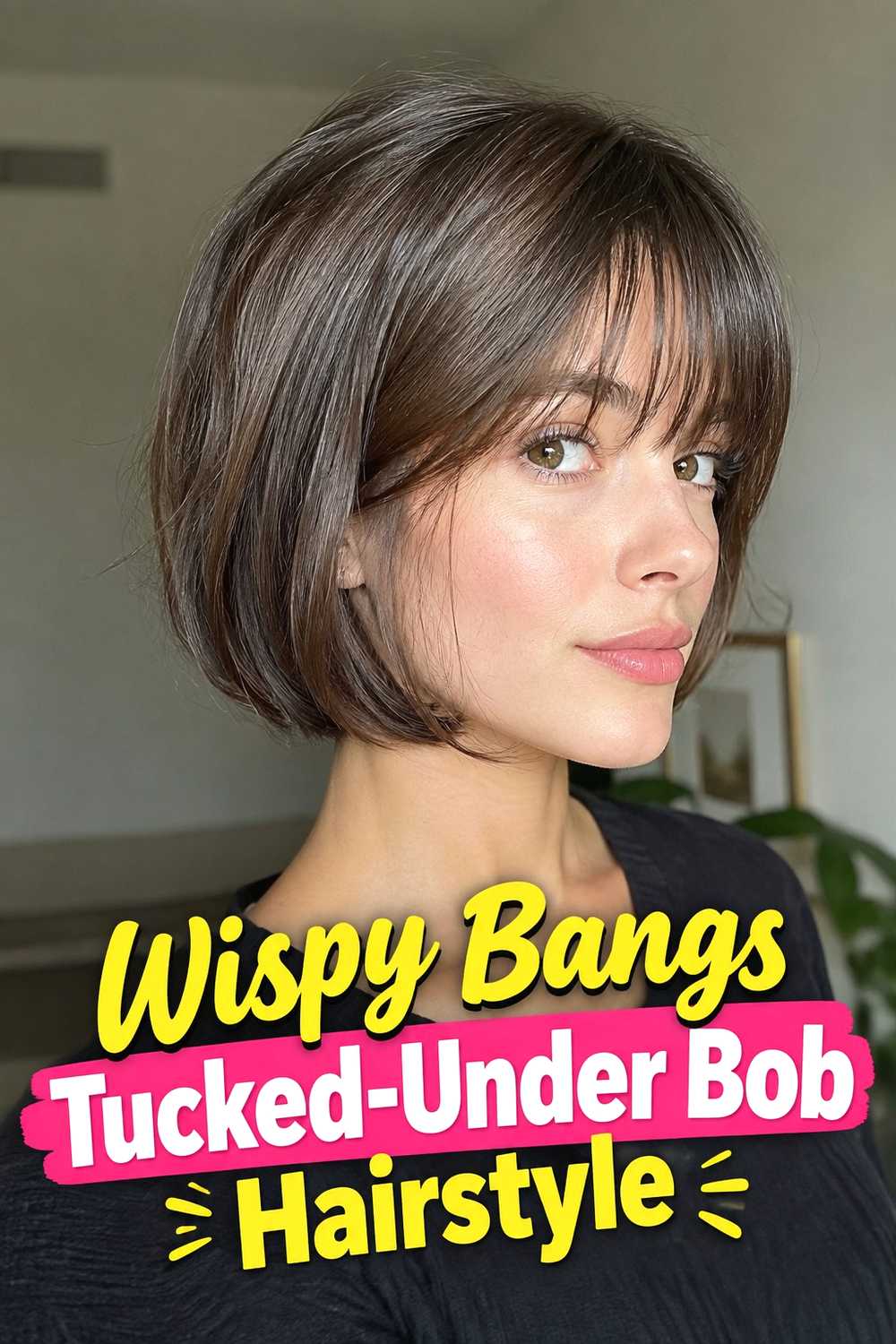
Wispy bangs bring a lighter, more delicate detail to the rounded bob shape. The fringe sits softly across the forehead while the main lengths curve underneath toward the jaw or upper neck. Because the bangs have less density than a heavy full fringe, they do not compete with the structured lower edge of the haircut. This combination works best when both elements retain movement: the fringe should separate naturally, and the bob should show a soft bend rather than a stiff curl. Style the bangs first with minimal tension, then focus on turning the perimeter inward. Keeping some air between individual strands gives the overall look an easy, wearable finish.
Wear & Maintenance
Wispy bangs may need more frequent small trims than the rest of the bob, especially if you prefer them to remain above the eyes.
10. Curtain Bangs Tucked Under Bob Hairstyle
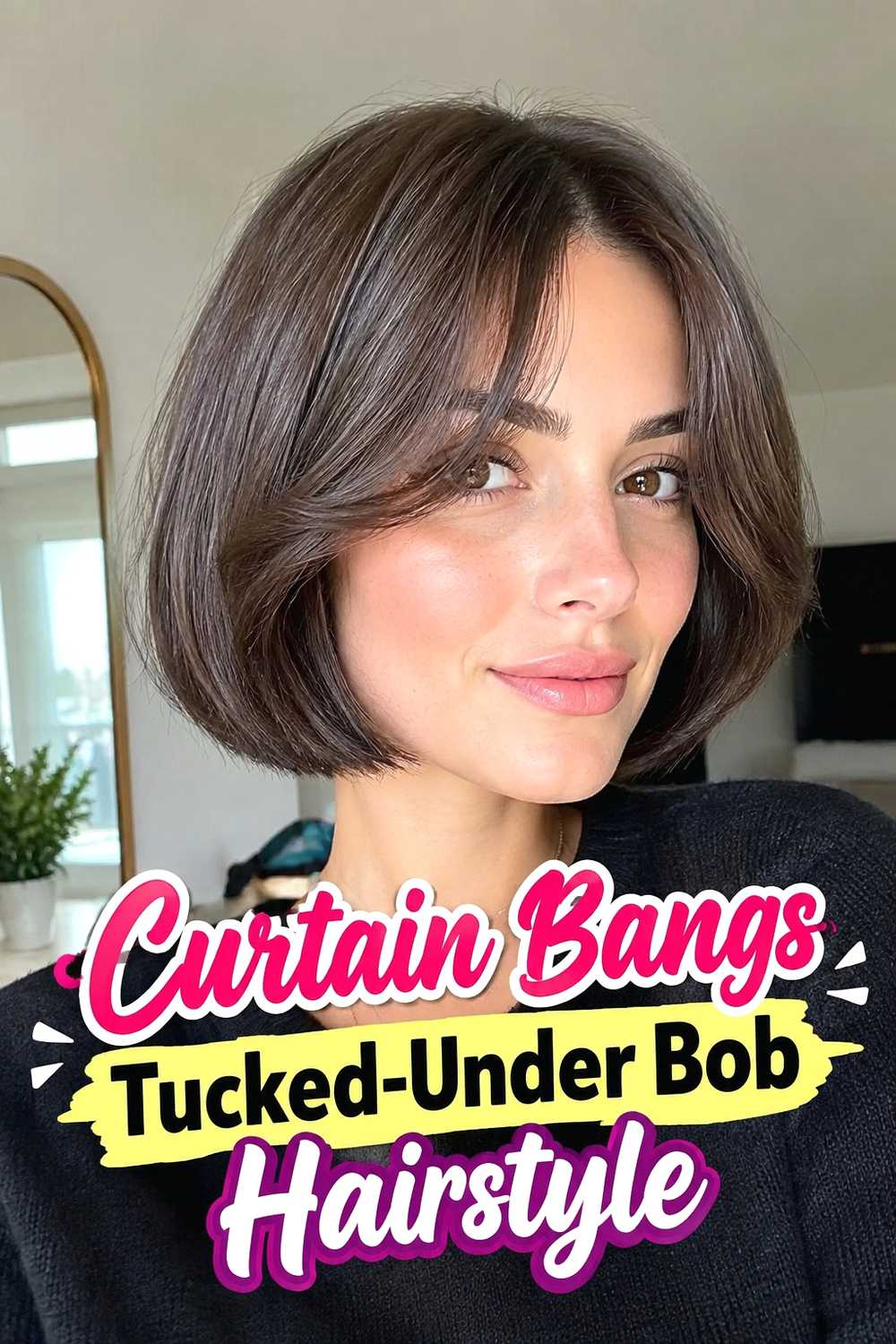
Curtain bangs add face-framing movement at the front while the bob itself maintains a rounded, tucked-under base. The shorter center pieces open around the forehead and gradually blend into longer sections near the cheekbones, giving the style a softer transition than a straight fringe. When the bottom edge curves inward, the combination creates movement in two directions without feeling busy. Use a larger round brush to sweep the curtain pieces slightly away from the face, then switch direction when styling the bob ends underneath. Keeping the bangs airy and the perimeter polished helps each feature remain distinct rather than merging into one overly curved shape.
Styling Notes
Shape the fringe separately from the bob. Trying to roll every front section inward can remove the open, curtain-like effect.
11. Deep Side Part Tucked Under Bob Hairstyle
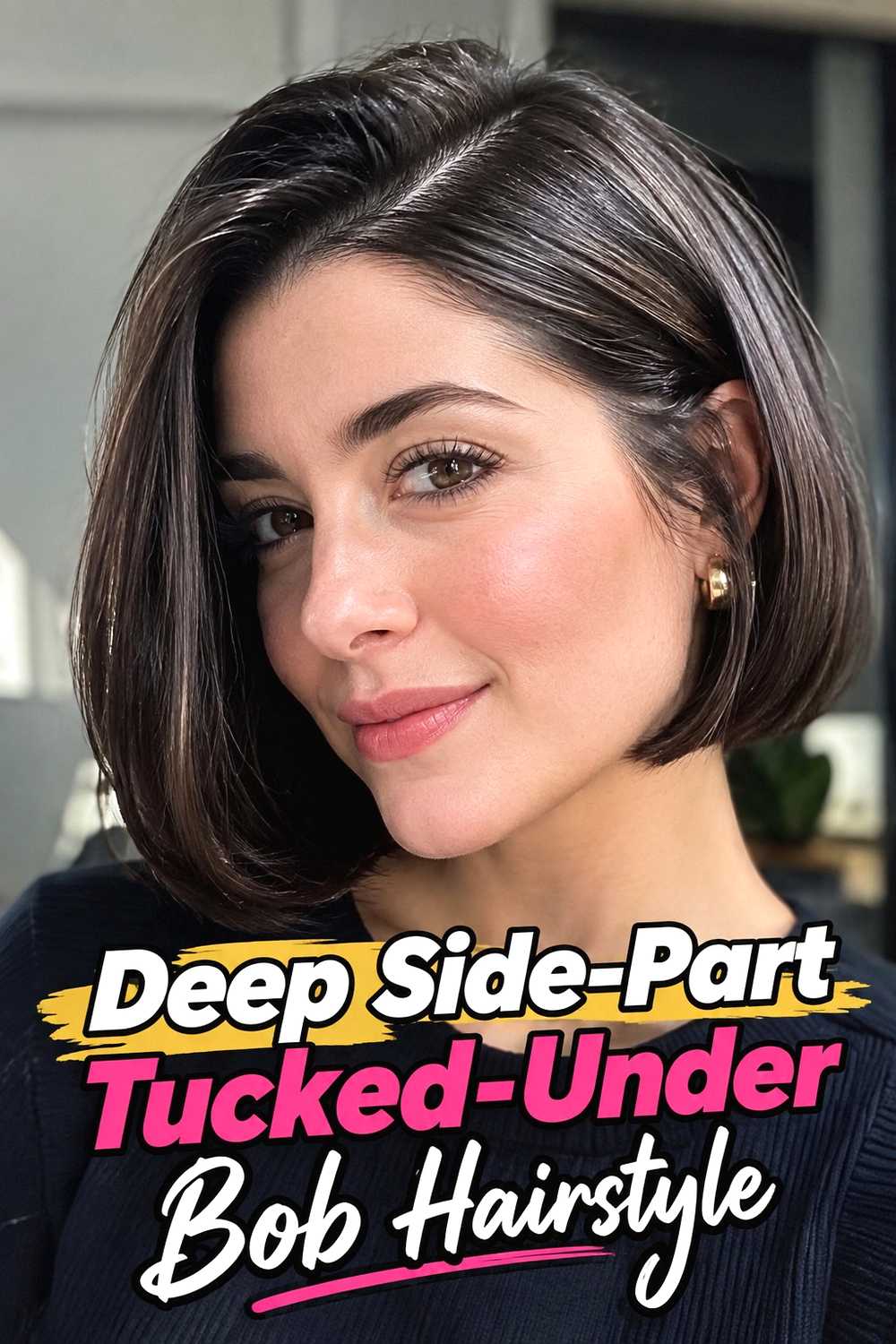
A deep side part creates stronger asymmetry and more visible height on one side of the bob. The fuller side can sweep across the forehead before falling toward the cheek, while the shorter side remains sleek and close to the head. Turning the perimeter inward anchors the dramatic part with a neat, rounded base. This variation works beautifully when you want noticeable movement without adding actual layers or fringe. For controlled volume, dry the front section in the opposite direction first and then return it to the preferred side. Finish by curving only the ends under, allowing the upper lengths to stay fluid and naturally separated.
Why It Works
Changing the part redistributes existing hair, creating instant visual fullness while preserving the simplicity of the underlying bob haircut.
12. Short Neck Grazing Tucked Under Bob Hairstyle
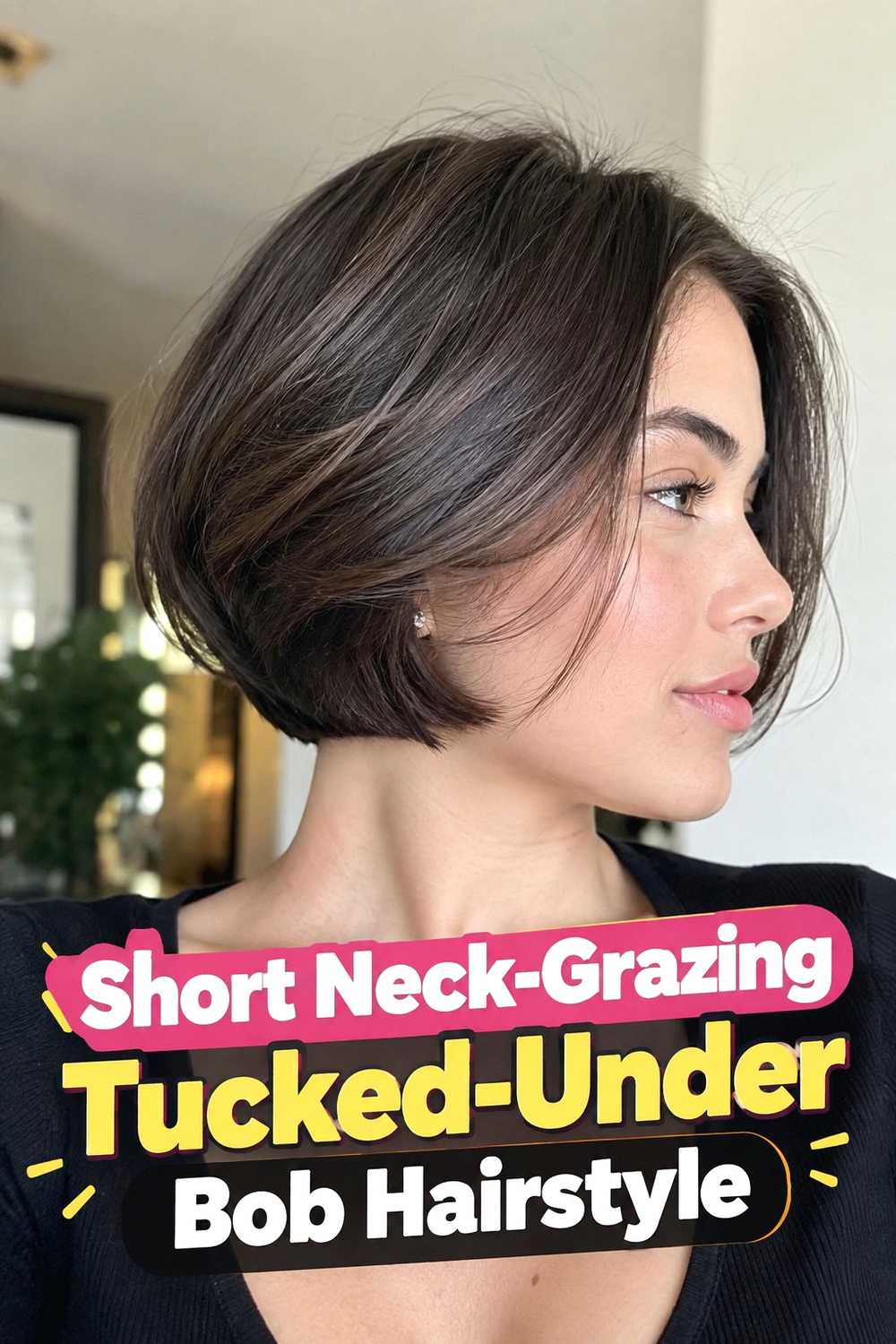
A neck-grazing bob sits just low enough to brush the upper neck while still maintaining the compact feeling of a short haircut. The slightly longer length gives the tucked-under ends room to form a smooth curve that follows the neckline rather than sitting directly against the jaw. This can make the style feel softer and less sharply cropped than a chin bob. A round brush can create an even inward bend, but the hair should remain loose enough to move when you turn your head. Pay particular attention to the back sections, where uneven styling can become more visible because the ends naturally rest against the neck.
Hair Type & Length
This length can be practical for straight, wavy, fine, or medium-density hair, provided the perimeter retains enough weight to hold the rounded shape.
13. Long Tucked Under Lob Hairstyle
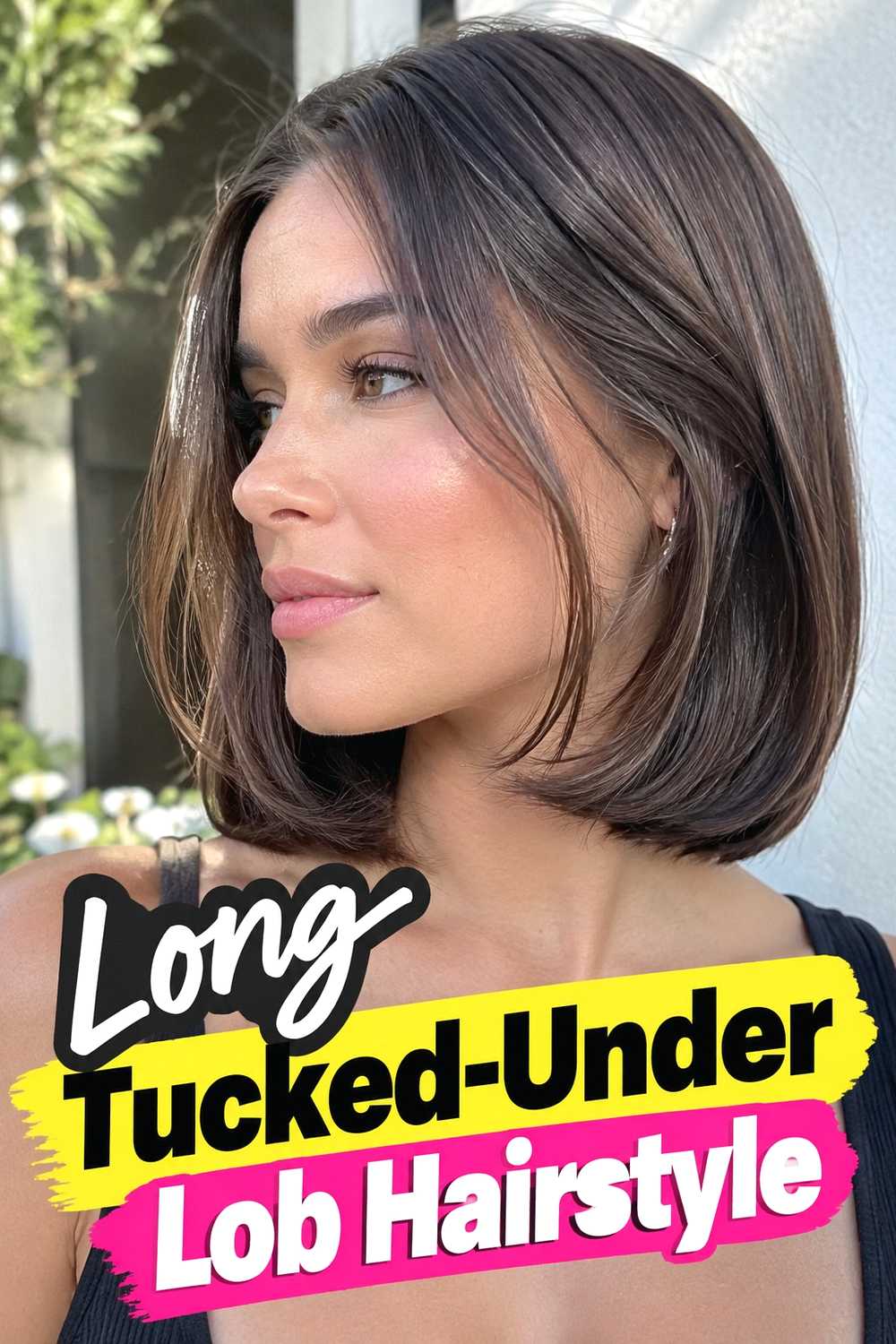
A longer bob offers a subtler interpretation of the tucked-under trend. Instead of forming a compact rounded shape at the jaw, the hair falls closer to the shoulders before bending inward through the last few inches. The extra length creates more movement and makes the finish easier to soften into a blowout rather than a distinctly curled edge. A large round brush is especially useful here because it produces a broad bend that matches the proportions of the cut. Keep the mid-lengths smooth but not flat, and allow a little volume near the crown. The finished lob should appear flowing, polished, and softly curved rather than tightly rolled.
Best For
This is a useful option if you like the tucked-under finish but want enough length for occasional ponytails, clips, or other simple styling changes.
14. Fine Hair Tucked Under Bob Hairstyle
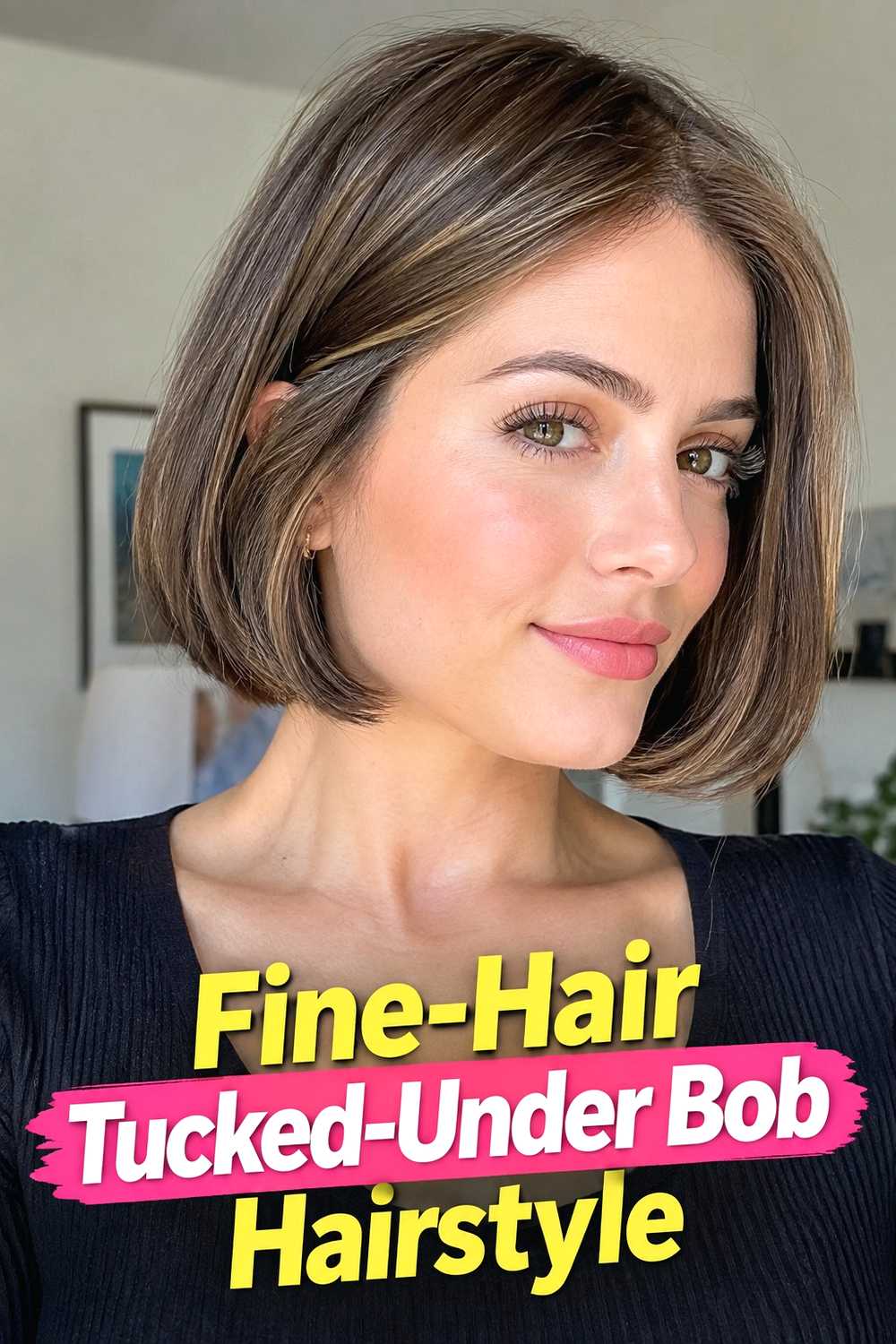
Fine hair can benefit from a clean bob perimeter because the strong lower line helps the ends appear visually substantial. Keeping the layering minimal also prevents the base from becoming unnecessarily wispy. The tucked-under curve gives the ends additional shape, creating a fuller-looking outline without requiring extreme root volume. Use lightweight styling products and avoid loading the lengths with heavy creams or oils before blow-drying. A medium round brush can lift the hair slightly away from the head before turning the tips inward. The most natural result keeps individual strands visible and allows some movement rather than trying to make every section perfectly uniform.
Pro Tip
Concentrate styling product near the roots only when extra lift is needed, and use a very small amount through the ends so they remain light enough to bend.
15. Thick Hair Tucked Under Bob Hairstyle
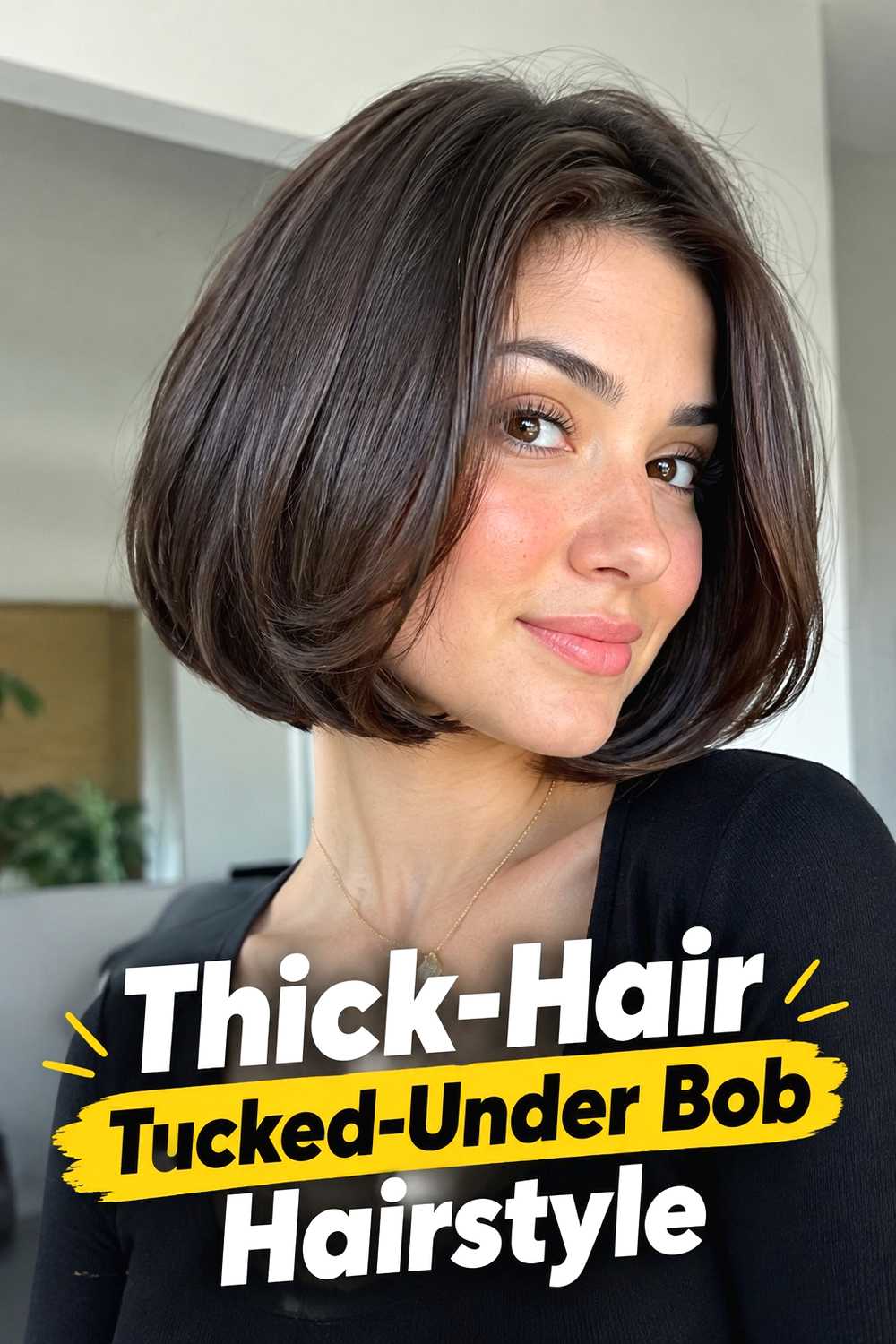
On thick hair, the tucked-under bob can create a beautifully substantial silhouette, but controlling bulk is important. A completely solid perimeter may become too wide if the interior carries a lot of density, so subtle internal weight removal can help the ends turn inward more naturally. The visible outer line can still remain clean and full. Style in smaller sections than you would on fine hair, making sure the roots and mid-lengths are adequately dry before shaping the bottom edge. A larger brush creates a softer curve, while a smaller one produces a stronger tuck. Keep the finish smooth without flattening all the natural body that makes thick hair distinctive.
Wear & Maintenance
Discuss internal weight removal with your stylist rather than automatically adding obvious surface layers, especially if you want to preserve a strong bob outline.
16. Textured Tucked Under Bob Hairstyle
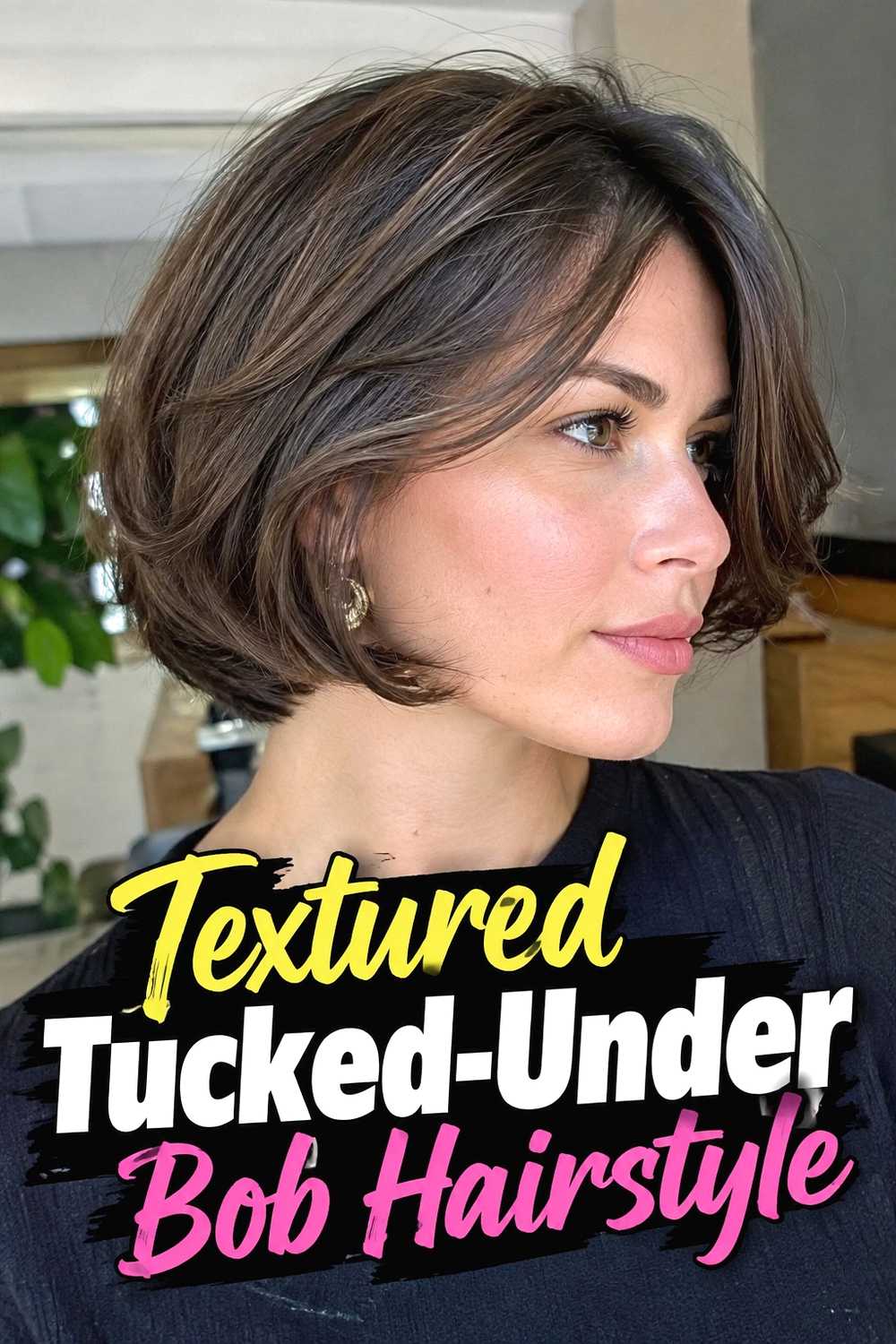
The tucked-under look does not have to be perfectly smooth. A textured version allows soft bends, subtle waves, and natural separation through the surface while maintaining a gently inward direction at the perimeter. This creates a more relaxed result that can work well for hair with existing wave or slight irregularity. Instead of straightening everything before shaping the ends, refine only the areas that need extra control. A round brush, diffuser-assisted drying, or selective hot-tool work can help guide the lower edge inward while leaving the upper sections more organic. The contrast between textured movement and a softly controlled perimeter gives this bob its easy, modern character.
Why It Works
The defined inward edge provides structure, while the less-perfect surface texture prevents the rounded silhouette from looking too formal or heavily styled.
17. 90s Inspired Tucked Under Bob Hairstyle
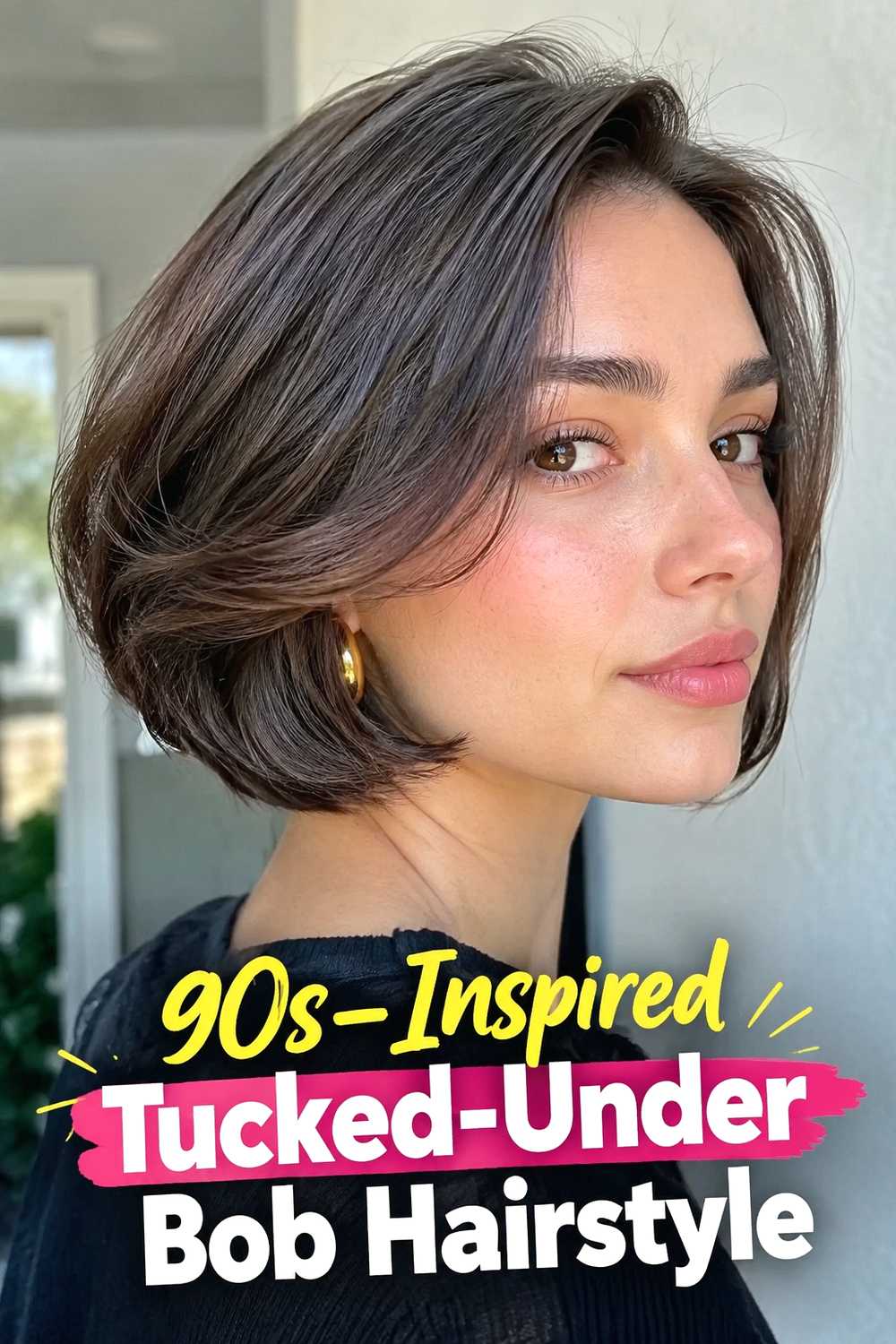
The 90s-inspired version emphasizes bounce, smoothness, and a clearly curved-under finish. It often includes moderate root lift and a slightly fuller shape through the sides, giving the bob a polished blowout quality without requiring extreme volume. The ends should visibly turn inward but still look soft enough to move. A round-brush blow-dry is ideal for creating the effect, especially when each section is allowed to cool in its curved position. For a more relaxed interpretation, keep the front pieces loose instead of making the entire haircut perfectly symmetrical. The combination of body, shine, and a rounded perimeter gives this style its recognizable retro influence.
Styling Notes
For stronger bend retention, clip freshly styled sections into a loose curve while they cool, then release and separate them gently with your fingers.
18. Old Money Tucked Under Bob Hairstyle
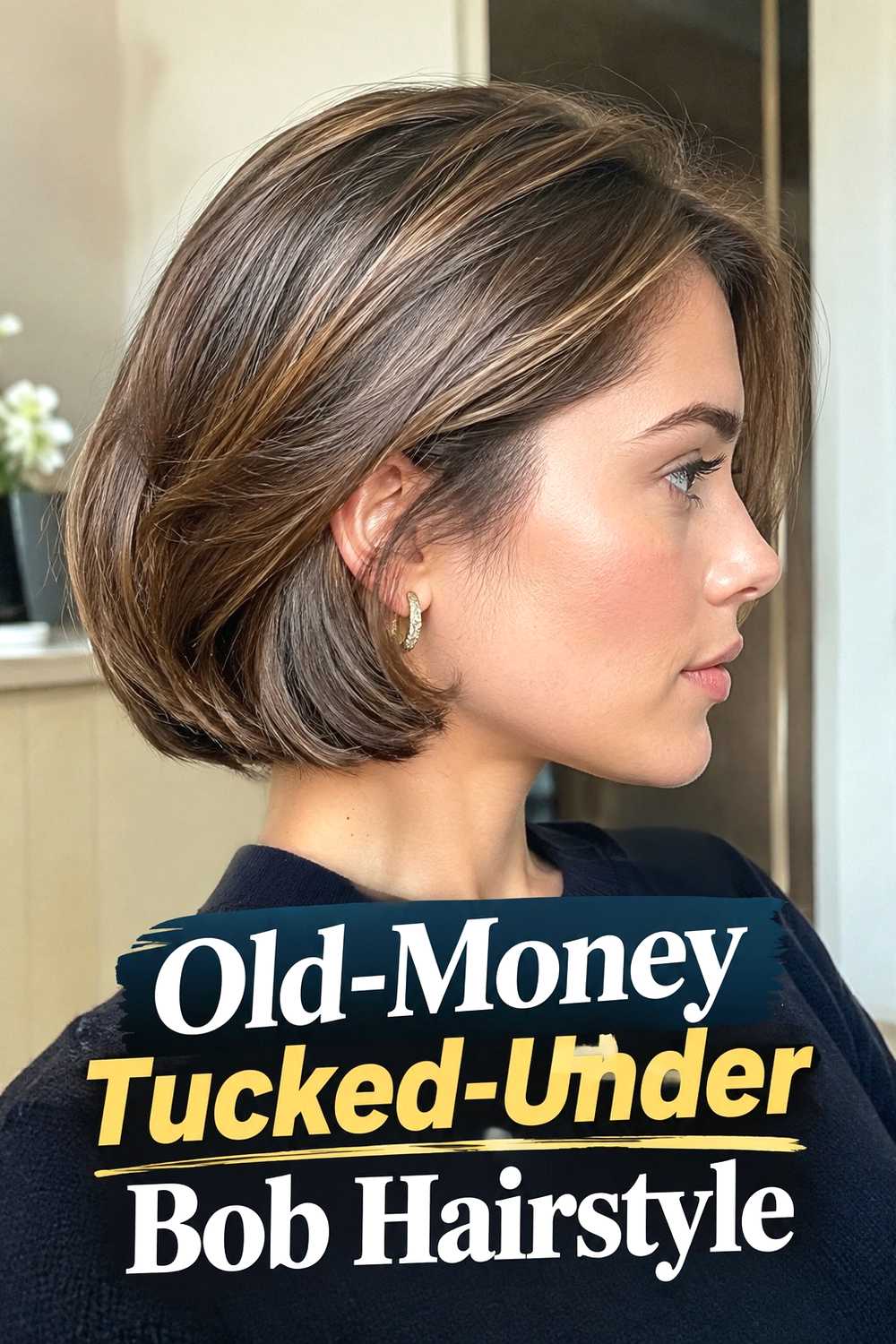
This polished variation focuses on smooth movement, restrained volume, and a softly expensive-looking finish rather than dramatic styling. The bob typically has enough body to feel plush, but the roots are not heavily teased and the ends form one graceful inward sweep. A side or understated center part can both work, provided the surface remains controlled and touchable. Use a round-brush blowout to create broad curves rather than tight rolls, and keep flyaways refined without eliminating all natural strand texture. The effect is strongest when the haircut itself is well shaped, allowing the tucked-under perimeter to look intentional even before finishing products are applied.
Best For
Choose this version if you prefer understated polish, soft volume, and a bob that looks styled without appearing overly stiff or elaborate.
How to Choose the Right Look
Start with length. Jaw- and chin-length versions create the clearest rounded silhouette, while neck-grazing bobs and lobs produce a softer, broader bend. Shorter cuts also tend to show growth sooner, so consider how often you are comfortable refreshing the perimeter.
Next, think about density and texture. Fine hair often benefits from a cleaner edge and minimal layering, while very thick hair may need subtle internal weight removal so the ends can curve inward without creating excessive width. Naturally wavy hair can work beautifully with a more textured tuck instead of being straightened completely.
Your styling routine matters too. A classic or blunt tuck may require only a controlled blow-dry, while voluminous, 90s-inspired, and old-money versions generally look best with more deliberate round-brush work. Fringe also adds maintenance: wispy and curtain bangs need separate shaping and may require more frequent trims.
Finally, decide how polished you want the finish to feel. Sleek center parts and blunt edges give a cleaner appearance, while layered, side-parted, and textured versions allow more softness and movement.
Final Thoughts
Tucked-under bob hairstyles can range from minimal and sleek to full, bouncy, and retro-inspired. The most wearable choice is the one that works with your natural density, preferred length, and realistic styling routine. Keep the bend soft, maintain visible movement, and let the haircut—not excessive product—create most of the shape.
FAQs
1. What is a tucked-under bob hairstyle?
It is a bob in which the ends are styled to curve inward toward the jaw, neck, or shoulders, creating a rounded rather than flipped-out silhouette.
2. How do you make bob ends stay tucked under?
Use a round brush or gently curved flat-iron motion on the final inch or two of hair. Letting the section cool in the curved position can help the shape last longer.
3. Can fine hair wear a tucked-under bob?
Yes. A relatively clean perimeter can work particularly well because it preserves visual weight through the ends. Lightweight styling products usually suit fine hair better than heavy creams.
4. Does a tucked-under bob work on thick hair?
It can, although very dense hair may need thoughtful internal weight removal to prevent the rounded silhouette from becoming wider than intended.
5. Can naturally wavy hair wear this style?
Yes. You can either smooth the waves for a polished tuck or keep some natural texture through the lengths and refine only the bottom edge for a softer version.
CTA
Save your favorite tucked-under bob hairstyles for your next haircut, and explore more bob inspiration to find the length and finish that fits your routine.