18 Twisted Bubble Pigtail Hairstyle Ideas
Twists, rounded bubbles, and twin-tail symmetry come together in these playful pigtail styles that can look polished, soft, sporty, or statement-making.
Twisted bubble pigtails combine two visually strong techniques: twisted sections that create direction and texture, plus spaced elastics that shape each pigtail into rounded bubbles. The style can be neat and graphic or gently loosened for a fuller, softer effect, depending on hair density and the amount of tension used.
These 18 ideas explore different pigtail heights, partings, textures, accessories, and bubble sizes. The most believable versions keep the elastics securely anchored, maintain natural hair density through each section, and expand the bubbles gradually rather than creating impossible volume.
Quick List
- Classic Twisted Bubble Pigtail Hairstyle
- High Twisted Bubble Pigtail Hairstyle
- Low Twisted Bubble Pigtail Hairstyle
- Rope Twist Bubble Pigtail Hairstyle
- Oversized Twisted Bubble Pigtail Hairstyle
- Mini Bubble Twist Pigtail Hairstyle
- Sleek Twisted Bubble Pigtail Hairstyle
- Messy Twisted Bubble Pigtail Hairstyle
- Curly Twisted Bubble Pigtail Hairstyle
- Wavy Twisted Bubble Pigtail Hairstyle
- Braided Root Twisted Bubble Pigtail Hairstyle
- Zigzag Part Twisted Bubble Pigtail Hairstyle
- Ribbon Wrapped Twisted Bubble Pigtail Hairstyle
- Pearl Accented Twisted Bubble Pigtail Hairstyle
- Face Framing Twisted Bubble Pigtail Hairstyle
- Half Up Twisted Bubble Pigtail Hairstyle
- Festival Twisted Bubble Pigtail Hairstyle
- Extra Long Twisted Bubble Pigtail Hairstyle
1. Classic Twisted Bubble Pigtail Hairstyle
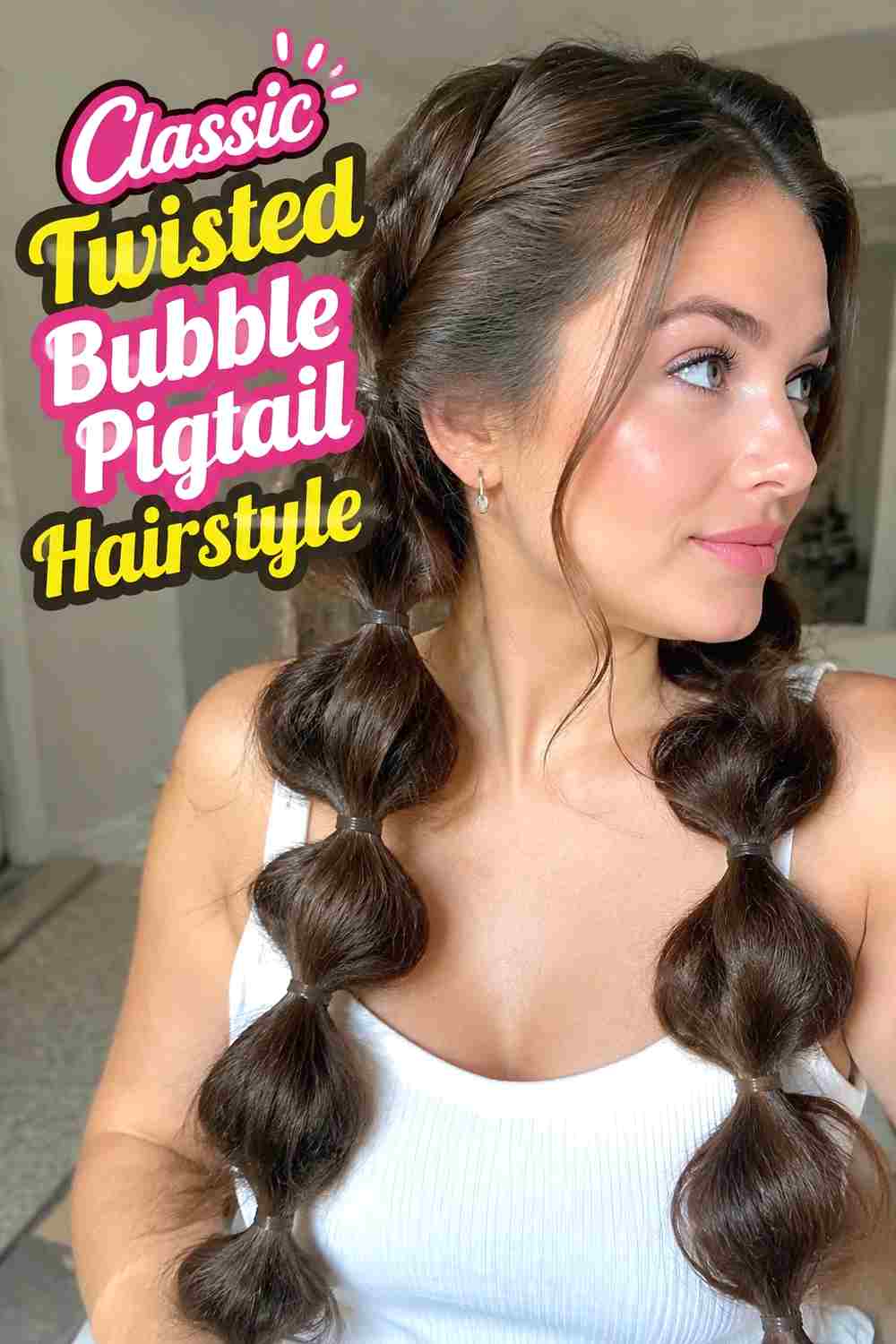
The classic version keeps the construction simple so the twisted sections and rounded bubbles remain easy to see. Create a clean center part, divide the hair into two equal pigtails, and add a small twist near each base before securing elastics down the lengths. Gently pull outward between every pair of elastics to create evenly sized bubbles without making them overly inflated. Keeping both sides similar in height and fullness gives the hairstyle a balanced finish. This look works particularly well on medium-long and long hair because several bubbles can develop while still leaving natural-looking ends. It can feel playful for everyday wear while remaining polished enough for photos or casual events.
Styling Notes
Use small elastics that match or blend with the hair for a seamless look. Expand each bubble a little at a time so both pigtails stay visually balanced.
2. High Twisted Bubble Pigtail Hairstyle
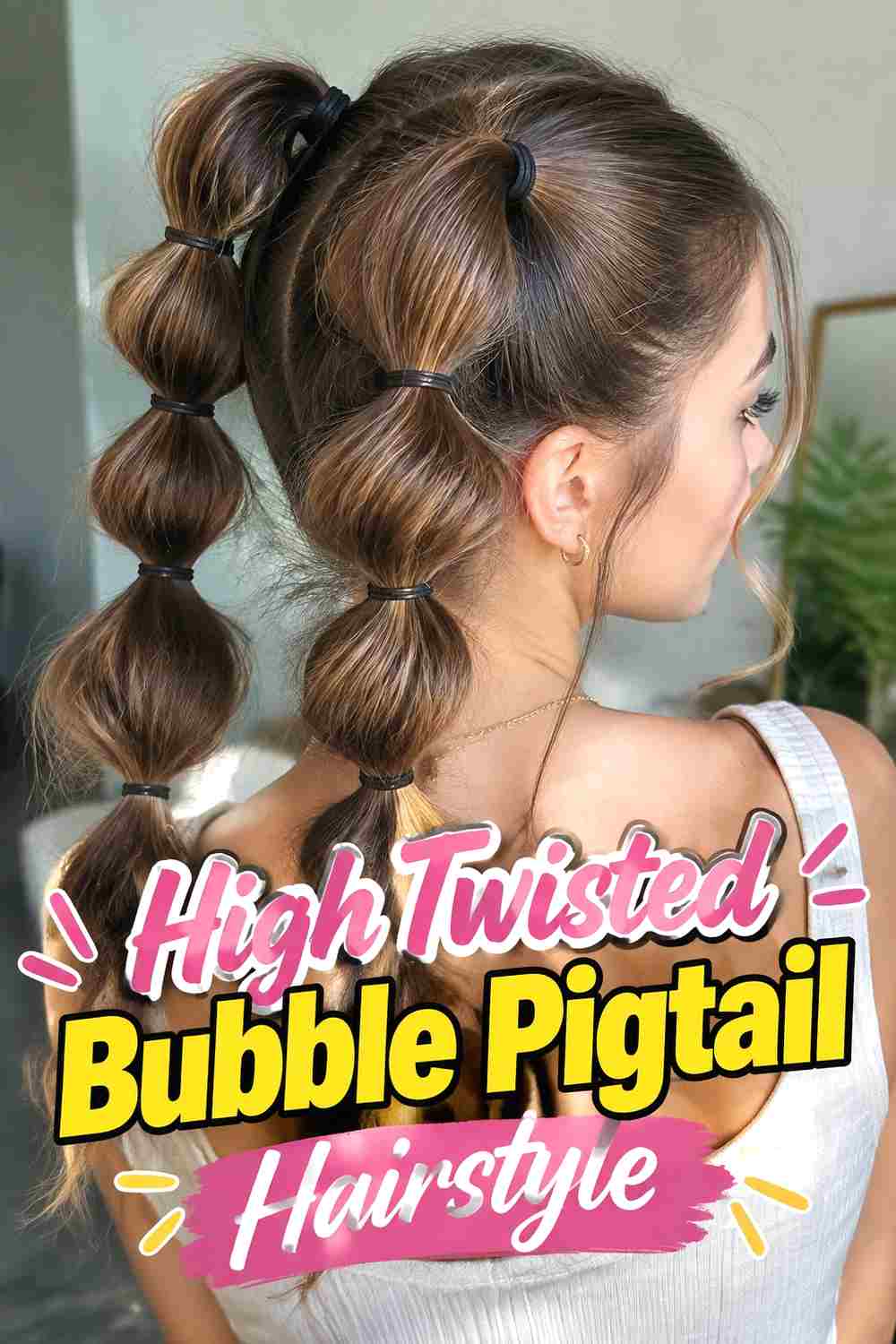
High pigtails give the bubble technique a lifted, energetic silhouette. Position each ponytail above ear level, then twist the base sections before adding evenly spaced elastics down both sides. Because the pigtails begin higher on the head, the bubbles naturally sit away from the shoulders and become more noticeable from the front. Slightly larger bubbles through the middle can create a fuller shape while tighter sections near the roots maintain control. This style can suit sporty outfits, concerts, playful parties, or statement casual looks. Long hair provides the most dramatic result, but medium-long lengths can still create several distinct bubbles when the elastic spacing is kept relatively close.
Best For
This placement works well when you want visible height and movement. If the hair is heavy, keep the initial ponytail elastic secure so the high position does not gradually drop.
3. Low Twisted Bubble Pigtail Hairstyle
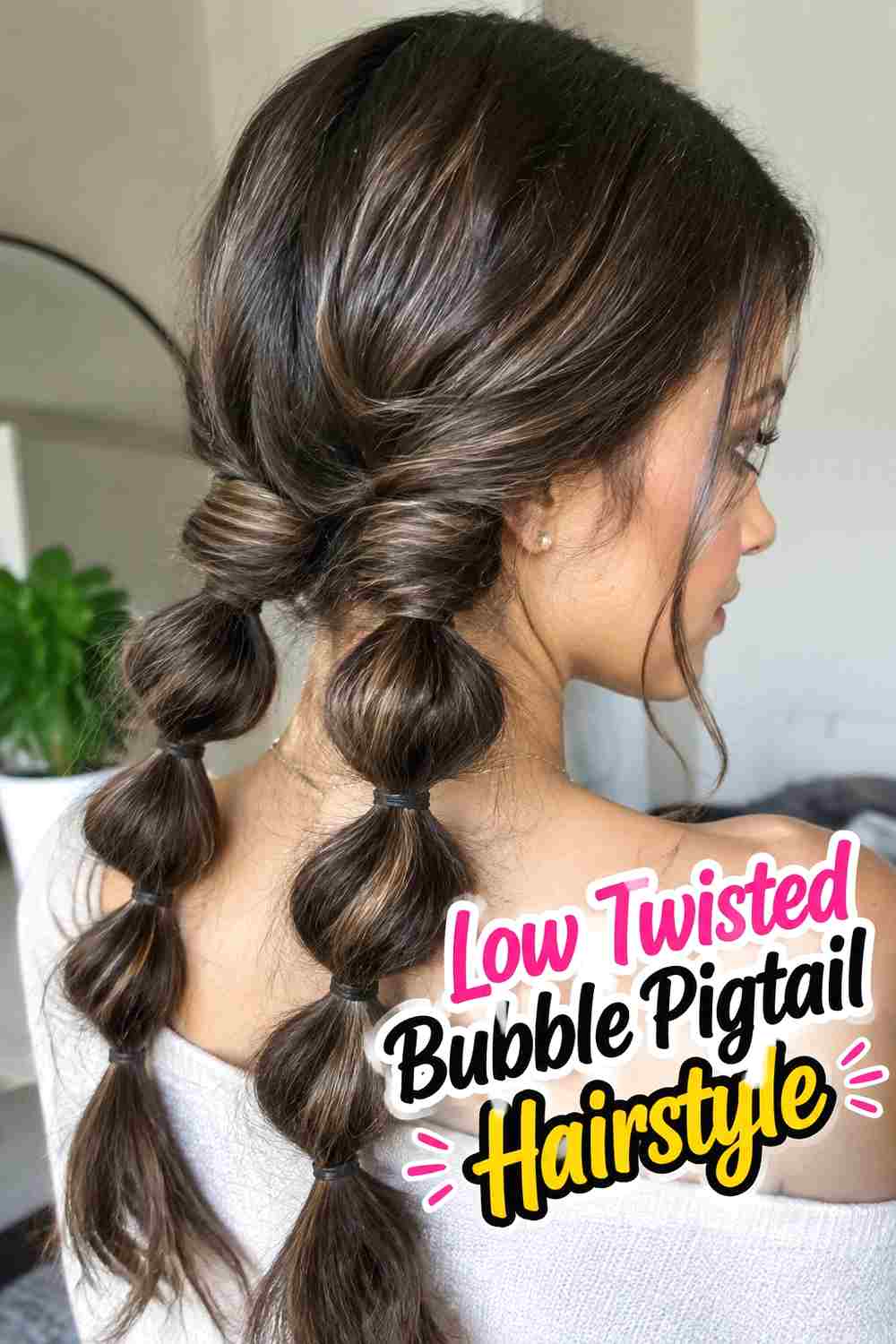
Low bubble pigtails create a softer interpretation by keeping both sides close to the nape. Divide the hair with a center or slightly imperfect part, create subtle twists near each side, and secure the pigtails just below or behind the ears. Add elastics down the lengths and gently widen each section into relaxed bubbles. Because the pigtails sit lower, the style can feel more understated than a high twin-tail version while still showing plenty of texture. Soft face-framing pieces can make the finish even more relaxed. This placement works especially well on long hair, layered cuts, or naturally wavy textures and can transition easily between casual daytime styling and relaxed evening looks.
Wear & Maintenance
Low pigtails experience less upward tension, but the bubbles can rub against clothing. Keep the lower elastics secure if the hair will sit against a jacket or high neckline.
4. Rope Twist Bubble Pigtail Hairstyle
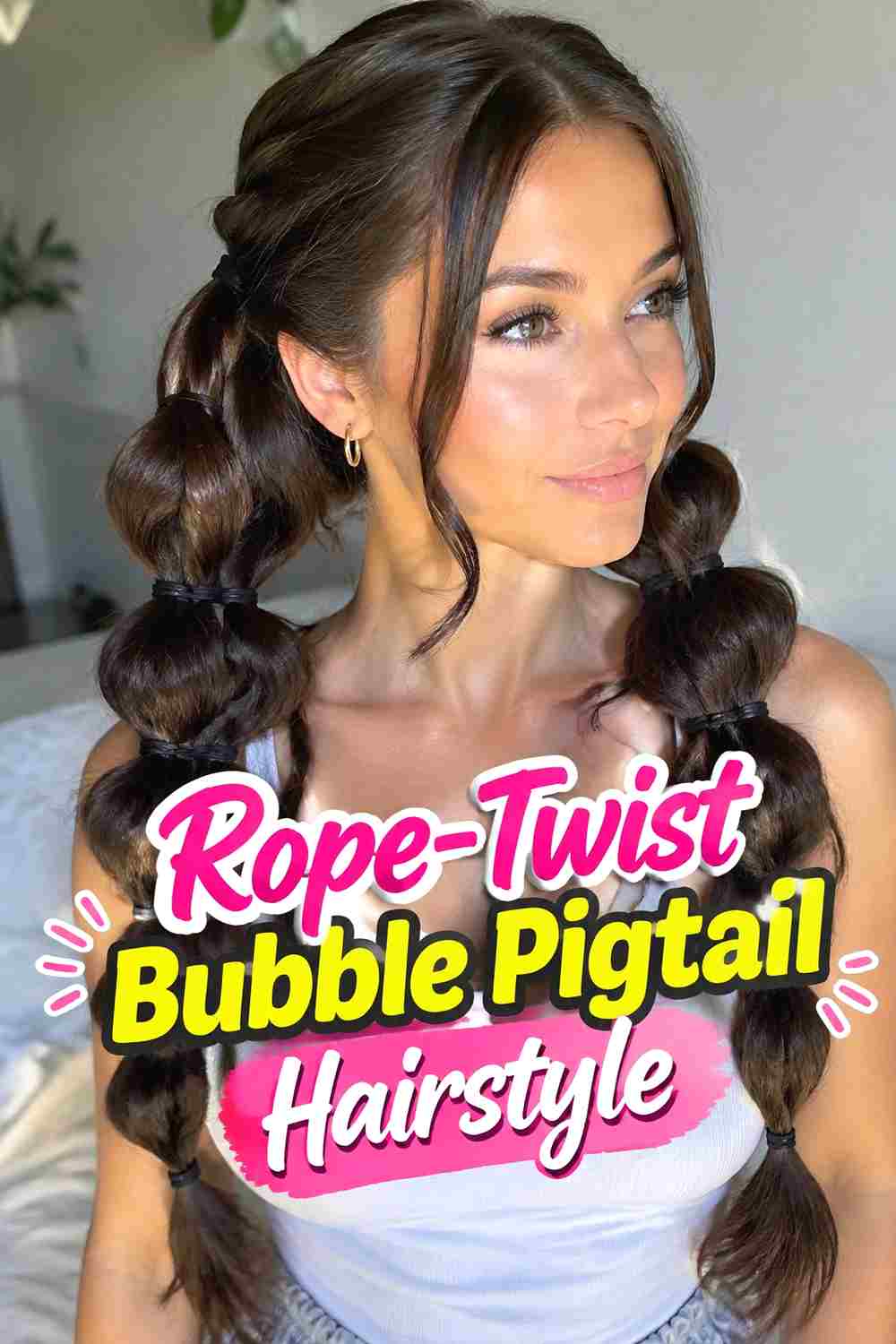
Rope twists add a stronger spiral pattern between the bubble sections, giving the pigtails more visual detail. After creating two ponytails, divide each into two sections and twist them in the same direction before winding them together in the opposite direction. Secure portions of the rope with elastics, then gently expand selected areas to create bubble-like fullness while keeping the spiral visible. The result combines smooth rounded shapes with controlled twisting rather than relying on plain ponytail sections. This style looks especially striking on long hair and dimensional color because the twists expose different tones through each section. Keep the bubbles moderate so the rope construction remains recognizable.
Pro Tip
Twist both pigtails with similar tension before expanding them. If one side starts much tighter, the finished bubbles can look noticeably different in size and direction.
5. Oversized Twisted Bubble Pigtail Hairstyle
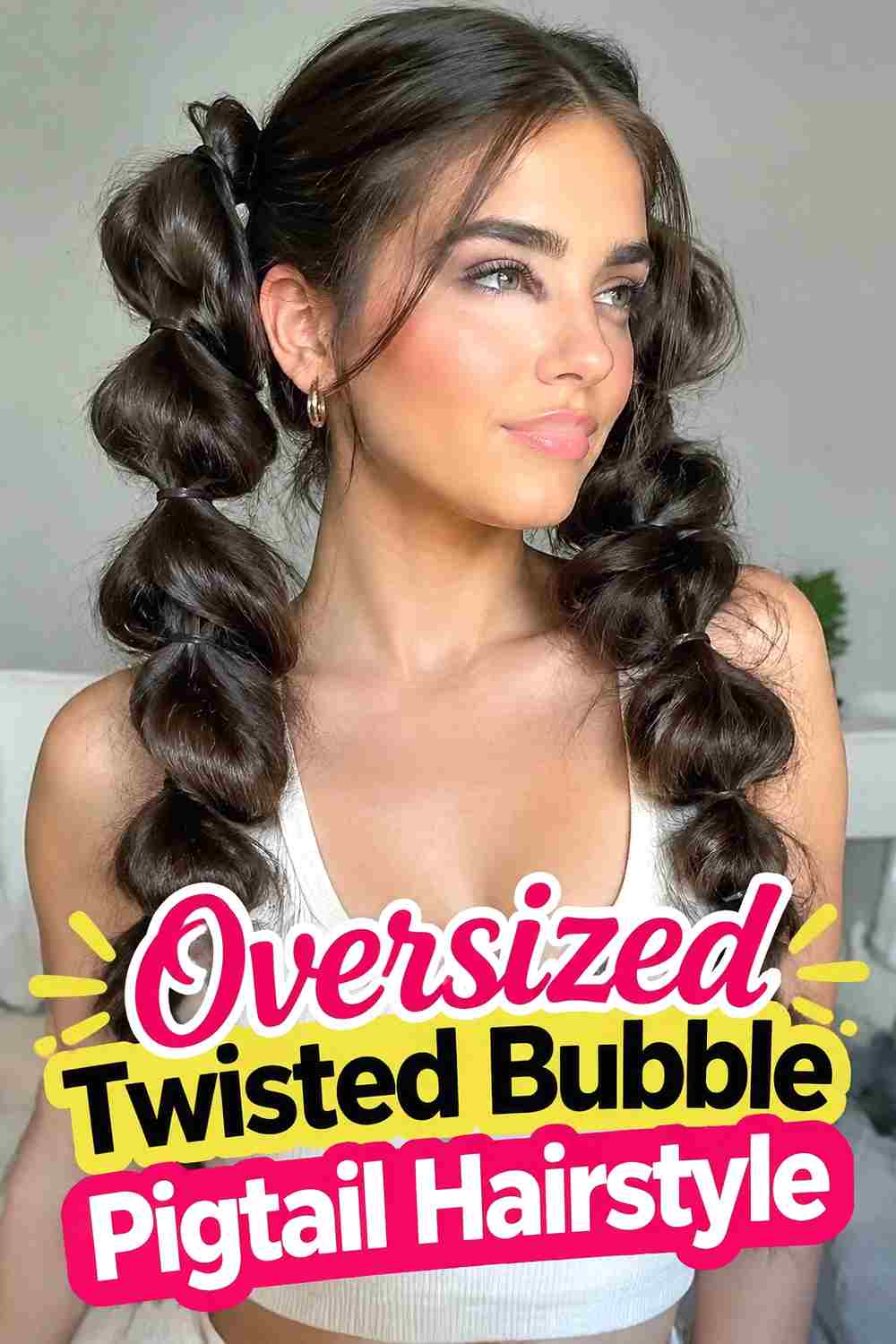
Oversized bubbles make the pigtails feel bold and intentionally dramatic. Begin with two secure pigtails, add elastics with slightly wider spacing, and pull each section outward until it forms a large rounded shape. A subtle twist at the base or between selected bubbles adds movement and prevents the style from looking like a simple segmented ponytail. This version is most effective on long or dense hair where enough volume is available to create generous bubbles without exposing thin spaces between the elastics. Extensions can change the result significantly, so natural-looking density and concealed attachment points are important when extra length is used. The final silhouette should look full but still physically believable.
Hair Type & Length
Long, thick, or naturally voluminous hair supports oversized bubbles most easily. Finer hair usually looks better with fewer, moderately expanded sections rather than aggressively stretched bubbles.
6. Mini Bubble Twist Pigtail Hairstyle
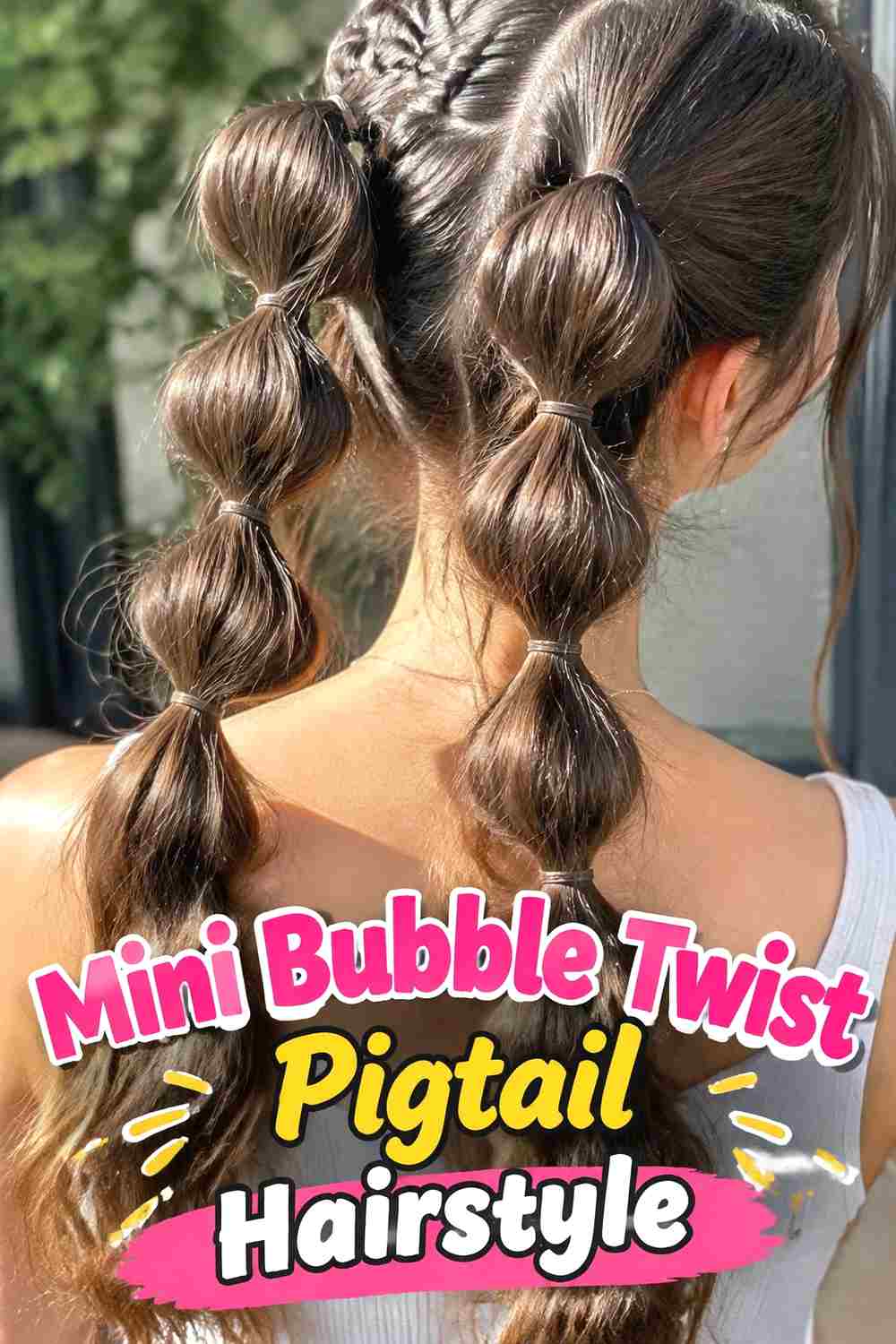
Mini bubbles create a tighter, more detailed pattern with many small sections running down each pigtail. Start with two balanced ponytails, introduce a gentle twist near the roots, then place elastics relatively close together. Instead of pulling each section very wide, expand it just enough to create a rounded shape. The repeated small bubbles give the hairstyle a rhythmic, textured appearance and can work surprisingly well on medium-long hair where there is not enough length for several oversized sections. This style also pairs nicely with colored elastics or subtle accessories because the frequent tie points create natural places for small decorative details. Keep both pigtails consistent so the pattern feels deliberate.
Styling Notes
Measure the elastic spacing visually as you work down each pigtail. Similar spacing is more important than making every bubble exactly identical.
7. Sleek Twisted Bubble Pigtail Hairstyle
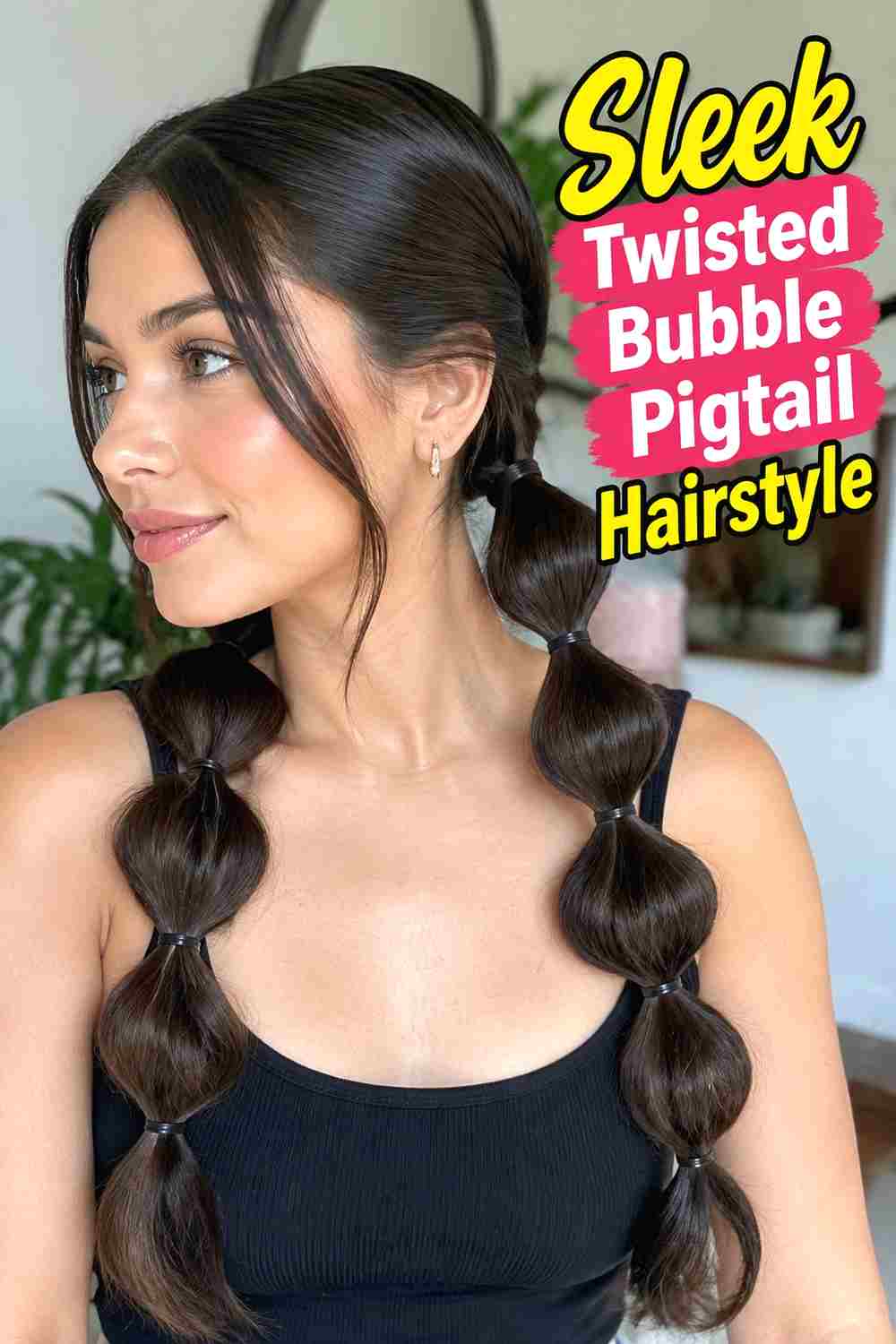
A sleek finish makes bubble pigtails look sharper and more contemporary. Smooth the roots into two clean pigtails with a precise center part, leaving the surface controlled rather than heavily textured. Add a small twist at each ponytail base, then create compact bubbles with evenly spaced elastics. Instead of dramatically pulling the sections apart, keep each bubble rounded but polished so the pigtails maintain a streamlined shape. This contrast between smooth roots and dimensional lengths gives the style a graphic appearance. It works well with straight or smoothly styled hair and can complement minimalist clothing, bold makeup, or fashion-forward looks where a cleaner silhouette feels more intentional than a loose, fluffy finish.
Why It Works
The smooth surface emphasizes every elastic, twist, and bubble edge. Keeping the construction precise prevents the playful pigtail shape from looking overly casual.
8. Messy Twisted Bubble Pigtail Hairstyle
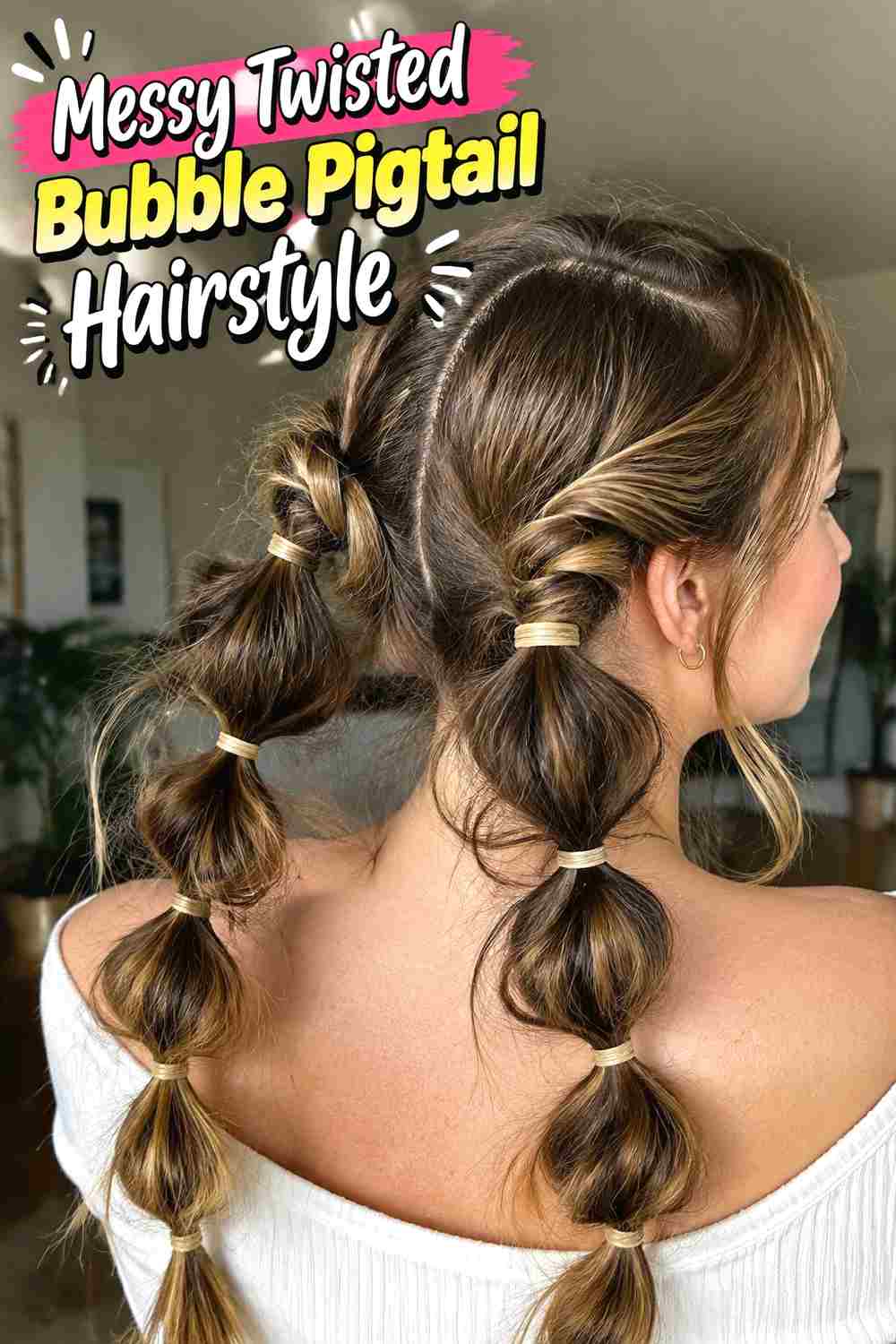
The messy version uses softness and intentional irregularity to make bubble pigtails feel relaxed rather than highly structured. Start with lightly textured hair, create two pigtails, and leave a few natural face-framing pieces free. Twist the bases loosely and add elastics down each length, then pull the bubbles outward in slightly different amounts. Some sections can be fuller while others remain narrower, provided the overall shape still feels balanced. Natural flyaways and a little movement around the crown support the undone finish. This look works well for casual outings, festivals, vacations, or weekend styling when crisp parting and perfectly symmetrical bubbles would feel too formal for the outfit.
Styling Notes
Keep the anchor elastics firm even though the surface looks loose. The style should appear relaxed because of texture and shaping, not because the pigtails are slipping out.
9. Curly Twisted Bubble Pigtail Hairstyle
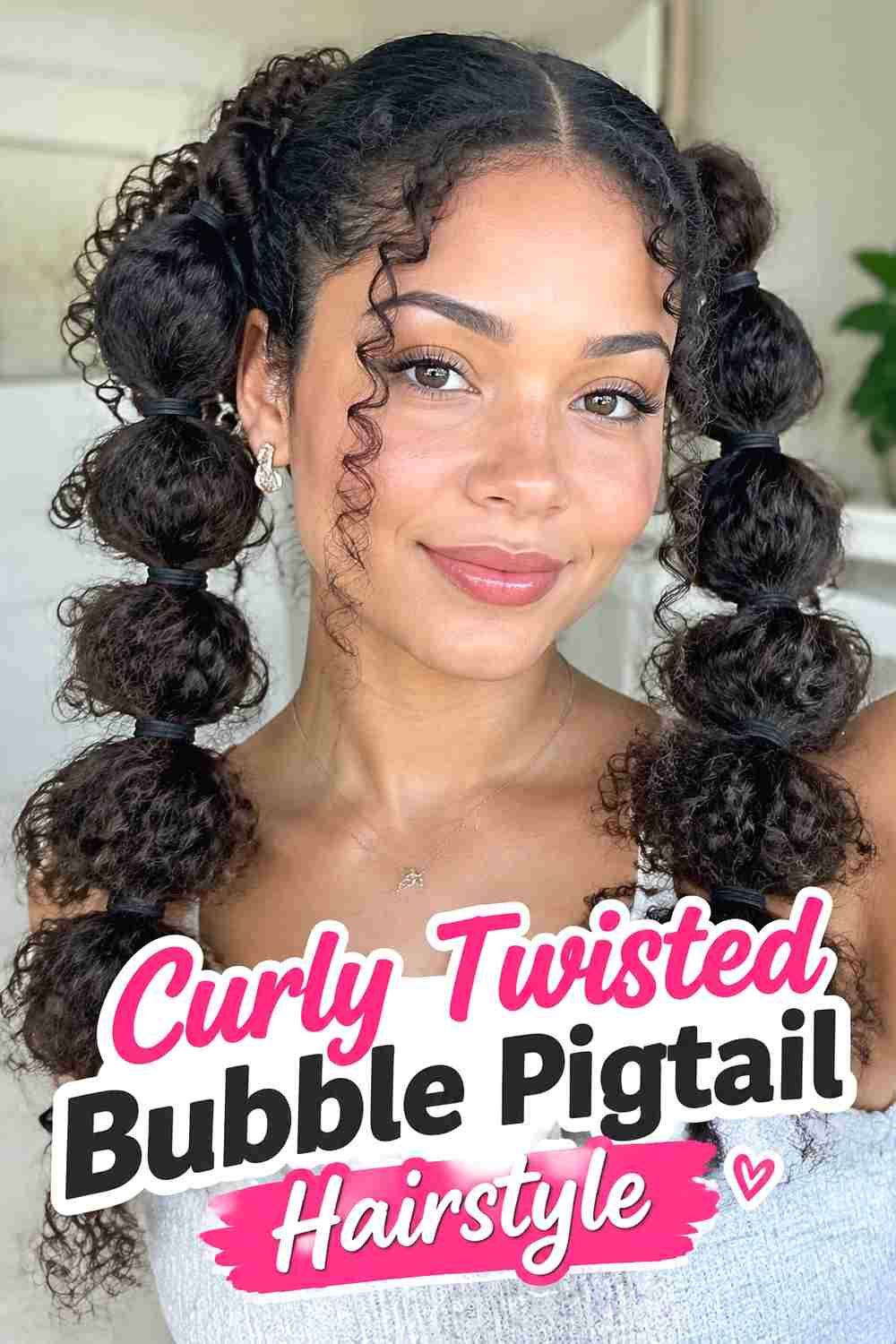
Curly hair gives bubble pigtails built-in volume and texture, creating a fuller silhouette without requiring every section to be dramatically pulled apart. Divide the hair into two pigtails and preserve as much curl definition as possible around the roots and ends. Gentle twists near the bases can control the transition before elastics are added down the lengths. Shape each bubble by easing the curls outward rather than brushing them smooth, allowing the natural pattern to remain visible. The result combines rounded sections with lively texture and movement. This version is especially effective on medium-long and long curls, where enough length remains for multiple bubbles while the ends still retain their natural shape.
Hair Type & Length
Dense curls may need slightly wider elastic spacing so each bubble has room to form. Smaller sections usually suit shorter lengths, while long curls can support larger bubbles.
10. Wavy Twisted Bubble Pigtail Hairstyle
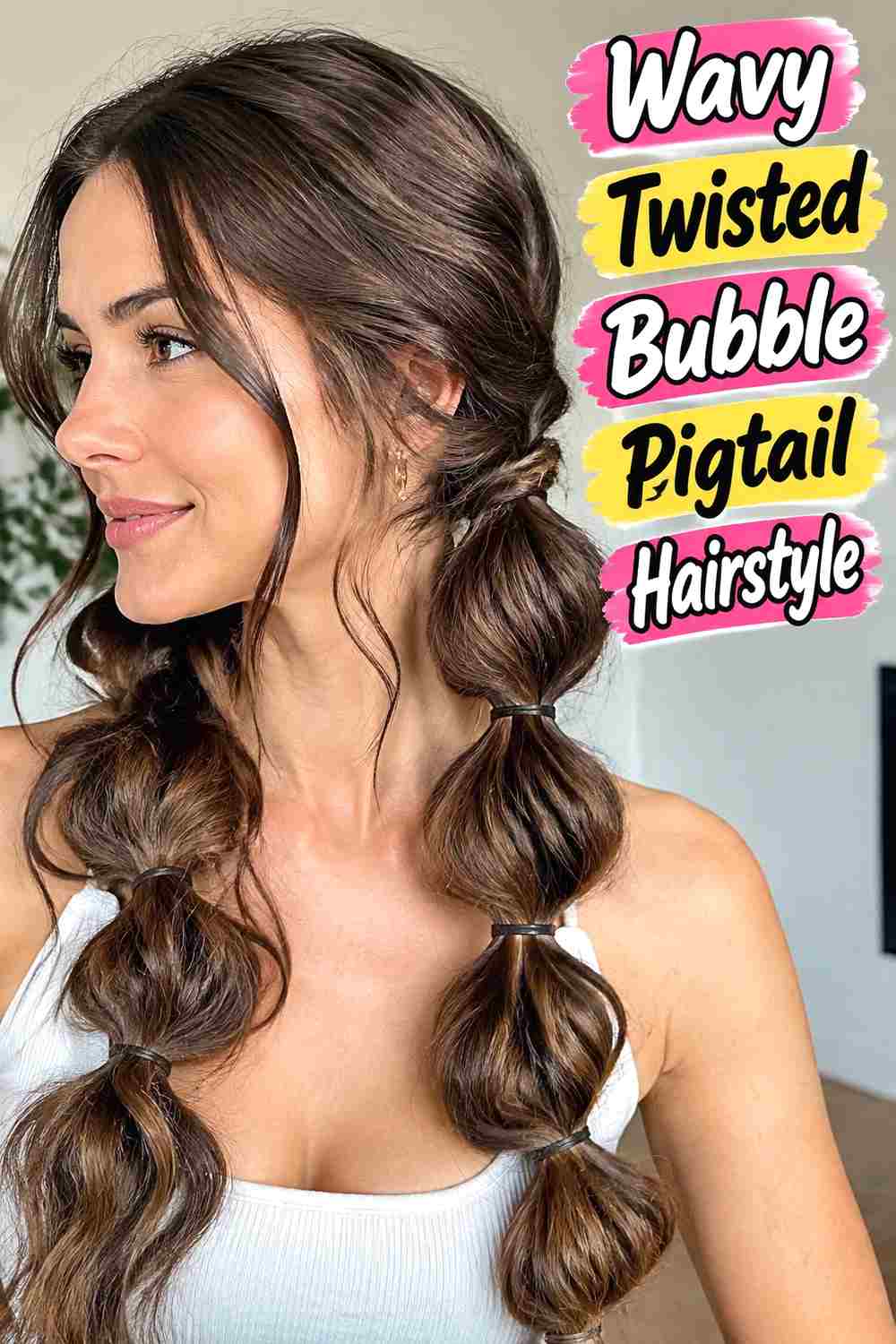
Soft waves create an easy middle ground between sleek and highly textured bubble pigtails. Begin with two pigtails at a medium or low height, then twist the upper sections and add elastics down the lengths. Allow some of the wave pattern to remain visible inside each bubble rather than smoothing the hair completely. When the sections are gently expanded, the waves create natural variation along the edges and make the bubbles feel softer. This version works well for everyday styling, brunch, casual parties, or vacation looks because it has noticeable detail without looking overly formal. A slightly loose center part and a few shorter pieces around the face can reinforce the relaxed finish.
Best For
Naturally wavy or pre-waved medium-long hair works especially well because the texture adds fullness without requiring excessive teasing or pulling.
11. Braided Root Twisted Bubble Pigtail Hairstyle
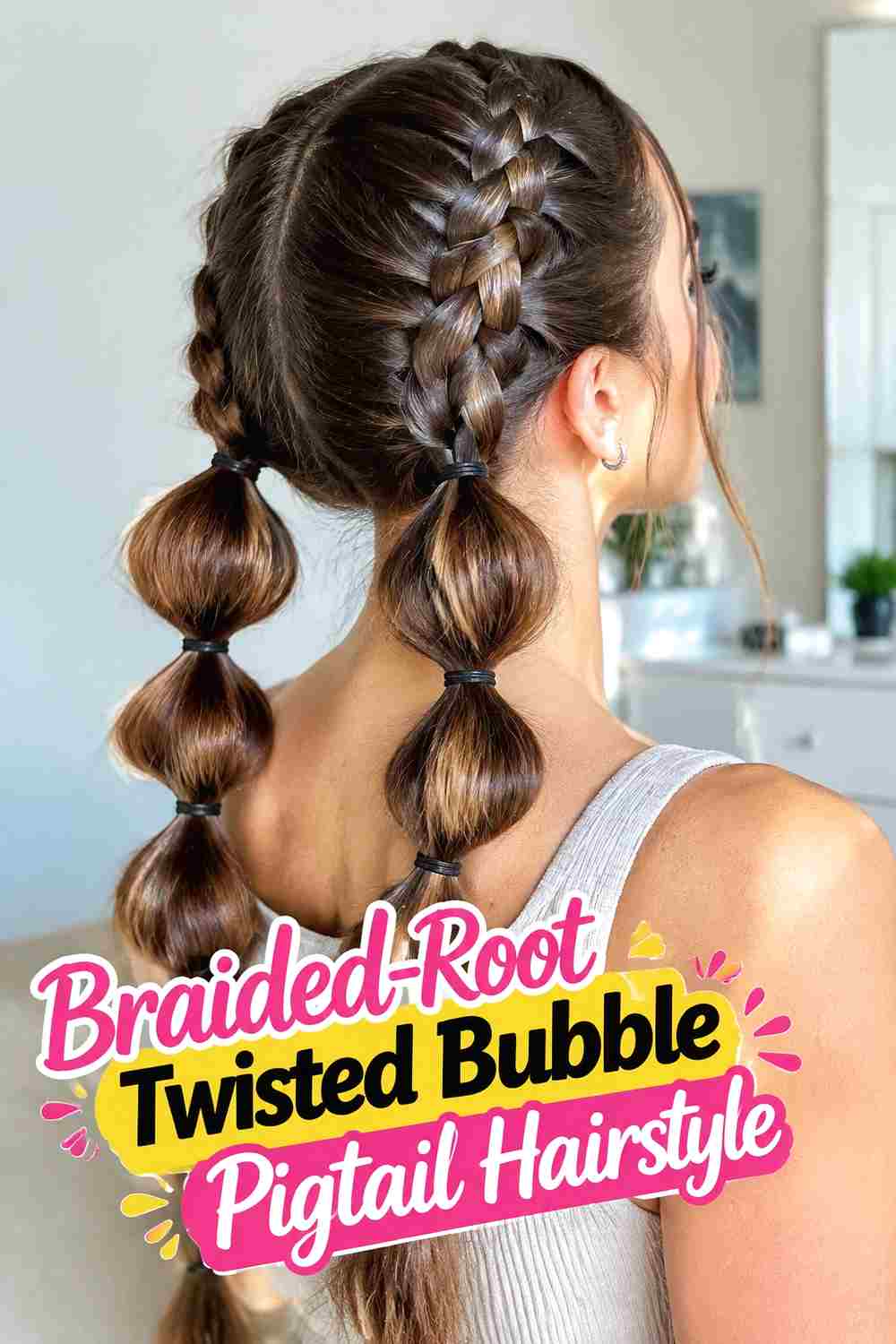
Braided roots add another layer of structure before the bubble pigtails begin. Create two small Dutch, French, or tightly controlled braids from the front sections toward the intended pigtail bases, then secure each braid into a ponytail. Add a twist just below the joining point before building the bubble sections down the lengths. The braids control shorter front pieces and create a clear transition from scalp detail to rounded bubbles. This style can look sporty, edgy, or festival-ready depending on how tightly the roots are braided and how full the bubbles become. It works best when each side follows a similar path so the overall silhouette remains balanced from the front and back.
Styling Notes
Secure the root braids before forming the pigtails. This prevents the scalp sections from loosening while you expand the bubbles farther down.
12. Zigzag Part Twisted Bubble Pigtail Hairstyle
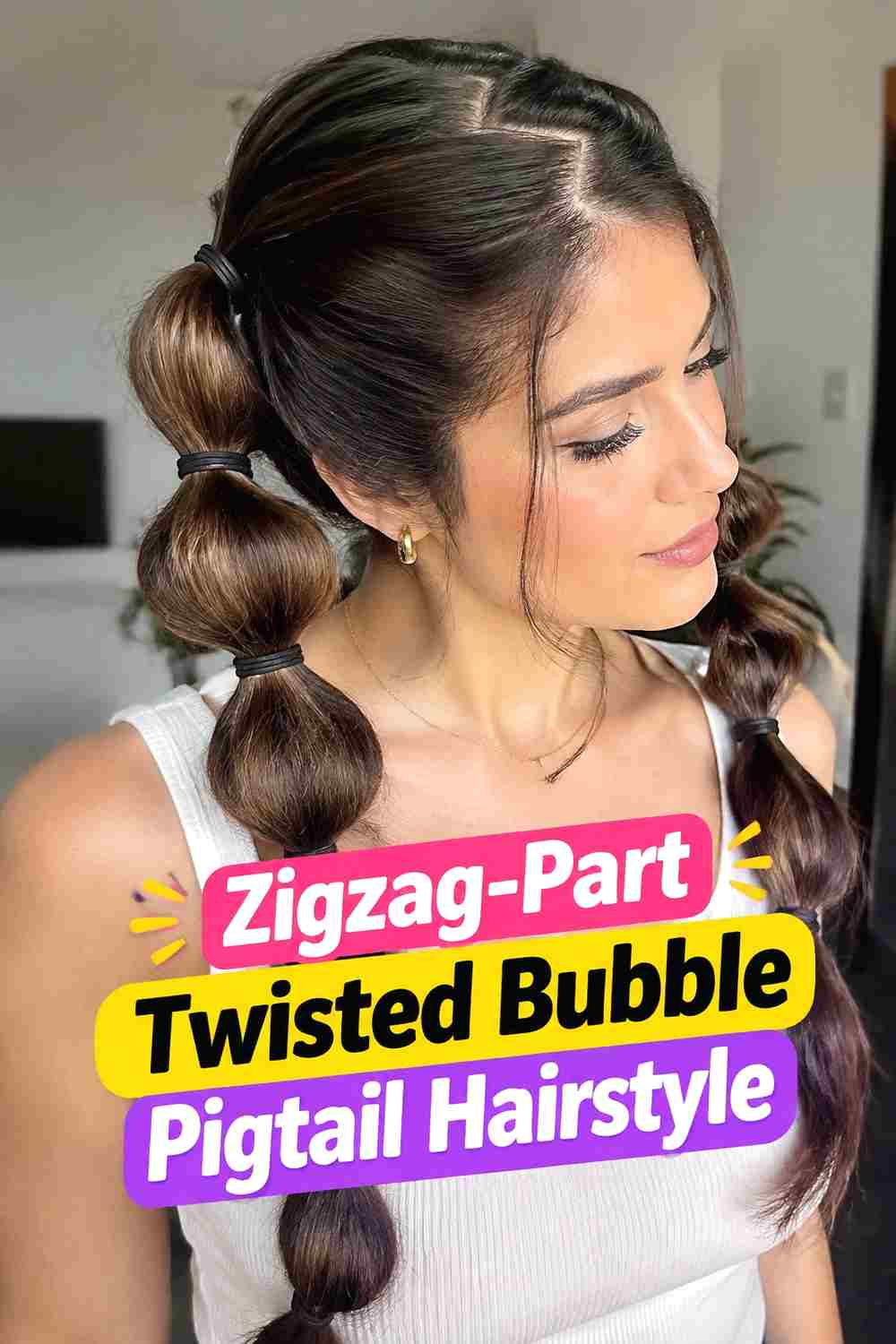
A zigzag part changes the look before the pigtails even begin, adding graphic detail through the center of the hairstyle. Create a clean zigzag from the front hairline toward the crown or nape, divide the hair into two sides, and secure balanced pigtails. Gentle twists at the bases lead into evenly spaced bubble sections, while the geometric parting remains visible from above and behind. Because the part already provides strong visual interest, the bubbles can stay moderately sized instead of overly exaggerated. This style is especially fun for parties, concerts, creative casual looks, or photographs where the top of the hairstyle will be visible. Clean sectioning makes the zigzag much easier to read.
Pro Tip
Create the part before smoothing or gathering the pigtails. Repeatedly adjusting the sections afterward can blur the zigzag and introduce unwanted crossing hairs.
13. Ribbon Wrapped Twisted Bubble Pigtail Hairstyle
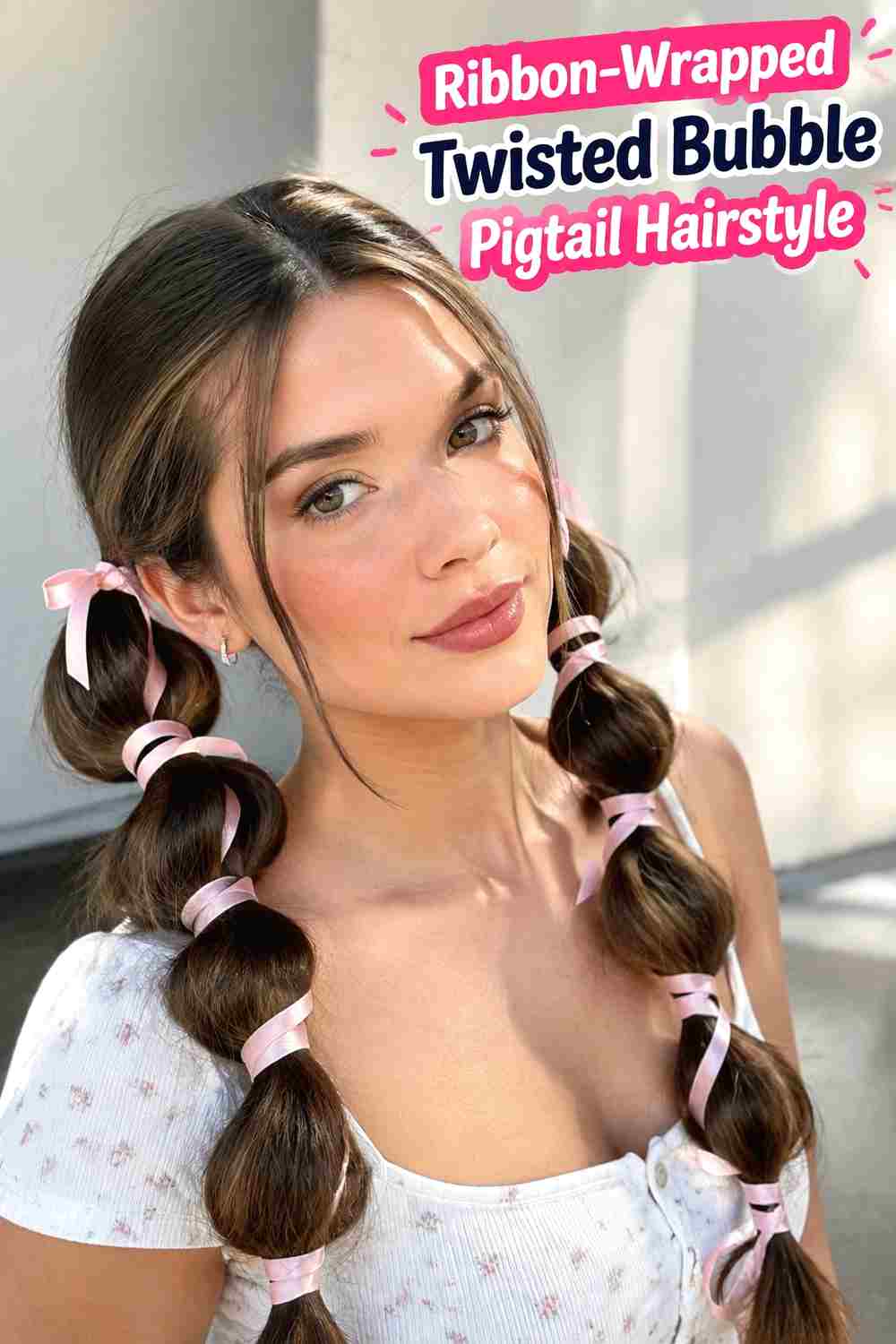
Ribbon adds color and movement without changing the basic bubble construction. After creating two pigtails and a small twist near each base, build the bubbles with discreet elastics. Then wrap narrow ribbon around selected tie points or weave it lightly through the upper twisted sections. Matching ribbons create symmetry, while slightly varied placement can make the result feel more playful. Avoid wrapping the ribbon so tightly that it compresses the bubbles or interferes with their rounded shape. This version works beautifully for parties, themed events, photos, and coordinated outfits because the accessory color can echo clothing or makeup. Satin, velvet, or soft fabric ribbon can each give the hairstyle a different finish.
Wear & Maintenance
Secure ribbon ends discreetly around an existing elastic rather than tying heavy knots against the hair. This helps the decoration stay in place without adding unnecessary bulk.
14. Pearl Accented Twisted Bubble Pigtail Hairstyle
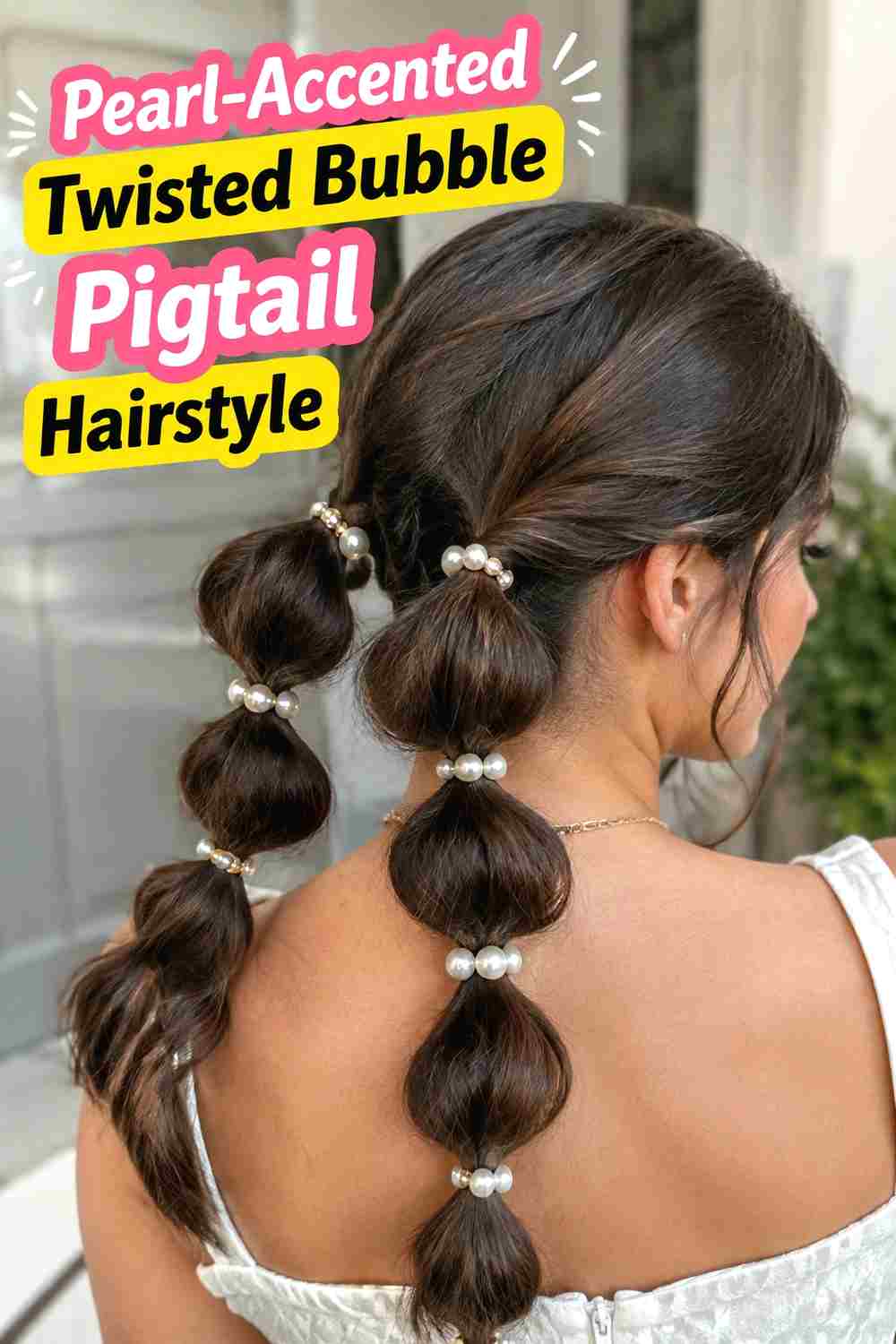
Pearls give playful bubble pigtails a more polished and decorative feel. Build two balanced pigtails with twisted bases and softly expanded bubble sections, then add small pearl pins or hair-safe accents near selected elastics. Rather than decorating every bubble, concentrate the pearls around the upper and middle portions so the hairstyle does not become visually crowded. The round shape of the pearls naturally echoes the rounded bubbles, creating a cohesive detail. This version works particularly well for parties, birthday looks, engagement celebrations, or playful formal styling where standard pigtails might feel too casual. Keep the accessories lightweight so they do not pull the pigtails downward or distort the bubble shapes.
Why It Works
Both pearls and bubbles use rounded forms, so the decoration feels visually connected to the hairstyle instead of appearing randomly attached.
15. Face Framing Twisted Bubble Pigtail Hairstyle
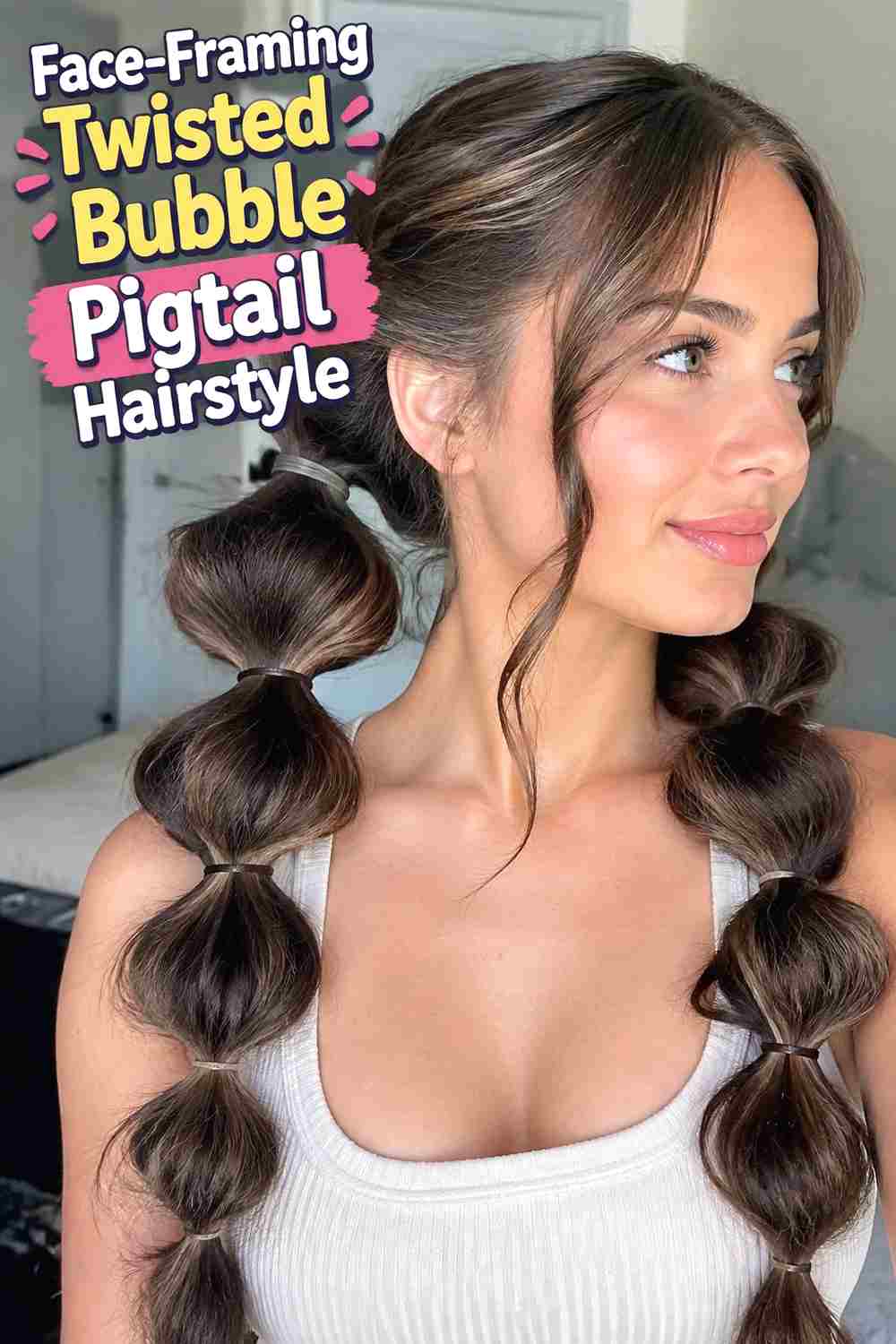
Leaving a few deliberate face-framing sections softens the symmetry of twin bubble pigtails. Create a center part, separate shorter front pieces, and gather the remaining hair into medium or low pigtails. Add twists at the bases, then build rounded bubbles down both lengths. The loose front sections can remain straight, softly waved, or curled according to the rest of the hairstyle. This small change helps the pigtails feel less severe around the hairline and can make the overall finish more relaxed. It is an easy option when you like the structure of bubble pigtails but prefer not to pull every strand away from the face, especially for casual events and photos.
Styling Notes
Choose only a few intentional front pieces. Releasing too much hair can make the pigtails lose their clean base shape and reduce the contrast with the bubble lengths.
16. Half Up Twisted Bubble Pigtail Hairstyle
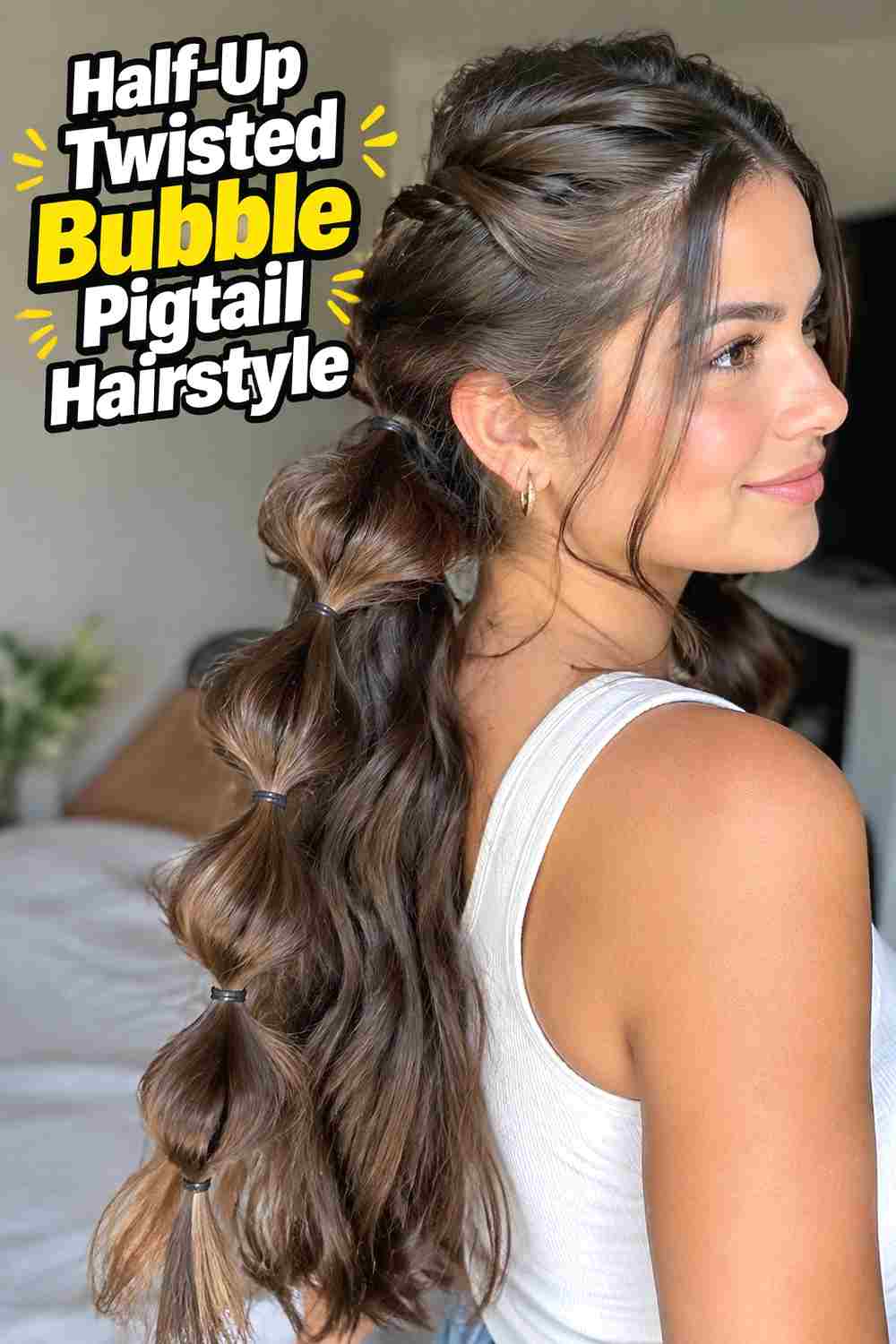
The half-up version creates two smaller bubble pigtails from the upper sections while leaving the rest of the hair loose. Divide the top portion into two ponytails, add a twist near each base, and create two or three compact bubbles depending on available length. The lower hair can remain straight, wavy, curly, or naturally textured, allowing the mini pigtails to sit visibly above it. This variation offers the playful symmetry of bubble pigtails without gathering the full head of hair. It is particularly useful on medium lengths or layered cuts where full pigtails may produce thin ends. Keeping the bubbles modest also helps them blend naturally with the loose lengths underneath.
Best For
Medium and long hair both work well. The style is especially useful when you want visible pigtail detail while preserving volume and movement through the lower half.
17. Festival Twisted Bubble Pigtail Hairstyle
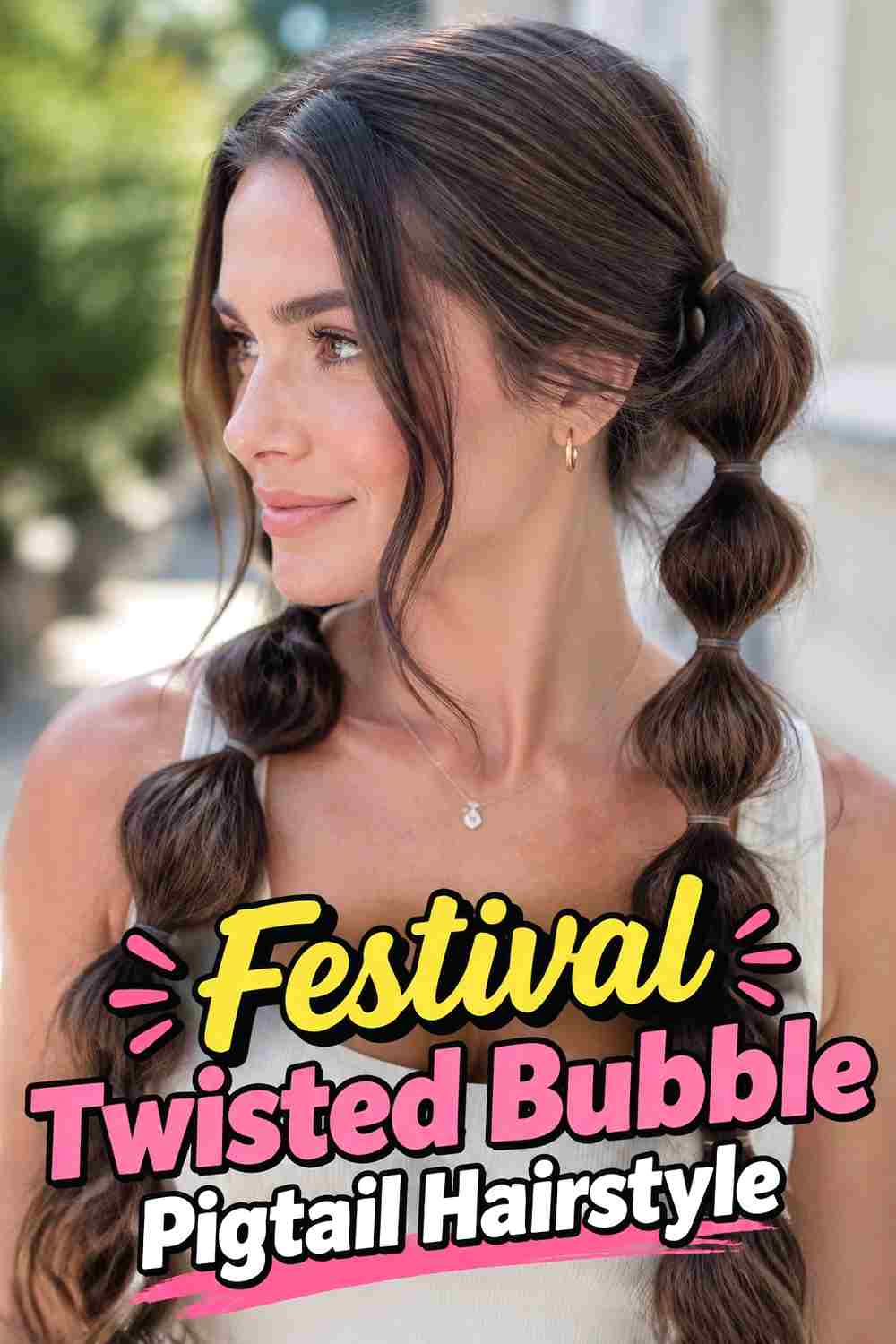
Festival bubble pigtails can combine bold volume, textured twists, and a few decorative accents while still keeping the construction wearable. Start with medium or high pigtails, twist the bases, and create generously shaped bubbles down each side. Small metallic cuffs, colorful elastics, thread, or lightweight hair-safe charms can be added selectively rather than covering every section. A few face-framing pieces and natural flyaways prevent the hairstyle from looking too rigid. The result pairs well with expressive makeup, bright clothing, and outdoor event styling. Because festivals often involve long periods of movement, the pigtail bases and elastics should remain secure even if the outer bubbles are intentionally soft and expanded.
Wear & Maintenance
Use lightweight accessories and test the hairstyle while moving before wearing it for an extended event. Heavy decorations can pull the bubbles out of shape.
18. Extra Long Twisted Bubble Pigtail Hairstyle
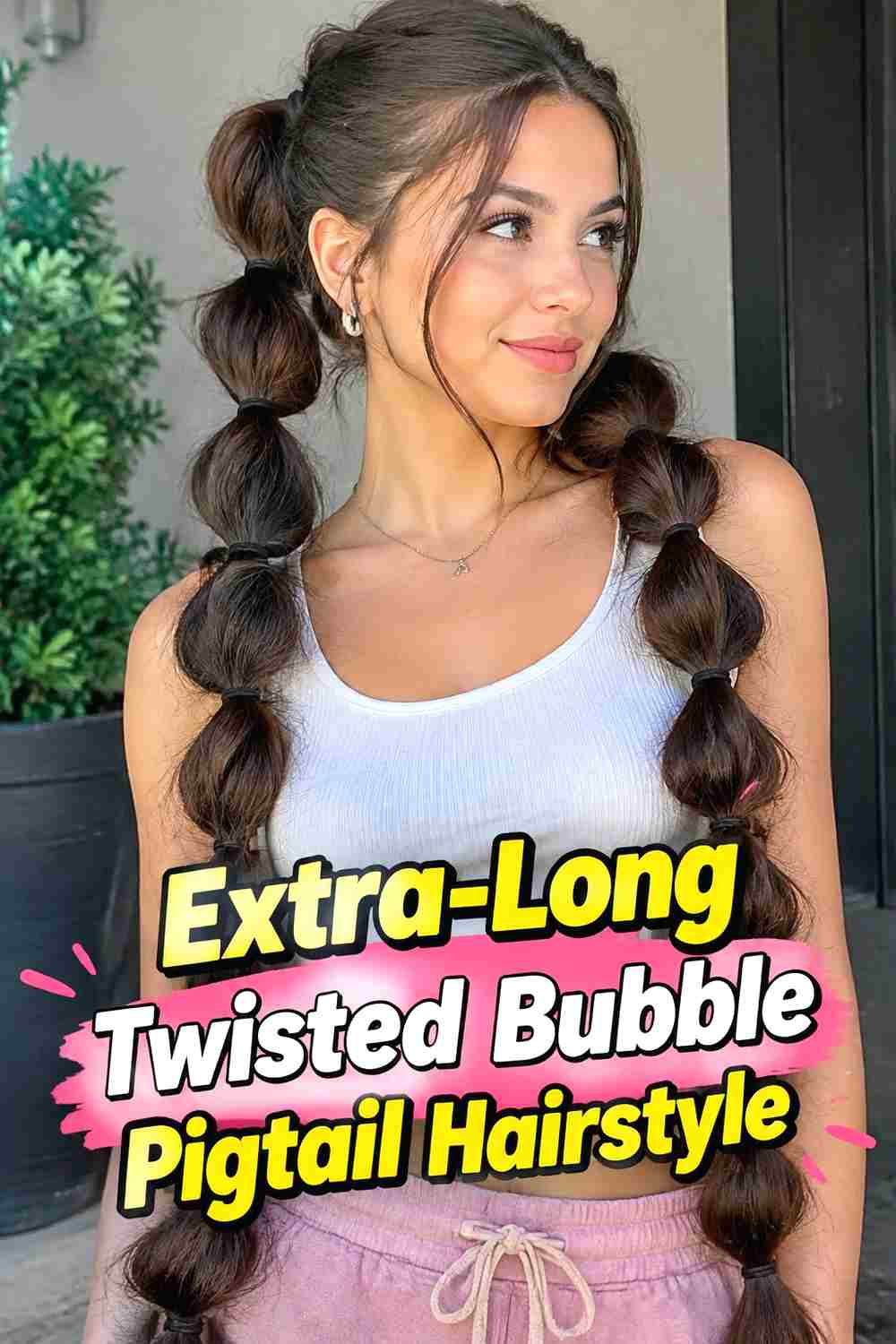
Extra-long hair creates room for a dramatic series of bubbles from the pigtail bases almost to the ends. Begin with secure twin ponytails and introduce controlled twists before placing elastics at consistent intervals down each side. Gradually expand the sections, keeping the upper bubbles slightly fuller and tapering them toward the ends for a natural silhouette. The length allows the pattern to repeat many times, so consistency becomes important; dramatically uneven sections can quickly make the style look unbalanced. This version is especially striking from the back and works well for photos, performances, special events, or anyone who wants to make long hair the main feature of the look.
Pro Tip
Work down both pigtails in stages rather than finishing one completely first. Comparing each new bubble side by side makes it easier to maintain similar spacing and fullness.
How to Choose the Right Look
Start with pigtail placement. High versions create more lift and movement, medium pigtails feel playful and balanced, and low styles produce a softer silhouette. If comfort is important, remember that high pigtails can place more tension on dense or very long hair.
Next, consider length and density. Long hair can support larger or more numerous bubbles, while medium lengths often look better with compact sections and closer elastic spacing. Fine hair usually benefits from gentle expansion rather than oversized bubbles, whereas dense hair can support fuller shapes with less pulling.
Texture also changes the finish. Sleek hair creates crisp, graphic bubbles; waves soften the outline; curls add natural fullness; and deliberately messy texture creates a relaxed effect. Braided roots, zigzag parts, ribbons, and pearls add extra detail when the basic bubble shape feels too simple.
Finally, think about maintenance. Secure elastics are essential because each bubble depends on the tie points above and below it. For longer wear, build a firm structure first and soften the outer sections afterward.
Final Thoughts
Twisted bubble pigtail hairstyles can range from clean and symmetrical to loose, decorative, and festival-inspired. The most effective version is one that matches your available length, natural density, desired pigtail height, and styling time. Start with secure twin ponytails, keep the twists believable, then expand each bubble gradually until the shape feels full without losing its structure.
FAQs
1. What are twisted bubble pigtails?
They are twin ponytails that combine twisted sections with spaced elastics. Hair between each elastic is gently expanded to form rounded bubble shapes down both pigtails.
2. How long should hair be for bubble pigtails?
Medium-long hair can create several small bubbles, while long and extra-long hair provides more space for larger or more numerous sections.
3. How do I keep bubble pigtails from falling flat?
Use secure elastics, create each bubble gradually, and avoid stretching the sections so far that the hair loses support. Starting with a firm pigtail base also improves hold.
4. Can twisted bubble pigtails work on curly hair?
Yes. Curly hair can add natural fullness and texture to each bubble. Shape the sections gently so the curl pattern remains visible rather than brushing everything smooth.
5. What accessories work with bubble pigtails?
Ribbons, decorative elastics, lightweight pearl pins, small cuffs, and hair-safe charms can all work. Keep accessories light and place them around secure elastic points rather than unsupported sections.
Save your favorite twisted bubble pigtail hairstyle ideas and explore more braid, ponytail, and bubble styles for fresh ways to wear playful twin-tail looks.