16 Two Fluffy Ponytail Hairstyle Ideas
Two fluffy ponytails bring playful volume and soft texture together, with endless ways to change the height, parting, curls, accessories, and overall finish.
The two fluffy ponytail hairstyle is all about balance: two defined ponytail sections paired with enough volume to make the texture feel full, airy, and intentionally shaped. You can keep the roots polished for contrast, embrace natural texture from root to tip, or add braids, bangs, ribbons, and color for a more distinctive finish.
When choosing between these ideas, look beyond the overall silhouette. Ponytail height changes the mood dramatically, while texture determines whether the style feels soft, springy, sculpted, or dramatic. Hair density, comfort, length, hold, and how much daily reshaping you want to do are equally important when deciding which version fits your routine.
Quick List
- High Twin Fluffy Ponytail Hairstyle
- Low Twin Fluffy Ponytail Hairstyle
- Middle Part Two Fluffy Ponytail Hairstyle
- Side Part Two Fluffy Ponytail Hairstyle
- Curly Two Fluffy Ponytail Hairstyle
- Coily Two Fluffy Ponytail Hairstyle
- Bubble Accent Two Fluffy Ponytail Hairstyle
- Braided Base Two Fluffy Ponytail Hairstyle
- Slicked Front Two Fluffy Ponytail Hairstyle
- Soft Bangs Two Fluffy Ponytail Hairstyle
- Face Framing Two Fluffy Ponytail Hairstyle
- Half Braided Two Fluffy Ponytail Hairstyle
- Extra Long Two Fluffy Ponytail Hairstyle
- Short Voluminous Two Fluffy Ponytail Hairstyle
- Ribbon Tied Two Fluffy Ponytail Hairstyle
- Ombre Two Fluffy Ponytail Hairstyle
1. High Twin Fluffy Ponytail Hairstyle
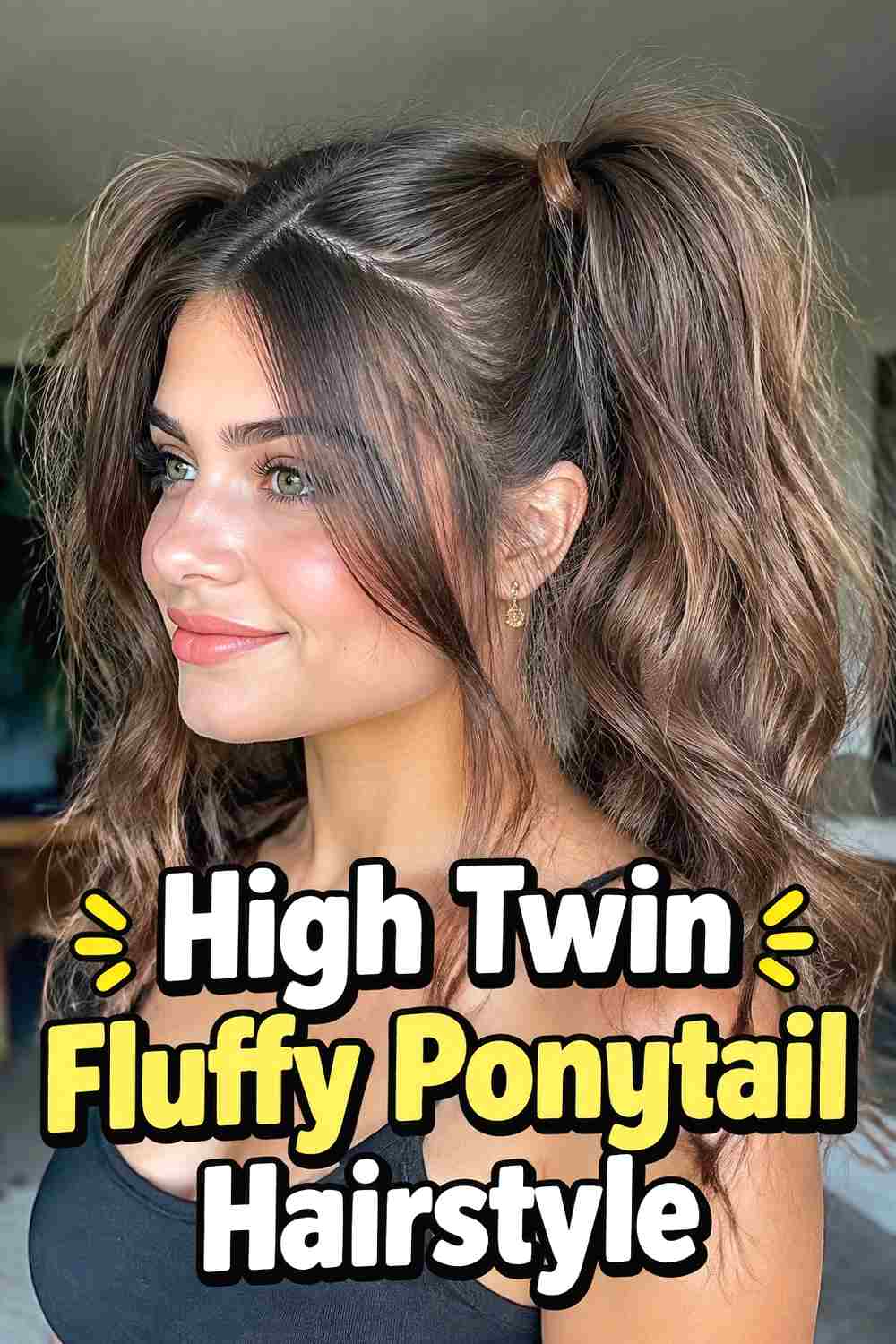
High twin fluffy ponytails create a lively, lifted silhouette with plenty of visible movement around the upper sides of the head. Each ponytail sits above ear level and expands into soft, airy volume, making the texture the main feature. Defined curls, brushed-out waves, or stretched natural texture can all work depending on the finish you prefer. Keeping the front smooth creates stronger contrast with the fluffy lengths, while a softer root area gives the style a more relaxed feeling. This placement is especially appealing when you want a youthful, energetic look that keeps the neck clear. Avoid pulling the bases tighter than necessary, since comfort matters when both ponytails sit high.
Styling Notes
Fluff each ponytail separately after securing it so you can keep the volume balanced from side to side.
Best For
This version suits medium to long hair or added hair that can create noticeable fullness without making the high bases feel too heavy.
2. Low Twin Fluffy Ponytail Hairstyle
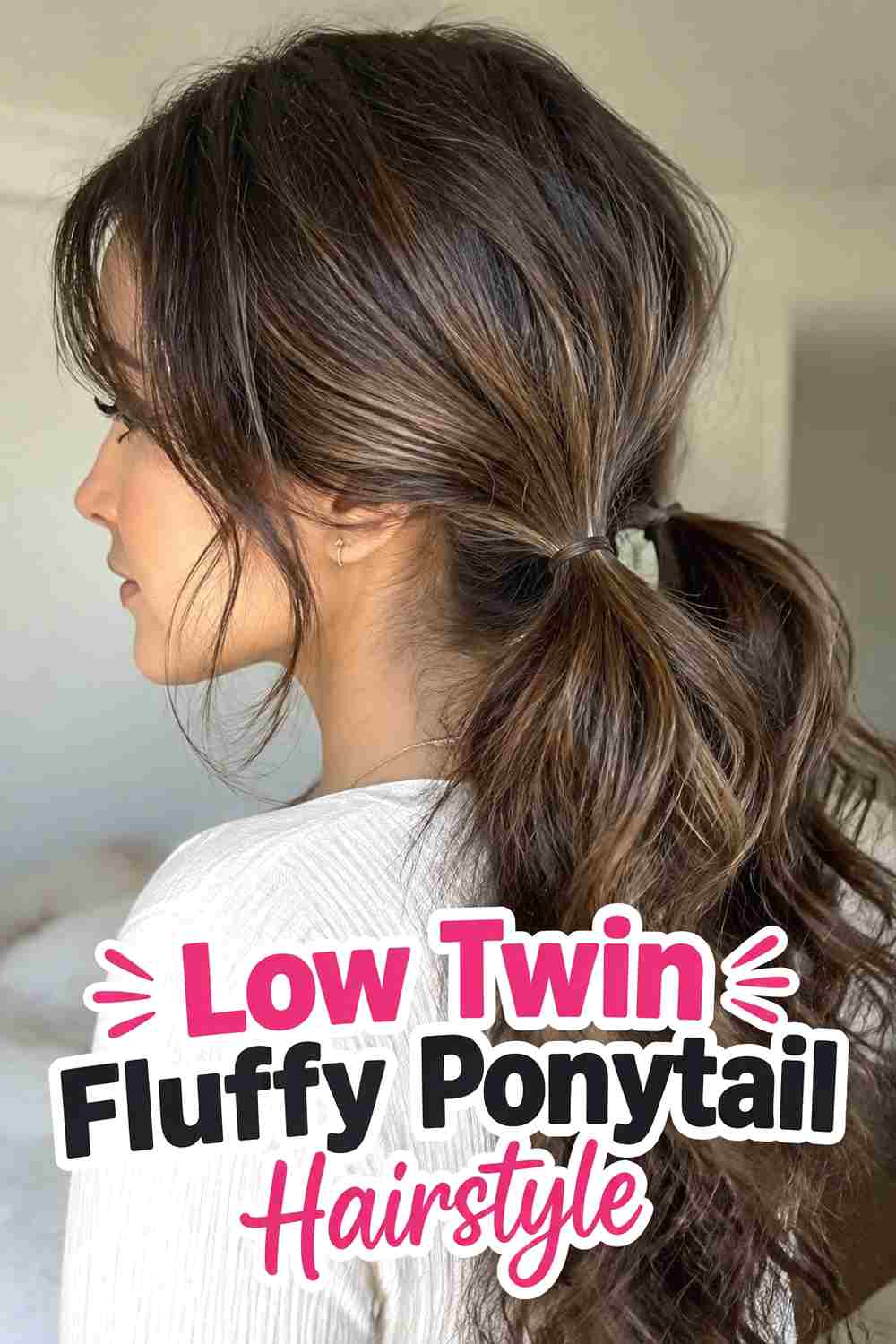
Low twin fluffy ponytails sit closer to the nape and create a softer, calmer silhouette than high pigtails. The two ponytails can rest just behind the ears or slightly farther back, allowing the fluffy lengths to spread over the shoulders. Loose curls and softly brushed texture work especially well because they keep the style relaxed rather than overly structured. A center part makes the arrangement clean and balanced, while slightly loose roots can add a casual finish. This version is useful when you want noticeable volume without placing all the weight high on the head. It also works nicely with hats, headbands, or layered outfits because the bases stay low and unobtrusive.
Why It Works
The lower placement gives the ponytails a softer fall and makes larger, fuller textures feel more wearable for everyday styling.
Pro Tip
Secure the bases slightly behind the ears instead of directly underneath them if you want the fluffy lengths to fall more naturally over the shoulders.
3. Middle Part Two Fluffy Ponytail Hairstyle
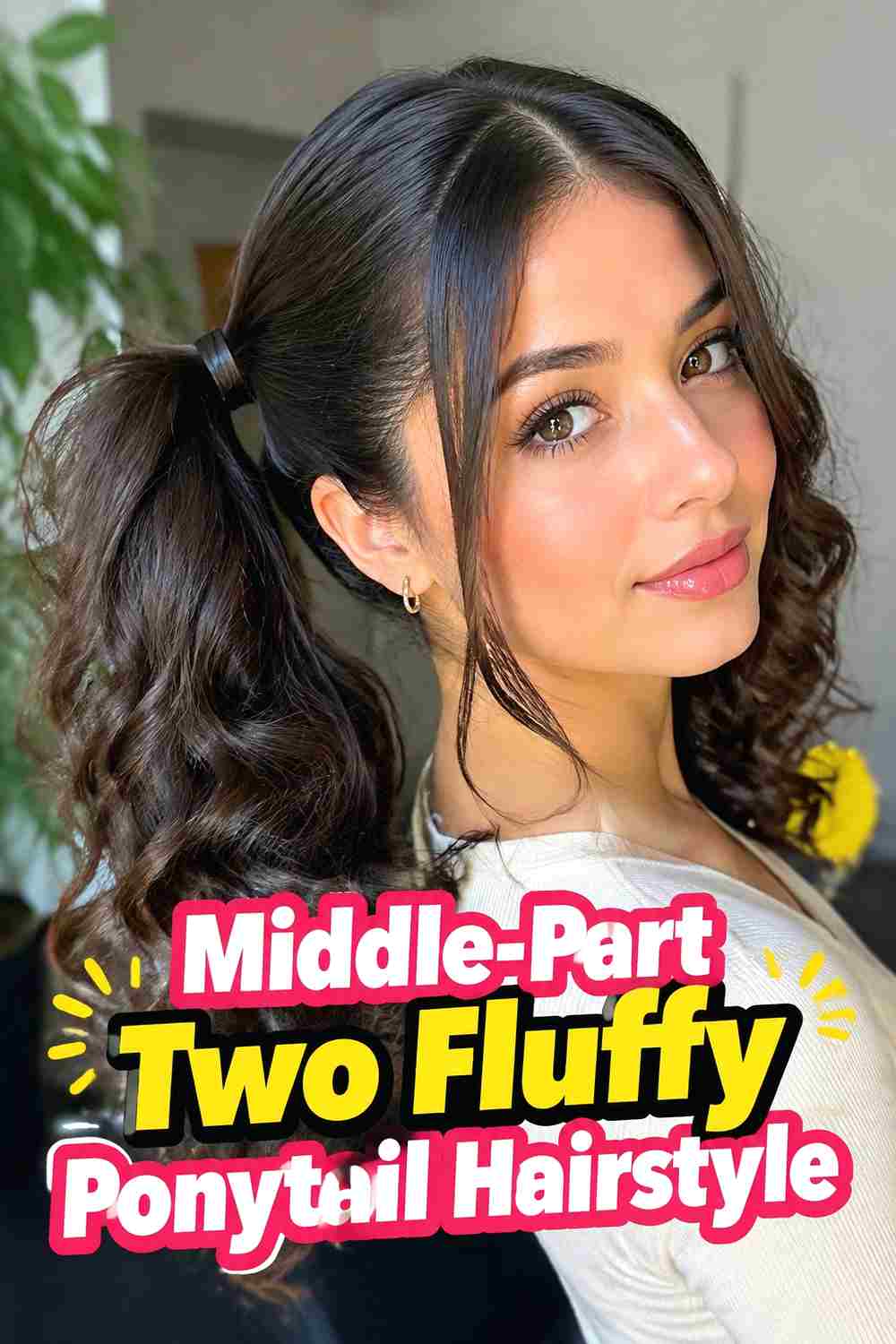
A clean middle part gives two fluffy ponytails a polished, symmetrical foundation. The straight center line divides the hair evenly, making it easier to balance the size, height, and fullness of both ponytails. Medium-height placement works particularly well because it keeps the look youthful without making the ponytails feel overly high. The fluffy sections can be softly curled, waved, or expanded into airy natural texture, depending on the amount of definition you want. This hairstyle looks especially neat when the front is smooth but not stiff. A few subtle baby hairs or naturally soft edges can keep the finish from appearing too severe while preserving the crisp center part.
Styling Notes
Use the part as your main guide when dividing the hair so both sections carry a similar amount of density.
Best For
This style is ideal if you enjoy balanced, tidy hairstyles and want the fluffy texture to remain the main visual detail.
4. Side Part Two Fluffy Ponytail Hairstyle
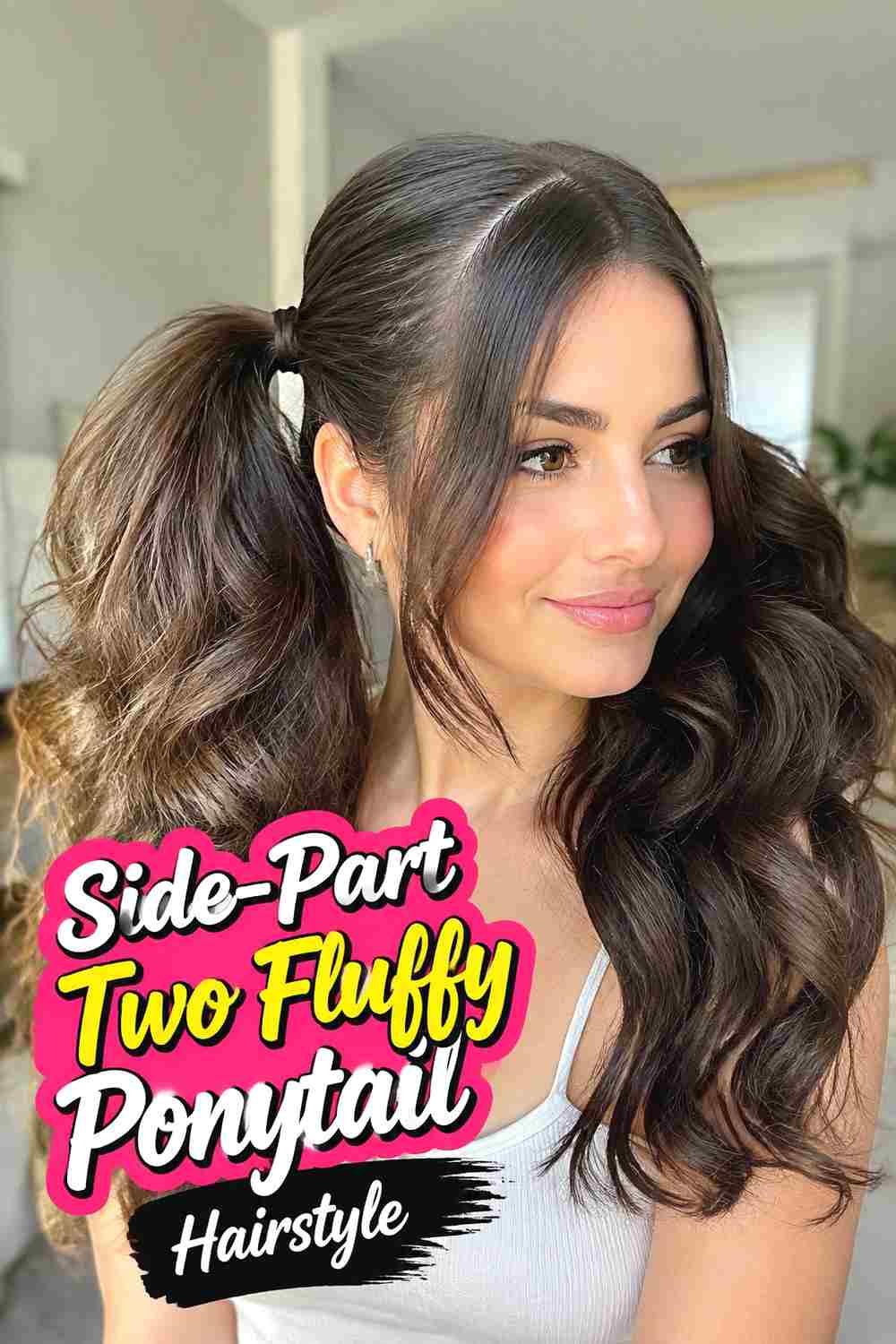
A side part changes the balance of two fluffy ponytails by creating more visual weight on one side of the front section. Instead of strict symmetry around the face, the style has a softer sweep that can feel more relaxed and slightly more grown-up. The ponytails themselves can stay at the same height so the silhouette remains coordinated, while the side-parted front adds movement. Full curls or brushed-out texture work especially well because they echo the softer direction of the part. This option is useful if a center part feels too precise for your taste. Keep the part clean enough to look intentional, but avoid flattening the entire front if you want a fluffy, dimensional finish.
Why It Works
The side part introduces asymmetry around the face without changing the familiar twin-ponytail shape.
Pro Tip
Place the heavier front section toward the ponytail on the same side rather than forcing it sharply across the scalp.
5. Curly Two Fluffy Ponytail Hairstyle
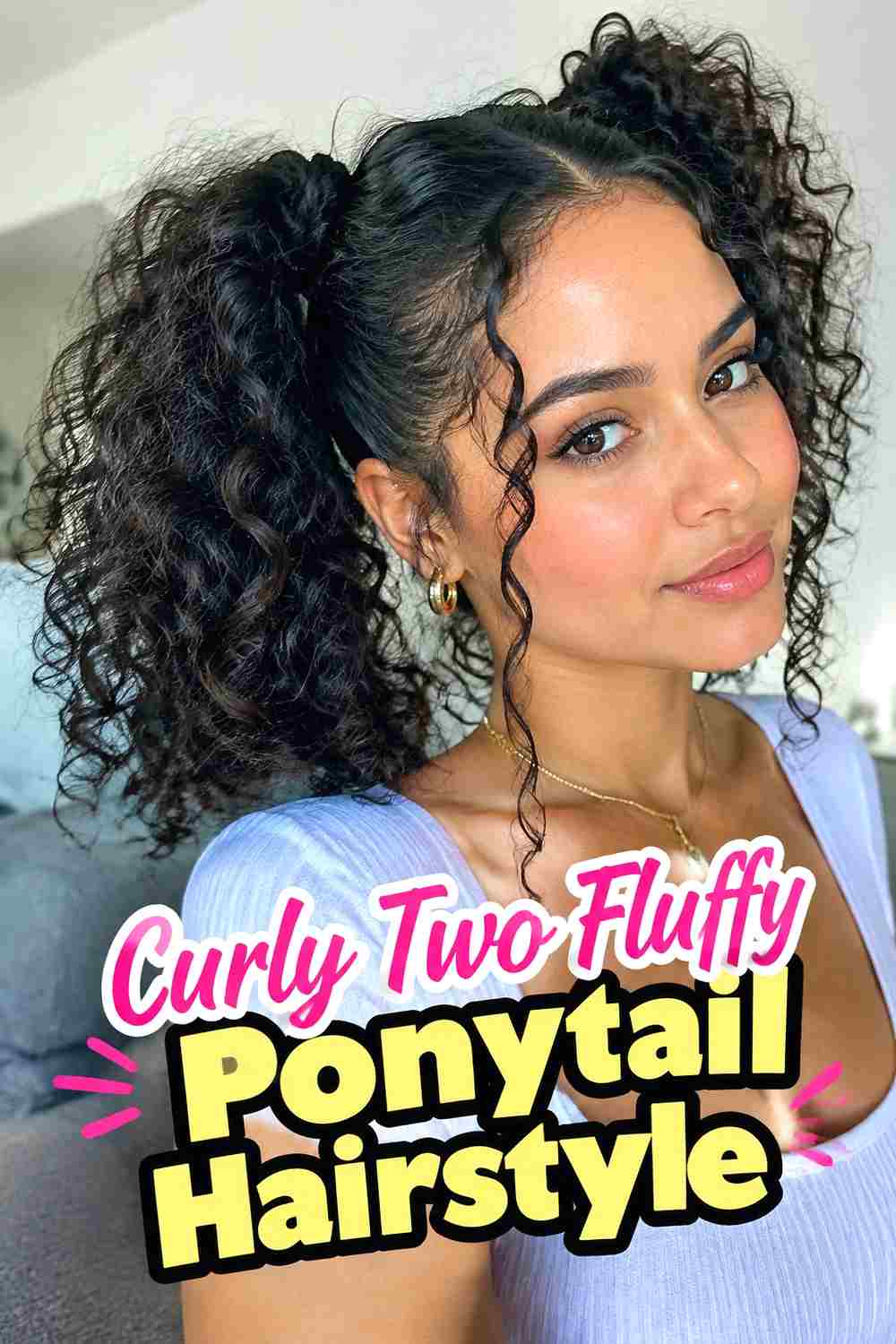
Curly two fluffy ponytails combine defined spiral texture with a full rounded shape. Instead of brushing the curls until they lose definition, this look keeps individual curl groups visible while gently expanding the overall volume. Medium-to-high ponytail placement allows the curls to bounce around the sides and back without hiding the bases. The style can work with naturally curly hair or carefully added curl texture, but the best finish usually includes variation rather than identical ringlets throughout. A small amount of separation at the ends helps the ponytails appear fluffy while preserving curl detail. This is a strong choice for anyone who wants volume that still looks clearly curly rather than brushed into a cloudlike finish.
Hair Type & Length
Curly textures with enough length to gather comfortably work naturally for this look, while shorter hair may need added hair for fuller ponytail shapes.
Wear & Maintenance
Refresh individual curls selectively instead of reworking the entire ponytail every day.
6. Coily Two Fluffy Ponytail Hairstyle
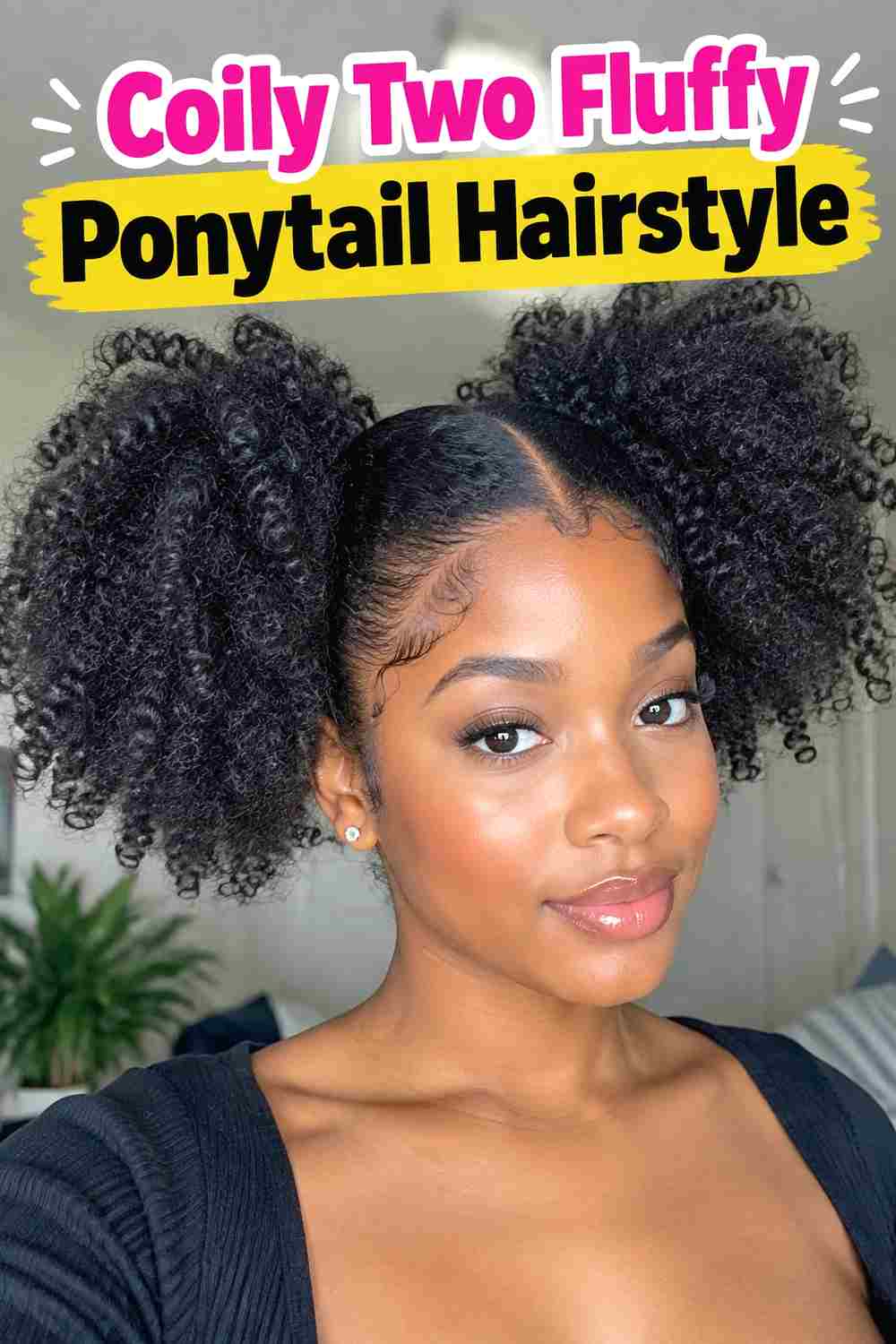
Coily two fluffy ponytails celebrate tighter texture by allowing each ponytail to expand into a soft, rounded shape with visible coils throughout. The result can feel both structured and natural when the roots are gathered cleanly but the ponytail lengths remain full. A middle or gently curved part can separate the sections without making the style look overly rigid. Depending on density, the ponytails may form compact puffs or longer fluffy shapes with more drop. The key is preserving natural variation instead of forcing every coil to sit in the same direction. This version works beautifully when you want to highlight texture while keeping the overall styling simple and recognizable.
Why It Works
Tighter coils naturally create body, so the fluffy effect can come from the hair’s texture rather than heavy teasing or excessive manipulation.
Pro Tip
Shape the outer edge of each ponytail lightly with your fingers so both sides feel balanced without crushing the natural coil pattern.
7. Bubble Accent Two Fluffy Ponytail Hairstyle
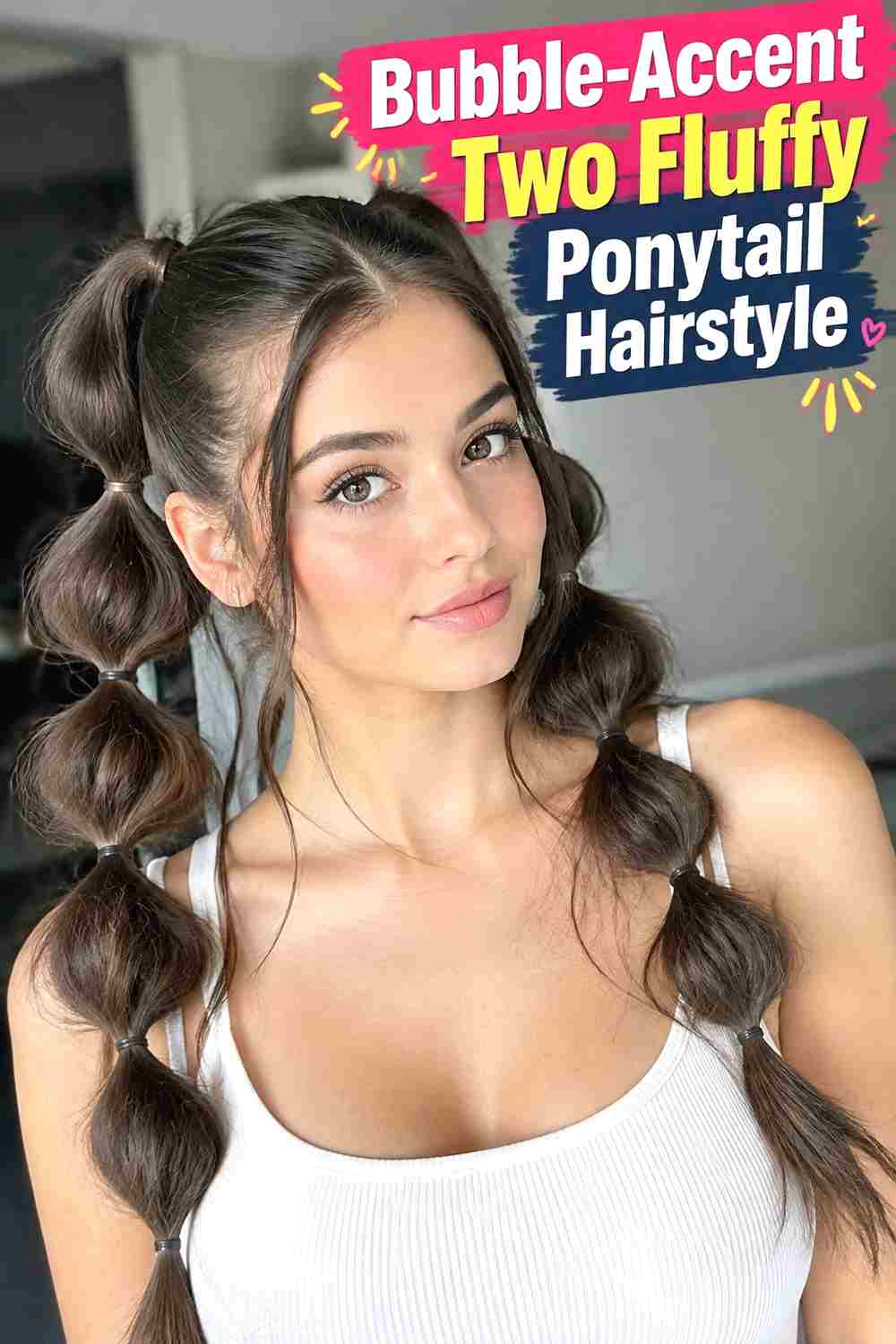
Bubble accents add extra structure near the base of two fluffy ponytails while leaving the lower lengths soft and voluminous. Each side can begin with one or two gently rounded bubble sections created with small ties, then transition into fluffy curls or textured ends. The contrast between defined bubbles and loose fullness makes the hairstyle feel more detailed without requiring a complicated updo. Keep the bubbles slightly expanded rather than pulled tight so they match the softness of the ponytails. This style works best when the sections are similar in size from side to side. It is a playful option for casual events, creative outfits, or days when a basic pair of ponytails feels too simple.
Styling Notes
Use only a few bubble sections so the fluffy ends remain the visual focus rather than turning the entire length into a bubble ponytail.
Wear & Maintenance
Remove small elastics carefully to avoid unnecessary snagging, especially if the hair is highly textured or already dry.
8. Braided Base Two Fluffy Ponytail Hairstyle
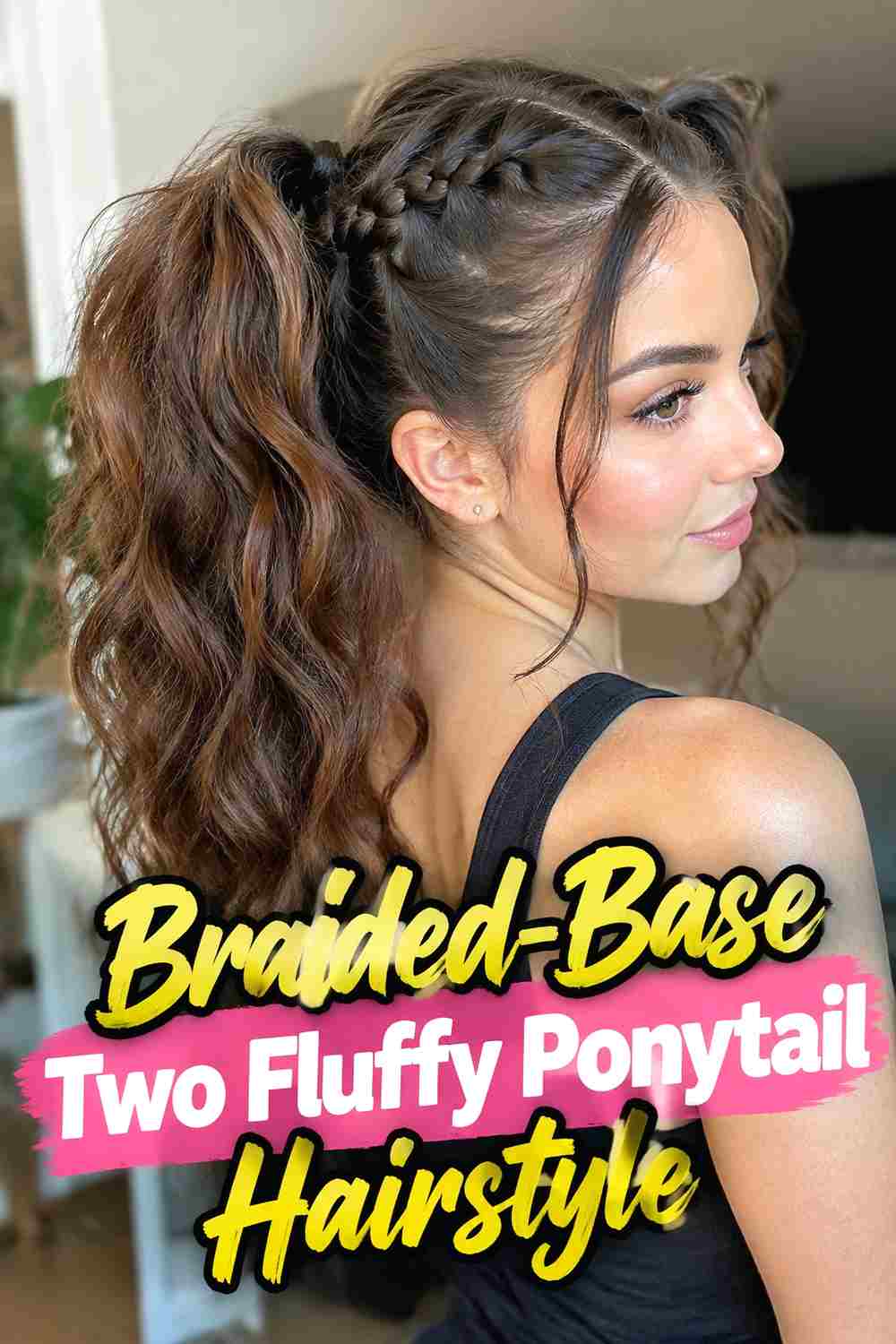
Braided bases give two fluffy ponytails a more intricate foundation while preserving soft volume at the ends. Small braids can run from the front or sides toward each ponytail base, creating visible lines that guide the eye into the fluffy sections. The ponytails themselves can stay curly, coily, or softly brushed depending on the desired contrast. Keeping the braid pattern relatively simple usually works best because the fluffy texture already provides plenty of visual interest. This look can feel sporty, polished, or decorative depending on the braid size and ponytail placement. Make sure the braided sections remain comfortable, particularly around the hairline, where excessive tension can make an otherwise playful style harder to wear.
Best For
This variation is a good fit when you want more detail at the scalp without braiding the entire ponytail length.
Pro Tip
Use two or three purposeful braids per side rather than overcrowding the base with many tiny sections.
9. Slicked Front Two Fluffy Ponytail Hairstyle
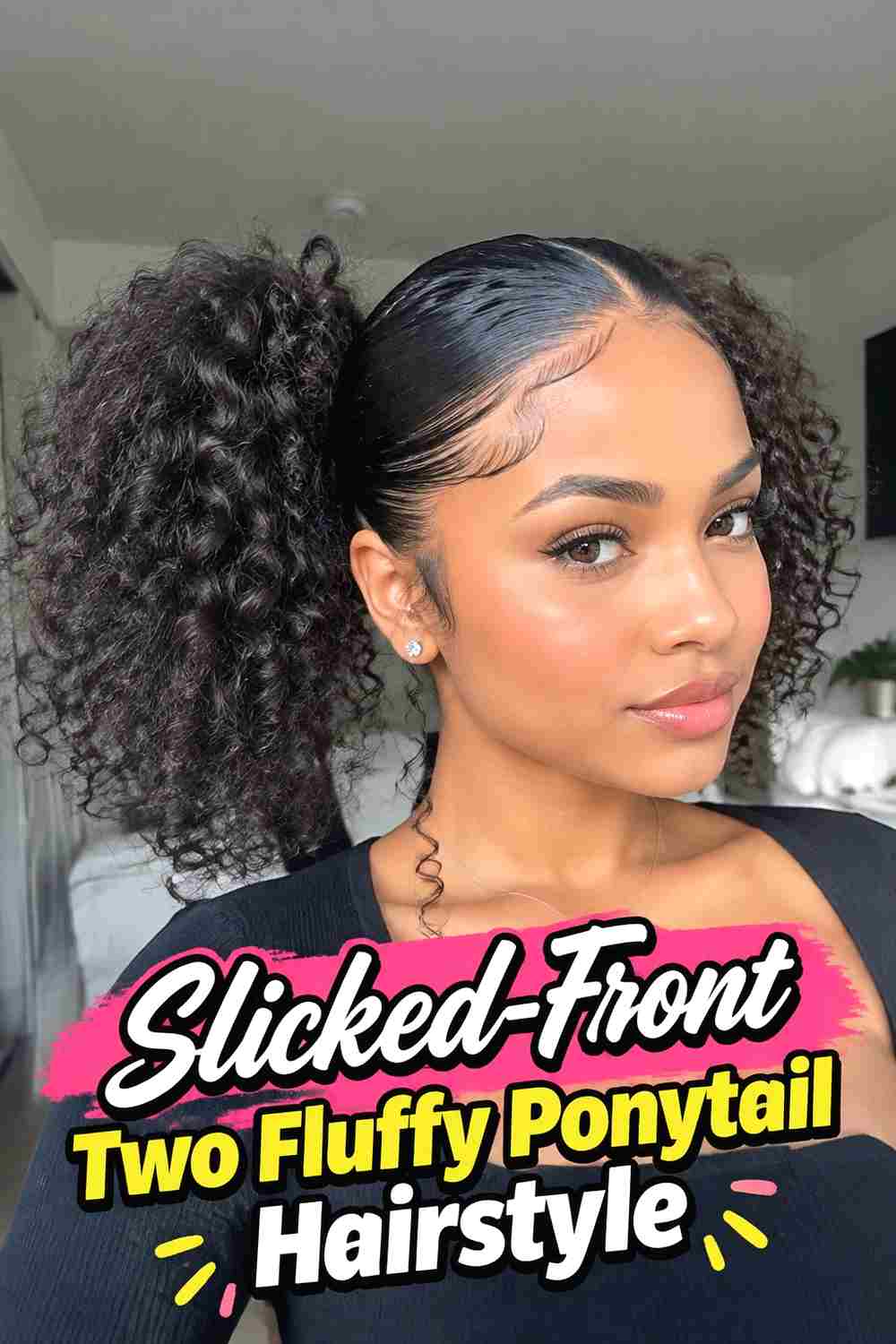
A slicked-front finish creates strong contrast between smooth roots and big, airy ponytails. The front and sides are directed neatly toward two ponytail bases, while the lengths expand outward into curls, waves, or fluffy textured puffs. This polished-to-voluminous combination makes the style feel more intentional and gives the ponytails extra visual impact. A sharp center part can make the finish graphic and symmetrical, while a soft side part adds a slightly less formal mood. The main consideration is hold: use enough control to keep the front neat without making the roots feel overly stiff. The ponytails should still look touchable and soft so the overall style does not lose its fluffy character.
Styling Notes
Concentrate smoothing product near the roots and avoid carrying too much into the ponytail lengths, where it can reduce volume.
Best For
This look is useful when you want a cleaner finish for photos, events, or outfits that pair well with a more polished front section.
10. Soft Bangs Two Fluffy Ponytail Hairstyle
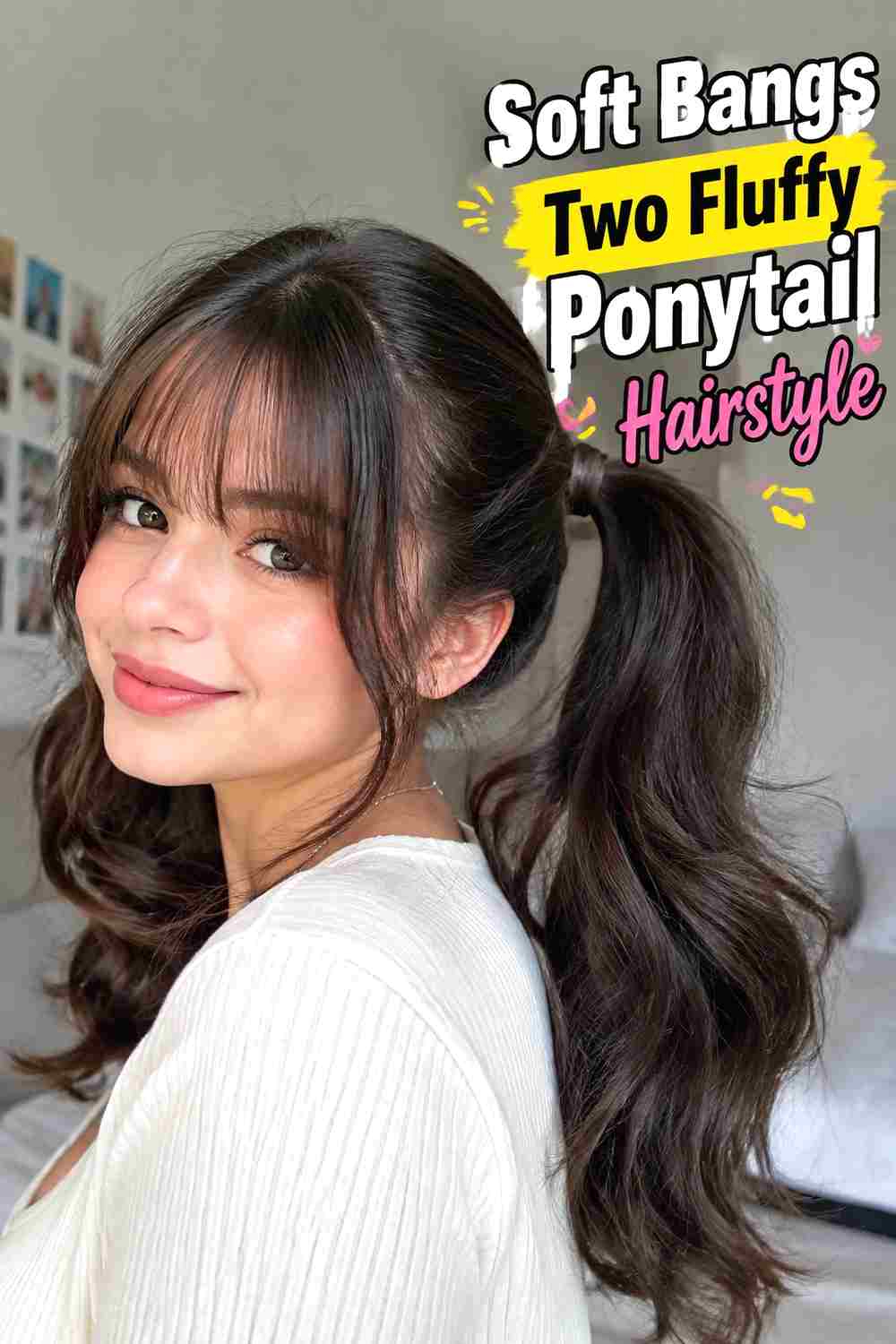
Soft bangs give two fluffy ponytails a playful frame without requiring the entire front section to be pulled away from the face. Wispy, curly, or softly rounded bangs can sit across the forehead while the remaining hair is divided into two full ponytails. This creates a layered silhouette, with detail at the front and volume at both sides. Medium-height ponytails usually complement bangs well because they keep the overall shape balanced rather than concentrating everything at the crown. The bangs should feel connected to the texture of the ponytails, whether that means loose curls, soft waves, or airy natural strands. Avoid making the fringe too dense if you want the style to keep a light, fluffy mood.
Why It Works
The bangs break up the open forehead area and add another soft element to a hairstyle that already relies on volume and movement.
Pro Tip
Style the bangs separately after securing the ponytails so you can control their shape without disturbing the rest of the look.
11. Face Framing Two Fluffy Ponytail Hairstyle
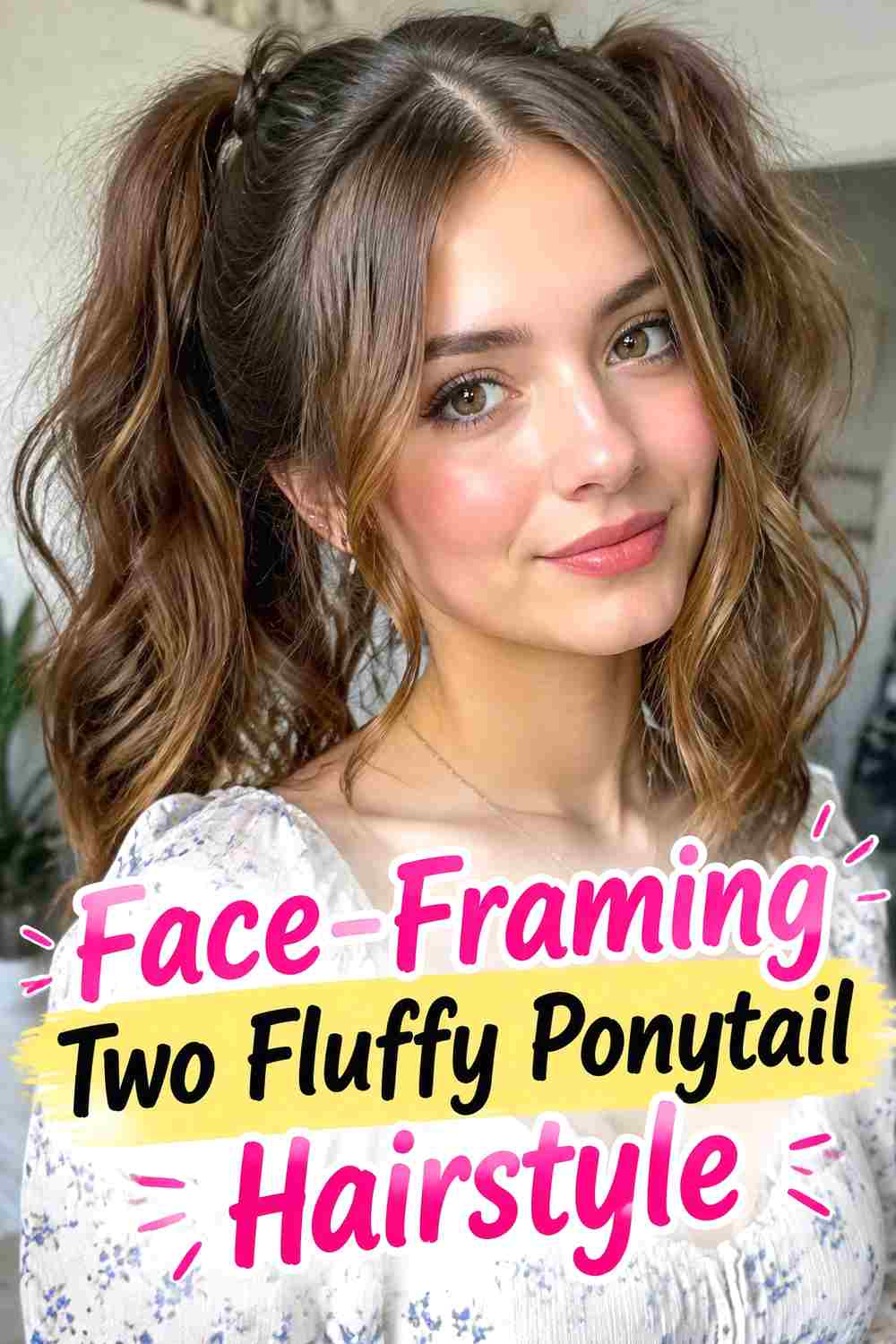
Face-framing pieces soften two fluffy ponytails by leaving a few shorter sections loose around the cheeks and jaw. The ponytails can remain full and symmetrical, while the front strands introduce movement and make the hairstyle feel less tightly pulled back. Curled face-framing pieces work especially well when the ponytails also contain curls, but slightly waved or textured strands can create a softer, more effortless result. Keep the loose pieces limited so they look intentional instead of unfinished. This style is particularly useful when you enjoy the lift and convenience of ponytails but prefer some hair around the face. Medium or high placement keeps the fluffy lengths visible while allowing the front sections to fall naturally.
Styling Notes
Choose face-framing sections before tying the ponytails so you do not have to pull strands out afterward and disturb the bases.
Best For
This variation suits anyone who likes a softer front profile and does not want every strand gathered away from the face.
12. Half Braided Two Fluffy Ponytail Hairstyle
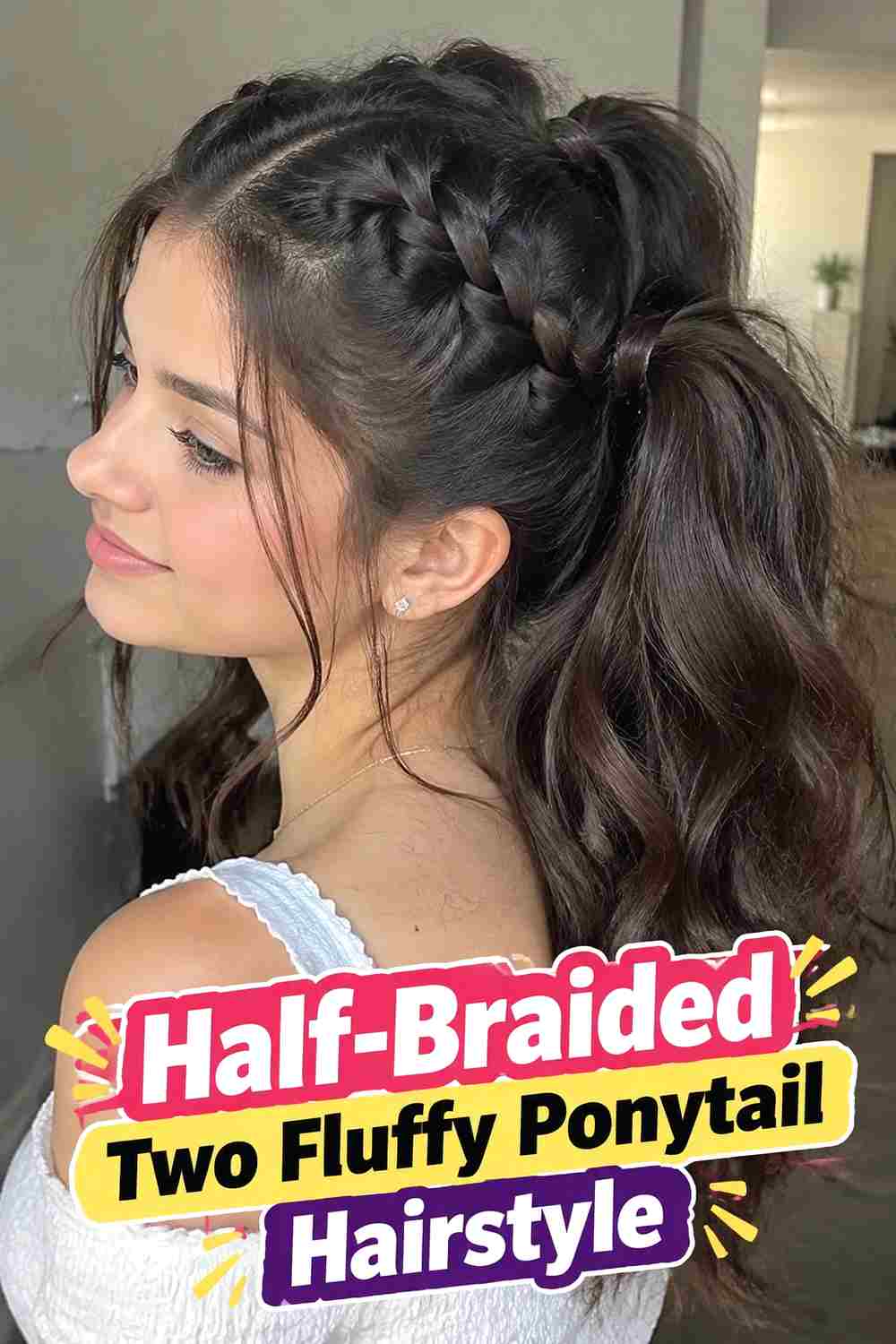
Half-braided fluffy ponytails combine neat braided sections with soft, loose texture in the lower lengths. Each ponytail begins with a braid or short braided segment before opening into a fluffy curl or textured puff. The transition gives the style a strong contrast between structure and softness without covering the entire head in braids. Medium or longer hair works particularly well because there is enough length to show both elements clearly. Keeping the braided portions equal on both sides helps the hairstyle look coordinated. For a more relaxed finish, gently loosen the braids rather than making them extremely tight. The fluffy ends should remain light and mobile so they balance the more controlled upper sections.
Why It Works
The braid creates definition and visual interest, while the fluffy lower section keeps the overall style soft and playful.
Wear & Maintenance
Protect the loose ends from friction at night and refresh only the fluffy sections that lose shape rather than rebuilding each braid.
13. Extra Long Two Fluffy Ponytail Hairstyle
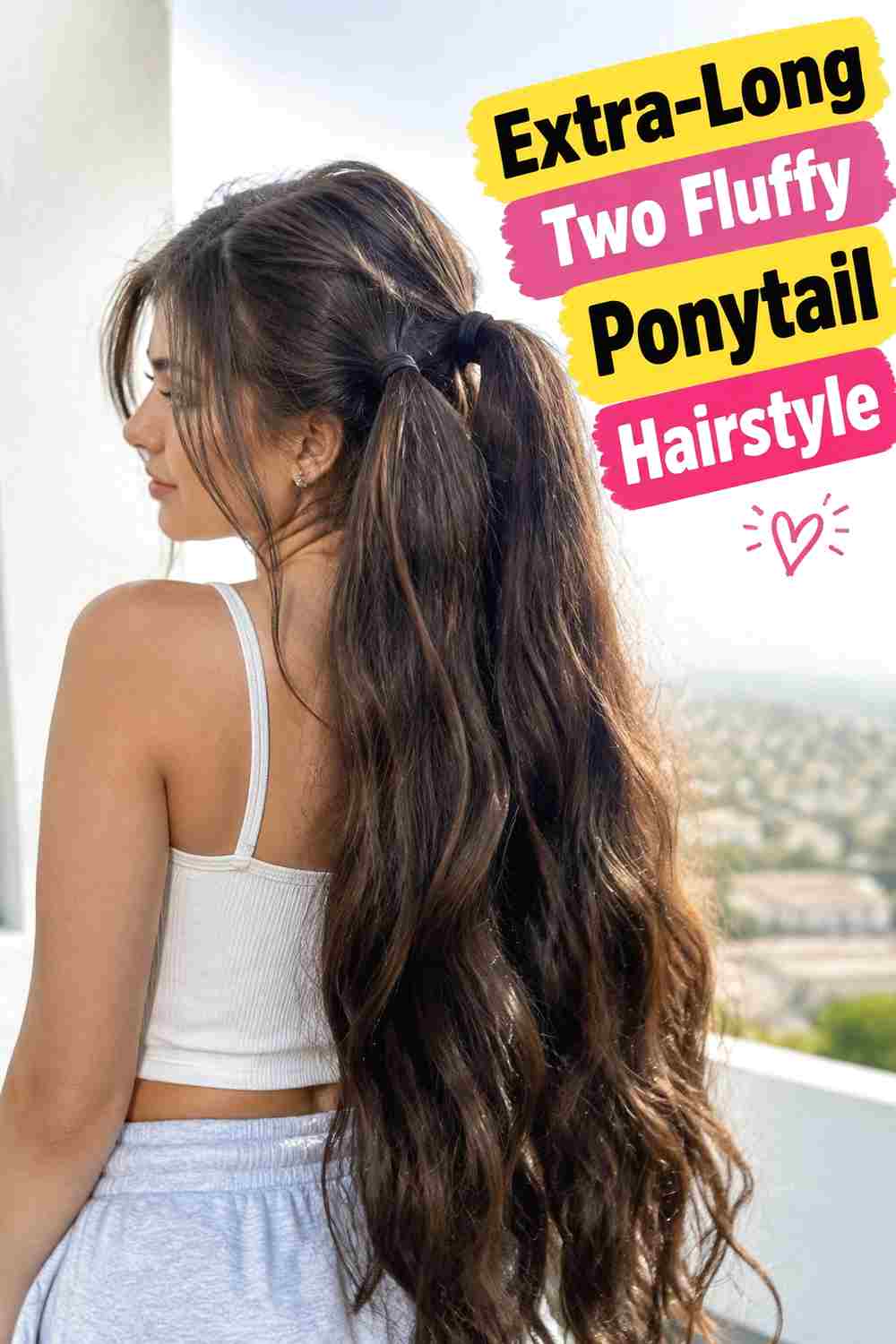
Extra-long fluffy ponytails make the twin style feel much more dramatic by extending the volume well beyond the shoulders. The ponytails can begin high or at mid-level, then fall through long curls, waves, or textured lengths that stay full from top to bottom. Added hair may be useful when the goal is substantial length and density, but the amount should be balanced carefully so each base remains comfortable. A smooth center part helps organize the larger silhouette, while subtle layers in the ponytail lengths prevent the ends from looking too heavy. This style works particularly well for statement photos or occasions where you want maximum movement and a visibly exaggerated version of classic twin ponytails.
Hair Type & Length
Several starting lengths can support the look when added hair is used, but the attachment method and total weight should suit the natural hair and scalp.
Pro Tip
Keep the longest layers slightly lighter at the ends so the ponytails move instead of hanging as two dense, heavy sections.
14. Short Voluminous Two Fluffy Ponytail Hairstyle
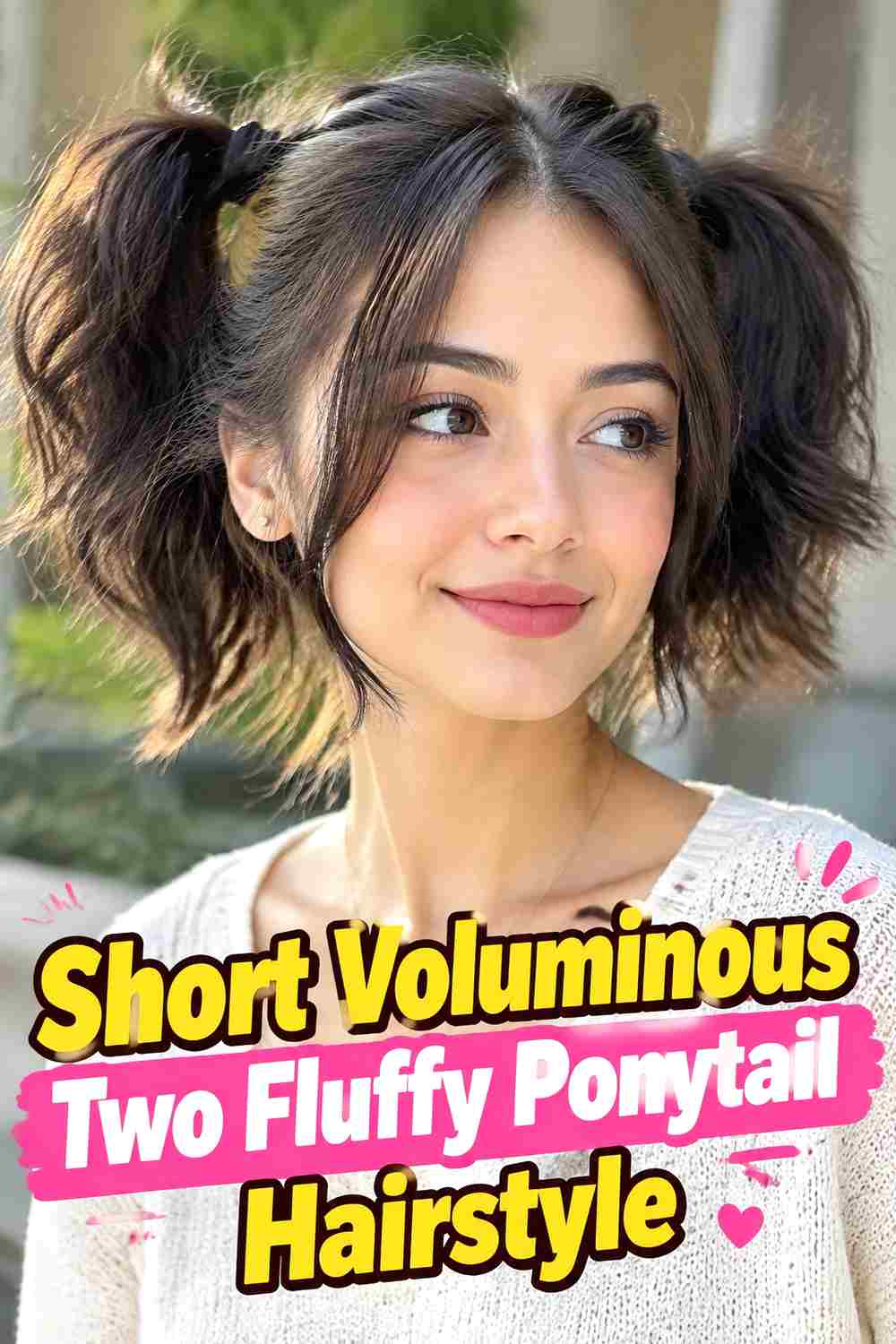
Short voluminous fluffy ponytails focus on width and bounce rather than length. The two ponytails sit close to the head and expand outward into compact curls, coils, waves, or textured puffs. Because the lengths are shorter, the shape can look especially rounded and lively around the ears and upper shoulders. A clean middle part gives the style a balanced finish, while a slightly off-center part can make it feel more casual. This version is useful for anyone who enjoys the twin-ponytail look but does not want long hair hanging down the back. The key is creating enough fullness at each side without overworking the texture, since shorter ponytails can quickly become too stiff if heavily styled.
Best For
This option works well for shorter natural hair, compact curly textures, or anyone who wants a lighter, more manageable version of the look.
Styling Notes
Shape the outer edges gently rather than pulling the texture apart too aggressively, which can reduce definition.
15. Ribbon Tied Two Fluffy Ponytail Hairstyle
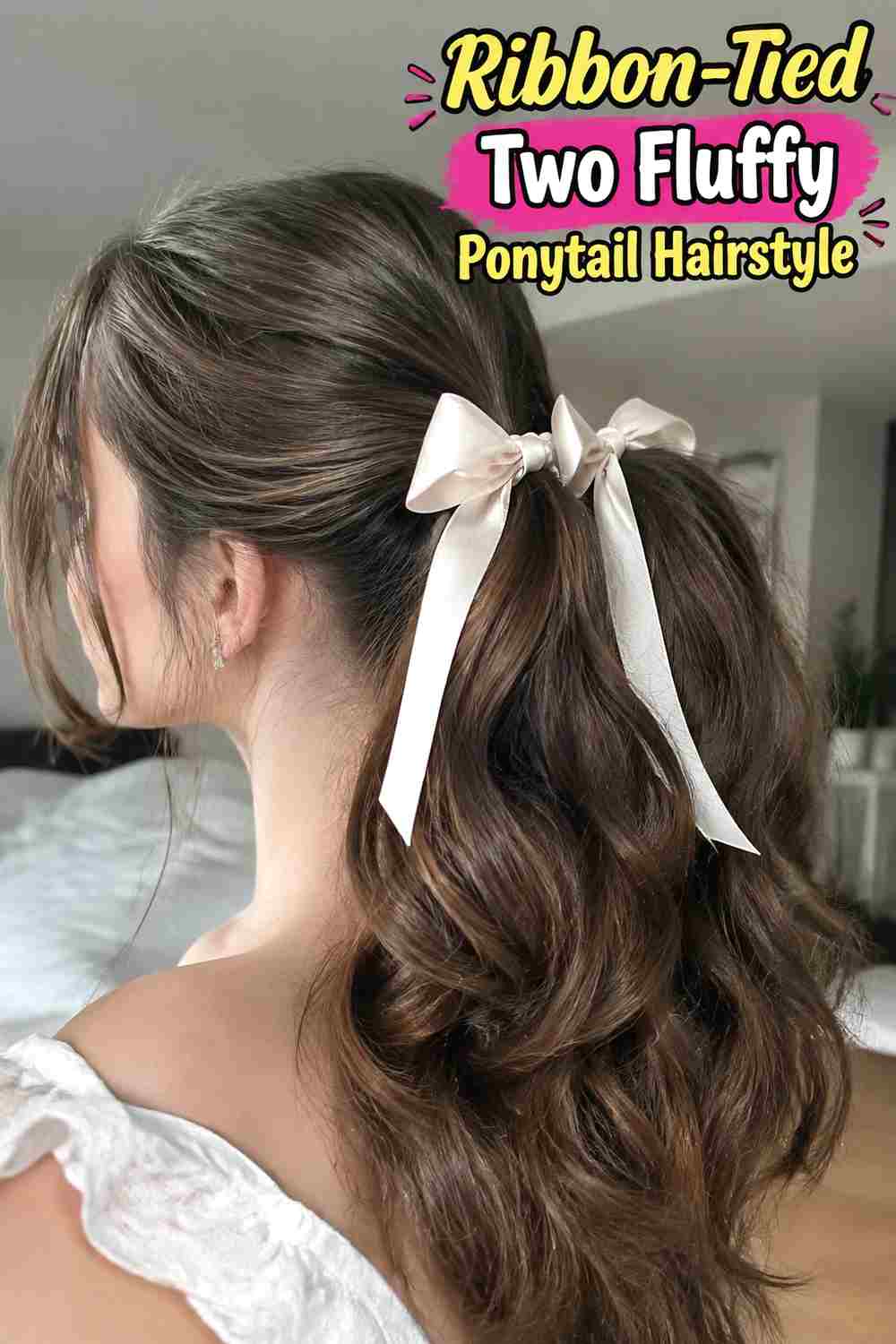
Ribbon-tied fluffy ponytails add a feminine decorative touch without changing the basic two-ponytail structure. After creating soft, full ponytails, wrap or tie a ribbon around each base so the accessory remains clearly visible against the texture. Satin, velvet-look, or simple matte ribbons can create different moods, but keeping both sides coordinated usually gives the cleanest result. The ponytails themselves can be curly, wavy, or coily, and medium-height placement makes the bows or ties easy to see. Choose ribbon widths that complement the amount of hair rather than overpowering the hairstyle. This is an easy way to make a familiar look feel more styled for photos, celebrations, dinners, or seasonal outfits.
Why It Works
The ribbons create a clear finishing detail while the fluffy ponytails provide enough volume to keep the accessories from becoming the only focal point.
Pro Tip
Secure each ponytail with a reliable hair tie first, then add the ribbon decoratively instead of relying on the ribbon alone for hold.
16. Ombre Two Fluffy Ponytail Hairstyle
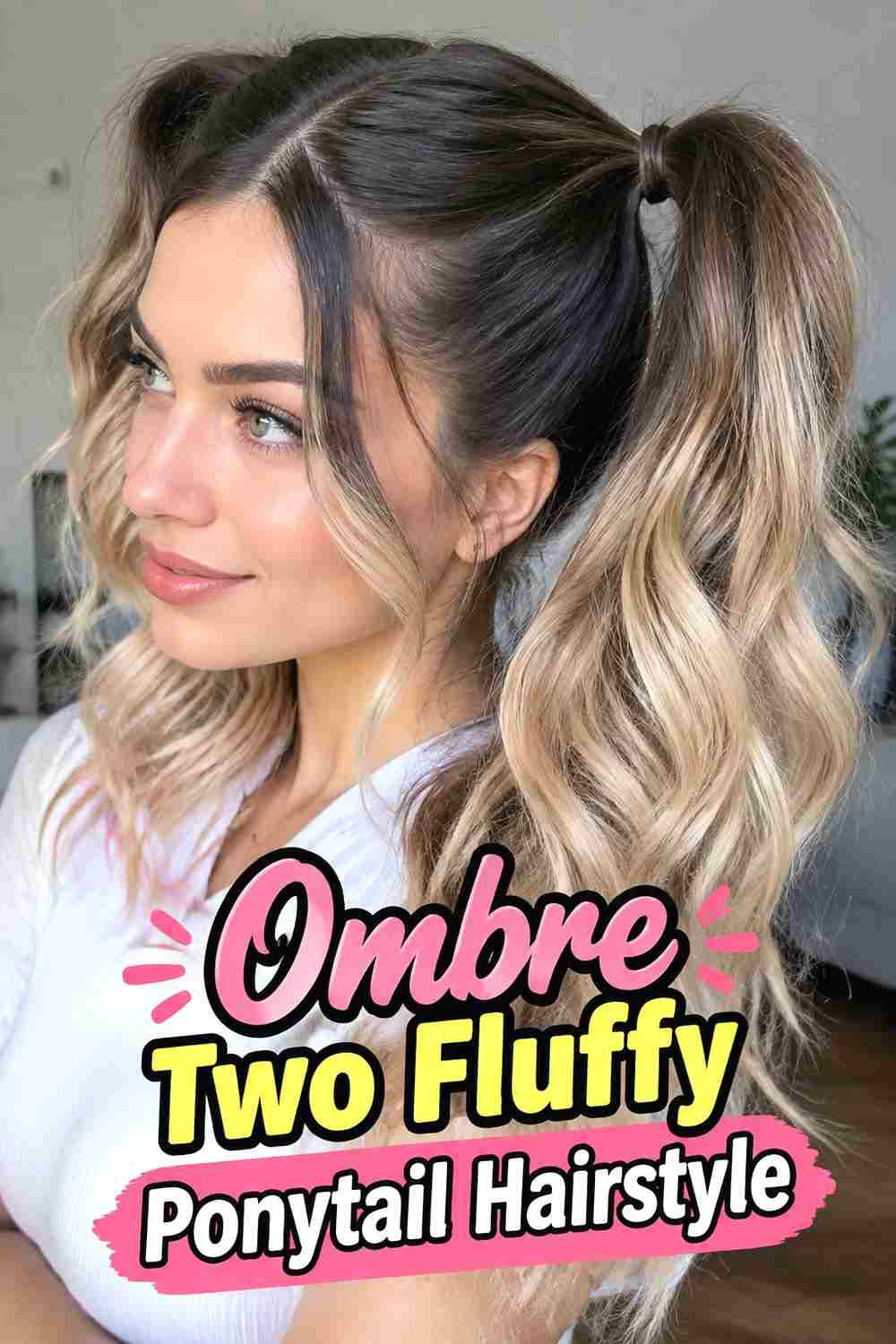
Ombre color adds dimension to two fluffy ponytails by allowing the texture to shift gradually from deeper roots into lighter ends. The transition can move from dark brown into caramel, black into warm chestnut, or another complementary combination that keeps the roots grounded while brightening the fluffy lengths. Curls and waves are especially effective because each bend catches the changing tones differently, making the ponytails look more dimensional in natural light. Medium or long lengths provide enough space for the gradient to develop gradually rather than appearing as a sharp color block. Keep both ponytails similarly blended so the overall style feels balanced, while allowing small tonal variations to maintain a believable, natural-looking finish.
Styling Notes
A gradual blend usually looks softer than beginning the lighter shade at exactly the same height across every strand.
Best For
This look works well when you want the two-ponytail silhouette to stay simple while color provides most of the extra visual interest.
How to Choose the Right Look
Start with ponytail height. High twin ponytails create the most lift and energy, while low ponytails give the same fluffy texture a softer, more relaxed finish. Medium placement offers a balanced option that works easily with curls, bangs, braids, and decorative details.
Next, think about texture and volume. Defined curls preserve visible spiral patterns, coily ponytails create naturally rounded fullness, and brushed or stretched textures give a softer cloudlike appearance. If your hair is shorter or less dense than the silhouette you want, added hair can create length or fullness, but the weight should remain comfortable at both bases.
Consider the front section as well. A middle part feels symmetrical and polished, a side part creates softer asymmetry, bangs introduce more coverage, and face-framing strands keep the style relaxed. Slicked roots offer the sharpest contrast with fluffy ponytails, while braided bases add detail without changing the basic shape.
Finally, decide how much daily maintenance fits your routine. Highly defined curls may need targeted refreshing, ribbons and bubble accents require occasional adjustment, and extra-long ponytails need more careful handling. The best choice is the version that gives you the volume you love while remaining comfortable and practical for how you actually wear your hair.
Final Thoughts
Two fluffy ponytails can look playful, polished, romantic, bold, or casual depending on how you adjust the height, parting, texture, length, and finishing details. Start with the ponytail placement that feels most comfortable, then add curls, braids, bangs, color, or accessories to create a version that matches your preferred style without sacrificing wearability.
FAQs
1. How can I make two ponytails look fluffier?
Gently expand the ponytail lengths with your fingers, separate curls where appropriate, and focus on shaping the outer silhouette instead of aggressively brushing or teasing the entire section.
2. Can short hair work for two fluffy ponytails?
Yes. Shorter hair can create compact fluffy puffs or small curly ponytails. Added hair can also be used when more length or volume is desired.
3. Should two fluffy ponytails be high or low?
Either placement works. High ponytails create more lift and energy, while low ponytails offer a softer, more relaxed appearance and may feel easier for longer wear.
4. How do I keep both ponytails looking even?
Begin with a clean part, divide the hair by density rather than only by visible width, and compare the height and fullness of both sides before finishing the texture.
5. What accessories work with two fluffy ponytails?
Ribbons, subtle clips, small cuffs, headbands, and decorative ties can all work. Choose lightweight accessories that support the style without hiding the fluffy texture.
Save your favorite two fluffy ponytail hairstyle ideas, share them for inspiration, and explore more playful ponytail looks for your next style.