12 Winter Braided Tuck Hairstyle Ideas
Braided tucks bring together soft winter texture, secure styling, and polished detail for an updo that looks beautiful with coats, scarves, and seasonal outfits.
Winter hairstyles often need to balance appearance with practicality. Braided tuck styles do that especially well because loose lengths are folded and pinned close to the head, helping create a neat silhouette without relying on a high bun or long ponytail. Depending on the braid, texture, and finish, the result can feel relaxed, romantic, sleek, or dressy.
When choosing a look, compare where the braid begins, how much volume you want around the crown, and how securely the tucked section needs to hold. Medium to long hair offers the most options, but some designs can also work on shorter lengths with smaller braids and extra pins. Texture, winter accessories, and the amount of time you want to spend styling can also help narrow your choice.
Quick List
- Classic Low Braided Tuck Hairstyle
- Loose Crown Braid Tuck Hairstyle
- Side Swept Braided Tuck Hairstyle
- Dutch Braid Nape Tuck Hairstyle
- French Braid Rolled Tuck Hairstyle
- Twisted Double Braid Tuck Hairstyle
- Soft Fishtail Tuck Hairstyle
- Scarf Wrapped Braided Tuck Hairstyle
- Pearl Pinned Braided Tuck Hairstyle
- Chunky Texture Braided Tuck Hairstyle
- Sleek Center Part Braided Tuck Hairstyle
- Romantic Face Framing Braided Tuck Hairstyle
1. Classic Low Braided Tuck Hairstyle
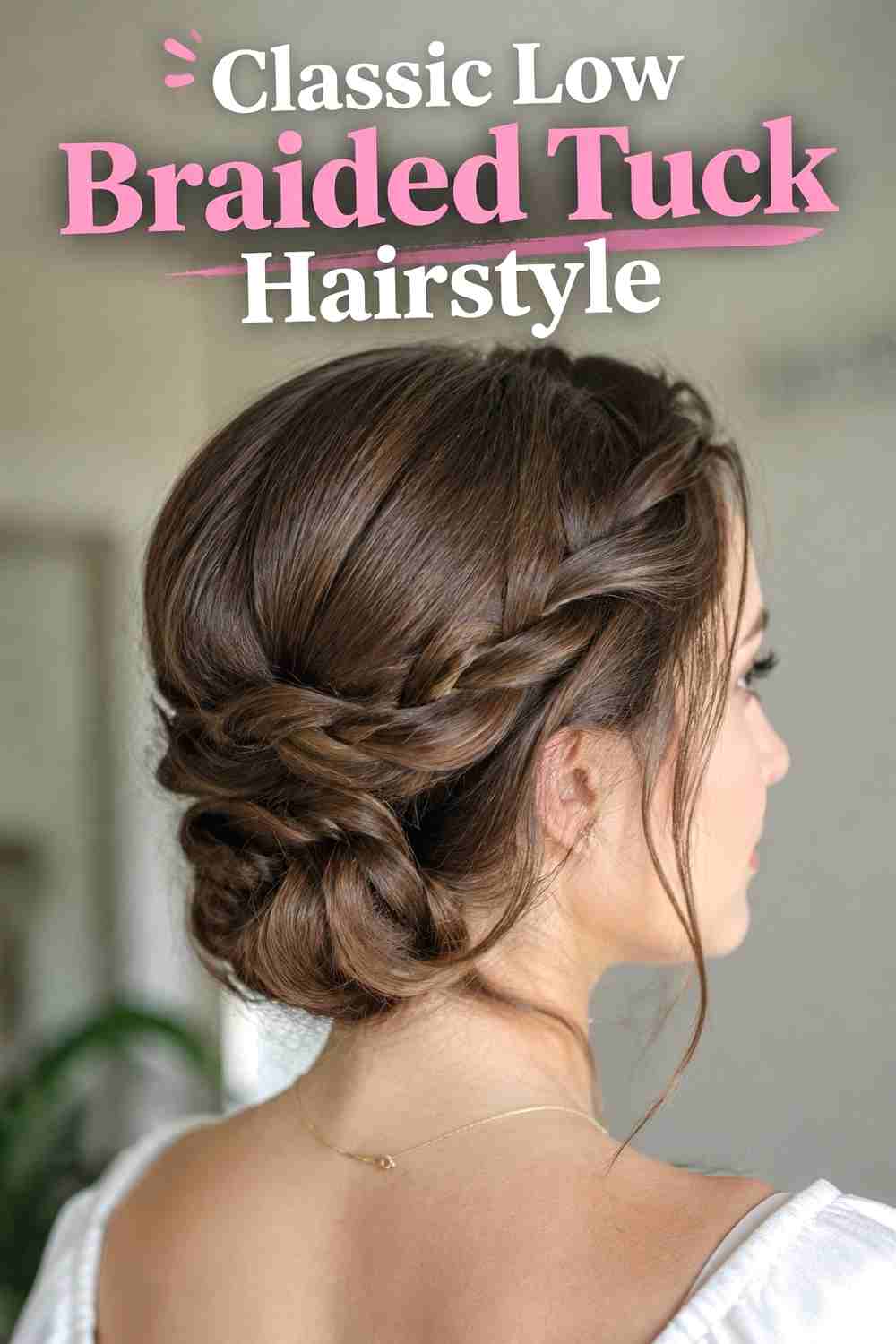
The Classic Low Braided Tuck Hairstyle keeps the shape simple and polished, making it an easy starting point for this winter updo trend. Hair is gathered low, braided into a traditional three-strand braid, and folded upward so the ends disappear beneath the finished roll. The result sits neatly at the nape with enough texture to keep it from looking overly formal. A little softness around the crown gives the style a natural finish, while secure pinning keeps the tucked braid compact. This look works especially well when you want hair off your shoulders beneath a coat or scarf without creating extra bulk at the back of the head.
Styling Notes
Use a small clear elastic at the end of the braid before folding it inward. Slide bobby pins through the tucked braid toward the scalp from several directions for balanced support.
2. Loose Crown Braid Tuck Hairstyle
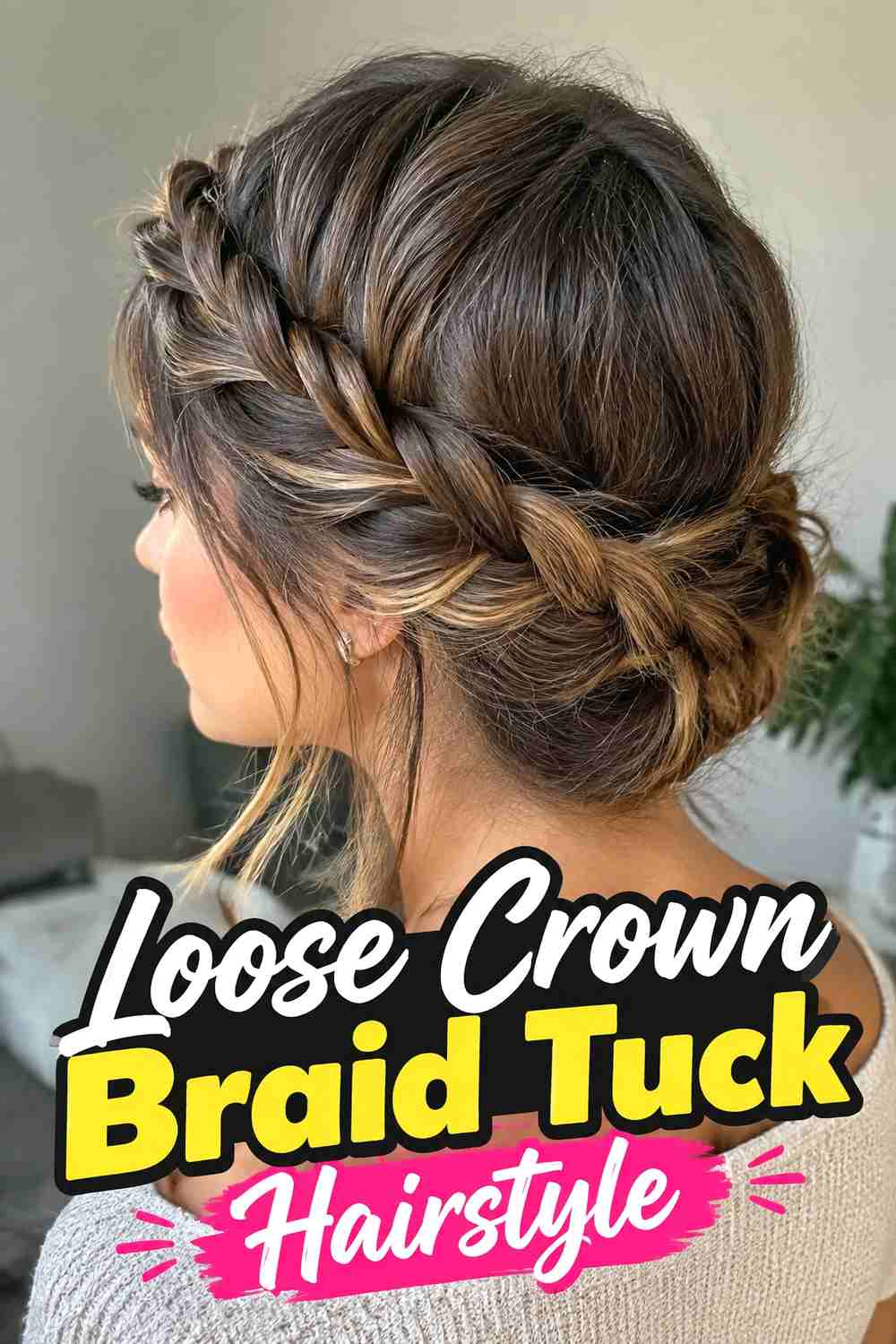
The Loose Crown Braid Tuck Hairstyle creates a softer silhouette by combining gentle volume around the crown with a braid that curves toward the back of the head. Instead of pulling every section tightly, the braid is lightly loosened after styling so individual loops appear wider and more relaxed. The remaining length is tucked underneath near the nape, leaving the finished shape rounded and airy rather than rigid. It has enough detail for winter dinners, photographs, or seasonal gatherings but still feels wearable for daytime. Slightly undone texture also makes this option forgiving when natural waves, curls, or a few wispy strands appear around the hairline.
Best For
Choose this style when you prefer softness rather than a tightly controlled updo. Medium to long hair with some natural body makes it easier to build visible crown texture without excessive teasing.
3. Side Swept Braided Tuck Hairstyle
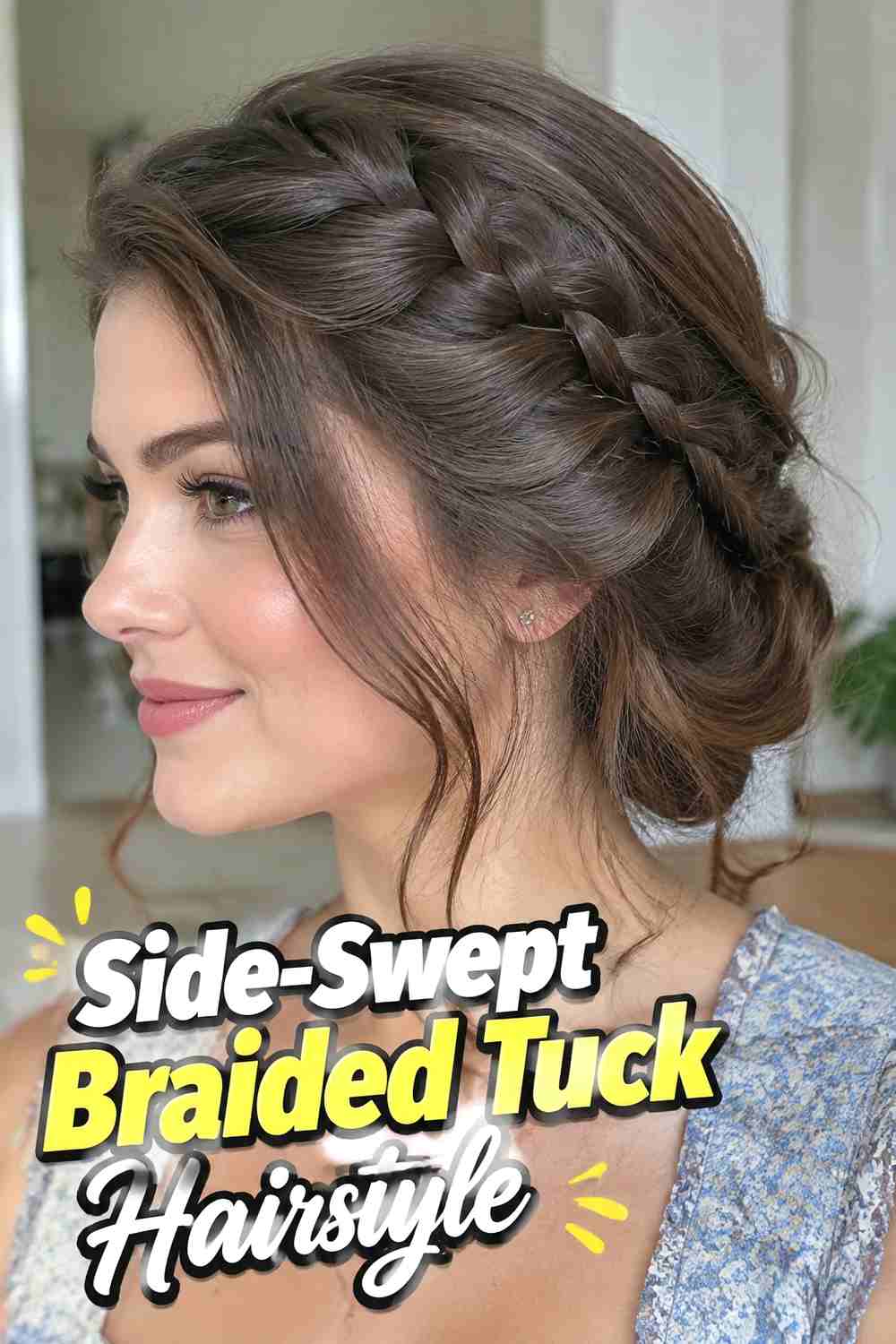
The Side-Swept Braided Tuck Hairstyle uses asymmetry to make a familiar tucked braid feel more distinctive. Hair begins with a side part, then the braid travels diagonally across the back before the remaining length is folded beneath itself near the opposite side of the nape. This directional shape highlights the braid pattern while creating a graceful sweep around the head. A few softly curved pieces near the temple can make the style feel relaxed, while a smoother finish gives it a more polished appearance. Because the visual interest sits slightly off-center, this hairstyle pairs especially well with statement earrings, high-neck winter outfits, or photos taken from several angles.
Pro Tip
Build the braid in the direction you want the finished tuck to sit. Trying to reposition a completed straight-back braid can create bumps and make the pins work harder.
4. Dutch Braid Nape Tuck Hairstyle
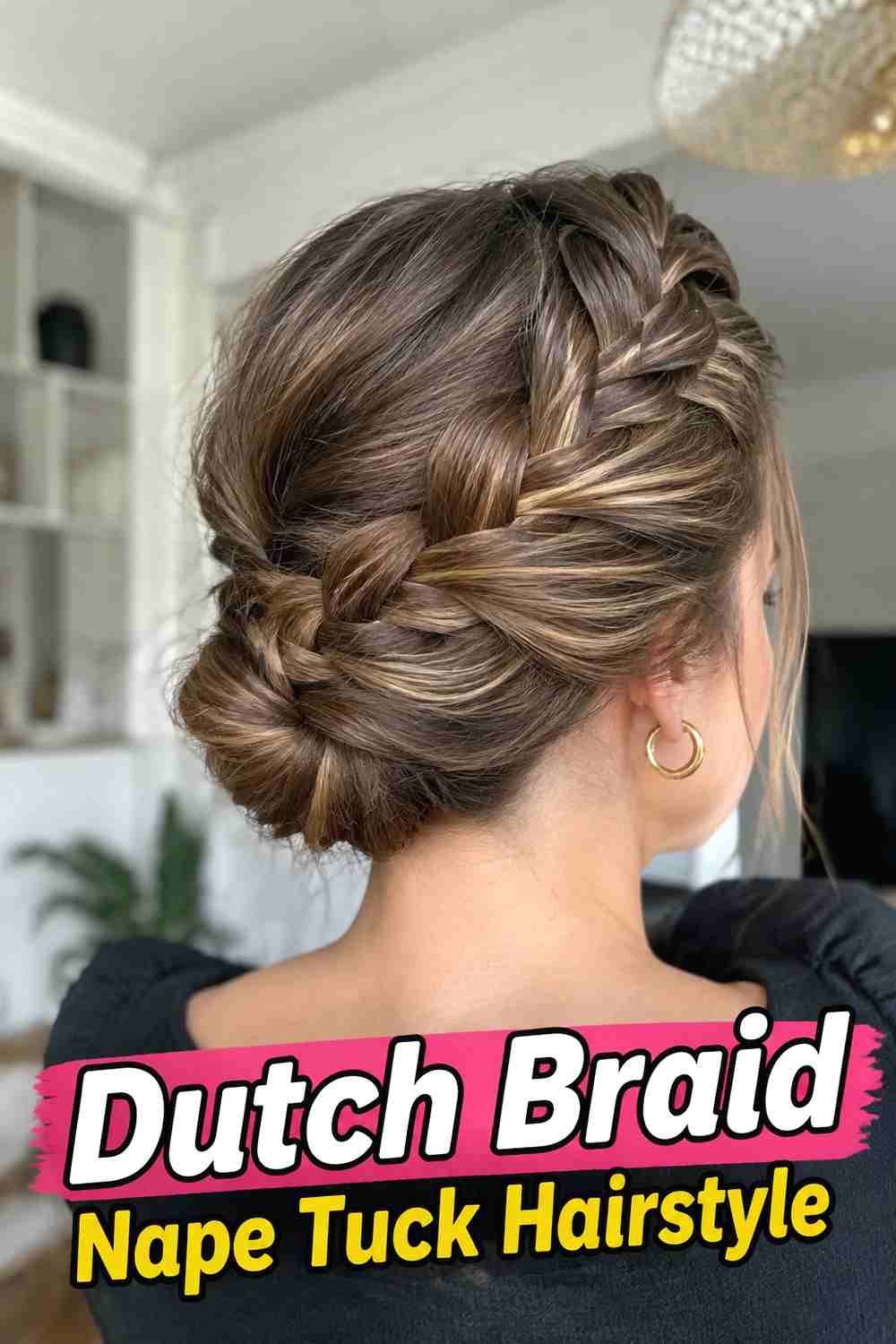
The Dutch Braid Nape Tuck Hairstyle gives the braid extra definition because each section crosses underneath rather than over the center. That structure makes the braid sit visibly on top of the hair as it travels from the crown toward the nape. Once the free-hanging section is complete, the tail is folded inward and pinned beneath the lower braid, creating a compact finish. The raised pattern looks especially attractive on dimensional hair colors because highlights and lowlights can emphasize each braided section. It is a practical winter choice when you want a secure updo that stays close to the head instead of competing with thick collars, hoods, or scarves.
Hair Type & Length
Medium and long lengths are easiest to tuck securely. Fine hair can be gently expanded after braiding for more width, while dense hair may need stronger pins to support the folded tail.
5. French Braid Rolled Tuck Hairstyle
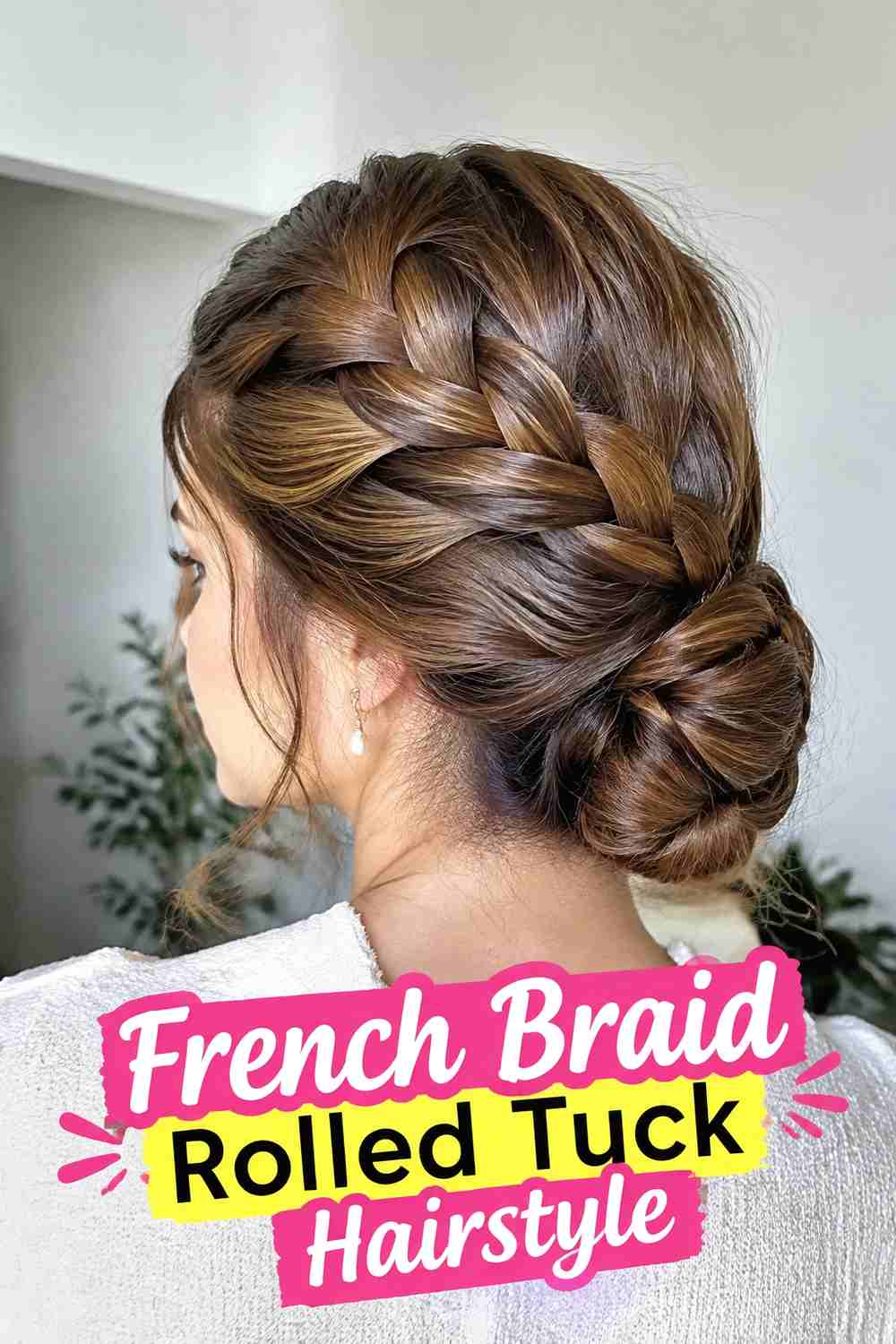
The French Braid Rolled Tuck Hairstyle blends a smooth braid through the upper section with a softly rolled finish at the nape. Hair is incorporated gradually into a French braid until the neckline is reached, then the remaining braid is rolled inward horizontally and secured underneath. This creates a continuous shape with no visible ponytail or loose ends. The style can be kept sleek for a refined winter event or loosened slightly through the crown for a softer daytime look. Because the roll distributes the length across the nape instead of concentrating it in one knot, it can also feel more balanced on longer hair when pinned carefully.
Wear & Maintenance
Mist the finished braid lightly with flexible-hold hairspray rather than saturating it. If you plan to wear a scarf, position the rolled section just high enough that repeated fabric movement does not rub directly against the pins.
6. Twisted Double Braid Tuck Hairstyle
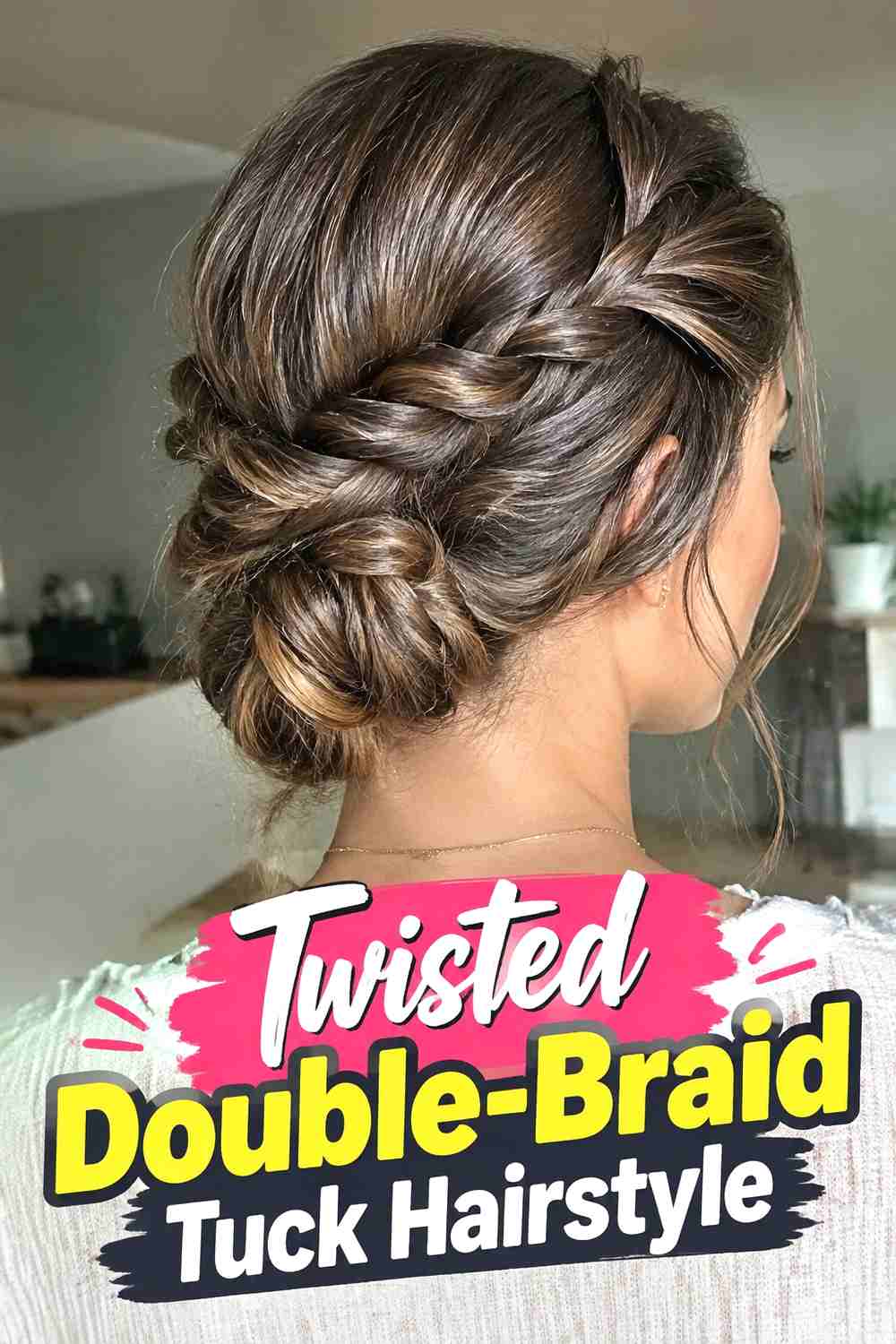
The Twisted Double-Braid Tuck Hairstyle divides the hair into two sections, creating a more detailed shape without requiring an especially complicated braiding technique. Each side is braided separately, then the two braids are crossed, curved, or twisted toward one another at the nape before their ends are hidden underneath. The overlapping pattern gives the finished updo dimension from the back and creates a balanced appearance from either side. This is a useful option for thicker or longer hair because dividing the length can make each braid easier to control. The final result can look relaxed with widened braid loops or more structured when every section is kept smooth and compact.
Why It Works
Two smaller braids distribute hair more evenly than one large braid. They also create several natural places for pins to anchor, which can help the tucked shape feel stable without one oversized central roll.
7. Soft Fishtail Tuck Hairstyle
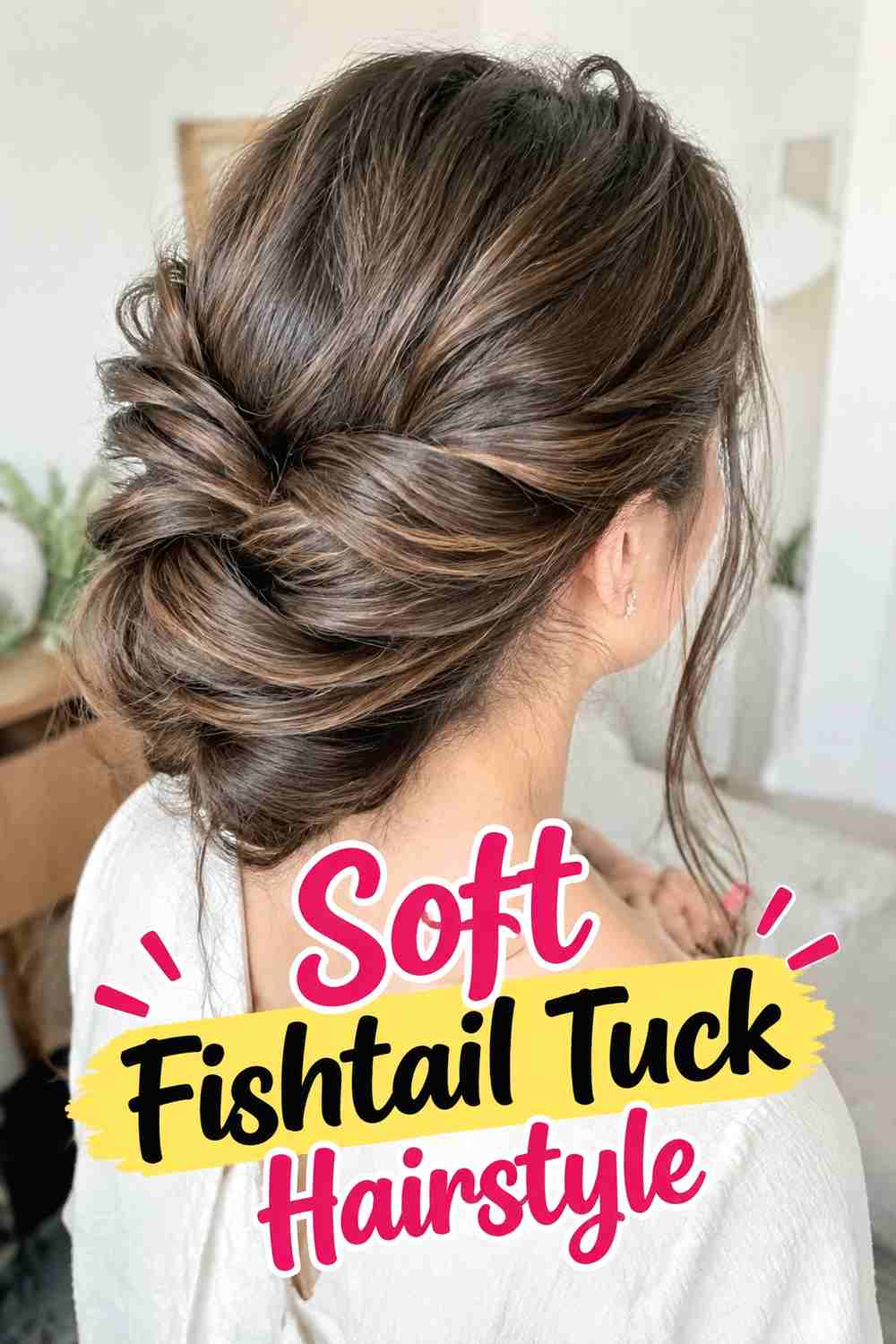
The Soft Fishtail Tuck Hairstyle has a finer, more intricate texture than a traditional three-strand braid. Small sections are crossed from side to side to form the fishtail pattern, then the completed braid is gently expanded before being folded underneath at the nape. Loosening the braid is what gives this hairstyle its soft winter look, as the pattern becomes wider and more visible without losing its delicate detail. The tucked finish keeps the overall silhouette compact while allowing the fishtail texture to remain the focus. It is especially pretty for seasonal dinners, indoor celebrations, or dressier days when you want an updo that feels detailed without adding decorative accessories.
Styling Notes
Avoid making the initial fishtail too loose. Start with moderate tension, secure the end, and then carefully pull the outer edges apart so you can control exactly where the volume appears.
8. Scarf Wrapped Braided Tuck Hairstyle
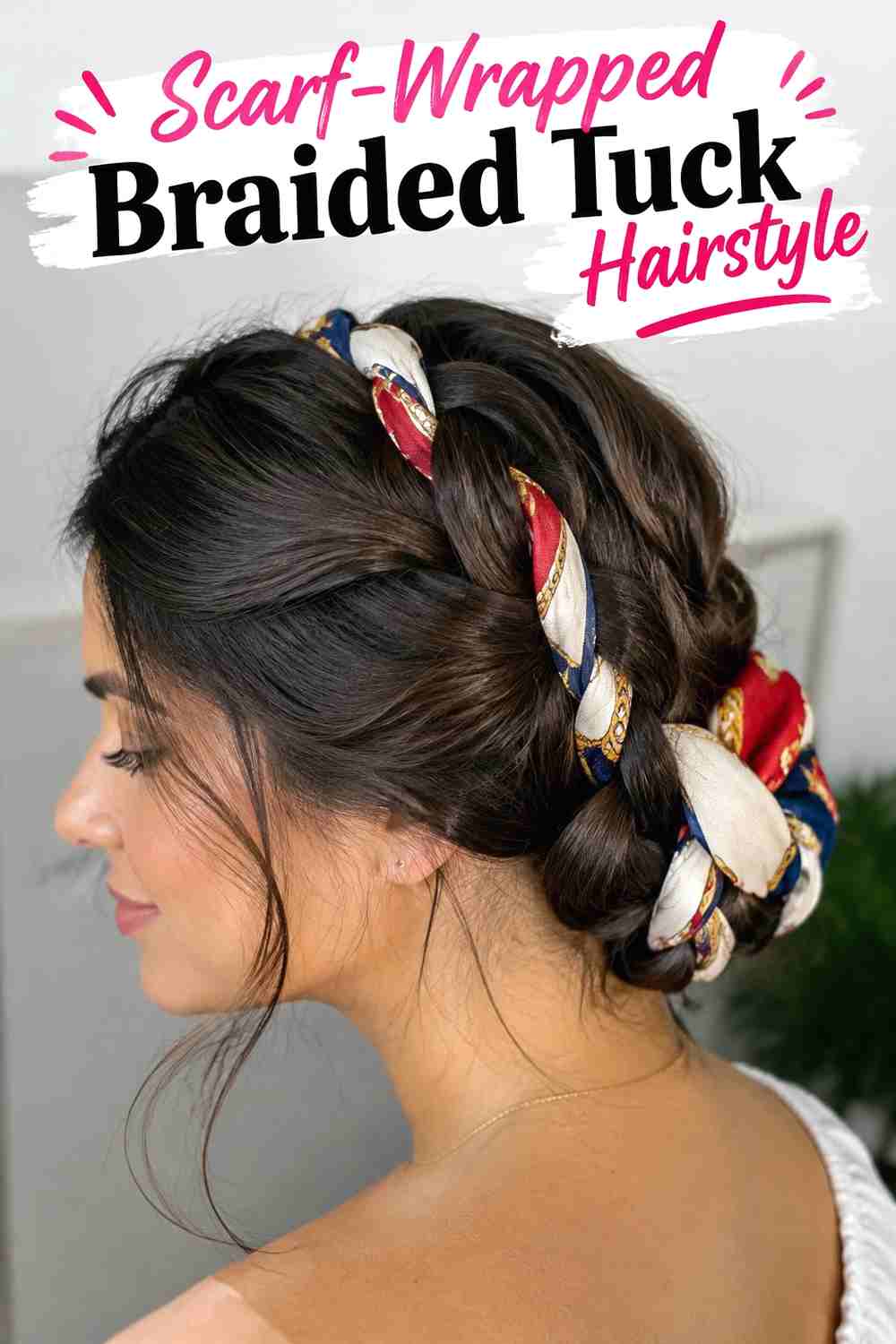
The Scarf-Wrapped Braided Tuck Hairstyle adds a seasonal accessory directly into the finished look. A narrow scarf or ribbon can be woven beside the braid, wrapped around its base, or placed around the tucked section after the hair is secured. The braid itself stays low and compact, while the fabric introduces color, pattern, and winter personality without requiring elaborate hair jewelry. A satin or smooth lightweight scarf keeps the result refined, while a soft printed fabric can make it feel more casual. Keep the accessory narrow enough that the braid remains visible, since the goal is to complement the tucked texture rather than cover the hairstyle completely.
Best For
This version works especially well with simple coats, sweaters, and monochrome outfits where a small patterned accessory can add contrast. Secure the hairstyle first, then position the scarf so it does not carry the weight of the tuck.
9. Pearl Pinned Braided Tuck Hairstyle
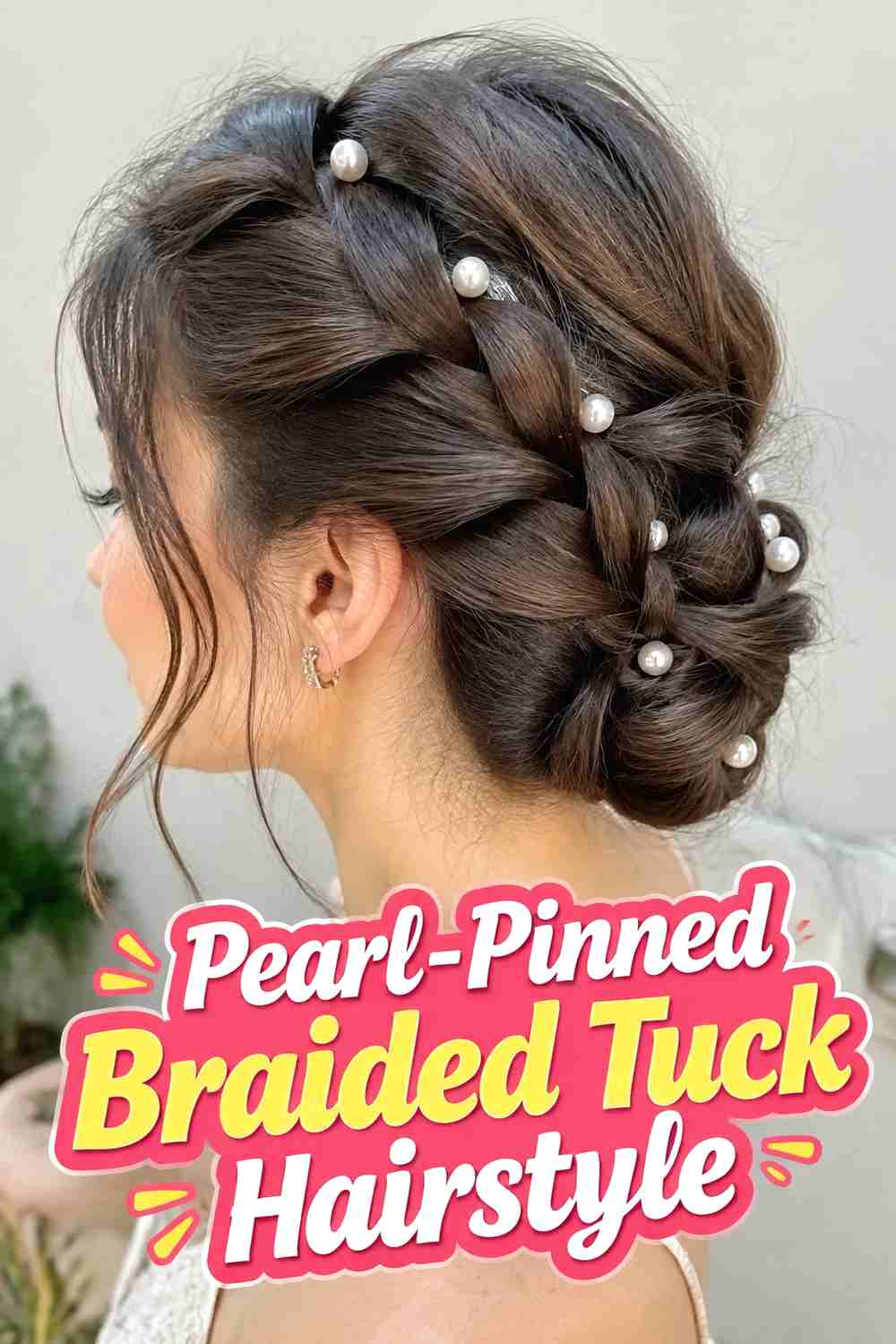
The Pearl-Pinned Braided Tuck Hairstyle turns a simple tucked braid into a more occasion-ready winter updo. After the braid is folded and secured at the nape, pearl pins are placed selectively along the braided ridges or near the upper edge of the roll. Keeping the embellishments spaced apart allows the texture of the hair to remain visible while still adding a subtle decorative finish. This style works beautifully for winter weddings, holiday dinners, engagement events, or any setting where a regular braid might feel too casual. Soft crown volume can make the look romantic, while a smoother top section gives the pearls and braid a cleaner, more contemporary appearance.
Pro Tip
Add decorative pearl pins only after structural bobby pins have fully secured the hairstyle. Hair accessories should finish the look rather than serve as the main support for the tucked braid.
10. Chunky Texture Braided Tuck Hairstyle
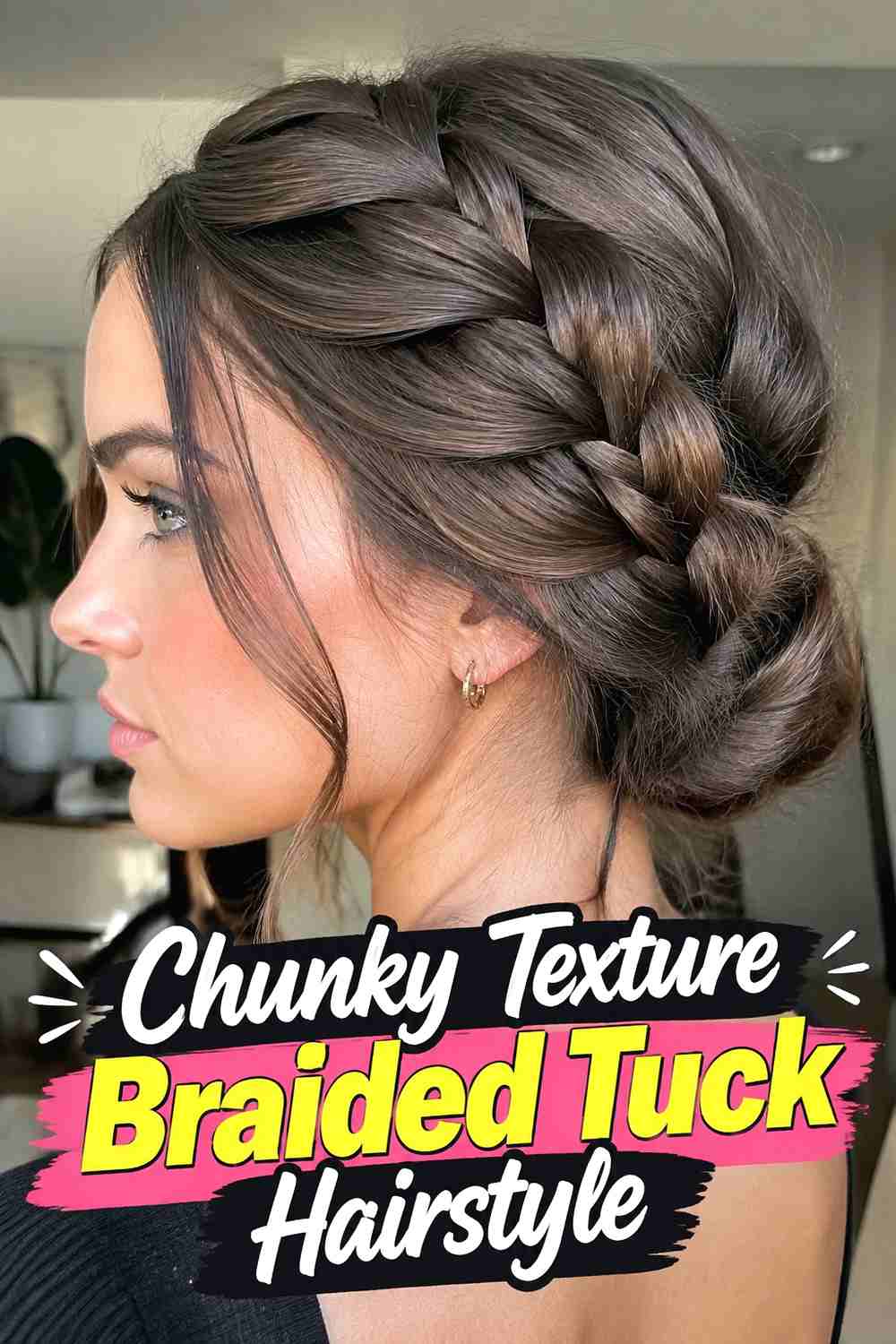
The Chunky Texture Braided Tuck Hairstyle emphasizes width, softness, and visible braid definition. The braid is created with moderate tension and then carefully pancaked by pulling small sections outward, making each loop look broader before the length is tucked beneath itself. This creates a fuller appearance that photographs particularly well from the back and three-quarter angles. Natural waves or lightly textured hair can make the style feel even more dimensional because a little movement remains around the crown and sides. Although the braid appears substantial, the tucked base keeps the silhouette controlled, making it a practical choice when you want noticeable volume without leaving long hair loose over winter layers.
Hair Type & Length
Medium-long to long hair gives this style enough material for a broad braid and visible tuck. If your hair is very smooth, a small amount of texture spray can add grip before braiding.
11. Sleek Center Part Braided Tuck Hairstyle
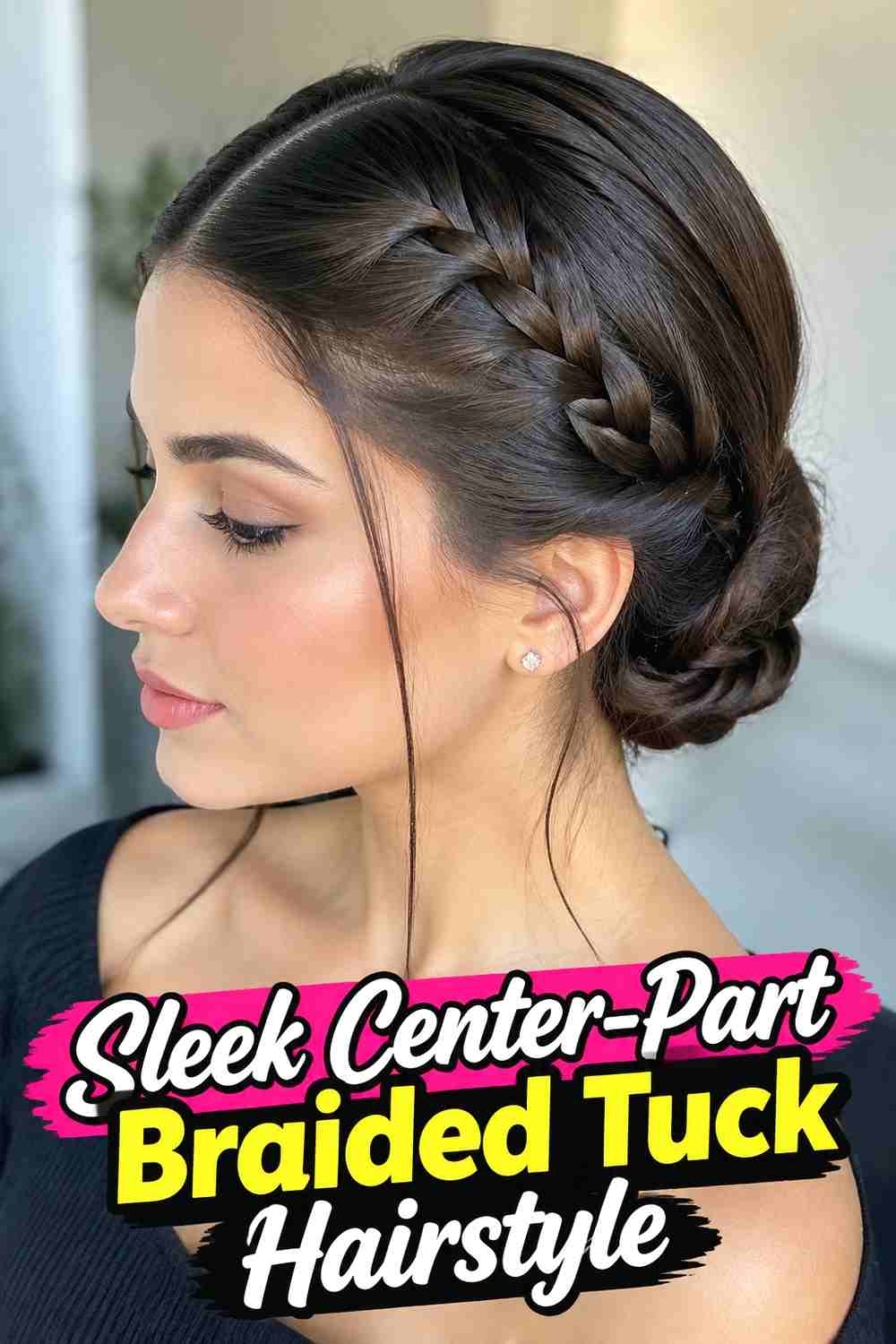
The Sleek Center-Part Braided Tuck Hairstyle offers a cleaner, more minimalist alternative to soft and tousled winter braids. A precise center part creates symmetry through the front, while the lengths are directed smoothly toward a low braid at the back. The braid is then folded inward and pinned close to the nape for a compact finish. Instead of pulling sections outward for volume, the surface remains controlled and polished, letting the braid pattern provide the main texture. This look pairs naturally with tailored coats, high necklines, and simple accessories. It can also be a good choice when you want an updo that feels modern and deliberate rather than romantic or intentionally undone.
Wear & Maintenance
Use a light smoothing product through the surface rather than heavy gel if you still want natural movement. Check that the nape pins are fully hidden, since the sleek finish makes exposed hardware more noticeable.
12. Romantic Face Framing Braided Tuck Hairstyle
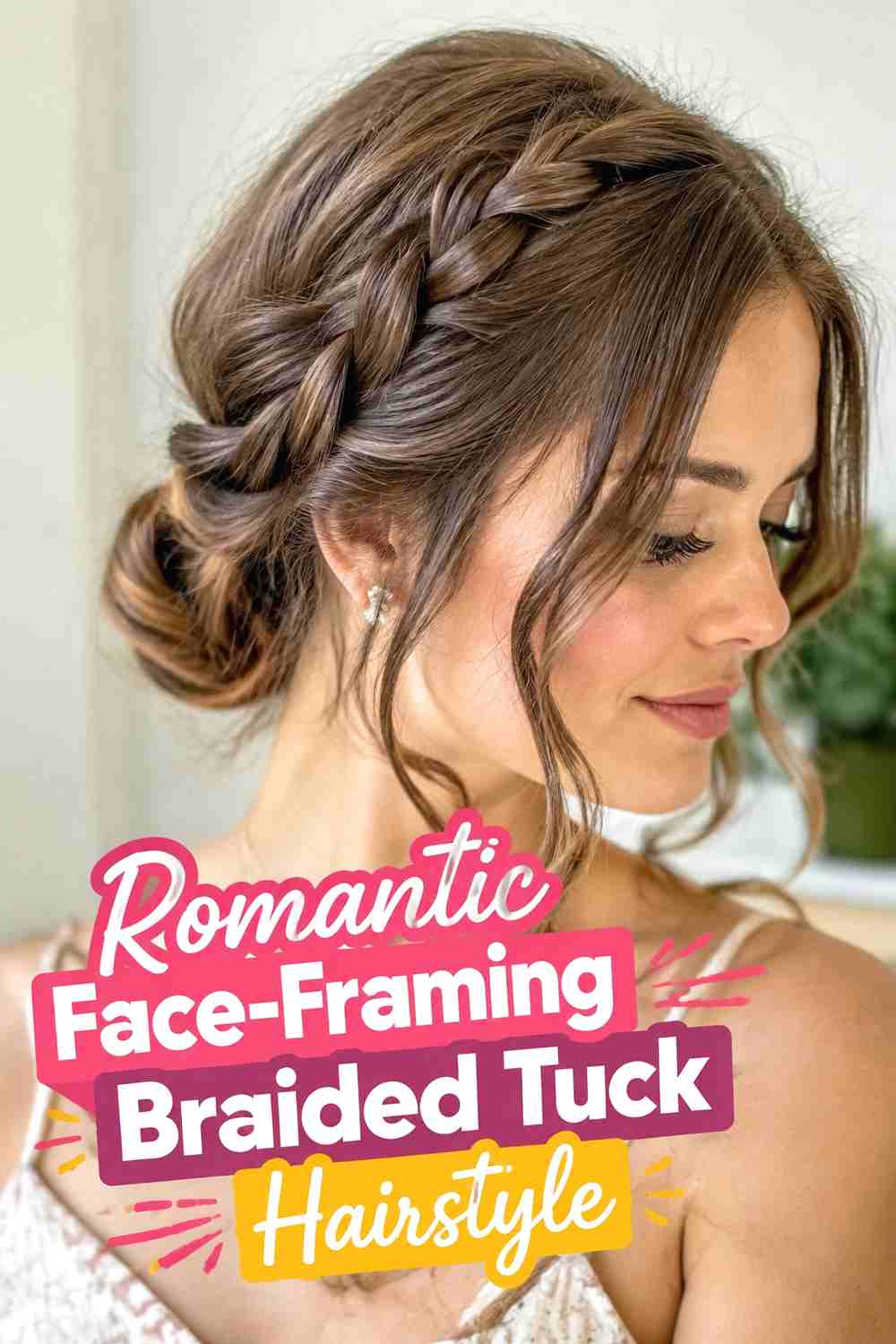
The Romantic Face-Framing Braided Tuck Hairstyle combines a softly secured back with loose pieces around the front for an intentionally relaxed finish. The main length is braided and tucked at the nape, while a few fine sections near the temples and hairline are left free or gently curved. This contrast keeps the updo from feeling too structured and works especially well with naturally wavy texture. The front pieces should remain light enough that they complement the braid rather than overwhelm the face. For winter occasions, the style offers a practical balance: most of the hair stays securely lifted away from coats and scarves while the softer edges preserve movement and a romantic, effortless appearance.
Why It Works
The tucked braid provides structure while the face-framing pieces soften the outline. Adjust how many strands you leave loose according to your texture, weather conditions, and how polished you want the final result to feel.
How to Choose the Right Look
Start with your hair length and density. Medium-length hair often works well with compact low tucks, while longer hair gives you more material for fishtails, chunky braids, double-braid designs, and wider rolled sections. If your hair is very thick, splitting it into two braids can make the finished style easier to pin securely.
Texture also changes the result. Waves and curls naturally add softness and volume, while straight hair can create a cleaner, more defined braid. Fine or slippery hair may benefit from a little texture spray before braiding, whereas dense or textured hair may simply need enough pins to support the tucked section comfortably.
Think about winter clothing as well. Low rolls can rub against thick scarves or high collars, so slightly higher placement may be more comfortable when you are wearing bulky layers. For everyday wear, a classic low tuck, French braid roll, or Dutch braid can provide practical hold. For dinners and seasonal events, pearl pins, fishtail texture, scarf accents, or soft face-framing strands can make the hairstyle feel more decorative.
Finally, match the finish to your styling time. Sleek center-part looks require careful smoothing, while loose crown and chunky braids are more forgiving of natural texture. Whatever style you choose, prioritize comfortable tension and secure pins over making the braid unnecessarily tight.
Final Thoughts
Winter braided tuck hairstyles offer plenty of variety while keeping the overall shape neat and wearable. Choose a sleek version for a polished finish, loosen the braid for softness and volume, or introduce pearls and scarves when you want something more decorative. Small adjustments to braid type, placement, texture, and accessories can make the same basic tucked technique suit everyday outfits or special winter occasions.
FAQs
1. What hair length is best for a braided tuck hairstyle?
Medium to long hair is generally easiest because there is enough length to create a visible braid and fold the ends underneath. Some shorter medium-length cuts can still work with smaller braids and careful pinning.
2. How do I keep a braided tuck secure all day?
Secure the braid with a small elastic first, then use several bobby pins placed from different directions. Crossing a few pins beneath the tucked section can provide extra support for heavier hair.
3. Can braided tuck hairstyles work with curly hair?
Yes. Natural curls can give braided tucks attractive volume and texture. You can keep the curl pattern visible for a softer finish or smooth selected sections first if you prefer more braid definition.
4. Which braided tuck works best with winter scarves?
Compact styles such as the Dutch Braid Nape Tuck Hairstyle or Classic Low Braided Tuck Hairstyle can work well, especially when positioned so the finished roll does not sit directly where a thick scarf rubs against the neck.
5. Can I add winter accessories to a braided tuck?
Yes. Slim scarves, ribbons, pearl pins, decorative clips, and understated metallic pins can all complement a tucked braid. Add decorative pieces after the hairstyle is structurally secure so they do not need to support its weight.
Save your favorite winter braided tuck hairstyles for your next cold-weather look, and share the ideas with someone who loves polished braided updos.