13 Side-Swept Wispy Bangs Hairstyles for Soft Face-Framing Style
Soft, airy, and easy to personalize, these side-swept wispy bangs hairstyles bring light movement and face-framing polish to everyday cuts and updos.
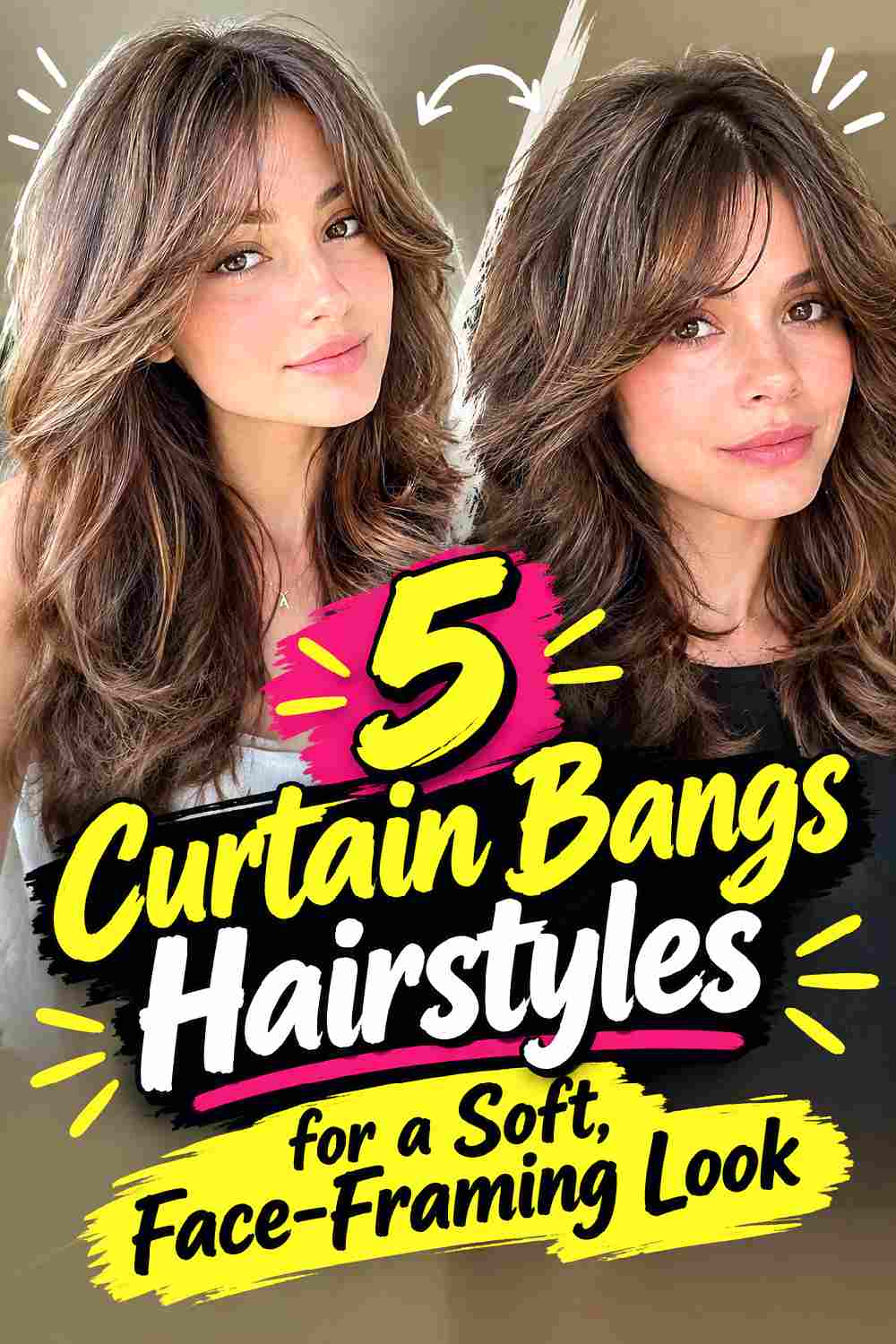
Side-swept wispy bangs are less about creating a heavy fringe and more about adding a delicate veil of hair that moves naturally across the forehead. They can soften a structured bob, blend into long layers, add interest to curls, or make a simple ponytail feel more finished without completely changing the rest of the haircut.
As you compare these ideas, pay attention to fringe length, density, natural texture, part placement, and how much daily styling you realistically want to do. The strongest results keep individual strands, believable movement, and natural volume rather than forcing the bangs into an overly stiff shape.
Quick List
- Soft Layered Lob With Side Swept Wispy Bangs Hairstyle
- Long Feathered Layers With Side Swept Wispy Bangs Hairstyle
- Chin Length Bob With Side Swept Wispy Bangs Hairstyle
- Textured Shag With Side Swept Wispy Bangs Hairstyle
- Sleek Straight Hair With Side Swept Wispy Bangs Hairstyle
- Loose Waves With Side Swept Wispy Bangs Hairstyle
- Shoulder Length Blowout With Side Swept Wispy Bangs Hairstyle
- Soft Curls With Side Swept Wispy Bangs Hairstyle
- Pixie Bob With Side Swept Wispy Bangs Hairstyle
- High Ponytail With Side Swept Wispy Bangs Hairstyle
- Low Bun With Side Swept Wispy Bangs Hairstyle
- Half Up Hair With Side Swept Wispy Bangs Hairstyle
- Face Framing Balayage With Side Swept Wispy Bangs Hairstyle
1. Soft Layered Lob With Side Swept Wispy Bangs Hairstyle
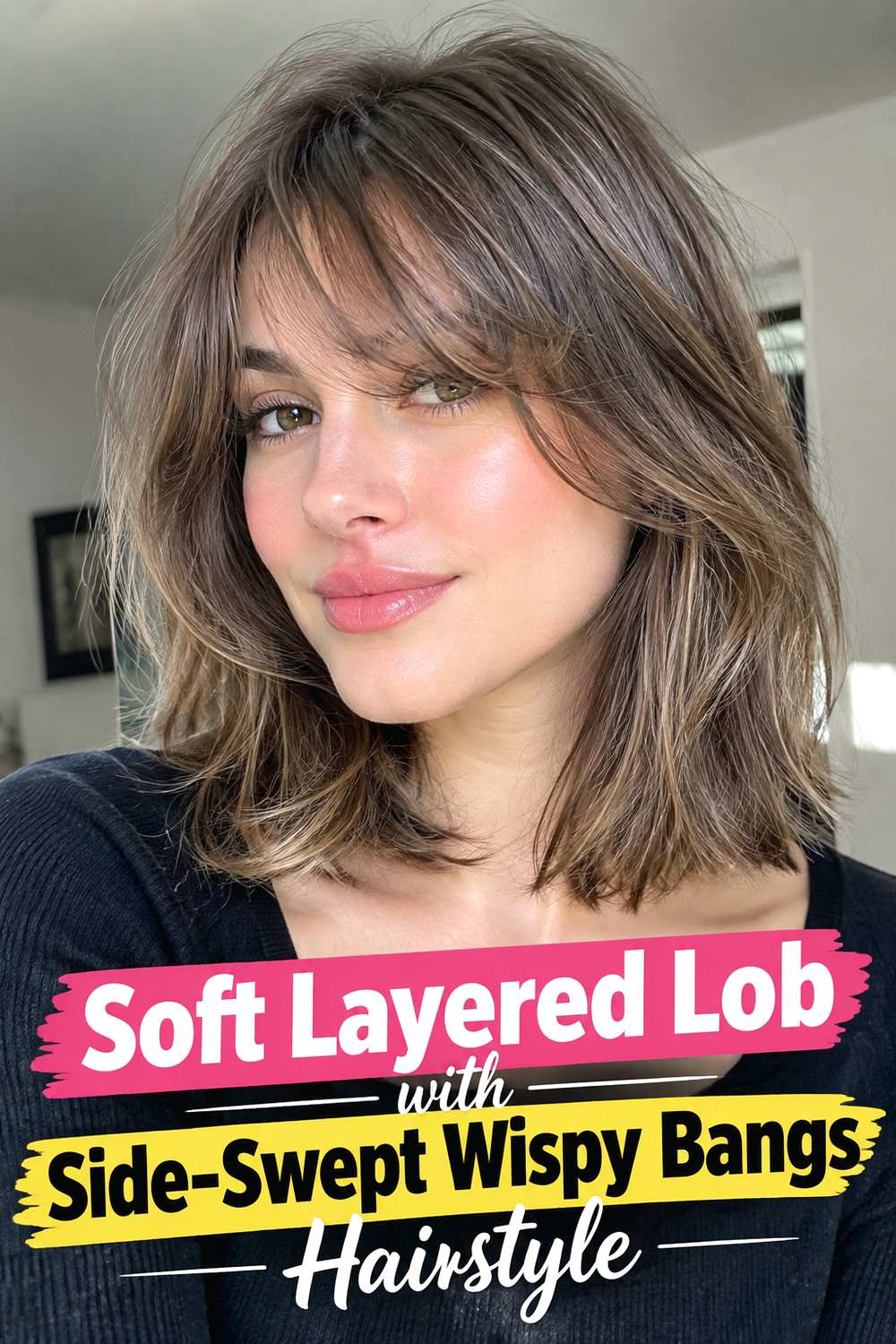
A layered lob gives side-swept wispy bangs enough length around the face to blend smoothly instead of looking disconnected from the haircut. The main shape sits around the shoulders or collarbone, while light interior layers create movement through the ends. Across the forehead, the fringe stays airy, with a few shorter pieces near the brow and longer strands sweeping toward one cheek. This combination works especially well when you want a polished cut that still feels relaxed. A soft blow-dry can emphasize the layers, but the shape also looks attractive with slight bends or natural texture. Keeping the ends light rather than overly blunt helps the bangs flow naturally into the front sections.
Styling Notes
Direct the fringe toward one side while drying, then bend the longer ends away from the face with a round brush or large hot brush. Avoid loading the bangs with heavy oils or creams, which can separate fine pieces too much.
2. Long Feathered Layers With Side Swept Wispy Bangs Hairstyle
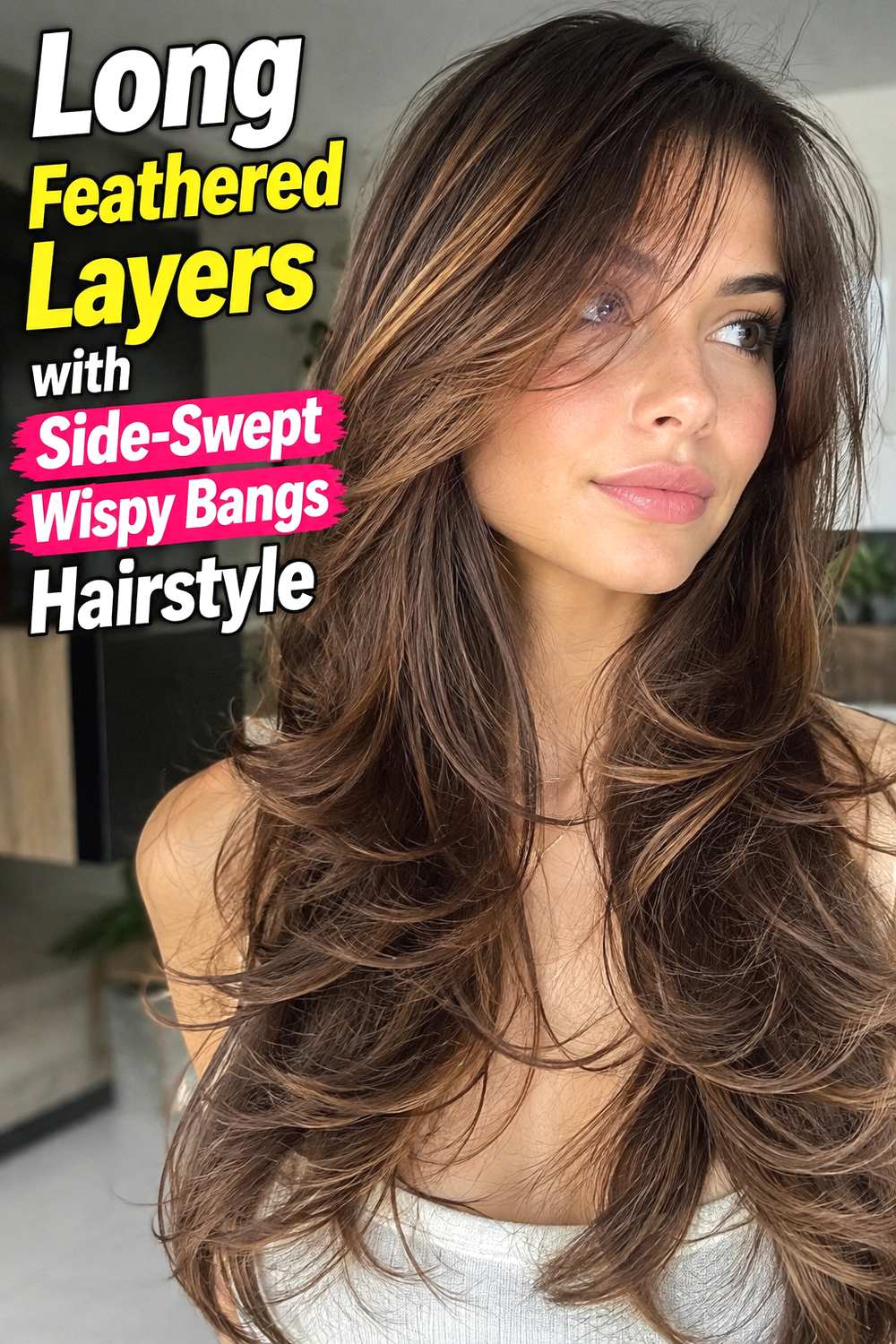
Long feathered layers create a flowing silhouette that makes wispy bangs feel like the beginning of the haircut rather than a separate fringe. The shortest pieces skim the forehead and cheekbone, while progressively longer layers move through the sides and ends. This creates plenty of softness around the face without sacrificing overall length. The style is especially appealing when the hair has enough movement to show the feathered shape, whether naturally or through a light blowout. Side-swept bangs can also help break up the visual weight of very long hair. For everyday wear, keep the fringe flexible and slightly imperfect instead of curling it into one solid piece, which preserves the light, modern finish.
Hair Type & Length
This look is easiest to see on medium to long hair with straight, wavy, or easily smoothed texture. Fine hair can use fewer layers, while dense hair may benefit from careful weight removal through the front and lower lengths.
3. Chin Length Bob With Side Swept Wispy Bangs Hairstyle
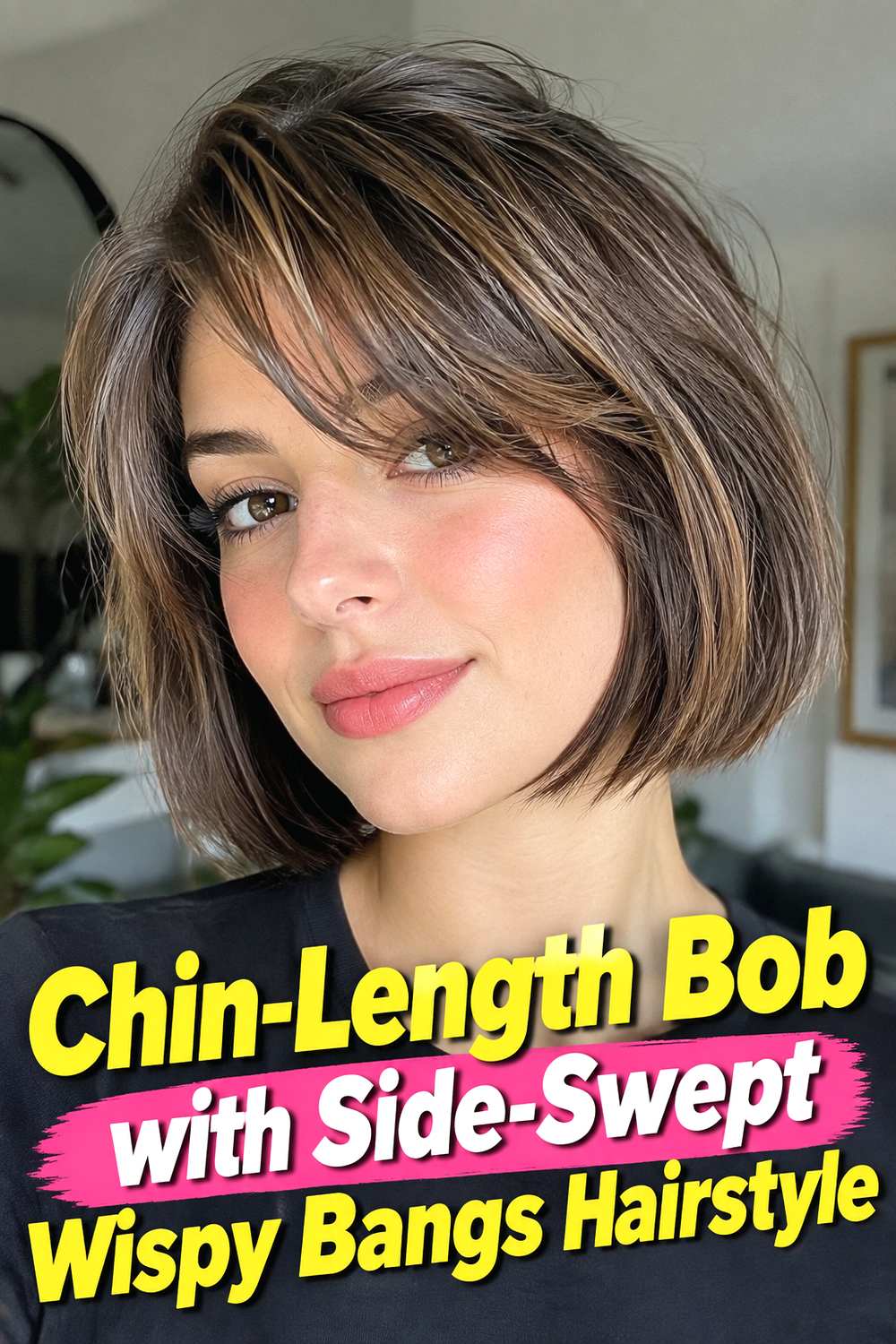
A chin-length bob feels sharper and more architectural than longer cuts, so a wispy side fringe is a useful way to soften its outline. The bob can remain clean around the jaw while the bangs introduce a lighter texture across the forehead. Rather than cutting a thick diagonal section, the fringe looks best when it contains fine, separated strands that gradually become longer toward the side. That contrast keeps the haircut crisp without making it severe. A subtle curve at the ends can make the bob feel more polished, while a straighter finish creates a minimalist effect. Because every detail is visible at this length, regular trims help preserve both the jawline shape and the delicate transition into the bangs.
Wear & Maintenance
Shorter bobs lose their intended silhouette faster than long layered cuts, so expect more frequent shape maintenance. On non-wash days, refreshing only the bangs can often make the entire haircut look newly styled.
4. Textured Shag With Side Swept Wispy Bangs Hairstyle
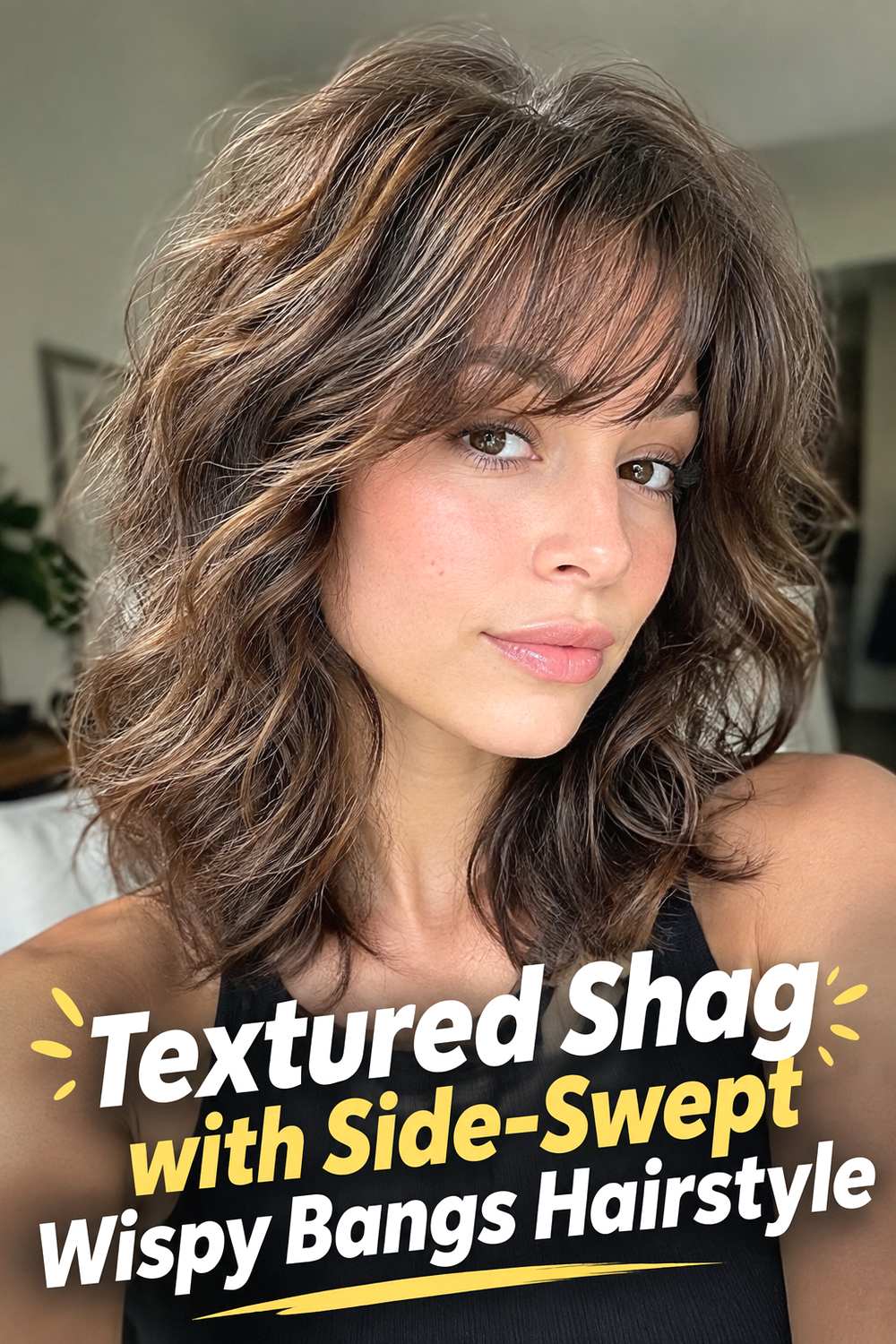
The textured shag naturally suits wispy bangs because both elements depend on uneven, airy movement rather than a perfectly controlled finish. Choppy layers around the crown and cheekbones create lift, while the side-swept fringe blends into those shorter face-framing sections. Instead of sitting flat against the forehead, the bangs can separate into loose pieces that follow the natural direction of the hair. This hairstyle looks particularly expressive with soft waves, bends, or slightly tousled texture through the lengths. The goal is movement, not frizz, so lightweight styling products generally work better than heavy creams. Letting some pieces flip outward around the cheeks and ends adds to the lived-in character that makes the shag distinctive.
Why It Works
A shag already contains multiple layer lengths, so a wispy fringe has natural places to blend as it grows. That makes the transition between bangs and the rest of the haircut feel intentional rather than abrupt.
Pro Tip
Apply texture product mainly through the mid-lengths and ends. Using too much directly on the fringe can weigh down the fine pieces that give this look its airy character.
5. Sleek Straight Hair With Side Swept Wispy Bangs Hairstyle
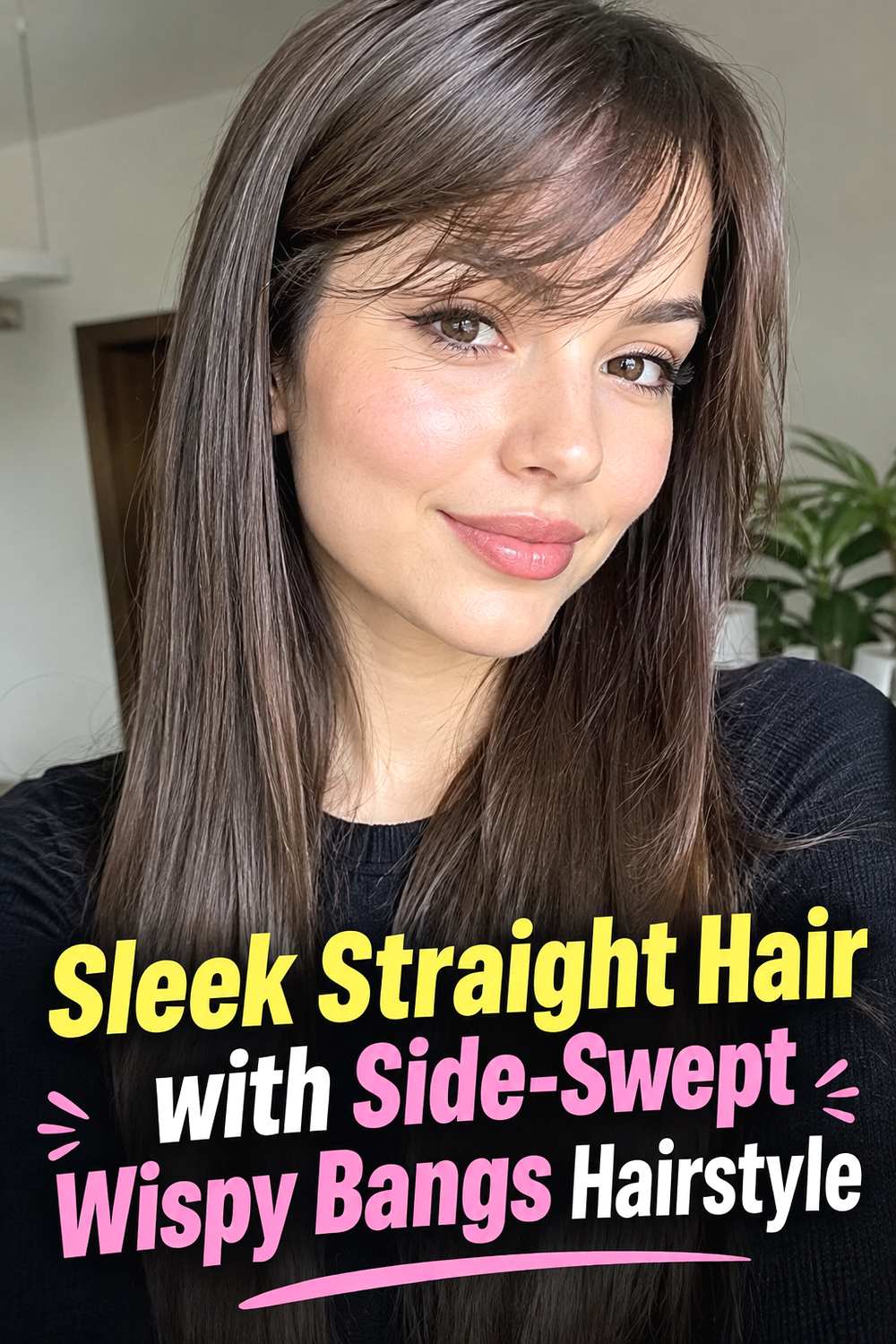
Straight hair gives side-swept wispy bangs a clean backdrop, making each fine strand visible and emphasizing the diagonal movement across the forehead. The lengths can remain smooth and simple while the fringe adds a small but noticeable change around the face. A few longer pieces near the temple help connect the bangs to the rest of the hair, preventing a disconnected or overly blunt appearance. This is a good option for anyone who prefers a refined finish without adding curls or heavy layering. The key is maintaining natural movement: sleek should still look touchable rather than stiff or flat. A small amount of lift at the roots and a slight bend through the fringe can keep the overall style from appearing overly severe.
Styling Notes
Use heat only as needed to smooth the surface, then sweep the fringe sideways rather than pressing it completely flat. A light anti-frizz product on the lengths can add polish without making the bangs greasy.
6. Loose Waves With Side Swept Wispy Bangs Hairstyle
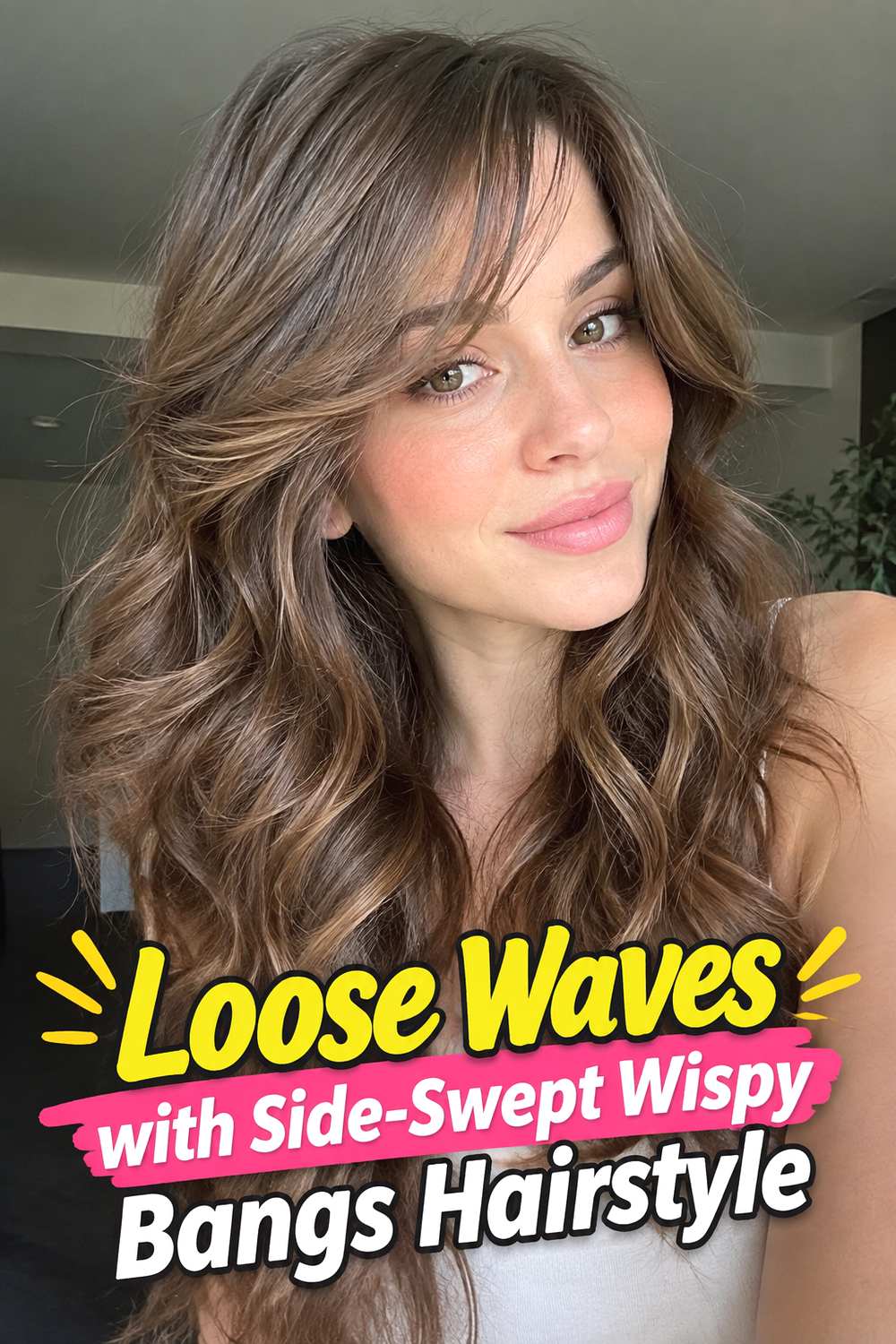
Loose waves and wispy bangs create an easy balance between movement through the lengths and softness around the forehead. The waves can begin below the cheekbones so the fringe remains the lightest part of the hairstyle, gradually blending into the face-framing sections. A side sweep works particularly well because it follows the relaxed direction of the waves instead of competing with them. This style can look polished enough for an event while still feeling casual for everyday wear. Keep the bends broad and irregular rather than making every section identical. The bangs only need a gentle curve to coordinate with the rest of the hair. Too much curling at the front can turn a delicate fringe into a heavier, more formal shape.
Best For
This variation suits medium and long cuts that have enough length to show a loose wave pattern. It is especially useful when you want visible movement without the stronger layering of a shag.
Pro Tip
After the waves cool, separate them with your fingers and gently blend the longest fringe pieces into the front wave. This creates a smoother transition around the cheekbone.
7. Shoulder Length Blowout With Side Swept Wispy Bangs Hairstyle
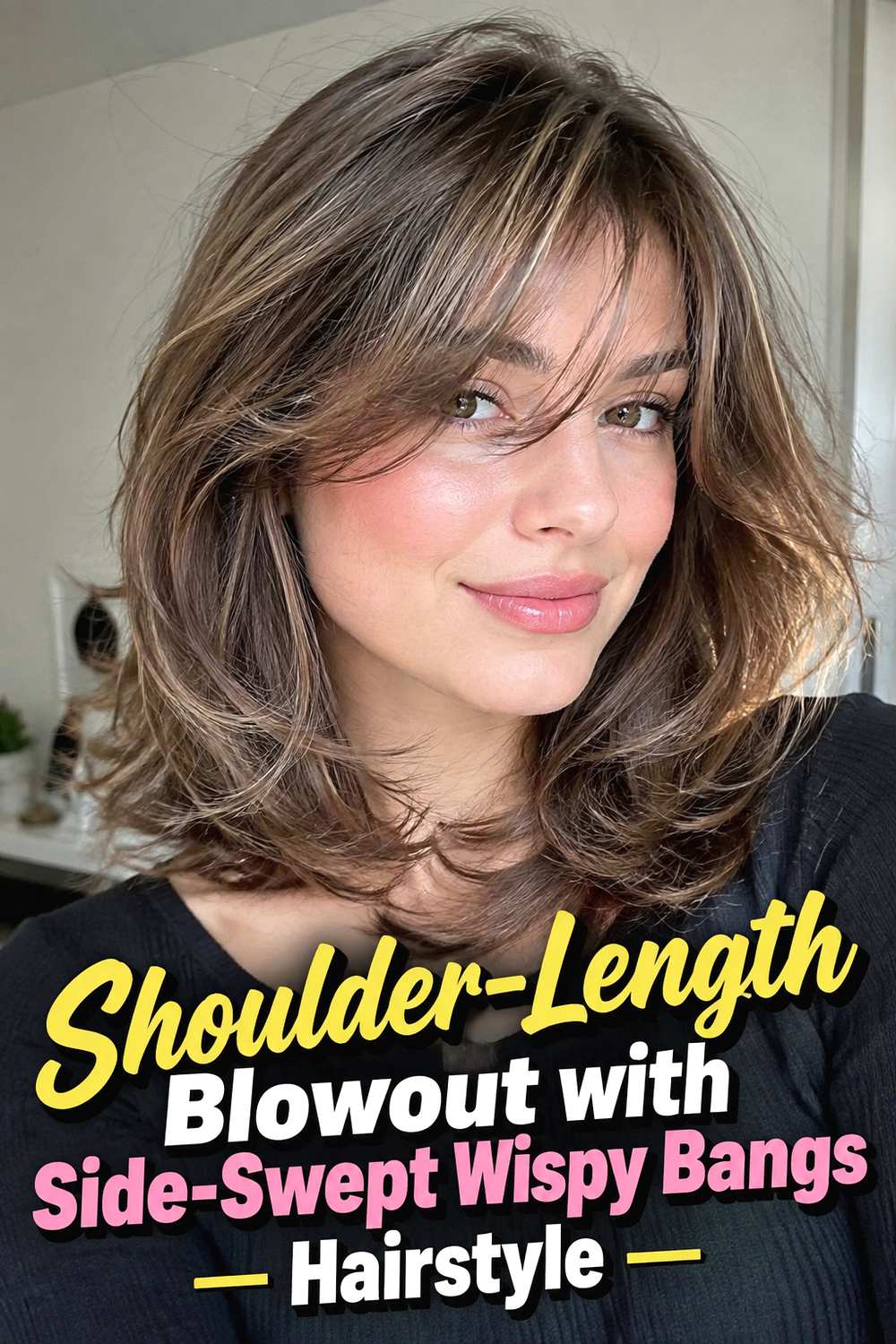
A shoulder-length blowout combines soft volume with enough structure to make wispy bangs look deliberately styled. The body of the hair can curve gently away from the face, while the fringe crosses the forehead with lighter, more flexible movement. Because the overall length is manageable, this look offers the bounce of a classic blowout without requiring very long hair. Subtle layers near the front help connect the bangs to the sides, and softly rounded ends keep the silhouette full rather than stringy. The finish works well when you want something polished but not overly formal. Concentrate lift around the crown and front roots while allowing the mid-lengths to fall naturally, which keeps the hairstyle balanced from every angle.
Hair Type & Length
Shoulder-length straight, wavy, and blow-dry-friendly textures are particularly suited to this shape. Very fine hair may benefit from minimal layering so the lower edge still appears full.
8. Soft Curls With Side Swept Wispy Bangs Hairstyle
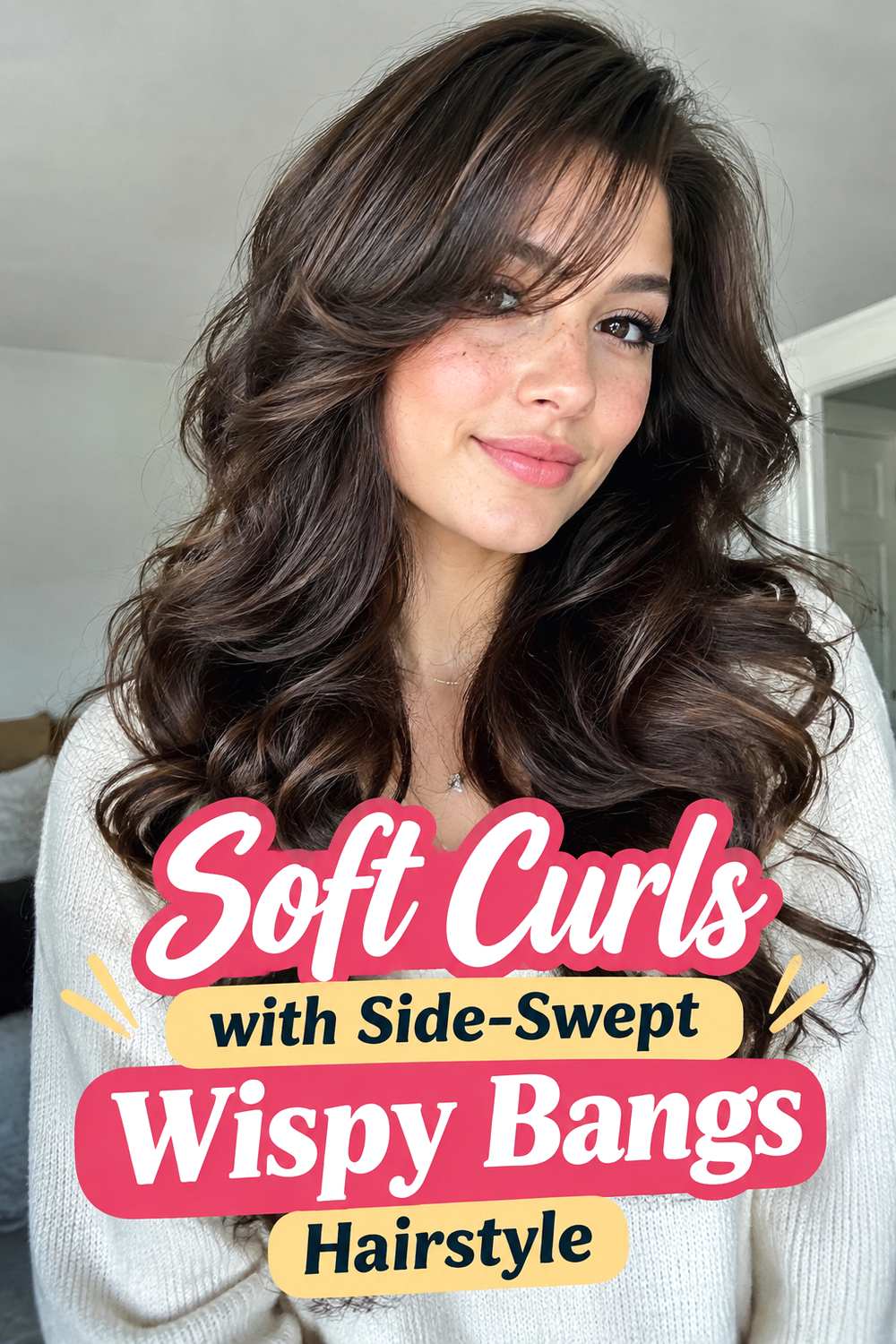
Soft curls give side-swept wispy bangs a more dimensional finish because the fringe can follow the natural bend of the hair instead of sitting perfectly straight. The bangs should remain light enough to move across the forehead, with longer curled pieces merging into the temples and cheek area. Through the rest of the hair, varied curl sizes keep the result believable and prevent an overly uniform finish. This style can be adapted to naturally curly hair or created with heat on straighter textures. Either way, the fringe should be cut and styled with shrinkage and curl direction in mind. Keeping the front slightly elongated makes it easier to sweep the bangs sideways while still maintaining their soft, wispy appearance.
Wear & Maintenance
Curly fringes may change length noticeably between wet and dry states, so avoid judging their final position while the hair is damp. Refresh individual front pieces instead of restyling the entire head when the bangs lose definition.
9. Pixie Bob With Side Swept Wispy Bangs Hairstyle
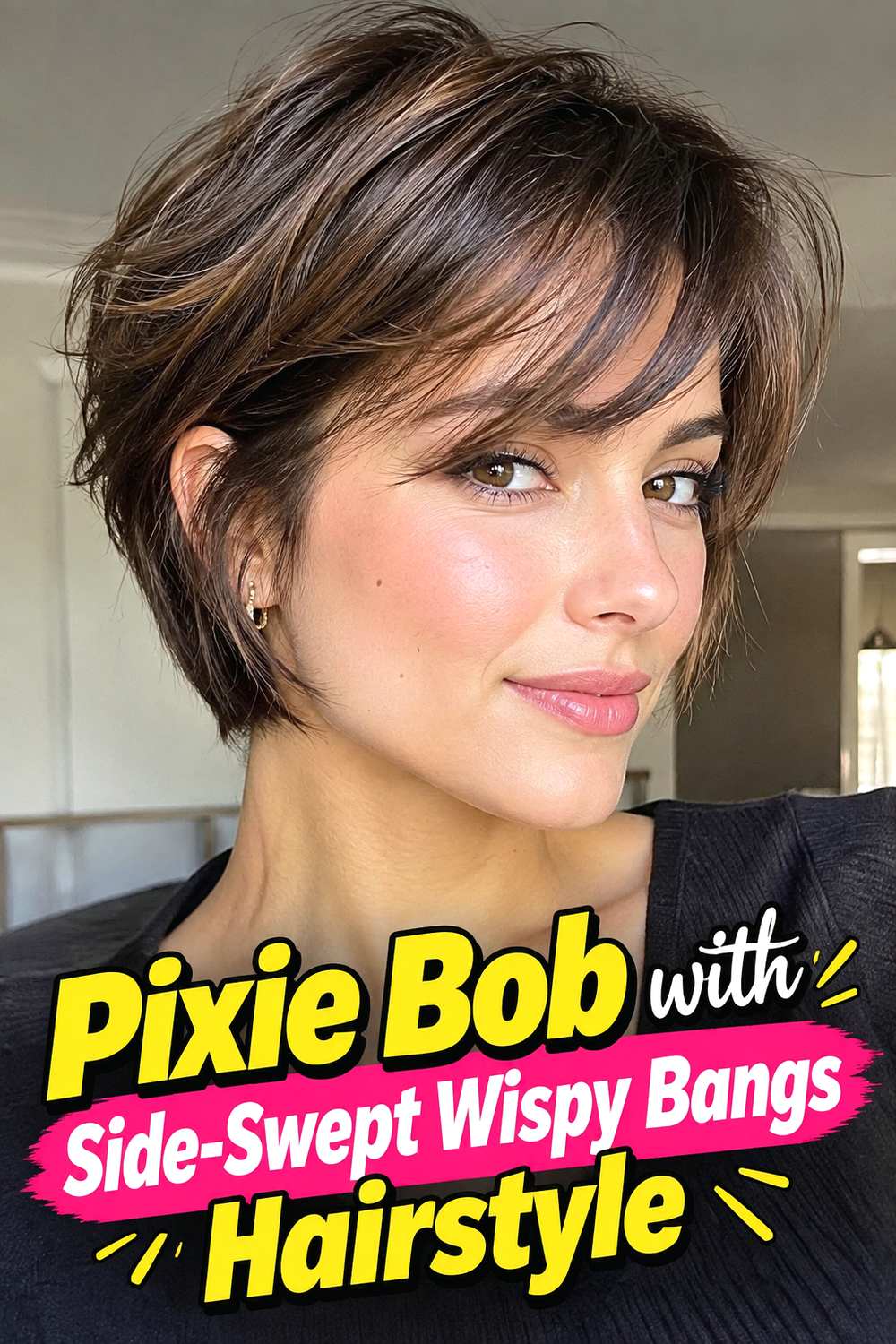
A pixie bob sits between a cropped pixie and a short bob, giving side-swept wispy bangs enough length to create softness without losing the compact silhouette. The back and sides can remain neatly shaped, while the top carries slightly more length for movement and versatility. Across the forehead, fine fringe pieces add a feminine, airy detail and can visually break up the stronger outline of the cut. This style looks especially modern when the texture stays natural rather than overly sculpted. A little root lift at the crown prevents the top from collapsing, while the bangs can be directed diagonally with the fingers. Because the cut is short, subtle changes in fringe placement can noticeably change the overall mood.
Why It Works
The extra length through the top of a pixie bob provides enough hair to create a believable sweep. That makes the fringe easier to blend than it would be on a very closely cropped pixie.
10. High Ponytail With Side Swept Wispy Bangs Hairstyle
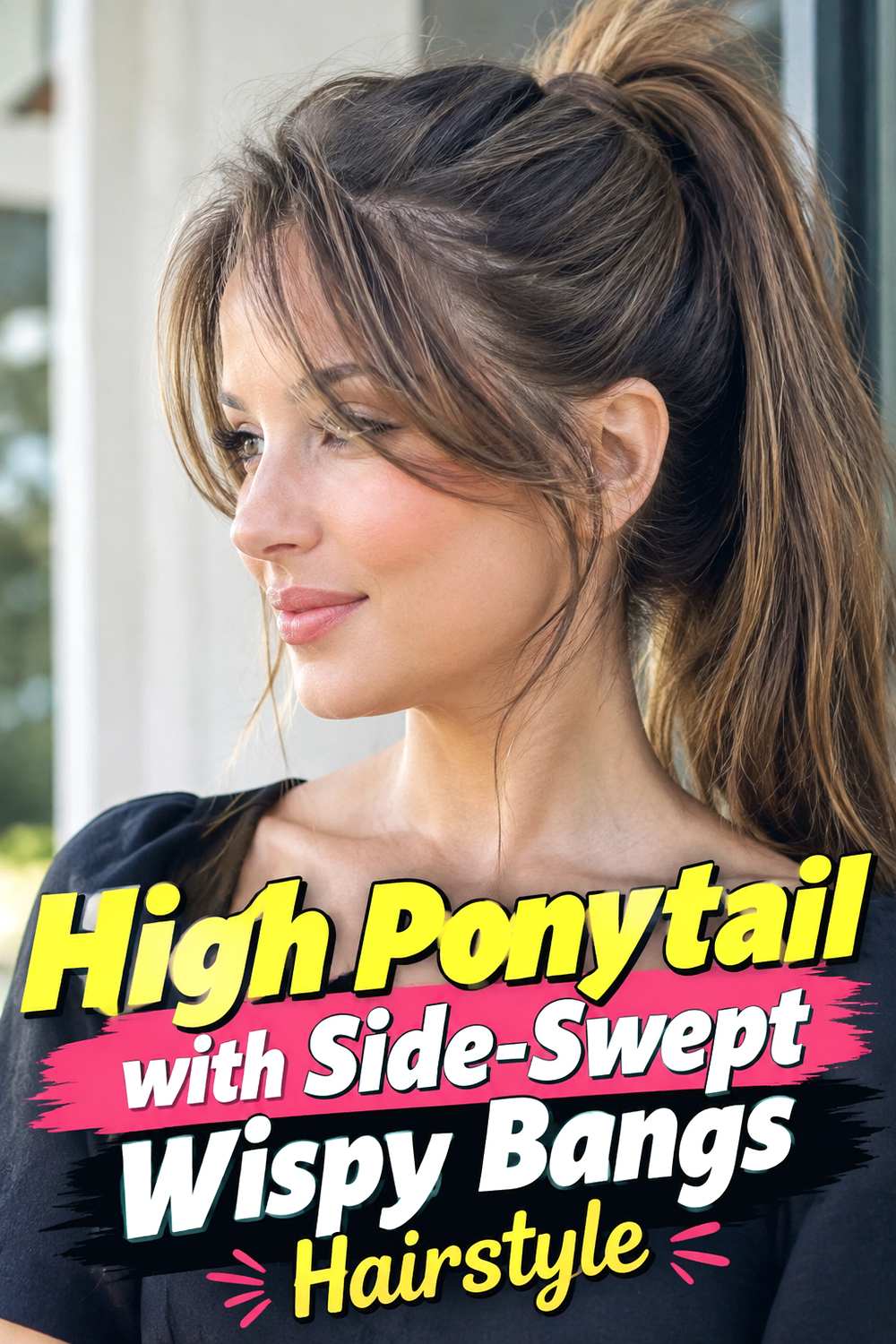
A high ponytail places most of the hair away from the face, allowing side-swept wispy bangs to become the main softening detail. The ponytail can be smooth, lightly waved, or naturally textured, but the base should sit at a believable point on the crown rather than appearing unnaturally high. Leaving a few fine strands around the temple helps connect the fringe to the pulled-back style. The contrast between a lifted ponytail and delicate bangs creates a fresh look that can work for casual days, workouts with a polished finish, or more dressed-up occasions. Keep the fringe flexible and avoid overspraying it, since natural movement is what prevents the front from looking stiff against the tighter ponytail.
Styling Notes
Secure the ponytail first, then refine the bangs afterward. This lets you see exactly how much fringe needs to remain forward and prevents accidentally pulling the softest pieces into the elastic.
11. Low Bun With Side Swept Wispy Bangs Hairstyle
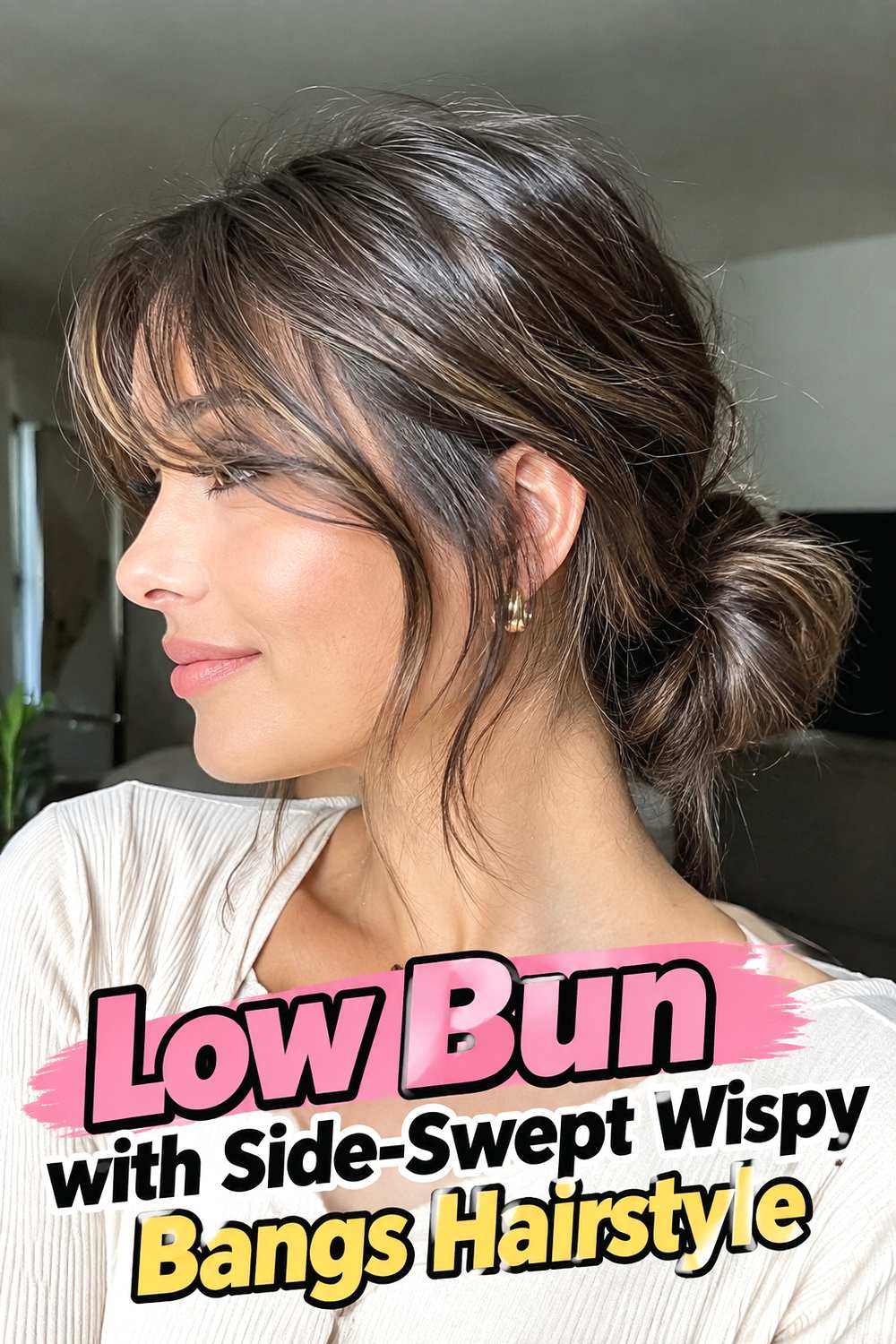
A low bun paired with wispy side bangs has an understated elegance that works well when you want the hair secured without exposing every strand around the face. The bun can sit neatly at the nape or have a slightly undone texture, while the fringe creates movement across the forehead. A few longer pieces near the cheek can make the transition from bangs to updo look softer, especially when the rest of the hair is pulled back. This combination is versatile enough for work, dinners, weddings, or simple everyday styling. The bun does not need excessive volume to make an impact; keeping its shape believable allows the delicate fringe to remain the focal detail at the front.
Best For
This style is particularly useful for medium to long hair that can be gathered comfortably at the nape. It also works when second-day hair has enough grip to hold an updo more easily.
Pro Tip
Shape the fringe before applying finishing spray to the bun. That way, you can preserve light movement at the front while adding stronger hold only where the updo needs it.
12. Half Up Hair With Side Swept Wispy Bangs Hairstyle
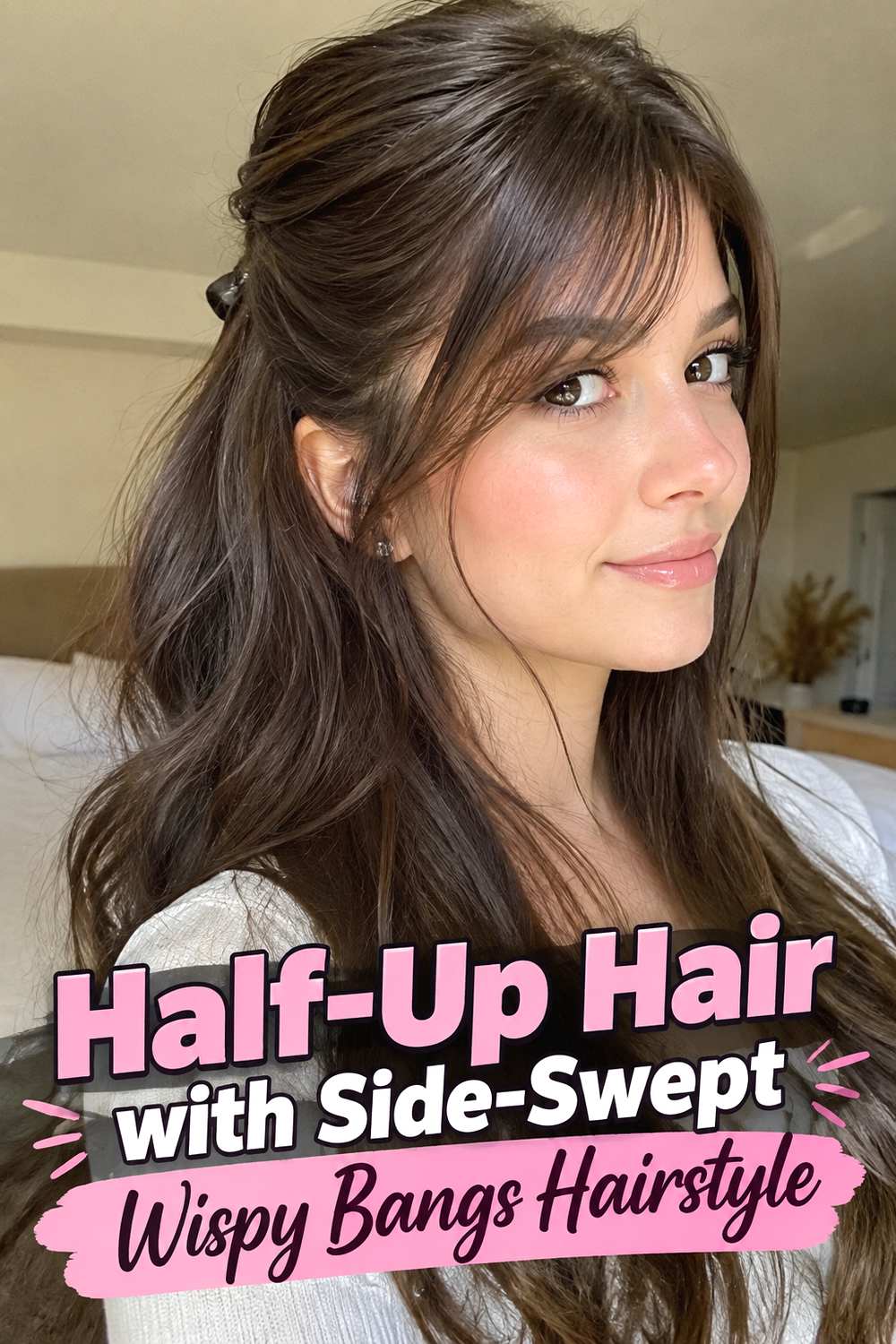
Half-up hair gives side-swept wispy bangs a relaxed frame while still pulling enough hair away from the face to create a clean, open look. The upper section can be secured with a small clip, elastic, twist, or understated knot, leaving the lower lengths free to show their natural texture. Because some front layers remain loose, the bangs can blend gradually into the sides instead of ending abruptly near the temple. This makes the hairstyle especially flattering when the fringe is growing out or varies slightly in length. Waves add softness, but straight or naturally textured lengths work just as well. Keep the half-up section modest in size so it complements rather than overwhelms the delicate face-framing detail.
Wear & Maintenance
Avoid pulling the upper section too tightly, especially near the hairline. A little softness at the roots keeps the fringe and crown visually connected and makes the style more comfortable for longer wear.
13. Face Framing Balayage With Side Swept Wispy Bangs Hairstyle
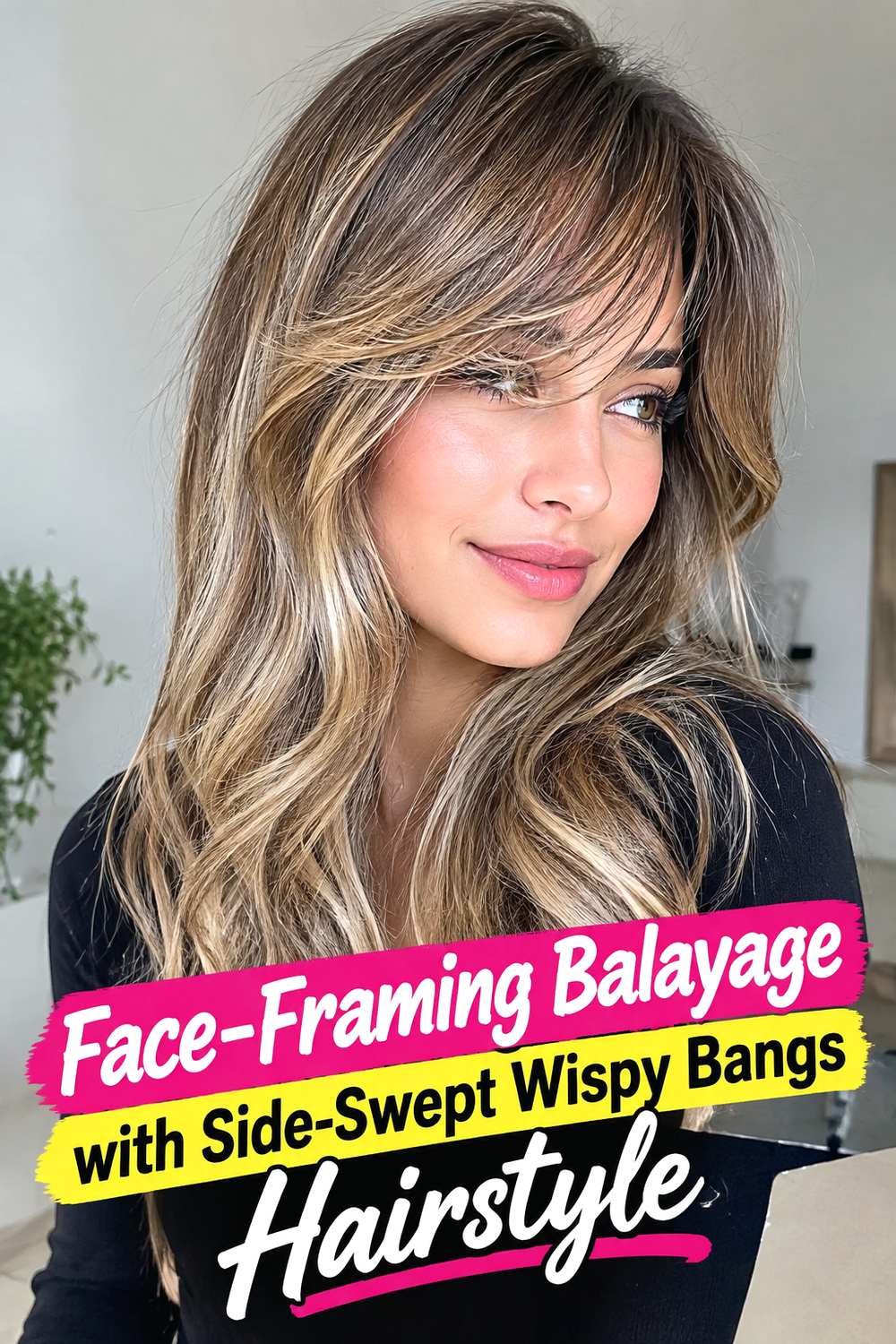
Face-framing balayage can make side-swept wispy bangs stand out by adding subtle tonal contrast around the forehead and cheekbones. Instead of placing a solid bright stripe at the front, softer ribbons of color can move through the fringe and blend into longer face-framing sections. That variation helps emphasize movement without changing the actual density of the bangs. The effect is especially noticeable on layered medium or long hair, where highlighted strands can continue through the sides and ends. Because the fringe is fine, thoughtful color placement matters; too much lightening in one concentrated section can make it look thinner than intended. A blended transition keeps the overall hairstyle dimensional, natural, and easier to grow out gracefully.
Why It Works
Color contrast draws attention to individual strands and directional movement, which naturally complements a wispy fringe. Keeping the brightest pieces softly distributed preserves depth near the roots.
Wear & Maintenance
Balayage generally grows out more softly than an all-over lightened fringe, but the front pieces may still need occasional toning or color-safe care to maintain the intended finish.
How to Choose the Right Look
Start with your current length. A chin-length bob or pixie bob creates a stronger shape around the face, while lobs and long layered styles give the fringe more room to blend. If you already wear medium or long hair and want a smaller change, adding wispy side bangs to waves, curls, a ponytail, or a half-up style may be easier than changing the entire haircut.
Texture matters just as much. Straight hair shows every strand and works well with sleek or softly blown-out variations. Wavy hair naturally supports shags, loose waves, and layered lobs. Curly hair can also wear a side-swept fringe beautifully, but the final dry length and natural shrinkage should be considered before cutting.
Think about styling time as well. A sleek bob or polished blowout may need regular heat styling, while a shag or naturally textured look can tolerate more irregular movement. If you often tie your hair back, choose fringe pieces long enough to sweep naturally toward the temples without constantly falling into your eyes.
For hold and comfort, lightweight products are usually more suitable around wispy bangs than rich creams or heavy sprays. The fringe should remain movable. Consider your preferred finish too: clean and refined styles pair well with straight hair, bobs, and low buns, while textured shags and loose waves create a softer, more casual result.
Finally, factor in maintenance. Shorter cuts need more frequent reshaping, and bangs themselves may require occasional trims as they reach the eyes or cheekbones. If you prefer a forgiving grow-out, longer side-swept pieces that connect to face-framing layers are usually easier to adapt between appointments.
Final Thoughts
Side-swept wispy bangs can work with everything from short bobs to long layers and polished updos. The most useful choice is the one that fits your natural texture, preferred styling time, and existing haircut.
For subtle change, start with longer, lighter fringe pieces that merge into your face-framing layers. For a stronger transformation, pair them with a shag, chin-length bob, or pixie bob. Keeping the fringe soft, movable, and realistically blended will help the finished style feel modern rather than overly styled.
FAQs
1. Are side-swept wispy bangs good for fine hair?
Yes. A light fringe can add detail around the face without removing as much density as a thick, full bang. Keeping the section relatively narrow can help preserve fullness through the rest of fine hair.
2. Can side-swept wispy bangs work with curly hair?
They can. The bangs should be planned around natural curl direction and shrinkage, with enough length left to sweep comfortably to one side after drying.
3. How do I stop wispy bangs from looking greasy?
Use heavy oils and creams sparingly around the forehead. Refreshing the fringe separately, using a small amount of dry shampoo when appropriate, and avoiding frequent touching can also help maintain separation and lift.
4. Do side-swept wispy bangs require daily styling?
Not always. Hair with a cooperative natural part may need only light reshaping, while stubborn growth patterns or very straight fringes may benefit from a quick blow-dry in the desired direction.
5. How can I grow out side-swept wispy bangs gracefully?
Let the shorter pieces gradually reach cheekbone length and blend them into face-framing layers. Changing the part slightly or incorporating the growing fringe into waves, half-up styles, and low buns can make the transition easier.
CTA
Save your favorite side-swept wispy bangs hairstyles and use the details you love most to inspire your next cut, styling session, or hair mood board.