13 Concave Bob Haircuts for Fall with Chic Shape and Movement
Crisp angles, soft texture, and polished movement make these concave bob haircuts an easy way to refresh short hair for the fall season.
A concave bob is shorter through the back and gradually lengthens toward the front, creating a curved, forward-moving silhouette. Depending on the graduation, it can appear sharp and architectural or soft and naturally blended. For fall, richer finishes, controlled volume, smooth blowouts, soft waves, and airy fringe can give the shape a cozy but polished seasonal feel.
Before choosing a version, compare how much back graduation you want, where the front should fall, and how your natural texture affects the silhouette. Straight hair displays a clean angle clearly, while waves and curls create a softer outline. Fringe, feathering, and texture can further personalize the cut without losing its characteristic concave direction.
Quick List
- Classic Concave Bob Hairstyle
- Sleek Concave Bob Hairstyle
- Soft Layered Concave Bob Hairstyle
- Wavy Concave Bob Hairstyle
- Concave Bob With Curtain Bangs Hairstyle
- Concave Bob With Wispy Fringe Hairstyle
- Textured Concave Bob Hairstyle
- Short Nape Concave Bob Hairstyle
- Long Front Concave Bob Hairstyle
- Rounded Concave Bob Hairstyle
- Curly Concave Bob Hairstyle
- Feathered Concave Bob Hairstyle
- Tousled Concave Bob Hairstyle
1. Classic Concave Bob Hairstyle
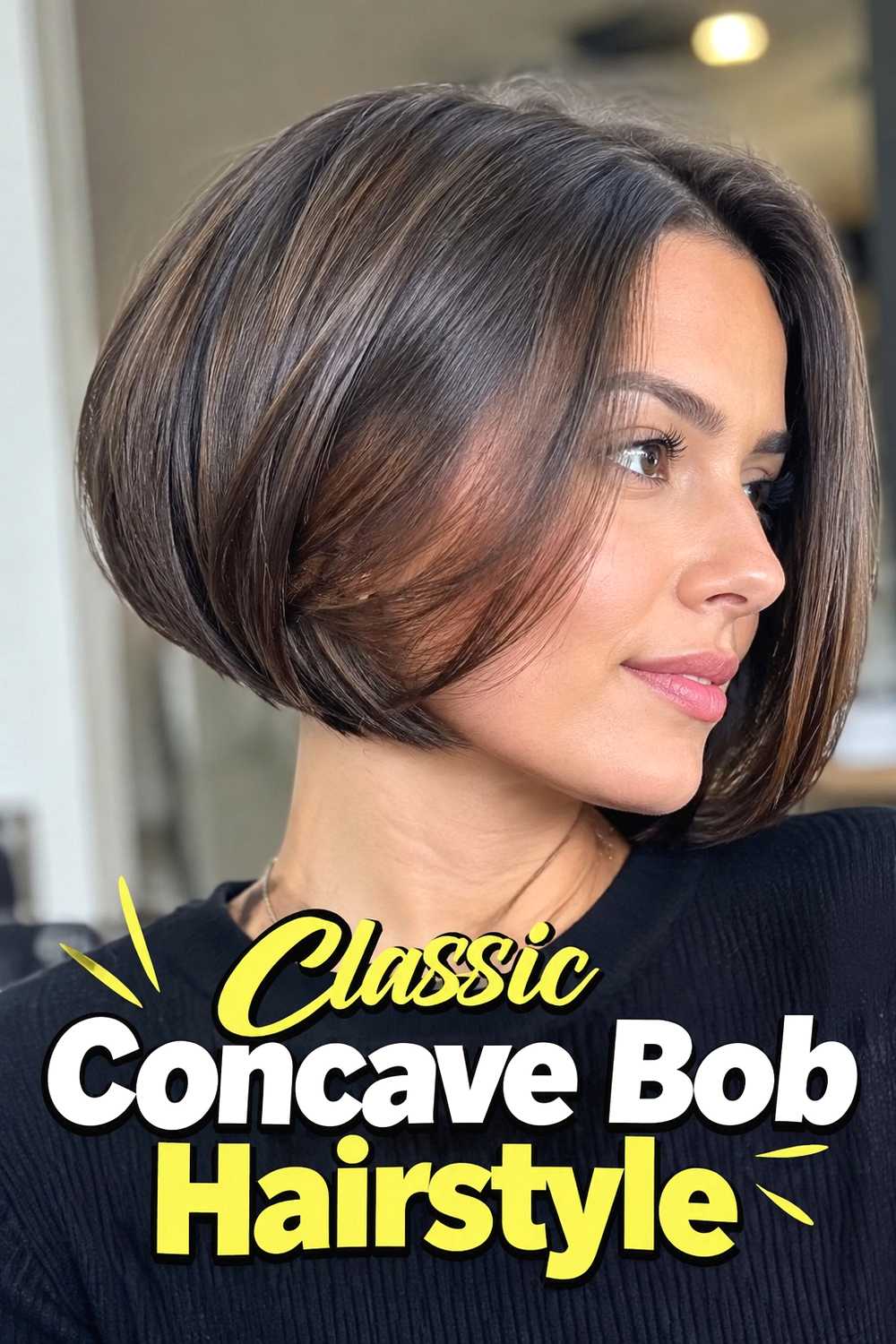
The classic concave bob uses a shorter back and progressively longer sides to create a clean, elegant curve toward the front. The nape stays compact while the front can reach the jaw or slightly below it, giving the haircut a strong profile without requiring extreme graduation. For fall, a smooth blowout with natural-looking shine makes the precise shape especially polished alongside higher necklines and layered outfits. Keeping the perimeter clean helps the angle remain visible from every side. Straight and gently wavy textures can both wear this version well, although a controlled finish best displays the concave line. Avoid excessive crown volume, which can distract from the sleek forward movement.
Styling Notes
Blow-dry the sides downward and slightly forward while keeping only moderate lift through the crown. Finish with a lightweight smoothing product through the ends.
2. Sleek Concave Bob Hairstyle
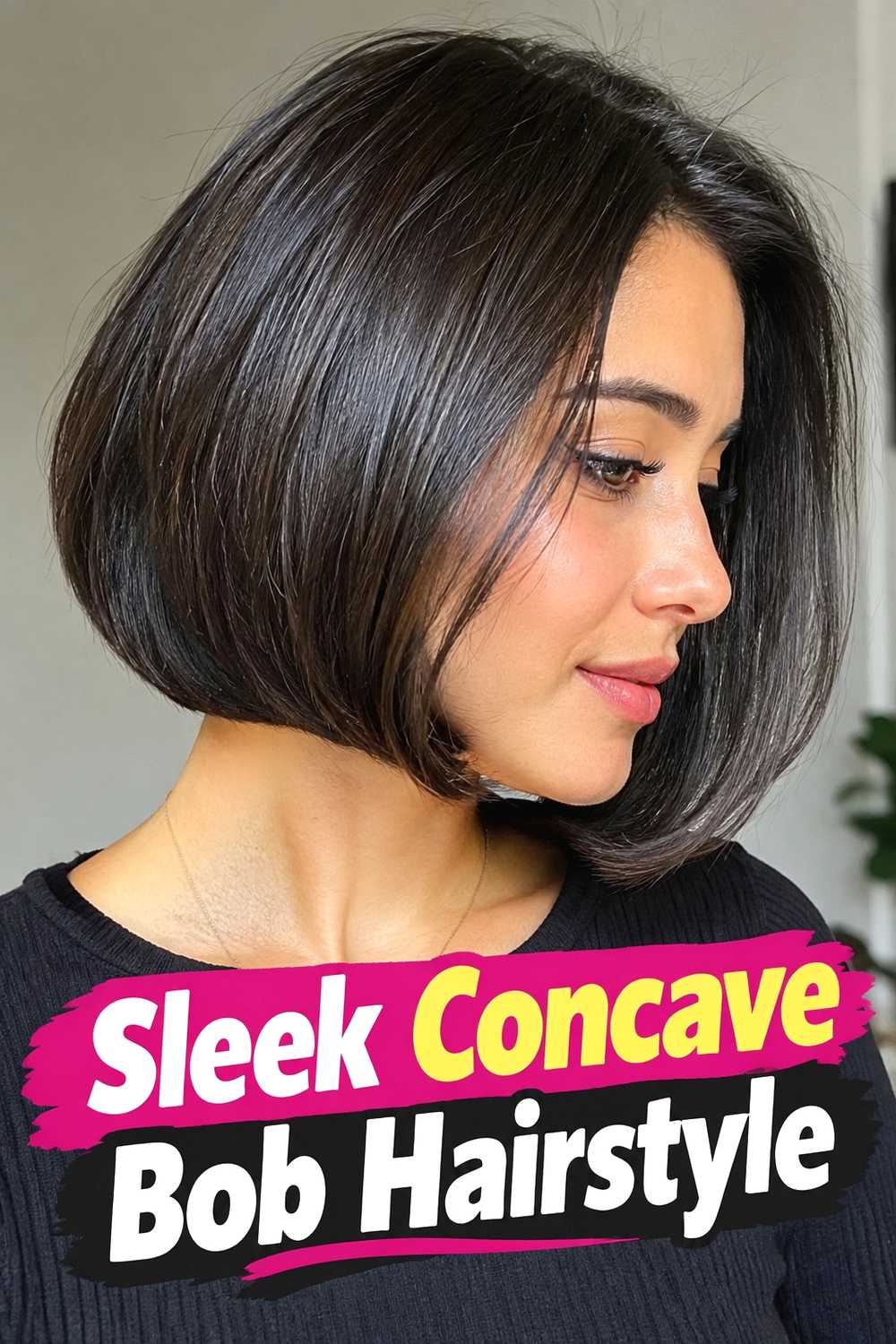
A sleek concave bob puts the haircut’s geometry front and center. Smooth strands reveal the shorter nape, gently elevated back, and longer front sections with very little visual interruption. This polished finish works beautifully for fall when you want a neat hairstyle that pairs easily with structured coats, scarves, and richer seasonal textures. The surface should look glossy but still show natural strands and movement rather than appearing stiff. A concentrator nozzle and flat or round brush can establish the shape, followed by minimal flat-iron refinement if necessary. Keep heavy oils away from the roots so the crown retains enough natural lift to support the concave silhouette.
Wear & Maintenance
Because the finish is precise, uneven ends and new growth are easy to notice. Regular reshaping helps preserve the sharp transition from back to front.
3. Soft Layered Concave Bob Hairstyle
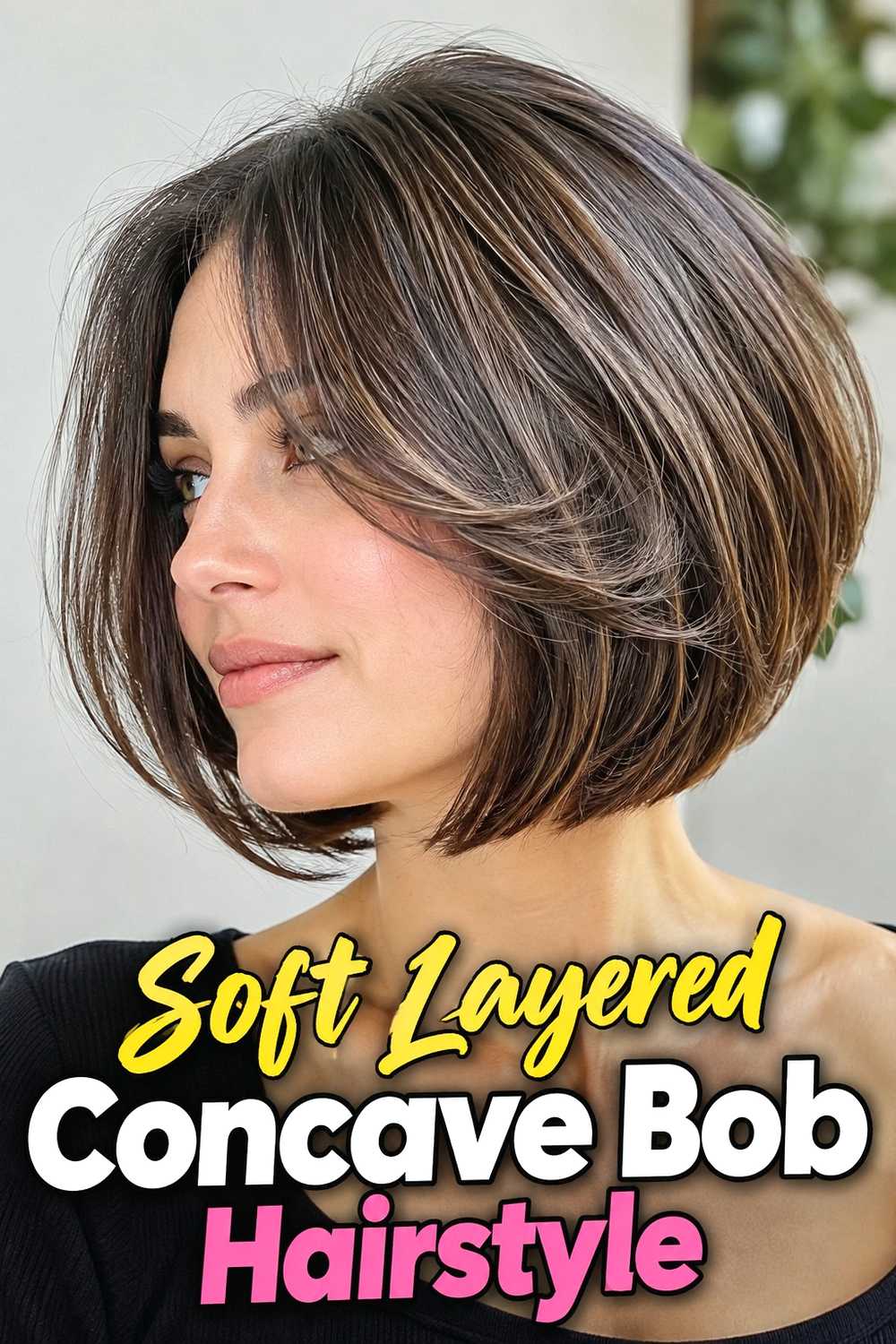
Soft layering gives the concave bob a more relaxed character while preserving its recognizable forward angle. Rather than relying on a hard, blunt perimeter, the haircut uses blended layers through the crown and sides to introduce movement. The back remains shorter, but the transition toward the front feels fluid and less architectural. This makes the style an appealing fall option if you prefer softness around knitwear, jackets, and seasonal layers. A gentle round-brush blowout enhances the shape without making it overly rounded. For extra movement, bend a few side sections away from the face while keeping the lower perimeter strong enough for the concave line to remain visible.
Why It Works
Blended layers break up heaviness and allow the haircut to move naturally while the shorter back still gives the bob clear directional shape.
4. Wavy Concave Bob Hairstyle
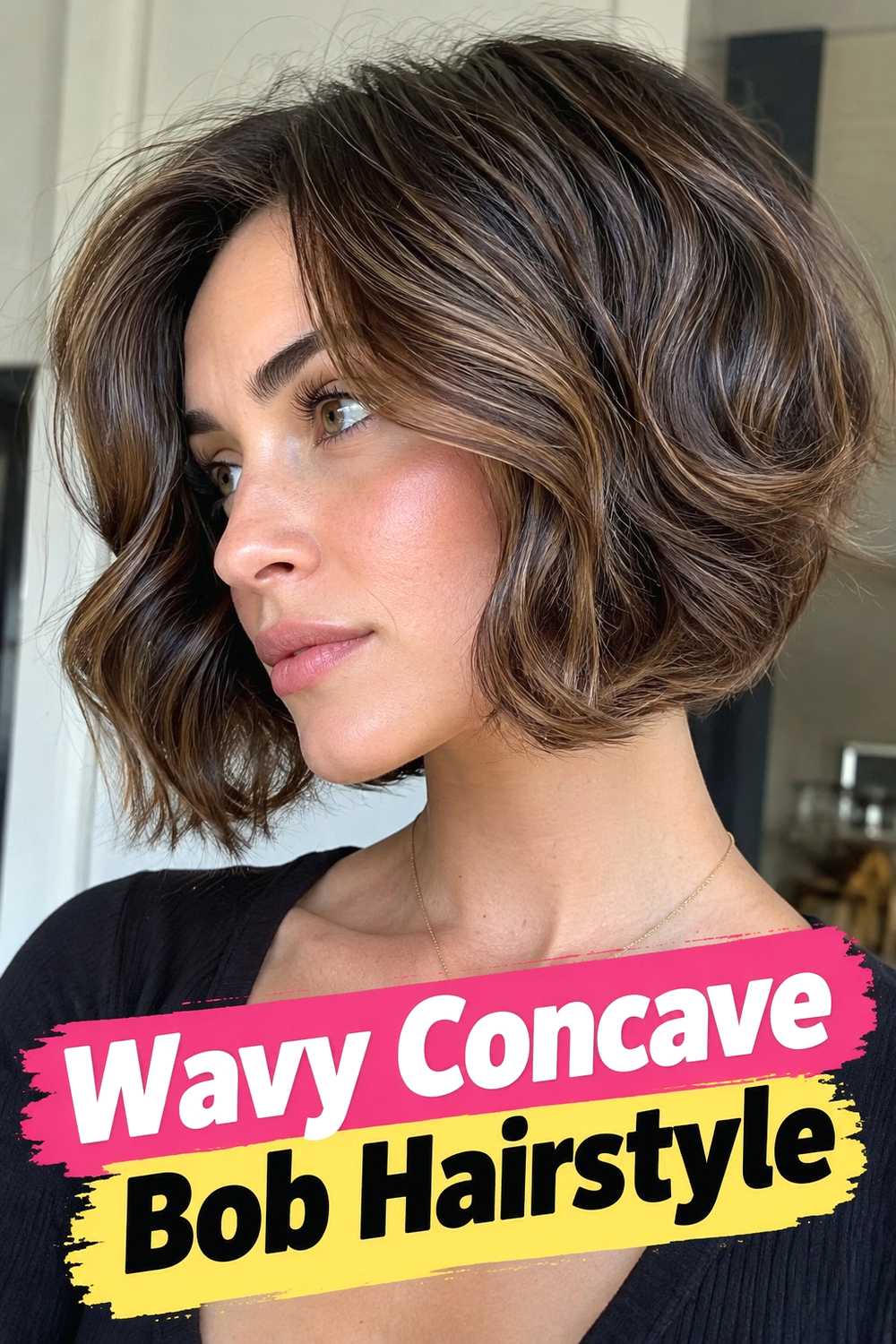
Loose waves bring an easy, romantic softness to the concave bob and work particularly well for a relaxed fall look. The back stays shorter while the side sections lengthen toward the face, but broad bends make the diagonal appear less severe. Leaving the ends somewhat straighter keeps the haircut modern and ensures the concave perimeter remains recognizable. Naturally wavy hair may need only light definition, while straight hair can create the effect with a few alternating flat-iron or curling-wand bends. Because waves shorten the apparent length, keeping a little extra length through the front helps maintain the intended contrast between the back and sides.
Styling Notes
Concentrate the wave through the mid-lengths and vary the direction of each bend. Keep the roots softer so the shape does not become unnecessarily wide.
5. Concave Bob With Curtain Bangs Hairstyle
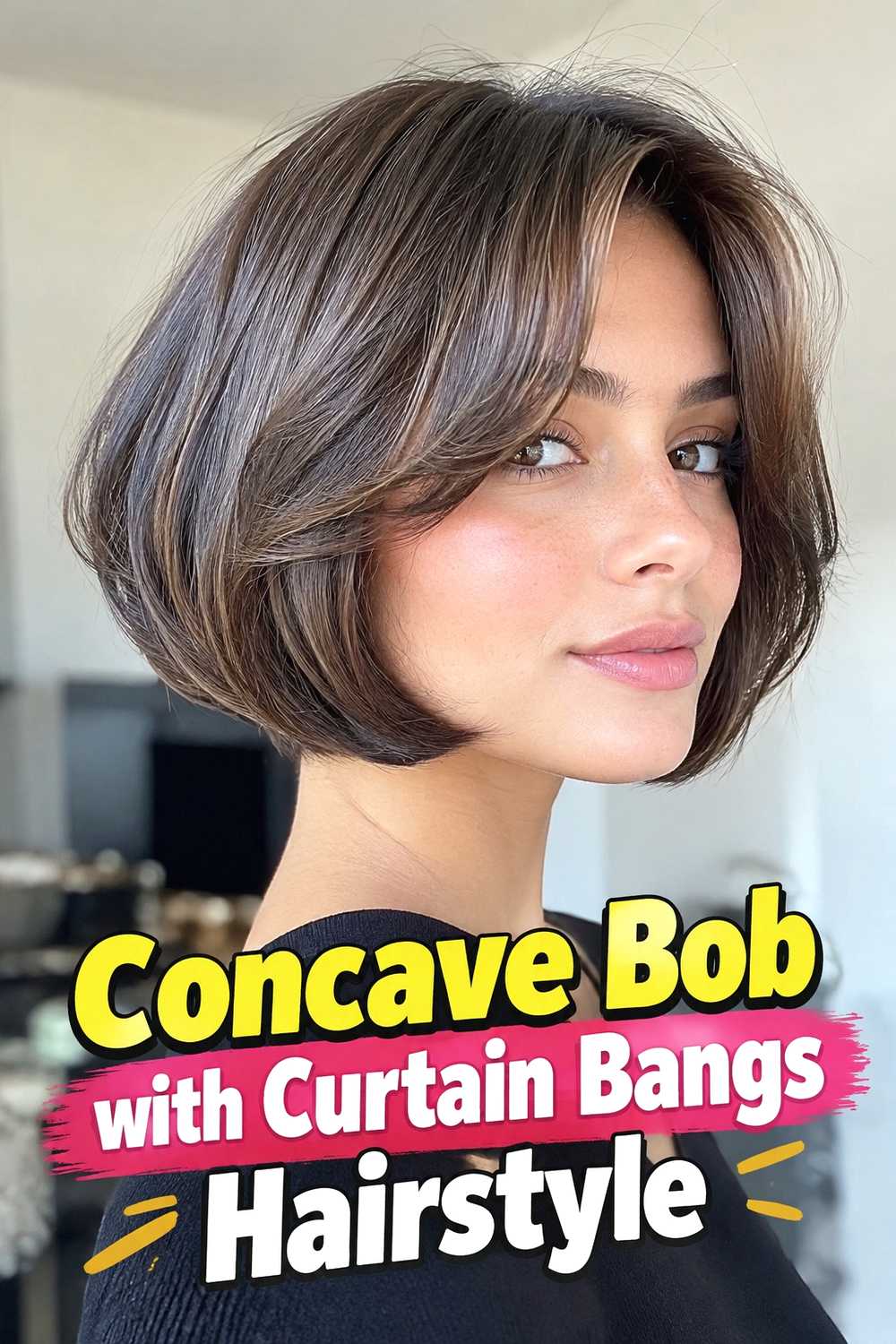
Curtain bangs soften the front of a concave bob while naturally connecting to its longer side sections. The fringe opens near the center and gradually becomes longer toward the cheekbones, creating movement that echoes the haircut’s forward direction. Behind it, the back remains shorter and neatly shaped, allowing the side profile to retain a clear concave curve. This pairing has a cozy, effortless quality that suits fall styling without making the haircut feel overly casual. Blow-dry the fringe forward first, then sweep it outward with a round brush. Keeping the ends of the bob smooth provides contrast against the lighter, more flowing movement around the forehead.
Best For
A good option for anyone who wants noticeable face framing while keeping the bob’s main perimeter clean and directional.
6. Concave Bob With Wispy Fringe Hairstyle
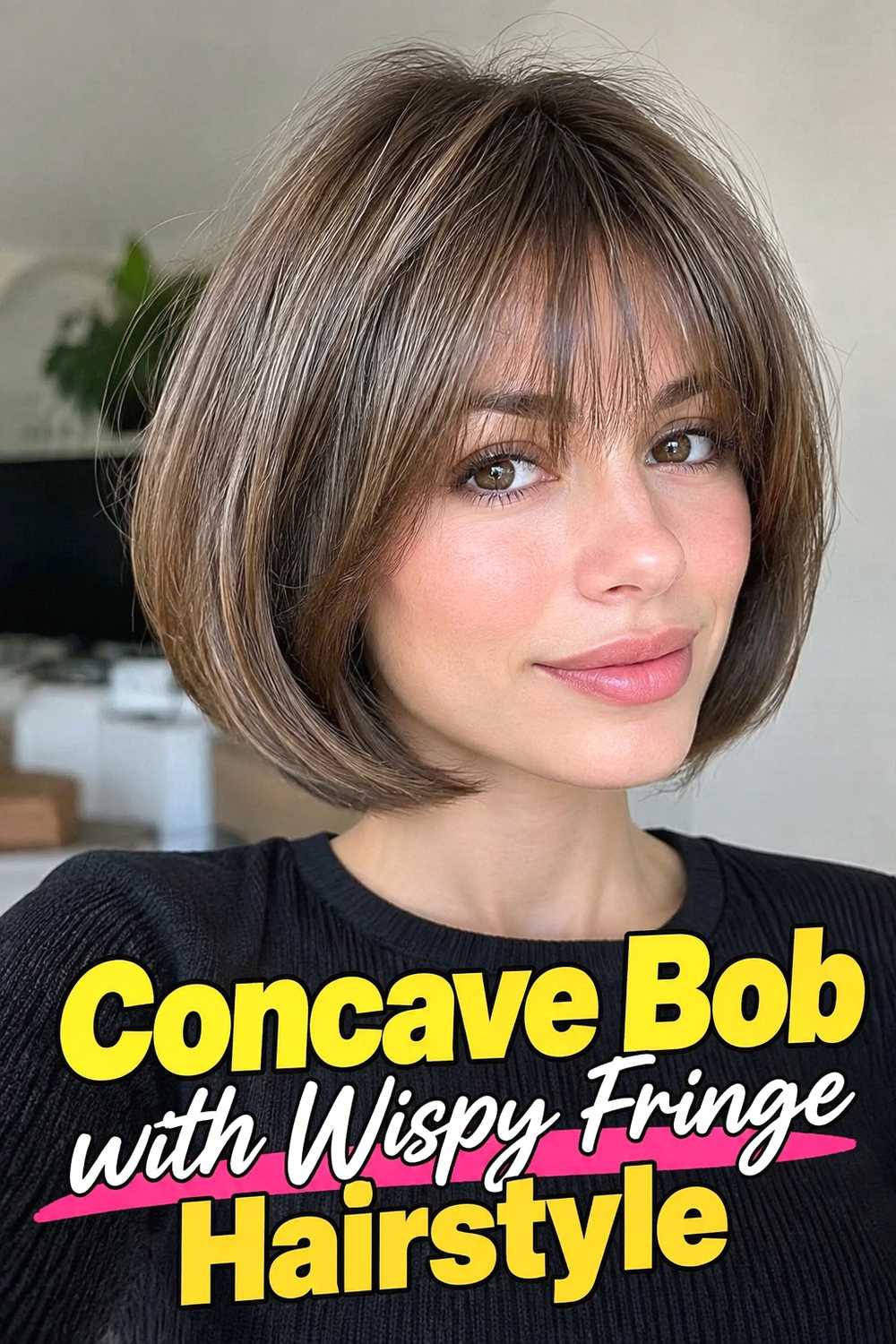
Wispy fringe adds a delicate front detail to the structured shape of a concave bob. Fine, separated strands soften the forehead while the back remains shorter and the sides extend gradually toward the jaw. The contrast between airy bangs and a clean perimeter gives the haircut visual interest without requiring heavy layering. For fall, this version can feel polished but relaxed, especially with a smooth finish and subtle root volume. The fringe should move naturally rather than forming a dense horizontal line. Dry it early in the styling process so it settles evenly, then use your fingers to separate a few strands instead of applying heavy wax or oil.
Pro Tip
Keep styling products minimal around the fringe. A tiny amount on the ends is usually enough to encourage separation without making the bangs look greasy or clumped.
7. Textured Concave Bob Hairstyle
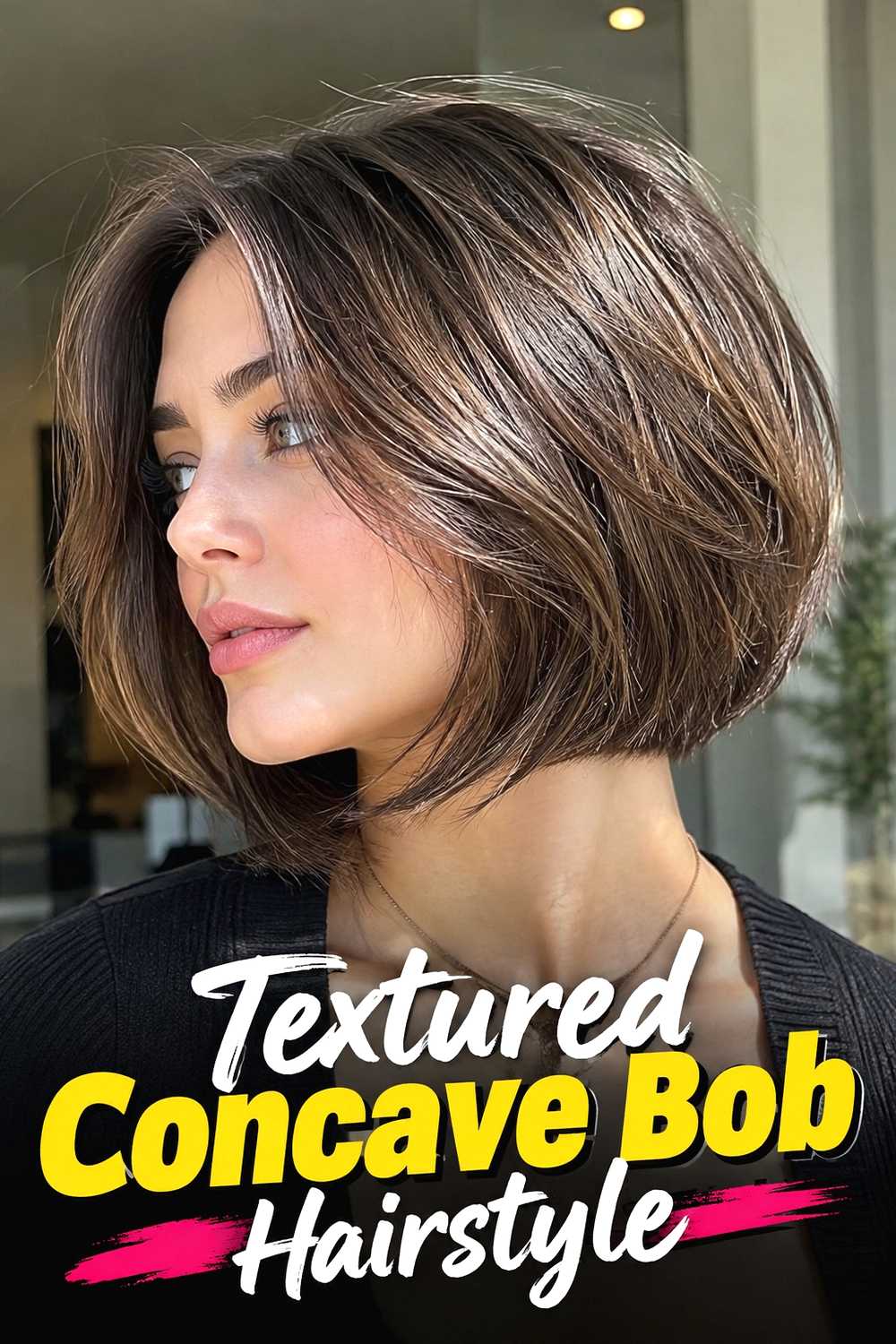
The textured concave bob keeps the shorter-back, longer-front structure but adds piecey movement through the surface. Subtle point-cutting or internal layering can prevent the sides from appearing too solid while still protecting the strong outer line. This creates a more casual fall haircut that works well with soft sweaters, jackets, and relaxed everyday styling. Straight and slightly wavy hair can both show the texture clearly. Rather than creating a perfectly smooth blowout, rough-dry for natural lift and then define selected ends with a lightweight styling cream or spray. The goal is controlled separation, not excessive thinning, because the lower perimeter still needs enough density to display the concave shape.
Hair Type & Length
Fine to medium-density hair can suit this style well when texturing is restrained, while thicker hair may need more strategic internal weight removal.
8. Short Nape Concave Bob Hairstyle
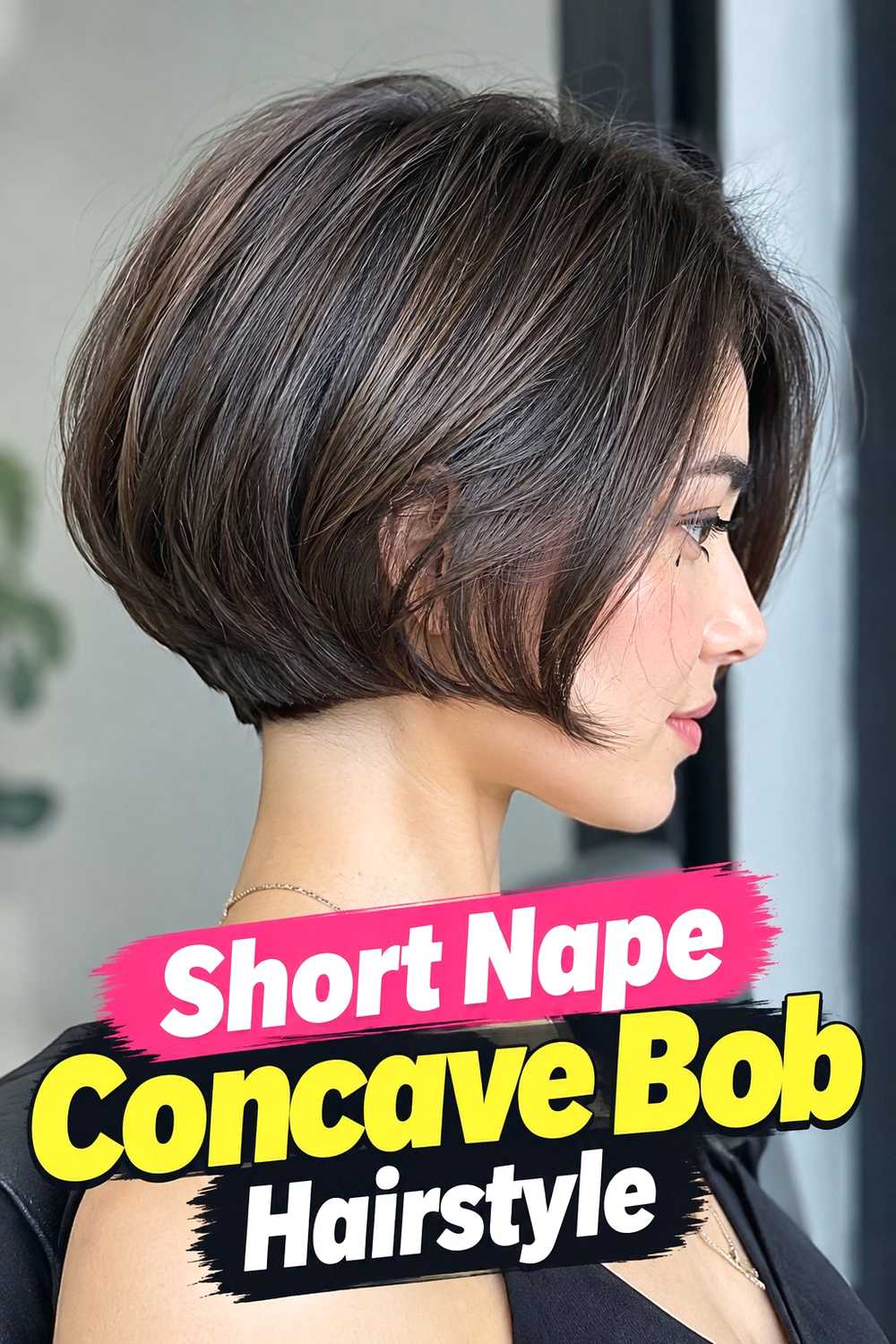
A short nape makes the concave silhouette more pronounced by increasing the contrast between the back and longer front pieces. The neckline sits cleanly against the head while the crown gradually builds enough length to flow into the sides. This compact shape can feel especially practical for fall because it stays neat around scarves and higher collars while still providing movement near the face. The front may reach the jaw or extend slightly below it for a stronger diagonal. Smooth blow-drying highlights the profile, although a soft bend can make the style less severe. The short back does require consistent maintenance because growth quickly changes the intended proportions.
Wear & Maintenance
Plan for regular neckline and shape refinements if you want the back to stay compact. The front can usually retain more length between appointments.
9. Long Front Concave Bob Hairstyle
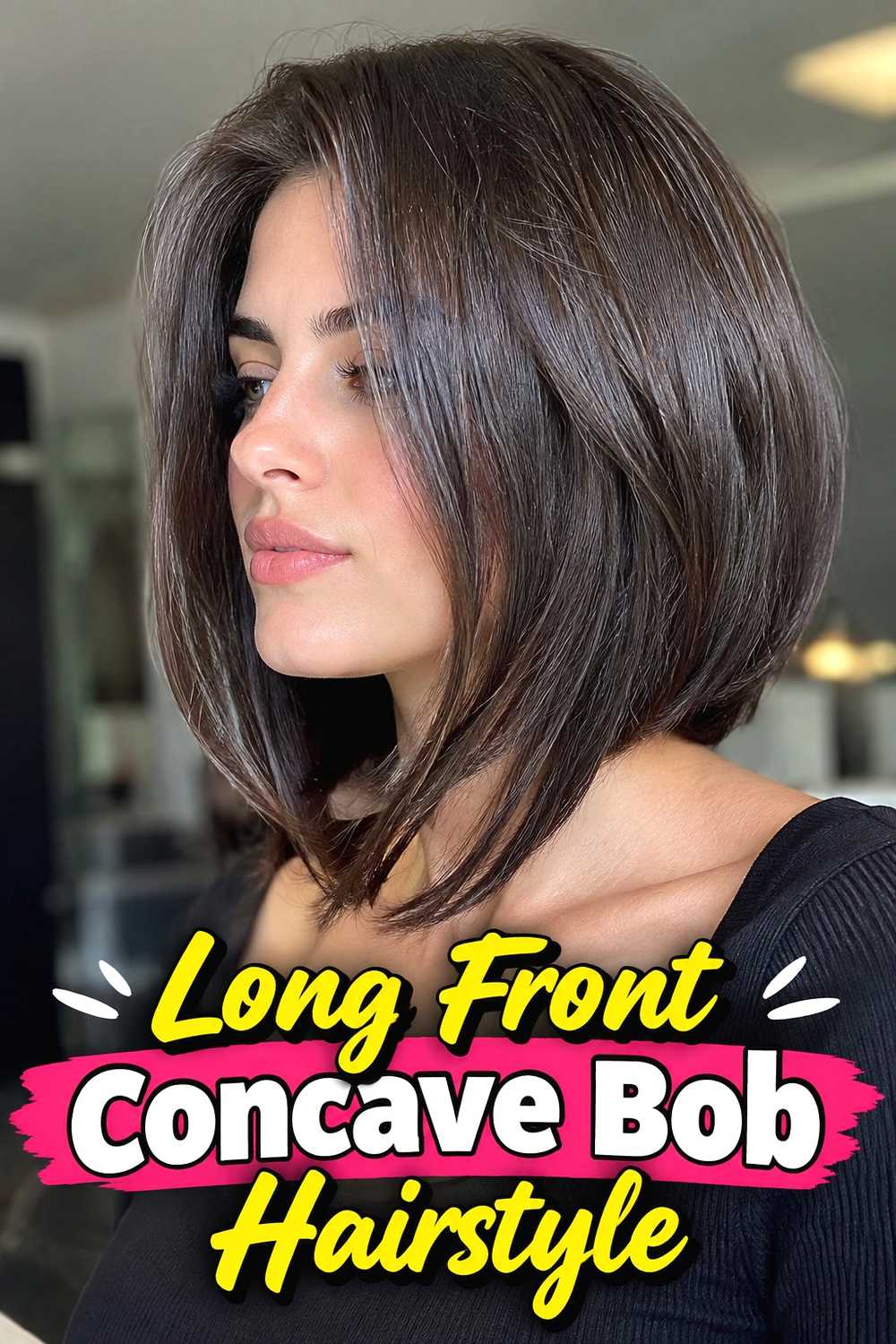
A long-front concave bob creates dramatic movement by pairing a noticeably shorter back with extended front sections. Those longer pieces may fall below the jaw or approach the collarbone, producing a strong profile that remains elegant rather than bulky. In fall, the extra front length can look especially striking against scarves, coat collars, and textured knits while the short back keeps the haircut light. Straight styling shows the diagonal most clearly, but subtle bends around the face can soften the effect. The front needs enough density to avoid looking thin, so internal layering should be controlled. Maintaining clean ends is important because the extended sections become a major visual feature.
Styling Notes
Direct the longer pieces downward during blow-drying and avoid excessive curling. A gentle bend near the ends is enough to create movement while preserving the elongated shape.
10. Rounded Concave Bob Hairstyle
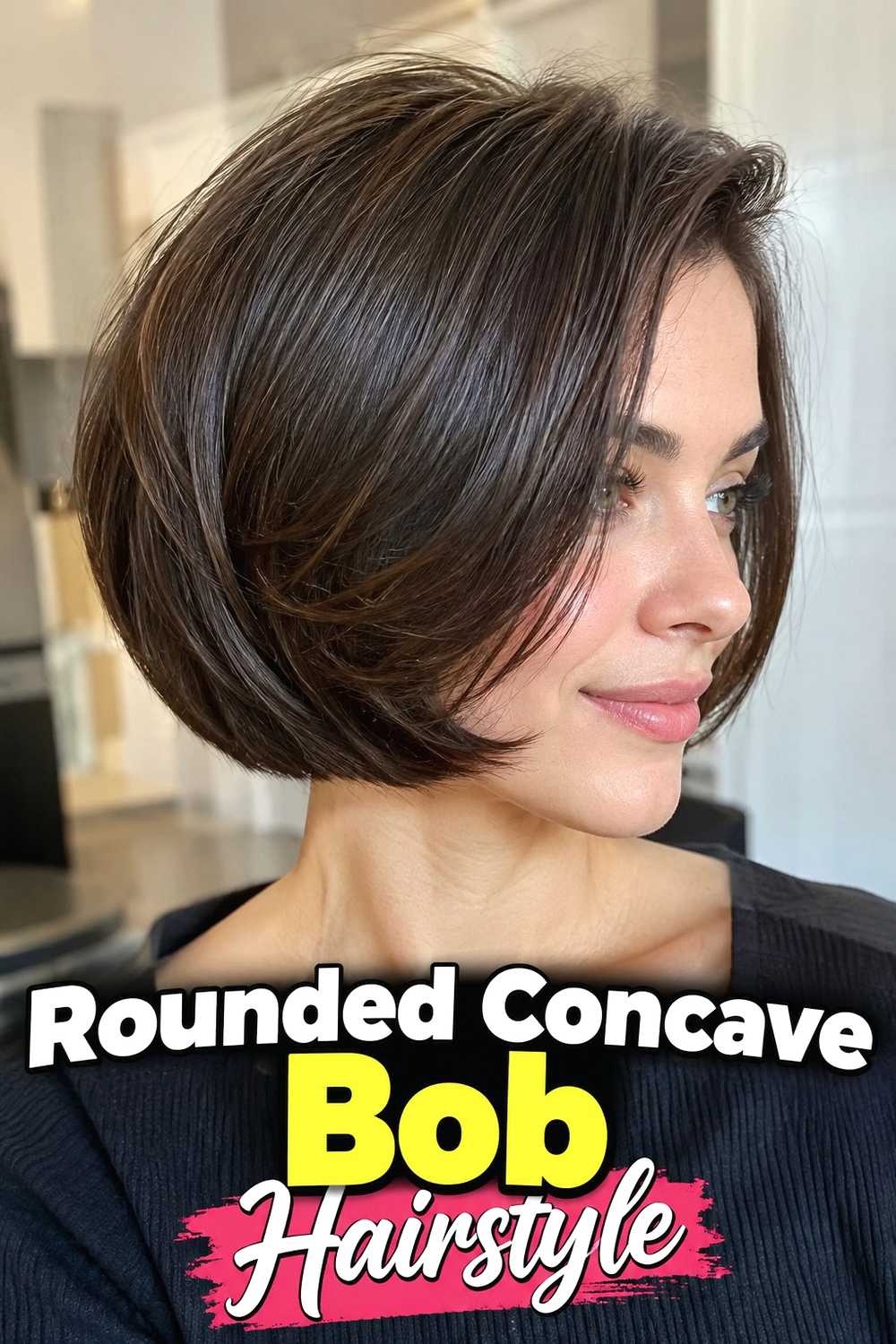
The rounded concave bob combines a softly curved back with longer side sections, creating a silhouette that feels polished without looking severe. Gentle graduation through the crown gives the rear of the haircut controlled fullness, while the sides taper forward toward the jaw. This balance makes it an attractive fall choice if you like a tidy blowout with soft, sweater-season polish. A medium round brush can enhance the back curve, but the side sections should remain comparatively smooth so the concave direction stays visible. The strongest versions avoid excessive height at the crown and instead follow the natural shape of the head for a refined, wearable finish.
Why It Works
The rounded back creates fullness and structure, while the longer front prevents the haircut from becoming completely circular or overly traditional.
11. Curly Concave Bob Hairstyle
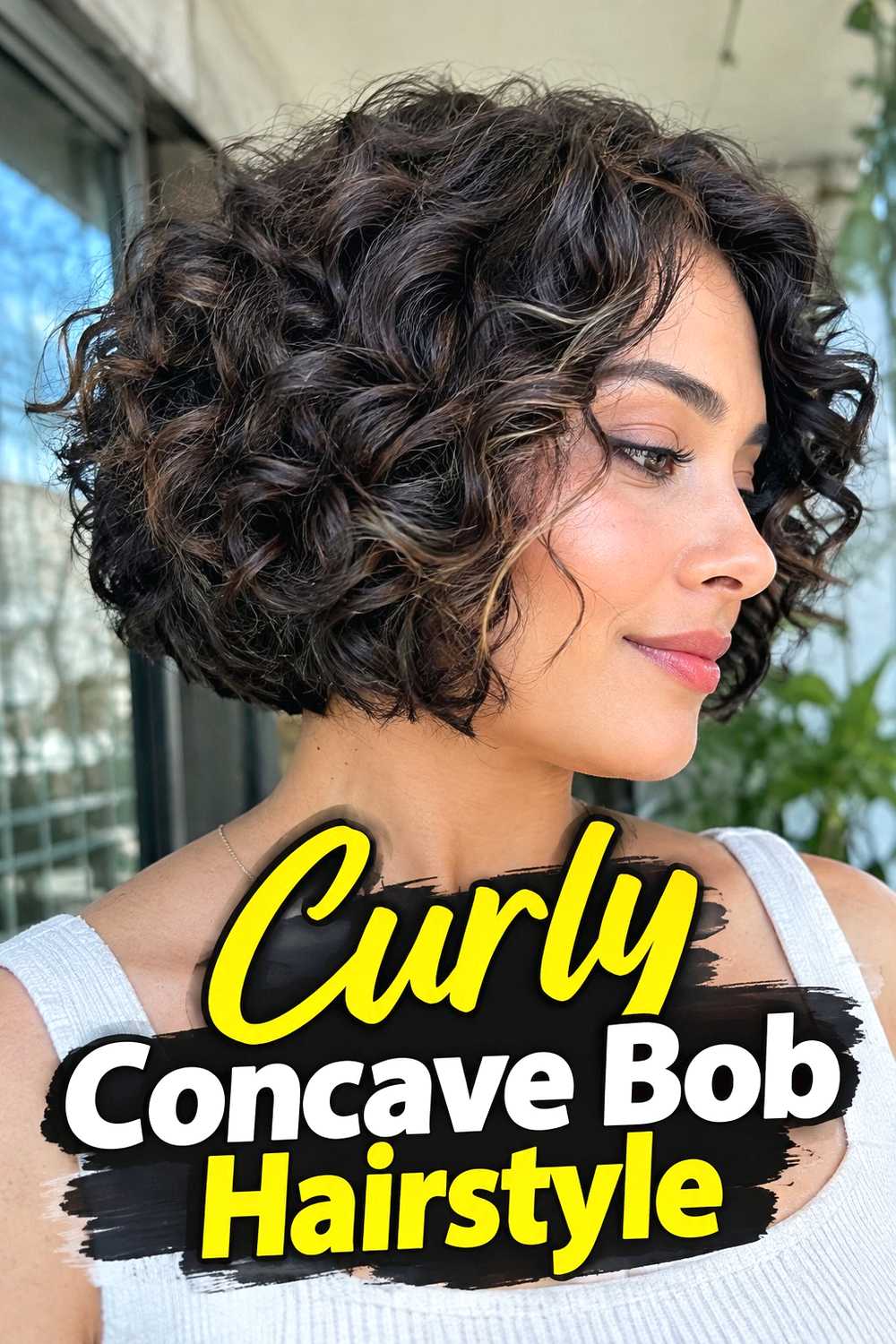
Natural curls give the concave bob a dimensional, springy interpretation while preserving the shorter-back, longer-front idea underneath. Graduation through the back can help distribute volume, while longer curls near the face maintain the forward silhouette. Because shrinkage affects where each section settles, the front may need to be left significantly longer when wet to achieve the desired dry length. For fall, defined curls with a soft, touchable finish create a rich textured look without needing a perfectly polished blowout. Use lightweight curl product and gentle diffusing to maintain definition. Avoid removing too much weight through the ends, since a thin perimeter can make the bob lose its recognizable shape.
Hair Type & Length
Curly and strongly wavy hair can wear this shape well when the graduation is adapted to the curl pattern, density, and amount of shrinkage.
12. Feathered Concave Bob Hairstyle
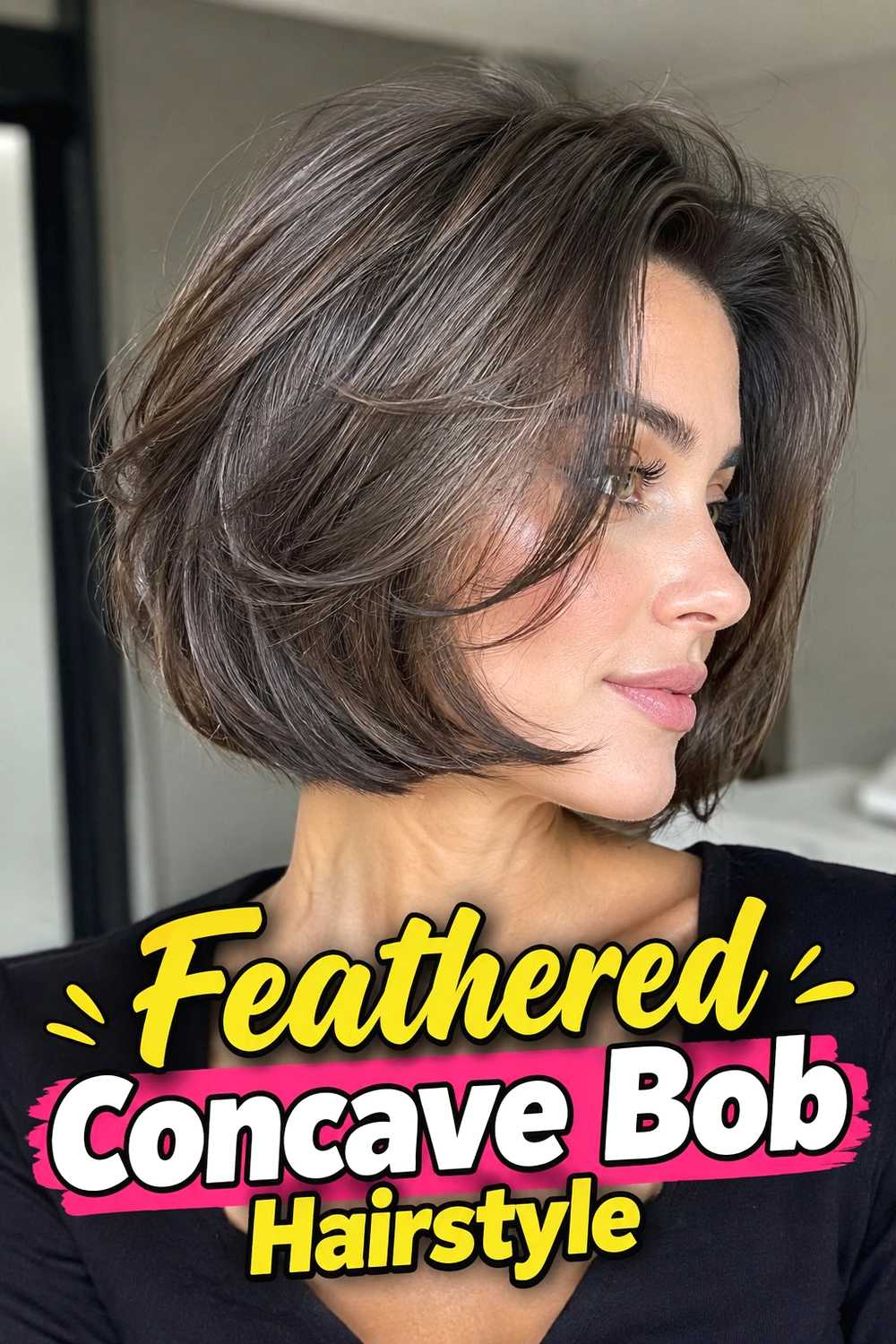
Feathering gives a concave bob airy movement through the sides while keeping the back neatly shaped. Shorter surface layers can sweep away from the face and blend into longer front pieces, creating a flowing silhouette rather than a solid geometric edge. This softer texture has an easy fall feel, especially when styled with a smooth blowout and light separation at the ends. Medium to thick hair often supports visible feathering well because there is enough density to create movement without losing the perimeter. Use a round brush to direct selected side layers outward, but keep the lower sections relatively controlled so the signature concave line remains clear from the profile.
Pro Tip
Keep the shortest feathered layers connected to the crown and side sections. Too much separation can make the haircut appear choppy instead of softly flowing.
13. Tousled Concave Bob Hairstyle
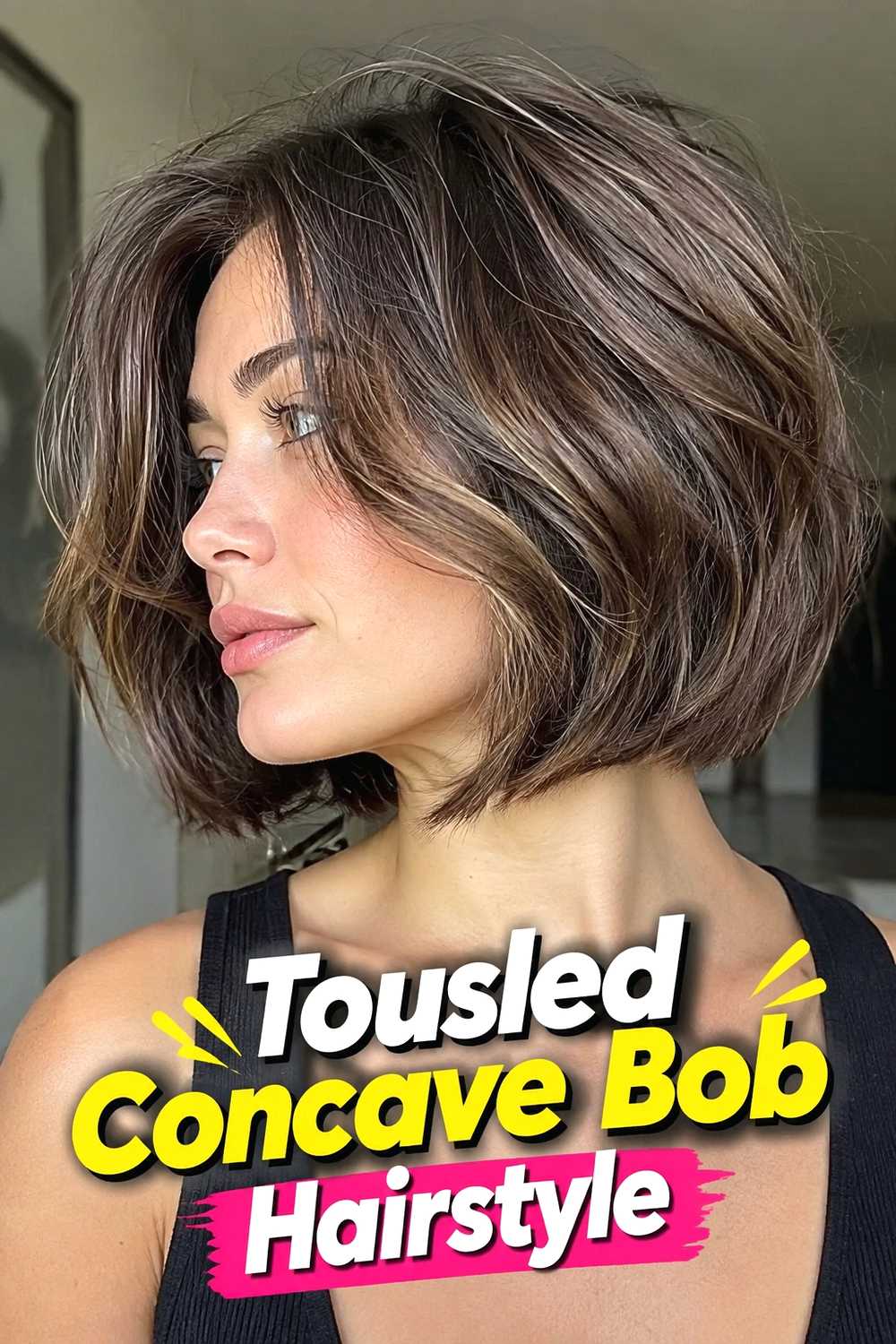
The tousled concave bob keeps a precise directional foundation underneath a deliberately relaxed surface. The back remains shorter, but loose bends and softly separated layers give the longer sides a casual, lived-in quality. This balance works especially well for fall if you prefer an effortless haircut that still looks intentionally shaped with coats, cardigans, and layered outfits. Natural waves can provide most of the texture, while straighter hair only needs a few random bends through the mid-lengths. Leave some pieces smoother than others so the finish does not look overly styled. A light texture spray or cream can enhance movement, but the outer perimeter should remain strong enough to show the concave angle.
Why It Works
The clean underlying shape gives the tousled surface structure, allowing the haircut to feel relaxed without losing its recognizable shorter-back, longer-front silhouette.
How to Choose the Right Look
Start with the amount of contrast you want between the back and front. A classic, layered, or rounded concave bob offers a balanced transition, while short-nape and long-front versions create a more noticeable profile.
Next, consider your natural texture. Straight hair displays sleek concave lines clearly, waves add softness, and curls create more volume and dimensional movement. Fine hair usually benefits from protecting density through the perimeter, while thick hair may need strategic internal layering to keep the sides from feeling heavy.
Fringe can also change the mood. Curtain bangs create flowing face framing, while wispy fringe gives a lighter, more delicate finish. If you want easy fall styling, textured and tousled versions work naturally with relaxed outfits and softer finishes, whereas sleek and rounded bobs offer a more polished appearance.
Finally, factor in maintenance. Short napes, sharp perimeters, and dramatic angles generally require more regular reshaping than softly layered or tousled cuts.
Final Thoughts
Concave bob haircuts are easy to adapt for fall because the basic shape can look sleek, soft, wavy, curly, or textured while still keeping its shorter-back, longer-front direction. Choose the graduation and front length according to your natural texture, density, and styling habits, then use seasonal softness or polish to make the look feel personal.
FAQs
1. What is a concave bob haircut?
A concave bob is shorter through the back and gradually becomes longer toward the front, creating a curved or angled silhouette that moves forward around the sides.
2. Are concave bobs good for fall?
They can work especially well for fall because the short back stays neat around collars and scarves, while waves, smooth blowouts, fringe, and richer seasonal styling can soften the look.
3. Can a concave bob work on wavy or curly hair?
Yes. Waves and curls create a softer version of the shape, although the cut should account for texture, density, and curl shrinkage so the front remains visibly longer.
4. What is the difference between a concave bob and a blunt bob?
A concave bob becomes longer toward the front, while a traditional blunt bob usually follows a more even perimeter. A concave cut can still have blunt ends, but its overall length changes from back to front.
5. How do I keep a concave bob looking sharp?
Keep the perimeter regularly trimmed, maintain the intended back-to-front length difference, and style the sides in a way that makes the forward angle visible instead of hiding it with excessive volume.
CTA
Save your favorite fall concave bob hairstyle and share these ideas when you are ready for a polished seasonal short-hair refresh.