17 Textured Midi Blowout Hairstyle Ideas
Soft layers, airy bends, and touchable volume give these textured midi blowouts the movement of a salon blowout without making every strand look overly polished.
A textured midi blowout sits in the sweet spot between sleek styling and deliberately undone movement. Medium-length hair—usually around the shoulders to upper chest—has enough weight to look polished while remaining light enough for layers, bends, flips, and root volume to stay visible.
The most flattering version depends on where you want the texture to appear. Feathered and face-framing cuts emphasize movement around the front, shaggy layers create separation throughout, and soft waves make the finish more relaxed. Parting, density, natural texture, and how much time you want to spend refreshing the shape should all guide your choice.
Quick List
- Tousled Textured Midi Blowout Hairstyle
- Layered Textured Midi Blowout Hairstyle
- Curtain Bangs Textured Midi Blowout Hairstyle
- Deep Side Part Textured Midi Blowout Hairstyle
- Center Part Textured Midi Blowout Hairstyle
- Feathered Textured Midi Blowout Hairstyle
- Flipped Ends Textured Midi Blowout Hairstyle
- Face Framing Textured Midi Blowout Hairstyle
- Bouncy Textured Midi Blowout Hairstyle
- Soft Waves Textured Midi Blowout Hairstyle
- Airy Volume Textured Midi Blowout Hairstyle
- Shaggy Textured Midi Blowout Hairstyle
- Soft C Curl Textured Midi Blowout Hairstyle
- 90s Textured Midi Blowout Hairstyle
- Glossy Textured Midi Blowout Hairstyle
- Caramel Highlight Textured Midi Blowout Hairstyle
- Piecey Ends Textured Midi Blowout Hairstyle
1. Tousled Textured Midi Blowout Hairstyle
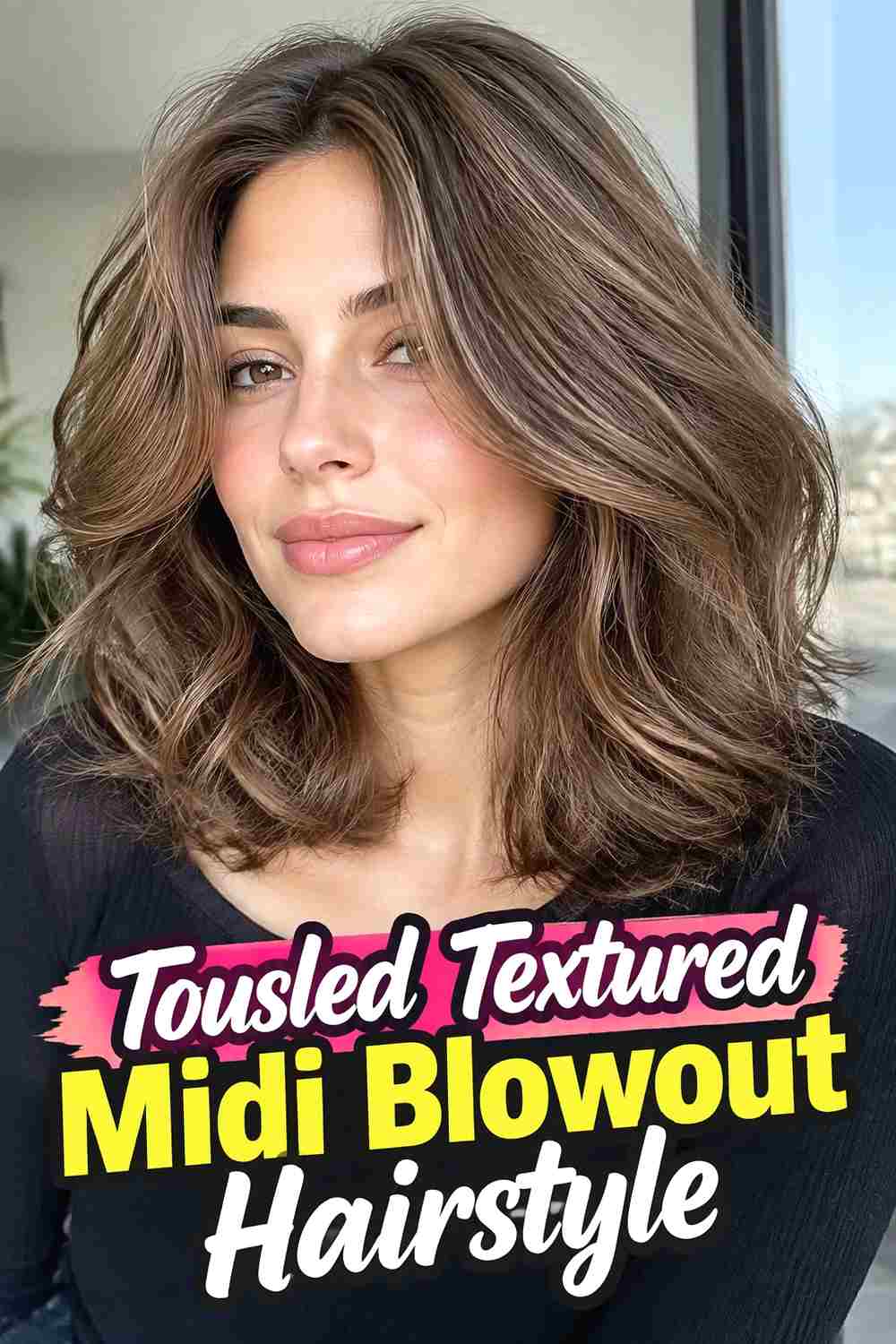
A tousled textured midi blowout combines the smooth foundation of a blowout with loose bends and slightly separated ends. The hair falls around the shoulders or upper chest, with enough root lift to keep the shape light but not so much volume that it looks overly set. Instead of directing every section the same way, some pieces turn inward while others curve outward, creating a relaxed finish that feels natural in motion. Long layers help the texture remain visible without making the perimeter look thin. This option works particularly well if you like polished hair but do not want the perfectly rounded look of a classic salon blowout.
Styling Notes
Alternate the direction of a few mid-length sections and keep the ends loose. The texture should look varied rather than uniformly curled.
Best For
This look suits medium-length hair that holds a bend and anyone who prefers an easy, slightly undone finish.
2. Layered Textured Midi Blowout Hairstyle
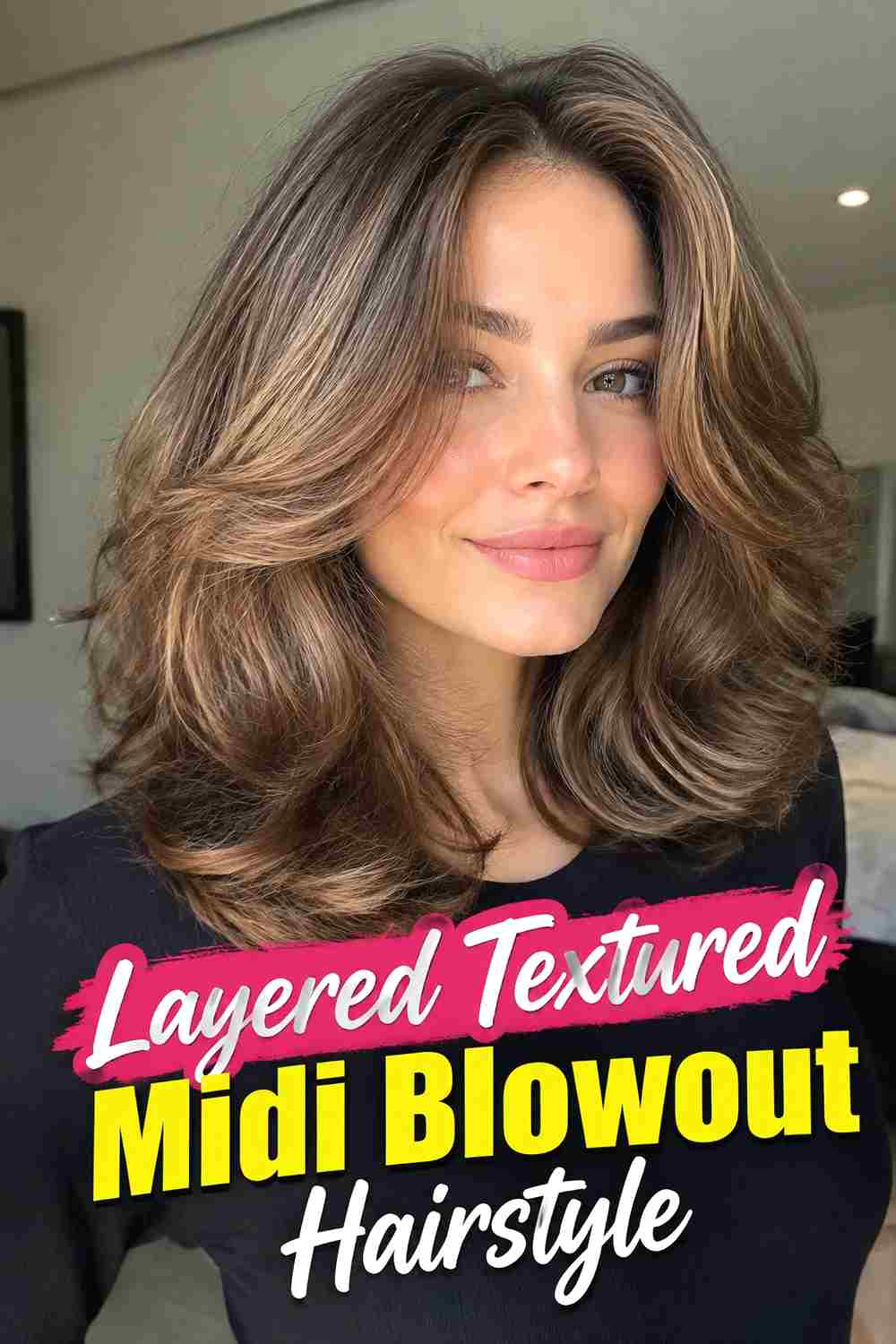
A layered textured midi blowout uses staggered lengths to create visible movement from the crown through the ends. Shorter layers can lift around the upper sections, while longer pieces maintain enough weight to keep the hairstyle flowing rather than overly fluffy. During the blowout, each layer can be curved slightly differently so the separation stays noticeable after the hair settles. This works especially well on medium to thick hair that can feel heavy when cut to one length. The overall silhouette should remain soft and connected, with no harsh jumps between layers. A light finish allows individual sections to move naturally and keeps the texture from becoming stiff or overly sculpted.
Why It Works
Layers distribute movement across the entire hairstyle instead of concentrating all the shape at the ends.
Hair Type & Length
Medium and thick hair can support more layering, while finer hair usually benefits from longer, restrained layers that preserve density.
3. Curtain Bangs Textured Midi Blowout Hairstyle
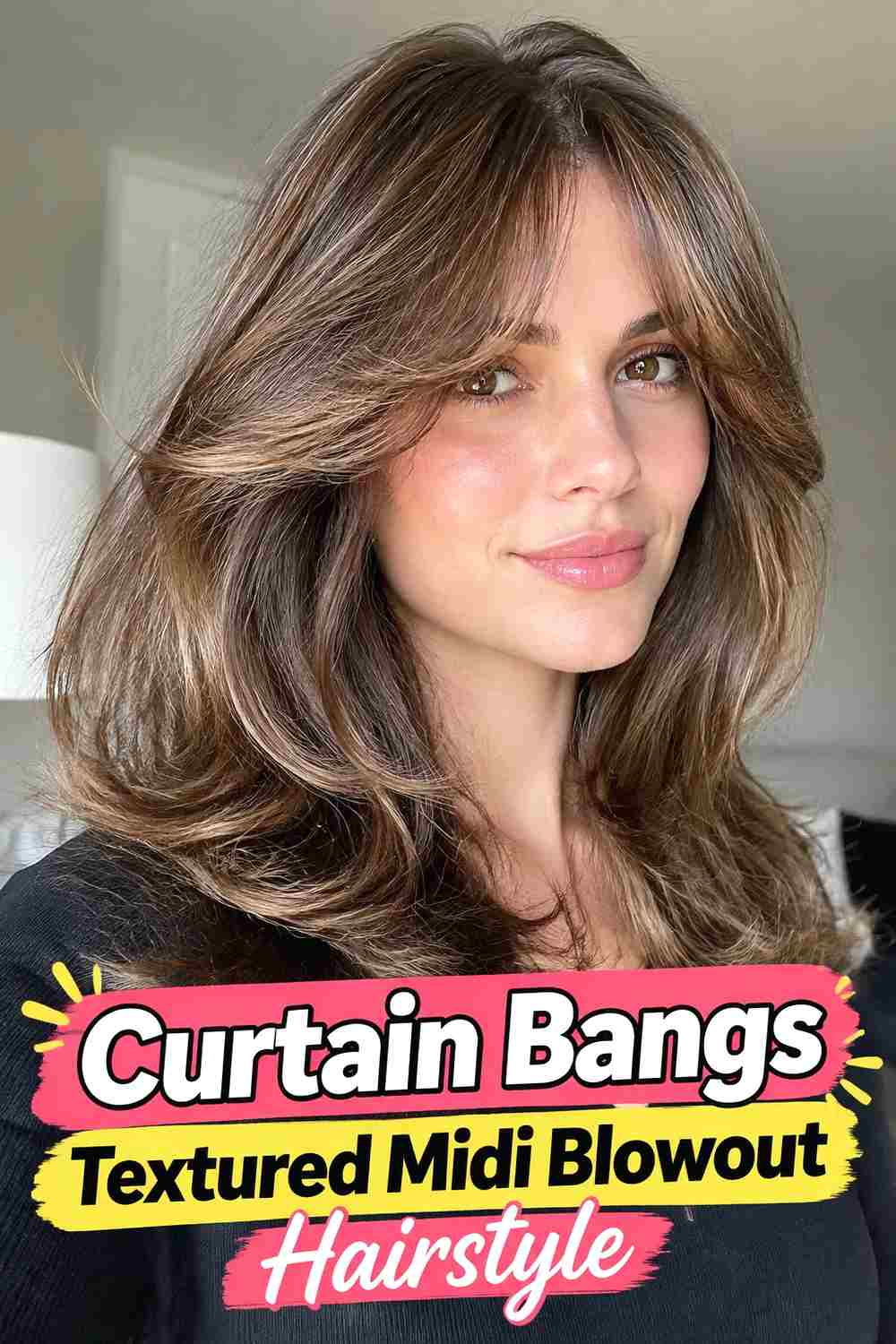
Curtain bangs naturally enhance a textured midi blowout because they introduce movement around the forehead and cheekbones before blending into the longer layers. The fringe can open near the center, sweep outward, and merge into pieces that fall around the jaw or collarbone. Rather than shaping the bangs into one perfect curve, a little variation helps them match the textured lengths. The remaining hair can carry broad bends and soft volume through the shoulders, giving the front and back a connected flow. This hairstyle is particularly useful if you want a noticeable change around the face without shortening the main length. The bangs also blend easily into a fuller blowout as they grow.
Styling Notes
Dry the bangs forward first, then direct each side away from the face for a soft, open shape.
Pro Tip
Keep the transition from bangs to longer layers gradual so the front looks connected rather than separated into obvious sections.
4. Deep Side Part Textured Midi Blowout Hairstyle
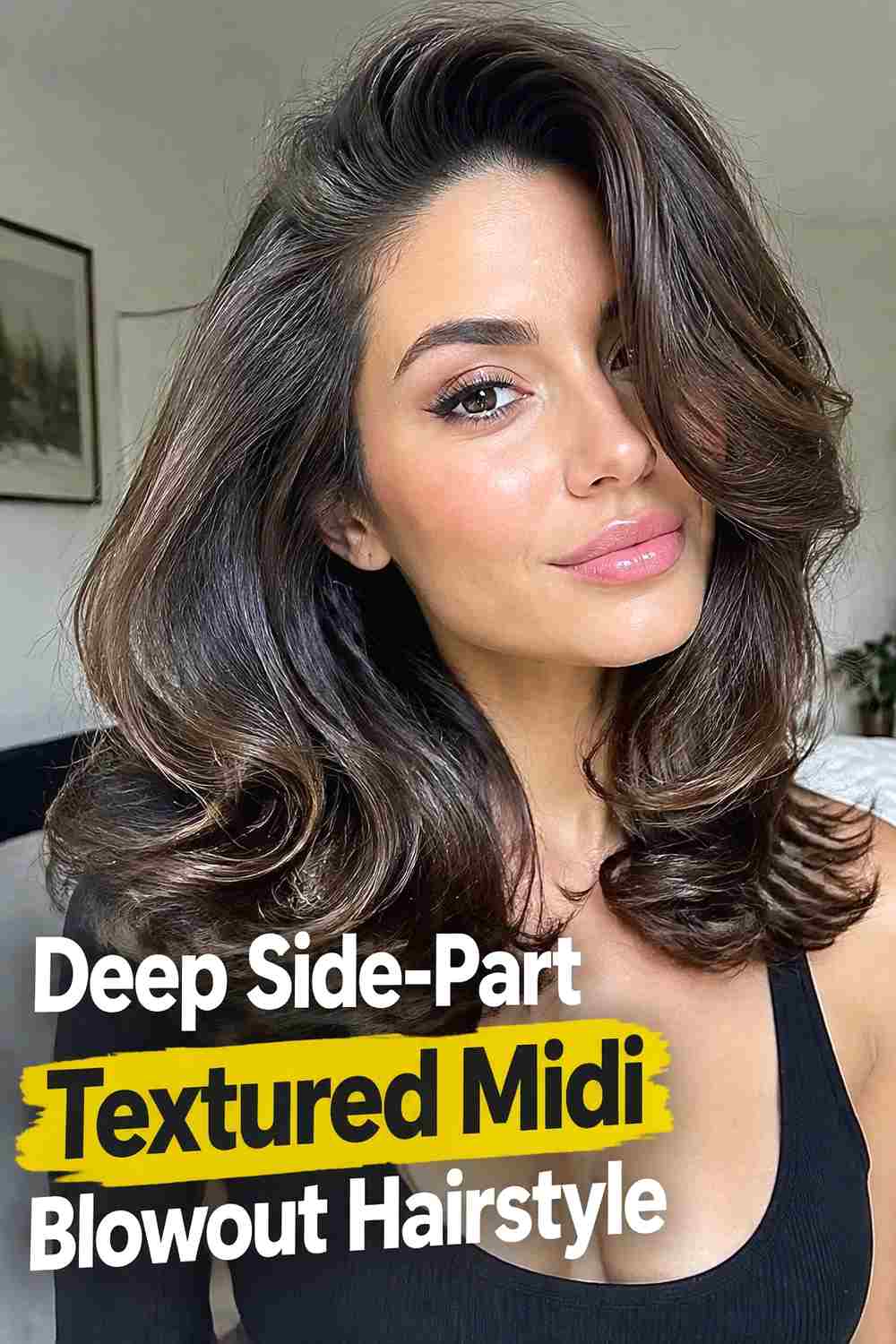
A deep side part gives textured midi hair instant lift by shifting extra volume to one side of the crown. The heavier section can sweep across the forehead before opening into soft bends through the shoulder-length layers. Rather than keeping the lengths completely smooth, add slight changes in direction so the texture continues from the front sweep into the rest of the hairstyle. The opposite side can remain more controlled, which makes the fuller side appear intentional instead of uneven. This option works especially well when you want extra crown height without teasing the entire head. A little natural separation through the ends keeps the dramatic part from making the style feel too formal.
Why It Works
The asymmetrical part creates volume at the root while the textured lengths keep the hairstyle soft and balanced.
Best For
This look is useful for anyone who prefers extra lift and movement concentrated around one side of the face.
5. Center Part Textured Midi Blowout Hairstyle
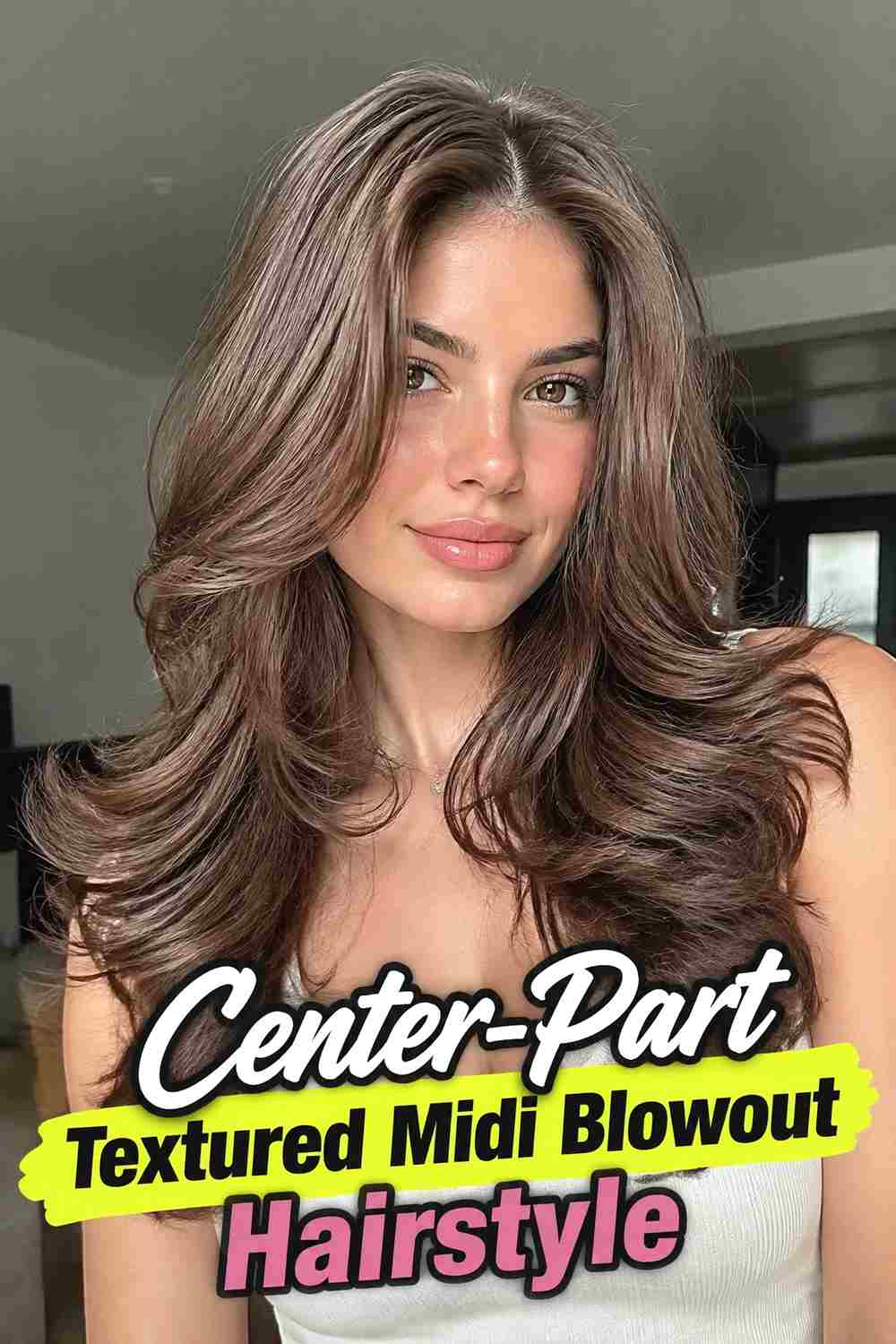
A center part creates a balanced framework for textured midi hair while allowing the lengths to remain loose and varied. The front pieces can bend gently away from the face, and the mid-lengths can alternate between soft curves and straighter sections for a more natural finish. Root volume should stay subtle so the middle part looks airy rather than flat. Light layers around the cheekbones and collarbone can reinforce movement without breaking up the main perimeter too much. This version feels modern because the symmetry at the roots contrasts with the less-perfect texture through the lengths. It is also adaptable enough to wear with soft waves, flipped ends, or a smoother finish on different days.
Styling Notes
Lift the roots on both sides of the part while drying, then let the texture become progressively softer through the lower lengths.
Best For
This style works well when you like balanced proportions but do not want perfectly uniform bends.
6. Feathered Textured Midi Blowout Hairstyle
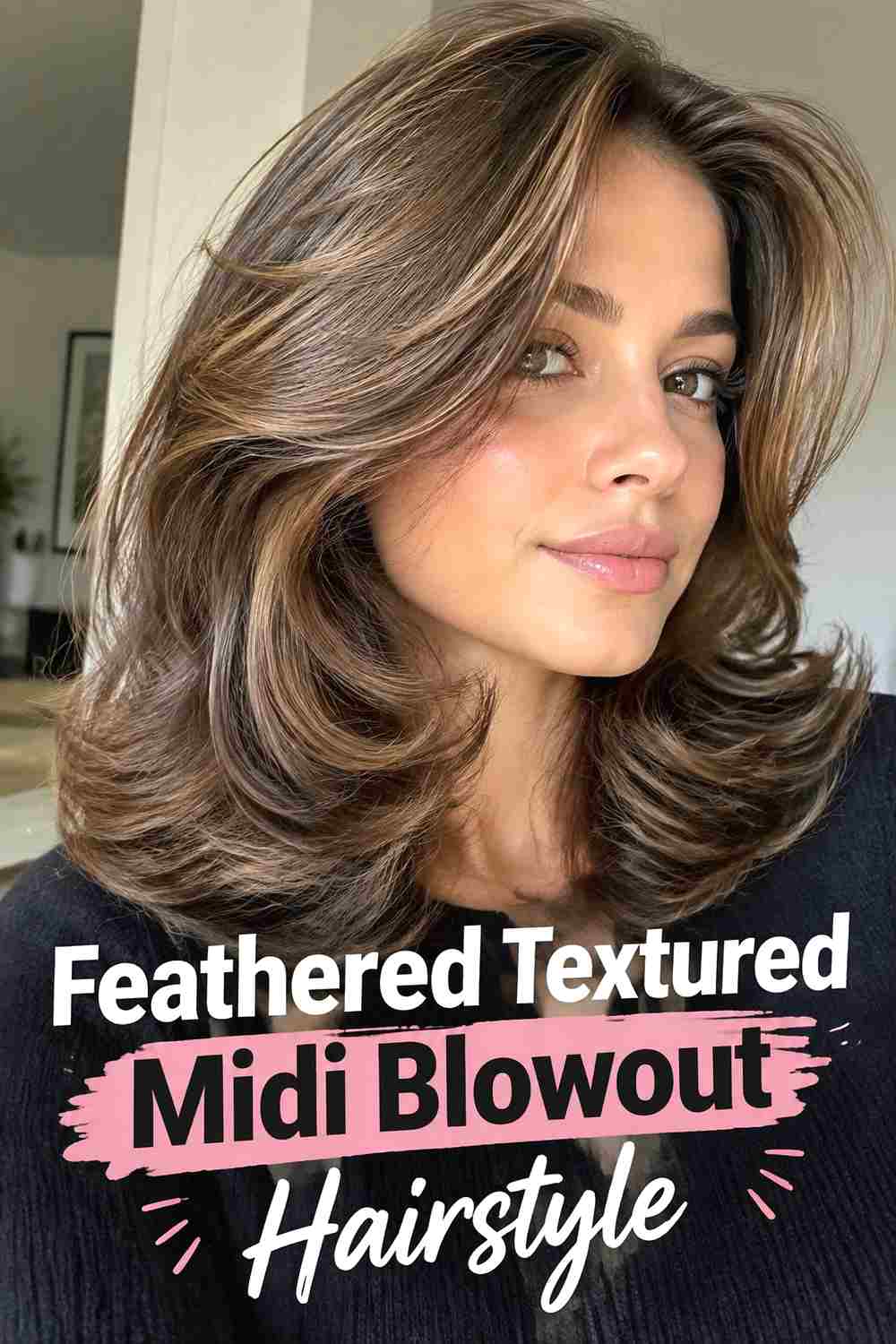
Feathered layers create a light, sweeping version of the textured midi blowout. Front sections move away from the face in overlapping layers, while the sides and back continue with softer outward bends that keep the silhouette airy. The feathering should be visible without becoming overly retro, so the ends need enough separation to move but should not form stiff wings. Medium-length hair is ideal because the layers can open around the shoulders without losing the fullness of the perimeter. This style works especially well when the hair has enough density to support several levels of layering. A soft finish keeps each piece flexible and allows the feathered shape to shift naturally throughout the day.
Why It Works
The angled layers create texture through direction and movement rather than relying on heavy curls.
Pro Tip
Use broad sections around the back and slightly smaller sections near the face to keep the feathering balanced.
7. Flipped Ends Textured Midi Blowout Hairstyle
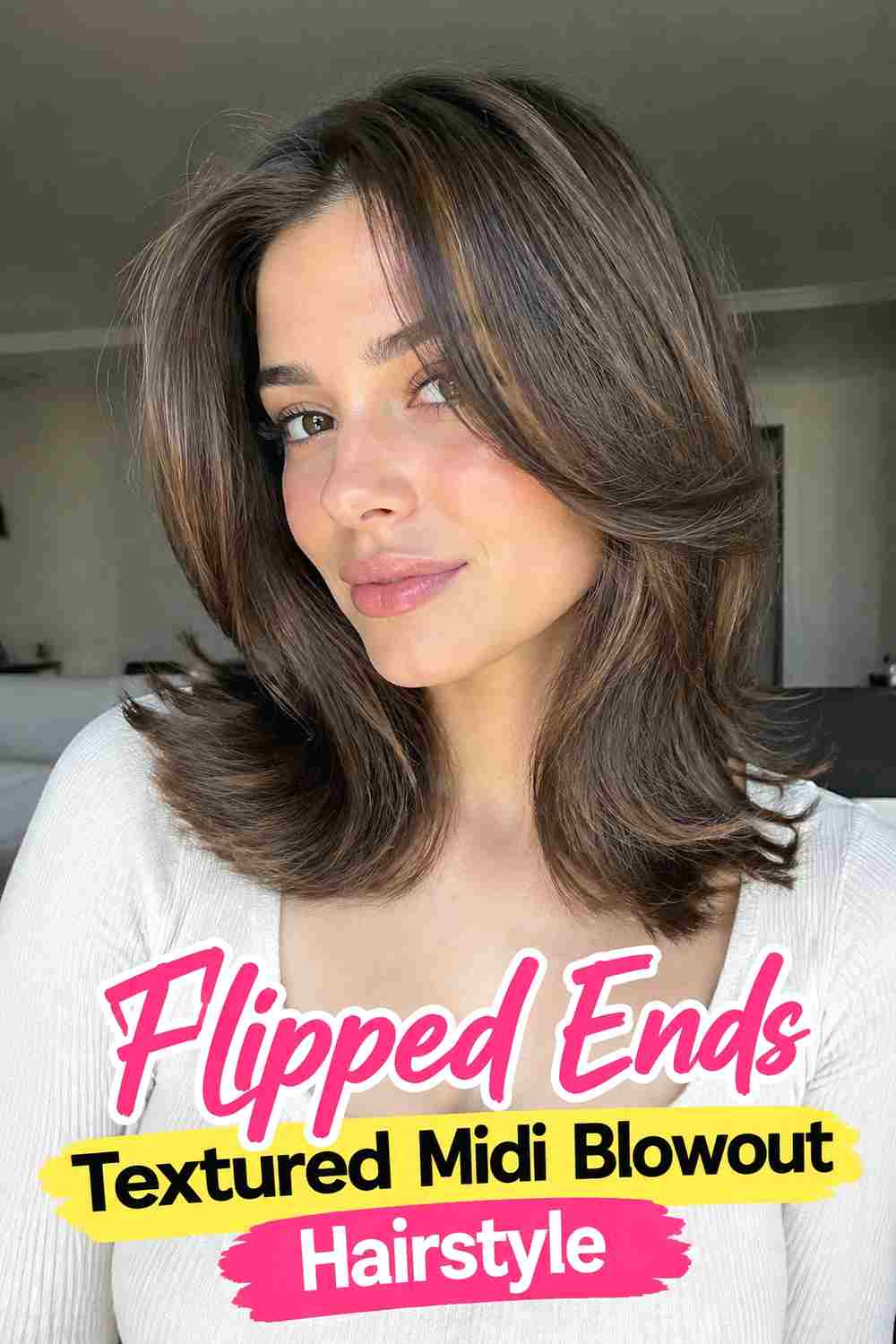
Flipped ends give a textured midi blowout playful movement by turning selected sections outward around the shoulders. Instead of creating one identical flip around the entire perimeter, vary the direction and intensity slightly so some pieces kick outward while others remain softer. This keeps the finish textured rather than overly retro or geometric. The upper lengths can stay relatively smooth with moderate root lift, allowing the ends to become the main detail. Shoulder and collarbone lengths are especially practical because the hair naturally interacts with that area, making the outward movement easy to see. Light layering can help prevent the flip from forming one thick, rigid line.
Styling Notes
Concentrate the strongest bend within the last few inches and keep the mid-lengths relaxed.
Wear & Maintenance
A quick end refresh can restore the flip without requiring a complete restyle of the roots and upper lengths.
8. Face Framing Textured Midi Blowout Hairstyle
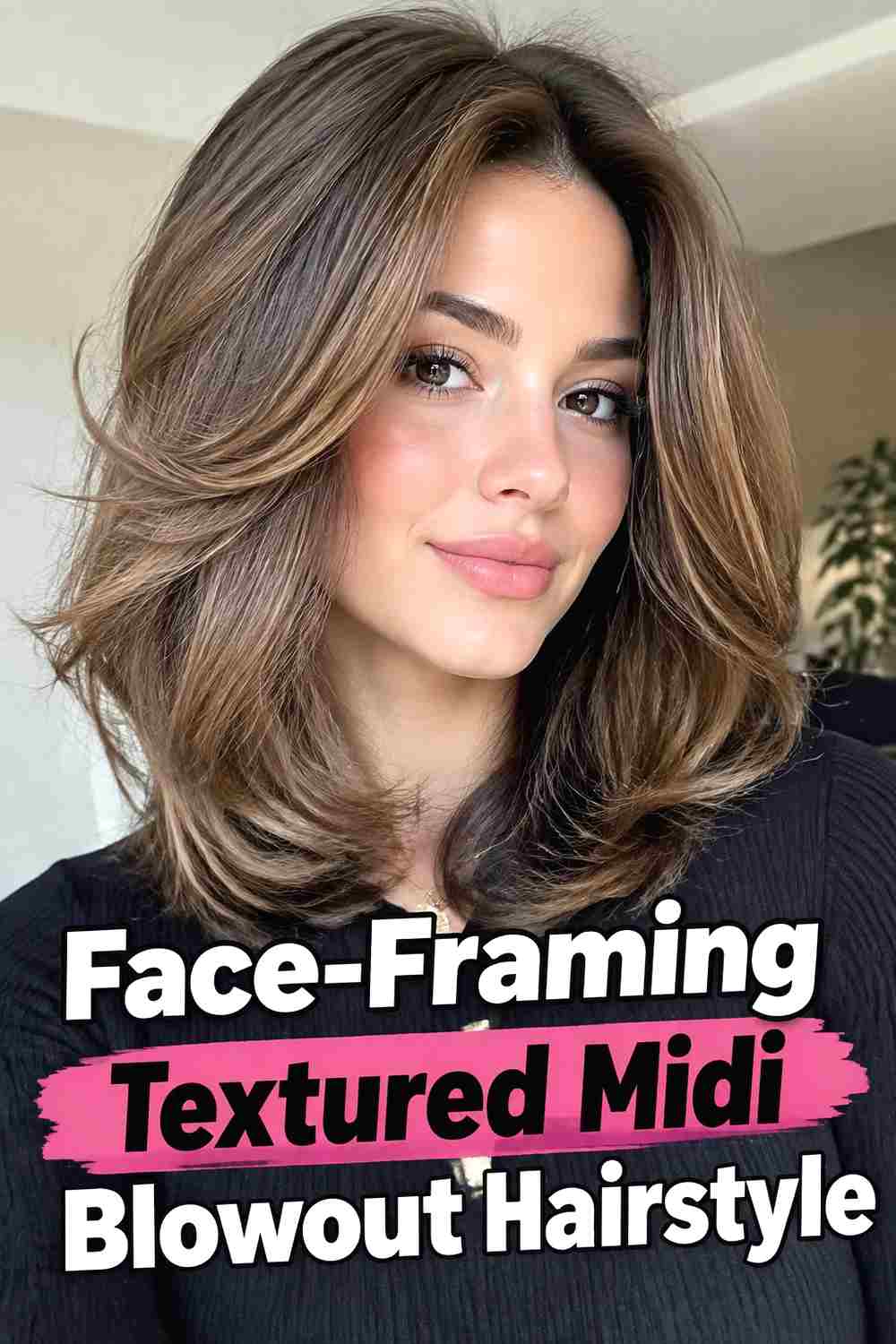
Face-framing layers add purposeful texture to a midi blowout by placing shorter sections around the cheekbones, jaw, and collarbone. These pieces can be styled away from the face in slightly different directions, creating movement that looks layered rather than perfectly curled. The longer lengths remain around the shoulders or upper chest and provide enough weight to anchor the lighter front sections. This look is useful if you want texture concentrated where it is most visible without introducing lots of short layers throughout the back. Keeping the front pieces soft and flexible also makes it easy to tuck them behind the ears or blend them into the rest of the hairstyle when you want a simpler finish.
Why It Works
The front layers create visible movement while the longer perimeter preserves fullness through the overall shape.
Pro Tip
Style the shortest pieces separately so they frame the face instead of disappearing into the longer hair.
9. Bouncy Textured Midi Blowout Hairstyle
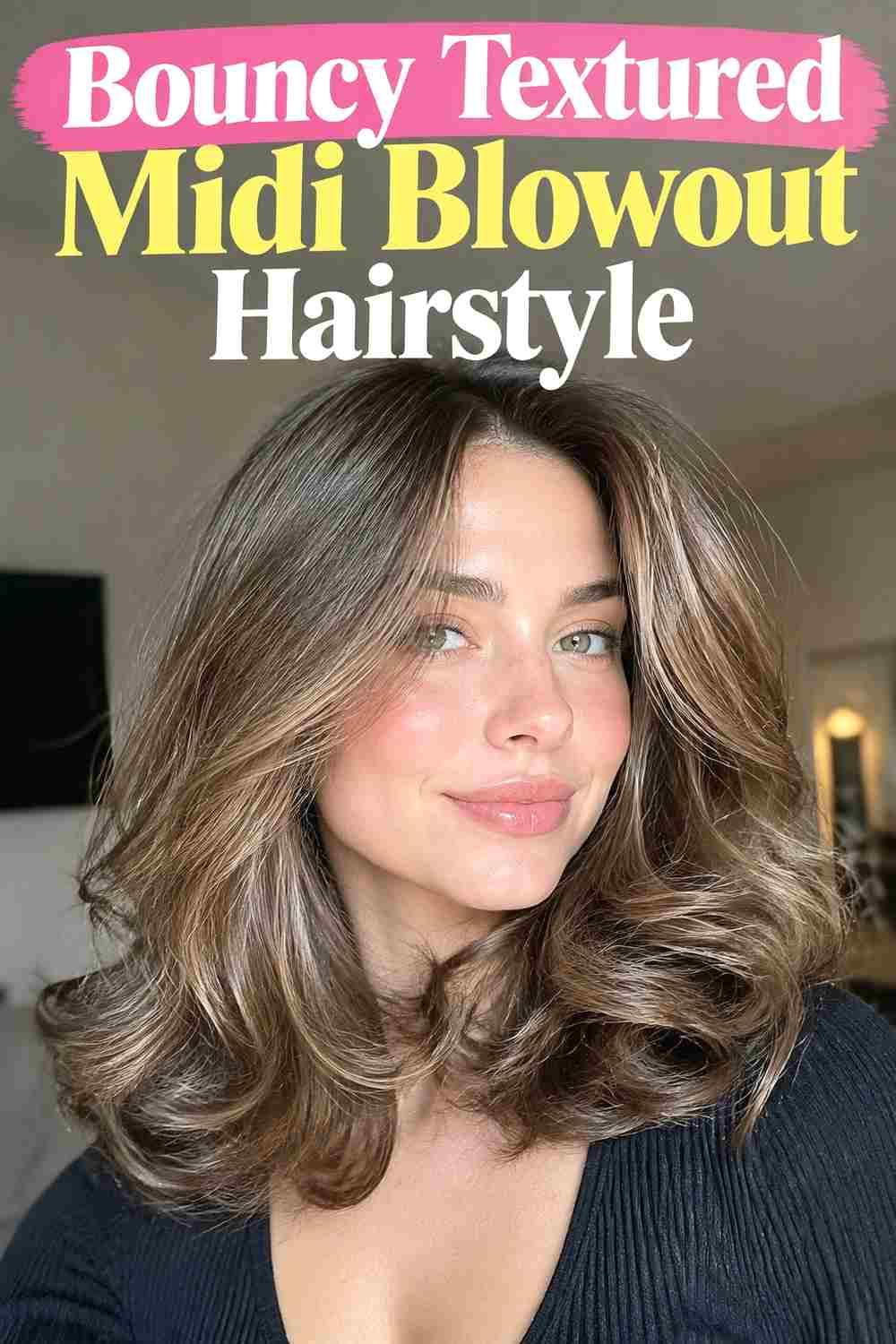
A bouncy textured midi blowout combines round-brush volume with intentionally varied movement through the lengths. The crown stays lifted, the mid-lengths have body, and the ends curve in different directions rather than forming one uniform roll. This creates a lively finish that still reads as a blowout instead of a set of curls. Layered hair responds particularly well because each level can hold its own bend, making the texture easy to see from the front and side. The style should feel light enough to move when you walk, with a touchable surface and soft shine. It is a strong choice when you want noticeable volume but prefer a less polished finish than a traditional salon blowout.
Styling Notes
Build the bounce section by section, then gently loosen the shape once the hair has cooled.
Best For
This variation works well on medium-length hair that holds round-brush movement without needing excessive product.
10. Soft Waves Textured Midi Blowout Hairstyle
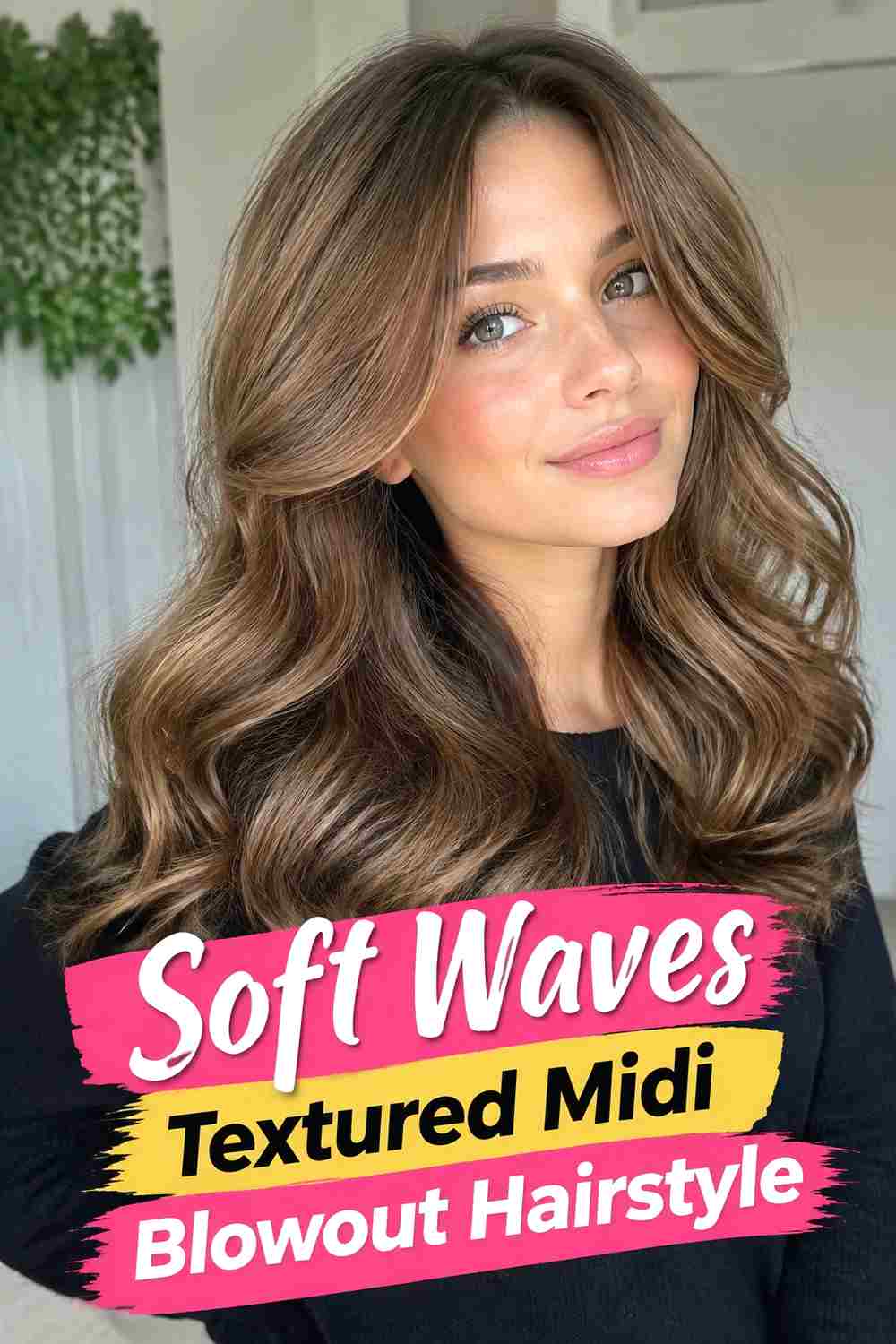
Soft waves bring a relaxed, flowing quality to the textured midi blowout. Instead of forming defined curls, the hair moves through broad bends from the mid-lengths downward, while the roots maintain enough lift to preserve the airy blowout shape. A few straighter sections can remain between the waves so the finish looks natural rather than overly patterned. Light layering helps the bends land at different points, making the hairstyle appear fuller without increasing actual bulk. This is particularly wearable for everyday styling because the movement can soften naturally over time without looking messy. The finished result should sit somewhere between a fresh round-brush blowout and loose second-day waves.
Why It Works
Broad waves add movement without changing the smooth, polished foundation that defines a blowout.
Wear & Maintenance
Refresh only flattened sections and allow the remaining waves to keep their natural variation.
11. Airy Volume Textured Midi Blowout Hairstyle
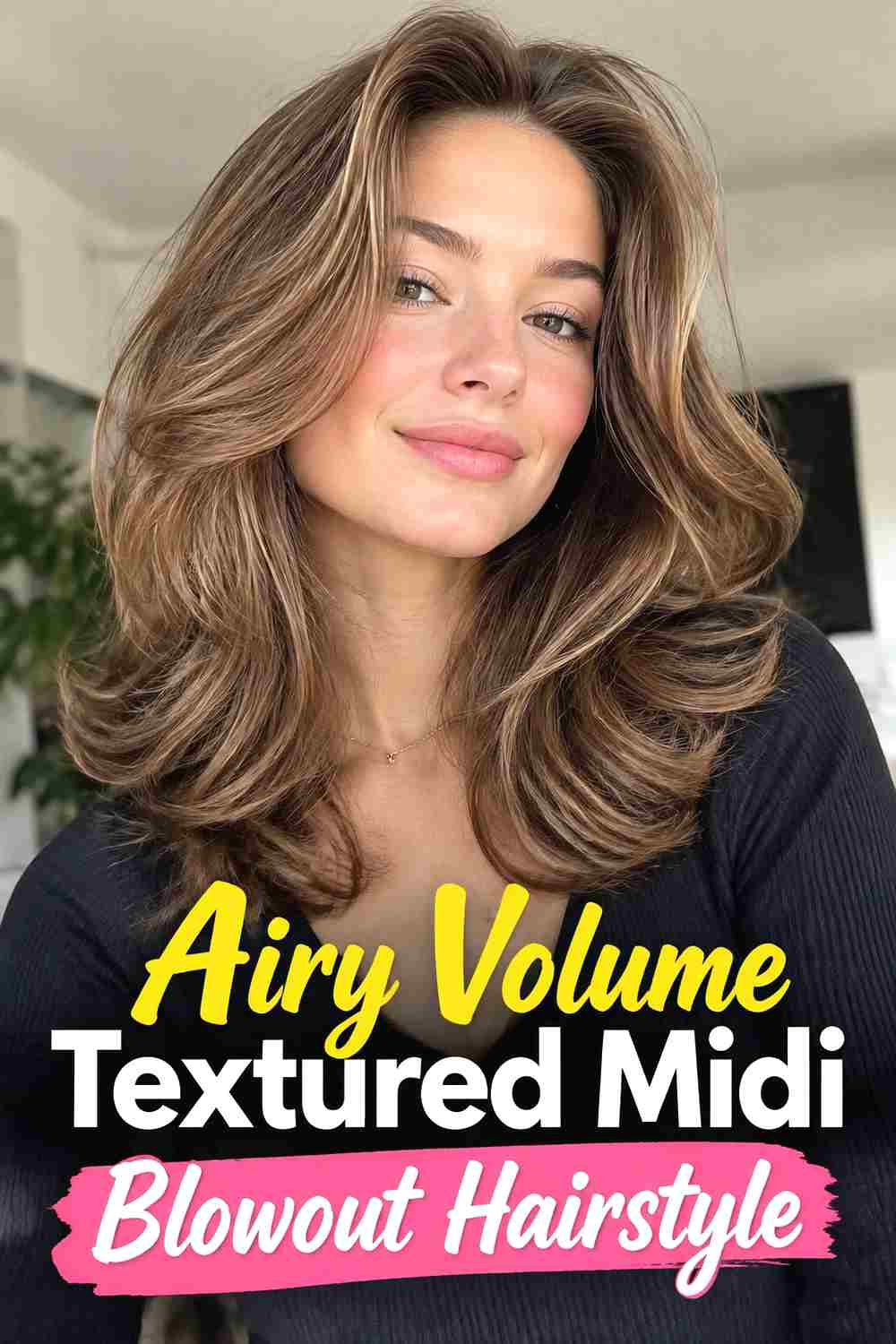
An airy volume midi blowout focuses on lift and separation rather than dense, sculpted fullness. The roots rise gently at the crown, while the mid-lengths remain light and the ends move freely around the shoulders. Long layers can remove enough weight to keep the shape buoyant without making the perimeter sparse. The texture should come from soft bends and visible strand separation, not heavy teasing. This style is especially effective if you like a full look but want the hair to feel light and movable rather than overly styled. A center or slightly off-center part can both work, depending on where you prefer the strongest root lift to appear.
Hair Type & Length
Medium-density hair often creates this balance naturally, while very thick hair may need careful internal shaping to avoid excess bulk.
Pro Tip
Add root lift underneath the top layers so the visible surface remains smooth and touchable.
12. Shaggy Textured Midi Blowout Hairstyle
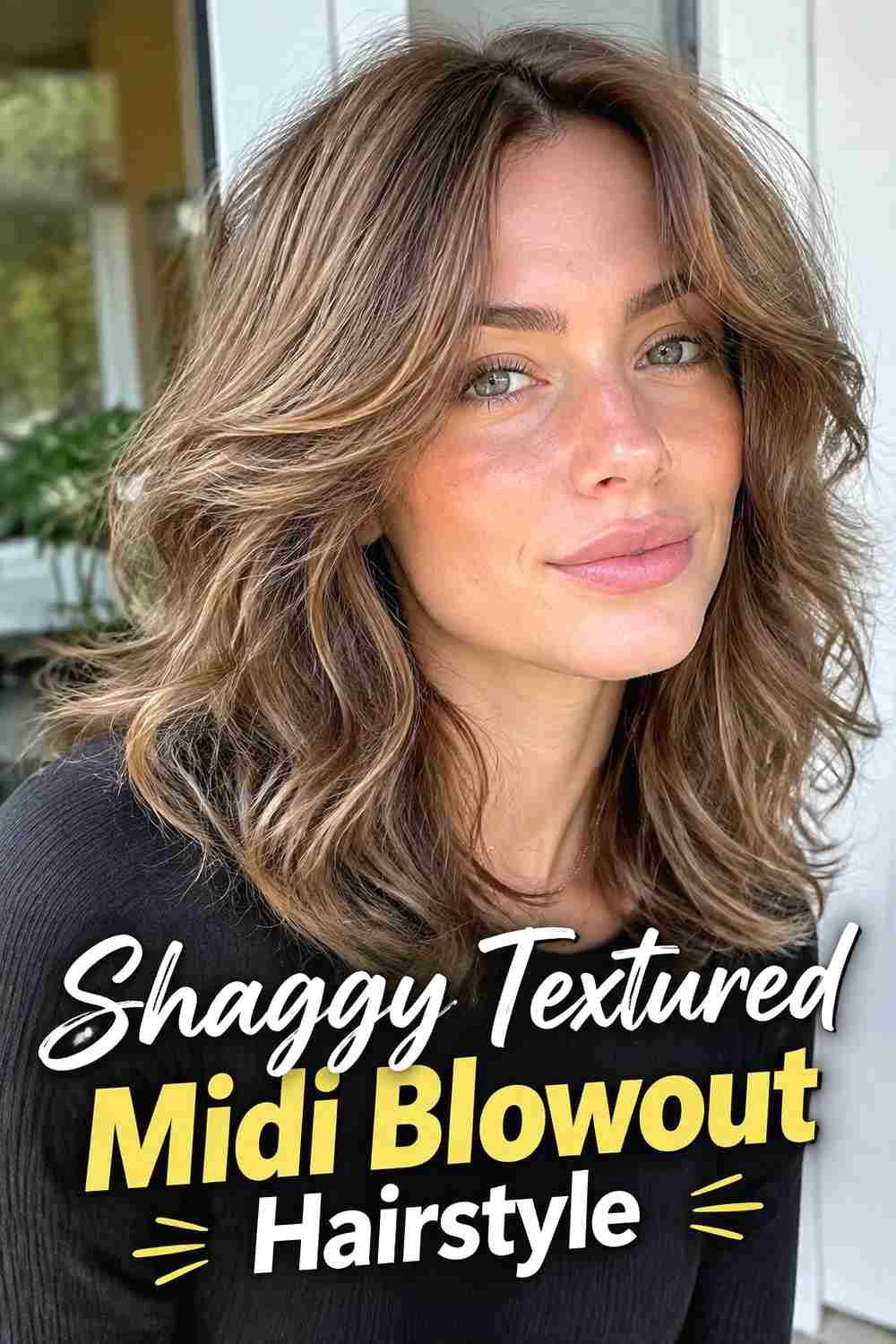
A shaggy textured midi blowout introduces shorter layers, broken-up ends, and a more relaxed outline while keeping enough smoothness to retain a blow-dried finish. The crown can have extra lift, and the lengths can fall through several loosely connected layers that turn inward and outward naturally. Unlike a full shag, the perimeter remains substantial enough to look polished around the shoulders. This version works especially well on naturally wavy hair because the existing texture helps create movement without requiring every section to be shaped with a brush. A wispy or curtain fringe can complement the cut, though the style also works with a simple center or side part.
Styling Notes
Avoid forcing every layer into the same direction; the slightly irregular pattern is what gives this look its character.
Best For
This style suits anyone who wants a more relaxed, less symmetrical take on the midi blowout.
13. Soft C Curl Textured Midi Blowout Hairstyle
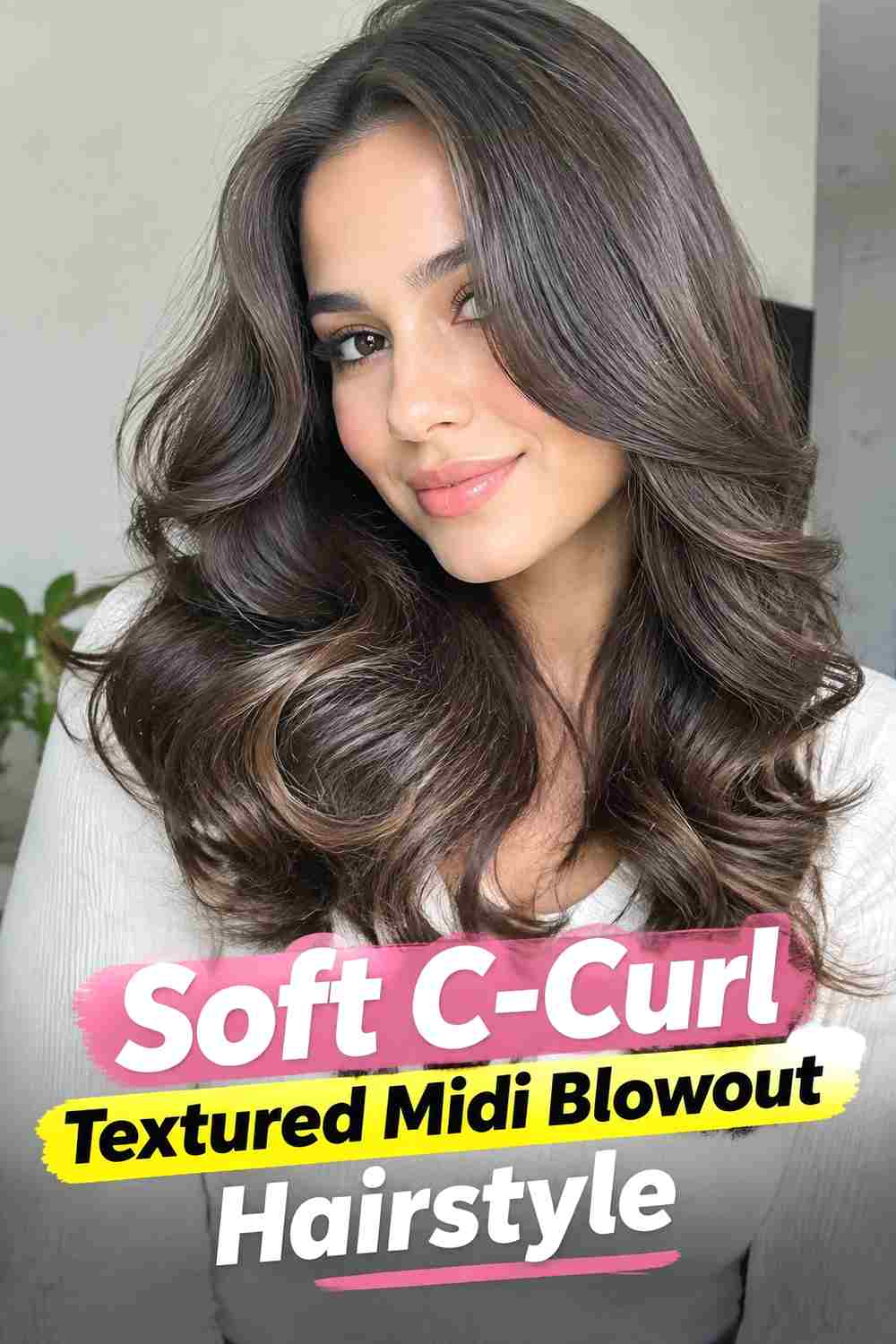
A soft C-curl textured blowout combines a polished inward bend with enough separation to keep the finish from looking overly uniform. The lower lengths curve toward the shoulders, but individual sections can vary slightly in depth and direction. This creates a rounded silhouette with visible movement instead of one continuous underturned edge. The roots should remain lightly lifted, while the mid-lengths stay smooth enough for the C-shape to remain easy to see. Shoulder-length and collarbone cuts are especially suited to this look because the ends can curve naturally around the neckline. It is a useful option if you prefer controlled texture and softness rather than strong flips or dramatic waves.
Why It Works
The inward bend gives the hairstyle polish, while slight variation between sections keeps the overall finish modern and textured.
Pro Tip
Use larger sections for broad C-shaped curves rather than wrapping the hair tightly enough to form curls.
14. 90s Textured Midi Blowout Hairstyle
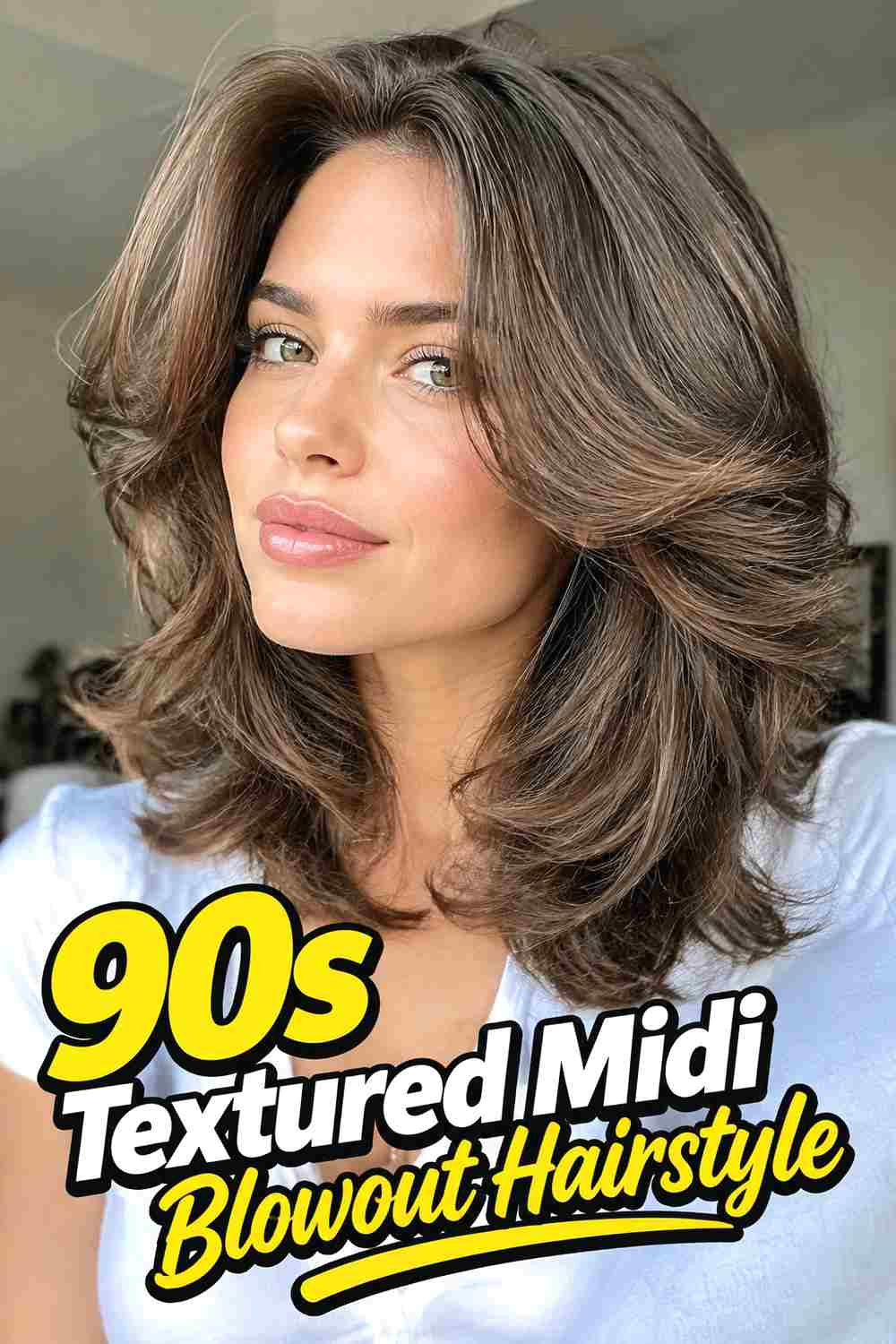
A 90s textured midi blowout combines lifted roots, face-framing layers, and broad outward movement with a slightly loosened finish. The front can sweep back from a center or off-center part, while the shoulder-length layers create visible bounce through the sides. Unlike a very polished retro blowout, this version benefits from a little separation and unevenness at the ends, which makes the volume feel more wearable. The crown should be full but flexible, and the lower lengths should retain enough weight to keep the hairstyle from becoming overly fluffy. Medium and thick hair can showcase the layered effect especially well, though finer hair can use longer layers for a lighter interpretation.
Styling Notes
Focus the strongest lift around the front and crown, then loosen the lower layers with your fingers once they cool.
Why It Works
The combination of volume and separated layers creates a recognizable 90s influence without making the style feel costume-like.
15. Glossy Textured Midi Blowout Hairstyle
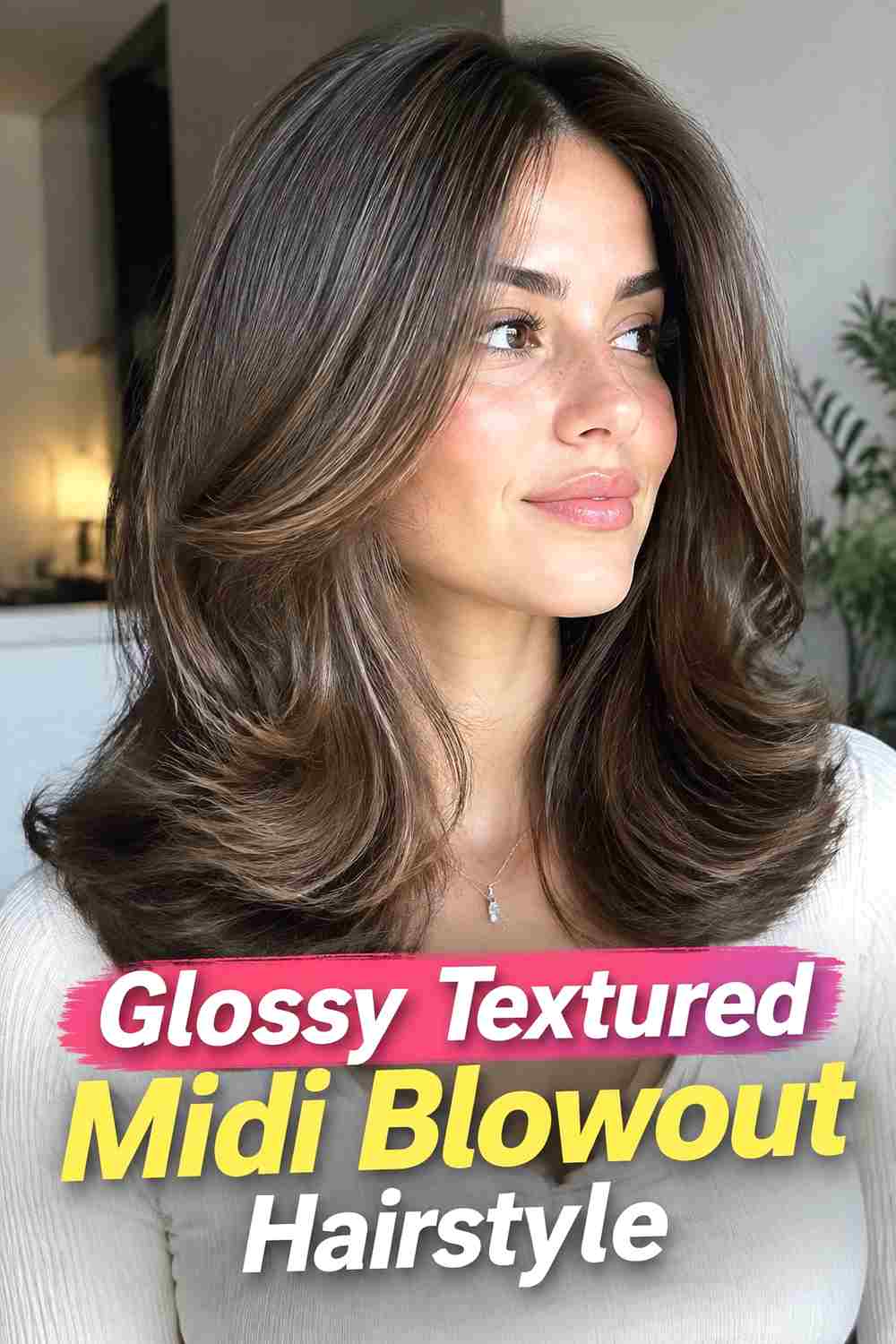
The glossy textured midi blowout balances smooth shine with enough bends and layered movement to avoid looking pin-straight. The hair remains polished through the surface, while subtle texture appears through the mid-lengths and ends. A few sections can curve inward and others slightly outward, creating dimension that becomes especially visible when light reflects across the hair. The roots should have moderate lift rather than extreme volume, keeping the overall finish sleek but not flat. This version works beautifully with deep brunette, black, or rich dimensional color because the reflective surface emphasizes both the shape and tone. Lightweight finishing products are important so the texture stays mobile instead of becoming heavy.
Styling Notes
Apply shine products sparingly through the lengths and keep the roots lighter so the blowout retains lift.
Best For
Choose this style if you want visible polish while still keeping the movement and separation of a textured finish.
16. Caramel Highlight Textured Midi Blowout Hairstyle
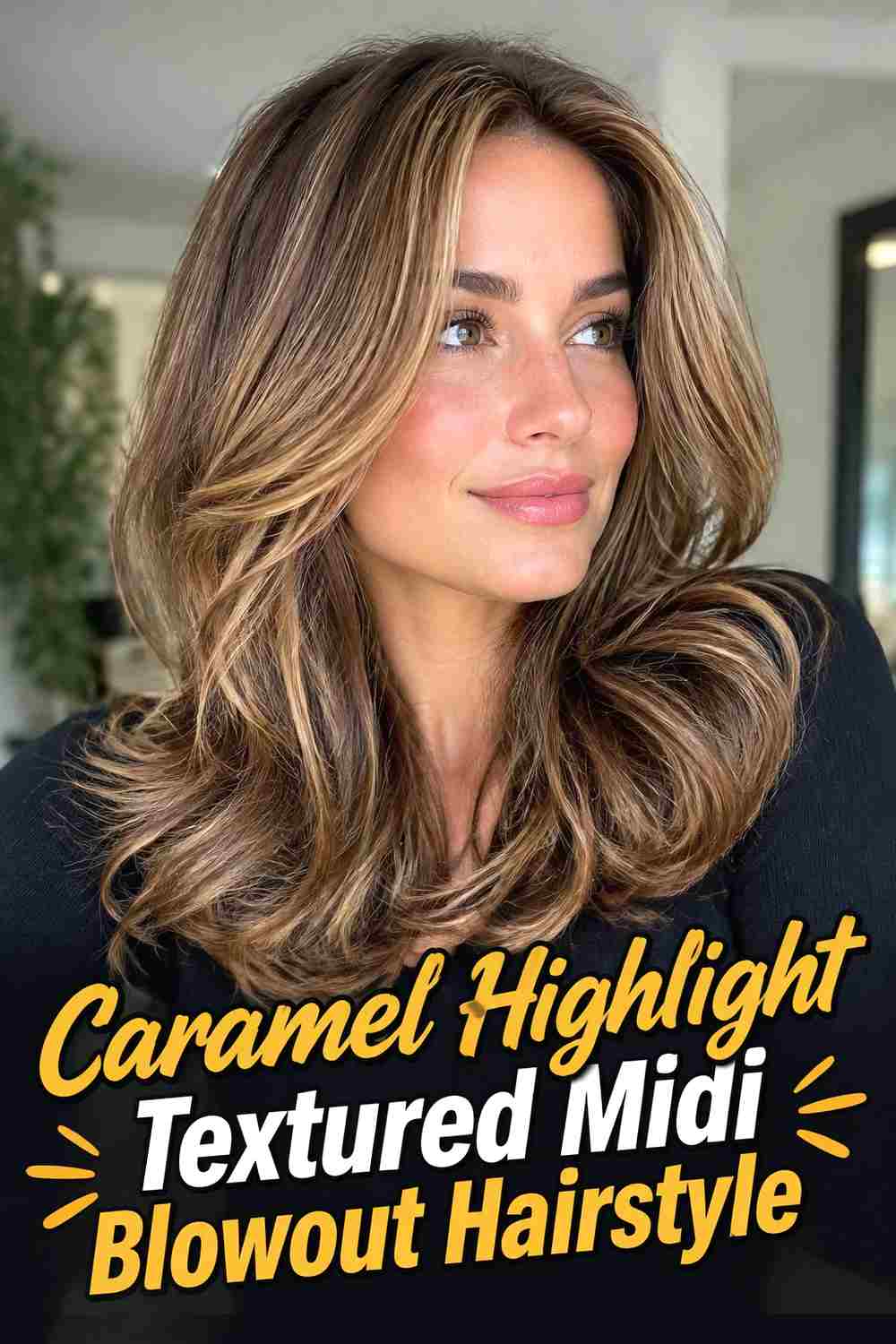
Caramel highlights make a textured midi blowout more dimensional by placing warm ribbons through the layers and bends. The lightest pieces can sit near the face and upper sections, while softer caramel tones continue into the mid-lengths and ends. Because the hair moves in several directions, each highlighted section catches light differently, making the texture easier to see. A brunette base keeps the color grounded and prevents the finish from becoming overly bright. Shoulder-to-chest length gives the highlights enough space to travel through multiple curves. This variation works especially well with face-framing layers or soft waves, where the color placement can reinforce the movement instead of appearing as flat vertical stripes.
Why It Works
The contrasting tones make individual layers and bends more visible, adding depth without changing the overall blowout structure.
Wear & Maintenance
Handle highlighted lengths gently and use lightweight conditioning products that maintain softness without reducing bounce.
17. Piecey Ends Textured Midi Blowout Hairstyle
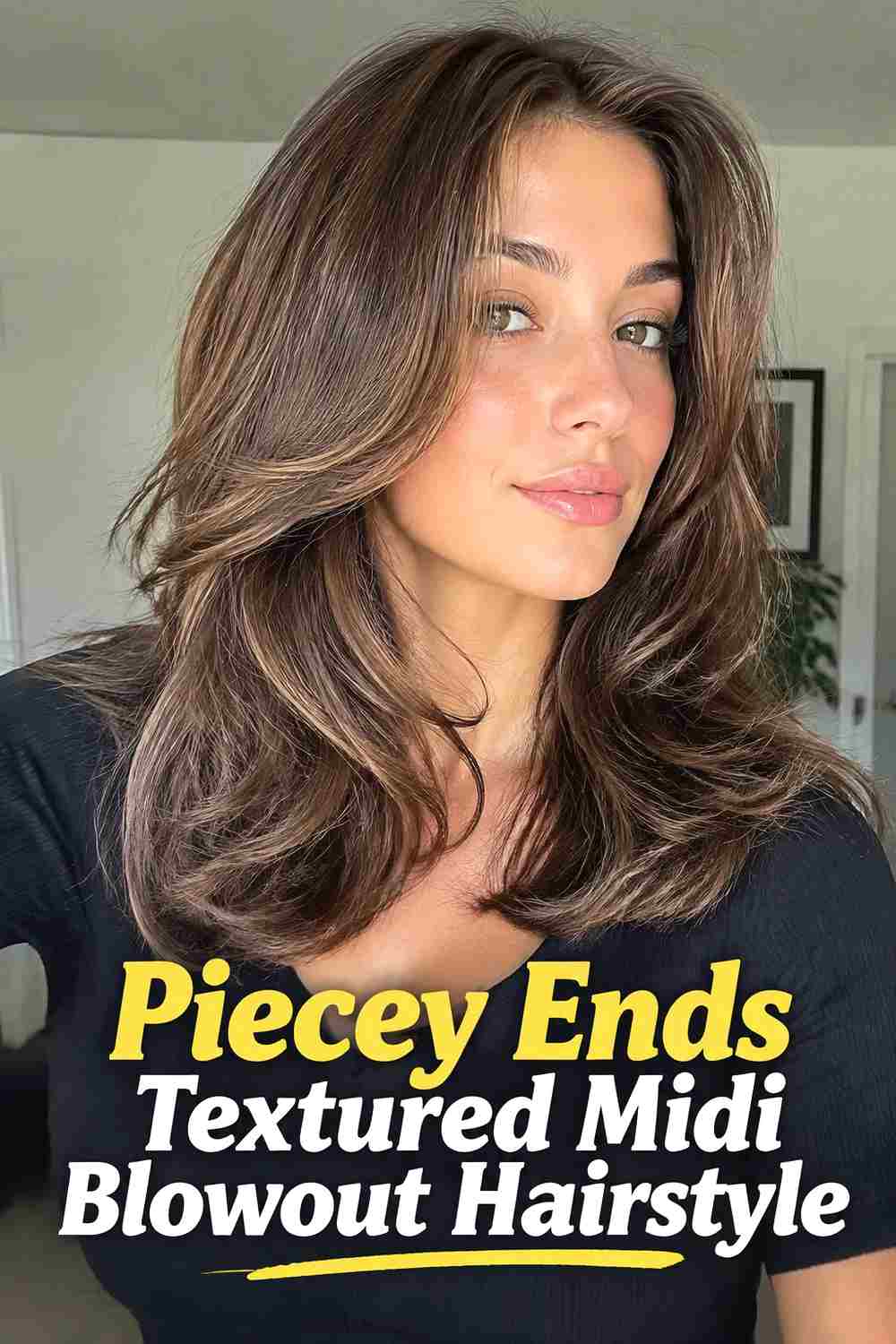
Piecey ends give the midi blowout a deliberately separated finish, with the lower sections breaking into soft, visible strands instead of forming one smooth perimeter. The upper hair remains polished enough to preserve the blowout effect, while the last few inches carry more texture and directional movement. Light layers or point-cut ends can help create this separation, especially around the shoulders where the pieces can turn inward, outward, or remain nearly straight. This style works well if you want texture that feels modern and slightly edgy without committing to a shag. Keep the separation soft rather than stringy, with enough fullness remaining through the ends to make the haircut look healthy and intentional.
Styling Notes
Use a very small amount of lightweight cream on the ends and separate selected pieces with your fingers.
Best For
This finish suits medium-length cuts that need more definition at the perimeter without adding strong curls or extra volume.
How to Choose the Right Look
Start with how much texture you want. Tousled, shaggy, and piecey-end styles create the most obvious separation, while glossy and C-curl versions keep the movement more controlled. If you prefer a traditional blowout with only a little extra dimension, soft waves or a layered finish can provide an easy middle ground.
Your haircut structure matters too. Thick hair can usually support feathered, shaggy, or heavily layered shapes, while fine hair may look fuller with longer layers and a stronger perimeter. Face-framing sections are useful when you want movement near the front without removing too much density from the rest of the hair.
Parting changes the balance of the volume. A deep side part creates asymmetrical lift, while a center part produces a cleaner and more balanced silhouette. Curtain bangs can add softness around the forehead, especially when paired with broad outward bends.
Also consider styling time. Bouncy and 90s-inspired finishes usually need more deliberate root lift, while tousled waves and piecey ends can tolerate a looser refresh. Glossy styles require careful product control so shine does not become heaviness.
Choose the option that works with your natural density, texture, and daily routine. A successful textured midi blowout should move freely and keep its shape without feeling stiff or overly engineered.
Final Thoughts
Textured midi blowouts offer more personality than a perfectly smooth blowout while keeping the polished movement that makes medium-length hair so versatile. Layers, waves, feathering, bangs, flipped ends, and color can all change the finish without losing the essential airy shape. Pick the amount of texture and volume that feels realistic for your hair and styling routine.
FAQs
1. What makes a midi blowout look textured?
A textured midi blowout uses layers, separated ends, soft bends, waves, feathering, or varied styling directions instead of keeping every section perfectly smooth and uniform.
2. Can fine hair wear a textured midi blowout?
Yes. Longer layers, light root lift, and subtle bends can create movement while helping the perimeter retain enough visual fullness.
3. What length works best for a textured midi blowout?
Shoulder to upper-chest length works especially well because there is enough hair for layers and bends while the overall shape remains light enough to hold volume.
4. Do textured blowouts need curtain bangs?
No. Curtain bangs can add movement around the front, but center parts, deep side parts, face-framing layers, and fringe-free styles can all work beautifully.
5. How do I keep a textured blowout from looking messy?
Maintain a smooth overall surface, keep the root lift controlled, and concentrate the irregular movement through selected layers and ends rather than creating frizz everywhere.
Save your favorite textured midi blowout hairstyle ideas, share the collection, and explore more medium-length hair inspiration for your next look.