13 Vanilla Beige Blonde Highlights for Fine Hair
Soft vanilla-beige blonde highlights bring fine hair gentle brightness and dimension without relying on chunky contrast or excessive layering.
Vanilla beige blonde sits between creamy warmth and neutral beige, making it a versatile highlight tone when you want brightness without an overly golden or icy result. On fine hair, carefully spaced highlights can create visible dimension while allowing the natural or deeper base color to provide enough shadow for contrast.
Placement matters just as much as shade. Fine babylights can create a subtle blend, brighter face-framing sections can lift the front visually, and root melts or shadow roots can preserve depth near the scalp. Because fine hair can lose visual fullness when it is excessively layered or heavily lightened, balanced placement and a strong-looking perimeter are especially useful considerations.
Quick List
- Classic Vanilla Beige Blonde Highlights Hairstyle
- Fine Vanilla Beige Babylights Hairstyle
- Face Framing Vanilla Beige Highlights Hairstyle
- Vanilla Beige Ribbon Highlights Hairstyle
- Vanilla Beige Highlights With Shadow Root Hairstyle
- Soft Vanilla Beige Balayage Highlights Hairstyle
- Vanilla Beige Highlights On Long Layers Hairstyle
- Vanilla Beige Highlights With Soft Waves Hairstyle
- Vanilla Beige Highlights On Shoulder Length Hair Hairstyle
- Vanilla Beige Highlights With Curtain Bangs Hairstyle
- Vanilla Beige Highlights With Blunt Ends Hairstyle
- Vanilla Beige Highlights With Root Melt Hairstyle
- Glossy Vanilla Beige Blonde Blowout Hairstyle
1. Classic Vanilla Beige Blonde Highlights Hairstyle
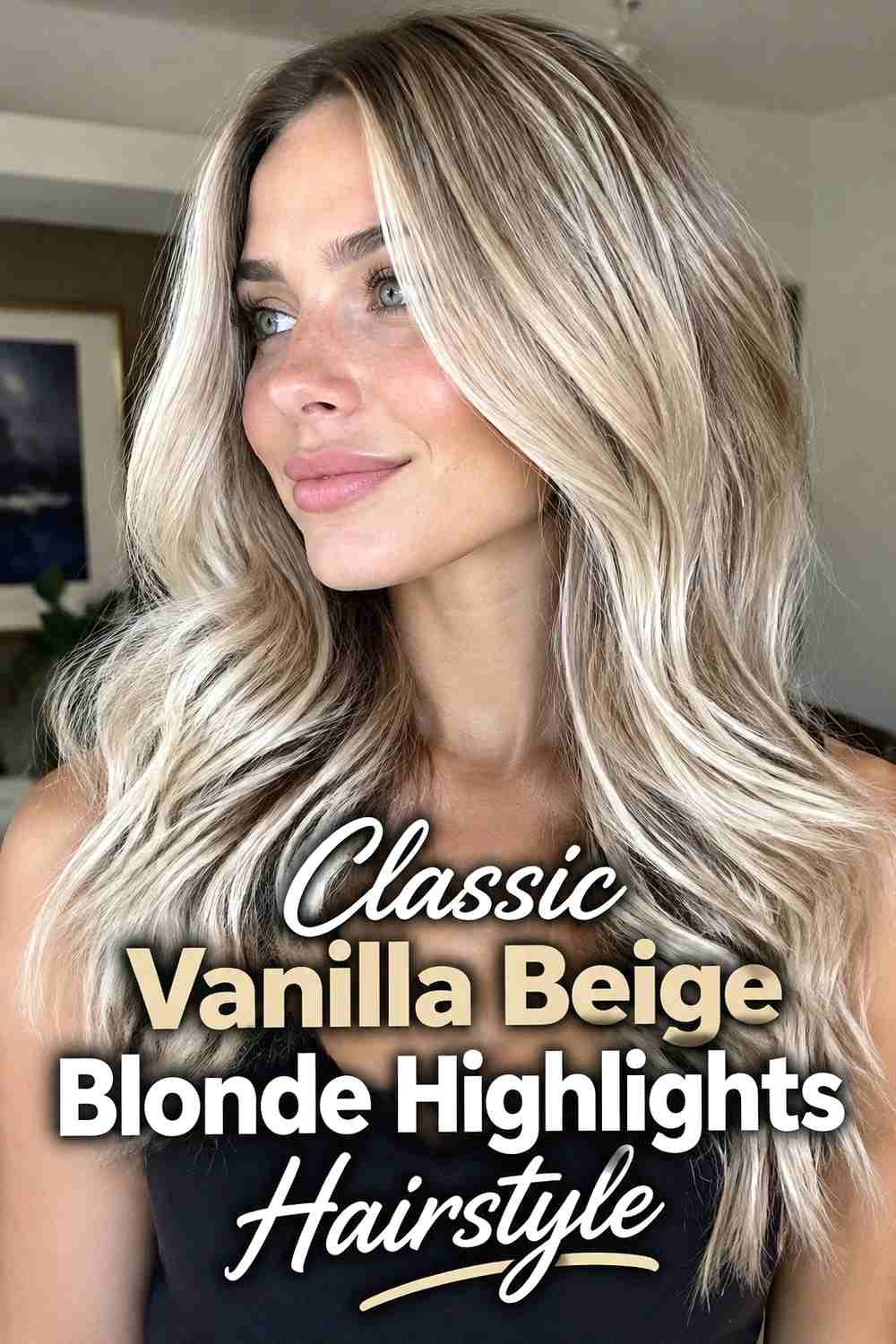
Classic vanilla beige blonde highlights use fine-to-medium pieces to brighten fine hair without creating an overly striped effect. A slightly deeper natural or beige-blonde base between the highlights provides necessary contrast, allowing the lighter pieces to look more dimensional. The vanilla tone brings creamy brightness, while beige keeps the overall finish balanced rather than strongly yellow. On fine hair, distributing highlights strategically through the surface and around the face can be more effective than lightening every section. Straight styling shows the subtle tonal difference clearly, while a gentle bend adds extra separation through the lengths. Keeping the ends visually full helps the color feel polished without making the hair appear overly wispy.
Why It Works
Small areas of deeper color between the blonde pieces create shadow, helping the vanilla-beige highlights appear brighter while maintaining dimension through fine strands.
2. Fine Vanilla Beige Babylights Hairstyle
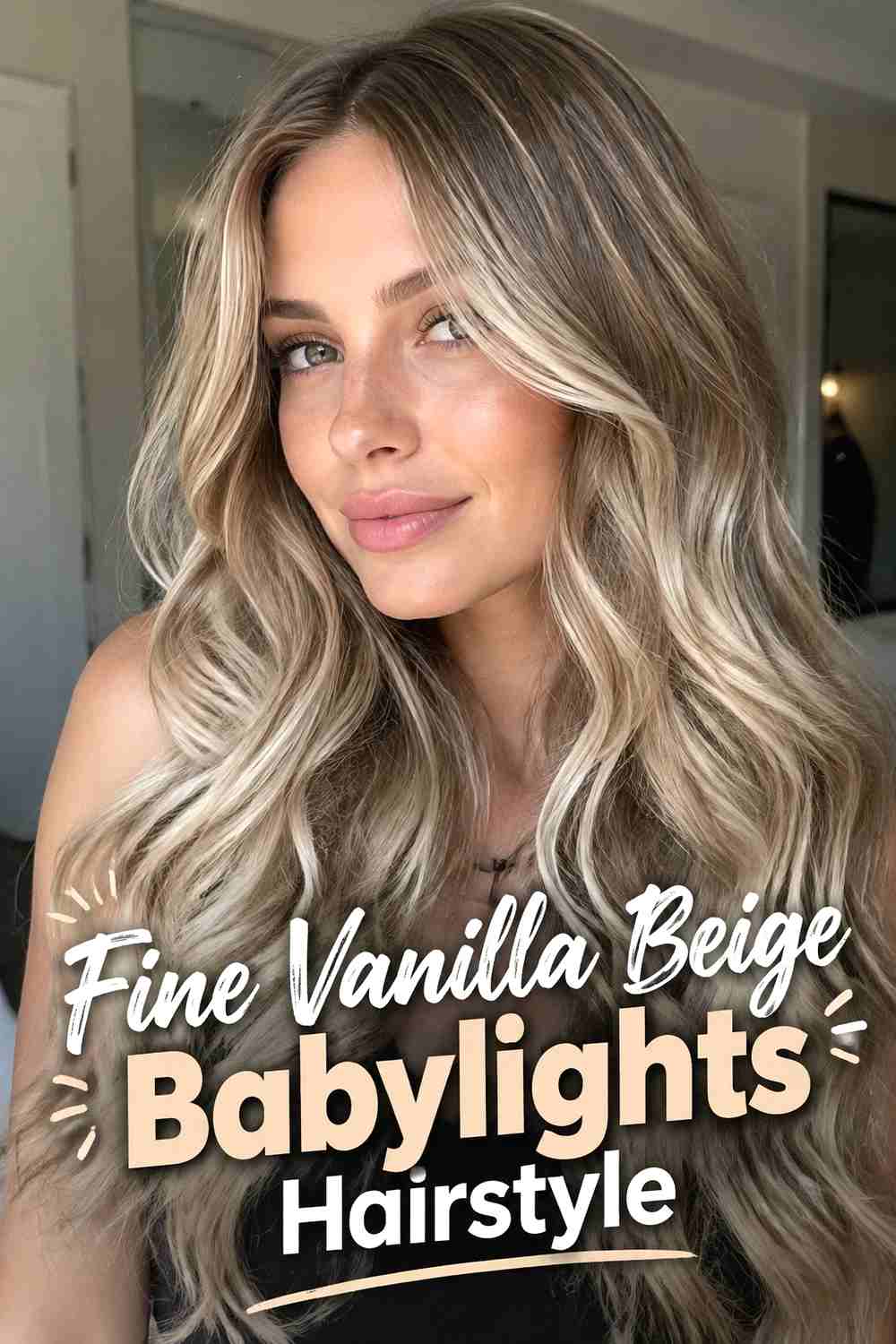
Babylights are a natural match for fine hair because their delicate scale mirrors the hair’s own texture. Very fine vanilla-beige sections can be placed around the hairline, part, and upper layers, creating soft brightness without obvious bands of color. The result is especially believable when some natural depth remains between the lightened strands instead of blending everything into one uniform blonde. Around the face, a slightly denser concentration of babylights can add more brightness while the back stays subtle. Because the sections are so fine, the overall finish can look polished even when worn straight. Gentle waves make the tonal variation easier to see, but they are not necessary for the color to feel dimensional.
Best For
This option suits fine hair when you want a very blended blonde effect with minimal visual striping and plenty of softer depth between highlighted strands.
3. Face Framing Vanilla Beige Highlights Hairstyle
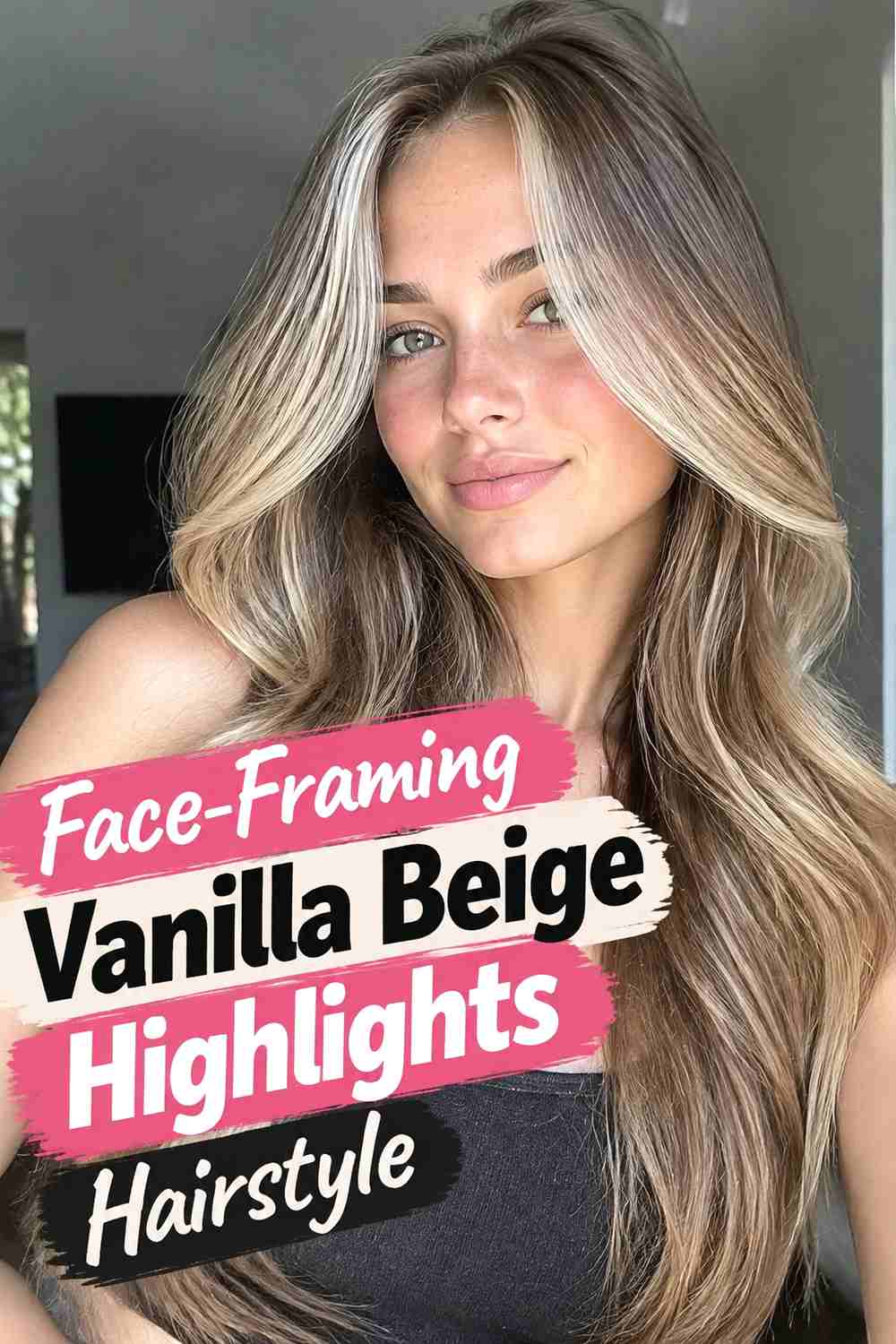
Face-framing vanilla beige highlights concentrate the brightest pieces around the temples, cheekbones, and front sections instead of distributing equal brightness throughout the whole head. This creates noticeable lift at the front while preserving more natural depth through the back and interior. On fine hair, that balance can keep the overall color from looking flat or over-lightened. The face-framing sections can remain relatively slim rather than becoming chunky money pieces, which helps them blend into the rest of the hairstyle. A soft blowout or gentle curve away from the face makes the brighter strands especially visible. Keeping the roots slightly deeper provides contrast and allows the vanilla-beige lengths to stand out more clearly.
Styling Notes
Direct the front sections slightly away from the face to reveal the brighter pieces. Broad movement works better than tight curling when you want the highlight placement to stay visible.
4. Vanilla Beige Ribbon Highlights Hairstyle
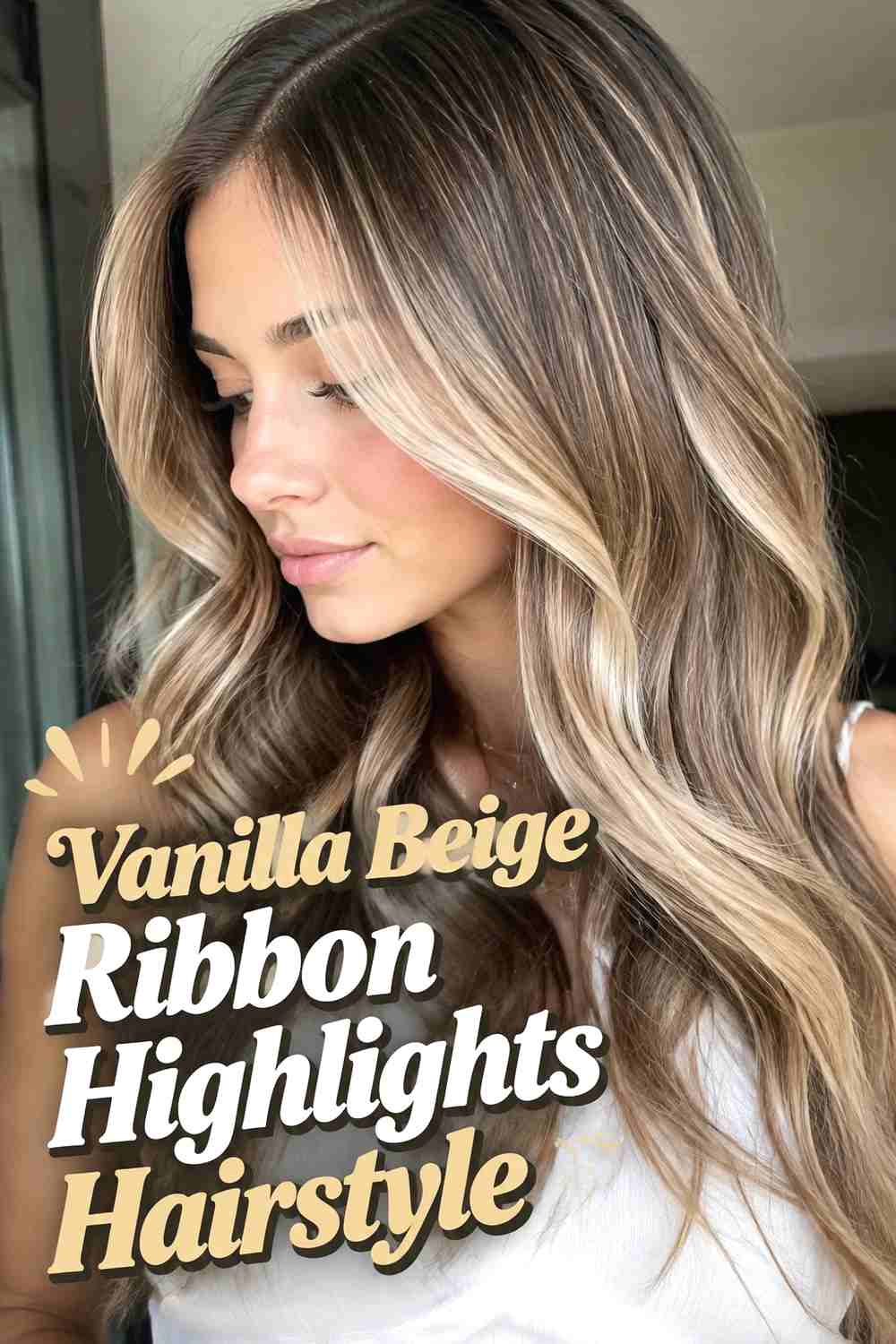
Ribbon highlights create a little more definition than babylights while still remaining wearable on fine hair. Medium-fine vanilla beige pieces can run through selected surface sections, creating visible brightness against a slightly deeper blonde or light brunette base. The ribbons should be spaced rather than packed closely together so enough shadow remains for dimension. This technique looks especially attractive with gentle waves because the highlighted strands appear and disappear as the hair bends. On straight hair, the placement becomes cleaner and more graphic. Fine hair generally benefits from keeping the ribbon width controlled, since very chunky panels can overpower the natural density. A balanced mix of highlighted and untouched strands usually gives the most convincing result.
Why It Works
Defined ribbons create visible contrast without requiring heavy layering, allowing fine hair to look dimensional while keeping its overall silhouette relatively full.
5. Vanilla Beige Highlights With Shadow Root Hairstyle
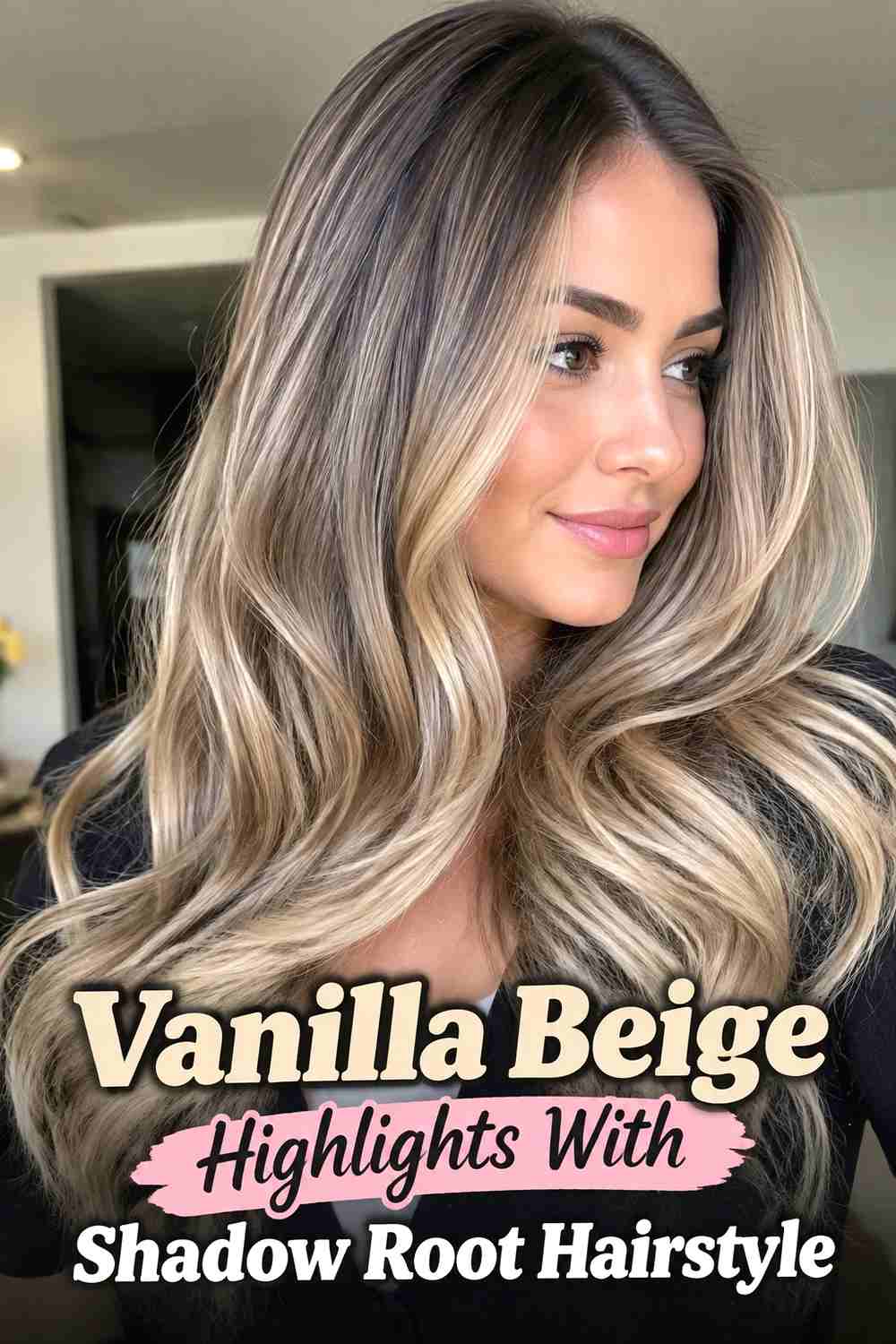
A shadow root adds depth at the scalp while allowing vanilla beige blonde highlights to become gradually brighter through the mids and ends. This is particularly useful for fine hair because the darker root area creates visual contrast and prevents the color from appearing flat from top to bottom. The transition should be soft, with no obvious line separating the deeper root from the highlighted lengths. Around the face, a few brighter sections can begin higher to keep the overall look fresh. The rest of the highlights can start lower for a more blended effect. Straight hair reveals the gradient clearly, while loose waves make the transition feel even softer and more dimensional.
Wear & Maintenance
A shadow root can make regrowth less noticeable than highlights taken directly to the scalp, though the lighter lengths may still need toning as their beige balance changes.
6. Soft Vanilla Beige Balayage Highlights Hairstyle
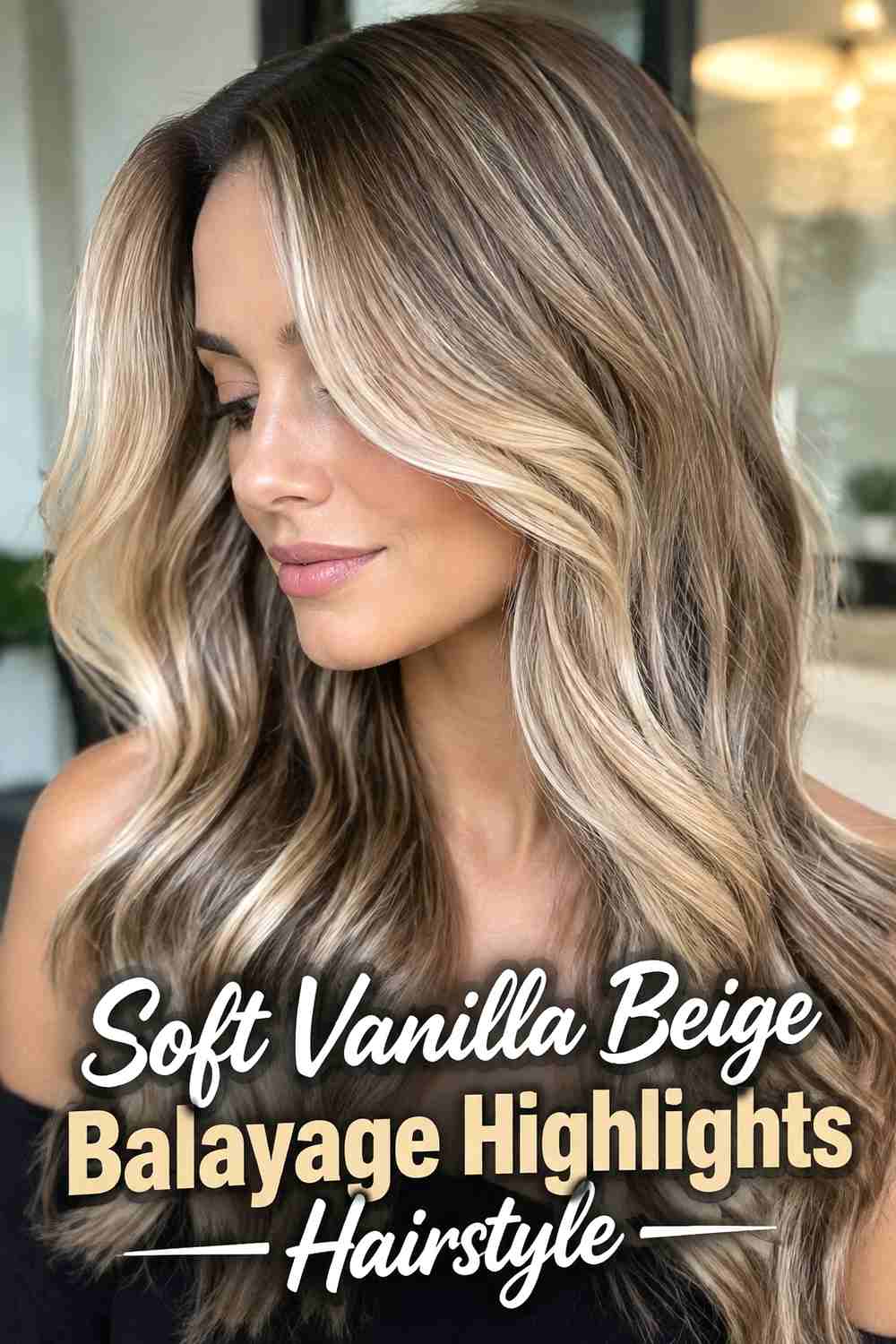
Soft balayage places vanilla beige brightness mainly through the mids and ends while leaving more natural depth near the roots. On fine hair, a restrained approach helps preserve visual dimension and avoids turning the entire head into one pale shade. The lightest sections can sit around the face and outer surface, where they naturally catch more light, while finer painted pieces through the back keep the blend cohesive. This works particularly well on medium or long hair because there is enough length for the transition to develop gradually. Gentle waves showcase the painted sections beautifully, but the color should remain soft enough to look blended even when the hair is worn straight.
Best For
Choose this variation if you want brighter blonde lengths with a softer root area and fewer obvious highlight lines near the scalp.
7. Vanilla Beige Highlights On Long Layers Hairstyle
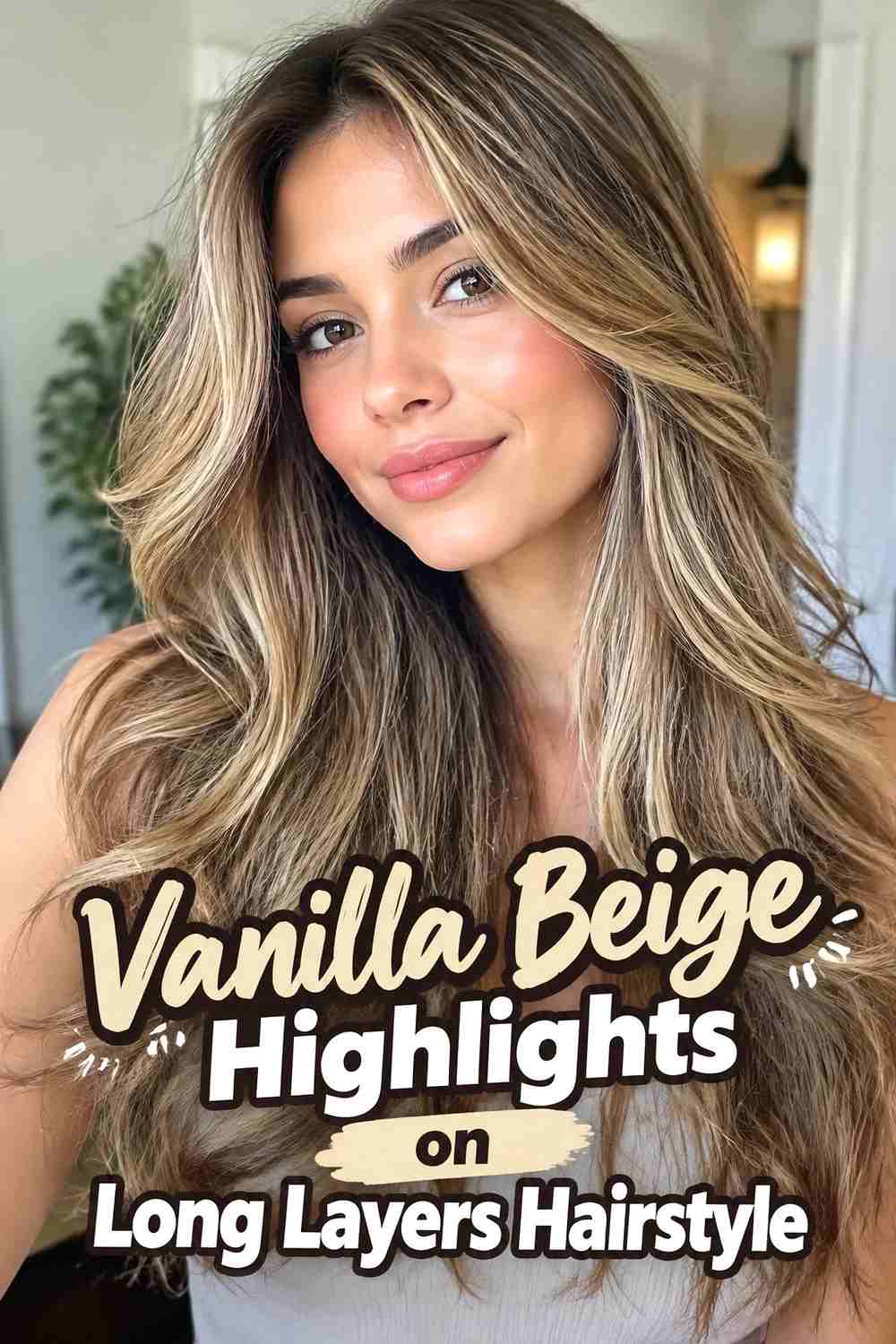
Long layers can give vanilla beige highlights more movement, but on fine hair the layering should remain strategic so the ends do not lose too much visual fullness. Bright pieces can follow selected face-framing and upper layers while the deeper base remains visible underneath. This creates flashes of vanilla beige when the hair moves rather than distributing brightness uniformly through every strand. A smooth blowout emphasizes the layers, while loose waves help separate the different tones. Keeping the lower perimeter relatively substantial balances the extra movement around the front. The most effective placement often concentrates brightness where the layers are most visible, allowing the haircut and color to work together without excessive thinning or over-lightening.
Hair Type & Length
Fine medium-to-long hair can carry soft layers successfully when enough density remains through the ends. Color placement should support that fullness rather than making every layer equally bright.
8. Vanilla Beige Highlights With Soft Waves Hairstyle
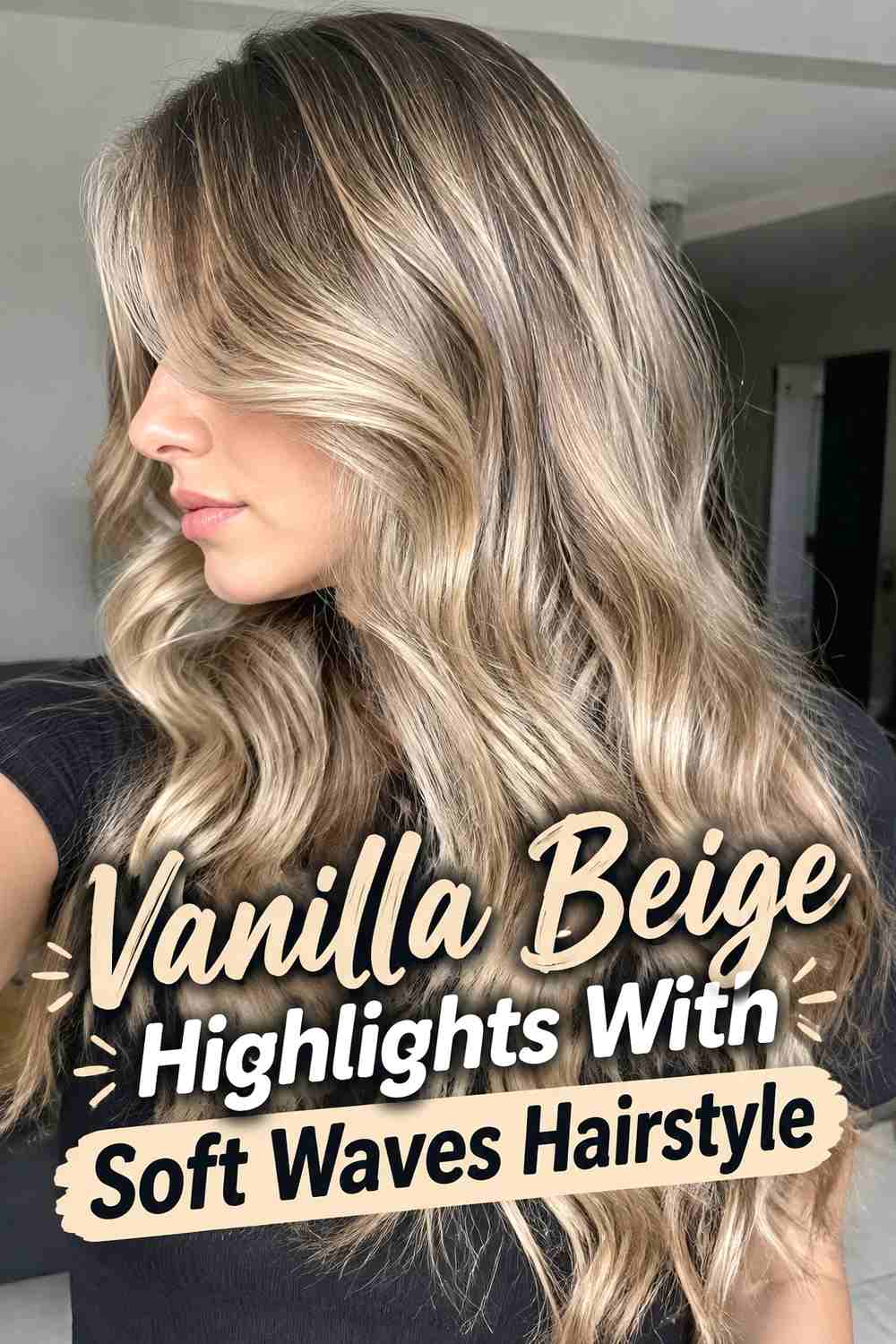
Soft waves make vanilla beige highlights look more dimensional by creating natural areas of light and shadow through fine hair. Highlighted strands catch brightness along the outer curves, while slightly deeper pieces remain visible inside the wave pattern. The result can give the color more depth without requiring dramatically different blonde levels. Fine-to-medium highlights work well because they remain visible without creating harsh bands through the movement. Varying the wave direction prevents the hairstyle from looking too uniform and helps different sections of vanilla beige appear at different points. Leaving some ends straighter can also preserve a modern finish and avoid making fine hair look overly styled or excessively separated.
Styling Notes
Use broad, loose waves rather than tight curls. Larger bends create movement while keeping the ends looking fuller and the highlight pattern soft.
9. Vanilla Beige Highlights On Shoulder Length Hair Hairstyle
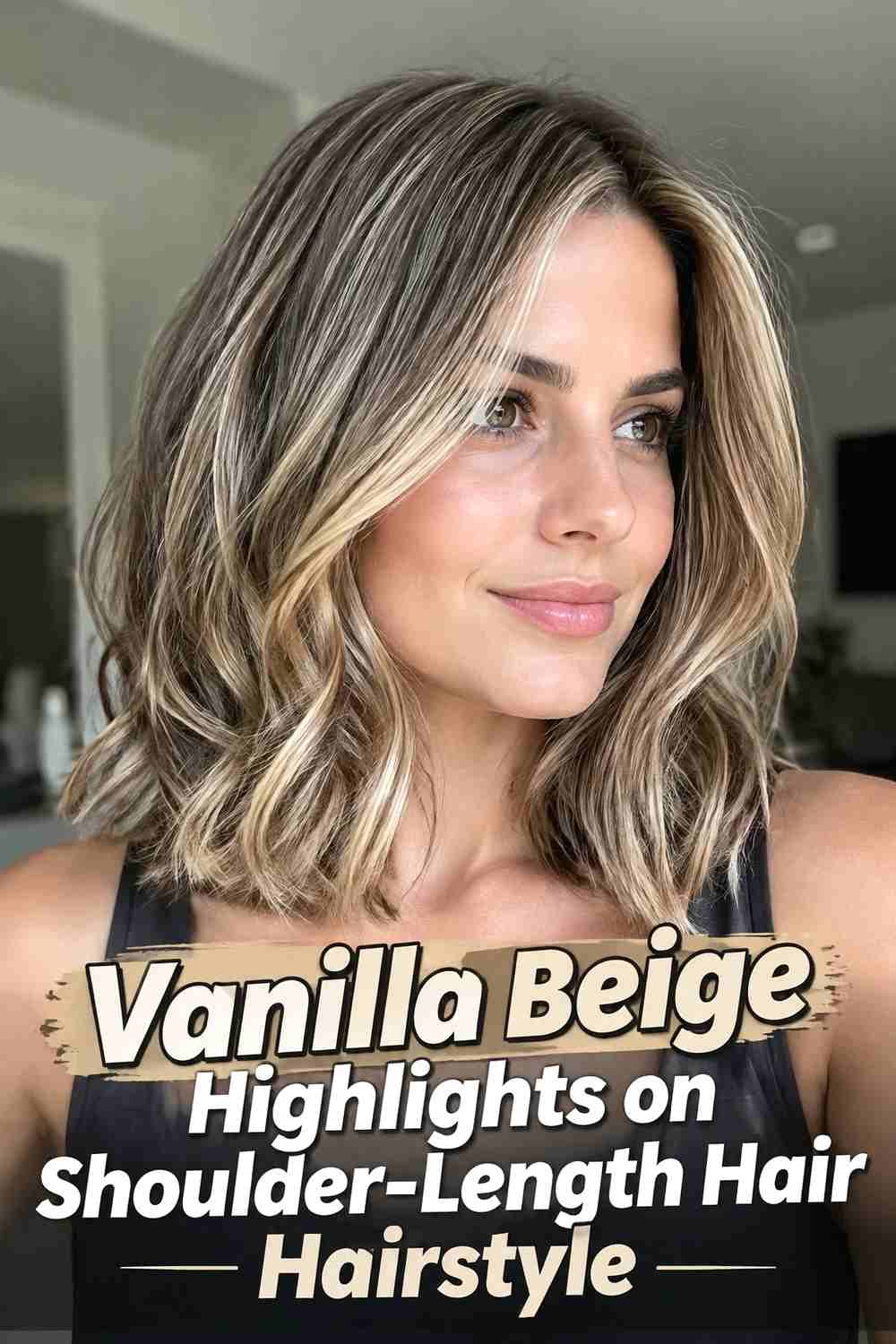
Shoulder-length fine hair creates a compact canvas for vanilla beige highlights, making even subtle color changes easy to see. Fine face-framing pieces can brighten the front while scattered highlights through the mids and ends add dimension without overwhelming the length. Keeping the haircut’s perimeter relatively full is especially useful at this length, since excessive layering can make fine ends appear sparse. A slight bend or soft blowout gives the highlights movement, while a straighter finish emphasizes the clean, creamy-beige tone. A deeper root area can provide extra contrast and help the blonde look brighter. The overall result feels fresh and polished without relying on an extremely light all-over blonde.
Why It Works
The shorter length concentrates the highlight pattern, allowing fewer well-placed vanilla-beige pieces to create noticeable dimension across fine hair.
10. Vanilla Beige Highlights With Curtain Bangs Hairstyle
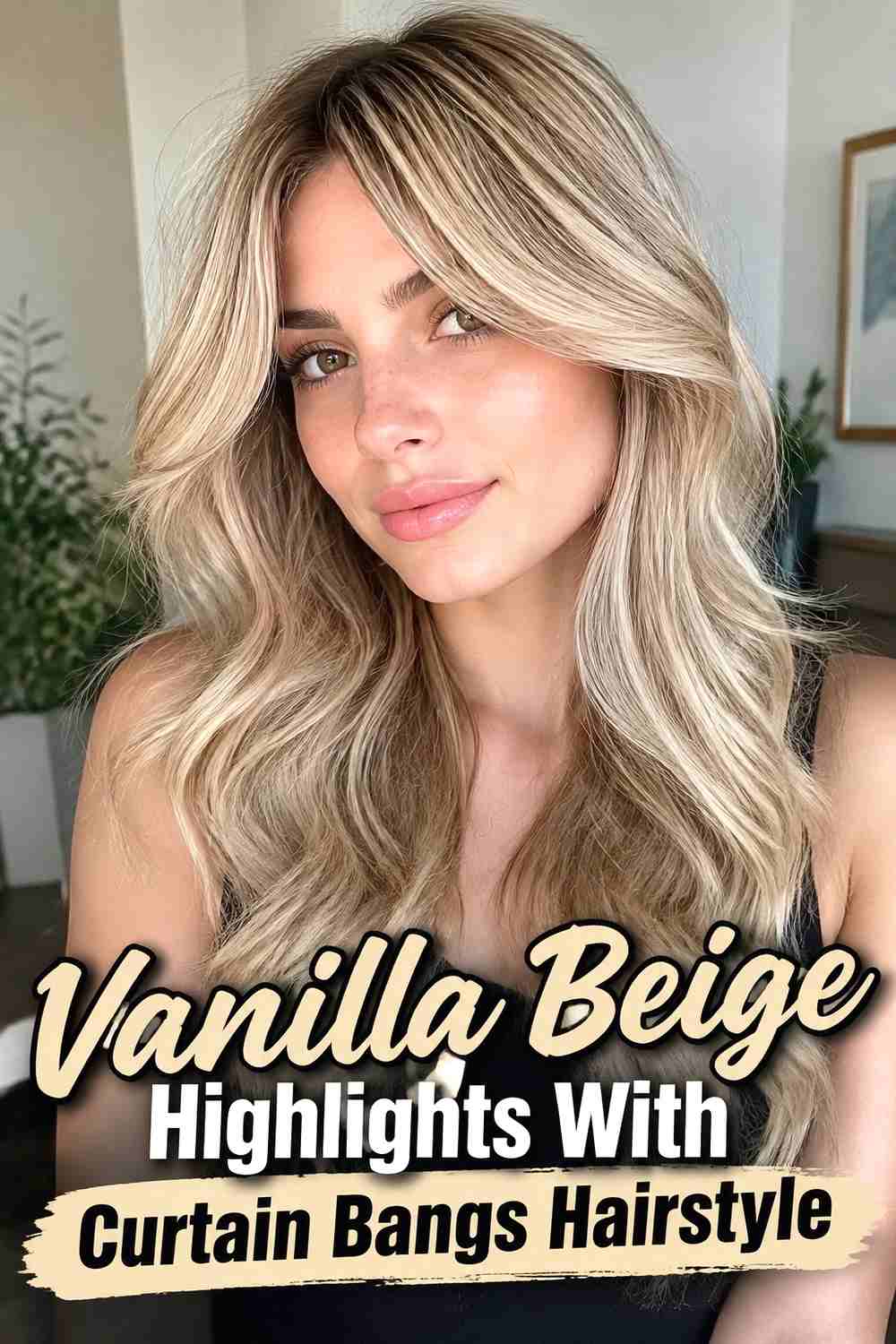
Curtain bangs provide an ideal place to concentrate vanilla beige brightness because the front pieces naturally catch light as they sweep away from the face. Fine highlights can begin close to the roots through the fringe, then blend into longer face-framing sections while the rest of the hair remains slightly deeper. This keeps the bangs from looking visually heavy and connects them with the surrounding color. On fine hair, the curtain shape should stay airy enough to preserve movement rather than using an overly dense fringe section. A round-brush blowout can show the highlighted bends beautifully, while softer styling keeps the overall result relaxed. The vanilla beige tone adds brightness without making the front look stark.
Styling Notes
Keep the curtain bangs soft and mobile, directing each side away from the face. Avoid excessive product at the roots, which can flatten fine fringe quickly.
11. Vanilla Beige Highlights With Blunt Ends Hairstyle
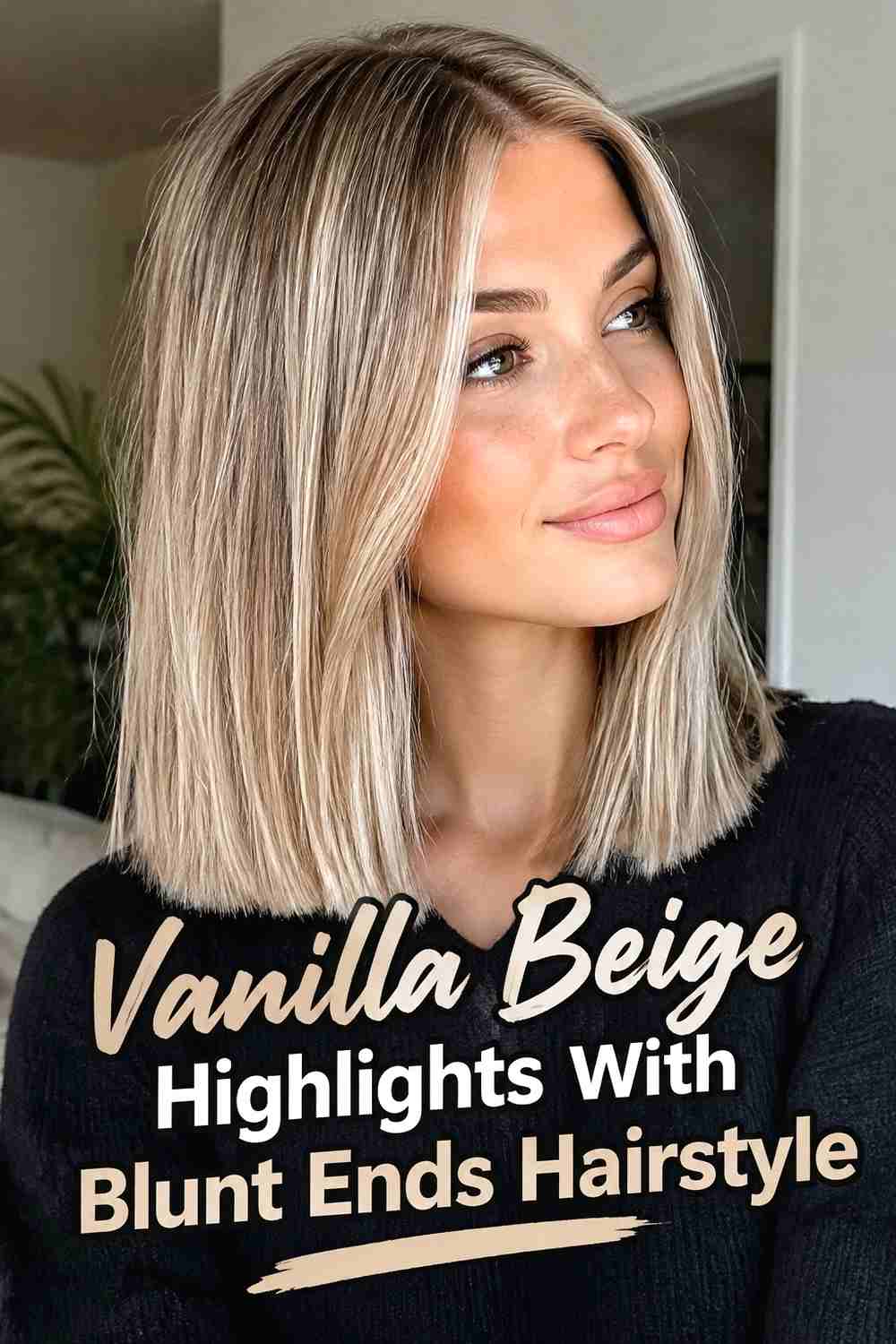
Blunt ends can help fine hair appear visually fuller, making them an excellent partner for delicate vanilla beige highlights. The color can stay bright through the surface and face-framing sections while the strong lower perimeter keeps the haircut looking substantial. Instead of adding many layers for movement, use tonal variation to create dimension through the lengths. Fine ribbons or babylights prevent the blonde from becoming too blocky, while a slightly deeper root and interior color provide contrast. This combination works especially well on shoulder-length or longer cuts where the blunt line is easy to see. A smooth finish emphasizes density, while a few broad bends can add softness without breaking up the strong perimeter.
Best For
This look suits fine hair when maintaining a fuller-looking edge is a priority and you prefer to create movement through color rather than extensive layering.
12. Vanilla Beige Highlights With Root Melt Hairstyle
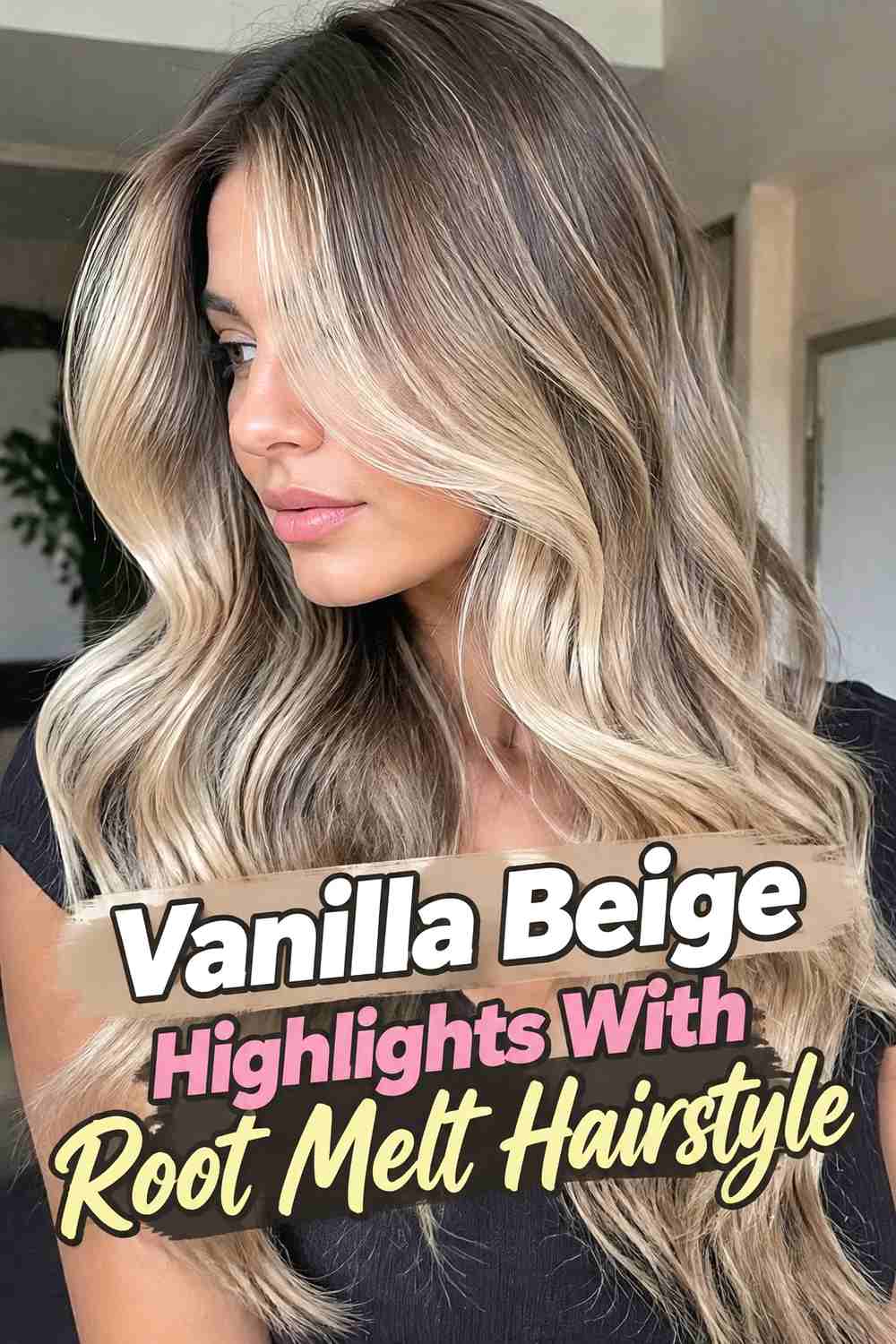
A root melt creates a gradual transition from a deeper base into vanilla beige highlighted lengths, avoiding a sharp contrast directly at the scalp. For fine hair, this can create useful shadow around the roots while keeping the mids and ends luminous. The melt may start slightly deeper through the crown and become lighter around the face, where a few fine pieces can reach higher for brightness. This approach works on straight, wavy, or softly layered hair because the blend remains smooth regardless of styling. The beige component keeps the blonde balanced, while vanilla adds a creamy brightness. Maintaining the tonal transition over time may require glossing rather than repeatedly lifting every section.
Wear & Maintenance
A root melt can create a softer grow-out, while toning or gloss treatments can help keep the lighter lengths from shifting too warm or too cool.
13. Glossy Vanilla Beige Blonde Blowout Hairstyle
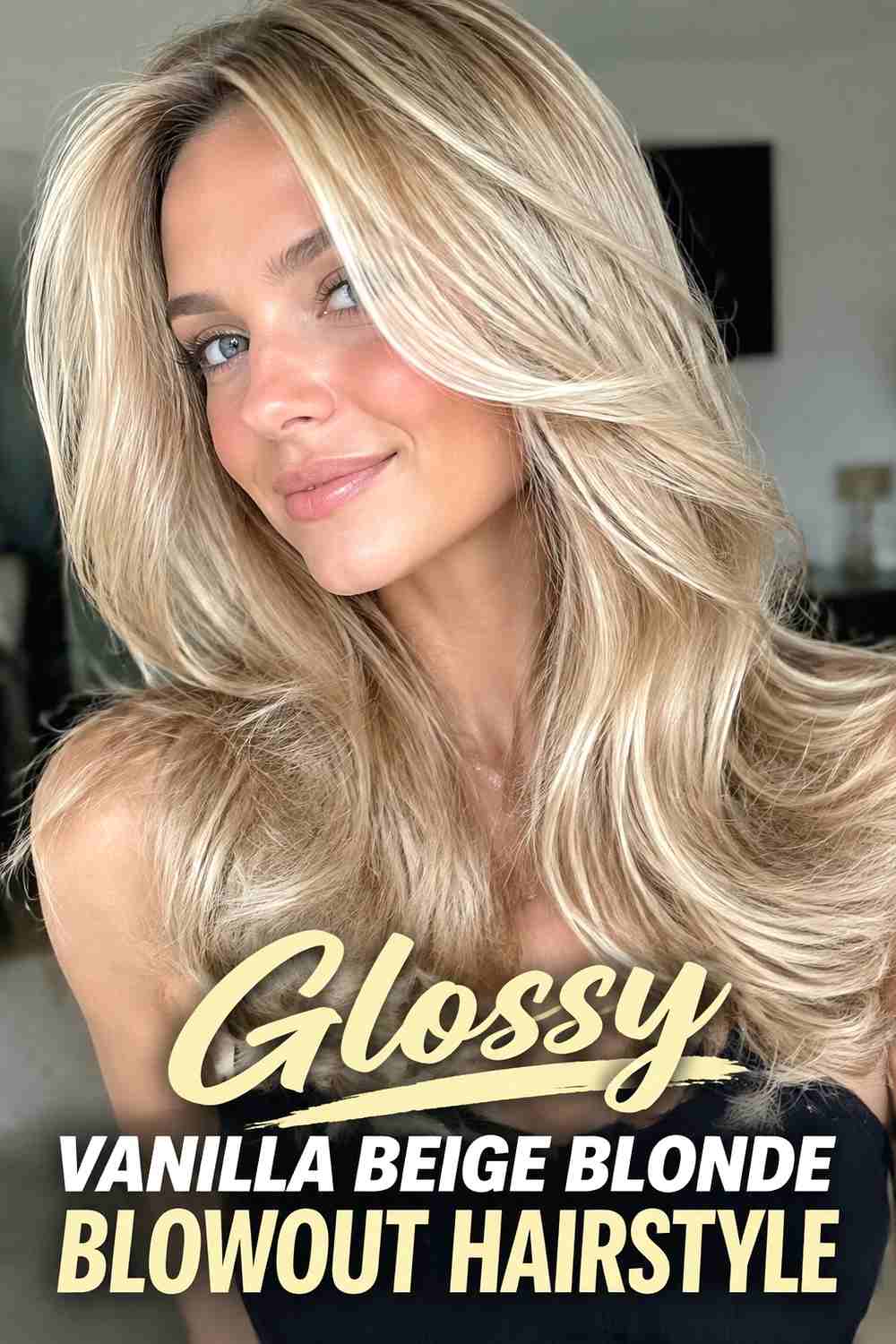
A glossy blowout showcases vanilla beige blonde highlights by creating smooth curves that catch light across fine strands. The roots can remain slightly deeper for dimension, while brighter pieces follow the face-framing sections, upper lengths, and ends. Broad bends help separate the highlight pattern without making fine hair look stringy or overly curled. A little lift at the roots adds body, but the style should remain touchable rather than heavily set. The vanilla-beige tone looks especially polished when the surface is smooth enough to reflect light while still showing individual strands. Keeping the ends relatively full and using a lightweight finish helps balance the brightness with a substantial-looking silhouette.
Styling Notes
Focus on root lift and broad brush movement instead of tight curls. Lightweight products help preserve shine and body without weighing down fine hair.
How to Choose the Right Look
Start with how much brightness you want. Babylights and subtle balayage create a softer change, while face-framing pieces and ribbon highlights make the vanilla beige tone more noticeable. If maintaining depth is important, a shadow root or root melt can keep the scalp area darker and create a more gradual transition into blonde.
For fine hair, haircut structure matters too. Blunt ends can preserve visual fullness, while long layers should be kept strategic rather than excessive. Shoulder-length cuts concentrate the highlight pattern, and curtain bangs provide an easy place to add brighter face-framing color.
Also consider styling. Soft waves reveal tonal contrast, while straight hair shows precise placement. Blowouts can create body and reflection, but lightweight products are usually more practical for fine strands. Choose a highlight pattern that maintains enough natural shadow to keep the overall result dimensional.
Final Thoughts
Vanilla beige blonde highlights can brighten fine hair without sacrificing the depth that helps it look dimensional. Whether you prefer delicate babylights, face-framing pieces, balayage, a shadow root, or a glossy blowout, keeping the highlight placement balanced and the ends visually full can create a polished, wearable result.
FAQs
1. What color is vanilla beige blonde?
Vanilla beige blonde blends creamy light blonde with neutral beige tones, creating a soft shade that sits between strongly warm golden blonde and very cool icy blonde.
2. Are vanilla beige highlights good for fine hair?
They can work well when the placement is controlled. Fine highlights, strategic brightness, and some deeper color between sections can create dimension without making the hair look overly light or flat.
3. Are babylights or chunky highlights better for fine hair?
Babylights usually create a softer blend on fine strands, while slightly wider ribbons can provide more visible contrast. Very chunky sections may overpower low-density hair if used too heavily.
4. Does a darker root help fine blonde hair look more dimensional?
Yes. A shadow root or root melt can provide contrast against lighter lengths, helping the highlight pattern appear more dimensional instead of uniformly pale.
5. Which haircut works well with vanilla beige highlights on fine hair?
Blunt or softly layered cuts can both work. Blunt ends preserve a fuller-looking perimeter, while carefully placed layers add movement without removing too much density.
Save your favorite vanilla beige blonde highlight ideas, share them for fine-hair color inspiration, and explore more soft dimensional blonde looks for your next update.