13 Beatnik Pixie Grow-Out Hairstyle Ideas for Effortless Texture
Turn the in-between pixie stage into the main attraction with shaggy fringe, soft sideburns, longer nape pieces, and intentionally undone Beatnik-inspired texture.
Growing out a pixie often creates uneven lengths around the fringe, ears, crown, and nape. Instead of constantly trimming those areas into one uniform shape, a Beatnik-inspired approach can make the contrast feel intentional. Slightly mussed texture, graphic fringe, tucked sides, and compact volume all suit this transitional stage.
The best version depends on which areas have gained length first. A longer fringe can become a side sweep, curls can disguise uneven layers, and extra nape length can evolve into a mini-mullet or softer pageboy shape. Compare how much daily styling, trimming, texture, and polish each option needs before choosing your direction.
Quick List
- Tousled Side Swept Beatnik Pixie Grow Out Hairstyle
- Shaggy Fringe Beatnik Pixie Grow Out Hairstyle
- Tucked Ear Beatnik Pixie Grow Out Hairstyle
- Mini Mullet Beatnik Pixie Grow Out Hairstyle
- Soft Pageboy Beatnik Pixie Grow Out Hairstyle
- Curly Beatnik Pixie Grow Out Hairstyle
- Slicked Back Beatnik Pixie Grow Out Hairstyle
- Piecey Micro Fringe Beatnik Pixie Grow Out Hairstyle
- Nape Length Beatnik Pixie Grow Out Hairstyle
- Deep Side Part Beatnik Pixie Grow Out Hairstyle
- Flipped End Beatnik Pixie Grow Out Hairstyle
- French Girl Beatnik Pixie Grow Out Hairstyle
- Textured Crown Beatnik Pixie Grow Out Hairstyle
1. Tousled Side Swept Beatnik Pixie Grow Out Hairstyle
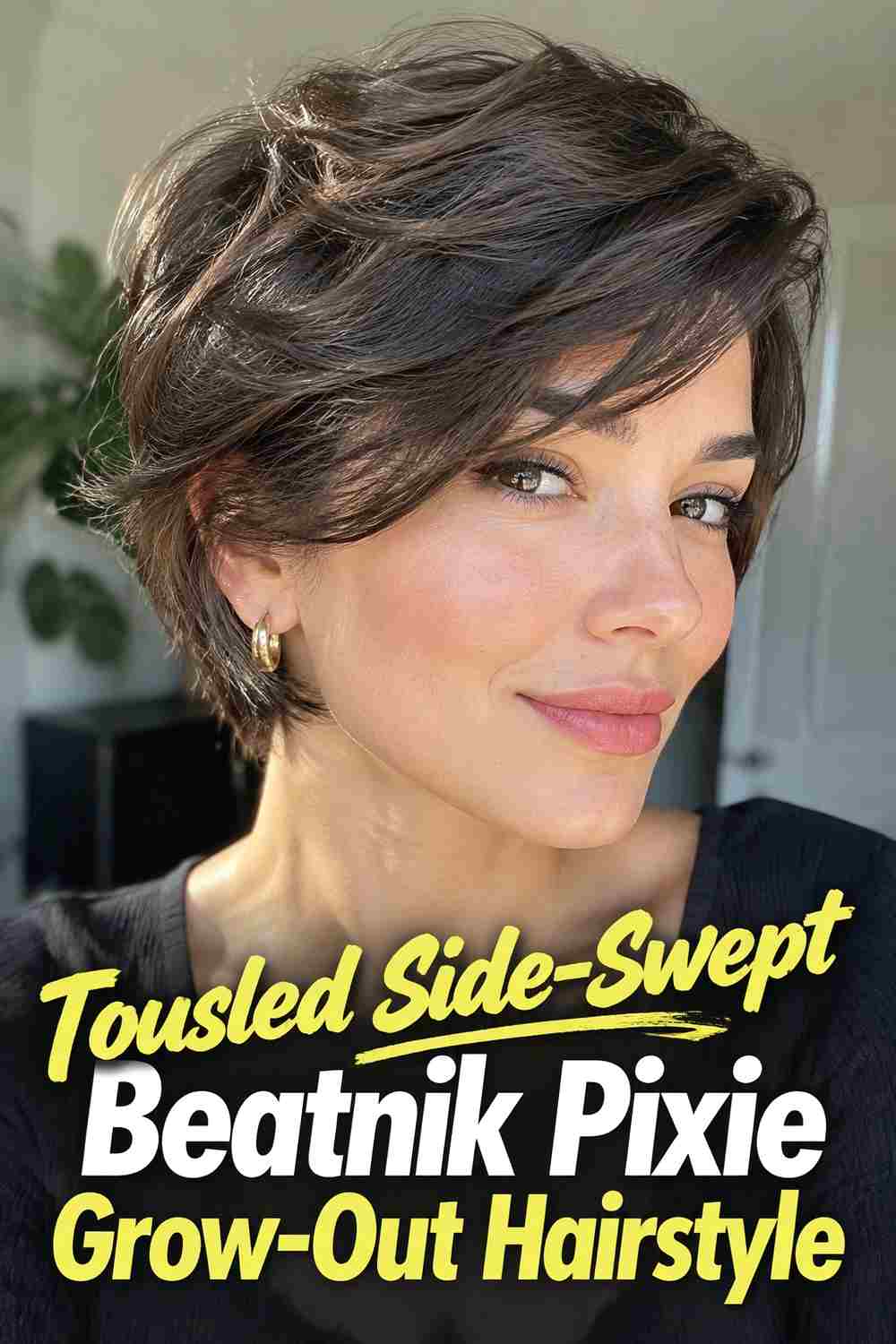
A side sweep is one of the easiest ways to make an overgrown pixie look purposeful once the front has become noticeably longer than the sides. Let the fringe travel diagonally across the forehead, then leave the crown lightly tousled so the haircut keeps its relaxed Beatnik character. Short pieces around the ears can stay exposed instead of being forced into the longer section. The slight mismatch in lengths actually adds to the shape. This approach works especially well on straight to softly wavy hair because a little bend helps the layers overlap naturally. Keep the texture dry and flexible rather than highly polished, allowing individual strands and soft separation to remain visible.
Styling Notes
Direct the longest front section sideways while drying, then loosen the crown with your fingertips instead of brushing everything into one smooth sheet.
Best For
This is a practical option when the fringe has grown faster than the sides and you want to postpone a major reshaping cut.
2. Shaggy Fringe Beatnik Pixie Grow Out Hairstyle

A shaggy fringe embraces the irregular lengths that naturally appear as a pixie grows out. Instead of trimming every front piece to a perfect line, allow slightly shorter and longer strands to fall across the forehead with visible separation. The sides can sit softly around the ears while the crown gains a bit of messy volume, creating a compact shag-like silhouette. This style works particularly well on fine to medium-density hair because the broken-up fringe prevents the front from looking too heavy. If the nape has also started growing, let it remain softly tapered rather than cutting it extremely short again. The finished result should feel deliberately undone, not neglected.
Why It Works
Uneven layers become part of the design, which can make the transitional stage feel less awkward and reduce the need for constant reshaping.
Pro Tip
Use only a small amount of lightweight texture product and pinch selected fringe pieces rather than coating the entire haircut.
3. Tucked Ear Beatnik Pixie Grow Out Hairstyle
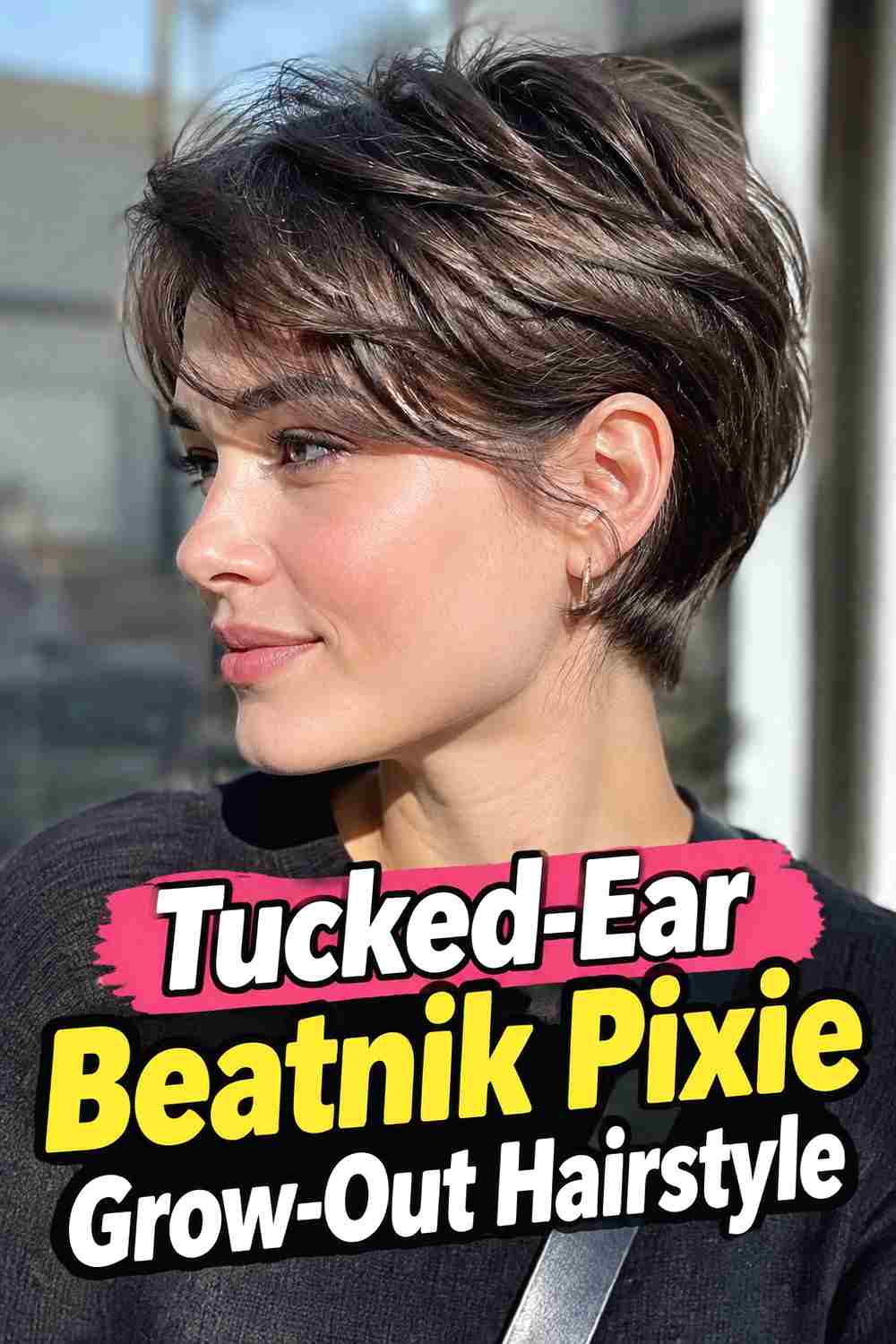
Tucking one or both sides behind the ears instantly gives a growing pixie a cleaner outline while allowing the top and fringe to remain longer. This is especially useful when side sections have reached an awkward length that no longer sits like a cropped pixie but cannot yet blend fully into a bob. A loose tuck keeps those pieces controlled without hiding the haircut’s evolving shape. Leave the front slightly tousled or swept across the forehead to maintain the Beatnik-inspired feel. The nape can remain soft and natural, with small pieces visible beneath the back section. This style needs very little structure, making it practical when you want the grow-out to look neat without extensive heat styling.
Styling Notes
Keep the side sections flexible enough to tuck comfortably; overly stiff styling product can make short pieces spring away from the ears.
Wear & Maintenance
This look is easy to refresh during the day because the shape depends more on placement than on precise volume or curl.
4. Mini Mullet Beatnik Pixie Grow Out Hairstyle
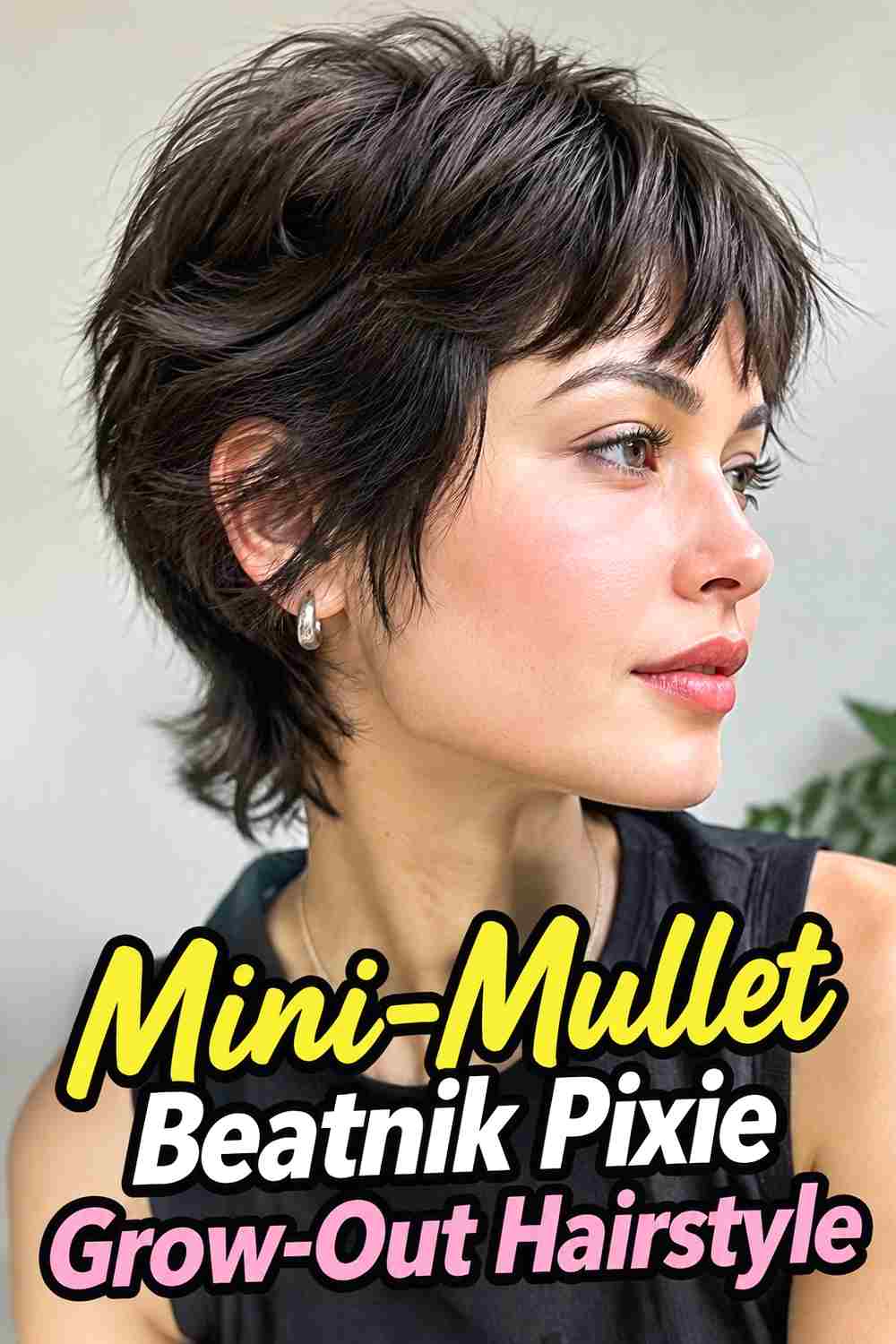
When the nape grows faster than the sides, the shape can naturally begin to resemble a mini mullet. Instead of immediately trimming the back short, lean into the contrast by keeping the crown textured, the sides compact, and the nape visibly longer. A soft fringe or short side sweep balances the extra length at the back and gives the style a stronger overall silhouette. This version works particularly well on hair with some natural bend because the nape can flick outward without looking overly styled. The difference between sections should remain subtle enough to feel wearable, with the longer back acting as an intentional detail rather than an extreme extension.
Hair Type & Length
Straight, wavy, and lightly curly textures can all work, especially once the nape extends beyond the shortest side sections.
Wear & Maintenance
Small perimeter trims can keep the ends tidy while still preserving the extra back length needed for the mini-mullet effect.
5. Soft Pageboy Beatnik Pixie Grow Out Hairstyle
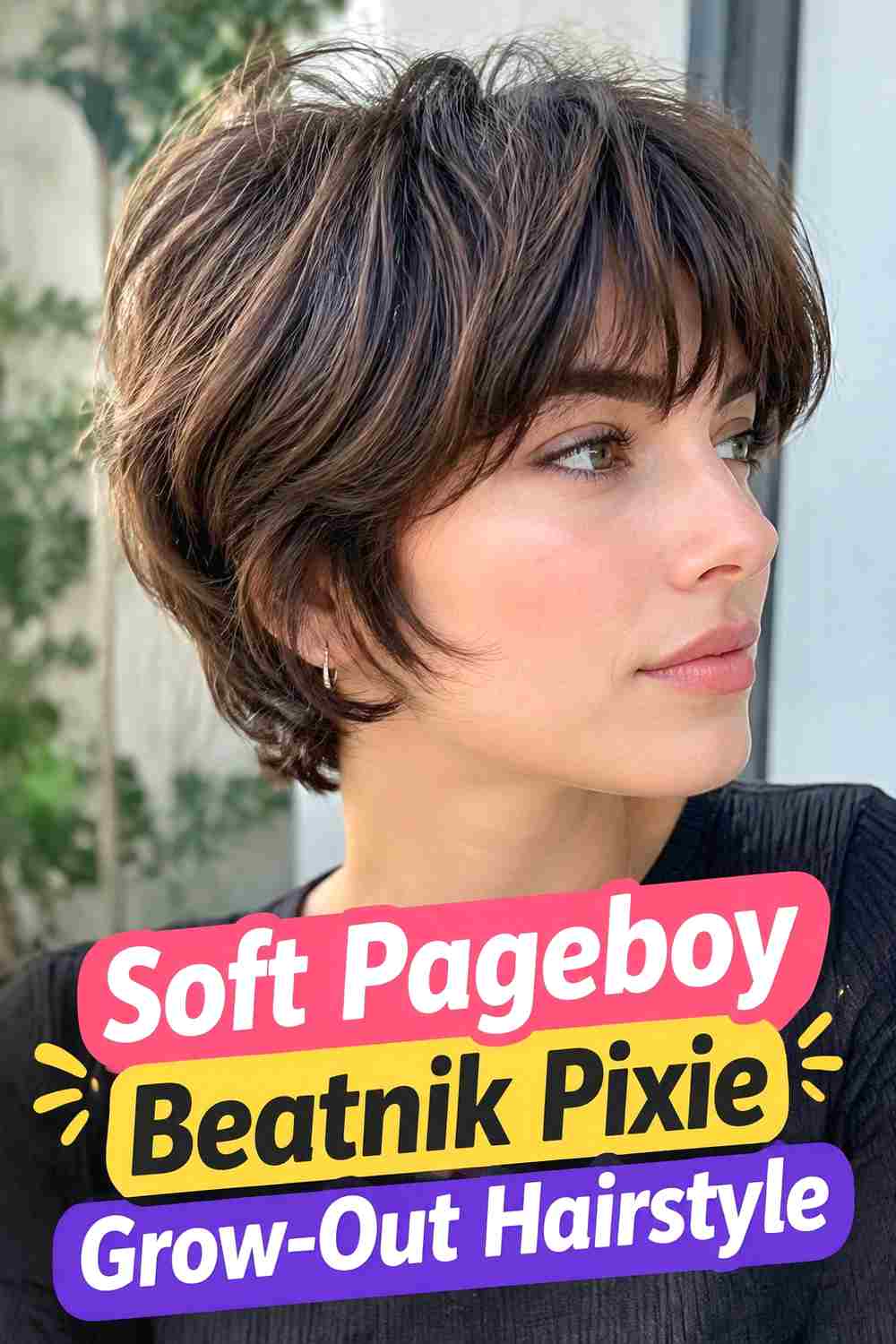
A soft pageboy shape is a useful direction once a pixie begins developing enough length around the sides and back to form a rounded outline. Rather than cutting the hair back into a crop, encourage the growing sections to curve gently around the ears and nape. The fringe can stay short, piecey, or slightly side-swept depending on its current length. Unlike a very precise pageboy, this Beatnik-inspired version looks better with subtle separation and an imperfect surface. It is especially suitable for straight or softly wavy hair that naturally falls close to the head. A little bend through the ends can help the shorter and longer areas connect without disguising the transitional character completely.
Why It Works
The rounded silhouette gives multiple grow-out lengths a shared direction, helping the haircut move gradually toward a short bob.
Best For
Choose this option if your sides and back are gaining length fairly evenly and you prefer a softer, more cohesive shape.
6. Curly Beatnik Pixie Grow Out Hairstyle

Natural curls or curl-styled texture can make a growing pixie especially forgiving because uneven lengths create varied curl placement rather than obvious steps. Let the fringe form compact curls around the forehead while the crown develops more volume and the sides settle naturally near the ears. Longer pieces at the nape can curl outward or inward depending on their pattern, adding movement without needing to match the rest exactly. The goal is definition with flexibility, not identical ringlets across every section. This approach can work across several curl patterns, though shrinkage affects how quickly the grow-out appears to gain visible length. Keep styling lightweight enough that individual curls can move naturally.
Styling Notes
Shape curls in small groups and allow shorter sections to form their own pattern rather than stretching them to match longer pieces.
Wear & Maintenance
Refreshing a few visible curls around the fringe and crown may be enough between full styling sessions.
7. Slicked Back Beatnik Pixie Grow Out Hairstyle
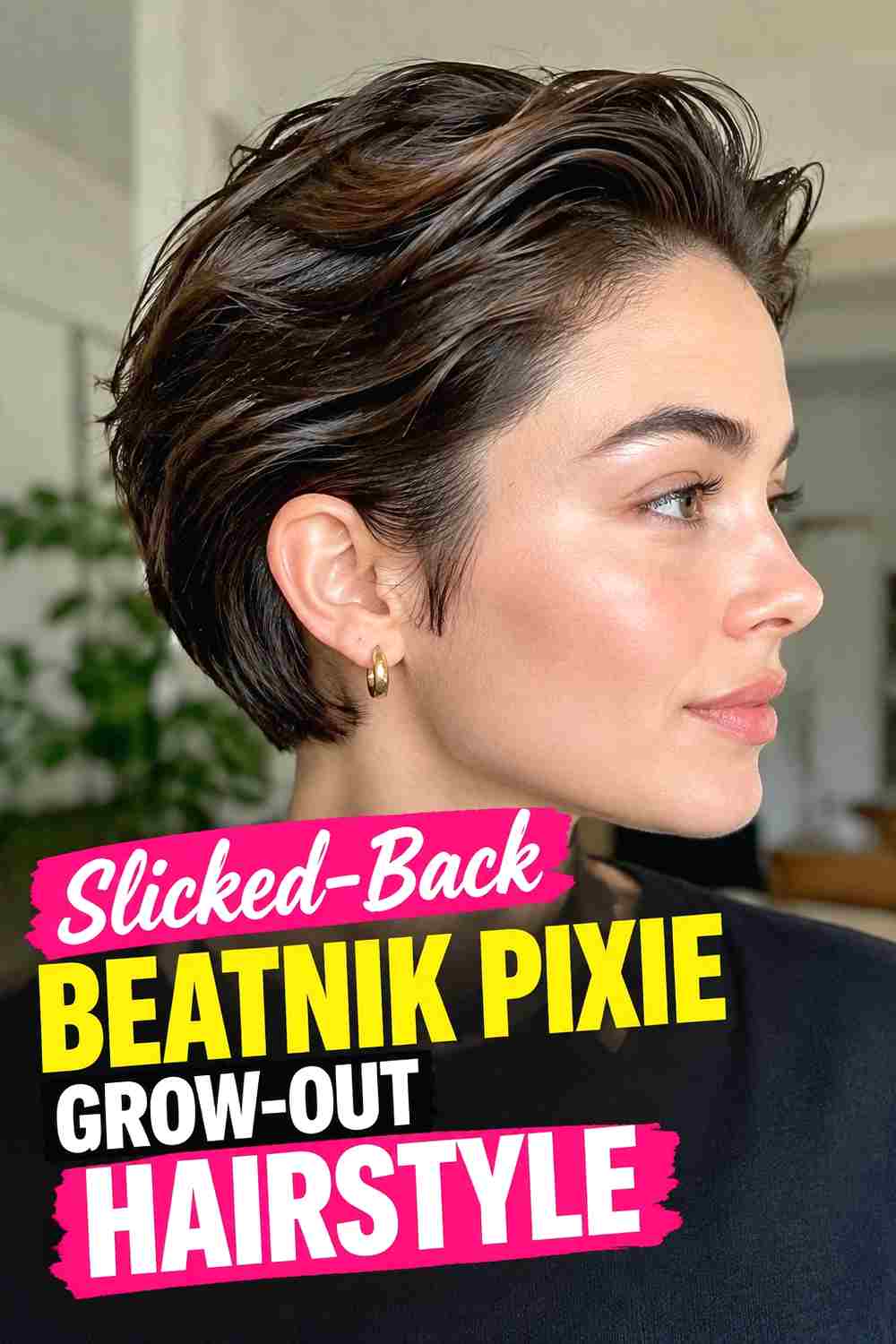
A slicked-back finish temporarily removes the emphasis from uneven fringe and side lengths by directing the hair away from the face. The growing top section can be combed backward with a little lift rather than pressed completely flat, while shorter side pieces stay controlled close to the head. This creates a sharp, minimalist silhouette that contrasts nicely with the more relaxed shapes usually associated with pixie grow-outs. It works especially well when the top has gained enough length to stay back without excessive product. Keep the nape natural or lightly smoothed rather than trying to force every short piece into the same direction.
Best For
This style is useful when your fringe feels difficult to manage or when you want a cleaner look for work, dinners, or an evening event.
Pro Tip
Choose flexible hold and retain some strand definition so the finish looks polished rather than wet, rigid, or helmet-like.
8. Piecey Micro Fringe Beatnik Pixie Grow Out Hairstyle

If the front still contains a noticeably shorter section while the rest of the pixie gains length, turn it into a piecey micro-fringe instead of trying to disguise it. Short, separated strands across the upper forehead create a graphic detail that works well with longer sides, a fuller crown, and an emerging nape. The contrast can make the haircut feel intentional during a stage when the lengths would otherwise appear mismatched. Keep the fringe slightly irregular rather than cutting a perfectly blunt horizontal edge if you want a softer Beatnik mood. This approach works particularly well on straight and softly textured hair because the short pieces can retain definition without requiring heavy hold.
Why It Works
The short fringe becomes an intentional focal point, so the extra length developing elsewhere reads as contrast rather than unfinished growth.
Styling Notes
Pinch only a few fringe pieces into definition and leave small spaces between them to preserve the light, separated effect.
9. Nape Length Beatnik Pixie Grow Out Hairstyle

A growing nape can become one of the most attractive features of an overgrown pixie when it is allowed to extend softly rather than being repeatedly trimmed away. Keep the back pieces visible against the neck while the crown and sides stay slightly shorter and textured. The fringe can remain wispy or side-swept, creating balance between the front and back. This shape feels particularly natural on straight or wavy hair where the nape can bend gently instead of sticking out sharply. Regular micro-trims can remove rough ends without resetting the entire grow-out. The resulting silhouette sits somewhere between a pixie, shag, and very short mullet, making the transition itself feel deliberate.
Hair Type & Length
This look becomes most noticeable once the back has reached the neckline while the sides are still short enough to expose part of the ears.
Wear & Maintenance
Avoid cutting the nape dramatically shorter if your goal is eventually to reach a bob or shaggy short cut.
10. Deep Side Part Beatnik Pixie Grow Out Hairstyle
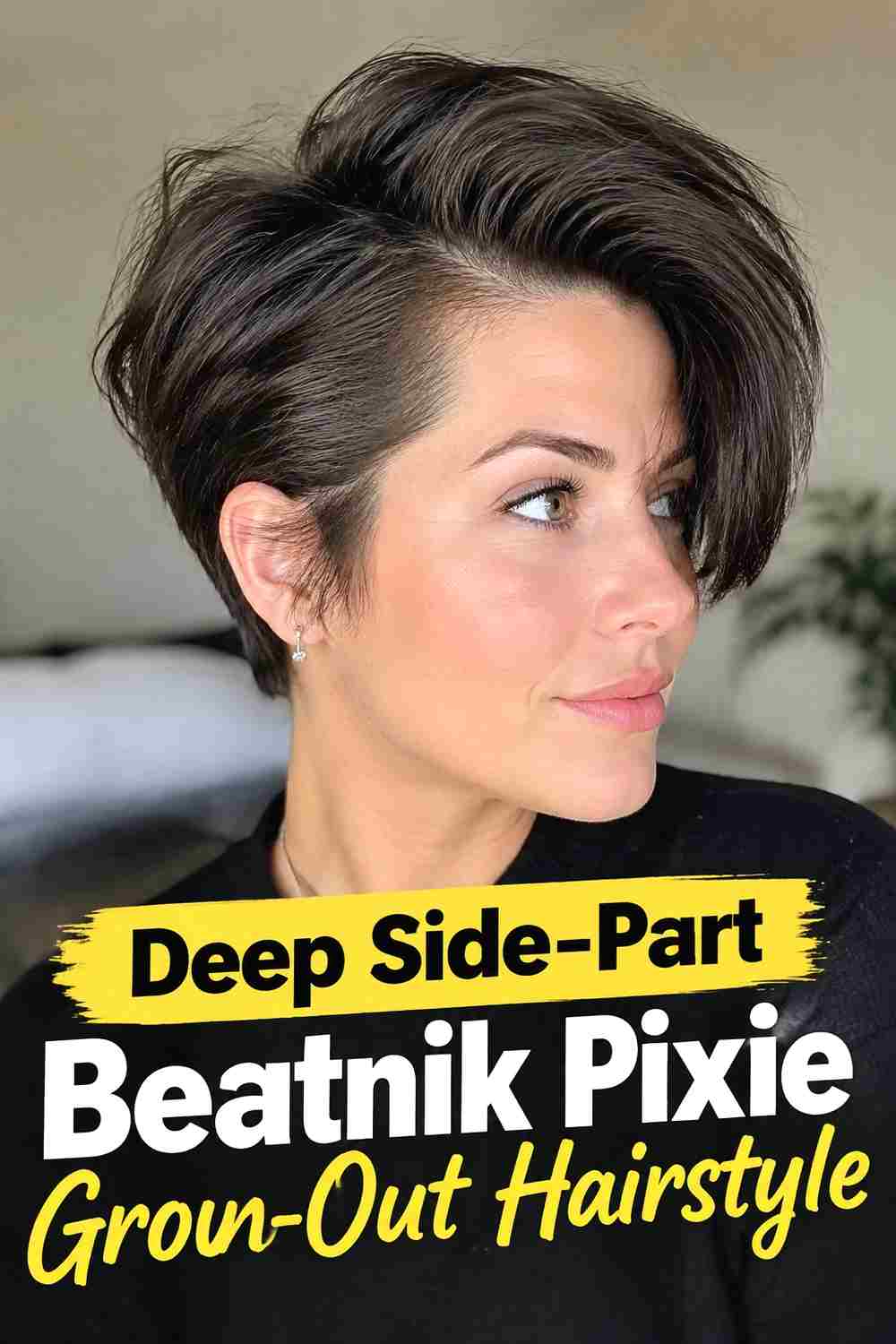
A deep side part gives an overgrown pixie a stronger directional shape, especially when the top has become long enough to flop or separate unpredictably. Shift most of the front and crown toward one side, allowing the heavier section to create soft volume while the smaller side stays tucked or close to the head. This asymmetry makes different lengths feel intentional and can visually organize a haircut that is midway between a crop and a short bob. The ends do not need to be perfectly smooth; a little texture supports the Beatnik influence. This works especially well when the fringe reaches the temple or cheekbone area and can sweep naturally without constant repositioning.
Styling Notes
Set the part while the hair is damp so the roots dry in the intended direction and require less product afterward.
Why It Works
Strong directional styling gives scattered grow-out layers a common flow, which makes the overall haircut appear more cohesive.
11. Flipped End Beatnik Pixie Grow Out Hairstyle
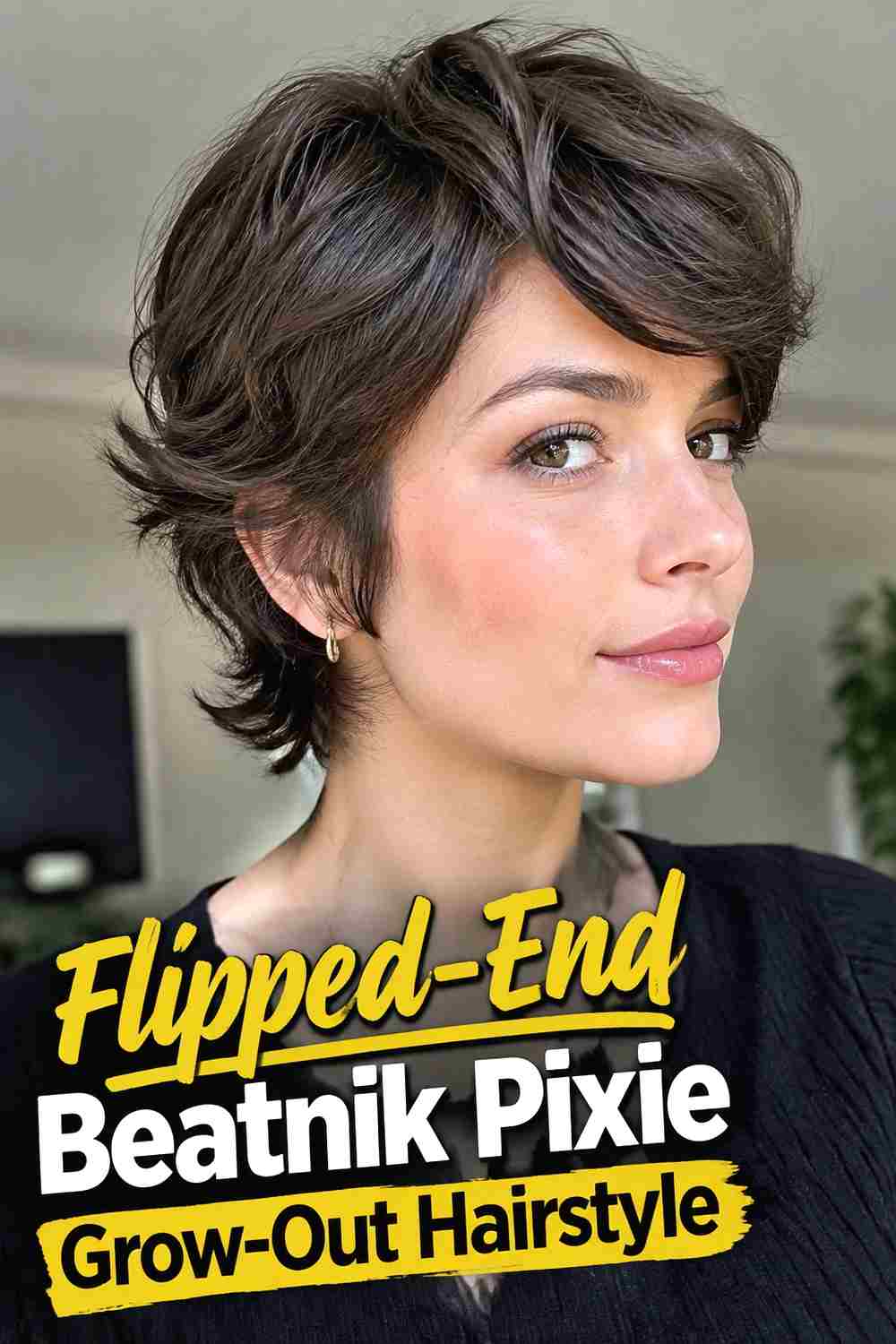
Once the side and nape sections become long enough to bend outward, small flipped ends can turn an awkward stage into a playful styling detail. Keep the crown relatively compact and let selected pieces around the ears and neckline kick away from the head. The fringe can remain soft and forward or sweep slightly sideways to balance the movement below. This style works especially well on straight to wavy hair because only a small amount of bend is needed to make the longer pieces visible. Avoid flipping every end in exactly the same direction; slight variation keeps the result modern and relaxed rather than overly set or costume-like.
Styling Notes
Shape only the last inch or two of the longest sections outward, leaving the shorter layers closer to their natural fall.
Best For
This look is useful once your pixie has enough perimeter length to move but has not yet developed the weight of a bob.
12. French Girl Beatnik Pixie Grow Out Hairstyle
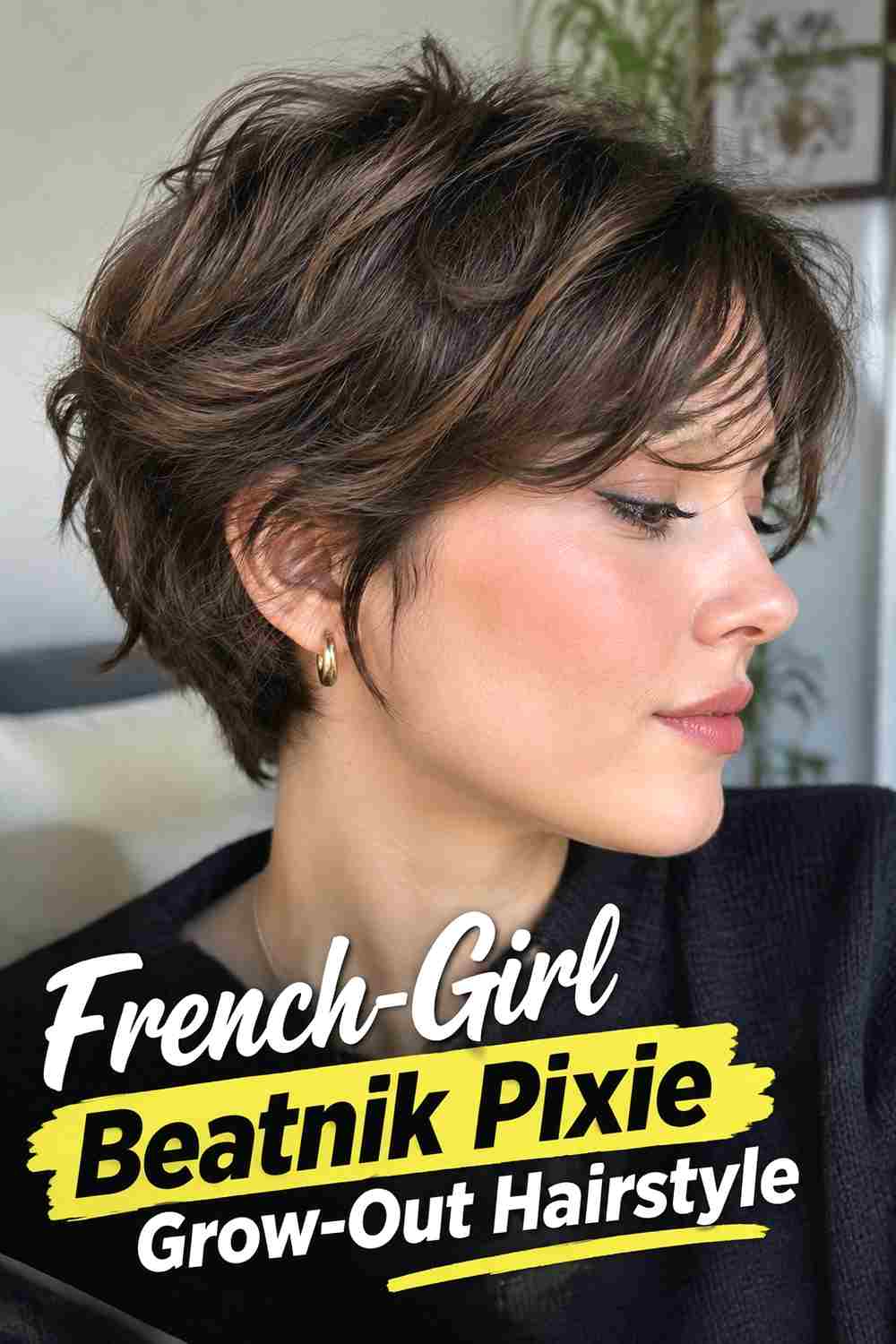
This relaxed interpretation combines a soft fringe, natural separation, and minimal styling so the growing pixie feels effortless rather than overly controlled. Let the front fall loosely across the forehead, with the sides tucked only where necessary and the crown retaining a little imperfect lift. Small sideburn pieces and a slightly longer nape can remain visible instead of being repeatedly trimmed into a crisp outline. The overall shape works best when it looks lived-in but still intentional, making natural wave or subtle bend especially useful. Avoid heavy smoothing products and sharply defined sections. A few uneven pieces can enhance the character as long as the ends remain healthy-looking and the silhouette stays balanced.
Why It Works
The style treats slight unevenness as texture, which makes it well suited to a haircut that is actively changing from week to week.
Wear & Maintenance
Focus trims on damaged or bulky areas rather than trying to make every section the same length during the growing process.
13. Textured Crown Beatnik Pixie Grow Out Hairstyle

Extra texture at the crown can give a growing pixie useful lift when the top begins to feel heavy but the sides are still relatively short. Direct the crown upward and slightly forward or sideways, then leave the fringe softer so the volume does not become too severe. The longer top pieces can overlap shorter layers underneath, helping disguise uneven growth and giving the haircut a deliberate tousled shape. This approach works well on fine to medium-density hair because controlled crown texture can create fullness without requiring much length. Keep the ears and nape visible enough to preserve the cropped character while the top gradually transitions toward a longer short haircut.
Styling Notes
Work with small sections at the crown and build volume gradually; too much texture product can make short growing layers feel heavy.
Pro Tip
Leave some pieces flatter around the sides so the crown lift has contrast and the hairstyle retains a clear silhouette.
How to Choose the Right Look
Start by identifying which section of your pixie is growing fastest. If the fringe is longest, side-swept, shaggy, or deep-part styles can turn that extra length into a focal point. When the nape grows first, mini-mullet, flipped-end, and nape-length shapes make better use of the developing perimeter.
Texture also matters. Straight hair can show graphic fringe, tucked sides, and pageboy shaping clearly, while waves and curls naturally soften uneven layers. If your hair tends to fall flat, textured crown styling can restore shape without cutting significant length.
Think about your eventual goal as well. A soft pageboy or tucked-ear look can move naturally toward a bob, while maintaining extra nape length supports a shag or mullet direction. If convenience matters most, French-girl, curly, or side-swept finishes usually tolerate slight day-to-day variation better than very precise styling.
Finally, use trims strategically. Removing bulky or damaged ends can improve the silhouette without taking every section back to pixie length.
Final Thoughts
A pixie grow-out does not need to look like a haircut waiting to become something else. Longer fringe, uneven side pieces, emerging nape length, and changing crown volume can all become intentional details. A Beatnik-inspired finish is especially useful because it favors texture, individuality, and slightly imperfect shapes. Choose the variation that works with the section currently giving you the most length rather than fighting the natural progression of the cut.
FAQs
1. What is a Beatnik pixie grow-out hairstyle?
It is a relaxed way of styling an overgrown pixie using features such as shaggy fringe, soft texture, longer side pieces, an exposed nape, and deliberately understated shaping.
2. How do I make a growing pixie look intentional?
Give the haircut a clear direction through a side part, tucked sides, textured crown, defined fringe, or intentional nape length instead of trying to make every section appear equal.
3. Should I keep trimming my pixie while growing it out?
Small maintenance trims can remove damaged ends or excess bulk, but repeatedly cutting every longer section back can slow progress toward a bob, shag, or other longer shape.
4. What is the hardest stage of growing out a pixie?
The most awkward point often occurs when the top, sides, and nape grow at different rates. Styling those differences deliberately can make that stage easier to work with.
5. Can curly hair wear a Beatnik pixie grow-out?
Yes. Curls can be particularly useful during the transition because different lengths create varied curl placement and natural volume rather than obvious straight layers.
Save your favorite Beatnik pixie grow-out hairstyle ideas and revisit them as your short cut moves through each new stage.