18 Grown-Out Curtain Bangs Hairstyle Ideas
Longer curtain fringe, blended layers, and soft face-framing movement make grown-out bangs easy to style while turning the in-between stage into a polished look.
Grown-out curtain bangs sit in the useful space between a true fringe and longer face-framing layers. As the center pieces reach the cheekbones or beyond, they become easier to sweep aside, tuck behind the ears, or blend into the rest of the haircut. Instead of constantly disguising the extra length, you can use it to create softer movement around the face.
The most flattering-looking transition depends on texture, density, and how the fringe connects to surrounding layers. A blowout can make longer bangs look intentional and full, while waves and curls blend them more casually. Lobs keep the framing compact, whereas butterfly layers and long cuts allow the grown-out sections to disappear gradually into the overall shape.
Quick List
- Long Layered Grown Out Curtain Bangs Hairstyle
- Soft Wavy Grown Out Curtain Bangs Hairstyle
- Feathered Grown Out Curtain Bangs Hairstyle
- Blowout Grown Out Curtain Bangs Hairstyle
- Shoulder Length Grown Out Curtain Bangs Hairstyle
- Curly Grown Out Curtain Bangs Hairstyle
- Straight Grown Out Curtain Bangs Hairstyle
- Shaggy Grown Out Curtain Bangs Hairstyle
- Face Framing Grown Out Curtain Bangs Hairstyle
- Butterfly Layer Grown Out Curtain Bangs Hairstyle
- Textured Lob Grown Out Curtain Bangs Hairstyle
- Side Part Grown Out Curtain Bangs Hairstyle
- Bouncy Grown Out Curtain Bangs Hairstyle
- Wispy Grown Out Curtain Bangs Hairstyle
- Extra Long Grown Out Curtain Bangs Hairstyle
- Soft Curl Grown Out Curtain Bangs Hairstyle
- Air Dried Grown Out Curtain Bangs Hairstyle
- Romantic Updo Grown Out Curtain Bangs Hairstyle
1. Long Layered Grown Out Curtain Bangs Hairstyle
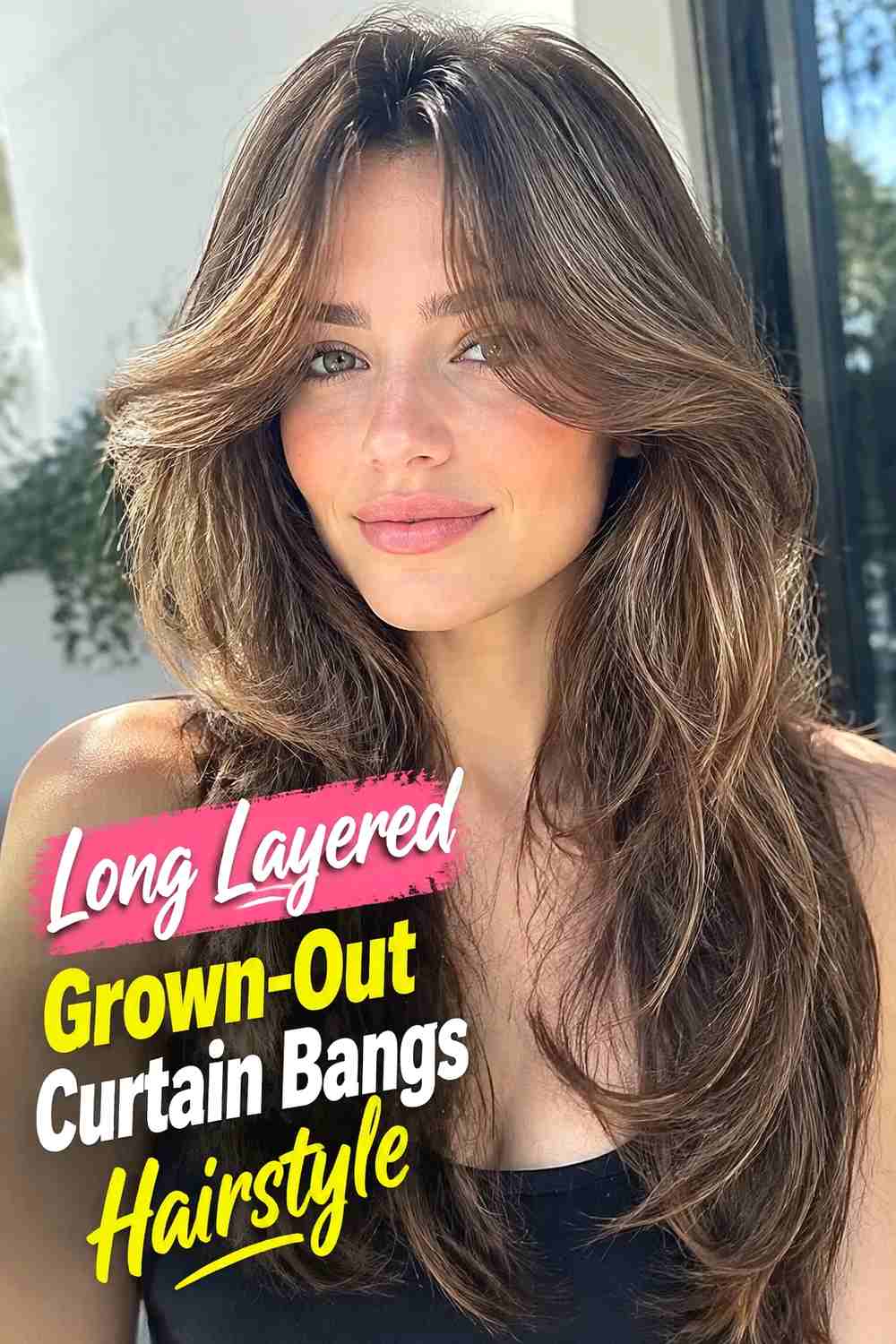
Long layered grown-out curtain bangs turn extra fringe length into a natural extension of the haircut. The shortest pieces can begin near the cheekbones and gradually connect to jaw, shoulder, and chest-level layers, creating a smooth progression rather than an obvious bang line. A soft blowout brings out the shape by directing the front sections away from the face while the longer layers follow the same movement. This version is especially useful when you are intentionally growing out shorter curtain bangs and want them to look styled during the transition. Keep the ends soft so each length blends easily into the next. The result should feel like deliberate face framing rather than bangs that have simply been left untrimmed.
Styling Notes
Direct the front sections outward with a round brush, then style the longer layers in the same direction to create one continuous sweep.
Best For
This approach suits long hair and anyone who wants to transition from bangs into layered face framing without a dramatic recut.
2. Soft Wavy Grown Out Curtain Bangs Hairstyle
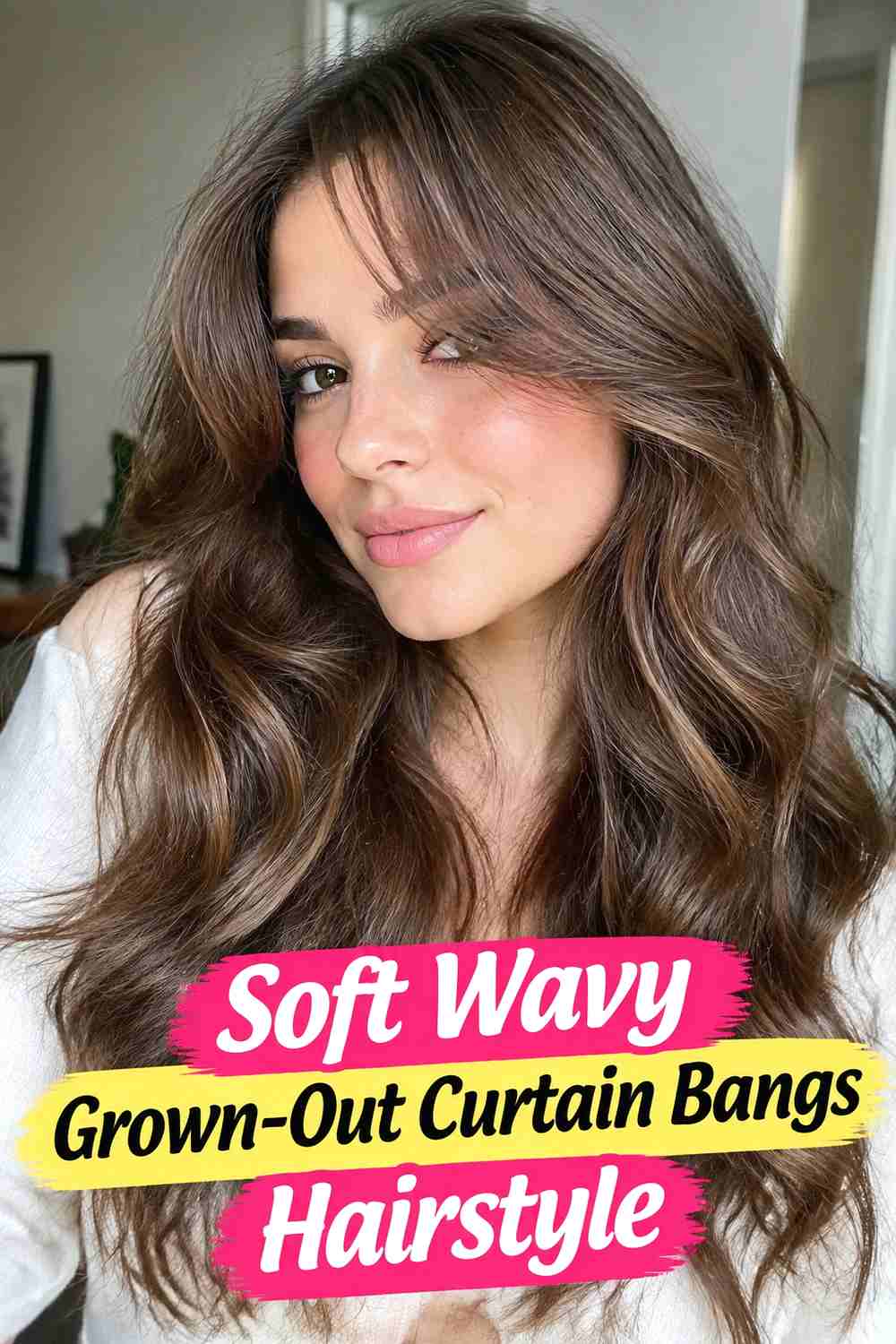
Soft waves are one of the easiest ways to blend grown-out curtain bangs into the rest of the hair. The longer front pieces can curve around the cheekbones and jaw before disappearing into loose waves through the shoulders and lengths. Because the wave pattern naturally creates movement, small differences between the fringe and surrounding layers become less obvious. This style looks especially natural when the waves vary slightly in size and direction instead of forming a perfectly uniform pattern. Grown-out bangs can be parted in the center or slightly off-center depending on how they fall most comfortably. Avoid curling the shortest pieces too tightly, since a broad bend usually helps them blend more smoothly into the longer hair.
Why It Works
Waves visually connect different lengths, making the growing-out stage feel softer and less structured.
Styling Notes
Use a broad outward bend around the face and looser waves through the rest of the hair for a seamless transition.
3. Feathered Grown Out Curtain Bangs Hairstyle
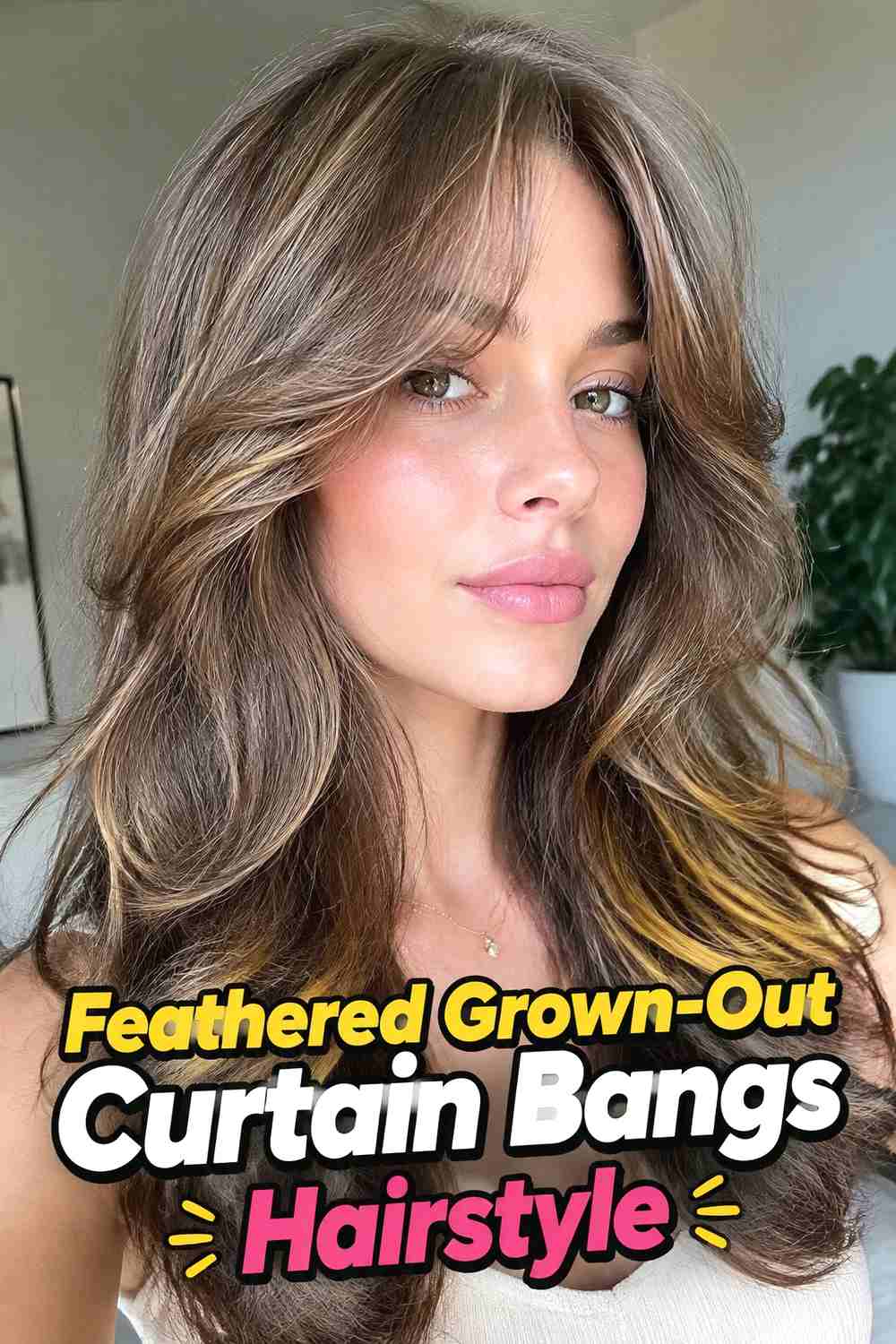
Feathered grown-out curtain bangs use tapered ends to keep longer fringe from feeling heavy around the cheeks and jaw. As the bangs grow, the outer pieces can begin blending into longer front layers, and feathering helps those transitions move naturally instead of forming blunt steps. A smooth blowout is particularly effective because it lets the lighter ends fan outward and reveal the layered structure. This style works well on medium to long hair when you want to keep the length but reduce bulk around the face. The key is maintaining enough density through the front so the pieces still look intentional. Over-thinning can make grown-out bangs appear sparse rather than softly feathered.
Hair Type & Length
Straight and softly wavy medium-to-long hair can show the tapered movement clearly, especially when the front layers have enough length to sweep outward.
Pro Tip
Focus softness on the ends while keeping the root area relatively full so the fringe maintains shape during grow-out.
4. Blowout Grown Out Curtain Bangs Hairstyle
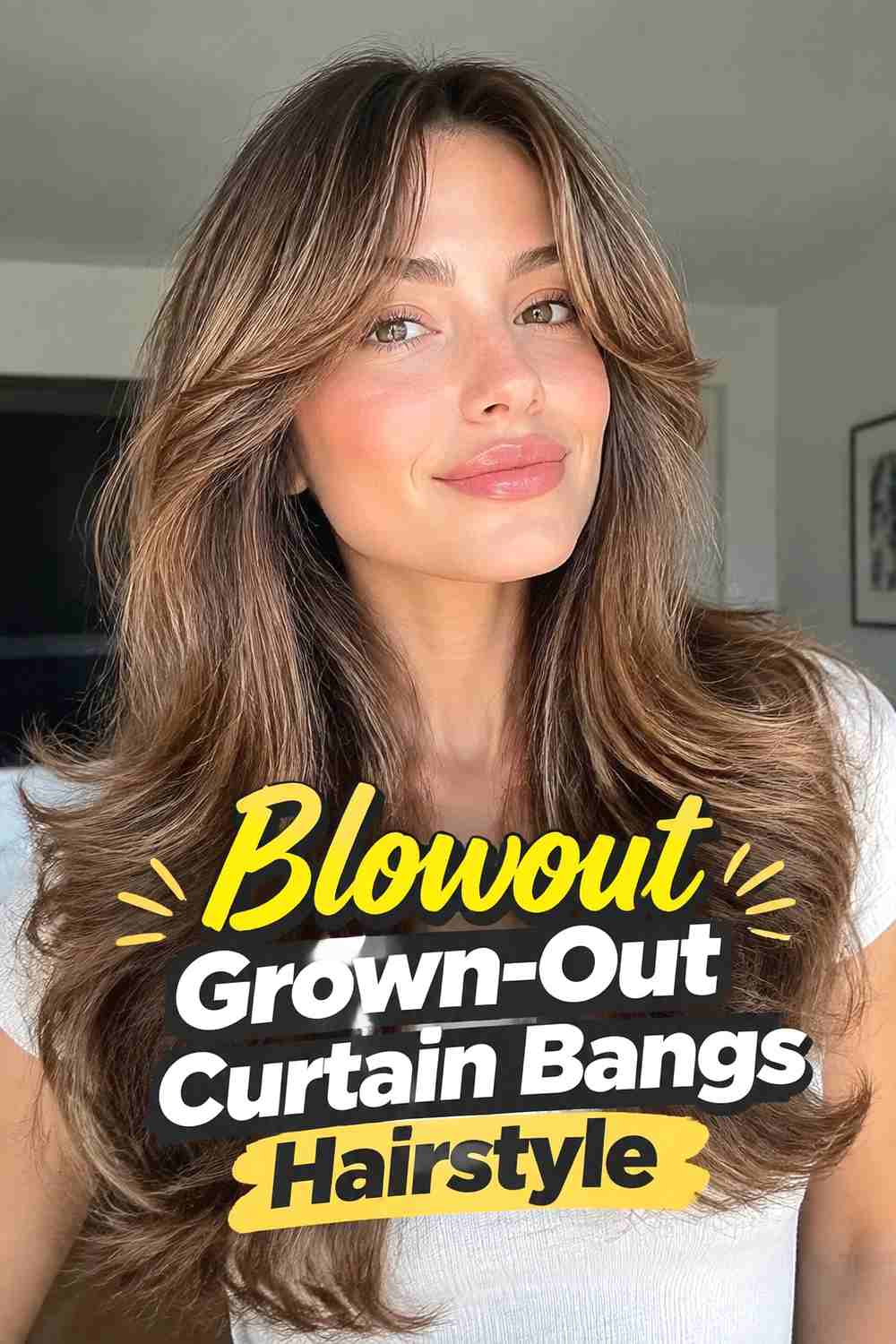
A blowout turns grown-out curtain bangs into a full, sweeping frame instead of an awkward in-between fringe. The longer pieces lift at the roots, open around the center, and curve outward toward the cheekbones before flowing into larger layers around the sides. This works especially well when the bangs have reached cheekbone or jaw length because they have enough weight to create a broad bend without falling into the eyes. Medium-long and long hair can carry the movement through the shoulders, producing a polished, cohesive silhouette. Use large sections rather than tight curls to keep the result modern. The volume should support the longer fringe without making it look disconnected from the rest of the haircut.
Styling Notes
Lift the roots first, then use a large round brush to sweep the grown-out fringe away from the face.
Wear & Maintenance
Lightweight hold can preserve the shape while allowing the longer front pieces to remain touchable and easy to reposition.
5. Shoulder Length Grown Out Curtain Bangs Hairstyle
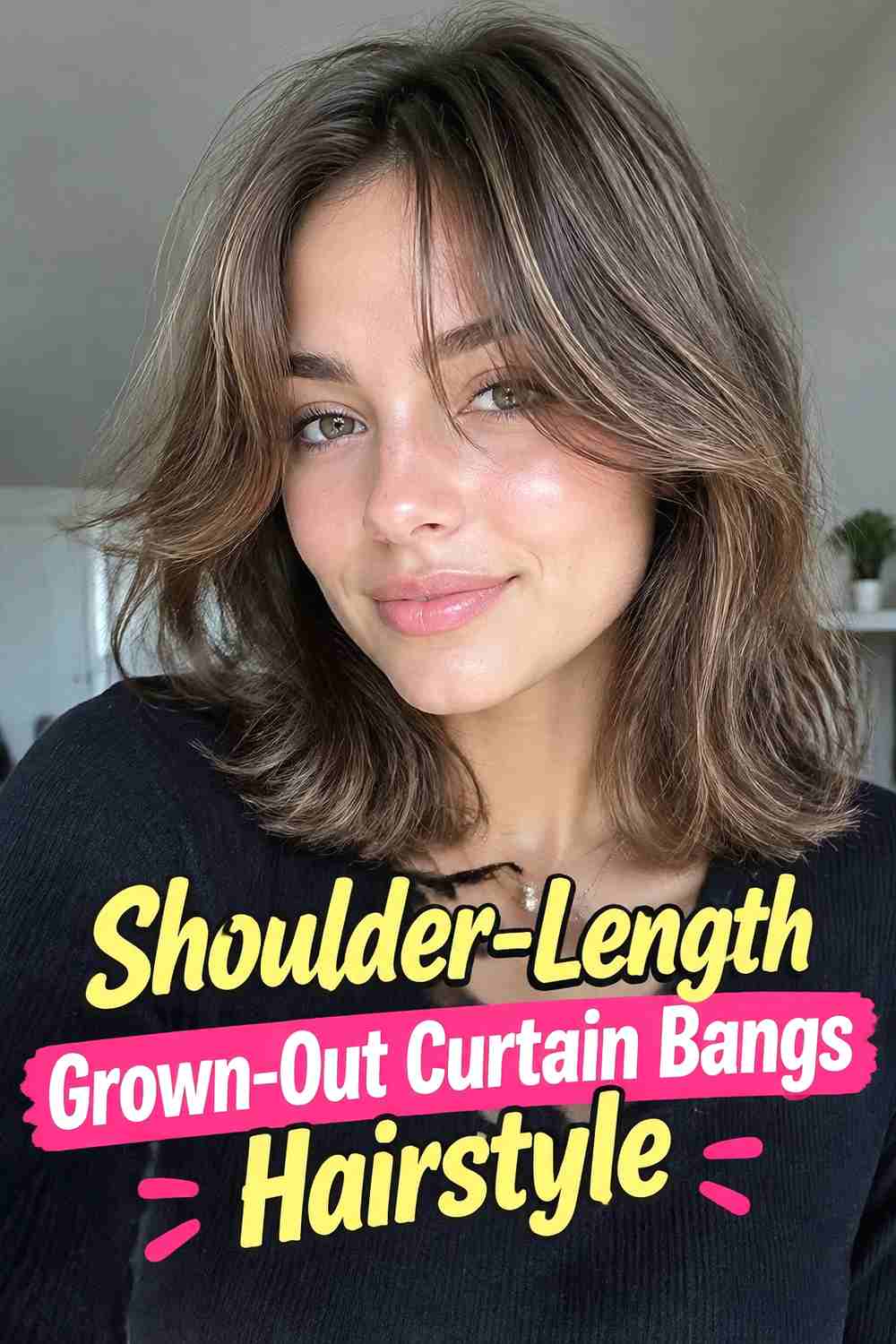
Shoulder-length hair gives grown-out curtain bangs a compact destination because the longer fringe can blend directly into cheekbone, jaw, and collarbone-level sections. This makes the transition from bangs to face-framing layers especially visible without requiring very long hair. A slight wave, smooth blowout, or softly flipped end can connect the front to the shoulder-length perimeter and create a polished shape. This version works well if you are growing out bangs while also maintaining a medium haircut rather than letting everything become long. Keep the face-framing pieces blended around the jaw so the former fringe does not sit as a separate shelf. The overall result should look intentional, movable, and easy to tuck behind the ears when needed.
Why It Works
The medium length places the grown-out fringe close to the overall perimeter, which helps the transition look deliberate rather than disconnected.
Styling Notes
Echo the outward movement of the fringe with a slight bend through the shoulder-level ends.
6. Curly Grown Out Curtain Bangs Hairstyle
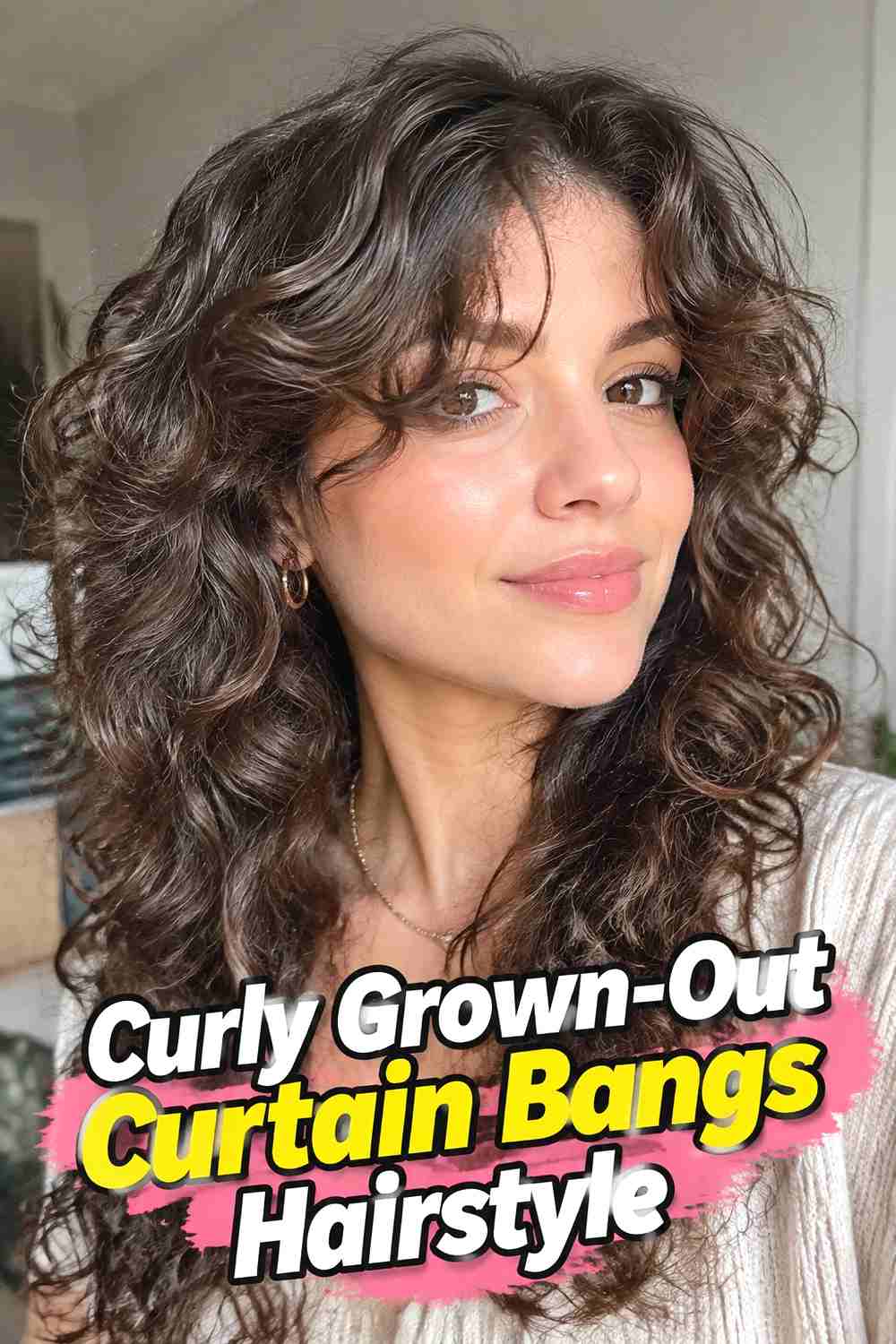
Curly grown-out curtain bangs can become soft face-framing curls as the front length moves beyond the forehead. Instead of forcing the pieces into a symmetrical center split, allow them to follow their natural curl direction while maintaining a loose opening around the face. Longer curls around the temples and cheeks can gradually connect to the rest of the haircut, making the grow-out stage feel integrated. Because shrinkage affects where each curl lands, the dry shape is more useful than stretched or wet length when deciding whether the fringe needs reshaping. A little variation between the two sides can look natural. Keep enough front density to maintain a frame without creating a heavy block of curls.
Hair Type & Length
The shape should be adjusted to curl pattern, shrinkage, density, and the way the hair is normally worn when dry.
Pro Tip
Let the fringe settle into its normal curl pattern before deciding whether it needs trimming or additional blending.
7. Straight Grown Out Curtain Bangs Hairstyle
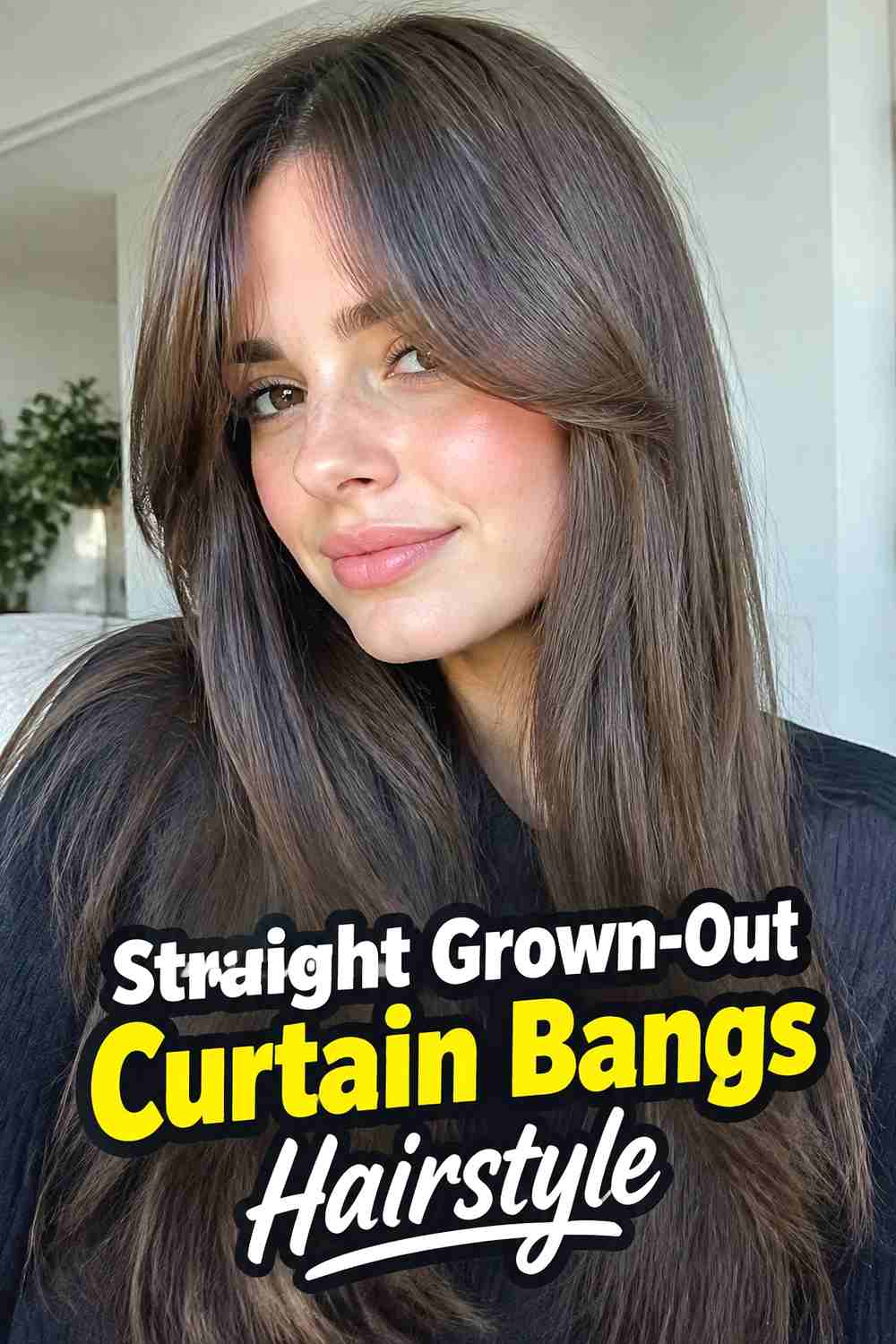
Straight grown-out curtain bangs create a clean face-framing look when the front pieces are long enough to fall around the cheekbones or jaw. The lack of curl makes every transition visible, so careful blending is important if you want the fringe to look intentional. A subtle outward bend at the ends can keep the pieces from hanging directly against the face while the rest of the hair remains smooth. This style works well on long straight hair, polished medium cuts, and sleek lobs. The longer bangs can also be tucked behind the ears easily, giving you more flexibility than a shorter fringe. Avoid excessive flat-ironing through the front, which can make the pieces look heavy and separate from surrounding layers.
Styling Notes
Use a gentle bend at cheek or jaw level while leaving the rest of the lengths predominantly straight.
Best For
Choose this version if you prefer sleek hair and want the growing-out fringe to resemble clean, deliberate face framing.
8. Shaggy Grown Out Curtain Bangs Hairstyle

Shaggy layers can make grown-out curtain bangs feel like an intentional part of a textured haircut. The longer fringe blends into cheekbone and jaw-level pieces, while choppier layers through the sides create movement that disguises exact transition points. Natural waves, air-dried texture, and loose styling all work well because the cut does not depend on perfect symmetry. This can be especially useful when the bangs are at an awkward length and refuse to sit like a traditional fringe. Rather than forcing them back into shape, the shaggy approach lets the pieces move more freely. Keep enough weight in the lower perimeter so the haircut retains balance and does not become overly thin through the ends.
Why It Works
Textured layers make different lengths feel intentional, reducing the visual contrast between former bangs and the rest of the haircut.
Wear & Maintenance
Periodic reshaping can keep the layers connected as the fringe continues to grow longer.
9. Face Framing Grown Out Curtain Bangs Hairstyle
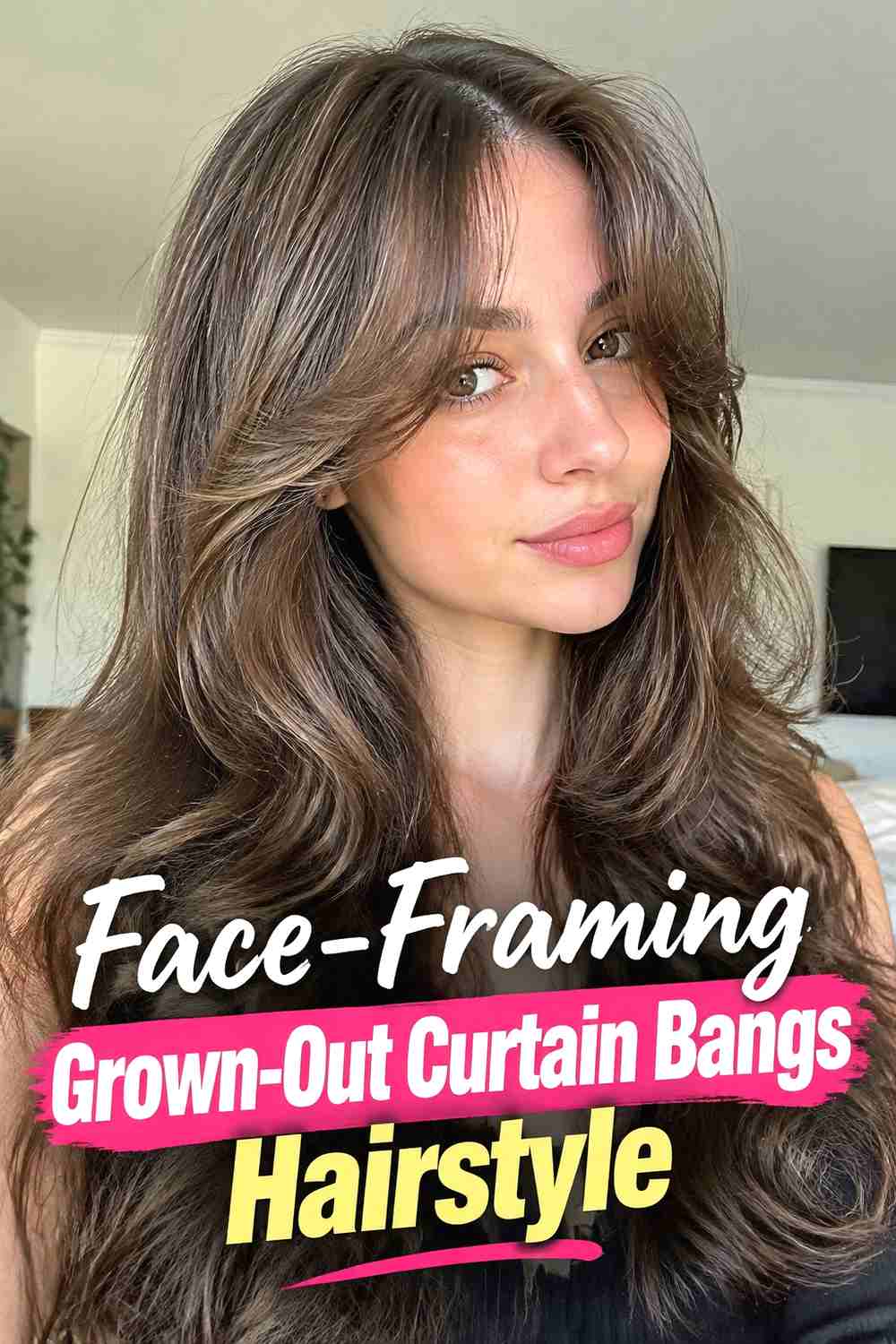
Face-framing grown-out curtain bangs turn the former fringe into the main front layer of the haircut. The shortest pieces can begin around the cheekbones, then progress through the jaw, collarbone, and longer lengths while the back remains comparatively simple. This is a practical option if you want to grow out bangs without adding heavy layers everywhere else. A blowout or loose wave can help each front section move separately while maintaining a smooth transition. Because the bangs are already longer, they can be brushed away from the face, tucked behind the ears, or incorporated into ponytails more easily. The finished style should read as deliberate framing rather than a fringe that has lost its original shape.
Best For
This approach works well if you want the front to carry most of the movement while preserving more weight through the rest of the haircut.
Styling Notes
Shape each face-framing section independently so the gradual change in length remains visible.
10. Butterfly Layer Grown Out Curtain Bangs Hairstyle
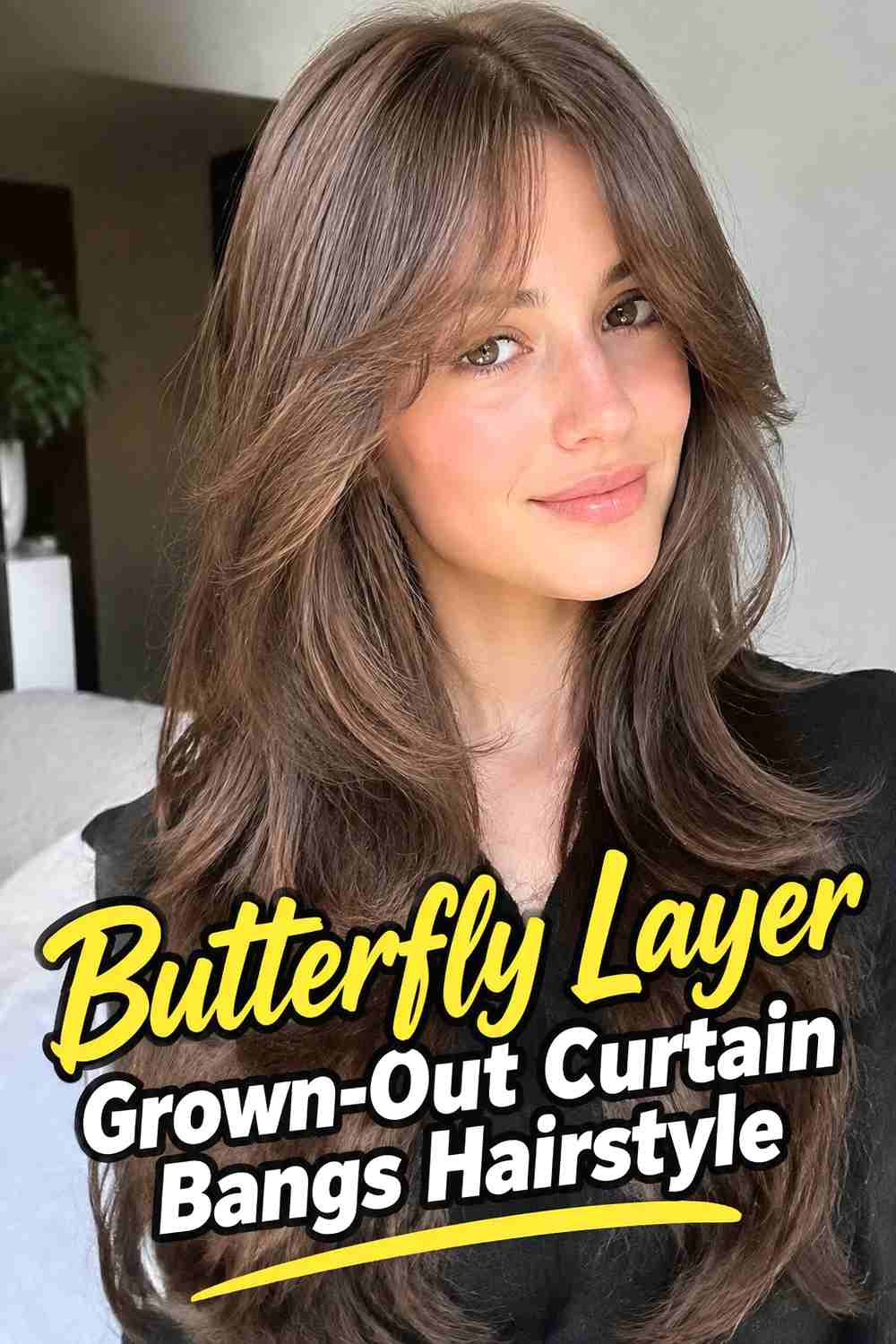
Butterfly layers are a natural partner for grown-out curtain bangs because the former fringe can become the shortest level in a series of sweeping front layers. Cheekbone-length pieces connect to jaw and shoulder layers, while longer sections remain underneath to preserve overall length. A blowout creates a broad outward shape that makes the transition look purposeful, especially when the fringe no longer functions as a traditional bang. Loose waves can soften the same haircut for everyday wear. This option works best when the hair has enough density to support several layer lengths without thinning the lower perimeter too much. The overall effect should feel airy and continuous from the front through the ends.
Why It Works
Butterfly layers give the grown-out fringe somewhere natural to blend, turning the in-between stage into part of a larger layered silhouette.
Pro Tip
Keep the longest sections full enough to balance the extra movement created around the face.
11. Textured Lob Grown Out Curtain Bangs Hairstyle
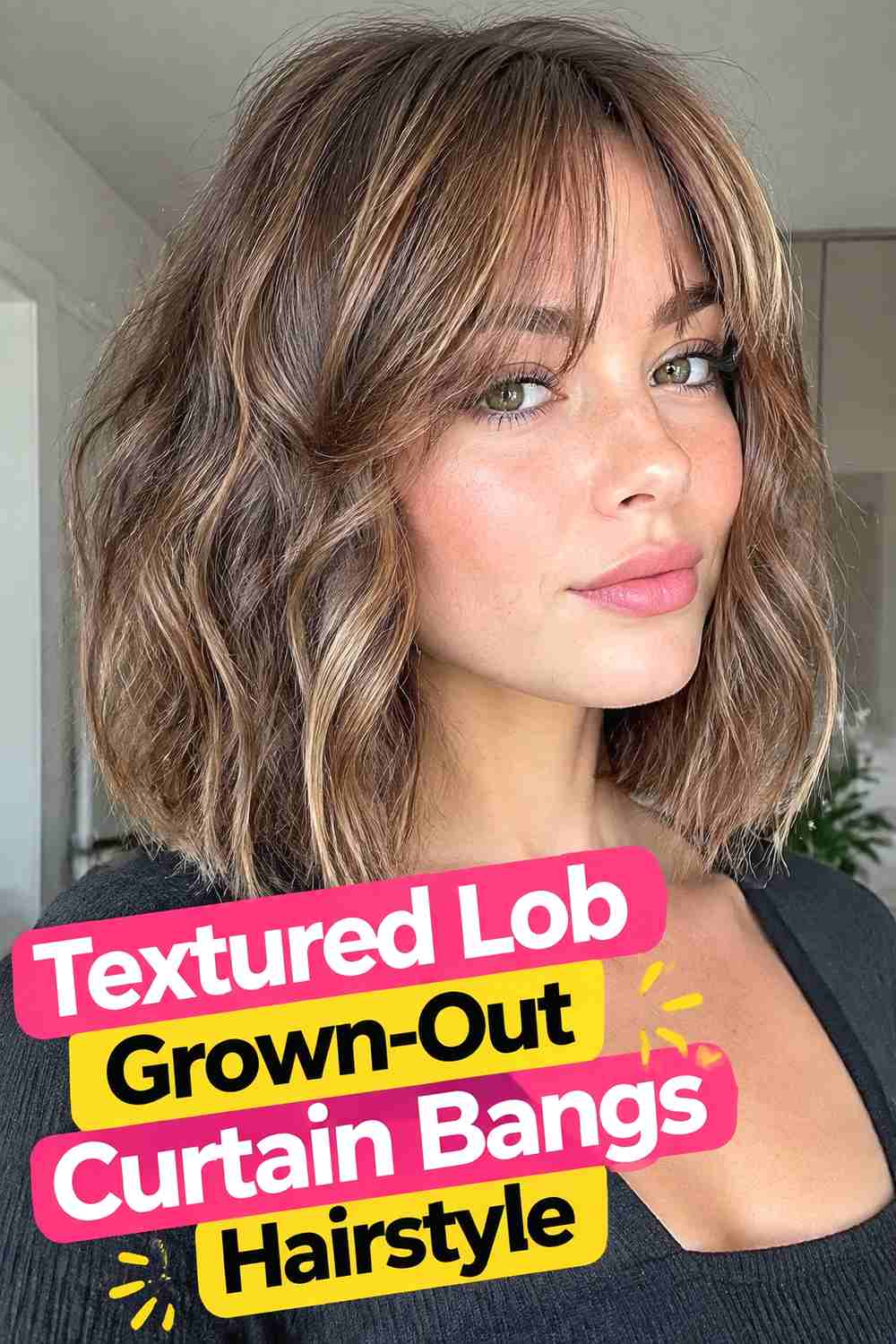
A textured lob gives grown-out curtain bangs a shorter, modern framework. As the fringe reaches cheekbone or jaw length, it can blend naturally into a collarbone-skimming cut without requiring dramatic additional layers. Soft bends and subtle internal texture help the front pieces merge with the lob while preventing the perimeter from appearing too blunt. This version is especially practical if you want to grow out bangs while keeping the overall hairstyle relatively short. The former fringe can be center-parted, swept slightly to one side, or tucked behind the ears depending on the day. Keep the front movement soft and slightly irregular so the transition looks relaxed rather than overly sculpted.
Styling Notes
Create loose bends through selected sections and curve the grown-out fringe away from the face for a blended finish.
Best For
This style suits anyone who wants to transition out of bangs while maintaining a lob or collarbone-length haircut.
12. Side Part Grown Out Curtain Bangs Hairstyle
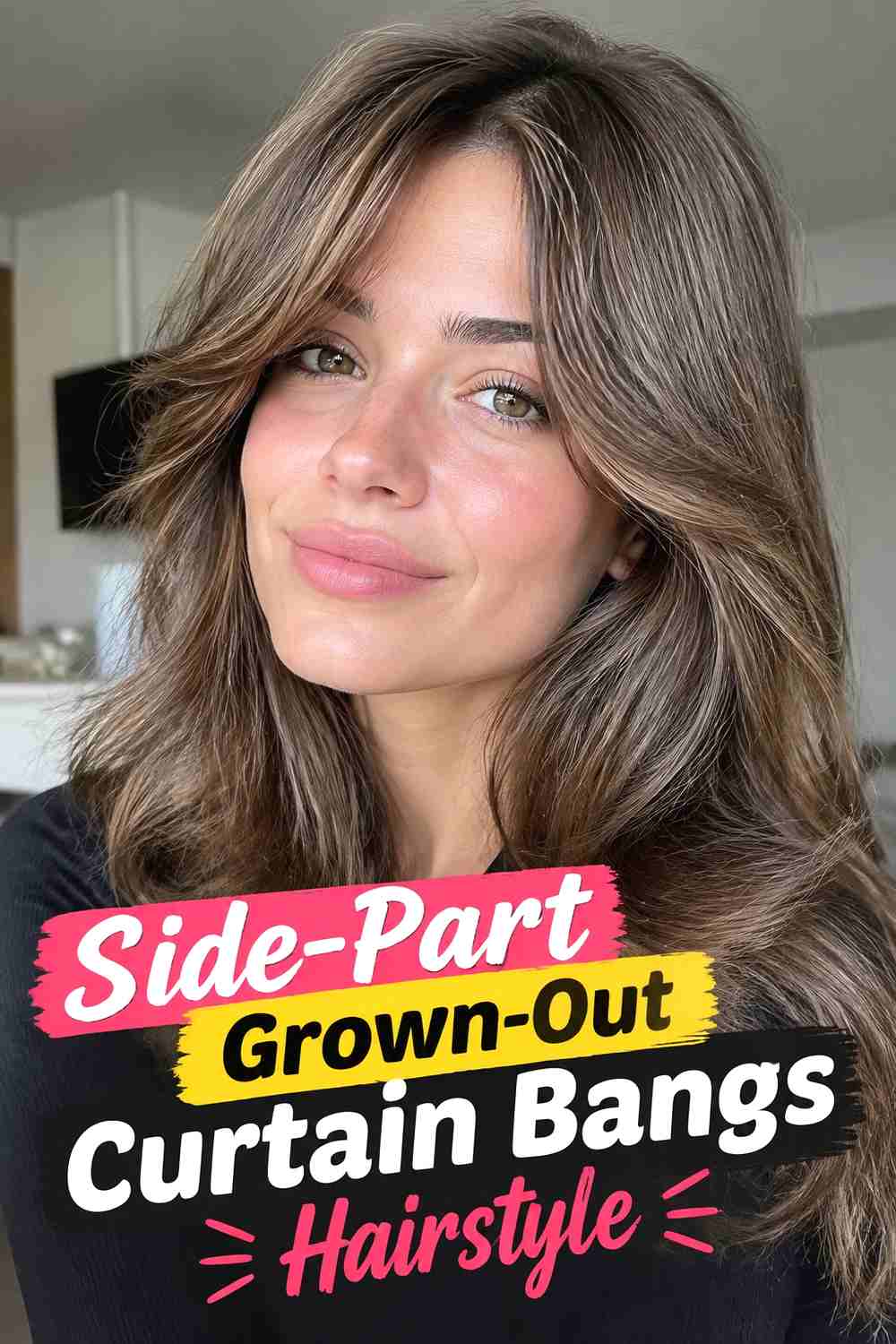
A side part can make grown-out curtain bangs easier to style when the center split no longer feels natural. Shift the part slightly and allow one side to sweep more broadly across the forehead or temple while the opposite side blends quickly into longer face-framing hair. Because the pieces are already longer, they can usually follow the new direction without the stiffness associated with shorter bangs. This style works with straight, wavy, or softly curled hair and can be especially useful if one side of the fringe naturally grows or bends differently. Keep the part moderate if you still want some curtain-like opening rather than turning the front into a conventional deep side bang.
Why It Works
Changing the part redistributes the longer fringe and gives you a fresh shape without cutting it shorter again.
Pro Tip
Experiment with several part positions before trimming, since the grown-out pieces may fall differently with only a small shift.
13. Bouncy Grown Out Curtain Bangs Hairstyle
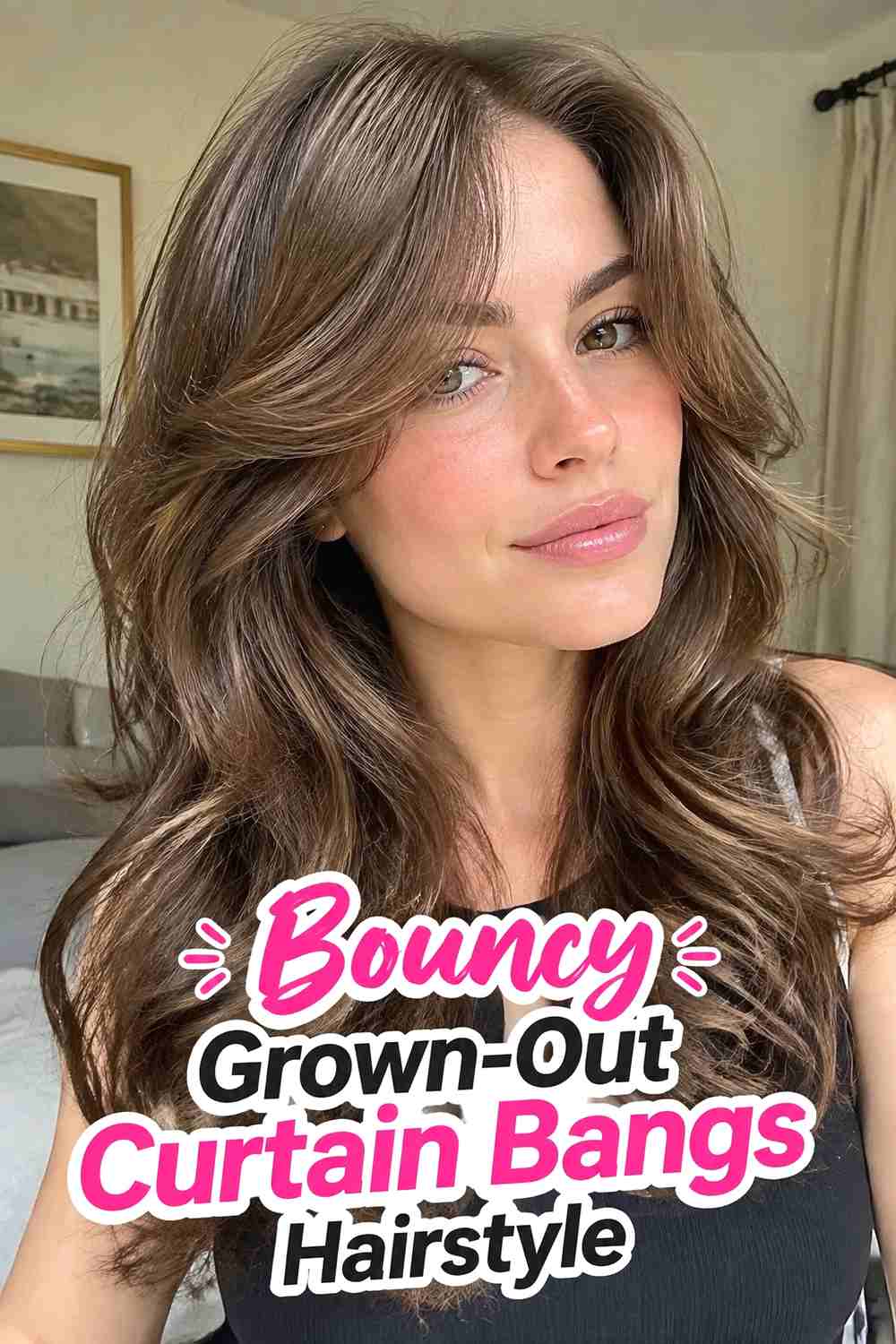
Bouncy styling makes longer curtain bangs feel lively rather than weighed down by extra length. The front pieces lift softly at the roots, curve around the cheekbones, and blend into rounded layers through the sides. Large bends through the rest of the haircut continue that movement and help the fringe look like an intentional part of the style. This works especially well on medium-long hair when the bangs have grown enough to stay out of the eyes but still retain visible shape. Avoid curling the front too tightly; broad curves create a softer transition and make the bounce look modern. Lightweight styling products can support movement without causing the longer pieces to clump or become stiff.
Styling Notes
Create root lift and broad curves through the front, then repeat the same movement through the longer layers.
Wear & Maintenance
Use flexible hold so the bangs can shift naturally while maintaining their rounded shape.
14. Wispy Grown Out Curtain Bangs Hairstyle
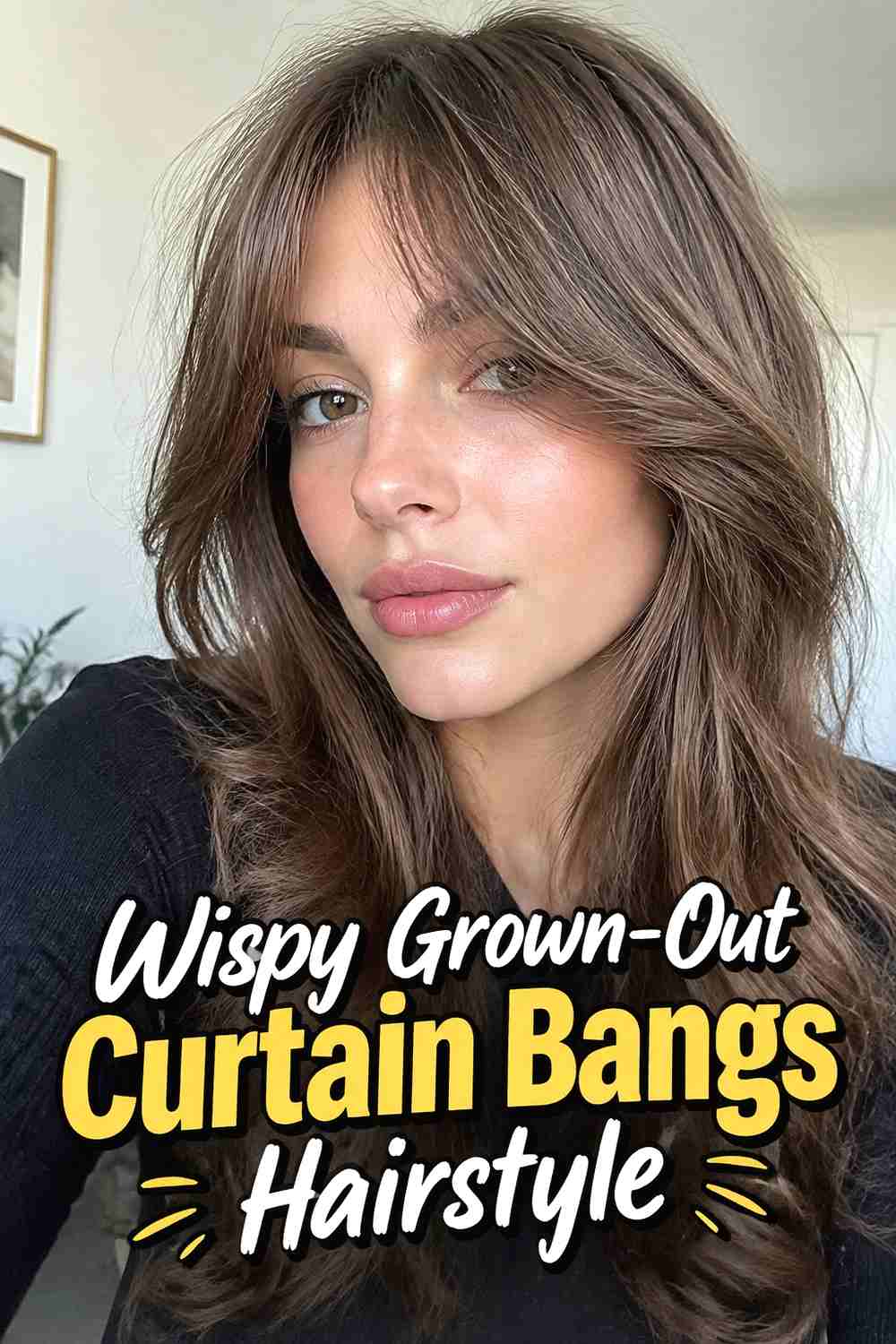
Wispy grown-out curtain bangs keep the front light as the fringe becomes longer. Instead of maintaining a dense section around the cheeks, the former bangs are separated into fine pieces that blend gradually into the surrounding hair. This can make grow-out feel softer, especially if your original fringe was already light or feathered. Straight, wavy, and lightly textured hair can all carry the look, although heavier products may cause the fine front pieces to collapse together. The longer sections can be tucked behind the ears or allowed to fall naturally around the jaw. Keep the ends soft and avoid excessive thinning, which can make the transition look sparse rather than intentionally wispy.
Best For
This option suits fine to medium-density hair and anyone who wants the grown-out fringe to become less noticeable over time.
Pro Tip
Use minimal product near the front so the lighter sections retain movement and separation.
15. Extra Long Grown Out Curtain Bangs Hairstyle

Extra-long grown-out curtain bangs sit closer to jaw or chin length and behave almost entirely like face-framing layers. At this stage, the original fringe can be swept outward, tucked behind the ears, blended into waves, or incorporated into ponytails with relative ease. The pieces still create movement around the front, but there is little actual forehead coverage left. This makes the style a natural endpoint if you are fully transitioning away from bangs without wanting to lose the soft framing effect. Long hair shows the progression especially well when the front layers continue through the shoulders and chest. Keep the ends lightly shaped so the former fringe does not appear like two heavy isolated sections.
Best For
Choose this version if you want the flexibility of long face-framing pieces while maintaining some of the softness created by curtain bangs.
Wear & Maintenance
Occasional blending trims can help the front layers merge smoothly into the rest of the haircut as they continue growing.
16. Soft Curl Grown Out Curtain Bangs Hairstyle
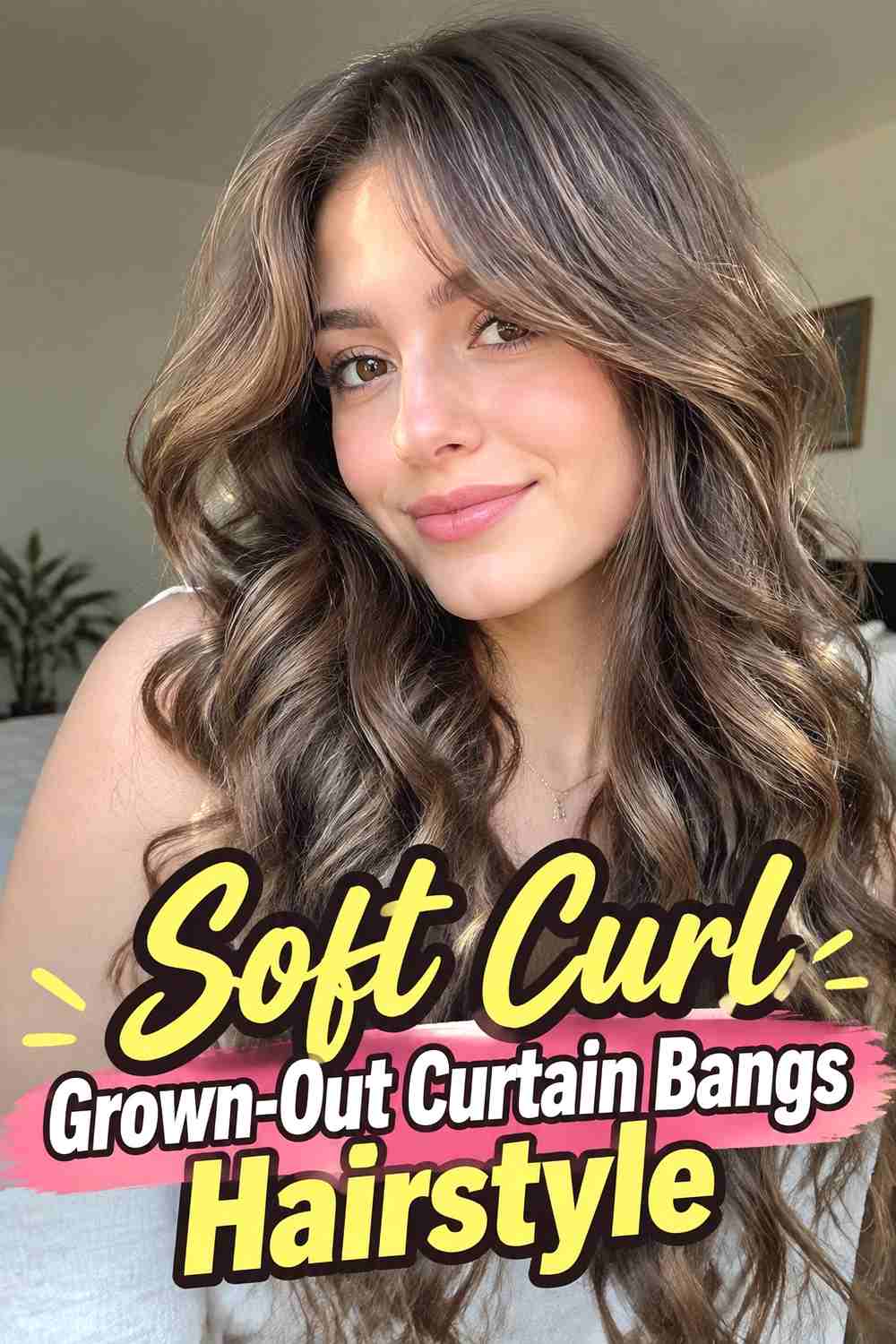
Soft curls can make grown-out curtain bangs look deliberately romantic by blending their extra length into larger curved sections around the face. The fringe can begin near the cheekbones, sweep outward, and join broader curls through the shoulders and lengths. Keeping the front curl loose prevents the former bangs from springing back toward the eyes or looking shorter than intended. This version works especially well for events or styled days when you want the growing-out stage to look polished. Once the curls are formed, allowing them to relax slightly can create a softer transition between the front layers and the rest of the hair. The overall effect should remain fluid, not tightly curled or overly formal.
Styling Notes
Curl the face-framing sections away from the face and use larger sections through the lengths for a cohesive shape.
Best For
This look suits medium-long and long hair when you want a polished way to blend former bangs into the rest of the style.
17. Air Dried Grown Out Curtain Bangs Hairstyle
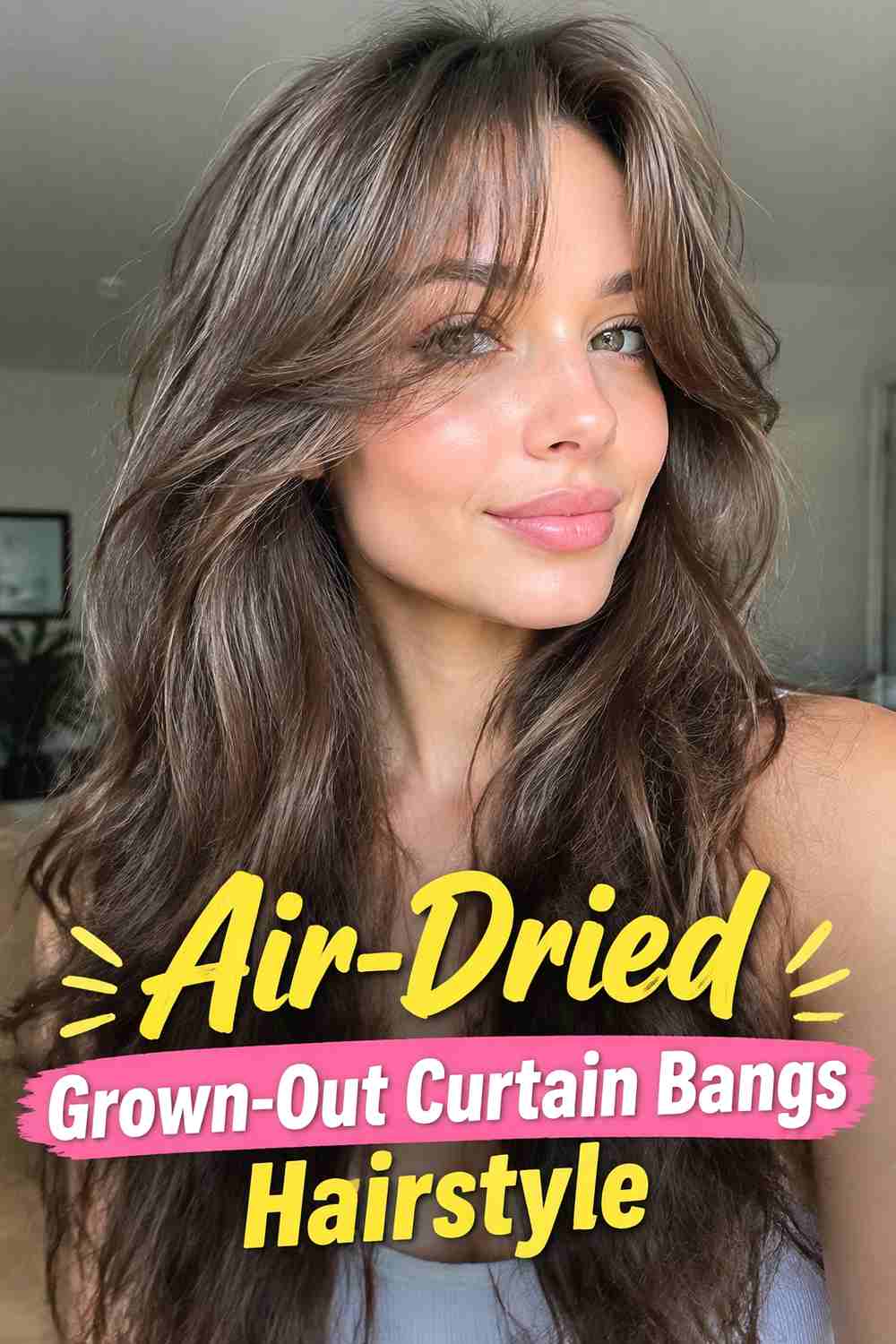
Air-dried styling can work especially well once curtain bangs are long enough to follow the hair’s natural movement. Instead of forcing the front back into a precise fringe shape, arrange the pieces while damp and let them settle around the cheekbones, jaw, or temples. Natural waves and bends can help disguise small differences in length, making the transition look relaxed and intentional. This approach depends more on the haircut than on daily styling, so the outer pieces should already be blended into the surrounding layers. Lightweight products can control flyaways without flattening natural texture. The result is ideal if you are growing out bangs specifically because you want a lower-maintenance front section.
Best For
This approach suits naturally wavy, softly textured, or bendy hair when you prefer minimal heat styling.
Pro Tip
Position the front sections while damp so they begin drying in the direction you want instead of trying to redirect them afterward.
18. Romantic Updo Grown Out Curtain Bangs Hairstyle
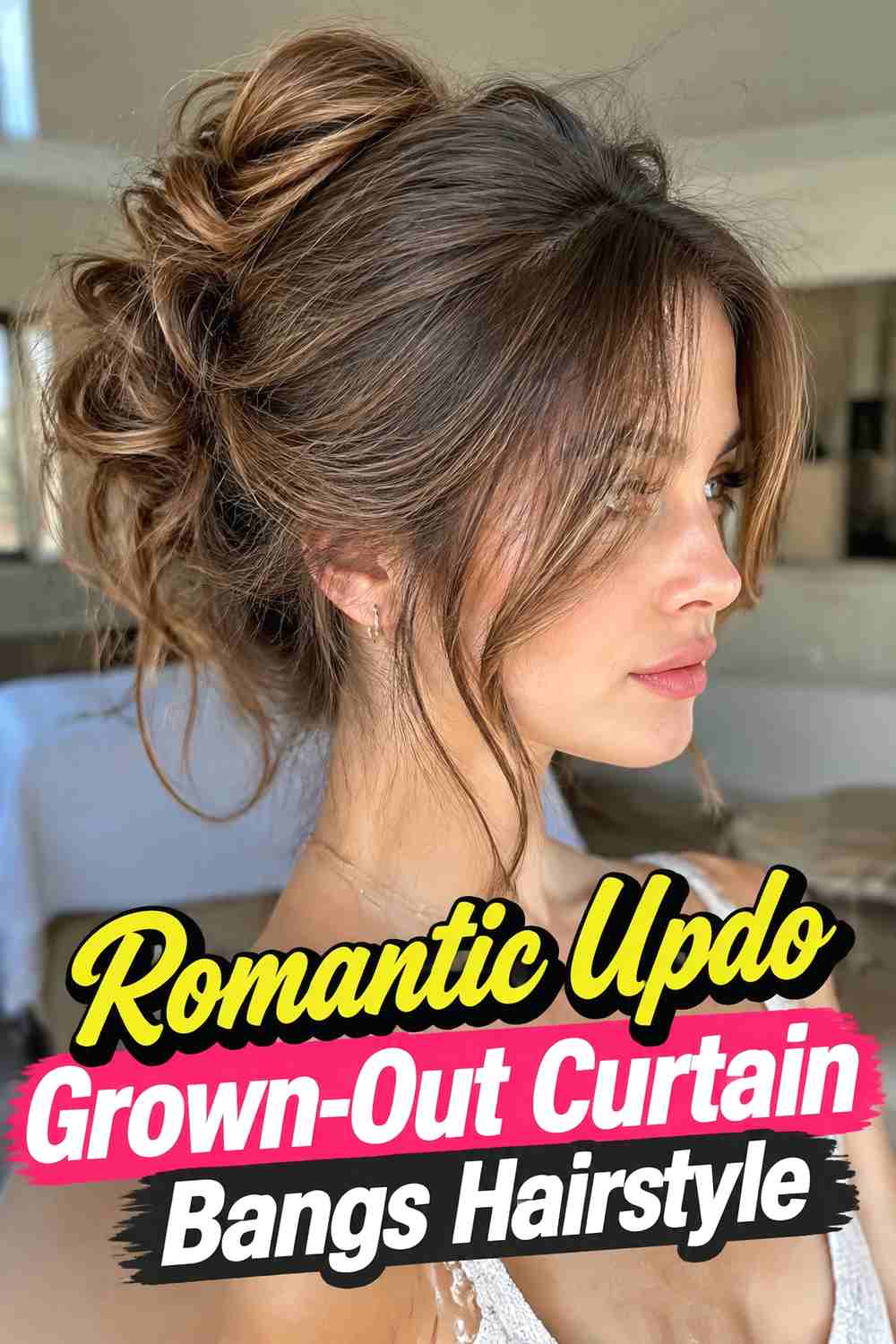
A romantic updo is particularly forgiving for grown-out curtain bangs because the longer front pieces can become intentional face-framing tendrils. Gather the main lengths into a soft bun, twist, or chignon, leaving the former fringe and a few longer sections free before pinning. Curve those pieces gently away from the face so they fall around the cheekbones and jaw instead of hanging straight down. Because the bangs are already longer, they create a softer transition into the updo than a short fringe would. This style works beautifully for dinners, parties, weddings, and other dressier occasions. Keep the front touchable and flexible so the framing feels natural rather than overly sprayed into place.
Styling Notes
Separate the grown-out fringe before creating the updo so you do not have to pull pieces from the finished structure later.
Why It Works
Longer bangs naturally resemble face-framing tendrils, making the grow-out stage especially easy to incorporate into soft updos.
How to Choose the Right Look
Start with where your grown-out bangs currently fall. Cheekbone-length pieces still behave somewhat like curtain bangs and can work well with blowouts, waves, and feathered styling. Jaw- or chin-length pieces are closer to face-framing layers and are easier to tuck, sweep aside, or blend into updos.
Texture should guide your choice as well. Straight hair makes transitions more visible, so careful blending and a slight bend can help. Waves and curls naturally disguise differences in length, while shaggy and air-dried finishes suit a more relaxed approach.
Consider your haircut length next. Lobs and shoulder-length styles give the fringe a nearby perimeter to connect with, while butterfly layers and long layered cuts provide more space for gradual transitions.
Finally, decide whether you still want to preserve the curtain-bang identity or fully grow it into face framing. Regular reshaping can maintain a soft fringe effect, while fewer trims allow the pieces to merge gradually with the rest of the haircut.
Final Thoughts
Grown-out curtain bangs do not have to feel like an awkward stage. Once the front pieces reach the cheekbones or beyond, they can become soft layers, side-swept sections, waves, curls, or elegant updo tendrils. The easiest approach is to work with the length you already have and blend it gradually into the surrounding haircut rather than repeatedly forcing it back into a shorter fringe shape.
FAQs
1. What are grown-out curtain bangs?
Grown-out curtain bangs are curtain bangs that have lengthened beyond their original fringe shape, often reaching the cheekbones, jaw, or chin and beginning to behave like face-framing layers.
2. How do you make grown-out curtain bangs look intentional?
Blend them into longer front layers, add an outward bend or wave, and adjust the part so the pieces follow the natural direction of the hairstyle.
3. Are grown-out curtain bangs easier to maintain?
They can be easier to manage because longer pieces are simpler to tuck behind the ears, sweep aside, or incorporate into ponytails and updos.
4. Can grown-out curtain bangs work with curly hair?
Yes. Longer front curls can blend naturally into the rest of the haircut when their dry length, shrinkage, and curl pattern are considered.
5. How long does the fringe need to be before it becomes face framing?
There is no single cutoff, but once the shortest pieces reach around cheekbone to jaw length, they often start behaving more like face-framing layers than traditional bangs.
Save your favorite grown-out curtain bangs hairstyle ideas, compare the lengths and textures, and share the looks that make your fringe transition feel intentional and easy to wear.