16 Deep Side-Part Blowout Hairstyle Ideas for Sweeping Volume
A deep side part gives a classic blowout instant drama, combining lifted roots, sweeping movement, and polished volume in a beautifully wearable finish.
Deep side-part blowouts are especially effective when you want to create a strong silhouette without relying on complicated styling. Moving the part farther from the center naturally gives one side more height, while the heavier section can sweep across the forehead and fall into soft layers, waves, or rounded ends.
The right version depends on your haircut, length, density, and preferred level of volume. Long layers can create dramatic movement, shoulder-length cuts offer compact bounce, and smoother finishes emphasize shine. Before choosing a look, consider how much root lift you want, where your front layers fall, and how polished or relaxed you prefer the ends.
Quick List
- Classic Deep Side Part Blowout Hairstyle
- Voluminous Deep Side Part Blowout Hairstyle
- Long Layered Deep Side Part Blowout Hairstyle
- Face Framing Deep Side Part Blowout Hairstyle
- Curtain Bang Deep Side Part Blowout Hairstyle
- Shoulder Length Deep Side Part Blowout Hairstyle
- Flipped Ends Deep Side Part Blowout Hairstyle
- Rounded Ends Deep Side Part Blowout Hairstyle
- Soft Wave Deep Side Part Blowout Hairstyle
- Sleek Deep Side Part Blowout Hairstyle
- Bouncy Deep Side Part Blowout Hairstyle
- Hollywood Deep Side Part Blowout Hairstyle
- Textured Deep Side Part Blowout Hairstyle
- Side Swept Deep Side Part Blowout Hairstyle
- Mega Volume Deep Side Part Blowout Hairstyle
- Glamorous Deep Side Part Blowout Hairstyle
1. Classic Deep Side Part Blowout Hairstyle
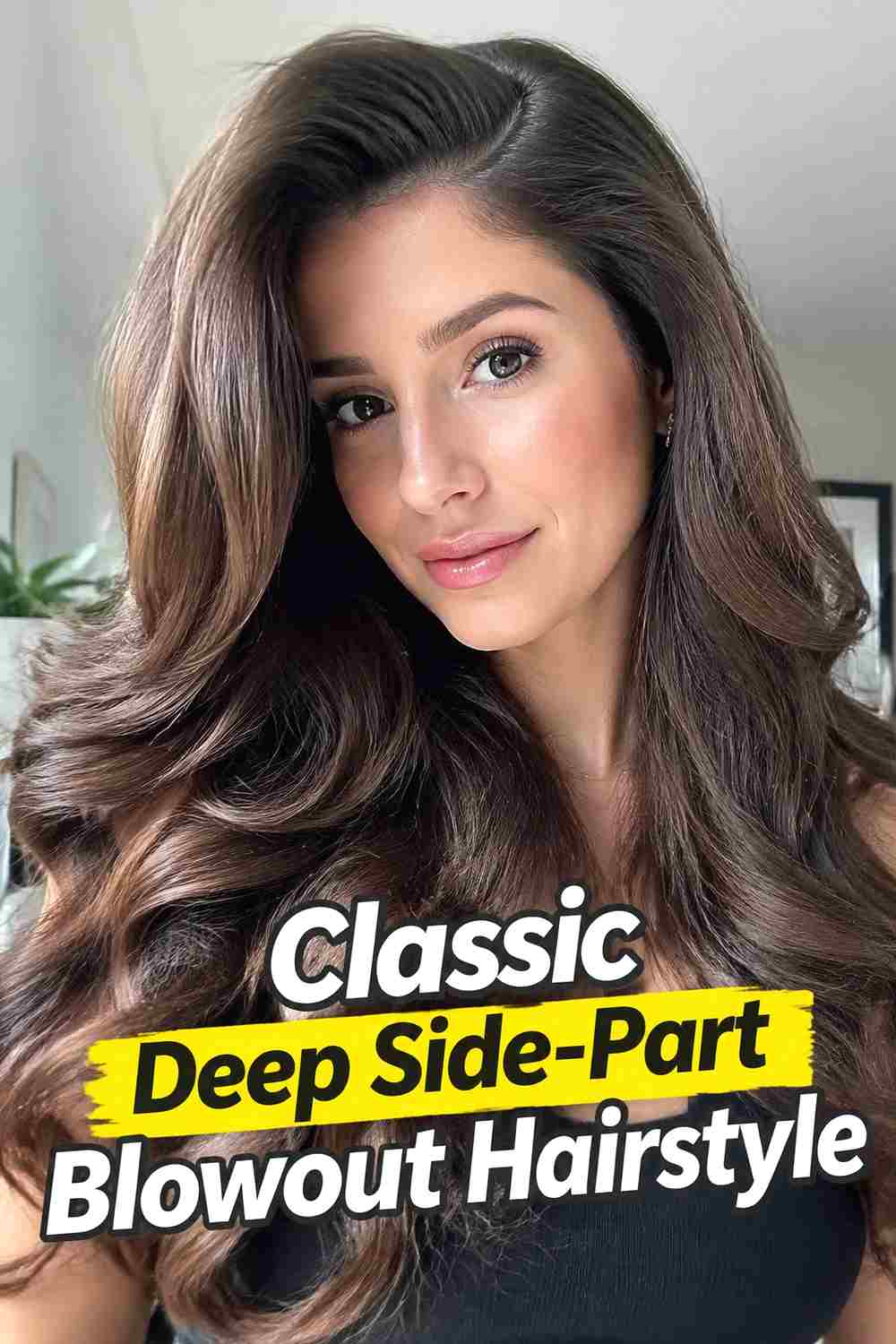
The Classic Deep Side-Part Blowout Hairstyle keeps the shape simple, polished, and easy to recognize. A clean side part creates natural lift on the heavier side, while smooth lengths fall into softly curved ends. The front section is blown away from the face so it sweeps across the forehead without collapsing onto the eyes. This look works particularly well when you want volume that still feels controlled enough for everyday wear. Medium to long hair gives the sweeping section enough length to move naturally, although a shoulder-length cut can create a similarly polished effect. Keep the roots airy and the ends smooth so the hairstyle maintains a clear blowout shape without looking stiff or overly set.
Styling Notes
Direct the front section upward before sweeping it sideways. That initial lift helps the part stay voluminous instead of lying flat against the scalp.
2. Voluminous Deep Side Part Blowout Hairstyle
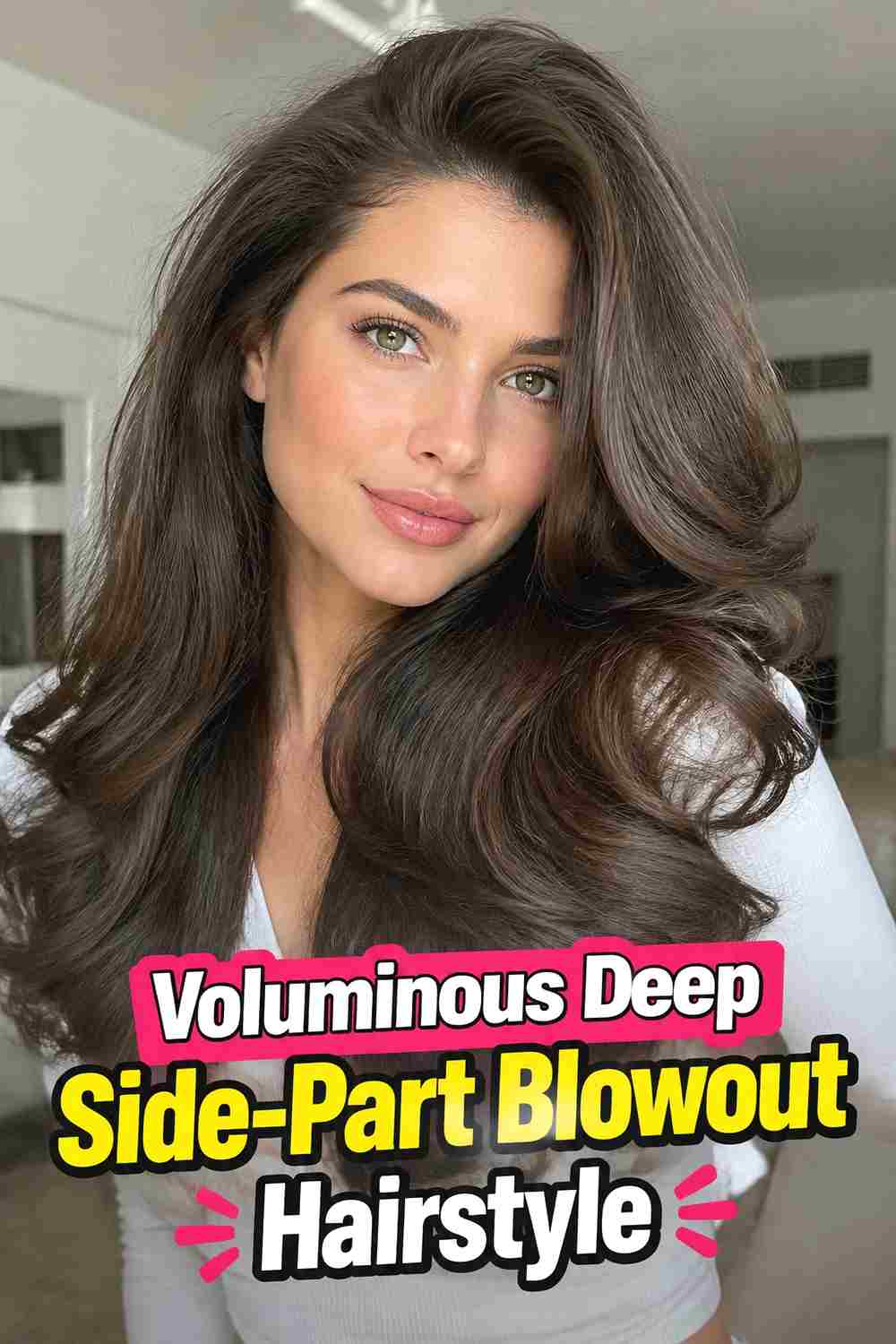
This version emphasizes height at the root and fullness through the sides, making the deep part feel noticeably more dramatic. The heavier section is lifted away from the scalp and allowed to fall in a broad sweep, while the opposite side stays slightly closer to the head for contrast. Large, softly curved sections through the lengths create fullness without turning the hairstyle into tight curls. This shape can be particularly useful for medium-density hair that needs extra visual body around the crown. Work the roots first and let them cool in an elevated position before styling the ends. Flexible hold is preferable to a stiff finish because natural movement helps the volume look believable and keeps the blowout soft.
Best For
Choose this option when crown lift and visible fullness are more important than a sleek, compact finish.
3. Long Layered Deep Side Part Blowout Hairstyle
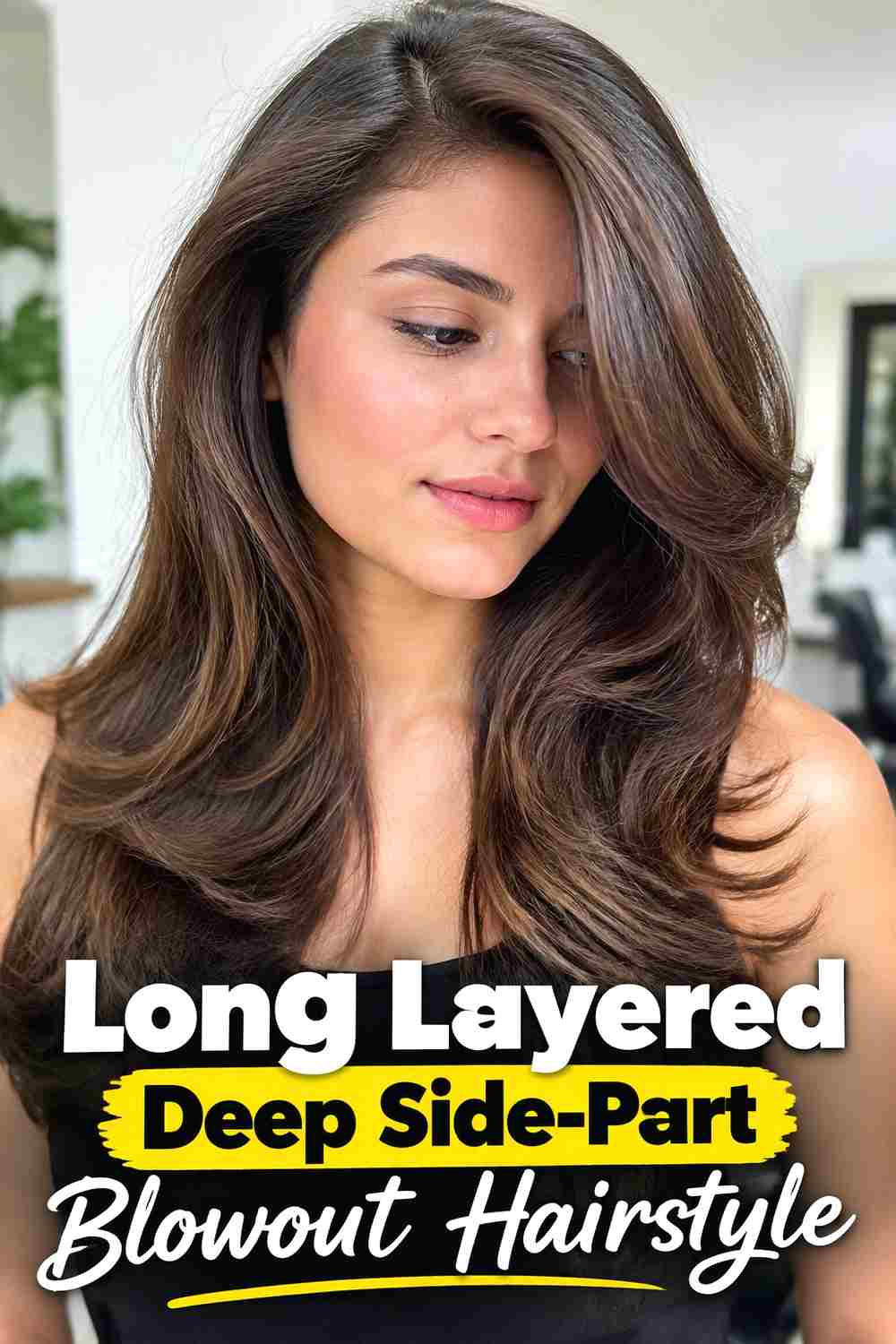
Long layers make a deep side-part blowout especially dynamic because each length moves independently as the hair sweeps across the head. Shorter pieces can curve around the cheekbones and shoulders, while the longest sections maintain a flowing line down the back. The deep part adds lift to the upper layers and prevents the hairstyle from falling straight downward. For the most natural finish, style each layer according to its length rather than forcing every section into the same bend. Longer pieces can remain softly curved, while shorter sections benefit from more lift and movement. This approach keeps the haircut visible and creates a fuller silhouette without relying on excessive teasing or heavy finishing products.
Hair Type & Length
Long hair with visible layering shows this style particularly well. Fine hair may benefit from lighter products so the shorter layers stay lifted.
4. Face Framing Deep Side Part Blowout Hairstyle
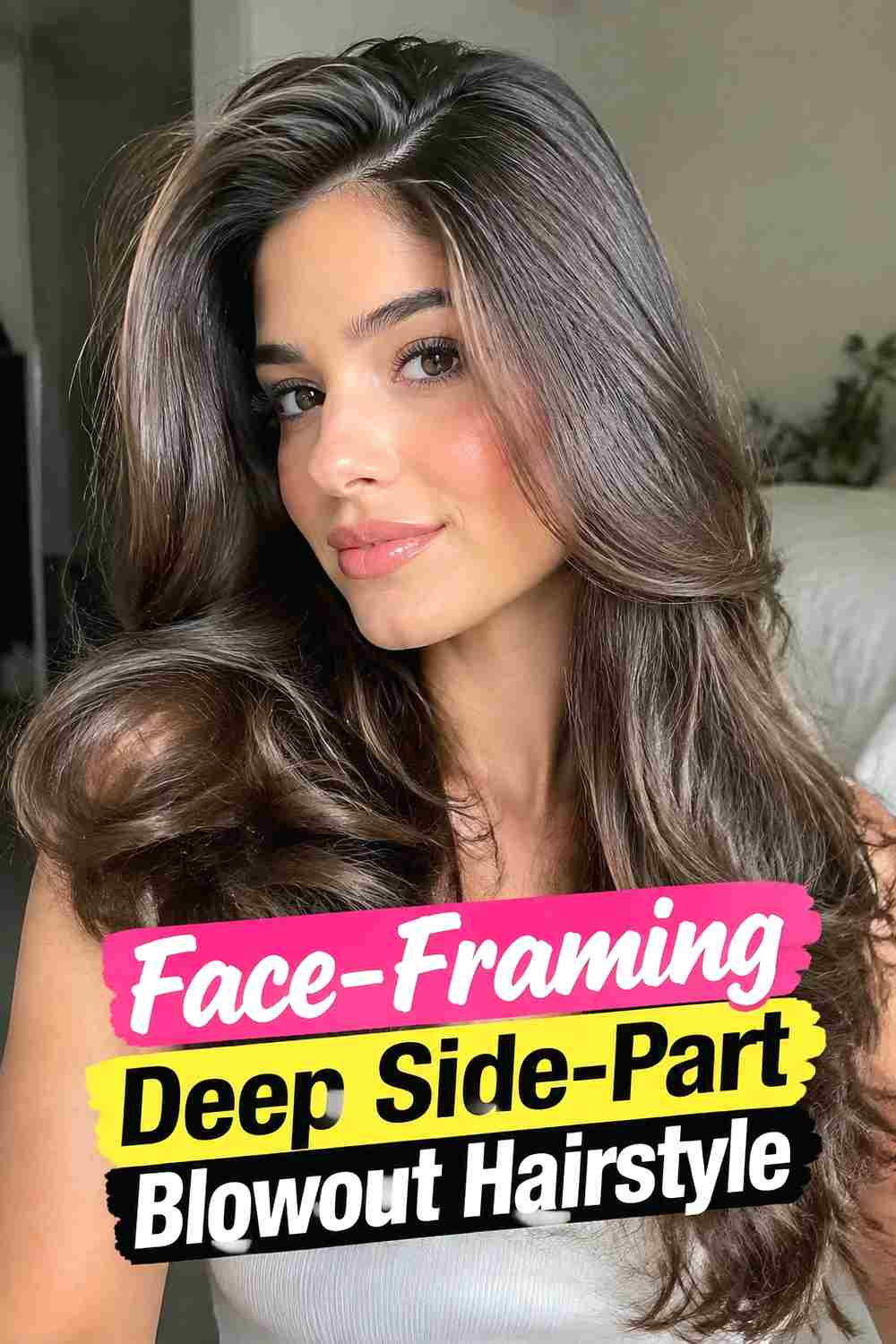
Face-framing layers become a focal point when combined with a deep side part because the heavier front section naturally sweeps across the forehead and cheek. The shortest layers can be curved away from the face, creating a smooth transition into longer pieces around the shoulders. Rather than adding maximum volume everywhere, concentrate the lift around the part and front hairline so the haircut remains visible. This variation works well when you want a blowout that looks polished from the front but still has soft movement through the rest of the hair. Avoid curling the face-framing pieces too tightly. Broad bends keep the look modern and help the layers blend naturally into the fuller lengths behind them.
Why It Works
The deep part creates direction while the shorter front layers prevent the heavier side from feeling bulky or shapeless.
5. Curtain Bang Deep Side Part Blowout Hairstyle
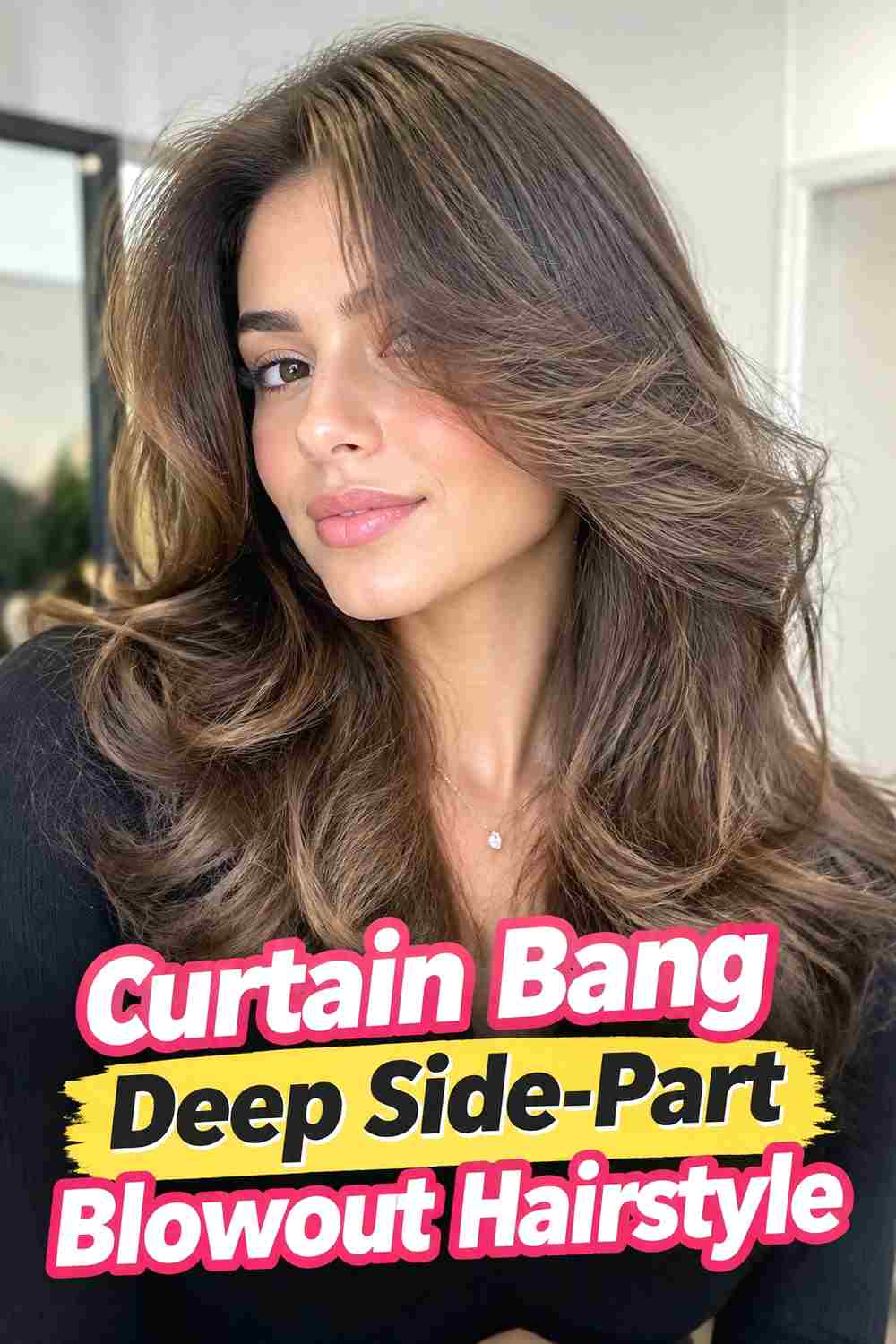
Curtain bangs do not need a perfect center split to work. With a deep side part, the fringe can be shifted so one side becomes longer and more dramatic while the shorter side curves gently away from the forehead. This gives familiar curtain bangs a less symmetrical, more sweeping finish. Blow-drying the fringe upward before directing it sideways creates enough root lift to keep it from falling flat. The rest of the hair can stay smooth and full, allowing the bangs to remain the strongest detail around the face. This version works best when the fringe is long enough to blend into cheekbone or jaw-length layers, creating a soft transition rather than an abrupt change in length.
Pro Tip
Style the fringe first while it is still damp, since the direction at the roots determines how naturally the deep side part will sit.
6. Shoulder Length Deep Side Part Blowout Hairstyle
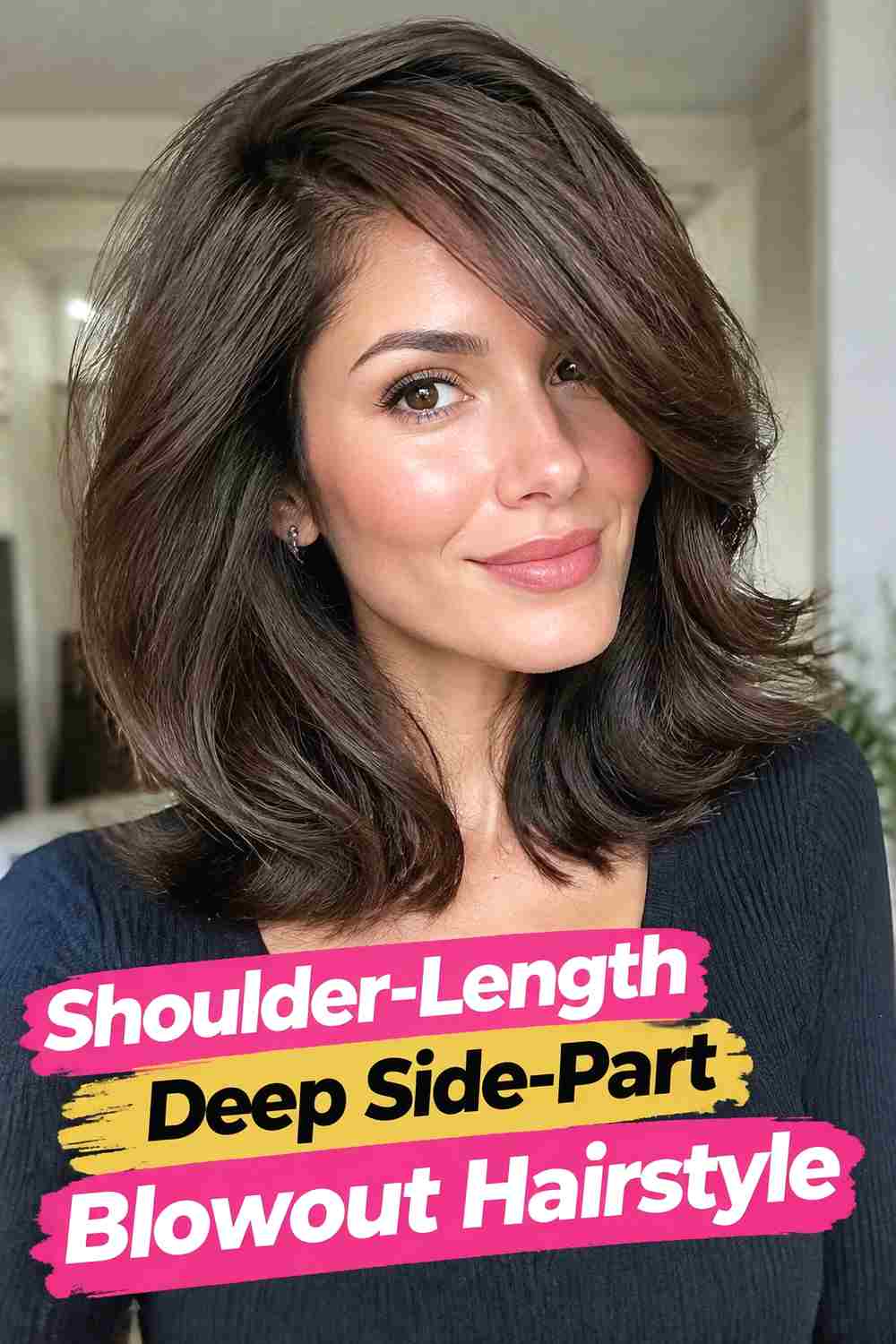
At shoulder length, a deep side-part blowout creates compact volume with plenty of visible bounce. The shorter length allows the roots to lift easily, while the ends naturally interact with the shoulders and can curve either inward or slightly outward. A deep part helps prevent the haircut from appearing too evenly rounded by creating extra height and movement on one side. This variation looks especially polished when the surface remains smooth and the lower half carries the majority of the bend. Because there is less length weighing down the style, the shape can remain buoyant with relatively little teasing. Use a moderate amount of product so the hair stays flexible rather than becoming overly firm.
Wear & Maintenance
Refresh the front section and ends rather than restyling the entire blowout. Those areas usually determine whether the overall shape still looks polished.
7. Flipped Ends Deep Side Part Blowout Hairstyle
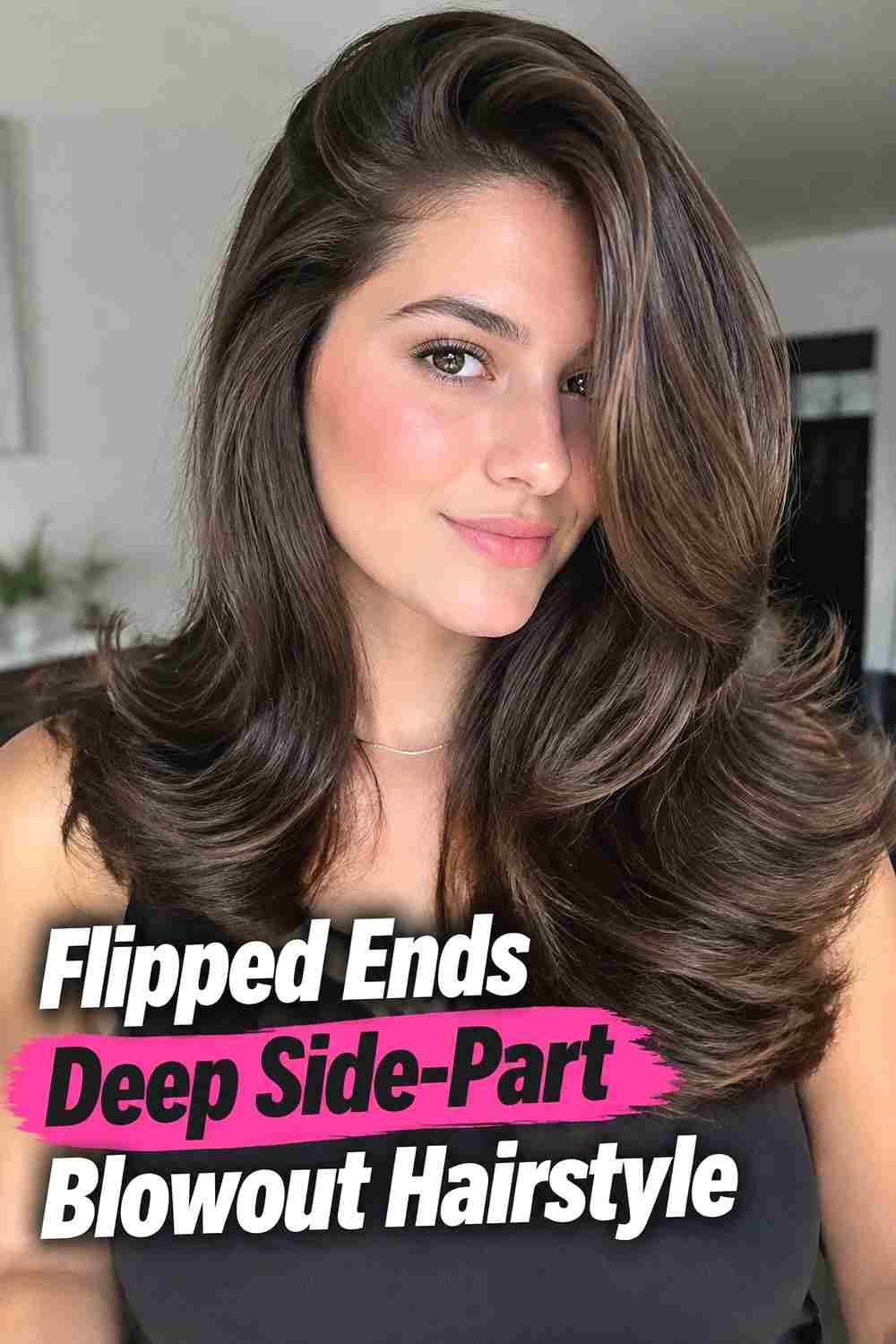
Flipped ends give a deep side-part blowout a playful, energetic finish. The roots and mid-lengths stay smooth and lifted, while the lower few inches turn outward to create movement around the shoulders and back. The side part keeps the style from feeling overly retro by adding asymmetry and a modern sweep across the front. This look works particularly well on medium and long layered cuts because different lengths can flip at slightly different points, creating a softer outline. Focus the strongest bend on the ends rather than curling the full length. That contrast between smooth upper sections and outward movement below makes the hairstyle feel intentional and helps preserve the airy quality of a traditional blowout.
Styling Notes
Use a round brush to direct the ends outward while drying, then allow each section to cool before separating it for a longer-lasting flip.
8. Rounded Ends Deep Side Part Blowout Hairstyle
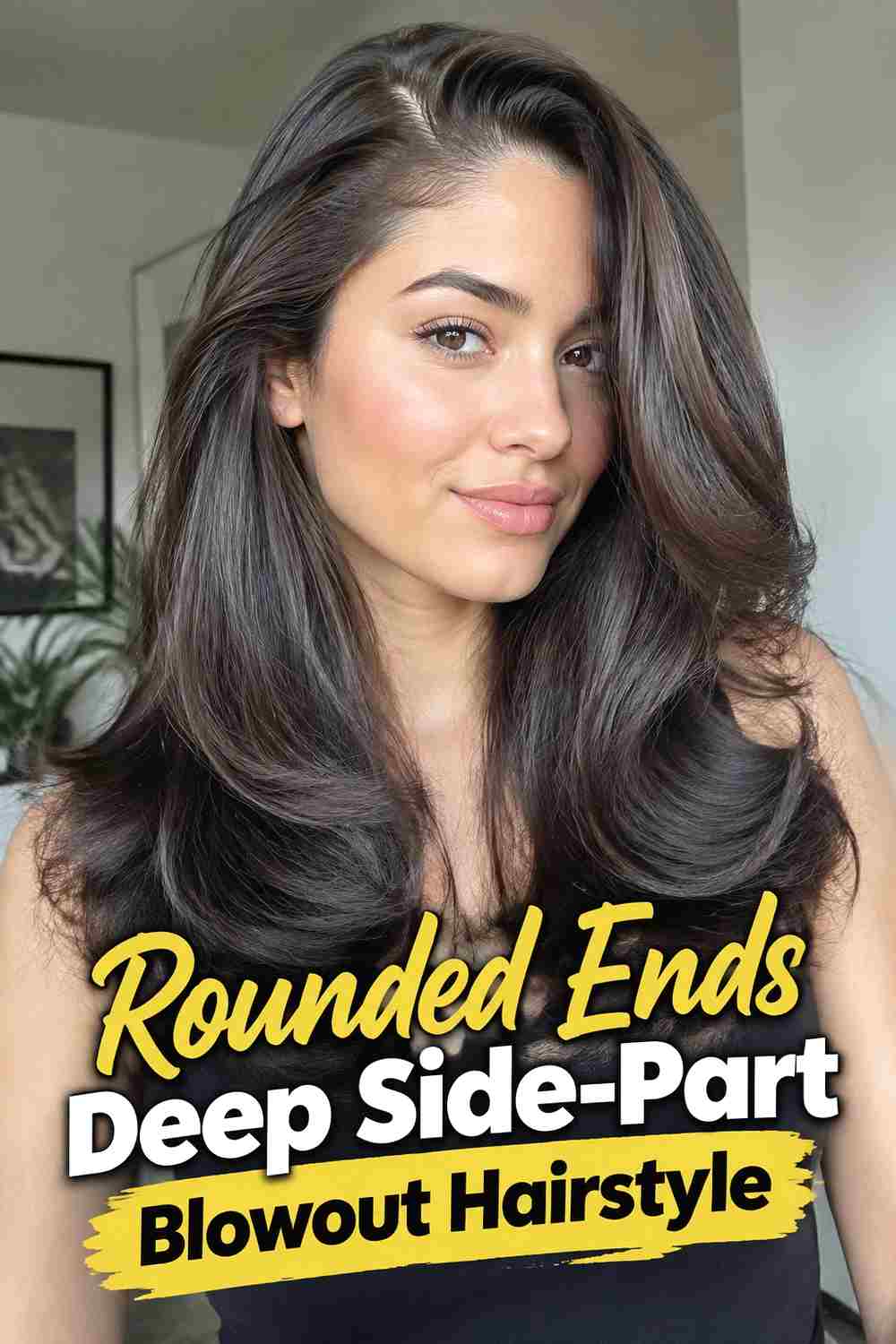
Rounded ends create a softer, more polished alternative to flipped styling. The deep part builds volume at the crown, while the lengths remain smooth before turning gently inward at the bottom. This produces a cohesive silhouette that feels particularly elegant on hair with a blunt perimeter or subtle long layers. The heavier side can sweep broadly across the forehead, then blend into the rounded shape around the shoulders or chest. Avoid creating a tight curl at the ends; the goal is a broad bend that suggests fullness rather than ringlets. A lightweight smoothing product can add shine to the perimeter, but keep it away from the roots so the elevated side part retains its natural lift.
Best For
This version suits anyone who prefers a controlled, polished blowout with soft volume rather than highly textured movement.
9. Soft Wave Deep Side Part Blowout Hairstyle
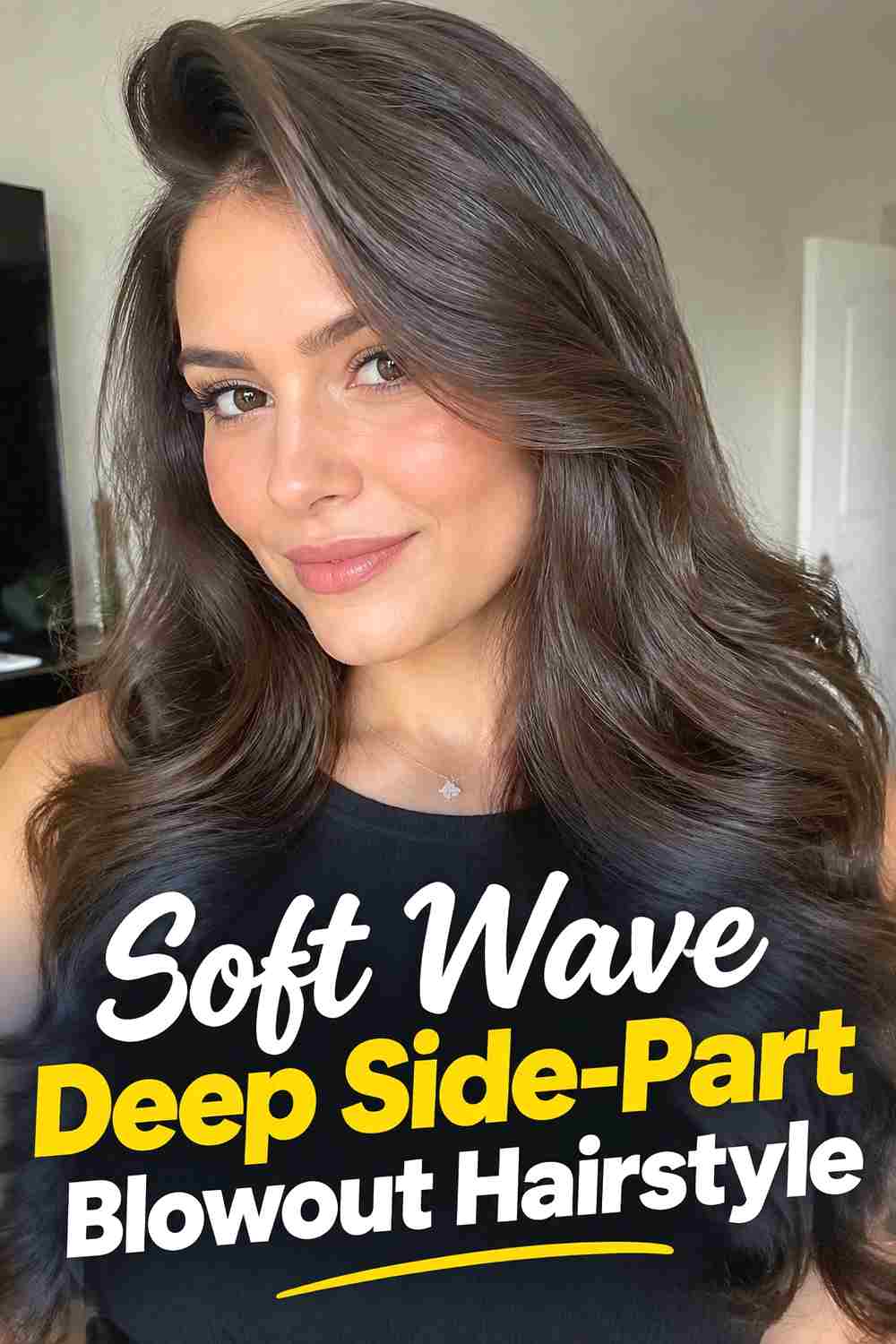
Soft waves make a deep side-part blowout feel relaxed while preserving its glamorous shape. Instead of finishing the lengths with one consistent curve, alternate broad bends through the mid-lengths and ends so the hair moves in different directions. The deep side part still provides structure, creating a lifted front sweep that balances the looser texture below. This style is especially effective on medium and long hair because the waves have enough room to open up without becoming tight curls. Keep the wave pattern larger near the face and slightly more varied through the back for a natural finish. Once the hair cools, gentle finger separation can soften the bends while maintaining the volume built into the blowout.
Why It Works
The side part supplies a clear focal point, while loose waves prevent the hairstyle from looking overly formal or rigid.
10. Sleek Deep Side Part Blowout Hairstyle
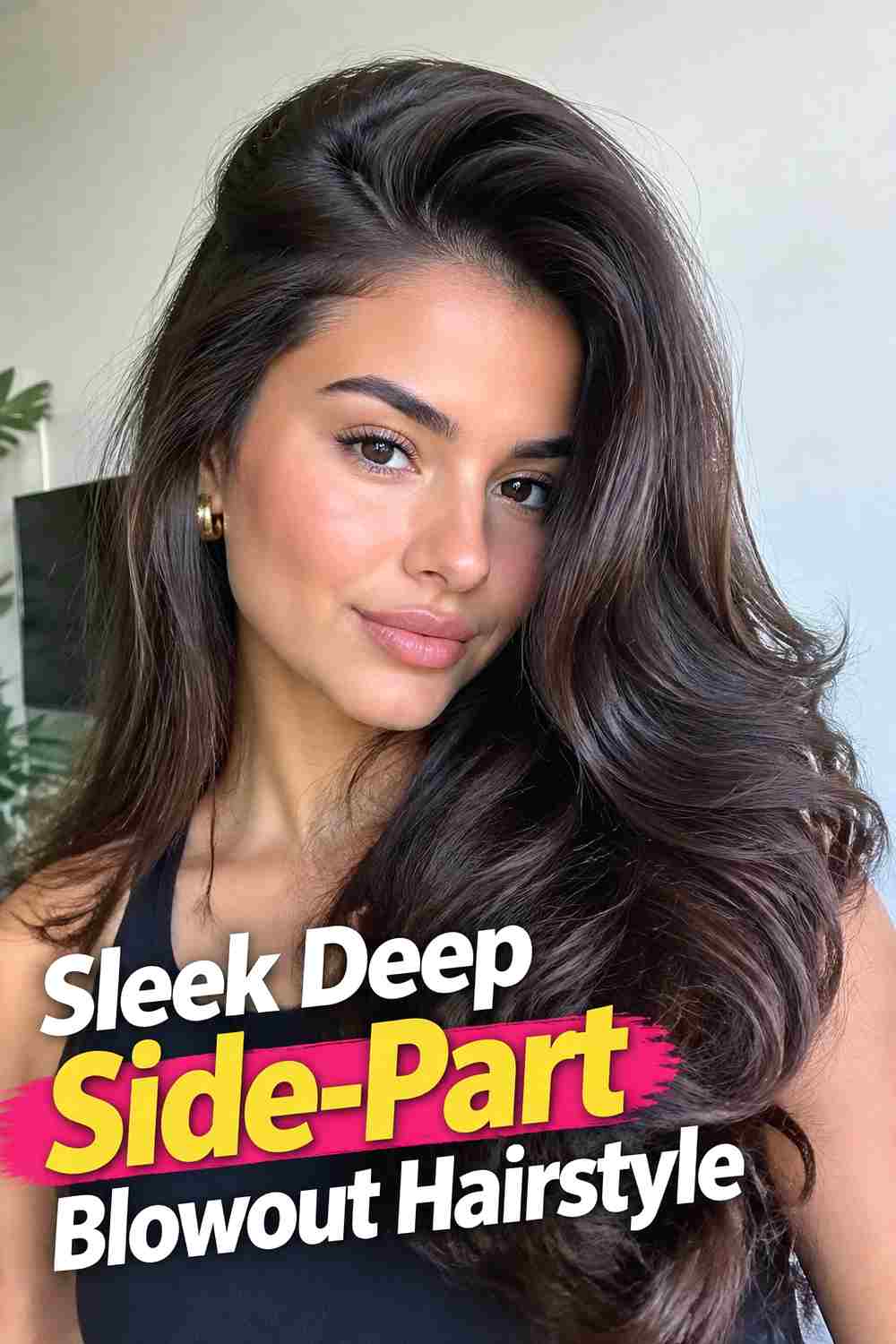
The Sleek Deep Side-Part Blowout Hairstyle focuses on smoothness and shine while keeping enough root lift to distinguish it from flat-ironed hair. The part is clean and precise, with the heavier front section sweeping neatly across the forehead before falling into streamlined lengths. Instead of building maximum body through the middle, the volume is concentrated around the roots and crown. Ends can remain almost straight with just a slight inward bend to preserve the blowout effect. This version is particularly useful when you prefer a refined finish with less visual width. Careful tension during blow-drying helps smooth the surface, while a small amount of lightweight serum can control flyaways without making the elevated roots look oily or flat.
Wear & Maintenance
Avoid repeatedly brushing the root area once the style is finished. Smooth only the lengths so the deep side-part lift stays intact.
11. Bouncy Deep Side Part Blowout Hairstyle
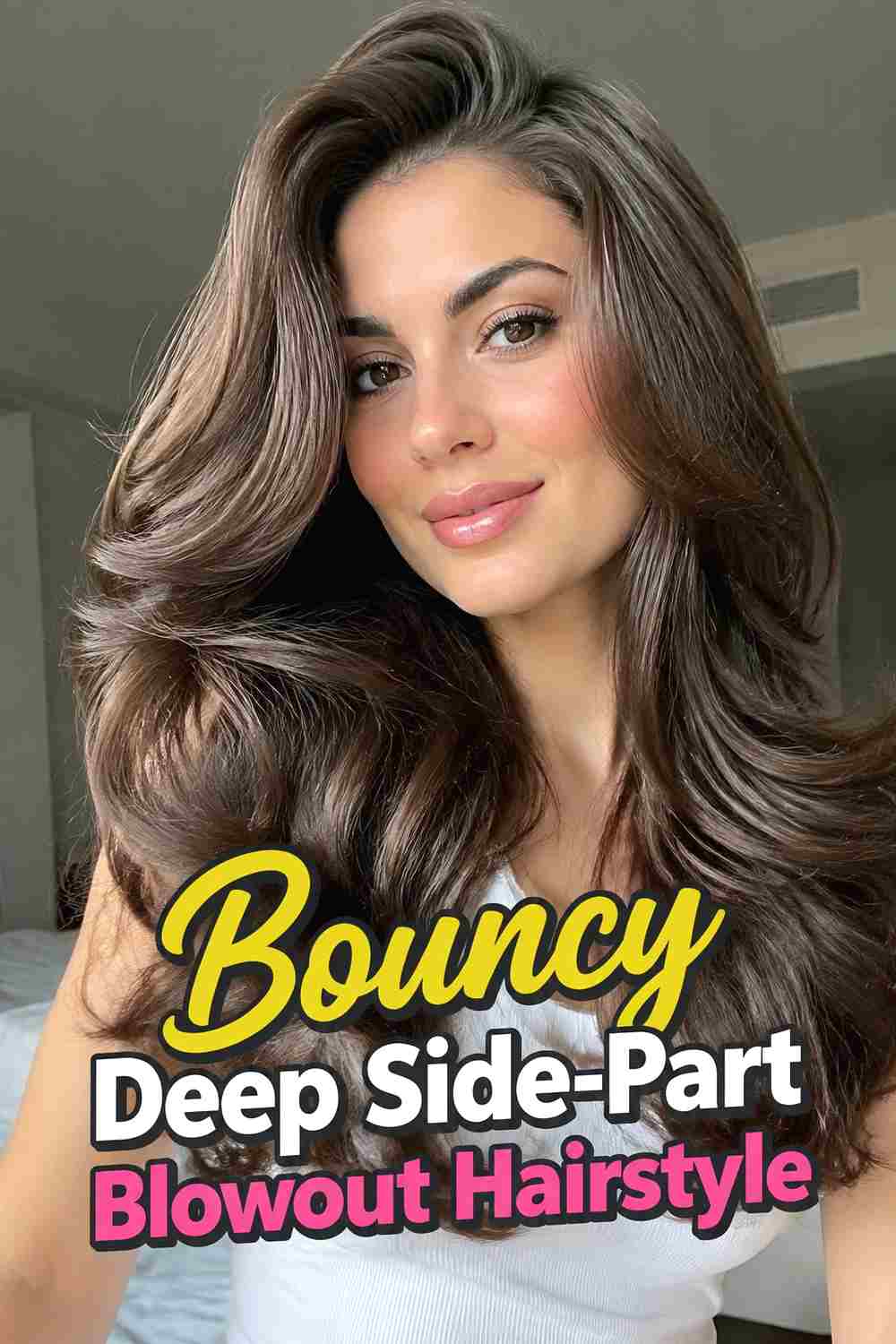
A bouncy blowout combines lifted roots with broad, springy bends through the lengths. The deep side part enhances that movement by giving the front section more height before it sweeps into the rest of the style. Layers can curl in slightly different directions, creating a lively silhouette that moves naturally instead of sitting in one fixed shape. The bounce should come from large curves rather than tight curls, so bigger brush sections or large rollers are usually more suitable. Allow each section to cool fully before releasing it, especially around the crown. Once everything is set, gently loosen the lengths with your fingers so the individual bends connect into one soft, voluminous blowout.
Pro Tip
Roll the heavier front section away from the face while it cools to preserve both root lift and a clean sweeping shape.
12. Hollywood Deep Side Part Blowout Hairstyle
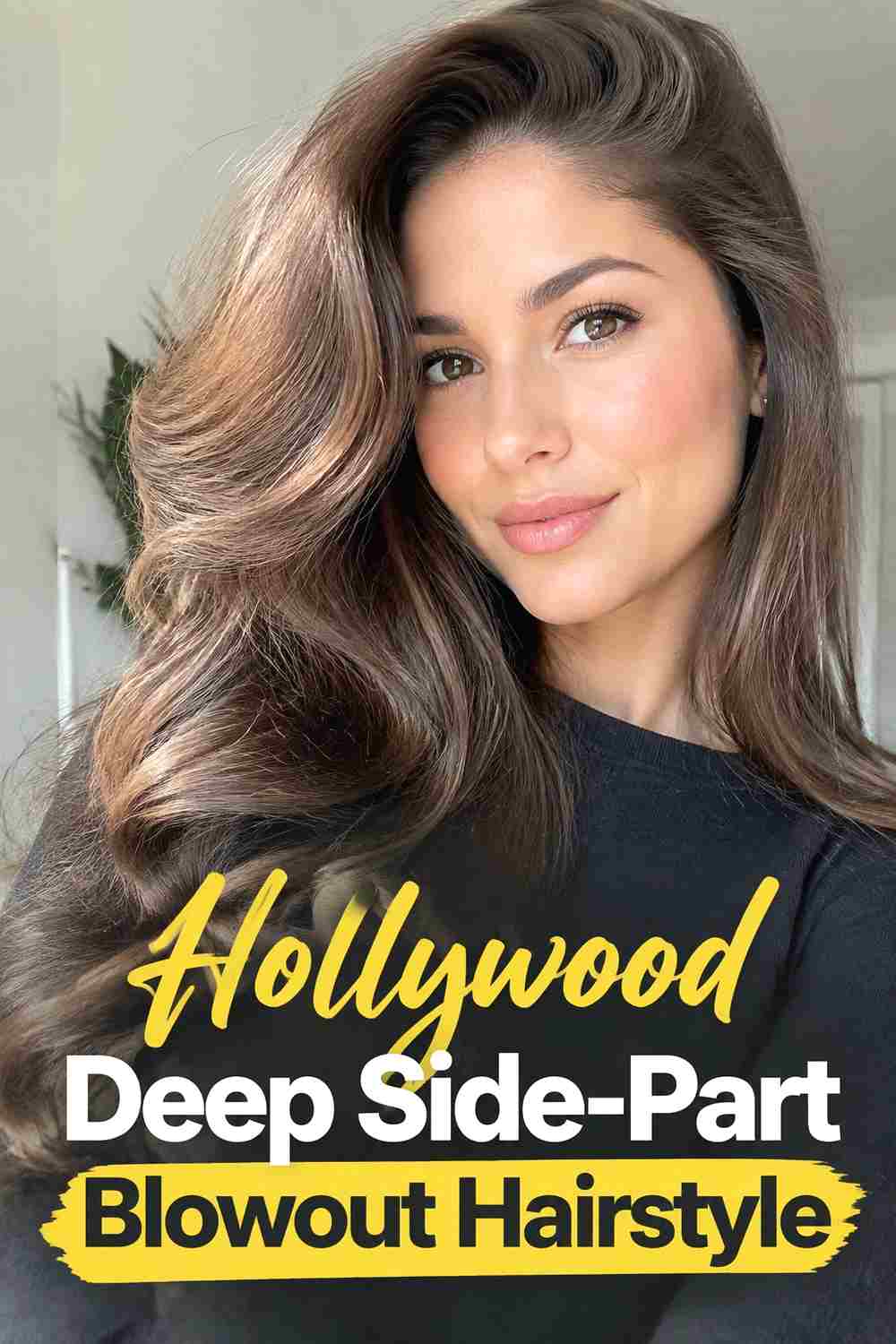
The Hollywood Deep Side-Part Blowout Hairstyle brings a more glamorous, camera-ready finish to the classic side part. The front section forms a smooth, dramatic sweep, while the lengths fall into larger, coordinated bends that create a polished flowing pattern. One side can sit closer to the head or tuck behind the ear, emphasizing the fullness of the opposite side. This contrast makes the hairstyle look deliberate without requiring a formal updo. Medium to long hair provides enough length for the broad curves to develop, especially when the cut contains soft layers. Keep the surface glossy and controlled, but avoid making the hair completely rigid. A little movement keeps the style looking like a blowout rather than a fixed wave set.
Best For
This variation works beautifully for evenings, celebrations, formal photos, and occasions where a more polished finish fits the mood.
13. Textured Deep Side Part Blowout Hairstyle

A textured blowout allows more separation, soft flyaways, and irregular bends than the smoother versions in this collection. The deep side part still establishes a strong shape, but the lengths are intentionally less uniform, giving the hairstyle a casual, airy finish. Layers may curve outward in one section and inward in another, creating dimension without looking messy. This is a useful approach for naturally wavy hair because some of the existing texture can remain visible instead of being completely smoothed away. Focus on polishing the root area and front sweep while allowing the mid-lengths to stay softer. A small amount of texturizing product through the lower sections can add separation without compromising the lifted crown.
Why It Works
The controlled side part gives structure to the looser lengths, balancing polish with a more natural, touchable texture.
14. Side Swept Deep Side Part Blowout Hairstyle
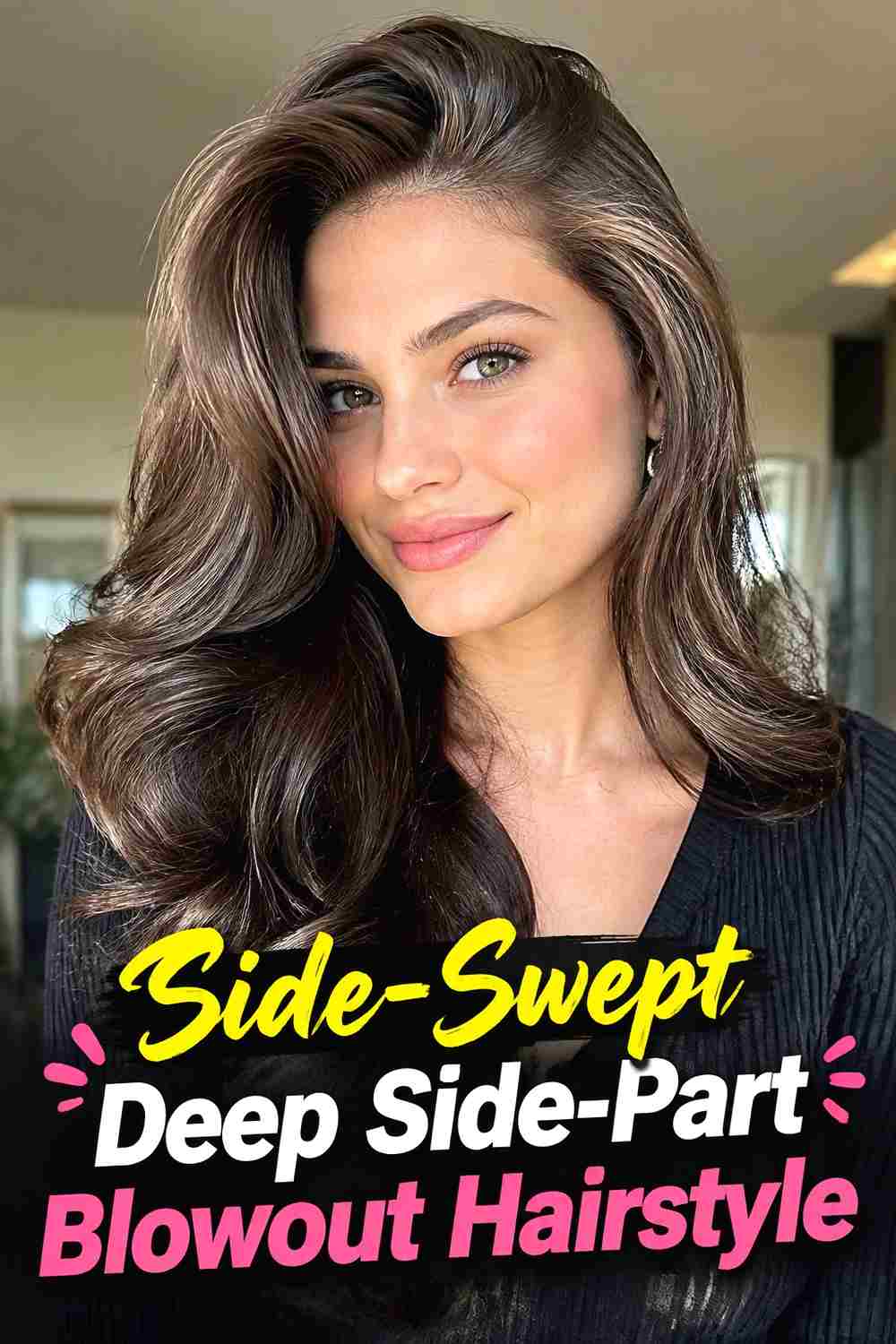
This look takes the deep part one step further by directing most of the hair toward a single shoulder. The heavier side is blown with strong root lift, then allowed to cascade diagonally across the head and down one side of the body. The opposite side remains lighter and can be tucked behind the ear for an even clearer contrast. Long layers enhance the effect because shorter sections frame the face while the longest pieces create movement through the lower silhouette. The key is preserving volume at the crown so the sweep feels elevated rather than simply pushed sideways. Flexible hairspray underneath the front section can provide support while keeping the visible surface soft and natural.
Styling Notes
Build the direction while blow-drying rather than pushing finished hair to one side afterward. The style will sit more naturally and require fewer pins.
15. Mega Volume Deep Side Part Blowout Hairstyle
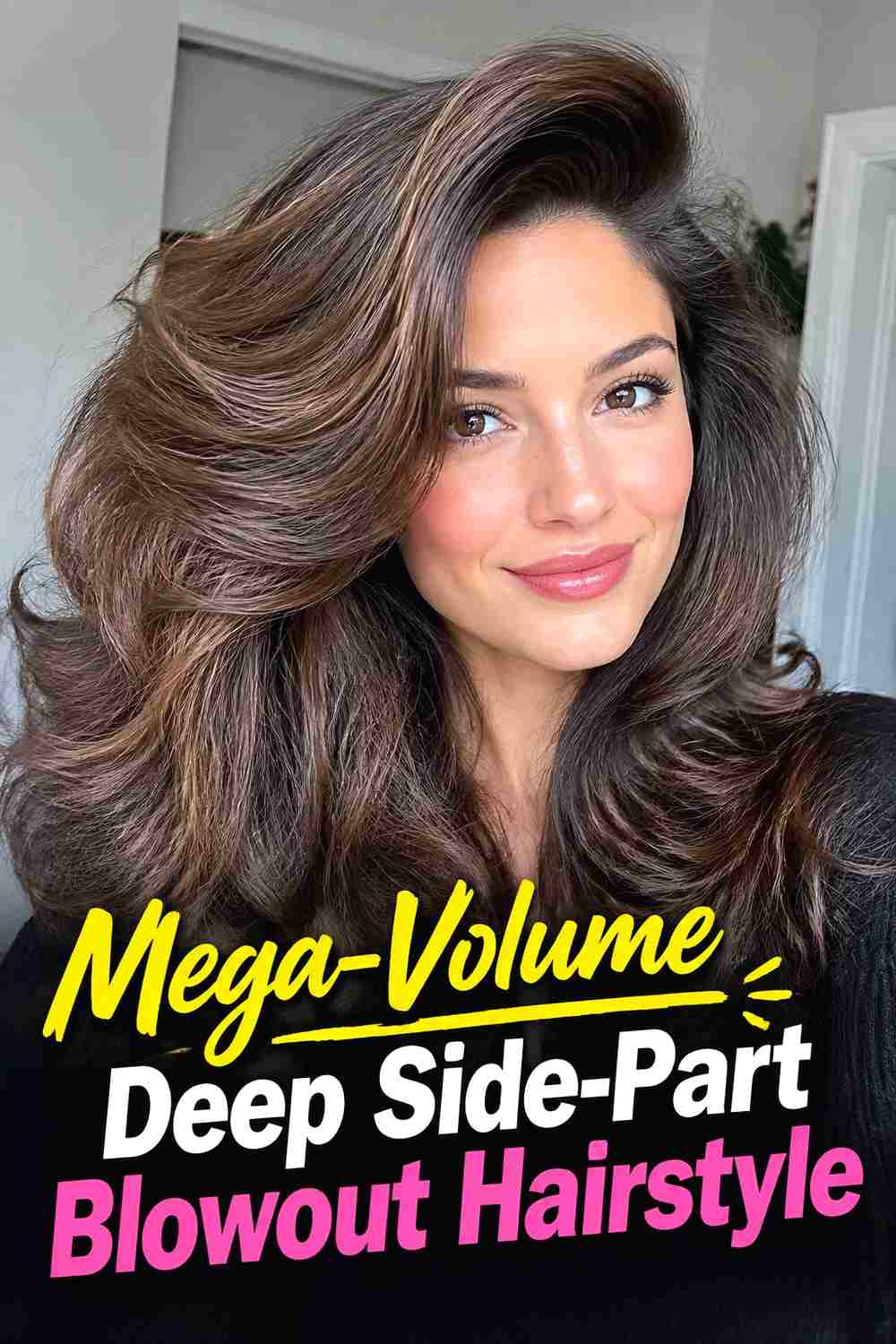
The Mega-Volume Deep Side-Part Blowout Hairstyle is designed around height, width, and dramatic movement. The deep part creates an elevated front section, while the crown and upper sides are lifted to form a fuller overall silhouette. Large bends through the mid-lengths help connect that root volume to the ends without creating tight curls. Dense hair naturally supports this look, but medium-density hair can also achieve noticeable fullness by working in smaller root sections and allowing each one to cool in an elevated position. Keep the ends slightly softer than the crown so the hairstyle does not become uniformly oversized. The result should feel expansive but still balanced, with visible movement separating the layers.
Hair Type & Length
Medium to long hair usually provides the best canvas for this amount of volume, especially when the cut includes layers that prevent the shape from becoming too heavy.
16. Glamorous Deep Side Part Blowout Hairstyle
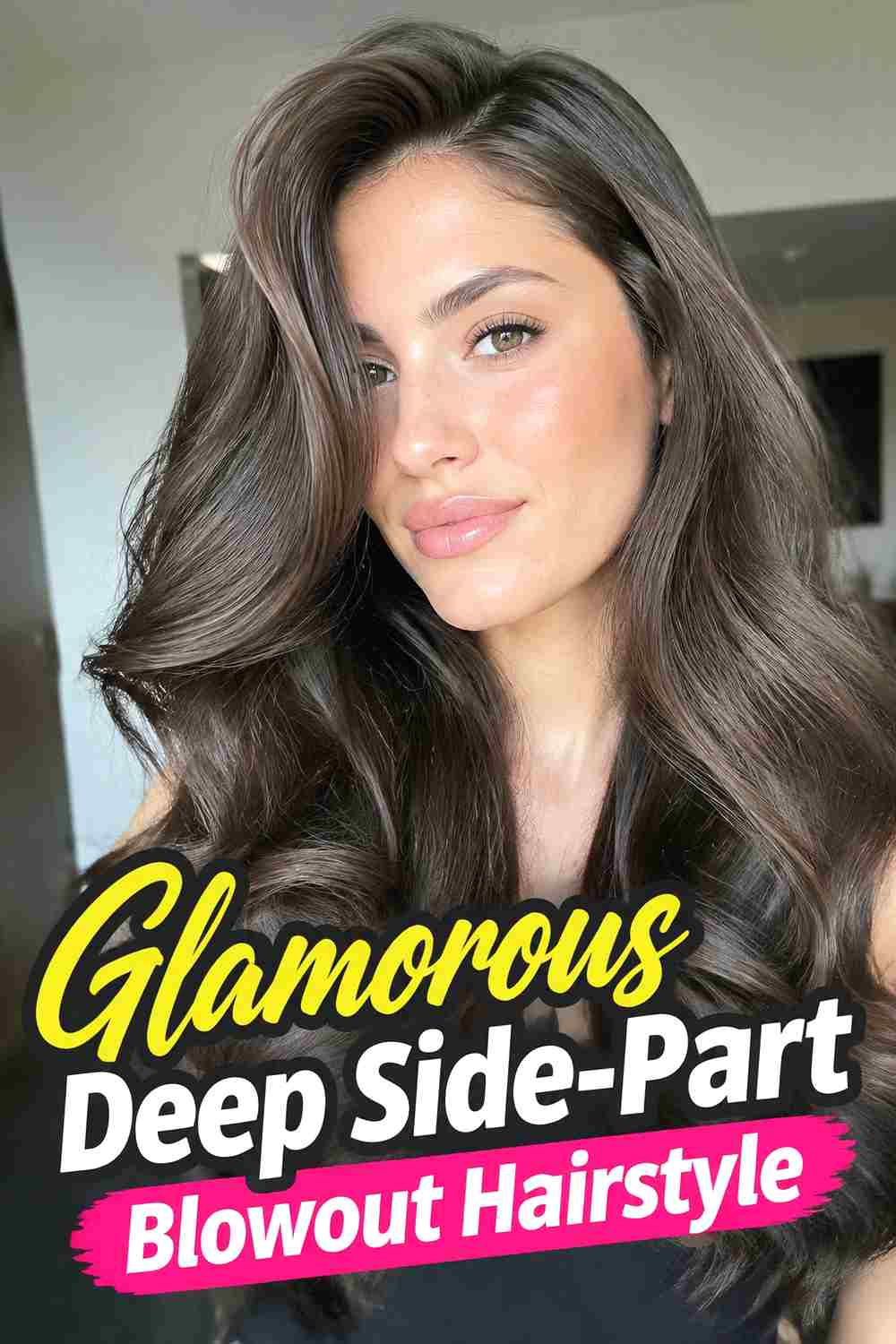
The Glamorous Deep Side-Part Blowout Hairstyle combines several classic elements: a lifted front sweep, smooth surface, full crown, flowing layers, and polished ends. Rather than exaggerating one detail, this variation aims for an evenly refined finish from root to tip. The heavier section should feel airy at the scalp before falling into broad, glossy bends, while the lighter side can sit closer to the head for visual balance. This approach works especially well for long or medium-length layered hair because the different lengths create movement without sacrificing fullness. Finish by gently separating the ends and smoothing only obvious flyaways. Keeping a little natural movement prevents the hairstyle from looking overly sprayed or artificial.
Best For
Choose this version when you want a polished all-around blowout that can transition easily from daytime styling to an evening event.
How to Choose the Right Look
Start with your hair length and cut. Long layers can support dramatic versions such as the Mega-Volume, Hollywood, and Side-Swept styles because the extra length creates movement and gives the deep part somewhere to flow. Shoulder-length hair works particularly well with bouncy, flipped, or rounded ends because the perimeter remains visible and easy to shape.
Next, think about density and natural texture. Fine hair may benefit from root-focused styles such as the Voluminous or Bouncy variations, while dense hair can carry fuller shapes without needing as much root manipulation. Naturally wavy hair is well suited to the Textured and Soft Wave versions because some existing movement can remain visible.
Your preferred maintenance level also matters. Sleek and rounded styles usually need more surface control, while textured or soft-wave finishes are more forgiving as they loosen. For special occasions, Hollywood and Glamorous variations provide a more deliberate finish. For everyday wear, Classic, Face-Framing, and Shoulder-Length options can be easier to refresh.
Final Thoughts
A deep side part is a simple way to change the entire shape of a blowout. By shifting the root direction, you can create anything from subtle everyday lift to dramatic sweeping volume. Choose the version that best matches your length, layers, natural density, and preferred amount of polish, then adjust the root lift and ends to make the look feel comfortable and wearable.
FAQs
1. How deep should a side part be for a blowout?
A deep side part usually sits noticeably farther from the center than your regular part. The exact placement depends on your hairline, natural growth pattern, and how much volume you want on the heavier side.
2. How do I keep a deep side-part blowout from falling flat?
Concentrate on lifting the roots while drying, allow the front section to cool in an elevated position, and avoid applying heavy oils or creams close to the scalp.
3. Can a deep side-part blowout work on shoulder-length hair?
Yes. Shoulder-length hair can create excellent bounce because there is less weight pulling down the roots. Rounded or flipped ends work especially well at this length.
4. Should I create the side part before or after blow-drying?
Creating the part before styling usually gives the roots a more natural direction and stronger hold. You can make small adjustments afterward if needed.
5. Can naturally wavy hair wear a deep side-part blowout?
Yes. Naturally wavy hair can be smoothed into a classic blowout or styled so some of its existing texture remains visible for a softer, more relaxed finish.
Save your favorite deep side-part blowout hairstyle ideas, share the looks that inspire you, and explore more ways to create polished volume and movement.