14 Silk Scarf Braid Hairstyle Ideas for Chic Woven Detail
Silk scarves woven through braids add color, movement, and polished detail, turning familiar braid techniques into eye-catching styles without hiding the hair itself.
A silk scarf braid uses lightweight fabric as either a decorative accent or an active part of the braid. Depending on the technique, the scarf can replace one braid section, run beside the hair, wrap around the base, or appear only at selected points. That flexibility makes the look easy to adapt from neat and polished to soft and bohemian.
Before choosing a version, consider your hair length, braid skill, scarf width, texture, and desired hold. Slippery silk-like fabric can shift more easily than cotton, so the hair should usually be secured independently before the scarf becomes decorative. These 14 ideas explore different placements and braid structures.
Quick List
- Classic Silk Scarf Three Strand Braid Hairstyle
- French Silk Scarf Braid Hairstyle
- Dutch Silk Scarf Braid Hairstyle
- Silk Scarf Fishtail Braid Hairstyle
- Side Swept Silk Scarf Braid Hairstyle
- Double Dutch Silk Scarf Braid Hairstyle
- Silk Scarf Crown Braid Hairstyle
- Half Up Silk Scarf Braid Hairstyle
- Low Ponytail Silk Scarf Braid Hairstyle
- Four Strand Silk Scarf Braid Hairstyle
- Bubble Braid With Silk Scarf Hairstyle
- Boho Loose Silk Scarf Braid Hairstyle
- Mini Accent Silk Scarf Braid Hairstyle
- Extra Long Silk Scarf Braid Hairstyle
1. Classic Silk Scarf Three Strand Braid Hairstyle
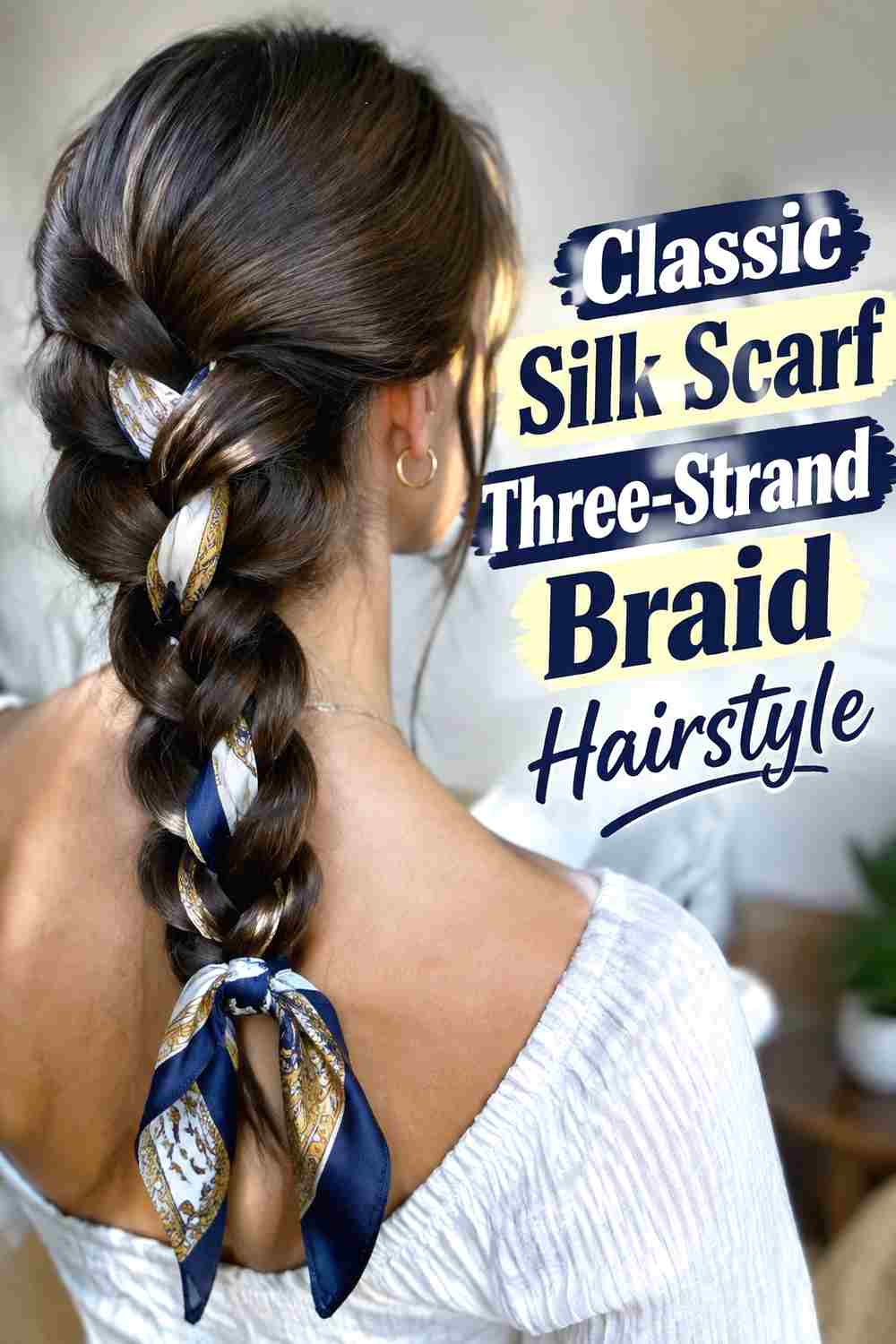
The classic three-strand version is one of the easiest ways to make a silk scarf feel genuinely woven into the hairstyle. Gather the hair into a low or mid-height ponytail, secure it first, and anchor a narrow scarf around the base. Divide the hair into two substantial sections and use the scarf as the third strand, crossing all three pieces in a standard braid pattern. The fabric creates a visible ribbon of color from top to bottom while the hair still provides most of the braid’s structure. Keeping the scarf narrow prevents the braid from becoming bulky and makes the finished pattern easier to recognize.
Styling Notes
Secure the ponytail independently before adding the scarf so slippery fabric does not need to provide the main hold.
Best For
Medium-long and long hair gives the scarf enough distance to repeat through several braid crossings.
2. French Silk Scarf Braid Hairstyle
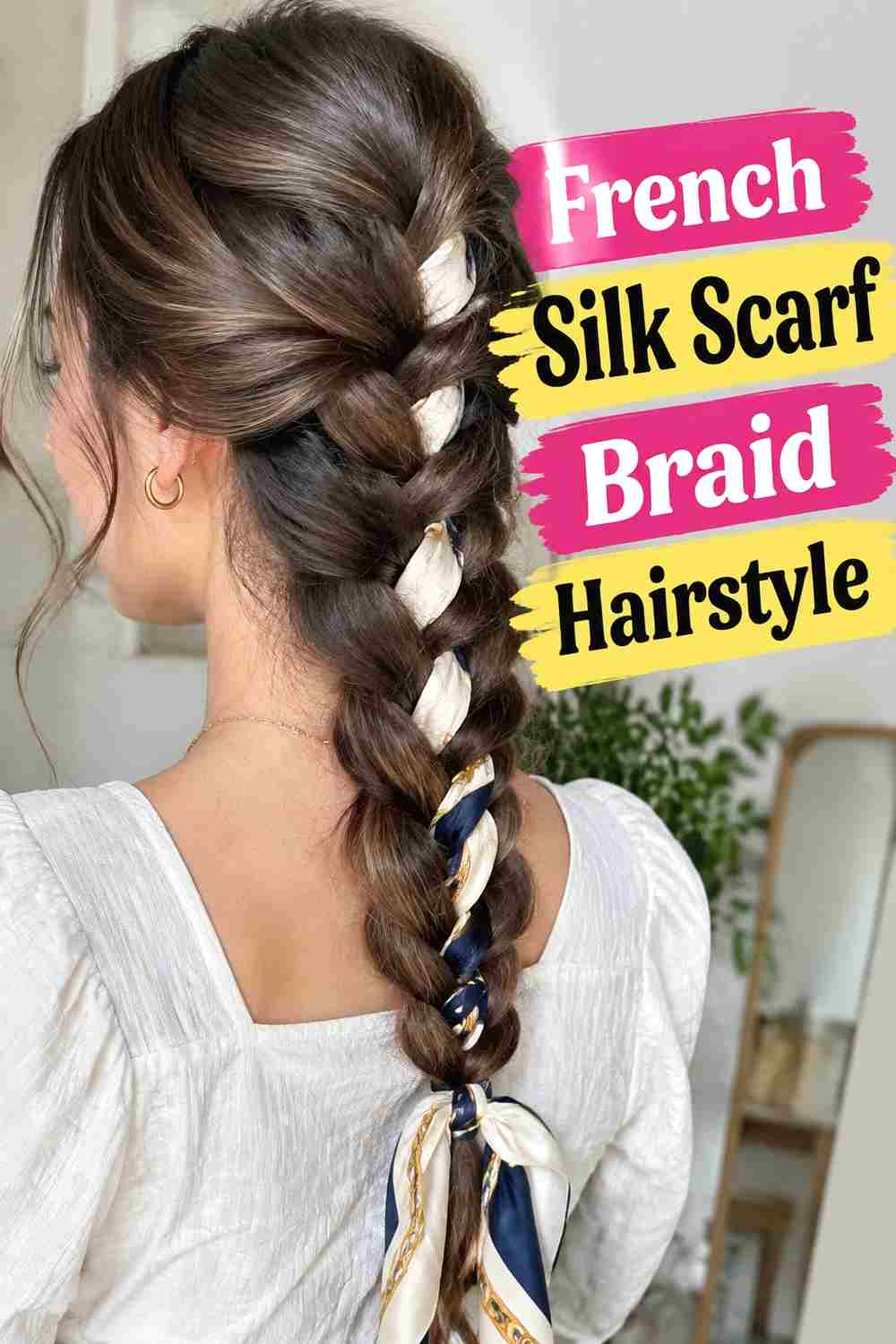
A French silk scarf braid introduces fabric gradually from the crown through the length, creating a woven effect that follows the shape of the head. Anchor a narrow scarf near the starting point and incorporate it alongside one braid section while adding hair from each side in the usual French-braid pattern. The scarf should stay visible without replacing too much hair, which helps the braid remain stable. Once the braid reaches the nape, continue through the remaining length or finish with a small tie. This style works beautifully when the scarf contrasts with the hair, because the fabric traces the braid structure from front to back.
Styling Notes
Keep the scarf untwisted while braiding so the visible surface stays smooth and the color remains easy to see.
Pro Tip
Use consistent tension in both the hair and fabric to prevent one side of the braid from becoming tighter than the other.
3. Dutch Silk Scarf Braid Hairstyle
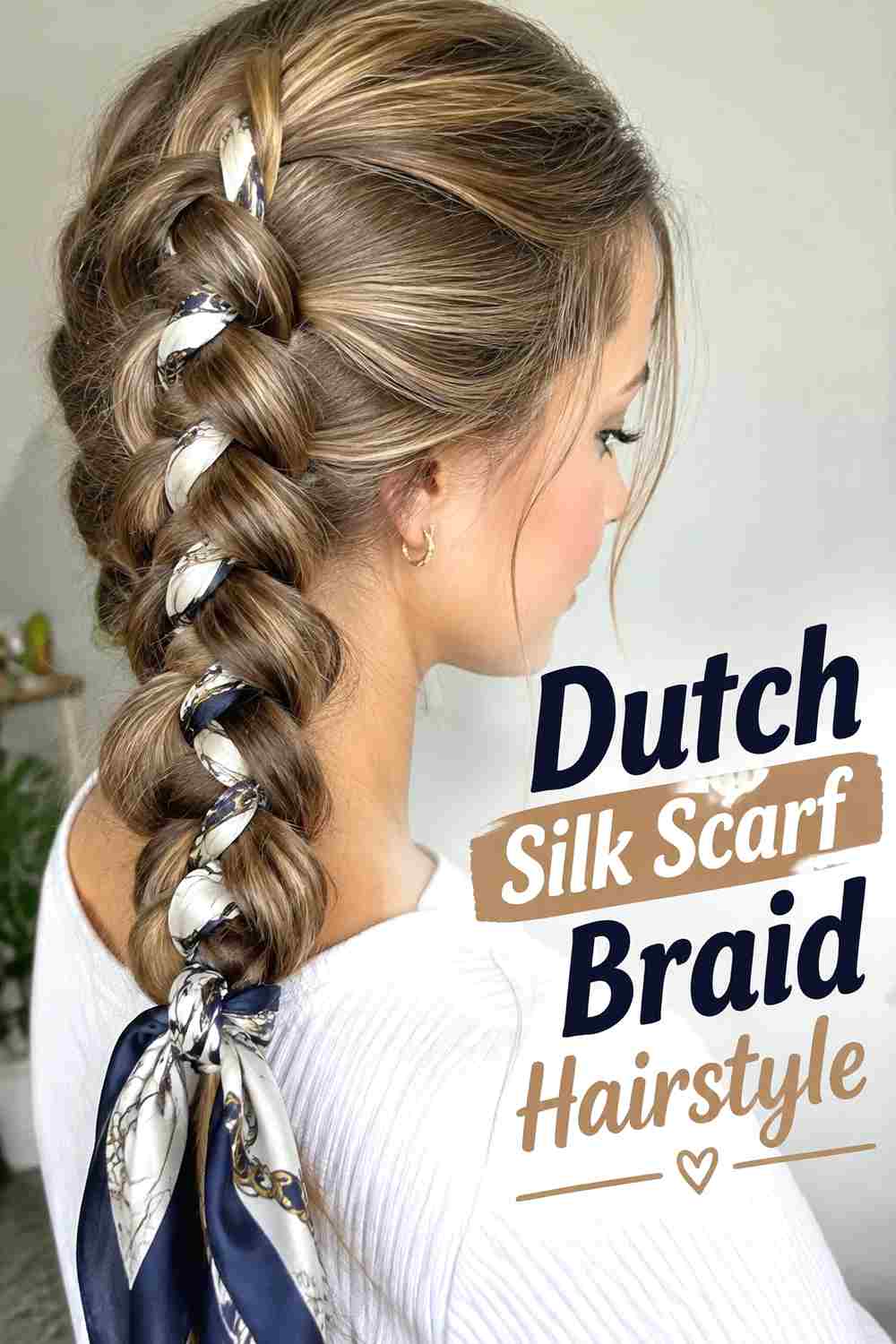
The raised structure of a Dutch braid makes a silk scarf especially noticeable because the fabric can sit along the visible outer surface. Start near the front or crown and braid by crossing sections underneath rather than over, adding hair as you work backward. A narrow scarf can be incorporated into one section or anchored near the beginning and woven through selected crossings. The result is dimensional, graphic, and slightly bolder than a French braid. After securing the end, gently widening the outer braid edges can create more volume without loosening the scarf completely. Keep the fabric flat enough that it does not obscure the raised braid pattern.
Why It Works
The elevated Dutch-braid structure creates clear spaces where the scarf can appear as a bright woven accent.
Wear & Maintenance
Check the scarf anchor before loosening the braid, since excessive pulling can cause slippery fabric to shift.
4. Silk Scarf Fishtail Braid Hairstyle
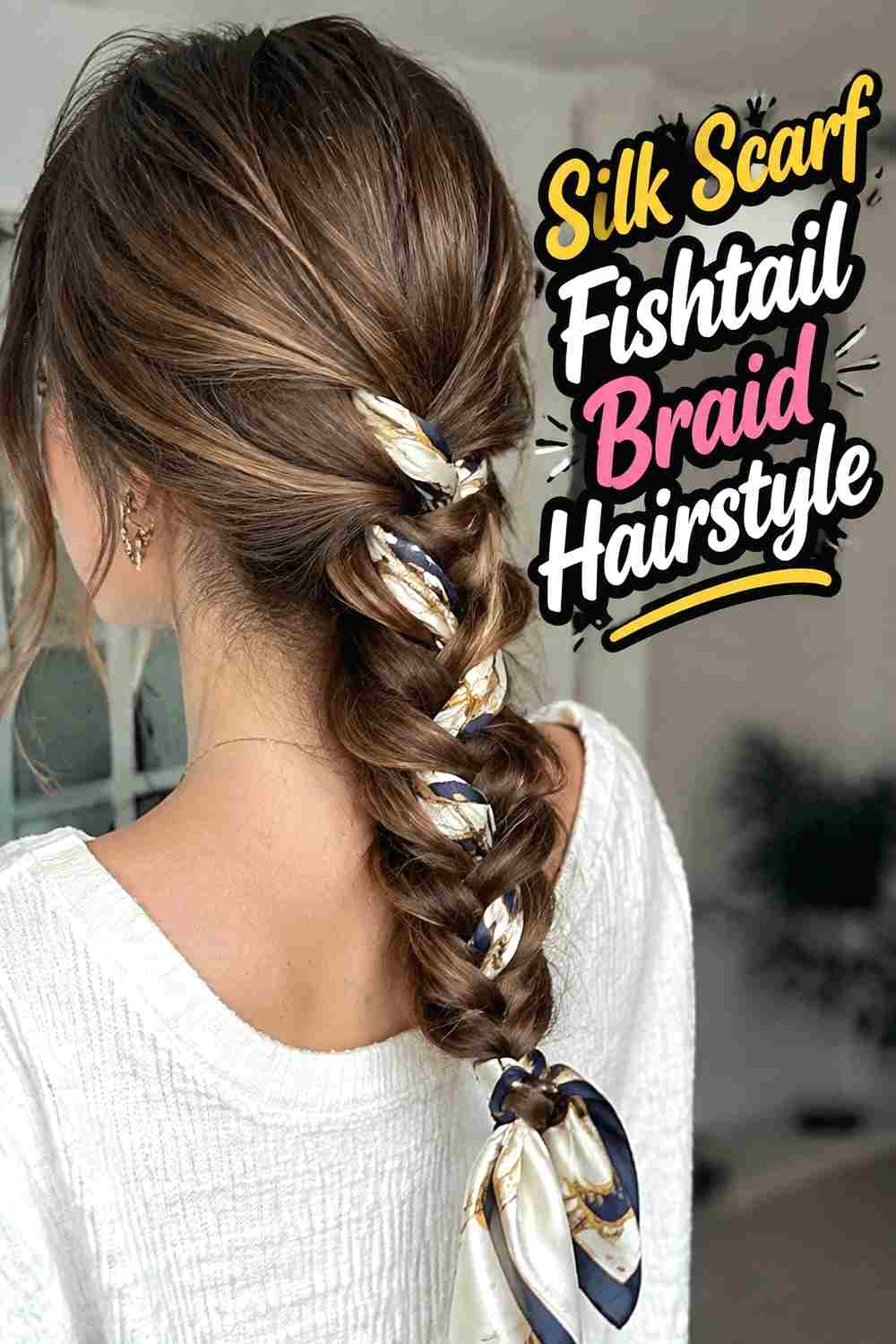
A fishtail braid gives the scarf a finer, more intricate path through the ponytail. Start with a secure low ponytail and attach a slim silk scarf at the base. Divide the hair into two main sections, then transfer small pieces from one side to the other while allowing a narrow edge of scarf to travel with selected sections. The finished braid should still show the recognizable fishtail pattern, with the scarf appearing as intermittent flashes rather than covering the weave. A slightly relaxed finish suits this style well because the delicate pattern becomes easier to see when the braid is gently widened after securing the end.
Hair Type & Length
Longer hair works particularly well because the detailed fishtail pattern needs enough length to become visually clear.
Pro Tip
Use a narrow scarf or folded strip so the fabric does not overwhelm the smaller sections that define a fishtail braid.
5. Side Swept Silk Scarf Braid Hairstyle
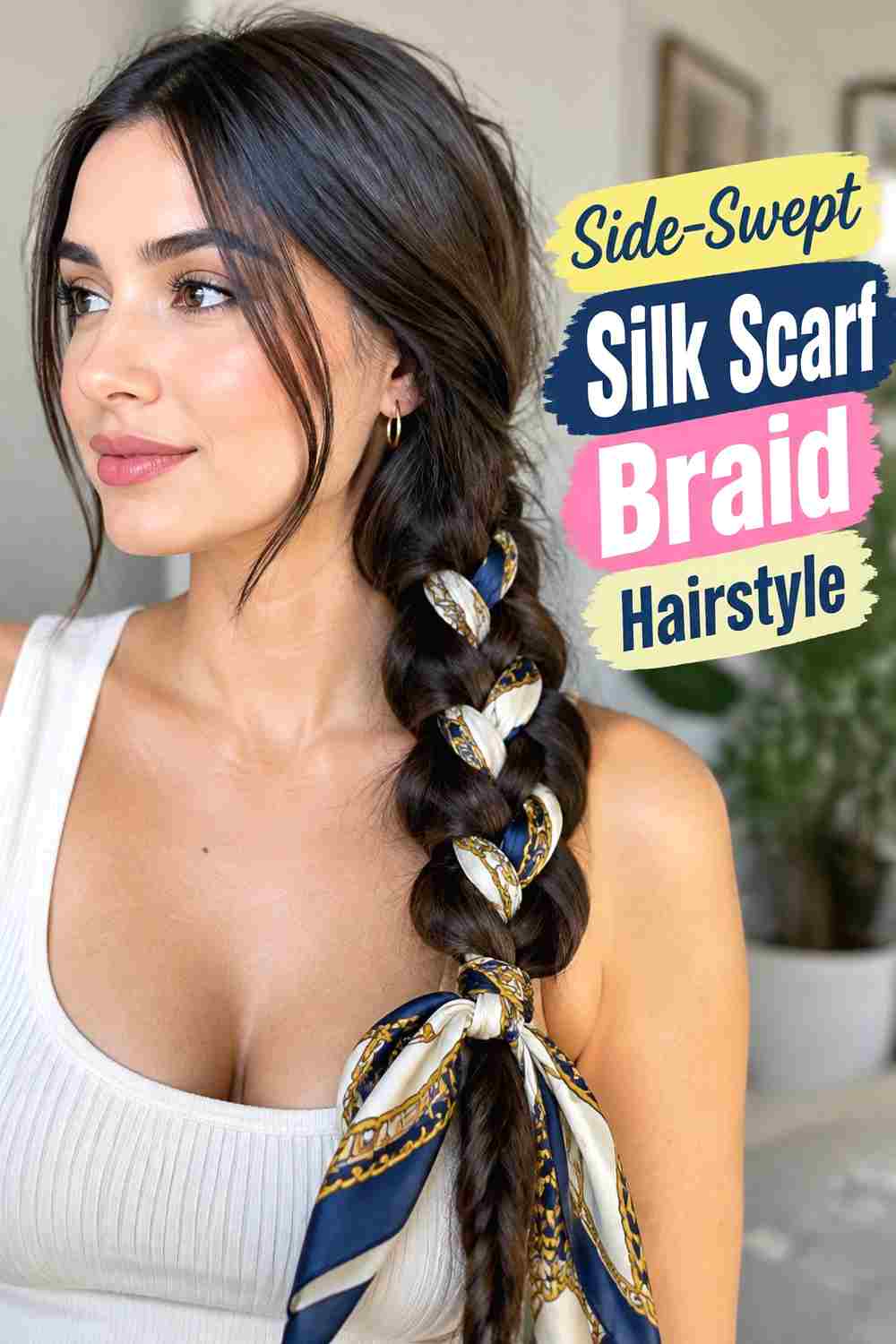
A side-swept braid keeps both the braid and scarf visible from the front by directing the hair over one shoulder. Gather the hair low behind one ear, secure it discreetly, and incorporate a silk scarf through a three-strand, French, or relaxed braid. A soft side part can reinforce the directional silhouette, while a few controlled face-framing pieces keep the style from feeling too rigid. Because the braid rests along the shoulder, patterned fabric becomes particularly noticeable without needing an oversized scarf. Keep the base slightly behind the ear so the style remains comfortable and the braid falls naturally rather than being pulled sharply forward.
Why It Works
The side placement turns the woven scarf into a front-facing detail instead of hiding most of the pattern behind the head.
Styling Notes
Position the scarf knot behind or beneath the ponytail base so it does not create uncomfortable bulk beside the ear.
6. Double Dutch Silk Scarf Braid Hairstyle
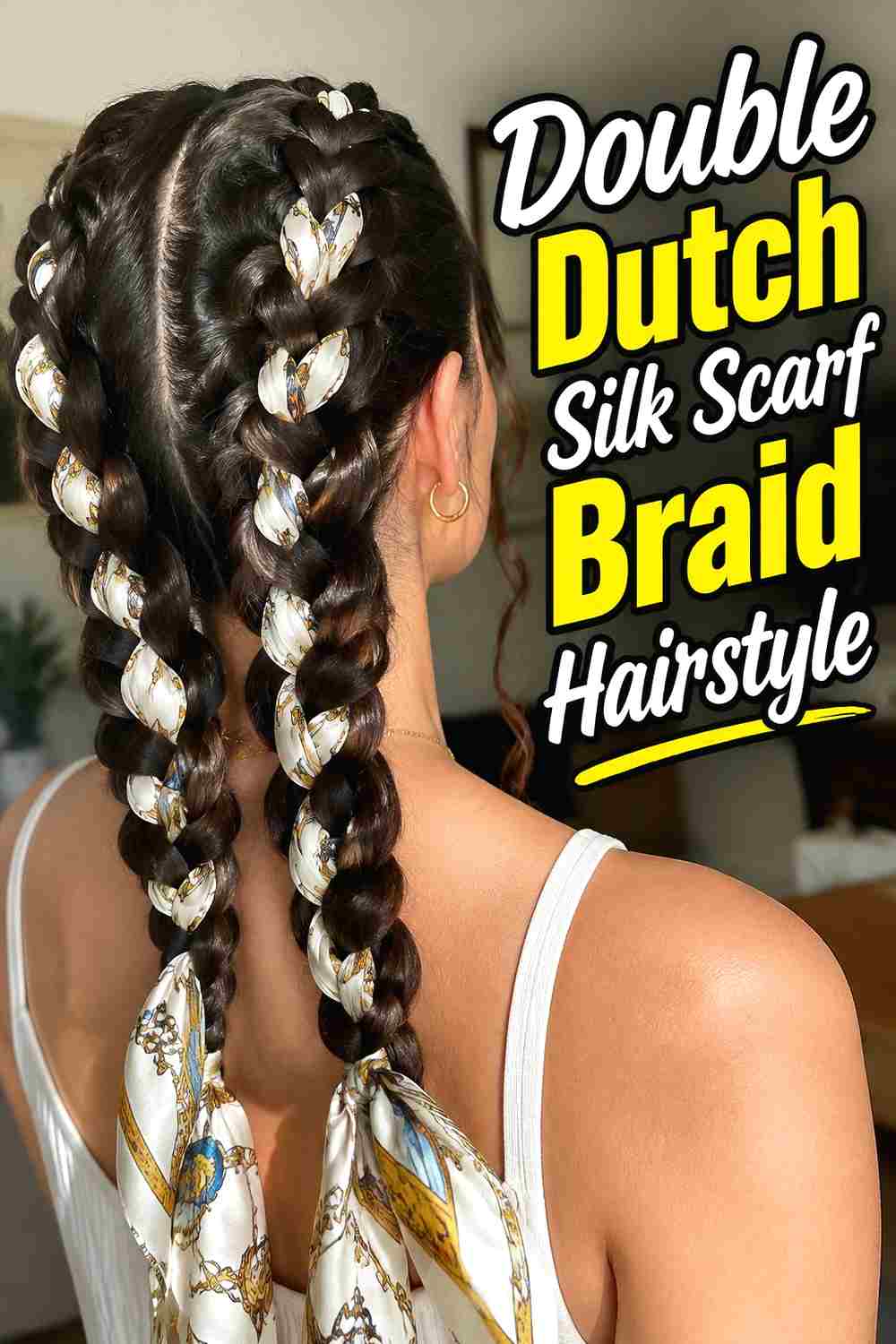
Two Dutch braids create a symmetrical framework for adding silk scarf accents on both sides of the head. Part the hair down the center and work one raised braid backward on each side, incorporating narrow matching scarf strips or one long scarf divided carefully between the sections. The fabric can follow a single strand within each braid so the woven color stays visible without disguising the hair texture. Finish the braids separately or combine them low at the back. This variation feels structured and graphic, making it a useful choice when you want more detail than a single braid but still prefer a balanced, wearable silhouette.
Styling Notes
Keep the scarf width similar on both sides so one braid does not look visually heavier than the other.
Best For
Medium-long and long hair provides enough length for two complete braids while leaving room for the scarf pattern to repeat.
7. Silk Scarf Crown Braid Hairstyle
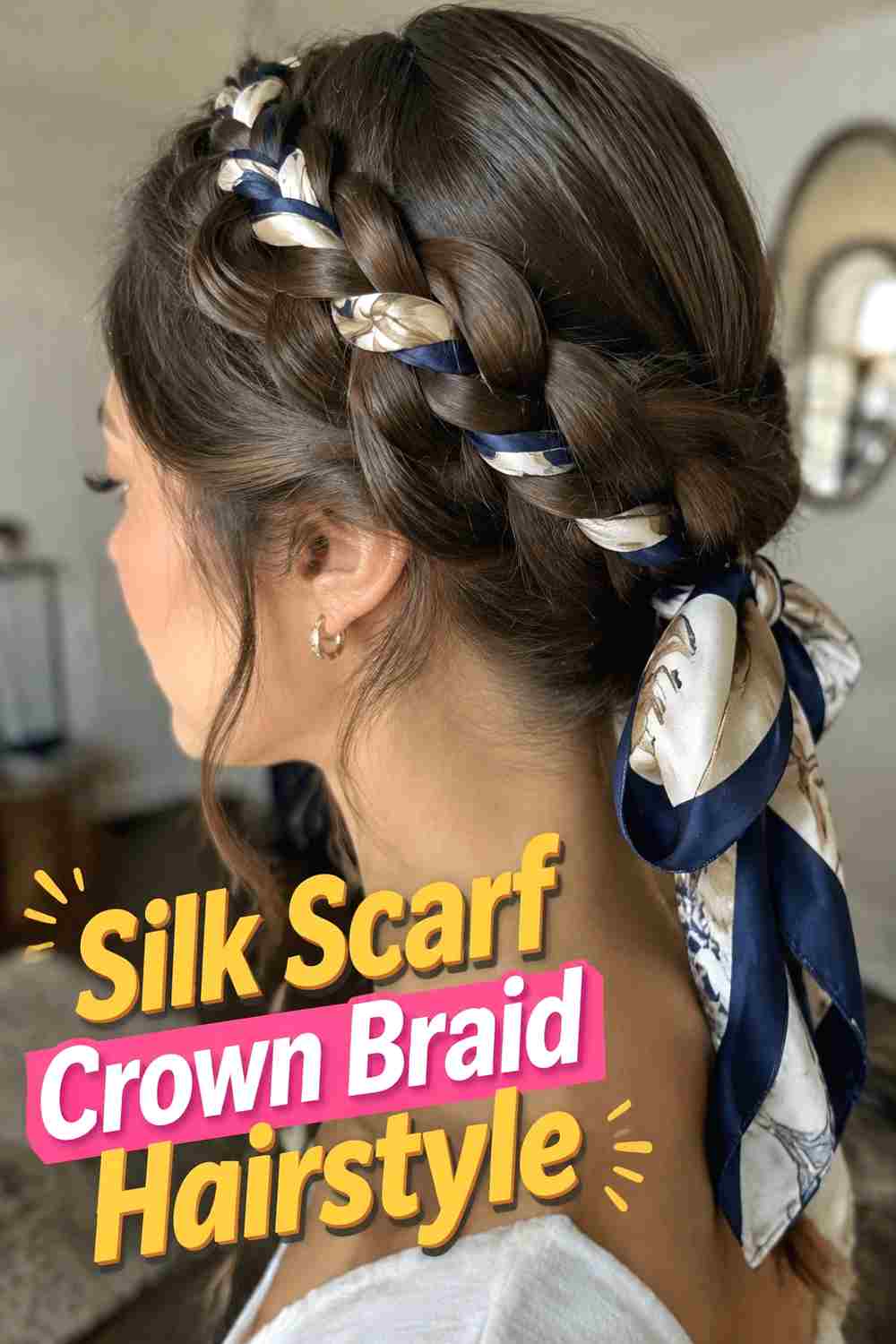
A silk scarf crown braid wraps woven texture around the head, creating a decorative halo effect. Build a French or Dutch braid from one side and guide it around the crown, incorporating a narrow scarf into one section as you move. The fabric should trace the circular shape without becoming so wide that it hides the braid itself. Depending on length, the braid can continue around most of the head or transition into a pinned tail at the back. This version feels more dressed-up than a simple side braid, yet the scarf can keep it playful when you choose a bright print or soft pastel pattern.
Wear & Maintenance
Use discreet pins and a secure braid foundation so the scarf is decorative rather than responsible for holding the crown in place.
Why It Works
The continuous curved braid gives the scarf a clear path around the head, making the accessory feel fully integrated.
8. Half Up Silk Scarf Braid Hairstyle
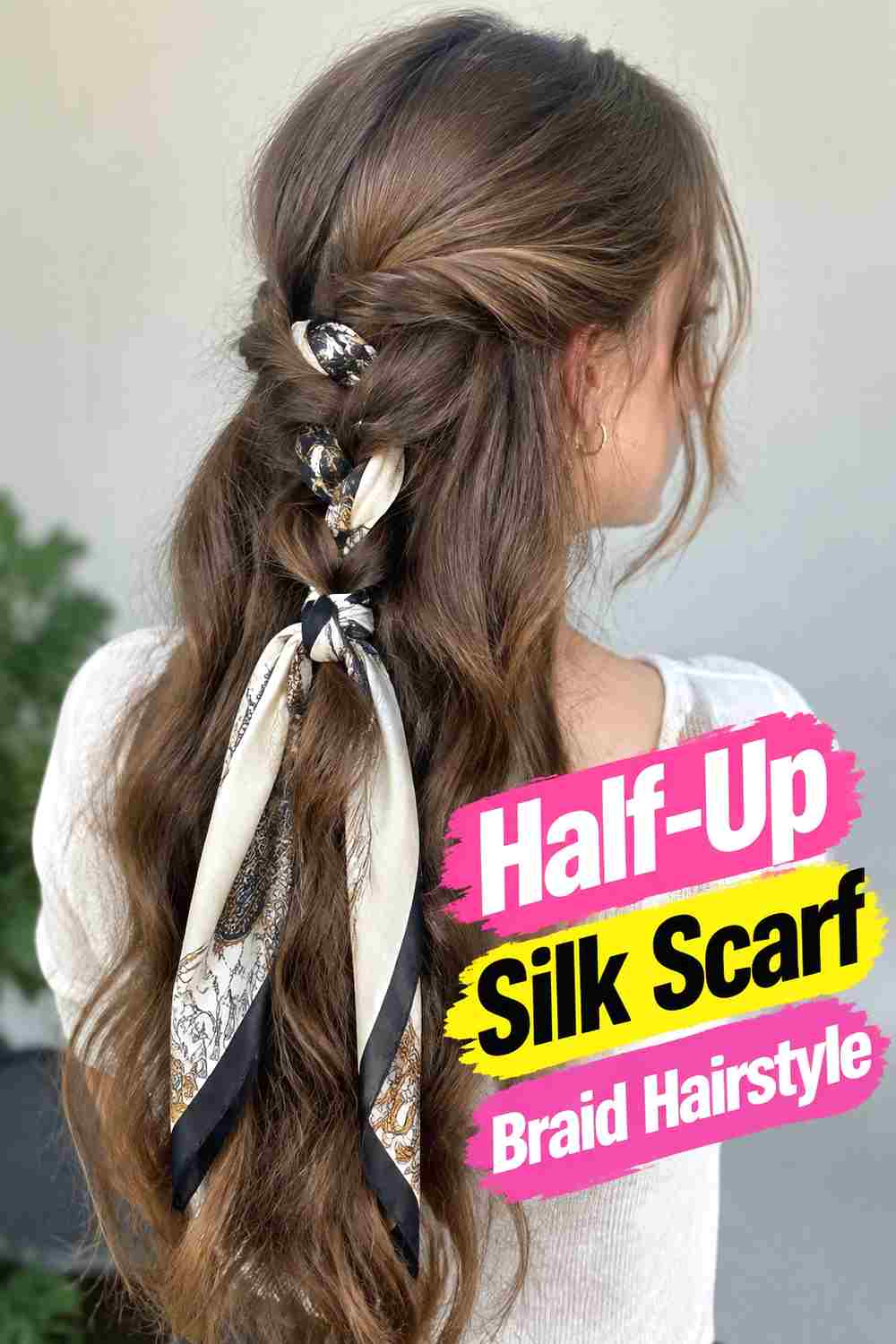
A half-up silk scarf braid keeps most of the hair loose while adding a colorful woven detail through the upper section. Gather hair from the crown or temples, secure it into a small ponytail, and anchor a slim scarf at the base. Braid the gathered section with the scarf while leaving the lower lengths free in their natural texture, soft waves, or curls. This contrast makes the woven section easy to see without requiring a full braid. The scarf can extend slightly beyond the braid end for extra movement, but keeping the tails moderate prevents them from competing with the loose hair underneath.
Best For
Medium and long hair works especially well because the lower section remains substantial after the half-up portion is removed.
Styling Notes
Use a lightweight scarf so the smaller half-up ponytail does not get pulled downward by unnecessary fabric weight.
9. Low Ponytail Silk Scarf Braid Hairstyle
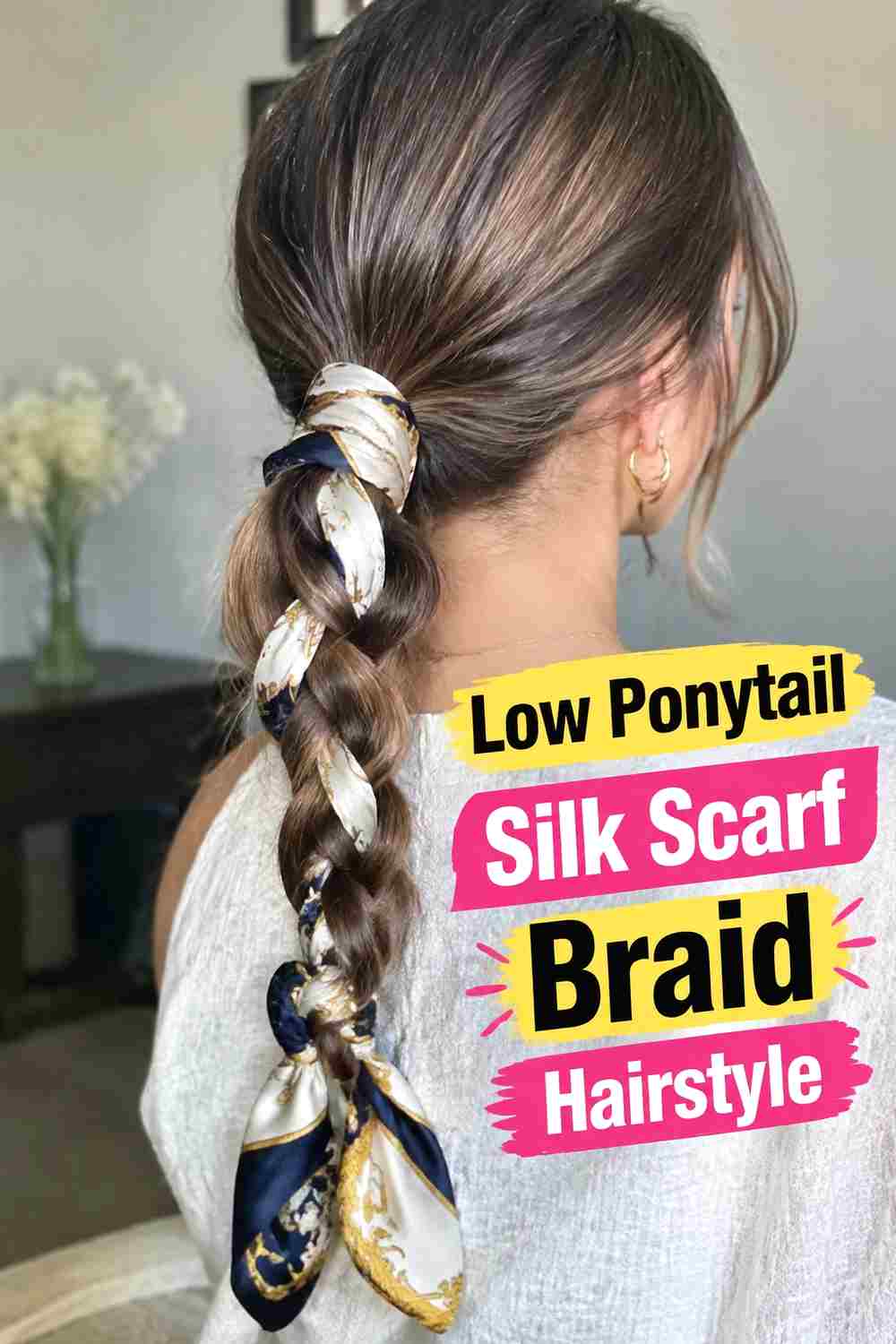
This variation starts with a clean low ponytail, making the scarf-and-braid detail feel neat and intentional. Secure the hair at the nape, tie a narrow silk scarf around the base, then braid the ponytail with the fabric included as one strand or wrapped through selected crossings. The low placement creates a relaxed silhouette that works well with smooth roots, a center part, or a softer textured crown. Because the scarf begins at the ponytail base, it also hides the elastic naturally. The finished braid can remain tight for a polished look or be loosened slightly for more width and visible texture.
Why It Works
The nape-level base gives the scarf a clear starting point and makes the whole braid feel connected from top to end.
Pro Tip
Secure the hair first, then knot the scarf over the elastic so the fabric does not have to hold the ponytail together.
10. Four Strand Silk Scarf Braid Hairstyle
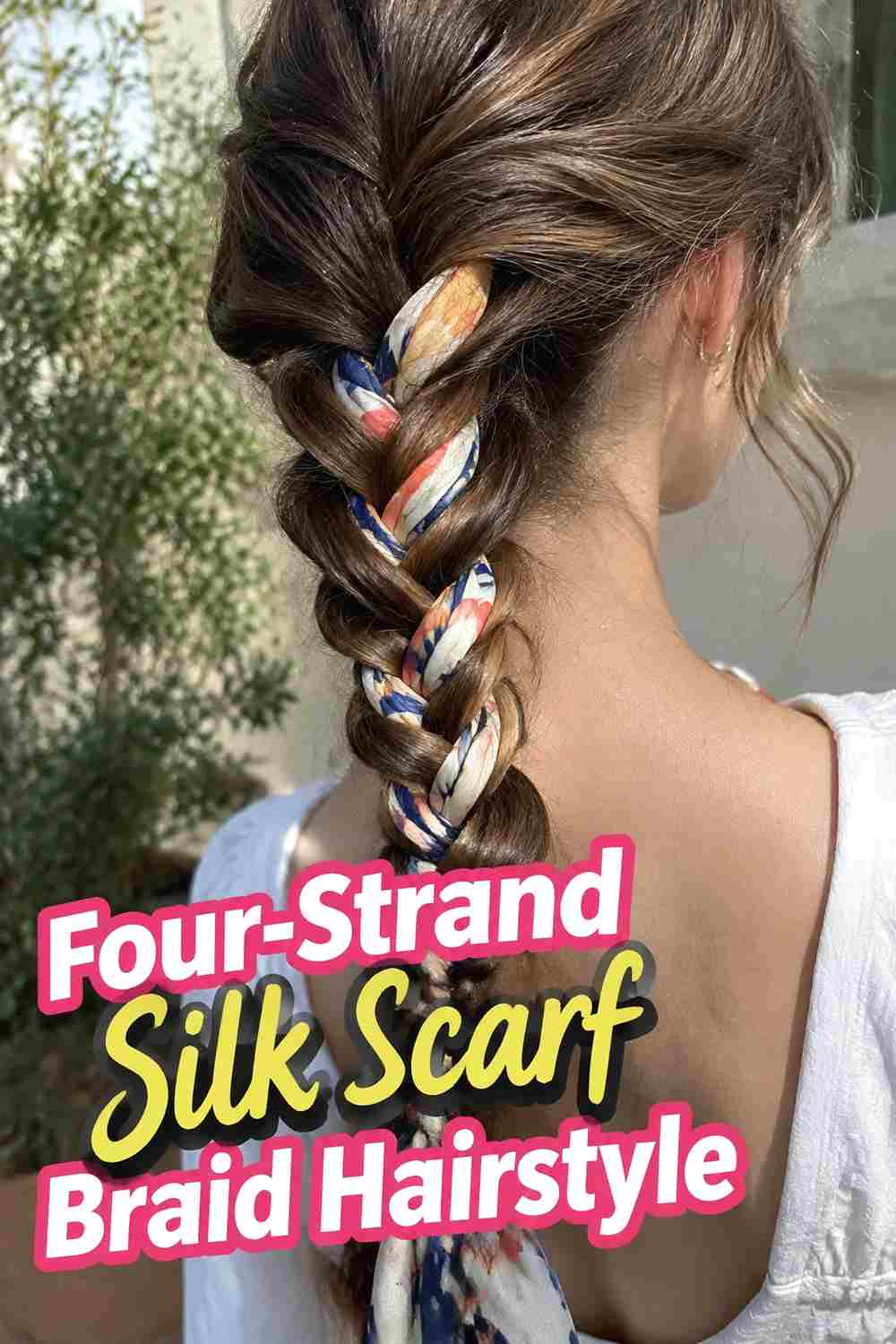
A four-strand braid creates a more intricate woven effect by combining three sections of hair with one strip of silk scarf. Start with a secure ponytail and anchor the scarf at the base, then divide the hair into three balanced sections. Work the four strands in a repeating over-and-under pattern so the fabric remains visible as a distinct line through the braid. This technique takes more concentration than a standard braid, but the result feels dimensional without needing extra accessories. A solid scarf color can make the woven structure easier to see, while a small print creates a more decorative effect through the longer braid.
Styling Notes
Keep all four strands separated clearly before each crossing to prevent the scarf from twisting around multiple hair sections.
Best For
Longer hair is helpful because several repeated crossings are needed for the four-strand pattern to become obvious.
11. Bubble Braid With Silk Scarf Hairstyle
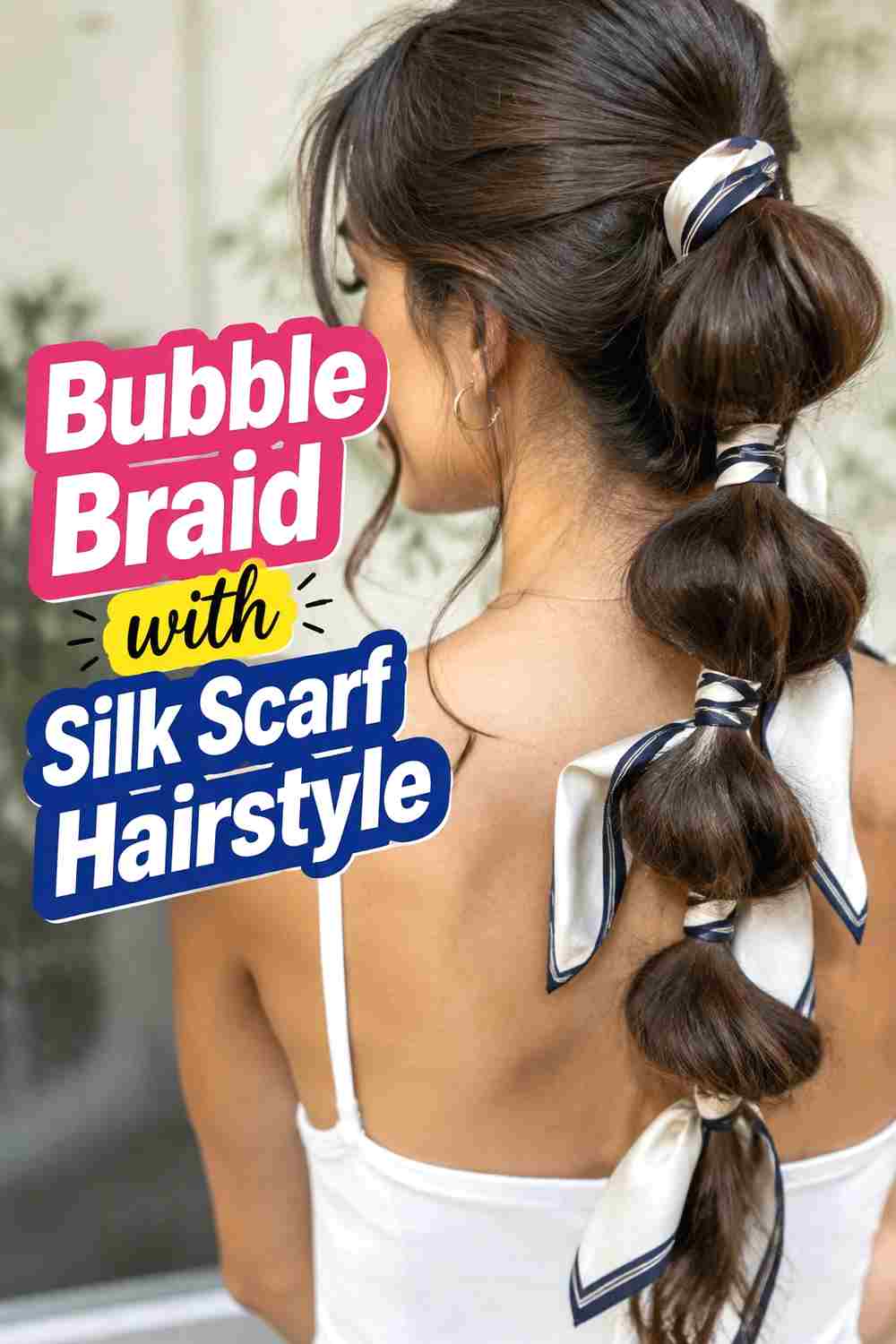
A bubble braid offers a playful alternative to traditional weaving while still giving a silk scarf plenty of visibility. Start with a ponytail and secure additional small elastics at even intervals down the length. Gently expand each section into a rounded bubble, then thread or wrap a narrow scarf between selected elastics so the fabric follows the segmented pattern. You can also tie tiny scarf accents around one or two sections instead of running fabric through the entire ponytail. The result should stay light and balanced, with the hair providing the structure and the scarf adding color. Avoid making every bubble excessively large, which can overwhelm the accessory.
Styling Notes
Create and secure the bubble structure first, then add the scarf so fabric placement does not interfere with the ponytail’s hold.
Why It Works
The repeated sections give the scarf multiple decorative anchor points while keeping the style easy to recognize.
12. Boho Loose Silk Scarf Braid Hairstyle
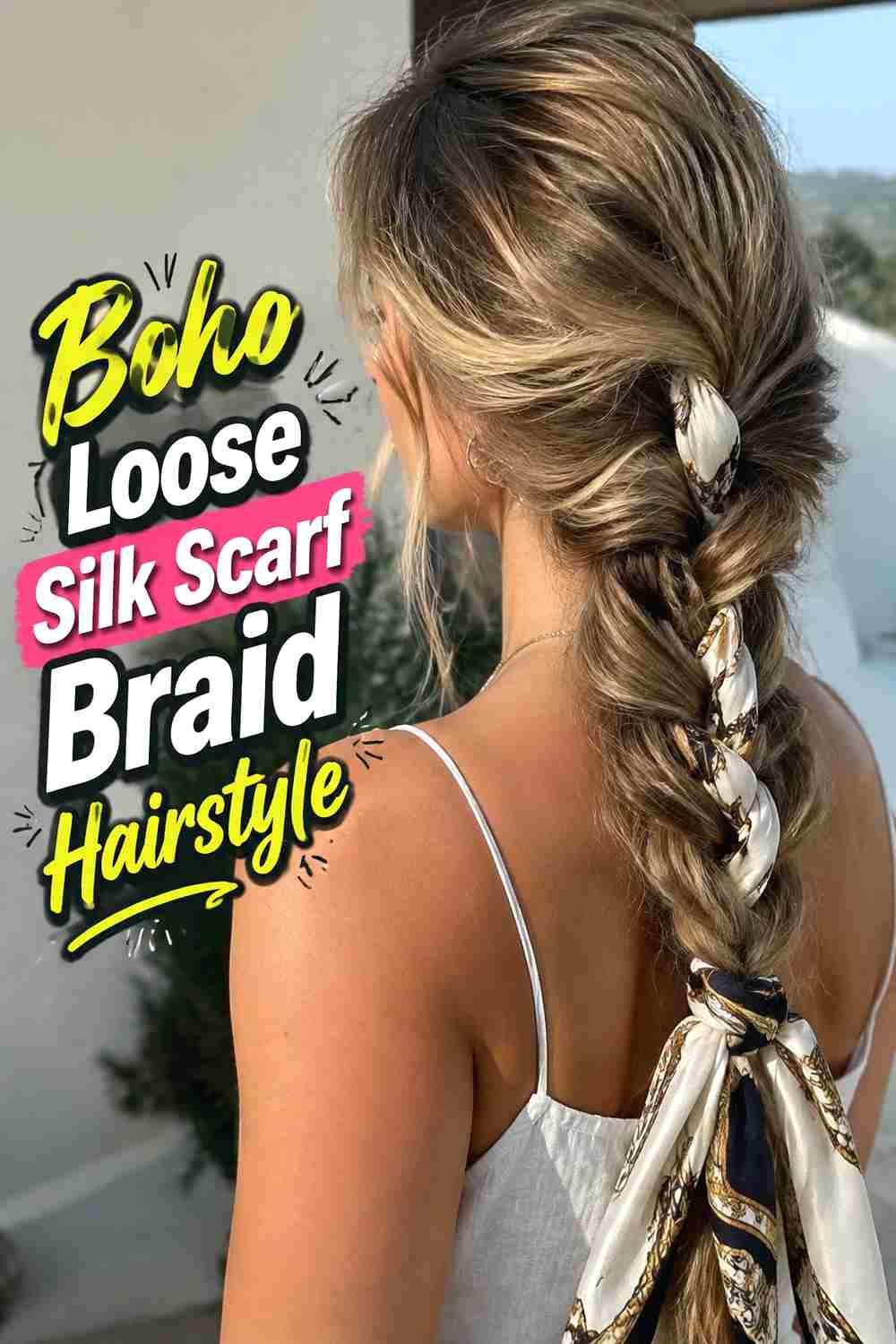
A boho silk scarf braid relies on controlled looseness, soft texture, and visible fabric movement. Start with gently textured hair and create a relaxed side or back braid, incorporating a narrow printed scarf through one section. After securing the end, loosen selected outer edges rather than pulling every piece apart. A few face-framing strands and slight crown volume can reinforce the softer finish. The scarf ends may extend beyond the braid for a casual touch, but they should not be so long that they dominate the hairstyle. This version works especially well when the hair already has waves or natural texture that supports an imperfect, airy silhouette.
Why It Works
The scarf adds color to the relaxed braid while the softer texture prevents the accessory from looking overly formal or precise.
Pro Tip
Secure the braid fully before loosening it so the style stays stable even when the outer sections are softened.
13. Mini Accent Silk Scarf Braid Hairstyle
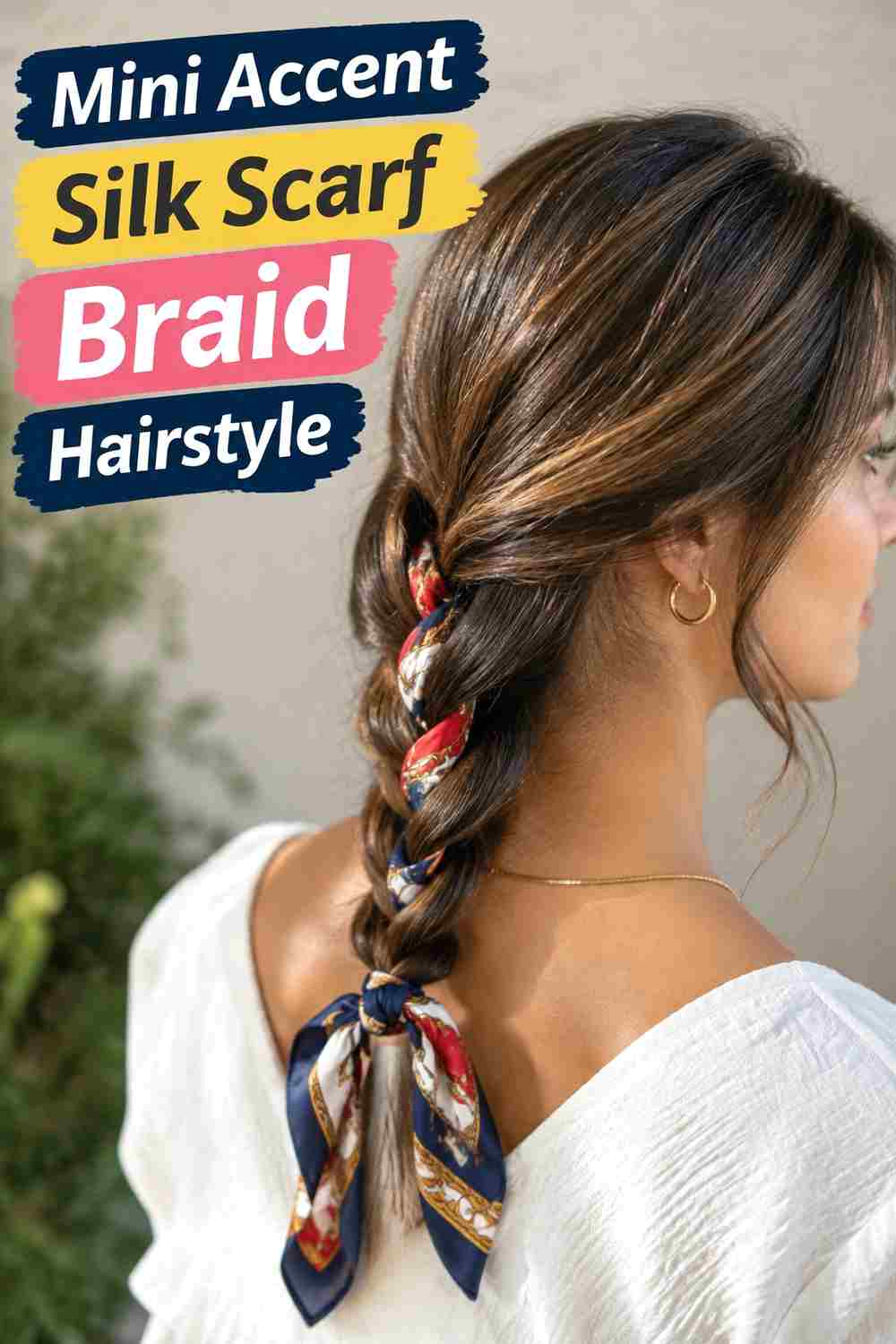
A mini accent braid uses only a small section of hair, making the silk scarf detail subtle but distinctive. Choose a section near the temple, side part, or upper crown and anchor a very narrow scarf strip at the start. Create a small three-strand braid using the fabric as one strand, then let the finished braid blend into loose hair or pin it discreetly toward the back. Because the braid is narrow, lightweight fabric is essential; a wide scarf would overpower the section. This style is useful when you want a hint of color and texture without committing to a full-head braid or gathering most of the hair.
Best For
Loose medium or long hair where the small braid can remain visible against a larger background of texture.
Wear & Maintenance
Keep the scarf strip narrow and securely anchored so it does not slide out of the smaller braid during movement.
14. Extra Long Silk Scarf Braid Hairstyle
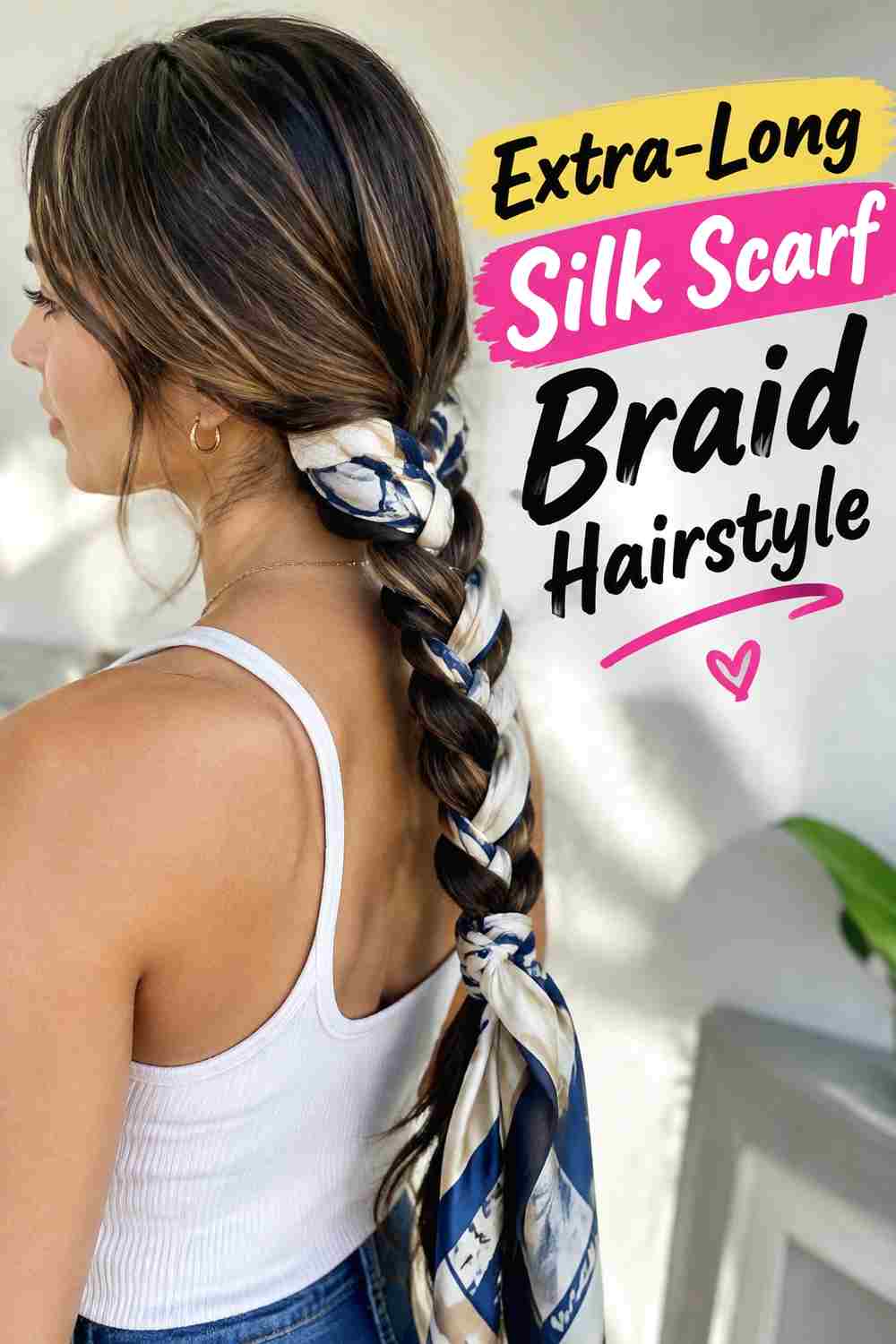
An extra-long silk scarf braid turns the woven accessory into a dramatic feature by letting the pattern repeat well beyond the shoulders. The braid can be created with natural long hair or carefully matched added length, but the scarf should travel consistently from the secure base toward the end. A classic three-strand or Dutch-inspired ponytail braid works particularly well because the fabric remains easy to follow visually. Choose a scarf long enough to reach most of the braid without creating an excessively bulky knot at the top. Keep the braid physically believable, with even tension, natural strand texture, and a secure foundation that supports the added length comfortably.
Styling Notes
Plan the scarf length before braiding so it does not end unexpectedly halfway through the woven pattern.
Wear & Maintenance
Long braids and fabric can add weight, so prioritize a comfortable, stable base rather than pulling the roots excessively tight.
How to Choose the Right Look
Start with your braid skill and available hair length. Classic three-strand, low ponytail, half-up, and side-swept styles are relatively straightforward, while French, Dutch, fishtail, crown, and four-strand versions require more section control.
Next, consider how visible you want the scarf to be. Using the fabric as an active braid strand creates a strong woven effect, while mini accent braids or selective wrapping keep the accessory more subtle. A solid scarf makes the braid structure easy to read, while prints add more visual movement.
Scarf width matters too. Narrow folded silk or silk-like fabric usually integrates more cleanly into braids than a wide square scarf. Slippery fabric should be anchored securely, and the hairstyle itself should have an elastic, pins, or another dependable foundation.
Finally, balance texture with polish. Dutch and four-strand braids look striking with cleaner sections, while boho and side-swept versions can handle more softness. Choose the technique that matches your realistic styling time and desired level of hold.
Final Thoughts
Silk scarf braids can be simple, colorful, intricate, romantic, or dramatic depending on how the fabric is incorporated. Start with a secure braid foundation, choose a scarf width that suits the technique, and let the woven color enhance the hair rather than covering the braid pattern.
FAQs
1. What type of silk scarf works best for braiding?
A lightweight, narrow scarf or a larger scarf folded into a slim strip is usually easiest to weave. The fabric should be long enough for the braid without creating excessive bulk.
2. How do I stop a silk scarf from slipping out of a braid?
Anchor the scarf around an elastic, small hidden section, or secure base before braiding. Keep consistent tension and avoid relying on slippery fabric alone for hold.
3. Can I braid a silk scarf into curly or textured hair?
Yes. Curly, coily, wavy, and straight hair can all work. The braid technique and section size may need to be adjusted for density and natural texture.
4. Can I use a silk scarf in a short braid?
Yes. Half-up and mini accent braids are especially useful when there is not enough length for a long full braid.
5. Does the scarf need to be one of the braid strands?
No. It can replace one strand, travel alongside a strand, wrap around selected sections, or simply decorate the base and end.
Save your favorite silk scarf braid ideas and explore more hairstyle inspiration for colorful, woven ways to refresh classic braids.