15 French Pin Bun Hairstyle Ideas
A simple French pin can turn one twist of hair into an elegant bun that feels effortless, polished, and beautifully understated from every angle.
French pin buns are defined as much by their construction as their appearance. Instead of relying on a ring of visible bobby pins, the hair is folded, twisted, or wrapped so a U-shaped pin can pass through the style and anchor against the hair underneath. The finished result can look remarkably clean while still feeling relaxed.
Placement and texture make each variation noticeably different. A low sleek bun feels minimal and refined, while loose texture, curtain bangs, or soft crown lift creates a more romantic effect. Hair length and density also matter because the French pin needs enough structure to grip securely without forcing the bun into an unnatural shape.
Quick List
- Sleek French Pin Bun Hairstyle
- Low French Pin Bun Hairstyle
- Twisted French Pin Bun Hairstyle
- Loose French Pin Bun Hairstyle
- Textured French Pin Bun Hairstyle
- French Pin Bun With Face Framing Tendrils Hairstyle
- French Pin Bun With Curtain Bangs Hairstyle
- Polished French Pin Bun Hairstyle
- French Pin Bun With Tucked Ends Hairstyle
- French Pin Bun With Soft Crown Volume Hairstyle
- Side Part French Pin Bun Hairstyle
- Center Part French Pin Bun Hairstyle
- Mini French Pin Bun Hairstyle
- Romantic French Pin Bun Hairstyle
- Modern Sculpted French Pin Bun Hairstyle
1. Sleek French Pin Bun Hairstyle
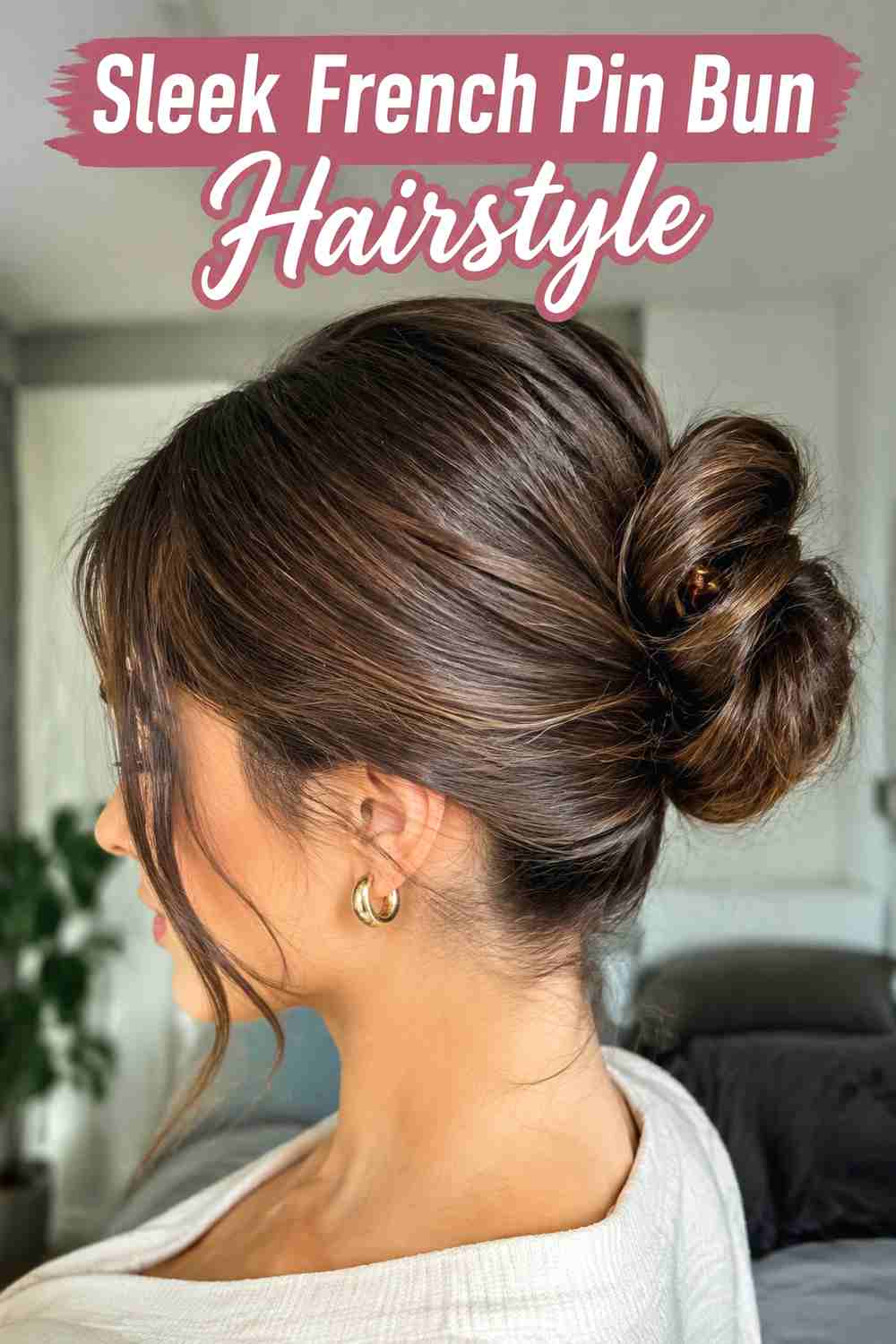
The sleek French pin bun keeps the surface controlled and the bun compact, allowing the visible pin to become a simple architectural detail. Hair is brushed smoothly toward the back, twisted into a neat fold, and anchored so the French pin passes through the outer section before catching hair close to the scalp. Medium to long lengths usually provide enough material for a secure shape without needing a large bun. A small amount of smoothing cream can control flyaways, but the finish should still show believable strands and natural shine. Keep the crown close to the head and the ends neatly contained for a minimalist style that works particularly well with tailored clothing and clean accessories.
Styling Notes
Push the pin through the outer edge of the twist first, then reverse its direction so it catches the base hair underneath. That opposing motion creates the hold.
Best For
This version suits straight or smoothly blow-dried hair when you want a refined bun with very little visible texture.
2. Low French Pin Bun Hairstyle
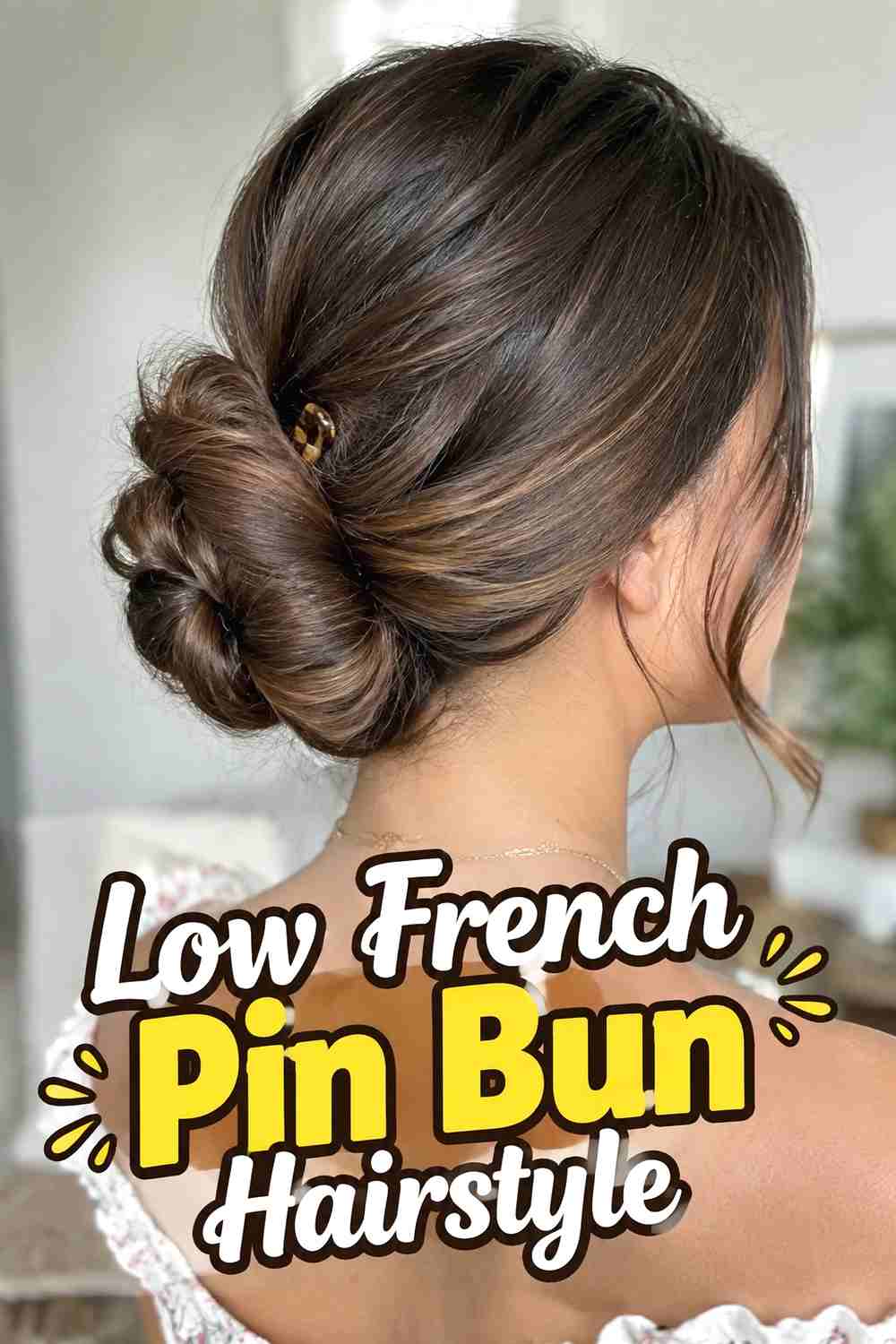
A low French pin bun places the twist close to the nape for a relaxed, elegant profile. The lower position makes the hairstyle feel less formal than a high updo while still keeping the neck and shoulders open. Gather the hair loosely at the nape, twist the length upward or inward, then fold it into a compact bun before inserting the pin through both the twist and the base hair. Medium and long hair generally work best, although very long lengths may need an extra fold to keep the shape balanced. Leave the crown smooth or gently natural rather than tightly flattened. The result should feel secure but not overly tense around the hairline.
Wear & Maintenance
Because the bun sits low, make sure the French pin catches enough base hair to prevent the entire twist from sliding downward during wear.
Why It Works
The nape placement keeps the silhouette understated and makes the visible French pin look intentional rather than purely functional.
3. Twisted French Pin Bun Hairstyle
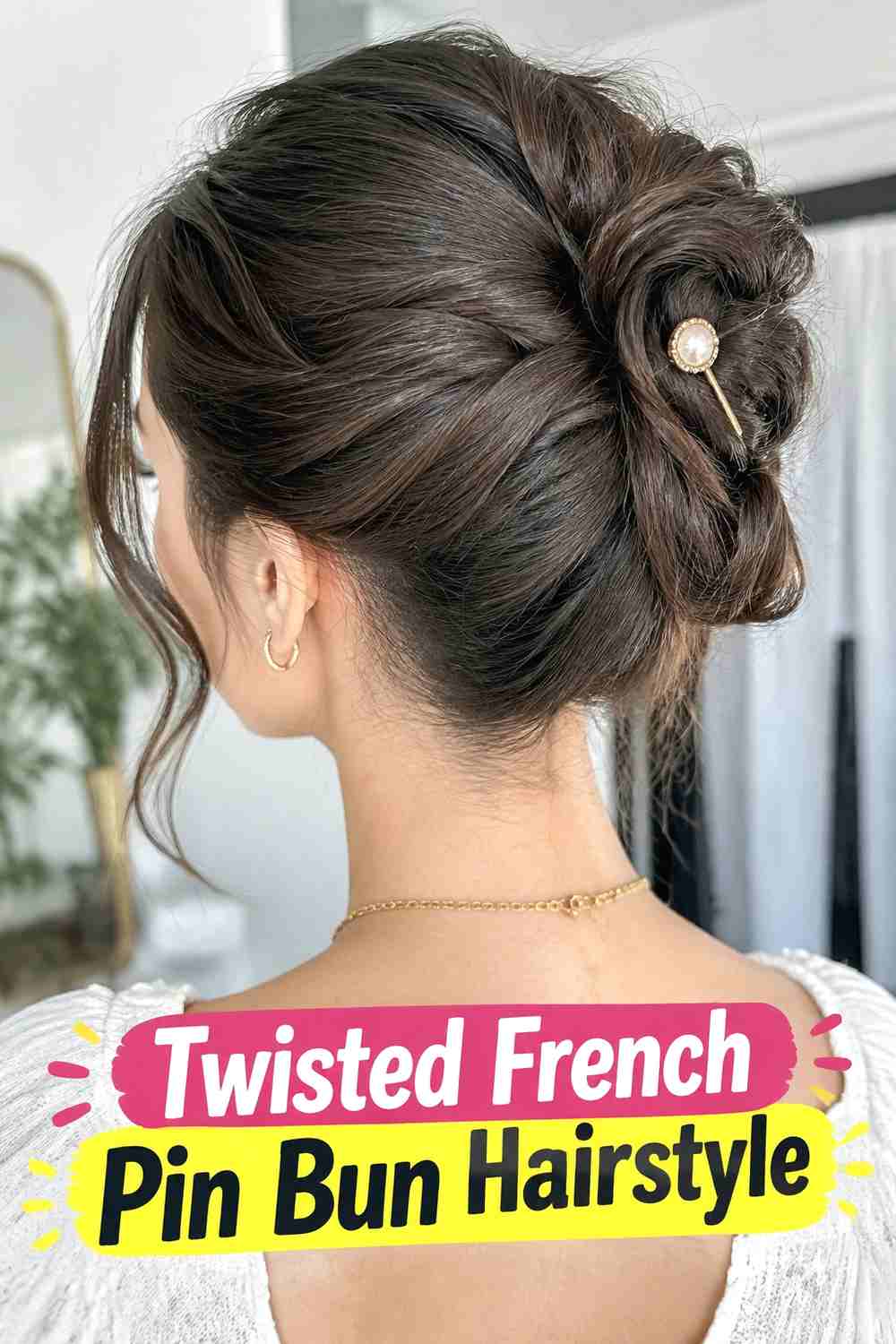
The twisted French pin bun emphasizes the spiral created before the hair is pinned. Start by gathering the length and twisting it firmly enough to hold together while still preserving some width. Coil the twist into a bun, leaving the natural ridges visible instead of smoothing them completely flat. The French pin can be inserted diagonally across the bun so it catches one side of the coil before reversing into the base. Long hair displays the twisted detail particularly well, while medium hair creates a smaller, tighter version. A lightweight styling cream can reduce frizz without erasing the texture. Keep the front simpler so the directional detail at the back remains the visual focus.
Styling Notes
Twist consistently from the base toward the ends. Uneven tension can create bulky sections that are harder for a single pin to anchor securely.
Best For
Choose this version when you want visible structure in the bun without adding braids, decorative pins, or multiple accessories.
4. Loose French Pin Bun Hairstyle
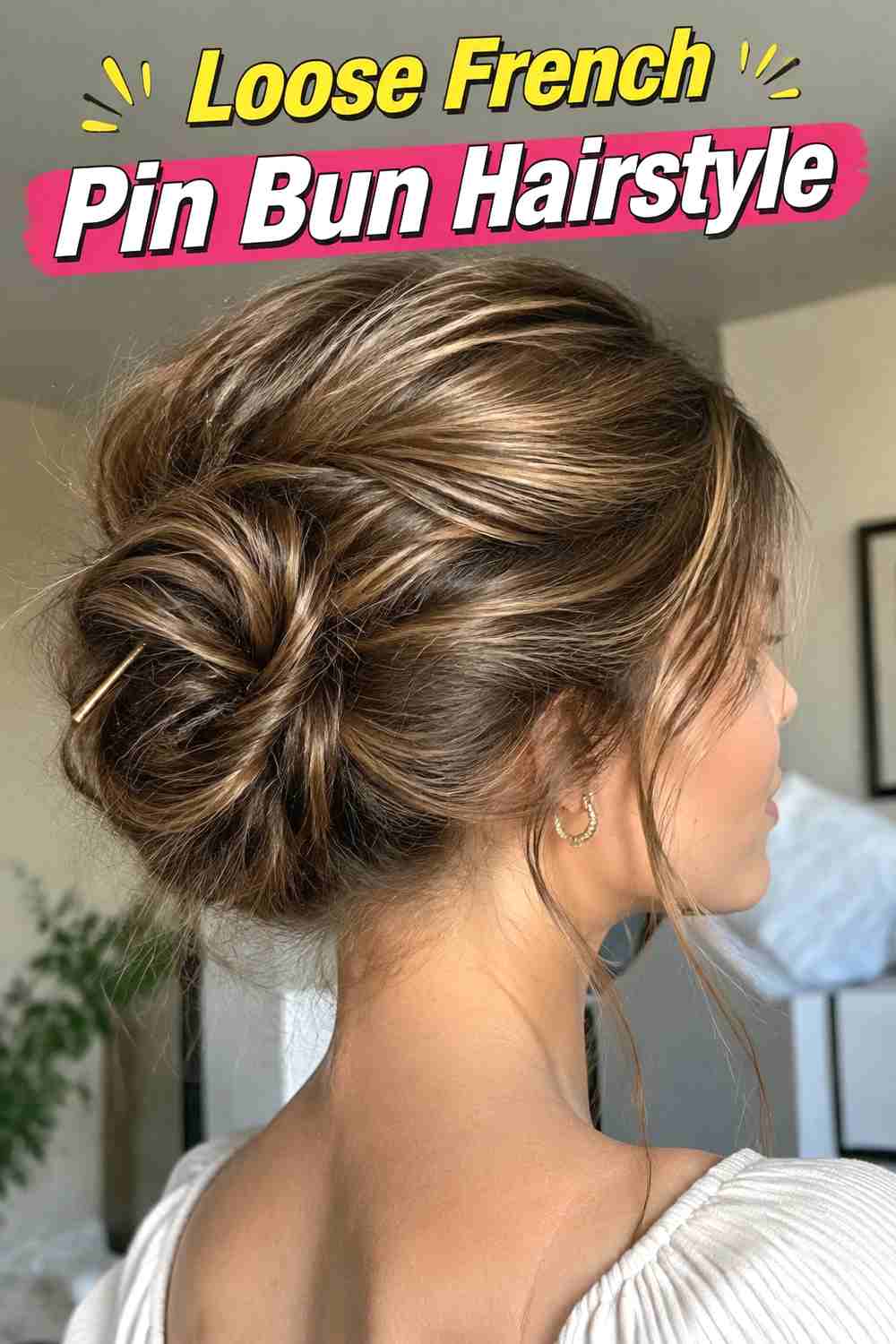
A loose French pin bun keeps the shape soft by using relaxed tension through the crown, sides, and bun itself. Rather than brushing every strand flat, gather the hair with your hands and preserve a little natural movement before twisting the length. Fold the twist into a low or mid-height bun, then secure it with the French pin while allowing the outer edges to remain slightly imperfect. The foundation still needs to be stable, so softness should come from the visible surface rather than a weak anchor. Medium to long hair with some texture is especially easy to adapt to this style. A few natural flyaways can enhance the effortless finish without making the bun look unfinished.
Why It Works
Relaxed surface tension gives the bun a softer profile while the French pin provides enough internal structure to keep the style practical.
Pro Tip
Secure the bun first, then loosen only small sections around the crown and sides instead of trying to pin hair that is already overly loose.
5. Textured French Pin Bun Hairstyle
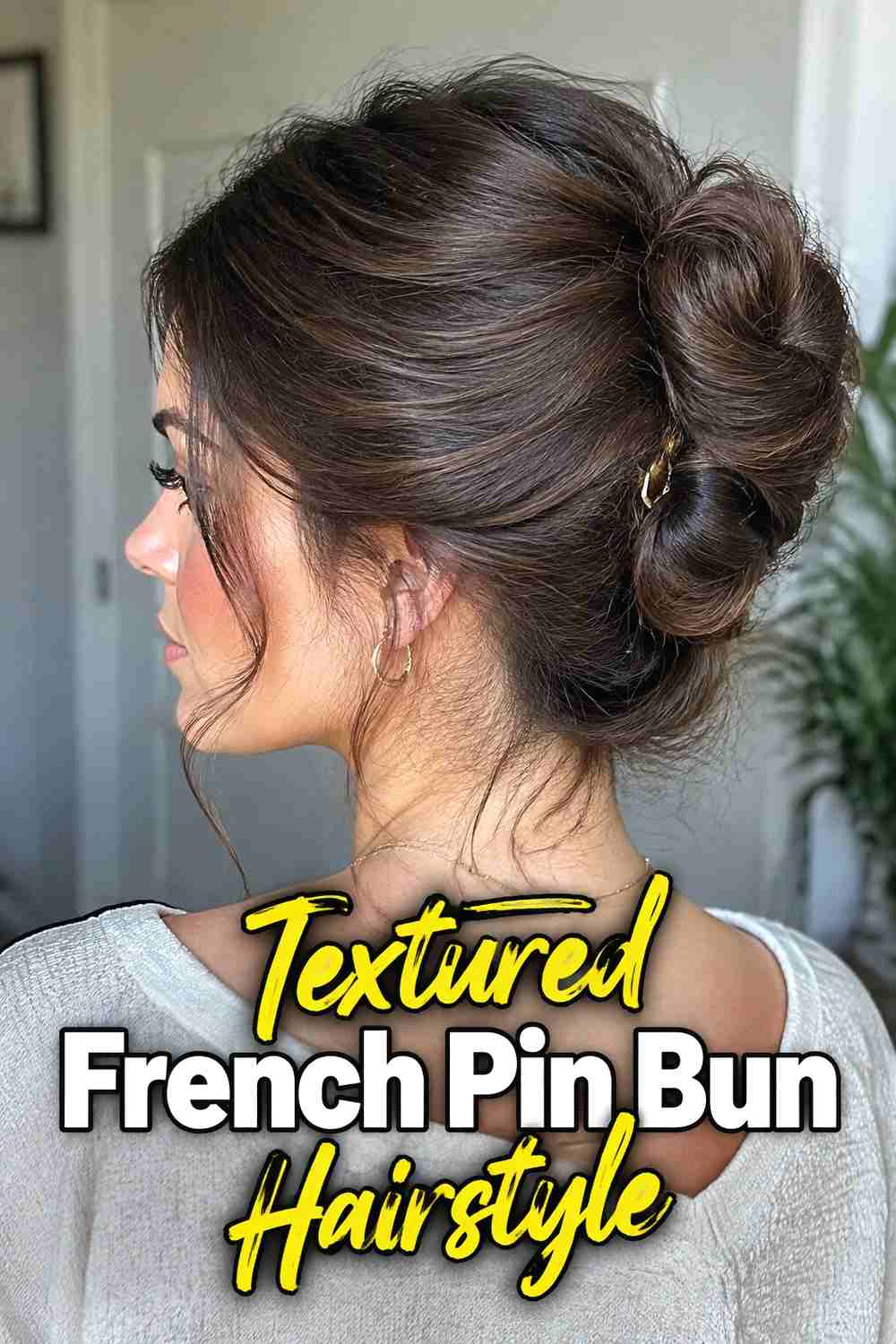
A textured French pin bun works with soft waves, natural bends, or lightly tousled hair to create a fuller and more tactile updo. Texture provides useful grip, which can help the French pin remain anchored while also preventing the finished bun from looking overly polished. Gather the hair without brushing away all the existing movement, then twist or fold the length so some ridges remain visible. Insert the pin through a substantial outer section before turning it back into the base hair. This approach suits medium to long layered hair particularly well because shorter pieces can contribute softness around the bun. Use dry texture spray sparingly so the hair stays touchable rather than gritty.
Hair Type & Length
Naturally wavy, layered, or lightly pre-curled medium and long hair can provide enough texture to create both fullness and grip.
Wear & Maintenance
Avoid heavy oils before styling because an overly slippery surface can make it harder for the pin to maintain tension.
6. French Pin Bun With Face Framing Tendrils Hairstyle
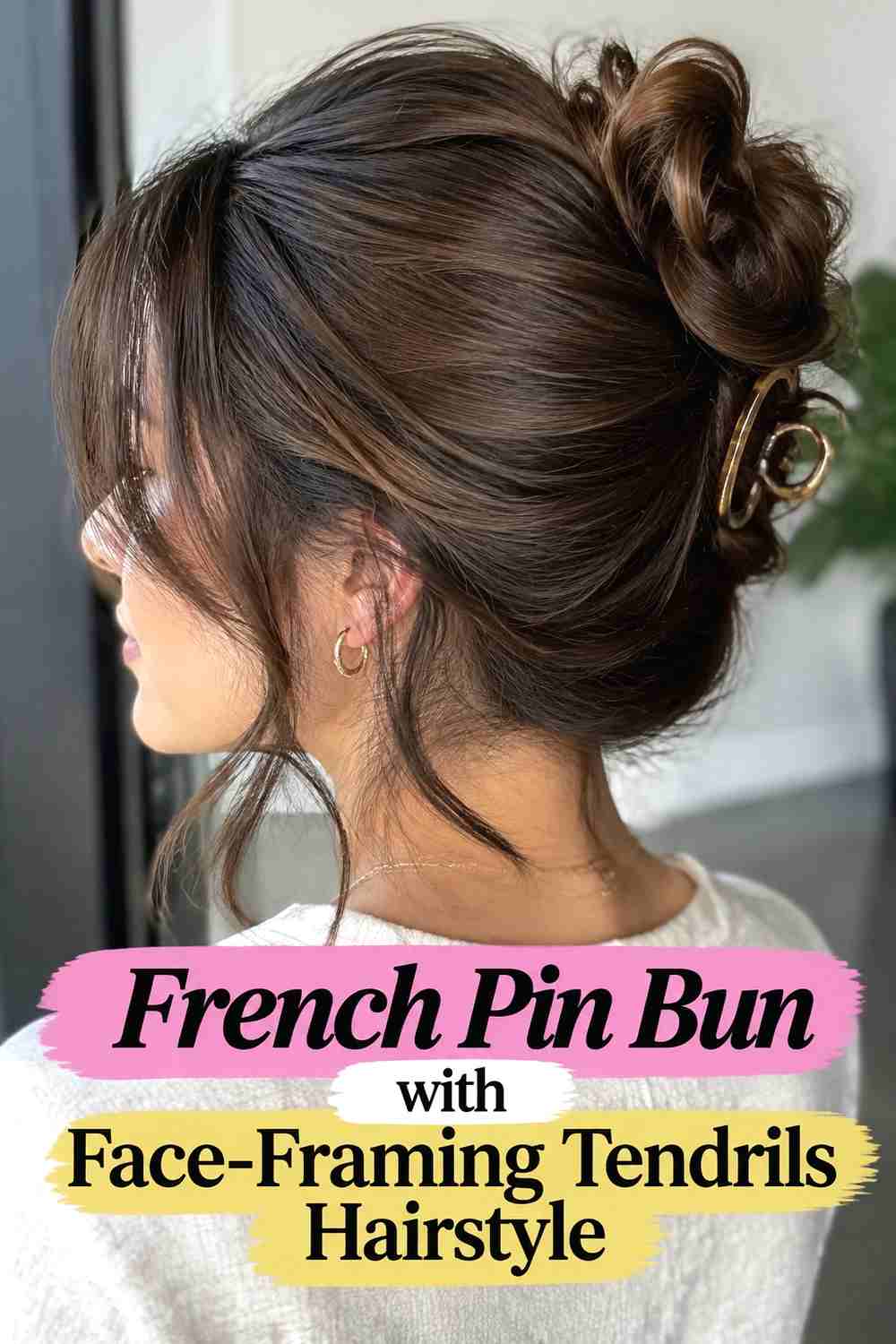
Face-framing tendrils soften the clean construction of a French pin bun while keeping the back simple. Separate a few narrow pieces near the temples or cheekbones before gathering the rest of the hair. Those strands can remain almost straight or receive one soft bend, depending on your haircut. Build the bun low or around the middle back of the head and secure it with the French pin so the front remains untouched. This variation works especially well on layered medium and long hair where shorter front pieces naturally separate from the main length. Keep the number of tendrils limited; a few deliberate sections create softness without making the updo look as though pieces have accidentally escaped.
Styling Notes
Choose the tendrils before forming the bun. Pulling them out afterward may loosen the sides and reduce the French pin’s grip.
Best For
This style works naturally for dinners, weddings, dates, and occasions where a completely swept-back bun may feel too severe.
7. French Pin Bun With Curtain Bangs Hairstyle
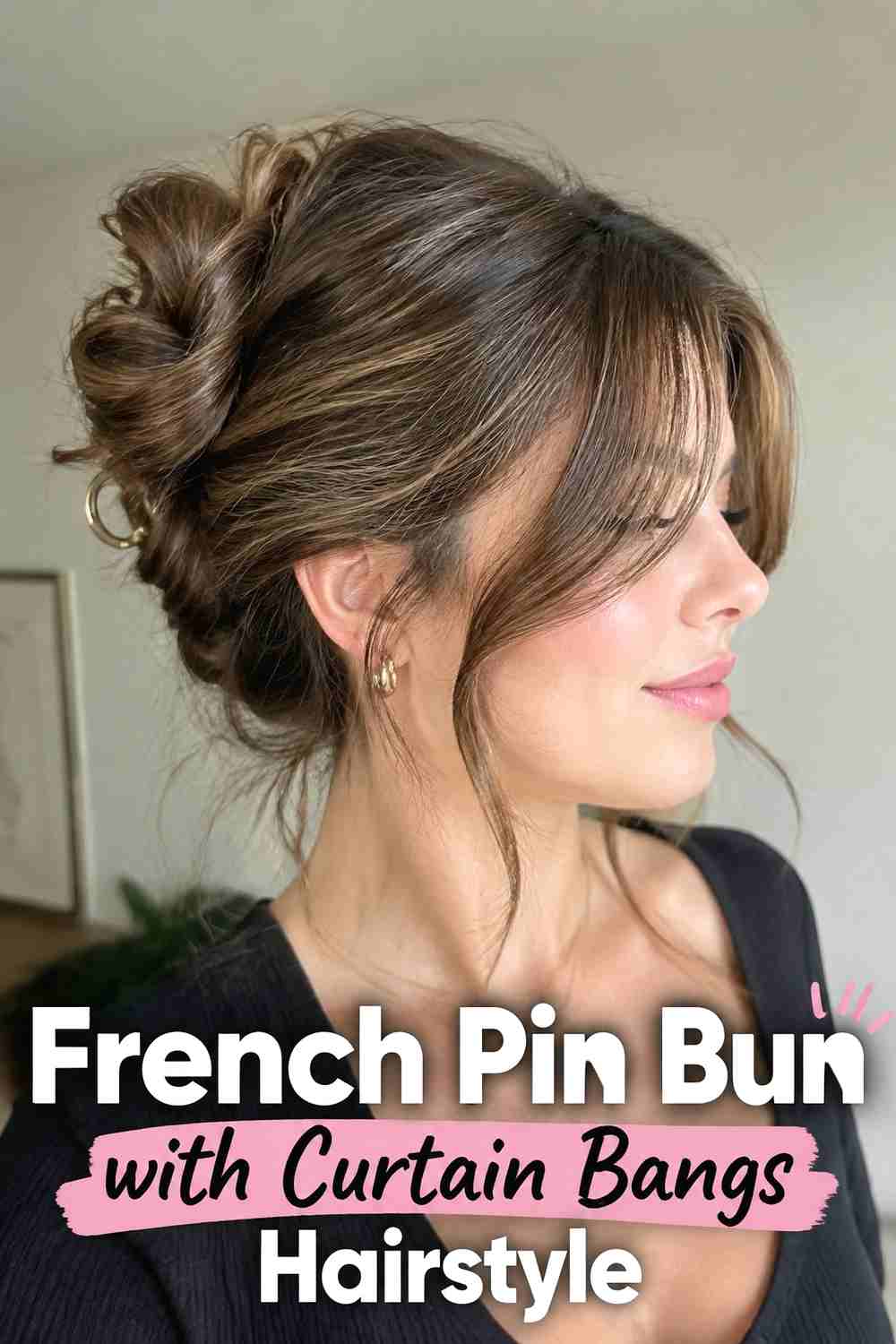
Curtain bangs pair beautifully with a French pin bun because the open fringe creates movement at the front while the pin keeps the back restrained. Style the bangs first with a round brush or roller so they sweep gently away from the face, then gather the remaining hair without disturbing their shape. A low or mid-height bun usually balances the fringe especially well. Twist the length into a compact fold and insert the French pin deeply enough to catch both the twist and the base hair. Medium and long layered cuts offer the easiest transition between the curtain bangs and the updo. Keep product light around the fringe so it remains airy rather than becoming stiff or separated.
Why It Works
The curtain fringe introduces softness and width near the face while the French pin keeps the back of the hairstyle minimal and uncluttered.
Pro Tip
Do not over-lift the crown when the bangs already have volume; keeping the back restrained creates a more balanced silhouette.
8. Polished French Pin Bun Hairstyle
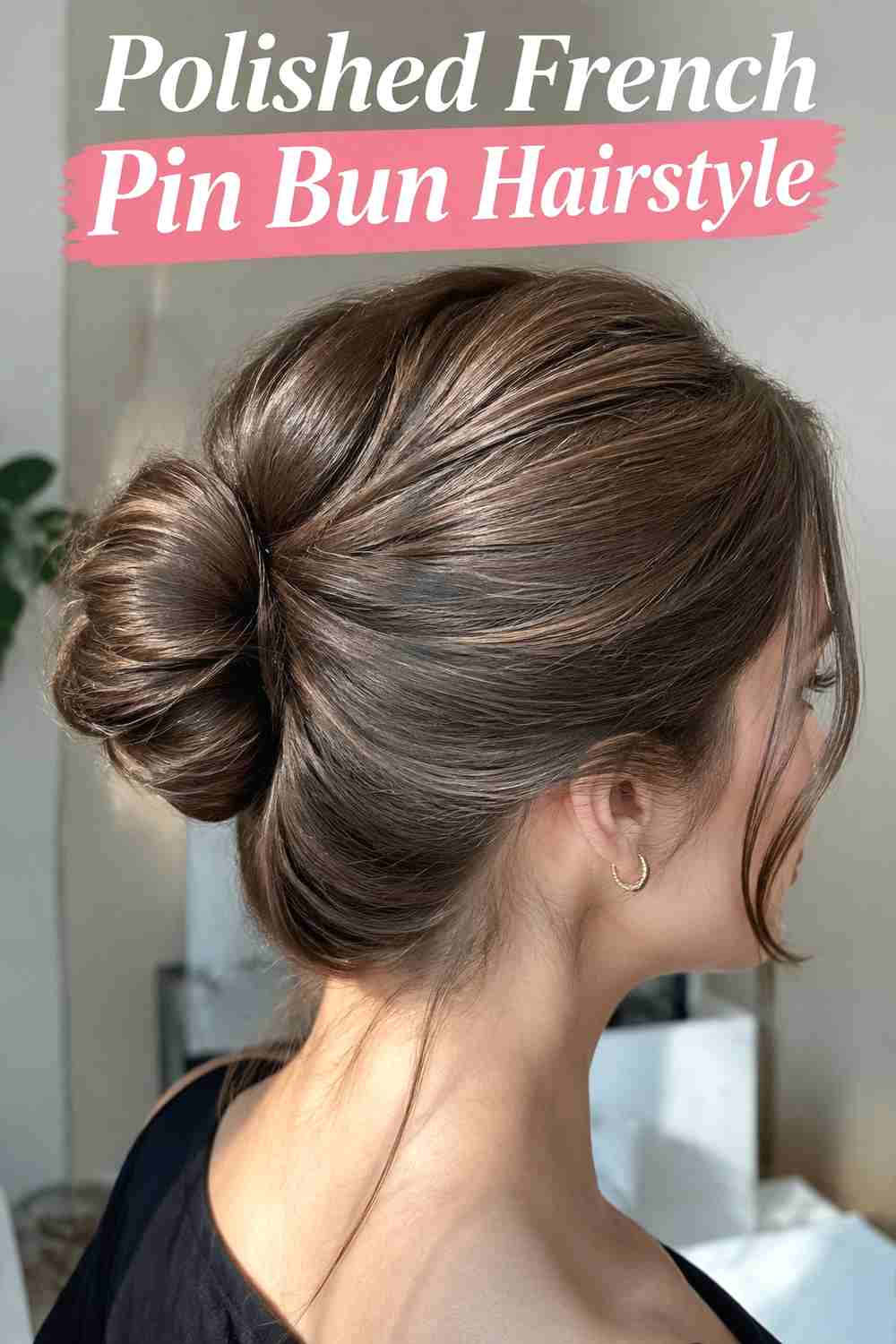
The polished French pin bun creates a refined finish without becoming rigid or excessively slick. Hair is smoothed toward the back with controlled shine, then folded into a clean bun that follows the natural curve of the head. The French pin should look deliberate, sitting neatly across the bun rather than protruding at an awkward angle. Medium to long hair works well, particularly when the ends can be hidden within the fold. Use a lightweight serum or smoothing cream before styling, then finish with flexible spray instead of a heavy lacquer. Keep the surface neat enough for formal settings while preserving visible strand detail so the hairstyle still feels like real hair rather than a molded shape.
Best For
This version is a strong choice for work events, formal dinners, weddings, and minimalist occasion styling.
Wear & Maintenance
Check that the pin feels secure before adding finishing product. Hairspray can support the surface, but the hairstyle should rely on the pin for its main structure.
9. French Pin Bun With Tucked Ends Hairstyle
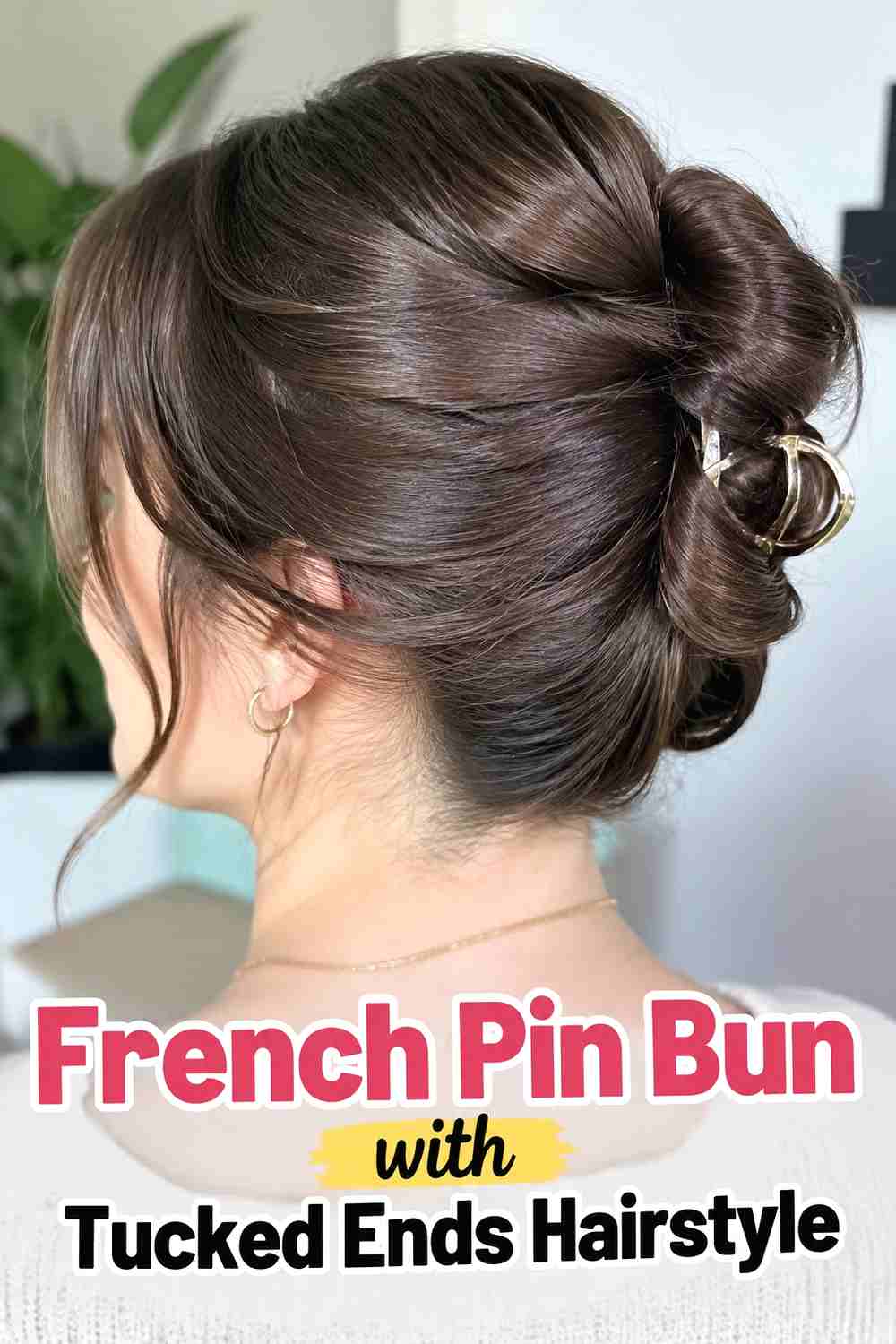
A French pin bun with tucked ends creates a particularly seamless outline because every loose tip disappears inside the folded shape. Gather and twist the hair, then fold the final length underneath or into the center of the bun before inserting the pin. The pin should pass through the outer layer and catch the tucked section along with some base hair, helping prevent the ends from working loose. Medium to long hair is easiest to manage, although very long hair may require an additional fold before pinning. Keep the crown relatively simple so the clean bun construction remains visible. This version is useful when you want an elegant finish with no exposed tail or intentionally loose ends.
Styling Notes
Plan the final fold before inserting the French pin. Trying to push stray ends inside afterward can disturb the tension holding the bun together.
Why It Works
Containing the ends keeps the silhouette compact and highlights the curved line of the bun and the visible pin.
10. French Pin Bun With Soft Crown Volume Hairstyle
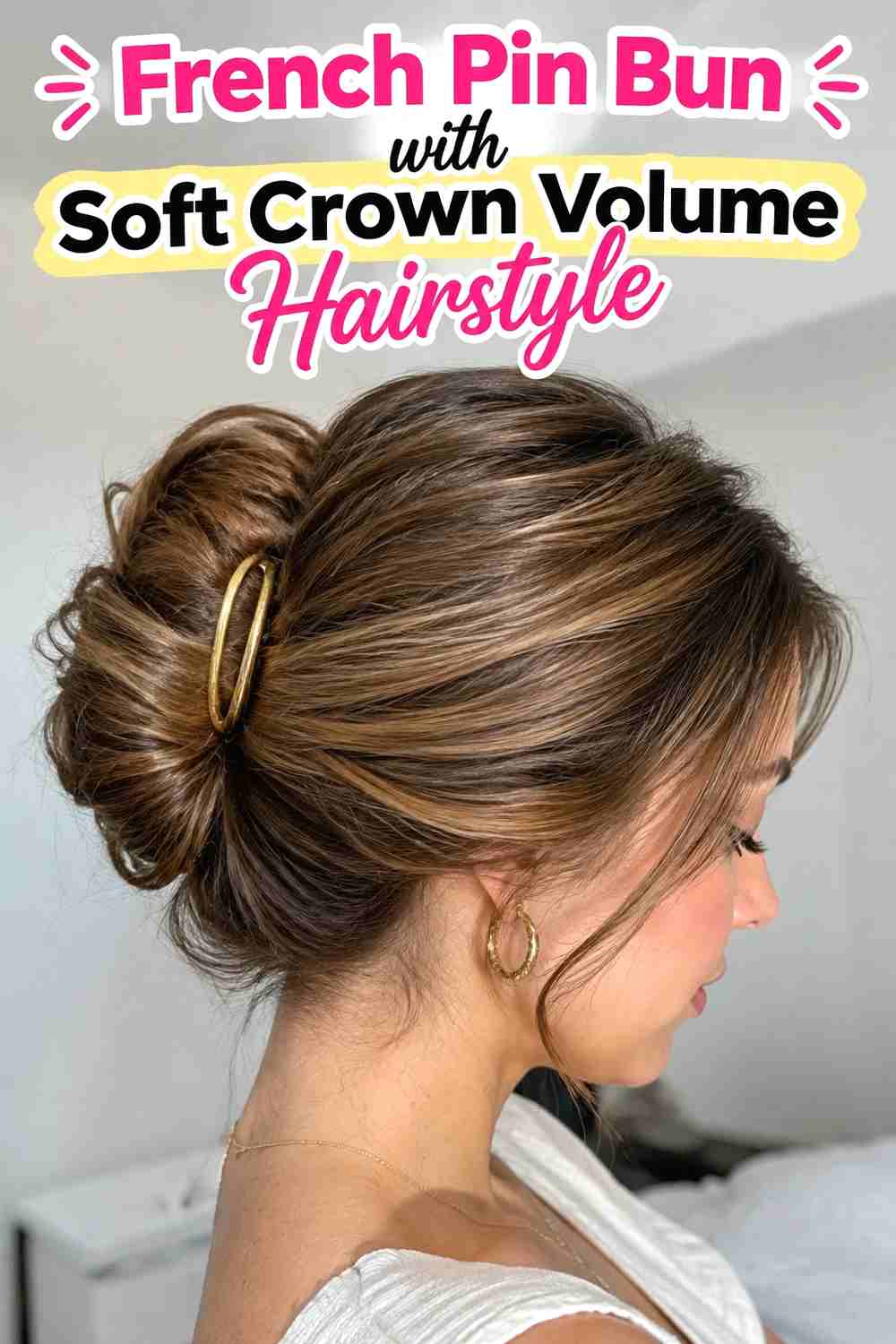
Soft crown volume gives the French pin bun a more romantic silhouette without requiring dramatic teasing. Create gentle lift through the upper back section during blow-drying or with a small amount of root support, then gather the hair carefully so the volume is not flattened. The bun itself can sit low or at mid-height, providing a stable counterpoint to the softer crown. Twist and fold the length before inserting the French pin through the outer section and back toward the scalp. Medium to long hair works particularly well because the bun can remain substantial enough to balance the lift above it. Keep the visible surface smooth enough that the volume looks airy rather than heavily backcombed.
Styling Notes
Build crown lift before gathering the hair, then hold that volume in place with one hand while shaping the twist.
Best For
This variation suits romantic dinners, weddings, and polished events where a completely flat crown may feel too minimal.
11. Side Part French Pin Bun Hairstyle
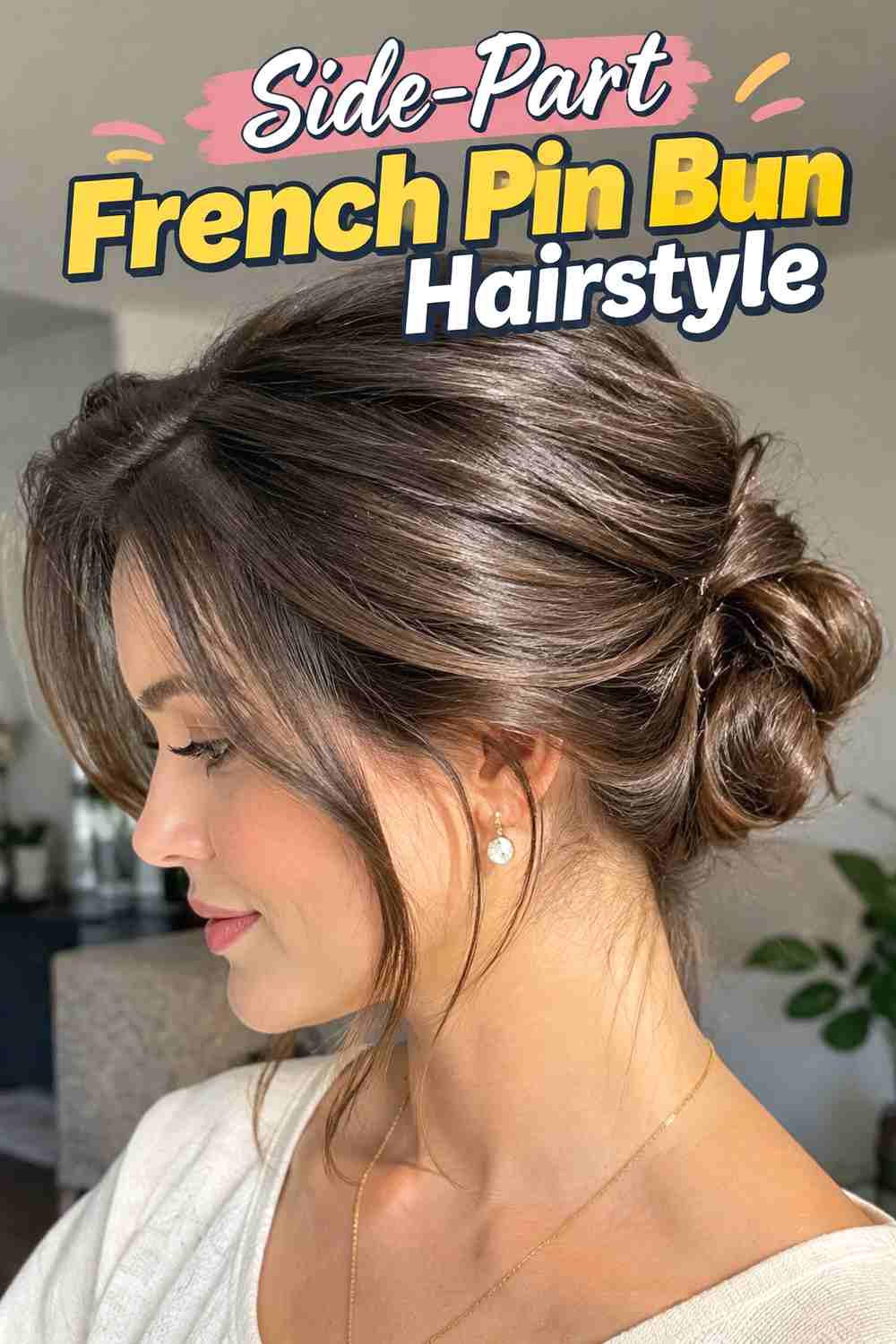
A side part gives the French pin bun subtle asymmetry while leaving the construction at the back simple. The heavier front section can sweep smoothly toward the bun, creating a soft diagonal line across the head. Keep the opposite side closer to the scalp so the part remains visible rather than disappearing once the hair is gathered. A low or mid-height twist works particularly well with this front shape. Medium and long hair generally provide enough length for a secure fold. Use a small amount of smoothing product near the part and hairline, then leave the bun slightly softer so the style does not become overly formal. The French pin can sit horizontally or diagonally depending on the twist direction.
Why It Works
The side part introduces movement at the front without requiring extra accessories or complicated texture in the bun.
Wear & Maintenance
Set the part before gathering the hair so you do not need to pull sections loose after the French pin is already securing the bun.
12. Center Part French Pin Bun Hairstyle
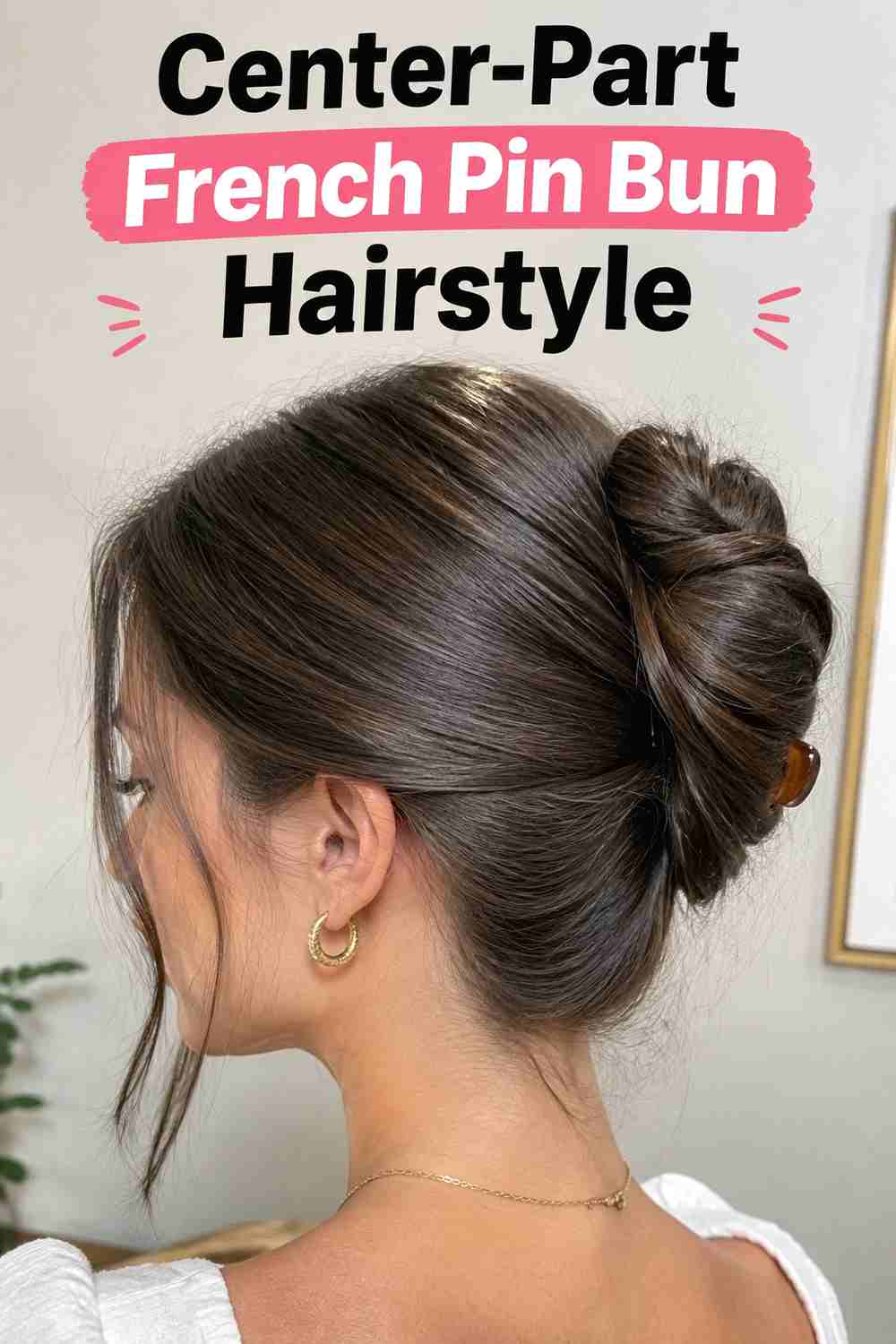
The center-part French pin bun combines clean symmetry at the front with a simple folded bun at the back. Define the middle part carefully, smooth each side independently, and guide both sections toward the same gathering point so the balance remains visible from the front. The bun can sit low for a minimalist finish or slightly higher for more presence. Twist the hair inward and use the French pin to anchor the fold securely against the base. Medium to long hair works best when the sides can reach the bun without excessive tension. Keep the crown relatively flat and avoid too much decorative texture so the crisp middle part remains the defining detail from the front.
Styling Notes
Work on each side of the part separately before gathering them together. This helps preserve a straight, centered line.
Best For
Choose this style when you prefer clean, balanced updos with a modern minimalist feel.
13. Mini French Pin Bun Hairstyle
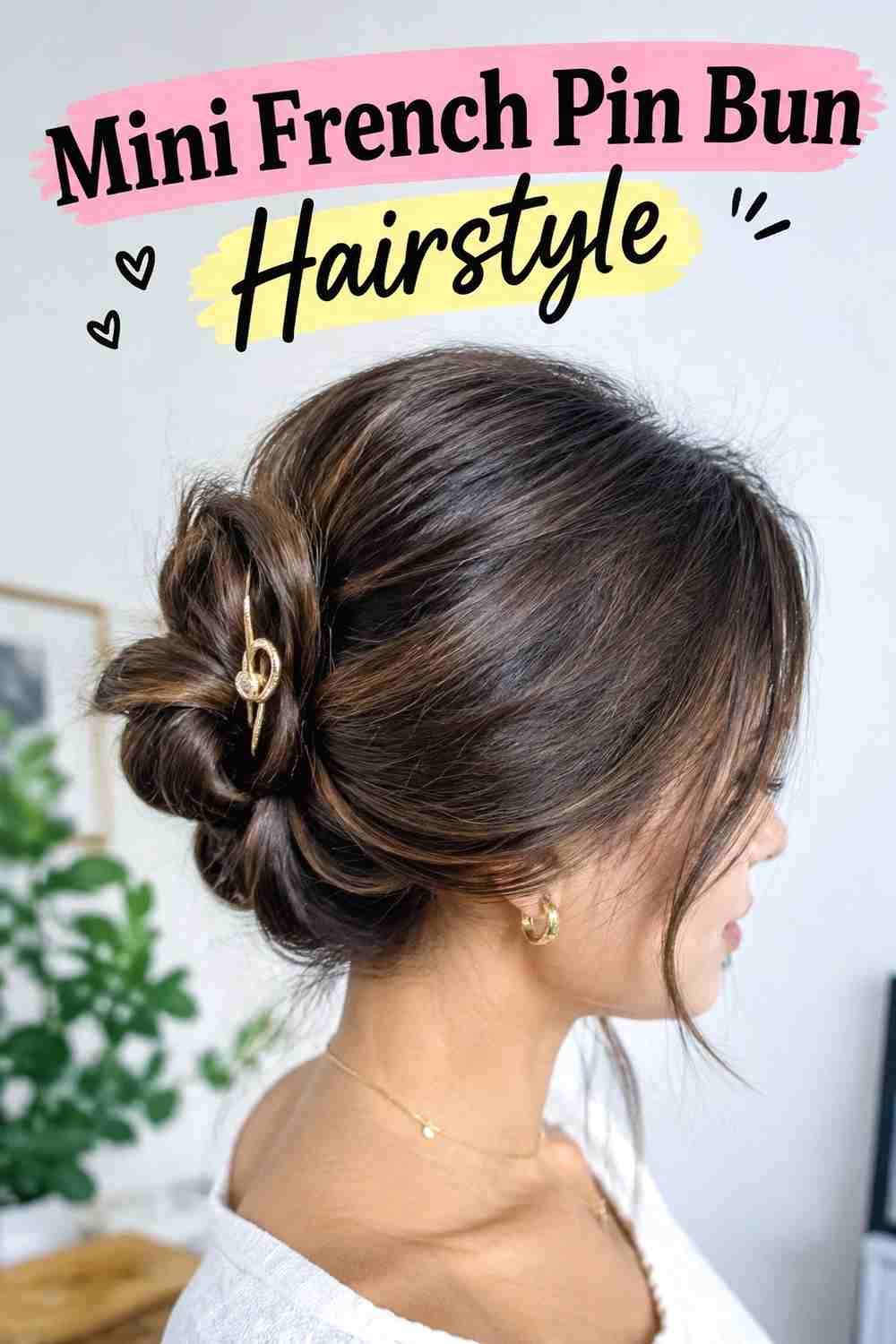
The mini French pin bun adapts the technique for shorter medium lengths by keeping the folded shape intentionally compact. Instead of trying to produce a large coil, gather the available length at the back, twist it once or twice, and tuck the ends beneath the fold. A smaller French pin may provide better scale and control than an oversized accessory. Hair around shoulder length can sometimes create this style successfully when the back sections overlap enough to anchor securely. Light texture spray can improve grip if the hair is very smooth. Keep the crown and sides simple so the smaller bun looks purposeful rather than undersized, and allow the visible pin to become part of the design.
Hair Type & Length
Long bobs and shoulder-length hair may suit this version when there is enough length at the back to twist and overlap securely.
Pro Tip
Choose a pin proportionate to the bun; an excessively long pin can overwhelm a compact shape and may not anchor at the right angle.
14. Romantic French Pin Bun Hairstyle
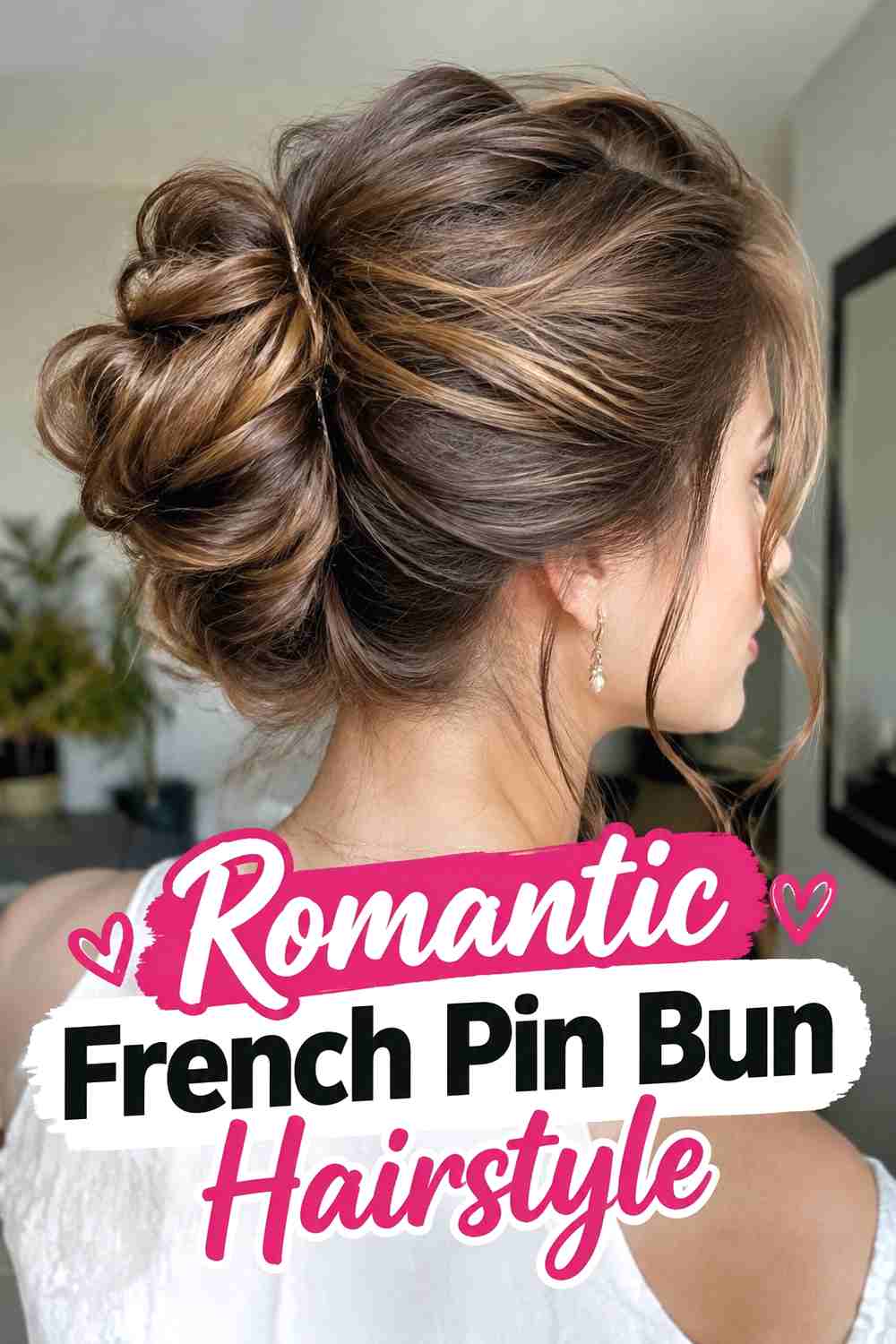
The romantic French pin bun uses gentle texture, soft front pieces, and a relaxed low twist to create an elegant but approachable updo. Start with hair that has a little natural movement or add a few loose bends before gathering it. Leave selected pieces around the face, then form a low bun with enough softness that the texture remains visible. Insert the French pin securely through the bun’s outer edge and reverse it into the base hair. The finished style should move slightly rather than appearing lacquered into place. Medium and long hair are especially suited to this look, and subtle layering can help create graceful softness around the temples and nape without compromising the bun’s structure.
Best For
This option is particularly suitable for weddings, date nights, garden parties, and occasions where a sleek bun might feel too formal.
Wear & Maintenance
Use flexible hold and let a few natural flyaways remain. The French pin should provide the security while the visible surface stays soft.
15. Modern Sculpted French Pin Bun Hairstyle
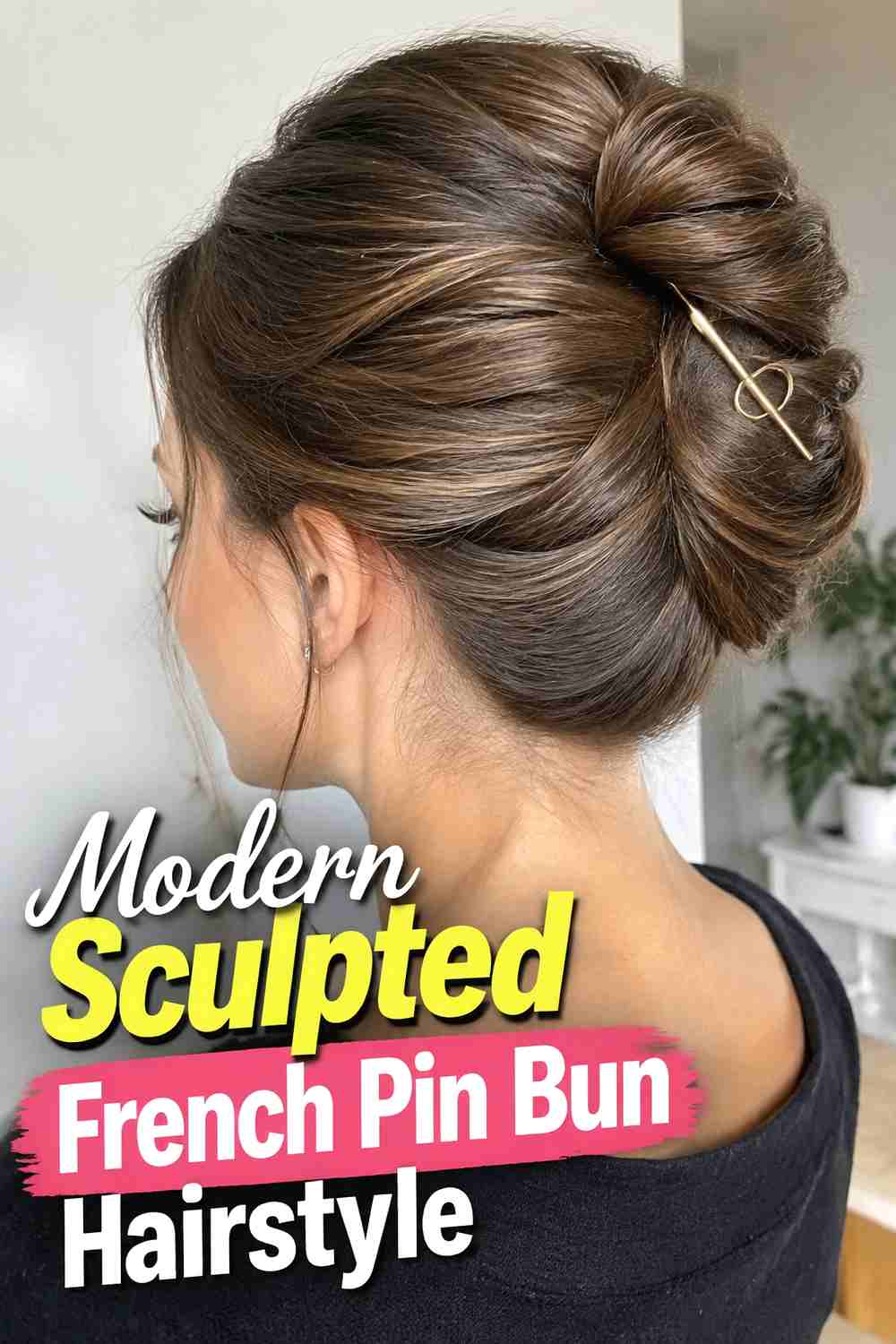
The modern sculpted French pin bun turns the twist into a deliberate geometric shape with clean folds and a clearly positioned pin. Instead of creating a traditional circular bun, the hair can be folded into an elongated loop, compact vertical roll, or softly angular form before being anchored. The surface should stay smooth enough for the structure to read clearly, but natural strands and shine keep the result believable. Medium to long hair provides the most flexibility for shaping, particularly when the ends can be hidden inside the design. Position the French pin as part of the visual composition rather than concealing it completely. The finished style feels contemporary, minimal, and especially effective with streamlined outfits.
Styling Notes
Shape the fold with your fingers before inserting the pin, then anchor through the thickest overlapping section so the sculpted form stays intact.
Why It Works
A stronger shape makes the simple French pin feel like a deliberate design element while keeping the hairstyle free from excessive decoration.
How to Choose the Right Look
Start with your hair length. Shoulder-length hair is usually best suited to a Mini French Pin Bun, while medium and long hair provide more flexibility for twisted, tucked, sculpted, and voluminous versions. Very long hair may need an extra fold before the pin is inserted so the bun does not become overly bulky.
Texture also matters. Smooth hair creates sleek and polished buns but may need lightweight grip product to help the pin hold. Naturally wavy or textured hair often anchors more easily and works beautifully in loose, romantic, or textured versions.
Next, think about the front. A center part feels clean and balanced, while a side part creates gentle asymmetry. Curtain bangs and face-framing tendrils soften the overall style, and subtle crown lift makes the silhouette more romantic.
Finally, pay attention to pin size, placement, and comfort. The French pin should pass through the bun and catch secure base hair without pressing painfully against the scalp. A well-anchored pin is more useful than forcing a large or complicated bun that your length cannot comfortably support.
Final Thoughts
French pin buns can look sleek, romantic, textured, or sculptural while using remarkably little visible hardware. The key is matching the bun size and folding technique to your hair length and density. Build enough tension for the pin to anchor securely, then adjust the visible surface to create the level of softness or polish you prefer.
FAQs
1. How does a French pin hold a bun?
A French pin usually passes through part of the bun, reverses direction, and then catches hair close to the scalp. That opposing movement creates tension that helps anchor the style.
2. What hair length works best for a French pin bun?
Medium to long hair generally offers the most flexibility, but some shoulder-length cuts can create a smaller French pin bun if the back sections overlap securely.
3. Can fine hair hold a French pin?
Yes. Fine hair may benefit from lightweight texture spray or a little natural grit so the pin has more grip. A smaller bun and appropriately sized pin can also help.
4. Can thick hair be secured with one French pin?
Sometimes, but it depends on hair length, density, bun size, and the pin itself. Very dense hair may need a larger pin or discreet additional support if one pin does not feel secure.
5. Should the French pin be visible?
It can be. A visible metal, tortoiseshell-style, or minimalist French pin can become part of the hairstyle, while careful positioning can also make the pin much less noticeable.
Save your favorite French pin bun hairstyle ideas for your next easy updo, and share the collection with anyone who loves elegant, minimal hair inspiration.