20 Tucked French Twist Hairstyle Ideas
Elegant, secure, and effortlessly refined, these tucked French twists turn classic updo structure into soft, modern looks for work, weddings, and evenings.
The tucked French twist is built around one recognizable idea: hair is gathered toward the back, rolled vertically or diagonally, and secured so the ends disappear neatly inside the twist. Changing the crown volume, part, surface texture, face-framing pieces, or accessories can make that basic structure feel minimalist, romantic, relaxed, or highly polished.
A convincing French twist should connect naturally to the head, show believable density, and keep the tucked ends physically supported rather than appearing to float or disappear unnaturally. When comparing these ideas, think about your hair length, layering, grip, pinning comfort, desired volume, and how formal you want the finished updo to feel.
Quick List
- Classic Tucked French Twist Hairstyle
- Soft Loose Tucked French Twist Hairstyle
- Sleek Tucked French Twist Hairstyle
- Low Nape Tucked French Twist Hairstyle
- High Crown Tucked French Twist Hairstyle
- Side Part Tucked French Twist Hairstyle
- Center Part Tucked French Twist Hairstyle
- Face Framing Tucked French Twist Hairstyle
- Curtain Bang Tucked French Twist Hairstyle
- Textured Tucked French Twist Hairstyle
- Wavy Tucked French Twist Hairstyle
- Messy Tucked French Twist Hairstyle
- Polished Tucked French Twist Hairstyle
- Pearl Pin Tucked French Twist Hairstyle
- Minimalist Tucked French Twist Hairstyle
- Voluminous Tucked French Twist Hairstyle
- Wedding Tucked French Twist Hairstyle
- Office Ready Tucked French Twist Hairstyle
- Evening Glam Tucked French Twist Hairstyle
- Modern Tucked French Twist Hairstyle
1. Classic Tucked French Twist Hairstyle
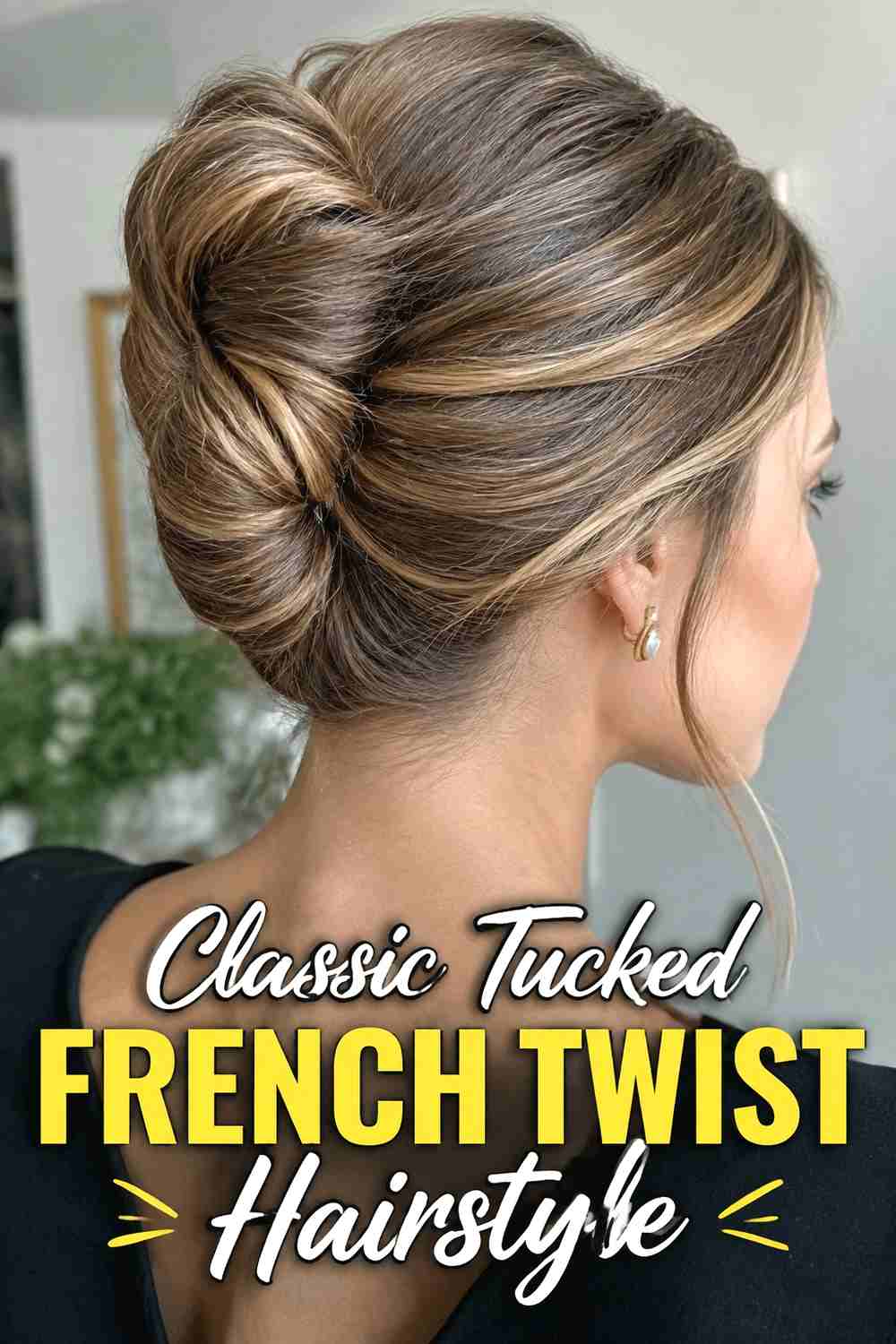
The classic tucked French twist keeps the silhouette clean and recognizable: smooth sides feed into a vertical roll at the back, and the loose ends disappear neatly inside the fold. Medium to long hair is easiest to work with because there is enough length to create a secure roll without leaving too many short pieces outside the twist. Brush the hair back with light tension, anchor one side with vertically placed pins, then roll the remaining length inward over that foundation. The finished shape should sit close enough to feel secure but retain a little natural fullness through the crown. A light mist of flexible hairspray helps control flyaways without giving the surface a hard, shell-like finish.
Styling Notes
Crossing or stacking pins along the hidden seam can improve stability. Insert them into the dense inner part of the roll rather than through only the visible outer layer.
2. Soft Loose Tucked French Twist Hairstyle
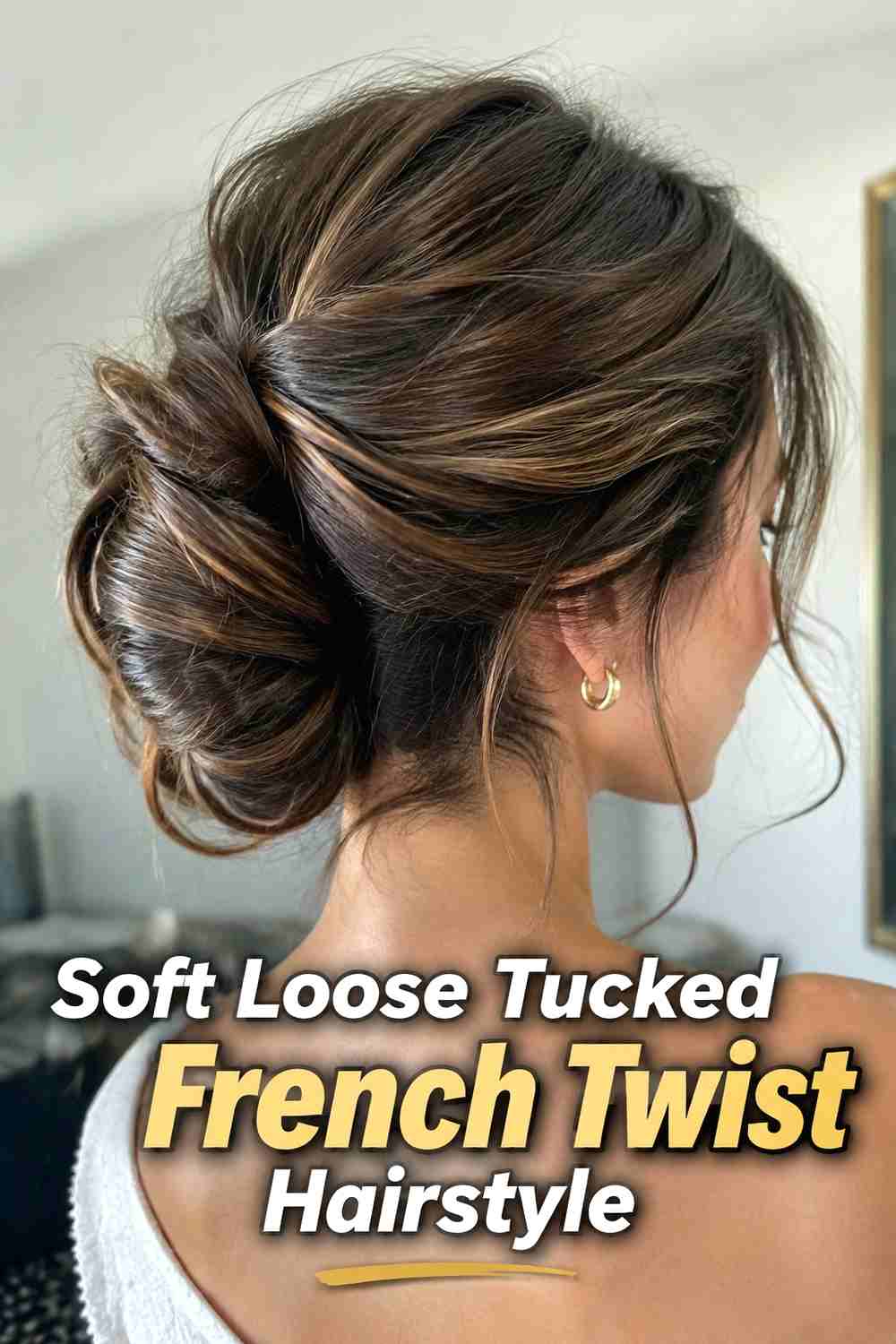
A soft loose French twist keeps the basic tucked construction but relaxes the surface so the updo feels less formal. Instead of pulling every section tightly toward the back, leave slight fullness around the crown and sides, allowing small natural bends and a few controlled flyaways to remain visible. This style works well for medium to long hair, particularly when soft layers create movement around the silhouette. Gather the hair gently, build the roll with moderate tension, and tuck the ends inside before securing with pins. Afterward, loosen selected areas with your fingertips rather than pulling large pieces free. The result should feel touchable and airy while the inner structure remains stable enough for comfortable wear.
Best For
Choose this version for dinners, relaxed celebrations, or daytime events when you want the elegance of a French twist without an overly formal surface finish.
3. Sleek Tucked French Twist Hairstyle
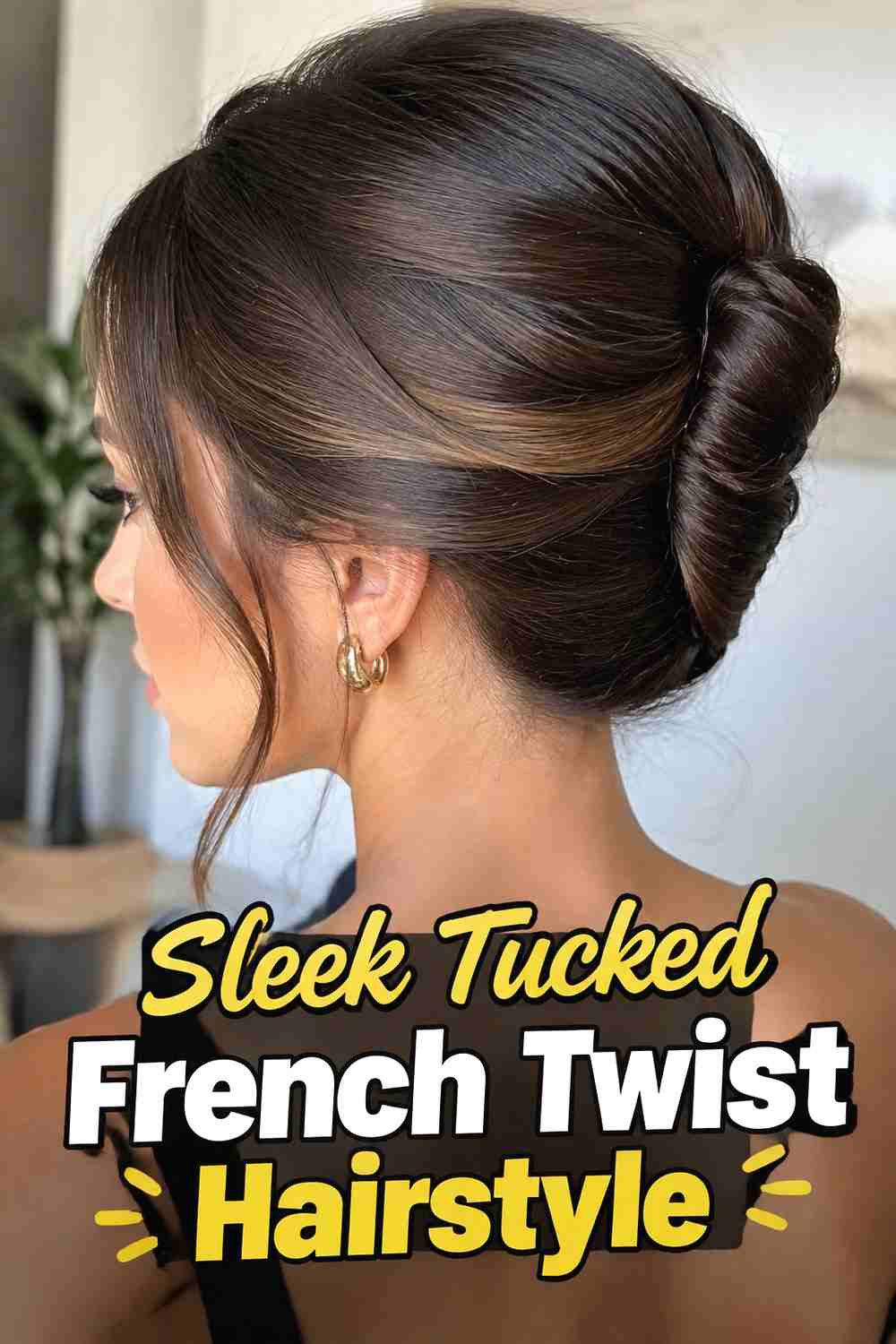
The sleek tucked French twist emphasizes smooth lines, controlled roots, and a sharply defined roll. Hair is brushed cleanly away from the face, with minimal volume at the sides and just enough lift at the crown to keep the shape from appearing flat. This finish works especially well on straight or smoothed hair because a uniform surface makes the vertical construction easy to see. Apply a small amount of smoothing cream before gathering the hair, then anchor the base securely and roll the lengths inward. Tuck every loose end into the seam before adding finishing spray. Use product sparingly around the roots so the sleek finish looks polished rather than wet or overly stiff.
Wear & Maintenance
Keep a few extra pins available if the twist will be worn for many hours. Reinforcing the inner seam is usually more effective than adding additional hairspray to the outside.
4. Low Nape Tucked French Twist Hairstyle
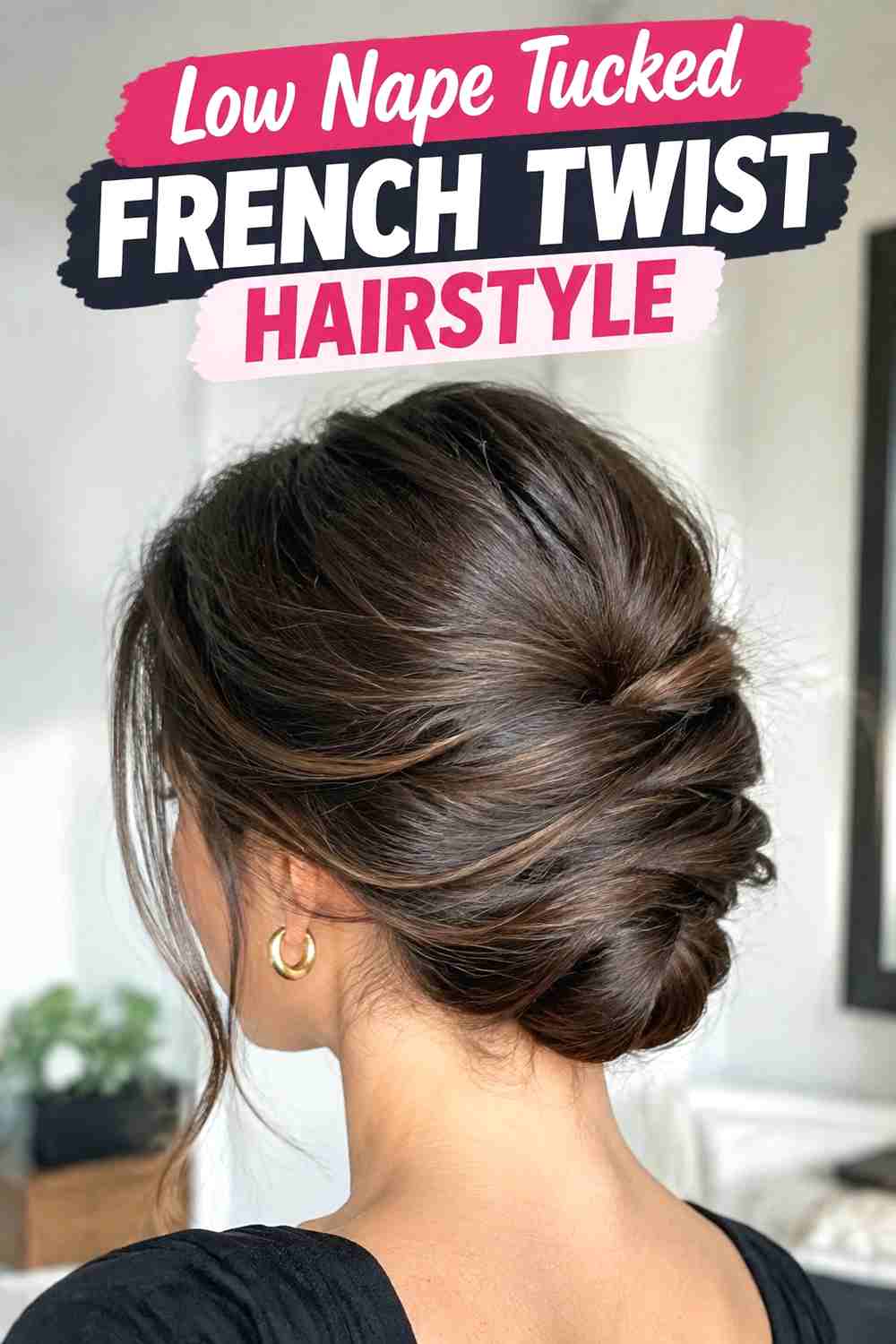
A low nape French twist shifts the classic roll downward, concentrating the tucked structure near the base of the head instead of extending high toward the crown. The result feels understated and works beautifully with open necklines, collars, or understated jewelry. Medium-length hair is often especially manageable for this variation because the roll does not need to accommodate excessive length. Gather the hair low, smooth it toward one side, then fold and tuck the ends inward close to the nape. Keep the top softly controlled rather than pulled too tightly. A few subtle pieces around the temples can soften the profile while leaving the low twist itself compact, secure, and clearly defined.
Hair Type & Length
Medium to long hair can work well, but very long hair may need an extra fold inside the roll so the tucked ends do not create too much bulk at the nape.
5. High Crown Tucked French Twist Hairstyle
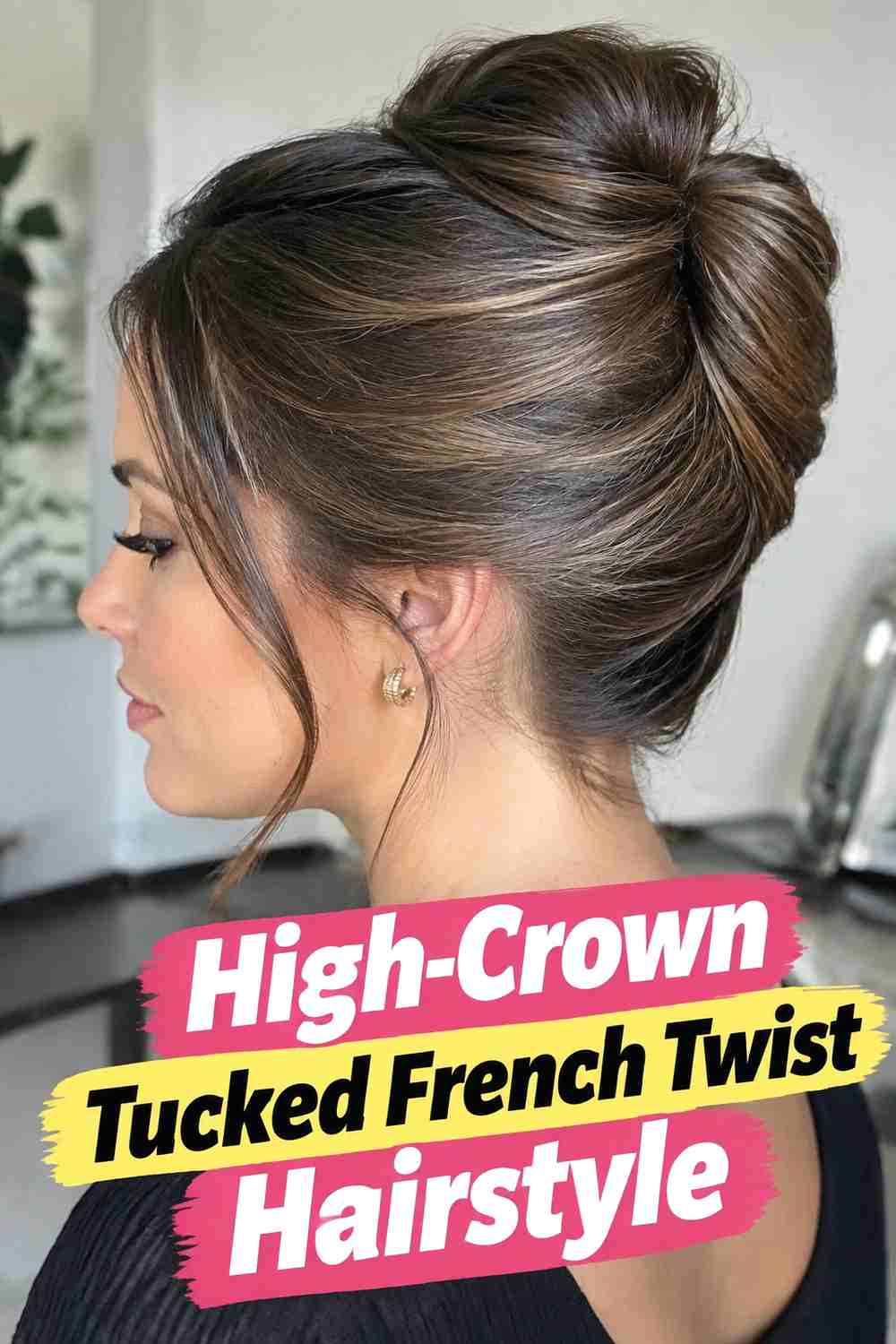
The high-crown version creates more vertical lift before the hair folds into the twist, giving the updo a taller, more glamorous profile. Rather than flattening the crown, gently build volume through the upper back of the head and preserve that fullness while gathering the sides inward. The twist can begin around the middle of the head and extend upward, with the ends tucked securely into the top of the roll. This shape works particularly well on medium to long hair with enough density to support visible crown volume. Keep the outer surface smooth but not rigid, and use pins inside the roll to hold the structure without compressing the lift you created above it.
Pro Tip
Build crown volume before forming the twist. Trying to pull the crown upward after the roll is pinned can loosen the foundation and create uneven bumps.
6. Side Part Tucked French Twist Hairstyle
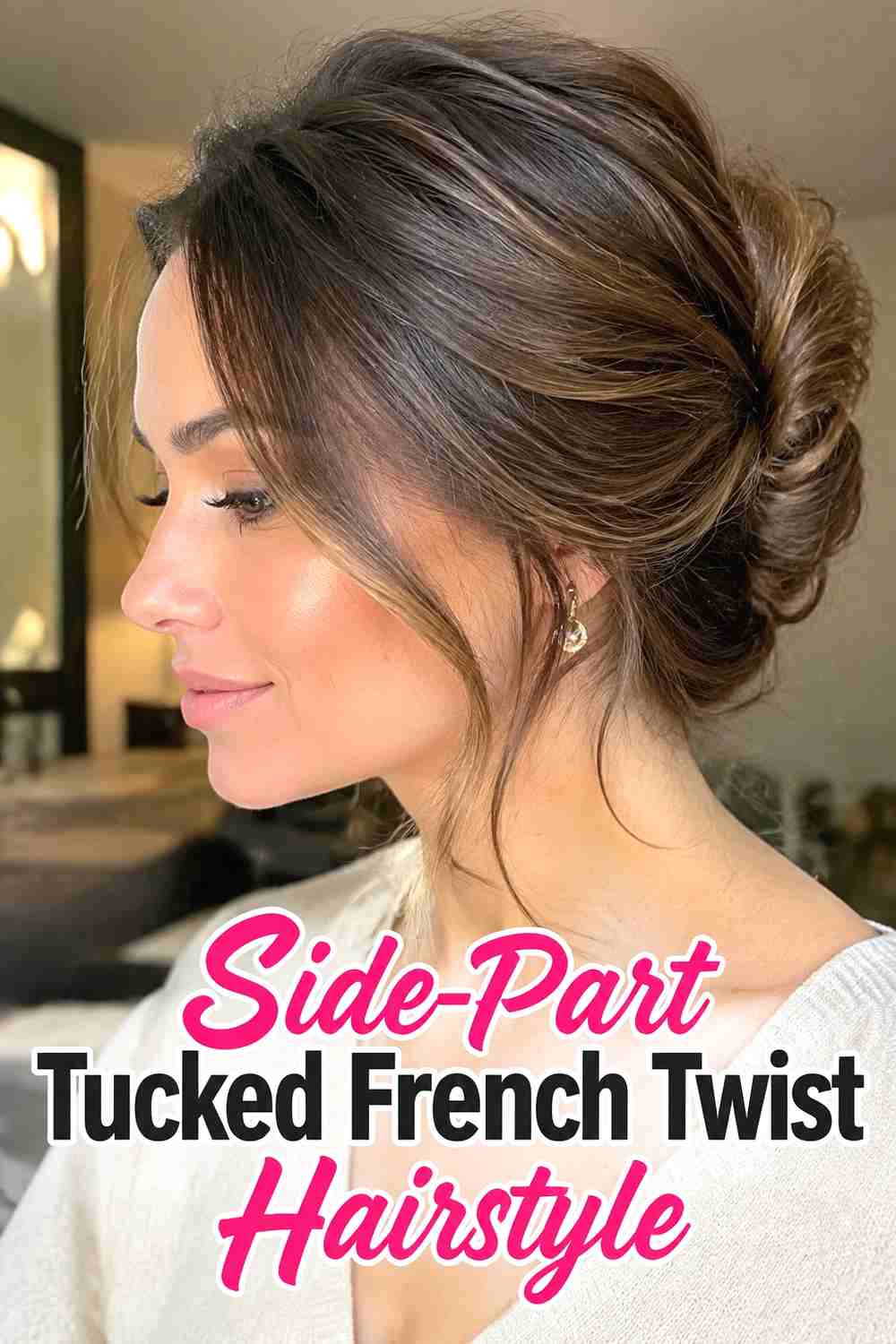
A defined side part gives the French twist an elegant asymmetrical front while keeping the back construction classic. The heavier side can sweep smoothly across the forehead or temple before joining the twist, while the lighter side sits closer to the head. This variation works well when you want a polished look without brushing every strand directly backward. Establish the part first, smooth both front sections into their natural direction, then gather the remaining hair into the vertical roll. Keep the sweep soft enough to retain movement around the face. Once the ends are tucked, check the style from both sides to make sure the front section flows naturally into the pinned structure rather than appearing disconnected.
Why It Works
The part creates visual direction at the front while the tucked roll provides structure at the back, giving the updo interest without requiring extra accessories.
7. Center Part Tucked French Twist Hairstyle
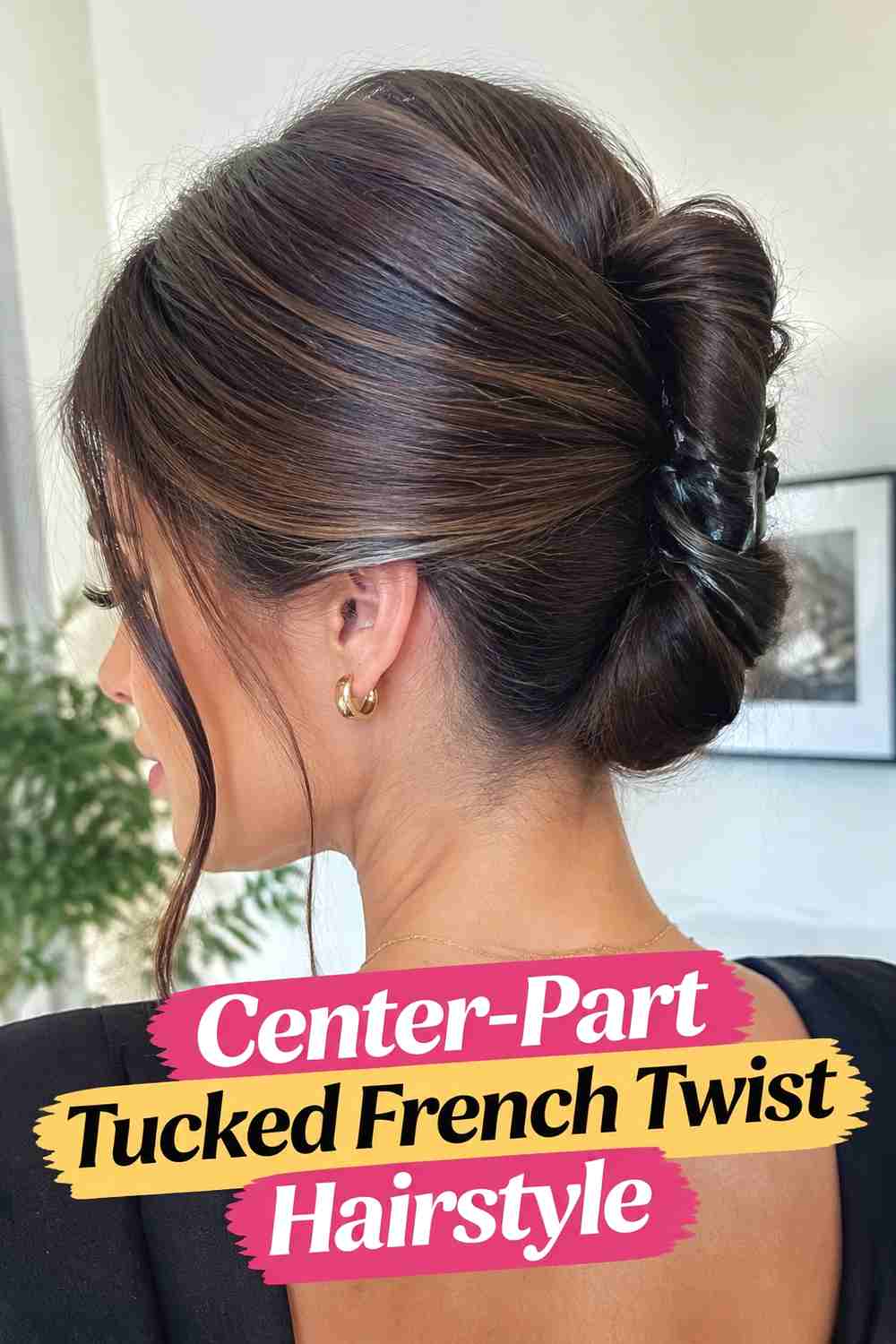
A center part gives the tucked French twist a clean, balanced appearance with a slightly more modern feel. The front sections sit smoothly on both sides of the face before feeding into the twist, creating symmetry without making the overall updo too severe. This style suits medium to long hair and works especially well when the hairline and front pieces can lie neatly with minimal product. Create the part while the hair is smooth, then direct both sides backward with even tension. Form the roll at the back and tuck the ends securely inside. Keep a little natural lift through the crown so the center-parted front does not make the whole hairstyle appear overly flat.
Styling Notes
Use a comb only where you need precision around the part. Softer brushing through the rest of the hair helps preserve a natural surface instead of making every strand look compressed.
8. Face Framing Tucked French Twist Hairstyle
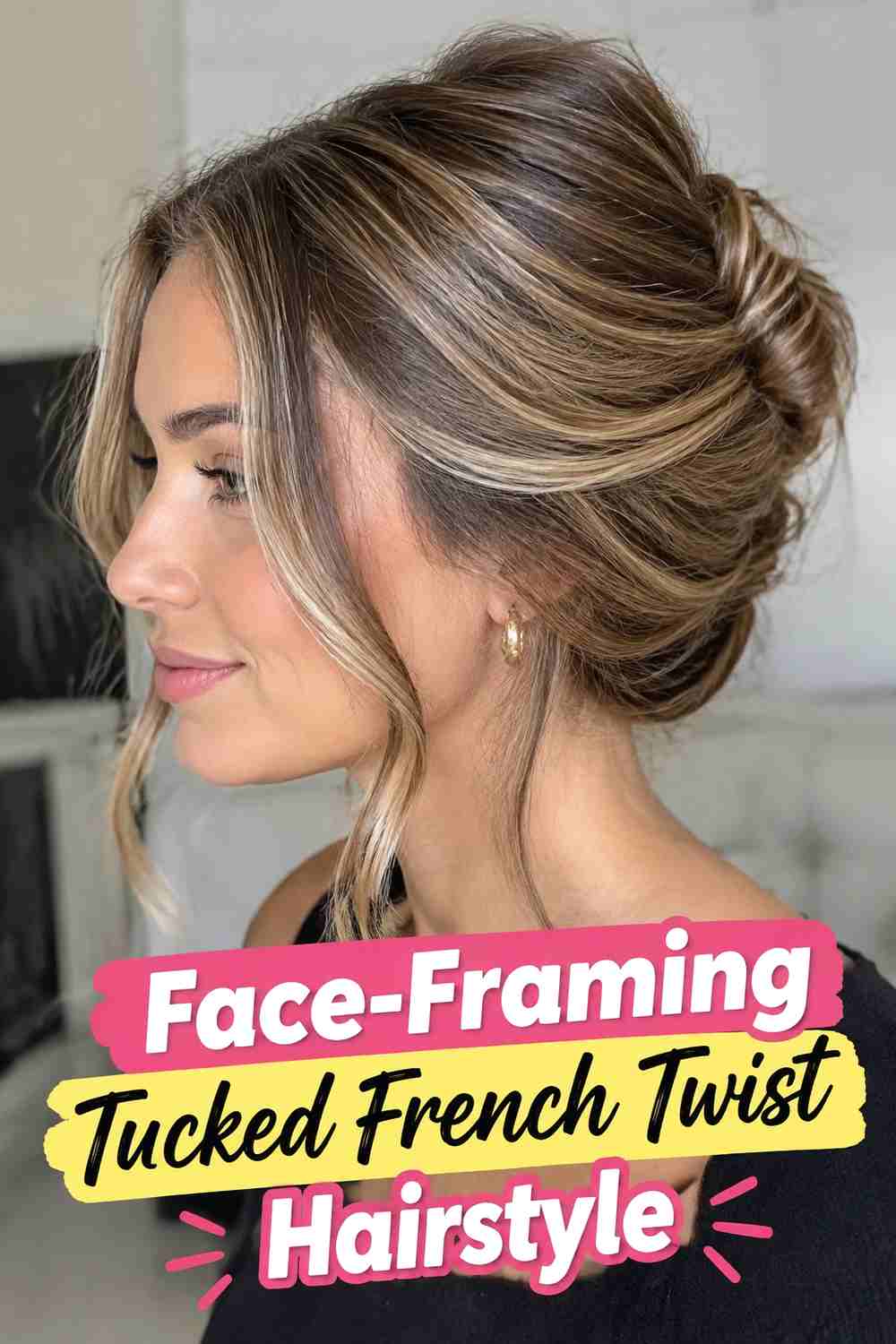
Face-framing pieces soften the structured shape of a French twist and can make the updo feel more relaxed. Leave two narrow sections near the front before gathering the rest of the hair, then build the twist as usual with a smooth vertical roll and tucked ends. The loose pieces can remain mostly straight, curve gently away from the face, or form soft bends depending on the finish you prefer. Keep them light enough that they complement rather than hide the updo. This variation works particularly well on layered cuts where shorter pieces naturally fall around the cheek or jaw. The contrast between the secure back and flexible front creates a balanced, wearable silhouette.
Best For
This version is a useful choice when a fully slicked-back updo feels too formal. It pairs particularly well with soft makeup, earrings, and open necklines.
9. Curtain Bang Tucked French Twist Hairstyle
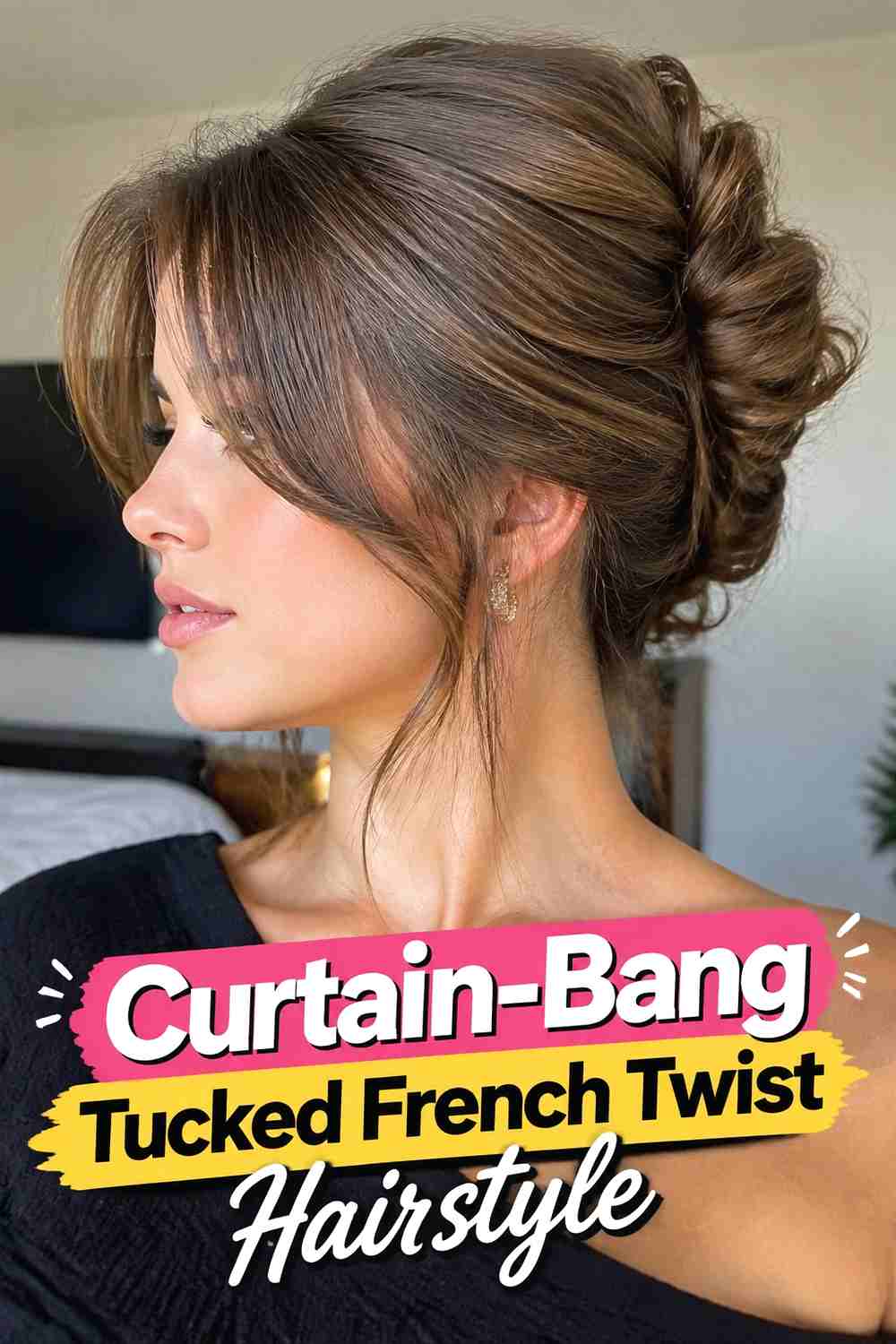
Curtain bangs give the French twist a softer front profile while allowing the back to remain polished and secure. The fringe can split at the center or slightly off-center, curving gently toward the temples before blending into longer face-framing pieces. Style the bangs separately first, then gather the rest of the hair so you do not accidentally pull them too tightly into the twist. Keep the crown lightly lifted and form a neat roll at the back with the ends tucked out of sight. The most natural result lets the fringe move independently while still visually connecting to the updo. Avoid heavy spray near the bangs, which can remove the airy separation that makes them appealing.
Pro Tip
Finish the twist before making final adjustments to the curtain bangs. This lets you balance the front volume against the finished height and width of the updo.
10. Textured Tucked French Twist Hairstyle
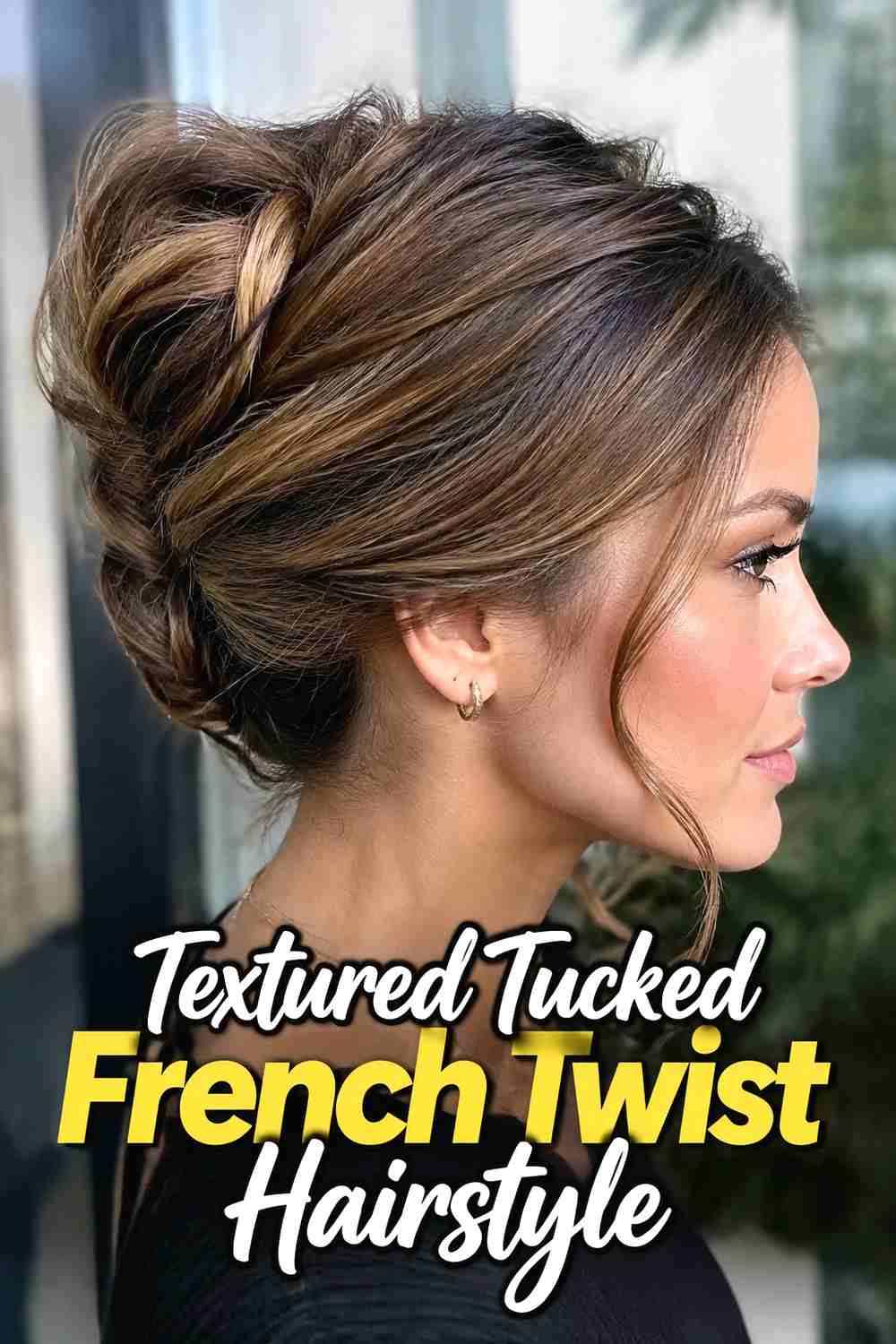
A textured French twist celebrates visible strand variation rather than hiding every bend beneath a perfectly smooth surface. The hair can be lightly waved or prepped with texturizing product before it is gathered, creating grip and subtle dimension throughout the roll. This makes the style useful for hair that naturally resists a glassy finish or for anyone who prefers a less traditional updo. Keep the inner construction secure, but allow the outside to show small ridges, separated sections, and soft irregularity. Once the ends are tucked, gently loosen selected areas instead of pulling apart the whole twist. The final shape should remain clearly recognizable as a French twist even though its surface feels relaxed and tactile.
Hair Type & Length
Wavy and medium-density hair often holds this finish naturally. Very silky hair may need light texture spray or styling powder to create enough grip for the pins.
11. Wavy Tucked French Twist Hairstyle
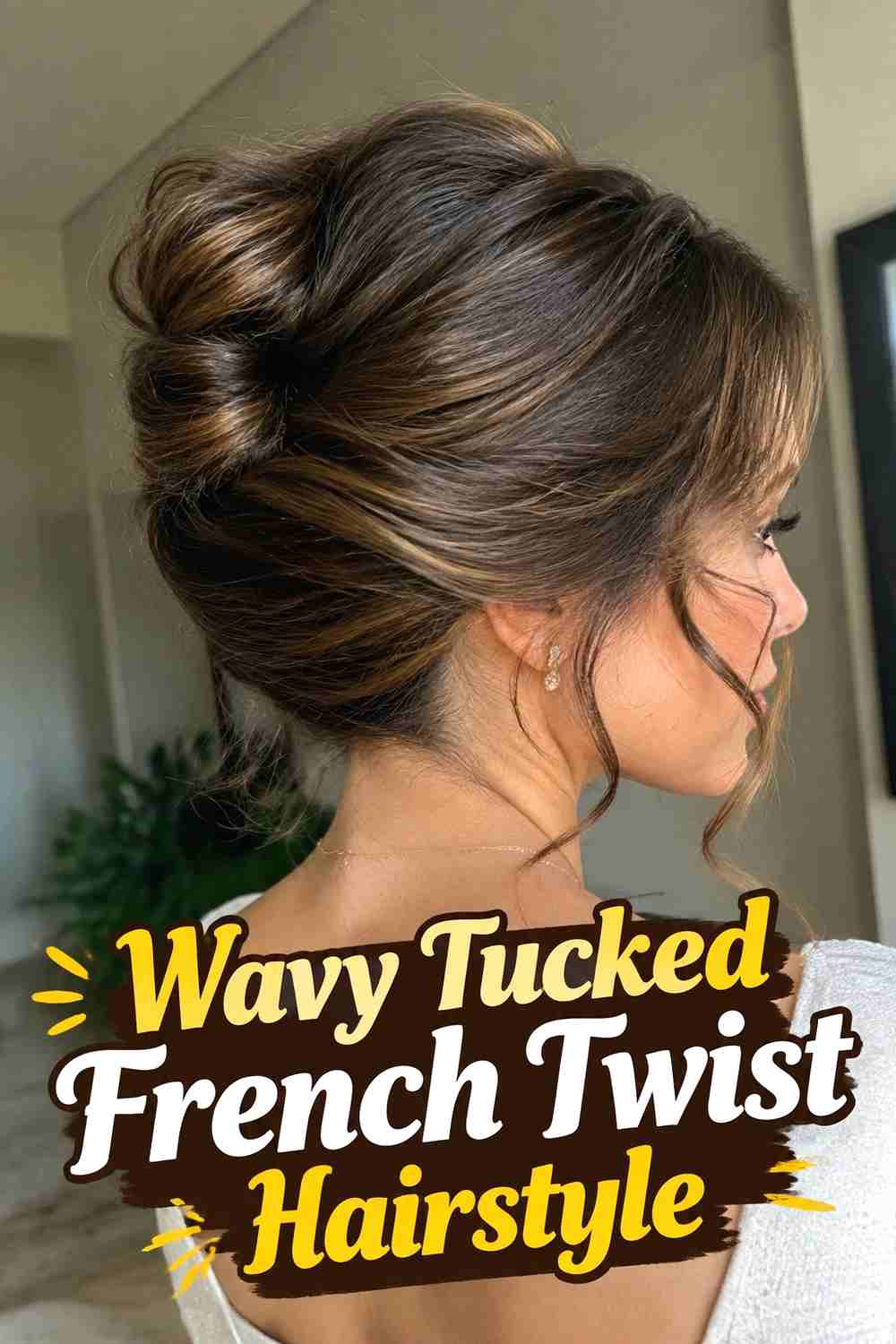
Pre-styled waves give a tucked French twist softness before the roll is even formed. Instead of brushing the hair completely straight, preserve some broad bends through the lengths and allow those curves to create gentle ridges across the finished updo. This approach can make the twist look fuller without heavy teasing and works beautifully on medium to long hair. Curl or wave the hair loosely, let it cool, then gather it with your hands rather than aggressively brushing out the texture. Roll the hair inward and tuck the ends so a few natural bends remain visible along the outer surface. The style should feel romantic and dimensional while the pinned foundation stays compact enough to support the added texture.
Why It Works
Pre-existing bends create visual volume throughout the roll, so the twist appears softer and fuller without relying entirely on crown height or added accessories.
12. Messy Tucked French Twist Hairstyle
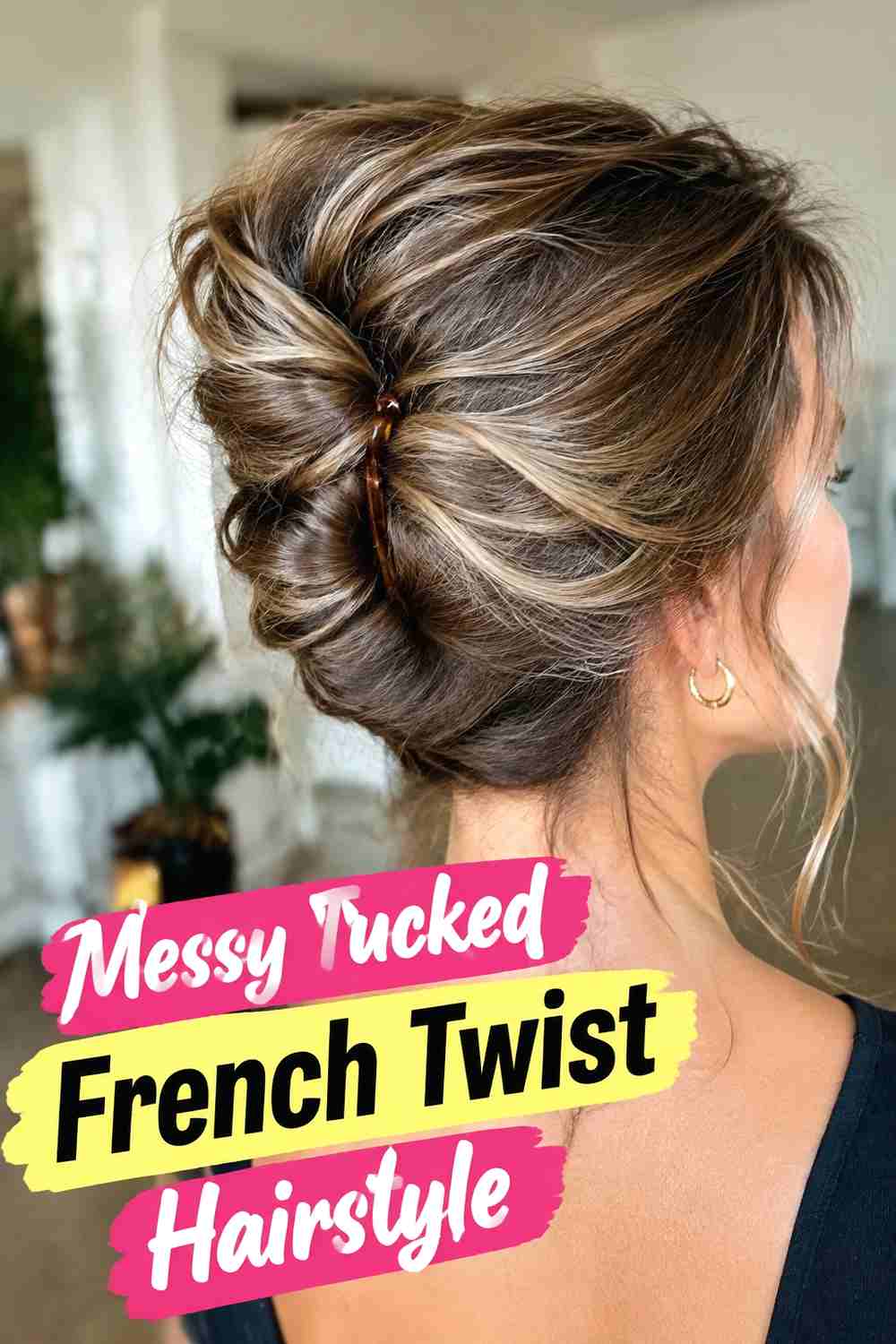
The messy French twist keeps a secure hidden foundation while intentionally relaxing the visible finish. The crown can have uneven softness, a few wispy pieces may escape around the hairline, and the roll itself can show slightly irregular folds. The key is controlled imperfection: the updo should never look as if it is actually coming undone. Start with textured hair, anchor the base firmly, then build the twist without smoothing every strand into place. Tuck the ends securely before loosening a few small sections with your fingertips. This version works well for casual celebrations, date nights, or any setting where a pristine formal updo would feel too rigid but wearing the hair completely loose is not ideal.
Styling Notes
Finish the secure structure first and create the messy effect afterward. Loosening hair before the twist is fully pinned can make the entire updo unstable.
13. Polished Tucked French Twist Hairstyle
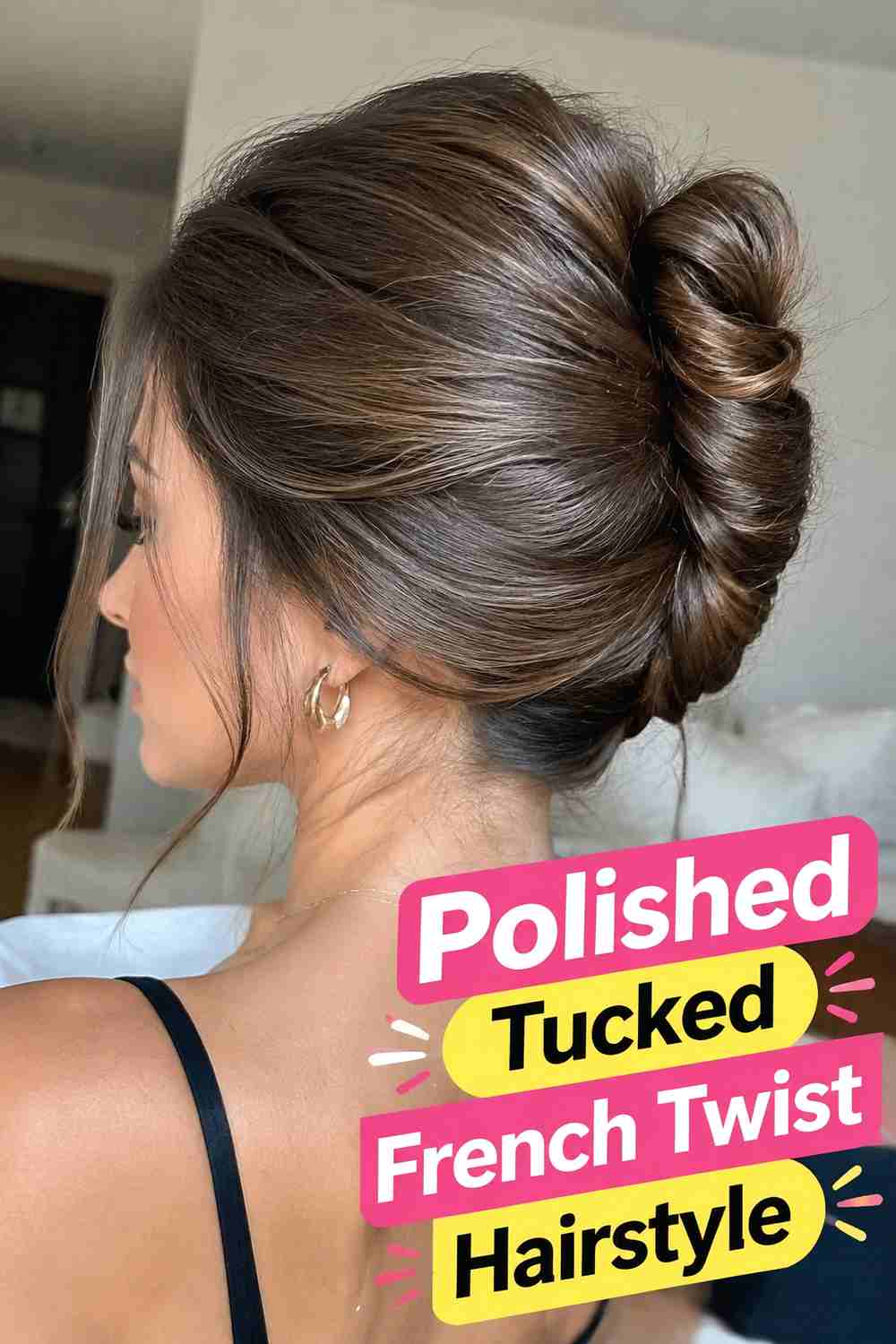
A polished tucked French twist focuses on balanced proportions, smooth surface texture, and a clean hidden seam. The sides are controlled but not excessively tight, the crown has modest lift, and the vertical roll follows a tidy line along the back of the head. This version is versatile enough for formal events, professional settings, and elegant dinners because it avoids both extreme volume and deliberately undone texture. Begin with smooth hair, create a secure pin foundation, and roll the lengths inward with even tension. Tuck the ends completely inside before refining the outside with a soft brush or comb. Finish with flexible spray and a tiny amount of smoothing product on visible flyaways.
Wear & Maintenance
Check the twist from the side as well as the back. A polished finish depends on the roll sitting close enough to the head that it looks intentional and well supported.
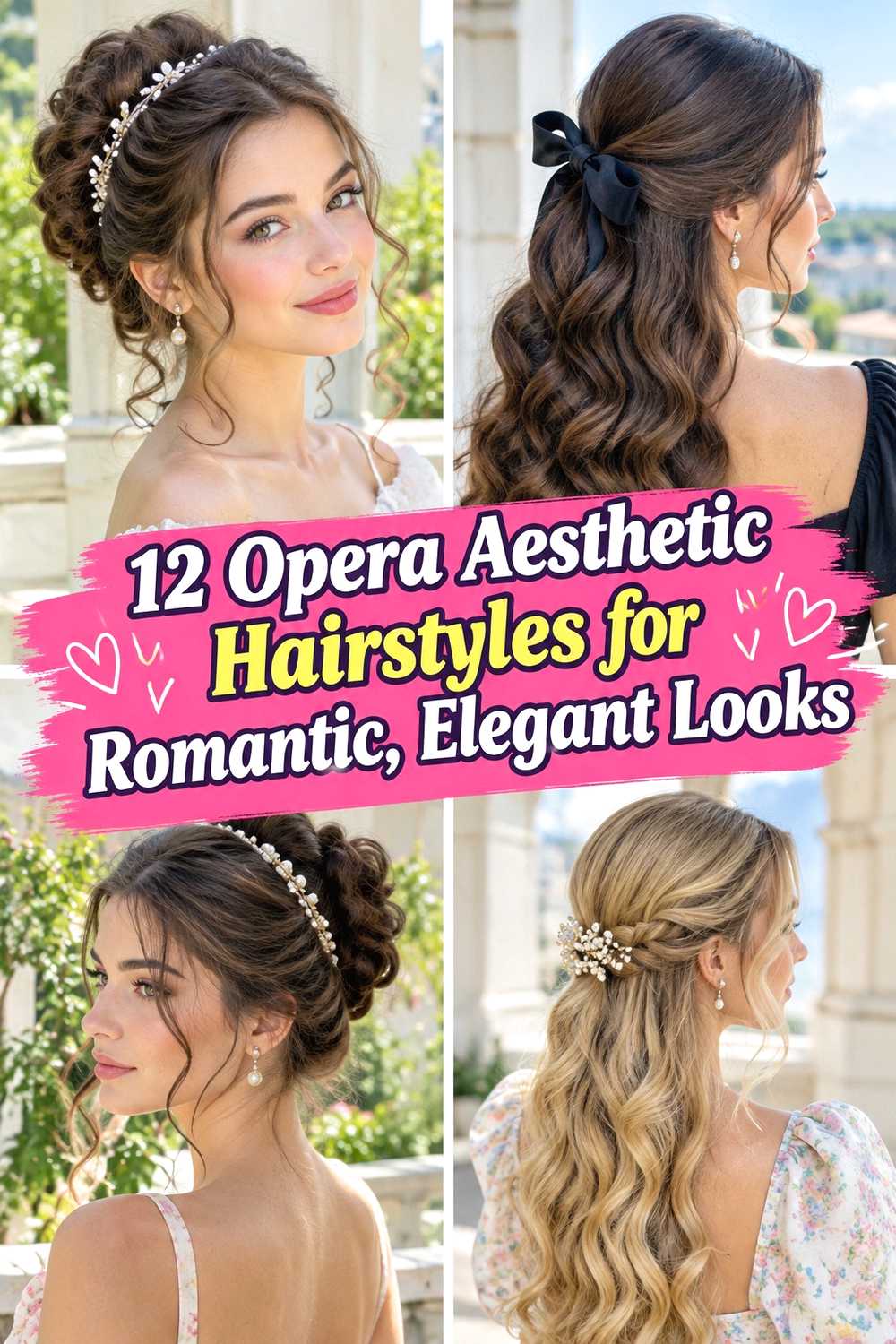
14. Pearl Pin Tucked French Twist Hairstyle
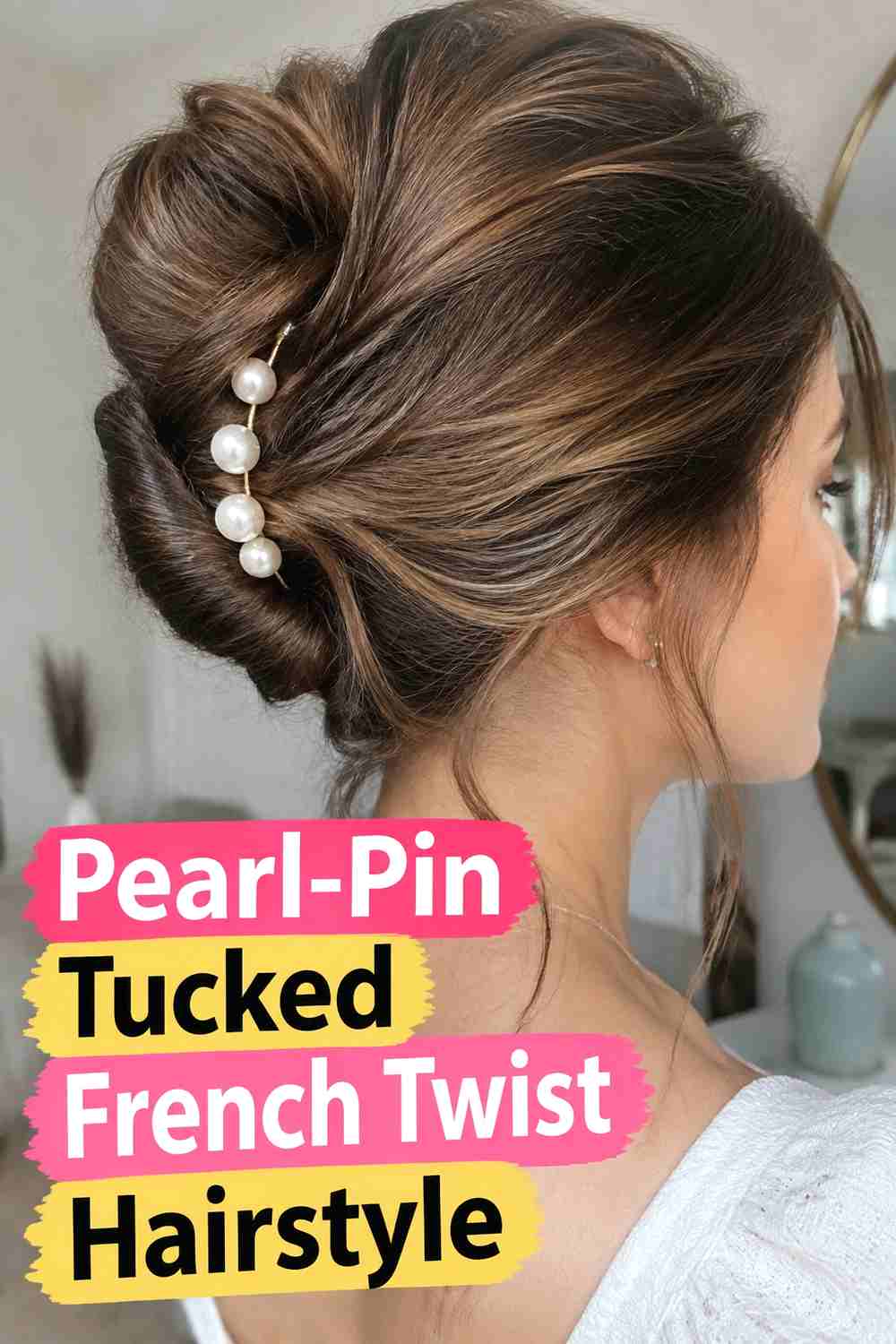
Pearl pins add a decorative touch to a French twist without changing its classic structure. Build the updo first, making sure the roll is fully supported with ordinary hidden pins before adding any visible accessories. A few pearl-topped pins can then be placed along the seam, near the upper edge of the twist, or scattered sparingly across one side. The effect works especially well for weddings, dinners, and other dressier occasions where a subtle accessory can complement jewelry or clothing. Keep the number of pearls restrained so the vertical roll remains visible. The pins should look like accents rather than the main support system, and they should sit securely without pulling individual strands out of place.
Pro Tip
Use functional pins underneath and decorative pins afterward. This prevents the hairstyle from depending on ornamental accessories that may not provide enough structural grip.
15. Minimalist Tucked French Twist Hairstyle
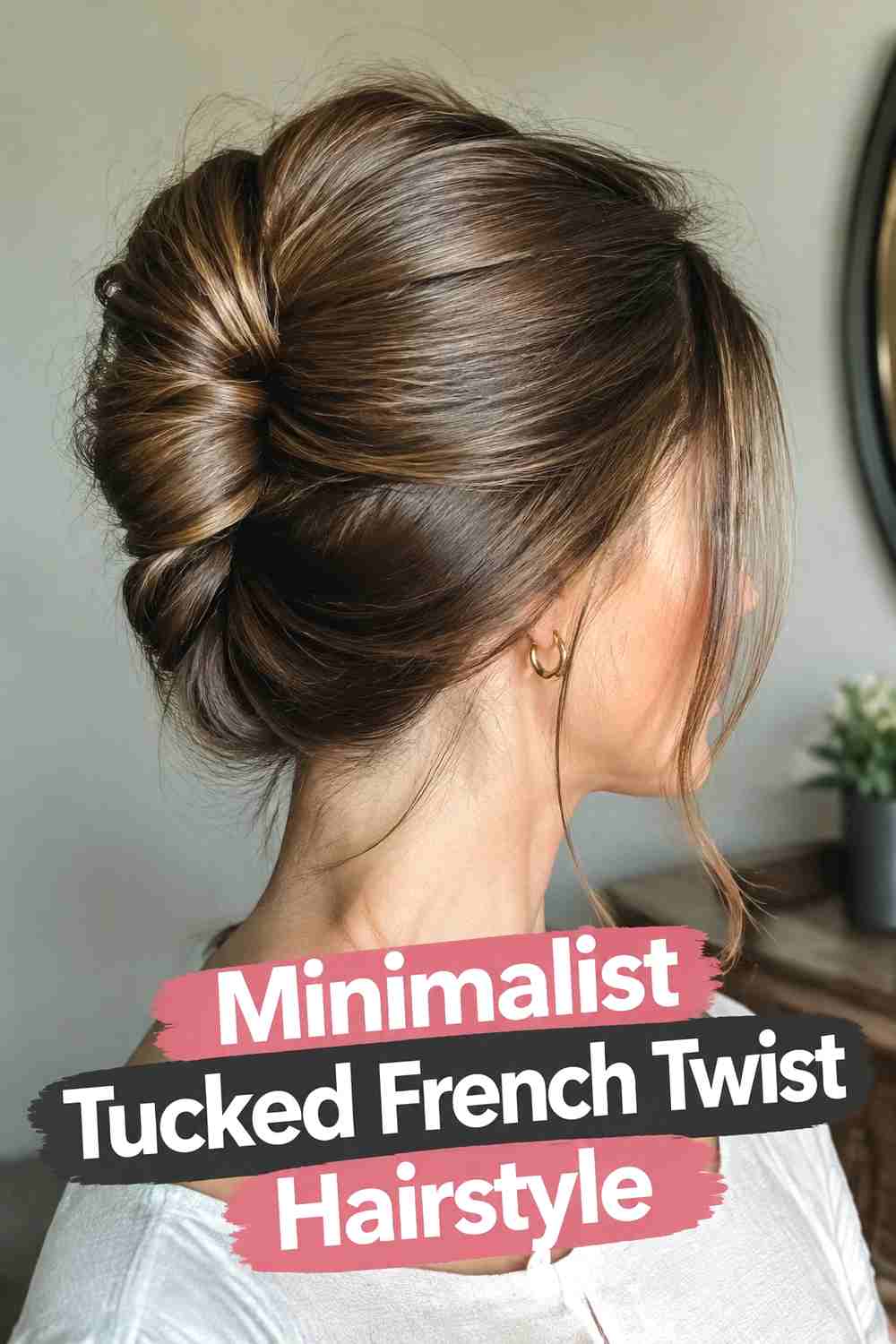
The minimalist French twist strips the style down to a clean roll, smooth crown, and almost invisible pinning. There are no decorative accessories, dramatic loose pieces, or exaggerated height; the appeal comes from the precision of the tucked construction itself. This works beautifully with simple outfits or professional clothing because the hairstyle adds polish without competing for attention. Keep product use restrained, smoothing only where necessary and leaving enough natural texture for the hair to look real. Form the twist with a compact silhouette and tuck every end neatly into the seam. A slight natural curve at the crown prevents the updo from appearing flat while maintaining the understated, modern character of the look.
Best For
Choose this version when you want a refined updo that works with clean tailoring, minimal jewelry, or an overall less-is-more aesthetic.
16. Voluminous Tucked French Twist Hairstyle
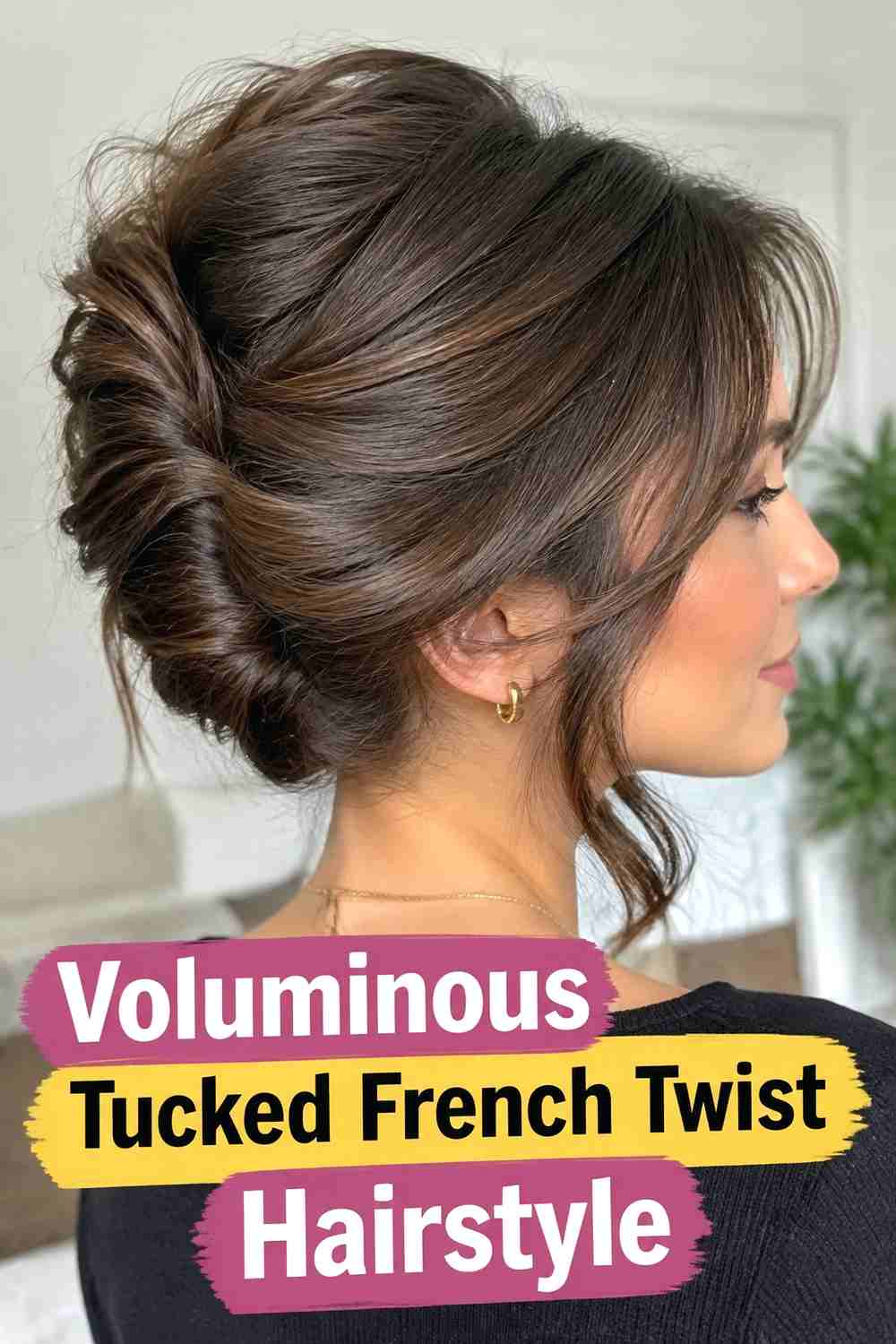
A voluminous French twist expands the classic silhouette with extra fullness through the crown and a broader roll at the back. The style still relies on a secure tucked foundation, but the outer layer is arranged with less compression so the hair appears plush and dimensional. Medium to dense hair can achieve this shape naturally, while finer hair may benefit from lightweight root support or gentle backcombing underneath the visible surface. Build the volume first, smooth only the top layer, then gather and roll the lengths without pulling the sides too tightly. Once the ends are tucked, lightly adjust the crown with your fingertips. The goal is fullness with structure, not exaggerated height or an oversized hollow roll.
Hair Type & Length
Longer and denser hair can create natural volume, while fine hair may need strategic support at the crown. Avoid heavy oils, which can collapse the lifted shape.
17. Wedding Tucked French Twist Hairstyle
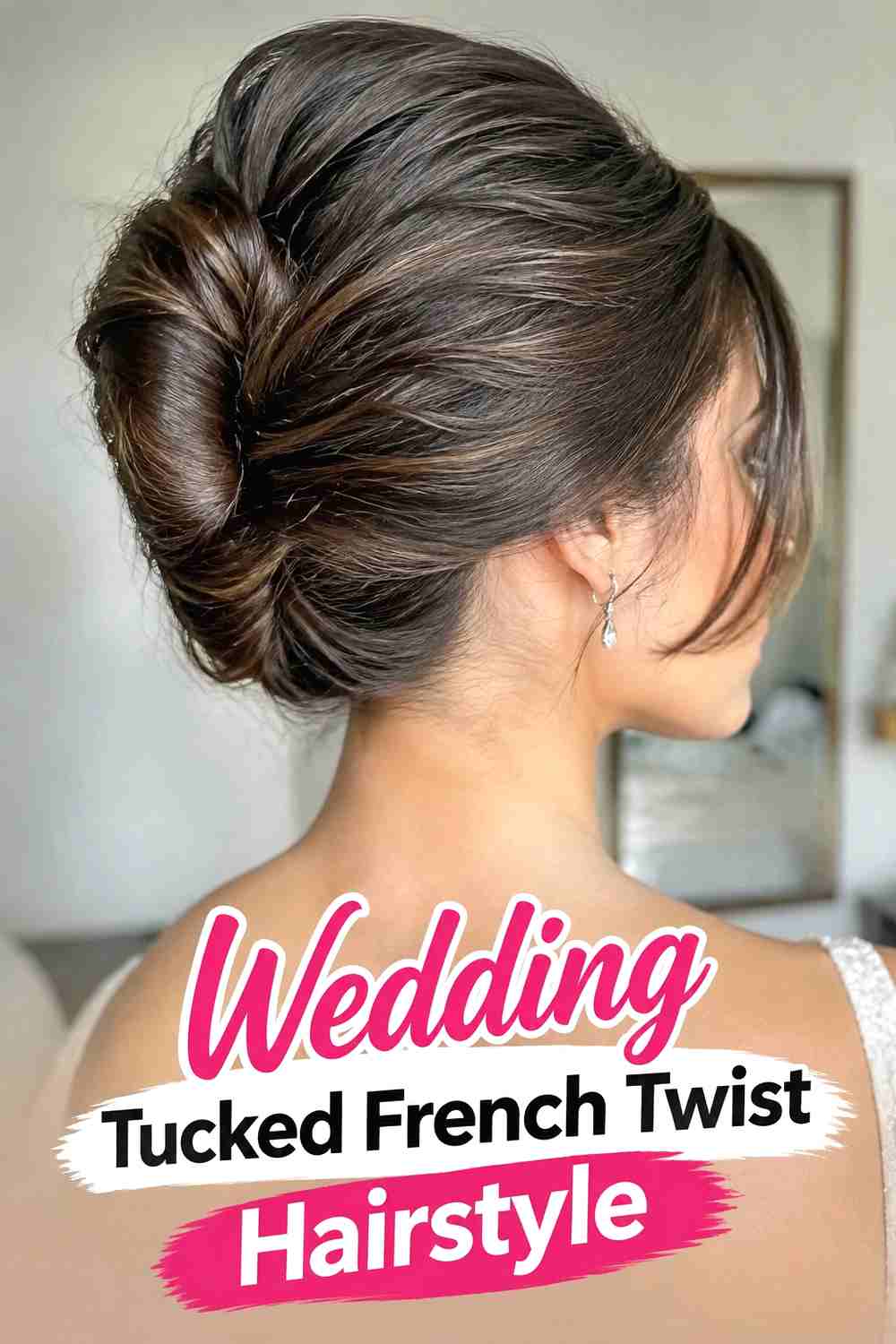
A wedding French twist balances elegance, comfort, and reliable hold for hours of photographs and movement. The roll can stay classic or soften slightly with face-framing pieces, crown volume, or understated accessories such as pearls or small floral pins. Medium to long hair provides enough length for a stable tucked structure, although the exact shape should suit the veil, headpiece, neckline, and jewelry. Build the inner foundation securely before refining the visible surface, and test any veil placement without relying on the twist’s decorative pins for support. Flexible spray helps preserve movement while controlling flyaways. The finished updo should feel secure enough to wear confidently without creating uncomfortable tension at the scalp.
Wear & Maintenance
Comfort matters for long events. Place structural pins where they grip firmly without pressing sharply against the scalp, and test the hairstyle with any veil or accessory beforehand.
18. Office Ready Tucked French Twist Hairstyle
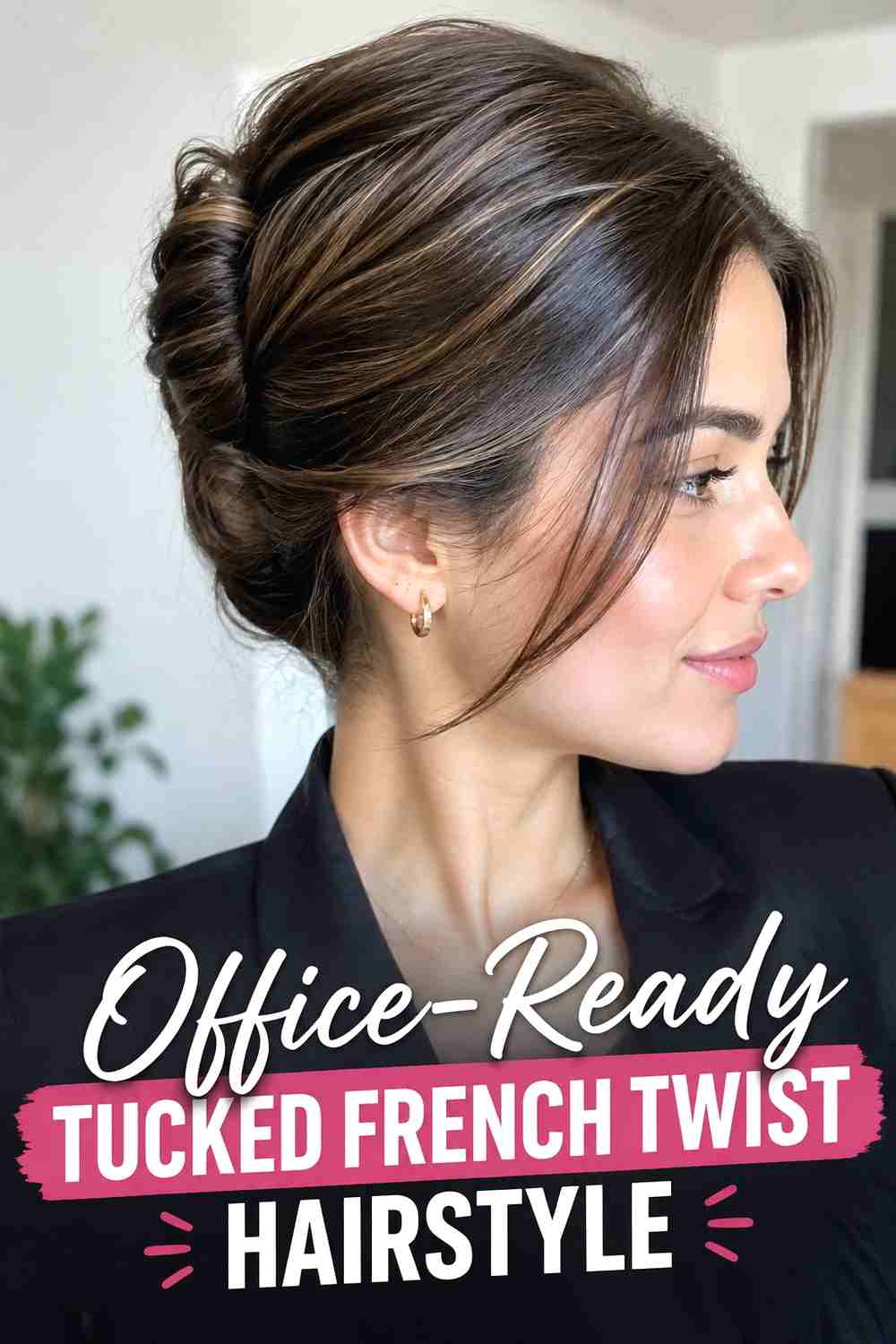
The office-ready French twist keeps the hairstyle practical, secure, and understated. Crown volume stays moderate, the sides are neatly controlled, and the tucked roll sits close to the head so it does not feel overly formal for daytime wear. This version is especially useful for medium to long hair when you want the length completely off the neck without relying on a basic ponytail or bun. Use enough product to manage flyaways but keep the finish flexible. A compact roll with hidden pins tends to stay comfortable through meetings, commuting, and desk work. If your hair is heavily layered, allow a few short pieces near the front rather than forcing every strand into the twist.
Why It Works
The vertical shape looks polished while keeping the hair contained, making it practical for professional settings without requiring elaborate accessories or dramatic styling.
19. Evening Glam Tucked French Twist Hairstyle
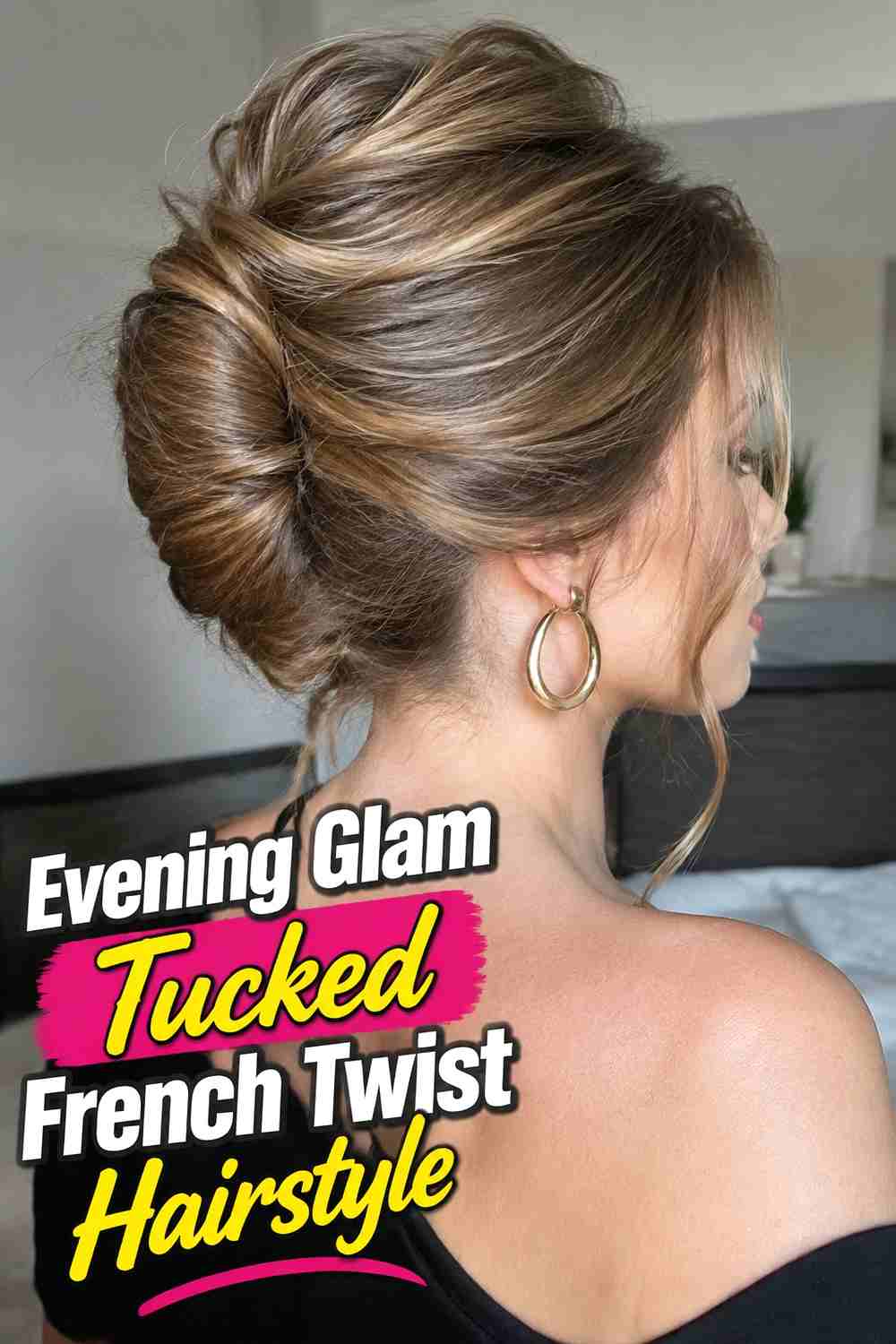
Evening glam gives the tucked French twist a richer finish through deeper shine, stronger crown shape, and more deliberate face framing. The roll itself can remain smooth and classic while the front gains a dramatic side sweep or softly curved pieces near the temples. Long hair can create a fuller twist, while medium lengths often produce a cleaner, more compact profile. Prep the hair for smoothness, create the desired crown volume, and build a firm inner pin foundation before rolling the lengths. Once the ends are tucked, refine the outer surface and add controlled shine through a light finishing mist. The result should look glamorous under evening lighting without becoming overly lacquered or rigid.
Best For
This style suits dinners, formal celebrations, parties, and other evening occasions where a standard French twist could use a little more visual impact.
20. Modern Tucked French Twist Hairstyle
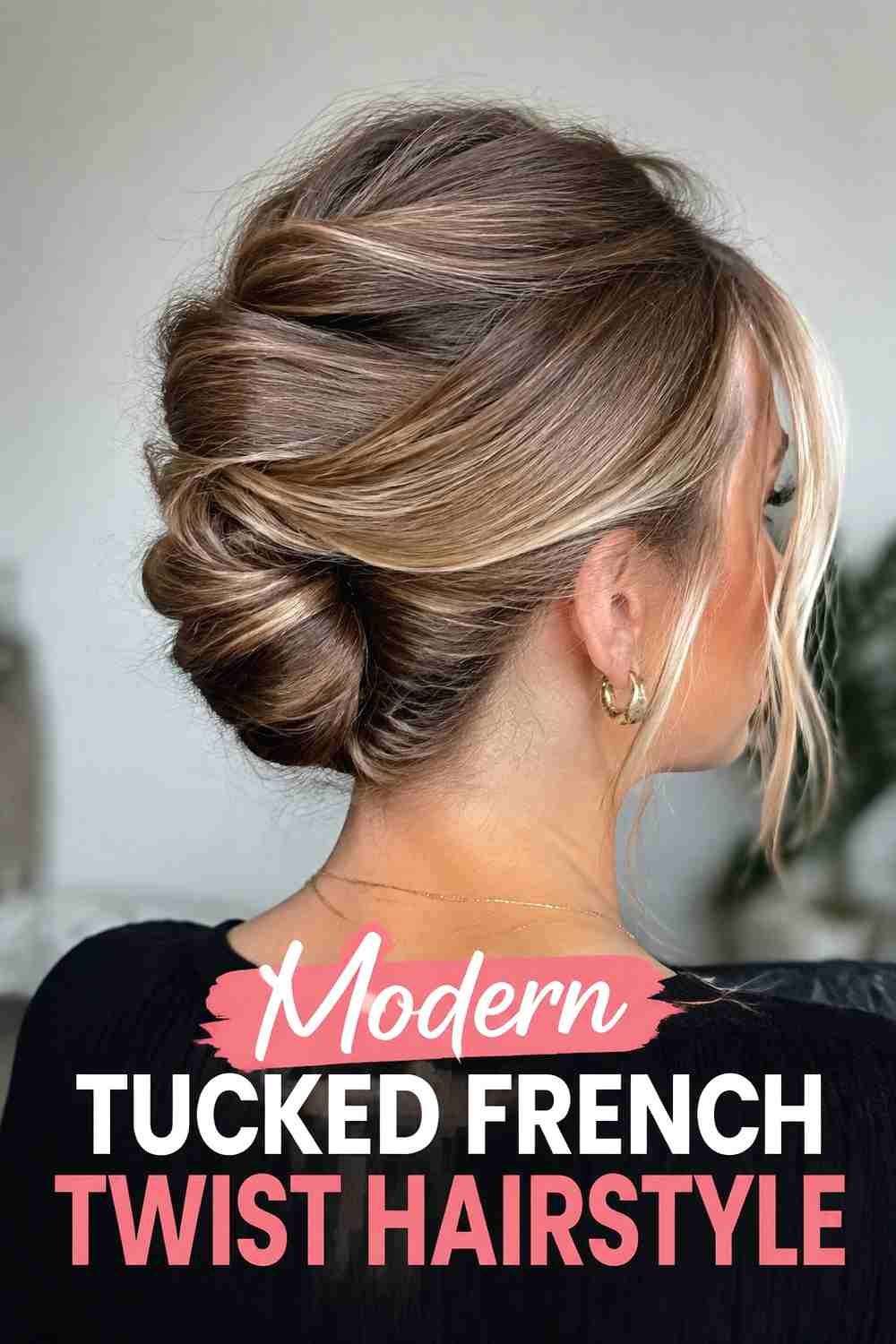
The modern tucked French twist keeps the recognizable vertical roll while relaxing some of the traditional rules. The part can be subtle, the crown softly lifted, and the surface slightly textured rather than perfectly smooth. A few ends or face-framing pieces may remain intentionally visible, but the core roll still needs a secure tucked structure so the hairstyle looks designed rather than unfinished. This version is especially adaptable to layered hair because short pieces can become part of the relaxed finish. Use flexible products, hidden pins, and moderate tension to preserve natural movement. The final silhouette should feel clean from a distance while revealing softer detail and texture when viewed up close.
Styling Notes
Modernizing the twist works best through small changes in texture, volume, and face framing. Keeping the basic rolled construction recognizable prevents the look from turning into a generic messy updo.
How to Choose the Right Look
Start with length and density. Medium-length hair often forms a compact French twist with minimal bulk, while very long hair may need an extra fold or deeper tuck to hide the ends comfortably. Dense hair can support a fuller roll, whereas finer hair may benefit from light texture spray, root support, or discreet backcombing beneath the visible surface.
Next, decide how polished you want the front and crown to feel. Sleek, minimalist, center-parted, and office-ready versions create cleaner lines. Soft loose, wavy, messy, or face-framing twists feel more relaxed. If crown volume is important, build it before forming the roll rather than trying to pull the finished style upward.
For weddings and evening events, consider both hold and accessories. Decorative pins should enhance a structurally secure twist rather than serve as its only support. Above all, choose a version that feels comfortable at the scalp and realistic for your hair’s length, layers, and natural texture.
Final Thoughts
The tucked French twist can move easily between classic elegance and modern softness simply by changing the crown volume, texture, part, and finishing details. A secure inner roll matters more than a perfectly smooth exterior, so prioritize comfortable pinning and believable structure first. Once the foundation is stable, you can keep the finish sleek, loosen it for texture, add face-framing pieces, or introduce a few carefully chosen accessories.
FAQs
1. How long does hair need to be for a tucked French twist?
Medium-length hair is often enough, especially if it reaches past the shoulders. Longer hair also works, though extra length may need to be folded or tucked more deeply inside the roll.
2. How do I keep a French twist from falling out?
Create a secure pin foundation before forming the roll, then insert additional pins into the dense inner section of the twist. Light texture product can also improve grip on very silky hair.
3. Can layered hair work in a French twist?
Yes. Layers may create shorter pieces around the surface or hairline, but those can be smoothed into place or intentionally left soft for a more relaxed finish.
4. Can I wear a tucked French twist for a wedding?
Yes. A French twist works well for formal events because it keeps the hair contained and can accommodate veils, pearl pins, or other subtle accessories when securely anchored.
5. How can I make a French twist look more modern?
Use softer crown volume, relaxed texture, face-framing pieces, a center or side part, or minimal accessories. Keep the underlying roll secure while allowing the visible finish to feel less rigid.
Save your favorite tucked French twist hairstyle ideas, share them with someone planning an elegant updo, and explore more polished hairstyle inspiration for your next look.