12 Loose Mini Twist Ponytail Hairstyle Ideas
Loose mini twist ponytails blend soft movement, defined texture, and easy polish, creating a relaxed look that works beautifully for casual days and dressier plans.
Mini twists already offer plenty of texture and dimension, but gathering them into a ponytail can completely change their silhouette. Placement makes a major difference: a high ponytail feels lively and lifted, while a low version creates a softer, more understated finish. Parting, face-framing twists, wrapped bases, accessories, and curled ends can also give the same basic style a noticeably different personality.
When choosing among these ideas, think about your twist length, density, desired tension, and how long you plan to wear the ponytail. A secure style should still feel comfortable around the hairline and scalp. These options range from sleek and structured to full, loose, and deliberately soft, so you can match the finish to your personal style and routine.
Quick List
- High Loose Mini Twist Ponytail Hairstyle
- Low Loose Mini Twist Ponytail Hairstyle
- Side Swept Loose Mini Twist Ponytail Hairstyle
- Center Part Loose Mini Twist Ponytail Hairstyle
- Deep Side Part Loose Mini Twist Ponytail Hairstyle
- Face Framing Loose Mini Twist Ponytail Hairstyle
- Wrapped Base Loose Mini Twist Ponytail Hairstyle
- Half Up Loose Mini Twist Ponytail Hairstyle
- Voluminous Loose Mini Twist Ponytail Hairstyle
- Long Cascading Loose Mini Twist Ponytail Hairstyle
- Accessorized Loose Mini Twist Ponytail Hairstyle
- Soft Curly End Loose Mini Twist Ponytail Hairstyle
1. High Loose Mini Twist Ponytail Hairstyle
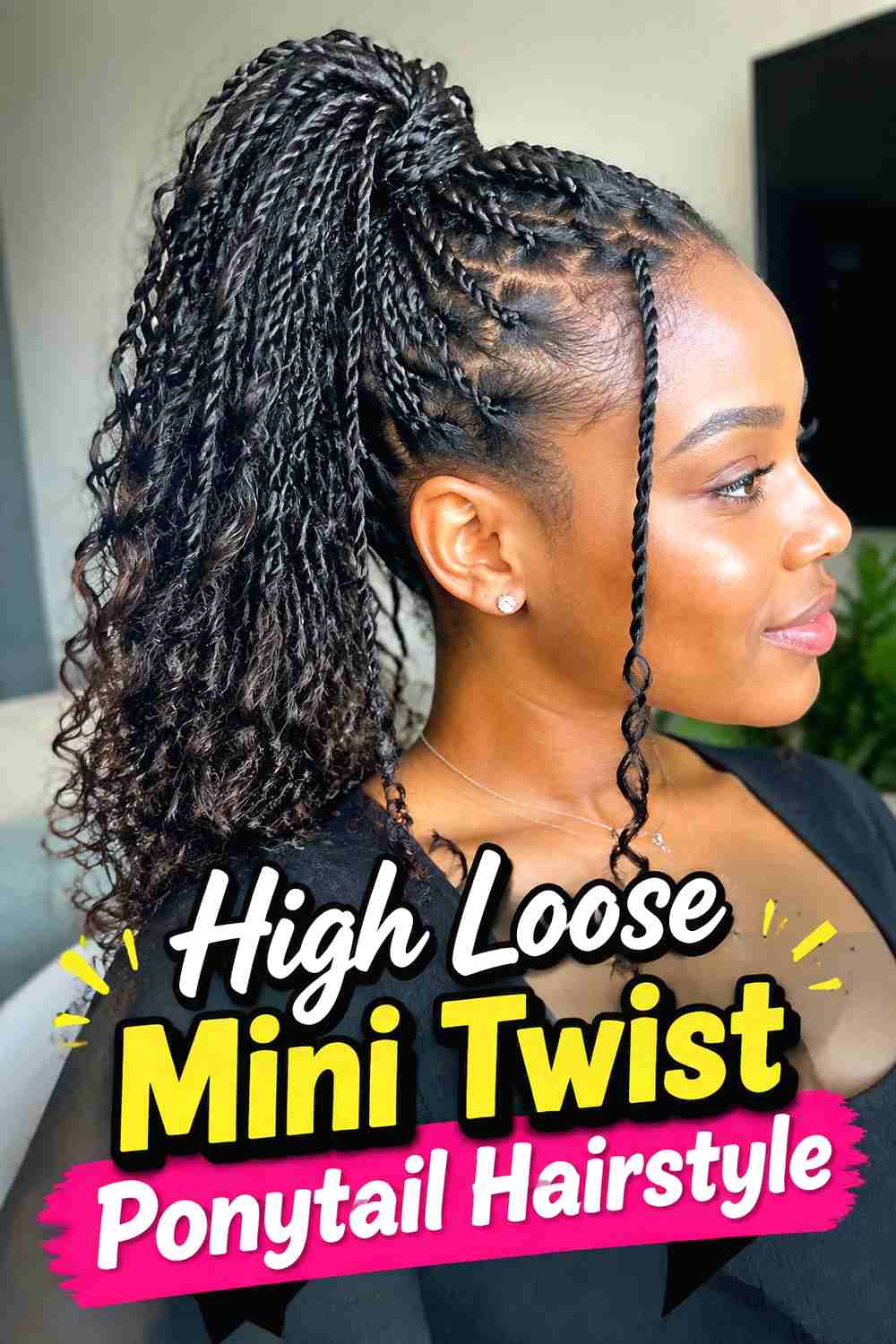
A high loose mini twist ponytail gathers the twists near the crown while allowing the lengths to fall freely, creating height without losing the texture that makes mini twists so appealing. The elevated placement gives the hairstyle noticeable movement, especially when longer twists fan outward or cascade down the back. Rather than pulling every twist extremely tight, keeping the base comfortably secure helps the finished look stay softer around the hairline. This style can work especially well when you want your twists off your shoulders or need a simple way to refresh an existing mini twist set. A few naturally positioned twists around the edges can keep the silhouette relaxed instead of overly structured.
Styling Notes
Use a wide, covered elastic or other hair-friendly holder that can accommodate the thickness of the twists without forcing the ponytail too tightly. Adjust individual twists around the crown after securing the base.
Best For
This placement is especially useful for medium to long mini twists and for anyone who enjoys a lifted, energetic ponytail with plenty of visible texture.
2. Low Loose Mini Twist Ponytail Hairstyle
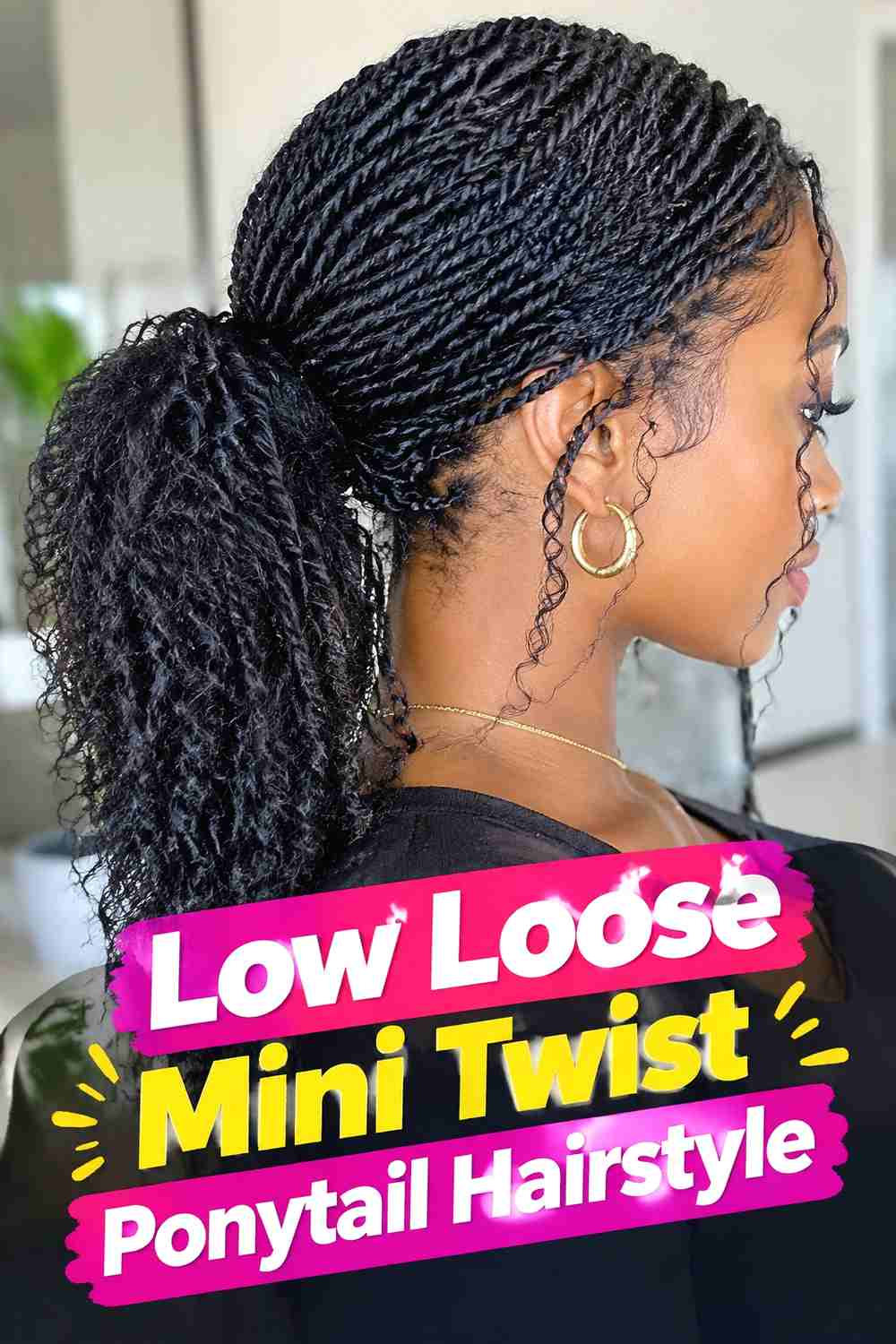
The low loose mini twist ponytail sits close to the nape, giving the textured twists a smooth, elongated silhouette. Because the ponytail begins lower on the head, the twists can fall naturally over the back or rest over one shoulder without creating much height at the crown. It is a practical choice when you want a neater profile while still keeping the mini twists soft and visible. The front can remain gently smoothed, lightly parted, or slightly loose depending on how polished you want the finish to feel. This version also works nicely with longer twists because their length becomes part of the design rather than being compressed into a high, bulky base.
Wear & Maintenance
Keep the ponytail holder comfortably secure rather than tight. If the style begins to shift during the day, reposition the base instead of repeatedly tightening it against the same area.
Why It Works
The lower placement highlights the length and individual definition of the twists while creating an understated shape that transitions easily from casual clothing to more refined outfits.
3. Side Swept Loose Mini Twist Ponytail Hairstyle
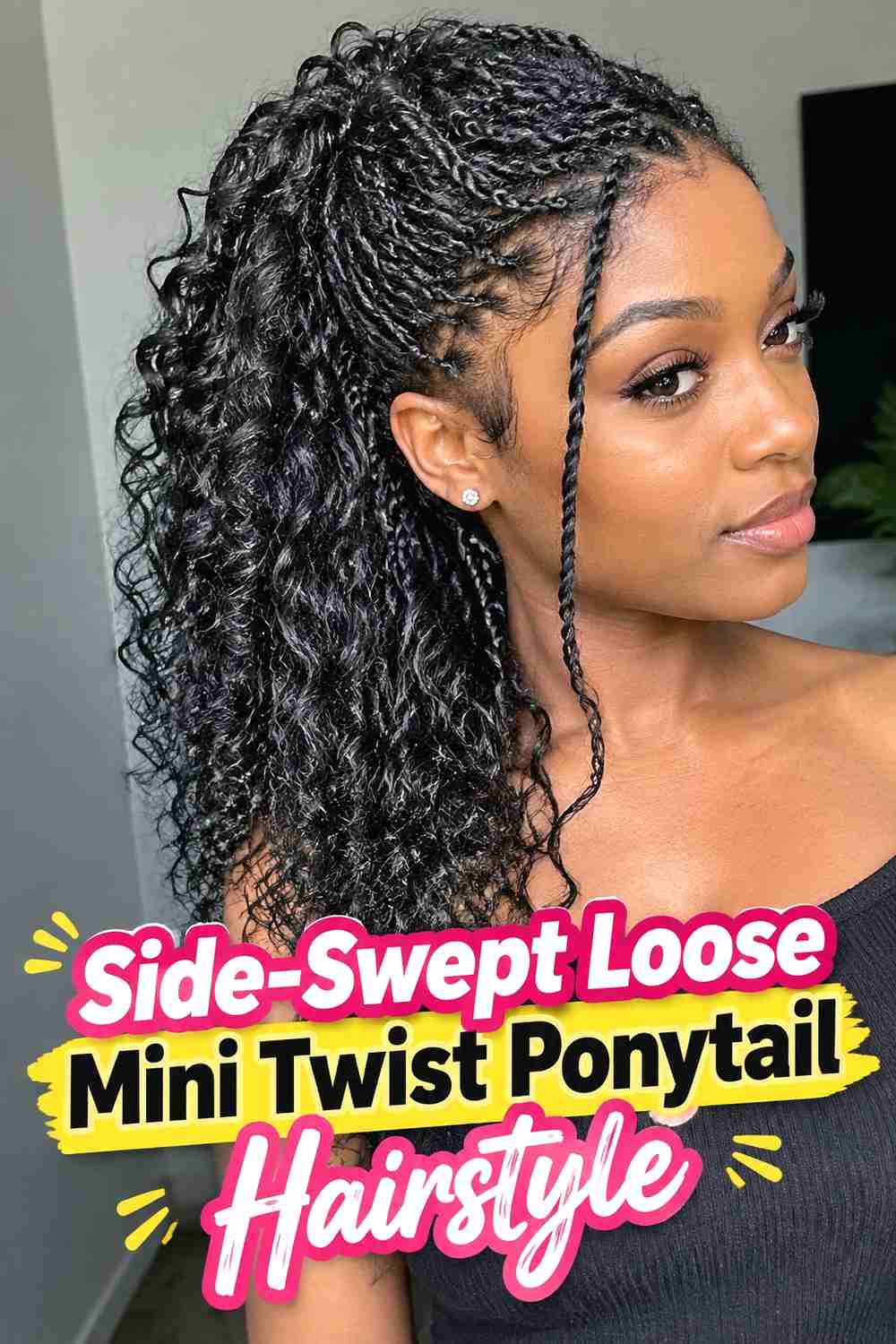
A side-swept loose mini twist ponytail creates an asymmetrical shape by directing the gathered twists toward one shoulder. The result feels softer than a centered ponytail and gives the twist lengths more visibility from the front. Medium and long twists are especially effective because they can drape across the shoulder while maintaining natural separation and movement. The base can sit slightly behind the ear or lower toward the nape depending on how dramatic you want the sweep to appear. Avoid forcing every twist into an identical direction; allowing a few pieces to settle naturally keeps the hairstyle dimensional. This is also an easy option when you want a ponytail that photographs well from both the front and side.
Styling Notes
Gather the twists gradually toward one side instead of sharply pulling them across the scalp. This can help the style look softer and reduce unnecessary tension at the opposite side.
Best For
Choose this version when you want to showcase long twists, earrings, or an open neckline while keeping the hairstyle feminine and relaxed.
4. Center Part Loose Mini Twist Ponytail Hairstyle
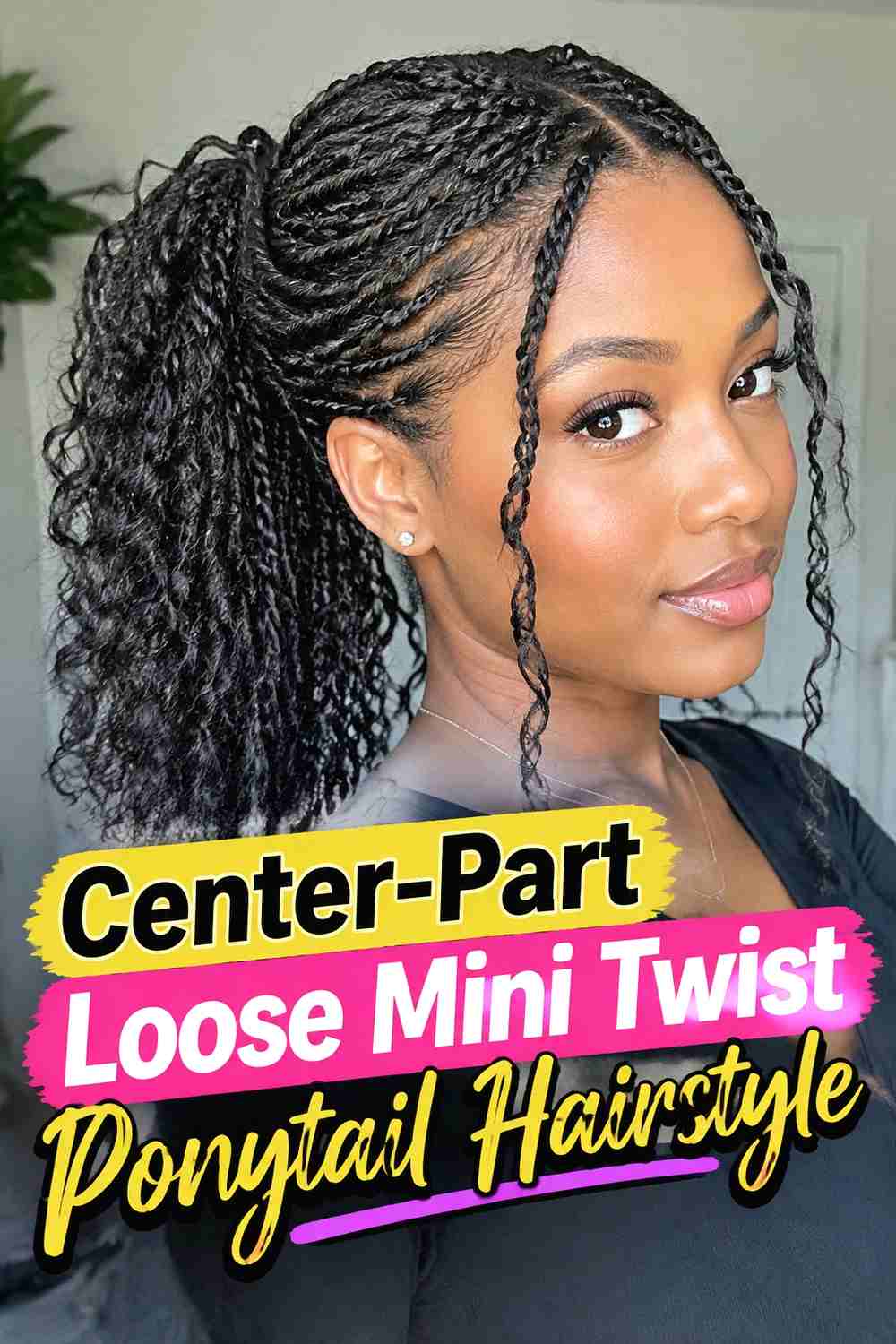
A center-part loose mini twist ponytail combines a balanced front view with a textured ponytail in the back. The clean middle part gives the hairstyle a little structure, while the mini twists themselves prevent the overall look from feeling severe. Depending on your preference, the twists on either side of the part can be directed smoothly toward a low or mid-height ponytail, with enough looseness to preserve natural volume near the roots. This idea works particularly well when the parting in your original mini twist installation is already neat and defined. The symmetry also makes small details such as earrings, makeup, or face-framing twists stand out without needing extra hair accessories.
Hair Type & Length
The style works best when the twists are long enough to gather comfortably without stretching the shorter sections around the front or sides.
Pro Tip
Use your existing twist parting as a guide instead of trying to create a sharply defined new part after the twists are already installed.
5. Deep Side Part Loose Mini Twist Ponytail Hairstyle
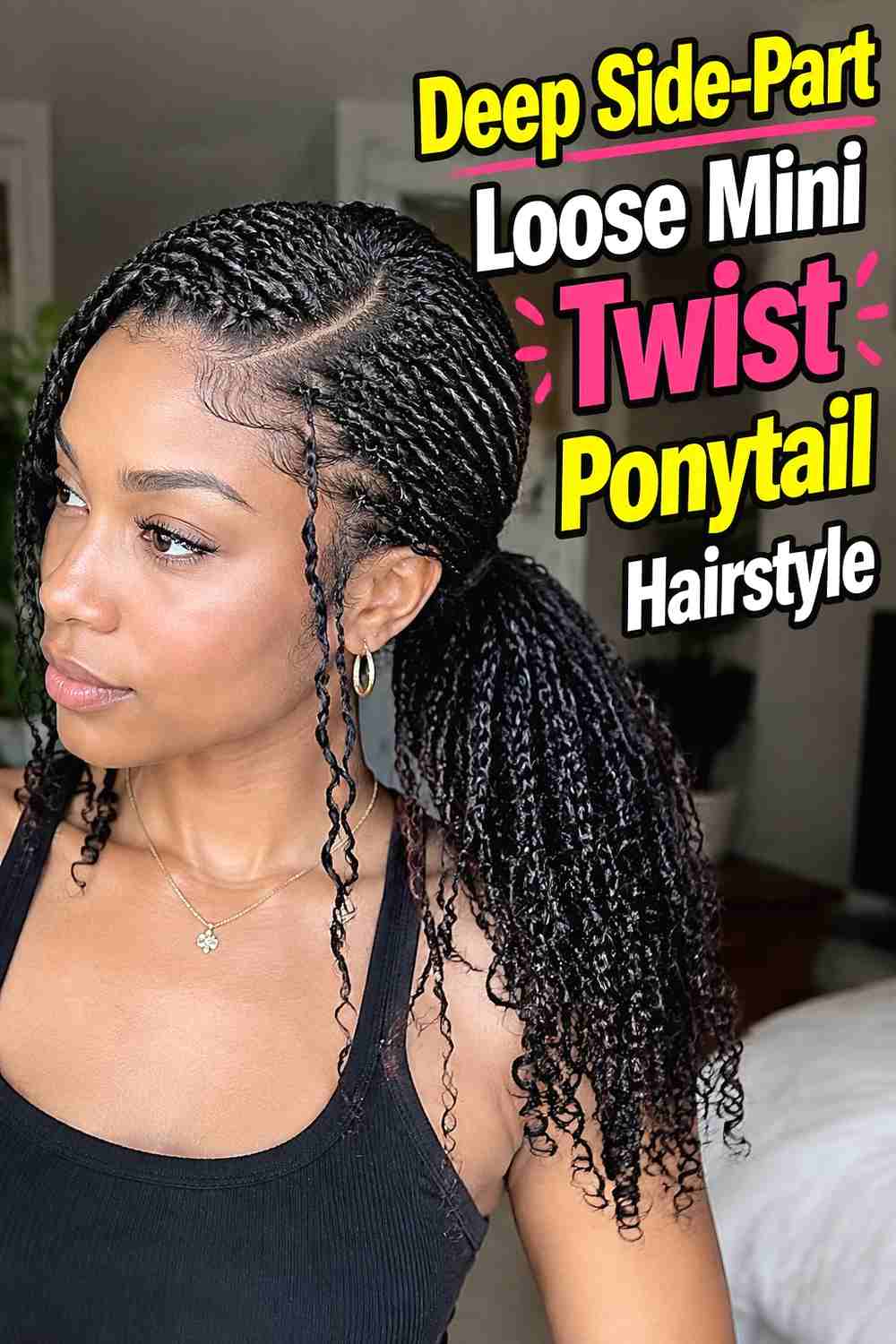
The deep side-part loose mini twist ponytail uses an off-center part to create extra visual movement across the front before the twists are gathered into the ponytail. One side naturally carries a little more volume, making the silhouette feel less symmetrical and slightly more dramatic. The ponytail itself can sit at the nape or at medium height, depending on how much lift you want. Leaving the roots softly arranged rather than tightly flattened helps the part blend naturally with the twist texture. This version is especially attractive when the mini twists have varied movement and subtle fullness, since the deeper part lets several layers of twists remain visible from the front instead of disappearing completely behind the head.
Styling Notes
Arrange the heavier side of the part first, then gather the remaining twists into the ponytail. This helps preserve the shape of the side sweep rather than flattening it.
Why It Works
The uneven part changes the entire front profile of a simple ponytail, adding dimension without requiring extra braiding, curling, or complicated pinning.
6. Face Framing Loose Mini Twist Ponytail Hairstyle
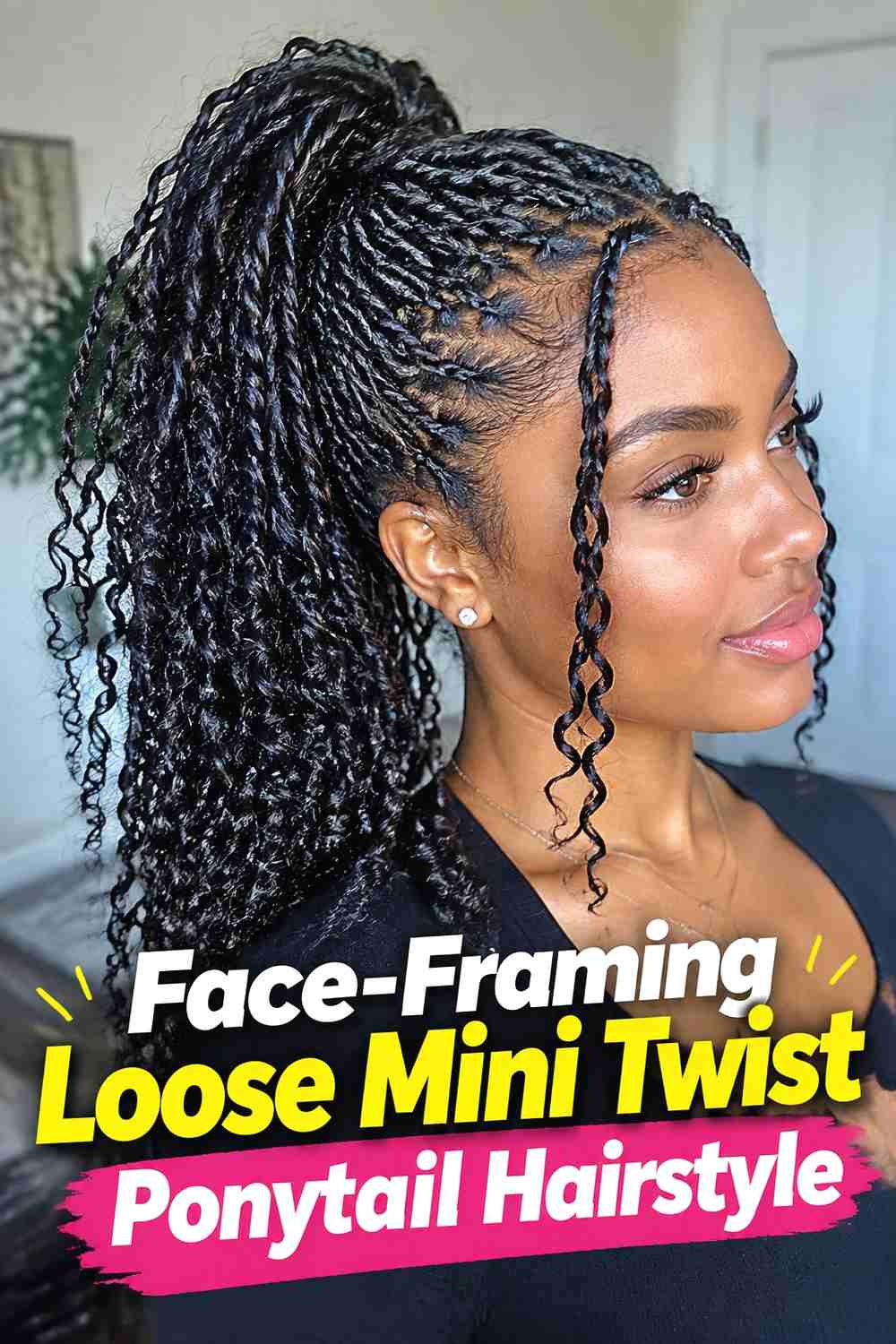
A face-framing loose mini twist ponytail leaves a few carefully selected twists free around the front while the rest are gathered back. Those loose pieces soften the transition between the hairline and ponytail, giving the style an intentionally relaxed finish rather than the appearance of twists that simply escaped the holder. You can leave one or two twists on each side or use a slightly uneven arrangement for a more natural effect. The ponytail may sit high, medium, or low, although a mid or low placement often complements the softer front pieces especially well. This option is useful when you enjoy wearing your twists away from your face but still want some visible texture around the cheeks and jawline.
Best For
This variation works well for casual styling, photos, dinners, and occasions when a completely pulled-back ponytail feels more structured than you want.
Pro Tip
Choose front twists that already fall comfortably forward. Avoid pulling pieces out forcefully after the ponytail is secured, which can disturb the surrounding sections.
7. Wrapped Base Loose Mini Twist Ponytail Hairstyle
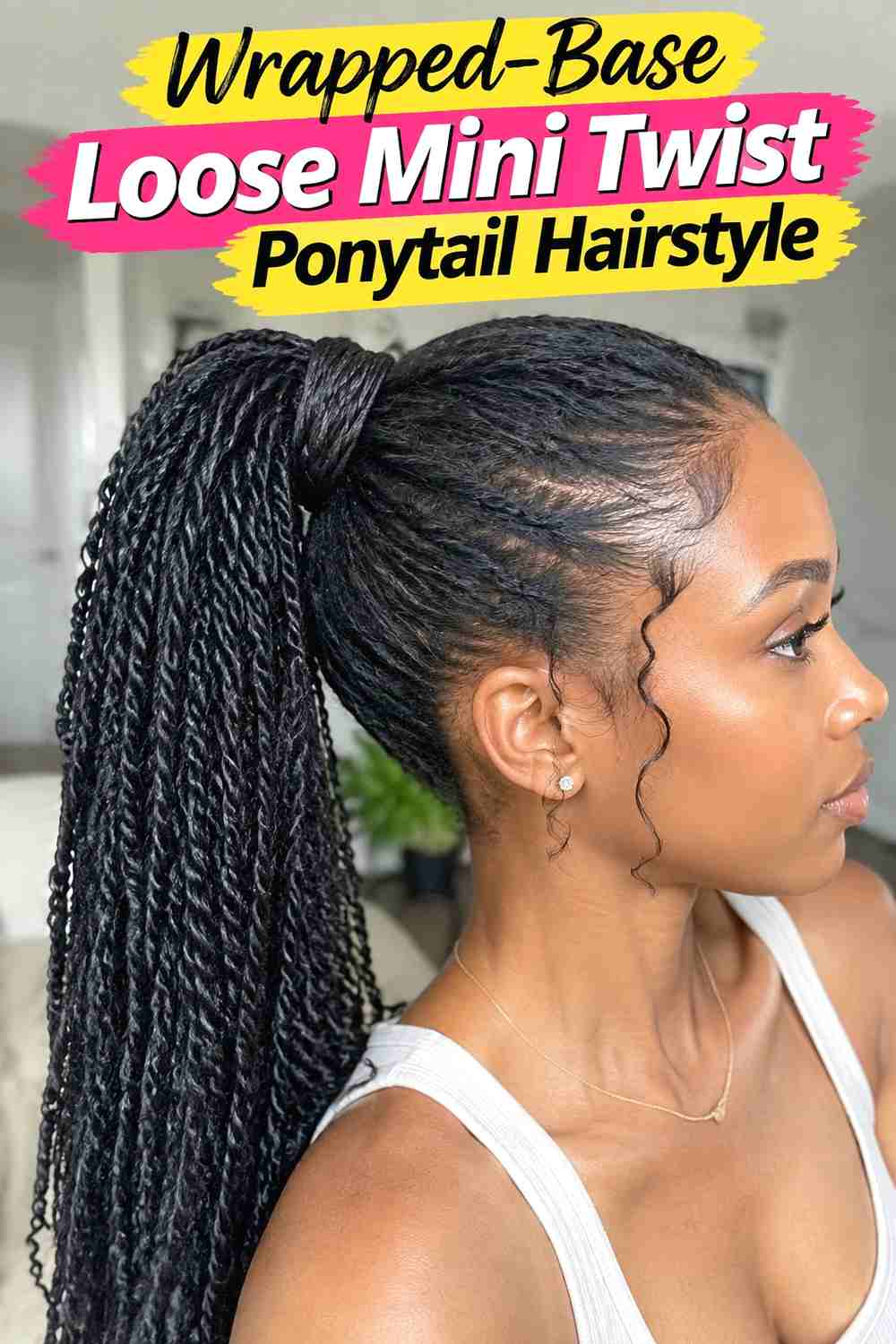
The wrapped-base loose mini twist ponytail adds a polished detail by using several twists to conceal the ponytail holder. After the main ponytail is secured, a small group of twists is wrapped naturally around the base and pinned underneath, creating the appearance of a finished twist band. The technique works with high, mid-height, or low placement, so it is easy to adapt to the length and fullness of your mini twists. The key is keeping the wrap proportional; a compact band usually looks cleaner than winding a large amount of hair repeatedly around the base. The remaining twists should still fall freely, giving the ponytail movement and preventing the decorative base from making the style look overly stiff.
Styling Notes
Select flexible twists from the underside of the ponytail for wrapping. Secure them discreetly with pins, taking care not to push the pins tightly against the scalp.
Why It Works
Concealing the elastic immediately gives a simple ponytail a more finished appearance while allowing the twist texture itself to serve as the main decorative element.
8. Half Up Loose Mini Twist Ponytail Hairstyle
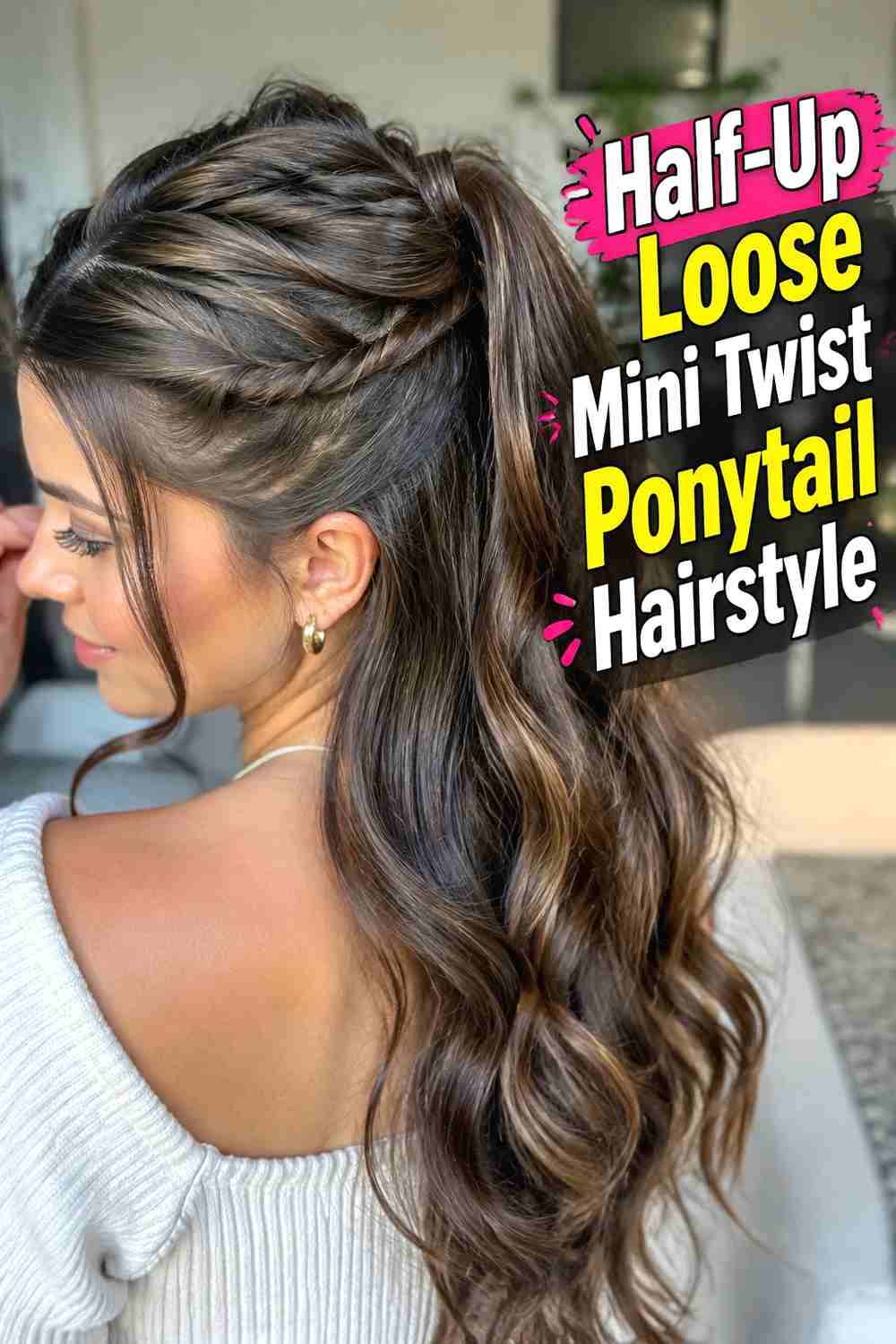
A half-up loose mini twist ponytail gathers only the upper portion of the twists, allowing the lower layers to remain down. This creates a ponytail effect at the crown while preserving much of the length and fullness of the original mini twist style. It is a good middle ground when you want hair away from the face but do not want every twist gathered into one holder. Positioning the ponytail around the upper back of the head creates a natural cascade where the secured twists blend into the loose lower section. For a softer result, avoid making the dividing line between the top and bottom sections too rigid. The texture of the twists helps the two sections blend naturally.
Best For
This version suits medium and long mini twists and is especially useful when a full ponytail feels too heavy or when you want to keep more of your twist length visible.
Wear & Maintenance
Because only part of the hair is gathered, check that the upper ponytail is not carrying more tension than necessary. Loosen or reposition it if the crown begins to feel uncomfortable.
9. Voluminous Loose Mini Twist Ponytail Hairstyle
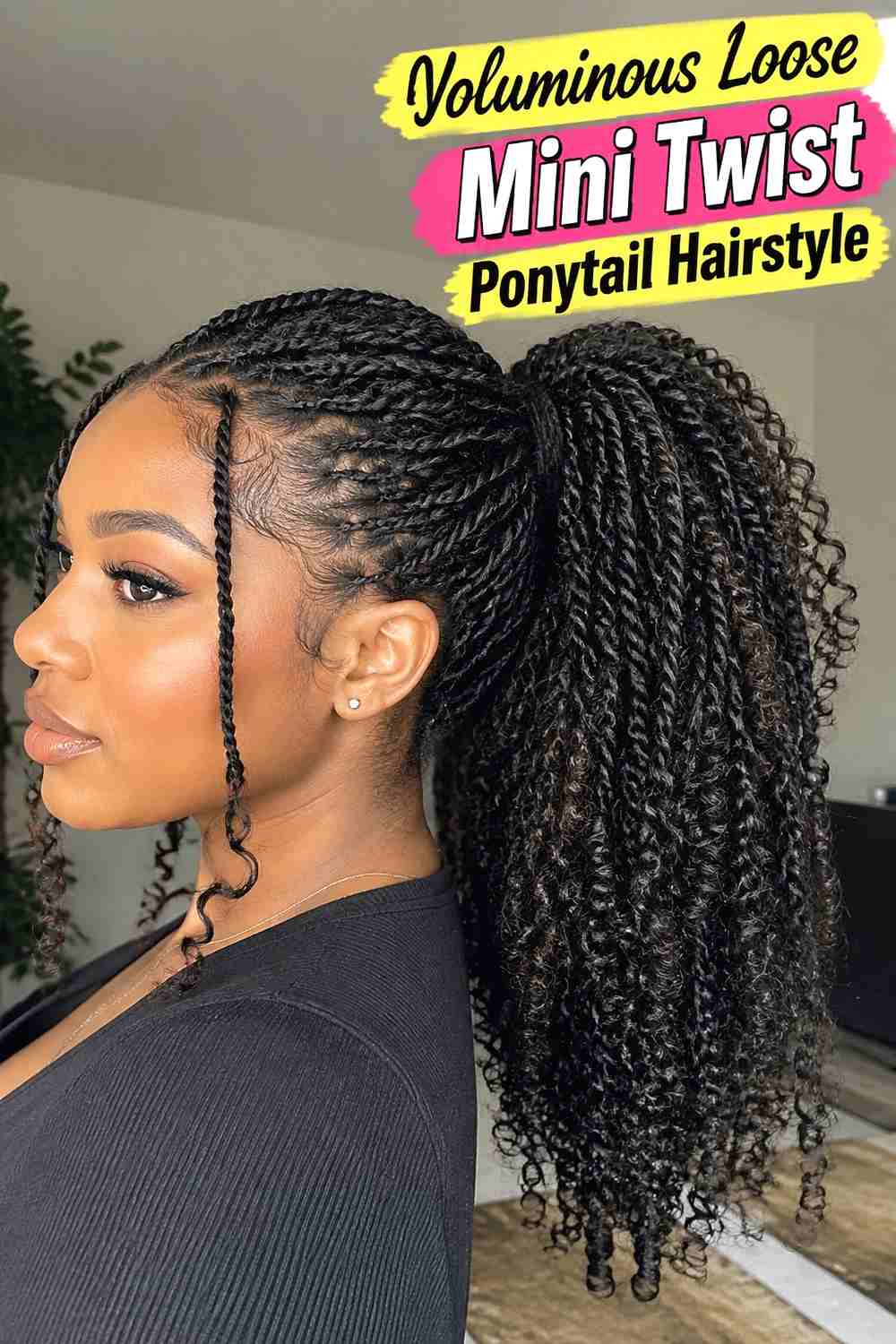
The voluminous loose mini twist ponytail emphasizes fullness by allowing the gathered twists to spread naturally rather than compressing them into a narrow bundle. A mid-height or high placement often shows this effect most clearly because the twists can expand around the base before falling down the back. This look is particularly effective with dense twist sets, layered lengths, or twists with naturally airy movement. Instead of trying to make every strand lie perfectly flat, the styling celebrates controlled volume at both the crown and ponytail. A larger hair-friendly holder may be more comfortable than a small elastic when the twist set is thick. The finished result should feel full and intentional without relying on excessive tension.
Hair Type & Length
Fuller mini twist sets and medium-to-long lengths naturally create the most visible volume, though shorter twists can still form a compact textured ponytail.
Styling Notes
After securing the base, gently separate and reposition the ponytail twists with your fingers rather than pulling the elastic tighter to create shape.
10. Long Cascading Loose Mini Twist Ponytail Hairstyle
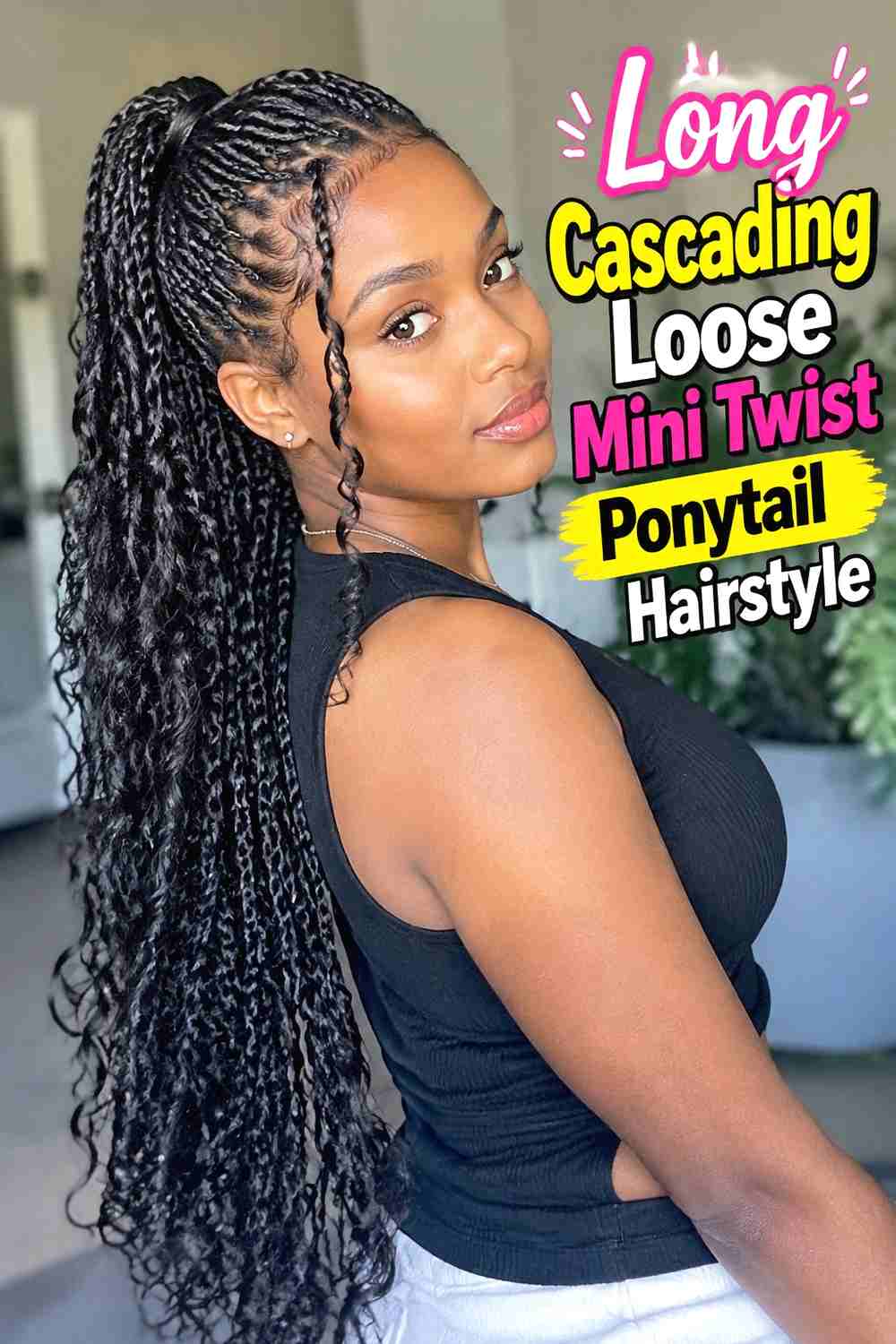
A long cascading loose mini twist ponytail makes length the main feature, gathering the twists so they can flow down the back in a defined, textured curtain. The hairstyle is especially striking with longer mini twists because individual sections remain visible from the base through the ends instead of blending into one solid shape. A high or mid-height ponytail can create extra drop and movement, while a low ponytail gives the length a sleeker appearance. Keep the twists separated enough to show their individual pattern and natural variation. If extensions were used to create the length, the ponytail should still feel balanced and comfortable at the base rather than placing unnecessary weight on one small area.
Wear & Maintenance
Long twists can add noticeable weight when gathered together. A supportive, covered holder and a slightly lower placement may feel more comfortable for extended wear.
Why It Works
The simple ponytail arrangement allows the length, shine, twist definition, and movement to become the focus without adding competing accessories or complicated styling details.
11. Accessorized Loose Mini Twist Ponytail Hairstyle

An accessorized loose mini twist ponytail uses a few intentional details to personalize the style without hiding the texture of the twists. A decorative cuff around the ponytail base, a coordinated scarf, a simple clip, or a handful of small twist charms can add visual interest while keeping the overall hairstyle wearable. The best placement depends on the accessory: a scarf can complement a low or mid ponytail, while a cuff or minimal clip often works well at a higher base. Keep the decoration concentrated in one area rather than spreading many pieces throughout the twists. This allows the mini twist pattern and ponytail silhouette to remain clear while still giving the hairstyle a distinct finished look.
Styling Notes
Choose lightweight accessories that attach securely without snagging the twists. Position decorative elements after the ponytail is stable so they do not become part of the tension holding the style together.
Best For
This option is easy to customize for vacations, casual events, celebrations, photos, or days when you want an existing mini twist set to feel noticeably different.
12. Soft Curly End Loose Mini Twist Ponytail Hairstyle
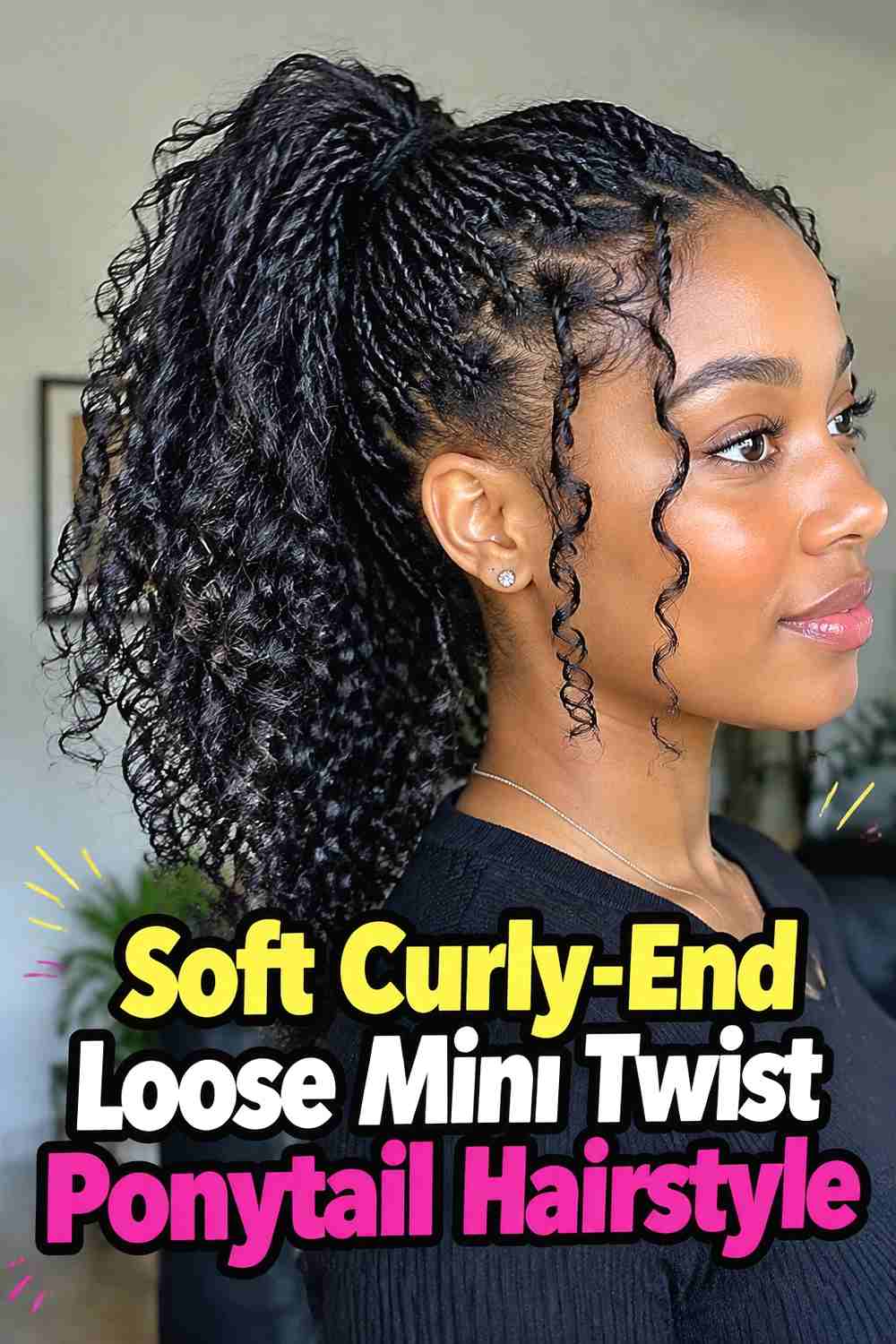
The soft curly-end loose mini twist ponytail combines defined twists through most of the length with loose curls or coiled movement at the ends. Gathering the twists into a ponytail concentrates those textured ends, creating a fuller and more playful finish without changing the structure near the roots. A high ponytail can make the curled ends bounce around the crown and back, while a low ponytail creates a softer cascading effect. The contrast between the twisted lengths and curved ends gives the style extra dimension, especially when the curls vary slightly rather than looking perfectly identical. This variation works best when the curled ends are already part of the twist set or can be shaped without excessive manipulation.
Styling Notes
Arrange the ponytail so the curled ends remain visible instead of becoming trapped beneath the holder. Light finger separation can help individual curls sit naturally.
Wear & Maintenance
Protect the curled ends from unnecessary friction when sleeping or changing clothes, and refresh only the sections that lose definition rather than restyling the entire ponytail.
How to Choose the Right Look
Start with ponytail placement. A high ponytail creates more lift, bounce, and visible volume, while a low ponytail gives long mini twists a calmer, elongated shape. Mid-height placement is a useful compromise when you want movement without placing all the weight directly at the crown.
Next, consider the density and length of your twist set. Very full or long twists may feel more comfortable in a lower ponytail, half-up style, or larger covered holder. Shorter twists often benefit from a higher placement that helps more pieces reach the base without being stretched. If several front twists are shorter, a face-framing or side-parted version can incorporate them naturally instead of forcing them backward.
Think about finish as well. Center parts and wrapped bases create a cleaner, more structured appearance, while side-swept, face-framing, and voluminous versions look softer and less formal. Accessories can quickly dress up a simple ponytail, but keeping them lightweight allows the texture of the mini twists to remain the focal point.
Comfort should guide the final choice. The ponytail needs enough hold to stay in place, but tighter is not automatically better. If the hairline, crown, or nape feels strained, loosen the holder, change the placement, or choose a half-up option that distributes less weight through one gathering point.
Final Thoughts
Loose mini twist ponytails can look dramatically different depending on placement, parting, volume, and finishing details. A high or voluminous ponytail highlights movement, while low, wrapped, and center-part versions create a cleaner profile. If you want something softer, face-framing twists, a side sweep, or curled ends can add dimension without requiring a complicated restyle.
Choose the version that works with the length and density you already have, then adjust the tension and accessories for comfort. The most wearable result is one that keeps the mini twists defined and visible while still feeling secure enough for your day.
FAQs
1. Can mini twists be worn in a ponytail?
Yes. Once the twists are long enough to gather comfortably, they can be styled into high, mid-height, low, side, or half-up ponytails. Avoid forcing shorter sections into a tight holder.
2. How do I make a mini twist ponytail look fuller?
Use a placement that allows the twists to spread naturally, such as a high or mid-height ponytail. After securing it, gently separate and arrange the twists rather than tightening the holder excessively.
3. What is the easiest loose mini twist ponytail for everyday wear?
A low or mid-height ponytail is often simple to arrange and easy to adjust. A half-up version can also be useful when a full ponytail feels too heavy.
4. Can I leave twists out around my face?
Yes. Leaving a few selected twists free at the front creates a softer face-framing effect. Choose pieces that already fall naturally forward so the surrounding twists stay undisturbed.
5. How can I dress up a loose mini twist ponytail?
Try wrapping several twists around the ponytail base or adding one lightweight accessory such as a cuff, scarf, or simple clip. Keeping the decoration focused in one area preserves the texture of the hairstyle.
Save your favorite loose mini twist ponytail ideas, share them for inspiration, and explore more textured hairstyle looks when you are ready for your next style.