16 Ivy Braids Bun Hairstyle Ideas
Delicate braids winding like ivy around soft buns create a romantic, botanical-inspired hairstyle that feels intricate without losing natural movement or elegance.
Ivy braids are all about direction and flow. Rather than sitting as one isolated braid, the woven sections climb, curve, wrap, or cross around the head and bun like trailing vines. That makes the technique especially effective for low buns, chignons, crown braids, and dimensional formal updos.
The key is keeping the braid pattern readable and physically believable. A few carefully placed woven sections usually create more impact than covering every inch of hair with tiny braids. Compare bun placement, braid thickness, crown volume, accessories, and the amount of softness around the face before choosing the version that fits your hair and occasion.
Quick List
- Classic Ivy Wrapped Braided Bun Hairstyle
- Low Ivy Braid Chignon Hairstyle
- Crown Ivy Braid Bun Hairstyle
- Side Climbing Ivy Braid Bun Hairstyle
- Double Ivy Braid Bun Hairstyle
- Dutch Ivy Braid Bun Hairstyle
- Fishtail Ivy Braid Bun Hairstyle
- Twisted Ivy Vine Braided Bun Hairstyle
- Half Up Ivy Braid Bun Hairstyle
- Center Part Ivy Braids Low Bun Hairstyle
- Side Part Ivy Braids Bun Hairstyle
- Romantic Tendril Ivy Braid Bun Hairstyle
- Pearl Accent Ivy Braids Bun Hairstyle
- Floral Ivy Braids Bun Hairstyle
- Voluminous Ivy Braids Bun Hairstyle
- Sculptural Ivy Braids Bun Hairstyle
1. Classic Ivy Wrapped Braided Bun Hairstyle
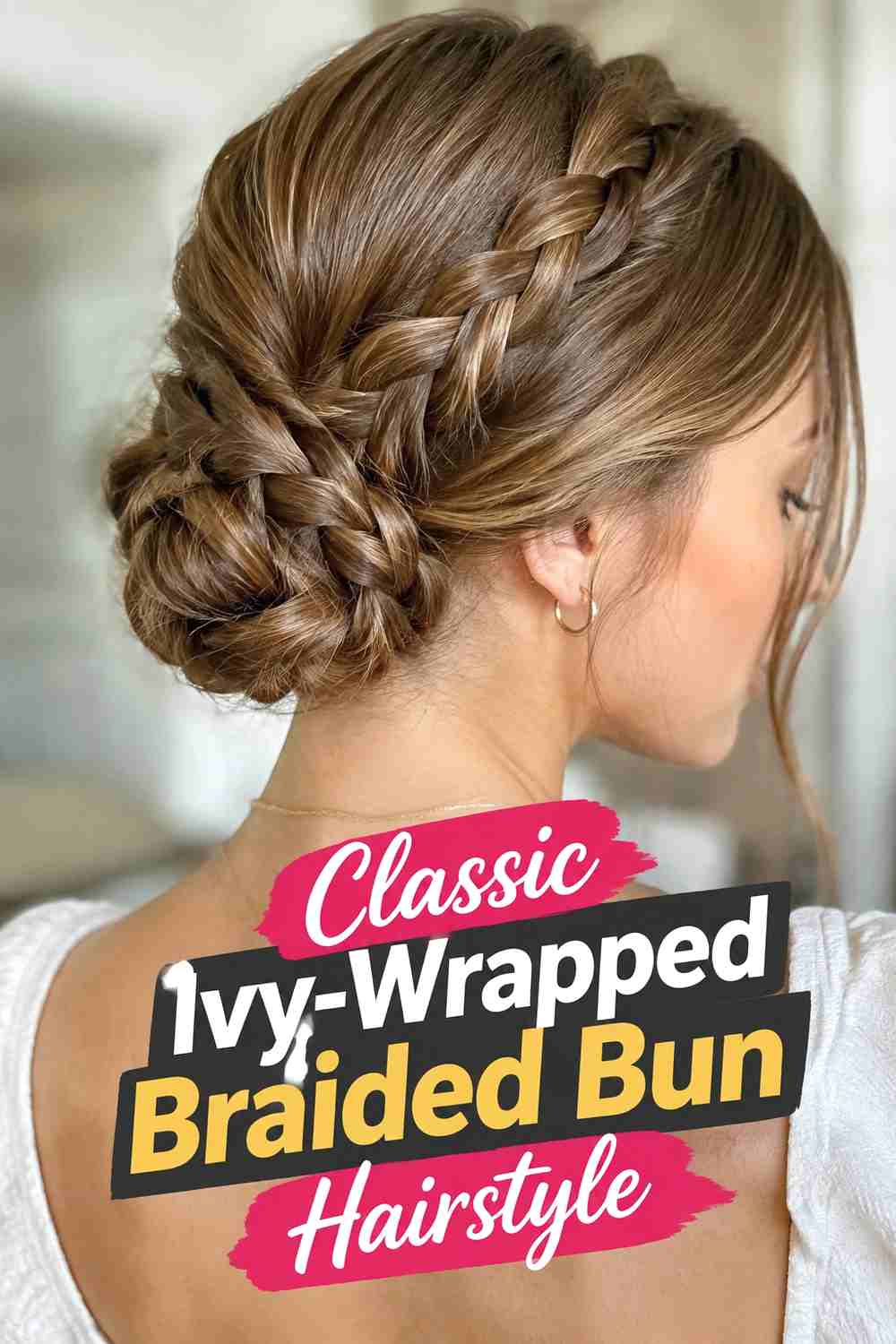
This classic version uses one softly defined braid to wind around a low rounded bun like a vine tracing its edge. The roots stay relatively simple so the wrapped detail is easy to see from the back, while a little crown softness prevents the hairstyle from looking overly tight. The braid can begin near one temple, travel toward the nape, and continue around the bun before its end is tucked discreetly underneath. Gently widening selected braid sections creates the leafy, ivy-like impression without making the pattern loose or unstable. Medium to long hair works especially well because there is enough length to form both a substantial bun and a visible wrap.
Styling Notes
Secure the bun before wrapping the braid so the decorative section follows a stable shape instead of carrying the weight of the updo.
Best For
This balanced version works beautifully for weddings, formal dinners, bridesmaids, and romantic evening events.
2. Low Ivy Braid Chignon Hairstyle
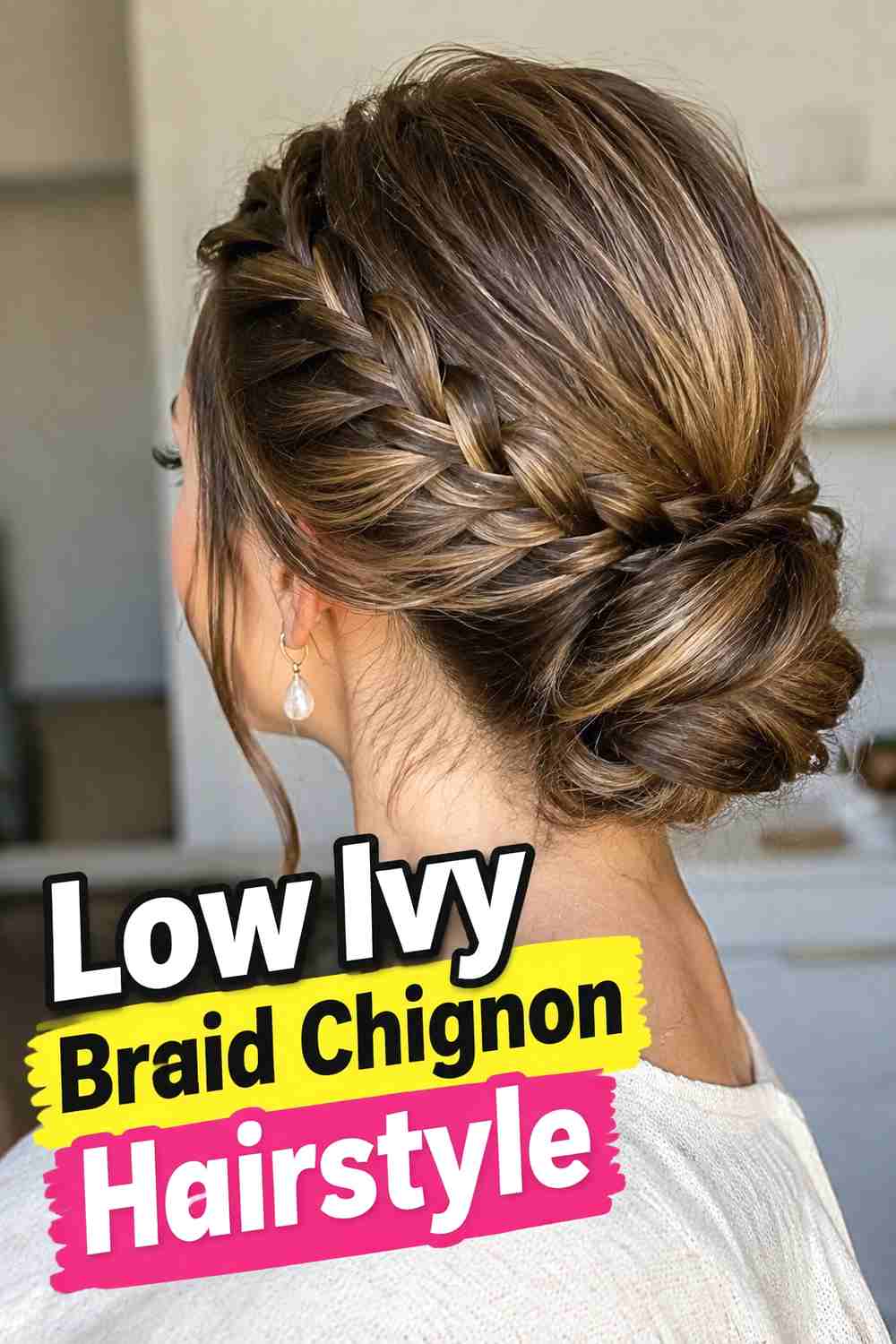
A low chignon gives ivy-inspired braiding a wider, softer foundation than a compact circular bun. One or two braided sections can travel diagonally toward the nape, then curve across the upper edge of the chignon like trailing vines. The hair beneath is folded into a broad horizontal shape, leaving enough visible surface for the braid to stand out. A slightly loosened texture keeps the result romantic without making the chignon unstable. This approach works particularly well when the braid remains narrower than the bun, creating clear contrast between woven detail and the smoother folded hair. A few fine pieces near the temples can soften the front without distracting from the back.
Why It Works
The broad chignon creates a natural horizontal path for the ivy-like braid, making the wrapped detail feel integrated rather than added afterward.
3. Crown Ivy Braid Bun Hairstyle
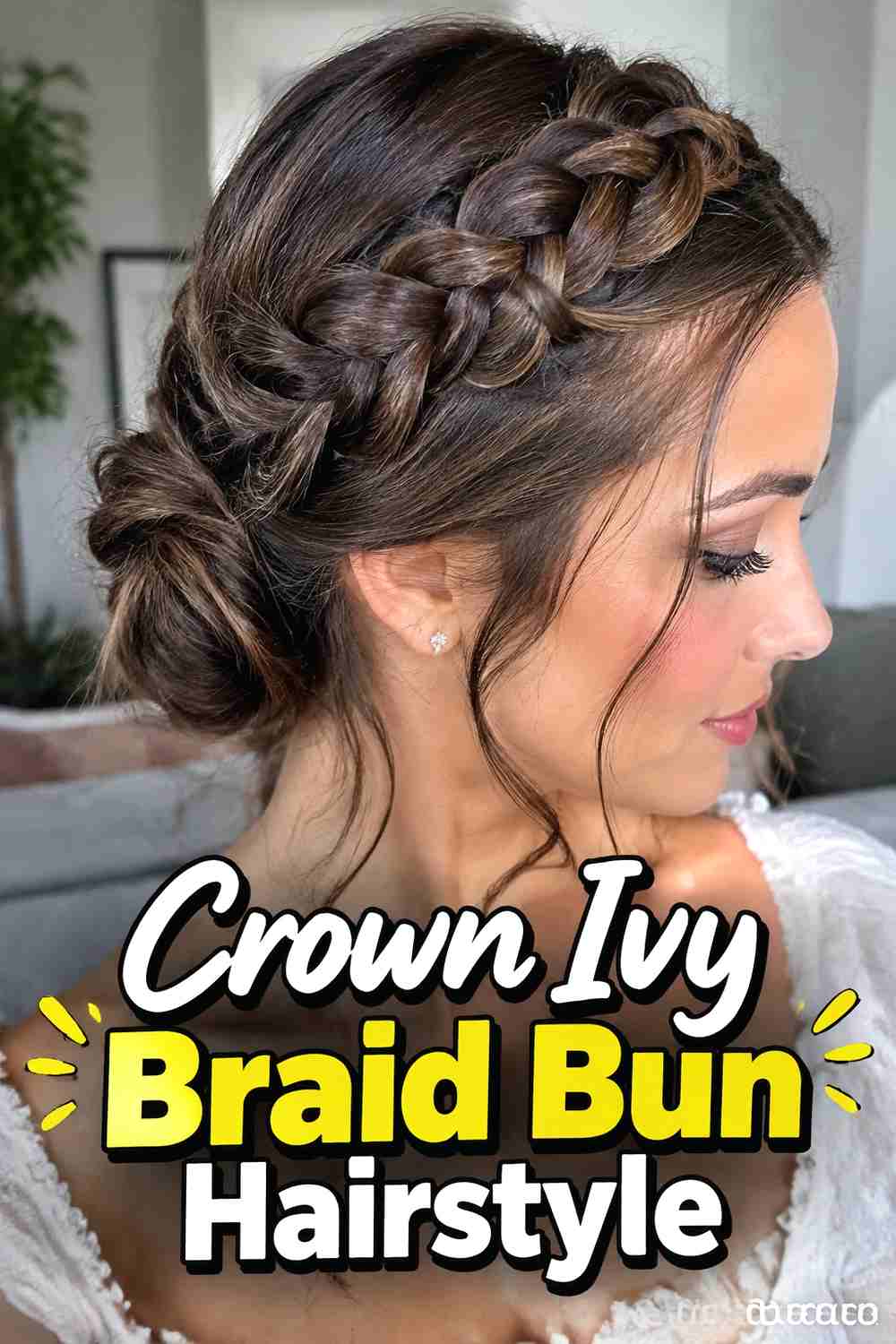
This style brings the ivy effect higher by letting a braid travel across the crown before descending into a low or mid-height bun. The woven section can follow a gentle arc from one side to the other, creating a leafy halo effect without completely encircling the head. Once the braid reaches the back, it blends into the remaining hair and becomes part of the bun. Keeping the crown braid softly expanded gives it visible dimension while maintaining enough tension for reliable hold. The bun itself should remain relatively simple so the upper braid remains the focal point. Medium or long hair provides the easiest length for connecting the crown detail naturally into the updo.
Styling Notes
Build the crown braid first, then loosen only its outer edges after the bun has been secured and the overall shape is stable.
4. Side Climbing Ivy Braid Bun Hairstyle
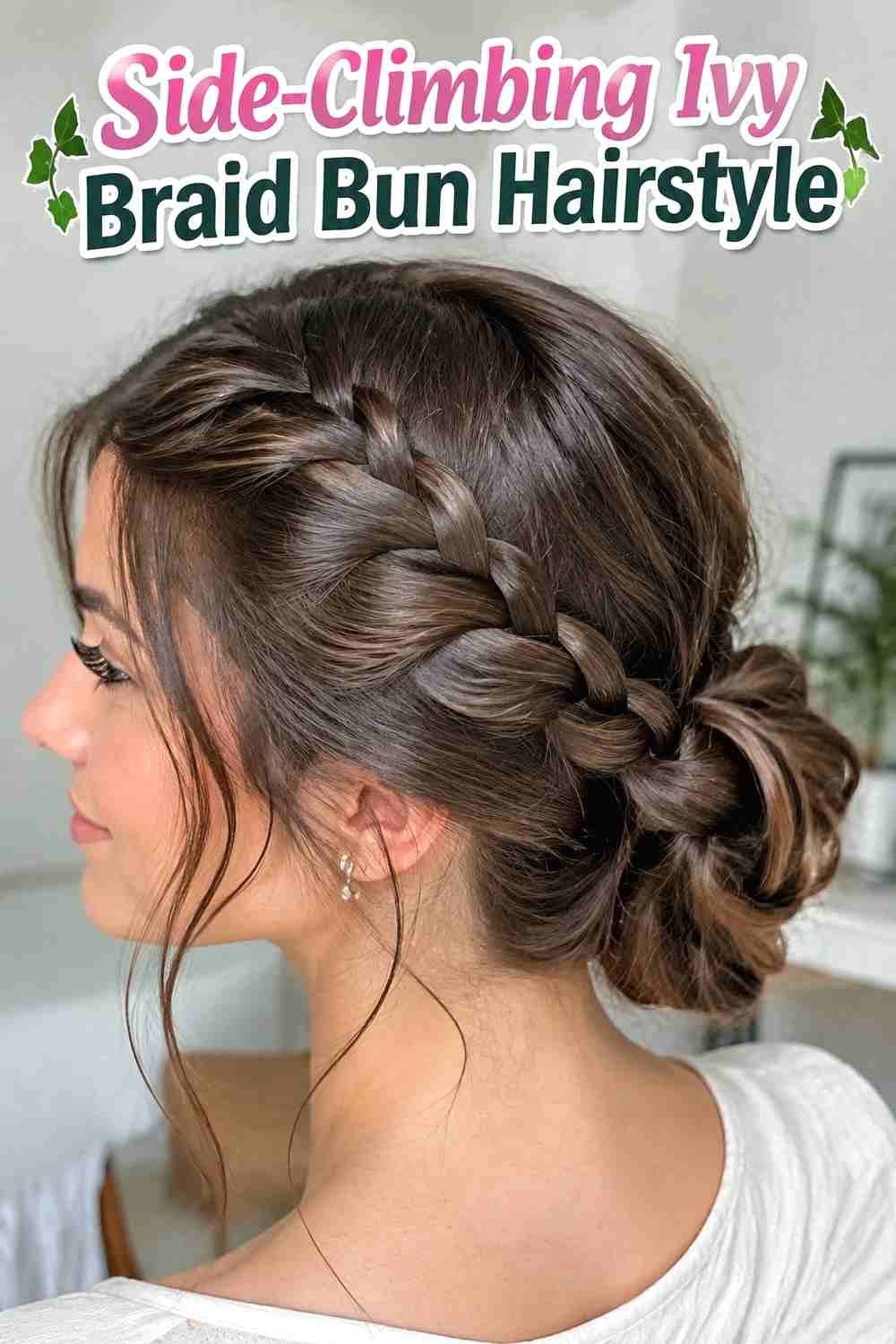
A side-climbing braid creates a strong diagonal line by beginning near the nape or lower side and traveling upward toward the bun. The unusual direction gives the style a vine-like quality, especially when the braid curves slightly instead of following a perfectly straight path. A mid-height bun provides a natural destination for the braid and keeps the structure balanced. The opposite side can remain smooth or softly textured to make the climbing detail easier to read. This version looks intricate from the side and back without requiring multiple braids. Keep the woven section substantial enough to remain visible and secure it independently before integrating its end into the bun.
Best For
Choose this version when you want an ivy-inspired updo with noticeable directional movement and a more unusual braid placement.
5. Double Ivy Braid Bun Hairstyle
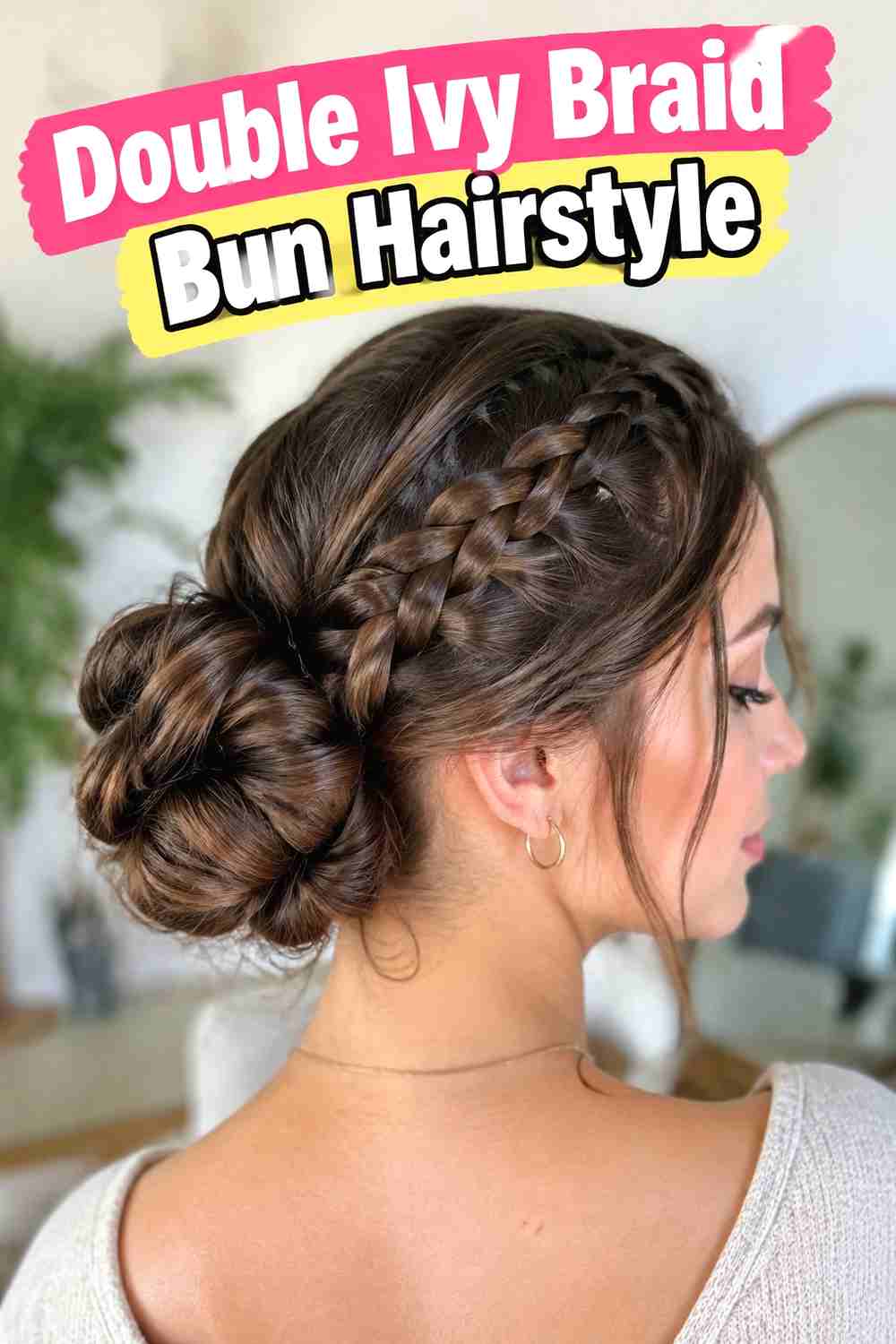
Two ivy-like braids frame the bun from opposite directions, creating a balanced yet detailed finish. One braid can begin on each side of the head and travel backward, curving toward the bun before wrapping partially around its edge. The braids do not need to meet perfectly in the center; slightly offset placement can create a more natural trailing-vine effect. Keep both woven sections similar in thickness so the hairstyle feels intentional, then secure the bun independently underneath. A little texture through the crown connects the braids visually without making the upper hair too busy. This style works especially well on medium to thick hair where two distinct braids can remain visible.
Pro Tip
Keep the braid paths slightly curved rather than perfectly mirrored to preserve the organic ivy-inspired character.
6. Dutch Ivy Braid Bun Hairstyle
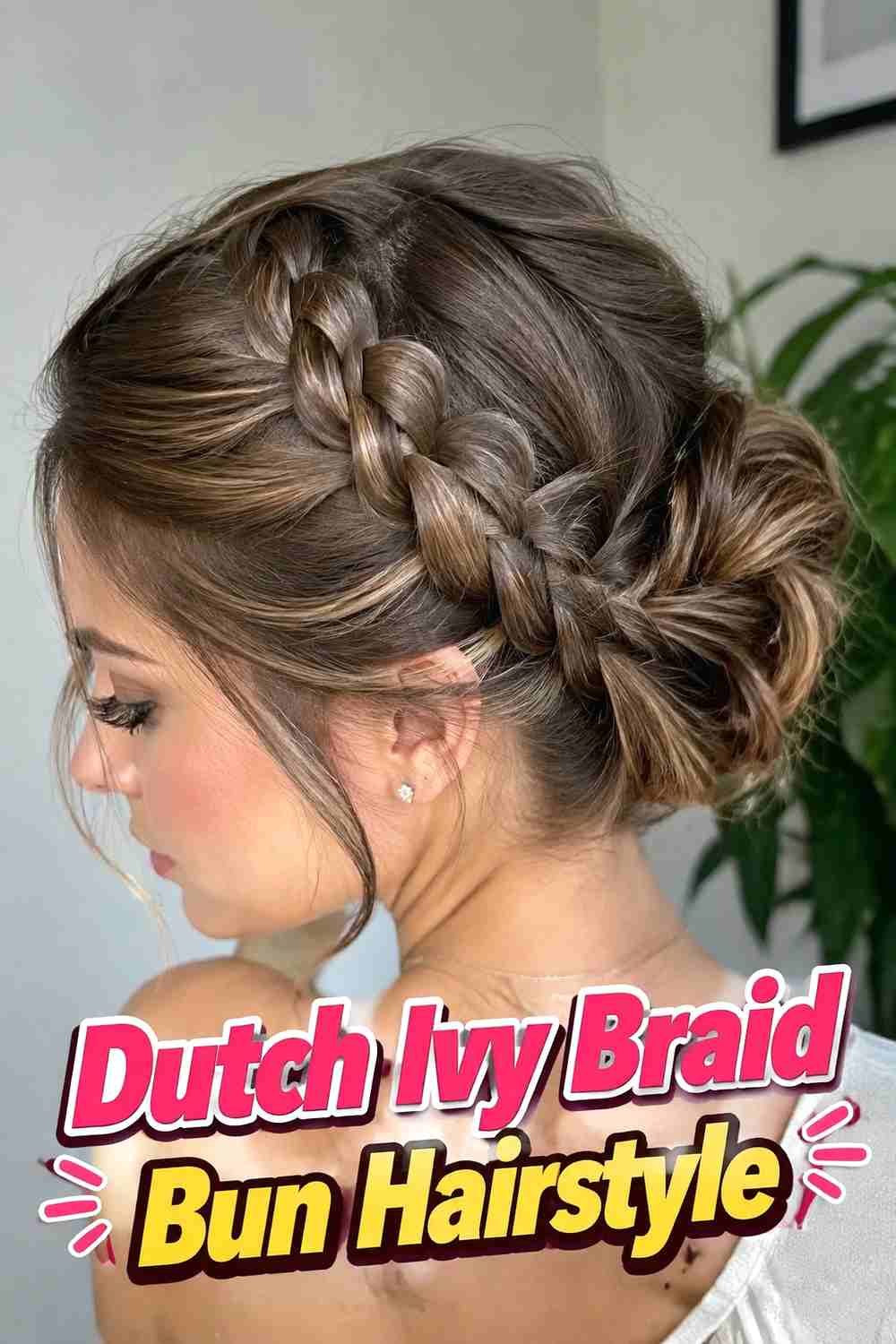
A Dutch braid sits above the surface of the hair, making it ideal for an ivy-inspired pattern that needs to remain visible. The braid can travel from the temple toward the back in a gentle curve, then wrap around part of a low bun. Because the woven sections are raised, they create more shadow and dimension than a flat braid. Slightly widening the outer loops makes the pattern feel leafy while keeping the center secure. The bun can stay sleek or softly textured depending on the occasion, but it should not contain so much detail that the Dutch braid disappears. Longer hair allows the braid to continue farther around the bun before being tucked.
Hair Type & Length
Medium to long hair works particularly well, especially when there is enough density to keep the raised Dutch pattern substantial.
Styling Notes
Maintain firm center tension during braiding, then expand only the outer loops once the updo is completely secured.
7. Fishtail Ivy Braid Bun Hairstyle
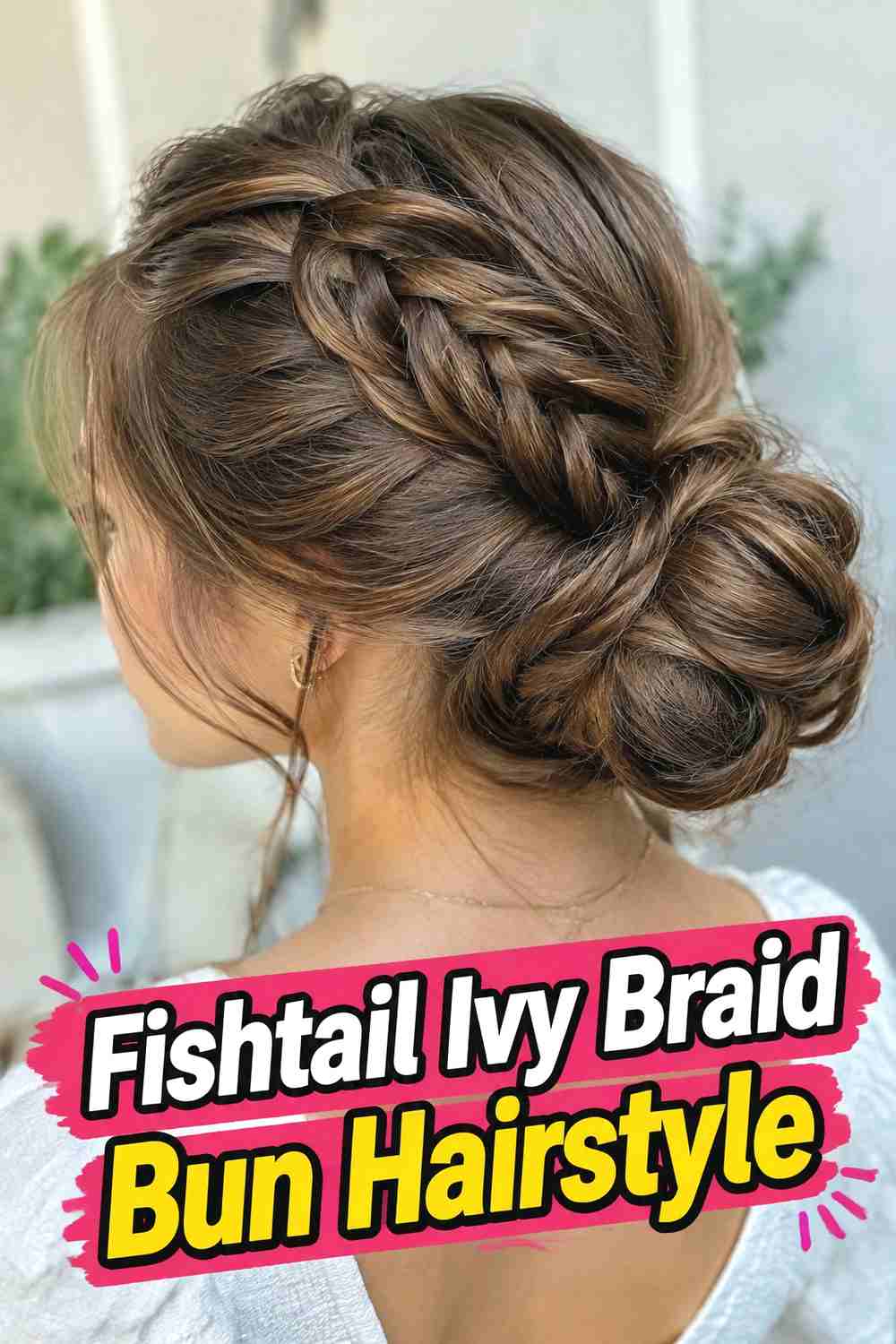
The fine woven structure of a fishtail braid gives the ivy concept a delicate, intricate appearance. A narrow fishtail can begin near one side, sweep toward the back, and curve around a low bun like a trailing vine. Because the pattern already contains many small crossings, the rest of the hairstyle should remain relatively uncomplicated. Gently widening the braid helps the woven detail stay visible from a distance, especially on darker hair where fine sections can otherwise blend together. The bun can be twisted or softly rounded, with the fishtail resting along its upper edge. Long hair makes this style easier because the braid needs enough length to remain visible after wrapping.
Why It Works
The detailed fishtail texture naturally resembles small repeating leaves, giving the ivy theme an intricate finish without extra accessories.
8. Twisted Ivy Vine Braided Bun Hairstyle
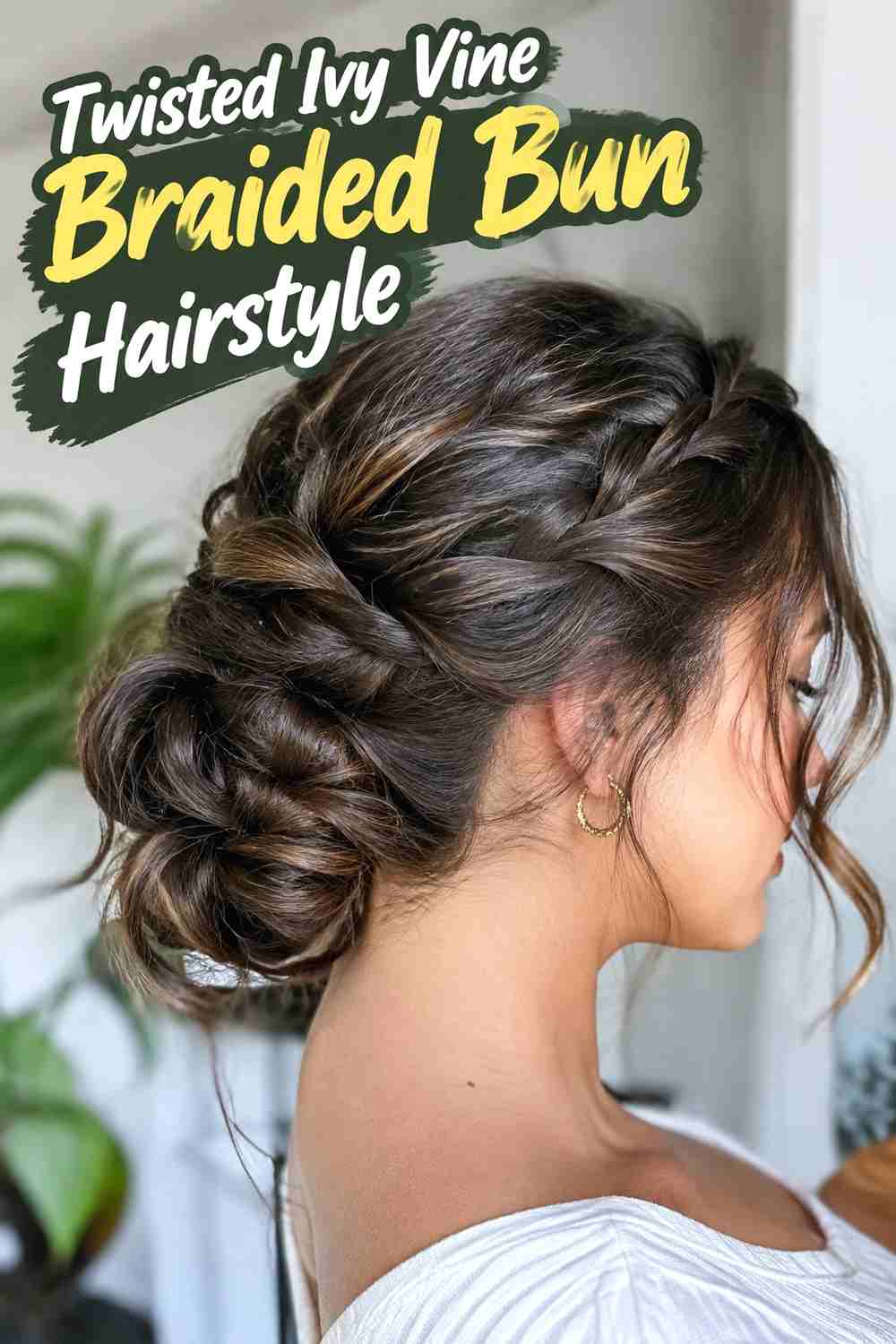
This version combines braids and broad twists to create a more dimensional vine effect. A narrow braid travels alongside a softly twisted section, and the pair curves together toward a low bun as though two vines were intertwined. The bun itself can be formed from additional twists, allowing the entire hairstyle to feel connected without becoming overly braided. Keep the two textures clearly different so each remains visible: the braid should show woven crossings, while the twist stays broad and smooth. Hidden pins placed along the route help maintain the curved path. A few softly separated strands around the crown can reinforce the organic quality without making the updo look unfinished.
Best For
This style suits romantic formal events when you want more texture than a single braid but less complexity than a heavily woven updo.
9. Half Up Ivy Braid Bun Hairstyle
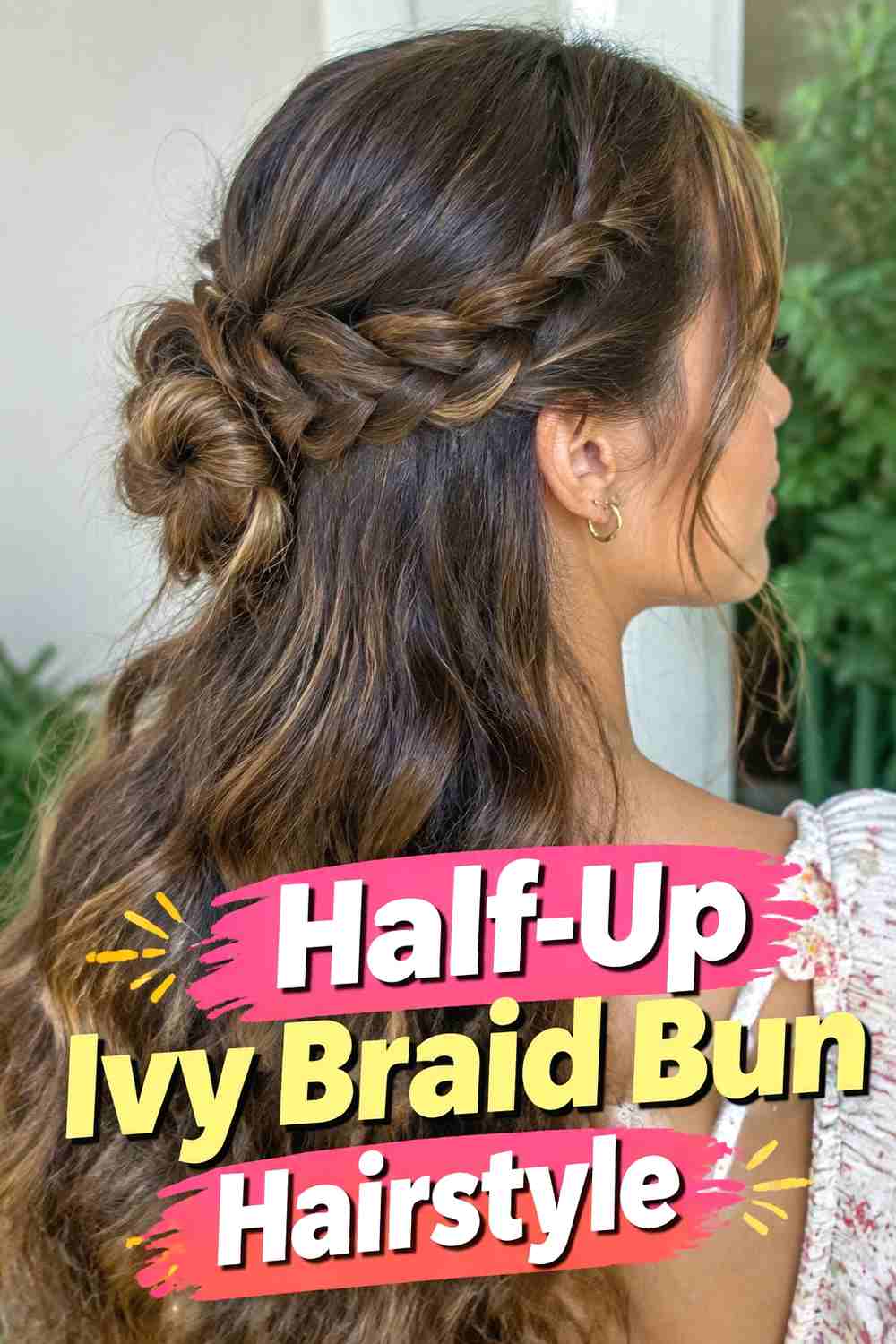
A half-up ivy bun keeps much of the hair loose while concentrating the braided detail around a smaller bun at the back of the crown. Two side sections can be braided and guided backward, wrapping around a compact half-up bun while the remaining lengths fall freely below. Soft waves work particularly well because their movement continues the organic vine-inspired mood. The braid should remain proportionate to the smaller bun; very thick woven sections can overwhelm the half-up shape. This is also a practical option for medium-length hair that may not have enough length for a full braided bun. Keep the lower hair simple so the braided centerpiece remains easy to see.
Wear & Maintenance
Use lightweight pins and a compact bun foundation so the half-up section stays secure without creating unnecessary weight at the crown.
10. Center Part Ivy Braids Low Bun Hairstyle
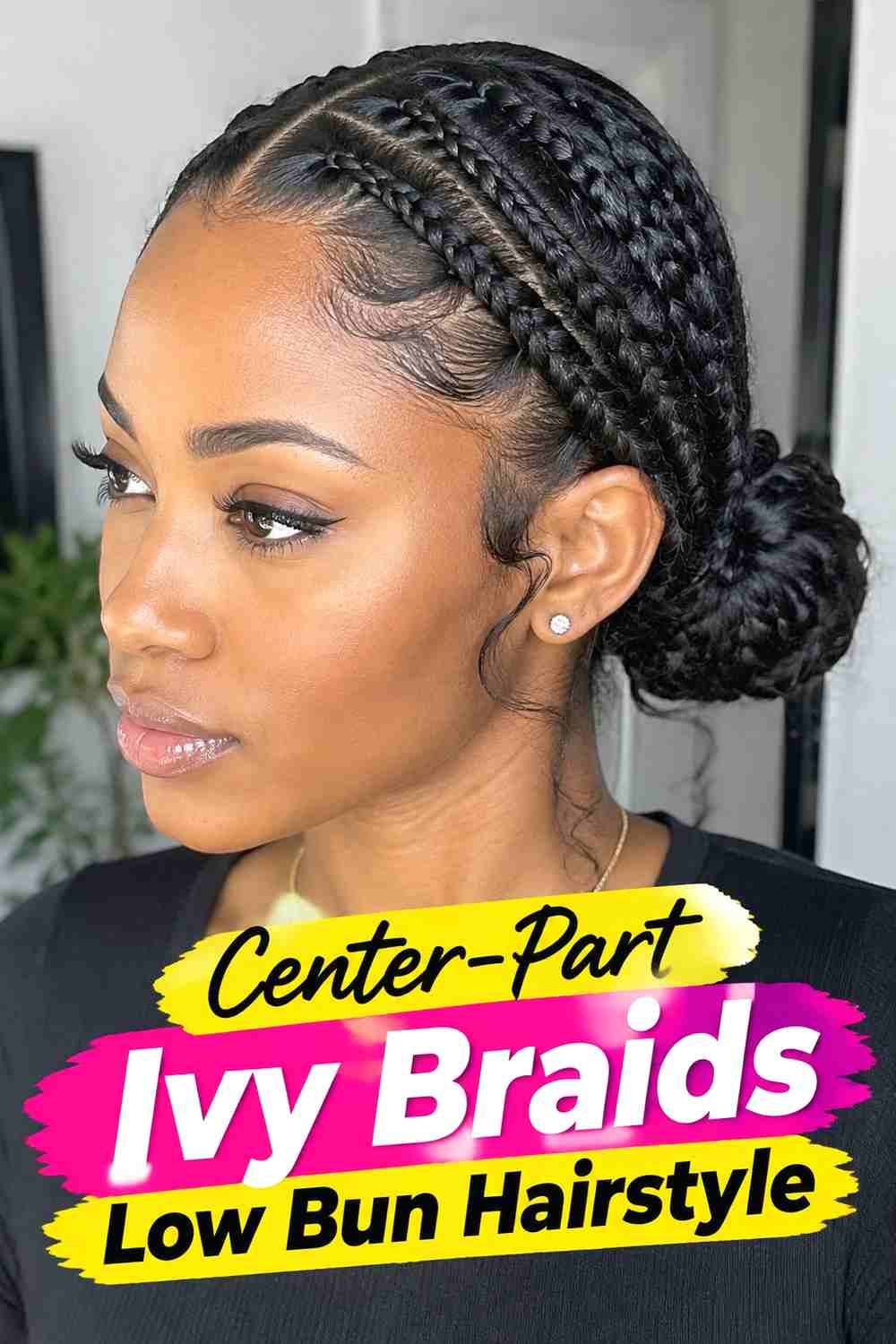
A clean center part gives this ivy braid bun a balanced front while the detail develops gradually toward the back. Two narrow braids can begin just behind the front sections and travel along each side before curving into a low bun. The mirrored placement creates structure, but lightly uneven braid curves keep the result from feeling too mechanical. The low bun can be smooth, twisted, or softly textured as long as the braided paths remain visible around its edges. Maintain a little root softness beside the part so the hairstyle stays natural rather than severe. This version is particularly effective when you want braid detail without loose front pieces or dramatic crown volume.
Styling Notes
Define the center part first, then map both braid paths before beginning so they arrive at the bun at balanced heights.
11. Side Part Ivy Braids Bun Hairstyle
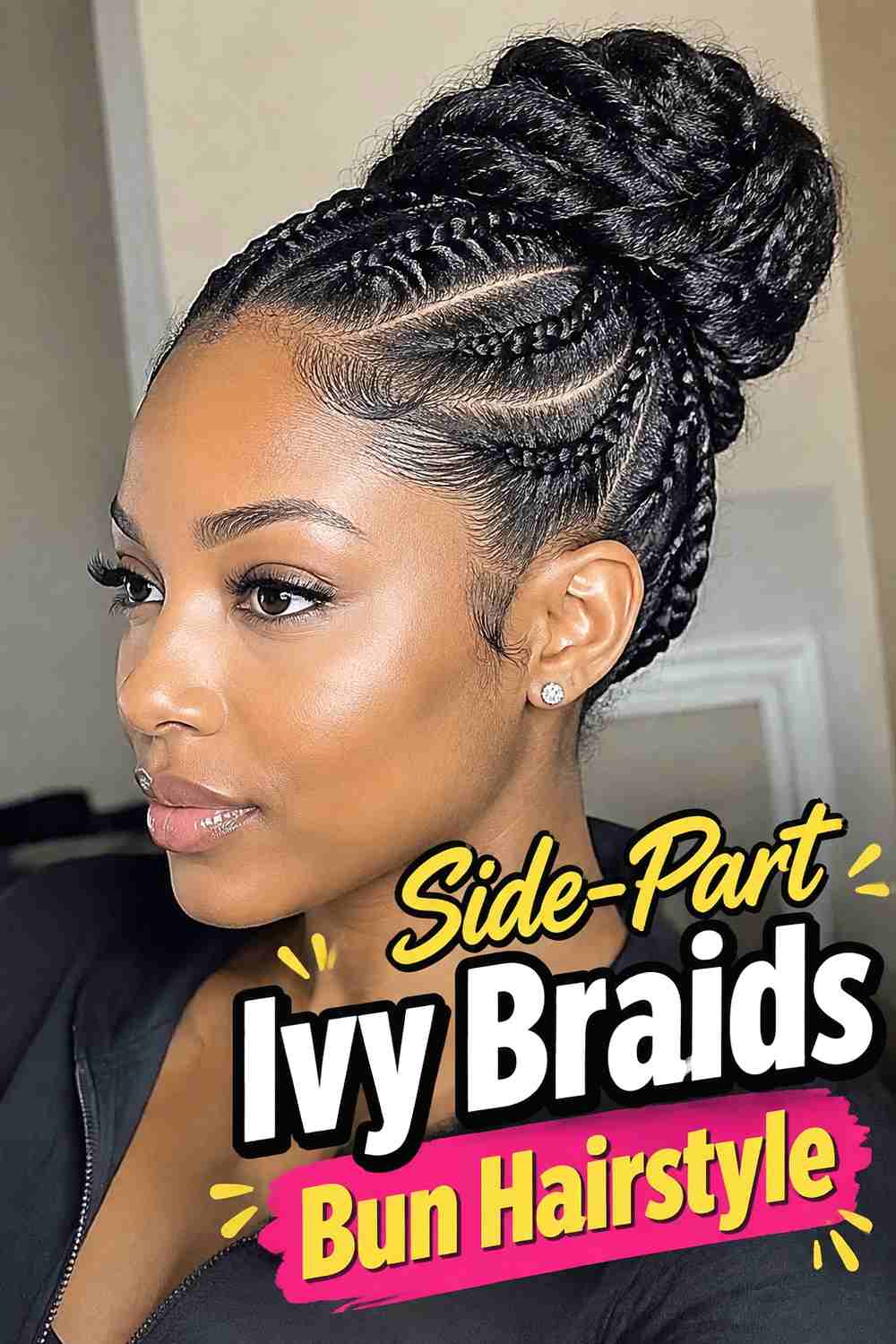
A side part gives ivy-inspired braids more movement around the front and crown. The heavier section can sweep across the head while a smaller braid begins beneath it, traveling diagonally toward the bun. A second braid may appear from the opposite side for balance, or one stronger woven path can remain the main detail. The low bun should follow the same directional flow so the hairstyle feels continuous rather than divided into separate features. Keep the part softly lifted and avoid flattening the sweeping section too tightly. This approach looks especially elegant when the braid curves along the head rather than running in a straight line, reinforcing the natural vine-like visual.
Why It Works
The side part introduces a natural diagonal direction that complements the climbing and curving movement of ivy-inspired braids.
12. Romantic Tendril Ivy Braid Bun Hairstyle
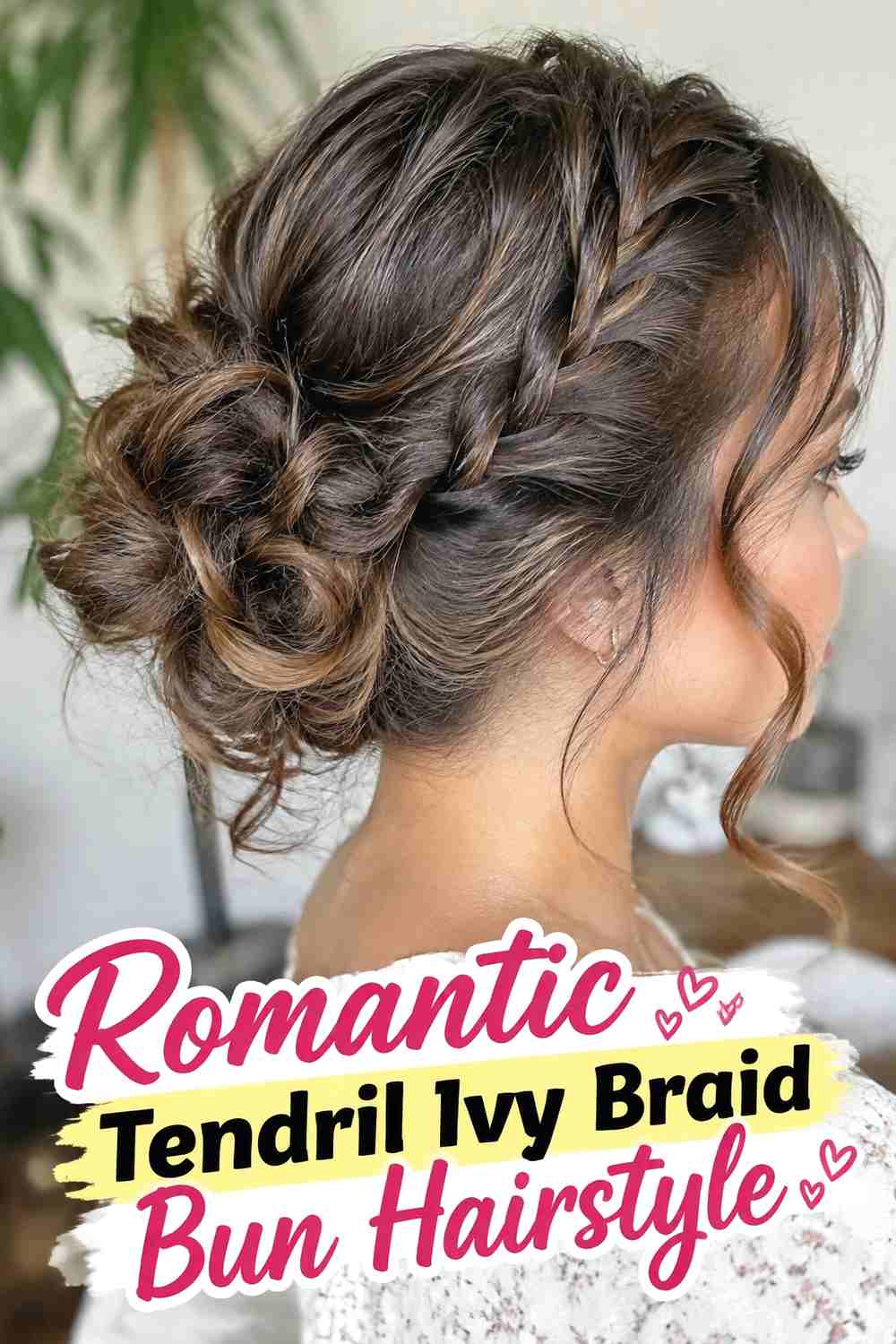
Soft tendrils bring a romantic finish to an ivy braid bun by breaking up the structured updo around the face. One or two braids wind through the back and around a low bun, while selected pieces near the temples and ears remain loose. These front strands should be shaped into relaxed bends rather than tight ringlets so they feel connected to the softer braid texture. The bun can be gently loosened around its outer surface while remaining firmly pinned inside. Avoid leaving too many strands free; the ivy braid should still read clearly as the main feature. This combination works especially well when the crown has a little natural volume and movement.
Best For
This softer version is a natural choice for weddings, date nights, garden parties, engagement photos, and romantic formal events.
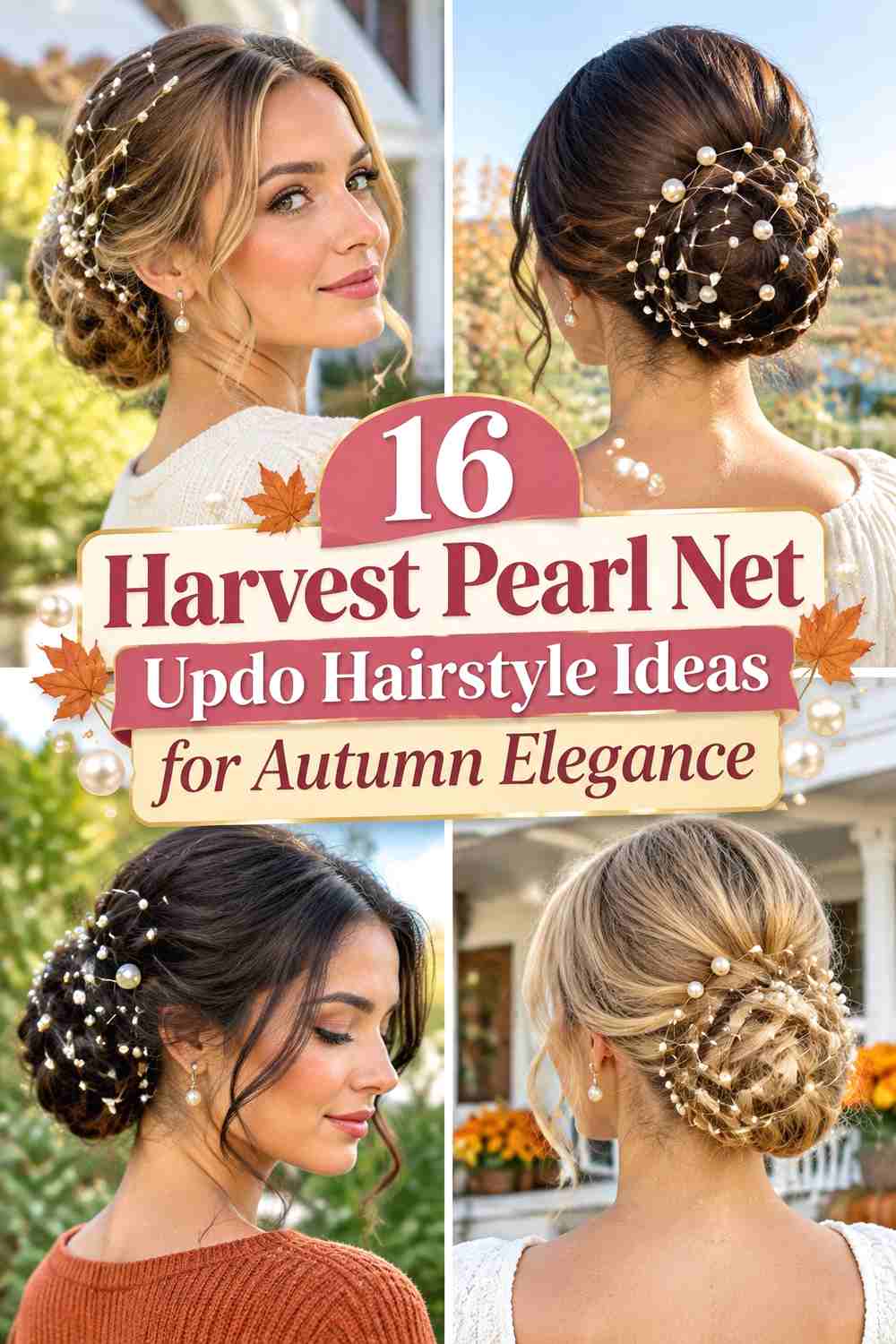
13. Pearl Accent Ivy Braids Bun Hairstyle
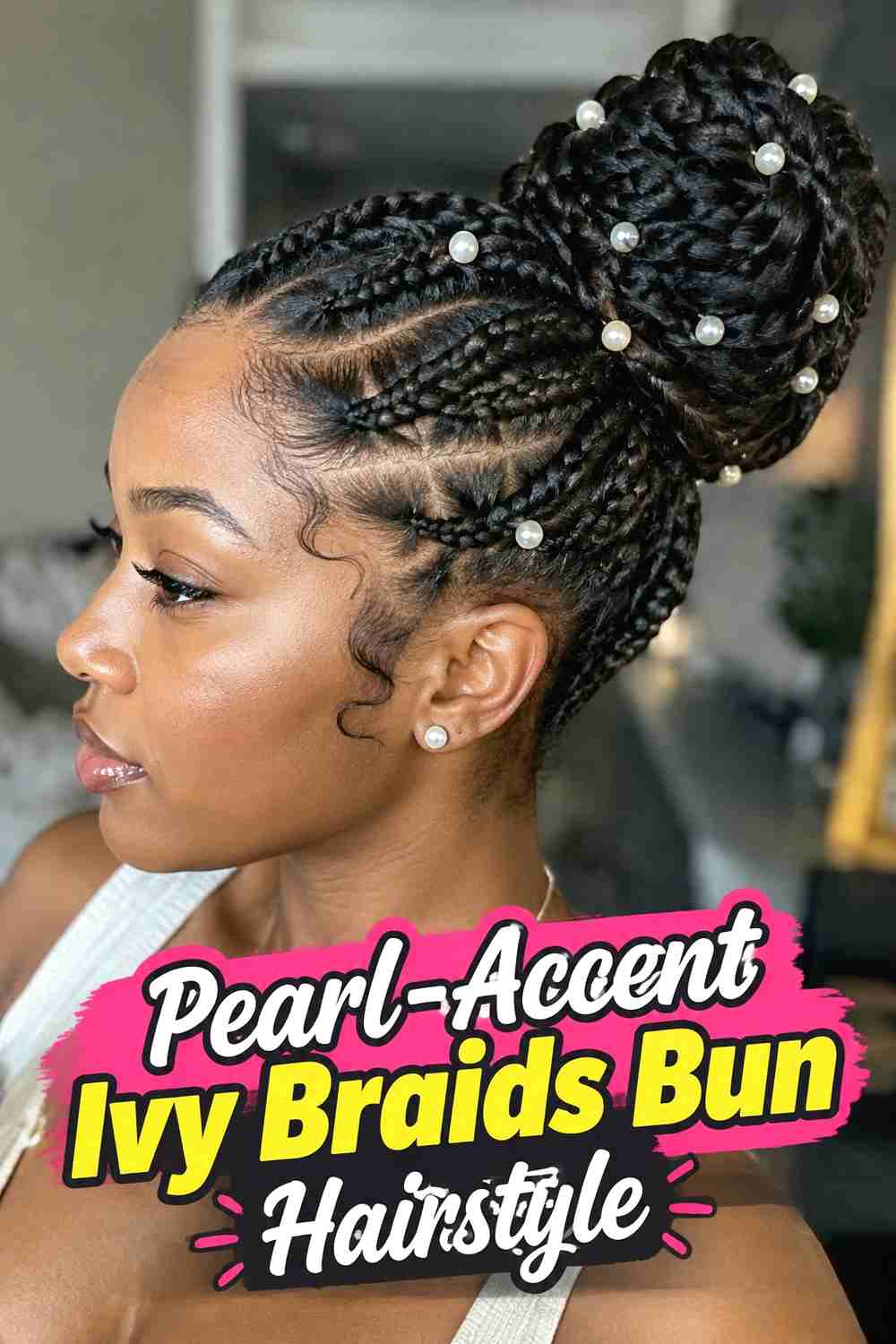
Small pearls can enhance the ivy effect by sitting between braid sections like tiny decorative buds. Begin with one or two curved braids that travel toward a low bun, then add a few pearl pins along selected points rather than filling every crossing. Keeping the pearls sparse allows the woven pattern to remain visible and prevents the hairstyle from looking overloaded. A softly twisted bun works particularly well because its smooth curves contrast with both the braid texture and rounded pearl details. The accessories should be added only after the updo is secure, with each pin placed where it will not distort the braid. Neutral pearl tones keep the finish elegant and versatile.
Pro Tip
Concentrate pearls near two or three braid curves instead of spacing them everywhere for a cleaner, more intentional botanical effect.
14. Floral Ivy Braids Bun Hairstyle
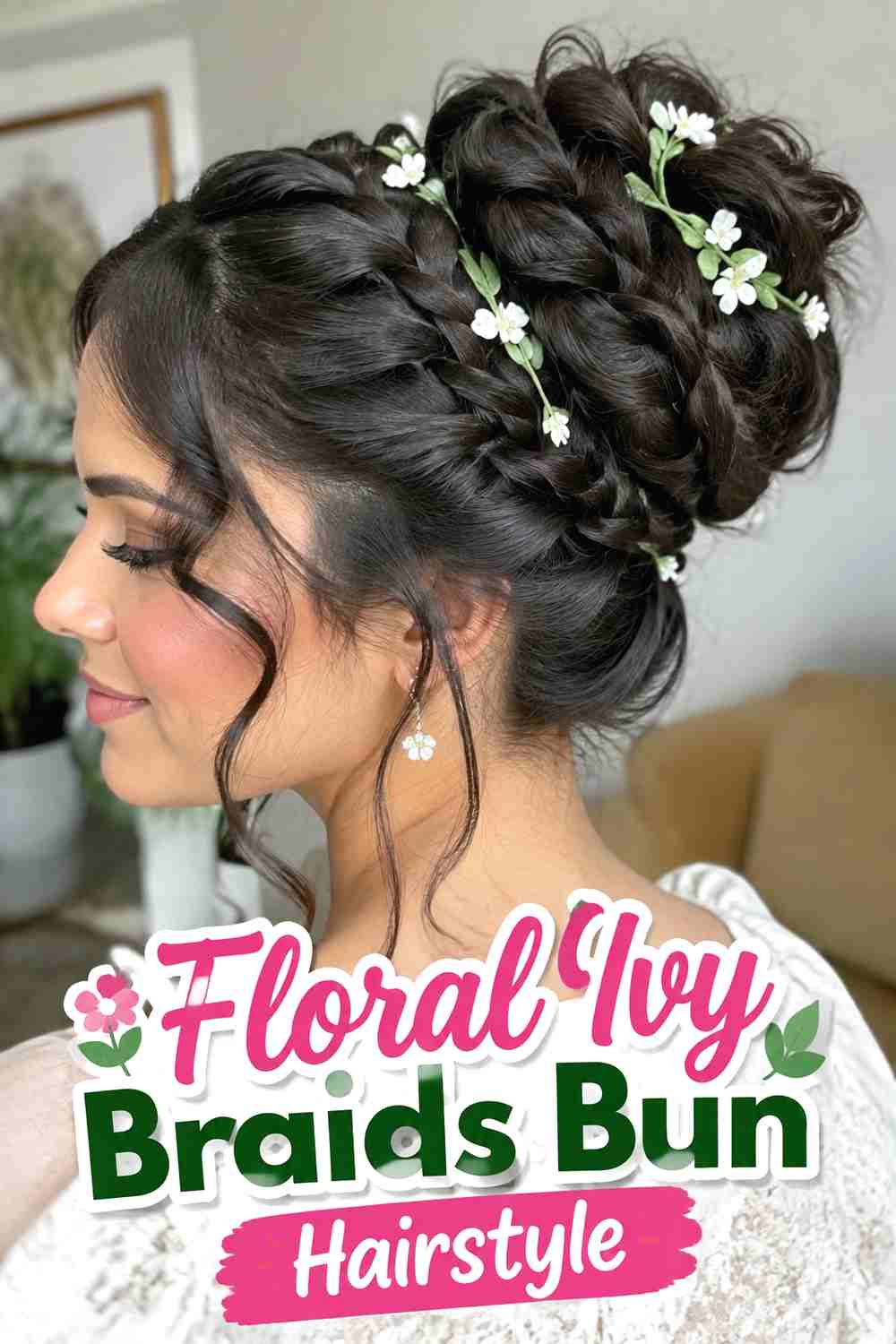
Tiny floral accents make the ivy concept more botanical without requiring the entire hairstyle to be covered in flowers. Braids can wind from the sides toward a low bun, with miniature floral pins or small blossoms tucked where the woven sections curve or overlap. The placement should follow the braid path so the accessories appear to grow naturally from the design. Keep the bun softly textured and relatively simple, giving the floral braid enough visual space. Lightweight accents are easier to secure and less likely to distort the woven sections. This style looks especially cohesive when the front remains soft and understated rather than adding extra clips, ribbons, or unrelated embellishments.
Best For
This variation works beautifully for garden weddings, spring celebrations, bridesmaids, romantic photography, and outdoor formal events.
15. Voluminous Ivy Braids Bun Hairstyle
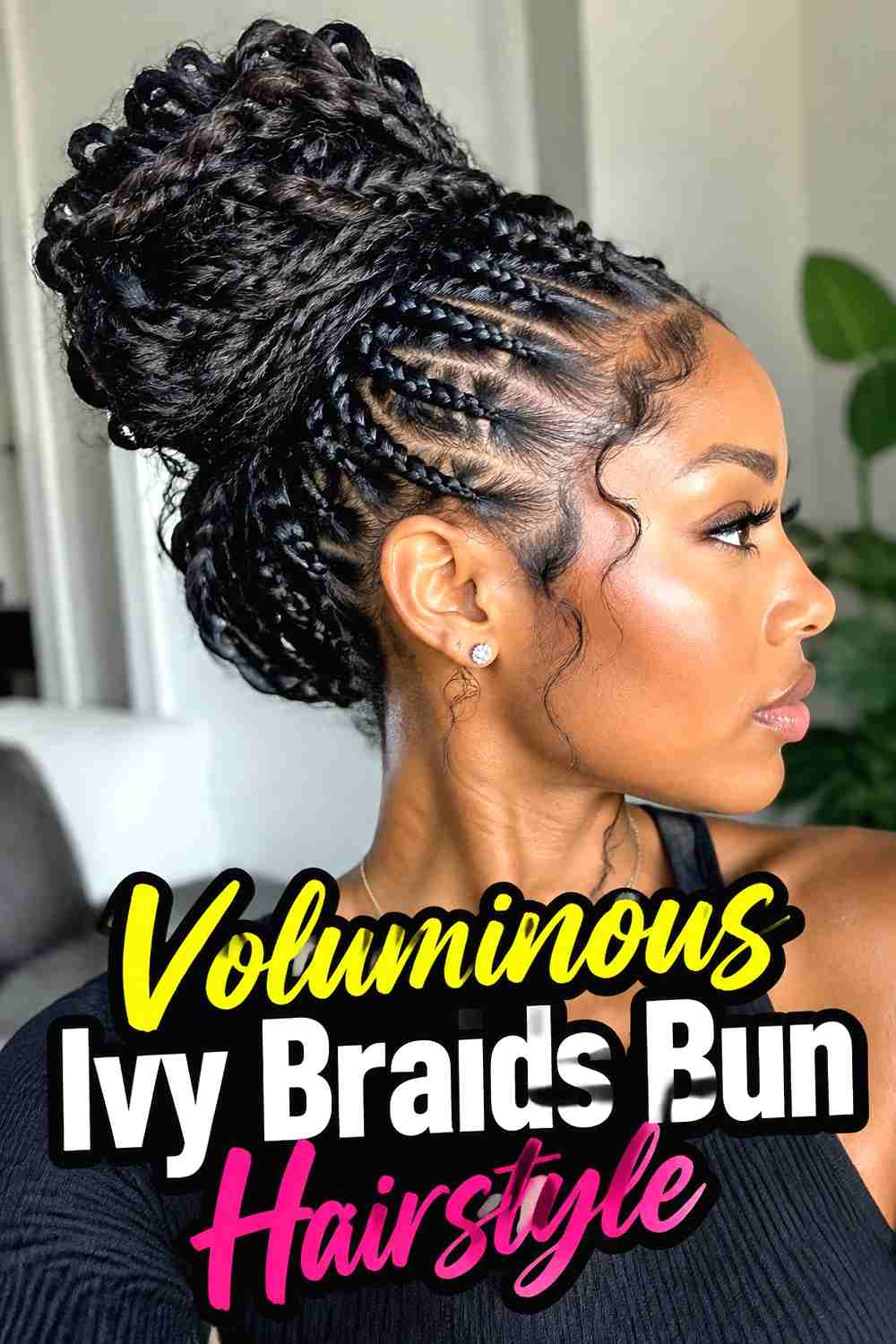
This fuller version combines elevated crown volume with larger ivy-inspired braids and a substantial bun. The crown is gently lifted first, then broad braids curve along each side and travel toward a low or mid-height bun. Because every element has more scale, the braids should stay relatively open and the bun should be large enough to balance them. Avoid heavy teasing on the visible surface; build support underneath and keep the outer hair softly polished. Medium to thick hair can create the volume naturally, while finer hair may need careful sectioning. The result should feel airy and dimensional, with the braid paths remaining clear even against the fuller silhouette.
Styling Notes
Build crown volume before braiding, and preserve it by directing the side sections backward without excessive tension.
16. Sculptural Ivy Braids Bun Hairstyle
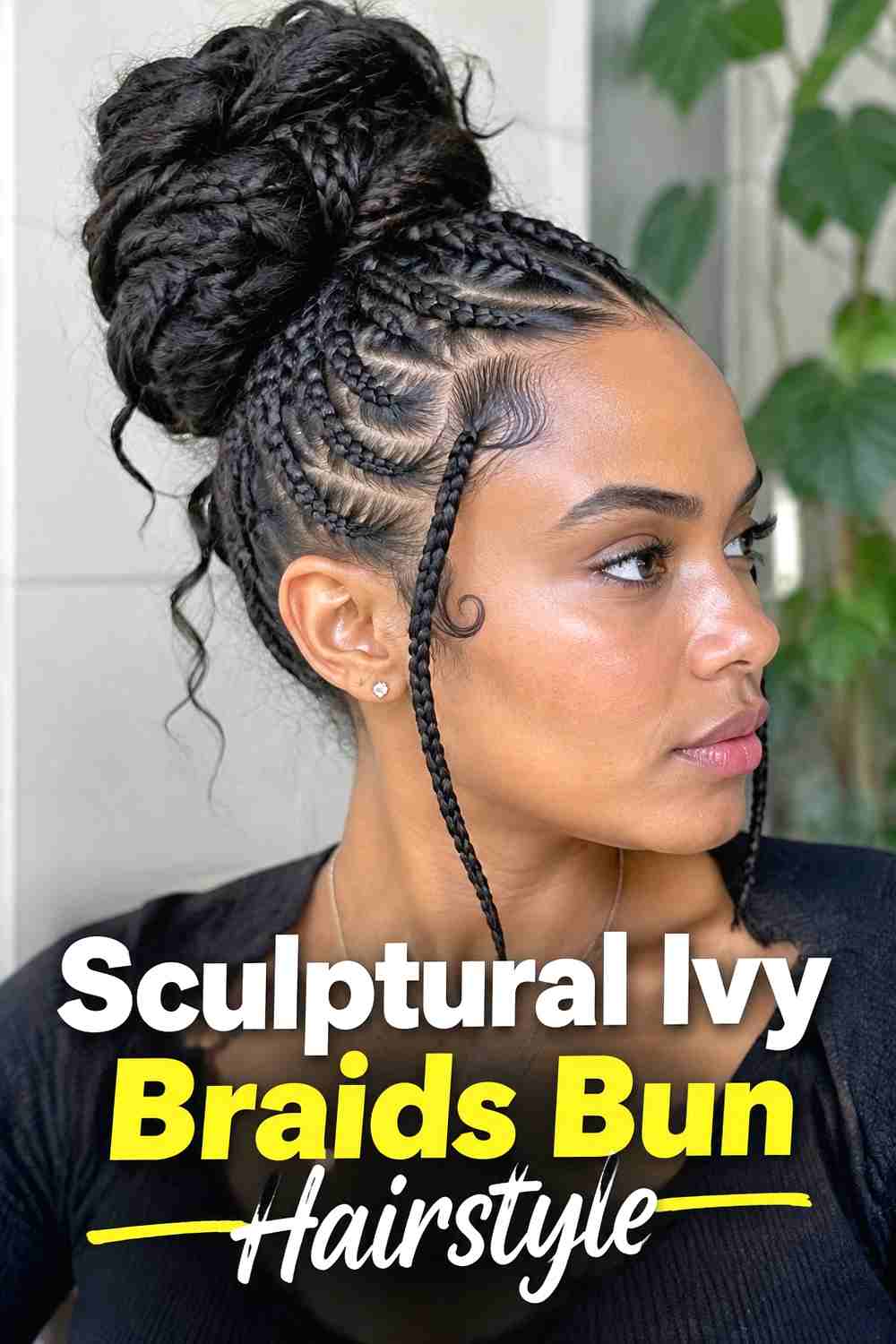
The sculptural version turns the ivy braid concept into a statement updo using broad woven curves, folded sections, and a carefully shaped bun. Rather than covering the head with many small braids, two or three substantial braided paths curve around larger smooth panels of hair, creating an architectural botanical effect. Each braid should connect naturally to the gathering point or bun so nothing appears to float independently. Longer, denser hair offers the most flexibility for the folded structure, although discreet padding can support selected shapes. Keep the overall design readable by limiting the number of major elements. Hidden pins are essential so the braid routes and sculptural curves remain uninterrupted.
Best For
Choose this version for weddings, editorial events, formal photography, or occasions where the hairstyle itself is intended to make a strong visual statement.
Styling Notes
Plan the largest folds and braid paths first, then use smaller details only where they reinforce those dominant shapes.
How to Choose the Right Look
Begin with the amount of braid detail you want. Classic wrapped, side-climbing, and single Dutch versions keep the design focused, while double, crown, and sculptural options create more visible weaving around the head and bun.
Next, consider bun placement. Low buns and chignons feel romantic and are easy to combine with trailing braids. Mid-height buns work well with climbing or crown patterns, while half-up buns are a lighter option when you want to keep the lower lengths loose.
Hair density also matters. Fine hair may be easier to style with narrower braids and a compact bun, while thick hair can support broader Dutch braids, larger twists, and fuller sculptural shapes. Loosening braid edges can add visual width without requiring excessive tension.
Accessories should remain secondary. Pearls and small floral details can reinforce the ivy theme, but the braided paths should still be clearly visible.
Finally, prioritize comfort and hold. Secure the bun and main braid anchors first, then soften only the visible outer sections once the internal structure is stable.
Final Thoughts
Ivy braids bun hairstyles are most effective when the braids appear to travel naturally through the updo, curving around the crown, climbing toward the bun, or wrapping its edges like soft vines.
Choose a braid type and bun size that suit your hair first, then adjust texture, tendrils, volume, pearls, or floral details to make the finished style as simple or elaborate as you like.
FAQs
1. What is an ivy braids bun hairstyle?
It is a braided bun style where one or more braids curve, climb, wrap, or cross around the head and bun in a vine-like pattern.
2. Which braid types work well for an ivy-inspired bun?
Dutch, fishtail, three-strand, crown, and narrow accent braids all work well because their paths can be shaped around the bun.
3. Does hair need to be very long for ivy braids?
Not always. Medium hair can create compact low or half-up versions, while longer hair provides more flexibility for wrapping, double braids, and sculptural designs.
4. Can ivy braid buns include pearls or flowers?
Yes. Small pearl pins or floral accents can follow the braid path, but using them selectively helps keep the woven structure visible.
5. How do you keep an ivy braid bun secure?
Secure the bun and major braid sections independently with elastics and hidden pins, then loosen only the outer braid edges after the structure is stable.
Save your favorite ivy braids bun ideas, share them for inspiration, and explore more romantic braided updos for weddings, parties, and special occasions.