17 Cascading Curtain Bangs Hairstyle Ideas
Soft center-split bangs flowing into layered lengths create an easy, dimensional frame in these cascading curtain bangs hairstyles for every styling mood.
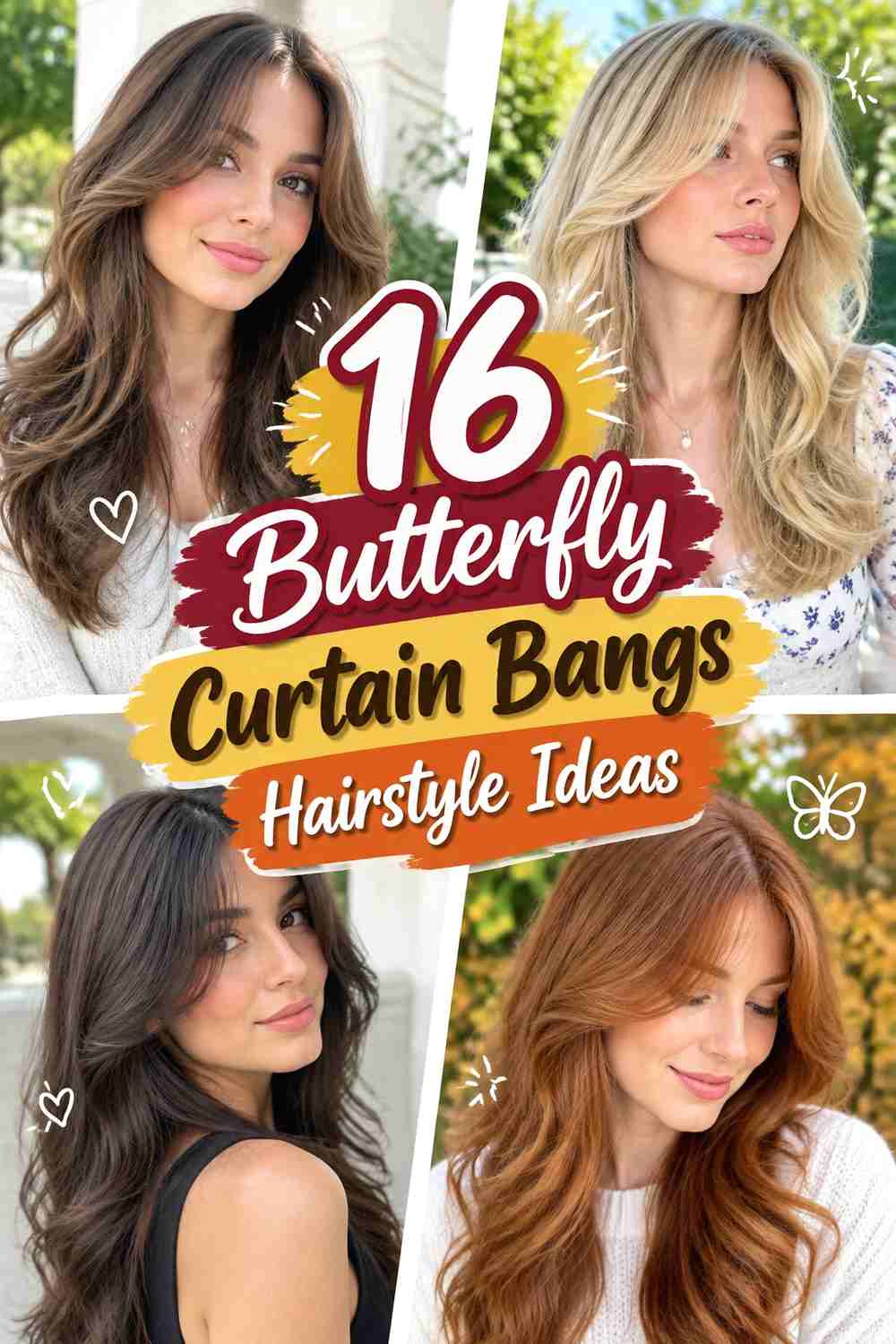
Cascading curtain bangs extend the familiar center-parted fringe into longer face-framing sections that blend gradually with the rest of the haircut. Instead of stopping abruptly around the cheekbones, the shape continues through layered pieces around the jaw, shoulders, or longer lengths, creating a flowing transition from fringe to haircut.
The finished effect depends heavily on texture, layer placement, and styling. A round-brush blowout creates dramatic sweep, while waves and curls produce softer separation. Straight finishes show the cut lines more clearly, and shaggier versions create extra movement through the sides. Before choosing a look, compare your hair length, density, usual styling routine, and how much daily shaping you want the bangs to require.
Quick List
- Long Layered Cascading Curtain Bangs Hairstyle
- Soft Wavy Cascading Curtain Bangs Hairstyle
- Feathered Cascading Curtain Bangs Hairstyle
- Voluminous Blowout Cascading Curtain Bangs Hairstyle
- Shoulder Length Cascading Curtain Bangs Hairstyle
- Curly Cascading Curtain Bangs Hairstyle
- Straight Cascading Curtain Bangs Hairstyle
- Shaggy Cascading Curtain Bangs Hairstyle
- Face Framing Cascading Curtain Bangs Hairstyle
- Wispy Cascading Curtain Bangs Hairstyle
- Butterfly Layer Cascading Curtain Bangs Hairstyle
- Bouncy Cascading Curtain Bangs Hairstyle
- Textured Lob Cascading Curtain Bangs Hairstyle
- Soft Curl Cascading Curtain Bangs Hairstyle
- Side Part Cascading Curtain Bangs Hairstyle
- Extra Long Cascading Curtain Bangs Hairstyle
- Romantic Cascading Curtain Bangs Updo Hairstyle
1. Long Layered Cascading Curtain Bangs Hairstyle
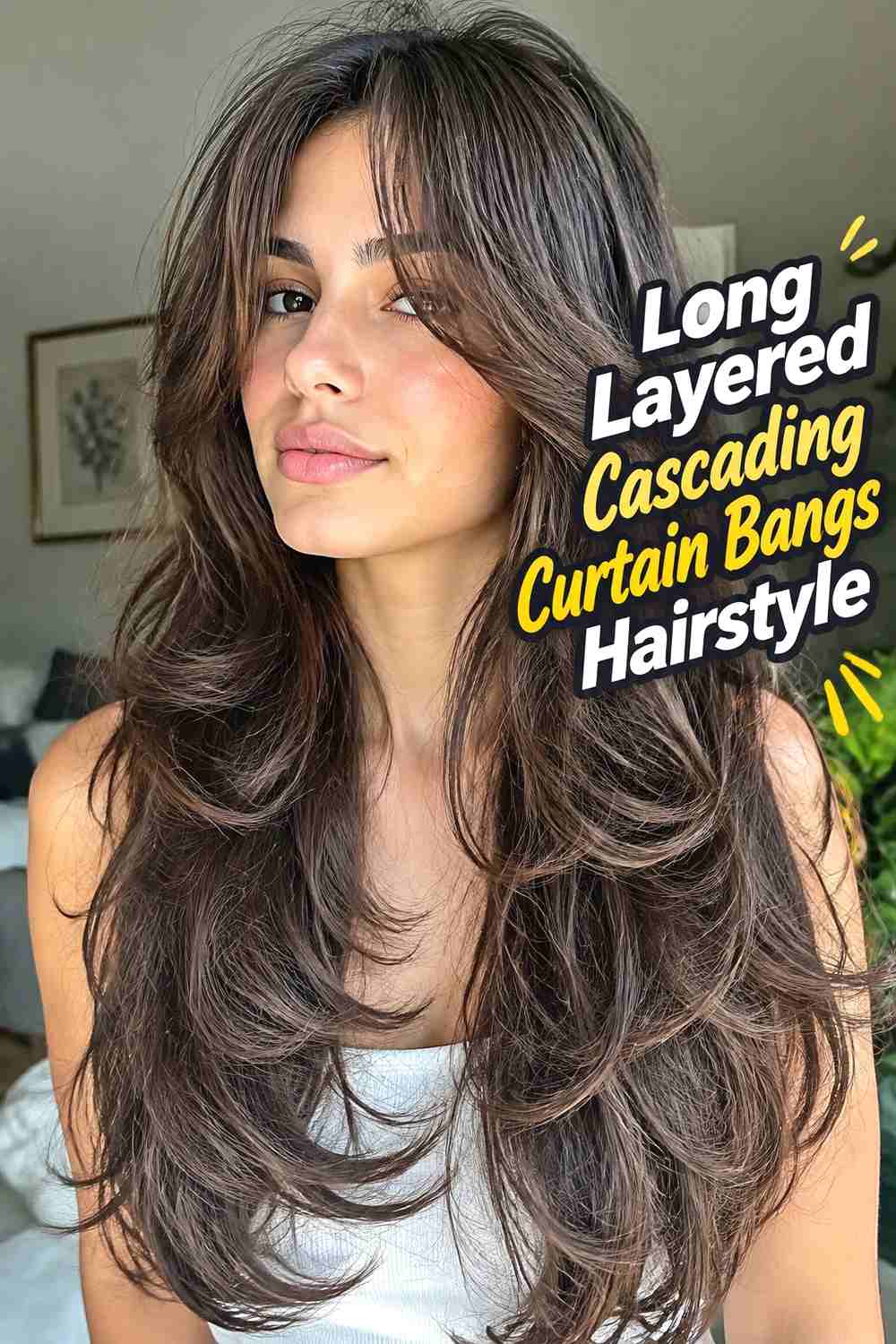
Long layered cascading curtain bangs create a continuous flow from a shorter center fringe into cheekbone, jaw, and collarbone-length pieces. The shape works especially well on long hair because there is enough length for each layer to step down gradually instead of ending abruptly. A soft blowout can turn the front sections away from the face while allowing the longer layers to fall naturally through the shoulders. The result feels full and polished without needing a blunt fringe. This approach is particularly useful if you enjoy noticeable face-framing movement but still want the front pieces long enough to tuck back when needed. Keeping the ends soft helps the layers blend instead of looking disconnected.
Styling Notes
Use a medium or large round brush to direct the bangs away from the face, then let the longer layers cool in their natural curve.
Best For
This style suits medium to long hair when you want visible layering without removing excessive overall length.
2. Soft Wavy Cascading Curtain Bangs Hairstyle
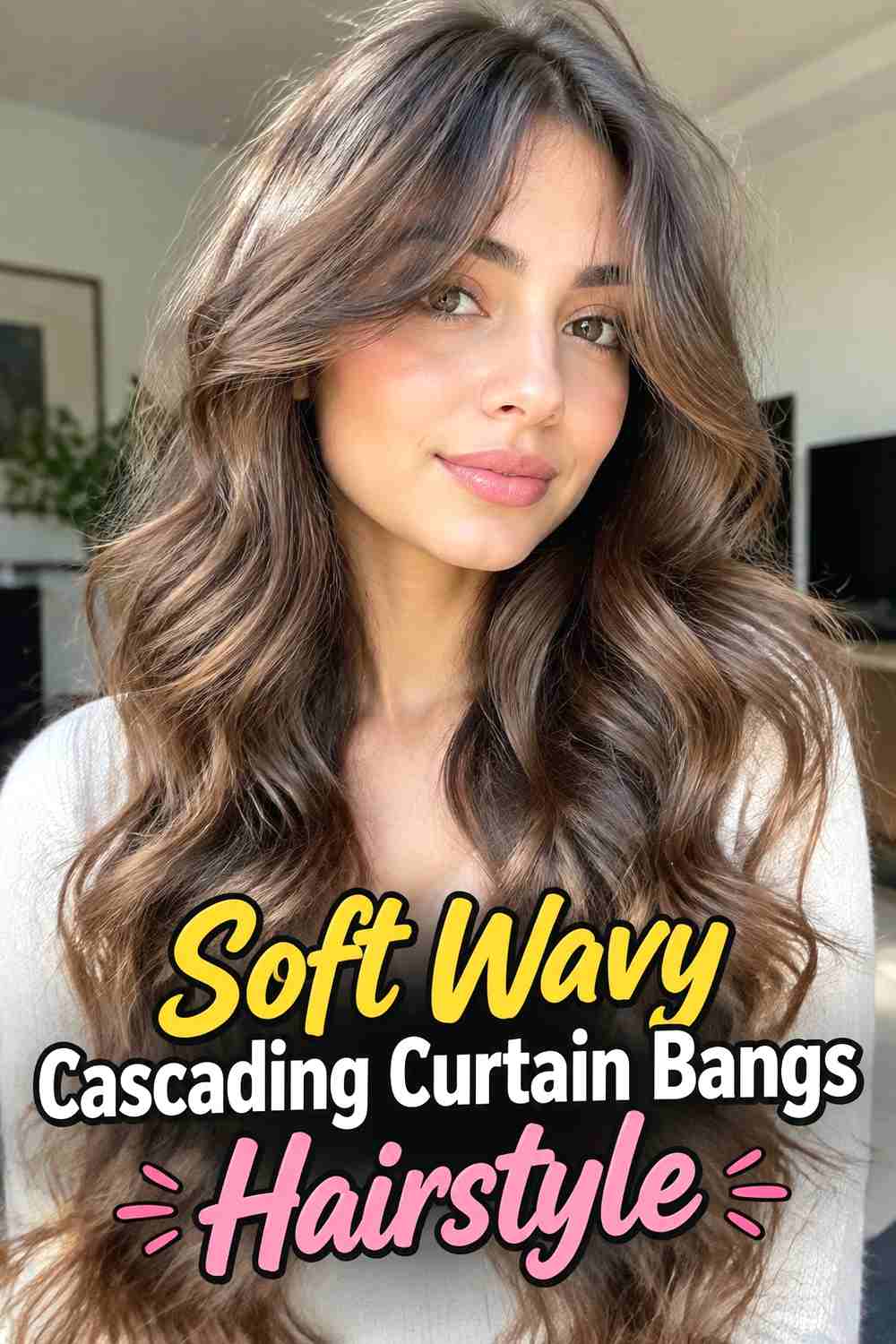
Soft waves make cascading curtain bangs look especially natural because the fringe and longer face-framing layers can bend together instead of appearing like separate sections. The shortest pieces part near the center, curve around the cheekbones, and blend into loose waves through the mids and ends. The overall effect is relaxed and dimensional rather than highly styled. This version works well on medium and long hair, particularly when the haircut already contains light layering around the front. A slightly imperfect wave pattern keeps the hairstyle from looking too uniform and helps the curtain fringe settle naturally. Avoid making every section curl in exactly the same direction; varied movement usually gives the cascading shape more depth.
Styling Notes
Alternate loose wave directions through the lengths while keeping the front pieces gently curved away from the face.
Why It Works
The gradual wave pattern visually connects the bangs to the rest of the haircut, making the transition feel seamless.
3. Feathered Cascading Curtain Bangs Hairstyle
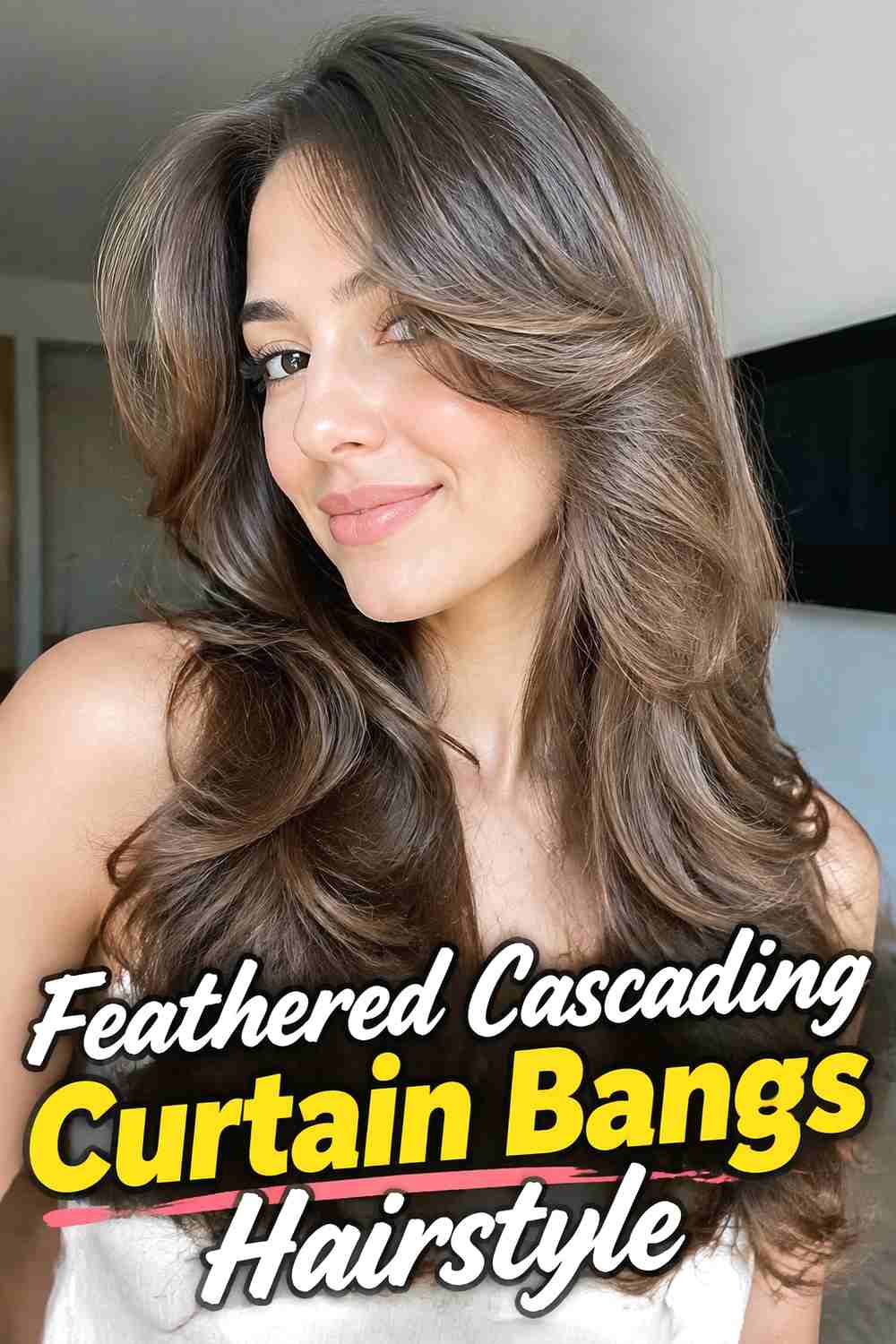
Feathered cascading curtain bangs use light, tapered ends to create airy movement around the face. The shortest center pieces open softly across the forehead, while longer sections sweep outward toward the cheekbones and jaw before blending into feathered layers. This finish can give medium or long hair more motion without requiring heavy texture throughout the entire cut. A smooth blowout works especially well because the feathering becomes visible where each layer curves away from the face. The key is avoiding overly blunt edges, which can interrupt the cascading effect. This style feels polished but still lightweight, making it useful if you want noticeable face framing without a thick, dense curtain fringe that requires constant reshaping.
Hair Type & Length
Medium to long straight or softly wavy hair can show the feathered edges clearly, especially when the front layers have enough length to sweep outward.
Pro Tip
Keep the shortest pieces long enough to divide naturally rather than cutting them into a full straight-across fringe.
4. Voluminous Blowout Cascading Curtain Bangs Hairstyle
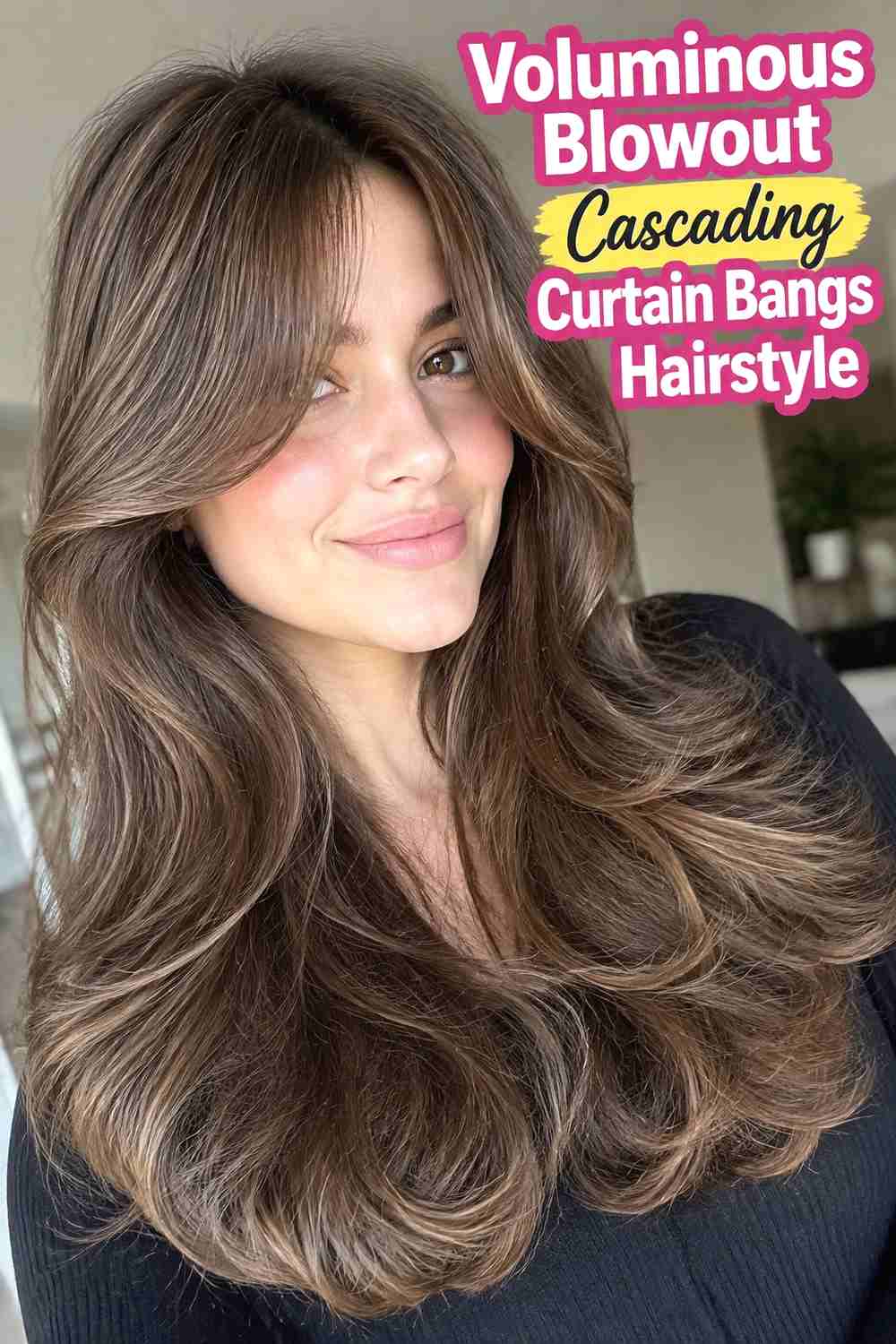
A voluminous blowout gives cascading curtain bangs their most dramatic sweep. The fringe lifts slightly at the roots, separates through the center, and curves outward before merging into full, rounded layers. This style is especially striking on medium-long and long hair because the volume can continue through the sides instead of stopping at the bangs. The goal is controlled fullness rather than stiffness: the front should have enough lift to stay open while the longer pieces remain soft and touchable. Large sections and broad curves usually create a more modern finish than tight barrel curls. This look suits occasions when you want the haircut’s layering to be clearly visible, though it may require more styling time than air-dried or naturally textured versions.
Styling Notes
Lift the roots first, then shape the bangs away from the face with a round brush. Larger sections through the lengths keep the blowout soft.
Wear & Maintenance
The style may relax as the day continues, particularly on very straight or fine hair, so choose hold products that suit your texture without making the fringe rigid.
5. Shoulder Length Cascading Curtain Bangs Hairstyle
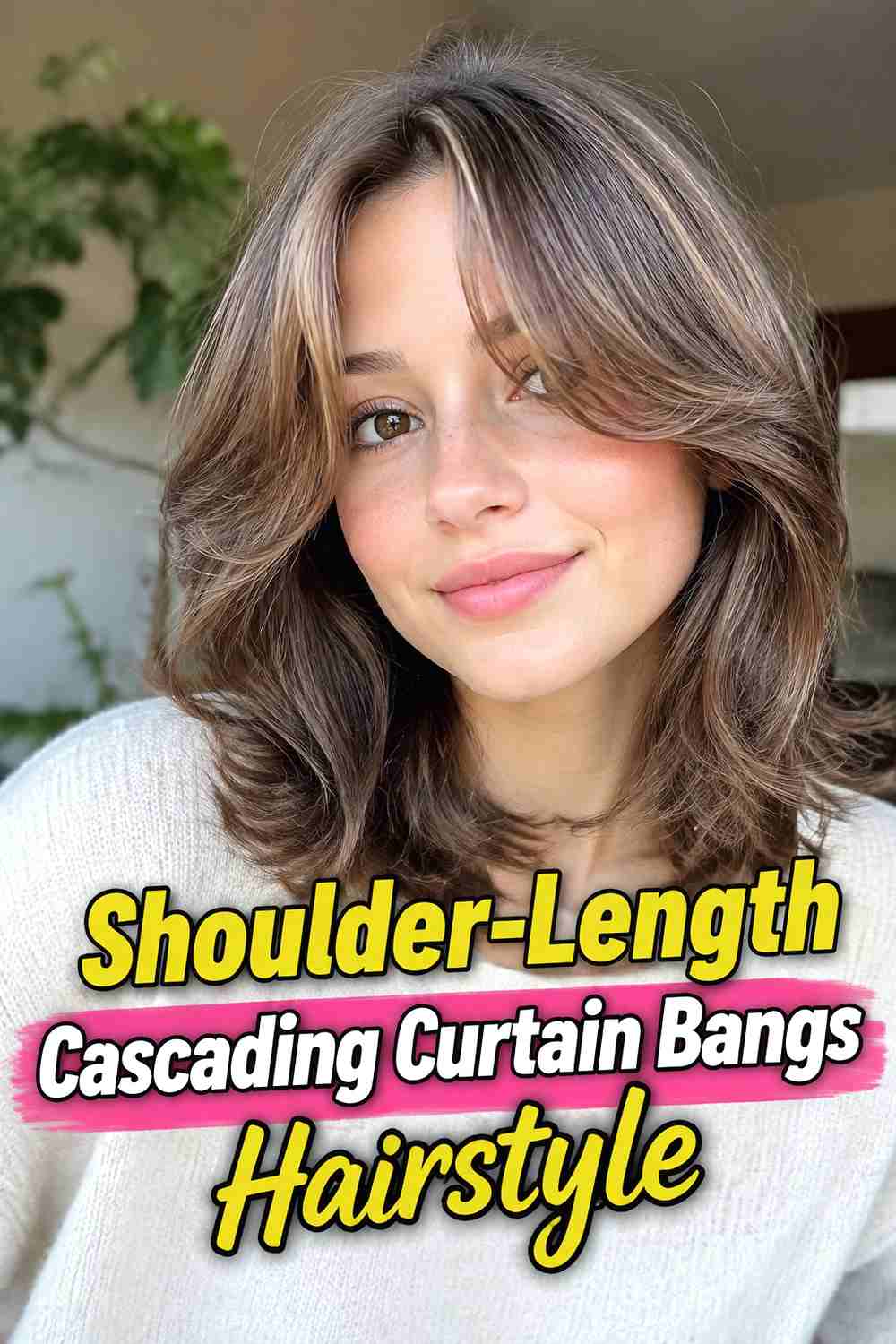
Shoulder-length hair gives cascading curtain bangs a compact but still flowing shape. The fringe can begin around the brow or cheekbone area and transition through progressively longer pieces that meet the shoulder-length perimeter. Because the haircut is shorter overall, every face-framing layer remains visible instead of disappearing into very long lengths. This makes the style especially effective with a smooth blowout, natural waves, or slightly flipped ends. It is a practical option if you want the movement of long curtain layers without maintaining waist- or chest-length hair. Keep the front layers soft and blended so they support the haircut’s shape rather than creating a disconnected shelf around the face.
Why It Works
The shorter overall length keeps the cascading layers visually concentrated, making the front framing easy to see from several angles.
Styling Notes
A gentle outward bend through the ends can echo the curtain-bang movement and give the shoulder-length cut a cohesive finish.
6. Curly Cascading Curtain Bangs Hairstyle
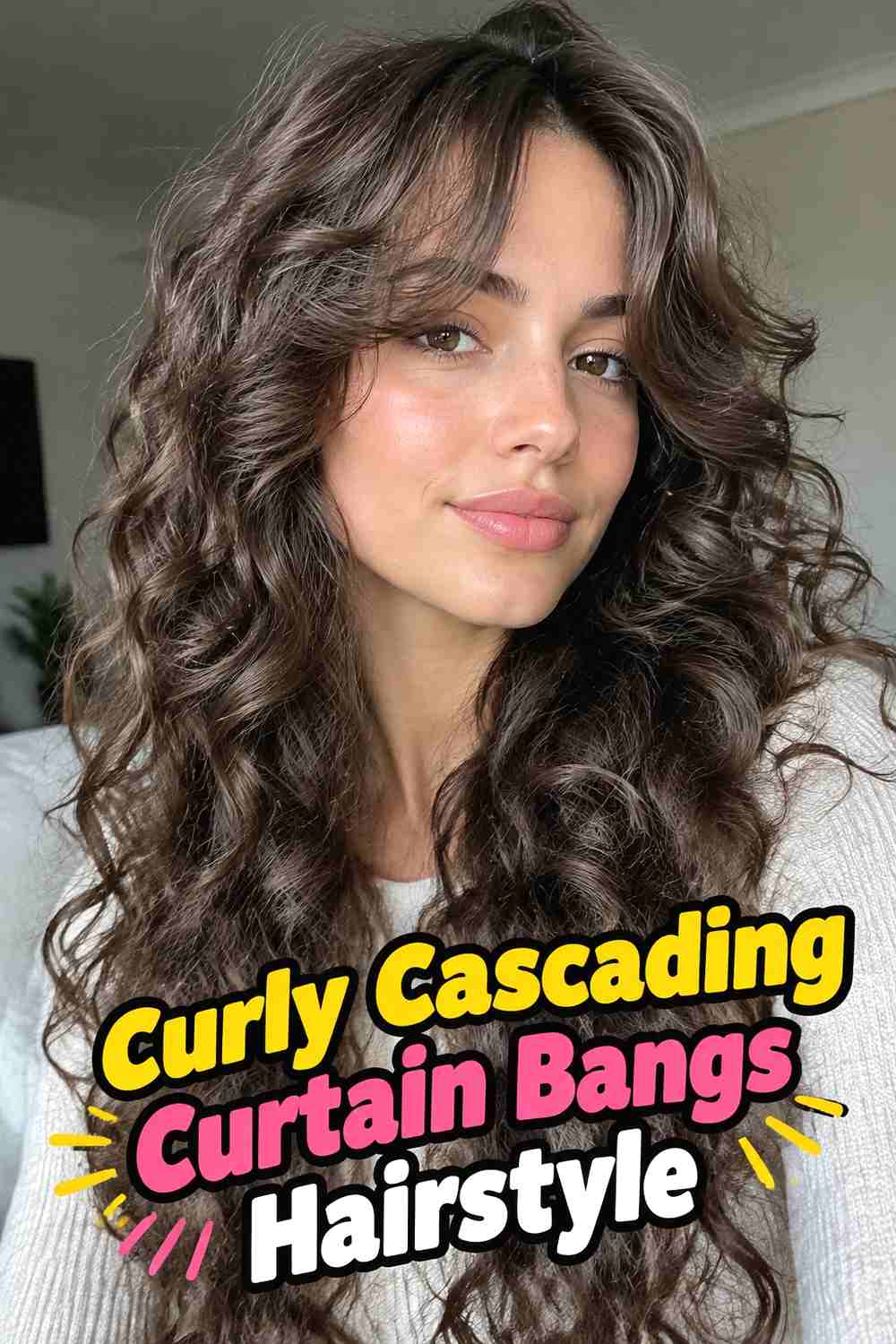
Curly cascading curtain bangs adapt the center-opening shape to natural curl movement rather than forcing the fringe into a smooth blowout. Shorter curls around the forehead and temples gradually connect to longer curls near the cheeks and jaw, producing a layered frame that moves with the rest of the hair. The exact length needs to account for curl shrinkage so the bangs settle where intended once dry. This version can look especially balanced when the front curls vary slightly in size and direction instead of forming an identical pattern. Keeping some volume around the sides helps the bangs blend naturally. The finished look should preserve curl definition while allowing enough softness for the fringe to open and cascade away from the center.
Hair Type & Length
This approach works best when the haircut is shaped according to the hair’s natural curl pattern, density, and dry length.
Pro Tip
Evaluate the bangs when dry or near their normal worn state, since wet length can be very different from the final curled position.
7. Straight Cascading Curtain Bangs Hairstyle
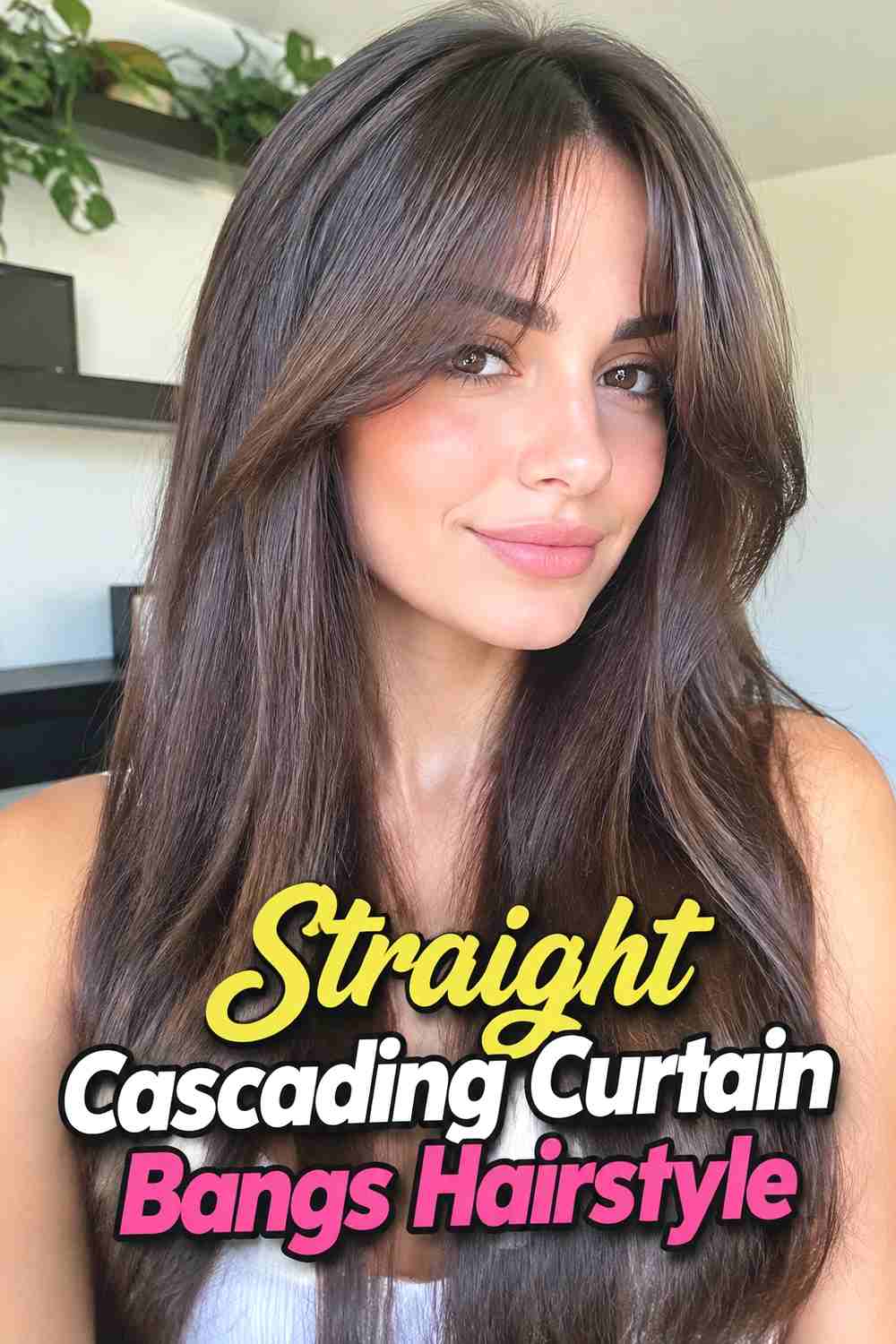
Straight cascading curtain bangs show the haircut’s architecture clearly. The center fringe parts gently, then lengthens through the temples, cheekbones, and jawline before merging into smooth front layers. Because there is little curl to disguise the transitions, the ends should be carefully blended so each section flows into the next. This style can look sleek on long straight hair, a smooth lob, or medium-length layers. A subtle bend near the face prevents the fringe from hanging flat while keeping the overall finish polished. It is a good choice if you prefer clean lines and minimal texture, although very straight hair may need some root lift or directional styling to keep the curtain pieces open instead of falling directly forward.
Styling Notes
Use gentle heat or a round brush only at the front to create an outward curve while leaving the longer lengths predominantly straight.
Best For
Choose this version if you like a sleek finish and want the layered face-framing shape to remain clearly visible.
8. Shaggy Cascading Curtain Bangs Hairstyle
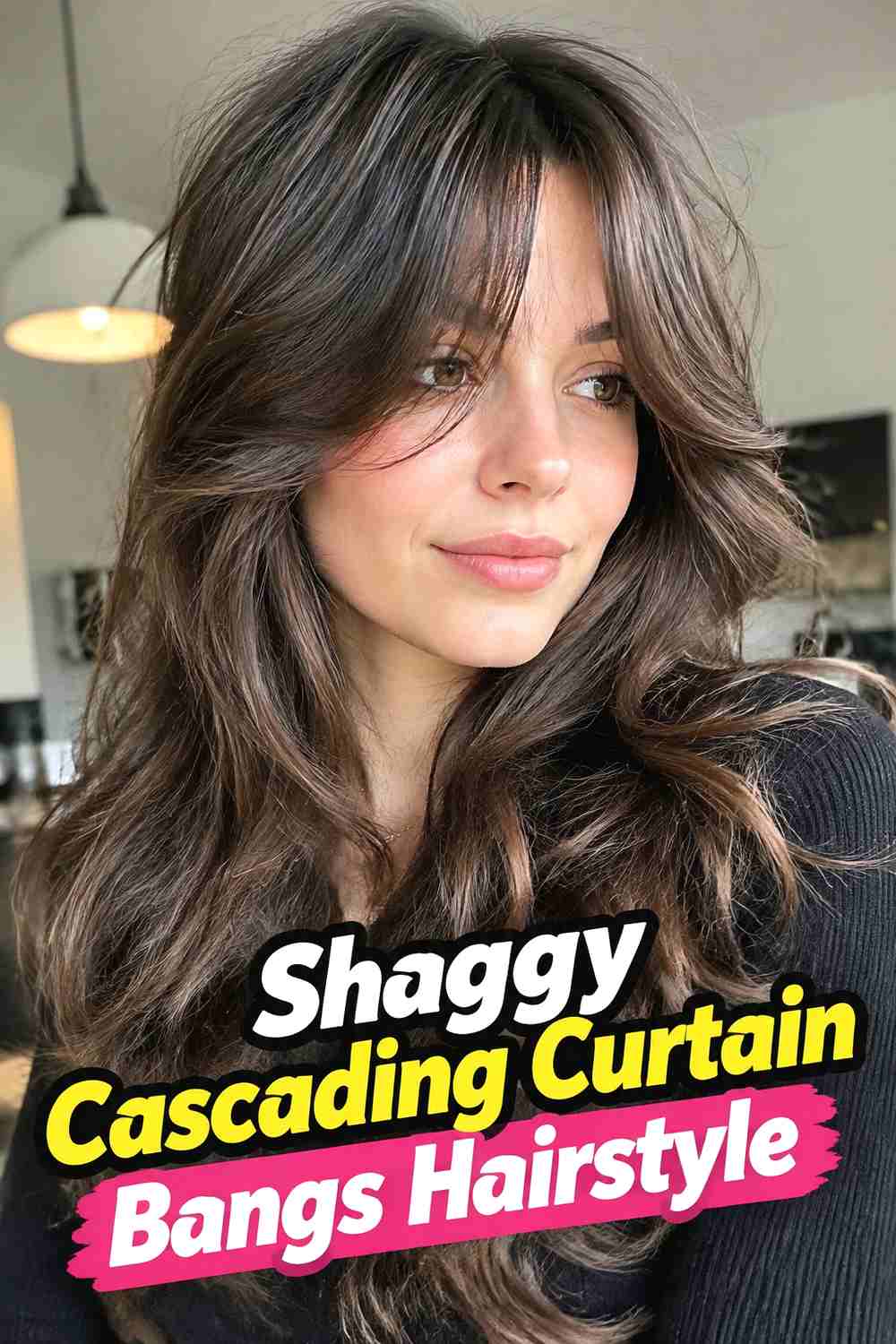
Shaggy cascading curtain bangs combine a center-opening fringe with more pronounced layering through the sides and lengths. Instead of a smooth, polished transition, the face-framing pieces have textured ends and visible separation, giving the haircut a relaxed, slightly undone character. The shape works particularly well with natural waves or air-dried texture because irregular movement complements the choppier layers. Shorter pieces near the temples can blend into cheekbone and jaw-length sections before continuing through a layered perimeter. This style offers more movement than a classic curtain bang but may also remove more weight around the front. Keeping the crown and sides balanced prevents the haircut from becoming overly thin through the ends.
Why It Works
Textured layering extends the movement of the bangs throughout the haircut, so the fringe feels integrated rather than added to one smooth length.
Wear & Maintenance
A shaggy finish can tolerate a little less precision between styling days, but the layers still need occasional reshaping as they grow.
9. Face Framing Cascading Curtain Bangs Hairstyle
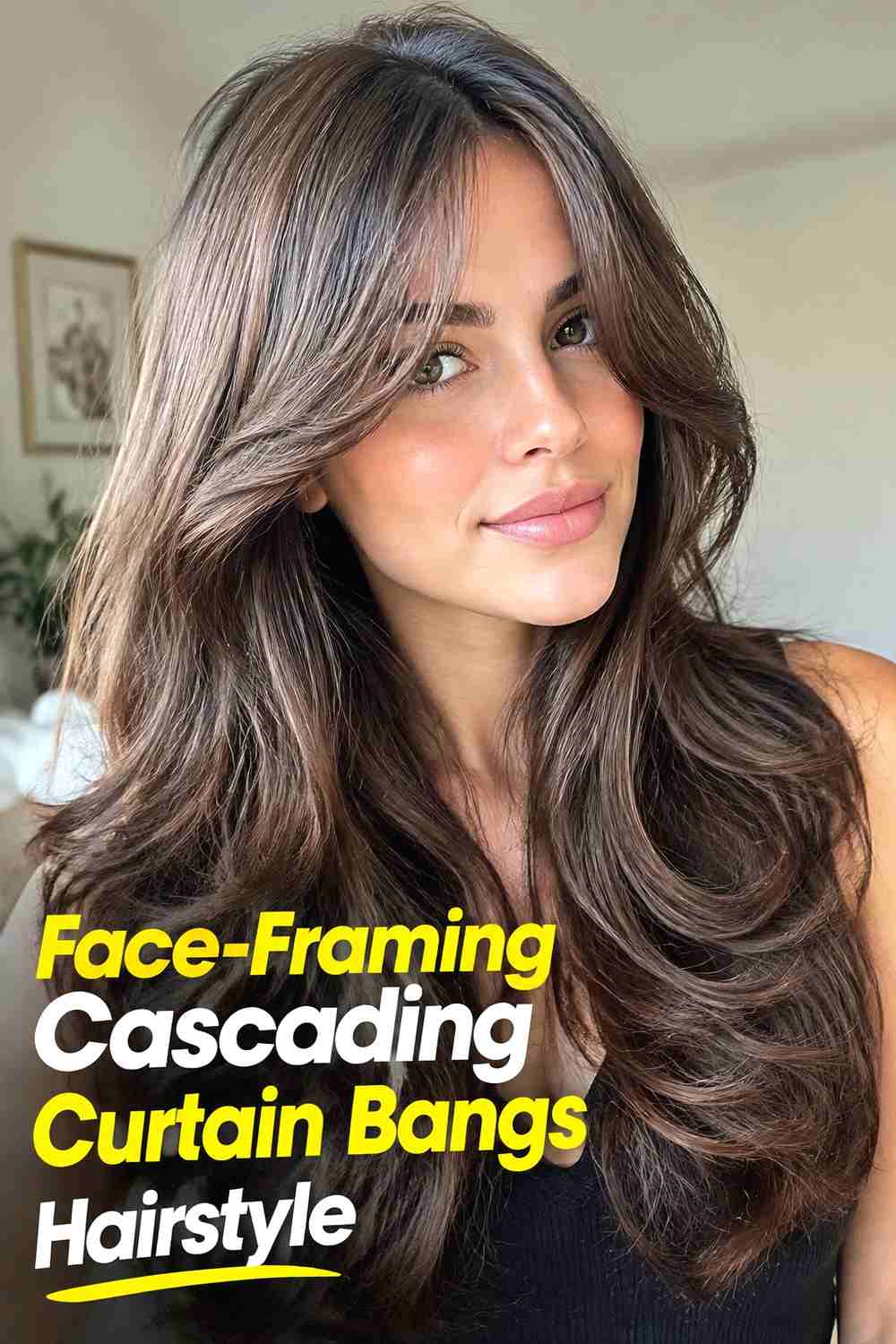
This version puts the strongest emphasis on the graduated pieces surrounding the face. The center curtain bangs open softly, then connect into layers that trace the cheekbones, jawline, and upper chest. The rest of the haircut can remain relatively simple, allowing the front shape to provide most of the movement. This works particularly well if you want a noticeable update without dramatically changing the overall length. A blowout or loose wave helps each layer sit separately enough to be seen while still flowing into the next. The exact starting point can be adjusted depending on how much forehead coverage you prefer, making this one of the more adaptable ways to wear cascading curtain bangs.
Best For
Choose this approach if your priority is visible movement around the front rather than heavy layering throughout the entire haircut.
Styling Notes
Style each front layer slightly away from the face instead of curling every section together into one large bend.
10. Wispy Cascading Curtain Bangs Hairstyle
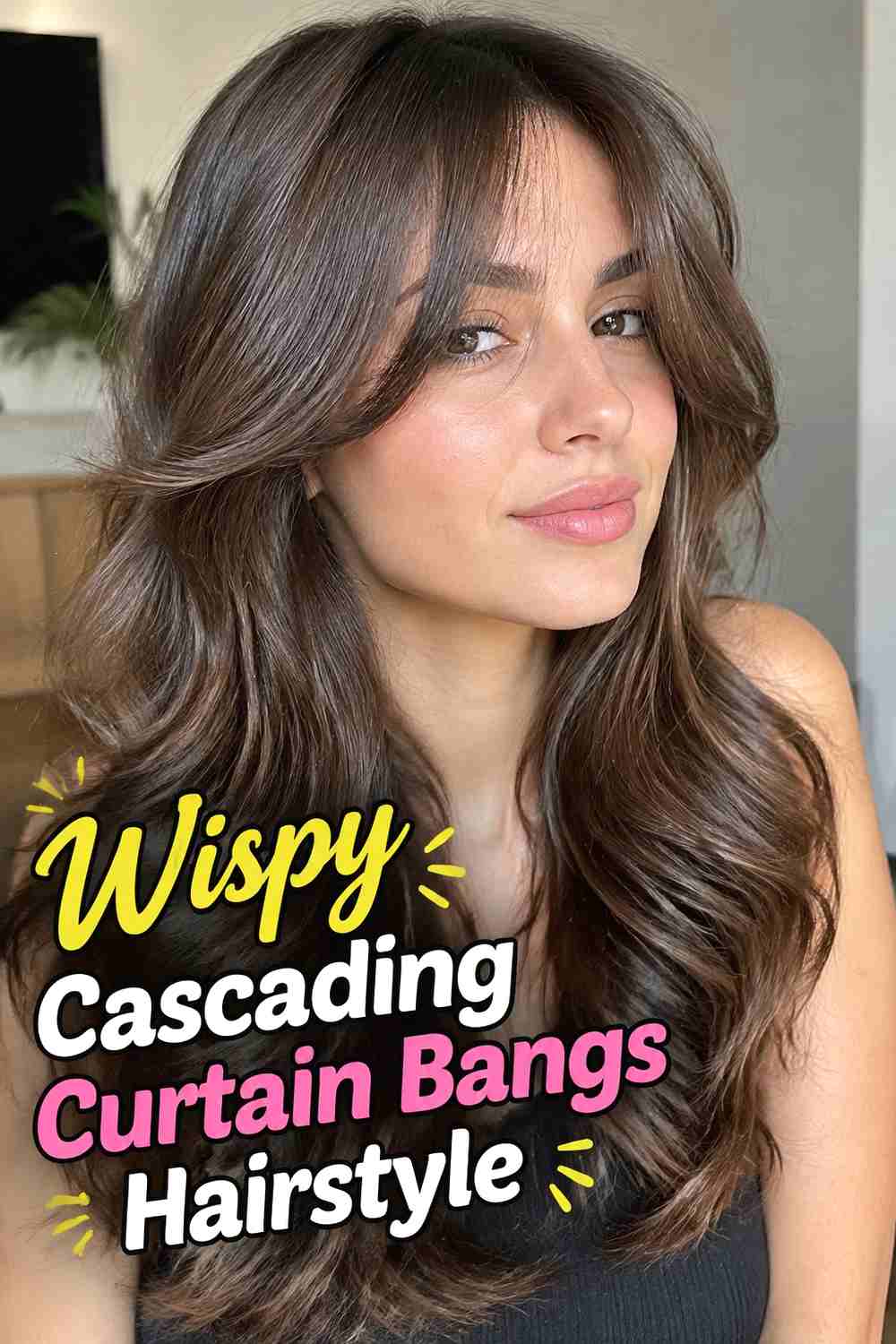
Wispy cascading curtain bangs use a lighter amount of hair through the fringe, creating an airy center split rather than a dense curtain. Fine pieces skim the forehead, then blend into longer temple and cheekbone sections that continue into the haircut. The softer density makes this style particularly useful if you want bangs without covering a large portion of the forehead or committing to a thick fringe. It can work with straight, wavy, or lightly curled hair, although the front pieces may need gentle direction to stay open. The longer layers should remain soft and subtle so they do not overpower the delicate fringe. Overall, the hairstyle feels light, movable, and easy to tuck aside when you want less emphasis on the bangs.
Hair Type & Length
This style can suit fine to medium densities particularly well, though the amount of fringe should be adjusted to the overall volume of the hair.
Wear & Maintenance
Wispy pieces can separate more easily with oil or humidity, so light styling products generally preserve movement better than heavy creams near the forehead.
11. Butterfly Layer Cascading Curtain Bangs Hairstyle
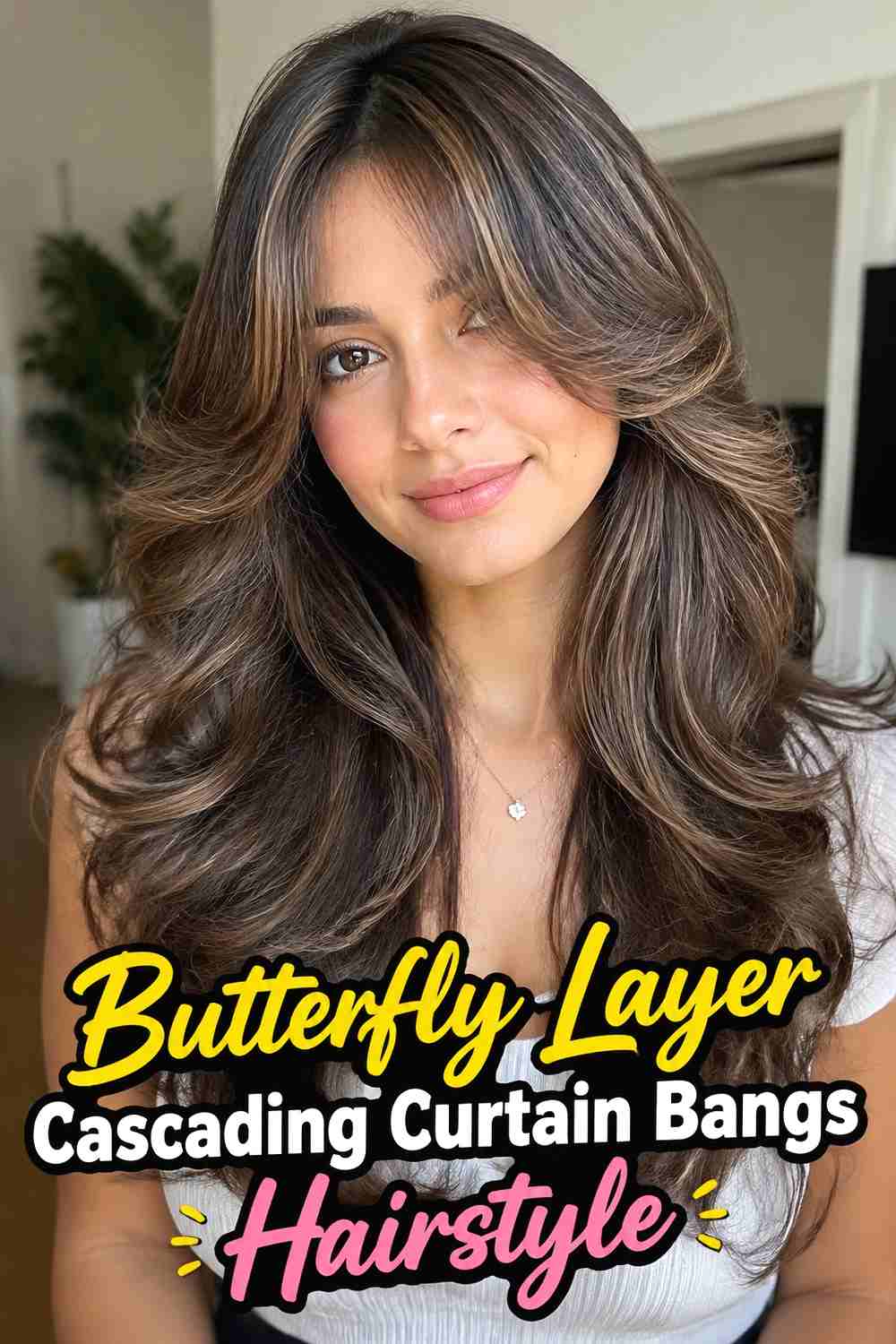
Butterfly layers naturally support cascading curtain bangs because both rely on shorter front sections flowing into progressively longer lengths. The bangs open around the center and connect to cheekbone and jawline layers, while additional sections sweep outward around the shoulders and chest. When styled with a blowout, the haircut develops a wide, airy shape with visible movement through several levels. This version works especially well on long hair with enough density to support layering without making the ends feel sparse. The front pieces can be dramatic without being blunt because each section transitions gradually into the next. The resulting silhouette feels full and polished while still preserving plenty of overall length through the back.
Why It Works
The layered structure repeats the outward sweep of the curtain fringe throughout the haircut, creating a cohesive shape from the forehead to the ends.
Pro Tip
Keep enough weight through the lower lengths so the butterfly layering does not leave the perimeter looking overly thin.
12. Bouncy Cascading Curtain Bangs Hairstyle
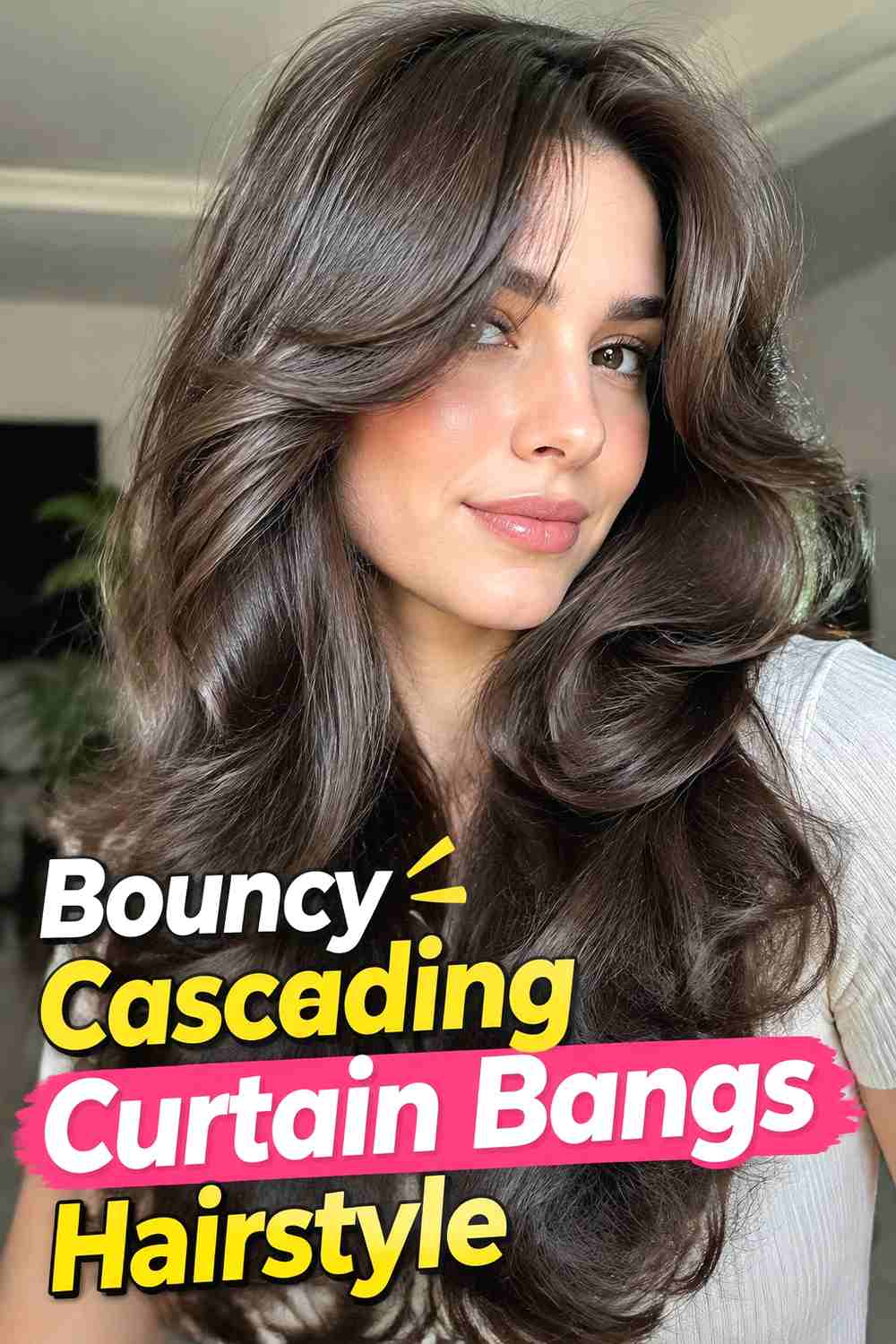
Bouncy cascading curtain bangs combine rounded movement at the front with soft volume through the rest of the hairstyle. The fringe lifts at the center, curves outward near the cheekbones, and continues into springy layers that move freely around the shoulders. Unlike a sleek blowout, this version looks best when the hair retains some airy separation and natural motion. Medium and long layers both work, especially when the ends are shaped rather than cut into one heavy line. Large rollers, a round brush, or broad heat-styled bends can create the effect without producing tight curls. The style is ideal when you want the bangs to feel lively and dimensional, though maintaining bounce may require more root support on very fine hair.
Styling Notes
Focus lift at the root and broad movement through the front rather than curling the bang ends tightly under.
Best For
This version suits anyone who prefers a fuller, energetic finish over flat-ironed or heavily textured styling.
13. Textured Lob Cascading Curtain Bangs Hairstyle
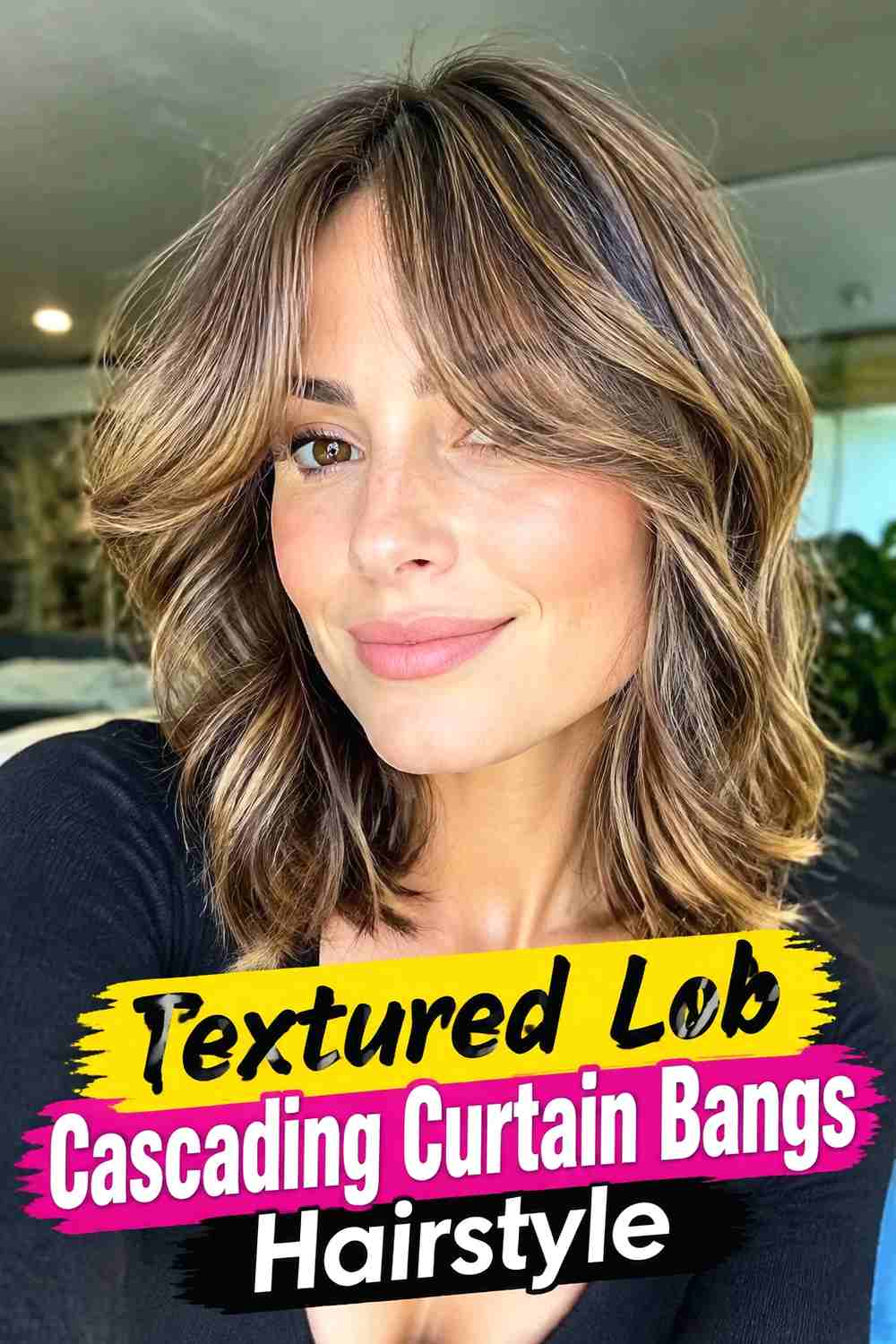
A textured lob gives cascading curtain bangs a shorter, modern framework. The fringe opens through the center and stretches into cheekbone and jaw-length pieces that blend with a collarbone or shoulder-skimming cut. Subtle internal texture keeps the lob from looking too heavy, while soft bends through the front make the layered transition easy to see. Because the overall length is compact, the bangs become a strong part of the haircut rather than disappearing into long layers. This style works especially well if you want movement without the upkeep of very long hair. The ends can remain slightly piecey for a casual effect, but the front layers should still connect smoothly enough to maintain the cascading silhouette.
Why It Works
The lob keeps the longest face-framing layers close to the perimeter, making the cascade feel concentrated and intentional.
Styling Notes
Use loose bends through selected sections instead of curling the entire lob uniformly, which keeps the finish textured and modern.
14. Soft Curl Cascading Curtain Bangs Hairstyle
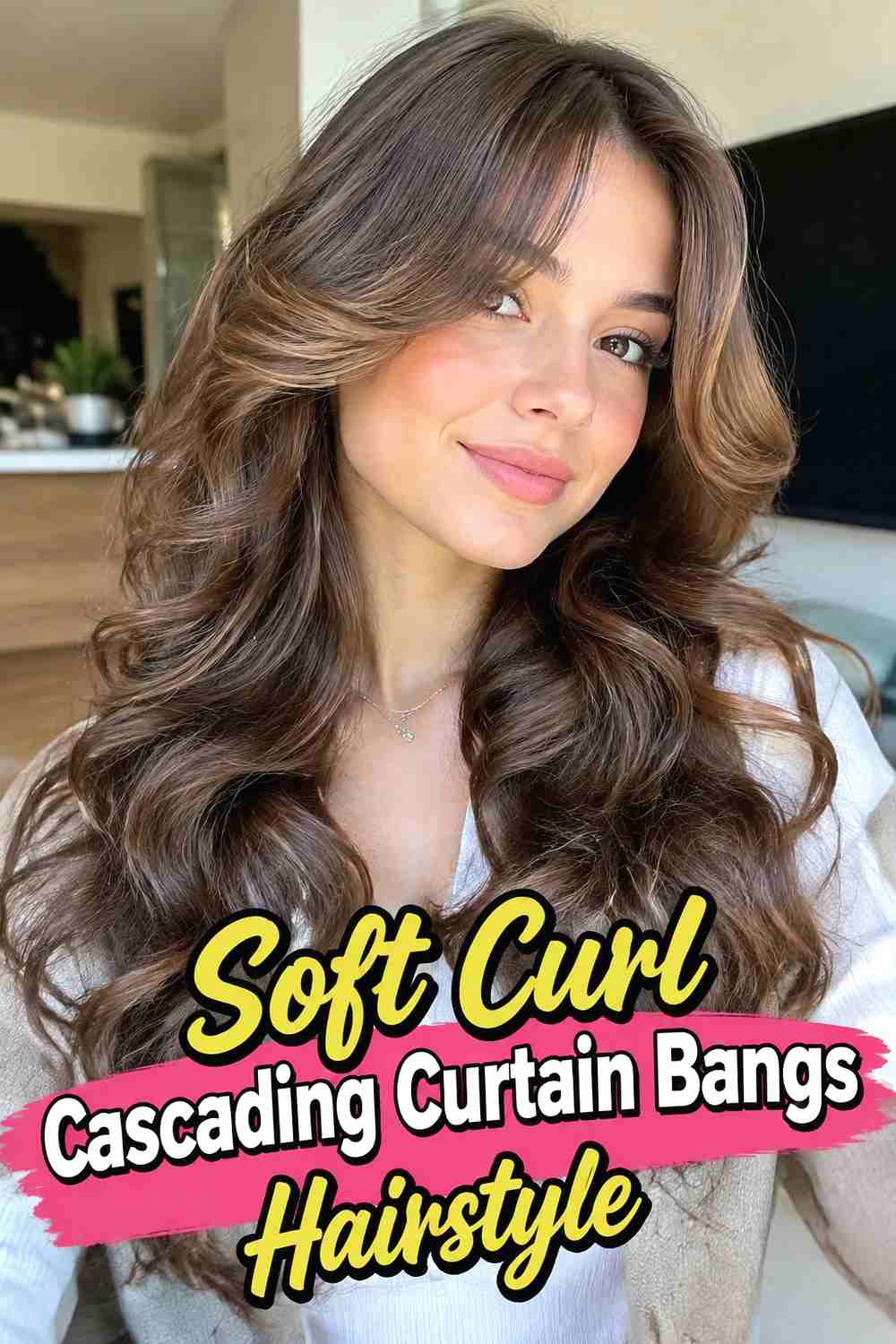
Soft curls give cascading curtain bangs a romantic, polished finish without making the hairstyle overly formal. The shortest pieces sweep away from the center, then flow into broader curls around the cheeks, shoulders, and lengths. Instead of tight ringlets, use larger curls with enough separation to preserve the layered shape. This allows the bangs to appear connected to the rest of the hairstyle while still remaining recognizable at the front. The look works particularly well on medium-long and long hair for events, photos, or days when you want more definition than a casual wave. Letting the curls loosen slightly after styling keeps the effect natural and prevents the face-framing pieces from becoming too stiff or dramatically curled.
Styling Notes
Curl the front sections away from the face and allow them to cool before gently separating them with your fingers.
Best For
This version suits dressier occasions when you want the curtain-bang shape to remain soft, dimensional, and visibly styled.
15. Side Part Cascading Curtain Bangs Hairstyle
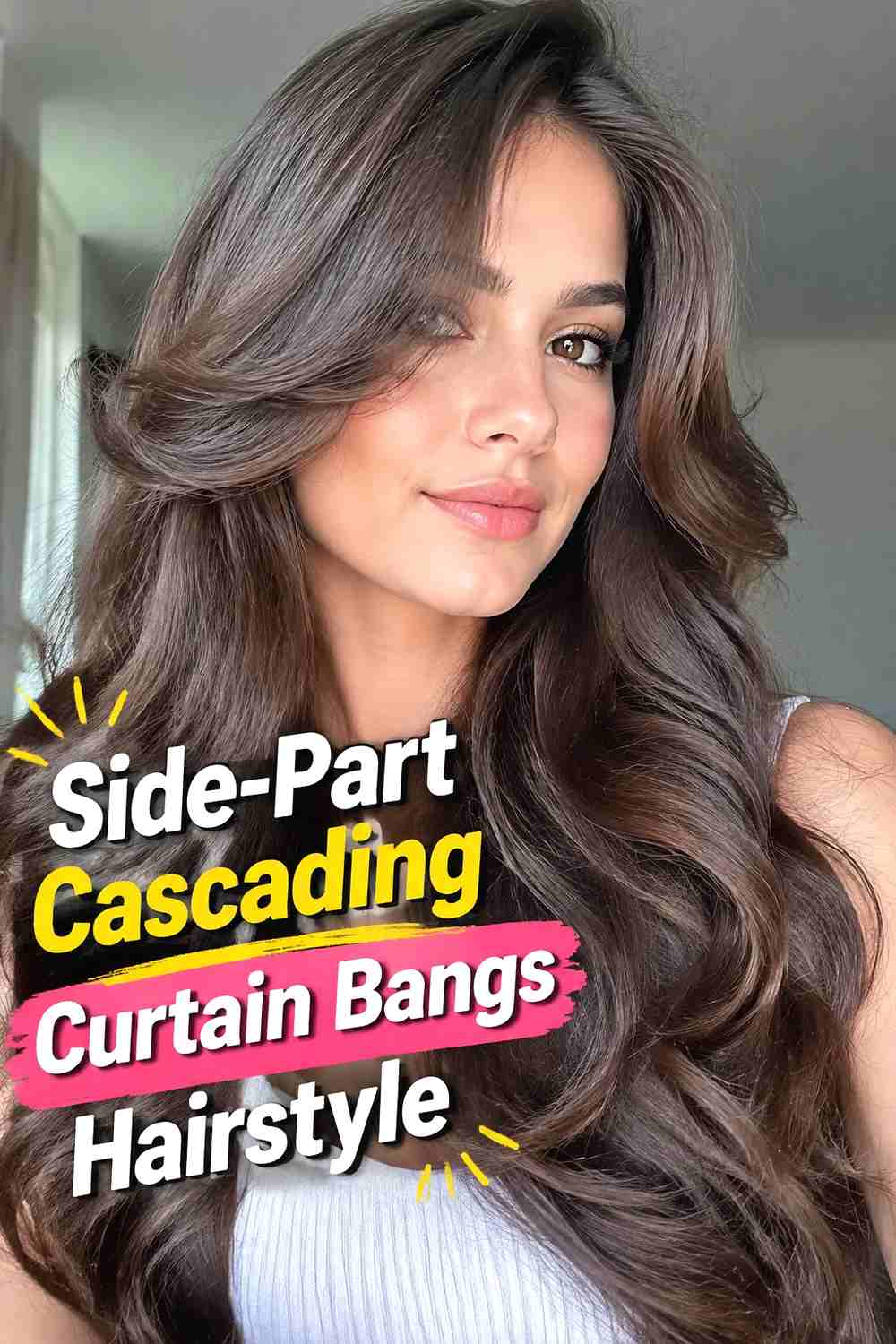
Curtain bangs are often associated with center parts, but a soft side part creates a more asymmetric cascading effect. One side can sweep more broadly across the forehead before curving toward the cheekbone, while the opposite side opens into shorter face-framing layers. The uneven balance gives the hairstyle movement and can make familiar curtain bangs feel less predictable. This works particularly well with soft waves and medium-to-long layers because the larger front sweep can blend naturally into the rest of the haircut. Avoid creating an extremely deep part if you still want the style to retain a curtain-like opening. The most successful version keeps both sides connected to longer front layers even though one section carries more volume.
Why It Works
The side part changes the direction of the fringe without removing the gradual layered transition that defines the cascading shape.
Pro Tip
Experiment with the part before cutting or restyling the bangs, since a small shift can significantly change how the longer sections fall.
16. Extra Long Cascading Curtain Bangs Hairstyle
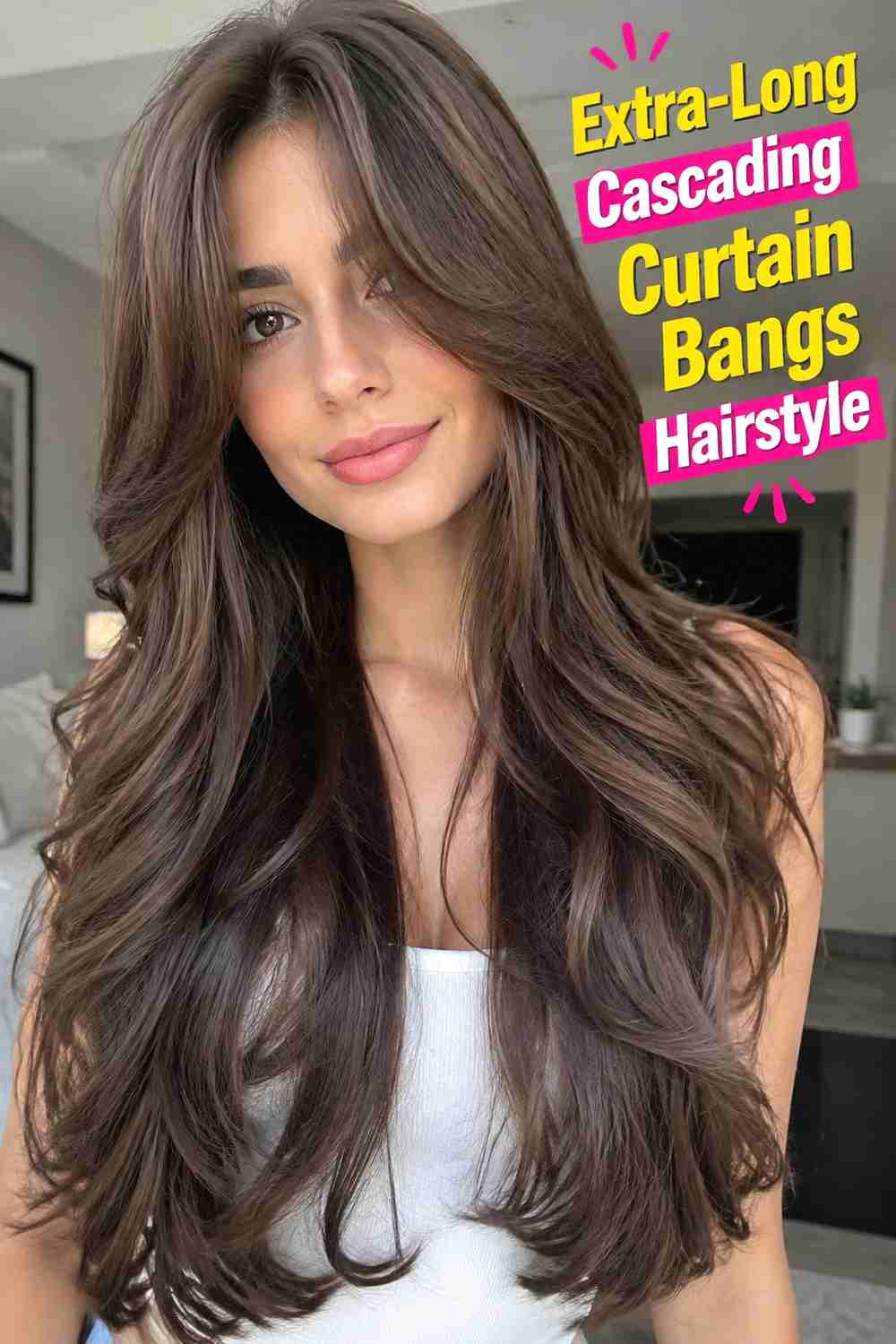
Extra-long cascading curtain bangs begin with a relatively long fringe and continue gradually through cheekbone, jaw, shoulder, and chest-level layers. Because the shortest section is longer than a traditional bang, the style feels more like dramatic face framing while still opening in the center. It is an especially practical option if you want curtain movement without having hair sitting close to the eyes. Long waves and layered blowouts show the progression beautifully, while straight styling creates a sleeker transition. This version is also easier to tuck behind the ears or blend into ponytails when desired. The front still needs deliberate shaping, but the longer starting point creates a softer commitment than a shorter forehead-skimming fringe.
Best For
Choose this option if you like the curtain effect but prefer longer front pieces with more styling flexibility.
Wear & Maintenance
The shape can grow out relatively gracefully, although periodic trimming helps maintain the step-down transition between each face-framing length.
17. Romantic Cascading Curtain Bangs Updo Hairstyle
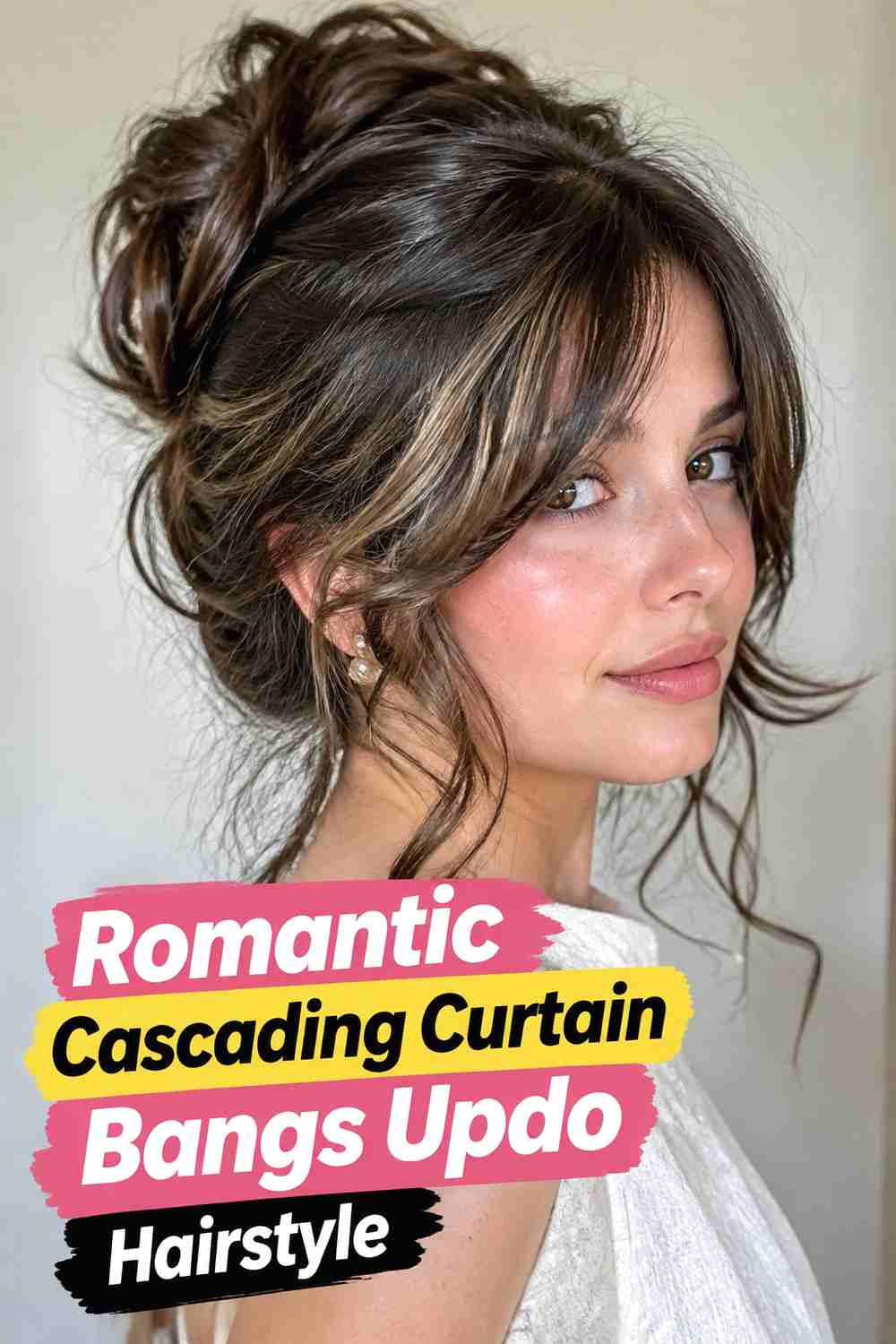
A romantic updo lets cascading curtain bangs remain visible while the rest of the hair is pinned away from the shoulders. Gather the lengths into a loose bun, twist, or textured chignon, leaving the shorter curtain pieces and a few longer face-framing layers free before pinning begins. The front sections can then be softly curved away from the face so they fall in graduated pieces instead of one blunt tendril. This creates a balanced look that feels polished but not overly strict. The style works especially well for weddings, dinners, parties, or other occasions where you want an updo without losing the movement of your haircut. Keep the front light and touchable rather than coating it with excessive hold.
Styling Notes
Separate the curtain bangs and longer framing pieces before building the updo so you do not disturb the pinned shape later.
Why It Works
Leaving several graduated layers loose preserves the cascading effect even when most of the haircut is lifted into an updo.
How to Choose the Right Look
Start with your natural texture and the amount of styling you are comfortable doing. Straight and feathered versions show the haircut clearly but may need directional blow-drying to keep the bangs open. Wavy and curly styles can require less smoothing, though the cut must account for natural bend, shrinkage, and movement.
Hair length matters too. Long hair provides space for butterfly layers, extra-long bangs, and dramatic face-framing transitions, while shoulder-length cuts and lobs create a more concentrated cascade. If your hair is fine, lighter layering can help preserve fullness through the ends. Denser hair can often support stronger front layers without losing too much weight.
Consider the fringe length carefully. Shorter curtain bangs create more immediate framing around the forehead and cheekbones, while longer versions are easier to tuck back and may offer more flexibility as they grow.
Finally, match the finish to your routine. Blowouts and bouncy styles need more active shaping, while shaggier, wavy, and textured versions can tolerate a softer, less precise finish. Choose a cut that still works on ordinary styling days, not only immediately after a salon blowout.
Final Thoughts
Cascading curtain bangs can be soft and wispy, dramatic and voluminous, curly, shaggy, or almost seamlessly blended into long layers. The most important decision is where the shortest section should begin and how gradually it should connect to the rest of your haircut. Matching that structure to your natural texture and realistic styling routine will help the bangs keep their flowing shape beyond the first day.
FAQs
1. What are cascading curtain bangs?
Cascading curtain bangs are center-opening or softly divided bangs that transition into progressively longer face-framing layers instead of ending as one isolated fringe.
2. Do cascading curtain bangs work on shoulder-length hair?
Yes. Shoulder-length cuts and lobs can show the cascading effect clearly because the longer face-framing layers connect directly with the shorter perimeter.
3. Can curly hair have cascading curtain bangs?
Yes. Curly versions can work well when the bang length and layering account for the hair’s natural curl pattern and shrinkage.
4. Are long cascading curtain bangs easier to grow out?
Longer versions generally blend more easily into surrounding layers as they grow, although occasional shaping helps preserve the intended transition.
5. How do you style cascading curtain bangs?
A round brush, large roller, loose wave, or natural curl pattern can all work. The main goal is to keep the front sections opening away from the face and flowing into progressively longer layers.
Save your favorite cascading curtain bangs hairstyle ideas, compare the lengths and textures, and share the looks that best match the soft, flowing frame you want.