19 Soft Broken Fringe Hairstyle Ideas
Light separation and softly uneven movement give these broken fringe ideas an effortless finish that feels modern, wearable, and easy to adapt to different textures.
A soft broken fringe is less about creating one perfect bang line and more about allowing the front to separate naturally into airy pieces. Small variations in length, density, and direction give the fringe its relaxed character, while softer edges prevent the look from feeling blunt or overly structured.
There are many ways to adapt that idea. The fringe can be long or short, wispy or fuller, straight or curly, and polished or deliberately tousled. Layer placement also changes the result, especially when the fringe blends into face-framing pieces, long layers, or a shorter bob. The best option is one that works with your natural growth pattern, texture, density, and realistic styling routine.
Quick List
- Soft Broken Fringe Hairstyle
- Wispy Soft Broken Fringe Hairstyle
- Long Soft Broken Fringe Hairstyle
- Short Soft Broken Fringe Hairstyle
- Soft Broken Fringe With Face Framing Layers Hairstyle
- Wavy Soft Broken Fringe Hairstyle
- Curly Soft Broken Fringe Hairstyle
- Straight Soft Broken Fringe Hairstyle
- Piecey Soft Broken Fringe Hairstyle
- Feathered Soft Broken Fringe Hairstyle
- Center Split Soft Broken Fringe Hairstyle
- Side Swept Soft Broken Fringe Hairstyle
- Shaggy Soft Broken Fringe Hairstyle
- Soft Broken Fringe With Long Layers Hairstyle
- Soft Broken Fringe With Bob Hairstyle
- Fine Hair Soft Broken Fringe Hairstyle
- Thick Hair Soft Broken Fringe Hairstyle
- Soft Broken Fringe With Tousled Texture Hairstyle
- Soft Broken Fringe With Polished Blowout Hairstyle
1. Soft Broken Fringe Hairstyle
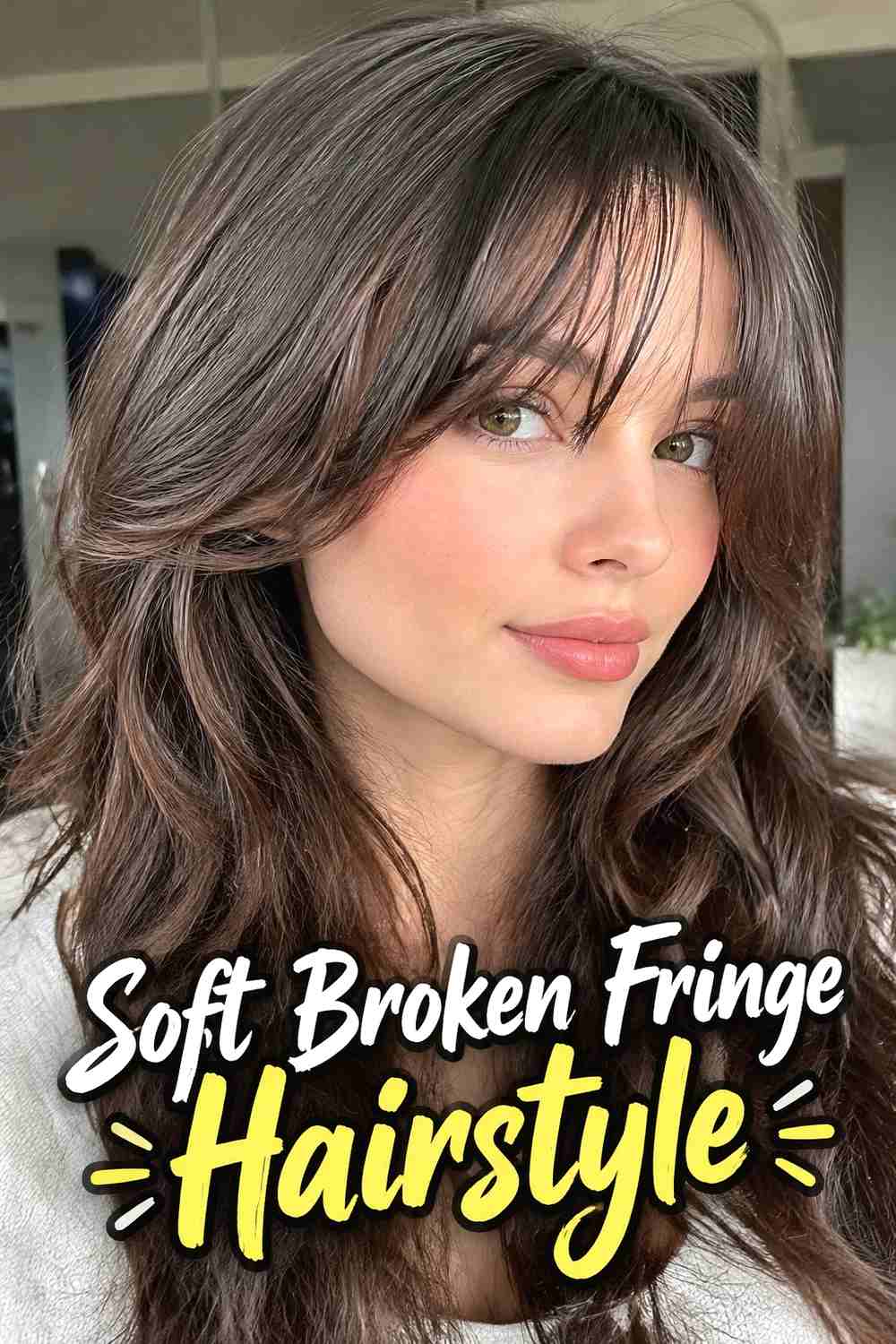
The classic soft broken fringe uses subtle separation and small variations in length to avoid the solid line of a traditional blunt bang. Individual pieces sit lightly across the forehead, with enough space between them to keep the result open and relaxed. The edges can become slightly longer toward the temples, helping the fringe merge naturally into the rest of the hair. This style works with straight lengths, gentle waves, or softly layered cuts because the fringe itself provides texture without demanding a dramatic haircut. A light blow-dry is usually enough to encourage the shape. The goal is controlled imperfection, so avoid arranging every strand into exactly the same position.
Styling Notes
Dry the fringe forward with light tension, then separate it gently using your fingers. A flexible finish preserves the broken texture better than heavy wax or strong hairspray.
2. Wispy Soft Broken Fringe Hairstyle
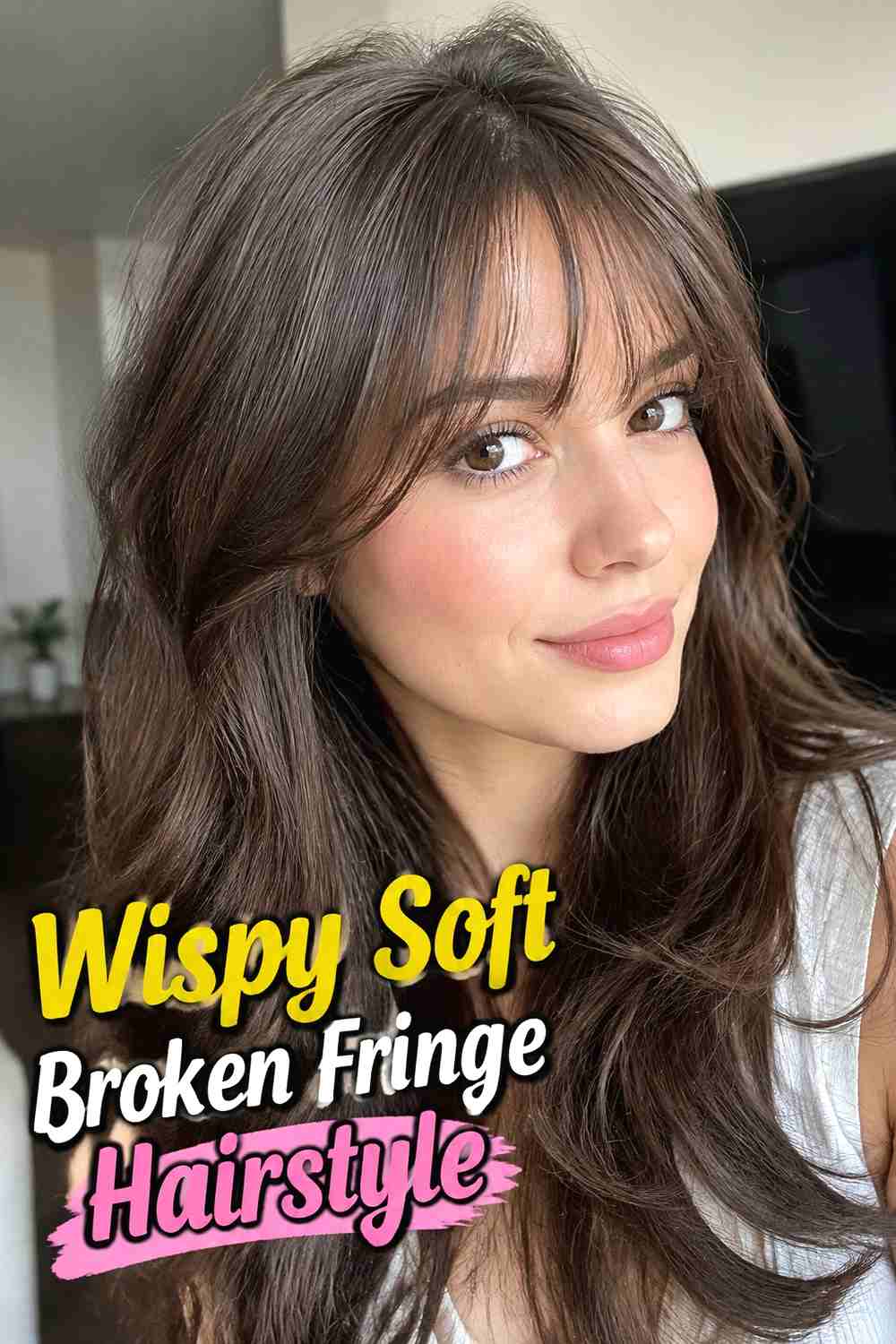
Wispy broken fringe creates an especially delicate effect by using fine sections of hair and leaving noticeable spaces across the forehead. The pieces can vary slightly in length, which keeps the finish from looking too precise while still feeling intentional. This version is ideal when you want a visible fringe without heavy coverage or a dramatic change to the front of your haircut. Straight hair shows the separation clearly, while a subtle bend can soften the overall shape. Since the style depends on airy strands, product buildup can make it lose its character quickly. Keeping the roots fresh and using only lightweight styling products helps the fringe remain mobile rather than collapsing into dense sections.
Wear & Maintenance
Refresh only the fringe when necessary instead of restyling your whole head. A small amount of dry shampoo can restore lift if roots begin to look flat.
3. Long Soft Broken Fringe Hairstyle
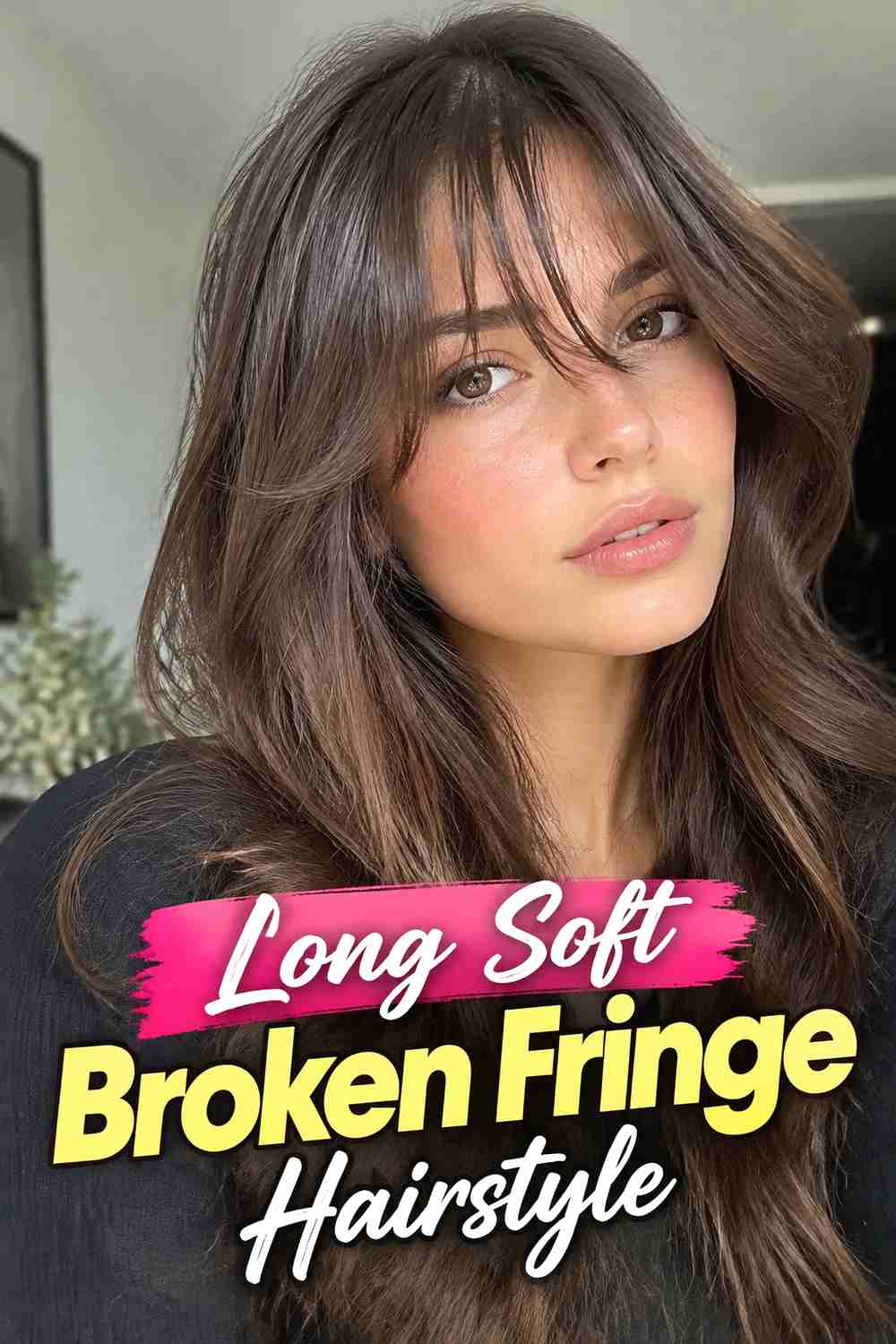
Long broken fringe offers a lower-commitment version of the style, with pieces extending toward the brows, eyes, or cheekbones depending on the cut. The extra length makes it easier for the fringe to separate naturally and blend into surrounding hair. Instead of forming a dense curtain, individual sections drift across the forehead and temples with slight differences in placement. This version works particularly well with medium and long hair because the sides can transition into face-framing pieces without an obvious break. It also offers more styling flexibility, since longer strands can be split, swept aside, or tucked back. Gentle movement usually looks more natural than a strongly curved or highly polished finish.
Best For
Choose this option if you want the look of fringe while keeping enough length for easy grow-out, side-sweeping, or blending into longer layers.
4. Short Soft Broken Fringe Hairstyle

A shorter soft broken fringe brings more attention to the forehead while keeping the edge irregular enough to avoid a severe micro-bang effect. Small variations between the pieces create texture, and a light density prevents the fringe from appearing blocky. This version can add definition to shorter cuts or create contrast against longer lengths, depending on how bold you want the finished haircut to feel. Since shorter bangs reveal their shape clearly, precision matters even when the goal is intentionally broken texture. The sections should look naturally uneven rather than randomly chopped. Minimal styling often works best, especially when the fringe follows the hair’s natural direction instead of being forced into a rigid line.
Wear & Maintenance
Shorter fringe generally shows growth sooner than longer versions. Regular shaping can help maintain the intended broken edge while preventing stray sections from becoming distracting.
5. Soft Broken Fringe With Face Framing Layers Hairstyle
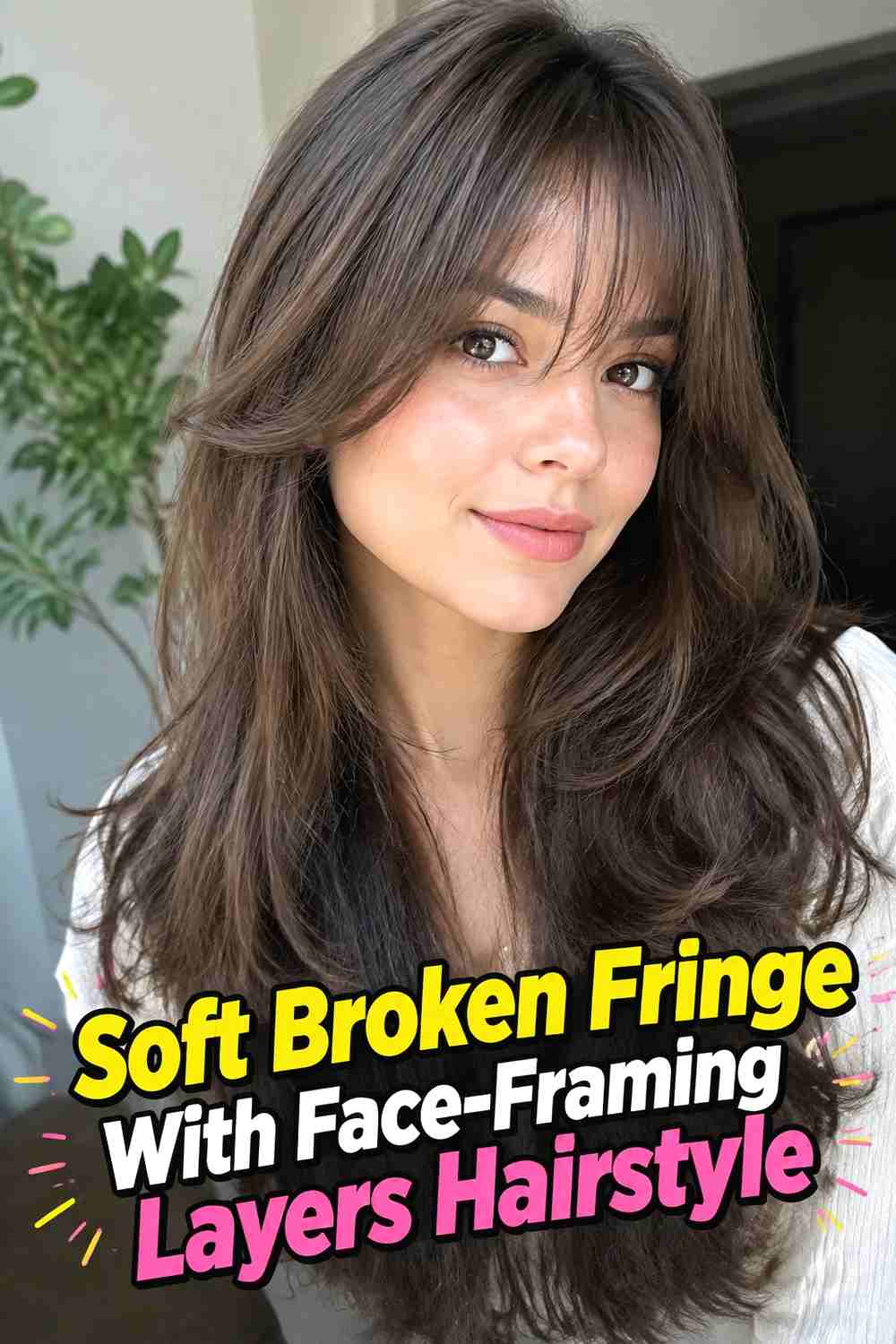
Face-framing layers make soft broken fringe feel integrated by creating a gradual progression from shorter forehead pieces to longer sections around the cheeks and jaw. The fringe remains lightly separated, while the surrounding layers continue the movement instead of leaving an abrupt gap at the temples. This combination works especially well when you want more shape around the face without adding dramatic layers throughout the entire haircut. Soft bends can highlight the connection, but the style also works with straighter finishes. Keeping some variation in the front pieces prevents the haircut from looking overly symmetrical. The result is a cohesive, mobile silhouette that can grow out naturally into longer framing sections.
Why It Works
The graduated layers echo the irregular softness of the fringe, making the transition between bangs and length look intentional from the front and sides.
6. Wavy Soft Broken Fringe Hairstyle

Waves naturally support the irregular movement of a broken fringe, allowing the front pieces to bend in slightly different directions instead of falling perfectly straight. The fringe can skim the brows while a few longer pieces drift toward the temples, creating a relaxed frame that connects easily with wavy lengths. This look works especially well when the hair already has natural movement because the fringe does not need to be straightened into a separate texture. Keep the wave pattern loose and varied rather than curling every section identically. A little definition can help individual pieces stand out, but too much product may make the fringe look clumped instead of softly separated and naturally undone.
Styling Notes
Work with the fringe’s natural bends and encourage only the pieces that need direction. Finger-styling often creates a softer result than repeatedly brushing the waves smooth.
7. Curly Soft Broken Fringe Hairstyle

Curly broken fringe relies on individual curls to create separation rather than cutting a perfectly even bang line. Some curls can sit closer to the forehead while others spring slightly higher or fall toward the temples, giving the fringe natural dimension. The look should respect curl shrinkage and movement, particularly because the front can appear much shorter once fully dry. Softly layered curls through the rest of the hair can help distribute volume and connect the fringe to the overall shape. Instead of trying to force every curl into the same position, allow controlled variation. Flexible curl definition maintains the broken effect better than rigid styling that makes each section look fixed or overly sculpted.
Pro Tip
Assess fringe length only after the curls have dried into their usual pattern. Trimming while stretched can lead to a much shorter result than expected.
8. Straight Soft Broken Fringe Hairstyle

Straight hair makes every detail of a broken fringe visible, from the small spaces between sections to subtle differences in length. The fringe can fall lightly around the brows while a few longer strands soften the temples, creating texture without relying on waves or curls. The rest of the hair can stay sleek, but the bangs should retain a little natural movement so they do not resemble a blunt straight-across fringe. A gentle blow-dry usually provides enough shape without needing heavy flat-ironing. Keeping the pieces flexible is particularly important on straight hair because too much product can make the intentional separation appear greasy or clumped instead of light and softly fragmented.
Styling Notes
Use minimal heat through the fringe and avoid pressing every strand flat. A slight bend at the ends can soften the separation without changing the straight overall finish.
9. Piecey Soft Broken Fringe Hairstyle

Piecey broken fringe emphasizes defined separation, with small sections falling independently across the forehead rather than blending into one continuous bang. The key is creating visible texture without making the strands look stiff or wet. Slight differences in length enhance the broken shape, while softer edges keep the effect wearable. This variation works well with straight, wavy, or lightly tousled hair because it adds detail at the front without requiring dramatic volume. Start with almost no styling product and build slowly if extra definition is needed. Using too much wax or cream can turn delicate separation into heavy clumps, which removes the softness that distinguishes this style from a more graphic piecey fringe.
Pro Tip
Warm a tiny amount of lightweight product between your fingertips and touch only selected pieces. Leaving some strands untreated helps the finished texture look more natural.
10. Feathered Soft Broken Fringe Hairstyle

Feathering gives broken fringe more directional movement by encouraging the front pieces to sweep gently outward rather than fall straight down. The center can remain soft and separated, while longer edges curve toward the temples and blend into the sides. This creates a polished effect without removing the intentionally irregular texture. The style pairs especially well with layered hair or a soft blowout because the outward motion can continue through the surrounding sections. Broad bends are usually more flattering to the concept than tight curls, which may shorten the fringe visually. Once styled, loosening the pieces slightly prevents the feathering from becoming too symmetrical or overly set.
Styling Notes
Use a small round brush to guide the outer sections away from the face, then break up the finished shape with your fingers for a lighter, less uniform result.
11. Center Split Soft Broken Fringe Hairstyle
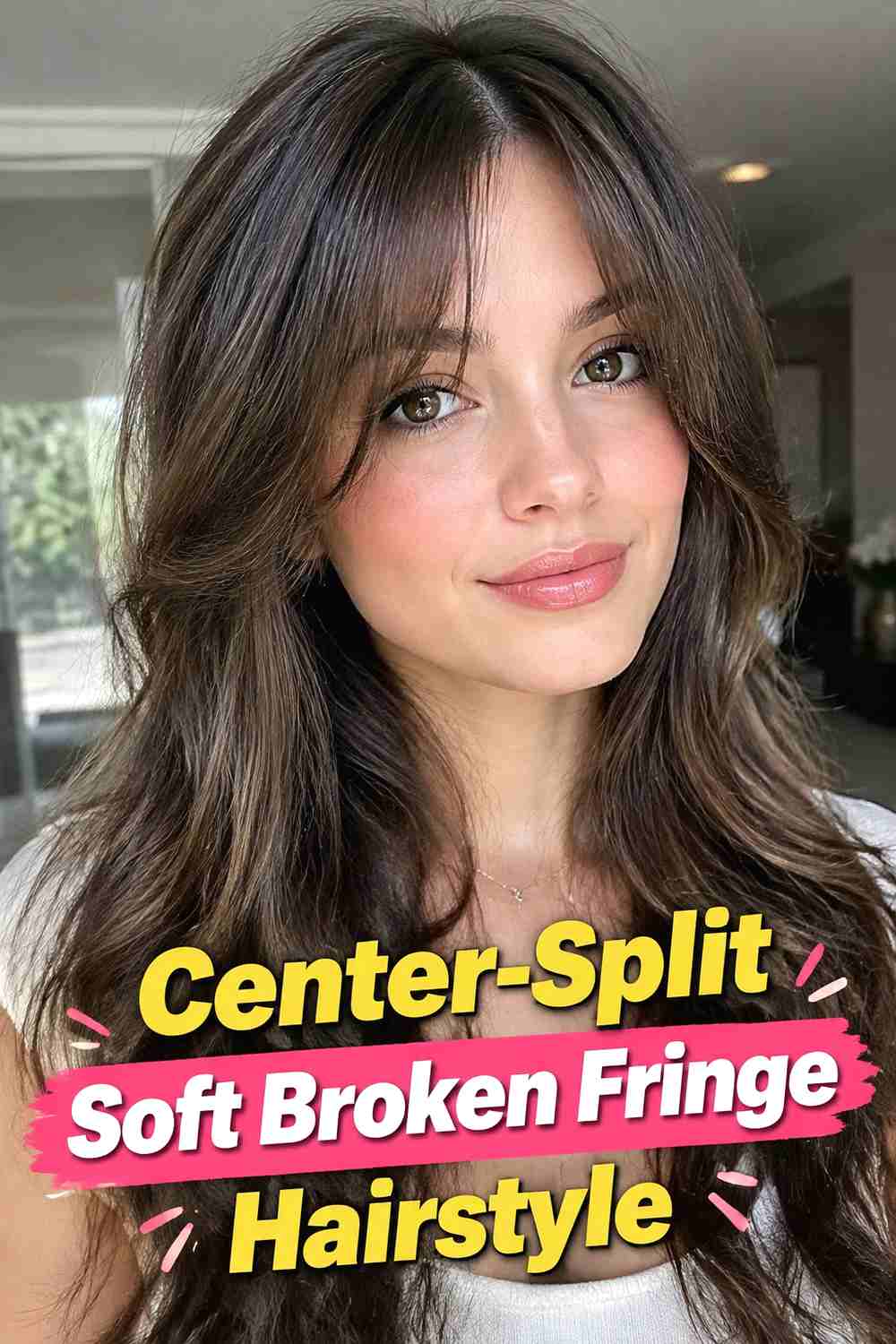
A center split changes broken fringe into a more open style while preserving the irregular pieces that give it character. The shorter sections can sit close to the middle of the forehead, while longer strands move toward the temples and cheekbones. The opening does not need to form a perfectly sharp part; a softer, slightly uneven division often looks more natural. This variation is practical when fringe begins to grow because increasing length can become part of the shape rather than something that needs immediate trimming. It pairs easily with longer hair, waves, or layered cuts. A little root lift keeps both sides from lying flat and helps maintain airy separation around the center.
Wear & Maintenance
Dry the fringe forward before separating it. This keeps the roots flexible and makes it easier to adjust the split without creating a fixed, overly precise part.
12. Side Swept Soft Broken Fringe Hairstyle

Side-swept broken fringe directs the irregular pieces diagonally across the forehead while maintaining enough separation to keep the style light. Some sections can skim the brows, while longer pieces taper toward one temple and gradually merge with the surrounding hair. This works especially well when the hair has a natural side part or a strong growth direction that already encourages movement to one side. Rather than forcing the fringe into a smooth sheet, leave a few visible gaps to preserve the broken texture. The style can complement straight lengths, soft waves, or layered hair. Flexible hold is generally sufficient, since stiff hairspray can remove the relaxed movement that makes the asymmetrical fringe appealing.
Best For
This variation suits anyone whose hair naturally falls off-center or who prefers a softer asymmetrical fringe instead of a centered or straight-across shape.
13. Shaggy Soft Broken Fringe Hairstyle

Shaggy broken fringe pushes the irregular texture further by pairing separated bangs with visibly layered, slightly undone lengths. The fringe can include a mixture of shorter and longer pieces that fall around the forehead without creating a precise outline. Choppy face-framing sections reinforce the relaxed effect and help the bangs feel connected to the haircut. Natural waves or subtle bends often show the layer structure best, although straight hair can also create a cool separated finish. The key is balancing texture with density; the haircut should still retain enough fullness through the ends to avoid looking overly thinned. Light styling encourages movement while allowing the fringe to shift throughout the day.
Hair Type & Length
Straight-to-wavy medium or long hair can show shaggy separation clearly. Adjust the amount of layering to preserve enough fullness for your natural density.
14. Soft Broken Fringe With Long Layers Hairstyle
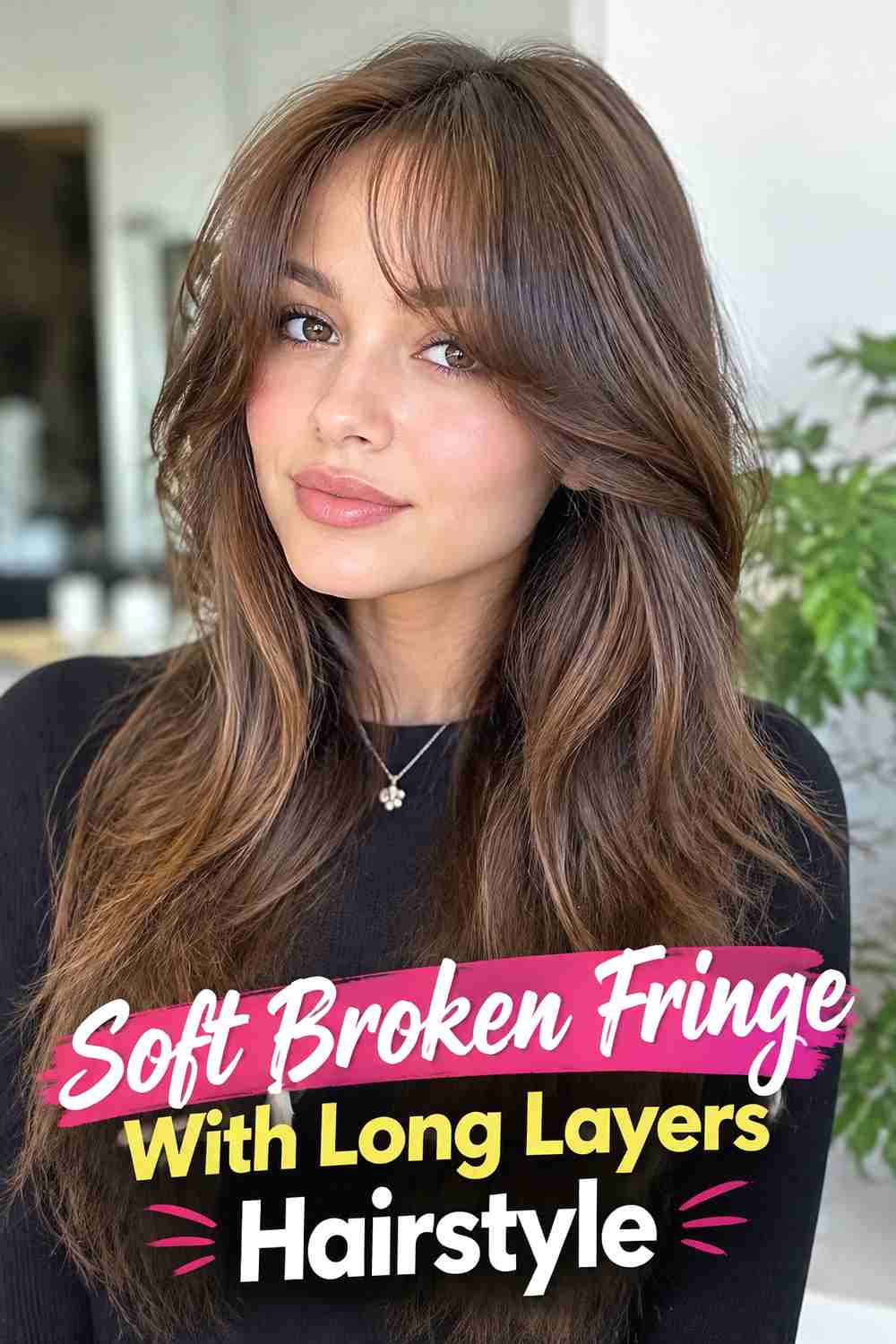
Long layers add movement below the fringe without taking attention away from its soft, fragmented edge. The bangs can remain lightly separated across the forehead, while longer side pieces flow into layered sections through the cheeks, shoulders, and lengths. This creates continuity from the shortest front pieces to the ends, making the haircut feel fluid rather than divided into separate zones. The style works with smooth blowouts, loose waves, or natural texture depending on the desired finish. Keeping the layers broad and blended preserves fullness while allowing visible movement. A few irregular bends around the face can reinforce the broken fringe effect without making the entire hairstyle look intentionally messy.
Why It Works
Long layers give the fringe somewhere to transition naturally, so even irregular front pieces feel connected to the movement through the rest of the haircut.
15. Soft Broken Fringe With Bob Hairstyle

A bob gives soft broken fringe a compact silhouette where every detail at the front becomes more noticeable. The fragmented bangs can skim the brows or sit slightly higher, while the bob creates a clean perimeter around the jaw or upper neck. This contrast between a defined outer shape and airy fringe keeps the haircut from feeling too severe. A straight bob highlights the separation clearly, while gentle bends make the overall finish softer and more relaxed. Because shorter hair offers less length for blending, the temple pieces should transition carefully into the sides. The fringe itself benefits from light movement rather than a strong curl, which keeps the bob modern and easy to style.
Styling Notes
Keep the bob perimeter controlled while allowing the fringe to remain looser. That contrast makes the soft broken texture stand out without making the entire haircut look unstructured.
16. Fine Hair Soft Broken Fringe Hairstyle
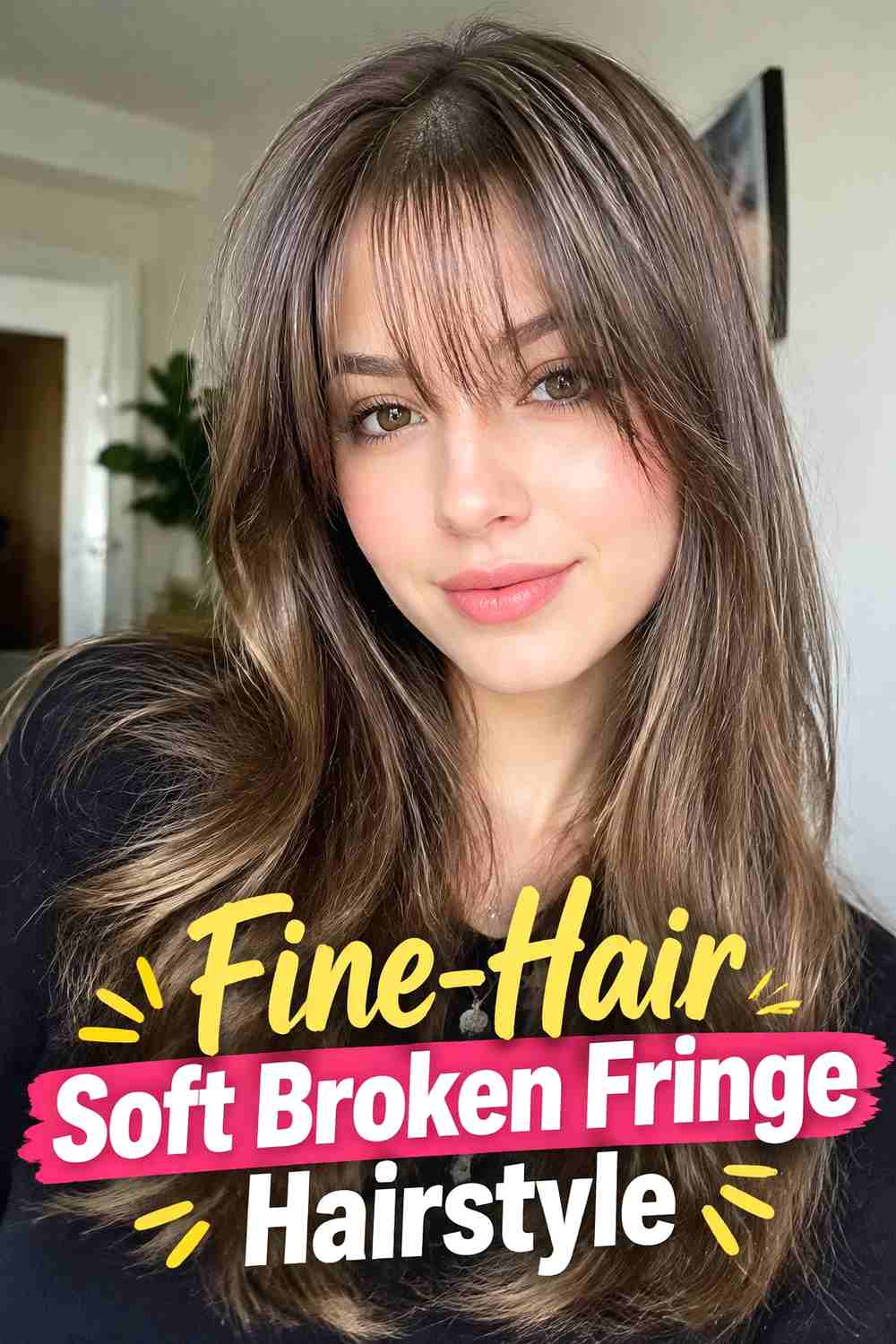
Fine hair can suit a soft broken fringe particularly well because the style does not depend on a thick, heavy bang section. Using a smaller amount of hair at the front preserves more density through the lengths while still creating visible framing. The fringe can remain slightly see-through, with natural gaps that complement the broken effect. If additional layers are included, keeping them selective helps prevent the ends from becoming overly sparse. Light root lift can add dimension, but heavy styling products may quickly flatten fine strands or make them stick together. A restrained approach usually works best, allowing the hair’s natural lightness to become part of the finished fringe rather than something that needs disguising.
Pro Tip
Protect density through the perimeter and keep the fringe section relatively light. Too much thinning can make fine hair look unnecessarily sparse at both the front and ends.
17. Thick Hair Soft Broken Fringe Hairstyle
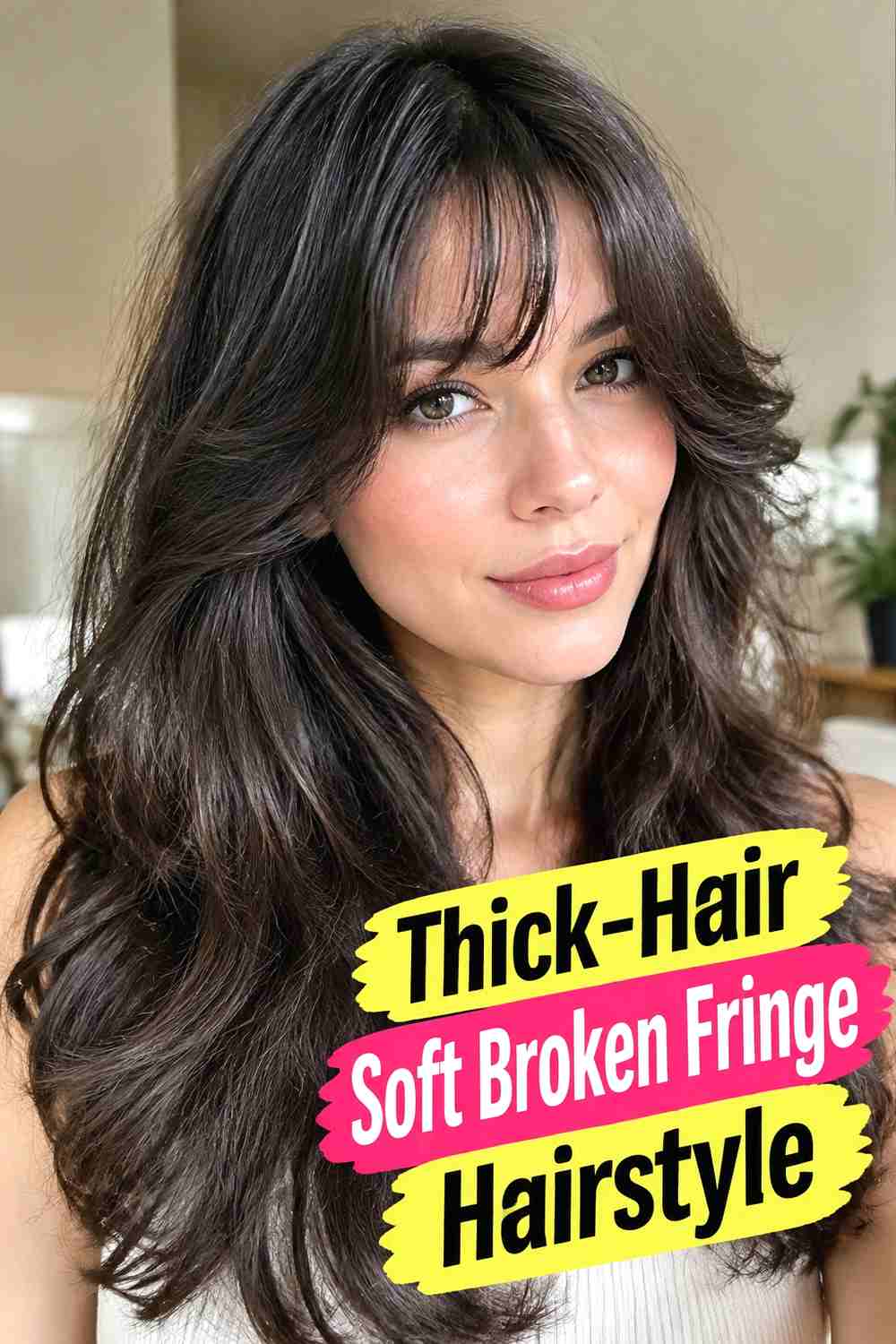
Thick hair can create a fuller version of broken fringe, but controlling density is important to preserve the soft separation. Rather than allowing the entire front section to form one heavy bang, selected pieces can be shaped to create small gaps and varied movement across the forehead. Longer strands near the temples help connect the fringe to the natural volume of the rest of the hair. Strategic layering may make dense lengths easier to move, but the goal should be balanced distribution rather than aggressive thinning. A smooth blow-dry can reveal the structure clearly, while loose waves create a softer finish. Keeping the fringe mobile prevents the extra density from turning into a rigid block.
Hair Type & Length
Thick hair can support substantial fringe, but density and texture should guide how much weight is removed. Over-thinning may create unwanted expansion or uneven ends.
18. Soft Broken Fringe With Tousled Texture Hairstyle

Tousled texture makes broken fringe feel especially effortless because both elements rely on irregular movement rather than polished symmetry. The bangs can separate into loose pieces across the forehead while the rest of the hair develops soft bends, natural lift, and slightly imperfect direction. A few strands may fall differently from day to day, which suits the relaxed nature of the style. This variation works well with natural waves or hair that holds texture easily, but straight hair can also achieve the look with light styling. The important part is avoiding a crunchy finish. Movement should remain visible through individual strands, with enough softness that the fringe and lengths still look touchable and naturally connected.
Styling Notes
Use lightweight texture through the mids and ends, then shape the fringe with your fingers. Avoid saturating the front with salt sprays or heavy products that can make it stiff.
19. Soft Broken Fringe With Polished Blowout Hairstyle
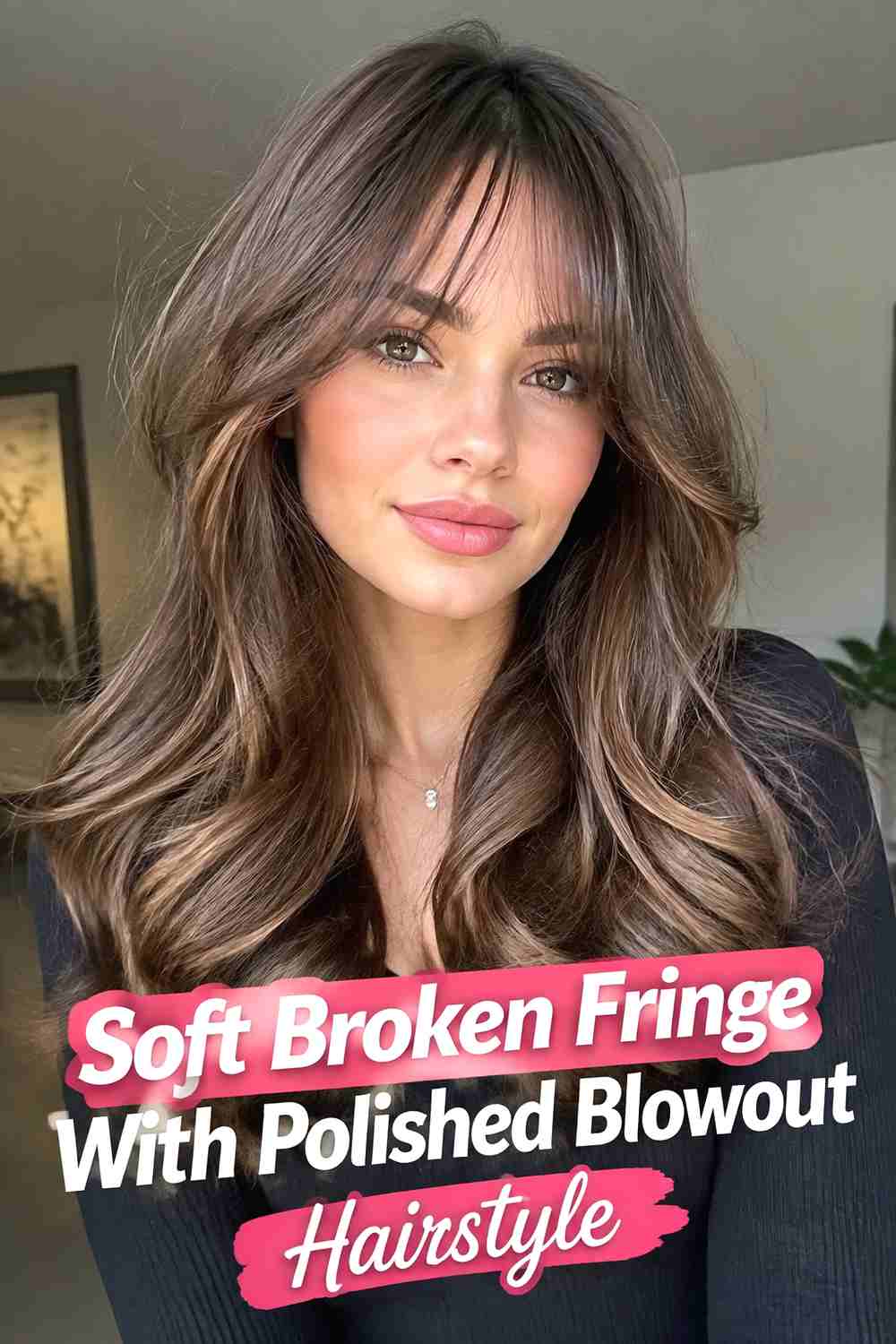
A polished blowout shows that broken fringe does not have to look messy. The fringe retains soft gaps and slight variations in length, but the overall finish is smoother, shinier, and more controlled. Gentle root lift prevents the front from lying flat, while the ends can curve subtly around the forehead and temples. Through the lengths, broad blowout movement adds bounce without competing with the irregular fringe. This option works well when you want a refined hairstyle for work, events, or everyday styling while keeping the bangs softer than a traditional full fringe. Once the blowout is finished, lightly separating the front with your fingers restores the fragmented detail and prevents the bangs from forming one solid curve.
Styling Notes
Polish the lengths first, then loosen the fringe as the final step. Flexible hold will maintain the shape while allowing the separated pieces to remain visible.
How to Choose the Right Look
Begin with fringe length and density. If you want a subtle commitment, wispy, long, or center-split versions provide more openness and can blend easily as they grow. Short broken fringe creates a more noticeable statement, while piecey or shaggy variations emphasize texture.
Your natural hair pattern should influence the finish. Straight hair displays every gap and length change clearly, waves enhance relaxed separation, and curls need enough length to accommodate shrinkage and spring. Fine hair usually benefits from keeping the fringe light and preserving density through the ends. Thick hair can support fuller fringe, but thoughtful weight distribution helps prevent heaviness.
Also consider maintenance and styling time. Feathered, sleek, and blowout-inspired versions need more deliberate shaping, while wavy, curly, shaggy, and tousled styles can tolerate greater movement. Choose a fringe that works with your natural part, feels comfortable around your eyes, and still looks intentional when it is not perfectly styled.
Final Thoughts
Soft broken fringe is versatile because its character comes from movement and separation rather than one rigid shape. You can keep it wispy, make it longer, add waves or curls, connect it to layers, or polish it with a blowout. The strongest choice is one that works with your natural texture and density while maintaining the light, irregular finish that defines the look.
FAQs
1. What is a soft broken fringe?
A soft broken fringe is a lightly separated bang with subtle differences in strand length and spacing, creating an irregular edge instead of a dense, straight line across the forehead.
2. Is broken fringe the same as wispy bangs?
They can overlap, but they are not always identical. Wispy bangs mainly emphasize light density, while broken fringe emphasizes separated, irregular pieces and a less uniform edge.
3. Can soft broken fringe work with curly hair?
Yes. Individual curls naturally create separation, but fringe length should account for shrinkage and the way the curls spring when fully dry.
4. Is soft broken fringe suitable for fine hair?
Yes. A light fringe section can create visible texture without removing too much density from the rest of the hair. Avoid excessive thinning through both the fringe and lengths.
5. How do I keep broken fringe from looking messy?
Maintain a clear overall shape while allowing controlled separation between pieces. Fresh roots, light styling, and occasional fringe trims can help preserve the intentional broken texture.
Save your favorite soft broken fringe hairstyle ideas, share them for haircut inspiration, and explore more light, textured fringe looks for your next style.