14 Grown-Out Micro Bangs Hairstyles
Growing out micro bangs can look intentionally stylish when the extra length is shaped into soft, separated fringe instead of treated like an awkward in-between stage.
Micro bangs change quickly once they begin growing toward the brows. What started as a sharp baby fringe can gradually become wispy, split, curved, side-swept, or curtain-like, giving you several styling options before the bangs fully blend into longer face-framing pieces.
The best approach depends on your fringe density, natural texture, hairline, and target length. Some grow-out styles need only gentle reshaping, while others benefit from longer temple pieces or layers that connect the fringe to the rest of the haircut. These ideas make that transitional length feel purposeful while keeping styling and maintenance realistic.
Quick List
- Soft Grown Out Micro Bangs Hairstyle
- Wispy Grown Out Micro Fringe Hairstyle
- Center Parted Grown Out Micro Bangs Hairstyle
- Side Swept Grown Out Micro Bangs Hairstyle
- Grown Out Micro Bangs With Face Framing Layers Hairstyle
- Choppy Grown Out Micro Bangs Hairstyle
- Grown Out Micro Bangs With Wavy Lob Hairstyle
- Feathered Grown Out Micro Bangs Hairstyle
- Grown Out Micro Curtain Bangs Hairstyle
- Grown Out Micro Bangs With Long Waves Hairstyle
- Piecey Grown Out Micro Bangs Hairstyle
- Grown Out Micro Bangs With Shag Layers Hairstyle
- Curved Grown Out Micro Bangs Hairstyle
- Grown Out Micro Bangs With Soft Curls Hairstyle
1. Soft Grown Out Micro Bangs Hairstyle
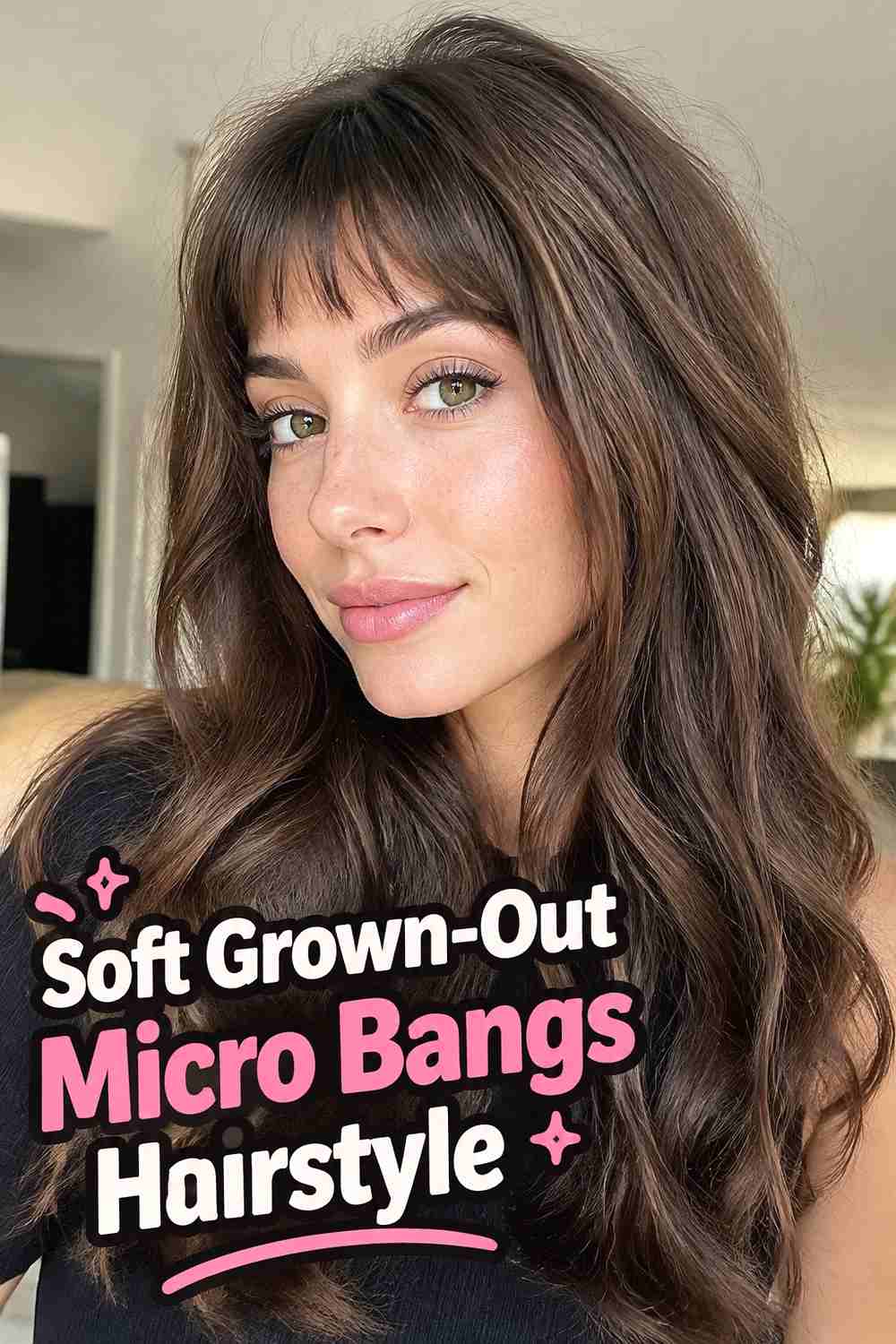
Soft grown-out micro bangs sit somewhere between baby fringe and traditional short bangs, often hovering above or just at the brow line. Instead of trimming them back to their original micro length, the edges are softened so the extra growth looks deliberate. Light separation between strands keeps the fringe from becoming a heavy block as it lengthens. This style works with straight, wavy, or gently textured hair and can be especially easy to wear when the temple pieces are allowed to grow slightly longer. A subtle bend created with a small brush can stop the fringe from falling flat while still preserving its relaxed, transitional character.
Styling Notes
Dry the bangs in their natural direction first, then add only a slight bend. Too much rounding can make the growing fringe look shorter and bulkier.
Wear & Maintenance
Use small clean-up trims only when needed. Repeatedly cutting the entire fringe can slow your progress toward a longer bang shape.
2. Wispy Grown Out Micro Fringe Hairstyle
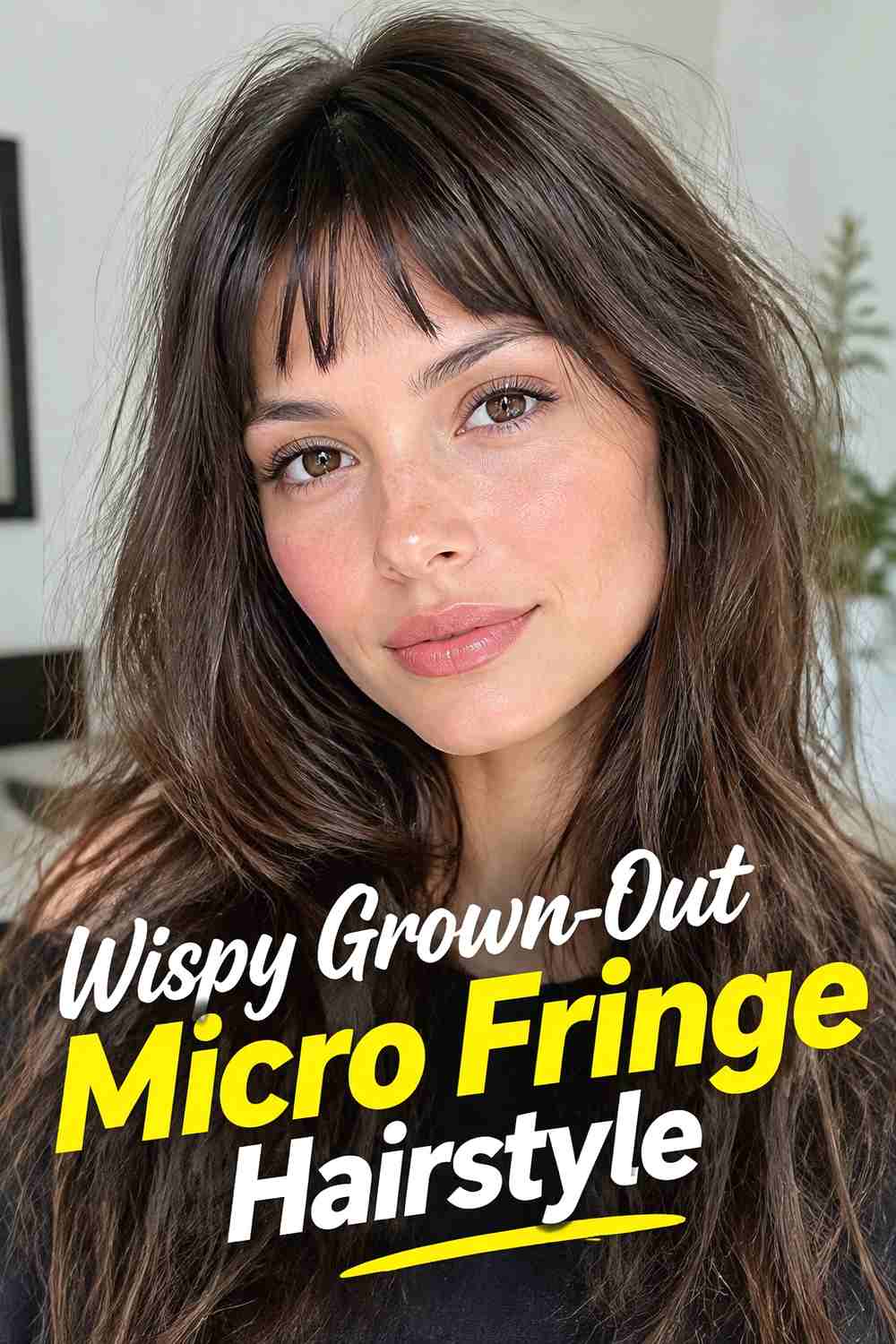
Wispy grown-out micro fringe makes the transition softer by breaking the former micro bang into fine, airy pieces. As the fringe approaches the eyebrows, thinning only the perimeter can create movement while leaving enough density for the bangs to continue growing. The result looks especially natural when some strands sit slightly longer than others rather than forming a perfectly straight edge. This is a useful option if your original micro bangs were light or sparse to begin with. Straight and softly wavy textures can both wear the look, and the fringe can gradually evolve into a longer wispy bang without requiring a dramatic reshaping appointment.
Best For
This style works well when you want a lightweight grow-out and prefer visible forehead between the fringe pieces.
Pro Tip
Avoid removing too much density from the root area. Softness should come from the ends so the fringe still has enough weight to sit neatly.
3. Center Parted Grown Out Micro Bangs Hairstyle
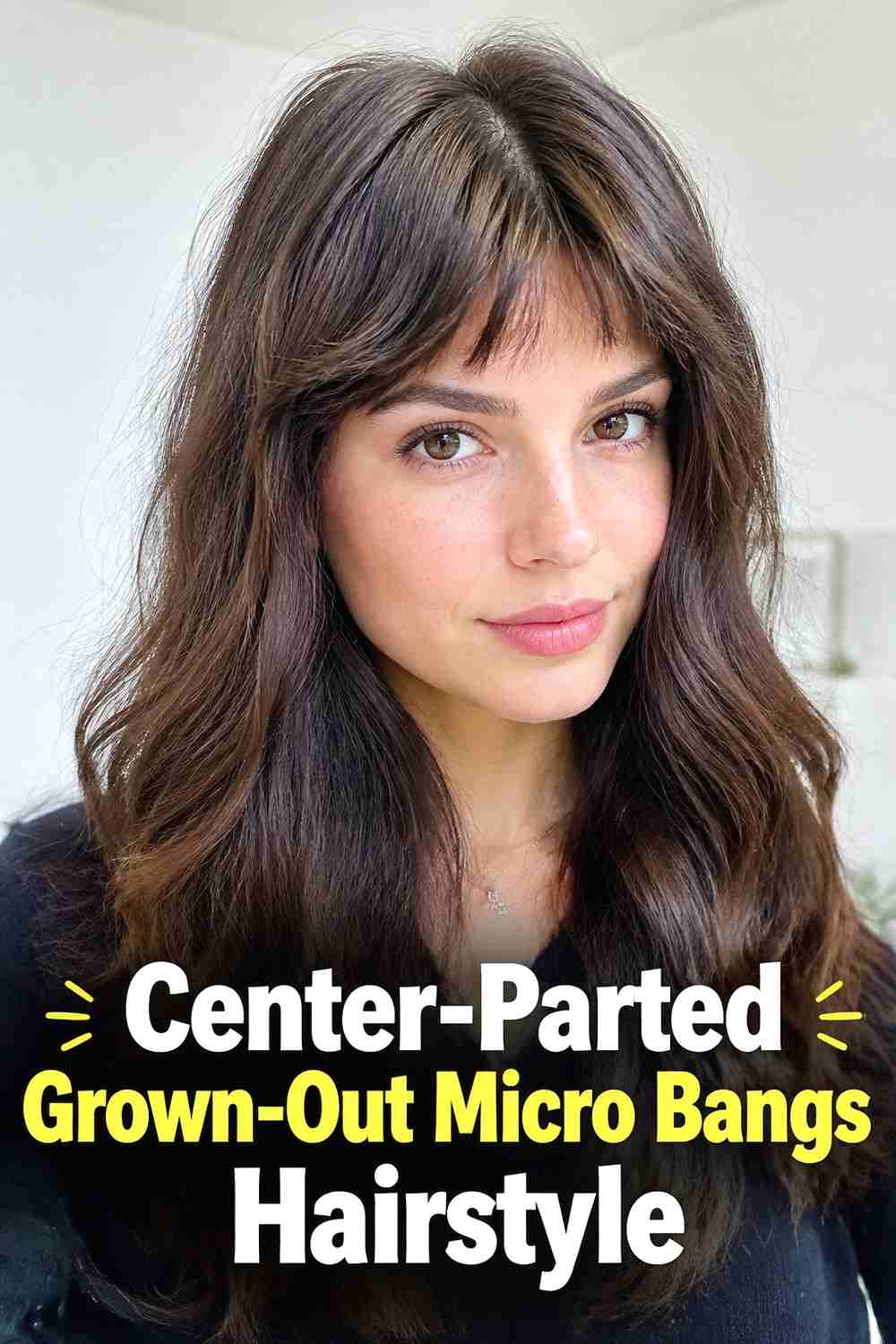
Once micro bangs gain enough length to move, a small center part can transform the grow-out stage into an intentional style. The fringe separates gently through the middle, with each side angling outward toward the temples. Unlike full curtain bangs, the pieces are still relatively short, so the opening should remain narrow rather than dramatic. This look pairs especially well with a center-parted haircut and can help manage fringe that no longer wants to sit straight forward. A light blow-dry away from the center encourages the split without creating excessive volume. As the bangs continue growing, the same shape can gradually transition into short curtain fringe.
Styling Notes
Direct each half slightly outward while drying, but avoid creating a deep gap in the middle. The separation should look soft and natural.
Why It Works
The center opening gives growing bangs somewhere to move, making the extra length feel intentional instead of simply overgrown.
4. Side Swept Grown Out Micro Bangs Hairstyle
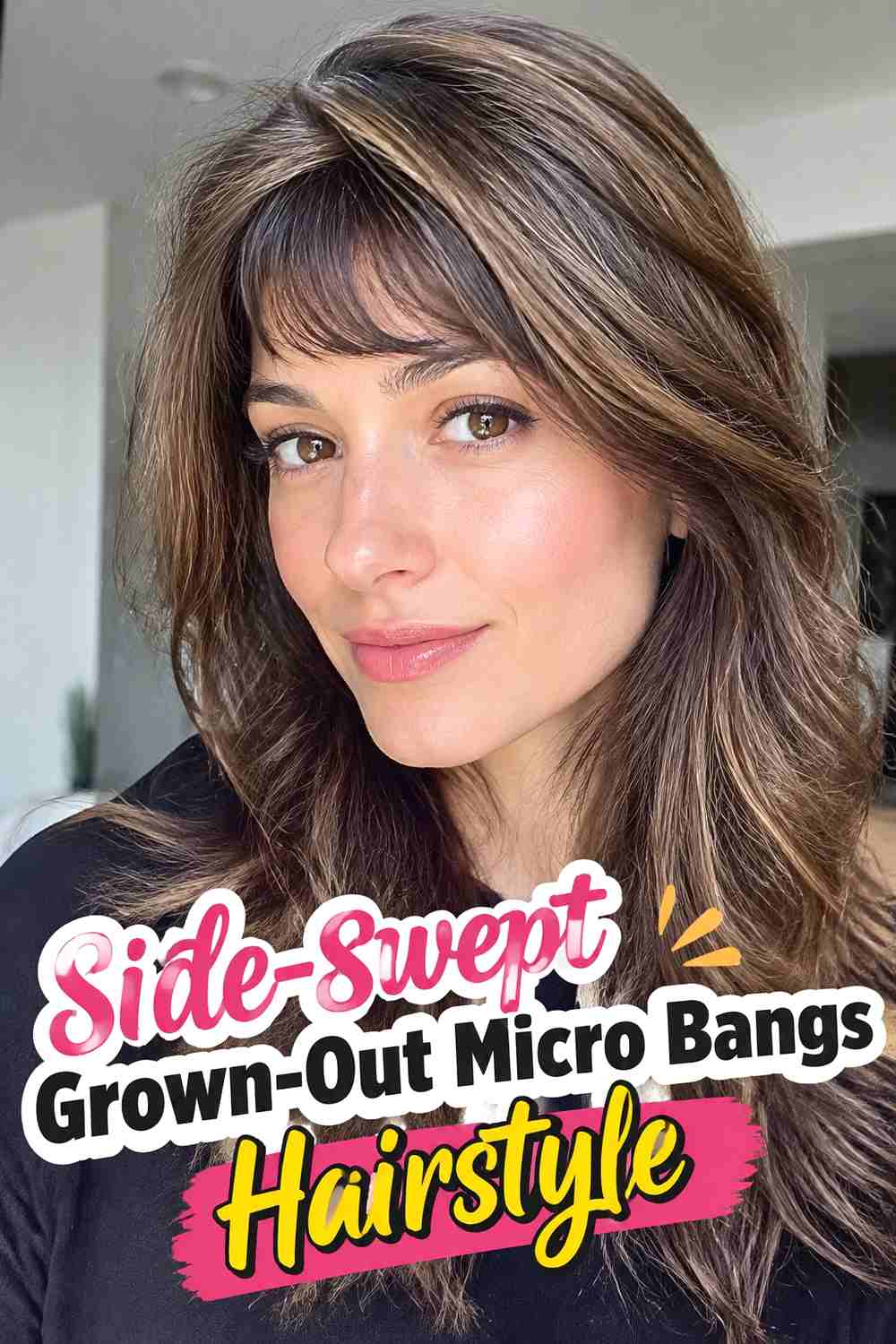
Side-swept styling is one of the easiest ways to work with micro bangs once they become long enough to move across the forehead. Rather than forcing the fringe forward, the strands are directed toward one side, creating a soft diagonal line that disguises uneven stages of growth. This works particularly well when the hair already has a natural side part or cowlick. Slightly longer pieces near the temple can blend into the sweep, while shorter center strands keep the style from becoming a conventional long side bang too quickly. Straight, wavy, and softly layered cuts can all support this transitional shape with minimal daily styling.
Best For
Choose this look if your growing fringe naturally moves to one side or resists staying centered.
Wear & Maintenance
Avoid cutting the shortest pieces to match the longer side. Let the overall section gain length while making only minor perimeter adjustments.
5. Grown Out Micro Bangs With Face Framing Layers Hairstyle
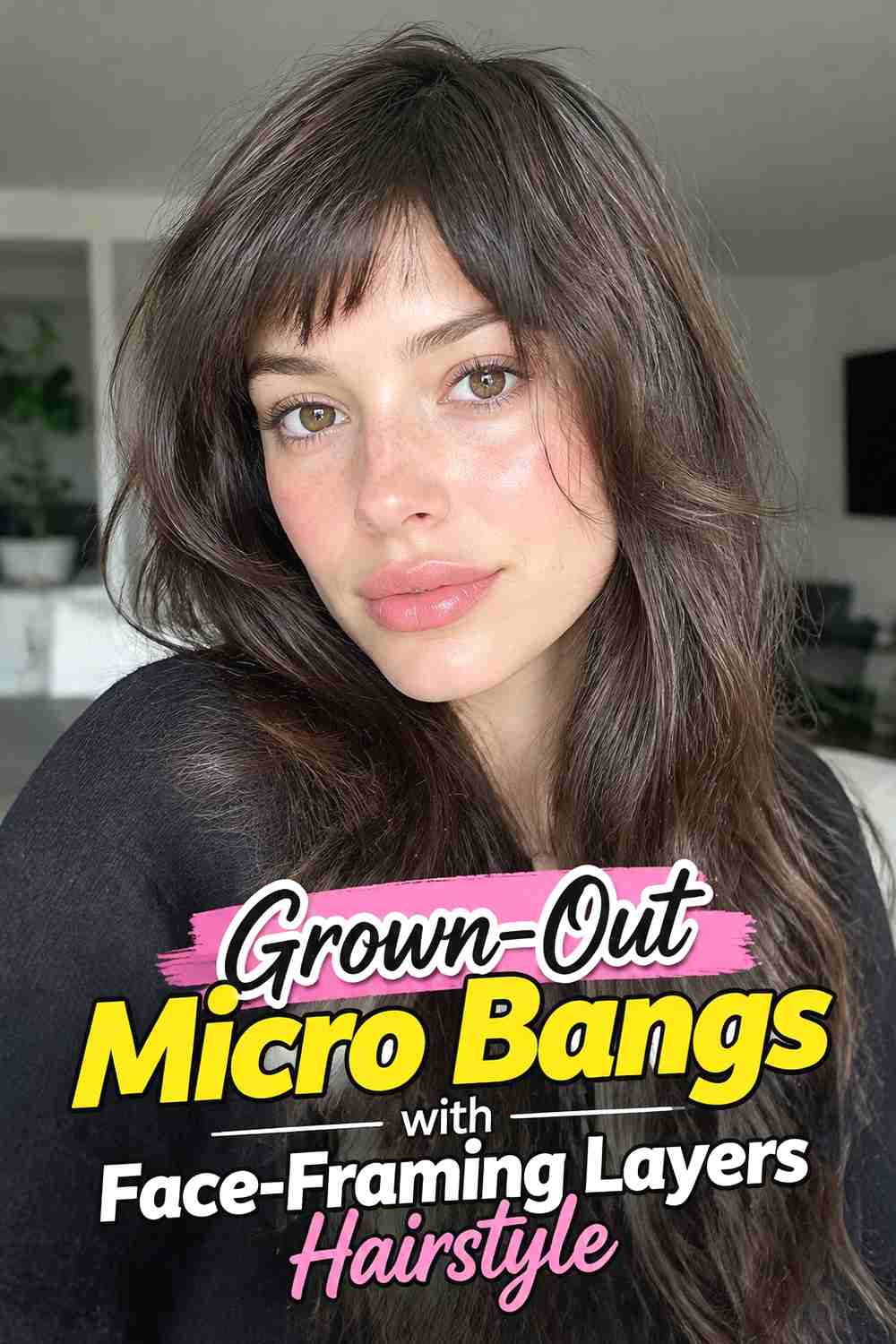
Pairing grown-out micro bangs with face-framing layers creates a smoother transition between the short fringe and the rest of the haircut. The bangs can sit around brow level while longer pieces begin near the cheekbones or jaw, producing several gradual lengths around the face. This helps the grow-out feel cohesive instead of leaving the fringe visually disconnected from long hair. The style is especially effective with layered medium or long cuts, where movement through the front already supports multiple lengths. A blowout or soft wave can direct the longer pieces away from the face while the fringe remains lightly separated, making each stage of growth look more deliberate.
Why It Works
The additional face-framing lengths bridge the distance between short bangs and long hair, helping the fringe blend as it continues growing.
Styling Notes
Keep the fringe softer and flatter than the longer layers so the transition feels natural rather than overly styled.
6. Choppy Grown Out Micro Bangs Hairstyle
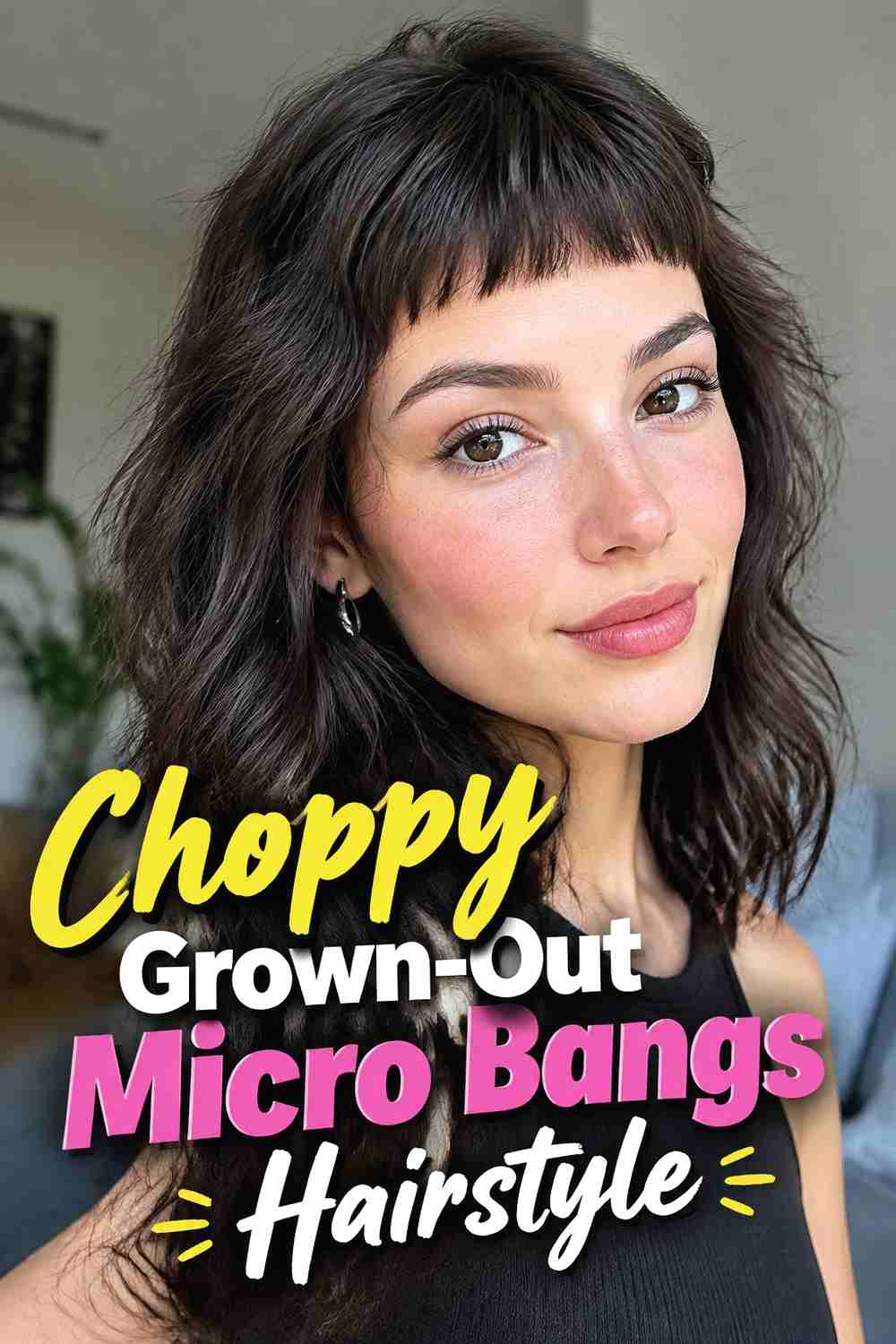
Choppy grown-out micro bangs turn uneven growth into part of the design. Instead of trying to create one perfectly level edge, the fringe is shaped into slightly varied pieces that sit around or just above the brows. This works especially well if the original micro bangs already had a textured perimeter. As they lengthen, a few deliberate shorter pieces can remain while the rest continues growing, creating a relaxed, modern finish. Choppy fringe pairs naturally with tousled waves, shags, and layered cuts, but it can also add character to straighter hair. The key is controlled irregularity rather than excessive thinning, which can leave the fringe looking sparse.
Styling Notes
Separate a few pieces with your fingertips and leave the rest soft. Avoid using heavy wax across the entire fringe.
Pro Tip
Let the longest strands keep growing instead of repeatedly cutting everything back to the shortest point.
7. Grown Out Micro Bangs With Wavy Lob Hairstyle
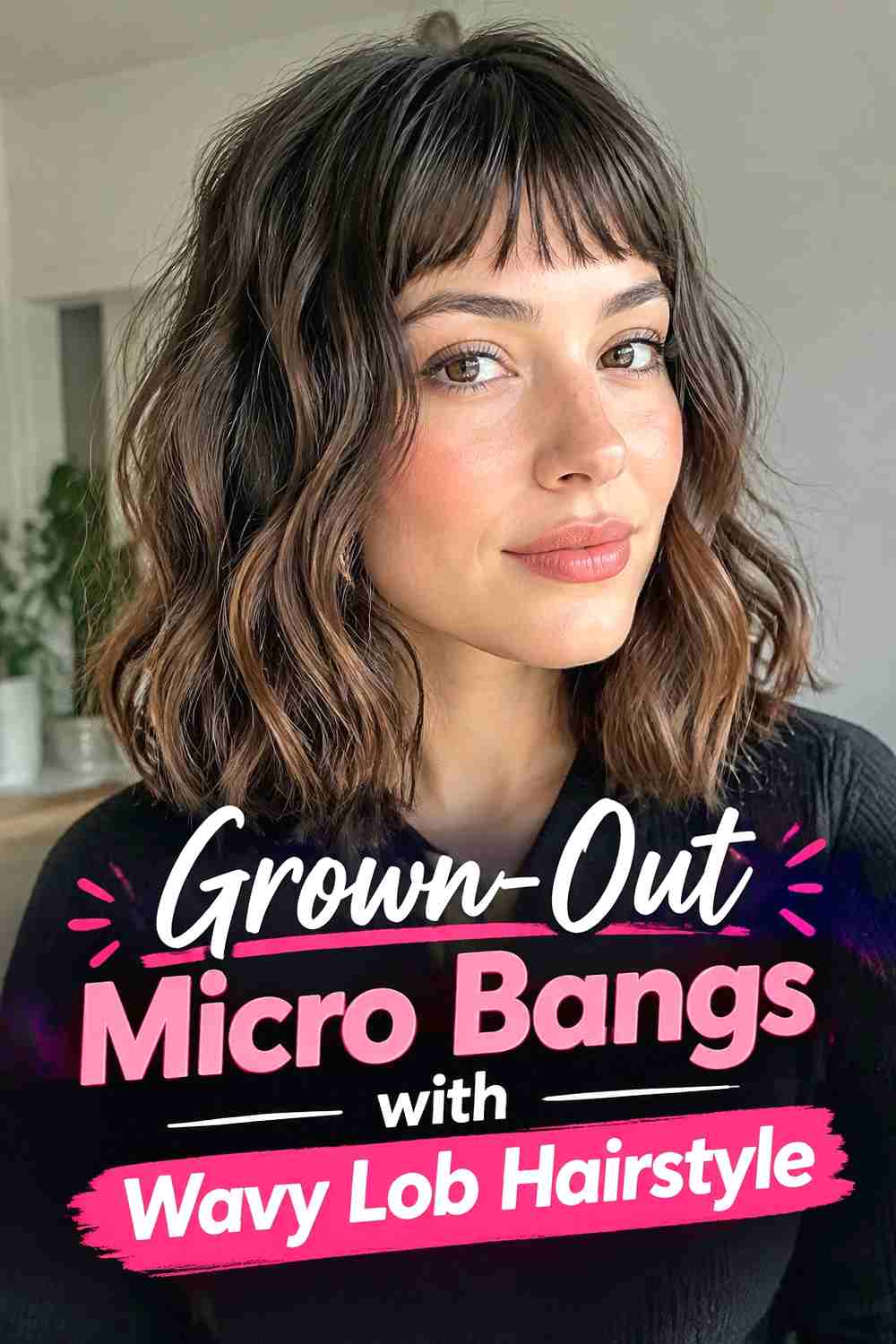
A wavy lob gives grown-out micro bangs enough texture and movement to feel intentional during the awkward middle stage. The fringe can hover around brow length with a slightly broken edge, while shoulder-grazing waves create softness through the sides and ends. Because the lob has a compact silhouette, the bangs remain noticeable without needing to look perfectly precise. A few subtle front layers can connect the fringe to the longer shape without turning the haircut into a shag. Broad, loose waves work especially well because they add movement without making the overall cut appear much shorter. The result feels relaxed, balanced, and easy to adapt as the bangs keep growing.
Best For
This style is ideal if your hair sits around shoulder length and already carries some natural wave or bend.
Wear & Maintenance
Prioritize growing the fringe while keeping the lob perimeter healthy. The bangs will usually need fewer full trims as they move toward eyebrow length.
8. Feathered Grown Out Micro Bangs Hairstyle
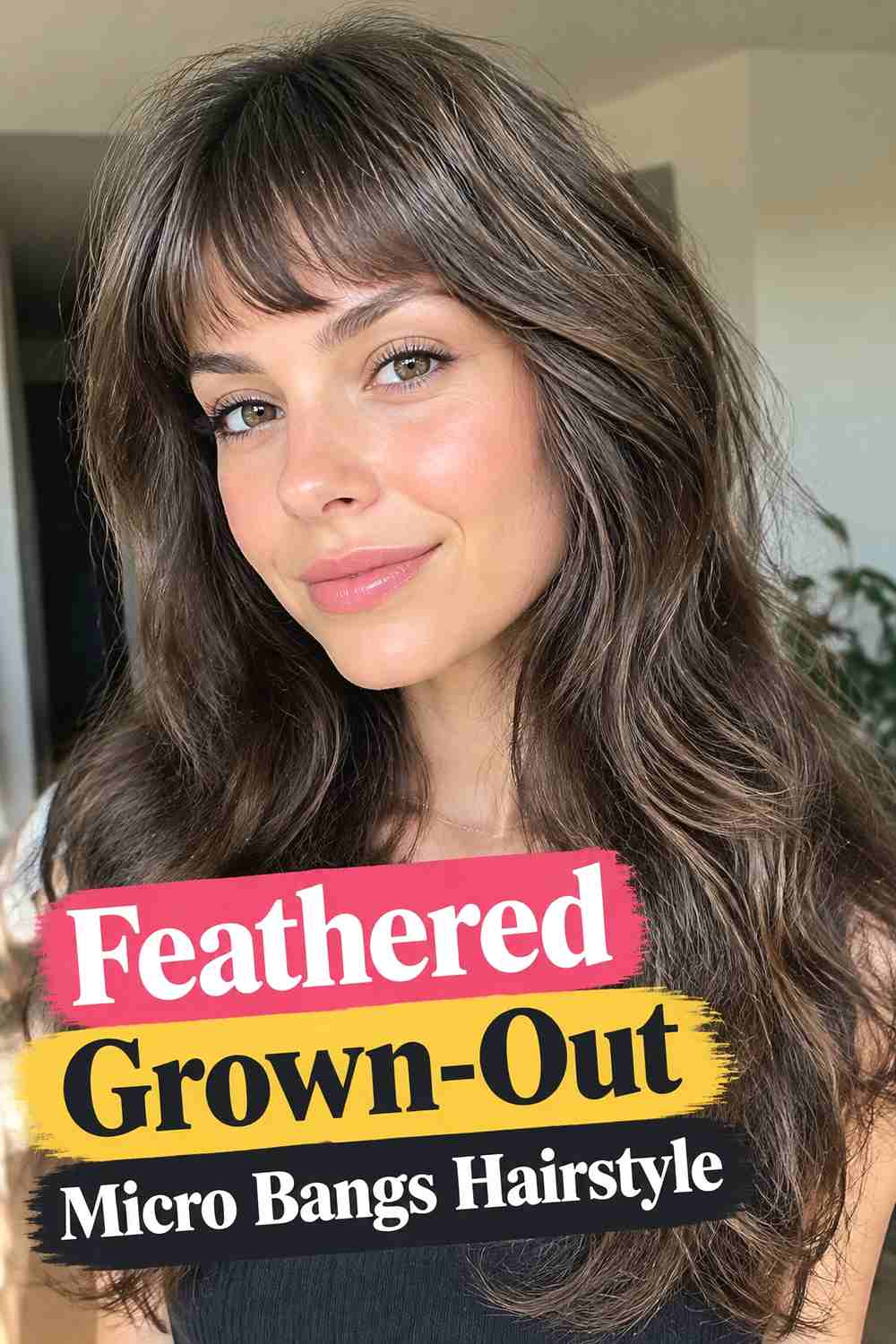
Feathering can make grown-out micro bangs feel lighter as the fringe becomes longer and starts covering more of the forehead. The ends are softly tapered so the bangs do not form a thick horizontal block, while the root area keeps enough density to prevent the fringe from looking overly thin. This style can gradually shift from short micro fringe into a more traditional wispy bang as growth continues. It pairs well with long layers, waves, or straight hair because the feathered edge is subtle and adaptable. A small amount of movement near the temples can further soften the transition without requiring a dramatic change to the rest of the haircut.
Why It Works
Tapered ends reduce visual heaviness as the fringe lengthens, making the growth stage look softer and more intentional.
Pro Tip
Ask for feathering only through the perimeter rather than aggressive thinning throughout the entire bang section.
9. Grown Out Micro Curtain Bangs Hairstyle
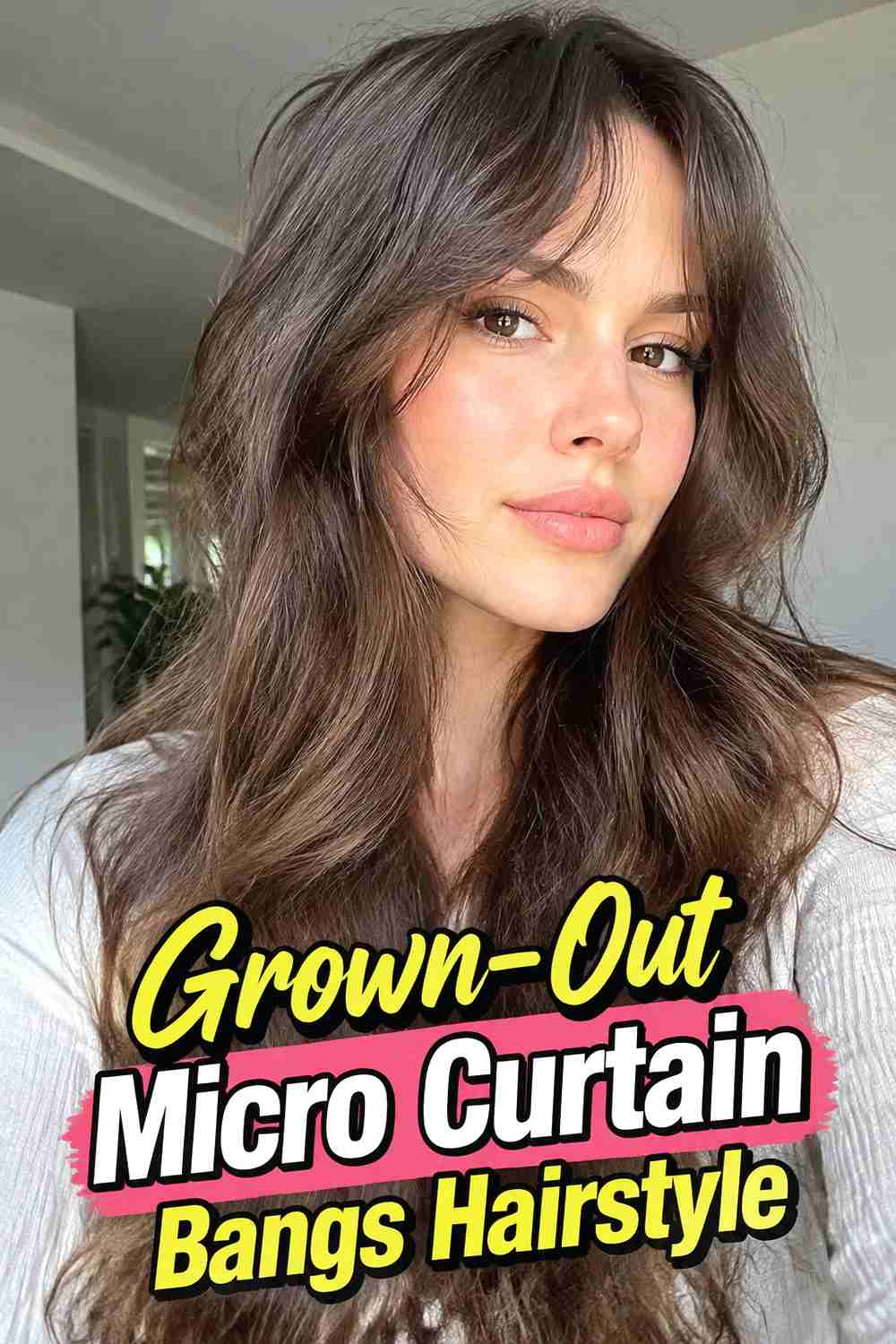
Grown-out micro curtain bangs appear when a formerly short fringe gains enough length to separate and angle toward both sides. The center pieces may still sit above or around the brows, while the outer sections extend slightly longer toward the temples. This creates an early curtain shape without requiring the bangs to reach cheekbone length. The style is especially practical for anyone already wearing a center part, since the fringe naturally begins to move away from the middle as it grows. A small round brush or fingers can encourage the outward bend, while leaving the rest of the haircut relatively relaxed keeps the transition modern and easy.
Styling Notes
Direct the outer sections away from the face but keep the center light. Excessive volume can make short curtain fringe look stiff.
Wear & Maintenance
Let the side pieces continue gaining length so they can eventually connect with longer face-framing layers.
10. Grown Out Micro Bangs With Long Waves Hairstyle
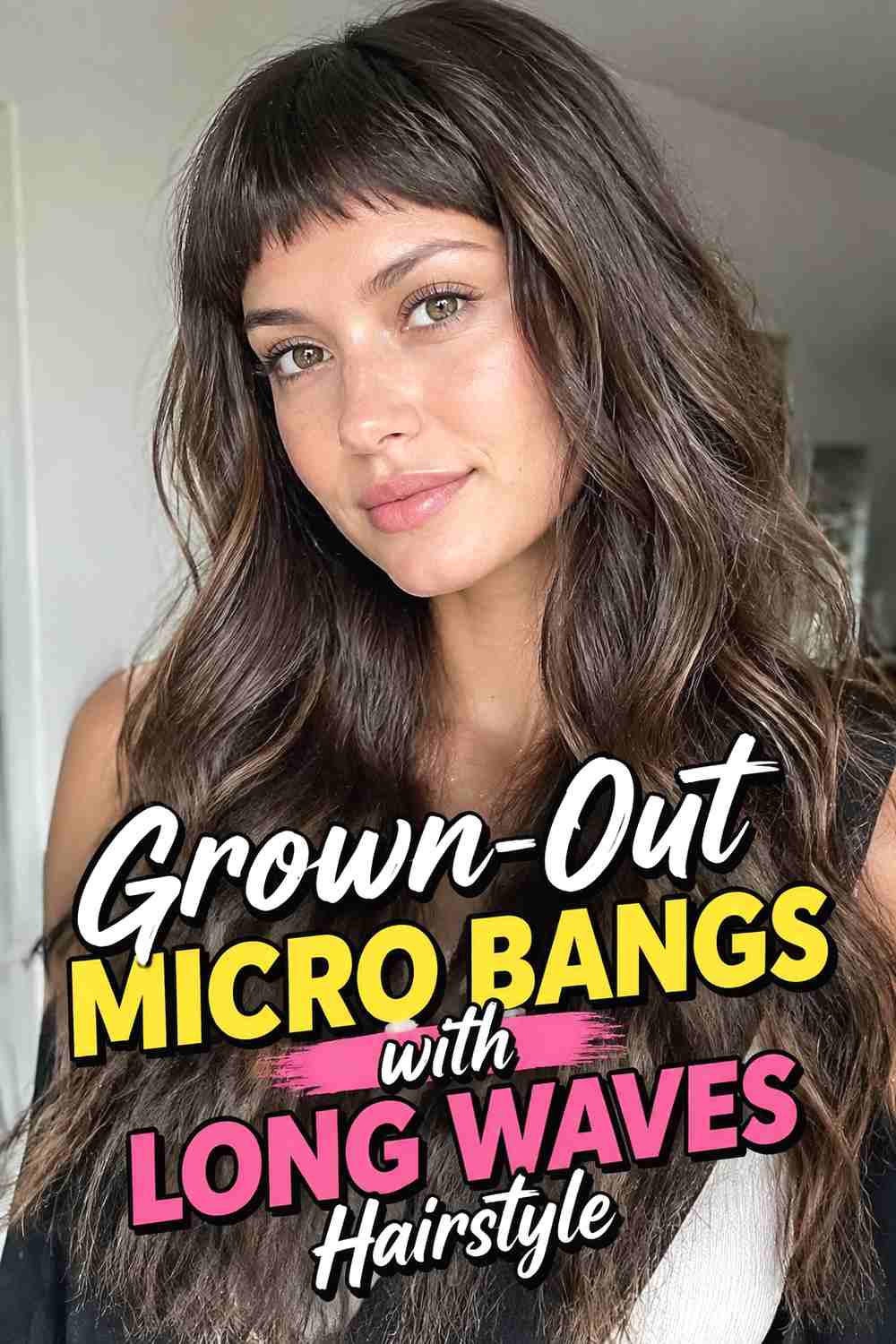
Long waves provide a soft backdrop for grown-out micro bangs, balancing the shorter fringe with movement through the lengths. As the bangs approach the brows, they can be left slightly piecey or gently curved rather than trimmed back into a sharp micro shape. The contrast between compact fringe and long flowing hair remains noticeable, but the extra bang length makes the overall look softer than true baby bangs. Loose S-waves work particularly well because they create texture without competing with the fringe. If the front hair tends to split naturally, allowing a subtle opening can also make the growing bangs easier to manage between trims.
Best For
This look suits medium to long hair when you want to preserve length while transitioning away from very short bangs.
Styling Notes
Keep the waves broad and relaxed, and style the fringe separately so it does not become overly curled.
11. Piecey Grown Out Micro Bangs Hairstyle
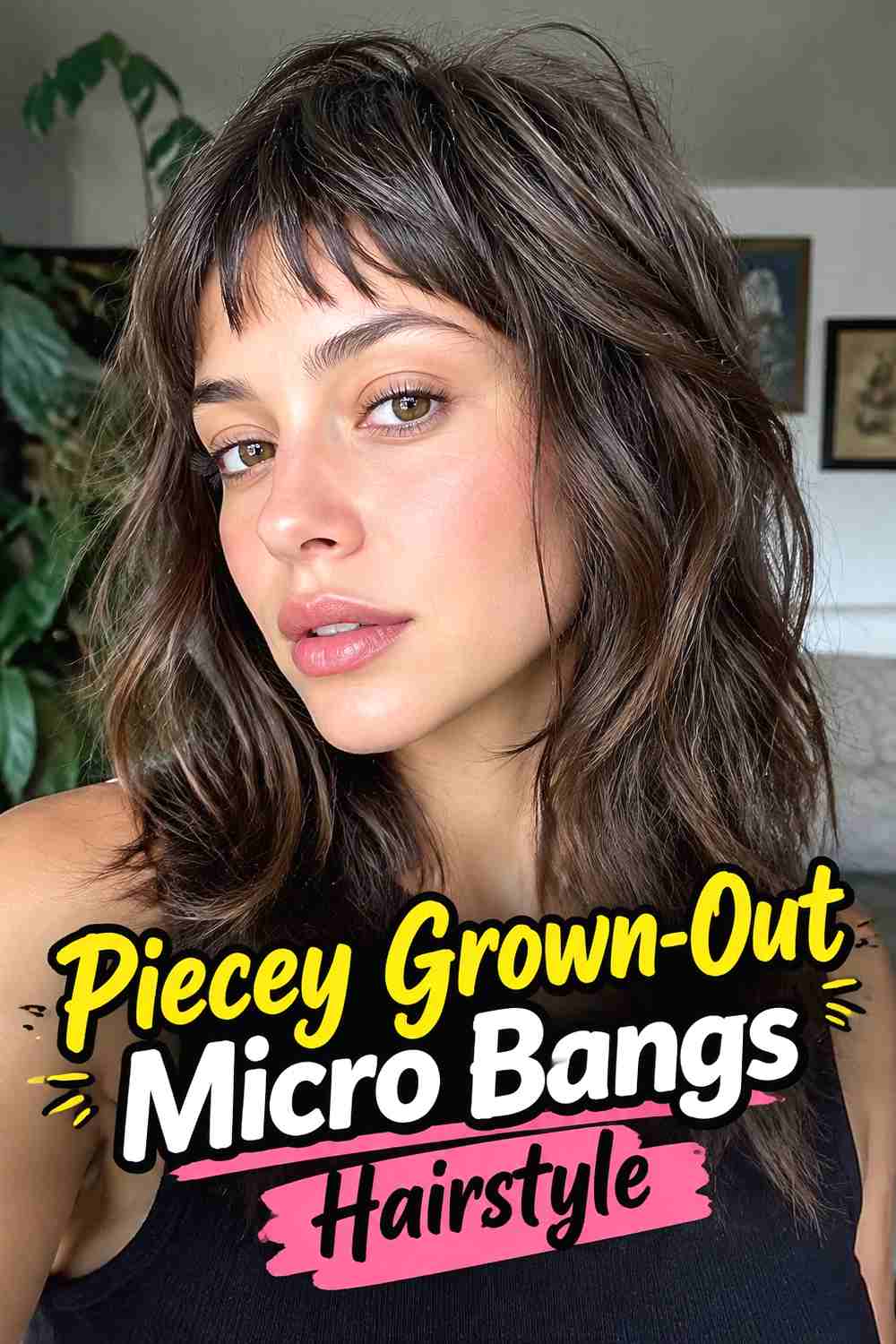
Piecey grown-out micro bangs use separation to make the transitional length look deliberate. As the fringe extends toward the eyebrows, small sections are encouraged to sit independently rather than forming one solid curtain of hair. This can create a lightweight, modern effect and make minor differences in length less noticeable. The style works especially well with straight, wavy, or textured hair that already responds well to finger styling. A tiny amount of lightweight cream can define selected pieces, but too much product may cause the fringe to clump. Letting the edges remain slightly imperfect also gives the bangs flexibility as they continue growing toward a longer wispy shape.
Styling Notes
Define only a few strands for separation and leave the rest natural. Overworking every piece can make the fringe look stringy.
Why It Works
Visible separation breaks up the growing length, making brow-level bangs appear lighter and less heavy across the forehead.
12. Grown Out Micro Bangs With Shag Layers Hairstyle
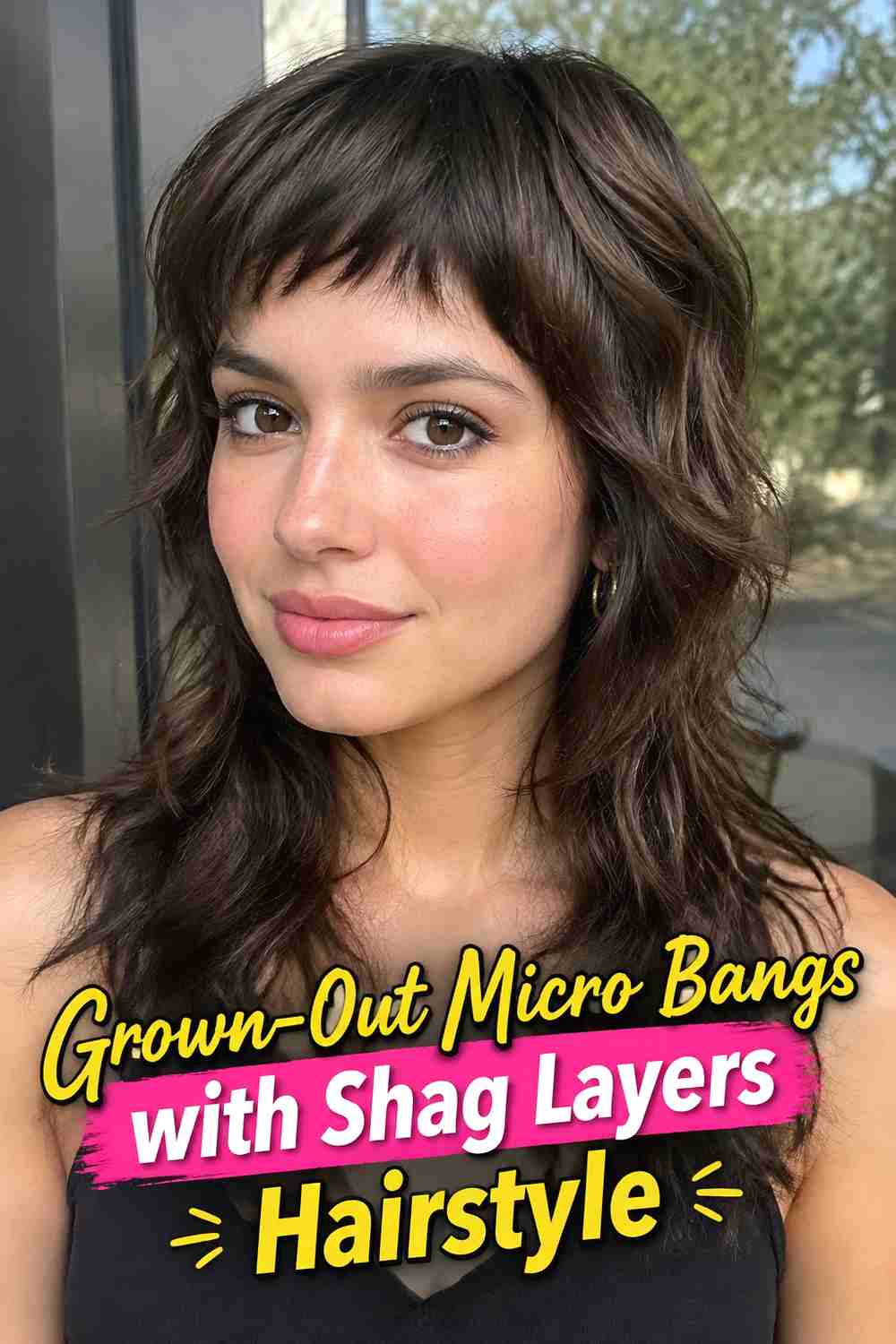
Shag layers make grown-out micro bangs feel like a natural part of a textured haircut rather than an isolated fringe in transition. The bangs can sit around brow length with an irregular, lightly choppy edge, while shorter layers through the crown and sides create movement that connects them to the rest of the hair. This approach works particularly well on wavy or naturally tousled textures because the haircut already embraces varied lengths. Medium and long shags can both support the style, although the amount of layering should match hair density. The goal is movement and continuity, not removing so much weight that the ends lose fullness.
Hair Type & Length
Straight-to-wavy hair with medium density works especially well, though shag layering can be adjusted for finer or thicker textures.
Why It Works
Shorter layers throughout the haircut make the growing fringe feel integrated, reducing the visual gap between bangs and longer lengths.
13. Curved Grown Out Micro Bangs Hairstyle
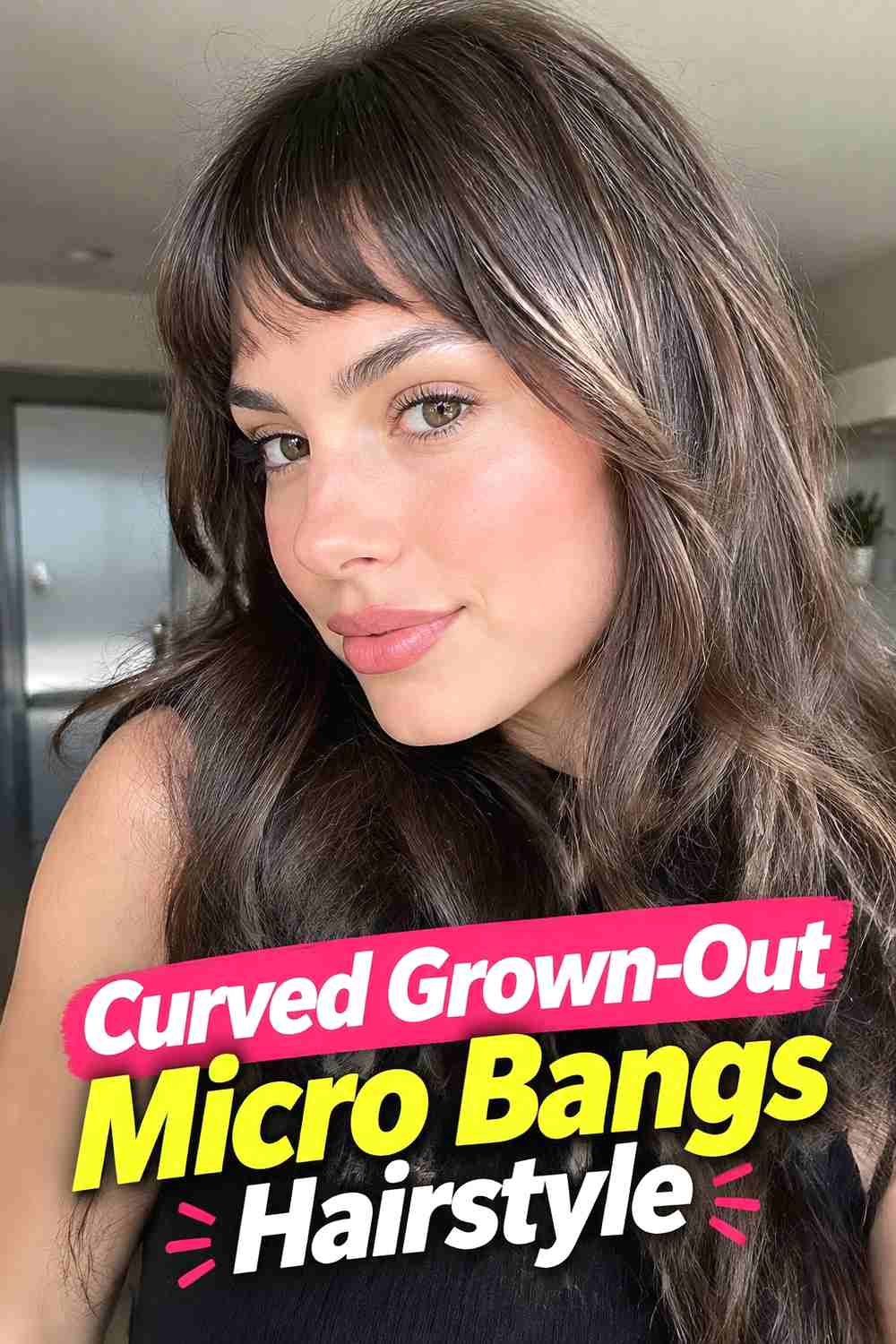
Curved grown-out micro bangs turn extra length into a soft, shaped fringe. The center can sit around or slightly above the brows while the outer edges become a little longer, creating a gentle arc across the forehead. This is useful when the bangs are no longer short enough to behave like true micro fringe but have not yet reached a curtain-bang length. The curved outline provides structure without looking as heavy as a blunt edge. Straight and softly wavy hair can both wear the shape, particularly when the sides connect naturally with longer temple pieces. A subtle bend during drying can help the fringe maintain its arc.
Best For
This style suits anyone who wants a polished grow-out and prefers a defined shape over choppy or highly separated fringe.
Wear & Maintenance
Trim only enough to preserve the outer shape. Let the overall length continue progressing if longer bangs are the final goal.
14. Grown Out Micro Bangs With Soft Curls Hairstyle
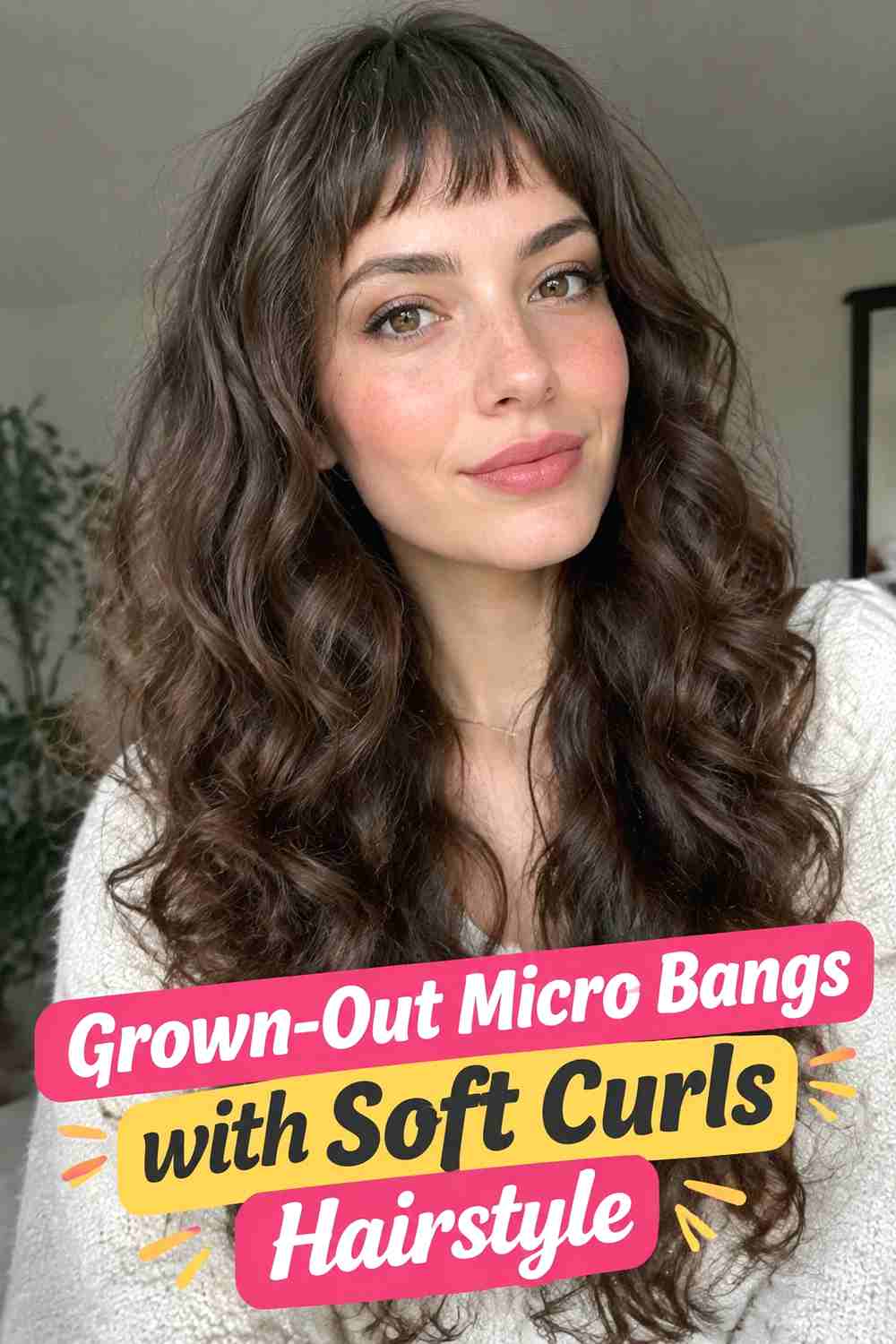
Soft curls can make grown-out micro bangs feel playful and cohesive, especially when the fringe itself carries some natural bend. Instead of forcing the bangs perfectly straight, individual pieces can curve lightly across the forehead while the longer hair forms loose curls or waves. The finished bang length should be judged dry because curl and wave patterns can lift the fringe more than expected. Leaving the bangs slightly sparse often helps them blend with curly texture without creating excessive bulk near the hairline. As the fringe continues growing, it can gradually transition into short curly bangs or split into longer face-framing pieces around the temples.
Hair Type & Length
Wavy and curly textures can wear this grow-out beautifully when the cut accounts for shrinkage, density, and natural curl grouping.
Pro Tip
Avoid judging the fringe only when stretched straight. Its true growing length should be evaluated in the texture you wear most often.
How to Choose the Right Look
Start with your current bang length. If your fringe is still clearly above the brows, soft, wispy, choppy, or piecey styling may be easiest. Once it reaches brow level and has enough movement, center-parted, side-swept, curved, or early curtain shapes become more practical.
Natural texture matters just as much. Straight hair makes every fringe line visible, so feathering or shaping can help the grow-out feel intentional. Waves and curls are more forgiving, but shrinkage can make bangs appear shorter than expected.
Consider your final goal too. If you eventually want curtain bangs, start encouraging a center split and preserve longer temple pieces. If you want to blend the fringe completely into layers, face-framing sections and shag shapes can create a smoother bridge.
Most importantly, avoid unnecessary full trims. Small adjustments can improve shape, but repeatedly cutting the entire fringe back to one length will extend the grow-out process.
Final Thoughts
Grown-out micro bangs do not have to be an awkward waiting period. Wispy texture, soft parts, curved edges, waves, and face-framing layers can turn the extra length into a hairstyle of its own.
Choose a shape that works with the length you currently have rather than forcing the fringe to behave like either fresh micro bangs or fully grown curtain bangs. With thoughtful styling and restrained trimming, each stage can feel intentional.
FAQs
1. How long does it take to grow out micro bangs?
The timeline varies with individual hair growth and your target length. Reaching the brows happens sooner than growing the fringe long enough to blend fully into cheekbone or jaw-length layers.
2. What is the easiest way to style grown-out micro bangs?
Once they gain enough length, wispy separation, a small center part, side-sweeping, or a gentle curve can help the fringe look intentional without cutting it short again.
3. Can grown-out micro bangs become curtain bangs?
Yes. As the fringe lengthens, keeping the outer pieces longer and gradually encouraging a center split can help transition the shape toward short curtain bangs.
4. Should I trim micro bangs while growing them out?
Small shaping trims can remove damaged ends or refine the perimeter, but repeatedly trimming the full fringe back to one short length will slow the grow-out.
5. How do I grow out micro bangs with curly or wavy hair?
Work with the natural texture and assess length when the hair is dry. Waves and curls can shrink upward, so avoid cutting based only on stretched or wet fringe length.
Save your favorite grown-out micro bang ideas, share them with someone navigating fringe grow-out, and explore more transitional bang inspiration for your next haircut.