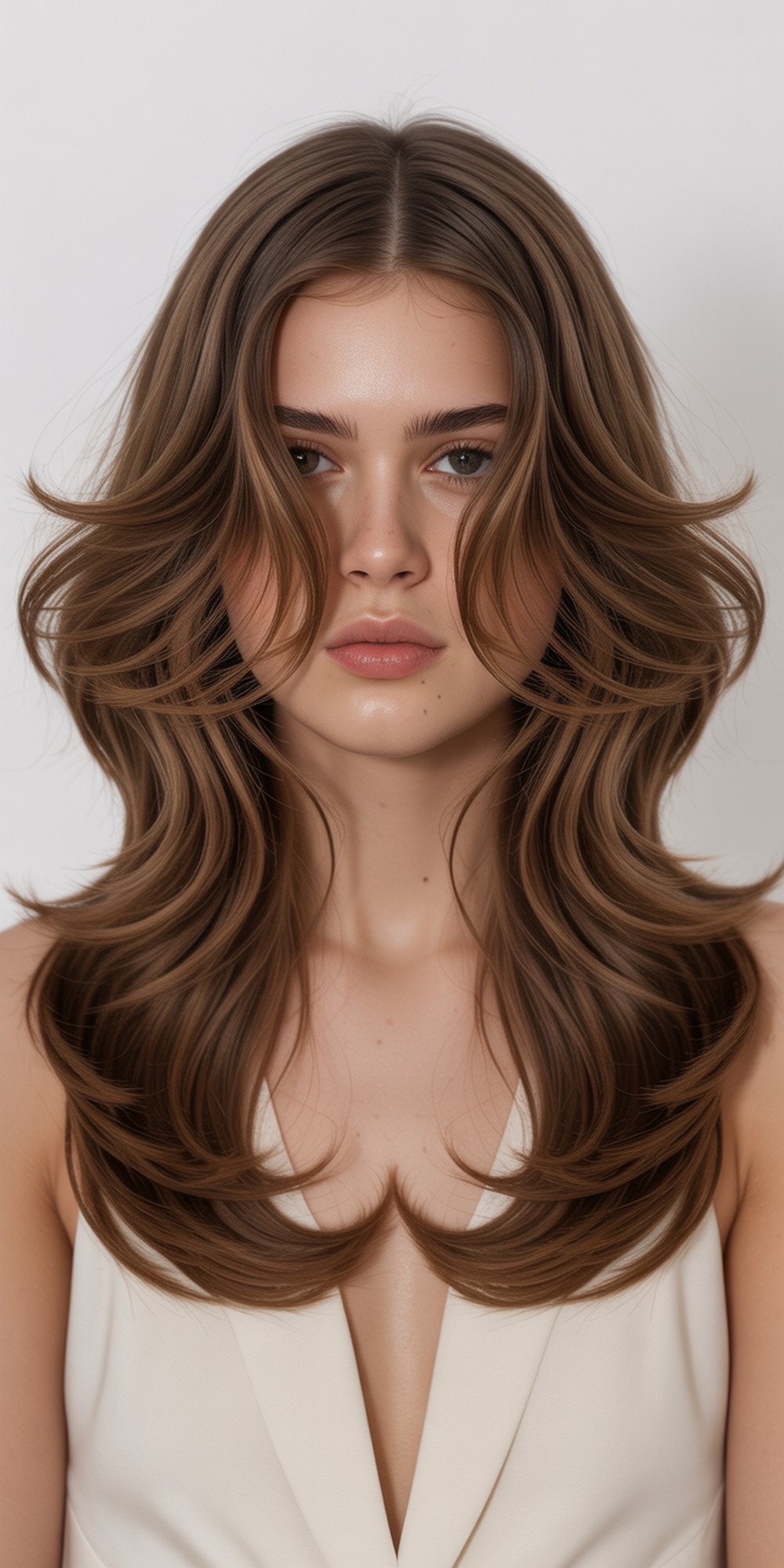
14 Collarbone Lob Haircut Ideas for a Fresh, Versatile Cut
Collarbone lob haircut ideas blend practical length with polished movement, giving you room to explore blunt ends, layers, bangs, curls, waves, and volume.
A collarbone lob sits in a useful middle ground: long enough to retain movement and styling flexibility, yet short enough for the perimeter and layers to make a visible impact. This collection ranges from crisp, minimal shapes to airy shags, soft curls, rounded blowouts, and naturally textured finishes.
When comparing these looks, pay attention to more than the finished photo. Consider how much volume you want, where you prefer your layers to begin, whether bangs fit your routine, and how your natural texture behaves at collarbone length. Density, shrinkage, parting, heat styling, and the amount of daily polishing you enjoy can all change which version feels easiest to maintain.
Quick List
- Soft Blunt Collarbone Lob Hairstyle
- Airy Layered Collarbone Lob Hairstyle
- Curtain Bang Collarbone Lob Hairstyle
- Deep Side-Part Collarbone Lob Hairstyle
- Textured Wavy Collarbone Lob Hairstyle
- Sleek Center-Part Collarbone Lob Hairstyle
- Curly Collarbone Lob Hairstyle
- Shaggy Collarbone Lob Hairstyle
- Flipped-End Collarbone Lob Hairstyle
- Face-Framing Collarbone Lob Hairstyle
- Tousled Collarbone Lob Hairstyle
- Voluminous Blowout Collarbone Lob Hairstyle
- Asymmetrical Collarbone Lob Hairstyle
- Defined Coily Collarbone Lob Hairstyle
1. Soft Blunt Collarbone Lob Hairstyle
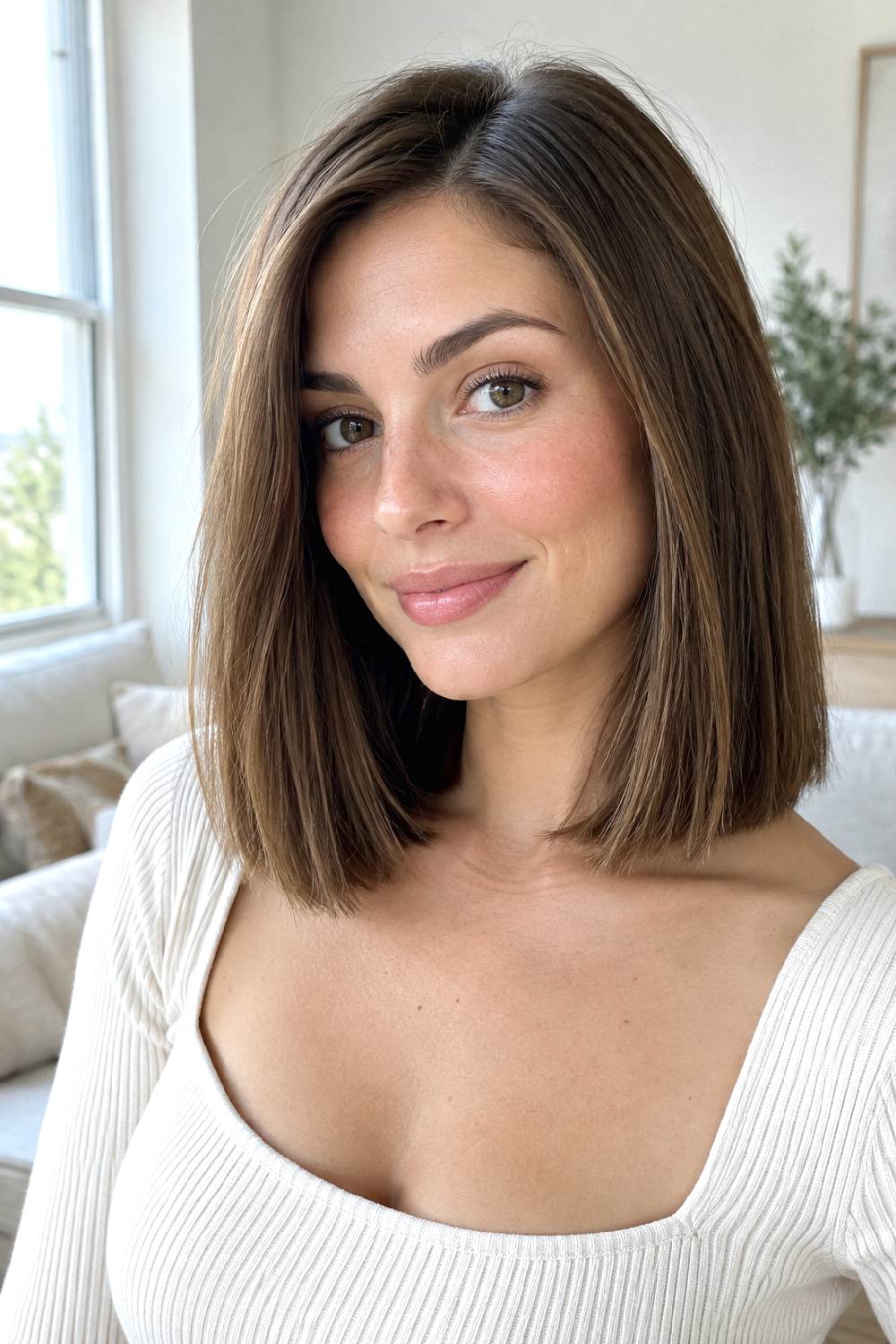
The Soft Blunt Collarbone Lob Hairstyle keeps the lower edge strong and visually full while avoiding an overly severe finish. Hair lands close to the collarbones in one clean line, but slight softness through the ends lets the cut move naturally instead of sitting like a rigid block. It can be especially appealing when you want your hair to look denser at the perimeter without adding obvious layers. Straight and softly wavy textures show the outline clearly, while an off-center part introduces just enough asymmetry to keep the cut relaxed. Because the shape depends on a tidy baseline, regular end maintenance matters more here than with a heavily layered lob.
Why It Works
A nearly one-length perimeter concentrates visual weight at the bottom, which can make the ends appear fuller. The collarbone placement also gives the cut enough length to tuck behind the ears or pull into a short ponytail.
Styling Notes
For a sleek finish, smooth the mid-lengths while letting the ends retain a slight natural bend. If you use hot tools, apply heat protectant first and avoid flattening the roots so completely that the silhouette loses movement.
2. Airy Layered Collarbone Lob Hairstyle
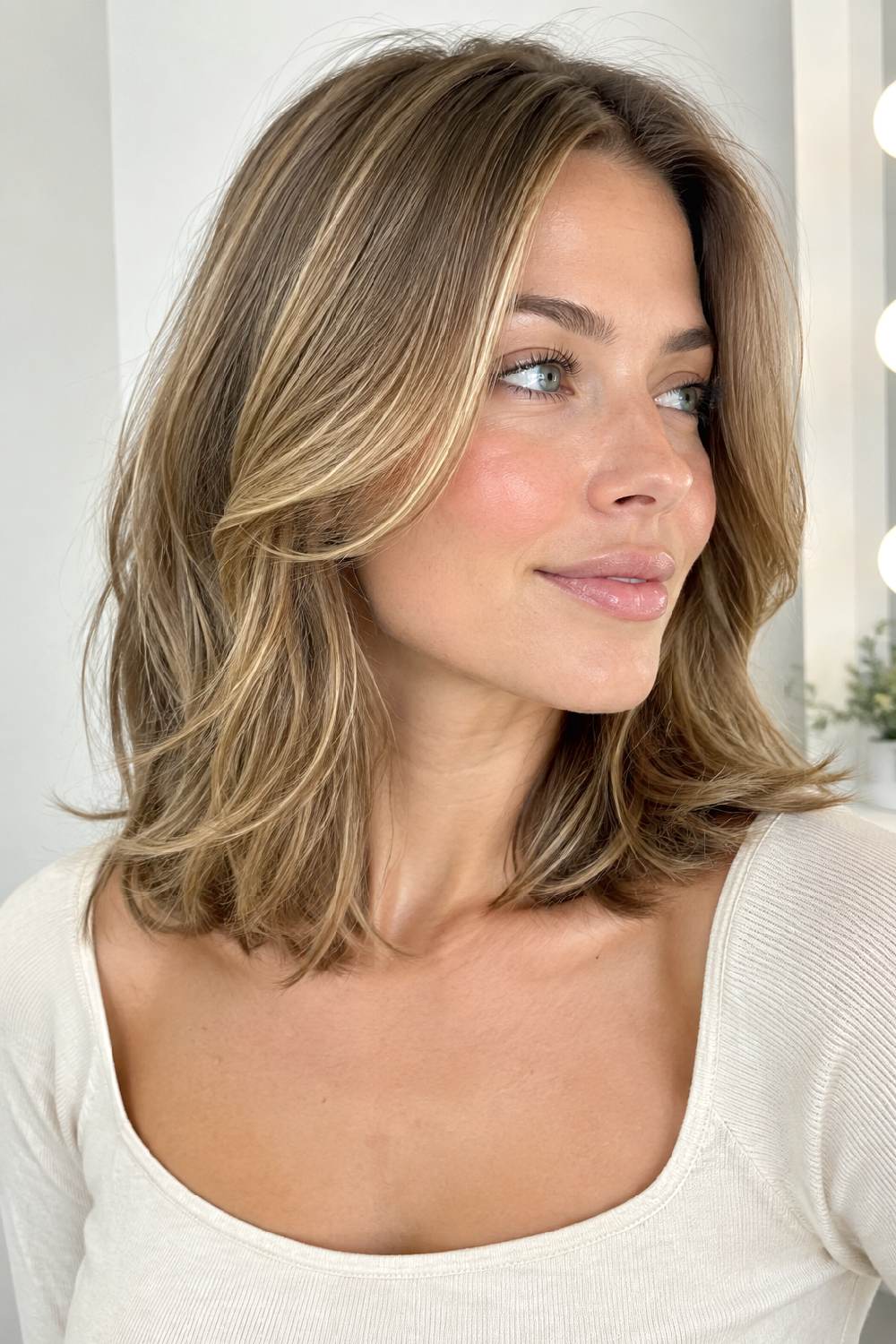
The Airy Layered Collarbone Lob Hairstyle trades a heavy baseline for lighter movement through the interior and ends. Subtle layers remove some bulk without turning the cut into a short shag, so the overall outline still reads as a lob. Feathered pieces shift easily around the shoulders, making this version especially useful if a one-length collarbone cut feels too solid or triangular on your hair. Fine hair may benefit from keeping the layers long and restrained, while denser hair can usually support more internal movement. The key is preserving enough length at the perimeter that the cut still looks intentional when worn straight, softly bent, or air-dried.
Hair Type & Length
Medium-density and thick hair can use layering to release weight, while finer hair often looks strongest with fewer, longer layers. Ask for movement rather than aggressive thinning if you still want a substantial-looking perimeter.
Pro Tip
Direct a few front sections away from the face while drying. That small change can make the layers easier to see without requiring a full curled or waved finish.
3. Curtain Bang Collarbone Lob Hairstyle
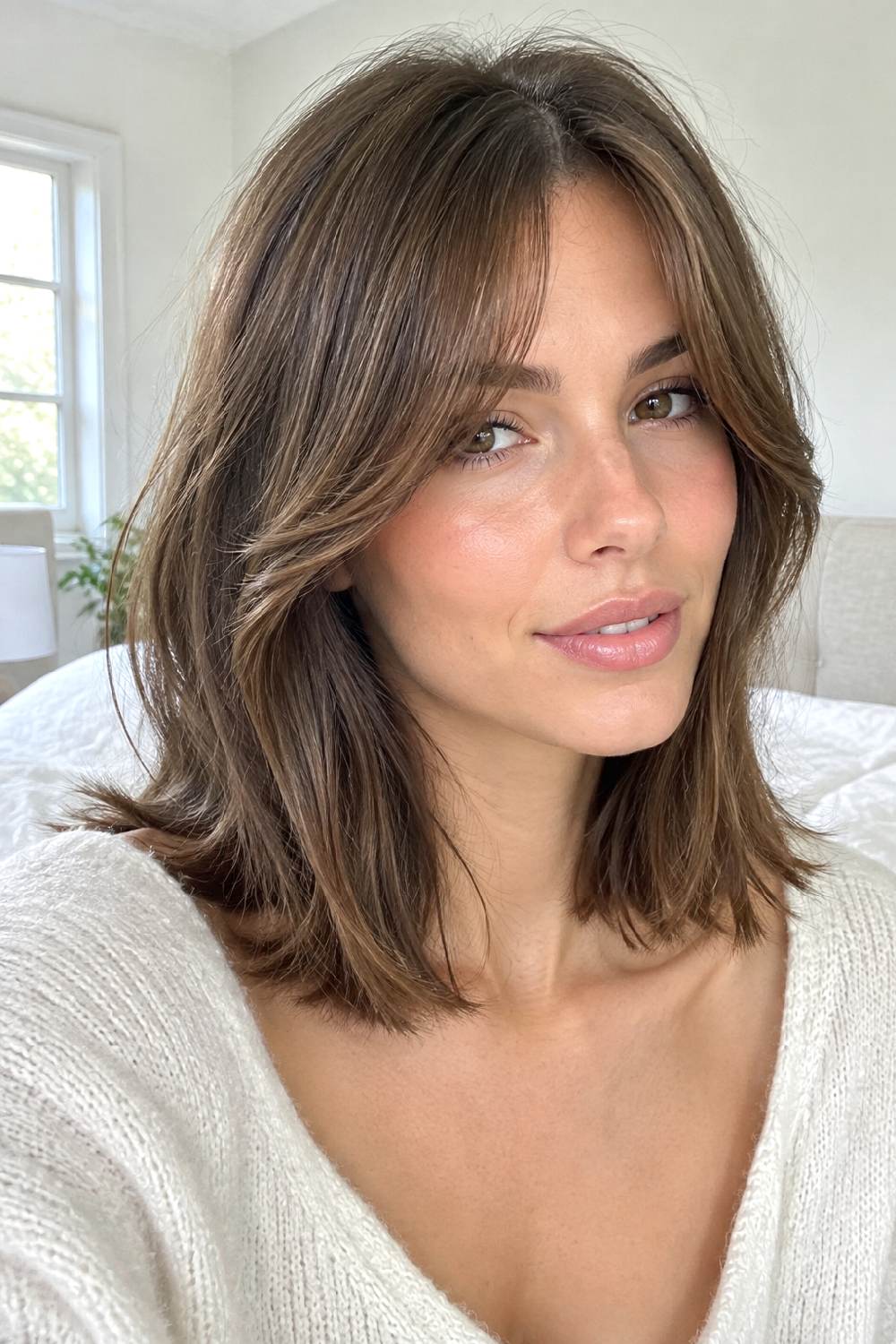
The Curtain Bang Collarbone Lob Hairstyle adds a strong face-framing feature without committing to a short, straight-across fringe. The bangs open near the center and taper gradually into the front lengths, creating a soft transition from the eyes or cheekbones down toward the lob. This works particularly well when you like wearing your hair down because the fringe gives the cut shape even on simple styling days. The main maintenance point is the bang area: it usually needs more frequent reshaping than the rest of the haircut. A soft center or near-center part makes the curtain effect clear, while gentle bends through the lengths keep the overall finish cohesive rather than overly styled.
Styling Notes
Dry the fringe from side to side first to prevent a stubborn split, then guide the ends away from the face. A round brush or large roller can create movement without producing a tight curl.
Wear & Maintenance
Curtain bangs grow into longer face-framing pieces more gracefully than many shorter fringe shapes, but they still need occasional trimming if you want the opening to remain around the eyes and cheekbones.
4. Deep Side Part Collarbone Lob Hairstyle
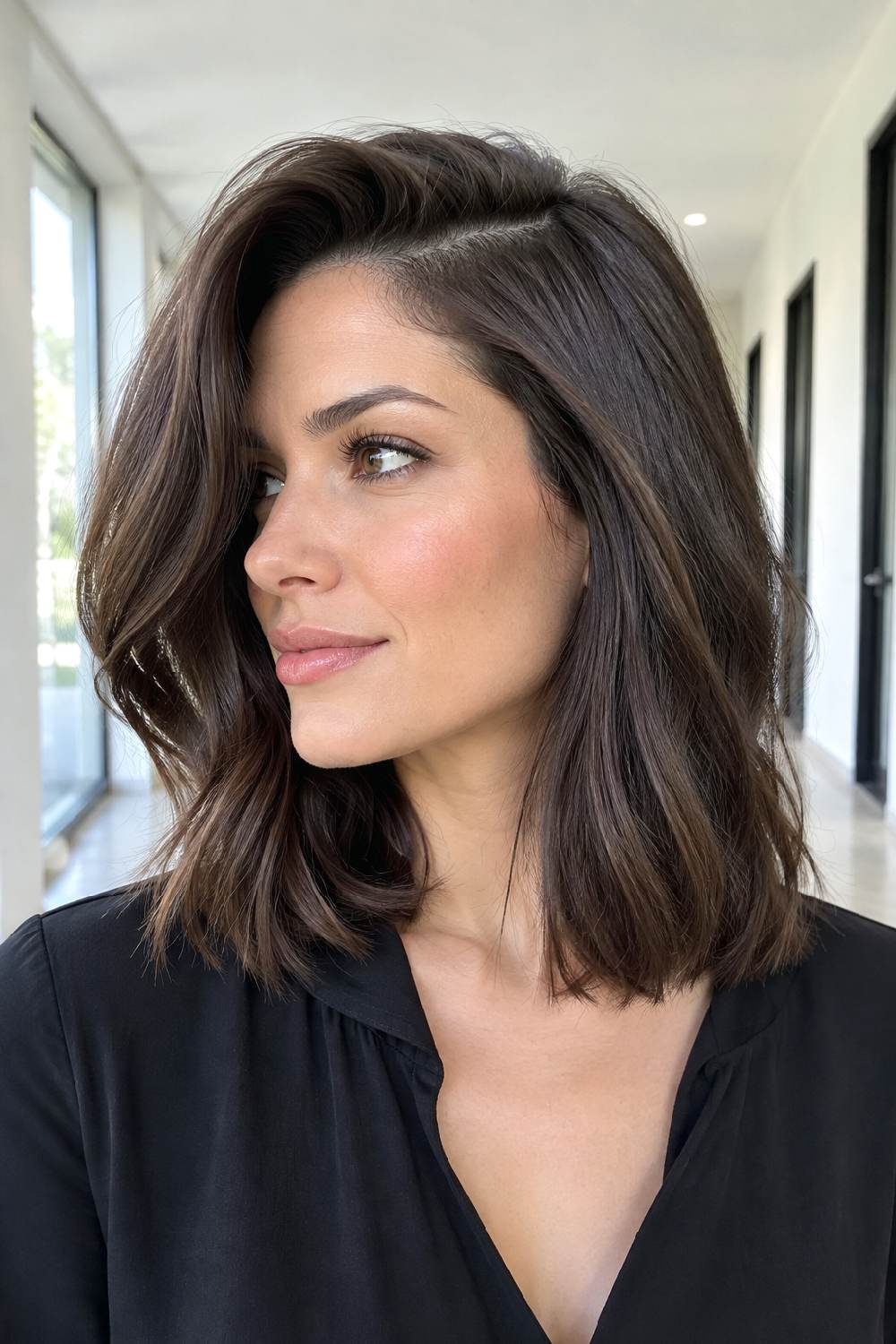
A Deep Side-Part Collarbone Lob Hairstyle changes the balance of a relatively simple cut by placing noticeably more volume on one side. Instead of relying on extensive layers, the part itself creates movement across the forehead and gives the front of the lob a fuller, more directional shape. It can work with straight hair, loose waves, or a polished blowout, and it is easy to adjust depending on how dramatic you want the sweep to appear. This version is useful when a centered lob feels too symmetrical for your taste. Since deep side parts can expose more root area on one side, keeping the crown light and flexible tends to look more natural than heavily setting it in place.
Why It Works
Shifting the part redistributes volume immediately, allowing one side to lift while the other sits closer to the head. That contrast can make a simple collarbone cut look more sculpted without changing its basic length.
Pro Tip
Try the part on both sides before settling on one. Natural growth patterns often make one direction sit more easily and require less daily correction.
5. Textured Wavy Collarbone Lob Hairstyle
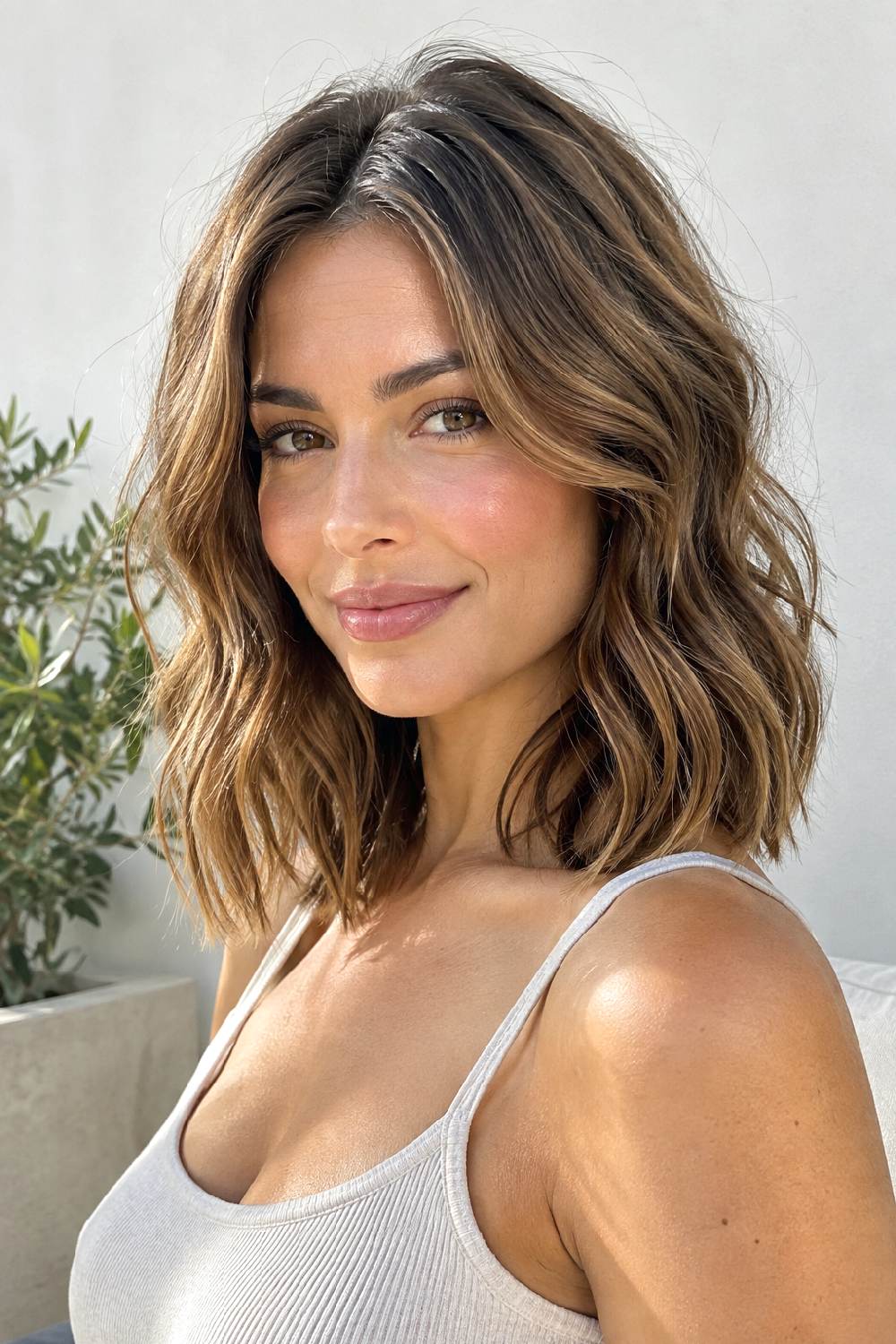
The Textured Wavy Collarbone Lob Hairstyle is built around loose, irregular bends rather than polished identical curls. At collarbone length, waves create enough expansion to make the haircut look full while the shorter overall length keeps the texture from feeling weighed down. A slightly layered perimeter helps the waves separate, but the cut should still retain enough density at the ends to read as a lob. This style is a good match if you enjoy movement and a less structured finish, especially when your hair already has some natural wave. The most convincing version mixes flatter pieces, stronger bends, and a little root texture instead of curling every section in exactly the same direction.
Styling Notes
Alternate the direction of a few bends and leave some ends straighter for a more believable finish. If using heat, protect the hair first and loosen the pattern with your fingers once it has cooled.
Wear & Maintenance
Wavy lobs can usually be refreshed selectively rather than completely restyled. Rework only the pieces that have lost definition and use a light product so the texture stays mobile.
6. Sleek Center Part Collarbone Lob Hairstyle
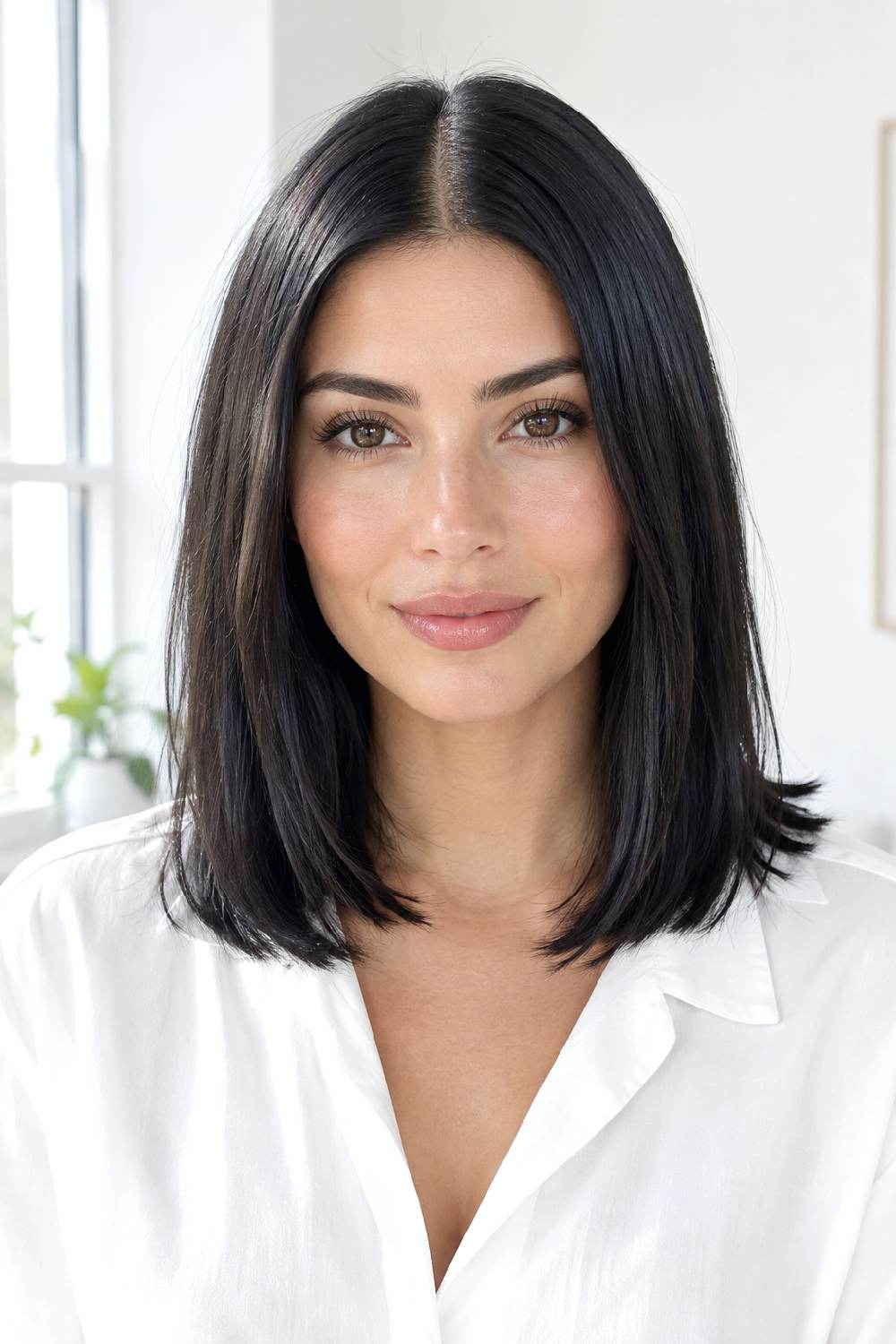
The Sleek Center-Part Collarbone Lob Hairstyle puts precision at the forefront. A centered part divides the cut evenly, while smooth lengths and a clean collarbone-level perimeter create a streamlined silhouette. The finish works particularly well when you want the haircut itself to make the statement rather than relying on large waves or visible layering. Even so, sleek should not mean stiff: a tiny bend near the ends and a little natural root lift help prevent the style from looking overly flat. Because symmetry is so noticeable in this version, both the part and the lower edge should look deliberate. It pairs naturally with minimalist styling and can shift easily from everyday wear to more polished settings.
Hair Type & Length
Straight and lightly wavy hair can achieve this finish with relatively little reshaping. Curly or coily textures can also wear a sleek lob when stretched or straightened, although the required styling routine will be different.
Pro Tip
Use only a small amount of smoothing product through the mid-lengths and ends. Applying too much near the roots can remove the natural lift that keeps a center-part lob from looking heavy.
7. Curly Collarbone Lob Hairstyle
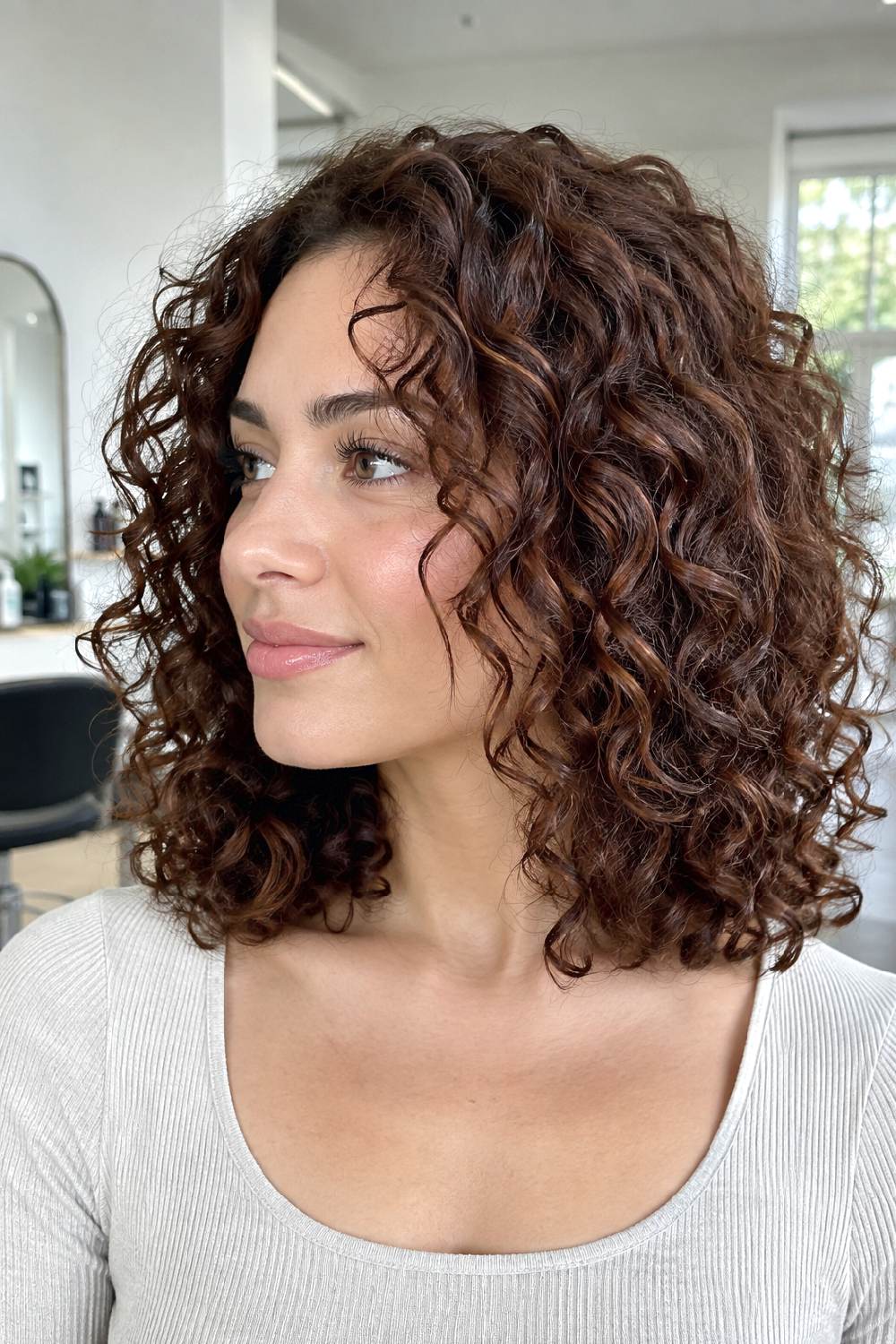
A Curly Collarbone Lob Hairstyle lets natural curl pattern supply much of the haircut’s volume and movement. Rather than forcing every curl into a uniform shape, the cut works best when it respects differences in curl size, spring, and shrinkage across the head. Light layering can prevent the bottom from becoming disproportionately wide while helping curls around the face sit with more definition. The visible length may shift from wash day to wash day depending on shrinkage and styling, so collarbone placement should be considered in the context of the hair’s dry state. This look feels especially balanced when the crown maintains some lift and the ends retain enough density to keep the overall silhouette rounded rather than sparse.
Hair Type & Length
Curl pattern, density, and shrinkage affect where this lob appears to sit once dry. If your curls contract significantly, discuss the desired dry length rather than relying only on the appearance of wet or stretched hair.
Wear & Maintenance
Refresh individual curls with a little water and your usual lightweight curl product instead of saturating the entire style every morning. Preserving curl clumps can also reduce unnecessary manipulation.
8. Shaggy Collarbone Lob Hairstyle
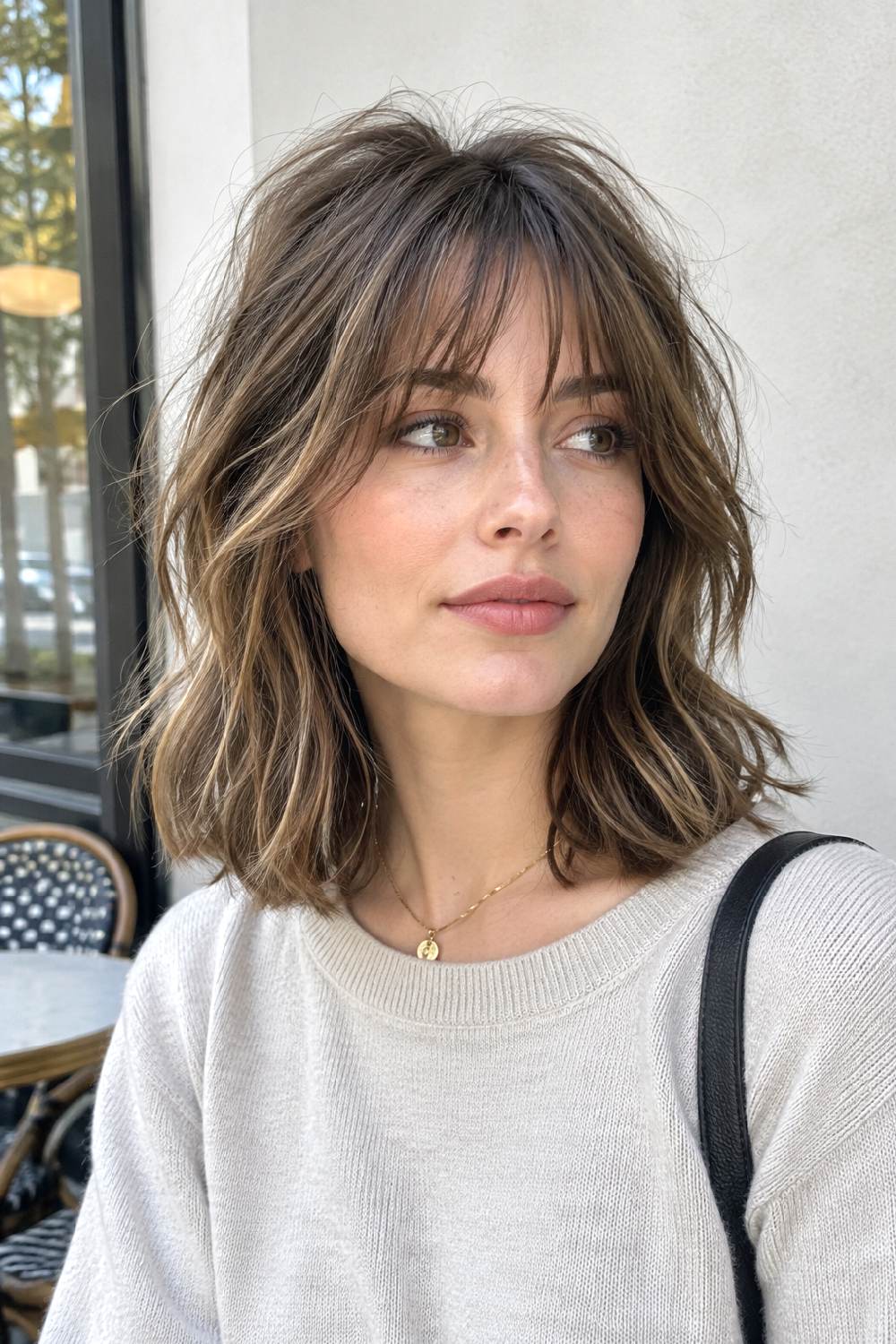
The Shaggy Collarbone Lob Hairstyle brings more obvious layering to the lob shape, with a lighter crown, broken-up ends, and optional wispy fringe. Unlike a smooth layered lob, this version is meant to show separation and irregular movement. The collarbone length keeps it wearable while allowing shorter pieces to create lift around the top and sides. It is especially appealing if you prefer hair that looks good with a little natural bend, texture, or air-dried imperfection rather than a perfectly polished finish. The amount of shag can be adjusted considerably: longer layers keep the shape subtle, while shorter crown pieces produce a more noticeable change in silhouette and usually require more deliberate styling.
Why It Works
Shorter layers interrupt the solid weight of the lob, helping texture appear more visible and giving the crown a looser, lifted shape. Wispy fringe can reinforce that softness without dominating the cut.
Styling Notes
Work with your natural texture before adding extra bends. A small amount of mousse or texture spray can emphasize separation, but too much product may collapse the airy quality that makes the shag distinctive.
9. Flipped End Collarbone Lob Hairstyle
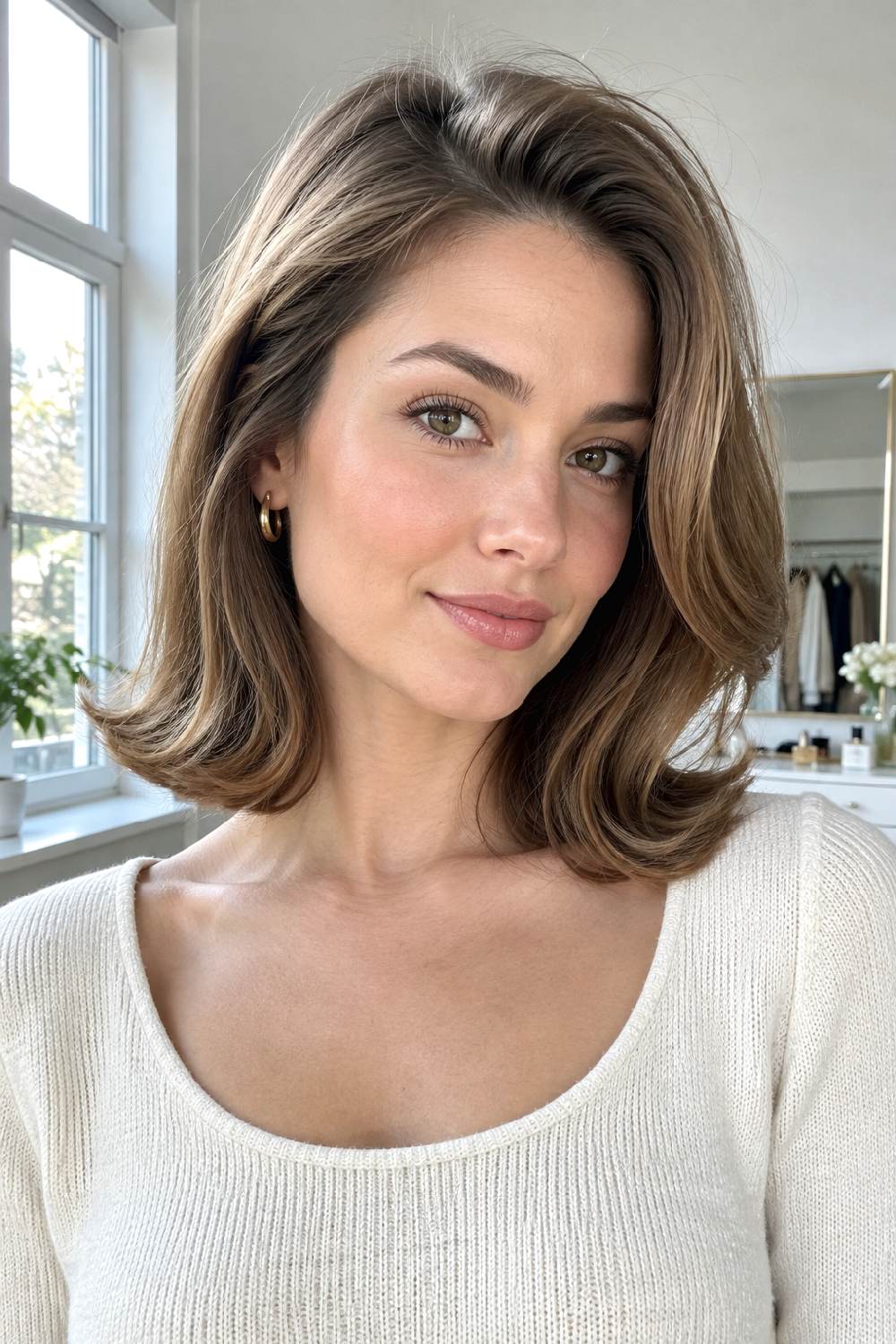
The Flipped-End Collarbone Lob Hairstyle keeps the body of the haircut smooth and controlled, then turns the perimeter outward for a playful finish. Because the flip happens around the collarbones, it draws attention to the ends without requiring a dramatic layered cut. The result can feel subtly retro while still looking modern when the crown remains soft and the bend is broad rather than tightly curled. This works particularly well on straight or stretched hair where the perimeter is easy to define. The flipped detail can be worn across the entire cut or concentrated more strongly around the front, depending on how noticeable you want the effect to be.
Styling Notes
Create the outward movement only through the final few inches rather than curling from the roots. A round brush or straightener can guide the ends away from the neck while keeping the upper lengths smooth.
Wear & Maintenance
Because the effect depends on the direction of the ends, it may soften during humid conditions or after prolonged contact with collars and scarves. A flexible hold product can help without making the perimeter stiff.
10. Face Framing Collarbone Lob Hairstyle
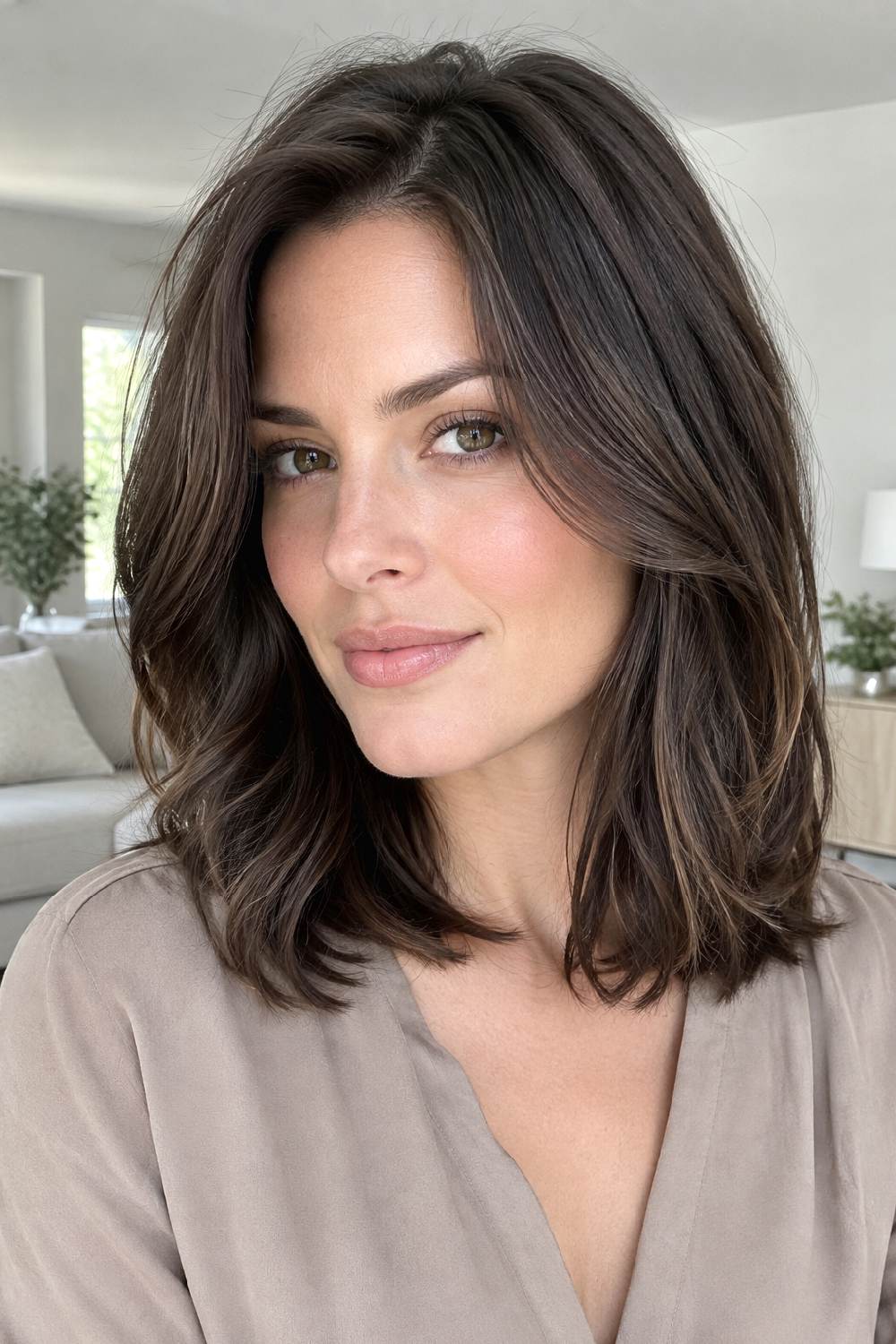
The Face-Framing Collarbone Lob Hairstyle concentrates its shortest layers around the front while leaving more weight through the back and lower perimeter. Pieces beginning around the cheekbones or jaw create a gradual transition into the collarbone length, which gives the cut visible shape from a front view without sacrificing too much fullness. This is a practical direction if you like a classic lob but want more movement when your hair is tucked, parted, or styled away from the face. The placement of those front layers matters more than having many of them. Longer framing pieces are subtle and easy to blend, while shorter pieces create a more noticeable contour and may need additional styling.
Why It Works
Strategically placed front layers break up a solid outline and bring movement closer to the face while the back retains the recognizable weight of a lob.
Pro Tip
Choose the starting point of the shortest layer based on the effect you enjoy, not a rigid face-shape rule. Cheekbone-length pieces feel more pronounced; jaw-length pieces create a softer transition.
11. Tousled Collarbone Lob Hairstyle
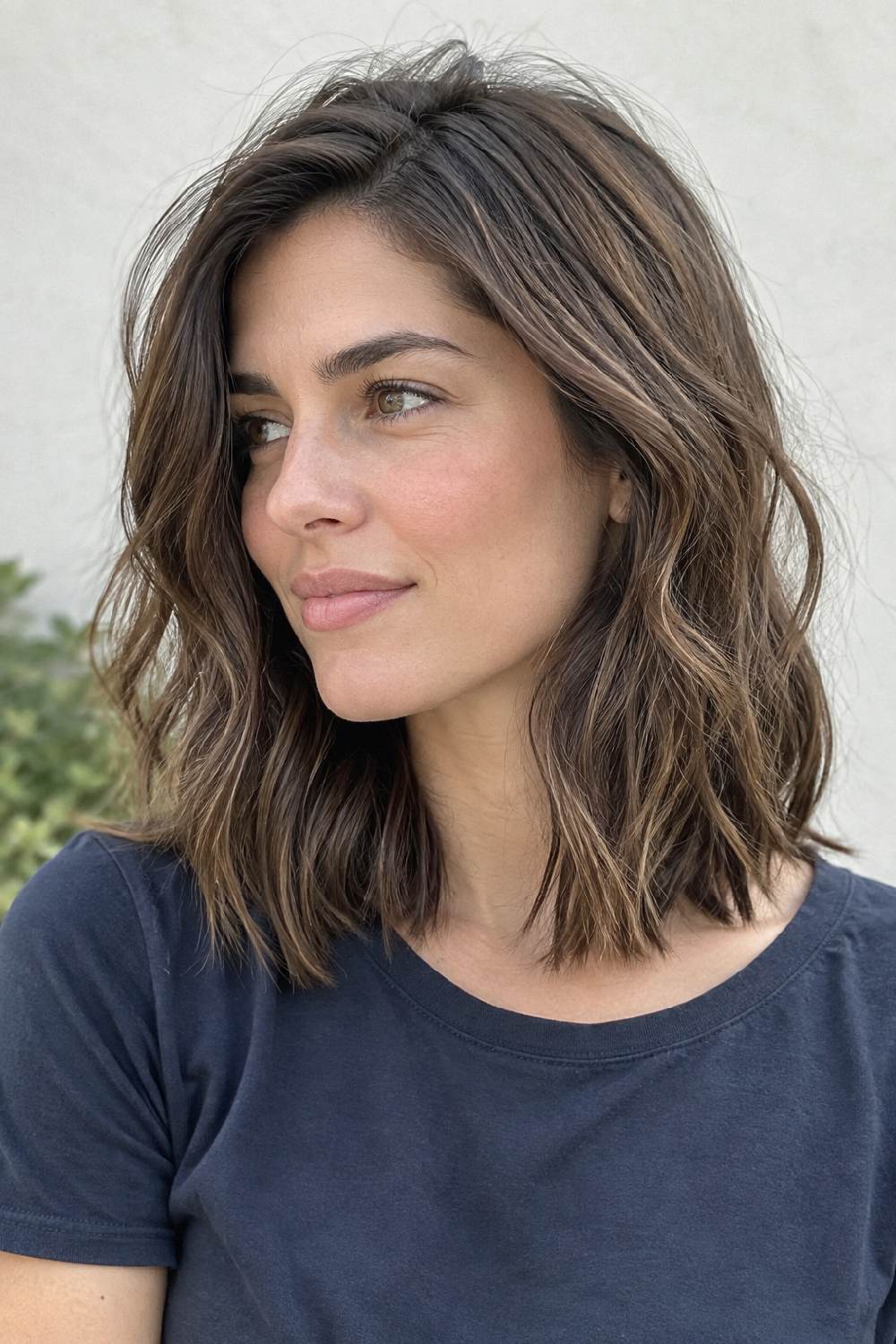
The Tousled Collarbone Lob Hairstyle sits between polished waves and completely undone texture. Instead of neat curls, it uses loose bends, soft irregular volume, and lightly separated pieces to make the cut feel casual and mobile. Keeping the length near the collarbones is important because it gives the ends enough weight to fall naturally even when the surface is intentionally imperfect. This version works well when you prefer a finish that does not require every strand to sit in the same place. A few straighter pieces and natural flyaways actually make the look more convincing. The challenge is avoiding excessive product or teasing, which can turn soft tousling into stiffness or frizz.
Styling Notes
Build texture in a few sections rather than treating every strand identically. Twisting damp sections, using a loose wave technique, or enhancing natural bends can all create the irregular pattern this style needs.
Best For
This is a useful option for casual everyday styling, especially if you prefer hair that can shift and soften throughout the day without looking as though the style has failed.
12. Voluminous Blowout Collarbone Lob Hairstyle
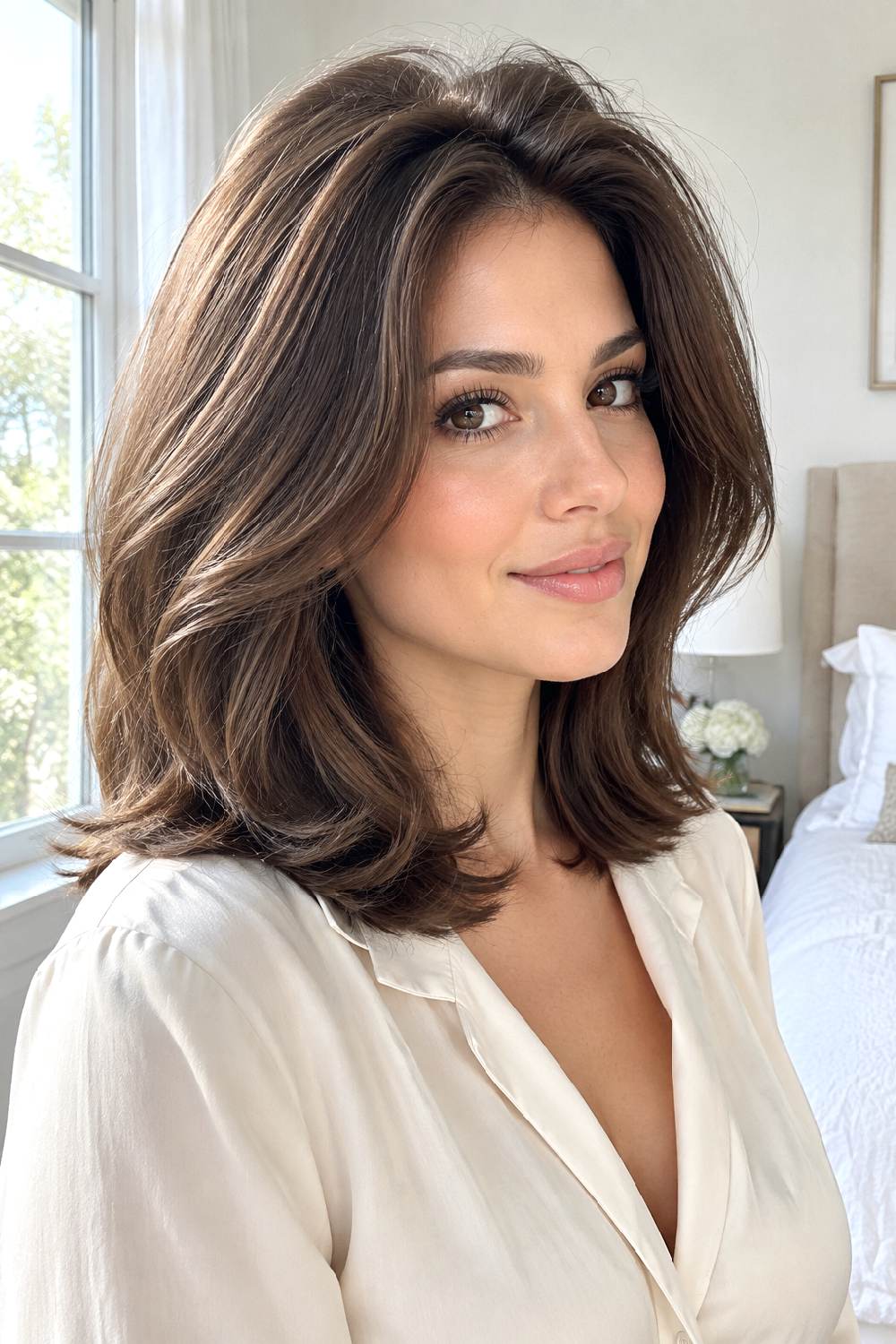
The Voluminous Blowout Collarbone Lob Hairstyle gives the mid-length cut more lift, sweep, and rounded movement than a sleek finish. Long blended layers help the hair curve away from the face, while elevated roots keep the collarbone length from looking bottom-heavy. The result is polished but still soft, with enough movement through the ends to show the haircut from different angles. Medium and dense hair can carry the fullness particularly well, while finer hair may benefit from restrained layering so too much perimeter weight is not removed. This look does require more active styling than a tousled or air-dried lob, but the payoff is a fuller silhouette with clear shape around the crown and sides.
Styling Notes
Lift sections away from the scalp while drying, then direct the ends with a large round brush. Let each section cool in its curved position before loosening it so the shape has a better chance of lasting.
Pro Tip
Concentrate volume near the roots and mid-lengths instead of aggressively curling the tips. This keeps the result looking like a blowout rather than a set of separate curls.
13. Asymmetrical Collarbone Lob Hairstyle
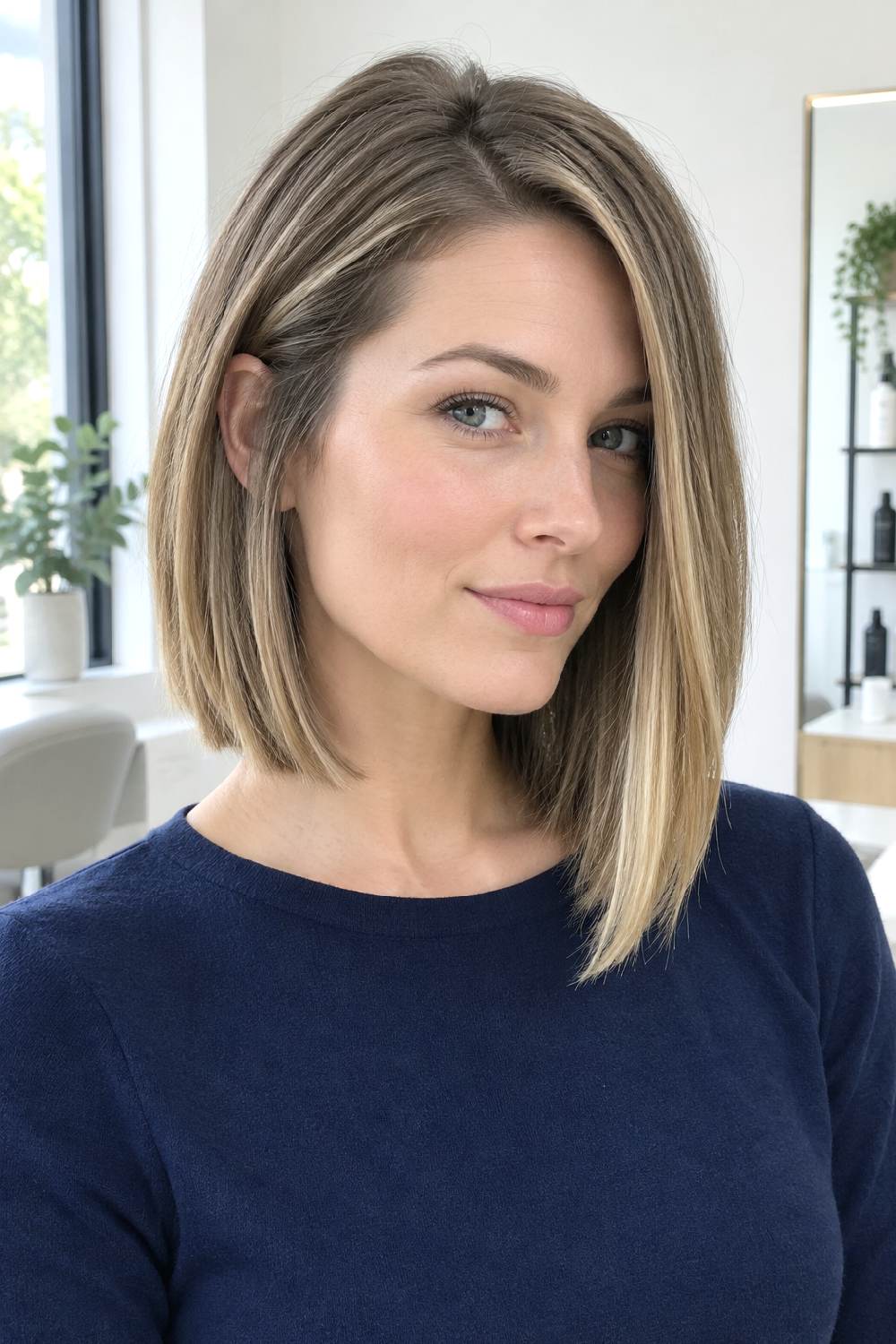
The Asymmetrical Collarbone Lob Hairstyle introduces a deliberate difference in length from one side to the other. The contrast can be subtle, with only the front edge sitting slightly longer, or more noticeable through a diagonal perimeter. At collarbone length, even a modest imbalance creates visual interest because the ends sit close to a clear reference point at the shoulders. Straight and lightly wavy finishes make the geometry easiest to see, although the concept can be adapted to textured hair with careful shaping. A side part complements the cut naturally by reinforcing its unequal balance. This version is worth considering when you want something more directional than a classic lob without moving into a dramatically short haircut.
Why It Works
The diagonal line changes the visual rhythm of the haircut while preserving most of the styling flexibility of a conventional collarbone lob.
Wear & Maintenance
An asymmetric perimeter is less forgiving of significant grow-out than a deliberately soft layered cut. Regular reshaping helps preserve the length difference that gives the haircut its identity.
14. Defined Coily Collarbone Lob Hairstyle
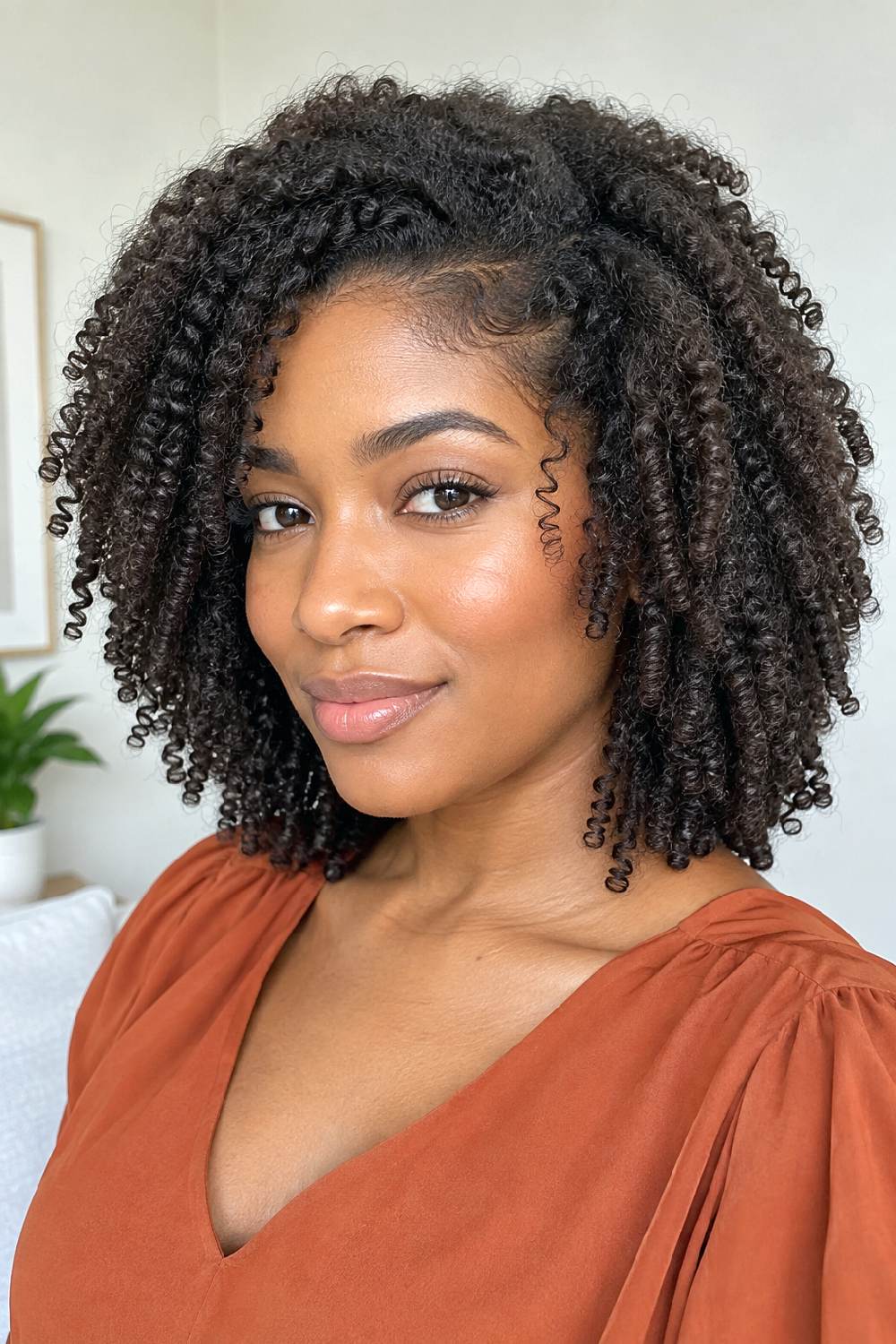
The Defined Coily Collarbone Lob Hairstyle shapes natural coils into a balanced lob silhouette while respecting their shrinkage, density, and spring. Rather than forcing the texture into a straight-cut outline, subtle layering can distribute volume through the sides and prevent the shape from becoming overly concentrated at the bottom. Face-framing coils introduce movement around the front, while a strong overall perimeter keeps the haircut recognizable as a lob. Because coily hair may appear considerably shorter in its unstretched state, the intended collarbone length needs to be judged in the finish you actually plan to wear most often. Variation between coil clusters is part of the texture and should remain visible rather than being smoothed away.
Hair Type & Length
The same cut can sit very differently depending on shrinkage and density. Discuss whether you want the finished shape to reach the collarbones in its natural state, gently stretched state, or another regular styling condition.
Wear & Maintenance
Prioritize definition without coating the hair so heavily that movement disappears. Refreshing selected coil groups and protecting the shape overnight can often be more practical than completely restyling the cut each day.
How to Choose the Right Look
Start with the finish closest to how you realistically wear your hair. If you usually prefer minimal styling, a soft blunt, curly, coily, tousled, or lightly layered lob may integrate more naturally into your routine than a high-volume blowout or flipped-end finish.
Hair density also changes the decision. A stronger blunt perimeter can help fine hair retain visual fullness, while dense hair may feel lighter with long layers, shaggy movement, or strategic internal weight removal. For curls and coils, evaluate length after shrinkage rather than assuming wet or stretched measurements will predict the final result.
Think about daily styling time as well. Curtain bangs, sleek finishes, blowouts, and precise flipped ends typically require more deliberate attention than relaxed texture. If you dislike frequent fringe maintenance, choose longer face-framing layers instead of shorter bangs.
For hold and comfort, consider your environment and clothing. Collarbone hair can brush against coat collars, scarves, and shoulders, which may alter outward flips or smooth ends. Humidity can also affect sleekness and wave definition. If your priority is an adaptable everyday cut, choose a shape that still looks intentional when the finish softens.
Finally, decide what you want the haircut to emphasize. A center part feels balanced and clean, a deep side part increases directional volume, blunt ends highlight density, layers increase movement, and curls or coils make texture central to the silhouette.
Final Thoughts
A collarbone lob can look dramatically different depending on where the weight, texture, and movement are placed. If you’re unsure where to begin, choose the version closest to your natural texture and usual styling habits, then adjust the part, fringe, layering, or finish from there. A small change to the front layers or perimeter can often give this versatile length a completely different character without requiring a much shorter cut.
FAQs
1. What length should a collarbone lob be?
A collarbone lob generally finishes around the collarbones, but the exact visual length can vary with texture, layering, and shrinkage. Curly and coily hair may need a longer cut length to appear collarbone-length when dry.
2. Is a collarbone lob good for fine hair?
It can be. A blunt or softly layered collarbone lob keeps more visual weight through the ends, which may make fine hair look fuller. Excessive layering can reduce that effect, so longer, restrained layers are often easier to manage.
3. Can curly or coily hair wear a collarbone lob?
Yes. The shape can be adapted to curls and coils by accounting for shrinkage, density, and volume distribution. It is helpful to judge the desired length in the texture and styling state you wear most often.
4. Do I need heat to style a collarbone lob?
No. Natural curls, waves, coils, twists, air-drying techniques, rollers, and other non-heat methods can all create movement. If you do use hot tools, apply a suitable heat protectant and use only as much heat as your styling process requires.
5. How can I make a collarbone lob feel different without cutting it shorter?
Changing the part, adding curtain bangs or longer face-framing pieces, introducing soft waves, creating a flipped end, or switching between sleek and tousled finishes can noticeably change the look while preserving the overall length.