13 Air-Dried Fringe Hairstyles
Soft bends, natural separation, and lived-in texture make these air-dried fringe hairstyles perfect for anyone who prefers an effortless finish over a highly polished blowout.
Air-dried fringe works best when the cut respects the hair’s natural root direction, texture, and shrinkage. Instead of forcing the bangs into a perfectly smooth line, these styles allow soft waves, bends, curls, and slight separation to become part of the finished look.
The key is still having a strong underlying shape. Air-dried should not mean shapeless. Fringe length, density, layering, and the way the bangs connect with the surrounding haircut all influence how naturally the style settles. When comparing these ideas, consider your natural texture, how your bangs dry around the forehead, and how much daily refreshing you are comfortable doing.
Quick List
- Soft Air Dried Fringe Hairstyle
- Wavy Air Dried Fringe Hairstyle
- Curly Air Dried Fringe Hairstyle
- Shaggy Air Dried Fringe Hairstyle
- French Bob Air Dried Fringe Hairstyle
- Shoulder Length Air Dried Fringe Hairstyle
- Piecey Air Dried Fringe Hairstyle
- Long Layers Air Dried Fringe Hairstyle
- Soft Wolf Cut Air Dried Fringe Hairstyle
- Wispy Air Dried Fringe Hairstyle
- Textured Lob Air Dried Fringe Hairstyle
- Coily Air Dried Fringe Hairstyle
- Tousled Bob Air Dried Fringe Hairstyle
1. Soft Air Dried Fringe Hairstyle
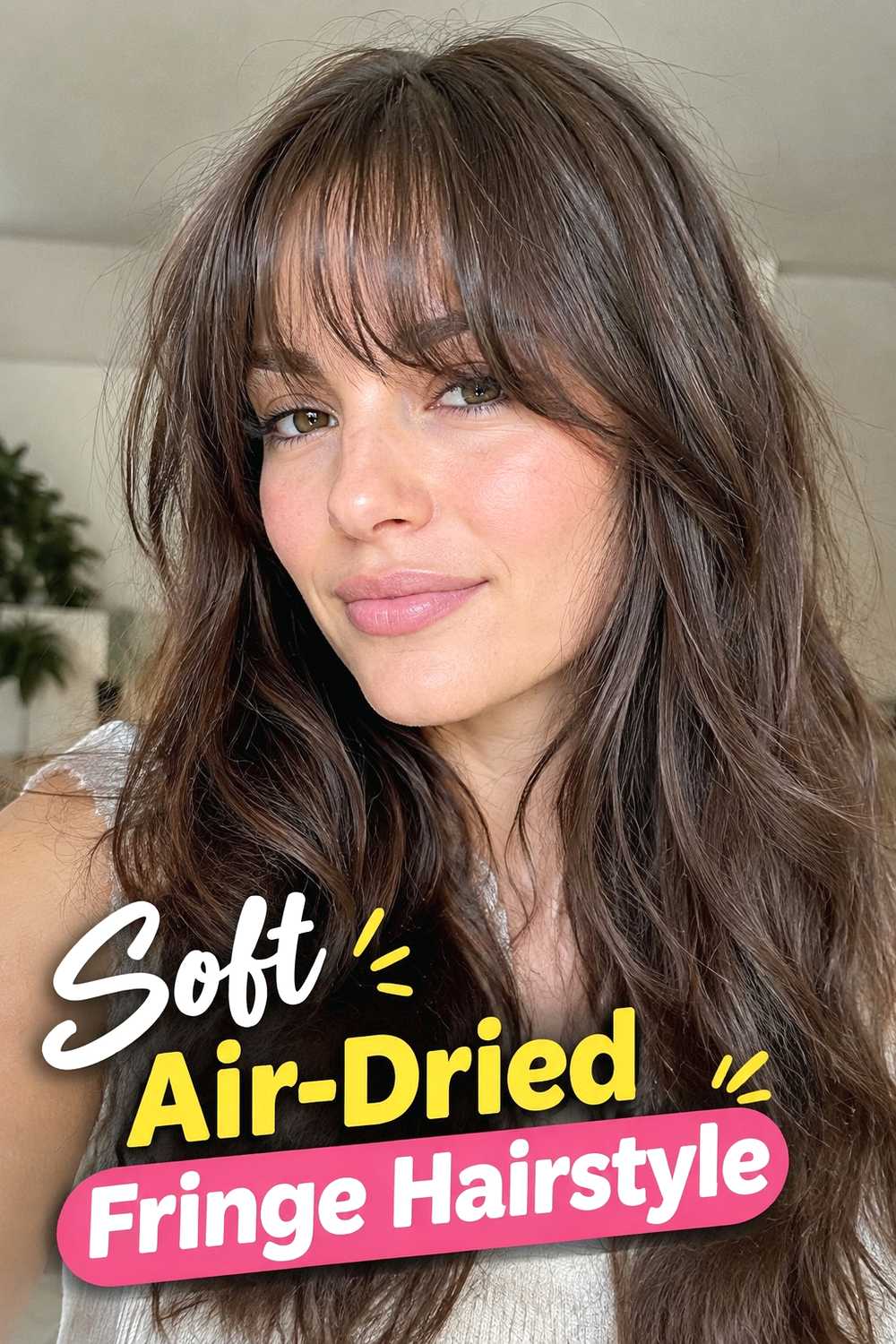
A soft air-dried fringe keeps the shape simple so natural movement can do most of the styling work. The bangs fall around the brow area with a slightly broken edge, while subtle bends and small separations prevent them from forming one solid curtain. Longer pieces near the temples can connect the fringe to gentle face-framing layers, making the front feel more cohesive as the hair dries. This version works especially well when your natural texture is mostly straight with a little bend or irregular movement. Lightweight leave-in product can reduce excessive frizz without making the fringe heavy. The finished effect should feel relaxed, touchable, and intentional rather than perfectly smooth.
Styling Notes
Comb the fringe into its preferred position while damp, then avoid repeatedly touching it as it dries so the natural pattern can settle.
2. Wavy Air Dried Fringe Hairstyle
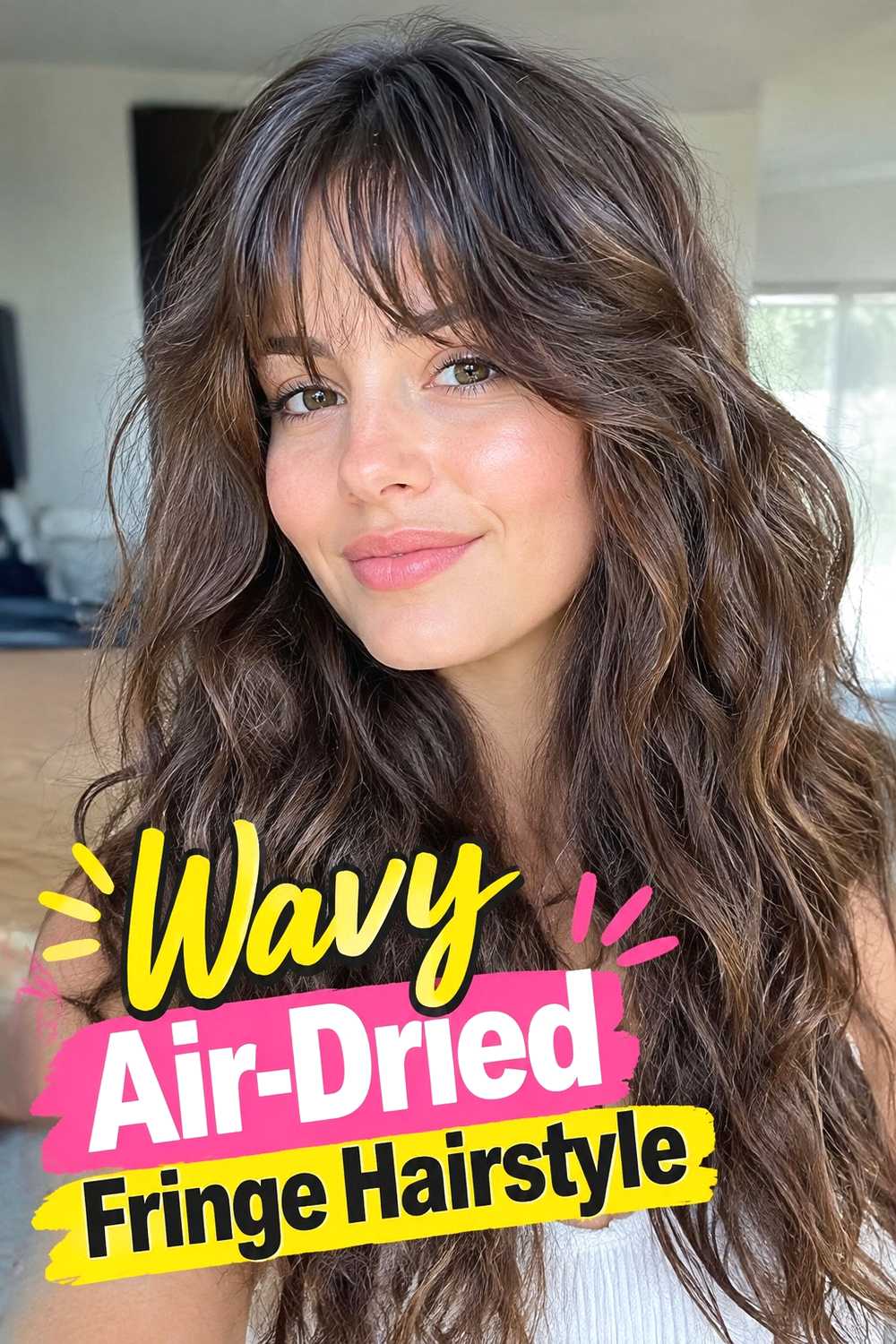
A wavy fringe is particularly well suited to air-drying because small bends can become part of the finished design instead of something that needs to be straightened away. The bangs can skim the brows or sit slightly above them, following the loose wave pattern through the front. Through the rest of the hair, soft bends create a cohesive texture that feels relaxed and naturally dimensional. The fringe does not need to match every wave in the lengths; a slightly straighter or smaller bend often looks more balanced. This style works best when the cut leaves enough room for movement without making the bangs overly dense, which can weigh down natural texture.
Hair Type & Length
Loose waves and straight-to-wavy textures usually adapt naturally to this finish, especially on medium and longer hair.
Pro Tip
Gently scrunch the fringe once while damp, then leave it alone so individual strands do not become frizzy from too much handling.
3. Curly Air Dried Fringe Hairstyle
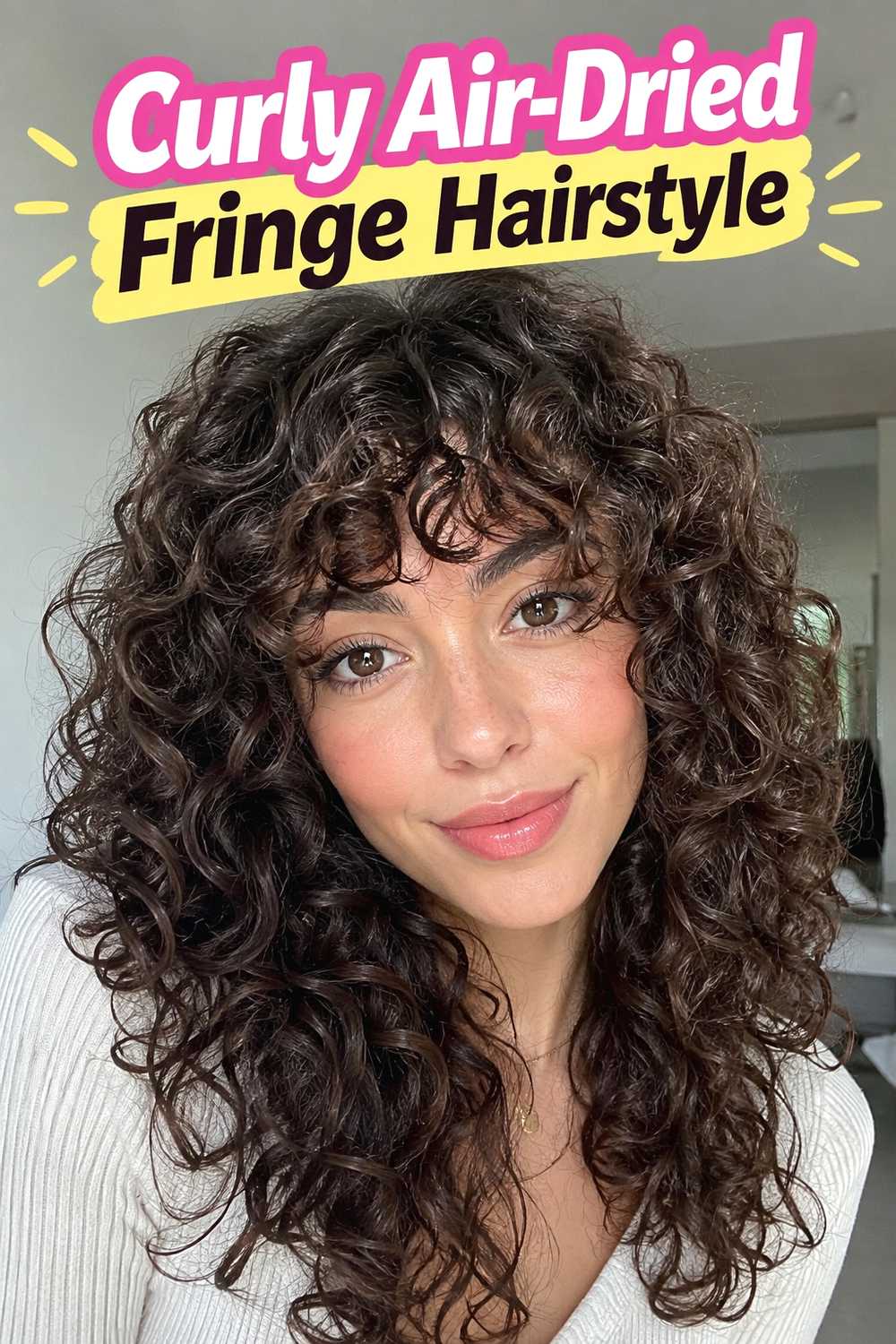
Curly fringe can look especially natural when allowed to dry in its own pattern. Individual curls create soft variation across the forehead, so the bangs do not need to form a perfectly even line to look intentional. The surrounding haircut should support the same curl movement through thoughtful layering, helping the fringe blend naturally into the sides. Shrinkage matters more than wet length, so the finished position of the bangs should always be judged when dry. A small amount of curl product can encourage definition, but heavy formulas may pull down the shorter front curls. The goal is springy, touchable texture that frames the forehead while still moving with the rest of the haircut.
Styling Notes
Shape individual fringe curls gently while damp and allow them to dry without stretching them downward.
4. Shaggy Air Dried Fringe Hairstyle
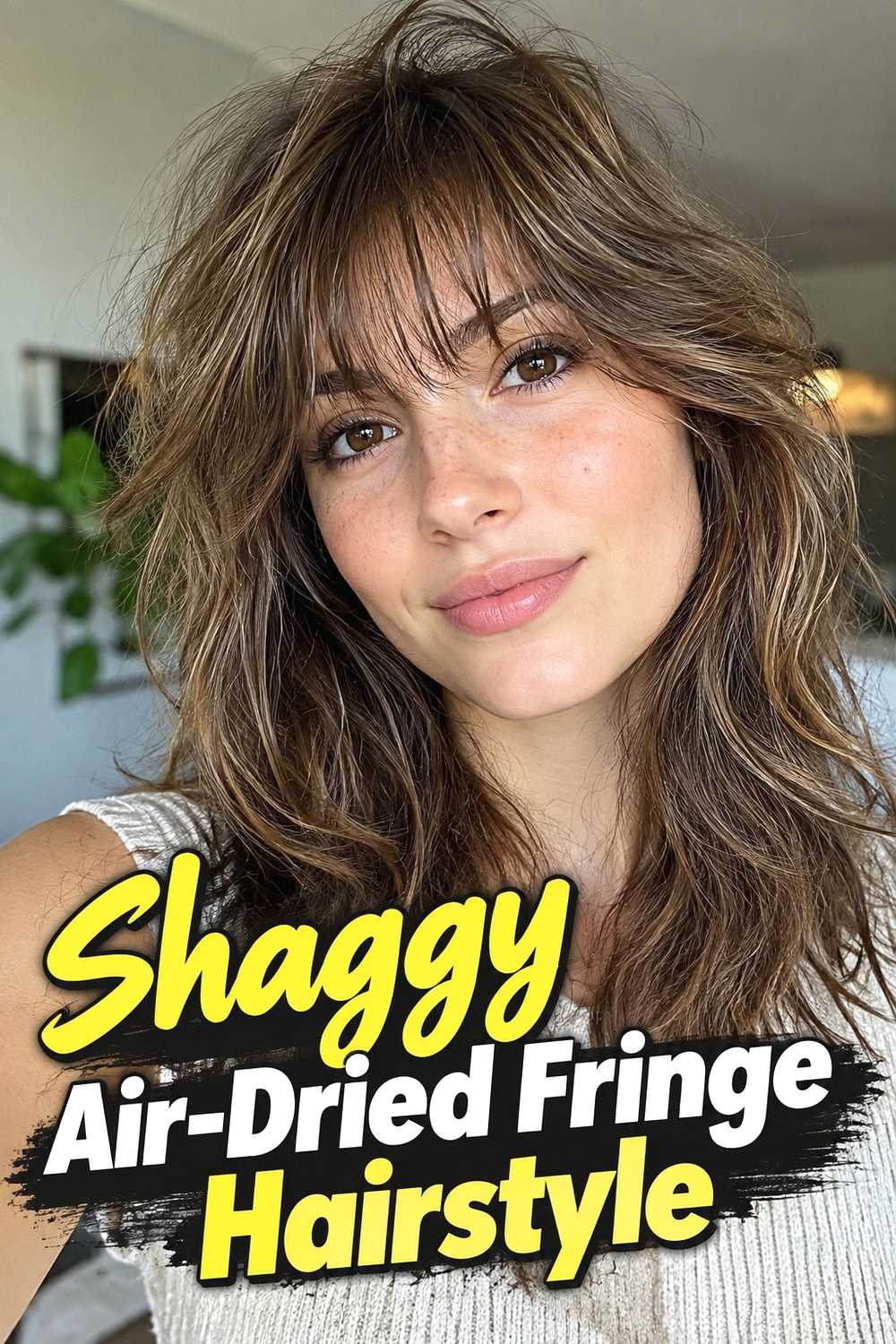
A shag is one of the easiest haircuts to pair with air-dried fringe because its layered structure already embraces natural bends and uneven movement. The bangs can sit around the brows with lightly broken ends, while shorter layers around the temples and crown create texture that continues through the rest of the haircut. Air-drying allows flyaways and small shifts in direction to enhance the lived-in appearance rather than disrupt it. This works especially well for wavy or bendy hair, though straighter textures can still benefit from a shag’s lighter layers. The fringe should retain enough density to hold its shape, even when individual pieces dry differently from day to day.
Why It Works
The layered haircut gives natural movement a clear structure, so air-dried texture looks deliberate instead of unfinished.
5. French Bob Air Dried Fringe Hairstyle
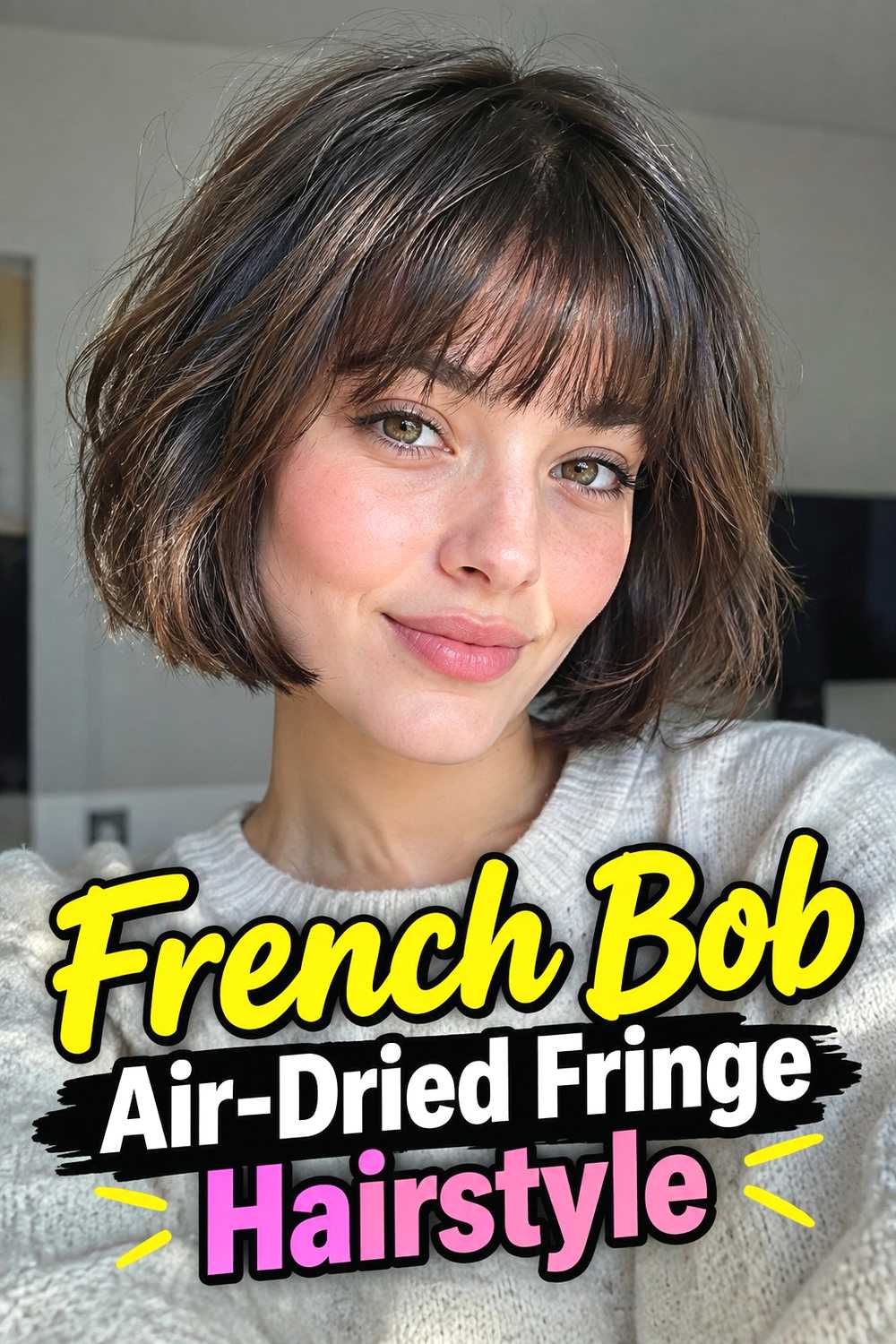
A French bob with air-dried fringe creates a compact haircut that still feels relaxed. The bob usually sits near the jaw, while the bangs settle around the brow area with natural separation and a soft, slightly irregular edge. Instead of smoothing the bob completely straight, allowing a small bend through the lengths gives the cut an easy, lived-in character. The fringe can remain relatively light so it dries quickly and does not become weighed down at the roots. This look is particularly useful if your hair has subtle natural movement that appears after washing. The underlying bob shape provides structure, while air-drying keeps the finish from feeling too polished or severe.
Wear & Maintenance
Regular shaping helps maintain the short bob and fringe proportions, even when the daily styling itself stays minimal.
6. Shoulder Length Air Dried Fringe Hairstyle

Shoulder-length hair offers plenty of flexibility with air-dried fringe because the main lengths can settle naturally while still keeping a recognizable silhouette. The bangs may sit near the brows with soft separation, while light face-framing layers connect them to the sides. Through the lengths, natural bends or mild waves can create movement without requiring hot tools. This version works especially well if your hair dries with some variation rather than staying perfectly straight. The fringe should be cut with enough flexibility to tolerate small changes in direction from day to day. A lightweight leave-in product or curl cream can help control excess frizz while preserving the relaxed texture.
Best For
Choose this option if you want natural texture with a versatile medium length that still works for ponytails, clips, and low updos.
7. Piecey Air Dried Fringe Hairstyle
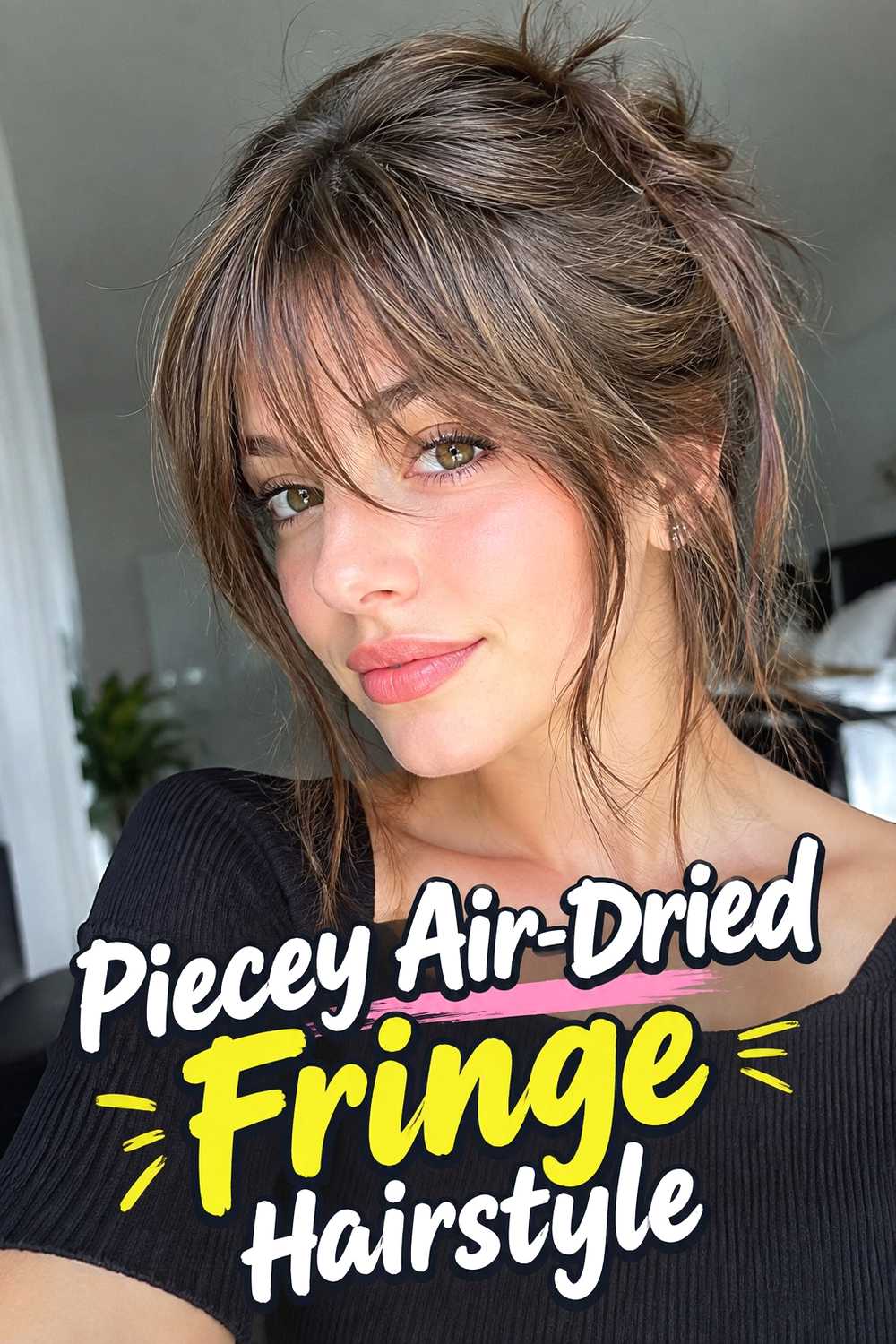
Piecey fringe can develop naturally during air-drying when the bangs are light enough to separate into small sections rather than forming one dense block. The finished look shows narrow groups of strands with visible spaces between them, creating definition without requiring heavy styling wax. This works especially well with straight-to-wavy hair that naturally dries with a little texture at the ends. The surrounding haircut can be a bob, lob, or longer layered style, as long as there is enough movement to support the relaxed front. Avoid applying too much product directly to the fringe, since lightweight strands can clump quickly and lose the airy separation that makes the style appealing.
Styling Notes
Arrange a few sections with your fingertips while damp, then let them dry naturally instead of continuously separating them.
8. Long Layers Air Dried Fringe Hairstyle
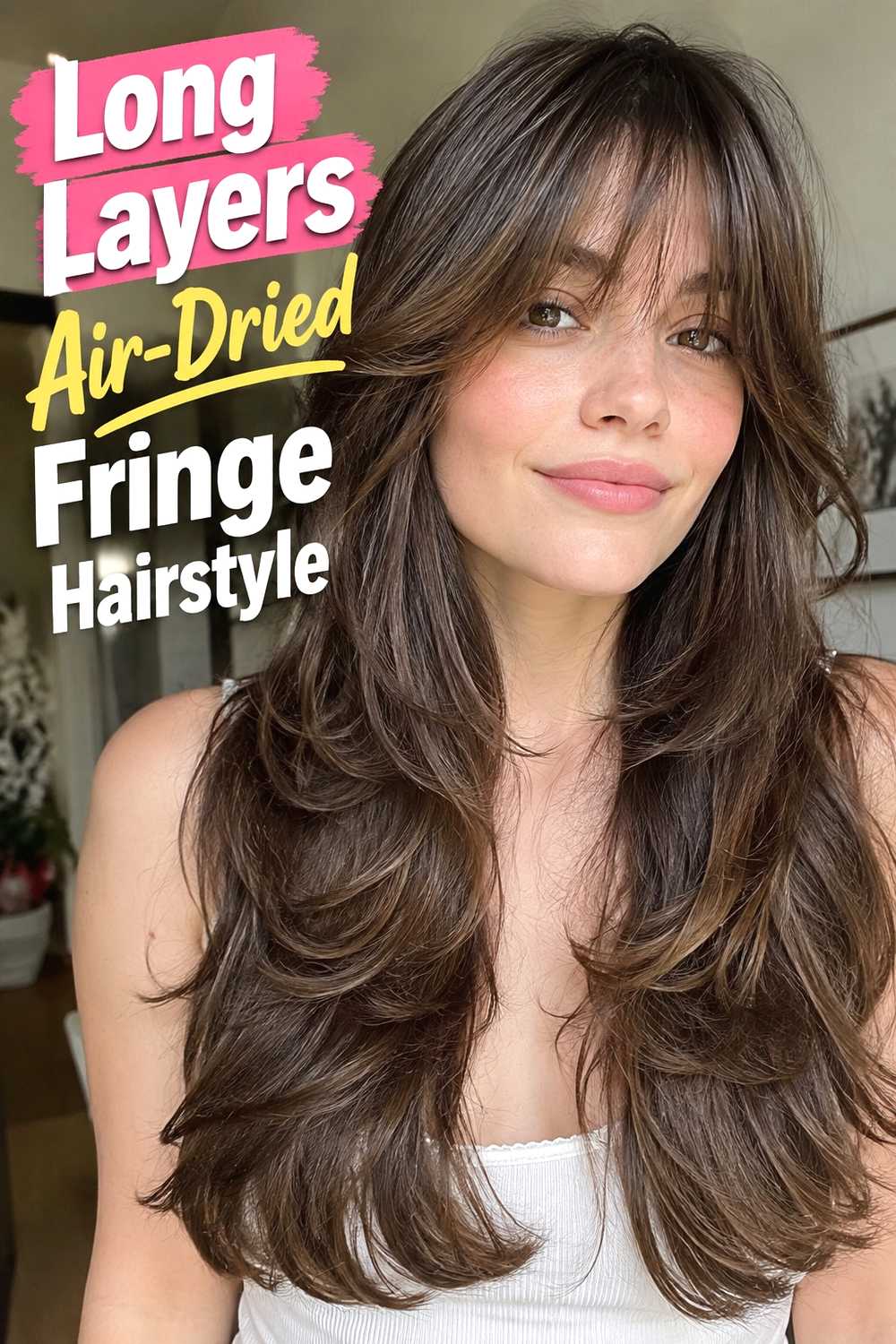
Long layers give an air-dried fringe a soft backdrop with plenty of movement. The bangs can remain brow-skimming or slightly longer, with outer pieces extending toward the cheekbones and blending into face-framing layers. As the hair dries, subtle waves and bends through the lengths reinforce the relaxed texture around the front. This version works particularly well if you want fringe without sacrificing long hair or committing to daily blow-drying. The main challenge is making sure the fringe has enough shape to fall attractively without heat. Light layering and a carefully considered natural part can help the bangs settle more consistently while still allowing some variation.
Why It Works
The longer layers repeat the same natural movement through the haircut, helping the air-dried fringe blend instead of looking separate.
9. Soft Wolf Cut Air Dried Fringe Hairstyle
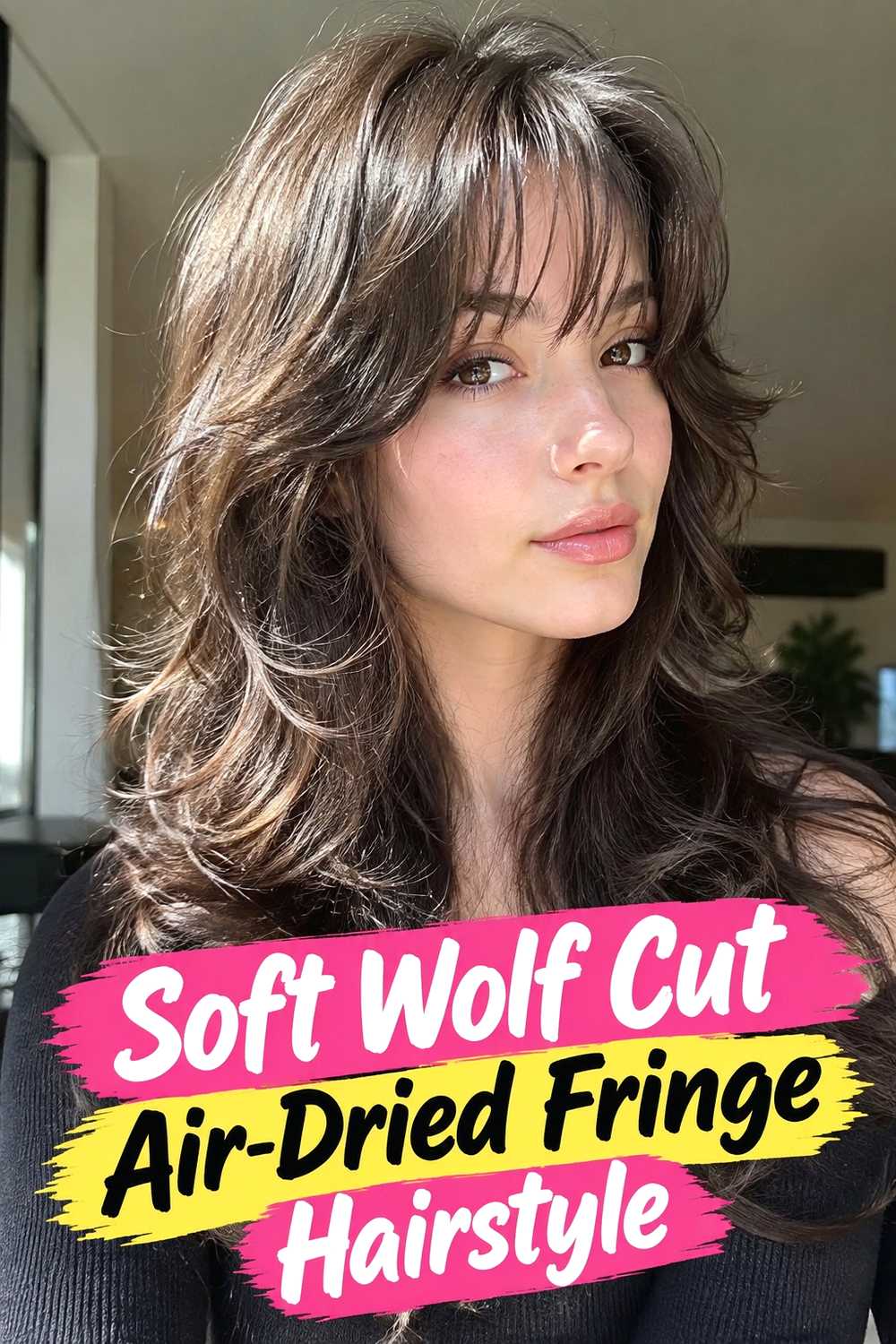
A soft wolf cut makes the most of air-dried texture through shorter crown layers, face-framing pieces, and tapered lengths. The fringe can sit around the brows with natural separation, while the surrounding layers encourage lift and movement without needing a polished blowout. Compared with a stronger wolf cut, this version uses smoother transitions so the haircut remains wearable even when the hair dries differently from one day to the next. Natural waves are especially helpful, but hair with lighter bends can also develop enough texture to support the shape. The fringe should connect visually with the crown layers, creating a continuous textured silhouette from the forehead through the rest of the haircut.
Styling Notes
Apply product sparingly through damp hair, then scrunch the crown and lengths once before allowing the haircut to settle naturally.
10. Wispy Air Dried Fringe Hairstyle
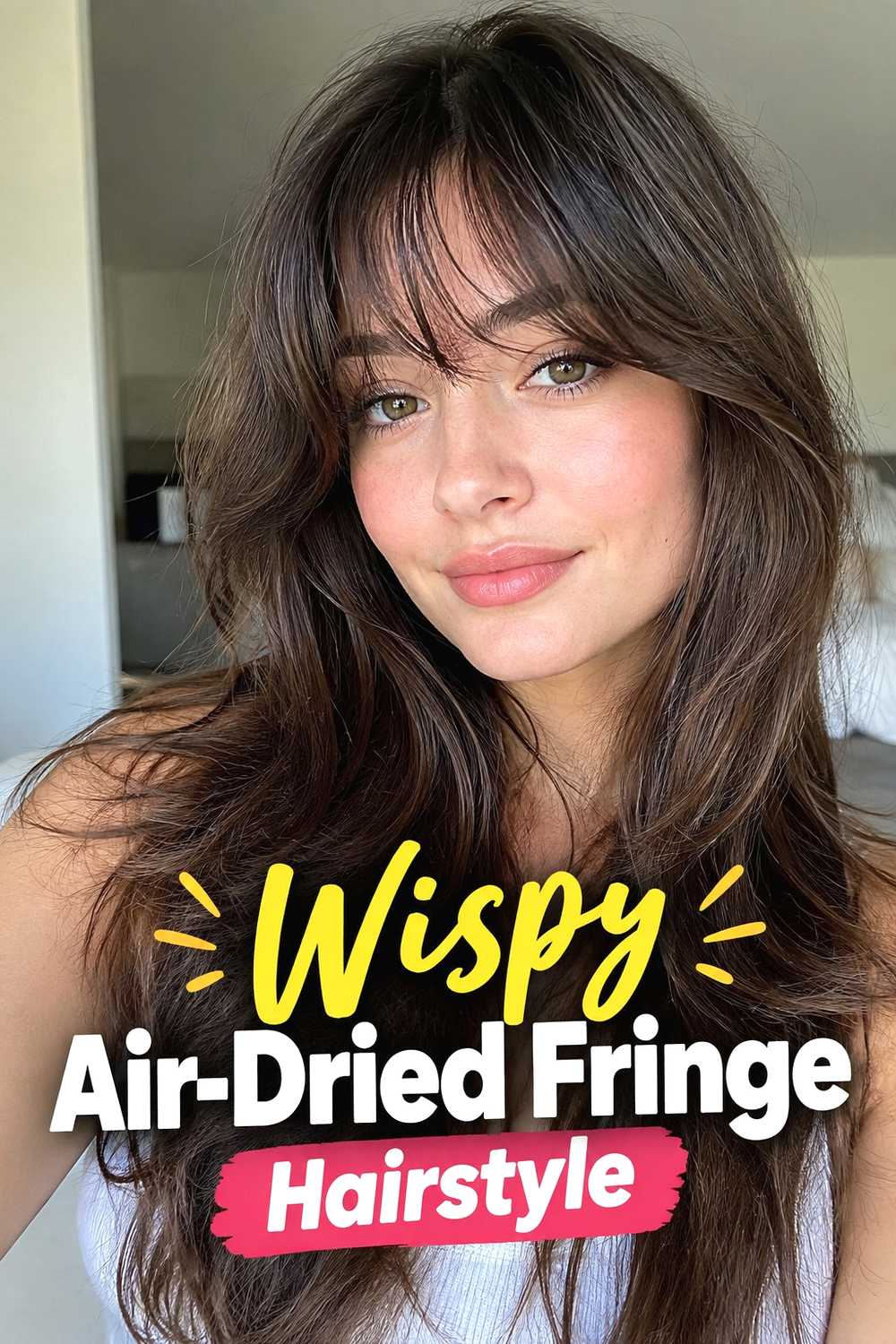
A wispy fringe is ideal for air-drying because its low density reduces the need for precise shaping. Fine strands fall lightly across the forehead, leaving small spaces between them and allowing natural bends to remain visible. The outer pieces can be slightly longer to blend into face-framing layers, which makes the fringe more forgiving if it shifts or separates while drying. This version works especially well on fine to medium-density hair when the goal is a subtle front detail rather than a full bang. Heavy creams and oils are best avoided near the roots because they can quickly collapse the fringe. The finished result should remain airy, soft, and easy to move.
Best For
Fine and medium-density hair can show the lightweight separation particularly clearly when the fringe is not cut too deeply.
11. Textured Lob Air Dried Fringe Hairstyle
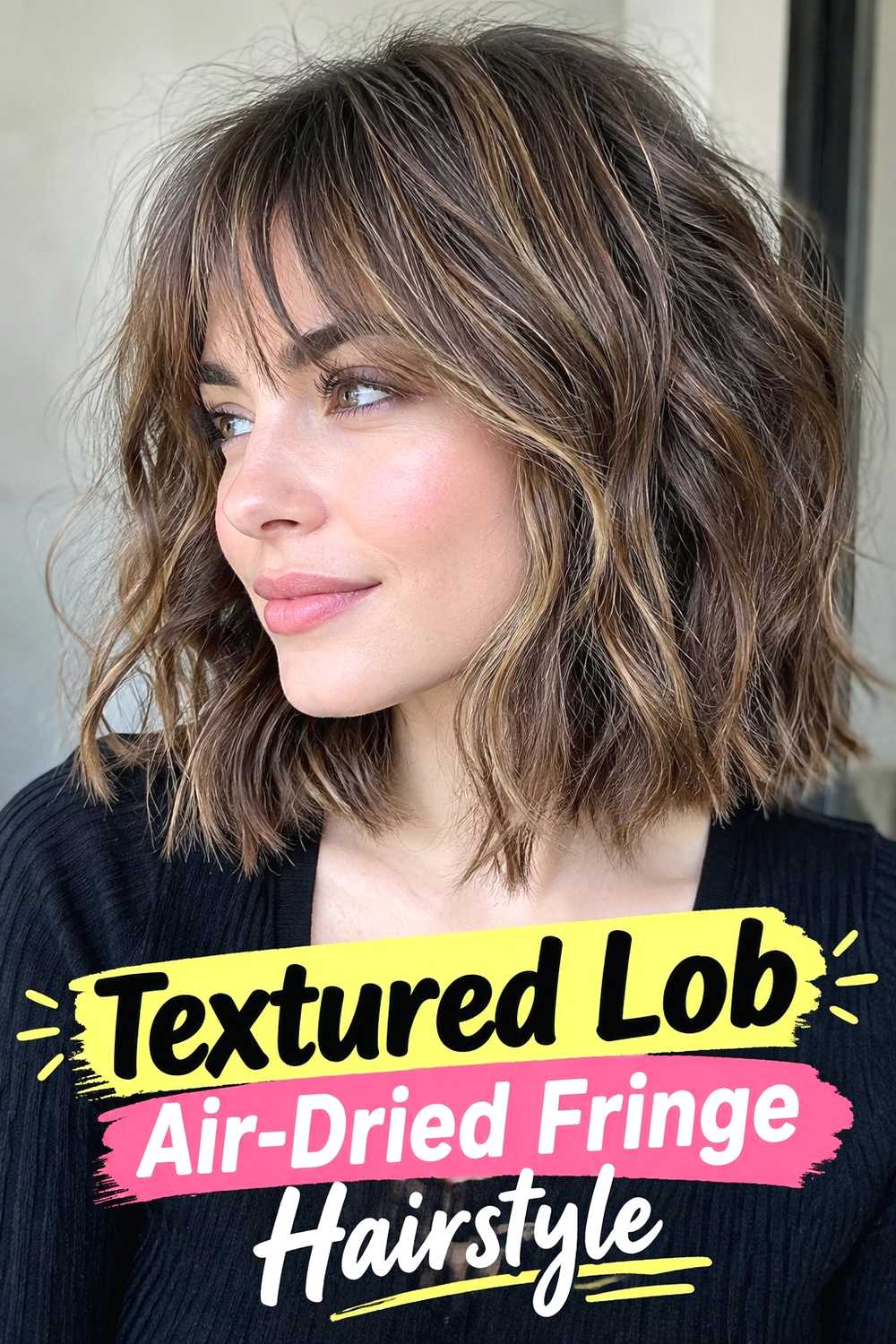
A textured lob gives air-dried fringe a modern, versatile foundation. The hair sits around the shoulders or collarbones, with light internal layering that encourages bends and movement as it dries. Across the forehead, the fringe remains soft and slightly irregular, echoing the broken texture through the lengths. This haircut works especially well when the natural pattern falls between straight and wavy, since small inconsistencies become part of the finished style. The lob still provides enough weight to maintain shape, so the overall haircut does not become overly fluffy. Keeping the fringe relatively light also helps it dry faster than the main lengths and maintain more natural lift at the roots.
Hair Type & Length
Straight-to-wavy hair at collarbone length is particularly well suited to this balance of structure and natural movement.
12. Coily Air Dried Fringe Hairstyle
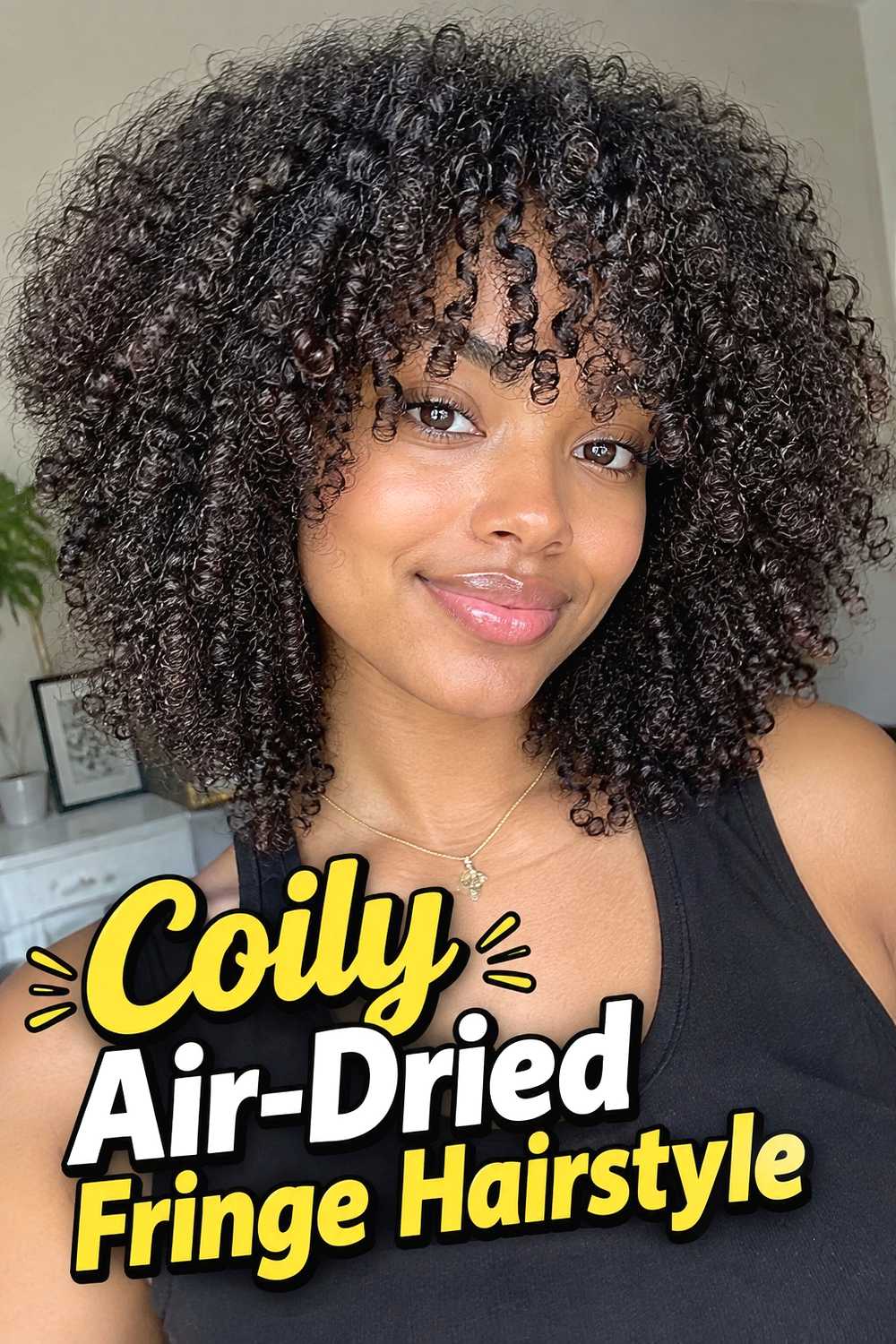
Coily fringe naturally creates a textured, dimensional finish when allowed to dry in its own pattern. Individual coils can sit at slightly different heights across the forehead, producing movement without requiring a perfectly uniform edge. The surrounding haircut may be cropped, rounded, layered, or longer, but the fringe should retain the same basic coil definition for a cohesive result. Shrinkage needs careful attention because the finished dry length can be significantly shorter than the stretched or wet length. A light application of moisture and styling product can help maintain definition, while excessive manipulation may disturb the coil pattern. The best result feels springy, balanced, and consistent with the hair’s natural behavior.
Pro Tip
Judge fringe length only after the coils have returned to their natural dry position rather than relying on stretched length.
13. Tousled Bob Air Dried Fringe Hairstyle
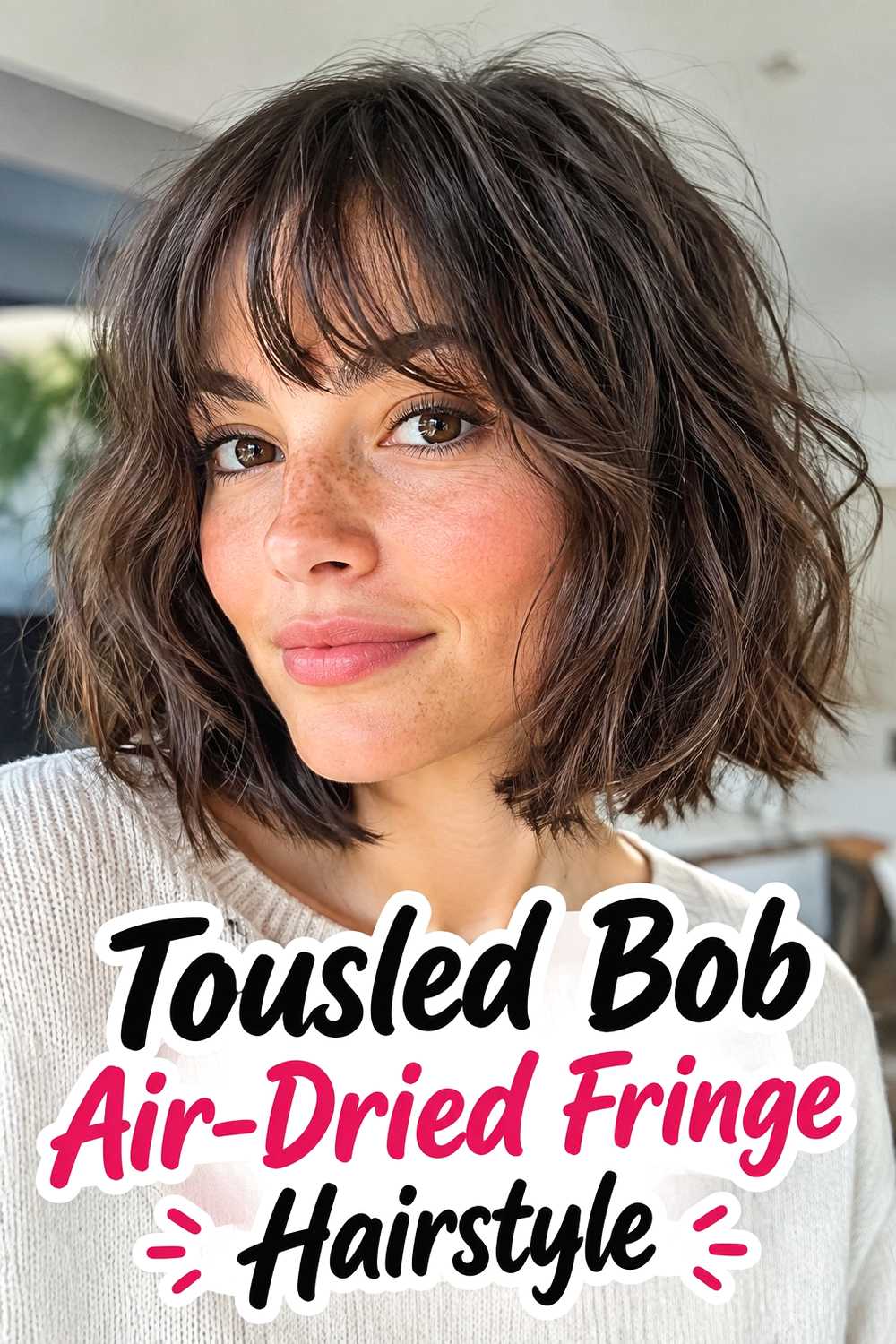
A tousled bob combines a recognizable short shape with the freedom of naturally dried texture. The bob can sit between the jaw and neck, while the fringe settles around the brows in soft, separated pieces. Small bends through the sides and ends give the haircut movement without requiring curling or straightening, making this a practical option for naturally bendy hair. A few imperfect strands can strengthen the relaxed effect as long as the overall bob shape remains clear. The fringe should be light enough to move but not so thin that it disappears. This balance allows the haircut to look casually styled even when the final texture develops mainly through air-drying.
Wear & Maintenance
The daily routine can stay simple, but occasional trimming helps preserve both the bob perimeter and the intended fringe length.
How to Choose the Right Look
Start with your natural drying pattern. If your hair dries mostly straight with small bends, wispy, piecey, or softly layered fringe may require the least effort. Wavy hair can support shags, lobs, and tousled bobs, while curly and coily textures benefit from fringe shaped around natural spring and shrinkage.
Density matters as well. A lighter fringe usually air-dries more predictably because it has less weight, while a very dense fringe may need more deliberate placement at the roots. Fringe length should also reflect how much your hair shortens as it dries.
Next, consider the surrounding haircut. Bobs provide structure, lobs balance movement with weight, long layers create soft blending, and wolf cuts or shags make natural texture part of the design.
Finally, accept a little variation. An air-dried fringe may not fall identically every day, so choose a shape that still looks intentional when strands shift, bend, or separate naturally.
Final Thoughts
Air-dried fringe works best when the cut is designed around your real texture rather than a perfectly styled version of it. Soft separation, natural bends, waves, curls, and coils can all become part of the finished look.
The easiest option is usually one that works with your natural root direction, density, and shrinkage. Once the underlying fringe shape is right, daily styling can stay light while the haircut still looks deliberate and balanced.
FAQs
1. Can fringe really look good without blow-drying?
Yes, especially when the fringe is cut to work with your natural texture and root direction. The finished result may look softer and less uniform than a blow-dried fringe.
2. What type of fringe is easiest to air-dry?
Wispy, piecey, shaggy, and lightly layered bangs often adapt well because they allow natural separation and movement rather than requiring a perfectly smooth line.
3. Can curly fringe be air-dried?
Yes. Curly fringe can air-dry beautifully when the cut accounts for shrinkage and the curls are allowed to form in their natural pattern.
4. How do I stop air-dried bangs from becoming too frizzy?
Use a lightweight product suited to your texture, arrange the fringe while damp, and avoid repeatedly touching it while it dries.
5. Should air-dried fringe be cut differently from styled bangs?
It often helps to shape fringe with its natural dry behavior in mind, particularly if the hair has waves, curls, cowlicks, or noticeable shrinkage.
Save your favorite air-dried fringe hairstyles, share the looks that inspire you, and explore more low-effort fringe ideas that work with natural texture.