20 Face-Framing Curtain Fringe Hairstyle Ideas
Soft fringe flowing into cheekbone, jaw, and collarbone layers gives these face-framing curtain hairstyles an effortless mix of movement, softness, and versatility.
Face-framing curtain fringe combines a gently divided front section with longer pieces that gradually blend into the haircut. Instead of keeping all the attention directly across the forehead, the shape extends toward the temples, cheeks, jaw, and sometimes the shoulders, creating movement through several lengths.
The right version depends on fringe density, natural texture, overall hair length, and how much daily styling you want. A blowout creates a fuller sweep, while waves and curls soften the transition. Lobs concentrate the framing near the jaw and shoulders, whereas butterfly layers and long cuts allow the fringe to cascade farther through the sides.
Quick List
- Long Layered Face Framing Curtain Fringe Hairstyle
- Soft Wavy Face Framing Curtain Fringe Hairstyle
- Feathered Face Framing Curtain Fringe Hairstyle
- Wispy Face Framing Curtain Fringe Hairstyle
- Butterfly Layer Face Framing Curtain Fringe Hairstyle
- Voluminous Blowout Face Framing Curtain Fringe Hairstyle
- Shoulder Length Face Framing Curtain Fringe Hairstyle
- Curly Face Framing Curtain Fringe Hairstyle
- Straight Face Framing Curtain Fringe Hairstyle
- Textured Lob Face Framing Curtain Fringe Hairstyle
- Shaggy Face Framing Curtain Fringe Hairstyle
- Bouncy Face Framing Curtain Fringe Hairstyle
- Side Part Face Framing Curtain Fringe Hairstyle
- Extra Long Face Framing Curtain Fringe Hairstyle
- Chin Length Face Framing Curtain Fringe Hairstyle
- Soft Curl Face Framing Curtain Fringe Hairstyle
- Air Dried Face Framing Curtain Fringe Hairstyle
- Piecey Face Framing Curtain Fringe Hairstyle
- Romantic Updo Face Framing Curtain Fringe Hairstyle
- Sleek Ponytail Face Framing Curtain Fringe Hairstyle
1. Long Layered Face Framing Curtain Fringe Hairstyle
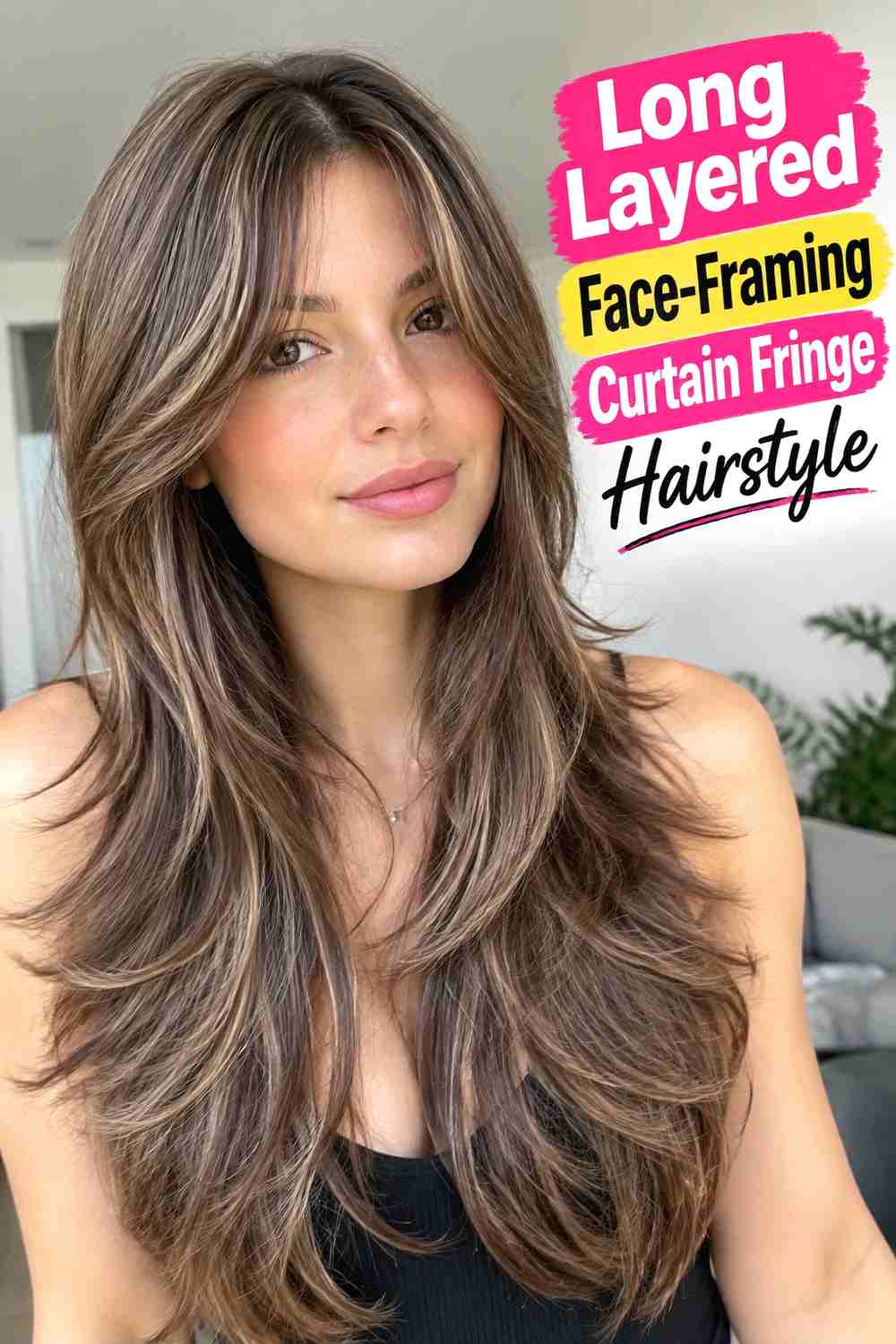
Long layered face-framing curtain fringe creates a smooth progression from shorter front pieces into cheekbone, jaw, shoulder, and chest-length layers. The fringe opens softly through the center, then curves away from the face as it blends into the rest of the haircut. This version works especially well on long hair because there is enough length for the transition to feel gradual rather than abrupt. A soft blowout brings the layering forward, while loose waves create a more relaxed result. Keeping the front pieces slightly lighter and more mobile than the back helps the frame stay visible. The overall effect should feel flowing and connected rather than like a separate fringe attached to long hair.
Styling Notes
Direct the fringe outward with a round brush, then repeat the same sweeping movement through the longer front layers.
Best For
This option suits medium-long and long hair when you want noticeable framing without sacrificing much overall length.
2. Soft Wavy Face Framing Curtain Fringe Hairstyle
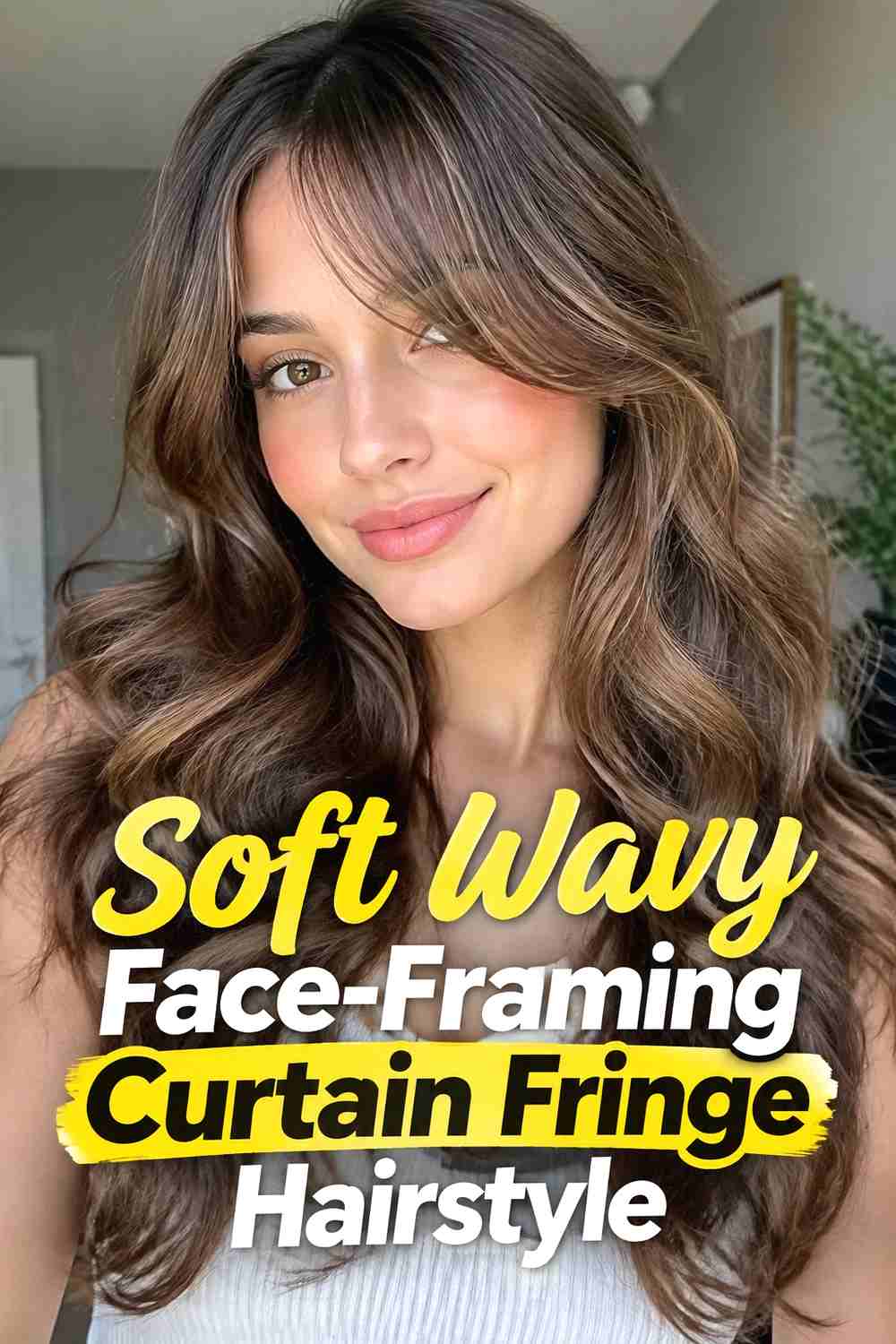
Soft waves naturally connect curtain fringe to the rest of the haircut because each bend helps different lengths overlap visually. The front opens near the center, curves toward the cheekbones, and blends into loose waves through the sides and ends. Slight variation in the wave pattern prevents the hairstyle from looking overly arranged and gives the framing more natural movement. This version works beautifully on medium and long layered hair, particularly when the fringe is long enough to move with the surrounding sections. Keep the shortest pieces lightly curved rather than tightly curled, since the goal is a broad, flowing frame. A little root lift can add softness without turning the look into a full-volume blowout.
Why It Works
Waves soften transitions between short and long pieces, making the entire face-framing shape feel more seamless.
Styling Notes
Use broad bends around the front and slightly looser texture through the lengths for a natural finish.
3. Feathered Face Framing Curtain Fringe Hairstyle
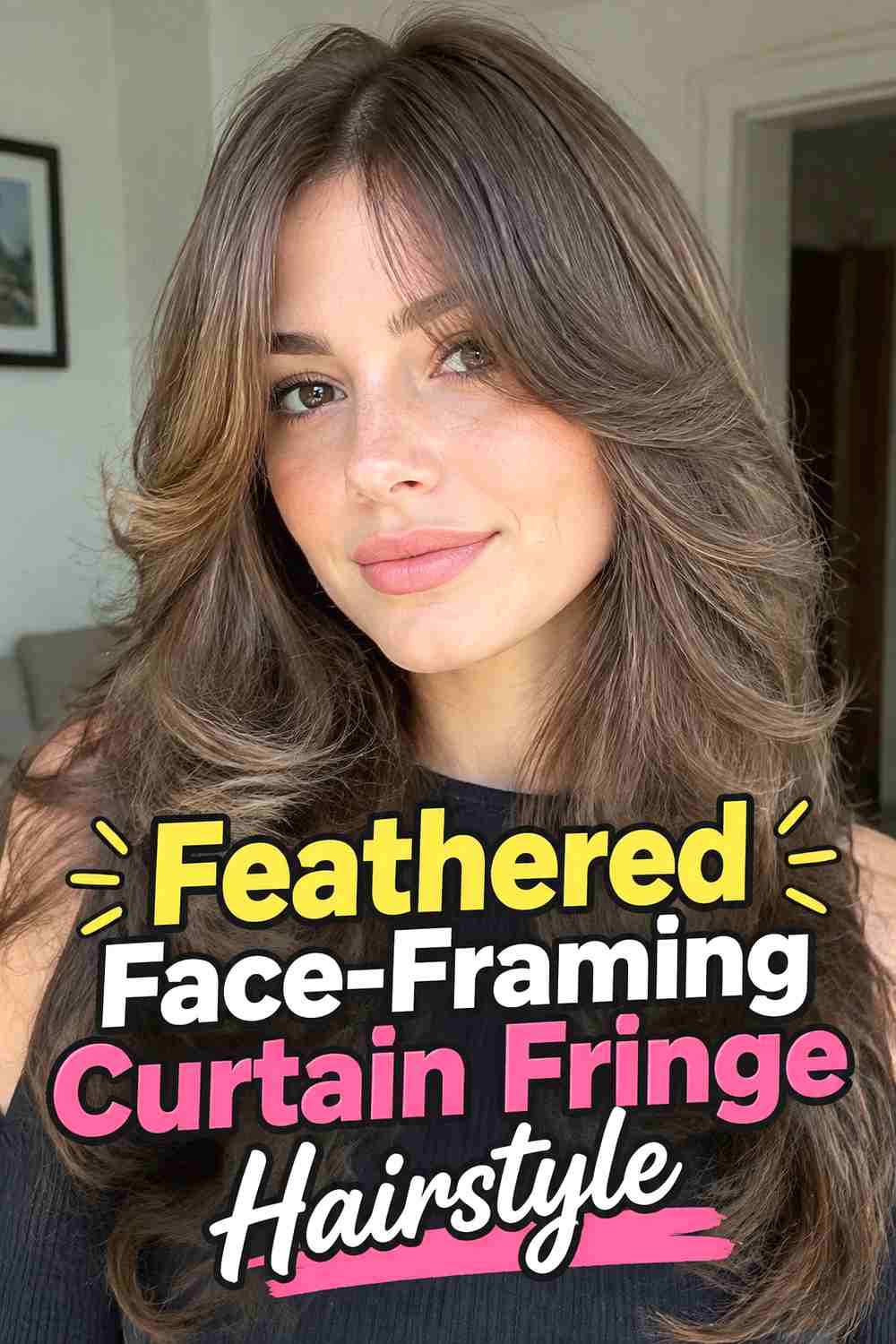
Feathered face-framing curtain fringe uses tapered ends to create an airy sweep around the forehead, temples, and cheekbones. The fringe opens softly before fanning into longer sections, which prevents the front from looking thick or blocky. A polished blowout makes the feathering especially visible because each layer can separate slightly as it moves outward. This style works well on medium to long hair and can be particularly effective when the haircut already contains subtle layering around the front. Keep enough weight through the outer pieces so the frame remains defined rather than overly wispy. The goal is softness at the ends with enough density near the roots to maintain shape and movement.
Hair Type & Length
Straight and softly wavy hair can show the feathered structure clearly, especially on medium and long layered cuts.
Pro Tip
Keep the outer sections progressively longer so the fringe naturally opens toward the sides instead of dropping directly over the forehead.
4. Wispy Face Framing Curtain Fringe Hairstyle
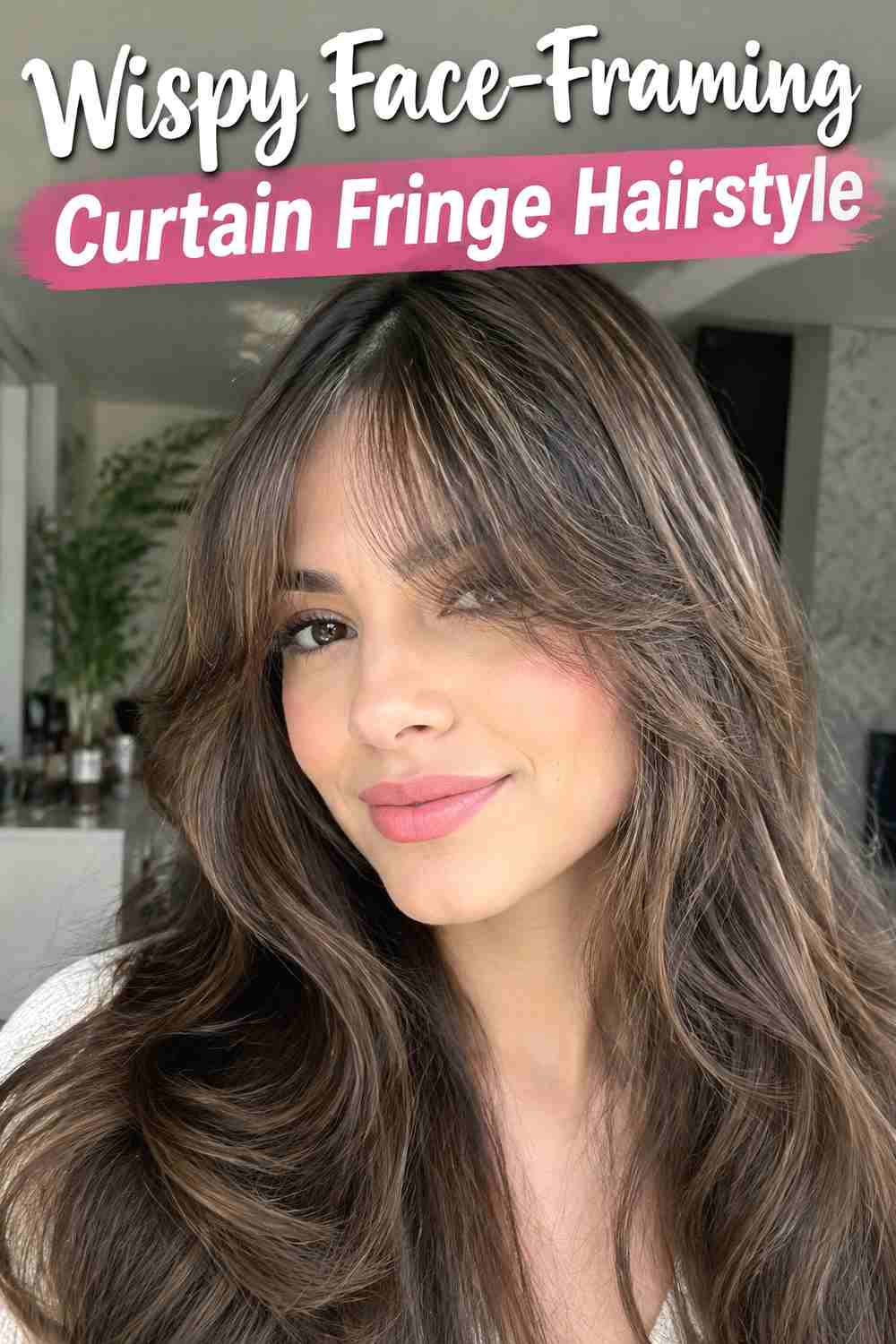
Wispy face-framing curtain fringe uses a smaller section of hair across the forehead, leaving visible space between strands and creating a lighter overall frame. The center opens gently, while delicate pieces taper toward the temples and blend into longer cheekbone or jaw-level layers. This makes the style useful if you want fringe movement without committing to a dense bang. Straight, wavy, and lightly curled textures can all work, although the finest pieces may need gentle root direction to keep their shape. Heavy creams and oils can quickly flatten the fringe, so a softer styling approach usually looks more natural. The finished result should appear airy and intentional rather than sparse or uneven.
Styling Notes
Focus on directing the roots and use minimal product through the ends so the fringe keeps its separation and movement.
Wear & Maintenance
Wispy sections may need occasional refreshing if humidity or natural oils cause them to clump together.
5. Butterfly Layer Face Framing Curtain Fringe Hairstyle
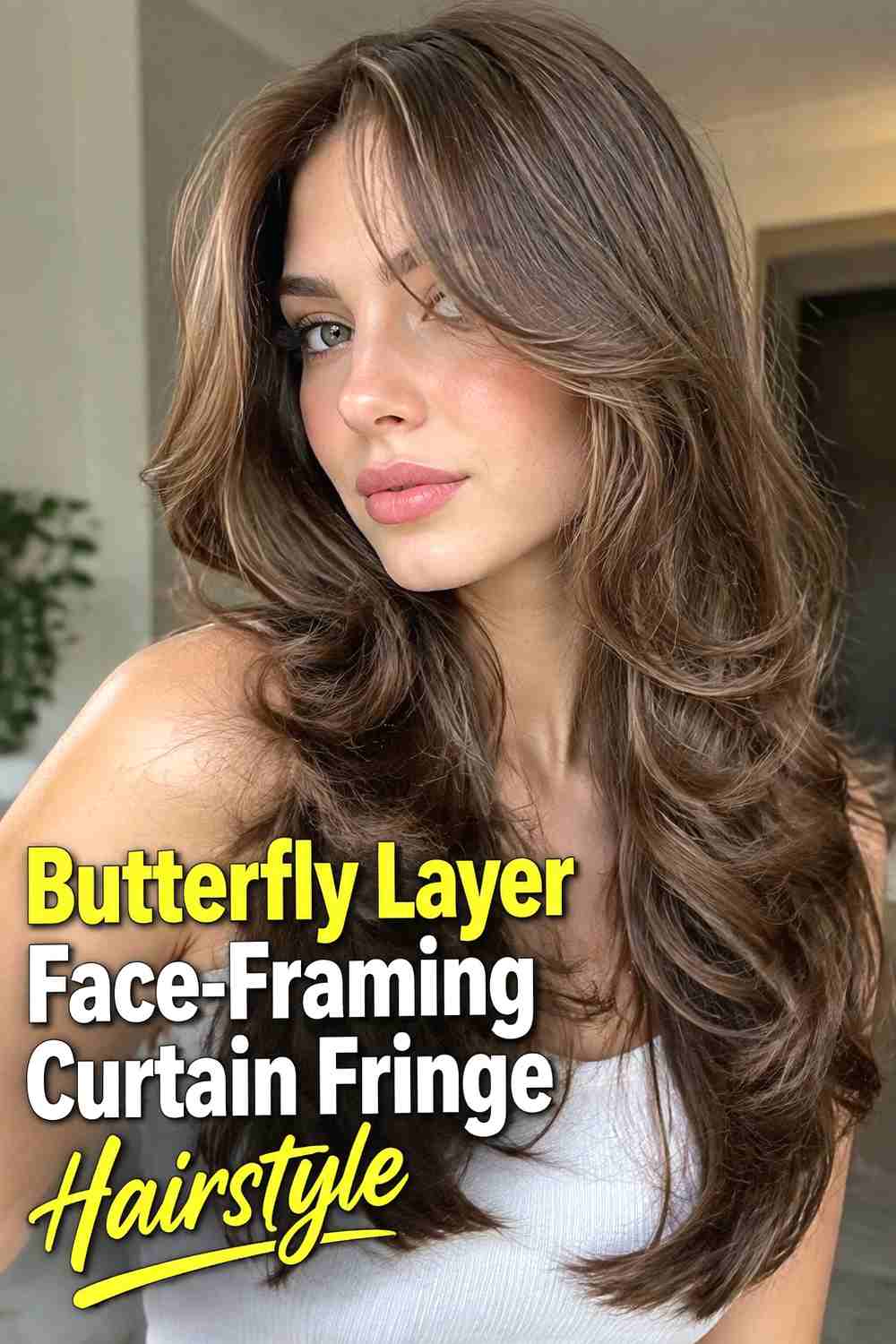
Butterfly layers amplify face-framing curtain fringe by extending the outward movement through several levels of the haircut. The fringe opens through the center and connects to cheekbone and jaw-length pieces, while additional layers sweep around the shoulders and chest. When styled with a blowout, the result feels airy, full, and dramatic without needing a heavy fringe. Loose waves can make the same haircut softer for everyday wear. This version works best on medium-long and long hair with enough density to support layering while maintaining fullness through the ends. The front should feel like one continuous cascade rather than a series of disconnected steps, so gradual blending is especially important.
Why It Works
Butterfly layers repeat the outward direction of the fringe throughout the haircut, creating a cohesive face-framing silhouette.
Pro Tip
Preserve enough weight through the longest sections so the lower perimeter still looks full after adding multiple front layers.
6. Voluminous Blowout Face Framing Curtain Fringe Hairstyle
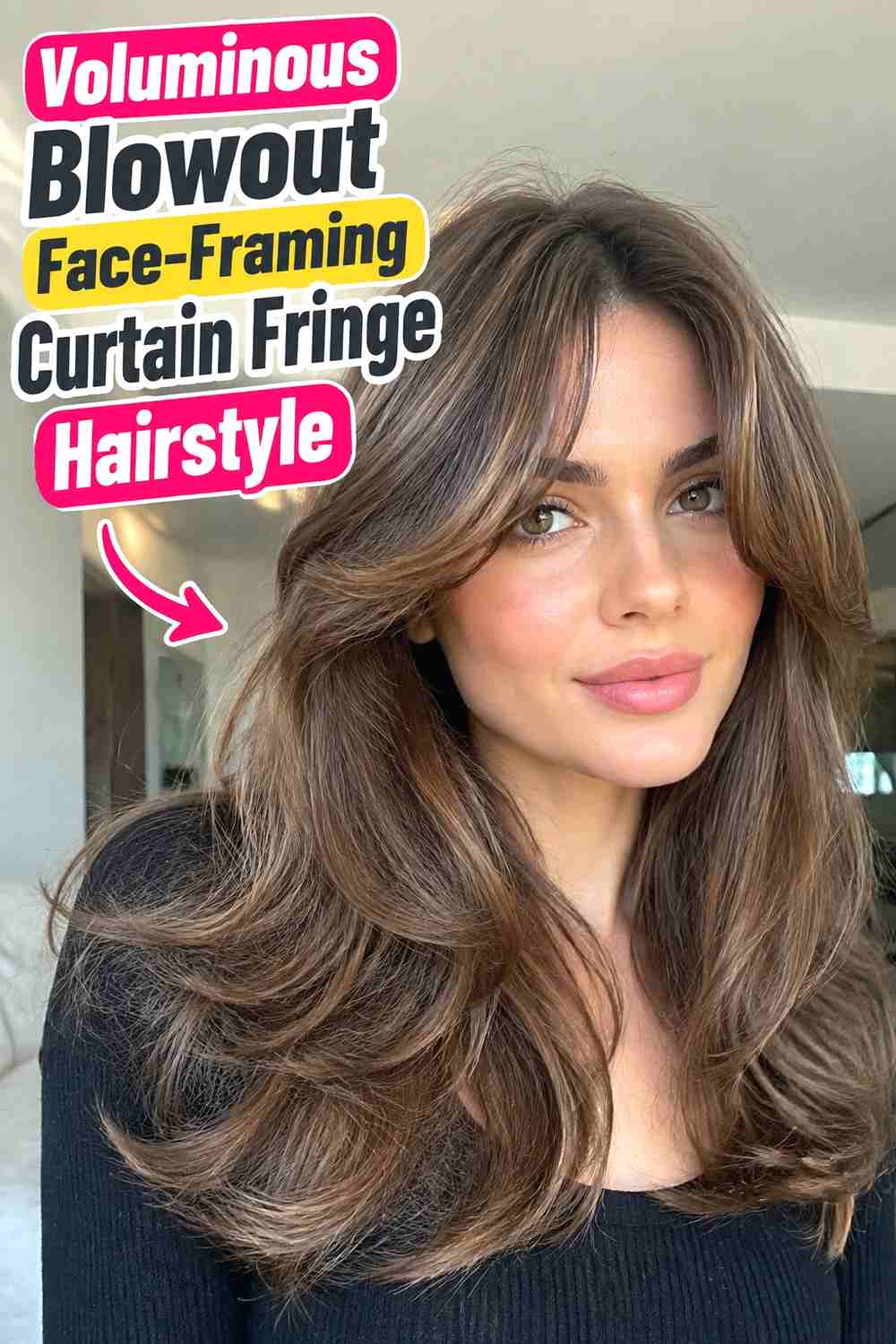
A voluminous blowout gives face-framing curtain fringe its most dramatic sweep. The front rises at the roots, opens through the center, and curves broadly toward the cheekbones before flowing into rounded layers. Medium-long and long hair allow the movement to continue through the shoulders, creating a balanced silhouette rather than a very full fringe above flat lengths. Large sections and broad bends usually look softer than tight curls, keeping the finish polished but still wearable. The haircut should already contain enough front layering to support the shape, since styling alone cannot create a seamless transition. Use light hold so the fringe retains movement instead of becoming stiff around the forehead.
Styling Notes
Lift the roots first, then use a large round brush or roller to sweep each side outward in broad curves.
Wear & Maintenance
Fine hair may need root support, while dense hair can often hold the shape with less finishing product.
7. Shoulder Length Face Framing Curtain Fringe Hairstyle
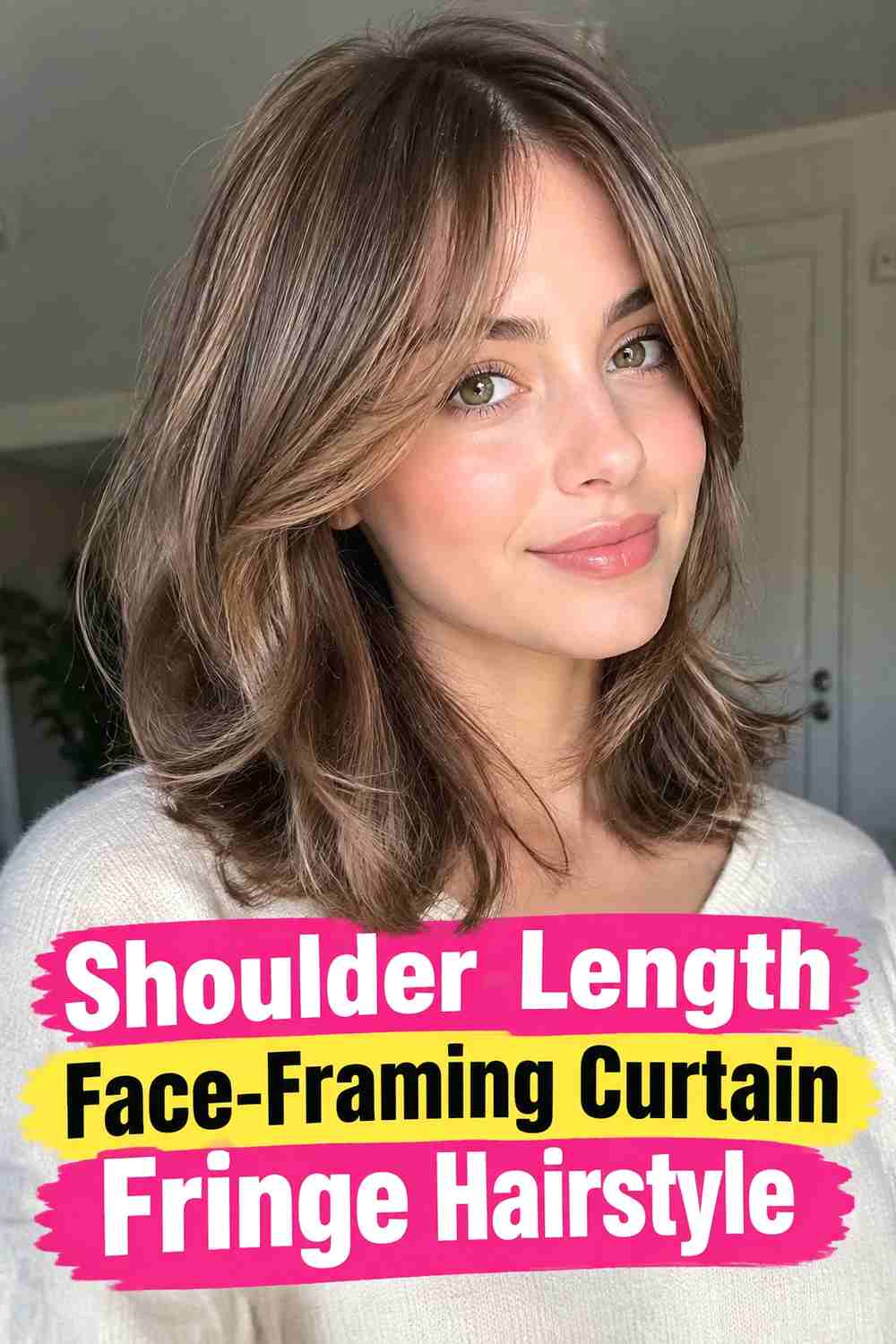
Shoulder-length hair gives face-framing curtain fringe a compact structure where every front section remains visible. The fringe can open softly near the forehead and taper through cheekbone and jaw-length pieces before connecting to the shoulder-skimming perimeter. A smooth blowout, gentle wave, or subtle flip through the ends can all emphasize the transition. This version is especially practical if you want noticeable framing without maintaining very long hair. Because the front layers sit close to the overall length, blending should be smooth enough that the fringe does not appear like a separate section. Keeping the perimeter moderately full also helps balance the lighter movement around the face.
Why It Works
The medium length keeps the fringe and outer framing pieces visually close together, creating a concentrated, easy-to-see shape.
Styling Notes
A soft outward bend through the ends can echo the fringe movement and make the haircut feel cohesive.
8. Curly Face Framing Curtain Fringe Hairstyle
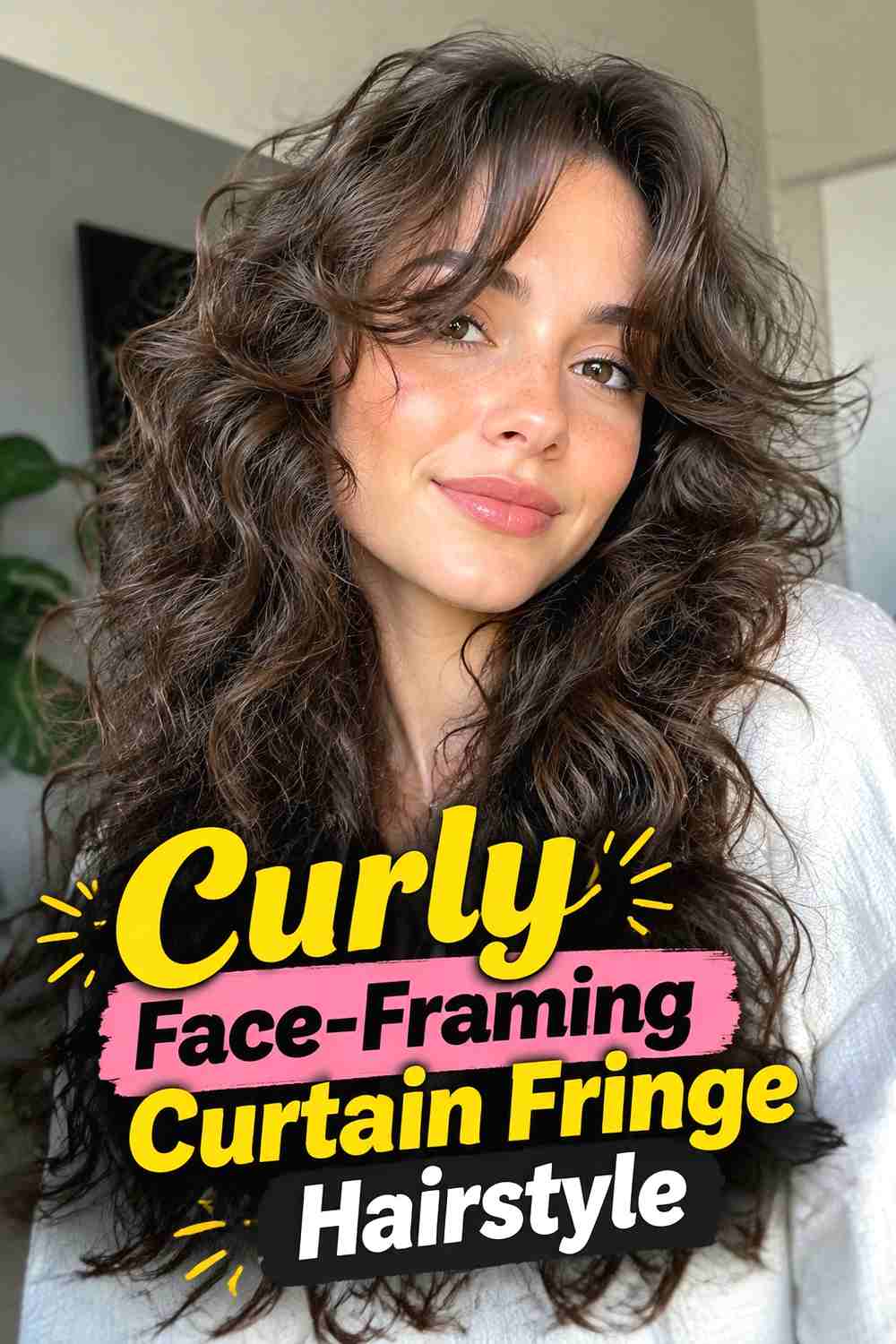
Curly face-framing curtain fringe follows natural curl movement rather than forcing the front into two perfectly smooth sections. Shorter curls can open around the forehead while longer pieces near the temples and cheeks connect gradually to the rest of the haircut. The dry length is particularly important because shrinkage can change where the fringe actually sits once styled. Allowing some variation between individual curls keeps the frame soft and realistic instead of overly uniform. This version can work on different curl patterns as long as the cut respects density, shrinkage, and the hair’s preferred direction. The final shape should feel balanced around the face while preserving natural volume and curl definition.
Hair Type & Length
The fringe should be shaped according to natural curl pattern, dry length, shrinkage, and usual styling habits.
Pro Tip
Evaluate the front when dry before deciding whether additional shortening or reshaping is needed.
9. Straight Face Framing Curtain Fringe Hairstyle
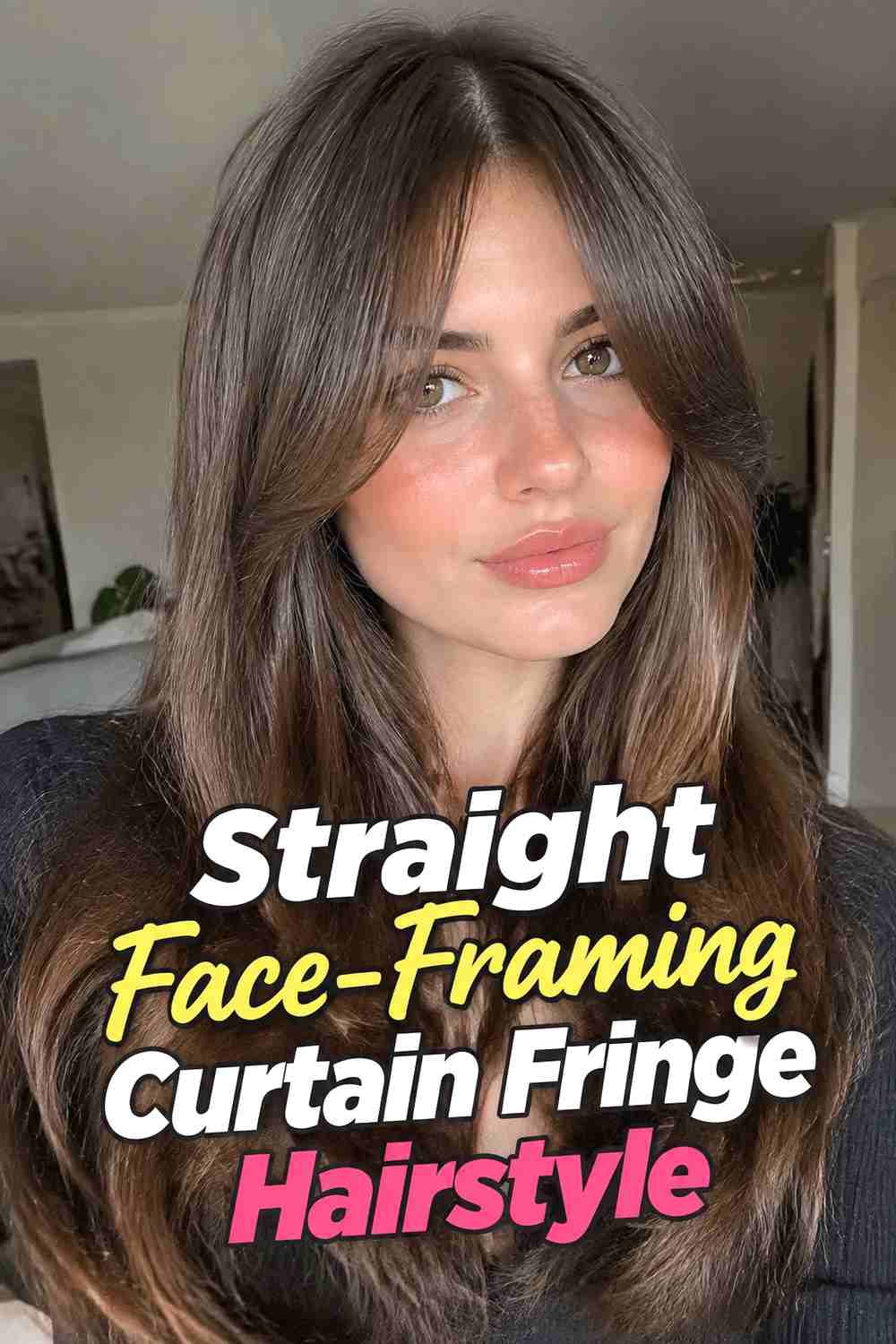
Straight face-framing curtain fringe shows the haircut’s structure clearly, making careful blending especially important. The front can part gently through the center before angling toward the cheekbones and extending into jaw-level or longer pieces. A subtle outward bend keeps the fringe from hanging flat against the face while allowing the rest of the hair to remain sleek. This style works well on straight lobs, medium cuts, and long hair where you want movement without waves or curls. Because every transition is visible, the edges should remain soft rather than blunt. The finished look should feel smooth, light, and polished, with enough motion around the front to keep the hairstyle from appearing one-dimensional.
Styling Notes
Use a gentle outward bend only through the fringe and front layers while keeping most of the lengths straight.
Best For
Choose this option if you prefer sleek styling and want the face-framing shape to remain easy to see.
10. Textured Lob Face Framing Curtain Fringe Hairstyle
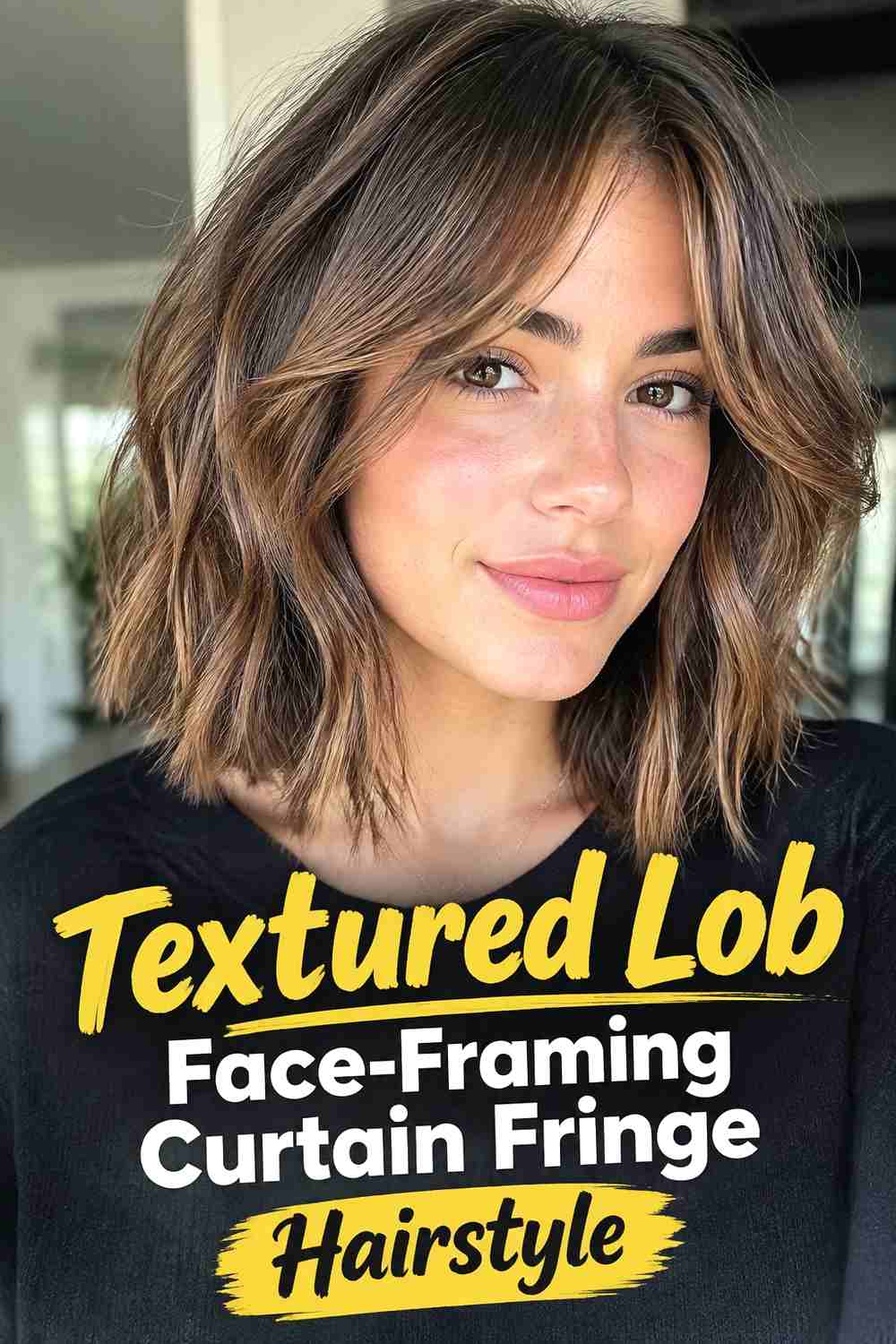
A textured lob pairs beautifully with face-framing curtain fringe because the shorter overall length keeps the movement concentrated around the cheeks, jaw, and collarbone. The fringe can open softly through the center and blend into longer front pieces while irregular bends through the lob prevent the perimeter from feeling too blunt. This version works well if you want a modern cut that can look polished with a blowout or relaxed with rougher texture. Subtle internal layering can help dense hair move more freely, while finer hair may benefit from preserving more weight through the ends. The fringe should connect naturally to the lob rather than sitting above it as a separate rounded section.
Styling Notes
Add bends to selected pieces rather than curling every section uniformly for a more natural textured finish.
Best For
This style is a strong choice if you want visible fringe movement with a shorter, manageable haircut.
11. Shaggy Face Framing Curtain Fringe Hairstyle
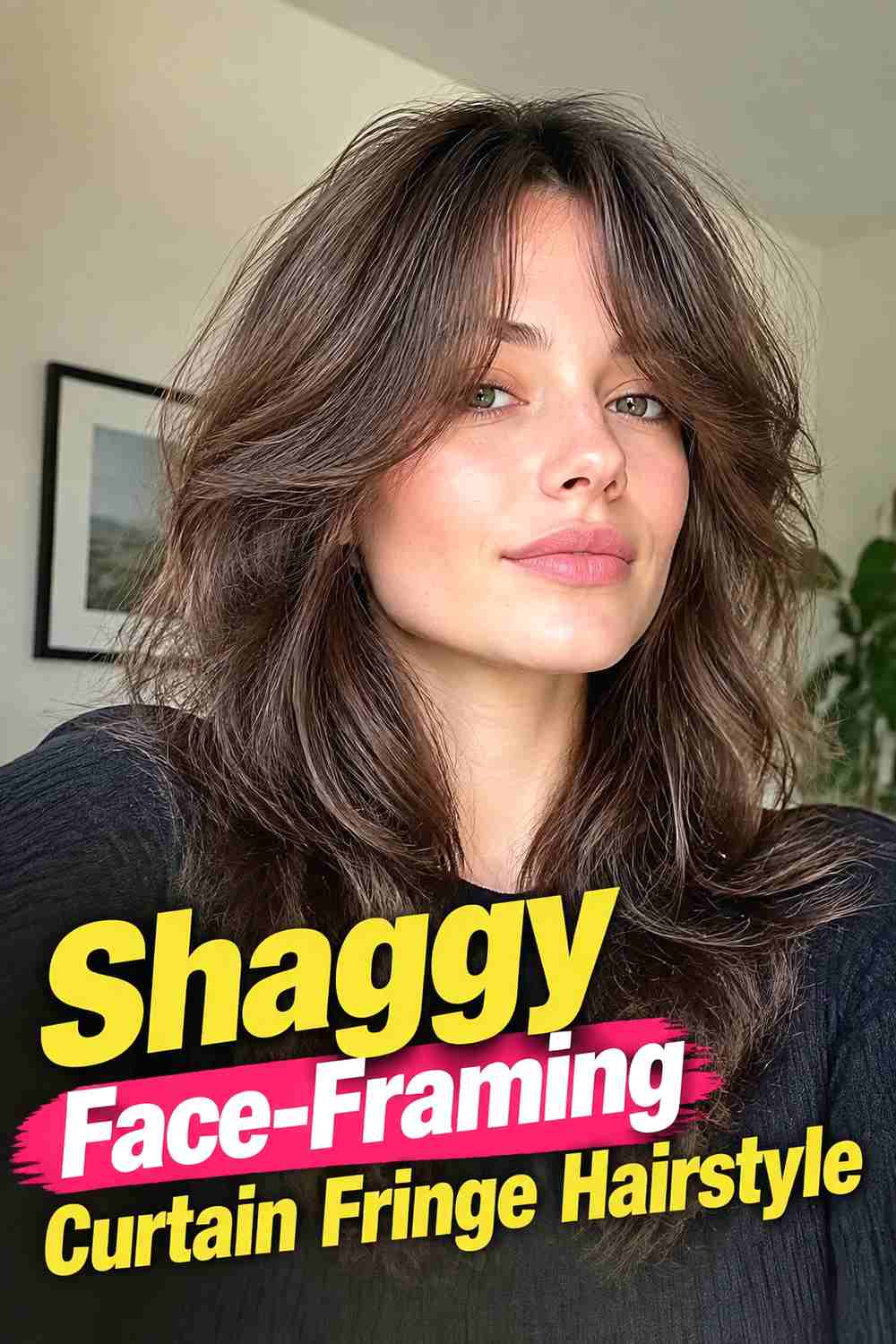
Shaggy face-framing curtain fringe combines a soft divided fringe with choppier layers through the sides and lengths. The front pieces can vary slightly in length as they blend from the forehead toward the cheekbones and jaw, giving the haircut a relaxed, less polished character. Natural waves and air-dried texture work especially well because the style does not rely on perfect symmetry. A little crown movement can help the fringe feel connected to the overall shag shape, while textured ends keep the front mobile. Preserve enough density through the lower lengths so the haircut does not become overly thin. The final effect should feel intentionally undone rather than uneven or poorly blended.
Why It Works
Textured layers continue the irregular movement of the fringe throughout the haircut, making the whole style feel cohesive.
Wear & Maintenance
Periodic reshaping helps the face-framing sections retain their intended movement as shorter layers grow.
12. Bouncy Face Framing Curtain Fringe Hairstyle
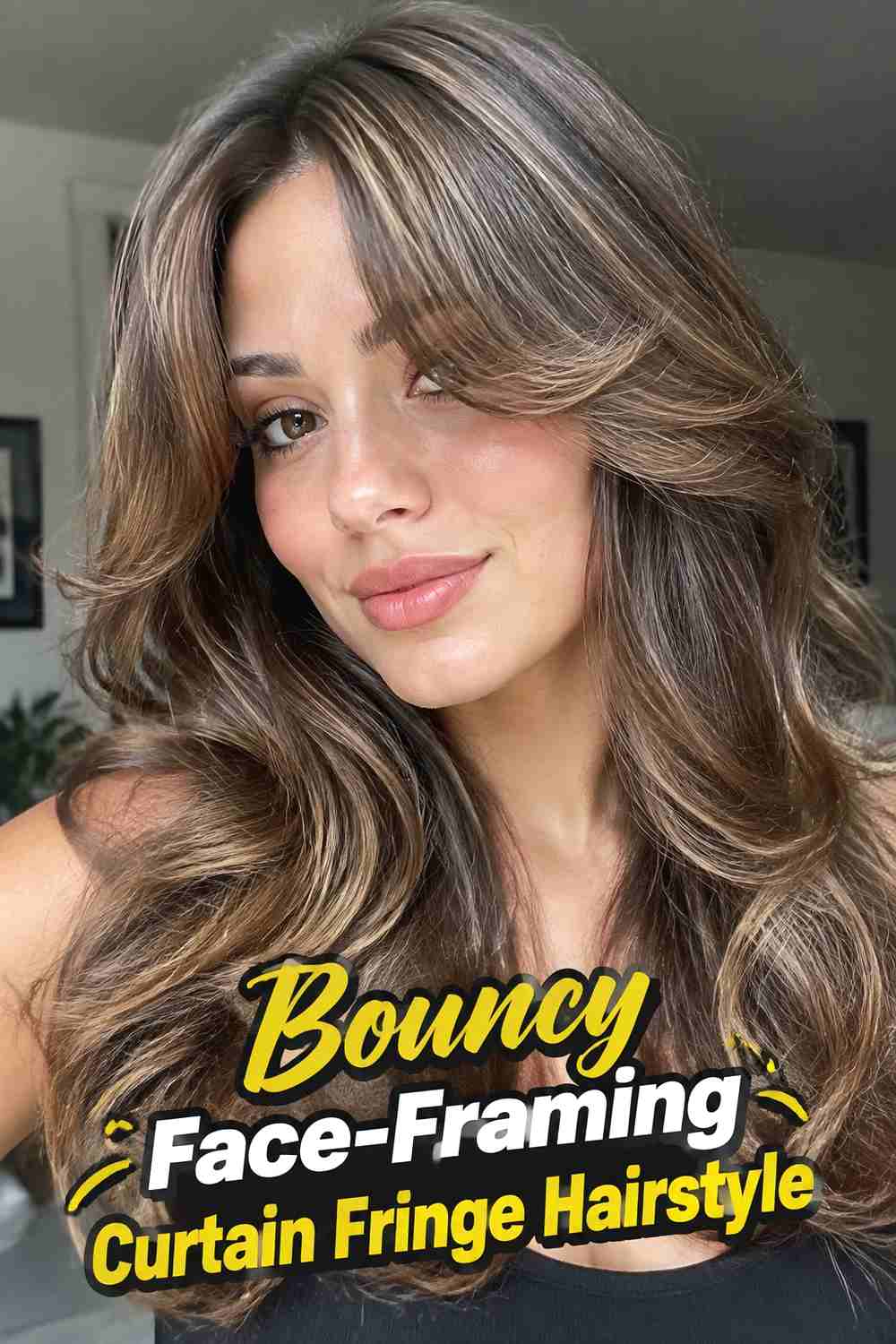
Bouncy face-framing curtain fringe combines soft root lift with broad, springy movement through the front and sides. The fringe opens near the center, curves around the cheekbones, and blends into rounded layers that move freely through the shoulders. Unlike a rigid blowout, this version looks best when the hair retains natural separation and flexibility. Medium and long layered hair provide enough space for the bounce to continue through the rest of the style. Avoid curling the fringe too tightly; larger curves keep the frame soft and modern. Fine hair may need a little lightweight root support, while denser hair can often maintain the shape with less product and more simple directional styling.
Styling Notes
Use broad curves rather than tight curls and focus most of the lift around the roots and front layers.
Wear & Maintenance
Flexible hold helps preserve bounce without making the fringe stiff or sticky.
13. Side Part Face Framing Curtain Fringe Hairstyle
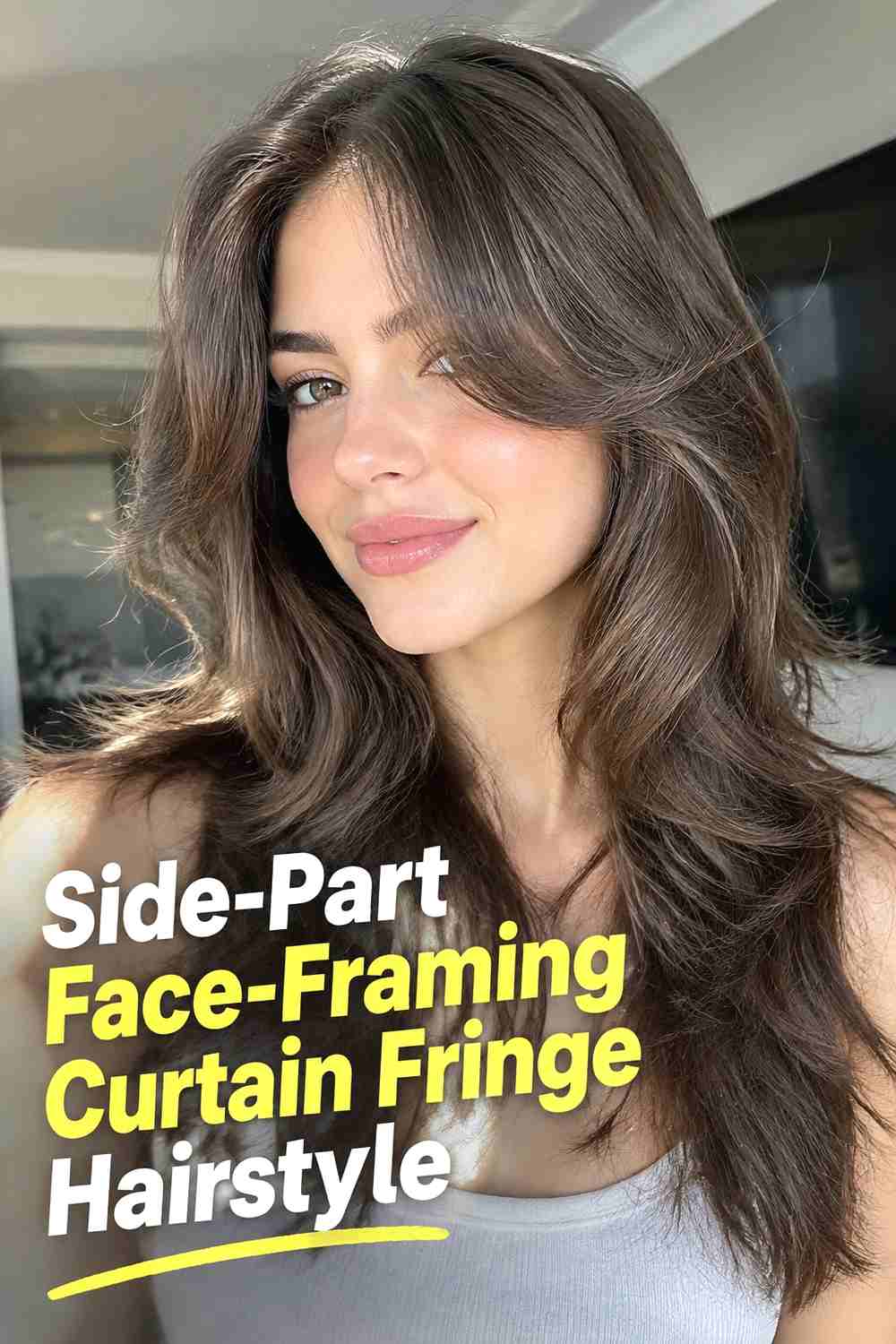
A soft side part shifts the balance of face-framing curtain fringe while keeping its blended, open character. One side carries more volume across part of the forehead, while the opposite side opens sooner and flows into shorter temple pieces. The surrounding layers then continue toward the cheeks and jaw, creating asymmetry without turning the style into a traditional side bang. This approach works especially well with medium and long layers, whether styled straight, wavy, or with a blowout. Keep the part moderate if you want both sides of the fringe to remain visible. A little lift on the fuller side can make the frame feel intentional without creating excessive height.
Why It Works
The shifted part adds movement and variety while preserving the gradual transition from fringe into longer face-framing layers.
Pro Tip
Experiment with the part before trimming because a small change can significantly affect how each side of the fringe falls.
14. Extra Long Face Framing Curtain Fringe Hairstyle
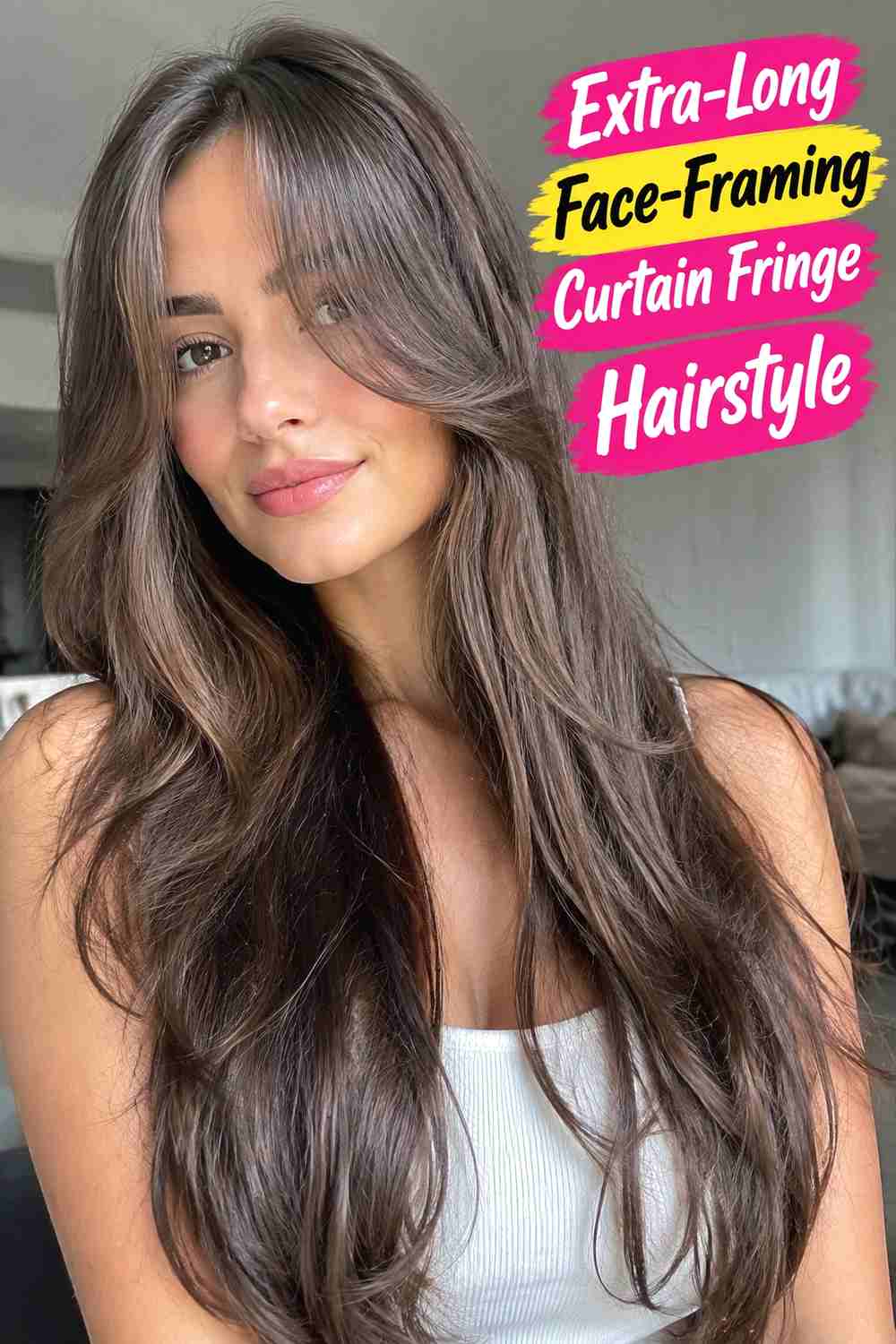
Extra-long face-framing curtain fringe begins around the cheekbones or lower, creating more of a layered framing effect than a traditional bang. The center opening remains soft, but the emphasis shifts toward sweeping pieces around the cheeks, jaw, and shoulders. This makes the style especially flexible because the front can be tucked behind the ears, brushed back into a ponytail, or blended into waves with minimal effort. Long hair provides the most room for a gradual transition through several lengths, although medium-long cuts can also carry the look well. The ends should remain light enough to move while retaining enough density to avoid looking stringy or overly thinned.
Best For
Choose this version if you want curtain-inspired movement with minimal forehead coverage and easy styling flexibility.
Wear & Maintenance
Longer fringe generally grows out smoothly, though occasional reshaping helps preserve the layered progression.
15. Chin Length Face Framing Curtain Fringe Hairstyle
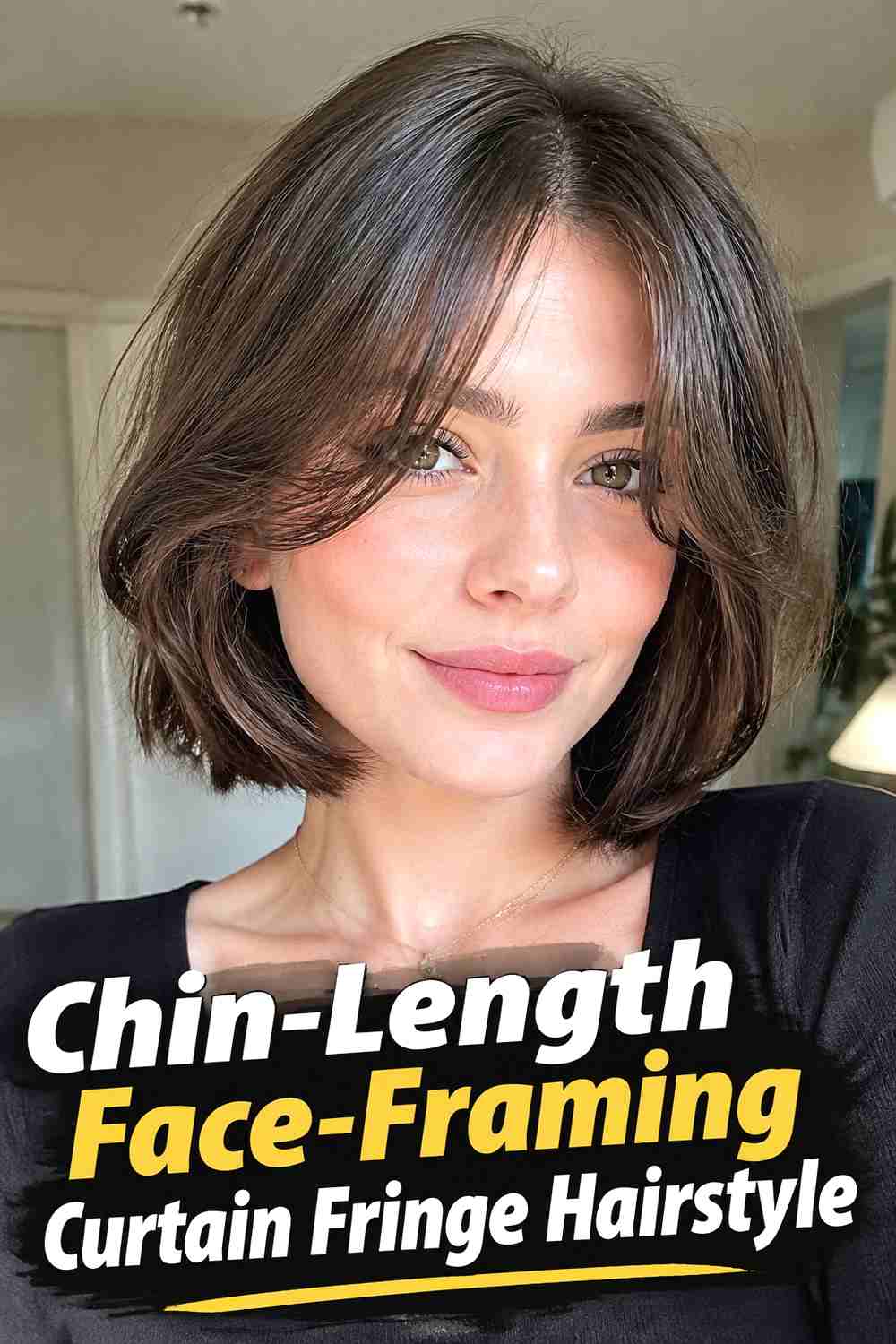
Chin-length face-framing curtain fringe sits between traditional bangs and longer layered pieces, making it a versatile choice if you want softness without short fringe. The shortest sections can begin around the cheekbones and flow toward the chin, leaving most of the forehead open while still creating visible movement around the face. A gentle blowout or soft wave keeps the pieces from hanging straight beside the jaw. Because the length is substantial, the fringe can often be tucked back or blended into ponytails easily. This version works on medium and long hair and can be especially useful during a grow-out phase when shorter curtain bangs are transitioning into fuller face-framing layers.
Styling Notes
Direct the chin-length pieces outward around cheek level so they maintain shape instead of falling straight beside the face.
Best For
This option suits anyone who wants low-commitment fringe with enough length for easy tucking and blending.
16. Soft Curl Face Framing Curtain Fringe Hairstyle
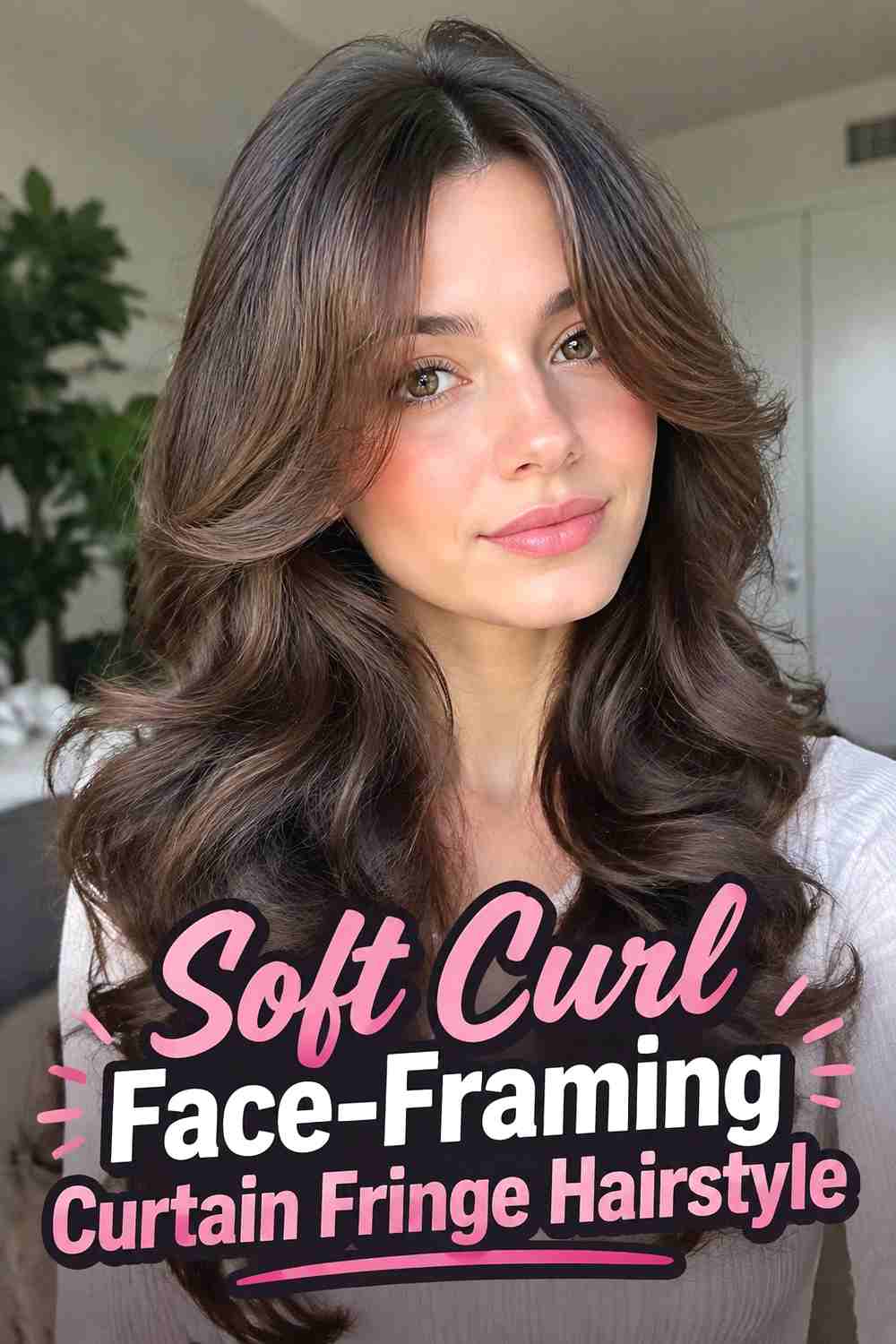
Soft curls give face-framing curtain fringe a polished, romantic finish. The shortest pieces open gently near the forehead and curve outward, while longer sections connect to broad curls around the cheeks, shoulders, and lengths. Keep the fringe itself softer than the rest of the curl pattern so it does not turn into two tight front ringlets. Medium-long and long hair provide enough room for the curves to flow naturally through several layer lengths. Once styled, allowing the curls to relax slightly creates a more seamless transition and keeps the result touchable. This version works particularly well for dinners, parties, photos, or other occasions when you want the face-framing layers to look more deliberately styled.
Styling Notes
Curl the longer front layers away from the face and use only a gentle bend through the shortest fringe pieces.
Best For
Choose this look for a softer event-ready finish without changing the underlying haircut.
17. Air Dried Face Framing Curtain Fringe Hairstyle
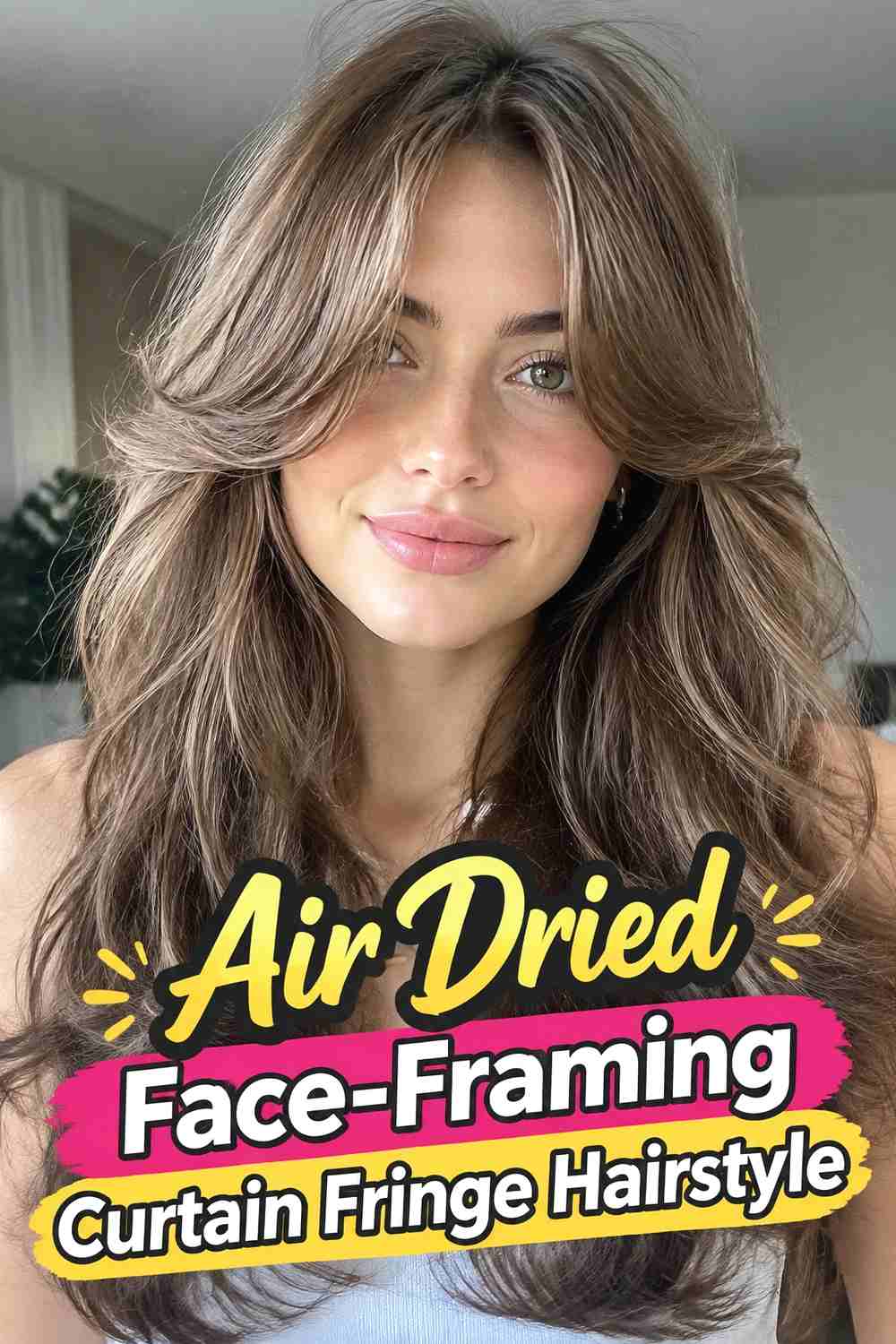
Air-dried face-framing curtain fringe relies on the haircut and natural texture rather than a precise blowout. The front pieces should already be blended enough to settle around the temples, cheeks, and jaw without requiring strong heat styling. Wavy or softly bendy hair can create especially natural movement, while straight textures may dry with a subtler frame. Arrange the fringe while damp so it begins setting in the desired direction, then let the natural pattern take over. Lightweight styling products can control flyaways without flattening the hair. This approach works best when you are comfortable with slight irregularity, since the goal is an effortless, believable finish rather than perfectly mirrored sides.
Best For
This style suits naturally wavy or softly textured hair and anyone who prefers a lower-maintenance daily routine.
Pro Tip
Position the fringe while damp instead of waiting until it is completely dry and harder to redirect.
18. Piecey Face Framing Curtain Fringe Hairstyle
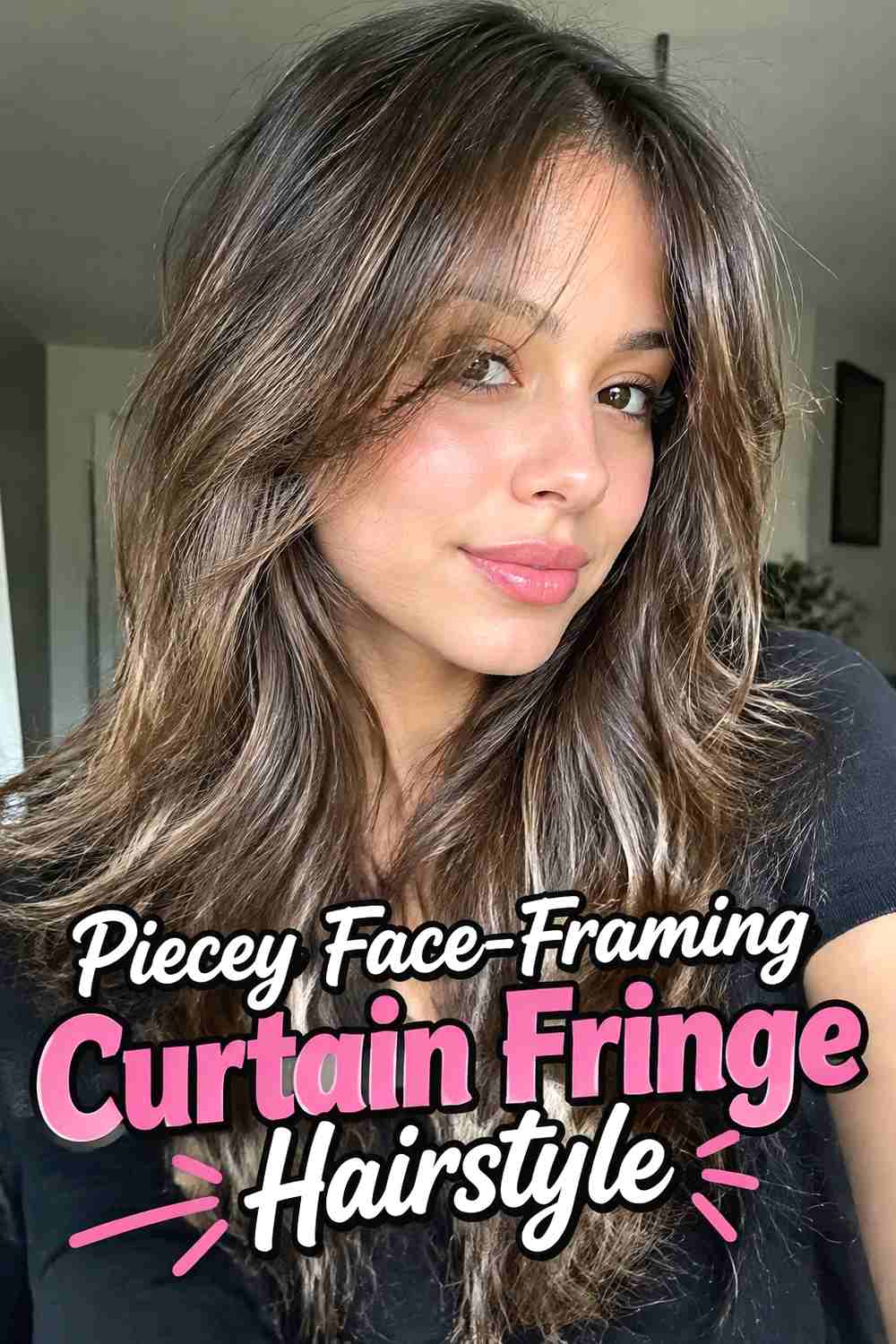
Piecey face-framing curtain fringe emphasizes visible separation between small sections, creating a textured front rather than one continuous sweep. The fringe can open through the center while fine pieces extend toward the temples and connect to longer cheekbone or jaw-level layers. This works especially well with shags, textured lobs, and casual medium-length cuts where a perfectly smooth fringe might look too polished. The challenge is keeping the sections defined without making them look oily or overloaded with product. A very small amount of lightweight cream or texture product can help separate selected pieces while maintaining movement. The finished look should feel intentionally relaxed, with enough softness to keep the frame flattering and natural.
Styling Notes
Use minimal product and define only a few selected pieces after the fringe already has its basic shape.
Best For
This style suits textured, slightly undone haircuts where natural-looking separation is part of the overall finish.
19. Romantic Updo Face Framing Curtain Fringe Hairstyle
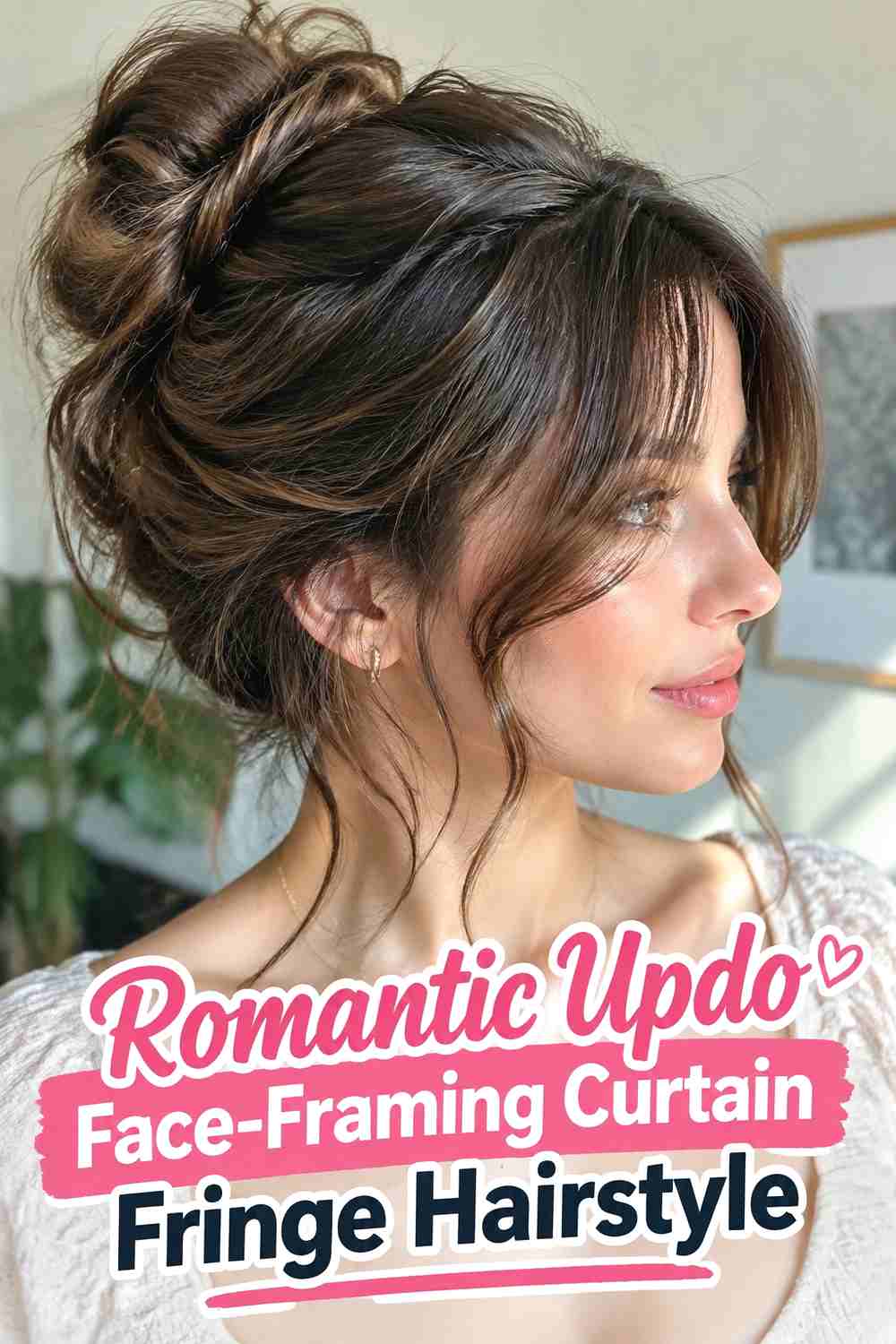
A romantic updo allows face-framing curtain fringe to become the main source of softness while the rest of the hair is pinned away. Leave the fringe and a few longer temple sections free before creating a bun, twist, or textured chignon. The front can then open lightly across the forehead and curve toward the cheekbones, with one or two longer pieces continuing toward the jaw. This creates a balanced contrast between a structured back and a softer front. Keep the fringe flexible instead of coating it with heavy hold so it retains movement. The style works especially well for weddings, dinners, parties, and other occasions when you want an elegant updo without a severe hairline.
Styling Notes
Separate the fringe and longer framing pieces before building the updo so you do not disturb the pinned structure later.
Why It Works
The loose front layers soften the updo and preserve visible movement even when the main hair is completely lifted away.
20. Sleek Ponytail Face Framing Curtain Fringe Hairstyle
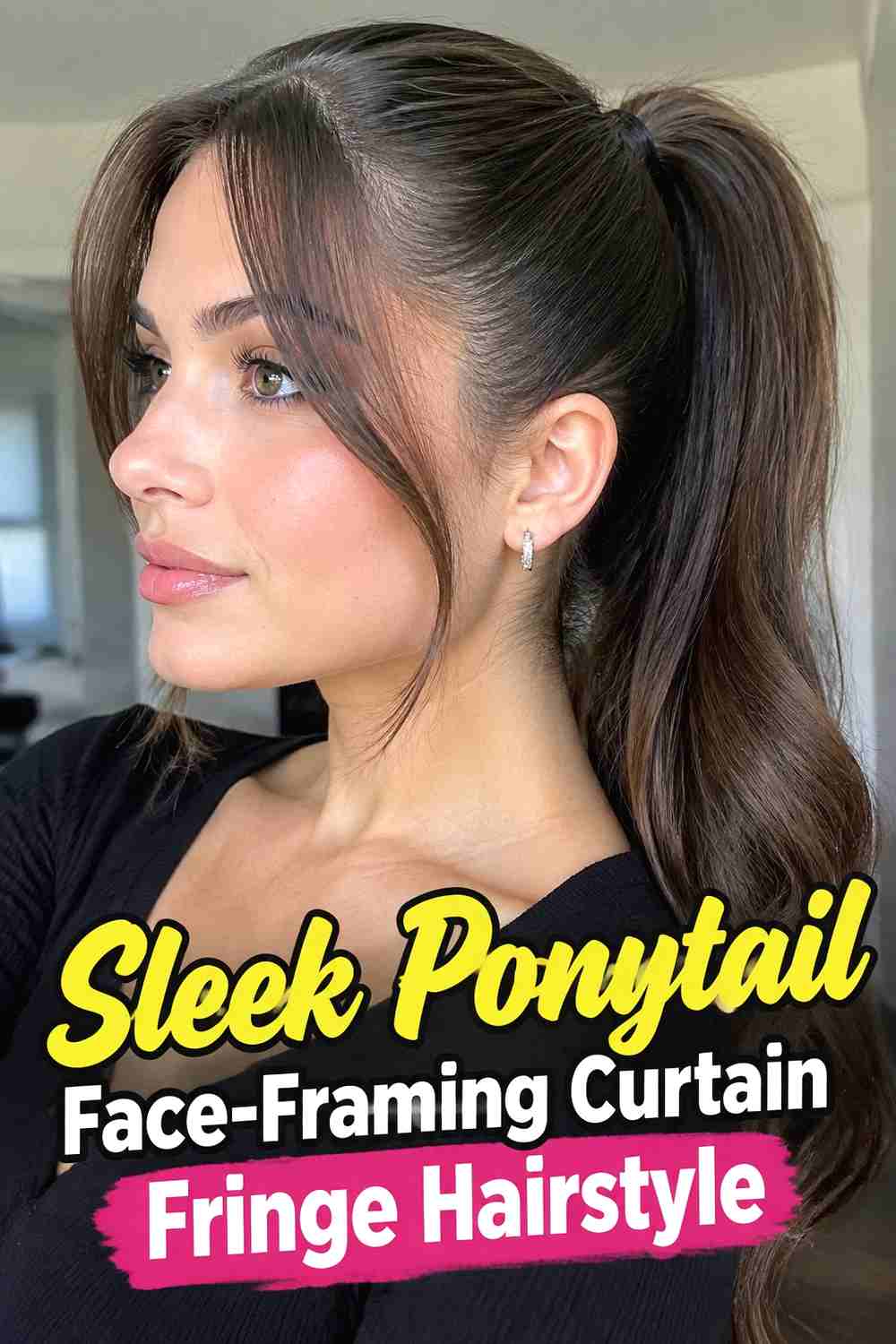
A sleek ponytail creates strong contrast with soft face-framing curtain fringe. The main hair is smoothed into a low, mid, or high ponytail, while the front pieces remain free to open around the center and curve toward the cheeks and jaw. This lets the fringe become a deliberate styling feature rather than disappearing into the pulled-back shape. Longer curtain pieces work particularly well because they create enough movement to balance the clean ponytail without looking too short or disconnected. Keep the roots around the ponytail polished, but avoid over-smoothing the fringe itself. A subtle bend through the front is usually enough to make the style feel finished without competing with the sleek lengths.
Styling Notes
Separate the curtain fringe before securing the ponytail, then shape the front afterward with a gentle outward bend.
Why It Works
The contrast between a clean pulled-back base and soft front layers highlights the face-framing shape without requiring a complicated hairstyle.
How to Choose the Right Look
Start with fringe length. Brow-to-cheekbone pieces create a stronger bang effect, while chin-length and extra-long fringe behaves more like face-framing layers. Longer versions are easier to tuck away, while shorter sections make the curtain shape more noticeable.
Texture should guide the cut and styling method. Straight hair shows every transition clearly, so careful blending matters. Waves naturally soften the connections between lengths, while curly hair needs the fringe shaped around shrinkage and its dry pattern.
Think about overall haircut length as well. Lobs and shoulder-length styles keep the framing concentrated near the face, while long and butterfly layers create a more extended cascade. Shaggy and piecey versions add separation, whereas blowouts and bouncy finishes emphasize volume.
Finally, match the style to your routine. If you regularly use a round brush or rollers, a voluminous fringe may be realistic. If you prefer less heat, air-dried, wavy, curly, or longer options can require less daily reshaping.
Final Thoughts
Face-framing curtain fringe can be wispy, feathered, curly, voluminous, sleek, or almost fully blended into long layers. The most important decision is how short the center should begin and how gradually the outer pieces should lengthen. Matching that structure to your natural texture and everyday styling habits helps the fringe remain flexible and wearable as it grows.
FAQs
1. What is face-framing curtain fringe?
Face-framing curtain fringe is a softly divided fringe that lengthens toward the temples and blends into longer layers around the cheekbones, jaw, or shoulders.
2. Does face-framing curtain fringe work on short hair?
Yes. Lobs and shoulder-length cuts can show the effect clearly because the longer fringe pieces connect quickly with the overall perimeter.
3. Can curly hair have face-framing curtain fringe?
Yes. The fringe can work well on curly hair when the cut accounts for curl pattern, shrinkage, density, and the way the hair sits when dry.
4. Which face-framing curtain fringe is easiest to grow out?
Chin-length and extra-long versions generally blend into surrounding layers more easily and can be tucked or swept aside as they grow.
5. How do you style face-framing curtain fringe?
Use a round brush, roller, loose wave, soft curl, or natural texture to direct the front away from the face and into the longer surrounding layers.
Save your favorite face-framing curtain fringe hairstyle ideas, compare the lengths and textures, and share the looks that best match the soft, flowing frame you want.