15 Curly Mullet Shag Haircuts
Springy curls, shaggy layers, and longer nape pieces give these curly mullet haircuts a playful balance of soft volume and deliberately undone texture.
A curly mullet shag brings together two texture-friendly shapes: the layered movement of a shag and the shorter-front, longer-back proportions of a mullet. Curls naturally soften the transition between those areas, so the finished haircut can range from subtle and airy to full, dramatic, and heavily textured.
Before choosing a version, compare the amount of crown volume, fringe coverage, side length, and nape extension you want. Curl pattern, density, shrinkage, and styling habits can all change how the same cut appears once dry, so the strongest shape works with natural movement rather than forcing every curl into identical placement.
Quick List
- Soft Curly Mullet Shag Hairstyle
- Curly Mullet Shag With Wispy Fringe Hairstyle
- Rounded Crown Curly Mullet Shag Hairstyle
- Long Nape Curly Mullet Shag Hairstyle
- Short Curly Mullet Shag Hairstyle
- Curly Mullet Shag With Micro Fringe Hairstyle
- Voluminous Curly Mullet Shag Hairstyle
- Tapered Side Curly Mullet Shag Hairstyle
- Piecey Fringe Curly Mullet Shag Hairstyle
- Fluffy Curly Mullet Shag Hairstyle
- Shoulder Length Curly Mullet Shag Hairstyle
- Face Framing Curly Mullet Shag Hairstyle
- Airy Layered Curly Mullet Shag Hairstyle
- Retro Curly Mullet Shag Hairstyle
- Grown Out Curly Mullet Shag Hairstyle
1. Soft Curly Mullet Shag Hairstyle
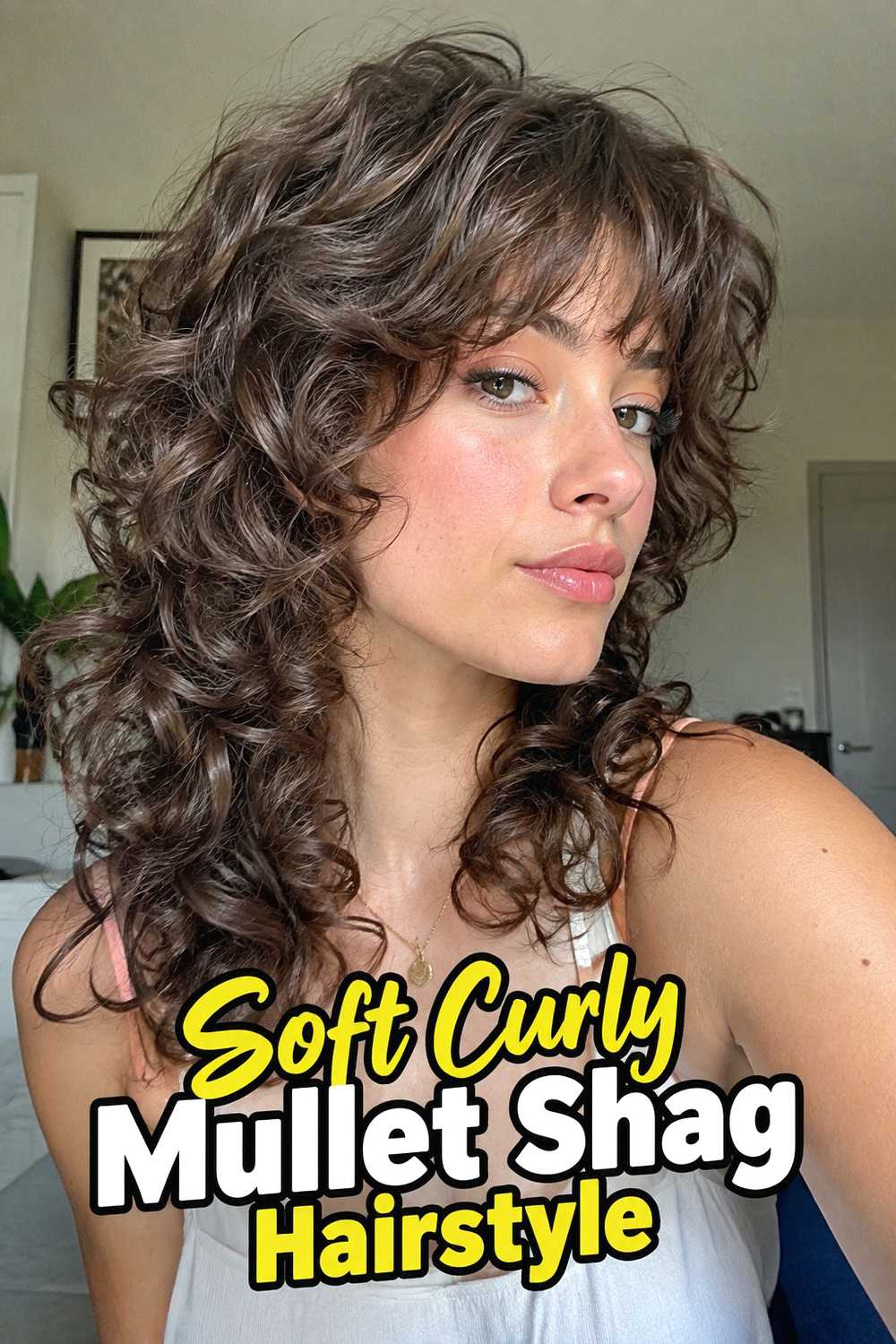
A soft curly mullet shag keeps the short-to-long silhouette gentle by blending the layers instead of creating abrupt steps. Shorter curls frame the forehead and temples, medium layers build natural lift through the crown, and the back extends into slightly longer curls that sit against the neckline. This creates recognizable mullet movement without a harsh or exaggerated tail. The softer structure is especially useful if you want a shaggy haircut that still feels versatile and easy to wear. Let individual curls settle at slightly different lengths rather than trying to create perfect symmetry. That variation helps the crown and nape connect naturally and keeps the finished texture light, springy, and believable.
Why It Works
The gradual layering lets curls create the transition themselves, producing a cohesive silhouette while preserving the mullet’s longer-back character.
2. Curly Mullet Shag With Wispy Fringe Hairstyle
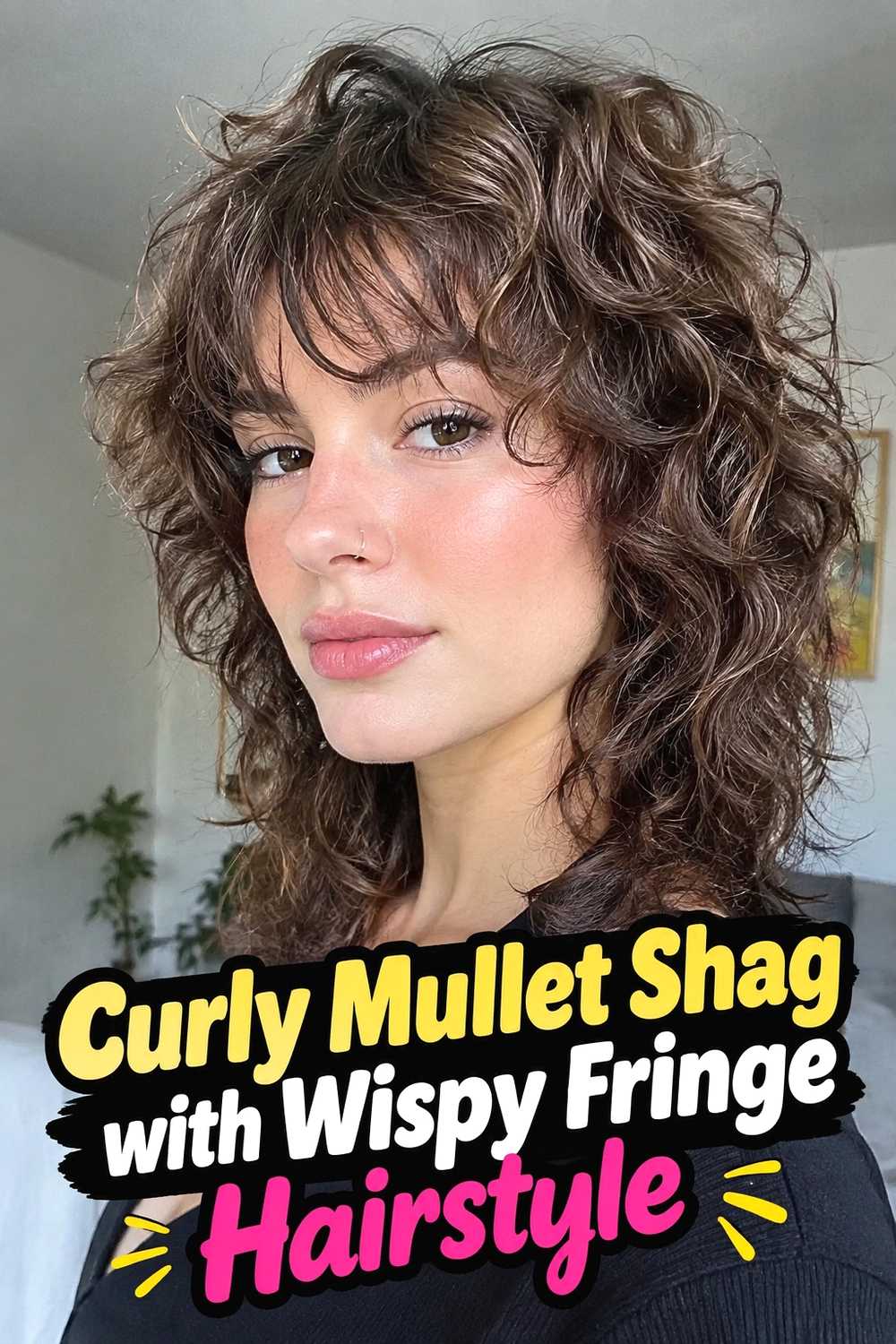
A wispy curly fringe creates light coverage across the forehead while leaving small spaces between curl groups. Those shorter front pieces flow into face-framing layers at the temples, then connect with fuller curls through the crown. The back gradually lengthens into a textured nape, giving the haircut its mullet influence without making the rear section look disconnected. This fringe works especially well if you want bangs but prefer softness over a dense, rounded front. Because curls can spring considerably shorter when they dry, the finished fringe length matters more than its stretched length. A little irregularity between individual curls makes the front feel relaxed and keeps it consistent with the shaggy texture elsewhere.
Styling Notes
Refresh the fringe one curl at a time with damp fingers and lightweight product rather than soaking the entire front section every morning.
3. Rounded Crown Curly Mullet Shag Hairstyle
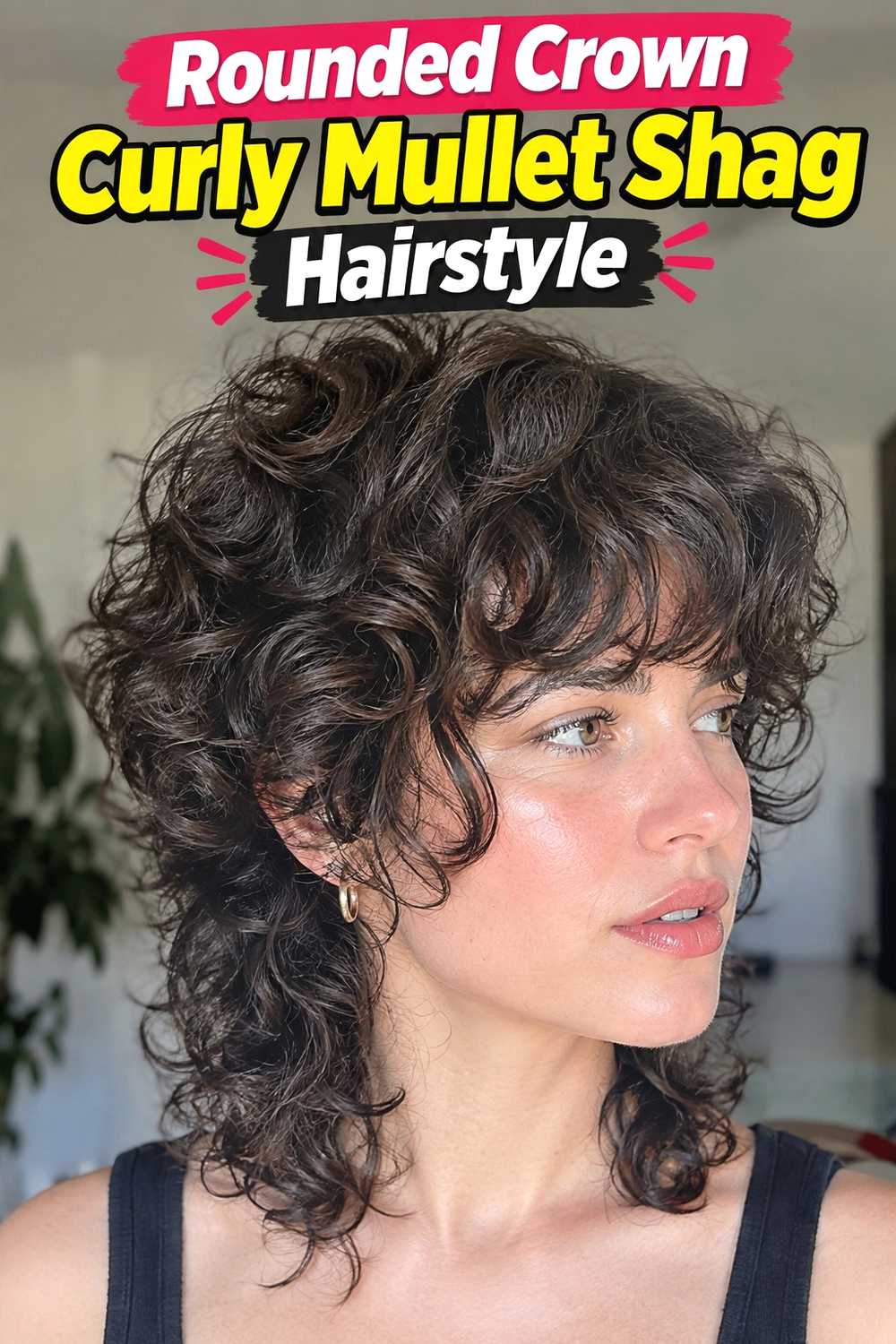
A rounded crown makes the upper half of this haircut feel full and sculptural while the shag layers keep the volume from becoming too uniform. Shorter curls stack near the top, creating soft height, while slightly longer sections fall toward the temples and ears. The nape extends beyond the side length, but overlapping curls help the transition feel natural instead of sharply divided. This shape can work particularly well for medium to dense curls that naturally build volume. The goal is to distribute that fullness through the crown rather than allowing all the weight to collect around the sides. Careful internal layering can encourage lift while still preserving enough density for the curls to look healthy and substantial.
Hair Type & Length
Springy curls and loosely coiled textures can support the rounded top beautifully. Layer depth should be adjusted according to density and shrinkage.
4. Long Nape Curly Mullet Shag Hairstyle
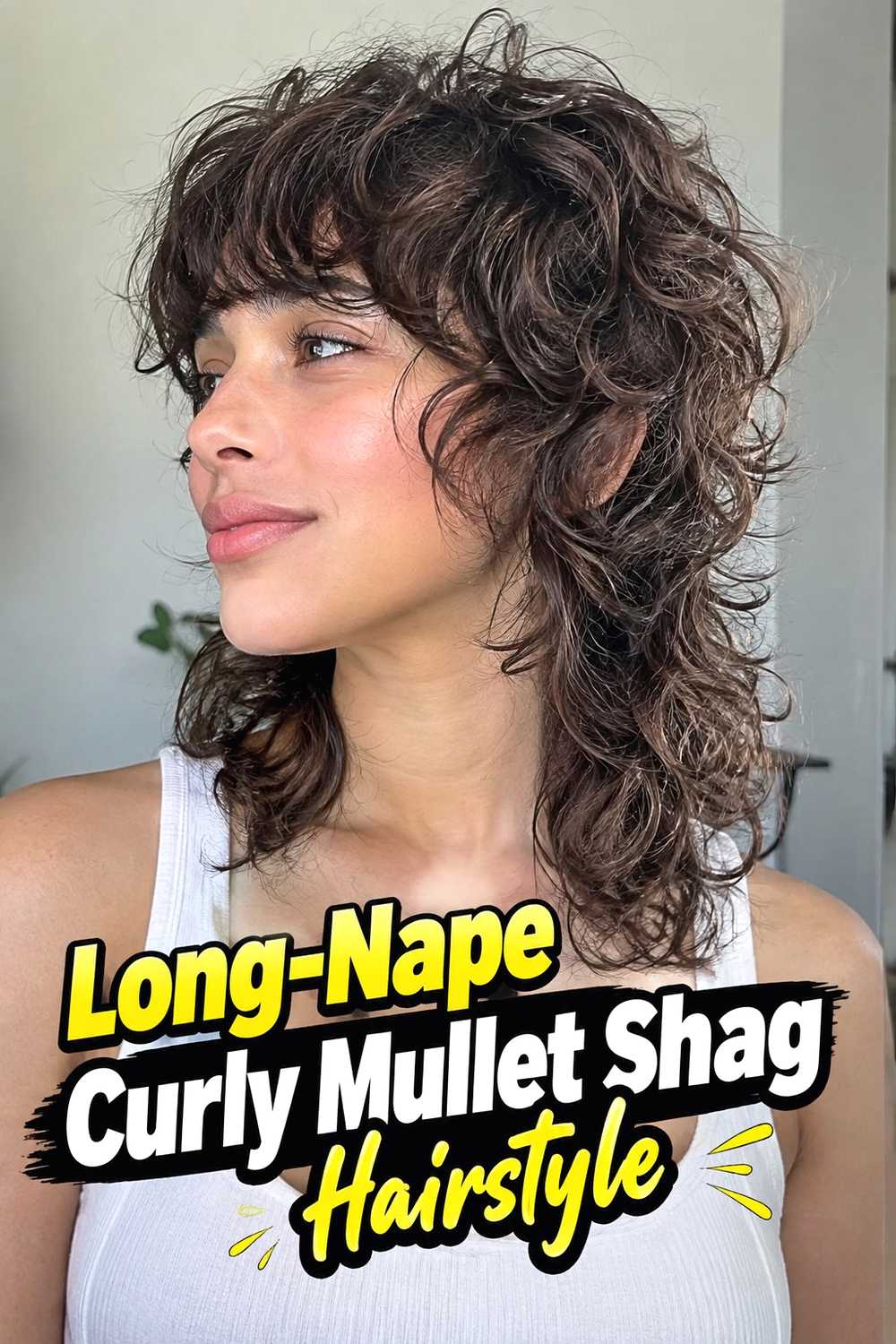
The long-nape version makes the mullet element more obvious by allowing the back curls to extend noticeably farther down the neck. Around the face and ears, the hair remains shorter and more layered, while the crown carries enough volume to connect those cropped sections to the elongated back. The nape should still feel shaggy rather than heavy, so longer curls can be broken into staggered pieces that move independently. This creates an expressive side profile while maintaining softness through natural texture. It is a good option if you want a clear mullet silhouette without relying on shaved sides or extreme disconnection. Keeping the longer curls springy prevents the back from hanging flat.
Styling Notes
Scrunch the nape upward while it dries instead of pulling the curls downward. This helps preserve their natural bounce and makes the longer section look intentional.
5. Short Curly Mullet Shag Hairstyle
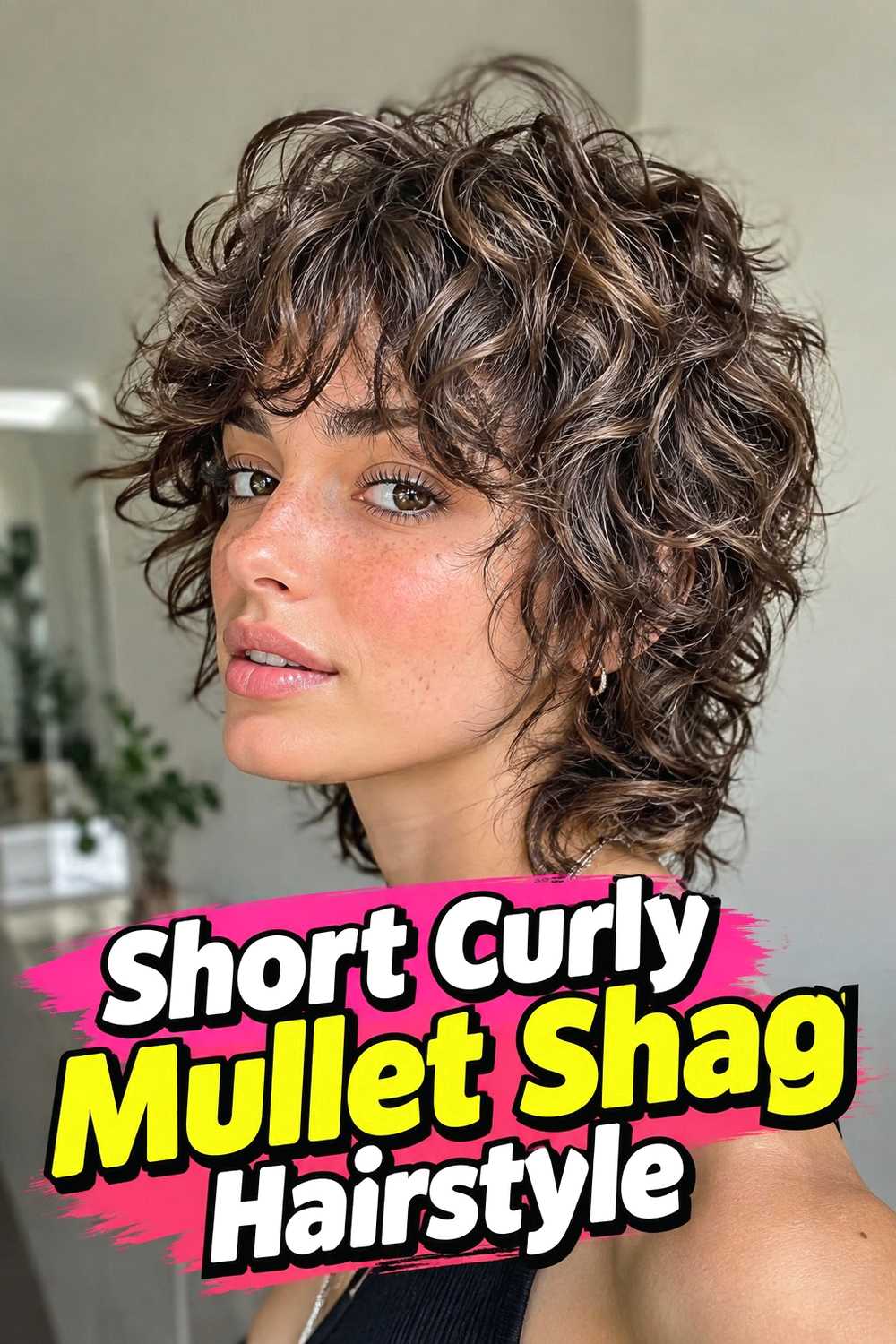
A short curly mullet shag keeps most of the haircut compact, with just enough extra nape length to hint at the mullet shape. Short curls surround the forehead and temples, while layered crown pieces provide lift without overwhelming the silhouette. Around the ears, the shape stays relatively neat before extending slightly through the back. This version can be easier to manage if you like shaggy texture but do not want substantial hair sitting against the neck. The compact length also puts more attention on the curls themselves, making definition and layer balance especially noticeable. Letting the perimeter remain slightly irregular keeps the haircut soft and prevents it from looking like a conventional rounded curly pixie.
Wear & Maintenance
Because the perimeter is short, growth around the ears and neckline may become noticeable sooner. Small cleanup trims can maintain the silhouette without shortening the crown.
6. Curly Mullet Shag With Micro Fringe Hairstyle
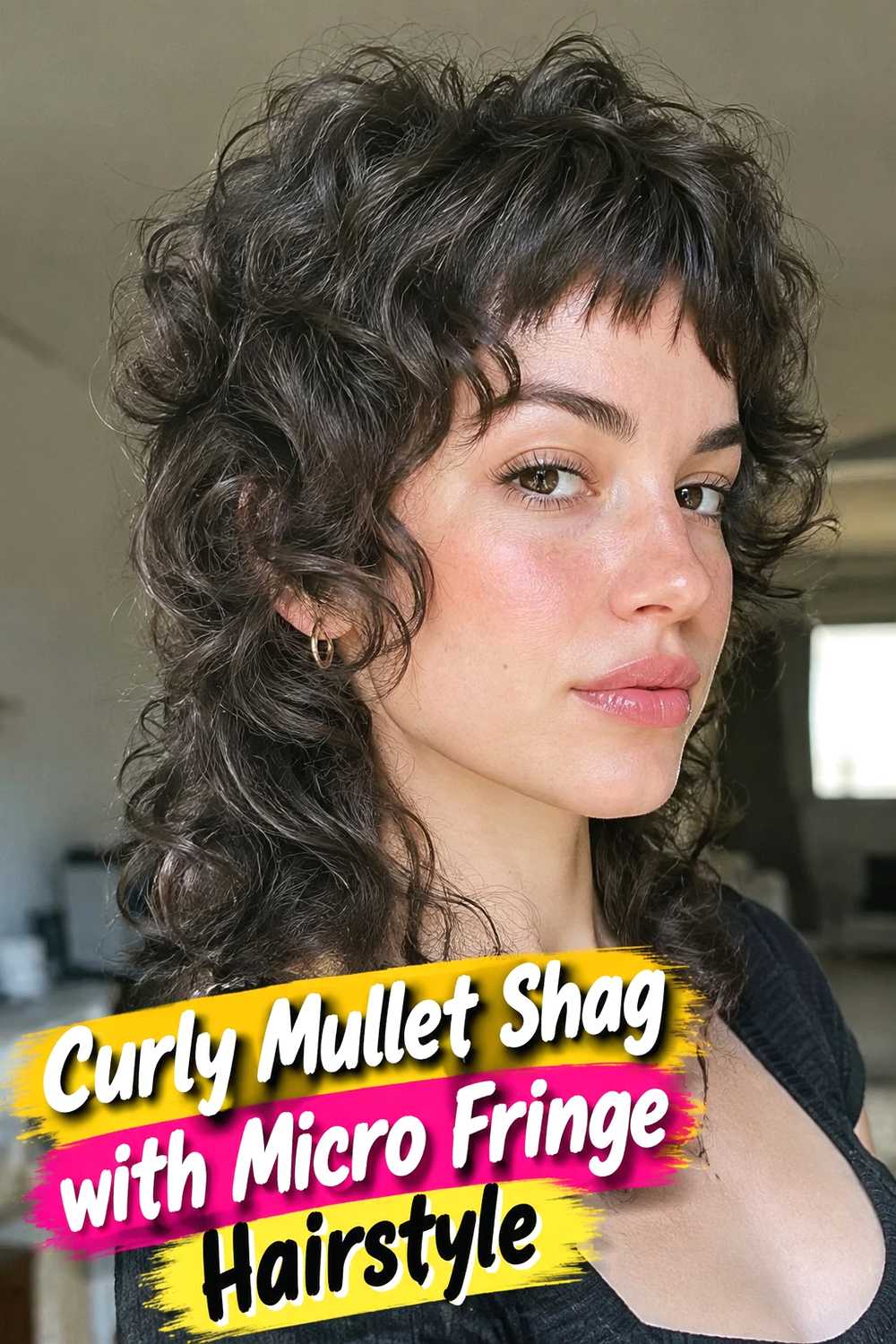
A micro fringe gives this curly mullet shag a bold front detail while leaving plenty of forehead visible. Tiny curls sit above the brows in an irregular line, then transition into short temple layers and a fuller crown. The back remains longer, creating a strong contrast between the compact fringe and elongated nape. Despite that contrast, natural curl texture keeps the style softer than a sharply cut straight-hair mullet. Micro bangs need careful length planning because shrinkage can dramatically change where they land after drying. Instead of forcing every short curl into one neat row, allow small differences in height and shape. That slight imperfection fits naturally with the layered shag structure.
Pro Tip
Use minimal product on micro bangs. Their short length already provides structure, so too much hold can make them look stiff instead of airy.
7. Voluminous Curly Mullet Shag Hairstyle
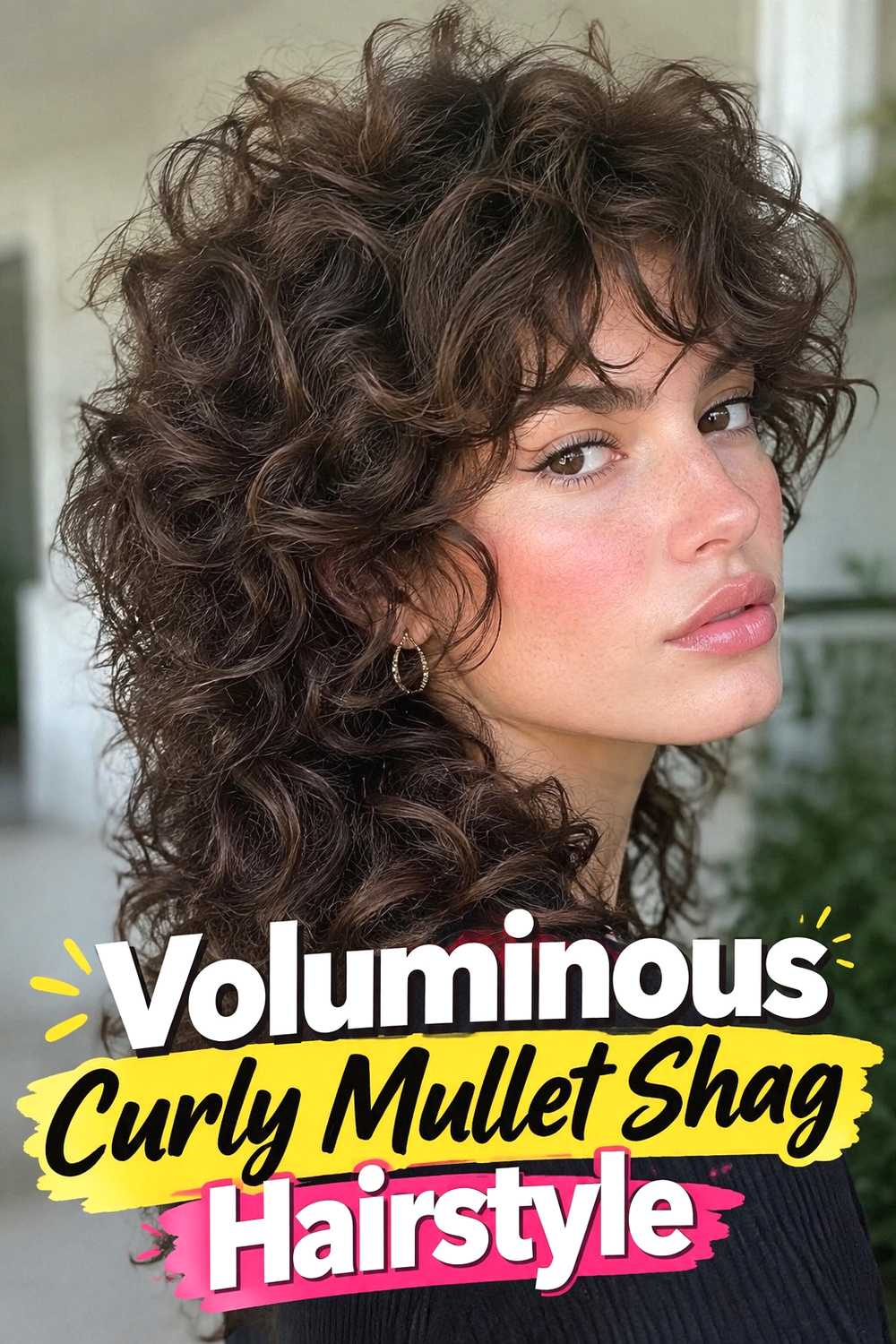
This version celebrates bigger texture by building substantial volume through the crown and upper sides while retaining a clearly elongated back. The curls are layered to lift away from the scalp rather than collapsing into one heavy mass, and shorter front pieces keep the face open despite the fullness. Toward the nape, the hair gradually lengthens into springy curls that reinforce the mullet profile. The result feels expressive and dramatic but should still have visible variation between curl groups. Strategic layering matters because excessive thinning can create unwanted gaps in dense curly hair. The most balanced finish preserves fullness through the top while keeping enough separation around the ears and neckline to reveal the haircut’s structure.
Styling Notes
Allow the curls to set before lifting the roots. Fluffing too early can disturb definition and create frizz before the overall shape has formed.
8. Tapered Side Curly Mullet Shag Hairstyle
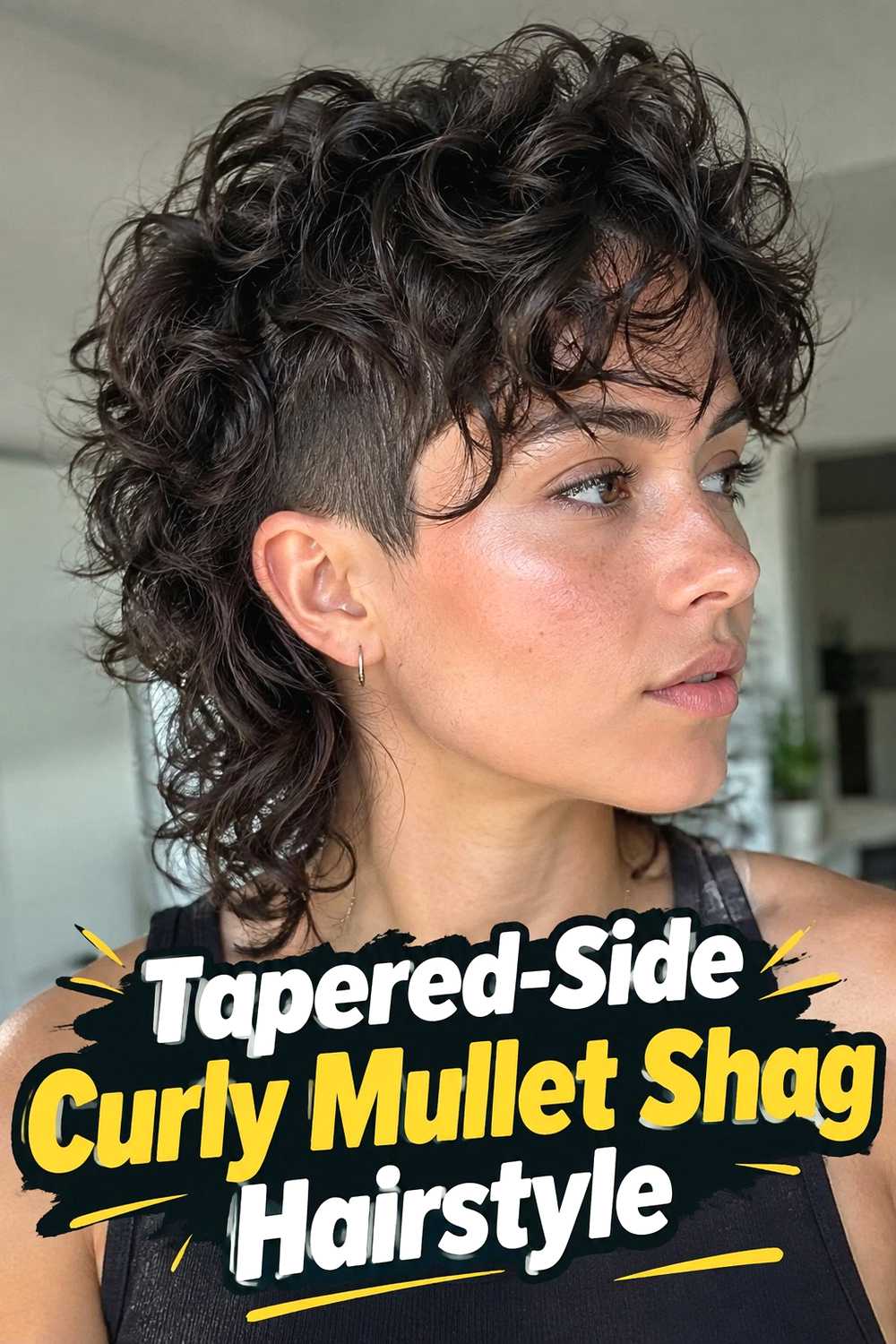
Tapered sides give a curly mullet shag cleaner definition around the temples and ears while leaving the crown and back noticeably fuller. The reduction in side length can be subtle rather than closely clipped, creating a narrower profile without losing softness. Above the taper, curls build into shaggy crown layers, and behind it the hair extends into a longer textured nape. This structure can be particularly useful for dense hair because it removes bulk from specific areas while preserving volume where it has the most visual impact. A few loose curls around the sideburns can soften the transition. The result combines tidy proportions with the lively movement expected from a curly shag.
Wear & Maintenance
The tapered sections may need reshaping sooner than the crown and nape. Maintaining only the perimeter can preserve the silhouette while allowing the longer curls to grow.
9. Piecey Fringe Curly Mullet Shag Hairstyle
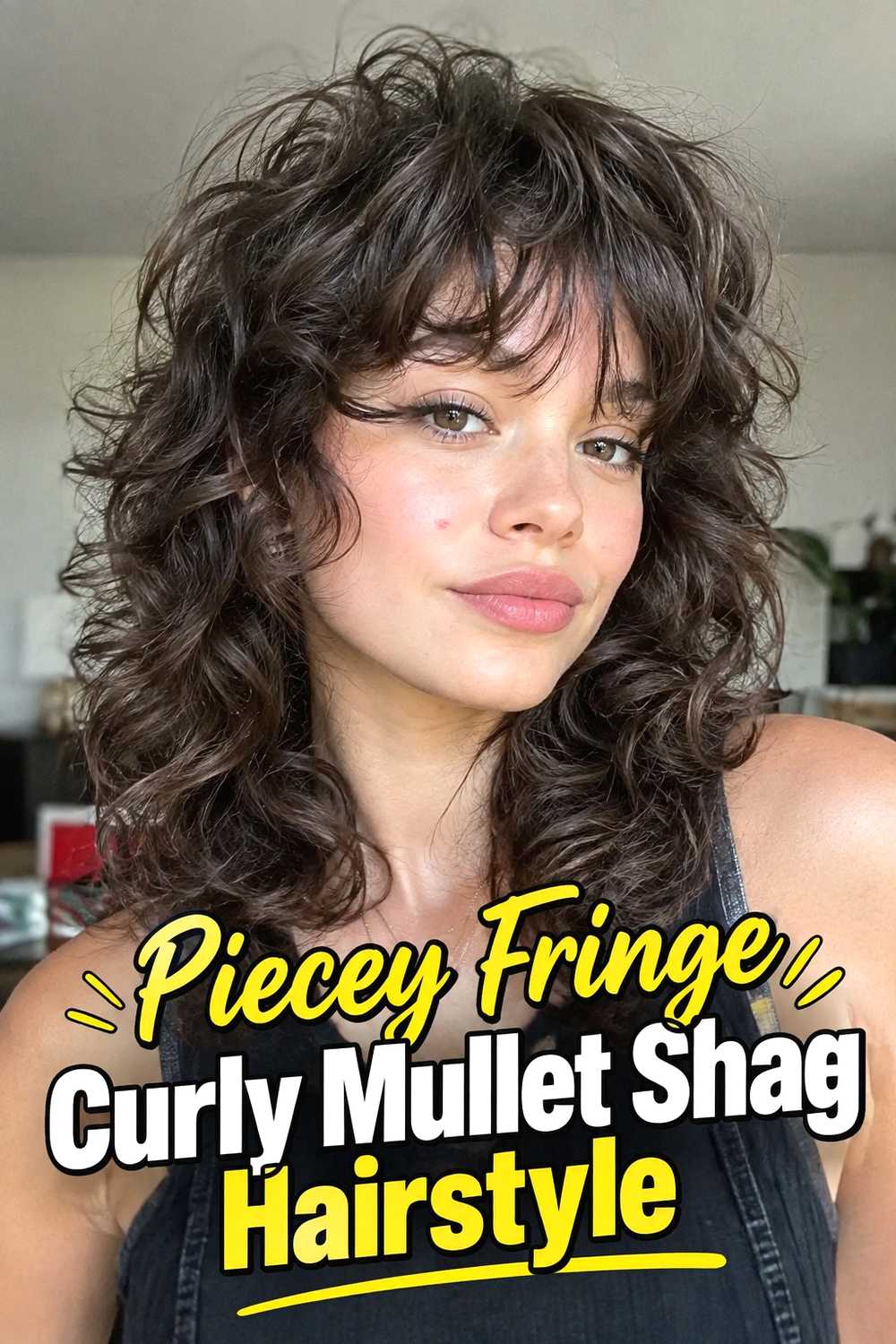
Piecey fringe gives this haircut a deliberately separated front, with small curl groups landing at different points across the forehead. Rather than forming a thick curtain, the bangs leave visible spaces that make the front feel lighter and more textured. Crown layers continue the broken-up effect, while curls around the sides stay shorter before extending into the longer back. This version works well if you enjoy clear definition but do not want every curl perfectly polished. The strongest styling approach usually involves emphasizing only selected sections. Leaving some curls naturally softer and others more defined creates depth and prevents the piecey effect from becoming too deliberate or uniform.
Best For
Choose this style if you want noticeable fringe texture and a more open forehead than a dense curly bang would provide.
10. Fluffy Curly Mullet Shag Hairstyle
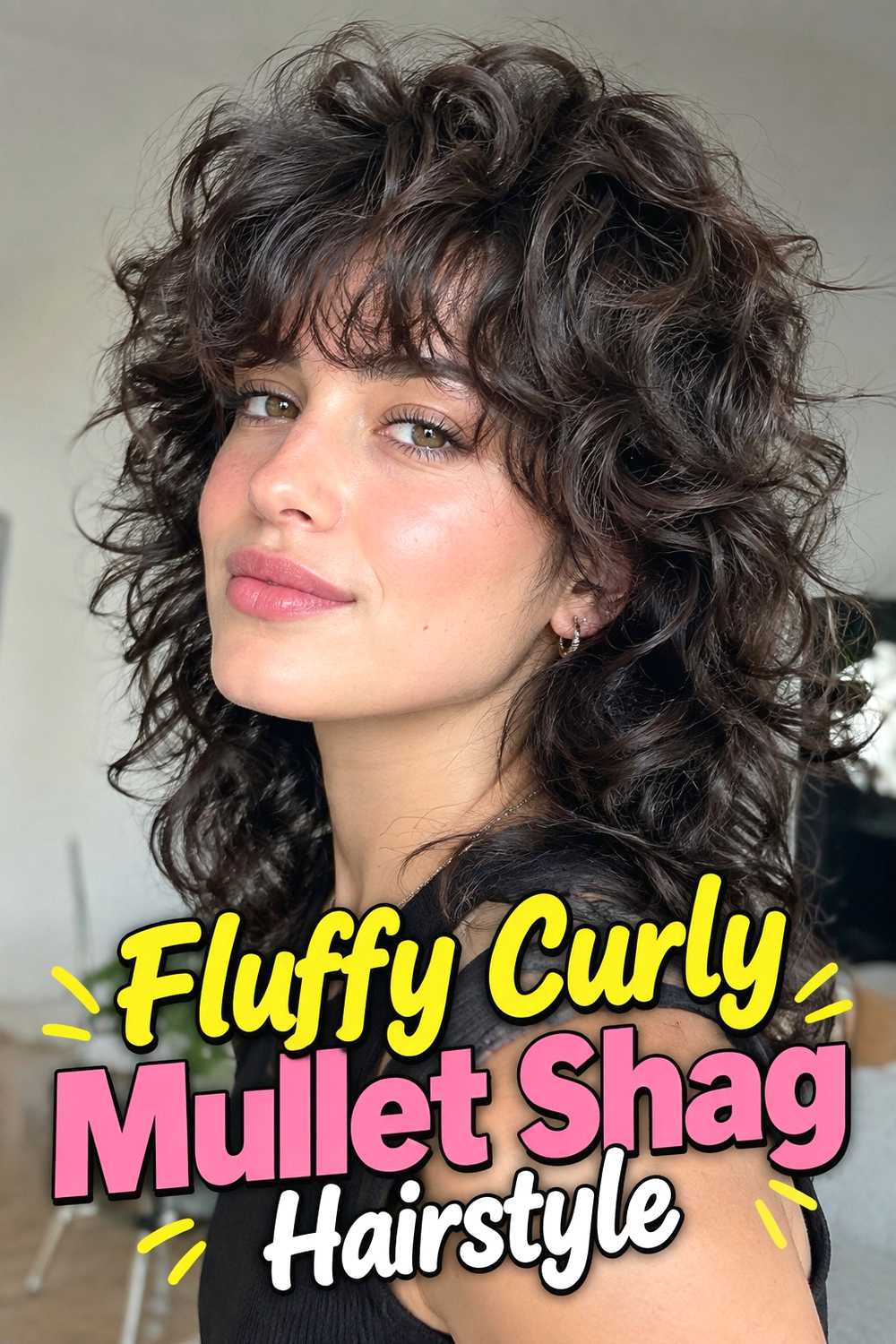
A fluffy curly mullet shag trades perfect ringlet definition for soft expansion, airy volume, and a touchable finish. The crown is allowed to bloom outward, while shorter layers around the ears keep the shape from becoming uniformly round. Longer curls at the back maintain the mullet silhouette, but they remain light and flexible instead of forming a dense tail. This style can work beautifully on second- or third-day curls when natural separation gives the haircut extra softness. Rather than completely resetting every curl, selective refreshing can preserve the lived-in character. The key is keeping enough definition at the fringe, ears, and nape to reveal the layered structure underneath the fuller overall texture.
Styling Notes
Lift the roots only after the hair is dry, and refresh a few visible curls around the face and nape instead of reworking the entire style.
11. Shoulder Length Curly Mullet Shag Hairstyle
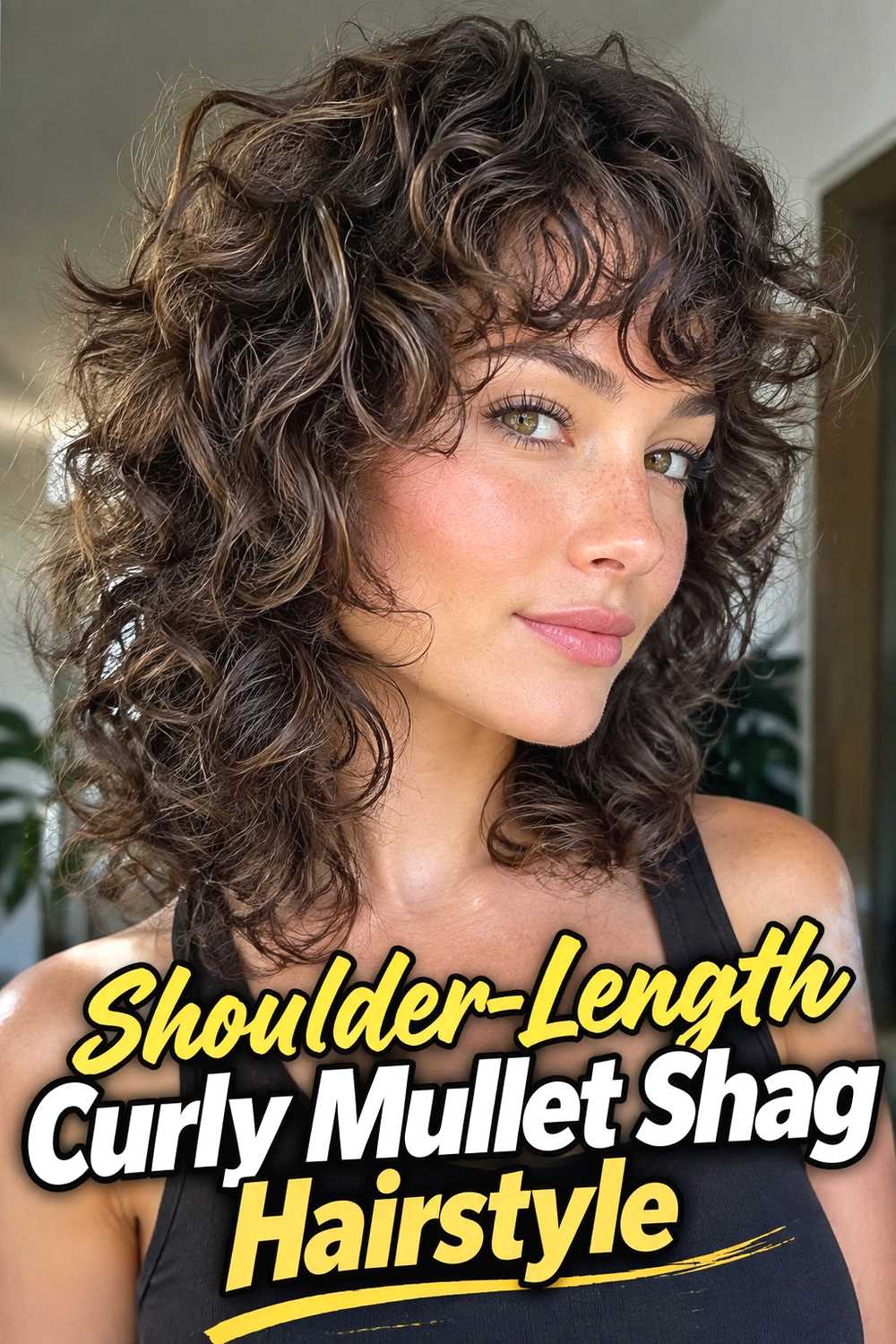
A shoulder-length curly mullet shag gives you more overall length while maintaining strong layering around the crown and face. Shorter curls create lift near the top, then gradually transition into longer sections that fall toward the shoulders and upper back. The extra length creates more visible movement in the lower layers and offers greater styling flexibility than a compact mullet. It also softens the short-to-long contrast because curls overlap through the mid-lengths. This version works well if you want a shaggy silhouette but are not ready to lose substantial length. Thoughtful weight removal is important so the bottom does not become too heavy while the crown appears overly short.
Hair Type & Length
This style needs enough dry length for the longest curls to reach the shoulders. Medium and dense textures may benefit from carefully placed internal layers.
12. Face Framing Curly Mullet Shag Hairstyle
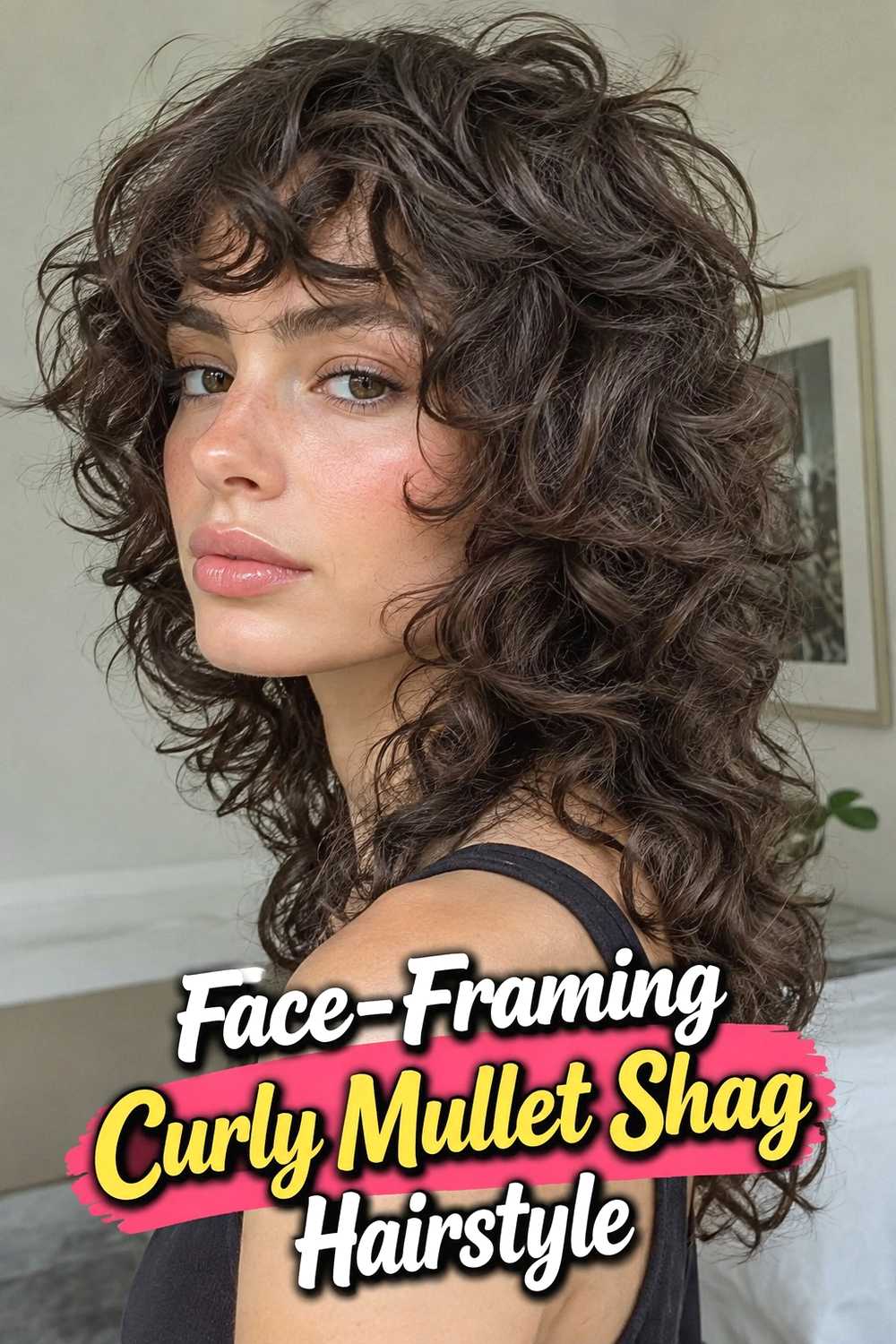
Face-framing curls give this mullet shag a softer front without requiring a traditional fringe. Shorter layers begin around the forehead, cheek area, or jaw and blend gradually into the sides. These pieces can fall forward, split naturally, or be tucked depending on how the curls settle. Behind them, the crown remains layered and lively, while longer back curls create the characteristic mullet extension. The graduated front is especially useful if you prefer flexibility and want the haircut to look different depending on the part or styling direction. Keeping the face-framing pieces connected to the crown prevents them from looking isolated. Dry shaping can also help ensure the shortest curls land at a comfortable length.
Best For
This approach works well if you want movement around the face but prefer adaptable front layers over fixed bangs.
13. Airy Layered Curly Mullet Shag Hairstyle
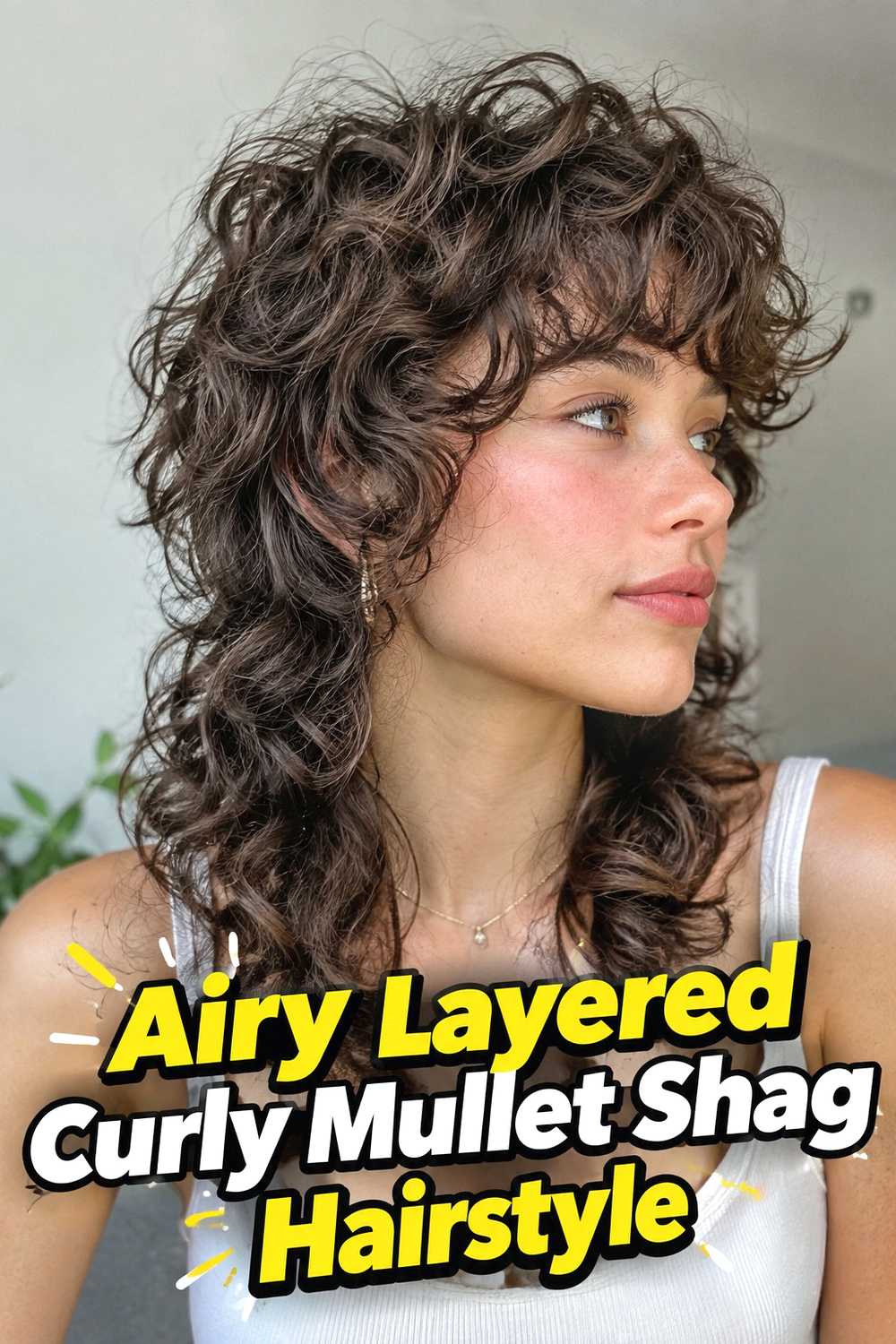
Airy layering creates a lighter curly mullet shag by reducing bulk in strategic areas while preserving enough density for the curls to retain their shape. The crown has short, mobile layers, the sides fall in soft separated groups, and the back extends into a nape that feels wispy rather than heavy. This version can be particularly appealing if your curls tend to form a dense triangular silhouette at medium lengths. The goal is not to thin the hair excessively but to create pockets of movement so the shag structure becomes easier to see. A lightweight styling routine supports the effect, allowing curls to spring naturally without being weighed down by rich products or excessive hold.
Why It Works
Strategic layering creates space between curl groups, making the crown, sides, and longer nape visually distinct while keeping the overall haircut cohesive.
14. Retro Curly Mullet Shag Hairstyle
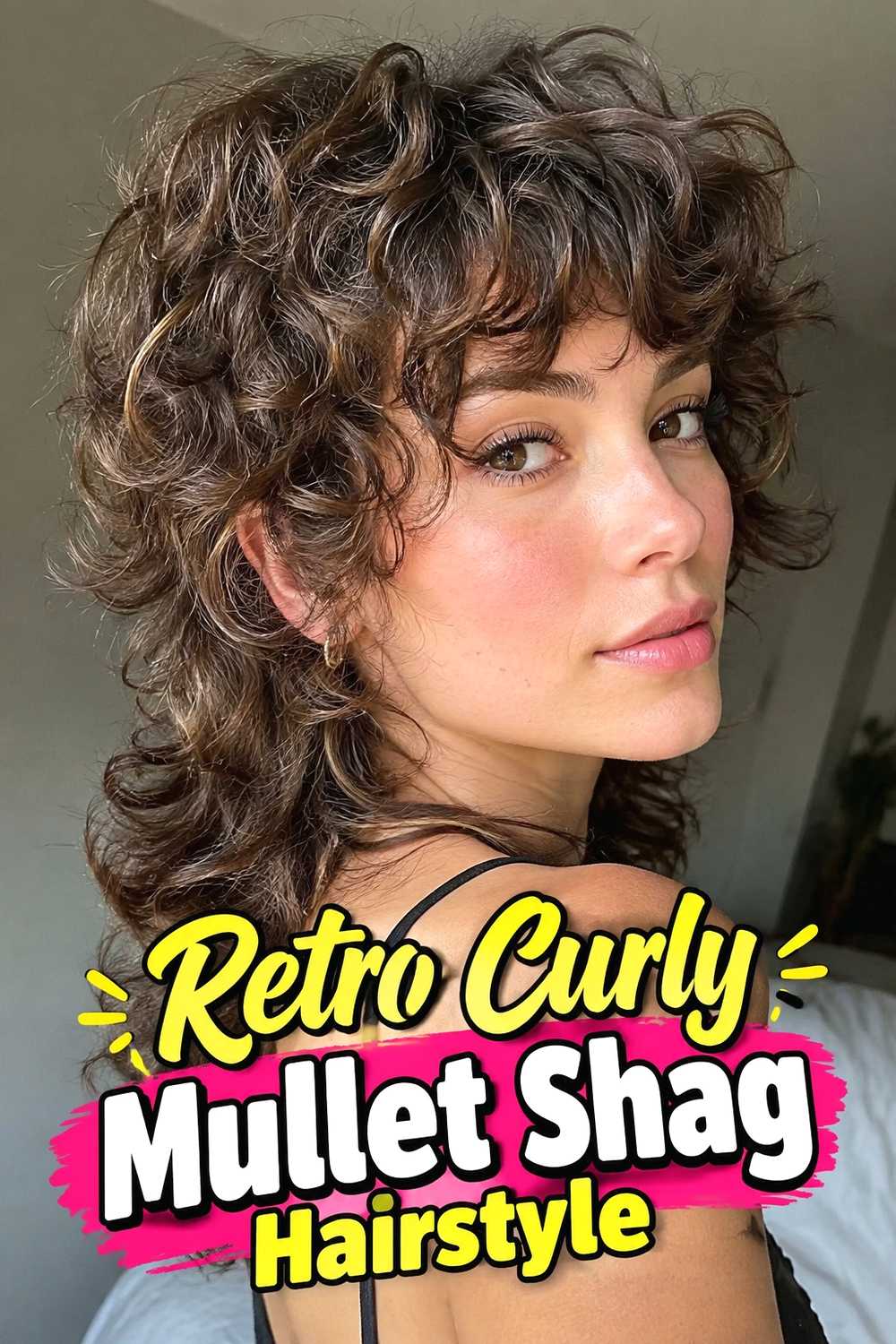
A retro curly mullet shag leans into vintage-inspired volume, flicked side pieces, and a longer, animated nape. The crown stays springy and slightly rounded, while curls near the ears can turn outward to create a more noticeable profile. At the front, a loose curly fringe ties the shape together without needing to be perfectly symmetrical. The back follows with longer curls that move against the neck instead of lying flat. To keep the retro reference wearable, avoid overly rigid styling or identical outward flips. Natural variation makes the shape feel current while still preserving its nostalgic character. This haircut is ideal if you enjoy visible personality and a silhouette that changes from every angle.
Styling Notes
Encourage outward movement in only a few side and nape curls. Leaving neighboring sections natural keeps the retro effect from looking overdone.
15. Grown Out Curly Mullet Shag Hairstyle

A grown-out curly mullet shag embraces extra length through every section while maintaining the layered architecture that gives the haircut its identity. Fringe curls become softer and longer, pieces around the ears begin to drop, and the nape develops more substantial movement toward the shoulders. Because curly hair naturally disguises small differences in length, this stage can look intentionally shaggy rather than unfinished when excess bulk is managed carefully. It is a practical option if you are transitioning from a shorter mullet, mixie, or shag and want to keep growing without losing shape. Occasional balancing through the crown and sides can preserve lift while allowing the useful back length to continue developing.
Wear & Maintenance
Ask for selective reshaping instead of an all-over trim. Removing weight only where needed helps the cut grow while keeping its shaggy proportions recognizable.
How to Choose the Right Look
Start by deciding how dramatic you want the mullet proportions to be. Short curly versions keep the difference between front and back subtle, while long-nape and grown-out styles make the elongated rear section much more noticeable.
Next, think about your preferred crown shape. Rounded and voluminous cuts create a fuller profile, fluffy versions emphasize softness, and airy layered styles reduce visual weight for a lighter finish.
Fringe also changes the personality of the haircut. Wispy bangs feel delicate, micro fringe creates a stronger statement, piecey bangs add visible separation, and face-framing layers provide more flexibility if you do not want traditional bangs.
Your curl pattern and shrinkage should guide the final lengths. Tighter curls may spring significantly shorter when dry, particularly around the forehead. Density matters as well, because heavy layering can remove too much fullness from finer hair, while denser curls may need thoughtful weight distribution.
Finally, consider maintenance. Tapered sides and micro bangs usually show growth sooner, while longer, fluffy, and grown-out versions are generally more forgiving between reshaping appointments.
Final Thoughts
Curly mullet shag haircuts can be compact, fluffy, dramatic, airy, or softly blended depending on how the fringe, crown, sides, and nape are shaped. Natural curl movement already brings much of the texture this haircut needs, so the goal is to support that pattern rather than over-control it. Choose proportions that suit your preferred volume, maintenance level, and dry curl length for a style that remains expressive and wearable.
FAQs
1. Does a curly mullet shag work with naturally curly hair?
Yes. Natural curls can emphasize the shag layers and soften the transition between shorter front sections and the longer nape.
2. What is the difference between a curly shag and a curly mullet shag?
A curly mullet shag generally has a more noticeable short-to-long progression, with relatively shorter sides or front layers and extra length through the nape.
3. Can I wear bangs with a curly mullet shag?
Yes. Wispy, micro, piecey, and fuller curly fringes can all work. The fringe length should account for how much the curls shrink after drying.
4. How can I keep a curly mullet shag from becoming too bulky?
Strategic layering and weight removal can help distribute volume through the crown, sides, and nape. The amount should be adjusted to your hair density and curl pattern.
5. Is a curly mullet shag difficult to grow out?
It can be fairly adaptable because the haircut already contains varied lengths. Selective reshaping can control bulk while allowing the sides and nape to continue growing.
Save your favorite curly mullet shag haircuts and share the looks that inspire your next layered curly haircut.