19 Curved Low Ponytail Hairstyle Ideas
Smooth at the base and softly sculpted through the length, these curved low ponytails add graceful movement without losing their clean, polished silhouette.
A curved low ponytail takes the simplicity of a nape-level ponytail and gives the hanging length a deliberate bend. That curve might appear as a smooth C-shaped end, a longer S-wave, or a softer sweep through the entire ponytail. Small changes in the part, crown volume, base wrap, and finish can make the style feel minimalist, romantic, editorial, or event-ready.
For the most believable result, the ponytail should begin at a natural tie point and retain realistic strand movement, weight, and shine rather than appearing stiff or disconnected from the head. Consider your length, density, preferred hold, and the amount of curve you want before choosing a version.
Quick List
- Classic Curved Low Ponytail Hairstyle
- Deep Side Part Curved Low Ponytail Hairstyle
- Center Part Curved Low Ponytail Hairstyle
- Glass Shine Curved Low Ponytail Hairstyle
- C Curve Ends Low Ponytail Hairstyle
- S Curve Length Low Ponytail Hairstyle
- Hair Wrapped Curved Low Ponytail Hairstyle
- Soft Wave Curved Low Ponytail Hairstyle
- Sculpted Side Sweep Curved Low Ponytail Hairstyle
- Tucked Behind The Ear Curved Low Ponytail Hairstyle
- Glossy Brunette Curved Low Ponytail Hairstyle
- Blonde Curved Low Ponytail Hairstyle
- Voluminous Crown Curved Low Ponytail Hairstyle
- Braided Base Curved Low Ponytail Hairstyle
- Ribbon Tied Curved Low Ponytail Hairstyle
- Pearl Detail Curved Low Ponytail Hairstyle
- Wedding Curved Low Ponytail Hairstyle
- Evening Glam Curved Low Ponytail Hairstyle
- Minimalist Curved Low Ponytail Hairstyle
1. Classic Curved Low Ponytail Hairstyle
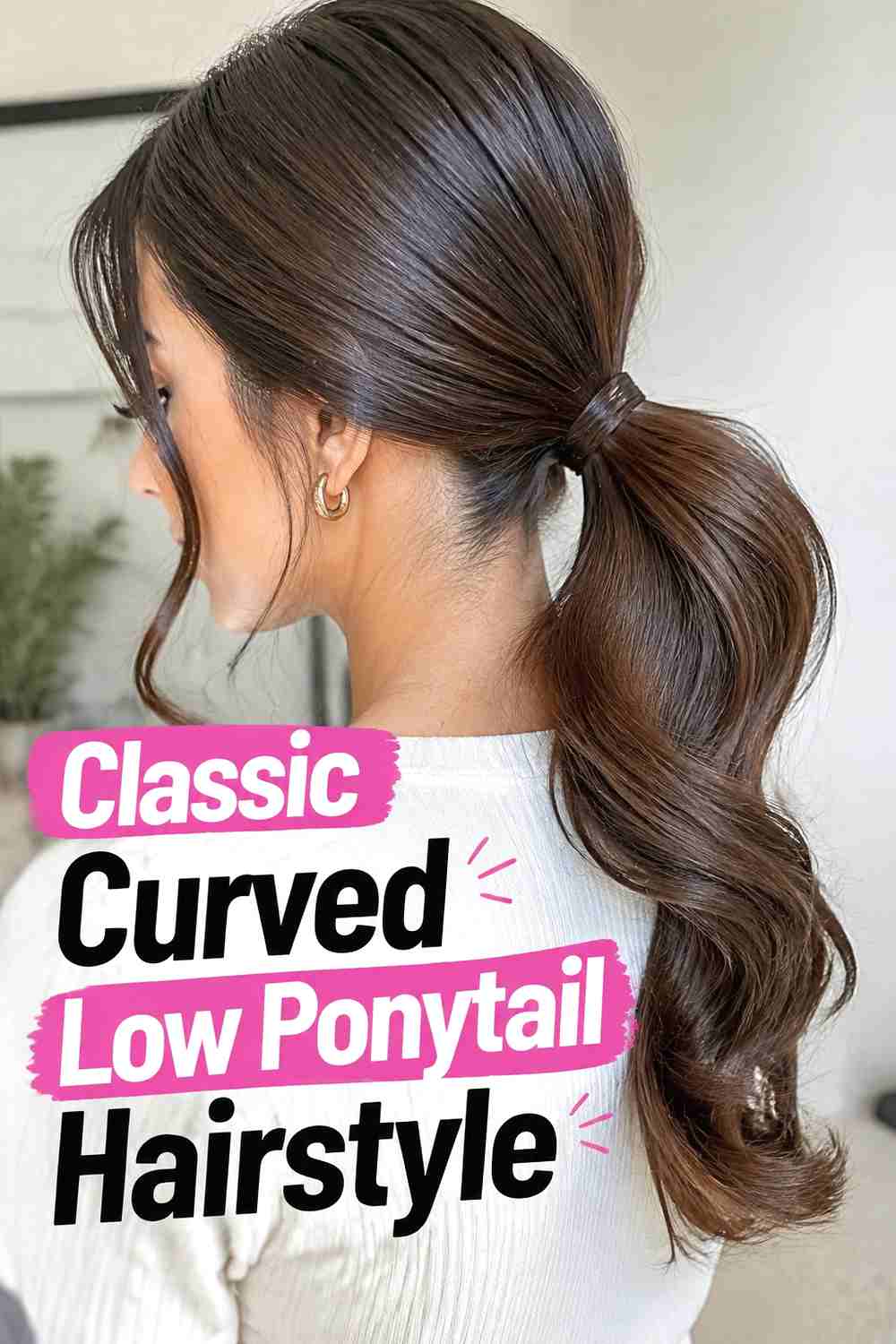
The classic curved low ponytail keeps the crown smooth and the base close to the nape, then introduces one broad bend through the hanging length. Instead of falling pin-straight, the ponytail curves gently inward or slightly to one side, giving a simple style a more deliberate finish. Medium to long hair works especially well because there is enough length for the bend to look gradual rather than abrupt. Secure the ponytail first, smooth the surface, then shape the lower half with a large round brush or heat tool suited to your routine. Keep the curve broad and flexible so the hair still swings naturally instead of appearing set into a rigid arc.
Styling Notes
Shape the curve after the ponytail is secured. This makes it easier to see where the bend should begin in relation to the nape and overall length.
2. Deep Side Part Curved Low Ponytail Hairstyle
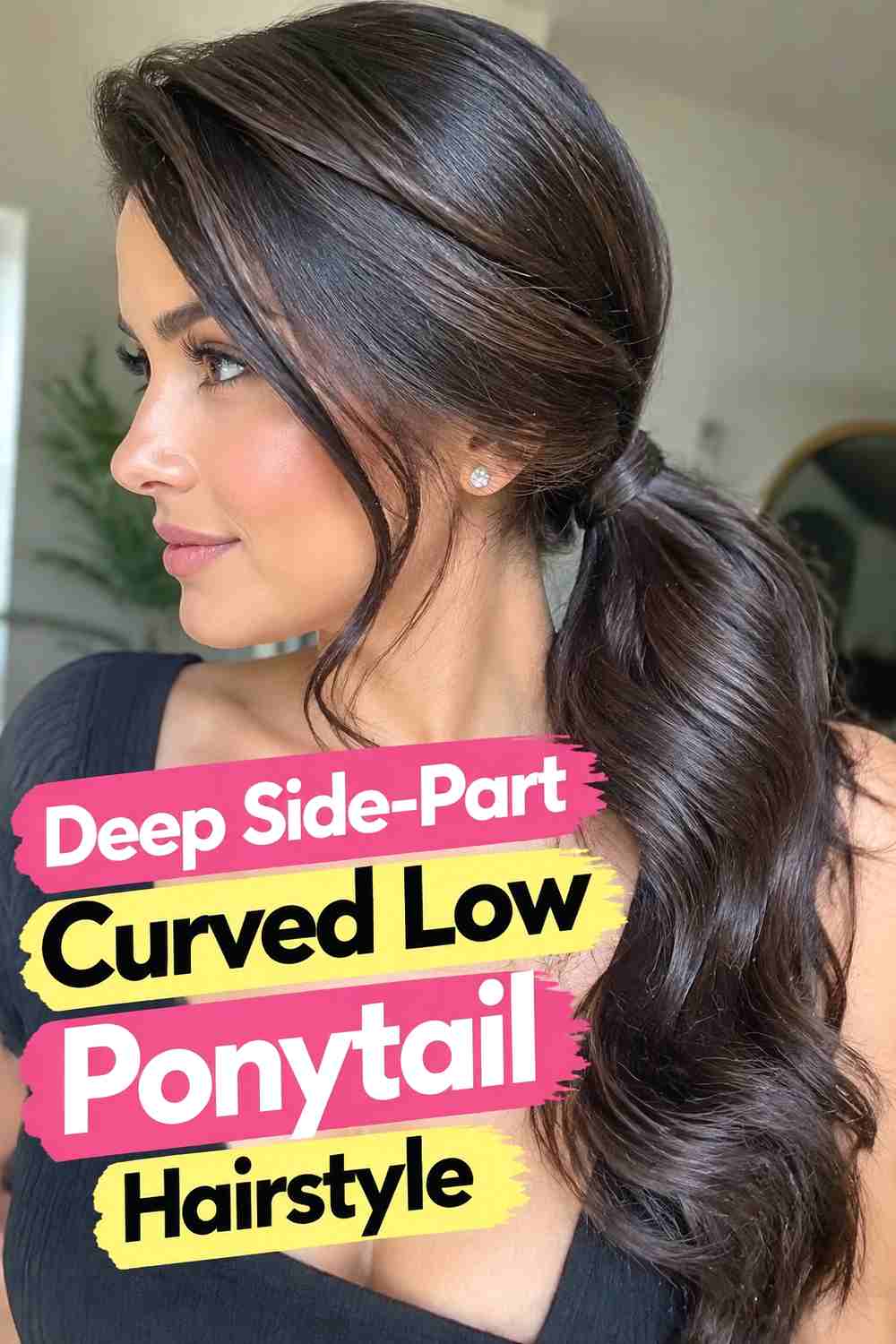
A deep side part creates a dramatic front sweep before the hair meets a softly curved ponytail at the nape. The heavier front section can travel smoothly across the temple, giving the style direction even before the ponytail’s bend becomes visible. Keep the base compact and low, then form a broad curve through the mid-lengths and ends rather than curling the tail into a ringlet. This works particularly well on medium-long and long hair because the front sweep and curved back create a balanced silhouette. A lightweight smoothing product helps control the parted surface, while flexible finishing spray can support the bend without making the ponytail lose its natural swing.
Best For
Choose this variation when you want a stronger, more polished front profile while keeping the ponytail itself simple and softly sculpted.
3. Center Part Curved Low Ponytail Hairstyle
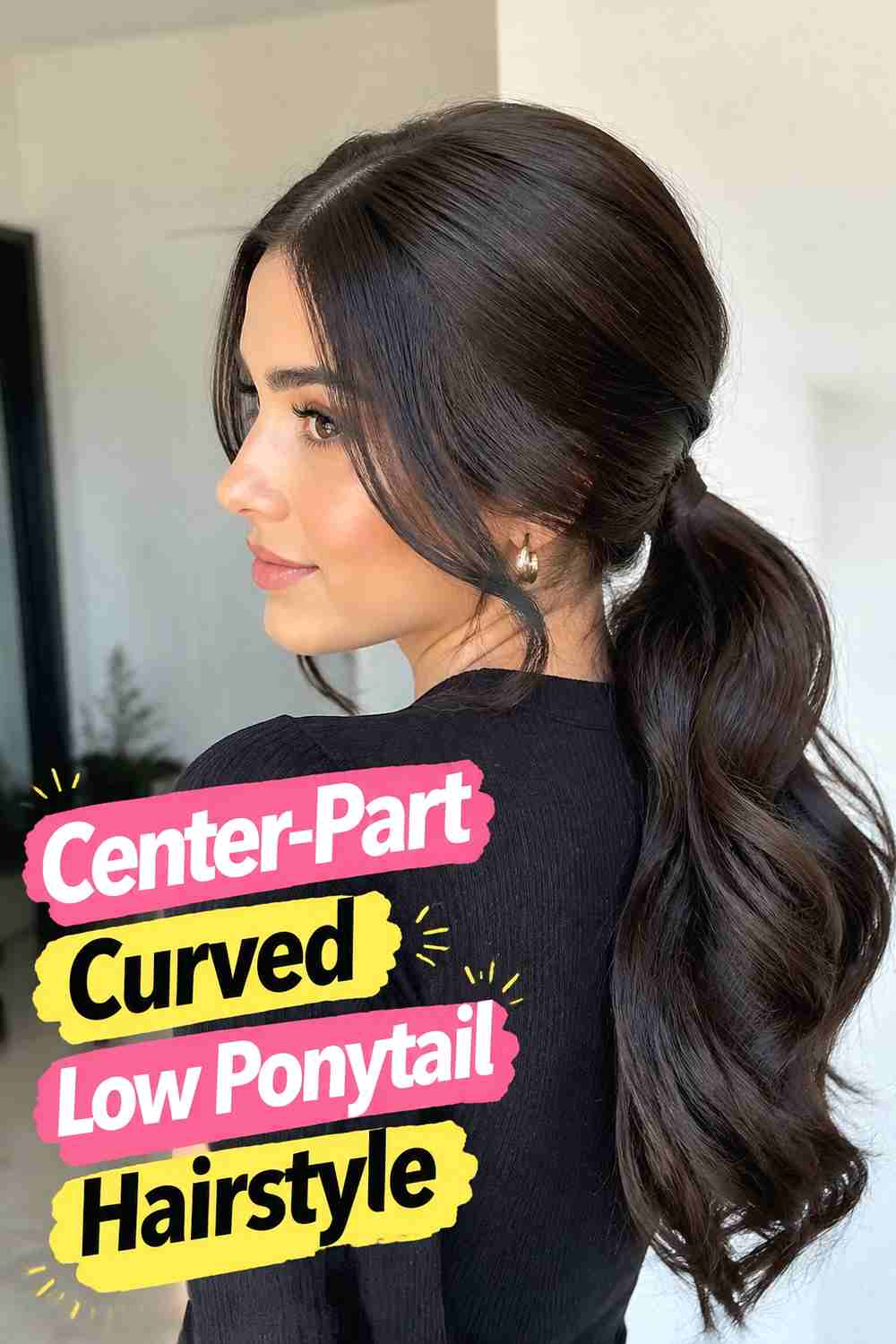
A center part gives the curved low ponytail a balanced, contemporary look. Both sides lie smoothly toward the nape while the ponytail introduces movement below the elastic, preventing the hairstyle from feeling overly severe. This version works nicely on medium and long hair, particularly when the front sections are long enough to blend cleanly into the base. Establish the part before gathering the hair, use even tension on both sides, and secure the ponytail low. Shape the tail into a broad curve afterward, keeping the bend smooth rather than tightly curled. A little natural lift at the crown can prevent the symmetrical front from looking flat while preserving the streamlined character of the hairstyle.
Styling Notes
Keep the curve simple when the part is highly symmetrical. One clean bend often creates a stronger result than several smaller waves competing with the center-parted front.
4. Glass Shine Curved Low Ponytail Hairstyle
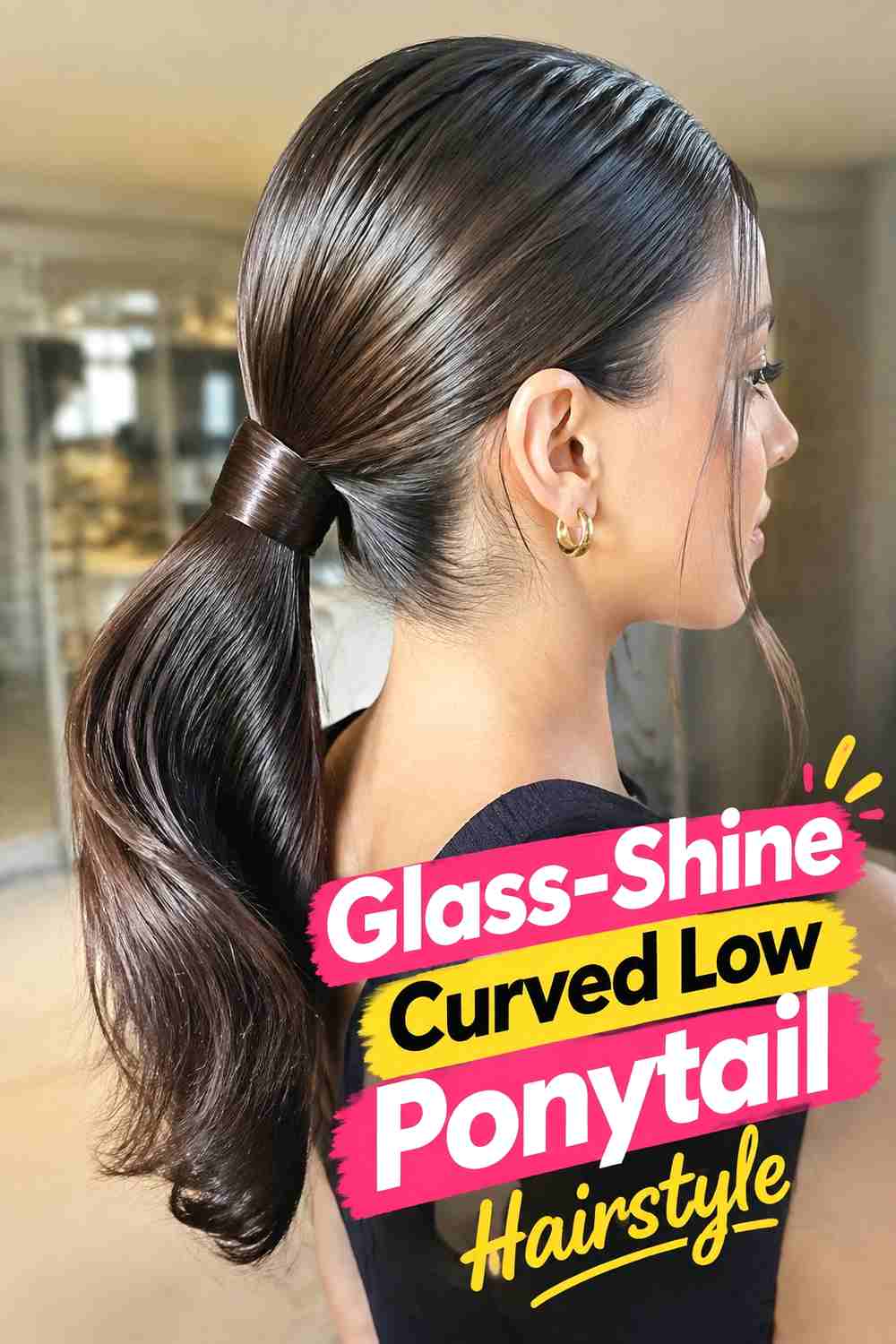
Glass-shine styling emphasizes the smooth surface of a curved ponytail so light reflects along the entire bend. The roots stay polished and aligned, while the ponytail forms one glossy arc that makes the shape especially easy to see. Start with smooth preparation rather than relying solely on finishing oil, since excess product can weigh down the curve. Secure the ponytail at the nape, refine the length, then create a controlled C- or S-shaped bend depending on the hair length. Use only a tiny amount of serum through the outer surface and ends. The most convincing finish still shows individual strands, natural weight, and movement even though the overall texture appears sleek and highly reflective.
Pro Tip
Apply shine product after shaping the curve. This reduces the chance of making the hair too slippery to hold the intended bend.
5. C Curve Ends Low Ponytail Hairstyle
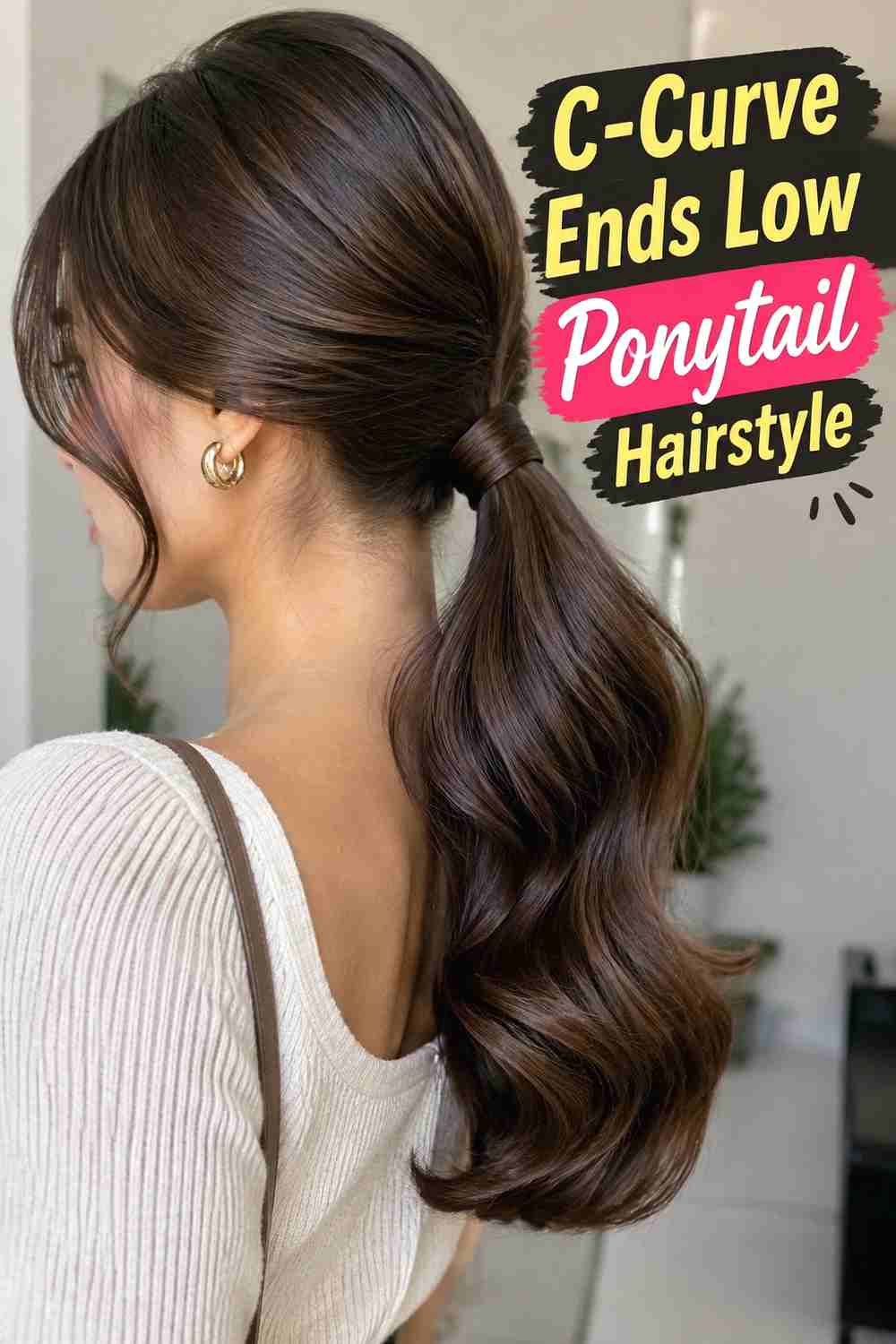
The C-curve version keeps most of the ponytail relatively straight, then turns the final section into a smooth rounded bend. The shape can curve inward toward the back or sweep slightly outward for a more playful finish. Because the upper length stays clean and simple, the end movement becomes the main detail. This style works on medium to long hair and looks especially clear on a blunt or tidy perimeter. Secure the ponytail low, smooth the length, and shape only the last few inches with a large barrel or round brush. Keep the curve soft enough to look connected to the straight section above rather than creating a sudden, tightly curled tip.
Why It Works
Concentrating movement at the ends adds personality without changing the streamlined shape of the crown and upper ponytail.
6. S Curve Length Low Ponytail Hairstyle
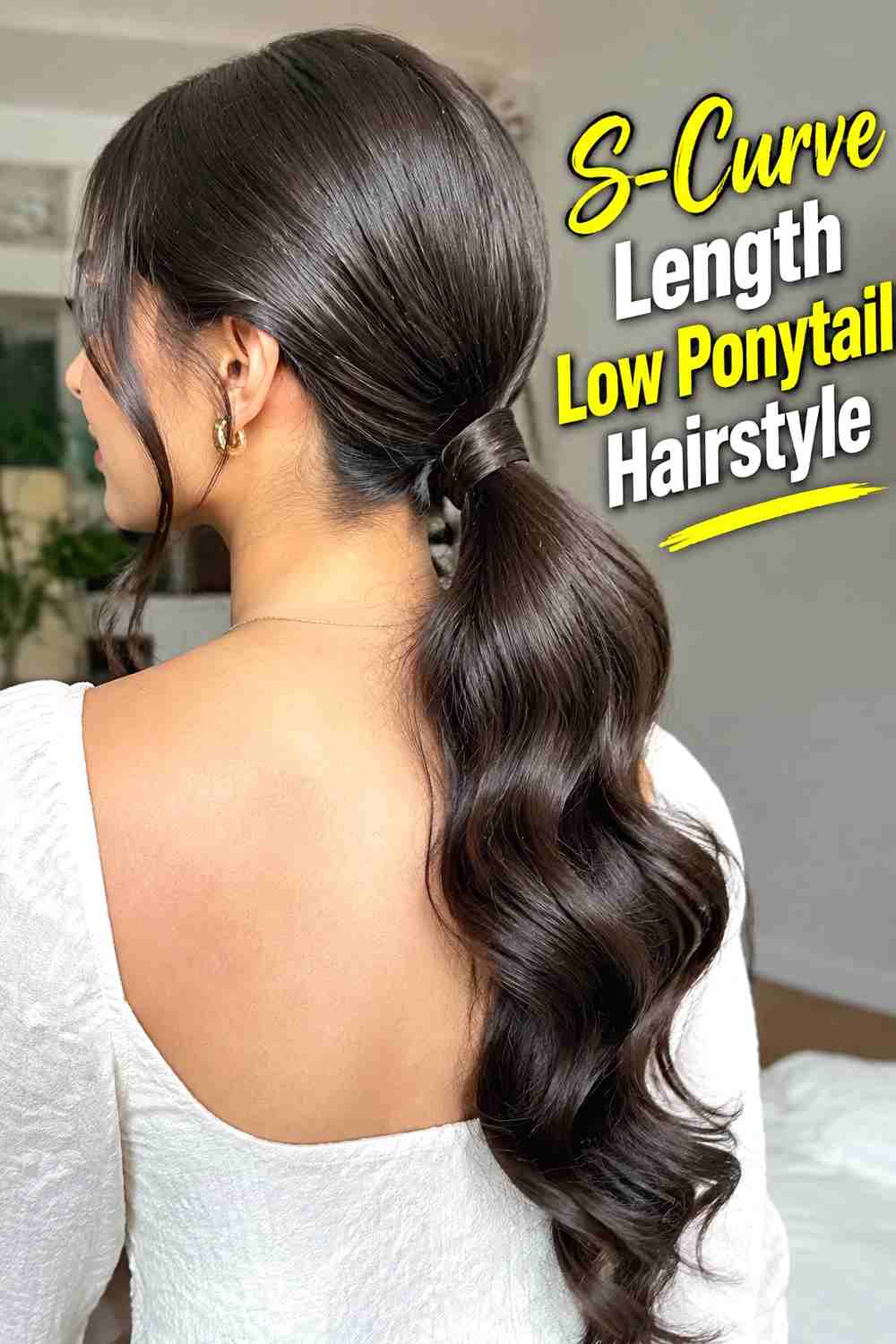
An S-curve gives the low ponytail more movement by creating two broad bends through the hanging length. The first curve moves in one direction, while the second reverses gently, producing a flowing shape rather than a conventional curl. Longer hair shows this pattern most clearly because the bends have enough room to develop without becoming compressed. Secure the ponytail at the nape and shape the length in large sections, allowing each bend to cool before adjusting it. Brush lightly only if needed to soften tool marks. The finished pattern should look continuous and fluid, with enough flexibility for the tail to move naturally instead of holding a perfectly fixed S-shape.
Hair Type & Length
Long and medium-long hair are the easiest lengths for this version because they provide enough space for two visible bends beneath the low base.
7. Hair Wrapped Curved Low Ponytail Hairstyle
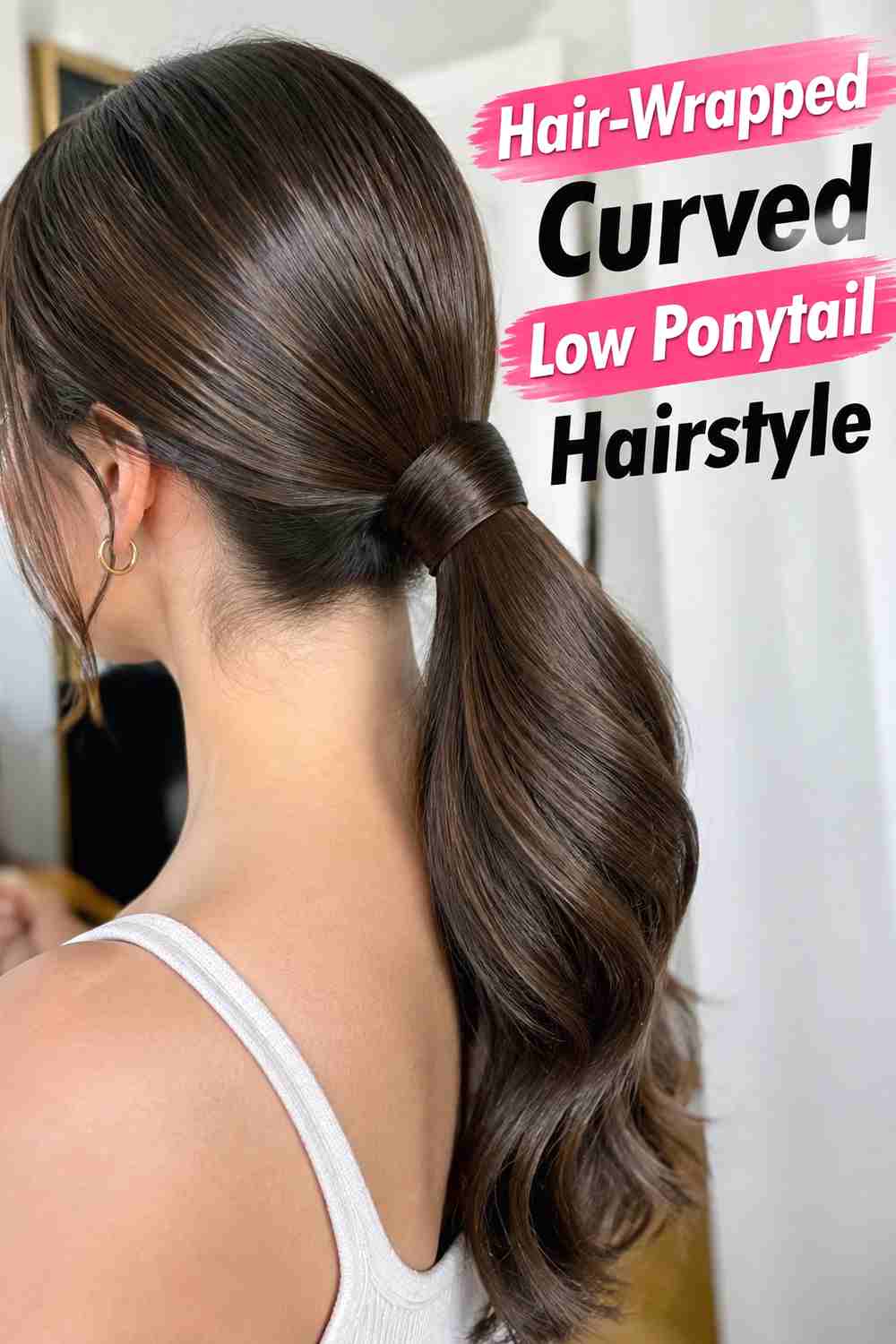
A hair-wrapped base adds a clean finishing detail while the curved length provides movement below. After securing the ponytail at the nape, take a narrow section from underneath and wrap it around the elastic, pinning the end discreetly beneath the base. Then shape the hanging length into a broad curve or soft S-bend. Keeping the wrap sleek helps distinguish it from the movement in the ponytail itself. This variation is versatile enough for work, dinners, and formal styling because it hides the elastic without introducing a separate accessory. Keep the wrapped section narrow and firmly placed so the base remains compact rather than becoming bulky.
Styling Notes
Form the wrap before creating the final curve. This prevents the shaping process from disturbing the small section used to conceal the elastic.
8. Soft Wave Curved Low Ponytail Hairstyle
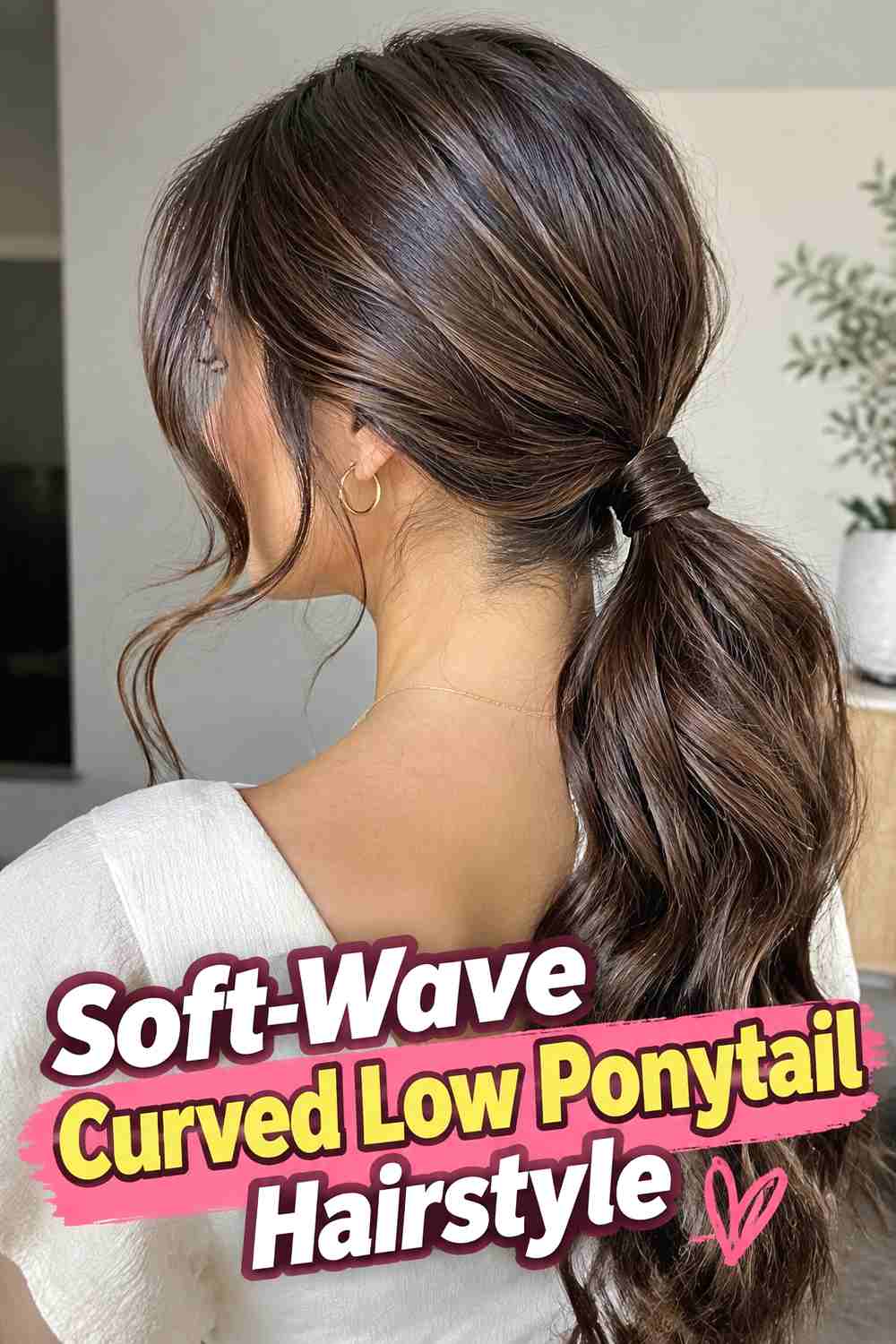
Soft waves create a more relaxed interpretation of the curved ponytail by allowing several gentle bends to flow through the length. The roots can remain polished or slightly softer depending on the occasion, but the low nape placement keeps the overall shape refined. Instead of tightly curling individual sections, use broad waves that merge into one flowing tail. This works particularly well on layered medium-long and long hair, where different lengths can create natural variation. Style the waves either before or after tying the ponytail, then loosen them with your fingers so they blend together. Flexible hold is useful here because the finished tail should move freely while maintaining its overall curved direction.
Best For
This version suits anyone who wants more movement than a single C-curve but prefers something softer and less structured than sculpted S-waves.
9. Sculpted Side Sweep Curved Low Ponytail Hairstyle
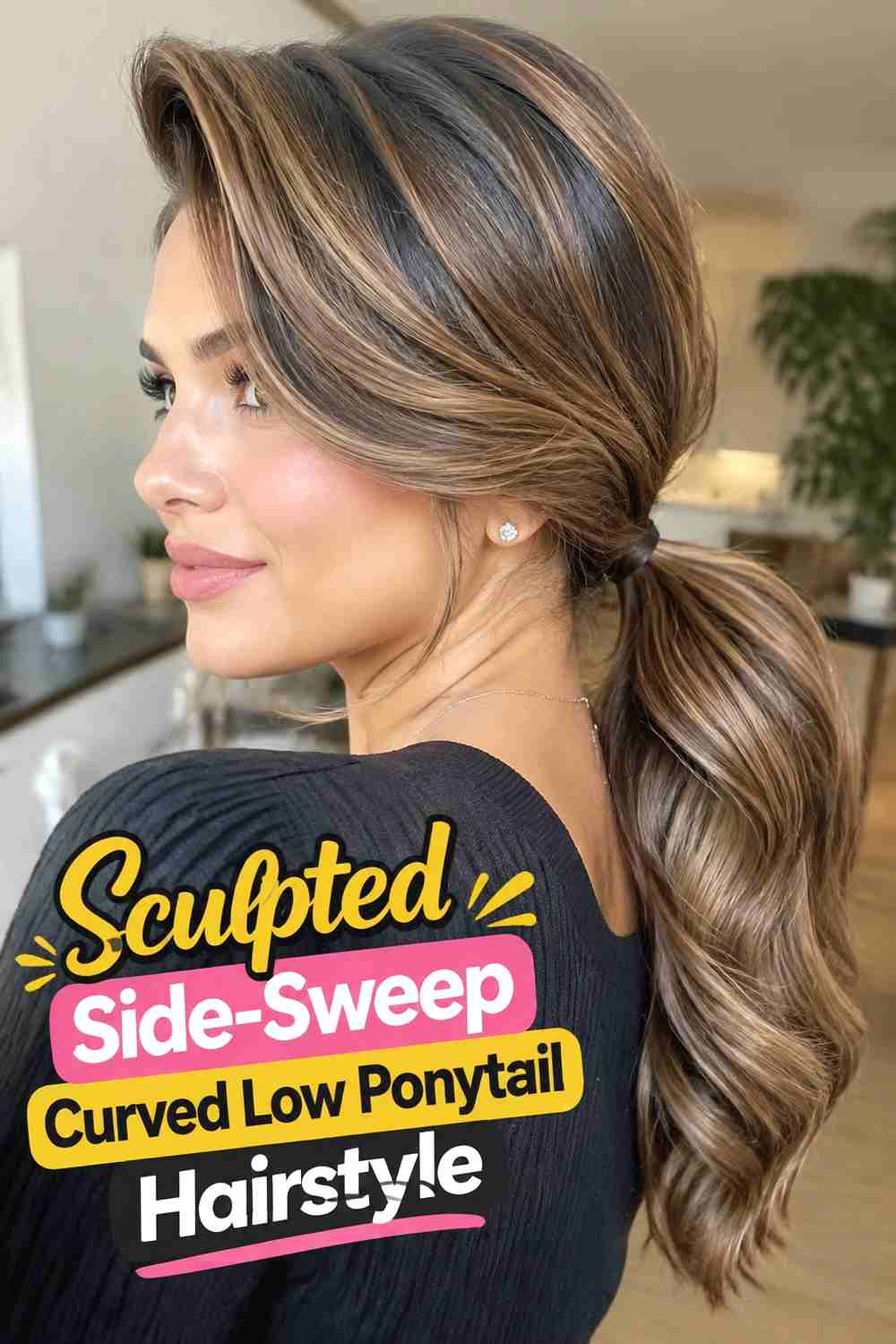
A sculpted side sweep makes the front of the hairstyle as important as the ponytail itself. The heavier section follows a smooth curve across the forehead or temple before feeding into the low base, while the ponytail continues that sense of movement with a deliberate bend through the length. This creates a cohesive, polished silhouette from front to back. Establish the sweep before securing the elastic, using light styling product and a fine comb for control. Once the low base is fixed, shape the ponytail into one broad curve rather than multiple curls. Keep the crown relatively flat so the sculpted front line remains clear and does not compete with unnecessary volume.
Why It Works
Repeating curved lines at the front and through the ponytail creates a visually connected shape without requiring decorative accessories.
10. Tucked Behind The Ear Curved Low Ponytail Hairstyle
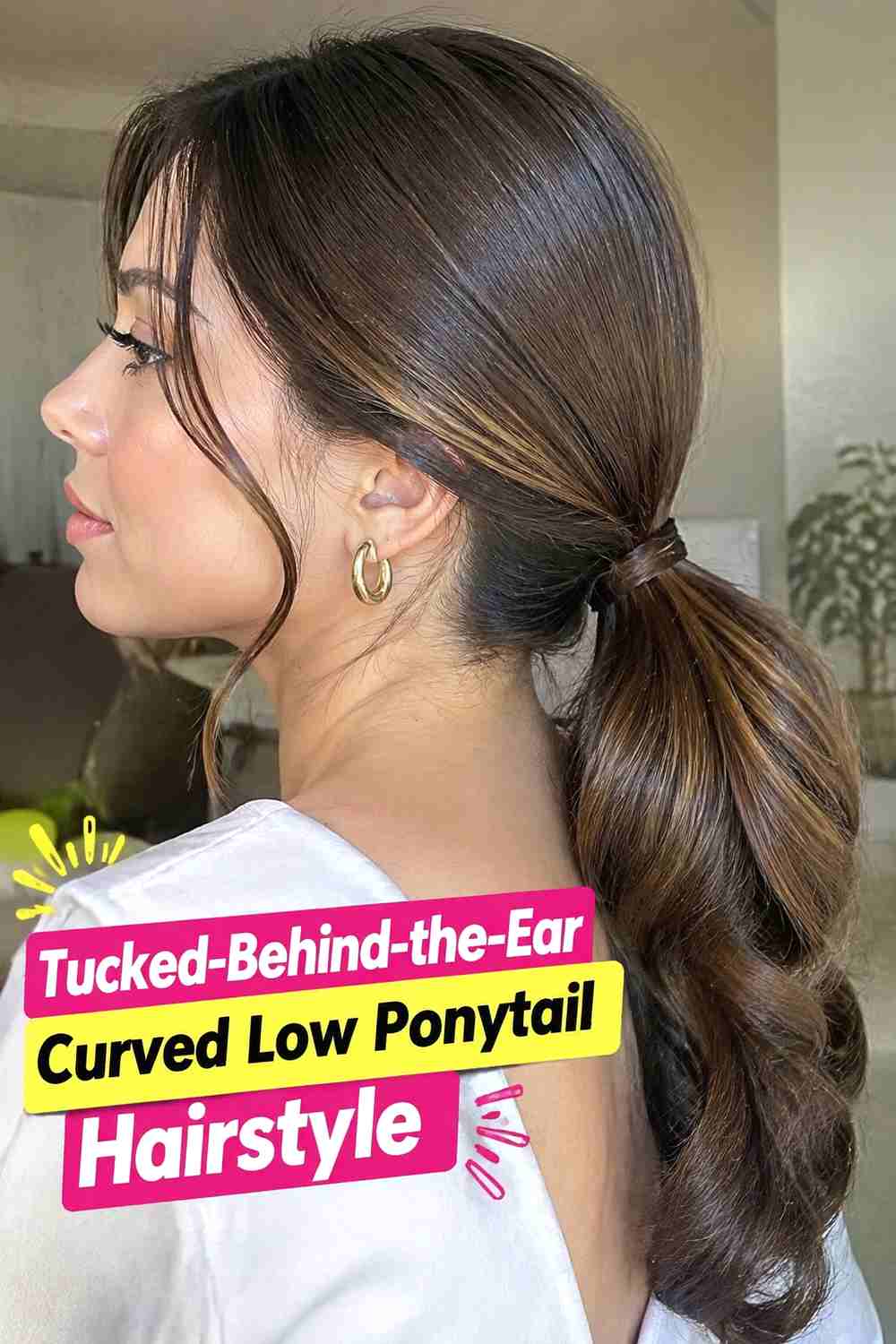
Tucking one side behind the ear softens the front while introducing subtle asymmetry to the low ponytail. The opposite side can retain a gentle sweep, and the ponytail itself curves naturally beneath the nape. This version is useful when you want to reveal earrings or the neckline without making the hairstyle dramatically side-parted. Secure the tuck first if needed with a hidden pin, then gather the hair into a low ponytail while keeping the exposed side smooth. Shape the hanging length into a broad bend, allowing the ends to remain flexible. The contrast between the open ear and softly curved tail gives the hairstyle a polished but approachable finish.
Best For
Choose this style for dinners, professional events, or occasions where jewelry and neckline details deserve more visibility.
11. Glossy Brunette Curved Low Ponytail Hairstyle
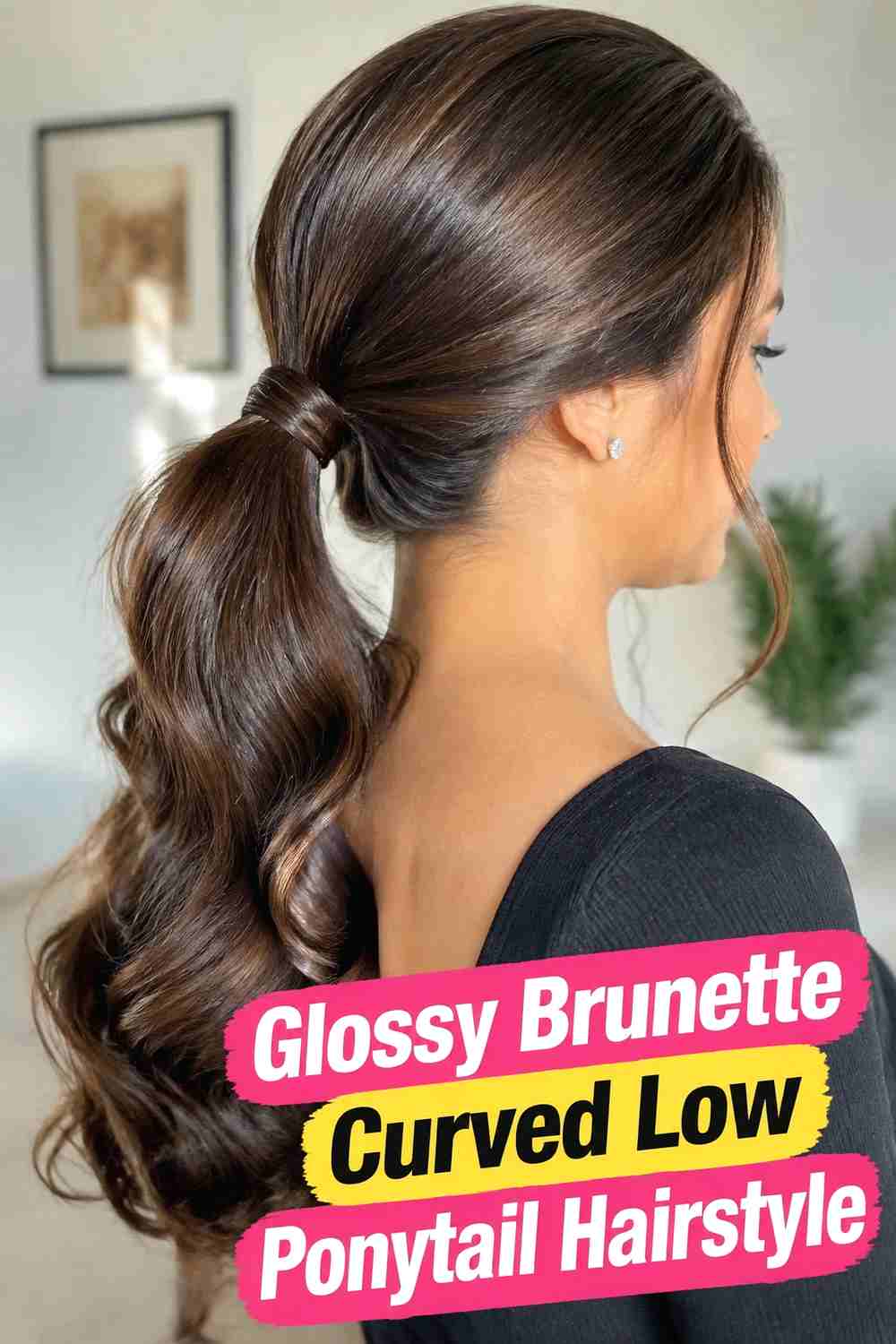
Brunette hair can make the curve of a low ponytail especially visible because deeper tones create strong ribbons of reflected light along smooth bends. Chocolate, espresso, and rich neutral brown shades all work beautifully with a polished nape base and controlled length. Keep the upper hair sleek, then create a broad curve through the ponytail so light shifts naturally across its surface. A smoothing product before styling usually gives a cleaner effect than adding large amounts of oil afterward. Finish with a tiny amount of serum through the mid-lengths and ends, leaving the roots fresher. The result should appear luminous and dimensional without making the tail look heavy or artificially coated.
Why It Works
Dark tones naturally emphasize the highlights and shadows created by a curved surface, making even a simple bend look more dimensional.
12. Blonde Curved Low Ponytail Hairstyle
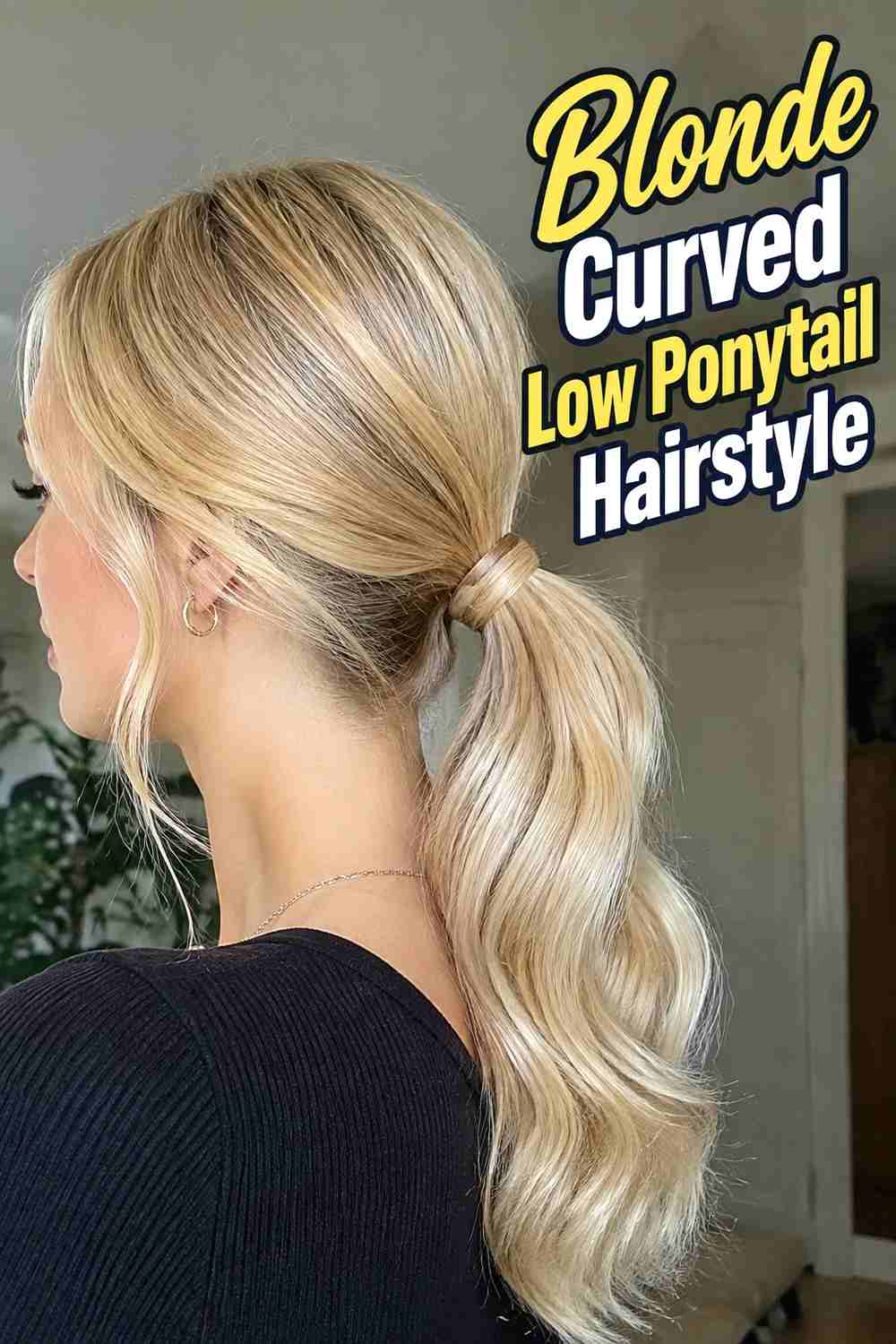
Blonde hair brings a lighter, airier feeling to the curved low ponytail, especially when highlights or balayage reveal several tones through the bend. Keep the crown smooth but not overly saturated with product, then secure the ponytail at the nape and shape the lower length into a soft curve. The movement helps lighter and deeper pieces alternate as the hair bends, making the color dimension more noticeable. Straight upper lengths with one rounded end curve create a particularly clean result, while a subtle S-shape offers extra movement. Use lightweight smoothing products so the ponytail stays bright and flexible instead of becoming separated into coated-looking strands.
Pro Tip
Rely on smooth alignment for shine before reaching for extra gloss products. Lighter hair often needs less finishing oil for the curved shape to remain visible.
13. Voluminous Crown Curved Low Ponytail Hairstyle
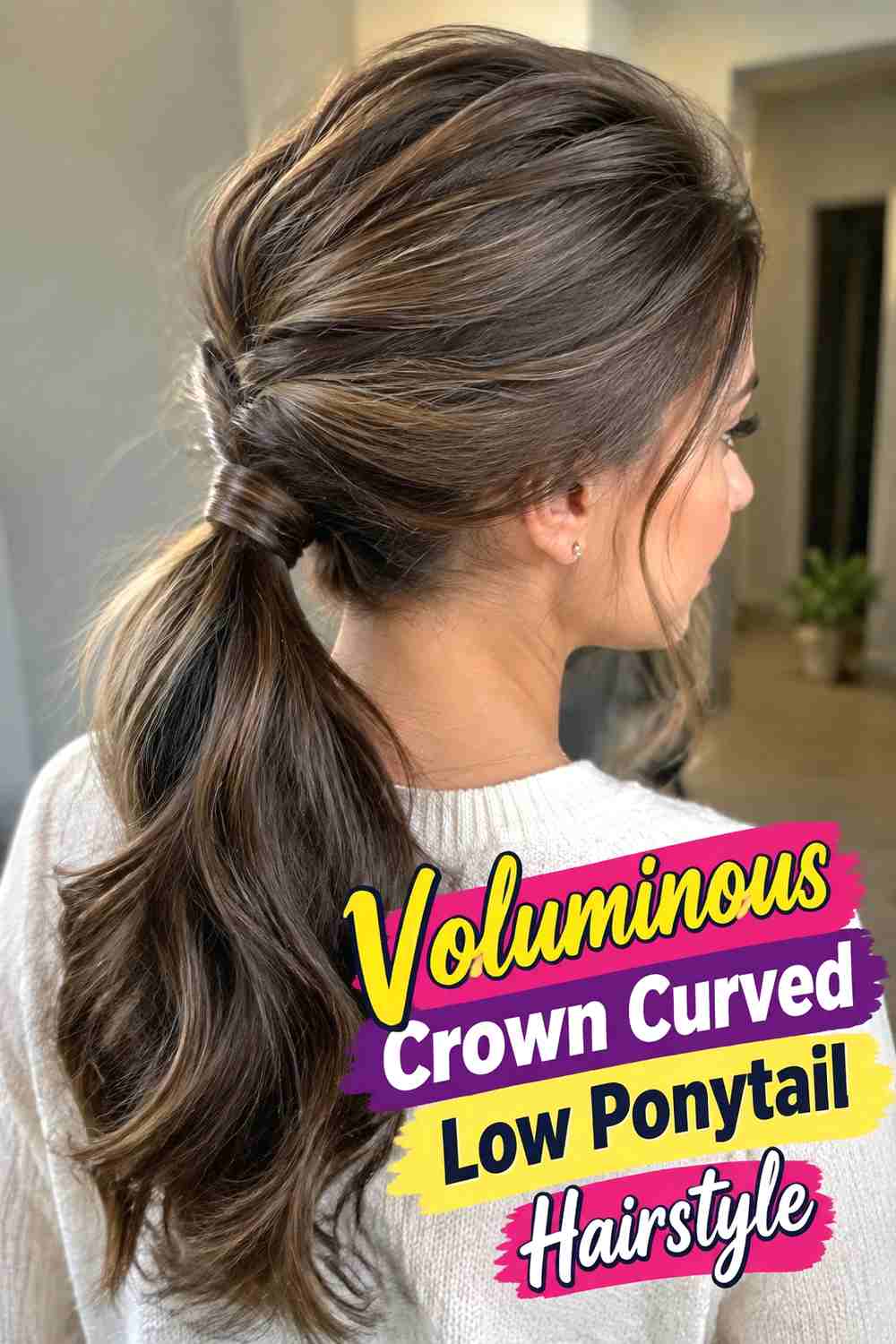
A softly lifted crown adds fullness above the low base while the ponytail maintains a deliberate curved finish below. The volume should stay gentle and rounded rather than turning into a formal teased bump. Prep the roots with lightweight support if needed, gather the hair at the nape without flattening the top, and secure the ponytail before adjusting the crown. Use your fingertips to lift several small areas instead of pulling one large section upward. Shape the ponytail into a broad C-curve or soft S-bend to balance the fullness above. The final silhouette works especially well on medium-density or layered hair, where crown volume and tail movement can remain visible without looking oversized.
Hair Type & Length
Medium to long hair works best, while fine hair may benefit from light root support and dense hair may need less added volume at the crown.
14. Braided Base Curved Low Ponytail Hairstyle
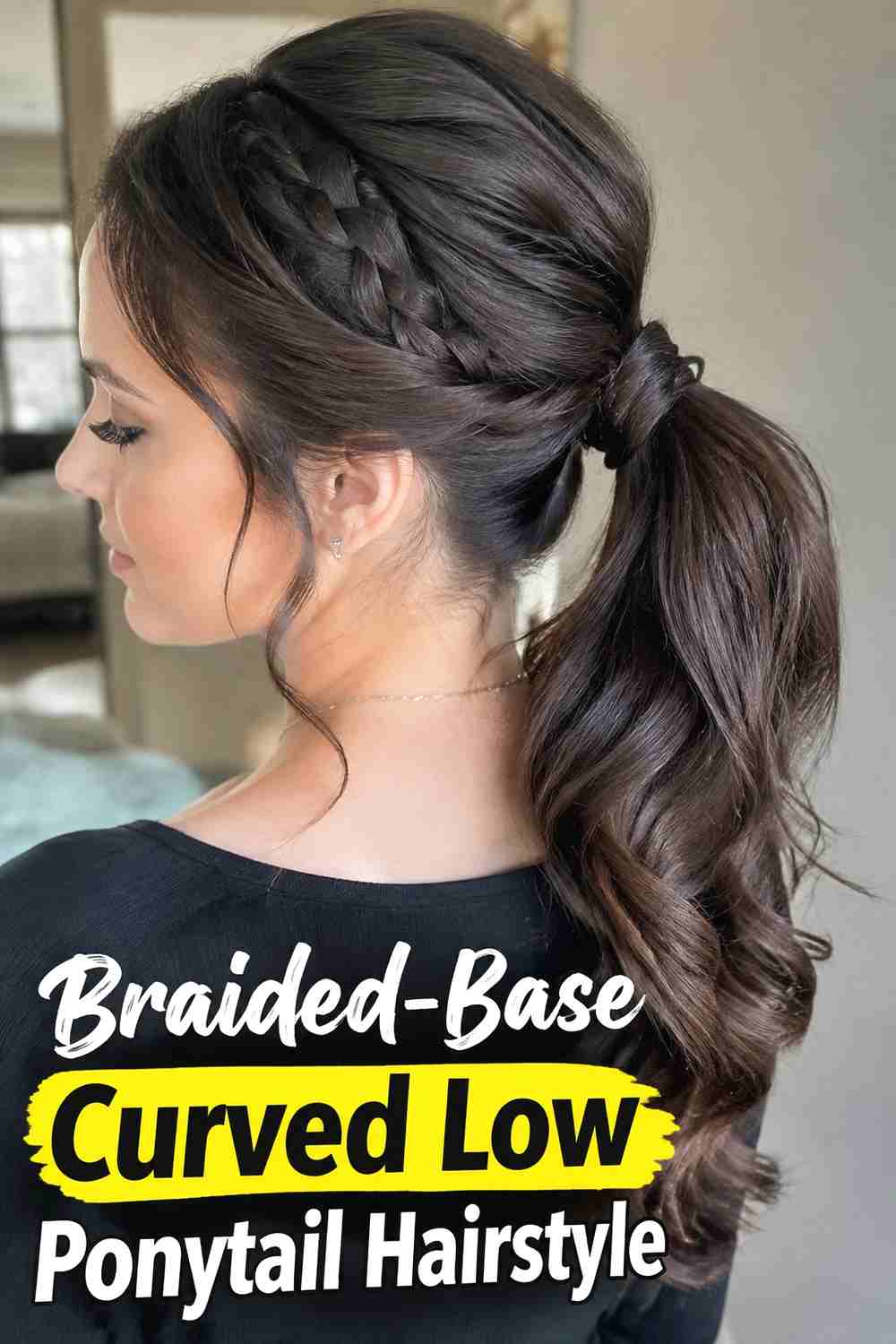
A braided base adds texture near the elastic while leaving the ponytail itself smooth and curved. Create one or two narrow braids from side sections and bring them toward the nape, where they can wrap around or blend into the ponytail base. The braid should remain a secondary detail so the curved hanging length stays visually important. Once everything is secured, shape the tail into a broad bend and smooth only the outer surface. This version is particularly effective on long hair because there is enough length for both the braided detail and a visible curve below. Keep the braid physically believable and comfortably tensioned rather than pulling the side sections too tightly.
Styling Notes
Secure the main ponytail independently before pinning the braids around the base. This keeps the decorative detail from carrying the weight of the entire hairstyle.
15. Ribbon Tied Curved Low Ponytail Hairstyle
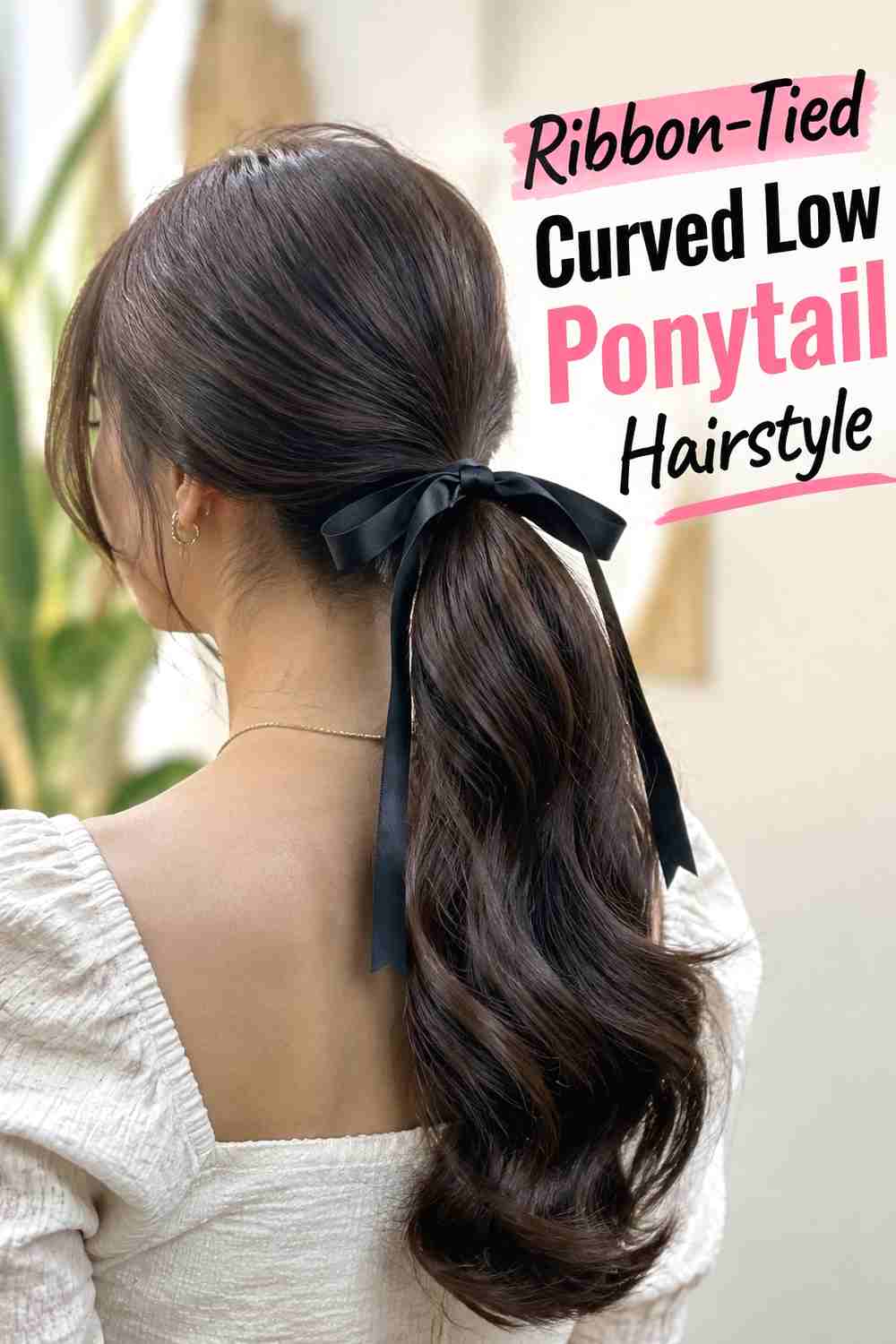
A ribbon adds softness to the curved low ponytail without changing its simple structure. Build the ponytail first with a secure elastic at the nape, shape the length into a gentle curve, and then tie a narrow ribbon around the base. Let the ribbon ends fall naturally alongside the ponytail rather than making an oversized bow that competes with the hair. This detail pairs beautifully with soft C-curves or relaxed waves because both have a feminine, easy movement. Choose a lightweight ribbon so it does not pull down the base or distort the curve. The accessory should decorate the finished hairstyle rather than serve as the primary method of securing the ponytail.
Wear & Maintenance
Always keep a secure elastic underneath the ribbon. That allows you to retie or remove the accessory without changing the position of the low ponytail.
16. Pearl Detail Curved Low Ponytail Hairstyle
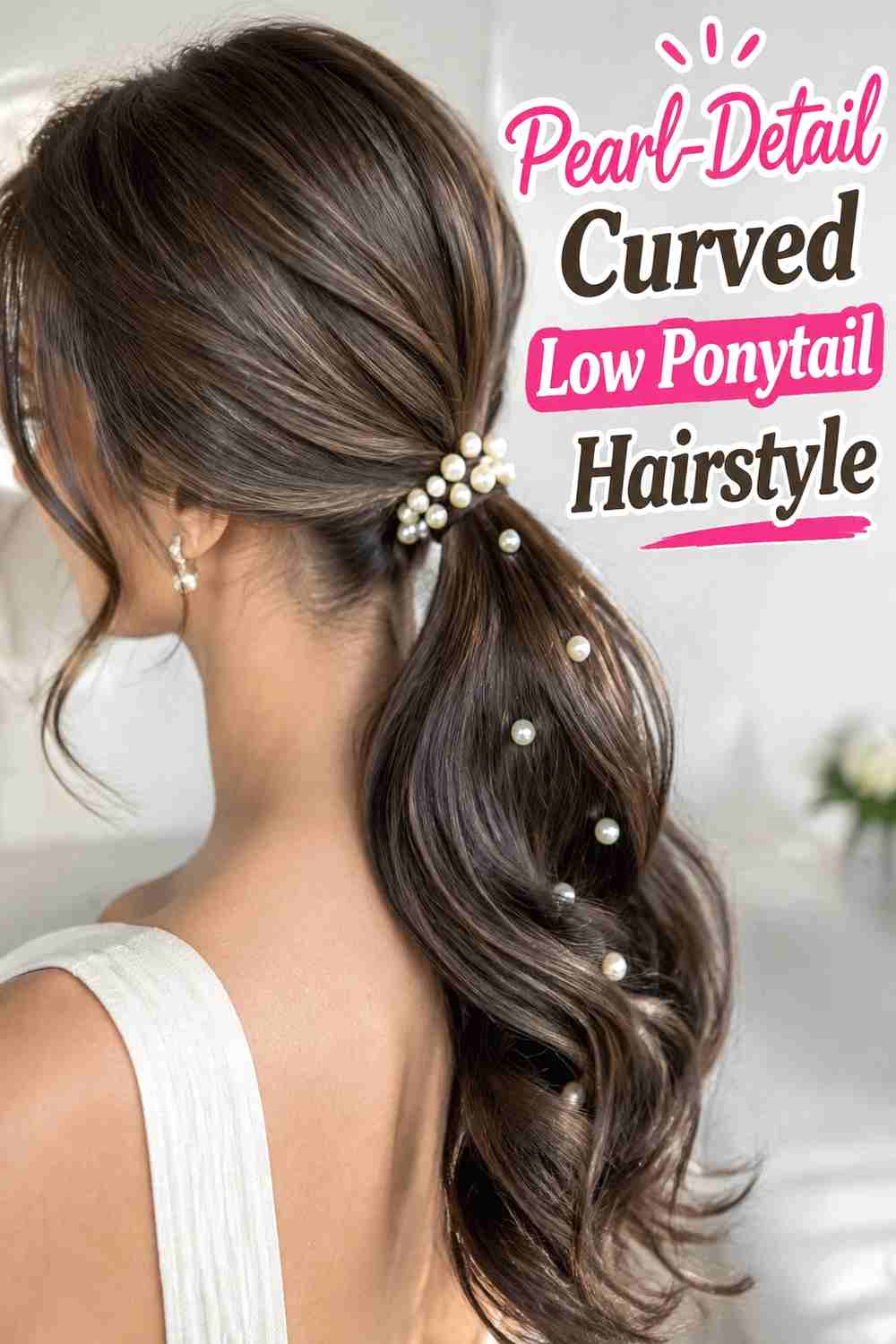
Pearl accents give the curved ponytail a subtle formal upgrade while keeping the overall shape clean. After creating the low base and sculpting the ponytail’s bend, place a small pearl barrette, pin cluster, or a few individual pearl pins near the elastic. Keep the decoration concentrated around the base rather than scattering it through the curved length, which could distract from the shape. The hairstyle works particularly well with a smooth crown and polished ends, allowing the accessory to feel intentional rather than overly ornate. Structural elastics and pins should hold the hairstyle independently so the pearl detail remains decorative and can be repositioned without affecting the ponytail.
Pro Tip
Add pearl accessories last, after the base and curve are fully finished. This protects the decoration from being disturbed during shaping.
17. Wedding Curved Low Ponytail Hairstyle
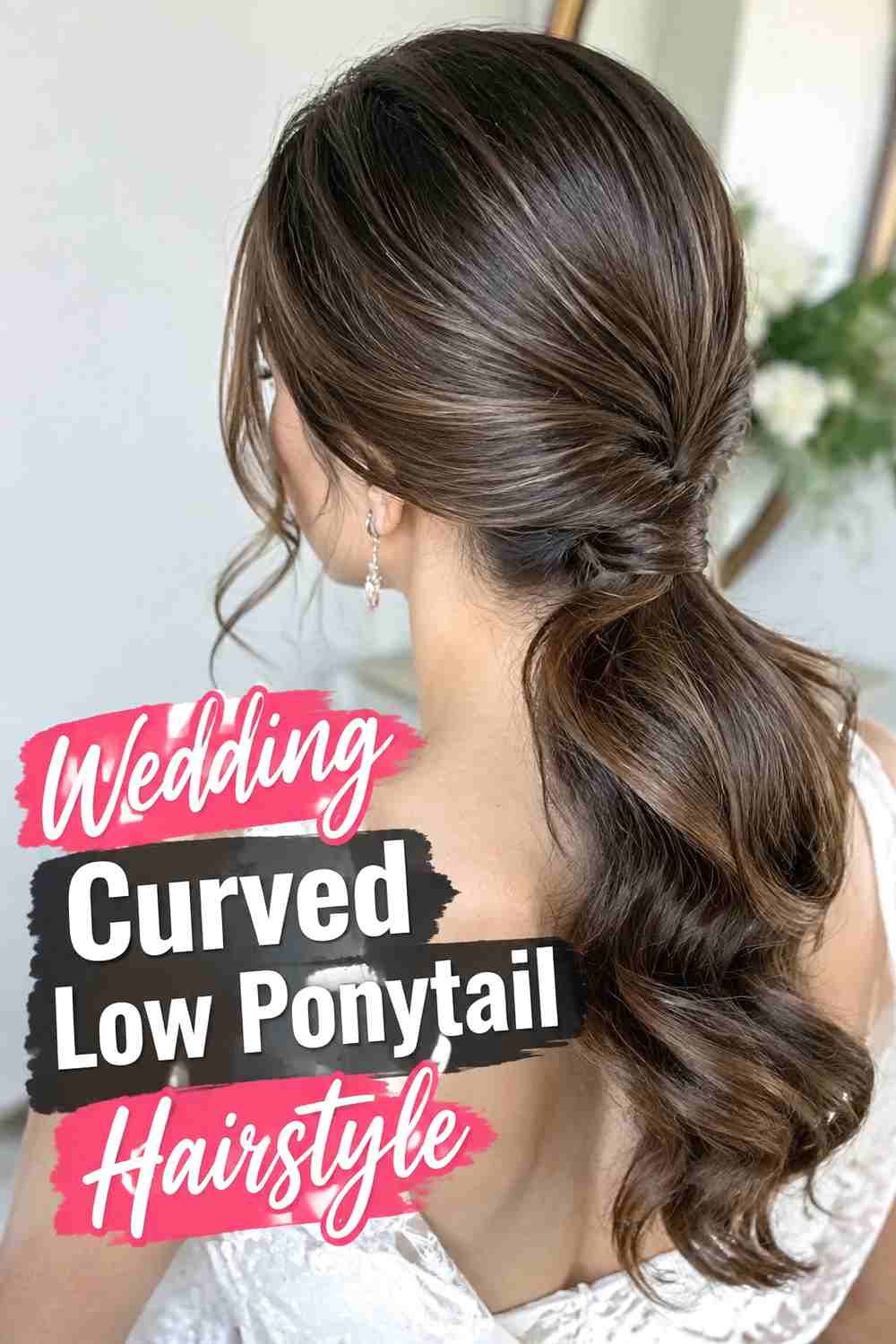
A wedding version combines a secure nape base with soft sculpted movement and enough polish to photograph well from several angles. The ponytail can feature one elegant C-curve, gentle S-bends, or broad waves depending on the dress and overall styling direction. A wrapped elastic, pearls, or a small comb can add detail, but the underlying ponytail should remain stable without decorative accessories. Keep the crown smooth or softly lifted and use comfortable tension around the hairline. Flexible finishing spray can help the curve hold while preserving natural movement. Medium-long and long hair provide the most room for the shape, though extensions may be used professionally when extra length or density is desired.
Wear & Maintenance
Test veils or decorative pieces before the event and make sure they can be adjusted without pulling on the ponytail’s structural base.
18. Evening Glam Curved Low Ponytail Hairstyle
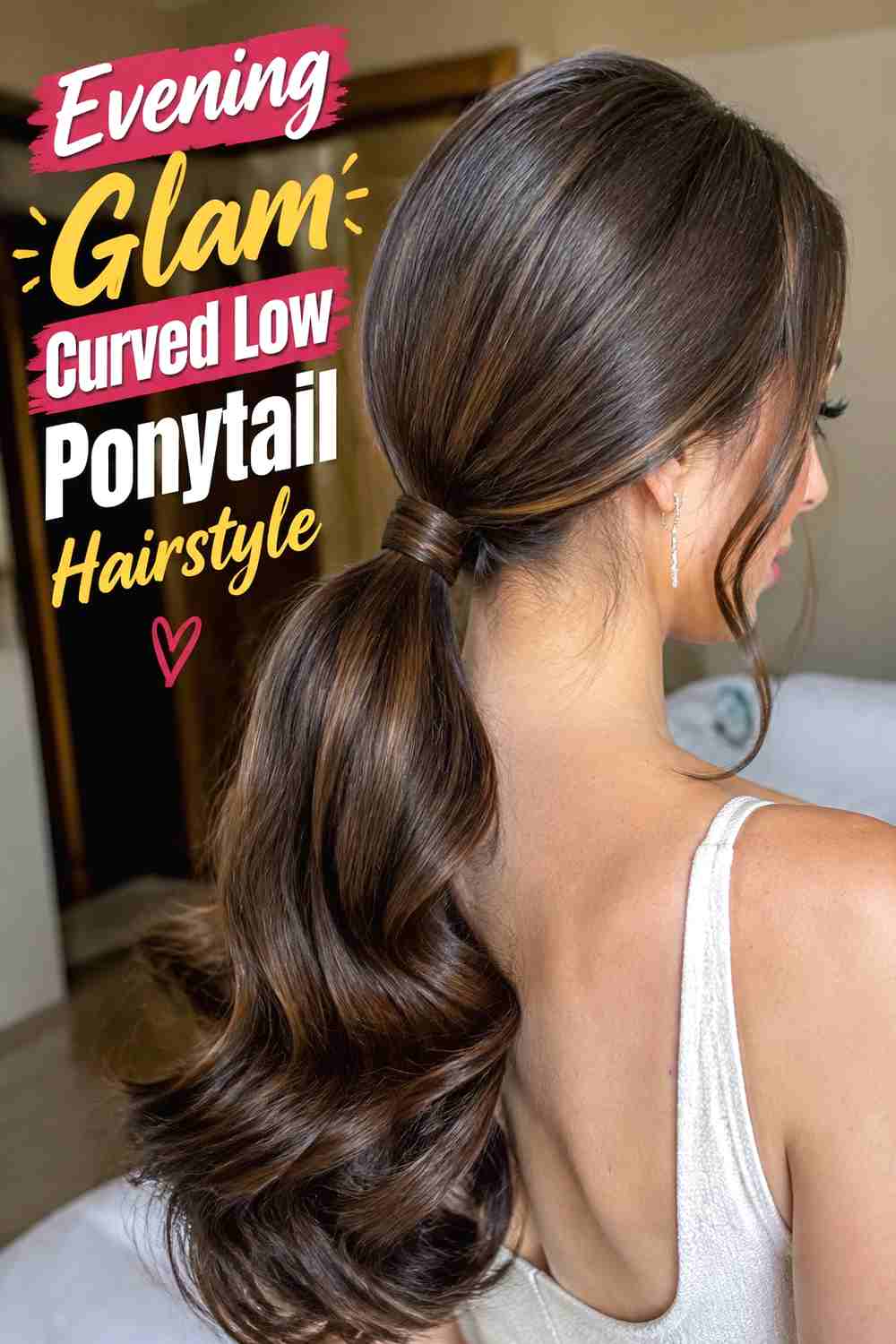
Evening glam pushes the curved ponytail toward a sleeker, more dramatic finish with stronger shine, a defined part, and a deeper bend through the length. The base stays low and compact, while the ponytail can sweep to one side or form a polished S-curve below the shoulders. This works especially well when the hair has enough length for the movement to be visible from both the front and side. Keep the roots controlled and use shine sparingly through the outer surface. Once the curve is set, finish with flexible hold rather than hard spray. The goal is a glamorous silhouette that still swings naturally instead of looking fixed into one immovable shape.
Best For
Choose this version for dinners, formal celebrations, parties, or other evening events where a basic low ponytail needs more polish and presence.
19. Minimalist Curved Low Ponytail Hairstyle
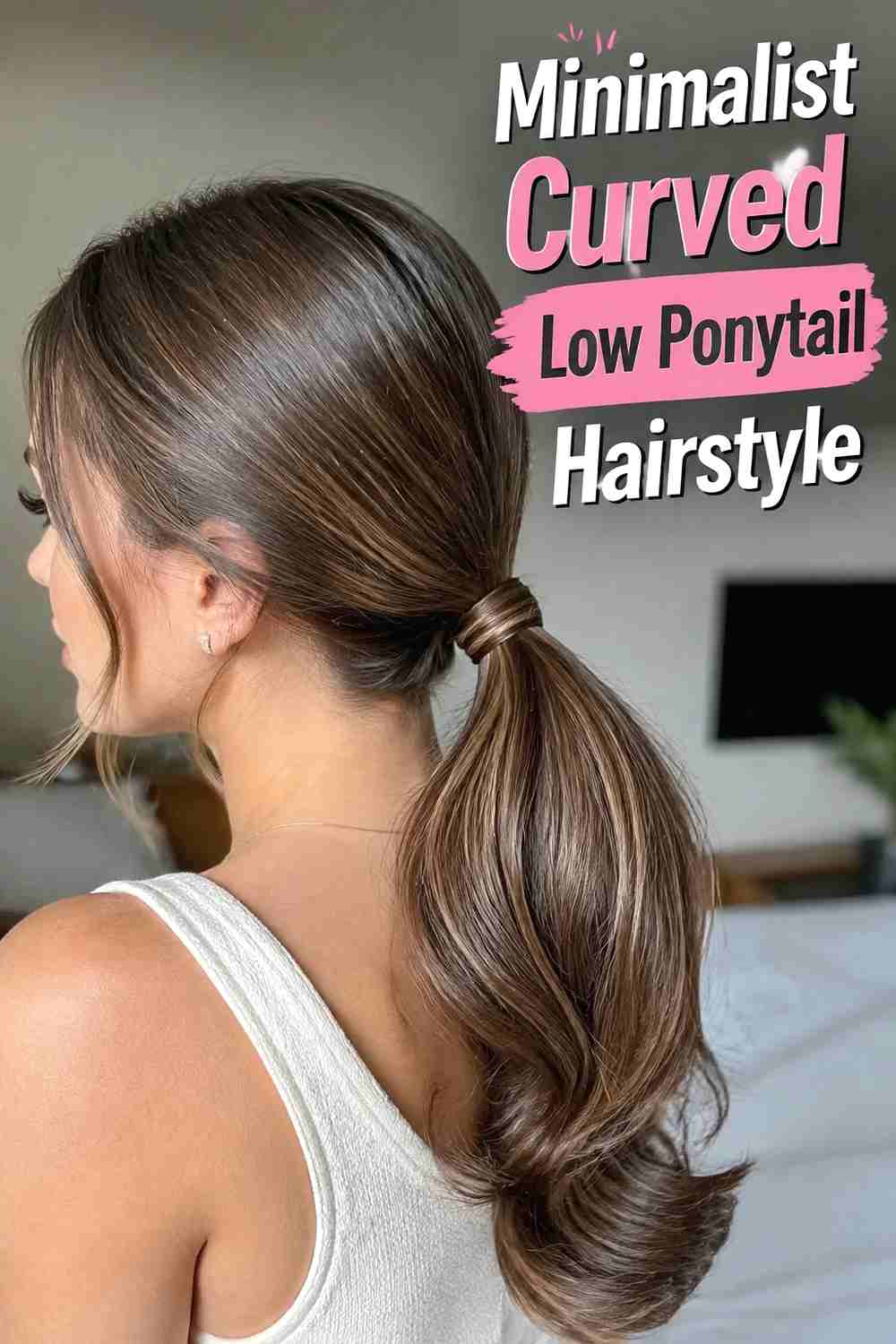
The minimalist version reduces the style to a clean base and one carefully placed curve. There are no decorative pins, braids, dramatic waves, or exaggerated crown volume, so the proportions of the hairstyle become especially important. Keep the roots smooth, secure the ponytail at the nape, and shape the lower length into a single broad C-curve. A simple elastic can remain visible, or it can be concealed with a narrow hair wrap for an even cleaner finish. Use only enough styling product to control flyaways and preserve smoothness. The ponytail should retain natural strand detail and movement, making this a practical option for work, dinners, or polished everyday styling.
Why It Works
One controlled curve gives the simple low ponytail a distinctive shape without adding unnecessary texture, volume, or accessories.
How to Choose the Right Look
Start with your hair length. Medium lengths usually suit a clean C-curve or flipped end, while long hair provides enough space for S-curves, soft waves, braided-base details, and more dramatic evening shapes. If your ponytail is very dense, work in sections when shaping the curve so the bend stays even.
Next, decide how polished you want the roots to look. Center parts and minimalist versions create clean symmetry, while deep side parts and sculpted sweeps produce stronger direction. Soft crown volume gives the style a gentler silhouette without changing the low base.
Finish is equally important. Glass-shine and glossy brunette versions emphasize reflection, while ribbon, pearl, and wedding variations introduce decorative detail. Whatever you choose, keep the base secure and comfortable, then shape the ponytail rather than relying on excessive tension to create the look.
Final Thoughts
Curved low ponytails add movement to a simple nape-level style without requiring elaborate updo construction. A single C-bend can feel minimalist, while S-curves, waves, wraps, and accessories create more visual detail. Focus on a secure low base, believable strand movement, and a curve that suits your length. The finished ponytail should look polished enough to feel intentional but flexible enough to move naturally.
FAQs
1. What makes a low ponytail look curved?
The hanging length is shaped into a broad C-bend, S-curve, or soft wave instead of falling completely straight. The curve can begin around the mid-lengths or closer to the ends.
2. What hair length works best for a curved low ponytail?
Medium to long hair works especially well. Longer hair provides more room for S-shaped movement, while medium lengths are ideal for a single clean C-curve.
3. How do I keep the curve from falling flat?
Allow the shaped section to cool before touching it, then use flexible-hold spray sparingly. The exact method will depend on your texture and the styling tool you use.
4. Can I add accessories to a curved low ponytail?
Yes. Ribbons, pearl pins, decorative combs, and hair wraps can all work well, especially when they stay near the ponytail base and do not cover the curved length.
5. Can a curved low ponytail work for weddings?
Yes. A secure low base combined with polished curves, soft waves, or subtle accessories can create an elegant wedding hairstyle while keeping the hair comfortably gathered.
Save your favorite curved low ponytail hairstyle ideas, share them with a friend, and explore more polished ponytail inspiration for your next look.