16 Hidden Rose Pink Underlayer Hair Ideas
Hidden rose pink underlayers add a surprising flash of color beneath natural-looking lengths, revealing anything from a soft blush to a richer rosy accent with movement.
A hidden rose pink underlayer places most of the fashion color beneath the top section of the hair, so the result can shift from subtle to noticeable depending on styling. When the hair falls naturally, only hints of pink may appear around the ends or sides. Waves, half-up styles, braids, and movement reveal much more of the hidden section.
The final effect depends on both the rose tone and the base color above it. Soft dusty rose can create understated dimension, pastel pink feels lighter and brighter, and deeper rose shades produce stronger contrast. Placement also matters: a narrow nape section creates a true peekaboo effect, while a broader underlayer makes the color much more visible when the hair moves.
Quick List
- Soft Hidden Rose Pink Underlayer Hairstyle
- Brunette Hidden Rose Pink Underlayer Hairstyle
- Blonde Hidden Rose Pink Underlayer Hairstyle
- Black Hair Hidden Rose Pink Underlayer Hairstyle
- Wavy Hidden Rose Pink Underlayer Hairstyle
- Lob Hidden Rose Pink Underlayer Hairstyle
- Curly Hidden Rose Pink Underlayer Hairstyle
- Face Framing Hidden Rose Pink Underlayer Hairstyle
- Half Up Hidden Rose Pink Underlayer Hairstyle
- Peekaboo Hidden Rose Pink Underlayer Hairstyle
- Dusty Rose Pink Underlayer Hairstyle
- Pastel Rose Pink Underlayer Hairstyle
- Deep Rose Pink Underlayer Hairstyle
- Braided Hidden Rose Pink Underlayer Hairstyle
- Polished Hidden Rose Pink Underlayer Hairstyle
1. Soft Hidden Rose Pink Underlayer Hairstyle
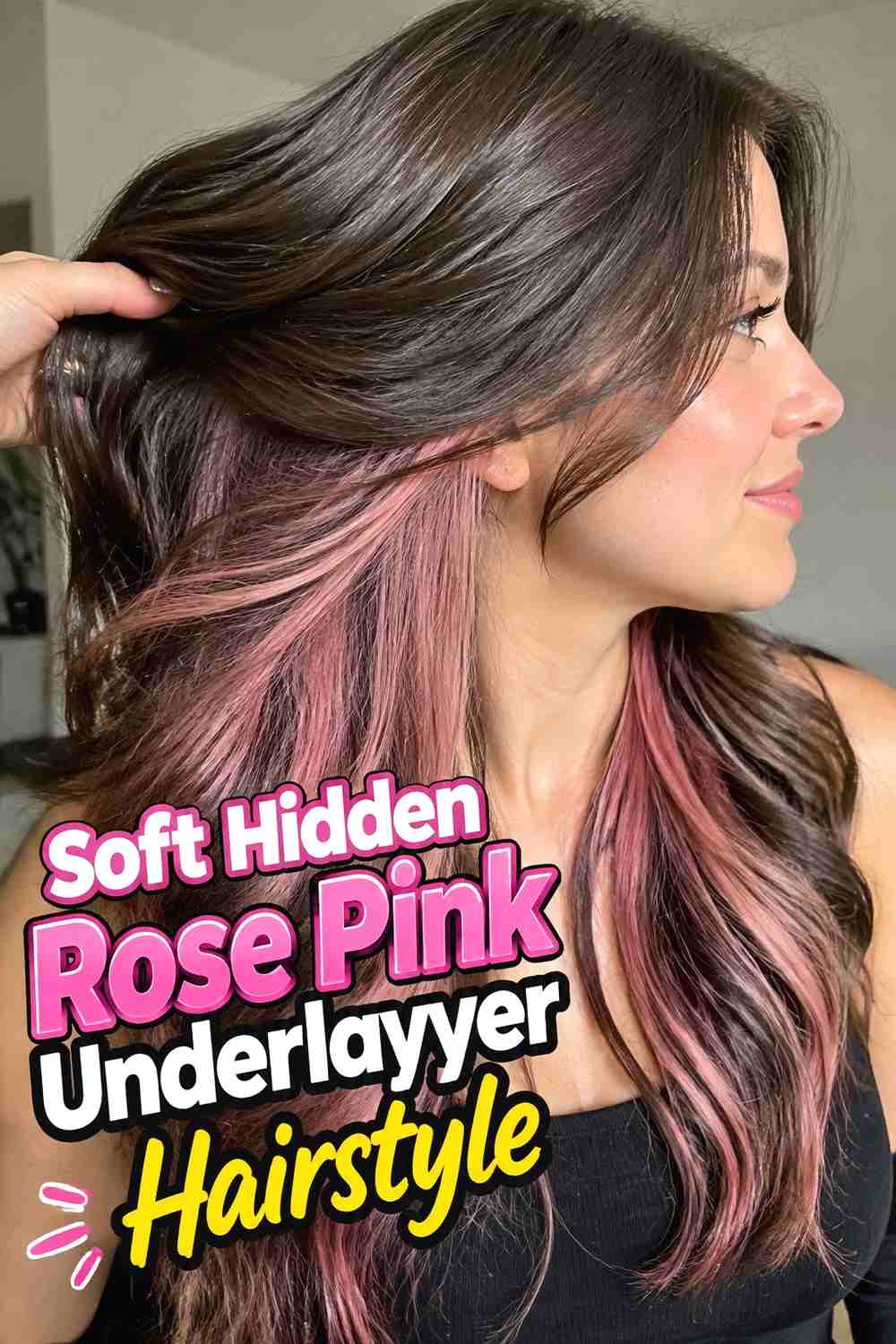
The Soft Hidden Rose Pink Underlayer Hairstyle keeps the contrast gentle by using a muted rosy tone beneath a natural-looking top layer. When the hair falls straight, only small flashes of pink appear near the lower lengths, but movement reveals more color underneath. This makes the style useful if you want creative color without having it dominate the entire hairstyle. Medium or long hair gives the hidden section plenty of coverage, while soft bends can reveal the pink in a gradual, blended way. Keeping the rose tone slightly muted rather than extremely vivid also helps the effect feel cohesive. The placement can stay concentrated beneath the surface so the outer hair remains the primary visible color.
Why It Works
The concealed placement provides visual surprise without changing the overall top color, giving you more control over how much pink is visible from day to day.
2. Brunette Hidden Rose Pink Underlayer Hairstyle
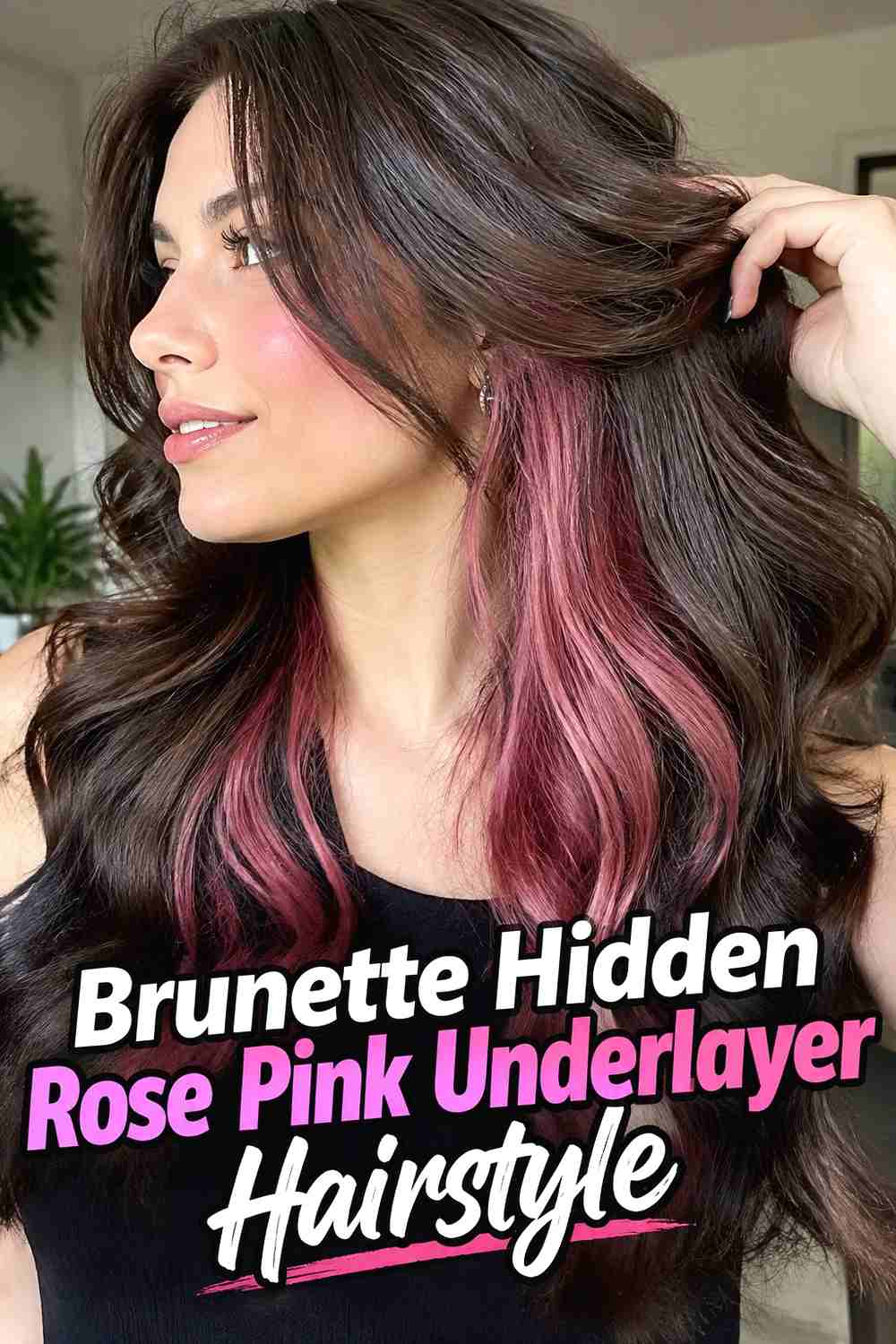
A Brunette Hidden Rose Pink Underlayer Hairstyle creates a noticeable but wearable contrast between brown surface hair and rosy color underneath. Medium or deeper brunette shades can make the pink appear richer, especially when the underlayer includes dusty rose, berry-rose, or muted warm pink tones. The color can be concentrated from around the ears downward or placed mainly at the nape for an even more concealed result. Loose waves are particularly effective because they allow selected pink sections to weave between brunette strands without exposing the entire underlayer. The finished look can feel subtle when worn straight and significantly more colorful when styled up, making it flexible for different occasions and styling preferences.
Styling Notes
Use loose bends through the lower lengths to bring small rose sections forward. Avoid making every wave identical if you want the reveal to look natural.
3. Blonde Hidden Rose Pink Underlayer Hairstyle
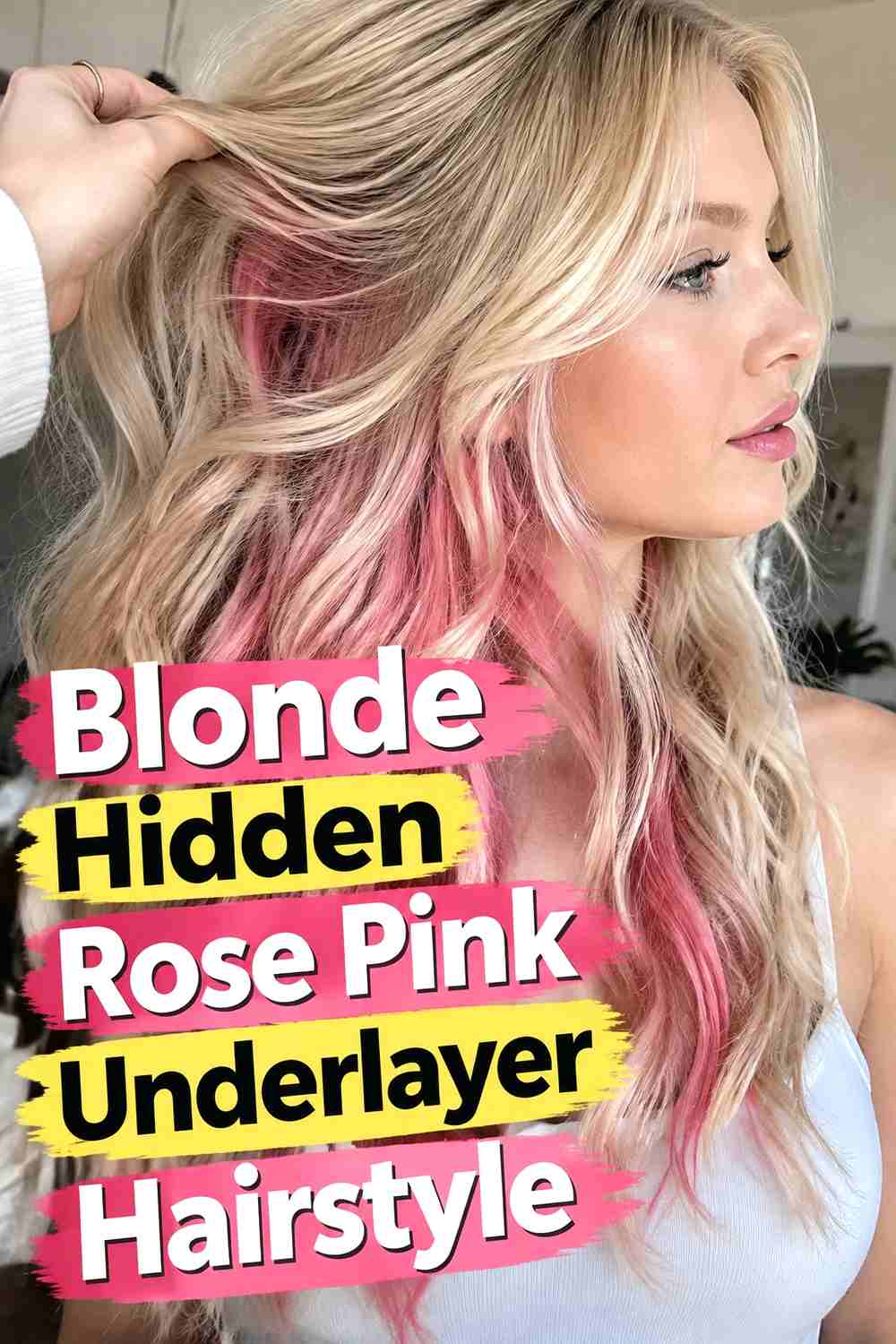
The Blonde Hidden Rose Pink Underlayer Hairstyle creates a softer transition because rose pink sits relatively close to light blonde in brightness. Pastel or blush-rose tones can peek through beneath sandy, beige, or neutral blonde lengths, while a deeper pink gives the combination more visible contrast. Keeping the top blonde consistent allows the hidden section to act like an unexpected color detail rather than a full transformation. Waves and layers can make the pink appear in small ribbons through the ends, while straight styling conceals more of it. Because lighter underlayers can look especially bright in daylight, choosing the rose depth carefully helps maintain the subtle or bold effect you actually want.
Best For
This version works well if you like creative color but prefer a lighter overall palette where the pink blends naturally with the surrounding brightness.
4. Black Hair Hidden Rose Pink Underlayer Hairstyle
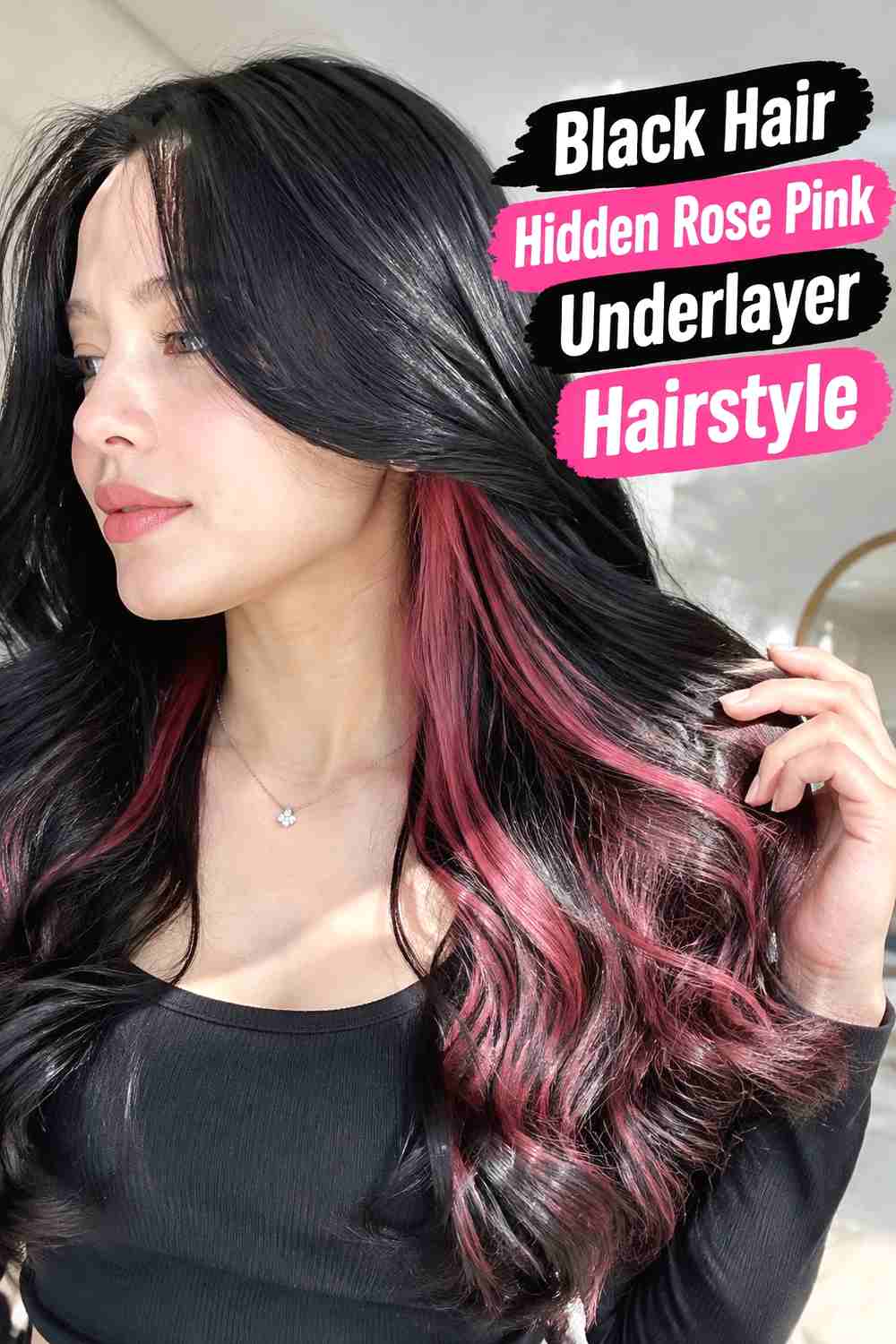
A Black Hair Hidden Rose Pink Underlayer Hairstyle produces strong visual contrast while still allowing the top layer to remain dark and polished. The rose section can range from deep berry-pink to brighter rose depending on how dramatic you want the reveal to be. When the hair is worn down, the black surface can conceal much of the color, especially if the pink begins beneath the ears or around the nape. Half-up styles, ponytails, and waves expose the hidden section more clearly. Maintaining a clean division between the surface and underlayer can create a bold graphic effect, while slightly blended placement around the sides gives the color a softer transition when the hair moves.
Wear & Maintenance
High-contrast color can make fading more noticeable, so the desired rose tone may need refreshing to keep the underlayer looking intentional against very dark hair.
5. Wavy Hidden Rose Pink Underlayer Hairstyle
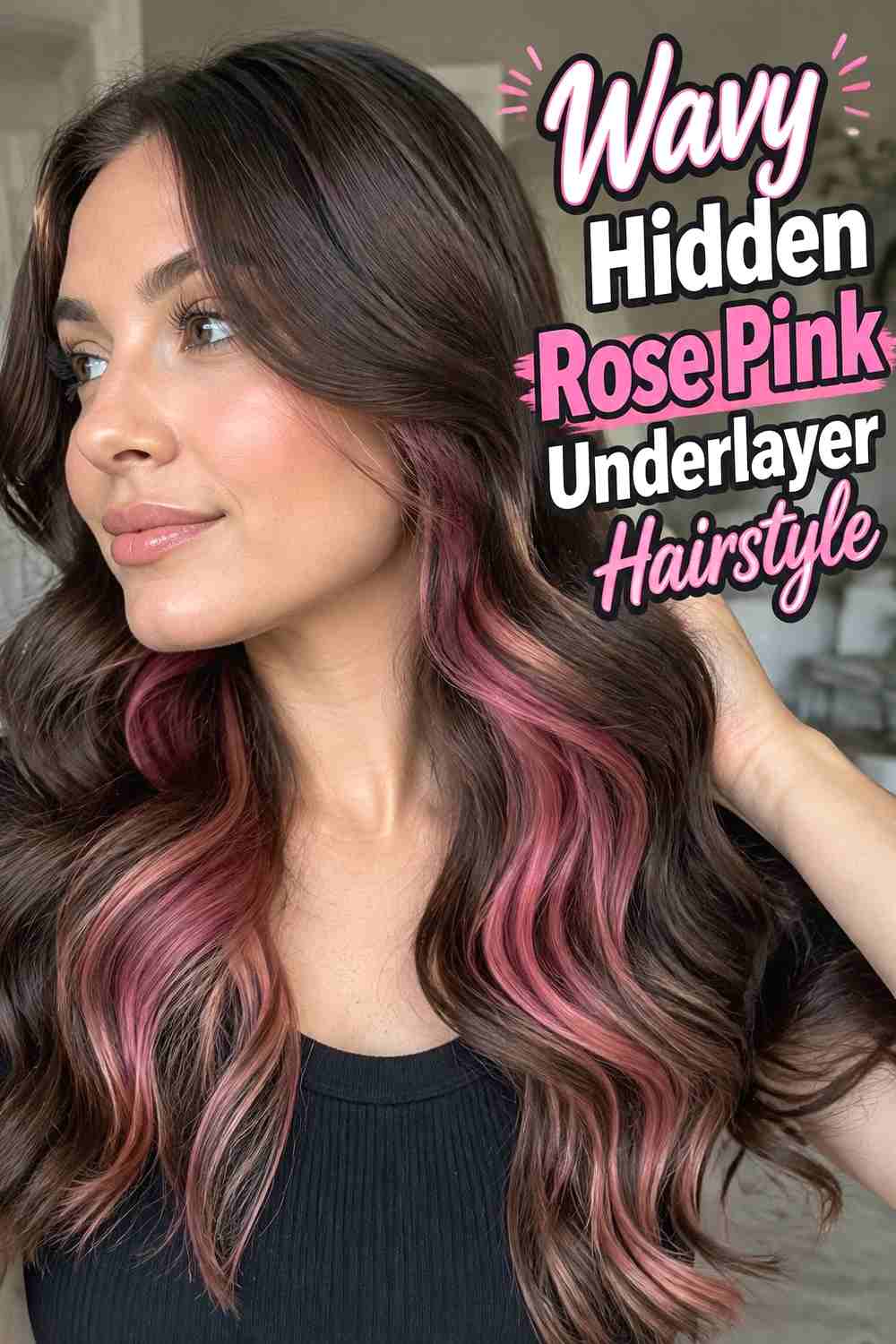
The Wavy Hidden Rose Pink Underlayer Hairstyle uses movement to reveal the color in small flashes instead of displaying the entire section at once. As each wave bends, pieces from the hidden layer emerge between the natural-colored surface strands, creating a ribbon-like effect through the mid-lengths and ends. This works especially well when the pink is placed broadly enough underneath to appear from several angles. The top color can be brunette, blonde, black, or another natural shade, while dusty or medium rose keeps the reveal cohesive. Loose, irregular waves usually create the most natural-looking mix because they expose different amounts of pink throughout the hairstyle rather than forming a repetitive pattern.
Pro Tip
Alternate wave directions and leave some sections straighter. Varied movement reveals the underlayer gradually and keeps the pink from looking like evenly spaced stripes.
6. Lob Hidden Rose Pink Underlayer Hairstyle
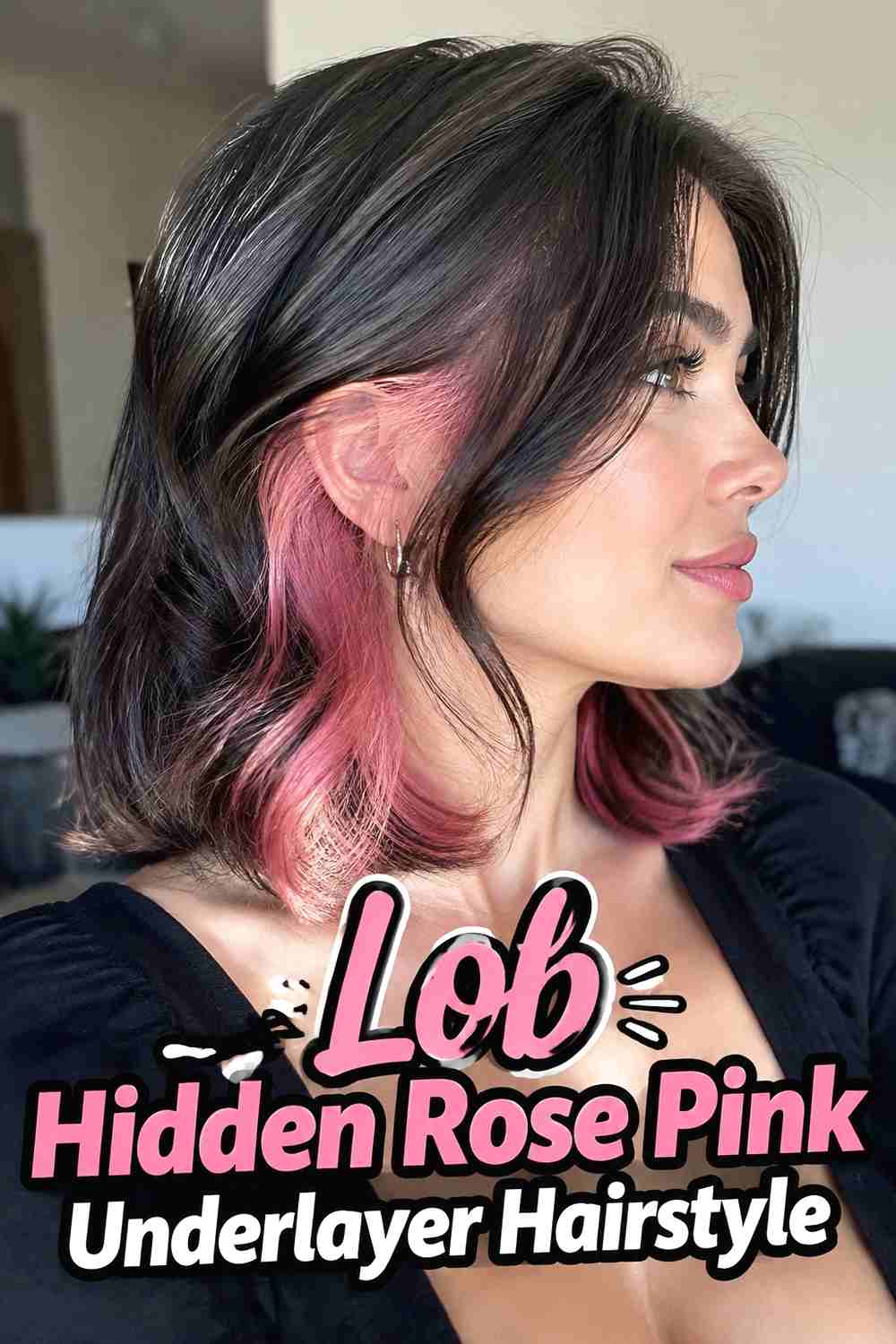
The Lob Hidden Rose Pink Underlayer Hairstyle pairs a clean shoulder-length silhouette with a concealed section of rosy color beneath the surface. Because a lob has less length than long hair, the underlayer can become visible more quickly around the perimeter, especially when the ends move outward. Keeping the pink concentrated through the lower back and side sections can preserve a true hidden effect while still creating flashes of color during styling. A blunt lob emphasizes the contrast at the ends, while subtle internal layering reveals slightly more pink. Straight styling keeps the look controlled and minimal, whereas soft bends expose enough of the underlayer to make the color feel playful without overwhelming the haircut.
Styling Notes
A few alternating bends through the mid-lengths can show the rose layer while preserving the strong outline of the lob.
7. Curly Hidden Rose Pink Underlayer Hairstyle
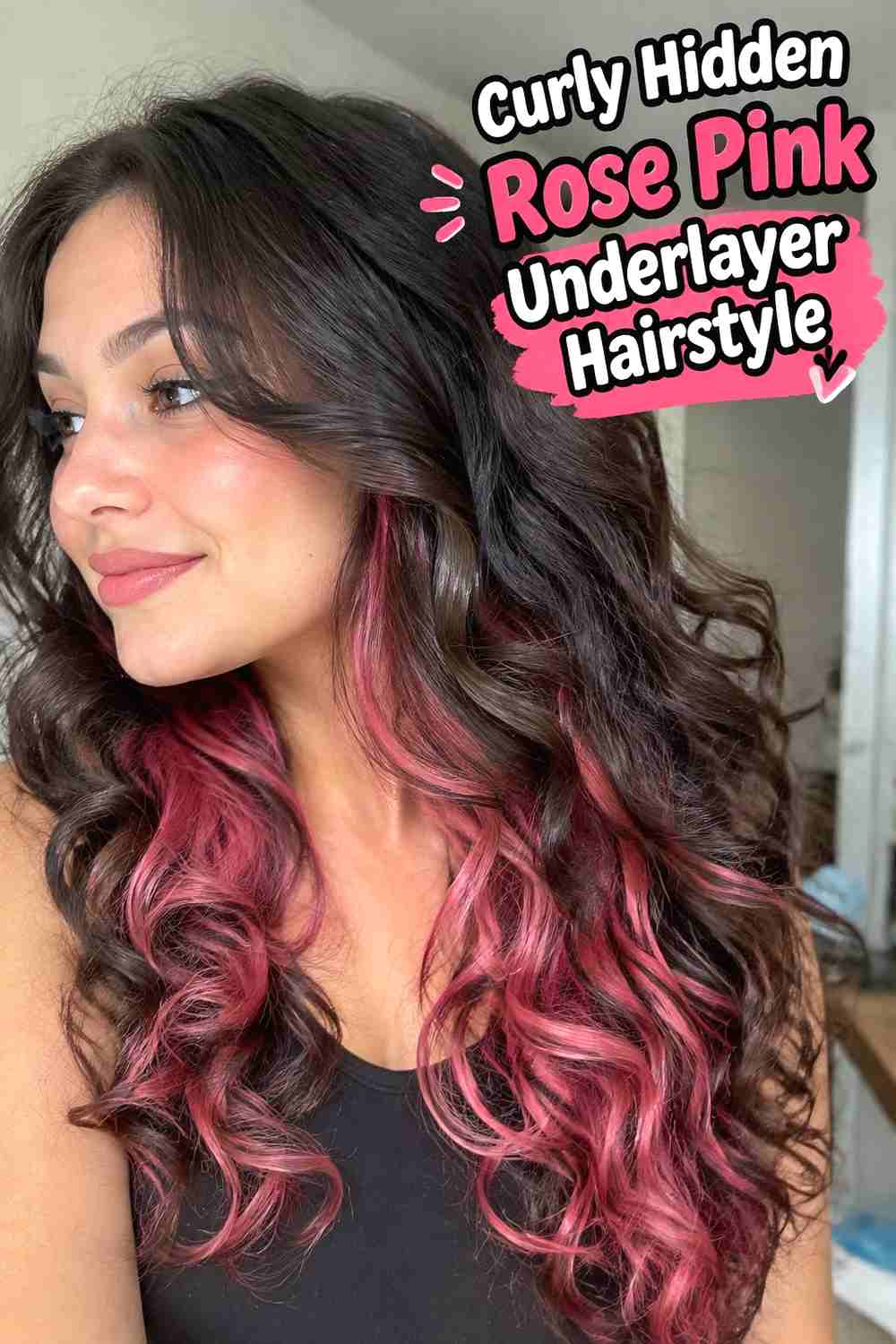
A Curly Hidden Rose Pink Underlayer Hairstyle creates a naturally scattered color effect because the curl pattern continuously brings hidden sections toward the surface. Rose-colored curls can appear between the natural top layers at different points, giving the style a dimensional look without requiring full-head pink color. Placement should account for shrinkage and the way individual curls group when dry, since the hidden section may be more visible than expected once the pattern forms. A medium or deeper rose can give strong definition, while dusty pink creates a softer blend. Styling products that preserve curl separation help the color remain visible in distinct pieces instead of disappearing into a single mass of texture.
Wear & Maintenance
Evaluate the placement when the curls are dry and naturally formed. Curl movement can reveal considerably more of the underlayer than straight styling would.
8. Face Framing Hidden Rose Pink Underlayer Hairstyle
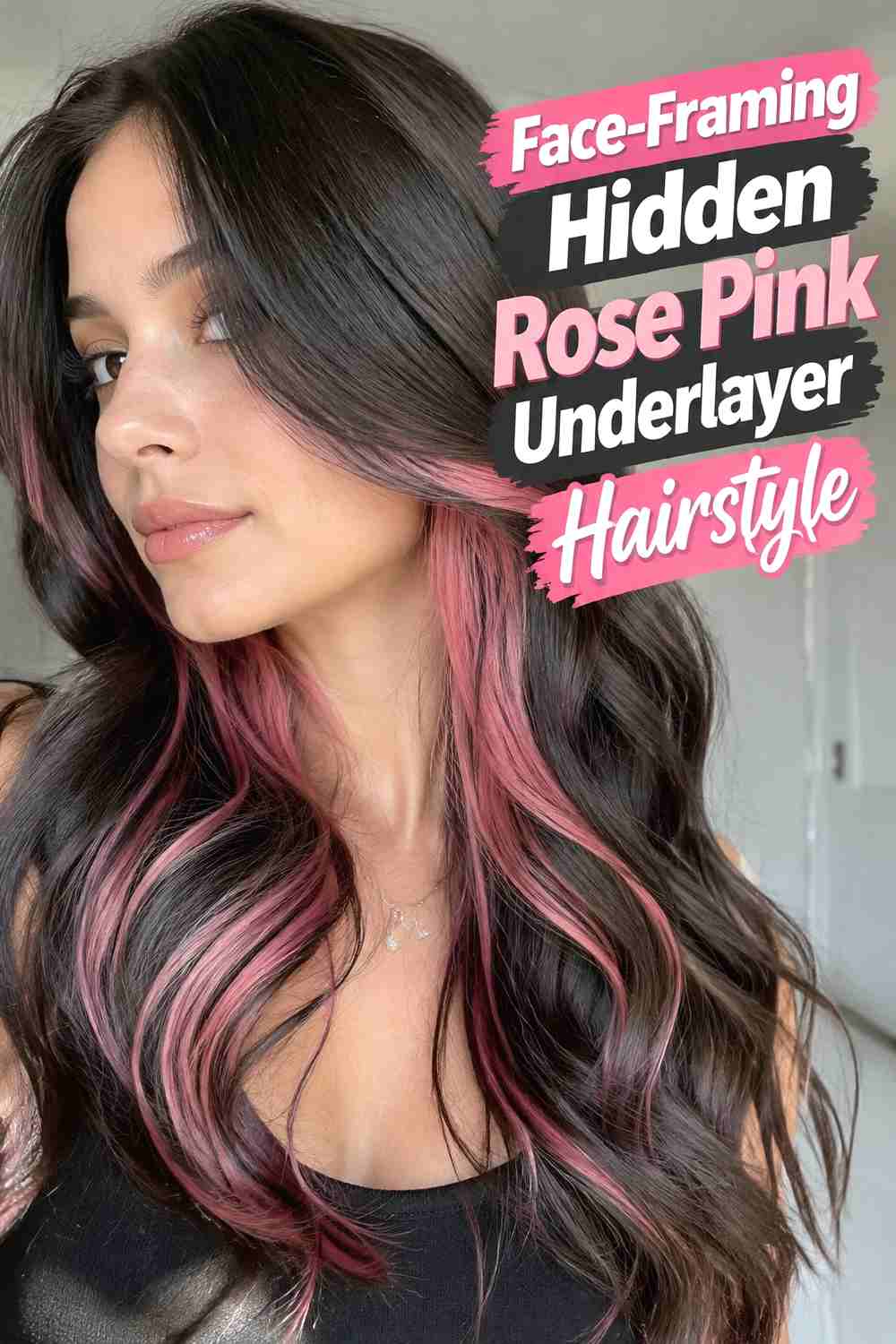
The Face-Framing Hidden Rose Pink Underlayer Hairstyle brings subtle rosy sections closer to the sides of the face while keeping most of the surface hair natural. Instead of creating a bright traditional money piece, the pink begins underneath face-framing layers and becomes visible when those pieces move away from the cheekbones. This gives the color a softer reveal and connects the front with the hidden section at the back. Layered medium or long hair works particularly well because the natural-colored outer pieces can cover or expose the pink depending on the styling. A soft blowout makes the effect noticeable in movement, while straight hair keeps it more understated and controlled.
Why It Works
Placing color beneath the front layers adds interest around the face without turning the rose tone into the dominant surface color.
9. Half Up Hidden Rose Pink Underlayer Hairstyle
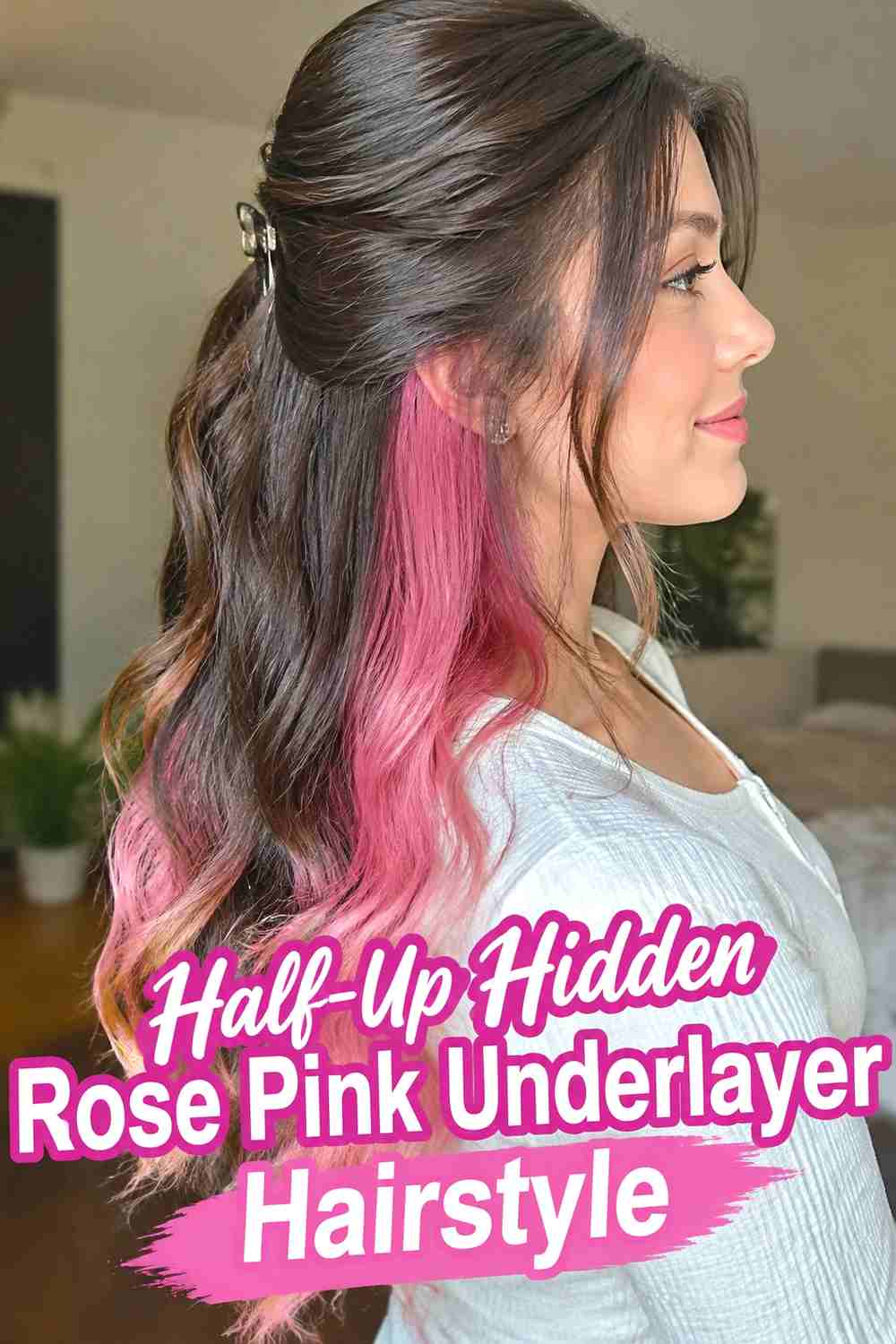
A Half-Up Hidden Rose Pink Underlayer Hairstyle makes the concealed color dramatically more visible simply by lifting the upper section of hair away from the back and sides. With the top layer secured, the rose pink underneath becomes a clear focal point while the remaining natural color frames it from above. This makes a hidden underlayer especially versatile because the same color placement can look subtle with the hair fully down and much bolder in a half-up style. Loose waves can add further movement, while a smooth half-up finish creates cleaner separation between colors. The tie point should remain comfortable and natural, with enough loose hair left below to display the pink throughout the lower lengths.
Best For
This style is ideal when you want one color placement that can shift easily between understated everyday wear and a much more visible statement look.
10. Peekaboo Hidden Rose Pink Underlayer Hairstyle
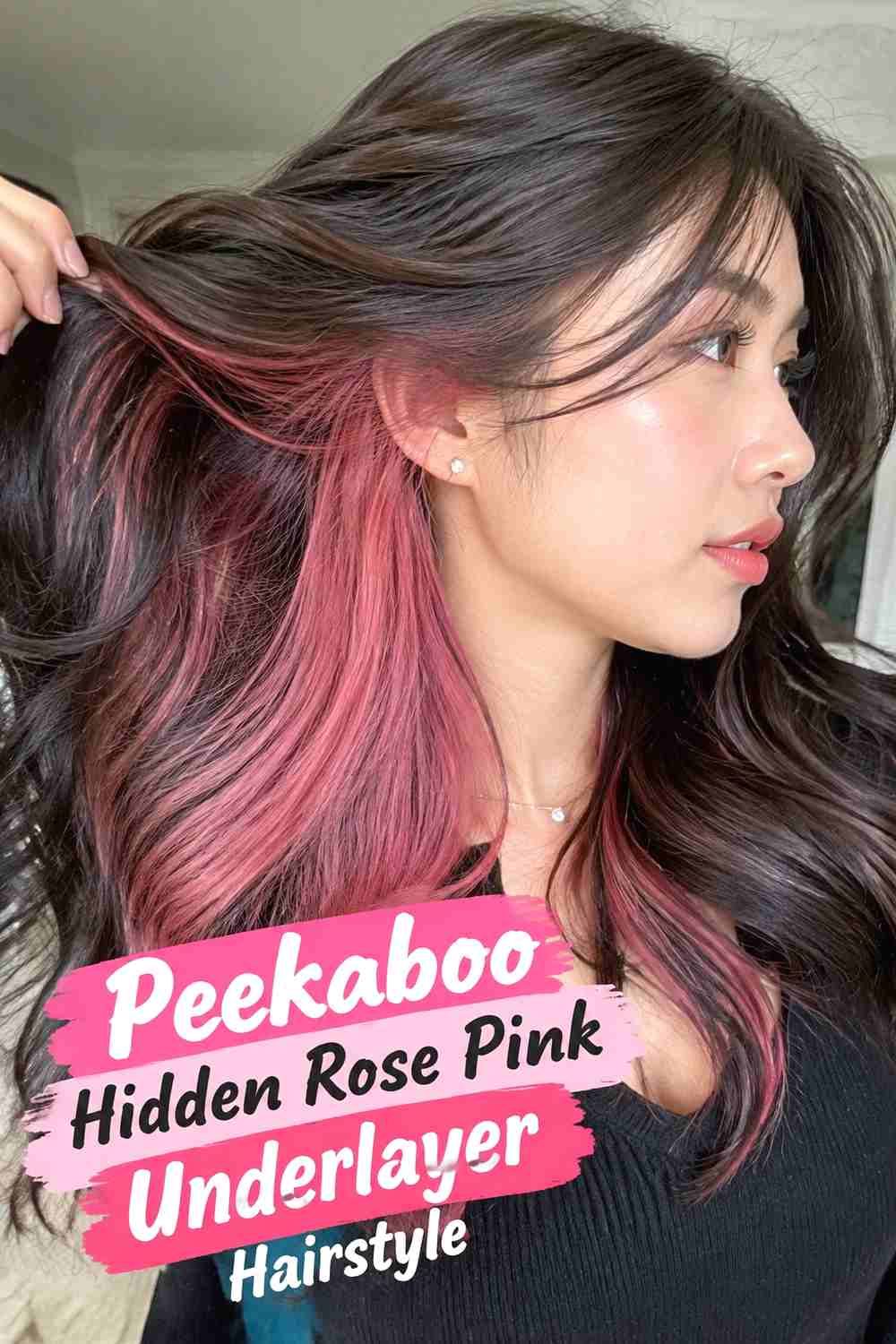
The Peekaboo Hidden Rose Pink Underlayer Hairstyle concentrates the fashion color in a narrower concealed section, often around the nape or underneath the side layers. Rather than coloring a broad portion of the lower hair, this version reveals only selected flashes of rose when the hair moves, is tucked behind the ear, or is styled upward. The smaller placement makes it one of the more discreet approaches to hidden color. Straight styling can conceal most of the pink, while waves or ponytails bring it forward in short bursts. A medium rose shade can remain visible without requiring an extremely large section, making the style playful while preserving the natural-looking surface from most viewing angles.
Styling Notes
Tucking one side behind the ear or creating a loose low ponytail can reveal the peekaboo section without exposing the entire hidden color placement.
11. Dusty Rose Pink Underlayer Hairstyle
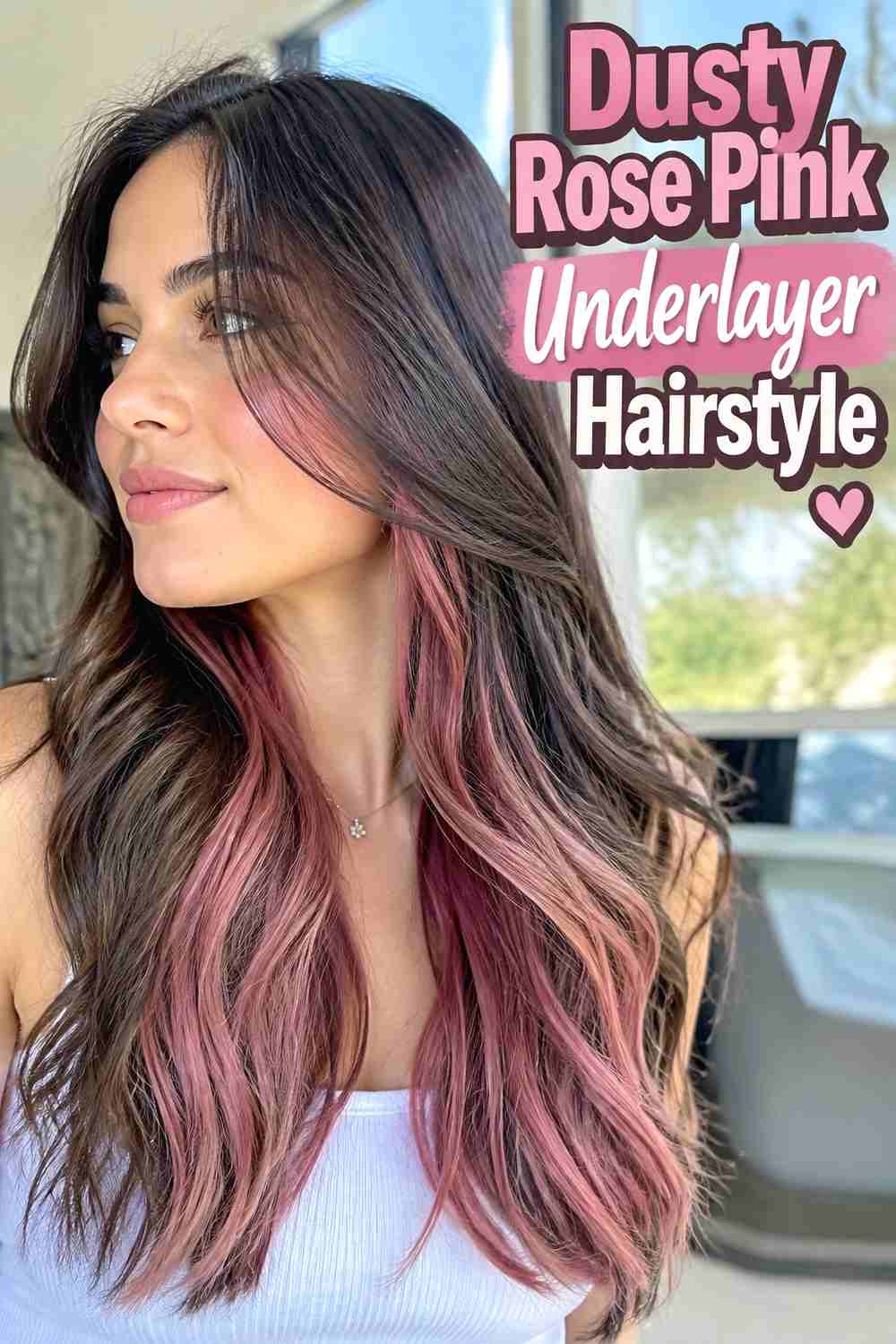
A Dusty Rose Pink Underlayer Hairstyle uses a muted rose shade with softened saturation for a more understated color effect. The tone can include subtle mauve, beige, or muted pink influence, making it less vivid than bright fashion pink. Under brunette or neutral blonde hair, dusty rose creates dimension that becomes especially attractive in soft waves because the color appears almost shadowed in some sections and brighter in others. The hidden placement also helps the muted shade feel sophisticated rather than overly prominent. Because dusty tones rely on a specific balance of warmth and softness, the color may change character as it fades, so maintenance preferences should be considered before choosing the exact depth.
Why It Works
The muted tone provides noticeable color without the intensity of neon or highly saturated pink, making the underlayer feel softer and more blended.
12. Pastel Rose Pink Underlayer Hairstyle
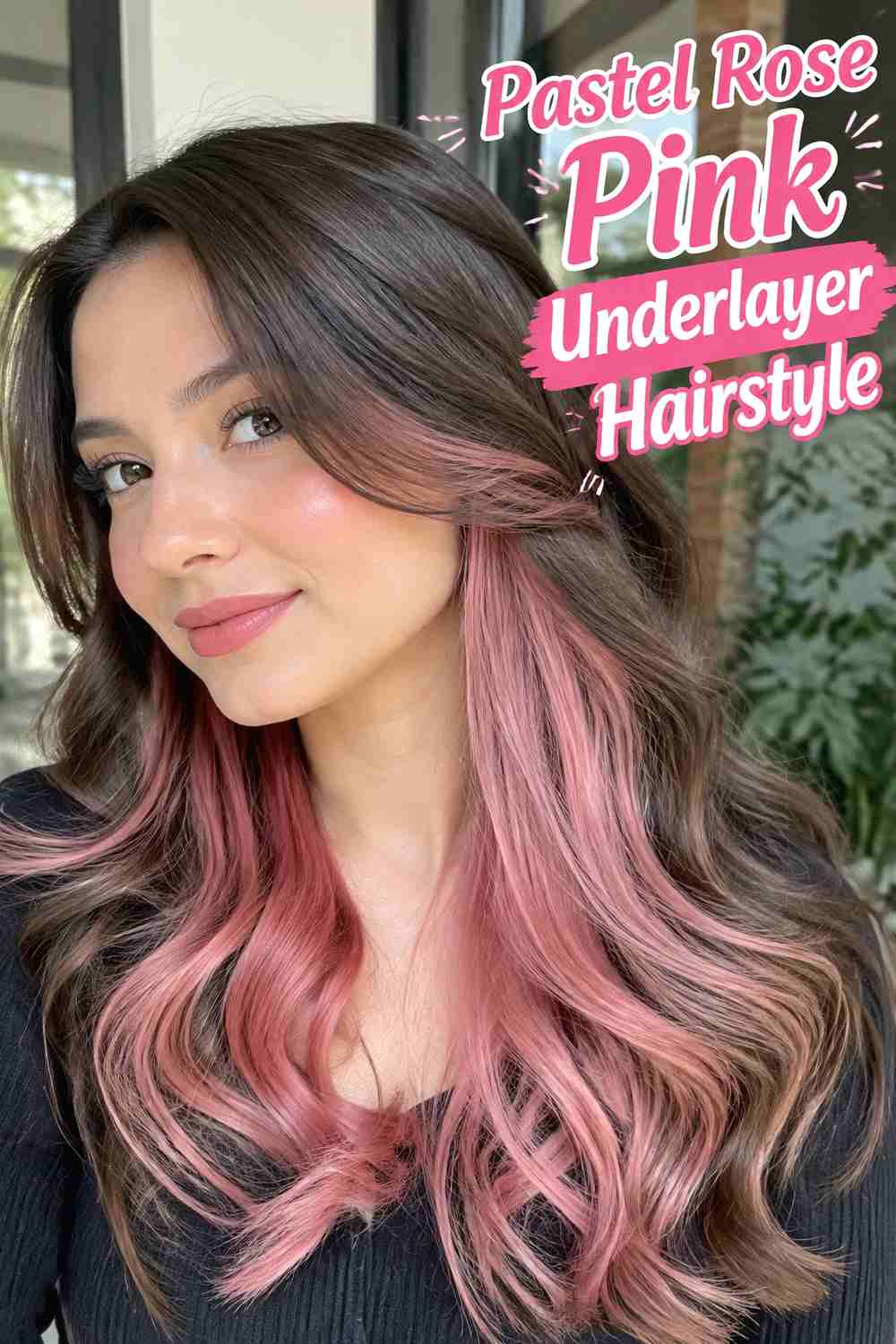
The Pastel Rose Pink Underlayer Hairstyle keeps the hidden section light, delicate, and noticeably brighter in natural daylight. Pale blush or powdery rose works especially well beneath blonde or light brown surface hair, where the contrast can remain soft even when the pink is revealed. Under darker top colors, the same pastel shade creates a more striking difference. Waves, braids, and half-up styles make the pale underlayer easier to see, while straight hair allows the surface layer to conceal more of it. The pastel effect depends heavily on the starting hair color beneath the surface, so achieving a very light rose may involve more preparation than choosing a deeper pink tone.
Wear & Maintenance
Pastel shades can lose visible saturation relatively quickly, so consider how often you want to refresh the tone before choosing an extremely pale rose result.
13. Deep Rose Pink Underlayer Hairstyle
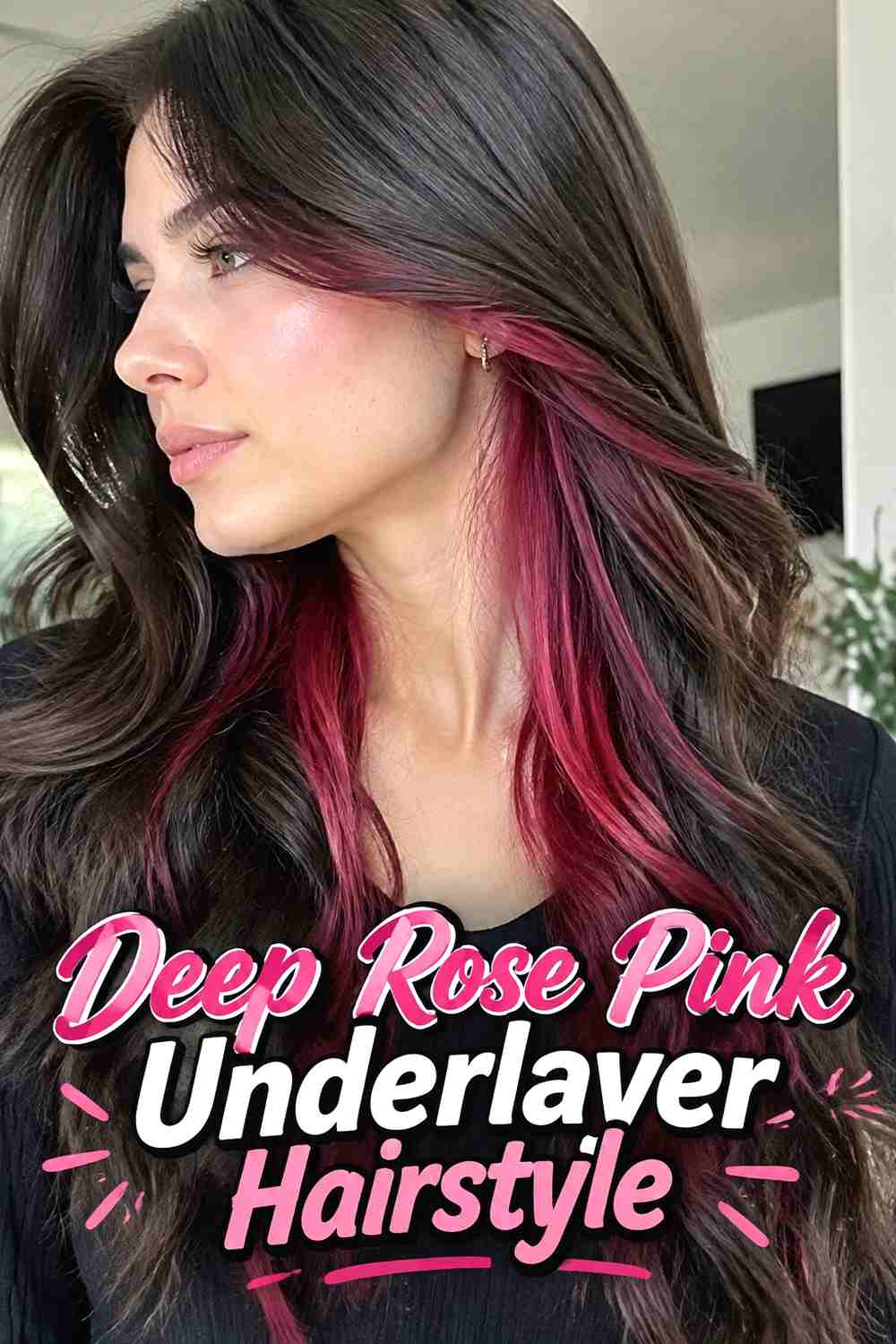
A Deep Rose Pink Underlayer Hairstyle creates a richer hidden accent with stronger saturation and greater visual depth. The color may lean toward berry-rose, raspberry pink, or a muted magenta-rose while remaining clearly within a rosy palette. Beneath black or brunette hair, the deeper tone creates a cohesive contrast that can feel bold without looking overly bright. Under blonde hair, it becomes a much stronger statement. The placement can remain concentrated at the nape for a secretive effect or extend higher underneath for more visibility. Smooth styling keeps the contrast clean, while waves allow the dark rose sections to weave between the outer color in a more dimensional way.
Best For
Choose this version if you want the underlayer to stay noticeably pink even when only a small amount of the hidden section is visible.
14. Braided Hidden Rose Pink Underlayer Hairstyle
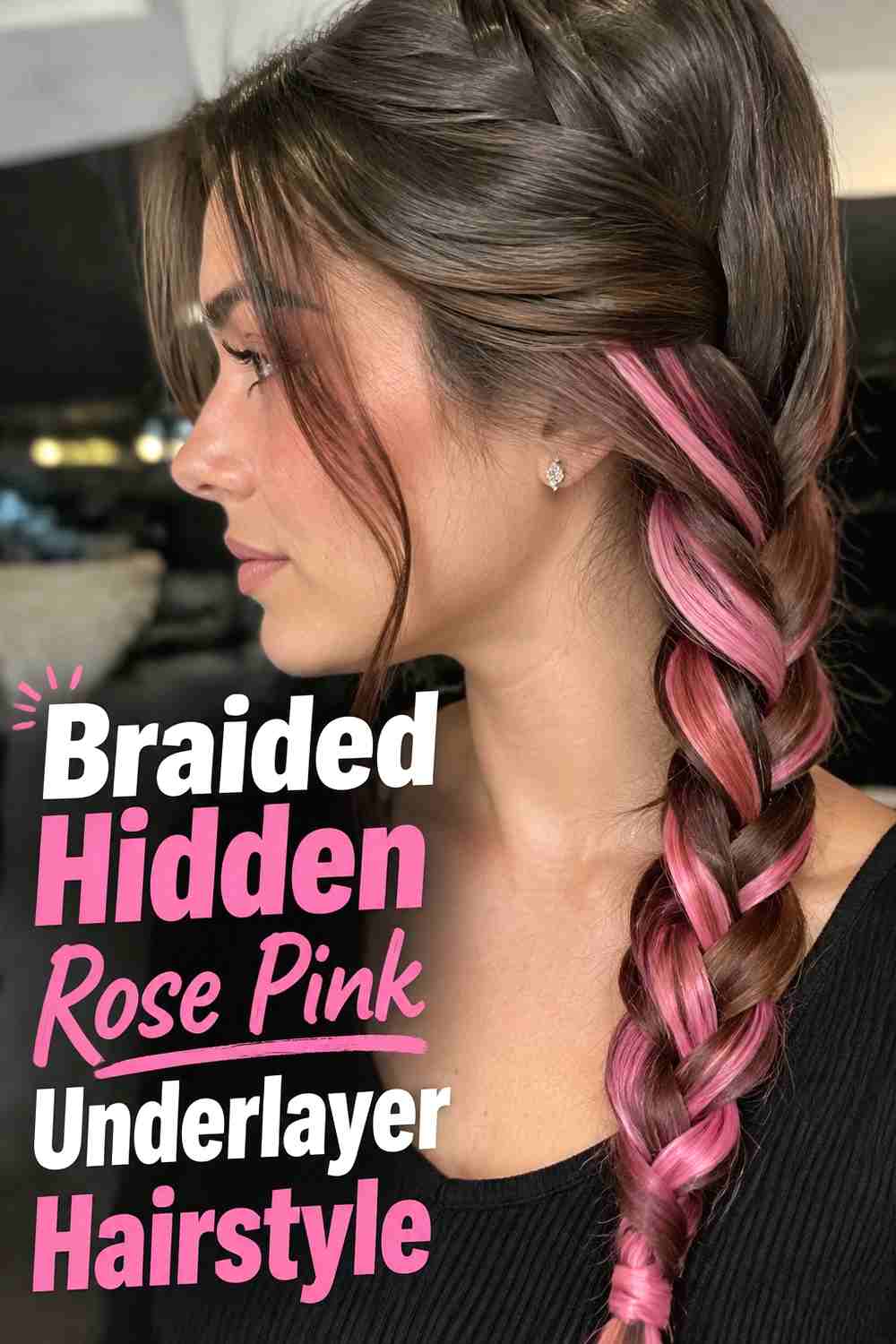
The Braided Hidden Rose Pink Underlayer Hairstyle turns concealed color into an intricate detail by weaving natural-toned and rose sections together. A loose side braid, half-up braid, or low braided style can pull pieces from the underlayer toward the surface, producing alternating flashes of color throughout the pattern. The effect is especially attractive when the pink and top color have enough contrast to remain distinct but still feel coordinated. Avoid pulling every hidden section into the braid if you want a more organic result; scattered rose pieces usually create better visual depth. Keeping the braid slightly relaxed also allows the different tones to remain visible instead of compressing them into one dense section.
Styling Notes
Gently widen selected braid sections after securing the style. A little extra separation can make the hidden rose strands easier to see without creating an overly messy finish.
15. Polished Hidden Rose Pink Underlayer Hairstyle
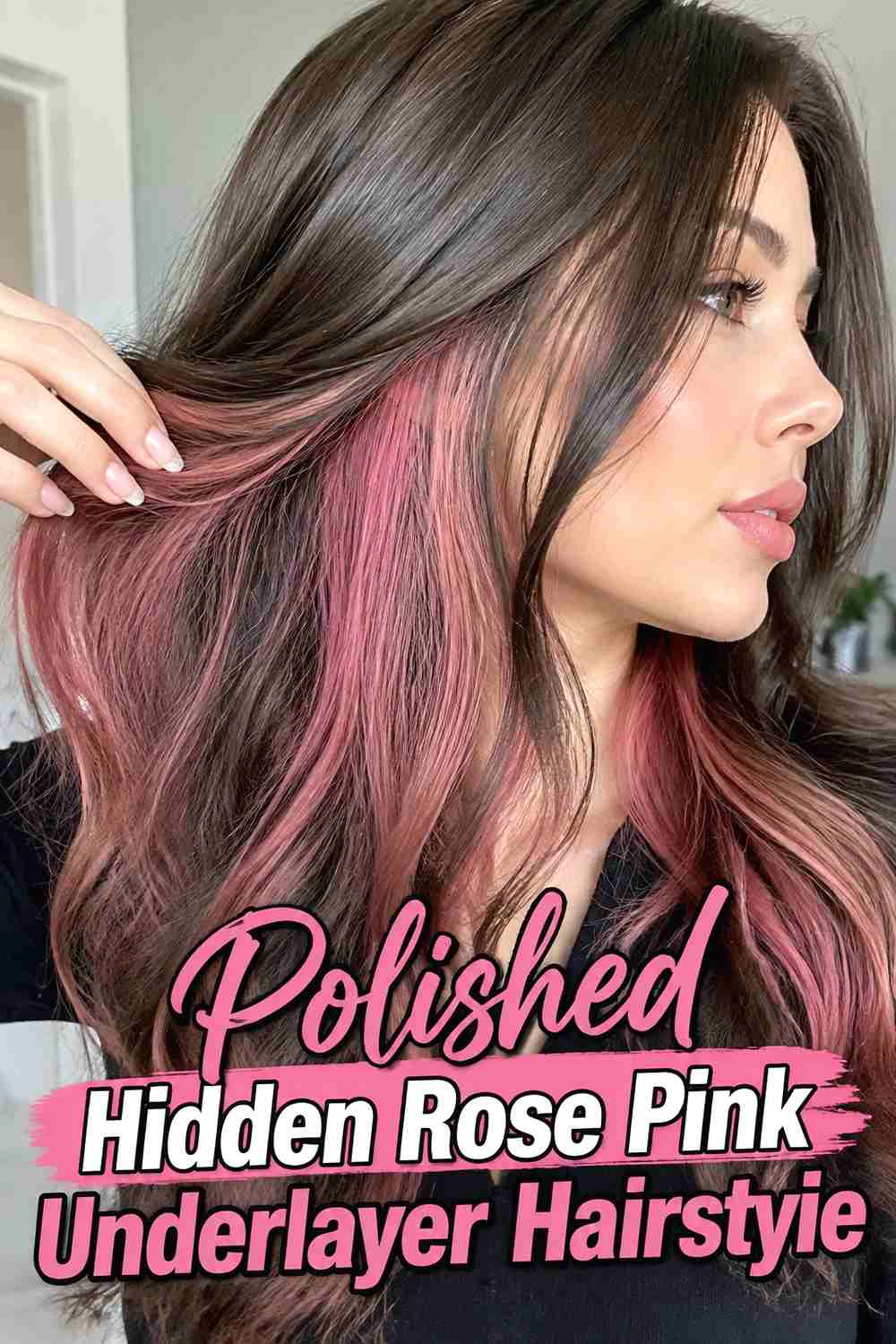
The Polished Hidden Rose Pink Underlayer Hairstyle combines smooth, controlled lengths with a carefully concealed section of rose color underneath. When worn straight or in a sleek blowout, the natural-toned surface creates a clean outer finish while the pink appears mainly at the sides, ends, or whenever the hair shifts. This controlled styling makes the contrast look deliberate and highlights how precisely the underlayer has been placed. A broader rose section gives more visible color at the perimeter, while a narrower nape placement keeps the effect subtle. Lightweight shine products can enhance the polished finish, but enough natural movement should remain so the hidden pink occasionally appears rather than disappearing completely.
Pro Tip
Keep the surface smooth but avoid pressing every layer completely flat. Slight movement through the ends helps the hidden rose color appear in refined, intentional flashes.
How to Choose the Right Look
Start by deciding how hidden you want the rose pink to remain. A narrow nape or side section creates a true peekaboo effect, while a broader underlayer will appear more often through the ends, waves, and movement. If you regularly wear half-up styles, ponytails, or braids, expect considerably more of the color to show.
Your surface color also changes the result. Blonde creates a softer transition with pastel rose, brunette pairs naturally with dusty and medium rose tones, and black hair creates stronger contrast with almost any pink depth.
Consider hair texture as well. Straight hair can conceal the underlayer effectively, while waves and curls naturally bring colored strands toward the surface. Layers also increase visibility because shorter top pieces expose more of the hair underneath.
Maintenance matters most with lighter and highly specific rose shades. Pastels may need more frequent tonal refreshing, while deeper rose colors can remain visually noticeable even as they soften.
Final Thoughts
Hidden rose pink underlayers give you a flexible way to add creative color without making pink the dominant surface shade. From subtle dusty rose peekaboo sections to vivid hidden panels revealed by waves, braids, and half-up styles, the best option depends on how much contrast and visibility you want in everyday wear.
FAQs
1. What is a hidden rose pink underlayer?
It is a section of rose pink color placed underneath the outer layers of hair so the pink is partly or mostly concealed when the hair is worn naturally down.
2. Which base colors work with rose pink underlayers?
Blonde, brunette, black, and many natural-looking shades can work. The base mainly determines how strong the contrast will appear when the pink is revealed.
3. How can I make a hidden pink underlayer more visible?
Waves, curls, half-up styles, braids, ponytails, and tucking hair behind the ears can expose more of the colored section.
4. Is pastel rose pink harder to maintain than deep rose?
Pastel tones generally show fading sooner because they start with less saturation, while deeper rose shades can remain visibly colored as they soften.
5. Can hidden rose pink work on curly hair?
Yes. Curls can make the underlayer especially dimensional because individual colored curls naturally move in and out of the visible surface.
Save your favorite hidden rose pink underlayer idea, share these looks with someone planning a color change, and explore more creative hair-color inspiration.