16 Love Layers Haircut Ideas for Fall 2026
Soft, heart-shaped layers meet glossy fall texture in these 16 Love Layers haircut ideas designed for movement, face framing, and polished volume.
Love Layers are one of fall 2026’s most romantic takes on long layering. The trend centers on a softly tapered, heart-like silhouette: more lift and fullness around the upper portion of the hair, flowing face-framing pieces through the mid-lengths, and a narrower finish toward the ends. The look has been described as a softer evolution of the C-cut, with the first prominent layers often beginning around or below the chin.
What makes the cut useful is how easily the basic shape can be adjusted. You can emphasize airy volume, natural waves, curls, curtain bangs, a dramatic side part, or a glossy fall color without losing the flowing Love Layers effect. Before choosing your version, compare your density, natural texture, preferred part, daily styling time, and how much face framing you want around the cheeks and jaw.
Quick List
- Classic Heart-Shape Love Layers Hairstyle
- Soft Center-Part Love Layers Hairstyle
- Curtain Bang Love Layers Hairstyle
- Long Blowout Love Layers Hairstyle
- Shoulder-Length Love Layers Hairstyle
- Collarbone Love Layers Hairstyle
- Wavy Love Layers Hairstyle
- Curly Love Layers Hairstyle
- Fine-Hair Love Layers Hairstyle
- Thick-Hair Love Layers Hairstyle
- Side-Part Love Layers Hairstyle
- Face-Framing Love Layers Hairstyle
- Rounded-End Love Layers Hairstyle
- Feathered Love Layers Hairstyle
- Auburn Love Layers Hairstyle
- Brunette Gloss Love Layers Hairstyle
1. Classic Heart Shape Love Layers Hairstyle
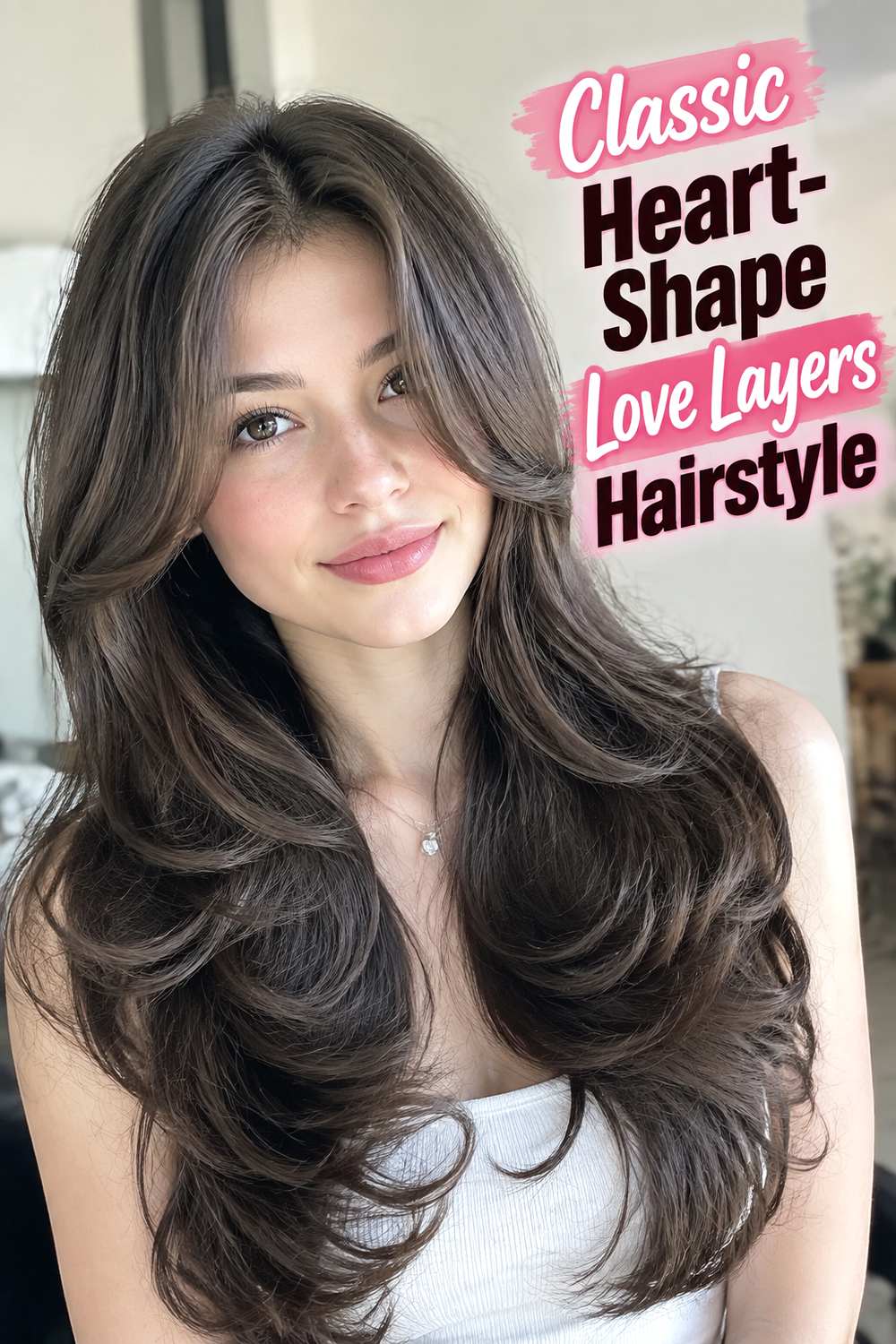
The classic version puts the signature silhouette front and center. Long layers fall from fuller roots and upper lengths into softly narrowing ends, while the pieces closest to the face sweep inward to suggest a subtle heart shape. Keeping the perimeter relatively long preserves density and gives the cut a romantic, polished finish rather than a heavily shredded appearance. This version is especially appealing if you want visible movement without giving up much overall length. A smooth blowout makes the shape easiest to see, but the layers should still blend naturally when the hair is worn with less styling. Ask for soft transitions instead of short, disconnected pieces if you prefer an elegant result.
Why It Works
The contrast between volume near the top and a lighter-looking lower silhouette creates movement while maintaining the impression of long, substantial hair.
Styling Notes
Use a round brush to guide the front layers inward and away from the face in sections. Keep the ends softly curved rather than tightly curled.
2. Soft Center Part Love Layers Hairstyle
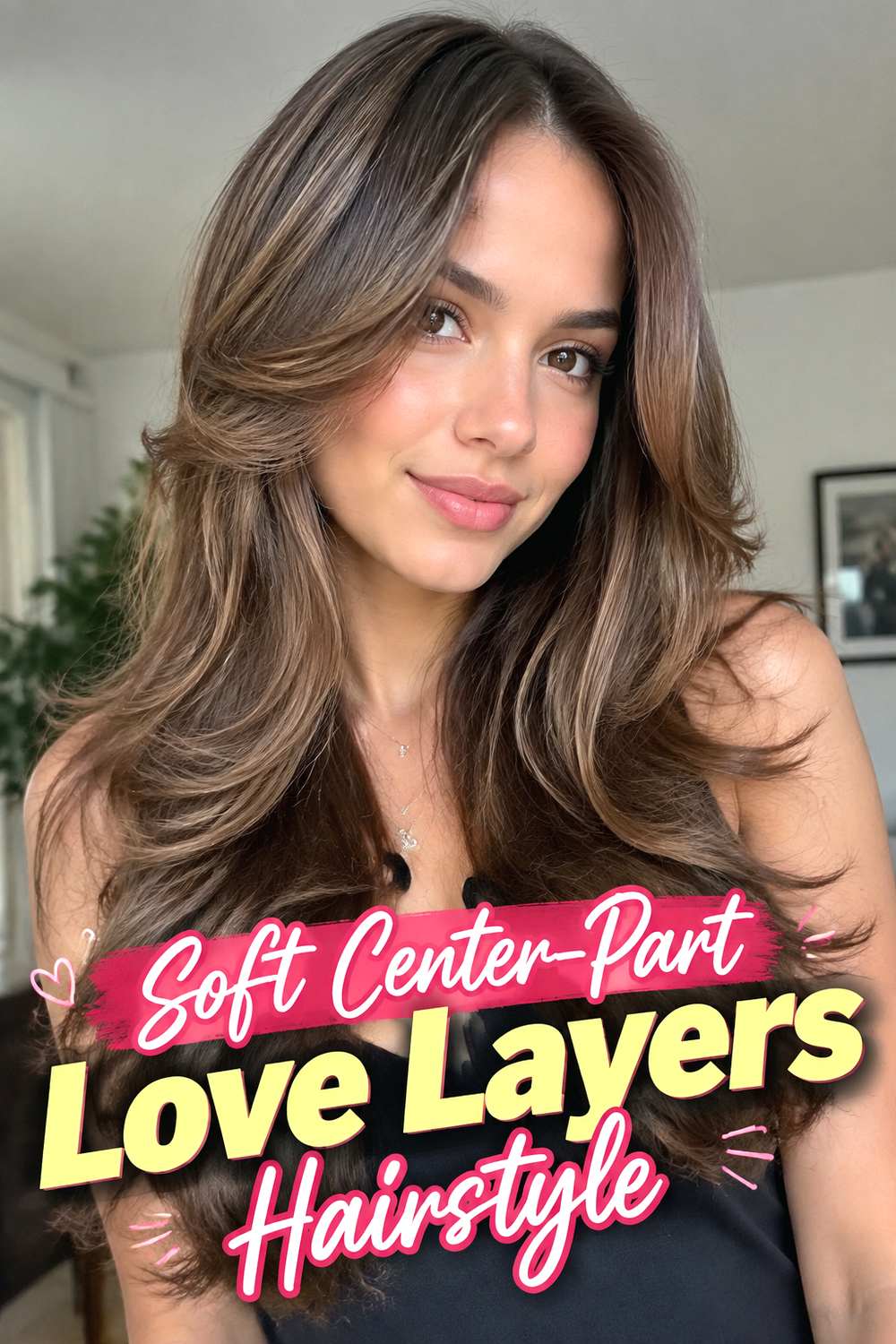
A center part gives Love Layers a balanced, almost symmetrical finish that highlights the curved framing on both sides of the face. The shortest visible pieces can sit around the chin while progressively longer sections melt into the main length, creating a smooth cascade instead of obvious steps. This is a particularly pretty choice for anyone who likes polished hair but does not want an overly formal shape. The middle part also makes the haircut easy to style with a large round brush or wide hot rollers because both sides can be directed away from the face in matching sections. A little lift at the roots keeps the center part from looking flat and preserves the fuller upper silhouette associated with the trend.
Best For
Choose this variation if you regularly wear a middle part and enjoy balanced face framing that looks intentional from both the front and side.
Pro Tip
Dry the roots upward before concentrating on the ends. Building lift first prevents the longer layers from pulling the finished shape downward.
3. Curtain Bang Love Layers Hairstyle
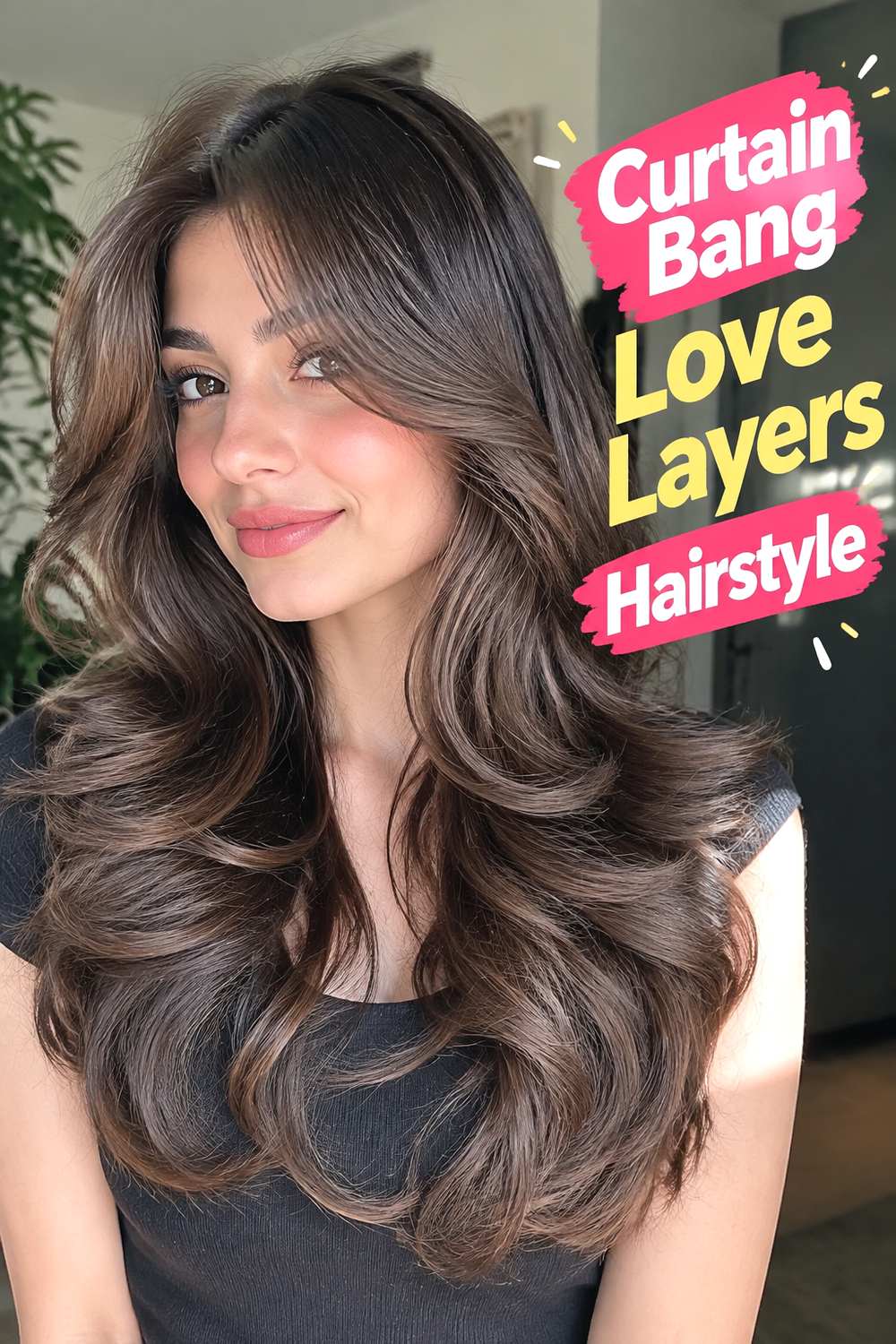
Curtain bangs add a shorter focal point to the flowing Love Layers shape without creating the commitment of a full blunt fringe. The bangs can open through the center and blend into cheekbone, jaw, and chin-length pieces, giving the front of the haircut a continuous curve. Behind them, longer layers maintain softness and prevent the style from feeling top-heavy. This variation works well when you want more detail around the eyes and cheekbones while keeping plenty of length through the back. Because curtain bangs respond strongly to styling direction, the finished result can shift from airy and relaxed to full and glamorous. Keep the transition from fringe to longer layers gradual so the front does not look disconnected.
Wear & Maintenance
The fringe usually needs more frequent reshaping than the longest layers. Consider that extra upkeep before choosing a shorter curtain section.
Styling Notes
Blow-dry the bangs forward briefly, then split and sweep them outward. This helps create a soft bend instead of a stiff center gap.
4. Long Blowout Love Layers Hairstyle
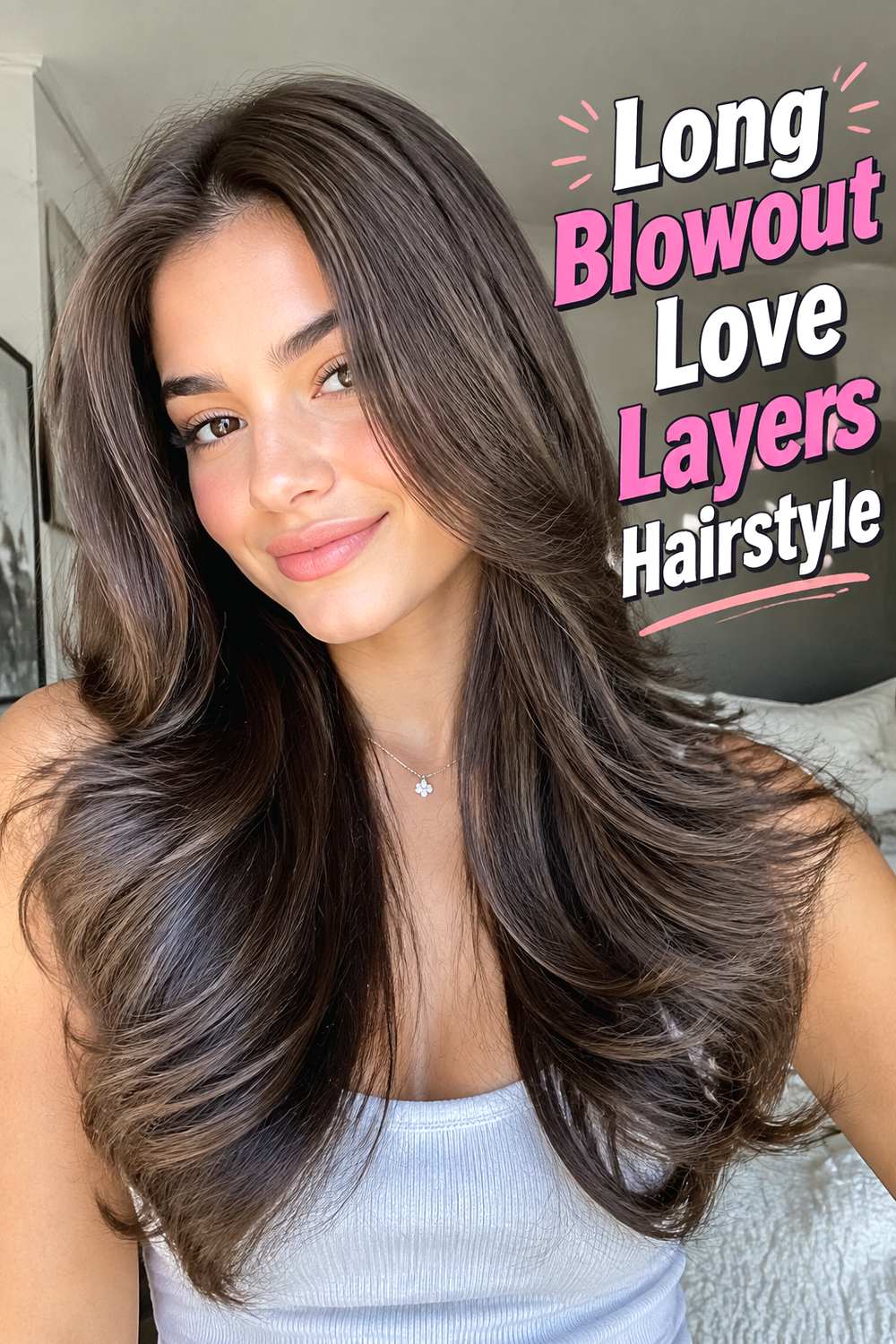
For maximum movement, the long blowout version uses the haircut as a foundation for broad, sweeping curves. The layers remain long enough to overlap smoothly, but each section becomes visible once the hair is lifted and shaped with a round brush. The result has fullness around the crown and upper sides, face-framing bends through the front, and lighter movement toward the bottom. It is a strong option for fall occasions when you want your hair to look finished without relying on a tight curl pattern. The key is controlled volume rather than excessive teasing. Hair should still have visible weight, shine, and natural separation, allowing the layered architecture to show while the overall finish stays touchable.
Hair Type & Length
Medium-to-long hair with enough density to support several blended layers will show this blown-out shape most clearly.
Pro Tip
Let each warm section cool around a large roller or loosely pinned curve before releasing it. Cooling helps the bend last without overloading the hair with product.
5. Shoulder Length Love Layers Hairstyle
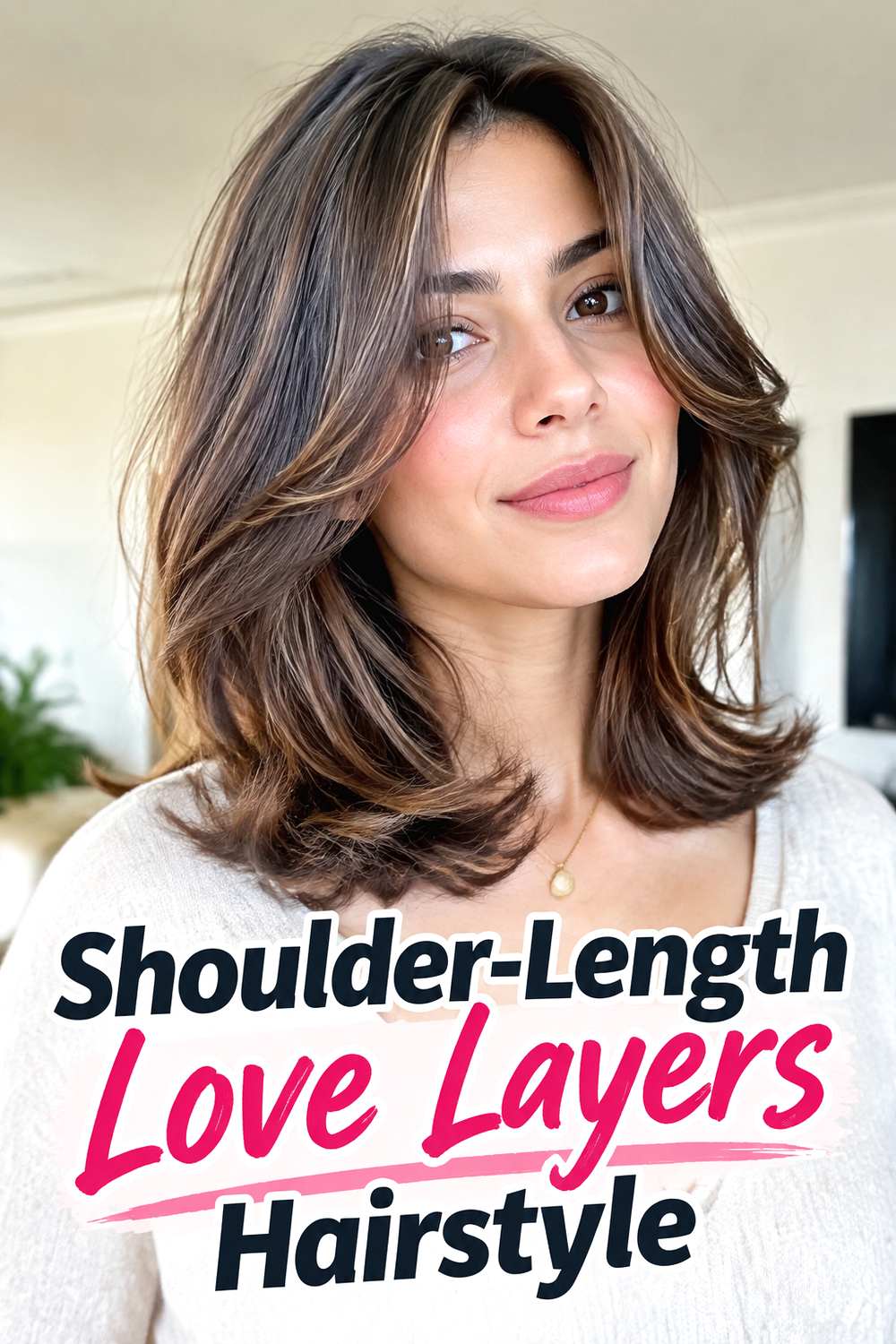
Love Layers do not have to extend far down the back. A shoulder-length interpretation keeps the heart-inspired contour while giving the haircut a lighter, more manageable overall length. Here, the face-framing pieces should stay carefully blended so there is still enough substance at the perimeter. The shorter canvas makes every layer more noticeable, so restraint matters: too many short pieces can turn the shape into a shag rather than a soft Love Layers cut. Styled with a gentle blowout, the ends can skim the shoulders while the front curves inward around the face. This variation is practical for anyone ready to remove longer, tired ends for fall while still keeping enough length for low ponytails and simple updos.
Why It Works
The shorter perimeter makes the cut feel fresh and buoyant while the connected front layers preserve the romantic, flowing character of Love Layers.
Wear & Maintenance
Shoulder-level ends can flip when they meet clothing or collars. A quick smoothing pass or intentional outward bend can turn that movement into part of the style.
6. Collarbone Love Layers Hairstyle
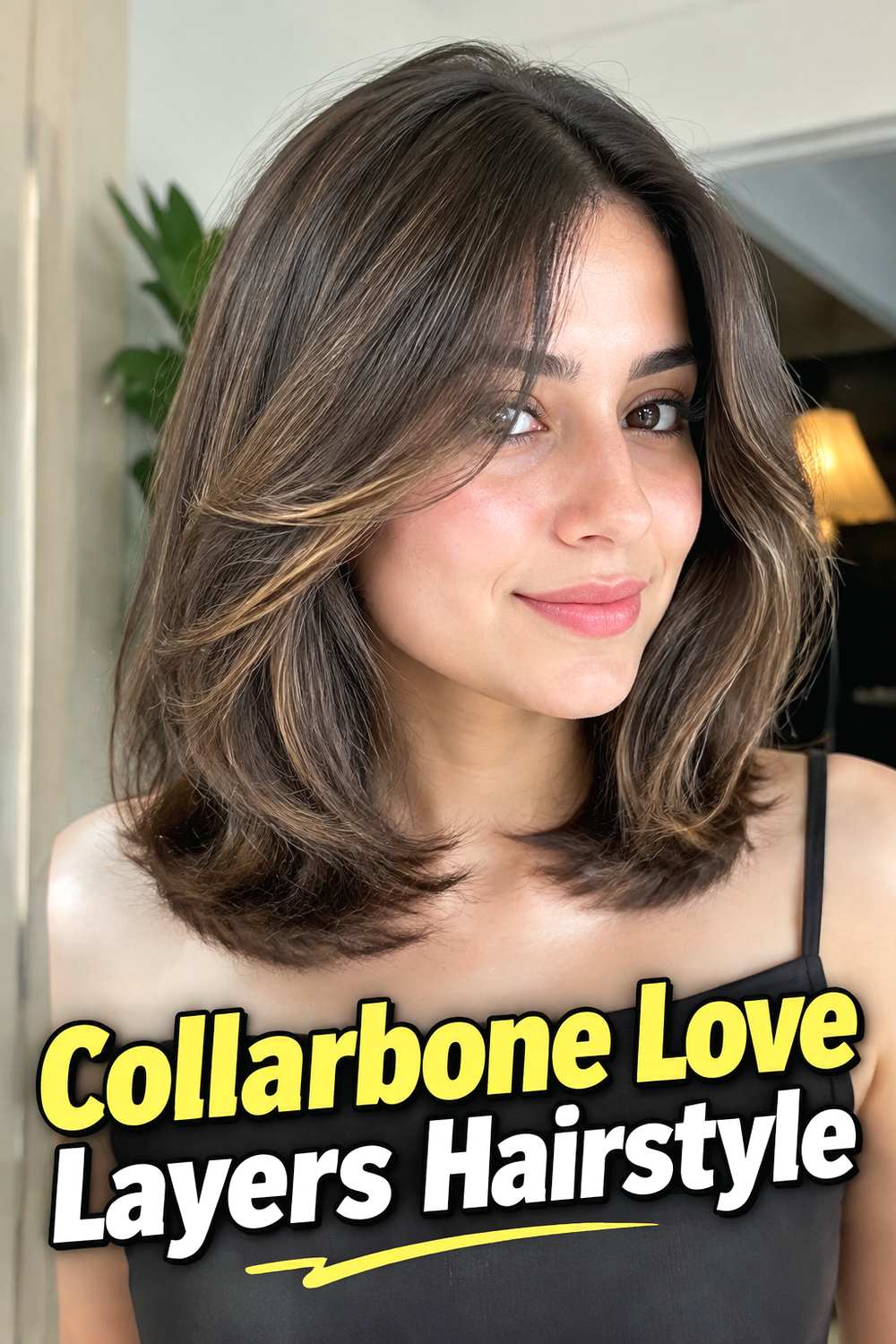
A collarbone-length Love Layers cut sits in the useful space between a lob and a longer layered style. It has enough length for graceful face framing, yet the shorter perimeter can make the entire haircut feel fuller and more deliberate. Rather than carving out many short layers, concentrate movement around the front and upper sections while allowing the bottom to remain relatively substantial. When styled, the front pieces can curve from the cheek or chin toward the collarbone, creating a gentle heart-shaped outline from the front. This version suits fall especially well because it looks polished with sweaters, jackets, and higher necklines without leaving a large amount of hair trapped beneath layers of clothing.
Best For
This is a smart choice if you want visible change from long hair but still need enough length for a ponytail, clip, or half-up style.
Styling Notes
A medium or large round brush usually gives enough bend. Avoid making every layer curl identically; slight variation keeps the haircut modern.
7. Wavy Love Layers Hairstyle
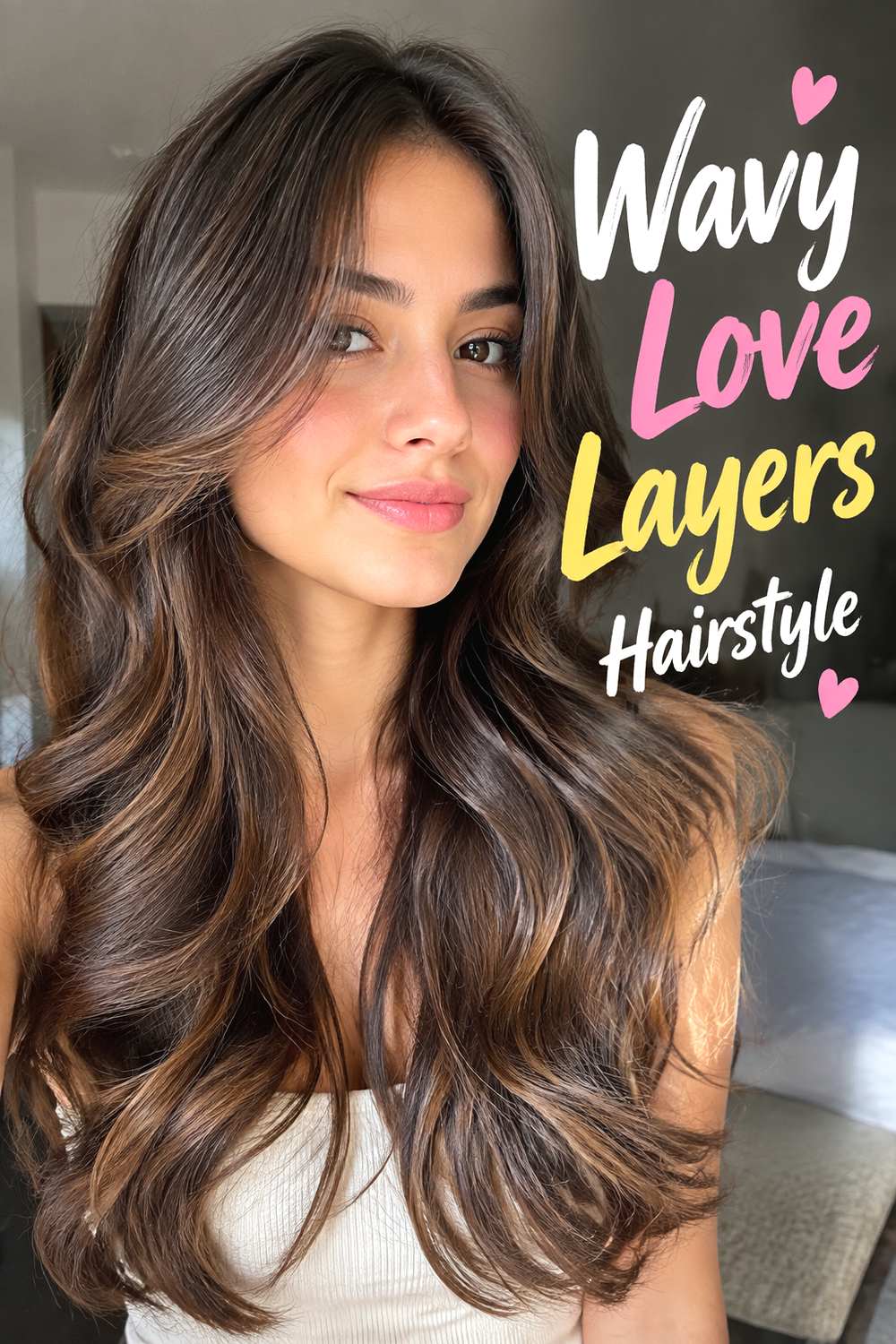
Natural-looking waves soften the structure of Love Layers and make the transitions between lengths feel especially effortless. Instead of displaying every layer as a smooth curve, the hair moves in alternating bends that reveal shorter and longer sections at different points. The result feels relaxed but still intentional, with fullness around the face and a tapered flow through the bottom. If your hair already has a loose wave pattern, this version can require less heat than a traditional blowout. The haircut should respect where your waves naturally expand, particularly around the sides, so the upper portion does not become wider than intended. A light definition product can encourage separation without turning the texture stiff or overly uniform.
Hair Type & Length
Loose waves on medium or long hair are a natural match, especially when there is enough density to maintain a healthy-looking perimeter after layering.
Pro Tip
Style in larger sections and leave some bends less defined. Perfectly identical waves can hide the natural dimension that makes layered hair look relaxed.
8. Curly Love Layers Hairstyle
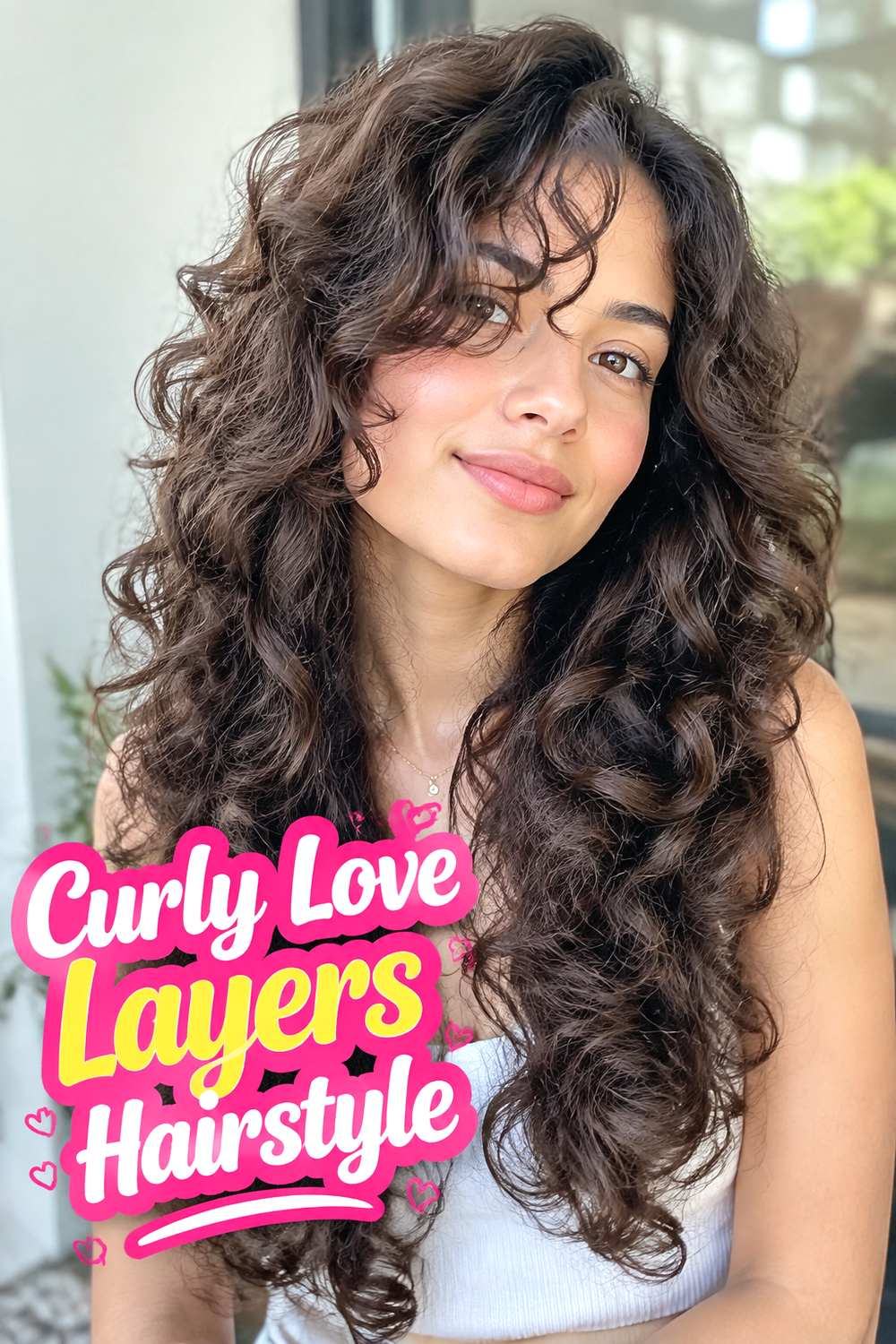
Curly Love Layers reinterpret the heart-shaped idea through natural volume rather than a smooth round-brush finish. The goal is to create lift and width through the upper and middle areas while allowing longer curls to form a softly tapered outline below. Face-framing curls can begin around the cheek, jaw, or chin depending on shrinkage and curl pattern, then connect into the rest of the shape without leaving obvious gaps. This version benefits from a curl-aware cutting approach because every layer will spring differently once dry. Rather than forcing curls into the exact silhouette seen on straight hair, preserve the Love Layers concept through balanced volume, curved framing, and connected lengths. The finished haircut should feel buoyant, dimensional, and natural.
Best For
This approach works for curly hair when the stylist accounts for shrinkage, density, and how individual curl groups sit when the hair is dry.
Wear & Maintenance
Refreshing only the front and top curls between wash days can restore the haircut’s shape without requiring a complete restyle.
9. Fine Hair Love Layers Hairstyle
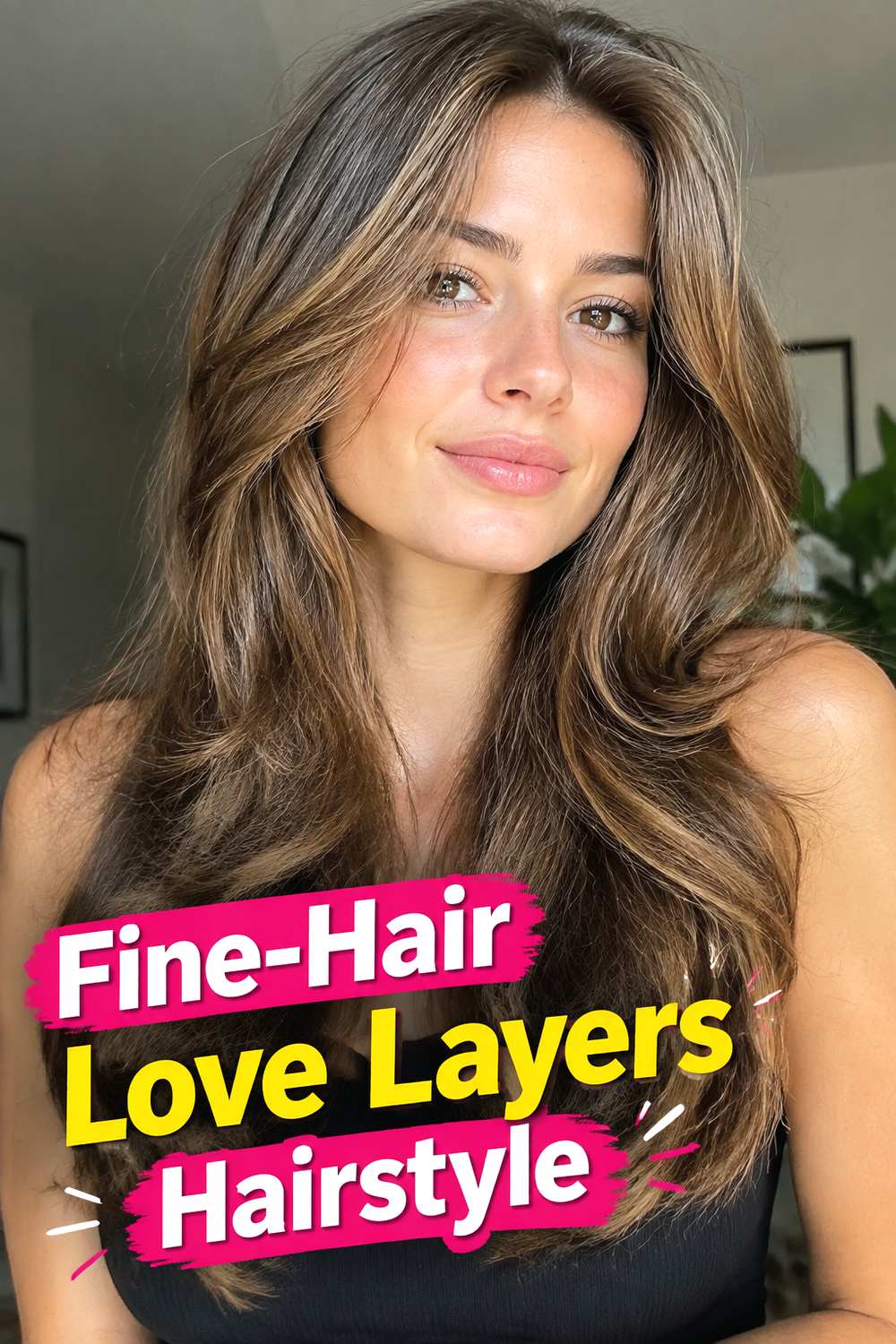
Fine hair can wear Love Layers successfully when the layering is selective rather than excessive. The priority is keeping enough weight through the bottom so the ends continue to look substantial, then adding strategic face-framing pieces and subtle upper movement. A few longer layers can create the illusion of more lift and dimension, but removing too much interior weight may make the perimeter look sparse. A chin-level starting point for the front pieces can provide visible shaping while allowing the rest of the length to stay relatively full. When styling, a lightweight root lift and broad bend through the ends usually work better than heavy oils or strong creams. The finished effect should be airy and polished, not aggressively feathered.
Why It Works
Carefully placed layers redistribute visual volume and movement without requiring a large amount of hair to be removed.
Pro Tip
Ask your stylist to preserve density through the perimeter and make the number of layers suit your actual hair thickness rather than copying a heavily layered reference exactly.
10. Thick Hair Love Layers Hairstyle
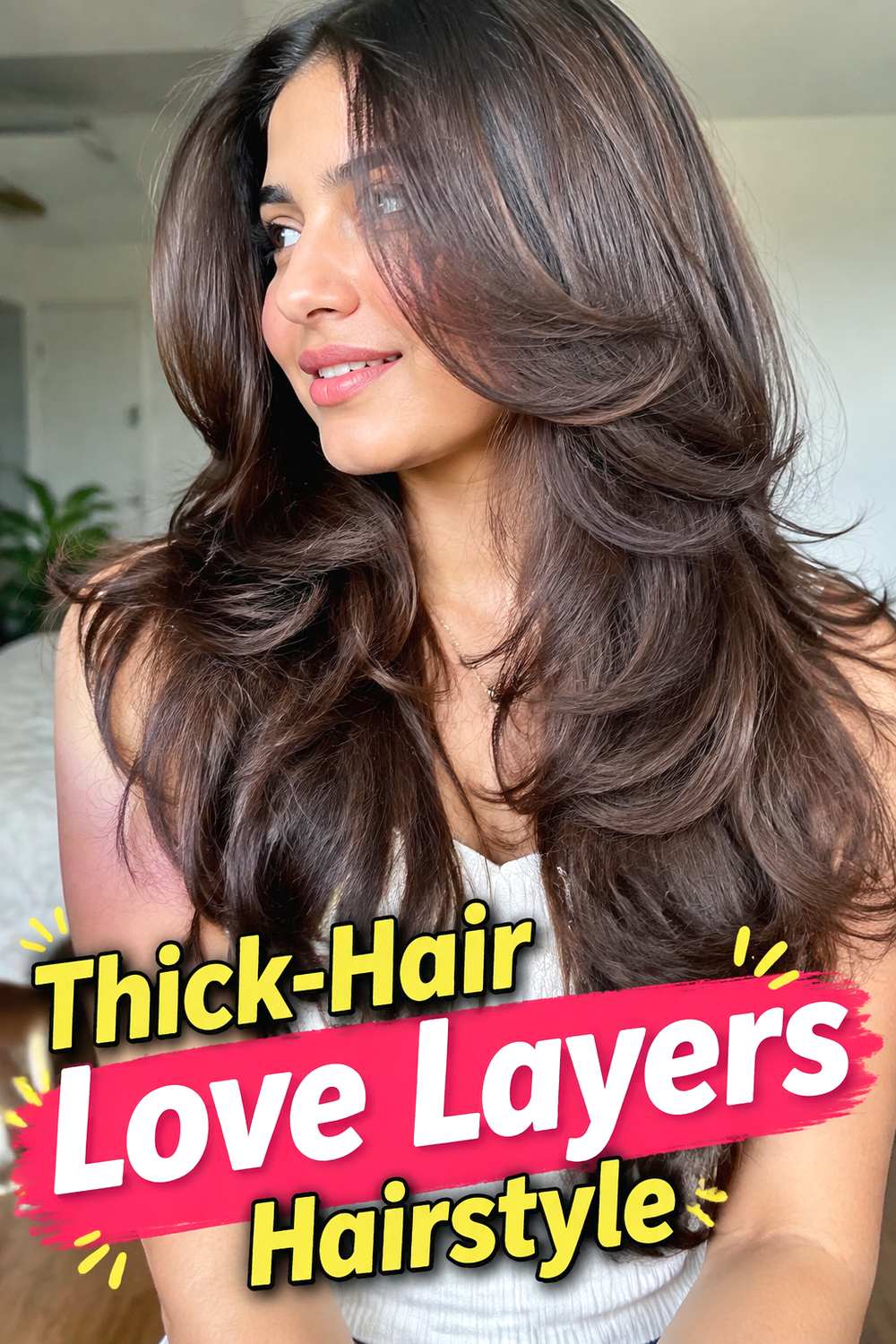
Thick hair gives the Love Layers shape plenty of material to work with, making it possible to create visible movement while still keeping a rich-looking perimeter. Longer internal layers can release some bulk, while face-framing sections help direct the fullness into a softer heart-shaped outline. The important distinction is between removing weight and creating thin, disconnected ends. A skilled cut should allow dense hair to move more freely without making the lower lengths look wispy. This version can be especially satisfying when one-length hair tends to sit heavily or form a triangular shape. With a smooth blowout or natural texture styling, the layers encourage separation and movement so the density feels intentional rather than overwhelming.
Hair Type & Length
Medium-to-thick hair from below the shoulders through longer lengths gives a stylist room to distribute weight across several connected layers.
Styling Notes
Work in controlled sections and concentrate smoothing on the outer surface. Over-rounding every layer can make already-thick hair expand more than desired.
11. Side Part Love Layers Hairstyle
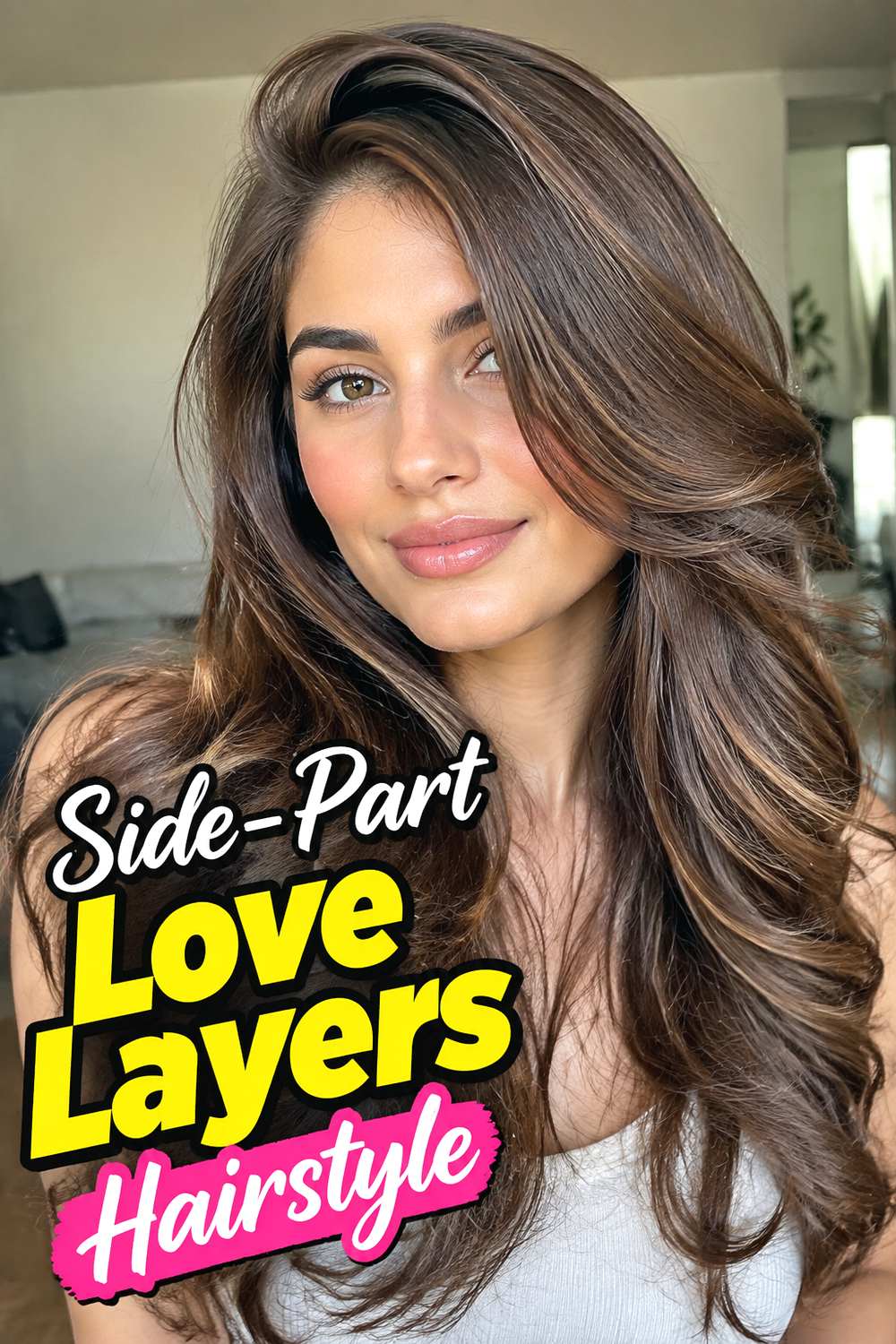
Moving Love Layers into a side part creates an asymmetrical version with extra lift on one side and a sweeping frame across the face. It is an easy way to make the haircut feel more dramatic without changing the actual length significantly. The heavier side can form a broad curve from the temple or cheek toward the chin, while the lighter side tucks back or falls in softer pieces. This variation works especially well with a blowout because the shifted part naturally encourages root elevation. It can also help anyone who finds a strict center part too flat or structured. The layers should remain balanced enough that you can change the part occasionally without exposing awkward short pieces or uneven-looking gaps.
Best For
Try this shape if you enjoy noticeable root volume, an off-center silhouette, or a sweeping front section rather than perfectly symmetrical framing.
Pro Tip
Set the part while the roots are still damp. Redirecting fully dry roots usually takes more heat and may not hold as naturally.
12. Face Framing Love Layers Hairstyle
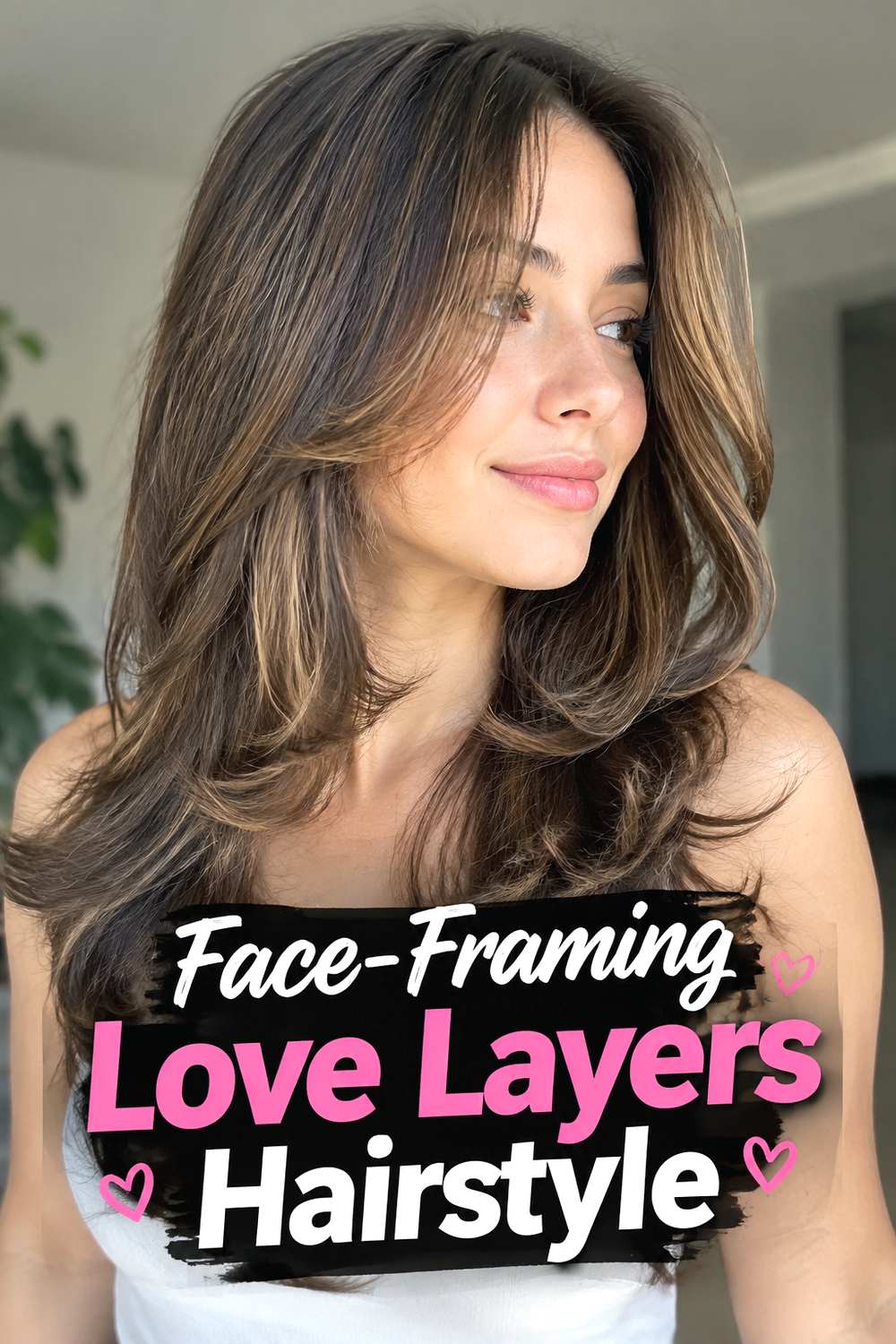
This interpretation puts extra attention on the layers surrounding the face while leaving much of the back length comparatively simple. The first pieces can begin just below the chin and continue downward in soft, connected curves, creating the signature Love Layers contour without heavily layering every section. It is a useful option for someone who wants a visible update from the front but prefers to protect length and density through the back. The front pieces can be styled inward for a clear heart-like outline or swept away for a broader, more open look. Because these layers sit close to the face, small differences in length matter. Discuss exactly where you want the shortest section to land before the cut begins.
Why It Works
Concentrating the detail around the face creates a strong visual change while keeping the overall haircut relatively simple and wearable.
Styling Notes
Use the direction of the brush to customize the effect: inward for a more sculpted contour, outward for a softer and more expansive frame.
13. Rounded End Love Layers Hairstyle
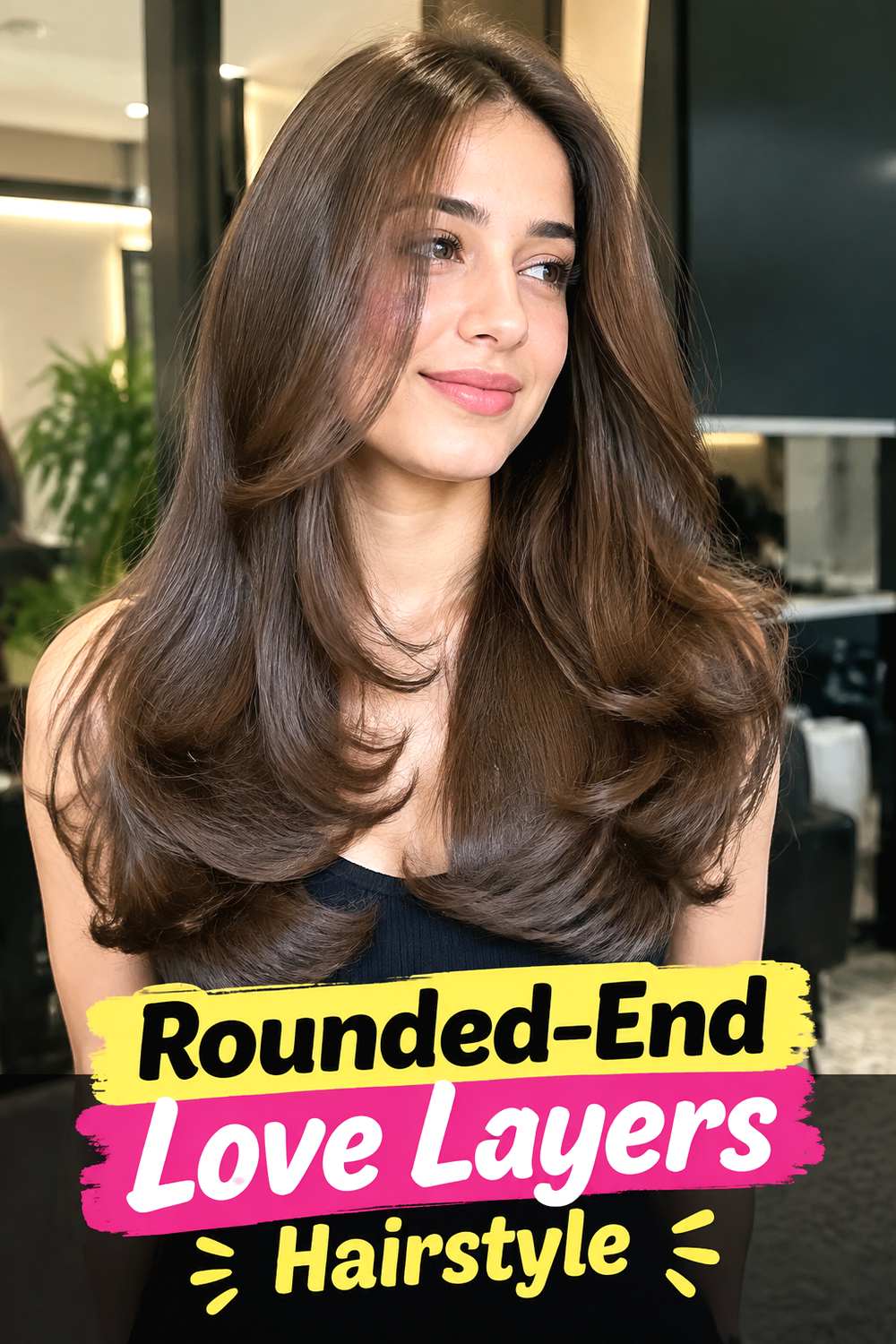
Rounded ends give Love Layers a smooth, expensive-looking finish without turning the hairstyle into tight curls. Each longer section bends gently under or around the shoulders, while the face-framing pieces form slightly deeper curves closer to the face. This controlled finish makes the layered silhouette easy to read and adds polish to long hair that might otherwise hang straight down. It is particularly effective when you want a fall style that works for the office, dinners, events, or everyday wear without looking overly styled. The ends should remain flexible and separated rather than forming one solid roll. A soft bevel creates movement, while too much inward curl can make the cut look dated or disguise the tapered shape.
Wear & Maintenance
The finish can soften as the day progresses, so it suits anyone comfortable with a looser second-day bend rather than expecting every curve to stay identical.
Pro Tip
Use a larger barrel or brush at the ends and make only a partial turn. That produces a modern bevel instead of a full ringlet.
14. Feathered Love Layers Hairstyle
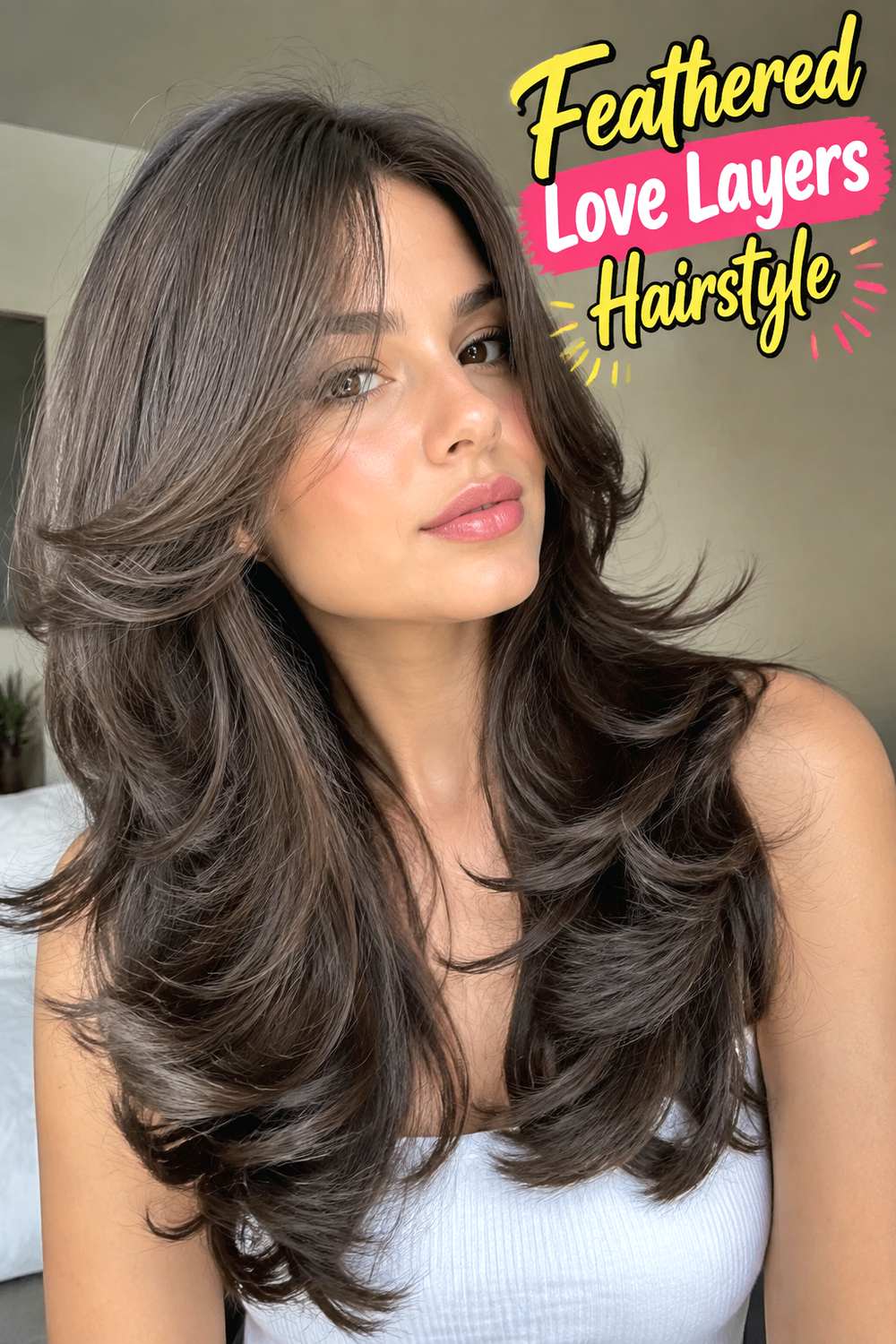
Feathered Love Layers combine the soft heart-shaped framework with lighter, outward-sweeping movement around the face. Instead of directing every front section inward, selected layers are brushed back to expose the cheekbones and create an airy, open silhouette. The technique brings a subtle retro influence to the cut while the long blended lengths keep it current. This look works particularly well if you enjoy volume through the front but dislike hair falling continuously toward your eyes. The feathering should stay broad and soft rather than sharply flipped, with each layer melting into the next. Maintaining shine through the ends is important because the increased separation can make dry or overprocessed sections more noticeable than they would be in a smoother style.
Styling Notes
Direct the front sections away from the face with a round brush, then allow the ends to settle naturally instead of spraying them into a rigid wing.
Best For
Choose this version if you prefer an open face, noticeable movement, and a slightly more playful finish than the classic inward-curved Love Layers shape.
15. Auburn Love Layers Hairstyle
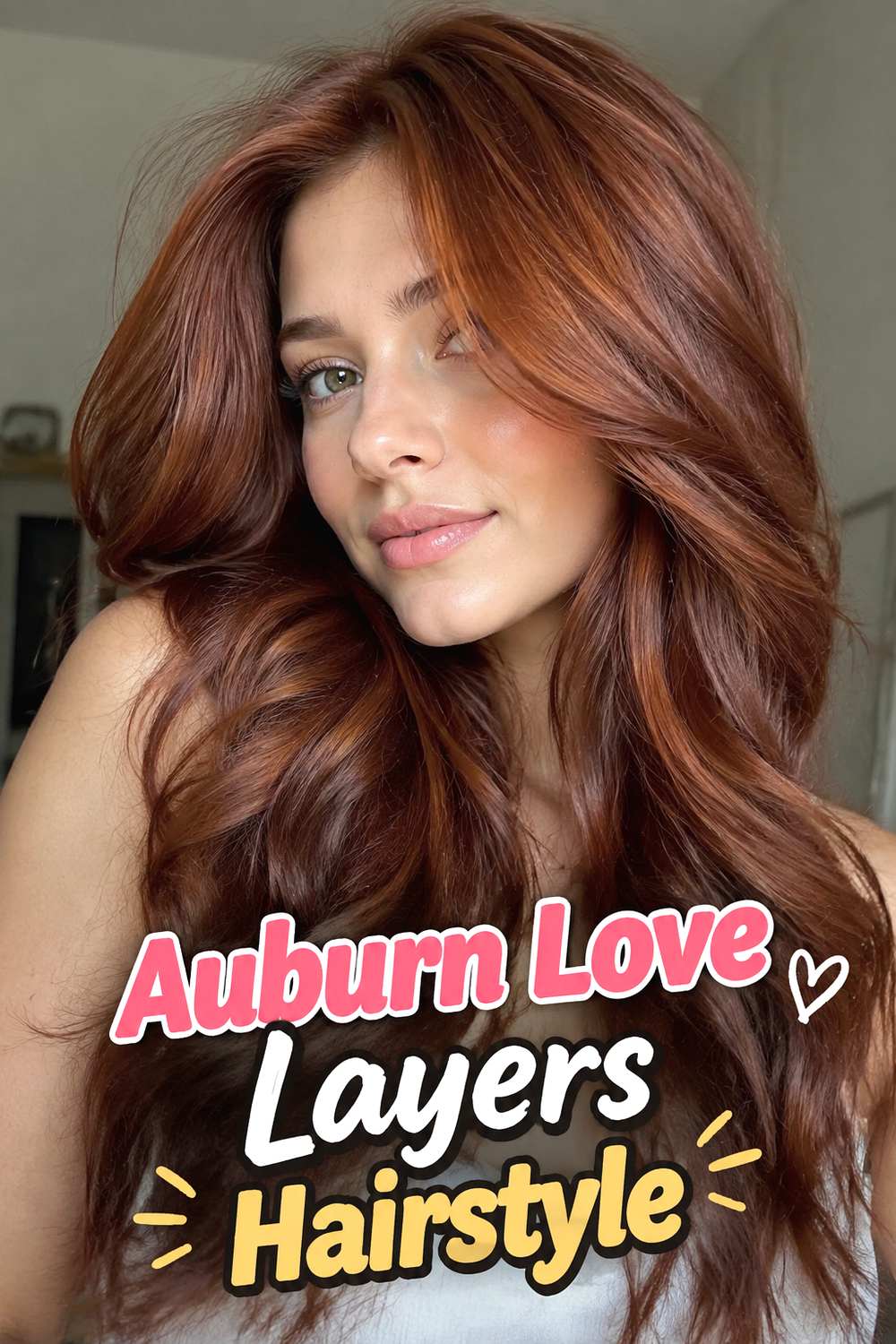
Rich auburn color makes the curves of Love Layers especially noticeable because warm copper and red-brown tones catch changing light across the different lengths. The haircut itself can remain classic: fuller through the upper sections, softly framed around the face, and gradually tapered toward the bottom. What changes is the visual dimension. As the hair moves, slightly lighter and darker areas emphasize the separation between each curved layer, giving the style a warm fall finish without requiring exaggerated texture. A glossy surface helps the color look deep rather than flat, so gentle styling and consistent conditioning are valuable. If you are changing both cut and color, consider how much lightening or processing your hair can comfortably handle before adding frequent heat styling.
Why It Works
Warm dimensional color naturally draws attention to movement, making the curved face frame and overlapping long layers easier to see.
Wear & Maintenance
Red and copper tones can require dedicated color maintenance. Use the care routine recommended for your specific color service and minimize unnecessary heat exposure.
16. Brunette Gloss Love Layers Hairstyle
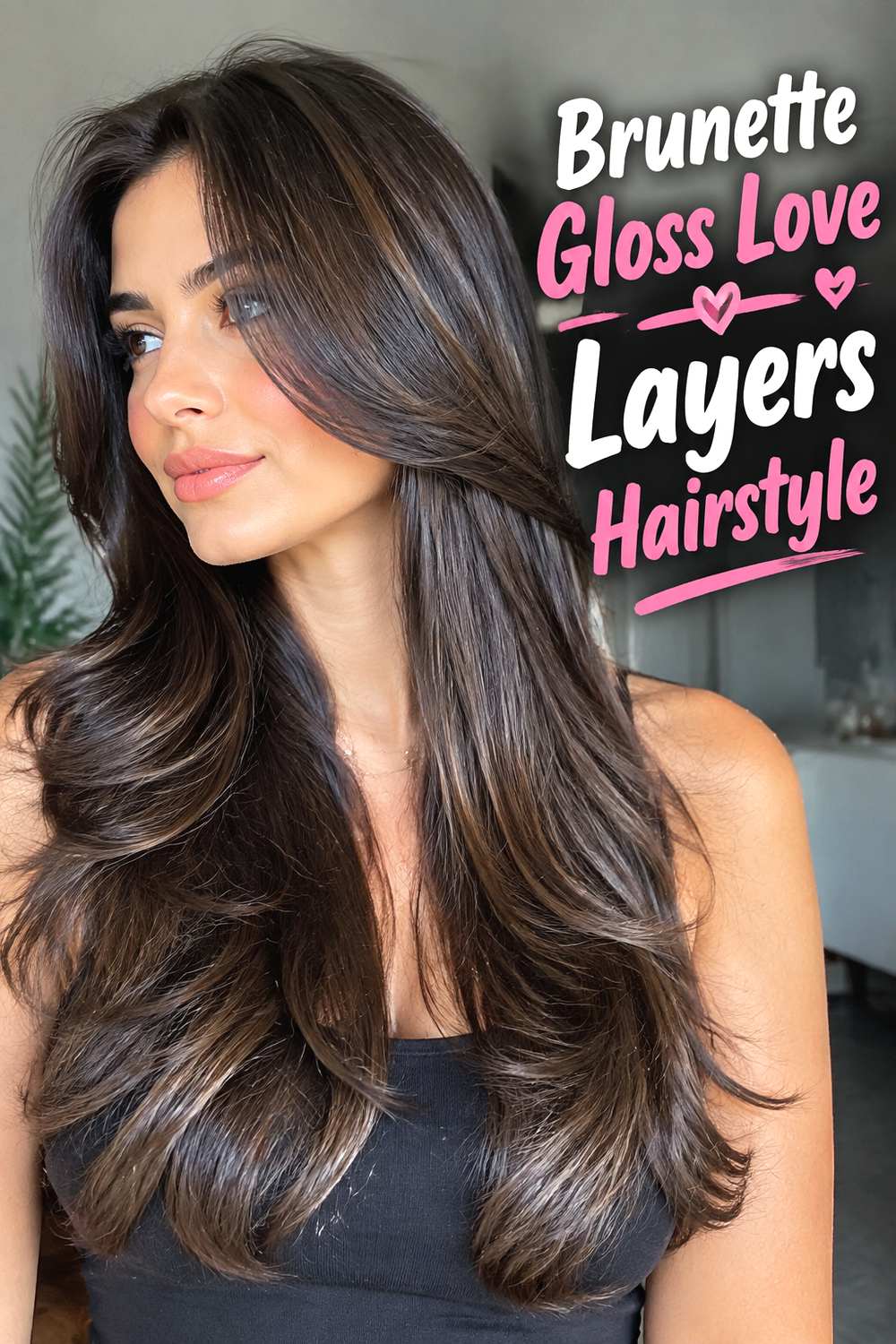
Deep brunette Love Layers create a sleek finish where shine, shape, and movement do most of the visual work. Instead of relying on high-contrast highlights to reveal the cut, the long curved sections become visible as light reflects across the hair’s surface. This makes precise layering particularly important: the face frame should connect smoothly into the longer lengths, and the ends should retain enough density to look healthy. A center or slightly off-center part can both work, depending on where you want the strongest volume. For fall, the combination feels polished and understated, especially when paired with a broad blowout or soft natural bend. Keep styling products light enough that the strands remain separated and mobile rather than coated.
Best For
This variation suits anyone who prefers dimensional shape over obvious color contrast and wants a sophisticated finish that can move easily between casual and dressier settings.
Pro Tip
Apply shine products sparingly through the mid-lengths and ends rather than saturating the roots. The goal is reflective movement, not a flattened surface.
How to Choose the Right Look
Start with length and density. Medium-to-long hair gives the traditional Love Layers silhouette the most room to develop, while collarbone and shoulder-length versions need more careful placement so the perimeter does not become too light. Fine hair generally benefits from fewer layers and a stronger baseline; thick hair can often handle more internal movement and weight removal.
Next, consider texture. Straight and softly wavy hair will display the heart-shaped outline clearly after a blowout, while curls need layer placement that respects shrinkage and natural volume. Your stylist may need to adapt where the shortest pieces begin rather than copying an exact measurement from a straight-haired reference.
Styling time matters too. A full round-brush blowout shows the Love Layers architecture most clearly, but wavy and curly versions can be worn with a more texture-led finish. If you prefer minimal daily styling, choose longer, subtler layers that still fall well when air-dried.
Think about comfort and maintenance around the face. Curtain bangs and shorter framing pieces create more impact but may need frequent reshaping and morning styling. Longer chin-level pieces are easier to tuck away, pull into a ponytail, or grow out.
Finally, decide on the finish you want. Rounded ends feel polished, feathered layers feel airy, a side part adds drama, and richer fall colors can highlight movement. Bring reference photos that match your hair density and texture, then ask your stylist to adapt the silhouette rather than duplicate someone else’s cut exactly.
Final Thoughts
Love Layers are especially appealing for fall 2026 because the haircut can look romantic and noticeably refreshed without requiring an extreme loss of length. The strongest versions preserve healthy-looking density while using curved face framing, root lift, and gradual layering to build the recognizable heart-inspired silhouette.
If you are unsure where to begin, start with the variation closest to your natural texture and normal styling routine. A cut that works when you style it yourself will usually be more satisfying than one that only looks right after a salon blowout.
FAQs
What is a Love Layers haircut?
Love Layers are long, softly blended layers arranged to create a heart-inspired silhouette, with more lift and volume toward the upper hair and face and a narrower flow toward the ends. The 2026 trend has been described as an updated, softer variation of the C-cut.
Where should Love Layers start?
A common reference point is around or just below the chin, but the ideal starting length depends on your face framing preference, overall length, curl pattern, and density. Curly hair in particular may need longer starting pieces because of shrinkage.
Can fine hair wear Love Layers?
Yes, but the layering usually needs to be restrained. Keeping a fuller perimeter and using fewer strategic layers can add movement without making fine ends look overly thin.
Do Love Layers work on curly hair?
They can. The heart-shaped idea should be adapted to the curl pattern rather than copied exactly from a straight blowout. Layer placement needs to account for shrinkage, density, and where the curls naturally expand.
Are Love Layers high maintenance?
The cut itself can be relatively wearable, but the dramatic smooth version requires styling to emphasize its curved shape and upper volume. Longer subtle layers and natural-texture versions generally require less daily work than curtain bangs or a full blowout finish.
CTA
Save your favorite Love Layers Hairstyle, share the ideas with your stylist, and explore more fall hair inspiration before your next seasonal refresh.