12 Soft Jawline Lob Haircuts
Soft layers, airy movement, curved ends, and face-framing pieces give these lob haircuts a beautifully relaxed finish around the jawline.
A lob sits in the sweet spot between a classic bob and longer hair, offering enough length for movement while still looking intentional and fresh. For a softer effect around the jaw, details such as feathered layers, loose waves, curtain pieces, and gently curved ends can keep the haircut from feeling overly sharp or heavy.
The best version depends on your natural texture, density, preferred part, and how much daily styling you enjoy. Some of these cuts rely on polished blowouts, while others work especially well with natural bends and a slightly undone finish. The collection follows practical haircut, variation, and realism principles designed to keep each option visually distinct and wearable.
Quick List
- Soft Layered Jawline Framing Lob Hairstyle
- Face Framing Curtain Lob Hairstyle
- Wispy Side Part Lob Hairstyle
- Feathered Collarbone Lob Hairstyle
- Textured Wavy Jawline Lob Hairstyle
- Rounded Ends Sleek Lob Hairstyle
- Airy Shaggy Lob Hairstyle
- Side Swept Layered Lob Hairstyle
- Soft Blunt Lob Hairstyle
- Curved C Cut Lob Hairstyle
- Tousled Center Part Lob Hairstyle
- Flipped Ends Jawline Lob Hairstyle
1. Soft Layered Jawline Framing Lob Hairstyle
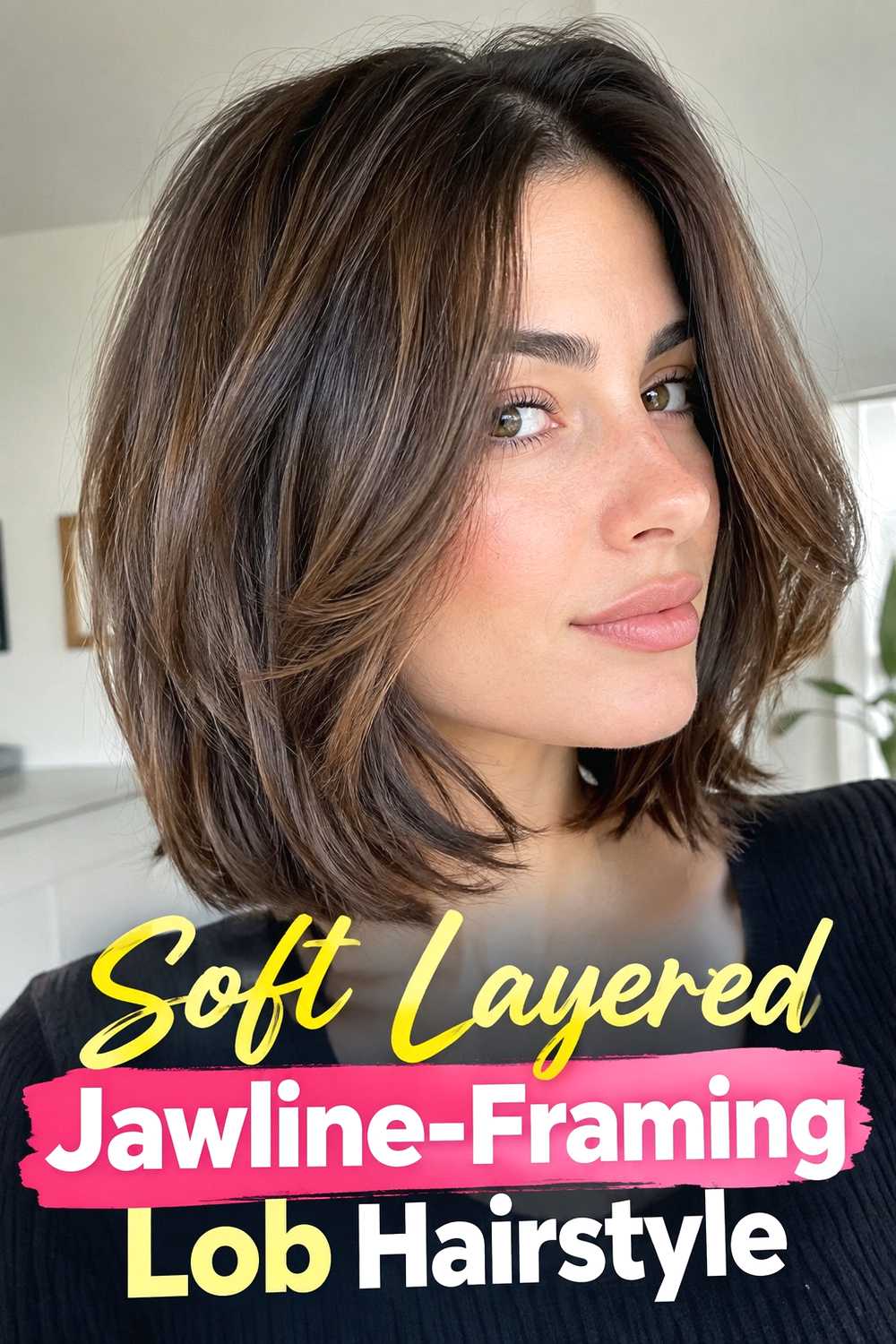
A softly layered lob is an easy way to create movement around the lower half of the face without making the haircut look overly feathered. The longest pieces can sit near the shoulders while shorter layers begin around the cheekbones or jaw, allowing the hair to fall in several light sections instead of one solid line. This creates a flowing silhouette that works beautifully with straight, softly wavy, or blow-dried hair. Keeping the ends lightly textured adds flexibility, while a smooth root area prevents the shape from becoming too puffy. It is a particularly useful option for anyone who likes a polished haircut that still feels relaxed and touchable.
Styling Notes
Blow-dry the front layers away from the face with a medium round brush, then gently loosen them with your fingers rather than creating a rigid curl.
Best For
This cut suits medium to thick hair especially well, although finer hair can wear it with fewer, strategically placed layers to preserve fullness.
2. Face Framing Curtain Lob Hairstyle
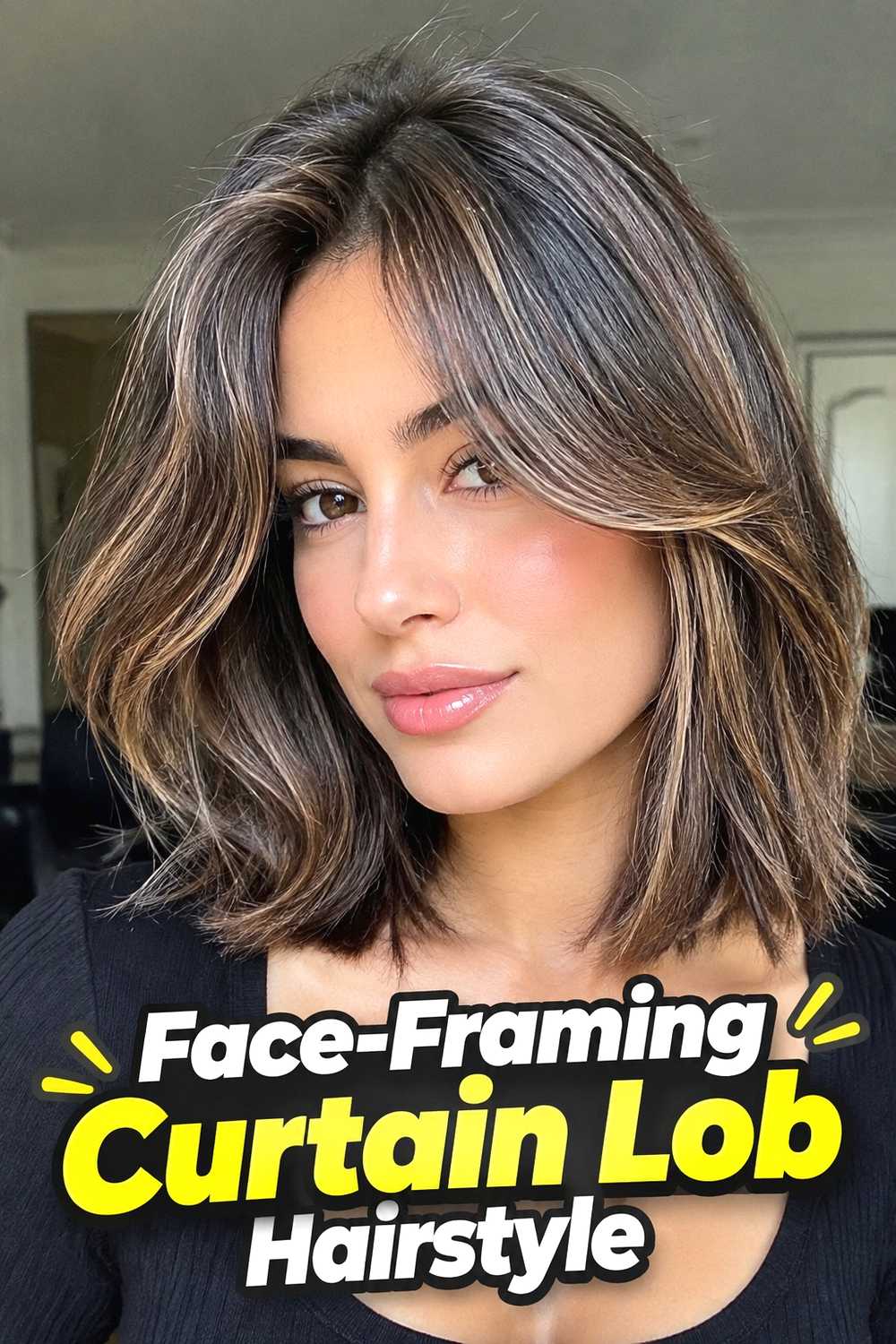
The face-framing curtain lob combines shoulder-skimming length with soft front pieces that open around the eyes and gradually blend toward the jaw. Instead of a heavy fringe, the shortest sections can begin around the cheekbones, creating a gentle draped effect that keeps the front of the haircut light. The longer perimeter maintains the recognizable lob shape, while the curtain-style framing introduces movement without requiring dramatic layering throughout the entire head. It can be worn smooth, softly bent, or with natural texture, making it a flexible choice for everyday styling. The key is keeping the transition between the shorter front pieces and the main length gradual rather than choppy.
Hair Type & Length
This approach works well on straight, wavy, and moderately textured hair when there is enough front length to create the curtain effect.
Pro Tip
Direct the front pieces away from the face while drying, then allow them to settle naturally instead of spraying them into a fixed position.
3. Wispy Side Part Lob Hairstyle
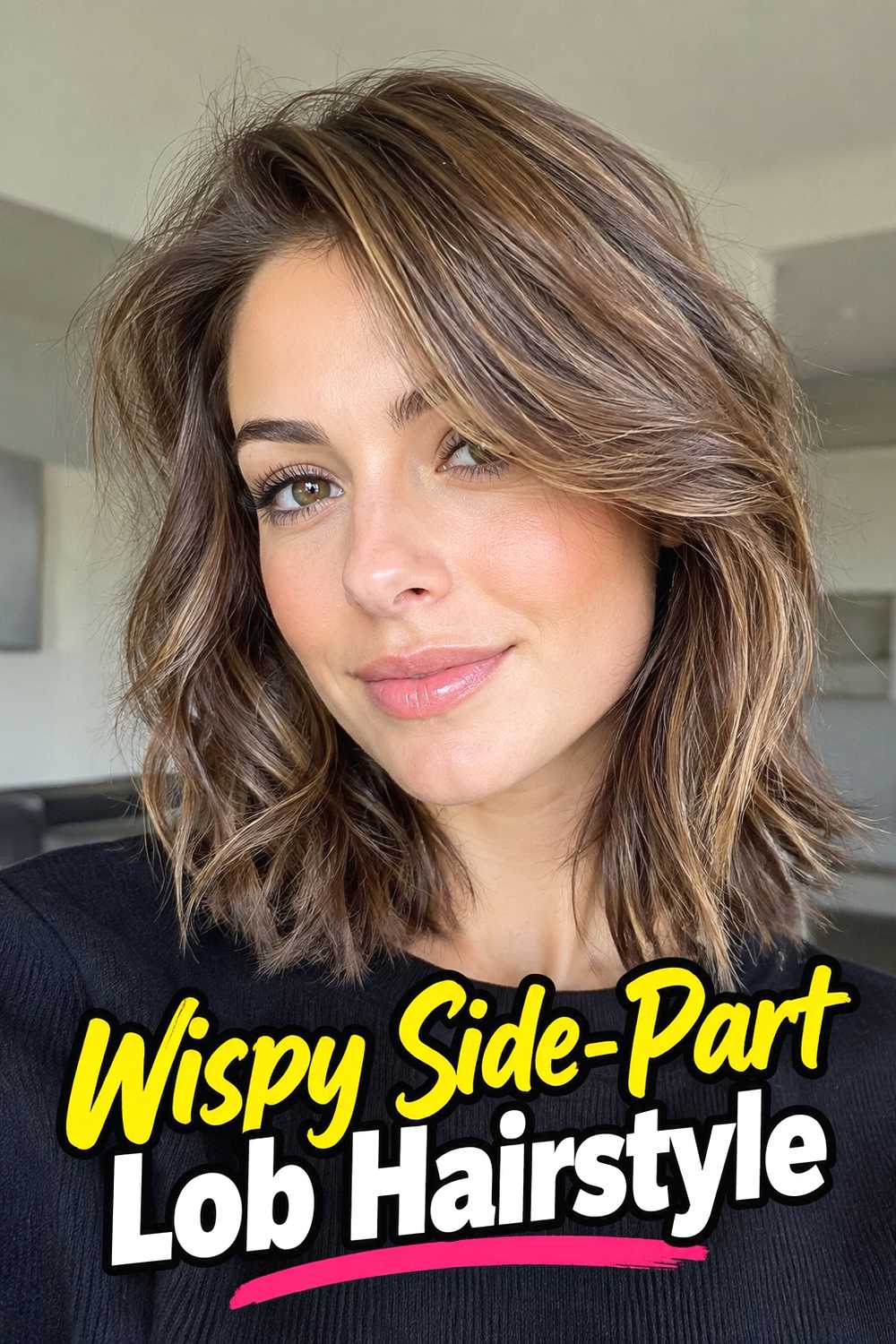
A wispy side-part lob creates softness through asymmetry rather than heavy layering. Moving the part slightly off center gives one side more volume and allows the front section to sweep gently across the forehead before blending into the longer length. Lightly textured ends prevent the haircut from forming a severe horizontal edge, while subtle interior layers can help the hair move naturally around the jaw and neck. This version looks especially pretty with a smooth blowout or loose bend through the mid-lengths. Because the silhouette stays relatively simple, the side part becomes the main styling feature, making it an approachable choice for anyone who wants noticeable change without adding bangs or dramatic layers.
Styling Notes
Lift the roots on the fuller side with a round brush or dryer attachment, but keep the ends loose so the finish remains soft rather than overly sculpted.
Wear & Maintenance
The part can be shifted slightly between washes, which is useful if you prefer flexible styling instead of committing to one precise placement.
4. Feathered Collarbone Lob Hairstyle
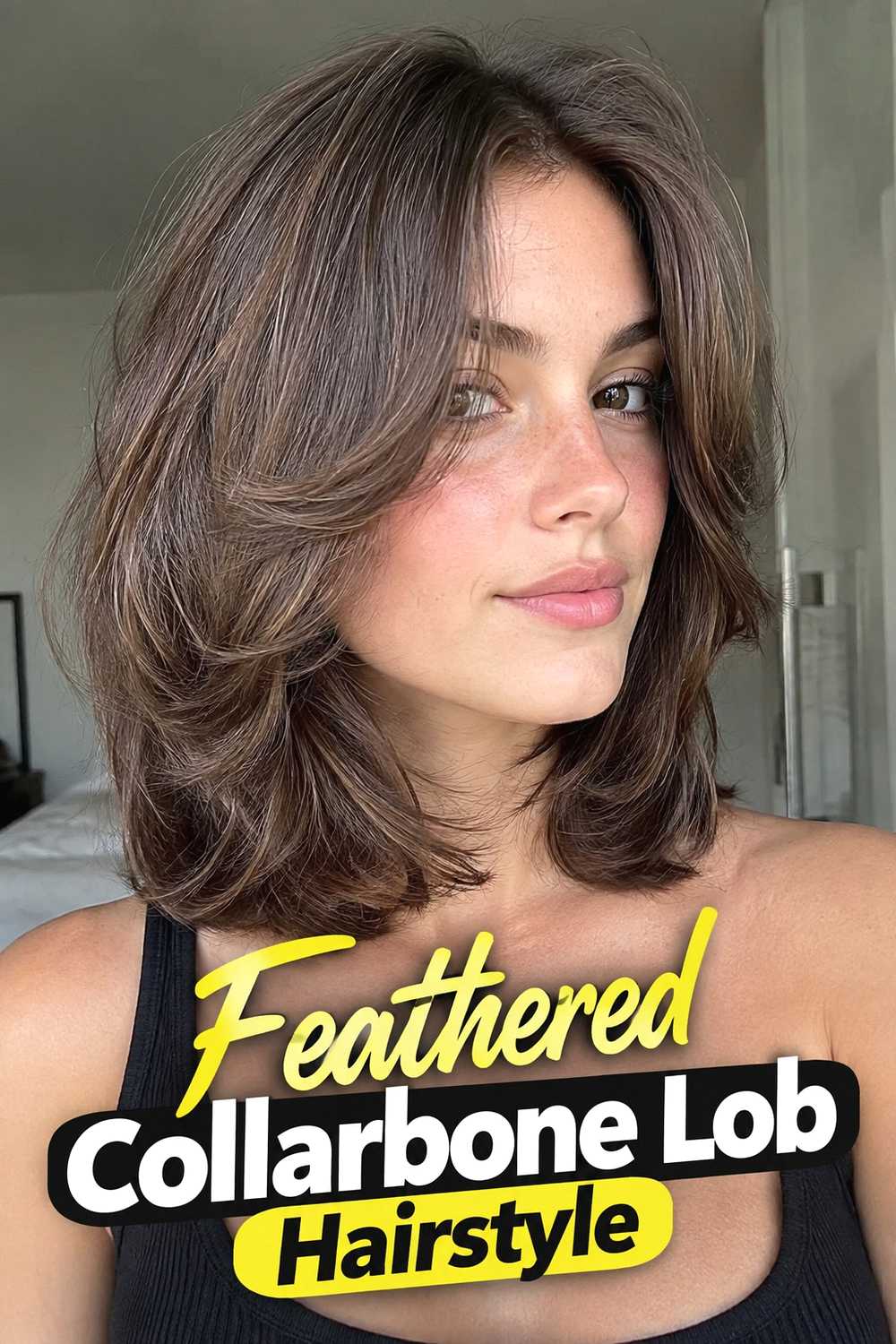
A feathered collarbone lob uses longer, tapered layers to create a soft cascading shape around the neck and jaw. The overall length remains close to the collarbone, but the perimeter feels lighter because the ends are gently shaped rather than cut into a heavy block. Feathering around the front can add movement through the cheek and jaw area, especially when the hair is styled with a rounded blowout. This haircut has a little more flow than a traditional blunt lob while still maintaining enough structure to look polished. It works particularly well for hair that naturally holds a bend, because the layered ends can separate slightly and show off the shape without requiring tightly curled styling.
Why It Works
The longer length keeps the haircut versatile, while the feathered perimeter creates a softer transition between the face, jaw, neck, and shoulders.
Pro Tip
Use a large round brush to turn the layers slightly away from the face, concentrating on movement rather than maximum volume.
5. Textured Wavy Jawline Lob Hairstyle
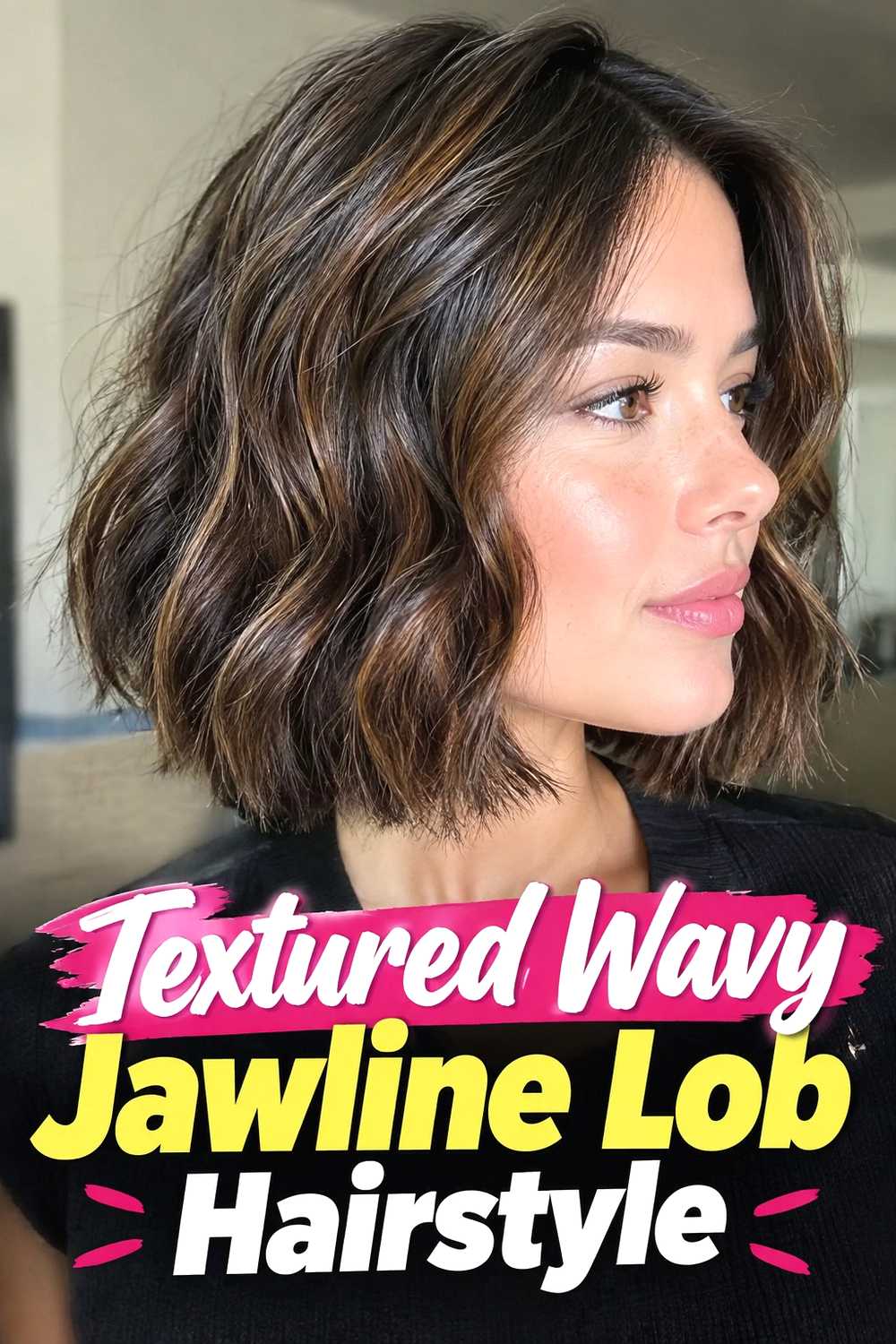
Loose waves give a lob an naturally softened outline by breaking up the perimeter and adding movement around the jaw. In this version, the haircut can remain fairly simple underneath, with subtle layers added only where they help the waves sit naturally. The finished shape should feel airy rather than bulky, with bends moving in slightly different directions for a more effortless texture. Leaving the ends straighter than the mid-lengths keeps the style contemporary and prevents the waves from becoming too formal. This look can work especially well for naturally wavy hair, but straight hair can achieve a similar finish with a curling iron or flat iron used selectively rather than on every section.
Styling Notes
Alternate the direction of a few waves and leave some pieces less curled. That variation helps the hairstyle look relaxed and believable.
Best For
Naturally wavy or medium-density hair can make this style especially easy to maintain because movement is already built into the texture.
6. Rounded Ends Sleek Lob Hairstyle
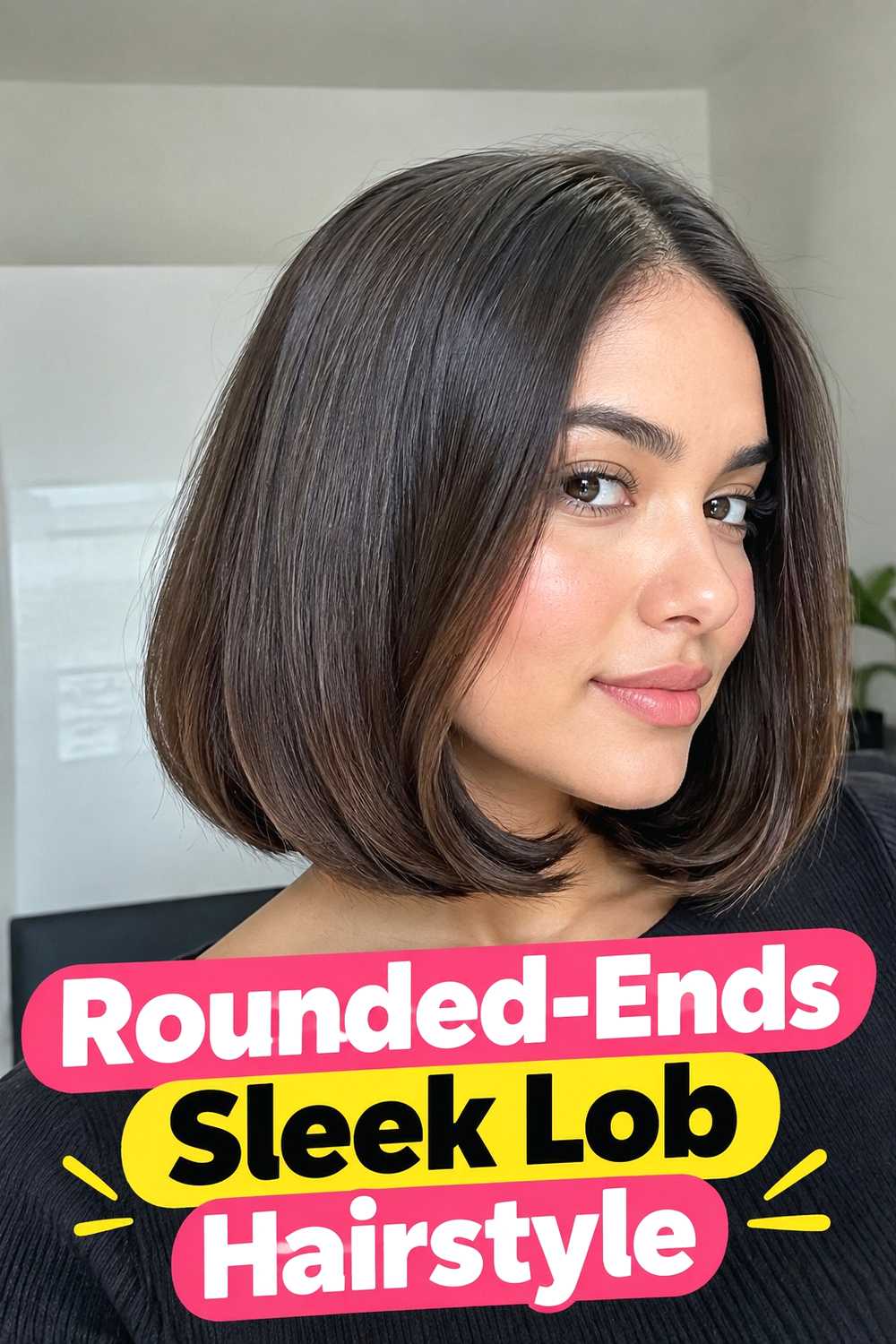
A sleek lob does not have to look severe. By keeping the surface smooth and turning the ends gently inward, the haircut gains a rounded silhouette that feels softer around the jaw and neck. The main length can fall between the shoulders and collarbone, with minimal layering so the finish stays clean and glossy. Instead of pin-straight ends, a subtle curve creates movement and gives the perimeter a more fluid appearance. This style is especially appealing for anyone who likes refined hair with a tidy shape but does not want a sharp, graphic bob. A slight off-center or center part both work, depending on how much symmetry you prefer around the face.
Styling Notes
Use a paddle brush or large round brush to smooth the lengths, then bend only the final inch or two inward for a subtle rounded finish.
Wear & Maintenance
The clean surface may show uneven or dry ends more readily, so occasional perimeter trims help preserve the polished silhouette.
7. Airy Shaggy Lob Hairstyle
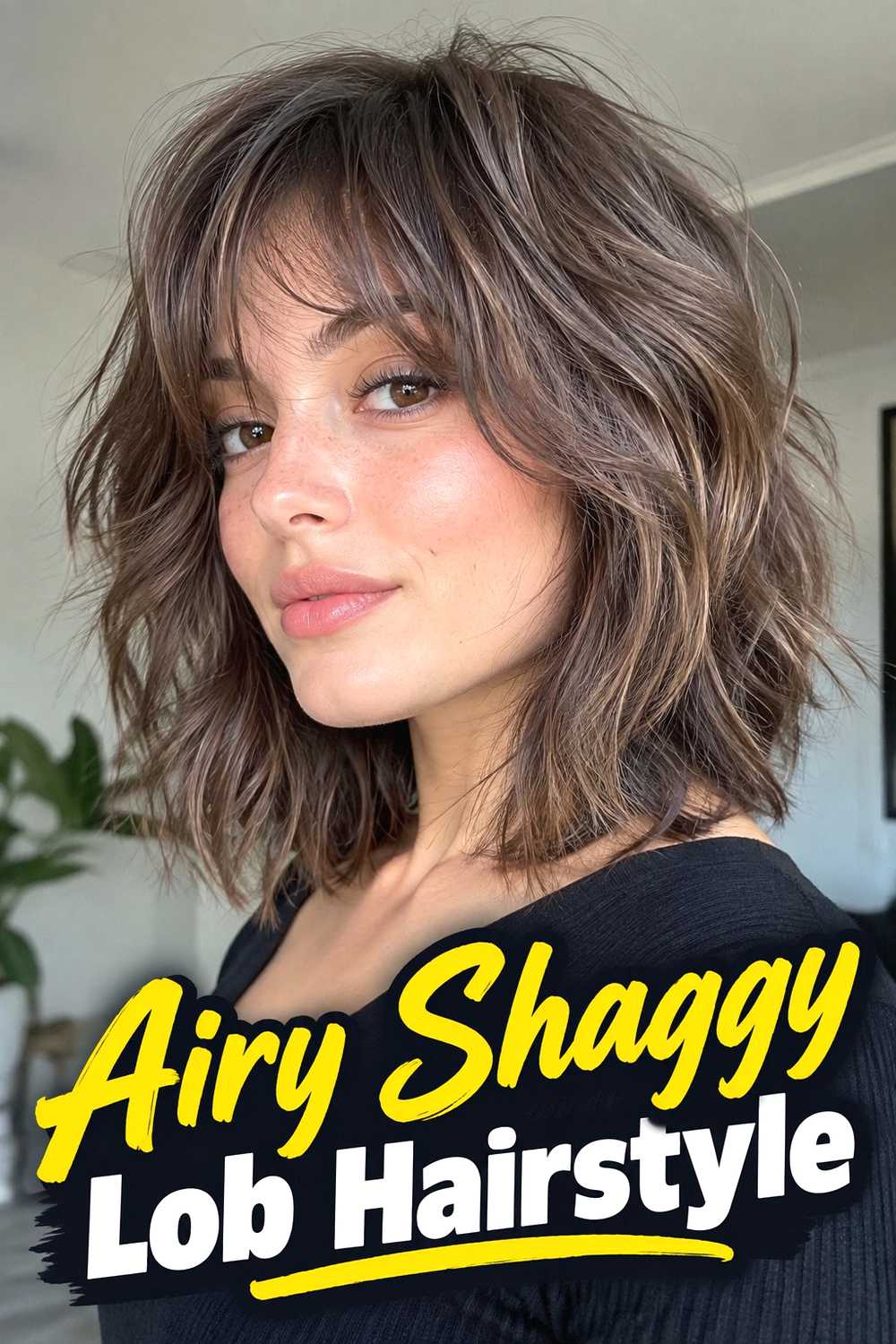
The airy shaggy lob introduces more texture through the crown, front, and ends while keeping enough length to maintain the easy wearability of a lob. Unlike a heavily layered shag, this version uses softer graduation so the haircut does not become overly choppy. Shorter pieces around the cheekbones blend into longer sections near the jaw and shoulders, producing movement that feels casual and slightly undone. Natural waves can make the layers more visible, but even straighter hair can gain separation with lightweight styling. The result suits anyone drawn to relaxed hair with personality rather than a perfectly smooth finish. Keeping the perimeter substantial prevents the layers from making the cut look thin.
Hair Type & Length
Medium-density wavy hair is particularly compatible with this shape, though thicker hair may benefit from carefully placed internal weight removal.
Styling Notes
Scrunch in a light mousse or texture product and allow some natural irregularity rather than trying to make every layer curl in the same direction.
8. Side Swept Layered Lob Hairstyle
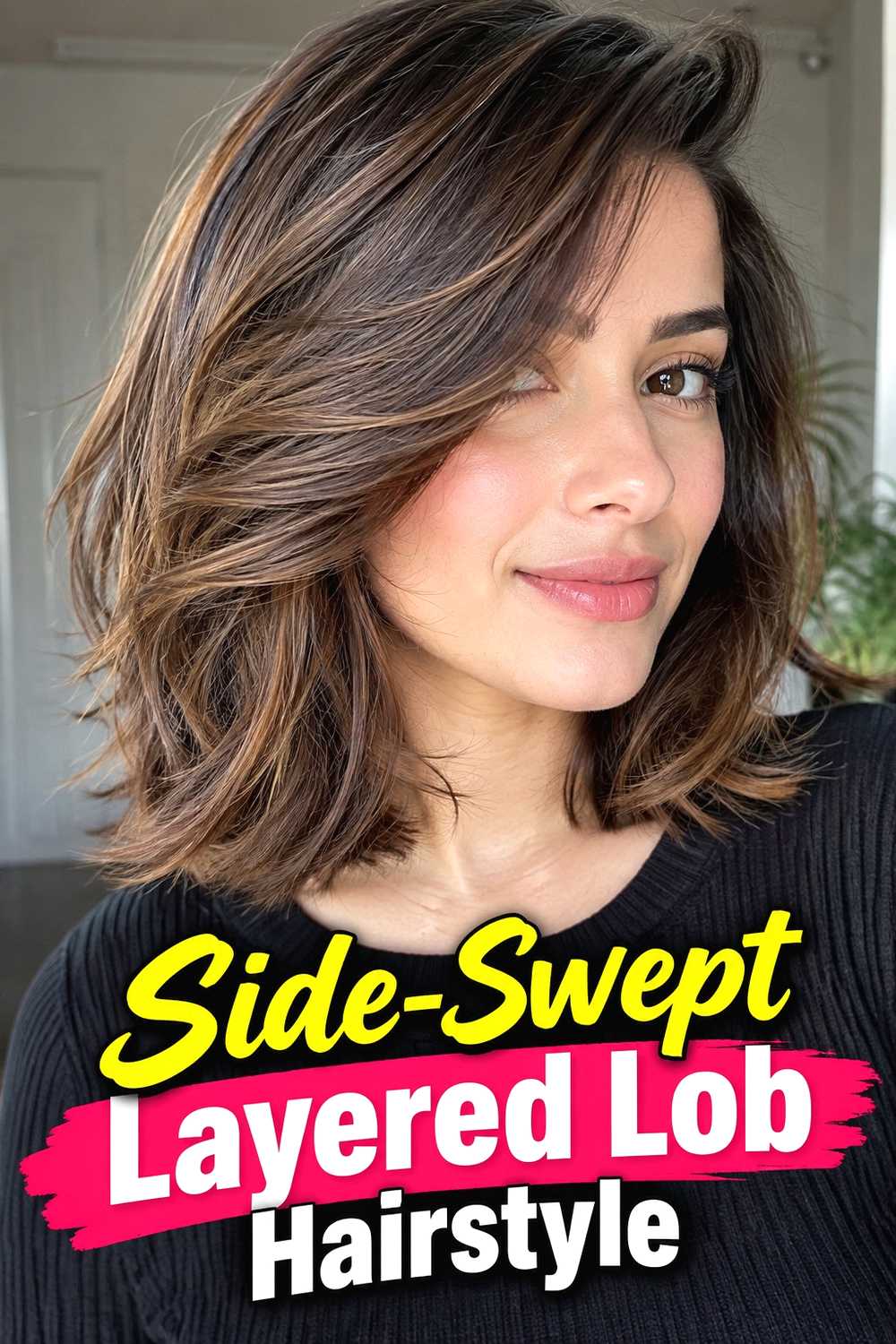
A side-swept layered lob creates a graceful diagonal line across the front of the haircut, giving the style movement before the eye even reaches the ends. The front section can be cut long enough to tuck behind the ear or fall loosely along the cheek, while soft layers continue through the lower lengths. This combination keeps the hair from feeling heavy beside the jaw without sacrificing the fuller look of a lob. The style works beautifully with a smooth blowout, loose waves, or natural texture, depending on the desired finish. Because the side sweep already adds shape, the remaining layers can stay restrained, helping the haircut look intentional rather than excessively feathered.
Best For
This style is useful for anyone who enjoys changing their part or likes having longer front pieces that can be tucked, pinned, or swept away.
Pro Tip
Keep styling product light near the front so the side-swept section remains flexible and moves naturally throughout the day.
9. Soft Blunt Lob Hairstyle
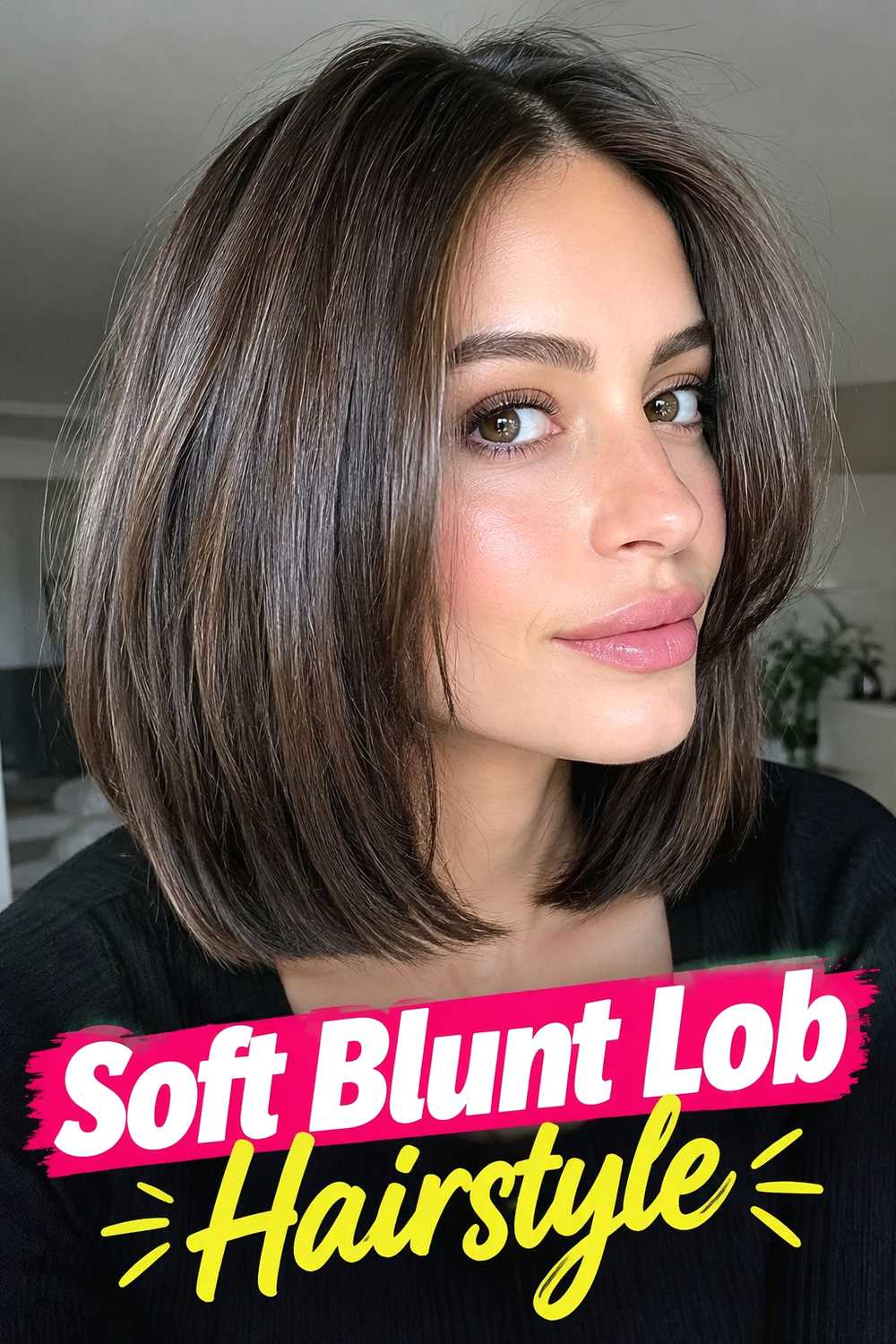
A blunt lob can still feel soft when the perimeter is full but not aggressively sharp. This version keeps most of the hair at one length for a strong, healthy-looking outline, then uses tiny amounts of point cutting or hidden texture to prevent the ends from looking rigid. The result is a smooth, substantial silhouette that works especially well for fine to medium-density hair that benefits from visual fullness. A slight bend through the mid-lengths can soften the area around the jaw without changing the clean structure of the cut. It is an excellent choice for someone who prefers minimal layering and wants a haircut that looks equally polished worn straight or casually waved.
Why It Works
Maintaining weight through the ends gives the lob a fuller appearance, while subtle texture keeps the perimeter from becoming visually harsh.
Wear & Maintenance
Because the shape depends on a clean baseline, regular trims are more noticeable here than on heavily layered or intentionally tousled lobs.
10. Curved C Cut Lob Hairstyle
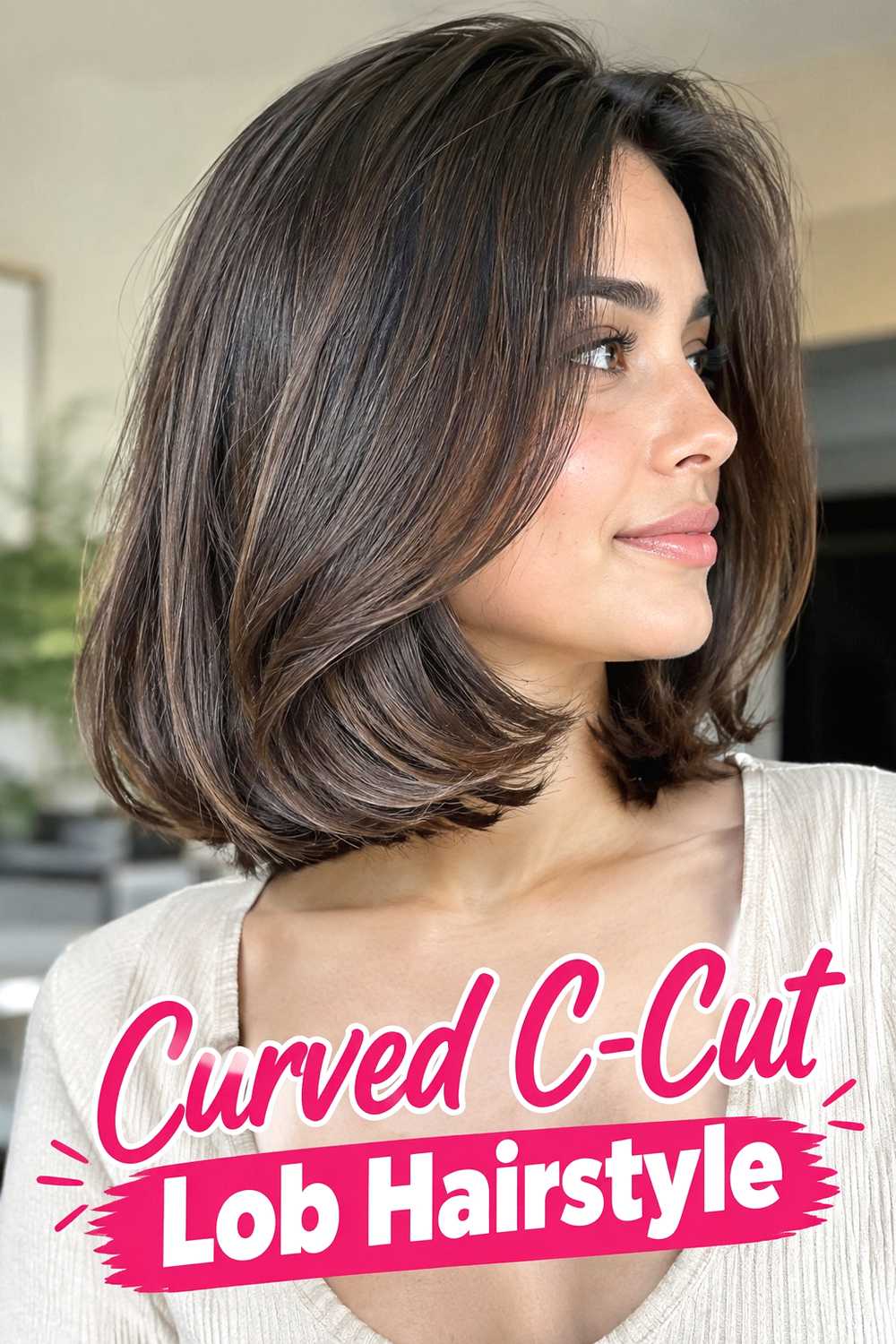
The curved C-cut lob uses face-framing layers that sweep inward in a soft C shape, creating an elegant contour through the cheek, jaw, and collarbone area. Rather than stacking many short layers, the haircut relies on a few carefully connected sections that become progressively longer toward the back. When blow-dried, the front layers can curve away from the face before settling gently into the main length, giving the hairstyle fluid movement from multiple angles. The rest of the lob can stay relatively smooth so the face-framing detail remains visible. This option feels polished without becoming stiff, and it offers an appealing middle ground between a one-length lob and a highly layered cut.
Styling Notes
Use a round brush to encourage the front layers into broad curves, avoiding tight flips that would make the C-shaped movement look overly dramatic.
Hair Type & Length
Straight to softly wavy hair typically displays the curved layering most clearly, particularly when the lob reaches around shoulder or collarbone level.
11. Tousled Center Part Lob Hairstyle
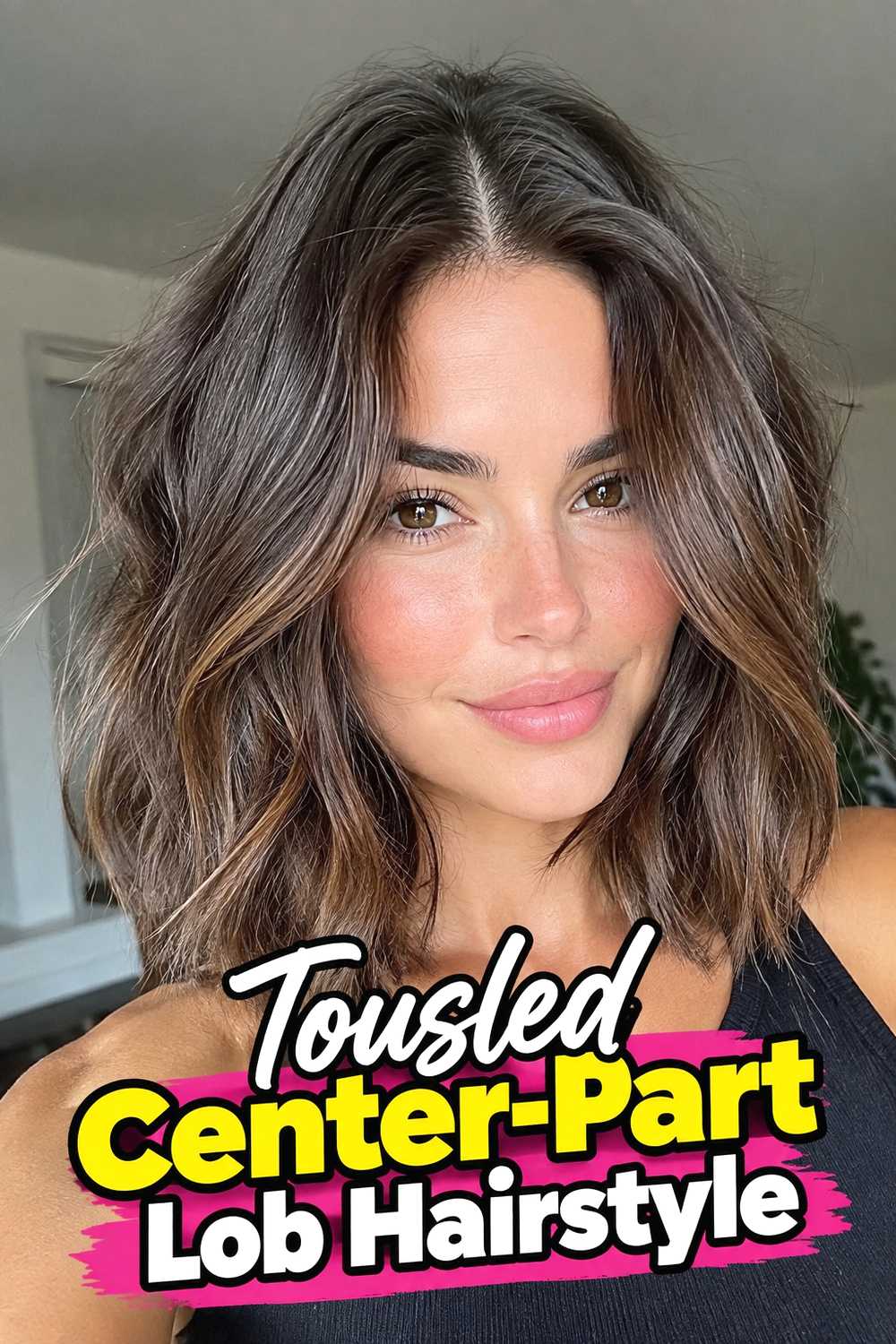
A center-part lob can create a balanced frame around the face, while tousled texture keeps the symmetry from looking too strict. This style pairs a relatively even shoulder-length base with subtle long layers that encourage natural bends through the mid-lengths. The pieces closest to the face can begin around the cheek or jaw so they blend into the overall shape without creating an obvious fringe. When styled loosely, the hair develops soft volume on both sides while the imperfect waves break up the lower edge. It is a versatile look that can feel casual during the day and slightly more polished with added shine for an evening setting, all without changing the basic haircut.
Styling Notes
Create a few broad bends through the middle of the hair, leaving the roots and ends comparatively relaxed for an effortless finish.
Best For
This version works especially well for people who enjoy symmetrical styling but prefer texture and movement over a perfectly straight, precise result.
12. Flipped Ends Jawline Lob Hairstyle
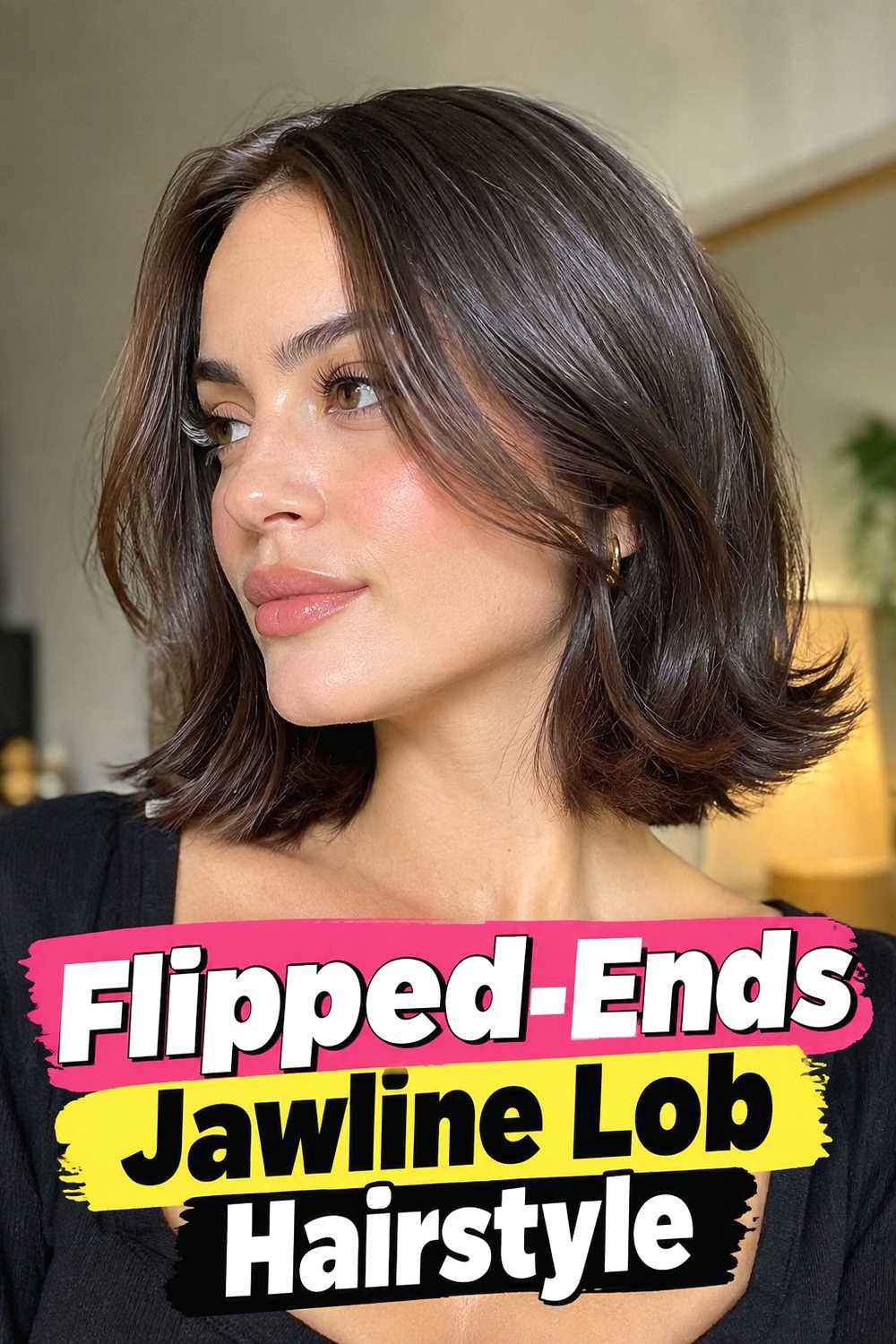
The flipped-ends lob brings a playful finish to a classic shoulder-length shape by directing the ends slightly outward instead of inward. The flip should stay soft and controlled, beginning only near the perimeter so the overall haircut remains modern rather than overly retro. Gentle face-framing layers can help the front sections move away from the jaw, while the longer base keeps the style grounded. This look works well with straight or lightly wavy hair that responds easily to a round brush, straightener, or hot brush. The outward movement adds visual energy around the lower part of the haircut, making it a fun alternative for anyone who wants a polished lob with a little extra personality.
Styling Notes
Turn the final inch of the hair outward in loose sections instead of creating an identical flip all the way around the head.
Pro Tip
Keep the crown smooth and the flip subtle. That contrast helps the hairstyle look current, light, and intentionally styled.
How to Choose the Right Look
Start by deciding how much structure you want. Soft blunt and sleek rounded lobs offer a cleaner silhouette, while shaggy, wavy, feathered, and layered versions create more visible movement. Fine hair may look fuller with a stronger perimeter and fewer layers, whereas dense hair can often accommodate extra graduation without losing substance.
Your natural texture also matters. Wavy hair can make tousled and shaggy options relatively low effort, while straight hair often highlights C-cut layers, rounded ends, and clean blunt shapes beautifully. If daily styling time is limited, choose a cut that works with your existing texture rather than one that requires a complete blowout every morning.
Consider the front pieces carefully. Curtain framing, side-swept sections, and cheek-to-jaw layers create noticeable movement around the face, but they usually need some directional styling after washing. Longer framing pieces are easier to tuck back and may feel more practical if you frequently tie your hair up.
Finally, think about maintenance. Clean blunt lines and sleek finishes tend to show growth more clearly, while textured layers and tousled shapes can remain visually forgiving as they grow. Bringing reference photos that match your own density and texture can also make it easier to discuss realistic length, layering, and finishing options with your stylist.
Final Thoughts
A soft jawline lob can range from clean and polished to airy and undone. The most wearable choice is usually the one that complements your natural texture and preferred styling routine. Choose stronger ends for fullness, longer layers for movement, or face-framing pieces when you want extra softness around the front, then adjust the exact length to suit how you normally wear your hair.
FAQs
1. What makes a lob look softer around the jawline?
Movement usually creates the softer effect. Face-framing layers, subtle waves, feathered ends, curved styling, and light texture can break up a rigid perimeter around the lower face.
2. Is a layered or blunt lob better for fine hair?
A softer blunt lob often preserves more visible fullness, while very light face-framing or interior layers can add movement without removing too much weight.
3. Can naturally wavy hair wear a jawline-softening lob?
Yes. Natural waves can work especially well because their uneven bends naturally soften the silhouette. The haircut should account for how much the texture shrinks or expands when dry.
4. Do curtain pieces work with a lob?
Yes. Longer curtain pieces can blend smoothly into shoulder-length hair and create movement around the cheekbones and jaw without requiring a full fringe.
5. How often does a lob usually need reshaping?
It depends on the cut and how precise you want it to look. Blunt, sleek lobs tend to show growth sooner, while layered or tousled versions can often grow out more softly between trims.
Save your favorite soft jawline lob ideas, share them for inspiration, and explore more hairstyle looks that fit your texture and styling routine.